EP4007580B1 - Zusammensetzung mit sterolderivaten zur verwendung bei der behandlung einer neuronalen erkrankung im zusammenhang mit hypoxie, hypoglykämie und/oder hyperglykämie - Google Patents
Zusammensetzung mit sterolderivaten zur verwendung bei der behandlung einer neuronalen erkrankung im zusammenhang mit hypoxie, hypoglykämie und/oder hyperglykämie Download PDFInfo
- Publication number
- EP4007580B1 EP4007580B1 EP20746623.6A EP20746623A EP4007580B1 EP 4007580 B1 EP4007580 B1 EP 4007580B1 EP 20746623 A EP20746623 A EP 20746623A EP 4007580 B1 EP4007580 B1 EP 4007580B1
- Authority
- EP
- European Patent Office
- Prior art keywords
- nhr
- formula
- compound
- composition
- neuronal
- Prior art date
- Legal status (The legal status is an assumption and is not a legal conclusion. Google has not performed a legal analysis and makes no representation as to the accuracy of the status listed.)
- Active
Links
Images




Classifications
-
- C—CHEMISTRY; METALLURGY
- C07—ORGANIC CHEMISTRY
- C07J—STEROIDS
- C07J43/00—Normal steroids having a nitrogen-containing hetero ring spiro-condensed or not condensed with the cyclopenta(a)hydrophenanthrene skeleton
- C07J43/003—Normal steroids having a nitrogen-containing hetero ring spiro-condensed or not condensed with the cyclopenta(a)hydrophenanthrene skeleton not condensed
-
- A—HUMAN NECESSITIES
- A61—MEDICAL OR VETERINARY SCIENCE; HYGIENE
- A61K—PREPARATIONS FOR MEDICAL, DENTAL OR TOILETRY PURPOSES
- A61K31/00—Medicinal preparations containing organic active ingredients
- A61K31/56—Compounds containing cyclopenta[a]hydrophenanthrene ring systems; Derivatives thereof, e.g. steroids
- A61K31/575—Compounds containing cyclopenta[a]hydrophenanthrene ring systems; Derivatives thereof, e.g. steroids substituted in position 17 beta by a chain of three or more carbon atoms, e.g. cholane, cholestane, ergosterol, sitosterol
-
- A—HUMAN NECESSITIES
- A61—MEDICAL OR VETERINARY SCIENCE; HYGIENE
- A61K—PREPARATIONS FOR MEDICAL, DENTAL OR TOILETRY PURPOSES
- A61K31/00—Medicinal preparations containing organic active ingredients
- A61K31/56—Compounds containing cyclopenta[a]hydrophenanthrene ring systems; Derivatives thereof, e.g. steroids
- A61K31/58—Compounds containing cyclopenta[a]hydrophenanthrene ring systems; Derivatives thereof, e.g. steroids containing heterocyclic rings, e.g. danazol, stanozolol, pancuronium or digitogenin
-
- A—HUMAN NECESSITIES
- A61—MEDICAL OR VETERINARY SCIENCE; HYGIENE
- A61P—SPECIFIC THERAPEUTIC ACTIVITY OF CHEMICAL COMPOUNDS OR MEDICINAL PREPARATIONS
- A61P11/00—Drugs for disorders of the respiratory system
-
- A—HUMAN NECESSITIES
- A61—MEDICAL OR VETERINARY SCIENCE; HYGIENE
- A61P—SPECIFIC THERAPEUTIC ACTIVITY OF CHEMICAL COMPOUNDS OR MEDICINAL PREPARATIONS
- A61P25/00—Drugs for disorders of the nervous system
-
- A—HUMAN NECESSITIES
- A61—MEDICAL OR VETERINARY SCIENCE; HYGIENE
- A61P—SPECIFIC THERAPEUTIC ACTIVITY OF CHEMICAL COMPOUNDS OR MEDICINAL PREPARATIONS
- A61P25/00—Drugs for disorders of the nervous system
- A61P25/28—Drugs for disorders of the nervous system for treating neurodegenerative disorders of the central nervous system, e.g. nootropic agents, cognition enhancers, drugs for treating Alzheimer's disease or other forms of dementia
-
- A—HUMAN NECESSITIES
- A61—MEDICAL OR VETERINARY SCIENCE; HYGIENE
- A61P—SPECIFIC THERAPEUTIC ACTIVITY OF CHEMICAL COMPOUNDS OR MEDICINAL PREPARATIONS
- A61P3/00—Drugs for disorders of the metabolism
- A61P3/08—Drugs for disorders of the metabolism for glucose homeostasis
-
- A—HUMAN NECESSITIES
- A61—MEDICAL OR VETERINARY SCIENCE; HYGIENE
- A61P—SPECIFIC THERAPEUTIC ACTIVITY OF CHEMICAL COMPOUNDS OR MEDICINAL PREPARATIONS
- A61P3/00—Drugs for disorders of the metabolism
- A61P3/08—Drugs for disorders of the metabolism for glucose homeostasis
- A61P3/10—Drugs for disorders of the metabolism for glucose homeostasis for hyperglycaemia, e.g. antidiabetics
-
- A—HUMAN NECESSITIES
- A61—MEDICAL OR VETERINARY SCIENCE; HYGIENE
- A61P—SPECIFIC THERAPEUTIC ACTIVITY OF CHEMICAL COMPOUNDS OR MEDICINAL PREPARATIONS
- A61P43/00—Drugs for specific purposes, not provided for in groups A61P1/00-A61P41/00
-
- A—HUMAN NECESSITIES
- A61—MEDICAL OR VETERINARY SCIENCE; HYGIENE
- A61P—SPECIFIC THERAPEUTIC ACTIVITY OF CHEMICAL COMPOUNDS OR MEDICINAL PREPARATIONS
- A61P9/00—Drugs for disorders of the cardiovascular system
- A61P9/10—Drugs for disorders of the cardiovascular system for treating ischaemic or atherosclerotic diseases, e.g. antianginal drugs, coronary vasodilators, drugs for myocardial infarction, retinopathy, cerebrovascula insufficiency, renal arteriosclerosis
-
- C—CHEMISTRY; METALLURGY
- C07—ORGANIC CHEMISTRY
- C07J—STEROIDS
- C07J41/00—Normal steroids containing one or more nitrogen atoms not belonging to a hetero ring
- C07J41/0005—Normal steroids containing one or more nitrogen atoms not belonging to a hetero ring the nitrogen atom being directly linked to the cyclopenta(a)hydro phenanthrene skeleton
Definitions
- the invention relates to the field of neuronal pathologies linked to the deprivation of glucose and/or oxygen. More specifically, the invention relates to a composition comprising compounds derived from sterols of formula (I) or a pharmaceutically acceptable salt of such a compound, for its use in the treatment and/or prevention of cerebral ischemia due to a stroke, head trauma, brain injury, hypoglycaemia linked to diabetes, hyperglycaemia or a respiratory problem due in particular to a bacterial or viral infection.
- Ischemia is a decrease in blood supply to an organ, cerebral ischemia is therefore the decrease in blood supply to at least part of the brain. Ischemia therefore causes the interruption of both the supply of oxygen, the supply of nutrients, such as glucose, and the elimination of toxic molecules resulting from anaerobic metabolism.
- Cerebral ischemia is implicated in particular in cerebral vascular accidents (AVC) commonly called “cerebral attacks”, and cranial traumatisms.
- AVC cerebral vascular accidents
- Strokes are the third leading cause of death behind cardiovascular disease and cancer. But they are the leading causes of severe disability and the second leading causes of dementia in the Western world.
- AVC Alzheimer's disease
- ischemic in nature ie due to the obstruction of a blood vessel by a clot, reducing the blood supply in a cerebral area.
- the clot can form locally in a small artery or come from the heart or from a lesion in the wall of one of the large cervical arteries.
- This obstruction therefore prevents a sufficient supply of oxygen and metabolites, such as glucose, to meet the metabolic and energy demands of the central nervous system, and causes cerebral ischemia.
- the consequences are all the more important since the brain is not able to switch from a metabolism aerobic to anaerobic metabolism to produce the energy it needs. So some brain cells can die.
- an ischemic stroke can occur when inflammation of blood vessels (vasculitis) or infection (herpes simplex virus, for example) narrows the blood vessels that supply the brain. More and more evidence also tends to demonstrate that there is, for example, a negative impact of Covid-19 on the nervous system.
- Covid-19 receptors which are found massively in the lungs, are also found at the level of the blood-brain barrier and nerve endings. Once in the nervous system, it is possible that the virus destroys the neurons responsible for the proper functioning of respiration. The destruction of neurons of the autonomic nervous system present in the medulla oblongata leads to and/or aggravates respiratory distress in patients. On the other hand, it is also possible that a low level of oxygen in the blood due to the acute respiratory symptoms of patients with Covid-19 is itself responsible for the neurological disorders. The neurons being very sensitive to the lack of oxygen, a prolonged and pronounced decrease in the level of blood oxygen would alter the neurons which would eventually die.
- head trauma Another cause of cerebral ischemia is also head trauma which can be mild or severe, with all possible intermediate states. Its severity depends on the existence of intra-cerebral lesions or the existence of an extra-cerebral hematoma, bleeding located between the skull and the brain.
- a head injury can accompanied by bruising, neuronal damage, edema, intracerebral hemorrhage and/or ischemia.
- Cerebral ischemia is the major threat to the functional and anatomical future of the traumatized brain. This is a global, diffuse, or multicentric ischemia, which affects the cerebral cortex as anoxia or cardiac arrest would have done. Ischemia affects all of the gray matter, part of the tissues of the central nervous system with the highest metabolic demand for oxygen and glucose. All brain functions are thus threatened. The cell loss can then be massive and marked by visible cerebral atrophy.
- Ischemia can take another more local form.
- the microcirculation of the tissues located around a focus of contusion or hemorrhage is threatened by vasoconstriction, the effect of tissue compression, capillary micro-thromboses, or even cellular metabolism disorders.
- the cell's energy production is compromised because its oxidative metabolism is broken down. Toxic products like free radicals are released. The slightest respiratory or circulatory event can then precipitate the cells below the viability threshold.
- head trauma can be physical damage such as paraplegia, hemiplegia, visual disturbances... They can also be neuropsychological damage affecting memory, attention, the ability to communicate. Finally, they modify the behavior and personality of the injured and his daily life, as well as that of his relatives.
- hypoglycaemia coupled with hypoxia, the consequences of which are deleterious for the affected patients.
- hypoglycemia is the most common clinical complication in the daily management of insulin-treated diabetics, and continues to be the limiting factor in the glycemic management of diabetes. Severe hypoglycaemia affects 40% of insulin-treated diabetics and can lead to brain damage, particularly to vulnerable neurons in the cortex and hippocampus. For example, learning and memory deficits are a direct consequence of this neuronal damage to the hippocampus caused by severe hypoglycemia.
- hyperglycemia is one of the telltale symptoms of diabetes. Indeed, diabetes systematically leads to hyperglycemia. In addition, hyperglycaemia unrelated to diabetes also exists and the causative facts are varied, for example, the ingestion of foods or drinks containing sugars or the effects side effects of a drug. Hyperglycemia linked to diabetes or not induces deleterious effects on the nervous system.
- composition comprising, in a pharmaceutically acceptable vehicle, at least one compound of formula (I) for preventing hearing loss in a subject or for obtaining at least partial restoration of the hearing of a treated subject having, before treatment, a reduced auditory function.
- compositions comprising at least one compound of formula (I) for its use in the treatment a neuronal pathology of a subject, said neuronal pathology being linked to hypoxia and/or hypoglycemia affecting cells of the central nervous system.
- One idea underlying the invention is to provide preventive and/or curative compositions useful for the treatment of neurological diseases affecting in particular the neurons of the central nervous system involving hypoxia, hypoglycemia and/or hyperglycemia.
- the COOC(CH 3 ) 3 substituent is also called the tert-butoxycarbonyl or Boc functional group.
- the compound of formula (I) belongs to the group of steroids.
- the numbering of the carbon atoms of the compound of formula (I) therefore follows the nomenclature defined by the IUPAC in Pure & Appl. Chem., Vol.61, No.10, pp.1783-1822,1989 .
- the numbering of the carbon atoms of a compound belonging to the group of steroids according to IUPAC is shown below:
- composition may possess one or more of the following characteristics, considered alone or in combination.
- the compound is called DX243.
- the results obtained with this compound are particularly interesting. Indeed, a curative effect of this compound is observed against the pathophysiological phenomenon of hypoxia, hypoglycaemia and/or hyperglycaemia even at very low concentrations.
- the compound is called DX245.
- the results obtained with this compound are particularly interesting. Indeed, we observe a curative effect of this compound against the pathophysiological phenomenon of hypoxia, hypoglycemia and/or hyperglycemia greater than that of DX243.
- the compound is called DX242.
- the results obtained with this compound are particularly interesting. In fact, a curative effect of this compound against the pathophysiological phenomenon of hypoxia, hypoglycaemia and/or hyperglycaemia greater than that of DX243 is observed.
- the compound is called DX244.
- the results obtained with this compound are particularly interesting. In fact, a curative effect of this compound against the pathophysiological phenomenon of hypoxia, hypoglycaemia and/or hyperglycaemia greater than that of DX243 is observed.
- the neuronal pathology of the central nervous system is taken from the group consisting of cerebral trauma and cerebrovascular accidents.
- the neuronal pathology of the central nervous system is brain damage due to ischemia.
- the neuronal pathology of the central nervous system is brain damage due to respiratory failure.
- Respiratory failure means obstructive respiratory failure and restrictive respiratory failure.
- the latter can come, for example, from a pulmonary infection of bacterial or viral origin, for example following an infection by a coronavirus.
- the hypoglycemia is due to diabetes.
- the hyperglycemia is due to diabetes.
- the invention also provides a composition for its use in the treatment of a neuronal pathology of a subject, said neuronal pathology being linked to hypoxia, hypoglycemia and/or hyperglycemia affecting cells central nervous system, said composition being in the form of an aqueous solution and having a concentration of compound of formula (I) of between 1 pmol.L -1 and 1 mmol.L -1 , preferably between 10 pmol.L -1 and 0 .1 mmol.L -1 , more preferably between 0.1 nmol.L -1 and 1 ⁇ mol.L -1 .
- the concentration of compound of formula (I) is between 1 nmol.L -1 and 150 nmol.L -1 .
- stars indicate the statistical power of the results.
- a star indicates that it is 95% certain that the results are not due to chance.
- the presence of 2 stars means that it is 99% certain that the results are not due to chance, and the presence of 3 stars indicates that it is 99.9% certain that the results are not due to chance .
- concentrations or molarities of the compounds are expressed in moles per liter, the symbol of which is mol.L -1 or M.
- Example 1 obtaining cortical neurons
- the first step in the protocol for studying the neuroprotective effect of the compounds of formula (I), in particular those indicated in Table 1, consists in obtaining a primary culture of cortical neurons from cells taken from the brains of wild-type mouse embryos placed in suitable culture conditions (step 1). More specifically, the collected cells are grown in Neurobasal TM Medium (Ref. 21103049 ThermoFisher Scientific) to which L-Glutamine and B27 supplement 50X (Ref. 17504044 ThermoFisher Scientific) have been added (step 2). The neurons from the primary culture are then isolated and purified.
- Neurobasal TM Medium Ref. 21103049 ThermoFisher Scientific
- L-Glutamine and B27 supplement 50X Ref. 17504044 ThermoFisher Scientific
- step 3 it is the culture conditions in themselves which make it possible to obtain a purified culture in neurons from the dissociation of the embryonic cortices.
- a deprivation of oxygen and glucose (DOG) is then carried out (step 3) on these neurons in order to mimic as closely as possible what happens in vivo during a cerebrovascular accident, i.e. a decreased oxygen and glucose delivery due to decreased blood perfusion to the cells.
- DOG oxygen and glucose
- the neurons are placed for 4 hours in an incubator whose atmosphere has an oxygen content of approximately 1% and the culture medium is replaced by a medium without glucose (step 3).
- the neurons are then placed in a medium containing glucose under normoxic conditions for 24 h (reperfusion) (step 4) following the ischemia step.
- Group A of neurons is a group of neurons having been treated with a solution of compound of formula (I) during DOG and reperfusion, i.e. a molecule from Table 1 is added to the medium without glucose as soon as glucose and oxygen deprivation begins (step 3).
- the concentration of the compound of formula (I) named DX243 is between 1 nmol.L -1 and 1 pmol.L -1 in the medium without glucose.
- the concentration of the other molecules in Table 1 is 100 nmol.L -1 in the medium without glucose.
- Group B of neurons is a group of neurons that have been treated with DX243 solution during reperfusion only (step 4), to approximate what happens clinically, i.e. treatment possible only after several hours with conventional treatment .
- the DX243 solution is added to the medium without glucose as soon as the reperfusion begins (step 4).
- the concentration of DX243 is between 1 nmol.L -1 and 1 pmol.L -1 in the medium without glucose.
- the negative control consists of a group of neurons undergoing DOG (step 3) followed by reperfusion (step 4) with no DX243 present. This group of neurons is called “Ctrl” in the figures 2 to 4 .
- the normal control consists of a group of neurons from the primary culture placed in normoxic conditions for 28 hours. The normal control is referred to as “normox” in the figures 2 to 4 .
- the positive control consists of a group of neurons from the primary culture having undergone DOG for 4 hours (step 3) in the presence of roscovitine, a cell cycle inhibitor, resulting in neuronal protection, followed by reperfusion for 24 hours (step 4) .
- the positive control is referred to as “ROSCO” in the figures 2 to 4 .
- the survival of the neurons is evaluated using three different tests: an immunocytochemical test 5, an MTT test (bromide of 3-(4,5- dimethylthiazol-2-yl)-2,5-diphenyl tetrazolium) 6 and a test based on the integrity of cell membranes via the use of triptan blue 7. The results are then compared to the results of the three survival tests of the groups control.
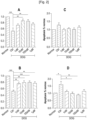
- FIG. 1 presents the results of the first neuronal survival test in the case of the use of the DX243.
- Graphs A and C are a representation of the results obtained for group A, the ordinate represents the proportion of living cells relative to the Normox group.
- Graphs B and D are a representation of the results obtained for group B, the ordinate represents the proportion of cells in apoptosis relative to the Normox group.
- This first test is an immunocytochemical test which makes it possible to highlight living cells and dead cells.
- a first series of images is produced with chemical labeling by fluorescence. This labeling is carried out with DAPI (4′,6-diamidino-2-phenylindole) which is capable of strongly binding to the adenine (A) and thymine (T) bases of DNA. It detects living cells.
- a second series of images is produced with fluorescence labeling using the CC3 antibody.
- the CC3 antibody makes it possible to detect activated caspase 3, and therefore cells in a state of apoptosis.
- TUJ1 To visualize the proportion of healthy neurons among the different culture conditions, the TUJ1 antibody is used. TUJ1 reacts with beta-tubulin III, a structural protein that makes up tubulin and is specific to neurons. Beta-tubulin III is widely used as a marker to distinguish neurons from other cell types.
- the proportion of living cells was calculated by determining the ratio of the number of living cells to the total number of cells.
- the proportion of cells in apoptosis was carried out using the ratio between the number of cells detected by the CC3 antibody over the total number of cells. The values obtained were related to those obtained by the normox group.
- DOG induces a decrease in the proportion of living cells on the Ctrl group on graphs A and B of the figure 2 , and an increase in the proportion of cells in apoptosis on the Ctrl group on graphs C and D of the picture 2 .
- both treatment with DX243 during DOG and reperfusion and treatment with DX243 only during reperfusion partially protect against neuronal death.
- an increase in the proportion of living cells and a decrease in the proportion of cells in apoptosis following the treatment with DX243 are observed in comparison with the Ctrl group.
- a DX243 concentration between 1 nmol.L -1 and 100 nmol.L -1 corresponds to an ideal concentration range to maximize the neuroprotective effects.
- Example 3 MTT neuronal survival evaluation test in the case of the use of the DX243
- a test based on the metabolic activity of neurons was carried out to assess neuronal survival in another way.
- This test is based on the use of the tetrazolium salt MTT (3-(4,5-dimethylthiazol-2-yl)-2,5-diphenyl tetrazolium bromide).
- Tetrazolium is reduced by active living cell mitochondrial succinate dehydrogenase to formazan, a violet-colored precipitate.
- the quantity of precipitate formed is proportional to the quantity of living cells but also to the metabolic activity of each cell.
- a simple assay of the optical density at 550 nm by spectroscopy makes it possible to know the relative quantity of living and metabolically active cells.
- DOG induces a significant decrease in the number of cells having preserved the integrity of their membrane, whether on graph A of the figure 4 or on graph B of the figure 4 .
- Treatment of neurons with DX243 restores the percentage of living cells to levels close to that observed in the normox group, mainly with concentrations between 1 nmol.L -1 and 100 nmol.L -1 .
- DX243 is therefore effective at concentrations of between 1 nmol.L -1 and 1 ⁇ mol.L -1 .
- concentrations between 10 nmol.L -1 and 100 nmol.L -1 , the results are more stable and the protective effect of DX243 is statistically greater. This can be explained by the fragility of primary cultures outside their natural environment.
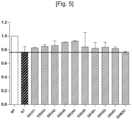
- the third cell survival test was carried out. The results obtained were reported on the graph of the figure 5 including the results obtained with the DX243.
- the abbreviation NT stands for untreated.
- the non-hatched bar NT corresponds to a group of neurons from the primary culture placed in normoxic conditions for 28 hours.
- the hatched bars represent groups of neurons from the primary culture that have undergone a DOG and reperfusion either without molecules from table 1 (hatched bar named NT) or in the presence of a molecule from table 1.
- the calculation of the percentage of living cells was carried out by counting the proportion of blue and non-blue cells, and relative to the percentage of living cells observed in the NT group under normoxia, that is to say the NT group not having undergone DOG (not shown).
- the survival rate of the groups of neurons is higher than that of the groups of NT neurons having undergone DOG and reperfusion (hatched bar NT), they therefore exhibit a neuroprotective effect.
- the DX245, DX244 and DX242 have a higher survival rate than the DX243.
- the survival rate of the group treated with DX243BOC is lower than that of the group treated with DX243 and that of the NT group having undergone DOG and reperfusion, thus demonstrating the importance of the R 3 group in the activity of the compound. of formula (I).
- MK801 is a non-competitive N-methyl-D-aspartate (NMDA) receptor antagonist and is known to have a neuroprotective effect. All compounds in Table 1 were tested. It is observed figure 6 significant neuronal protection with 100nM treatment of DX243 and DX245. A neuroprotective effect is observed with this test for DX101, DX242, DX244, DX301, DX302, DX401, DX249.
- NMDA N-methyl-D-aspartate
- the survival rate of the groups of neurons is higher than that of the groups of NT neurons, so they exhibit a neuroprotective effect.
- FIG. 7 A new cell survival test of the various compounds in Table 1 was carried out, the results are presented figure 7 .
- This test is similar to the one performed figure 4 . It is based on the integrity of cell membranes, which is broken in dead cells. This test uses trypan blue which will stain dead cells blue. It is carried out in a similar way to the test of the Figure 4A , that is to say based on the protocol for obtaining the cortical neurons of example 1 stated above.
- the Roscovitine positive control has been replaced by the Dizocilpine positive control (MK801).
- MK801 Dizocilpine positive control
- the purpose of this test is to evaluate the neuroprotective effect of the molecules after having undergone a treatment lasting 4 hours DOG then 24 hours of reperfusion, ie a total of 28 hours of experiments. All compounds in Table 1 were tested multiple times. Additionally, DX243 and DX245 have been tested in different quantities shown on the figure 7 .
- This in vivo model classically used to study the effect of molecules on the AVC consists of the installation of a catheter at the level of the anterior cingulate cortex (ACC), to insert a filament there at the level of the common carotid artery ( CCA-common carotid artery) and to push the filament through the common carotid artery, passing through the internal carotid artery (ICA) to the level of the middle cerebral artery (MCA) resulting in a significant decrease (>80% ) of the blood flow at the level of the cerebral territory 8 irrigated by this artery ( Estelle ROUSSELET et al, Murine model of intraluminal MCAO: Evaluation of cerebral infarction by cresyl violet staining, Journal of Visualized Experiments and Carl Zeiss ). Following a period of 1 hour, the filament is removed to allow reperfusion and the addition of treatment with DX243. The injected DX243 is diluted in an aqueous solution and is concentrated at 50mg/Kg.
- FIG. 8 (A) shows two TTC staining images showing the surface of dead tissue in white and representing the reduction in the infarcted surface in the mice treated with DX243.
- Chart B of the figure 9 represents the reduction in the percentage of infarcted area between treated or untreated mice (Ctrl), along the ordinate is indicated the percentage of the infarcted area with regard to the total size of the brain of the mouse.
- Graph C illustrates behavioral improvement (neuroscore) in treated mice.
- Graph D represents the decrease in the percentage of dead mice in mice treated with DX243.
- Graphs E and F represent the disappearance of the correlation between decrease in blood flow and histological and behavioral consequences following treatment with DX 243.
- hypoglycaemia is capable of inducing oxidative stress in neuronal cells, oxidative stress present in the context of oxygen and glucose deprivation and which is a major component of the induction of neuronal death.
- neuroprotective effect of the compounds of formulas (I) according to the invention extends to cases of hypoxia alone or hypoglycemia alone.
Landscapes
- Health & Medical Sciences (AREA)
- Chemical & Material Sciences (AREA)
- General Health & Medical Sciences (AREA)
- Animal Behavior & Ethology (AREA)
- Veterinary Medicine (AREA)
- Public Health (AREA)
- Life Sciences & Earth Sciences (AREA)
- Pharmacology & Pharmacy (AREA)
- Medicinal Chemistry (AREA)
- Organic Chemistry (AREA)
- Engineering & Computer Science (AREA)
- Bioinformatics & Cheminformatics (AREA)
- Chemical Kinetics & Catalysis (AREA)
- General Chemical & Material Sciences (AREA)
- Nuclear Medicine, Radiotherapy & Molecular Imaging (AREA)
- Diabetes (AREA)
- Biomedical Technology (AREA)
- Neurosurgery (AREA)
- Neurology (AREA)
- Epidemiology (AREA)
- Emergency Medicine (AREA)
- Obesity (AREA)
- Endocrinology (AREA)
- Hematology (AREA)
- Hospice & Palliative Care (AREA)
- Psychiatry (AREA)
- Cardiology (AREA)
- Urology & Nephrology (AREA)
- Vascular Medicine (AREA)
- Pulmonology (AREA)
- Heart & Thoracic Surgery (AREA)
- Pharmaceuticals Containing Other Organic And Inorganic Compounds (AREA)
- Steroid Compounds (AREA)
Claims (14)
- Zusammensetzung umfassend mindestens eine Verbindung der Formel (I):
 R1 =OH;R2 =OH;R3 = -NR5R6,R5 H ist, undR6 ausgewählt ist aus der Gruppe bestehend aus -(CH2)3NH(CH2)4NHR7; - (CH2)4NH(CH2)3NHR7; -(CH2)3NH(CH2)4NH(CH2)3NHR7; -(CH2)3NHR7; -(CH2)4NHR7 mit R7 = H oder COCH3; -(CH2)2-Imidazol-4-yl; und -(CH2)2-Indol-3-yl; undR4 = H an der Position 20, 22, 24, 25, 26 oder 27, die so positioniert ist, dass ein asymmetrisches Zentrum mit R- oder S-Konfiguration gebildet ist;Z1 und Z2 jeweils die Anzahl der Doppelbindungen zwischen den Kohlenstoffatomen C7 und C8 beziehungsweise C22 und C23 darstellen; Z1 ist entweder 0 oder 1; Z2 = 0; T1=Tz=T3=T4=H, wobei T4 so positioniert ist, dass ein asymmetrisches Zentrum mit R- oder S-Konfiguration an der Position 24 erhalten ist;und/oder mindestens ein pharmazeutisch annehmbares Salz mindestens einer Verbindung der Formel (I),zur Verwendung bei der Behandlung einer neuronalen Erkrankung eines Subjekts im Zusammenhang mit Hypoxie, Hypoglykämie und/oder Hyperglykämie, die Zellen des zentralen Nervensystems betreffen.
 - Zusammensetzung zur Verwendung nach Anspruch 1, wobei die Verbindung der Formel (I) durch Z1 = 0 definiert ist.
- Zusammensetzung zur Verwendung nach Anspruch 2, wobei die Verbindung der Formel (I) durch R6 = -(CH2)4NH(CH2)3NHR7 mit R7 = COCH3 definiert ist.
- Zusammensetzung zur Verwendung nach Anspruch 2, wobei die Verbindung der Formel (I) durch R6 = -(CH2)2-Imidazol-4-yl definiert ist.
- Zusammensetzung zur Verwendung nach Anspruch 2, wobei die Verbindung der Formel (I) durch R6 = -(CH2)3NH(CH2)4NHR7, -(CH2)4NH(CH2)3NHR7, - (CH2)3NH(CH2)4NH(CH2)3NHR7; oder -(CH2)4NHR7; et R7 = H definiert ist.
- Zusammensetzung zur Verwendung nach Anspruch 1, wobei das Verbindung der Formel (I) durch Z1 = 1 definiert ist.
- Zusammensetzung zur Verwendung nach Anspruch 6, wobei die Verbindung der Formel (I) durch R6 = -(CH2)3NH(CH2)4NHR7; -(CH2)4NH(CH2)3NHR7; oder - (CH2)3NH(CH2)4NH(CH2)3NHR7; et R7 = H definiert ist.
- Zusammensetzung umfassend mindestens eine Verbindung der Formel (I):
 R1 = F, OCnH2n+1, R-COO, R-OCOO, RHN-COO oder OPO(OR)2 mit R = H oder CnH2n+1,mit n ≤ 16;R2 =OHR3 = -NR5R6,R4 = H oder OH an der Position 20, 22, 24, 25, 26 oder 27, die so positioniert ist, dass ein asymmetrisches Zentrum mit R- oder S-Konfiguration gebildet ist;R5= H;R6 ausgewählt ist aus der Gruppe bestehend aus -(CH2)4NH(CH2)3NHR7, - (CH2)3NH(CH2)4NHR7, -(CH2)3NH(CH2)4NH(CH2)3NHR7; -(CH2)4NHR7; mit R7 = H oder COCH3; -(CH2)2-Imidazol-4-yl; und -(CH2)2-Indol-3-yl;Z1 und Z2 jeweils die Anzahl der Doppelbindungen zwischen den Kohlenstoffatomen C7 und C8 beziehungsweise C22 und C23 darstellen;Z1 = 0 oder Z1 = 1;Z2 = 0;T1, T2, T3 und T4=H, wobei T4 so positioniert ist, dass ein asymmetrisches Zentrum mit R- oder S-Konfiguration an der Position 24 erhalten ist;und/oder mindestens ein pharmazeutisch annehmbares Salz mindestens einer Verbindung der Formel (I),zur Verwendung bei der Behandlung einer neuronalen Erkrankung eines Subjekts im Zusammenhang mit Hypoxie, Hypoglykämie und/oder Hyperglykämie, die Zellen des zentralen Nervensystems betreffen.
 - Zusammensetzung zur Verwendung nach einem der Ansprüche 1 bis 8, wobei die neuronale Erkrankung des zentralen Nervensystems aus der Gruppe ausgewählt ist, die aus Hirntrauma und Schlaganfall besteht.
- Zusammensetzung zur Verwendung nach einem der Ansprüche 1 bis 8, wobei die neuronale Erkrankung des zentralen Nervensystems eine durch Ischämie verursachte Hirnverletzung ist.
- Zusammensetzung zur Verwendung nach einem der Ansprüche 1 bis 8, wobei die neuronale Erkrankung des zentralen Nervensystems eine Hirnverletzung aufgrund von Atemversagen ist.
- Zusammensetzung zur Verwendung nach einem der Ansprüche 1 bis 8, wobei die Hypoglykämie durch Diabetes verursacht ist.
- Zusammensetzung zur Verwendung nach einem der Ansprüche 1 bis 8, wobei die Hyperglykämie durch Diabetes verursacht ist.
- Zusammensetzung zur Verwendung nach einem der Ansprüche 1 bis 8 in Form einer wässrigen Lösung aufweisend eine Konzentration der Verbindung der Formel (I) zwischen 1 pmol ∗ L-1 und 1 mmol ∗ L-1, bevorzugt zwischen 10 pmol ∗ L-1 und 0,1 mmol ∗ L-1, weiter bevorzugt zwischen 0,1 nmol ∗ L-1 und 1 µmol ∗ L-1.
Applications Claiming Priority (2)
| Application Number | Priority Date | Filing Date | Title |
|---|---|---|---|
| BE20195501A BE1027157B9 (fr) | 2019-08-01 | 2019-08-01 | Composition de dérivés de stérols pour son utilisationdans le traitement d’une pathologie neuronale liée à une hypoxie et/ou à une hypoglycémie et composition correspondante |
| PCT/EP2020/071044 WO2021018798A1 (fr) | 2019-08-01 | 2020-07-24 | Composition comprenant des dérivés de stérols pour son utilisation dans le traitement d'une pathologie neuronale liée à une hypoxie, à une hypoglycémie et/ou une hyperglycémie |
Publications (3)
| Publication Number | Publication Date |
|---|---|
| EP4007580A1 EP4007580A1 (de) | 2022-06-08 |
| EP4007580C0 EP4007580C0 (de) | 2023-06-07 |
| EP4007580B1 true EP4007580B1 (de) | 2023-06-07 |
Family
ID=67765997
Family Applications (1)
| Application Number | Title | Priority Date | Filing Date |
|---|---|---|---|
| EP20746623.6A Active EP4007580B1 (de) | 2019-08-01 | 2020-07-24 | Zusammensetzung mit sterolderivaten zur verwendung bei der behandlung einer neuronalen erkrankung im zusammenhang mit hypoxie, hypoglykämie und/oder hyperglykämie |
Country Status (10)
| Country | Link |
|---|---|
| US (1) | US20220313706A1 (de) |
| EP (1) | EP4007580B1 (de) |
| JP (1) | JP7774869B2 (de) |
| KR (1) | KR102866594B1 (de) |
| CN (1) | CN114206347A (de) |
| AU (1) | AU2020322131B2 (de) |
| BE (1) | BE1027157B9 (de) |
| CA (1) | CA3148002A1 (de) |
| ES (1) | ES2954768T3 (de) |
| WO (1) | WO2021018798A1 (de) |
Families Citing this family (2)
| Publication number | Priority date | Publication date | Assignee | Title |
|---|---|---|---|---|
| US20250222136A1 (en) | 2022-03-30 | 2025-07-10 | GenKOre, Inc. | Gene editing system for treating usher syndrome |
| BE1030026B1 (fr) * | 2022-06-14 | 2023-07-07 | Dendrogenix | Composés dérivés de stérols et composition pharmaceutique les comprenant pour leur utilisation dans la prévention, l’amélioration et/ou le traitement d’une pathologie liée à un déficit mitochondrial |
Family Cites Families (7)
| Publication number | Priority date | Publication date | Assignee | Title |
|---|---|---|---|---|
| FR2838741B1 (fr) * | 2002-04-19 | 2006-01-27 | Inst Nat Sante Rech Med | Derives de sterols, leur procede de preparation et medicaments les comportant |
| US20060194810A1 (en) * | 2004-04-30 | 2006-08-31 | Bijan Almassian | Methods of treating ischemic related conditions |
| FR2894968B1 (fr) | 2005-12-20 | 2008-02-22 | Trophos Sa | Nouveaux derives de l'oxime de cholest-4-en-3-one, compositions pharmaceutiques les renfermant, et procede de preparation |
| FR2981351A1 (fr) * | 2011-10-17 | 2013-04-19 | Univ Nice Sophia Antipolis | Derives aminosteroidiens anti-diabetiques |
| CA2856609C (en) | 2011-11-24 | 2021-01-12 | Inserm (Institut National De La Sante Et De La Recherche Medicale) | Process for the preparation of sterol derivatives |
| FR3024361B1 (fr) | 2014-07-30 | 2017-11-24 | Affichem | Utilisation de derives de sterols pour traitement de la perte auditive neurosensorielle et composition correspondante |
| KR101878460B1 (ko) * | 2016-12-05 | 2018-07-13 | 가천대학교 산학협력단 | 신규한 호모이소플라바논 화합물, 이의 제조방법 및 이를 유효성분으로 함유하는 허혈에 의한 뇌손상 및 다발성경화증의 예방 또는 치료용 약학적 조성물 |
-
2019
- 2019-08-01 BE BE20195501A patent/BE1027157B9/fr active IP Right Grant
-
2020
- 2020-07-24 US US17/631,773 patent/US20220313706A1/en active Pending
- 2020-07-24 JP JP2022506669A patent/JP7774869B2/ja active Active
- 2020-07-24 CN CN202080055586.5A patent/CN114206347A/zh active Pending
- 2020-07-24 KR KR1020227003352A patent/KR102866594B1/ko active Active
- 2020-07-24 WO PCT/EP2020/071044 patent/WO2021018798A1/fr not_active Ceased
- 2020-07-24 ES ES20746623T patent/ES2954768T3/es active Active
- 2020-07-24 EP EP20746623.6A patent/EP4007580B1/de active Active
- 2020-07-24 CA CA3148002A patent/CA3148002A1/fr active Pending
- 2020-07-24 AU AU2020322131A patent/AU2020322131B2/en active Active
Also Published As
| Publication number | Publication date |
|---|---|
| KR102866594B1 (ko) | 2025-09-29 |
| EP4007580A1 (de) | 2022-06-08 |
| CA3148002A1 (fr) | 2021-02-04 |
| US20220313706A1 (en) | 2022-10-06 |
| AU2020322131A1 (en) | 2022-02-24 |
| CN114206347A (zh) | 2022-03-18 |
| JP2022543100A (ja) | 2022-10-07 |
| EP4007580C0 (de) | 2023-06-07 |
| KR20220039723A (ko) | 2022-03-29 |
| BE1027157B1 (fr) | 2020-10-26 |
| AU2020322131B2 (en) | 2025-05-08 |
| JP7774869B2 (ja) | 2025-11-25 |
| ES2954768T3 (es) | 2023-11-24 |
| WO2021018798A1 (fr) | 2021-02-04 |
| BE1027157B9 (fr) | 2020-11-03 |
Similar Documents
| Publication | Publication Date | Title |
|---|---|---|
| JP4896017B2 (ja) | 脳疾患または頭脳機能改善のための組成物 | |
| Buonfiglio et al. | Oxidative stress: a suitable therapeutic target for optic nerve diseases? | |
| Gong et al. | Protective or harmful: the dual roles of autophagy in diabetic retinopathy | |
| Hart et al. | Sensory neuroprotection, mitochondrial preservation, and therapeutic potential of N-acetyl-cysteine after nerve injury | |
| Wang et al. | Autophagy in kidney health and disease | |
| Odetti et al. | Comparative trial of N-acetyl-cysteine, taurine, and oxerutin on skin and kidney damage in long-term experimental diabetes | |
| Labbé et al. | A new gel formulation of topical cysteamine for the treatment of corneal cystine crystals in cystinosis: the Cystadrops OCT-1 study | |
| Dietrich et al. | Early alpha-lipoic acid therapy protects from degeneration of the inner retinal layers and vision loss in an experimental autoimmune encephalomyelitis-optic neuritis model | |
| Li et al. | Puerarin attenuates neuronal degeneration in the substantia nigra of 6-OHDA-lesioned rats through regulating BDNF expression and activating the Nrf2/ARE signaling pathway | |
| Zhao et al. | Systemic administration of the antioxidant/iron chelator α-lipoic acid protects against light-induced photoreceptor degeneration in the mouse retina | |
| EP4007580B1 (de) | Zusammensetzung mit sterolderivaten zur verwendung bei der behandlung einer neuronalen erkrankung im zusammenhang mit hypoxie, hypoglykämie und/oder hyperglykämie | |
| Yiğit et al. | Effects of astaxanthin on antioxidant parameters in ARPE-19 cells on oxidative stress model | |
| Babizhayev et al. | N-acetylcarnosine lubricant eyedrops possess all-in-one universal antioxidant protective effects of L-carnosine in aqueous and lipid membrane environments, aldehyde scavenging, and transglycation activities inherent to cataracts: a clinical study of the new vision-saving drug N-acetylcarnosine eyedrop therapy in a database population of over 50,500 patients | |
| CA2795465C (fr) | Compositions pharmaceutiques fortement dosees en biotine | |
| Song et al. | Peroxynitrite-scavenging organosilica nanomedicines for light-controllable NO release and precision on-demand glaucoma therapy | |
| Choh et al. | Isoflurane and ketamine: xylazine differentially affect intraocular pressure-associated scotopic threshold responses in Sprague-Dawley rats | |
| Krempler et al. | Simvastatin improves retinal ganglion cell survival and spatial vision after acute retinal ischemia/reperfusion in mice | |
| Storoni et al. | The therapeutic potential of a calorie-restricted ketogenic diet for the management of Leber hereditary optic neuropathy | |
| FR3043555B1 (fr) | Mirabegron pour le traitement de maladies retiniennes | |
| Niittykoski et al. | Altered calcium signaling in an experimental model of glaucoma | |
| Dorfman et al. | Structural and functional consequences of trolox C treatment in the rat model of postnatal hyperoxia | |
| RU2658461C2 (ru) | Ингибиторы ангиотензинпревращающего фермента для лечения нейропатии зрительного нерва или врождённой атрофии зрительного нерва | |
| JP2012040010A (ja) | 組成物の食品または機能性食品に対する添加剤としての使用 | |
| Wang et al. | U83836E inhibits retinal neurodegeneration in early-stage streptozotocin-induced diabetic rats | |
| HK40068326A (en) | Composition comprising sterol derivatives for use in the treatment of a neuronal pathology related to hypoxia, hypoglycemia and/or hyperglycemia |
Legal Events
| Date | Code | Title | Description |
|---|---|---|---|
| STAA | Information on the status of an ep patent application or granted ep patent |
Free format text: STATUS: UNKNOWN |
|
| STAA | Information on the status of an ep patent application or granted ep patent |
Free format text: STATUS: THE INTERNATIONAL PUBLICATION HAS BEEN MADE |
|
| PUAI | Public reference made under article 153(3) epc to a published international application that has entered the european phase |
Free format text: ORIGINAL CODE: 0009012 |
|
| STAA | Information on the status of an ep patent application or granted ep patent |
Free format text: STATUS: REQUEST FOR EXAMINATION WAS MADE |
|
| 17P | Request for examination filed |
Effective date: 20220119 |
|
| AK | Designated contracting states |
Kind code of ref document: A1 Designated state(s): AL AT BE BG CH CY CZ DE DK EE ES FI FR GB GR HR HU IE IS IT LI LT LU LV MC MK MT NL NO PL PT RO RS SE SI SK SM TR |
|
| STAA | Information on the status of an ep patent application or granted ep patent |
Free format text: STATUS: EXAMINATION IS IN PROGRESS |
|
| 17Q | First examination report despatched |
Effective date: 20220907 |
|
| GRAP | Despatch of communication of intention to grant a patent |
Free format text: ORIGINAL CODE: EPIDOSNIGR1 |
|
| STAA | Information on the status of an ep patent application or granted ep patent |
Free format text: STATUS: GRANT OF PATENT IS INTENDED |
|
| DAV | Request for validation of the european patent (deleted) | ||
| DAX | Request for extension of the european patent (deleted) | ||
| INTG | Intention to grant announced |
Effective date: 20221020 |
|
| RIN1 | Information on inventor provided before grant (corrected) |
Inventor name: CARON, NICOLAS Inventor name: RIVES, ARNAUD Inventor name: MARLIER, QUENTIN Inventor name: SILVENTE, STEPHANE |
|
| GRAS | Grant fee paid |
Free format text: ORIGINAL CODE: EPIDOSNIGR3 |
|
| GRAA | (expected) grant |
Free format text: ORIGINAL CODE: 0009210 |
|
| STAA | Information on the status of an ep patent application or granted ep patent |
Free format text: STATUS: THE PATENT HAS BEEN GRANTED |
|
| AK | Designated contracting states |
Kind code of ref document: B1 Designated state(s): AL AT BE BG CH CY CZ DE DK EE ES FI FR GB GR HR HU IE IS IT LI LT LU LV MC MK MT NL NO PL PT RO RS SE SI SK SM TR |
|
| REG | Reference to a national code |
Ref country code: GB Ref legal event code: FG4D Free format text: NOT ENGLISH |
|
| REG | Reference to a national code |
Ref country code: CH Ref legal event code: EP Ref country code: AT Ref legal event code: REF Ref document number: 1572848 Country of ref document: AT Kind code of ref document: T Effective date: 20230615 |
|
| REG | Reference to a national code |
Ref country code: DE Ref legal event code: R096 Ref document number: 602020012217 Country of ref document: DE |
|
| U01 | Request for unitary effect filed |
Effective date: 20230607 |
|
| U07 | Unitary effect registered |
Designated state(s): AT BE BG DE DK EE FI FR IT LT LU LV MT NL PT SE SI Effective date: 20230612 |
|
| U20 | Renewal fee for the european patent with unitary effect paid |
Year of fee payment: 4 Effective date: 20230622 |
|
| REG | Reference to a national code |
Ref country code: LT Ref legal event code: MG9D |
|
| PG25 | Lapsed in a contracting state [announced via postgrant information from national office to epo] |
Ref country code: NO Free format text: LAPSE BECAUSE OF FAILURE TO SUBMIT A TRANSLATION OF THE DESCRIPTION OR TO PAY THE FEE WITHIN THE PRESCRIBED TIME-LIMIT Effective date: 20230907 |
|
| REG | Reference to a national code |
Ref country code: ES Ref legal event code: FG2A Ref document number: 2954768 Country of ref document: ES Kind code of ref document: T3 Effective date: 20231124 |
|
| PG25 | Lapsed in a contracting state [announced via postgrant information from national office to epo] |
Ref country code: RS Free format text: LAPSE BECAUSE OF FAILURE TO SUBMIT A TRANSLATION OF THE DESCRIPTION OR TO PAY THE FEE WITHIN THE PRESCRIBED TIME-LIMIT Effective date: 20230607 Ref country code: HR Free format text: LAPSE BECAUSE OF FAILURE TO SUBMIT A TRANSLATION OF THE DESCRIPTION OR TO PAY THE FEE WITHIN THE PRESCRIBED TIME-LIMIT Effective date: 20230607 Ref country code: GR Free format text: LAPSE BECAUSE OF FAILURE TO SUBMIT A TRANSLATION OF THE DESCRIPTION OR TO PAY THE FEE WITHIN THE PRESCRIBED TIME-LIMIT Effective date: 20230908 |
|
| PG25 | Lapsed in a contracting state [announced via postgrant information from national office to epo] |
Ref country code: SK Free format text: LAPSE BECAUSE OF FAILURE TO SUBMIT A TRANSLATION OF THE DESCRIPTION OR TO PAY THE FEE WITHIN THE PRESCRIBED TIME-LIMIT Effective date: 20230607 |
|
| PG25 | Lapsed in a contracting state [announced via postgrant information from national office to epo] |
Ref country code: IS Free format text: LAPSE BECAUSE OF FAILURE TO SUBMIT A TRANSLATION OF THE DESCRIPTION OR TO PAY THE FEE WITHIN THE PRESCRIBED TIME-LIMIT Effective date: 20231007 |
|
| PG25 | Lapsed in a contracting state [announced via postgrant information from national office to epo] |
Ref country code: SM Free format text: LAPSE BECAUSE OF FAILURE TO SUBMIT A TRANSLATION OF THE DESCRIPTION OR TO PAY THE FEE WITHIN THE PRESCRIBED TIME-LIMIT Effective date: 20230607 Ref country code: SK Free format text: LAPSE BECAUSE OF FAILURE TO SUBMIT A TRANSLATION OF THE DESCRIPTION OR TO PAY THE FEE WITHIN THE PRESCRIBED TIME-LIMIT Effective date: 20230607 Ref country code: RO Free format text: LAPSE BECAUSE OF FAILURE TO SUBMIT A TRANSLATION OF THE DESCRIPTION OR TO PAY THE FEE WITHIN THE PRESCRIBED TIME-LIMIT Effective date: 20230607 Ref country code: IS Free format text: LAPSE BECAUSE OF FAILURE TO SUBMIT A TRANSLATION OF THE DESCRIPTION OR TO PAY THE FEE WITHIN THE PRESCRIBED TIME-LIMIT Effective date: 20231007 Ref country code: CZ Free format text: LAPSE BECAUSE OF FAILURE TO SUBMIT A TRANSLATION OF THE DESCRIPTION OR TO PAY THE FEE WITHIN THE PRESCRIBED TIME-LIMIT Effective date: 20230607 |
|
| PG25 | Lapsed in a contracting state [announced via postgrant information from national office to epo] |
Ref country code: PL Free format text: LAPSE BECAUSE OF FAILURE TO SUBMIT A TRANSLATION OF THE DESCRIPTION OR TO PAY THE FEE WITHIN THE PRESCRIBED TIME-LIMIT Effective date: 20230607 |
|
| REG | Reference to a national code |
Ref country code: CH Ref legal event code: PL |
|
| REG | Reference to a national code |
Ref country code: DE Ref legal event code: R097 Ref document number: 602020012217 Country of ref document: DE |
|
| PG25 | Lapsed in a contracting state [announced via postgrant information from national office to epo] |
Ref country code: MC Free format text: LAPSE BECAUSE OF FAILURE TO SUBMIT A TRANSLATION OF THE DESCRIPTION OR TO PAY THE FEE WITHIN THE PRESCRIBED TIME-LIMIT Effective date: 20230607 |
|
| PG25 | Lapsed in a contracting state [announced via postgrant information from national office to epo] |
Ref country code: MC Free format text: LAPSE BECAUSE OF FAILURE TO SUBMIT A TRANSLATION OF THE DESCRIPTION OR TO PAY THE FEE WITHIN THE PRESCRIBED TIME-LIMIT Effective date: 20230607 |
|
| PLBE | No opposition filed within time limit |
Free format text: ORIGINAL CODE: 0009261 |
|
| STAA | Information on the status of an ep patent application or granted ep patent |
Free format text: STATUS: NO OPPOSITION FILED WITHIN TIME LIMIT |
|
| REG | Reference to a national code |
Ref country code: IE Ref legal event code: MM4A |
|
| PG25 | Lapsed in a contracting state [announced via postgrant information from national office to epo] |
Ref country code: CH Free format text: LAPSE BECAUSE OF NON-PAYMENT OF DUE FEES Effective date: 20230731 |
|
| 26N | No opposition filed |
Effective date: 20240308 |
|
| PG25 | Lapsed in a contracting state [announced via postgrant information from national office to epo] |
Ref country code: IE Free format text: LAPSE BECAUSE OF NON-PAYMENT OF DUE FEES Effective date: 20230724 |
|
| U20 | Renewal fee for the european patent with unitary effect paid |
Year of fee payment: 5 Effective date: 20240619 |
|
| PG25 | Lapsed in a contracting state [announced via postgrant information from national office to epo] |
Ref country code: IE Free format text: LAPSE BECAUSE OF NON-PAYMENT OF DUE FEES Effective date: 20230724 |
|
| PGFP | Annual fee paid to national office [announced via postgrant information from national office to epo] |
Ref country code: GB Payment date: 20250619 Year of fee payment: 6 |
|
| PG25 | Lapsed in a contracting state [announced via postgrant information from national office to epo] |
Ref country code: CY Free format text: LAPSE BECAUSE OF FAILURE TO SUBMIT A TRANSLATION OF THE DESCRIPTION OR TO PAY THE FEE WITHIN THE PRESCRIBED TIME-LIMIT; INVALID AB INITIO Effective date: 20200724 |
|
| U20 | Renewal fee for the european patent with unitary effect paid |
Year of fee payment: 6 Effective date: 20250620 |
|
| PG25 | Lapsed in a contracting state [announced via postgrant information from national office to epo] |
Ref country code: HU Free format text: LAPSE BECAUSE OF FAILURE TO SUBMIT A TRANSLATION OF THE DESCRIPTION OR TO PAY THE FEE WITHIN THE PRESCRIBED TIME-LIMIT; INVALID AB INITIO Effective date: 20200724 |
|
| PGFP | Annual fee paid to national office [announced via postgrant information from national office to epo] |
Ref country code: ES Payment date: 20250801 Year of fee payment: 6 |
|
| PG25 | Lapsed in a contracting state [announced via postgrant information from national office to epo] |
Ref country code: TR Free format text: LAPSE BECAUSE OF FAILURE TO SUBMIT A TRANSLATION OF THE DESCRIPTION OR TO PAY THE FEE WITHIN THE PRESCRIBED TIME-LIMIT Effective date: 20230607 |