EP3989476B1 - Kommunikationsgerät, computerlesbares medium und kommunikationssystem - Google Patents
Kommunikationsgerät, computerlesbares medium und kommunikationssystem Download PDFInfo
- Publication number
- EP3989476B1 EP3989476B1 EP21191721.6A EP21191721A EP3989476B1 EP 3989476 B1 EP3989476 B1 EP 3989476B1 EP 21191721 A EP21191721 A EP 21191721A EP 3989476 B1 EP3989476 B1 EP 3989476B1
- Authority
- EP
- European Patent Office
- Prior art keywords
- communication
- data
- transmission
- module
- communication units
- Prior art date
- Legal status (The legal status is an assumption and is not a legal conclusion. Google has not performed a legal analysis and makes no representation as to the accuracy of the status listed.)
- Active
Links
Images




Classifications
-
- H—ELECTRICITY
- H04—ELECTRIC COMMUNICATION TECHNIQUE
- H04L—TRANSMISSION OF DIGITAL INFORMATION, e.g. TELEGRAPHIC COMMUNICATION
- H04L9/00—Cryptographic mechanisms or cryptographic arrangements for secret or secure communications; Network security protocols
- H04L9/08—Key distribution or management, e.g. generation, sharing or updating, of cryptographic keys or passwords
- H04L9/088—Usage controlling of secret information, e.g. techniques for restricting cryptographic keys to pre-authorized uses, different access levels, validity of crypto-period, different key- or password length, or different strong and weak cryptographic algorithms
-
- H—ELECTRICITY
- H04—ELECTRIC COMMUNICATION TECHNIQUE
- H04L—TRANSMISSION OF DIGITAL INFORMATION, e.g. TELEGRAPHIC COMMUNICATION
- H04L9/00—Cryptographic mechanisms or cryptographic arrangements for secret or secure communications; Network security protocols
- H04L9/08—Key distribution or management, e.g. generation, sharing or updating, of cryptographic keys or passwords
- H04L9/0816—Key establishment, i.e. cryptographic processes or cryptographic protocols whereby a shared secret becomes available to two or more parties, for subsequent use
- H04L9/0852—Quantum cryptography
-
- H—ELECTRICITY
- H04—ELECTRIC COMMUNICATION TECHNIQUE
- H04L—TRANSMISSION OF DIGITAL INFORMATION, e.g. TELEGRAPHIC COMMUNICATION
- H04L63/00—Network architectures or network communication protocols for network security
- H04L63/04—Network architectures or network communication protocols for network security for providing a confidential data exchange among entities communicating through data packet networks
- H04L63/0428—Network architectures or network communication protocols for network security for providing a confidential data exchange among entities communicating through data packet networks wherein the data content is protected, e.g. by encrypting or encapsulating the payload
-
- H—ELECTRICITY
- H04—ELECTRIC COMMUNICATION TECHNIQUE
- H04L—TRANSMISSION OF DIGITAL INFORMATION, e.g. TELEGRAPHIC COMMUNICATION
- H04L69/00—Network arrangements, protocols or services independent of the application payload and not provided for in the other groups of this subclass
- H04L69/14—Multichannel or multilink protocols
-
- H—ELECTRICITY
- H04—ELECTRIC COMMUNICATION TECHNIQUE
- H04L—TRANSMISSION OF DIGITAL INFORMATION, e.g. TELEGRAPHIC COMMUNICATION
- H04L9/00—Cryptographic mechanisms or cryptographic arrangements for secret or secure communications; Network security protocols
- H04L9/08—Key distribution or management, e.g. generation, sharing or updating, of cryptographic keys or passwords
- H04L9/0816—Key establishment, i.e. cryptographic processes or cryptographic protocols whereby a shared secret becomes available to two or more parties, for subsequent use
- H04L9/0819—Key transport or distribution, i.e. key establishment techniques where one party creates or otherwise obtains a secret value, and securely transfers it to the other(s)
-
- H—ELECTRICITY
- H04—ELECTRIC COMMUNICATION TECHNIQUE
- H04L—TRANSMISSION OF DIGITAL INFORMATION, e.g. TELEGRAPHIC COMMUNICATION
- H04L9/00—Cryptographic mechanisms or cryptographic arrangements for secret or secure communications; Network security protocols
- H04L9/08—Key distribution or management, e.g. generation, sharing or updating, of cryptographic keys or passwords
- H04L9/0816—Key establishment, i.e. cryptographic processes or cryptographic protocols whereby a shared secret becomes available to two or more parties, for subsequent use
- H04L9/0819—Key transport or distribution, i.e. key establishment techniques where one party creates or otherwise obtains a secret value, and securely transfers it to the other(s)
- H04L9/0822—Key transport or distribution, i.e. key establishment techniques where one party creates or otherwise obtains a secret value, and securely transfers it to the other(s) using key encryption key
-
- H—ELECTRICITY
- H04—ELECTRIC COMMUNICATION TECHNIQUE
- H04L—TRANSMISSION OF DIGITAL INFORMATION, e.g. TELEGRAPHIC COMMUNICATION
- H04L9/00—Cryptographic mechanisms or cryptographic arrangements for secret or secure communications; Network security protocols
- H04L9/08—Key distribution or management, e.g. generation, sharing or updating, of cryptographic keys or passwords
- H04L9/0861—Generation of secret information including derivation or calculation of cryptographic keys or passwords
-
- H—ELECTRICITY
- H04—ELECTRIC COMMUNICATION TECHNIQUE
- H04L—TRANSMISSION OF DIGITAL INFORMATION, e.g. TELEGRAPHIC COMMUNICATION
- H04L9/00—Cryptographic mechanisms or cryptographic arrangements for secret or secure communications; Network security protocols
- H04L9/32—Cryptographic mechanisms or cryptographic arrangements for secret or secure communications; Network security protocols including means for verifying the identity or authority of a user of the system or for message authentication, e.g. authorization, entity authentication, data integrity or data verification, non-repudiation, key authentication or verification of credentials
- H04L9/3215—Cryptographic mechanisms or cryptographic arrangements for secret or secure communications; Network security protocols including means for verifying the identity or authority of a user of the system or for message authentication, e.g. authorization, entity authentication, data integrity or data verification, non-repudiation, key authentication or verification of credentials using a plurality of channels
Definitions
- the present disclosure relates to a communication device, a computer-readable medium, and a communication system.
- Quantum key distribution (QKD) techniques are known.
- the quantum key distribution techniques are techniques safely sharing an encryption key by using single photons successively transmitted between a transmission device and a reception device connected with an optical fiber.
- a device transmitting and receiving data with a single QKD module has been developed as a communication device using quantum key distribution.
- a QKD module is, for example, a hardware circuit sharing an encryption key by QKD and transmitting and receiving data by using the shared encryption key.
- An object to be solved by an arrangement is to provide a communication device, a communication method, a computer-readable medium, and a communication system capable of increasing transmittable and receivable data quantity.
- US2013/022043 relates to simultaneous link transmission of divided data through a plurality of heterogeneous networks.
- partial data is forcedly divided and then transmitted through two or more networks or a partial data packet included in particular partial data is forcedly re-divided and is then transmitted through two or more networks, so as to effectively conceal the service and thereby prevent people or another party from recognizing the service through copying or intercepting of data packets.
- US 2008/281942 relates to a device where it is possible to use data that is held by a given terminal device in another terminal device, even after the given terminal device can no longer be accessed externally. If a terminal device detects an event wherein one's own terminal will no longer be externally accessible, then the data held by one's own terminal is transferred to another device that can be accessed externally.
- US 2016/234018 relates to a quantum communication system, comprising: a plurality of transmitter units, each transmitter unit comprising a source of quantum signals; a receiver unit, comprising: a quantum receiver, comprising at least one detector configured to detect quantum signals; and a first classical communication device; and a passive optical splitter, wherein the plurality of transmitter units are optically coupled to the receiver unit through the passive optical splitter, wherein the passive optical splitter is optically coupled to the quantum receiver through a first spatial channel and optically coupled to the first classical communication device through a second spatial channel, and wherein the passive optical splitter is configured to distribute an inputted optical signal irrespective of its wavelength.
- EP 3 541 007 relates to a cryptographic communication apparatus that includes an encryption part, a decryption part, and a control unit.
- the encryption part prefetches an encryption key for encrypting plaintext data before receiving the plaintext data and, when receiving the plaintext data, encrypts the plaintext data using the encryption key.
- the decryption part prefetches a decryption key for decrypting cipher text data before receiving the cipher text data and, when receiving the cipher text data, decrypts the cipher text data using the decryption key.
- the control unit controls a volume of the encryption key to be prefetched and a volume of the decryption key to be prefetched.
- a communication device is provided as recited in claim 1.
- a computer readable medium is provided as recited in claim 1
- a possible method for increasing data quantity of data transmitted and received using an encryption key shared by QKD is, for example, a method of using a plurality of QKD modules.
- the generation speed (key generation speed) of the encryption key and the residual quantity (key residual quantity) of the encryption key of each of the QKD modules may fluctuate according to an influence (such as the atmospheric temperature, the humidity, and the wind speed) of the external environment for the communication medium (such as an optical cable) used for sharing of the encryption key and existence of the eavesdropper and the like.
- the QKD modules may have a difference in key generation speed and key residual quantity.
- the system when the system is configured to transmit a plurality of pieces of transmission data acquired by dividing data to be transmitted such that the pieces of transmission data are simply uniformly distributed to the QKD modules, a communication wait occurs in the QKD module lacking the encryption key, and the communication quality may deteriorate.
- a plurality of pieces of transmission data acquired by dividing data to be transmitted are distributed and transmitted to a plurality of QKD modules.
- the QKD modules to which the transmission data is distributed are determined to avoid decrease in communication quality.
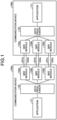
- FIG. 1 is a block diagram illustrating an example of configuration of a communication system including a communication device according to a first arrangement.
- the communication system according to the present arrangement has a structure in which a communication device 100a and a communication device 100b are connected with each other with communication media 201a to 201c and communication media 202a to 202c.
- the communication devices 100a and 100b have the same structure, and they are simply referred to as "communication device 100" when it is unnecessary to distinguish them.
- the communication device 100 includes an application 111, a data processor 120, and QKD modules 130a, 130b, and 130c.
- the application 111 executes processing including generation of data to be transmitted.
- FIG. 1 illustrates one application 111, but the communication device 100 may include a plurality of applications 111.
- the present arrangement illustrates an example including one application 111.
- the processing executed with the application 111 may be any desired processing.
- the application 111 of each of the communication devices 100 may be configured to implement the following service.
- the QKD modules 130a to 130c (an example of communication unit) generate (share) an encryption key by QKD with another communication device 100 (external communication device), and encrypt data using the generated encryption key to transmit and receive the data.
- the QKD modules 130a to 130c also decrypt data received from the other communication device 100 with the encryption key shared with the communication device 100.
- Each of the QKD modules 130 has a function of storing the generated encryption key therein, and notifying the key residual quantity corresponding to the quantity of the stored encryption key and the key generation speed in response to an inquiry from the data processor 120.
- the key residual quantity is expressed with, for example, the number of bits of the encryption key stored in the QKD module 130.
- Each of the QKD modules 130a to 130c is implemented with a processor, such as a dedicated integrated circuit (IC), that is, hardware.
- a processor such as a dedicated integrated circuit (IC)
- the QKD modules 130a to 130c may have the same structure (for example, the same product manufactured by the same manufacturer) or different structures (for example, products manufactured by different manufacturers).
- the QKD modules 130a to 130c are connected with the QKD modules 130a to 130c of the other communication device 100 via the communication media 201a to 201c, respectively.
- the communication media 201a to 201c are media used for generation of an encryption key and formed of, for example, optical fibers.
- the communication media 201a to 201c are also referred to as "quantum communication paths".
- the QKD modules 130a to 130c are also connected with the QKD modules 130a to 130c of the other communication device 100 via the communication media 202a to 202c, respectively.
- the communication media 202a to 202c are media used for transmission and reception of data encrypted with the encryption key.
- the communication media 202a to 202c are also referred to as "classical communication paths".
- the number of QKD modules 130a to 130c are not limited to three, but may be two or four or more.
- the QKD modules 130a to 130c are also simply referred to as "QKD modules 130" when it is unnecessary to distinguish them.
- the communication media 201a to 201c are also simply referred to as “communication media 201" when it is unnecessary to distinguish them
- the communication media 202a to 202c are also simply referred to as “communication media 202” when it is unnecessary to distinguish them.
- the system may be configured to use a communication medium (such as an optical fiber) acquired by unifying the communication medium 201 and the communication medium 202 for one QKD module 130. This structure leads to cost suppression by introducing quantum cryptography on an existing fiber by wavelength multiplexing of a data signal and a quantum cryptographic signal.
- the data processor 120 executes processing for data transmitted and received using the QKD modules 130. For example, the data processor 120 divides data transmitted from the application 111 into a plurality of pieces of transmission data to transmit the data with the QKD modules 130. In addition, the data processor 120 combines a plurality of pieces of data transmitted from the other communication device 100 and received with the QKD modules 130, and outputs the combined data to the application 111.
- Each of the communication devices 100 may serve as an apparatus (transmission apparatus) transmitting data and an apparatus (reception apparatus) receiving data.
- the communication device 100 may have only one of functions of the transmission apparatus and the reception apparatus, or both the functions. The following explanation mainly illustrates an example in which the communication device 100 has both the functions of the transmission apparatus and the reception apparatus.
- the following is an explanation of an outline of communication processing executed with the communication system according to FIG. 1 .
- the application 111 of the communication device 100a When the communication device 100a transmits data, the application 111 of the communication device 100a generates data, and transmits the generated data to the data processor 120.
- the data processor 120 divides the received data into a plurality of pieces of transmission data, and distributes the pieces of transmission data to the QKD modules 130a to 130c.
- the QKD modules 130a to 130c encrypt the pieces of transmission data using the encryption key, and transmit the transmission data to the QKD modules 130a to 130c of the opponent (communication device 100b).
- the QKD modules 130a to 130c of the communication device 100b that has received the transmission data decrypt the encrypted pieces of transmission data, and thereafter transmit the pieces of transmission data to the data processor 120.
- the data processor 120 combines the divided pieces of transmission data, and transmits the combined transmission data to the application 111.
- the application 111 executes processing to the combined data.
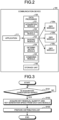
- FIG. 2 is a block diagram illustrating an example of a detailed functional structure of the communication device 100 according to the first arrangement.
- the communication device 100 includes the application 111, the data processor 120, the QKD modules 130a, 130b, and 130c, and a storage unit 140.
- the data processor 120 includes an acquisition module 121, a preparation module 122, a dividing module 123, a determination module 124, and a combining module 125.
- the acquisition module 121 acquires various types of information used for processing executed with the data processor 120. For example, the acquisition module 121 acquires the key residual quantity and the key generation speed from each of the QKD modules 130a, 130b, and 130c.
- the preparation module 122 prepares a distribution list serving as information referred to when the determination module 124 determines the distribution destinations of the transmission data.
- the dividing module 123 divides data requested to be transmitted by the application 111. For example, the dividing module 123 divides data received from the application 111 into a plurality of pieces of transmission data having a size of data transmitted with the QKD modules. The size of the pieces of transmission data may be fixed or variable.
- the dividing module 123 provides the pieces of transmission data with information to enable the combining module 125 of the other communication device 100 to combine the divided pieces of transmission data to restore the original data. For example, the dividing module 123 sets information (such as a sequence number) indicating the order of the piece of transmission data in a header of the piece of transmission data.
- the determination module 124 determines QKD modules 130 used for transmission of the pieces of transmission data divided with the dividing module 123. For example, the determination module 124 determines the QKD modules 130 used for transmission of the pieces of transmission data such that the QKD module 130 having the key generation speed and the key residual quantity at least one of which is larger (higher) than that of the other QKD modules 130 transmits more transmission data. It can also be said that the determination module 124 determines the ratio of the pieces of transmission data transmitted with the respective QKD modules 130 in accordance with at least one of the ratios of the key generation speed and the key residual quantity.
- the combining module 125 combines a plurality of pieces of transmission data acquired by receiving and decrypting the pieces of transmission data with the QKD modules 130. For example, the combining module 125 combines the pieces of transmission data with reference to the sequence numbers set in the pieces of transmission data to restore the data before division.
- Each of the units (application 111 and data processor 120) described above is implemented with, for example, one or a plurality of processors.
- each of the units described above may be implemented by executing computer programs with a processor, such as a central processing unit (CPU), that is, software.
- a processor such as a dedicated integrated circuit (IC), that is, hardware.
- processors may implement one of the units, or two of more of the units.
- the storage unit 140 stores therein various types of information used with the communication device 100.
- the storage unit 140 stores therein a distribution list prepared with the preparation module 122.
- the storage unit 140 may be formed of any generally used storage medium, such as a flash memory, a memory card, a random access memory (RAM), a hard disk drive (HDD), and an optical disk.
- FIG. 3 is a flowchart illustrating an example of the distribution list preparation processing according to the first arrangement.
- the acquisition module 121 determines whether the current state satisfies the condition (acquisition conditions) for acquiring the key residual quantity and the key generation speed (Step S101). Because a distribution list is prepared when the acquisition condition is satisfied, the acquisition condition can also be regarded as corresponding to the preparation condition for preparing a distribution list.
- the acquisition condition may be any desired condition. For example, a condition as follows may be used.
- the application 111 may call the acquisition module 121 when the application 111 transmits data, and the acquisition module 121 may determine that data has been received when the acquisition module 121 is called from the application 111.
- the system may have a structure in which the application 111 writes a message to a memory or the like shared with the acquisition module 121 when the reception state of the data changes, and the acquisition module 121 polls the memory to check presence/absence of the message.
- the timer may call the acquisition module 121, and the acquisition module 121 may determine that a certain time has passed when the acquisition module 121 is called from the timer.
- the processing is repeated until the acquisition condition is satisfied.
- the acquisition module 121 acquires the key residual quantity and the key generation speed from each of the QKD modules 130a, 130b, and 130c (Step S102) .
- the preparation module 122 prepares a distribution list with reference to the acquired key residual quantities and the key generation speeds (Step S103).
- the preparation module 122 stores the prepared distribution list in, for example, the storage unit 140. The details of the method for preparing the distribution list will be described later.
- the data transmission processing is processing of determining the QKD module 130 serving as the data distribution destination on the basis of the distribution list, and transmitting the pieces of transmission data with the determined QKD modules 130.
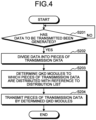
- FIG. 4 is a flowchart illustrating an example of the data transmission processing according to the first arrangement.
- the determination module 124 determines whether data to be transmitted has been generated (Step S201). For example, the determination module 124 determines that data to be transmitted has been generated when transmission of data is requested by the application 111. When no data to be transmitted has been generated (No at Step S201), the processing is repeated until data to be transmitted occurs.
- the dividing module 123 divides the data into a plurality of pieces of transmission data (Step S202).
- the determination module 124 determines the QKD module 130 serving as the distribution destination of each of the divided pieces of transmission data, with reference to the distribution list (Step S203).
- the determination module 124 distributes the pieces of transmission data to the determined QKD modules 130.
- the QKD modules 130 encrypt and transmit the respective pieces of transmission data distributed from the determination module 124 (Step S204).
- the following is an explanation of examples of the method for preparing the distribution list and the method for determining the distribution destinations using the distribution list.
- the following explanation illustrates examples of three methods for preparing the distribution list.
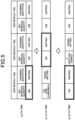
- FIG. 5 is a diagram illustrating an example of a distribution list prepared by the first preparation method.
- the distribution list in FIG. 5 corresponds to an example of a distribution list in the case where a plurality of pieces of transmission data are assigned to one or more QKD modules 130.
- a distribution list includes identification information (130a, 130b, 130c), the key residual quantity, and the transmission state of each of the QKD modules 130 serving as the distribution destinations.
- the transmission state includes, for example, states “transmitting” and "waiting".
- the preparation module 122 is capable of acquiring the transmission state by, for example, estimating the transmission state on the basis of the transmission time acquired by dividing the size of the previously transmitted data by the communication speed of the QKD module 130, or inquiring of the QKD module 130 the transmission state.
- the determination module 124 determines the QKD modules 130 serving as the distribution destinations as follows, on the basis of the distribution list as described above.
- the determination module 124 refers to the elements in the distribution list in order.
- the distribution list includes three elements corresponding to the three QKD modules 130. While the reference order may be any desired order, for example, the determination module 124 refers to the elements from the head (the element corresponding to the QKD module 130a illustrated on the left in the example of FIG. 5 ) to the end (the element corresponding to the QKD module 130c illustrated on the right in the example of FIG. 5 ) of the distribution list.
- the determination module 124 determines the QKD module 130 identified with the identification information included in the element as the QKD module 130 of the distribution destination. When the referred element does not satisfy the conditions described above, the determination module 124 refers to the next element.
- the determination module 124 determines the corresponding QKD module 130 as the distribution destination when the key residual quantity is 128 bits or more and the transmission state thereof is the state "waiting".
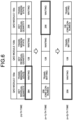
- FIG. 5 illustrates an example of determination of the distribution destinations for successive three times ((n)-th time, (n+1)-th time, and (n+2)-th time, n is an integer of 1 or more).
- the determination module 124 determines the QKD module 130a as the distribution destination.
- the determination module 124 determines the QKD module 130b as the distribution destination.
- the expression "one consumed” indicates that an encryption key of 128 bits corresponding to one transmission has been consumed.
- the determination module 124 determines the QKD module 130a as the distribution destination.
- FIG. 6 is a diagram illustrating an example of a distribution list prepared by the second preparation method.
- the distribution list in FIG. 6 corresponds to an example of a distribution list in the case where a plurality of pieces of transmission data are assigned to QKD modules 130 having a larger key residual quantity (for example, having the maximum key residual quantity) than that of the other QKD modules 130.
- the determination module 124 determines the QKD module 130a having the maximum key residual quantity as the distribution destination.
- the determination module 124 determines the QKD module 130c having the larger key residual quantity in the QKD module 130b and the QKD module 130c as the distribution destination.
- the determination module 124 determines the QKD module 130a having the maximum key residual quantity as the distribution destination.
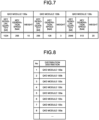
- FIG. 7 and FIG. 8 are diagrams for explaining the third method for preparing a distribution list.
- FIG. 7 illustrates an example of weights used when the distribution list is prepared.
- FIG. 8 illustrates an example of a distribution list prepared by the third preparation method.
- the distribution list of FIG. 8 corresponds to an example of a distribution list in the case where a plurality of pieces of transmission data are assigned to QKD modules 130 having a larger weight (for example, having the maximum weight) calculated from at least one of the key residual quantity and the key generation speed than that of the other QKD module 130.
- the distribution list in FIG. 8 has a form in which the identification information items of the QKD modules 130 are arranged in the distribution order, unlike FIG. 5 and FIG. 6 .
- the preparation module 122 prepares a distribution list every certain time (for example, once per second).
- identification information items of the distribution destinations for a certain time for example, one second are recorded in order.
- the preparation module 122 determines a weight for each of the QKD modules 130 from the key residual quantity and the key generation speed.
- the preparation module 122 calculates the weight by, for example, the following expression (1).
- the weights of the respective QKD modules 130 are calculated as follows.
- the weights may be values acquired by dividing the weights by the greatest common divisor.
- FIG. 7 illustrates examples (10, 3, 20) of the weights acquired by dividing the weights by the greatest common divisor 128.
- the preparation module 122 determines the assignment order of the QKD modules 130 for a certain time such that they have the use ratio according to the weight values, and prepares a distribution list describing the identification information items of the QKD modules 130 in the determined order.
- the preparation method can be regarded as preparing a distribution list describing the distribution destinations determined by weighted round robin using the calculated weights.
- the expression (1) is an expression calculating the weight using both the key residual quantity and the key generation speed, but the weight may be calculated using either of them. For example, the value itself of the key residual quantity or the value itself of the key generation speed may be used as the weight.
- a plurality of pieces of transmission data acquired by dividing the data to be transmitted are distributed and to a plurality of QKD modules and transmitted with the QKD modules.
- This structure enables increase in transmittable and receivable data quantity.
- the QKD module to be used is determined in accordance with the key residual quantity and the key generation speed. This structure avoids interruption of transmission due to selection of the QKD module 130 lacking the encryption key. Specifically, this structure enables continuation of communication until the resources of all the QKD modules 130 are consumed.
- the communication device determines the QKD module serving as the distribution destination of the data requested to be transmitted by a plurality of applications provided with priority levels with reference to the priority levels.
- FIG. 9 is a block diagram illustrating an example of configuration of a communication device 100-2 according to the second arrangement.
- the communication device 100-2 includes applications 111a and 111b, a data processor 120-2, QKD modules 130a, 130b, and 130c, and a storage unit 140-2.
- QKD modules 130a, 130b, and 130c are the same as those in the first arrangement, they are denoted with the same reference numerals, and an explanation thereof herein is omitted.
- the communication device 100-2 includes a plurality of applications 111a and 111b.
- the number of applications is not limited to two, but may be three or more.
- Each of the applications 111a and 111b executes processing including generation of data to be transmitted.
- the applications 111a and 111b are also simply referred to as "applications 111" when it is unnecessary to distinguish them.
- the data processor 120-2 includes an acquisition module 121-2, a preparation module 122-2, a dividing module 123, a determination module 124-2, and a combining module 125. Because the dividing module 123 and the combining module 125 are the same as those in the first arrangement, they are denoted with the same reference numerals, and an explanation thereof herein is omitted.
- the acquisition module 121-2 is different from the acquisition module 121 of the first arrangement in that the acquisition module 121-2 further has a function of acquiring the priority level from each of the applications 111.
- the preparation module 122-2 is different from the preparation module 122 according to the first arrangement in that the preparation module 122-2 further has a function of preparing a priority list describing the priority levels of the respective applications 111 and prepares a distribution list with reference to the priority list.
- the determination module 124-2 determines the QKD modules 130 used for transmission of the pieces of transmission data, with reference to the distribution list prepared with the preparation module 122-2.
- the storage unit 140-2 is different from the storage unit 140 according to the first arrangement in that the storage unit 140-2 further stores a priority list therein.
- FIG. 10 is a flowchart illustrating an example of the priority list preparation processing according to the second arrangement.
- the acquisition module 121-2 determines whether the current state satisfies the condition (acquisition condition) for acquiring the priority levels of the respective applications 111 (Step S301).
- the acquisition condition may be any desired condition.
- the condition as follows may be used.
- Whether the condition (C2-1) is satisfied can be determined according to whether, for example, the application 111 has been installed, whether a session used with the application 111 for communication has been established, whether communication using the established session has been started (such as outgoing call and incoming call in the case where the application 111 is used for telephone service), and/or whether the application 111 has been started.
- the application 111 calls an acquisition module 121-1 in data transmission, and the acquisition module 121-1 may determine that data has been received when the acquisition module 121-1 is called.
- the system may have the structure in which the application 111 writes a message to a memory or the like shared with the acquisition module 121-2 when the reception state of the data changes, and the acquisition module 121-2 polls the memory to check presence/absence of the message.
- the acquisition module 121-2 may use information written to the data transmitted from the application 111. Examples of the information written to the data include a type-of-service (ToS) value of the Internet protocol version 4 (IPv4) header.
- ToS type-of-service
- the processing is repeated until the acquisition condition is satisfied.
- the acquisition module 121-2 acquires the priority level from each of the applications 111 (Step S302).
- the preparation module 122-2 prepares a priority list with reference to the acquired priority levels (Step S303).
- the preparation module 122-2 stores the prepared priority list in, for example, the storage unit 140-2.
- FIG. 11 is a diagram illustrating a configuration example of the priority list. As illustrated in FIG. 11 , the priority list includes identification information items and priority levels of the applications 111, as the elements.
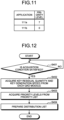
- FIG. 12 is a flowchart illustrating an example of the distribution list preparation processing according to the second arrangement.
- the distribution list preparation processing according to the second arrangement is different from the distribution list preparation processing ( FIG. 3 ) according to the first arrangement in that the second arrangement is additionally provided with processing of acquiring priority levels from the priority list (Step S403) and the distribution list is prepared using the acquired priority levels (Step S404).
- Step S401 and Step S402 are the same as Step S101 and Step S102 of FIG. 3 , and an explanation thereof is omitted.
- the acquisition module 121-2 acquires the identification information item and the priority level of each of the applications 111 from the priority list stored in the storage unit 140-2 (Step S403).
- the preparation module 122-2 prepares a distribution list using the key residual quantities, the key generation speeds, and the priority levels of the respective applications 111 (Step S404).
- FIG. 13 is a diagram illustrating an example of a distribution list prepared using the priority levels of the applications 111.
- the distribution list in FIG. 13 is prepared with reference to the weights calculated from the key residual quantities and the key generation speeds, in the same manner as the third method for preparing the distribution list according to the first arrangement.
- the weights are calculated, for example, in the same manner as FIG. 7 described above.
- the distribution list in FIG. 13 corresponds to an example of the distribution list in the case where a piece of transmission data requested by the application having a higher priority level than that of the other application is assigned to a QKD module 130 having the key generation speed and the key residual quantity at least one of which is larger than that of the other QKD modules 130.
- the determination module 124-2 determines the distribution destinations of the transmission data such that the application having a higher priority level is assigned to the QKD module 130 having a larger weight value.
- the priority level having a larger value means that the application has higher priority. As illustrated in FIG. 11 , the priority level “7" is set for the application 111a, and the priority level "0" is set for the application 111b.
- the preparation module 122-2 prepares a distribution list such that data is distributed to the QKD modules 130 in the order in accordance with the weights, and when the QKD modules 130a and 130c having larger weights are used, the application 111a with the higher priority level is assigned thereto.
- FIG. 13 illustrates an example of a distribution list prepared like this.
- the QKD modules 130a and 130c may be assigned as modules dedicated to the application 111a, or may be assigned to the application 111b when no data is transmitted from the application 111a.
- Each of the QKD modules 130 may behave as a communication medium for the application 111, and, for example, the communication device 100-2 may determine the QKD module 130 to be used in the QKD modules 130 using priority control of an upper layer, such as transmission selection algorithm described in IEEE 802.1Q-2018.
- the application 111a is assigned to the QKD modules 130a and 130c, but the application 111a may be assigned to the QKD module 130c alone, or the application 111a may be assigned to the QKD module 130a alone.
- the QKD module 130 to be used is determined in accordance with the key residual quantity, the key generation speed, and the priority level of the application.
- This structure enables the communication device to preferentially assign the encryption key resources to the application having a higher priority level when a plurality of applications having different priority levels are executed.
- a communication device determines the QKD modules serving as the data distribution destinations in accordance with requests from the applications.
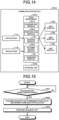
- FIG. 14 is a block diagram illustrating an example of configuration of a communication device 100-3 according to the third arrangement.
- the communication device 100-3 includes applications 111a and 111b, a data processor 120-3, QKD modules 130a, 130b, and 130c, and a storage unit 140-3.
- QKD modules 130a, 130b, and 130c and the applications 111a and 111b are the same as those in the first arrangement and the second arrangement, they are denoted with the same reference numerals, and an explanation thereof herein is omitted.
- the data processor 120-3 includes an acquisition module 121-3, a preparation module 122-3, a dividing module 123, a determination module 124-3, and a combining module 125. Because the dividing module 123 and the combining module 125 are the same as those in the first arrangement, they are denoted with the same reference numerals, and an explanation thereof herein is omitted.
- the acquisition module 121-3 is different from the acquisition module 121 of the first arrangement in that the acquisition module 121-3 further has a function of acquiring a request for communication quality such as the communication speed and the communication delay, from each of the applications 111.
- the preparation module 122-3 is different from the preparation module 122 according to the first arrangement in that the preparation module 122-3 further has a function of preparing a request list describing requests by the respective applications 111 and prepares a distribution list with reference to the request list.
- the determination module 124-3 determines the QKD modules 130 used for transmission of the pieces of transmission data, with reference to the distribution list prepared with the preparation module 122-3.
- the storage unit 140-3 is different from the storage unit 140 according to the first arrangement in that the storage unit 140-3 further stores a request list therein.
- FIG. 15 is a flowchart illustrating an example of the request list preparation processing according to the third arrangement.
- the acquisition module 121-3 determines whether the current state satisfies the condition (acquisition condition) for acquiring the requests by the respective applications 111 (Step S501).
- the acquisition condition may be any desired condition.
- the condition as follows may be used.
- the conditions (C3-1) and (C3-3) are the same as those of the conditions (C2-1) and (C2-3) of the second arrangement.
- the system may have a structure in which a control device connected in a remote manner determines the communication qualities (such as the communication speed and delay) of the respective applications 111, for example, to optimize the operation of the whole communication system and sets the communication qualities in the respective applications 111.
- the acquisition module 121-3 may determine, as the acquisition condition, whether the control device has set the state, the parameter, and the requested value of the communication device 100-3.
- the processing is repeated until the acquisition condition is satisfied.
- the acquisition module 121-3 acquires the request (communication delay and communication speed) from each of the applications 111 (Step S502).
- the acquisition module 121-3 may acquire requests from a database in which the control device sets setting values of the respective applications 111.
- the acquisition module 121-3 may acquire the setting values corresponding to the requests using a protocol, such as NETCONF/YANG.
- the system may have a structure in which the acquisition module 121-3 acquires the settings when the acquisition module 121-3 is notified or called back with a NETCONF client mounted in a remote manner when the NETCONF client accesses (read/write) the setting database of a NETCONF server mounted on the communication device 100-3.
- the preparation module 122-3 prepares a request list with reference to the acquired requests (Step S503).
- the preparation module 122-3 stores the prepared request list in, for example, the storage unit 140-3.
- FIG. 16 is a diagram illustrating a configuration example of the request list. As illustrated in FIG. 16 , the request list includes identification information, delay (ms), speed (bps), data size (byte), and period of time (sec) of each of the applications 111, as the elements.
- ms delay
- bps speed
- byte data size
- sec period of time
- FIG. 17 is a flowchart illustrating an example of the distribution list preparation processing according to the third arrangement.
- the third arrangement is different from the distribution list preparation processing ( FIG. 3 ) according to the first arrangement in that the third arrangement additionally includes processing (Step S603) of acquiring requests from the request list and a distribution list is prepared using the acquired requests (Step S604).
- Step S601 and Step S602 are the same as Step S101 and Step S102 of FIG. 3 , and an explanation thereof is omitted.
- the acquisition module 121-3 acquires the identification information and the request (communication delay and communication speed) of each of the applications 111 from the request list stored in the storage unit 140-3 (Step S603) .
- the preparation module 122-3 prepares a distribution list using the key residual quantities, the key generation speeds, and the requests by the respective applications 111 (Step S604) .
- FIG. 18 is a diagram illustrating an example of the key residual quantities and the key generation speeds of the respective QKD modules 130 at the time when the distribution list is prepared.
- FIG. 19 is a diagram illustrating examples of the communication delay and the communication speed estimated (calculated) for the application 111a.
- FIG. 20 is a diagram illustrating an example of the prepared distribution list. Suppose that the applications 111 have requested the delays and the like illustrated in FIG. 16 .
- the preparation module 122-3 searches for the QKD module 130 satisfying the request for the application 111a.
- the preparation module 122-3 calculates the communication delay, the maximum speed, and the time for which the maximum speed is maintained in the case where the application 111a uses each of the QKD modules 130.
- FIG. 19 illustrates examples of the calculated values of the maximum speed in the case where the key residual quantity exists, the transmission time in the case where the key residual quantity exists, the maintaining period of the maximum speed, the speed after the maintaining period, the transmission time after the maintaining period, and the propagation delay.
- the maximum speed is calculated with, for example, the following expressions (2-1) and (2-2).
- the number of data transmittable times per unit time is limited with the key residual quantity and the key generation speed.
- the maximum speed is calculated as the smaller one of the data size (bit) transmittable per unit time and the line speed in the case of non-encryption.
- the data size transmittable per unit time is calculated with the product of the data size of one transmission and the number of data transmittable times per unit time.
- the number of data transmittable times per unit time is expressed with the value acquired by dividing the quantity of the encryption key existing in the unit time by the number of bits of the encryption key for one encryption.
- the quantity of the encryption key existing in the unit time serves as the sum of the key residual quantity and the quantity (key generation speed ⁇ unit time) of the encryption key generated per unit time.
- the maximum speeds of the QKD modules 130b and 130c are also calculated in the same manner.
- Transmission time data size bit for one transmission / maximum speed bps
- the data size for one transmission is divided by the maximum speed in the expression (3).
- the transmission speeds of the QKD modules 130b and 130c are also calculated in the same manner.
- the transmission time is calculated as "0.1" being the longer transmission time in the QKD modules 130a and 130c.
- Maintaining period of maximum speed key residual quantity / number of bits of encryption key for one encryption key ⁇ data size bit for one transmission / line speed in non-encryption ⁇ key generation speed ⁇ number of bits of encryption key for one encryption
- the maintaining period of the maximum speed means the time spent until the whole key residual quantity is spent.
- the encryption key is generated while consumed.
- the data quantity (bps) encrypted with the encryption key generated per unit time is smaller than the line speed, the encryption key in stock is consumed. For this reason, a difference between the data quantity consumed per unit time on the basis of the line speed and the data quantity transmitted per unit time on the basis of the key generation speed is compensated with an encryption key in stock.
- the maintaining periods of time of the maximum speed for the QKD modules 130b and 130c are also calculated in the same manner.
- the maintaining period of the maximum speed in the case of assigning both the QKD modules 130a and 130c is the shorter one of the maintaining period of the maximum speed for the QKD module 130a and the maintaining period of the maximum speed for the QKD module 130c.
- Speed after the maintaining period data size bit for one transmission ⁇ key generation speed / number of bits of encryption key for one encryption
- the speeds after the maintaining period are also calculated for the QKD modules 130b and 130c and for the case of assigning both the QKD modules 130a and 130c, in the same manner.
- Transmission time after the maintaining period is calculated, for example, by the following expression (6).
- Transmission time after maintaining period data size bit for one transmission / speed bps after maintaining period
- the transmission times after the maintaining periods of time of the QKD modules 130b and 130c are also calculated in the same manner.
- the transmission time is calculated as "0.5" that is the longer transmission time in the QKD modules 130a and 130c.
- the communication delay is calculated by, for example, the sum of the transmission time and the propagation delay.
- the propagation delay is calculated, for example, as a value 1/2 as large as the roundtrip time between the opposed QKD modules 130. For example, a measured value may be used as the roundtrip time.
- the preparation module 122-3 compares the maximum speed in the case where the key residual quantity exists, the transmission time in the case where the key residual quantity exists, the maintaining period of the maximum speed, the speed after the maintaining period, the transmission time after the maintaining period, and the communication delay (transmission time + propagation delay) estimated (calculated) as described above with the request of each of the applications 111.
- the QKD modules 130 satisfy the request "the delay is 1 ms or less, the speed is 40 kbps or more, and the period is 0.01 (sec) or more" by the application 111a, only in the case of assigning the two QKD modules 130a and 130c.
- the QKD module 130b serves as the QKD module 130 satisfying the request "the delay is 20 ms or less, the speed is 4 kbps or more, and the period is 0.002 (sec) or more" by the application 111b.
- the preparation module 122-3 prepares a distribution list ( FIG. 20 ) to assign the application 111a to the QKD modules 130a and 130c and assigning the application 111b to the QKD module 130b.
- the QKD module to be used is determined in accordance with the key residual quantity, the key generation speed, and the request of the application.
- This structure enables preferential assignment of the encryption key resource to the application having a higher request in the cases where the system includes a plurality of applications having different requests.
- the first to the third arrangements enable increase in transmittable and receivable data quantity.
- FIG. 21 is an explanatory drawing illustrating a hardware configuration example of each of the communication devices according to the first to the third arrangements.
- Each of the communication devices includes a control device, such as a CPU 51, storage devices, such as a read only memory (ROM) 52 and a random access memory (RAM) 53, a communication interface 54 connected to a network and executing communication, and a bus 61 connecting the units.
- a control device such as a CPU 51
- storage devices such as a read only memory (ROM) 52 and a random access memory (RAM) 53
- ROM read only memory
- RAM random access memory
- communication interface 54 connected to a network and executing communication
- bus 61 connecting the units.
- a computer program executed with each of the communication devices according to the first to the third arrangement are installed in advance in the ROM 52 or the like to be provided.
- the computer program executed with each of the communication devices according to the first to the third arrangements may be configured to be recorded on a computer readable recording medium, such as a compact disk read only memory (CD-ROM), a flexible disk (FD), a compact disk recordable (CD-ROM), and a digital versatile disk (DVD), in a file of an installable form or an executable form, and provided as a computer program product.
- a computer readable recording medium such as a compact disk read only memory (CD-ROM), a flexible disk (FD), a compact disk recordable (CD-ROM), and a digital versatile disk (DVD)
- the computer program executed with each of the communication devices according to the first to the third arrangements may be configured to be stored in a computer connected to a network, such as the Internet, and provided by being downloaded via the network.
- the computer program executed with each of the communication devices according to the first to the third arrangements may be configured to be provided or distributed via a network, such as the Internet.
- the computer program executed with each of the communication devices according to the first to the third arrangements may cause a computer to function as the units of the communication device described above.
- the CPU 51 is capable of reading a computer program from a computer readable storage medium onto the main storage device and executing the computer program.
Landscapes
- Engineering & Computer Science (AREA)
- Computer Security & Cryptography (AREA)
- Signal Processing (AREA)
- Computer Networks & Wireless Communication (AREA)
- Theoretical Computer Science (AREA)
- Physics & Mathematics (AREA)
- Electromagnetism (AREA)
- Computer Hardware Design (AREA)
- Computing Systems (AREA)
- General Engineering & Computer Science (AREA)
- Computer And Data Communications (AREA)
- Data Exchanges In Wide-Area Networks (AREA)
- Mobile Radio Communication Systems (AREA)
- Information Transfer Between Computers (AREA)
- Communication Control (AREA)
Claims (10)
- Kommunikationsvorrichtung (100; 100-2; 100-3), die Folgendes umfasst:eine Vielzahl von Kommunikationseinheiten (130a, 130b, 130c), wobei jede von der Vielzahl von Kommunikationseinheiten dafür konfiguriert ist, durch Quantenschlüsselverteilung mit einer externen Kommunikationsvorrichtung einen Verschlüsselungsschlüssel zu erzeugen, Daten durch Verwenden des erzeugten Verschlüsselungsschlüssels zu verschlüsseln und die Daten an die externe Kommunikationsvorrichtung zu übermitteln;ein Teilungsmodul (123), das dafür konfiguriert ist, durch eine Anwendung (111) zur Übermittlung angeforderte Daten in eine Vielzahl von Übermittlungsdatenelementen zu teilen; undein Bestimmungsmodul (124; 124-2; 124-3), das dafür konfiguriert ist, unter der Vielzahl von Kommunikationseinheiten (130a, 130b, 130c) eine oder mehrere Kommunikationseinheiten zu bestimmen, die zur Übermittlung der geteilten Vielzahl von Elementen der Übermittlungsdaten verwendet werden sollen, dadurch gekennzeichnet, dassdas Bestimmungsmodul (124; 124-2; 124-3) dafür konfiguriert ist, die eine oder die mehreren Kommunikationseinheiten (130a, 130b, 130c) auf eine solche Weise zu bestimmen, dass jede von der einen oder den mehreren Kommunikationseinheiten, von denen mindestens eines von einer Erzeugungsgeschwindigkeit und einer Restmenge des Verschlüsselungsschlüssels größer ist als dasjenige einer anderen Kommunikationseinheit, mehr Elemente der Übermittlungsdaten übermittelt.
- Kommunikationsvorrichtung (100) nach Anspruch 1, wobei das Bestimmungsmodul (124) dafür konfiguriert ist, unter der Vielzahl von Kommunikationseinheiten (130a, 130b, 130c) eine Kommunikationseinheit, welche die Restmenge, gleich wie oder größer als eine Menge des Verschlüsselungsschlüssels, der zur Übermittlung der Übermittlungsdaten erforderlich ist, aufweist, als die eine oder die mehreren Kommunikationseinheiten (130a, 130b, 130c) zu bestimmen, die für die Übermittlung der Übermittlungsdaten verwendet werden sollen.
- Kommunikationsvorrichtung (100) nach Anspruch 1, wobei das Bestimmungsmodul (124) dafür konfiguriert ist, unter der Vielzahl von Kommunikationseinheiten (130a, 130b, 130c) eine Kommunikationseinheit, welche die Restmenge, größer als Restmengen anderer Kommunikationseinheiten, aufweist, als die eine oder die mehreren Kommunikationseinheiten (130a, 130b, 130c) zu bestimmen, die für die Übermittlung der Übermittlungsdaten verwendet werden sollen.
- Kommunikationsvorrichtung (100) nach Anspruch 1, wobei das Bestimmungsmodul (124) dafür konfiguriert ist, die eine oder die mehreren Kommunikationseinheiten (130a, 130b, 130c), die für die Übermittlung der Übermittlungsdaten verwendet werden sollen, auf eine solche Weise zu bestimmen, dass die eine oder die mehreren Kommunikationseinheiten (130a, 130b, 130c), die jeweils ein Gewicht, größer als Gewichte anderer Kommunikationseinheiten, aufweisen, mehr Elemente der Übermittlungsdaten übermitteln, wobei das Gewicht auf Grundlage mindestens eines von der Erzeugungsgeschwindigkeit und der Restmenge berechnet wird.
- Kommunikationsvorrichtung (100-2) nach Anspruch 1, wobeidas Teilungsmodul (123) dafür konfiguriert ist, alle Daten, die durch eine Vielzahl von mit jeweiligen Prioritätsniveaus versehenen Anwendungen (111a, 111b) zur Übermittlung angeforderten Daten in eine Vielzahl von Übermittlungsdatenelementen zu teilen, unddas Bestimmungsmodul (124-2) dafür konfiguriert ist, vorzugsweise, unter der Vielzahl von Anwendungen (111a, 111b), für eine Anwendung, deren Prioritätsniveau höher ist als dasjenige einer anderen Anwendung, jede von der einen oder den mehreren Kommunikationseinheiten (130a, 130b, 130c), von denen mindestens eines von der Erzeugungsgeschwindigkeit und der Restmenge des Verschlüsselungsschlüssels größer ist als dasjenige einer anderen Kommunikationseinheit, für die Übermittlung der Übermittlungsdaten zu bestimmen.
- Kommunikationsvorrichtung (100-3) nach Anspruch 1, wobei das Bestimmungsmodul (124-3) dafür konfiguriert ist, die eine oder die mehreren Kommunikationseinheiten (130a, 130b, 130c), die für die Übermittlung der Elemente der Übermittlungsdaten verwendet werden sollen, unter den Kommunikationseinheiten (130a, 130b, 130c) zu bestimmen, die mindestens eines von einer Kommunikationsgeschwindigkeit und einer Kommunikationsverzögerung, die durch die Anwendung (111) abgerufen werden, erfüllen, auf Grundlage von mindestens einem von Erzeugungsgeschwindigkeiten des Verschlüsselungsschlüssels der Kommunikationseinheiten (130a, 130b, 130c) und Restmengen des Verschlüsselungsschlüssels der Kommunikationseinheiten.
- Kommunikationsvorrichtung (100-3) nach Anspruch 6, wobei das Bestimmungsmodul (124-3) dafür konfiguriert ist, die eine oder die mehreren Kommunikationseinheiten (130a, 130b, 130c), die für die Übermittlung der Elemente der Übermittlungsdaten verwendet werden sollen, unter den Kommunikationseinheiten (130a, 130b, 130c) zu bestimmen, die mindestens eines von der Kommunikationsgeschwindigkeit und der Kommunikationsverzögerung, die durch die Anwendung (111) abgerufen werden, erfüllen, auf Grundlage von mindestens einem von maximalen Kommunikationsgeschwindigkeiten, berechnet auf Grundlage der Erzeugungsgeschwindigkeiten und der Restmengen, und Kommunikationsverzögerungen, berechnet auf Grundlage der maximalen Geschwindigkeiten.
- Kommunikationsvorrichtung (100; 100-2; 100-3) nach Anspruch 1, wobeijede von der Vielzahl von Kommunikationseinheiten (130a, 130b, 130c) dafür konfiguriert ist, Übermittlungsdaten zu empfangen, die durch die externe Kommunikationsvorrichtung verschlüsselt und übermittelt werden, und die empfangenen Kommunikationsdaten zu entschlüsseln, unddie Kommunikationsvorrichtung ferner ein Kombinationsmodul (125) umfasst, das dafür konfiguriert ist, die Übermittlungsdaten zu kombinieren, die durch die Vielzahl von Kommunikationseinheiten (130a, 130b, 130c) entschlüsselt werden.
- Rechnerlesbares Medium, das programmierte Anweisungen umfasst, wobei die Anweisungen veranlassen, dass ein Rechner, der in einer Kommunikationsvorrichtung eingeschlossen ist, die eine Vielzahl von Kommunikationseinheiten (130a, 130b, 130c) einschließt, die jeweils durch Quantenschlüsselverteilung mit einer externen Kommunikationsvorrichtung einen Verschlüsselungsschlüssel erzeugen, Daten durch Verwenden des erzeugten Verschlüsselungsschlüssels verschlüsseln und die Daten an die externe Kommunikationsvorrichtung übermitteln, Folgendes ausführt:Daten, die durch eine Anwendung (111) zur Übermittlung angefordert wurden, in eine Vielzahl von Übermittlungsdatenelementen zu teilen (S202); undunter der Vielzahl von Kommunikationseinheiten (130a, 130b, 130c) eine oder mehrere Kommunikationseinheiten zu bestimmen, die zur Übermittlung der geteilten Vielzahl von Elementen der Übermittlungsdaten verwendet werden sollen (S203), dadurch gekennzeichnet, dassdas Bestimmen einschließt, die eine oder die mehreren Kommunikationseinheiten auf eine solche Weise zu bestimmen, dass jede von der einen oder den mehreren Kommunikationseinheiten, von denen mindestens eines von einer Erzeugungsgeschwindigkeit und einer Restmenge des Verschlüsselungsschlüssels größer ist als dasjenige einer anderen Kommunikationseinheit, mehr Elemente der Übermittlungsdaten übermittelt.
- Kommunikationssystem, das Folgendes umfasst:eine Übermittlungsvorrichtung (100a), die dafür konfiguriert ist, Daten zu übermitteln; undeine Empfangsvorrichtung (100b), die dafür konfiguriert ist, die Daten zu empfangen, dadurch gekennzeichnet, dassdie Übermittlungsvorrichtung (100a) das Kommunikationsvorrichtung (100; 100-2; 100-3) nach Anspruch 1 ist.
Priority Applications (1)
| Application Number | Priority Date | Filing Date | Title |
|---|---|---|---|
| EP24151717.6A EP4329265A3 (de) | 2020-10-26 | 2021-08-17 | Kommunikationsvorrichtung, computerlesbares medium und kommunikationssystem |
Applications Claiming Priority (1)
| Application Number | Priority Date | Filing Date | Title |
|---|---|---|---|
| JP2020179079A JP7414688B2 (ja) | 2020-10-26 | 2020-10-26 | 通信装置、通信方法、プログラムおよび通信システム |
Related Child Applications (2)
| Application Number | Title | Priority Date | Filing Date |
|---|---|---|---|
| EP24151717.6A Division-Into EP4329265A3 (de) | 2020-10-26 | 2021-08-17 | Kommunikationsvorrichtung, computerlesbares medium und kommunikationssystem |
| EP24151717.6A Division EP4329265A3 (de) | 2020-10-26 | 2021-08-17 | Kommunikationsvorrichtung, computerlesbares medium und kommunikationssystem |
Publications (2)
| Publication Number | Publication Date |
|---|---|
| EP3989476A1 EP3989476A1 (de) | 2022-04-27 |
| EP3989476B1 true EP3989476B1 (de) | 2024-02-21 |
Family
ID=77367353
Family Applications (2)
| Application Number | Title | Priority Date | Filing Date |
|---|---|---|---|
| EP24151717.6A Pending EP4329265A3 (de) | 2020-10-26 | 2021-08-17 | Kommunikationsvorrichtung, computerlesbares medium und kommunikationssystem |
| EP21191721.6A Active EP3989476B1 (de) | 2020-10-26 | 2021-08-17 | Kommunikationsgerät, computerlesbares medium und kommunikationssystem |
Family Applications Before (1)
| Application Number | Title | Priority Date | Filing Date |
|---|---|---|---|
| EP24151717.6A Pending EP4329265A3 (de) | 2020-10-26 | 2021-08-17 | Kommunikationsvorrichtung, computerlesbares medium und kommunikationssystem |
Country Status (5)
| Country | Link |
|---|---|
| US (1) | US11824975B2 (de) |
| EP (2) | EP4329265A3 (de) |
| JP (1) | JP7414688B2 (de) |
| KR (1) | KR102612892B1 (de) |
| CN (1) | CN114499830B (de) |
Families Citing this family (5)
| Publication number | Priority date | Publication date | Assignee | Title |
|---|---|---|---|---|
| JP2023112981A (ja) * | 2022-02-02 | 2023-08-15 | 株式会社野村総合研究所 | 秘密計算システム、秘密計算方法及び秘密計算プログラム |
| JP2024098810A (ja) * | 2023-01-11 | 2024-07-24 | 国立研究開発法人情報通信研究機構 | 通信ネットワークの制御装置 |
| JP7775242B2 (ja) * | 2023-03-17 | 2025-11-25 | 株式会社東芝 | 制御装置、量子暗号通信システム、情報処理装置、鍵管理装置、制御方法、情報処理方法、鍵管理方法及びプログラム |
| JP7826254B2 (ja) * | 2023-09-13 | 2026-03-09 | 株式会社東芝 | 鍵管理サーバ装置、qkdシステム、鍵管理方法及びプログラム |
| US12536461B1 (en) * | 2024-07-18 | 2026-01-27 | Bank Of America Corporation | System and method using quantum bits to reduce latency in data transmission |
Family Cites Families (17)
| Publication number | Priority date | Publication date | Assignee | Title |
|---|---|---|---|---|
| JP5121231B2 (ja) * | 2004-06-28 | 2013-01-16 | パナソニック株式会社 | データ処理装置 |
| US7933344B2 (en) | 2006-04-25 | 2011-04-26 | Mircosoft Corporation | OFDMA based on cognitive radio |
| EP2077636A4 (de) * | 2006-10-24 | 2013-10-16 | Mitsubishi Electric Corp | Sendervorrichtung, empfängervorrichtung, kommunikationsverfahren und kommunikationssystem |
| WO2009058154A1 (en) * | 2007-11-02 | 2009-05-07 | Qualcomm Incorporated | Apparatus and methods of configurable system event and resource arbitration management |
| JP2009218744A (ja) * | 2008-03-07 | 2009-09-24 | Nec Corp | 微弱光通信のフレーム同期方法およびシステム |
| EP2384073B1 (de) * | 2009-01-27 | 2018-02-28 | Mitsubishi Electric Corporation | Übertragungsgerät, kommunikationssystem und kommunikationsverfahren |
| JP5672425B2 (ja) * | 2009-10-07 | 2015-02-18 | 日本電気株式会社 | 暗号通信システムおよび暗号通信方法 |
| JP2012010052A (ja) * | 2010-06-24 | 2012-01-12 | Sony Corp | 情報処理装置および方法、プログラム、並びに、情報処理システム |
| KR101437364B1 (ko) * | 2011-07-19 | 2014-09-03 | 에스케이텔레콤 주식회사 | 송신장치 및 수신장치와 그 장치의 동작 방법 |
| JP5915015B2 (ja) * | 2011-07-25 | 2016-05-11 | ソニー株式会社 | 通信装置及び通信方法、並びに通信システム |
| JP6211963B2 (ja) * | 2014-03-18 | 2017-10-11 | 株式会社東芝 | 受信機、送信機、通信システムおよび通信方法 |
| JP5771308B1 (ja) * | 2014-04-04 | 2015-08-26 | 日本電信電話株式会社 | ネットワーク装置及び同期制御方法 |
| CN105827397B (zh) * | 2015-01-08 | 2019-10-18 | 阿里巴巴集团控股有限公司 | 基于可信中继的量子密钥分发系统、方法及装置 |
| GB2534917B (en) * | 2015-02-05 | 2017-09-27 | Toshiba Res Europe Ltd | A quantum communication system and a quantum communication method |
| JP2017169187A (ja) * | 2016-03-14 | 2017-09-21 | 株式会社東芝 | 量子鍵配送装置、量子鍵配送システム、および量子鍵配送方法 |
| JP2018033079A (ja) * | 2016-08-26 | 2018-03-01 | 株式会社東芝 | 通信装置、通信システム及び通信方法 |
| JP2019161557A (ja) * | 2018-03-15 | 2019-09-19 | 株式会社東芝 | 暗号通信装置、暗号通信システム、暗号通信方法及びプログラム |
-
2020
- 2020-10-26 JP JP2020179079A patent/JP7414688B2/ja active Active
-
2021
- 2021-08-17 EP EP24151717.6A patent/EP4329265A3/de active Pending
- 2021-08-17 EP EP21191721.6A patent/EP3989476B1/de active Active
- 2021-08-24 KR KR1020210111583A patent/KR102612892B1/ko active Active
- 2021-08-26 CN CN202110985742.4A patent/CN114499830B/zh active Active
- 2021-08-30 US US17/461,854 patent/US11824975B2/en active Active
Also Published As
| Publication number | Publication date |
|---|---|
| JP7414688B2 (ja) | 2024-01-16 |
| EP3989476A1 (de) | 2022-04-27 |
| US20220131689A1 (en) | 2022-04-28 |
| EP4329265A3 (de) | 2024-05-29 |
| US11824975B2 (en) | 2023-11-21 |
| CN114499830B (zh) | 2024-01-02 |
| EP4329265A2 (de) | 2024-02-28 |
| KR20220055403A (ko) | 2022-05-03 |
| JP2022070059A (ja) | 2022-05-12 |
| KR102612892B1 (ko) | 2023-12-13 |
| CN114499830A (zh) | 2022-05-13 |
Similar Documents
| Publication | Publication Date | Title |
|---|---|---|
| EP3989476B1 (de) | Kommunikationsgerät, computerlesbares medium und kommunikationssystem | |
| US11316677B2 (en) | Quantum key distribution node apparatus and method for quantum key distribution thereof | |
| US10630464B2 (en) | Communication device, communication system, and communication method allocating shared keys to plural channels | |
| US9306734B2 (en) | Communication device, key generating device, and computer readable medium | |
| JP5624526B2 (ja) | 鍵共有装置、鍵共有方法および鍵共有プログラム | |
| CN111371790B (zh) | 基于联盟链的数据加密发送方法、相关方法、装置和系统 | |
| US20090190524A1 (en) | Apparatus for distributing data traffic in heterogeneous wireless networks | |
| EP3413505A1 (de) | Kommunikationsvorrichtung, kommunikationssystem, schlüsselteilungsverfahren und computerlesbares medium | |
| US10439807B2 (en) | Communication device, communication system, and communication method | |
| US8339960B2 (en) | Congestion control system | |
| JP2016171530A (ja) | 通信装置、通信方法、プログラムおよび通信システム | |
| EP3454500A1 (de) | Kommunikationsvorrichtung, kommunikationsverfahren, computerlesbares medium und kommunikationssystem | |
| EP3541007A1 (de) | Vorrichtung zur kryptographischen kommunikation, system zur kryptografischen kommunikation, verfahren zur kryptografischen kommunikation und computerlesbares medium | |
| EP4246876A1 (de) | Quantenkryptographisches kommunikationssystem, schlüsselverwaltungsvorrichtung und schlüsselverwaltungsverfahren | |
| EP3879750B1 (de) | Kommunikationsendgeräte und programme | |
| JP2022031361A (ja) | 通信装置、通信方法、プログラムおよび通信システム | |
| US12341879B2 (en) | Key management device, quantum cryptography communication system, and computer program product | |
| JP2023071515A (ja) | 量子暗号ストレージシステム、分散制御装置及びプログラム | |
| CN112860790A (zh) | 数据管理方法、系统、装置 | |
| US11012427B2 (en) | RSA trusted networks: RSA packet frames for advanced networking switches | |
| JP2024132566A (ja) | 制御装置、量子暗号通信システム、情報処理装置、鍵管理装置、制御方法、情報処理方法、鍵管理方法及びプログラム | |
| JP7830392B2 (ja) | 情報処理装置、情報処理方法およびプログラム | |
| JP2010141470A (ja) | 情報通信システム及びその通信方法 | |
| WO2010109763A1 (ja) | 暗号化通信システムにおける通信方法および装置 | |
| CN106685911A (zh) | 一种数据处理方法及鉴权服务器、客户端 |
Legal Events
| Date | Code | Title | Description |
|---|---|---|---|
| PUAI | Public reference made under article 153(3) epc to a published international application that has entered the european phase |
Free format text: ORIGINAL CODE: 0009012 |
|
| STAA | Information on the status of an ep patent application or granted ep patent |
Free format text: STATUS: REQUEST FOR EXAMINATION WAS MADE |
|
| 17P | Request for examination filed |
Effective date: 20210817 |
|
| AK | Designated contracting states |
Kind code of ref document: A1 Designated state(s): AL AT BE BG CH CY CZ DE DK EE ES FI FR GB GR HR HU IE IS IT LI LT LU LV MC MK MT NL NO PL PT RO RS SE SI SK SM TR |
|
| GRAP | Despatch of communication of intention to grant a patent |
Free format text: ORIGINAL CODE: EPIDOSNIGR1 |
|
| STAA | Information on the status of an ep patent application or granted ep patent |
Free format text: STATUS: GRANT OF PATENT IS INTENDED |
|
| INTG | Intention to grant announced |
Effective date: 20230901 |
|
| GRAS | Grant fee paid |
Free format text: ORIGINAL CODE: EPIDOSNIGR3 |
|
| GRAA | (expected) grant |
Free format text: ORIGINAL CODE: 0009210 |
|
| STAA | Information on the status of an ep patent application or granted ep patent |
Free format text: STATUS: THE PATENT HAS BEEN GRANTED |
|
| AK | Designated contracting states |
Kind code of ref document: B1 Designated state(s): AL AT BE BG CH CY CZ DE DK EE ES FI FR GB GR HR HU IE IS IT LI LT LU LV MC MK MT NL NO PL PT RO RS SE SI SK SM TR |
|
| REG | Reference to a national code |
Ref country code: GB Ref legal event code: FG4D |
|
| REG | Reference to a national code |
Ref country code: CH Ref legal event code: EP |
|
| REG | Reference to a national code |
Ref country code: IE Ref legal event code: FG4D |
|
| REG | Reference to a national code |
Ref country code: DE Ref legal event code: R096 Ref document number: 602021009555 Country of ref document: DE |
|
| REG | Reference to a national code |
Ref country code: LT Ref legal event code: MG9D |
|
| REG | Reference to a national code |
Ref country code: NL Ref legal event code: MP Effective date: 20240221 |
|
| PG25 | Lapsed in a contracting state [announced via postgrant information from national office to epo] |
Ref country code: IS Free format text: LAPSE BECAUSE OF FAILURE TO SUBMIT A TRANSLATION OF THE DESCRIPTION OR TO PAY THE FEE WITHIN THE PRESCRIBED TIME-LIMIT Effective date: 20240621 |
|
| PG25 | Lapsed in a contracting state [announced via postgrant information from national office to epo] |
Ref country code: LT Free format text: LAPSE BECAUSE OF FAILURE TO SUBMIT A TRANSLATION OF THE DESCRIPTION OR TO PAY THE FEE WITHIN THE PRESCRIBED TIME-LIMIT Effective date: 20240221 |
|
| PG25 | Lapsed in a contracting state [announced via postgrant information from national office to epo] |
Ref country code: GR Free format text: LAPSE BECAUSE OF FAILURE TO SUBMIT A TRANSLATION OF THE DESCRIPTION OR TO PAY THE FEE WITHIN THE PRESCRIBED TIME-LIMIT Effective date: 20240522 |
|
| REG | Reference to a national code |
Ref country code: AT Ref legal event code: MK05 Ref document number: 1660056 Country of ref document: AT Kind code of ref document: T Effective date: 20240221 |
|
| PG25 | Lapsed in a contracting state [announced via postgrant information from national office to epo] |
Ref country code: HR Free format text: LAPSE BECAUSE OF FAILURE TO SUBMIT A TRANSLATION OF THE DESCRIPTION OR TO PAY THE FEE WITHIN THE PRESCRIBED TIME-LIMIT Effective date: 20240221 Ref country code: NL Free format text: LAPSE BECAUSE OF FAILURE TO SUBMIT A TRANSLATION OF THE DESCRIPTION OR TO PAY THE FEE WITHIN THE PRESCRIBED TIME-LIMIT Effective date: 20240221 Ref country code: RS Free format text: LAPSE BECAUSE OF FAILURE TO SUBMIT A TRANSLATION OF THE DESCRIPTION OR TO PAY THE FEE WITHIN THE PRESCRIBED TIME-LIMIT Effective date: 20240521 |
|
| PG25 | Lapsed in a contracting state [announced via postgrant information from national office to epo] |
Ref country code: ES Free format text: LAPSE BECAUSE OF FAILURE TO SUBMIT A TRANSLATION OF THE DESCRIPTION OR TO PAY THE FEE WITHIN THE PRESCRIBED TIME-LIMIT Effective date: 20240221 |
|
| PG25 | Lapsed in a contracting state [announced via postgrant information from national office to epo] |
Ref country code: AT Free format text: LAPSE BECAUSE OF FAILURE TO SUBMIT A TRANSLATION OF THE DESCRIPTION OR TO PAY THE FEE WITHIN THE PRESCRIBED TIME-LIMIT Effective date: 20240221 |
|
| PG25 | Lapsed in a contracting state [announced via postgrant information from national office to epo] |
Ref country code: RS Free format text: LAPSE BECAUSE OF FAILURE TO SUBMIT A TRANSLATION OF THE DESCRIPTION OR TO PAY THE FEE WITHIN THE PRESCRIBED TIME-LIMIT Effective date: 20240521 Ref country code: NO Free format text: LAPSE BECAUSE OF FAILURE TO SUBMIT A TRANSLATION OF THE DESCRIPTION OR TO PAY THE FEE WITHIN THE PRESCRIBED TIME-LIMIT Effective date: 20240521 Ref country code: NL Free format text: LAPSE BECAUSE OF FAILURE TO SUBMIT A TRANSLATION OF THE DESCRIPTION OR TO PAY THE FEE WITHIN THE PRESCRIBED TIME-LIMIT Effective date: 20240221 Ref country code: LT Free format text: LAPSE BECAUSE OF FAILURE TO SUBMIT A TRANSLATION OF THE DESCRIPTION OR TO PAY THE FEE WITHIN THE PRESCRIBED TIME-LIMIT Effective date: 20240221 Ref country code: IS Free format text: LAPSE BECAUSE OF FAILURE TO SUBMIT A TRANSLATION OF THE DESCRIPTION OR TO PAY THE FEE WITHIN THE PRESCRIBED TIME-LIMIT Effective date: 20240621 Ref country code: HR Free format text: LAPSE BECAUSE OF FAILURE TO SUBMIT A TRANSLATION OF THE DESCRIPTION OR TO PAY THE FEE WITHIN THE PRESCRIBED TIME-LIMIT Effective date: 20240221 Ref country code: GR Free format text: LAPSE BECAUSE OF FAILURE TO SUBMIT A TRANSLATION OF THE DESCRIPTION OR TO PAY THE FEE WITHIN THE PRESCRIBED TIME-LIMIT Effective date: 20240522 Ref country code: FI Free format text: LAPSE BECAUSE OF FAILURE TO SUBMIT A TRANSLATION OF THE DESCRIPTION OR TO PAY THE FEE WITHIN THE PRESCRIBED TIME-LIMIT Effective date: 20240221 Ref country code: ES Free format text: LAPSE BECAUSE OF FAILURE TO SUBMIT A TRANSLATION OF THE DESCRIPTION OR TO PAY THE FEE WITHIN THE PRESCRIBED TIME-LIMIT Effective date: 20240221 Ref country code: BG Free format text: LAPSE BECAUSE OF FAILURE TO SUBMIT A TRANSLATION OF THE DESCRIPTION OR TO PAY THE FEE WITHIN THE PRESCRIBED TIME-LIMIT Effective date: 20240221 Ref country code: AT Free format text: LAPSE BECAUSE OF FAILURE TO SUBMIT A TRANSLATION OF THE DESCRIPTION OR TO PAY THE FEE WITHIN THE PRESCRIBED TIME-LIMIT Effective date: 20240221 |
|
| PG25 | Lapsed in a contracting state [announced via postgrant information from national office to epo] |
Ref country code: PL Free format text: LAPSE BECAUSE OF FAILURE TO SUBMIT A TRANSLATION OF THE DESCRIPTION OR TO PAY THE FEE WITHIN THE PRESCRIBED TIME-LIMIT Effective date: 20240221 Ref country code: PT Free format text: LAPSE BECAUSE OF FAILURE TO SUBMIT A TRANSLATION OF THE DESCRIPTION OR TO PAY THE FEE WITHIN THE PRESCRIBED TIME-LIMIT Effective date: 20240621 |
|
| PG25 | Lapsed in a contracting state [announced via postgrant information from national office to epo] |
Ref country code: SE Free format text: LAPSE BECAUSE OF FAILURE TO SUBMIT A TRANSLATION OF THE DESCRIPTION OR TO PAY THE FEE WITHIN THE PRESCRIBED TIME-LIMIT Effective date: 20240221 Ref country code: PT Free format text: LAPSE BECAUSE OF FAILURE TO SUBMIT A TRANSLATION OF THE DESCRIPTION OR TO PAY THE FEE WITHIN THE PRESCRIBED TIME-LIMIT Effective date: 20240621 Ref country code: PL Free format text: LAPSE BECAUSE OF FAILURE TO SUBMIT A TRANSLATION OF THE DESCRIPTION OR TO PAY THE FEE WITHIN THE PRESCRIBED TIME-LIMIT Effective date: 20240221 Ref country code: LV Free format text: LAPSE BECAUSE OF FAILURE TO SUBMIT A TRANSLATION OF THE DESCRIPTION OR TO PAY THE FEE WITHIN THE PRESCRIBED TIME-LIMIT Effective date: 20240221 |
|
| PG25 | Lapsed in a contracting state [announced via postgrant information from national office to epo] |
Ref country code: DK Free format text: LAPSE BECAUSE OF FAILURE TO SUBMIT A TRANSLATION OF THE DESCRIPTION OR TO PAY THE FEE WITHIN THE PRESCRIBED TIME-LIMIT Effective date: 20240221 |
|
| PG25 | Lapsed in a contracting state [announced via postgrant information from national office to epo] |
Ref country code: SM Free format text: LAPSE BECAUSE OF FAILURE TO SUBMIT A TRANSLATION OF THE DESCRIPTION OR TO PAY THE FEE WITHIN THE PRESCRIBED TIME-LIMIT Effective date: 20240221 |
|
| PG25 | Lapsed in a contracting state [announced via postgrant information from national office to epo] |
Ref country code: EE Free format text: LAPSE BECAUSE OF FAILURE TO SUBMIT A TRANSLATION OF THE DESCRIPTION OR TO PAY THE FEE WITHIN THE PRESCRIBED TIME-LIMIT Effective date: 20240221 Ref country code: CZ Free format text: LAPSE BECAUSE OF FAILURE TO SUBMIT A TRANSLATION OF THE DESCRIPTION OR TO PAY THE FEE WITHIN THE PRESCRIBED TIME-LIMIT Effective date: 20240221 |
|
| PG25 | Lapsed in a contracting state [announced via postgrant information from national office to epo] |
Ref country code: SK Free format text: LAPSE BECAUSE OF FAILURE TO SUBMIT A TRANSLATION OF THE DESCRIPTION OR TO PAY THE FEE WITHIN THE PRESCRIBED TIME-LIMIT Effective date: 20240221 |
|
| PG25 | Lapsed in a contracting state [announced via postgrant information from national office to epo] |
Ref country code: SM Free format text: LAPSE BECAUSE OF FAILURE TO SUBMIT A TRANSLATION OF THE DESCRIPTION OR TO PAY THE FEE WITHIN THE PRESCRIBED TIME-LIMIT Effective date: 20240221 Ref country code: SK Free format text: LAPSE BECAUSE OF FAILURE TO SUBMIT A TRANSLATION OF THE DESCRIPTION OR TO PAY THE FEE WITHIN THE PRESCRIBED TIME-LIMIT Effective date: 20240221 Ref country code: RO Free format text: LAPSE BECAUSE OF FAILURE TO SUBMIT A TRANSLATION OF THE DESCRIPTION OR TO PAY THE FEE WITHIN THE PRESCRIBED TIME-LIMIT Effective date: 20240221 Ref country code: EE Free format text: LAPSE BECAUSE OF FAILURE TO SUBMIT A TRANSLATION OF THE DESCRIPTION OR TO PAY THE FEE WITHIN THE PRESCRIBED TIME-LIMIT Effective date: 20240221 Ref country code: DK Free format text: LAPSE BECAUSE OF FAILURE TO SUBMIT A TRANSLATION OF THE DESCRIPTION OR TO PAY THE FEE WITHIN THE PRESCRIBED TIME-LIMIT Effective date: 20240221 Ref country code: CZ Free format text: LAPSE BECAUSE OF FAILURE TO SUBMIT A TRANSLATION OF THE DESCRIPTION OR TO PAY THE FEE WITHIN THE PRESCRIBED TIME-LIMIT Effective date: 20240221 |
|
| REG | Reference to a national code |
Ref country code: DE Ref legal event code: R097 Ref document number: 602021009555 Country of ref document: DE |
|
| PG25 | Lapsed in a contracting state [announced via postgrant information from national office to epo] |
Ref country code: IT Free format text: LAPSE BECAUSE OF FAILURE TO SUBMIT A TRANSLATION OF THE DESCRIPTION OR TO PAY THE FEE WITHIN THE PRESCRIBED TIME-LIMIT Effective date: 20240221 |
|
| PLBE | No opposition filed within time limit |
Free format text: ORIGINAL CODE: 0009261 |
|
| STAA | Information on the status of an ep patent application or granted ep patent |
Free format text: STATUS: NO OPPOSITION FILED WITHIN TIME LIMIT |
|
| PG25 | Lapsed in a contracting state [announced via postgrant information from national office to epo] |
Ref country code: IT Free format text: LAPSE BECAUSE OF FAILURE TO SUBMIT A TRANSLATION OF THE DESCRIPTION OR TO PAY THE FEE WITHIN THE PRESCRIBED TIME-LIMIT Effective date: 20240221 |
|
| 26N | No opposition filed |
Effective date: 20241122 |
|
| REG | Reference to a national code |
Ref country code: CH Ref legal event code: PL |
|
| PG25 | Lapsed in a contracting state [announced via postgrant information from national office to epo] |
Ref country code: LU Free format text: LAPSE BECAUSE OF NON-PAYMENT OF DUE FEES Effective date: 20240817 |
|
| PG25 | Lapsed in a contracting state [announced via postgrant information from national office to epo] |
Ref country code: MC Free format text: LAPSE BECAUSE OF FAILURE TO SUBMIT A TRANSLATION OF THE DESCRIPTION OR TO PAY THE FEE WITHIN THE PRESCRIBED TIME-LIMIT Effective date: 20240221 Ref country code: SI Free format text: LAPSE BECAUSE OF FAILURE TO SUBMIT A TRANSLATION OF THE DESCRIPTION OR TO PAY THE FEE WITHIN THE PRESCRIBED TIME-LIMIT Effective date: 20240221 Ref country code: CH Free format text: LAPSE BECAUSE OF NON-PAYMENT OF DUE FEES Effective date: 20240831 |
|
| REG | Reference to a national code |
Ref country code: BE Ref legal event code: MM Effective date: 20240831 |
|
| PGFP | Annual fee paid to national office [announced via postgrant information from national office to epo] |
Ref country code: GB Payment date: 20250626 Year of fee payment: 5 |
|
| PG25 | Lapsed in a contracting state [announced via postgrant information from national office to epo] |
Ref country code: BE Free format text: LAPSE BECAUSE OF NON-PAYMENT OF DUE FEES Effective date: 20240831 |
|
| PG25 | Lapsed in a contracting state [announced via postgrant information from national office to epo] |
Ref country code: FR Free format text: LAPSE BECAUSE OF NON-PAYMENT OF DUE FEES Effective date: 20240831 |
|
| PG25 | Lapsed in a contracting state [announced via postgrant information from national office to epo] |
Ref country code: IE Free format text: LAPSE BECAUSE OF NON-PAYMENT OF DUE FEES Effective date: 20240817 |
|
| PGFP | Annual fee paid to national office [announced via postgrant information from national office to epo] |
Ref country code: DE Payment date: 20250624 Year of fee payment: 5 |
|
| PG25 | Lapsed in a contracting state [announced via postgrant information from national office to epo] |
Ref country code: CY Free format text: LAPSE BECAUSE OF FAILURE TO SUBMIT A TRANSLATION OF THE DESCRIPTION OR TO PAY THE FEE WITHIN THE PRESCRIBED TIME-LIMIT; INVALID AB INITIO Effective date: 20210817 |
|
| PG25 | Lapsed in a contracting state [announced via postgrant information from national office to epo] |
Ref country code: HU Free format text: LAPSE BECAUSE OF FAILURE TO SUBMIT A TRANSLATION OF THE DESCRIPTION OR TO PAY THE FEE WITHIN THE PRESCRIBED TIME-LIMIT; INVALID AB INITIO Effective date: 20210817 |