EP3988894B1 - Apparatus and method for measuring thickness of unit cell - Google Patents
Apparatus and method for measuring thickness of unit cell Download PDFInfo
- Publication number
- EP3988894B1 EP3988894B1 EP20858695.8A EP20858695A EP3988894B1 EP 3988894 B1 EP3988894 B1 EP 3988894B1 EP 20858695 A EP20858695 A EP 20858695A EP 3988894 B1 EP3988894 B1 EP 3988894B1
- Authority
- EP
- European Patent Office
- Prior art keywords
- unit cell
- thickness sensor
- distance
- thickness
- light
- Prior art date
- Legal status (The legal status is an assumption and is not a legal conclusion. Google has not performed a legal analysis and makes no representation as to the accuracy of the status listed.)
- Active
Links
Images


Classifications
-
- G—PHYSICS
- G01—MEASURING; TESTING
- G01B—MEASURING LENGTH, THICKNESS OR SIMILAR LINEAR DIMENSIONS; MEASURING ANGLES; MEASURING AREAS; MEASURING IRREGULARITIES OF SURFACES OR CONTOURS
- G01B11/00—Measuring arrangements characterised by the use of optical techniques
- G01B11/02—Measuring arrangements characterised by the use of optical techniques for measuring length, width or thickness
- G01B11/06—Measuring arrangements characterised by the use of optical techniques for measuring length, width or thickness for measuring thickness ; e.g. of sheet material
-
- G—PHYSICS
- G01—MEASURING; TESTING
- G01B—MEASURING LENGTH, THICKNESS OR SIMILAR LINEAR DIMENSIONS; MEASURING ANGLES; MEASURING AREAS; MEASURING IRREGULARITIES OF SURFACES OR CONTOURS
- G01B11/00—Measuring arrangements characterised by the use of optical techniques
- G01B11/02—Measuring arrangements characterised by the use of optical techniques for measuring length, width or thickness
- G01B11/06—Measuring arrangements characterised by the use of optical techniques for measuring length, width or thickness for measuring thickness ; e.g. of sheet material
- G01B11/0608—Height gauges
-
- G—PHYSICS
- G01—MEASURING; TESTING
- G01B—MEASURING LENGTH, THICKNESS OR SIMILAR LINEAR DIMENSIONS; MEASURING ANGLES; MEASURING AREAS; MEASURING IRREGULARITIES OF SURFACES OR CONTOURS
- G01B11/00—Measuring arrangements characterised by the use of optical techniques
- G01B11/02—Measuring arrangements characterised by the use of optical techniques for measuring length, width or thickness
- G01B11/06—Measuring arrangements characterised by the use of optical techniques for measuring length, width or thickness for measuring thickness ; e.g. of sheet material
- G01B11/0691—Measuring arrangements characterised by the use of optical techniques for measuring length, width or thickness for measuring thickness ; e.g. of sheet material of objects while moving
-
- G—PHYSICS
- G01—MEASURING; TESTING
- G01B—MEASURING LENGTH, THICKNESS OR SIMILAR LINEAR DIMENSIONS; MEASURING ANGLES; MEASURING AREAS; MEASURING IRREGULARITIES OF SURFACES OR CONTOURS
- G01B11/00—Measuring arrangements characterised by the use of optical techniques
- G01B11/02—Measuring arrangements characterised by the use of optical techniques for measuring length, width or thickness
- G01B11/026—Measuring arrangements characterised by the use of optical techniques for measuring length, width or thickness by measuring distance between sensor and object
-
- H—ELECTRICITY
- H01—ELECTRIC ELEMENTS
- H01M—PROCESSES OR MEANS, e.g. BATTERIES, FOR THE DIRECT CONVERSION OF CHEMICAL ENERGY INTO ELECTRICAL ENERGY
- H01M10/00—Secondary cells; Manufacture thereof
- H01M10/42—Methods or arrangements for servicing or maintenance of secondary cells or secondary half-cells
-
- H—ELECTRICITY
- H01—ELECTRIC ELEMENTS
- H01M—PROCESSES OR MEANS, e.g. BATTERIES, FOR THE DIRECT CONVERSION OF CHEMICAL ENERGY INTO ELECTRICAL ENERGY
- H01M10/00—Secondary cells; Manufacture thereof
- H01M10/42—Methods or arrangements for servicing or maintenance of secondary cells or secondary half-cells
- H01M10/4285—Testing apparatus
-
- H—ELECTRICITY
- H01—ELECTRIC ELEMENTS
- H01M—PROCESSES OR MEANS, e.g. BATTERIES, FOR THE DIRECT CONVERSION OF CHEMICAL ENERGY INTO ELECTRICAL ENERGY
- H01M50/00—Constructional details or processes of manufacture of the non-active parts of electrochemical cells other than fuel cells, e.g. hybrid cells
- H01M50/10—Primary casings; Jackets or wrappings
- H01M50/102—Primary casings; Jackets or wrappings characterised by their shape or physical structure
- H01M50/105—Pouches or flexible bags
-
- Y—GENERAL TAGGING OF NEW TECHNOLOGICAL DEVELOPMENTS; GENERAL TAGGING OF CROSS-SECTIONAL TECHNOLOGIES SPANNING OVER SEVERAL SECTIONS OF THE IPC; TECHNICAL SUBJECTS COVERED BY FORMER USPC CROSS-REFERENCE ART COLLECTIONS [XRACs] AND DIGESTS
- Y02—TECHNOLOGIES OR APPLICATIONS FOR MITIGATION OR ADAPTATION AGAINST CLIMATE CHANGE
- Y02E—REDUCTION OF GREENHOUSE GAS [GHG] EMISSIONS, RELATED TO ENERGY GENERATION, TRANSMISSION OR DISTRIBUTION
- Y02E60/00—Enabling technologies; Technologies with a potential or indirect contribution to GHG emissions mitigation
- Y02E60/10—Energy storage using batteries
Definitions
- the present invention relates to an apparatus and method for measuring a thickness of a unit cell, and more specifically, to an apparatus and method for measuring a thickness of a unit cell, in which light is emitted to measure a thickness in real time while a unit cell is transferred.
- lithium secondary batteries having high energy density and low self-discharge characteristics and capable of maintaining relatively high voltage have been commercialized and widely used, and researches and developments for improving performances of the lithium secondary batteries have been actively conducted.
- the secondary batteries have a structure in which an electrode assembly and an electrolyte are embedded within a case such as a can and a pouch.
- the electrode assembly has a structure in which a positive electrode, a separator, and a negative electrode are repeatedly stacked, and electrode assemblies are generally classified into a jelly-roll-type and a stacked type.
- positive electrodes, separators, and negative electrodes are stacked and rolled, and then embedded within a case.
- positive electrodes, separators, and negative electrodes are cut into a certain size and stacked.
- the jelly-roll-type electrode assembly has a spirally wound structure and is suitable to be mounted to a cylindrical battery but has a disadvantage in space utilization for a prismatic or pouch type battery.
- the stacked type electrode assembly is adjustable in size when an electrode and a separator are cut, and thus, a prismatic shape suitable for a case is easily obtained.
- the stacked type electrode assembly is complicated to manufacture and relatively vulnerable to an external impact.
- a stack and folding process has been developed to combine advantages of the jelly-roll-type and the stacked type.
- a bi-cell having a stack structure of positive electrode/separator/negative electrode, in which an electrode stacked on the uppermost end is the same as an electrode staked on the lowermost end
- a half-cell having a stack structure of positive electrode/separator/negative electrode, in which an electrode stacked on the uppermost end is different from an electrode staked on the lowermost end
- the unit cells are arranged spaced apart from each other on a folding separator, and the folding separator is folded to manufacture an electrode assembly.
- the electrode assembly manufactured by the stack and folding process has advantages in high stability and space utilization. However, in a case where the unit cell is slightly misaligned or damaged when the unit cell is placed on the folding separator, the possibility of occurrence of defects in the electrode assembly increase.
- the entire electrode assembly is defective.
- the unit cells are placed on the folding separator, it was necessary to select a defective unit cell.
- the unit cell after a laminating process of bonding electrodes and separator stacked when the unit cell is manufactured, it may be predicted from thickness measurement about whether an abnormality has occurred in the stacked electrode or whether the electrode or the separator has been folded when stacked.
- KR 10-2017-0103341 A discloses a device for measuring the thickness of a unit cell mounted on a movable support comprising an upper distance measurement sensor for calculating the distance to the top surface of the unit cell and a controller for determining the thickness of the unit cell by subtracting the measuring distance from a reference value.
- a measurement apparatus and a measurement method have been required, which may rapidly measure thicknesses of individual unit cells while the unit cells move to a subsequent process after the laminating process.
- a main object of the present invention is to provide an apparatus and method for measuring a thickness of a unit cell, in which thicknesses of unit cells may be continuously measured without physical contact.
- the present invention provides an apparatus and method for measuring thicknesses of unit cells in rear time while the unit cells move continuously.
- a method for measuring a thickness of a unit cell according to the present invention comprises: a unit cell transferring step (S1) of transferring unit cells through a plurality of transfer rollers which are spaced a predetermined distance from each other; a distance measuring step (S2) of irradiating light to a top surface of the unit cell through an upper thickness sensor and irradiating light to a bottom surface of the unit cell through a lower thickness sensor to calculate a time when receiving the reflected light, thereby measuring a distance between the upper thickness sensor and the top surface of the unit cell and a distance between the lower thickness sensor and the bottom surface of the unit cell; and a thickness calculating step (S3) of subtracting a measured value of the distance between the upper thickness sensor and the top surface of the unit cell and a measured value of the distance between the lower thickness sensor and the bottom surface of the unit cell from a distance between the upper thickness sensor and the lower thickness sensor to calculate the thickness of the unit cell.
- Each of the upper thickness sensor and the lower thickness sensor performs the measurement at least two or more points from one end to the other end of the unit cell to measure a change in thickness while the unit cell moves.
- each of the upper thickness sensor and the lower thickness sensor may irradiate the light continuously even while the neighboring unit cells pass therethrough to measure a time while the light is not reflected, thereby measuring a distance between the neighboring unit cells.
- an apparatus capable of measuring a thickness of a unit cell through the method described above comprises: a plurality of transfer rollers configured to sequentially transfer unit cells and disposed to be spaced a predetermined distance from each other; and a thickness sensor disposed at a fixed position to irradiate light to a moving path of the unit cells and calculate a time when receiving the reflected light, thereby measuring a thickness of each of the unit cells.
- the thickness sensor comprises: an upper thickness sensor disposed above the transfer rollers to irradiate the light onto a top surface of the unit cell passing between the transfer rollers and calculate a time when receiving the reflected light, thereby measuring a distance from the unit cell; and a lower thickness sensor disposed below the transfer rollers to irradiate the light onto a bottom surface of the unit cell between the transfer rollers that are adjacent to each other and calculate a time when receiving the reflected light, thereby measuring a distance from the unit cell; and a controller configured to receive a value measured by the upper thickness sensor and a value measured by the lower thickness sensor to calculate the thickness of the unit cell.
- the controller calculates the thickness of the unit cell by subtracting a sum of the distance between the upper thickness sensor and the top surface of the unit cell and the distance between the lower thickness sensor and the bottom surface of the unit cell from a distance between the upper thickness sensor and the lower thickness sensor.
- the upper thickness sensor and the lower thickness sensor are vertically disposed to be perpendicular to a direction in which the transfer rollers are arranged.
- each of the upper thickness sensor and the lower thickness sensor may measure thicknesses individually at least two or more points from one end to the other end of the unit cell to continuously measure a change in thickness while the unit cell moves.
- each of the upper thickness sensor and the lower thickness sensor may irradiate the light continuously (or a plurality of times repeatedly within a short prided of time) while the neighboring unit cells pass therethrough.
- the thickness measurement apparatus of the present invention may further comprise a vision device which is disposed at a fixed position to be spaced a predetermined distance from the thickness sensor and optically identifies a form and shape of the unit cell.
- the thicknesses of the individual unit cells may be measured in real time while the unit cell moves, and thus, defective unit cells may be sorted out. Accordingly, a failure rate of the electrode assembly in which the unit cells are stacked may be reduced.
- the change in thickness may be measured over the entire length of the unit cell while the unit cell moves, and thus, the defective unit cell may be identified rapidly.
- the distance between the neighboring unit cells may be identified in real time, and thus, the process of placing the subsequent unit cell may be performed more efficiently and rapidly.
- the irradiation of light is used to measure the thickness of the unit cell, and thus, the thickness may be highly accurately measured without being affected by external factors such as heat and moisture.
- the present invention relates to an apparatus and method for measuring thicknesses of unit cells in real time while the unit cells move continuously.
- a method for measuring a thickness of a unit cell 10 is provided as a first embodiment.
- the measurement method of the present invention is characterized in that a change in distance from a fixed position to the unit cell 10 is measured to measure a thickness of the unit cell 10 while the unit cell 10 is transferred.
- the thickness measurement of the unit cell 10 of the present invention is described.
- the light is irradiated from the upper side and the lower side of each of the unit cells 10 to the top surface and the bottom surface of the unit cell 10, and a movement time of the reflected light is measured to measure the thickness.
- the embodiment comprises a unit cell transferring step (S1), a distance measuring step (S2), and a thickness calculating step (S3).
- the plurality of transfer rollers 20 rotate, while being arranged side by side, and continuously transfer the unit cells 10 from a previous production process to a subsequent production process at a constant speed (or getting slower or faster).
- the unit cells 10 are disposed to move while being spaced a predetermined distance from each other.
- the transfer rollers 20 have the same size and are spaced an appropriate distance from each other so that the vertical movement of the unit cells 10 are suppressed while moving, and the transfer rollers 20 are configured such that rotation speed is controllable individually or entirely at the same time.
- an upper thickness sensor 40 and a lower thickness sensor 50 are disposed on an upper side and a lower side, respectively, at one point between the transfer rollers 20.
- Each of the upper thickness sensor 40 and the lower thickness sensor 50 comprises a light emitting part for irradiating light and a light receiving part for receiving the light that is irradiated from the light emitting part and reflected, and may be configured to measure a difference between a time for irradiating the light and a time for receiving the light.
- the lower thickness sensor 50 is positioned to emit and receive the light between the transfer rollers 20, and the upper thickness sensor 40 is disposed right above the lower thickness sensor 50 in a vertical direction.
- the light emitting part of the upper thickness sensor 40 irradiates light to the top surface of the unit cell 10, and then a time when receiving the light is calculated to measure a distance A between the upper thickness sensor 40 and the top surface of the unit cell 10.
- the light emitting part of the lower thickness sensor 50 irradiates light to the bottom surface of the unit cell 10, and then a time when receiving the light is calculated to measure a distance B between the lower thickness sensor 50 and the bottom surface of the unit cell 10.
- the measurement values of the distance A and B measured by the upper thickness sensor 40 and the lower thickness sensor 50 are transmitted to a controller 60.
- the controller 60 of the thickness calculating step (S3) the thickness of the unit cell 10 is calculated by subtracting, from a distance D between the upper thickness sensor 40 and the lower thickness sensor 50, a measurement value of a distance A between the upper thickness sensor 40 and the top surface of the unit cell 10 and a measurement value of a distance B between the lower thickness sensor 50 and the bottom surface of the unit cell 10.
- the distance measuring step (S2) and the thickness calculating step (S3) may be repeated a plurality of times from a moment when the unit cell 10 enters between the upper thickness sensor 40 and the lower thickness sensor 50 to a moment when the unit cell 10 exits therefrom.
- a change in thickness of the unit cell 10 may be measured.
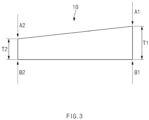
- FIG. 3 illustrating a side view of a unit cell 10 of which both ends have different thicknesses
- the thicknesses of the unit cell 10 on both sides may not be uniform.
- the thickness may be measured individually at at least two points spaced apart from each other to determine whether the failure occurs.
- A1 and B1 are measured at a specific point and a thickness is calculated as T1
- A2 and B2 are measured at another point and a thickness is calculated as T2
- T1 and T2 are measured at another point and a thickness is calculated as T2
- T2 it may be determined that the flatness of the unit cell 10 is poor as illustrated in FIG. 3 .
- the unit cell 10 having such a defect may be removed from the transfer rollers 20 before reaching destination.
- each of the upper thickness sensor 40 and the lower thickness sensor 40 irradiates and receives light continuously and repeatedly while the unit cell 10 moves, and thus, the change in thickness from one end to the other end of the unit cell 10 may be measured in real time.
- each of the upper thickness sensor 40 and the lower thickness sensor 50 may continuously irradiate light until a next unit cell 10 arrives after the unit cell 10 of which the thickness is measured passes, that is, while neighboring unit cells 10 pass.
- the irradiated light is not reflected by the unit cells 10, the light is not received.
- a time while the light is not reflected may be measured to calculate a distance between the neighboring unit cells 10.
- each of the upper thickness sensor 40 and the lower thickness sensor 50 may detect departure of the unit cell 10 at a moment light reception ends after the light is emitted and may detect arrival of a next unit cell 10 when the light is received again.
- the lower thickness sensor 50 may receive the light emitted from the upper thickness sensor 40 and recognize it as that the unit cell 10 passes.
- each of the upper thickness sensor 40 and the lower thickness sensor 50 may emit and receive light having different characteristics (for example, light having different wavelengths). it is desirable to be configured such that light having different characteristics may not be received or configured to be able to determine whether the light is reflected light.
- a thickness measurement apparatus for a unit cell 10 which may measure a thickness of the unit cell 10 through the measurement method according to the first embodiment, is provided as a second embodiment.
- the thickness measurement apparatus comprises a plurality of transfer rollers 20 that sequentially transfer unit cells 10 and are spaced a distance from each other and a thickness sensor disposed at a fixed position to irradiate light to a moving path of the unit cells 10 and calculate a time when receiving the reflected light, thereby measuring a thickness of each of the unit cells 10.
- the thickness sensor comprises: an upper thickness sensor 40 disposed above the transfer rollers 20 to irradiate the light onto a top surface of the unit cell 10 passing between the transfer rollers 20 and calculate a time when receiving the reflected light, thereby measuring a distance from the unit cell 10; and a lower thickness sensor 50 disposed below the transfer rollers 20 to irradiate the light onto a bottom surface of the unit cell 10 between the transfer rollers 20 that are adjacent to each other and calculate a time when receiving the reflected light, thereby measuring a distance from the unit cell 10. Also, the thickness sensor comprises a controller 60 that receives a value measured by the upper thickness sensor 40 and a value measured by the lower thickness sensor 50 to calculate the thickness of the unit cell 10.
- the controller 60 is configured to transmit and receive data to and from the upper thickness sensor 40 and the lower thickness sensor 50, and may control operations (a light emitting period, light intensity adjustment, and the like) of the upper thickness sensor 40 and the lower thickness sensor 50.
- the controller 60 may calculate a thickness T of the unit cell by subtracting a sum (A+B) of a distance A between the upper thickness sensor 40 and the top surface of the unit cell 10 and a distance B between the lower thickness sensor 50 and the bottom surface of the unit cell 10 from a distance D between the upper thickness sensor 40 and the lower thickness sensor 50.
- the upper thickness sensor 40 and the lower thickness sensor 50 are vertically disposed to be perpendicular to a direction in which the transfer rollers 20 are arranged, and thus, each of the upper thickness sensor 40 and the lower thickness sensor 50 may perform measurement above or below a specific point of the unit cell 10 while the unit cell 10 moves.
- the upper thickness sensor 40 and the lower thickness sensor 50 may measure thicknesses at several points by irradiating and receiving light several times not one time while the unit cell 10 passes. Accordingly, a change in thickness from one to the other end of the unit cell 10 may further precisely measured.
- each of the upper thickness sensor 40 and the lower thickness sensor 50 may irradiate the light continuously or repeatedly within a short period of time to measure a distance between the neighboring unit cells 10.
- the thickness measurement apparatus of the present invention may further comprise vision devices 70a and 70 which are disposed at fixed positions to be spaced a predetermined distance from the thickness sensor and optically identify a form and shape of the unit cell 10.
- the vision devices 70a and 70b are disposed above and below the transfer roller 20, respectively, to optically detect an angle and orientation at which the unit cell 10 is placed on the transfer rollers 20, and provide information so that the orientation and angle of the unit cell is corrected by other correcting devices before transferred to a next process through the transfer rollers 20.
- the thicknesses of the individual unit cells 10 may be measured in real time while the unit cells move, and thus, a failure rate of the electrode assembly manufactured by stacking the unit cells 10 may be reduced.
- the change in thickness may be measured over the entire length of the unit cell 10 while the unit cell 10 moves, and thus, the defective unit cell 10 may be identified rapidly.
- the distance between the neighboring unit cells10 may be identified in real time, and thus, the process of placing the subsequent unit cells 10 may be performed more efficiently and rapidly.
- the irradiation of light is used to measure the thickness of the unit cell 10, and thus, the thickness may be highly accurately measured without being affected by external factors such as heat and moisture.
Landscapes
- Physics & Mathematics (AREA)
- General Physics & Mathematics (AREA)
- Chemical & Material Sciences (AREA)
- Chemical Kinetics & Catalysis (AREA)
- Electrochemistry (AREA)
- General Chemical & Material Sciences (AREA)
- Engineering & Computer Science (AREA)
- Manufacturing & Machinery (AREA)
- Length Measuring Devices By Optical Means (AREA)
- Secondary Cells (AREA)
- Battery Electrode And Active Subsutance (AREA)
- Optical Measuring Cells (AREA)
Description
- The present application claims the benefit of the priority of
Korean Patent Application No. 10-2019-0105416, filed on August 27, 2019 - The present invention relates to an apparatus and method for measuring a thickness of a unit cell, and more specifically, to an apparatus and method for measuring a thickness of a unit cell, in which light is emitted to measure a thickness in real time while a unit cell is transferred.
- Demands of high-efficiency secondary batteries are rapidly increasing in a field of a mobile device, an electric vehicle, or the like. However, among the secondary batteries, lithium secondary batteries having high energy density and low self-discharge characteristics and capable of maintaining relatively high voltage have been commercialized and widely used, and researches and developments for improving performances of the lithium secondary batteries have been actively conducted.
- The secondary batteries have a structure in which an electrode assembly and an electrolyte are embedded within a case such as a can and a pouch. The electrode assembly has a structure in which a positive electrode, a separator, and a negative electrode are repeatedly stacked, and electrode assemblies are generally classified into a jelly-roll-type and a stacked type. In the jelly-roll-type, positive electrodes, separators, and negative electrodes are stacked and rolled, and then embedded within a case. In the stacked type, positive electrodes, separators, and negative electrodes are cut into a certain size and stacked.
- The jelly-roll-type electrode assembly has a spirally wound structure and is suitable to be mounted to a cylindrical battery but has a disadvantage in space utilization for a prismatic or pouch type battery. On the contrary, the stacked type electrode assembly is adjustable in size when an electrode and a separator are cut, and thus, a prismatic shape suitable for a case is easily obtained. However, the stacked type electrode assembly is complicated to manufacture and relatively vulnerable to an external impact.
- Also, a stack and folding process has been developed to combine advantages of the jelly-roll-type and the stacked type. In the stack and folding process, a bi-cell (having a stack structure of positive electrode/separator/negative electrode, in which an electrode stacked on the uppermost end is the same as an electrode staked on the lowermost end) and/or a half-cell (having a stack structure of positive electrode/separator/negative electrode, in which an electrode stacked on the uppermost end is different from an electrode staked on the lowermost end) are manufactured as unit cells having an appropriate size. Then, the unit cells are arranged spaced apart from each other on a folding separator, and the folding separator is folded to manufacture an electrode assembly.
- The electrode assembly manufactured by the stack and folding process has advantages in high stability and space utilization. However, in a case where the unit cell is slightly misaligned or damaged when the unit cell is placed on the folding separator, the possibility of occurrence of defects in the electrode assembly increase.
- Particularly, even one of the unit cells stacked in the electrode assembly has a defect, the entire electrode assembly is defective. Thus, before the unit cells are placed on the folding separator, it was necessary to select a defective unit cell.
- Here, after a laminating process of bonding electrodes and separator stacked when the unit cell is manufactured, it may be predicted from thickness measurement about whether an abnormality has occurred in the stacked electrode or whether the electrode or the separator has been folded when stacked.
- However, according to the related art, after a sample of a unit cell is collected, a thickness is measured through a measurement device. However, there is a difficulty in selecting only a defective product by this sample inspection method. Also, since the laminating process has a fast production speed, it is difficult to apply a measurement method according to the related art in which a thickness is measured by physical contact.
-
KR 10-2017-0103341 A - Thus, a measurement apparatus and a measurement method have been required, which may rapidly measure thicknesses of individual unit cells while the unit cells move to a subsequent process after the laminating process.
- Therefore, to satisfy technical requirements described above, a main object of the present invention is to provide an apparatus and method for measuring a thickness of a unit cell, in which thicknesses of unit cells may be continuously measured without physical contact.
- In order to achieve the object described above, the present invention provides an apparatus and method for measuring thicknesses of unit cells in rear time while the unit cells move continuously.
- A method for measuring a thickness of a unit cell according to the present invention is defined in the appended set of claims, the method comprises: a unit cell transferring step (S1) of transferring unit cells through a plurality of transfer rollers which are spaced a predetermined distance from each other; a distance measuring step (S2) of irradiating light to a top surface of the unit cell through an upper thickness sensor and irradiating light to a bottom surface of the unit cell through a lower thickness sensor to calculate a time when receiving the reflected light, thereby measuring a distance between the upper thickness sensor and the top surface of the unit cell and a distance between the lower thickness sensor and the bottom surface of the unit cell; and a thickness calculating step (S3) of subtracting a measured value of the distance between the upper thickness sensor and the top surface of the unit cell and a measured value of the distance between the lower thickness sensor and the bottom surface of the unit cell from a distance between the upper thickness sensor and the lower thickness sensor to calculate the thickness of the unit cell.
- Each of the upper thickness sensor and the lower thickness sensor performs the measurement at least two or more points from one end to the other end of the unit cell to measure a change in thickness while the unit cell moves.
- Also, each of the upper thickness sensor and the lower thickness sensor may irradiate the light continuously even while the neighboring unit cells pass therethrough to measure a time while the light is not reflected, thereby measuring a distance between the neighboring unit cells.
- In addition, an apparatus capable of measuring a thickness of a unit cell through the method described above comprises: a plurality of transfer rollers configured to sequentially transfer unit cells and disposed to be spaced a predetermined distance from each other; and a thickness sensor disposed at a fixed position to irradiate light to a moving path of the unit cells and calculate a time when receiving the reflected light, thereby measuring a thickness of each of the unit cells.
- The thickness sensor comprises: an upper thickness sensor disposed above the transfer rollers to irradiate the light onto a top surface of the unit cell passing between the transfer rollers and calculate a time when receiving the reflected light, thereby measuring a distance from the unit cell; and a lower thickness sensor disposed below the transfer rollers to irradiate the light onto a bottom surface of the unit cell between the transfer rollers that are adjacent to each other and calculate a time when receiving the reflected light, thereby measuring a distance from the unit cell; and a controller configured to receive a value measured by the upper thickness sensor and a value measured by the lower thickness sensor to calculate the thickness of the unit cell.
- The controller calculates the thickness of the unit cell by subtracting a sum of the distance between the upper thickness sensor and the top surface of the unit cell and the distance between the lower thickness sensor and the bottom surface of the unit cell from a distance between the upper thickness sensor and the lower thickness sensor.
- The upper thickness sensor and the lower thickness sensor are vertically disposed to be perpendicular to a direction in which the transfer rollers are arranged. Thus, each of the upper thickness sensor and the lower thickness sensor may measure thicknesses individually at least two or more points from one end to the other end of the unit cell to continuously measure a change in thickness while the unit cell moves.
- In addition, each of the upper thickness sensor and the lower thickness sensor may irradiate the light continuously (or a plurality of times repeatedly within a short prided of time) while the neighboring unit cells pass therethrough.
- Here, the thickness measurement apparatus of the present invention may further comprise a vision device which is disposed at a fixed position to be spaced a predetermined distance from the thickness sensor and optically identifies a form and shape of the unit cell.
- In the present invention having the structure described above, the thicknesses of the individual unit cells may be measured in real time while the unit cell moves, and thus, defective unit cells may be sorted out. Accordingly, a failure rate of the electrode assembly in which the unit cells are stacked may be reduced.
- Also, in the present invention, the change in thickness may be measured over the entire length of the unit cell while the unit cell moves, and thus, the defective unit cell may be identified rapidly.
- Also, in the present invention, the distance between the neighboring unit cells may be identified in real time, and thus, the process of placing the subsequent unit cell may be performed more efficiently and rapidly.
- In the apparatus and method of the present invention, the irradiation of light is used to measure the thickness of the unit cell, and thus, the thickness may be highly accurately measured without being affected by external factors such as heat and moisture.
-
-
FIG. 1 is a flow chart illustrating a sequence of a method for measuring a thickness according to a first embodiment of the present invention. -
FIG. 2 is a schematic view of an apparatus for measuring a thickness according to a second embodiment of the present invention. -
FIG. 3 is a side view illustrating a side surface of a unit cell of which both ends have different thicknesses. -
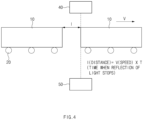
FIG. 4 is a view illustrating a distance I between neighboring unit cells while moving. - Hereinafter, the present invention will be described in detail with reference to the accompanying drawings so that the present invention can be easily carried out by a person skill in the art to which the present invention pertains. However, the present invention may be embodied in several different forms, and not be limited to the embodiments set forth herein.
- A part unrelated to the description will be omitted so as to clearly describe the present invention, and the same reference symbols are affixed to identical or similar elements throughout the specification.
- Also, terms or words used in this specification and claims should not be restrictively interpreted as ordinary meanings or dictionary-based meanings, but should be interpreted as meanings and concepts conforming to the scope of the present invention on the basis of the principle that an inventor can properly define the concept of a term to describe and explain his or her invention in the best ways.
- The present invention relates to an apparatus and method for measuring thicknesses of unit cells in real time while the unit cells move continuously. Hereinafter, embodiments of the present invention will be described in more detail with reference to the accompanying drawings.
- In the present invention, a method for measuring a thickness of a
unit cell 10 is provided as a first embodiment. As shown inFIG. 1 that illustrates a sequence of the method for measuring a thickness according to the first embodiment of the present invention, the measurement method of the present invention is characterized in that a change in distance from a fixed position to theunit cell 10 is measured to measure a thickness of theunit cell 10 while theunit cell 10 is transferred. - With reference to
FIG. 2 in which a thickness measurement apparatus of the present invention is schematically illustrated, the thickness measurement of theunit cell 10 of the present invention is described. Whenunit cells 10 are transferred throughtransfer rollers 20 disposed side by side spaced a predetermined distance from each other, the light is irradiated from the upper side and the lower side of each of theunit cells 10 to the top surface and the bottom surface of theunit cell 10, and a movement time of the reflected light is measured to measure the thickness. - More specifically, the embodiment comprises a unit cell transferring step (S1), a distance measuring step (S2), and a thickness calculating step (S3).
- During the unit cell transferring step (S1), the plurality of
transfer rollers 20 rotate, while being arranged side by side, and continuously transfer theunit cells 10 from a previous production process to a subsequent production process at a constant speed (or getting slower or faster). Here, theunit cells 10 are disposed to move while being spaced a predetermined distance from each other. Thetransfer rollers 20 have the same size and are spaced an appropriate distance from each other so that the vertical movement of theunit cells 10 are suppressed while moving, and thetransfer rollers 20 are configured such that rotation speed is controllable individually or entirely at the same time. - Also, an
upper thickness sensor 40 and alower thickness sensor 50 are disposed on an upper side and a lower side, respectively, at one point between thetransfer rollers 20. Each of theupper thickness sensor 40 and thelower thickness sensor 50 comprises a light emitting part for irradiating light and a light receiving part for receiving the light that is irradiated from the light emitting part and reflected, and may be configured to measure a difference between a time for irradiating the light and a time for receiving the light. Here, thelower thickness sensor 50 is positioned to emit and receive the light between thetransfer rollers 20, and theupper thickness sensor 40 is disposed right above thelower thickness sensor 50 in a vertical direction. - Thus, during the distance measuring step (S2), the light emitting part of the
upper thickness sensor 40 irradiates light to the top surface of theunit cell 10, and then a time when receiving the light is calculated to measure a distance A between theupper thickness sensor 40 and the top surface of theunit cell 10. Also, the light emitting part of thelower thickness sensor 50 irradiates light to the bottom surface of theunit cell 10, and then a time when receiving the light is calculated to measure a distance B between thelower thickness sensor 50 and the bottom surface of theunit cell 10. - Also, the measurement values of the distance A and B measured by the
upper thickness sensor 40 and thelower thickness sensor 50 are transmitted to acontroller 60. In thecontroller 60 of the thickness calculating step (S3), the thickness of theunit cell 10 is calculated by subtracting, from a distance D between theupper thickness sensor 40 and thelower thickness sensor 50, a measurement value of a distance A between theupper thickness sensor 40 and the top surface of theunit cell 10 and a measurement value of a distance B between thelower thickness sensor 50 and the bottom surface of theunit cell 10. - Here, while the
unit cell 10, of which a thickness is measured, passes between theupper thickness sensor 40 and thelower thickness sensor 50, the distance measuring step (S2) and the thickness calculating step (S3) may be repeated a plurality of times from a moment when theunit cell 10 enters between theupper thickness sensor 40 and thelower thickness sensor 50 to a moment when theunit cell 10 exits therefrom. Thus, a change in thickness of theunit cell 10 may be measured. - That is, as illustrated in
FIG. 3 illustrating a side view of aunit cell 10 of which both ends have different thicknesses, when a defect occurs in an electrode or a separator stacked in theunit cell 10 during a previous manufacturing process or when folding failure occurs upon stacked, the thicknesses of theunit cell 10 on both sides may not be uniform. - Here, in the present invention, while the
unit cell 10 passes between theupper thickness sensor 40 and the lower thickness sensor 5, the thickness may be measured individually at at least two points spaced apart from each other to determine whether the failure occurs. - For example, when A1 and B1 are measured at a specific point and a thickness is calculated as T1, and A2 and B2 are measured at another point and a thickness is calculated as T2, it may be determined that the flatness of the
unit cell 10 is poor as illustrated inFIG. 3 . Theunit cell 10 having such a defect may be removed from thetransfer rollers 20 before reaching destination. - When the number of measurement points is increased while the
unit cell 10 passes, the change in thickness of theunit cell 10 may be more precisely found. Thus, in the measurement method of the present invention, each of theupper thickness sensor 40 and thelower thickness sensor 40 irradiates and receives light continuously and repeatedly while theunit cell 10 moves, and thus, the change in thickness from one end to the other end of theunit cell 10 may be measured in real time. - Also, each of the
upper thickness sensor 40 and thelower thickness sensor 50 may continuously irradiate light until anext unit cell 10 arrives after theunit cell 10 of which the thickness is measured passes, that is, while neighboringunit cells 10 pass. Here, since the irradiated light is not reflected by theunit cells 10, the light is not received. Thus, a time while the light is not reflected may be measured to calculate a distance between the neighboringunit cells 10. - That is, as shown in
FIG. 4 illustrating a distance I between neighboring unit cells while moving, each of theupper thickness sensor 40 and thelower thickness sensor 50 may detect departure of theunit cell 10 at a moment light reception ends after the light is emitted and may detect arrival of anext unit cell 10 when the light is received again. Here, a moving speed V of the unit cell according to a rotation speed of thetransfer roller 20 is a constant value, and thus, when a time T while light reflection (light reception) stops is measured, a distance I between the neighboringunit cells 10 may be calculated by I = V × T. - For reference, the
lower thickness sensor 50 may receive the light emitted from theupper thickness sensor 40 and recognize it as that theunit cell 10 passes. To prevent the above phenomenon, each of theupper thickness sensor 40 and thelower thickness sensor 50 may emit and receive light having different characteristics (for example, light having different wavelengths). it is desirable to be configured such that light having different characteristics may not be received or configured to be able to determine whether the light is reflected light. - Also, in the present invention, a thickness measurement apparatus for a
unit cell 10, which may measure a thickness of theunit cell 10 through the measurement method according to the first embodiment, is provided as a second embodiment. - In the embodiment, the thickness measurement apparatus comprises a plurality of
transfer rollers 20 that sequentiallytransfer unit cells 10 and are spaced a distance from each other and a thickness sensor disposed at a fixed position to irradiate light to a moving path of theunit cells 10 and calculate a time when receiving the reflected light, thereby measuring a thickness of each of theunit cells 10. - The thickness sensor comprises: an
upper thickness sensor 40 disposed above thetransfer rollers 20 to irradiate the light onto a top surface of theunit cell 10 passing between thetransfer rollers 20 and calculate a time when receiving the reflected light, thereby measuring a distance from theunit cell 10; and alower thickness sensor 50 disposed below thetransfer rollers 20 to irradiate the light onto a bottom surface of theunit cell 10 between thetransfer rollers 20 that are adjacent to each other and calculate a time when receiving the reflected light, thereby measuring a distance from theunit cell 10. Also, the thickness sensor comprises acontroller 60 that receives a value measured by theupper thickness sensor 40 and a value measured by thelower thickness sensor 50 to calculate the thickness of theunit cell 10. - The
controller 60 is configured to transmit and receive data to and from theupper thickness sensor 40 and thelower thickness sensor 50, and may control operations (a light emitting period, light intensity adjustment, and the like) of theupper thickness sensor 40 and thelower thickness sensor 50. Thecontroller 60 may calculate a thickness T of the unit cell by subtracting a sum (A+B) of a distance A between theupper thickness sensor 40 and the top surface of theunit cell 10 and a distance B between thelower thickness sensor 50 and the bottom surface of theunit cell 10 from a distance D between theupper thickness sensor 40 and thelower thickness sensor 50. - Here, the
upper thickness sensor 40 and thelower thickness sensor 50 are vertically disposed to be perpendicular to a direction in which thetransfer rollers 20 are arranged, and thus, each of theupper thickness sensor 40 and thelower thickness sensor 50 may perform measurement above or below a specific point of theunit cell 10 while theunit cell 10 moves. - The
upper thickness sensor 40 and thelower thickness sensor 50 may measure thicknesses at several points by irradiating and receiving light several times not one time while theunit cell 10 passes. Accordingly, a change in thickness from one to the other end of theunit cell 10 may further precisely measured. - In addition, while neighboring
unit cells 10 pass, each of theupper thickness sensor 40 and thelower thickness sensor 50 may irradiate the light continuously or repeatedly within a short period of time to measure a distance between the neighboringunit cells 10. - Here, the thickness measurement apparatus of the present invention may further comprise
vision devices 70a and 70 which are disposed at fixed positions to be spaced a predetermined distance from the thickness sensor and optically identify a form and shape of theunit cell 10. - The
vision devices transfer roller 20, respectively, to optically detect an angle and orientation at which theunit cell 10 is placed on thetransfer rollers 20, and provide information so that the orientation and angle of the unit cell is corrected by other correcting devices before transferred to a next process through thetransfer rollers 20. - In the present invention having the structure described above, the thicknesses of the
individual unit cells 10 may be measured in real time while the unit cells move, and thus, a failure rate of the electrode assembly manufactured by stacking theunit cells 10 may be reduced. - In addition, in the present invention, the change in thickness may be measured over the entire length of the
unit cell 10 while theunit cell 10 moves, and thus, thedefective unit cell 10 may be identified rapidly. - Also, in the present invention, the distance between the neighboring unit cells10 may be identified in real time, and thus, the process of placing the
subsequent unit cells 10 may be performed more efficiently and rapidly. - In the apparatus and method of the present invention, the irradiation of light is used to measure the thickness of the
unit cell 10, and thus, the thickness may be highly accurately measured without being affected by external factors such as heat and moisture. - Although the present invention is described by specific embodiments and drawings, the present invention is not limited thereto, and various changes and modifications may be made by a person skilled in the art to which the present invention pertains within the scope of the present invention as defined by the appended claims.
-
- 10: unit cell
- 20: transfer rollers
- 40: upper thickness sensor
- 50: lower thickness sensor
- 60 : controller
- 70a, 70b : vision device
Claims (9)
- An apparatus for measuring a thickness of a unit cell, the apparatus comprising:a plurality of transfer rollers (20) configured to sequentially transfer unit cells and disposed to be spaced a predetermined distance from each other so that the vertical movement of the unit cells (10) is suppressed while moving; anda thickness sensor disposed at a fixed position to irradiate light to a moving path of "the unit cells and calculate a time when receiving the reflected light, thereby measuring a thickness of each of the unit cells,wherein the thickness sensor comprises:an upper thickness sensor (40) disposed above the transfer rollers (20) to irradiate the light onto a top surface of the unit cell (10) passing between the transfer rollers (20) and calculate a time when receiving the reflected light, thereby measuring a distance from the unit cell (10);a lower thickness sensor (50) disposed below the transfer rollers (20) to irradiate the light onto a bottom surface of the unit cell (10) between the transfer rollers (20) that are adjacent to each other and calculate a time when receiving the reflected light, thereby measuring a distance from the unit cell (10);
wherein the upper and the lower thickness sensors (40, 50) are disposed at one point between the transfer rollers (20); anda controller (60) configured to receive a value measured by the upper thickness sensor (40) and a value measured by the lower thickness sensor (50) to calculate the thickness of the unit cell (10). - The apparatus of claim 1, wherein the controller (60) calculates the thickness of the unit cell (10) by subtracting a sum of the distance between the upper thickness sensor (40) and the top surface of the unit cell (10) and the distance between the lower thickness sensor (50) and the bottom surface of the unit cell (10) from a distance between the upper thickness sensor (40) and the lower thickness sensor (50).
- The apparatus of claim 2, wherein the upper thickness sensor (40) and the lower thickness sensor (50) are vertically disposed to be perpendicular to a direction in which the transfer rollers (20) are arranged.
- The apparatus of claim 1, wherein each of the upper thickness sensor (40) and the lower thickness sensor (50) performs the measurement at least two or more points from one end to the other end of the unit cell (10) to measure a change in thickness while the unit cell (10) moves.
- The apparatus of claim 4, wherein each of the upper thickness sensor (40) and the lower thickness sensor (50) irradiates the light continuously while the neighboring unit cells pass therethrough.
- The apparatus of claim 1, further comprising a vision device (70a, 70b) which is disposed at a fixed position to be spaced a predetermined distance from the thickness sensor and optically identifies a form and shape of the unit cell (10).
- A method for measuring a thickness of a unit cell, the method comprising:a unit cell transferring step (S1) of transferring unit cells (10) through a plurality of transfer rollers (20) which are spaced a predetermined distance from each other so that the vertical movement of the unit cells (10) is suppressed while moving;a distance measuring step (S2) of irradiating light to a top surface of the unit cell (10) through an upper thickness sensor (40) and irradiating light to a bottom surface of the unit cell (10) through a lower thickness sensor (50) to calculate a time when receiving the reflected light, thereby measuring a distance between the upper thickness sensor (40) and the top surface of the unit cell (10) and a distance between the lower thickness sensor (50) and the bottom surface of the unit cell (10),
wherein the upper and the lower thickness sensors (40, 50) are disposed at one point between the transfer rollers (20); anda thickness calculating step (S3) of subtracting a measured value of the distance between the upper thickness sensor (40) and the top surface of the unit cell (10) and a measured value of the distance between the lower thickness sensor (50) and the bottom surface of the unit cell (10) from a distance between the upper thickness sensor (40) and the lower thickness sensor (50) to calculate the thickness of the unit cell (10). - The method of claim 7, wherein each of the upper thickness sensor (40) and the lower thickness sensor (50) performs the measurement at least two or more points from one end to the other end of the unit cell to measure a change in thickness while the unit cell (10) moves.
- The method of claim 8, wherein each of the upper thickness sensor (40) and the lower thickness sensor (50) irradiates the light continuously even while the neighboring unit cells pass therethrough to measure a time while the light is not reflected, thereby measuring a distance between the neighboring unit cells.
Applications Claiming Priority (2)
| Application Number | Priority Date | Filing Date | Title |
|---|---|---|---|
| KR1020190105416A KR102813413B1 (en) | 2019-08-27 | 2019-08-27 | Thickness measurement apparatus and thickness measurement apparatus for unit cell |
| PCT/KR2020/010643 WO2021040277A1 (en) | 2019-08-27 | 2020-08-12 | Apparatus and method for measuring thickness of unit cell |
Publications (3)
| Publication Number | Publication Date |
|---|---|
| EP3988894A1 EP3988894A1 (en) | 2022-04-27 |
| EP3988894A4 EP3988894A4 (en) | 2022-08-24 |
| EP3988894B1 true EP3988894B1 (en) | 2024-05-15 |
Family
ID=74685977
Family Applications (1)
| Application Number | Title | Priority Date | Filing Date |
|---|---|---|---|
| EP20858695.8A Active EP3988894B1 (en) | 2019-08-27 | 2020-08-12 | Apparatus and method for measuring thickness of unit cell |
Country Status (7)
| Country | Link |
|---|---|
| US (1) | US12038269B2 (en) |
| EP (1) | EP3988894B1 (en) |
| KR (1) | KR102813413B1 (en) |
| CN (1) | CN114096799B (en) |
| ES (1) | ES2981220T3 (en) |
| HU (1) | HUE066645T2 (en) |
| WO (1) | WO2021040277A1 (en) |
Families Citing this family (6)
| Publication number | Priority date | Publication date | Assignee | Title |
|---|---|---|---|---|
| KR20230045848A (en) | 2021-09-29 | 2023-04-05 | 주식회사 엘지에너지솔루션 | Inspection device for sealing part of pouch type battery and inspection method using the same |
| EP4386365A4 (en) * | 2022-06-02 | 2025-04-02 | Contemporary Amperex Technology (Hong Kong) Limited | Battery cell detection method, device and system, and processor and controller |
| CN115164723B (en) * | 2022-07-21 | 2024-09-27 | 中航锂电(洛阳)有限公司 | Detection device and detection method for size and spacing of battery lugs |
| US20250164228A1 (en) * | 2022-09-21 | 2025-05-22 | Lg Energy Solution, Ltd. | Pouch cell deformation testing apparatus and deformation testing method using the same |
| CN116031496A (en) * | 2022-12-29 | 2023-04-28 | 惠州市超力源科技有限公司 | Lithium battery protection board laminating thickness location processingequipment |
| CN116429565B (en) * | 2023-06-13 | 2023-08-29 | 天津正道机械制造有限公司 | Method for detecting quality of joint of metal material without rivet connection |
Family Cites Families (45)
| Publication number | Priority date | Publication date | Assignee | Title |
|---|---|---|---|---|
| JPH09312156A (en) * | 1996-05-23 | 1997-12-02 | Furukawa Battery Co Ltd:The | Lead-acid battery pole plate and manufacture thereof |
| JP2001264023A (en) | 2000-03-15 | 2001-09-26 | Ngk Insulators Ltd | Non contact continuous measurement method of film thickness for strip sheet material, and optical axis aligning method for reflection-type laser measuring means |
| JP2005030921A (en) | 2003-07-14 | 2005-02-03 | Ishikawajima Harima Heavy Ind Co Ltd | Sheet material thickness measuring method and apparatus |
| JP2006038744A (en) | 2004-07-29 | 2006-02-09 | Disco Abrasive Syst Ltd | Thickness measuring instrument and grinding device |
| JP4807659B2 (en) | 2006-01-31 | 2011-11-02 | 凸版印刷株式会社 | Cell thickness measuring device |
| JP2007263818A (en) | 2006-03-29 | 2007-10-11 | Jfe Steel Kk | Method and apparatus for adjusting thickness measuring apparatus |
| JP5013730B2 (en) | 2006-03-29 | 2012-08-29 | Jfeスチール株式会社 | Thickness measuring method and thickness measuring apparatus |
| JP4909036B2 (en) * | 2006-12-07 | 2012-04-04 | 株式会社キーエンス | Optical displacement sensor |
| US20080139654A1 (en) | 2006-12-09 | 2008-06-12 | Eric Mott Soderling | Acetaminophen compositions having minimized side effects including reduced hepatotoxicity |
| JP4279322B2 (en) | 2007-02-20 | 2009-06-17 | 三菱重工業株式会社 | Wavelength selection method, film thickness measuring method, film thickness measuring apparatus, and thin film silicon device manufacturing system |
| CN101308017B (en) | 2008-05-30 | 2010-09-01 | 哈尔滨工业大学 | On-line measurement method of battery plate coating area thickness using baseband thickness for self-calibration |
| KR101126372B1 (en) * | 2009-04-27 | 2012-03-28 | 한화테크엠주식회사 | Apparatus for measuring dimension of object |
| KR101113424B1 (en) * | 2010-08-19 | 2012-03-02 | 삼성에스디아이 주식회사 | apparatus of correcting belt-meandering for secondary battery |
| TWI426227B (en) * | 2010-12-30 | 2014-02-11 | 財團法人工業技術研究院 | Method for measuring shape of moving sample and device thereof |
| KR101259442B1 (en) * | 2011-07-01 | 2013-05-31 | 지에스나노텍 주식회사 | Method for packaging thin film cells and apparatus for packaging thin film cells |
| KR101291053B1 (en) | 2011-09-07 | 2013-08-01 | 삼성중공업 주식회사 | Carrage measurement system and method for the same |
| US20130215419A1 (en) * | 2012-02-22 | 2013-08-22 | Cooper S. K. Kuo | Optical inspection device |
| KR101527357B1 (en) | 2012-06-13 | 2015-06-09 | 주식회사 엘지화학 | Rolling Machine For Electrode Sheet and Method Controlling Thickness Of Electrode Sheet by Using The Same |
| KR20150026172A (en) | 2013-09-02 | 2015-03-11 | 주식회사 엘지화학 | Method of measuring pouch depth for rechargeable battery and apparatus thereof |
| KR20150033269A (en) | 2013-09-24 | 2015-04-01 | 주식회사 엘지화학 | Apparatus for measuring battery pack size |
| DE102014200157A1 (en) | 2013-10-28 | 2015-05-21 | Micro-Epsilon Messtechnik Gmbh & Co. Kg | Method for measuring the thickness of objects to be measured and device for using the method |
| KR101774261B1 (en) * | 2013-11-28 | 2017-09-04 | 주식회사 엘지화학 | Inspection Device for Secondary Battery Unit Cell |
| JP6352014B2 (en) | 2014-03-19 | 2018-07-04 | 東京応化工業株式会社 | Thickness measuring instrument |
| KR101706287B1 (en) | 2014-07-15 | 2017-02-14 | 주식회사 엘지화학 | Thickness Inspection Device for Battery Cells with Stepped Portion |
| KR101605004B1 (en) * | 2014-10-30 | 2016-03-21 | 주식회사 알투람 | Apparatus for measuring thickness of steel plate and amount of scarfing |
| KR101783923B1 (en) | 2014-11-26 | 2017-10-10 | 주식회사 엘지화학 | Apparatus and Method of Measuring Thickness of Secondary Battery Cell |
| CN204523791U (en) * | 2015-03-15 | 2015-08-05 | 邯郸市卓立精细板材有限公司 | A kind of belt steel thickness real-time detection apparatus |
| KR101791169B1 (en) | 2015-04-14 | 2017-10-31 | 전자부품연구원 | Maintenance control apparatus of solar cell module using laser thickness gauge |
| JP2016206170A (en) | 2015-04-23 | 2016-12-08 | 株式会社豊田自動織機 | Method for manufacturing resin film for power storage device and apparatus for manufacturing resin film for power storage device |
| JP6376043B2 (en) | 2015-05-29 | 2018-08-22 | トヨタ自動車株式会社 | Electrode plate thickness measurement method |
| KR102064307B1 (en) | 2015-08-17 | 2020-01-09 | 주식회사 엘지화학 | Device of Measuring Thickness by Regulating Impulse to Battery Cell |
| KR102476002B1 (en) | 2015-10-07 | 2022-12-09 | 에스케이온 주식회사 | Apparatus for measuring thickness of bettery cell |
| KR102042467B1 (en) * | 2016-03-04 | 2019-11-08 | 주식회사 엘지화학 | Device for Measuring Thickness of Battery Cell Comprising Laser Sensor and Method for Measuring Thickness of Battery Cell Using the Same |
| DE102016113717B4 (en) | 2016-07-26 | 2018-02-22 | Friedrich Vollmer Feinmessgerätebau Gmbh | Strip thickness gauge and method for performing a strip thickness measurement |
| CN106250977B (en) * | 2016-09-09 | 2019-01-08 | 上海风偃自动化科技有限公司 | A kind of count detection method of belt conveyor |
| CN108007366A (en) * | 2016-10-31 | 2018-05-08 | 泰科电子(上海)有限公司 | On-line thickness measurement platform |
| CN108168444B (en) * | 2016-11-17 | 2021-03-30 | 马尔泰克技术有限公司 | In-line metering on air suspension for PCB applications |
| JP7027403B2 (en) | 2017-02-28 | 2022-03-01 | ソニーセミコンダクタソリューションズ株式会社 | Distance measuring device and distance measuring method |
| KR101884805B1 (en) * | 2017-10-31 | 2018-08-02 | 진덕수 | Non-contact thickness measuring device for cold-rolled material using laser |
| KR102010068B1 (en) | 2017-12-21 | 2019-08-12 | 주식회사 포스코 | Thickness measuring device for edge portion and method thereof |
| KR101990863B1 (en) | 2018-01-31 | 2019-06-19 | 문상호 | Contactless type thickness measuring apparatus |
| CN108981587A (en) * | 2018-05-17 | 2018-12-11 | 深圳市信宇人科技股份有限公司 | A kind of thickness measurement with laser system and measurement method |
| CN109520434B (en) * | 2018-12-17 | 2021-03-02 | 苏州宇量电池有限公司 | Online battery thickness measuring method and device |
| KR101999170B1 (en) | 2019-04-25 | 2019-07-11 | 엄주원 | Apparatus of measuring thickness |
| CN110188403B (en) | 2019-05-07 | 2023-04-18 | 河北电力装备有限公司 | Three-dimensional design and automation device control system |
-
2019
- 2019-08-27 KR KR1020190105416A patent/KR102813413B1/en active Active
-
2020
- 2020-08-12 CN CN202080047664.7A patent/CN114096799B/en active Active
- 2020-08-12 ES ES20858695T patent/ES2981220T3/en active Active
- 2020-08-12 US US17/625,967 patent/US12038269B2/en active Active
- 2020-08-12 WO PCT/KR2020/010643 patent/WO2021040277A1/en not_active Ceased
- 2020-08-12 HU HUE20858695A patent/HUE066645T2/en unknown
- 2020-08-12 EP EP20858695.8A patent/EP3988894B1/en active Active
Also Published As
| Publication number | Publication date |
|---|---|
| WO2021040277A1 (en) | 2021-03-04 |
| US20220244040A1 (en) | 2022-08-04 |
| ES2981220T3 (en) | 2024-10-07 |
| US12038269B2 (en) | 2024-07-16 |
| HUE066645T2 (en) | 2024-08-28 |
| KR102813413B1 (en) | 2025-05-27 |
| EP3988894A1 (en) | 2022-04-27 |
| KR20210025404A (en) | 2021-03-09 |
| CN114096799B (en) | 2024-04-26 |
| CN114096799A (en) | 2022-02-25 |
| EP3988894A4 (en) | 2022-08-24 |
Similar Documents
| Publication | Publication Date | Title |
|---|---|---|
| EP3988894B1 (en) | Apparatus and method for measuring thickness of unit cell | |
| US12100796B2 (en) | Apparatus and method for manufacturing electrode assembly | |
| US20230155101A1 (en) | Method for Manufacturing Secondary Battery and Apparatus for Manufacturing Secondary Battery | |
| CN111050979B (en) | Method for separating strip-shaped electrode material and separator material on curved surfaces using a laser beam | |
| KR101992467B1 (en) | An electrode plate transfer apparatrus of a secondary battery manufacturing apparatus including an electrode plate inspection function | |
| KR102080346B1 (en) | High Speed Electrode Nothing System for Secondary Battery | |
| KR20230018776A (en) | Manufacturing device and manufacturing method for electrode assembly | |
| US20230148346A1 (en) | Apparatus and Method for Manufacturing Unit Cells | |
| JP2012225848A (en) | Film thickness distribution measurement device and film formation device | |
| KR20220112463A (en) | Lamination apparatus and method of discharging defective elecrode cell assembly of the same | |
| KR20200114408A (en) | Electrode assembly manufacturing method and electrode assembly manufacturing device | |
| JP2018063873A (en) | Winding electrode body manufacturing equipment | |
| KR102782614B1 (en) | Separator sealing device and unit cell manufacturing device using the same | |
| US12374723B2 (en) | Method for manufacturing electrode assembly, electrode assembly manufactured therethrough, and secondary battery | |
| KR20230061040A (en) | Roller type notching machine for manufacturing secondary cell electrode | |
| US20240302162A1 (en) | Outer Diameter Measurement Apparatus and Outer Diameter Measurement Method of Electrode Assembly | |
| KR20150049979A (en) | System for judging a skew fail in a secondary battery and method thereof | |
| US20230307688A1 (en) | Apparatus and Method for Manufacturing Unit Cell | |
| KR102821228B1 (en) | Manufacturing method of unit cell | |
| KR20200131393A (en) | Electrode supply device | |
| KR20230127806A (en) | Manufacturing systmem and manufacturing method of electrode assembly | |
| KR20220100507A (en) | Assembly manufacturing apparatus and manufacturing method | |
| KR102259233B1 (en) | Multi-type secondary battery stacking device and control method of that | |
| KR102943323B1 (en) | Electrode manufacturing apparatus and method | |
| KR20240100652A (en) | Method of electrode assembly for secondary battery |
Legal Events
| Date | Code | Title | Description |
|---|---|---|---|
| STAA | Information on the status of an ep patent application or granted ep patent |
Free format text: STATUS: THE INTERNATIONAL PUBLICATION HAS BEEN MADE |
|
| PUAI | Public reference made under article 153(3) epc to a published international application that has entered the european phase |
Free format text: ORIGINAL CODE: 0009012 |
|
| STAA | Information on the status of an ep patent application or granted ep patent |
Free format text: STATUS: REQUEST FOR EXAMINATION WAS MADE |
|
| 17P | Request for examination filed |
Effective date: 20220118 |
|
| AK | Designated contracting states |
Kind code of ref document: A1 Designated state(s): AL AT BE BG CH CY CZ DE DK EE ES FI FR GB GR HR HU IE IS IT LI LT LU LV MC MK MT NL NO PL PT RO RS SE SI SK SM TR |
|
| A4 | Supplementary search report drawn up and despatched |
Effective date: 20220722 |
|
| RIC1 | Information provided on ipc code assigned before grant |
Ipc: H01M 50/105 20210101ALI20220718BHEP Ipc: H01M 10/42 20060101ALI20220718BHEP Ipc: G01B 11/06 20060101AFI20220718BHEP |
|
| DAV | Request for validation of the european patent (deleted) | ||
| DAX | Request for extension of the european patent (deleted) | ||
| GRAP | Despatch of communication of intention to grant a patent |
Free format text: ORIGINAL CODE: EPIDOSNIGR1 |
|
| STAA | Information on the status of an ep patent application or granted ep patent |
Free format text: STATUS: GRANT OF PATENT IS INTENDED |
|
| RIC1 | Information provided on ipc code assigned before grant |
Ipc: H01M 50/105 20210101ALI20240201BHEP Ipc: H01M 10/42 20060101ALI20240201BHEP Ipc: G01B 11/06 20060101AFI20240201BHEP |
|
| INTG | Intention to grant announced |
Effective date: 20240219 |
|
| GRAS | Grant fee paid |
Free format text: ORIGINAL CODE: EPIDOSNIGR3 |
|
| P01 | Opt-out of the competence of the unified patent court (upc) registered |
Effective date: 20240301 |
|
| GRAA | (expected) grant |
Free format text: ORIGINAL CODE: 0009210 |
|
| STAA | Information on the status of an ep patent application or granted ep patent |
Free format text: STATUS: THE PATENT HAS BEEN GRANTED |
|
| AK | Designated contracting states |
Kind code of ref document: B1 Designated state(s): AL AT BE BG CH CY CZ DE DK EE ES FI FR GB GR HR HU IE IS IT LI LT LU LV MC MK MT NL NO PL PT RO RS SE SI SK SM TR |
|
| REG | Reference to a national code |
Ref country code: CH Ref legal event code: EP |
|
| REG | Reference to a national code |
Ref country code: IE Ref legal event code: FG4D |
|
| REG | Reference to a national code |
Ref country code: DE Ref legal event code: R096 Ref document number: 602020031091 Country of ref document: DE |
|
| REG | Reference to a national code |
Ref country code: HU Ref legal event code: AG4A Ref document number: E066645 Country of ref document: HU |
|
| REG | Reference to a national code |
Ref country code: LT Ref legal event code: MG9D |
|
| REG | Reference to a national code |
Ref country code: NL Ref legal event code: MP Effective date: 20240515 |
|
| PG25 | Lapsed in a contracting state [announced via postgrant information from national office to epo] |
Ref country code: IS Free format text: LAPSE BECAUSE OF FAILURE TO SUBMIT A TRANSLATION OF THE DESCRIPTION OR TO PAY THE FEE WITHIN THE PRESCRIBED TIME-LIMIT Effective date: 20240915 |
|
| REG | Reference to a national code |
Ref country code: ES Ref legal event code: FG2A Ref document number: 2981220 Country of ref document: ES Kind code of ref document: T3 Effective date: 20241007 |
|
| PG25 | Lapsed in a contracting state [announced via postgrant information from national office to epo] |
Ref country code: BG Free format text: LAPSE BECAUSE OF FAILURE TO SUBMIT A TRANSLATION OF THE DESCRIPTION OR TO PAY THE FEE WITHIN THE PRESCRIBED TIME-LIMIT Effective date: 20240515 |
|
| PG25 | Lapsed in a contracting state [announced via postgrant information from national office to epo] |
Ref country code: FI Free format text: LAPSE BECAUSE OF FAILURE TO SUBMIT A TRANSLATION OF THE DESCRIPTION OR TO PAY THE FEE WITHIN THE PRESCRIBED TIME-LIMIT Effective date: 20240515 Ref country code: HR Free format text: LAPSE BECAUSE OF FAILURE TO SUBMIT A TRANSLATION OF THE DESCRIPTION OR TO PAY THE FEE WITHIN THE PRESCRIBED TIME-LIMIT Effective date: 20240515 |
|
| PG25 | Lapsed in a contracting state [announced via postgrant information from national office to epo] |
Ref country code: GR Free format text: LAPSE BECAUSE OF FAILURE TO SUBMIT A TRANSLATION OF THE DESCRIPTION OR TO PAY THE FEE WITHIN THE PRESCRIBED TIME-LIMIT Effective date: 20240816 |
|
| PG25 | Lapsed in a contracting state [announced via postgrant information from national office to epo] |
Ref country code: PT Free format text: LAPSE BECAUSE OF FAILURE TO SUBMIT A TRANSLATION OF THE DESCRIPTION OR TO PAY THE FEE WITHIN THE PRESCRIBED TIME-LIMIT Effective date: 20240916 |
|
| REG | Reference to a national code |
Ref country code: AT Ref legal event code: MK05 Ref document number: 1687240 Country of ref document: AT Kind code of ref document: T Effective date: 20240515 |
|
| PG25 | Lapsed in a contracting state [announced via postgrant information from national office to epo] |
Ref country code: NL Free format text: LAPSE BECAUSE OF FAILURE TO SUBMIT A TRANSLATION OF THE DESCRIPTION OR TO PAY THE FEE WITHIN THE PRESCRIBED TIME-LIMIT Effective date: 20240515 |
|
| PG25 | Lapsed in a contracting state [announced via postgrant information from national office to epo] |
Ref country code: AT Free format text: LAPSE BECAUSE OF FAILURE TO SUBMIT A TRANSLATION OF THE DESCRIPTION OR TO PAY THE FEE WITHIN THE PRESCRIBED TIME-LIMIT Effective date: 20240515 |
|
| PG25 | Lapsed in a contracting state [announced via postgrant information from national office to epo] |
Ref country code: PL Free format text: LAPSE BECAUSE OF FAILURE TO SUBMIT A TRANSLATION OF THE DESCRIPTION OR TO PAY THE FEE WITHIN THE PRESCRIBED TIME-LIMIT Effective date: 20240515 |
|
| PG25 | Lapsed in a contracting state [announced via postgrant information from national office to epo] |
Ref country code: LV Free format text: LAPSE BECAUSE OF FAILURE TO SUBMIT A TRANSLATION OF THE DESCRIPTION OR TO PAY THE FEE WITHIN THE PRESCRIBED TIME-LIMIT Effective date: 20240515 |
|
| PG25 | Lapsed in a contracting state [announced via postgrant information from national office to epo] |
Ref country code: PT Free format text: LAPSE BECAUSE OF FAILURE TO SUBMIT A TRANSLATION OF THE DESCRIPTION OR TO PAY THE FEE WITHIN THE PRESCRIBED TIME-LIMIT Effective date: 20240916 Ref country code: PL Free format text: LAPSE BECAUSE OF FAILURE TO SUBMIT A TRANSLATION OF THE DESCRIPTION OR TO PAY THE FEE WITHIN THE PRESCRIBED TIME-LIMIT Effective date: 20240515 Ref country code: NO Free format text: LAPSE BECAUSE OF FAILURE TO SUBMIT A TRANSLATION OF THE DESCRIPTION OR TO PAY THE FEE WITHIN THE PRESCRIBED TIME-LIMIT Effective date: 20240815 Ref country code: NL Free format text: LAPSE BECAUSE OF FAILURE TO SUBMIT A TRANSLATION OF THE DESCRIPTION OR TO PAY THE FEE WITHIN THE PRESCRIBED TIME-LIMIT Effective date: 20240515 Ref country code: LV Free format text: LAPSE BECAUSE OF FAILURE TO SUBMIT A TRANSLATION OF THE DESCRIPTION OR TO PAY THE FEE WITHIN THE PRESCRIBED TIME-LIMIT Effective date: 20240515 Ref country code: IS Free format text: LAPSE BECAUSE OF FAILURE TO SUBMIT A TRANSLATION OF THE DESCRIPTION OR TO PAY THE FEE WITHIN THE PRESCRIBED TIME-LIMIT Effective date: 20240915 Ref country code: HR Free format text: LAPSE BECAUSE OF FAILURE TO SUBMIT A TRANSLATION OF THE DESCRIPTION OR TO PAY THE FEE WITHIN THE PRESCRIBED TIME-LIMIT Effective date: 20240515 Ref country code: GR Free format text: LAPSE BECAUSE OF FAILURE TO SUBMIT A TRANSLATION OF THE DESCRIPTION OR TO PAY THE FEE WITHIN THE PRESCRIBED TIME-LIMIT Effective date: 20240816 Ref country code: FI Free format text: LAPSE BECAUSE OF FAILURE TO SUBMIT A TRANSLATION OF THE DESCRIPTION OR TO PAY THE FEE WITHIN THE PRESCRIBED TIME-LIMIT Effective date: 20240515 Ref country code: BG Free format text: LAPSE BECAUSE OF FAILURE TO SUBMIT A TRANSLATION OF THE DESCRIPTION OR TO PAY THE FEE WITHIN THE PRESCRIBED TIME-LIMIT Effective date: 20240515 Ref country code: AT Free format text: LAPSE BECAUSE OF FAILURE TO SUBMIT A TRANSLATION OF THE DESCRIPTION OR TO PAY THE FEE WITHIN THE PRESCRIBED TIME-LIMIT Effective date: 20240515 Ref country code: RS Free format text: LAPSE BECAUSE OF FAILURE TO SUBMIT A TRANSLATION OF THE DESCRIPTION OR TO PAY THE FEE WITHIN THE PRESCRIBED TIME-LIMIT Effective date: 20240815 |
|
| PG25 | Lapsed in a contracting state [announced via postgrant information from national office to epo] |
Ref country code: DK Free format text: LAPSE BECAUSE OF FAILURE TO SUBMIT A TRANSLATION OF THE DESCRIPTION OR TO PAY THE FEE WITHIN THE PRESCRIBED TIME-LIMIT Effective date: 20240515 |
|
| PG25 | Lapsed in a contracting state [announced via postgrant information from national office to epo] |
Ref country code: EE Free format text: LAPSE BECAUSE OF FAILURE TO SUBMIT A TRANSLATION OF THE DESCRIPTION OR TO PAY THE FEE WITHIN THE PRESCRIBED TIME-LIMIT Effective date: 20240515 |
|
| PG25 | Lapsed in a contracting state [announced via postgrant information from national office to epo] |
Ref country code: CZ Free format text: LAPSE BECAUSE OF FAILURE TO SUBMIT A TRANSLATION OF THE DESCRIPTION OR TO PAY THE FEE WITHIN THE PRESCRIBED TIME-LIMIT Effective date: 20240515 |
|
| PG25 | Lapsed in a contracting state [announced via postgrant information from national office to epo] |
Ref country code: SK Free format text: LAPSE BECAUSE OF FAILURE TO SUBMIT A TRANSLATION OF THE DESCRIPTION OR TO PAY THE FEE WITHIN THE PRESCRIBED TIME-LIMIT Effective date: 20240515 Ref country code: RO Free format text: LAPSE BECAUSE OF FAILURE TO SUBMIT A TRANSLATION OF THE DESCRIPTION OR TO PAY THE FEE WITHIN THE PRESCRIBED TIME-LIMIT Effective date: 20240515 |
|
| PG25 | Lapsed in a contracting state [announced via postgrant information from national office to epo] |
Ref country code: SM Free format text: LAPSE BECAUSE OF FAILURE TO SUBMIT A TRANSLATION OF THE DESCRIPTION OR TO PAY THE FEE WITHIN THE PRESCRIBED TIME-LIMIT Effective date: 20240515 |
|
| PG25 | Lapsed in a contracting state [announced via postgrant information from national office to epo] |
Ref country code: SM Free format text: LAPSE BECAUSE OF FAILURE TO SUBMIT A TRANSLATION OF THE DESCRIPTION OR TO PAY THE FEE WITHIN THE PRESCRIBED TIME-LIMIT Effective date: 20240515 Ref country code: SK Free format text: LAPSE BECAUSE OF FAILURE TO SUBMIT A TRANSLATION OF THE DESCRIPTION OR TO PAY THE FEE WITHIN THE PRESCRIBED TIME-LIMIT Effective date: 20240515 Ref country code: RO Free format text: LAPSE BECAUSE OF FAILURE TO SUBMIT A TRANSLATION OF THE DESCRIPTION OR TO PAY THE FEE WITHIN THE PRESCRIBED TIME-LIMIT Effective date: 20240515 Ref country code: EE Free format text: LAPSE BECAUSE OF FAILURE TO SUBMIT A TRANSLATION OF THE DESCRIPTION OR TO PAY THE FEE WITHIN THE PRESCRIBED TIME-LIMIT Effective date: 20240515 Ref country code: DK Free format text: LAPSE BECAUSE OF FAILURE TO SUBMIT A TRANSLATION OF THE DESCRIPTION OR TO PAY THE FEE WITHIN THE PRESCRIBED TIME-LIMIT Effective date: 20240515 Ref country code: CZ Free format text: LAPSE BECAUSE OF FAILURE TO SUBMIT A TRANSLATION OF THE DESCRIPTION OR TO PAY THE FEE WITHIN THE PRESCRIBED TIME-LIMIT Effective date: 20240515 |
|
| PG25 | Lapsed in a contracting state [announced via postgrant information from national office to epo] |
Ref country code: IT Free format text: LAPSE BECAUSE OF FAILURE TO SUBMIT A TRANSLATION OF THE DESCRIPTION OR TO PAY THE FEE WITHIN THE PRESCRIBED TIME-LIMIT Effective date: 20240515 |
|
| REG | Reference to a national code |
Ref country code: DE Ref legal event code: R097 Ref document number: 602020031091 Country of ref document: DE |
|
| PLBE | No opposition filed within time limit |
Free format text: ORIGINAL CODE: 0009261 |
|
| STAA | Information on the status of an ep patent application or granted ep patent |
Free format text: STATUS: NO OPPOSITION FILED WITHIN TIME LIMIT |
|
| REG | Reference to a national code |
Ref country code: CH Ref legal event code: PL |
|
| PG25 | Lapsed in a contracting state [announced via postgrant information from national office to epo] |
Ref country code: LU Free format text: LAPSE BECAUSE OF NON-PAYMENT OF DUE FEES Effective date: 20240812 |
|
| 26N | No opposition filed |
Effective date: 20250218 |
|
| PG25 | Lapsed in a contracting state [announced via postgrant information from national office to epo] |
Ref country code: SI Free format text: LAPSE BECAUSE OF FAILURE TO SUBMIT A TRANSLATION OF THE DESCRIPTION OR TO PAY THE FEE WITHIN THE PRESCRIBED TIME-LIMIT Effective date: 20240515 Ref country code: MC Free format text: LAPSE BECAUSE OF FAILURE TO SUBMIT A TRANSLATION OF THE DESCRIPTION OR TO PAY THE FEE WITHIN THE PRESCRIBED TIME-LIMIT Effective date: 20240515 Ref country code: CH Free format text: LAPSE BECAUSE OF NON-PAYMENT OF DUE FEES Effective date: 20240831 |
|
| REG | Reference to a national code |
Ref country code: BE Ref legal event code: MM Effective date: 20240831 |
|
| PG25 | Lapsed in a contracting state [announced via postgrant information from national office to epo] |
Ref country code: BE Free format text: LAPSE BECAUSE OF NON-PAYMENT OF DUE FEES Effective date: 20240831 |
|
| PG25 | Lapsed in a contracting state [announced via postgrant information from national office to epo] |
Ref country code: IE Free format text: LAPSE BECAUSE OF NON-PAYMENT OF DUE FEES Effective date: 20240812 |
|
| PG25 | Lapsed in a contracting state [announced via postgrant information from national office to epo] |
Ref country code: SE Free format text: LAPSE BECAUSE OF FAILURE TO SUBMIT A TRANSLATION OF THE DESCRIPTION OR TO PAY THE FEE WITHIN THE PRESCRIBED TIME-LIMIT Effective date: 20240515 |
|
| PGFP | Annual fee paid to national office [announced via postgrant information from national office to epo] |
Ref country code: HU Payment date: 20250827 Year of fee payment: 6 |
|
| PGFP | Annual fee paid to national office [announced via postgrant information from national office to epo] |
Ref country code: ES Payment date: 20250911 Year of fee payment: 6 |
|
| PGFP | Annual fee paid to national office [announced via postgrant information from national office to epo] |
Ref country code: DE Payment date: 20250721 Year of fee payment: 6 |
|
| PGFP | Annual fee paid to national office [announced via postgrant information from national office to epo] |
Ref country code: GB Payment date: 20250722 Year of fee payment: 6 |
|
| PGFP | Annual fee paid to national office [announced via postgrant information from national office to epo] |
Ref country code: FR Payment date: 20250725 Year of fee payment: 6 |
|
| PG25 | Lapsed in a contracting state [announced via postgrant information from national office to epo] |
Ref country code: CY Free format text: LAPSE BECAUSE OF FAILURE TO SUBMIT A TRANSLATION OF THE DESCRIPTION OR TO PAY THE FEE WITHIN THE PRESCRIBED TIME-LIMIT; INVALID AB INITIO Effective date: 20200812 |