EP3986080B1 - Geräte, verfahren und system zur entscheidung einer ein- oder mehrphasigen konfiguration eines ue - Google Patents
Geräte, verfahren und system zur entscheidung einer ein- oder mehrphasigen konfiguration eines ue Download PDFInfo
- Publication number
- EP3986080B1 EP3986080B1 EP20201467.6A EP20201467A EP3986080B1 EP 3986080 B1 EP3986080 B1 EP 3986080B1 EP 20201467 A EP20201467 A EP 20201467A EP 3986080 B1 EP3986080 B1 EP 3986080B1
- Authority
- EP
- European Patent Office
- Prior art keywords
- user equipment
- base station
- information
- phase configuration
- gnb
- Prior art date
- Legal status (The legal status is an assumption and is not a legal conclusion. Google has not performed a legal analysis and makes no representation as to the accuracy of the status listed.)
- Active
Links
Images



Classifications
-
- H—ELECTRICITY
- H04—ELECTRIC COMMUNICATION TECHNIQUE
- H04W—WIRELESS COMMUNICATION NETWORKS
- H04W76/00—Connection management
- H04W76/10—Connection setup
-
- H—ELECTRICITY
- H04—ELECTRIC COMMUNICATION TECHNIQUE
- H04W—WIRELESS COMMUNICATION NETWORKS
- H04W74/00—Wireless channel access
- H04W74/08—Non-scheduled access, e.g. ALOHA
-
- H—ELECTRICITY
- H04—ELECTRIC COMMUNICATION TECHNIQUE
- H04W—WIRELESS COMMUNICATION NETWORKS
- H04W72/00—Local resource management
- H04W72/20—Control channels or signalling for resource management
- H04W72/21—Control channels or signalling for resource management in the uplink direction of a wireless link, i.e. towards the network
-
- H—ELECTRICITY
- H04—ELECTRIC COMMUNICATION TECHNIQUE
- H04W—WIRELESS COMMUNICATION NETWORKS
- H04W88/00—Devices specially adapted for wireless communication networks, e.g. terminals, base stations or access point devices
- H04W88/08—Access point devices
-
- H—ELECTRICITY
- H04—ELECTRIC COMMUNICATION TECHNIQUE
- H04W—WIRELESS COMMUNICATION NETWORKS
- H04W88/00—Devices specially adapted for wireless communication networks, e.g. terminals, base stations or access point devices
- H04W88/08—Access point devices
- H04W88/085—Access point devices with remote components
Definitions
- Various example embodiments relate to an apparatus comprising at least one processor.
- Wireless communications systems may e.g. be used for wireless exchange of information between two or more entities such as a user equipment and a network, e.g. comprising at least one network node, e.g. a base station.
- a network e.g. comprising at least one network node, e.g. a base station.
- the user equipment For initial access of user equipment to the network, the user equipment may be supplied with configuration information.
- 3GPP Change Request R1-1907900 titled “2-step RACH procedure lead summary" from RAN1#97, published on 2019-05-20 discloses a network which configures a UE for both 2 step RACH and 4-step RACH.
- the UE determines which RACH procedure to use based on different parameters, e.g. radio conditions.
- Some embodiments relate to an apparatus, comprising at least one processor, and at least one memory storing instructions, the at least one memory and the instructions configured to, with the at least one processor, cause a base station to determine a first information which characterizes at least one of a) a position of a user equipment establishing access to the base station relative to at least one component of the base station (e.g., the base station itself or a component such as e.g. a remote radio head), b) radio conditions experienced by a user equipment, and to determine, based on the first information, whether to perform a single phase configuration or a multi-phase configuration for the user equipment. In some embodiments, this enables to flexibly adapt the configuration based on e.g. the first information.
- the apparatus may be an apparatus for a wireless communications system.
- the apparatus or its functionality, respectively, may be provided in a network element of the communications systems, for example in a base station, e.g. a gNodeB (gNB).
- a base station e.g. a gNodeB (gNB).
- gNB gNodeB
- the apparatus according to the embodiments or its functionality, respectively may be used for or within wireless communications systems, e.g. networks, based on or at least partially adhering to third generation partnership project, 3GPP, radio standards such as 5G (fifth generation) or other radio access technology.
- wireless communications systems e.g. networks, based on or at least partially adhering to third generation partnership project, 3GPP, radio standards such as 5G (fifth generation) or other radio access technology.
- 3GPP third generation partnership project
- radio standards such as 5G (fifth generation) or other radio access technology.
- the instructions when executed by the at least one processor, further cause the base station to determine the first information based on a setup request from the user equipment.
- the single phase configuration characterizes a configuration of the user equipment which can be performed in one stage, e.g. using one (e.g., single) message exchange with the user equipment.
- the multi-phase configuration characterizes a configuration of the user equipment which uses more than one stage, e.g. using two stages, e.g. using more than one message exchange with the user equipment.
- the instructions when executed by the at least one processor, further cause the base station to individually determine the first information and/or whether to perform a single phase configuration or a multi-phase configuration for a specific user equipment, e.g. based on the setup request of the specific user equipment.
- the base station may provide for a UE-specific type of configuration (e.g., single-phase or multi-phase, e.g. two-phase), e.g. based on individual criteria such as the first information or characterized by the first information. In some embodiments, this enables to flexibly and dynamically (e.g., during operation of the base station) adapt the type of configuration for a (newly) accessing user equipment based on individual operating conditions of the respective user equipment.
- the individual operating conditions of a user equipment may comprise and/or characterize at least one of: a) position of the user equipment with respect to the base station and/or a component (e.g., remote radio head (RRH) or the like) of the base station (e.g., distance between the user equipment and the base station or at least one component of the base station such as an RRH), b) radio conditions experienced by the user equipment (e.g. characterized by a signal-to-noise ratio (SNR)), c) modulation and coding scheme (MCS).
- a component e.g., remote radio head (RRH) or the like
- RRH remote radio head
- MCS modulation and coding scheme
- a timing advance (TA) value and/or an estimation of the TA value may be used to determine a relative position of the user equipment with respect to the (component of) the base station and/or the distance between the user equipment and the (component of) the base station.
- TA timing advance
- RACH random access channel
- a comparatively high sampling rate may be used for processing such (RACH) preamble of the user equipment, to increase a precision of the TA estimation.
- an estimated distance between the user equipment and the base station and/or a component (e.g., RRH) of the base station may, optionally together with a parameter characterizing radio conditions (e.g., SNR, RSRP, etc.), be employed to determine if the user equipment is closer to a base station (or RRH), e.g. a center of a radio cell as provided by the base station (or its RRH), or if it is further away, e.g. at a cell edge.
- a parameter characterizing radio conditions e.g., SNR, RSRP, etc.
- the user equipment may be classified into one of at least two classes characterizing the distance between the position of the user equipment and the base station (or its RRH), and the first information may e.g. comprise and/or characterize (e.g., amongst others) this classification.
- the first information may comprise one bit, e.g. indicating whether the user equipment is associated with a first class comprising user equipment closer to a cell center than to a cell edge, or with a second class comprising user equipment closer to the cell edge than to the cell center of the radio cell.
- the user equipment may determine its class based on the experienced RSRP in its location.
- the base station may determine whether to perform a single-phase or multi-phase, e.g. two-phase, configuration for the user equipment.
- the instructions when executed by the at least one processor, further cause the base station to a) determine to perform a single phase configuration for the user equipment if at least one of the following criteria is satisfied: aa) radio parameters indicative of a distance between the user equipment and the at least one component of the base station is below a first threshold, bb) the radio conditions (e.g., as may be characterized by the SNR and/or another suitable parameter) experienced by the user equipment exceed a second threshold, cc) a complexity of a target modulation and coding scheme associated with the user equipment exceeds a third threshold.
- a single-phase configuration of a specific user equipment may be more efficient than a multi-phase configuration.
- the instructions when executed by the at least one processor, further cause the base station to a) determine to perform a multi-phase configuration, for example a two-phase configuration, for the user equipment if at least one of the following criteria is satisfied: aa) radio parameters indicative of a distance between the user equipment and the at least one component of the base station exceeds the first threshold, bb) the radio conditions experienced by the user equipment are below the second threshold, cc) a complexity of a target modulation and coding scheme associated with the user equipment is below the third threshold.
- a multi-phase, e.g. two-phase, configuration of a specific user equipment may be more efficient than a single-phase configuration.
- the instructions when executed by the at least one processor, further cause the base station to perform the configuration for the user equipment based on the determination whether to perform a single phase configuration or a multi-phase configuration for the user equipment.
- the base station comprises a central unit and at least one distributed unit, wherein the instructions, when executed by the at least one processor, cause the at least one distributed unit to receive a setup request, e.g. connection setup request, from the user equipment, to determine the first information based on the setup request, e.g. connection setup request, and to transmit the first information to the central unit.
- a setup request e.g. connection setup request
- the instructions when executed by the at least one processor, cause the at least one distributed unit to receive a setup request, e.g. connection setup request, from the user equipment, to determine the first information based on the setup request, e.g. connection setup request, and to transmit the first information to the central unit.
- the base station may be a base station for a 5G network, e.g. a gNB.
- the gNB may e.g. be split, e.g. at least regarding its logical architecture, into a central unit (CU or gNB-CU) and at least one distributed unit (DU or gNB-DU).
- the at least one DU may e.g. comprise or represent an RRH.
- the setup request from the user equipment may be a setup request, e.g. connection setup request, according to some accepted specification, e.g. a Radio Resource Control (RRC) setup request.
- RRC Radio Resource Control
- the distributed unit may use an interface according to some accepted specification, e.g. an F1 interface, for transmitting the first information to the central unit.
- some accepted specification e.g. an F1 interface
- the distributed unit may use a protocol according to some accepted specification, e.g. an F1 Application Protocol (F1AP), for transmitting the first information to the central unit.
- F1AP F1 Application Protocol
- the base station comprises a central unit and at least one distributed unit, wherein the instructions, when executed by the at least one processor, cause the at least one distributed unit to receive a setup request (e.g., RRC setup request) from the user equipment and to signal (e.g., over the F1 interface and/or using e.g. the F1AP) to the central unit whether to perform a single phase configuration or a multi-phase configuration for the user equipment based on the setup request.
- a setup request e.g., RRC setup request
- signal e.g., over the F1 interface and/or using e.g. the F1AP
- the instructions when executed by the at least one processor, further cause the central unit to receive the first information from the at least one distributed unit, and to determine, based on the received first information, whether to perform a single phase configuration or a multi-phase configuration for the user equipment.
- the gNB-DU may detect a radio condition experienced by the user equipment and may e.g. signal assistance information, e.g. based on the detected radio condition, to the gNB-CU, e.g. a gNB-CU-Control Plane (gNB-CU-CP).
- the assistance information may comprise and/or characterize the first information according to the embodiments.
- the gNB-DU may share the first information, e.g. assistance information, with the gNB-CU, e.g. with the gNB-CU-CP, e.g. over the F1 interface.
- the first information e.g. assistance information
- the gNB-DU may signal to the gNB-CU, e.g. to the gNB-CU-CP, to use a one-phase configuration for the user equipment.
- the gNB may use the one-phase configuration for the user equipment, e.g. encoding and signaling a corresponding setup message to the user equipment, e.g. an RRC SETUP message.
- the gNB-DU may signal to the gNB-CU, e.g. to the gNB-CU-CP, to use a multi-phase, e.g. two-phase, configuration for the user equipment.
- the gNB may use the multi-phase, e.g. two-phase, configuration for the user equipment, e.g. encoding and signaling a corresponding setup message and at least one further message to the user equipment, e.g. an RRC SETUP message and an RRC Reconfiguration message.
- an accepted specification e.g. the FLAP specification
- IEs information elements
- a legacy IE may be used, e.g. a CellGroupConfig IE.
- one or more new, e.g. additional, IEs may be included in an F1 message, e.g. in an F1: "INITIAL UL RRC MESSAGE TRANSFER" message, e.g. according to 3GPP TS 38.473 (see for example 3GPP TS 38.473, version 15.3.0 Release 15 chapter 9.2.3.1).
- the additional information elements may e.g. comprise:
- At least some of the above listed additional IEs a), b), c) may e.g. be included in the F1: INITIAL UL RRC MESSAGE TRANSFER message.
- At least some of the above listed additional IEs a), b), c) may be optional.
- At least one of the above listed additional IEs a), b), c) may be included (e.g. in the INITIAL UL RRC MESSAGE TRANSFER message), e.g. transmitted to the gNB-CU, if the gNB-DU determines to use multi-phase, e.g. two-phase, configuration.
- the above listed additional IEs a), b) may comprise the type "OCTET STRING". In some embodiments the above listed additional IE c) may comprise the type "ENUMERATED ⁇ split ⁇ ".
- At least one of the above listed additional IEs a), b), c) may comprise a Criticality of type “Yes” and/or an Assigned Criticality of type "reject”.
- the functionality of the apparatus according to the embodiments may be, at least logically, split, and may e.g. be associated with a gNB-CU and/or the at least one gNB-DU.
- the means for causing the base station to perform the steps of determining the first information and/or to determine, based on the first information, whether to perform a single phase configuration or a multi-phase configuration for the user equipment may e.g. comprise at least one processor, and at least one memory storing instructions, the at least one memory and the instructions configured to, with the at least one processor, perform said steps.
- Fig. 1A schematically depicts a simplified block diagram of the apparatus 100 according to some embodiments
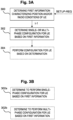
- Fig. 3A schematically depicts a simplified flow chart of a method of operating the apparatus 100 according to some embodiments.
- the apparatus 100 comprises at least one processor 102, and at least one memory 104 storing instructions 106, the at least one memory 104 and the instructions 106 configured to, with the at least one processor 102, cause a base station 12 to determine 300 ( Fig. 3A ) a first information I-1 which characterizes at least one of a) a position of a user equipment 13 ( Fig. 2A ) establishing access A-1 to the base station 12 relative to at least one component of the base station 12, b) radio conditions experienced by a user equipment 13, and to determine 302 ( Fig. 3A ), based on the first information I-1, whether to perform a single phase configuration or a multi-phase configuration for the user equipment 13. In some embodiments, this enables to flexibly adapt the configuration for the user equipment 13 based on e.g. the first information I-1.
- the apparatus 100 may be an apparatus for a wireless communications system 10.
- the apparatus 100 or its functionality, respectively, may be provided in a network element of the communications systems, for example in a the base station 12, e.g. a gNodeB (gNB) 12.
- a network element of the communications systems for example in a the base station 12, e.g. a gNodeB (gNB) 12.
- gNB gNodeB
- the apparatus 100 may be used for or within wireless communications systems 10, e.g. networks, based on or at least partially adhering to third generation partnership project, 3GPP, radio standards such as 5G (fifth generation) or other radio access technology.
- wireless communications systems e.g. networks
- 3GPP third generation partnership project
- radio standards such as 5G (fifth generation) or other radio access technology.
- the instructions 106 when executed by the at least one processor 102, further cause the base station 12 to determine 302 the first information I-1 based on a setup request, e.g. connection setup request, SETUP-REQ ( Fig. 2A , 3A ) from the user equipment.
- a setup request e.g. connection setup request, SETUP-REQ ( Fig. 2A , 3A ) from the user equipment.
- the instructions 106 when executed by the at least one processor 102, further cause the base station 12 to individually determine the first information I-1 and/or whether to perform a single phase configuration or a multi-phase configuration for a specific user equipment 13, e.g. based on the connection setup request SETUP-REQ of the specific user equipment 13.
- the base station 12 may provide for a UE-specific type of configuration (e.g., single-phase or multi-phase, e.g. two-phase), e.g.
- this enables to flexibly and dynamically (e.g., during operation of the base station 12) adapt the type of configuration for a (newly) accessing user equipment 13 based on individual operating conditions of the respective user equipment 13.
- the individual operating conditions of a user equipment 13 may comprise and/or characterize at least one of: a) position of the user equipment 13 with respect to the base station 12 and/or a component (e.g., remote radio head (RRH) or the like) of the base station 12 (e.g., distance d between the user equipment 13 and the base station 12 or at least one component of the base station such as an RRH), b) radio conditions experienced by the user equipment 13 (e.g. characterized by a signal-to-noise ratio (SNR)), c) modulation and coding scheme (MCS).
- a component e.g., remote radio head (RRH) or the like
- RRH remote radio head
- MCS modulation and coding scheme
- a timing advance (TA) value and/or an estimation of the TA value may be used to determine a relative position of the user equipment 13 with respect to the (component of) the base station 12 and/or other radio parameters which are indicative of the distance d between the user equipment 13 and the (component of) the base station 12.
- TA timing advance
- RACH random access channel
- a comparatively high sampling rate may be used for processing such (RACH) preamble of the user equipment 13, to increase a precision of the TA estimation.
- an estimated distance d between the user equipment 13 and the base station 12 and/or a component (e.g., RRH) of the base station 12 may, optionally together with a parameter characterizing radio conditions (e.g., SNR, RSRP (Reference Signal Received Power), etc.), be employed to determine if the user equipment 13 is closer to a base station (or RRH), e.g. a center of a radio cell (not shown) as provided by the base station 12 (or its RRH), or if it is further away, e.g. at a cell edge.
- a base station or RRH
- a center of a radio cell not shown
- the user equipment 13 may be classified into one of at least two classes characterizing the distance d between the position of the user equipment 13 and the base station 12 (or its RRH), and the first information I-1 may e.g. comprise and/or characterize (e.g., amongst others) this classification.
- the first information I-1 may comprise (e.g., only) one bit, e.g. indicating whether the user equipment 13 is associated with a first class comprising user equipment closer to a cell center than to a cell edge, or with a second class comprising user equipment closer to the cell edge than to the cell center of the radio cell.
- the user equipment 13 may determine the class it belongs to, based on the experienced RSRP threshold in the given location.
- the base station 12 may determine whether to perform a single-phase or multi-phase, e.g. two-phase, configuration for the user equipment 13.
- the instructions 106 when executed by the at least one processor 102, further cause the base station 12 to a) determine 302a ( Fig. 3B ) to perform a single-phase configuration for the user equipment 13 if at least one of the following criteria is satisfied: aa) a distance d between the user equipment 13 and the at least one component of the base station 12 is below a first threshold, bb) the radio conditions (e.g., as may be characterized by the SNR and/or another suitable parameter) experienced by the user equipment 13 exceed a second threshold, cc) a complexity of a target modulation and coding scheme associated with the user equipment 13 exceeds a third threshold.
- a single-phase configuration of a specific user equipment 13 may be more efficient than a multi-phase configuration.
- the instructions 106 when executed by the at least one processor 102, further cause the base station 12 to a) determine 302b to perform a multi-phase configuration, for example a two-phase configuration, for the user equipment 13 if at least one of the following criteria is satisfied: aa) the distance d between the user equipment 13 and the at least one component of the base station 12 exceeds the first threshold, bb) the radio conditions experienced by the user equipment 13 are below the second threshold, cc) a complexity of a target modulation and coding scheme associated with the user equipment 13 is below the third threshold.
- a multi-phase, e.g. two-phase, configuration of a specific user equipment 13 may be more efficient than a single-phase configuration.
- the instructions 106 when executed by the at least one processor 102, further cause the base station 12 to perform 304 ( Fig. 3A ) the configuration for the user equipment 13 based on the determination 302 whether to perform a single phase configuration or a multi-phase configuration for the user equipment 13.
- the base station 12' comprises a central unit 12a and at least one distributed unit 12b, wherein the instructions 106 ( Fig. 1A ), when executed by the at least one processor 102, cause the at least one distributed unit 12b to receive 310 ( Fig. 4A ) a setup request SETUP-REQ from the user equipment 13, to determine 312 the first information I-1 based on the setup request SETUP-REQ, and to transmit 314 the first information I-1 to the central unit 12a.
- the base station 12' may be a base station for a 5G network, e.g. a gNB 12'.
- the gNB 12' may e.g. be split, e.g. at least regarding its logical architecture, into a central unit (CU or gNB-CU) 12a and at least one distributed unit (DU or gNB-DU) 12b.
- the at least one DU 12b may e.g. comprise or represent an RRH.
- connection setup request SETUP-REQ from the user equipment 13 may be a connection setup request SETUP-REQ according to some accepted specification, e.g. a Radio Resource Control (RRC) setup request.
- RRC Radio Resource Control
- the distributed unit 12b may use an interface IF according to some accepted specification, e.g. an F1 interface, for transmitting the first information I-1 to the central unit 12a.
- an interface IF according to some accepted specification, e.g. an F1 interface, for transmitting the first information I-1 to the central unit 12a.
- the distributed unit 12b may use a protocol according to some accepted specification, e.g. an F1 Application Protocol (F1AP), for transmitting the first information I-1 to the central unit 12a.
- F1AP F1 Application Protocol
- the instructions 106 when executed by the at least one processor 102, cause the at least one distributed unit 12b to receive, Fig. 4B , a setup request SETUP-REQ (e.g., RRC setup request) from the user equipment 13 and to signal 315 (e.g., over the F1 interface IF and/or using e.g. the F1AP) to the central unit 12a whether to perform a single phase configuration or a multi-phase configuration for the user equipment based on the setup request SETUP-REQ.
- a setup request SETUP-REQ e.g., RRC setup request
- signal 315 e.g., over the F1 interface IF and/or using e.g. the F1AP
- the distributed unit 12b may determine 312 the first information I-1, e.g. based on the received setup request SETUP-REQ.
- the distributed unit 12b may perform the signaling 315 based on the first information I-1.
- the signaling may comprise the first information I-1.
- the instructions 106 when executed by the at least one processor 102, further cause the central unit 12a ( Fig. 2B ) to receive 320 ( Fig. 4C ) the first information I-1 (and/or the signaling) from the at least one distributed unit 12b, and to determine 322, based on the received first information I-1 (and/or based on the signaling), whether to perform 324 a single phase configuration or a multi-phase configuration for the user equipment 13.
- the gNB-DU 12b may detect a radio condition experienced by the user equipment 13 and may e.g. signal assistance information, e.g. based on the detected radio condition, to the central unit 12a, e.g. gNB-CU, e.g. a gNB-CU-Control Plane (gNB-CU-CP).
- the assistance information may comprise and/or characterize the first information I-1 according to the embodiments.
- the gNB-DU 12b may share the first information I-1, e.g. assistance information, with the gNB-CU 12a, e.g. with the gNB-CU-CP, e.g. over the F1 interface IF.
- the first information I-1 e.g. assistance information
- the gNB-CU 12a e.g. with the gNB-CU-CP, e.g. over the F1 interface IF.
- the gNB-DU 12b may signal (see e.g. block 315 of Fig. 4B ) to the gNB-CU 12a, e.g. to the gNB-CU-CP, to use a one-phase configuration for the user equipment.
- the gNB may use the one-phase configuration for the user equipment 13, e.g. encoding and signaling a corresponding setup message to the user equipment 13, e.g. an RRC SETUP message.
- the gNB-DU 12b may signal 315 to the gNB-CU 12a, e.g. to the gNB-CU-CP, to use a multi-phase, e.g. two-phase, configuration for the user equipment 13.
- the gNB may use the multi-phase, e.g. two-phase, configuration for the user equipment 13, e.g. encoding and signaling a corresponding setup message and at least one further message to the user equipment, e.g. an RRC SETUP message and an RRC Reconfiguration message.
- an accepted specification e.g. the FLAP specification
- IEs information elements
- a legacy IE may be used, e.g. a CellGroupConfig IE.
- one or more new, e.g. additional, IEs may be included in an F1 message, e.g. in an F1: "INITIAL UL RRC MESSAGE TRANSFER" message, e.g. according to 3GPP TS 38.473 (see for example 3GPP TS 38.473, version 15.3.0 Release 15 chapter 9.2.3.1).
- the additional information elements may e.g. comprise:
- At least some of the above listed additional IEs a), b), c) may e.g. be included in the F1: INITIAL UL RRC MESSAGE TRANSFER message.
- At least some of the above listed additional IEs a), b), c) may be optional.
- At least one of the above listed additional IEs a), b), c) may be included (e.g. in the INITIAL UL RRC MESSAGE TRANSFER message), e.g. transmitted to the gNB-CU 12a, if the gNB-DU 12b determines to use multi-phase, e.g. two-phase, configuration.
- the above listed additional IEs a), b) may comprise the type "OCTET STRING". In some embodiments the above listed additional IE c) may comprise the type "ENUMERATED ⁇ split ⁇ ".
- At least one of the above listed additional IEs a), b), c) may comprise a Criticality of type “Yes” and/or an Assigned Criticality of type "reject”.
- the functionality of the apparatus 100 may be, at least logically, split, see for example the blocks 100 of Fig. 2B exemplarily assigned to the CU 12a and the DU 12b, and may e.g. be associated with a gNB-CU 12a and/or the at least one gNB-DU 12b.
- the functionality of the apparatus 100 may be implemented by different apparatus 100a, 100b ( Fig. 1B ) as explained hereinafter, wherein the apparatus 100a may e.g. be associated with the gNB-CU 12a ( Fig. 2B ), and wherein the apparatus 100b may e.g. be associated with the gNB-DU 12b.
- FIG. 1B Further embodiments relate to an apparatus 100a ( Fig. 1B ), comprising at least one processor 102a, and at least one memory 104a storing instructions 106a, the at least one memory 104a and the instructions 106a configured to, with the at least one processor 102a, cause a central unit 12a of a base station, e.g. gNB-CU, e.g. gNB-CU-CP, to receive 320 ( Fig.
- a base station e.g. gNB-CU, e.g. gNB-CU-CP
- a first information I-1 which characterizes at least one of a) a position of a user equipment 13 establishing access to the base station 12, 12' relative to at least one component 12b of the base station (e.g., characterizing a distance d' between the user equipment 13 and the gNB-DU 12b), b) radio conditions experienced by the user equipment 13, from at least one distributed unit 12b of the base station 12', and to determine 322, based on the received first information I-1 (and/or a corresponding signaling), whether to perform 324 a single phase configuration or a multi-phase configuration for the user equipment 13.
- the apparatus 100a is further configured to cause the gNB 12, 12' to perform further aspects of a method according to the embodiments explained above associated with the gNB-CU 12a.
- Fig. 1B relate to an apparatus 100b, comprising at least one processor 102b, and at least one memory 104b storing instructions 106b, the at least one memory 104b and the instructions 106b configured to, with the at least one processor 102b, cause at least one distributed unit 12b ( Fig. 2B ) of a base station 12', e.g. gNB-DU, to receive 310 ( Fig.
- a setup request SETUP-REQ from a user equipment 13 establishing access to the base station 12', to determine 312 a first information I-1, which characterizes at least one of a) a position of the user equipment relative to at least one component of the base station, b) radio conditions experienced by the user equipment, based on the setup request SETUP-REQ, and to transmit 314 the first information I-1 to a central unit 12a of the base station, e.g. gNB-CU, e.g. gNB-CU-CP.
- a central unit 12a of the base station e.g. gNB-CU, e.g. gNB-CU-CP.
- the gNB-DU 12b may determine whether the gNB 12' should perform a single-phase configuration or a multi-phase configuration for the user equipment 13, and may signal a result of this determination 312 to the gNB-CU 12a, e.g. within block 314.
- such signaling may be performed implicitly or explicitly, e.g. by including one or more information elements into a message to be transmitted to the gNB-CU 12a, e.g. at least one of the exemplarily disclosed IEs a) "CellGroupConfig-MinConfig", b) "CellGroupConfig-Remaining", c) "ConfigOptionIndication”.
- Fig. 3A relate to a method comprising: determining 300, by a base station 12, 12', e.g. gNB, e.g. gNB-DU and/or gNB-CU, a first information I-1 which characterizes at least one of a) a position of a user equipment establishing access to the base station relative to at least one component of the base station, b) radio conditions experienced by the user equipment, and determining 302, based on the first information I-1, whether to perform a single phase configuration or a multi-phase configuration for the user equipment 13.
- a base station 12, 12' e.g. gNB, e.g. gNB-DU and/or gNB-CU
- a first information I-1 which characterizes at least one of a) a position of a user equipment establishing access to the base station relative to at least one component of the base station, b) radio conditions experienced by the user equipment, and determining 302, based on the first information I-1, whether to perform a single
- Fig. 4C relate to a method comprising: receiving 320, by a central unit 12a of a base station 12, 12', e.g. gNB-CU, e.g. gNB-CU-CP, a first information I-1, which characterizes at least one of a) a position of a user equipment establishing access to the base station relative to at least one component of the base station, b) radio conditions experienced by the user equipment, from at least one distributed unit 12b of the base station 12, 12', and determining 322, based on the received first information I-1, whether to perform 324 a single phase configuration or a multi-phase configuration for the user equipment.
- a central unit 12a of a base station 12, 12' e.g. gNB-CU, e.g. gNB-CU-CP
- a first information I-1 which characterizes at least one of a) a position of a user equipment establishing access to the base station relative to at least one component of the base station, b) radio conditions
- Fig. 4A relate to a method comprising: receiving 310, by at least one distributed unit, e.g. gNB-DU, 12b of a base station 12, 12' a setup request SETUP-REQ from a user equipment 13 establishing access to the base station, e.g. gNB, determining 312, by the at least one distributed unit 12b, a first information I-1, which characterizes at least one of a) a position of the user equipment relative to at least one component of the base station, b) radio conditions experienced by the user equipment, based on the setup request SETUP-REQ, and transmitting 314, by the at least one distributed unit 12b, the first information I-1 to a central unit 12a, e.g. gNB-CU, e.g. gNB-CP, of the base station.
- a central unit 12a e.g. gNB-CU, e.g. gNB-CP
- Fig. 5 schematically depicts a simplified flow chart according to some embodiments, which exemplarily depicts a one (i.e., single)-phase and two-phase (re)configuration process as alternatives within respective blocks B1 (one-phase), B2 (two-phase).
- the elements 12b, 13 of Fig. 5 correspond with the elements 12b, 13 as exemplarily explained above with respect e.g. to Fig. 2B .
- Element 12a' of Fig. 5 symbolizes a gNB-CU-CP
- element 14 of Fig. 4 symbolizes an Access and Mobility Management Function (AMF).
- AMF Access and Mobility Management Function
- Element e1 symbolizes an RRC setup request message transmitted from the user equipment 13 to the gNB-DU 12b, e.g. in the course of an initial access A-1 to the network 10 ( Fig. 2B ) according to some embodiments.
- Element e2 symbolizes an initial uplink RRC message transfer, e.g. using the FLAP, via the F1 interface IF ( Fig. 2B ), from the gNB-DU 12b to the gNB-CU-CP 12a'.
- element e3 symbolizes a downlink RRC message transfer from the gNB-CU-CP 12a' to the gNB-DU 12b.
- element e4 symbolizes an RRC setup message
- element e5 symbolizes an RRC setup complete message
- element e6 symbolizes an INITIAL UL RRC MESSAGE TRANSFER from the gNB-DU 12b to the gNB-CU-CP 12a'
- element e7 symbolizes an initial user equipment message, e.g. according to a next generation application protocol, NGAP, to the AMF 14.
- NGAP next generation application protocol
- a one stage message exchange with the user equipment 13 characterizing the single phase configuration comprises e.g. the elements e4, e5, as seen from the gNB-DU's perspective.
- element e8 symbolizes a downlink (DL) RRC message transfer from the gNB-CU-CP 12a' to the gNB-DU 12b.
- element e9 symbolizes an RRC setup message
- element e10 symbolizes an RRC setup complete message
- element e11 symbolizes an INITIAL UL RRC MESSAGE TRANSFER from the gNB-DU 12b to the gNB-CU-CP 12a'.
- Element e12 symbolizes a further DL RRC message transfer from the gNB-CU-CP 12a' to the gNB-DU 12b
- element e13 symbolizes an RRC reconfiguration message
- element e14 symbolizes an RRC configuration complete message
- element e15 symbolizes a further INITIAL UL RRC MESSAGE TRANSFER from the gNB-DU 12b to the gNB-CU-CP 12a'
- element e16 symbolizes an initial user equipment message, e.g. according to a the NGAP, to the AMF 14.
- a two stage message exchange with the user equipment 13 characterizing the multi-, e.g. two-phase configuration comprises e.g. the elements e9, e10 and e13, e14, as seen from the gNB-DU's perspective.
- a conventional F1: UE Context Modification Procedure message which may e.g. be initiated by a conventional gNB-DU in case of a two-phase configuration, is not used according to the embodiments.
- Fig. 6 relate to an apparatus 100' comprising means 102' for causing a base station 12, 12', e.g. gNB, e.g. gNB-DU and/or gNB-CU, e.g. gNB-CU-CP, to determine a first information I-1 which characterizes at least one of a) a position of a user equipment establishing access to the base station relative to at least one component of the base station, b) radio conditions experienced by the user equipment, and to determine, based on the first information I-1, whether to perform a single phase configuration or a multi-phase configuration for the user equipment 13.
- a base station 12, 12' e.g. gNB, e.g. gNB-DU and/or gNB-CU, e.g. gNB-CU-CP
- a first information I-1 which characterizes at least one of a) a position of a user equipment establishing access to the base station relative to at least one component of the base station, b)
- the means 102' for causing the base station 12, 12' to perform the steps of determining the first information and/or to determine, based on the first information, whether to perform a single phase configuration or a multi-phase configuration for the user equipment may e.g. comprise at least one processor 102 ( Fig. 1A ), and at least one memory 104 storing instructions 106, the at least one memory 104 and the instructions 106 configured to, with the at least one processor 102, perform said steps.
- FIG. 2A, 2B Further embodiments relate to a wireless communications system 10 ( Fig. 2A, 2B ) comprising at least one base station 12, 12' and at least one apparatus 100, 100a, 100b, 100' according to the embodiments.
- At least some embodiments may at least temporarily attain at least one of the following effects and/or advantages: a) user equipment's initial access A-1 has a higher probability of success, b) optimized resource utilization on the base station (e.g., gNB) side, c) base station 12, 12' may individually, e.g. per user equipment 13, select whether to use a single-phase (i.e., one-phase) configuration or a multi-phase (e.g., two-phase) configuration.
- a single-phase i.e., one-phase
- a multi-phase e.g., two-phase
Landscapes
- Engineering & Computer Science (AREA)
- Computer Networks & Wireless Communication (AREA)
- Signal Processing (AREA)
- Mobile Radio Communication Systems (AREA)
Claims (15)
- Vorrichtung (100), die mindestens einen Prozessor (102) und mindestens einen Speicher (104), in dem Anweisungen (106) gespeichert sind, umfasst, wobei der mindestens eine Speicher (104) und die Anweisungen (106) dazu ausgelegt sind, mit dem mindestens einen Prozessor (102) eine Basisstation (12; 12') zu veranlassen, erste Informationen (I-1) zu bestimmen (300), die mindestens eines von a) einer Position einer Teilnehmereinrichtung (13), die einen Zugriff (A-1) auf die Basisstation (12; 12`) relativ zu mindestens einer Komponente (12; 12b) der Basisstation (12; 12`) herstellt, b) Funkbedingungen, die von einer Teilnehmereinrichtung (13) erfahren werden, charakterisieren, und auf Basis der ersten Informationen (I-1) zu bestimmen (302), ob für die Teilnehmereinrichtung (13) eine einphasige Auslegung oder eine mehrphasige Auslegung durchgeführt (304) werden soll.
- Vorrichtung (100) nach Anspruch 1, wobei die Anweisungen (106), wenn sie von dem mindestens einen Prozessor (102) ausgeführt werden, die Basisstation (12; 12') ferner veranlassen, auf Basis einer Einrichtungsanforderung (SETUP-REQ) von der Teilnehmereinrichtung (13) die ersten Informationen (I-1) zu bestimmen (300).
- Vorrichtung (100) nach mindestens einem der vorhergehenden Ansprüche, wobei die Anweisungen (106), wenn sie von dem mindestens einen Prozessor (102) ausgeführt werden, die Basisstation (12; 12') ferner veranlassen, a) zu bestimmen (302a), die einphasige Auslegung für die Teilnehmereinrichtung (13) durchzuführen, wenn mindestens eines der folgenden Kriterien erfüllt ist: aa) Funkparameter, die anzeigen, dass ein Abstand (d; d') zwischen der Teilnehmereinrichtung (13) und der mindestens einen Komponente (12, 12b) der Basisstation (12; 12') unter einem ersten Schwellwert liegt, bb) die von der Teilnehmereinrichtung (13) erfahrenen Funkbedingungen überschreiten einen zweiten Schwellwert, cc) eine Komplexität eines Zielmodulations- und Codierschemas, das mit der Teilnehmereinrichtung (13) verknüpft ist, überschreiten einen dritten Schwellwert.
- Vorrichtung (100) nach mindestens einem der vorhergehenden Ansprüche, wobei die Anweisungen (106), wenn sie von dem mindestens einen Prozessor (102) ausgeführt werden, die Basisstation (12; 12') ferner veranlassen, a) zu bestimmen (302b), die mehrphasige Auslegung für die Teilnehmereinrichtung (13), beispielsweise eine zweiphasige Auslegung, durchzuführen, wenn mindestens eines der folgenden Kriterien erfüllt ist: aa) Funkparameter, die anzeigen, dass ein Abstand (d; d') zwischen der Teilnehmereinrichtung (13) und der mindestens einen Komponente (12, 12b) der Basisstation (12; 12') einen oder den ersten Schwellwert überschreitet, bb) die von der Teilnehmereinrichtung (13) erfahrenen Funkbedingungen liegen unter einem oder dem zweiten Schwellwert, cc) eine Komplexität eines Zielmodulations- und Codierschemas, das mit der Teilnehmereinrichtung (13) verknüpft ist, liegt unter einem oder dem dritten Schwellwert.
- Vorrichtung (100) nach mindestens einem der vorhergehenden Ansprüche, wobei die Anweisungen (106), wenn sie von dem mindestens einen Prozessor (102) ausgeführt werden, die Basisstation (12; 12') ferner veranlassen, auf Basis der Bestimmung (302), ob die einphasige Auslegung oder die mehrphasige Auslegung für die Teilnehmereinrichtung (13) durchgeführt werden soll, die Auslegung für die Teilnehmereinrichtung (13) durchzuführen (304).
- Vorrichtung (100) nach mindestens einem der vorhergehenden Ansprüche, wobei die Basisstation (12; 12') eine Zentraleinheit (12a) und mindestens eine verteilte Einheit (12b) umfasst, wobei die Anweisungen (106), wenn sie von dem mindestens einen Prozessor (102) ausgeführt werden, die mindestens eine verteilte Einheit (12b) veranlassen, eine Einrichtungsanforderung (SETUP-REQ) von der Teilnehmereinrichtung (13) zu empfangen (310), die ersten Informationen (I-1) auf Basis der Einrichtungsanforderung (SETUP-REQ) zu bestimmen (312) und die ersten Informationen (I-1) zur Zentraleinheit (12a) zu übertragen (314).
- Vorrichtung (100) nach mindestens einem der vorhergehenden Ansprüche, wobei die Basisstation (12; 12') eine Zentraleinheit (12a) und mindestens eine verteilte Einheit (12b) umfasst, wobei die Anweisungen (106), wenn sie von dem mindestens einen Prozessor (102) ausgeführt werden, die mindestens eine verteilte Einheit (12b) veranlassen, eine Einrichtungsanforderung (SETUP-REQ) von der Teilnehmereinrichtung (13) zu empfangen (310) und auf Basis der Einrichtungsanforderung (SETUP-REQ) der Zentraleinheit (12a) zu signalisieren (315), ob die einphasige Auslegung oder die mehrphasige Auslegung für die Teilnehmereinrichtung (13) durchgeführt werden soll.
- Vorrichtung (100) nach mindestens einem der Ansprüche 6 bis 7, wobei die Anweisungen (106), wenn sie von dem mindestens einen Prozessor (102) ausgeführt werden, die Zentraleinheit (12a) ferner veranlassen, die ersten Informationen (I-1) von der mindestens einen verteilten Einheit (12b) zu empfangen (320) und auf Basis der empfangenen ersten Informationen (I-1) zu bestimmen (322), ob die einphasige Auslegung oder die mehrphasige Auslegung für die Teilnehmereinrichtung (13) durchgeführt (324) werden soll.
- Vorrichtung (100a), die mindestens einen Prozessor (102a) und mindestens einen Speicher (104a), in dem Anweisungen (106a) gespeichert sind, umfasst, wobei der mindestens eine Speicher (104a) und die Anweisungen (106a) dazu ausgelegt sind, mit dem mindestens einen Prozessor (102a) eine Zentraleinheit (12a) einer Basisstation (12; 12') zu veranlassen, erste Informationen (I-1), die mindestens eines von a) einer Position einer Teilnehmereinrichtung (13), die einen Zugriff (A-1) auf die Basisstation (12; 12`) relativ zu mindestens einer Komponente (12b) der Basisstation (12) herstellt, b) Funkbedingungen, die von der Teilnehmereinrichtung (13) erfahren werden, charakterisieren, von mindestens einer verteilten Einheit (12b) der Basisstation (12; 12') zu empfangen (320) und auf Basis der empfangenen ersten Informationen (I-1) zu bestimmen (322), ob für die Teilnehmereinrichtung (13) eine einphasige Auslegung oder eine mehrphasige Auslegung durchgeführt (324) werden soll.
- Vorrichtung (100b), die mindestens einen Prozessor (102b) und mindestens einen Speicher (104b), in dem Anweisungen (106b) gespeichert sind, umfasst, wobei der mindestens eine Speicher (104b) und die Anweisungen (106b) dazu ausgelegt sind, mit dem mindestens einen Prozessor (102b) mindestens eine verteilte Einheit (12b) einer Basisstation (12`) zu veranlassen, eine Einrichtungsanforderung (SETUP-REQ) von einer Teilnehmereinrichtung (13), die einen Zugriff (A-1) auf die Basisstation (12`) herstellt, zu empfangen (310), erste Informationen (I-1) zu bestimmen (312), die mindestens eines von a) einer Position der Teilnehmereinrichtung (13) relativ zu mindestens einer Komponente (12b) der Basisstation (12`), b) Funkbedingungen, die von der Teilnehmereinrichtung (13) erfahren werden, auf Basis der Einrichtungsanforderung (SETUP-REQ) charakterisieren, und die ersten Informationen (I-1) zu einer Zentraleinheit (12a) der Basisstation (12') zu übertragen (314).
- Verfahren, das Folgendes umfasst: Bestimmen (300) durch eine Basisstation (12; 12`) von ersten Informationen (I-1), die mindestens eines von a) einer Position einer Teilnehmereinrichtung (13), die einen Zugriff (A-1) auf die Basisstation (12; 12`) relativ zu mindestens einer Komponente (12; 12b) der Basisstation (12; 12`) herstellt, b) Funkbedingungen, die von der Teilnehmereinrichtung (13) erfahren werden, charakterisieren, und Bestimmen (302) auf Basis der ersten Informationen (I-1), ob für die Teilnehmereinrichtung (13) eine einphasige Auslegung oder eine mehrphasige Auslegung durchgeführt werden soll.
- Verfahren , das Folgendes umfasst: Empfangen (320) durch eine Zentraleinheit (12a) einer Basisstation (12; 12`) von ersten Informationen (I-1), die mindestens eines von a) einer Position einer Teilnehmereinrichtung (13), die einen Zugriff (A-1) auf die Basisstation (12; 12`) relativ zu mindestens einer Komponente (12b) der Basisstation (12), b) Funkbedingungen, die von der Teilnehmereinrichtung (13) erfahren werden, charakterisieren, von der mindestens einen verteilten Einheit (12b) der Basisstation (12; 12`) und Bestimmen (322) auf Basis der empfangenen ersten Informationen (I-1), ob für die Teilnehmereinrichtung (13) eine einphasige Auslegung oder eine mehrphasige Auslegung durchgeführt (324) werden soll.
- Verfahren, das Folgendes umfasst: Empfangen (310) einer Einrichtungsanforderung (SETUP-REQ) von einer Teilnehmereinrichtung (13), die einen Zugriff (A-1) auf eine Basisstation (12') herstellt, durch mindestens eine verteilte Einheit (12b) der Basisstation (12'), Bestimmen (312) von ersten Informationen (I-1), die mindestens eines von a) einer Position der Teilnehmereinrichtung (13) relativ zu mindestens einer Komponente (12b) der Basisstation (12'), b) Funkbedingungen, die von der Teilnehmereinrichtung (13) erfahren werden, charakterisieren, durch die mindestens eine verteilte Einheit (12b) auf Basis der Einrichtungsanforderung (SETUP-REQ) und Übertragen (314) der ersten Informationen (I-1) durch die mindestens eine verteilte Einheit (12b) zu einer Zentraleinheit (12a) der Basisstation (12').
- Vorrichtung (100`), die Mittel (102') zum Veranlassen einer Basisstation (12; 12'), erste Informationen (I-1) zu bestimmen (300), die mindestens eines von a) einer Position einer Teilnehmereinrichtung (13), die einen Zugriff (A-1) auf die Basisstation (12; 12') relativ zu mindestens einer Komponente (12; 12b) der Basisstation (12; 12'), herstellt, b) Funkbedingungen, die von der Teilnehmereinrichtung (13) erfahren werden, und auf Basis der ersten Informationen (I-1) zu bestimmen (302), ob für die Teilnehmereinrichtung (13) eine einphasige Auslegung oder eine mehrphasige Auslegung durchgeführt werden soll, umfasst.
- Drahtloses Kommunikationssystem (10), das mindestens eine Basisstation (12, 12') und mindestens eine Vorrichtung (100, 100a, 100b) nach mindestens einem der Ansprüche 1 bis 10 umfasst.
Priority Applications (2)
| Application Number | Priority Date | Filing Date | Title |
|---|---|---|---|
| EP20201467.6A EP3986080B1 (de) | 2020-10-13 | 2020-10-13 | Geräte, verfahren und system zur entscheidung einer ein- oder mehrphasigen konfiguration eines ue |
| PCT/EP2021/074133 WO2022078669A1 (en) | 2020-10-13 | 2021-09-01 | Apparatus, method and system for deciding single-phase or multi-phase configuration of a ue |
Applications Claiming Priority (1)
| Application Number | Priority Date | Filing Date | Title |
|---|---|---|---|
| EP20201467.6A EP3986080B1 (de) | 2020-10-13 | 2020-10-13 | Geräte, verfahren und system zur entscheidung einer ein- oder mehrphasigen konfiguration eines ue |
Publications (2)
| Publication Number | Publication Date |
|---|---|
| EP3986080A1 EP3986080A1 (de) | 2022-04-20 |
| EP3986080B1 true EP3986080B1 (de) | 2024-10-23 |
Family
ID=72852431
Family Applications (1)
| Application Number | Title | Priority Date | Filing Date |
|---|---|---|---|
| EP20201467.6A Active EP3986080B1 (de) | 2020-10-13 | 2020-10-13 | Geräte, verfahren und system zur entscheidung einer ein- oder mehrphasigen konfiguration eines ue |
Country Status (2)
| Country | Link |
|---|---|
| EP (1) | EP3986080B1 (de) |
| WO (1) | WO2022078669A1 (de) |
Family Cites Families (2)
| Publication number | Priority date | Publication date | Assignee | Title |
|---|---|---|---|---|
| WO2019160743A1 (en) * | 2018-02-14 | 2019-08-22 | Google Llc | Full and delta configuration in a central unit-distributed unit architecture |
| EP3669609B1 (de) * | 2018-10-04 | 2021-01-13 | Google LLC | Verfahren zur verwaltung der konfiguration einer rrc-zellengruppe |
-
2020
- 2020-10-13 EP EP20201467.6A patent/EP3986080B1/de active Active
-
2021
- 2021-09-01 WO PCT/EP2021/074133 patent/WO2022078669A1/en not_active Ceased
Also Published As
| Publication number | Publication date |
|---|---|
| EP3986080A1 (de) | 2022-04-20 |
| WO2022078669A1 (en) | 2022-04-21 |
Similar Documents
| Publication | Publication Date | Title |
|---|---|---|
| EP3731574B1 (de) | Verfahren und vorrichtung zur übertragung von uplink-informationen | |
| CN113473639B (zh) | 用于小数据传送的随机接入前导码分区的方法和设备 | |
| US10834638B2 (en) | Data transmission method, wireless network node, and communications system | |
| EP2168262B1 (de) | Verfahren und vorrichtung zur messungsdurchführung an nachbarzellen in mobilem kommunikationssystem | |
| US7433698B2 (en) | Cell reselection signalling method | |
| EP3537842A1 (de) | Übertragung von datenpaketen in multi-rat-netzwerken | |
| US12058556B2 (en) | Method and apparatus for management of extended mobile device identity information | |
| EP2934047B1 (de) | Bandbreitenkonfigurationsverfahren und -system | |
| JP2005536091A (ja) | 無線リソース制御接続前のユーザ装置能力の指示 | |
| EP4176633A1 (de) | Zellkonfigurationsschemata in der drahtlosen kommunikation | |
| EP3952564A1 (de) | Kommunikationsverfahren in einem d2d-system, endgerät und netzwerkgerät | |
| EP2351421B1 (de) | Telekommunikationssystem und verfahren | |
| EP3500871A1 (de) | Verfahren und vorrichtung zur positionierung einer drahtloskommunikationsvorrichtung unter verwendung von timing-advance-multilateration | |
| EP3986080B1 (de) | Geräte, verfahren und system zur entscheidung einer ein- oder mehrphasigen konfiguration eines ue | |
| CN114390640B (zh) | 辅小区变换的错误类型的判定方法及设备 | |
| EP3427518B1 (de) | Herstellung einer funkressourcenkontrollverbindung | |
| EP2451238B1 (de) | Steuernachrichtkodierung | |
| US10582446B2 (en) | Support of mobile station assisted dedicated core network selection | |
| US20250393075A1 (en) | Preamble sequence sending and receiving methods, apparatuses and storage medium | |
| EP3120658B1 (de) | Vorrichtung und verfahren zum entkoppeln eines uplink-verstärkten dedizierten kanals und gemeinsam genutzter -downlink-hochgeschwindigkeitskanal | |
| WO2025035231A1 (en) | Random access reporting techniques | |
| EP2848052B1 (de) | Verfahren zur anzeige von referenzsymbolübertragungsleistungswechsel in einem zellularen netzwerk | |
| US20060189341A1 (en) | Method of improving power control in a mobile radiocommunication system | |
| EP2858266A2 (de) | Datensequenzdetektion in einem Kommunikationssystem | |
| US20020058509A1 (en) | Intersystem call transfer method for use in cellular mobile radio systems |
Legal Events
| Date | Code | Title | Description |
|---|---|---|---|
| PUAI | Public reference made under article 153(3) epc to a published international application that has entered the european phase |
Free format text: ORIGINAL CODE: 0009012 |
|
| STAA | Information on the status of an ep patent application or granted ep patent |
Free format text: STATUS: THE APPLICATION HAS BEEN PUBLISHED |
|
| AK | Designated contracting states |
Kind code of ref document: A1 Designated state(s): AL AT BE BG CH CY CZ DE DK EE ES FI FR GB GR HR HU IE IS IT LI LT LU LV MC MK MT NL NO PL PT RO RS SE SI SK SM TR |
|
| STAA | Information on the status of an ep patent application or granted ep patent |
Free format text: STATUS: REQUEST FOR EXAMINATION WAS MADE |
|
| 17P | Request for examination filed |
Effective date: 20221020 |
|
| RBV | Designated contracting states (corrected) |
Designated state(s): AL AT BE BG CH CY CZ DE DK EE ES FI FR GB GR HR HU IE IS IT LI LT LU LV MC MK MT NL NO PL PT RO RS SE SI SK SM TR |
|
| GRAP | Despatch of communication of intention to grant a patent |
Free format text: ORIGINAL CODE: EPIDOSNIGR1 |
|
| STAA | Information on the status of an ep patent application or granted ep patent |
Free format text: STATUS: GRANT OF PATENT IS INTENDED |
|
| RIC1 | Information provided on ipc code assigned before grant |
Ipc: H04W 72/12 20090101ALN20240425BHEP Ipc: H04W 88/08 20090101ALN20240425BHEP Ipc: H04W 74/08 20090101ALI20240425BHEP Ipc: H04W 76/10 20180101AFI20240425BHEP |
|
| INTG | Intention to grant announced |
Effective date: 20240522 |
|
| GRAS | Grant fee paid |
Free format text: ORIGINAL CODE: EPIDOSNIGR3 |
|
| GRAA | (expected) grant |
Free format text: ORIGINAL CODE: 0009210 |
|
| STAA | Information on the status of an ep patent application or granted ep patent |
Free format text: STATUS: THE PATENT HAS BEEN GRANTED |
|
| AK | Designated contracting states |
Kind code of ref document: B1 Designated state(s): AL AT BE BG CH CY CZ DE DK EE ES FI FR GB GR HR HU IE IS IT LI LT LU LV MC MK MT NL NO PL PT RO RS SE SI SK SM TR |
|
| REG | Reference to a national code |
Ref country code: GB Ref legal event code: FG4D |
|
| REG | Reference to a national code |
Ref country code: CH Ref legal event code: EP |
|
| REG | Reference to a national code |
Ref country code: DE Ref legal event code: R096 Ref document number: 602020039811 Country of ref document: DE |
|
| REG | Reference to a national code |
Ref country code: IE Ref legal event code: FG4D |
|
| REG | Reference to a national code |
Ref country code: LT Ref legal event code: MG9D |
|
| REG | Reference to a national code |
Ref country code: NL Ref legal event code: MP Effective date: 20241023 |
|
| REG | Reference to a national code |
Ref country code: AT Ref legal event code: MK05 Ref document number: 1735904 Country of ref document: AT Kind code of ref document: T Effective date: 20241023 |
|
| PG25 | Lapsed in a contracting state [announced via postgrant information from national office to epo] |
Ref country code: NL Free format text: LAPSE BECAUSE OF FAILURE TO SUBMIT A TRANSLATION OF THE DESCRIPTION OR TO PAY THE FEE WITHIN THE PRESCRIBED TIME-LIMIT Effective date: 20241023 |
|
| PG25 | Lapsed in a contracting state [announced via postgrant information from national office to epo] |
Ref country code: NL Free format text: LAPSE BECAUSE OF FAILURE TO SUBMIT A TRANSLATION OF THE DESCRIPTION OR TO PAY THE FEE WITHIN THE PRESCRIBED TIME-LIMIT Effective date: 20241023 |
|
| PG25 | Lapsed in a contracting state [announced via postgrant information from national office to epo] |
Ref country code: IS Free format text: LAPSE BECAUSE OF FAILURE TO SUBMIT A TRANSLATION OF THE DESCRIPTION OR TO PAY THE FEE WITHIN THE PRESCRIBED TIME-LIMIT Effective date: 20250223 Ref country code: HR Free format text: LAPSE BECAUSE OF FAILURE TO SUBMIT A TRANSLATION OF THE DESCRIPTION OR TO PAY THE FEE WITHIN THE PRESCRIBED TIME-LIMIT Effective date: 20241023 Ref country code: PT Free format text: LAPSE BECAUSE OF FAILURE TO SUBMIT A TRANSLATION OF THE DESCRIPTION OR TO PAY THE FEE WITHIN THE PRESCRIBED TIME-LIMIT Effective date: 20250224 |
|
| PG25 | Lapsed in a contracting state [announced via postgrant information from national office to epo] |
Ref country code: FI Free format text: LAPSE BECAUSE OF FAILURE TO SUBMIT A TRANSLATION OF THE DESCRIPTION OR TO PAY THE FEE WITHIN THE PRESCRIBED TIME-LIMIT Effective date: 20241023 |
|
| PG25 | Lapsed in a contracting state [announced via postgrant information from national office to epo] |
Ref country code: BG Free format text: LAPSE BECAUSE OF FAILURE TO SUBMIT A TRANSLATION OF THE DESCRIPTION OR TO PAY THE FEE WITHIN THE PRESCRIBED TIME-LIMIT Effective date: 20241023 |
|
| PG25 | Lapsed in a contracting state [announced via postgrant information from national office to epo] |
Ref country code: ES Free format text: LAPSE BECAUSE OF FAILURE TO SUBMIT A TRANSLATION OF THE DESCRIPTION OR TO PAY THE FEE WITHIN THE PRESCRIBED TIME-LIMIT Effective date: 20241023 |
|
| PG25 | Lapsed in a contracting state [announced via postgrant information from national office to epo] |
Ref country code: NO Free format text: LAPSE BECAUSE OF FAILURE TO SUBMIT A TRANSLATION OF THE DESCRIPTION OR TO PAY THE FEE WITHIN THE PRESCRIBED TIME-LIMIT Effective date: 20250123 |
|
| PG25 | Lapsed in a contracting state [announced via postgrant information from national office to epo] |
Ref country code: LV Free format text: LAPSE BECAUSE OF FAILURE TO SUBMIT A TRANSLATION OF THE DESCRIPTION OR TO PAY THE FEE WITHIN THE PRESCRIBED TIME-LIMIT Effective date: 20241023 Ref country code: AT Free format text: LAPSE BECAUSE OF FAILURE TO SUBMIT A TRANSLATION OF THE DESCRIPTION OR TO PAY THE FEE WITHIN THE PRESCRIBED TIME-LIMIT Effective date: 20241023 Ref country code: GR Free format text: LAPSE BECAUSE OF FAILURE TO SUBMIT A TRANSLATION OF THE DESCRIPTION OR TO PAY THE FEE WITHIN THE PRESCRIBED TIME-LIMIT Effective date: 20250124 |
|
| PG25 | Lapsed in a contracting state [announced via postgrant information from national office to epo] |
Ref country code: PL Free format text: LAPSE BECAUSE OF FAILURE TO SUBMIT A TRANSLATION OF THE DESCRIPTION OR TO PAY THE FEE WITHIN THE PRESCRIBED TIME-LIMIT Effective date: 20241023 |
|
| PG25 | Lapsed in a contracting state [announced via postgrant information from national office to epo] |
Ref country code: RS Free format text: LAPSE BECAUSE OF FAILURE TO SUBMIT A TRANSLATION OF THE DESCRIPTION OR TO PAY THE FEE WITHIN THE PRESCRIBED TIME-LIMIT Effective date: 20250123 |
|
| PG25 | Lapsed in a contracting state [announced via postgrant information from national office to epo] |
Ref country code: SM Free format text: LAPSE BECAUSE OF FAILURE TO SUBMIT A TRANSLATION OF THE DESCRIPTION OR TO PAY THE FEE WITHIN THE PRESCRIBED TIME-LIMIT Effective date: 20241023 |
|
| PG25 | Lapsed in a contracting state [announced via postgrant information from national office to epo] |
Ref country code: DK Free format text: LAPSE BECAUSE OF FAILURE TO SUBMIT A TRANSLATION OF THE DESCRIPTION OR TO PAY THE FEE WITHIN THE PRESCRIBED TIME-LIMIT Effective date: 20241023 |
|
| PG25 | Lapsed in a contracting state [announced via postgrant information from national office to epo] |
Ref country code: EE Free format text: LAPSE BECAUSE OF FAILURE TO SUBMIT A TRANSLATION OF THE DESCRIPTION OR TO PAY THE FEE WITHIN THE PRESCRIBED TIME-LIMIT Effective date: 20241023 |
|
| PG25 | Lapsed in a contracting state [announced via postgrant information from national office to epo] |
Ref country code: RO Free format text: LAPSE BECAUSE OF FAILURE TO SUBMIT A TRANSLATION OF THE DESCRIPTION OR TO PAY THE FEE WITHIN THE PRESCRIBED TIME-LIMIT Effective date: 20241023 |
|
| REG | Reference to a national code |
Ref country code: DE Ref legal event code: R097 Ref document number: 602020039811 Country of ref document: DE |
|
| PG25 | Lapsed in a contracting state [announced via postgrant information from national office to epo] |
Ref country code: SK Free format text: LAPSE BECAUSE OF FAILURE TO SUBMIT A TRANSLATION OF THE DESCRIPTION OR TO PAY THE FEE WITHIN THE PRESCRIBED TIME-LIMIT Effective date: 20241023 |
|
| PG25 | Lapsed in a contracting state [announced via postgrant information from national office to epo] |
Ref country code: CZ Free format text: LAPSE BECAUSE OF FAILURE TO SUBMIT A TRANSLATION OF THE DESCRIPTION OR TO PAY THE FEE WITHIN THE PRESCRIBED TIME-LIMIT Effective date: 20241023 |
|
| PG25 | Lapsed in a contracting state [announced via postgrant information from national office to epo] |
Ref country code: IT Free format text: LAPSE BECAUSE OF FAILURE TO SUBMIT A TRANSLATION OF THE DESCRIPTION OR TO PAY THE FEE WITHIN THE PRESCRIBED TIME-LIMIT Effective date: 20241023 |
|
| PLBE | No opposition filed within time limit |
Free format text: ORIGINAL CODE: 0009261 |
|
| STAA | Information on the status of an ep patent application or granted ep patent |
Free format text: STATUS: NO OPPOSITION FILED WITHIN TIME LIMIT |
|
| PG25 | Lapsed in a contracting state [announced via postgrant information from national office to epo] |
Ref country code: SE Free format text: LAPSE BECAUSE OF FAILURE TO SUBMIT A TRANSLATION OF THE DESCRIPTION OR TO PAY THE FEE WITHIN THE PRESCRIBED TIME-LIMIT Effective date: 20241023 |
|
| 26N | No opposition filed |
Effective date: 20250724 |
|
| PGFP | Annual fee paid to national office [announced via postgrant information from national office to epo] |
Ref country code: GB Payment date: 20250904 Year of fee payment: 6 |