EP2168262B1 - Verfahren und vorrichtung zur messungsdurchführung an nachbarzellen in mobilem kommunikationssystem - Google Patents
Verfahren und vorrichtung zur messungsdurchführung an nachbarzellen in mobilem kommunikationssystem Download PDFInfo
- Publication number
- EP2168262B1 EP2168262B1 EP08766421.5A EP08766421A EP2168262B1 EP 2168262 B1 EP2168262 B1 EP 2168262B1 EP 08766421 A EP08766421 A EP 08766421A EP 2168262 B1 EP2168262 B1 EP 2168262B1
- Authority
- EP
- European Patent Office
- Prior art keywords
- measurement result
- neighboring cells
- measurement
- cell
- values
- Prior art date
- Legal status (The legal status is an assumption and is not a legal conclusion. Google has not performed a legal analysis and makes no representation as to the accuracy of the status listed.)
- Active
Links
Images




Classifications
-
- H—ELECTRICITY
- H04—ELECTRIC COMMUNICATION TECHNIQUE
- H04W—WIRELESS COMMUNICATION NETWORKS
- H04W36/00—Hand-off or reselection arrangements
- H04W36/0005—Control or signalling for completing the hand-off
- H04W36/0083—Determination of parameters used for hand-off, e.g. generation or modification of neighbour cell lists
- H04W36/00835—Determination of neighbour cell lists
-
- H—ELECTRICITY
- H04—ELECTRIC COMMUNICATION TECHNIQUE
- H04W—WIRELESS COMMUNICATION NETWORKS
- H04W24/00—Supervisory, monitoring or testing arrangements
- H04W24/10—Scheduling measurement reports ; Arrangements for measurement reports
-
- H—ELECTRICITY
- H04—ELECTRIC COMMUNICATION TECHNIQUE
- H04W—WIRELESS COMMUNICATION NETWORKS
- H04W36/00—Hand-off or reselection arrangements
- H04W36/0005—Control or signalling for completing the hand-off
- H04W36/0083—Determination of parameters used for hand-off, e.g. generation or modification of neighbour cell lists
- H04W36/0085—Hand-off measurements
-
- H—ELECTRICITY
- H04—ELECTRIC COMMUNICATION TECHNIQUE
- H04W—WIRELESS COMMUNICATION NETWORKS
- H04W36/00—Hand-off or reselection arrangements
- H04W36/24—Reselection being triggered by specific parameters
- H04W36/30—Reselection being triggered by specific parameters by measured or perceived connection quality data
- H04W36/302—Reselection being triggered by specific parameters by measured or perceived connection quality data due to low signal strength
-
- H—ELECTRICITY
- H04—ELECTRIC COMMUNICATION TECHNIQUE
- H04W—WIRELESS COMMUNICATION NETWORKS
- H04W36/00—Hand-off or reselection arrangements
- H04W36/0005—Control or signalling for completing the hand-off
- H04W36/0055—Transmission or use of information for re-establishing the radio link
- H04W36/0058—Transmission of hand-off measurement information, e.g. measurement reports
-
- H—ELECTRICITY
- H04—ELECTRIC COMMUNICATION TECHNIQUE
- H04W—WIRELESS COMMUNICATION NETWORKS
- H04W36/00—Hand-off or reselection arrangements
- H04W36/0005—Control or signalling for completing the hand-off
- H04W36/0083—Determination of parameters used for hand-off, e.g. generation or modification of neighbour cell lists
-
- H—ELECTRICITY
- H04—ELECTRIC COMMUNICATION TECHNIQUE
- H04W—WIRELESS COMMUNICATION NETWORKS
- H04W36/00—Hand-off or reselection arrangements
- H04W36/0005—Control or signalling for completing the hand-off
- H04W36/0083—Determination of parameters used for hand-off, e.g. generation or modification of neighbour cell lists
- H04W36/0085—Hand-off measurements
- H04W36/0094—Definition of hand-off measurement parameters
Definitions
- the present invention relates generally to a mobile communication system, and in particular, but not exclusively, to a method and apparatus for performing measurement on neighboring cells for cell selection or cell reselection and handover.
- the Universal Mobile Telecommunication Service (UMTS) system is a 3 rd generation asynchronous mobile communication system that uses Wideband Code Division Multiple Access (W-CDMA) and is based on Global System for Mobile communications (GSM) and General Packet Radio Services (GPRS), both of which are European mobile communication systems.
- W-CDMA Wideband Code Division Multiple Access
- GSM Global System for Mobile communications
- GPRS General Packet Radio Services
- 3GPP 3 rd Generation Partnership Project
- LTE Long Term Evolution
- LTE Long Term Evolution
- LTE is a technology for implementing high-speed packet-based communication having a transfer rate of a maximum of 100 Mbps, aimed at its commercialization in around 2010.
- schemes are under discussion, and they include, for example, a scheme of reducing the number of nodes situated in the communication path by simplifying a configuration of the network, and another scheme of maximally approximating wireless protocols to wireless channels.
- FIG. 1 illustrates an exemplary configuration of an Evolved UMTS mobile communication system.
- an Evolved UMTS Radio Access Network (E-UTRAN or E-RAN) 110 is simplified to a 2-node configuration of evolved Node Bs (eNBs) 120, 122, 124, 126 and 128, and anchor nodes 130 and 132.
- eNBs evolved Node Bs
- a User Equipment (UE) 101 also known as a terminal, accesses the Internet Protocol (IP) network by means of E-RANs 110 and112.
- IP Internet Protocol
- the eNBs 120 to 128, which correspond to the legacy Node Bs of the UMTS system, are connected to the UE 101 over wireless channels.
- the eNBs 120 to 128 perform a complex function.
- LTE since all user traffics, including real-time services such as Voice over IP (VoIP), are serviced through a shared channel, there is a need for a device for gathering status information of UEs to perform scheduling, and the eNBs 120 to 128 serve as the device.
- VoIP Voice over IP
- one eNB controls a plurality of cells.
- the eNB performs Adaptive Modulation & Coding (AMC) that adaptively determines a modulation scheme and a channel coding rate according to the channel status of UEs.
- AMC Adaptive Modulation & Coding
- Hybrid Automatic Repeat reQuest is performed between the eNBs 120 to 128 and the UE 101 even in LTE, and since various Quality-of-Service (QoS) requirements cannot be satisfied only with HARQ, outer ARQ in an upper layer can be performed between the UE 101 and the eNBs 120 to 128.
- HARQ a technique for soft-combining the previously received data with its retransmitted data without discarding the previously received data to increase a reception success rate, is used for increasing transmission efficiency in high-speed packet communication such as HSDPA and EDCH services.
- OFDM Orthogonal Frequency Division Multiplexing
- next generation mobile communication systems there is a need for a measurement scheme for neighboring cells for cell selection or cell reselection and handover.
- US 6 044 272 discloses a system and method for improved mobile assisted handoff.
- the method involves an interaction between mobile (UE) and base station (BS).
- the BS orders the UE to perform measurements on a list of channels.
- the UE measures and reports all measurements to the BS.
- the BS selects a number of favorable channels, and issues a further measurement command to the UE.
- the UE measures and reports again, after which the BS decides on handoff .
- An aspect of the present invention is to address at least the problems and/or disadvantages and to provide at least the advantages described below.
- an aspect of the present invention is to provide a method and apparatus for reducing a measurement delay in performing measurement on neighboring cells for cell selection or cell reselection and handover.
- Another aspect of the present invention is to provide a method and apparatus for reducing a measurement delay without increasing complexity of a UE.
- UE user equipment, UE, apparatus for performing measurement on neighboring cells in a mobile communication system as claimed in claim 7.
- a base station apparatus for managing neighboring cells in a mobile communication system as claimed in claim 15.
- a UE receives measurement-related parameters through a Primary Broadcast Channel (P-BCH) and applies them to the measurement, only for the neighboring cells having a good radio channel whose radio strength exceeds a particular threshold among the detected neighboring cells. Otherwise, the UE receives measurement-related parameters through the P-BCH and applies them to the measurement, only for the neighboring cell having the best radio channel and the neighboring cells whose radio strength falls within a range of a particular threshold from that of the neighboring cell having the best radio channel as a result of the measurement on parameters except for the measurement-related parameters transmitted through the P-BCH. In this way, the UE receives P-BCH signals only for the available neighboring cells, instead of receiving P-BCH signals of the detected neighboring cells.
- P-BCH Primary Broadcast Channel
- the UE preferentially receives measurement-related parameters through the P-BCH and applies them to the measurement on the neighboring cell having the best radio channel as a result of the measurement on parameters except for the measurement-related parameters transmitted through the P-BCH, and then receives measurement-related parameters through the P-BCH and applies them to the measurement on the corresponding neighboring cells, only for the neighboring cells having the measurement result values within a range of a particular threshold compared with the measurement result value to which the measurement-related parameters are applied.
- the thresholds can be transmitted from an eNB (also known as base station) to the UE through system information or a UE-dedicated measurement control message, or can be hard-coded to the UE as a single value.
- FIG. 2 is a follow diagram schematically illustrating a measurement operation on neighboring cells for cell (re)selection and handover in a next generation mobile communication system to which the present invention is applied.
- a UE performs measurement/detection on all Sync Channel (SCH) signals for cell identification. That is, the UE detects whether there are any cells in its vicinity.
- the UE receives P-BCH signals through P-BCH for all detected neighboring cells, and receives a measurement-related parameter for each cell from the P-BCH signals.
- the UE applies the measurement-related parameters to measurement result values for radio channel statuses of the corresponding neighboring cells, to assign ranks (or priorities) to the detected neighboring cells, thereby performing ranking (or prioritization).
- the UE performs cell selection or cell reselection to the corresponding cell if it can access cells beginning from the highest-rank cell.
- a measurement report can be transmitted to an eNB if needed according to the status of the UE.
- a Radio Resource Control (RRC) idle mode UE i.e., UE in an RRC idle mode
- RRC connected mode UE i.e., UE in an RRC connected mode
- the term 'measurement-related parameter' as used herein refers to a value which is reflected in measurement on a corresponding neighboring cell to complete a measurement procedure for each neighboring cell, and its example includes Qoffset.
- Qoffset different values can be set between cells for the purpose of correction on a load balance between cells, and on a difference between uplink and downlink channel statuses, and they are applied to the measurement and used as correction values for the measurement result values for radio channel statuses.
- Qoffset follows a definition given in the 3GPP standard 25.331, 25.304.
- the UE should receive P-BCH signals for all detected neighboring cells to perform measurement on neighboring cells, increasing a delay for the measurement.
- the number of P-BCH signals of the neighboring cells that the UE should simultaneously receive increases, causing an increase in complexity of the UE.
- the present invention proposes a scheme for decreasing a delay for the measurement. Further, the present invention proposes a scheme for performing measurement without increasing the complexity of the UE.
- FIG. 3 is a message flow diagram illustrating a measurement operation on neighboring cells for cell (re)selection and handover according to a first embodiment of the present invention.
- Reference numeral 301 represents a UE
- reference numeral 303 represents a cell where the UE 301 is now located, or represents an eNB that controls a serving cell that is providing a service for the UE 301.
- the eNB transmits system information or UE-dedicated measurement control message to the UE.
- the UE acquires, from the system information or UE-dedicated measurement control message, an absolute threshold Threshold_P-BCH_reading (threshold to read P-BCH of detected neighboring cells) for a radio channel status of a neighboring cell, to be applied to the measurement.
- Threshold_P-BCH_reading threshold to read P-BCH of detected neighboring cells
- the UE acquires measurement-related parameters Qoffset through P-BCH only for the neighboring cells whose measurement result values indicating radio channel statuses given before its application of Qoffset exceeds the absolute threshold Threshold P-BCH reading, among the detected neighboring cells.
- the UE applies the Qoffset to measurement result values of the corresponding neighboring cells to rank the neighboring cells according to the result values, and selects a target neighboring cell for cell selection or cell reselection according to the ranking result.
- the absolute threshold to be applied to the neighboring cells is explicitly signaled in the example shown in FIG. 3
- the absolute threshold can be hard-coded to the UE as a fixed value, or can be determined by an implicit rule in an alternative embodiment.
- the 3GPP system uses S_criteria indicating the minimum radio channel condition that the UE should satisfy to select a cell.
- the UE acquires measurement-related parameters through P-BCH only for the neighboring cells whose radio channel strength exceeds S criteria, among the detected neighboring cells.
- S_criteria reference can be made to 3GPP specification 25.304.
- FIG. 4 is a flow diagram illustrating an operation of an eNB according to the first embodiment of the present invention.
- the eNB in step 401, the eNB generates system information or a UE-dedicated measurement control message.
- the eNB sets an absolute threshold Threshold_P-BCH_reading.
- the eNB transmits the absolute threshold Threshold_P-BCH_reading to the UE on the system information or UE-dedicated measurement control message.
- FIG. 5 is a flow diagram illustrating an operation of a UE according to the first embodiment of the present invention.
- the UE performs measurement/detection on all SCH signals used for cell identification. That is, the UE detects whether there are any cells in its vicinity.
- the UE determines whether their measurement result values indicating radio channel statuses measured before its application of Qoffset exceeds an absolute threshold Threshold_P-BCH_reading. If measurement result values of detected first neighboring cells exceed the absolute threshold, the UE proceeds to step 531 where it receives measurement-related parameters Qoffset through P-BCH from the first neighboring cells.
- the UE proceeds to step 533 where it receives no P-BCH signal from the second neighboring cells. Therefore, the measurement-related parameters of the second neighboring cells are not applied to the measurement result values of the second neighboring cells.
- the UE After performing steps 521, 531 and 533 for all detected neighboring cells, the UE performs steps 541-565 or steps 571-573 according to the standard or the choice of the system designer.
- step 541 the UE compares measurement result values-before-Qoffset application (i.e., raw measurement result values) for the detected neighboring cells with the absolute threshold, to check whether there is at least one first neighboring cell having a measurement result value exceeding the absolute threshold.
- the term 'raw measurement result value' as used herein refers to a measurement result value given before the Qoffset obtained through P-BCH of the neighboring cells is applied thereto. If there is no first neighboring cell having a measurement result value exceeding the absolute threshold, the UE proceeds to step 561 where it receives measurement-related parameters Qoffset through P-BCH for all detected neighboring cells. In step 563, the UE applies the Qoffset to the measurement on the corresponding neighboring cells to rank the neighboring cells.
- the UE operates according to the measurement result of step 563. That is, in the RRC idle mode, the UE performs cell (re)selection if it can access cells beginning from the highest-rank cell, and in the RRC connected mode, the UE transmits a measurement report to the eNB if necessary.
- the measurement report which is used for notifying the eNB of the measurement result values for the current cell or neighboring cells, can include raw measurement result values of radio channels, or measurement result values to which Qoffset is applied.
- the term 'raw measurement result value' as used herein means a measurement result value to which no Qoffset is applied.
- the UE proceeds to step 551 where it applies the measurement-related parameters acquired in step 531 to the measurement on the first neighboring cells, to rank the first neighboring cells.
- the UE operates according to the measurement results obtained by applying the measurement-related parameters to the first neighboring cells. That is, in the RRC idle mode, the UE performs cell (re)selection if it can access cells beginning from the highest-rank cell, and in the RRC connected mode, the UE transmits a measurement report to the eNB if necessary.
- the cell having a greater measurement result value to which Qoffset is applied is assigned a higher rank.
- the UE proceeds to step 561 if there is no accessible cell in step 553.
- Steps 571-573 correspond to an alternative embodiment that the UE can perform instead of steps 541-565.
- the UE applies the measurement-related parameters to the measurement on the detected neighboring cells. If the UE has not acquired the Qoffset as the measurement result values of the detected neighboring cells are restricted by the absolute threshold Threshold P-BCH reading, the UE sets Qoffset of the corresponding neighboring cells (i.e., second neighboring cells) to a zero (0) value, and applies it to the measurement result values of the second neighboring cells.
- the UE operates according to the measurement result of step 571.
- the UE performs cell (re)selection if it can access cells beginning from the highest-rank cell in order of the greater measurement result value, and in the RRC connected mode, the UE transmits a measurement report to the eNB if necessary.
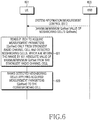
- FIG. 6 is a message flow diagram illustrating a measurement operation on neighboring cells for cell (re)selection and handover according to a second embodiment of the present invention.
- Reference numeral 601 denotes a UE
- reference numeral 603 indicates a cell where the UE 601 is now located, or represents an eNB that controls a serving cell that is providing a service for the UE 601.
- the eNB transmits system information or a UE-dedicated measurement control message to the UE. Based on the system information or UE-dedicated measurement control message, the UE acquires a relative threshold for radio channel statuses of neighboring cells that it will apply to the measurement.
- the term 'relative threshold' as used herein refers to a threshold relative to that of a neighboring cell having the maximum measurement result value
- the term 'maximum measurement result value' as used herein means a measurement result value before application of Qoffset, i.e., a raw measurement result value.
- the measurement result values to be compared can be a measurement result value before Qoffset of the corresponding neighboring cell is applied thereto, or a measurement result value-after-Qoffset application.
- these are used herein in comparing them with measurement result values of other neighboring cells depending on Qoffset of the neighboring cell having the best measurement result value before Qoffset is applied thereto. That is, in the system information or UE-dedicated measurement control message, the maximum or minimum Qoffset among the Qoffsets of the neighboring cells is included as the relative threshold. In this case, the maximum Qoffset or the minimum Qoffset can be included according to how Qoffset is applied to the measurement.
- the UE applies Qoffset to the measurement as in Case 1) the maximum Qoffset among the Qoffsets of neighboring cells is transmitted in step 611.
- the minimum Qoffset among the Qoffsets of neighboring cells is transmitted in step 611.
- the UE receives P-BCH signals to acquire Qoffset only for a first cell having the maximum measurement result value-before-Qoffset application, i.e., the maximum raw measurement result value, and second neighboring cells having a measurement result value-before-Qoffset application within an absolute range of the maximum/minimum Qoffset received from the first cell.
- the measurement result value-before-Qoffset application or the measurement result value-after-Qoffset application can be used as the measurement result value of the cell having the best radio channel status to which an absolute value of the maximum/minimum Qoffset is applied.
- the maximum/minimum Qoffset received from the eNB of the neighboring cells detected by the UE and the serving cell is as follows:
- the UE acquires Qoffset of corresponding cells through P-BCH and applies them to the measurement on the corresponding cells, only for the cellA, cellB and cellC.
- the UE preferentially acquires Qoffset and applies it to the measurement of cellA only for the cellA having the maximum raw measurement result value, and then acquires Qoffset of each cell through P-BCH and applies it to the measurement on the corresponding cell, only for the neighboring cells having the measurement result values within an absolute range between the maximum/minimum Qoffset for the measurement result-after-Qoffset application of cellA.
- the UE re-performs the above procedure on the cell having the second-best radio channel status.
- the UE can reuse the previously acquired Qoffset for the cells from which it has already acquired Qoffset, and thus has no need to re-receive P-BCH signals.
- the second method will be described herein by way of example.
- step 623 the UE applies the Qoffset received through P-BCH to the measurement on the corresponding neighboring cell, and ranks the detected neighboring cells.
- FIG. 7 is a flow diagram illustrating an operation of an eNB according to the second embodiment of the present invention.
- the eNB in step 701, the eNB generates system information or a UE-dedicated measurement control message.
- the eNB sets the maximum/minimum Qoffset among the Qoffsets of neighboring cells as relative threshold Maximum_Qoffset_NeighboringCells in the system information or UE-dedicated measurement control message.
- the maximum Qoffset or the minimum Qoffset is set as Maximum_Qoffset_NeighboringCells according to how Qoffset is applied to the measurement.
- the eNB transmits the Maximum_Qoffset_NeighboringCells to the UE on the system information or UE-dedicated measurement control message.
- FIG. 8 is a flow diagram illustrating an operation of an RRC idle mode UE according to the second embodiment of the present invention.
- the UE moves between cells according to the measurement result without commands from the network.
- the UE performs measurement/detection on all SCH signals used for cell identification. That is, the UE detects whether there are any cells in its vicinity.
- the UE ranks neighboring cells in order of the cell having a better radio channel status according to the measurement result value-before-Qoffset application (i.e., raw measurement result value) of the detected cells.
- the UE selects the highest-rank cell. That is, the UE selects a first cell having the best radio channel status among the detected cells according to the measurement result values-before-Qoffset application.
- step 817 the UE receives a P-BCH signal from the first cell selected in step 815 or 871, to acquire Qoffset of the first cell, and applies it to the measurement. In this case, if the UE has already acquired Qoffset for the first cell, it can reuse the previously acquired Qoffset without the need to re-receive the P-BCH signal.
- step 821 the UE checks whether there is any detected second cell having the measurement result value within a predetermined range based on the absolute value of Maximum_Qoffset_NeighboringCells from the measurement result value of the first cell in a list of the cells ranked in step 813 or 871.
- the measurement result values of other cells being compared with the first cell are (raw) measurement result values-before-Qoffset application. That is, in this example, the UE checks whether there are any second cells whose measurement result value-before-Qoffset application is greater than or equal to 1 dB.
- the UE proceeds to step 841 where it acquires Qoffset of each cell through P-BCH from the second cells within a predetermined range based on the Maximum Qoffset NeighboringCells absolute value, including the first cell. If the UE has already acquired Qoffset of a certain cell, it can reuse the previously acquired Qoffset without the need to re-receive the P-BCH signal. In step 843, the UE applies the Qoffset to the measurement on the first and second cells from which it has acquired Qoffset, and ranks the cells in order of the cell having the greater measurement result value.
- step 845 the UE selects a third cell having the highest rank among the cells ranked in step 843, and receives system information from the third cell to determine whether it can access the third cell.
- step 851 the UE checks if it can access the third cell depending on the system information of the third cell. If it can access the third cell, the UE proceeds to step 861 where it performs cell (re)selection to the third cell.
- the first cell is a cell having the maximum measurement result value-before-Qoffset application
- the second cell is a cell having the measurement result value within a predetermined range based on that of the first cell
- the third cell is a cell having the best channel status according to the measurement result value-after-Qoffset application.
- the UE perform cell reselection to the third cell.
- the UE proceeds to step 871 where it updates the cell list by removing the third cell having the highest rank from the cell list that underwent the cell ranking process of step 845, and selects the highest-rank cell from the updated cell list, and then returns to step 817.
- step 821 the UE proceeds to step 831 where it receives system information from the first cell to check whether it can access the first cell, and then proceeds to step 851.
- FIG. 9 is a flow diagram illustrating an operation of an RRC connected mode UE according to the second embodiment of the present invention.
- the UE performs measurement/detection on all SCH signals used for cell identification. That is, the UE detects whether there are any cells in its vicinity.
- the UE ranks the detected cells in order of the cell having the better radio channel status according to the measurement result values-before-Qoffset application (i.e., raw measurement result values) of the detected cells.
- the UE selects the serving cell with which it is now in communication, from among the detected cells, and applies Qoffset of the serving cell to the measurement on the serving cell.
- the UE applies Maximum_Qoffset_NeighboringCells to the measurement result values of the ranked cells, and then checks if there are any first neighboring cells having the measurement result value within a range based on a measurement report threshold against the measurement result value of the serving cell.
- the measurement report threshold serves as a criterion capable of triggering a measurement report, and the measurement report is triggered, for example, when a new cell having a measurement result value within a range based on the measurement report threshold against the measurement result value of the serving cell is detected, or when the old cell having the measurement result value within the range is removed.
- step 921 If it is checked step 921 that there are first neighboring cells, the UE proceeds to step 941 where it receives P-BCH signals from the first neighboring cells, including the serving cell, to acquire Qoffset. In this case, the UE can reuse the previously acquired Qoffset without re-receiving the P-BCH signals, for the neighboring cells from which it has already acquired Qoffset.
- step 943 the UE applies the Qoffset acquired from the serving cell and the first neighboring cells to the measurement on the corresponding cells, and then ranks the cells in order of the cell having the greater measurement result value.
- step 945 if the measurement report on the measurement result of step 943 is triggered, the UE transmits a measurement report to the eNB.
- step 931 the UE proceeds to step 931 where it does not perform an event-based measurement report.
- the term 'event-based measurement report' as used herein refers to a measurement report for notifying the eNB of occurrence of, for example, a situation where a new neighboring cell having a measurement result value within a range of a measurement report threshold against the serving cell measurement result value is detected, and/or a situation where the old cell having the measurement result value within the range is removed.
- FIG. 10 is a block diagram illustrating a structure of an eNB apparatus according to a preferred embodiment of the present invention.
- reference numeral 1001 denotes a transceiver for communication with a UE or another eNB.
- a transmission/reception unit with the UE and a transmission/reception unit with the eNB are substantially divided into different physical entities.
- a neighboring cell maintenance unit 1011 maintains Qoffsets for neighboring cells, which are calculated through communication between neighboring eNBs by means of the transceiver 1001.
- a threshold setting unit 1021 sets an absolute threshold to be transmitted to the UE, and/or the maximum/minimum Qoffset among the Qoffsets of neighboring cells, based on the Qoffsets provided from the neighboring cell maintenance unit 1011. Setting the absolute threshold corresponds to the embodiment of FIGs.
- the absolute threshold and the maximum/minimum Qoffset set by the threshold setting unit 1021 are transmitted to the UE via the transceiver 1001 over the system information or UE-dedicated measurement control message by means of an L3 message generation unit 1031.
- FIG. 11 is a block diagram illustrating a structure of a UE apparatus according to a preferred embodiment of the present invention.
- reference numeral 1101 represents a transceiver for communication with an eNB.
- a threshold manager 1111 extracts an absolute threshold or the maximum/minimum Qoffset of the neighboring cells from the system information or UE-dedicated measurement control message that the transceiver 1101 has received from the eNB, and a neighboring cell maintenance unit 1141 extracts measurement-related parameters, particularly Qoffset, of neighboring cells from the P-BCH signals that the transceiver 1101 has received from eNBs of the neighboring cells.
- a report criteria parameter manager 1121 receives parameter information such as the measurement report threshold of the RRC connected mode UE by means of the transceiver 1101.
- a measurement unit 1131 generates measurement result values by performing measurement on the serving cell and neighboring cells depending on parameter information such as the Qoffsets of neighboring cells and the measurement report threshold of the RRC connected mode UE according to one of the above-stated embodiments, and the measurement result values are used for determining cell (re)selection in a cell selection decision unit 1151, or used for performing a measurement report in a measurement report unit 1161.
- the present invention can perform measurement by applying measurement-related parameters only for the neighboring cells whose radio strength exceeds a particular absolute threshold, decreasing the measurement delay.
- the present invention can perform measurement only for the neighboring cells whose measurement result values fall within a particular range even though the measurement-related parameters are applied thereto, causing an decrease in the measurement delay. Therefore, in performing measurement on the neighboring cells for cell selection or cell reselection and handover, the present invention can decrease the measurement delay without increasing the UE complexity.
- embodiments of the present invention can be realized in the form of hardware, software or a combination of hardware and software. Any such software may be stored in the form of volatile or non-volatile storage such as, for example, a storage device like a ROM, whether erasable or rewritable or not, or in the form of memory such as, for example, RAM, memory chips, device or integrated circuits or on an optically or magnetically readable medium such as, for example, a CD, DVD, magnetic disk or magnetic tape or the like. It will be appreciated that the storage devices and storage media are embodiments of machine-readable storage that are suitable for storing a program or programs comprising instructions that, when executed, implement embodiments of the present invention.
- embodiments provide a program comprising code for implementing a system or method as claimed in any one of the claims of this specification and a machine-readable storage storing such a program. Still further, such programs may be conveyed electronically via any medium such as a communication signal carried over a wired or wireless connection and embodiments suitably encompass the same.
Landscapes
- Engineering & Computer Science (AREA)
- Computer Networks & Wireless Communication (AREA)
- Signal Processing (AREA)
- Mobile Radio Communication Systems (AREA)
Claims (15)
- Verfahren zum Ausführen von Messungen auf Nachbarzellen durch ein Benutzergerät, UE, in einem mobilen Kommunikationssystem, wobei das Verfahren Folgendes umfasst:Erzeugung (511) von Rohmessergebniswerten durch Messung von von Nachbarzellen empfangenen Signalen;Empfang (531) messungsbezogener Parameter, die auf Rohmessergebniswerte von ersten Nachbarzellen angewandt werden sollen, von den ersten Nachbarzellen mit Rohmessergebniswerten, die eine absolute Schwelle überschreiten (521), unter den Nachbarzellen, wobei die messungsbezogenen Parameter Qoffset-Werte umfassen;Erzeugung von End-Messergebniswerten durch Anwendung (551, 571, 563) der Qoffset-Werte der messungsbezogenen Parameter auf die Rohmessergebniswerte der ersten Nachbarzellen; undAusführen (553, 565, 573) einer Zellenauswahl oder Zellenwiederauswahl auf einer einer der ersten Nachbarzellen, basierend auf den End-Messergebniswerten, oder Übertragen eines Messberichts zu einer Basisstation einer bedienenden Zelle.
- Verfahren nach Anspruch 1, das des Weiteren Folgendes umfasst:
Erzeugung von End-Messergebniswerten durch Anwendung, als messungsbezogene Parameter, von Null auf Rohmessergebniswerte von zweiten Nachbarzellen, ohne Empfang der messungsbezogenen Parameter von den zweiten Nachbarzellen, die Rohmessergebniswerte aufweisen, die nicht eine absolute Schwelle überschreiten, die von einer Basisstation als Ergebnis der Messung, unter den Nachbarzellen, gemeldet wurde. - Verfahren nach Anspruch 2, das des Weiteren Folgendes umfasst:
Ausführen einer Zellenauswahl oder Zellenwiederauswahl auf einer einer der ersten und zweiten Nachbarzellen, je nach dem End-Messergebniswert, oder Übertragen eines Messberichts zu einer Basisstation einer bedienenden Zelle. - Verfahren nach Anspruch 1, das des Weiteren Folgendes umfasst:
Empfang messungsbezogener Parameter, die auf Rohmessergebniswerte von ersten und zweiten Nachbarzellen angewandt werden sollen, von der ersten Nachbarzelle, die den maximalen Rohmessergebniswert unter den Nachbarzellen aufweisen, und von den zweiten Nachbarzellen mit Rohmessergebniswerten innerhalb eines vorherbestimmten Bereichs von dem Rohmessergebniswert der ersten Nachbarzelle. - Verfahren nach Anspruch 4, das des Weiteren Folgendes umfasst:
Erzeugung von End-Messergebniswerten durch Anwendung der messungsbezogenen Parameter auf die Rohmessergebniswerte der ersten und zweiten Nachbarzellen. - Verfahren nach Anspruch 4, wobei der vorherbestimmte Bereich sich zwischen einem Wert erstreckt, der durch Addition eines Versatzwertes der Qoffset-Werte erhalten wird, der von der Basisstation gemeldet wird, zu dem Rohmessergebniswert der ersten Nachbarzelle und einem Wert, der durch Subtraktion des Versatzwerts der Qoffset-Werte von dem Rohmessergebniswert erhalten wird.
- Benutzergerät(UE)-Vorrichtung zum Ausführen von Messungen auf Nachbarzellen in einem mobilen Kommunikationssystem, wobei die Vorrichtung Folgendes umfasst:eine Nachbarzellenwartungseinheit (1141) zur Erzeugung von Rohmessergebniswerten durch Messungen auf von Nachbarzellen empfangenen Signalen;einen Threshold Manager (1111) zum Empfang messungsbezogener Parameter, die auf Rohmessergebniswerte erster Nachbarzellen angewandt werden sollen, von den ersten Nachbarzellen, die Rohmessergebniswerte aufweisen, die eine absolute Schwelle überschreiten, unter den Nachbarzellen, wobei die messungsbezogenen Parameter Qoffset-Werte umfassen;eine Messeinheit (1131) zur Erzeugung von End-Messergebniswerten durch Anwendung der Qoffset-Werte der messungsbezogenen Parameter auf die Rohmessergebniswerte der ersten Nachbarzellen;eine Zellenauswahlentscheidungs-Einheit (1151) zum Ausführen von Zellenauswahl oder Zellenwiederauswahl auf einer der ersten Nachbarzellen, basierend auf den End-Messergebniswerten; undeine Messberichteinheit (1161), um einen Messbericht an eine Basisstation einer bedienenden Zelle zu übertragen.
- Vorrichtung nach Anspruch 7, wobei die Messeinheit (1131) konfiguriert ist, um End-Messergebniswerte zu erzeugen, durch Anwendung, als messungsbezogene Parameter, von Null auf Rohmessergebniswerte von zweiten Nachbarzellen, ohne Empfang der messungsbezogenen Parameter von den zweiten Nachbarzellen, die Rohmessergebniswerte aufweisen, die nicht eine absolute Schwelle überschreiten, die von einer Basisstation als ein Ergebnis der Messung gemeldet wurden, unter den Nachbarzellen.
- Vorrichtung nach Anspruch 8, wobei die Zellenauswahlentscheidungseinheit (1151) konfiguriert ist, um Zellenauswahl oder Zellenwiederauswahl auf einer der ersten oder zweiten Nachbarzellen auszuführen, entsprechend den End-Messergebniswerten.
- Vorrichtung nach Anspruch 7, wobei die Nachbarzellenwartungseinheit (1141) konfiguriert ist, um messungsbezogene Parameter zu empfangen, die auf Rohmessergebniswerte von ersten und zweiten Nachbarzellen angewandt werden sollen, von der ersten Nachbarzelle, die den maximalen Rohmessergebniswert unter den Nachbarzellen aufweist, und von den zweiten Nachbarzellen mit Rohmessergebniswerten innerhalb eines vorherbestimmten Bereichs von dem Rohmessergebniswert der ersten Nachbarzelle.
- Vorrichtung nach Anspruch 10, wobei die Messeinheit (1131) konfiguriert ist, um End-Messergebniswerte durch Anwendung der messungsbezogenen Parameter auf die Rohmessergebniswerte der ersten und zweiten Nachbarzellen zu erzeugen.
- Vorrichtung nach Anspruch 10, wobei die Nachbarzellenwartungseinheit (1141) konfiguriert ist, um messungsbezogene Parameter von den zweiten Nachbarzellen zu empfangen, deren Rohmessergebniswerte innerhalb des vorherbestimmten Bereichs liegen, der sich zwischen einem Wert erstreckt, der durch Addition eines Versatzwerts der Qoffset-Werte erhalten wird, der von der Basisstation zu dem Rohmessergebniswert der ersten Nachbarzelle gemeldet wird, und einem Wert, der durch Subtraktion des Versatzwerts der Qoffset-Werte von dem Rohmessergebniswert erhalten wird.
- Verfahren nach Anspruch 6 bzw. Vorrichtung nach Anspruch 12, wobei der Versatzwert einer der Maximal- und Minimal-Versatzwerte unter den Qoffset-Werten von Nachbarzellen ist, die in den messungsbezogenen Parametern inbegriffen sind.
- Verfahren zum Verwalten von Nachbarzellen durch eine Basisstation in einem mobilen Kommunikationssystem, wobei das Verfahren Folgendes umfasst:Verwalten von Rohmessergebniswerten für die Nachbarzellen;Erhalt von Qoffset-Werten für die Nachbarzellen durch Kommunikation zwischen benachbarten Basisstationen;Einstellung einer absoluten Schwelle, die die Rohmessergebniswerte berücksichtigt; undErzeugung einer Nachricht mit Systeminformationen oder einer für ein Endgerät bestimmten Messkontrollnachricht, einschließlich der eingestellten absoluten Schwelle und/oder der Qoffset-Werte.
- Basisstationsvorrichtung zum Verwalten von Nachbarzellen in einem mobilen Kommunikationssystem, wobei die Vorrichtung Folgendes umfasst:einen Transceiver zum Erhalten von Qoffset-Werten für die Nachbarzellen durch Kommunikation zwischen benachbarten Basisstationen;eine Nachbarzellenwartungseinheit (1011) zum Verwalten von Rohmessergebniswerten für die Nachbarzellen;eine Schwelleneinstellungs-Einheit (1021) zur Einstellung einer absoluten Schwelle, die die Rohmessergebniswerte berücksichtigt; undeine Nachrichtenerzeugungseinheit (1031) zur Erzeugung einer Nachricht mit Systeminformationen oder einer für ein Endgerät bestimmten Messkontrollnachricht, einschließlich mindestens der eingestellten absoluten Schwelle oder der Qoffset-Werte.
Applications Claiming Priority (2)
| Application Number | Priority Date | Filing Date | Title |
|---|---|---|---|
| KR20070059648A KR101482255B1 (ko) | 2007-06-18 | 2007-06-18 | 이동통신 시스템에서 인접 셀들에 대한 메저먼트 방법 및장치 |
| PCT/KR2008/003460 WO2008156304A2 (en) | 2007-06-18 | 2008-06-18 | Method and apparatus for performing measurement on neighboring cells in a mobile communication system |
Publications (3)
| Publication Number | Publication Date |
|---|---|
| EP2168262A2 EP2168262A2 (de) | 2010-03-31 |
| EP2168262A4 EP2168262A4 (de) | 2014-08-27 |
| EP2168262B1 true EP2168262B1 (de) | 2019-10-02 |
Family
ID=40156796
Family Applications (1)
| Application Number | Title | Priority Date | Filing Date |
|---|---|---|---|
| EP08766421.5A Active EP2168262B1 (de) | 2007-06-18 | 2008-06-18 | Verfahren und vorrichtung zur messungsdurchführung an nachbarzellen in mobilem kommunikationssystem |
Country Status (6)
| Country | Link |
|---|---|
| US (1) | US8811990B2 (de) |
| EP (1) | EP2168262B1 (de) |
| JP (1) | JP4964986B2 (de) |
| KR (1) | KR101482255B1 (de) |
| CN (1) | CN101689923B (de) |
| WO (1) | WO2008156304A2 (de) |
Families Citing this family (32)
| Publication number | Priority date | Publication date | Assignee | Title |
|---|---|---|---|---|
| WO2009030289A1 (en) | 2007-09-05 | 2009-03-12 | Telefonaktiebolaget L M Ericsson (Publ) | Cell reselection based on use of relative thresholds in a mobile telecommunication system |
| US8848594B2 (en) | 2008-12-10 | 2014-09-30 | Blackberry Limited | Method and apparatus for discovery of relay nodes |
| US8311061B2 (en) | 2008-12-17 | 2012-11-13 | Research In Motion Limited | System and method for multi-user multiplexing |
| US8040904B2 (en) * | 2008-12-17 | 2011-10-18 | Research In Motion Limited | System and method for autonomous combining |
| US8402334B2 (en) | 2008-12-17 | 2013-03-19 | Research In Motion Limited | System and method for hybrid automatic repeat request (HARQ) functionality in a relay node |
| US8335466B2 (en) | 2008-12-19 | 2012-12-18 | Research In Motion Limited | System and method for resource allocation |
| US8446856B2 (en) * | 2008-12-19 | 2013-05-21 | Research In Motion Limited | System and method for relay node selection |
| US8265128B2 (en) | 2008-12-19 | 2012-09-11 | Research In Motion Limited | Multiple-input multiple-output (MIMO) with relay nodes |
| WO2010121406A1 (zh) * | 2009-04-20 | 2010-10-28 | 华为技术有限公司 | 一种发送测量报告的方法、装置和移动台 |
| US8768335B2 (en) * | 2010-01-27 | 2014-07-01 | Lg Electronics Inc. | Method of performing a minimization of drive test (MDT) for specific area in wireless communication system |
| WO2011101543A1 (en) * | 2010-02-16 | 2011-08-25 | Nokia Corporation | Activation and deactivation of component carrier measurements based on threshold settings |
| US8452301B2 (en) | 2010-03-08 | 2013-05-28 | Nokia Corporation | Method and apparatus for selecting a coding format |
| US9294972B2 (en) | 2010-04-28 | 2016-03-22 | Qualcomm Incorporated | Neighbor relation information management |
| US9264954B2 (en) * | 2010-04-28 | 2016-02-16 | Qualcomm Incorporated | Neighbor relation information management |
| US8423013B2 (en) * | 2010-05-17 | 2013-04-16 | Motorola Mobility Llc | Minimizing measurements during carrier aggregation in a wireless communication system |
| WO2012112087A1 (en) * | 2011-02-14 | 2012-08-23 | Telefonaktiebolaget L M Ericsson (Publ) | Method and arrangement for automated handling of neighbour cell relations |
| EP2676488B1 (de) | 2011-02-18 | 2017-06-21 | Telefonaktiebolaget LM Ericsson (publ) | Zellenauswahl in einem zellularen kommunikationssystem |
| CN102917400A (zh) * | 2011-08-02 | 2013-02-06 | 宏碁股份有限公司 | 上报测量报告事件的方法 |
| US8989736B2 (en) | 2012-08-01 | 2015-03-24 | Qualcomm Incorporated | Methods and apparatuses for determining reselection parameters for detected cells |
| CN103874110B (zh) * | 2012-12-18 | 2017-05-03 | 中国移动通信集团北京有限公司 | 一种载频收发设备的隐性故障的定位方法及装置 |
| WO2014137098A1 (ko) * | 2013-03-07 | 2014-09-12 | 엘지전자 주식회사 | 근접 서비스 범위 조정 방법 및 필터링 방법 |
| GB2512611A (en) * | 2013-04-03 | 2014-10-08 | Sharp Kk | Wireless telecommunication cell detection technique |
| EP2999264B1 (de) * | 2013-06-09 | 2017-08-09 | Huawei Technologies Co., Ltd. | Drahtloskommunikationsverfahren, benutzergerät und netzwerkknoten |
| CN105409286B (zh) * | 2013-07-23 | 2019-02-12 | 苹果公司 | 基于特定于设备的值的函数校准的测量的切换判决 |
| US9516564B2 (en) * | 2014-04-25 | 2016-12-06 | At&T Intellectual Property I, L.P. | Enhancement of a cell reselection parameter in heterogeneous networks |
| US9635566B2 (en) | 2014-04-25 | 2017-04-25 | At&T Intellectual Property I, L.P. | Enhancement of access points to support heterogeneous networks |
| US9621294B2 (en) | 2014-10-02 | 2017-04-11 | At&T Intellectual Property I, L.P. | Enhancement of inter-cell interference coordination with adaptive reduced-power almost blank subframes based on neighbor cell profile data |
| US11452136B2 (en) * | 2016-08-12 | 2022-09-20 | Futurewei Technologies, Inc | System and method for network access |
| CN110557847B (zh) * | 2018-05-30 | 2024-01-05 | 华为技术有限公司 | 通信方法、装置及存储介质 |
| JP7731870B2 (ja) * | 2019-08-14 | 2025-09-01 | フラウンホッファー-ゲゼルシャフト ツァ フェルダールング デァ アンゲヴァンテン フォアシュンク エー.ファオ | 無線通信ネットワークにおけるデータストリームの分離能力の検討 |
| WO2021089833A1 (en) | 2019-11-08 | 2021-05-14 | Telefonaktiebolaget Lm Ericsson (Publ) | Technique for performing neighbor cell measurements |
| CN110913401A (zh) * | 2019-11-26 | 2020-03-24 | 南京华苏科技有限公司 | 一种基于用户数据的网络同覆盖负荷不均衡优化的方法 |
Family Cites Families (21)
| Publication number | Priority date | Publication date | Assignee | Title |
|---|---|---|---|---|
| JP2560854B2 (ja) * | 1989-09-19 | 1996-12-04 | 日本電信電話株式会社 | 移動通信制御方法 |
| JP2528545B2 (ja) * | 1990-09-07 | 1996-08-28 | 日本電信電話株式会社 | 移動通信における在圏セル判定方法 |
| US6044272A (en) * | 1997-02-25 | 2000-03-28 | Sbc Technology Resources, Inc. | Mobile assisted handoff system and method |
| FI982000A7 (fi) * | 1998-09-16 | 2000-03-17 | Nokia Mobile Phones Ltd | Parannettu menetelmä ja järjestely solun vaihtamiseksi |
| US6507740B2 (en) * | 1999-05-18 | 2003-01-14 | Ericsson Inc. | Adaptive threshold of handoff in mobile telecommunication systems |
| US6751460B2 (en) * | 1999-12-07 | 2004-06-15 | Nokia Corporation | Methods and apparatus for performing cell reselection for supporting efficiently hierarchical cell structures |
| KR20030015531A (ko) * | 2001-08-16 | 2003-02-25 | 엘지전자 주식회사 | 차세대 단말기의 셀 선택 개선 방법 |
| FR2841407B1 (fr) * | 2002-06-20 | 2004-08-13 | Nec Technologies Uk Ltd | Procede d'optimisation de la recherche de cellules dans un reseau de telecommunication mobile |
| ATE463139T1 (de) * | 2002-09-10 | 2010-04-15 | Spyder Navigations Llc | Messungen in kommunikationssystemen |
| US7330732B2 (en) * | 2003-08-07 | 2008-02-12 | Qualcomm Incorporated | Scheduling neighbor cell measurements for multiple wireless communication systems |
| KR100976475B1 (ko) * | 2003-08-19 | 2010-08-18 | 엘지전자 주식회사 | 서비스 품질 (QoS) 측정보고 전송 방법 및 수신 방법 |
| US7676226B2 (en) * | 2004-05-17 | 2010-03-09 | Samsung Electronics Co., Ltd. | Fast handover method optimized for IEEE 802.11 networks |
| JP4684071B2 (ja) | 2005-05-20 | 2011-05-18 | 株式会社エヌ・ティ・ティ・ドコモ | セルサーチ制御方法および該方法を用いた移動機 |
| KR100633505B1 (ko) * | 2005-10-31 | 2006-10-16 | 삼성전자주식회사 | 이동통신 시스템에서 핸드오버 제한 방법 |
| KR100761697B1 (ko) * | 2006-06-13 | 2007-09-28 | 삼성전자주식회사 | 이동통신 단말기에서 셀 재선택 결정방법 및 장치 |
| US7826847B1 (en) * | 2006-07-14 | 2010-11-02 | Carrier Iq, Inc. | Neighbor list generation in wireless networks |
| CN101141782B (zh) * | 2006-09-07 | 2012-08-29 | 日电(中国)有限公司 | 接入点辅助快速越区切换方法、设备和系统 |
| AR065711A1 (es) * | 2007-03-13 | 2009-06-24 | Interdigital Tech Corp | Un procedimiento de reseleccion de celula para comunicaciones inalambricas |
| CA2691682C (en) * | 2007-06-18 | 2018-08-21 | Interdigital Technology Corporation | Method for inter-radio access technology cell reselection |
| US20090047958A1 (en) * | 2007-08-16 | 2009-02-19 | Anna Pucar Rimhagen | Neighbor List Management for User Terminal |
| US20090061871A1 (en) * | 2007-08-29 | 2009-03-05 | Motorola, Inc. | Base station neighbor list optimization |
-
2007
- 2007-06-18 KR KR20070059648A patent/KR101482255B1/ko not_active Expired - Fee Related
-
2008
- 2008-06-18 US US12/663,963 patent/US8811990B2/en active Active
- 2008-06-18 EP EP08766421.5A patent/EP2168262B1/de active Active
- 2008-06-18 JP JP2010513113A patent/JP4964986B2/ja not_active Expired - Fee Related
- 2008-06-18 CN CN2008800207461A patent/CN101689923B/zh active Active
- 2008-06-18 WO PCT/KR2008/003460 patent/WO2008156304A2/en not_active Ceased
Non-Patent Citations (1)
| Title |
|---|
| None * |
Also Published As
| Publication number | Publication date |
|---|---|
| US8811990B2 (en) | 2014-08-19 |
| WO2008156304A2 (en) | 2008-12-24 |
| CN101689923A (zh) | 2010-03-31 |
| CN101689923B (zh) | 2013-03-20 |
| US20100184434A1 (en) | 2010-07-22 |
| KR101482255B1 (ko) | 2015-01-13 |
| JP4964986B2 (ja) | 2012-07-04 |
| EP2168262A4 (de) | 2014-08-27 |
| EP2168262A2 (de) | 2010-03-31 |
| WO2008156304A3 (en) | 2009-02-05 |
| KR20080111352A (ko) | 2008-12-23 |
| JP2010530198A (ja) | 2010-09-02 |
Similar Documents
| Publication | Publication Date | Title |
|---|---|---|
| EP2168262B1 (de) | Verfahren und vorrichtung zur messungsdurchführung an nachbarzellen in mobilem kommunikationssystem | |
| US11122616B2 (en) | Method and apparatus for allocating radio resource using random access procedure in a mobile communication system | |
| US7916689B2 (en) | Method and apparatus for transmitting/receiving information using random access procedure in mobile communication system | |
| AU2005241836B2 (en) | System and method for performing a fast handover in a broadband wireless access communication system | |
| US8700043B2 (en) | Apparatus and method for connecting radio link in wireless communication system having private network cell | |
| EP2176992B1 (de) | Vorrichtung und verfahren zur messung von heimzellen/zellen eines privaten netzwerkes in einem mobilkommunikationssystem | |
| US9313699B2 (en) | Method for handover from home cell to public cell in mobile communication system | |
| KR101579753B1 (ko) | 무선 통신 시스템에서 부하 균등화를 위한 핸드오버 수행 방법 및 이를 위한 시스템 |
Legal Events
| Date | Code | Title | Description |
|---|---|---|---|
| PUAI | Public reference made under article 153(3) epc to a published international application that has entered the european phase |
Free format text: ORIGINAL CODE: 0009012 |
|
| 17P | Request for examination filed |
Effective date: 20091217 |
|
| AK | Designated contracting states |
Kind code of ref document: A2 Designated state(s): AT BE BG CH CY CZ DE DK EE ES FI FR GB GR HR HU IE IS IT LI LT LU LV MC MT NL NO PL PT RO SE SI SK TR |
|
| AX | Request for extension of the european patent |
Extension state: AL BA MK RS |
|
| DAX | Request for extension of the european patent (deleted) | ||
| RAP1 | Party data changed (applicant data changed or rights of an application transferred) |
Owner name: SAMSUNG ELECTRONICS CO., LTD. |
|
| A4 | Supplementary search report drawn up and despatched |
Effective date: 20140728 |
|
| RIC1 | Information provided on ipc code assigned before grant |
Ipc: H04W 36/00 20090101AFI20140722BHEP Ipc: H04W 36/30 20090101ALN20140722BHEP |
|
| STAA | Information on the status of an ep patent application or granted ep patent |
Free format text: STATUS: EXAMINATION IS IN PROGRESS |
|
| 17Q | First examination report despatched |
Effective date: 20180308 |
|
| REG | Reference to a national code |
Ref country code: DE Ref legal event code: R079 Ref document number: 602008061336 Country of ref document: DE Free format text: PREVIOUS MAIN CLASS: H04B0007260000 Ipc: H04W0036000000 |
|
| GRAP | Despatch of communication of intention to grant a patent |
Free format text: ORIGINAL CODE: EPIDOSNIGR1 |
|
| STAA | Information on the status of an ep patent application or granted ep patent |
Free format text: STATUS: GRANT OF PATENT IS INTENDED |
|
| RIC1 | Information provided on ipc code assigned before grant |
Ipc: H04W 36/30 20090101ALN20190320BHEP Ipc: H04W 36/00 20090101AFI20190320BHEP |
|
| INTG | Intention to grant announced |
Effective date: 20190424 |
|
| GRAS | Grant fee paid |
Free format text: ORIGINAL CODE: EPIDOSNIGR3 |
|
| GRAA | (expected) grant |
Free format text: ORIGINAL CODE: 0009210 |
|
| STAA | Information on the status of an ep patent application or granted ep patent |
Free format text: STATUS: THE PATENT HAS BEEN GRANTED |
|
| AK | Designated contracting states |
Kind code of ref document: B1 Designated state(s): AT BE BG CH CY CZ DE DK EE ES FI FR GB GR HR HU IE IS IT LI LT LU LV MC MT NL NO PL PT RO SE SI SK TR |
|
| REG | Reference to a national code |
Ref country code: GB Ref legal event code: FG4D |
|
| REG | Reference to a national code |
Ref country code: CH Ref legal event code: EP Ref country code: AT Ref legal event code: REF Ref document number: 1187605 Country of ref document: AT Kind code of ref document: T Effective date: 20191015 |
|
| REG | Reference to a national code |
Ref country code: DE Ref legal event code: R096 Ref document number: 602008061336 Country of ref document: DE |
|
| REG | Reference to a national code |
Ref country code: IE Ref legal event code: FG4D |
|
| REG | Reference to a national code |
Ref country code: NL Ref legal event code: FP |
|
| REG | Reference to a national code |
Ref country code: LT Ref legal event code: MG4D |
|
| REG | Reference to a national code |
Ref country code: AT Ref legal event code: MK05 Ref document number: 1187605 Country of ref document: AT Kind code of ref document: T Effective date: 20191002 |
|
| PG25 | Lapsed in a contracting state [announced via postgrant information from national office to epo] |
Ref country code: ES Free format text: LAPSE BECAUSE OF FAILURE TO SUBMIT A TRANSLATION OF THE DESCRIPTION OR TO PAY THE FEE WITHIN THE PRESCRIBED TIME-LIMIT Effective date: 20191002 Ref country code: AT Free format text: LAPSE BECAUSE OF FAILURE TO SUBMIT A TRANSLATION OF THE DESCRIPTION OR TO PAY THE FEE WITHIN THE PRESCRIBED TIME-LIMIT Effective date: 20191002 Ref country code: SE Free format text: LAPSE BECAUSE OF FAILURE TO SUBMIT A TRANSLATION OF THE DESCRIPTION OR TO PAY THE FEE WITHIN THE PRESCRIBED TIME-LIMIT Effective date: 20191002 Ref country code: LV Free format text: LAPSE BECAUSE OF FAILURE TO SUBMIT A TRANSLATION OF THE DESCRIPTION OR TO PAY THE FEE WITHIN THE PRESCRIBED TIME-LIMIT Effective date: 20191002 Ref country code: PL Free format text: LAPSE BECAUSE OF FAILURE TO SUBMIT A TRANSLATION OF THE DESCRIPTION OR TO PAY THE FEE WITHIN THE PRESCRIBED TIME-LIMIT Effective date: 20191002 Ref country code: NO Free format text: LAPSE BECAUSE OF FAILURE TO SUBMIT A TRANSLATION OF THE DESCRIPTION OR TO PAY THE FEE WITHIN THE PRESCRIBED TIME-LIMIT Effective date: 20200102 Ref country code: LT Free format text: LAPSE BECAUSE OF FAILURE TO SUBMIT A TRANSLATION OF THE DESCRIPTION OR TO PAY THE FEE WITHIN THE PRESCRIBED TIME-LIMIT Effective date: 20191002 Ref country code: GR Free format text: LAPSE BECAUSE OF FAILURE TO SUBMIT A TRANSLATION OF THE DESCRIPTION OR TO PAY THE FEE WITHIN THE PRESCRIBED TIME-LIMIT Effective date: 20200103 Ref country code: PT Free format text: LAPSE BECAUSE OF FAILURE TO SUBMIT A TRANSLATION OF THE DESCRIPTION OR TO PAY THE FEE WITHIN THE PRESCRIBED TIME-LIMIT Effective date: 20200203 Ref country code: FI Free format text: LAPSE BECAUSE OF FAILURE TO SUBMIT A TRANSLATION OF THE DESCRIPTION OR TO PAY THE FEE WITHIN THE PRESCRIBED TIME-LIMIT Effective date: 20191002 Ref country code: BG Free format text: LAPSE BECAUSE OF FAILURE TO SUBMIT A TRANSLATION OF THE DESCRIPTION OR TO PAY THE FEE WITHIN THE PRESCRIBED TIME-LIMIT Effective date: 20200102 |
|
| PG25 | Lapsed in a contracting state [announced via postgrant information from national office to epo] |
Ref country code: HR Free format text: LAPSE BECAUSE OF FAILURE TO SUBMIT A TRANSLATION OF THE DESCRIPTION OR TO PAY THE FEE WITHIN THE PRESCRIBED TIME-LIMIT Effective date: 20191002 Ref country code: IS Free format text: LAPSE BECAUSE OF FAILURE TO SUBMIT A TRANSLATION OF THE DESCRIPTION OR TO PAY THE FEE WITHIN THE PRESCRIBED TIME-LIMIT Effective date: 20200224 Ref country code: CZ Free format text: LAPSE BECAUSE OF FAILURE TO SUBMIT A TRANSLATION OF THE DESCRIPTION OR TO PAY THE FEE WITHIN THE PRESCRIBED TIME-LIMIT Effective date: 20191002 |
|
| REG | Reference to a national code |
Ref country code: DE Ref legal event code: R097 Ref document number: 602008061336 Country of ref document: DE |
|
| PG2D | Information on lapse in contracting state deleted |
Ref country code: IS |
|
| PG25 | Lapsed in a contracting state [announced via postgrant information from national office to epo] |
Ref country code: RO Free format text: LAPSE BECAUSE OF FAILURE TO SUBMIT A TRANSLATION OF THE DESCRIPTION OR TO PAY THE FEE WITHIN THE PRESCRIBED TIME-LIMIT Effective date: 20191002 Ref country code: DK Free format text: LAPSE BECAUSE OF FAILURE TO SUBMIT A TRANSLATION OF THE DESCRIPTION OR TO PAY THE FEE WITHIN THE PRESCRIBED TIME-LIMIT Effective date: 20191002 Ref country code: EE Free format text: LAPSE BECAUSE OF FAILURE TO SUBMIT A TRANSLATION OF THE DESCRIPTION OR TO PAY THE FEE WITHIN THE PRESCRIBED TIME-LIMIT Effective date: 20191002 Ref country code: IS Free format text: LAPSE BECAUSE OF FAILURE TO SUBMIT A TRANSLATION OF THE DESCRIPTION OR TO PAY THE FEE WITHIN THE PRESCRIBED TIME-LIMIT Effective date: 20200202 |
|
| PLBE | No opposition filed within time limit |
Free format text: ORIGINAL CODE: 0009261 |
|
| STAA | Information on the status of an ep patent application or granted ep patent |
Free format text: STATUS: NO OPPOSITION FILED WITHIN TIME LIMIT |
|
| PG25 | Lapsed in a contracting state [announced via postgrant information from national office to epo] |
Ref country code: SK Free format text: LAPSE BECAUSE OF FAILURE TO SUBMIT A TRANSLATION OF THE DESCRIPTION OR TO PAY THE FEE WITHIN THE PRESCRIBED TIME-LIMIT Effective date: 20191002 Ref country code: IT Free format text: LAPSE BECAUSE OF FAILURE TO SUBMIT A TRANSLATION OF THE DESCRIPTION OR TO PAY THE FEE WITHIN THE PRESCRIBED TIME-LIMIT Effective date: 20191002 |
|
| 26N | No opposition filed |
Effective date: 20200703 |
|
| PG25 | Lapsed in a contracting state [announced via postgrant information from national office to epo] |
Ref country code: SI Free format text: LAPSE BECAUSE OF FAILURE TO SUBMIT A TRANSLATION OF THE DESCRIPTION OR TO PAY THE FEE WITHIN THE PRESCRIBED TIME-LIMIT Effective date: 20191002 |
|
| PG25 | Lapsed in a contracting state [announced via postgrant information from national office to epo] |
Ref country code: MC Free format text: LAPSE BECAUSE OF FAILURE TO SUBMIT A TRANSLATION OF THE DESCRIPTION OR TO PAY THE FEE WITHIN THE PRESCRIBED TIME-LIMIT Effective date: 20191002 |
|
| REG | Reference to a national code |
Ref country code: CH Ref legal event code: PL |
|
| PG25 | Lapsed in a contracting state [announced via postgrant information from national office to epo] |
Ref country code: LU Free format text: LAPSE BECAUSE OF NON-PAYMENT OF DUE FEES Effective date: 20200618 |
|
| REG | Reference to a national code |
Ref country code: BE Ref legal event code: MM Effective date: 20200630 |
|
| PG25 | Lapsed in a contracting state [announced via postgrant information from national office to epo] |
Ref country code: LI Free format text: LAPSE BECAUSE OF NON-PAYMENT OF DUE FEES Effective date: 20200630 Ref country code: IE Free format text: LAPSE BECAUSE OF NON-PAYMENT OF DUE FEES Effective date: 20200618 Ref country code: CH Free format text: LAPSE BECAUSE OF NON-PAYMENT OF DUE FEES Effective date: 20200630 |
|
| PG25 | Lapsed in a contracting state [announced via postgrant information from national office to epo] |
Ref country code: BE Free format text: LAPSE BECAUSE OF NON-PAYMENT OF DUE FEES Effective date: 20200630 |
|
| PG25 | Lapsed in a contracting state [announced via postgrant information from national office to epo] |
Ref country code: TR Free format text: LAPSE BECAUSE OF FAILURE TO SUBMIT A TRANSLATION OF THE DESCRIPTION OR TO PAY THE FEE WITHIN THE PRESCRIBED TIME-LIMIT Effective date: 20191002 Ref country code: MT Free format text: LAPSE BECAUSE OF FAILURE TO SUBMIT A TRANSLATION OF THE DESCRIPTION OR TO PAY THE FEE WITHIN THE PRESCRIBED TIME-LIMIT Effective date: 20191002 Ref country code: CY Free format text: LAPSE BECAUSE OF FAILURE TO SUBMIT A TRANSLATION OF THE DESCRIPTION OR TO PAY THE FEE WITHIN THE PRESCRIBED TIME-LIMIT Effective date: 20191002 |
|
| PGFP | Annual fee paid to national office [announced via postgrant information from national office to epo] |
Ref country code: NL Payment date: 20250520 Year of fee payment: 18 |
|
| PGFP | Annual fee paid to national office [announced via postgrant information from national office to epo] |
Ref country code: DE Payment date: 20250520 Year of fee payment: 18 |
|
| PGFP | Annual fee paid to national office [announced via postgrant information from national office to epo] |
Ref country code: GB Payment date: 20250520 Year of fee payment: 18 |
|
| PGFP | Annual fee paid to national office [announced via postgrant information from national office to epo] |
Ref country code: FR Payment date: 20250521 Year of fee payment: 18 |