EP3985825A1 - Sinusoidal wave formation for reduction of oscillations, harmonics and distortion using short pulses to reduce the number of required impedance injection units - Google Patents
Sinusoidal wave formation for reduction of oscillations, harmonics and distortion using short pulses to reduce the number of required impedance injection units Download PDFInfo
- Publication number
- EP3985825A1 EP3985825A1 EP21174029.5A EP21174029A EP3985825A1 EP 3985825 A1 EP3985825 A1 EP 3985825A1 EP 21174029 A EP21174029 A EP 21174029A EP 3985825 A1 EP3985825 A1 EP 3985825A1
- Authority
- EP
- European Patent Office
- Prior art keywords
- impedance
- impedance injection
- iius
- waves
- subgroup
- Prior art date
- Legal status (The legal status is an assumption and is not a legal conclusion. Google has not performed a legal analysis and makes no representation as to the accuracy of the status listed.)
- Pending
Links
Images






Classifications
-
- H—ELECTRICITY
- H03—ELECTRONIC CIRCUITRY
- H03K—PULSE TECHNIQUE
- H03K5/00—Manipulating of pulses not covered by one of the other main groups of this subclass
- H03K5/01—Shaping pulses
-
- H—ELECTRICITY
- H02—GENERATION; CONVERSION OR DISTRIBUTION OF ELECTRIC POWER
- H02J—ELECTRIC POWER NETWORKS; CIRCUIT ARRANGEMENTS OR SYSTEMS FOR SUPPLYING OR DISTRIBUTING ELECTRIC POWER; SYSTEMS FOR STORING ELECTRIC ENERGY
- H02J3/00—Circuit arrangements for AC mains or AC distribution networks
- H02J3/18—Arrangements for adjusting, eliminating or compensating reactive power in networks
- H02J3/1807—Arrangements for adjusting, eliminating or compensating reactive power in networks using series compensators, e.g. thyristor-controlled series capacitors [TCSC]
- H02J3/1814—Arrangements for adjusting, eliminating or compensating reactive power in networks using series compensators, e.g. thyristor-controlled series capacitors [TCSC] having reactive elements actively controlled by bridge converters, e.g. unified power flow controllers [UPFC] or controlled series voltage compensators
-
- H—ELECTRICITY
- H02—GENERATION; CONVERSION OR DISTRIBUTION OF ELECTRIC POWER
- H02J—ELECTRIC POWER NETWORKS; CIRCUIT ARRANGEMENTS OR SYSTEMS FOR SUPPLYING OR DISTRIBUTING ELECTRIC POWER; SYSTEMS FOR STORING ELECTRIC ENERGY
- H02J13/00—Circuit arrangements for providing remote monitoring or remote control of equipment in a power distribution network
- H02J13/12—Monitoring network conditions, e.g. electrical magnitudes or operational status
-
- H—ELECTRICITY
- H03—ELECTRONIC CIRCUITRY
- H03K—PULSE TECHNIQUE
- H03K4/00—Generating pulses having essentially a finite slope or stepped portions
- H03K4/02—Generating pulses having essentially a finite slope or stepped portions having stepped portions, e.g. staircase waveform
-
- H—ELECTRICITY
- H03—ELECTRONIC CIRCUITRY
- H03K—PULSE TECHNIQUE
- H03K4/00—Generating pulses having essentially a finite slope or stepped portions
- H03K4/04—Generating pulses having essentially a finite slope or stepped portions having parabolic shape
-
- H—ELECTRICITY
- H03—ELECTRONIC CIRCUITRY
- H03K—PULSE TECHNIQUE
- H03K4/00—Generating pulses having essentially a finite slope or stepped portions
- H03K4/92—Generating pulses having essentially a finite slope or stepped portions having a waveform comprising a portion of a sinusoid
-
- Y—GENERAL TAGGING OF NEW TECHNOLOGICAL DEVELOPMENTS; GENERAL TAGGING OF CROSS-SECTIONAL TECHNOLOGIES SPANNING OVER SEVERAL SECTIONS OF THE IPC; TECHNICAL SUBJECTS COVERED BY FORMER USPC CROSS-REFERENCE ART COLLECTIONS [XRACs] AND DIGESTS
- Y02—TECHNOLOGIES OR APPLICATIONS FOR MITIGATION OR ADAPTATION AGAINST CLIMATE CHANGE
- Y02E—REDUCTION OF GREENHOUSE GAS [GHG] EMISSIONS, RELATED TO ENERGY GENERATION, TRANSMISSION OR DISTRIBUTION
- Y02E40/00—Technologies for an efficient electrical power generation, transmission or distribution
- Y02E40/10—Flexible AC transmission systems [FACTS]
-
- Y—GENERAL TAGGING OF NEW TECHNOLOGICAL DEVELOPMENTS; GENERAL TAGGING OF CROSS-SECTIONAL TECHNOLOGIES SPANNING OVER SEVERAL SECTIONS OF THE IPC; TECHNICAL SUBJECTS COVERED BY FORMER USPC CROSS-REFERENCE ART COLLECTIONS [XRACs] AND DIGESTS
- Y02—TECHNOLOGIES OR APPLICATIONS FOR MITIGATION OR ADAPTATION AGAINST CLIMATE CHANGE
- Y02E—REDUCTION OF GREENHOUSE GAS [GHG] EMISSIONS, RELATED TO ENERGY GENERATION, TRANSMISSION OR DISTRIBUTION
- Y02E40/00—Technologies for an efficient electrical power generation, transmission or distribution
- Y02E40/70—Smart grids as climate change mitigation technology in the energy generation sector
-
- Y—GENERAL TAGGING OF NEW TECHNOLOGICAL DEVELOPMENTS; GENERAL TAGGING OF CROSS-SECTIONAL TECHNOLOGIES SPANNING OVER SEVERAL SECTIONS OF THE IPC; TECHNICAL SUBJECTS COVERED BY FORMER USPC CROSS-REFERENCE ART COLLECTIONS [XRACs] AND DIGESTS
- Y02—TECHNOLOGIES OR APPLICATIONS FOR MITIGATION OR ADAPTATION AGAINST CLIMATE CHANGE
- Y02E—REDUCTION OF GREENHOUSE GAS [GHG] EMISSIONS, RELATED TO ENERGY GENERATION, TRANSMISSION OR DISTRIBUTION
- Y02E60/00—Enabling technologies; Technologies with a potential or indirect contribution to GHG emissions mitigation
-
- Y—GENERAL TAGGING OF NEW TECHNOLOGICAL DEVELOPMENTS; GENERAL TAGGING OF CROSS-SECTIONAL TECHNOLOGIES SPANNING OVER SEVERAL SECTIONS OF THE IPC; TECHNICAL SUBJECTS COVERED BY FORMER USPC CROSS-REFERENCE ART COLLECTIONS [XRACs] AND DIGESTS
- Y04—INFORMATION OR COMMUNICATION TECHNOLOGIES HAVING AN IMPACT ON OTHER TECHNOLOGY AREAS
- Y04S—SYSTEMS INTEGRATING TECHNOLOGIES RELATED TO POWER NETWORK OPERATION, COMMUNICATION OR INFORMATION TECHNOLOGIES FOR IMPROVING THE ELECTRICAL POWER GENERATION, TRANSMISSION, DISTRIBUTION, MANAGEMENT OR USAGE, i.e. SMART GRIDS
- Y04S10/00—Systems supporting electrical power generation, transmission or distribution
- Y04S10/22—Flexible AC transmission systems [FACTS] or power factor or reactive power compensating or correcting units
-
- Y—GENERAL TAGGING OF NEW TECHNOLOGICAL DEVELOPMENTS; GENERAL TAGGING OF CROSS-SECTIONAL TECHNOLOGIES SPANNING OVER SEVERAL SECTIONS OF THE IPC; TECHNICAL SUBJECTS COVERED BY FORMER USPC CROSS-REFERENCE ART COLLECTIONS [XRACs] AND DIGESTS
- Y04—INFORMATION OR COMMUNICATION TECHNOLOGIES HAVING AN IMPACT ON OTHER TECHNOLOGY AREAS
- Y04S—SYSTEMS INTEGRATING TECHNOLOGIES RELATED TO POWER NETWORK OPERATION, COMMUNICATION OR INFORMATION TECHNOLOGIES FOR IMPROVING THE ELECTRICAL POWER GENERATION, TRANSMISSION, DISTRIBUTION, MANAGEMENT OR USAGE, i.e. SMART GRIDS
- Y04S10/00—Systems supporting electrical power generation, transmission or distribution
- Y04S10/30—State monitoring, e.g. fault, temperature monitoring, insulator monitoring, corona discharge
Definitions
- the present disclosure relates to using available resources from a plurality of transformer-less flexible alternating current transmission system (TL-FACTS) based impedance injection units (IIUs) connected in series in one or more impedance injection modules (IIMs) to generate and inject sinusoidal waveform with minimum harmonic injection on a high voltage (HV) transmission line.
- T-FACTS transformer-less flexible alternating current transmission system
- IIUs impedance injection units
- IIMs impedance injection modules
- HV transmission lines 108 of power grid 100 shown in Figure 1
- IIUs modular TL-FACTS based impedance injection units
- This local control is in addition to utility-based control of power flow over the HV transmission lines.
- local control of the HV transmission lines 108 is achieved by use of intelligent impedance injection modules (IIMs) 300 connected in series with the HV transmission lines 108 and comprise a plurality of IIUs typically connected in a series-parallel configuration.
- IIMs intelligent impedance injection modules
- Impedance refers to the measure of the opposition that a circuit presents to a current when a voltage is applied.
- complex impedance may be used interchangeably. Impedance extends the concept of resistance to AC circuits, and possesses both magnitude and phase. Impedance can be inductive, capacitive, resistive or combinations of any of them.
- IIMs 300s are coupled to the HV transmission line 108, typically in a distributed fashion, each IIM 300 being coupled to a segment of the HV transmission line to provide control capability to that segment, thereby enabling local control, as shown.
- the distributed IIMs 300 are connected in series with the HV transmission line 108, their injected impedance voltages are also cumulative over the HV transmission line 108.
- power grid system 100 includes IIMs 300 distributed over HV transmission lines 108 between substations 204.
- the IIMs 300 are directly attached to the HV transmission lines 108 of the power grid system 100 and are suspended and insulated from ground on HV transmission lines 108, which are suspended from HV transmission towers 201.
- Generators 203 and loads 205 are typically connected to the HV transmission lines 108 at the substations 204.
- Groups of local IIMs 300 are communicatively connected or coupled to a local intelligence center (LINC) 302 via high-speed communication links 303 that allow for communication and response by the IIMs 300 in the local area at sub-synchronous speeds when required.
- the LINCs 302 are also connected by high-speed communication links 303 to other neighboring LINCs 302 for coordination of activity of the local groups of IIMs 300.
- a supervisory utility 206 oversees the activity of the power grid system 100 using command and communication links 305 and 207 connecting to the LINCs 302 and substations 204, respectively.
- the supervisory utility 206 is able to have interactive control of the local area IIMs 300 via the communication links connecting it to the LINCs 302.
- the supervisory utility 206 has superseding control of the LINCs 302 and the IIMs 300 at any time.
- high-speed communication refers to a communication speed that enable the IIMs 300 in the local area and LINC 302 having supervisory control to communicate with each other and respond in a coordinated fashion in sub-cyclic duration to any changes or disturbances sensed on the HV transmission line. This requirement mandate that the communication speeds also be at sub-cyclic speeds.
- local or local region refers to a segment of the transmission line under control of a single IIM (300)
- local area is defined as belonging to or relating to, a particular area or neighborhood.
- local area refers to the area within which the IIMs coupled to segments of a HV transmission line and other FACTS based devices in the neighborhood that are coupled to the HV transmission line are under the supervisory control of a single LINC.
- FIG. 2 is a block diagram showing the main components of an intelligent IIM.
- IIM 300 includes at least an impedance generation and injection module or unit 401, an intelligent control capability 402 having at least a clock with time synchronization capability, and a high-speed communication link 410.
- FIG 3A shows a local clock 404A coupled to an intelligent control module (or intelligent controller) 403 within each IIM 300 to synchronize the generation and injection of impedance into HV transmission line 108.
- Figure 3B shows a global clock 404B, controlled typically by global positioning system (GPS) 407, coupled to an intelligent control module 403 to synchronize the local clock with other local clocks for generation and injection of impedance into HV transmission line 108.
- GPS global positioning system
- Each of the IIMs 300 uses power extracted from the HV transmission line 108 at the local region to provide power to the circuits of the IIM 300 including the intelligent control module 403, communication link 410 and the IIUs 400. Power can be extracted from the HV transmission line 108 by using a power transformer 301A coupled to a sensor and power supply module 301.
- FIG 4 shows a circuit diagram of a TL-FACTS based IIU connected in series on a HV transmission line.
- IIU 400 is capable of generating inductive or capacitive impedance to be injected into the HV transmission line 108.
- the IIU 400 comprise two leads 406A and 406B that are connected in series with the HV transmission line 108.
- Four IGBT switches 408B are used to connect the input line 406A to the output line 406B. The switching of the four IGBT switches 408B are controlled by switch controls 408A-1 to 408A- 4 that are coupled to a master control 402.
- the master control 402 is coupled to a sensor and power supply 301 which extracts power from the HV transmission line 108 for the operation of the IIU 400 via transformer 304.
- a direct current (DC) capacitor develops a DC voltage across it that is used as injected impedance into the HV transmission line 108.
- DC direct current
- an inductive or capacitive impedance can be generated and injected into the HV transmission line 108.
- each IIM 300 includes a plurality of IIUs 400 connected in a series-parallel configuration.
- FIG. 5 shows an IIM 300 having a 2x2 configuration of IIUs 400.
- the IGBT switches of the IIUs 400 are enabled to switch in order to generate rectangular impedance waveforms which get injected into an HV transmission line.
- IGBT switches 408B have to be de-rated during application for their current carrying capacity to improve reliability.
- IGBT switches paralleling within IIUs 400, and multiple IIUs paralleling with switch synchronization in each IIM 300 are used to ensure adequate current capability through the IIMs 300 connected in series with the HV transmission line.
- the paralleled groups of IIU 400 may be connected in series within each IIM 300 to increase the generated and injected impedance voltage from the IIM 300. The result of such a connection configuration is to increase both the current carrying capacity and the generated injected impedance voltage from the IIM 300.
- the injected waveforms from the series connected IIUs 400 groups are additive and make up a rectangular impedance injection waveform of typically double the amplitude if the start and stop times are synchronized.
- a large amplitude rectangular injection into the HV transmission line may result in oscillations being initiated and harmonics being injected on the HV transmission line. It is therefore ideal if such oscillations and harmonic injections are avoided on the HV transmission lines of a power grid for improved stability and reliability of operation of the power grid. This can be accomplished by staggering the impedance injection from various series connected IIUs or groups of parallel connected IIUs where the groups are connected in series.
- IIM 300 In some cases, however, individual capability of a single IIM 300 is insufficient to provide the impedance injection required.
- the resources from multiple distributed IIMs 300 which are connected in series on a HV transmission line may be utilized to generate the total impedance injection needed. Staggering of start and stop times duration of injection is needed in these cases to limit oscillations and injection of harmonics on the HV transmission line.
- Use of a synchronizable clock across IIMs 300 can enable such staggering of injected waveforms within an IIM 300 and/or between multiple IIMs 300 by modifying the start and end times of the series connected IIU groups.
- the IIU groups (such as IIUs 400A-1, 400-A2, 400-B1, 400-B2) are connected in parallel and switched simultaneously (as previously discussed).
- intelligent impedance injection modules comprising connected transformer-less flexible alternating current transmission system (TL-FACTS) devices that are used as impedance injection units (IIUs) for control of high-voltage (HV) transmission lines.
- the IIUs generate and inject rectangular impedance waves (or waveforms) which, if cumulatively large when injected, create high-frequency oscillations that interfere with control systems on the HV transmission lines and user premises.
- the injected waveform is converted to a pseudo-sinusoidal wave (or waveform) to reduce generation of harmonics.
- This method of injection can be optimized for the low harmonics generation using the number of IIUs used.
- the number of IIUs may be reduced by generating and injecting a combination of standard synchronized and short pulses from IIUs.
- a method for synchronized injection of impedance into high voltage (HV) transmission line includes generating, by a plurality of impedance injection units (IIUs) coupled to the HV transmission line, impedance injection waves that cumulatively form a pseudo-sinusoidal wave.
- the pseudo-sinusoidal wave is formed by the cumulative combination of a plurality of steps, wherein each step is formed by at least one impedance injection wave generated by the IIUs.
- Each step may comprise a plurality of impedance injection waves (e.g. two, three or more).
- each impedance injection wave generated by the plurality of IIUs is a rectangular impedance injection wave.
- the impedance injection waves are configured to cumulative form the pseudo-sinusoidal wave by staggering and/or synchronizing their timings of injections, i.e. by combining the steps represented by the rectangular impedance injection wave.
- the method further includes optimizing, by the plurality of IIUs, the pseudo-sinusoidal wave to represent a pure sinusoidal wave. Optimizing the pseudo-sinusoidal wave may comprise limiting unwanted oscillation and/or harmonics which are injected to the HV transmission line.
- the method further includes injecting, by the plurality of IIUs, the pseudo-sinusoidal wave, as impedance, into the HV transmission line.
- the plurality of IIUs form multiple connection configurations in sequence, each connection configuration comprising one IIU or multiple IIUs in series, parallel or combination thereof, coupled to the HV transmission line.
- a system for injecting impedance into a HV transmission line includes a plurality of IIUs coupled to the HV transmission line.
- the IIUs form multiple connection configurations in sequence, with each connection configuration comprising one IIU or multiple IIUs in series, parallel or combination thereof, coupled to the HV transmission line.
- the IIUs are to generate impedance injection waves that cumulatively form a pseudo-sinusoidal wave, optimize the pseudo-sinusoidal wave to represent a pure sinusoidal wave, and inject the pseudo-sinusoidal wave, as impedance, into the HV transmission line.
- IIM 300 may comprise one or more IIUs 400 that are connected in series, parallel or series-parallel connections. A set of start time-synchronized and duration-adjusted waveforms generated by four IIUs 400s connected in a 2X2 array of Figure 5 is shown in Figure 6 .
- the 2x2 connected array of IIUs 400 of the IIM 300 comprise four IIUs, with the first two IIUs 400-A1 and 400-A2 forming a first parallel connected IIU group 400A and the second two IIUs 400-B1 and 400-B2 forming a second parallel IIU group 400B.
- the waveforms generated by IIU groups 400A and 400B are synchronized to start, end and have same amplitude.
- the two parallel connected IIU groups 400A and 400B are connected in series to form the IIM 300 of Figure 5 .
- the IIM 300 is able to generate impedance injection waveforms 400A-v and 400B-v (as shown in Figure 6A ), with 400A-v having a start at time t1 and an end time t1' with a duration d1, and 400B-v having a start time at t2 and an end time t2' with a duration d2, which is less than d1.
- the two waveforms are cumulative when injected into an HV transmission line (as the two parallel connected IIU groups 400A and 400B) and generally would smooth out to a sinusoidal waveform 501 (shown in Figure 6 ).
- FIG 7 shows eight IIUs configured in four parallel groups, with each group having two IIUs in parallel and the four groups connecting in series to form an IIM according to an embodiment.
- IIM 300-2X may comprise a 4x2 combination, such as four groups of two IIUs 400 in parallel, with the four groups connecting in series to form the IIM 300-2X. That is, each of the four IIU groups 700-1 to 700-4 is formed by paralleling two IIUs 400 (e.g., IIU 400-A1 and IIU 400-A2, IIU 400-B1 and IIU 400-B2, IIU 400-C1 and IIU 400-C2, or IIU 400-D1 and IIU 400-D2).
- Figure 7 shows two IIUs 400 included in each IIU group, any number of IIUs 400 may be included in the IIU group. It is also noted that while Figure 7 shows four IIU groups 700-1 to 700-4 included in IIM 300-2X, any number of IIU groups may be included in IIM 300-2X.
- IIU group 700-1 may include IIUs 400-A1 and 400-A2 connected in parallel
- IIU group 700-2 may include IIU 400-B1 and 400-B2 connected in parallel
- IIU group 700-3 may include IIUs 400-C1 and 400-C2 connected in parallel
- IIU group 700-4 may include IIU 400-D1 and 400-D2 connected in parallel.
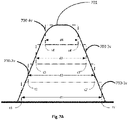
- the parallel-connected groups of IIUs 700-1 to 700-4 may be connected in series to generate impedances injection waves 700-1v to 700-4v (shown in Figure 7A ) to be injected into an HV transmission line (e.g., HV transmission line 108).
- HV transmission line e.g., HV transmission line 108
- the individual injected impedances 700-1v to 700-4v may have start times staggered as t1, t2, t3 and t4 and end times staggered as t1', t2', t3' and t4' providing injection durations d1, d2, d3 and d4, respectively, as shown in Figure 7A .
- These impedances when injected into the HV transmission line, cumulatively combine to provide a pseudo-sinusoidal waveform that may be smoothed to produce sinusoidal waveform 701 due to the impedance of the HV transmission line (as shown in Figure 7A ).
- Figure 8 shows an injected pseudo-sinusoidal impedance waveform generated by IIMs connected in series provide a capability to generate a synchronized combinable step injection according to an embodiment, wherein the pseudo-sinusoidal impedance injection waveform is obtained by combining two secondary pseudo-sinusoidal impedance waveforms.
- IIUs 400 in an IIM 300 is not sufficient to create the required impedance injection wave form, IIUs from multiple IIMs 300 in a neighborhood, operating in synchronous fashion. In such a case one designated control in one IIM 300 act as master controller with other controllers in the rest of the multiple IIMs 300 as slave controllers.
- each IIM comprising 2x2 IIUs (e.g., IIU 400) and generating a respective secondary pseudo-sinusoidal waveform, as shown in Figure 5 , to generate a sinusoidal impedance injection waveform that is equivalent to waveform obtainable when having four IIUs connected in series to be injected into the HV transmission line to which the IIMs are connected and coupled.
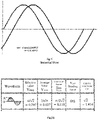
- Figure 9 and 9A show a pure sinusoidal waveform with an RMS and average values of the sinusoidal waveform and the relationship between the values for comparison to an injected pseudo-sinusoidal wave, which may be smoothed out by the inductance of the HV transmission line.
- the peak value A is typically designated as Vp, as is understandable by people skilled in the art.
- Vp the peak value A
- Figure 10A is a diagram showing the impact of stepped generation and injection of impedance conforming to a pseudo sinusoidal voltage on a harmonic injection on HV power transmission lines. More specifically, Figure 10 shows how generated stepped waveforms from series connected IIUs or IIU groups can be implemented to achieve optimal smoothing and spacing for optimizing a pseudo sinusoidal output to a HV transmission line.
- N represents the total level, i.e. the number of sub-groups of impedance injection units IIUs.
- This provides for an optimum pseudo sinusoidal waveform to be injected into the HV transmission line with a plurality of 'n' IIUs 400 or 'n' sub-groups of parallel connected IIUs 400, connected in series and each IIU or IIU sub-group generating impedance waveform of equal amplitude as shown in Figure 10A .
- TDD Total Harmonic Distortion
- Figure 10B is a diagram showing the impact of increasing the number of IIUs 400 or sub-groups of parallel connected IIUs that generate rectangular waveforms to be injected as a pseudo-sinusoidal waveform into HV transmission lines.
- the step heights in the injected waveform is made small.
- the amplitude of each step is reduced and staggered to achieve a required pseudo-sinusoidal injected impedance.
- This reduction in the injected step voltage in turn reduces the amplitude of the distortion as the RMS value of the distortion injected is dependent on the magnitude of each staggered step forming the injected waveform.
- Vp is the peak value of injected impedance
- n is the number of IIU sub-groups connected in series, with each IIU sub-group injecting equal amplitude rectangular impedance waveforms.
- Figure 11A and 11B show the impact of increasing the number of IIU sub-groups connected in series to generate and inject impedance of equal amplitude into a HV power transmission line.
- Ideality factor (IF) refers to a measure of how closely the injected pseudo-sinusoidal waveform is to a pure sinusoidal waveform. The IF is measured as the average value V avg of the pseudo-sinusoidal waveform injected.
- Figure 11C is a table showing the improvement of the factor Vo as the number of IIU sub-groups injecting the impedance increases from 2 to 5.
- IIM 300 One of the difficulties of using a large number of injecting sub-groups of IIUs is the increased cost and weight of the resulting IIMs (e.g., IIM 300). It has been proposed to use short duration pulses in order to improve the efficiency of injection, that is use of reduced number of IIU subgroups, while retaining the advantage of larger number of steps of smaller amplitude in a pseudo-sinusoidal injected waveform. By adding short pulse capability to one of the IIUs with n>1 total IIUs in series, as described in more detail herein below, an equivalent number of 2n-1 steps can be achieved.
- Figure 12 is a diagram showing the use of a short pulse to reduce the number of injecting sub-groups of IIUs.
- "s" represents the duration of a short pulse waveform generated during an unused period.
- a first subgroup and a second subgroup inject a first subgroup of impedance injection waves having a greater amplitude (e.g. double the amplitude) of a conventional step, as indicated in n122 and n124 respectively.
- the third IIU sub-group injects a second subgroup of impedance injection waves.
- This second subgroup of impedance injection waves are configured as short pulses n121, n121', n123, n123' and n125 that have half the amplitude of the pulses n122 and n124.
- the pseudo-sinusoidal impedance injection wave may comprise at least two subgroups of synchronized and aligned impedance injection waves (preferably configured as rectangular impedance injection waves).
- the impedance injection waves (e.g. n122, n124) of a first subgroup of impedance injection waves may have an amplitude and a duration greater than an amplitude and a duration of the impedance injection waves (e.g. n121, n121', n123, n123', n125) of a second subgroup of impedance injection waves.
- the impedance injection waves of the first and second subgroups may be configured as rectangular impedance injection waves.
- the impedance injection waves of the first group are synchronized and aligned with the impedance injection waves of the second group, such that they are combined to produce a staggered pseudo-sinusoidal waveform
- the combination, by aligning and synchronizing, of an impedance injection wave of the first subgroup (i.e. having a greater amplitude) with an impedance injection wave of the second subgroup (i.e. having a smaller amplitude) causes the reduction of the amplitude (or height) of the resulting step forming the pseudo-sinusoidal impedance injection wave.
- the injected pulses are synchronized in time and staggered such that they are combined to produce a waveform having a maximum step height that is the larger of the height of the short pulses (i.e. the impedance injection waves of the second subgroup) or the difference between the short pulse height and the step height of the large injected rectangular waveform (i.e. the impedance injection waves of the first subgroup).
- a maximum step height that is the larger of the height of the short pulses (i.e. the impedance injection waves of the second subgroup) or the difference between the short pulse height and the step height of the large injected rectangular waveform (i.e. the impedance injection waves of the first subgroup).
Landscapes
- Engineering & Computer Science (AREA)
- Power Engineering (AREA)
- Physics & Mathematics (AREA)
- Nonlinear Science (AREA)
- Inverter Devices (AREA)
Abstract
Description
- The present disclosure relates to using available resources from a plurality of transformer-less flexible alternating current transmission system (TL-FACTS) based impedance injection units (IIUs) connected in series in one or more impedance injection modules (IIMs) to generate and inject sinusoidal waveform with minimum harmonic injection on a high voltage (HV) transmission line.
- The current move in the industry is to use modular TL-FACTS based impedance injection units (IIUs) for distributed and localized line balancing and localized control of disturbances in high voltage (HV) transmission lines (such as
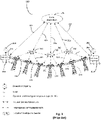
HV transmission lines 108 ofpower grid 100 shown inFigure 1 ). This local control is in addition to utility-based control of power flow over the HV transmission lines. InFigure 1 , local control of theHV transmission lines 108 is achieved by use of intelligent impedance injection modules (IIMs) 300 connected in series with theHV transmission lines 108 and comprise a plurality of IIUs typically connected in a series-parallel configuration. Parallel connected IIUs switch in synchronized fashion and are used to provide increased current carrying capacity for thetransmission lines 108 while series connected IIUs can be used to increase the injected impedance voltage in a cumulative fashion. Impedance refers to the measure of the opposition that a circuit presents to a current when a voltage is applied. The term complex impedance may be used interchangeably. Impedance extends the concept of resistance to AC circuits, and possesses both magnitude and phase. Impedance can be inductive, capacitive, resistive or combinations of any of them. - In
Figure 1 , IIMs 300s are coupled to theHV transmission line 108, typically in a distributed fashion, eachIIM 300 being coupled to a segment of the HV transmission line to provide control capability to that segment, thereby enabling local control, as shown. Thedistributed IIMs 300 are connected in series with theHV transmission line 108, their injected impedance voltages are also cumulative over theHV transmission line 108. As shown inFigure 1 ,power grid system 100 includesIIMs 300 distributed overHV transmission lines 108 betweensubstations 204. TheIIMs 300 are directly attached to theHV transmission lines 108 of thepower grid system 100 and are suspended and insulated from ground onHV transmission lines 108, which are suspended fromHV transmission towers 201.Generators 203 andloads 205 are typically connected to theHV transmission lines 108 at thesubstations 204. Groups oflocal IIMs 300 are communicatively connected or coupled to a local intelligence center (LINC) 302 via high-speed communication links 303 that allow for communication and response by theIIMs 300 in the local area at sub-synchronous speeds when required. TheLINCs 302 are also connected by high-speed communication links 303 to other neighboringLINCs 302 for coordination of activity of the local groups ofIIMs 300. Asupervisory utility 206 oversees the activity of thepower grid system 100 using command andcommunication links LINCs 302 andsubstations 204, respectively. Thesupervisory utility 206 is able to have interactive control of thelocal area IIMs 300 via the communication links connecting it to theLINCs 302. Thesupervisory utility 206 has superseding control of the LINCs 302 and theIIMs 300 at any time. - The term "high-speed communication" as detailed above refers to a communication speed that enable the
IIMs 300 in the local area andLINC 302 having supervisory control to communicate with each other and respond in a coordinated fashion in sub-cyclic duration to any changes or disturbances sensed on the HV transmission line. This requirement mandate that the communication speeds also be at sub-cyclic speeds. - The term "local or local region" in this instance refer to a segment of the transmission line under control of a single IIM (300)
- The term "local area" is defined as belonging to or relating to, a particular area or neighborhood. Herein, the term "local area" refers to the area within which the IIMs coupled to segments of a HV transmission line and other FACTS based devices in the neighborhood that are coupled to the HV transmission line are under the supervisory control of a single LINC.
-
Figure 2 is a block diagram showing the main components of an intelligent IIM. Referring toFigure 2 , IIM 300 includes at least an impedance generation and injection module orunit 401, anintelligent control capability 402 having at least a clock with time synchronization capability, and a high-speed communication link 410. -
Figure 3A shows alocal clock 404A coupled to an intelligent control module (or intelligent controller) 403 within eachIIM 300 to synchronize the generation and injection of impedance intoHV transmission line 108.Figure 3B shows aglobal clock 404B, controlled typically by global positioning system (GPS) 407, coupled to anintelligent control module 403 to synchronize the local clock with other local clocks for generation and injection of impedance intoHV transmission line 108. Each of theIIMs 300 uses power extracted from theHV transmission line 108 at the local region to provide power to the circuits of the IIM 300 including theintelligent control module 403,communication link 410 and theIIUs 400. Power can be extracted from theHV transmission line 108 by using apower transformer 301A coupled to a sensor andpower supply module 301. -
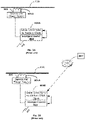
Figure 4 shows a circuit diagram of a TL-FACTS based IIU connected in series on a HV transmission line. Referring toFigure 4 , IIU 400 is capable of generating inductive or capacitive impedance to be injected into theHV transmission line 108. The IIU 400 comprise two leads 406A and 406B that are connected in series with theHV transmission line 108. FourIGBT switches 408B are used to connect the input line 406A to the output line 406B. The switching of the fourIGBT switches 408B are controlled byswitch controls 408A-1 to 408A- 4 that are coupled to amaster control 402. Themaster control 402 is coupled to a sensor andpower supply 301 which extracts power from theHV transmission line 108 for the operation of the IIU 400 via transformer 304. A direct current (DC) capacitor develops a DC voltage across it that is used as injected impedance into theHV transmission line 108. Depending on the sequence of switching of theIGBT switches 408B, an inductive or capacitive impedance can be generated and injected into theHV transmission line 108. Typically, each IIM 300 includes a plurality ofIIUs 400 connected in a series-parallel configuration. -
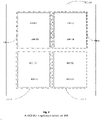
Figure 5 shows anIIM 300 having a 2x2 configuration ofIIUs 400. The IGBT switches of theIIUs 400 are enabled to switch in order to generate rectangular impedance waveforms which get injected into an HV transmission line.IGBT switches 408B have to be de-rated during application for their current carrying capacity to improve reliability. IGBT switches paralleling withinIIUs 400, and multiple IIUs paralleling with switch synchronization in eachIIM 300 are used to ensure adequate current capability through theIIMs 300 connected in series with the HV transmission line. The paralleled groups ofIIU 400 may be connected in series within eachIIM 300 to increase the generated and injected impedance voltage from theIIM 300. The result of such a connection configuration is to increase both the current carrying capacity and the generated injected impedance voltage from theIIM 300. - The injected waveforms from the series connected
IIUs 400 groups, e.g.,group 400A andgroup 400B, are additive and make up a rectangular impedance injection waveform of typically double the amplitude if the start and stop times are synchronized. Such a large amplitude rectangular injection into the HV transmission line, however, may result in oscillations being initiated and harmonics being injected on the HV transmission line. It is therefore ideal if such oscillations and harmonic injections are avoided on the HV transmission lines of a power grid for improved stability and reliability of operation of the power grid. This can be accomplished by staggering the impedance injection from various series connected IIUs or groups of parallel connected IIUs where the groups are connected in series. - In some cases, however, individual capability of a
single IIM 300 is insufficient to provide the impedance injection required. The resources from multiple distributedIIMs 300 which are connected in series on a HV transmission line may be utilized to generate the total impedance injection needed. Staggering of start and stop times duration of injection is needed in these cases to limit oscillations and injection of harmonics on the HV transmission line. Use of a synchronizable clock acrossIIMs 300 can enable such staggering of injected waveforms within anIIM 300 and/or betweenmultiple IIMs 300 by modifying the start and end times of the series connected IIU groups. The IIU groups (such asIIUs 400A-1, 400-A2, 400-B1, 400-B2) are connected in parallel and switched simultaneously (as previously discussed). - It would therefore be ideal if the injection synchronization from the series connected IIUs and IIMs can be optimized to limit unwanted oscillations and harmonics being injected into the
HV transmission line 108 while the number of IIUs needed to inject a pseudo-sinusoidal waveform that closely approximates a sinusoidal waveform can be reduced. - Embodiments of the disclosure are illustrated by way of example and not limitation in the figures of the accompanying drawings in which like references indicate similar elements.
-
Figure 1 is a diagram illustrating a conventional power grid system with a distributed and hierarchical intelligent control system. -
Figure 2 is a block diagram illustrating a conventional dynamic intelligent impedance injection module with local and global time synchronization capability. -
Figure 3A is a circuit diagram illustrating a local master control module of a TL-FACTS based IIU having an associated local clock. -
Figure 3B is a circuit diagram illustrating a local master control module of a TL-FACTS based IIU having an associated local clock that can be synchronized to a global clock. -
Figure 4 is a circuit diagram illustrating a TL-FACTS based IIU, where one or more of the TL-FACTS based IIUs may constitute an IIM. -
Figure 5 is a block diagram illustrating an IIM having a 2x2 series-parallel connection comprising four TL-FACTS based IIUs. -
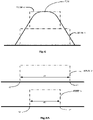
Figure 6 is a diagram illustrating a pseudo-sinusoidal waveform generated by an IIM having two sets of parallel connected TL-FACTS based IIUs interconnected in series a 2x2 matrix ofFigure 5 that provide two rectangular waveforms from the two sets of series connectedIIUs 400 in a synchronized fashion that when combined generate the pseudo-sinusoidal waveform for injection into an HV transmission line. -
Figure 6A shows synchronously generated and injected rectangular waveforms from each of the two series connected groups of two parallel connected IIUs ofFig. 5 . -
Figure 7 shows eight IIUs configured in four parallel groups, with each group having two IIUs in parallel and the four groups connecting in series to form an IIM according to an embodiment. -
Figure 7A shows an injected output waveform from the four groups of two IIUs ofFigure 7 with their injection start and end times adjusted in a synchronized fashion to generate a pseudo sinusoidal waveform that smooths to a sinusoidal waveform when injected into a HV transmission line according to an embodiment. -
Figure 8 shows an injected pseudo-sinusoidal impedance waveform generated by IIMs connected in series provide a capability to generate a synchronized combinable step injection according to an embodiment. -
Figure 9 shows a pure sine wave and a root-mean-squared (RMS) and average values associated with the sine wave. -
Figure 9A is a table showing the relationship of values of a sinusoidal waveform. -
Figure 10A is a diagram showing the impact of stepped generation and injection of impedance conforming to a pseudo sinusoidal voltage on a harmonic injection on HV power transmission lines. -
Figure 10B is a diagram showing the impact of stepped generation and injection of impedance conforming to a pseudo sinusoidal voltage on a distortion injected on the HV power transmission lines due to the lower voltage at each staggered step in a pseudo-sinusoidal waveform. -
Figure 11A and11B are diagrams showing the impact on an ideality factor measured by an average value of the pseudo-sinusoidal waveform due to an increasing number of IIU sub-groups generating and injecting the impedance. -
Figure 11C is a table showing the result of increasing the number of injectors as shown inFigures 11A and11B . -
Figure 12 is an example implementation using a short pulse injection to improve the ideality factor of an injected waveform using a lower number impedance injecting sub-groups than a number of steps in the injected waveform according to an embodiment. - Various examples of implementation covering the aspects of the disclosures will be described below, and the accompanying drawings will illustrate these various implementation examples indicative of the unique and inventive nature of the disclosure. The following description and drawings are illustrative of the disclosure and are not to be construed as limiting the disclosure. Numerous specific details are described to provide a thorough understanding of various examples of the present disclosure. However, in certain instances, well-known or conventional details are not described in order to provide a concise discussion of the described example of the present disclosures.
- Reference in the specification to "one example" or "an example" means that a particular feature, structure, or characteristic described in conjunction with the example can be included in at least one example description of the disclosure. The appearances of the phrase "in one example" in various places in the specification do not necessarily all refer to the same example.
- According to some examples, intelligent impedance injection modules (IIMs) comprising connected transformer-less flexible alternating current transmission system (TL-FACTS) devices that are used as impedance injection units (IIUs) for control of high-voltage (HV) transmission lines. The IIUs generate and inject rectangular impedance waves (or waveforms) which, if cumulatively large when injected, create high-frequency oscillations that interfere with control systems on the HV transmission lines and user premises. By staggering and synchronizing the timing of the injection from the series connected IIUs or IIU groups, the injected waveform is converted to a pseudo-sinusoidal wave (or waveform) to reduce generation of harmonics. This method of injection can be optimized for the low harmonics generation using the number of IIUs used. The number of IIUs may be reduced by generating and injecting a combination of standard synchronized and short pulses from IIUs.
- In one aspect, a method for synchronized injection of impedance into high voltage (HV) transmission line is described. The method includes generating, by a plurality of impedance injection units (IIUs) coupled to the HV transmission line, impedance injection waves that cumulatively form a pseudo-sinusoidal wave. The pseudo-sinusoidal wave is formed by the cumulative combination of a plurality of steps, wherein each step is formed by at least one impedance injection wave generated by the IIUs. Each step may comprise a plurality of impedance injection waves (e.g. two, three or more). Preferably, each impedance injection wave generated by the plurality of IIUs is a rectangular impedance injection wave. Preferably, the impedance injection waves are configured to cumulative form the pseudo-sinusoidal wave by staggering and/or synchronizing their timings of injections, i.e. by combining the steps represented by the rectangular impedance injection wave. The method further includes optimizing, by the plurality of IIUs, the pseudo-sinusoidal wave to represent a pure sinusoidal wave. Optimizing the pseudo-sinusoidal wave may comprise limiting unwanted oscillation and/or harmonics which are injected to the HV transmission line. The method further includes injecting, by the plurality of IIUs, the pseudo-sinusoidal wave, as impedance, into the HV transmission line. The plurality of IIUs form multiple connection configurations in sequence, each connection configuration comprising one IIU or multiple IIUs in series, parallel or combination thereof, coupled to the HV transmission line.
- In another aspect, a system for injecting impedance into a HV transmission line is described. The system includes a plurality of IIUs coupled to the HV transmission line. The IIUs form multiple connection configurations in sequence, with each connection configuration comprising one IIU or multiple IIUs in series, parallel or combination thereof, coupled to the HV transmission line. The IIUs are to generate impedance injection waves that cumulatively form a pseudo-sinusoidal wave, optimize the pseudo-sinusoidal wave to represent a pure sinusoidal wave, and inject the pseudo-sinusoidal wave, as impedance, into the HV transmission line.
- Other aspects and advantages of the disclosure will become apparent from the following detailed description taken in conjunction with the accompanying drawings which illustrate, by way of example, the principles of the described disclosure covered.
- As previously discussed, it is optimum if the generated waveforms from the
IIUs 400 of theIIM 300 can be adjusted to represent a pseudo-sinusoidal impedance waveform that represent a pure sinusoidal waveform when cumulatively injected into theHV transmission line 108. Such an optimization can be performed using only a reasonable number of IIUs. Referring again toFigure 5 ,IIM 300 may comprise one or more IIUs 400 that are connected in series, parallel or series-parallel connections. A set of start time-synchronized and duration-adjusted waveforms generated by four IIUs 400s connected in a 2X2 array ofFigure 5 is shown inFigure 6 . The 2x2 connected array ofIIUs 400 of theIIM 300 comprise four IIUs, with the first two IIUs 400-A1 and 400-A2 forming a first parallel connectedIIU group 400A and the second two IIUs 400-B1 and 400-B2 forming a secondparallel IIU group 400B. The waveforms generated byIIU groups connected IIU groups IIM 300 ofFigure 5 . TheIIM 300 is able to generateimpedance injection waveforms 400A-v and 400B-v (as shown inFigure 6A ), with 400A-v having a start at time t1 and an end time t1' with a duration d1, and 400B-v having a start time at t2 and an end time t2' with a duration d2, which is less than d1. The two waveforms are cumulative when injected into an HV transmission line (as the two parallelconnected IIU groups Figure 6 ). -
Figure 7 shows eight IIUs configured in four parallel groups, with each group having two IIUs in parallel and the four groups connecting in series to form an IIM according to an embodiment. Referring toFigure 7 , IIM 300-2X may comprise a 4x2 combination, such as four groups of twoIIUs 400 in parallel, with the four groups connecting in series to form the IIM 300-2X. That is, each of the four IIU groups 700-1 to 700-4 is formed by paralleling two IIUs 400 (e.g., IIU 400-A1 and IIU 400-A2, IIU 400-B1 and IIU 400-B2, IIU 400-C1 and IIU 400-C2, or IIU 400-D1 and IIU 400-D2). It is noted that whileFigure 7 shows twoIIUs 400 included in each IIU group, any number ofIIUs 400 may be included in the IIU group. It is also noted that whileFigure 7 shows four IIU groups 700-1 to 700-4 included in IIM 300-2X, any number of IIU groups may be included in IIM 300-2X. - With continued reference to
Figure 7 , IIU group 700-1 may include IIUs 400-A1 and 400-A2 connected in parallel, IIU group 700-2 may include IIU 400-B1 and 400-B2 connected in parallel, IIU group 700-3 may include IIUs 400-C1 and 400-C2 connected in parallel, and IIU group 700-4 may include IIU 400-D1 and 400-D2 connected in parallel. The parallel-connected groups of IIUs 700-1 to 700-4 may be connected in series to generate impedances injection waves 700-1v to 700-4v (shown inFigure 7A ) to be injected into an HV transmission line (e.g., HV transmission line 108). The individual injected impedances 700-1v to 700-4v may have start times staggered as t1, t2, t3 and t4 and end times staggered as t1', t2', t3' and t4' providing injection durations d1, d2, d3 and d4, respectively, as shown inFigure 7A . These impedances, when injected into the HV transmission line, cumulatively combine to provide a pseudo-sinusoidal waveform that may be smoothed to producesinusoidal waveform 701 due to the impedance of the HV transmission line (as shown inFigure 7A ). -
Figure 8 shows an injected pseudo-sinusoidal impedance waveform generated by IIMs connected in series provide a capability to generate a synchronized combinable step injection according to an embodiment, wherein the pseudo-sinusoidal impedance injection waveform is obtained by combining two secondary pseudo-sinusoidal impedance waveforms. Where the number ofIIUs 400 in anIIM 300 is not sufficient to create the required impedance injection wave form, IIUs frommultiple IIMs 300 in a neighborhood, operating in synchronous fashion. In such a case one designated control in oneIIM 300 act as master controller with other controllers in the rest of themultiple IIMs 300 as slave controllers. As an example, inFigure 8 , two serially distributed IIMs (labelled as "System 1" and "System 2") are used on a HV transmission line, with each IIM comprising 2x2 IIUs (e.g., IIU 400) and generating a respective secondary pseudo-sinusoidal waveform, as shown inFigure 5 , to generate a sinusoidal impedance injection waveform that is equivalent to waveform obtainable when having four IIUs connected in series to be injected into the HV transmission line to which the IIMs are connected and coupled. -
Figure 9 and 9A show a pure sinusoidal waveform with an RMS and average values of the sinusoidal waveform and the relationship between the values for comparison to an injected pseudo-sinusoidal wave, which may be smoothed out by the inductance of the HV transmission line. The RMS value (VRMS) of the sinusoidal wave having a peak value A is:

- For a voltage waveform, the peak value A is typically designated as Vp, as is understandable by people skilled in the art. The closer the RMS or average values of the pseudo-sinusoidal wave can be made to the pure sinusoidal waveform, the lower will be the tendency for harmonic frequency related oscillations be initiated on the HV transmission line due to the injected impedance waveform. Similarly, by reducing the amplitude of the steps of rectangular injected impedance voltages, it is possible to reduce the amplitude of the distortion resulting in reducing the tendency for instability on the HV transmission lines due to the injected impedance wave form.
-
Figure 10A is a diagram showing the impact of stepped generation and injection of impedance conforming to a pseudo sinusoidal voltage on a harmonic injection on HV power transmission lines. More specifically,Figure 10 shows how generated stepped waveforms from series connected IIUs or IIU groups can be implemented to achieve optimal smoothing and spacing for optimizing a pseudo sinusoidal output to a HV transmission line. As indicated inFigure 10A , the smoothing of the waveform is optimally performed when an area A1 is equal to an area A2 inFigure 10A , such that they compensate one another, and the start and stop times of the steps implemented follow the rule for start time (αn) for the nth step is:

- Where N represents the total level, i.e. the number of sub-groups of impedance injection units IIUs. This provides for an optimum pseudo sinusoidal waveform to be injected into the HV transmission line with a plurality of 'n'
IIUs 400 or 'n' sub-groups of parallel connectedIIUs 400, connected in series and each IIU or IIU sub-group generating impedance waveform of equal amplitude as shown inFigure 10A . - The minimal Total Harmonic Distortion (THD) is achieved when an area A1 is equal to an area A2.
-
Figure 10B is a diagram showing the impact of increasing the number ofIIUs 400 or sub-groups of parallel connected IIUs that generate rectangular waveforms to be injected as a pseudo-sinusoidal waveform into HV transmission lines. As these generated and injected rectangular impedances are synchronized and staggered in time, the step heights in the injected waveform is made small. By increasing the number of generated rectangular waveforms of equal amplitude to be injected, the amplitude of each step is reduced and staggered to achieve a required pseudo-sinusoidal injected impedance. This reduction in the injected step voltage in turn reduces the amplitude of the distortion as the RMS value of the distortion injected is dependent on the magnitude of each staggered step forming the injected waveform. The RMS value of distortion injected can be computed as
- The stair case shown in
Figure 10B reduce distortion and can be computed as
- Where Vp is the peak value of injected impedance; n is the number of IIU sub-groups connected in series, with each IIU sub-group injecting equal amplitude rectangular impedance waveforms.
-
Figure 11A and11B show the impact of increasing the number of IIU sub-groups connected in series to generate and inject impedance of equal amplitude into a HV power transmission line.Figure 11A shows subgroup of two (N=2) and three (N=3) in series injecting the impedance waveform, which results in ideality factors of a pseudo-sinusoidal waveform measured as an average value Vo of the injected smoothed waveform. Ideality factor (IF) refers to a measure of how closely the injected pseudo-sinusoidal waveform is to a pure sinusoidal waveform. The IF is measured as the average value Vavg of the pseudo-sinusoidal waveform injected. -
Figure 11C is a table showing the improvement of the factor Vo as the number of IIU sub-groups injecting the impedance increases from 2 to 5. As can be clearly seen, by going from two impedance injecting sub-groups to five impedance injecting sub-groups, the ideality factor of the injected pseudo-sinusoidal waveform improves and becomes close to the optimum ideality factor IFopt = 0.636943. The ideality factor IFn for 'n' sub groups of injectors improve from 0.649623 for n=2 to 0.640485 for n=5. It is hence clear that having a larger number of rectangular injected waveforms combining to have smaller step heights in the resulting pseudo-sinusoidal waveform is necessary to reduce the oscillations on the HV transmission line due to the impedance injection. - One of the difficulties of using a large number of injecting sub-groups of IIUs is the increased cost and weight of the resulting IIMs (e.g., IIM 300). It has been proposed to use short duration pulses in order to improve the efficiency of injection, that is use of reduced number of IIU subgroups, while retaining the advantage of larger number of steps of smaller amplitude in a pseudo-sinusoidal injected waveform. By adding short pulse capability to one of the IIUs with n>1 total IIUs in series, as described in more detail herein below, an equivalent number of 2n-1 steps can be achieved.
-
Figure 12 is a diagram showing the use of a short pulse to reduce the number of injecting sub-groups of IIUs. By using 'n' IIU sub-groups, a waveform having 2n-1 steps can be generated by this method. That is, by having 3 sub-groups (N=3), an equivalent injection ideality factor of 'n'=5, IF5 = 0.640485 can be achieved. InFigure 12 , "s" represents the duration of a short pulse waveform generated during an unused period. - Of the three IIU sub-groups injectors, a first subgroup and a second subgroup inject a first subgroup of impedance injection waves having a greater amplitude (e.g. double the amplitude) of a conventional step, as indicated in n122 and n124 respectively. The third IIU sub-group injects a second subgroup of impedance injection waves. This second subgroup of impedance injection waves are configured as short pulses n121, n121', n123, n123' and n125 that have half the amplitude of the pulses n122 and n124.
- Thus, the pseudo-sinusoidal impedance injection wave may comprise at least two subgroups of synchronized and aligned impedance injection waves (preferably configured as rectangular impedance injection waves). The impedance injection waves (e.g. n122, n124) of a first subgroup of impedance injection waves may have an amplitude and a duration greater than an amplitude and a duration of the impedance injection waves (e.g. n121, n121', n123, n123', n125) of a second subgroup of impedance injection waves. The impedance injection waves of the first and second subgroups may be configured as rectangular impedance injection waves. The impedance injection waves of the first group are synchronized and aligned with the impedance injection waves of the second group, such that they are combined to produce a staggered pseudo-sinusoidal waveform The combination, by aligning and synchronizing, of an impedance injection wave of the first subgroup (i.e. having a greater amplitude) with an impedance injection wave of the second subgroup (i.e. having a smaller amplitude) causes the reduction of the amplitude (or height) of the resulting step forming the pseudo-sinusoidal impedance injection wave.
- The injected pulses (i.e. the impedance injection waves of the second subgroup) are synchronized in time and staggered such that they are combined to produce a waveform having a maximum step height that is the larger of the height of the short pulses (i.e. the impedance injection waves of the second subgroup) or the difference between the short pulse height and the step height of the large injected rectangular waveform (i.e. the impedance injection waves of the first subgroup). In other words, by aligning the short pulses n121 and n121' on either side of the larger (i.e. having a greater amplitude) impedance injection wave n122, a step having less amplitude (or height) that the larger impedance injection wave is provided, without reducing the amplitude of the pseudo-sinusoidal wave 12-s. Similarly, by aligning short pulses n123 and n123' on either side of n124, reduced step having less amplitude (or height) than the larger impedance injection wave is provided, without reducing the amplitude of the pseudo-sinusoidal wave 12-s. The result obtained by the above described combination of short pulses n121 and n121' with the impedance injection wave n122, and the combination of short pulses n123 and n123' with n124, is similar to having five sub-groups of injectors IIU injecting the impedance waveform of amplitude Vi. Hence with three IIU injecting sub-groups an effective five step waveform can be generated reducing the cost and weight of the distributed
IIMs 300 used. - In the foregoing specification, embodiments of the disclosure have been described with reference to specific exemplary embodiments thereof. It will be evident that various modifications may be made thereto without departing from the broader spirit and scope of the disclosure as set forth in the following claims. The specification and drawings are, accordingly, to be regarded in an illustrative sense rather than a restrictive sense.
Claims (15)
- A method for synchronized injection of impedance into high voltage HV transmission line (108), the method comprising:generating, by a plurality of impedance injection units IIUs (400, 400A, 400B, 400-A1, 400-A2, 400-B1, 400-B2, 400-C1, 400-C2, 400-D1, 400-D2, 700-1, 700-2, 700-3, 700-4) coupled to the HV transmission line (108), impedance injection waves (400A-v, 400B-v, 700-1v, 700-2v, 700-3v, 700-4v) forming steps (n1, n2, n3, n4, n5) that cumulatively form a pseudo-sinusoidal wave (501, 701, 12s);optimizing, by the plurality of IIUs (400, 400A, 400B, 400-A1, 400-A2, 400-B1, 400-B2, 400-C1, 400-C2, 400-D1, 400-D2, 700-1, 700-2, 700-3, 700-4), the pseudo-sinusoidal wave to represent a pure sinusoidal wave (501, 701, 12s); andinjecting, by the plurality of IIUs (400, 400A, 400B, 400-A1, 400-A2, 400-B1, 400-B2, 400-C1, 400-C2, 400-D1, 400-D2, 700-1, 700-2, 700-3, 700-4), the pseudo-sinusoidal wave (501, 701, 12s), as impedance, into the HV transmission line (108);wherein the plurality of IIUs (400, 400A, 400B, 400-A1, 400-A2, 400-B1, 400-B2, 400-C1, 400-C2, 400-D1, 400-D2, 700-1, 700-2, 700-3, 700-4) form multiple connection configurations in sequence, each connection configuration comprising one IIU (400, 400A, 400B, 400-A1, 400-A2, 400-B1, 400-B2, 400-C1, 400-C2, 400-D1, 400-D2, 700-1, 700-2, 700-3, 700-4) or multiple IIUs (400, 400A, 400B, 400-A1, 400-A2, 400-B1, 400-B2, 400-C1, 400-C2, 400-D1, 400-D2, 700-1, 700-2, 700-3, 700-4) in series, parallel or combination thereof, coupled to the HV transmission line (108).
- The method of claim 1, wherein optimizing the pseudo-sinusoidal wave (501, 701, 12s) comprises adjusting the pseudo-sinusoidal wave (501, 701, 12s) to have a root-mean-squared RMS value (VRMS) or an average value (VAVE) about a RMS value or average value of the pure sinusoidal wave (501, 701, 12s).
- The method of claims 1 or 2, wherein each of the impedance injection waves (400A-v, 400B-v, 700-1v, 700-2v, 700-3v, 700-4v) is generated at a start time α n = sin-1((2n - 1)/(2N)) and a stop time β n = π - sin-1((2n - 1)/(2N)), wherein n is a step in the cumulative pseudo-sinusoidal wave and N is the number of IIUs.
- The method of any of the preceding claims, wherein an ideality factor of the pseudo-sinusoidal wave (501, 701, 12s) is about an average value (VAVE) of the pure sinusoidal wave.
- The method of any of the preceding claims, wherein optimizing the pseudo-sinusoidal wave (501, 701, 12s) comprises reducing an amplitude of each step (n1, n2, n3, n4, n5) of the pseudo-sinusoidal wave (501, 701, 12s) cumulatively formed by the impedance injection waves (400A-v, 400B-v, 700-1v, 700-2v, 700-3v, 700-4v).
- The method of claim 5, wherein the pseudo-sinusoidal impedance injection wave (501, 701, 12s) comprises at least two subgroups impedance injection waves,
wherein the impedance injection waves (n122, n124, n125) of a first subgroup of impedance injection waves have an amplitude and a duration greater than an amplitude and a duration of the impedance injection waves (n121, n121', n123, n123', n125) of a second subgroup of impedance injection waves; and
wherein the impedance injection waves (n122, n124) of the first subgroup are synchronized and aligned with the impedance injection waves (n121, n121', n123, n123', n125) of the second subgroup, such that they are combined to produce a staggered pseudo-sinusoidal waveform. - The method of claim 6, wherein the amplitude of the impedance injection waves (n121, n121', n123, n123', n125) of the second subgroup of impedance injection waves is half of the amplitude of the impedance injection waves (n122, n124) of the first subgroup of impedance injection waves.
- The method of claims 6 or 7, wherein the plurality of IIUs (400, 400A, 400B, 400-A1, 400-A2, 400-B1, 400-B2, 400-C1, 400-C2, 400-D1, 400-D2, 700-1, 700-2, 700-3, 700-4) comprise at least a first subgroup of IIUs that generates the impedance injection waves (n122, n124) of the first subgroup of impedance injection waves, and at least a second subgroup of IIUs that generates the impedance injections (n121, n121', n123, n123', n125) of the second subgroup of impedance injection waves.
- The method of any of claims 6 to 8, wherein optimizing the pseudo-sinusoidal wave (501, 701, 12s) comprises synchronizing and aligning impedance injection waves (n121, n121', n123, n123') of the second subgroup of impedance injection waves with at least one impedance injection wave of the first subgroup (n122, n124) of impedance injection waves, such that preferably a respective impedance injection wave (n121, n121', n123, n123') of the second subgroup of impedance injection waves is aligned on each side of at least one of the impedance injection waves (n122, n124) of the first subgroup of impedance injection waves.
- The method of claim 9, wherein each impedance injection wave (n122, n124) of the first group is synchronized and aligned with two respective impedance injection waves (n121, n121', n123, n123') of the second subgroup of impedance injection waves, such that a respective impedance injection wave (n121, n121', n123, n123') of the second subgroup of impedance injection waves is aligned on each side of each impedance injection wave (n122, n124) of the first subgroup of impedance injection waves.
- The method of any of the preceding claims, wherein the pseudo-sinusoidal wave (501, 701, 12s) is optimized to represent the pure sinusoidal wave, such that the generation of oscillations, harmonics and distortion on the HV transmission line (108) is reduced, as compared to injection of a single impedance injection wave.
- A system for synchronized injection of impedance into a high voltage HV transmission line (108) according to the method of any of the preceding claims, the system comprising:a plurality of impedance injection units IIUs (400, 400A, 400B, 400-A1, 400-A2, 400-B1, 400-B2, 400-C1, 400-C2, 400-D1, 400-D2, 700-1, 700-2, 700-3, 700-4) coupled to the HV transmission line (108), the plurality of IIUs (400, 400A, 400B, 400-A1, 400-A2, 400-B1, 400-B2, 400-C1, 400-C2, 400-D1, 400-D2, 700-1, 700-2, 700-3, 700-4) forming multiple connection configurations in sequence, each connection configuration comprising one IIU (400, 400A, 400B, 400-A1, 400-A2, 400-B1, 400-B2, 400-C1, 400-C2, 400-D1, 400-D2, 700-1, 700-2, 700-3, 700-4) or multiple IIUs (400, 400A, 400B, 400-A1, 400-A2, 400-B1, 400-B2, 400-C1, 400-C2, 400-D1, 400-D2, 700-1, 700-2, 700-3, 700-4) in series, parallel or combination thereof, coupled to the HV transmission line (108);wherein the plurality of impedance injection units IIUs (400, 400A, 400B, 400-A1, 400-A2, 400-B1, 400-B2, 400-C1, 400-C2, 400-D1, 400-D2, 700-1, 700-2, 700-3, 700-4) are configured to:generate impedance injection waves (400A-v, 400B-v, 700-1v, 700-2v, 700-3v, 700-4v) configured to form steps that cumulatively form a pseudo-sinusoidal wave (501, 701, 12s),optimize the pseudo-sinusoidal wave (501, 701, 12s) to represent a pure sinusoidal wave, andinject the pseudo-sinusoidal wave (501, 701, 12s), as impedance, into the HV transmission line (108).
- The system of claim 12, wherein to optimize the pseudo-sinusoidal wave (501, 701, 12s), the plurality of IIUs (400, 400A, 400B, 400-A1, 400-A2, 400-B1, 400-B2, 400-C1, 400-C2, 400-D1, 400-D2, 700-1, 700-2, 700-3, 700-4) are configured to adjust the pseudo-sinusoidal wave (501, 701, 12s) to have a root-mean-squared RMS value (VRMS) or an average value (VAVE) about a RMS value or average value of the pure sinusoidal wave.
- The system of claims 12 or 13, wherein the plurality of IIUs (501, 701, 12s), the plurality of IIUs (400, 400A, 400B, 400-A1, 400-A2, 400-B1, 400-B2, 400-C1, 400-C2, 400-D1, 400-D2, 700-1, 700-2, 700-3, 700-4) comprise at least two subgroups of IIUs, wherein at least a first subgroup of IIUs is configured to generate the impedance injection waves () of the first subgroup of impedance injection waves, and at least a second subgroup of IIUs configured to generate the second subgroup of impedance injection waves.
- The system of any of claims 12 to 14, wherein to optimize the pseudo-sinusoidal wave, the plurality of IIUs (501, 701, 12s), the plurality of IIUs (400, 400A, 400B, 400-A1, 400-A2, 400-B1, 400-B2, 400-C1, 400-C2, 400-D1, 400-D2, 700-1, 700-2, 700-3, 700-4) is configured to align impedance injection waves (n121, n121', n123, n123') of the second subgroup of impedance injection waves with impedance injection waves (n122, n124) of the first subgroup of impedance injection wave, such that preferably a respective impedance injection wave (n121, n121', n123, n123') of the second subgroup of impedance injection waves is aligned on each side of at least one of the impedance injection waves (n122, n124) of the first subgroup of impedance injection waves.
Applications Claiming Priority (2)
| Application Number | Priority Date | Filing Date | Title |
|---|---|---|---|
| US202063198374P | 2020-10-14 | 2020-10-14 | |
| US17/301,148 US11394375B2 (en) | 2020-10-14 | 2021-03-26 | Sinusoidal wave formation for reduction of oscillations, harmonics and distortion using short pulses to reduce the number of required impedance injection units |
Publications (1)
| Publication Number | Publication Date |
|---|---|
| EP3985825A1 true EP3985825A1 (en) | 2022-04-20 |
Family
ID=75936838
Family Applications (1)
| Application Number | Title | Priority Date | Filing Date |
|---|---|---|---|
| EP21174029.5A Pending EP3985825A1 (en) | 2020-10-14 | 2021-05-17 | Sinusoidal wave formation for reduction of oscillations, harmonics and distortion using short pulses to reduce the number of required impedance injection units |
Country Status (3)
| Country | Link |
|---|---|
| US (1) | US11394375B2 (en) |
| EP (1) | EP3985825A1 (en) |
| AU (1) | AU2021204768A1 (en) |
Citations (5)
| Publication number | Priority date | Publication date | Assignee | Title |
|---|---|---|---|---|
| CN1106063C (en) * | 1998-08-26 | 2003-04-16 | 三菱电机株式会社 | Compensation device and power transmission system using one compensation device |
| KR100549059B1 (en) * | 2003-11-24 | 2006-02-06 | 명지대학교 산학협력단 | Integrated power flow control without series injection transformer |
| JP2013048546A (en) * | 2011-08-29 | 2013-03-07 | General Electric Co <Ge> | Power conversion system and method |
| US10559975B2 (en) * | 2016-02-11 | 2020-02-11 | Smart Wires Inc. | System and method for distributed grid control with sub-cyclic local response capability |
| US20200067309A1 (en) * | 2018-08-23 | 2020-02-27 | Smart Wires Inc. | Modular Time Synchronized Injection Modules |
Family Cites Families (2)
| Publication number | Priority date | Publication date | Assignee | Title |
|---|---|---|---|---|
| US11539211B2 (en) * | 2019-06-11 | 2022-12-27 | Smart Wires Inc. | Fast-slow injection for recovery from transient response and voltage collapse with avoidance of SSR and SSCI |
| US11411404B2 (en) * | 2019-11-22 | 2022-08-09 | Smart Wires Inc. | Use of the unused duration injection units in an array to reduce oscillations during impedance injection for corrections of problems |
-
2021
- 2021-03-26 US US17/301,148 patent/US11394375B2/en active Active
- 2021-05-17 EP EP21174029.5A patent/EP3985825A1/en active Pending
- 2021-07-08 AU AU2021204768A patent/AU2021204768A1/en active Pending
Patent Citations (5)
| Publication number | Priority date | Publication date | Assignee | Title |
|---|---|---|---|---|
| CN1106063C (en) * | 1998-08-26 | 2003-04-16 | 三菱电机株式会社 | Compensation device and power transmission system using one compensation device |
| KR100549059B1 (en) * | 2003-11-24 | 2006-02-06 | 명지대학교 산학협력단 | Integrated power flow control without series injection transformer |
| JP2013048546A (en) * | 2011-08-29 | 2013-03-07 | General Electric Co <Ge> | Power conversion system and method |
| US10559975B2 (en) * | 2016-02-11 | 2020-02-11 | Smart Wires Inc. | System and method for distributed grid control with sub-cyclic local response capability |
| US20200067309A1 (en) * | 2018-08-23 | 2020-02-27 | Smart Wires Inc. | Modular Time Synchronized Injection Modules |
Also Published As
| Publication number | Publication date |
|---|---|
| AU2021204768A1 (en) | 2022-04-28 |
| US11394375B2 (en) | 2022-07-19 |
| US20220116028A1 (en) | 2022-04-14 |
Similar Documents
| Publication | Publication Date | Title |
|---|---|---|
| US8031495B2 (en) | Prediction scheme for step wave power converter and inductive inverter topology | |
| US5638263A (en) | Low and medium voltage PWM AC/DC power conversion method and apparatus | |
| US11843247B2 (en) | Modular time synchronized injection modules | |
| US10498217B1 (en) | Coordinated power converters for increased efficiency and power electronics lifetime | |
| CN107508316B (en) | Two-layer optimized global synchronous pulse width modulation system and method | |
| US11641114B2 (en) | Use of the unused duration injection units in an array to reduce oscillations during impedance injection for corrections of problems | |
| Hirao et al. | A modified modulation control of a single-phase inverter with enhanced power decoupling for a photovoltaic AC module | |
| CN105703380B (en) | A kind of rural power grids low-voltage controlling device | |
| CN103580498A (en) | High-power energy feedback type power grid analog device and control method adopted in same | |
| Pirouz et al. | A new approach to the modulation and DC-link balancing strategy of modular multilevel AC/AC converters | |
| Roslan et al. | Centralize control power sharing scheme of parallel connected inverters for microgrids | |
| EP3985825A1 (en) | Sinusoidal wave formation for reduction of oscillations, harmonics and distortion using short pulses to reduce the number of required impedance injection units | |
| CN202889244U (en) | Off-grid direct-current-to-alternating-current system | |
| CN118677279A (en) | Method and controller for controlling grid-connected power factor of flyback inverter through double frequencies | |
| CN114844113A (en) | Microgrid distributed economic operation control method based on cascade inverter | |
| Korhonen et al. | Feedforward control of isolating photovoltaic DC-DC converter to reduce grid-side DC link voltage fluctuation | |
| Samadhiya et al. | Modeling and Control of a Cascaded H-bridge Multilevel Inverter for Hybrid Generation Sources based Islanded Microgrid | |
| KR102816478B1 (en) | Isolated single-phase uninterruptible power supply inverter with parallel connection structure | |
| US12620909B2 (en) | Power conversion system for reducing dc-link capacitor stress | |
| CN106301047B (en) | A kind of PD-PWM modulator approaches based on dynamic carrier offset allocations | |
| TW201340536A (en) | Distributed power generation system with seamlessly grid-connected transition and method for implementing grid-connected transition for distributed power generation system | |
| CN102882414A (en) | Off-grid direct-current-to-alternating-current system | |
| Kim | PV-battery series integration for residential Solar-plus-storage systems | |
| US20240266972A1 (en) | Power Conversion System for Reducing DC-Link Capacitor Stress | |
| Chakraborty et al. | A dual-active-bridge-based high-frequency isolated inverter for interfacing multiple PV modules with distributed MPPT |
Legal Events
| Date | Code | Title | Description |
|---|---|---|---|
| PUAI | Public reference made under article 153(3) epc to a published international application that has entered the european phase |
Free format text: ORIGINAL CODE: 0009012 |
|
| STAA | Information on the status of an ep patent application or granted ep patent |
Free format text: STATUS: THE APPLICATION HAS BEEN PUBLISHED |
|
| AK | Designated contracting states |
Kind code of ref document: A1 Designated state(s): AL AT BE BG CH CY CZ DE DK EE ES FI FR GB GR HR HU IE IS IT LI LT LU LV MC MK MT NL NO PL PT RO RS SE SI SK SM TR |
|
| STAA | Information on the status of an ep patent application or granted ep patent |
Free format text: STATUS: REQUEST FOR EXAMINATION WAS MADE |
|
| 17P | Request for examination filed |
Effective date: 20220923 |
|
| RBV | Designated contracting states (corrected) |
Designated state(s): AL AT BE BG CH CY CZ DE DK EE ES FI FR GB GR HR HU IE IS IT LI LT LU LV MC MK MT NL NO PL PT RO RS SE SI SK SM TR |
|
| REG | Reference to a national code |
Ref country code: DE Ref legal event code: R079 Free format text: PREVIOUS MAIN CLASS: H02J0003180000 Ipc: H02J0003181400 |
|
| GRAP | Despatch of communication of intention to grant a patent |
Free format text: ORIGINAL CODE: EPIDOSNIGR1 |
|
| STAA | Information on the status of an ep patent application or granted ep patent |
Free format text: STATUS: GRANT OF PATENT IS INTENDED |