EP3984766B1 - Tire - Google Patents
Tire Download PDFInfo
- Publication number
- EP3984766B1 EP3984766B1 EP20821980.8A EP20821980A EP3984766B1 EP 3984766 B1 EP3984766 B1 EP 3984766B1 EP 20821980 A EP20821980 A EP 20821980A EP 3984766 B1 EP3984766 B1 EP 3984766B1
- Authority
- EP
- European Patent Office
- Prior art keywords
- tire
- groove
- circumferential direction
- tire circumferential
- main grooves
- Prior art date
- Legal status (The legal status is an assumption and is not a legal conclusion. Google has not performed a legal analysis and makes no representation as to the accuracy of the status listed.)
- Active
Links
Images

Classifications
-
- B—PERFORMING OPERATIONS; TRANSPORTING
- B60—VEHICLES IN GENERAL
- B60C—VEHICLE TYRES; TYRE INFLATION; TYRE CHANGING; CONNECTING VALVES TO INFLATABLE ELASTIC BODIES IN GENERAL; DEVICES OR ARRANGEMENTS RELATED TO TYRES
- B60C11/00—Tyre tread bands; Tread patterns; Anti-skid inserts
- B60C11/03—Tread patterns
- B60C11/0304—Asymmetric patterns
-
- B—PERFORMING OPERATIONS; TRANSPORTING
- B60—VEHICLES IN GENERAL
- B60C—VEHICLE TYRES; TYRE INFLATION; TYRE CHANGING; CONNECTING VALVES TO INFLATABLE ELASTIC BODIES IN GENERAL; DEVICES OR ARRANGEMENTS RELATED TO TYRES
- B60C11/00—Tyre tread bands; Tread patterns; Anti-skid inserts
- B60C11/03—Tread patterns
- B60C11/0318—Tread patterns irregular patterns with particular pitch sequence
-
- B—PERFORMING OPERATIONS; TRANSPORTING
- B60—VEHICLES IN GENERAL
- B60C—VEHICLE TYRES; TYRE INFLATION; TYRE CHANGING; CONNECTING VALVES TO INFLATABLE ELASTIC BODIES IN GENERAL; DEVICES OR ARRANGEMENTS RELATED TO TYRES
- B60C11/00—Tyre tread bands; Tread patterns; Anti-skid inserts
- B60C11/03—Tread patterns
- B60C11/032—Patterns comprising isolated recesses
-
- B—PERFORMING OPERATIONS; TRANSPORTING
- B60—VEHICLES IN GENERAL
- B60C—VEHICLE TYRES; TYRE INFLATION; TYRE CHANGING; CONNECTING VALVES TO INFLATABLE ELASTIC BODIES IN GENERAL; DEVICES OR ARRANGEMENTS RELATED TO TYRES
- B60C11/00—Tyre tread bands; Tread patterns; Anti-skid inserts
- B60C11/03—Tread patterns
- B60C11/12—Tread patterns characterised by the use of narrow slits or incisions, e.g. sipes
-
- B—PERFORMING OPERATIONS; TRANSPORTING
- B60—VEHICLES IN GENERAL
- B60C—VEHICLE TYRES; TYRE INFLATION; TYRE CHANGING; CONNECTING VALVES TO INFLATABLE ELASTIC BODIES IN GENERAL; DEVICES OR ARRANGEMENTS RELATED TO TYRES
- B60C11/00—Tyre tread bands; Tread patterns; Anti-skid inserts
- B60C11/03—Tread patterns
- B60C11/13—Tread patterns characterised by the groove cross-section, e.g. for buttressing or preventing stone-trapping
- B60C11/1307—Tread patterns characterised by the groove cross-section, e.g. for buttressing or preventing stone-trapping with special features of the groove walls
- B60C11/1315—Tread patterns characterised by the groove cross-section, e.g. for buttressing or preventing stone-trapping with special features of the groove walls having variable inclination angles, e.g. warped groove walls
-
- B—PERFORMING OPERATIONS; TRANSPORTING
- B60—VEHICLES IN GENERAL
- B60C—VEHICLE TYRES; TYRE INFLATION; TYRE CHANGING; CONNECTING VALVES TO INFLATABLE ELASTIC BODIES IN GENERAL; DEVICES OR ARRANGEMENTS RELATED TO TYRES
- B60C19/00—Tyre parts or constructions not otherwise provided for
- B60C19/002—Noise damping elements provided in the tyre structure or attached thereto, e.g. in the tyre interior
-
- B—PERFORMING OPERATIONS; TRANSPORTING
- B60—VEHICLES IN GENERAL
- B60C—VEHICLE TYRES; TYRE INFLATION; TYRE CHANGING; CONNECTING VALVES TO INFLATABLE ELASTIC BODIES IN GENERAL; DEVICES OR ARRANGEMENTS RELATED TO TYRES
- B60C11/00—Tyre tread bands; Tread patterns; Anti-skid inserts
- B60C11/03—Tread patterns
- B60C2011/0337—Tread patterns characterised by particular design features of the pattern
- B60C2011/0339—Grooves
- B60C2011/0341—Circumferential grooves
-
- B—PERFORMING OPERATIONS; TRANSPORTING
- B60—VEHICLES IN GENERAL
- B60C—VEHICLE TYRES; TYRE INFLATION; TYRE CHANGING; CONNECTING VALVES TO INFLATABLE ELASTIC BODIES IN GENERAL; DEVICES OR ARRANGEMENTS RELATED TO TYRES
- B60C11/00—Tyre tread bands; Tread patterns; Anti-skid inserts
- B60C11/03—Tread patterns
- B60C2011/0337—Tread patterns characterised by particular design features of the pattern
- B60C2011/0339—Grooves
- B60C2011/0341—Circumferential grooves
- B60C2011/0353—Circumferential grooves characterised by width
-
- B—PERFORMING OPERATIONS; TRANSPORTING
- B60—VEHICLES IN GENERAL
- B60C—VEHICLE TYRES; TYRE INFLATION; TYRE CHANGING; CONNECTING VALVES TO INFLATABLE ELASTIC BODIES IN GENERAL; DEVICES OR ARRANGEMENTS RELATED TO TYRES
- B60C11/00—Tyre tread bands; Tread patterns; Anti-skid inserts
- B60C11/03—Tread patterns
- B60C2011/0337—Tread patterns characterised by particular design features of the pattern
- B60C2011/0339—Grooves
- B60C2011/0374—Slant grooves, i.e. having an angle of about 5 to 35 degrees to the equatorial plane
-
- B—PERFORMING OPERATIONS; TRANSPORTING
- B60—VEHICLES IN GENERAL
- B60C—VEHICLE TYRES; TYRE INFLATION; TYRE CHANGING; CONNECTING VALVES TO INFLATABLE ELASTIC BODIES IN GENERAL; DEVICES OR ARRANGEMENTS RELATED TO TYRES
- B60C11/00—Tyre tread bands; Tread patterns; Anti-skid inserts
- B60C11/03—Tread patterns
- B60C2011/0337—Tread patterns characterised by particular design features of the pattern
- B60C2011/0386—Continuous ribs
- B60C2011/0388—Continuous ribs provided at the equatorial plane
Definitions
- the present invention relates to a tire.
- Patent Document 1 A tire disclosed in, for example, Patent Document 1 below, in which a plurality of main grooves continuously extending in a tire circumferential direction and resonators disposed between the main grooves adjacent to each other in a tire width direction are formed in a tread surface portion is known in the related art.
- occurrence of air column resonance can be suppressed by introducing a portion of air flowing between the main grooves and a road surface into the resonators.
- the present invention is made in view of the above circumstances, and an object thereof is to provide a tire capable of improving steering stability during turning.
- a tire includes a tread portion which is located at an outer end portion in a tire radial direction and includes a tread surface portion facing an outer side in the tire radial direction, in which two outer main grooves extending continuously in a tire circumferential direction are formed in an outer tread surface portion of the tread surface portion located on an outer side of a vehicle in a tire width direction with respect to a tire equator, two inner main grooves extending continuously in the tire circumferential direction are formed in an inner tread surface portion of the tread surface portion located on an inner side of the vehicle in the tire width direction with respect to the tire equator, a central land portion partitioned by the outer main groove and the inner main groove adjacent to each other in the tire width direction extends continuously in the tire circumferential direction, a plurality of outer resonators are formed in an outer land portion, which is partitioned by the two outer main grooves, and arranged in the tire circumferential direction, and a plurality of inner resonators are formed in an
- the tire 1 includes a tread portion 15 located at an outer end portion in a tire radial direction, a pair of sidewall portions 16 extending inward in the tire radial direction from both end portions of the tread portion 15 in a tire width direction, a pair of buttress portions 12 that connects the tread portion 15 and the sidewall portions 16 to each other, respectively, and bead portions 17 connected to inner end portions of the sidewall portions 16 in the tire radial direction.
- a bead core 17a is embedded in each bead portion 17.
- a belt 18 is embedded in the tread portion 15.
- An outer peripheral surface of the tread portion 15 facing the outer side in the tire radial direction is a tread surface portion 11.
- a carcass ply 19 is integrally embedded in the tread portion 15, the buttress portions 12, the sidewall portions 16, and the bead portions 17.
- the carcass ply 19 is folded back around the bead cores 17a.
- An indicator portion (not shown) is formed on an outer surface of the tire 1 so that a mounting direction of the tire 1 in the tire width direction with respect to the vehicle can be specified.
- This indicator portion is formed on an outer surface of, for example, the sidewall portion 16 of the tire 1.
- the tread surface portion 11 refers to a ground contact surface of the tread portion 15 in a state where a regular internal pressure and a regular load are applied to the tire 1.
- An outer surface of the buttress portion 12 is connected to an outer end portion of the tread surface portion 11 in the tire width direction, and the buttress portion 12 does not come into contact with a smooth road surface when the tire 1 is rotated in a state where the regular internal pressure and regular load are applied to the tire 1.
- the regular internal pressure is an air pressure corresponding to a maximum load capacity in Year Book 2008 version of Japan Automobile Tire Association (JATMA), and the regular load is a load corresponding to a maximum load capacity when a single wheel of Year Book 2008 version of JATMA is applied.
- the regular internal pressure is an air pressure corresponding to a maximum load (maximum load capacity) of a single wheel described in a standard described later
- the regular load is a maximum load (maximum load capacity) of a single wheel in an applicable size described in the standard described later.
- the standards are set by industrial standards that are valid in an area where the tire is produced or used. For example, in the United States, the standard is "The Tire and Rim Association Inc.'s Year Book", and in Europe, the standard is "The European Tire and Rim Technical Organization's Standards Manual".
- Outer main grooves 21 and 22, inner main grooves 23 and 24, outer resonators 25, and inner resonators 26 are formed on the tread surface portion 11.
- the outer main grooves 21 and 22 extend continuously in the tire circumferential direction.
- the two outer main grooves 21 and 22 are formed in an outer tread surface portion 11a of the tread surface portion 11 located on an outer side of the vehicle in the tire width direction with respect to a tire equator CL, and are spaced apart from each other in the tire width direction.
- the inner main grooves 23 and 24 extend continuously in the tire circumferential direction.
- the two inner main grooves 23 and 24 are formed in an inner tread surface portion 11b of the tread surface portion 11 located on an inner side of the vehicle in the tire width direction with respect to the tire equator CL, and are spaced apart from each other in the tire width direction.
- the groove width of the first outer main groove 21, which is located on the outer side in the tire width direction, of the two outer main grooves 21 and 22 is widest among the two outer main grooves 21 and 22 and the two inner main grooves 23 and 24.
- the total groove width of the two outer main grooves 21 and 22 is larger than the total groove width of the two inner main grooves 23 and 24.
- the widths of the two outer main grooves 21, 22 and the two inner main grooves 23, 24 may be changed as appropriate, for example, they may be made equal to each other. Further, the total groove width of the two outer main grooves 21 and 22 may be less than or equal to the total groove width of the two inner main grooves 23 and 24.
- a central land portion 27 is partitioned by the second outer main groove 22, which is located on the inner side in the tire width direction, of the two outer main grooves 21 and 22 and the second inner main groove 24, which is located on the inner side in the tire width direction, of the two inner main grooves 23 and 24, and extends continuously in the tire circumferential direction.
- a central portion of the central land portion 27 in the tire width direction is located on the tire equator CL.
- a plurality of first sipes S1 which are opened to the second inner main groove 24 and extend toward one side in the tire circumferential direction from the inner side of the vehicle toward the outer side of the vehicle, are formed in the central land portion 27 at intervals in the tire circumferential direction. The first sipes S1 intersect the tire equator CL.
- the “sipe” refers to a groove having a width such that a pair of side surfaces, which face each other, of inner surfaces of the groove at least partially come into contact with each other when the tire 1 touches the ground.
- the plurality of outer resonators 25 are formed in an outer land portion 28, which is partitioned by the two outer main grooves 21 and 22, and arranged in the tire circumferential direction
- the plurality of inner resonators 26 are formed in an inner land portion 29, which is partitioned by the two inner main grooves 23 and 24, and arranged in the tire circumferential direction.
- the width of each of the outer land portion 28 and the inner land portion 29 is wider than the width of the central land portion 27.
- the outer resonator 25 includes a first vertical groove 31 which extends in the tire circumferential direction, and a first branch groove 32 and a second branch groove 33 which have an inner volume smaller than that of the first vertical groove 31, extend in the tire width direction from both end portions of the first vertical groove 31 in the tire circumferential direction such that the first branch groove 32 and the second branch groove 33 extend in directions opposite to each other, and are opened to the two outer main grooves 21 and 22, respectively.
- first branch groove 32 and the second branch groove 33 are the sipes.
- the first branch groove 32 and the second branch groove 33 may be grooves in which a pair of side surfaces, which face each other, of inner surfaces of the groove do not come into contact with each other when the tire 1 touches the ground.
- the first vertical groove 31 extends inward in the tire width direction from one side toward the other side in the tire circumferential direction.
- the width of the first vertical groove 31 is narrower than the width of the first outer main groove 21.
- the depth of each of both end portions 31c of the first vertical groove 31 in the tire circumferential direction decreases toward the outer side in the tire circumferential direction.
- the first vertical groove 31 includes a first portion 31a located on one side in the tire circumferential direction and a second portion 31b located on the other side in the tire circumferential direction.
- the lengths of the first portion 31a and the second portion 31b are equal to each other.
- the width of the first portion 31a is constant over the entire length in the tire circumferential direction.
- the width of the second portion 3 1b becomes narrower from one side toward the other side in the tire circumferential direction.
- One end portion of the second portion 3 1b in the tire circumferential direction which is a connecting portion of the second portion 3 1b with the first portion 31a, protrudes outward in the tire width direction with respect to the first portion 31a.
- a protruding portion, of one end portion of the second portion 3 1b in the tire circumferential direction, protruding from the first portion 31a in the tire width direction extends toward the other side in the tire circumferential direction as it goes outward in the tire width direction.
- the other end portion of the second portion 3 1b in the tire circumferential direction has a width without an acute angle sharpened in the tire circumferential direction.
- One end portion of the second portion 31b in the tire circumferential direction may protrude inward in the tire width direction with respect to the first portion 31a, or may protrude to both sides in the tire width direction. Further, the other end portion of the first portion 31a in the tire circumferential direction may protrude in the tire width direction with respect to the second portion 31b. Further, the protruding portion may be not formed on both the first portion 31a and the second portion 31b.
- the first branch groove 32 extends from one end portion of the first portion 31a in the tire circumferential direction toward one side in the tire circumferential direction and toward the first outer main groove 21.
- the second branch groove 33 extends from the other end portion of the second portion 31b in the tire circumferential direction toward the other side in the tire circumferential direction and toward the second outer main groove 22.
- the second branch groove 33 is located on the same straight line as the first sipe S1 of the central land portion 27.
- the inclination angle of the second branch groove 33 with respect to the tire width direction is smaller than the inclination angle of the first branch groove 32 with respect to the tire width direction.
- first branch groove 32 and the second branch groove 33 extend, from the first vertical groove 31 toward the outer main grooves 21 and 22, in a direction away from the first vertical groove 31 in the tire circumferential direction. Further, all corner portions of an outer compartment land portion 34 defined by the two outer resonators 25 adjacent to each other in the tire circumferential direction have obtuse angles.
- the two outer resonators 25 that are adjacent to each other in the tire circumferential direction are arranged so that end portions of the two outer resonators 25 in the tire circumferential direction are located at the same position in the tire circumferential direction and at different positions in the tire width direction.
- the second branch groove 33 and the end portion 31c of the first vertical groove 31 on the other side in the tire circumferential direction, of the outer resonator 25 located on one side in the tire circumferential direction are located on the inner side in the tire width direction and at the same position in the tire circumferential direction with respect to the first branch groove 32 and the end portion 31c of the first vertical groove 31 on one side in the tire circumferential direction, of the outer resonator 25 located on the other side in the tire circumferential direction.
- the outer compartment land portion 34 extends inward in the tire width direction from one side to the other side in the tire circumferential direction, and is constricted in the tire width direction at a central portion 34a thereof in the tire circumferential direction.
- the inner resonator 26 includes a second vertical groove 36 which extends in the tire circumferential direction, and a third branch groove 37 and a fourth branch groove 38 which have an inner volume smaller than that of the second vertical groove 36, extend in the tire width direction from the second vertical groove 36 such that the third branch groove 37 and the fourth branch groove 38 extend in directions opposite to each other, and are opened to the two inner main grooves 23 and 24, respectively.
- the third branch groove 37 and the fourth branch groove 38 are connected to both end portions of the second vertical groove 36 in the tire circumferential direction.
- the third branch groove 37 and the fourth branch groove 38 are the sipes.
- the third branch groove 37 and the fourth branch groove 38 may be grooves in which a pair of side surfaces, which face each other, of inner surfaces of the groove do not come into contact with each other when the tire 1 touches the ground.
- the second vertical groove 36 extends outward in the tire width direction from one side toward the other side in the tire circumferential direction.
- the width of the second vertical groove 36 is narrower than the width of the first outer main groove 21.
- the second vertical groove 36 includes a third portion 36a located on one side in the tire circumferential direction and a fourth portion 36b located on the other side in the tire circumferential direction.
- the width of each of the third portion 36a and the fourth portion 36b become narrower from one side toward the other side in the tire circumferential direction.
- a connecting portion of the third portion 36a with the fourth portion 36b protrudes outward in the tire width direction with respect to the fourth portion 36b.
- the depth of the third portion 36a is shallower than the depth of the fourth portion 36b.
- a connecting branch groove 36c extending from the other end portion of the fourth portion 36b in the tire circumferential direction toward the other side in the tire circumferential direction is formed in the inner land portion 29.
- the inner volume of the connecting branch groove 36c is smaller than the inner volume of the second vertical groove 36.
- the inner resonator 26 includes a hidden groove 26a which is not opened to the tread surface portion 11 and protrudes outward in the tire width direction from a portion of the inner resonator 26 located on the inner side in the tire radial direction from the outer end portions of the fourth portion 36b and the connecting branch groove 36c in the tire radial direction.
- the inner resonator 26 having no hidden groove 26a may be adopted.
- the third branch groove 37 extends from one end portion of the third portion 36a in the tire circumferential direction toward one side in the tire circumferential direction and toward the second inner main groove 24.
- the third branch groove 37 is substantially parallel to and close to the straight line passing through the first sipe S 1 of the central land portion 27.
- the third branch groove 37 and the fourth branch groove 38 extend, from the second vertical groove 36 toward the outer main grooves 21 and 22, in a direction away from the second vertical groove 36 in the tire circumferential direction. Further, all corner portions of an inner compartment land portion 39 defined by the two inner resonators 26 adjacent to each other in the tire circumferential direction have obtuse angles.
- the two inner resonators 26 that are adjacent to each other in the tire circumferential direction are arranged so that end portions of the two inner resonators 26 in the tire circumferential direction are located at the same position in the tire circumferential direction and at different positions in the tire width direction.
- the fourth branch groove 38 of the inner resonator 26 located on one side in the tire circumferential direction is located on the outer side in the tire width direction and at the same position in the tire circumferential direction with respect to the third branch groove 37 of the inner resonator 26 located on the other side in the tire circumferential direction.
- the inner compartment land portion 39 extends outward in the tire width direction from one side to the other side in the tire circumferential direction, and is constricted in the tire width direction at a central portion 39a thereof in the tire circumferential direction.
- the number of outer resonators 25 is larger than the number of inner resonators 26.
- the size of the outer resonator 25 in the tire circumferential direction is smaller than the size of the inner resonator 26 in the tire circumferential direction.
- the entire one outer resonator 25 and parts of two outer resonators 25 adjacent to the one outer resonator 25 on both sides in the tire circumferential direction are located in a region in the circumferential direction in which one inner resonator 26 is located.
- the number of outer resonators 25 may be less than or equal to the number of inner resonators 26, and the size of the outer resonator 25 in the tire circumferential direction may be greater than or equal to the size of the inner resonator 26 in the tire circumferential direction.
- a plurality of second sipes S2 opened to the second inner main groove 24 are formed in an inner end portion of the inner land portion 29 in the tire width direction at intervals in the tire circumferential direction.
- the second sipe S2 is parallel to the third branch groove 37.
- the second sipe S2 is located on the same straight line as the first sipe S1 of the central land portion 27.
- the length of the second sipe S2 is shorter than that of the third branch groove 37.
- a plurality of third sipes S3 opened to the first inner main groove 23 are formed in an outer end portion of the inner land portion 29 in the tire width direction at intervals in the tire circumferential direction.
- the third sipe S3 is parallel to the fourth branch groove 38.
- the length of the third sipe S3 is shorter than that of the fourth branch groove 38.
- the positions of the third sipe S3 and the second sipe S2 in the tire circumferential direction are different from each other.
- the third sipe S3 and the second sipe S2 are located at different positions in the tire width direction and at the same position in the tire circumferential direction with respect to the second vertical groove 36 of the inner resonator 26.
- the distance between the second sipe S2 and the second vertical groove 36 in the tire width direction is longer than the distance between the third sipe S3 and the second vertical groove 36 in the tire width direction.
- the second sipe S2 is formed in a first portion of the inner compartment land portion 39 located on one side in the tire circumferential direction from the central portion 39a in the tire circumferential direction constricted in the tire width direction and is located at a central portion of the first portion in the tire circumferential direction
- the third sipe S3 is formed in a second portion of the inner compartment land portion 39 located on the other side in the tire circumferential direction from the central portion 39a in the tire circumferential direction and is located at a central portion of the second portion in the tire circumferential direction.
- an outer shoulder land portion 41 is provided between the first outer main groove 21 and an outer end edge OE of the tread surface portion 11 on the outer side of the vehicle along the tire width direction, and a plurality of fourth sipes S4, which extend from the first outer main groove 21 to the outer end edge OE on the outer side of the vehicle, are formed in the outer shoulder land portion 41 at intervals in the tire circumferential direction.
- a fifth sipe S5 which extends in the tire circumferential direction is formed in the outer shoulder land portion 41 such that the fifth sipe S5 extends continuously over the entire circumference and intersects the fourth sipes S4.
- the sixth sipes S6 are located between the fourth sipes S4 adjacent to each other in the tire circumferential direction.
- an inner shoulder land portion 42 is provided between the first inner main groove 23 and an inner end edge IE of the tread surface portion 11 on the inner side of the vehicle along the tire width direction, and a plurality of seventh sipes S7, which extend from the first inner main groove 23 to the inner end edge IE on the inner side of the vehicle, are formed in the inner shoulder land portion 42 at intervals in the tire circumferential direction.
- the seventh sipes S7 extend beyond the inner end edge IE on the inner side of the vehicle to the buttress portion 12 on the inner side of the vehicle.
- An eighth sipe S8 which extends in the tire circumferential direction is formed in the inner shoulder land portion 42 such that the eighth sipe S8 extends continuously over the entire circumference and intersects the seventh sipes S7.
- a plurality of ninth sipes S9 which extend from the eighth sipe S8 toward the outer side in the tire width direction and reach the inner end edge IE on the inner side of the vehicle, are formed in the inner shoulder land portion 42 at intervals in the tire circumferential direction.
- the ninth sipes S9 extend beyond the inner end edge IE on the inner side of the vehicle to the buttress portion 12 on the inner side of the vehicle.
- the ninth sipes S9 are located between the seventh sipes S7 adjacent to each other in the tire circumferential direction.
- the plurality of outer resonators 25 are formed in the outer land portion 28 and arranged in the tire circumferential direction
- the plurality of inner resonators 26 are formed in the inner land portion 29 and arranged in the tire circumferential direction.
- the central land portion 27 partitioned by the second outer main groove 22 and the second inner main groove 24 adjacent to each other in the tire width direction extends continuously in the tire circumferential direction. Accordingly, when traveling straight, it is possible to ensure a ground contact area near the tire equator CL having the longest contact length in the tread surface portion 11, and it is possible to prevent deterioration of steering stability due to the formation of the outer resonator 25 and the inner resonator 26 in the tread surface portion 11.
- the size of the outer compartment land portion 34 in the tire circumferential direction, which is partitioned by the two outer resonators 25 adjacent to each other in the tire circumferential direction, is the same as the entire length of the two outer resonators 25 in the tire circumferential direction.
- the length of the outer compartment land portion 34 in the tire circumferential direction is ensured to be long, it is possible to ensure the rigidity of the entire outer land portion 28 partitioned by the two outer main grooves 21 and 22, and it is possible to reduce a contact pressure, during turning, generated on the outer tread surface portion 11a of the tire 1 located on the turning outer side among the tires 1 of the front wheels.
- the outer resonator 25 includes the first branch groove 32 and the second branch groove 33, the two outer compartment land portions 34 adjacent to each other in the tire circumferential direction are arranged so that at least end portions of the two outer compartment land portions 34 in the tire circumferential direction are located at the same position in the tire circumferential direction and at different positions in the tire width direction. Therefore, during turning, the outer compartment land portions 34 can be supported by each other in both the tire width direction and the tire circumferential direction, and the rigidity of the outer compartment land portion 34 can be increased.
- the number of outer resonators 25 is larger than the number of inner resonators 26, when the tire touches the ground, it is possible to make it easier to position the outer resonator 25 on the road surface as compared with the inner resonator 26. As a result, it is possible to reliably suppress the occurrence of the air column resonance generated in the outer main grooves 21 and 22, which contributes more to a passing noise during traveling than the air column resonance generated in the inner main grooves 23 and 24, and thus, the passing noise can be effectively reduced.
- the size of the outer resonator 25 in the tire circumferential direction is smaller than the size of the inner resonator 26 in the tire circumferential direction, when the tire touches the ground, it is possible to make it easier to position the outer resonator 25 on the road surface as compared with the inner resonator 26. As a result, it is possible to reliably suppress the occurrence of the air column resonance generated in the outer main grooves 21 and 22, which contributes more to a passing noise during traveling than the air column resonance generated in the inner main grooves 23 and 24, and thus, the passing noise can be effectively reduced.
- first branch groove 32 and the second branch groove 33 extend, from the first vertical groove 31 toward the outer main grooves 21 and 22, in the direction away from the first vertical groove 31 in the tire circumferential direction, all corner portions of the outer compartment land portion 34, which is partitioned by the two outer resonators 25 adjacent to each other in the tire circumferential direction, have obtuse angles. Therefore, it is possible to prevent occurrence of an excessively large contact pressure which is locally applied to the outer compartment land portion 34 when the tire touches the ground, and it is possible to suppress uneven wear of the outer compartment land portion 34.
- first branch groove 32 and the second branch groove 33 extend, from the first vertical groove 31 toward the outer main grooves 21 and 22, in the direction away from the first vertical groove 31 in the tire circumferential direction, in a process in which water on the road surface flows from one of the two outer main grooves 21 and 22 toward the other, the water flows in the same direction in the tire circumferential direction, and thus, drainage performance can be ensured.
- the groove width of the first outer main groove 21 of the two outer main grooves 21 and 22 located on the outer side in the tire width direction is widest among the two outer main grooves 21 and 22 and the two inner main grooves 23 and 24, during turning, it is possible to generate a large contact pressure at an opening peripheral edge portion of the first outer main groove 21 in the outer tread surface portion 11a of the tire 1 located on the turning outer side among the tires 1 of the front wheels, it is possible to exert an edge effect on the road surface, and thus it is possible to reliably ensure steering stability during turning.
- the total groove width of the two outer main grooves 21 and 22 is larger than the total groove width of the two inner main grooves 23 and 24, during turning, it is possible to exert the edge effect on the road surface over a wide range of the outer tread surface portion 11a.
- any one of the first portion 31a and the second portion 31b of the first vertical groove 31 protrudes in the tire width direction with respect to the other, it is possible to provide many corner portions on the outer compartment land portion 34, it is possible to enhance the edge effect exerted on the road surface by the outer compartment land portion 34, and steering stability can be reliably ensured during turning.
- third branch groove 37 and the fourth branch groove 38 are each connected to both end portions of the second vertical groove 36 in the tire circumferential direction, the present invention is not limited to this, and for example, the third branch groove 37 and the fourth branch groove 38 may be connected to an intermediate portion of the second vertical groove 36 in the tire circumferential direction.
- the first branch groove 32 and the second branch groove 33 may extend such that the distance between the first vertical groove 31 and the first branch groove 32 and the second branch groove 33 in the tire circumferential direction decreases from the first vertical groove 31 toward the outer main grooves 21 and 22, or may extend straight in the tire width direction.
- the outer resonator 25 and the inner resonator 26 are not limited to the above-described embodiment, and may be appropriately changed.
- the plurality of outer resonators are formed in the outer land portion and arranged in the tire circumferential direction
- the plurality of inner resonators are formed in the inner land portion and arranged in the tire circumferential direction. Therefore, during traveling, a portion of air flowing between the road surface and the outer main grooves and the inner main grooves is introduced into the first vertical groove and the second vertical groove through the first branch groove or the second branch groove and the third branch groove or the fourth branch groove, and thus, it is possible to attenuate vibrations of the air flowing between the road surface and the outer main grooves and the inner main grooves, and it is possible to suppress occurrence of air column resonance.
- the central land portion partitioned by the outer main groove and the inner main groove adjacent to each other in the tire width direction extends continuously in the tire circumferential direction, when traveling straight, it is possible to ensure a ground contact area near the tire equator having the longest contact length in the tread surface portion, and it is possible to prevent deterioration of steering stability due to the formation of the outer resonator and the inner resonator in the tread surface portion.
- the size of the outer compartment land portion in the tire circumferential direction, which is partitioned by the two outer resonators adjacent to each other in the tire circumferential direction, is the same as the entire length of the two outer resonators in the tire circumferential direction.
- the length of the outer compartment land portion in the tire circumferential direction is ensured to be long, it is possible to ensure the rigidity of the entire outer land portion partitioned by the two outer main grooves, and it is possible to reduce a contact pressure, during turning, generated on the outer tread surface portion of the tire located on the turning outer side among the tires of the front wheels.
- the outer resonator includes the first branch groove and the second branch groove
- the two outer compartment land portions adjacent to each other in the tire circumferential direction are arranged so that at least end portions of the two outer compartment land portions in the tire circumferential direction are located at the same position in the tire circumferential direction and at different positions in the tire width direction. Therefore, during turning, the outer compartment land portions can be supported by each other in both the tire width direction and the tire circumferential direction, and the rigidity of the outer compartment land portion can be increased.
- the number of the outer resonators may be larger than the number of the inner resonators.
- the number of outer resonators is larger than the number of inner resonators, when the tire touches the ground, it is possible to make it easier to position the outer resonator on the road surface as compared with the inner resonator. As a result, it is possible to reliably suppress the occurrence of the air column resonance generated in the outer main grooves, which contributes more to a passing noise during traveling than the air column resonance generated in the inner main grooves, and thus, the passing noise can be effectively reduced.
- the size of the outer resonator in the tire circumferential direction may be smaller than the size of the inner resonator in the tire circumferential direction.
- the size of the outer resonator in the tire circumferential direction is smaller than the size of the inner resonator in the tire circumferential direction, when the tire touches the ground, it is possible to make it easier to position the outer resonator on the road surface as compared with the inner resonator. As a result, it is possible to reliably suppress the occurrence of the air column resonance generated in the outer main grooves, which contributes more to a passing noise during traveling than the air column resonance generated in the inner main grooves, and thus, the passing noise can be effectively reduced.
- first branch groove and the second branch groove may extend, from the first vertical groove toward the outer main grooves, in the direction away from the first vertical groove in the tire circumferential direction.
- first branch groove and the second branch groove extend, from the first vertical groove toward the outer main grooves, in the direction away from the first vertical groove in the tire circumferential direction, all corner portions of the outer compartment land portion, which is partitioned by the two outer resonators adjacent to each other in the tire circumferential direction, have obtuse angles. Therefore, it is possible to prevent occurrence of an excessively large contact pressure which is locally applied to the outer compartment land portion when the tire touches the ground, and it is possible to suppress uneven wear of the outer compartment land portion.
- first branch groove and the second branch groove extend, from the first vertical groove toward the outer main grooves, in the direction away from the first vertical groove in the tire circumferential direction, in a process in which water on the road surface flows from one of the two outer main grooves toward the other, the water flows in the same direction in the tire circumferential direction, and thus, drainage performance can be ensured.
- the groove width of the first outer main groove of the two outer main grooves located on the outer side in the tire width direction is widest among the two outer main grooves and the two inner main grooves.
- the groove width of the first outer main groove of the two outer main grooves located on the outer side in the tire width direction is widest among the two outer main grooves and the two inner main grooves, during turning, it is possible to generate a large contact pressure at the opening peripheral edge portion of the first outer main groove in the outer tread surface portion of the tire located on the turning outer side among the tires of the front wheels, it is possible to exert an edge effect on the road surface, and thus it is possible to reliably ensure steering stability during turning.
- first vertical groove may include the first portion located on one side in the tire circumferential direction and the second portion located on the other side in the tire circumferential direction, and any one of the first portion and the second portion may protrude in the tire width direction with respect to the other
- any one of the first portion and the second portion of the first vertical groove protrudes in the tire width direction with respect to the other, it is possible to provide many corner portions on the outer compartment land portion, it is possible to enhance the edge effect exerted on the road surface by the outer compartment land portion, and steering stability can be reliably ensured during turning.
Landscapes
- Engineering & Computer Science (AREA)
- Mechanical Engineering (AREA)
- Tires In General (AREA)
Description
- The present invention relates to a tire.
- Priority is claimed on
Japanese Patent Application No. 2019-108443, filed June 11, 2019 - A tire disclosed in, for example,
Patent Document 1 below, in which a plurality of main grooves continuously extending in a tire circumferential direction and resonators disposed between the main grooves adjacent to each other in a tire width direction are formed in a tread surface portion is known in the related art. In this tire, during traveling, occurrence of air column resonance can be suppressed by introducing a portion of air flowing between the main grooves and a road surface into the resonators. -
- [Patent Document 1]
Japanese Unexamined Patent Application, First Publication No. 2015-171835 - [Patent Document 2]
US 2016/075185 which discloses a pneumatic tire having improved noise reduction performance exhibited by a resonator. The pneumatic tire according to this disclosure has at least two circumferential grooves extending continuously on a tread surface, and has a resonator disposed on a land portion partitioned by two circumferential grooves among the circumferential grooves, the resonator having an air chamber opening toward a land portion surface at a position spaced from the circumferential grooves, one a more one-side narrow necks connecting the air chamber to one circumferential groove of the two circumferential grooves, and one or more other-side narrow necks connecting the air chamber to the other circumferential groove, the one-side narrow neck and the other-side narrow neck having cross section areas approximately identical to each other, and an extending length of the one-side narrow neck and an extending length of the other-side narrow neck being different. - In the tire of the related art, for example, in the case of a vehicle having a relatively high vehicle height such as an SUV, when the vehicle is turned, a large contact pressure is applied to a tread surface portion of a tire located on a turning outer side among tires of front wheels, particularly to an outer tread surface portion of the tread surface portion located on an outer side of a vehicle with respect to a tire equator, and thus, there is a possibility that it may be difficult to ensure steering stability during the turning.
- The present invention is made in view of the above circumstances, and an object thereof is to provide a tire capable of improving steering stability during turning.
- According to an aspect of the present invention, a tire includes a tread portion which is located at an outer end portion in a tire radial direction and includes a tread surface portion facing an outer side in the tire radial direction, in which two outer main grooves extending continuously in a tire circumferential direction are formed in an outer tread surface portion of the tread surface portion located on an outer side of a vehicle in a tire width direction with respect to a tire equator, two inner main grooves extending continuously in the tire circumferential direction are formed in an inner tread surface portion of the tread surface portion located on an inner side of the vehicle in the tire width direction with respect to the tire equator, a central land portion partitioned by the outer main groove and the inner main groove adjacent to each other in the tire width direction extends continuously in the tire circumferential direction, a plurality of outer resonators are formed in an outer land portion, which is partitioned by the two outer main grooves, and arranged in the tire circumferential direction, and a plurality of inner resonators are formed in an inner land portion, which is partitioned by the two inner main grooves, and arranged in the tire circumferential direction, the outer resonator includes a first vertical groove which extends in the tire circumferential direction, and a first branch groove and a second branch groove which have an inner volume smaller than that of the first vertical groove, extend in the tire width direction from both end portions of the first vertical groove in the tire circumferential direction such that the first branch groove and the second branch groove extend in directions opposite to each other, and are respectively opened to the two outer main grooves, and the inner resonator includes a second vertical groove which extends in the tire circumferential direction, and a third branch groove and a fourth branch groove which have an inner volume smaller than that of the second vertical groove, extend in the tire width direction from the second vertical groove such that the third branch groove and the fourth branch groove extend in directions opposite to each other, and are respectively opened to the two inner main grooves, wherein a groove width of a first outer main groove, of the two outer main grooves, located on an outer side in the tire width direction is widest among the two outer main grooves and the two inner main grooves.
- According to the present invention, it is possible to improve steering stability during turning.
-
-
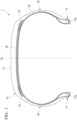
Fig. 1 is a cross-sectional view taken in a tire width direction of a tire according to an embodiment of the present invention. -
Fig. 2 is a developed view of a tread surface portion and a buttress portion of the tire shown inFig. 1 . -
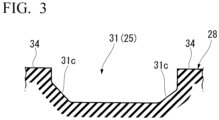
Fig. 3 is a cross-sectional view taken along line III-III of the tire shown inFig. 2 . - Hereinafter, a
tire 1 according to an embodiment of the present invention will be described with reference toFigs. 1 to 3 . - The
tire 1 includes atread portion 15 located at an outer end portion in a tire radial direction, a pair ofsidewall portions 16 extending inward in the tire radial direction from both end portions of thetread portion 15 in a tire width direction, a pair ofbuttress portions 12 that connects thetread portion 15 and thesidewall portions 16 to each other, respectively, and beadportions 17 connected to inner end portions of thesidewall portions 16 in the tire radial direction. Abead core 17a is embedded in eachbead portion 17. Abelt 18 is embedded in thetread portion 15. An outer peripheral surface of thetread portion 15 facing the outer side in the tire radial direction is atread surface portion 11. Acarcass ply 19 is integrally embedded in thetread portion 15, thebuttress portions 12, thesidewall portions 16, and thebead portions 17. - The
carcass ply 19 is folded back around thebead cores 17a. - An indicator portion (not shown) is formed on an outer surface of the
tire 1 so that a mounting direction of thetire 1 in the tire width direction with respect to the vehicle can be specified. This indicator portion is formed on an outer surface of, for example, thesidewall portion 16 of thetire 1. - Here, the
tread surface portion 11 refers to a ground contact surface of thetread portion 15 in a state where a regular internal pressure and a regular load are applied to thetire 1. An outer surface of thebuttress portion 12 is connected to an outer end portion of thetread surface portion 11 in the tire width direction, and thebuttress portion 12 does not come into contact with a smooth road surface when thetire 1 is rotated in a state where the regular internal pressure and regular load are applied to thetire 1. - The regular internal pressure is an air pressure corresponding to a maximum load capacity in Year Book 2008 version of Japan Automobile Tire Association (JATMA), and the regular load is a load corresponding to a maximum load capacity when a single wheel of Year Book 2008 version of JATMA is applied. Outside of Japan, the regular internal pressure is an air pressure corresponding to a maximum load (maximum load capacity) of a single wheel described in a standard described later, and the regular load is a maximum load (maximum load capacity) of a single wheel in an applicable size described in the standard described later. The standards are set by industrial standards that are valid in an area where the tire is produced or used. For example, in the United States, the standard is "The Tire and Rim Association Inc.'s Year Book", and in Europe, the standard is "The European Tire and Rim Technical Organization's Standards Manual".
- Outer
main grooves main grooves outer resonators 25, andinner resonators 26 are formed on thetread surface portion 11. - The outer
main grooves main grooves tread surface portion 11a of thetread surface portion 11 located on an outer side of the vehicle in the tire width direction with respect to a tire equator CL, and are spaced apart from each other in the tire width direction. - The inner
main grooves main grooves tread surface portion 11b of thetread surface portion 11 located on an inner side of the vehicle in the tire width direction with respect to the tire equator CL, and are spaced apart from each other in the tire width direction. - The groove width of the first outer
main groove 21, which is located on the outer side in the tire width direction, of the two outermain grooves main grooves main grooves main grooves main grooves - The widths of the two outer
main grooves main grooves main grooves main grooves - A
central land portion 27 is partitioned by the second outermain groove 22, which is located on the inner side in the tire width direction, of the two outermain grooves main groove 24, which is located on the inner side in the tire width direction, of the two innermain grooves central land portion 27 in the tire width direction is located on the tire equator CL. A plurality of first sipes S1, which are opened to the second innermain groove 24 and extend toward one side in the tire circumferential direction from the inner side of the vehicle toward the outer side of the vehicle, are formed in thecentral land portion 27 at intervals in the tire circumferential direction. The first sipes S1 intersect the tire equator CL. - Here, the "sipe" refers to a groove having a width such that a pair of side surfaces, which face each other, of inner surfaces of the groove at least partially come into contact with each other when the
tire 1 touches the ground. - The plurality of
outer resonators 25 are formed in anouter land portion 28, which is partitioned by the two outermain grooves inner resonators 26 are formed in aninner land portion 29, which is partitioned by the two innermain grooves outer land portion 28 and theinner land portion 29 is wider than the width of thecentral land portion 27. - The
outer resonator 25 includes a firstvertical groove 31 which extends in the tire circumferential direction, and afirst branch groove 32 and asecond branch groove 33 which have an inner volume smaller than that of the firstvertical groove 31, extend in the tire width direction from both end portions of the firstvertical groove 31 in the tire circumferential direction such that thefirst branch groove 32 and thesecond branch groove 33 extend in directions opposite to each other, and are opened to the two outermain grooves - In the present embodiment, the first branch groove 32 and the
second branch groove 33 are the sipes. The first branch groove 32 and thesecond branch groove 33 may be grooves in which a pair of side surfaces, which face each other, of inner surfaces of the groove do not come into contact with each other when thetire 1 touches the ground. - The first
vertical groove 31 extends inward in the tire width direction from one side toward the other side in the tire circumferential direction. The width of the firstvertical groove 31 is narrower than the width of the first outermain groove 21. As shown inFig. 3 , the depth of each of bothend portions 31c of the firstvertical groove 31 in the tire circumferential direction decreases toward the outer side in the tire circumferential direction. - The first
vertical groove 31 includes afirst portion 31a located on one side in the tire circumferential direction and asecond portion 31b located on the other side in the tire circumferential direction. The lengths of thefirst portion 31a and thesecond portion 31b are equal to each other. The width of thefirst portion 31a is constant over the entire length in the tire circumferential direction. The width of thesecond portion 3 1b becomes narrower from one side toward the other side in the tire circumferential direction. One end portion of thesecond portion 3 1b in the tire circumferential direction, which is a connecting portion of thesecond portion 3 1b with thefirst portion 31a, protrudes outward in the tire width direction with respect to thefirst portion 31a. A protruding portion, of one end portion of thesecond portion 3 1b in the tire circumferential direction, protruding from thefirst portion 31a in the tire width direction extends toward the other side in the tire circumferential direction as it goes outward in the tire width direction. The other end portion of thesecond portion 3 1b in the tire circumferential direction has a width without an acute angle sharpened in the tire circumferential direction. - One end portion of the
second portion 31b in the tire circumferential direction may protrude inward in the tire width direction with respect to thefirst portion 31a, or may protrude to both sides in the tire width direction. Further, the other end portion of thefirst portion 31a in the tire circumferential direction may protrude in the tire width direction with respect to thesecond portion 31b. Further, the protruding portion may be not formed on both thefirst portion 31a and thesecond portion 31b. - The
first branch groove 32 extends from one end portion of thefirst portion 31a in the tire circumferential direction toward one side in the tire circumferential direction and toward the first outermain groove 21. - The
second branch groove 33 extends from the other end portion of thesecond portion 31b in the tire circumferential direction toward the other side in the tire circumferential direction and toward the second outermain groove 22. Thesecond branch groove 33 is located on the same straight line as the first sipe S1 of thecentral land portion 27. The inclination angle of thesecond branch groove 33 with respect to the tire width direction is smaller than the inclination angle of thefirst branch groove 32 with respect to the tire width direction. - As is described above, the
first branch groove 32 and thesecond branch groove 33 extend, from the firstvertical groove 31 toward the outermain grooves vertical groove 31 in the tire circumferential direction. Further, all corner portions of an outercompartment land portion 34 defined by the twoouter resonators 25 adjacent to each other in the tire circumferential direction have obtuse angles. - The two
outer resonators 25 that are adjacent to each other in the tire circumferential direction are arranged so that end portions of the twoouter resonators 25 in the tire circumferential direction are located at the same position in the tire circumferential direction and at different positions in the tire width direction. In the shown example, thesecond branch groove 33 and theend portion 31c of the firstvertical groove 31 on the other side in the tire circumferential direction, of theouter resonator 25 located on one side in the tire circumferential direction, are located on the inner side in the tire width direction and at the same position in the tire circumferential direction with respect to thefirst branch groove 32 and theend portion 31c of the firstvertical groove 31 on one side in the tire circumferential direction, of theouter resonator 25 located on the other side in the tire circumferential direction. - The outer
compartment land portion 34 extends inward in the tire width direction from one side to the other side in the tire circumferential direction, and is constricted in the tire width direction at acentral portion 34a thereof in the tire circumferential direction. - The
inner resonator 26 includes a secondvertical groove 36 which extends in the tire circumferential direction, and athird branch groove 37 and afourth branch groove 38 which have an inner volume smaller than that of the secondvertical groove 36, extend in the tire width direction from the secondvertical groove 36 such that thethird branch groove 37 and thefourth branch groove 38 extend in directions opposite to each other, and are opened to the two innermain grooves - The
third branch groove 37 and thefourth branch groove 38 are connected to both end portions of the secondvertical groove 36 in the tire circumferential direction. - In the present embodiment, the
third branch groove 37 and thefourth branch groove 38 are the sipes. Thethird branch groove 37 and thefourth branch groove 38 may be grooves in which a pair of side surfaces, which face each other, of inner surfaces of the groove do not come into contact with each other when thetire 1 touches the ground. - The second
vertical groove 36 extends outward in the tire width direction from one side toward the other side in the tire circumferential direction. The width of the secondvertical groove 36 is narrower than the width of the first outermain groove 21. - The second
vertical groove 36 includes athird portion 36a located on one side in the tire circumferential direction and afourth portion 36b located on the other side in the tire circumferential direction. The width of each of thethird portion 36a and thefourth portion 36b become narrower from one side toward the other side in the tire circumferential direction. A connecting portion of thethird portion 36a with thefourth portion 36b protrudes outward in the tire width direction with respect to thefourth portion 36b. The depth of thethird portion 36a is shallower than the depth of thefourth portion 36b. - A connecting
branch groove 36c extending from the other end portion of thefourth portion 36b in the tire circumferential direction toward the other side in the tire circumferential direction is formed in theinner land portion 29. The inner volume of the connectingbranch groove 36c is smaller than the inner volume of the secondvertical groove 36. - In the present embodiment, the connecting
branch groove 36c is the sipe. The connectingbranch groove 36c may be a groove in which a pair of side surfaces, which face each other, of inner surfaces of the groove do not come into contact with each other when thetire 1 touches the ground. - In the shown example, the
inner resonator 26 includes ahidden groove 26a which is not opened to thetread surface portion 11 and protrudes outward in the tire width direction from a portion of theinner resonator 26 located on the inner side in the tire radial direction from the outer end portions of thefourth portion 36b and the connectingbranch groove 36c in the tire radial direction. Theinner resonator 26 having nohidden groove 26a may be adopted. - The
third branch groove 37 extends from one end portion of thethird portion 36a in the tire circumferential direction toward one side in the tire circumferential direction and toward the second innermain groove 24. Thethird branch groove 37 is substantially parallel to and close to the straight line passing through thefirst sipe S 1 of thecentral land portion 27. - The
fourth branch groove 38 extends from the other end portion of the connectingbranch groove 36c in the tire circumferential direction toward the other side in the tire circumferential direction and toward the first innermain groove 23 of the two innermain grooves fourth branch groove 38 with respect to the tire width direction is slightly larger than the inclination angle of thethird branch groove 37 with respect to the tire width direction. - The
fourth branch groove 38 may be directly connected to the other end portion of thefourth portion 36b in the tire circumferential direction without passing through the connectingbranch groove 36c. - As is described above, the
third branch groove 37 and thefourth branch groove 38 extend, from the secondvertical groove 36 toward the outermain grooves vertical groove 36 in the tire circumferential direction. Further, all corner portions of an innercompartment land portion 39 defined by the twoinner resonators 26 adjacent to each other in the tire circumferential direction have obtuse angles. - The two
inner resonators 26 that are adjacent to each other in the tire circumferential direction are arranged so that end portions of the twoinner resonators 26 in the tire circumferential direction are located at the same position in the tire circumferential direction and at different positions in the tire width direction. In the shown example, thefourth branch groove 38 of theinner resonator 26 located on one side in the tire circumferential direction is located on the outer side in the tire width direction and at the same position in the tire circumferential direction with respect to thethird branch groove 37 of theinner resonator 26 located on the other side in the tire circumferential direction. - The inner
compartment land portion 39 extends outward in the tire width direction from one side to the other side in the tire circumferential direction, and is constricted in the tire width direction at acentral portion 39a thereof in the tire circumferential direction. - The number of
outer resonators 25 is larger than the number ofinner resonators 26. The size of theouter resonator 25 in the tire circumferential direction is smaller than the size of theinner resonator 26 in the tire circumferential direction. In the shown example, in thetread surface portion 11, the entire oneouter resonator 25 and parts of twoouter resonators 25 adjacent to the oneouter resonator 25 on both sides in the tire circumferential direction are located in a region in the circumferential direction in which oneinner resonator 26 is located. - The number of
outer resonators 25 may be less than or equal to the number ofinner resonators 26, and the size of theouter resonator 25 in the tire circumferential direction may be greater than or equal to the size of theinner resonator 26 in the tire circumferential direction. - A plurality of second sipes S2 opened to the second inner
main groove 24 are formed in an inner end portion of theinner land portion 29 in the tire width direction at intervals in the tire circumferential direction. The second sipe S2 is parallel to thethird branch groove 37. The second sipe S2 is located on the same straight line as the first sipe S1 of thecentral land portion 27. The length of the second sipe S2 is shorter than that of thethird branch groove 37. - A plurality of third sipes S3 opened to the first inner
main groove 23 are formed in an outer end portion of theinner land portion 29 in the tire width direction at intervals in the tire circumferential direction. The third sipe S3 is parallel to thefourth branch groove 38. The length of the third sipe S3 is shorter than that of thefourth branch groove 38. The positions of the third sipe S3 and the second sipe S2 in the tire circumferential direction are different from each other. - The third sipe S3 and the second sipe S2 are located at different positions in the tire width direction and at the same position in the tire circumferential direction with respect to the second
vertical groove 36 of theinner resonator 26. The distance between the second sipe S2 and the secondvertical groove 36 in the tire width direction is longer than the distance between the third sipe S3 and the secondvertical groove 36 in the tire width direction. - The second sipe S2 is formed in a first portion of the inner
compartment land portion 39 located on one side in the tire circumferential direction from thecentral portion 39a in the tire circumferential direction constricted in the tire width direction and is located at a central portion of the first portion in the tire circumferential direction, and the third sipe S3 is formed in a second portion of the innercompartment land portion 39 located on the other side in the tire circumferential direction from thecentral portion 39a in the tire circumferential direction and is located at a central portion of the second portion in the tire circumferential direction. - In the
tread surface portion 11, an outershoulder land portion 41 is provided between the first outermain groove 21 and an outer end edge OE of thetread surface portion 11 on the outer side of the vehicle along the tire width direction, and a plurality of fourth sipes S4, which extend from the first outermain groove 21 to the outer end edge OE on the outer side of the vehicle, are formed in the outershoulder land portion 41 at intervals in the tire circumferential direction. A fifth sipe S5 which extends in the tire circumferential direction is formed in the outershoulder land portion 41 such that the fifth sipe S5 extends continuously over the entire circumference and intersects the fourth sipes S4. A plurality of sixth sipe S6, which extend from a portion of the outershoulder land portion 41 on the outer side in the tire width direction from the fifth sipe S5 to the buttressportion 12 on the outer side of the vehicle beyond the outer end edge OE on the outer side of the vehicle, are formed at intervals in the tire circumferential direction. The sixth sipes S6 are located between the fourth sipes S4 adjacent to each other in the tire circumferential direction. - In the
tread surface portion 11, an innershoulder land portion 42 is provided between the first innermain groove 23 and an inner end edge IE of thetread surface portion 11 on the inner side of the vehicle along the tire width direction, and a plurality of seventh sipes S7, which extend from the first innermain groove 23 to the inner end edge IE on the inner side of the vehicle, are formed in the innershoulder land portion 42 at intervals in the tire circumferential direction. The seventh sipes S7 extend beyond the inner end edge IE on the inner side of the vehicle to the buttressportion 12 on the inner side of the vehicle. An eighth sipe S8 which extends in the tire circumferential direction is formed in the innershoulder land portion 42 such that the eighth sipe S8 extends continuously over the entire circumference and intersects the seventh sipes S7. - A plurality of ninth sipes S9, which extend from the eighth sipe S8 toward the outer side in the tire width direction and reach the inner end edge IE on the inner side of the vehicle, are formed in the inner
shoulder land portion 42 at intervals in the tire circumferential direction. The ninth sipes S9 extend beyond the inner end edge IE on the inner side of the vehicle to the buttressportion 12 on the inner side of the vehicle. The ninth sipes S9 are located between the seventh sipes S7 adjacent to each other in the tire circumferential direction. - As described above, according to the
tire 1 according to the present embodiment, the plurality ofouter resonators 25 are formed in theouter land portion 28 and arranged in the tire circumferential direction, and the plurality ofinner resonators 26 are formed in theinner land portion 29 and arranged in the tire circumferential direction. Therefore, during traveling, a portion of air flowing between the road surface and the outermain grooves main grooves vertical groove 31 and the secondvertical groove 36 through thefirst branch groove 32 or thesecond branch groove 33 and thethird branch groove 37 or thefourth branch groove 38, and thus, it is possible to attenuate vibrations of the air flowing between the road surface and the outermain grooves main grooves - The
central land portion 27 partitioned by the second outermain groove 22 and the second innermain groove 24 adjacent to each other in the tire width direction extends continuously in the tire circumferential direction. Accordingly, when traveling straight, it is possible to ensure a ground contact area near the tire equator CL having the longest contact length in thetread surface portion 11, and it is possible to prevent deterioration of steering stability due to the formation of theouter resonator 25 and theinner resonator 26 in thetread surface portion 11. - Since the
first branch groove 32 and thesecond branch groove 33 of theouter resonator 25 extend in the tire width direction from bothend portions 31c of the firstvertical groove 31 in the tire circumferential direction such that thefirst branch groove 32 and thesecond branch groove 33 extend in directions opposite to each other, the size of the outercompartment land portion 34 in the tire circumferential direction, which is partitioned by the twoouter resonators 25 adjacent to each other in the tire circumferential direction, is the same as the entire length of the twoouter resonators 25 in the tire circumferential direction. As a result, the length of the outercompartment land portion 34 in the tire circumferential direction is ensured to be long, it is possible to ensure the rigidity of the entireouter land portion 28 partitioned by the two outermain grooves tread surface portion 11a of thetire 1 located on the turning outer side among thetires 1 of the front wheels. - Since the
outer resonator 25 includes thefirst branch groove 32 and thesecond branch groove 33, the two outercompartment land portions 34 adjacent to each other in the tire circumferential direction are arranged so that at least end portions of the two outercompartment land portions 34 in the tire circumferential direction are located at the same position in the tire circumferential direction and at different positions in the tire width direction. Therefore, during turning, the outercompartment land portions 34 can be supported by each other in both the tire width direction and the tire circumferential direction, and the rigidity of the outercompartment land portion 34 can be increased. - From the above, it is possible to ensure steering stability during turning.
- Since the number of
outer resonators 25 is larger than the number ofinner resonators 26, when the tire touches the ground, it is possible to make it easier to position theouter resonator 25 on the road surface as compared with theinner resonator 26. As a result, it is possible to reliably suppress the occurrence of the air column resonance generated in the outermain grooves main grooves - Since the size of the
outer resonator 25 in the tire circumferential direction is smaller than the size of theinner resonator 26 in the tire circumferential direction, when the tire touches the ground, it is possible to make it easier to position theouter resonator 25 on the road surface as compared with theinner resonator 26. As a result, it is possible to reliably suppress the occurrence of the air column resonance generated in the outermain grooves main grooves - Since the
first branch groove 32 and thesecond branch groove 33 extend, from the firstvertical groove 31 toward the outermain grooves vertical groove 31 in the tire circumferential direction, all corner portions of the outercompartment land portion 34, which is partitioned by the twoouter resonators 25 adjacent to each other in the tire circumferential direction, have obtuse angles. Therefore, it is possible to prevent occurrence of an excessively large contact pressure which is locally applied to the outercompartment land portion 34 when the tire touches the ground, and it is possible to suppress uneven wear of the outercompartment land portion 34. - Since the
first branch groove 32 and thesecond branch groove 33 extend, from the firstvertical groove 31 toward the outermain grooves vertical groove 31 in the tire circumferential direction, in a process in which water on the road surface flows from one of the two outermain grooves - Since the groove width of the first outer
main groove 21 of the two outermain grooves main grooves main grooves main groove 21 in the outertread surface portion 11a of thetire 1 located on the turning outer side among thetires 1 of the front wheels, it is possible to exert an edge effect on the road surface, and thus it is possible to reliably ensure steering stability during turning. - Further, since the total groove width of the two outer
main grooves main grooves tread surface portion 11a. - Since any one of the
first portion 31a and thesecond portion 31b of the firstvertical groove 31 protrudes in the tire width direction with respect to the other, it is possible to provide many corner portions on the outercompartment land portion 34, it is possible to enhance the edge effect exerted on the road surface by the outercompartment land portion 34, and steering stability can be reliably ensured during turning. - The technical scope of the present invention is not limited to the above-mentioned embodiment and can be variously modified within the scope of the present invention as defined in the appended claims.
- In the above embodiment, although the
third branch groove 37 and thefourth branch groove 38 are each connected to both end portions of the secondvertical groove 36 in the tire circumferential direction, the present invention is not limited to this, and for example, thethird branch groove 37 and thefourth branch groove 38 may be connected to an intermediate portion of the secondvertical groove 36 in the tire circumferential direction. - The
first branch groove 32 and thesecond branch groove 33 may extend such that the distance between the firstvertical groove 31 and thefirst branch groove 32 and thesecond branch groove 33 in the tire circumferential direction decreases from the firstvertical groove 31 toward the outermain grooves - The
outer resonator 25 and theinner resonator 26 are not limited to the above-described embodiment, and may be appropriately changed. - In the present invention, the plurality of outer resonators are formed in the outer land portion and arranged in the tire circumferential direction, and the plurality of inner resonators are formed in the inner land portion and arranged in the tire circumferential direction. Therefore, during traveling, a portion of air flowing between the road surface and the outer main grooves and the inner main grooves is introduced into the first vertical groove and the second vertical groove through the first branch groove or the second branch groove and the third branch groove or the fourth branch groove, and thus, it is possible to attenuate vibrations of the air flowing between the road surface and the outer main grooves and the inner main grooves, and it is possible to suppress occurrence of air column resonance.
- Since the central land portion partitioned by the outer main groove and the inner main groove adjacent to each other in the tire width direction extends continuously in the tire circumferential direction, when traveling straight, it is possible to ensure a ground contact area near the tire equator having the longest contact length in the tread surface portion, and it is possible to prevent deterioration of steering stability due to the formation of the outer resonator and the inner resonator in the tread surface portion.
- Since the first branch groove and the second branch groove of the outer resonator extend in the tire width direction from both end portions of the first vertical groove in the tire circumferential direction such that the first branch groove and the second branch groove extend in directions opposite to each other, the size of the outer compartment land portion in the tire circumferential direction, which is partitioned by the two outer resonators adjacent to each other in the tire circumferential direction, is the same as the entire length of the two outer resonators in the tire circumferential direction. As a result, the length of the outer compartment land portion in the tire circumferential direction is ensured to be long, it is possible to ensure the rigidity of the entire outer land portion partitioned by the two outer main grooves, and it is possible to reduce a contact pressure, during turning, generated on the outer tread surface portion of the tire located on the turning outer side among the tires of the front wheels.
- Since the outer resonator includes the first branch groove and the second branch groove, the two outer compartment land portions adjacent to each other in the tire circumferential direction are arranged so that at least end portions of the two outer compartment land portions in the tire circumferential direction are located at the same position in the tire circumferential direction and at different positions in the tire width direction. Therefore, during turning, the outer compartment land portions can be supported by each other in both the tire width direction and the tire circumferential direction, and the rigidity of the outer compartment land portion can be increased.
- From the above, it is possible to ensure steering stability during turning.
- Here, the number of the outer resonators may be larger than the number of the inner resonators.
- In this case, since the number of outer resonators is larger than the number of inner resonators, when the tire touches the ground, it is possible to make it easier to position the outer resonator on the road surface as compared with the inner resonator. As a result, it is possible to reliably suppress the occurrence of the air column resonance generated in the outer main grooves, which contributes more to a passing noise during traveling than the air column resonance generated in the inner main grooves, and thus, the passing noise can be effectively reduced.
- Further, the size of the outer resonator in the tire circumferential direction may be smaller than the size of the inner resonator in the tire circumferential direction.
- In this case, since the size of the outer resonator in the tire circumferential direction is smaller than the size of the inner resonator in the tire circumferential direction, when the tire touches the ground, it is possible to make it easier to position the outer resonator on the road surface as compared with the inner resonator. As a result, it is possible to reliably suppress the occurrence of the air column resonance generated in the outer main grooves, which contributes more to a passing noise during traveling than the air column resonance generated in the inner main grooves, and thus, the passing noise can be effectively reduced.
- Further, the first branch groove and the second branch groove may extend, from the first vertical groove toward the outer main grooves, in the direction away from the first vertical groove in the tire circumferential direction.
- In this case, since the first branch groove and the second branch groove extend, from the first vertical groove toward the outer main grooves, in the direction away from the first vertical groove in the tire circumferential direction, all corner portions of the outer compartment land portion, which is partitioned by the two outer resonators adjacent to each other in the tire circumferential direction, have obtuse angles. Therefore, it is possible to prevent occurrence of an excessively large contact pressure which is locally applied to the outer compartment land portion when the tire touches the ground, and it is possible to suppress uneven wear of the outer compartment land portion.
- Since the first branch groove and the second branch groove extend, from the first vertical groove toward the outer main grooves, in the direction away from the first vertical groove in the tire circumferential direction, in a process in which water on the road surface flows from one of the two outer main grooves toward the other, the water flows in the same direction in the tire circumferential direction, and thus, drainage performance can be ensured.
- Further, the groove width of the first outer main groove of the two outer main grooves located on the outer side in the tire width direction is widest among the two outer main grooves and the two inner main grooves.
- Since the groove width of the first outer main groove of the two outer main grooves located on the outer side in the tire width direction is widest among the two outer main grooves and the two inner main grooves, during turning, it is possible to generate a large contact pressure at the opening peripheral edge portion of the first outer main groove in the outer tread surface portion of the tire located on the turning outer side among the tires of the front wheels, it is possible to exert an edge effect on the road surface, and thus it is possible to reliably ensure steering stability during turning.
- In this configuration, when the total groove width of the two outer main grooves is larger than the total groove width of the two inner main grooves, during turning, it is possible to exert the edge effect on the road surface over a wide range of the outer tread surface portion.
- Further, the first vertical groove may include the first portion located on one side in the tire circumferential direction and the second portion located on the other side in the tire circumferential direction, and any one of the first portion and the second portion may protrude in the tire width direction with respect to the other
- In this case, since any one of the first portion and the second portion of the first vertical groove protrudes in the tire width direction with respect to the other, it is possible to provide many corner portions on the outer compartment land portion, it is possible to enhance the edge effect exerted on the road surface by the outer compartment land portion, and steering stability can be reliably ensured during turning.
- By applying the tire of the present application to a relevant field, it is possible to improve steering stability during turning.
-
- 1: Tire
- 11: Tread surface portion
- 11a: Outer tread surface portion
- 11b: Inner tread surface portion
- 21: First outer main groove (outer main groove)
- 22: Second outer main groove (outer main groove)
- 23: First inner main groove (inner main groove)
- 24: Second inner main groove (inner main groove)
- 25: Outer resonator
- 26: Inner resonator
- 27: Central land portion
- 28: Outer land portion
- 29: Inner land portion
- 31: First vertical groove
- 31a: First portion
- 31b: Second portion
- 32: First branch groove
- 33: Second branch groove
- 36: Second vertical groove
- 37: Third branch groove
- 38: Fourth branch groove
- CL: Tire equator
Claims (5)
- A tire (1) comprising a tread portion (15) which is located at an outer end portion in a tire radial direction and includes a tread surface portion (11) facing an outer side in the tire radial direction,wherein two outer main grooves (21, 22) extending continuously in a tire circumferential direction are formed in an outer tread surface portion (11a) of the tread surface portion (11) for being located on an outer side of a vehicle in a tire width direction with respect to a tire equator (CL),two inner main grooves (23, 24) extending continuously in the tire circumferential direction are formed in an inner tread surface portion (11b) of the tread surface portion (11) for being located on an inner side of the vehicle in the tire width direction with respect to the tire equator (CL),a central land portion (27) partitioned by the outer main groove and the inner main groove adjacent to each other in the tire width direction extends continuously in the tire circumferential direction,a plurality of outer resonators (25) are formed in an outer land portion (28), which is partitioned by the two outer main grooves (21, 22), and arranged in the tire circumferential direction, and a plurality of inner resonators (26) are formed in an inner land portion (29), which is partitioned by the two inner main grooves (23, 24), and arranged in the tire circumferential direction,the outer resonator (25) includesa first vertical groove (31) which extends in the tire circumferential direction, anda first branch groove (32) and a second branch groove (33) which have an inner volume smaller than that of the first vertical groove (31), extend in the tire width direction from both end portions of the first vertical groove (31) in the tire circumferential direction such that the first branch groove (32) and the second branch groove (33) extend in directions opposite to each other, and are respectively opened to the two outer main grooves (21, 22), andthe inner resonator (26) includesa second vertical groove (36) which extends in the tire circumferential direction, anda third branch groove (37) and a fourth branch groove (38) which have an inner volume smaller than that of the second vertical groove (36), extend in the tire width direction from the second vertical groove (36) such that the third branch groove (37) and the fourth branch groove (38) extend in directions opposite to each other, and are respectively opened to the two inner main grooves (23, 24),characterised in thata groove width of a first outer main groove (21), of the two outer main grooves (21, 22), located on an outer side in the tire width direction is widest among the two outer main grooves (21, 22) and the two inner main grooves (23, 24).
- The tire (1) according to Claim 1,
wherein the number of the outer resonators (25) is larger than the number of the inner resonators (26). - The tire (1) according to Claim 1 or 2,
wherein a size of the outer resonator (25) in the tire circumferential direction is smaller than a size of the inner resonator (26) in the tire circumferential direction. - The tire (1) according to any one of Claims 1 to 3,
wherein the first branch groove (32) and the second branch groove (33) extend, from the first vertical groove (31) toward the outer main grooves (21, 22), in a direction away from the first vertical groove (31) in the tire circumferential direction. - The tire (1) according to any one of Claims 1 to 4,wherein the first vertical groove (31) includes a first portion (3 1a) located on one side in the tire circumferential direction and a second portion (31b) located on the other side in the tire circumferential direction, andany one of the first portion (31a) and the second portion (31b) protrudes in the tire width direction with respect to the other.
Applications Claiming Priority (2)
| Application Number | Priority Date | Filing Date | Title |
|---|---|---|---|
| JP2019108443A JP7139288B2 (en) | 2019-06-11 | 2019-06-11 | tire |
| PCT/JP2020/012097 WO2020250534A1 (en) | 2019-06-11 | 2020-03-18 | Tire |
Publications (3)
| Publication Number | Publication Date |
|---|---|
| EP3984766A1 EP3984766A1 (en) | 2022-04-20 |
| EP3984766A4 EP3984766A4 (en) | 2023-06-14 |
| EP3984766B1 true EP3984766B1 (en) | 2025-01-22 |
Family
ID=73741758
Family Applications (1)
| Application Number | Title | Priority Date | Filing Date |
|---|---|---|---|
| EP20821980.8A Active EP3984766B1 (en) | 2019-06-11 | 2020-03-18 | Tire |
Country Status (5)
| Country | Link |
|---|---|
| US (1) | US12179516B2 (en) |
| EP (1) | EP3984766B1 (en) |
| JP (1) | JP7139288B2 (en) |
| CN (1) | CN113874224B (en) |
| WO (1) | WO2020250534A1 (en) |
Families Citing this family (1)
| Publication number | Priority date | Publication date | Assignee | Title |
|---|---|---|---|---|
| JP1674535S (en) * | 2020-06-24 | 2020-12-14 |
Family Cites Families (24)
| Publication number | Priority date | Publication date | Assignee | Title |
|---|---|---|---|---|
| JPH0616106U (en) * | 1992-07-23 | 1994-03-01 | オーツタイヤ株式会社 | Tire tread structure |
| JPH06239110A (en) * | 1993-02-19 | 1994-08-30 | Ohtsu Tire & Rubber Co Ltd :The | Pneumatic tire for automobile |
| WO2007072824A1 (en) * | 2005-12-21 | 2007-06-28 | Bridgestone Corporation | Pneumatic tire |
| JP5013731B2 (en) * | 2006-03-31 | 2012-08-29 | 株式会社ブリヂストン | Pneumatic tire |
| JP5231405B2 (en) * | 2007-05-14 | 2013-07-10 | 株式会社ブリヂストン | Pneumatic tire |
| JP4976214B2 (en) | 2007-06-22 | 2012-07-18 | 株式会社ブリヂストン | Pneumatic tire |
| US8267132B2 (en) * | 2007-10-12 | 2012-09-18 | Bridgestone Corporation | Pneumatic tire |
| JP5255520B2 (en) * | 2009-05-28 | 2013-08-07 | 株式会社ブリヂストン | Pneumatic tire |
| JP2010280266A (en) * | 2009-06-03 | 2010-12-16 | Bridgestone Corp | Tire |
| JP6043237B2 (en) * | 2013-04-25 | 2016-12-14 | 株式会社ブリヂストン | Pneumatic tire |
| JP6088342B2 (en) | 2013-04-25 | 2017-03-01 | 株式会社ブリヂストン | Pneumatic tire |
| JP5507735B1 (en) | 2013-04-25 | 2014-05-28 | 株式会社ブリヂストン | Pneumatic tire |
| JP5657773B1 (en) * | 2013-12-12 | 2015-01-21 | 株式会社ブリヂストン | tire |
| JP6251082B2 (en) | 2014-03-04 | 2017-12-20 | 株式会社ブリヂストン | tire |
| JP5809305B2 (en) | 2014-03-11 | 2015-11-10 | 株式会社ブリヂストン | Pneumatic tire |
| JP5852167B2 (en) * | 2014-04-04 | 2016-02-03 | 株式会社ブリヂストン | tire |
| JP6002182B2 (en) | 2014-08-12 | 2016-10-05 | 住友ゴム工業株式会社 | Pneumatic tire |
| JP6001710B2 (en) | 2015-03-06 | 2016-10-05 | 株式会社ブリヂストン | Pneumatic tire |
| JP6767149B2 (en) * | 2016-04-05 | 2020-10-14 | 株式会社ブリヂストン | tire |
| JP6930241B2 (en) * | 2017-06-19 | 2021-09-01 | 横浜ゴム株式会社 | Pneumatic tires |
| WO2019117091A1 (en) * | 2017-12-13 | 2019-06-20 | 株式会社ブリヂストン | Pneumatic tire |
| JP6969349B2 (en) | 2017-12-18 | 2021-11-24 | 東洋インキScホールディングス株式会社 | Printing ink composition |
| JP7144206B2 (en) * | 2018-06-18 | 2022-09-29 | 株式会社ブリヂストン | tire |
| JP7057234B2 (en) * | 2018-06-25 | 2022-04-19 | 株式会社ブリヂストン | tire |
-
2019
- 2019-06-11 JP JP2019108443A patent/JP7139288B2/en active Active
-
2020
- 2020-03-18 EP EP20821980.8A patent/EP3984766B1/en active Active
- 2020-03-18 US US17/593,637 patent/US12179516B2/en active Active
- 2020-03-18 WO PCT/JP2020/012097 patent/WO2020250534A1/en not_active Ceased
- 2020-03-18 CN CN202080038640.5A patent/CN113874224B/en active Active
Also Published As
| Publication number | Publication date |
|---|---|
| CN113874224A (en) | 2021-12-31 |
| CN113874224B (en) | 2023-04-25 |
| EP3984766A4 (en) | 2023-06-14 |
| US20220016935A1 (en) | 2022-01-20 |
| US12179516B2 (en) | 2024-12-31 |
| EP3984766A1 (en) | 2022-04-20 |
| JP7139288B2 (en) | 2022-09-20 |
| JP2020199893A (en) | 2020-12-17 |
| WO2020250534A1 (en) | 2020-12-17 |
Similar Documents
| Publication | Publication Date | Title |
|---|---|---|
| EP3015286B1 (en) | Pneumatic tire | |
| EP3118025B1 (en) | Pneumatic tire | |
| JP6814638B2 (en) | Pneumatic tires | |
| EP2952362B1 (en) | Pneumatic tire | |
| EP3028878B1 (en) | Pneumatic tire | |
| EP2732983B1 (en) | Pneumatic tire | |
| US10500901B2 (en) | Motorcycle pneumatic tire | |
| US10696101B2 (en) | Pneumatic tire | |
| CN103538429B (en) | Pneumatic tire | |
| JP6610717B1 (en) | Pneumatic tire | |
| WO2013015346A1 (en) | Tire | |
| JP7144206B2 (en) | tire | |
| CN105307873A (en) | Pneumatic tire | |
| CN110730726A (en) | tire | |
| EP3061628B1 (en) | Pneumatic tire | |
| US10358000B2 (en) | Tire for two-wheeled motor vehicle | |
| CN113580850B (en) | tire | |
| WO2020009077A1 (en) | Pneumatic tire | |
| WO2010092987A1 (en) | Pneumatic tire | |
| EP3984766B1 (en) | Tire | |
| WO2017187739A1 (en) | Pneumatic tire | |
| US12030344B2 (en) | Tire | |
| JP7409856B2 (en) | tire | |
| JP7306976B2 (en) | pneumatic tire | |
| EP3819137B1 (en) | Tire |
Legal Events
| Date | Code | Title | Description |
|---|---|---|---|
| STAA | Information on the status of an ep patent application or granted ep patent |
Free format text: STATUS: THE INTERNATIONAL PUBLICATION HAS BEEN MADE |
|
| PUAI | Public reference made under article 153(3) epc to a published international application that has entered the european phase |
Free format text: ORIGINAL CODE: 0009012 |
|
| STAA | Information on the status of an ep patent application or granted ep patent |
Free format text: STATUS: REQUEST FOR EXAMINATION WAS MADE |
|
| 17P | Request for examination filed |
Effective date: 20211119 |
|
| AK | Designated contracting states |
Kind code of ref document: A1 Designated state(s): AL AT BE BG CH CY CZ DE DK EE ES FI FR GB GR HR HU IE IS IT LI LT LU LV MC MK MT NL NO PL PT RO RS SE SI SK SM TR |
|
| DAV | Request for validation of the european patent (deleted) | ||
| DAX | Request for extension of the european patent (deleted) | ||
| A4 | Supplementary search report drawn up and despatched |
Effective date: 20230515 |
|
| RIC1 | Information provided on ipc code assigned before grant |
Ipc: B60C 11/03 20060101ALI20230509BHEP Ipc: B60C 11/00 20060101ALI20230509BHEP Ipc: B60C 5/00 20060101AFI20230509BHEP |
|
| GRAP | Despatch of communication of intention to grant a patent |
Free format text: ORIGINAL CODE: EPIDOSNIGR1 |
|
| STAA | Information on the status of an ep patent application or granted ep patent |
Free format text: STATUS: GRANT OF PATENT IS INTENDED |
|
| INTG | Intention to grant announced |
Effective date: 20240919 |
|
| P01 | Opt-out of the competence of the unified patent court (upc) registered |
Free format text: CASE NUMBER: APP_52711/2024 Effective date: 20240919 |
|
| GRAS | Grant fee paid |
Free format text: ORIGINAL CODE: EPIDOSNIGR3 |
|
| GRAA | (expected) grant |
Free format text: ORIGINAL CODE: 0009210 |
|
| STAA | Information on the status of an ep patent application or granted ep patent |
Free format text: STATUS: THE PATENT HAS BEEN GRANTED |
|
| AK | Designated contracting states |
Kind code of ref document: B1 Designated state(s): AL AT BE BG CH CY CZ DE DK EE ES FI FR GB GR HR HU IE IS IT LI LT LU LV MC MK MT NL NO PL PT RO RS SE SI SK SM TR |
|
| REG | Reference to a national code |
Ref country code: GB Ref legal event code: FG4D |
|
| REG | Reference to a national code |
Ref country code: CH Ref legal event code: EP |
|
| REG | Reference to a national code |
Ref country code: IE Ref legal event code: FG4D |
|
| REG | Reference to a national code |
Ref country code: DE Ref legal event code: R096 Ref document number: 602020045255 Country of ref document: DE |
|
| REG | Reference to a national code |
Ref country code: NL Ref legal event code: MP Effective date: 20250122 |
|
| PG25 | Lapsed in a contracting state [announced via postgrant information from national office to epo] |
Ref country code: NL Free format text: LAPSE BECAUSE OF FAILURE TO SUBMIT A TRANSLATION OF THE DESCRIPTION OR TO PAY THE FEE WITHIN THE PRESCRIBED TIME-LIMIT Effective date: 20250122 |
|
| PG25 | Lapsed in a contracting state [announced via postgrant information from national office to epo] |
Ref country code: RS Free format text: LAPSE BECAUSE OF FAILURE TO SUBMIT A TRANSLATION OF THE DESCRIPTION OR TO PAY THE FEE WITHIN THE PRESCRIBED TIME-LIMIT Effective date: 20250422 |
|
| PG25 | Lapsed in a contracting state [announced via postgrant information from national office to epo] |
Ref country code: FI Free format text: LAPSE BECAUSE OF FAILURE TO SUBMIT A TRANSLATION OF THE DESCRIPTION OR TO PAY THE FEE WITHIN THE PRESCRIBED TIME-LIMIT Effective date: 20250122 |
|
| PG25 | Lapsed in a contracting state [announced via postgrant information from national office to epo] |
Ref country code: PL Free format text: LAPSE BECAUSE OF FAILURE TO SUBMIT A TRANSLATION OF THE DESCRIPTION OR TO PAY THE FEE WITHIN THE PRESCRIBED TIME-LIMIT Effective date: 20250122 |
|
| PG25 | Lapsed in a contracting state [announced via postgrant information from national office to epo] |
Ref country code: ES Free format text: LAPSE BECAUSE OF FAILURE TO SUBMIT A TRANSLATION OF THE DESCRIPTION OR TO PAY THE FEE WITHIN THE PRESCRIBED TIME-LIMIT Effective date: 20250122 |
|
| REG | Reference to a national code |
Ref country code: LT Ref legal event code: MG9D |
|
| PG25 | Lapsed in a contracting state [announced via postgrant information from national office to epo] |
Ref country code: NO Free format text: LAPSE BECAUSE OF FAILURE TO SUBMIT A TRANSLATION OF THE DESCRIPTION OR TO PAY THE FEE WITHIN THE PRESCRIBED TIME-LIMIT Effective date: 20250422 Ref country code: IS Free format text: LAPSE BECAUSE OF FAILURE TO SUBMIT A TRANSLATION OF THE DESCRIPTION OR TO PAY THE FEE WITHIN THE PRESCRIBED TIME-LIMIT Effective date: 20250522 |
|
| REG | Reference to a national code |
Ref country code: AT Ref legal event code: MK05 Ref document number: 1761207 Country of ref document: AT Kind code of ref document: T Effective date: 20250122 |
|
| PG25 | Lapsed in a contracting state [announced via postgrant information from national office to epo] |
Ref country code: HR Free format text: LAPSE BECAUSE OF FAILURE TO SUBMIT A TRANSLATION OF THE DESCRIPTION OR TO PAY THE FEE WITHIN THE PRESCRIBED TIME-LIMIT Effective date: 20250122 |
|
| PG25 | Lapsed in a contracting state [announced via postgrant information from national office to epo] |
Ref country code: PT Free format text: LAPSE BECAUSE OF FAILURE TO SUBMIT A TRANSLATION OF THE DESCRIPTION OR TO PAY THE FEE WITHIN THE PRESCRIBED TIME-LIMIT Effective date: 20250522 Ref country code: LV Free format text: LAPSE BECAUSE OF FAILURE TO SUBMIT A TRANSLATION OF THE DESCRIPTION OR TO PAY THE FEE WITHIN THE PRESCRIBED TIME-LIMIT Effective date: 20250122 |
|
| PG25 | Lapsed in a contracting state [announced via postgrant information from national office to epo] |
Ref country code: BG Free format text: LAPSE BECAUSE OF FAILURE TO SUBMIT A TRANSLATION OF THE DESCRIPTION OR TO PAY THE FEE WITHIN THE PRESCRIBED TIME-LIMIT Effective date: 20250122 Ref country code: GR Free format text: LAPSE BECAUSE OF FAILURE TO SUBMIT A TRANSLATION OF THE DESCRIPTION OR TO PAY THE FEE WITHIN THE PRESCRIBED TIME-LIMIT Effective date: 20250423 |
|
| PG25 | Lapsed in a contracting state [announced via postgrant information from national office to epo] |
Ref country code: AT Free format text: LAPSE BECAUSE OF FAILURE TO SUBMIT A TRANSLATION OF THE DESCRIPTION OR TO PAY THE FEE WITHIN THE PRESCRIBED TIME-LIMIT Effective date: 20250122 |
|
| PG25 | Lapsed in a contracting state [announced via postgrant information from national office to epo] |
Ref country code: SE Free format text: LAPSE BECAUSE OF FAILURE TO SUBMIT A TRANSLATION OF THE DESCRIPTION OR TO PAY THE FEE WITHIN THE PRESCRIBED TIME-LIMIT Effective date: 20250122 |
|
| PG25 | Lapsed in a contracting state [announced via postgrant information from national office to epo] |
Ref country code: SM Free format text: LAPSE BECAUSE OF FAILURE TO SUBMIT A TRANSLATION OF THE DESCRIPTION OR TO PAY THE FEE WITHIN THE PRESCRIBED TIME-LIMIT Effective date: 20250122 |
|
| PG25 | Lapsed in a contracting state [announced via postgrant information from national office to epo] |
Ref country code: DK Free format text: LAPSE BECAUSE OF FAILURE TO SUBMIT A TRANSLATION OF THE DESCRIPTION OR TO PAY THE FEE WITHIN THE PRESCRIBED TIME-LIMIT Effective date: 20250122 |
|
| PG25 | Lapsed in a contracting state [announced via postgrant information from national office to epo] |
Ref country code: MC Free format text: LAPSE BECAUSE OF FAILURE TO SUBMIT A TRANSLATION OF THE DESCRIPTION OR TO PAY THE FEE WITHIN THE PRESCRIBED TIME-LIMIT Effective date: 20250122 |
|
| PG25 | Lapsed in a contracting state [announced via postgrant information from national office to epo] |
Ref country code: IT Free format text: LAPSE BECAUSE OF FAILURE TO SUBMIT A TRANSLATION OF THE DESCRIPTION OR TO PAY THE FEE WITHIN THE PRESCRIBED TIME-LIMIT Effective date: 20250122 |
|
| PG25 | Lapsed in a contracting state [announced via postgrant information from national office to epo] |
Ref country code: EE Free format text: LAPSE BECAUSE OF FAILURE TO SUBMIT A TRANSLATION OF THE DESCRIPTION OR TO PAY THE FEE WITHIN THE PRESCRIBED TIME-LIMIT Effective date: 20250122 Ref country code: CZ Free format text: LAPSE BECAUSE OF FAILURE TO SUBMIT A TRANSLATION OF THE DESCRIPTION OR TO PAY THE FEE WITHIN THE PRESCRIBED TIME-LIMIT Effective date: 20250122 |
|
| REG | Reference to a national code |
Ref country code: CH Ref legal event code: H13 Free format text: ST27 STATUS EVENT CODE: U-0-0-H10-H13 (AS PROVIDED BY THE NATIONAL OFFICE) Effective date: 20251023 Ref country code: DE Ref legal event code: R097 Ref document number: 602020045255 Country of ref document: DE |
|
| PG25 | Lapsed in a contracting state [announced via postgrant information from national office to epo] |
Ref country code: RO Free format text: LAPSE BECAUSE OF FAILURE TO SUBMIT A TRANSLATION OF THE DESCRIPTION OR TO PAY THE FEE WITHIN THE PRESCRIBED TIME-LIMIT Effective date: 20250122 |
|
| PG25 | Lapsed in a contracting state [announced via postgrant information from national office to epo] |
Ref country code: SK Free format text: LAPSE BECAUSE OF FAILURE TO SUBMIT A TRANSLATION OF THE DESCRIPTION OR TO PAY THE FEE WITHIN THE PRESCRIBED TIME-LIMIT Effective date: 20250122 |
|
| PG25 | Lapsed in a contracting state [announced via postgrant information from national office to epo] |
Ref country code: LU Free format text: LAPSE BECAUSE OF NON-PAYMENT OF DUE FEES Effective date: 20250318 |
|
| PLBE | No opposition filed within time limit |
Free format text: ORIGINAL CODE: 0009261 |
|
| STAA | Information on the status of an ep patent application or granted ep patent |
Free format text: STATUS: NO OPPOSITION FILED WITHIN TIME LIMIT |
|
| REG | Reference to a national code |
Ref country code: BE Ref legal event code: MM Effective date: 20250331 |
|
| GBPC | Gb: european patent ceased through non-payment of renewal fee |
Effective date: 20250422 |
|
| 26N | No opposition filed |
Effective date: 20251023 |
|
| PG25 | Lapsed in a contracting state [announced via postgrant information from national office to epo] |
Ref country code: GB Free format text: LAPSE BECAUSE OF NON-PAYMENT OF DUE FEES Effective date: 20250422 |
|
| PG25 | Lapsed in a contracting state [announced via postgrant information from national office to epo] |
Ref country code: BE Free format text: LAPSE BECAUSE OF NON-PAYMENT OF DUE FEES Effective date: 20250331 |
|
| PG25 | Lapsed in a contracting state [announced via postgrant information from national office to epo] |
Ref country code: CH Free format text: LAPSE BECAUSE OF NON-PAYMENT OF DUE FEES Effective date: 20250331 |
|
| PG25 | Lapsed in a contracting state [announced via postgrant information from national office to epo] |
Ref country code: IE Free format text: LAPSE BECAUSE OF NON-PAYMENT OF DUE FEES Effective date: 20250318 |
|
| PGFP | Annual fee paid to national office [announced via postgrant information from national office to epo] |
Ref country code: DE Payment date: 20260319 Year of fee payment: 7 |
|
| PGFP | Annual fee paid to national office [announced via postgrant information from national office to epo] |
Ref country code: FR Payment date: 20260323 Year of fee payment: 7 |