EP3982900B1 - Saugfähiger artikel mit einem saugfähigen material auf pflanzenproteinbasis - Google Patents
Saugfähiger artikel mit einem saugfähigen material auf pflanzenproteinbasis Download PDFInfo
- Publication number
- EP3982900B1 EP3982900B1 EP19731231.7A EP19731231A EP3982900B1 EP 3982900 B1 EP3982900 B1 EP 3982900B1 EP 19731231 A EP19731231 A EP 19731231A EP 3982900 B1 EP3982900 B1 EP 3982900B1
- Authority
- EP
- European Patent Office
- Prior art keywords
- plant protein
- protein
- absorbent material
- absorbent
- ppc
- Prior art date
- Legal status (The legal status is an assumption and is not a legal conclusion. Google has not performed a legal analysis and makes no representation as to the accuracy of the status listed.)
- Active
Links
Images




Classifications
-
- A—HUMAN NECESSITIES
- A61—MEDICAL OR VETERINARY SCIENCE; HYGIENE
- A61F—FILTERS IMPLANTABLE INTO BLOOD VESSELS; PROSTHESES; DEVICES PROVIDING PATENCY TO, OR PREVENTING COLLAPSING OF, TUBULAR STRUCTURES OF THE BODY, e.g. STENTS; ORTHOPAEDIC, NURSING OR CONTRACEPTIVE DEVICES; FOMENTATION; TREATMENT OR PROTECTION OF EYES OR EARS; BANDAGES, DRESSINGS OR ABSORBENT PADS; FIRST-AID KITS
- A61F13/00—Bandages or dressings; Absorbent pads
- A61F13/15—Absorbent pads, e.g. sanitary towels, swabs or tampons for external or internal application to the body; Supporting or fastening means therefor; Tampon applicators
- A61F13/53—Absorbent pads, e.g. sanitary towels, swabs or tampons for external or internal application to the body; Supporting or fastening means therefor; Tampon applicators characterised by the absorbing medium
-
- A—HUMAN NECESSITIES
- A61—MEDICAL OR VETERINARY SCIENCE; HYGIENE
- A61L—METHODS OR APPARATUS FOR STERILISING MATERIALS OR OBJECTS IN GENERAL; DISINFECTION, STERILISATION OR DEODORISATION OF AIR; CHEMICAL ASPECTS OF BANDAGES, DRESSINGS, ABSORBENT PADS OR SURGICAL ARTICLES; MATERIALS FOR BANDAGES, DRESSINGS, ABSORBENT PADS OR SURGICAL ARTICLES
- A61L15/00—Chemical aspects of, or use of materials for, bandages, dressings or absorbent pads
- A61L15/16—Bandages, dressings or absorbent pads for physiological fluids such as urine or blood, e.g. sanitary towels, tampons
- A61L15/40—Bandages, dressings or absorbent pads for physiological fluids such as urine or blood, e.g. sanitary towels, tampons containing ingredients of undetermined constitution or reaction products thereof, e.g. plant or animal extracts
-
- A—HUMAN NECESSITIES
- A61—MEDICAL OR VETERINARY SCIENCE; HYGIENE
- A61L—METHODS OR APPARATUS FOR STERILISING MATERIALS OR OBJECTS IN GENERAL; DISINFECTION, STERILISATION OR DEODORISATION OF AIR; CHEMICAL ASPECTS OF BANDAGES, DRESSINGS, ABSORBENT PADS OR SURGICAL ARTICLES; MATERIALS FOR BANDAGES, DRESSINGS, ABSORBENT PADS OR SURGICAL ARTICLES
- A61L15/00—Chemical aspects of, or use of materials for, bandages, dressings or absorbent pads
- A61L15/16—Bandages, dressings or absorbent pads for physiological fluids such as urine or blood, e.g. sanitary towels, tampons
- A61L15/42—Use of materials characterised by their function or physical properties
-
- A—HUMAN NECESSITIES
- A61—MEDICAL OR VETERINARY SCIENCE; HYGIENE
- A61F—FILTERS IMPLANTABLE INTO BLOOD VESSELS; PROSTHESES; DEVICES PROVIDING PATENCY TO, OR PREVENTING COLLAPSING OF, TUBULAR STRUCTURES OF THE BODY, e.g. STENTS; ORTHOPAEDIC, NURSING OR CONTRACEPTIVE DEVICES; FOMENTATION; TREATMENT OR PROTECTION OF EYES OR EARS; BANDAGES, DRESSINGS OR ABSORBENT PADS; FIRST-AID KITS
- A61F13/00—Bandages or dressings; Absorbent pads
- A61F13/15—Absorbent pads, e.g. sanitary towels, swabs or tampons for external or internal application to the body; Supporting or fastening means therefor; Tampon applicators
- A61F13/53—Absorbent pads, e.g. sanitary towels, swabs or tampons for external or internal application to the body; Supporting or fastening means therefor; Tampon applicators characterised by the absorbing medium
- A61F2013/530131—Absorbent pads, e.g. sanitary towels, swabs or tampons for external or internal application to the body; Supporting or fastening means therefor; Tampon applicators characterised by the absorbing medium being made in fibre but being not pulp
- A61F2013/530343—Absorbent pads, e.g. sanitary towels, swabs or tampons for external or internal application to the body; Supporting or fastening means therefor; Tampon applicators characterised by the absorbing medium being made in fibre but being not pulp being natural fibres
- A61F2013/53035—Absorbent pads, e.g. sanitary towels, swabs or tampons for external or internal application to the body; Supporting or fastening means therefor; Tampon applicators characterised by the absorbing medium being made in fibre but being not pulp being natural fibres of cotton
-
- A—HUMAN NECESSITIES
- A61—MEDICAL OR VETERINARY SCIENCE; HYGIENE
- A61F—FILTERS IMPLANTABLE INTO BLOOD VESSELS; PROSTHESES; DEVICES PROVIDING PATENCY TO, OR PREVENTING COLLAPSING OF, TUBULAR STRUCTURES OF THE BODY, e.g. STENTS; ORTHOPAEDIC, NURSING OR CONTRACEPTIVE DEVICES; FOMENTATION; TREATMENT OR PROTECTION OF EYES OR EARS; BANDAGES, DRESSINGS OR ABSORBENT PADS; FIRST-AID KITS
- A61F13/00—Bandages or dressings; Absorbent pads
- A61F13/15—Absorbent pads, e.g. sanitary towels, swabs or tampons for external or internal application to the body; Supporting or fastening means therefor; Tampon applicators
- A61F13/53—Absorbent pads, e.g. sanitary towels, swabs or tampons for external or internal application to the body; Supporting or fastening means therefor; Tampon applicators characterised by the absorbing medium
- A61F2013/530802—Absorbent pads, e.g. sanitary towels, swabs or tampons for external or internal application to the body; Supporting or fastening means therefor; Tampon applicators characterised by the absorbing medium characterized by the foam or sponge other than superabsorbent
- A61F2013/53081—Absorbent pads, e.g. sanitary towels, swabs or tampons for external or internal application to the body; Supporting or fastening means therefor; Tampon applicators characterised by the absorbing medium characterized by the foam or sponge other than superabsorbent with special pore dimension or arrangement
Definitions
- the technology proposed herein relates to the field of absorbent articles with an absorbent member comprising plant protein based absorbent materials, providing alternatives to conventional (petroleum based) absorbent materials.
- Absorbent materials are used in a wide range of applications where the material's capacity of absorbing and retaining large amounts of fluids, primarily water, blood or other bodily fluids provide functional benefits.
- Applications include disposable absorbent products, such as medical dressings and hygiene articles, for example diapers, incontinence pads, sanitary napkins, tampons and the like.
- tissue paper While many materials such as tissue paper, cotton and cellulose pulp absorb moderate amounts of water, the absorbing capacity is limited and these materials tend to shed the absorbed water if compressed.
- various petroleum based absorbent materials are known, where some are fully petroleum based, such as for example obtained by polymerizing a blend of acrylic acid whereas other materials are partly petroleum based, being formed by grafting acrylonitrile polymers onto a backbone of, for example, starch.
- One such alternative raw material is protein from biomass, in particular plant protein or fish protein.
- US5847089 discloses a protein hydrogel obtained by acylation of lysyl residues in a protein raw material derived from biomass.
- the protein raw material is subjected to crosslinking using a dialdehyde.
- the acylation of soy protein isolate is performed at a protein concentration of 1-2% in water.
- US9643157 discloses a hydrogel composition comprising crosslinked dextran and dextran sulphate.
- EP 1 466 630 A1 , WO 01/60921 A1 , WO 2005/084724 A1 , WO 96/40817 A1 and Hwang et. al describe absorbent articles comprising acylated plant protein-based absorbent materials.
- a method for producing a plant protein based absorbent material comprising the steps of
- the absorbent article may be selected from disposable hygiene absorbent articles, such as diapers, incontinence pads, panty liners, tampons and bed protection sheets, and medical dressings, such as adhesive plasters and compresses.
- the technology proposed herein is based on the realization that plant protein can be acylated to yield a plant protein based absorbent material suitable for use as absorbent material in an absorbent article, thereby reducing the dependency on petroleum based raw materials in the production of the absorbent articles.
- the technology is also based on the realization that the plant protein can be acylated to yield a plant protein based absorbent material even if the plant protein is not dissolved in a solution, but rather is provided insoluble in a liquid. As the plant protein is insoluble in the liquid it becomes easier to handle and separate.
- the plant protein based absorbent material can be separated or recovered from the liquid or from the reaction mixture after the acylation efficiently for example using centrifugation, drying or filtration instead of first needing to be precipitated out. This saves time and makes the method more efficient. Additionally, any subsequent steps of cleaning or washing the acylated plant protein are also simplified as the plant protein is easier to handle and separate for example from a cleaning or rinsing liquid, e.g. using centrifugation.
- the method for acylating may be used with a wide variety of plant protein including plant proteins obtained from industrial product streams in which the plant protein is typically obtained in aggregated form, i.e. where the plant protein is so aggregated that it becomes insoluble in the liquid.
- This also provides for obtaining a plant protein based absorbent material while reducing or obviating the need for chemically crosslinking the plant protein when the plant protein based absorbent material is prepared and/or when it is used.
- This increases the efficiency of the method as a crosslinking step may require around 12 hours or more to perform, and crosslinking also decreases swelling capacity and can involve toxic chemicals.
- Aggregated plant protein can, inter alia, be obtained from industrial product streams, but the aggregation can also be effected deliberately.
- Aggregated plant protein is accordingly already sufficiently aggregated that mere acylation yields a sufficiently cohesive material capable of absorbing and retaining liquid.
- the method may however comprise a further step of chemically crosslinking the plant protein for further improving the strength and cohesion of the absorbent material when the absorbent material is used for absorbing liquids in which the plant protein is soluble.
- the damage, i.e. aggregation, that is inflicted on a plant protein during industrial processing, to obtain a main product to which the protein is an industrial co-product stream may according to the technology proposed herein, be utilized to make the process of producing the plant protein based absorbent material more efficient by obviating or reducing the need for chemically crosslinking the plant protein.
- This not only simplifies and decreases the cost of preparing a plant protein based absorbent material, it also provides a valuable use for aggregated plant protein obtained from industrial process streams, which protein otherwise, due to its content of other non-protein compounds or poor functionality, may not be used in food applications without further treatment.
- Plant protein comprises protein obtained from plants. Plants include, inter alia, tubers (such as potato), cereals and other commercially and non-commercially grown plants.
- the plant protein may be obtained from an industrial product stream, i.e. produced or obtained as a product of an industrial process.
- plant protein obtained from an industrial product stream include potato protein that is obtained as a product when potato tubers are processed for extracting starch, the starch being the main product of the industrial process.
- the plant protein is provided in a mixture or suspension comprising a liquid and the plant protein.
- the liquid is preferably an aqueous liquid, such as water.
- potato protein when potato protein is obtained as a by-product of starch extraction the potato protein may be provided as a suspension corresponding to the potato fruit juice, i.e. the liquid stream resulting after the extraction of the starch.
- the liquid should preferably not inactivate the acylating agent or render it ineffective.
- the plant protein may be rendered insoluble in the liquid by providing a liquid in which the plant protein is not soluble.
- the plant protein is additionally rendered insoluble by being sufficiently aggregated so that it is insoluble in the liquid.
- the acylating agent may be added to the mixture or suspension.
- the liquid is removed prior to the addition of the acylating agent to the plant protein.
- the plant protein is sufficiently aggregated so as to be insoluble in the liquid.
- the plant protein is sufficiently aggregated so that it is insoluble in aqueous liquids, such as water.
- aqueous liquids such as water.
- Water is a suitable liquid for use in the mixture or suspension.
- plant protein suitable for use in the method is potato protein concentrate obtained as an industrial product stream from commercial starch extraction.
- Another example is wheat gluten.
- the plant protein being insoluble in the liquid encompasses that the solubility of the plant protein is less than 1 g per liter, more preferably less than 0.1 g per liter of the liquid.
- the plant protein is obtained and provided in sufficiently aggregated form to be insoluble in the liquid. This is generally the case when the plant protein is obtained from an industrial product stream because industrial processes generally cause damage to plant protein so that it becomes sufficiently aggregated.
- plant proteins are potato protein concentrate and wheat gluten protein.
- the plant protein may be deliberately aggregated, for example by heat treatment including boiling or autoclaving a suspension of the plant protein, optionally with the addition of acid or base.
- the technology proposed herein then provides for preparing absorbent materials also from plant proteins which are not otherwise insoluble in a liquid by the simple step of aggregating them so they become insoluble.
- the acylating agent may be ethylenediaminetetraacetic dianhydride (ED).
- ED ethylenediaminetetraacetic dianhydride
- S succinic anhydride
- FSC Fluid Swelling Capacity
- Other acylating agents include ethylenediaminetetraacetic acid (E), 1,2,3,4-butanetetracarboxylic acid (B), and citric acid (C).
- the amount of acylating agent used may for example be 20-30 wt. %, such as 25 wt. % relative to the amount of plant protein that is to be acylated.
- the acylation of the plant protein is preferably performed at a temperature of at least 20 °C (room temperature) but may be as high as 160 °C.
- the plant protein based absorbent material is to be understood as encompassing absorbent materials comprising plant protein, as well as absorbent materials consisting essentially of plant protein.
- the plant protein based absorbent material contains at least 70 wt. % plant protein, such as at least 80 wt. % plant protein, or more preferably at least 90 or at least 95, 99 or 100 wt. % plant protein.
- the plant protein based absorbent material may advantageously be in the form of particles having a particle diameter of 0.01 to 5 mm, such as 0.05 to 1 mm, such as 0.05 to 0.5 mm.
- the desired particle size can be obtained by including a step of grinding or otherwise dividing the plant protein based absorbent material obtained in step (iii) into smaller particles.
- Step (iii) of the method according to the first aspect of the technology proposed herein may further include a step of cleaning the absorbent material obtained after step ii.
- the absorbent material may, for example, be cleaned with water (by dispersing the material in water and centrifuging or filtering it). If desired the absorbent material may further be neutralized by adding an acid or base until a neutral pH is obtained, before obtaining the absorbent material in step (iii).
- the liquid may be an aqueous liquid.
- the method may take as raw material a plant protein provided directly from an industrial product stream without requiring concentration, purification or isolation of the plant protein. This is advantageous in that it further decreases the cost, and increases the available sources of plant protein raw material, for the method.
- the plant protein can be obtained or provided in a mixture or suspension by mixing dry plant protein with a liquid, preferably an aqueous liquid such as water.
- the plant protein should be insoluble in the liquid in the mixture or suspension. This allows the plant protein to be easily separated from the liquid after the acylation, for example using filtration or centrifugation as described further below.
- the plant protein is sufficiently aggregated to be insoluble in the liquid.
- the pH of the mixture or suspension is preferably about 11, such as 10 to 12.
- the pH may further be adjusted to at least 12 prior to step ii.
- the content of plant protein in the mixture or suspension is from 2 wt. % to 90 wt. %, preferably from 2-75 wt. %, more preferably from 2-50 wt. % or 2-40 wt. %, with the remainder being made up preferably by the liquid alone or substantially only the liquid.
- the content of plant protein in the mixture or suspension is from 2 wt. % to 10 wt. %.
- the method may use plant protein at lower concentrations thus making it easier to handle the mixture or suspension as it can be pumped or otherwise handled like a liquid.
- the content of plant protein in said mixture or suspension is from 10 wt. % to 40 wt. %.
- step (iii) of obtaining the plant protein based absorbent material comprises centrifuging a reaction mixture obtained from step (ii) of acylating said plant protein.
- a solvent e.g. the liquid, in which the acylation may be performed. Due to the insolubility of the protein there is no need for the conventional techniques of precipitating the protein based absorbent material using changes in pH to induce precipitation; rather the insoluble nature of the plant protein allows the use of centrifugation to separate it from the reaction mixture. It is further contemplated that other separation methods such as filtration could be used to separate the plant protein based absorbent material from the reaction mixture.
- the process is further simplified in that, whereas conventional techniques require re-suspending the reaction mixture and adjusting the pH, the centrifugation may be allowed to take place at the pH which was used during the reaction, i.e. during the acylation. This is especially useful when the content of plant protein in the mixture or suspension is from 2 wt. % to 10 wt. %.
- the rotation speed of the centrifuge may be 2500 to 4500 rpm (corresponding to Relative Centrifugal Force (RCF) values of about 1100 to 3400).
- step (iii) of obtaining the plant protein based absorbent material may comprise dispersing the acylated plant protein in water after step (ii) and allowing it to dry.
- step (ii) may comprise dispersing the acylated plant protein in water after step (ii) and allowing it to dry.
- step (iii) of obtaining the plant protein based absorbent material comprises lyophilizing the plant protein after step (ii).
- This provides a plant protein based absorbent material having a porous structure capable of absorbing 9-10 g saline solution (0.9 wt. % saline, i.e. NaCl in water) per gram of the absorbent material after 9 seconds, and having a Centrifuge Retention Capacity (CRC) in said saline solution of 3 g/g at 1230 rpm (corresponding to 270 RCF) for 3 minutes.
- CRC Centrifuge Retention Capacity
- step (iii) of obtaining the plant protein based absorbent material comprises drying the plant protein after step (ii) at a minimum of 50°C.
- This provides solid particles absorbing 20-30 g/g of water and 9-10 g/g of saline solution (0.9 wt. %). The absorption was completed after 100 seconds.
- the CRC was 3-4 g/g for saline at the same RCF as above.
- the absorbing capacity for blood, as tested using defibronated sheep blood, is comparable to conventional petroleum based absorbent materials at 4-8 g/g at 30 minutes.
- step (iii) of obtaining the plant protein based absorbent material comprises oven-drying, drum-drying, spray-drying, freeze drying, fluid bed drying, microwave drying, microwave-vacuum drying, vacuum oven drying, shelf drying or flash-drying said plant protein after step (ii).
- This provides a particulate solid absorbent material.
- the drying may be performed at a temperature of at least 30 °C, such as at least 35, 40 or 50°C.
- the method may further comprise heat denaturing the plant protein at a minimum of 80°C, such as at least 90°C, for at least 30 minutes, prior to step (ii).
- the heat denaturing is preferably performed with the plant protein in a mixture or suspension comprising water and the plant protein, such as an aqueous dispersion. This further increases the cohesiveness of the absorbent material and increases physical strength and rigidity. This is because the heat denaturing opens up the protein molecules, thereby rendering them more reactive.
- the method does not require any step of crosslinking.
- the method does not include any step of crosslinking the plant protein. This saves significant amounts of time, in some cases 12 hours. Further, by avoiding the need for crosslinking there is further no need to use toxic crosslinking chemicals which are added to the plant protein or that need to be handled or disposed of in the method.
- the method however does comprise a step of crosslinking by adding a crosslinking agent to the plant protein.
- the crosslinking agent may be glutaraldehyde and/or genipin.
- the method may further comprise the step of: iv. adding genipin to the plant protein.
- genipin which is known as a nontoxic, bio-based, crosslinking agent, surprisingly, and in contrast to the expected effect of reducing the absorbing capacity of the absorbent material, instead increases the swelling capacity in the present method.
- the amount of genipin added may be from 1 to 10 wt. % of genipin, such as 4 wt. % of genipin based on the weight of the acylated plant protein.
- the genipin is preferably added after the acylation step (ii), but may alternatively be added before.
- Genipin is preferably added at a temperature of at least 35 °C, such as at least 40 °C.
- the time needed for genipin to react with the plant protein may be at least 1 hour, such as 1-4 hour, such as 1-3 hours, such as 2 hours.
- the plant protein comprises potato protein.
- Potato protein especially in the form known as Potato Protein Concentrate (PPC) is a readily available source of non-food grade plant protein and has shown itself to be suitable for the present method.
- PPC Potato Protein Concentrate
- Other preferred plant proteins comprise wheat gluten protein and soy protein.
- soy protein may be provided in aggregated state if needed by aggregating it as described above for being used in the method.
- the content of plant protein in the mixture or suspension is preferably at least 10 wt. %. However, lower concentrations can be used, preferably if genipin is also added to the plant protein.
- the industrial product stream is obtained from a starch extraction process, and the industrial product stream is obtained directly after a starch extraction step.
- Starch is produced in large quantities worldwide.
- the industrial product streams of the starch extraction can be better utilized. The method advantageously allows for using the protein containing industrial product stream directly after starch extraction.
- a further aspect of the technology proposed herein concerns a plant protein based absorbent material obtained by the method according to the first aspect of the technology proposed herein.
- the plant protein based absorbent material may preferably comprise potato protein, i.e. protein derived or obtained from potato. Alternatively, the plant protein based absorbent material may comprise wheat gluten protein.
- the plant protein based absorbent material may have a Free Swelling Capacity (FSC) according to any one of the below given values in table 1 : Table 1: characteristics of a plant protein based absorbent material Medium FSC (gram media per gram of material) Milli-Q ® water (ultrapure water of Type 1 according to ISO 3696) At least 4 g/g at 300 seconds, more preferably at least 5 g/g at 300 seconds, or alternatively at least 8 g/g at 86400 seconds 0.9 wt. % NaCl solution (saline) At least 3 g/g at 10 seconds, or alternatively at least 3,75 g/g at 600 seconds Defibronated Sheep blood At least 5 g/g of defibronated sheep blood after 30 minutes
- FSC Free Swelling Capacity
- the CRC (Centrifuge Retention Capacity) of the plant protein based absorbent material for 0.9 wt. % NaCl solution (saline) may be at least 2 g/g, such as at least 2.5 g/g.
- the plant protein based absorbent material is substantially devoid of capillaries, whereas in other cases the plant protein based absorbent material may comprise capillaries.
- a further aspect of the technology proposed herein concerns a plant protein based absorbent material comprising plant protein, wherein the plant protein is aggregated and acylated, and wherein the plant protein based absorbent material has a free swelling capacity (FSC) of at least 3 g of 0.9 wt. % NaCl solution (i.e. 0.9 wt. % NaCl in water) per gram absorbent material at 10 seconds.
- FSC free swelling capacity
- the plant protein based absorbent material may further have a free swelling capacity (FSC) of at least 5 g defibronated sheep blood at 30 minutes, and/or a free swelling capacity (FSC) of at least 4 g ultrapure water of Type 1 according to ISO 3696 per gram absorbent material at 300 seconds.
- FSC free swelling capacity
- the present disclosure relates to an absorbent article for absorption of body fluids comprising an absorbent member that comprises a plant protein based absorbent material as disclosed herein, as well as to the use of a plant protein based absorbent material, as disclosed herein, as an absorbent material in an absorbent member of an absorbent article for absorption of body fluids.
- body fluids refers to urine, faeces, menstrual fluid and other vaginal discharges, blood, and wound exudates.
- the absorbent article may be a disposable hygiene absorbent article in the shape of a bed protecting sheet or may be intended to be worn in the urogenital area of a user.
- the disposable hygiene absorbent article may be a product intended to be worn and held in place against the body by an undergarment, such as a pad, for example an incontinence pad, a removable insert, or a sanitary napkin, or may be an absorbent product able to be worn and held against the body without external help from undergarment, such as an open-type diaper, a belt-type diaper or a pant-type diaper.
- the disposable hygiene absorbent article may also be a tampon.
- the absorbent member may be disposed between a first, liquid permeable layer, conventionally referred to as "topsheet” and a second layer, conventionally referred to as "backsheet".
- topsheet liquid permeable layer
- backsheet second layer
- the absorbent member may be wrapped in a liquid permeable wrapping material, such as in the case of tampons.
- the topsheet may be of any material or combination of material suitable for use for this purpose, including but not limited to fibrous nonwovens, apertured plastic films and textile materials, allowing for body fluids or components thereof to be transported therethrough and absorbed in the absorbent member.
- the backsheet may be of any material or combination of materials suitable for this purpose, including but not limited to non-wovens, plastic films and film-nonwoven laminates.
- the backsheet may be liquid impermeable to prevent leakage of body fluids therethrough.
- the backsheet may be vapour permeable, breathable, to allow vapour to pass therethrough.
- topsheet and the backsheet may be provided between the topsheet and the backsheet, such as an acquisition layer disposed between the topsheet and the absorbent member for improving the transport of liquids from the topsheet to the absorbent member.
- acquisition layer disposed between the topsheet and the absorbent member for improving the transport of liquids from the topsheet to the absorbent member.
- the absorbent article may alternatively be a medical dressing, such as an adhesive plaster or compress, intended to be used in the treatment of wounds.
- the plant protein based absorbent material may be the sole absorbent component of the absorbent member or may be combined with further absorbent components to form the absorbent member.
- further absorbent components include, but are not limited to fibrous materials, such as cellulosic fibers, synthetic fibers, foam materials and further absorbent materials, such as based on cross-linked acrylic acid-based polymers.
- the plant protein based absorbent material may constitute from 5 to 100 % by weight of the total weight of absorbent material in the absorbent member.
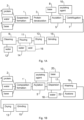
- Fig. 1A shows a first embodiment of the method according to the first aspect of the technology proposed herein.
- the plant protein is provided as a 2-10wt. % suspension.
- the suspension is formed in a first step 1 by mixing plant protein 2 and water 4.
- Base for example NaOH, is added to obtain a pH of about 11.
- this embodiment shows the step of forming the suspension 1 from dry aggregated plant protein from an industrial product stream, alternatively the aggregated plant protein in the product stream could already be in the form of a suspension, or a non-aggregated plant protein could be mixed with water to form a suspension where after the suspension was heated, and optionally treated with acid or base, to cause aggregation of the protein.
- the pH of the suspension is preferably adjusted to about 11 using addition of base before acylation.
- the protein may advantageously be heat denatured at a minimum of 90 °C for at least 30 minutes.
- the suspension is preferably cooled to room temperature, alternatively to 50° C.
- the pH may further be increased to 12 by the addition of base 8 in the first stage of the acylation 5.
- an acylating agent 10 is added to the suspension.
- the acylating agent, in this case ED is preferably added gradually during a time interval, such as 1-45 minutes, for example 30 minutes, until 25 wt. % acylating agent, related to the amount of plant protein in the suspension, is reached.
- Acylation is then allowed to carry on for 1 to 3 hours, such as 1.5 hours, while further base 8 is added as needed to keep the pH at at least 11, preferably at 12.
- the acylated protein Due to the aggregation of the plant protein, the acylated protein is insoluble and advantageously separated from the suspending water by centrifugation 7 at, for example, 2500 RPM or about 1100 RCF.
- the thus obtained plant protein based absorbent material is then advantageously cleaned by removal of the supernatant and adding clean water 12.
- the water 12 should preferably have a pH of about 11 through the addition of a base.
- the suspension is once more centrifuged to separate the plant protein based absorbent material from the cleaning water.
- the plant protein based absorbent material is then, after removing the cleaning water and resuspending the material in further water 14, poured on a flat surface or in a mould.
- Acid 16 may optionally be added before pouring to neutralize the pH to about 7.
- the poured plant protein based absorbent material is allowed to dry, for example at room temperature or higher, such as for example at 30 °C, 35 °C up to about 50 °C or even 55°C.
- the drying time obviously varies with the amount of plant protein based absorbent material that is to be dried and its water content, but may generally be in the range of 2-24 h such as 5 hours.
- the dry plant protein based absorbent material is then advantageously ground 15 into granulate or powder.
- Fig. 1B shows a second embodiment of the method according to the first aspect of the technology proposed herein.
- the plant protein is provided as a 40 wt. % suspension forming a mixture or dough.
- the mixture is formed in a first step 1' by mixing plant protein 2 and water 4 into a dough.
- Base for example 1M NaOH, is added to obtain a pH of about 11.
- the second embodiment shown in Fig. 1B does not utilize a step of heat denaturing the plant protein, such a step may nevertheless be included in this second embodiment. If the plant protein 2 is not already insoluble in the suspending liquid, for example by being sufficiently aggregated, it may be heated, and optionally treated with acid or base, to cause it to aggregate.
- a modified acylating step 5' ensues in which the mixture is placed in a reaction vessel connected to a dean-stark apparatus for condensing any solvent, in this case condensing water released from the water that was mixed with the plant protein initially and water from the ester formation of the condensation reaction.
- An acylating agent 10 is added to the suspension.
- the acylating agent, in this case ED is added until reaching a mass ratio of 0.5:1 (protein:acylating agent).
- the reactor vessel is heated at a rate of about 1 °C/min from ca. 70° C to 100° C while stirring (ca. 30 min) to evaporate water from the mixture. Thereafter the temperature is raised at 10 °C/min to the acylation temperature and kept constant for 1 to 3 hours, such as 1.5 hours.
- the mixture now having the consistency of a paste, was dispersed 17 in water 18 while the pH of the dispersion was raised to neutral by the addition of base 20, such as NaOH.
- the dispersed absorbent material was filtered and washed 19 using acetone 22.
- acetone ethanol or water at pH 11 can be used for the washing step 19.
- the plant protein based absorbent material is allowed to dry, for example at about 50 °C. The drying time obviously varies with the amount of plant protein based absorbent material that is to be dried and its water content, but may generally be in the range of 2-24 h such as 5 hours.
- the dry plant protein based absorbent material is then advantageously ground 15 into granulate or powder.
- Figs 1A and 1B show embodiments of the method using PPC as the plant protein
- other plant proteins can be used in the method.
- wheat gluten WG
- the method is carried out generally as shown in Fig. 1A , however the suspension obtained in the suspension formation step 1 should preferably have a content of wheat gluten protein of at least 5 wt. %, preferably at least 10 wt. %.
- the pH of the of the acylated wheat gluten protein may be adjusted to 2-3 with HCl (1M) to flocculate the protein before the centrifugation 7.
- the cleaning 9 is carried out using water at pH 2-3.
- the pH of the suspension is adjusted (if necessary) to neutral or alkaline (ca. 11) with base instead of acid 16, and the suspension is poured on a flat surface and dried as described above.
- genipin may be added before or after the acylation step 5.
- Example 1 Acylation of potato protein concentrate from concentrated water suspension
- Potato protein concentrate is an inexpensive by-product from the agricultural industry of starch extraction. Due to the content of non-protein compounds, such as glycoalkaloids, from the industrial process, the protein is not used in food applications. The protein is in particular aggregated due to the industrial treatment.
- the purpose of this example is to investigate the possibility of a fully PPC based absorbent material that displays high swelling properties in water, blood and saline solutions.
- PPC Commercial potato protein concentrate
- acylating agents ethylenediaminetetraacetic dianhydride 98% (ED), ethylenediaminetetraacetic acid ⁇ 99% (E), succinic anhydride ⁇ 99% (S), 1,2,3,4-butanetetracarboxylic acid (B) 99%, and citric acid ⁇ 99.5% (C), were all purchased from Sigma-Aldrich.
- the PPC powder was mixed in a beaker with MilliQ quality water (MQw) until a homogenous protein-rich dough or suspension was formed with a ca. 40 wt. % PPC concentration. Thereafter, 1M NaOH solution was added dropwise to the dough until reaching a pH of 11, i.e. for unfolding the PPC. The content from the beaker was then transferred to a reaction chamber, connected to a dean-stark apparatus, as well as a mixer. The reactor was placed in an oil bath preheated to 70 °C.
- MQw MilliQ quality water
- the PPC was acylated using the five different acylating agents, S, B, ED, C, E, which were added through an opening of the reactor.
- the mass ratio for each acetylation agent was kept constant and 0.5:1 ratio for Protein: acetylation agent.
- the reactor was covered with an aluminium foil to prevent condensation on the interior above the oil bath.
- the temperature of the reactor was set to increase at a rate of ca. 1 °C/min from ca. 70 °C to 100 °C to evaporate the residual water contained in the dough.
- the temperature was increased at 10 °C/min from 100 °C to the selected targeted temperatures of 120, 140 and 160 °C.
- the duration of the reactions was 1.5 h.
- the approximate time for the evaporation of most of the contained water in the dough was ca. 45 min, out of the 1.5 h reaction time (indicated by absence of condensation in the condensation unit).
- the reactor was then opened and the warm paste was transferred to a beaker containing 200ml ⁇ 1ml MQw.
- the suspension was thoroughly mixed for removal of the unreacted sodium salts of the acylating agent, followed by a neutralization step.
- the pH of all the suspensions before neutralization was ca. 2-3.
- the suspensions were filtered using a filter paper N3 and finally rinsed with acetone (also ethanol and water can be used for rinsing). Due to the increased solubility in some of the treated PPC samples, some suspensions were centrifuged at 1.200 rpm (260 RCF) at the reaction pH (ca. 2-3) before the neutralization and filtration process. These samples are marked with an * in table 2 below. After the centrifugation, the supernatant was replaced by fresh water, and the mixture was re-dispersed and neutralized. All the clean and neutralized PPC samples were dried overnight at 50 °C. An identically treated PPC sample was produced as reference, i.e. without the addition of any acylating agent (named PPC11).
- Table 2 summarizes the material protocols tested. Table 2: materials protocols NAME ACYLATING AGENT TEMPERATURE (°C) PPC11 None 120 PPC/S/120 Succininc anhydride 120 PPC/S/140 140 PPC/S/160* 160 PPC/B/120 Butanetetracarboxylic acid 120 PPC/B/140* 140 PPC/ED/120 Ethylenediaminetetraacetic Dianhydride 120 PPC/C/120 Citric acid 120 PPC/C/140 140 PPC/E/120 Ethylenediaminetetraacetic acid 120
- the free swelling capacity (FSC) of the samples was determined using the "tea-bag” test, according to the standardized procedure of NWSP 240.0.R2.
- the protein solubility was evaluated by means of size-exclusion high-performance liquid chromatography (SE-HPLC) in Waters HPLC equipment, using a BIOSEP SEC-4000 Phenomenex column using a mobile phase of 50:50 water:acetonitrile with 0.1% trifloroacetic acid flowing at 0.2 ml/min. Briefly, 0.5 wt. % sodium dodecyl sulfate (SDS) 0.05M NaH 2 PO 4 (pH 6.9) was used as extraction solvent in combination with multiple ultra-sonication steps. The first extraction (Ext. 1) was obtained from the supernatant (SN) of a centrifuged dispersion of 16 mg of the ground material in an SDS-phosphate solution.
- SDS sodium dodecyl sulfate
- Example 2 the centrifuged pellet from Ext. 1 was re-suspended in a new SDS-phosphate solution followed by a 30 s ultra-sonication.
- the third extraction (Ext. 3) of the centrifuged pellet from Ext.2 was performed with fresh SDS-phosphate solution and repeated ultra-sonication (30 + 60 + 60 s). Three replicates were used.
- the amount of extracted protein was normalized with that of the raw PPC (total extraction from the three extraction steps).
- the area of the 210nm absorption chromatogram was arbitrarily divided into polymeric proteins (PP) and monomeric proteins (MP) at 15 minutes of elution.
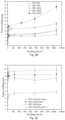
- Fig. 2 shows the water swelling results obtained for the five acylating agents used at the reaction temperature of 120 °C. It was observed that a rapid swelling in water occurred within the first 60 s of FSC, being the highest for PPC/S/120 and lowest for PPC, with 6 g/g and 2 g/g, respectively (see Fig 2A ). At longer times, PPC/S/120 still showed the highest FSC reaching a water swelling of ca. 14 g/g (equivalent to ca. 1500 % weight increase) after 24 h. S was followed by B, ED, C and E in terms of the swelling uptake. The swelling of the high pH-treated PPC (PPC11) doubled the as received PPC. The pH treatment aids protein unfolding and disaggregation as well as giving some osmotic contribution to the material swelling. This fact is an indication of the important role that the protein structure plays when it comes to chemical modification of the protein towards water absorbent properties.
- the acylation with succinic anhydride (S) showed an increase in the water swelling by ca. 14 % when the reaction temperature was increased to 140 °C (see Fig. 2B ).
- an unexpected material loss was observed for PPC/B/140 (not observed in PPC/B/120) after 30 min of swelling, as seen in Fig. 2B .
- Further SE-HPLC analysis showed that this set of conditions resulted in the sample with the highest monomeric fraction among the investigated conditions, indicating de-polymerization of the originally aggregated industrial potato protein when treated with B under these conditions.
- the FSC in 0.9 wt. % NaCl solution showed that PPC/S/140 reached its maximum swelling already after 10 min of swelling with 4 g/g absorption (in contrast to the 2.5 g/g absorption for PPC, see Fig. 2C ).
- the decrease in swelling capacity of the material in saline solution is due to the osmotic pressure and charge screening effects that are affected when mobile ions are present in the liquid.
- the behaviour and maximum swelling capacity in both water and saline solution of the acylated materials resembles the standard swelling ranges for SAPs.
- a CRC of approximately 2 g/g was obtained for the aforementioned material, double of what is obtained for the reference PPC.
- the CRC value for PPC/S/140 also indicates that at least 50% of the saline solution reported by FSC is held within the bio-based absorbent.
- SE-HPLC results obtained after the 3 step protein extraction procedure show a clear increase in the MP fraction for the samples PPC/B 140, PPC/C/ 140 and PPC/S/160, see table 3 below: Table 3: SE-HPLC results Sample Total PP % Total MP % Ext1 % of total extracted for PPC Ext2 % of total extracted for PPC Ext3 % of total extracted for PPC PPC 45 55 25 20 55 PPC/S/120 63 37 120 120 100 PPC/S/140 53 47 220 150 20 PPC/S/160* 15 85 220 15 0 PPC/B/120 63 37 60 145 130 PPC/B/140* 10 90 245 15 0 PPC/ED/120 67 33 25 30 100 PPC/C/120 65 35 60 125 180 PPC/C/140 20 80 245 15 0 PPC/E/120 66 34 35 50 185
- the increase in the total protein extraction observed by HPLC for all the treated samples could stem from changes in the protein molecular structure, i.e. unfolding, chemical structure changes, molecular weight variations, etc., which affects the light absorption of the samples. This could influence the total extraction as the HPLC technique depends on the light absorption properties of the proteins.
- the total protein extracted in the 2nd and 3rd extraction steps (30 s and 30 + 60+ 60 s, respectively) was higher for those samples that showed less FSC, i.e. PPC/B 120, PPC/ED 120, PPC/E 120, and PPC/C 120.
- the SE-HPLC results further show the different aggregation states between the commercially obtained (aggregated) PPC and the mildly extracted PPC produced through ammonium sulphate salting out performed on potato juice.
- the mildly extracted potato protein (PPCm) (not aggregated and water soluble) had a SDS extraction (Ext. 1), of 75%, SDS + Sonication 30 s (Ext. 2) of 20% and SDS + Sonication 30+60+60s (Ext. 3) of 5%.
- SDS extraction SDS + Sonication 30 s
- SDS + Sonication 30+60+60s Examplet. 3
- commercially obtained PPC has Ext.1 of 25%, Ext. 2 of 20% and Ext. 3 of 55%. This clearly indicates the high amount of energy that has to be put into the system to solubilize the protein fractions of the commercially obtained PPC.
- the monomer fraction is 70% of the total extractable protein content, whereas for the PPC the monomer fraction is 50% of the total extractable protein, which shows that PPC is aggregated in relation to PPCm.
- the purpose of this example was to investigate the possibility of a potato protein based absorbent material obtained using acylation at lower protein concentrations e.g. 2 wt. % "wet acylation".
- a further purpose of this example was to evaluate the effect of adding a crosslinking agent to the material.
- PPC Commercial potato protein concentrate
- PPCm mildly extracted PPC
- Ethylenediaminetetraacetic dianhydride 98% (ED) and Glutaraldehyde (GA, 50% solution) were purchased from Sigma-Aldrich.
- PPC was dispersed in a MQw pH 11 solution until a concentration of 2 wt. % protein was obtained. While adding the protein to the solution, the pH was continuously adjusted to 11 by adding 1M NaOH. Once the protein was homogenously dispersed (ca. 5 min), the dispersion was heated to 90 °C for 30 min to promote denaturation of the protein. Thereafter, the beaker was cooled down to room temperature and the pH adjusted to 12. Incremental amounts of ED were added to the beaker corresponding to 25 wt. % ED based on the protein content. The reaction was continued for 1.5 h with the pH maintained at 12 by adding 1M NaOH. The acylated protein was centrifuged at 4.500 rpm (3400 RCF) for 5 min, washed with fresh MQw at pH 11 and re-dispersed with a vortexer for 15 min.
- crosslinking agent was optionally added: a) 1 wt. % of glutaraldehyde added dropwise (based on the total amount of protein)
- the glutaraldehyde treated suspension was left to cure for ca. 12 h at a temperature above room temperature (25-45 °C). Both dispersions were poured into petri dishes and dried in a forced air oven overnight, 40° C for the glutaraldehyde treated acylated PPC, 55° C if no glutaraldehyde was added. The dried films were ground to obtain particles.
- PPCm The mildly extracted PPC (PPCm), when acylated, did not yield a material for which a FSC curve could be obtained as the material was lost from the test bags. It was found that PPCm was highly soluble in contrast to the PPC which was aggregated with about 40% more strongly bonded ⁇ -sheets compared to PPCm (from FT-IR). Thus the state of the PPC gives it a sufficiently crosslinked network to be stable on immersion after acylation, and there is no need for further crosslinking.
- Fig 3A shows the FSC for saline solution absorption of the acylated PPC with and without crosslinking by glutaraldehyde (GA) as well as a reference PPC sample which is neither acylated nor crosslinked. It was found that crosslinking impairs the FSC in comparison to acylation only, thus indicating that the commercially obtained, aggregated PPC can be used without chemical crosslinking.
- Fig 3B shows the FSC for water for the acylated PPC at different proportions of acylating agent to PPC.
- a higher proportion of acylating agent 25 wt. %) provides a higher FSC.
- Fig 3C shows the FSC for saline solution for the acylated PPC (25 wt. % acylating agent) obtained after different steps of cleaning/washing.
- the cleaning/washing steps remove unreacted sodium salts of the acylating agents. This can be performed at room temperature.
- No Clean refers to no cleaning after the centrifugation
- Cylean refers to resuspension of the absorbent material after centrifugation
- “Dya” refers to cleaning by dialysis (3000 Da molecular weight cut off) after pH adjustment to neutral
- “Dya pH 11” refers to dialysis without pH adjustment.
- a cleaning step is advantageous in increasing the FSC of the absorbent material, however there is less need to adjust the pH as all "Clean”, “Dyal” and “Dya pH 11" yield similar FSC, a neutral pH however being preferred for daily-care application as products which may come into contact with skin should not have high pH.
- SE-HPLC was performed in order to determine if the water acylation protocol was severely damaging the PPC protein. The results are shown in table 4 below: Table 4: SE-HPLC results Sample Total PP % Total MP % Ext1 Ext2 Ext3 % of total extracted for PPCm % of total extracted for PPCm PPCm 27 73 73 23 4 PPCm/pH12 38 62 71 13 2 PPCm/afterT 56 44 84 5 1 Funct/PPCm 48 52 95 2 0 Funct/PPCm/GA 68 32 89 6 1 PPC 53 46 12 9 23 PPC/pH12 51 47 12 9 23 PPC/afterT 44 58 17 6 17 Funct/PPC 30 65 19 4 10 Clean/PPC 53 27 2 4 22 Funct/PPC/GA 48 50 0.5 0.4 1 SN/after cleaning 2 98 39 1 0
- the purpose of this example is to demonstrate the possibility for a wheat gluten protein based absorbent material obtained using acylation at concentrations of 10 wt. % through "wet acylation".
- WGm For comparative purposes and to eliminate the influence of the commercial WG on the reactions, mildly extracted gluten was also used (WGm).
- the extraction of WGm was carried out by wrapping 20-30 g of wheat flour in a piece of fine cloth and thoroughly washing it with running water thus removing the starch.
- the gluten rich fraction was frozen at -80 °C and lyophilized for 72 h.
- the WGm protein content (Dumas method, Thermo Scientific Flash 2000) was 85.5 ⁇ 0.6 %.
- Ethylenediaminetetraacetic dianhydride 98% (ED) and Glutaraldehyde (GA, 50% solution) was purchased from Sigma-Aldrich.
- Genipin 98% (G) was purchased from Zhi Xin Biotech company.
- the acylation of the wheat gluten protein was generally conducted as in example 2, with the main difference that the concentration of the protein was 2 wt. % and 10 wt. % in alternative samples.
- the pH of the suspension was adjusted to 11. Heat denaturing was performed at 90 °C.
- Acylation was performed at pH 12 using the acylating agent ED at a final concentration of 25 wt. % relative to the protein content. Afterwards, the pH was lowered to 3.5 to flocculate the protein and remove unreacted ED-salts.
- the suspension was centrifuged at 2500 rpm and the supernatant discarded, the pellet was resuspended in water and centrifuged, then resuspended and centrifuged once more.
- the pH was adjusted to neutral or pH 11, and the suspension was poured on a glass petri-dish, dried overnight in a forced air oven at 50 °C and ground to particles. Reference samples were similarly treated except for the acylation.
- the 0.9% NaCl swelling see Fig. 4B , showed that 10WG/ED can reach a maximum uptake of 5 g/g within 10 min.
- the CRC (g/g) values were WG:1.52; 2WG/Ref: 1.37; 10WG/Ref: 1.41; 10WG/ED: 2.11.
- the CRC values for the treated WG particles, here 10WG/ED were increased 35% compared to WG, with 2.11 g/g or ca. 250%, thus indicating that 50% of the saline solution is held within the treated-WG network.
- the MQw, and saline absorption capacity of these samples were low compared to the absorption capacity measured for commercial SAP used in diapers.
- the fast absorption and MQw/saline uptake obtained allow the material to be considered within superabsorbent polymer ranges thus having the potential to be used in applications where such SAP polymers are demanded.
- the functionalization process did not change the relative extractable PP (polymeric protein) and PM (monomeric protein) fractions in the 10WG/ED (10wt. %) compared to the as-received WG, being approximately 50/50.
- Table 5 SE-HPLC results (percentages for WG based materials are relative to as received WG and for WGM based materials as produced WGm) Sample Total PP % Total MP % Ext1 % Ext2 % Ext3 % WG 53 47 55 22 23 WG/pH12 56 44 81 11 8 WG/pH12/90°C 60 40 51 10 39 WG/pH12/90°C/ED 65 35 76 19 5 WG/pH12/90°C/ED/Clean 78 22 65 28 7 WGm 55 45 43 27 30 WGm/pH12 57 43 70 15 15 WGm/pH12/90°C 70 30 48 28 24 WGm/pH12/90°C/ED 62 38 79 18 3 WGm/pH12/90°C/ED/Clean 70 30 94 5 1 2WG/Ref 44 56 80 60 30 2WG/ED 78 22 78 32 8 10WG/Ref 56 44 20 30 50 10WG/ED 52 48 42
- Both the modified WGm and WG samples had approximately the same extraction profiles.
- WGm treated under alkali and 90°C conditions gave a higher polymeric protein extraction (PP) than the WG sample, 70% vs 60% respectively.
- the functionalization process increases the amount of extracted polymeric fraction (PP) and that the fractions are extracted mainly in the first extraction, indicating an increase in protein solubility/extractability, which corresponds to the aim behind the ED treatment, i.e. increasing the proteins affinity to water.
Landscapes
- Health & Medical Sciences (AREA)
- Life Sciences & Earth Sciences (AREA)
- Chemical & Material Sciences (AREA)
- Public Health (AREA)
- Veterinary Medicine (AREA)
- Engineering & Computer Science (AREA)
- Epidemiology (AREA)
- Animal Behavior & Ethology (AREA)
- General Health & Medical Sciences (AREA)
- Materials Engineering (AREA)
- Hematology (AREA)
- Botany (AREA)
- Chemical Kinetics & Catalysis (AREA)
- Zoology (AREA)
- Biomedical Technology (AREA)
- Heart & Thoracic Surgery (AREA)
- Vascular Medicine (AREA)
- Peptides Or Proteins (AREA)
- Solid-Sorbent Or Filter-Aiding Compositions (AREA)
Claims (14)
- Verfahren zur Herstellung eines saugfähigen Materials auf Pflanzenproteinbasis, wobei das Verfahren die Schrittei. Bereitstellen einer Mischung oder Suspension, die eine Flüssigkeit und ein Pflanzenprotein umfasst, wobei das Pflanzenprotein in der Flüssigkeit unlöslich ist,ii. Acylierung des Pflanzenproteins durch Hinzufügen eines Acylierungsmittels undiii. Erhalten des saugfähigen Materials auf Pflanzenproteinbasiswobei das Pflanzenprotein ausreichend aggregiert wird, um in der Flüssigkeit unlöslich zu sein.
umfasst, - Verfahren gemäß dem vorhergehenden Anspruch, wobei der Gehalt des Pflanzenproteins in der Mischung oder Suspension 2 Gew.-% bis 10 Gew.-% beträgt oder wobei der Gehalt des Pflanzenproteins in der Mischung oder Suspension 10 Gew.-% bis 40 Gew.-% beträgt.
- Verfahren gemäß einem der vorhergehenden Ansprüche, wobei der Schritt (iii) zum Erhalten des saugfähigen Materials auf Pflanzenproteinbasis das Zentrifugieren einer Reaktionsmischung umfasst, die aus dem Schritt (ii) der Acylierung des Pflanzenproteins erhalten wird.
- Verfahren gemäß einem der vorhergehenden Ansprüche, wobei der Gehalt des Pflanzenproteins in der Mischung oder Suspension 10 Gew.-% bis 40 Gew.-% beträgt und wobei der Schritt (iii) des Erhaltens des saugfähigen Materials auf Pflanzenproteinbasis das Dispergieren des acylierten Pflanzenproteins in einer wässrigen Lösung wie Wasser nach Schritt (ii) und das Trocknenlassen umfasst.
- Verfahren gemäß einem der vorhergehenden Ansprüche, wobei der Schritt (iii) des Erhaltens des saugfähigen Materials auf Pflanzenproteinbasis das Lyophilisieren des Pflanzenproteins nach Schritt (ii) oder das Trocknen des Pflanzenproteins nach Schritt (ii) umfasst, wobei der Schritt (iii) des Erhaltens des saugfähigen Materials auf Pflanzenproteinbasis vorzugsweise das Ofentrocknen, Trommeltrocknen, Sprühtrocknen, Gefriertrocknen, Wirbelschichttrocknen, Mikrowellentrocknen, Mikrowellenvakuumtrocknen, Vakuumofentrocknen, Regaltrocknen oder Flockentrocknen des Pflanzenproteins nach Schritt (ii) umfasst.
- Verfahren gemäß einem der vorhergehenden Ansprüche, wobei das Verfahren ferner die Wärmedenaturierung des Pflanzenproteins bei mindestens 80°C vor Schritt (ii) umfasst.
- Verfahren gemäß einem der vorhergehenden Ansprüche, wobei das Verfahren keinen Schritt des Vernetzens des Pflanzenproteins unter Verwendung eines Vernetzungsmittels einschließt.
- Verfahren gemäß einem der Ansprüche 1 bis 7, wobei das Verfahren ferner den Schritt des Hinzufügens von Genipin zum Pflanzenprotein umfasst.
- Verfahren gemäß einem der vorhergehenden Ansprüche, wobei das Pflanzenprotein Kartoffelprotein umfasst.
- Verfahren gemäß einem der vorhergehenden Ansprüche, wobei das Pflanzenprotein aus einem industriellen Prozessstrom erhalten wird, wobei der industrielle Prozessstrom vorzugsweise aus einem Stärkeextraktionsprozess erhalten wird und wobei der industrielle Prozessstrom direkt nach einem Stärkeextraktionsschritt erhalten wird.
- Saugfähiger Artikel zur Absorption von Körperflüssigkeiten, umfassend ein saugfähiges Element, das ein saugfähiges Material auf Pflanzenproteinbasis, umfassend ein Pflanzenprotein, umfasst, wobei das Pflanzenprotein aggregiert und acyliert ist und wobei das saugfähige Material auf Pflanzenproteinbasis ein Quellungsvermögen (FSC) von mindestens 3 g einer 0,9-gew.-%igen NaCl-Lösung pro Gramm saugfähiges Material bei 10 Sekunden, gemessen durch den "Teebeutel"-Test gemäß dem im Kapitel "1.3. Analysen" der Beschreibung beschriebenen standardisierten Verfahren nach NWSP 240.0.R2, aufweist.
- Saugfähiger Artikel gemäß Anspruch 11, wobei der saugfähige Artikel aus der Gruppe der saugfähigen Einweg-Hygieneprodukte wie Windeln, Inkontinenzeinlagen, Damenbinden, Tampons und Schutzlaken für Betten und der medizinischen Verbände wie Heftpflaster und Kompressen ausgewählt ist und/oder wobei das saugfähige Element zwischen einer ersten flüssigkeitsdurchlässigen Schicht und einer zweiten Schicht angeordnet ist oder in eine flüssigkeitsdurchlässige Hülle eingewickelt ist.
- Saugfähiger Artikel gemäß Anspruch 11 oder 12, wobei das saugfähige Element 5 bis 10 Gewichts-% des saugfähigen Materials auf Pflanzenproteinbasis umfasst und/oder wobei das saugfähige Element eine Mischung des saugfähigen Materials auf Pflanzenproteinbasis und eines superabsorbierenden Polymers auf Basis einer vernetzten Acrylsäure umfasst und/oder wobei das saugfähige Element eine Mischung aus dem saugfähigen Material auf Pflanzenproteinbasis und einem faserförmigen Material umfasst.
- Verwendung eines saugfähigen Materials auf Pflanzenproteinbasis wie in Anspruch 11 definiert als saugfähiges Material in dem saugfähigen Element eines saugfähigen Artikels zur Absorption von Körperflüssigkeiten.
Applications Claiming Priority (1)
| Application Number | Priority Date | Filing Date | Title |
|---|---|---|---|
| PCT/EP2019/065473 WO2020249214A1 (en) | 2019-06-13 | 2019-06-13 | Absorbent article with plant protein based absorbent material |
Publications (2)
| Publication Number | Publication Date |
|---|---|
| EP3982900A1 EP3982900A1 (de) | 2022-04-20 |
| EP3982900B1 true EP3982900B1 (de) | 2025-04-23 |
Family
ID=66912837
Family Applications (1)
| Application Number | Title | Priority Date | Filing Date |
|---|---|---|---|
| EP19731231.7A Active EP3982900B1 (de) | 2019-06-13 | 2019-06-13 | Saugfähiger artikel mit einem saugfähigen material auf pflanzenproteinbasis |
Country Status (6)
| Country | Link |
|---|---|
| US (1) | US12576180B2 (de) |
| EP (1) | EP3982900B1 (de) |
| CN (1) | CN113993492B (de) |
| CO (1) | CO2021017386A2 (de) |
| MX (1) | MX2021015259A (de) |
| WO (1) | WO2020249214A1 (de) |
Families Citing this family (1)
| Publication number | Priority date | Publication date | Assignee | Title |
|---|---|---|---|---|
| WO2024205475A1 (en) * | 2023-03-28 | 2024-10-03 | Antonio CAPEZZA | Protein blend material with zein and a second plant protein, and a method for producing a film or an absorbent foam from the material |
Family Cites Families (27)
| Publication number | Priority date | Publication date | Assignee | Title |
|---|---|---|---|---|
| CO4340610A1 (es) | 1994-12-20 | 1996-07-30 | Kimberly Clark Co | Metodo de aumentar la resistencia de una tela polimerica a la adsorcion de proteina, la tela asi producida y el articulo absorbente que la comprende |
| DE19505709A1 (de) | 1995-02-20 | 1996-08-22 | Stockhausen Chem Fab Gmbh | Schichtförmig aufgebauter Körper zur Absorption von Flüssigkeiten sowie seine Herstellung und Verwendung |
| US5801116A (en) | 1995-04-07 | 1998-09-01 | Rhodia Inc. | Process for producing polysaccharides and their use as absorbent materials |
| US5847089A (en) | 1995-06-07 | 1998-12-08 | Wisconsin Alumni Research Foundation | Carboxyl-modified superabsorbent protein hydrogel |
| US5922379A (en) | 1998-05-05 | 1999-07-13 | Natural Polymer International Corporation | Biodegradable protein/starch-based thermoplastic composition |
| FR2779648B1 (fr) * | 1998-06-15 | 2001-07-20 | Oreal | Composition cosmetique ou pharmaceutique se presentant sous forme de solide et pouvant etre deformable |
| US6360129B1 (en) * | 1999-12-13 | 2002-03-19 | Cardiac Pacemakers, Inc. | Mannitol/hydrogel cap for tissue-insertable connections |
| US6310105B1 (en) | 2000-02-15 | 2001-10-30 | Wisconsin Alumni Research Foundation | Carboxyl-modified superabsorbent protein hydrogel |
| US6608237B1 (en) * | 2000-08-03 | 2003-08-19 | Kimberly-Clark Worldwide, Inc. | High-strength, stabilized absorbent article |
| US6610810B2 (en) | 2001-03-13 | 2003-08-26 | Glyn Owen Phillips | Biopolymers obtained by solid state irradiation in an unsaturated gaseous atmosphere |
| US6821331B2 (en) * | 2003-04-09 | 2004-11-23 | Wisconsin Alumni Research Foundation | Protein-polysaccharide hybrid hydrogels |
| JP2007528918A (ja) * | 2004-03-02 | 2007-10-18 | エグゾテック バイオ ソルーションズ リミテッド | 生体適合性生分解性吸水性ハイブリッド物質 |
| JP2006096942A (ja) | 2004-09-30 | 2006-04-13 | Toshiba Corp | 発泡体及びその製造方法 |
| ATE519467T1 (de) | 2004-12-17 | 2011-08-15 | Procter & Gamble | Unregelmässiger auftrag einer lotion auf die obere lage eines absorbierenden artikels |
| CA2507121A1 (en) | 2005-05-12 | 2006-11-12 | Le Groupe Lysac Inc. | Galactomannan hydrophobic complexes as superabsorbent polymers |
| US8829107B2 (en) | 2006-02-28 | 2014-09-09 | Evonik Degussa Gmbh | Biodegradable superabsorbent polymer composition with good absorption and retention properties |
| AR069570A1 (es) | 2007-12-10 | 2010-02-03 | Cooperatie Avebe U A | Metodo para la preparacion de almidon aglomerado |
| US8329601B2 (en) | 2008-12-18 | 2012-12-11 | Kimberly-Clark Worldwide, Inc. | Biodegradable and renewable film |
| US8466337B2 (en) | 2009-12-22 | 2013-06-18 | Kimberly-Clark Worldwide, Inc. | Biodegradable and breathable film |
| US9504987B2 (en) | 2011-07-18 | 2016-11-29 | New Jersey Institute Of Technology | System and method for superabsorbent material |
| GB2506653B (en) * | 2012-10-05 | 2017-09-27 | Speciality Fibres And Mat Ltd | Absorbent materials |
| BR112017002858B1 (pt) | 2014-08-13 | 2022-01-18 | Akeso Biomedical, Inc | Método não terapêutico para aumentar o crescimento de um animal, uso não terapêutico de um ou mais compostos, um ou mais compostos, animal não humano ou produto animal, alimento para animais adequado para uso e suprimento de água potável para animais adequado para uso |
| KR101694121B1 (ko) | 2014-10-28 | 2017-01-10 | (주)헵틸와이 | 이중 가교구조의 생체친화형 다공성 시트 및 그 제조방법 |
| US10765569B2 (en) * | 2014-11-14 | 2020-09-08 | Attends Healthcare Products, Inc. | Synthetic surfactant-free finish, sheet having synthetic surfactant-free finish, articles having sheet with synthetic surfactant-free finish, and related methods |
| CN106075592A (zh) * | 2015-05-29 | 2016-11-09 | 杭州弘复医疗科技有限公司 | 作为再生性皮肤替代物的多功能皮肤或创面复合敷料 |
| JP6212531B2 (ja) * | 2015-11-30 | 2017-10-11 | 大王製紙株式会社 | 吸収性物品 |
| CN107432956A (zh) | 2017-08-03 | 2017-12-05 | 华东理工大学 | 介孔硅酸钙镁‑京尼平交联小麦蛋白支架、载姜黄素支架及制备方法和应用 |
-
2019
- 2019-06-13 CN CN201980097466.9A patent/CN113993492B/zh active Active
- 2019-06-13 MX MX2021015259A patent/MX2021015259A/es unknown
- 2019-06-13 US US17/618,115 patent/US12576180B2/en active Active
- 2019-06-13 WO PCT/EP2019/065473 patent/WO2020249214A1/en not_active Ceased
- 2019-06-13 EP EP19731231.7A patent/EP3982900B1/de active Active
-
2021
- 2021-12-17 CO CONC2021/0017386A patent/CO2021017386A2/es unknown
Also Published As
| Publication number | Publication date |
|---|---|
| MX2021015259A (es) | 2022-01-24 |
| US20220296768A1 (en) | 2022-09-22 |
| WO2020249214A1 (en) | 2020-12-17 |
| US12576180B2 (en) | 2026-03-17 |
| CN113993492A (zh) | 2022-01-28 |
| CN113993492B (zh) | 2023-07-18 |
| CO2021017386A2 (es) | 2022-05-10 |
| EP3982900A1 (de) | 2022-04-20 |
Similar Documents
| Publication | Publication Date | Title |
|---|---|---|
| EP1981511B1 (de) | Hämostatisches material | |
| JP5947768B2 (ja) | 超吸収性表面処理カルボキシアルキル多糖類及びその製造方法 | |
| CA2308537C (en) | Glass-like polysaccharide useful as absorbent for liquids | |
| US8735571B2 (en) | Composition, preparation, and use of dense chitosan membrane materials | |
| US20120289607A1 (en) | Absorbent composition and methods thereof | |
| Zhang et al. | Mussel-inspired nanocomposite hydrogel based on alginate and antimicrobial peptide for infected wound repair | |
| WO1998057676A1 (en) | Wound covering material containing silk fibroin and silk sericin as the main components and process for producing the same | |
| US20170165394A1 (en) | Medical device and method for the production thereof | |
| CN111870732B (zh) | 一种可诱导组织再生修复的止血颗粒及其制备方法和应用 | |
| CN104144692A (zh) | 致密壳聚糖膜材料的组合物、制备及用途 | |
| CN107007870B (zh) | 一种生物止血材料、制备方法及其应用 | |
| KR102205294B1 (ko) | 나노 셀룰로오스와 카르복시메틸 셀룰로오스에 전분을 가교시켜 제조한 고흡수성 흡수체 및 이의 제조 방법 | |
| MX2011001231A (es) | Producto absorbente que comprende una goma guar modificada cationicamente. | |
| US12576180B2 (en) | Absorbent article with plant protein based absorbent material | |
| CN112891607B (zh) | 一种抗感染、防黏连改性壳聚糖止血敷料及制备方法 | |
| WO2020251467A1 (en) | Method of preparing plant protein based absorbent material and absorbent material thus produced | |
| CN107412843A (zh) | 一种具有抗菌性能的淀粉基微孔止血材料及其制备方法和应用 | |
| JP7690106B2 (ja) | カルボキシメチルセルロース粒子の製造方法、前記方法によって製造されたカルボキシメチルセルロース粒子及びそれを含む吸収性物品 | |
| WO2007056066A2 (en) | Bioabsorbable hemostatic gauze | |
| CN104353106A (zh) | 一种快速止血海绵凝胶的组合物及制备方法 | |
| CN117414459B (zh) | 一种止血凝胶及其制备方法和应用 | |
| Wang et al. | One potent sponge based on plant-protein-polyphenol assemblies for coagulopathic hemostasis | |
| CN106810706A (zh) | 一种止血纤维非织造布及其制备方法 | |
| KR102484774B1 (ko) | 천연 생분해성 고흡수체의 제조방법 및 이의 용도 | |
| KR102639479B1 (ko) | 카르복시메틸 셀룰로오스 입자의 제조방법, 상기 방법에 의해 제조된 카르복시메틸 셀룰로오스 입자 및 이를 포함하는 흡수성 물품 |
Legal Events
| Date | Code | Title | Description |
|---|---|---|---|
| STAA | Information on the status of an ep patent application or granted ep patent |
Free format text: STATUS: UNKNOWN |
|
| STAA | Information on the status of an ep patent application or granted ep patent |
Free format text: STATUS: THE INTERNATIONAL PUBLICATION HAS BEEN MADE |
|
| STAA | Information on the status of an ep patent application or granted ep patent |
Free format text: STATUS: REQUEST FOR EXAMINATION WAS MADE |
|
| 17P | Request for examination filed |
Effective date: 20211130 |
|
| AK | Designated contracting states |
Kind code of ref document: A1 Designated state(s): AL AT BE BG CH CY CZ DE DK EE ES FI FR GB GR HR HU IE IS IT LI LT LU LV MC MK MT NL NO PL PT RO RS SE SI SK SM TR |
|
| PUAI | Public reference made under article 153(3) epc to a published international application that has entered the european phase |
Free format text: ORIGINAL CODE: 0009012 |
|
| DAV | Request for validation of the european patent (deleted) | ||
| DAX | Request for extension of the european patent (deleted) | ||
| STAA | Information on the status of an ep patent application or granted ep patent |
Free format text: STATUS: EXAMINATION IS IN PROGRESS |
|
| 17Q | First examination report despatched |
Effective date: 20230314 |
|
| GRAP | Despatch of communication of intention to grant a patent |
Free format text: ORIGINAL CODE: EPIDOSNIGR1 |
|
| STAA | Information on the status of an ep patent application or granted ep patent |
Free format text: STATUS: GRANT OF PATENT IS INTENDED |
|
| INTG | Intention to grant announced |
Effective date: 20241212 |
|
| GRAS | Grant fee paid |
Free format text: ORIGINAL CODE: EPIDOSNIGR3 |
|
| GRAA | (expected) grant |
Free format text: ORIGINAL CODE: 0009210 |
|
| STAA | Information on the status of an ep patent application or granted ep patent |
Free format text: STATUS: THE PATENT HAS BEEN GRANTED |
|
| AK | Designated contracting states |
Kind code of ref document: B1 Designated state(s): AL AT BE BG CH CY CZ DE DK EE ES FI FR GB GR HR HU IE IS IT LI LT LU LV MC MK MT NL NO PL PT RO RS SE SI SK SM TR |
|
| REG | Reference to a national code |
Ref country code: GB Ref legal event code: FG4D |
|
| RIN1 | Information on inventor provided before grant (corrected) |
Inventor name: OLSSON, RICHARD Inventor name: HEDENQVIST, MIKAEL Inventor name: NEWSON, WILLIAM ROY Inventor name: JOHANSSON, EVA Inventor name: CAPEZZA, ANTONIO Inventor name: ABBAS, SHABIRA Inventor name: LUNDMAN, MALIN |
|
| REG | Reference to a national code |
Ref country code: CH Ref legal event code: EP |
|
| REG | Reference to a national code |
Ref country code: DE Ref legal event code: R096 Ref document number: 602019068983 Country of ref document: DE |
|
| REG | Reference to a national code |
Ref country code: IE Ref legal event code: FG4D |
|
| PGFP | Annual fee paid to national office [announced via postgrant information from national office to epo] |
Ref country code: DE Payment date: 20250626 Year of fee payment: 7 |
|
| PGFP | Annual fee paid to national office [announced via postgrant information from national office to epo] |
Ref country code: GB Payment date: 20250618 Year of fee payment: 7 |
|
| PGFP | Annual fee paid to national office [announced via postgrant information from national office to epo] |
Ref country code: FR Payment date: 20250624 Year of fee payment: 7 |
|
| REG | Reference to a national code |
Ref country code: NL Ref legal event code: MP Effective date: 20250423 |
|
| PG25 | Lapsed in a contracting state [announced via postgrant information from national office to epo] |
Ref country code: NL Free format text: LAPSE BECAUSE OF FAILURE TO SUBMIT A TRANSLATION OF THE DESCRIPTION OR TO PAY THE FEE WITHIN THE PRESCRIBED TIME-LIMIT Effective date: 20250423 |
|
| REG | Reference to a national code |
Ref country code: AT Ref legal event code: MK05 Ref document number: 1787108 Country of ref document: AT Kind code of ref document: T Effective date: 20250423 |
|
| PG25 | Lapsed in a contracting state [announced via postgrant information from national office to epo] |
Ref country code: PT Free format text: LAPSE BECAUSE OF FAILURE TO SUBMIT A TRANSLATION OF THE DESCRIPTION OR TO PAY THE FEE WITHIN THE PRESCRIBED TIME-LIMIT Effective date: 20250825 Ref country code: FI Free format text: LAPSE BECAUSE OF FAILURE TO SUBMIT A TRANSLATION OF THE DESCRIPTION OR TO PAY THE FEE WITHIN THE PRESCRIBED TIME-LIMIT Effective date: 20250423 Ref country code: ES Free format text: LAPSE BECAUSE OF FAILURE TO SUBMIT A TRANSLATION OF THE DESCRIPTION OR TO PAY THE FEE WITHIN THE PRESCRIBED TIME-LIMIT Effective date: 20250423 |
|
| REG | Reference to a national code |
Ref country code: LT Ref legal event code: MG9D |
|
| PG25 | Lapsed in a contracting state [announced via postgrant information from national office to epo] |
Ref country code: GR Free format text: LAPSE BECAUSE OF FAILURE TO SUBMIT A TRANSLATION OF THE DESCRIPTION OR TO PAY THE FEE WITHIN THE PRESCRIBED TIME-LIMIT Effective date: 20250724 Ref country code: NO Free format text: LAPSE BECAUSE OF FAILURE TO SUBMIT A TRANSLATION OF THE DESCRIPTION OR TO PAY THE FEE WITHIN THE PRESCRIBED TIME-LIMIT Effective date: 20250723 |
|
| PG25 | Lapsed in a contracting state [announced via postgrant information from national office to epo] |
Ref country code: PL Free format text: LAPSE BECAUSE OF FAILURE TO SUBMIT A TRANSLATION OF THE DESCRIPTION OR TO PAY THE FEE WITHIN THE PRESCRIBED TIME-LIMIT Effective date: 20250423 |
|
| PG25 | Lapsed in a contracting state [announced via postgrant information from national office to epo] |
Ref country code: BG Free format text: LAPSE BECAUSE OF FAILURE TO SUBMIT A TRANSLATION OF THE DESCRIPTION OR TO PAY THE FEE WITHIN THE PRESCRIBED TIME-LIMIT Effective date: 20250423 |
|
| PG25 | Lapsed in a contracting state [announced via postgrant information from national office to epo] |
Ref country code: HR Free format text: LAPSE BECAUSE OF FAILURE TO SUBMIT A TRANSLATION OF THE DESCRIPTION OR TO PAY THE FEE WITHIN THE PRESCRIBED TIME-LIMIT Effective date: 20250423 |
|
| PG25 | Lapsed in a contracting state [announced via postgrant information from national office to epo] |
Ref country code: AT Free format text: LAPSE BECAUSE OF FAILURE TO SUBMIT A TRANSLATION OF THE DESCRIPTION OR TO PAY THE FEE WITHIN THE PRESCRIBED TIME-LIMIT Effective date: 20250423 |
|
| PG25 | Lapsed in a contracting state [announced via postgrant information from national office to epo] |
Ref country code: RS Free format text: LAPSE BECAUSE OF FAILURE TO SUBMIT A TRANSLATION OF THE DESCRIPTION OR TO PAY THE FEE WITHIN THE PRESCRIBED TIME-LIMIT Effective date: 20250723 |
|
| PG25 | Lapsed in a contracting state [announced via postgrant information from national office to epo] |
Ref country code: IS Free format text: LAPSE BECAUSE OF FAILURE TO SUBMIT A TRANSLATION OF THE DESCRIPTION OR TO PAY THE FEE WITHIN THE PRESCRIBED TIME-LIMIT Effective date: 20250823 |
|
| PG25 | Lapsed in a contracting state [announced via postgrant information from national office to epo] |
Ref country code: LV Free format text: LAPSE BECAUSE OF FAILURE TO SUBMIT A TRANSLATION OF THE DESCRIPTION OR TO PAY THE FEE WITHIN THE PRESCRIBED TIME-LIMIT Effective date: 20250423 |
|
| PG25 | Lapsed in a contracting state [announced via postgrant information from national office to epo] |
Ref country code: DK Free format text: LAPSE BECAUSE OF FAILURE TO SUBMIT A TRANSLATION OF THE DESCRIPTION OR TO PAY THE FEE WITHIN THE PRESCRIBED TIME-LIMIT Effective date: 20250423 Ref country code: SM Free format text: LAPSE BECAUSE OF FAILURE TO SUBMIT A TRANSLATION OF THE DESCRIPTION OR TO PAY THE FEE WITHIN THE PRESCRIBED TIME-LIMIT Effective date: 20250423 |
|
| PG25 | Lapsed in a contracting state [announced via postgrant information from national office to epo] |
Ref country code: CZ Free format text: LAPSE BECAUSE OF FAILURE TO SUBMIT A TRANSLATION OF THE DESCRIPTION OR TO PAY THE FEE WITHIN THE PRESCRIBED TIME-LIMIT Effective date: 20250423 |
|
| PG25 | Lapsed in a contracting state [announced via postgrant information from national office to epo] |
Ref country code: EE Free format text: LAPSE BECAUSE OF FAILURE TO SUBMIT A TRANSLATION OF THE DESCRIPTION OR TO PAY THE FEE WITHIN THE PRESCRIBED TIME-LIMIT Effective date: 20250423 |
|
| REG | Reference to a national code |
Ref country code: DE Ref legal event code: R097 Ref document number: 602019068983 Country of ref document: DE |
|
| PG25 | Lapsed in a contracting state [announced via postgrant information from national office to epo] |
Ref country code: RO Free format text: LAPSE BECAUSE OF FAILURE TO SUBMIT A TRANSLATION OF THE DESCRIPTION OR TO PAY THE FEE WITHIN THE PRESCRIBED TIME-LIMIT Effective date: 20250423 Ref country code: SK Free format text: LAPSE BECAUSE OF FAILURE TO SUBMIT A TRANSLATION OF THE DESCRIPTION OR TO PAY THE FEE WITHIN THE PRESCRIBED TIME-LIMIT Effective date: 20250423 |
|
| REG | Reference to a national code |
Ref country code: CH Ref legal event code: H13 Free format text: ST27 STATUS EVENT CODE: U-0-0-H10-H13 (AS PROVIDED BY THE NATIONAL OFFICE) Effective date: 20260127 |
|
| PG25 | Lapsed in a contracting state [announced via postgrant information from national office to epo] |
Ref country code: IT Free format text: LAPSE BECAUSE OF FAILURE TO SUBMIT A TRANSLATION OF THE DESCRIPTION OR TO PAY THE FEE WITHIN THE PRESCRIBED TIME-LIMIT Effective date: 20250423 |
|
| PG25 | Lapsed in a contracting state [announced via postgrant information from national office to epo] |
Ref country code: MC Free format text: LAPSE BECAUSE OF FAILURE TO SUBMIT A TRANSLATION OF THE DESCRIPTION OR TO PAY THE FEE WITHIN THE PRESCRIBED TIME-LIMIT Effective date: 20250423 |
|
| PG25 | Lapsed in a contracting state [announced via postgrant information from national office to epo] |
Ref country code: LU Free format text: LAPSE BECAUSE OF NON-PAYMENT OF DUE FEES Effective date: 20250613 |
|
| REG | Reference to a national code |
Ref country code: BE Ref legal event code: MM Effective date: 20250630 |
|
| PLBE | No opposition filed within time limit |
Free format text: ORIGINAL CODE: 0009261 |
|
| STAA | Information on the status of an ep patent application or granted ep patent |
Free format text: STATUS: NO OPPOSITION FILED WITHIN TIME LIMIT |
|
| REG | Reference to a national code |
Ref country code: CH Ref legal event code: L10 Free format text: ST27 STATUS EVENT CODE: U-0-0-L10-L00 (AS PROVIDED BY THE NATIONAL OFFICE) Effective date: 20260304 |
|
| 26N | No opposition filed |
Effective date: 20260126 |
|
| PG25 | Lapsed in a contracting state [announced via postgrant information from national office to epo] |
Ref country code: IE Free format text: LAPSE BECAUSE OF NON-PAYMENT OF DUE FEES Effective date: 20250613 |
|
| PG25 | Lapsed in a contracting state [announced via postgrant information from national office to epo] |
Ref country code: BE Free format text: LAPSE BECAUSE OF NON-PAYMENT OF DUE FEES Effective date: 20250630 |
|
| PG25 | Lapsed in a contracting state [announced via postgrant information from national office to epo] |
Ref country code: CH Free format text: LAPSE BECAUSE OF NON-PAYMENT OF DUE FEES Effective date: 20250630 |