EP3982282A1 - Secret division system, secret calculation device, secret division method, and program - Google Patents
Secret division system, secret calculation device, secret division method, and program Download PDFInfo
- Publication number
- EP3982282A1 EP3982282A1 EP19932542.4A EP19932542A EP3982282A1 EP 3982282 A1 EP3982282 A1 EP 3982282A1 EP 19932542 A EP19932542 A EP 19932542A EP 3982282 A1 EP3982282 A1 EP 3982282A1
- Authority
- EP
- European Patent Office
- Prior art keywords
- sub
- secret value
- secret
- less
- integer
- Prior art date
- Legal status (The legal status is an assumption and is not a legal conclusion. Google has not performed a legal analysis and makes no representation as to the accuracy of the status listed.)
- Granted
Links
Images
Classifications
-
- G—PHYSICS
- G06—COMPUTING OR CALCULATING; COUNTING
- G06F—ELECTRIC DIGITAL DATA PROCESSING
- G06F21/00—Security arrangements for protecting computers, components thereof, programs or data against unauthorised activity
- G06F21/70—Protecting specific internal or peripheral components, in which the protection of a component leads to protection of the entire computer
- G06F21/71—Protecting specific internal or peripheral components, in which the protection of a component leads to protection of the entire computer to assure secure computing or processing of information
-
- G—PHYSICS
- G09—EDUCATION; CRYPTOGRAPHY; DISPLAY; ADVERTISING; SEALS
- G09C—CIPHERING OR DECIPHERING APPARATUS FOR CRYPTOGRAPHIC OR OTHER PURPOSES INVOLVING THE NEED FOR SECRECY
- G09C1/00—Apparatus or methods whereby a given sequence of signs, e.g. an intelligible text, is transformed into an unintelligible sequence of signs by transposing the signs or groups of signs or by replacing them by others according to a predetermined system
-
- H—ELECTRICITY
- H04—ELECTRIC COMMUNICATION TECHNIQUE
- H04L—TRANSMISSION OF DIGITAL INFORMATION, e.g. TELEGRAPHIC COMMUNICATION
- H04L9/00—Cryptographic mechanisms or cryptographic arrangements for secret or secure communications; Network security protocols
- H04L9/08—Key distribution or management, e.g. generation, sharing or updating, of cryptographic keys or passwords
- H04L9/0816—Key establishment, i.e. cryptographic processes or cryptographic protocols whereby a shared secret becomes available to two or more parties, for subsequent use
- H04L9/085—Secret sharing or secret splitting, e.g. threshold schemes
-
- G—PHYSICS
- G06—COMPUTING OR CALCULATING; COUNTING
- G06F—ELECTRIC DIGITAL DATA PROCESSING
- G06F7/00—Methods or arrangements for processing data by operating upon the order or content of the data handled
- G06F7/38—Methods or arrangements for performing computations using exclusively denominational number representation, e.g. using binary, ternary, decimal representation
- G06F7/48—Methods or arrangements for performing computations using exclusively denominational number representation, e.g. using binary, ternary, decimal representation using non-contact-making devices, e.g. tube, solid state device; using unspecified devices
- G06F7/52—Multiplying; Dividing
- G06F7/535—Dividing only
-
- H—ELECTRICITY
- H04—ELECTRIC COMMUNICATION TECHNIQUE
- H04L—TRANSMISSION OF DIGITAL INFORMATION, e.g. TELEGRAPHIC COMMUNICATION
- H04L2209/00—Additional information or applications relating to cryptographic mechanisms or cryptographic arrangements for secret or secure communication H04L9/00
- H04L2209/46—Secure multiparty computation, e.g. millionaire problem
Definitions
- This invention relates to an applied encryption technology, and more particularly relates to a technology for efficiently performing division without revealing input and output values.
- Methods of obtaining specific operation results without restoring encrypted numerical values include a method called secure computation (e.g., see NPL 1).
- secure computation e.g., see NPL 1
- an object of this invention is to realize division with a small number of processing stages that does not use multiplication of fixed-point numbers.
- a secure division system including a plurality of secure computation apparatuses and for obtaining a secret value representing a result of dividing N by D using a secret value [N] of N and a secret value [D] of D, where R is an integer not less than 3, L 0 and L 1 are non-negative integers, N is a real number not less than 0 and less than R L1 , D is a natural number, N -L0 , ..., N L1-1 are values of respective digits from an L 0 th digit after the decimal point to an L 1 th digit of an integer part in R notation of N, and j is each integer from L 1 -1 to -L 0 , each secure computation apparatus including an initialization unit configured to set a secret value [P L1] of a partial remainder P L1 to 0, a parallel comparison unit configured to compute secret values [E 1 ], ..., [E R-1 ] of comparison results
- division is realized without using multiplication of fixed-point numbers, thus enabling division to be realized with a small number of processing stages.
- a value obtained by securing a given value a through encryption, secret sharing or the like will be called a secret value of a, and will be notated as [a].
- a secret value of a In the case of the value a being secured through secret sharing, a set of fragments of secret sharing that are held by secure computation apparatuses will be referenced by [a].
- [a,b] square brackets in the definition range of variables represents a closed interval
- (a,b) round brackets) represents an open interval.
- i ⁇ [a,b] represents i taking a value not less than a and not more than b.
- i ⁇ [a,b) represents i taking a value not less than a and less than b.
- Add([a],[b]), Sub([a],[b]) and Mul([a],[b]) may be respectively abbreviated to [a]+[b], [a]-[b] and [a] ⁇ [b].
- a comparison operation computes a secret value [c] of a Boolean value c ⁇ 0,1 ⁇ , with secret values [a] and [b] of the two values a and b as inputs, where a ⁇ b.
- the Boolean value takes 1 when true and 0 when false. Execution of this operation is described as in the following formula. c ⁇ a ⁇ ? b
- a secure division system of an embodiment computes and outputs secret values [Q -L0 ], ..., [Q L1-1 ] of values Q -L0 , ..., Q L1-1 of respective digits from an L 0 th digit after the decimal point to an L 1 th digit of an integer part in R notation of N/D, with a secret value [N] of a dividend N and a secret value [D] of a divisor D as inputs.
- R is an integer not less than 3
- L 0 and L 1 are non-negative integers
- N is a real number not less than 0 and less than R L1
- D is a natural number.
- N -L0] , [N -L0+1] , ..., [N L1-2 ], [N L1-1 ] that are used throughout the embodiment are secret values of N -L0 , N -L0+1 , ..., N L1-2 , N L1-1 representing R decomposition of N such as in the following formula.
- N ⁇ L 0 , N ⁇ L 0 + 1 , ... , N L 1 ⁇ 2 , N L 1 ⁇ 1 s . t . N ⁇ j ⁇ [ ⁇ L 0 , L 1 ) N j R j + r , 0 ⁇ r ⁇ R ⁇ L 0 , N j ⁇ [ 0 , R )
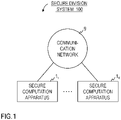
- a secure division system 100 includes, for example, K ( ⁇ 2) secure computation apparatuses 1 1 , ..., 1 K , as shown in Fig. 1 .
- the secure computation apparatuses 1 1 , ..., 1 K are each connected to a communication network 9.
- the communication network 9 is a circuit switching or packet switching communication network configured such that connected apparatuses can communicate with each other, and the Internet, a LAN (Local Area Network), a WAN (Wide Area Network) or other such networks can be used, for example. Note that it is not necessarily required for the apparatuses to be able to communicate online via the communication network 9.
- a configuration may be adopted in which information to be input to the secure computation apparatuses 1 1 , ..., 1 K is stored on a portable recording medium such as magnetic tape or a USB memory, and is input offline to the secure computation apparatuses 1 1 , ..., 1 K from the portable recording medium.
- a portable recording medium such as magnetic tape or a USB memory
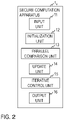
- the secure computation apparatus 1 k includes, for example, an input unit 11, an initialization unit 12, a parallel comparison unit 13, an update unit 14, an iterative control unit 15 and an output unit 16, as shown in Fig. 2 .
- the secure computation apparatus 1 k is a special apparatus constituted by a special program being loaded on a known or dedicated computer having a central processing unit (CPU), a main storage device (RAM: Random Access Memory) and other such constituent elements.
- the secure computation apparatus 1 k executes various processing under the control of the central processing unit, for example.
- Data input to the secure computation apparatus 1 k and data obtained by the various processing is, for example, stored on the main storage device, and the data stored on the main storage device is read out to the central processing unit as needed and utilized in other processing.
- At least some of the processing units of the secure computation apparatus 1 k may be constituted by hardware such as an integrated circuit.
- step S11 the secret value [N] of the dividend N and the secret value [D] of the divisor D are input to the input unit 11 of each secure computation apparatus 1 k .
- Secret values [N -L0 ], ..., [N L1-1 ] of N -L0 , N -L0+1 , ..., N L1-2 , N L1-1 representing R decomposition of the dividend N may be input to the input unit 11, instead of the secret value [N] of the dividend N.
- the input unit 11 In the case where the secret value [N] of the dividend N is input to the input unit 11, the input unit 11 generates the secret values [N -L0 ], ..., [N L1-1 ] of N -L0 , N -L0+1 , ..., N L1-2 , N L1-1 representing R decomposition of the dividend N from the secret value [N] of the dividend N.
- the input unit 11 outputs the secret values [N -L0 ], ..., [N L1-1 ] of N -L0 , N -L0+1 , ..., N L1-2 , N L1-1 representing R decomposition of the dividend N and the secret value [D] of the divisor D to the parallel comparison unit 13.
- the parallel comparison unit 13 computes the secret value [E g ] of the comparison result E g for each integer g not less than 1 and less than R by the following formula.
- the parallel comparison unit 13 outputs the secret values [E 1 ] , ..., [E R-1 ] of the comparison results E 1 , ..., E R-1 to the update unit 14.
- E g D ⁇ g ⁇ ? n for g ⁇ [ 1 , R )
- step S14 the update unit 14 of each secure computation apparatus 1 k computes a secret value [Q j ] of a quotient Q j and a secret value [P j ] of a partial remainder P j , using the secret values [E 1 ], ..., [E R-1 ] of the comparison results E 1 , ..., E R-1 .
- the update unit 14 computes the secret value [Q j ] of the quotient Q j and the secret value [P j ] of the partial remainder P j by the following formula.
- the update unit 14 outputs the secret value [Q j ] of the quotient Q j and the secret value [P j ] of the partial remainder P j to the output unit 16.
- Q j : E 1 + ... + E R ⁇ 1
- P j : n ⁇ D ⁇ Q j
- step S15-1 the iterative control unit 15 of each secure computation unit 1 k determines whether j is not more than -L 0 , that is, the truth of j ⁇ L 0 . If j ⁇ -L 0 is false, that is, if j>-L 0 , the processing is advanced to step S15-2. If j ⁇ -L 0 is true, the processing is advanced to step S16.
- step S16 the output unit 16 of each secure computation apparatus 1 k outputs the secret values [Q -L0 ], ..., [Q L1-1 ] of the quotients Q -L0 , ..., Q L1-1 .
- division can be realized by comparison of L 0 +L 1 stages. Since one division requires a small number of stages, execution time is shortened, particularly when repeatedly executing division in series.
- the computer-readable recording medium may, for example, be a magnetic recording device, an optical disc, a magneto-optical recording medium, a semiconductor memory or other such medium.
- distribution of this program is carried out by a portable recording medium such as DVD, CD-ROM or other such medium on which the program is recorded being sold, transferred, rented and the like.
- a configuration may also be adopted in which this program is distributed by storing the program on a storage device of a server computer, and transferring the program to other computers from the server computer via a network.
- the computer that executes such a program first initially stores the program recorded on the portable recording medium or the program transferred from the server computer on a storage device thereof, for example. At the time of executing processing, this computer reads the program stored on the storage device thereof, and executes processing in accordance with the read program. Also, as other execution modes of this program, a configuration may be adopted in which the computer reads the program directly from the portable recording medium and executes processing in accordance with the read program, and, furthermore, whenever a program is transferred to this computer from the server computer, sequentially executes processing in accordance with the received program.
- a configuration may be adopted in which the abovementioned processing is executed by a so-called ASP (Application Service Provider) service that realizes the processing functions with only an execution instruction and result acquisition from the server computer, without a program being transferred to the computer.
- ASP Application Service Provider
- a computer program in the present embodiment is assumed to include any information that is to be processed by an electronic computer equivalent to a computer program (data, etc. that is not a direct set of instructions given to a computer but has the quality of defining processing by a computer).
- the apparatus is configured by executing a prescribed program on a computer, but at least part of the processing contents thereof may be realized in a hardware manner.
Landscapes
- Engineering & Computer Science (AREA)
- Physics & Mathematics (AREA)
- Theoretical Computer Science (AREA)
- General Physics & Mathematics (AREA)
- Computer Security & Cryptography (AREA)
- Signal Processing (AREA)
- Computer Networks & Wireless Communication (AREA)
- Mathematical Optimization (AREA)
- General Engineering & Computer Science (AREA)
- Pure & Applied Mathematics (AREA)
- Mathematical Analysis (AREA)
- Computational Mathematics (AREA)
- Computer Hardware Design (AREA)
- Computing Systems (AREA)
- Mathematical Physics (AREA)
- Software Systems (AREA)
- Storage Device Security (AREA)
- Machine Translation (AREA)
- Complex Calculations (AREA)
Abstract
Description
- This invention relates to an applied encryption technology, and more particularly relates to a technology for efficiently performing division without revealing input and output values.
- Methods of obtaining specific operation results without restoring encrypted numerical values include a method called secure computation (e.g., see NPL 1). With the method described in
NPL 1, encryption that involves sharing fragments of numerical values between three secure computation apparatuses is performed and the three secure computation apparatuses perform cooperative computation, thereby enabling the results of addition/subtraction, constant addition, multiplication, constant multiplication, logical operations (negation, logical product, logical sum, exclusive OR) and data format conversion (integers, binary numbers) to be held is a shared state, that is, in an encrypted state, between the three secure computation apparatuses, without restoring the numerical values. - In the case of performing division without revealing input and output values, there are methods of realizing Goldschmidt division by secure computation (e.g., see NPL 2).
-
- [NPL 1] Koji CHIDA, Koki HAMADA, Dai IGARASHI & Katsumi TAKAHASHI, "A Three-party Secure Function Evaluation with Lightweight Verifiability Revisited", CSS, 2010.
- [NPL 2] Dan BOGDANOV, Margus NIITSOO, Tomas TOFT & Jan WILLEMSON, "High-performance secure multi-party computation for data mining applications", International Journal of Information Security, Vol. 11, No. 6, pp. 403-418, 2012.
- However, in the case of realizing Goldschmidt division by secure computation, it is necessary to use multiplication of fixed-point numbers. With secure computation, there is a problem in that multiplication of fixed-point numbers involves a large number of processing stages, that is, a high communication frequency.
- With the foregoing technical problem in view, an object of this invention is to realize division with a small number of processing stages that does not use multiplication of fixed-point numbers.
- In order to solve the above problem, a secure division system according to one aspect of this invention is a secure division system including a plurality of secure computation apparatuses and for obtaining a secret value representing a result of dividing N by D using a secret value [N] of N and a secret value [D] of D, where R is an integer not less than 3, L0 and L1 are non-negative integers, N is a real number not less than 0 and less than RL1, D is a natural number, N-L0, ..., NL1-1 are values of respective digits from an L0th digit after the decimal point to an L1th digit of an integer part in R notation of N, and j is each integer from L1-1 to -L0, each secure computation apparatus including an initialization unit configured to set a secret value [PL1] of a partial remainder PL1 to 0, a parallel comparison unit configured to compute secret values [E1], ..., [ER-1] of comparison results E1, ..., ER-1 of comparing a secret value [n] of a partial divisor n=Pj+1R+Nj with [D] ×g for each integer g not less than 1 and less than R in parallel, and an update unit configured to compute a secret value [Qj] of a quotient Qj and a secret value [Pj] of a partial remainder Pj that satisfy n=DQj+Pj using the secret values [E1], ..., [ER-1] of the comparison results E1, ..., ER-1.
- According to this invention, division is realized without using multiplication of fixed-point numbers, thus enabling division to be realized with a small number of processing stages.
-
- [
Fig. 1 ]
Fig. 1 is a diagram illustrating a functional configuration of a secure division system. - [
Fig. 2 ]
Fig. 2 is a diagram illustrating a functional configuration of a secure computation apparatus. - [
Fig. 3 ]
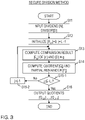
Fig. 3 is a diagram illustrating a processing procedure of a secure division method. - [
Fig. 4 ]
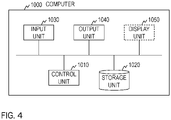
Fig. 4 is a diagram illustrating a functional configuration of a computer. - Firstly, the notation method and a definition of terminology in this specification will be described.
- A value obtained by securing a given value a through encryption, secret sharing or the like will be called a secret value of a, and will be notated as [a]. In the case of the value a being secured through secret sharing, a set of fragments of secret sharing that are held by secure computation apparatuses will be referenced by [a].
- [a,b] (square brackets) in the definition range of variables represents a closed interval, and (a,b) (round brackets) represents an open interval. For example, i∈[a,b] represents i taking a value not less than a and not more than b. Also, i∈[a,b) represents i taking a value not less than a and less than b.
- Addition, subtraction and multiplication operations on a secure sentence compute secret values [c1], [c2] and [c3] of the respective computation results c1, c2 and c3 of a+b, a-b and ab, with secret values [a] and [b] of the two values a and b as inputs. Execution of these operations is respectively described as in the following formulas.

- If there is no risk of misunderstanding, Add([a],[b]), Sub([a],[b]) and Mul([a],[b]) may be respectively abbreviated to [a]+[b], [a]-[b] and [a]×[b].
- A comparison operation computes a secret value [c] of a Boolean value c∈{0,1}, with secret values [a] and [b] of the two values a and b as inputs, where a≤b. The Boolean value takes 1 when true and 0 when false. Execution of this operation is described as in the following formula.

- Hereinafter, embodiments of this invention will be described in detail. Note that, in the drawings, constituent elements having the same function will be given the same numerals, and redundant description thereof will be omitted.
- A secure division system of an embodiment computes and outputs secret values [Q-L0], ..., [QL1-1] of values Q-L0, ..., QL1-1 of respective digits from an L0th digit after the decimal point to an L1th digit of an integer part in R notation of N/D, with a secret value [N] of a dividend N and a secret value [D] of a divisor D as inputs. Here, R is an integer not less than 3, L0 and L1 are non-negative integers, N is a real number not less than 0 and less than RL1, and D is a natural number. Note that [N-L0], [N-L0+1], ..., [NL1-2], [NL1-1] that are used throughout the embodiment are secret values of N-L0, N-L0+1, ..., NL1-2, NL1-1 representing R decomposition of N such as in the following formula.

- An example configuration of the secure division system of the embodiment will be described, with reference to
Fig. 1 . A secure division system 100 includes, for example, K (≥2)secure computation apparatuses 11, ..., 1K, as shown inFig. 1 . In the present embodiment, thesecure computation apparatuses 11, ..., 1K are each connected to a communication network 9. The communication network 9 is a circuit switching or packet switching communication network configured such that connected apparatuses can communicate with each other, and the Internet, a LAN (Local Area Network), a WAN (Wide Area Network) or other such networks can be used, for example. Note that it is not necessarily required for the apparatuses to be able to communicate online via the communication network 9. For example, a configuration may be adopted in which information to be input to thesecure computation apparatuses 11, ..., 1K is stored on a portable recording medium such as magnetic tape or a USB memory, and is input offline to thesecure computation apparatuses 11, ..., 1K from the portable recording medium. - An example configuration of a secure computation apparatus 1k (k=1, ..., K) included in the secure division system 100 of the embodiment will be described, with reference to
Fig. 2 . Thesecure computation apparatus 1k includes, for example, aninput unit 11, aninitialization unit 12, aparallel comparison unit 13, anupdate unit 14, aniterative control unit 15 and anoutput unit 16, as shown inFig. 2 . A secure division method of the present embodiment is realized by this secure computation apparatus 1k (k=1, ..., K) performing the processing of steps described later in cooperation with another secure computation apparatus 1k' (k'=1, ..., K, where k≠k'). - The
secure computation apparatus 1k is a special apparatus constituted by a special program being loaded on a known or dedicated computer having a central processing unit (CPU), a main storage device (RAM: Random Access Memory) and other such constituent elements. Thesecure computation apparatus 1k executes various processing under the control of the central processing unit, for example. Data input to thesecure computation apparatus 1k and data obtained by the various processing is, for example, stored on the main storage device, and the data stored on the main storage device is read out to the central processing unit as needed and utilized in other processing. At least some of the processing units of thesecure computation apparatus 1k may be constituted by hardware such as an integrated circuit. - A processing procedure of the secure division method that is executed by the secure division system 100 of the embodiment will be described, with reference to
Fig. 3 . - In step S11, the secret value [N] of the dividend N and the secret value [D] of the divisor D are input to the
input unit 11 of eachsecure computation apparatus 1k. Secret values [N-L0], ..., [NL1-1] of N-L0, N-L0+1, ..., NL1-2, NL1-1 representing R decomposition of the dividend N may be input to theinput unit 11, instead of the secret value [N] of the dividend N. In the case where the secret value [N] of the dividend N is input to theinput unit 11, theinput unit 11 generates the secret values [N-L0], ..., [NL1-1] of N-L0, N-L0+1, ..., NL1-2, NL1-1 representing R decomposition of the dividend N from the secret value [N] of the dividend N. Theinput unit 11 outputs the secret values [N-L0], ..., [NL1-1] of N-L0, N-L0+1, ..., NL1-2, NL1-1 representing R decomposition of the dividend N and the secret value [D] of the divisor D to theparallel comparison unit 13. - In step S12, the
initialization unit 12 of eachsecure computation apparatus 1k initializes a secret value [PL1] of a partial remainder PL1 to [PL1]=0. Also, an index j of iterative processing is initialized to j= L1-1. Theinitialization unit 12 outputs the secret value [PL1] of the partial remainder PL1 to theparallel comparison unit 13. Also, the index j is output to theiterative control unit 15. - In step S13, the
parallel comparison unit 13 of eachsecure computation apparatus 1k computes a secret value [Eg] (g∈[1,R) ) of a result of comparing a secret value [n] of a partial devisor n where n=Pj+1R+Nj with each [D]×g where g∈[1,R) in parallel. Specifically, theparallel comparison unit 13 computes the secret value [Eg] of the comparison result Eg for each integer g not less than 1 and less than R by the following formula. Theparallel comparison unit 13 outputs the secret values [E1] , ..., [ER-1] of the comparison results E1, ..., ER-1 to theupdate unit 14.
- In step S14, the
update unit 14 of eachsecure computation apparatus 1k computes a secret value [Qj] of a quotient Qj and a secret value [Pj] of a partial remainder Pj, using the secret values [E1], ..., [ER-1] of the comparison results E1, ..., ER-1. Note that Qj and Pj satisfy n=DQj+Pj, Qj∈[0,R) and Pj∈[0,R). Specifically, theupdate unit 14 computes the secret value [Qj] of the quotient Qj and the secret value [Pj] of the partial remainder Pj by the following formula. Theupdate unit 14 outputs the secret value [Qj] of the quotient Qj and the secret value [Pj] of the partial remainder Pj to theoutput unit 16.
- In step S15-1, the
iterative control unit 15 of eachsecure computation unit 1k determines whether j is not more than -L0, that is, the truth of j≤L0. If j≤-L0 is false, that is, if j>-L0, the processing is advanced to step S15-2. If j≤-L0 is true, the processing is advanced to step S16. In step S15-2, theiterative control unit 15 of eachsecure computation apparatus 1k decrements j, that is, computes j=j-1, and returns the processing to step S13. In other words, theiterative control unit 15 performs control for repeatedly executing theparallel comparison unit 13 and theupdate unit 14 for each j where j=L1-1, ..., -L0. - In step S16, the
output unit 16 of eachsecure computation apparatus 1k outputs the secret values [Q-L0], ..., [QL1-1] of the quotients Q-L0, ..., QL1-1. - An algorithm that is executed in the abovementioned embodiment is shown below.

- With the configuration of the abovementioned embodiment, division can be realized by comparison of L0+L1 stages. Since one division requires a small number of stages, execution time is shortened, particularly when repeatedly executing division in series.
- The case where R=2 in the abovementioned embodiment is equivalent to computing division in bit units. Division that is computed in bit units requires a large number of stages of comparison. In the abovementioned embodiment, even though the number of comparisons increases by approximately (R-1)/(log2R) times compared with division that is computed in bit units, the number of stages can be reduced by approximately 1/(log2R) times.
- Although embodiments of this invention have been described above, the specific configuration is not limited to these embodiments, and appropriate design modifications or other such changes that do not depart from the spirit of this invention are intended to be included in the invention. The various types of processing described in the embodiments may be executed not only chronologically in the order of description but in parallel or individually according to the processing capacity of the apparatus that executes the processing or as needed.
- In the case where the various types of processing functions in the apparatuses described in the abovementioned embodiments are executed by a computer, the processing contents of the functions that would be provided in the respective apparatuses will be described with a program. By loading this program on a
storage unit 1020 of the computer shown inFig. 4 and operating acontrol unit 1010, aninput unit 1030, anoutput unit 1040 and other such constituent elements, the various types of processing functions of the abovementioned apparatuses will be realized on the computer. - This program describing the processing contents can be recorded on a computer-readable recording medium. The computer-readable recording medium may, for example, be a magnetic recording device, an optical disc, a magneto-optical recording medium, a semiconductor memory or other such medium.
- Also, distribution of this program is carried out by a portable recording medium such as DVD, CD-ROM or other such medium on which the program is recorded being sold, transferred, rented and the like. Furthermore, a configuration may also be adopted in which this program is distributed by storing the program on a storage device of a server computer, and transferring the program to other computers from the server computer via a network.
- The computer that executes such a program first initially stores the program recorded on the portable recording medium or the program transferred from the server computer on a storage device thereof, for example. At the time of executing processing, this computer reads the program stored on the storage device thereof, and executes processing in accordance with the read program. Also, as other execution modes of this program, a configuration may be adopted in which the computer reads the program directly from the portable recording medium and executes processing in accordance with the read program, and, furthermore, whenever a program is transferred to this computer from the server computer, sequentially executes processing in accordance with the received program. Also, a configuration may be adopted in which the abovementioned processing is executed by a so-called ASP (Application Service Provider) service that realizes the processing functions with only an execution instruction and result acquisition from the server computer, without a program being transferred to the computer. Note that a computer program in the present embodiment is assumed to include any information that is to be processed by an electronic computer equivalent to a computer program (data, etc. that is not a direct set of instructions given to a computer but has the quality of defining processing by a computer).
- Also, in this embodiment, the apparatus is configured by executing a prescribed program on a computer, but at least part of the processing contents thereof may be realized in a hardware manner.
Claims (6)
- A secure division system including a plurality of secure computation apparatuses and for obtaining a secret value representing a result of dividing N by D using a secret value [N] of N and a secret value [D] of D, where R is an integer not less than 3, L0 and L1 are non-negative integers, N is a real number not less than 0 and less than RL1, D is a natural number, N-L0, ..., NL1-1 are values of respective digits from an L0th digit after the decimal point to an L1th digit of an integer part in R notation of N, and j is each integer from L1-1 to -L0, each secure computation apparatus including:an initialization unit configured to set a secret value [PL1] of a partial remainder PL1 to 0;a parallel comparison unit configured to compute secret values [E1], ..., [ER-1] of comparison results E1, ..., ER-1 of comparing a secret value [n] of a partial divisor n=Pj+1R+Nj with [D] ×g for each integer g not less than 1 and less than R in parallel; andan update unit configured to compute a secret value [Qj] of a quotient Qj and a secret value [Pj] of a partial remainder Pj that satisfy n=DQj+Pj using the secret values [E1], ..., [ER-1] of the comparison results E1,..., ER-1.
- The secure division system according to claim 1,
wherein the parallel comparison unit computes a secret value [Eg] of a comparison result Eg for g by the following formula:
- The secure division system according to claim 1 or 2,
wherein the update unit computes the secret value [Qj] of the quotient Qj by the following formula:

- A secure computation apparatus for use in a secure division system that obtains a secret value representing a result of dividing N by D using a secret value [N] of N and a secret value [D] of D, where R is an integer not less than 3, L0 and L1 are non-negative integers, N is a real number not less than 0 and less than RL1, D is a natural number, N-L0, ..., NL1-1 are values of respective digits from an L0thdigit after the decimal point to an L1th digit of an integer part in R notation of N, and j is each integer from L1-1 to -L0, the apparatus comprising:an initialization unit configured to set a secret value [PL1] of a partial remainder PL1 to 0;a parallel comparison unit configured to compute secret values [E1], ..., [ER-1] of comparison results E1, ..., ER-1 of comparing a secret value [n] of a partial divisor n=Pj+1R+Nj with [D] ×g for each integer g not less than 1 and less than R in parallel; andan update unit configured to compute a secret value [Qj] of a quotient Qj and a secret value [Pj] of a partial remainder Pj that satisfy n=DQj+Pj using the secret values [E1], ..., [ER-1] of the comparison results E1, ..., ER-1.
- A secure division method for execution by a secure division system including a plurality of secure computation apparatuses and for obtaining a secret value representing a result of dividing N by D using a secret value [N] of N and a secret value [D] of D, where R is an integer not less than 3, L0 and L1 are non-negative integers, N is a real number not less than 0 and less than RL1, D is a natural number, N-L0, ..., NL1-1 are values of respective digits from an L0th digit after the decimal point to an L1th digit of an integer part in R notation of N, and j is each integer from L1-1 to -L0, the method comprising:setting a secret value [PL1] of a partial remainder PL1 to 0 with an initialization unit of each secure computation apparatus;computing secret values [E1], ..., [ER-1] of comparison results E1, ..., ER-1 of comparing a secret value [n] of a partial divisor n=Pj+1R+Nj with [D]×g for each integer g not less than 1 and less than R in parallel with a parallel comparison unit of each secure computation apparatus; andcomputing a secret value [Qj] of a quotient Qj and a secret value [Pj] of a partial remainder Pj that satisfy n=DQj+Pj using the secret values [E1], ..., [ER-1] of the comparison results E1, ..., ER-1 with an update unit of each secure computation apparatus.
- A program for causing a computer to function as the secure computation apparatus according to claim 4.
Applications Claiming Priority (1)
| Application Number | Priority Date | Filing Date | Title |
|---|---|---|---|
| PCT/JP2019/022895 WO2020250269A1 (en) | 2019-06-10 | 2019-06-10 | Secret division system, secret calculation device, secret division method, and program |
Publications (3)
| Publication Number | Publication Date |
|---|---|
| EP3982282A1 true EP3982282A1 (en) | 2022-04-13 |
| EP3982282A4 EP3982282A4 (en) | 2023-01-18 |
| EP3982282B1 EP3982282B1 (en) | 2024-01-03 |
Family
ID=73781404
Family Applications (1)
| Application Number | Title | Priority Date | Filing Date |
|---|---|---|---|
| EP19932542.4A Active EP3982282B1 (en) | 2019-06-10 | 2019-06-10 | Secret division system, secret calculation device, secret division method, and program |
Country Status (6)
| Country | Link |
|---|---|
| US (1) | US12010220B2 (en) |
| EP (1) | EP3982282B1 (en) |
| JP (1) | JP7173328B2 (en) |
| CN (1) | CN113966511B (en) |
| AU (1) | AU2019450855B2 (en) |
| WO (1) | WO2020250269A1 (en) |
Families Citing this family (2)
| Publication number | Priority date | Publication date | Assignee | Title |
|---|---|---|---|---|
| CN121959643A (en) * | 2022-04-14 | 2026-05-01 | 支付宝(杭州)数字服务技术有限公司 | Multiparty secure division |
| JP2024160649A (en) * | 2023-05-01 | 2024-11-14 | エヌ・ティ・ティ・コミュニケーションズ株式会社 | Analytical device, analytical method, and analytical program |
Family Cites Families (49)
| Publication number | Priority date | Publication date | Assignee | Title |
|---|---|---|---|---|
| US916A (en) * | 1838-09-12 | Henry g | ||
| US32014A (en) * | 1861-04-09 | Charles f | ||
| US72017A (en) * | 1867-12-10 | William b | ||
| US82016A (en) * | 1868-09-08 | Improvement in fire-proof safes | ||
| US12019A (en) * | 1854-12-05 | Steam-boiler | ||
| US32007A (en) * | 1861-04-09 | Iprovement in sewing-machines | ||
| US61998A (en) * | 1867-02-12 | Improvement in skates | ||
| US32020A (en) * | 1861-04-09 | Head for screws and tacks | ||
| US82017A (en) * | 1868-09-08 | Improvement in hammee and mallet | ||
| US62004A (en) * | 1867-02-12 | children | ||
| US62005A (en) * | 1867-02-12 | John s | ||
| US102014A (en) * | 1870-04-19 | Improved boot-jack and brush | ||
| US52018A (en) * | 1866-01-16 | Window-shade | ||
| US809A (en) * | 1838-06-27 | Improved mode of changing the poles of electro-magnets | ||
| US62018A (en) * | 1867-02-12 | Self and abraham emanitel | ||
| US12014A (en) * | 1854-11-28 | Improvement in binding-guides for sewing-machines | ||
| US82011A (en) * | 1868-09-08 | Improvement in fanning-mills | ||
| US5764765A (en) * | 1993-09-09 | 1998-06-09 | British Telecommunications Public Limited Company | Method for key distribution using quantum cryptography |
| WO2001086855A2 (en) * | 2000-04-28 | 2001-11-15 | The Regents Of The University Of California | Apparatus for free-space quantum key distribution in daylight |
| US7581093B2 (en) * | 2003-12-22 | 2009-08-25 | Nortel Networks Limited | Hitless manual cryptographic key refresh in secure packet networks |
| US7437081B2 (en) * | 2004-11-01 | 2008-10-14 | Magiq Technologies, Inc | System and method for providing two-way communication of quantum signals, timing signals, and public data |
| US7826749B2 (en) * | 2005-09-19 | 2010-11-02 | The Chinese University Of Hong Kong | Method and system for quantum key distribution over multi-user WDM network with wavelength routing |
| US7889868B2 (en) * | 2005-09-30 | 2011-02-15 | Verizon Business Global Llc | Quantum key distribution system |
| US7940757B2 (en) * | 2006-02-23 | 2011-05-10 | Cisco Technology, Inc. | Systems and methods for access port ICMP analysis |
| EP2245789B1 (en) * | 2008-01-25 | 2014-08-20 | QinetiQ Limited | Quantum cryptography apparatus |
| US8345861B2 (en) * | 2008-08-22 | 2013-01-01 | Red Hat, Inc. | Sharing a secret using polynomial division over GF(Q) |
| US7995765B2 (en) * | 2008-08-28 | 2011-08-09 | Red Hat, Inc. | Sharing a secret using hyperplanes over GF(q) |
| US20110206204A1 (en) * | 2008-10-17 | 2011-08-25 | Dmitry Ivanovich Sychev | Methods and devices of quantum encoding on dwdm (roadm) network and fiber optic links . |
| GB0819665D0 (en) * | 2008-10-27 | 2008-12-03 | Qinetiq Ltd | Quantum key dsitribution |
| CN101729554B (en) * | 2008-11-27 | 2013-05-29 | 北京大学 | Construction method of division protocol based on cryptology in distributed computation |
| KR101351012B1 (en) * | 2009-12-18 | 2014-01-10 | 한국전자통신연구원 | Method and apparatus for authentication user in multiparty quantum communications |
| DE102010051852A1 (en) * | 2010-11-18 | 2012-05-24 | Giesecke & Devrient Gmbh | Procedure for long-range division |
| JP5531154B2 (en) * | 2011-03-10 | 2014-06-25 | 日本電信電話株式会社 | Secret product-sum combination system, calculation device, secret product-sum combination method, and program thereof |
| US9237098B2 (en) * | 2012-07-03 | 2016-01-12 | Cisco Technologies, Inc. | Media access control (MAC) address summation in Datacenter Ethernet networking |
| JP6030925B2 (en) * | 2012-11-12 | 2016-11-24 | ルネサスエレクトロニクス株式会社 | Semiconductor device and information processing system |
| US10560265B2 (en) * | 2013-06-08 | 2020-02-11 | Quantumctek Co., Ltd. | Mobile secret communications method based on quantum key distribution network |
| KR101776137B1 (en) * | 2014-10-30 | 2017-09-19 | 에스케이 텔레콤주식회사 | Method and Apparatus for Supplying Key to Multiple Devices in Quantum Key Distribution System |
| WO2016129363A1 (en) * | 2015-02-12 | 2016-08-18 | 学校法人東京理科大学 | Calculating device relating to concealment computation system employing distribution of secrets |
| CN105991285B (en) * | 2015-02-16 | 2019-06-11 | 阿里巴巴集团控股有限公司 | Identity authentication method, device and system for quantum key distribution process |
| JP6400513B2 (en) * | 2015-03-18 | 2018-10-03 | 株式会社東芝 | Quantum key distribution device, quantum key distribution method and program |
| CN106301769B (en) * | 2015-06-08 | 2020-04-10 | 阿里巴巴集团控股有限公司 | Quantum key output method, storage consistency verification method, device and system |
| US11588783B2 (en) * | 2015-06-10 | 2023-02-21 | Cisco Technology, Inc. | Techniques for implementing IPV6-based distributed storage space |
| US9960465B2 (en) * | 2015-07-30 | 2018-05-01 | Lg Chem, Ltd. | Battery pack |
| CN205899527U (en) * | 2016-06-16 | 2017-01-18 | 武汉芯泰科技有限公司 | Divider |
| CN109478381B (en) * | 2016-07-06 | 2021-12-14 | 日本电信电话株式会社 | Secret computing system, secret computing device, secret computing method, and program |
| KR101860234B1 (en) * | 2016-12-20 | 2018-05-21 | 엘에스산전 주식회사 | Method for setting link speed of dual port switch |
| US10476794B2 (en) * | 2017-07-30 | 2019-11-12 | Mellanox Technologies Tlv Ltd. | Efficient caching of TCAM rules in RAM |
| US10673883B2 (en) * | 2018-05-14 | 2020-06-02 | Cisco Technology, Inc. | Time synchronization attack detection in a deterministic network |
| US11212294B2 (en) * | 2018-09-12 | 2021-12-28 | Grid7 LLC | Data packet security with expiring time-based hash message authentication codes (HMACs) |
-
2019
- 2019-06-10 WO PCT/JP2019/022895 patent/WO2020250269A1/en not_active Ceased
- 2019-06-10 US US17/615,106 patent/US12010220B2/en active Active
- 2019-06-10 CN CN201980097230.5A patent/CN113966511B/en active Active
- 2019-06-10 EP EP19932542.4A patent/EP3982282B1/en active Active
- 2019-06-10 AU AU2019450855A patent/AU2019450855B2/en active Active
- 2019-06-10 JP JP2021525410A patent/JP7173328B2/en active Active
Also Published As
| Publication number | Publication date |
|---|---|
| CN113966511A (en) | 2022-01-21 |
| AU2019450855B2 (en) | 2023-02-02 |
| WO2020250269A1 (en) | 2020-12-17 |
| JPWO2020250269A1 (en) | 2020-12-17 |
| US20220224516A1 (en) | 2022-07-14 |
| JP7173328B2 (en) | 2022-11-16 |
| US12010220B2 (en) | 2024-06-11 |
| CN113966511B (en) | 2026-04-14 |
| EP3982282B1 (en) | 2024-01-03 |
| AU2019450855A1 (en) | 2021-12-23 |
| EP3982282A4 (en) | 2023-01-18 |
Similar Documents
| Publication | Publication Date | Title |
|---|---|---|
| US11121868B2 (en) | Secure computation system, secure computation device, secure computation method, and program | |
| EP3573039B1 (en) | Secure computing system, secure computing device, secure computing method, and program | |
| KR102491902B1 (en) | Device and method for operation of encrypted data using fully homomorphic encryption | |
| US20190333415A1 (en) | Secure computation system, secure computation device, secure computation method, and program | |
| EP4280574B1 (en) | Secure right shift computation system, secure division system, methods therefor, secure computation apparatus, and program | |
| JP7067632B2 (en) | Secret sigmoid function calculation system, secret logistic regression calculation system, secret sigmoid function calculation device, secret logistic regression calculation device, secret sigmoid function calculation method, secret logistic regression calculation method, program | |
| EP3982282B1 (en) | Secret division system, secret calculation device, secret division method, and program | |
| EP3483867A1 (en) | Secret computation system, secret computation device, secret computation method, and program | |
| EP4092655A1 (en) | Secret maximum value calculation device, method, and program | |
| US20230401033A1 (en) | Secret msb normalization system, distributed processing apparatus, secret msb normalization method, program | |
| EP3806071B1 (en) | Secret collective approximation system, secret calculation device, secret collective approximation method, and program | |
| US11081024B2 (en) | Secure computation system, secure computation device, secure computation method, and program | |
| Ahn et al. | Cheap and fast iterative matrix inverse in encrypted domain | |
| JP7205623B2 (en) | Secret conjugate gradient method calculation system, secret calculation device, conjugate gradient method calculation device, secret conjugate gradient method calculation method, conjugate gradient method calculation method, and program | |
| KR20230026774A (en) | Disease diagnosis device and method using bitwise fully homomorphic encryption in encrypted domain | |
| EP4213135B1 (en) | Secure exponent unification system, secure exponent unification apparatus, secure exponent unification method, secure sum computing system, secure sum-of-product computing system, and program | |
| US20230044126A1 (en) | Secure square root computation system, secure normalization system, methods therefor, secure computation apparatus, and program |
Legal Events
| Date | Code | Title | Description |
|---|---|---|---|
| STAA | Information on the status of an ep patent application or granted ep patent |
Free format text: STATUS: THE INTERNATIONAL PUBLICATION HAS BEEN MADE |
|
| PUAI | Public reference made under article 153(3) epc to a published international application that has entered the european phase |
Free format text: ORIGINAL CODE: 0009012 |
|
| STAA | Information on the status of an ep patent application or granted ep patent |
Free format text: STATUS: REQUEST FOR EXAMINATION WAS MADE |
|
| 17P | Request for examination filed |
Effective date: 20220110 |
|
| AK | Designated contracting states |
Kind code of ref document: A1 Designated state(s): AL AT BE BG CH CY CZ DE DK EE ES FI FR GB GR HR HU IE IS IT LI LT LU LV MC MK MT NL NO PL PT RO RS SE SI SK SM TR |
|
| DAV | Request for validation of the european patent (deleted) | ||
| DAX | Request for extension of the european patent (deleted) | ||
| REG | Reference to a national code |
Ref country code: DE Ref legal event code: R079 Free format text: PREVIOUS MAIN CLASS: G06F0021710000 Ipc: G06F0007535000 Ref country code: DE Ref legal event code: R079 Ref document number: 602019044713 Country of ref document: DE Free format text: PREVIOUS MAIN CLASS: G06F0021710000 Ipc: G06F0007535000 |
|
| A4 | Supplementary search report drawn up and despatched |
Effective date: 20221219 |
|
| RIC1 | Information provided on ipc code assigned before grant |
Ipc: G09C 1/00 20060101ALI20221213BHEP Ipc: G06F 21/71 20130101ALI20221213BHEP Ipc: H04L 9/08 20060101ALI20221213BHEP Ipc: G06F 7/535 20060101AFI20221213BHEP |
|
| GRAP | Despatch of communication of intention to grant a patent |
Free format text: ORIGINAL CODE: EPIDOSNIGR1 |
|
| STAA | Information on the status of an ep patent application or granted ep patent |
Free format text: STATUS: GRANT OF PATENT IS INTENDED |
|
| INTG | Intention to grant announced |
Effective date: 20230817 |
|
| GRAS | Grant fee paid |
Free format text: ORIGINAL CODE: EPIDOSNIGR3 |
|
| GRAA | (expected) grant |
Free format text: ORIGINAL CODE: 0009210 |
|
| STAA | Information on the status of an ep patent application or granted ep patent |
Free format text: STATUS: THE PATENT HAS BEEN GRANTED |
|
| AK | Designated contracting states |
Kind code of ref document: B1 Designated state(s): AL AT BE BG CH CY CZ DE DK EE ES FI FR GB GR HR HU IE IS IT LI LT LU LV MC MK MT NL NO PL PT RO RS SE SI SK SM TR |
|
| REG | Reference to a national code |
Ref country code: GB Ref legal event code: FG4D |
|
| REG | Reference to a national code |
Ref country code: DE Ref legal event code: R096 Ref document number: 602019044713 Country of ref document: DE |
|
| REG | Reference to a national code |
Ref country code: CH Ref legal event code: EP |
|
| REG | Reference to a national code |
Ref country code: IE Ref legal event code: FG4D |
|
| REG | Reference to a national code |
Ref country code: LT Ref legal event code: MG9D |
|
| PG25 | Lapsed in a contracting state [announced via postgrant information from national office to epo] |
Ref country code: ES Free format text: LAPSE BECAUSE OF FAILURE TO SUBMIT A TRANSLATION OF THE DESCRIPTION OR TO PAY THE FEE WITHIN THE PRESCRIBED TIME-LIMIT Effective date: 20240103 |
|
| PG25 | Lapsed in a contracting state [announced via postgrant information from national office to epo] |
Ref country code: ES Free format text: LAPSE BECAUSE OF FAILURE TO SUBMIT A TRANSLATION OF THE DESCRIPTION OR TO PAY THE FEE WITHIN THE PRESCRIBED TIME-LIMIT Effective date: 20240103 |
|
| REG | Reference to a national code |
Ref country code: NL Ref legal event code: MP Effective date: 20240103 |
|
| REG | Reference to a national code |
Ref country code: AT Ref legal event code: MK05 Ref document number: 1647487 Country of ref document: AT Kind code of ref document: T Effective date: 20240103 |
|
| PG25 | Lapsed in a contracting state [announced via postgrant information from national office to epo] |
Ref country code: NL Free format text: LAPSE BECAUSE OF FAILURE TO SUBMIT A TRANSLATION OF THE DESCRIPTION OR TO PAY THE FEE WITHIN THE PRESCRIBED TIME-LIMIT Effective date: 20240103 |
|
| PG25 | Lapsed in a contracting state [announced via postgrant information from national office to epo] |
Ref country code: NL Free format text: LAPSE BECAUSE OF FAILURE TO SUBMIT A TRANSLATION OF THE DESCRIPTION OR TO PAY THE FEE WITHIN THE PRESCRIBED TIME-LIMIT Effective date: 20240103 |
|
| PG25 | Lapsed in a contracting state [announced via postgrant information from national office to epo] |
Ref country code: IS Free format text: LAPSE BECAUSE OF FAILURE TO SUBMIT A TRANSLATION OF THE DESCRIPTION OR TO PAY THE FEE WITHIN THE PRESCRIBED TIME-LIMIT Effective date: 20240503 |
|
| PG25 | Lapsed in a contracting state [announced via postgrant information from national office to epo] |
Ref country code: LT Free format text: LAPSE BECAUSE OF FAILURE TO SUBMIT A TRANSLATION OF THE DESCRIPTION OR TO PAY THE FEE WITHIN THE PRESCRIBED TIME-LIMIT Effective date: 20240103 |
|
| PG25 | Lapsed in a contracting state [announced via postgrant information from national office to epo] |
Ref country code: GR Free format text: LAPSE BECAUSE OF FAILURE TO SUBMIT A TRANSLATION OF THE DESCRIPTION OR TO PAY THE FEE WITHIN THE PRESCRIBED TIME-LIMIT Effective date: 20240404 |
|
| PG25 | Lapsed in a contracting state [announced via postgrant information from national office to epo] |
Ref country code: RS Free format text: LAPSE BECAUSE OF FAILURE TO SUBMIT A TRANSLATION OF THE DESCRIPTION OR TO PAY THE FEE WITHIN THE PRESCRIBED TIME-LIMIT Effective date: 20240403 Ref country code: HR Free format text: LAPSE BECAUSE OF FAILURE TO SUBMIT A TRANSLATION OF THE DESCRIPTION OR TO PAY THE FEE WITHIN THE PRESCRIBED TIME-LIMIT Effective date: 20240103 |
|
| PG25 | Lapsed in a contracting state [announced via postgrant information from national office to epo] |
Ref country code: CZ Free format text: LAPSE BECAUSE OF FAILURE TO SUBMIT A TRANSLATION OF THE DESCRIPTION OR TO PAY THE FEE WITHIN THE PRESCRIBED TIME-LIMIT Effective date: 20240103 Ref country code: AT Free format text: LAPSE BECAUSE OF FAILURE TO SUBMIT A TRANSLATION OF THE DESCRIPTION OR TO PAY THE FEE WITHIN THE PRESCRIBED TIME-LIMIT Effective date: 20240103 |
|
| PG25 | Lapsed in a contracting state [announced via postgrant information from national office to epo] |
Ref country code: RS Free format text: LAPSE BECAUSE OF FAILURE TO SUBMIT A TRANSLATION OF THE DESCRIPTION OR TO PAY THE FEE WITHIN THE PRESCRIBED TIME-LIMIT Effective date: 20240403 Ref country code: NO Free format text: LAPSE BECAUSE OF FAILURE TO SUBMIT A TRANSLATION OF THE DESCRIPTION OR TO PAY THE FEE WITHIN THE PRESCRIBED TIME-LIMIT Effective date: 20240403 Ref country code: LT Free format text: LAPSE BECAUSE OF FAILURE TO SUBMIT A TRANSLATION OF THE DESCRIPTION OR TO PAY THE FEE WITHIN THE PRESCRIBED TIME-LIMIT Effective date: 20240103 Ref country code: IS Free format text: LAPSE BECAUSE OF FAILURE TO SUBMIT A TRANSLATION OF THE DESCRIPTION OR TO PAY THE FEE WITHIN THE PRESCRIBED TIME-LIMIT Effective date: 20240503 Ref country code: HR Free format text: LAPSE BECAUSE OF FAILURE TO SUBMIT A TRANSLATION OF THE DESCRIPTION OR TO PAY THE FEE WITHIN THE PRESCRIBED TIME-LIMIT Effective date: 20240103 Ref country code: GR Free format text: LAPSE BECAUSE OF FAILURE TO SUBMIT A TRANSLATION OF THE DESCRIPTION OR TO PAY THE FEE WITHIN THE PRESCRIBED TIME-LIMIT Effective date: 20240404 Ref country code: CZ Free format text: LAPSE BECAUSE OF FAILURE TO SUBMIT A TRANSLATION OF THE DESCRIPTION OR TO PAY THE FEE WITHIN THE PRESCRIBED TIME-LIMIT Effective date: 20240103 Ref country code: BG Free format text: LAPSE BECAUSE OF FAILURE TO SUBMIT A TRANSLATION OF THE DESCRIPTION OR TO PAY THE FEE WITHIN THE PRESCRIBED TIME-LIMIT Effective date: 20240103 Ref country code: AT Free format text: LAPSE BECAUSE OF FAILURE TO SUBMIT A TRANSLATION OF THE DESCRIPTION OR TO PAY THE FEE WITHIN THE PRESCRIBED TIME-LIMIT Effective date: 20240103 |
|
| PG25 | Lapsed in a contracting state [announced via postgrant information from national office to epo] |
Ref country code: PT Free format text: LAPSE BECAUSE OF FAILURE TO SUBMIT A TRANSLATION OF THE DESCRIPTION OR TO PAY THE FEE WITHIN THE PRESCRIBED TIME-LIMIT Effective date: 20240503 Ref country code: PL Free format text: LAPSE BECAUSE OF FAILURE TO SUBMIT A TRANSLATION OF THE DESCRIPTION OR TO PAY THE FEE WITHIN THE PRESCRIBED TIME-LIMIT Effective date: 20240103 |
|
| PG25 | Lapsed in a contracting state [announced via postgrant information from national office to epo] |
Ref country code: SE Free format text: LAPSE BECAUSE OF FAILURE TO SUBMIT A TRANSLATION OF THE DESCRIPTION OR TO PAY THE FEE WITHIN THE PRESCRIBED TIME-LIMIT Effective date: 20240103 Ref country code: PT Free format text: LAPSE BECAUSE OF FAILURE TO SUBMIT A TRANSLATION OF THE DESCRIPTION OR TO PAY THE FEE WITHIN THE PRESCRIBED TIME-LIMIT Effective date: 20240503 Ref country code: PL Free format text: LAPSE BECAUSE OF FAILURE TO SUBMIT A TRANSLATION OF THE DESCRIPTION OR TO PAY THE FEE WITHIN THE PRESCRIBED TIME-LIMIT Effective date: 20240103 Ref country code: LV Free format text: LAPSE BECAUSE OF FAILURE TO SUBMIT A TRANSLATION OF THE DESCRIPTION OR TO PAY THE FEE WITHIN THE PRESCRIBED TIME-LIMIT Effective date: 20240103 |
|
| REG | Reference to a national code |
Ref country code: DE Ref legal event code: R097 Ref document number: 602019044713 Country of ref document: DE |
|
| PG25 | Lapsed in a contracting state [announced via postgrant information from national office to epo] |
Ref country code: DK Free format text: LAPSE BECAUSE OF FAILURE TO SUBMIT A TRANSLATION OF THE DESCRIPTION OR TO PAY THE FEE WITHIN THE PRESCRIBED TIME-LIMIT Effective date: 20240103 |
|
| PG25 | Lapsed in a contracting state [announced via postgrant information from national office to epo] |
Ref country code: SM Free format text: LAPSE BECAUSE OF FAILURE TO SUBMIT A TRANSLATION OF THE DESCRIPTION OR TO PAY THE FEE WITHIN THE PRESCRIBED TIME-LIMIT Effective date: 20240103 |
|
| PG25 | Lapsed in a contracting state [announced via postgrant information from national office to epo] |
Ref country code: EE Free format text: LAPSE BECAUSE OF FAILURE TO SUBMIT A TRANSLATION OF THE DESCRIPTION OR TO PAY THE FEE WITHIN THE PRESCRIBED TIME-LIMIT Effective date: 20240103 |
|
| PG25 | Lapsed in a contracting state [announced via postgrant information from national office to epo] |
Ref country code: SK Free format text: LAPSE BECAUSE OF FAILURE TO SUBMIT A TRANSLATION OF THE DESCRIPTION OR TO PAY THE FEE WITHIN THE PRESCRIBED TIME-LIMIT Effective date: 20240103 |
|
| PG25 | Lapsed in a contracting state [announced via postgrant information from national office to epo] |
Ref country code: SM Free format text: LAPSE BECAUSE OF FAILURE TO SUBMIT A TRANSLATION OF THE DESCRIPTION OR TO PAY THE FEE WITHIN THE PRESCRIBED TIME-LIMIT Effective date: 20240103 Ref country code: SK Free format text: LAPSE BECAUSE OF FAILURE TO SUBMIT A TRANSLATION OF THE DESCRIPTION OR TO PAY THE FEE WITHIN THE PRESCRIBED TIME-LIMIT Effective date: 20240103 Ref country code: RO Free format text: LAPSE BECAUSE OF FAILURE TO SUBMIT A TRANSLATION OF THE DESCRIPTION OR TO PAY THE FEE WITHIN THE PRESCRIBED TIME-LIMIT Effective date: 20240103 Ref country code: EE Free format text: LAPSE BECAUSE OF FAILURE TO SUBMIT A TRANSLATION OF THE DESCRIPTION OR TO PAY THE FEE WITHIN THE PRESCRIBED TIME-LIMIT Effective date: 20240103 Ref country code: DK Free format text: LAPSE BECAUSE OF FAILURE TO SUBMIT A TRANSLATION OF THE DESCRIPTION OR TO PAY THE FEE WITHIN THE PRESCRIBED TIME-LIMIT Effective date: 20240103 |
|
| PLBE | No opposition filed within time limit |
Free format text: ORIGINAL CODE: 0009261 |
|
| STAA | Information on the status of an ep patent application or granted ep patent |
Free format text: STATUS: NO OPPOSITION FILED WITHIN TIME LIMIT |
|
| 26N | No opposition filed |
Effective date: 20241007 |
|
| PG25 | Lapsed in a contracting state [announced via postgrant information from national office to epo] |
Ref country code: MC Free format text: LAPSE BECAUSE OF FAILURE TO SUBMIT A TRANSLATION OF THE DESCRIPTION OR TO PAY THE FEE WITHIN THE PRESCRIBED TIME-LIMIT Effective date: 20240103 |
|
| REG | Reference to a national code |
Ref country code: CH Ref legal event code: PL |
|
| PG25 | Lapsed in a contracting state [announced via postgrant information from national office to epo] |
Ref country code: LU Free format text: LAPSE BECAUSE OF NON-PAYMENT OF DUE FEES Effective date: 20240610 |
|
| PG25 | Lapsed in a contracting state [announced via postgrant information from national office to epo] |
Ref country code: IE Free format text: LAPSE BECAUSE OF NON-PAYMENT OF DUE FEES Effective date: 20240610 |
|
| PG25 | Lapsed in a contracting state [announced via postgrant information from national office to epo] |
Ref country code: SI Free format text: LAPSE BECAUSE OF FAILURE TO SUBMIT A TRANSLATION OF THE DESCRIPTION OR TO PAY THE FEE WITHIN THE PRESCRIBED TIME-LIMIT Effective date: 20240103 Ref country code: BE Free format text: LAPSE BECAUSE OF NON-PAYMENT OF DUE FEES Effective date: 20240630 Ref country code: CH Free format text: LAPSE BECAUSE OF NON-PAYMENT OF DUE FEES Effective date: 20240630 |
|
| REG | Reference to a national code |
Ref country code: BE Ref legal event code: MM Effective date: 20240630 |
|
| PGFP | Annual fee paid to national office [announced via postgrant information from national office to epo] |
Ref country code: DE Payment date: 20250618 Year of fee payment: 7 |
|
| PGFP | Annual fee paid to national office [announced via postgrant information from national office to epo] |
Ref country code: GB Payment date: 20250618 Year of fee payment: 7 |
|
| PGFP | Annual fee paid to national office [announced via postgrant information from national office to epo] |
Ref country code: FR Payment date: 20250627 Year of fee payment: 7 |
|
| PG25 | Lapsed in a contracting state [announced via postgrant information from national office to epo] |
Ref country code: FI Free format text: LAPSE BECAUSE OF FAILURE TO SUBMIT A TRANSLATION OF THE DESCRIPTION OR TO PAY THE FEE WITHIN THE PRESCRIBED TIME-LIMIT Effective date: 20240103 |
|
| PGFP | Annual fee paid to national office [announced via postgrant information from national office to epo] |
Ref country code: IT Payment date: 20250624 Year of fee payment: 7 |
|
| PG25 | Lapsed in a contracting state [announced via postgrant information from national office to epo] |
Ref country code: CY Free format text: LAPSE BECAUSE OF FAILURE TO SUBMIT A TRANSLATION OF THE DESCRIPTION OR TO PAY THE FEE WITHIN THE PRESCRIBED TIME-LIMIT; INVALID AB INITIO Effective date: 20190610 |
|
| PG25 | Lapsed in a contracting state [announced via postgrant information from national office to epo] |
Ref country code: HU Free format text: LAPSE BECAUSE OF FAILURE TO SUBMIT A TRANSLATION OF THE DESCRIPTION OR TO PAY THE FEE WITHIN THE PRESCRIBED TIME-LIMIT; INVALID AB INITIO Effective date: 20190610 |
|
| REG | Reference to a national code |
Ref country code: DE Ref legal event code: R081 Ref document number: 602019044713 Country of ref document: DE Owner name: NTT, INC., JP Free format text: FORMER OWNER: NIPPON TELEGRAPH AND TELEPHONE CORPORATION, TOKYO, JP Ref country code: DE Ref legal event code: R082 Ref document number: 602019044713 Country of ref document: DE Representative=s name: DENNEMEYER & ASSOCIATES RECHTSANWALTSGESELLSCH, DE |