EP3980205B1 - Näherungsbasierte markierungssysteme und anwendungen davon - Google Patents
Näherungsbasierte markierungssysteme und anwendungen davon Download PDFInfo
- Publication number
- EP3980205B1 EP3980205B1 EP20819012.4A EP20819012A EP3980205B1 EP 3980205 B1 EP3980205 B1 EP 3980205B1 EP 20819012 A EP20819012 A EP 20819012A EP 3980205 B1 EP3980205 B1 EP 3980205B1
- Authority
- EP
- European Patent Office
- Prior art keywords
- labeling
- protein
- composition
- photocatalyst
- energy transfer
- Prior art date
- Legal status (The legal status is an assumption and is not a legal conclusion. Google has not performed a legal analysis and makes no representation as to the accuracy of the status listed.)
- Active
Links
Images
























Classifications
-
- C—CHEMISTRY; METALLURGY
- C07—ORGANIC CHEMISTRY
- C07K—PEPTIDES
- C07K1/00—General methods for the preparation of peptides, i.e. processes for the organic chemical preparation of peptides or proteins of any length
- C07K1/13—Labelling of peptides
-
- C—CHEMISTRY; METALLURGY
- C09—DYES; PAINTS; POLISHES; NATURAL RESINS; ADHESIVES; COMPOSITIONS NOT OTHERWISE PROVIDED FOR; APPLICATIONS OF MATERIALS NOT OTHERWISE PROVIDED FOR
- C09K—MATERIALS FOR MISCELLANEOUS APPLICATIONS, NOT PROVIDED FOR ELSEWHERE
- C09K11/00—Luminescent materials, e.g. electroluminescent or chemiluminescent
- C09K11/06—Luminescent materials, e.g. electroluminescent or chemiluminescent containing organic luminescent materials
-
- G—PHYSICS
- G01—MEASURING; TESTING
- G01N—INVESTIGATING OR ANALYSING MATERIALS BY DETERMINING THEIR CHEMICAL OR PHYSICAL PROPERTIES
- G01N33/00—Investigating or analysing materials by specific methods not covered by groups G01N1/00 - G01N31/00
- G01N33/48—Biological material, e.g. blood, urine; Haemocytometers
- G01N33/50—Chemical analysis of biological material, e.g. blood, urine; Testing involving biospecific ligand binding methods; Immunological testing
- G01N33/53—Immunoassay; Biospecific binding assay; Materials therefor
- G01N33/531—Production of immunochemical test materials
- G01N33/532—Production of labelled immunochemicals
- G01N33/533—Production of labelled immunochemicals with fluorescent label
-
- G—PHYSICS
- G01—MEASURING; TESTING
- G01N—INVESTIGATING OR ANALYSING MATERIALS BY DETERMINING THEIR CHEMICAL OR PHYSICAL PROPERTIES
- G01N33/00—Investigating or analysing materials by specific methods not covered by groups G01N1/00 - G01N31/00
- G01N33/48—Biological material, e.g. blood, urine; Haemocytometers
- G01N33/50—Chemical analysis of biological material, e.g. blood, urine; Testing involving biospecific ligand binding methods; Immunological testing
- G01N33/53—Immunoassay; Biospecific binding assay; Materials therefor
- G01N33/536—Immunoassay; Biospecific binding assay; Materials therefor with immune complex formed in liquid phase
- G01N33/542—Immunoassay; Biospecific binding assay; Materials therefor with immune complex formed in liquid phase with steric inhibition or signal modification, e.g. fluorescent quenching
-
- G—PHYSICS
- G01—MEASURING; TESTING
- G01N—INVESTIGATING OR ANALYSING MATERIALS BY DETERMINING THEIR CHEMICAL OR PHYSICAL PROPERTIES
- G01N33/00—Investigating or analysing materials by specific methods not covered by groups G01N1/00 - G01N31/00
- G01N33/48—Biological material, e.g. blood, urine; Haemocytometers
- G01N33/50—Chemical analysis of biological material, e.g. blood, urine; Testing involving biospecific ligand binding methods; Immunological testing
- G01N33/58—Chemical analysis of biological material, e.g. blood, urine; Testing involving biospecific ligand binding methods; Immunological testing involving labelled substances
- G01N33/582—Chemical analysis of biological material, e.g. blood, urine; Testing involving biospecific ligand binding methods; Immunological testing involving labelled substances with fluorescent label
-
- G—PHYSICS
- G01—MEASURING; TESTING
- G01N—INVESTIGATING OR ANALYSING MATERIALS BY DETERMINING THEIR CHEMICAL OR PHYSICAL PROPERTIES
- G01N33/00—Investigating or analysing materials by specific methods not covered by groups G01N1/00 - G01N31/00
- G01N33/48—Biological material, e.g. blood, urine; Haemocytometers
- G01N33/50—Chemical analysis of biological material, e.g. blood, urine; Testing involving biospecific ligand binding methods; Immunological testing
- G01N33/68—Chemical analysis of biological material, e.g. blood, urine; Testing involving biospecific ligand binding methods; Immunological testing involving proteins, peptides or amino acids
- G01N33/6803—General methods of protein analysis not limited to specific proteins or families of proteins
- G01N33/6845—Methods of identifying protein-protein interactions in protein mixtures
-
- C—CHEMISTRY; METALLURGY
- C09—DYES; PAINTS; POLISHES; NATURAL RESINS; ADHESIVES; COMPOSITIONS NOT OTHERWISE PROVIDED FOR; APPLICATIONS OF MATERIALS NOT OTHERWISE PROVIDED FOR
- C09K—MATERIALS FOR MISCELLANEOUS APPLICATIONS, NOT PROVIDED FOR ELSEWHERE
- C09K2211/00—Chemical nature of organic luminescent or tenebrescent compounds
- C09K2211/10—Non-macromolecular compounds
- C09K2211/1003—Carbocyclic compounds
- C09K2211/1007—Non-condensed systems
-
- C—CHEMISTRY; METALLURGY
- C09—DYES; PAINTS; POLISHES; NATURAL RESINS; ADHESIVES; COMPOSITIONS NOT OTHERWISE PROVIDED FOR; APPLICATIONS OF MATERIALS NOT OTHERWISE PROVIDED FOR
- C09K—MATERIALS FOR MISCELLANEOUS APPLICATIONS, NOT PROVIDED FOR ELSEWHERE
- C09K2211/00—Chemical nature of organic luminescent or tenebrescent compounds
- C09K2211/10—Non-macromolecular compounds
- C09K2211/1018—Heterocyclic compounds
- C09K2211/1025—Heterocyclic compounds characterised by ligands
- C09K2211/1029—Heterocyclic compounds characterised by ligands containing one nitrogen atom as the heteroatom
-
- C—CHEMISTRY; METALLURGY
- C09—DYES; PAINTS; POLISHES; NATURAL RESINS; ADHESIVES; COMPOSITIONS NOT OTHERWISE PROVIDED FOR; APPLICATIONS OF MATERIALS NOT OTHERWISE PROVIDED FOR
- C09K—MATERIALS FOR MISCELLANEOUS APPLICATIONS, NOT PROVIDED FOR ELSEWHERE
- C09K2211/00—Chemical nature of organic luminescent or tenebrescent compounds
- C09K2211/10—Non-macromolecular compounds
- C09K2211/1018—Heterocyclic compounds
- C09K2211/1025—Heterocyclic compounds characterised by ligands
- C09K2211/1044—Heterocyclic compounds characterised by ligands containing two nitrogen atoms as heteroatoms
-
- C—CHEMISTRY; METALLURGY
- C09—DYES; PAINTS; POLISHES; NATURAL RESINS; ADHESIVES; COMPOSITIONS NOT OTHERWISE PROVIDED FOR; APPLICATIONS OF MATERIALS NOT OTHERWISE PROVIDED FOR
- C09K—MATERIALS FOR MISCELLANEOUS APPLICATIONS, NOT PROVIDED FOR ELSEWHERE
- C09K2211/00—Chemical nature of organic luminescent or tenebrescent compounds
- C09K2211/10—Non-macromolecular compounds
- C09K2211/1018—Heterocyclic compounds
- C09K2211/1025—Heterocyclic compounds characterised by ligands
- C09K2211/1044—Heterocyclic compounds characterised by ligands containing two nitrogen atoms as heteroatoms
- C09K2211/1055—Heterocyclic compounds characterised by ligands containing two nitrogen atoms as heteroatoms with other heteroatoms
-
- C—CHEMISTRY; METALLURGY
- C09—DYES; PAINTS; POLISHES; NATURAL RESINS; ADHESIVES; COMPOSITIONS NOT OTHERWISE PROVIDED FOR; APPLICATIONS OF MATERIALS NOT OTHERWISE PROVIDED FOR
- C09K—MATERIALS FOR MISCELLANEOUS APPLICATIONS, NOT PROVIDED FOR ELSEWHERE
- C09K2211/00—Chemical nature of organic luminescent or tenebrescent compounds
- C09K2211/10—Non-macromolecular compounds
- C09K2211/1018—Heterocyclic compounds
- C09K2211/1025—Heterocyclic compounds characterised by ligands
- C09K2211/1059—Heterocyclic compounds characterised by ligands containing three nitrogen atoms as heteroatoms
-
- C—CHEMISTRY; METALLURGY
- C09—DYES; PAINTS; POLISHES; NATURAL RESINS; ADHESIVES; COMPOSITIONS NOT OTHERWISE PROVIDED FOR; APPLICATIONS OF MATERIALS NOT OTHERWISE PROVIDED FOR
- C09K—MATERIALS FOR MISCELLANEOUS APPLICATIONS, NOT PROVIDED FOR ELSEWHERE
- C09K2211/00—Chemical nature of organic luminescent or tenebrescent compounds
- C09K2211/10—Non-macromolecular compounds
- C09K2211/1018—Heterocyclic compounds
- C09K2211/1025—Heterocyclic compounds characterised by ligands
- C09K2211/1088—Heterocyclic compounds characterised by ligands containing oxygen as the only heteroatom
-
- C—CHEMISTRY; METALLURGY
- C09—DYES; PAINTS; POLISHES; NATURAL RESINS; ADHESIVES; COMPOSITIONS NOT OTHERWISE PROVIDED FOR; APPLICATIONS OF MATERIALS NOT OTHERWISE PROVIDED FOR
- C09K—MATERIALS FOR MISCELLANEOUS APPLICATIONS, NOT PROVIDED FOR ELSEWHERE
- C09K2211/00—Chemical nature of organic luminescent or tenebrescent compounds
- C09K2211/10—Non-macromolecular compounds
- C09K2211/1018—Heterocyclic compounds
- C09K2211/1025—Heterocyclic compounds characterised by ligands
- C09K2211/1092—Heterocyclic compounds characterised by ligands containing sulfur as the only heteroatom
-
- C—CHEMISTRY; METALLURGY
- C09—DYES; PAINTS; POLISHES; NATURAL RESINS; ADHESIVES; COMPOSITIONS NOT OTHERWISE PROVIDED FOR; APPLICATIONS OF MATERIALS NOT OTHERWISE PROVIDED FOR
- C09K—MATERIALS FOR MISCELLANEOUS APPLICATIONS, NOT PROVIDED FOR ELSEWHERE
- C09K2211/00—Chemical nature of organic luminescent or tenebrescent compounds
- C09K2211/18—Metal complexes
- C09K2211/185—Metal complexes of the platinum group, i.e. Os, Ir, Pt, Ru, Rh or Pd
Definitions
- the present invention relates to proximity-based labeling techniques and, in particular, to compositions and methods permitting high resolution labeling of proteins in cellular environments.
- Protein proximity labeling has emerged as a powerful approach for profiling protein inter-action networks.
- the ability to label associated or bystander proteins through proximity labeling can have important implications on further understanding the cellular environment and biological role of a protein of interest.
- Current proximity labeling methods all involve the use of enzyme-based generation of reactive intermediates that label neighboring proteins on a few select amino acid residues through diffusion or physical contact.
- these reactive intermediates such as phenoxy radicals (t 1/2 > 100 ⁇ s) through peroxidase activation or biotin-AMP (t 1/2 > 60 s) through biotin ligases can promote diffusion far from their point of origin.
- these enzyme-generated reactive intermediates pose a challenge to profiling within tight micro-environments.
- the large enzyme size, the dependency on certain amino acids for labeling, and the inability to temporally control these labeling systems present additional challenges for profiling within confined spatial regions. Given these limitations, new approaches for proximity-based labeling are needed.
- compositions and methods are described herein for providing a microenvironment mapping platform operable to selectively identify various features, including protein-protein interactions on cellular membranes.
- a composition comprises a catalyst, and a protein labeling agent, wherein the catalyst activates the protein labeling agent to a reactive intermediate.
- the catalyst in some embodiments, can have electronic structure for permitting energy transfer to the protein labeling agent to form the reactive intermediate.
- the reactive intermediate reacts or crosslinks with a protein or other biomolecule within the diffusion radius of the reactive intermediate. If a protein or other biomolecule is not within the diffusion radius, the reactive intermediate is quenched by the surrounding aqueous or aqueous-based environment.
- the diffusion radius of the reactive intermediate can be tailored to specific microenvironment mapping considerations, and can be limited to the nanometer scale. In some embodiments, for example, the diffusion radius can be less than 10 nm or less than 5 nm. Moreover, in some embodiments, the reactive intermediate can have a half-life of less than 5 ns.
- a protein labeling agent can be functionalized with a marker, such as biotin or luminescent markers for aiding in analysis. Any catalyst operable to participate in energy transfer with the protein labeling agent to provide the reactive intermediate can be employed. In some embodiments, transition metal catalyst is used. Alternatively, non-transition metal organocatalyst may be used. Energy transfer from the catalyst to the protein labeling agent can occur via a variety of mechanisms described further herein, including Dexter energy transfer.
- a conjugate comprises a catalyst coupled to a biomolecular binding agent.
- the catalyst can have electronic structure for energy transfer to a protein labeling agent for generation of a reactive intermediate as described above.
- the biomolecular binding agent in some embodiments, can be used to selectively locate or target the catalyst to a specific environment for mapping.
- the biomolecular binding agent for example, locate the catalyst in the desired cellular environment for proximity labeling and associated analysis.
- the biomolecular binding agent can comprise a protein, polysaccharide, nucleic acid, or lipid, in some embodiments.
- the biomolecular binding agent can comprise a multivalent display system comprising a protein, polysaccharide, nucleic acid, or lipid.
- the biomolecular binding agent can also be a small molecule ligand with a specific binding affinity for a target protein.
- a system in some embodiments, comprises a conjugate including a catalyst coupled to a biomolecular binding agent, and a protein labeling agent activated by the catalyst for binding to a protein.
- the conjugate and protein labeling agent can have any composition and/or properties described above and in the following detailed description.
- a method of proximity-based labeling comprises providing a catalyst, and activating a protein labeling agent to a reactive intermediate with the catalyst.
- the reactive intermediate couples or bonds to a protein.
- the catalyst is coupled to a biomolecular binding agent to selectively locate or target the catalyst to a specific environment for protein mapping in conjunction with the protein labeling agent.
- the catalyst, conjugate, and protein labeling agent can have composition and/or properties described above and in the following detailed description.
- alkyl refers to a straight or branched saturated hydrocarbon group optionally substituted with one or more substituents.
- an alkyl can be C 1 - C 30 or C 1 - C 18 .
- aryl refers to an aromatic monocyclic or multicyclic ring system optionally substituted with one or more ring substituents.
- heteroaryl refers to an aromatic monocyclic or multicyclic ring system in which one or more of the ring atoms is an element other than carbon, such as nitrogen, boron, oxygen and/or sulfur.
- heterocycle refers to an mono- or multicyclic ring system in which one or more atoms of the ring system is an element other than carbon, such as boron, nitrogen, oxygen, and/or sulfur or phosphorus and wherein the ring system is optionally substituted with one or more ring substituents.
- the heterocyclic ring system may include aromatic and/or non-aromatic rings.
- alkoxy refers to the moiety RO-, where R is alkyl, alkenyl, or aryl defined above.
- halo refers to elements of Group VIIA of the Periodic Table (halogens). Depending on chemical environment, halo can be in a neutral or anionic state.
- compositions are described herein for providing microenvironment mapping platforms operable to selectively identify various features, including protein-protein interactions on cellular membranes.
- a composition comprises a catalyst, and a protein labeling agent, wherein the catalyst activates the protein labeling agent to a reactive intermediate.
- the catalyst in some embodiments, can have electronic structure for permitting energy transfer to the protein labeling agent to form the reactive intermediate.
- the catalyst engages in Dexter energy transfer with the protein labeling agent. The energy transfer can proceed via single electron transfer, in some embodiments.
- the energy transfer to the protein labeling agent can originate from an excited state of the catalyst electronic structure, in some embodiments.
- the excited state of the catalyst for example, can be a singlet excited state or triplet excited state.
- the excited state of the catalyst can be generated by one or more mechanisms, including energy absorption by the catalyst.
- the catalyst is a photocatalyst, wherein the excited state is induced by absorption of one or more photons.
- the catalyst may be placed in an excited state by interaction with one or more chemical species in the surrounding environment.
- the energy transfer to the protein labeling agent, including electron transfer may originate from a ground state of the catalyst electronic structure.
- Energy transfer, including electron transfer, to the protein labeling agent forms a reactive intermediate of the protein labeling agent.
- the reactive intermediate reacts or crosslinks with a protein or other biomolecule within the diffusion radius of the reactive intermediate. If a protein or other biomolecule is not within the diffusion radius, the reactive intermediate is quenched by the surrounding aqueous or aqueous-based environment.
- the diffusion radius of the reactive intermediate can be tailored to specific microenvironment mapping (proximity-based labeling) considerations, and can be limited to the nanometer scale. In some embodiments, for example, the diffusion radius of the reactive intermediate can be less than 10 nm, less than 5 nm, less than 4 nm, less than 3 nm, or less than 2 nm prior to quenching in an aqueous environment.
- the reactive intermediate will react or crosslink with a protein or other biomolecule within the diffusion radius or be quenched by the aqueous environment if no protein or biomolecule is present.
- the reactive intermediate can exhibit a t 1/2 less than 5 ns, less than 4 ns, or less than 2 ns prior to quenching, in some embodiments.
- the diffusion radius can be extended to between 5-500 nm though extension of the reactive intermediate half-life.
- the catalyst is a transition metal complex.
- the transition metal complex in some embodiments, can exhibit a long-lived triplet excited state (T 1 ) facilitating energy transfer to the protein labeling agent.
- the T 1 state can have t 1/2 of 0.2-2 ⁇ s, for example.
- Transition metal complexes described herein can be photocatalytic and, in some embodiments, absorb light in the visible region of the electromagnetic spectrum. Absorption of electromagnetic radiation can excite the transition metal complex to the S 1 state followed by quantitative intersystem crossing to the T 1 state.
- the transition metal catalyst can subsequently undergo short-range Dexter energy transfer to a protein labeling agent, and returned to the ground state, S 0 .
- the energy transfer to the labeling agent activates the labeling agent for reaction with a protein or other biomolecule.
- the T 1 state of the transition metal complex can be greater than 60 kcal/mol, in some embodiments.
- the metal center for example, can be selected from transition metals of the platinum group.
- the metal center can be iridium, in some embodiments.
- transition metal complex can have any composition and structure consistent with the foregoing principles of excitation and energy transfer to a protein labeling agent.
- a photocatalytic transition metal complex is hexacoordinate.
- Transition metal photocatalyst of proximity-based labeling compositions described herein, in some embodiments, are of Formula (I):
- Ligands of the transition metal complex of Formula (I) can comprise one or more pyridine moieties, in some embodiments. In some embodiments, one or more ligands comprise bipyridine or derivatives thereof. Ligands of the transition metal complex can also be selected from the species provided in Table I. Table I - Photocatalytic Transition Metal Complex Ligands dtbbpy dF(CF 3 )ppy diPh-bpy diOMe-bpy In some embodiments, the photocatalytic transition metal complex of Formula (I) is [Ir(dF(CF 3 )ppy) 2 (dtbbpy)](PF 6 ), [Ir(dF(CF 3 )ppy) 2 (bpy)](PF 6 ), or derivatives thereof.
- ligands of photocatalytic transition metal complexes described herein, including complexes of Formula (I), can be modified with one or more polar or hydrophilic moieties for enhancing solubility of the transition metal complexes in aqueous or aqueous-based environments.
- Suitable moieties can include, but are not limited to, carboxyl, hydroxyl, and/or alkylene oxide moieties, such as polyethylene glycol.
- transition metal complexes can incorporate a reactive functionality for coupling a biomolecular binding agent.
- a transition metal catalyst including transition metal photocatalyst of Formula (I)
- Catalyst operable for energy transfer to a protein labeling agent for producing a reactive intermediate can comprise non-transition metal catalyst, in some embodiments.
- Various organocatalyst for use in proximity-based labeling compounds and methods described herein can include a thioxanthone, phenothiazine, flavin, phenoxazine, benzophenothiazine, coumarin, acetophenone, or a benzophenone group, in some embodiments.
- an organocatalyst comprises a triarylmethane group, rose Bengal, porphyrin, chlorin, bacteriochlorin, methylene blue, an acridine dye, a xanthene dye, or an arylmethane dye.
- the non-transition metal organocatalyst can have any electronic structure and/or other properties of transition metal complexes described herein, including singlet and/or triplet excited states for energy transfer to the protein labeling agent. Energy transfer from the organocatalyst to the protein labeling agent may occur via any mechanism described herein, such as Dexter energy transfer or single electron transfer.
- an organocatalyst is a photocatalyst, wherein the excited state for energy transfer to the protein labeling agent is generated by absorption of one or more photons by the organocatalyst.
- Organocatalyst for example, may absorb light in the visible region of the electromagnetic spectrum.
- Protein labeling agents receive energy transfer from the catalyst to form a reactive intermediate.
- the reactive intermediate reacts or crosslinks with a protein or other biomolecule within the diffusion radius of the reactive intermediate. Diffusion radii of reactive intermediates are described above. Specific identity of a protein labeling agent can be selected according to several considerations, including identity of the catalyst, the nature of the reactive intermediate formed, lifetime and diffusion radius of the reactive intermediate.
- the protein labeling agent can be a diazirine.
- Triplet energy transfer from the excited state photocatalyst can promote the diazirine to its triplet (T 1 ) state.
- T 1 triplet
- the diazirine triplet under-goes elimination of N 2 to release a free triplet carbene, which undergoes picosecond-timescale spin equilibration to its reactive singlet state (t 1/2 ⁇ 1 ns) which either crosslinks with a nearby protein or is quenched in the aqueous environment.
- t 1/2 ⁇ 1 ns reactive singlet state
- the electromagnetic radiation employed to generate the excited state of the transition metal catalyst does not activate the diazirine to a reactive carbene.
- the extinction coefficient of the transition metal complex is 3 to 5 orders of magnitude greater than that of the diazirine.
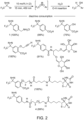
- FIG. 2 illustrates various diazirines operable to form reactive intermediates via energy transfer from a transition metal photocatalyst for protein or other biomolecule labeling, according to some embodiments.
- the diazirine can be functionalized with a marker, such as biotin.
- the marker is desthiobiotin.
- the marker can assist in identification of proteins labeled by the protein labeling agent.
- the marker for example, can be useful in assay results via western blot and/or other analytical techniques. Markers can include alkyne, azide, FLAG tag, fluorophore, and chloroalkane functionalities, in addition to biotin and desthiobiotin.
- the protein labeling agent can be an azide.
- Triplet energy transfer from the excited state photocatalyst can promote nitrene formation from the azide.
- the reactive nitrene either crosslinks with a nearby protein or is quenched in the aqueous environment.
- Any azide operable to undergo energy transfer with eth transition metal photocatalyst for nitrene formation can be employed.
- an azide is an aryl azide.
- the protein labeling agent can comprise one or more moieties for receiving single electron transfer from the organocatalyst.
- Single electron transfer to the protein labeling agent can generate a reactive radical having diffusion radius and/or lifetime described herein for reacting with a protein in the local environment of the organocatalyst.
- an organocatalyst can be a flavin photocatalyst.
- the excited flavin photocatalyst can undergo single electron transfer with phenol moieties to generate a reactive phenoxy radical.
- FIG. 3 illustrates a reaction mechanism for flavin-based protein labeling according to some embodiments.
- the phenol protein labeling agent is functionalized with a tag or marker for assisting in identification of proteins labeled by the protein labeling agent.
- a conjugate comprises a catalyst coupled to a biomolecular binding agent.
- the catalyst coupled to the biomolecular binding agent can comprise any catalyst described herein, including the transition metal catalysts and organocatalysts detailed in Section I above.
- the biomolecular binding agent can comprise a protein, polysaccharide, nucleic acid, or lipid, in some embodiments.
- the biomolecular binding agent can comprise a multivalent display system comprising a protein, polysaccharide, nucleic acid, or lipid.
- the biomolecular binding agent can be a small molecule ligand with a specific binding affinity for a target protein.
- the biomolecular binding agent can be employed to locate the catalyst in the desired extracellular environment for proximity labeling and associated analysis. Accordingly, specific identity of the biomolecular binding agent can be selected according to the chemical and/or steric requirements of the desired target site for placement of the catalyst in the proximity based labeling process. Any biomolecular target site can be chosen, and target sites are not limited in the present disclosure. In some embodiments, target sites can be proteins for studying protein-protein interactions, including interaction with cellular membrane receptors. In some embodiments, for example, the biomolecular binding agent is an antibody, such as a secondary antibody for interacting with a primary antibody bound to the desired antigen. In other embodiments, the biomolecular binding agent is a ligand with specificity for a protein receptor of the cellular membrane, such as a G protein-coupled receptor.
- the biomolecular binding agent can be bonded to the catalyst.
- the catalyst comprises a reactive handle or functionality for coupling the biomolecular binding agent.
- a catalyst can comprise one or more click chemistry moieties including, but not limited to, BCN, DBCO, TCO, tetrazine, alkyne, and azide.
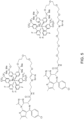
- FIG. 4 illustrates various transition metal photocatalysts of Formula (I) having a reactive functionality for coupling a biomolecular binding agent. As illustrated in FIG. 4 , an alkylene oxide linker of varying length can be employed between the reactive functionality and the coordinating ligand.
- Length of the alkylene oxide linker such as ethylene oxide
- Length of the alkylene oxide linker can be chosen according to several considerations, including steric condition of the target site.
- FIG. 5 illustrates several transition metal photocatalysts of Formula (I) forming a conjugate with a biomolecular binding agent according to some embodiments.
- a system for example, comprises a conjugate including a catalyst coupled to a biomolecular binding agent, and a protein labeling agent activated by the catalyst for binding to a protein.
- the conjugate can comprise any catalyst and biomolecular binding agent described herein, including the embodiments detailed in Section II above.
- the catalyst for example, can have electronic structure to activate the protein labeling agent to a reactive intermediate via energy transfer.
- the protein labeling agent can comprise any of the labeling agents described herein, including the protein labeling agents set forth in Section I above. Specific identity of the conjugate and associated protein labeling agent can be selected according to several considerations, such as the chemical nature and/or steric requirements of the biological environment to be mapped with the proximity-based labeling system.
- systems for proximity-based labeling described herein can be employed in various applications.
- the systems enable target identification, wherein the conjugate and associated protein labeling agent permit identification of one or more molecules in a biological context by proteomics.
- systems comprising the conjugate and protein labeling agent facilitate interactome mapping.
- Targeting a conjugate and protein labeling agent allows detection and identification of one or more molecules and neighboring interactors in a biological context by proteomics. Identification of such molecules by systems described herein can permit enrichment and/or purification of such molecules and neighboring interactors.
- systems comprising a conjugate and protein labeling agent further enable detection and identification of one or more molecules in a biological context via microscopy.
- a method of proximity-based labeling comprises providing a conjugate comprising a catalyst coupled to a biomolecular binding agent, activating a protein labeling agent to a reactive intermediate with the catalyst, and coupling the reactive intermediate to a protein.
- the conjugate can comprise any catalyst and biomolecular binding agent described herein, including the embodiments detailed in Section II above.
- the protein labeling agent can comprise any of the labeling agents described herein, including the protein labeling agents set forth in Section I above. Specific identity of the conjugate and associated protein labeling agent can be selected according to several considerations, such as the chemical nature and/or steric requirements of the biological environment to be mapped with the proximity-based labeling system.
- the catalyst can be provided in the absence of a biomolecular binding agent.
- Methods described herein can be employed to map various biological environments, including local areas of cellular membranes and/or the local extracellular environment.
- the conjugate comprising the catalyst and biomolecular binding agent may be targeted to a specific local region of a cellular membrane, such as a receptor of interest.
- Activation of the protein labeling agent can identify protein(s) and/or other molecules in the targeted local region.
- the activated protein labeling agent can also identify or label molecules associated with another cell in contact with the targeted cellular region. Therefore, intercellular interactions and intercellular environments can be elucidated and mapped with systems and methods described herein.
- the foregoing methods enable interactome mapping, and the identification of one or more molecules and neighboring interactors in a biological context by proteomics. Identification of such molecules by methods described herein can permit enrichment and/or purification of such molecules and neighboring interactors.
- FIG. 6A illustrates operation of proximity-based labeling systems and methods described herein according to some embodiments.
- a conjugate comprising a photocatalyst and antibody targets a specific local area of the cellular membrane.
- the photocatalyst is irradiated to produce the excited state followed by energy transfer to the diazirine protein labeling agent.
- the diazirine protein labeling agent comprises a tag for identification purposes in the analysis.
- the energy transfer activates the protein labeling agent to the reactive carbene.
- the reactive carbene binds to proteins and/or other biomolecules within the tight diffusion radius, as described herein.
- Diazirine labeling agent outside the activation or energy transfer radius of the photocatalyst is not activated. Additionally, proteins and/or other biomolecules outside the diffusion radius of the reactive carbene are not labeled. In this way, high resolution proximity-based labeling can be achieved.
- FIG. 6B illustrates operation of proximity-based labeling systems and methods described herein for identification and validation of membrane G protein-coupled receptors (GPCR) according to some embodiments.
- a conjugate comprises a photocatalyst coupled to a biomolecular binding agent having specificity for the GPCR.
- the conjugate binds to a local site of the GPCR.
- the photocatalyst is irradiated with blue light to provide an excited state followed by energy transfer to the diazirine protein labeling agent.
- the diazirine protein labeling agent comprises an affinity handle or tag for identification purposes in the analysis.
- the energy transfer activates the protein labeling agent to the reactive carbene.
- the reactive carbene binds to proteins and/or other biomolecules within the tight diffusion radius, as described herein. Multiple labeling events may occur at the local GPCR site leading to signal amplification.
- photocatalyst 3 was combined with diazirine 4 and BSA in DPBS to afford reaction mixtures with 100 ⁇ L total solution volume and desired component concentrations.
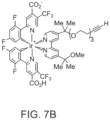
- Photocatalyst 3 is illustrated in FIG. 7B , and Table I summarizes the sample conditions. These samples were then either placed in the dark, irradiated with UV (375 nm) light, or irradiated with visible (450 nm) light in a biophotoreactor for 10 minutes at 100% intensity.
- a secondary antibody-photocatalyst conjugate was prepared as a general entry point for spatially targeted photocatalytic proximity labeling on cell surfaces.
- a goat anti-mouse (Gt/ ⁇ -Ms) antibody was first decorated with azide groups through reaction with azidobutyric acid N-hydroxysuccinimide ester, and then conjugated to alkyne-bearing iridium catalyst via click chemistry, resulting in an antibody-photocatalyst ratio of 1:6.
- the iridium catalyst is the iridium complex 3 illustrated in FIG. 7B .
- a model system was prepared containing human Fc-tagged vascular endothelial growth factor receptor 2 (VEGFR2) and epidermal growth factor receptor (EGFR) proteins attached to ⁇ -human immunoglobulin-G (IgG) agarose beads ( FIG. 8A ). These beads were sequentially incubated with 20 a Ms/ ⁇ -VEGFR2 antibody and Ir-Gt/ ⁇ -Ms to position the iridium catalyst close to the VEGFR2 proteins on the bead surface. Irradiation of these beads with 450 nm light in the presence of a diazirine-biotin probe afforded selective labeling of VEGFR2 over EGFR.
- VEGFR2 vascular endothelial growth factor receptor 2
- EGFR epidermal growth factor receptor
- Antibody-targeted photocatalytic diazirine activation (i.e. ⁇ Map) was applied to the surface of live cells. For these experiments, addition of the antibody to the cell surface 5 was maintained at 4 °C to limit antibody-mediated protein crosslinking.
- CD45 a highly abundant tyrosine phosphatase on T cell surfaces involved in antigen receptor signaling was selected as an initial target.
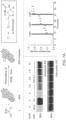
- Western blot analysis of CD45-targeted ⁇ Map on Jurkat cells showed light and time dependent protein biotinylation compared to the isotype targeting control ( FIG. 9A ).
- tandem mass tag (TMT)-based quantitative proteomic analysis of streptavidin enriched proteins was used to identify CD45 and two known associators (CD45AP and CD2) as part of a wider subset of enriched cell membrane proteins ( FIG. 9B ).
- compositions and methods described herein were also harnessed to investigate the proximal protein interactome of PD-L1 in B cells.
- PD-L1 plays an important role in cancer cells as an immune checkpoint ligand that can accelerate tumor progression via suppression of T cell activity.
- PD-L1 targeted ⁇ Map revealed CD30, a member of the tumor necrosis factor receptor family, and CD300A, an immune inhibitory receptor 5 ( FIG. 10A ), as potentially new interactors based upon significant enrichment.
- PD-L1- and CD45-targeted ⁇ Mapping was evaluated in a two-cell system composed of PD-L1-expressing JY- B-lymphocytes as the antigen presenting cell and Jurkat T-lymphocytes uniquely expressing PD-1 and the CD45RO isoform.
- immune cell-APC interactions are driven by the binding of multiple receptor types (e.g. adhesion, co-stimulatory/co-repressor, and T cell receptor (TCR)-major histocompatibility complex (MHC) 5
- TCR T cell receptor
- SED staphylococcal enterotoxin D
- FIG. 12A illustrates bead-based protein labeling wherein CD45-Fc or PDL1-Fc fusion proteins are bound on the same beads followed by attached of a primary antibody and secondary antibody flavin conjugate (AFC). CD45 or PDL1 are then labeled in the presence of biotin phenol and visible light.
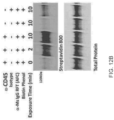
- FIG. 12B is Western blot analysis of light dependent CD45 biotinylation for the indicated time points.
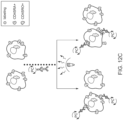
- FIG. 12C is a schematic of CD45RO- or CD45RA-targeted cell labeling with AFC in mixed T cell populations.
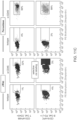
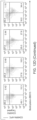
- FIG. 12D is flow cytometry analysis of the photolabeling time course of CD45RA+ or CD45RO+ T cell biotinylation with Isotype (top), ⁇ -CD45RA + AFC (middle), and ⁇ -CD45RO + AFC (bottom)
- FIG. 13A is a schematic depicting photoproximity labeling of CD45 on Jurkat cells with secondary antibody flavin conjugate (AFC).
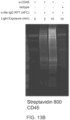
- FIG. 13B is Western blot analysis of CD45-targeted labeling of the Jurkat cells. Biotinylation levels increase as a function of duration of visible light irradiation with CD45-directed labeling, but not with isotype controls.
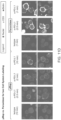
- FIG. 13C is confocal imaging of cells with CD45-directed labeling indicates that biotinylation (magenta stain) is both confined to the cell surface and light exposure time dependent. Nuclei are labeled with Hoechst stain and scale bars indicate 5 mm.
- FIG. 13D provides volcano plots of significance vs.
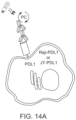
- FIG. 14A is a schematic depicting photoproximity labeling of PDL1 on JY-PDL1 cells with secondary antibody flavin conjugate (AFC).
- FIG. 14B provides volcano plots of significance vs. fold-enrichment for targeted- vs isotype-targeted biotinylation of PDL1 on Raji cells expressing PDL1, following 2 min of blue light illumination, harvesting, capture on streptavidin beads and quantitative mass spectrometry-based proteomic analyses.
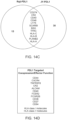
- FIG. 14C is a Venn diagram of significantly enriched proteins identified from PDL1 targeted labeling on JY and Raji cells expressing PDL1. Proteins identified on both cell types are shown in the center.
- FIG. 14D is a list of significantly enriched proteins identified from PDL1 targeted on JY and Raji cells with known PDL1 related function.
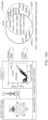
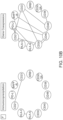
- 14E is a string protein interaction network and GO term analysis of significantly enriched proteins for PDL1-targeted experiments. Shading indicates membership within broad gene ontology (biological process) terms. Nodes with multiple shaded tones indicate membership in more than one term. Thick edges indicate experimental evidence of interaction from StringDB while thin edges indicate interactions from other sources.
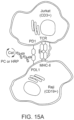
- FIG. 15A is a schematic depicting a two-cell system consisting of engineered Jurkat and Raji cells. Antibody-targeted labeling with a photocatalyst (PC) or peroxidase (HRP) on PDL1 is illustrated.
- FIG. 15B is flow cytometry analysis wherein biotinylation is detected on both Raji and Jurkat cells with PDL1 targeting using the antibody flavin conjugate (AFC), but not Isotype targeting or in the absence of visible light irradiation. Transcellular labeling was not observed between PDL1-labeled Raji cells and suspended A375 cells.
- FIG. 15AFC antibody flavin conjugate
- FIG. 15C is confocal microscopy imaging of the Raji-Jurkat two cell system with PDL1 targeting on Raji cells revealing labeling on both Raji cells and points of cellular contact on Jurkat cells using the AFC while excessive labeling on both cell types was observed with HRP (indicated with white arrows). Cells were imaged for biotinylation, CD3 surface expression, and nuclei.
- FIG. 15D is a schematic depicting a two-cell system consisting of engineered Jurkat and Raji cells. Antibody-targeted labeling with a photocatalyst (PC) or peroxidase (HRP) on CD45 is illustrated.
- FIG. 15E is flow cytometry analysis wherein targeting labeling of CD45RO on Jurkat cells (known to be excluded from the synapse) resulted in low levels of Raji transcellular labeling using an AFC and nearly quantitative labeling when HRP was used.
- the catalyst-ligand conjugate was prepared with a PEG3 (triethylene glycol) linker to spatially separate the two components. Gratifyingly, after irradiation with 450 nm light for 10 minutes in the presence of biotin-peg3- diazirine, a 3.5:1 labeling in favor of the target protein CA was observed.
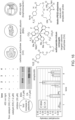
- FIG. 16 illustrates the experimental set up and results, including the sulfonamide-iridium conjugate and biotin-tagged diazirine.
- small-molecule based catalyst conjugates as a platform with regard to ligand-directed targeting identification of proteins was further investigated.
- Small molecule-iridium conjugates could be readily prepared in an operationally straight-forward manner using a coppercatalyzed azide-alkyne click reaction (CuAAC) between iridiumalkyne of FIG. 4 and a series of ligand-azide conjugates.
- CuAAC coppercatalyzed azide-alkyne click reaction
- the ability of the ligand-iridium conjugates to label their corresponding protein targets was determined by their selectivity versus BSA as illustrated in FIG. 17 .
- Dasatinib a marketed treatment for myelogenous leukemia displays nanomolar binding to Bruton's tyrosine kinase (BTK, 5 nM) was first examined The corresponding dasatinib-Irconjugate led to a 12-fold increase in labeling in favor of BTK over BSA by western blot in comparison to the control lane.
- Bromodomain inhibitor JQ-114 50 nM binding to BRD4
- a less-potent binder was next examined, the multiple myeloma treatment lenalidomide, which acts a molecular glue with the protein cereblon (CRBN).
- PPIs are essential to cell function and comprise a challenging class of targets for small molecule drug discovery. This challenge arises, in part, from the transient nature of these interactions which can make them difficult to detect biochemically.
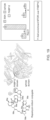
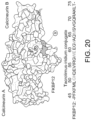
- a number of prominent small molecule ligands are known to bind to protein complexes or to proteins that function through dynamic complexes. A method that could effectively distinguish the components of protein complexes would, therefore, prove an important tool for the investigation of PPIs. It was initially set out to study the small molecule AT7519, which binds to cyclin dependent kinase 2 (CDK2). It is well-established that CDK2 forms a PPI with the protein cyclin A, which contributes to the regulation of the cell cycle. As illustrated in FIG.
- Proteomic analysis of the labeling reaction employing a PEG3 linker showed a molecular footprint of the small molecule binding site on CRBN in addition to labeled sites on the neighboring Cul4a, that presumably arise from secondary protein-protein interactions ( FIG 20 , right).
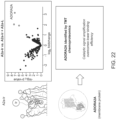
- the adenosine receptor A2a (ADORA2A) as an exemplary membrane target.
- This GPCR has become an important target for immunotherapy, but critically, has never been identified through live cell chemoproteomics.
- A2a an Irconjugate (A2a-Ir) was synthesized and a tethered diazirine-conjugate, as described by Yao (A2a-Dz) ( FIG. 21 ).
- the binding affinities of the small molecule-conjugates were then measured to ensure retained potency for the proposed target upon conjugation.
- the Yao diazirine retained binding close to that of the parent compound (0.8 nM vs 4.8 nM for the parent A2a), surprisingly, the Irconjugate displayed >100-fold lower binding affinity (643 nM). Nonetheless, the photocatalytic labelling methodology described herein on ADORA2A expressing HEK293T cells, followed by streptavidin immunoprecipitation and western blot analysis, revealed a stark difference in labelling between the stoichiometric Yao-type diazirine-A2a, and A2a-iridium probe.
- Human GPR40 receptor (hGPR40) was also subjected to labeling with compositions and methods described herein.
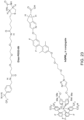
- a hGPR40-Ir conjugate was employed along with a protein labeling agent of biotinylated diazirine (Diaz-PEG3-Bt) ( FIG. 23 ).
- a hGPR40-ligand was also used as a competitor.
- HEK-hGPR40 cells were treated with hGPR40-Ir conjugates or free Ir-alkyne photocatalyst for 30 minutes, washed and irradiated for 10 min at 450 nm after treatment with (Diaz-PEG3-Bt). Cell lysates were processed and analyzed by Western blot with Streptavidin-800 and total protein stains, as provided in FIGS. 24A and 24B .
Landscapes
- Health & Medical Sciences (AREA)
- Life Sciences & Earth Sciences (AREA)
- Chemical & Material Sciences (AREA)
- Immunology (AREA)
- Engineering & Computer Science (AREA)
- Molecular Biology (AREA)
- Biomedical Technology (AREA)
- Hematology (AREA)
- Urology & Nephrology (AREA)
- Biochemistry (AREA)
- Medicinal Chemistry (AREA)
- Analytical Chemistry (AREA)
- General Health & Medical Sciences (AREA)
- Physics & Mathematics (AREA)
- Microbiology (AREA)
- General Physics & Mathematics (AREA)
- Biotechnology (AREA)
- Food Science & Technology (AREA)
- Cell Biology (AREA)
- Pathology (AREA)
- Organic Chemistry (AREA)
- Biophysics (AREA)
- Proteomics, Peptides & Aminoacids (AREA)
- Genetics & Genomics (AREA)
- Bioinformatics & Cheminformatics (AREA)
- Bioinformatics & Computational Biology (AREA)
- Materials Engineering (AREA)
- Measuring Or Testing Involving Enzymes Or Micro-Organisms (AREA)
- Investigating Or Analysing Biological Materials (AREA)
- Investigating, Analyzing Materials By Fluorescence Or Luminescence (AREA)
- Peptides Or Proteins (AREA)
Claims (17)
- Zusammensetzung für die näherungsbasierte Proteinmarkierung, umfassend:ein Photokatalysator; undein Proteinmarkierungsmittel, wobei der Photokatalysator eine elektronische Struktur aufweist, um das Proteinmarkierungsmittel zu einem reaktiven Zwischenprodukt durch Energieübertragung zu aktivieren, und wobei das reaktive Zwischenprodukt in eine C-H-Bindung eines Proteins einfügt.
- Zusammensetzung nach Anspruch 1, wobei das reaktive Zwischenprodukt ein Carben-, Nitran- oder Phenoxyradikal ist.
- Zusammensetzung nach Anspruch 1, wobei das reaktive Zwischenprodukt vor dem Abschrecken in einer wässrigen oder wässrigen Umgebung einen Diffusionsradius von weniger als 4 nm aufweist.
- Zusammensetzung nach Anspruch 1, wobei das reaktive Zwischenprodukt eine Halbwertszeit (t1/2) kleiner als 5 Nanosekunden aufweist.
- Zusammensetzung nach Anspruch 1, wobei die Energieübertragung die Dexter-Energieübertragung ist.
- Zusammensetzung nach Anspruch 1, wobei die Energieübertragung ein Einzelelektronentransfer ist.
- Zusammensetzung nach Anspruch 1, wobei die Energieübertragung aus einem Triplett-angeregten Zustand des Photokatalysators erfolgt.
- Zusammensetzung nach Anspruch 7, wobei der Photokatalysator Licht im sichtbaren Bereich des elektromagnetischen Spektrums absorbiert.
- Zusammensetzung nach Anspruch 1, wobei der Photokatalysator ein Übergangsmetall-Photokatalysator ist, der eine Absorption im sichtbaren Bereich des elektromagnetischen Spektrums aufweist.
- Zusammensetzung nach Anspruch 9, wobei der Energietransfer aus einem Triplett-angeregten Zustand des Photokatalysators erfolgt, wobei der Triplett-angeregte Zustand eine Energie größer als -250 kJ/mol (60 kcal/mol) aufweist.
- Zusammensetzung nach Anspruch 9, wobei der Übergangsmetall-Photokatalysator die Formel
 wobei M ein Übergangsmetall ist;wobei A, D, E, G, Y und Z unabhängig voneinander von C und N ausgewählt werden; wobei R1 - R6 jeweils einen bis vier optionale Ringsubstituenten darstellen, wobei jeder der ein bis vier optionalen Ringsubstituenten unabhängig voneinander aus der Gruppe bestehend aus Alkyl, Heteroalkyl, Haloalkyl, Halo, Hydroxy, Alkoxy, Amin, Amid, Ether, -C(O)O-, - C(O)OR7 und -R8OH ausgewählt ist, wobei R7 aus der Gruppe bestehend aus Wasserstoff und Alkyl ausgewählt ist, und R8 ist Alkyl; undwobei X- ein Gegenion ist.
 - Zusammensetzung nach Anspruch 10, wobei der Übergangsmetall-Photokatalysator in einer wässrigen oder wässrigen Umgebung löslich ist.
- Zusammensetzung nach einem der Ansprüche 9 bis 12, wobei das Proteinmarkierungsmittel ein Diazirin oder Azid ist.
- Zusammensetzung nach Anspruch 1, wobei der Katalysator ein organischer Photokatalysator ist.
- Zusammensetzung nach Anspruch 14, wobei der Organo-Photokatalysator aus einer Gruppe ausgewählt ist, die aus einer Thioxanthon-, Phenolthiazin-, Flavin-, Phenoazin-, Cumarin-, Acetophenon- und Benzophenongruppe besteht.
- Zusammensetzung nach Anspruch 15, wobei die Energieübertragung ein Einzelelektronentransfer ist.
- Zusammensetzung nach Anspruch 1, wobei das Proteinmarkierungsmittel mit einem Marker funktionalisiert ist, wobei der Marker ausgewählt ist aus der Gruppe, die aus den Funktionalitäten Biotin, Desthiobiotin, Alkin, Azid, FLAG-Tag, Fluorophor und Chloralkan besteht.
Priority Applications (1)
| Application Number | Priority Date | Filing Date | Title |
|---|---|---|---|
| EP24211918.8A EP4488395A3 (de) | 2019-06-07 | 2020-06-05 | Näherungsbasierte markierungssysteme und anwendungen davon |
Applications Claiming Priority (3)
| Application Number | Priority Date | Filing Date | Title |
|---|---|---|---|
| US201962858539P | 2019-06-07 | 2019-06-07 | |
| US202062982576P | 2020-02-27 | 2020-02-27 | |
| PCT/US2020/036285 WO2020247725A1 (en) | 2019-06-07 | 2020-06-05 | Proximity-based labeling systems and applications thereof |
Related Child Applications (1)
| Application Number | Title | Priority Date | Filing Date |
|---|---|---|---|
| EP24211918.8A Division EP4488395A3 (de) | 2019-06-07 | 2020-06-05 | Näherungsbasierte markierungssysteme und anwendungen davon |
Publications (3)
| Publication Number | Publication Date |
|---|---|
| EP3980205A1 EP3980205A1 (de) | 2022-04-13 |
| EP3980205A4 EP3980205A4 (de) | 2023-08-23 |
| EP3980205B1 true EP3980205B1 (de) | 2024-11-20 |
Family
ID=73653376
Family Applications (2)
| Application Number | Title | Priority Date | Filing Date |
|---|---|---|---|
| EP24211918.8A Pending EP4488395A3 (de) | 2019-06-07 | 2020-06-05 | Näherungsbasierte markierungssysteme und anwendungen davon |
| EP20819012.4A Active EP3980205B1 (de) | 2019-06-07 | 2020-06-05 | Näherungsbasierte markierungssysteme und anwendungen davon |
Family Applications Before (1)
| Application Number | Title | Priority Date | Filing Date |
|---|---|---|---|
| EP24211918.8A Pending EP4488395A3 (de) | 2019-06-07 | 2020-06-05 | Näherungsbasierte markierungssysteme und anwendungen davon |
Country Status (6)
| Country | Link |
|---|---|
| US (1) | US20220306683A1 (de) |
| EP (2) | EP4488395A3 (de) |
| JP (2) | JP7646154B2 (de) |
| CA (1) | CA3139414A1 (de) |
| ES (1) | ES3011267T3 (de) |
| WO (1) | WO2020247725A1 (de) |
Families Citing this family (9)
| Publication number | Priority date | Publication date | Assignee | Title |
|---|---|---|---|---|
| EP4031550A4 (de) * | 2019-09-20 | 2024-04-10 | The University of Chicago | Fotoproximitätsprofilierung von protein-protein-interaktionen in zellen |
| WO2023059621A1 (en) * | 2021-10-05 | 2023-04-13 | The Trustees Of Princeton University | In-vivo proximity-based labeling systems and applications thereof |
| WO2023116796A1 (en) * | 2021-12-23 | 2023-06-29 | Peking University | A method for cell-cell interaction labeling and detection of antigen-specific t cells |
| JP2025521478A (ja) * | 2022-06-15 | 2025-07-10 | シード・セラピューティクス・ユーエス・インコーポレイテッド | 光応答性プローブ媒介性タンパク質標識化のための光触媒の細胞内連結 |
| CN115286643B (zh) * | 2022-09-02 | 2023-09-01 | 南京大学 | 蛋白质靶向降解化合物及其制备方法和应用 |
| EP4615630A1 (de) * | 2022-11-11 | 2025-09-17 | The Trustees of Princeton University | Proximitätsbasierte markierung von mikroumgebungen mit biomolekularem kondensat |
| CN120457184A (zh) * | 2022-11-30 | 2025-08-08 | 普林斯顿大学理事会 | 用于对细胞内微环境进行基于邻近的标记的蛋白质复合体 |
| WO2024254590A1 (en) * | 2023-06-09 | 2024-12-12 | The Regents Of The University Of California | Multi-scale interactome profiling of membrane proteins using photocatalytic proximity labeling |
| WO2025136932A1 (en) * | 2023-12-19 | 2025-06-26 | Seed Therapeutics Us, Inc. | Intracellular ligation of photocatalysts for photo-responsive, probe-mediated protein labeling |
Family Cites Families (14)
| Publication number | Priority date | Publication date | Assignee | Title |
|---|---|---|---|---|
| US5185228A (en) * | 1989-08-17 | 1993-02-09 | Mita Industrial Co., Ltd. | Electrophotosensitive material containing p-benzylbiphenyl |
| US6121027A (en) | 1997-08-15 | 2000-09-19 | Surmodics, Inc. | Polybifunctional reagent having a polymeric backbone and photoreactive moieties and bioactive groups |
| US6287765B1 (en) * | 1998-05-20 | 2001-09-11 | Molecular Machines, Inc. | Methods for detecting and identifying single molecules |
| US6949347B2 (en) | 2002-03-05 | 2005-09-27 | Aclara Biosciences, Inc. | Multiplex analysis using membrane-bound sensitizers |
| US20030186245A1 (en) | 2002-03-28 | 2003-10-02 | Roitman Daniel B. | Biomolecular sensors and detection methods utilizing photoinduced charge separation |
| WO2004077014A2 (en) * | 2003-02-13 | 2004-09-10 | The Regents Of The University Of California | Methods and compositions for detection and analysis of polynucleotide-binding protein interactions using light harvesting multichromophores |
| JP2007536522A (ja) * | 2004-05-07 | 2007-12-13 | ベックマン コールター インコーポレーティッド | Ctlの媒介による抗原提示細胞の溶解を検出するためのmhc架橋系 |
| WO2010129929A1 (en) * | 2009-05-07 | 2010-11-11 | The Board Of Trustees Of The University Of Illinois | Selective protein labeling |
| WO2012174479A1 (en) * | 2011-06-15 | 2012-12-20 | Massachusetts Institute Of Technology | In vivo proteomics |
| CN113967253A (zh) * | 2012-05-15 | 2022-01-25 | 百时美施贵宝公司 | 通过破坏pd-1/pd-l1信号传输的免疫治疗 |
| US20180284126A1 (en) | 2015-08-28 | 2018-10-04 | The United States of America as Represented by the Secretary of the Dpt. of Health and Human Service | A method of detecting molecules in proximity to a target molecule in a sample |
| EP3368556B1 (de) | 2015-10-28 | 2024-04-10 | Tufts University | Neuartige polypeptide mit verbesserter proteolytischer stabilität und verfahren zur herstellung und verwendung davon |
| ES2973471T3 (es) | 2016-04-22 | 2024-06-20 | Becton Dickinson Co | Dispositivo de colorante polimérico multiplexado y métodos para usar la misma referencia cruzada con aplicaciones relacionadas |
| WO2018002016A1 (en) | 2016-06-28 | 2018-01-04 | Ventana Medical Systems, Inc. | Application of click chemistry for signal amplification in ihc and ish assays |
-
2020
- 2020-06-05 ES ES20819012T patent/ES3011267T3/es active Active
- 2020-06-05 WO PCT/US2020/036285 patent/WO2020247725A1/en not_active Ceased
- 2020-06-05 EP EP24211918.8A patent/EP4488395A3/de active Pending
- 2020-06-05 CA CA3139414A patent/CA3139414A1/en active Pending
- 2020-06-05 US US17/616,117 patent/US20220306683A1/en active Pending
- 2020-06-05 EP EP20819012.4A patent/EP3980205B1/de active Active
- 2020-06-05 JP JP2021572564A patent/JP7646154B2/ja active Active
-
2025
- 2025-02-25 JP JP2025027910A patent/JP2025102757A/ja active Pending
Also Published As
| Publication number | Publication date |
|---|---|
| JP2022537264A (ja) | 2022-08-25 |
| EP4488395A3 (de) | 2025-03-19 |
| EP4488395A2 (de) | 2025-01-08 |
| WO2020247725A1 (en) | 2020-12-10 |
| ES3011267T3 (en) | 2025-04-07 |
| JP2025102757A (ja) | 2025-07-08 |
| EP3980205A1 (de) | 2022-04-13 |
| CA3139414A1 (en) | 2020-12-10 |
| US20220306683A1 (en) | 2022-09-29 |
| EP3980205A4 (de) | 2023-08-23 |
| JP7646154B2 (ja) | 2025-03-17 |
Similar Documents
| Publication | Publication Date | Title |
|---|---|---|
| EP3980205B1 (de) | Näherungsbasierte markierungssysteme und anwendungen davon | |
| Bashore et al. | Targeted degradation via direct 26S proteasome recruitment | |
| Wang et al. | Specifically and wash-free labeling of SNAP-tag fused proteins with a hybrid sensor to monitor local micro-viscosity | |
| CN119242071A (zh) | 含侧基发色团的水溶性聚合染料 | |
| ES2911298T3 (es) | Colorantes poliméricos en tándem fluorescentes fotoestables que incluyen complejos de metales luminiscentes | |
| Lo | Exploitation of luminescent organometallic rhenium (I) and iridium (III) complexes in biological studies | |
| US20230100536A1 (en) | Intercellular and intracellular proximity-based labeling compositions and systems | |
| WO2022216449A1 (en) | Water-soluble yellow green absorbing dyes | |
| Zhang et al. | In situ lysosomal proteomics enabled by bioorthogonal photocatalytic proximity labelling | |
| AU2015352625A1 (en) | Proximity assays using chemical ligation and hapten transfer | |
| Cao et al. | Determination of morphine in human urine by the novel competitive fluorescence immunoassay | |
| Kim et al. | Click synthesis of estradiol–cyclodextrin conjugates as cell compartment selective estrogens | |
| EP3887830A2 (de) | Reaktive peptidmarkierung | |
| Hintzen et al. | Fluorescence Labeling of Peptides: Finding the Optimal Protocol for Coupling Various Dyes to ATCUN-like Structures | |
| EP3981772A1 (de) | Tetrafunktionelle chemische sonde und verfahren zur identifizierung von zielmembranproteinen aus lebenden zellen oder lebendem gewebe unter verwendung dieser sonde | |
| Holly et al. | Monitoring lysosomal catabolism: a sensitive probe for assessing targeted lysosomal degradation of extracellular proteins | |
| EP3521825A1 (de) | Verfahren zur identifizierung von zielprotein unter verwendung einer thermostabilitätsbasierten fluoreszenzdifferenz in einer zweidimensionalen gelelektrophorese | |
| Hua et al. | Heterobifunctional Cross-Linker with Dinitroimidazole and N-Hydroxysuccinimide Ester Motifs for Protein Functionalization and Cysteine–Lysine Peptide Stapling | |
| EP4155349A1 (de) | Wasserlösliche gelbe grünabsorbierende farbstoffe | |
| West | Systematic evaluation and tuning of diazirine chemistry used in photoaffinity labeling | |
| US20240424148A1 (en) | In-vivo proximity-based labeling systems and applications thereof | |
| Rana | Organotellurium Probes for Mass Cytometry | |
| Gong et al. | Mechanisms and Applications of Photocatalytic Proximity Labeling | |
| Kwon et al. | Zero-length photo-crosslinking by organoiridium catalyst for intracellular interactome mapping | |
| EP4267679A1 (de) | Wasserlösliche gelbe grünabsorbierende farbstoffe |
Legal Events
| Date | Code | Title | Description |
|---|---|---|---|
| STAA | Information on the status of an ep patent application or granted ep patent |
Free format text: STATUS: THE INTERNATIONAL PUBLICATION HAS BEEN MADE |
|
| PUAI | Public reference made under article 153(3) epc to a published international application that has entered the european phase |
Free format text: ORIGINAL CODE: 0009012 |
|
| STAA | Information on the status of an ep patent application or granted ep patent |
Free format text: STATUS: REQUEST FOR EXAMINATION WAS MADE |
|
| 17P | Request for examination filed |
Effective date: 20211117 |
|
| AK | Designated contracting states |
Kind code of ref document: A1 Designated state(s): AL AT BE BG CH CY CZ DE DK EE ES FI FR GB GR HR HU IE IS IT LI LT LU LV MC MK MT NL NO PL PT RO RS SE SI SK SM TR |
|
| DAV | Request for validation of the european patent (deleted) | ||
| DAX | Request for extension of the european patent (deleted) | ||
| RIN1 | Information on inventor provided before grant (corrected) |
Inventor name: MCCARVER, STEFAN Inventor name: RODRIGUEZ-RIVERA, FRANCES, PAOLA Inventor name: PARKER, DANN, LEROY Inventor name: FADEYI, OLUGBEMINIYI, O. Inventor name: OSLUND, ROB, C. Inventor name: REYES-ROBLES, TAMARA Inventor name: OAKLEY, JAMES Inventor name: WANG, TAO Inventor name: GERI, JACOB Inventor name: MACMILLAN, DAVID, W.C. |
|
| REG | Reference to a national code |
Ref country code: DE Free format text: PREVIOUS MAIN CLASS: B22F0001000000 Ref country code: DE Ref legal event code: R079 Ref document number: 602020041771 Country of ref document: DE Free format text: PREVIOUS MAIN CLASS: B22F0001000000 Ipc: C07K0001130000 |
|
| A4 | Supplementary search report drawn up and despatched |
Effective date: 20230724 |
|
| RIC1 | Information provided on ipc code assigned before grant |
Ipc: C22C 1/05 20060101ALI20230718BHEP Ipc: B22F 1/00 20220101ALI20230718BHEP Ipc: G01N 33/542 20060101ALI20230718BHEP Ipc: C09K 11/06 20060101ALI20230718BHEP Ipc: C07K 1/13 20060101AFI20230718BHEP |
|
| GRAP | Despatch of communication of intention to grant a patent |
Free format text: ORIGINAL CODE: EPIDOSNIGR1 |
|
| STAA | Information on the status of an ep patent application or granted ep patent |
Free format text: STATUS: GRANT OF PATENT IS INTENDED |
|
| GRAJ | Information related to disapproval of communication of intention to grant by the applicant or resumption of examination proceedings by the epo deleted |
Free format text: ORIGINAL CODE: EPIDOSDIGR1 |
|
| STAA | Information on the status of an ep patent application or granted ep patent |
Free format text: STATUS: REQUEST FOR EXAMINATION WAS MADE |
|
| INTG | Intention to grant announced |
Effective date: 20240703 |
|
| INTC | Intention to grant announced (deleted) | ||
| GRAP | Despatch of communication of intention to grant a patent |
Free format text: ORIGINAL CODE: EPIDOSNIGR1 |
|
| STAA | Information on the status of an ep patent application or granted ep patent |
Free format text: STATUS: GRANT OF PATENT IS INTENDED |
|
| GRAS | Grant fee paid |
Free format text: ORIGINAL CODE: EPIDOSNIGR3 |
|
| GRAA | (expected) grant |
Free format text: ORIGINAL CODE: 0009210 |
|
| STAA | Information on the status of an ep patent application or granted ep patent |
Free format text: STATUS: THE PATENT HAS BEEN GRANTED |
|
| INTG | Intention to grant announced |
Effective date: 20241011 |
|
| AK | Designated contracting states |
Kind code of ref document: B1 Designated state(s): AL AT BE BG CH CY CZ DE DK EE ES FI FR GB GR HR HU IE IS IT LI LT LU LV MC MK MT NL NO PL PT RO RS SE SI SK SM TR |
|
| REG | Reference to a national code |
Ref country code: GB Ref legal event code: FG4D |
|
| REG | Reference to a national code |
Ref country code: CH Ref legal event code: EP |
|
| REG | Reference to a national code |
Ref country code: DE Ref legal event code: R096 Ref document number: 602020041771 Country of ref document: DE |
|
| REG | Reference to a national code |
Ref country code: IE Ref legal event code: FG4D |
|
| REG | Reference to a national code |
Ref country code: LT Ref legal event code: MG9D |
|
| REG | Reference to a national code |
Ref country code: NL Ref legal event code: MP Effective date: 20241120 |
|
| REG | Reference to a national code |
Ref country code: ES Ref legal event code: FG2A Ref document number: 3011267 Country of ref document: ES Kind code of ref document: T3 Effective date: 20250407 |
|
| PG25 | Lapsed in a contracting state [announced via postgrant information from national office to epo] |
Ref country code: PT Free format text: LAPSE BECAUSE OF FAILURE TO SUBMIT A TRANSLATION OF THE DESCRIPTION OR TO PAY THE FEE WITHIN THE PRESCRIBED TIME-LIMIT Effective date: 20250320 Ref country code: IS Free format text: LAPSE BECAUSE OF FAILURE TO SUBMIT A TRANSLATION OF THE DESCRIPTION OR TO PAY THE FEE WITHIN THE PRESCRIBED TIME-LIMIT Effective date: 20250320 Ref country code: HR Free format text: LAPSE BECAUSE OF FAILURE TO SUBMIT A TRANSLATION OF THE DESCRIPTION OR TO PAY THE FEE WITHIN THE PRESCRIBED TIME-LIMIT Effective date: 20241120 |
|
| PG25 | Lapsed in a contracting state [announced via postgrant information from national office to epo] |
Ref country code: FI Free format text: LAPSE BECAUSE OF FAILURE TO SUBMIT A TRANSLATION OF THE DESCRIPTION OR TO PAY THE FEE WITHIN THE PRESCRIBED TIME-LIMIT Effective date: 20241120 Ref country code: NL Free format text: LAPSE BECAUSE OF FAILURE TO SUBMIT A TRANSLATION OF THE DESCRIPTION OR TO PAY THE FEE WITHIN THE PRESCRIBED TIME-LIMIT Effective date: 20241120 |
|
| REG | Reference to a national code |
Ref country code: AT Ref legal event code: MK05 Ref document number: 1743502 Country of ref document: AT Kind code of ref document: T Effective date: 20241120 |
|
| PG25 | Lapsed in a contracting state [announced via postgrant information from national office to epo] |
Ref country code: BG Free format text: LAPSE BECAUSE OF FAILURE TO SUBMIT A TRANSLATION OF THE DESCRIPTION OR TO PAY THE FEE WITHIN THE PRESCRIBED TIME-LIMIT Effective date: 20241120 |
|
| PG25 | Lapsed in a contracting state [announced via postgrant information from national office to epo] |
Ref country code: NO Free format text: LAPSE BECAUSE OF FAILURE TO SUBMIT A TRANSLATION OF THE DESCRIPTION OR TO PAY THE FEE WITHIN THE PRESCRIBED TIME-LIMIT Effective date: 20250220 |
|
| PG25 | Lapsed in a contracting state [announced via postgrant information from national office to epo] |
Ref country code: LV Free format text: LAPSE BECAUSE OF FAILURE TO SUBMIT A TRANSLATION OF THE DESCRIPTION OR TO PAY THE FEE WITHIN THE PRESCRIBED TIME-LIMIT Effective date: 20241120 Ref country code: GR Free format text: LAPSE BECAUSE OF FAILURE TO SUBMIT A TRANSLATION OF THE DESCRIPTION OR TO PAY THE FEE WITHIN THE PRESCRIBED TIME-LIMIT Effective date: 20250221 Ref country code: AT Free format text: LAPSE BECAUSE OF FAILURE TO SUBMIT A TRANSLATION OF THE DESCRIPTION OR TO PAY THE FEE WITHIN THE PRESCRIBED TIME-LIMIT Effective date: 20241120 |
|
| PG25 | Lapsed in a contracting state [announced via postgrant information from national office to epo] |
Ref country code: PL Free format text: LAPSE BECAUSE OF FAILURE TO SUBMIT A TRANSLATION OF THE DESCRIPTION OR TO PAY THE FEE WITHIN THE PRESCRIBED TIME-LIMIT Effective date: 20241120 |
|
| PG25 | Lapsed in a contracting state [announced via postgrant information from national office to epo] |
Ref country code: RS Free format text: LAPSE BECAUSE OF FAILURE TO SUBMIT A TRANSLATION OF THE DESCRIPTION OR TO PAY THE FEE WITHIN THE PRESCRIBED TIME-LIMIT Effective date: 20250220 |
|
| PG25 | Lapsed in a contracting state [announced via postgrant information from national office to epo] |
Ref country code: SM Free format text: LAPSE BECAUSE OF FAILURE TO SUBMIT A TRANSLATION OF THE DESCRIPTION OR TO PAY THE FEE WITHIN THE PRESCRIBED TIME-LIMIT Effective date: 20241120 |
|
| PGFP | Annual fee paid to national office [announced via postgrant information from national office to epo] |
Ref country code: DE Payment date: 20250627 Year of fee payment: 6 |
|
| PG25 | Lapsed in a contracting state [announced via postgrant information from national office to epo] |
Ref country code: DK Free format text: LAPSE BECAUSE OF FAILURE TO SUBMIT A TRANSLATION OF THE DESCRIPTION OR TO PAY THE FEE WITHIN THE PRESCRIBED TIME-LIMIT Effective date: 20241120 |
|
| PGFP | Annual fee paid to national office [announced via postgrant information from national office to epo] |
Ref country code: GB Payment date: 20250627 Year of fee payment: 6 |
|
| PG25 | Lapsed in a contracting state [announced via postgrant information from national office to epo] |
Ref country code: EE Free format text: LAPSE BECAUSE OF FAILURE TO SUBMIT A TRANSLATION OF THE DESCRIPTION OR TO PAY THE FEE WITHIN THE PRESCRIBED TIME-LIMIT Effective date: 20241120 |
|
| PGFP | Annual fee paid to national office [announced via postgrant information from national office to epo] |
Ref country code: FR Payment date: 20250625 Year of fee payment: 6 |
|
| PG25 | Lapsed in a contracting state [announced via postgrant information from national office to epo] |
Ref country code: RO Free format text: LAPSE BECAUSE OF FAILURE TO SUBMIT A TRANSLATION OF THE DESCRIPTION OR TO PAY THE FEE WITHIN THE PRESCRIBED TIME-LIMIT Effective date: 20241120 |
|
| PG25 | Lapsed in a contracting state [announced via postgrant information from national office to epo] |
Ref country code: SK Free format text: LAPSE BECAUSE OF FAILURE TO SUBMIT A TRANSLATION OF THE DESCRIPTION OR TO PAY THE FEE WITHIN THE PRESCRIBED TIME-LIMIT Effective date: 20241120 |
|
| PG25 | Lapsed in a contracting state [announced via postgrant information from national office to epo] |
Ref country code: CZ Free format text: LAPSE BECAUSE OF FAILURE TO SUBMIT A TRANSLATION OF THE DESCRIPTION OR TO PAY THE FEE WITHIN THE PRESCRIBED TIME-LIMIT Effective date: 20241120 |
|
| REG | Reference to a national code |
Ref country code: DE Ref legal event code: R097 Ref document number: 602020041771 Country of ref document: DE |
|
| PG25 | Lapsed in a contracting state [announced via postgrant information from national office to epo] |
Ref country code: SE Free format text: LAPSE BECAUSE OF FAILURE TO SUBMIT A TRANSLATION OF THE DESCRIPTION OR TO PAY THE FEE WITHIN THE PRESCRIBED TIME-LIMIT Effective date: 20241120 |
|
| PLBE | No opposition filed within time limit |
Free format text: ORIGINAL CODE: 0009261 |
|
| STAA | Information on the status of an ep patent application or granted ep patent |
Free format text: STATUS: NO OPPOSITION FILED WITHIN TIME LIMIT |
|
| PGFP | Annual fee paid to national office [announced via postgrant information from national office to epo] |
Ref country code: ES Payment date: 20250701 Year of fee payment: 6 |
|
| PGFP | Annual fee paid to national office [announced via postgrant information from national office to epo] |
Ref country code: IT Payment date: 20250619 Year of fee payment: 6 |
|
| 26N | No opposition filed |
Effective date: 20250821 |
|
| REG | Reference to a national code |
Ref country code: CH Ref legal event code: H13 Free format text: ST27 STATUS EVENT CODE: U-0-0-H10-H13 (AS PROVIDED BY THE NATIONAL OFFICE) Effective date: 20260127 |
|
| PG25 | Lapsed in a contracting state [announced via postgrant information from national office to epo] |
Ref country code: MC Free format text: LAPSE BECAUSE OF FAILURE TO SUBMIT A TRANSLATION OF THE DESCRIPTION OR TO PAY THE FEE WITHIN THE PRESCRIBED TIME-LIMIT Effective date: 20241120 |
|
| PG25 | Lapsed in a contracting state [announced via postgrant information from national office to epo] |
Ref country code: LU Free format text: LAPSE BECAUSE OF NON-PAYMENT OF DUE FEES Effective date: 20250605 |
|
| REG | Reference to a national code |
Ref country code: BE Ref legal event code: MM Effective date: 20250630 |
|
| PG25 | Lapsed in a contracting state [announced via postgrant information from national office to epo] |
Ref country code: IE Free format text: LAPSE BECAUSE OF NON-PAYMENT OF DUE FEES Effective date: 20250605 |
|
| PG25 | Lapsed in a contracting state [announced via postgrant information from national office to epo] |
Ref country code: BE Free format text: LAPSE BECAUSE OF NON-PAYMENT OF DUE FEES Effective date: 20250630 |