EP3979974B1 - Hautpflegezusammensetzungen aus erneuerbaren ressourcen und diese enthaltende absorbierende artikel - Google Patents
Hautpflegezusammensetzungen aus erneuerbaren ressourcen und diese enthaltende absorbierende artikel Download PDFInfo
- Publication number
- EP3979974B1 EP3979974B1 EP20753853.9A EP20753853A EP3979974B1 EP 3979974 B1 EP3979974 B1 EP 3979974B1 EP 20753853 A EP20753853 A EP 20753853A EP 3979974 B1 EP3979974 B1 EP 3979974B1
- Authority
- EP
- European Patent Office
- Prior art keywords
- skin care
- care composition
- skin
- oil
- derived
- Prior art date
- Legal status (The legal status is an assumption and is not a legal conclusion. Google has not performed a legal analysis and makes no representation as to the accuracy of the status listed.)
- Active
Links
Images
Classifications
-
- A—HUMAN NECESSITIES
- A61—MEDICAL OR VETERINARY SCIENCE; HYGIENE
- A61F—FILTERS IMPLANTABLE INTO BLOOD VESSELS; PROSTHESES; DEVICES PROVIDING PATENCY TO, OR PREVENTING COLLAPSING OF, TUBULAR STRUCTURES OF THE BODY, e.g. STENTS; ORTHOPAEDIC, NURSING OR CONTRACEPTIVE DEVICES; FOMENTATION; TREATMENT OR PROTECTION OF EYES OR EARS; BANDAGES, DRESSINGS OR ABSORBENT PADS; FIRST-AID KITS
- A61F13/00—Bandages or dressings; Absorbent pads
- A61F13/15—Absorbent pads, e.g. sanitary towels, swabs or tampons for external or internal application to the body; Supporting or fastening means therefor; Tampon applicators
- A61F13/84—Accessories, not otherwise provided for, for absorbent pads
- A61F13/8405—Additives, e.g. for odour, disinfectant or pH control
-
- A—HUMAN NECESSITIES
- A61—MEDICAL OR VETERINARY SCIENCE; HYGIENE
- A61K—PREPARATIONS FOR MEDICAL, DENTAL OR TOILETRY PURPOSES
- A61K47/00—Medicinal preparations characterised by the non-active ingredients used, e.g. carriers or inert additives; Targeting or modifying agents chemically bound to the active ingredient
- A61K47/06—Organic compounds, e.g. natural or synthetic hydrocarbons, polyolefins, mineral oil, petrolatum or ozokerite
- A61K47/08—Organic compounds, e.g. natural or synthetic hydrocarbons, polyolefins, mineral oil, petrolatum or ozokerite containing oxygen, e.g. ethers, acetals, ketones, quinones, aldehydes, peroxides
- A61K47/10—Alcohols; Phenols; Salts thereof, e.g. glycerol; Polyethylene glycols [PEG]; Poloxamers; PEG/POE alkyl ethers
-
- A—HUMAN NECESSITIES
- A61—MEDICAL OR VETERINARY SCIENCE; HYGIENE
- A61K—PREPARATIONS FOR MEDICAL, DENTAL OR TOILETRY PURPOSES
- A61K8/00—Cosmetics or similar toiletry preparations
- A61K8/02—Cosmetics or similar toiletry preparations characterised by special physical form
- A61K8/0208—Tissues; Wipes; Patches
-
- A—HUMAN NECESSITIES
- A61—MEDICAL OR VETERINARY SCIENCE; HYGIENE
- A61K—PREPARATIONS FOR MEDICAL, DENTAL OR TOILETRY PURPOSES
- A61K8/00—Cosmetics or similar toiletry preparations
- A61K8/18—Cosmetics or similar toiletry preparations characterised by the composition
- A61K8/92—Oils, fats or waxes; Derivatives thereof, e.g. hydrogenation products thereof
- A61K8/922—Oils, fats or waxes; Derivatives thereof, e.g. hydrogenation products thereof of vegetable origin
-
- A—HUMAN NECESSITIES
- A61—MEDICAL OR VETERINARY SCIENCE; HYGIENE
- A61K—PREPARATIONS FOR MEDICAL, DENTAL OR TOILETRY PURPOSES
- A61K8/00—Cosmetics or similar toiletry preparations
- A61K8/18—Cosmetics or similar toiletry preparations characterised by the composition
- A61K8/92—Oils, fats or waxes; Derivatives thereof, e.g. hydrogenation products thereof
- A61K8/925—Oils, fats or waxes; Derivatives thereof, e.g. hydrogenation products thereof of animal origin
-
- A—HUMAN NECESSITIES
- A61—MEDICAL OR VETERINARY SCIENCE; HYGIENE
- A61K—PREPARATIONS FOR MEDICAL, DENTAL OR TOILETRY PURPOSES
- A61K8/00—Cosmetics or similar toiletry preparations
- A61K8/18—Cosmetics or similar toiletry preparations characterised by the composition
- A61K8/96—Cosmetics or similar toiletry preparations characterised by the composition containing materials, or derivatives thereof of undetermined constitution
- A61K8/97—Cosmetics or similar toiletry preparations characterised by the composition containing materials, or derivatives thereof of undetermined constitution from algae, fungi, lichens or plants; from derivatives thereof
- A61K8/9783—Angiosperms [Magnoliophyta]
- A61K8/9794—Liliopsida [monocotyledons]
-
- A—HUMAN NECESSITIES
- A61—MEDICAL OR VETERINARY SCIENCE; HYGIENE
- A61L—METHODS OR APPARATUS FOR STERILISING MATERIALS OR OBJECTS IN GENERAL; DISINFECTION, STERILISATION OR DEODORISATION OF AIR; CHEMICAL ASPECTS OF BANDAGES, DRESSINGS, ABSORBENT PADS OR SURGICAL ARTICLES; MATERIALS FOR BANDAGES, DRESSINGS, ABSORBENT PADS OR SURGICAL ARTICLES
- A61L15/00—Chemical aspects of, or use of materials for, bandages, dressings or absorbent pads
- A61L15/16—Bandages, dressings or absorbent pads for physiological fluids such as urine or blood, e.g. sanitary towels, tampons
- A61L15/42—Use of materials characterised by their function or physical properties
- A61L15/44—Medicaments
-
- A—HUMAN NECESSITIES
- A61—MEDICAL OR VETERINARY SCIENCE; HYGIENE
- A61L—METHODS OR APPARATUS FOR STERILISING MATERIALS OR OBJECTS IN GENERAL; DISINFECTION, STERILISATION OR DEODORISATION OF AIR; CHEMICAL ASPECTS OF BANDAGES, DRESSINGS, ABSORBENT PADS OR SURGICAL ARTICLES; MATERIALS FOR BANDAGES, DRESSINGS, ABSORBENT PADS OR SURGICAL ARTICLES
- A61L15/00—Chemical aspects of, or use of materials for, bandages, dressings or absorbent pads
- A61L15/16—Bandages, dressings or absorbent pads for physiological fluids such as urine or blood, e.g. sanitary towels, tampons
- A61L15/42—Use of materials characterised by their function or physical properties
- A61L15/52—Water-repellants
-
- A—HUMAN NECESSITIES
- A61—MEDICAL OR VETERINARY SCIENCE; HYGIENE
- A61Q—SPECIFIC USE OF COSMETICS OR SIMILAR TOILETRY PREPARATIONS
- A61Q19/00—Preparations for care of the skin
-
- A—HUMAN NECESSITIES
- A61—MEDICAL OR VETERINARY SCIENCE; HYGIENE
- A61F—FILTERS IMPLANTABLE INTO BLOOD VESSELS; PROSTHESES; DEVICES PROVIDING PATENCY TO, OR PREVENTING COLLAPSING OF, TUBULAR STRUCTURES OF THE BODY, e.g. STENTS; ORTHOPAEDIC, NURSING OR CONTRACEPTIVE DEVICES; FOMENTATION; TREATMENT OR PROTECTION OF EYES OR EARS; BANDAGES, DRESSINGS OR ABSORBENT PADS; FIRST-AID KITS
- A61F13/00—Bandages or dressings; Absorbent pads
- A61F13/15—Absorbent pads, e.g. sanitary towels, swabs or tampons for external or internal application to the body; Supporting or fastening means therefor; Tampon applicators
- A61F13/84—Accessories, not otherwise provided for, for absorbent pads
- A61F13/8405—Additives, e.g. for odour, disinfectant or pH control
- A61F2013/8455—Additives, e.g. for odour, disinfectant or pH control being lubricants
- A61F2013/8461—Additives, e.g. for odour, disinfectant or pH control being lubricants having petroleum derivative
-
- A—HUMAN NECESSITIES
- A61—MEDICAL OR VETERINARY SCIENCE; HYGIENE
- A61K—PREPARATIONS FOR MEDICAL, DENTAL OR TOILETRY PURPOSES
- A61K2800/00—Properties of cosmetic compositions or active ingredients thereof or formulation aids used therein and process related aspects
- A61K2800/40—Chemical, physico-chemical or functional or structural properties of particular ingredients
- A61K2800/52—Stabilizers
- A61K2800/522—Antioxidants; Radical scavengers
-
- A—HUMAN NECESSITIES
- A61—MEDICAL OR VETERINARY SCIENCE; HYGIENE
- A61L—METHODS OR APPARATUS FOR STERILISING MATERIALS OR OBJECTS IN GENERAL; DISINFECTION, STERILISATION OR DEODORISATION OF AIR; CHEMICAL ASPECTS OF BANDAGES, DRESSINGS, ABSORBENT PADS OR SURGICAL ARTICLES; MATERIALS FOR BANDAGES, DRESSINGS, ABSORBENT PADS OR SURGICAL ARTICLES
- A61L2300/00—Biologically active materials used in bandages, wound dressings, absorbent pads or medical devices
- A61L2300/20—Biologically active materials used in bandages, wound dressings, absorbent pads or medical devices containing or releasing organic materials
- A61L2300/22—Lipids, fatty acids, e.g. prostaglandins, oils, fats, waxes
Definitions
- the present disclosure generally relates to skin care compositions derived from renewable resources and absorbent articles comprising the same.
- Some currently marketed absorbent articles include a skin care composition on a wearer-contacting surface. A portion of the skin care composition transfers to a wearer's skin while the article is being worn. The skin care composition provides a barrier to excess moisture and/or irritants and/or delivers skin care actives to the wearer's skin.
- Most of the current commercial skin care compositions used with absorbent articles include materials derived from non-renewable resources, such as petroleum.
- the components of skin care compositions e.g., emollients
- a skin care composition must be stable and effective, and merely formulating a skin care composition with renewable resources does not guarantee an acceptable performance.
- a skin care composition on an absorbent article must be able to be transferred to the wearer during use, but also be not so easily transferable that the skin care composition migrates within the absorbent article prior to use.
- absorbent articles, during packaging and transit to stores may be exposed to extreme temperatures, so skin care compositions need to be stable in such extremes, and not too mobile so as to migrate throughout the absorbent article prior to use.
- CN 108743474 A discloses a baby skin care ointment for diapers and its preparation method thereof.
- the ointment is made by mixing 5-20% wax, 7-70% vegetable oil, 5-10% vegetable butter, 0.001-7% plant extraction essence, 0.25-1.5% antioxidant.
- EP 1192955 A2 relates to absorbent articles, such as a diaper, with a barrier agent, which is applied to the surface of the absorbent article during production.
- the barrier agent comprises an oil soluble antioxidant.
- CN 107898A672 A is concerned with a repair type ointment consisting of 0.5-10% active ingredients and 90-99.5% carrier ingredients.
- the active ingredients is prepared 10-43% castor oil, 10-40% sunflower seed oil, 10-40 camellia seed oil, 10-40% soybean oil, 5-10% flaxseed oil, 1-2% chlorogenic acid, 10-15% bee wax, 10-15% zinc oxide, and 1-5% sorbitan olivate.
- AU 2018201971 A1 relates to a salve for treating a skin disease, disorder, condition or wound.
- the salve includes at least one oil, including fractionated coconut oil and a barrier forming agent comprising a wax, especially beeswax.
- the salve further includes olive oil.
- WO 9705908 A2 discusses diapers with topsheets coated with a semisolid or solid lotion composition facilitating the clean up, and improving skin softness.
- the lotion composition comprises a solid polyol polyester and an emollient to improve the lubricity of the solid polyol polyester.
- WO 2014110096 A1 relates to a lotion having an emollient and an immobilizing agent.
- the emollient is derived from a renewable resource and having a bio-based content of from about 10% to about 100%.
- the immobilizing agent is selected from the group consisting of C 14 -C 60 fatty alcohols, C 14 -C 60 fatty acids, C 14 -C 60 fatty alcohol ethoxylates having an average degree of ethoxylation ranging from about 2 to about 110, waxes and mixtures thereof.
- the lotion may be applied to the topsheet of diapers.
- a skin care composition for use in connection with absorbent articles which in part, or in its entirety, is derived from renewable resources. Accordingly, it would be desirable to provide a functional skin care composition for an absorbent article which reduces, or eliminates, the use of petroleum-based materials.
- compositions containing emollients derived from renewable resources may either be too mobile at higher temperatures (e.g., greater than about 40°C), such that they migration within the article and lead to poorer absorbency properties, or are too immobile at ambient (20°C) or skin (35°C to 37°C) temperatures, resulting in insufficient transfer to the wearer's skin and an inability to provide adequate barrier functionality to the skin. It would be additionally desirable, therefore, to provide a renewable, such as plant-based, skin care composition for an absorbent article that enables adequate transfer to skin during wearing conditions, while having minimal migration within the article at higher temperatures associated with shipment and storage of the article.
- An absorbent article comprising a wearer-facing surface and a substantially water-free skin care composition disposed on the wearer-facing surface, the skin care composition comprising: from about 40% to about 90% by weight of at least one emollient derived from a renewable resource; and from about 10% to about 60% by weight of at least one immobilizing agent derived from a renewable resource; wherein the skin care composition has a DSC Percent Melt at 50°C from about 10% to about 50%.
- Skin care composition compositions can be directed to maintain and/or improve the skin appearance and/or condition of the areas in contact with an absorbent article.
- the skin care composition can provide a protective, non-occlusive function (e.g., a relatively liquid impervious but vapor pervious barrier) to avoid skin overhydration and skin exposure to, or penetration of, materials contained in body exudates; an abrasion minimizing function to reduce skin irritation in the areas where the absorbent article is in contact with the wearer's skin; or contains ingredients that deliver, either directly or indirectly, skin care benefits.
- the direct benefits may be directed towards redness reduction or anti-inflammatory action.
- the indirect benefits may be directed towards removal or reduction of skin irritants in urine or feces, or reduction in overhydration of the skin.
- the skin care composition can contain emollients or other skin care actives that protect or improve the skin condition against chafing, overhydration or itchiness.
- the skin care composition can have a smooth, silky, non-grainy skin feel to minimize abrasion of sensitive or compromised skin having chronic conditions such as chafing, dryness, or rashes.
- the skin care composition of the present disclosure can include a substantially anhydrous, oil-based carrier comprising an emollient and an immobilizing agent.
- a useful ingredient in these skin care compositions is one or more emollients.
- these emollients will have either a plastic or liquid consistency at room temperatures, i.e., 20°C.
- Suitable emollients can be derived from a renewable resource.
- suitable emollients may be plant-derived emollients, derived from cultivated or uncultivated plants. Preferably, these plants are harvested and managed in a sustainable manner.
- Suitable emollients can include natural oils or fats, or natural oil or fat derivatives of plant origin.
- the emollient is selected from the group consisting of avocado oil, coconut wax, shea butter, castor oil, hydrogenated castor oil, coconut oil, olive oil, vegetable oil, and combinations thereof.
- certain antioxidants can be added to certain emollients or to the skin care composition.
- the emollient comprises from 0.005% to 1%, from 0.01% to 0.5%, or from 0.02% to 0.2%, by weight of the emollient, of an antioxidant.
- the skin care composition comprises from 0.0005% to 1%, from 0.001% to 0.75%, or from 0.002% to 0.5%, by weight of the skin care composition, of an antioxidant.
- Non-limiting examples of suitable antioxidants include ⁇ -tocopherol, ⁇ -tocopherol, ⁇ -tocopherol, ⁇ -tocopherol, tocotrienol, rosemary, sesamol, sesamolin, sesamin, catechin, mixed tocopherols, citric acid, malic acid, grapeseed, green tea, mushroom extract, pine bark extract, licorice root, phytic acid, cranberry, pumpkin seed, wheat germ oil, and mixtures thereof.
- Certain emollients may favor the transfer of the skin care composition from the absorbent article's wearer contacting surface to the skin. This may be the result of the size of the shape of the crystal structure that results from specific combinations of emollients and immobilization agents.
- Emollients and immobilizing agents that have similarities in their carbon chain structure may closely pack together into finer crystals, whereas emollients and immobilizing agents that have fewer similarities in their carbon chain structure, e.g. mixture of linear and branched carbon chains and/or mixture of linear and aromatic chains, may more loosely pack together into more amorphous crystals.
- finer crystals with more edges or shape to the crystals may more readily transfer to the skin of the wearer through easier interaction with the skin through frictional forces relative to amorphous crystals.
- the amount of the one or more emollient in the skin care composition may be from 40% to 90%, by weight of the skin care composition.
- the skin care composition may comprise from 40% to 80%, from 50% to 80%, from 60% to 80%, from 60% to 70%, by weight, of one or more emollient.
- Another component of the skin care composition is one or more agent capable of immobilizing the composition in the desired location in or on the treated article. Because some embodiments of the composition have a plastic or liquid consistency at 20°C, they tend to flow or migrate, even when subjected to modest shear or surface energy forces (e.g., capillary forces). When applied to a wearer-contacting surface or other location of an absorbent article, especially in a melted or molten state, the skin care composition will not remain primarily in or on the treated region. Instead, the skin care composition will tend to migrate and flow to undesired regions of the article and adversely affect the absorbency of the article.
- modest shear or surface energy forces e.g., capillary forces
- the skin care composition migrates into the interior of the absorbent article, it can cause undesired effects on the absorbency of the absorbent article. It also means that much more of the skin care composition has to be applied to the article to get the desired skin protection and condition benefits. Increasing the add-on level of skin care composition not only increases the cost, but also exacerbates the undesirable effect on the absorbency of the article's core and undesired transfer of skin care composition during processing/converting of the treated articles.
- the one or more immobilizing agent counteracts this tendency of the skin care composition (without the immobilizing agent) to migrate or flow by keeping the composition primarily localized on the surface or in the region of the article to which the skin care composition is applied. This is believed to be due, in part, to the fact that the immobilizing agent raises the melting point and/or viscosity of the skin care composition. Since the immobilizing agent can be miscible with the emollient (or solubilized in the emollient with the aid of an appropriate emulsifier or dispersed therein), it entraps the skin care composition on the surface of the absorbent article's wearer contacting surface or in the region to which it is applied.
- the immobilizing agent can have a melting profile that will provide a skin care composition that is solid or semisolid at room temperature.
- certain embodiments of immobilizing agents can have a melting point of at least about 35°C. This is so the immobilizing agent itself will not have a tendency to migrate or flow.
- the immobilizing agent can have melting points of at least about 40°C.
- the immobilizing agent can have melting points of at least about 60°C.
- the immobilizing agent can have a melting point in the range of from about 50° to about 150°C.
- Suitable immobilizing agents can be derived from a renewable resource.
- Suitable immobilizing agents are selected from the group consisting of beeswax, stearyl alcohol, and combinations thereof.
- suitable immobilizing agents are derived from a renewable resource, and in some embodiments, are plant-derived materials.
- the amount of immobilizing agent in the skin care composition may be from about 30% to about 55%, by weight of the skin care composition.
- surfactants can be added to such skin care compositions as described herein.
- Such surfactants can be miscible with the other components of the skin care composition so as to form blended mixtures (e.g., hydrophilic surfactants).
- these surfactants should also be relatively mild and non-irritating to the skin.
- these hydrophilic surfactants are nonionic to be not only non-irritating to the skin, but also to avoid other undesirable effects on any other structures within the treated article. For example, reductions in tissue laminate tensile strength, adhesive bond strength, and the like.
- Suitable nonionic surfactants may be substantially nonmigratory after the skin care composition is applied to the absorbent articles and will typically have HLB values in the range of from about 4 to about 20, and from about 7 to about 20.
- nonionic surfactants can typically have melt temperatures greater than the temperatures commonly encountered during storage, shipping, merchandising, and use of disposable absorbent products, e.g., at least about 30°C.
- these nonionic surfactants will preferably have melting points similar to those of the immobilizing agents previously described. Examples of such suitable surfactants are described in U.S. Patent No. 6,570,054 .
- Rheological agents can be added to the skin care composition to suspend the skin care composition components and maintain a stable suspension.
- the carrier e.g., the emollient and immobilizing agent
- the rheology of the composition in its melt phase may be modified by an effective amount of the rheological agent(s) such that it behaves like a plastic or pseudoplastic fluid.
- the resultant skin care composition is a stable solution or suspension having finely dispersed skin care components therein.
- the stabilized composition is substantially free of agglomeration, stratification and/or settling; therefore, the melt composition can flow through processing equipment easily and be consistently applied to a substrate surface. It is found that both the elastic modulus and the apparent viscosity of the composition are factors affecting the processability of the skin care composition.
- the addition of a rheological agent can increase the elastic modulus of the skin care composition in certain embodiments to at least about 5 dyne/cm 2 when measured at 77°C under an oscillation frequency of 10 rad/sec and a shear strain of 0.2% (see test method disclosed herein).
- the skin care composition can have an elastic modulus in the range from about 5 to about 25,000 dyne/cm 2 ; from about 10 to about 10,000 dyne/cm 2 ; and from about 100 to about 5,000 dyne/cm 2 . Examples of such rheological agents are described in U.S. Patent No. 6,570,054 .
- the rheological properties (such as elastic modulus, viscosity) of the skin care composition in the melt form are measured using a viscometer (available from TA Instruments of New Castle, Del. as model number CSL 100) in an oscillation mode.
- the measurements are conducted using a cone-and-plate measuring system, having a diameter of 40 mm and a gap of 60 micron. The measurement commences after about 100 seconds waiting time. And the measurements are conducted at two temperatures: 77°C and 40°C.
- the elastic modulus measured at 10 rad/sec frequency and 0.2% strain is used to characterize the compositions. That is, all the elastic moduli disclosed and/or claimed herein are measured at the operating conditions given above.
- Certain embodiments of the skin care composition compositions can be solid, or more often semi-solid at room temperature, i.e., at 20°C. Being solid or semi-solid at room temperature, the skin care compositions do not have a tendency to flow and migrate to a significant degree to undesired locations of the article, and thus avoid significant interference with the absorbency of the article. This means less skin care composition is required for imparting desirable appearance, protective or conditioning benefits.
- skin care compositions of the present disclosure can have a zero shear viscosity at about 20°C between about 1.0 ⁇ 10 6 centipoise and about 1.0 ⁇ 10 8 centipoise; in certain embodiments from between about 5.0 ⁇ 10 6 centipoise and about 5.0 ⁇ 10 7 centipoise; and in certain embodiments from between about 7.0 ⁇ 10 6 centipoise and about 1.0 ⁇ 10 7 centipoise.
- the value for "zero shear viscosity" can be obtained by extrapolating a viscosity versus shear rate plot to a shear rate of zero.
- zero shear viscosity can be approximated by a viscosity measured at very low shear rates.
- zero shear viscosity is the value measured by a cone and plate viscometer (available from TA Instruments of New Castle, Del. as model number CSL 100), at very low shear rates (e.g., 1.0 sec -1 or lower) and at a temperature of about 20°C.
- the skin care composition may contain at least one skin care active.
- skin care actives may be insoluble or partially soluble solids in the substantially anhydrous, oil-based carrier.
- the skin care actives may be incorporated into the skin care composition, either directly or as a predispersion, with agitation.
- Such skin care actives can include, but are not limited to, proton donating agents, protease and/or enzyme inhibitors, antimicrobials, humectants (glycerine, sorbitol), vitamins and derivatives thereof (e.g., Vitamins A, D, E and K), skin soothing and healing agents, such as aloe vera, or other ingredients from herbal, botanical or mineral sources, sunscreens, preservatives, anti-acne medicaments, antioxidants, chelators and sequestrants, essential oils, skin sensates, multi-functional agents, such as zinc oxide, and mixtures thereof. Examples of such skin care actives are described in U.S. Patent No. 6,570,054 and U.S. Patent Application Serial No. 12/974,674 .
- One key property for suitable skin care compositions derived from renewable resources and/or plants is the percent of the composition in a melted (i.e., liquid) state at certain elevated temperatures, which can be measured via DSC analysis (Differential Scanning Calorimetry) as described herein.
- Absorbent articles may be exposed to extreme temperatures before use, such as when the articles are packaged, transferred, and/or stored.
- the percent of the skin care composition that is liquid when the article is at 50°C, for example, can be an important indicator of critical aspects of its behavior. If the percent liquid is too high, the skin care composition components may be so mobile that they migrate throughout the absorbent article, which can negatively impact urine management metrics.
- the present inventors have discovered that only when the DSC Percent Melt value at 50°C is from 10% to 50% does the functional benefit of the natural skin care composition become available without the potential associated negatives described herein.
- the DSC Percent Melt value at 50°C may be from 20% to 45%, from 30% to 45%, from 40% to 45%, or from 35% to 50%.
- the DSC Percent Melt value at 50C may be from 10% to 15%, from 10% to 20%, from 15% to 25%, from 20% to 25% or from 20% to 35%
- the effective DSC Percent Melt may vary depending on which emollients and immobilizing agents from renewable resources are used.
- the use of immobilizing agents having melting points above 80°C may require a lower percentage immobilizing agent in the skin care composition formula to achieve the desired properties than an immobilizing agent having lower a melting point, such as in the range of 60-70°C.
- skin care compositions - not according to the claimed invention - comprising rice bran wax as the immobilizing agent, with a melting point of about 80-85°C requires only about 10-20% of the rice bran wax in the formula.
- a composition comprising only beeswax (with a melting point range from about 60 to 65°C), such as Example 1, requires a greater percentage of the immobilizing agent to achieve a DSC Percent Melt at 50°C of below 50% than a formula not according to the claimed invention and comprising only rice bran wax (having a melting point range of about 79-85°C) as the immobilizing agent requires. It is also possible to create mixtures of various immobilizing agents having different melting points to achieve a desired DSC Percent Melt at 50°C. Note also that Example 5 illustrates that the composition comprising the lowest melting point immobilizing agent also requires the greatest percentage of immobilizing agent to achieve the target range of DSC Percent Melt at 50°C.
- the hardness of the skin care compositions of this present disclosure can be important for at least two reasons. First, the softer the formulation the more mobile the formulation will be, making the formulation more likely to migrate, which is not desirable. Secondly, softer skin care compositions tend to be more greasy/oily to the touch, which is also less desirable. In general, skin care compositions having a needle penetration hardness of from about 200 to about 365 millimeters feel creamy to slightly greasy with less smoothness (depending on additives). Skin care compositions that have needle penetration hardness values of from about 5 to about 200 millimeters feel silky to creamy and very smooth (depending on additives).
- Certain embodiments of penetration hardness of the skin care compositions can be from about 5 to about 365 millimeters, from about 10 to about 300 millimeters, from about 20 to about 200 millimeters, or from about 40 to about 120 millimeters.
- Skin care composition compositions having a needle penetration hardness between about 5 and 365 millimeters can be measured using ASTM method D 1321.
- Unsaturated fatty acids tend to be instable and tend to easily oxidize. Oxidation can be promoted by multiple sources that include temperature, light, air, oxygen, moisture, and metals. See, e.g., Belitz H-D, Grosch W, and Schieberle P, Lipids In Food Chemistry 3rd ed. Springer-Verlag, Heidelberg, 2004, p. 157-242 . Indeed, common sources of product making can promote instability. For example, melting and mixing the ingredients to form a skin care composition can require high temperatures (to a temperature above the melting point of the ingredients for the skin care composition, e.g., greater than 70°C).
- Oxidative stability can also be expressed in terms of the time required to obtain secondary oxidation products when aerating a sample at elevated temperature.
- a suitable measure of oxidative stability is called the Oil Stability Index (referred to herein as "OSI").
- OSI Oil Stability Index
- the OSI of an oil material can be measured according to the American Oil Chemical Society Oil Stability Index Method (AOCS Official Method Cd 12b-92).
- the oil material used in the skin care composition described in the present disclosure can be selected to have an OSI of at least about 10 hours; in certain embodiments at least about 14 hours; and in certain embodiments at least about 18 hours.
- a suitable validation technique is through 14 C analysis.
- a small amount of the carbon dioxide in the atmosphere is radioactive.
- This 14 C carbon dioxide is created when nitrogen is struck by an ultra-violet light produced neutron, causing the nitrogen to lose a proton and form carbon of molecular weight 14 which is immediately oxidized to carbon dioxide.
- This radioactive isotope represents a small but measurable fraction of atmospheric carbon.
- Atmospheric carbon dioxide is cycled by green plants to make organic molecules during photosynthesis. The cycle is completed when the green plants or other forms of life metabolize the organic molecules, thereby producing carbon dioxide which is released back to the atmosphere. Virtually all forms of life on Earth depend on this green plant production of organic molecules to grow and reproduce. Therefore, the 14 C that exists in the atmosphere becomes part of all life forms, and their biological products.
- fossil fuel based carbon does not have the signature radiocarbon ratio of atmospheric carbon dioxide.
- the modern reference standard used in radiocarbon dating is a NIST (National Institute of Standards and Technology) standard with a known radiocarbon content equivalent approximately to the year AD 1950.
- AD 1950 was chosen since it represented a time prior to thermo-nuclear weapons testing which introduced large amounts of excess radiocarbon into the atmosphere with each explosion (termed "bomb carbon").
- the AD 1950 reference represents 100 pMC.
- a biomass content result is derived by assigning 100% equal to 107.5 pMC and 0% equal to 0 pMC. In this regard, a sample measuring 99 pMC will give an equivalent bio-based content value of 92%.
- Emollients derived from renewable resources can have a bio-based content of from about 10% to about 100% using ASTM D6866-10, method B; certain embodiments the emollient can have a bio-based content of from about 30% to about 90% using ASTM D6866-10, method B; and certain embodiments the emollient can have bio-based content of from about 45% to about 85% using ASTM D6866-10, method B.
- the skin care composition can have a bio-based content of from about 10% to about 100% using ASTM D6866-10, method B; certain embodiments the skin care composition can have a bio-based content of from about 30% to about 90% using ASTM D6866-10, method B; and certain embodiments the skin care composition can have bio-based content of from about 45% to about 85% using ASTM D6866-10, method B.
- a representative sample of the skin care composition must be obtained for testing.
- a sample of the skin care composition or emollient can be obtained prior to being added to the absorbent article.
- a representative amount of the skin care composition or emollient can be obtained from the absorbent article utilizing known separation techniques.
- the skin care compositions described herein can be applied to a variety of absorbent articles.
- absorbent articles can include diapers, training pants, incontinence garments, sanitary napkins, bandages, wipes, tissue-towel paper products, and any other suitable absorbent articles. It is important to note that the absorbent article also can be derived from a renewable resource. Examples of such absorbent articles are described in U.S. Patent Publication No. 2007/0219521 .
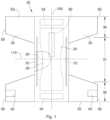
- FIG 1 is a plan view of an absorbent article, in this case a diaper 20, of the present invention in a flat, uncontracted state with portions of the structure being cut away to more clearly show the construction of the diaper.
- the portion of the diaper 20 that faces a wearer is oriented towards the viewer.
- the diaper 20 comprises a topsheet 24; an outer cover 26; an acquisition layer (not shown), and an absorbent core 28 that is positioned between at least a portion of the topsheet 24 and the backsheet 26.
- the absorbent article further comprises side panels 30, elasticized leg cuffs 32, elastic waist features 34, and a fastening system generally designated 40.
- the diaper 20 has a first waist region 36, a second waist region 38 opposed to the first waist region 36, and a crotch region 37 located between the first waist region 36 and the second waist region 38.
- the periphery of the diaper 20 is defined by the outer edges of the diaper 20 in which longitudinal edges 50 run generally parallel to a longitudinal centerline 100 of the diaper 20 and end edges 52 run between the longitudinal edges 50 generally parallel to a lateral centerline 110 of the diaper 20.
- the outermost surface of the backsheet/outer cover 26 forms the garment contacting surface (not shown) of the diaper 20, while the innermost surface of the topsheet 24 forms the body contacting surface (not shown) of the diaper 20.
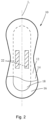
- FIG 2 illustrates an exemplary absorbent article 10, which can be a sanitary napkin or pantiliner, having a body facing surface 12 comprising a topsheet 14, a backsheet 16 joined to the topsheet 14, and an absorbent core 18.
- the absorbent article 10 can have a longitudinal axis "L" and may also be provided with additional features commonly found in napkins, including "wings” or “flaps” (not shown) as is known in the art and/or a fluid acquisition layer to promote fluid transport to the absorbent core 18.
- a topsheet of an absorbent article can have various optional characteristics, as is known in the art.
- the topsheet 14 can have channels embossed therein to directed fluid flow, and can have apertures therethrough to aid in fluid acquisition.
- the topsheet 14 of the absorbent article 10 of the present disclosure can have a skin care composition 22 disposed onto the topsheet 14.
- the topsheet can be configured to be compliant, soft feeling and non-irritating to the wearers skin and hair. Further, the topsheet can be liquid pervious, permitting liquids (e.g., menses and/or urine) to readily penetrate through its thickness.
- a suitable topsheet may be manufactured from a wide range of materials such as woven and nonwoven materials (e.g., a nonwoven web of fibers); polymeric materials such as apertured formed thermoplastic films, apertured plastic films, and hydroformed thermoplastic films; porous foams; reticulated foams; reticulated thermoplastic films; and thermoplastic scrims.
- Suitable woven and nonwoven materials can be comprised of natural fibers (e.g., wood or cotton fibers or treated cotton), synthetic fibers (e.g., polymeric fibers such as polyester, polypropylene, or polyethylene fibers) or from a combination of natural and synthetic fibers.
- the topsheet comprises a nonwoven web
- the web may be manufactured by a wide number of known techniques. For example, the web may be spunbonded, carded, wet-laid, meltblown, hydroentangled, combinations of the above, or the like.
- the backsheet of such an embodiment can be impervious to liquids (e.g., menses and/or urine) and can be manufactured from a thin plastic film, although other flexible impervious materials may also be used.
- the backsheet can prevent exudates absorbed and contained in the absorbent core from wetting articles which contact the absorbent article such as bedsheets, pants, pajamas and undergarments.
- the backsheet may thus comprise a woven or nonwoven material, polymeric films such as thermoplastic films of polyethylene or polypropylene, or composite materials such as film-coated nonwoven material.
- the backsheet can be a breathable backsheet such as that described in U.S. Patent No. 6,623,464 .
- the topsheet and backsheet can be positioned adjacent a body surface and a garment surface, respectively, of the absorbent core, such that the absorbent core is disposed between the topsheet and the backsheet.
- the absorbent core can be jointed with the topsheet, the backsheet, or both in any manner as is known by attachment means (not shown in FIG. 1 ) such as those known in the art. However, embodiments of the present disclosure are envisioned wherein portions of the entire absorbent core are unattached to either the topsheet, the backsheet, or both.
- the skin care composition can be applied such that during wear, at least some portion of the skin care composition will transfer from the treated article to the wearer's skin. That is, the skin care composition can either be applied directly to one or more wearer contacting surfaces, or can be applied in alternate locations or means such that the skin care composition is readily available for transfer from one or more wearer contacting surfaces during use without intervention by the user/caregiver. For example, materials positioned beneath the wearer contacting surface, encapsulated compositions, etc. Additionally, the skin care composition may be applied to other article regions for delivery to one or more of the wearer's hips, abdomen, back, waist, sides, thighs, etc.
- Nonlimiting examples of suitable methods include spraying, printing (e.g., flexographic printing), coating (e.g., contact slot coating, gravure coating), dipping, extrusion, or combinations of these application techniques, e.g. spraying the skin care composition on a rotating surface, such as a calender roll, then transfers the composition to the desired portion of the article.
- the skin care composition may be applied to a substrate as a solid or semi-solid material via a variety of methods. It is to be understood that different application techniques/equipment are suited for materials with rheological properties (e.g., shear viscosity, elastic modulus) in a particular range.
- Other suitable techniques for treating absorbent articles with skin care composition compositions are described in U.S. Patent No. 6,570,054 .
- the absorbent article comprises from about 2 mg to about 300 mg, in certain embodiments from about 5 mg to about 200 mg; and in certain embodiments from about 10 mg to about 150 mg of the skin care composition per absorbent article.
- the skin care composition can be applied to a portion of the absorbent article from about 2 gsm to about 100 gsm; from about 5 gsm to about 70 gsm, from about 1 gsm to about 40 gsm, from about 5 gsm to about 25 gsm, from about 10 gsm to about 20 gsm, and from about 10 gsm to about 60 gsm in the areas comprising the skin care composition.
- GSM grams per meter squared is derived from the mass of skin care composition divided by the area on which the skin care composition is applied.
- the skin care composition can be applied to the topsheet of the absorbent article (e.g., the wearer-facing surface of the topsheet).
- the skin care composition can be applied to the absorbent article in various defined patterns such as dot(s), stripe(s), square(s), circle(s), or oval(s).
- the stripe length can be up to the length of the absorbent article and the width can be from about 0.1mm to 50mm; from about 0.5mm to about 20mm; and from about 1mm to about 10mm.
- the skin care composition can be applied to specific regions of the absorbent article not limited to the longitudinal outer edge of the absorbent article, the area opposite the vaginal opening, or one end, or both ends of the absorbent article.
- specific regions of the absorbent article not limited to the longitudinal outer edge of the absorbent article, the area opposite the vaginal opening, or one end, or both ends of the absorbent article.
- the present disclosure relating to absorbent articles incorporating skin care compositions derived from renewable resources further provides means for which to communicate an environmental message to a consumer. Such messages could be displayed on the absorbent article (or related packaging).
- the related environmental message may identify the absorbent article and/or skin care composition as: being environmentally friendly or Earth friendly; having reduced petroleum (or oil) dependence or content; having reduced foreign petroleum (or oil) dependence or content; having reduced petrochemicals or having components that are petrochemical free; being made from renewable resources or having components made from renewable resources, and/or being made from plant-derived ingredients.
- This communication is of importance to consumers that may have an aversion to petrochemical use (e.g., consumers concerned about depletion of natural resources or consumers who find petrochemical based products unnatural or not environmentally friendly) and to consumers that are environmentally conscious. Without such a communication, the benefit of the present disclosure may be lost on some consumers.
- the communication may be effected in a variety of communication forms. Suitable communication forms include store displays, posters, billboard, computer programs, brochures, package literature, shelf information, videos, advertisements, internet web sites, pictograms, iconography, or any other suitable form of communication. The information could be available at stores, on television, in a computer-accessible form, in advertisements, or any other appropriate venue. Ideally, multiple communication forms may be employed to disseminate the related environmental message.
- the communication may be written, spoken, or delivered by way of one or more pictures, graphics, or icons.
- a television or internet based-advertisement may have narration, a voice-over, or other audible conveyance of the related environmental message.
- the related environmental message may be conveyed in a written form using any of the suitable communication forms listed above.
- the related environmental message may also include a message of petrochemical equivalence.
- Many renewable, naturally occurring, or non-petroleum derived materials may be known. However, these materials often lack the performance characteristics that consumers have come to expect when used in conjunction with skin care composition compositions. Therefore, a message of petroleum equivalence may be necessary to educate consumers that the skin care compositions derived from renewable resources, as described above, exhibit equivalent or better performance characteristics as compared to petroleum derived skin care compositions.
- a suitable petrochemical equivalence message can include comparisons to absorbent articles and/or skin care compositions that are not derived from a renewable resource. This message conveys both the related environmental message and the message of petrochemical equivalence.
- Differential Scanning Calorimetry is an analytical technique used to measure thermal properties of a test sample.
- a test sample is analyzed with a Differential Scanning Calorimeter to determine temperature ranges over which phase changes occur. Specifically, the percent melt at 3 different temperatures (25°C, 35°C, 50°C) is determined in this execution.
- a suitable DSC is the TA Discovery interfaced with Trios software (available from TA Instruments, New Castle, Delaware, 19720, USA), or equivalent. The measurement system is calibrated and operated as per the manufacturers' instructions, and all measurements are performed in a laboratory maintained at 23 °C ⁇ 2 C° and 50% ⁇ 2% relative humidity. Test samples are conditioned under these same environmental conditions for at least 2 hours prior to testing.
- a test sample of lotion if not readily available as a neat sample, is obtained by extracting it from the lotion-coated substrate excised from an absorbent article using an appropriate solvent that will solvate all components of the lotion composition (e.g. reagent grade methylene chloride, available from VWR International, or equivalent).
- Extract the entire lotion-coated substrate with an excess of chosen solvent then drive off solvent under nitrogen with minimal heat as necessary. Collect a total of about 9 milligrams of the lotion test sample to complete the DSC analysis.
- DSC sample pan and lid e.g. Tzero pan (#901683.901) and lid (#90167.701) available from TA Instruments). Record the mass of the test sample to the nearest 0.001 mg and load onto the instrument.
- the DSC instrument is programmed to run two heating cycles as follows. Equilibrate at the starting temperature of -30°C for 5 minutes. Ramp up to 110°C at a rate of 10°C/minute. Hold at 110°C for 5 minutes, then ramp down to -30°C at a rate of 10°C/minute. Hold at -30°C for 5 minutes then ramp back up to 110°C at a rate of 10°C/minute. Heat flow (W/g) and temperature (°C) data are collected throughout the test.
Landscapes
- Health & Medical Sciences (AREA)
- Life Sciences & Earth Sciences (AREA)
- Animal Behavior & Ethology (AREA)
- General Health & Medical Sciences (AREA)
- Public Health (AREA)
- Veterinary Medicine (AREA)
- Epidemiology (AREA)
- Engineering & Computer Science (AREA)
- Chemical & Material Sciences (AREA)
- Birds (AREA)
- Biomedical Technology (AREA)
- Oil, Petroleum & Natural Gas (AREA)
- Materials Engineering (AREA)
- Hematology (AREA)
- Dermatology (AREA)
- Mycology (AREA)
- Heart & Thoracic Surgery (AREA)
- Vascular Medicine (AREA)
- Biotechnology (AREA)
- Botany (AREA)
- Microbiology (AREA)
- Zoology (AREA)
- Chemical Kinetics & Catalysis (AREA)
- Pharmacology & Pharmacy (AREA)
- Medicinal Chemistry (AREA)
- General Chemical & Material Sciences (AREA)
- Cosmetics (AREA)
- Absorbent Articles And Supports Therefor (AREA)
Claims (9)
- Hautpflegezusammensetzung, umfassend:a. von zu 45 Gew.-% bis 70 Gew.-% der Hautpflegezusammensetzung den wenigstens einen Weichmacher, der aus einem nachwachsenden Rohstoff abgeleitet wird; undb. von zu 30 Gew.-% bis 55 Gew.-% der Hautpflegezusammensetzung das wenigstens eine Immobilisierungsmittel, das aus einem nachwachsenden Rohstoff abgeleitet wird; wobei die Hautpflegezusammensetzung eine DSC-Prozentschmelze bei 50 °C von 10 % bis 50 % aufweist;wobei der Weichmacher ausgewählt ist aus der Gruppe bestehend aus Avocadoöl, Kokosnusswachs, Sheabutter, Rizinusöl, gehärtetem Rizinusöl, Kokosnussöl, Olivenöl, Pflanzenöl und Kombinationen davon;wobei das Immobilisierungsmittel ausgewählt ist aus der Gruppe bestehend aus Bienenwachs, Stearylalkohol und Kombinationen davon.
- Hautpflegezusammensetzung nach Anspruch 1, wobei einer oder beide des Weichmachers und des Immobilisierungsmittels pflanzlich sind.
- Hautpflegezusammensetzung nach einem der Ansprüche 1 oder 2, wobei das Immobilisierungsmittel Stearylalkohol ist.
- Hautpflegezusammensetzung nach einem der vorstehenden Ansprüche, wobei der Weichmacher einen biobasierten Gehalt von 10 % bis 100 % aufweist, gemessen unter Verwendung von ASTM D6866-10, Verfahren B.
- Hautpflegezusammensetzung nach einem der vorstehenden Ansprüche, wobei die Hautpflegezusammensetzung eine Nadelpenetrationshärte von 5 bis 365 Millimeter aufweist, gemessen unter Verwendung von ASTM-Verfahren D 1321.
- Hautpflegezusammensetzung nach einem der vorstehenden Ansprüche, wobei die Hautpflegezusammensetzung ferner wenigstens ein Tensid umfasst.
- Hautpflegezusammensetzung nach einem der vorstehenden Ansprüche, wobei die Hautpflegezusammensetzung ferner einen Hautpflegewirkstoff umfasst, der ausgewählt ist aus der Gruppe bestehend aus Zinkoxid, Vitaminen und Derivaten davon; Sonnenschutzmitteln; Konservierungsmitteln; aknehemmenden Arzneimitteln; Antioxidationsmitteln; Linderung und Heilung gereizter Haut; Chelatoren und Komplexbildnern; ätherischen Ölen, Hautpflegesubstanzen, Protonengebern; Protease- und anderen Enzyminhibitoren; Antimikrobiotika; Feuchthaltemitteln; multifunktionellen Mitteln und Mischungen davon.
- Hautpflegezusammensetzung nach einem der vorstehenden Ansprüche, wobei die Hautpflegezusammensetzung ferner ein Antioxidationsmittel umfasst.
- Absorptionsartikel, umfassend:eine Oberschicht;eine Unterschicht;einen Absorptionskern, der wenigstens teilweise zwischen der Oberschicht und der Unterschicht angeordnet ist; und die Hautpflegezusammensetzung nach einem der vorstehenden Ansprüche;wobei die Hautpflegezusammensetzung auf wenigstens einem Teil der Oberschicht angeordnet ist.
Applications Claiming Priority (2)
| Application Number | Priority Date | Filing Date | Title |
|---|---|---|---|
| US201962857965P | 2019-06-06 | 2019-06-06 | |
| PCT/US2020/070121 WO2020247980A1 (en) | 2019-06-06 | 2020-06-04 | Skin care compositions derived from renewable resources and absorbent articles comprising same |
Publications (2)
| Publication Number | Publication Date |
|---|---|
| EP3979974A1 EP3979974A1 (de) | 2022-04-13 |
| EP3979974B1 true EP3979974B1 (de) | 2024-09-25 |
Family
ID=71996076
Family Applications (1)
| Application Number | Title | Priority Date | Filing Date |
|---|---|---|---|
| EP20753853.9A Active EP3979974B1 (de) | 2019-06-06 | 2020-06-04 | Hautpflegezusammensetzungen aus erneuerbaren ressourcen und diese enthaltende absorbierende artikel |
Country Status (5)
| Country | Link |
|---|---|
| US (1) | US20200383880A1 (de) |
| EP (1) | EP3979974B1 (de) |
| JP (2) | JP7797205B2 (de) |
| CN (1) | CN113905716A (de) |
| WO (1) | WO2020247980A1 (de) |
Cited By (1)
| Publication number | Priority date | Publication date | Assignee | Title |
|---|---|---|---|---|
| US20240238134A1 (en) * | 2020-02-06 | 2024-07-18 | Kimberly-Clark Worldwide, Inc. | Topically treated tissue product |
Families Citing this family (2)
| Publication number | Priority date | Publication date | Assignee | Title |
|---|---|---|---|---|
| US20220387232A1 (en) | 2021-06-08 | 2022-12-08 | The Procter & Gamble Company | Absorbent articles including a waist panel with a frangible bond |
| CN121941475A (zh) | 2023-09-26 | 2026-04-28 | 宝洁公司 | 具有改善的紧固的可重复紧固的吸收制品 |
Family Cites Families (23)
| Publication number | Priority date | Publication date | Assignee | Title |
|---|---|---|---|---|
| US5607760A (en) * | 1995-08-03 | 1997-03-04 | The Procter & Gamble Company | Disposable absorbent article having a lotioned topsheet containing an emollient and a polyol polyester immobilizing agent |
| US6623464B2 (en) | 1996-06-17 | 2003-09-23 | The Procter & Gamble Company | Breathable absorbent articles |
| JPH10251132A (ja) * | 1997-03-13 | 1998-09-22 | Mansouri Zara | 物質を皮膚内へ送達する方法およびそれに使用される組成物 |
| US6287581B1 (en) * | 1999-04-23 | 2001-09-11 | Kimberly-Clark Worldwide, Inc. | Absorbent articles providing skin health benefits |
| US6570054B1 (en) | 1999-05-21 | 2003-05-27 | The Procter & Gamble Company | Absorbent article having a stable skin care composition |
| JP5148790B2 (ja) | 2000-09-28 | 2013-02-20 | ユニ・チャーム株式会社 | 吸収性物品及び吸収性物品用バリア剤 |
| CA2357516A1 (en) * | 2000-09-28 | 2002-03-28 | Uni-Charm Corporation | Absorbent article and barrier agent for absorbent article |
| JP5148791B2 (ja) | 2000-09-28 | 2013-02-20 | ユニ・チャーム株式会社 | 吸収性物品及び吸収性物品用バリア剤 |
| US6656168B2 (en) | 2001-12-18 | 2003-12-02 | Kimberly-Clark Worldwide, Inc. | Feminine care product with discrete areas of a skin wellness additive |
| US20030130636A1 (en) | 2001-12-22 | 2003-07-10 | Brock Earl David | System for improving skin health of absorbent article wearers |
| US7060867B2 (en) * | 2002-11-27 | 2006-06-13 | Kimberly-Clark Worldwide, Inc. | Absorbent article with a body facing liner having discretely placed lotion deposits |
| US7485373B2 (en) * | 2003-09-11 | 2009-02-03 | Kimberly-Clark Worldwide, Inc. | Lotioned tissue product with improved stability |
| US20070219521A1 (en) | 2006-03-17 | 2007-09-20 | The Procter & Gamble Company | Absorbent article comprising a synthetic polymer derived from a renewable resource and methods of producing said article |
| JP2008222673A (ja) | 2007-03-15 | 2008-09-25 | Serarika Noda:Kk | 油性化粧料 |
| US7851663B2 (en) | 2007-04-16 | 2010-12-14 | Syntroleum Corporation | Process for producing synthetic petroleum jelly |
| RU2493878C1 (ru) * | 2009-09-18 | 2013-09-27 | Дзе Проктер Энд Гэмбл Компани | Основа, содержащая композицию в виде лосьона, ограничивающая прилипание фекалий или менструальных выделений к коже |
| US20130018343A1 (en) * | 2011-07-13 | 2013-01-17 | Raphael Warren | Lotions Derived From Renewable Resources and Absorbent Articles Comprising Same |
| EP3360600B2 (de) * | 2011-11-14 | 2026-08-12 | Inolex Investment Corporation | Natürliche silikonersatzstoffe für silikonflüssigkeiten in körperpflegeformulierungen |
| WO2014110096A1 (en) * | 2013-01-11 | 2014-07-17 | The Procter & Gamble Company | Lotions comprising emollients of a renewable resource and an immobilizing agent |
| JP6744083B2 (ja) | 2015-01-26 | 2020-08-19 | 株式会社ネオネクリエーション | アルガンバター/アプリコットバター及びそれを配合した油性固形化粧料 |
| AU2018201971A1 (en) | 2017-03-20 | 2018-10-04 | Carla Maree Dillon | A Salve and Methods of Preparing and Use Thereof |
| CN107898672A (zh) * | 2017-12-29 | 2018-04-13 | 扬州中汇生物技术有限公司 | 一种修复型护臀霜及其制备方法 |
| CN108743474B (zh) * | 2018-06-28 | 2021-05-14 | 广州澳希亚实业有限公司 | 一种油膏状宝宝护臀膏及其制备方法 |
-
2020
- 2020-06-04 EP EP20753853.9A patent/EP3979974B1/de active Active
- 2020-06-04 JP JP2021571628A patent/JP7797205B2/ja active Active
- 2020-06-04 WO PCT/US2020/070121 patent/WO2020247980A1/en not_active Ceased
- 2020-06-04 CN CN202080039064.6A patent/CN113905716A/zh active Pending
- 2020-06-04 US US16/892,349 patent/US20200383880A1/en not_active Abandoned
-
2023
- 2023-10-02 JP JP2023171645A patent/JP7688086B2/ja active Active
Cited By (2)
| Publication number | Priority date | Publication date | Assignee | Title |
|---|---|---|---|---|
| US20240238134A1 (en) * | 2020-02-06 | 2024-07-18 | Kimberly-Clark Worldwide, Inc. | Topically treated tissue product |
| US12329621B2 (en) * | 2020-02-06 | 2025-06-17 | Kimberly-Clark Worldwide, Inc. | Topically treated tissue product |
Also Published As
| Publication number | Publication date |
|---|---|
| EP3979974A1 (de) | 2022-04-13 |
| JP7797205B2 (ja) | 2026-01-13 |
| JP2022535530A (ja) | 2022-08-09 |
| US20200383880A1 (en) | 2020-12-10 |
| JP7688086B2 (ja) | 2025-06-03 |
| CN113905716A (zh) | 2022-01-07 |
| WO2020247980A1 (en) | 2020-12-10 |
| JP2024009854A (ja) | 2024-01-23 |
Similar Documents
| Publication | Publication Date | Title |
|---|---|---|
| JP7688086B2 (ja) | 再生可能資源由来のスキンケア組成物及びそれを含む吸収性物品 | |
| JP7439020B2 (ja) | 育毛組成物 | |
| US6803496B2 (en) | Method for maintaining or improving skin health | |
| US6153209A (en) | Article having a transferable breathable skin care composition thereon | |
| KR101419622B1 (ko) | 오메가-6 지방산을 포함하는 로션 조성물을 포함하는 흡수 용품 | |
| US6533765B1 (en) | Absorbent articles having a lotion resistant adhesive | |
| EP1073483B1 (de) | Mit einem körperpflegemittel versehener absorbierender gegenstand | |
| SA99191189B1 (ar) | طريقة لتحسين حالة الجلد | |
| MX2008011419A (es) | Articulos absorbentes con lociones. | |
| US20130144239A1 (en) | Lotions derived from renewable resources and absorbent articles comprising same | |
| US20130018343A1 (en) | Lotions Derived From Renewable Resources and Absorbent Articles Comprising Same | |
| WO2014110096A1 (en) | Lotions comprising emollients of a renewable resource and an immobilizing agent | |
| AU751930B2 (en) | Anti-enzyme compositions comprising ethylenediamine disuccinic acid | |
| CN110339092A (zh) | 一种具有防晒及保湿功能的均相护理组合物 | |
| MXPA00008934A (en) | Disposable absorbent article having a skin care composition containing an enzyme inhibitor | |
| CZ20002788A3 (cs) | Prostředek pro snížení enzymové aktivity a jeho použití | |
| HK1039726B (en) | Disposable premoistened wipe containing an antimicrobial protease inhibitor |
Legal Events
| Date | Code | Title | Description |
|---|---|---|---|
| STAA | Information on the status of an ep patent application or granted ep patent |
Free format text: STATUS: UNKNOWN |
|
| STAA | Information on the status of an ep patent application or granted ep patent |
Free format text: STATUS: THE INTERNATIONAL PUBLICATION HAS BEEN MADE |
|
| PUAI | Public reference made under article 153(3) epc to a published international application that has entered the european phase |
Free format text: ORIGINAL CODE: 0009012 |
|
| STAA | Information on the status of an ep patent application or granted ep patent |
Free format text: STATUS: REQUEST FOR EXAMINATION WAS MADE |
|
| 17P | Request for examination filed |
Effective date: 20211129 |
|
| AK | Designated contracting states |
Kind code of ref document: A1 Designated state(s): AL AT BE BG CH CY CZ DE DK EE ES FI FR GB GR HR HU IE IS IT LI LT LU LV MC MK MT NL NO PL PT RO RS SE SI SK SM TR |
|
| DAV | Request for validation of the european patent (deleted) | ||
| DAX | Request for extension of the european patent (deleted) | ||
| P01 | Opt-out of the competence of the unified patent court (upc) registered |
Effective date: 20230429 |
|
| REG | Reference to a national code |
Ref country code: DE Ref legal event code: R079 Free format text: PREVIOUS MAIN CLASS: A61K0008020000 Ipc: A61L0015440000 Ref document number: 602020038326 Country of ref document: DE |
|
| GRAP | Despatch of communication of intention to grant a patent |
Free format text: ORIGINAL CODE: EPIDOSNIGR1 |
|
| STAA | Information on the status of an ep patent application or granted ep patent |
Free format text: STATUS: GRANT OF PATENT IS INTENDED |
|
| RIC1 | Information provided on ipc code assigned before grant |
Ipc: A61Q 19/00 20060101ALI20240319BHEP Ipc: A61K 8/92 20060101ALI20240319BHEP Ipc: A61K 8/02 20060101ALI20240319BHEP Ipc: A61L 15/52 20060101ALI20240319BHEP Ipc: A61L 15/44 20060101AFI20240319BHEP |
|
| INTG | Intention to grant announced |
Effective date: 20240423 |
|
| GRAS | Grant fee paid |
Free format text: ORIGINAL CODE: EPIDOSNIGR3 |
|
| GRAA | (expected) grant |
Free format text: ORIGINAL CODE: 0009210 |
|
| STAA | Information on the status of an ep patent application or granted ep patent |
Free format text: STATUS: THE PATENT HAS BEEN GRANTED |
|
| AK | Designated contracting states |
Kind code of ref document: B1 Designated state(s): AL AT BE BG CH CY CZ DE DK EE ES FI FR GB GR HR HU IE IS IT LI LT LU LV MC MK MT NL NO PL PT RO RS SE SI SK SM TR |
|
| REG | Reference to a national code |
Ref country code: GB Ref legal event code: FG4D |
|
| REG | Reference to a national code |
Ref country code: CH Ref legal event code: EP |
|
| REG | Reference to a national code |
Ref country code: NL Ref legal event code: FP |
|
| REG | Reference to a national code |
Ref country code: DE Ref legal event code: R096 Ref document number: 602020038326 Country of ref document: DE |
|
| REG | Reference to a national code |
Ref country code: IE Ref legal event code: FG4D |
|
| REG | Reference to a national code |
Ref country code: LT Ref legal event code: MG9D |
|
| PG25 | Lapsed in a contracting state [announced via postgrant information from national office to epo] |
Ref country code: NO Free format text: LAPSE BECAUSE OF FAILURE TO SUBMIT A TRANSLATION OF THE DESCRIPTION OR TO PAY THE FEE WITHIN THE PRESCRIBED TIME-LIMIT Effective date: 20241225 |
|
| PG25 | Lapsed in a contracting state [announced via postgrant information from national office to epo] |
Ref country code: GR Free format text: LAPSE BECAUSE OF FAILURE TO SUBMIT A TRANSLATION OF THE DESCRIPTION OR TO PAY THE FEE WITHIN THE PRESCRIBED TIME-LIMIT Effective date: 20241226 Ref country code: FI Free format text: LAPSE BECAUSE OF FAILURE TO SUBMIT A TRANSLATION OF THE DESCRIPTION OR TO PAY THE FEE WITHIN THE PRESCRIBED TIME-LIMIT Effective date: 20240925 |
|
| PG25 | Lapsed in a contracting state [announced via postgrant information from national office to epo] |
Ref country code: BG Free format text: LAPSE BECAUSE OF FAILURE TO SUBMIT A TRANSLATION OF THE DESCRIPTION OR TO PAY THE FEE WITHIN THE PRESCRIBED TIME-LIMIT Effective date: 20240925 |
|
| PG25 | Lapsed in a contracting state [announced via postgrant information from national office to epo] |
Ref country code: LV Free format text: LAPSE BECAUSE OF FAILURE TO SUBMIT A TRANSLATION OF THE DESCRIPTION OR TO PAY THE FEE WITHIN THE PRESCRIBED TIME-LIMIT Effective date: 20240925 |
|
| PG25 | Lapsed in a contracting state [announced via postgrant information from national office to epo] |
Ref country code: RS Free format text: LAPSE BECAUSE OF FAILURE TO SUBMIT A TRANSLATION OF THE DESCRIPTION OR TO PAY THE FEE WITHIN THE PRESCRIBED TIME-LIMIT Effective date: 20241225 |
|
| PG25 | Lapsed in a contracting state [announced via postgrant information from national office to epo] |
Ref country code: RS Free format text: LAPSE BECAUSE OF FAILURE TO SUBMIT A TRANSLATION OF THE DESCRIPTION OR TO PAY THE FEE WITHIN THE PRESCRIBED TIME-LIMIT Effective date: 20241225 Ref country code: NO Free format text: LAPSE BECAUSE OF FAILURE TO SUBMIT A TRANSLATION OF THE DESCRIPTION OR TO PAY THE FEE WITHIN THE PRESCRIBED TIME-LIMIT Effective date: 20241225 Ref country code: LV Free format text: LAPSE BECAUSE OF FAILURE TO SUBMIT A TRANSLATION OF THE DESCRIPTION OR TO PAY THE FEE WITHIN THE PRESCRIBED TIME-LIMIT Effective date: 20240925 Ref country code: GR Free format text: LAPSE BECAUSE OF FAILURE TO SUBMIT A TRANSLATION OF THE DESCRIPTION OR TO PAY THE FEE WITHIN THE PRESCRIBED TIME-LIMIT Effective date: 20241226 Ref country code: FI Free format text: LAPSE BECAUSE OF FAILURE TO SUBMIT A TRANSLATION OF THE DESCRIPTION OR TO PAY THE FEE WITHIN THE PRESCRIBED TIME-LIMIT Effective date: 20240925 Ref country code: BG Free format text: LAPSE BECAUSE OF FAILURE TO SUBMIT A TRANSLATION OF THE DESCRIPTION OR TO PAY THE FEE WITHIN THE PRESCRIBED TIME-LIMIT Effective date: 20240925 |
|
| REG | Reference to a national code |
Ref country code: AT Ref legal event code: MK05 Ref document number: 1726133 Country of ref document: AT Kind code of ref document: T Effective date: 20240925 |
|
| PG25 | Lapsed in a contracting state [announced via postgrant information from national office to epo] |
Ref country code: PT Free format text: LAPSE BECAUSE OF FAILURE TO SUBMIT A TRANSLATION OF THE DESCRIPTION OR TO PAY THE FEE WITHIN THE PRESCRIBED TIME-LIMIT Effective date: 20250127 Ref country code: IS Free format text: LAPSE BECAUSE OF FAILURE TO SUBMIT A TRANSLATION OF THE DESCRIPTION OR TO PAY THE FEE WITHIN THE PRESCRIBED TIME-LIMIT Effective date: 20250125 |
|
| PG25 | Lapsed in a contracting state [announced via postgrant information from national office to epo] |
Ref country code: RO Free format text: LAPSE BECAUSE OF FAILURE TO SUBMIT A TRANSLATION OF THE DESCRIPTION OR TO PAY THE FEE WITHIN THE PRESCRIBED TIME-LIMIT Effective date: 20240925 Ref country code: SM Free format text: LAPSE BECAUSE OF FAILURE TO SUBMIT A TRANSLATION OF THE DESCRIPTION OR TO PAY THE FEE WITHIN THE PRESCRIBED TIME-LIMIT Effective date: 20240925 |
|
| PG25 | Lapsed in a contracting state [announced via postgrant information from national office to epo] |
Ref country code: ES Free format text: LAPSE BECAUSE OF FAILURE TO SUBMIT A TRANSLATION OF THE DESCRIPTION OR TO PAY THE FEE WITHIN THE PRESCRIBED TIME-LIMIT Effective date: 20240925 |
|
| PG25 | Lapsed in a contracting state [announced via postgrant information from national office to epo] |
Ref country code: AT Free format text: LAPSE BECAUSE OF FAILURE TO SUBMIT A TRANSLATION OF THE DESCRIPTION OR TO PAY THE FEE WITHIN THE PRESCRIBED TIME-LIMIT Effective date: 20240925 Ref country code: EE Free format text: LAPSE BECAUSE OF FAILURE TO SUBMIT A TRANSLATION OF THE DESCRIPTION OR TO PAY THE FEE WITHIN THE PRESCRIBED TIME-LIMIT Effective date: 20240925 |
|
| PG25 | Lapsed in a contracting state [announced via postgrant information from national office to epo] |
Ref country code: CZ Free format text: LAPSE BECAUSE OF FAILURE TO SUBMIT A TRANSLATION OF THE DESCRIPTION OR TO PAY THE FEE WITHIN THE PRESCRIBED TIME-LIMIT Effective date: 20240925 Ref country code: PL Free format text: LAPSE BECAUSE OF FAILURE TO SUBMIT A TRANSLATION OF THE DESCRIPTION OR TO PAY THE FEE WITHIN THE PRESCRIBED TIME-LIMIT Effective date: 20240925 |
|
| PG25 | Lapsed in a contracting state [announced via postgrant information from national office to epo] |
Ref country code: SK Free format text: LAPSE BECAUSE OF FAILURE TO SUBMIT A TRANSLATION OF THE DESCRIPTION OR TO PAY THE FEE WITHIN THE PRESCRIBED TIME-LIMIT Effective date: 20240925 |
|
| REG | Reference to a national code |
Ref country code: DE Ref legal event code: R097 Ref document number: 602020038326 Country of ref document: DE |
|
| PG25 | Lapsed in a contracting state [announced via postgrant information from national office to epo] |
Ref country code: DK Free format text: LAPSE BECAUSE OF FAILURE TO SUBMIT A TRANSLATION OF THE DESCRIPTION OR TO PAY THE FEE WITHIN THE PRESCRIBED TIME-LIMIT Effective date: 20240925 |
|
| PLBE | No opposition filed within time limit |
Free format text: ORIGINAL CODE: 0009261 |
|
| STAA | Information on the status of an ep patent application or granted ep patent |
Free format text: STATUS: NO OPPOSITION FILED WITHIN TIME LIMIT |
|
| 26N | No opposition filed |
Effective date: 20250626 |
|
| PG25 | Lapsed in a contracting state [announced via postgrant information from national office to epo] |
Ref country code: SE Free format text: LAPSE BECAUSE OF FAILURE TO SUBMIT A TRANSLATION OF THE DESCRIPTION OR TO PAY THE FEE WITHIN THE PRESCRIBED TIME-LIMIT Effective date: 20240925 |
|
| PG25 | Lapsed in a contracting state [announced via postgrant information from national office to epo] |
Ref country code: HR Free format text: LAPSE BECAUSE OF FAILURE TO SUBMIT A TRANSLATION OF THE DESCRIPTION OR TO PAY THE FEE WITHIN THE PRESCRIBED TIME-LIMIT Effective date: 20240925 |
|
| REG | Reference to a national code |
Ref country code: CH Ref legal event code: H13 Free format text: ST27 STATUS EVENT CODE: U-0-0-H10-H13 (AS PROVIDED BY THE NATIONAL OFFICE) Effective date: 20260127 |
|
| PG25 | Lapsed in a contracting state [announced via postgrant information from national office to epo] |
Ref country code: MC Free format text: LAPSE BECAUSE OF FAILURE TO SUBMIT A TRANSLATION OF THE DESCRIPTION OR TO PAY THE FEE WITHIN THE PRESCRIBED TIME-LIMIT Effective date: 20240925 |
|
| PG25 | Lapsed in a contracting state [announced via postgrant information from national office to epo] |
Ref country code: LU Free format text: LAPSE BECAUSE OF NON-PAYMENT OF DUE FEES Effective date: 20250604 |
|
| REG | Reference to a national code |
Ref country code: BE Ref legal event code: MM Effective date: 20250630 |
|
| PG25 | Lapsed in a contracting state [announced via postgrant information from national office to epo] |
Ref country code: IE Free format text: LAPSE BECAUSE OF NON-PAYMENT OF DUE FEES Effective date: 20250604 |
|
| PG25 | Lapsed in a contracting state [announced via postgrant information from national office to epo] |
Ref country code: BE Free format text: LAPSE BECAUSE OF NON-PAYMENT OF DUE FEES Effective date: 20250630 |
|
| PG25 | Lapsed in a contracting state [announced via postgrant information from national office to epo] |
Ref country code: CH Free format text: LAPSE BECAUSE OF NON-PAYMENT OF DUE FEES Effective date: 20250630 |
|
| PGFP | Annual fee paid to national office [announced via postgrant information from national office to epo] |
Ref country code: NL Payment date: 20260514 Year of fee payment: 7 |
|
| PG25 | Lapsed in a contracting state [announced via postgrant information from national office to epo] |
Ref country code: LT Free format text: LAPSE BECAUSE OF FAILURE TO SUBMIT A TRANSLATION OF THE DESCRIPTION OR TO PAY THE FEE WITHIN THE PRESCRIBED TIME-LIMIT Effective date: 20240925 |
|
| PGFP | Annual fee paid to national office [announced via postgrant information from national office to epo] |
Ref country code: GB Payment date: 20260507 Year of fee payment: 7 |
|
| PGFP | Annual fee paid to national office [announced via postgrant information from national office to epo] |
Ref country code: IT Payment date: 20260522 Year of fee payment: 7 |
|
| PGFP | Annual fee paid to national office [announced via postgrant information from national office to epo] |
Ref country code: DE Payment date: 20260506 Year of fee payment: 7 |
|
| PGFP | Annual fee paid to national office [announced via postgrant information from national office to epo] |
Ref country code: FR Payment date: 20260511 Year of fee payment: 7 |
|
| PG25 | Lapsed in a contracting state [announced via postgrant information from national office to epo] |
Ref country code: CY Free format text: LAPSE BECAUSE OF FAILURE TO SUBMIT A TRANSLATION OF THE DESCRIPTION OR TO PAY THE FEE WITHIN THE PRESCRIBED TIME-LIMIT Effective date: 20240925 |
|
| PG25 | Lapsed in a contracting state [announced via postgrant information from national office to epo] |
Ref country code: TR Free format text: LAPSE BECAUSE OF FAILURE TO SUBMIT A TRANSLATION OF THE DESCRIPTION OR TO PAY THE FEE WITHIN THE PRESCRIBED TIME-LIMIT Effective date: 20240925 |