EP3979647B1 - Codierungs-/decodierungsverfahren und -vorrichtung und speichermedium - Google Patents
Codierungs-/decodierungsverfahren und -vorrichtung und speichermedium Download PDFInfo
- Publication number
- EP3979647B1 EP3979647B1 EP20825445.8A EP20825445A EP3979647B1 EP 3979647 B1 EP3979647 B1 EP 3979647B1 EP 20825445 A EP20825445 A EP 20825445A EP 3979647 B1 EP3979647 B1 EP 3979647B1
- Authority
- EP
- European Patent Office
- Prior art keywords
- current block
- line
- prediction mode
- indication information
- reference line
- Prior art date
- Legal status (The legal status is an assumption and is not a legal conclusion. Google has not performed a legal analysis and makes no representation as to the accuracy of the status listed.)
- Active
Links
Images














Classifications
-
- H—ELECTRICITY
- H04—ELECTRIC COMMUNICATION TECHNIQUE
- H04N—PICTORIAL COMMUNICATION, e.g. TELEVISION
- H04N19/00—Methods or arrangements for coding, decoding, compressing or decompressing digital video signals
- H04N19/10—Methods or arrangements for coding, decoding, compressing or decompressing digital video signals using adaptive coding
- H04N19/102—Methods or arrangements for coding, decoding, compressing or decompressing digital video signals using adaptive coding characterised by the element, parameter or selection affected or controlled by the adaptive coding
- H04N19/13—Adaptive entropy coding, e.g. adaptive variable length coding [AVLC] or context adaptive binary arithmetic coding [CABAC]
-
- H—ELECTRICITY
- H04—ELECTRIC COMMUNICATION TECHNIQUE
- H04N—PICTORIAL COMMUNICATION, e.g. TELEVISION
- H04N19/00—Methods or arrangements for coding, decoding, compressing or decompressing digital video signals
- H04N19/10—Methods or arrangements for coding, decoding, compressing or decompressing digital video signals using adaptive coding
- H04N19/102—Methods or arrangements for coding, decoding, compressing or decompressing digital video signals using adaptive coding characterised by the element, parameter or selection affected or controlled by the adaptive coding
- H04N19/103—Selection of coding mode or of prediction mode
-
- H—ELECTRICITY
- H04—ELECTRIC COMMUNICATION TECHNIQUE
- H04N—PICTORIAL COMMUNICATION, e.g. TELEVISION
- H04N19/00—Methods or arrangements for coding, decoding, compressing or decompressing digital video signals
- H04N19/10—Methods or arrangements for coding, decoding, compressing or decompressing digital video signals using adaptive coding
- H04N19/102—Methods or arrangements for coding, decoding, compressing or decompressing digital video signals using adaptive coding characterised by the element, parameter or selection affected or controlled by the adaptive coding
- H04N19/103—Selection of coding mode or of prediction mode
- H04N19/105—Selection of the reference unit for prediction within a chosen coding or prediction mode, e.g. adaptive choice of position and number of pixels used for prediction
-
- H—ELECTRICITY
- H04—ELECTRIC COMMUNICATION TECHNIQUE
- H04N—PICTORIAL COMMUNICATION, e.g. TELEVISION
- H04N19/00—Methods or arrangements for coding, decoding, compressing or decompressing digital video signals
- H04N19/10—Methods or arrangements for coding, decoding, compressing or decompressing digital video signals using adaptive coding
- H04N19/102—Methods or arrangements for coding, decoding, compressing or decompressing digital video signals using adaptive coding characterised by the element, parameter or selection affected or controlled by the adaptive coding
- H04N19/103—Selection of coding mode or of prediction mode
- H04N19/11—Selection of coding mode or of prediction mode among a plurality of spatial predictive coding modes
-
- H—ELECTRICITY
- H04—ELECTRIC COMMUNICATION TECHNIQUE
- H04N—PICTORIAL COMMUNICATION, e.g. TELEVISION
- H04N19/00—Methods or arrangements for coding, decoding, compressing or decompressing digital video signals
- H04N19/10—Methods or arrangements for coding, decoding, compressing or decompressing digital video signals using adaptive coding
- H04N19/102—Methods or arrangements for coding, decoding, compressing or decompressing digital video signals using adaptive coding characterised by the element, parameter or selection affected or controlled by the adaptive coding
- H04N19/119—Adaptive subdivision aspects, e.g. subdivision of a picture into rectangular or non-rectangular coding blocks
-
- H—ELECTRICITY
- H04—ELECTRIC COMMUNICATION TECHNIQUE
- H04N—PICTORIAL COMMUNICATION, e.g. TELEVISION
- H04N19/00—Methods or arrangements for coding, decoding, compressing or decompressing digital video signals
- H04N19/10—Methods or arrangements for coding, decoding, compressing or decompressing digital video signals using adaptive coding
- H04N19/134—Methods or arrangements for coding, decoding, compressing or decompressing digital video signals using adaptive coding characterised by the element, parameter or criterion affecting or controlling the adaptive coding
- H04N19/146—Data rate or code amount at the encoder output
- H04N19/147—Data rate or code amount at the encoder output according to rate distortion criteria
-
- H—ELECTRICITY
- H04—ELECTRIC COMMUNICATION TECHNIQUE
- H04N—PICTORIAL COMMUNICATION, e.g. TELEVISION
- H04N19/00—Methods or arrangements for coding, decoding, compressing or decompressing digital video signals
- H04N19/10—Methods or arrangements for coding, decoding, compressing or decompressing digital video signals using adaptive coding
- H04N19/134—Methods or arrangements for coding, decoding, compressing or decompressing digital video signals using adaptive coding characterised by the element, parameter or criterion affecting or controlling the adaptive coding
- H04N19/157—Assigned coding mode, i.e. the coding mode being predefined or preselected to be further used for selection of another element or parameter
- H04N19/159—Prediction type, e.g. intra-frame, inter-frame or bidirectional frame prediction
-
- H—ELECTRICITY
- H04—ELECTRIC COMMUNICATION TECHNIQUE
- H04N—PICTORIAL COMMUNICATION, e.g. TELEVISION
- H04N19/00—Methods or arrangements for coding, decoding, compressing or decompressing digital video signals
- H04N19/10—Methods or arrangements for coding, decoding, compressing or decompressing digital video signals using adaptive coding
- H04N19/169—Methods or arrangements for coding, decoding, compressing or decompressing digital video signals using adaptive coding characterised by the coding unit, i.e. the structural portion or semantic portion of the video signal being the object or the subject of the adaptive coding
- H04N19/17—Methods or arrangements for coding, decoding, compressing or decompressing digital video signals using adaptive coding characterised by the coding unit, i.e. the structural portion or semantic portion of the video signal being the object or the subject of the adaptive coding the unit being an image region, e.g. an object
- H04N19/176—Methods or arrangements for coding, decoding, compressing or decompressing digital video signals using adaptive coding characterised by the coding unit, i.e. the structural portion or semantic portion of the video signal being the object or the subject of the adaptive coding the unit being an image region, e.g. an object the region being a block, e.g. a macroblock
-
- H—ELECTRICITY
- H04—ELECTRIC COMMUNICATION TECHNIQUE
- H04N—PICTORIAL COMMUNICATION, e.g. TELEVISION
- H04N19/00—Methods or arrangements for coding, decoding, compressing or decompressing digital video signals
- H04N19/10—Methods or arrangements for coding, decoding, compressing or decompressing digital video signals using adaptive coding
- H04N19/169—Methods or arrangements for coding, decoding, compressing or decompressing digital video signals using adaptive coding characterised by the coding unit, i.e. the structural portion or semantic portion of the video signal being the object or the subject of the adaptive coding
- H04N19/18—Methods or arrangements for coding, decoding, compressing or decompressing digital video signals using adaptive coding characterised by the coding unit, i.e. the structural portion or semantic portion of the video signal being the object or the subject of the adaptive coding the unit being a set of transform coefficients
-
- H—ELECTRICITY
- H04—ELECTRIC COMMUNICATION TECHNIQUE
- H04N—PICTORIAL COMMUNICATION, e.g. TELEVISION
- H04N19/00—Methods or arrangements for coding, decoding, compressing or decompressing digital video signals
- H04N19/10—Methods or arrangements for coding, decoding, compressing or decompressing digital video signals using adaptive coding
- H04N19/169—Methods or arrangements for coding, decoding, compressing or decompressing digital video signals using adaptive coding characterised by the coding unit, i.e. the structural portion or semantic portion of the video signal being the object or the subject of the adaptive coding
- H04N19/186—Methods or arrangements for coding, decoding, compressing or decompressing digital video signals using adaptive coding characterised by the coding unit, i.e. the structural portion or semantic portion of the video signal being the object or the subject of the adaptive coding the unit being a colour or a chrominance component
-
- H—ELECTRICITY
- H04—ELECTRIC COMMUNICATION TECHNIQUE
- H04N—PICTORIAL COMMUNICATION, e.g. TELEVISION
- H04N19/00—Methods or arrangements for coding, decoding, compressing or decompressing digital video signals
- H04N19/50—Methods or arrangements for coding, decoding, compressing or decompressing digital video signals using predictive coding
- H04N19/593—Methods or arrangements for coding, decoding, compressing or decompressing digital video signals using predictive coding involving spatial prediction techniques
-
- H—ELECTRICITY
- H04—ELECTRIC COMMUNICATION TECHNIQUE
- H04N—PICTORIAL COMMUNICATION, e.g. TELEVISION
- H04N19/00—Methods or arrangements for coding, decoding, compressing or decompressing digital video signals
- H04N19/70—Methods or arrangements for coding, decoding, compressing or decompressing digital video signals characterised by syntax aspects related to video coding, e.g. related to compression standards
-
- H—ELECTRICITY
- H04—ELECTRIC COMMUNICATION TECHNIQUE
- H04N—PICTORIAL COMMUNICATION, e.g. TELEVISION
- H04N19/00—Methods or arrangements for coding, decoding, compressing or decompressing digital video signals
- H04N19/90—Methods or arrangements for coding, decoding, compressing or decompressing digital video signals using coding techniques not provided for in groups H04N19/10-H04N19/85, e.g. fractals
- H04N19/91—Entropy coding, e.g. variable length coding [VLC] or arithmetic coding
Definitions
- the present disclosure relates to the field of image processing technologies, and more particularly to a coding/decoding method and device, and a storage medium thereof.
- a coding terminal when coding a picture block, a coding terminal usually needs to code some syntax elements by using context models to send these syntax elements to a decoding terminal in such a way that they are carried in a coded stream of the picture block. After receiving the coded stream of the picture block, the decoding terminal needs to analyze these syntax elements by using context models the same as those at the coding terminal to reconstruct a picture based on these syntax elements.
- These syntax elements may be all kinds of indication information, such as first intra sub-block-partitions (ISP) indication information or second ISP indication information.
- the first ISP indication information is configured to indicate whether to enable an intra sub-block prediction mode
- the second ISP indication information is configured to indicate a fashion of the sub-block partition of the intra sub-block prediction mode.
- context-based adaptive binary arithmetic coding/decoding on different syntax elements may need different context models, and even context-based adaptive binary arithmetic coding/decoding on the same syntax element in different situations may also need different context models.
- a relatively large number of context models are required in a coding/decoding process, such that the coding/decoding process is complex and memory overheads are high.
- Embodiments of the present disclosure provide a decoding method according to claim 1, a coding method according to claim 10, a decoding device according to claim 16, a coding device according to claim 17 and a non-transitory computer-readable storage medium according to claim 18.
- a coding/decoding method is provided. If a current block supports a multi-reference line prediction mode, and the number of candidate reference lines corresponding to the multi-reference line prediction mode is 3, wherein a candidate reference line having index information of 0 is a 0 th line which is the line adjacent to a boundary of the current block, a candidate reference line having index information of 1 is a first line which is a line next adjacent to the boundary of the current block, and a candidate reference line having index information of 2 is a second line which is a line adjacent to the first line, the method includes:
- a decoding method is provided.
- a computer program product including an instruction therein, wherein the instruction, when run on a computer, causes the computer to execute any one of the above coding/decoding methods or decoding methods.
- FIG. 1 is a schematic structural diagram of a coding/decoding system according to an embodiment of the present disclosure.
- the coding/decoding system includes a coder 01, a decoder 02, a storage device 03, and a link 04.
- the coder 01 may communicate with the storage device 03, and may also communicate with the decoder 02 through the link 04.
- the decoder 02 may also communicate with the storage device 03.
- the coder 01 is configured to acquire a data source, code the data source, and transmit a coded stream to the storage device 03 for storage or directly transmit the coded stream to the decoder 02 through the link 04.
- the decoder 02 may acquire the coded stream from the storage device 03 and may acquire the data source by decoding the coded stream, or may acquire the data source by decoding the coded stream transmitted by the coder 01 through the link 04.
- the data source may be a captured image or a captured video.
- Each of the coder 01 and the decoder 02 may be used as an electronic device.
- the storage device 03 may include any of various distributed or locally accessible data storage media, such as, a hard drive, a Blu-ray disc, a read-only disc, a flash memory, or any other suitable digital storage media for storing coded data.
- the link 04 may include at least one communication medium which may include a wireless and/or wired communication medium, such as a radio frequency (RF) spectrum or one or more physical transmission lines.
- RF radio frequency
- Coding includes prediction, transformation, quantization, and entropy coding.
- Decoding includes decoding, inverse transformation, inverse quantization, and prediction.
- binary arithmetic coding/decoding technologies are usually employed to code/decode current syntax elements.
- Prediction in coding/decoding generally includes intra prediction, multi-reference line prediction, cross-component linear model prediction, matrix-based intra prediction, etc.
- an intra luma candidate list an adaptive loop filterer, adaptive motion vector resolution coding/decoding technology, block-based quantized residual domain differential pulse code modulation (BDPCM) coding/decoding technology and the like are further used in coding/decoding.
- BDPCM block-based quantized residual domain differential pulse code modulation
- Binary arithmetic coding refers to acquisition of a final coded stream by performing arithmetic coding on each bin based on a probability model parameter thereof after a current syntax element is binarized, and includes two coding fashions: context-based adaptive arithmetic coding and bypass binary arithmetic coding.
- Context-based adaptive binary arithmetic coding is a method that combines adaptive binary arithmetic coding with a well-designed context model.
- CABAC Context-based adaptive binary arithmetic coding
- the coding of each symbol is related to the result of previous coding.
- Adaptively assigning a codeword to each symbol according to statistical characteristics of a symbol stream is especially suitable for symbols with an unequal probability of occurrence, such that a code rate can be further compressed.
- All bits of each syntax element enter a context modeler in sequence; and a coder assigns an appropriate probability model to each input bit based on a previously coded syntax element or bit. This process is called context modeling.
- the bit and the probability model assigned to it are sent to a binary arithmetic coder for coding.
- the coder needs to update the context model based on a bit value, which is the adaptation of the coding.
- Bypass binary arithmetic coding is a binary arithmetic coding mode (also known as a bypass coding mode) based on an equal probability. Compared with CABAC, Bypass does not need a probability update process or does not need to adaptively update a probability state, but uses a fixed probability of 50% of 0 and 50% of 1 for coding. This coding method is simpler, has low coding complexity and less memory consumption, and is suitable for symbols with the equal probability.
- Intra prediction refers to prediction of pixels of a current image block using pixels of coded and reconstructed neighboring blocks around the current image block by use of a correlation of a picture space domain, so as to remove spatial redundancy of a picture.
- intra prediction modes specified in the intra prediction, and each intra prediction mode (other than a DC mode) corresponds to a texture direction. For example, if textures of the picture are arranged horizontally, a selected horizontal prediction mode can better predict image information.
- a luma component in high-efficiency video coding (HEVC) can support 5 sizes of prediction units (image blocks or sub-blocks). Each size of the prediction unit corresponds to 35 intra prediction modes, including Planar mode, DC mode and 33 angular modes, as shown in Table 1. Table 1 Mode No. Intra prediction mode 0 Intra_Planar 1 Intra_DC 2...34 Intra_angular 2... Intra_angular 34
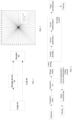
- Prediction directions corresponding to the various intra prediction modes are shown in FIG. 3 .
- the Planar mode is suitable for regions where pixel values change slowly.
- two linear filters in the horizontal and vertical directions may be used for filtering, and an average of the two linear filters is used as a predicted value of the current image block.
- the DC mode is suitable for a large-area flat region, and an average pixel value of coded and reconstructed neighboring blocks around the current image block may be used as the predicted value of the current image block.
- the Planar mode and the DC mode may also be referred to as non-angular modes. Please continue to refer to FIG. 3 , in the angular modes, the intra prediction modes corresponding to the mode No. 26 and the mode No.
- the intra prediction modes corresponding to mode numbers adjacent to mode No. 26 may be collectively referred to as vertical prediction modes, and the intra prediction modes corresponding to mode numbers adjacent to mode No. 10 may be collectively referred to as horizontal prediction modes.
- the vertical prediction modes may include mode numbers 2 to 18, and the horizontal prediction modes may include mode numbers 19 to 34.
- the angular modes are partitioned in more detail in the new generation coding/decoding standard of versatile video coding (VVC), as shown in FIG. 4 .
- a method for conventional intra prediction uses surrounding pixels to predict the current block, wherein spatial redundancy is removed.
- a used target prediction mode may derive from a most probable mode (MPM) list or from a non-MPM list.
- MPM most probable mode
- ISP Intra sub-block-partitions
- a method for intra prediction in ISP technology is to partition a picture block into several sub-blocks for prediction.
- supported partition methods include horizontal partition and vertical partition.
- For a decoding terminal when an ISP mode is enabled for the current block, if a size of the current block only supports one partition mode by default, the current block is partitioned based on a default partition direction, and the partitioned blocks are subjected to prediction, inverse transformation, inverse quantization, etc.; if the size of the current block supports two partition modes, it is required to further analyze the partition direction of the current block, then, the current block is partitioned based on the determined partition direction, and the partitioned blocks are subjected to prediction, inverse transformation, inverse quantization, etc.
- Multi-reference line MCL
- a method used in MRL technology is to predict based on reference pixels of a current block, wherein the reference pixels may derive from adjacent lines of the current block.
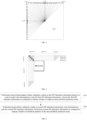
- the reference pixels may derive from Reference line 0 (the 0 th line), Reference line 1 (the first line), Reference line 2 (the second line) and Reference line 3 (the third line 3) as shown in FIG. 5 .
- the 0 th line is the line adjacent to the boundary of the current block;
- the first line is the line next adjacent to the boundary of the current block;
- the second line is the line adjacent to the first line;
- the third line is the line adjacent to the second line.
- the reference pixels derive from Reference line 0, Reference line 1 and Reference line 3, other than Reference line 2.
- the line may be the line on the upper side of the current block or a column on the left side of the current block.
- the number of MPMs in HEVC is 3, and the number of MPMs in current VVC is 6.
- their intra prediction modes must be from MPMs.
- its intra prediction mode may derive from MPMs or non-MPMs.
- a method in CCLM technology is to use a linear prediction model to reconstruct a pixel value through a luma component and acquire a chroma component through a linear equation to predict the pixel value, such that the redundancy between image components is removed, and the coding performance is further improved.
- there are three cross-component prediction modes namely MDLM_L mode, MDLM_T mode and DM mode.
- the MDLM-L is a cross-component prediction mode that uses only left template information to acquire linear parameters.
- MDLM-T is a cross-component prediction mode that uses only upper template information to deduct linear model parameters.
- DM is a prediction mode in which the adopted chrominance and luma are the same.
- An adaptive loop filter can select one filter from fixed filters for filtering based on its gradient direction; and whether ALF filtering is enabled can be indicated by flag of CTU level. Chroma and luma can be controlled separately.
- AMVR Adaptive motion vector resolution
- AMVR is configured to indicate that different resolutions may be used in performing motion vector difference coding.
- the used resolution may be an integer pixel resolution, such as 4 pixel resolution, or a non-integer pixel resolution, such as 1/16 pixel resolution.
- This technology may be applied to the coding of motion vector data in the conventional intra prediction, and may also be used in coding of motion vector data in the affine prediction mode.
- Matrix-based intra prediction technology refers to determination of the predicted pixel value of the current block by adding an offset value to upper and left adjacent pixels of the current block which are input into a matrix-vector multiplier as reference pixels.
- BDPCM refers to directly copying a pixel value of a corresponding reference pixel in a vertical or horizontal direction when predicting a pixel in a prediction segment, which is similar to vertical prediction and horizontal prediction. Then, a residual value between the predicted pixel and an original pixel is quantized, and the quantized residual is differentially coded.
- r i , j 0 ⁇ i ⁇ M -1,0 ⁇ j ⁇ N - 1 represents a predicted residual
- Q( r i ,j ) 0 ⁇ i ⁇ M -1,0 ⁇ j ⁇ N - 1 represents a quantized residual acquired after the predicted residual r i , j is quantized.
- a differential coding result r ⁇ i,j is acquired by differentially coding the quantized residual Q( r i , j ).
- r ⁇ i,j is programmed into a coded stream.
- an inverse accumulation process is configured to acquire quantized residual data.
- a reconstructed pixel value is acquired by performing inverse quantization on the quantized residual and adding the quantized residual subjected to the inverse quantization to the predicted value.
- JCCR is a joint coding fashion of a (chroma blue) CB component and a (chroma red) CR component.
- the decoding terminal needs to transmit different syntax elements to the coding terminal under different prediction modes or coding/decoding technologies, and more context models are required to transmit the syntax elements, resulting in a complex coding/decoding process and high memory overheads.
- the present disclosure provides a coding/decoding method which can reduce the number of required context models, thereby reducing complexity of the coding/decoding process and the memory overheads. Coding/decoding methods according to the embodiments of the present disclosure will be introduced next respectively with respect to the above prediction modes and coding/decoding technologies.
- syntax elements that need to be transmitted between the decoding terminal and the coding terminal may include first ISP indication information and second ISP indication information.
- the first ISP indication information is configured to indicate whether to enable an intra sub-block prediction mode
- the second ISP indication information is configured to indicate a fashion of sub-block partition of the intra sub-block prediction mode.
- the first indication information is intra_subpartitions_mode_flag
- the second indication information is intra_subpartitions_split_flag.
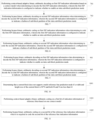
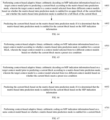
- FIG. 6 is a flowchart of a coding method according to an embodiment of the present disclosure. The method is applicable to a coding terminal. As shown in FIG. 6 , the method includes the following steps.
- context-based adaptive binary arithmetic coding is performed on first ISP indication information based on a context model when determining to code the first ISP indication information, wherein the first ISP indication information is configured to indicate whether to enable an intra sub-block prediction mode.
- the current block may try to use the sub-block partition technology.
- the coding terminal may decide whether to use the sub-block partition technology finally based on rate distortion optimization (RDO), and may code the first ISP indication information. Whether the intra sub-block prediction mode is enabled for the current block is indicated by the first ISP indication information.
- RDO rate distortion optimization
- the conditions of supporting the sub-block partition technology include: the current block is a luma block; the multi-reference line prediction mode is not enabled for the current block; and the size of the current block meets a certain restriction.
- the conditions of supporting the sub-block partition technology are not limited to the above three conditions, and may also include others.
- the first ISP indication information is intra_subpartitions_mode_flag which is a flag bit indicating whether the intra sub-block prediction mode is enabled for the current block. If intra_subpartitions_mode_flag is 0, it indicates that the intra sub-block prediction mode is not enabled for the current block. If intra_subpartitions_mode_flag is 1, it indicates that the intra sub-block prediction mode is enabled for the current block.
- bypass binary arithmetic coding is performed on second ISP indication information when determining to code the second ISP indication information, wherein the second ISP indication information is configured to indicate a fashion of sub-block partition of the intra sub-block prediction mode.
- the fashion of sub-block partition includes a horizontal partition direction and a vertical partition direction.
- the current block supports the two partition directions, it is required to determine the finally used partition direction.
- the coding of the second ISP indication information is continued based on the determined partition direction.
- the current block supports only one partition direction, there is no need to continue coding the second ISP indication information.
- the second ISP indication information may be intra_subpartitions_split_flag which is a flag bit indicating the fashion of sub-block partition of the ISP mode of the current block.
- intra_subpartitions_split_flag is a flag bit indicating the fashion of sub-block partition of the ISP mode of the current block.
- Table 3 Syntax element Bin Idx 0 1 2 3 4 5 intra_subpartitions_mode_ flag 0 na na na na intra_subpartitions_split_fl ag Bypass na na na na na na
- the coding fashion of the second ISP indication information in the related art is modified, and a complex CABAC coding fashion is replaced with the bypass coding fashion.
- the memory overheads and the coding complexity can be reduced.
- the coding performance remains basically unchanged as for the performance.
- FIG. 7 is a flowchart of a decoding method according to an embodiment of the present disclosure.
- the method is applicable to a decoding terminal and is a decoding method corresponding to the coding method according to the embodiment shown in FIG. 6 .
- the method includes the following steps.
- context-based adaptive binary arithmetic decoding is performed on first ISP indication information based on a context model when determining to decode the first ISP indication information, wherein the first ISP indication information is configured to indicate whether to enable an intra sub-block prediction mode.
- a coded stream of a current block may be received first; if the current block meets an analytic condition, the first ISP indication information in the coded stream is decoded to analyze whether the intra sub-block prediction mode is enabled for the current block.
- the analytic condition includes: the current block is a luma block, the multi-reference line prediction mode is not enabled for the current block, and the size of the current block meets a certain restriction condition.
- the analytic condition is not limited to the above three conditions, and may also include others.
- the first indication information is intra_subpartitions_mode_flag. If intra_subpartitions_mode_flag is 0, it indicates that the intra sub-block prediction mode is not enabled for the current block. If intra_subpartitions_mode_flag is 1, it indicates that the intra sub-block prediction mode is enabled for the current block.
- bypass binary arithmetic decoding is performed on second ISP indication information when determining to decode the second ISP indication information, wherein the second ISP indication information is configured to indicate a fashion of sub-block partition of the intra sub-block prediction mode.
- the first ISP indication information indicates that the intra sub-block prediction mode is enabled for the current block and the current block supports two partition directions
- intra_subpartitions_mode_flag 1 and the current block supports two partition directions, it is required to further analyze a flag bit of intra_subpartitions_split_flag of each partition direction. If the intra_subpartitions_mode_flag is 0 or 1 and the current block only supports the partition direction in a certain fixed direction, there is no need to analyze the flag bit indicating the partition direction.
- the decoding terminal may determine whether the ISP mode is enabled for the current block and the corresponding partition direction based on the above two pieces of the ISP indication information, so as to acquire a predicated value used in a subsequent reconstruction process by predicting the current block based on the determined partition direction.
- FIG. 8 is a flowchart of a coding method according to an embodiment of the present disclosure. The method is applicable to a coding terminal. As shown in FIG. 8 , the method includes the following steps.
- bypass binary arithmetic coding is performed on first ISP indication information when determining to code the first ISP indication information, wherein the first ISP indication information is configured to indicate whether to enable an intra sub-block prediction mode.
- the current block may try to use the sub-block partition technology.
- the coding terminal may decide whether to use the sub-block partition technology finally based on RDO, and may code the first ISP indication information. Whether the intra sub-block prediction mode is enabled for the current block is indicated by the first ISP indication information.
- the conditions of supporting the sub-block partition technology include: the current block is a luma block; the multi-reference line prediction mode is not enabled for the current block; and the size of the current block meets a certain restriction.
- the conditions of supporting the sub-block partition technology are not limited to the above three conditions, and may also include others.
- the first ISP indication information is intra_subpartitions_mode_flag which is a flag bit indicating whether the intra sub-block prediction mode is enabled for the current block. If intra_subpartitions_mode_flag is 0, it indicates that the intra sub-block prediction mode is not enabled for the current block. If intra_subpartitions_mode_flag is 1, it indicates that the intra sub-block prediction mode is enabled for the current block.
- bypass binary arithmetic coding is performed on second ISP indication information when determining to code the second ISP indication information, wherein the second ISP indication information is configured to indicate a fashion of sub-block partition of the intra sub-block prediction mode.
- the fashion of sub-block partition includes a horizontal partition direction and a vertical partition direction.
- the current block supports the two partition directions, it is required to determine the finally used partition direction.
- the coding of the second ISP indication information is continued based on the determined partition direction.
- the current block supports only one partition direction, there is no need to continue coding the second ISP indication information.
- the second ISP indication information may be intra_subpartitions_split_flag which is a flag bit indicating the fashion of sub-block partition of the ISP mode of the current block.
- intra_subpartitions_split_flag is a flag bit indicating the fashion of sub-block partition of the ISP mode of the current block.
- Table 4 Syntax element Bin Idx 0 1 2 3 4 5 intra_subpartitions_mode_ flag Bypass na na na na na intra_subpartitions_split_fl ag Bypass na na na na na na
- the coding fashions of both the flag bit of the intra_subpartitions_mode_flag and the flag bit of the intra_subpartitions_split_flag in the related art are modified, and original complex CABAC coding fashions are replaced with the bypass coding fashion.
- the memory overheads can be further reduced, and the coding complexity is reduced.
- the coding performance remains basically unchanged as for the performance.
- FIG. 9 is a flowchart of a decoding method according to an embodiment of the present disclosure.
- the method is applicable to a decoding terminal and is a decoding method corresponding to the coding method according to the embodiment shown in FIG. 8 .
- the method includes the following steps.
- bypass binary arithmetic decoding is performed on first ISP indication information when determining to decode the first ISP indication information, wherein the first ISP indication information is configured to indicate whether to enable an intra sub-block prediction mode.
- a coded stream of a current block may be received first; if the current block meets an analytic condition, the first ISP indication information in the coded stream is decoded to analyze whether the intra sub-block prediction mode is enabled for the current block.
- the analytic condition includes: the current block is a luma block; the multi-reference line prediction mode is not enabled for the current block; and the size of the current block meets a certain restriction.
- the analytic condition is not limited to the above three conditions, and may also include others.
- the first indication information is intra_subpartitions_mode_flag. If the intra_subpartitions_mode_flag is 0, it indicates that the intra sub-block prediction mode is not enabled for the current block. If the intra_subpartitions_mode_flag is 1, it indicates that the intra sub-block prediction mode is enabled for the current block.
- bypass binary arithmetic decoding is performed on second ISP indication information when determining to decode the second ISP indication information, wherein the second ISP indication information is configured to indicate a fashion of sub-block partition of the intra sub-block prediction mode.
- the first ISP indication information indicates that the intra sub-block prediction mode is enabled for the current block and the current block supports two partition directions
- intra_subpartitions_mode_flag 1 and the current block supports two partition directions, it is required to further analyze a flag bit of intra_subpartitions_split_flag of each partition direction. If the intra_subpartitions_mode_flag is 0 or 1 and the current block only supports the partition direction in a certain fixed direction, there is no need to analyze the flag bit indicating the partition direction.
- the decoding terminal may determine whether the ISP mode is enabled for the current block and the corresponding partition direction based on the above two pieces of the ISP indication information, so as to acquire a predicated value used in a subsequent reconstruction process by predicting the current block based on the determined partition direction.
- FIG. 10 is a flowchart of a coding/decoding method according to an embodiment of the present disclosure. The method is applicable to a coding terminal or a decoding terminal. As shown in FIG. 10 , the method includes the following steps.
- a current block does not support a multi-reference line prediction mode if a width and height size of the current block is M*N and both M and N are less than 64.
- the current block does not support the multi-reference line prediction mode if the width and height size of the current block is 4*4.
- syntax elements that need to be transmitted between the decoding terminal and the coding terminal may include indication information of reference lines which is configured to indicate index information of a target reference line used in predicting the current block based on the multi-reference line prediction mode.
- the reference line indication information is intra_luma_ref_idx.
- the reference line indication information corresponding to the multi-reference line prediction mode occupies at most 2 bits which need to be coded/decoded by using two different context models, as shown in Table 5 and Table 6 below.
- Table 5 The first bin The second bin MultiRefLineIdx(0), namely, the first context model MultiRefLineIdx(1), namely, the second context model
- the first bin refers to the first bit of the reference line indication information, and needs to be coded/decoded based on the first context model.
- the second bin refers to the second bit of the reference line indication information, and needs to be coded/decoded based on the second context model.
- the first context model and the second context model are different. Table 6 Syntax element Bin Idx 0 1 2 3 4 5 intra_luma_ref_idx[][] 0 1 na na na na na na
- the target reference line is the 0 th line; if the index information indicated by the reference line indication information is 1, the target reference line is the first line; if the index information indicated by the reference line indication information is 2, the target reference line is the third line.
- the line described in the embodiment of the present disclosure may be the line on the upper side of the current block or the column on the left side of the current block.
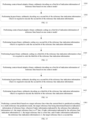
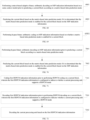
- FIG. 11 is a flowchart of a coding method according to an embodiment of the present disclosure. The method is applicable to a coding terminal. As shown in FIG. 10 , if it is determined that a current block supports the multi-reference line prediction mode and the number of candidate reference lines corresponding to the multi-reference line prediction mode is 3, reference line indication information corresponding to the multi-reference line prediction mode occupies at most 2 bits. The method includes the following steps.
- context-based adaptive binary arithmetic coding is performed on a first bit of the reference line indication information based on one context model.
- the current block meets a condition of supporting multi-reference line prediction technology. If the current block meets the condition of supporting the multi-reference line prediction technology, it is determined that the current block may try to use each reference line for coding.
- the coding terminal may decide a source of a final reference pixel through RDO, and may code reference line index information into a coded stream.
- the conditions of supporting the multi-reference line prediction technology include: the current block is a luma intra block, a size of the current block meets a certain restriction, and the current block does not include a first line of a coding tree unit.
- the conditions of supporting the multi-reference line prediction technology are not limited to the above three conditions, and may also include others.
- the reference line indication information may be coded in the coded stream according to specific conditions.
- the reference line indication information may be intra_luma_ref_idx.
- the line described in the embodiment of the present disclosure may be the line on the upper side of the current block or the column on the left side of the current block.
- bypass binary arithmetic coding is performed on a second bit of the reference line indication information when it is required to code the second bit of the reference line indication information.
- the reference line indication information corresponding to the multi-reference line prediction mode occupies at most 2 bits.
- the first bit in the two bits may be coded by using one context model, and the second bit may be coded based on the bypass coding mode. In this way, only one context model is needed in the coding of the all bits of the reference line indication information, such that the number of context models is reduced to further reduce the coding complexity and the memory consumption, and the coding performance remains unchanged basically.
- the context model used by the reference line indication information may be shown in Tables 8 and 9 below.
- Table 8 The first bin The second bin MultiRefLineIdx, namely, the first context model Coding using bypass instead a context model Table 9 Syntax element Bin Idx 0 1 2 3 4 5 intra_luma_ref_idx[][] 0 Bypass na na na na
- FIG. 12 is a flowchart of a decoding method according to an embodiment of the present disclosure.
- the method is applicable to a decoding terminal and is a decoding method corresponding to the coding method shown in FIG. 11 .
- FIG. 12 if it is determined that a current block supports the multi-reference line prediction mode and the number of candidate reference lines corresponding to the multi-reference line prediction mode is 3, reference line indication information corresponding to the multi-reference line prediction mode occupies at most 2 bits.
- the method includes the following steps.
- context-based adaptive binary arithmetic decoding is performed on a first bit of the reference line indication information based on one context model.
- bypass binary arithmetic decoding is performed on a second bit of the reference line indication information when it is required to decode the second bit of the reference line indication information.
- a target reference line used in predicting the current block based on the multi-reference line prediction mode may be determined based on the reference line indication information, and the current block is predicated by use of the target reference line.
- a coded stream of the current block may be received first; if the current block meets an analytic condition, the reference line indication information is decoded to determine a source of reference pixels of the current block.
- the analytic condition includes: the current block is a luma intra block, a size of the current block meets a certain restriction, and the current block does not include a first line of a coding tree unit.
- the analytic condition is not limited to the above three conditions, and may also include others.
- intra_luma_ref_idx needs to be analyzed to determine the reference pixel of the current block based on the value of the intra_luma_ref_idx, so as to acquire the predicted value of the current block used in the subsequent reconstruction process.
- the reference line indication information corresponding to the multi-reference line prediction mode occupies at most 3 bits which need to be coded/decoded by using two different context models, as shown in Tables 10 and 11 below.
- the first bin refers to the first bit of the reference line indication information, and needs to be coded/decoded based on the first context model.
- the second bin refers to the second bit of the reference line indication information, and needs to be coded/decoded based on the second context model.
- the third bin refers to the third bit of the reference line indication information, and needs to be coded/decoded based on the third context model.
- the three context models are different.
- the target reference line is the 0 th line; if the index information indicated by the reference line indication information is 1, the target reference line is the first line; if the index information indicated by the reference line indication information is 2, the target reference line is the second line; if the index information indicated by the reference line indication information is 3, the target reference line is the third line.
- FIG. 13 is a flowchart of a coding method according to an embodiment of the present disclosure. The method is applicable to a coding terminal. As shown in FIG. 13 , if it is determined that a current block supports the multi-reference line prediction mode and the number of candidate reference lines corresponding to the multi-reference line prediction mode is 4, reference line indication information corresponding to the multi-reference line prediction mode occupies at most 3 bits. The method includes the following steps.
- context-based adaptive binary arithmetic coding is performed on a first bit of the reference line indication information based on one context model.
- the current block meets a condition of supporting multi-reference line prediction technology. If the current block meets the condition of supporting the multi-reference line prediction technology, it is determined that the current block may try to use each reference line for coding.
- the coding terminal may decide a source of a final reference pixel through RDO, and may code reference line index information into a coded stream.
- the conditions of supporting the multi-reference line prediction technology include: the current block is a luma intra block, a size of the current block meets a certain restriction, and the current block does not include a first line of a coding tree unit.
- the conditions of supporting the multi-reference line prediction technology are not limited to the above three conditions, and may also include others.
- the reference line indication information may be coded in the coded stream according to specific conditions.
- the reference line indication information may be intra_luma_ref_idx.
- bypass binary arithmetic coding is performed on a second bit of the reference line indication information when it is required to code the second bit of the reference line indication information.
- bypass binary arithmetic coding is performed on a third bit of the reference line indication information when it is required to code the third bit of the reference line indication information.
- the reference line indication information corresponding to the multi-reference line prediction mode occupies at most 3 bits.
- the first bit in the three bits may be coded by using one context model, and the second and third bits may be coded based on the bypass coding mode. In this way, only one context model is needed in the coding of the all bits of the reference line indication information, such that the number of context models is reduced to further reduce the coding complexity and the memory consumption, and the coding performance remains unchanged basically.
- the context model used by the reference line indication information may be shown in Tables 13 and 14 below.
- Table 13 Syntax element Bin Idx 0 1 2 3 4 5 intra_luma_ref_idx[][] 0 Bypass Bypass na na na Table 14
- the first bin The second bin
- FIG. 14 is a flowchart of a decoding method according to an embodiment of the present disclosure.
- the method is applicable to a decoding terminal and is a decoding method corresponding to the coding method according to the embodiment shown in FIG. 13 .
- reference line indication information corresponding to the multi-reference line prediction mode occupies at most 3 bits. The method includes the following steps.
- context-based adaptive binary arithmetic decoding is performed on a first bit of the reference line indication information based on one context model.
- bypass binary arithmetic decoding is performed on a second bit of the reference line indication information when it is required to decode the second bit of the reference line indication information.
- bypass binary arithmetic decoding is performed on a third bit of the reference line indication information when it is required to decode the third bit of the reference line indication information.
- a coded stream of the current block may be received first; if the current block meets an analytic condition, the reference line indication information is decoded to determine a source of reference pixels of the current block.
- the analytic condition includes: the current block is a luma intra block, a size of the current block meets a certain restriction, and the current block does not include a first line of a coding tree unit.
- the analytic condition is not limited to the above three conditions, and may also include others.
- intra_luma_ref_idx needs to be analyzed to determine the reference pixel of the current block based on the value of the intra_luma_ref_idx, so as to acquire the predicted value of the current block used in the subsequent reconstruction process.
- FIG. 15 is a flowchart of a coding/decoding method according to an embodiment of the present disclosure. The method is applicable to a coding terminal or a decoding terminal. As shown in FIG. 15 , if it is determined that a current block supports the multi-reference line prediction mode and the number of candidate reference lines corresponding to the multi-reference line prediction mode is 3, wherein the candidate reference line having index information of 0 is a 0 th line, the candidate reference line having index information of 1 is a first line, and the candidate reference line having index information of 2 is a second line, the method includes the following steps.
- the current block is predicted based on a target reference line when the current block is predicted according to the multi-reference line prediction mode, wherein the target reference line is determined based on indication information of reference lines.
- the target reference line is the 0 th line
- index information indicated by the reference line indication information and the corresponding target reference lines may be as shown in Table 15 below.
- the nearest three lines and three columns may be selected as candidates for the target reference line. That is, the target reference line is one line selected from the candidate reference lines, wherein the number of the candidate reference lines corresponding to the multi-reference line prediction mode is 3, and the three lines and the three columns closest to the boundary of the current block are used as the candidate reference lines.
- FIG. 16 is a flowchart of a coding/decoding method according to an embodiment of the present disclosure. The method is applicable to a coding terminal or a decoding terminal. As shown in FIG. 16 , if it is determined that a current block supports the multi-reference line prediction mode and the number of candidate reference lines corresponding to the multi-reference line prediction mode is 3, wherein the candidate reference line having index information of 0 is a 0 th line, the candidate reference line having index information of 1 is a first line, and the candidate reference line having index information of 2 is a second line, the method includes the following steps.
- the current block is predicted based on a target reference line when the current block is predicted according to the multi-reference line prediction mode, wherein the target reference line is determined based on indication information of reference lines.
- the target reference line is the 0 th line
- the 0 th line, the second line and the third line may be selected as candidates for the target reference line.
- FIG. 17 is a flowchart of a coding method according to an embodiment of the present disclosure. The method is applicable to a coding terminal. As shown in FIG. 17 , if it is determined that a current block supports the multi-reference line prediction mode, the method includes the following steps.
- line number indication information is coded based on the number of candidate reference lines corresponding to the multi-reference line prediction mode prior to predicting the current block according to the multi-reference line prediction mode, wherein the line number indication information is configured to indicate the number of the candidate reference lines corresponding to the multi-reference line prediction mode.
- indication information of reference lines is coded based on a target reference line used in predicting the current block based on the multi-reference line prediction mode, wherein the reference line indication information is configured to indicate index information of the target reference line used in predicting the current block based on the multi-reference line prediction mode.
- the current block is predicated based on the target reference line.
- the line number indication information indicating the number of the candidate reference lines corresponding to the multi-reference line prediction mode is added, such that the multi-reference line prediction mode can select the number of the reference lines.
- the line number indication information may exist in a sequence parameter set (SPS), a picture parameter set, a slice level, or a Tile level.
- SPS sequence parameter set
- the line number indication information exists in the sequence parameter set, that is, a syntax for indicating the number of the candidate reference lines corresponding to the multi-reference line prediction mode may be added at the SPS level.
- FIG. 18 is a flowchart of a coding method according to an embodiment of the present disclosure. The method is applicable to a decoding terminal. As shown in FIG. 18 , if it is determined that a current block supports the multi-reference line prediction mode, the method includes the following steps.
- line number indication information is decoded prior to predicting the current block according to the multi-reference line prediction mode, wherein the line number indication information is configured to indicate the number of candidate reference lines corresponding to the multi-reference line prediction mode.
- the number of the candidate reference lines corresponding to the multi-reference line prediction mode is determined based on the line number indication information.
- a target reference line is determined based on the number of the candidate reference lines corresponding to the multi-reference line prediction mode and reference line indication information, wherein the reference line indication information is configured to indicate index information of the target reference line used in predicting the current block based on the multi-reference line prediction mode.
- the current block is predicated based on the target reference line.
- the line number indication information indicating the number of the candidate reference lines corresponding to the multi-reference line prediction mode is added, such that the multi-reference line prediction mode can select the number of the reference lines.
- the line number indication information may exist in a sequence parameter set (SPS), a picture parameter set, a slice level, or a Tile level.
- SPS sequence parameter set
- the line number indication information exists in the sequence parameter set, that is, a syntax for indicating the number of the candidate reference lines corresponding to the multi-reference line prediction mode may be added at the SPS level.
- syntax elements that need to be transmitted between the decoding terminal and the coding terminal may include first AMVR indication information and second AMVR indication information.
- the first AMVR indication information is configured to indicate whether to enable the AMVR mode
- the second AMVR indication information is configured to indicate index information of pixel precision used in coding or decoding a motion vector difference in the AMVR mode.
- the first AMVR indication information is amvr_flag
- the second AMVR indication information is amvr_precision_flag.
- the non-affine prediction mode refers to prediction modes other than the affine prediction mode.
- the first AMVR indication information and the second AMVR indication information require 4 context models in total for coding/decoding, as shown in Tables 17 and 18 below.
- Table 17 Syntax element Bin Idx 0 1 2 3 4 5 amvr_flag[][] inter_affine_flag[][] ? 0 : 1) na na na na na amvr_precision_ _flag[][] inter_affine_flag[][] ?
- the affine prediction mode is enabled for the current block, it is required to perform context-based adaptive binary arithmetic coding or context-based adaptive binary arithmetic decoding on the first AMVR indication information based on the third context model when coding or decoding the first AMVR indication information.
- the second AMVR indication information indicates that the AMVR mode is enabled for the current block, it is required to perform context-based adaptive binary arithmetic coding or context-based adaptive binary arithmetic decoding on the second AMVR indication information based on the fourth context model.
- the non-affine prediction mode is enabled for the current block, it is required to perform context-based adaptive binary arithmetic coding or context-based adaptive binary arithmetic decoding on the first AMVR indication information based on the first context model when coding or decoding the first AMVR indication information.
- the second AMVR indication information indicates that the AMVR mode is enabled for the current block, it is required to perform context-based adaptive binary arithmetic coding or context-based adaptive binary arithmetic decoding on the second AMVR indication information based on the second context model. That is, totally, four different context models are required to code or decode the AMVR indication information, which consumes higher memory.
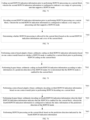
- FIG. 19 is a flowchart of a coding method according to an embodiment of the present disclosure. The method is applicable to a coding terminal. As shown in FIG. 19 , the method includes the following steps.
- context-based adaptive binary arithmetic coding is performed on first AMVR indication information based on a first context model when coding the first AMVR indication information if an affine prediction mode or a prediction mode other than the affine prediction mode is enabled for a current block, and supports the AMVR mode when coding a motion vector difference of the current block.
- context-based adaptive binary arithmetic coding is performed on second AMVR indication information based on a second context model when the first AMVR indication information indicates that the AMVR mode is enabled for the current block, wherein the first context model is different from the second context model.
- the current block may try to use multiple motion vector precisions to code.
- the coding terminal may decide whether to enable the AMVR and may decide adopted motion vector precision through RDO, and may code the corresponding syntax information into the coded stream.
- the condition of using the adaptive motion vector precision includes: the current block is an inter prediction block, and the motion information of the current clock includes a non-zero motion vector difference.
- the condition of using the adaptive motion vector precision is not limited to the above conditions, and may include others.
- FIG. 20 is a flowchart of a decoding method according to an embodiment of the present disclosure.
- the method is applicable to a decoding terminal and is a decoding method corresponding to the coding method shown in FIG. 19 .
- the method includes the following steps.
- context-based adaptive binary arithmetic decoding is performed on first AMVR indication information based on a first context model when decoding the first AMVR indication information if an affine prediction mode or a prediction mode other than the affine prediction mode is enabled for a current block, and supports an AMVR mode when decoding a motion vector difference of the current block.
- the decoding terminal may receive the coded stream of the current block first, and analyzes the first AMVR to determine whether the AMVR is enabled for the current block, namely, whether the adaptive motion vector precision technology is used, if it is determined that the current block meets an analytic condition.
- the analytic condition includes: the current block is an intra block, and the current block motion information includes a non-zero motion vector difference.
- the analytic condition is not limited to the above conditions, and may include others.
- context-based adaptive binary arithmetic decoding is performed on second AMVR indication information based on a second context model when the first AMVR indication information indicates that the AMVR mode is enabled for the current block, wherein the first context model is different from the second context model.
- the second AMVR indication information needs to be further analyzed to determine used precision.
- the decoding terminal may uniquely determine the motion vector precision of the motion information of the current block based on the first AMVR indication information and the second AMVR indication information, so as to acquire a predicted value of the current block used in the subsequent reconstruction process.
- the context models used by the first AMVR indication information and the second AMVR indication information may be as shown in Table 19 below.
- Table 19 In the affine prediction mode In the non-affine prediction mode amvr_ flag[][] Sharing one context model, namely, the first context model amvr_precision_ _flag[][] Sharing one context model, namely, the second context model
- the AMVR indication information may share the context model in the affine prediction mode and the non-affine affine prediction mode.
- the number of the context models required in the AMVR may be reduced to 2, thereby reducing the complexity of coding/decoding and memory overheads.
- FIG. 21 is a flowchart of a coding method according to an embodiment of the present disclosure. The method is applicable to a coding terminal. As shown in FIG. 21 , the method includes the following steps.
- context-based adaptive binary arithmetic coding is performed on first AMVR indication information based on a first context model when coding the first AMVR indication information if an affine prediction mode is enabled for a current block, and supports an AMVR mode when coding a motion vector difference of the current block; and bypass binary arithmetic coding is performed on second AMVR indication information when the first AMVR indication information indicates that the AMVR mode is enabled for the current block.
- context-based adaptive binary arithmetic coding is performed on the first AMVR based on a second context model when coding the first AMVR indication information if a prediction mode other than the affine prediction mode is enabled for the current block, and supports the AMVR mode when coding the motion vector difference of the current block; and bypass binary arithmetic coding is performed on the second AMVR indication information when the first AMVR indication information indicates that the AMVR mode is enabled for the current block.
- FIG. 22 is a flowchart of a decoding method according to an embodiment of the present disclosure. The method is applicable to a decoding terminal and is a decoding method corresponding to the coding method shown in FIG. 21 . As shown in FIG. 22 , the method includes the following steps.
- context-based adaptive binary arithmetic decoding is performed on first AMVR indication information based on a first context model when decoding the first AMVR indication information if an affine prediction mode is enabled for a current block, and supports an AMVR mode when decoding a motion vector difference of the current block, and bypass binary arithmetic decoding is performed on second AMVR indication information when the first AMVR indication information indicates that the AMVR mode is enabled for the current block.
- context-based adaptive binary arithmetic decoding is performed on the first AMVR based on a second context model when decoding the first AMVR indication information if a prediction mode other than the affine prediction mode is enabled for the current block, and supports the AMVR mode when decoding the motion vector difference of the current block, and bypass binary arithmetic decoding is performed on the second AMVR indication information when the first AMVR indication information indicates that the AMVR mode is enabled for the current block.
- the context models used by the first AMVR indication information and the second AMVR indication information may be as shown in Table 20 below.
- the coding or decoding of the second AMVR indication information is modified to the bypass binary arithmetic coding or decoding in the affine prediction mode and the non-affine affine prediction mode.
- the number of the context models required in the AMVR may be reduced to 2, thereby reducing the complexity of coding/decoding and memory overheads.
- FIG. 23 is a flowchart of a coding method according to an embodiment of the present disclosure. The method is applicable to a coding terminal. As shown in FIG. 23 , the method includes the following steps.
- context-based adaptive binary arithmetic coding is performed on first AMVR indication information based on a first context model when coding the first AMVR indication information if an affine prediction mode or a prediction mode other than the affine prediction mode is enabled for a current block, and supports the AMVR mode when coding a motion vector difference of the current block.
- bypass binary arithmetic coding is performed on second AMVR indication information when the first AMVR indication information indicates that the AMVR mode is enabled for the current block.
- FIG. 24 is a flowchart of a decoding method according to an embodiment of the present disclosure.
- the method is applicable to a decoding terminal and is a decoding method corresponding to the coding method shown in FIG. 23 .
- the method includes the following steps.
- context-based adaptive binary arithmetic decoding is performed on first AMVR indication information based on a first context model when decoding the first AMVR indication information if an affine prediction mode or a prediction mode other than the affine prediction mode is enabled for a current block, and supports the AMVR mode when decoding a motion vector difference of the current block.
- bypass binary arithmetic decoding is performed on second AMVR indication information when the first AMVR indication information indicates that the AMVR mode is enabled for the current block.
- the context models used by the first AMVR indication information and the second AMVR indication information may be as shown in Table 21 below.
- Table 21 In the affine prediction mode In the non-affine prediction mode amvr_flag[][] Sharing one context model, namely, the first context model amvr_precision_flag[][] Coding/decoding using bypass instead a context model Coding/decoding using bypass instead a context model
- the first AMVR indication information share one context model, and the coding or decoding of the second AMVR indication information is modified to the bypass binary arithmetic coding or decoding.
- the number of the context models required in the AMVR may be reduced to 1, thereby reducing the complexity of coding/decoding and memory overheads.
- a coding method is also provided.
- the method is applicable to a coding terminal, and includes the following steps.
- step 1 context-based adaptive binary arithmetic coding is performed on first AMVR indication information based on a first context model when coding the first AMVR indication information if an affine prediction mode is enabled for a current block, and supports an AMVR mode when coding a motion vector difference of the current block; and context-based adaptive binary arithmetic coding is performed on second AMVR indication information based on a second context model when the first AMVR indication information indicates that the AMVR mode is enabled for the current block.
- step 2 context-based adaptive binary arithmetic coding is performed on the first AMVR indication information based on a third context model when coding the first AMVR indication information if a prediction mode other than the affine prediction mode is enabled for the current block, and supports the AMVR mode when coding the motion vector difference of the current block, and context-based adaptive binary arithmetic coding is performed on the second AMVR indication information based on the second context model when the first AMVR indication information indicates that the AMVR mode is enabled for the current block.
- the first context model, the second context model, and the third context model are different.
- a decoding method is also provided.
- the method is applicable to a decoding terminal and is a decoding method corresponding to the above coding method, and includes the following steps.
- step 1 context-based adaptive binary arithmetic decoding is performed on first AMVR indication information based on a first context model when decoding the first AMVR indication information if an affine prediction mode is enabled for a current block, and supports an AMVR mode when decoding a motion vector difference of the current block, and context-based adaptive binary arithmetic decoding is performed on second AMVR indication information based on a second context model when the first AMVR indication information indicates that the AMVR mode is enabled for the current block.
- step 2 context-based adaptive binary arithmetic decoding is performed on the first AMVR indication information based on a third context model when decoding the first AMVR indication information if a prediction mode other than the affine prediction mode is enabled for the current block, and supports the AMVR mode when decoding the motion vector difference of the current block, and context-based adaptive binary arithmetic decoding is performed on the second AMVR indication information based on the second context model when the first AMVR indication information indicates that the AMVR mode is enabled for the current block.
- the first context model, the second context model, and the third context model are different.
- the context models used by the first AMVR indication information and the second AMVR indication information may be as shown in Table 22 below.
- the second AMVR indication information may share one context model in the affine prediction mode and the non-affine affine prediction mode.
- the number of the context models required in the AMVR mode may be reduced to 3, thereby reducing the complexity of coding/decoding and memory overheads.
- prediction mode index information When a current block is a luma block, prediction mode index information needs to be transmitted between the coding terminal and the decoding terminal.
- the prediction mode index information is configured to indicate index information of a target prediction mode of the current block in an MPM list.
- the coding terminal and the decoding terminal store the MPM list which may be shared by the conventional intra prediction mode, intra sub-block prediction mode and multi-reference line prediction mode.
- the context model used by the prediction mode index information is shown in Table 23 below.
- the prediction mode index information is intra_luma_mpm_idx.
- intra_luma_ref_idx When the intra_luma_ref_idx is equal to 0, it means that the reference line of the target prediction mode of the current block is the adjacent line of the current block, that is, the multi-reference line prediction mode is not enabled for the current block.
- intra_luma_ref_idx When the intra_luma_ref_idx is not equal to 0, it means that the reference line of the target prediction mode of the current block is not the adjacent line of the current block, that is, the multi-reference line prediction mode is enabled for the current block.
- the intra_luma_ref_idx when the intra_luma_ref_idx is equal to 0, the first bit of the intra_luma_mpm_idx needs to select a context model from two different context models for coding/decoding based on whether the intra sub-block prediction mode is enabled for the current block.
- the intra_luma_ref_idx when the intra_luma_ref_idx is not equal to 0, it means that the multi-reference line prediction mode is enabled for the current block, and the target prediction mode of the multi-reference line prediction mode enabled for the current block also is from the MPM list.
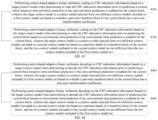
- FIG. 25 is a flowchart of a coding method according to an embodiment of the present disclosure. The method is applicable to a coding terminal. As shown in FIG. 25 , the method includes the following steps.
- index information of a target prediction mode of intra sub-block prediction enabled for a current block in an MPM list is determined when predicting the current block based on the intra sub-block prediction if the intra sub-block prediction whose target prediction mode is enabled for the current block exists in the MPM list and the current block is a luma block.
- prediction mode index information is coded based on the index information of the target prediction mode of the intra sub-block prediction enabled for the current block in the MPM list, wherein a first bit of the prediction mode index information is acquired by performing context-based adaptive binary arithmetic coding based on a first context model, and other bits of the prediction mode index information are acquired by performing bypass binary arithmetic coding.
- index information of the target prediction mode enabled for the current block in the MPM list is determined if the target prediction mode enabled for the current block is from the MPM list when predicting the current block according to conventional intra prediction if the conventional intra prediction whose target prediction mode is from the MPM list is enabled for the current block and the current block is the luma block.
- the prediction mode index information is coded based on the index information of the target prediction mode enabled for the current block in the MPM list, wherein the first bit of the prediction mode index information is acquired by performing context-based adaptive binary arithmetic coding based on a second context model, and other bits of the prediction mode index information are acquired by performing bypass binary arithmetic coding.
- a flag bit is further required to indicate whether the target prediction mode of the conventional prediction enabled for the current block is from the MPM list. If it is determined that the target prediction mode is from the MPM list, the index information of the target prediction mode in the MPM list is determined. If the target prediction mode does not derive from the MPM list, there is no need to determine the index information of the target prediction mode in the MPM list.
- the coding terminal may construct the MPM list which may be shared by the intra sub-block prediction mode, the multi-reference line prediction mode and conventional intra prediction mode.
- the coding terminal may select the finally used prediction mode, i.e., the target prediction mode, through RDO.
- the target prediction mode is the intra sub-block prediction mode or the multi-reference line prediction mode
- the target prediction mode must be selected from the MPM list, and the prediction mode index information (intra_luma_mpm_idx) is required to be coded to inform the decoding terminal which prediction mode is selected.
- the target prediction mode is the conventional intra prediction, a flag bit is further required to be coded to indicate whether the target prediction mode of the conventional prediction enabled for the current block is from the MPM list. If it is determined that the target prediction mode is from the MPM list, the index information of the target prediction mode in the MPM list is determined. If the target prediction mode does not derive from the MPM list, there is no need to determine the index information of the target prediction mode in the MPM list.
- FIG. 26 is a flowchart of a decoding method according to an embodiment of the present disclosure. The method is applicable to a decoding terminal and is a decoding method corresponding to the coding method shown in FIG. 25 . As shown in FIG. 26 , the method includes the following steps.
- prediction mode index information is decoded when predicting a current block based on intra sub-block prediction if the intra sub-block prediction whose target prediction mode is enabled for the current block exists in an MPM list and the current block is a luma block, wherein a first bit of the prediction mode index information is acquired by performing context-based adaptive binary arithmetic decoding based on a first context model, and other bits of the prediction mode index information are acquired by performing bypass binary arithmetic decoding.
- the target prediction mode of the intra sub-block prediction enabled for the current block is determined from the MPM list based on the prediction mode index information, wherein the prediction mode index information is configured to indicate index information of the target prediction mode in the MPM list.
- the current block is predicated based on the target prediction mode.
- the prediction mode index information is decoded when predicting the current block based on conventional intra prediction if the conventional intra prediction whose target prediction mode is from the MPM list is enabled for the current block and the current block is the luma block, wherein the first bit of the prediction mode index information is acquired by performing context-based adaptive binary arithmetic decoding based on a second context model, the other bits of the prediction mode index information are acquired by performing bypass binary arithmetic decoding, and the second context model and the first context model are the same.
- the target prediction mode enabled for the current block is determined from the MPM list based on the prediction mode index information, wherein the prediction mode index information is configured to indicate the index information of the target prediction mode in the MPM list.
- the current block is predicated based on the target prediction mode.
- the decoding terminal may first receive the coded stream, and may acquire a final target predication mode by analyzing an index value of the final target predication mode in the MPM list based on the premise that the used target predication mode must be from the MPM list if the intra sub-block prediction mode is enabled for the current block or the multi-reference line prediction mode and that the conventional intra prediction, the intra sub-block prediction mode and the multi-reference line prediction mode construct the same MPM list. If the conventional intra prediction is enabled for the current block, a flag bit is further required to be analyzed to determine whether the target prediction mode is from the MPM list. If it is from the MPM list, an index value of the target prediction mode in the MPM list is analyzed.
- the decoding terminal may uniquely determine the prediction mode of the current block based on the value of the above flag bit, so as to acquire a predicted value of the current block used in the subsequent reconstruction process.
- the same context model may be used no matter whether the intra sub-block prediction mode is enabled for the current block or not instead of selecting the context model from two different context models depending on whether the intra sub-block prediction mode is enabled for the current block, so as to perform context-based adaptive binary arithmetic coding or decoding on the first bit of the prediction mode index information.
- the number of the required context models may be reduced to 1, thereby reducing the complexity of the coding/decoding and the memory overheads.
- the context-based adaptive binary arithmetic coding or decoding may be performed on the first bit of the intra_luma_mpm_idx based on the same context model no matter whether the intra sub-block prediction mode is enabled for the current block or not.
- FIG. 27 is a flowchart of a coding method according to an embodiment of the present disclosure. The method is applicable to a coding terminal. As shown in FIG. 27 , the method includes the following steps:
- index information of a target prediction mode of intra sub-block prediction enabled for a current block in an MPM list is determined when predicting the current block based on the intra sub-block prediction if the intra sub-block prediction whose target prediction mode is enabled for the current block exists in the MPM list and the current block is a luma block.
- prediction mode index information is coded based on the index information of the target prediction mode of the intra sub-block prediction enabled for the current block in the MPM list, wherein all bits of the prediction mode index information are acquired by performing bypass binary arithmetic coding.
- index information of the target prediction mode enabled for the current block in the MPM list is determined if the target prediction mode enabled for the current block exists in the MPM list when predicting the current block according to conventional intra prediction when the conventional intra prediction whose target prediction mode is from the MPM list is enabled for the current block and the current block is the luma block.
- the prediction mode index information is coded based on the index information of the target prediction mode enabled for the current block in the MPM list, wherein the all bits of the prediction mode index information are acquired by performing bypass binary arithmetic coding.
- a flag bit is further required to indicate whether the target prediction mode of the conventional prediction enabled for the current block is from the MPM list. If it is determined that the target prediction mode is from the MPM list, the index information of the target prediction mode in the MPM list is determined. If the target prediction mode does not derive from the MPM list, there is no need to determine the index information of the target prediction mode in the MPM list.
- FIG. 28 is a flowchart of a decoding method according to an embodiment of the present disclosure.
- the method is applicable to a decoding terminal and is a decoding method corresponding to the coding method shown in FIG. 27 .
- the method includes the following steps.
- prediction mode index information is decoded when predicting a current block based on intra sub-block prediction if the intra sub-block prediction whose target prediction mode is enabled for the current block exists in an MPM list and the current block is a luma block, wherein all bits of the prediction mode index information are acquired by performing bypass binary arithmetic coding.
- the target prediction mode of the intra sub-block prediction enabled for the current block is determined from the MPM list based on the prediction mode index information, wherein the prediction mode index information is configured to indicate index information of the target prediction mode in the MPM list.
- the current block is predicated based on the target prediction mode.
- the prediction mode index information is decoded when predicting the current block based on conventional intra prediction if the conventional intra prediction whose target prediction mode is from the MPM list is enabled for the current block and the current block is the luma block, wherein the all bits of the prediction mode index information are acquired by performing bypass binary arithmetic coding.
- the target prediction mode enabled for the current block is determined from the MPM list based on the prediction mode index information, wherein the prediction mode index information is configured to indicate the index information of the target prediction mode enabled for the current block in the MPM list.
- the current block is predicated based on the target prediction mode.
- the reference line of the target prediction mode of the current block is the adjacent line of the current block, that is, when intra_luma_ref_idx is equal to 0, when coding or decoding the first bit of the prediction mode index information, regardless of whether the intra sub-block prediction mode is enabled for the current block or not, that is, in the two different conditions that the intra sub-block prediction mode is enabled for the current block and the intra sub-block prediction mode is not enabled for the current block, bypass binary arithmetic coding or decoding is performed on the first bit of the prediction mode index information.
- the first bit of the prediction mode index information does not need to use the context model, such that the number of the required context models is reduced to 0, thereby reducing the complexity of coding/decoding and the memory overheads.
- intra_luma_ref_idx when intra_luma_ref_idx is equal to 0, bypass binary arithmetic coding or decoding is performed on the first bit of the intra_luma_mpm_idx no matter whether the intra sub-block prediction mode is enabled for the current block or not.
- FIG. 29 is a flowchart of a coding method according to an embodiment of the present disclosure. The method is applicable to a coding terminal. As shown in FIG. 29 , the method includes the following steps.
- index information of a target prediction mode of intra sub-block prediction enabled for a current block in an MPM list is determined when predicting the current block based on the intra sub-block prediction if the intra sub-block prediction whose target prediction mode is enabled for the current block exists in the MPM list and the current block is a luma block.
- prediction mode index information is coded based on the index information of the target prediction mode of the intra sub-block prediction enabled for the current block in the MPM list, wherein a first bit of the prediction mode index information is acquired by performing context-based adaptive binary arithmetic coding based on one context model, and other bits of the prediction mode index information are acquired by performing bypass binary arithmetic coding.
- the index information of the target prediction mode of conventional prediction enabled for the current block in the MPM list is determined if the target prediction mode of the conventional prediction enabled for the current block exists in the MPM list when predicting the current block according to the conventional intra prediction when the conventional intra prediction whose target prediction mode is from the MPM list is enabled for the current block and the current block is the luma block.
- the prediction mode index information is coded based on the index information of the target prediction mode enabled for the current block in the MPM list, wherein the all bits of the prediction mode index information are acquired by performing bypass binary arithmetic coding.
- a flag bit is further required to indicate whether the target prediction mode of the conventional prediction enabled for the current block is from the MPM list. If it is determined that the target prediction mode is from the MPM list, the index information of the target prediction mode in the MPM list is determined. If the target prediction mode does not derive from the MPM list, there is no need to determine the index information of the target prediction mode in the MPM list.
- FIG. 30 is a flowchart of a decoding method according to an embodiment of the present disclosure.
- the method is applicable to a decoding terminal and is a decoding method corresponding to the coding method shown in FIG. 29 .
- the method includes the following steps.
- prediction mode index information is decoded when predicting a current block based on intra sub-block prediction if the intra sub-block prediction whose target prediction mode is enabled for the current block exists in an MPM list and the current block is a luma block, wherein a first bit of the prediction mode index information is acquired by performing context-based adaptive binary arithmetic decoding based on one context model, and other bits of the prediction mode index information are acquired by performing bypass binary arithmetic decoding.
- the target prediction mode of the intra sub-block prediction enabled for the current block is determined from the MPM list based on the prediction mode index information, wherein the prediction mode index information is configured to indicate index information of the target prediction mode in the MPM list.
- the current block is predicated based on the target prediction mode.
- the prediction mode index information is decoded when predicting the current block based on conventional intra prediction if the conventional intra prediction whose target prediction mode is from the MPM list is enabled for the current block and the current block is the luma block, wherein the all bits of the prediction mode index information are acquired by performing bypass binary arithmetic decoding.
- the target prediction mode enabled for the current block is determined from the MPM list based on the prediction mode index information, wherein the prediction mode index information is configured to indicate the index information of the target prediction mode enabled for the current block in the MPM list.
- the current block is predicated based on the target prediction mode.
- the reference line of the target prediction mode of the current block is the adjacent line of the current block, that is, when intra_luma_ref_idx is equal to 0, when coding or decoding the prediction mode index information, if the intra sub-block prediction mode is enabled for the current block, based on one context model, the context-based adaptive binary arithmetic coding or decoding is performed on the first bit of the prediction mode index information. If the intra sub-block prediction mode is not enabled for the current block, bypass binary arithmetic coding or decoding is performed on the first bit of the prediction mode index information.
- only one context model is required for the coding/decoding of the prediction mode index information, such that the number of the required context models is reduced to 1, thereby reducing the complexity of coding/decoding and the memory overheads.
- the intra_luma_ref_idx when the intra_luma_ref_idx is equal to 0, and the ISP mode is enabled for the current block, the first bit of the intra_luma_mpm_idx is coded/decoded by using one context model. When the ISP mode is not enabled for the current block, the first bit of the intra_luma_ref_idx is coded/decoded by using Bypass.
- FIG. 31 is a flowchart of a coding method according to an embodiment of the present disclosure. The method is applicable to a coding terminal. As shown in FIG. 31 , the method includes the following steps.
- index information of a target prediction mode of intra sub-block prediction enabled for a current block in an MPM list is determined when predicting the current block based on the intra sub-block prediction if the intra sub-block prediction whose target prediction mode is enabled for the current block exists in the MPM list and the current block is a luma block.
- prediction mode index information is coded based on the index information of the target prediction mode of the intra sub-block prediction enabled for the current block in the MPM list, wherein all bits of the prediction mode index information are acquired by performing bypass binary arithmetic coding.
- index information of the target prediction mode enabled for the current block in the MPM list is determined if the target prediction mode enabled for the current block exists in the MPM list when predicting the current block according to conventional intra prediction when the conventional intra prediction whose target prediction mode is from the MPM list is enabled for the current block and the current block is the luma block.
- the prediction mode index information is coded based on the index information of the target prediction mode enabled for the current block in the MPM list, wherein the first bit of the prediction mode index information is acquired by performing context-based adaptive binary arithmetic coding based on one context model, and other bits of the prediction mode index information are acquired by performing bypass binary arithmetic coding.
- a flag bit is further required to indicate whether the target prediction mode of the conventional prediction enabled for the current block is from the MPM list. If it is determined that the target prediction mode is from the MPM list, the index information of the target prediction mode in the MPM list is determined. If the target prediction mode does not derive from the MPM list, there is no need to determine the index information of the target prediction mode in the MPM list.
- FIG. 32 is a flowchart of a decoding method according to an embodiment of the present disclosure. The method is applicable to a decoding terminal and is a decoding method corresponding to the coding method shown in FIG. 31 . As shown in FIG. 32 , the method includes the following steps.
- prediction mode index information is decoded when predicting a current block based on intra sub-block prediction if intra sub-block prediction whose target prediction mode exists in an MPM list is enabled for the current block and the current block is a luma block, wherein all bits of the prediction mode index information are acquired by performing bypass binary arithmetic decoding.
- the target prediction mode of the intra sub-block prediction enabled for the current block is determined from the MPM list based on the prediction mode index information, wherein the prediction mode index information is configured to indicate index information of the target prediction mode in the MPM list.
- the current block is predicated based on the target prediction mode.
- the prediction mode index information is decoded when predicting the current block based on conventional intra prediction if the conventional intra prediction whose target prediction mode is from the MPM list is enabled for the current block and the current block is the luma block, wherein a first bit of the prediction mode index information is acquired by performing context-based adaptive binary arithmetic decoding based on one context model, and other bits of the prediction mode index information are acquired by performing bypass binary arithmetic decoding.
- the target prediction mode enabled for the current block is determined from the MPM list based on the prediction mode index information, wherein the prediction mode index information is configured to indicate the index information of the target prediction mode enabled for the current block in the MPM list.
- the current block is predicated based on the target prediction mode.
- the reference line of the target prediction mode of the current block is the adjacent line of the current block, that is, when intra_luma_ref_idx is equal to 0, when coding or decoding the prediction mode index information, if the intra sub-block prediction mode is enabled for the current block, the bypass binary arithmetic coding or decoding is performed on the first bit of the prediction mode index information. If the intra sub-block prediction mode is not enabled for the current block, the context-based adaptive binary arithmetic coding or decoding is performed on the first bit of the prediction mode index information based on one context model. Thus, only one context model is required for the coding/decoding of the prediction mode index information, such that the number of the required context models is reduced to 1, thereby reducing the complexity of coding/decoding and the memory overheads.
- the intra_luma_ref_idx when the intra_luma_ref_idx is equal to 0, and the ISP mode is enabled for the current block, the first bit of the intra_luma_mpm_idx is coded/decoded by using one context model.
- the ISP mode is enabled for the current block, the first bit of the intra_luma_ref_idx is coded/decoded by using Bypass.
- Syntax elements transmitted between the coding terminal and the decoding terminal may also include planar indication information.
- the planar indication information is configured to indicate whether the target prediction mode of the current block is the planar prediction mode, and the planar indication information occupies one bit.
- the planar indication information is intra_not_planar_flag.
- Table 28 intra_luma_not_planar_fla g[][] intra_subpartitions_mode _flag na na na na intra_luma_mpm_idx[][] Bypass Bypass Bypass Bypass na na
- the planar indication information intra_luma_not_planar_flag is coded by using context-based adaptive binary arithmetic coding.
- the selection of the context depends on whether the intra sub-block prediction mode is enabled for the current block. That is, the coding/decoding of the planar indication information requires 2 different context models.
- FIG. 33 is a flowchart of a coding method according to an embodiment of the present disclosure. The method is applicable to a coding terminal. As shown in FIG. 33 , the method includes the following steps.
- planar indication information is coded based on whether a target prediction mode of intra sub-block prediction enabled for a current block is a planar prediction mode when predicting the current block based on the intra sub-block prediction if the intra sub-block prediction whose target prediction mode is enabled for the current block exists in an MPM list and the current block is a luma block, wherein the planar indication information is configured to indicate whether the target prediction mode enabled for the current block is the planar prediction mode, and is acquired by performing context-based adaptive binary arithmetic coding based on a first context model.
- the planar indication information is coded based on whether a target prediction mode of conventional intra prediction enabled for the current block is the planar prediction mode when predicting the current block based on the conventional intra prediction if the conventional intra prediction whose target prediction mode is from the MPM list is enabled for the current block and the current block is the luma block, wherein the planar indication information is configured to indicate whether the target prediction mode enabled for the current block is the planar prediction mode, and is acquired by performing context-based adaptive binary arithmetic coding based on a second context model, and the second context model and the first context model are the same.
- FIG. 34 is a flowchart of a decoding method according to an embodiment of the present disclosure. The method is applicable to a decoding terminal and is a decoding method corresponding to the coding method shown in FIG. 33 . As shown in FIG. 34 , the method includes the following steps.
- planar indication information is decoded when predicting a current block based on intra sub-block prediction if the intra sub-block prediction whose target prediction mode is enabled for the current block exists in an MPM list and the current block is a luma block, wherein the planar indication information is configured to indicate whether the target prediction mode enabled for the current block is a planar prediction mode, and is acquired by performing context-based adaptive binary arithmetic decoding based on a first context model.
- the current block is predicted based on the planar prediction mode when it is determined that the target prediction mode of the intra sub-block prediction enabled for the current block is the planar prediction mode based on the planar indication information.
- the target prediction mode of the intra sub-block prediction enabled for the current block is determined from the MPM list based on the prediction mode index information when it is determined that the target prediction mode of the intra sub-block prediction enabled for the current block is not the planar prediction mode based on the planar indication information; and the current block is predicted based on the target prediction mode.
- the planar indication information is decoded when predicting the current block based on the conventional intra prediction if the conventional intra prediction whose target prediction mode is from the MPM list is enabled for the current block and the current block is the luma block, wherein the planar indication information is configured to indicate whether the target prediction mode enabled for the current block is the planar prediction mode, and is acquired by performing context-based adaptive binary arithmetic decoding based on a second context model, and the second context model and the first context model are the same.
- the current block is predicted based on the planar prediction mode when it is determined that the target prediction mode enabled for the current block is the planar prediction mode based on the planar indication information.
- the target prediction mode enabled for the current block is determined from the MPM list based on the prediction mode index information when it is determined that the target prediction mode enabled for the current block is not the planar prediction mode based on the planar indication information, and the current block is predicted based on the target prediction mode.
- the intra sub-block prediction mode regardless of whether the intra sub-block prediction mode is enabled for the current block or not, when coding/decoding the planar indication information, context-based adaptive binary arithmetic coding or decoding is performed on the planar indication information based on the same context model in both conditions that the intra sub-block prediction mode is enabled for the current block and the conventional intra predication is enabled for the current block.
- the number of the context models required for the planar indication information is reduced to 1, thereby reducing the complexity of coding/decoding and the memory overheads.
- Table 29 intra_luma_not_planar_fla g[][] 0 na na na na intra_luma_mpm_idx[][] Bypass Bypass Bypass Bypass na na
- the planar indication information intra_luma_not_planar_flag is coded still by using context-based adaptive binary arithmetic coding/decoding.
- the selection of the context does not depend on whether the intra sub-block prediction mode is enabled for the current block; and one fixed context model is used for coding/decoding in both conditions that the intra sub-block prediction mode is enabled for the current block and the conventional intra predication is enabled for the current block.
- FIG. 35 is a flowchart of a coding method according to an embodiment of the present disclosure. The method is applicable to a coding terminal. As shown in FIG. 35 , the method includes the following steps.
- planar indication information is coded based on whether a target prediction mode of intra sub-block prediction enabled for a current block is a planar prediction mode when predicting the current block based on the intra sub-block prediction if the intra sub-block prediction whose target prediction mode is enabled for the current block exists in an MPM list and the current block is a luma block, wherein the planar indication information is configured to indicate whether the target prediction mode enabled for the current block is the planar prediction mode, and is acquired by performing bypass binary arithmetic coding.
- the planar indication information is coded based on whether a target prediction mode of conventional intra prediction enabled for the current block is the planar prediction mode when predicting the current block based on the conventional intra prediction if the conventional intra prediction whose target prediction mode is from the MPM list is enabled for the current block and the current block is the luma block, wherein the planar indication information is configured to indicate whether the target prediction mode enabled for the current block is the planar prediction mode, and is acquired by performing bypass binary arithmetic coding.
- FIG. 36 is a flowchart of a decoding method according to an embodiment of the present disclosure. The method is applicable to a decoding terminal and is a decoding method corresponding to the coding method shown in FIG. 35 . As shown in FIG. 36 , the method includes the following steps.
- planar indication information is decoded when predicting a current block based on intra sub-block prediction if the intra sub-block prediction whose target prediction mode is enabled for the current block exists in an MPM list and the current block is a luma block, wherein the planar indication information is configured to indicate whether the target prediction mode enabled for the current block is a planar prediction mode, and is acquired by performing bypass binary arithmetic decoding.
- the current block is predicted based on the planar prediction mode when it is determined that the target prediction mode of the intra sub-block prediction enabled for the current block is the planar prediction mode based on the planar indication information.
- the target prediction mode of the intra sub-block prediction enabled for the current block is determined from the MPM list based on the prediction mode index information when it is determined that the target prediction mode of the intra sub-block prediction enabled for the current block is not the planar prediction mode based on the planar indication information; and the current block is predicted based on the target prediction mode.
- the planar indication information is decoded when predicting the current block based on conventional intra prediction if the conventional intra prediction whose target prediction mode is from the MPM list is enabled for the current block and the current block is the luma block, wherein the planar indication information is configured to indicate whether the target prediction mode enabled for the current block is the planar prediction mode, and is acquired by performing bypass binary arithmetic decoding.
- the current block is predicted based on the planar prediction mode when it is determined that the target prediction mode enabled for the current block is the planar prediction mode based on the planar indication information.
- the target prediction mode enabled for the current block is determined from the MPM list based on the prediction mode index information when it is determined that the target prediction mode enabled for the current block is not the planar prediction mode based on the planar indication information, and the current block is predicted based on the target prediction mode.
- the intra sub-block prediction mode regardless of whether the intra sub-block prediction mode is enabled for the current block or not, when coding/decoding the planar indication information, bypass binary arithmetic coding or decoding is performed on the planar indication information in both conditions that the intra sub-block prediction and the conventional intra predication are enabled for the current block.
- the number of the context models required for the planar indication information is reduced to 0, thereby reducing the complexity of coding/decoding and the memory overheads.
- Table 30 intra_luma_not_planar_fla g[][] intra_subpartitions_mode _flag na na na na intra_luma_mpm_idx[][] Bypass Bypass Bypass Bypass na na
- the planar indication information intra_luma_not_planar_flag adopts the bypass binary arithmetic coding or decoding in both conditions that the intra sub-block prediction mode is enabled for the current block and the conventional intra predication is enabled for the current block, instead of using the context-based adaptive binary arithmetic coding/decoding.
- a coding method is also provided.
- the coding method is applicable to a coding terminal, and includes the following steps.
- step 1 index information of a target prediction mode enabled for a current block in an MPM list is determined if the target prediction mode enabled for the current block is from the MPM list when predicting the current block according to conventional intra prediction if the conventional intra prediction whose target prediction mode is from the MPM list is enabled for the current block and the current block is the luma block.
- the prediction mode index information is coded based on the index information of the target prediction mode enabled for the current block in the MPM list, wherein a first bit of the prediction mode index information is acquired by performing context-based adaptive binary arithmetic coding based on one context model, and other bits of the prediction mode index information are acquired by performing bypass binary arithmetic coding.
- a flag bit is further required to indicate whether the target prediction mode of the conventional prediction enabled for the current block is from the MPM list. If it is determined that the target prediction mode is from the MPM list, the index information of the target prediction mode in the MPM list is determined. If the target prediction mode does not derive from the MPM list, there is no need to determine the index information of the target prediction mode in the MPM list.
- a decoding method is also provided.
- the decoding method is applicable to a decoding terminal and is a decoding method corresponding to the above coding method, and includes the following steps.
- step 1 the prediction mode index information is decoded when predicting the current block based on the conventional intra prediction if the conventional intra prediction whose target prediction mode is from the MPM list is enabled for the current block and the current block is the luma block, wherein the first bit of the prediction mode index information is acquired by performing context-based adaptive binary arithmetic decoding based on second context model, the other bits of the prediction mode index information are acquired by performing bypass binary arithmetic decoding, and the second context model and the first context model are the same.
- step 2 the target prediction mode enabled for the current block is determined from the MPM list based on the prediction mode index information, wherein the prediction mode index information is configured to indicate the index information of the target prediction mode in the MPM list.
- step 3 the current block is predicated based on the target prediction mode.
- a coding method is also provided.
- the coding method is applicable to a coding terminal, and includes the following steps.
- step 1 index information of the target prediction mode enabled for the current block in the MPM list is determined if the target prediction mode enabled for the current block exists in the MPM list when predicting the current block according to conventional intra prediction when the conventional intra prediction whose target prediction mode is from the MPM list is enabled for the current block and the current block is the luma block.
- step 2 the prediction mode index information is coded based on the index information of the target prediction mode enabled for the current block in the MPM list, wherein the all bits of the prediction mode index information are acquired by performing bypass binary arithmetic coding.
- a flag bit is further required to indicate whether the target prediction mode of the conventional prediction enabled for the current block is from the MPM list. If it is determined that the target prediction mode is from the MPM list, the index information of the target prediction mode in the MPM list is determined. If the target prediction mode does not derive from the MPM list, there is no need to determine the index information of the target prediction mode in the MPM list.
- a decoding method is also provided.
- the decoding method is applicable to a decoding terminal and is a decoding method corresponding to the above coding method, and includes the following steps.
- step 1 the prediction mode index information is decoded when predicting the current block based on conventional intra prediction if the conventional intra prediction whose target prediction mode is from the MPM list is enabled for the current block and the current block is the luma block, wherein the all bits of the prediction mode index information are acquired by performing bypass binary arithmetic coding.
- step 2 the target prediction mode enabled for the current block is determined from the MPM list based on the prediction mode index information, wherein the prediction mode index information is configured to indicate the index information of the target prediction mode enabled for the current block in the MPM list.
- step 3 the current block is predicated based on the target prediction mode.
- a coding method is also provided.
- the coding method is applicable to a coding terminal, and includes the following steps.
- the planar indication information is coded based on whether a target prediction mode of conventional intra prediction enabled for the current block is the planar prediction mode when predicting the current block based on the conventional intra prediction if the conventional intra prediction whose target prediction mode is from the MPM list is enabled for the current block and the current block is the luma block, wherein the planar indication information is configured to indicate whether the target prediction mode enabled for the current block is the planar prediction mode, and is acquired by performing context-based adaptive binary arithmetic coding based on one context model.
- a decoding method is also provided.
- the decoding method is applicable to a decoding terminal and is a decoding method corresponding to the above coding method, and includes the following steps.
- step 1 the planar indication information is decoded when predicting the current block based on conventional intra prediction if the conventional intra prediction whose target prediction mode is from the MPM list is enabled for the current block and the current block is the luma block, wherein the planar indication information is configured to indicate whether the target prediction mode enabled for the current block is the planar prediction mode, and is acquired by performing context-based adaptive binary arithmetic decoding based on one context model.
- step 2 the current block is predicted based on the planar prediction mode when it is determined that the target prediction mode enabled for the current block is the planar prediction mode based on the planar indication information.
- step 3 the target prediction mode enabled for the current block is determined from the MPM list based on the prediction mode index information when it is determined that the target prediction mode enabled for the current block is not the planar prediction mode based on the planar indication information, and the current block is predicted based on the target prediction mode.
- a coding method is also provided.
- the coding method is applicable to a coding terminal, and includes the following steps.
- the planar indication information is coded based on whether the target prediction mode of conventional intra prediction enabled for the current block is the planar prediction mode when predicting the current block based on the conventional intra prediction if the conventional intra prediction whose target prediction mode is from the MPM list is enabled for the current block and the current block is the luma block, wherein the planar indication information is configured to indicate whether the target prediction mode enabled for the current block is the planar prediction mode, and is acquired by performing bypass binary arithmetic coding.
- a decoding method is also provided.
- the decoding method is applicable to a decoding terminal and is a decoding method corresponding to the above coding method, and includes the following steps.
- step 1 the planar indication information is decoded when predicting the current block based on conventional intra prediction if the conventional intra prediction whose target prediction mode is from the MPM list is enabled for the current block and the current block is the luma block, wherein the planar indication information is configured to indicate whether the target prediction mode enabled for the current block is the planar prediction mode, and is acquired by performing bypass binary arithmetic decoding.
- step 2 the current block is predicted based on the planar prediction mode when it is determined that the target prediction mode enabled for the current block is the planar prediction mode based on the planar indication information.
- step 3 the target prediction mode enabled for the current block is determined from the MPM list based on the prediction mode index information when it is determined that the target prediction mode enabled for the current block is not the planar prediction mode based on the planar indication information, and the current block is predicted based on the target prediction mode.
- Syntax elements transmitted between the coding terminal and the decoding terminal also includes chroma prediction mode index information which is configured to indicate index information of a target prediction mode of a current block in a corresponding candidate prediction mode list.
- the chroma prediction mode index information occupies at most 4 bits. If the current block supports the cross-component prediction mode but the cross-component prediction mode is not enabled for the current block, the index information of the chroma prediction mode occupies at most 5 bits.
- Table 32 The first bin The second bin The third bin The fourth bin 4 (the first cross-component prediction mode) 1 (the first context model) 0 (the second context model) / / 5 (the second cross-component prediction mode) 1 (the first context model) 1 (the second context model) 1 (the third context model) 0 (the third context model) 6 (the third cross-component prediction mode) 1 (the first context model) 1 (the second context model) 1 (the third context model) 1 (the third context model)
- the first bit of the chroma prediction mode index information is acquired by performing context-based adaptive binary arithmetic decoding based on the first context model
- the second bit of the chroma prediction mode index information is acquired by performing context-based adaptive binary arithmetic decoding based on the second context model
- the third and fourth bits of the chroma prediction mode index information are acquired by performing context-based adaptive binary arithmetic decoding based on the third context model, and the three context models are all different. That is, the chroma prediction mode index information needs to use three context models, resulting in high memory overheads.
- FIG. 37 is a flowchart of a coding method according to an embodiment of the present disclosure. The method is applicable to a coding terminal. As shown in FIG. 37 , when a current block supports the cross-component prediction mode which is enabled for the current block, and the current block is a chroma block, the method includes the following steps.
- index information of a target prediction mode of the current block in a corresponding candidate prediction mode list is determined when predicting the current block according to the cross-component prediction mode.
- the coding terminal may decide the final target prediction mode through rate distortion cost, and informs the decoding terminal which prediction mode is selected through the coding index information.
- chroma prediction mode index information is coded based on the index information of the target prediction mode of the current block in the corresponding candidate prediction mode list.
- the chroma prediction mode index information is configured to indicate the index information of the target prediction mode of the current block in the corresponding candidate prediction mode list.
- the first bit of the chroma prediction mode index information is acquired by performing context-based adaptive binary arithmetic coding based on the first context model
- the second bit of the chroma prediction mode index information is acquired by performing context-based adaptive binary arithmetic coding based on the second context model.
- the first context model is different from the second context model.
- the third bit and the fourth bit of the chroma prediction mode index information are acquired by performing bypass binary arithmetic coding.
- the coding terminal stores a chroma prediction mode candidate list.
- the coding terminal may decide a finally used target prediction mode through the RDO, and informs the decoding terminal which prediction mode is selected through the coding index information, namely, coding the chroma prediction mode index information.
- the chroma prediction mode includes the prediction mode the same as the luma prediction mode, and the cross-component prediction mode.
- the cross-component prediction mode includes a mode in which linear model coefficients are deduced from templates on both sides, a mode in which the linear model coefficients are deduced from an upper template, and a mode in which the linear model coefficients are deduced from a left template, as well as the planar prediction mode, the DC Prediction mode, the vertical prediction mode and the horizontal prediction mode.
- FIG. 38 is a flowchart of a decoding method according to an embodiment of the present disclosure. The method is applicable to a decoding terminal, and is a decoding method corresponding to the coding method shown in FIG. 37 . As shown in FIG. 38 , when a current block supports the cross-component prediction mode which is enabled for the current block, and the current block is a chroma block, the method includes the following steps.
- chroma prediction mode index information is decoded when predicting the current block according to the cross-component prediction mode.
- the first bit of the chroma prediction mode index information is acquired by performing context-based adaptive binary arithmetic decoding based on the first context model
- the second bit of the chroma prediction mode index information is acquired by performing context-based adaptive binary arithmetic decoding based on the second context model.
- the first context model is different from the second context model.
- the third bit and the fourth bit of the chroma prediction mode index information are acquired by performing bypass binary arithmetic decoding.
- the target prediction mode of the current block is determined from the candidate prediction mode list based on the chroma prediction mode index information.
- the current block is predicated based on the target prediction mode.
- the decoding terminal may receive the coded stream, and analyzes syntax related to the chroma prediction modes from the coded stream.
- the coding bit overhead required for each prediction mode is different.
- the decoding terminal acquires a predicated value of the current block used in the subsequent reconstruction process by uniquely determining the chroma prediction mode of the current block by analyzing the chroma prediction mode index information.
- the third and fourth bits of the chroma prediction mode index information may be acquired by performing bypass binary arithmetic decoding.
- the number of the context models required for the chroma prediction mode index information may be reduced to 2, thereby reducing the complexity of coding/decoding and memory overheads.
- FIG. 39 is a flowchart of a coding method according to an embodiment of the present disclosure. The method is applicable to a coding terminal. As shown in FIG. 39 , when a current block supports the cross-component prediction mode which is enabled for the current block, and the current block is a chroma block, the method includes the following steps.
- index information of a target prediction mode of the current block in a corresponding candidate prediction mode list is determined when predicting the current block according to the cross-component prediction mode.
- the coding terminal may decide the final target prediction mode through rate distortion cost, and informs the decoding terminal which prediction mode is selected through the coding index information.
- chroma prediction mode index information is coded based on the index information of the target prediction mode of the current block in the corresponding candidate prediction mode list.
- the chroma prediction mode index information is configured to indicate the index information of the target prediction mode of the current block in the corresponding candidate prediction mode list.
- the first bit of the chroma prediction mode index information is acquired by performing context-based adaptive binary arithmetic coding based on one context model, and the second, third and fourth bits of the chroma prediction mode index information are acquired by performing bypass binary arithmetic coding.
- FIG. 40 is a flowchart of a decoding method according to an embodiment of the present disclosure. The method is applicable to a decoding terminal, and is a decoding method corresponding to the coding method shown in FIG. 39 . As shown in FIG. 40 , when a current block supports the cross-component prediction mode which is enabled for the current block, and the current block is a chroma block, the method includes the following steps.
- chroma prediction mode index information is decoded when predicting the current block according to the cross-component prediction mode.
- the first bit of the chroma prediction mode index information is acquired by performing context-based adaptive binary arithmetic decoding based on one context model, and the second, third and fourth bits of the chroma prediction mode index information are acquired by performing bypass binary arithmetic decoding.
- the target prediction mode of the current block is determined from the candidate prediction mode list based on the chroma prediction mode index information.
- the current block is predicated based on the target prediction mode.
- the first bit of the chroma prediction mode index information uses one context model
- the second, third and fourth bits of the chroma prediction mode index information uses the bypass binary arithmetic coding/decoding fashion.
- the number of the context models required for the chroma prediction mode index information may be reduced to 1, thereby reducing the complexity of coding/decoding and memory overheads.
- FIG. 41 is a flowchart of a coding method according to an embodiment of the present disclosure. The method is applicable to a coding terminal. As shown in FIG. 41 , when a current block supports the cross-component prediction mode and is a chroma block, the method includes the following steps.
- index information of a target prediction mode of the current block in a corresponding candidate prediction mode list is determined when predicting the current block according to the cross-component prediction mode.
- the coding terminal may decide the final target prediction mode through rate distortion cost, and informs the decoding terminal which prediction mode is selected through the coding index information.
- chroma prediction mode index information is coded based on the index information of the target prediction mode of the current block in the corresponding candidate prediction mode list.
- the chroma prediction mode index information is configured to indicate the index information of the target prediction mode of the current block in the corresponding candidate prediction mode list.
- the target prediction mode is the first cross-component prediction mode
- Table 37 Value of intra_chroma_pred_mode Bin string 7 (the same as the luma prediction mode) 0 4 (the first cross-component prediction mode) 10 5 (the second cross-component prediction mode) 110 6 (the third cross-component prediction mode) 111 0 (planar prediction mode) 111100 1 (vertical prediction mode) 111101 2 (horizontal prediction mode) 111110 3 (DC prediction mode) 111111
- the chroma prediction mode index information indicates the cross-component prediction mode. In this case, the chroma prediction mode index information at most occupies 3 bits, such that the bit overhead is reduced, thereby reducing the memory overheads.
- the chroma prediction mode index information indicates conventional intra prediction. In this case, the chroma prediction mode index information occupies at most 6 bits.
- the target prediction mode is the first cross-component prediction mode
- the current block is predicated based on the target prediction mode.
- the chroma prediction mode index information indicates the cross-component prediction mode. In this case, the chroma prediction mode index information at most occupies 3 bits, such that the bit overhead is reduced, thereby reducing the memory overheads.
- the chroma prediction mode index information indicates conventional intra prediction. In this case, the chroma prediction mode index information occupies at most 7 bits.
- FIG. 42 is a flowchart of a decoding method according to an embodiment of the present disclosure. The method is applicable to a decoding terminal, and is a decoding method corresponding to the coding method shown in FIG. 41 . As shown in FIG. 42 , when a current block supports the cross-component prediction mode and is a chroma block, the method includes the following steps.
- chroma prediction mode index information is decoded when predicting the current block according to the cross-component prediction mode.
- the target prediction mode of the current block is determined from the candidate prediction mode list based on the chroma prediction mode index information.
- the target prediction mode is the first cross-component prediction mode
- the target prediction mode is the first cross-component prediction mode
- the current block is predicted based on the target prediction mode.
- the current block is predicated based on the target prediction mode.
- the bit overhead of the chroma prediction mode index information can be reduced, thereby reducing the memory overhead.
- FIG. 43 is a flowchart of a coding/decoding method according to an embodiment of the present disclosure. The method is applicable to a coding terminal or a decoding terminal. As shown in FIG. 43 , the method includes the following steps.
- a current block does not support a cross-component prediction mode if a width and height size of the current block is 64*64 and a size of a chroma block corresponding to the current block is 32*32 when luma and chroma of the current block share a partition tree.
- the dependence of the luma on the chroma in the CCLM mode is reduced, such that the chroma block does not need to wait for a reconstruction value of a 64*64 chroma block.
- the syntax elements transmitted between the coding terminal and the decoding terminal further include ALF indication information which is configured to indicate whether the ALF is enabled for the current block.
- the ALF indication information is alf_ctb_flag.
- Table 39 Syntax element condL condA ctxSetIdx alf_ctb_flag[x0][y0][cIdx] alf_ctb_flag[xNbL][yNbL][cIdx] alf_ctb_flag[xNbA][yNbA][cIdx] cIdx
- the selection of the context model for the coding/decoding of the ALF indication information depends on three factors: whether the ALF is enabled for an upper block of the current block, whether a left block of the current block uses the ALF, and index of a current component. It is required to use 9 context models in total.
- context-based adaptive binary arithmetic coding or decoding is performed on the ALF indication information based on a target context model.
- the target context model is a context model selected from three different context models included in a first context model set based on whether the ALF is enabled for the upper block of the current block and whether the ALF is enabled for the left block of the current block.
- the target context model is a context model selected from three different context models included in a second context model set based on whether the ALF is enabled for the upper block of the current block and whether the ALF is enabled for the left block of the current block.
- the target context model is a context model selected from three different context models included in a third context model set based on whether the ALF is enabled for the upper block of the current block and whether the ALF is enabled for the left block of the current block.
- the above 9 context models are all different.
- FIG. 44 is a flowchart of a coding method according to an embodiment of the present disclosure. The method is applicable to a coding terminal. As shown in FIG. 44 , the method includes the following steps.
- context-based adaptive binary arithmetic coding is performed on ALF indication information based on a target context model prior to filtering a current block according to the ALF mode if the current block supports ALF and is a luma block, wherein the target context model is a context model selected from three different context models included in a first context model set based on whether the ALF is enabled for an upper block of the current block and the ALF is enabled for a left block of the current block.
- the first context model set includes a first context model, a second context model, and a third context model. If the ALF is enabled for both the upper block of the current block and the left block of the current block, the target context model is the first context model. If the ALF is enabled for the upper block of the current block and the ALF is not enabled for the left block of the current block, or if the ALF is not enabled for the upper block of the current block and the ALF is enabled for the left block of the current block, the target context model is the second context model. If neither the upper block of the current block nor the ALF is enabled for the left block of the current block, the target context model is the third context model.
- context-based adaptive binary arithmetic coding is performed on the ALF indication information based on the target context model prior to filtering the current block according to the ALF mode if the current block supports the ALF and is the chroma block, wherein the target context model is a context model selected from three different context models included in a second context model set based on whether the ALF is enabled for the upper block of the current block and the ALF is enabled for the left block of the current block, and the three different context models included in the second context model set are different from the three different context models included in the first context model set.
- the chroma block includes a CB chroma block and a CR chroma block.
- the second context model set includes a fourth context model, a fifth context model, and a sixth context model. If the ALF is enabled for both the upper block of the current block and the left block of the current block, the target context model is the fourth context model. If the ALF is enabled for the upper block of the current block and the ALF is not enabled for the left block of the current block, or if the ALF is not enabled for the upper block of the current block and the ALF is enabled for the left block of the current block, the target context model is the fifth context model. If neither the upper block of the current block nor the ALF is enabled for the left block of the current block, the target context model is the sixth context model.
- the coding terminal may decide whether the ALF is enabled for the current block through the RDO, namely, whether to use the adaptive loop filterer, and may code the ALF indication information in the coded stream to inform the decoding terminal whether to enable the ALF, so as to inform the decoding terminal whether to perform adaptive loop filtering.
- the ALF is enabled, ALF-related syntax elements need to be coded, and the coding terminal also performs filtering.
- FIG. 45 is a flowchart of a decoding method according to an embodiment of the present disclosure. The method is applicable to a decoding terminal and is a decoding method corresponding to the coding method shown in FIG. 44 . As shown in FIG. 45 , the method includes the following steps.
- context-based adaptive binary arithmetic decoding is performed on ALF indication information based on a target context model prior to filtering a current block according to the ALF mode if the current block supports ALF and is a luma block, wherein the target context model is a context model selected from three different context models included in a first context model set based on whether the ALF is enabled for an upper block of the current block and the ALF is enabled for a left block of the current block.
- context-based adaptive binary arithmetic decoding is performed on the ALF indication information based on the target context model prior to filtering the current block according to the ALF mode if the current block supports the ALF and is a chroma block, wherein the target context model is a context model selected from three different context models included in a second context model set based on whether the ALF is enabled for the upper block of the current block and the ALF is enabled for the left block of the current block, and the three different context models included in the second context model set are different from the three different context models included in the first context model set.
- the chroma block includes a CB chroma block and a CR chroma block.
- the decoding terminal may analyze whether the adaptive loop filtering is enabled for the current block by decoding the ALF indication information. If the ALF indication information indicates that the ALF is enabled for the current block, the decoding terminal may also continue to decode the ALF-related syntax elements to perform the adaptive loop filtering on the current block, so as to acquire a filtered reconstructed pixel.
- the CB chroma block and the CR chroma block may share 3 different context models.
- the number of the context models used for the ALF indication information may be reduced to 6, thereby reducing the complexity of coding/decoding and the memory overheads.
- FIG. 46 is a flowchart of a coding method according to an embodiment of the present disclosure. The method is applicable to a coding terminal. As shown in FIG. 46 , the method includes the following steps.
- context-based adaptive binary arithmetic coding is performed on ALF indication information based on a target context model prior to filtering a current block according to the ALF mode if the current block supports ALF and is a luma block, wherein the target context model is a context model selected from three different context models included in a first context model set based on whether the ALF is enabled for an upper block of the current block and the ALF is enabled for a left block of the current block.
- the first context model set includes a first context model, a second context model, and a third context model. If the ALF is enabled for both the upper block of the current block and the left block of the current block, the target context model is the first context model. If the ALF is enabled for the upper block of the current block and the ALF is not enabled for the left block of the current block, or if the ALF is not enabled for the upper block of the current block and the ALF is enabled for the left block of the current block, the target context model is the second context model. If neither the upper block of the current block nor the ALF is enabled for the left block of the current block, the target context model is the third context model.
- context-based adaptive binary arithmetic coding is performed on the ALF indication information based on the target context model prior to filtering the current block according to the ALF mode if the current block supports the ALF and is a chroma block, wherein the target context model is a context model selected from three different context models included in a second context model set based on whether the ALF is enabled for the upper block of the current block and the ALF is enabled for the left block of the current block, and the three different context models included in the second context model set are the same as the three different context models included in the first context model set.
- the chroma block includes a CB chroma block and a CR chroma block.
- the second context model set includes a fourth context model, a fifth context model, and a sixth context model. If the ALF is enabled for both the upper block of the current block and the left block of the current block, the target context model is the fourth context model. If the ALF is enabled for the upper block of the current block and the ALF is not enabled for the left block of the current block, or if the ALF is not enabled for the upper block of the current block and the ALF is enabled for the left block of the current block, the target context model is the fifth context model. If neither the upper block of the current block nor the ALF is enabled for the left block of the current block, the target context model is the sixth context model.
- FIG. 47 is a flowchart of a decoding method according to an embodiment of the present disclosure. The method is applicable to a decoding terminal and is a decoding method corresponding to the coding method shown in FIG. 46 . As shown in FIG. 47 , the method includes the following steps.
- context-based adaptive binary arithmetic decoding is performed on ALF indication information based on a target context model prior to filtering a current block according to the ALF mode if the current block supports ALF and is a luma block, wherein the target context model is a context model selected from three different context models included in a first context model set based on whether the ALF is enabled for an upper block of the current block and the ALF is enabled for a left block of the current block.
- context-based adaptive binary arithmetic decoding is performed on the ALF indication information based on the target context model prior to filtering the current block according to the ALF mode if the current block supports the ALF and is a chroma block, wherein the target context model is a context model selected from three different context models included in a second context model set based on whether the ALF is enabled for the upper block of the current block and the ALF is enabled for the left block of the current block, and the three different context models included in the second context model set are different from the three different context models included in the first context model set.
- the chroma block includes a CB chroma block and a CR chroma block.
- Table 41 Syntax element condL condA ctxSetIdx alf_ctb_flag[x0][y0][cIdx] alf_ctb_flag[xNbL][yNbL][cIdx] alf_ctb_flag[xNbA][yNbA][cIdx] 0
- the luma block, the CB chroma block and the CR chroma block may share 3 different context models.
- the number of the context models used for the ALF indication information may be reduced to 3, thereby reducing the complexity of coding/decoding and the memory overheads.
- FIG. 48 is a flowchart of a coding method according to an embodiment of the present disclosure. The method is applicable to a coding terminal. As shown in FIG. 48 , the method includes the following steps.
- context-based adaptive binary arithmetic coding is performed on ALF indication information based on a first context model prior to filtering a current block according to the ALF mode if the current block supports the ALF and is a luma block.
- context-based adaptive binary arithmetic coding is performed on the ALF indication information based on a second context model prior to filtering the current block according to the ALF mode if the current block supports the ALF and is a CB chroma block.
- context-based adaptive binary arithmetic coding is performed on the ALF indication information based on a third context model prior to filtering a current block according to the ALF mode if the current block supports the ALF and is a CR chroma block, wherein the first context model, the second context model and the third context model are different.
- FIG. 49 is a flowchart of a decoding method according to an embodiment of the present disclosure.
- the method is applicable to a decoding terminal and is a decoding method corresponding to the coding method shown in FIG. 48 .
- the method includes the following steps.
- context-based adaptive binary arithmetic decoding is performed on ALF indication information based on a first context model prior to filtering a current block according to the ALF mode if the current block supports the ALF and is a luma block, wherein the ALF indication information is configured to indicate whether the ALF is enabled for the current block.
- context-based adaptive binary arithmetic decoding is performed on the ALF indication information based on a second context model prior to filtering the current block according to the ALF mode if the current block supports the ALF and is a CB chroma block.
- context-based adaptive binary arithmetic decoding is performed on the ALF indication information based on a third context model prior to filtering a current block according to the ALF mode if the current block supports the ALF and is a CR chroma block, wherein the first context model, the second context model and the third context model are different.
- Table 42 Syntax element condL condA ctxSetIdx alf_ctb_flag[x0][y0][cIdx] 0 0 cIdx
- ctxInc (condL && availableL) + (condA && availableA) + ctxSetIdx.
- the luma blocks share one context model
- the CB chroma blocks share one context model
- the CR chroma blocks share one context model.
- the number of the context models used for the ALF indication information may be reduced to 3, thereby reducing the complexity of coding/decoding and the memory overheads.
- FIG. 50 is a flowchart of a coding method according to an embodiment of the present disclosure. The method is applicable to a coding terminal. As shown in FIG. 50 , the method includes the following steps.
- context-based adaptive binary arithmetic coding is performed on ALF indication information based on a first context model prior to filtering a current block according to the ALF mode if the current block supports the ALF and is a luma block.
- context-based adaptive binary arithmetic coding is performed on the ALF indication information based on a second context model prior to filtering the current block according to the ALF mode if the current block supports the ALF and is a chroma block.
- the chroma block includes a CB chroma block and a CR chroma block.
- FIG. 51 is a flowchart of a decoding method according to an embodiment of the present disclosure. The method is applicable to a decoding terminal and is a decoding method corresponding to the coding method shown in FIG. 50 . As shown in FIG. 51 , the method includes the following steps.
- context-based adaptive binary arithmetic decoding is performed on ALF indication information based on a first context model prior to filtering a current block according to the ALF mode if the current block supports the ALF and is a luma block, wherein the ALF indication information is configured to indicate whether the ALF is enabled for the current block.
- context-based adaptive binary arithmetic decoding is performed on the ALF indication information based on a second context model prior to filtering the current block according to the ALF mode if the current block supports the ALF and is a chroma block, wherein the first context model and the second context model are different.
- the luma blocks share one context model
- the CB chroma block and the CR chroma block share one context model.
- the number of the context models used for the ALF indication information may be reduced to 2, thereby reducing the complexity of coding/decoding and the memory overheads.
- FIG. 52 is a flowchart of a coding method according to an embodiment of the present disclosure. The method is applicable to a coding terminal. As shown in FIG. 52 , the method includes the following steps.
- context-based adaptive binary arithmetic coding is performed on ALF indication information based on a target context model prior to filtering a current block according to the ALF mode if the current block supports ALF and is a luma block, wherein the target context model is a context model selected from three different context models included in a first context model set based on whether the ALF is enabled for an upper block of the current block and the ALF is enabled for a left block of the current block.
- the first context model set includes a first context model, a second context model, and a third context model. If the ALF is enabled for both the upper block of the current block and the left block of the current block, the target context model is the first context model. If the ALF is enabled for the upper block of the current block and the ALF is not enabled for the left block of the current block, or if the ALF is not enabled for the upper block of the current block and the ALF is enabled for the left block of the current block, the target context model is the second context model. If neither the upper block of the current block nor the ALF is enabled for the left block of the current block, the target context model is the third context model.
- context-based adaptive binary arithmetic coding is performed on the ALF indication information based on the first context model prior to filtering the current block according to the ALF mode if the current block supports the ALF and is a CB chroma block.
- context-based adaptive binary arithmetic coding is performed on the ALF indication information based on the second context model prior to filtering a current block according to an ALF mode if the current block supports the ALF and is a CR chroma block, wherein the context models included in the first context model set, the first context model, and the second context model are different.
- FIG. 53 is a flowchart of a decoding method according to an embodiment of the present disclosure. The method is applicable to a decoding terminal and is a decoding method corresponding to the coding method shown in FIG. 52 . As shown in FIG. 53 , the method includes the following steps.
- context-based adaptive binary arithmetic decoding is performed on ALF indication information based on a target context model prior to filtering a current block according to the ALF mode if the current block supports ALF and is a luma block, wherein the target context model is a context model selected from three different context models included in a first context model set based on whether the ALF is enabled for an upper block of the current block and the ALF is enabled for a left block of the current block.
- the first context model set includes a first context model, a second context model, and a third context model. If the ALF is enabled for both the upper block of the current block and the left block of the current block, the target context model is the first context model. If the ALF is enabled for the upper block of the current block and the ALF is not enabled for the left block of the current block, or if the ALF is not enabled for the upper block of the current block and the ALF is enabled for the left block of the current block, the target context model is the second context model. If neither the upper block of the current block nor the ALF is enabled for the left block of the current block, the target context model is the third context model.
- context-based adaptive binary arithmetic decoding is performed on the ALF indication information based on the first context model prior to filtering the current block according to the ALF mode if the current block supports the ALF and is a CB chroma block.
- context-based adaptive binary arithmetic decoding is performed on the ALF indication information based on the second context model prior to filtering the current block according to the ALF mode if the current block supports the ALF and is a CR chroma block, wherein the context models included in the first context model set, the first context model, and the second context model are different.
- Table 44 Syntax element condL condA ctxSetIdx alf_ctb_flag[x0][y0][cIdx] alf_ctb_flag[xNbL][yNbL][cIdx] alf_ctb_flag[xNbA][yNbA][cIdx] 0
- the luma blocks needs to use three different context models, the CB chroma blocks share one context model, and the CR chroma blocks share one context model different from the all former context models.
- the number of the context models used for the ALF indication information may be reduced to 5, thereby reducing the complexity of coding/decoding and the memory overheads.
- FIG. 54 is a flowchart of a coding method according to an embodiment of the present disclosure. The method is applicable to a coding terminal. As shown in FIG. 54 , the method includes the following steps.
- context-based adaptive binary arithmetic coding is performed on ALF indication information based on a first context model prior to filtering a current block according to the ALF mode if the current block supports the ALF and is a luma block.
- context-based adaptive binary arithmetic coding is performed on the ALF indication information based on a second context model prior to filtering the current block according to the ALF mode if the current block supports the ALF and is a chroma block, wherein the second context model is the same as the first context model.
- FIG. 55 is a flowchart of a decoding method according to an embodiment of the present disclosure. The method is applicable to a decoding terminal and is a decoding method corresponding to the coding method shown in FIG. 54 . As shown in FIG. 55 , the method includes the following steps.
- context-based adaptive binary arithmetic decoding is performed on ALF indication information based on a first context model prior to filtering a current block according to the ALF mode if the current block supports the ALF and is a luma block, wherein the ALF indication information is configured to indicate whether the ALF is enabled for the current block.
- context-based adaptive binary arithmetic decoding is performed on the ALF indication information based on a second context model prior to filtering the current block according to the ALF mode if the current block supports the ALF and is a chroma block, wherein the second context model is the same as the first context model.
- the luma block, the CB chroma block and the CR chroma block share one context model.
- the number of the context models used for the ALF indication information may be reduced to 1, thereby reducing the complexity of coding/decoding and the memory overheads.
- FIG. 56 is a flowchart of a coding method according to an embodiment of the present disclosure. The method is applicable to a coding terminal. As shown in FIG. 56 , the method includes the following steps.
- bypass binary arithmetic coding is performed on ALF indication information prior to filtering a current block according to an ALF mode if the current block supports an ALF and is a luma block.
- bypass binary arithmetic coding is performed on the ALF indication information prior to filtering the current block according to the ALF mode if the current block supports the ALF and is a chroma block.
- FIG. 57 is a flowchart of a decoding method according to an embodiment of the present disclosure. The method is applicable to a decoding terminal and is a decoding method corresponding to the coding method shown in FIG. 56 . As shown in FIG. 57 , the method includes the following steps.
- bypass binary arithmetic decoding is performed on ALF indication information prior to filtering a current block according to an ALF mode if the current block supports an ALF and is a luma block, wherein the ALF indication information is configured to indicate whether the ALF is enabled for the current block.
- bypass binary arithmetic decoding is performed on the ALF indication information prior to filtering the current block according to the ALF mode if the current block supports the ALF and is a chroma block.
- the ALF indication information when the current block is the luma block, the CB chroma block and the CR chroma block, the ALF indication information may be coded or decoded by the bypass binary arithmetic coding/decoding.
- the number of the context models used for the ALF indication information may be reduced to 0, thereby reducing the complexity of coding/decoding and the memory overheads.
- FIG. 58 is a flowchart of a coding method according to an embodiment of the present disclosure. The method is applicable to a coding terminal. As shown in FIG. 58 , the method includes the following steps.
- context-based adaptive binary arithmetic coding is performed on ALF indication information based on one context model prior to filtering a current block according to the ALF mode if the current block supports the ALF and is a luma block, wherein the ALF indication information is configured to indicate whether the ALF is enabled for the current block.
- bypass binary arithmetic decoding is performed on the ALF indication information prior to filtering the current block according to the ALF mode if the current block supports the ALF which is enabled for the current block, and the current block is a chroma block.
- the chroma block includes a CB chroma block and a CR chroma block.
- FIG. 59 is a flowchart of a decoding method according to an embodiment of the present disclosure.
- the method is applicable to a decoding terminal and is a decoding method corresponding to the coding method shown in FIG. 58 .
- the method includes the following steps.
- context-based adaptive binary arithmetic decoding is performed on ALF indication information based on one context model prior to filtering a current block according to the ALF mode if the current block supports the ALF and is a luma block, wherein the ALF indication information is configured to indicate whether the ALF is enabled for the current block.
- bypass binary arithmetic decoding is performed on the ALF indication information prior to filtering the current block according to the ALF mode if the current block supports the ALF which is enabled for the current block, and the current block is a chroma block.
- the chroma block includes a CB chroma block and a CR chroma block.
- the luma block uses one context model, and both the CB chroma block and the CR chroma block use the bypass binary arithmetic coding/decoding for coding or decoding.
- the number of the context models used for the ALF indication information may be reduced to 1, thereby reducing the complexity of coding/decoding and the memory overheads.
- FIG. 60 is a flowchart of a coding method according to an embodiment of the present disclosure. The method is applicable to a coding terminal. As shown in FIG. 60 , the method includes the following steps.
- bypass binary arithmetic coding is performed on ALF indication information prior to filtering a current block according to an ALF mode if the current block supports an ALF and is a luma block, wherein the ALF indication information is configured to indicate whether the ALF is enabled for the current block.
- context-based adaptive binary arithmetic coding is performed on the ALF indication information based on the first context model prior to filtering the current block according to the ALF mode if the current block supports the ALF and is a chroma block.
- the chroma block includes a CB chroma block and a CR chroma block.
- FIG. 61 is a flowchart of a decoding method according to an embodiment of the present disclosure. The method is applicable to a decoding terminal and is a decoding method corresponding to the coding method shown in FIG. 60 . As shown in FIG. 61 , the method includes the following steps.
- bypass binary arithmetic decoding is performed on ALF indication information prior to filtering a current block according to an ALF mode if the current block supports an ALF and is a luma block, wherein the ALF indication information is configured to indicate whether the ALF is enabled for the current block.
- context-based adaptive binary arithmetic decoding is performed on the ALF indication information based on the first context model prior to filtering the current block according to the ALF mode if the current block supports the ALF and is a chroma block.
- the chroma block includes a CB chroma block and the CR chroma block.
- the luma block uses the bypass binary arithmetic coding/decoding for coding or decoding, and the CB chroma block and the CR chroma block share one context model.
- the number of the context model used for the ALF indication information may be reduced to 1, thereby reducing the complexity of coding/decoding and the memory overheads.
- the syntax elements transmitted between the coding terminal and the decoding terminal further include MIP indication information which is configured to indicate whether a matrix-based intra prediction mode is enabled for a current block.
- the MIP indication information is intra_MIP_flag.
- the current block supports the matrix-based intra prediction mode
- context-based adaptive binary arithmetic decoding is performed on the MIP indication information based on a target context model prior to predicting the current block according to the matrix-based intra prediction mode.
- the target context model is a context model selected from four different context models based on whether the matrix-based intra prediction mode is enabled for an upper block of the current block, whether the matrix-based intra prediction mode is enabled for a left block of the current block and whether the current block meets a preset size condition.
- the preset size condition may be that the width of the current block is greater than twice its height, or the height of the current block is greater than twice its width.
- the preset size condition may be other conditions, and is not limited in the embodiment of the present disclosure.
- the above four different context models include a first context model, a second context model, a third context model, and a fourth context model. If the matrix-based intra prediction mode is enabled for both the upper block of the current block and the left block of the current block, and the current block does not meet the preset size condition, the target context model is the first context model.
- the target context model is the second context model. If neither the upper block of the current block nor the matrix-based intra prediction mode is enabled for the left block of the current block, and the current block does not meet the preset size condition, the target context model is the third context model. If the current block meets the preset size condition, the target context model is the fourth context model.
- the MIP indication information needs to use four different context models, resulting in high memory overheads.
- FIG. 62 is a flowchart of a coding/decoding method according to an embodiment of the present disclosure. The method is applicable to a coding terminal or a decoding terminal. As shown in FIG. 62 , the method includes the following steps.
- a current block does not support a matrix-based intra prediction mode if a width and height size of the current block is 32*32.
- the current block is a luma block or a chroma block. For example, if the current block is a luma block, and the width and height size of the current block is 32*32, the current block does not support the matrix-based intra prediction mode.
- the current block does not support the matrix-based intra prediction mode.
- the current block is a luma block or a chroma block.
- the current block does not support the matrix-based intra prediction mode.
- the current block is the luma block or the chroma block.
- the current block when the current block is a large-size block, the current block does not support the matrix-based intra prediction mode, that is, the matrix-based intra prediction mode cannot be enabled for the current block.
- the calculation complexity can be reduced.
- FIG. 63 is a flowchart of a coding/decoding method according to an embodiment of the present disclosure. The method is applicable to a coding terminal. As shown in FIG. 63 , if a current block supports the matrix-based intra prediction mode, the method includes the following steps.
- context-based adaptive binary arithmetic coding is performed on MIP indication information based on a target context model according to whether the matrix-based intra prediction mode is enabled for the current block, wherein the target context model is a context model selected from three different context models based on whether the matrix-based intra prediction mode is enabled for an upper block of the current block and whether the matrix-based intra prediction mode is enabled for a left block of the current block.
- the above three different context models include a first context model, a second context model, and a third context model. If the matrix-based intra prediction mode is enabled for both the upper block of the current block and the left block of the current block, the target context model is the first context model. If the matrix-based intra prediction mode is enabled for the upper block of the current block and the matrix-based intra prediction mode is not enabled for the left block of the current block, or if the matrix-based intra prediction mode is not enabled for the upper block of the current block and the matrix-based intra prediction mode is enabled for the left block of the current block, the target context model is the second context model. If neither the upper block of the current block nor the matrix-based intra prediction mode is enabled for the left block of the current block, the target context model is the third context model.
- the coding terminal may determine whether the MIP mode is enabled for the current block through RDO, namely, whether to use the matrix-based intra prediction method, and may code the MIP indication information in the coded stream to inform the decoding terminal whether to enable the MIP mode.
- the above MIP indication information is coded according to a specific situation.
- the MIP mode is enabled for the current block, other syntax elements related to MIP need to be coded.
- FIG. 64 is a flowchart of a coding/decoding method according to an embodiment of the present disclosure. The method is applicable to a decoding terminal and is a decoding method corresponding to the coding method shown in FIG. 63 . As shown in FIG. 64 , if a current block supports the matrix-based intra prediction mode, the method includes the following steps.
- context-based adaptive binary arithmetic decoding is performed on MIP indication information based on a target context model prior to predicting the current block according to the matrix-based intra prediction mode, wherein the target context model is a context model selected from three different context models based on whether the matrix-based intra prediction mode is enabled for an upper block of the current block and whether the matrix-based intra prediction mode is enabled for a left block of the current block.
- the target context model is a context model selected from three different context models based on whether the matrix-based intra prediction mode is enabled for an upper block of the current block and whether the matrix-based intra prediction mode is enabled for a left block of the current block.
- the above three different context models include a first context model, a second context model, and a third context model. If the matrix-based intra prediction mode is enabled for both the upper block of the current block and the left block of the current block, the target context model is the first context model. If the matrix-based intra prediction mode is enabled for the upper block of the current block and the matrix-based intra prediction mode is not enabled for the left block of the current block, or if the matrix-based intra prediction mode is not enabled for the upper block of the current block and the matrix-based intra prediction mode is enabled for the left block of the current block, the target context model is the second context model. If neither the upper block of the current block nor the matrix-based intra prediction mode is enabled for the left block of the current block, the target context model is the third context model.
- the current block is predicated based on the matrix-based intra prediction mode if it is determined that the matrix-based intra prediction mode is enabled for the current block based on the MIP indication information.
- the decoding terminal receives the coded stream, and analyzes the MIP indication information if it is determined that the current block meets an analytic condition, so as to determine whether the MIP mode is enabled for the current block.
- the analytic condition includes: the current block is a luma block, and the current block size meets a certain condition.
- the analytic condition is not limited to the above conditions, and may also include others.
- the decoding terminal may determine whether the prediction mode of the current block is the matrix-based intra prediction mode through the MIP indication information. If the prediction mode of the current block is the matrix-based intra prediction mode, the decoding terminal may continue to analyze other syntax related to the mode to acquire its prediction mode information, and thus acquires the predicted value.
- one context model is selected from three different context models only based on whether the matrix-based intra-prediction mode is enabled for the upper block of the current block and whether the matrix-based intra-prediction mode is enabled for the left block of the current block.
- the number of the context models required for the MIP indication information may be reduced to 3, thereby reducing the complexity of coding/decoding and the memory overheads.
- FIG. 65 is a flowchart of a coding/decoding method according to an embodiment of the present disclosure. The method is applicable to a coding terminal. As shown in FIG. 65 , if a current block supports the matrix-based intra prediction mode, the method includes the following steps.
- context-based adaptive binary arithmetic coding is performed on MIP indication information based on a target context model according to whether the matrix-based intra prediction mode is enabled for the current block, wherein the target context model is a context model selected from two different context models based on whether the current block meets a preset size condition.
- the preset size condition may be that the width of the current block is greater than twice its height, or the height of the current block is greater than twice its width.
- the above two different context models include a first context model, and a second context model. If the size of the current block meets the preset size condition, the target context model is the first context model. If the size of the current block does not meet the preset size condition, the target context model is the second context model.
- FIG. 66 is a flowchart of a coding/decoding method according to an embodiment of the present disclosure. The method is applicable to a decoding terminal and is a decoding method corresponding to the coding method shown in FIG. 65 . As shown in FIG. 66 , if a current block supports the matrix-based intra prediction mode, the method includes the following steps.
- context-based adaptive binary arithmetic decoding is performed on MIP indication information based on a target context model prior to predicting the current block according to the matrix-based intra prediction mode, wherein the target context model is a context model selected from two different context models based on whether the current block meets a preset size condition.
- the preset size condition may be that the width of the current block is greater than twice its height, or the height of the current block is greater than twice its width.
- the above two different context models include a first context model, and a second context model. If the size of the current block meets the preset size condition, the target context model is the first context model. If the size of the current block does not meet the preset size condition, the target context model is the second context model.
- the current block is predicated based on the matrix-based intra prediction mode if it is determined that the matrix-based intra prediction mode is enabled for the current block based on the MIP indication information.
- the context model for the selection of the context model for the MIP indication information in the MIP mode, may be selected only according to the size condition without considering whether the matrix-based intra prediction mode is enabled for the upper block of the current block or whether the matrix-based intra prediction mode is enabled for the left block of the current block.
- the number of the context models required for the MIP indication information may be reduced to 2, thereby reducing the complexity of coding/decoding and the memory overheads.
- FIG. 67 is a flowchart of a coding/decoding method according to an embodiment of the present disclosure. The method is applicable to a coding terminal. As shown in FIG. 67 , if a current block supports the matrix-based intra prediction mode, the method includes the following steps.
- context-based adaptive binary arithmetic coding is performed on MIP indication information based on a same context model according to whether the matrix-based intra prediction mode is enabled for the current block.
- FIG. 68 is a flowchart of a decoding method according to an embodiment of the present disclosure. The method is applicable to a decoding terminal and is a decoding method corresponding to the coding method shown in FIG. 67 . As shown in FIG. 68 , if a current block supports the matrix-based intra prediction mode, the method includes the following steps.
- context-based adaptive binary arithmetic decoding is performed on MIP indication information based on a same context model prior to predicting the current block according to the matrix-based intra prediction mode.
- the current block is predicated based on the matrix-based intra prediction mode if it is determined that the matrix-based intra prediction mode is enabled for the current block based on the MIP indication information.
- the context-based adaptive binary arithmetic coding or decoding is performed on the MIP indication information based on the same context model under different conditions without considering whether the matrix-based intra prediction mode is enabled for the upper block of the current block or whether the matrix-based intra prediction mode is enabled for the left block of the current block and without considering the size condition.
- the number of the context models required for the MIP indication information may be reduced to 1, thereby reducing the complexity of coding/decoding and the memory overheads.
- FIG. 69 is a flowchart of a coding/decoding method according to an embodiment of the present disclosure. The method is applicable to a coding terminal. As shown in FIG. 69 , if a current block supports the matrix-based intra prediction mode, the method includes the following steps.
- bypass binary arithmetic coding is performed on MIP indication information based on whether the matrix-based intra prediction mode is enabled for the current block.
- FIG. 70 is a flowchart of a decoding method according to an embodiment of the present disclosure. The method is applicable to a decoding terminal and is a decoding method corresponding to the coding method shown in FIG. 69 . As shown in FIG. 70 , if a current block supports the matrix-based intra prediction mode, the method includes the following steps.
- bypass binary arithmetic decoding is performed on MIP indication information prior to predicting the current block according to the matrix-based intra prediction mode.
- the current block is predicated based on the matrix-based intra prediction mode if it is determined that the matrix-based intra prediction mode is enabled for the current block based on the MIP indication information.
- the bypass binary arithmetic coding or decoding is performed on the MIP indication information, that is, the context-based adaptive binary arithmetic coding or decoding is not used, under different conditions without considering whether the matrix-based intra prediction mode is enabled for the upper block of the current block or whether the matrix-based intra prediction mode is enabled for the left block of the current block and without considering the size condition.
- the number of the context models required for the MIP indication information may be reduced to 0, thereby reducing the complexity of coding/decoding and the memory overheads.
- BDPCM technology lacks SPS-level syntax to enable or disable a BDPCM mode, as well as SPS-level syntax to control a switch for the size of a largest coding block for which the BDPCM mode is enabled, resulting in relatively poor flexibility.
- FIG. 71 is a flowchart of a coding method according to an embodiment of the present disclosure. The method is applicable to a coding terminal. As shown in FIG. 71 , if a current block supports the BDPCM mode, the method includes the following steps.
- first BDPCM indication information is coded prior to performing BDPCM coding on the current block, wherein the first BDPCM indication information is configured to indicate whether a current processing unit supports the BDPCM mode.
- the first BDPCM indication information may exist in the sequence parameter set, the picture parameter set, the slice level, or the Tile level.
- the first BDPCM indication information exists in the sequence parameter set. That is, the first BDPCM indication information is SPS-level syntax.
- the coding terminal may also code range indication information which is configured to indicate a range of the processing unit supporting the BDPCM mode.
- the range indication information may exist in the sequence parameter set, the picture parameter set, the slice level, or the Tile level.
- FIG. 72 is a flowchart of a decoding method according to an embodiment of the present disclosure. The method is applicable to a decoding terminal and is a decoding method corresponding to the coding method shown in FIG. 71 . As shown in FIG. 72 , if a current block supports the BDPCM mode, the method includes the following steps.
- first BDPCM indication information is decoded prior to performing BDPCM decoding on the current block, wherein the first BDPCM indication information is configured to indicate whether a current processing unit supports the BDPCM mode.
- the current processing unit is decoded based on the first BDPCM indication information.
- the current processing unit is processed based on the BDPCM mode.
- the first BDPCM indication information may exist in the sequence parameter set, the picture parameter set, the slice level, or the Tile level.
- the first BDPCM indication information exists in the sequence parameter set. That is, the first BDPCM indication information is SPS-level syntax.
- the decoding terminal may also decode range indication information which is configured to indicate a range of the processing unit supporting the BDPCM mode.
- the range indication information may exist in the sequence parameter set, the picture parameter set, the slice level, or the Tile level.
- one piece of syntax is added to enable or disable the BDPCM mode, such that the flexibility of the coding/decoding process is improved.
- another piece of syntax is added to indicate the range of the processing unit supporting the BDPCM mode.
- FIG. 73 is a flowchart of a coding method according to an embodiment of the present disclosure. The method is applicable to a coding terminal. As shown in FIG. 73 , if a current block supports the BDPCM mode, the method includes the following steps.
- second BDPCM indication information is coded prior to performing BDPCM processing on the current block, wherein the second BDPCM indication information is configured to indicate a size range of a processing unit that supports the BDPCM mode.
- a unit range in the current processing unit may be in a sequence level, picture parameter set, block level, or the like.
- the current processing unit may be a current image block.
- the size range may be a size range less than 32*32.
- the second BDPCM indication information is configured to indicate the maximum size of the processing unit that can support the BDPCM mode, namely, the maximum size of the processing unit that may use the BDPCM mode.
- the maximum size is 32*32.
- the second BDPCM indication information may exist in the sequence parameter set (SPS), the picture parameter set, the slice level, or the Tile level.
- SPS sequence parameter set
- the second BDPCM indication information exists in the sequence parameter set. That is, the second BDPCM indication information is syntax added at the SPS level.
- FIG. 74 is a flowchart of a decoding method according to an embodiment of the present disclosure. The method is applicable to a decoding terminal and is a decoding method corresponding to the coding method shown in FIG. 73 . As shown in FIG. 74 , if a current block supports the BDPCM mode, the method includes the following steps.
- second BDPCM indication information is decoded prior to performing BDPCM processing on the current block, wherein the second BDPCM indication information is configured to indicate a size range of a processing unit that supports the BDPCM mode.
- the current block can perform the BDPCM processing. If the size of the current block is not within the size range of the processing unit that supports the BDPCM mode indicated by the second BDPCM indication information, it is determined that the current block cannot perform the BDPCM processing.
- the second BDPCM indication information is configured to indicate the maximum size of the processing unit that can support the BDPCM mode. If the size of the current block is less than or equal to the maximum size indicated by the second BDPCM indication information, it is determined that the current block can perform the BDPCM processing. If the size of the current block is larger than the maximum size indicated by the second BDPCM indication information, it is determined that the current block cannot perform the BDPCM processing.
- the second BDPCM indication information may exist in the sequence parameter set (SPS), the picture parameter set, the slice level, or the Tile level.
- SPS sequence parameter set
- the second BDPCM indication information exists in the sequence parameter set. That is, the second BDPCM indication information is syntax added at the SPS level.
- one piece of syntax is added to control the size range in which the BDPCM mode can be used, such that the flexibility of the coding/decoding process is improved.
- the syntax elements transmitted between the coding terminal and the decoding terminal may also include third BDPCM indication information and fourth BDPCM indication information.
- the third BDPCM indication information is configured to indicate whether the BDPCM mode is enabled for the current processing unit
- the fourth BDPCM indication information is configured to indicate index information of a prediction direction of the BDPCM mode.
- the third BDPCM indication information is intra_bdpcm_flag
- the fourth BDPCM indication information is intra_bdpcm_dir_flag.
- the current block supports the BDPCM mode, it is necessary to perform context-based adaptive binary arithmetic coding or context-based adaptive binary arithmetic decoding on the third BDPCM indication information based on one context model when it is determined to code or decode the third BDPCM indication information. It is required to perform context-based adaptive binary arithmetic coding or context-based adaptive binary arithmetic decoding on the fourth BDPCM indication information based on another different context model when it is determined to code or decode the fourth BDPCM indication information. That is, two context models are needed to code and decode the third BDPCM indication information and the fourth BDPCM indication information, as shown in Table 46 below.
- FIG. 75 is a flowchart of a coding method according to an embodiment of the present disclosure. The method is applicable to a coding terminal. As shown in FIG. 75 , if a current block supports the BDPCM mode, the method includes the following steps.
- context-based adaptive binary arithmetic coding is performed on third BDPCM indication information based on one context model based on whether the BDPCM mode is enabled for the current block prior to performing BDPCM coding on the current block.
- whether the BDPCM mode is enabled may be decided through RDO. That is, whether to use the BDPCM coding method is determined.
- the third BDPCM indication information is coded in the coded stream to indicate whether the BDPCM mode is enabled for the current block.
- bypass binary arithmetic coding is performed on the fourth BDPCM indication information according to index information of a prediction direction of the BDPCM mode if it is determined that the BDPCM mode is enabled for the current block.
- the prediction direction of the BDPCM mode includes a horizontal prediction direction and a vertical prediction direction.
- the coding terminal may decide the prediction direction through the RDO, and may code the fourth BDPCM indication information in the coded stream based on the selected prediction direction to indicate the prediction direction of the BDPCM mode.
- FIG. 76 is a flowchart of a decoding method according to an embodiment of the present disclosure. The method is applicable to a decoding terminal and is a decoding method corresponding to the coding method shown in FIG. 75 . As shown in FIG. 76 , if a current block supports the BDPCM mode, the method includes the following steps.
- context-based adaptive binary arithmetic decoding is performed on third BDPCM indication information based on one context model prior to performing BDPCM decoding on the current block.
- the decoding terminal may receive the coded stream of the current block, and analyzes the third BDPCM indication information if the current block meets an analytic condition to determine whether the BDPCM mode is enabled for the current block.
- the analytic condition includes: the current block size meets a certain size condition.
- the analytic condition is not limited to the above condition, and may include others.
- bypass binary arithmetic decoding is performed on fourth BDPCM indication information when the third BDPCM indication information indicates that the BDPCM is enabled for the current block, wherein the fourth BDPCM indication information is configured to indicate the index information of the prediction direction of the BDPCM mode.
- the fourth BDPCM indication information needs to be further analyzed to determine the prediction direction.
- BDPCM processing is performed on the current block based on the prediction direction indicated by the fourth BDPCM indication information.
- the decoding terminal may acquire quantized residual data by reversing an accumulation process, and may acquire a reconstructed pixel value by adding an inversed quantized residual data to the predicted value.
- Table 47 Syntax element Bin Idx 0 1 2 3 4 5 Intra_bdpcm_flag[][] 0 na na na na na Intra_bdpcm_dir_flag[] [] Bypass na na na na na na
- the third BDPCM indication information uses one context model
- the fourth BDPCM indication information adopts the bypass binary arithmetic coding/decoding fashion.
- the number of the context models required for the third BDPCM indication information and the fourth BDPCM indication information may be reduced to 1, thereby reducing the complexity of coding/decoding and the memory overheads.
- FIG. 77 is a flowchart of a coding method according to an embodiment of the present disclosure. The method is applicable to a coding terminal. As shown in FIG. 77 , if a current block supports the BDPCM mode, the method includes the following steps.
- bypass binary arithmetic coding is performed on third BDPCM indication information based on whether the BDPCM mode is enabled for the current block prior to performing BDPCM coding on the current block.
- the current block meets a BDPCM coding condition, whether the current block uses the BDPCM coding fashion may be decided through rate distortion.
- the third BDPCM indication information is coded in the coded stream to indicate whether the BDPCM mode is enabled for the current block.
- bypass binary arithmetic coding is performed on the fourth BDPCM indication information according to index information of a prediction direction of the BDPCM mode if it is determined that the BDPCM mode is enabled for the current block.
- the prediction direction of the BDPCM mode includes a horizontal prediction direction and a vertical prediction direction.
- the coding terminal may decide the prediction direction through the rate distortion, and may code the fourth BDPCM indication information in the coded stream based on the selected prediction direction to indicate the prediction direction of the BDPCM mode.
- FIG. 78 is a flowchart of a decoding method according to an embodiment of the present disclosure. The method is applicable to a decoding terminal and is a decoding method corresponding to the coding method shown in FIG. 77 . As shown in FIG. 78 , if a current block supports the BDPCM mode, the method includes the following steps.
- bypass binary arithmetic decoding is performed on third BDPCM indication information prior to performing BDPCM decoding on the current block.
- the decoding terminal may receive the coded stream of the current block, and analyzes the third BDPCM indication information if the current block meets an analytic condition to determine whether the BDPCM mode is enabled for the current block.
- the analytic condition includes: the current block size meets a certain size condition.
- the analytic condition is not limited to the above condition, and may include others.
- bypass binary arithmetic decoding is performed on fourth BDPCM indication information when the third BDPCM indication information indicates that the BDPCM is enabled for the current block, wherein the fourth BDPCM indication information is configured to indicate the index information of the prediction direction of the BDPCM mode.
- the fourth BDPCM indication information needs to be further analyzed to determine the prediction direction.
- BDPCM processing is performed on the current block based on the prediction direction indicated by the fourth BDPCM indication information.
- the decoding terminal may acquire quantized residual data by reversing an accumulation process, and may acquire a reconstructed pixel value by adding an inversed quantized residual data to the predicted value.
- Table 48 Syntax element Bin Idx 0 1 2 3 4 5 Intra_bdpcm_flag[][] Bypass na na na na na Intra_bdpcm_dir_flag[] [] Bypass na na na na na na
- both the third BDPCM indication information and the fourth BDPCM indication information adopt the bypass binary arithmetic coding/decoding fashion.
- the number of the context models required for the third BDPCM indication information and the fourth BDPCM indication information may be reduced to 0, thereby reducing the complexity of coding/decoding and the memory overheads.
- the syntax elements transmitted between the coding terminal and the decoding terminal also include CBF indication information which is configured to indicate whether a transform block of the current block has a non-zero transformation coefficient.
- the CBF indication information is cbf flag or Tu_cbf_luma.
- context-based adaptive binary arithmetic coding or context-based adaptive binary arithmetic decoding may be performed on the CBF indication information based on the target context model prior to predicting the current block according to the intra sub-block prediction.
- the target context model is a context model selected from five different context models based on whether the intra sub-block prediction is enabled for the current block, whether the previous transform block of the current block has the non-zero transformation coefficient, the partition depth of the transform block of the current block, whether the BDPCM mode is enabled for the current block, and other conditions.
- the five different context models include a first context model, a second context model, a third context model, a fourth context model, and a fifth context model.
- the target context model is a context model selected from the first and second context models based on whether the previous transform block of the current block has the non-zero transformation coefficient. In an exemplary embodiment, if the previous transform block of the current block has the non-zero transformation coefficient, the target context model is the first context model; if the previous transform block of the current block does not have the non-zero transformation coefficient, the target context model is the second context model.
- the target context model is a context model selected from the third and fourth context models based on the partition depth of the transform block of the current block.
- the target context model is the third context model; if the partition depth of the transform block of the current block is less than or equal to the preset partition depth, the target context model is the fourth context model. If the BDPCM mode is enabled for the current block, the target context model is the fifth context model.
- the CBF indication information needs to use five context models, the number of the required context models is relatively large, resulting in complex coding/decoding and high memory overheads.
- FIG. 79 is a flowchart of a coding method according to an embodiment of the present disclosure. The method is applicable to a coding terminal. As shown in FIG. 79 , the method includes the following steps.
- context-based adaptive binary arithmetic coding is performed on CBF indication information based on a target context model when determining to code the CBF indication information if intra sub-block prediction is enabled for a current block, wherein the target context model is a context model selected from two different context models included in a first context model set based on whether a previous transform block of the current block has a non-zero transformation coefficient.
- the target context model is the first context model; if the previous transform block of the current block does not have the non-zero transformation coefficient, the target context model is the second context model.
- context-based adaptive binary arithmetic coding is performed on the CBF indication information based on the target context model when determining to code the CBF indication information if conventional intra prediction is enabled for the current block or the BDPCM mode, wherein the target context model is a context model selected from two different context models included in a second context model set based on a partition depth of the transform block of the current block, and the two context models included in the second context model set are different from the two context models included in the first context model set.
- the second context model set includes a third context model and a fourth context model
- the target context model is the third context model
- the target context model is the fourth context model
- FIG. 80 is a flowchart of a decoding method according to an embodiment of the present disclosure. The method is applicable to a decoding terminal and is a decoding method corresponding to the coding method shown in FIG. 79 . As shown in FIG. 80 , the method includes the following steps.
- context-based adaptive binary arithmetic decoding is performed on CBF indication information based on a target context model when determining to decode the CBF indication information if intra sub-block prediction is enabled for a current block, wherein the target context model is a context model selected from two different context models included in a first context model set based on whether a previous transform block of the current block has a non-zero transformation coefficient.
- the target context model is the first context model; if the previous transform block of the current block does not have the non-zero transformation coefficient, the target context model is the second context model.
- context-based adaptive binary arithmetic decoding is performed on the CBF indication information based on the target context model when determining to decode the CBF indication information if conventional intra prediction is enabled for the current block or the BDPCM mode, wherein the target context model is a context model selected from two different context models included in a second context model set based on a partition depth of the transform block of the current block, and the two context models included in the second context model set are different from the two context models included in the first context model set.
- the second context model set includes the third context model and the fourth context model
- the target context model is the third context model
- the partition depth of the transform block of the block is less than or equal to the preset partition depth
- the target context model is the fourth context model
- the selection of the context model for the coding/decoding of the CBF indication information also depends on the partition depth of the transform block of the current block, such that two context models are required when both the BDPCM mode and the conventional intra prediction are enabled for the current block.
- the number of the context models required for the CBF indication information may be reduced to 4, thereby reducing the complexity of coding/decoding and the memory overheads.
- FIG. 81 is a flowchart of a coding method according to an embodiment of the present disclosure. The method is applicable to a coding terminal. As shown in FIG. 81 , the method includes the following steps.
- context-based adaptive binary arithmetic coding is performed on CBF indication information based on a target context model when determining to code the CBF indication information if the intra sub-block prediction is enabled for a current block, or conventional intra prediction, or BDPCM mode, wherein the target context model is a context model selected from two different context models based on a partition depth of a transform block of the current block.
- the two different context models are a first context model and a second context model
- the target context model is the first context model
- the target context model is the second context model
- FIG. 82 is a flowchart of a decoding method according to an embodiment of the present disclosure. The method is applicable to a decoding terminal and is a decoding method corresponding to the coding method shown in FIG. 81 . As shown in FIG. 82 , the method includes the following steps.
- context-based adaptive binary arithmetic decoding is performed on CBF indication information based on a target context model when determining to decode the CBF indication information if the intra sub-block prediction is enabled for a current block, or conventional intra prediction, or BDPCM mode, wherein the target context model is a context model selected from two different context models based on a partition depth of a transform block of the current block.
- the two different context models are a first context model and a second context model
- the target context model is the first context model
- the target context model is the second context model
- the selection of the context model for the coding/decoding of the CBF indication information also depends on the partition depth of the transform block of the current block, such that two context models are required when the BDPCM mode is enabled for the current block, the conventional intra prediction and the intra sub-block prediction mode.
- the number of the context models required for the CBF indication information may be reduced to 2, thereby reducing the complexity of coding/decoding and the memory overheads.
- FIG. 83 is a flowchart of a coding method according to an embodiment of the present disclosure. The method is applicable to a coding terminal. As shown in FIG. 83 , the method includes the following steps.
- context-based adaptive binary arithmetic coding is performed on CBF indication information based on a target context model when determining to code the CBF indication information if the intra sub-block prediction is enabled for a current block or conventional intra prediction, wherein the target context model is a context model selected from two different context models included in a first context model set based on a partition depth of a transform block of the current block.
- the target context model is the first context model; if the partition depth of the transform block of the current block is less than or equal to the preset partition depth, the target context model is the second context model.
- context-based adaptive binary arithmetic coding is performed on the CBF indication information based on the target context model when determining to code the CBF indication information if the BDPCM mode is enabled for the current block, wherein the target context model is a context model in the first context model set.
- FIG. 84 is a flowchart of a decoding method according to an embodiment of the present disclosure. The method is applicable to a decoding terminal and is a decoding method corresponding to the coding method shown in FIG. 83 . As shown in FIG. 84 , the method includes the following steps.
- context-based adaptive binary arithmetic decoding is performed on CBF indication information based on a target context model when determining to decode the CBF indication information prior to predicting a current block based on intra sub-block prediction if the intra sub-block prediction is enabled for the current block or conventional intra prediction, wherein the target context model is a context model selected from two different context models included in a first context model set based on a partition depth of a transform block of the current block.
- the target context model is the first context model; if the partition depth of the transform block of the current block is less than or equal to the preset partition depth, the target context model is the second context model.
- context-based adaptive binary arithmetic decoding is performed on the CBF indication information based on the target context model when determining to decode the CBF indication information if the BDPCM mode is enabled for the current block, wherein the target context model is a context model in the first context model set.
- the context model for the coding/decoding of the CBF indication information may be one context model selected from the two context models used in the conventional intra prediction and intra sub-block prediction modes.
- the number of the context models required for the CBF indication information may be reduced to 2, thereby reducing the complexity of coding/decoding, and the memory overheads.
- FIG. 85 is a flowchart of a coding method according to an embodiment of the present disclosure. The method is applicable to a coding terminal. As shown in FIG. 85 , the method includes the following steps.
- JCCR indication information is coded based on whether a current block supports the JCCR mode prior to coding the current block according to the JCCR mode, wherein the JCCR indication information is configured to indicate whether a current processing unit supports the JCCR mode.
- a unit range in the current processing unit may be in a sequence level, a picture parameter set, a block level, or the like.
- the current processing unit is a current image block.
- whether the current processing unit supports the JCCR mode refers to whether the JCCR mode is enabled, namely, whether the JCCR mode is turned on.
- the JCCR indication information is sps_jccr_enable_flag which is an enable flag of JCCR.
- sps_jccr_enable_flag when sps_jccr_enable_flag is true, it means that the current block supports the JCCR mode.
- the current block may be a chroma residual block.
- the JCCR indication information may exist in the sequence parameter set (SPS), the picture parameter set, the slice level, or the Tile level.
- SPS sequence parameter set
- the JCCR indication information exists in the sequence parameter set. That is, the JCCR indication information is syntax added at the SPS level.
- the coding terminal may also code range indication information which is configured to indicate a range of the processing unit supporting the JCCR mode.
- the range indication information may exist in the sequence parameter set (SPS), the picture parameter set, the slice level, or the Tile level.
- the coder may determine whether the current block the JCCR mode is enabled for the current block based on the JCCR indication information.
- determining a CBF value of the current block may be continued. If the CBF values of a CB component and a CR component of the current block are both true, that is, residual coefficients of both the CB component and the CR component of the current block are not 0, the coding terminal may consider enabling the JCCR mode. In an exemplary embodiment, whether the current block the JCCR mode is enabled for the current block may be decided by the coding terminal through the RDO.
- FIG. 86 is a flowchart of a decoding method according to an embodiment of the present disclosure. The method is applicable to a decoding terminal and is a decoding method corresponding to the coding method shown in FIG. 85 . As shown in FIG. 86 , the method includes the following steps.
- JCCR indication information is decoded prior to decoding a current block according to the JCCR mode, wherein the JCCR indication information is configured to indicate whether a current processing unit supports the JCCR mode.
- a chroma residual coefficient of the current block is acquired by decoding the current block based on a correlation between a CB component and a CR component of the current block if it is determined that the current block supports the JCCR mode based on the JCCR indication information and the JCCR mode is enabled for the current block.
- determining the CBF value of the current block may be continued. If the CBF values of both the CB component and the CR component of the current block are both true, that is, both the CB component and the CR component of the current block have non-zero transformation coefficients, analyzing whether the current block the JCCR mode is enabled for the current block is continued. If it is determined that the current block the JCCR mode is enabled for the current block, the chroma residual coefficient of the current block is acquired by decoding the current block based on the correlation between the CB component and the CR component of the current block.
- the CBF value of the current block is configured to indicate whether the transform block of the current block has the non-zero transformation coefficient, that is, whether the transform block of the current block contains one or more transformation coefficients that are not equal to 0.
- the CBF value of the current block may include the CBF value of the CB component of the current block and the CBF value of the CR component of the current block.
- the CBF value of the CB component of the current block is configured to indicate whether the CB transform block of the current block has the non-zero transformation coefficient, that is, whether the CB transform block of the current block contains one or more transformation coefficients that are not equal to zero.
- the CBF value of the CR component of the current block is configured to indicate whether the CR transform block of the current block has the non-zero transformation coefficient, that is, whether the CR transform block of the current block contains one or more transformation coefficients that are not equal to 0. If the CBF value of the CB component of the current block is true, that is, the CBF value of the CB component is 1, it means that the CB transform block of the current block has the non-zero transformation coefficient. If the CBF value of the CR component of the current block is true, that is, the CBF value of the CR component is 1, it means that the CR transform block of the current block has the non-zero transformation coefficient.
- the JCCR indication information may exist in the sequence parameter set (SPS), the picture parameter set, the slice level, or the Tile level.
- SPS sequence parameter set
- the JCCR indication information exists in the sequence parameter set. That is, the JCCR indication information is syntax added at the SPS level.
- the decoding terminal may also decode range indication information which is configured to indicate a range of the processing unit supporting the JCCR mode.
- the range indication information may exist in the sequence parameter set, the picture parameter set, the slice level, or the Tile level.
- one piece of syntax for indicating whether the JCCR mode is supported is added, such that the flexibility of the coding/decoding process is improved.
- another piece of syntax is added to indicate the range of the processing unit supporting the JCCR mode.
- the current block or image block described in the embodiment of the present disclosure may also be another processing unit at the sequence level, the picture parameter set, or the block level, which is not limited in the embodiment of the present disclosure.
- FIG. 87 is a schematic structural diagram of a coding terminal 8700 according to an embodiment of the present disclosure.
- the coding terminal 8700 may vary greatly due to different configurations or performances, and may include one or more central processing units (CPUs) 8701 and one or more memories 8702 storing at least one instruction therein, wherein the at least one instruction, when loaded and executed by the CPU 8701, causes the CPU 8701 to implement any of the coding methods provided by the above method embodiments.
- the coding terminal 8700 may also have a wired or wireless network interface, a keyboard, an input/output interface, and other components for facilitating input and output.
- the coding terminal 8700 may also include other components for implementing device functions, which are not repeated herein.
- FIG. 88 is a schematic structural diagram of a decoding terminal 8800 according to an embodiment of the present disclosure.
- the decoding terminal 8800 may vary greatly due to different configurations or performances, and may include one or more central processing units (CPUs) 8801 and one or more memories 8802 storing at least one instruction therein, wherein the at least one instruction, when loaded and executed by the CPU 8801, causes the CPU 8701 to implement any of the decoding methods provided by the above method embodiments.
- the decoding terminal 8800 may also have a wired or wireless network interface, a keyboard, an input/output interface, and other components for facilitating input and output.
- the coding terminal 8800 may also include other components for implementing device functions, which are not repeated herein.
- a computer-readable storage medium storing an instruction therein is further provided, wherein the instruction, when executed by a processor, causes the processor to execute any one of the above coding methods, decoding methods or coding/decoding methods.
- a computer program product including instruction therein is further provided, wherein the instruction, when run on a computer, causes the computer to execute any one of the above coding methods, decoding methods or coding/decoding methods.
Landscapes
- Engineering & Computer Science (AREA)
- Multimedia (AREA)
- Signal Processing (AREA)
- Compression Or Coding Systems Of Tv Signals (AREA)
- Compression Of Band Width Or Redundancy In Fax (AREA)
Claims (18)
- Videodecodierungsverfahren, dadurch gekennzeichnet, dass es umfasst:Vorhersagen (1501; 1601), wenn ein Vorhersagemodus mit Mehrfachreferenzzeilen für einen aktuellen Block aktiviert wird, des aktuellen Blocks basierend auf einer Zielreferenzzeile, wenn der aktuelle Block gemäß dem Vorhersagemodus mit Mehrfachreferenzzeilen vorhergesagt wird, wobei die Zielreferenzzeile basierend auf Referenzzeilenanzeigeinformationen ermittelt wird;wobei die Referenzzeilenanzeigeinformationen konfiguriert sind zum Anzeigen von Indexinformationen der Zielreferenzzeile, die beim Vorhersagen des aktuellen Blocks basierend auf dem Vorhersagemodus mit Mehrfachreferenzzeilen verwendet wird, und wobei die Zielreferenzzeile eine Zeile ist, die aus Kandidatenreferenzzeilen ausgewählt wird, wobei die Anzahl der Kandidatenreferenzzeilen, die dem Vorhersagemodus mit Mehrfachreferenzzeilen entspricht, gleich 3 ist, und wobei drei Zeilen und drei Spalten, die sich am Nächsten zu einer Grenze des aktuellen Blocks befinden, als die Kandidatenreferenzzeilen verwendet werden; undwobei die Referenzzeilenanzeigeinformationen höchstens 2 Bits belegen, und wobei die 2 Bits unter Verwendung eines ersten Kontextmodells und eines zweiten Kontextmodells decodiert werden, wobei ein erstes Bit der Referenzzeilenanzeigeinformationen basierend auf dem ersten Kontextmodell decodiert wird, wobei ein zweites Bit der Referenzzeilenanzeigeinformationen basierend auf dem zweiten Kontextmodell decodiert wird, wenn ein Decodieren des zweiten Bits der Referenzzeilenanzeigeinformationen erforderlich ist, und wobei das erste Kontextmodell verschieden von dem zweiten Kontextmodell ist.
- Verfahren nach Anspruch 1, wobei die Zeile eine von einer Zeile an einer oberen Seite des aktuellen Blocks ist und einer Spalte an einer linken Seite des aktuellen Blocks ist.
- Verfahren nach Anspruch 1, wobei die Tatsache, dass die drei Zeilen und die drei Spalten, die sich am Nächsten zu einer Grenze des aktuellen Blocks befinden, als die Kandidatenreferenzzeilen verwendet werden, umfasst:
eine 0-te Zeile, eine erste Zeile und eine zweite Zeile, die als Kandidatenreferenzzeilen verwendet werden, wobei die 0-te Zeile eine zu einer Grenze des aktuellen Blocks benachbarte Zeile ist, wobei die erste Zeile eine zu der Grenze des aktuellen Blocks nächstbenachbarte Zeile ist und wobei die zweite Zeile eine zu der ersten Zeile benachbarte Zeile ist. - Verfahren nach Anspruch 1, wobei eine Kandidatenreferenzzeile, wenn sie eine Indexinformation von 0 aufweist, eine 0-te Zeile ist, eine Kandidatenreferenzzeile, wenn sie eine Indexinformation von 1 aufweist, eine erste Zeile ist, und eine Kandidatenreferenzzeile, wenn sie eine Indexinformation von 2 aufweist, eine zweite Zeile ist, wobei das Ermitteln der Zielreferenzzeile basierend auf den Referenzzeilenanzeigeinformationen umfasst, dass:die Zielreferenzzeile die 0-te Zeile ist, wenn die Indexinformation, die von den Referenzzeilenanzeigeinformationen angezeigt wird, gleich 0 ist;die Zielreferenzzeile die erste Zeile ist, wenn die Indexinformation, die von den Referenzzeilenanzeigeinformationen angezeigt wird, gleich 1 ist; unddie Zielreferenzzeile die zweite Zeile ist, wenn die Indexinformation, die von den Referenzzeilenanzeigeinformationen angezeigt wird, gleich 2 ist.
- Verfahren nach Anspruch 1, wobei
die Tatsache, dass die drei Zeilen und die drei Spalten, die sich am Nächsten zu einer Grenze des aktuellen Blocks befinden, als die Kandidatenreferenzzeilen verwendet werden, umfasst: eine 0-te Zeile, eine erste Zeile, eine zweite Zeile, eine 0-te Spalte, eine erste Spalte und eine zweite Spalte, die als die Kandidatenreferenzzeilen verwendet werden; wobei die 0-te Zeile eine zu einer Grenze des aktuellen Blocks benachbarte Zeile ist, wobei die erste Zeile eine zu der Grenze des aktuellen Blocks nächstbenachbarte Zeile ist, wobei die zweite Zeile eine zu der ersten Zeile benachbarte Zeile ist; wobei die 0-te Spalte eine zu einer linken Grenze des aktuellen Blocks benachbarte Spalte ist, wobei die erste Spalte eine zu der linken Grenze des aktuellen Blocks nächstbenachbarte Spalte ist, wobei die zweite Spalte eine zu der ersten Spalte benachbarte Spalte ist; wobei das Ermitteln der Zielreferenzzeile basierend auf den Referenzzeilenanzeigeinformationen umfasst, dass: die Zielreferenzzeile die 0-te Zeile und die 0-te Spalte ist, wenn die Indexinformation, die von den Referenzzeilenanzeigeinformationen angezeigt wird, gleich 0 ist; die Zielreferenzzeile die erste Zeile und die erste Spalte ist, wenn die Indexinformation, die von den Referenzzeilenanzeigeinformationen angezeigt wird, gleich 1 ist; und die Zielreferenzzeile die zweite Zeile und die zweite Spalte ist, wenn die Indexinformation, die von den Referenzzeilenanzeigeinformationen angezeigt wird, gleich 2 ist. - Verfahren nach Anspruch 5, wobei der Vorhersagemodus mit Mehrfachreferenzzeilen verwendet wird, um den aktuellen Block basierend auf Referenzpixeln des aktuellen Blocks vorherzusagen, wobei die Referenzpixel, die zum Vorhersagen das aktuellen Blocks verwendet werden, aus einer der 0-ten Zeile und der 0-ten Spalte abgeleitet werden, wenn die Zielreferenzzeile die 0-te Zeile und die 0-te Spalte ist, die Referenzpixel, die zum Vorhersagen das aktuellen Blocks verwendet werden, aus einer der ersten Zeile und der ersten Spalte abgeleitet werden, wenn die Zielreferenzzeile die erste Zeile und die erste Spalte ist, und die Referenzpixel, die zum Vorhersagen das aktuellen Blocks verwendet werden, aus einer der zweiten Zeile und der zweiten Spalte abgeleitet werden, wenn die Zielreferenzzeile die zweite Zeile und die zweite Spalte ist.
- Verfahren nach Anspruch 1, das ferner umfasst:Ermitteln, ob der aktuelle Block eine Bedingung zum Unterstützen einer Vorhersagetechnologie mit Mehrfachreferenzzeilen erfüllt;Ermitteln, dass der Vorhersagemodus mit Mehrfachreferenzzeilen für den aktuellen Block aktiviert wird, wenn der aktuelle Block die Bedingung zum Unterstützen einer Vorhersagetechnologie mit Mehrfachreferenzzeilen erfüllt; wobei die Bedingung zum Unterstützen einer Vorhersagetechnologie mit Mehrfachreferenzzeilen umfasst, dass: der aktuelle Block ein Luma-Intra-Block ist, eine Größe des aktuellen Blocks eine bestimmte Einschränkung erfüllt und der aktuelle Block keine erste Zeile einer Codierungsbaumeinheit beinhaltet.
- Verfahren nach Anspruch 1, wobei der Vorhersagemodus mit Mehrfachreferenzzeilen verwendet wird, um den aktuellen Block basierend auf Referenzpixeln des aktuellen Blocks vorherzusagen, wobei die Referenzpixel, die verwendet werden, um den aktuellen Block vorherzusagen, aus der Zielreferenzzeile des aktuellen Blocks abgeleitet werden.
- Verfahren nach Anspruch 1, wobei die Indexinformationen der Zielreferenzzeile durch intra_luma_ref_idx repräsentiert wird.
- Videocodierungsverfahren, dadurch gekennzeichnet, dass es umfasst:Ermitteln einer Zielreferenzzeile, die beim Vorhersagen des aktuellen Blocks basierend auf einem Vorhersagemodus mit Mehrfachreferenzzeilen verwendet wird;Codieren eines ersten Bits von Referenzzeilenanzeigeinformationen basierend auf einem ersten Kontextmodell; undCodieren eines zweiten Bits von Referenzzeilenanzeigeinformationen basierend auf einem zweiten Kontextmodell, wenn ein Codieren des zweiten Bits der Referenzzeilenanzeigeinformationen erforderlich ist;wobei die Referenzzeilenanzeigeinformationen höchstens 2 Bits belegen, wobei die 2 Bits unter Verwendung des ersten Kontextmodells und des zweiten Kontextmodells decodiert werden, wobei das erste Kontextmodell verschieden von dem zweiten Kontextmodell ist und wobei die Referenzzeilenanzeigeinformationen konfiguriert sind zum Anzeigen von Indexinformationen der Zielreferenzzeile, die beim Vorhersagen des aktuellen Blocks basierend auf dem Vorhersagemodus mit Mehrfachreferenzzeilen verwendet wird; wobei die Zielreferenzzeile eine Zeile ist, die basierend auf den Indexinformationen in den Referenzzeilenanzeigeinformationen aus Kandidatenreferenzzeilen ausgewählt wird, wobei die Anzahl der Kandidatenreferenzzeilen, die dem Vorhersagemodus mit Mehrfachreferenzzeilen entspricht, gleich 3 ist, und wobei drei Zeilen und drei Spalten, die sich am Nächsten zu einer Grenze des aktuellen Blocks befinden, als die Kandidatenreferenzzeilen verwendet werden.
- Verfahren nach Anspruch 10, wobei die Zeile eine von einer Zeile an einer oberen Seite des aktuellen Blocks ist und einer Spalte an einer linken Seite des aktuellen Blocks ist.
- Verfahren nach Anspruch 10, wobei
die 0-te Zeile eine zu einer Grenze des aktuellen Blocks benachbarte Zeile ist, wobei die erste Zeile eine zu der Grenze des aktuellen Blocks nächstbenachbarte Zeile ist und wobei die zweite Zeile eine zu der ersten Zeile benachbarte Zeile ist; und wobei eine Kandidatenreferenzzeile, wenn sie eine Indexinformation von 0 aufweist, die 0-te Zeile ist, eine Kandidatenreferenzzeile, wenn sie eine Indexinformation von 1 aufweist, die erste Zeile ist, und eine Kandidatenreferenzzeile, wenn sie eine Indexinformation von 2 aufweist, die zweite Zeile ist, wobei die Tatsache, dass die Zielreferenzzeile basierend auf den Indexinformationen in den Referenzzeilenanzeigeinformationen aus den Kandidatenreferenzzeilen ausgewählt wird, umfasst, dass:die Zielreferenzzeile die 0-te Zeile ist, wenn die Indexinformation, die von den Referenzzeilenanzeigeinformationen angezeigt wird, gleich 0 ist;die Zielreferenzzeile die erste Zeile ist, wenn die Indexinformation, die von den Referenzzeilenanzeigeinformationen angezeigt wird, gleich 1 ist; unddie Zielreferenzzeile die zweite Zeile ist, wenn die Indexinformation, die von den Referenzzeilenanzeigeinformationen angezeigt wird, gleich 2 ist. - Verfahren nach Anspruch 10, wobei
die Tatsache, dass die drei Zeilen und die drei Spalten, die sich am Nächsten zu einer Grenze des aktuellen Blocks befinden, als die Kandidatenreferenzzeilen verwendet werden, umfasst: eine 0-te Zeile, eine erste Zeile, eine zweite Zeile, eine 0-te Spalte, eine erste Spalte und eine zweite Spalte, die als die Kandidatenreferenzzeilen verwendet werden; wobei die 0-te Zeile eine zu einer Grenze des aktuellen Blocks benachbarte Zeile ist, wobei die erste Zeile eine zu der Grenze des aktuellen Blocks nächstbenachbarte Zeile ist, wobei die zweite Zeile eine zu der ersten Zeile benachbarte Zeile ist; wobei die 0-te Spalte eine zu einer linken Grenze des aktuellen Blocks benachbarte Spalte ist, wobei die erste Spalte eine zu der linken Grenze des aktuellen Blocks nächstbenachbarte Spalte ist, wobei die zweite Spalte eine zu der ersten Spalte benachbarte Spalte ist; wobei das Ermitteln der Zielreferenzzeile basierend auf den Referenzzeilenanzeigeinformationen umfasst, dass: die Zielreferenzzeile die 0-te Zeile und die 0-te Spalte ist, wenn die Indexinformation, die von den Referenzzeilenanzeigeinformationen angezeigt wird, gleich 0 ist; die Zielreferenzzeile die erste Zeile und die erste Spalte ist, wenn die Indexinformation, die von den Referenzzeilenanzeigeinformationen angezeigt wird, gleich 1 ist; und die Zielreferenzzeile die zweite Zeile und die zweite Spalte ist, wenn die Indexinformation, die von den Referenzzeilenanzeigeinformationen angezeigt wird, gleich 2 ist. - Verfahren nach Anspruch 13, wobei der Vorhersagemodus mit Mehrfachreferenzzeilen verwendet wird, um den aktuellen Block basierend auf Referenzpixeln des aktuellen Blocks vorherzusagen, wobei die Referenzpixel, die zum Vorhersagen das aktuellen Blocks verwendet werden, aus einer der 0-ten Zeile und der 0-ten Spalte abgeleitet werden, wenn die Zielreferenzzeile die 0-te Zeile und die 0-te Spalte ist, die Referenzpixel, die zum Vorhersagen das aktuellen Blocks verwendet werden, aus einer der ersten Zeile und der ersten Spalte abgeleitet werden, wenn die Zielreferenzzeile die erste Zeile und die erste Spalte ist, und die Referenzpixel, die zum Vorhersagen das aktuellen Blocks verwendet werden, aus einer der zweiten Zeile und der zweiten Spalte abgeleitet werden, wenn die Zielreferenzzeile die zweite Zeile und die zweite Spalte ist.
- Verfahren nach Anspruch 10, das ferner umfasst:Ermitteln, ob der aktuelle Block eine Bedingung zum Unterstützen einer Vorhersagetechnologie mit Mehrfachreferenzzeilen erfüllt;Ermitteln, dass der Vorhersagemodus mit Mehrfachreferenzzeilen für den aktuellen Block aktiviert wird, wenn der aktuelle Block die Bedingung zum Unterstützen einer Vorhersagetechnologie mit Mehrfachreferenzzeilen erfüllt; wobei die Bedingung zum Unterstützen einer Vorhersagetechnologie mit Mehrfachreferenzzeilen umfasst, dass: der aktuelle Block ein Luma-Intra-Block ist, eine Größe des aktuellen Blocks eine bestimmte Einschränkung erfüllt und der aktuelle Block keine erste Zeile einer Codierungsbaumeinheit beinhaltet.
- Decodierungsvorrichtung (8800), die einen Prozessor (8801) und ein nicht-flüchtiges computerlesbares Speichermedium (8802) umfasst, dadurch gekennzeichnet, dass in dem Speichermedium (8802) in einem Computer ausführbare Anweisungen gespeichert sind, die in der Lage sind, von dem Prozessor (8801) ausgeführt zu werden; und wobei der Prozessor (8801) konfiguriert ist zum Ausführen der in einem Computer ausführbaren Anweisungen, um das Verfahren nach einem der Ansprüche 1 bis 9 durchzuführen.
- Codierungsvorrichtung (8700), die einen Prozessor (8701) und ein nicht-flüchtiges computerlesbares Speichermedium (8702) umfasst, dadurch gekennzeichnet, dass in dem Speichermedium (8702) in einem Computer ausführbare Anweisungen gespeichert sind, die in der Lage sind, von dem Prozessor (8701) ausgeführt zu werden; und wobei der Prozessor (8701) konfiguriert ist zum Ausführen der in einem Computer ausführbaren Anweisungen, um das Verfahren nach einem der Ansprüche 10 bis 15 durchzuführen.
- Nicht-flüchtiges computerlesbares Speichermedium, (8702; 8802), in dem ein Befehlssatz gespeichert ist, dadurch gekennzeichnet, dass der Befehlssatz, wenn er von einem Computer ausgeführt wird, den Computer veranlasst, das Verfahren nach einem der Ansprüche 1 bis 15 durchzuführen.
Priority Applications (2)
| Application Number | Priority Date | Filing Date | Title |
|---|---|---|---|
| EP26158136.7A EP4718845A3 (de) | 2019-06-21 | 2020-06-19 | Verfahren und vorrichtung zur videocodierung/-decodierung und speichermedium |
| EP24218443.0A EP4496311A3 (de) | 2019-06-21 | 2020-06-19 | Verfahren und vorrichtung zur videocodierung/-decodierung und speichermedium |
Applications Claiming Priority (2)
| Application Number | Priority Date | Filing Date | Title |
|---|---|---|---|
| CN201910545251.0A CN112118448B (zh) | 2019-06-21 | 2019-06-21 | 一种编解码方法、装置及存储介质 |
| PCT/CN2020/097144 WO2020253829A1 (zh) | 2019-06-21 | 2020-06-19 | 一种编解码方法、装置及存储介质 |
Related Child Applications (3)
| Application Number | Title | Priority Date | Filing Date |
|---|---|---|---|
| EP24218443.0A Division-Into EP4496311A3 (de) | 2019-06-21 | 2020-06-19 | Verfahren und vorrichtung zur videocodierung/-decodierung und speichermedium |
| EP24218443.0A Division EP4496311A3 (de) | 2019-06-21 | 2020-06-19 | Verfahren und vorrichtung zur videocodierung/-decodierung und speichermedium |
| EP26158136.7A Division EP4718845A3 (de) | 2019-06-21 | 2020-06-19 | Verfahren und vorrichtung zur videocodierung/-decodierung und speichermedium |
Publications (3)
| Publication Number | Publication Date |
|---|---|
| EP3979647A1 EP3979647A1 (de) | 2022-04-06 |
| EP3979647A4 EP3979647A4 (de) | 2023-03-22 |
| EP3979647B1 true EP3979647B1 (de) | 2025-02-19 |
Family
ID=69102758
Family Applications (3)
| Application Number | Title | Priority Date | Filing Date |
|---|---|---|---|
| EP24218443.0A Pending EP4496311A3 (de) | 2019-06-21 | 2020-06-19 | Verfahren und vorrichtung zur videocodierung/-decodierung und speichermedium |
| EP26158136.7A Pending EP4718845A3 (de) | 2019-06-21 | 2020-06-19 | Verfahren und vorrichtung zur videocodierung/-decodierung und speichermedium |
| EP20825445.8A Active EP3979647B1 (de) | 2019-06-21 | 2020-06-19 | Codierungs-/decodierungsverfahren und -vorrichtung und speichermedium |
Family Applications Before (2)
| Application Number | Title | Priority Date | Filing Date |
|---|---|---|---|
| EP24218443.0A Pending EP4496311A3 (de) | 2019-06-21 | 2020-06-19 | Verfahren und vorrichtung zur videocodierung/-decodierung und speichermedium |
| EP26158136.7A Pending EP4718845A3 (de) | 2019-06-21 | 2020-06-19 | Verfahren und vorrichtung zur videocodierung/-decodierung und speichermedium |
Country Status (9)
| Country | Link |
|---|---|
| US (2) | US12075066B2 (de) |
| EP (3) | EP4496311A3 (de) |
| JP (4) | JP7325553B2 (de) |
| KR (3) | KR20250144492A (de) |
| CN (12) | CN113382251B (de) |
| ES (1) | ES3021690T3 (de) |
| FI (1) | FI3979647T3 (de) |
| PL (1) | PL3979647T3 (de) |
| WO (4) | WO2020253823A1 (de) |
Families Citing this family (23)
| Publication number | Priority date | Publication date | Assignee | Title |
|---|---|---|---|---|
| CN120812262A (zh) | 2019-05-27 | 2025-10-17 | Sk电信有限公司 | 用于帧内预测的方法和用于提供视频数据的方法 |
| WO2020256466A1 (ko) * | 2019-06-19 | 2020-12-24 | 한국전자통신연구원 | 화면 내 예측 모드 및 엔트로피 부호화/복호화 방법 및 장치 |
| CN113382251B (zh) * | 2019-06-21 | 2022-04-08 | 杭州海康威视数字技术股份有限公司 | 一种编解码方法、装置、设备及存储介质 |
| CN114827611B (zh) * | 2019-06-25 | 2023-09-12 | 北京大学 | 视频图像编码和解码方法、设备及介质 |
| GB2585040A (en) * | 2019-06-25 | 2020-12-30 | Sony Corp | Image data encoding and decoding |
| KR20220029589A (ko) | 2019-07-07 | 2022-03-08 | 광동 오포 모바일 텔레커뮤니케이션즈 코포레이션 리미티드 | 픽처 예측 방법, 인코더, 디코더 및 저장 매체 |
| WO2021041156A1 (en) * | 2019-08-23 | 2021-03-04 | Tencent America LLC | Method and apparatus for video coding |
| CN119946287A (zh) * | 2020-04-08 | 2025-05-06 | Oppo广东移动通信有限公司 | 编码方法、解码方法、编码器、解码器以及存储介质 |
| BR112022021916A2 (pt) | 2020-05-01 | 2023-02-14 | Beijing Bytedance Network Tech Co Ltd | Método para processar vídeo, aparelho para processar dados de vídeo, e, meios de armazenamento e de gravação legíveis por computador não transitórios |
| MX2022014037A (es) * | 2020-05-11 | 2022-11-30 | Lg Electronics Inc | Metodo de codificacion de imagenes y dispositivo para el mismo. |
| WO2022141278A1 (zh) * | 2020-12-30 | 2022-07-07 | 深圳市大疆创新科技有限公司 | 视频处理方法和编码装置 |
| CN117413515A (zh) * | 2021-06-24 | 2024-01-16 | Oppo广东移动通信有限公司 | 编解码方法、编码器、解码器以及计算机存储介质 |
| US12166973B2 (en) * | 2021-07-07 | 2024-12-10 | Tencent America LLC | Entropy coding for intra prediction modes |
| EP4325421A4 (de) * | 2021-08-23 | 2024-02-21 | Samsung Electronics Co., Ltd. | Elektronische vorrichtung und verfahren zur bereitstellung eines personalisierten benutzerkontextbewussten dienstes |
| WO2023194193A1 (en) * | 2022-04-08 | 2023-10-12 | Interdigital Ce Patent Holdings, Sas | Sign and direction prediction in transform skip and bdpcm |
| US20250358405A1 (en) * | 2022-05-16 | 2025-11-20 | Hyundai Motor Company | Method and apparatus for video coding using virtual reference line |
| US12348750B2 (en) | 2023-02-06 | 2025-07-01 | Tencent America LLC | Cross component intra prediction with multiple parameters |
| US12470745B2 (en) * | 2023-02-08 | 2025-11-11 | Tencent America LLC | Bias value determination for chroma-for-luma (CfL) mode |
| US12470744B2 (en) | 2023-07-24 | 2025-11-11 | Tencent America LLC | Multi-hypothesis cross component prediction |
| US12556730B2 (en) | 2023-08-30 | 2026-02-17 | Tencent America LLC | Block adaptive multi-hypothesis cross component prediction |
| WO2025264005A1 (ko) * | 2024-06-20 | 2025-12-26 | 디지털인사이트 주식회사 | 적응적 참조 라인 선택 기반 화면내 예측 방법 |
| WO2026007114A1 (zh) * | 2024-07-05 | 2026-01-08 | Oppo广东移动通信有限公司 | 编解码方法、编解码器以及存储介质 |
| CN120568063A (zh) * | 2025-06-19 | 2025-08-29 | 深圳传音控股股份有限公司 | 图像处理方法、处理设备及存储介质 |
Family Cites Families (55)
| Publication number | Priority date | Publication date | Assignee | Title |
|---|---|---|---|---|
| US4549304A (en) * | 1983-11-28 | 1985-10-22 | Northern Telecom Limited | ADPCM Encoder/decoder with signalling bit insertion |
| JP3542572B2 (ja) * | 2001-06-14 | 2004-07-14 | キヤノン株式会社 | 画像復号方法及び装置 |
| EP1363458A3 (de) * | 2002-05-14 | 2004-12-15 | Broadcom Corporation | Vorverarbeitungsmethode für den Videobitstrom |
| EP1365592A3 (de) * | 2002-05-20 | 2005-02-09 | Broadcom Corporation | System, Verfahren und Vorrichtung für Decodierung von flexibel angeordneten Macroblöcken |
| CN101106721A (zh) * | 2006-07-10 | 2008-01-16 | 华为技术有限公司 | 一种编解码装置及相关编码器 |
| KR101813189B1 (ko) | 2010-04-16 | 2018-01-31 | 에스케이 텔레콤주식회사 | 영상 부호화/복호화 장치 및 방법 |
| US8344917B2 (en) * | 2010-09-30 | 2013-01-01 | Sharp Laboratories Of America, Inc. | Methods and systems for context initialization in video coding and decoding |
| WO2012134246A2 (ko) * | 2011-04-01 | 2012-10-04 | 엘지전자 주식회사 | 엔트로피 디코딩 방법 및 이를 이용하는 디코딩 장치 |
| AU2012277160B2 (en) * | 2011-06-27 | 2016-12-15 | Sun Patent Trust | Image encoding method, image decoding method, image encoding device, image decoding device, and image encoding/decoding device |
| CN102857763B (zh) * | 2011-06-30 | 2016-02-17 | 华为技术有限公司 | 一种基于帧内预测的解码方法和解码装置 |
| EP2763415B1 (de) * | 2011-09-29 | 2020-04-15 | Sharp Kabushiki Kaisha | Bildentschlüsselungsvorrichtung zum decodieren von partitionierungsinformationen, bildentschlüsselungsverfahren und bildverschlüsselungsvorrichtung |
| US9088796B2 (en) * | 2011-11-07 | 2015-07-21 | Sharp Kabushiki Kaisha | Video decoder with enhanced CABAC decoding |
| KR20130058524A (ko) * | 2011-11-25 | 2013-06-04 | 오수미 | 색차 인트라 예측 블록 생성 방법 |
| CN112969073A (zh) * | 2012-07-02 | 2021-06-15 | 韩国电子通信研究院 | 图像编码/解码方法和非暂时性计算机可读记录介质 |
| US9313500B2 (en) * | 2012-09-30 | 2016-04-12 | Microsoft Technology Licensing, Llc | Conditional signalling of reference picture list modification information |
| CN103024384B (zh) * | 2012-12-14 | 2015-10-21 | 深圳百科信息技术有限公司 | 一种视频编码、解码方法及装置 |
| CN103024389B (zh) * | 2012-12-24 | 2015-08-12 | 芯原微电子(北京)有限公司 | 一种用于hevc的解码装置和方法 |
| KR101726572B1 (ko) * | 2013-05-22 | 2017-04-13 | 세종대학교산학협력단 | 무손실 이미지 압축 및 복원 방법과 이를 수행하는 장치 |
| FR3012004A1 (fr) * | 2013-10-15 | 2015-04-17 | Orange | Procede de codage et de decodage d'images, dispositif de codage et de decodage d'images et programmes d'ordinateur correspondants |
| US9648332B2 (en) * | 2013-10-28 | 2017-05-09 | Qualcomm Incorporated | Adaptive inter-color component residual prediction |
| AU2014376061B8 (en) * | 2014-01-03 | 2019-05-30 | Microsoft Technology Licensing, Llc | Block vector prediction in video and image coding/decoding |
| US11070810B2 (en) * | 2014-03-14 | 2021-07-20 | Qualcomm Incorporated | Modifying bit depths in color-space transform coding |
| WO2015188297A1 (zh) * | 2014-06-08 | 2015-12-17 | 北京大学深圳研究生院 | 加权跳过模式的视频图像块压缩算术编解码方法及装置 |
| EP3180916A4 (de) * | 2014-09-03 | 2018-02-28 | MediaTek Inc. | Verfahren zur farbindexcodierung unter verwendung eines verallgemeinerten vorherigen modus |
| RU2562414C1 (ru) * | 2014-09-24 | 2015-09-10 | Закрытое акционерное общество "Элекард наноДевайсез" | Способ быстрого выбора режима пространственного предсказания в системе кодирования hevc |
| US10212445B2 (en) * | 2014-10-09 | 2019-02-19 | Qualcomm Incorporated | Intra block copy prediction restrictions for parallel processing |
| CN107113444A (zh) | 2014-11-04 | 2017-08-29 | 三星电子株式会社 | 使用帧内预测对视频进行编码/解码的方法和装置 |
| US10148977B2 (en) * | 2015-06-16 | 2018-12-04 | Futurewei Technologies, Inc. | Advanced coding techniques for high efficiency video coding (HEVC) screen content coding (SCC) extensions |
| US11082713B2 (en) * | 2015-11-20 | 2021-08-03 | Mediatek Inc. | Method and apparatus for global motion compensation in video coding system |
| CN108293116A (zh) * | 2015-11-24 | 2018-07-17 | 三星电子株式会社 | 视频解码方法及设备和视频编码方法及设备 |
| US10390021B2 (en) * | 2016-03-18 | 2019-08-20 | Mediatek Inc. | Method and apparatus of video coding |
| WO2017173593A1 (en) * | 2016-04-06 | 2017-10-12 | Mediatek Singapore Pte. Ltd. | Separate coding secondary transform syntax elements for different color components |
| US10764576B2 (en) * | 2016-05-04 | 2020-09-01 | Microsoft Technology Licensing, Llc | Intra-picture prediction using non-adjacent reference lines of sample values |
| US20190306516A1 (en) | 2016-05-24 | 2019-10-03 | Sharp Kabushiki Kaisha | Systems and methods for intra prediction coding |
| KR102445668B1 (ko) * | 2016-06-01 | 2022-09-21 | 삼성전자주식회사 | 부호화 순서 부호화 방법 및 그 장치, 복호화 방법 및 그 장치 |
| PL3890326T3 (pl) * | 2016-06-24 | 2024-02-12 | Kt Corporation | Predykcja wewnątrzobrazowa z wykorzystaniem pikseli referencyjnych z dodatkowych linii |
| CN114363628B (zh) * | 2016-06-24 | 2024-06-14 | 株式会社Kt | 图像编码方法、图像解码方法以及装置 |
| US11368681B2 (en) * | 2016-07-18 | 2022-06-21 | Electronics And Telecommunications Research Institute | Image encoding/decoding method and device, and recording medium in which bitstream is stored |
| WO2018026219A1 (ko) * | 2016-08-03 | 2018-02-08 | 주식회사 케이티 | 비디오 신호 처리 방법 및 장치 |
| WO2018045332A1 (en) * | 2016-09-02 | 2018-03-08 | Vid Scale, Inc. | Methods and apparatus for coded block flag coding in quad-tree plus binary-tree block partitioning |
| US20200045305A1 (en) | 2016-09-30 | 2020-02-06 | Lg Electronics Inc. | Picture processing method and apparatus for same |
| RU2732820C2 (ru) | 2016-10-11 | 2020-09-22 | ЭлДжи ЭЛЕКТРОНИКС ИНК. | Способ и устройство декодирования изображения на основе интра-предсказания в системе кодирования изображения |
| KR20190062420A (ko) | 2016-10-14 | 2019-06-05 | 소니 주식회사 | 화상 처리 장치 및 화상 처리 방법 |
| US10742975B2 (en) * | 2017-05-09 | 2020-08-11 | Futurewei Technologies, Inc. | Intra-prediction with multiple reference lines |
| KR102772028B1 (ko) * | 2017-09-15 | 2025-02-26 | 소니그룹주식회사 | 화상 처리 장치 및 방법 |
| CN108093264B (zh) * | 2017-12-29 | 2019-03-08 | 东北石油大学 | 基于分块压缩感知的岩心图像压缩、解压方法和系统 |
| CN109743576B (zh) * | 2018-12-28 | 2020-05-12 | 杭州海康威视数字技术股份有限公司 | 编码方法、解码方法及装置 |
| CN109788285B (zh) * | 2019-02-27 | 2020-07-28 | 北京大学深圳研究生院 | 一种量化系数结束标志位的上下文模型选取方法及装置 |
| US11451826B2 (en) * | 2019-04-15 | 2022-09-20 | Tencent America LLC | Lossless coding mode and switchable residual coding |
| KR20250069968A (ko) * | 2019-04-20 | 2025-05-20 | 광동 오포 모바일 텔레커뮤니케이션즈 코포레이션 리미티드 | Bdpcm에 기반한 영상 코딩 방법 및 그 장치 |
| CN116760984A (zh) | 2019-04-26 | 2023-09-15 | 华为技术有限公司 | 用于指示色度量化参数映射函数的方法和装置 |
| JP7358515B2 (ja) * | 2019-06-11 | 2023-10-10 | ウィルス インスティテュート オブ スタンダーズ アンド テクノロジー インコーポレイティド | Block DPCM予測方法を使用するビデオ信号処理方法及び装置 |
| US11863787B2 (en) * | 2019-06-19 | 2024-01-02 | Qualcomm Incorporated | Maximum allowed block size for BDPCM mode |
| US12010309B2 (en) * | 2019-06-20 | 2024-06-11 | Interdigital Ce Patent Holdings, Sas | Lossless mode for versatile video coding |
| CN113382251B (zh) * | 2019-06-21 | 2022-04-08 | 杭州海康威视数字技术股份有限公司 | 一种编解码方法、装置、设备及存储介质 |
-
2019
- 2019-06-21 CN CN202110688028.9A patent/CN113382251B/zh active Active
- 2019-06-21 CN CN202110686662.9A patent/CN113347426A/zh not_active Withdrawn
- 2019-06-21 CN CN202110688049.0A patent/CN113382255B/zh active Active
- 2019-06-21 CN CN202110688052.2A patent/CN113382256B/zh active Active
- 2019-06-21 CN CN201910545251.0A patent/CN112118448B/zh active Active
- 2019-06-21 CN CN201911090138.4A patent/CN110784712B/zh active Active
- 2019-06-21 CN CN202110686665.2A patent/CN113347427A/zh not_active Withdrawn
- 2019-06-21 CN CN202110688047.1A patent/CN113382253B/zh active Active
- 2019-06-21 CN CN201911061873.2A patent/CN110677655B/zh active Active
- 2019-06-21 CN CN201911061275.5A patent/CN110677663B/zh active Active
- 2019-06-21 CN CN202110688030.6A patent/CN113382252B/zh active Active
- 2019-06-21 CN CN202110688048.6A patent/CN113382254B/zh active Active
-
2020
- 2020-06-19 WO PCT/CN2020/097088 patent/WO2020253823A1/zh not_active Ceased
- 2020-06-19 EP EP24218443.0A patent/EP4496311A3/de active Pending
- 2020-06-19 FI FIEP20825445.8T patent/FI3979647T3/fi active
- 2020-06-19 WO PCT/CN2020/097148 patent/WO2020253831A1/zh not_active Ceased
- 2020-06-19 ES ES20825445T patent/ES3021690T3/es active Active
- 2020-06-19 KR KR1020257031314A patent/KR20250144492A/ko active Pending
- 2020-06-19 WO PCT/CN2020/097144 patent/WO2020253829A1/zh not_active Ceased
- 2020-06-19 JP JP2021576392A patent/JP7325553B2/ja active Active
- 2020-06-19 PL PL20825445.8T patent/PL3979647T3/pl unknown
- 2020-06-19 WO PCT/CN2020/097130 patent/WO2020253828A1/zh not_active Ceased
- 2020-06-19 EP EP26158136.7A patent/EP4718845A3/de active Pending
- 2020-06-19 US US17/621,644 patent/US12075066B2/en active Active
- 2020-06-19 KR KR1020267007281A patent/KR20260041918A/ko active Pending
- 2020-06-19 KR KR1020217043437A patent/KR102869516B1/ko active Active
- 2020-06-19 EP EP20825445.8A patent/EP3979647B1/de active Active
-
2023
- 2023-05-22 JP JP2023084090A patent/JP2023096190A/ja active Pending
-
2024
- 2024-07-31 US US18/790,588 patent/US20240397062A1/en active Pending
- 2024-11-08 JP JP2024196154A patent/JP2025016784A/ja active Pending
-
2026
- 2026-02-26 JP JP2026029967A patent/JP2026074306A/ja active Pending
Also Published As
Similar Documents
| Publication | Publication Date | Title |
|---|---|---|
| EP4496311A2 (de) | Verfahren und vorrichtung zur videocodierung/-decodierung und speichermedium | |
| US12149702B2 (en) | Method and apparatus for video signal processing using sub-block based motion compensation | |
| CN109997361B (zh) | 用于视频译码的低复杂度符号预测 | |
| US20200296405A1 (en) | Affine motion compensation refinement using optical flow | |
| US9167269B2 (en) | Determining boundary strength values for deblocking filtering for video coding | |
| CN118474354A (zh) | 视频解码方法和装置、处理视频内容的方法和装置及介质 | |
| CN116866566A (zh) | 图像编码/解码方法、存储介质以及图像数据的传输方法 | |
| US20160073107A1 (en) | Method and apparatus for video encoding/decoding using intra prediction | |
| TWI902677B (zh) | 用於視訊寫碼之共享候選清單及平行候選清單推導方法及器件 | |
| WO2012148139A2 (ko) | 참조 픽쳐 리스트 관리 방법 및 이러한 방법을 사용하는 장치 | |
| KR20170016958A (ko) | 개선된 팔레트 테이블 및 인덱스 맵 코딩 방법들을 이용한 진보된 스크린 콘텐츠 코딩 | |
| US11259052B2 (en) | Transform variations of multiple separable transform selection | |
| CN117063467A (zh) | 块划分方法、编码器、解码器以及计算机存储介质 | |
| CN119137953A (zh) | 色度样本的交叉分量预测 | |
| CN116711304A (zh) | 预测方法、编码器、解码器以及存储介质 | |
| CN120457680A (zh) | 用于视频编解码的跨分量预测的方法和装置 | |
| CN120380749A (zh) | 用于视频编解码的跨分量预测的方法和装置 | |
| CN119496895A (zh) | 视频编解码方法、装置、电子设备和计算机可读存储介质 | |
| WO2022191947A1 (en) | State based dependent quantization and residual coding in video coding | |
| CN116998149A (zh) | 系数的编解码方法、编码器、解码器及计算机存储介质 | |
| WO2024074129A1 (en) | Method and apparatus of inheriting temporal neighbouring model parameters in video coding system | |
| TW202606296A (zh) | 具有複雜度降低的輸入特徵提取的基於nn的迴路內濾波器(ilf)架構 | |
| CN120530626A (zh) | 图像编码/解码方法和用于存储比特流的记录介质 | |
| CN121816751A (zh) | 图像编码/解码方法和用于存储比特流的记录介质 | |
| JP2026512364A (ja) | 符号化復号方法、ビットストリーム、エンコーダ、デコーダ、並びに記憶媒体 |
Legal Events
| Date | Code | Title | Description |
|---|---|---|---|
| STAA | Information on the status of an ep patent application or granted ep patent |
Free format text: STATUS: THE INTERNATIONAL PUBLICATION HAS BEEN MADE |
|
| PUAI | Public reference made under article 153(3) epc to a published international application that has entered the european phase |
Free format text: ORIGINAL CODE: 0009012 |
|
| STAA | Information on the status of an ep patent application or granted ep patent |
Free format text: STATUS: REQUEST FOR EXAMINATION WAS MADE |
|
| 17P | Request for examination filed |
Effective date: 20211230 |
|
| AK | Designated contracting states |
Kind code of ref document: A1 Designated state(s): AL AT BE BG CH CY CZ DE DK EE ES FI FR GB GR HR HU IE IS IT LI LT LU LV MC MK MT NL NO PL PT RO RS SE SI SK SM TR |
|
| DAV | Request for validation of the european patent (deleted) | ||
| DAX | Request for extension of the european patent (deleted) | ||
| A4 | Supplementary search report drawn up and despatched |
Effective date: 20230217 |
|
| RIC1 | Information provided on ipc code assigned before grant |
Ipc: H04N 19/176 20140101AFI20230213BHEP |
|
| GRAP | Despatch of communication of intention to grant a patent |
Free format text: ORIGINAL CODE: EPIDOSNIGR1 |
|
| STAA | Information on the status of an ep patent application or granted ep patent |
Free format text: STATUS: GRANT OF PATENT IS INTENDED |
|
| INTG | Intention to grant announced |
Effective date: 20240926 |
|
| GRAS | Grant fee paid |
Free format text: ORIGINAL CODE: EPIDOSNIGR3 |
|
| GRAA | (expected) grant |
Free format text: ORIGINAL CODE: 0009210 |
|
| STAA | Information on the status of an ep patent application or granted ep patent |
Free format text: STATUS: THE PATENT HAS BEEN GRANTED |
|
| P01 | Opt-out of the competence of the unified patent court (upc) registered |
Free format text: CASE NUMBER: APP_67223/2024 Effective date: 20241219 |
|
| AK | Designated contracting states |
Kind code of ref document: B1 Designated state(s): AL AT BE BG CH CY CZ DE DK EE ES FI FR GB GR HR HU IE IS IT LI LT LU LV MC MK MT NL NO PL PT RO RS SE SI SK SM TR |
|
| REG | Reference to a national code |
Ref country code: GB Ref legal event code: FG4D |
|
| REG | Reference to a national code |
Ref country code: CH Ref legal event code: EP |
|
| REG | Reference to a national code |
Ref country code: DE Ref legal event code: R096 Ref document number: 602020046448 Country of ref document: DE |
|
| REG | Reference to a national code |
Ref country code: IE Ref legal event code: FG4D |
|
| REG | Reference to a national code |
Ref country code: FI Ref legal event code: FGE |
|
| REG | Reference to a national code |
Ref country code: NL Ref legal event code: FP |
|
| REG | Reference to a national code |
Ref country code: ES Ref legal event code: FG2A Ref document number: 3021690 Country of ref document: ES Kind code of ref document: T3 Effective date: 20250527 |
|
| PGFP | Annual fee paid to national office [announced via postgrant information from national office to epo] |
Ref country code: NL Payment date: 20250528 Year of fee payment: 6 |
|
| PG25 | Lapsed in a contracting state [announced via postgrant information from national office to epo] |
Ref country code: RS Free format text: LAPSE BECAUSE OF FAILURE TO SUBMIT A TRANSLATION OF THE DESCRIPTION OR TO PAY THE FEE WITHIN THE PRESCRIBED TIME-LIMIT Effective date: 20250519 |
|
| PGFP | Annual fee paid to national office [announced via postgrant information from national office to epo] |
Ref country code: FI Payment date: 20250522 Year of fee payment: 6 |
|
| PGFP | Annual fee paid to national office [announced via postgrant information from national office to epo] |
Ref country code: PL Payment date: 20250529 Year of fee payment: 6 Ref country code: DE Payment date: 20250617 Year of fee payment: 6 |
|
| PGFP | Annual fee paid to national office [announced via postgrant information from national office to epo] |
Ref country code: GB Payment date: 20250625 Year of fee payment: 6 |
|
| REG | Reference to a national code |
Ref country code: LT Ref legal event code: MG9D |
|
| PG25 | Lapsed in a contracting state [announced via postgrant information from national office to epo] |
Ref country code: NO Free format text: LAPSE BECAUSE OF FAILURE TO SUBMIT A TRANSLATION OF THE DESCRIPTION OR TO PAY THE FEE WITHIN THE PRESCRIBED TIME-LIMIT Effective date: 20250519 Ref country code: IS Free format text: LAPSE BECAUSE OF FAILURE TO SUBMIT A TRANSLATION OF THE DESCRIPTION OR TO PAY THE FEE WITHIN THE PRESCRIBED TIME-LIMIT Effective date: 20250619 |
|
| PG25 | Lapsed in a contracting state [announced via postgrant information from national office to epo] |
Ref country code: HR Free format text: LAPSE BECAUSE OF FAILURE TO SUBMIT A TRANSLATION OF THE DESCRIPTION OR TO PAY THE FEE WITHIN THE PRESCRIBED TIME-LIMIT Effective date: 20250219 |
|
| PG25 | Lapsed in a contracting state [announced via postgrant information from national office to epo] |
Ref country code: LV Free format text: LAPSE BECAUSE OF FAILURE TO SUBMIT A TRANSLATION OF THE DESCRIPTION OR TO PAY THE FEE WITHIN THE PRESCRIBED TIME-LIMIT Effective date: 20250219 Ref country code: PT Free format text: LAPSE BECAUSE OF FAILURE TO SUBMIT A TRANSLATION OF THE DESCRIPTION OR TO PAY THE FEE WITHIN THE PRESCRIBED TIME-LIMIT Effective date: 20250620 |
|
| PGFP | Annual fee paid to national office [announced via postgrant information from national office to epo] |
Ref country code: FR Payment date: 20250630 Year of fee payment: 6 |
|
| PG25 | Lapsed in a contracting state [announced via postgrant information from national office to epo] |
Ref country code: GR Free format text: LAPSE BECAUSE OF FAILURE TO SUBMIT A TRANSLATION OF THE DESCRIPTION OR TO PAY THE FEE WITHIN THE PRESCRIBED TIME-LIMIT Effective date: 20250520 Ref country code: BG Free format text: LAPSE BECAUSE OF FAILURE TO SUBMIT A TRANSLATION OF THE DESCRIPTION OR TO PAY THE FEE WITHIN THE PRESCRIBED TIME-LIMIT Effective date: 20250219 |
|
| PGFP | Annual fee paid to national office [announced via postgrant information from national office to epo] |
Ref country code: TR Payment date: 20250611 Year of fee payment: 6 |
|
| REG | Reference to a national code |
Ref country code: AT Ref legal event code: MK05 Ref document number: 1769492 Country of ref document: AT Kind code of ref document: T Effective date: 20250219 |
|
| PG25 | Lapsed in a contracting state [announced via postgrant information from national office to epo] |
Ref country code: SE Free format text: LAPSE BECAUSE OF FAILURE TO SUBMIT A TRANSLATION OF THE DESCRIPTION OR TO PAY THE FEE WITHIN THE PRESCRIBED TIME-LIMIT Effective date: 20250219 |
|
| PG25 | Lapsed in a contracting state [announced via postgrant information from national office to epo] |
Ref country code: SM Free format text: LAPSE BECAUSE OF FAILURE TO SUBMIT A TRANSLATION OF THE DESCRIPTION OR TO PAY THE FEE WITHIN THE PRESCRIBED TIME-LIMIT Effective date: 20250219 |
|
| PGFP | Annual fee paid to national office [announced via postgrant information from national office to epo] |
Ref country code: ES Payment date: 20250710 Year of fee payment: 6 |
|
| PG25 | Lapsed in a contracting state [announced via postgrant information from national office to epo] |
Ref country code: DK Free format text: LAPSE BECAUSE OF FAILURE TO SUBMIT A TRANSLATION OF THE DESCRIPTION OR TO PAY THE FEE WITHIN THE PRESCRIBED TIME-LIMIT Effective date: 20250219 |
|
| PGFP | Annual fee paid to national office [announced via postgrant information from national office to epo] |
Ref country code: IT Payment date: 20250606 Year of fee payment: 6 |
|
| PG25 | Lapsed in a contracting state [announced via postgrant information from national office to epo] |
Ref country code: AT Free format text: LAPSE BECAUSE OF FAILURE TO SUBMIT A TRANSLATION OF THE DESCRIPTION OR TO PAY THE FEE WITHIN THE PRESCRIBED TIME-LIMIT Effective date: 20250219 |
|
| PG25 | Lapsed in a contracting state [announced via postgrant information from national office to epo] |
Ref country code: CZ Free format text: LAPSE BECAUSE OF FAILURE TO SUBMIT A TRANSLATION OF THE DESCRIPTION OR TO PAY THE FEE WITHIN THE PRESCRIBED TIME-LIMIT Effective date: 20250219 Ref country code: EE Free format text: LAPSE BECAUSE OF FAILURE TO SUBMIT A TRANSLATION OF THE DESCRIPTION OR TO PAY THE FEE WITHIN THE PRESCRIBED TIME-LIMIT Effective date: 20250219 |
|
| PG25 | Lapsed in a contracting state [announced via postgrant information from national office to epo] |
Ref country code: RO Free format text: LAPSE BECAUSE OF FAILURE TO SUBMIT A TRANSLATION OF THE DESCRIPTION OR TO PAY THE FEE WITHIN THE PRESCRIBED TIME-LIMIT Effective date: 20250219 |
|
| PG25 | Lapsed in a contracting state [announced via postgrant information from national office to epo] |
Ref country code: SK Free format text: LAPSE BECAUSE OF FAILURE TO SUBMIT A TRANSLATION OF THE DESCRIPTION OR TO PAY THE FEE WITHIN THE PRESCRIBED TIME-LIMIT Effective date: 20250219 |
|
| REG | Reference to a national code |
Ref country code: DE Ref legal event code: R097 Ref document number: 602020046448 Country of ref document: DE |
|
| PLBE | No opposition filed within time limit |
Free format text: ORIGINAL CODE: 0009261 |
|
| STAA | Information on the status of an ep patent application or granted ep patent |
Free format text: STATUS: NO OPPOSITION FILED WITHIN TIME LIMIT |
|
| REG | Reference to a national code |
Ref country code: CH Ref legal event code: L10 Free format text: ST27 STATUS EVENT CODE: U-0-0-L10-L00 (AS PROVIDED BY THE NATIONAL OFFICE) Effective date: 20251231 |
|
| REG | Reference to a national code |
Ref country code: CH Ref legal event code: H13 Free format text: ST27 STATUS EVENT CODE: U-0-0-H10-H13 (AS PROVIDED BY THE NATIONAL OFFICE) Effective date: 20260127 |
|
| 26N | No opposition filed |
Effective date: 20251120 |
|
| PG25 | Lapsed in a contracting state [announced via postgrant information from national office to epo] |
Ref country code: MC Free format text: LAPSE BECAUSE OF FAILURE TO SUBMIT A TRANSLATION OF THE DESCRIPTION OR TO PAY THE FEE WITHIN THE PRESCRIBED TIME-LIMIT Effective date: 20250219 |
|
| PG25 | Lapsed in a contracting state [announced via postgrant information from national office to epo] |
Ref country code: LU Free format text: LAPSE BECAUSE OF NON-PAYMENT OF DUE FEES Effective date: 20250619 |
|
| REG | Reference to a national code |
Ref country code: BE Ref legal event code: MM Effective date: 20250630 |
|
| PG25 | Lapsed in a contracting state [announced via postgrant information from national office to epo] |
Ref country code: IE Free format text: LAPSE BECAUSE OF NON-PAYMENT OF DUE FEES Effective date: 20250619 |
|
| PG25 | Lapsed in a contracting state [announced via postgrant information from national office to epo] |
Ref country code: BE Free format text: LAPSE BECAUSE OF NON-PAYMENT OF DUE FEES Effective date: 20250630 |
|
| PG25 | Lapsed in a contracting state [announced via postgrant information from national office to epo] |
Ref country code: CH Free format text: LAPSE BECAUSE OF NON-PAYMENT OF DUE FEES Effective date: 20250630 |