EP3979253A1 - Aufzeichnungsverfahren für ein medizinisches verfahren, medizinprodukt und speichermedium - Google Patents
Aufzeichnungsverfahren für ein medizinisches verfahren, medizinprodukt und speichermedium Download PDFInfo
- Publication number
- EP3979253A1 EP3979253A1 EP19930228.2A EP19930228A EP3979253A1 EP 3979253 A1 EP3979253 A1 EP 3979253A1 EP 19930228 A EP19930228 A EP 19930228A EP 3979253 A1 EP3979253 A1 EP 3979253A1
- Authority
- EP
- European Patent Office
- Prior art keywords
- medical
- medical operation
- recording
- voice signal
- content
- Prior art date
- Legal status (The legal status is an assumption and is not a legal conclusion. Google has not performed a legal analysis and makes no representation as to the accuracy of the status listed.)
- Pending
Links
Images



Classifications
-
- G—PHYSICS
- G06—COMPUTING OR CALCULATING; COUNTING
- G06F—ELECTRIC DIGITAL DATA PROCESSING
- G06F3/00—Input arrangements for transferring data to be processed into a form capable of being handled by the computer; Output arrangements for transferring data from processing unit to output unit, e.g. interface arrangements
- G06F3/16—Sound input; Sound output
- G06F3/167—Audio in a user interface, e.g. using voice commands for navigating, audio feedback
-
- G—PHYSICS
- G06—COMPUTING OR CALCULATING; COUNTING
- G06F—ELECTRIC DIGITAL DATA PROCESSING
- G06F3/00—Input arrangements for transferring data to be processed into a form capable of being handled by the computer; Output arrangements for transferring data from processing unit to output unit, e.g. interface arrangements
- G06F3/01—Input arrangements or combined input and output arrangements for interaction between user and computer
- G06F3/017—Gesture based interaction, e.g. based on a set of recognized hand gestures
-
- G—PHYSICS
- G10—MUSICAL INSTRUMENTS; ACOUSTICS
- G10L—SPEECH ANALYSIS TECHNIQUES OR SPEECH SYNTHESIS; SPEECH RECOGNITION; SPEECH OR VOICE PROCESSING TECHNIQUES; SPEECH OR AUDIO CODING OR DECODING
- G10L15/00—Speech recognition
- G10L15/22—Procedures used during a speech recognition process, e.g. man-machine dialogue
-
- G—PHYSICS
- G16—INFORMATION AND COMMUNICATION TECHNOLOGY [ICT] SPECIALLY ADAPTED FOR SPECIFIC APPLICATION FIELDS
- G16H—HEALTHCARE INFORMATICS, i.e. INFORMATION AND COMMUNICATION TECHNOLOGY [ICT] SPECIALLY ADAPTED FOR THE HANDLING OR PROCESSING OF MEDICAL OR HEALTHCARE DATA
- G16H10/00—ICT specially adapted for the handling or processing of patient-related medical or healthcare data
- G16H10/60—ICT specially adapted for the handling or processing of patient-related medical or healthcare data for patient-specific data, e.g. for electronic patient records
-
- G—PHYSICS
- G16—INFORMATION AND COMMUNICATION TECHNOLOGY [ICT] SPECIALLY ADAPTED FOR SPECIFIC APPLICATION FIELDS
- G16H—HEALTHCARE INFORMATICS, i.e. INFORMATION AND COMMUNICATION TECHNOLOGY [ICT] SPECIALLY ADAPTED FOR THE HANDLING OR PROCESSING OF MEDICAL OR HEALTHCARE DATA
- G16H40/00—ICT specially adapted for the management or administration of healthcare resources or facilities; ICT specially adapted for the management or operation of medical equipment or devices
- G16H40/20—ICT specially adapted for the management or administration of healthcare resources or facilities; ICT specially adapted for the management or operation of medical equipment or devices for the management or administration of healthcare resources or facilities, e.g. managing hospital staff or surgery rooms
-
- G—PHYSICS
- G16—INFORMATION AND COMMUNICATION TECHNOLOGY [ICT] SPECIALLY ADAPTED FOR SPECIFIC APPLICATION FIELDS
- G16H—HEALTHCARE INFORMATICS, i.e. INFORMATION AND COMMUNICATION TECHNOLOGY [ICT] SPECIALLY ADAPTED FOR THE HANDLING OR PROCESSING OF MEDICAL OR HEALTHCARE DATA
- G16H40/00—ICT specially adapted for the management or administration of healthcare resources or facilities; ICT specially adapted for the management or operation of medical equipment or devices
- G16H40/60—ICT specially adapted for the management or administration of healthcare resources or facilities; ICT specially adapted for the management or operation of medical equipment or devices for the operation of medical equipment or devices
-
- G—PHYSICS
- G05—CONTROLLING; REGULATING
- G05B—CONTROL OR REGULATING SYSTEMS IN GENERAL; FUNCTIONAL ELEMENTS OF SUCH SYSTEMS; MONITORING OR TESTING ARRANGEMENTS FOR SUCH SYSTEMS OR ELEMENTS
- G05B2219/00—Program-control systems
- G05B2219/30—Nc systems
- G05B2219/32—Operator till task planning
- G05B2219/32014—Augmented reality assists operator in maintenance, repair, programming, assembly, use of head mounted display with 2-D 3-D display and voice feedback, voice and gesture command
-
- G—PHYSICS
- G05—CONTROLLING; REGULATING
- G05B—CONTROL OR REGULATING SYSTEMS IN GENERAL; FUNCTIONAL ELEMENTS OF SUCH SYSTEMS; MONITORING OR TESTING ARRANGEMENTS FOR SUCH SYSTEMS OR ELEMENTS
- G05B2219/00—Program-control systems
- G05B2219/30—Nc systems
- G05B2219/35—Nc in input of data, input till input file format
- G05B2219/35444—Gesture interface, controlled machine observes operator, executes commands
-
- G—PHYSICS
- G06—COMPUTING OR CALCULATING; COUNTING
- G06F—ELECTRIC DIGITAL DATA PROCESSING
- G06F2203/00—Indexing scheme relating to G06F3/00 - G06F3/048
- G06F2203/038—Indexing scheme relating to G06F3/038
- G06F2203/0381—Multimodal input, i.e. interface arrangements enabling the user to issue commands by simultaneous use of input devices of different nature, e.g. voice plus gesture on digitizer
Definitions
- the disclosure relates to the technical field of medical devices, and more particularly to a medical operation recording method, medical device and storage medium.
- medical staff needs to implement a medical procedure including multiple items of operation for patients.
- operation information of the medical procedure needs to be recorded and saved in a medical device which enables medical staff to review and analyze.
- medical staff it may be inconvenient for medical staff to record operation information directly into the medical device.
- a cardiopulmonary resuscitation rescue procedure of a patient in or out of hospital is often completed with the cooperation of three medical workers or trained personnel. Two of them are responsible for the operation, such as cardiopulmonary resuscitation and drug administration and so on, in turns, while the other one is responsible for recording the whole rescue procedure.
- the most commonly used medical devices during the rescue process include monitors, defibrillators, etc. However, these medical devices often need to be close to the patient. Meanwhile, more space around the patient needs to be given to the personnel carrying out the rescue treatment. Therefore, in order to give way to the rescue personnel, the personnel responsible for recording may be far away from the medical device, so it is inconvenient for he/she to operate the medical device for recording.
- the operation information is usually written on paper manually at first and then recorded in the medical device by scanning the paper or typing the written operation information.
- This recording method is not accurate or timely.
- a medical operation recording method for improving timeliness and accuracy of operation information recording in a medical procedure is provided in this disclosure.
- a medical device and storage medium are further provided to ensure the application and implementation of the method in practice.
- a medical operation recording method applicable to a medical device which including:
- a medical operation recording method applicable to a medical device which including:
- a medical device which including:
- a readable storage medium on which a computer program is stored, wherein when the computer program is executed by a processor, steps of the medical operation recording method are implemented.
- a medical operation recording method is provided by this disclosure.
- this medical device can acquire a voice signal inputted by the user, obtain operation information of medical operation based on the voice signal, and store the operation information, wherein the operation information includes operation content and operation occurrence time. It can be seen that, the user can trigger the medical device to automatically record the operation information of the medical operation through the voice signal.
- this method can not only record timely and accurately, but also effectively reduce the trouble caused by the long distance between the recorder and the medical device. Even if the recorder is far away from the medical device, he/she still can quickly record the operation information of the medical operation in the medical device, which brings good user experience.
- Medical staff may need to implement a medical procedure for patients, such as a cardiopulmonary resuscitation procedure, a sepsis treatment procedure, etc.
- the medical procedure includes a series of operation actions and operation information of the operation actions needs to be recorded in a medical device for subsequent viewing.
- most of the recording methods are implemented by writing the operation on paper manually and then scanning the paper for recording. Accordingly, there methods are not timely and prone to errors.
- This disclosure provides a medical operation recording method applicable to a medical device, which enables the medical device to record the medical operation automatically based on a user's instruction.
- the medical device is usually a device associated with the implementation of the medical procedure, or a device placed at an implementation site of the medical procedure.
- medical devices most likely to present are monitors, defibrillators, and so on, so these devices can be used as the medical device for recording.
- FIG.1 has shown a process of a medical operation recording method. As shown in FIG. 1 , the process can specifically include steps S101-S103.
- step S101 a voice signal inputted by a user is obtained.
- medical devices are usually placed at the operation site of the medical procedure, and such operation site is often inconvenient for the user to access the medical devices nearby.
- medical devices such as monitors and defibrillators
- monitors and defibrillators often need to be close to the patient, and more space around the patient needs to be given to the personnel carrying out the rescue treatment. Therefore, the personnel responsible for recording may be far away from the medical device, so it is inconvenient for he/she to operate the medical device for recording.
- the medical device can be arranged with an audio acquisition module.
- a voice signal recording the operation information content can be inputted to the medical device, and the audio acquisition module can be used to acquire the voice signal inputted by the user.
- the time point for the user to input the voice signal may be at random.
- the audio acquisition module can automatically keep in the working state to continuously detect whether the voice signal is received.
- the audio acquisition module can be switched off by the user's triggering.
- the medical device can automatically switch off the audio acquisition module when the detection action of the audio acquisition module satisfies a preset switching-off condition.
- the preset switching-off condition can include but are not limited to that no voice signal is detected for a certain time period.
- the audio acquisition module can be restarted if the medical device detects a recording start instruction of medical operation.
- the input manners of the recording start instruction can include but are not limited to the followings.
- a physical start button of the audio acquisition module can be arranged on the medical device, and the user can input the recording start instruction by touching the button.
- the medical device can integrate the start button of the audio acquisition module in the display interface, such as a function setting interface and so on, and the user can input the recording start instruction by triggering the start button.
- a photosensitive module can be arranged on the medical device, and the user inputs the recording start instruction that satisfies the preset requirement through the photosensitive module. Specifically, for example, if the user blocks the photosensitive module for a preset time to make the photosensitive module detect a light change that satisfies a preset requirement, it is determined that the recording start instruction is detected.
- an image acquisition module can be arranged on the medical device, and when the user inputs a gesture (such as drawing triangles, circles, etc.) that satisfies a preset requirement to the image acquisition module, it is determined that the user has inputted the recording start instruction.
- a gesture such as drawing triangles, circles, etc.
- the starting of the audio acquisition module can be regarded as the starting or activation of the recording function.
- step S102 operation information of medical operation is obtained based on the voice signal.
- the medical operation is operation included in a target medical procedure
- the operation information includes at least two information items, that is, medical operation content and medical operation occurrence time.
- the voice signal After being acquired by the audio acquisition module, the voice signal can be analyzed by the medical device. Such analyzing can transfer the human language into information that can be recognized by the computer. In the voice signal analysis process, semantic content contained in the voice signal can be extracted, so that the operation information of the medical operation can be obtained based on the semantic content.
- the medical procedure refers to a procedure including a series of operation actions.
- the cardiopulmonary resuscitation procedure generally includes operation actions such as defibrillation, heart compression, injecting adrenaline, blowing air into lungs and so on.
- the sepsis treatment procedure generally includes three stages, such as sepsis screening stage, emergency treatment stage and follow-up treatment stage.
- the sepsis screening stage the vital sign parameters of patients can be scored.
- patients having sepsis symptoms can be subjected to a series of emergency treatment operation actions, such as lactic acid examination, blood culture, antibiotics administration, vasoactive drug administration and so on.
- the follow-up treatment stage can include a series of treatment operation.
- the medical procedure needs to be recorded at present is called as the target medical procedure. That is, the target medical procedure refers to the medical procedure to which the medical operation to be recorded belong.
- the target medical procedure is the cardiopulmonary resuscitation procedure.
- the medical device can provide users with a variety of alternative medical procedures before recording the medical operation. Users can select a certain medical procedure by entering an instruction, then the selected medical procedure is determined as the target medical procedure.
- the instruction can be inputted through physical keys, touch screens, voices, gestures and other methods.
- the voice signal inputted by the user to the medical device is the voice signal associated with the target medical procedure, such that the operation information obtained based on the voice signal is the operation information of the medical operation in the target medical procedure.
- the voice signal may directly or indirectly indicate the operation information of the medical operation. Based on the indication of the voice signal, the operation information of the medical operation can be obtained.
- the operation information includes at least two information items, namely, the medical operation content and the medical operation occurrence time. It should be noted that the voice signal can include instructions for starting or ending the operation.
- the operation information about "starting operation” and “ending operation” determined based on the voice signal can also be regarded as the medical operation content and recorded and saved together with other medical operation content.
- the acquisition methods of the medical operation content and the medical operation occurrence time are not limited to that both are obtained from the voice content of the voice signal.
- One information item can be extracted from the voice signal, and the other information item can be obtained by other methods based on the triggering of the voice signal.
- the medical operation occurrence time is usually not included in the voice signal inputted by the user.
- One way to determine the occurrence time is that the medical device determines the receiving time of the voice signal as the occurrence time of the medical operation corresponding to the voice signal, after receiving the voice signal. For example, the medical device receives a voice signal at 11:02:00 on May 21, 2019, and the medical operation content extracted from the voice signal is "defibrillation 200 joules", then the occurrence time of the medical operation of "defibrillation 200 joules" is recorded as 11:02:00 on May 21, 2019.
- Another way to determine the occurrence time is that if the medical operation is executed by a device other than the recording device, the occurrence time of the medical operation can be obtained from the execution device after determining the medical operation content.
- the medical operation may be performed by an execution device which can record time information such as the start time and/or end time of the medical operation, while the medical device can read the preset type of time information from the execution device and take it as the occurrence time of the medical operation.
- Another way to determine the occurrence time is that when the voice signal includes time information, the medical device determines the time information in the voice signal as the occurrence time of the medical operation corresponding to the voice signal.
- all content of the voice signal inputted by the user is the medical operation content, therefore, the content of the voice signal can be directly determined as the medical operation content.
- the voice signal inputted by the user is “defibrillation”
- the “defibrillation” is directly determined as the medical operation content.
- the voice signal inputted by the user is “adrenaline 1 mg”
- “adrenaline 1 mg” is directly determined as the medical operation content.
- the format of the voice signal can be predefined.
- the format includes preset mark information, which represents the start position and/or end position of the medical operation content in the voice signal. Therefore, the preset mark information in the received voice signal can be determined and then the voice content associated with the preset mark information can be determined as the medical operation content.
- the association between the medical operation content and the preset mark information can be reflected in the positional relationship, that is, the preset mark information is arranged before or after the medical operation content.
- the voice content after the preset mark information is determined as the medical operation content.
- the predefined voice signal format is "record ⁇ ", in which "record” is the preset mark information, and the asterisk represents the medical operation content.
- the voice content after it can be determined as the medical operation content. For example, if a voice signal inputted by the user is "record adrenaline 1 mg", the voice content “adrenaline 1 mg” after “record” can be determined as the medical operation content.
- the voice content before the preset mark information is determined as the medical operation content.
- the voice signal inputted by the user may contain the information of non-medical operation.
- a keyword database including at least one medical operation keyword can be loaded for the medical procedure in advance.
- keywords can include "intubation, start compression, pause compression, end compression, defibrillation, adrenaline, blow", etc.
- the expression that "medical operation keywords correspond to the medical operation content”, means they have semantic similarity. Therefore, after acquiring the voice signal, content with semantics same or similar to the preset medical operation content is retrieved from the voice signal.
- the determination condition of similarity is that the semantic similarity between the retrieved content and the preset content satisfies the preset similarity. If the same or similar content is retrieved, the retrieved content is extracted as the medical operation content, or the medical operation keyword is used as the medical operation content inputted by the user. For example, if the voice signal inputted by the user is "start cardiac compression", then the medical device determines that its content satisfies the preset similarity with the "start compression” in the keyword database, the voice signal content is determined as " start compression ".
- the instruction information can be voice, text, warning tone and other forms.
- the voice signal may include information that does not need to be recorded.
- the above determination method of medical operation can ensure that only the medical operation content is extracted for recording, such that the recording accuracy of the medical operation content can be guaranteed.
- the medical devices in the above application scenarios can only target a specific medical procedure, so only the keyword database of the specific medical procedure is loaded.
- some medical devices can be applied to a variety of different medical procedures, and the keyword databases of a variety of medical procedures is can be preset.
- the target medical procedure before extracting the content according to the medical keywords in the keyword database, the target medical procedure can be determined based on an input instruction of the user and then the keyword database corresponding to the target medical procedure can be obtained from the variety of keyword databases.
- the manners for the user to indicate the target medical procedure can refer to the above description and not repeated here for concise objects.
- an operation recording guidance zone in the interface.
- the display time of the interface can be triggered by the user.
- the medical device will automatically display the interface including the operation recording guidance zone after the target medical procedure is selected by the user.
- the user can start the recording function of the medical device through an instruction and the medical device will automatically display the interface including the operation recording guidance zone after the recording function is started.
- the operation recording guidance zone includes options corresponding to medical operation associated with the target medical procedure. If the user wants to input content of a certain medical operation, the option corresponding to the medical operation is inputted into the medical device through the voice signal.
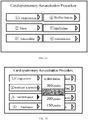
- the operation recording guidance zone includes six options, in which different options correspond to different medical operation included in the cardiopulmonary resuscitation procedure. Specifically, option 1 is " compression “, option 2 is “blow”, option 3 is “adrenaline”, option 4 is “defibrillation”, option 5 is “intubation”, and option 6 is “amiodarone”.
- option 1 is " compression "
- option 2 is “blow”
- option 3 is “adrenaline”
- option 4 is “defibrillation”
- option 5 is “intubation”
- option 6 is “amiodarone”.
- the user can select a certain option as the target option and include the serial number of the target option in the voice signal.
- the voice signal inputted by the user can be "2" or “operation 2" or “option 2” or the likes.
- the options can also include two options of "procedure start” and "procedure end”.
- the medical device After obtaining the voice signal, the medical device extracts the target option selected by the user from the voice signal, and determines the medical operation corresponding to the target option as the medical operation content.
- some types of medical operation may be composed of multiple options.
- the type of medical operation is drug administration, it is necessary to record not only the drug name, but also the dosage.
- the type of medical operation is defibrillation, it is necessary to record not only the defibrillation operation, but also the defibrillation power. Therefore, in the operation recording guidance zone, this type of option may have associated options, and the user can further select the medical operation content in the associated options.
- the option associated with the first target option is displayed. For example, supposing that the first target option extracted from the voice signal is "defibrillation”, this option is associated with multiple sub-options of defibrillation power. As shown in FIG. 2B , the multiple sub-options displayed in the interface, comprise "360 joules", “300 joules”, “200 joules” and “150 joules” respectively.
- the user can use the voice signal to further select an option in the associated options.
- the option selected by the user in the associated options is called as the second target option.
- the respective medical operation corresponding to the first target option and the second target option can be combined and determined as the medical operation content by the medical device. For example, in the sub-options of the "defibrillation power" shown in FIG. 2B , if the user inputs "300 joules" by a voice signal, the medical device combines the first target option “defibrillation” and the second target option "300 joules" into one piece of medical operation content.
- first target option and the second target option inputted by the user can be the serial number of the option or the specific content of the option.
- the number and content of options in the operation recording guidance zone can be customized by users according to actual requirements.
- machine learning algorithm can also be used to perform semantic recognition on voice signals to determine the medical operation content.
- a voice recognition process based on machine learning algorithm can include two stages, namely, a training stage and a recognition stage.
- a training stage a large number of voice corpus can be acquired, and feature vector parameters can be obtained after preprocessing and feature extraction.
- a reference model database of training voice can be established through feature modeling.
- the recognition stage the feature vector parameters of the inputted voice are compared with the reference model in the reference model database, and then the inputted feature vector with the highest similarity is taken as the recognized medical operation content.
- machine learning algorithm can also be self-learning algorithm or self-training reference model database.
- the semantic recognition procedure of machine learning algorithm can also be as follows. After receiving the voice signal, semantic analysis of the voice signal is implemented to obtain a plurality of alternative items of medical operation content. In response to the selection operation performed by the user among the plurality of alternative items of medical operation content, the alternative items of medical operation content selected by the user are taken as the target content of the medical operation.
- the semantic recognition process of machine learning algorithm can also be as follows. After receiving the voice signal, semantic analysis of the voice signal is implemented to extract a keyword that can represent the semantic content from the voice signal, and then the keyword is taken as the medical operation content. For example, the voice signal inputted by the medical staff is "implementing hear compression", and then the medical operation content obtained after the semantic analysis of the voice signal by machine learning algorithm is "compression".
- the above has introduced several methods to explain how to determine the content and occurrence time of the medical operation according to the voice signal.
- the determination methods are not limited to the above, but can also include other implementation methods that can be expected by those skilled in the art.
- step S103 the operation information of the medical operation is recorded.
- the operation information of the medical operation can be stored locally in the medical device, or be sent to other devices such as the central station for storage.
- the operation information of the medical operation can be stored separately or together with other physiological data of the object to be operated.
- this medical device can acquire a voice signal inputted by the user, obtain operation information of medical operation based on the voice signal, and store the operation information, wherein the operation information includes operation content and operation occurrence time. It can be seen that, the user can trigger the medical device to automatically record the operation information of the medical operation through the voice signal.
- this method can not only record timely and accurately, but also be applicable to some scenes that avoid direct contact with the devices, such as aseptic operation scenes, thus having a wider application range.
- this method can effectively reduce the trouble caused by the long distance between the recorder and the medical device. Even if the recorder is far away from the medical device, he/she still can quickly record the operation information of the medical operation in the medical device, which brings good user experience.
- the recorded operation information can also be displayed for relevant personnel to view.
- One display scheme is to generate a medical procedure recording interface and display the operation information of the medical operation on the medical procedure recording interface.
- the medical procedure recording interface may be generated before the recording action of the operation information. For example, if the medical device detects the recording start instruction of the medical operation, the medical procedure recording interface is displayed. Alternatively, the medical procedure recording interface can also be generated after the recording action of the operation information. In addition, the operation information can be displayed in real time during the recording process, or triggered by the user in response to the display instruction according to the user's viewing demand.
- the medical procedure recording interface includes an operation information display zone and/or an operation recording guidance zone.
- the operation recording guidance zone includes options corresponding to medical operation associated with the target medical procedure to guide the user to input the voice signal.
- the operation information includes occurrence time.
- the format of the recorded occurrence time is more specific and includes more detailed time elements.
- the format of the occurrence time includes year, month, day, hour, minute and second.
- time elements of the occurrence time can be displayed, such as hour, minute and second.
- the information of year, month, and day can also be displayed uniformly at a preset position in the operation information display zone.
- the operation information of each item of medical operation can be displayed in the operation information display zone according to a sequence of their occurrence time.
- the operation information with the earlier occurrence time can be ranking in the front.
- the operation information with the later occurrence time can be ranking in the front.
- the interface includes an operation information display zone, in which ten pieces of operation information of medical operation are displayed.
- the ten pieces of operation information of medical operation are ranking in a reverse order according to the sequence of their occurrence time, that is, the operation information that occurs first is ranked at last.
- the operation information of the target medical operation can be modified according to the modification instruction.
- the modification instruction can be inputted through voices, gestures, keys, touch screens and other forms.
- the modification instruction may include instruction information of the medical operation to indicate which medical operation should be modified by the medical device.
- the medical operation indicated by the modification instruction can be referred to as the target medical operation.
- the modification instruction can specify the target medical operation through the occurrence time.
- the voice instruction can be "modify medical operation at 10:25:00".
- the modification instruction can indicate the target medical operation through the ranking position.
- the voice instruction can be "modify fourth medical operation".
- the medical device can set the operation information of the target medical operation to a state to be modified.
- the object indicated to be modified by the modification instruction can be the medical operation content or the medical operation occurrence time. If the object to be modified is the occurrence time, the medical device can re-ranking the medical operation according to their occurrence time and display the operation information of the medical operation in the re-ranked order. In addition, when replacing the medical operation content, the replaced content can also be inputted according to instructions of the operation recording guidance zone.
- the modification instruction can include a replacement instruction, addition instruction or deletion instruction. If the modification instruction includes a replacement instruction, the recorded information item would be replaced with the information item entered by the user. If the modification instruction includes an addition instruction, the information item inputted by the user can be added into the recorded operation information. If the modification instruction includes a deletion instruction, the information item indicated by the user in the recorded operation information can be deleted.
- the modification time can also be recorded, that is, the modification time can be recorded as an information item in the operation information of the medical operation.
- the operation information recorded by the medical device can also be printed out or uploaded to other systems.
- the operation information of the medical operation is transmitted to the printing device in response to the user's printing instruction for the operation information.
- the operation information of the medical operation is uploaded to a designated medical device in response to the user's uploading instruction for the operation information.
- the printing instruction and uploading instruction can be inputted through voices, gestures, keys, touch screens and other forms, which will not be repeated here for concise objects.
- the recording process of the medical operation is explained in detail by taking the cardiopulmonary resuscitation procedure for example.
- Cardiopulmonary resuscitation procedure is often completed with the cooperation of three medical workers or trained personnel. Two of them are responsible for operation, such as cardiopulmonary resuscitation and drug administration and so on, in turns, while the other is responsible for recording the whole rescue process. Medical devices, such as monitor and defibrillator and so on, may be used during the rescue process. However, these medical devices often need to be close to the patient. Meanwhile, more space around the patient needs to be given to the personnel carrying out the rescue treatment.
- the recorder can first select the specific medical procedure of cardiopulmonary resuscitation on the medical device through various forms of instructions, such as keys, touch screens, voices, gestures, etc., after the starting of the cardiopulmonary resuscitation procedure.
- the recorder can also activate the operation recording function of the medical procedure by voices or gestures, such as a voice input of "rescue start".
- the medical device can display a rescue procedure recording interface which can include but not limited to the operation information display zone and/or operation recording guidance zone.
- a rescue procedure recording interface which can include but not limited to the operation information display zone and/or operation recording guidance zone.
- the upper part of the rescue procedure recording interface is the operation information display zone
- the lower part of the rescue procedure recording interface is the operation recording guidance zone.
- the operation recording guidance zone includes various operation options contained in the medical procedure of cardiopulmonary resuscitation procedure, in which the options can have serial number or not.
- the interface can also include buttons and icons for printing, saving and uploading.
- the recorder can input a voice signal of "start rescue”, and then the medical device will generate a medical operation content of "start rescue”, and take the time point for receiving the voice signal as the medical operation occurrence time.
- the operation information of the medical operation can be displayed in the operation information display zone, that is, "start rescue at 10:00:00".
- the recorder can input content of the cardiopulmonary resuscitation rescue operation by a voice signal according to the guidance of the options. For example, the operator starts to compress the patient's heart, the recorder simultaneously inputs a voice signal of "start compression” or "1 start”. After receiving the voice signal, the medical device determines the "start compression” as one piece of medical operation content based on the voice signal and takes the time point for receiving the voice signal as the medical operation occurrence time. The content and occurrence time of the medical operation are recorded as displayed in the operation information display zone.
- the medical device determines the option of "defibrillation” based on the voice signal, and then further determines that the option has associated options, such that the associated options would be displayed.
- the association options include 360 joules, 300 joules, 200 joules and 150 joules.
- the recorder further inputs a voice signal of "200 joules” or "2”. After receiving the voice signal, the medical device determines the option of "200 joules” based on the voice signal.
- the two determined pieces of content are combined into one piece of medical operation content of "defibrillation, 200 joules". Take the receiving time point of the first or second voice signal as the occurrence time of the medical operation. The content and occurrence time of the medical operation are recorded as displayed in the operation information display zone.
- the recorder records the medical operation performed by the operator on the medical device through voice signals. After the rescue is completed, the recorder can also input "rescue end" by a voice signal, and the medical device can also record the medical operation content and occurrence time. As shown in FIG. 2C . The medical device can also display the medical operation content and occurrence time in the operation information display zone.
- the medical staff can also modify it through voice instructions, such as changing the adrenaline dose from 1mg to 2mg.
- the medical staff can also trigger the printing function by a voice or gesture signal to send the medical operation information of the medical procedure to the printing device for printing and outputting.
- the medical staff can also trigger a storage function by a voice or gesture signal to enable the medical device to store the medical operation information of the medical procedure as a file.
- the medical staff can also trigger an uploading function by a voice or gesture signal to upload the medical operation information of this medical procedure to a designated medical device.
- voice signal inputs can also be realized by gesture signal inputs.
- the user uses a gesture to represent the serial number of the option, then the medical device performs an image recognition, determines which option is inputted according to the recognition content, and records the medical operation content represented by the option.
- this disclosure has further provided a medical operation recording method applicable to a medical device.
- this method records medical operation based on gestures rather than voice signals.
- this method may include the following steps S401 to S403.
- step S401 a gesture inputted by a user is obtained.
- step S402 operation information of medical operation based on the gesture is obtained.
- the medical operation is operation included in a target medical procedure, and the operation information includes at least two information items of medical operation content and medical operation occurrence time.
- step S403 the operation information of the medical operation is recorded.
- the specific implementation method for obtaining operation information of medical operation based on the gesture includes: determining medical operation content according to the gesture; determining a time point for receiving the gesture as the medical operation occurrence time or obtaining the medical operation occurrence time from an execution device of the medical operation.
- the specific implementation method for determining medical operation content according to the gesture includes determining the medical operation content corresponding to the gesture inputted by the user according to a preset corresponding relationship between the gesture and the medical operation content.
- the corresponding relationship between the gesture and the medical operation content can be predefined.
- an action of clapping downward for three times is predefined to correspond to medical operation content of compression.
- an action of circling by hand is predefined to correspond to medical operation content of injection, and so on.
- the medical device after detecting a certain type of gesture, the medical device can determine the medical operation content corresponding to the gesture.
- the specific implementation method for determining medical operation content according to the gesture includes displaying an operation recording guidance zone which includes options corresponding to medical operation associated with the target medical procedure; determining a target option corresponding to the gesture, and determining the medical operation corresponding to the target option as the medical operation content.
- the above method may also include generating a medical procedure recording interface and displaying the operation information of the medical operation on the medical procedure recording interface.
- the method may further include displaying a medical procedure recording interface if the medical device detects a recording start instruction of a medical operation.
- the medical procedure recording interface includes an operation information display zone and/or an operation recording guidance zone.
- the operation recording guidance zone includes options corresponding to a medical operation associated with the target medical procedure.
- the above method can also include that displaying operation information of medical operation in the operation information display zone according to a sequence of their occurrence time, if the operation information display zone is included by the medical procedure recording interface.
- a medical device which includes a display, a memory and a processor.
- the display is configured to display information.
- the memory is configured to store executable program instructions.
- the processor is configured to execute the executable program instructions to implement steps of each medical operation recording method.
- the medical device can be specifically a monitor, and a specific example of which is shown in FIG.5.
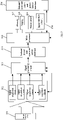
- FIG. 5 provides a system framework diagram of a parameter processing module in a multi-parameter monitor.
- the multi-parameter monitor has an independent housing, whose panel is provided with a sensor interface zone which is integrated therein multiple sensor interfaces for connecting with various external physiological parameter sensor accessories 511.
- the housing panel also includes a small IxD display zone, a display 518, an input interface circuit 920 and an alarm circuit 519 (such as, a LED alarm zone).
- a parameter processing module is used as an external communication and power source interface for communicating with a main unit and taking power from the main unit.
- the parameter processing module also supports a build-out parameter module, can form a plug-in monitor main unit by means of inserting the parameter module, can be used as part of the monitor, or can be connected to the main unit via a cable, with the build-out parameter module being used as an external accessory of the monitor.
- the multi-parameter monitor includes a memory 517 for storing computer programs and various data generated during the related monitoring process.
- the internal circuit of the parameter processing module is disposed inside the housing. As shown in FIG.5 , the internal circuit includes a signal acquisition circuit 512 corresponding to at least two physiological parameters, a front-end signal processing circuit 513 and a main processor 515.
- the main processor 515 can implement each step associated with each medical operation recording method described above.
- the signal acquisition circuit 512 may be selected from an electrocardiogram circuit, a respiration circuit, a body temperature circuit, a blood oxygen saturation circuit, a non-invasive blood pressure circuit, an invasive blood pressure circuit, etc. These signal acquisition circuits 512 are electrically connected with corresponding sensor interfaces for electrically connecting to sensor accessories 511 corresponding to different physiological parameters. An output terminal of the signal acquisition circuit 512 is coupled to the front-end signal processing circuit 513 whose communication terminal is further coupled to the main processor 15. The main processor 15 is electrically connected with the external communication and power interface 516.
- the front-end signal processing circuit 513 can be configured to complete the sampling and analog-to-digital conversion of output signals of the signal acquisition circuit 512, and output control signals to control the physiological parameter measurement process.
- the physiological parameters include but are not limited to parameters of electrocardiogram, respiration, body temperature, blood oxygen saturation, non-invasive blood pressure, and invasive blood pressure.
- the front-end signal processing circuit 513 can be realized by a single-chip microcomputer or other semiconductor devices, or ASIC or FPGA.
- the front-end signal processing circuit 513 can be powered by an isolated power supply. After a simple processing and packaging, the sampled data can be sent to the main processor through an isolated communication interface.
- the front-end signal processing circuit 513 can be coupled to the main processor 515 through the isolated power and communication interface 514.
- Supplying electrical power to the front-end signal processing circuit through the isolated power supply has a function of isolating the patient from the power supply equipment through isolating the DC/DC power supply via a transformer.
- the application part is floating through the isolation transformer, such that the leakage current passing through the patient is small enough, and bad influences on boards and devices of intermediate circuits, such as main control board (guaranteed by creepage distance and electrical clearance), due to voltage or energy generated during a defibrillation or electric knife application, can be prevented.
- the main processor completes the calculation of physiological parameters and sends calculation results and waveforms of the physiological parameter to the main unit(such as, a main unit with a display, PC, a central station, etc.) through the external communication and power interface.
- the external communication and power source interface 516 may be one or a combination of local area network interfaces composed of Ethernet, Token Ring, Token Bus, and optical fiber distributed data interface (FDDI) as the backbone of these three networks, may also be one or a combination of wireless interfaces such as infrared, Bluetooth, WIFI, and WMTS communication, or may also be one or a combination of wired data connection interfaces such as RS232 and USB.
- the external communication and power source interface 516 may also be one or a combination of the wireless data transmission interface and the wired data transmission interface.
- the main unit may be any computer device such as a main unit of the monitor, an electrocardiograph, an ultrasonic diagnosis instrument, a computer, etc. A monitor can be formed by means of installing with matching software.
- the main unit may also be a communication device, such as a mobile phone, and the parameter processing module sends data to a mobile phone that supports Bluetooth communication via a Bluetooth interface to realize remote data transmission.
- this disclosure has provided a readable storage medium on which a computer program is stored, wherein when the computer program is executed by a processor, steps of the medical operation recording method are implemented.
- each embodiment in this disclosure is described in a progressive manner. Each embodiment focuses on the differences from the other embodiments. The same and similar parts of each embodiment can be referred to each other.
Landscapes
- Engineering & Computer Science (AREA)
- Health & Medical Sciences (AREA)
- General Health & Medical Sciences (AREA)
- Theoretical Computer Science (AREA)
- General Business, Economics & Management (AREA)
- Epidemiology (AREA)
- Medical Informatics (AREA)
- Primary Health Care (AREA)
- Public Health (AREA)
- Business, Economics & Management (AREA)
- Biomedical Technology (AREA)
- Human Computer Interaction (AREA)
- Physics & Mathematics (AREA)
- General Engineering & Computer Science (AREA)
- Multimedia (AREA)
- Audiology, Speech & Language Pathology (AREA)
- General Physics & Mathematics (AREA)
- Computational Linguistics (AREA)
- Acoustics & Sound (AREA)
- User Interface Of Digital Computer (AREA)
Applications Claiming Priority (1)
| Application Number | Priority Date | Filing Date | Title |
|---|---|---|---|
| PCT/CN2019/089273 WO2020237571A1 (zh) | 2019-05-30 | 2019-05-30 | 医疗操作的记录方法、医疗设备及存储介质 |
Publications (2)
| Publication Number | Publication Date |
|---|---|
| EP3979253A1 true EP3979253A1 (de) | 2022-04-06 |
| EP3979253A4 EP3979253A4 (de) | 2022-06-15 |
Family
ID=73551948
Family Applications (1)
| Application Number | Title | Priority Date | Filing Date |
|---|---|---|---|
| EP19930228.2A Pending EP3979253A4 (de) | 2019-05-30 | 2019-05-30 | Aufzeichnungsverfahren für ein medizinisches verfahren, medizinprodukt und speichermedium |
Country Status (4)
| Country | Link |
|---|---|
| US (1) | US12493446B2 (de) |
| EP (1) | EP3979253A4 (de) |
| CN (1) | CN113544787A (de) |
| WO (1) | WO2020237571A1 (de) |
Families Citing this family (3)
| Publication number | Priority date | Publication date | Assignee | Title |
|---|---|---|---|---|
| US11431766B2 (en) * | 2021-01-04 | 2022-08-30 | International Business Machines Corporation | Setting timers based on processing of group communications using natural language processing |
| CN113129892B (zh) * | 2021-05-25 | 2024-05-14 | 深圳市罗湖区人民医院 | 一种手术物品的清点方法及系统 |
| CN117954060A (zh) * | 2024-01-08 | 2024-04-30 | 中山大学附属第六医院 | 模型训练方法、医疗流程核对方法、系统、装置及介质 |
Family Cites Families (18)
| Publication number | Priority date | Publication date | Assignee | Title |
|---|---|---|---|---|
| JP2001175795A (ja) * | 1999-12-22 | 2001-06-29 | Nec Corp | 診療録作成者認証システム、診療録記憶装置、作成者認証装置および診療録作成者認証方法 |
| US7574369B1 (en) * | 2001-10-11 | 2009-08-11 | Eanesthesia Software Llc | Data recording, billing, charges, and quality assurance software for mobile devices |
| US7245964B2 (en) * | 2003-02-28 | 2007-07-17 | Medtronic Physio-Control Corp. | Annotating an audio recording during a medical emergency |
| US8930214B2 (en) * | 2011-06-17 | 2015-01-06 | Parallax Enterprises, Llc | Consolidated healthcare and resource management system |
| EP2872079B1 (de) * | 2012-07-16 | 2021-03-24 | Valco Acquisition LLC as Designee of Wesley Holdings Ltd. | Überwachungssystem für medizinische eingriffe |
| CN103605892A (zh) * | 2013-11-25 | 2014-02-26 | 方正国际软件有限公司 | 基于语音驱动的医疗系统 |
| CN105989558A (zh) * | 2015-01-27 | 2016-10-05 | 上海市第十人民医院 | 一种医用快速记录系统及快速记录方法 |
| US20180036469A1 (en) * | 2016-08-05 | 2018-02-08 | Fresenius Medical Care Holdings, Inc. | Remote User Interfaces for Dialysis Systems |
| CN106326640A (zh) * | 2016-08-12 | 2017-01-11 | 上海交通大学医学院附属瑞金医院卢湾分院 | 一种医疗语音控制系统及其控制方法 |
| CN106372421A (zh) * | 2016-08-31 | 2017-02-01 | 苏州德品医疗科技股份有限公司 | 一种基于手势操作的移动监护工作站 |
| CN207367596U (zh) * | 2016-12-28 | 2018-05-15 | 北京嘉和美康信息技术有限公司 | 一种医疗文书记录系统 |
| CN107093426A (zh) * | 2017-04-26 | 2017-08-25 | 医惠科技有限公司 | 语音的输入方法、装置及系统 |
| CN108962341A (zh) * | 2017-05-26 | 2018-12-07 | 中国医学科学院北京协和医院 | 一种记录抢救过程事件的方法、装置及医疗设备 |
| CN107422955A (zh) * | 2017-07-07 | 2017-12-01 | 珠海格力电器股份有限公司 | 一种启动音视频设备的方法、装置和移动终端 |
| CN107863133A (zh) * | 2017-10-27 | 2018-03-30 | 广州视源电子科技股份有限公司 | 语音备忘方法、装置、医疗护理设备及存储介质 |
| CN109300517A (zh) * | 2018-10-11 | 2019-02-01 | 钱磊 | 便携式胸痛数据录入工具 |
| EP3871143A4 (de) * | 2018-10-25 | 2022-08-31 | Beyeonics Surgical Ltd. | Benutzerschnittstelle für kopfmontiertes anzeigesystem |
| TWI788620B (zh) * | 2019-05-23 | 2023-01-01 | 康宣科技有限公司 | 通過語音記錄及處理一組織之影像資訊的方法及系統 |
-
2019
- 2019-05-30 CN CN201980093705.3A patent/CN113544787A/zh active Pending
- 2019-05-30 WO PCT/CN2019/089273 patent/WO2020237571A1/zh not_active Ceased
- 2019-05-30 EP EP19930228.2A patent/EP3979253A4/de active Pending
-
2021
- 2021-11-30 US US17/539,086 patent/US12493446B2/en active Active
Also Published As
| Publication number | Publication date |
|---|---|
| CN113544787A (zh) | 2021-10-22 |
| EP3979253A4 (de) | 2022-06-15 |
| WO2020237571A1 (zh) | 2020-12-03 |
| US20220084667A1 (en) | 2022-03-17 |
| US12493446B2 (en) | 2025-12-09 |
Similar Documents
| Publication | Publication Date | Title |
|---|---|---|
| US12493446B2 (en) | Medical operation recording method, medical device, and storage medium | |
| US20220037038A1 (en) | Operating room checklist system | |
| US10827984B2 (en) | Monitoring device and method for providing guidance information during a measurement operation | |
| CN104520859A (zh) | 用于实时获得医学处置事件的记录的图形用户界面 | |
| CN107910073A (zh) | 一种急诊预检分诊方法及装置 | |
| US11998305B2 (en) | Systems and methods for using a wearable health monitor | |
| CN112839564B (zh) | 针对颅脑损伤的生理体征监测方法和医疗监护设备 | |
| US20200176116A1 (en) | Method of an interactive health status assessment and system thereof | |
| US20250241571A1 (en) | Wearable depressive disorder recognition and seizure detection device and method | |
| CN108294743A (zh) | 一种机器人及心电检测方法 | |
| CN113544769B (zh) | 临床事件的记录方法、医疗设备和存储介质 | |
| US11684318B2 (en) | Monitoring device | |
| CN109300251A (zh) | 一种智能共享急救站及控制方法 | |
| WO2020133347A1 (zh) | 一种对患者的监护方法及装置 | |
| CN113811954A (zh) | 存储和呈现用户的音频和/或视觉内容 | |
| CN113160924B (zh) | 心电图报告的信息显示方法、心电图机和存储装置 | |
| CN112309532B (zh) | 信息反馈方法和装置 | |
| CN115399732A (zh) | 一种用于健康检测的医疗机器人系统及其工作方法 | |
| WO2022143296A1 (zh) | 工作流定义方法、生命体征监测设备以及服务器 | |
| WO2020133430A1 (zh) | 基于生理参数的监护方法、监护设备及计算机存储介质 | |
| CN113223650A (zh) | 心电图报告的显示方法、心电图机及存储装置 | |
| US20250316354A1 (en) | Systems and Methods for Voice Activation and Annotation of Medical Records | |
| US20230343447A1 (en) | Workflow definition method and vital sign monitoring device | |
| CN113223651A (zh) | 心电图报告的获取方法、心电图机及存储装置 | |
| CN112969407A (zh) | 一种基于监护设备的界面显示方法及监护设备 |
Legal Events
| Date | Code | Title | Description |
|---|---|---|---|
| STAA | Information on the status of an ep patent application or granted ep patent |
Free format text: STATUS: THE INTERNATIONAL PUBLICATION HAS BEEN MADE |
|
| PUAI | Public reference made under article 153(3) epc to a published international application that has entered the european phase |
Free format text: ORIGINAL CODE: 0009012 |
|
| STAA | Information on the status of an ep patent application or granted ep patent |
Free format text: STATUS: REQUEST FOR EXAMINATION WAS MADE |
|
| 17P | Request for examination filed |
Effective date: 20211207 |
|
| AK | Designated contracting states |
Kind code of ref document: A1 Designated state(s): AL AT BE BG CH CY CZ DE DK EE ES FI FR GB GR HR HU IE IS IT LI LT LU LV MC MK MT NL NO PL PT RO RS SE SI SK SM TR |
|
| A4 | Supplementary search report drawn up and despatched |
Effective date: 20220512 |
|
| RIC1 | Information provided on ipc code assigned before grant |
Ipc: G06F 3/16 20060101ALI20220509BHEP Ipc: G10L 15/22 20060101ALI20220509BHEP Ipc: G16H 10/60 20180101AFI20220509BHEP |
|
| DAV | Request for validation of the european patent (deleted) | ||
| DAX | Request for extension of the european patent (deleted) | ||
| STAA | Information on the status of an ep patent application or granted ep patent |
Free format text: STATUS: EXAMINATION IS IN PROGRESS |
|
| 17Q | First examination report despatched |
Effective date: 20250307 |
|
| REG | Reference to a national code |
Ref country code: DE Ref legal event code: R079 Free format text: PREVIOUS MAIN CLASS: G16H0010600000 Ipc: G06F0003160000 |
|
| GRAP | Despatch of communication of intention to grant a patent |
Free format text: ORIGINAL CODE: EPIDOSNIGR1 |
|
| STAA | Information on the status of an ep patent application or granted ep patent |
Free format text: STATUS: GRANT OF PATENT IS INTENDED |
|
| RIC1 | Information provided on ipc code assigned before grant |
Ipc: G06F 3/16 20060101AFI20251021BHEP Ipc: G10L 15/22 20060101ALI20251021BHEP Ipc: G16H 10/60 20180101ALI20251021BHEP Ipc: G16H 40/20 20180101ALI20251021BHEP |
|
| INTG | Intention to grant announced |
Effective date: 20251106 |