EP3979238B1 - Verfahren zur steuerung einer vorrichtung durch spracherkennung und vorrichtung zur seiner implementierung - Google Patents
Verfahren zur steuerung einer vorrichtung durch spracherkennung und vorrichtung zur seiner implementierung Download PDFInfo
- Publication number
- EP3979238B1 EP3979238B1 EP19930394.2A EP19930394A EP3979238B1 EP 3979238 B1 EP3979238 B1 EP 3979238B1 EP 19930394 A EP19930394 A EP 19930394A EP 3979238 B1 EP3979238 B1 EP 3979238B1
- Authority
- EP
- European Patent Office
- Prior art keywords
- voice recognition
- recognition device
- voice
- control message
- devices
- Prior art date
- Legal status (The legal status is an assumption and is not a legal conclusion. Google has not performed a legal analysis and makes no representation as to the accuracy of the status listed.)
- Active
Links
Images


Classifications
-
- G—PHYSICS
- G06—COMPUTING OR CALCULATING; COUNTING
- G06F—ELECTRIC DIGITAL DATA PROCESSING
- G06F3/00—Input arrangements for transferring data to be processed into a form capable of being handled by the computer; Output arrangements for transferring data from processing unit to output unit, e.g. interface arrangements
- G06F3/16—Sound input; Sound output
- G06F3/167—Audio in a user interface, e.g. using voice commands for navigating, audio feedback
-
- G—PHYSICS
- G06—COMPUTING OR CALCULATING; COUNTING
- G06F—ELECTRIC DIGITAL DATA PROCESSING
- G06F3/00—Input arrangements for transferring data to be processed into a form capable of being handled by the computer; Output arrangements for transferring data from processing unit to output unit, e.g. interface arrangements
- G06F3/16—Sound input; Sound output
-
- G—PHYSICS
- G10—MUSICAL INSTRUMENTS; ACOUSTICS
- G10L—SPEECH ANALYSIS TECHNIQUES OR SPEECH SYNTHESIS; SPEECH RECOGNITION; SPEECH OR VOICE PROCESSING TECHNIQUES; SPEECH OR AUDIO CODING OR DECODING
- G10L15/00—Speech recognition
- G10L15/22—Procedures used during a speech recognition process, e.g. man-machine dialogue
-
- G—PHYSICS
- G10—MUSICAL INSTRUMENTS; ACOUSTICS
- G10L—SPEECH ANALYSIS TECHNIQUES OR SPEECH SYNTHESIS; SPEECH RECOGNITION; SPEECH OR VOICE PROCESSING TECHNIQUES; SPEECH OR AUDIO CODING OR DECODING
- G10L15/00—Speech recognition
- G10L15/26—Speech to text systems
-
- G—PHYSICS
- G10—MUSICAL INSTRUMENTS; ACOUSTICS
- G10L—SPEECH ANALYSIS TECHNIQUES OR SPEECH SYNTHESIS; SPEECH RECOGNITION; SPEECH OR VOICE PROCESSING TECHNIQUES; SPEECH OR AUDIO CODING OR DECODING
- G10L15/00—Speech recognition
- G10L15/28—Constructional details of speech recognition systems
- G10L15/30—Distributed recognition, e.g. in client-server systems, for mobile phones or network applications
-
- G—PHYSICS
- G10—MUSICAL INSTRUMENTS; ACOUSTICS
- G10L—SPEECH ANALYSIS TECHNIQUES OR SPEECH SYNTHESIS; SPEECH RECOGNITION; SPEECH OR VOICE PROCESSING TECHNIQUES; SPEECH OR AUDIO CODING OR DECODING
- G10L15/00—Speech recognition
- G10L15/28—Constructional details of speech recognition systems
- G10L15/32—Multiple recognisers used in sequence or in parallel; Score combination systems therefor, e.g. voting systems
-
- G—PHYSICS
- G10—MUSICAL INSTRUMENTS; ACOUSTICS
- G10L—SPEECH ANALYSIS TECHNIQUES OR SPEECH SYNTHESIS; SPEECH RECOGNITION; SPEECH OR VOICE PROCESSING TECHNIQUES; SPEECH OR AUDIO CODING OR DECODING
- G10L17/00—Speaker identification or verification techniques
- G10L17/22—Interactive procedures; Man-machine interfaces
-
- H—ELECTRICITY
- H04—ELECTRIC COMMUNICATION TECHNIQUE
- H04L—TRANSMISSION OF DIGITAL INFORMATION, e.g. TELEGRAPHIC COMMUNICATION
- H04L12/00—Data switching networks
- H04L12/28—Data switching networks characterised by path configuration, e.g. LAN [Local Area Networks] or WAN [Wide Area Networks]
- H04L12/2803—Home automation networks
- H04L12/2816—Controlling appliance services of a home automation network by calling their functionalities
-
- G—PHYSICS
- G10—MUSICAL INSTRUMENTS; ACOUSTICS
- G10L—SPEECH ANALYSIS TECHNIQUES OR SPEECH SYNTHESIS; SPEECH RECOGNITION; SPEECH OR VOICE PROCESSING TECHNIQUES; SPEECH OR AUDIO CODING OR DECODING
- G10L15/00—Speech recognition
- G10L15/22—Procedures used during a speech recognition process, e.g. man-machine dialogue
- G10L2015/223—Execution procedure of a spoken command
Definitions
- Disclosed herein is a method for controlling a device, based on voice recognition of a plurality of devices and a position of a user, and a device implementing the same.
- a variety of voice-based control technologies have been suggested as a means to control home products, home appliances and the like.
- a microphone is installed in various ways or research has been performed to develop a module for processing voice recognition processing, to enhance a voice recognition rate.
- Voice recognition is performed in circumstances where various types of variables can be happen, so, a device needs to operate in response to the variables to improve accuracy of voice recognition.
- the present disclosure suggests a method for controlling a device based on a position in which a user utters an instruction as a result of confirmation of the position and cooperation among a plurality of home appliances disposed in a space.
- US 2017/357478 A1 relates to using a virtual assistant to arbitrate among and/or control electronic devices.
- EP 3 382 949 A1 relates to a smart controlling device capable of utilising machine learning for voice recognition.
- the present disclosure suggests a system including a device that determines position information of a user, based on an input voice, in a state where a plurality of voice recognition devices is disposed.
- the present disclosure describes a system for controlling devices as a result of calculation of a position of a user, when the user utters an instruction.
- the present disclosure describes a system by which a robot cleaner provides map information to accurately ascertain a position of a user.
- the present invention solves the above object by a system including voice recognition devices and a robot cleaner as defined in independent claim 1. Preferred embodiments are defined by the dependent claims.
- One of the devices inserts position information of a first voice recognition device in the control message.
- the device may insert a voice file input to the voice input unit in the control message.
- the device may further include an instruction database in which instructions corresponding to functions of a plurality of voice recognition devices are stored.
- a device which operates using voice recognition, includes a communicator that receives a control message from the first voice recognition device, and a controller that controls a function provider according to the control message.
- a controller of the device determines that a user is around the first voice recognition device, and controls the function provider to provide a function indicated by the control message.
- a plurality of voice recognition devices disposed may ascertain position information of a user, based on an input voice.
- a position of a user may be calculated to operate each of the devices.
- a robot cleaner may provide map information to accurately ascertain a position of a user.
- Terms such as first, second, A, B, (a), (b), and the like can be used to describe components of the disclosure. These terms are used only to distinguish one component from another component, and the essence, order, sequence, number, or the like of the components is not limited by the terms.
- a component is "connected”, “coupled” or “connected” to another component, the component can be directly coupled or connected to another component, or still another component can be “interposed” therebetween or the components can be “connected”, “coupled” or “connected” to each other with still another component interposed therebetween.
- components can be segmented and described for convenience of description. However, these components can be implemented in one device or module, or one component can be divided and implemented into two or more devices or modules.
- home appliances, household devices and the like disposed in a specific space and configured to perform a predetermined function
- devices can be collectively referred to as devices.
- devices performing voice recognition are referred to as voice recognition devices.
- two or more devices disposed in a specific space can receive and transmit a control message, using a communication function.
- a user can operate the devices by giving an instruction set in the devices using a voice.
- Instructions used to instruct operation of a device can be classified in various ways, based on the sorts of devices.
- an instruction can be used to instruct control of the on/off of the devices or performance of a specific function provided by the devices. Instructions can vary depending on the sort of devices.
- the instructions can be classified into an activation instruction and a control instruction.
- the control instruction is an instruction for controlling operation of a device.
- the control instruction is an instruction for controlling a function of each device and includes "Turn on”, “Turn off”, “Light wind” and the like.
- the activation instruction makes a device ready to receive a control instruction.
- the activation instruction can include a category name ("TV”, “radio” and “refrigerator”) of a device or a brand ("Whisen” and “Tromm”) of a device, or an interjection or a word in a conversation ("Hey! and "Look here!).
- a plurality of devices can be disposed in a space where a user stays.
- a mic array can be included in a plurality of voice recognition devices.
- a short-range device can be activated as a result of ascertainment of a position of the user and can use position information of the user and the device to control a home appliance.
- a voice input unit 110 may receive a voice.
- a function provider 130 may provide predetermined functions. For example, in case the voice recognition device is a refrigerator, the function provider 130 may provide a refrigerating function/freezing function of a refrigerating compartment and a freezing compartment. In case the voice recognition device is an air conditioner, the function provider 130 may provide functions of discharging air and determining an amount and a direction of discharged air. In case the voice recognition device is an air purifier, the function provider 130 may provide functions of suctioning air and purifying the suctioned air.
- a communicator 180 may communicate with another device or an external cloud server.
- the cloud server may provide position information of devices, or convert an input voice instruction into a text.
- the cloud server may provide a function of recognizing a voice of an input voice instruction.
- a communicator 180 of the first voice recognition device transmits the control message to the second voice recognition device or a plurality of devices including the second voice recognition device.
- the communicator 180 transmits the control message to the plurality of devices, broadcasting transmission may be used.
- a communicator 180 of the second voice recognition device receives a control message from the first voice recognition device. Then a controller 150 of the second voice recognition device controls the function provider 130 according to the control message.
- the control message includes position information of the first voice recognition device.
- the control message may include relative position information of the first voice recognition device generated with respect to the position information of the second voice recognition device.
- the controller 150 of the first voice recognition device may insert the position information (or the above relative position information) of the first voice recognition device in the control message. That is, the control message is generated to include position information.
- the controller 150 of the second voice recognition device extracts the position information (or the above relative position information) of the first voice recognition device from the received control message.
- the controller 150 of the first voice recognition device may receive the position information of the first voice recognition device or map information including the position information from a cloud server or an external device.
- An instruction database 170 may store instructions corresponding to functions of the plurality of voice recognition devices.
- the instruction database may store instructions corresponding to functions of other devices in addition to the instructions corresponding to the functions of the voice recognition devices.
- the voice recognition devices may ascertain which device is a target of the input instruction.
- the controller 150 of the first voice recognition device may extract identification information and control information of the second voice recognition device from the input voice instruction, using the instruction database 170, and generate a control message.
- the voice recognition device provides a function corresponding to an input instruction when the instruction is an instruction to the device itself.
- a position of the user having uttered the instruction may be ascertained through the voice recognition device or another device.
- the voice recognition device may transmit an instruction to a device that is to execute the instruction when the input instruction is an instruction to another device rather than the device.
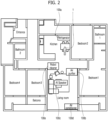
- FIG. 2 shows disposition of the voice recognition devices in one embodiment.
- a space is divided by walls and doors, and a refrigerator 100a is disposed in the kitchen.
- An air purifier 100b, an AI speaker 100c, an air conditioner 100d and a robot cleaner 100e are disposed in the living room.
- the user (i.e., a speaker) 1 is standing around the refrigerator. All the devices 100a-100e belong to a voice recognition device that performs a function of recognizing a voice.
- the speaker 1 may input an instruction of "Hi, LG. Turn on the air conditioner.”
- the instruction is divided into an activation instruction “Hi, LG.” and a control instruction “Turn on the air conditioner”.
- the speaker 1's instruction may be input to a voice input unit 110 of the refrigerator 100a.
- the refrigerator 100a may receive the instruction as a voice, analyze the input instruction and perform voice recognition.
- the refrigerator 100a may confirm that the speaker 1 has instructed operation of the air conditioner.
- the refrigerator 100a may transmit a control message, indicating that operation of the air conditioner is instructed, to the air conditioner 100d or one or more of the other voice recognition devices 100b, 100c, 100e.
- the control message includes information indicating that the speaker 1 is around the refrigerator 100a.
- the refrigerator 100a may transmit the input instruction to the AI speaker 100c.
- the air conditioner 100d may store a position of the refrigerator in advance, and receive the position of the refrigerator through the AI speaker 100c or the robot cleaner 100e.
- the robot cleaner may store each home appliance or disposition thereof in the space.
- the robot cleaner 100e may generate a map to which positions of the devices (the refrigerator, the air purifier, the air conditioner and the like) are applied. Additionally, the position of the refrigerator may be stored in the map.
- the devices the refrigerator, the air purifier, the air conditioner and the like
- a specific point may be set as the refrigerator 100a in the map, generated by the robot cleaner, by the user or from the outside.
- the robot cleaner 100e when the robot cleaner 100e obtains information on a space, based on previously-input position information of objects in the space, the robot cleaner 100e may have a position of the refrigerator 100a and a position of the air conditioner 100d.
- the robot cleaner 100e may provide relative position information of the refrigerator 100a to the air conditioner 100d based on the position information of the refrigerator 100a or the position information of the air conditioner 100d.
- the air conditioner 100d may ascertain position information of the user using the position information of the refrigerator 100a, and control an amount and a direction of air to blow the air toward the user.
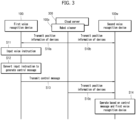
- FIG. 3 shows a process of controlling devices, based on a position of a user, using position information possessed by a robot cleaner in one embodiment.
- the embodiment of FIG. 3 includes a first voice recognition device 100i such as a refrigerator 100a that receives a voice, a robot cleaner 100e, and a second voice recognition device 100w such as an air conditioner 100d that executes an instruction input as a voice.
- the first voice recognition device 100i receives a voice instruction to control the second voice recognition device 100w from the speaker 1 (S11). Then the first voice recognition device 100i converts the input instruction to generate a control message (S12). The first voice recognition device 100i transmits the control message to other devices (S13). In this case, the control message may be transmitted using the broadcasting method or transmitted to the second voice recognition device 100w on a one-to-one basis.
- the first voice recognition device 100i or the second voice recognition device 100w may receive position information of the first voice recognition device 100i previously from the robot cleaner 100e (S10a & S10b).
- the control message includes the position information of the first voice recognition device 100i.
- the robot cleaner 100e may ascertain the transmission state in step 13, and deliver the position of the first voice recognition device 100i to the second voice recognition device 100w (S10c).
- a cloud server 300 may transmit position information of each of the voice recognition devices to the voice recognition devices.
- the second voice recognition device 100w operates based on the control message and the first voice recognition device (S14). For example, when a control message which is generated from an instruction "Turn on the air conditioner" is delivered from the first voice recognition device 100i, the second voice recognition device 100w may blow air toward the first voice recognition device 100i.
- the cloud server 300 may store the position information of each of the voice recognition devices, and provide the position information to the voice recognition devices. In this case, the cloud server 300 may provide the position of the other voice recognition devices as relative position based on each voice recognition device. Alternatively, the cloud server 300 may transmit map information including the position information of each of the voice recognition devices, and communicators 180 of the voice recognition devices may receive the map information.
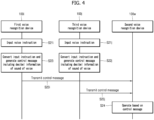
- FIG. 4 shows a process in which a plurality of voice recognition devices process a voice instruction input by a speaker, which is for illustrative purposes only and is not in accordance with the claimed invention.
- loudness of the input voice may be included in the control message.
- a first voice recognition device 100i and a third voice recognition device 100j may receive a voice instruction (S21i & S21j). Each of the devices may convert the voice instruction to generate a control message. In this case, each of the devices 100i, 100j may insert loudness information of the voice input to each of the devices 100i, 100j in the control message when generating the control message (S22i & S22j).
- a second voice recognition device 100w may ascertain that the user speaks around the first voice recognition device 100i. Then the second voice recognition device 100w may set the first voice recognition device 100i as the user's position and perform a predetermined function included in the control message.
- the second voice recognition device 100w may receive the position information of each of the devices through S10a, S10b, S10c and the like in FIG. 3 and store the position information. Alternatively, the second voice recognition device 100w may receive the position information of each of the devices from the AI speaker 100c or the cloud server disposed outside and store the position information.
- the control message may include the position information of the first and third voice recognition devices.
- the control message may include relative position information of the first and third voice recognition devices, which is generated with respect to position information of the second voice recognition device.
- the second voice recognition device 100w may receive the position information previously from the robot cleaner 100e, as illustrated in FIG. 3 .
- the control message may include a voice file input to voice input units of the first voice recognition device 100i or the third voice recognition device 100j.
- the first voice recognition device 100i or the third voice recognition device 100j generates a voice file in which the instruction to turn on the air conditioner is stored, and insert the voice file in the control message.
- the first voice recognition device 100i and the third voice recognition device 100j may respectively transmit the control message to the second voice recognition device 100w.
- the first voice recognition device 100i may transmit a first control message corresponding to a voice instruction input to the voice input unit 110 of the first voice recognition device 100i (S23i).
- the third voice recognition device 100j may transmit a second control message corresponding to a voice instruction input to the voice input unit 110 of the third voice recognition device 100j (S23j).
- a communicator 180 of the second voice recognition device 100w may receive the first control message and the second control message. Then a controller 150 of the second voice recognition device 100w may provide a function indicated by the first control message and the second control message, based on the position information of the first voice recognition device 100i and the second voice recognition device 100j (S24).
- the controller 150 of the second voice recognition device 100w may extract the position information of the first voice recognition device 100i from the first control message, and extract the position information of the third voice recognition device 100j from the second control message.
- the controller may ascertain the user's position more accurately using the two pieces of position information. In particular, as a result of comparison of the loudness information of the voice, included in the control messages, the controller may ascertain the user's position accurately.
- the refrigerator is the first voice recognition device 100i
- the air purifier is the third voice recognition device 100j
- loudness of a voice input to the two devices is at the same level.
- a controller 150 of the air conditioner may determine that there is the speaker between the air purifier and the refrigerator, and control the function provider 130 to direct air at a point in the middle of the two devices.
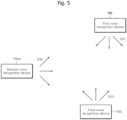
- FIG. 5 shows a process in which each of the devices plays an operation sound to share its position in one embodiment.
- the first voice recognition device 100i, the second voice recognition device 100w and the third voice recognition device 100j may respectively output an operation sound while broadcasting identification information of the devices (S31& S32 & S33).
- Each of the devices may store the identification information of the other devices and a direction or distance information of the other devices in relation to the input operation sounds.
- the voice input unit 110 installed in the second voice recognition device 100w is a directional microphone
- the first voice recognition device 100i is disposed in a leftward direction.
- the voice input unit 110 is dispose on both sides, i.e., left and right sides, of the second voice recognition device 100w
- the voice input unit 110 on both sides may ascertain a direction, using a difference in the loudness of an input sound, and the second voice recognition device 100w my ascertain a position of the first voice recognition device 100i.
- a distance based on a loudness of an operation sound input may be calculated.
- the first voice recognition device 100i may also inform the other devices of the loudness of the operation sound.
- the controller 150 of each of the devices may compare an original loudness of the operation sound output by the other devices with an operation sound input to the voice input unit 110.
- the controller 150 may calculate a distance of other devices having output the operation sound, using results of the comparison. The distance is inversely proportional to the loudness of the sound.
- each of the devices may store information on positions or distances and the like of the other devices.
- each of the devices may ascertain positions or distances of the other devices, using a map generated by the robot cleaner 100e or an operation sound.
- the first voice recognition device 100i may deliver the voice instruction to the second voice recognition device 100w that is to operate and instructs to operate.
- the second voice recognition device 100w may perform a function by applying information indicating that the user who input the voice instruction is around the first voice recognition device 100i.
- the air purifier 100b and the air conditioner 100d, or a plurality of televisions disposed in different rooms or the living room operate the user's position information may be an important factor.
- the voice input unit 110 is a single mic array
- the user's direction may be ascertained using the map generated by the robot cleaner 100e, and the voice recognition devices may ascertain a position accurately, based on the map.
- a position of a home appliance may be ascertained.
- the robot cleaner 100e may store information of the point as a point input by the user using the voice.
- the voice recognition device may guess a position of a speaker, using voice input units 110, e.g., microphones, of various types of devices providing a voice service. Additionally, the voice recognition device may ascertain a user's position information by combining position information of each home appliance and a speaker's position, and based on the user's position, performed a function, thereby ensuring improvement in the ease of use and the performance of devices and automatic control over the devices.
- voice input units 110 e.g., microphones
- the voice input unit 110 e.g., a mic array included in the voice recognition devices disposed in different positions may allow the voice recognition device to obtain position information of the user.
- the voice input unit 110 disposed in the voice recognition device is a directional mic, direction information of a voice input to each voice recognition device may be included in a control message.
- the voice recognition device having received the control message may collect the direction information to generate the user's position information.
- each device may output an operation sound (notification sound) of a product at a predetermined time point, and the other devices having received the operation sound may calculate a position of the corresponding device.
- the robot cleaner may share map information, learned and generated by the robot cleaner during a travel, with the devices such that each device generates its position information and other device's position information.
- the devices may operate with directionality.
- the voice recognition device may automatically adjust a volume of a voice of feedback based on a distance from the user or the user's position.
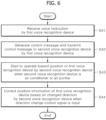
- FIG. 6 shows a process in which an air conditioner or an air purifier operates in one embodiment.
- a first voice recognition device 100i may receive a voice instruction (S41).
- the first voice recognition device 100i may generate a control message through the above processes and transmit the control message to a second voice recognition device 100w (S42).
- a controller 150 of the second voice recognition device 100w may determine that a user is around the first voice recognition device 100i, and start operation toward a position of the first voice recognition device 100i (S43). Accordingly, the controller 150 of the second voice recognition device 100w may control a function provider 130 such that the function provider provides a function indicated by the control message. The controller 150 of the second voice recognition device 100w may adjust a direction, intensity and the like of air.
- an interface 190 of the second voice recognition device 100w receives a direction change control signal within a predetermined period (e.g., three seconds to ten seconds), it is determined that the user changes the direction of air. Then the controller 150 of the second voice recognition device 100w may correct position information of the first voice recognition device 100i based on the changed direction (S44). Even when the direction of the air conditioner/the air purifier is readjusted after the user speaks, the controller 150 may correct position information of the first voice recognition device 100i based on the changed direction.
- FIG. 7 shows a process in which a television operates in one embodiment. Steps 41 and 42 are the same as those described with reference to FIG. 6 .
- the controller 150 of the second voice recognition device 100w may calculate a distance from the first voice recognition device 100i (S53). When the distance between the two devices is a predetermined reference distance or less, the second voice recognition device 100w may perform a function (S54).
- the television is disposed in bedroom 4 and the living room, and all the televisions in the living room and bedroom 4 have received a control message.
- the television in the living room may calculate a distance from the refrigerator (the first voice recognition device), using the received control message or previously-received position information.
- the television in the living room may be turned on according to the instruction included in the control message.
- the television in bedroom 4 may calculate a distance from the refrigerator (the first voice recognition device), using the received control message or previously-received position information. When it is determined that the distance is greater than the predetermined distance, the television in bedroom 4 may not comply with the instruction included in the control message.
- the television near the user may only be turned according to the user's request.
- the interface 190 of the second voice recognition device 100w receives a direction change control signal within a predetermined period (e.g., three seconds to ten seconds), it is determined that the user changes a direction of air. Then the controller 150 of the second voice recognition device 100w may correct position information of the first voice recognition device 100i based on the changed direction (S44). Even when the direction of the air conditioner/the air purifier is readjusted after the user speaks, the controller 150 may correct position information of the first voice recognition device 100i based on the changed direction.
- a direction change control signal within a predetermined period (e.g., three seconds to ten seconds)
- the controller 150 of the second voice recognition device 100w may correct position information of the first voice recognition device 100i based on the changed direction (S44). Even when the direction of the air conditioner/the air purifier is readjusted after the user speaks, the controller 150 may correct position information of the first voice recognition device 100i based on the changed direction.
Landscapes
- Engineering & Computer Science (AREA)
- Physics & Mathematics (AREA)
- Health & Medical Sciences (AREA)
- Audiology, Speech & Language Pathology (AREA)
- Human Computer Interaction (AREA)
- Multimedia (AREA)
- Acoustics & Sound (AREA)
- Computational Linguistics (AREA)
- Theoretical Computer Science (AREA)
- Computer Networks & Wireless Communication (AREA)
- General Engineering & Computer Science (AREA)
- General Physics & Mathematics (AREA)
- Automation & Control Theory (AREA)
- General Health & Medical Sciences (AREA)
- Signal Processing (AREA)
- Selective Calling Equipment (AREA)
- User Interface Of Digital Computer (AREA)
- Telephonic Communication Services (AREA)
- Air Conditioning Control Device (AREA)
Claims (6)
- System, umfassend:eine erste Spracherkennungsvorrichtung (100i);eine Mehrzahl von Vorrichtungen, die eine zweite Spracherkennungsvorrichtung (100w) umfasst; undeinen Reinigungsroboter (100e),wobei die erste Spracherkennungsvorrichtung dazu eingerichtet ist, eine Stimme zur Steuerung der zweiten Spracherkennungsvorrichtung unter Verwendung von Spracherkennung zu empfangen, und wobei die erste Spracherkennungsvorrichtung umfasst:eine Spracheingabeeinheit (110), die zum Empfang einer Stimme eingerichtet ist;einen Funktionsanbieter (130), der dazu eingerichtet ist, eine Funktion bereitzustellen;eine Steuereinheit (150), die dazu eingerichtet ist, einen in die Spracheingabeeinheit eingegebenen Sprachbefehl zu analysieren, die zweite Spracherkennungsvorrichtung zu identifizieren, die den Befehl ausführen soll, und eine an die zweite Spracherkennungsvorrichtung zu übertragende Steuernachricht zu erzeugen; undeinen Kommunikator (180), der dazu eingerichtet ist, die Steuernachricht an die zweite Spracherkennungsvorrichtung (100w) oder die Mehrzahl von Vorrichtungen, die die zweite Spracherkennungsvorrichtung umfasst, zu übertragen (S13),wobei die Steuereinheit (150) ferner dazu eingerichtet ist, die Steuernachricht unter Verwendung von Karteninformationen, die von einem Reinigungsroboter erzeugt werden, so zu erzeugen, dass sie Positionsinformationen der ersten Spracherkennungsvorrichtung umfasst,wobei die zweite Spracherkennungsvorrichtung (100w) umfasst:einen Funktionsanbieter (130), der dazu eingerichtet ist, eine Funktion bereitzustellen;einen Kommunikator (180), der dazu eingerichtet ist, die erste Steuernachricht von der ersten Spracherkennungsvorrichtung zu empfangen; undeine Steuereinheit (150), die dazu eingerichtet ist, den Funktionsanbieter entsprechend der Steuernachricht zu steuern,wobei, wenn die zweite Spracherkennungsvorrichtung (100w) ein Luftreiniger oder eine Klimaanlage ist, die Steuereinheit der zweiten Spracherkennungsvorrichtung (100w) ferner dazu eingerichtet ist, Positionsinformationen der ersten Spracherkennungsvorrichtung (100i) aus der Steuernachricht zu extrahieren und den Funktionsanbieter so zu steuern (S14), dass er der ersten Spracherkennungsvorrichtung eine durch die Steuernachricht angezeigte Funktion bereitstellt; oderwobei, wenn die zweite Spracherkennungsvorrichtung (100w) ein Fernsehgerät ist, die Steuereinheit der zweiten Spracherkennungsvorrichtung (100w) ferner dazu eingerichtet ist, Positionsinformationen der ersten Spracherkennungsvorrichtung (100i) aus der Steuernachricht zu extrahieren und zu bestimmen (S54), ob eine durch die Steuernachricht angezeigte Funktion in Abhängigkeit von einer Entfernung von der ersten Spracherkennungsvorrichtung bereitgestellt werden soll.
- System nach Anspruch 1, wobei die Steuereinheit (150) ferner dazu eingerichtet ist, relative Positionsinformationen der ersten Spracherkennungsvorrichtung (100i) auf der Grundlage von Positionsinformationen der zweiten Spracherkennungsvorrichtung (100w) zu erzeugen, und wobei die Steuernachricht die relativen Positionsinformationen umfasst.
- System nach Anspruch 1, wobei die Steuernachricht eine in die Spracheingabeeinheit (110) eingegebene Sprachdatei umfasst.
- System nach Anspruch 1, wobei die erste Spracherkennungsvorrichtung (100i) ferner umfasst:eine Anweisungsdatenbank (170), in der Anweisungen gespeichert sind, die den Funktionen einer Mehrzahl von Spracherkennungsvorrichtungen (100) entsprechen,wobei die Steuereinheit (150) ferner dazu eingerichtet ist, Identifikationsinformationen und Funktion der zweiten Spracherkennungsvorrichtung (100w) aus der eingegebenen Sprachanweisung unter Verwendung der Anweisungsdatenbank zu extrahieren und die Steuernachricht zu erzeugen.
- System nach Anspruch 1, wobei die Steuereinheit (150) der zweiten Spracherkennungsvorrichtung (100w) ferner dazu eingerichtet ist, relative Positionsinformationen der ersten Spracherkennungsvorrichtung (100i), die auf der Grundlage von Positionsinformationen der zweiten Spracherkennungsvorrichtung (100w) erzeugt wurden, aus der Steuernachricht zu extrahieren.
- System nach Anspruch 1, wobei die Steuernachricht eine Sprachdatei umfasst, die in die Spracheingabeeinheit (110) der ersten Spracherkennungsvorrichtung (100i) eingegeben wird.
Applications Claiming Priority (1)
| Application Number | Priority Date | Filing Date | Title |
|---|---|---|---|
| PCT/KR2019/006252 WO2020241906A1 (ko) | 2019-05-24 | 2019-05-24 | 음성인식을 이용하여 장치를 제어하는 방법 및 이를 구현하는 장치 |
Publications (3)
| Publication Number | Publication Date |
|---|---|
| EP3979238A1 EP3979238A1 (de) | 2022-04-06 |
| EP3979238A4 EP3979238A4 (de) | 2023-04-26 |
| EP3979238B1 true EP3979238B1 (de) | 2025-04-02 |
Family
ID=73552795
Family Applications (1)
| Application Number | Title | Priority Date | Filing Date |
|---|---|---|---|
| EP19930394.2A Active EP3979238B1 (de) | 2019-05-24 | 2019-05-24 | Verfahren zur steuerung einer vorrichtung durch spracherkennung und vorrichtung zur seiner implementierung |
Country Status (5)
| Country | Link |
|---|---|
| US (1) | US12505834B2 (de) |
| EP (1) | EP3979238B1 (de) |
| JP (1) | JP7335979B2 (de) |
| KR (2) | KR102813950B1 (de) |
| WO (1) | WO2020241906A1 (de) |
Families Citing this family (4)
| Publication number | Priority date | Publication date | Assignee | Title |
|---|---|---|---|---|
| KR102996922B1 (ko) * | 2020-11-12 | 2026-07-28 | 삼성전자주식회사 | 전자 장치 및 이의 제어 방법 |
| CN114968166A (zh) | 2021-02-26 | 2022-08-30 | 华为技术有限公司 | 语音交互的方法与电子设备 |
| KR20230050111A (ko) * | 2021-10-07 | 2023-04-14 | 삼성전자주식회사 | 전자 장치 및 그 제어 방법 |
| KR102778750B1 (ko) * | 2021-12-13 | 2025-03-12 | 한국광기술원 | 로봇 청소기를 이용한 인공지능 스피커의 음성 인식 강화 시스템 및 그 방법 |
Family Cites Families (65)
| Publication number | Priority date | Publication date | Assignee | Title |
|---|---|---|---|---|
| AU568801B1 (en) * | 1986-05-21 | 1988-01-07 | Mitsubishi Denki Kabushiki Kaisha | Control system for room air conditioner |
| JP2001145180A (ja) | 1999-11-10 | 2001-05-25 | Nec Corp | 電化製品集中制御システム及び遠隔制御装置 |
| JP2003330483A (ja) | 2002-05-09 | 2003-11-19 | Matsushita Electric Ind Co Ltd | 音声入力装置、被制御機器及び音声制御システム |
| US6963801B2 (en) * | 2002-09-05 | 2005-11-08 | Denso Corporation | Vehicle navigation system having position correcting function and position correcting method |
| KR100571837B1 (ko) * | 2004-03-05 | 2006-04-17 | 삼성전자주식회사 | 자율주행기기의 주행제어방법 및 장치 |
| US8972052B2 (en) * | 2004-07-07 | 2015-03-03 | Irobot Corporation | Celestial navigation system for an autonomous vehicle |
| TW200833152A (en) * | 2007-01-31 | 2008-08-01 | Bluepacket Comm Co Ltd | Multimedia switching system |
| US20100293502A1 (en) * | 2009-05-15 | 2010-11-18 | Lg Electronics Inc. | Mobile terminal equipped with multi-view display and method of controlling the mobile terminal |
| KR101741583B1 (ko) * | 2009-11-16 | 2017-05-30 | 엘지전자 주식회사 | 로봇 청소기 및 그의 제어 방법 |
| US8635058B2 (en) * | 2010-03-02 | 2014-01-21 | Nilang Patel | Increasing the relevancy of media content |
| JP4987103B2 (ja) * | 2010-07-05 | 2012-07-25 | シャープ株式会社 | 空気調節機 |
| US9240111B2 (en) * | 2010-10-06 | 2016-01-19 | Microsoft Technology Licensing, Llc | Inferring building metadata from distributed sensors |
| US8957847B1 (en) * | 2010-12-28 | 2015-02-17 | Amazon Technologies, Inc. | Low distraction interfaces |
| JP2014020670A (ja) * | 2012-07-18 | 2014-02-03 | Mitsubishi Electric Corp | 空気調和機の室内機 |
| KR102071575B1 (ko) * | 2013-04-23 | 2020-01-30 | 삼성전자 주식회사 | 이동로봇, 사용자단말장치 및 그들의 제어방법 |
| WO2015011819A1 (ja) * | 2013-07-25 | 2015-01-29 | 三菱電機株式会社 | 脱臭装置 |
| US9438440B2 (en) * | 2013-07-29 | 2016-09-06 | Qualcomm Incorporated | Proximity detection of internet of things (IoT) devices using sound chirps |
| KR20150043058A (ko) * | 2013-10-14 | 2015-04-22 | 주식회사 케이티 | 리모콘 서비스를 제공하는 이동 로봇 및 이동 로봇의 리모콘 서비스 제공 방법 |
| US9443516B2 (en) * | 2014-01-09 | 2016-09-13 | Honeywell International Inc. | Far-field speech recognition systems and methods |
| KR20150104311A (ko) * | 2014-03-05 | 2015-09-15 | 엘지전자 주식회사 | 로봇 청소기 및 그의 제어방법 |
| CN104123333B (zh) * | 2014-03-17 | 2017-02-15 | 腾讯科技(深圳)有限公司 | 用于位置共享的数据处理方法和装置 |
| KR102146462B1 (ko) * | 2014-03-31 | 2020-08-20 | 삼성전자주식회사 | 음성 인식 시스템 및 방법 |
| DE202014006891U1 (de) * | 2014-07-02 | 2014-10-22 | Christian Stroetmann | Datenbrille |
| JP2016024212A (ja) * | 2014-07-16 | 2016-02-08 | ソニー株式会社 | 情報処理装置、情報処理方法およびプログラム |
| US10789041B2 (en) * | 2014-09-12 | 2020-09-29 | Apple Inc. | Dynamic thresholds for always listening speech trigger |
| KR20160048492A (ko) * | 2014-10-24 | 2016-05-04 | 엘지전자 주식회사 | 로봇 청소기 및 이의 제어 방법 |
| US9812126B2 (en) * | 2014-11-28 | 2017-11-07 | Microsoft Technology Licensing, Llc | Device arbitration for listening devices |
| KR20160065574A (ko) * | 2014-12-01 | 2016-06-09 | 엘지전자 주식회사 | 로봇 청소기 및 그의 제어방법 |
| US10126406B2 (en) * | 2014-12-02 | 2018-11-13 | Qualcomm Incorporated | Method and apparatus for performing ultrasonic presence detection |
| US9811312B2 (en) * | 2014-12-22 | 2017-11-07 | Intel Corporation | Connected device voice command support |
| US9521496B2 (en) * | 2015-02-12 | 2016-12-13 | Harman International Industries, Inc. | Media content playback system and method |
| KR101659037B1 (ko) * | 2015-02-16 | 2016-09-23 | 엘지전자 주식회사 | 로봇 청소기, 이를 포함하는 원격 제어 시스템 및 이의 제어 방법 |
| US10591575B2 (en) * | 2015-04-22 | 2020-03-17 | Hisep Technology Ltd. | Direction finding system device and method |
| CN105187282B (zh) * | 2015-08-13 | 2018-10-26 | 小米科技有限责任公司 | 智能家居设备的控制方法、装置、系统及设备 |
| US9996316B2 (en) * | 2015-09-28 | 2018-06-12 | Amazon Technologies, Inc. | Mediation of wakeword response for multiple devices |
| US9653075B1 (en) * | 2015-11-06 | 2017-05-16 | Google Inc. | Voice commands across devices |
| US10610146B1 (en) * | 2015-12-21 | 2020-04-07 | Dp Technologies, Inc. | Utilizing wearable devices in an internet of things environment |
| US10743101B2 (en) | 2016-02-22 | 2020-08-11 | Sonos, Inc. | Content mixing |
| DK179415B1 (en) * | 2016-06-11 | 2018-06-14 | Apple Inc | Intelligent device arbitration and control |
| US10393399B2 (en) * | 2016-07-15 | 2019-08-27 | Koninklijke Philips N.V. | Targeted clean air delivery |
| US11435888B1 (en) * | 2016-09-21 | 2022-09-06 | Apple Inc. | System with position-sensitive electronic device interface |
| WO2018067350A1 (en) * | 2016-10-03 | 2018-04-12 | Google Llc. | Processing voice commands based on device topology |
| US10181323B2 (en) * | 2016-10-19 | 2019-01-15 | Sonos, Inc. | Arbitration-based voice recognition |
| KR101952414B1 (ko) * | 2016-10-25 | 2019-02-26 | 엘지전자 주식회사 | 청소기 및 그 제어방법 |
| US10349224B2 (en) * | 2017-01-24 | 2019-07-09 | Essential Products, Inc. | Media and communications in a connected environment |
| EP3574399B1 (de) * | 2017-01-30 | 2023-02-08 | Signify Holding B.V. | Steuergerät zur steuerung einer vielzahl von lichtquellen |
| KR101925034B1 (ko) * | 2017-03-28 | 2018-12-04 | 엘지전자 주식회사 | 스마트 컨트롤링 디바이스 및 그 제어 방법 |
| US10670285B2 (en) * | 2017-04-20 | 2020-06-02 | Trane International Inc. | Personal comfort variable air volume diffuser |
| KR20180118461A (ko) * | 2017-04-21 | 2018-10-31 | 엘지전자 주식회사 | 음성 인식 장치 및 음성 인식 방법 |
| KR102392297B1 (ko) | 2017-04-24 | 2022-05-02 | 엘지전자 주식회사 | 전자기기 |
| KR102025391B1 (ko) | 2017-05-15 | 2019-09-25 | 네이버 주식회사 | 사용자의 발화 위치에 따른 디바이스 제어 |
| DK179549B1 (en) * | 2017-05-16 | 2019-02-12 | Apple Inc. | FAR-FIELD EXTENSION FOR DIGITAL ASSISTANT SERVICES |
| KR101968725B1 (ko) * | 2017-05-19 | 2019-04-12 | 네이버 주식회사 | 음성요청에 대응하는 정보 제공을 위한 미디어 선택 |
| US10983753B2 (en) * | 2017-06-09 | 2021-04-20 | International Business Machines Corporation | Cognitive and interactive sensor based smart home solution |
| KR101966253B1 (ko) | 2017-06-09 | 2019-04-05 | 네이버 주식회사 | 무빙 디바이스를 이용하여 사용자의 위치 및 공간에 알맞은 정보를 제공하는 방법 및 장치 |
| DE102017113279A1 (de) * | 2017-06-16 | 2018-12-20 | Vorwerk & Co. Interholding Gmbh | System aus mindestens einem Haushaltsgerät, mindestens einem sich selbsttätig fortbewegenden Reinigungsgerät und einer Steuereinrichtung |
| US11424947B2 (en) * | 2017-08-02 | 2022-08-23 | Lenovo (Singapore) Pte. Ltd. | Grouping electronic devices to coordinate action based on context awareness |
| US11233782B2 (en) * | 2017-10-04 | 2022-01-25 | Resilience Magnum IP, LLC | Single node network connectivity for structure automation functionality |
| KR102421824B1 (ko) | 2017-10-17 | 2022-07-19 | 삼성전자주식회사 | 외부 장치를 이용하여 음성 기반 서비스를 제공하기 위한 전자 장치, 외부 장치 및 그의 동작 방법 |
| WO2019148074A1 (en) * | 2018-01-26 | 2019-08-01 | Alexander Lawrence Reeder | Smart air vent |
| KR101972545B1 (ko) * | 2018-02-12 | 2019-04-26 | 주식회사 럭스로보 | 음성 명령을 통한 위치 기반 음성 인식 시스템 |
| US10412556B1 (en) * | 2018-03-15 | 2019-09-10 | Capital One Services, Llc | Dynamic re-configuration of a user interface based on location information |
| US20200020165A1 (en) * | 2018-07-12 | 2020-01-16 | Bao Tran | Smart device |
| US11183183B2 (en) * | 2018-12-07 | 2021-11-23 | Sonos, Inc. | Systems and methods of operating media playback systems having multiple voice assistant services |
| US11086582B1 (en) * | 2019-04-30 | 2021-08-10 | Amazon Technologies, Inc. | System for determining positional relationships between display devices |
-
2019
- 2019-05-24 EP EP19930394.2A patent/EP3979238B1/de active Active
- 2019-05-24 KR KR1020217028549A patent/KR102813950B1/ko active Active
- 2019-05-24 WO PCT/KR2019/006252 patent/WO2020241906A1/ko not_active Ceased
- 2019-05-24 JP JP2021569147A patent/JP7335979B2/ja active Active
- 2019-05-24 KR KR1020257016693A patent/KR20250076689A/ko active Pending
- 2019-05-24 US US17/613,420 patent/US12505834B2/en active Active
Also Published As
| Publication number | Publication date |
|---|---|
| US12505834B2 (en) | 2025-12-23 |
| WO2020241906A1 (ko) | 2020-12-03 |
| KR102813950B1 (ko) | 2025-05-27 |
| KR20250076689A (ko) | 2025-05-29 |
| JP7335979B2 (ja) | 2023-08-30 |
| KR20210116671A (ko) | 2021-09-27 |
| US20220254344A1 (en) | 2022-08-11 |
| JP2022534692A (ja) | 2022-08-03 |
| EP3979238A1 (de) | 2022-04-06 |
| EP3979238A4 (de) | 2023-04-26 |
Similar Documents
| Publication | Publication Date | Title |
|---|---|---|
| US11985003B2 (en) | Apparatus, system and method for directing voice input in a controlling device | |
| US12505834B2 (en) | Method for controlling device using voice recognition and device implementing the same | |
| US11521614B2 (en) | Device with voice command input capabtility | |
| KR102025566B1 (ko) | 인공지능을 이용한 홈어플라이언스 및 음성 인식 서버 시스템과, 이의 제어 방법 | |
| CN106910500B (zh) | 对带麦克风阵列的设备进行语音控制的方法及设备 | |
| CN201129826Y (zh) | 空调控制装置 | |
| JP4109414B2 (ja) | 音声認識を用いた機器制御方法および音声認識を用いた機器制御システムならびに音声認識を用いた機器制御プログラムを記録した記録媒体 | |
| EP3480817A1 (de) | Sprachinteraktive vorrichtung und verfahren zur steuerung einer sprachinteraktiven vorrichtung | |
| JP3838029B2 (ja) | 音声認識を用いた機器制御方法および音声認識を用いた機器制御システム | |
| US20060195323A1 (en) | Distributed speech recognition system | |
| CN110501918B (zh) | 智能家电控制方法、装置、电子设备和存储介质 | |
| US20150120304A1 (en) | Speaking control method, server, speaking device, speaking system, and storage medium | |
| CN106125567B (zh) | 一种基于用户指令识别家电的方法、系统和装置 | |
| US11301208B2 (en) | Control method, control device, and control system | |
| US12279100B2 (en) | Estimating user location in a system including smart audio devices | |
| US20180122226A1 (en) | Method and device for controlling subordinate electronic device or supporting control of subordinate electronic device by learning ir signal | |
| US20070061147A1 (en) | Distributed speech recognition method | |
| WO2019171732A1 (ja) | 情報処理装置、情報処理方法、プログラム及び情報処理システム | |
| EP4191577A1 (de) | Elektronische vorrichtung und steuerungsverfahren dafür | |
| KR102093851B1 (ko) | 인공지능에 기반하여 음성 인식의 민감도를 환경에 적응적으로 변화시키는 방법 및 이를 구현하는 장치 | |
| CN108932947B (zh) | 语音控制方法及家电设备 | |
| US20250069619A1 (en) | Method and apparatus for providing noise suppression to an intelligent personal assistant |
Legal Events
| Date | Code | Title | Description |
|---|---|---|---|
| STAA | Information on the status of an ep patent application or granted ep patent |
Free format text: STATUS: THE INTERNATIONAL PUBLICATION HAS BEEN MADE |
|
| PUAI | Public reference made under article 153(3) epc to a published international application that has entered the european phase |
Free format text: ORIGINAL CODE: 0009012 |
|
| STAA | Information on the status of an ep patent application or granted ep patent |
Free format text: STATUS: REQUEST FOR EXAMINATION WAS MADE |
|
| 17P | Request for examination filed |
Effective date: 20211126 |
|
| AK | Designated contracting states |
Kind code of ref document: A1 Designated state(s): AL AT BE BG CH CY CZ DE DK EE ES FI FR GB GR HR HU IE IS IT LI LT LU LV MC MK MT NL NO PL PT RO RS SE SI SK SM TR |
|
| DAV | Request for validation of the european patent (deleted) | ||
| DAX | Request for extension of the european patent (deleted) | ||
| RIC1 | Information provided on ipc code assigned before grant |
Ipc: H04L 12/28 20060101ALI20221216BHEP Ipc: G06F 3/16 20060101ALI20221216BHEP Ipc: G10L 15/26 20060101ALI20221216BHEP Ipc: G10L 15/22 20060101AFI20221216BHEP |
|
| A4 | Supplementary search report drawn up and despatched |
Effective date: 20230329 |
|
| RIC1 | Information provided on ipc code assigned before grant |
Ipc: H04L 12/28 20060101ALI20230323BHEP Ipc: G06F 3/16 20060101ALI20230323BHEP Ipc: G10L 15/26 20060101ALI20230323BHEP Ipc: G10L 15/22 20060101AFI20230323BHEP |
|
| STAA | Information on the status of an ep patent application or granted ep patent |
Free format text: STATUS: EXAMINATION IS IN PROGRESS |
|
| 17Q | First examination report despatched |
Effective date: 20240222 |
|
| GRAP | Despatch of communication of intention to grant a patent |
Free format text: ORIGINAL CODE: EPIDOSNIGR1 |
|
| STAA | Information on the status of an ep patent application or granted ep patent |
Free format text: STATUS: GRANT OF PATENT IS INTENDED |
|
| INTG | Intention to grant announced |
Effective date: 20241024 |
|
| GRAS | Grant fee paid |
Free format text: ORIGINAL CODE: EPIDOSNIGR3 |
|
| GRAA | (expected) grant |
Free format text: ORIGINAL CODE: 0009210 |
|
| STAA | Information on the status of an ep patent application or granted ep patent |
Free format text: STATUS: THE PATENT HAS BEEN GRANTED |
|
| AK | Designated contracting states |
Kind code of ref document: B1 Designated state(s): AL AT BE BG CH CY CZ DE DK EE ES FI FR GB GR HR HU IE IS IT LI LT LU LV MC MK MT NL NO PL PT RO RS SE SI SK SM TR |
|
| REG | Reference to a national code |
Ref country code: GB Ref legal event code: FG4D |
|
| REG | Reference to a national code |
Ref country code: CH Ref legal event code: EP |
|
| REG | Reference to a national code |
Ref country code: DE Ref legal event code: R096 Ref document number: 602019068281 Country of ref document: DE |
|
| REG | Reference to a national code |
Ref country code: IE Ref legal event code: FG4D |
|
| REG | Reference to a national code |
Ref country code: NL Ref legal event code: MP Effective date: 20250402 |
|
| PG25 | Lapsed in a contracting state [announced via postgrant information from national office to epo] |
Ref country code: NL Free format text: LAPSE BECAUSE OF FAILURE TO SUBMIT A TRANSLATION OF THE DESCRIPTION OR TO PAY THE FEE WITHIN THE PRESCRIBED TIME-LIMIT Effective date: 20250402 |
|
| REG | Reference to a national code |
Ref country code: AT Ref legal event code: MK05 Ref document number: 1782112 Country of ref document: AT Kind code of ref document: T Effective date: 20250402 |
|
| PG25 | Lapsed in a contracting state [announced via postgrant information from national office to epo] |
Ref country code: FI Free format text: LAPSE BECAUSE OF FAILURE TO SUBMIT A TRANSLATION OF THE DESCRIPTION OR TO PAY THE FEE WITHIN THE PRESCRIBED TIME-LIMIT Effective date: 20250402 Ref country code: ES Free format text: LAPSE BECAUSE OF FAILURE TO SUBMIT A TRANSLATION OF THE DESCRIPTION OR TO PAY THE FEE WITHIN THE PRESCRIBED TIME-LIMIT Effective date: 20250402 Ref country code: PT Free format text: LAPSE BECAUSE OF FAILURE TO SUBMIT A TRANSLATION OF THE DESCRIPTION OR TO PAY THE FEE WITHIN THE PRESCRIBED TIME-LIMIT Effective date: 20250804 |
|
| REG | Reference to a national code |
Ref country code: LT Ref legal event code: MG9D |
|
| PG25 | Lapsed in a contracting state [announced via postgrant information from national office to epo] |
Ref country code: NO Free format text: LAPSE BECAUSE OF FAILURE TO SUBMIT A TRANSLATION OF THE DESCRIPTION OR TO PAY THE FEE WITHIN THE PRESCRIBED TIME-LIMIT Effective date: 20250702 Ref country code: GR Free format text: LAPSE BECAUSE OF FAILURE TO SUBMIT A TRANSLATION OF THE DESCRIPTION OR TO PAY THE FEE WITHIN THE PRESCRIBED TIME-LIMIT Effective date: 20250703 |
|
| PG25 | Lapsed in a contracting state [announced via postgrant information from national office to epo] |
Ref country code: PL Free format text: LAPSE BECAUSE OF FAILURE TO SUBMIT A TRANSLATION OF THE DESCRIPTION OR TO PAY THE FEE WITHIN THE PRESCRIBED TIME-LIMIT Effective date: 20250402 |
|
| PG25 | Lapsed in a contracting state [announced via postgrant information from national office to epo] |
Ref country code: BG Free format text: LAPSE BECAUSE OF FAILURE TO SUBMIT A TRANSLATION OF THE DESCRIPTION OR TO PAY THE FEE WITHIN THE PRESCRIBED TIME-LIMIT Effective date: 20250402 |
|
| PG25 | Lapsed in a contracting state [announced via postgrant information from national office to epo] |
Ref country code: HR Free format text: LAPSE BECAUSE OF FAILURE TO SUBMIT A TRANSLATION OF THE DESCRIPTION OR TO PAY THE FEE WITHIN THE PRESCRIBED TIME-LIMIT Effective date: 20250402 |
|
| PG25 | Lapsed in a contracting state [announced via postgrant information from national office to epo] |
Ref country code: AT Free format text: LAPSE BECAUSE OF FAILURE TO SUBMIT A TRANSLATION OF THE DESCRIPTION OR TO PAY THE FEE WITHIN THE PRESCRIBED TIME-LIMIT Effective date: 20250402 |
|
| PG25 | Lapsed in a contracting state [announced via postgrant information from national office to epo] |
Ref country code: RS Free format text: LAPSE BECAUSE OF FAILURE TO SUBMIT A TRANSLATION OF THE DESCRIPTION OR TO PAY THE FEE WITHIN THE PRESCRIBED TIME-LIMIT Effective date: 20250702 |
|
| PG25 | Lapsed in a contracting state [announced via postgrant information from national office to epo] |
Ref country code: IS Free format text: LAPSE BECAUSE OF FAILURE TO SUBMIT A TRANSLATION OF THE DESCRIPTION OR TO PAY THE FEE WITHIN THE PRESCRIBED TIME-LIMIT Effective date: 20250802 |
|
| PG25 | Lapsed in a contracting state [announced via postgrant information from national office to epo] |
Ref country code: LV Free format text: LAPSE BECAUSE OF FAILURE TO SUBMIT A TRANSLATION OF THE DESCRIPTION OR TO PAY THE FEE WITHIN THE PRESCRIBED TIME-LIMIT Effective date: 20250402 |
|
| REG | Reference to a national code |
Ref country code: CH Ref legal event code: H13 Free format text: ST27 STATUS EVENT CODE: U-0-0-H10-H13 (AS PROVIDED BY THE NATIONAL OFFICE) Effective date: 20251223 |
|
| REG | Reference to a national code |
Ref country code: DE Ref legal event code: R097 Ref document number: 602019068281 Country of ref document: DE |
|
| PG25 | Lapsed in a contracting state [announced via postgrant information from national office to epo] |
Ref country code: DK Free format text: LAPSE BECAUSE OF FAILURE TO SUBMIT A TRANSLATION OF THE DESCRIPTION OR TO PAY THE FEE WITHIN THE PRESCRIBED TIME-LIMIT Effective date: 20250402 Ref country code: SM Free format text: LAPSE BECAUSE OF FAILURE TO SUBMIT A TRANSLATION OF THE DESCRIPTION OR TO PAY THE FEE WITHIN THE PRESCRIBED TIME-LIMIT Effective date: 20250402 |
|
| PG25 | Lapsed in a contracting state [announced via postgrant information from national office to epo] |
Ref country code: LU Free format text: LAPSE BECAUSE OF NON-PAYMENT OF DUE FEES Effective date: 20250524 |
|
| PG25 | Lapsed in a contracting state [announced via postgrant information from national office to epo] |
Ref country code: CH Free format text: LAPSE BECAUSE OF NON-PAYMENT OF DUE FEES Effective date: 20250531 |
|
| PG25 | Lapsed in a contracting state [announced via postgrant information from national office to epo] |
Ref country code: CZ Free format text: LAPSE BECAUSE OF FAILURE TO SUBMIT A TRANSLATION OF THE DESCRIPTION OR TO PAY THE FEE WITHIN THE PRESCRIBED TIME-LIMIT Effective date: 20250402 |
|
| PG25 | Lapsed in a contracting state [announced via postgrant information from national office to epo] |
Ref country code: EE Free format text: LAPSE BECAUSE OF FAILURE TO SUBMIT A TRANSLATION OF THE DESCRIPTION OR TO PAY THE FEE WITHIN THE PRESCRIBED TIME-LIMIT Effective date: 20250402 |
|
| PG25 | Lapsed in a contracting state [announced via postgrant information from national office to epo] |
Ref country code: SK Free format text: LAPSE BECAUSE OF FAILURE TO SUBMIT A TRANSLATION OF THE DESCRIPTION OR TO PAY THE FEE WITHIN THE PRESCRIBED TIME-LIMIT Effective date: 20250402 Ref country code: RO Free format text: LAPSE BECAUSE OF FAILURE TO SUBMIT A TRANSLATION OF THE DESCRIPTION OR TO PAY THE FEE WITHIN THE PRESCRIBED TIME-LIMIT Effective date: 20250402 |
|
| PG25 | Lapsed in a contracting state [announced via postgrant information from national office to epo] |
Ref country code: IT Free format text: LAPSE BECAUSE OF FAILURE TO SUBMIT A TRANSLATION OF THE DESCRIPTION OR TO PAY THE FEE WITHIN THE PRESCRIBED TIME-LIMIT Effective date: 20250402 |
|
| REG | Reference to a national code |
Ref country code: BE Ref legal event code: MM Effective date: 20250531 |
|
| PG25 | Lapsed in a contracting state [announced via postgrant information from national office to epo] |
Ref country code: MC Free format text: LAPSE BECAUSE OF FAILURE TO SUBMIT A TRANSLATION OF THE DESCRIPTION OR TO PAY THE FEE WITHIN THE PRESCRIBED TIME-LIMIT Effective date: 20250402 |
|
| PLBE | No opposition filed within time limit |
Free format text: ORIGINAL CODE: 0009261 |
|
| STAA | Information on the status of an ep patent application or granted ep patent |
Free format text: STATUS: NO OPPOSITION FILED WITHIN TIME LIMIT |
|
| REG | Reference to a national code |
Ref country code: CH Ref legal event code: L10 Free format text: ST27 STATUS EVENT CODE: U-0-0-L10-L00 (AS PROVIDED BY THE NATIONAL OFFICE) Effective date: 20260211 |
|
| 26N | No opposition filed |
Effective date: 20260105 |
|
| GBPC | Gb: european patent ceased through non-payment of renewal fee |
Effective date: 20250702 |
|
| PG25 | Lapsed in a contracting state [announced via postgrant information from national office to epo] |
Ref country code: GB Free format text: LAPSE BECAUSE OF NON-PAYMENT OF DUE FEES Effective date: 20250702 |
|
| PG25 | Lapsed in a contracting state [announced via postgrant information from national office to epo] |
Ref country code: IE Free format text: LAPSE BECAUSE OF NON-PAYMENT OF DUE FEES Effective date: 20250524 |
|
| PG25 | Lapsed in a contracting state [announced via postgrant information from national office to epo] |
Ref country code: BE Free format text: LAPSE BECAUSE OF NON-PAYMENT OF DUE FEES Effective date: 20250531 |
|
| PG25 | Lapsed in a contracting state [announced via postgrant information from national office to epo] |
Ref country code: FR Free format text: LAPSE BECAUSE OF NON-PAYMENT OF DUE FEES Effective date: 20250602 |
|
| PG25 | Lapsed in a contracting state [announced via postgrant information from national office to epo] |
Ref country code: LT Free format text: LAPSE BECAUSE OF FAILURE TO SUBMIT A TRANSLATION OF THE DESCRIPTION OR TO PAY THE FEE WITHIN THE PRESCRIBED TIME-LIMIT Effective date: 20250402 |
|
| PGFP | Annual fee paid to national office [announced via postgrant information from national office to epo] |
Ref country code: DE Payment date: 20260407 Year of fee payment: 8 |
|
| PG25 | Lapsed in a contracting state [announced via postgrant information from national office to epo] |
Ref country code: CY Free format text: LAPSE BECAUSE OF FAILURE TO SUBMIT A TRANSLATION OF THE DESCRIPTION OR TO PAY THE FEE WITHIN THE PRESCRIBED TIME-LIMIT Effective date: 20250402 Ref country code: SE Free format text: LAPSE BECAUSE OF FAILURE TO SUBMIT A TRANSLATION OF THE DESCRIPTION OR TO PAY THE FEE WITHIN THE PRESCRIBED TIME-LIMIT Effective date: 20250402 |