EP3979167A1 - Information processing method and information processing system - Google Patents
Information processing method and information processing system Download PDFInfo
- Publication number
- EP3979167A1 EP3979167A1 EP20813369.4A EP20813369A EP3979167A1 EP 3979167 A1 EP3979167 A1 EP 3979167A1 EP 20813369 A EP20813369 A EP 20813369A EP 3979167 A1 EP3979167 A1 EP 3979167A1
- Authority
- EP
- European Patent Office
- Prior art keywords
- tractor
- trailers
- delivery
- battery
- trailer
- Prior art date
- Legal status (The legal status is an assumption and is not a legal conclusion. Google has not performed a legal analysis and makes no representation as to the accuracy of the status listed.)
- Granted
Links
Images




Classifications
-
- B—PERFORMING OPERATIONS; TRANSPORTING
- B60—VEHICLES IN GENERAL
- B60L—PROPULSION OF ELECTRICALLY-PROPELLED VEHICLES; SUPPLYING ELECTRIC POWER FOR AUXILIARY EQUIPMENT OF ELECTRICALLY-PROPELLED VEHICLES; ELECTRODYNAMIC BRAKE SYSTEMS FOR VEHICLES IN GENERAL; MAGNETIC SUSPENSION OR LEVITATION FOR VEHICLES; MONITORING OPERATING VARIABLES OF ELECTRICALLY-PROPELLED VEHICLES; ELECTRIC SAFETY DEVICES FOR ELECTRICALLY-PROPELLED VEHICLES
- B60L53/00—Methods of charging batteries, specially adapted for electric vehicles; Charging stations or on-board charging equipment therefor; Exchange of energy storage elements in electric vehicles
- B60L53/50—Charging stations characterised by energy-storage or power-generation means
- B60L53/57—Charging stations without connection to power networks
-
- B—PERFORMING OPERATIONS; TRANSPORTING
- B60—VEHICLES IN GENERAL
- B60L—PROPULSION OF ELECTRICALLY-PROPELLED VEHICLES; SUPPLYING ELECTRIC POWER FOR AUXILIARY EQUIPMENT OF ELECTRICALLY-PROPELLED VEHICLES; ELECTRODYNAMIC BRAKE SYSTEMS FOR VEHICLES IN GENERAL; MAGNETIC SUSPENSION OR LEVITATION FOR VEHICLES; MONITORING OPERATING VARIABLES OF ELECTRICALLY-PROPELLED VEHICLES; ELECTRIC SAFETY DEVICES FOR ELECTRICALLY-PROPELLED VEHICLES
- B60L58/00—Methods or circuit arrangements for monitoring or controlling batteries or fuel cells, specially adapted for electric vehicles
- B60L58/10—Methods or circuit arrangements for monitoring or controlling batteries or fuel cells, specially adapted for electric vehicles for monitoring or controlling batteries
- B60L58/12—Methods or circuit arrangements for monitoring or controlling batteries or fuel cells, specially adapted for electric vehicles for monitoring or controlling batteries responding to state of charge [SoC]
- B60L58/13—Maintaining the SoC within a determined range
-
- G—PHYSICS
- G06—COMPUTING OR CALCULATING; COUNTING
- G06Q—INFORMATION AND COMMUNICATION TECHNOLOGY [ICT] SPECIALLY ADAPTED FOR ADMINISTRATIVE, COMMERCIAL, FINANCIAL, MANAGERIAL OR SUPERVISORY PURPOSES; SYSTEMS OR METHODS SPECIALLY ADAPTED FOR ADMINISTRATIVE, COMMERCIAL, FINANCIAL, MANAGERIAL OR SUPERVISORY PURPOSES, NOT OTHERWISE PROVIDED FOR
- G06Q10/00—Administration; Management
- G06Q10/04—Forecasting or optimisation specially adapted for administrative or management purposes, e.g. linear programming or "cutting stock problem"
- G06Q10/047—Optimisation of routes or paths, e.g. travelling salesman problem
-
- G—PHYSICS
- G06—COMPUTING OR CALCULATING; COUNTING
- G06Q—INFORMATION AND COMMUNICATION TECHNOLOGY [ICT] SPECIALLY ADAPTED FOR ADMINISTRATIVE, COMMERCIAL, FINANCIAL, MANAGERIAL OR SUPERVISORY PURPOSES; SYSTEMS OR METHODS SPECIALLY ADAPTED FOR ADMINISTRATIVE, COMMERCIAL, FINANCIAL, MANAGERIAL OR SUPERVISORY PURPOSES, NOT OTHERWISE PROVIDED FOR
- G06Q10/00—Administration; Management
- G06Q10/06—Resources, workflows, human or project management; Enterprise or organisation planning; Enterprise or organisation modelling
- G06Q10/063—Operations research, analysis or management
- G06Q10/0631—Resource planning, allocation, distributing or scheduling for enterprises or organisations
- G06Q10/06313—Resource planning in a project environment
-
- G—PHYSICS
- G06—COMPUTING OR CALCULATING; COUNTING
- G06Q—INFORMATION AND COMMUNICATION TECHNOLOGY [ICT] SPECIALLY ADAPTED FOR ADMINISTRATIVE, COMMERCIAL, FINANCIAL, MANAGERIAL OR SUPERVISORY PURPOSES; SYSTEMS OR METHODS SPECIALLY ADAPTED FOR ADMINISTRATIVE, COMMERCIAL, FINANCIAL, MANAGERIAL OR SUPERVISORY PURPOSES, NOT OTHERWISE PROVIDED FOR
- G06Q10/00—Administration; Management
- G06Q10/06—Resources, workflows, human or project management; Enterprise or organisation planning; Enterprise or organisation modelling
- G06Q10/063—Operations research, analysis or management
- G06Q10/0631—Resource planning, allocation, distributing or scheduling for enterprises or organisations
- G06Q10/06315—Needs-based resource requirements planning or analysis
-
- G—PHYSICS
- G06—COMPUTING OR CALCULATING; COUNTING
- G06Q—INFORMATION AND COMMUNICATION TECHNOLOGY [ICT] SPECIALLY ADAPTED FOR ADMINISTRATIVE, COMMERCIAL, FINANCIAL, MANAGERIAL OR SUPERVISORY PURPOSES; SYSTEMS OR METHODS SPECIALLY ADAPTED FOR ADMINISTRATIVE, COMMERCIAL, FINANCIAL, MANAGERIAL OR SUPERVISORY PURPOSES, NOT OTHERWISE PROVIDED FOR
- G06Q10/00—Administration; Management
- G06Q10/08—Logistics, e.g. warehousing, loading or distribution; Inventory or stock management
-
- G—PHYSICS
- G06—COMPUTING OR CALCULATING; COUNTING
- G06Q—INFORMATION AND COMMUNICATION TECHNOLOGY [ICT] SPECIALLY ADAPTED FOR ADMINISTRATIVE, COMMERCIAL, FINANCIAL, MANAGERIAL OR SUPERVISORY PURPOSES; SYSTEMS OR METHODS SPECIALLY ADAPTED FOR ADMINISTRATIVE, COMMERCIAL, FINANCIAL, MANAGERIAL OR SUPERVISORY PURPOSES, NOT OTHERWISE PROVIDED FOR
- G06Q10/00—Administration; Management
- G06Q10/08—Logistics, e.g. warehousing, loading or distribution; Inventory or stock management
- G06Q10/083—Shipping
-
- B—PERFORMING OPERATIONS; TRANSPORTING
- B60—VEHICLES IN GENERAL
- B60L—PROPULSION OF ELECTRICALLY-PROPELLED VEHICLES; SUPPLYING ELECTRIC POWER FOR AUXILIARY EQUIPMENT OF ELECTRICALLY-PROPELLED VEHICLES; ELECTRODYNAMIC BRAKE SYSTEMS FOR VEHICLES IN GENERAL; MAGNETIC SUSPENSION OR LEVITATION FOR VEHICLES; MONITORING OPERATING VARIABLES OF ELECTRICALLY-PROPELLED VEHICLES; ELECTRIC SAFETY DEVICES FOR ELECTRICALLY-PROPELLED VEHICLES
- B60L2200/00—Type of vehicles
- B60L2200/28—Trailers
-
- G—PHYSICS
- G01—MEASURING; TESTING
- G01C—MEASURING DISTANCES, LEVELS OR BEARINGS; SURVEYING; NAVIGATION; GYROSCOPIC INSTRUMENTS; PHOTOGRAMMETRY OR VIDEOGRAMMETRY
- G01C21/00—Navigation; Navigational instruments not provided for in groups G01C1/00 - G01C19/00
- G01C21/26—Navigation; Navigational instruments not provided for in groups G01C1/00 - G01C19/00 specially adapted for navigation in a road network
- G01C21/34—Route searching; Route guidance
- G01C21/3453—Special cost functions, i.e. other than distance or default speed limit of road segments
- G01C21/3469—Fuel consumption; Energy use; Emission aspects
-
- Y—GENERAL TAGGING OF NEW TECHNOLOGICAL DEVELOPMENTS; GENERAL TAGGING OF CROSS-SECTIONAL TECHNOLOGIES SPANNING OVER SEVERAL SECTIONS OF THE IPC; TECHNICAL SUBJECTS COVERED BY FORMER USPC CROSS-REFERENCE ART COLLECTIONS [XRACs] AND DIGESTS
- Y02—TECHNOLOGIES OR APPLICATIONS FOR MITIGATION OR ADAPTATION AGAINST CLIMATE CHANGE
- Y02T—CLIMATE CHANGE MITIGATION TECHNOLOGIES RELATED TO TRANSPORTATION
- Y02T10/00—Road transport of goods or passengers
- Y02T10/60—Other road transportation technologies with climate change mitigation effect
- Y02T10/70—Energy storage systems for electromobility, e.g. batteries
-
- Y—GENERAL TAGGING OF NEW TECHNOLOGICAL DEVELOPMENTS; GENERAL TAGGING OF CROSS-SECTIONAL TECHNOLOGIES SPANNING OVER SEVERAL SECTIONS OF THE IPC; TECHNICAL SUBJECTS COVERED BY FORMER USPC CROSS-REFERENCE ART COLLECTIONS [XRACs] AND DIGESTS
- Y02—TECHNOLOGIES OR APPLICATIONS FOR MITIGATION OR ADAPTATION AGAINST CLIMATE CHANGE
- Y02T—CLIMATE CHANGE MITIGATION TECHNOLOGIES RELATED TO TRANSPORTATION
- Y02T10/00—Road transport of goods or passengers
- Y02T10/60—Other road transportation technologies with climate change mitigation effect
- Y02T10/7072—Electromobility specific charging systems or methods for batteries, ultracapacitors, supercapacitors or double-layer capacitors
-
- Y—GENERAL TAGGING OF NEW TECHNOLOGICAL DEVELOPMENTS; GENERAL TAGGING OF CROSS-SECTIONAL TECHNOLOGIES SPANNING OVER SEVERAL SECTIONS OF THE IPC; TECHNICAL SUBJECTS COVERED BY FORMER USPC CROSS-REFERENCE ART COLLECTIONS [XRACs] AND DIGESTS
- Y02—TECHNOLOGIES OR APPLICATIONS FOR MITIGATION OR ADAPTATION AGAINST CLIMATE CHANGE
- Y02T—CLIMATE CHANGE MITIGATION TECHNOLOGIES RELATED TO TRANSPORTATION
- Y02T90/00—Enabling technologies or technologies with a potential or indirect contribution to GHG emissions mitigation
- Y02T90/10—Technologies relating to charging of electric vehicles
- Y02T90/12—Electric charging stations
Definitions
- the present invention relates to an information processing method and an information processing system.
- a method of making a plan for a gasoline vehicle is suggested (see, e.g., PTL 2), taking into consideration that a hauler travels with a load carrier separated therefrom. While the load carrier stops for a loading and unloading operation, the hauler hauls another load carrier.
- the present invention provides an information processing method and an information processing system capable of efficiently delivering goods without running out at least one of the batteries of a tractor and a trailer connected to the tractor.
- An information processing method is executed by a computer.
- the information processing method includes: obtaining tractor information including a battery level of a tractor, trailer information including battery levels of a plurality of trailers, and delivery information including identification information and destinations of goods to be delivered; generating a delivery plan using the tractor information, the trailer information, and the delivery information; and outputting the delivery plan generated.
- the delivery plan causes the tractor to move the plurality of trailers, each carrying distributed ones of the goods, to the destinations, and satisfies: (a) a first condition that, when moving the plurality of trailers, the tractor travels using at least one of a battery of a trailer being moved among the plurality of trailers or a battery of the tractor; and (b) a second condition that the battery level of the tractor is kept above a first lower limit, and the battery levels of the plurality of trailers are kept above a second lower limit.
- This general and specific aspect may be implemented using a system, a device, an integrated circuit, a computer program, or a computer-readable recording medium such as a CD-ROM, or any combination of systems, devices, integrated circuits, computer programs, or recording media.
- the information processing method for example, according to the present invention efficiently delivers goods without running out at least one of the batteries of a tractor and a trailer connected to the tractor.
- the present inventor has found the following problems in the technique of delivering goods using the electric vehicles described above in the "Background Art".
- each of the tractor and the trailers will also be referred to as a "vehicle”.
- the related art technique shown in PTL 1 is applicable to the following case.
- the vehicle travels within the container terminal.
- the charged trailers are always near the tractor and the trailers can be replaced any time when the battery of the traveling tractor or trailer runs out.
- This technique is, however, not applicable to a vehicle traveling on a public road between distant points.
- the method of making a delivery plan using the hauling vehicle according to the related art shown in PTL 2 fails to take the energy charge for traveling into consideration. There may thus be a problem of running out the batteries, if the method is applied to an electric vehicle.
- the related art techniques have difficulty in efficiently delivering goods using the batteries of the tractor and the trailers.
- the present invention provides an information processing method and an information processing system capable of efficiently delivering goods without running out at least one of the batteries of a tractor and a trailer connected to the tractor.
- the information processing method includes: obtaining tractor information including a battery level of a tractor, trailer information including battery levels of a plurality of trailers, and delivery information including identification information and destinations of goods to be delivered; generating a delivery plan using the tractor information, the trailer information, and the delivery information; and outputting the delivery plan generated.
- the delivery plan causes the tractor to move the plurality of trailers, each carrying distributed ones of the goods, to the destinations, and satisfies: (a) a first condition that, when moving the plurality of trailers, the tractor travels using at least one of a battery of a trailer being moved among the plurality of trailers or a battery of the tractor; and (b) a second condition that the battery level of the tractor is kept above a first lower limit, and the battery levels of the plurality of trailers are kept above a second lower limit.
- a delivery plan is made that allows delivery of goods while keeping the battery levels above the lower limit during the delivery period.
- the tractor and the trailers then travel in accordance with the made delivery plan to deliver goods while keeping the battery levels of the tractor and the trailers above the lower limit during the delivery period. Accordingly, the information processing method described above allows efficient delivery of goods without running out at least one of the batteries of the tractor and the trailer connected to the tractor.
- the generating may include generating the delivery plan that further satisfies a third condition that at least one of the plurality of trailers is charged at at least one of the destinations.
- the delivery plan is made with the charging of the trailers at the destinations taken into consideration.
- the delivery of goods can be completed by the charging as necessary during the delivery period.
- the information processing method described above allows efficient and more proper delivery of goods without running out at least one of the batteries of the tractor and the trailer connected to the tractor, with the charging during the delivery period taken into consideration.
- the at least one of the plurality of trailers may be charged when carrying in or out the distributed ones of the goods to be delivered by the at least one of the plurality of trailers.
- the trailers are charged when carrying in or out the goods to be delivered. There is thus no need to take any dedicated time for charging the trailers. If there is a need to take the dedicated time for charging, this time may extend the delivery period. In this manner, goods can be efficiently delivered without taking any dedicated time for charging during the delivery period or without running out at least one of the batteries of the tractor and the trailer connected to the tractor.
- the generating may include generating the delivery plan that further satisfies a fourth condition that the battery of the tractor is charged using the battery of the one of the plurality of trailers that is being moved.
- the tractor is charged while hauling a trailer and moving. There is thus no need to take any dedicated time for charging. If there is a need to take the dedicated time for charging, this time may extend the delivery period. In this manner, goods can be efficiently delivered without taking any dedicated time for charging during the delivery period or without running out at least one of the batteries of the tractor and the trailer connected to the tractor.
- the generating may include generating the delivery plan that further satisfies a fifth condition that the battery level of the tractor is kept at a first upper limit or lower, and the battery levels of the plurality of trailers are kept at a second upper limit or lower.
- the battery level of each of the tractor and the trailers is kept not to exceed the upper limit of the recommended range of the battery level during the delivery period. This reduces the deterioration of the batteries of the tractor and the trailers. Accordingly, goods can be efficiently delivered without running out the batteries while reducing the deterioration of at least one of the batteries of the tractor and the trailer connected to the tractor.
- the generating may include generating, as the delivery plan, one candidate out of a plurality of candidates for the delivery plan each satisfying at least the first condition and the second condition, the one candidate satisfying a condition related to a time required to deliver the goods.
- the delivery plan requiring a shorter delivery period is preferentially generated.
- the tractor and the trailers complete the delivery of goods in a shorter time.
- goods can be efficiently delivered in a shorter time without running out the batteries.
- An information processing system includes: an obtainer that obtains tractor information including a battery level of a tractor, trailer information including battery levels of a plurality of trailers, and delivery information including identification information and destinations of goods to be delivered; a plan maker that generates a delivery plan using the tractor information, the trailer information, and the delivery information; and an outputter that outputs the delivery plan generated.
- the delivery plan causes the tractor to move the plurality of trailers, each carrying distributed ones of the goods, to the destinations, and satisfies: (a) a first condition that, when moving the plurality of trailers, the tractor travels using at least one of a battery of a trailer being moved among the plurality of trailers or a battery of the tractor; and (b) a second condition that the battery level of the tractor is kept above a first lower limit, and the battery levels of the plurality of trailers are kept above a second lower limit.
- the aspect provides the same advantages as the information processing method described above.
- Described in this embodiment will be an information processing method and an information processing system etc. capable of efficiently delivering goods without running out at least one of the batteries of a tractor and a trailer connected to the tractor.
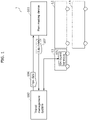
- FIG. 1 illustrates a configuration of delivery system 1 according to this embodiment.
- Delivery system 1 is for delivering goods using tractor 11 and trailers 12 and 13. Note that the number of the trailers is not limited to two and may be more than two.
- Tractor 11 includes a motor that is a power source for travel, and a battery that supplies electric power to the motor, and travels in accordance with the operation of the driver seated on the driver's seat.
- the battery of tractor 11 has a relatively low capacity. This relatively low capacity of the battery of tractor 11 is attributed to the fact that tractor 11 has a relatively small, limited space for mounting the battery.
- Each of trailers 12 and 13 includes a battery and a bed mounting goods to be delivered.
- the batteries of trailers 12 and 13 have a relatively high capacity. This relatively high capacity of the batteries of trailers 12 and 13 is attributed to the fact that trailers 12 and 13 have a relatively large, less limited space for mounting the battery.
- tractor 11 Connected to tractor 11 may be trailer 12, for example.
- trailer 12 may supply electric power to tractor 11.
- tractor 11 travels with electric power of at least one of the batteries mounted on tractor 11 and trailer 12 connected to tractor 11.
- Each of tractor 11 and trailers 12 and 13 etc. will also be referred to as a "vehicle".
- Delivery system 1 shown in FIG. 1 includes plan making device 101, travel management system 102, and on-board terminal 105.
- Plan making device 101 makes delivery plans.
- Plan making device 101 receives data (i.e., input data 106) from travel management system 102, and makes the delivery plans based on received input data 106.
- plan making device 101 transmits data (i.e., output data 107) including the made delivery plans to travel management system 102.
- Plan making device 101 is a web server, for example. Note that plan making device 101 may be a different server from travel management system 102 or may be a different process performed on the same server as travel management system 102.
- On-board terminal 105 is a computer terminal placed on tractor 11 (e.g., the driver's seat of tractor 11), and is a car navigation system, a smartphone, or a tablet, for example.
- On-board terminal 105 receives the delivery plans from travel management system 102, and displays the received delivery plans on a screen.
- on-board terminal 105 transmits, to travel management system 102, the progresses of transportation, the current locations, the current battery levels of tractor 11 and trailer 12 etc. and other information.
- Travel management system 102 manages the travel of the vehicles. Travel management system 102 is communicatively connected to plan making device 101 and on-board terminal 105 via a network.
- the network includes various networks such as mobile phone line network, a public network, and the Internet.
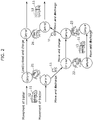
- FIG. 2 illustrates tractor 11 and trailers 12 and 13. The delivery of goods by tractor 11 and trailers 12 and 13 will be described with reference to FIG. 2 .
- tractor 11 and trailer 12 house goods to be delivered to point 21. Also, assume that trailer 13 housing goods to be delivered to point 23 is located at point 22.
- Tractor 11 moves to point 21 while hauling trailer 12. At point 21, trailer 12 is separated from tractor 11. After that, tractor 11 moves to point 22. At point 21, the goods to be delivered are unloaded from trailer 12, and the battery of trailer 12 is charged.
- tractor 11 moves to point 23 while hauling trailer 13.
- trailer 13 is separated from tractor 11. After that, tractor 11 moves to point 24. At point 23, the goods to be delivered are unloaded from trailer 13, and the battery of trailer 13 is charged.
- tractor 11 moves to the next point (not shown) while hauling trailer 12.
- tractor 11 can travel alone or while hauling any of the plurality of trailers 12 and 13.
- An example will be described where single tractor 11 can haul a single trailer at one time. The description also applies to the case where single tractor 11 can haul two or more trailers at one time.
- FIG. 3 is a block diagram showing a configuration of plan making device 101 according to this embodiment.
- Plan making device 101 shown in FIG. 3 includes controller 109, communicator 112, storage 113, and outputter 114.
- Controller 109 controls the operation of plan making device 101.
- Controller 109 can be achieved by a processor such as a central processing unit (CPU) executing programs using a memory. Controller 109 controls the operations of the components of plan making device 101.
- CPU central processing unit
- Controller 109 includes plan maker 110.
- Plan maker 110 makes delivery plans of goods in accordance with a flowchart which will be described later.
- the delivery plans are for causing tractor 11 to move the plurality of trailers 12 and 13, each carrying distributed ones of the goods to be delivered, to respective destinations.
- the delivery plans are the information on how tractor 11 and the plurality of trailers 12 and 13 have moved and delivered the goods to the respective destinations during the delivery period.
- the "delivery period" runs from the start to the end of the delivery.
- Communicator 112 is a communication interface that communicates with travel management system 102 via a network. Communicator 112 receives input data 106. Accordingly, communicator 112 obtains, as an obtainer, tractor information including the battery level of tractor 11, trailer information including the battery levels of the plurality of trailers 12 and 13, and delivery information including identification information and destinations of the goods to be delivered.
- Storage 113 is a semiconductor memory, for example, storing various information.
- Storage 113 stores, for example, map data used in common by plan maker 110 for making a plan every time.
- storage 113 stores interim information temporarily output by plan maker 110 while making a plan. If storage 113 stores the tractor information, the trailer information, and the delivery information; plan maker 110 obtains, as an obtainer, such the information from storage 113.
- Outputter 114 outputs various information. Outputter 114 outputs, to files, the made delivery plans, the logs at the time of making the delivery plans, and error messages, for example.
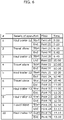
- FIG. 4 illustrates an example of input data 106 to plan making device 101 according to this embodiment.
- Input data 106 is input from travel management system 102 to plan making device 101.
- Input data 106 includes at least (1) vehicle information, (2) load information, and (3) loading/unloading place information.
- vehicle information corresponds to the tractor information and the trailer information.
- load information and the loading/unloading place information correspond to the identification information and destinations of the goods to be delivered.
- FIG. 4 shows an example of input data 106 for transporting two loads using single tractor 11 and two trailers 12 and 13.
- the vehicle information shown in (1) of FIG. 4 includes the battery information, the current location information, and the start time of operation of each vehicle.
- the battery information includes the battery capacity, the current battery level, and the power consumption of each vehicle.
- the power consumption of tractor 11 is represented by the distance in which tractor 11 can travel alone with certain electric power (e.g., electric power of 1 kWh).
- the power consumption of trailer 12 or 13 is represented by the distance in which trailer 12 or 13 travels with certain electric power (e.g., electric power of 1 kWh) while being hauled by tractor 11 and supplying the electric power from the battery of trailer 12 or 13 to tractor 11.
- the load information shown in (2) of FIG. 4 includes the loading place, the time required for loading, the unloading place, and the time required for unloading of each load.
- the loading/unloading place information shown in (3) of FIG. 4 includes the coordinate of each loading and unloading place.
- Each coordinate is the coordinate on a map, for example, but may be replaced with the latitude and longitude or an address.
- plan maker 110 making a delivery plan will be described using the example of input data 106 shown in FIG. 4 .
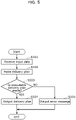
- FIG. 5 is a flowchart showing an operation of plan making device 101 according to this embodiment.
- communicator 112 receives input data 106. Accordingly, communicator 112 obtains the tractor information including the battery level of the tractor, trailer information including the battery levels of the plurality of trailers, and delivery information including identification information and destinations of goods to be delivered.
- step S102 plan maker 110 makes a delivery plan using input data 106 received in step S101 by communicator 112.
- the making of the delivery plan in step S102 will be described.
- the delivery plan is obtained by solving the minimum cost flow problem on the graph created as follows.
- the vertexes represent the states whether the arrival at and departure from the loading and unloading place of each vehicle is completed at each time.
- the edges represent the transitions between the states.
- the minimum cost flow problem is one type of mixed integer programming problems, and can thus be solved using a commercially available mixed integer programming problem solver, for example.
- plan maker 110 takes into consideration the limiting condition of the amount of power consumption when passing through each edge of the graph, for example. Accordingly, plan maker 110 makes a delivery plan not to run out the battery of each vehicle.
- the limiting conditions may include conditions indicating various ways how the vehicles travel, or charging the batteries of the vehicles.
- the costs of the edges of the graph and the limiting conditions can be changed to make various delivery plans.
- a plurality of delivery plans may be made.
- a delivery plan satisfying a predetermined condition may be made preferentially, using an objective function.
- the distances of the loading and unloading points are regarded as costs, whose sum is regarded as the objective function.
- the minimum cost flow problem is solved. As a result, a delivery plan is obtained with the minimum travel distances of the vehicles.
- plan maker 110 makes an executable delivery plan or cannot make any executable delivery plan.
- step S103 plan maker 110 receives the result of the processing in step S102, the processing is divided depending on whether an executable delivery plan is made. If an executable delivery plan is made (Yes in step S103), the process proceeds to step S104. If no executable delivery plan is made (No in step S103), the process proceeds to step S105.
- step S104 outputter 114 outputs the made delivery plan as output data 107 and transmits output data 107 to travel management system 102.
- step S105 outputter 114 transmits, to travel management system 102, an error message indicating that no executable delivery plan can be made.
- plan making device 101 outputs a delivery plan or an error message.
- step S102 Making of a delivery plan in above step S102 will be described further in detail.
- plan maker 110 generates a delivery plan that causes the tractor to move a plurality of trailers, each carrying distributed ones of the goods to be delivered, to the destinations.
- This delivery plan satisfies (a) a first condition and (b) a second condition.
- the first condition when moving the plurality of trailers, the tractor travels using at least one of a battery of a trailer being moved among the plurality of trailers or a battery of the tractor.
- the battery level of the tractor is kept above a first lower limit, and the battery levels of the plurality of trailers are kept above a second lower limit.
- Plan maker 110 generates the delivery plan described above using the tractor information, the trailer information, and the delivery information. Note that the "battery level(s) ... above the . . . lower limit" means that the battery level is higher than the lower limit.
- the first lower limit is zero, for example. Accordingly, the battery level of the tractor is kept above zero, that is, the battery of the tractor does not run out during the delivery period.
- the second lower limit is zero, for example. Accordingly, the battery level of each trailer is kept above zero, that is, the batteries of the trailers do not run out during the delivery period.
- the first lower limit is, for example, the lower limit of the recommended range of the battery level of the tractor and may be higher than zero.
- each battery is free from overdischarge which may deteriorate the battery. Accordingly, the battery of the tractor is kept away from the overdischarge during the delivery period.
- the second lower limit is, for example, the lower limit of the recommended range of the battery level of each trailer and may be higher than zero. Accordingly, the battery of each trailer is kept away from the overdischarge during the delivery period.
- plan maker 110 may generate a delivery plan satisfying the following condition (i.e., a fourth condition). Under the condition, while one of the plurality of trailers is moved, the battery of the tractor is charged using the battery of the one of the plurality of trailers.
- Plan maker 110 may generate a delivery plan satisfying the following condition (i.e., a fifth condition). Under the condition, the battery level of the tractor is kept at a first upper limit or lower, and the battery levels of the plurality of trailers are kept at a second upper limit or lower.
- plan maker 110 may generate a plurality of delivery plans satisfying the limiting conditions.
- plan maker 110 may preferentially generate a delivery plan requiring the shortest time for delivery of goods out of the plurality of possible delivery plans.
- the delivery plans may be generated by solving the minimum cost flow problem to minimize the objective function which is the time required for delivery of the goods.
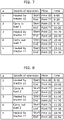
- FIGS. 6 , 7, and 8 illustrate examples of output data 107 from plan making device 101 according to this embodiment.
- Each of the delivery plans shown in FIGS. 6 , 7, and 8 is a list of operations of the vehicles of tractor 11 and trailers 12 and 13, and includes the start time, end time, and place of each operation.
- tractor 11 hauls trailer 12 and moves from point 20 to point 21.
- the movement starts at 9:00 and ends at 9:20.
- trailer 12 moves from point 20 to point 21 while being hauled by tractor 11.
- the movement starts at 9:00 and ends at 9:20.
- FIGS. 9 and 10 illustrate example travel of tractor 11 as well as trailers 12 and 13.
- FIG. 9 (a) schematically shows how tractor 11 moves between points such as points 20 and 21.
- the figure shows that tractor 11 moves from point 20 to point 21 (i.e., solid arrow A1) and then from point 21 to point 20 (i.e., dotted arrow A2).
- (b) is a graph showing the movement of tractor 11 at each time.
- the plurality of vertexes 31 in this graph correspond to the states whether the carry-in of loads (i.e., arrival) and the carry-out of loads (i.e., departure) of each vehicle is completed at each time.
- the arrows (e.g., arrow A1) in (b) of FIG. 9 have the same reference signs as the movements in (a) of FIG. 9 corresponding to the arrows.
- FIG. 10 (a) and (b) schematically show how trailers 12 and 13 move between points such as points 20 and 21, which is represented in the same manner as in (a) and (b) of FIG. 9 .
- y ij is a variable indicating whether there is a transition between states of the tractor .
- y ij ⁇ 1 : There is a transition from i to j . 0 : There is no transition from i to j .
- p i k is a variable indicating the battery level of trailer k in state i .
- q i is a variable indicating the battery level of the tractor in state i .
- the limiting condition defining the changes in the battery levels of the trailer and the tractor in the transition from state i to state j while the trailer is hauled by the tractor is expressed by following Equation (1) and Expressions (2).
- P ij is the amount of the electric power charged or discharged in the transition from state i to state j .
- a positive value represents the discharge
- a negative value represents the charge .
- P ij with a positive value corresponds to the first condition .
- the tractor travels using at least one of a battery of a trailer being moved among the plurality of trailers or a battery of the tractor .
- a limiting condition defines a change in the battery level of the trailer or the tractor in the transition from state i to state j, while the trailer is hauled by the tractor.
- the limiting condition assumes that the vehicle travels only with the electric power from the battery of the trailer. This limiting condition is expressed by following Expressions (5)
- a limiting condition indicates an inexecutable order of transition or an inexecutable time for transition in view of the order of visit, the travel time, and the time required for unloading in the transition from state i to state j.
- This limiting condition is expressed by following Equation (7).
- Q ij is the amount of the electric power for charging the battery of the tractor using the battery of the trailer in the transition from state i to state j , and is zero or a positive value .
- Equation (10) the objective function where the operation time of the tractor is minimized is expressed by Equation (10).
- t represents an end.
- plan maker 110 Now, a delivery plan made by plan maker 110 will be described.
- the delivery plan of tractor 11 is shown in FIG. 6 , and the travel of tractor 11 according to this delivery plan is shown in FIG. 9 .
- tractor 11 hauls trailer 12 from point 20 to point 21. During the time, tractor 11 travels with the electric power supplied from trailer 12. This movement of tractor 11 is represented by #1 in FIG. 6 as well as arrow A1 in (a) and (b) of FIG. 9 . On the other hand, the movement of trailer 12 is represented by #1 in FIG. 7 as well as arrow B1 in (a) and (b) of FIG. 10 .
- tractor 11 returns alone to point 20, while consuming the electric power of its own battery.
- This movement of tractor 11 is represented by #2 in FIG. 6 as well as arrow A2 in (a) and (b) of FIG. 9 .
- the loading operation of trailer 12 is represented by #2 in FIG. 7 as well as arrow B2 in (b) of FIG. 10 .
- tractor 11 hauls trailer 13 from point 20 to point 22. During the time, tractor 11 travels with the electric power supplied from trailer 13 to charge its own battery. This movement of tractor 11 is represented by #3 in FIG. 6 as well as arrow A3 in (a) and (b) of FIG. 9 . On the other hand, the movement of trailer 13 is represented by #1 in FIG. 8 as well as arrow B3 in (a) and (b) of FIG. 10 .
- tractor 11 moves alone to point 21.
- This movement of tractor 11 is represented by #4 in FIG. 6 as well as arrow A4 in (a) and (b) of FIG. 9 .
- the loading operation of trailer 13 is represented by #2 in FIG. 8 as well as arrow B4 in (b) of FIG. 10 .
- tractor 11 moves while hauling another trailer.
- tractor 11 consumes its own battery when traveling alone, and travels with the electric power supplied from the trailer to charge its own battery when traveling while hauling the trailer.
- a delivery plan can be made which is for traveling a long distance without causing the state where tractor 11 cannot move and stops to wait for the completion of the loading and unloading operation of the trailer and the state where tractor 11 stops only for charging.
- the vehicles travel at a higher operation rate as an advantage.
- tractor 11 delivers the loads as follows. While the first trailer out of the plurality of trailers delivers all the loads to its delivery destination, the second trailer different from the first trailer out of the plurality of trailers delivers the other loads. In other words, the first and second trailers deliver the loads as described above so that delivery system 1 efficiently deliver goods.
- the method and system allow efficient delivery of goods without running out at least one of the batteries of a tractor and a trailer connected to the tractor.
- each trailer is charged with electric power at a charging station placed in the loading and unloading place during the loading and unloading operation and then travels.
- This embodiment has the configuration of delivery system 1, the operations of the tractor and the trailers, and the configuration of plan making device 101 etc. in common with Embodiment 1 (see FIGS. 1 to 5 ). However, the making processing of plan making device 101 is different from that in Embodiment 1. The differences from Embodiment 1 will be described below.
- plan making device 101 takes charging of the tractor in the loading and unloading operation into consideration. Plan making device 101 makes the delivery plan not to run out the battery of each vehicle.
- the following limiting condition is added to the limiting conditions used in Embodiment 1.
- the amount of the electric power for charging during the loading and unloading operation is set to each edge connecting the start and end of the loading and unloading operation of the tractor.
- the result of balancing the amounts of the power consumption and the power charge is zero or greater. Accordingly, plan making device 101 makes a delivery plan not to run out the battery of each vehicle.
- plan maker 110 generates a delivery plan satisfying the condition (i.e., the third condition) of charging at least one of the plurality of trailers at at least one of the destinations.
- the charging may be performed when carrying in or out goods to be delivered by the at least one of the trailers.
- Equation (11) The third condition described above is more specifically expressed by following Equation (11).
- R ij is the amount of the electric power for charging the trailer in the transition from state i to state j , and is zero or a positive value .
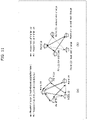
- FIG. 11 illustrates example travel of tractor 11 and the trailers according to this embodiment.
- FIG. 11 shows the movement of tractor 11, and corresponds to (a) of FIG. 9 in Embodiment 1.
- (b) of FIG. 11 shows the movements of trailers 12 and 13, and corresponds to (a) of FIG. 10 in Embodiment 1.
- each trailer is charged during the loading and unloading operation, which allows travel at a longer distance and transportation of loads in a wider range than in Embodiment 1.
- each of the battery levels of the tractor and the plurality of trailers may be kept at an upper limit or lower.
- a delivery plan is made by solving a mixed integer programming problem.
- the variables representing the battery levels of the tractor and the plurality of trailers are added to the mixed integer programming problem.
- the limiting condition where the battery levels do not exceed the upper limits may be added. This retards the deterioration of the batteries caused by overcharge.
- each of the battery level of the tractor and the total battery level of the plurality of trailers is kept at the lower limit or above.
- Each of the battery levels of the tractor and the plurality of trailers may be kept at the lower limit or above.
- a delivery plan is made by solving a mixed integer programming problem.
- the variables representing the battery levels of the tractor and the plurality of trailers are added to the mixed integer programming problem.
- the limiting condition where the battery levels do not exceed the lower limits may be added. This retards the deterioration of the batteries caused by overdischarge.
- the information processing method takes the battery levels of the tractor and the trailers into consideration.
- a delivery plan is made that allows delivery of goods, while keeping the battery levels of the tractor and the trailers above the lower limit during the delivery period.
- the tractor and the trailers then travel in accordance with the made delivery plan to deliver goods while keeping the battery levels above the lower limit during the delivery period.
- the information processing method described above allows efficient delivery of goods without running out at least one of the batteries of the tractor and the trailer connected to the tractor.
- a delivery plan is made with the charging of the trailers at the destinations taken into consideration.
- the delivery of goods can be completed by the charging as necessary during the delivery period.
- the information processing method described above allows efficient and more proper delivery of goods without running out at least one of the batteries of the tractor and the trailer connected to the tractor, with the charging during the delivery period taken into consideration.
- the trailers are charged when carrying in or out the goods to be delivered. There is thus no need to take any dedicated time for charging the trailers. If there is a need to take the dedicated time for charging, this time may extend the delivery period. In this manner, goods can be efficiently delivered without taking any dedicated time for charging during the delivery period or without running out at least one of the batteries of the tractor and the trailer connected to the tractor.
- the tractor is charged while hauling a trailer and moving. There is thus no need to take any dedicated time for charging. If there is a need to take the dedicated time for charging, this time may extend the delivery period. In this manner, goods can be efficiently delivered without taking any dedicated time for charging during the delivery period or without running out at least one of the batteries of the tractor and the trailer connected to the tractor.
- the battery levels of the tractor and the trailers are kept not to exceed the upper limit of the recommended range of the battery level during the delivery period. This reduces the deterioration of the batteries of the tractor and the trailers. Accordingly, goods can be efficiently delivered without running out the batteries while reducing the deterioration of the batteries of the tractor and the trailers.
- a delivery plan requiring a shorter delivery period is preferentially generated.
- the tractor and the trailers complete the delivery of goods in a shorter time.
- goods can be efficiently delivered in a shorter time without running out the batteries.
- the constituent elements may be implemented as dedicated hardware or may be implemented by executing software programs suitable for the constituent elements.
- the constituent elements may be implemented by a program executer such as a CPU or a processor reading out and executing a software program stored in a storage medium such as a hard disk or a semiconductor memory.
- the software program achieving the information processing device according to the embodiments is as follows.
- this program causes a computer to execute the following information processing method.
- the computer obtains tractor information including a battery level of a tractor, trailer information including battery levels of a plurality of trailers, and delivery information including identification information and destinations of goods to be delivered.
- the computer generates a delivery plan using the tractor information, the trailer information, and the delivery information, and outputs the delivery plan generated.
- the delivery plan causes the tractor to move the plurality of trailers, each carrying distributed ones of the goods to be delivered, to the destinations.
- the delivery plan satisfies (a) a first condition and (b) a second condition.
- the tractor travels using at least one of a battery of a trailer being moved among the plurality of trailers or a battery of the tractor.
- the battery level of the tractor is kept above a first lower limit, and the battery levels of the plurality of trailers are kept above a second lower limit.
- the information processing method according to one or more aspects has been described based on the embodiments.
- the present invention is however not limited to these embodiments.
- the one or more aspects may include other embodiments, such as those obtained by variously modifying the embodiment as conceived by those skilled in the art or those achieved by freely combining the constituent elements in the embodiment without departing from the scope and spirit of the present invention.
- the technique according to the present invention is useful as a method of traveling a hauling vehicle that is an electric vehicle, and a method of making a delivery plan.
Landscapes
- Business, Economics & Management (AREA)
- Engineering & Computer Science (AREA)
- Human Resources & Organizations (AREA)
- Economics (AREA)
- Strategic Management (AREA)
- Entrepreneurship & Innovation (AREA)
- Operations Research (AREA)
- General Business, Economics & Management (AREA)
- Quality & Reliability (AREA)
- Marketing (AREA)
- Tourism & Hospitality (AREA)
- Physics & Mathematics (AREA)
- Development Economics (AREA)
- General Physics & Mathematics (AREA)
- Theoretical Computer Science (AREA)
- Game Theory and Decision Science (AREA)
- Educational Administration (AREA)
- Life Sciences & Earth Sciences (AREA)
- Power Engineering (AREA)
- Transportation (AREA)
- Mechanical Engineering (AREA)
- Biodiversity & Conservation Biology (AREA)
- Sustainable Development (AREA)
- Sustainable Energy (AREA)
- Management, Administration, Business Operations System, And Electronic Commerce (AREA)
- Electric Propulsion And Braking For Vehicles (AREA)
- Hybrid Electric Vehicles (AREA)
Abstract
Description
- The present invention relates to an information processing method and an information processing system.
- In recent years, with the progress of the development of electric vehicle techniques, delivery of goods using electric vehicles has been suggested. For example, a vehicle powered by batteries mounted on both of a tractor and trailers, and traveling within a container terminal is suggested (see, e.g., Patent Literature (PTL) 1).
- On the other hand, a method of making a plan for a gasoline vehicle is suggested (see, e.g., PTL 2), taking into consideration that a hauler travels with a load carrier separated therefrom. While the load carrier stops for a loading and unloading operation, the hauler hauls another load carrier.
-
- [PTL 1]
Japanese Unexamined Patent Application Publication No. 2011-111078 - [PTL 2]
Japanese Unexamined Patent Application Publication No. 2005-350158 - However, the related art techniques have difficulty in efficiently delivering goods using the batteries of a tractor and trailers.
- To address the problem, the present invention provides an information processing method and an information processing system capable of efficiently delivering goods without running out at least one of the batteries of a tractor and a trailer connected to the tractor.
- An information processing method according to an aspect of the present invention is executed by a computer. The information processing method includes: obtaining tractor information including a battery level of a tractor, trailer information including battery levels of a plurality of trailers, and delivery information including identification information and destinations of goods to be delivered; generating a delivery plan using the tractor information, the trailer information, and the delivery information; and outputting the delivery plan generated. The delivery plan causes the tractor to move the plurality of trailers, each carrying distributed ones of the goods, to the destinations, and satisfies: (a) a first condition that, when moving the plurality of trailers, the tractor travels using at least one of a battery of a trailer being moved among the plurality of trailers or a battery of the tractor; and (b) a second condition that the battery level of the tractor is kept above a first lower limit, and the battery levels of the plurality of trailers are kept above a second lower limit.
- This general and specific aspect may be implemented using a system, a device, an integrated circuit, a computer program, or a computer-readable recording medium such as a CD-ROM, or any combination of systems, devices, integrated circuits, computer programs, or recording media.
- The information processing method, for example, according to the present invention efficiently delivers goods without running out at least one of the batteries of a tractor and a trailer connected to the tractor.
-
- [
FIG. 1 ]
FIG. 1 illustrates a configuration of a delivery system according toEmbodiment 1. - [
FIG. 2 ]
FIG. 2 illustrates a tractor and trailers. - [
FIG. 3 ]
FIG. 3 is a block diagram showing a configuration of a plan making device according toEmbodiment 1. - [
FIG. 4 ]
FIG. 4 illustrates an example of input data to the plan making device according toEmbodiment 1. - [
FIG. 5 ]
FIG. 5 is a flowchart showing an operation of the plan making device according toEmbodiment 1. - [
FIG. 6 ]
FIG. 6 illustrates a first example of output data from the plan making device according to Embodiment. - [
FIG. 7 ]
FIG. 7 illustrates a second example of the output data from the plan making device according toEmbodiment 1. - [
FIG. 8 ]
FIG. 8 illustrates a third example of the output data from the plan making device according toEmbodiment 1. - [
FIG. 9 ]
FIG. 9 illustrates example travel of the tractor according to Embodiment 1. - [
FIG. 10 ]
FIG. 10 illustrates example travel of the trailers according to Embodiment 1. - [
FIG. 11 ]
FIG. 11 illustrates example travel of a tractor and trailers according to Embodiment 2. - The present inventor has found the following problems in the technique of delivering goods using the electric vehicles described above in the "Background Art".
- As described above, the related art techniques have difficulty in efficiently deliver goods using the batteries of the tractor and the trailers. Note that each of the tractor and the trailers will also be referred to as a "vehicle".
- Specifically, there is a problem in mounting batteries in both of a tractor and trailers, and efficiently delivering goods without running out the batteries of these vehicles (particularly, the battery of the tractor).
- For example, the related art technique shown in
PTL 1 is applicable to the following case. The vehicle travels within the container terminal. The charged trailers are always near the tractor and the trailers can be replaced any time when the battery of the traveling tractor or trailer runs out. This technique is, however, not applicable to a vehicle traveling on a public road between distant points. - For example, the method of making a delivery plan using the hauling vehicle according to the related art shown in
PTL 2 fails to take the energy charge for traveling into consideration. There may thus be a problem of running out the batteries, if the method is applied to an electric vehicle. - In this manner, the related art techniques have difficulty in efficiently delivering goods using the batteries of the tractor and the trailers.
- To address the problem, the present invention provides an information processing method and an information processing system capable of efficiently delivering goods without running out at least one of the batteries of a tractor and a trailer connected to the tractor.
- In order to achieve the objective, the information processing method according to an aspect of the present invention is executed by a computer. The information processing method includes: obtaining tractor information including a battery level of a tractor, trailer information including battery levels of a plurality of trailers, and delivery information including identification information and destinations of goods to be delivered; generating a delivery plan using the tractor information, the trailer information, and the delivery information; and outputting the delivery plan generated. The delivery plan causes the tractor to move the plurality of trailers, each carrying distributed ones of the goods, to the destinations, and satisfies: (a) a first condition that, when moving the plurality of trailers, the tractor travels using at least one of a battery of a trailer being moved among the plurality of trailers or a battery of the tractor; and (b) a second condition that the battery level of the tractor is kept above a first lower limit, and the battery levels of the plurality of trailers are kept above a second lower limit.
- According to the aspect, with the battery levels of the tractor and the trailers taken into consideration, a delivery plan is made that allows delivery of goods while keeping the battery levels above the lower limit during the delivery period. The tractor and the trailers then travel in accordance with the made delivery plan to deliver goods while keeping the battery levels of the tractor and the trailers above the lower limit during the delivery period. Accordingly, the information processing method described above allows efficient delivery of goods without running out at least one of the batteries of the tractor and the trailer connected to the tractor.
- For example, the generating may include generating the delivery plan that further satisfies a third condition that at least one of the plurality of trailers is charged at at least one of the destinations.
- According to the aspect, the delivery plan is made with the charging of the trailers at the destinations taken into consideration. Thus, even if the tractor and the trailers fail to have sufficient levels of the batteries at the initial stage of the delivery period, the delivery of goods can be completed by the charging as necessary during the delivery period. In this manner, the information processing method described above allows efficient and more proper delivery of goods without running out at least one of the batteries of the tractor and the trailer connected to the tractor, with the charging during the delivery period taken into consideration.
- For example, the at least one of the plurality of trailers may be charged when carrying in or out the distributed ones of the goods to be delivered by the at least one of the plurality of trailers.
- According to the aspect, the trailers are charged when carrying in or out the goods to be delivered. There is thus no need to take any dedicated time for charging the trailers. If there is a need to take the dedicated time for charging, this time may extend the delivery period. In this manner, goods can be efficiently delivered without taking any dedicated time for charging during the delivery period or without running out at least one of the batteries of the tractor and the trailer connected to the tractor.
- For example, the generating may include generating the delivery plan that further satisfies a fourth condition that the battery of the tractor is charged using the battery of the one of the plurality of trailers that is being moved.
- According to the aspect, the tractor is charged while hauling a trailer and moving. There is thus no need to take any dedicated time for charging. If there is a need to take the dedicated time for charging, this time may extend the delivery period. In this manner, goods can be efficiently delivered without taking any dedicated time for charging during the delivery period or without running out at least one of the batteries of the tractor and the trailer connected to the tractor.
- For example, the generating may include generating the delivery plan that further satisfies a fifth condition that the battery level of the tractor is kept at a first upper limit or lower, and the battery levels of the plurality of trailers are kept at a second upper limit or lower.
- According to the aspect, the battery level of each of the tractor and the trailers is kept not to exceed the upper limit of the recommended range of the battery level during the delivery period. This reduces the deterioration of the batteries of the tractor and the trailers. Accordingly, goods can be efficiently delivered without running out the batteries while reducing the deterioration of at least one of the batteries of the tractor and the trailer connected to the tractor.
- For example, the generating may include generating, as the delivery plan, one candidate out of a plurality of candidates for the delivery plan each satisfying at least the first condition and the second condition, the one candidate satisfying a condition related to a time required to deliver the goods.
- According to the aspect, the delivery plan requiring a shorter delivery period is preferentially generated. In accordance with the generated delivery plan, the tractor and the trailers complete the delivery of goods in a shorter time. Using a vehicle driven by the batteries mounted on both of a tractor and a trailer connected to the tractor, goods can be efficiently delivered in a shorter time without running out the batteries.
- An information processing system according to an aspect of the present invention includes: an obtainer that obtains tractor information including a battery level of a tractor, trailer information including battery levels of a plurality of trailers, and delivery information including identification information and destinations of goods to be delivered; a plan maker that generates a delivery plan using the tractor information, the trailer information, and the delivery information; and an outputter that outputs the delivery plan generated. The delivery plan causes the tractor to move the plurality of trailers, each carrying distributed ones of the goods, to the destinations, and satisfies: (a) a first condition that, when moving the plurality of trailers, the tractor travels using at least one of a battery of a trailer being moved among the plurality of trailers or a battery of the tractor; and (b) a second condition that the battery level of the tractor is kept above a first lower limit, and the battery levels of the plurality of trailers are kept above a second lower limit.
- The aspect provides the same advantages as the information processing method described above.
- These general and specific aspects may be implemented using a system, a device, an integrated circuit, a computer program, or a computer-readable recording medium such as a CD-ROM, or any combination of systems, devices, integrated circuits, computer programs, or recording media.
- Now, embodiments will be described in detail with reference to the drawings.
- Note that the embodiments described below are mere comprehensive or specific examples. The numerical values, shapes, materials, constituent elements, the arrangement and connection of the constituent elements, steps, step orders etc. shown in the following embodiments are thus mere examples, and are not intended to limit the scope of the present invention. Among the constituent elements in the following embodiments, those not recited in any of the independent claims defining the broadest concept of the present invention are described as optional constituent elements.
- Described in this embodiment will be an information processing method and an information processing system etc. capable of efficiently delivering goods without running out at least one of the batteries of a tractor and a trailer connected to the tractor.
-
FIG. 1 illustrates a configuration ofdelivery system 1 according to this embodiment.Delivery system 1 is for deliveringgoods using tractor 11 andtrailers - Each of
tractor 11 andtrailers Tractor 11 includes a motor that is a power source for travel, and a battery that supplies electric power to the motor, and travels in accordance with the operation of the driver seated on the driver's seat. The battery oftractor 11 has a relatively low capacity. This relatively low capacity of the battery oftractor 11 is attributed to the fact thattractor 11 has a relatively small, limited space for mounting the battery. - Each of
trailers trailers trailers trailers - Connected to
tractor 11 may betrailer 12, for example. For example, iftrailer 12 is connected,tractor 11 travels while haulingtrailer 12. In addition,trailer 12 may supply electric power totractor 11. Accordingly,tractor 11 travels with electric power of at least one of the batteries mounted ontractor 11 andtrailer 12 connected totractor 11. Each oftractor 11 andtrailers -
Delivery system 1 shown inFIG. 1 includesplan making device 101,travel management system 102, and on-board terminal 105. -
Plan making device 101 makes delivery plans.Plan making device 101 receives data (i.e., input data 106) fromtravel management system 102, and makes the delivery plans based on receivedinput data 106. In addition,plan making device 101 transmits data (i.e., output data 107) including the made delivery plans to travelmanagement system 102.Plan making device 101 is a web server, for example. Note thatplan making device 101 may be a different server fromtravel management system 102 or may be a different process performed on the same server astravel management system 102. - On-
board terminal 105 is a computer terminal placed on tractor 11 (e.g., the driver's seat of tractor 11), and is a car navigation system, a smartphone, or a tablet, for example. On-board terminal 105 receives the delivery plans fromtravel management system 102, and displays the received delivery plans on a screen. In addition, on-board terminal 105 transmits, to travelmanagement system 102, the progresses of transportation, the current locations, the current battery levels oftractor 11 andtrailer 12 etc. and other information. -
Travel management system 102 manages the travel of the vehicles.Travel management system 102 is communicatively connected to plan makingdevice 101 and on-board terminal 105 via a network. The network includes various networks such as mobile phone line network, a public network, and the Internet. -
FIG. 2 illustratestractor 11 andtrailers tractor 11 andtrailers FIG. 2 . - In
FIG. 2 , assume thattractor 11 andtrailer 12 house goods to be delivered topoint 21. Also, assume thattrailer 13 housing goods to be delivered to point 23 is located atpoint 22. -
Tractor 11 moves to point 21 while haulingtrailer 12. Atpoint 21,trailer 12 is separated fromtractor 11. After that,tractor 11 moves topoint 22. Atpoint 21, the goods to be delivered are unloaded fromtrailer 12, and the battery oftrailer 12 is charged. - After moving to point 22, with
trailer 13 connected,tractor 11 moves to point 23 while haulingtrailer 13. - At
point 23,trailer 13 is separated fromtractor 11. After that,tractor 11 moves topoint 24. Atpoint 23, the goods to be delivered are unloaded fromtrailer 13, and the battery oftrailer 13 is charged. - After moving to point 24, with
trailer 12 connected,tractor 11 moves to the next point (not shown) while haulingtrailer 12. - In this manner,
tractor 11 can travel alone or while hauling any of the plurality oftrailers single tractor 11 can haul a single trailer at one time. The description also applies to the case wheresingle tractor 11 can haul two or more trailers at one time. -
FIG. 3 is a block diagram showing a configuration ofplan making device 101 according to this embodiment.Plan making device 101 shown inFIG. 3 includescontroller 109,communicator 112,storage 113, andoutputter 114. -
Controller 109 controls the operation ofplan making device 101.Controller 109 can be achieved by a processor such as a central processing unit (CPU) executing programs using a memory.Controller 109 controls the operations of the components ofplan making device 101. -
Controller 109 includesplan maker 110.Plan maker 110 makes delivery plans of goods in accordance with a flowchart which will be described later. Here, the delivery plans are for causingtractor 11 to move the plurality oftrailers tractor 11 and the plurality oftrailers -
Communicator 112 is a communication interface that communicates withtravel management system 102 via a network.Communicator 112 receivesinput data 106. Accordingly,communicator 112 obtains, as an obtainer, tractor information including the battery level oftractor 11, trailer information including the battery levels of the plurality oftrailers -
Storage 113 is a semiconductor memory, for example, storing various information.Storage 113 stores, for example, map data used in common byplan maker 110 for making a plan every time. In addition,storage 113 stores interim information temporarily output byplan maker 110 while making a plan. Ifstorage 113 stores the tractor information, the trailer information, and the delivery information;plan maker 110 obtains, as an obtainer, such the information fromstorage 113. -
Outputter 114 outputs various information.Outputter 114 outputs, to files, the made delivery plans, the logs at the time of making the delivery plans, and error messages, for example. -
FIG. 4 illustrates an example ofinput data 106 to plan makingdevice 101 according to this embodiment.Input data 106 is input fromtravel management system 102 to plan makingdevice 101.Input data 106 includes at least (1) vehicle information, (2) load information, and (3) loading/unloading place information. Here, the vehicle information corresponds to the tractor information and the trailer information. In addition, the load information and the loading/unloading place information correspond to the identification information and destinations of the goods to be delivered. - For example,
FIG. 4 shows an example ofinput data 106 for transporting two loads usingsingle tractor 11 and twotrailers - The vehicle information shown in (1) of
FIG. 4 includes the battery information, the current location information, and the start time of operation of each vehicle. The battery information includes the battery capacity, the current battery level, and the power consumption of each vehicle. The power consumption oftractor 11 is represented by the distance in whichtractor 11 can travel alone with certain electric power (e.g., electric power of 1 kWh). The power consumption oftrailer trailer tractor 11 and supplying the electric power from the battery oftrailer tractor 11. - The load information shown in (2) of
FIG. 4 includes the loading place, the time required for loading, the unloading place, and the time required for unloading of each load. - The loading/unloading place information shown in (3) of
FIG. 4 includes the coordinate of each loading and unloading place. Each coordinate is the coordinate on a map, for example, but may be replaced with the latitude and longitude or an address. - Now, processing of
plan maker 110 making a delivery plan will be described using the example ofinput data 106 shown inFIG. 4 . -
FIG. 5 is a flowchart showing an operation ofplan making device 101 according to this embodiment. - In step S101,
communicator 112 receivesinput data 106. Accordingly,communicator 112 obtains the tractor information including the battery level of the tractor, trailer information including the battery levels of the plurality of trailers, and delivery information including identification information and destinations of goods to be delivered. - In step S102,
plan maker 110 makes a delivery plan usinginput data 106 received in step S101 bycommunicator 112. - The making of the delivery plan in step S102 will be described. The delivery plan is obtained by solving the minimum cost flow problem on the graph created as follows. For example, the vertexes represent the states whether the arrival at and departure from the loading and unloading place of each vehicle is completed at each time. The edges represent the transitions between the states. The minimum cost flow problem is one type of mixed integer programming problems, and can thus be solved using a commercially available mixed integer programming problem solver, for example.
- When formulating the minimum cost flow problem,
plan maker 110 takes into consideration the limiting condition of the amount of power consumption when passing through each edge of the graph, for example. Accordingly,plan maker 110 makes a delivery plan not to run out the battery of each vehicle. In addition to the limiting condition described above, the limiting conditions may include conditions indicating various ways how the vehicles travel, or charging the batteries of the vehicles. - Using the minimum cost flow problem, the costs of the edges of the graph and the limiting conditions can be changed to make various delivery plans. Depending on the limiting conditions, a plurality of delivery plans may be made. In this case, a delivery plan satisfying a predetermined condition may be made preferentially, using an objective function. For example, the distances of the loading and unloading points are regarded as costs, whose sum is regarded as the objective function. To minimize the objective function, the minimum cost flow problem is solved. As a result, a delivery plan is obtained with the minimum travel distances of the vehicles.
- As a result of the processing in step S102,
plan maker 110 makes an executable delivery plan or cannot make any executable delivery plan. - In step S103,
plan maker 110 receives the result of the processing in step S102, the processing is divided depending on whether an executable delivery plan is made. If an executable delivery plan is made (Yes in step S103), the process proceeds to step S104. If no executable delivery plan is made (No in step S103), the process proceeds to step S105. - In step S104,
outputter 114 outputs the made delivery plan asoutput data 107 and transmitsoutput data 107 to travelmanagement system 102. - In step S105,
outputter 114 transmits, to travelmanagement system 102, an error message indicating that no executable delivery plan can be made. - Through the processing in above steps S101 to S105,
plan making device 101 outputs a delivery plan or an error message. - Making of a delivery plan in above step S102 will be described further in detail.
- In step S102,
plan maker 110 generates a delivery plan that causes the tractor to move a plurality of trailers, each carrying distributed ones of the goods to be delivered, to the destinations. This delivery plan satisfies (a) a first condition and (b) a second condition. Under (a) the first condition, when moving the plurality of trailers, the tractor travels using at least one of a battery of a trailer being moved among the plurality of trailers or a battery of the tractor. Under (b) the second condition, the battery level of the tractor is kept above a first lower limit, and the battery levels of the plurality of trailers are kept above a second lower limit.Plan maker 110 generates the delivery plan described above using the tractor information, the trailer information, and the delivery information. Note that the "battery level(s) ... above the . . . lower limit" means that the battery level is higher than the lower limit. - Here, the first lower limit is zero, for example. Accordingly, the battery level of the tractor is kept above zero, that is, the battery of the tractor does not run out during the delivery period. On the other hand, the second lower limit is zero, for example. Accordingly, the battery level of each trailer is kept above zero, that is, the batteries of the trailers do not run out during the delivery period.
- The first lower limit is, for example, the lower limit of the recommended range of the battery level of the tractor and may be higher than zero. Here, within the "recommended range", each battery is free from overdischarge which may deteriorate the battery. Accordingly, the battery of the tractor is kept away from the overdischarge during the delivery period. On the other hand, the second lower limit is, for example, the lower limit of the recommended range of the battery level of each trailer and may be higher than zero. Accordingly, the battery of each trailer is kept away from the overdischarge during the delivery period.
- At this time,
plan maker 110 may generate a delivery plan satisfying the following condition (i.e., a fourth condition). Under the condition, while one of the plurality of trailers is moved, the battery of the tractor is charged using the battery of the one of the plurality of trailers. -
Plan maker 110 may generate a delivery plan satisfying the following condition (i.e., a fifth condition). Under the condition, the battery level of the tractor is kept at a first upper limit or lower, and the battery levels of the plurality of trailers are kept at a second upper limit or lower. - Assume that
plan maker 110 may generate a plurality of delivery plans satisfying the limiting conditions. In this case,plan maker 110 may preferentially generate a delivery plan requiring the shortest time for delivery of goods out of the plurality of possible delivery plans. The delivery plans may be generated by solving the minimum cost flow problem to minimize the objective function which is the time required for delivery of the goods. -
FIGS. 6 ,7, and 8 illustrate examples ofoutput data 107 fromplan making device 101 according to this embodiment. Each of the delivery plans shown inFIGS. 6 ,7, and 8 is a list of operations of the vehicles oftractor 11 andtrailers - For example, in the operation shown in #1 of
FIG. 6 ,tractor 11 haulstrailer 12 and moves frompoint 20 topoint 21. The movement starts at 9:00 and ends at 9:20. On the other hand, in the operation shown in #1 ofFIG. 7 ,trailer 12 moves frompoint 20 to point 21 while being hauled bytractor 11. The movement starts at 9:00 and ends at 9:20. These also apply to the other operations shown inFIGS. 6 ,7, and 8 . -
FIGS. 9 and10 illustrate example travel oftractor 11 as well astrailers - In
FIG. 9, (a) schematically shows howtractor 11 moves between points such aspoints tractor 11 moves frompoint 20 to point 21 (i.e., solid arrow A1) and then frompoint 21 to point 20 (i.e., dotted arrow A2). - In
FIG. 9, (b) is a graph showing the movement oftractor 11 at each time. The plurality ofvertexes 31 in this graph correspond to the states whether the carry-in of loads (i.e., arrival) and the carry-out of loads (i.e., departure) of each vehicle is completed at each time. The arrows (e.g., arrow A1) in (b) ofFIG. 9 have the same reference signs as the movements in (a) ofFIG. 9 corresponding to the arrows. - In
FIG. 10, (a) and (b) schematically show howtrailers points FIG. 9 . - Next, limiting conditions of the delivery plan will be described with reference to (b) of
FIG. 9 . The same description also applies to (b) ofFIG. 10 . -

- In (b) of
FIG. 9 , if vertexes are connected by an arrow, it means that there is a transition between the states corresponding to the vertexes. If vertexes are not connected by an arrow, it means that there is no transition between the states corresponding to the vertexes. For example, if states i and j are connected by an arrow, it means that there is a transition from state i to state j.


- The limiting conditions expressed by the above variables will be described below.
- The limiting condition defining the changes in the battery levels of the trailer and the tractor in the transition from state i to state j while the trailer is hauled by the tractor is expressed by following Equation (1) and Expressions (2).
- [Math. 8]


- In this Equation (1),

- Under the limiting condition according to above Equation (1),
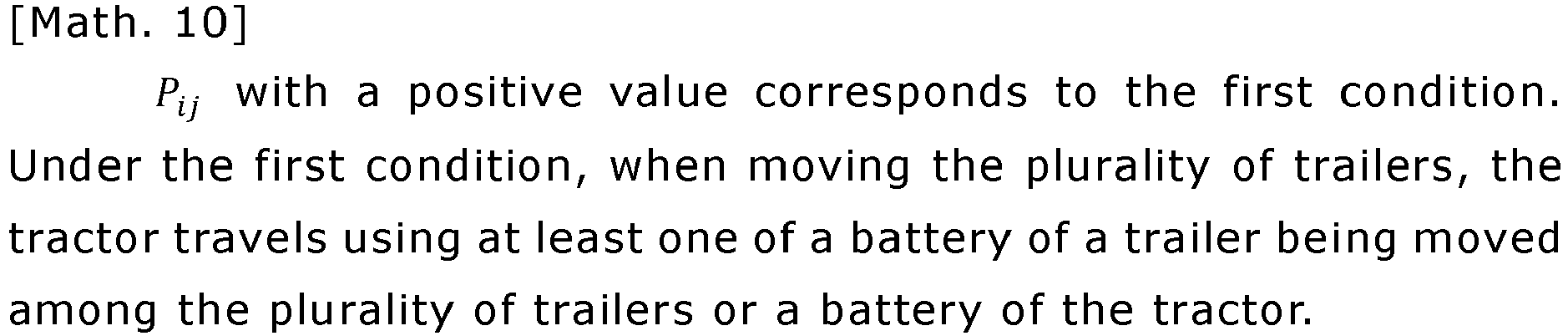
- In above Expressions (2), Pmin and Pmax respectively represent the lower limit value and the upper limit value of the recommended range of the battery level of the trailer. On the other hand, Qmin and Qmax respectively represent the lower limit value and the upper limit value of the recommended range of the battery level of the tractor. That is, out of the condition included in Expressions (2) described above, the part corresponding to following Expressions (3) corresponds to the second condition.
- [Math. 11]

- Out of the condition included in Expressions (2) described above, the part corresponding to following Expressions (4) corresponds to the fifth condition.
- [Math. 12]

- A limiting condition defines a change in the battery level of the trailer or the tractor in the transition from state i to state j, while the trailer is hauled by the tractor. The limiting condition assumes that the vehicle travels only with the electric power from the battery of the trailer. This limiting condition is expressed by following Expressions (5)
- [Math. 13]

- The limiting condition indicating that the tractor necessarily moves when the trailer moves is expressed by following Expression (6).
- [Math. 14]

- A limiting condition indicates an inexecutable order of transition or an inexecutable time for transition in view of the order of visit, the travel time, and the time required for unloading in the transition from state i to state j. This limiting condition is expressed by following Equation (7).
- [Math. 15] (7)

- After a trailer has arrived at each point, the trailer departs from the arrival point. This limiting condition is expressed by following Equation (8).
- [Math. 16]

- While a trailer is moved, the battery of the tractor is charged using the battery of the moving trailer. This limiting condition is expressed by following Equations (9). This limiting condition corresponds to the fourth condition.
- [Math. 17]

- In this Equations (9),

- As an example, the objective function where the operation time of the tractor is minimized is expressed by Equation (10). Here, t represents an end.
- [Math. 19]

- Now, a delivery plan made by
plan maker 110 will be described. - The delivery plan of
tractor 11 is shown inFIG. 6 , and the travel oftractor 11 according to this delivery plan is shown inFIG. 9 . - First,
tractor 11 haulstrailer 12 frompoint 20 topoint 21. During the time,tractor 11 travels with the electric power supplied fromtrailer 12. This movement oftractor 11 is represented by #1 inFIG. 6 as well as arrow A1 in (a) and (b) ofFIG. 9 . On the other hand, the movement oftrailer 12 is represented by #1 inFIG. 7 as well as arrow B1 in (a) and (b) ofFIG. 10 . - Next, during the loading operation of
trailer 12 atpoint 21,tractor 11 returns alone to point 20, while consuming the electric power of its own battery. This movement oftractor 11 is represented by #2 inFIG. 6 as well as arrow A2 in (a) and (b) ofFIG. 9 . The loading operation oftrailer 12 is represented by #2 inFIG. 7 as well as arrow B2 in (b) ofFIG. 10 . - Then,
tractor 11 haulstrailer 13 frompoint 20 topoint 22. During the time,tractor 11 travels with the electric power supplied fromtrailer 13 to charge its own battery. This movement oftractor 11 is represented by #3 inFIG. 6 as well as arrow A3 in (a) and (b) ofFIG. 9 . On the other hand, the movement oftrailer 13 is represented by #1 inFIG. 8 as well as arrow B3 in (a) and (b) ofFIG. 10 . - After that, during the loading operation of
trailer 13 atpoint 22,tractor 11 moves alone to point 21. This movement oftractor 11 is represented by #4 inFIG. 6 as well as arrow A4 in (a) and (b) ofFIG. 9 . The loading operation oftrailer 13 is represented by #2 inFIG. 8 as well as arrow B4 in (b) ofFIG. 10 . - Similarly, subsequently, while
trailer 12 stops for the loading and unloading operation,tractor 11 moves while hauling another trailer. In addition,tractor 11 consumes its own battery when traveling alone, and travels with the electric power supplied from the trailer to charge its own battery when traveling while hauling the trailer. - With this configuration, a delivery plan can be made which is for traveling a long distance without causing the state where
tractor 11 cannot move and stops to wait for the completion of the loading and unloading operation of the trailer and the state wheretractor 11 stops only for charging. In accordance with the made delivery plan, the vehicles travel at a higher operation rate as an advantage. - The loading and unloading operation of a trailer requires time longer than zero. During the loading and unloading operation of the trailer, the delivery period can be reduced by causing
tractor 11 to haul another trailer at another point and deliver loads. As described above,tractor 11 delivers the loads as follows. While the first trailer out of the plurality of trailers delivers all the loads to its delivery destination, the second trailer different from the first trailer out of the plurality of trailers delivers the other loads. In other words, the first and second trailers deliver the loads as described above so thatdelivery system 1 efficiently deliver goods. - In this embodiment, the following information processing method and information processing system will be described with charging at a charging station taken into consideration. The method and system allow efficient delivery of goods without running out at least one of the batteries of a tractor and a trailer connected to the tractor.
- In
Embodiment 1, all the loads are completely transported within the amount of charge at the start time of operation. In this embodiment, in addition to the amount of charge at the start time of operation, each trailer is charged with electric power at a charging station placed in the loading and unloading place during the loading and unloading operation and then travels. - This embodiment has the configuration of
delivery system 1, the operations of the tractor and the trailers, and the configuration ofplan making device 101 etc. in common with Embodiment 1 (seeFIGS. 1 to 5 ). However, the making processing ofplan making device 101 is different from that inEmbodiment 1. The differences fromEmbodiment 1 will be described below. - When making a delivery plan in step S102 (see
FIG. 4 ),plan making device 101 takes charging of the tractor in the loading and unloading operation into consideration.Plan making device 101 makes the delivery plan not to run out the battery of each vehicle. - Specifically, when formulating the minimum cost flow problem, the following limiting condition is added to the limiting conditions used in
Embodiment 1. The amount of the electric power for charging during the loading and unloading operation is set to each edge connecting the start and end of the loading and unloading operation of the tractor. At each edge included in the flow of each vehicle, the result of balancing the amounts of the power consumption and the power charge is zero or greater. Accordingly, plan makingdevice 101 makes a delivery plan not to run out the battery of each vehicle. - In other words,
plan maker 110 generates a delivery plan satisfying the condition (i.e., the third condition) of charging at least one of the plurality of trailers at at least one of the destinations. Here, the charging may be performed when carrying in or out goods to be delivered by the at least one of the trailers. - The third condition described above is more specifically expressed by following Equation (11).
- [Math. 20]

- In above Equation (11),

-
FIG. 11 illustrates example travel oftractor 11 and the trailers according to this embodiment. - In
FIG. 11, (a) shows the movement oftractor 11, and corresponds to (a) ofFIG. 9 inEmbodiment 1. On the other hand, (b) ofFIG. 11 shows the movements oftrailers FIG. 10 inEmbodiment 1. - Here, unlike
Embodiment 1,trailers FIG. 11, (a) and (b) have the other ways of traveling in common with (a) ofFIGS. 10 and11 , respectively, and the description thereof will thus be omitted. - In this configuration, each trailer is charged during the loading and unloading operation, which allows travel at a longer distance and transportation of loads in a wider range than in
Embodiment 1. - In
Embodiment 2, the batteries of the trailers are charged. However, each of the battery levels of the tractor and the plurality of trailers may be kept at an upper limit or lower. For example, assume that a delivery plan is made by solving a mixed integer programming problem. In this case, the variables representing the battery levels of the tractor and the plurality of trailers are added to the mixed integer programming problem. The limiting condition where the battery levels do not exceed the upper limits may be added. This retards the deterioration of the batteries caused by overcharge. - In
Embodiment 1, each of the battery level of the tractor and the total battery level of the plurality of trailers is kept at the lower limit or above. Each of the battery levels of the tractor and the plurality of trailers may be kept at the lower limit or above. For example, assume that a delivery plan is made by solving a mixed integer programming problem. In this case, the variables representing the battery levels of the tractor and the plurality of trailers are added to the mixed integer programming problem. The limiting condition where the battery levels do not exceed the lower limits may be added. This retards the deterioration of the batteries caused by overdischarge. - As described above, the information processing method according to the embodiments described above takes the battery levels of the tractor and the trailers into consideration. In the method, a delivery plan is made that allows delivery of goods, while keeping the battery levels of the tractor and the trailers above the lower limit during the delivery period. The tractor and the trailers then travel in accordance with the made delivery plan to deliver goods while keeping the battery levels above the lower limit during the delivery period. Accordingly, the information processing method described above allows efficient delivery of goods without running out at least one of the batteries of the tractor and the trailer connected to the tractor.
- A delivery plan is made with the charging of the trailers at the destinations taken into consideration. Thus, even if the tractor and the trailers fail to have sufficient levels of the batteries at the initial stage of the delivery period, the delivery of goods can be completed by the charging as necessary during the delivery period. In this manner, the information processing method described above allows efficient and more proper delivery of goods without running out at least one of the batteries of the tractor and the trailer connected to the tractor, with the charging during the delivery period taken into consideration.
- The trailers are charged when carrying in or out the goods to be delivered. There is thus no need to take any dedicated time for charging the trailers. If there is a need to take the dedicated time for charging, this time may extend the delivery period. In this manner, goods can be efficiently delivered without taking any dedicated time for charging during the delivery period or without running out at least one of the batteries of the tractor and the trailer connected to the tractor.
- Alternatively, the tractor is charged while hauling a trailer and moving. There is thus no need to take any dedicated time for charging. If there is a need to take the dedicated time for charging, this time may extend the delivery period. In this manner, goods can be efficiently delivered without taking any dedicated time for charging during the delivery period or without running out at least one of the batteries of the tractor and the trailer connected to the tractor.
- The battery levels of the tractor and the trailers are kept not to exceed the upper limit of the recommended range of the battery level during the delivery period. This reduces the deterioration of the batteries of the tractor and the trailers. Accordingly, goods can be efficiently delivered without running out the batteries while reducing the deterioration of the batteries of the tractor and the trailers.
- A delivery plan requiring a shorter delivery period is preferentially generated. In accordance with the generated delivery plan, the tractor and the trailers complete the delivery of goods in a shorter time. Using a vehicle driven by the batteries mounted on both the tractor and the trailers, goods can be efficiently delivered in a shorter time without running out the batteries.
- In the embodiments described above, the constituent elements may be implemented as dedicated hardware or may be implemented by executing software programs suitable for the constituent elements. The constituent elements may be implemented by a program executer such as a CPU or a processor reading out and executing a software program stored in a storage medium such as a hard disk or a semiconductor memory. The software program achieving the information processing device according to the embodiments is as follows.
- Specifically, this program causes a computer to execute the following information processing method. The computer obtains tractor information including a battery level of a tractor, trailer information including battery levels of a plurality of trailers, and delivery information including identification information and destinations of goods to be delivered. The computer generates a delivery plan using the tractor information, the trailer information, and the delivery information, and outputs the delivery plan generated. The delivery plan causes the tractor to move the plurality of trailers, each carrying distributed ones of the goods to be delivered, to the destinations. The delivery plan satisfies (a) a first condition and (b) a second condition. Under (a) the first condition, when moving the plurality of trailers, the tractor travels using at least one of a battery of a trailer being moved among the plurality of trailers or a battery of the tractor. Under (b) the second condition, the battery level of the tractor is kept above a first lower limit, and the battery levels of the plurality of trailers are kept above a second lower limit.
- As described above, the information processing method according to one or more aspects has been described based on the embodiments. The present invention is however not limited to these embodiments. The one or more aspects may include other embodiments, such as those obtained by variously modifying the embodiment as conceived by those skilled in the art or those achieved by freely combining the constituent elements in the embodiment without departing from the scope and spirit of the present invention.
- The technique according to the present invention is useful as a method of traveling a hauling vehicle that is an electric vehicle, and a method of making a delivery plan.
-
- 1
- delivery system
- 11
- tractor
- 12, 13
- trailer
- 20, 21, 22, 23, 24
- point
- 31
- vertex
- 101
- plan making device
- 102
- travel management system
- 105
- on-board terminal
- 106
- input data
- 107
- output data
- 109
- controller
- 110
- plan maker
- 112
- communicator
- 113
- storage
- 114
- outputter
- A1, A2, A3, A4, B1, B2, B3, B4
- arrow
Claims (7)
- An information processing method executed by a computer, the information processing method comprising:obtaining tractor information including a battery level of a tractor, trailer information including battery levels of a plurality of trailers, and delivery information including identification information and destinations of goods to be delivered;generating a delivery plan using the tractor information, the trailer information, and the delivery information; andoutputting the delivery plan generated,the delivery plan causing the tractor to move the plurality of trailers, each carrying distributed ones of the goods, to the destinations, and satisfying:(a) a first condition that, when moving the plurality of trailers, the tractor travels using at least one of a battery of a trailer being moved among the plurality of trailers or a battery of the tractor; and(b) a second condition that the battery level of the tractor is kept above a first lower limit, and the battery levels of the plurality of trailers are kept above a second lower limit.
- The information processing method according to claim 1, wherein
the generating includes generating the delivery plan that further satisfies a third condition that at least one of the plurality of trailers is charged at at least one of the destinations. - The information processing method according to claim 2, wherein
the at least one of the plurality of trailers is charged when carrying in or out the distributed ones of the goods to be delivered by the at least one of the plurality of trailers. - The information processing method according to any one of claims 1 to 3, wherein
the generating includes generating the delivery plan that further satisfies a fourth condition that the battery of the tractor is charged using the battery of the one of the plurality of trailers that is being moved. - The information processing method according to any one of claims 1 to 4, wherein
the generating includes generating the delivery plan that further satisfies a fifth condition that the battery level of the tractor is kept at a first upper limit or lower, and the battery levels of the plurality of trailers are kept at a second upper limit or lower. - The information processing method according to any one of claims 1 to 5, wherein
the generating includes generating, as the delivery plan, one candidate out of a plurality of candidates for the delivery plan each satisfying at least the first condition and the second condition, the one candidate satisfying a condition related to a time required to deliver the goods. - An information processing system, comprising:an obtainer that obtains tractor information including a battery level of a tractor, trailer information including battery levels of a plurality of trailers, and delivery information including identification information and destinations of goods to be delivered;a plan maker that generates a delivery plan using the tractor information, the trailer information, and the delivery information; andan outputter that outputs the delivery plan generated,the delivery plan causing the tractor to move the plurality of trailers, each carrying distributed ones of the goods, to the destinations, and satisfying:(a) a first condition that, when moving the plurality of trailers, the tractor travels using at least one of a battery of a trailer being moved among the plurality of trailers or a battery of the tractor; and(b) a second condition that the battery level of the tractor is kept above a first lower limit, and the battery levels of the plurality of trailers are kept above a second lower limit.
Applications Claiming Priority (2)
| Application Number | Priority Date | Filing Date | Title |
|---|---|---|---|
| JP2019098744 | 2019-05-27 | ||
| PCT/JP2020/001142 WO2020240910A1 (en) | 2019-05-27 | 2020-01-16 | Information processing method and information processing system |
Publications (3)
| Publication Number | Publication Date |
|---|---|
| EP3979167A1 true EP3979167A1 (en) | 2022-04-06 |
| EP3979167A4 EP3979167A4 (en) | 2022-08-03 |
| EP3979167B1 EP3979167B1 (en) | 2025-04-16 |
Family
ID=73553134
Family Applications (1)
| Application Number | Title | Priority Date | Filing Date |
|---|---|---|---|
| EP20813369.4A Active EP3979167B1 (en) | 2019-05-27 | 2020-01-16 | Information processing method and information processing system |
Country Status (5)
| Country | Link |
|---|---|
| US (1) | US12049152B2 (en) |
| EP (1) | EP3979167B1 (en) |
| JP (1) | JP7689295B2 (en) |
| CN (1) | CN113272842B (en) |
| WO (1) | WO2020240910A1 (en) |
Families Citing this family (3)
| Publication number | Priority date | Publication date | Assignee | Title |
|---|---|---|---|---|
| CN114746316B (en) * | 2020-03-05 | 2025-03-25 | Zf腓德烈斯哈芬股份公司 | Model-based predictive control of vehicles taking arrival times into account |
| JP7411890B2 (en) * | 2020-06-30 | 2024-01-12 | パナソニックIpマネジメント株式会社 | Delivery management device, display terminal, delivery management system and delivery management method |
| JP2026003423A (en) * | 2024-06-24 | 2026-01-13 | 日立建機株式会社 | Power Distribution System |
Family Cites Families (41)
| Publication number | Priority date | Publication date | Assignee | Title |
|---|---|---|---|---|
| JPS556697Y2 (en) | 1975-11-04 | 1980-02-15 | ||
| US6426606B1 (en) * | 2000-10-10 | 2002-07-30 | Purkey Electrical Consulting | Apparatus for providing supplemental power to an electrical system and related methods |
| US20020184078A1 (en) * | 2001-06-05 | 2002-12-05 | Robert Uyeki | Priority-based vehicle allocation methods |
| JP2003141222A (en) * | 2001-10-22 | 2003-05-16 | Internatl Business Mach Corp <Ibm> | Method, system and program for preparing delivery plan |
| JP4517735B2 (en) | 2004-06-08 | 2010-08-04 | Jfeスチール株式会社 | Transportation work planning device and transportation work planning method |
| JP4713623B2 (en) * | 2008-09-25 | 2011-06-29 | 株式会社日立製作所 | Charge / discharge management device |
| JP5262575B2 (en) | 2008-10-27 | 2013-08-14 | Jfeスチール株式会社 | Operation management system |
| WO2010135472A2 (en) * | 2009-05-19 | 2010-11-25 | Ev-Ip, Llc | Methods and apparatus for utilizing electrically powered vehicles |
| US20110114398A1 (en) * | 2009-11-17 | 2011-05-19 | Bianco James S | Battery Power System for Plug In Hybrid Tractor Trailers |
| JP5453067B2 (en) * | 2009-11-27 | 2014-03-26 | 三井造船株式会社 | Container trailer, its control method and container terminal |
| EP2719572B1 (en) * | 2011-06-07 | 2018-03-21 | Toyota Jidosha Kabushiki Kaisha | Electric vehicle and method for controlling electric vehicle |
| SG11201400963SA (en) * | 2012-02-08 | 2014-04-28 | Adept Technology Inc | Job management sytem for a fleet of autonomous mobile robots |
| US8970173B2 (en) * | 2012-02-28 | 2015-03-03 | Tesla Motors, Inc. | Electric vehicle battery lifetime optimization operational mode |
| US9950590B2 (en) * | 2012-06-25 | 2018-04-24 | Rsc Industries Inc. | Cooling system and methods for cooling interior volumes of cargo trailers |
| US9555753B2 (en) * | 2013-03-14 | 2017-01-31 | Harry K. James | Vehicle mobile microgrid |
| JP2018106745A (en) * | 2013-10-04 | 2018-07-05 | 株式会社東芝 | Electric vehicle operation management device, operation planning method, and computer program |
| US10532755B2 (en) * | 2014-03-27 | 2020-01-14 | Ge Global Sourcing Llc | Control system and method for a transportation network |
| JP2016022890A (en) * | 2014-07-23 | 2016-02-08 | ダイムラー・アクチェンゲゼルシャフトDaimler AG | Plug-in hybrid vehicle |
| JP2016038769A (en) * | 2014-08-08 | 2016-03-22 | ダイムラー・アクチェンゲゼルシャフトDaimler AG | Optimum specifications determination support system for hybrid vehicle, optimum specifications determination support method, and recording medium |
| WO2016133609A1 (en) * | 2015-02-18 | 2016-08-25 | Fedex Corporate Services, Inc. | Managing logistics information related to a logistics container using a container interface display apparatus |
| US9561941B1 (en) * | 2015-03-30 | 2017-02-07 | X Development Llc | Autonomous approach and object pickup |
| AU2017320593B2 (en) * | 2016-08-29 | 2021-10-28 | Crinklaw Farm Services | Robotic agricultural system and method |
| JP6270953B1 (en) * | 2016-09-29 | 2018-01-31 | 本田技研工業株式会社 | Delivery management server and delivery management method |
| US9792576B1 (en) * | 2016-10-24 | 2017-10-17 | International Business Machines Corporation | Operating a plurality of drones and trucks in package delivery |
| US10514690B1 (en) * | 2016-11-15 | 2019-12-24 | Amazon Technologies, Inc. | Cooperative autonomous aerial and ground vehicles for item delivery |
| WO2018118010A1 (en) * | 2016-12-19 | 2018-06-28 | Ford Global Technologies, Llc | Delivery systems and methods |
| CN108602448B (en) * | 2017-01-25 | 2022-08-02 | Sea汽车有限公司 | Management system for commercial electric vehicle |
| CN109213141B (en) * | 2017-07-05 | 2024-02-02 | 松下电器(美国)知识产权公司 | Autonomous driving vehicle, driving control device and method, and recording medium for recording program |
| US10145881B1 (en) * | 2017-10-03 | 2018-12-04 | Ford Global Technologies, Llc | Autonomous vehicle maintenance self-charge |
| CN207697858U (en) * | 2017-12-01 | 2018-08-07 | 李晓天 | Electronic goods vehicle |
| WO2019118229A1 (en) * | 2017-12-11 | 2019-06-20 | Walmart Apollo, Llc | Systems and methods for delivering merchandise using a network of unmanned aerial vehicles |
| US10467581B2 (en) * | 2018-01-19 | 2019-11-05 | Udelv Inc. | Delivery management system |
| WO2019152693A2 (en) * | 2018-01-31 | 2019-08-08 | Walmart Apollo, Llc | System and method for autonomous remote drone control |
| CN111918791B (en) * | 2018-03-14 | 2022-11-01 | 联邦快递服务公司 | Modular autonomous robotic device assembly for transporting shipped items |
| US20210132625A1 (en) * | 2018-05-31 | 2021-05-06 | Carla R Gillett | Modular delivery vehicle system |
| CN109102228B (en) * | 2018-08-16 | 2022-04-29 | 郑州云海信息技术有限公司 | Freight train information management system based on cloud calculates |
| US10981557B2 (en) * | 2019-01-11 | 2021-04-20 | GM Global Technology Operations LLC | Battery pack balancing systems and control logic for multi-pack electric-drive motor vehicles |
| US20200233410A1 (en) * | 2019-01-22 | 2020-07-23 | Proensis Llc | Electric freight trailer, system and method |
| US11494731B2 (en) * | 2019-01-30 | 2022-11-08 | Walmart Apollo, Llc | Automatic generation of load and route design |
| US11347219B2 (en) * | 2019-04-29 | 2022-05-31 | GM Cruise Holdings, LLC | Trailer for autonomous delivery |
| US20230219440A1 (en) * | 2022-01-13 | 2023-07-13 | Ford Global Technologies, Llc | Charging trailer and method |
-
2020
- 2020-01-16 CN CN202080008248.6A patent/CN113272842B/en active Active
- 2020-01-16 WO PCT/JP2020/001142 patent/WO2020240910A1/en not_active Ceased
- 2020-01-16 JP JP2021522620A patent/JP7689295B2/en active Active
- 2020-01-16 EP EP20813369.4A patent/EP3979167B1/en active Active
-
2021
- 2021-07-08 US US17/370,622 patent/US12049152B2/en active Active
Also Published As
| Publication number | Publication date |
|---|---|
| US12049152B2 (en) | 2024-07-30 |
| US20210331604A1 (en) | 2021-10-28 |
| EP3979167B1 (en) | 2025-04-16 |
| CN113272842B (en) | 2025-06-27 |
| CN113272842A (en) | 2021-08-17 |
| JPWO2020240910A1 (en) | 2020-12-03 |
| WO2020240910A1 (en) | 2020-12-03 |
| EP3979167A4 (en) | 2022-08-03 |
| JP7689295B2 (en) | 2025-06-06 |
Similar Documents
| Publication | Publication Date | Title |
|---|---|---|
| US12049152B2 (en) | Information processing method and information processing system for generating a delivery plan using tractor information, trailer information, and delivery information | |
| CN109693659B (en) | Vehicles and Computing Systems | |
| CN111446729A (en) | Control device and computer-readable storage medium | |
| CN113642811B (en) | Dynamic hydrogen energy freight route planning method and device and computer equipment | |
| US12054072B2 (en) | Information processing system | |
| US20240394624A1 (en) | Management and optimization of freight delivery vehicle fleets | |
| CN112906949A (en) | Route planning method and device, electronic equipment and readable storage medium | |
| US20230417564A1 (en) | Fleet management systems and methods for providing optimized charging paths | |
| CN112638702B (en) | Vehicle charging method and device | |
| WO2019073742A1 (en) | Method for automated selection and determination of filling, autogas filling, or charging station when refueling, autogas refueling, or recharging is required during automated driving | |
| CN114862221B (en) | Method, device, electronic device, and storage medium for estimating carbon emission reduction of freight platform | |
| CN115871502A (en) | Vehicle charging method based on mobile charging strategy | |
| CN118475494A (en) | System and method for queue management for a machine based on battery related characteristics | |
| US20230100809A1 (en) | Battery distribution method, device, system, equipment and medium | |
| CN114005294A (en) | A path determination method, device, device and medium | |
| JP6936827B2 (en) | Electric truck travel route selection system, electric truck travel route selection method | |
| US20240393121A1 (en) | Method for recommending energy efficient route for v2v energy exchange and system thereof | |
| CN116596429B (en) | Material transportation path determining method and material transportation path determining device | |
| CN115824248B (en) | Navigation method and device for pure electric heavy truck | |
| CN111144602A (en) | A vehicle scheduling method and device | |
| CN119313250B (en) | Method and equipment for determining transport truck configuration and electric mining truck dispatching plan | |
| US20260077673A1 (en) | Charge/discharge planning apparatus and charge/discharge planning method | |
| US20200082335A1 (en) | Methods and apparatus for load and route assignments in a delivery system | |
| CN114638562B (en) | Method and device for determining the driving route of freight vehicles | |
| CN116542476B (en) | Scheduling method, device, equipment and storage medium of molten iron transport vehicle |
Legal Events
| Date | Code | Title | Description |
|---|---|---|---|
| STAA | Information on the status of an ep patent application or granted ep patent |
Free format text: STATUS: THE INTERNATIONAL PUBLICATION HAS BEEN MADE |
|
| PUAI | Public reference made under article 153(3) epc to a published international application that has entered the european phase |
Free format text: ORIGINAL CODE: 0009012 |
|
| STAA | Information on the status of an ep patent application or granted ep patent |
Free format text: STATUS: REQUEST FOR EXAMINATION WAS MADE |
|
| 17P | Request for examination filed |
Effective date: 20211129 |
|
| AK | Designated contracting states |
Kind code of ref document: A1 Designated state(s): AL AT BE BG CH CY CZ DE DK EE ES FI FR GB GR HR HU IE IS IT LI LT LU LV MC MK MT NL NO PL PT RO RS SE SI SK SM TR |
|
| A4 | Supplementary search report drawn up and despatched |
Effective date: 20220701 |
|
| RIC1 | Information provided on ipc code assigned before grant |
Ipc: G06Q 10/06 20120101ALI20220627BHEP Ipc: G06Q 10/04 20120101ALI20220627BHEP Ipc: G06Q 10/08 20120101AFI20220627BHEP |
|
| DAV | Request for validation of the european patent (deleted) | ||
| DAX | Request for extension of the european patent (deleted) | ||
| GRAP | Despatch of communication of intention to grant a patent |
Free format text: ORIGINAL CODE: EPIDOSNIGR1 |
|
| STAA | Information on the status of an ep patent application or granted ep patent |
Free format text: STATUS: GRANT OF PATENT IS INTENDED |
|
| RIC1 | Information provided on ipc code assigned before grant |
Ipc: G06Q 10/083 20240101ALI20241127BHEP Ipc: G06Q 10/0631 20230101ALI20241127BHEP Ipc: G06Q 10/047 20230101ALI20241127BHEP Ipc: B60L 58/13 20190101ALI20241127BHEP Ipc: B60L 53/57 20190101ALI20241127BHEP Ipc: G06Q 10/06 20120101ALI20241127BHEP Ipc: G06Q 10/04 20120101ALI20241127BHEP Ipc: G06Q 10/08 20120101AFI20241127BHEP |
|
| INTG | Intention to grant announced |
Effective date: 20241212 |
|
| GRAS | Grant fee paid |
Free format text: ORIGINAL CODE: EPIDOSNIGR3 |
|
| GRAA | (expected) grant |
Free format text: ORIGINAL CODE: 0009210 |
|
| STAA | Information on the status of an ep patent application or granted ep patent |
Free format text: STATUS: THE PATENT HAS BEEN GRANTED |
|
| AK | Designated contracting states |
Kind code of ref document: B1 Designated state(s): AL AT BE BG CH CY CZ DE DK EE ES FI FR GB GR HR HU IE IS IT LI LT LU LV MC MK MT NL NO PL PT RO RS SE SI SK SM TR |
|
| REG | Reference to a national code |
Ref country code: GB Ref legal event code: FG4D |
|
| REG | Reference to a national code |
Ref country code: CH Ref legal event code: EP |
|
| REG | Reference to a national code |
Ref country code: IE Ref legal event code: FG4D |
|
| REG | Reference to a national code |
Ref country code: DE Ref legal event code: R096 Ref document number: 602020049635 Country of ref document: DE |
|
| REG | Reference to a national code |
Ref country code: NL Ref legal event code: MP Effective date: 20250416 |
|
| PG25 | Lapsed in a contracting state [announced via postgrant information from national office to epo] |
Ref country code: NL Free format text: LAPSE BECAUSE OF FAILURE TO SUBMIT A TRANSLATION OF THE DESCRIPTION OR TO PAY THE FEE WITHIN THE PRESCRIBED TIME-LIMIT Effective date: 20250416 |
|
| REG | Reference to a national code |
Ref country code: AT Ref legal event code: MK05 Ref document number: 1786267 Country of ref document: AT Kind code of ref document: T Effective date: 20250416 |
|
| PG25 | Lapsed in a contracting state [announced via postgrant information from national office to epo] |
Ref country code: FI Free format text: LAPSE BECAUSE OF FAILURE TO SUBMIT A TRANSLATION OF THE DESCRIPTION OR TO PAY THE FEE WITHIN THE PRESCRIBED TIME-LIMIT Effective date: 20250416 Ref country code: PT Free format text: LAPSE BECAUSE OF FAILURE TO SUBMIT A TRANSLATION OF THE DESCRIPTION OR TO PAY THE FEE WITHIN THE PRESCRIBED TIME-LIMIT Effective date: 20250818 Ref country code: ES Free format text: LAPSE BECAUSE OF FAILURE TO SUBMIT A TRANSLATION OF THE DESCRIPTION OR TO PAY THE FEE WITHIN THE PRESCRIBED TIME-LIMIT Effective date: 20250416 |
|
| REG | Reference to a national code |
Ref country code: LT Ref legal event code: MG9D |
|
| PG25 | Lapsed in a contracting state [announced via postgrant information from national office to epo] |
Ref country code: NO Free format text: LAPSE BECAUSE OF FAILURE TO SUBMIT A TRANSLATION OF THE DESCRIPTION OR TO PAY THE FEE WITHIN THE PRESCRIBED TIME-LIMIT Effective date: 20250716 Ref country code: GR Free format text: LAPSE BECAUSE OF FAILURE TO SUBMIT A TRANSLATION OF THE DESCRIPTION OR TO PAY THE FEE WITHIN THE PRESCRIBED TIME-LIMIT Effective date: 20250717 |
|
| PG25 | Lapsed in a contracting state [announced via postgrant information from national office to epo] |
Ref country code: PL Free format text: LAPSE BECAUSE OF FAILURE TO SUBMIT A TRANSLATION OF THE DESCRIPTION OR TO PAY THE FEE WITHIN THE PRESCRIBED TIME-LIMIT Effective date: 20250416 |
|
| PG25 | Lapsed in a contracting state [announced via postgrant information from national office to epo] |
Ref country code: BG Free format text: LAPSE BECAUSE OF FAILURE TO SUBMIT A TRANSLATION OF THE DESCRIPTION OR TO PAY THE FEE WITHIN THE PRESCRIBED TIME-LIMIT Effective date: 20250416 |
|
| PG25 | Lapsed in a contracting state [announced via postgrant information from national office to epo] |
Ref country code: HR Free format text: LAPSE BECAUSE OF FAILURE TO SUBMIT A TRANSLATION OF THE DESCRIPTION OR TO PAY THE FEE WITHIN THE PRESCRIBED TIME-LIMIT Effective date: 20250416 |
|
| PG25 | Lapsed in a contracting state [announced via postgrant information from national office to epo] |
Ref country code: AT Free format text: LAPSE BECAUSE OF FAILURE TO SUBMIT A TRANSLATION OF THE DESCRIPTION OR TO PAY THE FEE WITHIN THE PRESCRIBED TIME-LIMIT Effective date: 20250416 |
|
| PG25 | Lapsed in a contracting state [announced via postgrant information from national office to epo] |
Ref country code: RS Free format text: LAPSE BECAUSE OF FAILURE TO SUBMIT A TRANSLATION OF THE DESCRIPTION OR TO PAY THE FEE WITHIN THE PRESCRIBED TIME-LIMIT Effective date: 20250716 |
|
| PG25 | Lapsed in a contracting state [announced via postgrant information from national office to epo] |
Ref country code: IS Free format text: LAPSE BECAUSE OF FAILURE TO SUBMIT A TRANSLATION OF THE DESCRIPTION OR TO PAY THE FEE WITHIN THE PRESCRIBED TIME-LIMIT Effective date: 20250816 |
|
| PG25 | Lapsed in a contracting state [announced via postgrant information from national office to epo] |
Ref country code: LV Free format text: LAPSE BECAUSE OF FAILURE TO SUBMIT A TRANSLATION OF THE DESCRIPTION OR TO PAY THE FEE WITHIN THE PRESCRIBED TIME-LIMIT Effective date: 20250416 |
|
| PG25 | Lapsed in a contracting state [announced via postgrant information from national office to epo] |
Ref country code: DK Free format text: LAPSE BECAUSE OF FAILURE TO SUBMIT A TRANSLATION OF THE DESCRIPTION OR TO PAY THE FEE WITHIN THE PRESCRIBED TIME-LIMIT Effective date: 20250416 Ref country code: SM Free format text: LAPSE BECAUSE OF FAILURE TO SUBMIT A TRANSLATION OF THE DESCRIPTION OR TO PAY THE FEE WITHIN THE PRESCRIBED TIME-LIMIT Effective date: 20250416 |
|
| REG | Reference to a national code |
Ref country code: DE Ref legal event code: R097 Ref document number: 602020049635 Country of ref document: DE |
|
| PG25 | Lapsed in a contracting state [announced via postgrant information from national office to epo] |
Ref country code: CZ Free format text: LAPSE BECAUSE OF FAILURE TO SUBMIT A TRANSLATION OF THE DESCRIPTION OR TO PAY THE FEE WITHIN THE PRESCRIBED TIME-LIMIT Effective date: 20250416 |
|
| PG25 | Lapsed in a contracting state [announced via postgrant information from national office to epo] |
Ref country code: EE Free format text: LAPSE BECAUSE OF FAILURE TO SUBMIT A TRANSLATION OF THE DESCRIPTION OR TO PAY THE FEE WITHIN THE PRESCRIBED TIME-LIMIT Effective date: 20250416 |
|
| PG25 | Lapsed in a contracting state [announced via postgrant information from national office to epo] |
Ref country code: SK Free format text: LAPSE BECAUSE OF FAILURE TO SUBMIT A TRANSLATION OF THE DESCRIPTION OR TO PAY THE FEE WITHIN THE PRESCRIBED TIME-LIMIT Effective date: 20250416 Ref country code: RO Free format text: LAPSE BECAUSE OF FAILURE TO SUBMIT A TRANSLATION OF THE DESCRIPTION OR TO PAY THE FEE WITHIN THE PRESCRIBED TIME-LIMIT Effective date: 20250416 |
|
| PG25 | Lapsed in a contracting state [announced via postgrant information from national office to epo] |
Ref country code: IT Free format text: LAPSE BECAUSE OF FAILURE TO SUBMIT A TRANSLATION OF THE DESCRIPTION OR TO PAY THE FEE WITHIN THE PRESCRIBED TIME-LIMIT Effective date: 20250416 |
|
| PLBE | No opposition filed within time limit |
Free format text: ORIGINAL CODE: 0009261 |
|
| STAA | Information on the status of an ep patent application or granted ep patent |
Free format text: STATUS: NO OPPOSITION FILED WITHIN TIME LIMIT |
|
| REG | Reference to a national code |
Ref country code: CH Ref legal event code: L10 Free format text: ST27 STATUS EVENT CODE: U-0-0-L10-L00 (AS PROVIDED BY THE NATIONAL OFFICE) Effective date: 20260225 |
|
| 26N | No opposition filed |
Effective date: 20260119 |
|
| PGFP | Annual fee paid to national office [announced via postgrant information from national office to epo] |
Ref country code: DE Payment date: 20260121 Year of fee payment: 7 |