EP3971663B1 - Système et procédé permettant d'effectuer une régression multimodale de type arbre - Google Patents
Système et procédé permettant d'effectuer une régression multimodale de type arbre Download PDFInfo
- Publication number
- EP3971663B1 EP3971663B1 EP21162165.1A EP21162165A EP3971663B1 EP 3971663 B1 EP3971663 B1 EP 3971663B1 EP 21162165 A EP21162165 A EP 21162165A EP 3971663 B1 EP3971663 B1 EP 3971663B1
- Authority
- EP
- European Patent Office
- Prior art keywords
- machine learning
- data
- prediction
- training dataset
- learning model
- Prior art date
- Legal status (The legal status is an assumption and is not a legal conclusion. Google has not performed a legal analysis and makes no representation as to the accuracy of the status listed.)
- Active
Links
Images



Classifications
-
- G—PHYSICS
- G05—CONTROLLING; REGULATING
- G05B—CONTROL OR REGULATING SYSTEMS IN GENERAL; FUNCTIONAL ELEMENTS OF SUCH SYSTEMS; MONITORING OR TESTING ARRANGEMENTS FOR SUCH SYSTEMS OR ELEMENTS
- G05B19/00—Program-control systems
- G05B19/02—Program-control systems electric
- G05B19/18—Numerical control [NC], i.e. automatically operating machines, in particular machine tools, e.g. in a manufacturing environment, so as to execute positioning, movement or co-ordinated operations by means of program data in numerical form
-
- G—PHYSICS
- G06—COMPUTING OR CALCULATING; COUNTING
- G06Q—INFORMATION AND COMMUNICATION TECHNOLOGY [ICT] SPECIALLY ADAPTED FOR ADMINISTRATIVE, COMMERCIAL, FINANCIAL, MANAGERIAL OR SUPERVISORY PURPOSES; SYSTEMS OR METHODS SPECIALLY ADAPTED FOR ADMINISTRATIVE, COMMERCIAL, FINANCIAL, MANAGERIAL OR SUPERVISORY PURPOSES, NOT OTHERWISE PROVIDED FOR
- G06Q10/00—Administration; Management
- G06Q10/04—Forecasting or optimisation specially adapted for administrative or management purposes, e.g. linear programming or "cutting stock problem"
-
- G—PHYSICS
- G05—CONTROLLING; REGULATING
- G05B—CONTROL OR REGULATING SYSTEMS IN GENERAL; FUNCTIONAL ELEMENTS OF SUCH SYSTEMS; MONITORING OR TESTING ARRANGEMENTS FOR SUCH SYSTEMS OR ELEMENTS
- G05B13/00—Adaptive control systems, i.e. systems automatically adjusting themselves to have a performance which is optimum according to some preassigned criterion
- G05B13/02—Adaptive control systems, i.e. systems automatically adjusting themselves to have a performance which is optimum according to some preassigned criterion electric
- G05B13/04—Adaptive control systems, i.e. systems automatically adjusting themselves to have a performance which is optimum according to some preassigned criterion electric involving the use of models or simulators
- G05B13/048—Adaptive control systems, i.e. systems automatically adjusting themselves to have a performance which is optimum according to some preassigned criterion electric involving the use of models or simulators using a predictor
-
- G—PHYSICS
- G05—CONTROLLING; REGULATING
- G05B—CONTROL OR REGULATING SYSTEMS IN GENERAL; FUNCTIONAL ELEMENTS OF SUCH SYSTEMS; MONITORING OR TESTING ARRANGEMENTS FOR SUCH SYSTEMS OR ELEMENTS
- G05B23/00—Testing or monitoring of control systems or parts thereof
- G05B23/02—Electric testing or monitoring
- G05B23/0205—Electric testing or monitoring by means of a monitoring system capable of detecting and responding to faults
- G05B23/0218—Electric testing or monitoring by means of a monitoring system capable of detecting and responding to faults characterised by the fault detection method dealing with either existing or incipient faults
- G05B23/0243—Electric testing or monitoring by means of a monitoring system capable of detecting and responding to faults characterised by the fault detection method dealing with either existing or incipient faults model based detection method, e.g. first-principles knowledge model
-
- G—PHYSICS
- G05—CONTROLLING; REGULATING
- G05B—CONTROL OR REGULATING SYSTEMS IN GENERAL; FUNCTIONAL ELEMENTS OF SUCH SYSTEMS; MONITORING OR TESTING ARRANGEMENTS FOR SUCH SYSTEMS OR ELEMENTS
- G05B23/00—Testing or monitoring of control systems or parts thereof
- G05B23/02—Electric testing or monitoring
- G05B23/0205—Electric testing or monitoring by means of a monitoring system capable of detecting and responding to faults
- G05B23/0259—Electric testing or monitoring by means of a monitoring system capable of detecting and responding to faults characterized by the response to fault detection
- G05B23/0283—Predictive maintenance, e.g. involving the monitoring of a system and, based on the monitoring results, taking decisions on the maintenance schedule of the monitored system; Estimating remaining useful life [RUL]
-
- G—PHYSICS
- G06—COMPUTING OR CALCULATING; COUNTING
- G06F—ELECTRIC DIGITAL DATA PROCESSING
- G06F18/00—Pattern recognition
- G06F18/20—Analysing
- G06F18/21—Design or setup of recognition systems or techniques; Extraction of features in feature space; Blind source separation
- G06F18/214—Generating training patterns; Bootstrap methods, e.g. bagging or boosting
-
- G—PHYSICS
- G06—COMPUTING OR CALCULATING; COUNTING
- G06F—ELECTRIC DIGITAL DATA PROCESSING
- G06F18/00—Pattern recognition
- G06F18/20—Analysing
- G06F18/24—Classification techniques
- G06F18/241—Classification techniques relating to the classification model, e.g. parametric or non-parametric approaches
-
- G—PHYSICS
- G06—COMPUTING OR CALCULATING; COUNTING
- G06F—ELECTRIC DIGITAL DATA PROCESSING
- G06F18/00—Pattern recognition
- G06F18/20—Analysing
- G06F18/25—Fusion techniques
- G06F18/251—Fusion techniques of input or preprocessed data
-
- G—PHYSICS
- G06—COMPUTING OR CALCULATING; COUNTING
- G06N—COMPUTING ARRANGEMENTS BASED ON SPECIFIC COMPUTATIONAL MODELS
- G06N20/00—Machine learning
-
- G—PHYSICS
- G06—COMPUTING OR CALCULATING; COUNTING
- G06Q—INFORMATION AND COMMUNICATION TECHNOLOGY [ICT] SPECIALLY ADAPTED FOR ADMINISTRATIVE, COMMERCIAL, FINANCIAL, MANAGERIAL OR SUPERVISORY PURPOSES; SYSTEMS OR METHODS SPECIALLY ADAPTED FOR ADMINISTRATIVE, COMMERCIAL, FINANCIAL, MANAGERIAL OR SUPERVISORY PURPOSES, NOT OTHERWISE PROVIDED FOR
- G06Q50/00—Information and communication technology [ICT] specially adapted for implementation of business processes of specific business sectors, e.g. utilities or tourism
- G06Q50/04—Manufacturing
-
- G—PHYSICS
- G05—CONTROLLING; REGULATING
- G05B—CONTROL OR REGULATING SYSTEMS IN GENERAL; FUNCTIONAL ELEMENTS OF SUCH SYSTEMS; MONITORING OR TESTING ARRANGEMENTS FOR SUCH SYSTEMS OR ELEMENTS
- G05B13/00—Adaptive control systems, i.e. systems automatically adjusting themselves to have a performance which is optimum according to some preassigned criterion
- G05B13/02—Adaptive control systems, i.e. systems automatically adjusting themselves to have a performance which is optimum according to some preassigned criterion electric
- G05B13/0265—Adaptive control systems, i.e. systems automatically adjusting themselves to have a performance which is optimum according to some preassigned criterion electric the criterion being a learning criterion
-
- G—PHYSICS
- G05—CONTROLLING; REGULATING
- G05B—CONTROL OR REGULATING SYSTEMS IN GENERAL; FUNCTIONAL ELEMENTS OF SUCH SYSTEMS; MONITORING OR TESTING ARRANGEMENTS FOR SUCH SYSTEMS OR ELEMENTS
- G05B19/00—Program-control systems
- G05B19/02—Program-control systems electric
- G05B19/418—Total factory control, i.e. centrally controlling a plurality of machines, e.g. direct or distributed numerical control [DNC], flexible manufacturing systems [FMS], integrated manufacturing systems [IMS] or computer integrated manufacturing [CIM]
- G05B19/41875—Total factory control, i.e. centrally controlling a plurality of machines, e.g. direct or distributed numerical control [DNC], flexible manufacturing systems [FMS], integrated manufacturing systems [IMS] or computer integrated manufacturing [CIM] characterised by quality surveillance of production
-
- G—PHYSICS
- G05—CONTROLLING; REGULATING
- G05B—CONTROL OR REGULATING SYSTEMS IN GENERAL; FUNCTIONAL ELEMENTS OF SUCH SYSTEMS; MONITORING OR TESTING ARRANGEMENTS FOR SUCH SYSTEMS OR ELEMENTS
- G05B2219/00—Program-control systems
- G05B2219/30—Nc systems
- G05B2219/33—Director till display
- G05B2219/33025—Recurrent artificial neural network
-
- G—PHYSICS
- G05—CONTROLLING; REGULATING
- G05B—CONTROL OR REGULATING SYSTEMS IN GENERAL; FUNCTIONAL ELEMENTS OF SUCH SYSTEMS; MONITORING OR TESTING ARRANGEMENTS FOR SUCH SYSTEMS OR ELEMENTS
- G05B2219/00—Program-control systems
- G05B2219/30—Nc systems
- G05B2219/33—Director till display
- G05B2219/33036—Error back propagation
-
- G—PHYSICS
- G05—CONTROLLING; REGULATING
- G05B—CONTROL OR REGULATING SYSTEMS IN GENERAL; FUNCTIONAL ELEMENTS OF SUCH SYSTEMS; MONITORING OR TESTING ARRANGEMENTS FOR SUCH SYSTEMS OR ELEMENTS
- G05B2219/00—Program-control systems
- G05B2219/30—Nc systems
- G05B2219/49—Nc machine tool, till multiple
- G05B2219/49065—Execute learning mode first for determining adaptive control parameters
-
- Y—GENERAL TAGGING OF NEW TECHNOLOGICAL DEVELOPMENTS; GENERAL TAGGING OF CROSS-SECTIONAL TECHNOLOGIES SPANNING OVER SEVERAL SECTIONS OF THE IPC; TECHNICAL SUBJECTS COVERED BY FORMER USPC CROSS-REFERENCE ART COLLECTIONS [XRACs] AND DIGESTS
- Y02—TECHNOLOGIES OR APPLICATIONS FOR MITIGATION OR ADAPTATION AGAINST CLIMATE CHANGE
- Y02P—CLIMATE CHANGE MITIGATION TECHNOLOGIES IN THE PRODUCTION OR PROCESSING OF GOODS
- Y02P80/00—Climate change mitigation technologies for sector-wide applications
- Y02P80/10—Efficient use of energy, e.g. using compressed air or pressurized fluid as energy carrier
-
- Y—GENERAL TAGGING OF NEW TECHNOLOGICAL DEVELOPMENTS; GENERAL TAGGING OF CROSS-SECTIONAL TECHNOLOGIES SPANNING OVER SEVERAL SECTIONS OF THE IPC; TECHNICAL SUBJECTS COVERED BY FORMER USPC CROSS-REFERENCE ART COLLECTIONS [XRACs] AND DIGESTS
- Y02—TECHNOLOGIES OR APPLICATIONS FOR MITIGATION OR ADAPTATION AGAINST CLIMATE CHANGE
- Y02P—CLIMATE CHANGE MITIGATION TECHNOLOGIES IN THE PRODUCTION OR PROCESSING OF GOODS
- Y02P90/00—Enabling technologies with a potential contribution to greenhouse gas [GHG] emissions mitigation
- Y02P90/02—Total factory control, e.g. smart factories, flexible manufacturing systems [FMS] or integrated manufacturing systems [IMS]
Definitions
- One or more aspects of embodiments according to the present disclosure relate machine learning systems, and more particularly to predicting a manufacturing defect level via a tree structured multimodal regressor.
- United States Patent Application Publication US2019/304849A1 describes a method, comprising: obtaining and validating historical input data from wafer acceptance testing, circuit probe testing, and final testing for one or more previous production runs for making a plurality of semiconductor chips; detecting one or more anomalies in the historical input data; identifying one or more features of interest based on the detection of anomalies; training at least one model using the historical input data as a training dataset, the model configured to determine from a set of input data whether any of the plurality of semiconductor chips have detected anomalies in the features of interest and should be subjected to further testing; deploying the at least one model to evaluate current input data from wafer acceptance testing, circuit probe testing, and final testing for a current production run; and predicting, by the trained model using the current input data, for every chip in the current production run, whether the chip will exhibit an anomaly in a feature of interest that exceeds a defined threshold for acceptability in the feature of interest, and therefore should be subject to further testing.
- An embodiment of the present disclosure is directed to a method for making predictions relating to products manufactured via a manufacturing process.
- a processor receives input data and makes a first prediction based on the input data.
- the processor identifies a first machine learning model from a plurality of machine learning models based on the first prediction.
- the processor further makes a second prediction based on the input data and the first machine learning model, and transmits a signal to adjust the manufacturing of the products based on the second prediction.
- the method may be a process-implemented method, where the processor may be a processor of a computer. In this way, the method may also be a computer-implemented method.
- the input data includes multivariate sensor data from a plurality of sensors.
- the first machine learning model is associated with a first normal distribution associated with a first manufacturing condition
- a second machine learning model of the plurality of machine learning models is associated with a second normal distribution associated with a second normal distribution associated with a second manufacturing condition.
- the second prediction is a prediction of a defect level associated with the products.
- the processor generates the plurality of machine learning models including: applying a first baseline machine learning model to a training dataset; engaging in an error analysis process in response to applying the first baseline machine learning model, wherein the error analysis process identifies a first portion of the training dataset that is within a threshold range of error, and a second portion of the training dataset that is outside of the threshold range of error; labeling the first portion of the training dataset with a first label; and engaging in the error analysis process with a new baseline machine learning model for the second portion of the training dataset.
- the error analysis process is executed a certain number of times based on a preset number of labels.
- a different label is assigned in each execution of the error analysis process, to data in the training dataset that is within the threshold range of error.
- the first prediction includes a predicted label
- the method for making predictions relating to products manufactured via a manufacturing process further comprises training a classifier based on the training dataset and labels generated by the error analysis process, wherein making the first prediction includes applying the classifier to the input data.
- the method further comprises augmenting the input data with additional data, wherein the additional data is based on statistical information on data generated at a prior time period.
- At least one of temperature or operating speed of a manufacturing equipment is adjusted in response to the signal.
- An embodiment of the present disclosure is also directed to a system for making predictions relating to products manufactured via a manufacturing process.
- the system includes a processor and a memory.
- the memory includes instructions that, when executed by the processor, cause the processor to: receive input data; make a first prediction based on the input data; identify a first machine learning model from a plurality of machine learning models based on the first prediction; make a second prediction based on the input data and the first machine learning model; and transmit a signal to adjust the manufacturing of the products based on the second prediction.
- the claimed system and method for making predictions relating to products manufactured via a manufacturing process help address changing manufacturing conditions that may result in changing relationships between input data and the predictions, while controlling model complexity and computation power in making predictions with desired accuracies.
- a manufacturing process such as a mobile display manufacturing process, may acquire digital trace data during the manufacture of the mobile display product.
- a mobile display product is used, a person of skill in the art should recognize that embodiments of the present disclosure may apply to manufacturing processes of other glass and non-glass products, including for example, the manufacturing of semiconductor wafer, display glass, Poly Imide substrate, and/or the like.
- Trace data may be collected via one or more sensors that may be placed, for example, on top of a conveyer belt that carries the product during production.
- the sensors may be configured to record a sensed activity as trace data.
- the sensors may be, for example, multiple temperature and pressure sensors configured to capture measurements of temperature and pressure in the manufacturing process, as a function of time. Each sensor may be sampled multiple times (e.g., every second or a few seconds for monitoring each glass, over a period of multiple glass manufacturing time).
- Trace data may be analyzed to understand conditions that lead to certain manufacturing defects. As manufacturing conditions change over time, the collected trace data, and relationships of the trace data to manufacturing defects, may also change. When machine learning is used to predict manufacturing defects based on input trace data, a model that is trained based on a previously understood relationship may no longer function to accurately predict defects if the relationship between trace data and manufacturing defects has changed due to changes in manufacturing conditions. Accordingly, it is desirable to have a system and method that uses machine learning to make predictions of manufacturing defects, where the system and method also takes into account different/changing relationships between the trace data and the manufacturing defects in making the predictions.
- embodiments of the present disclosure are directed to analyzing trace data of a manufacturing process for predicting a degree/level of defect (also referred to as defect visibility level) of the manufacturing process.
- a defective manufacturing process may result in a defective/faulty manufacturing part. Identifying potential defects of the manufacturing process may help improve quality control of the process, reduce manufacturing costs, and/or improve equipment uptime.
- the trace data is generated by one or more sensors over time.
- the trace data is provided to an analysis system for predicting a defect visibility level.
- the input trace data is provided by a plurality of the sensors as multivariate input data.
- the input trace data may be augmented using statistical information of previously obtained trace data, and the augmented data may be provided to a classifier for selecting a machine learning model (e.g. a regression model) from a plurality of models.
- the selected machine learning model may depend on a class label assigned by the classifier to the augmented data.
- the analysis system addresses varying manufacturing conditions that may result over time, which may create multiple single distributions (also referred to as multimodal distributions) of the input data (e.g. trace data) to the output data (e.g. defect visibility levels).
- the analysis system provides a tree-structured multimodal regressor design to help address the multimodal distributions of the data.
- the analysis system may provide a plurality of machine learning models, where a first model is associated with a first modality (e.g. a first normal distribution) that may be identified by a first class label, and a second model is associated with a second modality (e.g. a second normal distribution) different from the first modality, that may be identified by a second class label.
- the classifier selects one of the plurality of machine learning models based on the class label that is predicted for the augmented input data.
- the tree-structured multimodal regressor design that uses a plurality of regressors for predicting defect levels achieves a higher prediction accuracy than a model that uses a single regressor.
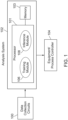
- FIG. 1 is a block diagram of a system for making predictions relating to products manufactured via a manufacturing process according to one embodiment.
- the system includes one or more data collection circuits 100, an analysis system 102, and one or more equipment/process controllers 104.
- the data collection circuits 100 may include, for example, sensors, amplifiers, and/or analog to digital converters, configured to collect trace data during a manufacturing process.
- the sensors may be placed, for example, on top of a conveyer belt that carries a product during production.
- the sensors may be configured to record any sensed activity as trace data.
- the sensors may include multiple temperature and pressure sensors configured to capture measurements of temperature and pressure in the manufacturing process, as a function of time. Each sensor may be sampled multiple times (e.g., every second or a few seconds for monitoring each glass, over a period of multiple glass manufacturing time).
- the analysis system 102 may include a training module 106 and an inference module 108.
- the training and inference modules 106, 108 are illustrated as separate functional units in FIG. 1 , a person of skill in the art will recognize that the functionality of the modules may be combined or integrated into a single module, or further subdivided into further sub-modules without departing from the scope of the inventive concept.
- the training module 106 corresponds to one or more processing units (also referred to as a processor) 101 and associated memory 103.
- the inference module 108 may correspond to the same one or more processing units as the training module 106 or to a different one or more processing units.
- processing units include a central processor unit (CPU), a graphics processor unit (GPU), an application specific integrated circuit (ASIC), a field programmable gate array (FPGA), etc.
- the training module 106 may be configured to generate and train a plurality of machine learning models for use by the inference module 108.
- the plurality of machine learning models may be generated and trained based on training data provided by the data collection circuits 100.
- the training module 106 uses a tree-structured multimodal regressor design in generating and training the plurality of machine learning models.
- the training module 106 may also be configured to train a classifier to select one of the plurality of machine learning models.
- the plurality of machine learning models may be associated with different class labels.
- the classifier is trained to learn a relationship between trace data and the class labels, to identify an appropriate machine learning model to use during an inference stage.
- the inference module 108 may be configured to predict a defect visibility level based on trace data provided by the data collection circuits 100 during the inference stage.
- the inference module 108 may select a model from the plurality of trained machine learning models to make the prediction. The selection of the model may depend on the classification of the received trace data. Different machine learning models may be invoked based on different classifications.
- the predicted defect visibility level is used for making an adjustment in the manufacturing process. For example, if the predicted defect visibility level is above a certain threshold level, a signal may be transmitted to the equipment/ process controller 104 for adjusting a parameter of a manufacturing equipment used for the manufacturing process.
- the adjusted parameter may be, for example, an operating speed or internal temperature of the manufacturing equipment.
- the manufacturing equipment may be re-initialized, or re-calibrated, in response to detecting that the predicted defect visibility level is above the certain threshold level.
- FIG. 2 is a block diagram of the inference module 108 according to one embodiment.
- the inference module 108 includes a data augmentation module 200, a scaling module 202, a classifier engine 204, and a plurality of machine learning models 206 (also referred to as class regressors).
- trace data X is collected from the various sensors by the data collection circuits 100.
- the trace data X is provided to the data augmentation module 200 as multivariate input data.
- the data augmentation module 200 may take the multivariate trace data and augment the trace data with statistical data.
- the statistical data may be, for example, a mean value computed from prior samples collected by the data collection circuits 100.
- the mean value may be concatenated to the collected trace data to produce an augmented dataset Xe.
- the augmented dataset Xe may be further processed by the scaling module 202.
- the scaling module 202 may be configured to apply feature scaling/normalization to the augmented dataset Xe to produce a normalized dataset Xes. Data normalization may be achieved via a feature standardization algorithm, min-max normalization, or the like.
- the normalized dataset Xes may then be fed to the classifier 204, also called a classifier engine 204.
- the classifier engine 204 may be configured to run a machine learning algorithm such as, for example, random forest, extreme gradient boosting (XGBoost), support-vector machine (SVM), deep neural network (DNN), and/or the like.
- the classifier engine 204 is trained to predict a class label for the input data.
- the classifier engine 204 may predict a class label, Xes1, Xes2, ..., Xesn, from a plurality of preset class labels.
- the predicted class label may then be used to select a machine learning model, Class Regressor #1, Class Regressor #2, ..., Class Regressor #n, from the plurality of machine learning models 206.
- the selected machine learning model generates a prediction of a defect visibility level 208, Ypred1, Ypred2, ..., Ypredn, of a product manufactured via the manufacturing process.
- each machine learning model, Class Regressor #1, Class Regressor #2, ..., Class Regressor #n, of the plurality of machine learning models 206 is associated with a different modality.
- Each modality may reflect certain manufacturing conditions that result in a particular distribution of trace data X to predicted defect visibility levels, Ypred1, Ypred2, ... Ypredn.
- the use of multimodal machine learning models 206 for predicting defect visibility levels, Ypred1, Ypred2, ... Ypredn may allow the analysis system to address changes in manufacturing conditions while providing a desired level of prediction accuracy.
- the use of multimodal machine learning models 206 may also help control model complexity and save computation power when compared to a system that uses a single model for making the predictions.
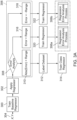
- FIG. 3A is a flow diagram of a process executed by the training module 106 for generating the plurality of machine learning models 206 according to one embodiment. It should be understood that the sequence of steps of the process is not fixed, but can be modified, changed in order, performed differently, performed sequentially, concurrently, or simultaneously, or altered into any desired sequence, as recognized by a person of skill in the art.
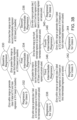
- FIG. 3B are regressors generated upon execution of the flow diagram of FIG. 3A .
- the training module 106 builds a baseline regressor 330, and, at block 302, the training module 106 applies the baseline regressor 330 to an input training dataset 304 for predicting a defect visibility level.
- the baseline regressor 330 may be any machine learning model that may be simple to set up, such as, for example, a linear regression model.
- the baseline regressor 330 is built using all training data to identify the major distribution of the input training dataset 304.
- the input training dataset 304 may include trace data (X) and related defect visibility levels (Y).
- the training module 106 iteratively engages in the error analysis process for identifying a subset of the input training dataset 304 that is within a threshold range of error.
- the error may be a value indicative of a difference between the predicted defect visibility level and the defect visibility level provided in the training dataset 304 as ground truth.
- the training module 106 engages in an error analysis inquiry for determining whether the prediction by the baseline regressor 330 at block 302 for a first subset of the input training dataset 304 is within or outside the threshold range of error when compared to the ground truth visibility level. If the first subset of the input training dataset 304 is within the threshold range of error, such subset is identified at block 310. For instance, if the absolute error is less than a positive threshold value, such a subset is identified at block 310.
- the training module 106 labels the identified first subset with a class label.
- the class labels may be, for example, automatically generated numbers (e.g. sequential numbers).
- the first generated class label may be class "0," and the applied baseline regressor 330 may be set as a regressor 332 for class 0.
- the training module 106 trains the classifier 204 using one or more machine learning models, for learning the relationship between the identified first subset and the assigned class label.
- any second subset of the input training dataset 304 is outside of the threshold range of error (e.g. greater than the positive threshold value as identified at block 316, or less than a negative threshold value as identified at block 318, although other values are also possible), such second subset is identified at the appropriate block 316 or 318.
- the training module 106 proceeds to build and train a new baseline regressor (e.g. first intermediate regressor 334), and engages in the error analysis process again at block 306a or 306b, upon applying the new baseline regressor to the second subset.
- the second subset is labeled with a new class label in block 312.
- the class label for the second subset may be class "1”
- the applied first intermediate regressor 334 may be set as a regressor 338 for class 1.
- the error analysis process 306a, 306b repeats until all data in the input training dataset 304 is within the threshold range of error, or until a maximum depth value has been reached.
- the maximum depth value may be based on a preset number of class labels identified by the training module 306. For example, if the preset number of class labels is five (classes 0-4), the error analysis process repeats a maximum of five times for identifying a maximum number of five regressors (e.g. regressors 332, 338, 340, 342, and 344) and associated subset of datasets for each of the classes. According to one embodiment, if after the last repetition there is still data in the input training dataset 304 that is outside the threshold range of error, the remaining data may be merged with data in a prior repetition, and assigned the class label of the prior repetition.
- FIG. 4 is a more detailed flow diagram of block 314 for training the classifier engine 204 according to one embodiment.
- the classifier engine 204 may be ready for training after the input training dataset 304 has been labeled with corresponding class labels.
- input data including training trace data (X) and associated labels, is used for training the classifier engine 204 to learn the relationship between the trace data and the associated labels.
- the training may be done via a supervised machine learning algorithm such as, for example, a classification algorithm.
- the classifier engine 204 may be saved at block 402.
- the trained classifier may be ready for use by the inference module 108.
- FIG. 5 is a flow diagram of a process executed by the data augmentation module 200 for augmenting the collected trace data X during an inference stage according to one embodiment.
- the trace data X is augmented based on statistical information of prior samples.
- the statistical information may be a mean, standard deviation, moment, or the like.
- the augmenting of the trace data with statistical information may help provide a temporal context to the input data, such as, for example, information that the data is increasing or decreasing in value over time.
- the process for data augmentation starts, and at block 500, the data augmentation module 200 identifies an original input vector X[t] generated from the collected trace data X.
- the statistical information may be, for example, a mean value Z[t] of the prior samples.
- the statistical information is determined based on the available number of current and prior samples at block 506.
- the statistical information may again be, for example, a mean value Z[t] of the prior samples.
- a statistical information vector Xe[t] generated based on the determined statistical information is concatenated to the original input vector.
- the statistical information may also include standard deviation, median, mode, or the like.
- processors may refer to one or more processors and/or one or more processing cores.
- the one or more processors may be hosted in a single device or distributed over multiple devices (e.g. over a cloud system).
- a processor may include, for example, application specific integrated circuits (ASICs), general purpose or special purpose central processing units (CPUs), digital signal processors (DSPs), graphics processing units (GPUs), and programmable logic devices such as field programmable gate arrays (FPGAs).
- ASICs application specific integrated circuits
- CPUs general purpose or special purpose central processing units
- DSPs digital signal processors
- GPUs graphics processing units
- FPGAs programmable logic devices
- each function is performed either by hardware configured, i.e., hard-wired, to perform that function, or by more general-purpose hardware, such as a CPU, configured to execute instructions stored in a non-transitory storage medium (e.g. memory).
- a processor may be fabricated on a single printed circuit board (PCB) or distributed over several interconnected PCBs.
- a processor may contain other processing circuits; for example, a processing circuit may include two processing circuits, an FPGA and a CPU, interconnected on a PCB.
- first, second, third, etc. may be used herein to describe various elements, components, regions, layers and/or sections, these elements, components, regions, layers and/or sections should not be limited by these terms. These terms are only used to distinguish one element, component, region, layer or section from another element, component, region, layer or section. Thus, a first element, component, region, layer or section discussed herein could be termed a second element, component, region, layer or section, without departing from the scope of the inventive concept.
- any numerical range recited herein is intended to include all sub-ranges of the same numerical precision subsumed within the recited range.
- a range of "1.0 to 10.0" is intended to include all subranges between (and including) the recited minimum value of 1.0 and the recited maximum value of 10.0, that is, having a minimum value equal to or greater than 1.0 and a maximum value equal to or less than 10.0, such as, for example, 2.4 to 7.6.
- Any maximum numerical limitation recited herein is intended to include all lower numerical limitations subsumed therein and any minimum numerical limitation recited in this specification is intended to include all higher numerical limitations subsumed therein.
Landscapes
- Engineering & Computer Science (AREA)
- Theoretical Computer Science (AREA)
- Physics & Mathematics (AREA)
- General Physics & Mathematics (AREA)
- Data Mining & Analysis (AREA)
- Evolutionary Computation (AREA)
- Computer Vision & Pattern Recognition (AREA)
- Artificial Intelligence (AREA)
- Software Systems (AREA)
- General Engineering & Computer Science (AREA)
- Business, Economics & Management (AREA)
- Medical Informatics (AREA)
- Automation & Control Theory (AREA)
- Bioinformatics & Computational Biology (AREA)
- Bioinformatics & Cheminformatics (AREA)
- Evolutionary Biology (AREA)
- Life Sciences & Earth Sciences (AREA)
- Mathematical Physics (AREA)
- Computing Systems (AREA)
- Strategic Management (AREA)
- Economics (AREA)
- Human Resources & Organizations (AREA)
- Health & Medical Sciences (AREA)
- General Business, Economics & Management (AREA)
- Marketing (AREA)
- Manufacturing & Machinery (AREA)
- Tourism & Hospitality (AREA)
- General Health & Medical Sciences (AREA)
- Primary Health Care (AREA)
- Entrepreneurship & Innovation (AREA)
- Quality & Reliability (AREA)
- Game Theory and Decision Science (AREA)
- Operations Research (AREA)
- Development Economics (AREA)
- Human Computer Interaction (AREA)
- General Factory Administration (AREA)
Claims (8)
- Procédé mis en œuvre par processeur pour réaliser des prédictions concernant des produits fabriqués via un processus de fabrication, le procédé comprenant :la réception de données d'entrée ;la réalisation d'une première prédiction sur la base des données d'entrée ;l'identification, sur la base de la première prédiction, d'un premier modèle d'apprentissage automatique parmi une pluralité de modèles d'apprentissage automatique ;la réalisation d'une deuxième prédiction sur la base des données d'entrée et du premier modèle d'apprentissage automatique, dans lequel la deuxième prédiction est une prédiction d'un niveau de défaut associé aux produits ;la transmission d'un signal pour ajuster la fabrication des produits, sur la base de la deuxième prédiction ;dans lequel le procédé comprend en outre :
la génération de la pluralité de modèles d'apprentissage automatique, y inclus :l'application d'un premier modèle d'apprentissage automatique de base à un ensemble de données d'entraînement ;le lancement d'un processus d'analyse d'erreurs en réponse à l'application du premier modèle d'apprentissage automatique de base, dans lequel le processus d'analyse d'erreurs comprend l'identification d'une première partie de l'ensemble de données d'entraînement qui se situe dans une plage de seuil d'erreur, et l'identification d'une deuxième partie de l'ensemble de données d'entraînement qui se situe en dehors de la plage de seuil d'erreur ;l'étiquetage de la première partie de l'ensemble de données d'entraînement avec une première étiquette ; etle lancement du processus d'analyse d'erreurs avec un nouveau modèle d'apprentissage automatique de base pour la deuxième partie de l'ensemble de données d'entraînement,dans lequel la première prédiction inclut une étiquette prédite, le procédé comprenant en outre :
l'entraînement d'un classificateur sur la base de l'ensemble de données d'entraînement et des étiquettes générées par le processus d'analyse d'erreurs, dans lequel la réalisation de la première prédiction inclut l'application du classificateur aux données d'entrée. - Procédé selon la revendication 1, dans lequel les données d'entrée incluent des données de capteurs multivariées d'une pluralité de capteurs.
- Procédé selon la revendication 1 ou la revendication 2, dans lequel le premier modèle d'apprentissage automatique est associé à une première distribution normale associée à une première condition de fabrication, et un deuxième modèle d'apprentissage automatique de la pluralité de modèles d'apprentissage automatique est associé à une deuxième distribution normale associée à une deuxième distribution normale associée à une deuxième condition de fabrication.
- Procédé selon l'une quelconque des revendications précédentes, dans lequel le processus d'analyse d'erreurs est exécuté un certain nombre de fois, sur la base d'un nombre prédéfini d'étiquettes.
- Procédé selon l'une quelconque des revendications précédentes, dans lequel une étiquette différente est attribuée à chaque exécution du processus d'analyse d'erreurs, aux données de l'ensemble de données d'entraînement qui se situent dans la plage de seuil d'erreur.
- Procédé selon l'une quelconque des revendications précédentes, comprenant en outre :
l'accroissement des données d'entrée par des données supplémentaires, dans lequel les données supplémentaires se basent sur des informations statistiques sur des données générées lors d'une période antérieure. - Procédé selon l'une quelconque des revendications précédentes, dans lequel au moins une parmi la température ou la vitesse de fonctionnement d'un équipement de fabrication est ajustée en réponse au signal.
- Système (102) pour réaliser des prédictions concernant des produits fabriqués via un processus de fabrication, le système comprenant :un processeur (101), etune mémoire (103), dans lequel la mémoire (103) inclut des instructions qui, lorsqu'elles sont exécutées par le processeur (101), amènent le processeur à effectuer le procédé selon l'une quelconque des revendications précédentes.
Applications Claiming Priority (2)
| Application Number | Priority Date | Filing Date | Title |
|---|---|---|---|
| US202063080558P | 2020-09-18 | 2020-09-18 | |
| US17/127,778 US20220092473A1 (en) | 2020-09-18 | 2020-12-18 | System and method for performing tree-based multimodal regression |
Publications (2)
| Publication Number | Publication Date |
|---|---|
| EP3971663A1 EP3971663A1 (fr) | 2022-03-23 |
| EP3971663B1 true EP3971663B1 (fr) | 2025-04-30 |
Family
ID=74871334
Family Applications (1)
| Application Number | Title | Priority Date | Filing Date |
|---|---|---|---|
| EP21162165.1A Active EP3971663B1 (fr) | 2020-09-18 | 2021-03-11 | Système et procédé permettant d'effectuer une régression multimodale de type arbre |
Country Status (4)
| Country | Link |
|---|---|
| US (1) | US20220092473A1 (fr) |
| EP (1) | EP3971663B1 (fr) |
| KR (1) | KR20220038269A (fr) |
| CN (1) | CN114202095A (fr) |
Families Citing this family (5)
| Publication number | Priority date | Publication date | Assignee | Title |
|---|---|---|---|---|
| US11489743B1 (en) * | 2021-09-17 | 2022-11-01 | Arista Networks, Inc. | Anomaly detection for multivariate metrics in networks |
| CN114595623A (zh) * | 2021-12-30 | 2022-06-07 | 华能上海燃机发电有限责任公司 | 一种基于XGBoost算法的机组设备基准值预测方法及系统 |
| KR102780051B1 (ko) * | 2022-11-18 | 2025-03-12 | 재단법인 대구경북과학기술원 | 학습 모델을 활용한 중희토 자석 제조 공정 조건을 추천하는 방법, 시스템 및 기록매체 |
| KR102640747B1 (ko) * | 2023-07-25 | 2024-02-27 | 주식회사 인이지 | 온도 예측 및 제어 시스템을 구현하기 위한 전자 장치 및 이의 제어 방법 |
| US12619490B2 (en) * | 2024-03-26 | 2026-05-05 | Bank Of America Corporation | System and method for electronic interaction recovery via multimodal machine learning models |
Family Cites Families (39)
| Publication number | Priority date | Publication date | Assignee | Title |
|---|---|---|---|---|
| CN104630410B (zh) * | 2015-02-10 | 2016-07-06 | 东北大学 | 一种基于数据解析的转炉炼钢质量实时动态预测方法 |
| WO2017139046A1 (fr) * | 2016-02-09 | 2017-08-17 | Presenso, Ltd. | Système et procédé pour l'analyse non supervisée de causes profondes de pannes de matériel |
| US20170284896A1 (en) * | 2016-03-31 | 2017-10-05 | General Electric Company | System and method for unsupervised anomaly detection on industrial time-series data |
| US20170308802A1 (en) * | 2016-04-21 | 2017-10-26 | Arundo Analytics, Inc. | Systems and methods for failure prediction in industrial environments |
| CN107966942A (zh) * | 2017-06-18 | 2018-04-27 | 广东金宝力化工科技装备股份有限公司 | 一种基于知识库的设备故障预测系统 |
| CN107238507B (zh) * | 2017-06-20 | 2019-12-31 | 佛山市南海区广工大数控装备协同创新研究院 | 一种基于深度学习的工业设备故障预测方法 |
| US10739736B2 (en) * | 2017-07-11 | 2020-08-11 | General Electric Company | Apparatus and method for event detection and duration determination |
| JP7082461B2 (ja) * | 2017-07-26 | 2022-06-08 | 株式会社Ye Digital | 故障予知方法、故障予知装置および故障予知プログラム |
| CN109598346A (zh) * | 2017-09-30 | 2019-04-09 | 日本电气株式会社 | 用于估计观测变量之间的因果关系的方法、装置和系统 |
| JP6953990B2 (ja) * | 2017-10-17 | 2021-10-27 | 日本製鉄株式会社 | 品質予測装置及び品質予測方法 |
| WO2019091551A1 (fr) * | 2017-11-08 | 2019-05-16 | Siemens Aktiengesellschaft | Procédé et dispositif destinés à l'apprentissage automatique dans une unité de calcul |
| US10775776B2 (en) * | 2017-11-17 | 2020-09-15 | Accenture Global Solutions Limited | Digital manufacturing with product tracking and social media analysis of the product |
| KR102602216B1 (ko) * | 2017-12-22 | 2023-11-15 | 삼성전자주식회사 | 고장 예측에 기반한 가전기기의 제어 방법 및 장치 |
| JP6730340B2 (ja) * | 2018-02-19 | 2020-07-29 | 日本電信電話株式会社 | 因果推定装置、因果推定方法、及びプログラム |
| JP6711854B2 (ja) * | 2018-02-22 | 2020-06-17 | ファナック株式会社 | 故障予測装置及び機械学習装置 |
| US11029359B2 (en) * | 2018-03-09 | 2021-06-08 | Pdf Solutions, Inc. | Failure detection and classsification using sensor data and/or measurement data |
| US10777470B2 (en) * | 2018-03-27 | 2020-09-15 | Pdf Solutions, Inc. | Selective inclusion/exclusion of semiconductor chips in accelerated failure tests |
| WO2019200480A1 (fr) * | 2018-04-18 | 2019-10-24 | Rubikloud Technologies Inc. | Procédé et système d'auto-sélection de modèle à l'aide d'un assortiment de modèles d'apprentissage automatique |
| CN108829933B (zh) * | 2018-05-22 | 2023-04-07 | 北京天泽智云科技有限公司 | 一种半导体制造设备的预测性维护与健康管理的方法 |
| WO2019236997A1 (fr) * | 2018-06-08 | 2019-12-12 | Zestfinance, Inc. | Systèmes et procédés de décomposition de modèles non différentiables et différentiables |
| IT201800006680A1 (it) * | 2018-06-26 | 2019-12-26 | Metodo di predizione della presenza di difetti di prodotto durante una fase di lavorazione intermedia di un prodotto sottile avvolto in bobina | |
| JP2020042673A (ja) * | 2018-09-12 | 2020-03-19 | ファナック株式会社 | 検証装置 |
| CN110901000B (zh) * | 2018-09-14 | 2022-06-07 | 株式会社日本制钢所 | 注射成型机、注射成型机的状态告知系统、注射成型机的状态告知方法 |
| JP7062577B2 (ja) * | 2018-11-21 | 2022-05-06 | 株式会社日立製作所 | 製造条件特定システムおよび方法 |
| CN109445422A (zh) * | 2018-12-19 | 2019-03-08 | 佛山科学技术学院 | 一种化工生产设备故障预测方法 |
| US11568324B2 (en) * | 2018-12-20 | 2023-01-31 | Samsung Display Co., Ltd. | Adversarial training method for noisy labels |
| US10956632B2 (en) * | 2018-12-27 | 2021-03-23 | Utopus Insights, Inc. | Scalable system and engine for forecasting wind turbine failure |
| JP7060535B2 (ja) * | 2019-02-27 | 2022-04-26 | ファナック株式会社 | 工作機械の加工不良発生予測システム |
| JPWO2020218004A1 (fr) * | 2019-04-24 | 2020-10-29 | ||
| CN110297469B (zh) * | 2019-05-17 | 2022-02-18 | 同济大学 | 基于重采样的集成特征选择算法的生产线故障判断方法 |
| JP7218475B2 (ja) * | 2019-07-12 | 2023-02-06 | ブリヂストン アメリカズ タイヤ オペレーションズ、 エルエルシー | 接合部改善のための機械学習 |
| KR20260035214A (ko) * | 2019-08-30 | 2026-03-12 | 에이에스엠엘 네델란즈 비.브이. | 반도체 디바이스 지오메트리 방법 및 시스템 |
| US11415975B2 (en) * | 2019-09-09 | 2022-08-16 | General Electric Company | Deep causality learning for event diagnosis on industrial time-series data |
| CN110929934A (zh) * | 2019-11-22 | 2020-03-27 | 深圳市通用互联科技有限责任公司 | 设备故障预测方法、装置、计算机设备和存储介质 |
| CN111368890A (zh) * | 2020-02-26 | 2020-07-03 | 珠海格力电器股份有限公司 | 故障检测方法及装置、信息物理融合系统 |
| CN111368075A (zh) * | 2020-02-27 | 2020-07-03 | 腾讯科技(深圳)有限公司 | 文章质量预测方法、装置、电子设备及存储介质 |
| US11537459B2 (en) * | 2020-03-27 | 2022-12-27 | EMC IP Holding Company LLC | Automatically predicting device failure using machine learning techniques |
| JP7354421B2 (ja) * | 2020-03-31 | 2023-10-02 | 株式会社日立ハイテク | エラー要因の推定装置及び推定方法 |
| CN111598346A (zh) * | 2020-05-20 | 2020-08-28 | 北京三一智造科技有限公司 | 故障检测方法、装置、检测设备、旋挖机及存储介质 |
-
2020
- 2020-12-18 US US17/127,778 patent/US20220092473A1/en active Pending
-
2021
- 2021-03-10 KR KR1020210031554A patent/KR20220038269A/ko active Pending
- 2021-03-11 EP EP21162165.1A patent/EP3971663B1/fr active Active
- 2021-09-17 CN CN202111091430.5A patent/CN114202095A/zh active Pending
Also Published As
| Publication number | Publication date |
|---|---|
| CN114202095A (zh) | 2022-03-18 |
| KR20220038269A (ko) | 2022-03-28 |
| US20220092473A1 (en) | 2022-03-24 |
| EP3971663A1 (fr) | 2022-03-23 |
Similar Documents
| Publication | Publication Date | Title |
|---|---|---|
| EP3971663A1 (fr) | Système et procédé permettant d'effectuer une régression multimodale de type arbre | |
| CN111524478B (zh) | 检测故障的设备和方法 | |
| US12607995B2 (en) | Automated analysis of non-stationary machine performance | |
| EP3800588B1 (fr) | Système et procédé utilisant la distillation des connaissances pour former un classificateur d'apprentissage machine | |
| US11269321B2 (en) | Equipment diagnosis system and method based on deep learning | |
| Li et al. | Deep learning-based remaining useful life estimation of bearings using multi-scale feature extraction | |
| JP2020198092A (ja) | 教師なし異常検出及び高次元センサデータの多数決投票による原因説明のための方法及びシステム | |
| US20240086770A1 (en) | Sensor measurement anomaly detection | |
| CN111665066B (zh) | 基于卷积神经网络的设备故障自适应上下预警界生成方法 | |
| US20240111279A1 (en) | Method and Apparatus for Classification and Prediction of Health of a Physical System | |
| CN117951646A (zh) | 一种基于边缘云的数据融合方法及系统 | |
| van den Hoogen et al. | An improved wide-kernel cnn for classifying multivariate signals in fault diagnosis | |
| JP2019113914A (ja) | データ識別装置およびデータ識別方法 | |
| EP4080421A1 (fr) | Système et procédé de regroupement de réaffectations pour la régression de la visibilité des défauts | |
| US12488265B2 (en) | Optimizing a prognostic-surveillance system to achieve a user-selectable functional objective | |
| US20250156686A1 (en) | Computer-Implemented Method for Detecting Deviations in a Production Process | |
| US12229706B2 (en) | Systems and methods for concept intervals clustering for defect visibility regression | |
| Christos et al. | Development of a novel Decision-Making tool for vessel efficiency optimization using IoT and DL | |
| Samal et al. | Benchmarking machine learning algorithms for bearing fault classification using vibration data: a deployment-oriented study | |
| US20240362135A1 (en) | Method for verifying a machine learning algorithm | |
| Akanksha et al. | Efficient Tool Condition Monitoring Using SOM-Hebb Classifier on FPGA | |
| Krishnan et al. | Automatic detection and characterization of weld defects using CNN algorithm in machine learning | |
| Vijayakumar et al. | Food Freshness Detection Using AI | |
| Menyhárt et al. | Generalized Quantization of Faster R-CNN | |
| HK40049040B (zh) | 非平稳机器性能的自动分析 |
Legal Events
| Date | Code | Title | Description |
|---|---|---|---|
| PUAI | Public reference made under article 153(3) epc to a published international application that has entered the european phase |
Free format text: ORIGINAL CODE: 0009012 |
|
| STAA | Information on the status of an ep patent application or granted ep patent |
Free format text: STATUS: REQUEST FOR EXAMINATION WAS MADE |
|
| 17P | Request for examination filed |
Effective date: 20211221 |
|
| AK | Designated contracting states |
Kind code of ref document: A1 Designated state(s): AL AT BE BG CH CY CZ DE DK EE ES FI FR GB GR HR HU IE IS IT LI LT LU LV MC MK MT NL NO PL PT RO RS SE SI SK SM TR |
|
| STAA | Information on the status of an ep patent application or granted ep patent |
Free format text: STATUS: EXAMINATION IS IN PROGRESS |
|
| P01 | Opt-out of the competence of the unified patent court (upc) registered |
Effective date: 20230516 |
|
| 17Q | First examination report despatched |
Effective date: 20230606 |
|
| GRAP | Despatch of communication of intention to grant a patent |
Free format text: ORIGINAL CODE: EPIDOSNIGR1 |
|
| STAA | Information on the status of an ep patent application or granted ep patent |
Free format text: STATUS: GRANT OF PATENT IS INTENDED |
|
| RIC1 | Information provided on ipc code assigned before grant |
Ipc: G05B 19/418 20060101ALN20241028BHEP Ipc: G05B 13/02 20060101ALN20241028BHEP Ipc: G05B 19/18 20060101AFI20241028BHEP |
|
| INTG | Intention to grant announced |
Effective date: 20241111 |
|
| RAP3 | Party data changed (applicant data changed or rights of an application transferred) |
Owner name: SAMSUNG DISPLAY CO., LTD. |
|
| GRAS | Grant fee paid |
Free format text: ORIGINAL CODE: EPIDOSNIGR3 |
|
| GRAA | (expected) grant |
Free format text: ORIGINAL CODE: 0009210 |
|
| STAA | Information on the status of an ep patent application or granted ep patent |
Free format text: STATUS: THE PATENT HAS BEEN GRANTED |
|
| AK | Designated contracting states |
Kind code of ref document: B1 Designated state(s): AL AT BE BG CH CY CZ DE DK EE ES FI FR GB GR HR HU IE IS IT LI LT LU LV MC MK MT NL NO PL PT RO RS SE SI SK SM TR |
|
| REG | Reference to a national code |
Ref country code: CH Ref legal event code: EP Ref country code: GB Ref legal event code: FG4D |
|
| REG | Reference to a national code |
Ref country code: DE Ref legal event code: R096 Ref document number: 602021029862 Country of ref document: DE |
|
| REG | Reference to a national code |
Ref country code: IE Ref legal event code: FG4D |
|
| REG | Reference to a national code |
Ref country code: NL Ref legal event code: FP |
|
| REG | Reference to a national code |
Ref country code: AT Ref legal event code: MK05 Ref document number: 1790591 Country of ref document: AT Kind code of ref document: T Effective date: 20250430 |
|
| PG25 | Lapsed in a contracting state [announced via postgrant information from national office to epo] |
Ref country code: FI Free format text: LAPSE BECAUSE OF FAILURE TO SUBMIT A TRANSLATION OF THE DESCRIPTION OR TO PAY THE FEE WITHIN THE PRESCRIBED TIME-LIMIT Effective date: 20250430 Ref country code: ES Free format text: LAPSE BECAUSE OF FAILURE TO SUBMIT A TRANSLATION OF THE DESCRIPTION OR TO PAY THE FEE WITHIN THE PRESCRIBED TIME-LIMIT Effective date: 20250430 Ref country code: PT Free format text: LAPSE BECAUSE OF FAILURE TO SUBMIT A TRANSLATION OF THE DESCRIPTION OR TO PAY THE FEE WITHIN THE PRESCRIBED TIME-LIMIT Effective date: 20250901 |
|
| REG | Reference to a national code |
Ref country code: LT Ref legal event code: MG9D |
|
| PG25 | Lapsed in a contracting state [announced via postgrant information from national office to epo] |
Ref country code: NO Free format text: LAPSE BECAUSE OF FAILURE TO SUBMIT A TRANSLATION OF THE DESCRIPTION OR TO PAY THE FEE WITHIN THE PRESCRIBED TIME-LIMIT Effective date: 20250730 Ref country code: GR Free format text: LAPSE BECAUSE OF FAILURE TO SUBMIT A TRANSLATION OF THE DESCRIPTION OR TO PAY THE FEE WITHIN THE PRESCRIBED TIME-LIMIT Effective date: 20250731 |
|
| PG25 | Lapsed in a contracting state [announced via postgrant information from national office to epo] |
Ref country code: PL Free format text: LAPSE BECAUSE OF FAILURE TO SUBMIT A TRANSLATION OF THE DESCRIPTION OR TO PAY THE FEE WITHIN THE PRESCRIBED TIME-LIMIT Effective date: 20250430 |
|
| PG25 | Lapsed in a contracting state [announced via postgrant information from national office to epo] |
Ref country code: BG Free format text: LAPSE BECAUSE OF FAILURE TO SUBMIT A TRANSLATION OF THE DESCRIPTION OR TO PAY THE FEE WITHIN THE PRESCRIBED TIME-LIMIT Effective date: 20250430 |
|
| PG25 | Lapsed in a contracting state [announced via postgrant information from national office to epo] |
Ref country code: HR Free format text: LAPSE BECAUSE OF FAILURE TO SUBMIT A TRANSLATION OF THE DESCRIPTION OR TO PAY THE FEE WITHIN THE PRESCRIBED TIME-LIMIT Effective date: 20250430 |
|
| PG25 | Lapsed in a contracting state [announced via postgrant information from national office to epo] |
Ref country code: AT Free format text: LAPSE BECAUSE OF FAILURE TO SUBMIT A TRANSLATION OF THE DESCRIPTION OR TO PAY THE FEE WITHIN THE PRESCRIBED TIME-LIMIT Effective date: 20250430 |
|
| PG25 | Lapsed in a contracting state [announced via postgrant information from national office to epo] |
Ref country code: RS Free format text: LAPSE BECAUSE OF FAILURE TO SUBMIT A TRANSLATION OF THE DESCRIPTION OR TO PAY THE FEE WITHIN THE PRESCRIBED TIME-LIMIT Effective date: 20250731 |
|
| PG25 | Lapsed in a contracting state [announced via postgrant information from national office to epo] |
Ref country code: IS Free format text: LAPSE BECAUSE OF FAILURE TO SUBMIT A TRANSLATION OF THE DESCRIPTION OR TO PAY THE FEE WITHIN THE PRESCRIBED TIME-LIMIT Effective date: 20250830 |
|
| PG25 | Lapsed in a contracting state [announced via postgrant information from national office to epo] |
Ref country code: LV Free format text: LAPSE BECAUSE OF FAILURE TO SUBMIT A TRANSLATION OF THE DESCRIPTION OR TO PAY THE FEE WITHIN THE PRESCRIBED TIME-LIMIT Effective date: 20250430 |
|
| PG25 | Lapsed in a contracting state [announced via postgrant information from national office to epo] |
Ref country code: DK Free format text: LAPSE BECAUSE OF FAILURE TO SUBMIT A TRANSLATION OF THE DESCRIPTION OR TO PAY THE FEE WITHIN THE PRESCRIBED TIME-LIMIT Effective date: 20250430 Ref country code: SM Free format text: LAPSE BECAUSE OF FAILURE TO SUBMIT A TRANSLATION OF THE DESCRIPTION OR TO PAY THE FEE WITHIN THE PRESCRIBED TIME-LIMIT Effective date: 20250430 |
|
| PG25 | Lapsed in a contracting state [announced via postgrant information from national office to epo] |
Ref country code: CZ Free format text: LAPSE BECAUSE OF FAILURE TO SUBMIT A TRANSLATION OF THE DESCRIPTION OR TO PAY THE FEE WITHIN THE PRESCRIBED TIME-LIMIT Effective date: 20250430 |
|
| PG25 | Lapsed in a contracting state [announced via postgrant information from national office to epo] |
Ref country code: EE Free format text: LAPSE BECAUSE OF FAILURE TO SUBMIT A TRANSLATION OF THE DESCRIPTION OR TO PAY THE FEE WITHIN THE PRESCRIBED TIME-LIMIT Effective date: 20250430 |
|
| PG25 | Lapsed in a contracting state [announced via postgrant information from national office to epo] |
Ref country code: SK Free format text: LAPSE BECAUSE OF FAILURE TO SUBMIT A TRANSLATION OF THE DESCRIPTION OR TO PAY THE FEE WITHIN THE PRESCRIBED TIME-LIMIT Effective date: 20250430 Ref country code: RO Free format text: LAPSE BECAUSE OF FAILURE TO SUBMIT A TRANSLATION OF THE DESCRIPTION OR TO PAY THE FEE WITHIN THE PRESCRIBED TIME-LIMIT Effective date: 20250430 |
|
| PG25 | Lapsed in a contracting state [announced via postgrant information from national office to epo] |
Ref country code: IT Free format text: LAPSE BECAUSE OF FAILURE TO SUBMIT A TRANSLATION OF THE DESCRIPTION OR TO PAY THE FEE WITHIN THE PRESCRIBED TIME-LIMIT Effective date: 20250430 |
|
| REG | Reference to a national code |
Ref country code: DE Ref legal event code: R097 Ref document number: 602021029862 Country of ref document: DE |
|
| PLBE | No opposition filed within time limit |
Free format text: ORIGINAL CODE: 0009261 |
|
| STAA | Information on the status of an ep patent application or granted ep patent |
Free format text: STATUS: NO OPPOSITION FILED WITHIN TIME LIMIT |
|
| REG | Reference to a national code |
Ref country code: CH Ref legal event code: L10 Free format text: ST27 STATUS EVENT CODE: U-0-0-L10-L00 (AS PROVIDED BY THE NATIONAL OFFICE) Effective date: 20260311 |
|
| PGFP | Annual fee paid to national office [announced via postgrant information from national office to epo] |
Ref country code: NL Payment date: 20260220 Year of fee payment: 6 |
|
| 26N | No opposition filed |
Effective date: 20260202 |
|
| PGFP | Annual fee paid to national office [announced via postgrant information from national office to epo] |
Ref country code: GB Payment date: 20260224 Year of fee payment: 6 |
|
| PGFP | Annual fee paid to national office [announced via postgrant information from national office to epo] |
Ref country code: DE Payment date: 20260220 Year of fee payment: 6 |
|
| PG25 | Lapsed in a contracting state [announced via postgrant information from national office to epo] |
Ref country code: LT Free format text: LAPSE BECAUSE OF FAILURE TO SUBMIT A TRANSLATION OF THE DESCRIPTION OR TO PAY THE FEE WITHIN THE PRESCRIBED TIME-LIMIT Effective date: 20250430 |
|
| PG25 | Lapsed in a contracting state [announced via postgrant information from national office to epo] |
Ref country code: SE Free format text: LAPSE BECAUSE OF FAILURE TO SUBMIT A TRANSLATION OF THE DESCRIPTION OR TO PAY THE FEE WITHIN THE PRESCRIBED TIME-LIMIT Effective date: 20250430 |