EP3969620B1 - Genome-based methods for reducing cardiovascular risk - Google Patents
Genome-based methods for reducing cardiovascular risk Download PDFInfo
- Publication number
- EP3969620B1 EP3969620B1 EP20730885.9A EP20730885A EP3969620B1 EP 3969620 B1 EP3969620 B1 EP 3969620B1 EP 20730885 A EP20730885 A EP 20730885A EP 3969620 B1 EP3969620 B1 EP 3969620B1
- Authority
- EP
- European Patent Office
- Prior art keywords
- risk
- genetic
- prs
- genetic variants
- implementations
- Prior art date
- Legal status (The legal status is an assumption and is not a legal conclusion. Google has not performed a legal analysis and makes no representation as to the accuracy of the status listed.)
- Active
Links
Images























Classifications
-
- C—CHEMISTRY; METALLURGY
- C12—BIOCHEMISTRY; BEER; SPIRITS; WINE; VINEGAR; MICROBIOLOGY; ENZYMOLOGY; MUTATION OR GENETIC ENGINEERING
- C12Q—MEASURING OR TESTING PROCESSES INVOLVING ENZYMES, NUCLEIC ACIDS OR MICROORGANISMS; COMPOSITIONS OR TEST PAPERS THEREFOR; PROCESSES OF PREPARING SUCH COMPOSITIONS; CONDITION-RESPONSIVE CONTROL IN MICROBIOLOGICAL OR ENZYMOLOGICAL PROCESSES
- C12Q1/00—Measuring or testing processes involving enzymes, nucleic acids or microorganisms; Compositions therefor; Processes of preparing such compositions
- C12Q1/68—Measuring or testing processes involving enzymes, nucleic acids or microorganisms; Compositions therefor; Processes of preparing such compositions involving nucleic acids
- C12Q1/6876—Nucleic acid products used in the analysis of nucleic acids, e.g. primers or probes
- C12Q1/6883—Nucleic acid products used in the analysis of nucleic acids, e.g. primers or probes for diseases caused by alterations of genetic material
-
- A—HUMAN NECESSITIES
- A61—MEDICAL OR VETERINARY SCIENCE; HYGIENE
- A61P—SPECIFIC THERAPEUTIC ACTIVITY OF CHEMICAL COMPOUNDS OR MEDICINAL PREPARATIONS
- A61P3/00—Drugs for disorders of the metabolism
-
- C—CHEMISTRY; METALLURGY
- C07—ORGANIC CHEMISTRY
- C07K—PEPTIDES
- C07K16/00—Immunoglobulins [IG], e.g. monoclonal or polyclonal antibodies
- C07K16/40—Immunoglobulins [IG], e.g. monoclonal or polyclonal antibodies against enzymes
-
- G—PHYSICS
- G16—INFORMATION AND COMMUNICATION TECHNOLOGY [ICT] SPECIALLY ADAPTED FOR SPECIFIC APPLICATION FIELDS
- G16B—BIOINFORMATICS, i.e. INFORMATION AND COMMUNICATION TECHNOLOGY [ICT] SPECIALLY ADAPTED FOR GENETIC OR PROTEIN-RELATED DATA PROCESSING IN COMPUTATIONAL MOLECULAR BIOLOGY
- G16B20/00—ICT specially adapted for functional genomics or proteomics, e.g. genotype-phenotype associations
-
- G—PHYSICS
- G16—INFORMATION AND COMMUNICATION TECHNOLOGY [ICT] SPECIALLY ADAPTED FOR SPECIFIC APPLICATION FIELDS
- G16B—BIOINFORMATICS, i.e. INFORMATION AND COMMUNICATION TECHNOLOGY [ICT] SPECIALLY ADAPTED FOR GENETIC OR PROTEIN-RELATED DATA PROCESSING IN COMPUTATIONAL MOLECULAR BIOLOGY
- G16B20/00—ICT specially adapted for functional genomics or proteomics, e.g. genotype-phenotype associations
- G16B20/40—Population genetics; Linkage disequilibrium
-
- G—PHYSICS
- G16—INFORMATION AND COMMUNICATION TECHNOLOGY [ICT] SPECIALLY ADAPTED FOR SPECIFIC APPLICATION FIELDS
- G16B—BIOINFORMATICS, i.e. INFORMATION AND COMMUNICATION TECHNOLOGY [ICT] SPECIALLY ADAPTED FOR GENETIC OR PROTEIN-RELATED DATA PROCESSING IN COMPUTATIONAL MOLECULAR BIOLOGY
- G16B40/00—ICT specially adapted for biostatistics; ICT specially adapted for bioinformatics-related machine learning or data mining, e.g. knowledge discovery or pattern finding
- G16B40/20—Supervised data analysis
-
- A—HUMAN NECESSITIES
- A61—MEDICAL OR VETERINARY SCIENCE; HYGIENE
- A61K—PREPARATIONS FOR MEDICAL, DENTAL OR TOILETRY PURPOSES
- A61K39/00—Medicinal preparations containing antigens or antibodies
- A61K2039/505—Medicinal preparations containing antigens or antibodies comprising antibodies
-
- C—CHEMISTRY; METALLURGY
- C07—ORGANIC CHEMISTRY
- C07K—PEPTIDES
- C07K2317/00—Immunoglobulins specific features
- C07K2317/20—Immunoglobulins specific features characterized by taxonomic origin
- C07K2317/21—Immunoglobulins specific features characterized by taxonomic origin from primates, e.g. man
-
- C—CHEMISTRY; METALLURGY
- C07—ORGANIC CHEMISTRY
- C07K—PEPTIDES
- C07K2317/00—Immunoglobulins specific features
- C07K2317/70—Immunoglobulins specific features characterized by effect upon binding to a cell or to an antigen
- C07K2317/76—Antagonist effect on antigen, e.g. neutralization or inhibition of binding
-
- C—CHEMISTRY; METALLURGY
- C12—BIOCHEMISTRY; BEER; SPIRITS; WINE; VINEGAR; MICROBIOLOGY; ENZYMOLOGY; MUTATION OR GENETIC ENGINEERING
- C12Q—MEASURING OR TESTING PROCESSES INVOLVING ENZYMES, NUCLEIC ACIDS OR MICROORGANISMS; COMPOSITIONS OR TEST PAPERS THEREFOR; PROCESSES OF PREPARING SUCH COMPOSITIONS; CONDITION-RESPONSIVE CONTROL IN MICROBIOLOGICAL OR ENZYMOLOGICAL PROCESSES
- C12Q2600/00—Oligonucleotides characterized by their use
- C12Q2600/118—Prognosis of disease development
-
- C—CHEMISTRY; METALLURGY
- C12—BIOCHEMISTRY; BEER; SPIRITS; WINE; VINEGAR; MICROBIOLOGY; ENZYMOLOGY; MUTATION OR GENETIC ENGINEERING
- C12Q—MEASURING OR TESTING PROCESSES INVOLVING ENZYMES, NUCLEIC ACIDS OR MICROORGANISMS; COMPOSITIONS OR TEST PAPERS THEREFOR; PROCESSES OF PREPARING SUCH COMPOSITIONS; CONDITION-RESPONSIVE CONTROL IN MICROBIOLOGICAL OR ENZYMOLOGICAL PROCESSES
- C12Q2600/00—Oligonucleotides characterized by their use
- C12Q2600/156—Polymorphic or mutational markers
Definitions
- the present disclosure generally relates to the field of therapeutic treatments of diseases and disorders that are associated with elevated levels of lipids and lipoproteins. More specifically, the disclosure relates to the methods of increasing the efficacy of Proprotein Convertase Subtilisin-Kexin Type 9 (PCSK9) inhibitors therapy in high cardiovascular risk patients through identification of patients that are likely to respond to PCSK9 inhibitors.
- PCSK9 Proprotein Convertase Subtilisin-Kexin Type 9
- MACE major adverse cardiovascular events
- PCSK9 is a serine protease involved in regulating the levels of the low-density lipoprotein receptor (LDLR) protein.
- LDLR low-density lipoprotein receptor
- PCSK9 knockout mice have increased levels of LDLR in the liver.
- various human PCSK9 mutations that result in either increased or decreased levels of plasma LDL have been identified.
- PCSK9 has been shown to directly interact with the LDLR protein, be endocytosed along with the LDLR, and co-immunofluorescence with the LDLR throughout the endosomal pathway. Degradation of the LDLR by PCSK9 has not been observed and the mechanism through which it lowers extracellular LDLR protein levels is uncertain.
- PCSK9 inhibition decreases the risk for MACE in both in primary and secondary intervention settings, but not all patients respond equally well to PCSK9 inhibition treatment.
- Cardiovascular disease etiology is complex and may be influenced by genetics, environment, and a variety of additional risk factors including dyslipidemia, age, gender, hypertension, diabetes, obesity, and smoking.
- US 2018/195122 describes the use of a PCSK9 inhibitor for the treatment of cardiovascular diseases, including MACE.
- Genome-wide association studies have identified genetic variants associated broadly with coronary disease, but there is a need to harness genomic data to identify patients likely to benefit specifically from PCSK9 inhibition therapy, with the aim of preventing or reducing the likelihood of MACE.
- the present invention relates in a first aspect to a proprotein convertase subtilisin-kexin type 9 (PCSK9) inhibitor for use in treating a patient who has received or is currently receiving an intensive statin therapy treatment, who has a high genetic risk of major adverse cardiovascular event (MACE) despite intensive statin therapy, by
- the CAD-PRS threshold score is the top 5% within a reference population.
- the present invention relates in a second aspect to a proprotein convertase subtilisin-kexin type 9 (PCSK9) inhibitor for use in lowering the level of lipoprotein(a) (LPA or LP(a)) in a patient who has received or is currently receiving an intensive statin therapy and has a high level of low-density lipoprotein cholesterol (LDL-C), who is at increased risk of a major adverse cardiovascular event (MACE), by
- PCSK9 proprotein convertase subtilisin-kexin type 9
- the CAD-PRS threshold score is the top 5% within a reference population.
- references to the methods of treatment by therapy or surgery or in vivo diagnosis methods in the section "Description of Implementations" are to be interpreted as references to compounds, pharmaceutical compositions and medicaments of the present invention for use in those methods.
- PRS genetic factors can play an important role in risk for developing disease, and potentially influence how individuals respond to drug treatment.
- PRS combine information from a large number of genetic variants, derived from disease association studies, to create a single composite quantitative measure for each individual which reflects his or her genetically-derived disease risk.
- An individual with a larger number of risk alleles for a given disease will have a higher PRS than an individual with fewer alleles.
- Risk can be evaluated at several thresholds, such as percentiles or standard deviation units of the population distribution.
- the present disclosure relates generally to the unexpected finding that stratification of subjects by CAD-PRS is useful in identification of subjects likely to benefit from treatment with a PCSK9 inhibitor, independent of traditional clinical criteria such as LDL cholesterol levels.
- a subject may include any animal, including mammals. Mammals include, but are not limited to, farm animals (such as, for example, horse, cow, pig), companion animals (such as, for example, dog, cat), laboratory animals (such as, for example, mouse, rat, rabbits), and non-human primates. In some implementations, the subject is a human.
- the terms "unstable angina requiring hospitalization” and “hospitalization for unstable angina” are used interchangeably to refer to: admission to hospital or emergency department with symptoms of myocardial ischemia with an accelerating tempo in the prior 48 hours and/or rest chest discomfort ⁇ 20 min, requiring in addition both of the following: a) new or presumed new ischemic ECG changes, defined by ST depression >0.5 mm in 2 contiguous leads; T-wave inversion >1 mm in 2 contiguous leads with prominent R-wave or R/S>1; ST elevation in >2 contiguous leads >0.2 mV in V2 or V3 in men, >0.15 mV in V2 or V3 in women, or >0.1 mV in other leads; or LBBB; and b) definite contemporary evidence of coronary obstruction by need for coronary revascularization procedure or at least one epicardial stenosis ⁇ 70%.
- the expression "not adequately controlled”, in reference to atherogenic lipoproteins, means that the patient's serum low-density lipoprotein cholesterol (LDL-C) concentration, non-high-density lipoprotein cholesterol, and/or apolipoprotein B concentration are not reduced to a recognized, medically-acceptable level (taking into account the patient's relative risk of coronary heart disease) after at least 4 weeks on a therapeutic regimen comprising a stable daily dose of a statin.
- LDL-C serum low-density lipoprotein cholesterol
- a patient with elevated levels of atherogenic lipoproteins that are not adequately controlled by a statin includes a patient or patients with a serum LDL-C concentration of greater than or equal to about 70 mg/dL, greater than or equal to about 80 mg/dL, greater than or equal to about 90 mg/dL, greater than or equal to about 100 mg/dL, greater than or equal to about 110 mg/dL, greater than or equal to about 120 mg/dL, greater than or equal to about 130 mg/dL, greater than or equal to about 140 mg/dL, or more (depending on the patient's underlying risk of heart disease); a non-high-density lipoprotein cholesterol concentration of greater than or equal to about 100 mg/dL; or an apolipoprotein B concentration of greater than or equal to about 80 mg/dL after the patient has been on a stable daily statin regimen for at least 4 weeks.
- a serum LDL-C concentration of greater than or equal to about 70 mg/dL, greater than or equal to about 80 mg/d
- a patient at increased risk of a MACE who is treatable by the methods of the present disclosure has hypercholesterolemia (e.g., a serum LDL-C concentration of greater than or equal to 70 mg/dL, or serum lipoprotein(a) (LPA or LP(a)) level of at least about 30 mg/dL).
- a patient at increased risk of a MACE who is treatable by the methods of the present disclosure has received or is currently receiving a high dose of a statin.
- the patient at increased risk of a MACE may be selected on the basis of a CAD-PRS, wherein the CAD-PRS comprises a weighted sum of a plurality of genetic variants associated with coronary artery disease and is calculated using at least about 2, at least about 3, at least about 4, at least about 5, at least about 10, at least about 20, at least about 30, at least about 40, at least about 50, at least about 60, at least about 70, at least about 80, at least about 100, at least about 120, at least about 150, at least about 200, at least about 250, at least about 300, at least about 400, at least about 500, or at least about 1,000 genetic variants, and if the patient has a CAD-PRS above a threshold score, administering a PCSK9 inhibitor to the subject in an amount effective to lower the level of serum LDL and lipoprotein(a).
- the CAD-PRS comprises a weighted sum of a plurality of genetic variants associated with coronary artery disease and is calculated using at least about 2, at least about 3,
- one or more of the genetic variants is a single nucleotide polymorphism (SNP). In some implementations, one or more of the genetic variants is an insertion. In some implementations, one or more of the genetic variants is a deletion. In some implementations, one or more of the genetic variants is a structural variant. In some implementations, one or more of the genetic variants is a copy-number variation.
- SNP single nucleotide polymorphism
- the disclosure includes in the risk assessment large numbers of alleles, for example, at least about 500,000 genetic variants, at least about 1,000,000 genetic variants, at least about 2,000,000 genetic variants, at least about 3,000,000 genetic variants, at least about 4,000,000 genetic variants, at least about 5,000,000 genetic variants, or at least about 6,000,000 genetic variants, or at least about 6,500,000 genetic variants, or at least about 7,000,000 genetic variants, or at least about 8,000,000 genetic variants, or at least about 9,000,000 genetic variants, or at least about 10,000,000 genetic variants from one or more genetic variant databases, such as, for example, the genetic variant database described in Nikpay et al., Nat Genet., 2015, 47, 1121-1130 ("the Database"), and available at the world wide web at "cardiogramplusc4d .org/media/cardiogramplusc4d-consortium/data-downloads/cad.additive.Oct2015.pub.zip.”
- risk assessment may comprise assessing all of the genetic variants listed in the
- the present disclosure provides to a method of determining a CAD-PRS in a subject, the method comprising identifying whether at least about 2 genetic variants, at least about 5 genetic variants, at least about 10 genetic variants, at least about 15 genetic variants, at least about 20 genetic variants, at least about 30 genetic variants, at least about 40 genetic variants, at least about 50 genetic variants, at least about 60 genetic variants, at least about 70 genetic variants, at least about 100 genetic variants, at least about 200 genetic variants, at least about 500 genetic variants, at least about 1000 genetic variants, at least about 2000 genetic variants, at least about 5000 genetic variants, at least about 10,000 genetic variants, at least about 20,000 genetic variants, at least about 50,000 genetic variants, at least about 75,000 genetic variants, at least about 100,000 genetic variants, at least about 500,000 genetic variants, at least about 1,000,000 genetic variants, at least about 2,000,000 genetic variants, at least about 3,000,000 genetic variants, at least about 4,000,000 genetic variants, at least about
- the disclosure provides a method of determining a risk of a MACE in a subject comprising identifying whether the genetic variants from the Database are present in a biological sample from the subject and calculating a CAD-PRS for the subject based on the identified genetic variants, wherein the CAD-PRS is calculated by summing the weighted risk score associated with each genetic variant identified.
- the number of identified genetic variants can be at least about 2 genetic variants, at least about 5 genetic variants, at least about 10 genetic variants, at least about 15 genetic variants, at least about 20 genetic variants, at least about 30 genetic variants, at least about 40 genetic variants, at least about 50 genetic variants, at least about 95 genetic variants, at least about 100 genetic variants, at least about 200 genetic variants, at least about 500 genetic variants, at least about 1000 genetic variants, at least about 2000 genetic variants, at least about 5000 genetic variants, at least about 10,000 genetic variants, at least about 20,000 genetic variants, at least about 50,000 genetic variants, at least about 75,000 genetic variants, at least about 100,000 genetic variants, at least about 500,000 genetic variants, at least about 1,000,000 genetic variants, at least about 2,000,000 genetic variants, at least about 3,000,000 genetic variants, at least about 4,000,000 genetic variants, at least about 5,000,000 genetic variants, or at least about 6,000,000 genetic variants, or at least about 6,500,000 genetic variants, or at least about 7,000,000 genetic
- the disclosure provides a method of determining a risk of a MACE in a subject comprising identifying whether the genetic variants from the Database are present in a biological sample from the subject, wherein identifying comprises measuring the presence of the at least about 50 genetic variants, at least about 95 genetic variants, at least about 100 genetic variants, at least about 200 genetic variants, at least about 500 genetic variants, at least about 1000 genetic variants, at least about 2000 genetic variants, at least about 5000 genetic variants, at least about 10,000 genetic variants, at least about 20,000 genetic variants, at least about 50,000 genetic variants, at least about 75,000 genetic variants, at least about 100,000 genetic variants, at least about 500,000 genetic variants, at least about 1,000,000 genetic variants, at least about 2,000,000 genetic variants, at least about 3,000,000 genetic variants, at least about 4,000,000 genetic variants, at least about 5,000,000 genetic variants, or at least about 6,000,000 genetic variants, or at least about 6,500,000 genetic variants, or at least about 7,000,000 genetic variants, or at least about
- the disclosure provides a method of determining a risk of a MACE in a subject comprising selecting at least about 50 genetic variants, at least about 95 genetic variants, at least about 100 genetic variants, at least about 200 genetic variants, at least about 500 genetic variants, at least about 1000 genetic variants, at least about 2000 genetic variants, at least about 5000 genetic variants, at least about 10,000 genetic variants, at least about 20,000 genetic variants, at least about 50,000 genetic variants, at least about 75,000 genetic variants, at least about 100,000 genetic variants, at least about 500,000 genetic variants, at least about 1,000,000 genetic variants, at least about 2,000,000 genetic variants, at least about 3,000,000 genetic variants, at least about 4,000,000 genetic variants, at least about 5,000,000 genetic variants, or at least about 6,000,000 genetic variants, or at least about 6,500,000 genetic variants, or at least about 7,000,000 genetic variants, or at least about 8,000,000 genetic variants, or at least about 9,000,000 genetic variants, or at least about 10,000,000 genetic variants from the Database;
- the disclosure provides a method of determining a risk of a MACE in a subject comprising identifying whether the genetic variants from the Database are present in a biological sample from the subject, calculating a CAD-PRS for the subject based on the identified genetic variants, and assigning the subject to a risk group based on the CAD-PRS.
- the CAD-PRS may be divided into quintiles, e.g., top quintile, intermediate quintile, and bottom quintile, wherein the top quintile of polygenic scores correspond the highest genetic risk group and the bottom quintile of polygenic scores correspond to the lowest genetic risk group.
- the number of identified genetic variants can be at least about 50 genetic variants, at least about 95 genetic variants, at least about 100 genetic variants, at least about 200 genetic variants, at least about 500 genetic variants, at least about 1000 genetic variants, at least about 2000 genetic variants, at least about 5000 genetic variants, at least about 10,000 genetic variants, at least about 20,000 genetic variants, at least about 50,000 genetic variants, at least about 75,000 genetic variants, at least about 100,000 genetic variants, at least about 500,000 genetic variants, at least about 1,000,000 genetic variants, at least about 2,000,000 genetic variants, at least about 3,000,000 genetic variants, at least about 4,000,000 genetic variants, at least about 5,000,000 genetic variants, or at least about 6,000,000 genetic variants, or at least about 6,500,000 genetic variants, or at least about 7,000,000 genetic variants, or at least about 8,000,000 genetic variants, or at least about 9,000,000 genetic variants, or at least about 10,000,000 genetic variants.
- the disclosure provides a method for selecting subjects or candidates with a risk for developing a MACE comprising identifying whether at least about 50 genetic variants, at least about 95 genetic variants, at least about 100 genetic variants, at least about 200 genetic variants, at least about 500 genetic variants, at least about 1000 genetic variants, at least about 2000 genetic variants, at least about 5000 genetic variants, at least about 10,000 genetic variants, at least about 20,000 genetic variants, at least about 50,000 genetic variants, at least about 75,000 genetic variants, at least about 100,000 genetic variants, at least about 500,000 genetic variants, at least about 1,000,000 genetic variants, at least about 2,000,000 genetic variants, at least about 3,000,000 genetic variants, at least about 4,000,000 genetic variants, at least about 5,000,000 genetic variants, or at least about 6,000,000 genetic variants, or at least about 6,500,000 genetic variants, or at least about 7,000,000 genetic variants, or at least about 8,000,000 genetic variants, or at least about 9,000,000 genetic variants, or at least about 10,000,000 genetic variants from the Database
- the disclosure further provides risk assessments outlined above incorporating for example, at least 500,000, at least 1,000,000, at least 2,000,000, at least 3,000,000, at least 4,000,000, at least 5,000,000, or at least 6,000,000 genetic variants, or at least 6,500,000 genetic variants, or at least 7,000,000 genetic variants, or at least 8,000,000 genetic variants, or at least 9,000,000 genetic variants, or at least 10,000,000 genetic variants from the Database.
- the disclosure provides a method for selecting a population of subjects or candidates with a high risk for MACE comprising identifying whether at least 50 genetic variants, at least 95 genetic variants, at least 100 genetic variants, at least 200 genetic variants, at least 500 genetic variants, at least 1000 genetic variants, at least 2000 genetic variants, at least 5000 genetic variants, at least 10,000 genetic variants, at least 20,000 genetic variants, at least 50,000 genetic variants, at least 75,000 genetic variants, at least 100,000 genetic variants, at least 500,000 genetic variants, at least 1,000,000 genetic variants, at least 2,000,000 genetic variants, at least 3,000,000 genetic variants, at least 4,000,000 genetic variants, at least 5,000,000 genetic variants, or at least 6,000,000 genetic variants, or at least 6,500,000 genetic variants, or at least 7,000,000 genetic variants, or at least 8,000,000 genetic variants, or at least 9,000,000 genetic variants, or at least 10,000,000 genetic variants from the Database are present in a biological sample from each subject or candidate; calculating a CAD-PRS for
- the number of identified genetic variants is at least 20 genetic variants. In some implementations, the number of identified genetic variants is at least 30 genetic variants. In some implementations, the number of identified genetic variants is at least 40 genetic variants. In some implementations, the number of identified genetic variants is at least 50 genetic variants. In some implementations, the number of identified genetic variants is at least 70 genetic variants. In some implementations, the number of identified genetic variants is at least 100 genetic variants. In some implementations, the number of identified genetic variants is at least 500 genetic variants. In some implementations, the number of identified genetic variants is at least 1,000 genetic variants. In some implementations, the number of identified genetic variants is at least 2,000 genetic variants.
- the number of identified genetic variants is at least 5,000 genetic variants. In some implementations, the number of identified genetic variants is at least 10,000 genetic variants. In some implementations, the number of identified genetic variants is at least 20,000 genetic variants. In some implementations, the number of identified genetic variants is at least 50,000 genetic variants. In some implementations, the number of identified genetic variants is at least 75,000 genetic variants. In some implementations, the number of identified genetic variants is at least 100,000 genetic variants. In some implementations, the number of identified genetic variants is at least 500,000 genetic variants. In some implementations, the number of identified genetic variants is at least 1,000,000 genetic variants. In some implementations, the number of identified genetic variants is at least 2,000,000 genetic variants.
- the number of identified genetic variants is at least 3,000,000 genetic variants. In some implementations, the number of identified genetic variants is at least 4,000,000 genetic variants. In some implementations, the number of identified genetic variants is at least 5,000,000 genetic variants. In some implementations, the number of identified genetic variants is at least 6,000,000 genetic variants. In some implementations, the number of identified genetic variants is at least 6,500,000 genetic variants. In some implementations, the number of identified genetic variants is at least 7,000,000 genetic variants. In some implementations, the number of identified genetic variants is at least 8,000,000 genetic variants. In some implementations, the number of identified genetic variants is at least 9,000,000 genetic variants. In some implementations, the number of identified genetic variants is at least 10,000,000 genetic variants.
- risk assessments comprise the highest weighted CAD-PRS scores, including, but not limited to the top 50%, 55%, 60%, 70%, 80%, 90%, or 95% of CAD-PRS scores from a patient population.
- the identified genetic variants comprise the highest risk genetic variants or genetic variants with a weighted risk score in the top 10%, top 20%, top 30%, top 40%, or top 50% in the Database.
- Pruning and Thresholding requires that a minimum p-value threshold (p-value associated with the variant from the source data file) and r 2 threshold (measure of LD) between variants be specified.
- P&T identifies the variant with the smallest p-value in each region and then "clumps" under that variant all other variants in the region with an r 2 value that is larger than the specified r 2 .
- the index variant represents all the variants in the clump (only the index variant is included in the PRS, all other variants are excluded).
- COJO or conditional and joint association analysis, is similar conceptually to P&T but incorporates additional variants in a given LD block into the score if they demonstrate independent contribution to disease risk after conditioning on the index variant.
- a "biological sample” may contain whole cells and/or live cells and/or cell debris.
- the biological sample may contain (or be derived from) a "bodily fluid".
- the bodily fluid is selected from amniotic fluid, aqueous humour, vitreous humour, bile, blood serum, breast milk, cerebrospinal fluid, cerumen (earwax), chyle, chyme, endolymph, perilymph, exudates, feces, female ejaculate, gastric acid, gastric juice, lymph, mucus (including nasal drainage and phlegm), pericardial fluid, peritoneal fluid, pleural fluid, pus, rheum, saliva, sebum (skin oil), semen, sputum, synovial fluid, sweat, tears, urine, vaginal secretion, vomit and mixtures of one or more thereof.
- Biological samples include cell cultures, bodily fluids, cell cultures from bodily fluid
- the method is used to select a population of subjects or candidates for clinical trials, e.g., a clinical trial to determine whether a particular treatment or treatment plan is effective against a MACE or recurring MACE.
- the desired risk group is a population comprising high risk subjects or candidates.
- the selected population of subjects or candidates are responders, i.e., the subjects or candidates are responsive to the treatment or treatment plan.
- the subjects are selected based on CAD-PRS alone. For example, if a patient or a candidate subject that have CAD-PRS above a pre-determined threshold, the patient is selected for initiating treatment or a candidate subject is included in the clinical trial.
- the threshold for treatment initiation or clinical trial inclusion is determined in relative terms. For example, in some implementations the threshold CAD-PRS score is top 50% within a reference population. In some implementations, implementations the threshold CAD-PRS score is top 40% within a reference population. In some implementations the threshold CAD-PRS score is top 30% within a reference population. In some implementations, implementations the threshold CAD-PRS score is top 25% within a reference population.
- the reference population is enriched for members of an ancestry group.
- the ancestry group is self-reported.
- the ancestry group is derived from a principal component analysis of ancestry.
- the ancestry group is European.
- the ancestry group is African.
- the ancestry group is Ad mixed American.
- the ancestry group is East Asian.
- the ancestry group is South Asian.
- the ancestry group is any mixture of any two or more of the European, African, Ad mixed American, East Asian, and South Asian populations.
- the method further comprises determining a composite risk score comprising the CAD-PRS and the level of low-density lipoprotein (LDL) in a biological sample obtained from the patient. For example, if a patient or a candidate subject that have both CAD-PRS and LDL level in a biological sample obtained from the patient or a test subject above a pre-determined threshold, the patient is selected for initiating treatment or a candidate subject is included in the clinical trial.
- the biological sample comprises blood serum.
- the threshold serum LDL level is at least about 100 mg/dL. In some implementations, the threshold serum LDL level is at least about 120 mg/dL. In some implementations, the threshold serum LDL level is at least about 140 mg/dL. In some implementations, the threshold serum LDL level is at least about 160 mg/dL. In some implementations, the threshold serum LDL level is at least about 180 mg/dL. In some implementations, the threshold serum LDL level is at least about 200 mg/dL.
- the method further comprises determining a composite risk score comprising the CAD-PRS and the level of lipoprotein(a) (LPA or LP(a)) in a biological sample obtained from the patient. For example, if a patient or a candidate subject that have both CAD-PRS and LPA level in a biological sample obtained from the patient or a test subject above a pre-determined threshold, the patient is selected for initiating treatment or a candidate subject is included in the clinical trial.
- the biological sample comprises blood serum.
- the threshold serum LPA level is at least about 30 mg/dL. In some implementations, the threshold serum LPA level is at least about 40 mg/dL.
- the threshold serum LPA level is at least about 50 mg/dL. In some implementations, the threshold serum LPA level is at least about 120 mg/dL. In some implementations, the threshold serum LPA level is at least about 60 mg/dL. In some implementations, the threshold serum LPA level is at least about 70 mg/dL. In some implementations, the threshold serum LPA level is at least about 80 mg/dL. In some implementations, the threshold serum LPA level is at least about 100 mg/dL. In some implementations, the threshold serum LPA level is at least about 120 mg/dL. In some implementations, the threshold serum LPA level is at least about 140 mg/dL.
- the method further comprises determining a composite risk score comprising the CAD-PRS, the level of LPA, and the level of LDL-C in a biological sample obtained from the patient. For example, if a patient or a candidate subject that have CAD-PRS and both LDL and LPA levels in a biological sample obtained from the patient or a test subject above a pre-determined threshold, the patient is selected for initiating treatment or a candidate subject is included in the clinical trial.
- the method further comprises determining a composite risk score comprising the CAD-PRS and the level of LPA in a biological sample obtained from the patient. In some implementations, the method further comprises determining a composite risk score comprising the CAD-PRS, the level of LDL, and the level of LPA in a biological sample obtained from the patient. In some implementations, the method further comprises determining a composite risk score comprising the CAD-PRS and the Framingham (FHS) recurrent risk score (see, D'Agostino et al., Am. Heart J., 2000, 139, 272-281 ) in a biological sample obtained from the patient.
- FHS Framingham
- the method further comprises determining a composite risk score comprising the CAD-PRS and the very high risk (VHR) groups ( Roe et al., Circulation, 2019, 140, 1578-1589 ) in a biological sample obtained from the patient.
- VHR very high risk
- the composite risk score can comprise the CAD-PRS and any one or more of the level of LPA, the level of LDL, the Framingham (FHS) recurrent risk score, and the VHR groups in a biological sample obtained from the patient.
- the biological sample comprises blood.
- the method further comprises initiating a treatment to the subject.
- the treatment can comprise statins, ezetimibe, beta-blocking agents, angiotensin-converting-enzyme inhibitors, aspirin, anticoagulants, antiplatelet agents, angiotensin II receptor blockers, angiotensin receptor neprilysin inhibitors, calcium channel blockers, cholesterol-lowering medications, vasodilators, antidiuretics, renin-angiotensin system agents, lipid-modifying medicines, anti-inflammatory agents, nitrates, antiarrhythmic medicines, steroidal or non-steroidal anti-inflammatory drugs, DNA methyltransferase inhibitors and/or histone deacetylase inhibitors.
- the DNA methyltransferase inhibitors can be any DNA methyltransferase known in the art, e.g., 5-aza-2'-deoxycytidine or 5-azacytidine.
- the histone deacetylase inhibitors can be any histone deacetylase inhibitors known in the art, e.g., varinostat, romidepsin, panobinostat, belinostat or entinostat.
- the statins can be any statins known in the art, e.g., atorvastatin, fluvastatin, lovastatin, pravastatin, rosuvastatin, and simvastatin.
- the lipid-modifying medicines can be any lipid-modifying compounds known in the art, e.g., an inhibitor of PCSK9, an antisense oligonucleotide targeting apolipoprotein C-III, and an antisense oligonucleotide to lower lipoprotein(a).
- lipid-modifying compounds known in the art, e.g., an inhibitor of PCSK9, an antisense oligonucleotide targeting apolipoprotein C-III, and an antisense oligonucleotide to lower lipoprotein(a).
- Initiating a treatment can include devising a treatment plan based on the risk group, which corresponds to the CAD-PRS calculated for the patient.
- CAD-PRS is predictive of treatment efficacy or of patient's response to a therapeutic regimen.
- the composite risk score (CAD-PRS combined with LDL levels, LPA levels, or both) is predictive of treatment efficacy of patient's response to a therapeutic regimen. Accordingly, the treatment can be determined or adjusted according to the CAD-PRS.
- the treatment initiation comprises modifying dosage or regimen of a treatment that a MACE risk or hypercholesterolemia patient already receives (e.g. treatment with statins that does not adequately control hypercholesterolemia) based on CAD-PRS calculated for the patient.
- the treatment initiation comprises substitution of one therapeutic agent with another based on CAD-PRS calculated for the MACE risk or hypercholesterolemia patient, for example if patient is intolerant to statin.
- the treatment initiation comprises starting a regimen of a therapeutic agent in addition to a therapeutic agent a patient already receives, for example starting a PCSK9 inhibitor regimen in a MACE risk or hypercholesterolemia patient receiving a statins treatment, such as high intensity statin therapy or maximally tolerated statin therapy.
- the treatment initiation comprises starting administration of a therapeutic regimen to a previously untreated MACE risk or hypercholesterolemia patient.
- the therapeutic agent is an inhibitor of human PCSK9.
- CAD-PRS is predictive of treatment efficacy or of a patient's response to PCSK9 inhibition treatment.
- the composite risk score (CAD-PRS combined with LDL levels, LPA levels, or both) is predictive of a patient's response to PCSK9 inhibitor treatment. Accordingly, the PCSK9 inhibitor treatment can be determined or adjusted according to the CAD-PRS calculated for the patient.
- PCSK9 prote convertase subtilisin-kexin type 9
- the term "inhibitor” means either that a given compound is capable of inhibiting the activity of the respective protein or other substance in the cell at least to a certain amount. This can be achieved by a direct interaction of the compound with the given protein or substance ("direct inhibition") or by an interaction of the compound with other proteins or other substances in or outside the cell which leads to an at least partial inhibition of the activity of the protein or substance (“indirect inhibition”). Inhibition of protein activity can also be achieved through suppressing the expression of a target protein.
- Techniques of inhibiting protein expression include, but not limited to, antisense inhibition, siRNA-mediated inhibition, miRNA mediated inhibition, rybozyme-mediated inhibition, DNA-directed RNA interference (DdRNAi), RNA-directed DNA methylation, transcription activator-like effector nucleases (TALEN)-mediated inhibition, zinc finger nuclease-mediated inhibition, aptamer-mediated inhibition, and CRISPR-mediated inhibition.
- DdRNAi DNA-directed RNA interference
- TALEN transcription activator-like effector nucleases
- antisense inhibition means reduction of target nucleic acid levels in the presence of an oligonucleotide complementary to a target nucleic acid compared to target nucleic acid levels in the absence of the oligonucleotide.
- the PCSK9 inhibitor is a small molecule. Numerous small molecule inhibitors of PCSK9 are described, for example, in U.S. Patent No. 10,131,637 .
- the PCSK9 inhibitor is an siRNA.
- An exemplary siRNA includes, but is not limited to inclisiran (see, Ray et al., Circulation, 2018, 138, 1304-1316 ).
- the PCSK9 inhibitor is an anti-PCSK9 antibody or an antigen binding portion thereof.
- antibody as used herein, is intended to refer to immunoglobulin molecules comprising four polypeptide chains, two heavy (H) chains and two light (L) chains inter-connected by disulfide bonds, as well as multimers thereof (e.g., IgM).
- Each heavy chain comprises a heavy chain variable region (abbreviated herein as HCVR or V H ) and a heavy chain constant region.
- the heavy chain constant region comprises three domains, C H 1, C H 2 and C H 3.
- Each light chain comprises a light chain variable region (abbreviated herein as LCVR or V L ) and a light chain constant region.
- the light chain constant region comprises one domain (C L 1).
- the V H and V L regions can be further subdivided into regions of hypervariability, termed complementarity determining regions (CDRs), interspersed with regions that are more conserved, termed framework regions (FR).
- CDRs complementarity determining regions
- FR framework regions
- Each V H and V L is composed of three CDRs and four FRs, arranged from amino-terminus to carboxy-terminus in the following order: FR1, CDR1, FR2, CDR2, FR3, CDR3, FR4.
- the FRs of the anti-PCSK9 antibody may be identical to the human germline sequences, or may be naturally or artificially modified.
- An amino acid consensus sequence may be defined based on a side-by-side analysis of two or more CDRs.
- antibody also includes antigen-binding fragments of full antibody molecules.
- antigen-binding portion of an antibody, “antigen-binding fragment” of an antibody, and the like, as used herein, include any naturally occurring, enzymatically obtainable, synthetic, or genetically engineered polypeptide or glycoprotein that specifically binds an antigen to form a complex.
- Antigen-binding fragments of an antibody may be derived, e.g., from full antibody molecules using any suitable standard techniques such as proteolytic digestion or recombinant genetic engineering techniques involving the manipulation and expression of DNA encoding antibody variable and optionally constant domains.
- DNA is available from, e.g., commercial sources, DNA libraries (including, e.g., phage-antibody libraries), or can be synthesized.
- the DNA may be sequenced and manipulated chemically or by using molecular biology techniques, for example, to arrange one or more variable and/or constant domains into a suitable configuration, or to introduce codons, create cysteine residues, modify, add or delete amino acids, etc.
- Anti-PCSK9 antibodies include, but are not limited to, evolocumab, alirocumab, and bococizumab. Additional anti-PCSK9 antibodies are described, for example, in U.S. Patent Nos. 10,259,885 , 10,023,654 , 9,266,961 , 9,561,155 , 9,550,837 , 9,540,449 , 9,029,515 , 8,951,523 , 8,859,741 , 8,530,414 , 8,829,165 , 8,802,827 , 8,710,192 , 8,344,114 , and 8,188,233 . Additional anti-PCSK9 antibodies include antibodies that comprise the V H , V L , and/or CDRs of evolocumab, alirocumab, or bococizumab.
- additional therapeutically active component(s) may be administered just prior to, concurrent with, or shortly after the administration of a PCSK9 inhibitor; (for purposes of the present disclosure, such administration regimens are considered the administration of a PCSK9 inhibitor "in combination with” an additional therapeutically active component).
- the present methods include pharmaceutical compositions and methods of use thereof in which a PCSK9 inhibitor is co-formulated with one or more of the additional therapeutically active component(s) as described elsewhere herein.
- the ODYSSEY OUTCOMES trial was a randomized, double-blind comparison of alirocumab or placebo in 18,924 patients with a recent hospitalization (1 to 12 months prior) for ACS (myocardial infarction or unstable angina). Qualifying patients had an LDL-C cholesterol level of ⁇ 70 mg per deciliter, an apolipoprotein B level of ⁇ 80 mg per deciliter, or a non-HDL cholesterol level of ⁇ 100 mg per deciliter despite high-intensity or maximum-tolerated statin treatment. Patients were allocated in a 1:1 ratio to either alirocumab or matching placebo every two weeks.
- MACE The primary endpoint, was a composite of death from coronary heart disease, nonfatal myocardial infarction, ischemic stroke, or unstable angina requiring hospitalization. Median follow-up was 2.8 years. MACE occurred in 1052 patients (11.1%) in the placebo group and 903 patients (9.5%) in the alirocumab group (hazard ratio (HR), 0.85; 95% confidence interval (CI), 0.78 to 0.93; P-value ⁇ 0.001).
- DNA samples were available from 12,118 trial participants who provided written informed consent to participate in the pharmacogenomics study. Samples were genotyped on the Illumina Global Screening Array (GSA), v1.0. Additional genetic data were imputed using the program Minimac3. Reference populations for imputation were obtained from 1000 Genomes phase 3 version 5 data. Of the 12,118 samples, 11,953 (98%) met the quality control procedures for genetic data.
- GSA Illumina Global Screening Array
- ODYSSEY OUTCOMES trial patients were assigned to one of five ancestral groups (African, Ad Mixed American, East Asian, European, or South Asian). Ancestral population classification was made based on the similarity between each patient's genotypes and publicly available genetic data from the International HapMap project. The population structure was assessed using principal components analysis with plink software. The subsequent risk score calculations were stratified by ancestry. Within each ancestral group, PRS were standardized to a mean of zero and standard deviation of 1 and datasets were combined to allow for cross-ancestry comparisons.
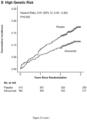
- High genetic risk was defined as patients within the top decile of the distribution of the PRS (>90th PRS percentile). Those below the top decile were defined as lower genetic risk ( ⁇ 90th PRS percentile). This threshold was selected in a post hoc analysis that evaluated high genetic risk thresholds ranging from 50% to 90%, in 10% increments. The PRS as a continuous measure was also evaluated.
- the Illumina Global Screening Array (GSA), v1.0 (GSA-24v1-0_A1) was used to generate microarray genotypes for the genome-wide association study (GWAS). This array contains about 660,000 markers, with an average marker spacing of 4.2 kb.
- Illumina microarray genotyping data QC Individual samples with a call rate ⁇ 90% and genetic variants with a call rate ⁇ 90% or Hardy-Weinberg Equilibrium p-value ⁇ 1x10 -6 were removed from the analysis. In paired samples with IBD ⁇ 0.25, the sample with the lower call rate was removed. Samples were also removed if gender discordance was detected between X-chromosome inferred gender and the gender reported in the clinical database.
- PCA Principal component analysis
- the primary data source for the polygenic risk score comes from a GWAS of CAD risk comprising 9.4 million variants from a meta-analysis of 60,801 CAD cases and 123,504 controls.
- a set of PRS algorithm tuning parameters was evaluated based on their performance in two datasets, UK Biobank (UKB) and DiscovEHR.
- a composite cardiovascular endpoint of myocardial infarction, unstable angina, and ischemic stroke (as defined by ICD-10 codes I21*, I22*, I23*, I24.1, I25.2, I2.0, I63.0), along with self-report codes 20002* (UKB) was used to define case and control status.
- PRS algorithm selection Three approaches for generating polygenic risk scores were tested; candidate SNP models from previous work on PRS benefit in statins, comprising 27 and 57 variants, Pruning and Thresholding (P&T), and LDPred.
- P&T identifies the variant with the smallest p-value in each region and then "clumps" under that variant all other variants in the region with an r 2 value that is larger than the specified r 2 .
- the index variant represents all the variants in the clump (only the index variant is included in the PRS, all other variants are excluded).
- LDPred is a Bayesian approach to PRS development that calculates a posterior mean effect (adjusted effect size) for all variants based on a prior and LD information from a reference panel. Heuristically, the effect sizes generated from LDPred differs from P&T in that LDPred jointly models the effect size and variance of each marker, incorporating the LD structure when shrinking the effect sizes. Adjustment or shrinkage of variant weights is based not only on magnitude of variant association with disease but also linkage disequilibrium (LD) between variants. For both P&T and LDPred approaches, 1000 Genomes phase 3 version 5 data was used for the LD reference panel.
- LD linkage disequilibrium
- Baseline disease and medical history characteristics were analyzed to assess the distribution of cardiovascular risk factors by genetic risk status, high (> percentile threshold) vs lower ( ⁇ percentile threshold). Continuous baseline characteristics were compared using a t-test, and binary or categorical characteristics were tested with a chi-square or Fisher's exact test. Baseline lipids were regressed on age, sex, and ancestry covariates; residuals from the model were transformed with a rank inverse normal transformation (RINT) prior to comparison of genetic risk groups. Change in lipids at 4 months were analyzed similarly, using RINT residuals from a linear regression model adjusting for baseline, age, sex, and ancestry covariates.
- RINT rank inverse normal transformation
- MACE and all secondary end points followed the definitions in the ODYSSEY OUTCOMES trial and an intention-to-treat analysis approach.
- the primary analysis was the time to the first occurrence of any component of the composite primary end point.
- Evaluation of the relationship between the PRS and MACE or other efficacy endpoints was conducted using two different analysis approaches. First, MACE and secondary endpoint risk was evaluated in placebo treated patients, with Cox proportional hazard models. The PRS was modeled as both a continuous and binary (above/below threshold) covariate. Secondly, treatment efficacy was also evaluated using Cox models, stratified by genetically-defined high and lower risk groups.
- the Framingham Recurrent Coronary Heart Disease Risk Score Scores are based on regression coefficients for up to 4-year risk prediction, based on age, log-transformed ratio of total to HDL cholesterol, diabetes status, systolic blood pressure (women) and smoking status (women). Scores were calculated in all ODYSSEY patients and analyzed as both a continuous measure and stratified by median score ( ⁇ median versus ⁇ median). The second risk factor analyses classified patients by very high risk (VHR) categories (as described in Roe et al., Circulation, 2019, 140, 1578-1589 ). VHR were categorized with two sets of criteria.
- VHR very high risk
- the first criteria identified patients with a least one prior ischemic event including ischemic stroke, myocardial infarction, or peripheral artery disease.
- the second set of criteria identified patients with 1 major ASCVD event (the qualifying index ACS event) and at least 2 high-risk conditions, including diabetes mellitus, current smoking, age ⁇ 65 years, history of hypertension, baseline eGFR of ⁇ 15 - ⁇ 60 mL ⁇ min 1 ⁇ 1.73 m -2 , congestive heart failure, revascularization prior to index ACS, or LDL-C ⁇ 100 mg/dL with both statin and ezetimibe use.
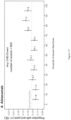
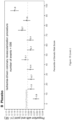
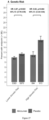
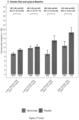
- FIG. 28 shows MACE stratified by genetic risk and baseline Lp(a) taking into consideration VHR category.
- Panel A is stratified by genetic risk, where high genetic risk is PRS >90 percentile; lower genetic risk is PRS ⁇ 90 percentile.
- Panel B is stratified by Lp(a) at baseline (Lp(a) ⁇ 50 mg/dL and Lp(a) ⁇ 50 mg/dL).
- Panel C is stratified by genetic risk and Lp(a) at baseline.
- the PRS also identified a group of high genetic risk patients who had greater benefit from treatment.
- the high genetic risk patients had greater benefit from alirocumab treatment in terms of both absolute and relative reduction of MACE (as well as secondary endpoints) (6.0% absolute risk reduction in MACE compared to 1.5% for the lower genetic risk group, and 37% relative risk reduction in MACE compared to 13% for the lower genetic risk group).
- the present study shows that the PRS can be combined with traditional lipid biomarkers to not only identify individuals at highest risk for MACE, but where the greatest risk reduction may be achieved from treatment.
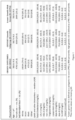
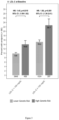
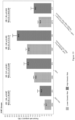
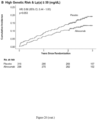
- Lp(a) has been recognized as a major risk factor for coronary artery disease, Lp(a) levels are primarily determined genetically, and inhibition of PCSK9 is currently one of the few therapeutic approaches for lowering Lp(a). Overall in the ODYSSEY study, alirocumab treatment decreased Lp(a) levels by 23.4%. A strong association between high genetic risk and baseline Lp(a) levels was observed in this study at baseline ( Figure 1 ).
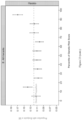
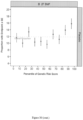
- the PRS in this study was developed using GWAS data from individuals of European ancestry. This analysis of the ODYSSEY OUTCOMES trial applied this PRS to patients from all ancestry groups combined ( Figure 1 ). Additional subgroup analysis was also performed in patients with European ancestry ( Figure 24 ) and the results were consistent with the larger analysis that included patients of all ancestries. While the sample sizes are small for some of the ancestry groups, it was also observed that the reduction in MACE after alirocumab treatment was directionally consistent in high genetic risk patients across all ancestry groups tested ( Figure 12 ). As GWAS data becomes available in more diverse populations, polygenic risk scores will likely improve over time for non-European populations as well.
Landscapes
- Health & Medical Sciences (AREA)
- Life Sciences & Earth Sciences (AREA)
- Chemical & Material Sciences (AREA)
- Engineering & Computer Science (AREA)
- Physics & Mathematics (AREA)
- Organic Chemistry (AREA)
- Proteomics, Peptides & Aminoacids (AREA)
- Bioinformatics & Cheminformatics (AREA)
- General Health & Medical Sciences (AREA)
- Genetics & Genomics (AREA)
- Biophysics (AREA)
- Molecular Biology (AREA)
- Medical Informatics (AREA)
- Biotechnology (AREA)
- Analytical Chemistry (AREA)
- Bioinformatics & Computational Biology (AREA)
- Theoretical Computer Science (AREA)
- Spectroscopy & Molecular Physics (AREA)
- Evolutionary Biology (AREA)
- Biochemistry (AREA)
- Zoology (AREA)
- Wood Science & Technology (AREA)
- Immunology (AREA)
- Data Mining & Analysis (AREA)
- Public Health (AREA)
- Medicinal Chemistry (AREA)
- Microbiology (AREA)
- Pathology (AREA)
- Artificial Intelligence (AREA)
- Evolutionary Computation (AREA)
- Epidemiology (AREA)
- General Engineering & Computer Science (AREA)
- Computer Vision & Pattern Recognition (AREA)
- Software Systems (AREA)
- Databases & Information Systems (AREA)
- Bioethics (AREA)
- Obesity (AREA)
- General Chemical & Material Sciences (AREA)
- Animal Behavior & Ethology (AREA)
- Veterinary Medicine (AREA)
Priority Applications (1)
| Application Number | Priority Date | Filing Date | Title |
|---|---|---|---|
| EP25181054.5A EP4640848A3 (en) | 2019-05-17 | 2020-05-16 | Genome-based methods for reducing cardiovascular risk |
Applications Claiming Priority (3)
| Application Number | Priority Date | Filing Date | Title |
|---|---|---|---|
| US201962849670P | 2019-05-17 | 2019-05-17 | |
| US201962933181P | 2019-11-08 | 2019-11-08 | |
| PCT/US2020/033315 WO2020236670A1 (en) | 2019-05-17 | 2020-05-16 | Genome-based methods for reducing cardiovascular risk |
Related Child Applications (1)
| Application Number | Title | Priority Date | Filing Date |
|---|---|---|---|
| EP25181054.5A Division EP4640848A3 (en) | 2019-05-17 | 2020-05-16 | Genome-based methods for reducing cardiovascular risk |
Publications (2)
| Publication Number | Publication Date |
|---|---|
| EP3969620A1 EP3969620A1 (en) | 2022-03-23 |
| EP3969620B1 true EP3969620B1 (en) | 2025-06-25 |
Family
ID=70978651
Family Applications (2)
| Application Number | Title | Priority Date | Filing Date |
|---|---|---|---|
| EP20730885.9A Active EP3969620B1 (en) | 2019-05-17 | 2020-05-16 | Genome-based methods for reducing cardiovascular risk |
| EP25181054.5A Pending EP4640848A3 (en) | 2019-05-17 | 2020-05-16 | Genome-based methods for reducing cardiovascular risk |
Family Applications After (1)
| Application Number | Title | Priority Date | Filing Date |
|---|---|---|---|
| EP25181054.5A Pending EP4640848A3 (en) | 2019-05-17 | 2020-05-16 | Genome-based methods for reducing cardiovascular risk |
Country Status (6)
| Country | Link |
|---|---|
| US (2) | US12264366B2 (https=) |
| EP (2) | EP3969620B1 (https=) |
| JP (2) | JP2022532423A (https=) |
| CA (1) | CA3139943A1 (https=) |
| MX (1) | MX2021014015A (https=) |
| WO (1) | WO2020236670A1 (https=) |
Families Citing this family (2)
| Publication number | Priority date | Publication date | Assignee | Title |
|---|---|---|---|---|
| CN116171161A (zh) | 2020-08-25 | 2023-05-26 | 雷杰纳荣制药公司 | 用pcsk9和ldlr调节剂治疗败血症 |
| GB2634837A (en) | 2022-06-07 | 2025-04-23 | Scribe Therapeutics Inc | Compositions and methods for the targeting of PCSK9 |
Family Cites Families (20)
| Publication number | Priority date | Publication date | Assignee | Title |
|---|---|---|---|---|
| WO2008057459A2 (en) | 2006-11-07 | 2008-05-15 | Merck & Co., Inc. | Antagonists of pcsk9 |
| EP2158330A2 (en) * | 2007-05-11 | 2010-03-03 | Tufts Medical Center | Polynucleotides associated with age-related macular degeneration and methods for evaluating patient risk |
| JOP20080381B1 (ar) | 2007-08-23 | 2023-03-28 | Amgen Inc | بروتينات مرتبطة بمولدات مضادات تتفاعل مع بروبروتين كونفيرتاز سيتيليزين ككسين من النوع 9 (pcsk9) |
| AR070315A1 (es) | 2008-02-07 | 2010-03-31 | Merck & Co Inc | Anticuerpos 1b20 antagonistas de pcsk9 |
| JP5526122B2 (ja) | 2008-04-18 | 2014-06-18 | クリティカル ケア ダイアグノスティクス インコーポレイテッド | 主要有害心イベントのリスクを予測する方法 |
| JO3672B1 (ar) | 2008-12-15 | 2020-08-27 | Regeneron Pharma | أجسام مضادة بشرية عالية التفاعل الكيماوي بالنسبة لإنزيم سبتيليسين كنفرتيز بروبروتين / كيكسين نوع 9 (pcsk9). |
| CN102596249A (zh) | 2009-10-30 | 2012-07-18 | 默沙东公司 | Ax1和ax189 pcsk9拮抗剂和变体 |
| AR079336A1 (es) | 2009-12-11 | 2012-01-18 | Irm Llc | Antagonistas de la pro-proteina convertasa-subtilisina/quexina tipo 9 (pcsk9) |
| JP5932670B2 (ja) | 2010-03-11 | 2016-06-08 | ライナット ニューロサイエンス コーポレイション | pH依存性の抗原結合を有する抗体 |
| SG192117A1 (en) | 2011-01-28 | 2013-08-30 | Sanofi Sa | Human antibodies to pcsk9 for use in methods of treating particular groups of subjects |
| AR087715A1 (es) | 2011-09-16 | 2014-04-09 | Lilly Co Eli | Anticuerpos anti pcsk9 y usos de los mismos |
| JP2015507205A (ja) * | 2012-02-12 | 2015-03-05 | ビージー メディシン,インコーポレイテッド | 有害事象のリスク因子および予測 |
| US9255154B2 (en) | 2012-05-08 | 2016-02-09 | Alderbio Holdings, Llc | Anti-PCSK9 antibodies and use thereof |
| EP2861624A1 (en) | 2012-06-15 | 2015-04-22 | F. Hoffmann-La Roche AG | Anti-pcsk9 antibodies, formulations, dosing, and methods of use |
| US9540449B2 (en) | 2012-08-13 | 2017-01-10 | Regeneron Pharmaceuticals, Inc. | Anti-PCSK9 antibodies with pH-dependent binding characteristics |
| JP6450679B2 (ja) | 2012-08-21 | 2019-01-09 | クリティカル ケア ダイアグノスティクス インコーポレイテッド | マルチマーカーリスク層別化 |
| CN105473141A (zh) | 2013-03-15 | 2016-04-06 | 实发生物医学公司 | 治疗和/或预防心血管疾病的抗pcsk9化合物和方法 |
| US8883157B1 (en) | 2013-12-17 | 2014-11-11 | Kymab Limited | Targeting rare human PCSK9 variants for cholesterol treatment |
| US10337070B2 (en) * | 2017-01-12 | 2019-07-02 | Cardioforecast Ltd. | Methods and kits for treating cardiovascular disease |
| US20190017119A1 (en) * | 2017-07-12 | 2019-01-17 | The General Hospital Corporation | Genetic Risk Predictor |
-
2020
- 2020-05-16 EP EP20730885.9A patent/EP3969620B1/en active Active
- 2020-05-16 JP JP2021568564A patent/JP2022532423A/ja active Pending
- 2020-05-16 EP EP25181054.5A patent/EP4640848A3/en active Pending
- 2020-05-16 MX MX2021014015A patent/MX2021014015A/es unknown
- 2020-05-16 CA CA3139943A patent/CA3139943A1/en active Pending
- 2020-05-16 US US16/876,030 patent/US12264366B2/en active Active
- 2020-05-16 WO PCT/US2020/033315 patent/WO2020236670A1/en not_active Ceased
-
2025
- 2025-02-26 US US19/064,447 patent/US20250257406A1/en active Pending
- 2025-12-04 JP JP2025229455A patent/JP2026062658A/ja active Pending
Also Published As
| Publication number | Publication date |
|---|---|
| US20210002724A1 (en) | 2021-01-07 |
| EP4640848A2 (en) | 2025-10-29 |
| JP2026062658A (ja) | 2026-04-10 |
| US20250257406A1 (en) | 2025-08-14 |
| US12264366B2 (en) | 2025-04-01 |
| EP3969620A1 (en) | 2022-03-23 |
| MX2021014015A (es) | 2022-02-21 |
| WO2020236670A1 (en) | 2020-11-26 |
| CA3139943A1 (en) | 2020-11-26 |
| EP4640848A3 (en) | 2026-01-14 |
| JP2022532423A (ja) | 2022-07-14 |
Similar Documents
| Publication | Publication Date | Title |
|---|---|---|
| Walsh et al. | Genome-wide association studies of cardiovascular disease | |
| US20250257406A1 (en) | Genome-Based Methods For Reducing Cardiovascular Risk | |
| Taylor et al. | Genome-wide association study of response to methotrexate in early rheumatoid arthritis patients | |
| JP2021072775A (ja) | 染色体相互作用の検出 | |
| Moll et al. | Precision approaches to chronic obstructive pulmonary disease management | |
| Sivapalaratnam et al. | Monocyte gene expression signature of patients with early onset coronary artery disease | |
| Severance et al. | Using a genetic risk score to calculate the optimal age for an individual to undergo coronary artery calcium screening | |
| Miller et al. | Precision medicine approaches to vascular disease: JACC Focus Seminar 2/5 | |
| Sasidhar et al. | Genetics of coronary artery disease–A clinician's perspective | |
| Schneider | Target therapy in SLE | |
| Hildebrandt et al. | The dual pro-inflammatory and bone-protective role of calcitonin gene-related peptide alpha in age-related osteoarthritis | |
| D’Onofrio et al. | Timely escalation to second-line therapies after failure of methotrexate in patients with early rheumatoid arthritis does not reduce the risk of becoming difficult-to-treat | |
| HK40130500A (en) | Genome-based methods for reducing cardiovascular risk | |
| Mueller et al. | Small-RNA sequencing identifies serum microRNAs associated with abnormal electrocardiography findings in patients with Chagas disease | |
| JP7018544B2 (ja) | 心房細動の処置のためのブシンドロールを伴う方法および組成物 | |
| Maruyama et al. | Efficacy of initial combination therapy with anti-SARS-CoV-2 antivirals targeting viral clearance in COVID-19 patients with B-cell lymphoma treated with anti-CD20 antibodies: A retrospective single-centre study in Japan | |
| Maghajothi et al. | A common Matrix metalloproteinase 8 promoter haplotype enhances the risk for hypertension via diminished interactions with nuclear factor kappa B | |
| EP4519878A2 (en) | Methods for identifying shared biological pathways between diseases using mendelian randomization | |
| Ichimura et al. | Inter-individual differences in baseline coagulation activities and their implications for international normalized ratio control during warfarin initiation therapy | |
| Yilmaz et al. | Single-nucleus multiomics in brains from Hispanic individuals reveal APOE-ε4-driven disruption of focal adhesion signaling in the presence of cerebrovascular pathology | |
| EP0939136A1 (en) | Assay for predicting the angiographic response to lipid-lowering therapy in patients | |
| Mangas Rojas et al. | A microRNA Signature for the Diagnosis of Statins Intolerance | |
| Sperinde et al. | Factors Impacting the Immunogenicity of Etrolizumab & Clinical Consequences | |
| Lazarte | Genetic Approaches for the Study of Complex Human Diseases | |
| Inanc | SAT0184 The effect of smoking on response to tumor necrosis factor-alpha inhibitor treatment in ankylosing spondylitis patients: results from the turkbio registry |
Legal Events
| Date | Code | Title | Description |
|---|---|---|---|
| STAA | Information on the status of an ep patent application or granted ep patent |
Free format text: STATUS: UNKNOWN |
|
| STAA | Information on the status of an ep patent application or granted ep patent |
Free format text: STATUS: THE INTERNATIONAL PUBLICATION HAS BEEN MADE |
|
| PUAI | Public reference made under article 153(3) epc to a published international application that has entered the european phase |
Free format text: ORIGINAL CODE: 0009012 |
|
| STAA | Information on the status of an ep patent application or granted ep patent |
Free format text: STATUS: REQUEST FOR EXAMINATION WAS MADE |
|
| 17P | Request for examination filed |
Effective date: 20211216 |
|
| AK | Designated contracting states |
Kind code of ref document: A1 Designated state(s): AL AT BE BG CH CY CZ DE DK EE ES FI FR GB GR HR HU IE IS IT LI LT LU LV MC MK MT NL NO PL PT RO RS SE SI SK SM TR |
|
| DAV | Request for validation of the european patent (deleted) | ||
| DAX | Request for extension of the european patent (deleted) | ||
| REG | Reference to a national code |
Ref country code: HK Ref legal event code: DE Ref document number: 40070651 Country of ref document: HK |
|
| STAA | Information on the status of an ep patent application or granted ep patent |
Free format text: STATUS: EXAMINATION IS IN PROGRESS |
|
| 17Q | First examination report despatched |
Effective date: 20230313 |
|
| GRAP | Despatch of communication of intention to grant a patent |
Free format text: ORIGINAL CODE: EPIDOSNIGR1 |
|
| STAA | Information on the status of an ep patent application or granted ep patent |
Free format text: STATUS: GRANT OF PATENT IS INTENDED |
|
| INTG | Intention to grant announced |
Effective date: 20250130 |
|
| GRAS | Grant fee paid |
Free format text: ORIGINAL CODE: EPIDOSNIGR3 |
|
| GRAA | (expected) grant |
Free format text: ORIGINAL CODE: 0009210 |
|
| STAA | Information on the status of an ep patent application or granted ep patent |
Free format text: STATUS: THE PATENT HAS BEEN GRANTED |
|
| AK | Designated contracting states |
Kind code of ref document: B1 Designated state(s): AL AT BE BG CH CY CZ DE DK EE ES FI FR GB GR HR HU IE IS IT LI LT LU LV MC MK MT NL NO PL PT RO RS SE SI SK SM TR |
|
| REG | Reference to a national code |
Ref country code: GB Ref legal event code: FG4D |
|
| REG | Reference to a national code |
Ref country code: CH Ref legal event code: EP |
|
| P01 | Opt-out of the competence of the unified patent court (upc) registered |
Free format text: CASE NUMBER: APP_24367/2025 Effective date: 20250522 |
|
| REG | Reference to a national code |
Ref country code: DE Ref legal event code: R096 Ref document number: 602020053309 Country of ref document: DE |
|
| REG | Reference to a national code |
Ref country code: CH Ref legal event code: EP |
|
| REG | Reference to a national code |
Ref country code: IE Ref legal event code: FG4D |
|
| REG | Reference to a national code |
Ref country code: NL Ref legal event code: FP |
|
| PG25 | Lapsed in a contracting state [announced via postgrant information from national office to epo] |
Ref country code: FI Free format text: LAPSE BECAUSE OF FAILURE TO SUBMIT A TRANSLATION OF THE DESCRIPTION OR TO PAY THE FEE WITHIN THE PRESCRIBED TIME-LIMIT Effective date: 20250625 |
|
| REG | Reference to a national code |
Ref country code: LT Ref legal event code: MG9D |
|
| PG25 | Lapsed in a contracting state [announced via postgrant information from national office to epo] |
Ref country code: NO Free format text: LAPSE BECAUSE OF FAILURE TO SUBMIT A TRANSLATION OF THE DESCRIPTION OR TO PAY THE FEE WITHIN THE PRESCRIBED TIME-LIMIT Effective date: 20250925 Ref country code: GR Free format text: LAPSE BECAUSE OF FAILURE TO SUBMIT A TRANSLATION OF THE DESCRIPTION OR TO PAY THE FEE WITHIN THE PRESCRIBED TIME-LIMIT Effective date: 20250926 |
|
| PG25 | Lapsed in a contracting state [announced via postgrant information from national office to epo] |
Ref country code: BG Free format text: LAPSE BECAUSE OF FAILURE TO SUBMIT A TRANSLATION OF THE DESCRIPTION OR TO PAY THE FEE WITHIN THE PRESCRIBED TIME-LIMIT Effective date: 20250625 |
|
| PG25 | Lapsed in a contracting state [announced via postgrant information from national office to epo] |
Ref country code: HR Free format text: LAPSE BECAUSE OF FAILURE TO SUBMIT A TRANSLATION OF THE DESCRIPTION OR TO PAY THE FEE WITHIN THE PRESCRIBED TIME-LIMIT Effective date: 20250625 |
|
| PG25 | Lapsed in a contracting state [announced via postgrant information from national office to epo] |
Ref country code: RS Free format text: LAPSE BECAUSE OF FAILURE TO SUBMIT A TRANSLATION OF THE DESCRIPTION OR TO PAY THE FEE WITHIN THE PRESCRIBED TIME-LIMIT Effective date: 20250925 |
|
| PG25 | Lapsed in a contracting state [announced via postgrant information from national office to epo] |
Ref country code: LV Free format text: LAPSE BECAUSE OF FAILURE TO SUBMIT A TRANSLATION OF THE DESCRIPTION OR TO PAY THE FEE WITHIN THE PRESCRIBED TIME-LIMIT Effective date: 20250625 |
|
| PG25 | Lapsed in a contracting state [announced via postgrant information from national office to epo] |
Ref country code: PT Free format text: LAPSE BECAUSE OF FAILURE TO SUBMIT A TRANSLATION OF THE DESCRIPTION OR TO PAY THE FEE WITHIN THE PRESCRIBED TIME-LIMIT Effective date: 20251027 |
|
| REG | Reference to a national code |
Ref country code: AT Ref legal event code: MK05 Ref document number: 1806490 Country of ref document: AT Kind code of ref document: T Effective date: 20250625 |
|
| PG25 | Lapsed in a contracting state [announced via postgrant information from national office to epo] |
Ref country code: IS Free format text: LAPSE BECAUSE OF FAILURE TO SUBMIT A TRANSLATION OF THE DESCRIPTION OR TO PAY THE FEE WITHIN THE PRESCRIBED TIME-LIMIT Effective date: 20251025 |
|
| PG25 | Lapsed in a contracting state [announced via postgrant information from national office to epo] |
Ref country code: AT Free format text: LAPSE BECAUSE OF FAILURE TO SUBMIT A TRANSLATION OF THE DESCRIPTION OR TO PAY THE FEE WITHIN THE PRESCRIBED TIME-LIMIT Effective date: 20250625 Ref country code: SM Free format text: LAPSE BECAUSE OF FAILURE TO SUBMIT A TRANSLATION OF THE DESCRIPTION OR TO PAY THE FEE WITHIN THE PRESCRIBED TIME-LIMIT Effective date: 20250625 |
|
| PG25 | Lapsed in a contracting state [announced via postgrant information from national office to epo] |
Ref country code: CZ Free format text: LAPSE BECAUSE OF FAILURE TO SUBMIT A TRANSLATION OF THE DESCRIPTION OR TO PAY THE FEE WITHIN THE PRESCRIBED TIME-LIMIT Effective date: 20250625 |
|
| PG25 | Lapsed in a contracting state [announced via postgrant information from national office to epo] |
Ref country code: PL Free format text: LAPSE BECAUSE OF FAILURE TO SUBMIT A TRANSLATION OF THE DESCRIPTION OR TO PAY THE FEE WITHIN THE PRESCRIBED TIME-LIMIT Effective date: 20250625 |
|
| PG25 | Lapsed in a contracting state [announced via postgrant information from national office to epo] |
Ref country code: EE Free format text: LAPSE BECAUSE OF FAILURE TO SUBMIT A TRANSLATION OF THE DESCRIPTION OR TO PAY THE FEE WITHIN THE PRESCRIBED TIME-LIMIT Effective date: 20250625 |
|
| PG25 | Lapsed in a contracting state [announced via postgrant information from national office to epo] |
Ref country code: SK Free format text: LAPSE BECAUSE OF FAILURE TO SUBMIT A TRANSLATION OF THE DESCRIPTION OR TO PAY THE FEE WITHIN THE PRESCRIBED TIME-LIMIT Effective date: 20250625 |
|
| PG25 | Lapsed in a contracting state [announced via postgrant information from national office to epo] |
Ref country code: ES Free format text: LAPSE BECAUSE OF FAILURE TO SUBMIT A TRANSLATION OF THE DESCRIPTION OR TO PAY THE FEE WITHIN THE PRESCRIBED TIME-LIMIT Effective date: 20250625 |
|
| PG25 | Lapsed in a contracting state [announced via postgrant information from national office to epo] |
Ref country code: DK Free format text: LAPSE BECAUSE OF FAILURE TO SUBMIT A TRANSLATION OF THE DESCRIPTION OR TO PAY THE FEE WITHIN THE PRESCRIBED TIME-LIMIT Effective date: 20250625 |
|
| PG25 | Lapsed in a contracting state [announced via postgrant information from national office to epo] |
Ref country code: IT Free format text: LAPSE BECAUSE OF FAILURE TO SUBMIT A TRANSLATION OF THE DESCRIPTION OR TO PAY THE FEE WITHIN THE PRESCRIBED TIME-LIMIT Effective date: 20250625 |
|
| PLBE | No opposition filed within time limit |
Free format text: ORIGINAL CODE: 0009261 |
|
| STAA | Information on the status of an ep patent application or granted ep patent |
Free format text: STATUS: NO OPPOSITION FILED WITHIN TIME LIMIT |