EP3961900B1 - Hybride kondensatorbank für eine leistungswandleranordnung - Google Patents
Hybride kondensatorbank für eine leistungswandleranordnung Download PDFInfo
- Publication number
- EP3961900B1 EP3961900B1 EP21192798.3A EP21192798A EP3961900B1 EP 3961900 B1 EP3961900 B1 EP 3961900B1 EP 21192798 A EP21192798 A EP 21192798A EP 3961900 B1 EP3961900 B1 EP 3961900B1
- Authority
- EP
- European Patent Office
- Prior art keywords
- capacitors
- power
- conversion assembly
- converter
- power conversion
- Prior art date
- Legal status (The legal status is an assumption and is not a legal conclusion. Google has not performed a legal analysis and makes no representation as to the accuracy of the status listed.)
- Active
Links
Images




Classifications
-
- H—ELECTRICITY
- H02—GENERATION; CONVERSION OR DISTRIBUTION OF ELECTRIC POWER
- H02M—APPARATUS FOR CONVERSION BETWEEN AC AND AC, BETWEEN AC AND DC, OR BETWEEN DC AND DC, AND FOR USE WITH MAINS OR SIMILAR POWER SUPPLY SYSTEMS; CONVERSION OF DC OR AC INPUT POWER INTO SURGE OUTPUT POWER; CONTROL OR REGULATION THEREOF
- H02M5/00—Conversion of AC power input into AC power output, e.g. for change of voltage, for change of frequency, for change of number of phases
- H02M5/40—Conversion of AC power input into AC power output, e.g. for change of voltage, for change of frequency, for change of number of phases with intermediate conversion into DC
- H02M5/42—Conversion of AC power input into AC power output, e.g. for change of voltage, for change of frequency, for change of number of phases with intermediate conversion into DC by static converters
- H02M5/44—Conversion of AC power input into AC power output, e.g. for change of voltage, for change of frequency, for change of number of phases with intermediate conversion into DC by static converters using discharge tubes or semiconductor devices to convert the intermediate DC into AC
- H02M5/453—Conversion of AC power input into AC power output, e.g. for change of voltage, for change of frequency, for change of number of phases with intermediate conversion into DC by static converters using discharge tubes or semiconductor devices to convert the intermediate DC into AC using devices of a triode or transistor type requiring continuous application of a control signal
- H02M5/458—Conversion of AC power input into AC power output, e.g. for change of voltage, for change of frequency, for change of number of phases with intermediate conversion into DC by static converters using discharge tubes or semiconductor devices to convert the intermediate DC into AC using devices of a triode or transistor type requiring continuous application of a control signal using semiconductor devices only
- H02M5/4585—Conversion of AC power input into AC power output, e.g. for change of voltage, for change of frequency, for change of number of phases with intermediate conversion into DC by static converters using discharge tubes or semiconductor devices to convert the intermediate DC into AC using devices of a triode or transistor type requiring continuous application of a control signal using semiconductor devices only having a rectifier with controlled elements
-
- F—MECHANICAL ENGINEERING; LIGHTING; HEATING; WEAPONS; BLASTING
- F03—MACHINES OR ENGINES FOR LIQUIDS; WIND, SPRING, OR WEIGHT MOTORS; PRODUCING MECHANICAL POWER OR A REACTIVE PROPULSIVE THRUST, NOT OTHERWISE PROVIDED FOR
- F03D—WIND MOTORS
- F03D9/00—Adaptations of wind motors for special use; Combinations of wind motors with apparatus driven thereby; Wind motors specially adapted for installation in particular locations
- F03D9/10—Combinations of wind motors with apparatus storing energy
- F03D9/11—Combinations of wind motors with apparatus storing energy storing electrical energy
-
- H—ELECTRICITY
- H02—GENERATION; CONVERSION OR DISTRIBUTION OF ELECTRIC POWER
- H02J—ELECTRIC POWER NETWORKS; CIRCUIT ARRANGEMENTS OR SYSTEMS FOR SUPPLYING OR DISTRIBUTING ELECTRIC POWER; SYSTEMS FOR STORING ELECTRIC ENERGY
- H02J3/00—Circuit arrangements for AC mains or AC distribution networks
- H02J3/38—Arrangements for feeding a single network from two or more generators or sources in parallel; Arrangements for feeding already energised networks from additional generators or sources in parallel
- H02J3/381—Dispersed generators
-
- H—ELECTRICITY
- H02—GENERATION; CONVERSION OR DISTRIBUTION OF ELECTRIC POWER
- H02M—APPARATUS FOR CONVERSION BETWEEN AC AND AC, BETWEEN AC AND DC, OR BETWEEN DC AND DC, AND FOR USE WITH MAINS OR SIMILAR POWER SUPPLY SYSTEMS; CONVERSION OF DC OR AC INPUT POWER INTO SURGE OUTPUT POWER; CONTROL OR REGULATION THEREOF
- H02M7/00—Conversion of AC power input into DC power output; Conversion of DC power input into AC power output
- H02M7/003—Constructional details, e.g. physical layout, assembly, wiring or busbar connections
-
- H—ELECTRICITY
- H02—GENERATION; CONVERSION OR DISTRIBUTION OF ELECTRIC POWER
- H02J—ELECTRIC POWER NETWORKS; CIRCUIT ARRANGEMENTS OR SYSTEMS FOR SUPPLYING OR DISTRIBUTING ELECTRIC POWER; SYSTEMS FOR STORING ELECTRIC ENERGY
- H02J2101/00—Supply or distribution of decentralised, dispersed or local electric power generation
- H02J2101/20—Dispersed power generation using renewable energy sources
- H02J2101/28—Wind energy
-
- H—ELECTRICITY
- H02—GENERATION; CONVERSION OR DISTRIBUTION OF ELECTRIC POWER
- H02M—APPARATUS FOR CONVERSION BETWEEN AC AND AC, BETWEEN AC AND DC, OR BETWEEN DC AND DC, AND FOR USE WITH MAINS OR SIMILAR POWER SUPPLY SYSTEMS; CONVERSION OF DC OR AC INPUT POWER INTO SURGE OUTPUT POWER; CONTROL OR REGULATION THEREOF
- H02M1/00—Details of apparatus for conversion
- H02M1/14—Arrangements for reducing ripples from DC input or output
-
- Y—GENERAL TAGGING OF NEW TECHNOLOGICAL DEVELOPMENTS; GENERAL TAGGING OF CROSS-SECTIONAL TECHNOLOGIES SPANNING OVER SEVERAL SECTIONS OF THE IPC; TECHNICAL SUBJECTS COVERED BY FORMER USPC CROSS-REFERENCE ART COLLECTIONS [XRACs] AND DIGESTS
- Y02—TECHNOLOGIES OR APPLICATIONS FOR MITIGATION OR ADAPTATION AGAINST CLIMATE CHANGE
- Y02E—REDUCTION OF GREENHOUSE GAS [GHG] EMISSIONS, RELATED TO ENERGY GENERATION, TRANSMISSION OR DISTRIBUTION
- Y02E10/00—Energy generation through renewable energy sources
- Y02E10/70—Wind energy
- Y02E10/72—Wind turbines with rotation axis in wind direction
-
- Y—GENERAL TAGGING OF NEW TECHNOLOGICAL DEVELOPMENTS; GENERAL TAGGING OF CROSS-SECTIONAL TECHNOLOGIES SPANNING OVER SEVERAL SECTIONS OF THE IPC; TECHNICAL SUBJECTS COVERED BY FORMER USPC CROSS-REFERENCE ART COLLECTIONS [XRACs] AND DIGESTS
- Y02—TECHNOLOGIES OR APPLICATIONS FOR MITIGATION OR ADAPTATION AGAINST CLIMATE CHANGE
- Y02E—REDUCTION OF GREENHOUSE GAS [GHG] EMISSIONS, RELATED TO ENERGY GENERATION, TRANSMISSION OR DISTRIBUTION
- Y02E10/00—Energy generation through renewable energy sources
- Y02E10/70—Wind energy
- Y02E10/76—Power conversion electric or electronic aspects
-
- Y—GENERAL TAGGING OF NEW TECHNOLOGICAL DEVELOPMENTS; GENERAL TAGGING OF CROSS-SECTIONAL TECHNOLOGIES SPANNING OVER SEVERAL SECTIONS OF THE IPC; TECHNICAL SUBJECTS COVERED BY FORMER USPC CROSS-REFERENCE ART COLLECTIONS [XRACs] AND DIGESTS
- Y02—TECHNOLOGIES OR APPLICATIONS FOR MITIGATION OR ADAPTATION AGAINST CLIMATE CHANGE
- Y02E—REDUCTION OF GREENHOUSE GAS [GHG] EMISSIONS, RELATED TO ENERGY GENERATION, TRANSMISSION OR DISTRIBUTION
- Y02E70/00—Other energy conversion or management systems reducing GHG emissions
- Y02E70/30—Systems combining energy storage with energy generation of non-fossil origin
Definitions
- the present disclosure relates in general to power conversion assemblies, and more particularly to a hybrid capacitor bank for a power conversion assembly.
- a modem wind turbine typically includes a tower, a generator, a gearbox, a nacelle, and one or more rotor blades.
- the nacelle includes a rotor assembly coupled to the gearbox and to the generator.
- the rotor assembly and the gearbox are mounted on a bedplate support frame located within the nacelle.
- the one or more rotor blades capture kinetic energy of wind using known airfoil principles.
- the rotor blades transmit the kinetic energy in the form of rotational energy so as to turn a shaft coupling the rotor blades to a gearbox, or if a gearbox is not used, directly to the generator.
- the generator then converts the mechanical energy to electrical energy and the electrical energy may be transmitted to a power conversion assembly and/or a transformer housed within the tower and subsequently deployed to a utility grid.
- Modern wind power generation systems typically take the form of a wind farm having multiple such wind turbine generators that are operable to supply power to a transmission system providing power to an electrical grid.
- the power conversion assembly may include, for example, AC/AC voltage conversion, that is accomplished using a rotor side converter and a line side converter.
- the rotor side converter and the line side converter may be coupled via a DC link across which may include a DC link capacitor or capacitor bank.
- AC/AC conversion generally includes converting one AC supply to DC, then back to AC of a different voltage or frequency.
- the DC link between the two must remain stable for the second converter to successfully perform its function. Therefore, the capacitance of the DC link capacitance is used to provide a stabilizing force to maintain the DC link voltage within margins that the machine can function.
- the quantity of the capacitance scales with the power rating of the device, as more incoming current can shift the DC link more quickly, so more capacitance is required to maintain the DC link in a stable condition.
- Conventionally, a single type of capacitor has been used in DC link capacitor banks.
- the art is continuously seeking new and improved systems and methods that decrease the cost and volume of the power conversion assembly, while also providing enough capacitance for the DC link to remain stable.
- the present disclosure is directed to systems and methods that incorporate different types of capacitors in a configuration that highlights the primary benefits of each type, while also mitigating their respective weaknesses.
- the present disclosure is directed to a power conversion assembly.
- the power conversion assembly includes a power converter having a plurality of switching devices, a power source electrically coupled to the power converter, and a direct current (DC) filter circuit bridging the power converter and the power source.
- the DC filter circuit includes a DC link having a positive rail, a negative rail, and a capacitor bank bridging the power converter and the power source.
- the capacitor bank is configured for maintaining a voltage of the DC link within a certain range.
- the capacitor bank includes a plurality of capacitors coupled to the positive rail and the negative rail.
- the plurality of capacitors includes, at least, a first set of capacitors being a first type of capacitors and a second set of capacitors being a different, second type of capacitors.
- each capacitor in the first set of capacitors is positioned closer to a respective switching device of the plurality of switching devices than a corresponding capacitor of the second set of capacitors to minimize impedance between each capacitor in the first set of capacitors and the respective switching device such that a majority of ripple current from the plurality of switching devices passes through the first set of capacitors.
- the power converter may be an AC-DC converter or a DC-AC converter. In another embodiment, the power converter may be a multi-level power converter. Further, in an embodiment, the plurality of switching devices may include one or more Insulated Gated Bipolar Transistors and/or one or more Silicon Carbide Metal Oxide Semiconductor Field Effect Transistors (Sic MOSFET).
- Insulated Gated Bipolar Transistors and/or one or more Silicon Carbide Metal Oxide Semiconductor Field Effect Transistors (Sic MOSFET).
- the first type of capacitors may be film capacitors, whereas the second type of capacitors may include electrolytic capacitors.
- the electrolytic capacitors have a higher capacitance than the film capacitors or vice versa.
- the electrolytic capacitors are connected in parallel with the film capacitors.
- the electrolytic capacitors may be integral within the DC filter circuit.
- the electrolytic capacitors may be external to the DC filter circuit.
- the electrolytic capacitors may be placed in a separate box apart from the film capacitors or the electrolytic capacitors are more electrically removed from the DC filter circuit via physical positioning relative to the film capacitors.
- the power source may be an converter, an inverter, or a DC energy source.
- the DC energy source may include a battery, a solar panel, or a fuel cell.
- the power source may also be coupled to a generator and/or a motor.
- the power conversion assembly may be part of a wind turbine power system, a solar power system, a hydropower system, a tidal power system, a fuel cell power system, an energy storage power system, or a hybrid power system.
- the power conversion assembly may be part of the wind turbine power system.
- the power converter may be a line side converter of the wind turbine power system and the power source may be a rotor side converter of the wind turbine power system.
- the present disclosure is directed to a wind turbine power system.
- the wind turbine power system includes a rotor having a rotatable hub with at least one rotor blade mounted thereto, a generator coupled to the rotor, and a power conversion assembly.
- the power conversion assembly includes a line side converter, a rotor side converter, and a direct current (DC) filter circuit bridging the line side converter and the rotor side converter.
- the line side converter includes a plurality of switching devices.
- the DC filter circuit includes a DC link having a positive rail, a negative rail, and a capacitor bank bridging the line side converter and a rotor side converter.
- the capacitor bank is configured for maintaining a voltage of the DC link within a certain range.
- the capacitor bank includes a plurality of capacitors coupled to the positive rail and the negative rail.
- the plurality of capacitors includes, at least, a first set of capacitors being a first type of capacitors connected in parallel with a second set of capacitors being a different, second type of capacitors. Further, each capacitor in the first set of capacitors is positioned closer to a respective switching device of the plurality of switching devices than a corresponding capacitor of the second set of capacitors to minimize impedance between each capacitor in the first set of capacitors and the respective switching device such that a majority of ripple current from the plurality of switching devices passes through the first set of capacitors.
- the wind turbine power system may also include any of the additional features described herein.
- Approximating language is applied to modify any quantitative representation that could permissibly vary without resulting in a change in the basic function to which it is related. Accordingly, a value modified by a term or terms, such as “about”, “approximately”, and “substantially”, are not to be limited to the precise value specified. In at least some instances, the approximating language may correspond to the precision of an instrument for measuring the value, or the precision of the methods or machines for constructing or manufacturing the components and/or systems. For example, the approximating language may refer to being within a 10 percent margin.
- a first type of capacitors such as film capacitors
- a first type of capacitors may be placed as close to the switching devices of a power converter of the power conversion assembly as possible so that there is very low impedance between these capacitors and the devices. This positioning will ensure that most of the high frequency ripple current caused by the semiconductor switching events will pass through these capacitors.
- these low impedance capacitors also have a benefit of reducing stress on the semiconductors, while also contributing at least some capacitance.
- the power conversion assembly includes a different, second type of capacitors, such as electrolytic capacitors.
- electrolytic capacitors the impedance between the bank of electrolytic capacitors and the switching devices reduces the high frequency ripple that these capacitors experience, so the electrolytic capacitors are not stressed, which would reduce their lifetime.
- the electrolytic capacitors are also configured to provide the bulk capacitance to ensure control stability and contribute some ripple currents capability.
- the hybrid capacitor bank reduces the total volume of capacitors required. This is especially advantageous is a three- or higher-level power converter because the difference between the minimum capacitors for control stability is much lower than the minimum electrolytic capacitors to carry ripple current.
- the capacitor bank of the present disclosure provides cost savings by incorporating film capacitors because the cost of a hybrid capacitor bank is lower than the cost of a purely electrolytic bank with required capacitance value and ripple current capability.
- the film capacitors perform the function of a low impedance snubber capacitor on the switching devices to reduce voltage stress and thus improve lifetime expectations of the semiconductor devices without having to purchase another dedicated capacitor.
- FIG. 1 illustrates a perspective view of one embodiment of a wind turbine 100 according to the present disclosure.
- the wind turbine 100 generally includes a tower 102 extending from a support surface 104, a nacelle 106, mounted on the tower 102, and a rotor 108 coupled to the nacelle 106.
- the rotor 108 includes a rotatable hub 110 and at least one rotor blade 112 coupled to and extending outwardly from the hub 110.
- the rotor 108 includes three rotor blades 112.
- the rotor 108 may include more or less than three rotor blades 112.
- Each rotor blade 112 may be spaced about the hub 110 to facilitate rotating the rotor 108 to enable kinetic energy to be transferred from the wind into usable mechanical energy, and subsequently, electrical energy.
- the hub 110 may be rotatably coupled to an electric generator 118 ( FIG. 2 ) of an electrical system 150 positioned within the nacelle 106 to permit electrical energy to be produced.
- the wind turbine 100 may also include a controller 200 centralized within the nacelle 106.
- the controller 200 may be located within any other component of the wind turbine 100 or at a location outside the wind turbine.
- the controller 200 may be communicatively coupled to any number of the components of the wind turbine 100 in order to control the components.
- the controller 200 may include a computer or other suitable processing unit.
- the controller 200 may include suitable computer-readable instructions that, when implemented, configure the controller 200 to perform various different functions, such as receiving, transmitting and/or executing wind turbine control signals.
- the generator 118 may be coupled to the rotor 108 for producing electrical power from the rotational energy generated by the rotor 108.
- the rotor 108 may include a rotor shaft 122 coupled to the hub 110 for rotation therewith.
- the rotor shaft 122 may be rotatably supported by a main bearing 144.
- the rotor shaft 122 may, in turn, be rotatably coupled to a high-speed shaft 124 of the generator 118 through an optional gearbox 126 connected to a bedplate support frame 136 by one or more torque arms 142.
- the rotor shaft 122 may provide a low-speed, high-torque input to the gearbox 126 in response to rotation of the rotor blades 112 and the hub 110.
- the gearbox 126 may then be configured with a plurality of gears 148 to convert the low-speed, high-torque input to a high-speed, low-torque output to drive the high-speed shaft 124 and, thus, the generator 118.
- the gearbox 126 may be configured with multiple gear ratios so as to produce varying rotational speeds of the high-speed shaft for a given low-speed input, or vice versa.
- Each rotor blade 112 may also include a pitch control mechanism 120 configured to rotate the rotor blade 112 about its pitch axis 116.
- Each pitch control mechanism 120 may include a pitch drive motor 128 (e.g., any suitable electric, hydraulic, or pneumatic motor), a pitch drive gearbox 130, and a pitch drive pinion 132.
- the pitch drive motor 128 may be coupled to the pitch drive gearbox 130 so that the pitch drive motor 128 imparts mechanical force to the pitch drive gearbox 130.
- the pitch drive gearbox 130 may be coupled to the pitch drive pinion 132 for rotation therewith.
- the pitch drive pinion 132 may, in turn, be in rotational engagement with a pitch bearing 134 coupled between the hub 110 and a corresponding rotor blade 112 such that rotation of the pitch drive pinion 132 causes rotation of the pitch bearing 134.
- rotation of the pitch drive motor 128 drives the pitch drive gearbox 130 and the pitch drive pinion 132, thereby rotating the pitch bearing 134 and the rotor blade(s) 112 about the pitch axis 116.
- the wind turbine 100 may include one or more yaw drive mechanisms 138 communicatively coupled to the controller 200, with each yaw drive mechanism(s) 138 being configured to change the angle of the nacelle 106 relative to the wind (e.g., by engaging a yaw bearing 140 of the wind turbine 100).
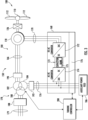
- the generator 118 may be a doubly-fed induction generator (DFIG).
- the generator 118 may be coupled to a stator bus 166 and a power conversion assembly 168 via a rotor bus 170.
- the stator bus 166 may provide an output multiphase power (e.g. three-phase power) from a stator of the generator 118
- the rotor bus 170 may provide an output multiphase power (e.g. three-phase power) of the rotor of the generator 118.
- the power conversion assembly 168 may include a rotor side converter 172 and a line side converter 174.
- the generator 118 may be coupled to the rotor side converter 172 via the rotor bus 170.
- the rotor side converter 172 may be coupled to the line side converter 174 via a DC link 173 across which may be a capacitance bank 175, which is described in more detail with respect to FIGS. 5-9 .
- the line side converter may, in turn, be coupled to a line side bus 176.
- the rotor side converter 172 and the line side converter 174 may be configured for normal operating mode in a three-phase, pulse width modulation (PWM) arrangement using insulated gate bipolar transistors (IGBTs) as switching devices.
- IGBTs insulated gate bipolar transistors
- Other suitable switching devices may be used, such as insulated gate commuted thyristors, MOSFETs, bipolar transistors, silicone controlled rectifier's, and/or other suitable switching devices.
- the power conversion assembly 168 may be controlled via a converter controller 202.
- the converter controller 202 may send control commands to the rotor side converter 172 and the line side converter 174 to control the modulation of switching elements used in the power conversion assembly 168 to establish a desired generator torque setpoint and/or power output.
- the converter controller 202 may also be communicatively coupled to the turbine controller 200.
- the electrical system 150 may, in an embodiment, include a transformer 178 coupling the wind turbine 100 to an electrical grid 179.
- the transformer 178 may, in an embodiment, be a three-winding transformer which includes a high voltage (e.g. greater than 12 KVAC) primary winding 180.
- the high voltage primary winding 180 may be coupled to the electrical grid 179.
- the transformer 178 may also include a medium voltage (e.g. 6 KVAC) secondary winding 182 coupled to the stator bus 166 and a low voltage (e.g. 575 VAC, 690 VAC, etc.) auxiliary winding 184 coupled to the line bus 176.
- the transformer 178 can be a three-winding transformer as depicted, or alternatively, may be a two-winding transformer having only a primary winding 180 and a secondary winding 182; may be a four-winding transformer having a primary winding 180, a secondary winding 182, and auxiliary winding 184, and an additional auxiliary winding; or may have any other suitable number of windings.
- the electrical system 150 may include an auxiliary power feed 186 coupled to the output of the power conversion assembly 168.
- the auxiliary power feed 186 may act as a power source for various components of the wind turbine system 100.
- the auxiliary power feed 186 may power fans, pumps, motors, and other suitable components of the wind turbine system 100.
- the electrical system 150 may also include various circuit breakers, fuses, contactors, and other devices to control and/or protect the various components of the electrical system 150.
- the electrical system 150 may, in an embodiment, include a grid circuit breaker 188, a stator bus circuit breaker 190, and/or a line bus circuit breaker 192.
- the circuit breaker(s) 188, 190, 192 of the electrical system 150 may connect or disconnect corresponding components of the electrical system 150 when a condition of the electrical system 150 approaches an operational threshold of the electrical system 150.
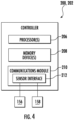
- the controller 200, 202 may include one or more processor(s) 206 and associated memory device(s) 208 configured to perform a variety of computer-implemented functions (e.g., performing the methods, steps, calculations and the like and storing relevant data as disclosed herein). Additionally, the controller 200, 202, may also include a communications module 210 to facilitate communications between the controller 200, 202, and the various components of the wind turbine 100.
- the controller 200, 202 may include one or more processor(s) 206 and associated memory device(s) 208 configured to perform a variety of computer-implemented functions (e.g., performing the methods, steps, calculations and the like and storing relevant data as disclosed herein).
- the controller 200, 202 may also include a communications module 210 to facilitate communications between the controller 200, 202, and the various components of the wind turbine 100.
- the communications module 210 may include a sensor interface 212 (e.g., one or more analog-to-digital converters) to permit signals transmitted from various sensor(s) 156, 158 to be converted into signals that can be understood and processed by the processors 206.
- the sensor(s) 156, 158 may be communicatively coupled to the communications module 210 using any suitable means.
- the sensors 156, 158 are coupled to the sensor interface 212 via a wired connection.
- the sensors 156, 158 may be coupled to the sensor interface 212 via a wireless connection, such as by using any suitable wireless communications protocol known in the art.
- the communications module 210 may also be operably coupled to an operating state control module 214 configured to change at least one wind turbine operating state.
- the term "processor” refers not only to integrated circuits referred to in the art as being included in a computer, but also refers to a controller, a microcontroller, a microcomputer, a programmable logic controller (PLC), an application specific integrated circuit, and other programmable circuits.
- the memory device(s) 208 may generally comprise memory element(s) including, but not limited to, computer readable medium (e.g., random access memory (RAM)), computer readable non-volatile medium (e.g., a flash memory), a floppy disk, a compact disc-read only memory (CD-ROM), a magneto-optical disk (MOD), a digital versatile disc (DVD) and/or other suitable memory elements.
- RAM random access memory
- CD-ROM compact disc-read only memory
- MOD magneto-optical disk
- DVD digital versatile disc
- Such memory device(s) 208 may generally be configured to store suitable computer-readable instructions that, when implemented by the processor(s) 206, configure the controller 200, 202 to perform various functions including, but not limited to, detecting an anonymous operational event and initiating an enhanced braking mode for the wind turbine 100 as described herein, as well as various other suitable computer-implemented functions.
- FIGS. 5-9 schematic diagrams of various embodiments of a power conversion assembly 300 having a capacitor bank 302 according to the present disclosure are illustrated.
- the power conversion assembly 300 may be part of a wind turbine power system 100.
- FIG. 5 illustrates a power conversion assembly 300 similar to the power conversion assembly 168 of the wind turbine power system of FIG. 3 .
- the capacitor bank 302 of the present disclosure may be used with any three-phase variable or fixed AC supply or power grid, represented as element 305 in FIGS. 5-9 .
- the power conversion assembly 300 described herein may be utilized with a solar power system, a hydropower system, a tidal power system, a fuel cell power system, an energy storage power system, or a hybrid power system.
- the capacitor bank 302 can be utilized with any power converter/inverter 304 electrically coupled with any suitable power source 308.
- the power converter 304 may be an AC-DC converter or a DC-AC converter, as well as any two-level or any higher multi-level power converter with neutral-point-clamped (NPC), active neutral-point-clamped (ANPC), T-type NPC or Cascaded H-bridges or flying capacitor configurations).
- the power source 308 may be an converter, an inverter, or a DC energy source.
- the power source 308 corresponds to a converter/inverter 315.
- the power converter 304 may be the line side converter 174, whereas the power source 308 may be the rotor side converter 172.
- the power source 308 may correspond to a DC energy source 317.
- the DC energy source 317 may include a battery/battery-powered source, a solar panel, a fuel cell, a wind power source, or combinations thereof.
- the power source 308 may also be coupled to a generator and/or a motor, as shown at 328.
- the generator/motor 328 may be a wind source, a tidal/hydro source, a fuel cell, and/or any other power conversion application/load, such as marine, healthcare, automation, and/or avionics applications.
- the power converter 304 described herein may include any suitable switching devices 306, such as semiconductor switches.
- the switching elements 306 may include one or more Insulated Gated Bipolar Transistors and/or one or more Silicon Carbide Metal Oxide Semiconductor Field Effect Transistors (Sic MOSFET).
- the power conversion assembly 300 may also include a direct current (DC) filter circuit 210 bridging the power converter 306 and the power source 308.
- DC direct current
- the DC filter circuit 310 includes a DC link 312 having a positive rail 314 and a negative rail 316, such that the capacitor bank 302 bridges the power converter 306 and the power source 308.
- the capacitor bank 302 is configured for maintaining a voltage of the DC link 312 within a certain range.
- the capacitor bank 302 includes a plurality of capacitors 318 coupled to the positive rail 314 and the negative rail 316. More specifically, as shown, the plurality of capacitors 318 includes, at least, a first set 320 of capacitors being a first type of capacitors and a second set 322 of capacitors being a different, second type of capacitors.
- the first type of capacitors 320 may be film capacitors, whereas the second type of capacitors 322 may include electrolytic capacitors.
- the electrolytic capacitors 322 may have a higher capacitance than the film capacitors 320.
- the electrolytic capacitors 322 may be connected in parallel with the film capacitors 320.
- the electrolytic capacitors 322 may be integral within the DC filter circuit 310.
- the electrolytic capacitors 322 may be external to the DC filter circuit 310.
- the electrolytic capacitors 322 may be placed in a separate box 324 apart from the film capacitors 320.
- the electrolytic capacitors 322 may be more electrically removed from the DC filter circuit 310, e.g. via any suitable physical positioning relative to the film capacitors 320.
- each capacitor 320 in the first set 320 of capacitors is positioned closer to a respective switching device 306 of the plurality of switching devices than a corresponding capacitor 322 of the second set 322 of capacitors to minimize impedance between each capacitor 320 in the first set of capacitors and the respective switching device 306.
- This positioning/arrangement ensures that the majority of the high frequency ripple current caused by the semiconductor switching events 306 passes through the film capacitors 320.
- these low impedance capacitors 320 also reduce stress on the switching device 306, while contributing some overall capacitance.
- the electrolytic capacitors 322 are coupled thereto. Accordingly, the impedance provided by the film capacitors 320 (and also between the electrolytic capacitors 322 and the switching devices 306 is configured to reduce the high frequency ripple current that the electrolytic capacitors 322 experience, such that the electrolytic capacitors 322 are not unduly stressed, thereby increasing their lifetime. Moreover, the electrolytic capacitors 322 are configured to provide the bulk capacitance to ensure control stability and contribute some ripple currents capability.
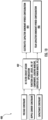
- the system 400 may include a DC link circuit design optimization function 402 that determines an electrolytic capacitor dominant hybrid configuration 404 and/or a film capacitor dominant hybrid configuration 406. More specifically, as shown, the DC link filter circuit design optimization function 402 receives one or more parameters (such as cost, power loss, the number of components, the loading margins of the capacitors, expected life, and/or the power density) and determines the electrolytic and film capacitor dominant hybrid configurations 404, 406, respectively, by adhering to one or more design constraints (e.g. voltage, ripple current capability, and/or capacitance).
- one or more parameters such as cost, power loss, the number of components, the loading margins of the capacitors, expected life, and/or the power density
- design constraints e.g. voltage, ripple current capability, and/or capacitance
Landscapes
- Engineering & Computer Science (AREA)
- Power Engineering (AREA)
- Life Sciences & Earth Sciences (AREA)
- Sustainable Development (AREA)
- Sustainable Energy (AREA)
- Chemical & Material Sciences (AREA)
- Combustion & Propulsion (AREA)
- Mechanical Engineering (AREA)
- General Engineering & Computer Science (AREA)
- Inverter Devices (AREA)
- Dc-Dc Converters (AREA)
Claims (12)
- Leistungsumwandlungsbaugruppe (300), umfassend:einen Leistungswandler (174, 304) mit einer Vielzahl von Schaltvorrichtungen (306);eine Stromquelle (172, 308), die elektrisch mit dem Leistungswandler (174, 304) verbunden ist; undeine Schaltung, die den Leistungswandler (174, 304) und die Stromquelle (172, 308) überbrückt, wobei die Schaltung eine Gleichstrom-Verbindung (173, 312), DC-Verbindung, umfasst, die eine positive Schiene (314), eine negative Schiene (316) und eine Kondensatorbank (302) umfasst, die den Leistungswandler (174, 304) und die Stromquelle (172, 308) verbindet, wobei die Kondensatorbank (302) so konfiguriert ist, dass sie eine Spannung der DC-Verbindung (173, 312) innerhalb eines bestimmten Bereichs zu halten, wobei die Kondensatorbank (302) eine Vielzahl von Kondensatoren (318) umfasst, die mit der positiven Schiene (314) und der negativen Schiene (316) gekoppelt sind, wobei die Vielzahl von Kondensatoren (318) einen ersten Satz (320) von Kondensatoren, der ein erster Typ von Kondensatoren ist, und einen zweiten Satz (322) von Kondensatoren, der ein anderer, zweiter Typ von Kondensatoren ist, umfasst,wobei jeder Kondensator in dem ersten Satz (320) von Kondensatoren näher an einer jeweiligen Schaltvorrichtung (306) der Vielzahl von Schaltvorrichtungen positioniert ist als ein entsprechender Kondensator des zweiten Satzes (322) von Kondensatoren, um die Impedanz zwischen jedem Kondensator in dem ersten Satz (320) von Kondensatoren und der jeweiligen Schaltvorrichtung (306) zu minimieren,wobei der erste Typ von Kondensatoren (320) Folienkondensatoren und der zweite Typ von Kondensatoren (322) Elektrolytkondensatoren sind,dadurch gekennzeichnet, dass der erste Satz (320) von Kondensatoren und die jeweiligen Schaltvorrichtungen (306) entlang einer Seite einer ebenen Sammelschiene (326) angeordnet sind, und die entsprechenden Kondensatoren des zweiten Satzes (322) von Kondensatoren entlang der gegenüberliegenden Seite der ebenen Sammelschiene (326) angeordnet sind, wobei jede jeweilige Schaltvorrichtung (306) und jeder Kondensator des ersten Satzes (320) eine ebene Konfiguration senkrecht zu der Sammelschiene (326) hat, und wobei jeder Kondensator des ersten Satzes (320) parallel und benachbart zu seiner jeweiligen Schaltvorrichtung (306) ist.
- Leistungsumwandlungsbaugruppe (300) nach Anspruch 1, wobei der Leistungswandler (174, 304) mindestens einen AC-DC-Wandler oder einen DC-AC-Wandler umfasst.
- Leistungsumwandlungsanordnung (300) nach Anspruch 1 oder 2, wobei der Leistungswandler (174, 304) einen Mehrstufen-Leistungswandler (174, 304) umfasst.
- Leistungsumwandlungsbaugruppe (300) nach einem der Ansprüche 1 bis 3, wobei die Mehrzahl von Schaltvorrichtungen (306) mindestens einen isolierten Gated Bipolar Transistor oder einen Siliziumkarbid-Metalloxid-Halbleiter-Feldeffekttransistor (SiC MOSFET) umfasst.
- Leistungsumwandlungsbaugruppe (300) nach einem der Ansprüche 1 bis 4, wobei die Elektrolytkondensatoren eine höhere Kapazität haben als die Folienkondensatoren.
- Leistungsumwandlungsbaugruppe nach einem der Ansprüche 1-5, wobei die Elektrolytkondensatoren parallel zu den Folienkondensatoren geschaltet sind.
- Leistungsumwandlungsbaugruppe (300) nach einem der Ansprüche 1 bis 6, wobei die Elektrolytkondensatoren in die Schaltung integriert sind.
- Leistungsumwandlungsbaugruppe (300) nach Anspruch 7, wobei die Elektrolytkondensatoren in einem separaten Gehäuse getrennt von den Folienkondensatoren angeordnet sind.
- Leistungsumwandlungsbaugruppe (300) nach einem der Ansprüche 1 bis 8, wobei die Stromquelle mindestens einen Wandler, einen Wechselrichter oder eine Gleichstrom-Energiequelle umfasst, wobei die Gleichstrom-Energiequelle mindestens eine Batterie oder ein Solarpanel umfasst.
- Leistungsumwandlungsbaugruppe (300) nach einem der Ansprüche 1 bis 9, wobei die Impedanz, die durch den ersten Satz (320) von Kondensatoren und zwischen dem zweiten Satz (322) von Kondensatoren und der Vielzahl von Schaltvorrichtungen (306) bereitgestellt wird, so konfiguriert ist, dass ein Hochfrequenz-Ripplestrom, der durch den zweiten Satz (322) von Kondensatoren erfahren wird, reduziert wird, und/oder wobei der zweite Satz (322) von Kondensatoren so konfiguriert ist, dass eine Gesamtkapazität bereitgestellt wird.
- Leistungsumwandlungsbaugruppe (300) nach einem der Ansprüche 1-10, wobei die Leistungsumwandlungsbaugruppe Teil eines Windturbinenenergiesystems, eines Solarenergiesystems, eines Wasserkraftsystems, eines Energiespeicherenergiesystems oder eines Hybridenergiesystems ist.
- Windturbinenenergiesystem (100), umfassend:einen Rotor (108) mit einer drehbaren Nabe (110), an der mindestens ein Rotorblatt (112) angebracht ist;einen Generator (118), der mit dem Rotor (108) gekoppelt ist; undeine Leistungsumwandlungsanordnung (168, 300) nach Anspruch 11, die einen netzseitigen Umrichter (174, 304) als Leistungsquelle und einen rotorseitigen Umrichter (172, 308) als Leistungsumwandler umfasst, wobei der erste Satz (320) von Kondensatoren parallel zu dem zweiten Satz (322) von Kondensatoren geschaltet ist.
Applications Claiming Priority (1)
| Application Number | Priority Date | Filing Date | Title |
|---|---|---|---|
| US17/005,599 US11545910B2 (en) | 2020-08-28 | 2020-08-28 | Hybrid capacitor bank for a power conversion assembly |
Publications (2)
| Publication Number | Publication Date |
|---|---|
| EP3961900A1 EP3961900A1 (de) | 2022-03-02 |
| EP3961900B1 true EP3961900B1 (de) | 2025-02-26 |
Family
ID=77465891
Family Applications (1)
| Application Number | Title | Priority Date | Filing Date |
|---|---|---|---|
| EP21192798.3A Active EP3961900B1 (de) | 2020-08-28 | 2021-08-24 | Hybride kondensatorbank für eine leistungswandleranordnung |
Country Status (5)
| Country | Link |
|---|---|
| US (1) | US11545910B2 (de) |
| EP (1) | EP3961900B1 (de) |
| CN (1) | CN114123811A (de) |
| DK (1) | DK3961900T3 (de) |
| ES (1) | ES3028240T3 (de) |
Families Citing this family (4)
| Publication number | Priority date | Publication date | Assignee | Title |
|---|---|---|---|---|
| WO2021052546A1 (en) * | 2019-09-19 | 2021-03-25 | Vestas Wind Systems A/S | Modular multilevel converter pre-charging |
| JP7484601B2 (ja) * | 2020-09-10 | 2024-05-16 | 株式会社デンソー | 電力変換装置 |
| KR102683108B1 (ko) * | 2022-03-25 | 2024-07-09 | 주식회사 에이디티 | 차량용 독립형 전원공급장치의 3상 4선식 인버터 |
| CN116317614A (zh) * | 2022-11-08 | 2023-06-23 | 青岛海尔空调电子有限公司 | 变频器电路、变频器及其器件参数的确定方法和电器设备 |
Citations (1)
| Publication number | Priority date | Publication date | Assignee | Title |
|---|---|---|---|---|
| US20150340157A1 (en) * | 2014-05-23 | 2015-11-26 | Delta Electronics (Shanghai) Co., Ltd. | Direct-current capacitor module and laminated busbar structure thereof |
Family Cites Families (17)
| Publication number | Priority date | Publication date | Assignee | Title |
|---|---|---|---|---|
| US5825639A (en) | 1997-10-16 | 1998-10-20 | Magnetek, Inc. | DC bus capacitor arrangement |
| US8421419B2 (en) * | 2009-09-30 | 2013-04-16 | General Electric Company | Antiferroelectric capacitor-enabled power converter |
| DE102009053061A1 (de) * | 2009-11-16 | 2011-05-19 | Wilo Se | Elektrische Anordnung zur Bildung eines Spannungszwischenkreises |
| GB2487368B (en) * | 2011-01-18 | 2012-12-05 | Enecsys Ltd | Inverters |
| DE102011001786A1 (de) * | 2011-04-04 | 2012-10-04 | Woodward Kempen Gmbh | Schaltschrankanordnung einer Vorrichtung zur Erzeugung elektrischer Energie |
| US9099934B2 (en) * | 2012-01-10 | 2015-08-04 | Yaskawa America, Inc. | Three phase active rectifier system |
| WO2013109719A1 (en) * | 2012-01-17 | 2013-07-25 | Massachusetts Institute Of Technology | Stacked switched capacitor energy buffer circuit |
| CN102780388A (zh) | 2012-07-24 | 2012-11-14 | 华为技术有限公司 | 一种直流母线电容混用电路及功率变换器 |
| CN105829225B (zh) | 2013-12-18 | 2019-11-05 | 奥的斯电梯公司 | 用于再生驱动器的总线电容器组配置 |
| JP6338382B2 (ja) * | 2014-01-11 | 2018-06-06 | 株式会社クラレンドン研究所 | コンデンサバンク |
| US10075064B2 (en) * | 2014-07-03 | 2018-09-11 | Massachusetts Institute Of Technology | High-frequency, high density power factor correction conversion for universal input grid interface |
| GB2538079A (en) * | 2015-05-05 | 2016-11-09 | Control Techniques Ltd | Low capacitance drive with improved immunity |
| EP3188333A1 (de) * | 2015-12-30 | 2017-07-05 | Openhydro IP Limited | Anordnung von elektrischen generatoreinheiten und abschaltung von generatoreinheiten verbindende übertragungsleitungen im fehlerfall |
| EP3188335A1 (de) * | 2015-12-30 | 2017-07-05 | Openhydro IP Limited | Stromgeneratoreinheit |
| CN206559223U (zh) * | 2017-03-24 | 2017-10-13 | 深圳古瑞瓦特新能源股份有限公司 | 一种电力电子装置及其直流母线的滤波电路 |
| EP3393034A1 (de) | 2017-04-21 | 2018-10-24 | GE Energy Power Conversion Technology Limited | Steuerung eines dreistufigen back-to-back-umrichters mit mittelpunktsspannungswelligkeitskompensation |
| US10218262B1 (en) * | 2017-09-25 | 2019-02-26 | Otis Elevator Company | Hybrid direct current link system for a regenerative drive |
-
2020
- 2020-08-28 US US17/005,599 patent/US11545910B2/en active Active
-
2021
- 2021-08-24 EP EP21192798.3A patent/EP3961900B1/de active Active
- 2021-08-24 ES ES21192798T patent/ES3028240T3/es active Active
- 2021-08-24 DK DK21192798.3T patent/DK3961900T3/da active
- 2021-08-27 CN CN202110999854.5A patent/CN114123811A/zh active Pending
Patent Citations (1)
| Publication number | Priority date | Publication date | Assignee | Title |
|---|---|---|---|---|
| US20150340157A1 (en) * | 2014-05-23 | 2015-11-26 | Delta Electronics (Shanghai) Co., Ltd. | Direct-current capacitor module and laminated busbar structure thereof |
Also Published As
| Publication number | Publication date |
|---|---|
| DK3961900T3 (da) | 2025-05-26 |
| EP3961900A1 (de) | 2022-03-02 |
| ES3028240T3 (en) | 2025-06-19 |
| CN114123811A (zh) | 2022-03-01 |
| US11545910B2 (en) | 2023-01-03 |
| US20220069726A1 (en) | 2022-03-03 |
Similar Documents
| Publication | Publication Date | Title |
|---|---|---|
| EP3961900B1 (de) | Hybride kondensatorbank für eine leistungswandleranordnung | |
| EP3619785B1 (de) | Elektrische energiesysteme mit blindleistung und harmonischen trägerkomponenten | |
| US11296612B2 (en) | Carrier-based pulse width modulation control for back-to-back voltage source converters | |
| EP3745551B1 (de) | System und verfahren zur steuerung der harmonischen oberwellen in einem energiesystem für erneuerbare energien | |
| US11114963B2 (en) | Method and system for enhancing electrical power production by a power generation system by controlling switches to place a rotor-side converter in parallel with a line-side converter | |
| EP3561984A1 (de) | Energiespeichersystem | |
| EP4170851A1 (de) | System und verfahren zur steuerung eines stromerzeugungsvermögens mit einer nicht lieferbaren komponente einer gesamtleistungsausgabe | |
| EP4170888A1 (de) | System und verfahren zum betrieb eines mehrstufigen leistungswandlers unter verwendung einer mehrzustands-totzeit | |
| EP3651350A1 (de) | System und verfahren zur windenergieerzeugung und zur übertragung in stromsysteme | |
| US20200102935A1 (en) | Renewable Energy Source with Energy Storage Device | |
| EP3506489B1 (de) | System und verfahren zur steuerung der schaltvorrichtungstemperatur elektrischer energiesysteme | |
| KR101087582B1 (ko) | 다중 권선형 전기기기 시스템 | |
| EP4422013A1 (de) | System und verfahren zur entkopplung von antriebsstrangbezogenen leistungsschwankungen einer wechselrichterbasierten ressource aus in das stromnetz injizierter aktiver leistung | |
| US20260104031A1 (en) | System and method for reducing power changes on a drivetrain of a power generating asset during a grid event | |
| CN112443455B (zh) | 在低风速期间操作风力涡轮功率系统的系统和方法 | |
| CN113937813A (zh) | 一种双风轮双电机直流串并联切换统一并网系统 | |
| CN114123303A (zh) | 风力发电用三输入单输出直流串并联并网切换系统 | |
| CN114123308A (zh) | 一种单风轮双绕组电机直流串并联切换统一并网系统 | |
| CN114123296A (zh) | 风力发电用四输入单输出直流串并联并网切换系统 | |
| CN114123298A (zh) | 风力发电用四输入双输出直流串并联并网切换系统 | |
| CN114123306A (zh) | 风力发电用四输入双输出直流串并联并网切换系统 |
Legal Events
| Date | Code | Title | Description |
|---|---|---|---|
| PUAI | Public reference made under article 153(3) epc to a published international application that has entered the european phase |
Free format text: ORIGINAL CODE: 0009012 |
|
| STAA | Information on the status of an ep patent application or granted ep patent |
Free format text: STATUS: THE APPLICATION HAS BEEN PUBLISHED |
|
| AK | Designated contracting states |
Kind code of ref document: A1 Designated state(s): AL AT BE BG CH CY CZ DE DK EE ES FI FR GB GR HR HU IE IS IT LI LT LU LV MC MK MT NL NO PL PT RO RS SE SI SK SM TR |
|
| STAA | Information on the status of an ep patent application or granted ep patent |
Free format text: STATUS: REQUEST FOR EXAMINATION WAS MADE |
|
| 17P | Request for examination filed |
Effective date: 20220818 |
|
| RBV | Designated contracting states (corrected) |
Designated state(s): AL AT BE BG CH CY CZ DE DK EE ES FI FR GB GR HR HU IE IS IT LI LT LU LV MC MK MT NL NO PL PT RO RS SE SI SK SM TR |
|
| STAA | Information on the status of an ep patent application or granted ep patent |
Free format text: STATUS: EXAMINATION IS IN PROGRESS |
|
| P01 | Opt-out of the competence of the unified patent court (upc) registered |
Effective date: 20230530 |
|
| 17Q | First examination report despatched |
Effective date: 20230615 |
|
| GRAP | Despatch of communication of intention to grant a patent |
Free format text: ORIGINAL CODE: EPIDOSNIGR1 |
|
| STAA | Information on the status of an ep patent application or granted ep patent |
Free format text: STATUS: GRANT OF PATENT IS INTENDED |
|
| INTG | Intention to grant announced |
Effective date: 20241009 |
|
| GRAS | Grant fee paid |
Free format text: ORIGINAL CODE: EPIDOSNIGR3 |
|
| GRAA | (expected) grant |
Free format text: ORIGINAL CODE: 0009210 |
|
| STAA | Information on the status of an ep patent application or granted ep patent |
Free format text: STATUS: THE PATENT HAS BEEN GRANTED |
|
| AK | Designated contracting states |
Kind code of ref document: B1 Designated state(s): AL AT BE BG CH CY CZ DE DK EE ES FI FR GB GR HR HU IE IS IT LI LT LU LV MC MK MT NL NO PL PT RO RS SE SI SK SM TR |
|
| REG | Reference to a national code |
Ref country code: GB Ref legal event code: FG4D |
|
| REG | Reference to a national code |
Ref country code: CH Ref legal event code: EP |
|
| REG | Reference to a national code |
Ref country code: DE Ref legal event code: R096 Ref document number: 602021026679 Country of ref document: DE |
|
| REG | Reference to a national code |
Ref country code: IE Ref legal event code: FG4D |
|
| REG | Reference to a national code |
Ref country code: DK Ref legal event code: T3 Effective date: 20250523 |
|
| REG | Reference to a national code |
Ref country code: ES Ref legal event code: FG2A Ref document number: 3028240 Country of ref document: ES Kind code of ref document: T3 Effective date: 20250619 |
|
| REG | Reference to a national code |
Ref country code: NL Ref legal event code: MP Effective date: 20250226 |
|
| PG25 | Lapsed in a contracting state [announced via postgrant information from national office to epo] |
Ref country code: RS Free format text: LAPSE BECAUSE OF FAILURE TO SUBMIT A TRANSLATION OF THE DESCRIPTION OR TO PAY THE FEE WITHIN THE PRESCRIBED TIME-LIMIT Effective date: 20250526 |
|
| PG25 | Lapsed in a contracting state [announced via postgrant information from national office to epo] |
Ref country code: FI Free format text: LAPSE BECAUSE OF FAILURE TO SUBMIT A TRANSLATION OF THE DESCRIPTION OR TO PAY THE FEE WITHIN THE PRESCRIBED TIME-LIMIT Effective date: 20250226 |
|
| PG25 | Lapsed in a contracting state [announced via postgrant information from national office to epo] |
Ref country code: PL Free format text: LAPSE BECAUSE OF FAILURE TO SUBMIT A TRANSLATION OF THE DESCRIPTION OR TO PAY THE FEE WITHIN THE PRESCRIBED TIME-LIMIT Effective date: 20250226 |
|
| REG | Reference to a national code |
Ref country code: LT Ref legal event code: MG9D |
|
| PG25 | Lapsed in a contracting state [announced via postgrant information from national office to epo] |
Ref country code: IS Free format text: LAPSE BECAUSE OF FAILURE TO SUBMIT A TRANSLATION OF THE DESCRIPTION OR TO PAY THE FEE WITHIN THE PRESCRIBED TIME-LIMIT Effective date: 20250626 Ref country code: NO Free format text: LAPSE BECAUSE OF FAILURE TO SUBMIT A TRANSLATION OF THE DESCRIPTION OR TO PAY THE FEE WITHIN THE PRESCRIBED TIME-LIMIT Effective date: 20250526 |
|
| PG25 | Lapsed in a contracting state [announced via postgrant information from national office to epo] |
Ref country code: NL Free format text: LAPSE BECAUSE OF FAILURE TO SUBMIT A TRANSLATION OF THE DESCRIPTION OR TO PAY THE FEE WITHIN THE PRESCRIBED TIME-LIMIT Effective date: 20250226 |
|
| PG25 | Lapsed in a contracting state [announced via postgrant information from national office to epo] |
Ref country code: HR Free format text: LAPSE BECAUSE OF FAILURE TO SUBMIT A TRANSLATION OF THE DESCRIPTION OR TO PAY THE FEE WITHIN THE PRESCRIBED TIME-LIMIT Effective date: 20250226 |
|
| PG25 | Lapsed in a contracting state [announced via postgrant information from national office to epo] |
Ref country code: LV Free format text: LAPSE BECAUSE OF FAILURE TO SUBMIT A TRANSLATION OF THE DESCRIPTION OR TO PAY THE FEE WITHIN THE PRESCRIBED TIME-LIMIT Effective date: 20250226 Ref country code: PT Free format text: LAPSE BECAUSE OF FAILURE TO SUBMIT A TRANSLATION OF THE DESCRIPTION OR TO PAY THE FEE WITHIN THE PRESCRIBED TIME-LIMIT Effective date: 20250626 |
|
| PG25 | Lapsed in a contracting state [announced via postgrant information from national office to epo] |
Ref country code: BG Free format text: LAPSE BECAUSE OF FAILURE TO SUBMIT A TRANSLATION OF THE DESCRIPTION OR TO PAY THE FEE WITHIN THE PRESCRIBED TIME-LIMIT Effective date: 20250226 Ref country code: GR Free format text: LAPSE BECAUSE OF FAILURE TO SUBMIT A TRANSLATION OF THE DESCRIPTION OR TO PAY THE FEE WITHIN THE PRESCRIBED TIME-LIMIT Effective date: 20250527 |
|
| REG | Reference to a national code |
Ref country code: AT Ref legal event code: MK05 Ref document number: 1771661 Country of ref document: AT Kind code of ref document: T Effective date: 20250226 |
|
| PG25 | Lapsed in a contracting state [announced via postgrant information from national office to epo] |
Ref country code: SE Free format text: LAPSE BECAUSE OF FAILURE TO SUBMIT A TRANSLATION OF THE DESCRIPTION OR TO PAY THE FEE WITHIN THE PRESCRIBED TIME-LIMIT Effective date: 20250226 |
|
| PG25 | Lapsed in a contracting state [announced via postgrant information from national office to epo] |
Ref country code: SM Free format text: LAPSE BECAUSE OF FAILURE TO SUBMIT A TRANSLATION OF THE DESCRIPTION OR TO PAY THE FEE WITHIN THE PRESCRIBED TIME-LIMIT Effective date: 20250226 |
|
| PGFP | Annual fee paid to national office [announced via postgrant information from national office to epo] |
Ref country code: ES Payment date: 20250901 Year of fee payment: 5 |
|
| PGFP | Annual fee paid to national office [announced via postgrant information from national office to epo] |
Ref country code: DE Payment date: 20250724 Year of fee payment: 5 Ref country code: DK Payment date: 20250723 Year of fee payment: 5 |
|
| PG25 | Lapsed in a contracting state [announced via postgrant information from national office to epo] |
Ref country code: IT Free format text: LAPSE BECAUSE OF FAILURE TO SUBMIT A TRANSLATION OF THE DESCRIPTION OR TO PAY THE FEE WITHIN THE PRESCRIBED TIME-LIMIT Effective date: 20250226 |
|
| PG25 | Lapsed in a contracting state [announced via postgrant information from national office to epo] |
Ref country code: AT Free format text: LAPSE BECAUSE OF FAILURE TO SUBMIT A TRANSLATION OF THE DESCRIPTION OR TO PAY THE FEE WITHIN THE PRESCRIBED TIME-LIMIT Effective date: 20250226 |
|
| PG25 | Lapsed in a contracting state [announced via postgrant information from national office to epo] |
Ref country code: EE Free format text: LAPSE BECAUSE OF FAILURE TO SUBMIT A TRANSLATION OF THE DESCRIPTION OR TO PAY THE FEE WITHIN THE PRESCRIBED TIME-LIMIT Effective date: 20250226 Ref country code: CZ Free format text: LAPSE BECAUSE OF FAILURE TO SUBMIT A TRANSLATION OF THE DESCRIPTION OR TO PAY THE FEE WITHIN THE PRESCRIBED TIME-LIMIT Effective date: 20250226 |
|
| PG25 | Lapsed in a contracting state [announced via postgrant information from national office to epo] |
Ref country code: RO Free format text: LAPSE BECAUSE OF FAILURE TO SUBMIT A TRANSLATION OF THE DESCRIPTION OR TO PAY THE FEE WITHIN THE PRESCRIBED TIME-LIMIT Effective date: 20250226 |
|
| PG25 | Lapsed in a contracting state [announced via postgrant information from national office to epo] |
Ref country code: SK Free format text: LAPSE BECAUSE OF FAILURE TO SUBMIT A TRANSLATION OF THE DESCRIPTION OR TO PAY THE FEE WITHIN THE PRESCRIBED TIME-LIMIT Effective date: 20250226 |
|
| REG | Reference to a national code |
Ref country code: DE Ref legal event code: R097 Ref document number: 602021026679 Country of ref document: DE |
|
| PLBE | No opposition filed within time limit |
Free format text: ORIGINAL CODE: 0009261 |
|
| STAA | Information on the status of an ep patent application or granted ep patent |
Free format text: STATUS: NO OPPOSITION FILED WITHIN TIME LIMIT |
|
| REG | Reference to a national code |
Ref country code: CH Ref legal event code: L10 Free format text: ST27 STATUS EVENT CODE: U-0-0-L10-L00 (AS PROVIDED BY THE NATIONAL OFFICE) Effective date: 20260107 |
|
| 26N | No opposition filed |
Effective date: 20251127 |
|
| REG | Reference to a national code |
Ref country code: CH Ref legal event code: H13 Free format text: ST27 STATUS EVENT CODE: U-0-0-H10-H13 (AS PROVIDED BY THE NATIONAL OFFICE) Effective date: 20260324 |
|
| PG25 | Lapsed in a contracting state [announced via postgrant information from national office to epo] |
Ref country code: MC Free format text: LAPSE BECAUSE OF FAILURE TO SUBMIT A TRANSLATION OF THE DESCRIPTION OR TO PAY THE FEE WITHIN THE PRESCRIBED TIME-LIMIT Effective date: 20250226 |
|
| PG25 | Lapsed in a contracting state [announced via postgrant information from national office to epo] |
Ref country code: LU Free format text: LAPSE BECAUSE OF NON-PAYMENT OF DUE FEES Effective date: 20250824 |
|
| PG25 | Lapsed in a contracting state [announced via postgrant information from national office to epo] |
Ref country code: CH Free format text: LAPSE BECAUSE OF NON-PAYMENT OF DUE FEES Effective date: 20250831 |