EP3957603A1 - High-silica y molecular sieve having fau topology and preparation method therefor - Google Patents
High-silica y molecular sieve having fau topology and preparation method therefor Download PDFInfo
- Publication number
- EP3957603A1 EP3957603A1 EP19925079.6A EP19925079A EP3957603A1 EP 3957603 A1 EP3957603 A1 EP 3957603A1 EP 19925079 A EP19925079 A EP 19925079A EP 3957603 A1 EP3957603 A1 EP 3957603A1
- Authority
- EP
- European Patent Office
- Prior art keywords
- hydroxide
- days
- silica
- fau
- aluminum
- Prior art date
- Legal status (The legal status is an assumption and is not a legal conclusion. Google has not performed a legal analysis and makes no representation as to the accuracy of the status listed.)
- Withdrawn
Links
- 0 CC*=C(C**C)[C@@]1C2C(C)CC*C12 Chemical compound CC*=C(C**C)[C@@]1C2C(C)CC*C12 0.000 description 13
Images




Classifications
-
- B—PERFORMING OPERATIONS; TRANSPORTING
- B01—PHYSICAL OR CHEMICAL PROCESSES OR APPARATUS IN GENERAL
- B01J—CHEMICAL OR PHYSICAL PROCESSES, e.g. CATALYSIS OR COLLOID CHEMISTRY; THEIR RELEVANT APPARATUS
- B01J29/00—Catalysts comprising molecular sieves
- B01J29/04—Catalysts comprising molecular sieves having base-exchange properties, e.g. crystalline zeolites
- B01J29/06—Crystalline aluminosilicate zeolites; Isomorphous compounds thereof
- B01J29/08—Crystalline aluminosilicate zeolites; Isomorphous compounds thereof of the faujasite type, e.g. type X or Y
-
- C—CHEMISTRY; METALLURGY
- C01—INORGANIC CHEMISTRY
- C01B—NON-METALLIC ELEMENTS; COMPOUNDS THEREOF; METALLOIDS OR COMPOUNDS THEREOF NOT COVERED BY SUBCLASS C01C
- C01B39/00—Compounds having molecular sieve and base-exchange properties, e.g. crystalline zeolites; Their preparation; After-treatment, e.g. ion-exchange or dealumination
- C01B39/02—Crystalline aluminosilicate zeolites; Isomorphous compounds thereof; Direct preparation thereof; Preparation thereof starting from a reaction mixture containing a crystalline zeolite of another type, or from preformed reactants; After-treatment thereof
- C01B39/20—Faujasite type, e.g. type X or Y
- C01B39/205—Faujasite type, e.g. type X or Y using at least one organic template directing agent; Hexagonal faujasite; Intergrowth products of cubic and hexagonal faujasite
-
- B—PERFORMING OPERATIONS; TRANSPORTING
- B01—PHYSICAL OR CHEMICAL PROCESSES OR APPARATUS IN GENERAL
- B01J—CHEMICAL OR PHYSICAL PROCESSES, e.g. CATALYSIS OR COLLOID CHEMISTRY; THEIR RELEVANT APPARATUS
- B01J29/00—Catalysts comprising molecular sieves
- B01J29/04—Catalysts comprising molecular sieves having base-exchange properties, e.g. crystalline zeolites
- B01J29/06—Crystalline aluminosilicate zeolites; Isomorphous compounds thereof
- B01J29/08—Crystalline aluminosilicate zeolites; Isomorphous compounds thereof of the faujasite type, e.g. type X or Y
- B01J29/084—Y-type faujasite
-
- B—PERFORMING OPERATIONS; TRANSPORTING
- B01—PHYSICAL OR CHEMICAL PROCESSES OR APPARATUS IN GENERAL
- B01J—CHEMICAL OR PHYSICAL PROCESSES, e.g. CATALYSIS OR COLLOID CHEMISTRY; THEIR RELEVANT APPARATUS
- B01J35/00—Catalysts, in general, characterised by their form or physical properties
- B01J35/40—Catalysts, in general, characterised by their form or physical properties characterised by dimensions, e.g. grain size
-
- B—PERFORMING OPERATIONS; TRANSPORTING
- B01—PHYSICAL OR CHEMICAL PROCESSES OR APPARATUS IN GENERAL
- B01J—CHEMICAL OR PHYSICAL PROCESSES, e.g. CATALYSIS OR COLLOID CHEMISTRY; THEIR RELEVANT APPARATUS
- B01J35/00—Catalysts, in general, characterised by their form or physical properties
- B01J35/40—Catalysts, in general, characterised by their form or physical properties characterised by dimensions, e.g. grain size
- B01J35/45—Nanoparticles
-
- C—CHEMISTRY; METALLURGY
- C01—INORGANIC CHEMISTRY
- C01B—NON-METALLIC ELEMENTS; COMPOUNDS THEREOF; METALLOIDS OR COMPOUNDS THEREOF NOT COVERED BY SUBCLASS C01C
- C01B39/00—Compounds having molecular sieve and base-exchange properties, e.g. crystalline zeolites; Their preparation; After-treatment, e.g. ion-exchange or dealumination
- C01B39/02—Crystalline aluminosilicate zeolites; Isomorphous compounds thereof; Direct preparation thereof; Preparation thereof starting from a reaction mixture containing a crystalline zeolite of another type, or from preformed reactants; After-treatment thereof
- C01B39/20—Faujasite type, e.g. type X or Y
- C01B39/24—Type Y
-
- C—CHEMISTRY; METALLURGY
- C01—INORGANIC CHEMISTRY
- C01B—NON-METALLIC ELEMENTS; COMPOUNDS THEREOF; METALLOIDS OR COMPOUNDS THEREOF NOT COVERED BY SUBCLASS C01C
- C01B39/00—Compounds having molecular sieve and base-exchange properties, e.g. crystalline zeolites; Their preparation; After-treatment, e.g. ion-exchange or dealumination
- C01B39/02—Crystalline aluminosilicate zeolites; Isomorphous compounds thereof; Direct preparation thereof; Preparation thereof starting from a reaction mixture containing a crystalline zeolite of another type, or from preformed reactants; After-treatment thereof
- C01B39/46—Other types characterised by their X-ray diffraction pattern and their defined composition
- C01B39/48—Other types characterised by their X-ray diffraction pattern and their defined composition using at least one organic template directing agent
Definitions
- the present invention relates to a high-silica Y molecular sieve having FAU topology and a method for synthesizing high-silica Y molecular sieve by introducing organic templating agent into synthetic gel system and adding silica-alumina molecular sieve having FAU or EMT topology as seed crystal, and further relates to a method for synthesizing high-silica Y molecular sieve by introducing organic templating agent into synthetic gel system and adding directing agent solution.
- the present invention belongs to the field of catalyst preparation.
- Y zeolite is a silica-alumina zeolite having FAU topology. It is mainly used in fluid catalytic cracking (FCC) and is currently the most used zeolite material.
- the framework silica-alumina ratio of Y molecular sieve plays a decisive role in its catalytic performance. The higher the silica-alumina ratio, the better the catalytic activity and stability.
- the high-silica Y zeolite currently used in industry is mainly obtained by chemical/physical dealumination, etc. This post-treatment process is cumbersome, energy-consuming, and polluting.
- the direct hydrothermal synthesis effectively avoids the above shortcomings while maintaining the completeness and uniformity of aluminum distribution of the crystal structure. Therefore, exploring the direct synthesis of Y molecular sieve having high silica-alumina ratio is of great significance to the catalytic cracking process.
- US patent US 4931267 disclosed a FAU homogeneous polymorph named ECR-32 with a silica-alumina ratio of greater than 6 and high thermal stability, which was prepared by hydrothermal crystallization at a temperature ranging from 90 °C to 120 °C using tetrapropyl and/or tetrabutylammonium hydroxide as templating agent.
- a high-silica Y molecular sieve having FAU topology.
- n 0.01-0.20.
- the "C 1 ⁇ C 12 alkyl” includes “CrC 12 phenyl alkyl”.
- the "aryl” includes "C 7 ⁇ C 12 aryl”.
- the "CrC 12 aryl” includes “C 7 ⁇ C 12 alkyl aryl”.
- the upper limit of 2x/y is 8, 9, 10, 11, 12, 13, 14, 15, 16, 17, 18, 19, 20, 22, 23, 24, 25, 26, 27, 28, 29 or 30, and the lower limit thereof is 7, 8, 9, 10, 11, 12, 13, 14, 15, 16, 17, 18, 19, 20, 22, 23, 24, 25, 26, 27, 28 or 29.
- R1 and R2 are independently one of quaternary ammonium compounds.
- R1 and R2 are independently at least one of tetramethylammonium hydroxide, tetraethylammonium hydroxide, tetrapropylammonium hydroxide, tetrabutylammonium hydroxide, tetrapentylammonium hydroxide, tetrahexylammonium hydroxide, tetrapropylammonium bromide, tetrabutylammonium chloride, tetrapentylammonium bromide, tripropyl-isobutylammonium bromide, tributyl-cyclohexylammonium hydroxide, dibutyl-dihexyl ammonium hydroxide, choline, triethyl-hydroxyethyl ammonium hydroxide, tripropyl-hydroxyethyl ammonium hydroxide, tributyl-hydroxyethyl ammonium hydroxide, tributyl-hydroxy
- R1 is at least one of tetramethylammonium hydroxide, tetraethylammonium hydroxide, tetrapropylammonium hydroxide and choline;
- R2 is at least one of tetraethylammonium hydroxide, tetrapropylammonium hydroxide, tetrabutylammonium hydroxide, tetrapentylammonium hydroxide, tetrahexylammonium hydroxide, tetrapropylammonium bromide, tetrabutylammonium chloride, tetrapentylammonium bromide, tripropyl-isobutyl ammonium bromide, tributyl-cyclohexylammonium hydroxide, dibutyl-dihexyl ammonium hydroxide, choline, triethyl-hydroxyethyl ammonium hydroxide, tripropyl
- R1 is at least one of quaternary ammonium compounds; and R2 is at least one of nitrogen-containing heterocyclic compounds and derivatives thereof.
- R1 is at least one of tetramethylammonium hydroxide, tetraethylammonium hydroxide, tetrapropylammonium hydroxide and choline;
- R2 is at least one of nitrogen-containing heterocyclic compounds and derivatives thereof.
- R2 is at least one of pyridine, N-methylpyridine, N-ethylpyridine, N-propylpyridine, N-butylpyridine, N-ethyl-3-butylpyridine, 1-ethyl-2-propylpyridine hydroxide, piperidine, N,N-dimethylpiperidine, N,N-dimethyl-3,5-diethylpiperidine hydroxide, N,N-dimethyl-3,5-dipropylpiperidine hydroxide, N,N-diethyl-3,5-dipropylpiperidine hydroxide, N,N-diethyl-2,6-dimethylpiperidine hydroxide, N,N-dimethyl-2,6-diethylpiperidine hydroxide, imidazole, 1-ethyl-3-butylimidazole hydroxide, l-ethyl-3-butyl-4-propylimidazole hydroxide, 1-benzyl
- the high-silica Y molecular sieve having FAU topology is an octahedral structure.
- the particle size of the high-silica Y molecular sieve having FAU topology ranges from 50 nm to 2500 nm.
- a method for synthesizing high-silica Y molecular sieve having FAU topology by using silica-alumina molecular sieve having FAU or EMT topology as seed crystal and introducing organic templating agent under alkaline hydrothermal conditions.
- a high-silica (silica-alumina molar ratio in a range from 7 to 40) Y molecular sieve is synthesized.
- the organic templating agent R in step a) is at least one of nitrogen-containing heterocyclic compounds and derivatives thereof, and quaternary ammonium compounds; the structural formula of the quaternary ammonium compound is as shown in formula II;
- R 21 , R 22 , R 23 and R 24 are independently at least one of C l -C 12 alkyl, C ⁇ C 2 alkoxy, C ⁇ C 2 hydroxyalkyl, aryl and adamantyl;
- X n- is one of OH - , Cl - , Br - , I - , N0 3 - , HS0 4 - , H 2 PO 3 , SO 4 2- , HPO 3 2- , and PO 3 3- .
- the organic templating agent R in step a) is at least one of tetraethylammonium hydroxide, tetrapropylammonium hydroxide, tetrabutylammonium hydroxide, tetrapentylammonium hydroxide, tetrahexylammonium hydroxide, tetrapropylammonium bromide, tetrabutylammonium chloride, tetrapentylammonium bromide, tripropyl-isobutyl ammonium bromide, tributyl-cyclohexylammonium hydroxide, dibutyl-dihexyl ammonium hydroxide, choline, triethyl-hydroxyethyl ammonium hydroxide, tripropyl-hydroxyethyl ammonium hydroxide, tributyl-hydroxyethyl ammonium hydroxide, tributyl-benzyl ammoni
- the nitrogen-containing heterocyclic templating agent R in step a) is at least one of nitrogen-containing heterocyclic compounds and derivatives thereof.
- the nitrogen-containing heterocyclic templating agent R is at least one of pyridine, N-methylpyridine,N-ethylpyridine,N-propylpyridine,N-butylpyridine,N-ethyl-3-butylpy ridine, 1-ethyl-2-propylpyridine hydroxide,piperidine, N,N-dimethylpiperidine, N,N-dimethyl-3,5-diethylpiperidine hydroxide,N,N-dimethyl-3,5-dipropylpiperidine hydroxide,N,N-diethyl-3,5-dipropylpiperidine hydroxide,N,N-diethyl-2,6-dimethylpiperidine hydroxide, N,N-dimethyl-2,6-diethylpiperidine hydroxide,imidazole,l-ethyl-3-butylimidazole hydroxide,1-ethyl-3-butyl
- the silicon source in step a) is at least one of methyl orthosilicate, ethyl orthosilicate, silica sol, solid silica gel, fumed silica, and sodium silicate;
- the aluminum source in step a) is at least one of sodium aluminate, aluminum oxide, aluminum hydroxide, aluminum isopropoxide, aluminum 2-butoxide, aluminum chloride, aluminum sulfate, aluminum nitrate, and pseudo-boehmite;
- the alkali metal source in step a) is at least one of sodium hydroxide, potassium hydroxide, and cesium hydroxide.
- step a) comprises mixing the aluminum source, the alkali metal source, the organic templating agent R and water, and then adding the silicon source to mix to obtain an initial gel mixture I.
- the aluminum source, silicon source, alkali metal source, organic templating agent R and water in the raw materials in step a) have the following molar ratios:
- the upper limit of Si0 2 /AI 2 0 3 is 15, 20, 30, 40, 45, 50, 60, 70, 80, 90, 100, 110, 120, 130, 140, 150, 160, 170, 180, 190 or 200, and the lower limit thereof is 10, 15, 20, 30, 40, 45, 50, 60, 70, 80, 90, 100, 110, 120, 130, 140, 150, 160, 170, 180 or 190.
- the upper limit of M 2 O/Al 2 O 3 is 1.8, 2.0, 3.0, 4.0, 4.5, 4.8, 5.0, 6.0, 7.0, 8.0, 9.0, 10, 11, 12, 13, 14, 15, 16, 17, 18, 19, 20, 22, 25, 28, 29 or 30; the lower limit thereof is 0.1, 1.8, 2.0, 3.0, 4.0, 4.5, 4.8, 5.0, 6.0, 7.0, 8.0, 9.0, 10, 11, 12, 13, 14, 15, 16, 17, 18, 19, 20, 22, 25, or 28.
- the upper limit of the molar ratio of R/Al 2 O 3 is 2, 3, 3.6, 4, 4.5, 4.8, 5, 5.2, 6, 7, 8, 9, 10, 11, 12, 13, 14, 15, 16, 17, 18, 19, 20, 22, 25, 28, 29, 30, 32, 35, 38, 40, 42 or 45; the lower limit thereof is 1, 2, 3, 3.6, 4, 4.5, 4.8, 5, 5.2, 6, 7, 8, 9, 10, 11, 12, 13, 14, 15, 16, 17, 18, 19, 20, 22, 25, 28, 29, 30, 32 , 35, 38, 40, or 42.
- the upper limit of the molar ratio of H 2 O/Al 2 O 3 is 200, 300, 400, 500, 600, 700, 800, 900, 1000, 1100, 1200, 1300, 1400, 1500, 1600, 1700, 1800, 1900, 2000, 2100, 2200, 2300, 2400, 2500, 2600, 2700, 2800, 2900, 3000, 3200, 3500, 3800, 4000, 5000 or 6000; the lower limit thereof is 100, 200, 300, 400, 500 , 600, 700, 800, 900, 1000, 1100, 1200, 1300, 1400, 1500, 1600, 1700, 1800, 1900, 2000, 2100, 2200, 2300, 2400, 2500, 2600, 2700, 2800, 2900, 3000 , 3200, 3500, 3800, 4000 or 5000.
- the silica-alumina molecular sieve seed crystal having FAU or EMT topology is added to the initial gel mixture I obtained in step a.
- step b) the stirring is performed for 1 to 48 hours.
- the upper limit of the stirring time in step b) is 48 hours, 44hours, 40 hours, 36 hours, 32 hours, 28 hours, 24 hours, 20 hours, 16 hours, 12 hours, 8 hours, 4 hours, or 2 hours; the lower limit thereof is 1hour, 2 hours, 4 hours, 8 hours, 12 hours, 16 hours, 20 hours, 24 hours, 28 hours, 32 hours, 36 hours, 40 hours or 44 hours.
- the weight ratio of silica alumina molecular sieve seed crystal having FAU or EMT topology added in the mixture II in step b), to the silicon source in the initial gel mixture I ranges from 0.01:1 to 0.3:1; wherein, the weight of the silicon source in the initial gel mixture I is calculated by the weight of Si0 2 .
- the silica-alumina molar ratio Si0 2 /AI 2 0 3 of the silica-alumina molecular sieve seed crystal having FAU or EMT topology in step b) is 2-oo.
- the silica-alumina molar ratio SiO 2 /Al 2 O 3 of the silica-alumina molecular sieve seed crystal having FAU or EMT topology in step b) ranges from 2.5 to 200.
- a crystallization temperature in step c) ranges from 90 to 180 °C
- a crystallization time in step c) ranges from 0.1 to 15 days.
- the upper limit of the crystallization temperature in step c) is 100 °C, 120 °C, 140 °C, 160 °C or 180 °C, and the lower limit thereof is 80 °C, 90 °C, 100 °C, 110 °C, 120 °C, 140 °C or 160 °C.
- the upper limit of crystallization time in step c) is 0.1 day, 0.5 day, 1 day, 1.5 days, 2.5 days, 4 days, 5 days or 6 days, and the lower limit thereof is 2 days, 4 days, 5 days, 6 days, 7 days, 8 days, 9 days or 10 days.
- the upper limit of the silica-alumina molar ratio SiO 2 /Al 2 O 3 of the silica-alumina molecular sieve seed crystal having FAU or EMT topology in step b) is 2.5, 3, 4, 5, 6, 7, 8. 9, 10, 11, 12, 13, 14, 15, 16, 17, 18, 19, 20, 21, 22, 23, 24, 25, 26, 27, 28, 29 or 30; the lower limit thereof is 2.2, 3, 4, 5, 6, 7, 8, 9, 10, 11, 12, 13, 14, 15, 16, 17, 18, 19, 20, 21, 22, 23, 24, 25, 26, 27, 28 or 29.
- the silica-alumina molar ratio Si0 2 /AI 2 0 3 of the silica-alumina molecular sieve seed crystal having FAU or EMT topology in step b) ranges from 3 to 10.
- the crystallization in step c) is performed dynamically or statically.
- the crystallization in step c) is rotational crystallization.
- step c) after the crystallization is completed, the obtained solid product is filtered, washed and dried to obtain the high-silica Y molecular sieve.
- washing, filtering, separating and drying the obtained Y molecular sieve are all conventional operations, wherein the drying can be performed by placing the separated Y molecular sieve at a temperature ranging from 100 to 110 °C for 12 hours.
- the synthesis process of the high-silica Y molecular sieve is as follows:
- the method comprises following steps:
- the synthesis process of the high-silica Y molecular sieve having FAU topology is as follows:
- a directing agent method for synthesizing high-silica Y molecular sieve having FAU topology is provided.
- the aluminum source A 1 , silicon source Si 1 , alkali metal source M 1 , organic templating agent R 1 and water in the raw materials I in step a) have the following molar ratios:
- the upper limit of the molar ratio of Si0 2 /A1 2 0 3 is 6.0, 7.0, 8.0, 9.0, 10, 11, 12, 13, 14, 15, 20 or 30, and the lower limit thereof is 5.0, 6.0, 7.0, 8.0, 9.0, 10, 11, 12, 13, 14, 15 or 20.
- the upper limit of the molar ratio of M 2 O/Al 2 O 3 in step a) is 0.5, 1.8, 2.0, 3.0, 4.0, 4.5, 4.8 or 5.0, and the lower limit thereof is 0.1, 0.5, 1.8, 2.0, 3.0, 4.0, 4.5 or 4.8.
- the upper limit of the molar ratio of R/Al 2 O 3 in step a) is 2, 3, 4, 5, 6, 7, 8, 9, 10, 11, 12, 13, 14, 15, 16, 17, 18, 19, 20, 22, 25, 28, 29, 30, 32, 35, 34, 38 or 40, and the lower limit thereof is 1, 2, 3, 4, 5, 6, 7, 8, 9, 10, 11, 12, 13, 14, 15, 16, 17, 18, 19, 20, 22, 25, 28, 29, 30, 32, 35, 34, or 38.
- the upper limit of the molar ratio of H 2 O/Al 2 O 3 in step a) is 150, 180, 200, 250, 300, 350, 400, 450, 500, 550 or 600, and the lower limit thereof is 100, 150, 180, 200, 250, 300, 350, 400, 450, 500, or 550.
- the silicon sources Si 1 and Si 2 in step a) and step b) are independently at least one of methyl orthosilicate, ethyl orthosilicate, silica sol, solid silica gel, fumed silica, and sodium silicate;
- the aluminum sources A 1 and A 2 in step a) and step b) are independently at least one of sodium aluminate, aluminum oxide, aluminum hydroxide, aluminum isopropoxide, aluminum 2-butoxide, aluminum chloride, aluminum sulfate, aluminum nitrate and pseudo-boehmite;
- the alkali metal sources M 1 and M 2 in step a) and step b) are independently at least one of sodium hydroxide, potassium hydroxide, and cesium hydroxide.
- the organic templating agents R 1 and R 2 in step a) and step b) are independently one of nitrogen-containing heterocyclic compounds and derivatives thereof, and quaternary ammonium compounds; the structural formula of the quaternary ammonium compound is as shown in formula II; wherein, in formula II, R 21 , R 22 , R 23 and R 24 are independently at least one of C l -C 12 alkyl , Ci-Ci 2 alkoxy, Ci-Ci 2 hydroxyalkyl, aryl and adamantyl; X n- is one of OH - , Cl - , Br - , I - , N0 3 - , HS0 4 - , H 2 PO 3 - , SO 4 2 -, HPO 3 2 -, and PO 3 3- .
- R 1 and R 2 are independently at least one of tetramethylammonium hydroxide, tetraethylammonium hydroxide, tetrapropylammonium hydroxide, tetrabutylammonium hydroxide, tetrapentylammonium hydroxide, tetrahexylammonium hydroxide, tetrapropylammonium bromide, tetrabutylammonium chloride, tetrapentylammonium bromide, tripropyl-isobutylammonium bromide, tributyl-cyclohexylammonium hydroxide, dibutyl-dihexyl ammonium hydroxide, choline, triethyl-hydroxyethyl ammonium hydroxide, tripropyl-hydroxyethyl ammonium hydroxide, tributyl-hydroxyethyl ammonium hydroxide, tributyl-hydroxy
- R 1 is at least one of tetramethylammonium hydroxide, tetraethylammonium hydroxide, tetrapropylammonium hydroxide and choline;
- R 2 is at least one of tetraethylammonium hydroxide, tetrapropylammonium hydroxide, tetrabutylammonium hydroxide, tetrapentylammonium hydroxide, tetrahexylammonium hydroxide, tetrapropylammonium bromide, tetrabutylammonium chloride, tetrapentylammonium bromide, tripropyl-isobutylammonium bromide, tributyl-cyclohexylammonium hydroxide, dibutyl-dihexyl ammonium hydroxide, choline, triethyl-hydroxyethyl ammonium hydroxide, tripropyl
- R 1 is one of quaternary ammonium compounds; the structural formula of the quaternary ammonium compound is as shown in formula II; in formula II, R 21 , R 22 , R 23 and R 24 are independently at least one of C l -C 12 alkyl, C l -C 12 alkoxy, C l -C 12 hydroxyalkyl, aryl and adamantyl; X n- is one of OH - , Cl - , Br - , I - , NO 3- , HS0 4 - , H 2 PO 3 - , SO 4 2- , HP0 3 2- , and P0 3 3- ; R 2 is at least one of nitrogen-containing heterocyclic compounds and derivatives thereof.
- R 1 is at least one of tetramethylammonium hydroxide, tetraethylammonium hydroxide, tetrapropylammonium hydroxide and choline.
- R 2 is at least one of pyridine, N-methylpyridine, N-ethylpyridine, N-propylpyridine, N-butylpyridine,N-ethyl-3-butylpyridine,1-ethyl-2-propylpyridine hydroxide,piperidine, N,N-dimethylpiperidine,N,N-dimethyl-3,5-diethylpiperidine hydroxide, N, N-dimethyl-3,5-dipropylpiperidine hydroxide,N,N-diethyl-3,5-dipropylpiperidine hydroxide, N,N-diethyl-2,6-dimethylpiperidine hydroxide, N,N-dimethyl-2,6-diethylpiperidine hydroxide, imidazole, 1-ethyl-3-butylimidazole hydroxide, l-ethyl-3-butyl-4-propylimidazole hydroxide, 1-benzyl
- an aging temperature in step a) ranges from 25 to 140 °C for an aging time in a range from 0.5 to 30 days.
- the upper limit of the aging temperature is 30 °C, 35 °C, 40 °C, 45 °C, 50 °C, 55 °C, 60 °C, 65 °C, 70 °C, 75 °C, 80 °C, 85 °C, 90 °C, 95 °C, 100 °C, 110 °C, 120 °C, 130 °C or 140 °C, and the lower limit thereof is 20 °C, 30 °C, 35 °C, 40 °C, 45 °C, 50 °C, 55 °C, 60 °C, 65 °C, 70 °C, 75 °C, 80 °C, 85 °C, 90 °C, 95 °C, 100 °C, 110 °C, 120 °C, or 130 °C.
- the upper limit of aging time is 1day, 2 days, 3 days, 4 days, 5 days, 6 days, 7 days, 8 days, 9 days, 10 days, 11 days, 12 days, 13 days, 14 days, 15 days, 18 days, 20 days, 25 days or 30 days
- the lower limit thereof is 0.5 day, 1day, 2 days, 3 days, 4 days, 5 days, 6 days, 7 days, 8 days, 9 days, 10 days, 11 days, 12 days, 13 days, 14 days, 15 days, 18 days, 20 days or 25 days.
- an aging temperature in step a) ranges from 25 to 140 °C for an aging time in a range from 1 to 30 days.
- an aging temperature in step a) ranges from 30 to 120 °C for an aging time in a range from 1 to 25 days.
- the aging in step a) is a two-stage aging, the temperature for the first stage aging ranges from 30 to 40 °C, the time for the first stage aging ranges from 0.5 to 5 days while the temperature for the second stage aging ranges from 50 to 100 °C, and the time for first-stage aging ranges from 2 to 8 days.
- step a) comprises: mixing the aluminum source A 1 , the alkali metal source M 1 , the organic templating agent R 1 and water uniformly, adding the silicon source S 1 therein, stirring, mixing and then aging, wherein an aging temperature ranges from 25 to 140 °C, and an aging time ranges from 1 to 30 days to obtain the directing agent.
- the aluminum source A 2 , the silicon source Si 2 , the alkali metal source M 2 , the organic templating agent R 2 , and water in step b) have the following molar ratios:
- the aluminum source A 2 , silicon source Si 2 , alkali metal source M 2 , organic templating agent R 2 , and water in the raw material II in step b) have the following molar ratios:
- the upper limit of the molar ratio of Si0 2 /A1 2 0 3 in step b) is 15, 20, 30, 40, 45, 50, 60, 70, 80, 90, 100, 110, 120, 130, 140, 150, 160, 170, 180, 190 or 200; and the lower limit thereof is 10, 15, 20, 30, 40, 45, 50, 60, 70, 80, 90, 100, 110, 120, 130, 140, 150, 160, 170, 180, or 190.
- the upper limit of the molar ratio of M 2 O/Al 2 O 3 in step b) is 1.8, 2.0, 3.0, 4.0, 4.5, 4.8, 5.0, 6.0, 7.0, 8.0, 9.0, 10, 11, 12, 13, 14, 15, 16, 17, 18, 19, 20, 22, 25, 28, 29 or 30, and the lower limit thereof is 0.1, 1.8, 2.0, 3.0, 4.0, 4.5, 4.8, 5.0, 6.0, 7.0, 8.0, 9.0, 10, 11, 12, 13, 14, 15, 16, 17, 18, 19, 20, 22, 25, or 28.
- the upper limit of the molar ratio of R/Al 2 O 3 in step b) is 2, 3, 3.6, 4, 4.5, 4.8, 5, 5.2, 6, 7, 8, 9, 10, 11, 12, 13, 14, 15, 16, 17, 18, 19, 20, 22, 25, 28, 29, 30, 32, 35, 38, 40, 42 or 45, and the lower limit thereof is 1, 2, 3, 3.6, 4, 4.5, 4.8, 5, 5.2, 6, 7, 8, 9, 10, 11, 12, 13, 14, 15, 16, 17, 18, 19, 20, 22, 25, 28, 29, 30, 32, 35, 38, 40, or 42.
- the upper limit of the molar ratio of H 2 O/Al 2 O 3 in step b) is 200, 300, 400, 500, 600, 700, 800, 900, 1000, 1100, 1200, 1300, 1400, 1500, 1600, 1700, 1800, 1900, 2000, 2100, 2200, 2300, 2400, 2500, 2600, 2700, 2800, 2900, 3000, 3200, 3500, 3800, 4000, 5000 or 6000, and the lower limit thereof is 100, 200, 300 , 400, 500, 600, 700, 800, 900, 1000, 1100, 1200, 1300, 1400, 1500, 1600, 1700, 1800, 1900, 2000, 2100, 2200, 2300, 2400, 2500, 2600, 2700, 2800 , 2900, 3000, 3200, 3500, 3800, 4000 or 5000.
- the weight ratio of the silica in the directing agent to the silica in the initial gel in step c) ranges from 0.01:1 to 0.3:1.
- the weight ratio of the silica in the directing agent to the silica in the initial gel in step c) is any one of the following ratios or a range ratio defined by any two ratios:0.01:1, 0.02:1, 0.03:1, 0.04:1, 0.05:1, 0.06:1, 0.07:1, 0.08:1, 0.09:1, 0.1:1, 0.11:1, 0.12:1, 0.13:1, 0.14:1, 0.15:1, 0.16:1, 0.20: 1, 0.25:1, 0.30:1.
- the weight ratio of the silica in the directing agent to the silica in the initial gel in step c) ranges from 0.01:1 to 0.3:1.
- the weight ratio of the silica in the directing agent to the silica in the initial gel in step c) ranges from 0.01:1 to 0.2:1.
- a crystallization temperature in step c) ranges from 90 to 180 °C for the crystallization time in a range from 1 to 15 days.
- the upper limit of the crystallization temperature is 100 °C, 120 °C, 140 °C, 160 °C, or 180 °C
- the lower limit of the crystallization temperature is 90 °C, 100 °C, 110 °C, 140 °C, or 150 °C.
- the upper limit of the crystallization time in step c) is 2 days, 3 days, 4 days, 5 days, 6 days, 7 days, 8 days, 9 days, 10 days, 11 days, 12 days, 13 days, 14 days or 15 days, and the lower limit thereof is 2 days, 3 days, 4 days, 5 days, 6 days, 7 days, 8 days, 9 days, 10 days, 11 days, 12 days, 13 days or 14 days.
- a crystallization temperature in step c) ranges from 90 to 140 °C for the crystallization time in a range from 3 to 15 days.
- the crystallization in step c) is performed dynamically or statically.
- the crystallization in step c) is performed in a combination of dynamical and statical manners.
- the crystallization in step c) is rotational crystallization.
- step c) includes: adding the directing agent in step a) to the initial gel in step b), stirring and mixing, and then placing the obtained mixture in a sealed reactor to perform crystallization to obtain the high-silica Y molecular sieve having FAU topology.
- step c) the stirring is performed for 1 to 48 hours.
- the upper limit of the stirring time is 48 hours, 44 hours, 40 hours, 36hours, 32 hours, 28hours, 24 hours, 20 hours, 16 hours, 12hours, 8 hours, 4 hours or 2 hours
- the lower limit thereof is 1hour, 2 hours, 4 hours, 8 hours, 12 hours, 16 hours, 20 hours, 24 hours, 28 hours, 32 hours, 36 hours, 40hours or 44 hours.
- step c) includes: adding the directing agent in step a) to the initial gel in step b), mixing uniformly and placing the obtained mixture in a sealed reactor to perform crystallization, wherein a crystallization temperature ranges from 90 to 140 °C, and a crystallization time ranges from 3 to 15 days; after the crystallization is completed, separating, washing, and drying the obtained solid to obtain the high-silica Y molecular sieve having FAU topology.
- the method comprises the following steps:
- the synthesis process of the high-silica Y molecular sieve is as follows:
- the high-silica Y molecular sieve prepared by the above method in fluid catalytic cracking (FCC), wherein the prepared molecular sieve has a high silica alumina oxide ratio ranging from 7 to 30, good hydrothermal/thermal stability, and has good catalytic reaction activity.
- FCC fluid catalytic cracking
- the anhydrous chemical constitution of the molecular sieve is shown in formula I: kM ⁇ mR1 ⁇ nR2 ⁇ (Si x Al y )O 2
- M is at least one of alkali metal elements
- R1 and R2 represent organic templating agents
- R1 and R2 are independently one of nitrogen-containing heterocyclic compounds and derivatives thereof, and quaternary ammonium compounds
- the structural formula of the quaternary ammonium compound is as shown in formula II;
- n 0.01-0.20.
- the "C 1 ⁇ C 12 alkyl” includes “C 7 ⁇ C 12 phenyl alkyl”.
- the "aryl” includes "C 7 ⁇ C 12 aryl”.
- C 7 ⁇ C 12 aryl includes “C 7 ⁇ C 12 alkyl aryl”.
- the upper limit of 2x/y is 8, 9, 10, 11, 12, 13, 14, 15, 16, 17, 18, 19, 20, 22, 23, 24, 25, 26, 27, 28, 29 or 30, and the lower limit thereof is 7, 8, 9, 10, 11, 12, 13, 14, 15, 16, 17, 18, 19, 20, 22, 23, 24, 25, 26, 27, 28 or 29.
- R1 and R2 are independently one of quaternary ammonium compounds.
- R1 and R2 are independently at least one of tetramethylammonium hydroxide, tetraethylammonium hydroxide, tetrapropylammonium hydroxide, tetrabutylammonium hydroxide, tetrapentylammonium hydroxide, tetrahexylammonium hydroxide, tetrapropylammonium bromide, tetrabutylammonium chloride, tetrapentylammonium bromide, tripropyl-isobutylammonium bromide, tributyl-cyclohexylammonium hydroxide, dibutyl-dihexyl ammonium hydroxide, choline, triethyl-hydroxyethyl ammonium hydroxide, tripropyl-hydroxyethyl ammonium hydroxide, tributyl-hydroxyethyl ammonium hydroxide, tributyl-hydroxy
- R1 is at least one of tetramethylammonium hydroxide, tetraethylammonium hydroxide, tetrapropylammonium hydroxide, and choline;
- R2 is at least one of tetraethylammonium hydroxide, tetrapropylammonium hydroxide, tetrabutylammonium hydroxide, tetrapentylammonium hydroxide, tetrahexylammonium hydroxide, tetrapropylammonium bromide, tetrabutylammonium chloride, tetrapentylammonium bromide, tripropyl-isobutyl ammonium bromide, tributyl-cyclohexylammonium hydroxide, dibutyl-dihexyl ammonium hydroxide, choline, triethyl-hydroxyethyl ammonium hydroxide, tripropy
- R1 is at least one of quaternary ammonium compounds; and R2 is at least one of nitrogen-containing heterocyclic compounds and derivatives thereof.
- R1 is at least one of tetramethylammonium hydroxide, tetraethylammonium hydroxide, tetrapropylammonium hydroxide and choline;
- R2 is at least one of nitrogen-containing heterocyclic compounds and derivatives thereof.
- R2 is at least one of pyridine, N-methylpyridine, N-ethylpyridine, N-propylpyridine, N-butylpyridine, N-ethyl-3-butylpyridine, l-ethyl-2-propylpyridine hydroxide, piperidine, N,N-dimethylpiperidine, N,N-dimethyl-3,5-diethylpiperidine hydroxide, N,N-dimethyl-3,5-dipropylpiperidine hydroxide, N,N-diethyl-3,5-dipropylpiperidine hydroxide, N,N-diethyl-2,6-dimethylpiperidine hydroxide, N,N-dimethyl-2,6-diethylpiperidine hydroxide, imidazole, l-ethyl-3-butylimidazole hydroxide, 1-ethyl-3-butyl-4-propylimidazole hydroxide, 1-benz
- the particle size of the high-silica Y molecular sieve having FAU topology ranges from 50 nm to 2500 nm.
- a catalyst According to another aspect of the present application, there is provided a catalyst.
- the high-silica Y molecular sieve having FAU topology prepared according to the method described in the present application can be used as a fluidized catalytic cracking catalyst and, support and catalyst for dual-functional catalysis reaction such as hydrocracking, hydrogenation desulfurization and so on.
- dynamic crystallization means that the slurry in the crystallization reactor is in a non-stationary state
- static crystallization means that the slurry in the crystallization reactor is in a stationary state
- sica-alumina ratio refers to the molar ratio of silicon to aluminum in terms of Si0 2 and Al 2 O 3 in the molecular sieve, which has the same meaning as “2x/y” and "silicon-aluminum oxide ratio”.
- C 1 ⁇ C 12 , C 7 ⁇ C 12 and the like all refer to the number of carbon atoms contained in the group.
- C 1 ⁇ C 12 alkyl refers to an alkyl having 1-12 carbon atoms.
- alkyl is a group formed by the loss of any hydrogen atom on the molecule of an alkane compound.
- the alkane compound includes straight chain alkanes, branched chain alkanes, cycloalkanes, and branched cycloalkanes.
- alkoxy is a group formed by the loss of hydrogen atom on -OH group of the molecule of an alkyl alcohol compound.
- methoxy -OCH 3 is formed by the loss of the hydrogen atom on the -OH group of the CH 3 0H molecule.
- hydroxyalkyl is a group formed by the loss of any one hydrogen atom on non -OH group of the molecule of an alkyl alcohol compound.
- the hydroxymethyl HOCH 2 - is formed by the loss of the hydrogen atom on the methyl of the CH 3 0H molecule.
- aryl is a group formed by the loss of one hydrogen atom in the aromatic ring of an aromatic compound.
- p-methylphenyl is formed by the loss of the hydrogen atom on para position of methyl on the benzene ring.
- alkylphenyl refers to a group formed by the loss of a hydrogen atom on a benzene ring containing substituent.
- p-methylphenyl is formed by the loss of the hydrogen atom on para position of methyl on the benzene ring.
- phenylalkyl refers to a group formed by the loss of one hydrogen atom of the alkyl substituent on the benzene ring.
- the benzyl group (benzyl) is formed by the loss of one hydrogen atom of the methyl on toluene.
- the instrument used in the scanning electron microscope (SEM) test is Hitachi SU8020 field emission scanning electron microscope, and the accelerating voltage is 2kV.
- the elemental constitution was measured by Philips Magix 2424 X-ray fluorescence analyzer (XRF).
- the silicon nuclear magnetic ( 29 Si-NMR) experiment was carried out on a Bruker Avance III 600 (14.1 Tesla) spectrometer using a 7 mm double resonance probe with a rotation speed of 6 kHz.
- sampling times are 1024
- ⁇ /4 pulse width is 2.5 ⁇ s
- sampling delay is 10 s
- DSS 4,4-dimethyl-4-propanesulfonate
- the carbon nuclear magnetic ( 13 C MAS NMR) experiment was carried out on a Bruker Avance III 600 (14.1 Tesla) spectrometer using a 4 mm triple resonance probe with a rotation speed of 12 kHz, wherein amantadine was used as the chemical shift reference which was calibrated to be 0 ppm.
- Synthesis of high-silica Y zeolite The synthetic gel was transferred into a stainless-steel reactor, and was subject to rotational crystallization at 130 °C for 5 days. After the crystallization was completed, the obtained solid was separated from liquid, washed to be neutrality, then dried at 100 °C for 12 hours. The obtained sample was denoted as sample X#1.
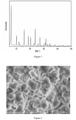
- X-ray diffraction (XRD) spectrum of sample X#1 is shown in Figure 1 , demonstrating that the sample X#1 is molecular sieve having FAU framework structure.
- Scanning electron microscope (SEM) image thereof is shown in Figure 2 , demonstrating that the particles of sample X#1 are small pieces with a size ranging from 50 nm to 200 nm.
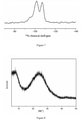
- 29 Si MAS NMR spectrum thereof is shown in Figure 3 .
- the fitting calculation shows that the silica-alumina ratio in the framework is consistent with the calculation results conducted by XRF.
- sample X#1 is 0.07Na ⁇ 0.07R2 1 ⁇ (Si 0.86 Al 0.14 )O 2 , where R2 1 is tetrapropylammonium hydroxide.
- the preparation process of any one of samples X#2-X#30 is the same as that of Example 1.
- the raw materials for preparing samples X#2-X#30, molar ratio thereof, addition amount of seed crystal (weight ratio of seed crystal to Si0 2 in gel), crystallization conditions, crystal structure, silica-alumina ratio (the silica-alumina ratio of the obtained product is measured by X-ray fluorescence analyzer (XRF)) and the product constitution are shown in Table 1.
- Samples X#1-X#20 were prepared using silica-alumina molecular sieves having FAU topology as seed crystals, of which silica-alumina ratios were 3, 2.8, 3, 3.5, 45, 6, 6, 6, 6, 7, 70, 10, 4, 5, 6, 8, 3.5, 35, 12, 20 respectively, and which were purchased from Zibo Runxin Chemical Technology Co., Ltd.
- Samples X#21-X#30 were prepared using silica-alumina molecular sieves having EMT topology as seed crystals, of which silica-alumina ratios were 10, 8, 8.5, 7, 7, 8, 21, 7, 8, 22 respectively, and which were purchased from Henan Huanyu Molecular Sieve Co., Ltd.
- the specific types of raw materials for preparing synthetic gel, molar ratio thereof, preparation process and crystallization conditions are the same as those of sample X#1 in Example 1, except that the seed crystal addition step is omitted.
- the specific types of raw materials, molar ratio thereof, crystallization conditions, and crystal structure of the product are shown in Table 2.
- the obtained samples are denoted as comparative samples V#1-V#30.
- each of the samples X#1-X#30 prepared in Examples 1 and 2 is Y molecular sieve with both high purity and high crystallinity.
- the XRD spectrum of sample X#1 as typical representative is shown in Figure 1
- SEM image thereof is shown in Figure 2
- Si NMR thereof is shown in Figure 3 .
- the XRD spectrum result of any one of samples X#2-X#30 is close to Figure 1 .
- the diffraction peak positions and shapes are substantially identical.
- the relative peak intensity fluctuates within ⁇ 5% depending on the change of synthesis conditions, demonstrating that any of samples X#1-X#30 has the structural characteristics of Y zeolite and has no impurities.
- the silica-alumina ratio of any sample is much higher than that of conventional Y zeolite.
- the introduction of organic templating agent is the key to the synthesis of high-silica Y zeolite.
- V#I-V#30 as products in Table 2 is amorphous, and the XRD spectrum of the comparative sample V#1 as typical representative is shown in Figure 4 . It can be seen that during the synthesis of high-silica Y zeolite, in addition to the organic templating agent, the introduction of seed crystal is also necessary.
- Table 1 Types of raw materials, molar ratio thereof, addition amount of seed crystal, crystallization conditions, crystal structure, silica-alumina ratio and product constitution of samples X#1-X#30 Sample Initial gel constitution Addition amount of seed crystal Crystallization temperature Crystallization time Crystal structure Silica-alumina ratio Product constitution X#1 20SiO 2 1 :1Al 2 O 3 3 :2.0 Na 2 O:4.8R2 1 :360H 2 O 1% 130 °C Dynamic 5 days FAU 12 0.07Na 0.07R2 1 (Si O . 86 AI o .
- Synthesis of high-silica Y zeolite The synthetic gel was transferred into a stainless-steel reactor, and was subject to rotational crystallization at 130 °C for 5 days. After the crystallization was completed, the obtained solid was separated from liquid, washed to be neutrality, then dried at 100 °C for 12 hours. The obtained sample was denoted as sample X1.
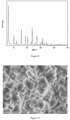
- X-ray diffraction (XRD) spectrum of sample X1 is shown in Figure 5 , demonstrating that the sample X1 is molecular sieve having FAU framework structure.
- Scanning electron microscope (SEM) image thereof is shown in Figure 6 , demonstrating that the particles of sample X1 are small pieces with a size ranging from 50 nm to 200 nm.
- 29 Si MAS NMR spectrum thereof is shown in Figure 7 .
- the fitting calculation shows that the silica-alumina ratio in the framework is consistent with the calculation results conducted by XRF.
- sample X1 is 0.07Na ⁇ 0.07R 1 ⁇ (Si 0.86 Al 0.14 )O 2 , where R 1 is N,N-dimethyl-3,5-dipropylpiperidine hydroxide.
- the preparation process of any one of samples X2-X30 is the same as that of Example 4.
- the raw materials for preparing samples X2-X30, molar ratio thereof, addition amount of seed crystal (weight ratio of seed crystal to Si0 2 in gel), crystallization conditions, crystal structure, silica-alumina ratio (the silica-alumina ratio of the obtained product is measured by X-ray fluorescence analyzer (XRF)) and the product constitution are shown in Table 3.
- Samples X1-X20 were prepared using silica-alumina molecular sieves having FAU topology as seed crystals, of which silica-alumina ratios were 3, 2.8, 3.5, 40, 5, 6, 6, 6, 6, 7, 92, 10, 3.5, 4, 6, 8, 4, 35, 12, 20 respectively, and which were purchased from Zibo Runxin Chemical Technology Co., Ltd.
- Samples X21-X30 were prepared using silica-alumina molecular sieves having EMT topology as seed crystals, of which silica-alumina ratios were 7, 7, 8.5, 7, 8, 10, 21, 32, 8 and 7 respectively, and which were purchased from Henan Purchased by Huanyu Molecular Sieve Co., Ltd.
- Comparative Example 2 Preparation of comparative samples V1-V30
- any one of samples V1-V30 is the same as that of Example 4, except that there is no seed crystal addition step.
- Types of raw materials, molar ratio thereof, crystallization conditions, and crystal structure of samples V1-V30 are shown in Table 2.
- the samples obtained are denoted as comparative samples V1-V30.
- samples X1-X30 and comparative samples V1-V30 were analyzed by X-ray diffraction method.
- each of the samples X1-X30 prepared in Examples 4 and 5 is Y molecular sieve with both high purity and high crystallinity.
- the XRD spectrum of sample X1 as typical representative is shown in Figure 5
- SEM image thereof is shown in Figure 6
- Si NMR thereof is shown in Figure 7 .
- the XRD spectrum result of any one of samples X2-X30 is close to Figure 1 .
- the diffraction peak positions and shapes are substantially identical.
- the relative peak intensity fluctuates within ⁇ 5% depending on the change of synthesis conditions, demonstrating that any of samples X1-X30 has the structural characteristics of Y zeolite and has no impurities.
- silica-alumina ratio of any sample is much higher than that of conventional Y zeolite. It can be seen that during the synthesis of the high-silica Y molecular sieve according to the present application, the introduction of nitrogen-containing heterocyclic templating agent is the key to the synthesis of the high-silica Y molecular sieve according to the present application.
- each of the comparative samples V1-V30 is amorphous, and a XRD spectrum of the comparative sample V1 as typical representative is shown in Figure 4 . It can be seen that during the synthesis of high-silica Y zeolite, in addition to the introduction of nitrogen-containing heterocyclic templating agent, the introduction of seed crystal is also necessary.
- Table 3 Types of raw materials, molar ratio thereof, addition amount of seed crystal, crystallization conditions, and crystal structure, silica- alumina ratio, and constitution of samples X1-X30 Sample Initial gel constitution Addition amount of seed crystal Crystallization temperature Crystallization time Crystal structure silica-alumina ratio constitution X1 20SiO 2 1 :1Al 2 O 3 3 :2.0Na 2 O:4. 8R 1 :360H 2 O 10% 130 °C Dynamic 5 days FAU 12 0.07Na ⁇ 0.07R 1 (Si 0.86 Al 0.14 )O 2 X2 15SiO 2 1 :1Al 2 O 3 3 :1.8Na 2 O:3.
- directing agent 1.3 g sodium hydroxide (analytical purity, Tianjin Komiou Chemical Reagent Co., Ltd.) and 1.7 g alumina (chemical purity, China National Pharmaceutical (Group) Shanghai Chemical Reagent Co., Ltd.) were dissolved in 84.1 g tetraethylammonium hydroxide (35 wt% aqueous solution, Aladdin reagent (Shanghai) Co., Ltd.) and stirred until to be clear. 34.7g ethyl orthosilicate was added therein dropwise (chemical purity, China pharmaceutical (Group) Shanghai chemical reagent company) and stirred for 2 hours. The obtained solution was allowed to stand at 50 °C for 12 hours to perform aging, and then stand at 100 °C for 48 hours.
- Synthesis of high-silica Y molecular sieve The synthetic gel was transferred into a stainless-steel reactor, and was subject to rotational crystallization at 130 °C for 5 days. After the crystallization was completed, the obtained solid was separated from liquid, washed to be neutrality, then dried at 100 °C for 12 hours. The obtained sample was denoted as sample Y#1.
- X-ray diffraction (XRD) spectrum of sample Y#1 is shown in Figure 9 , demonstrating that the sample Y#1 is molecular sieve having FAU framework structure.
- Scanning electron microscope (SEM) image thereof is shown in Figure 10 , demonstrating that the particles of sample Y#1 are small pieces with a size ranging from 50 nm to 200 nm.
- 29 Si MAS NMR spectrum thereof is shown in Figure 11 .
- the fitting calculation shows that the silica-alumina ratio in the framework is consistent with the calculation results conducted by XRF.
- the element constitution of sample Y1 is 0.07Na ⁇ 0.02R1 2 ⁇ 0.05R2 1 (Si 0.86 Al 0.14 )O 2 , where R1 2 is tetraethylammonium hydroxide, R2 1 is tetrapropylammonium hydroxide.
- the preparation process of any one of samples Y#2-Y#30 is the same as that of Example 7.
- the raw materials for preparing samples Y#2-Y#30, molar ratio thereof, crystallization conditions, crystal structure, and silica-alumina ratio are shown in Table 5.
- Aging temperature and time for preparing directing agent, aging manner, addition amount of directing agent and sample constitution are shown in Table 6.
- Comparative Example 3 Preparation of comparative samples S#1-S#30
- Comparative Example 4 Preparation of comparative samples T#1-T#30
- the specific types of raw materials, molar ratio thereof, preparation process and crystallization conditions are the same as those of sample Y#1 in Example 7, except that, after the batching step of the directing agent is completed, only stirring at room temperature for 2 hours without aging was performed.
- the types of raw materials, molar ratio thereof, crystallization conditions, addition amount of directing agent, and the crystal structure of the prepared product are shown in Table 8.
- the obtained samples were denoted as comparative samples T#1-T#30.
- Table 8 Types of raw materials, addition amount of directing agent, molar ratio thereof, crystallization conditions, and crystal structure of samples T#1-T#30 Sample Directing agent constitution Addition amount of directing agent
- Dynamic 5 days Amorpho us T#2 10SiO 2 1 :1Al 2 O 3 1 :1Na 2 O:10R1 3 :180H 2 O 15% 15SiO 2 2 :1Al 2 O 3 3 :1.8Na 2 O:3R2 1 :2 00H 2 O 130 °C Static 4 days
- the comparative samples S#1-S#30 and the comparative samples T#1-T#30 in Table 7 and Table 8 are amorphous.
- the XRD spectra of the comparative sample S#1 and the comparative sample T#1 are shown in Figures 12 and 13 , respectively. It can be seen that, during the synthesis of high-silica Y molecular sieve, the addition of a directing agent is necessary, and high-temperature aging must be carried out during preparation of the directing agent to induce crystallization, which is the key to the synthesis of high-silica Y molecular sieve.
- directing agent 1.3 g sodium hydroxide (analytical purity, Tianjin Komiou Chemical Reagent Co., Ltd. ) and 1.7 g alumina (chemical purity, China National Pharmaceutical (Group) Shanghai Chemical Reagent Co., Ltd. ) were dissolved in 84.1 g tetraethylammonium hydroxide (35 wt% aqueous solution, Aladdin reagent (Shanghai) Co., Ltd.) and stirred until to be clear. 34.7g ethyl orthosilicate was added therein dropwise (chemical purity, China pharmaceutical (Group) Shanghai chemical reagent company) and stirred for 2 hours. The obtained solution was allowed to stand at 50 °C for 12 hours to perform aging, and then to stand at 70 °C for 2 days.
- X-ray diffraction (XRD) spectrum of sample Y1 is shown in Figure 14 , demonstrating that the sample Y1 is molecular sieve having FAU framework structure.
- Scanning electron microscope (SEM) image thereof is shown in Figure 15 , demonstrating that the particles of sample Y1 are small pieces with a size ranging from 50 nm to 200 nm.
- 29 Si MAS NMR spectrum thereof is shown in Figure 16 .
- the fitting calculation shows that the silica-alumina ratio in the framework is consistent with the calculation results conducted by XRF.
- the element constitution of sample Y1 is 0.07Na ⁇ 0.02R1 2 ⁇ 0.05R2 1 (Si 0.86 Al 0.14 )O 2 , wherein, R1 2 is a tetraethylammonium hydroxide, R2 1 is N,N-dimethyl-3,5-dipropyl-piperidine hydroxide.
- the preparation process of any one of samples Y2-Y30 is the same as that of Example 10.
- the raw materials for preparing samples Y2-Y30, molar ratio thereof, crystallization conditions, crystal structure, and silica-alumina ratio are shown in Table 3.
- Aging temperature and time for preparing directing agent, addition amount of directing agent and sample constitution are shown in Table 10.
- Comparative Example 5 Preparation of Comparative Samples S1-S30
- the specific preparation process is the same as that in the preparation of sample Y1 in Example 10, except that there is no directing agent preparation step, and there is not addition of directing agent in the subsequent gel synthesis step.
- the types of raw materials, molar ratio thereof, crystallization conditions and product structure of the prepared products are shown in Table 11.
- the samples obtained are denoted as comparative samples S1-S30.
- Comparative Example 6 Preparation of Comparative Samples T1-T30
- the specific preparation process is the same as that in the preparation of sample Y1 in Example 10, except that, after the batching step of the directing agent is completed, only stirring at room temperature for 2 hours without aging was performed.
- Types of raw materials, molar ratio thereof, crystallization conditions, addition amount of directing agent, and product structure of each synthesized product are shown in Table 12.
- the samples obtained are denoted as comparative samples T1-T30.
- samples Y1-Y30 and comparative samples S1-S30 and T1-T30 were analyzed by X-ray diffraction method.
- each of samples Y1-Y30 prepared in Examples 10 and 11 is Y molecular sieve with both high purity and high crystallinity.
- the XRD spectrum of sample Y1 as typical representative is shown in Figure 14
- SEM image thereof is shown in Figure 15
- Si NMR thereof is shown in Figure 16 .
- the XRD spectrum result of any one of samples Y2-Y30 is close to Figure 14 .
- the diffraction peak positions and shapes are substantially identical.
- the relative peak intensity fluctuates within ⁇ 5% depending on the change of synthesis conditions, demonstrating that any of samples Y1-Y30 has the structural characteristics of Y zeolite and has no impurities.
- the comparative samples S1-S30 and the comparative samples T1-T30 are all amorphous.
- the XRD spectra of the comparative sample S1 and the comparative sample T1 are shown in Figure 17 and Figure 18 , respectively. It can be seen that during the synthesis of high-silica Y molecular sieve, the addition of a directing agent is necessary, and high-temperature aging must be carried out during preparation of the directing agent to induce crystallization, which is the key to the synthesis of high-silica Y molecular sieve.
Landscapes
- Chemical & Material Sciences (AREA)
- Organic Chemistry (AREA)
- Engineering & Computer Science (AREA)
- Materials Engineering (AREA)
- Chemical Kinetics & Catalysis (AREA)
- Life Sciences & Earth Sciences (AREA)
- General Life Sciences & Earth Sciences (AREA)
- Geology (AREA)
- Inorganic Chemistry (AREA)
- Crystallography & Structural Chemistry (AREA)
- Silicates, Zeolites, And Molecular Sieves (AREA)
- Catalysts (AREA)
Abstract
Description
- The present invention relates to a high-silica Y molecular sieve having FAU topology and a method for synthesizing high-silica Y molecular sieve by introducing organic templating agent into synthetic gel system and adding silica-alumina molecular sieve having FAU or EMT topology as seed crystal, and further relates to a method for synthesizing high-silica Y molecular sieve by introducing organic templating agent into synthetic gel system and adding directing agent solution. The present invention belongs to the field of catalyst preparation.
- Y zeolite is a silica-alumina zeolite having FAU topology. It is mainly used in fluid catalytic cracking (FCC) and is currently the most used zeolite material. The framework silica-alumina ratio of Y molecular sieve plays a decisive role in its catalytic performance. The higher the silica-alumina ratio, the better the catalytic activity and stability. The high-silica Y zeolite currently used in industry is mainly obtained by chemical/physical dealumination, etc. This post-treatment process is cumbersome, energy-consuming, and polluting. The direct hydrothermal synthesis effectively avoids the above shortcomings while maintaining the completeness and uniformity of aluminum distribution of the crystal structure. Therefore, exploring the direct synthesis of Y molecular sieve having high silica-alumina ratio is of great significance to the catalytic cracking process.
- For the direct synthesis of high-silica Y molecular sieve, people initially synthesize in non-templating agent system. That is, people do not add any organic templating agent to reaction gel, and only adjust the proportioning of the gel, adjust the crystallization time, seed crystal or inorganic directing agent so as to expect to achieve the purpose of increasing the silica-alumina ratio of the Y molecular sieve. However, limited success is achieved, and the silica-alumina ratio is difficult to reach 6.
- The use of organic templating agent has brought the synthesis of Y molecular sieve into a new field. In 1987, US Patent
US4174601 disclosed a FAU homogeneous polymorph named ECR-4 with a silica-alumina ratio of greater than 6, which was prepared by hydrothermal crystallization at a temperature ranging from 70 °C to 120 °C using alkyl or hydroxyalkyl quaternary ammonium salt as templating agent in the presence of seed crystal. In 1990, US patentUS 4931267 disclosed a FAU homogeneous polymorph named ECR-32 with a silica-alumina ratio of greater than 6 and high thermal stability, which was prepared by hydrothermal crystallization at a temperature ranging from 90 °C to 120 °C using tetrapropyl and/or tetrabutylammonium hydroxide as templating agent. - In 1990, French Delprato et al. (Zeolites. 1990,10(6):546-552) used crown ether as templating agent to synthesize FAU zeolite with cubic structure for the first time. The framework silica-to-aluminum ratio is close to 9.0, which is the highest value currently reported in the literatures. However, the expensive and highly toxic crown ether limits its industrial application. Later, the US patent
US5385717 used polyethylene oxide as templating agent to synthesize Y zeolite with a silica-alumina ratio of greater than 6. - According to one aspect of the present application, there is provided a high-silica Y molecular sieve having FAU topology.
- The high-silica Y molecular sieve having FAU topology is characterized in that the anhydrous chemical constitution of the molecular sieve is as shown in formula I:
kM·mR1·nR2·(SixAly)O2 Formula I
wherein, M is at least one of alkali metal elements;
R1 and R2 represent organic templating agents;
k represents the number of moles of alkali metal element M per mole (SixAly)O2, k-0-0.20;
m and n represent the number of moles of templating agents R1 and R2 per mole of (SixAly)O2, m=0∼0.20, n=0.01∼0.20;
x and y respectively represent the mole fractions of Si and Al, 2x/y=7~40, and x+y=l;
R1 and R2 are independently one of nitrogen-containing heterocyclic compounds and derivatives thereof, and quaternary ammonium compounds;
the structural formula of the quaternary ammonium compound is as shown in formula II;
Xn- is one of OH-, Cl-, Br-, I-, N03 -, HS04 -, H2P03 -, S04 2-, HP03 2-, and PO3 3-. - Optionally, m=0.01-0.20.
- Optionally, k=0. 0 1-0. 15; m=0.01∼0.1; n=0.02-0.15.
- Optionally, k=0.02~0.13; m=0.01∼0.04; n=0.03-0.08.
- Optionally, the "C1∼C12 alkyl" includes "CrC12 phenyl alkyl".
- Optionally, the "aryl" includes "C7∼C12 aryl".
- Optionally, the "CrC12 aryl" includes "C7∼C12 alkyl aryl".
- Optionally, M is at least one of Na, K, and Cs, and 2x/y=7∼30.
- Optionally, M is at least one of Na, K, and Cs, and 2x/y=8∼30.
- Optionally, the upper limit of 2x/y is 8, 9, 10, 11, 12, 13, 14, 15, 16, 17, 18, 19, 20, 22, 23, 24, 25, 26, 27, 28, 29 or 30, and the lower limit thereof is 7, 8, 9, 10, 11, 12, 13, 14, 15, 16, 17, 18, 19, 20, 22, 23, 24, 25, 26, 27, 28 or 29.
- Optionally, R1 and R2 are independently one of quaternary ammonium compounds.
- Optionally, R1 and R2 are independently at least one of tetramethylammonium hydroxide, tetraethylammonium hydroxide, tetrapropylammonium hydroxide, tetrabutylammonium hydroxide, tetrapentylammonium hydroxide, tetrahexylammonium hydroxide, tetrapropylammonium bromide, tetrabutylammonium chloride, tetrapentylammonium bromide, tripropyl-isobutylammonium bromide, tributyl-cyclohexylammonium hydroxide, dibutyl-dihexyl ammonium hydroxide, choline, triethyl-hydroxyethyl ammonium hydroxide, tripropyl-hydroxyethyl ammonium hydroxide, tributyl-hydroxyethyl ammonium hydroxide, tributyl-benzyl ammonium hydroxide, triethyl-benzyl ammonium hydroxide, tripropyl-benzyl ammonium hydroxide, N,N,N-triethyl-adamantyl ammonium chloride, and N,N,N-tripropyl-adamantyl ammonium chloride.
- Optionally, R1 is at least one of tetramethylammonium hydroxide, tetraethylammonium hydroxide, tetrapropylammonium hydroxide and choline;
R2 is at least one of tetraethylammonium hydroxide, tetrapropylammonium hydroxide, tetrabutylammonium hydroxide, tetrapentylammonium hydroxide, tetrahexylammonium hydroxide, tetrapropylammonium bromide, tetrabutylammonium chloride, tetrapentylammonium bromide, tripropyl-isobutyl ammonium bromide, tributyl-cyclohexylammonium hydroxide, dibutyl-dihexyl ammonium hydroxide, choline, triethyl-hydroxyethyl ammonium hydroxide, tripropyl-hydroxyethyl ammonium hydroxide, tributyl-hydroxyethyl ammonium hydroxide, tributyl-benzyl ammonium hydroxide, triethyl-benzyl ammonium hydroxide, tripropyl-benzyl ammonium hydroxide, N,N,N-triethyl-adamantyl ammonium chloride, and N,N,N-tripropyl-adamantyl ammonium chloride. - Optionally, R1 is at least one of quaternary ammonium compounds; and R2 is at least one of nitrogen-containing heterocyclic compounds and derivatives thereof.
- Optionally, R1 is at least one of tetramethylammonium hydroxide, tetraethylammonium hydroxide, tetrapropylammonium hydroxide and choline;
R2 is at least one of nitrogen-containing heterocyclic compounds and derivatives thereof. - Optionally, R2 is at least one of pyridine, N-methylpyridine, N-ethylpyridine, N-propylpyridine, N-butylpyridine, N-ethyl-3-butylpyridine, 1-ethyl-2-propylpyridine hydroxide, piperidine, N,N-dimethylpiperidine, N,N-dimethyl-3,5-diethylpiperidine hydroxide, N,N-dimethyl-3,5-dipropylpiperidine hydroxide, N,N-diethyl-3,5-dipropylpiperidine hydroxide, N,N-diethyl-2,6-dimethylpiperidine hydroxide, N,N-dimethyl-2,6-diethylpiperidine hydroxide, imidazole, 1-ethyl-3-butylimidazole hydroxide, l-ethyl-3-butyl-4-propylimidazole hydroxide, 1-benzyl-3-methylimidazole hydroxide, 1-benzyl-3-ethylimidazole hydroxide, 1-benzy|-3-buty|imidazole hydroxide, piperazine, N-methylpiperazine, 1,4-dipropylpiperazine, 1-methyl-4-ethylpiperazine, and 1-ethyl-4-butyl-5-methylpiperazine.
- Optionally, the high-silica Y molecular sieve having FAU topology is an octahedral structure.
- Optionally, the particle size of the high-silica Y molecular sieve having FAU topology ranges from 50 nm to 2500 nm.
- According to another aspect of the present application, there is provided a method for synthesizing high-silica Y molecular sieve having FAU topology, by using silica-alumina molecular sieve having FAU or EMT topology as seed crystal and introducing organic templating agent under alkaline hydrothermal conditions. A high-silica (silica-alumina molar ratio in a range from 7 to 40) Y molecular sieve is synthesized.
- The method for synthesizing high-silica Y molecular sieve having FAU topology is characterized in that it comprises the following steps:
- a) mixing raw materials containing aluminum source, silicon source, alkali metal source, organic templating agent R and water to prepare an initial gel mixture I, wherein the aluminum source, silicon source, alkali metal source, organic templating agent R and water in the raw materials have the following molar ratios:
- SiO2/
Al2O 3=10~200; - M20/AI203=0-3 0, wherein M is at least one of alkali metal elements;
- R/Al203=1-45;
- H2O/Al2O3=50∼8000;
- SiO2/
- b) adding silica-alumina molecular sieve seed crystal having FAU or EMT topology to the initial gel mixture I obtained in step a) to obtain a mixture II;
- c) placing the mixture II obtained in step b) in a sealed reactor to perform crystallization to obtain the high-silica Y molecular sieve having FAU topology;
- Optionally, in step a), H2O/Al2O3=50~6000.
- Optionally, in step a), H2O/Al2O3=100∼8000.
- Optionally, in step a), R/Al2O3=0.1∼40.
- Optionally, the organic templating agent R in step a) is at least one of nitrogen-containing heterocyclic compounds and derivatives thereof, and quaternary ammonium compounds;
the structural formula of the quaternary ammonium compound is as shown in formula II;
- In formula II, R21, R22, R23 and R24 are independently at least one of Cl-C12 alkyl, C ~C 2 alkoxy, C ~C 2 hydroxyalkyl, aryl and adamantyl;
Xn- is one of OH-, Cl-, Br-, I-, N03 -, HS04 -, H2PO3, SO4 2-, HPO3 2-, and PO3 3-. - Optionally, the organic templating agent R in step a) is at least one of tetraethylammonium hydroxide, tetrapropylammonium hydroxide, tetrabutylammonium hydroxide, tetrapentylammonium hydroxide, tetrahexylammonium hydroxide, tetrapropylammonium bromide, tetrabutylammonium chloride, tetrapentylammonium bromide, tripropyl-isobutyl ammonium bromide, tributyl-cyclohexylammonium hydroxide, dibutyl-dihexyl ammonium hydroxide, choline, triethyl-hydroxyethyl ammonium hydroxide, tripropyl-hydroxyethyl ammonium hydroxide, tributyl-hydroxyethyl ammonium hydroxide, tributyl-benzyl ammonium hydroxide, triethyl-benzyl ammonium hydroxide, tripropyl-benzyl ammonium hydroxide, N,N,N-triethyl-adamantyl ammonium chloride, and N,N,N-tripropyl-adamantyl ammonium chloride.
- Optionally, the nitrogen-containing heterocyclic templating agent R in step a) is at least one of nitrogen-containing heterocyclic compounds and derivatives thereof.
- Optionally, in step a), the nitrogen-containing heterocyclic templating agent R is at least one of pyridine, N-methylpyridine,N-ethylpyridine,N-propylpyridine,N-butylpyridine,N-ethyl-3-butylpy ridine, 1-ethyl-2-propylpyridine hydroxide,piperidine, N,N-dimethylpiperidine, N,N-dimethyl-3,5-diethylpiperidine hydroxide,N,N-dimethyl-3,5-dipropylpiperidine hydroxide,N,N-diethyl-3,5-dipropylpiperidine hydroxide,N,N-diethyl-2,6-dimethylpiperidine hydroxide, N,N-dimethyl-2,6-diethylpiperidine hydroxide,imidazole,l-ethyl-3-butylimidazole hydroxide,1-ethyl-3-butyl-4-propylimidazole hydroxide, 1-benzyl-3-methylimidazole hydroxide, 1-benzyl-3-ethylimidazole hydroxide, 1-benzyl-3-butylimidazole hydroxide, piperazine,N-methylpiperazine, 1,4-dipropylpiperazine, 1 -methyl-4-ethylpiper azine,andl-ethyl-4-butyl-5-methylpiperazine.
- Optionally, the silicon source in step a) is at least one of methyl orthosilicate, ethyl orthosilicate, silica sol, solid silica gel, fumed silica, and sodium silicate;
the aluminum source in step a) is at least one of sodium aluminate, aluminum oxide, aluminum hydroxide, aluminum isopropoxide, aluminum 2-butoxide, aluminum chloride, aluminum sulfate, aluminum nitrate, and pseudo-boehmite;
the alkali metal source in step a) is at least one of sodium hydroxide, potassium hydroxide, and cesium hydroxide. - Optionally, step a) comprises mixing the aluminum source, the alkali metal source, the organic templating agent R and water, and then adding the silicon source to mix to obtain an initial gel mixture I.
- Optionally, the aluminum source, silicon source, alkali metal source, organic templating agent R and water in the raw materials in step a) have the following molar ratios:
- Si02 /A1203 =10-200;
- M20/AI203=0-30, wherein M is at least one of alkali metal elements;
- R/Al2O3=1∼45;
- H2O/Al2O3=100∼6000.
- Optionally, the upper limit of Si02/AI203 is 15, 20, 30, 40, 45, 50, 60, 70, 80, 90, 100, 110, 120, 130, 140, 150, 160, 170, 180, 190 or 200, and the lower limit thereof is 10, 15, 20, 30, 40, 45, 50, 60, 70, 80, 90, 100, 110, 120, 130, 140, 150, 160, 170, 180 or 190.
- Optionally, the upper limit of M2O/Al2O3 is 1.8, 2.0, 3.0, 4.0, 4.5, 4.8, 5.0, 6.0, 7.0, 8.0, 9.0, 10, 11, 12, 13, 14, 15, 16, 17, 18, 19, 20, 22, 25, 28, 29 or 30; the lower limit thereof is 0.1, 1.8, 2.0, 3.0, 4.0, 4.5, 4.8, 5.0, 6.0, 7.0, 8.0, 9.0, 10, 11, 12, 13, 14, 15, 16, 17, 18, 19, 20, 22, 25, or 28.
- Optionally, the upper limit of the molar ratio of R/Al2O3 is 2, 3, 3.6, 4, 4.5, 4.8, 5, 5.2, 6, 7, 8, 9, 10, 11, 12, 13, 14, 15, 16, 17, 18, 19, 20, 22, 25, 28, 29, 30, 32, 35, 38, 40, 42 or 45; the lower limit thereof is 1, 2, 3, 3.6, 4, 4.5, 4.8, 5, 5.2, 6, 7, 8, 9, 10, 11, 12, 13, 14, 15, 16, 17, 18, 19, 20, 22, 25, 28, 29, 30, 32 , 35, 38, 40, or 42.
- Optionally, the upper limit of the molar ratio of H2O/Al2O3 is 200, 300, 400, 500, 600, 700, 800, 900, 1000, 1100, 1200, 1300, 1400, 1500, 1600, 1700, 1800, 1900, 2000, 2100, 2200, 2300, 2400, 2500, 2600, 2700, 2800, 2900, 3000, 3200, 3500, 3800, 4000, 5000 or 6000; the lower limit thereof is 100, 200, 300, 400, 500 , 600, 700, 800, 900, 1000, 1100, 1200, 1300, 1400, 1500, 1600, 1700, 1800, 1900, 2000, 2100, 2200, 2300, 2400, 2500, 2600, 2700, 2800, 2900, 3000 , 3200, 3500, 3800, 4000 or 5000. Optionally, in step b), the silica-alumina molecular sieve seed crystal having FAU or EMT topology is added to the initial gel mixture I obtained in step a), and after stirring and mixing, the mixture II is obtained.
- Optionally, in step b), the stirring is performed for 1 to 48 hours.
- Optionally, the upper limit of the stirring time in step b) is 48 hours, 44hours, 40 hours, 36 hours, 32 hours, 28 hours, 24 hours, 20 hours, 16 hours, 12 hours, 8 hours, 4 hours, or 2 hours; the lower limit thereof is 1hour, 2 hours, 4 hours, 8 hours, 12 hours, 16 hours, 20 hours, 24 hours, 28 hours, 32 hours, 36 hours, 40 hours or 44 hours.
- Optionally, the weight ratio of silica alumina molecular sieve seed crystal having FAU or EMT topology added in the mixture II in step b), to the silicon source in the initial gel mixture I ranges from 0.01:1 to 0.3:1;
wherein, the weight of the silicon source in the initial gel mixture I is calculated by the weight of Si02. - Optionally, the silica-alumina molar ratio Si02/AI203 of the silica-alumina molecular sieve seed crystal having FAU or EMT topology in step b) is 2-oo.
- Optionally, the silica-alumina molar ratio SiO2/Al2O3 of the silica-alumina molecular sieve seed crystal having FAU or EMT topology in step b) ranges from 2.5 to 200.
- Optionally, a crystallization temperature in step c) ranges from 90 to 180 °C, and a crystallization time in step c) ranges from 0.1 to 15 days.
- Optionally, the upper limit of the crystallization temperature in step c) is 100 °C, 120 °C, 140 °C, 160 °C or 180 °C, and the lower limit thereof is 80 °C, 90 °C, 100 °C, 110 °C, 120 °C, 140 °C or 160 °C.
- Optionally, the upper limit of crystallization time in step c) is 0.1 day, 0.5 day, 1 day, 1.5 days, 2.5 days, 4 days, 5 days or 6 days, and the lower limit thereof is 2 days, 4 days, 5 days, 6 days, 7 days, 8 days, 9 days or 10 days.
- Optionally, the upper limit of the silica-alumina molar ratio SiO2/Al2O3 of the silica-alumina molecular sieve seed crystal having FAU or EMT topology in step b) is 2.5, 3, 4, 5, 6, 7, 8. 9, 10, 11, 12, 13, 14, 15, 16, 17, 18, 19, 20, 21, 22, 23, 24, 25, 26, 27, 28, 29 or 30; the lower limit thereof is 2.2, 3, 4, 5, 6, 7, 8, 9, 10, 11, 12, 13, 14, 15, 16, 17, 18, 19, 20, 21, 22, 23, 24, 25, 26, 27, 28 or 29.
- Optionally, the silica-alumina molar ratio Si02/AI203 of the silica-alumina molecular sieve seed crystal having FAU or EMT topology in step b) ranges from 3 to 10.
- Optionally, the crystallization in step c) is performed dynamically or statically.
- Optionally, the crystallization in step c) is rotational crystallization.
- Optionally, in step c), after the crystallization is completed, the obtained solid product is filtered, washed and dried to obtain the high-silica Y molecular sieve.
- In the method, washing, filtering, separating and drying the obtained Y molecular sieve are all conventional operations, wherein the drying can be performed by placing the separated Y molecular sieve at a temperature ranging from 100 to 110 °C for 12 hours.
- In a specific embodiment, the synthesis process of the high-silica Y molecular sieve is as follows:
- a1) preparation of synthetic gel: mixing and stirring aluminum source, silicon source, alkali metal source (M), nitrogen-containing heterocyclic templating agent R and deionized water according to following molar ratio 1Al2O3: (10-200) Si02: (0.1-25) M2O:(1~45) R:(50∼6000) H2O uniformly at room temperature to prepare the initial gel, then adding a certain amount of seed crystal therein, and stirring the obtained mixture for a time ranging from 1 to 48 hours to obtain the synthetic gel;
- b1) synthesis of high-silica Y molecular sieve: performing crystallization of the above synthetic gel under the autogenous pressure and a temperature ranging from 90 to 180°C for a time ranging from 0.2 to 15 days, and after the crystallization is completed, filtering and separating the obtained solid product, washing the solid product with deionized water to be neutrality, and drying the solid product to obtain the high-silica Y molecular sieve.
- As a specific embodiment, the method comprises following steps:
- a) mixing aluminum source, silicon source, alkali metal source, organic templating agent R and water as raw materials to prepare the initial gel mixture I, wherein the aluminum source, silicon source, alkali metal source, organic templating agent R and water in the raw materials have the following molar ratios:
- Si02 /A1203 =10-200;
- M20/AI203=0-30, wherein M is at least one of alkali metal elements;
- R/A1203=1-45;
- H2O/Al2O3=100∼8000;
- b) adding silica-alumina molecular sieve seed crystal having FAU or EMT topology to the initial gel mixture I obtained in step a) to obtain a mixture II;
- c) placing the mixture II obtained in step b) in a sealed reactor to perform crystallization, wherein a crystallization temperature ranges from 80 to180°C, the crystallization pressure is autogenous pressure, and a crystallization time ranges from 0.1 to15 days; and after the crystallization is completed, separating, washing and drying the obtained product to obtain the high-silica Y molecular sieve having FAU topology;
wherein, the number of moles of silicon source is calculated by Si02; the number of moles of aluminum source is calculated by Al2O3; the number of moles of templating agent R is calculated by the number of moles of R itself; and the number of moles of alkali metal source is calculated by the number of moles of corresponding metal oxide M2O. - As an embodiment, the synthesis process of the high-silica Y molecular sieve having FAU topology is as follows:
- a) preparation of the initial gel mixture: mixing and stirring uniformly aluminum source, silicon source, alkali metal source, organic templating agent R and deionized water at room temperature to prepare the initial gel mixture according to the following ratio:
- Si02 /A1203 =10-200;
- M2O/Al2O3=0∼30, wherein M is at least one of alkali metal elements;
- R/Al2O3=1~45;
- H2O/A12O3=100-8000;
- b) adding silica-alumina molecular sieve seed crystal having FAU or EMT topology to the initial gel mixture obtained in step a), and then stirring uniformly, wherein the weight ratio of the added seed crystal to the silicon source in the initial gel mixture ranges from 0.01:1 to 0.3: 1;
- c) performing crystallization of the mixture obtained in step b) under the autogenous pressure and a temperature ranging from 80 to 180°C for a time ranging from 0.1 to 15 days, and after the crystallization is completed, filtering and separating the obtained solid product, washing the solid product with deionized water to be neutrality, and drying the solid product to obtain the high-silica Y molecular sieve.
- According to further aspect of the present application, a directing agent method for synthesizing high-silica Y molecular sieve having FAU topology is provided.
- The method for synthesizing high-silica Y molecular sieve having FAU topology is characterized in that it comprises the following steps:
- a) mixing the raw materials I containing aluminum source A1, silicon source Si1, alkali metal source M1, organic templating agent R1 and water, and aging to obtain a directing agent
wherein, the aluminum source A1, silicon source Si1, alkali metal source M1, organic templating agent R1 and water in the raw materials I have the following molar ratios:- Si02 /A1203 =5-30;
- M1 2O/Al2O3=0∼7, wherein M1 is at least one of alkali metal elements;
- R1/Al2O3=1∼40;
- H2O/Al2O3=100∼600;
- b) mixing raw materials II containing aluminum source A2, silicon source Si2, alkali metal source M2, organic templating agent R2, and water to prepare an initial gel;
wherein, the aluminum source A2, silicon source Si2, alkali metal source M2, organic templating agent R2 and water in the raw materials II have the following molar ratios:- SiO2/Al2O3 =10-200;
- m2 20/AI203=0-30, wherein M2 is at least one of alkali metal elements;
- R2/A1203 =1~45;
- H2O/Al2O3=100∼8000;
- c) adding the directing agent in step a) to the initial gel in step b) and, after mixing uniformly, placing the obtained mixture in a sealed reactor for crystallization to obtain the high-silica Y molecular sieve having FAU topology;
wherein, the number of moles of silicon source Si1 and Si2 is respectively calculated by Si02; the number of moles of aluminum source A1 and A2 is respectively calculated by Al2O3; the number of moles of templating agent R1 and R2 is respectively calculated by the number of moles of themselves; and the number of moles of alkali metal source M1 and M2 is respectively calculated by the number of moles of corresponding metal oxide M1 2O and M2 2O. - Optionally, the aluminum source A1, silicon source Si1, alkali metal source M1, organic templating agent R1 and water in the raw materials I in step a) have the following molar ratios:
- Si02 /A1203 =5-30;
- M1 2O/Al2O3=0∼3, wherein M1 is at least one of alkali metal elements;
- R7A12O3=5~40;
- H2O/AI2O3=1 00-600.
- Optionally, the upper limit of the molar ratio of Si02 /A1203 is 6.0, 7.0, 8.0, 9.0, 10, 11, 12, 13, 14, 15, 20 or 30, and the lower limit thereof is 5.0, 6.0, 7.0, 8.0, 9.0, 10, 11, 12, 13, 14, 15 or 20.
- Optionally, the upper limit of the molar ratio of M2O/Al2O3 in step a) is 0.5, 1.8, 2.0, 3.0, 4.0, 4.5, 4.8 or 5.0, and the lower limit thereof is 0.1, 0.5, 1.8, 2.0, 3.0, 4.0, 4.5 or 4.8.
- Optionally, the upper limit of the molar ratio of R/Al2O3 in step a) is 2, 3, 4, 5, 6, 7, 8, 9, 10, 11, 12, 13, 14, 15, 16, 17, 18, 19, 20, 22, 25, 28, 29, 30, 32, 35, 34, 38 or 40, and the lower limit thereof is 1, 2, 3, 4, 5, 6, 7, 8, 9, 10, 11, 12, 13, 14, 15, 16, 17, 18, 19, 20, 22, 25, 28, 29, 30, 32, 35, 34, or 38.
- Optionally, the upper limit of the molar ratio of H2O/Al2O3 in step a) is 150, 180, 200, 250, 300, 350, 400, 450, 500, 550 or 600, and the lower limit thereof is 100, 150, 180, 200, 250, 300, 350, 400, 450, 500, or 550.
- Optionally, the silicon sources Si1 and Si2 in step a) and step b) are independently at least one of methyl orthosilicate, ethyl orthosilicate, silica sol, solid silica gel, fumed silica, and sodium silicate;
the aluminum sources A1 and A2 in step a) and step b) are independently at least one of sodium aluminate, aluminum oxide, aluminum hydroxide, aluminum isopropoxide, aluminum 2-butoxide, aluminum chloride, aluminum sulfate, aluminum nitrate and pseudo-boehmite;
the alkali metal sources M1 and M2 in step a) and step b) are independently at least one of sodium hydroxide, potassium hydroxide, and cesium hydroxide. - Optionally, the organic templating agents R1 and R2 in step a) and step b) are independently one of nitrogen-containing heterocyclic compounds and derivatives thereof, and quaternary ammonium compounds;
the structural formula of the quaternary ammonium compound is as shown in formula II;
- Optionally, R1 and R2 are independently at least one of tetramethylammonium hydroxide, tetraethylammonium hydroxide, tetrapropylammonium hydroxide, tetrabutylammonium hydroxide, tetrapentylammonium hydroxide, tetrahexylammonium hydroxide, tetrapropylammonium bromide, tetrabutylammonium chloride, tetrapentylammonium bromide, tripropyl-isobutylammonium bromide, tributyl-cyclohexylammonium hydroxide, dibutyl-dihexyl ammonium hydroxide, choline, triethyl-hydroxyethyl ammonium hydroxide, tripropyl-hydroxyethyl ammonium hydroxide, tributyl-hydroxyethyl ammonium hydroxide, tributyl-benzyl ammonium hydroxide, triethyl-benzyl ammonium hydroxide, tripropyl-benzyl ammonium hydroxide, N,N,N-triethyl-adamantyl ammonium chloride, and N,N,N-tripropyl-adamantyl ammonium chloride.
- Optionally, R1 is at least one of tetramethylammonium hydroxide, tetraethylammonium hydroxide, tetrapropylammonium hydroxide and choline;
R2 is at least one of tetraethylammonium hydroxide, tetrapropylammonium hydroxide, tetrabutylammonium hydroxide, tetrapentylammonium hydroxide, tetrahexylammonium hydroxide, tetrapropylammonium bromide, tetrabutylammonium chloride, tetrapentylammonium bromide, tripropyl-isobutylammonium bromide, tributyl-cyclohexylammonium hydroxide, dibutyl-dihexyl ammonium hydroxide, choline, triethyl-hydroxyethyl ammonium hydroxide, tripropyl-hydroxyethyl ammonium hydroxide, tributyl-hydroxyethyl ammonium hydroxide, tributyl-benzyl ammonium hydroxide, triethyl-benzyl ammonium hydroxide, tripropyl-benzyl ammonium hydroxide, N,N,N-triethyl-adamantyl ammonium chloride, and N,N,N-tripropyl-adamantyl ammonium chloride. - Optionally, R1 is one of quaternary ammonium compounds;
the structural formula of the quaternary ammonium compound is as shown in formula II;
R2 is at least one of nitrogen-containing heterocyclic compounds and derivatives thereof. - Optionally, R1 is at least one of tetramethylammonium hydroxide, tetraethylammonium hydroxide, tetrapropylammonium hydroxide and choline.
- Optionally, R2 is at least one of pyridine, N-methylpyridine, N-ethylpyridine, N-propylpyridine, N-butylpyridine,N-ethyl-3-butylpyridine,1-ethyl-2-propylpyridine hydroxide,piperidine, N,N-dimethylpiperidine,N,N-dimethyl-3,5-diethylpiperidine hydroxide, N, N-dimethyl-3,5-dipropylpiperidine hydroxide,N,N-diethyl-3,5-dipropylpiperidine hydroxide, N,N-diethyl-2,6-dimethylpiperidine hydroxide, N,N-dimethyl-2,6-diethylpiperidine hydroxide, imidazole, 1-ethyl-3-butylimidazole hydroxide, l-ethyl-3-butyl-4-propylimidazole hydroxide, 1-benzyl-3-methylimidazole hydroxide, 1-benzyl-3-ethylimidazole hydroxide, 1-benzyl-3-butylimidazole hydroxide, piperazine, N-methylpiperazine, 1,4-dipropylpiperazine, 1-methyl-4-ethylpiperazine, and 1-ethyl-4-butyl-5-methylpiperazine.
- Optionally, an aging temperature in step a) ranges from 25 to 140 °C for an aging time in a range from 0.5 to 30 days.
- Optionally, the upper limit of the aging temperature is 30 °C, 35 °C, 40 °C, 45 °C, 50 °C, 55 °C, 60 °C, 65 °C, 70 °C, 75 °C, 80 °C, 85 °C, 90 °C, 95 °C, 100 °C, 110 °C, 120 °C, 130 °C or 140 °C, and the lower limit thereof is 20 °C, 30 °C, 35 °C, 40 °C, 45 °C, 50 °C, 55 °C, 60 °C, 65 °C, 70 °C, 75 °C, 80 °C, 85 °C, 90 °C, 95 °C, 100 °C, 110 °C, 120 °C, or 130 °C.
- Optionally, the upper limit of aging time is 1day, 2 days, 3 days, 4 days, 5 days, 6 days, 7 days, 8 days, 9 days, 10 days, 11 days, 12 days, 13 days, 14 days, 15 days, 18 days, 20 days, 25 days or 30 days, and the lower limit thereof is 0.5 day, 1day, 2 days, 3 days, 4 days, 5 days, 6 days, 7 days, 8 days, 9 days, 10 days, 11 days, 12 days, 13 days, 14 days, 15 days, 18 days, 20 days or 25 days.
- Optionally, an aging temperature in step a) ranges from 25 to 140 °C for an aging time in a range from 1 to 30 days.
- Optionally, an aging temperature in step a) ranges from 30 to 120 °C for an aging time in a range from 1 to 25 days.
- Optionally, the aging in step a) is a two-stage aging, the temperature for the first stage aging ranges from 30 to 40 °C, the time for the first stage aging ranges from 0.5 to 5 days while the temperature for the second stage aging ranges from 50 to 100 °C, and the time for first-stage aging ranges from 2 to 8 days.
- Optionally, step a) comprises: mixing the aluminum source A1, the alkali metal source M1, the organic templating agent R1 and water uniformly, adding the silicon source S1 therein, stirring, mixing and then aging, wherein an aging temperature ranges from 25 to 140 °C, and an aging time ranges from 1 to 30 days to obtain the directing agent.
- Optionally, the aluminum source A2, the silicon source Si2, the alkali metal source M2, the organic templating agent R2, and water in step b) have the following molar ratios:
- Si02 /A1203 =10-200;
- m2 20/AI203=0-30, wherein M2 is at least one of alkali metal elements;
- R2/A1203 =1-45;
- H2O/A12O3=100~6000.
- Optionally, the aluminum source A2, silicon source Si2, alkali metal source M2, organic templating agent R2, and water in the raw material II in step b) have the following molar ratios:
- SiO2/Al2O3=10∼200;
- m2 20/AI203=0-30, wherein M2 is at least one of alkali metal elements;
- R2/A1203 =1-45;
- H2O/Al2O3=100∼4000.
- Optionally, the upper limit of the molar ratio of Si02 /A1203 in step b) is 15, 20, 30, 40, 45, 50, 60, 70, 80, 90, 100, 110, 120, 130, 140, 150, 160, 170, 180, 190 or 200; and the lower limit thereof is 10, 15, 20, 30, 40, 45, 50, 60, 70, 80, 90, 100, 110, 120, 130, 140, 150, 160, 170, 180, or 190.
- Optionally, the upper limit of the molar ratio of M2O/Al2O3 in step b) is 1.8, 2.0, 3.0, 4.0, 4.5, 4.8, 5.0, 6.0, 7.0, 8.0, 9.0, 10, 11, 12, 13, 14, 15, 16, 17, 18, 19, 20, 22, 25, 28, 29 or 30, and the lower limit thereof is 0.1, 1.8, 2.0, 3.0, 4.0, 4.5, 4.8, 5.0, 6.0, 7.0, 8.0, 9.0, 10, 11, 12, 13, 14, 15, 16, 17, 18, 19, 20, 22, 25, or 28.
- Optionally, the upper limit of the molar ratio of R/Al2O3 in step b) is 2, 3, 3.6, 4, 4.5, 4.8, 5, 5.2, 6, 7, 8, 9, 10, 11, 12, 13, 14, 15, 16, 17, 18, 19, 20, 22, 25, 28, 29, 30, 32, 35, 38, 40, 42 or 45, and the lower limit thereof is 1, 2, 3, 3.6, 4, 4.5, 4.8, 5, 5.2, 6, 7, 8, 9, 10, 11, 12, 13, 14, 15, 16, 17, 18, 19, 20, 22, 25, 28, 29, 30, 32, 35, 38, 40, or 42.
- Optionally, the upper limit of the molar ratio of H2O/Al2O3 in step b) is 200, 300, 400, 500, 600, 700, 800, 900, 1000, 1100, 1200, 1300, 1400, 1500, 1600, 1700, 1800, 1900, 2000, 2100, 2200, 2300, 2400, 2500, 2600, 2700, 2800, 2900, 3000, 3200, 3500, 3800, 4000, 5000 or 6000, and the lower limit thereof is 100, 200, 300 , 400, 500, 600, 700, 800, 900, 1000, 1100, 1200, 1300, 1400, 1500, 1600, 1700, 1800, 1900, 2000, 2100, 2200, 2300, 2400, 2500, 2600, 2700, 2800 , 2900, 3000, 3200, 3500, 3800, 4000 or 5000.
- Optionally, the weight ratio of the silica in the directing agent to the silica in the initial gel in step c) ranges from 0.01:1 to 0.3:1.
- Optionally, the weight ratio of the silica in the directing agent to the silica in the initial gel in step c) is any one of the following ratios or a range ratio defined by any two ratios:0.01:1, 0.02:1, 0.03:1, 0.04:1, 0.05:1, 0.06:1, 0.07:1, 0.08:1, 0.09:1, 0.1:1, 0.11:1, 0.12:1, 0.13:1, 0.14:1, 0.15:1, 0.16:1, 0.20: 1, 0.25:1, 0.30:1.
- Optionally, the weight ratio of the silica in the directing agent to the silica in the initial gel in step c) ranges from 0.01:1 to 0.3:1.
- Optionally, the weight ratio of the silica in the directing agent to the silica in the initial gel in step c) ranges from 0.01:1 to 0.2:1.
- Optionally, a crystallization temperature in step c) ranges from 90 to 180 °C for the crystallization time in a range from 1 to 15 days.
- Optionally, the upper limit of the crystallization temperature is 100 °C, 120 °C, 140 °C, 160 °C, or 180 °C, while the lower limit of the crystallization temperature is 90 °C, 100 °C, 110 °C, 140 °C, or 150 °C.
- Optionally, the upper limit of the crystallization time in step c) is 2 days, 3 days, 4 days, 5 days, 6 days, 7 days, 8 days, 9 days, 10 days, 11 days, 12 days, 13 days, 14 days or 15 days, and the lower limit thereof is 2 days, 3 days, 4 days, 5 days, 6 days, 7 days, 8 days, 9 days, 10 days, 11 days, 12 days, 13 days or 14 days.
- Optionally, a crystallization temperature in step c) ranges from 90 to 140 °C for the crystallization time in a range from 3 to 15 days.
- Optionally, the crystallization in step c) is performed dynamically or statically.
- Optionally, the crystallization in step c) is performed in a combination of dynamical and statical manners.
- Optionally, the crystallization in step c) is rotational crystallization.
- Optionally, step c) includes: adding the directing agent in step a) to the initial gel in step b), stirring and mixing, and then placing the obtained mixture in a sealed reactor to perform crystallization to obtain the high-silica Y molecular sieve having FAU topology.
- Optionally, in step c), the stirring is performed for 1 to 48 hours.
- Optionally, the upper limit of the stirring time is 48 hours, 44 hours, 40 hours, 36hours, 32 hours, 28hours, 24 hours, 20 hours, 16 hours, 12hours, 8 hours, 4 hours or 2 hours, and the lower limit thereof is 1hour, 2 hours, 4 hours, 8 hours, 12 hours, 16 hours, 20 hours, 24 hours, 28 hours, 32 hours, 36 hours, 40hours or 44 hours.
- Optionally, step c) includes: adding the directing agent in step a) to the initial gel in step b), mixing uniformly and placing the obtained mixture in a sealed reactor to perform crystallization, wherein a crystallization temperature ranges from 90 to 140 °C, and a crystallization time ranges from 3 to 15 days; after the crystallization is completed, separating, washing, and drying the obtained solid to obtain the high-silica Y molecular sieve having FAU topology.
- Optionally, the method comprises the following steps:
- a) mixing the raw materials I containing aluminum source A1, silicon source Si1, alkali metal source M1, organic templating agent R1 and water, and aging to obtain a directing agent;
wherein, the aluminum source A1, silicon source Si1, alkali metal source M1, organic templating agent R1 and water in the raw materials I have the following molar ratios:- Si02 /A1203 =5-30;
- M1 2O/Al2O3=0∼5, wherein M1 is at least one of alkali metal elements;
- R1/Al2O3=5∼40;
- H2O/Al2O3=100∼600;
- b) mixing the raw materials II containing aluminum source A2, silicon source Si2, alkali metal source M2, organic templating agent R2, and water to prepare the initial gel;
the aluminum source A2, silicon source Si2, alkali metal source M2, organic templating agent R2, and water in the raw materials II have the following molar ratios:- Si02 /A1203 =10-200;
- M2 2O/Al2O3=0∼30, wherein M2 is at least one of alkali metal elements;
- R2/A1203 =1-45;
- H2O/AI2O3=1 00-6000;
- c) adding the directing agent in step a) to the initial gel in step b), mixing uniformly and placing the obtained mixture in a sealed reactor to perform crystallization, wherein a crystallization temperature ranges from 90 °C to 180 °C, and a crystallization time ranges from 2 to 15 days; after the crystallization is completed, separating, washing, and drying the obtained solid to obtain the high-silica Y molecular sieve having FAU topology.
wherein, the number of moles of silicon source Si1 and Si2 is respectively calculated by Si02; the number of moles of aluminum source A1 and A2 is respectively calculated by Al2O3; the number of moles of templating agent R1 and R2 is respectively calculated by the number of moles of themselves; and the number of moles of alkali metal source M1 and M2 is respectively calculated by the number of moles of corresponding metal oxide M1 2O and M2 2O. - As an embodiment, the synthesis process of the high-silica Y molecular sieve is as follows:
- a) preparation of directing agent: mixing and stirring aluminum source, silicon source, organic templating agent R1 and deionized water for 2 hours according to following molar ratio 1Al2O3 :(5∼30) SiO2 :(0∼7) M1 2O:(1~40) R1 :(100~600) H2O to obtain a uniform mixture, and then stirring/standing the obtained mixture at a temperature ranging from 25 to 140 °C for a time ranging from 1 to 30 days to obtain the directing agent;
- b) preparation of synthetic gel: mixing and stirring aluminum source, silicon source, sodium hydroxide, organic templating agent R2 and deionized water according to the following ratio uniformly at room temperature to obtain the initial gel
- SiO2 /Al2O3 =10∼200;
- m2 20/AI203=0-30, wherein M2 is at least one of alkali metal elements;
- R2/Al2O3 =1∼45;
- H2O/Al2O3=100∼8000;
- c) synthesis of high-silica Y molecular sieve: performing crystallization of the above synthetic gel at a temperature ranging from 90 to 180 °C under autogenous pressure for a time ranging from 2 to 15 days, after the crystallization is completed, filtering and separating the obtained solid product, washing the solid product with deionized water to be neutrality, and drying the solid product to obtain the high-silica Y molecular sieve.
- According to another aspect of the present application, there is provided use of the high-silica Y molecular sieve prepared by the above method in fluid catalytic cracking (FCC), wherein the prepared molecular sieve has a high silica alumina oxide ratio ranging from 7 to 30, good hydrothermal/thermal stability, and has good catalytic reaction activity.
- The anhydrous chemical constitution of the molecular sieve is shown in formula I:
kM·mR1·nR2·(SixAly)O2 Formula I
wherein, M is at least one of alkali metal elements;
R1 and R2 represent organic templating agents;
k represents the number of moles of alkali metal element M per mole (SixAly)O2, k=0-0.20;
m and n represent the number of moles of templating agents R1 and R2 per mole of (SixAly)O2, m=0∼0.20, n=0.01∼0.20;
x and y respectively represent the mole fractions of Si and Al, 2x/y=7-40, and x+y=1;
R1 and R2 are independently one of nitrogen-containing heterocyclic compounds and derivatives thereof, and quaternary ammonium compounds;
the structural formula of the quaternary ammonium compound is as shown in formula II;
Xn- is one of OH-, Cl-, Br-, I-, N03 -, HS04 -, H2PO3, SO4 2-, HPO3 2-, and PO3 3-. - Optionally, m=0.01-0.20.
- Optionally, k=0.01~0.15; m=0.01∼0.1; n=0.02-0.15.
- Optionally, k=0.02∼0.13; m=0.01∼0.04; n=0.03-0.08.
- Optionally, the "C1∼C12 alkyl" includes "C7∼C12 phenyl alkyl".
- Optionally, the "aryl" includes "C7∼C12 aryl".
- Optionally, the "C7∼C12 aryl" includes "C7∼C12 alkyl aryl".
- Optionally, M is at least one of Na, K, and Cs, and 2x/y=7∼30.
- Optionally, M is at least one of Na, K, and Cs, and 2x/y=8~30.
- Optionally, the upper limit of 2x/y is 8, 9, 10, 11, 12, 13, 14, 15, 16, 17, 18, 19, 20, 22, 23, 24, 25, 26, 27, 28, 29 or 30, and the lower limit thereof is 7, 8, 9, 10, 11, 12, 13, 14, 15, 16, 17, 18, 19, 20, 22, 23, 24, 25, 26, 27, 28 or 29.
- Optionally, R1 and R2 are independently one of quaternary ammonium compounds.
- Optionally, R1 and R2 are independently at least one of tetramethylammonium hydroxide, tetraethylammonium hydroxide, tetrapropylammonium hydroxide, tetrabutylammonium hydroxide, tetrapentylammonium hydroxide, tetrahexylammonium hydroxide, tetrapropylammonium bromide, tetrabutylammonium chloride, tetrapentylammonium bromide, tripropyl-isobutylammonium bromide, tributyl-cyclohexylammonium hydroxide, dibutyl-dihexyl ammonium hydroxide, choline, triethyl-hydroxyethyl ammonium hydroxide, tripropyl-hydroxyethyl ammonium hydroxide, tributyl-hydroxyethyl ammonium hydroxide, tributyl-benzyl ammonium hydroxide, triethyl-benzyl ammonium hydroxide, tripropyl-benzyl ammonium hydroxide, N,N,N-triethyl-adamantyl ammonium chloride, and N,N,N-tripropyl-adamantyl ammonium chloride.
- Optionally, R1 is at least one of tetramethylammonium hydroxide, tetraethylammonium hydroxide, tetrapropylammonium hydroxide, and choline;
R2 is at least one of tetraethylammonium hydroxide, tetrapropylammonium hydroxide, tetrabutylammonium hydroxide, tetrapentylammonium hydroxide, tetrahexylammonium hydroxide, tetrapropylammonium bromide, tetrabutylammonium chloride, tetrapentylammonium bromide, tripropyl-isobutyl ammonium bromide, tributyl-cyclohexylammonium hydroxide, dibutyl-dihexyl ammonium hydroxide, choline, triethyl-hydroxyethyl ammonium hydroxide, tripropyl-hydroxyethyl ammonium hydroxide, tributyl-hydroxyethyl ammonium hydroxide, tributyl-benzyl ammonium hydroxide, triethyl-benzyl ammonium hydroxide, tripropyl-benzyl ammonium hydroxide, N,N,N-triethyl-adamantyl ammonium chloride, and N,N,N-tripropyl-adamantyl ammonium chloride. - Optionally, R1 is at least one of quaternary ammonium compounds; and R2 is at least one of nitrogen-containing heterocyclic compounds and derivatives thereof.
- Optionally, R1 is at least one of tetramethylammonium hydroxide, tetraethylammonium hydroxide, tetrapropylammonium hydroxide and choline;
R2 is at least one of nitrogen-containing heterocyclic compounds and derivatives thereof. - Optionally, R2 is at least one of pyridine, N-methylpyridine, N-ethylpyridine, N-propylpyridine, N-butylpyridine, N-ethyl-3-butylpyridine, l-ethyl-2-propylpyridine hydroxide, piperidine, N,N-dimethylpiperidine, N,N-dimethyl-3,5-diethylpiperidine hydroxide, N,N-dimethyl-3,5-dipropylpiperidine hydroxide, N,N-diethyl-3,5-dipropylpiperidine hydroxide, N,N-diethyl-2,6-dimethylpiperidine hydroxide, N,N-dimethyl-2,6-diethylpiperidine hydroxide, imidazole, l-ethyl-3-butylimidazole hydroxide, 1-ethyl-3-butyl-4-propylimidazole hydroxide, 1-benzyl-3-methylimidazole hydroxide, 1-benzyl-3-ethylimidazole hydroxide, 1-benzyl-3-butylimidazole hydroxide, piperazine, N-methylpiperazine, 1,4-dipropylpiperazine, l-methyl-4-ethylpiperazine, and 1-ethyl-4-butyl-5-methylpiperazine.
Optionally, the high-silica Y molecular sieve having FAU topology is an octahedral structure. - Optionally, the particle size of the high-silica Y molecular sieve having FAU topology ranges from 50 nm to 2500 nm.
- According to another aspect of the present application, there is provided a catalyst. The high-silica Y molecular sieve having FAU topology prepared according to the method described in the present application can be used as a fluidized catalytic cracking catalyst and, support and catalyst for dual-functional catalysis reaction such as hydrocracking, hydrogenation desulfurization and so on.
- In the present application, dynamic crystallization means that the slurry in the crystallization reactor is in a non-stationary state, and static crystallization means that the slurry in the crystallization reactor is in a stationary state.
- In the context of the present application, the term "silica-alumina ratio" refers to the molar ratio of silicon to aluminum in terms of Si02 and Al2O3 in the molecular sieve, which has the same meaning as "2x/y" and "silicon-aluminum oxide ratio".
- In the present application, C1∼C12, C7~C12 and the like all refer to the number of carbon atoms contained in the group. For example, "C1~C12 alkyl" refers to an alkyl having 1-12 carbon atoms.
In the present application, "alkyl" is a group formed by the loss of any hydrogen atom on the molecule of an alkane compound. The alkane compound includes straight chain alkanes, branched chain alkanes, cycloalkanes, and branched cycloalkanes. - In the present application, "alkoxy" is a group formed by the loss of hydrogen atom on -OH group of the molecule of an alkyl alcohol compound. For example, the methoxy -OCH3 is formed by the loss of the hydrogen atom on the -OH group of the CH30H molecule.
- In the present application, "hydroxyalkyl" is a group formed by the loss of any one hydrogen atom on non -OH group of the molecule of an alkyl alcohol compound. For example, the hydroxymethyl HOCH2- is formed by the loss of the hydrogen atom on the methyl of the CH30H molecule.
- In the present application, "aryl" is a group formed by the loss of one hydrogen atom in the aromatic ring of an aromatic compound. For example, p-methylphenyl is formed by the loss of the hydrogen atom on para position of methyl on the benzene ring.
- In the present application, "alkylphenyl" refers to a group formed by the loss of a hydrogen atom on a benzene ring containing substituent. For example, p-methylphenyl is formed by the loss of the hydrogen atom on para position of methyl on the benzene ring.
- In the present application, "phenylalkyl" refers to a group formed by the loss of one hydrogen atom of the alkyl substituent on the benzene ring. For example, the benzyl group (benzyl) is formed by the loss of one hydrogen atom of the methyl on toluene.
-
-
Figure 1 is X-ray diffraction (XRD) spectrum of sample X#1. -
Figure 2 is scanning electron microscope (SEM) image of sample X#1. -
Figure 3 is silicon nuclear magnetic (29Si-NMR) spectrum of sample X#1. -
Figure 4 is X-ray diffraction (XRD) spectrum of sample V#1. -
Figure 5 is X-ray diffraction (XRD) spectrum of sample X1. -
Figure 6 is scanning electron microscope (SEM) image of sample X1. -
Figure 7 is silicon nuclear magnetic (29Si-NMR) spectrum of sample X1. -
Figure 8 is X-ray diffraction (XRD) spectrum of the comparative sample VI. -
Figure 9 is X-ray diffraction (XRD) spectrum of sample Y#1. -
Figure 10 is scanning electron microscope (SEM) image of sample Y#1. -
Figure 11 is silicon nuclear magnetic (29Si-NMR) spectrum of sample Y#1. -
Figure 12 is X-ray diffraction (XRD) spectrum of sample S1. -
Figure 13 is X-ray diffraction (XRD) spectrum of sample T1. -
Figure 14 is an X-ray diffraction (XRD) spectrum of sample Y1. -
Figure 15 is scanning electron microscope (SEM) image of sample Y1. -
Figure 16 is silicon nuclear magnetic (29Si-NMR) spectrum of sample Y1. -
Figure 17 is X-ray diffraction (XRD) spectrum of the comparative sample S 1. -
Figure 18 is X-ray diffraction (XRD) spectrum of the comparative sample T1. - The present application will be described in detail below with reference to the examples, but the present application is not limited to these examples.
- The analysis methods in the examples of the present application are as follows.
- The X-ray powder diffraction phase analysis (XRD) of the product adopts the X'Pert PRO X-ray diffractometer from PANalytical, the Netherlands, Cu target, Ka radiation source (λ=0.15418 nm),
voltage 40 KV, current 40 mA. - The instrument used in the scanning electron microscope (SEM) test is Hitachi SU8020 field emission scanning electron microscope, and the accelerating voltage is 2kV.
- The elemental constitution was measured by Philips Magix 2424 X-ray fluorescence analyzer (XRF).
- The silicon nuclear magnetic (29Si-NMR) experiment was carried out on a Bruker Avance III 600 (14.1 Tesla) spectrometer using a 7 mm double resonance probe with a rotation speed of 6 kHz. Using high-power proton decoupling program, sampling times are 1024, π/4 pulse width is 2.5 µs, sampling delay is 10 s, and 4,4-dimethyl-4-propanesulfonate (DSS) is used as chemical shift reference which is calibrated to be 0 ppm.
- The carbon nuclear magnetic (13C MAS NMR) experiment was carried out on a Bruker Avance III 600 (14.1 Tesla) spectrometer using a 4 mm triple resonance probe with a rotation speed of 12 kHz, wherein amantadine was used as the chemical shift reference which was calibrated to be 0 ppm.
- Preparation of synthetic gel: 0.7g sodium aluminate (Al2O3: 48.3wt%, Na20: 36.3wt%, China National Pharmaceutical (Group) Shanghai Chemical Reagent Company), 0.20g sodium hydroxide, 13.0g tetrapropylammonium hydroxide (25wt%) were dissolved in 2.40g deionized water and stirred until to be clear. 13.3g silica sol (SiO2: 30wt%, Shenyang Chemical Co., Ltd.) was added therein dropwise and stirred for 0.5 hour. Then 0.4g Y zeolite as seed crystal with silica-alumina ratio of 3 was added therein, and stirring was continued for 2 hours.
- Synthesis of high-silica Y zeolite: The synthetic gel was transferred into a stainless-steel reactor, and was subject to rotational crystallization at 130 °C for 5 days. After the crystallization was completed, the obtained solid was separated from liquid, washed to be neutrality, then dried at 100 °C for 12 hours. The obtained sample was denoted as sample X#1.
- X-ray diffraction (XRD) spectrum of sample X#1 is shown in
Figure 1 , demonstrating that the sample X#1 is molecular sieve having FAU framework structure. Scanning electron microscope (SEM) image thereof is shown inFigure 2 , demonstrating that the particles of sample X#1 are small pieces with a size ranging from 50 nm to 200 nm. 29Si MAS NMR spectrum thereof is shown inFigure 3 . The fitting calculation shows that the silica-alumina ratio in the framework is consistent with the calculation results conducted by XRF. According to the XRF and 13C MAS NMR normalization analysis, the element constitution of sample X#1 is 0.07Na·0.07R21·(Si0.86Al0.14)O2, where R21 is tetrapropylammonium hydroxide. - The preparation process of any one of samples X#2-
X# 30 is the same as that of Example 1.The raw materials for preparing samples X#2-X# 30, molar ratio thereof, addition amount of seed crystal (weight ratio of seed crystal to Si02 in gel), crystallization conditions, crystal structure, silica-alumina ratio (the silica-alumina ratio of the obtained product is measured by X-ray fluorescence analyzer (XRF)) and the product constitution are shown in Table 1. - Samples X#1-
X# 20 were prepared using silica-alumina molecular sieves having FAU topology as seed crystals, of which silica-alumina ratios were 3, 2.8, 3, 3.5, 45, 6, 6, 6, 6, 7, 70, 10, 4, 5, 6, 8, 3.5, 35, 12, 20 respectively, and which were purchased from Zibo Runxin Chemical Technology Co., Ltd. Samples X#21-X# 30 were prepared using silica-alumina molecular sieves having EMT topology as seed crystals, of which silica-alumina ratios were 10, 8, 8.5, 7, 7, 8, 21, 7, 8, 22 respectively, and which were purchased from Henan Huanyu Molecular Sieve Co., Ltd. - The specific types of raw materials for preparing synthetic gel, molar ratio thereof, preparation process and crystallization conditions are the same as those of sample X#1 in Example 1, except that the seed crystal addition step is omitted. The specific types of raw materials, molar ratio thereof, crystallization conditions, and crystal structure of the product are shown in Table 2. The obtained samples are denoted as comparative samples V#1-
V# 30. - The phases of samples X#1-
X# 30 and comparative samples V#1-V# 30 were analyzed by X-ray diffraction method. - The results show that each of the samples X#1-
X# 30 prepared in Examples 1 and 2 is Y molecular sieve with both high purity and high crystallinity. The XRD spectrum of sample X#1 as typical representative is shown inFigure 1 , SEM image thereof is shown inFigure 2 , and Si NMR thereof is shown inFigure 3 . The XRD spectrum result of any one of samples X#2-X# 30 is close toFigure 1 . In other words, the diffraction peak positions and shapes are substantially identical. The relative peak intensity fluctuates within ±5% depending on the change of synthesis conditions, demonstrating that any of samples X#1-X# 30 has the structural characteristics of Y zeolite and has no impurities. The silica-alumina ratio of any sample is much higher than that of conventional Y zeolite. The introduction of organic templating agent is the key to the synthesis of high-silica Y zeolite. - Each of V
#I-V# 30 as products in Table 2 is amorphous, and the XRD spectrum of the comparative sample V#1 as typical representative is shown inFigure 4 . It can be seen that during the synthesis of high-silica Y zeolite, in addition to the organic templating agent, the introduction of seed crystal is also necessary.Table 1 Types of raw materials, molar ratio thereof, addition amount of seed crystal, crystallization conditions, crystal structure, silica-alumina ratio and product constitution of samples X#1-X#30 Sample Initial gel constitution Addition amount of seed crystal Crystallization temperature Crystallization time Crystal structure Silica-alumina ratio Product constitution X#1 20SiO2 1:1Al2O3 3:2.0 Na2O:4.8R21:360H2O 1% 130 °C Dynamic 5 days FAU 12 0.07Na 0.07R21 (SiO.86AIo.14)02 X#2 15S102': IA1203': 1 .8 Na2O:3.6R21:200H2O 3% 130 °C Static 4 days FAU 9 0.09Na0.09R21 (SiO.82AIo.18)02 X#3 20SiO2 1:1Al2O3 2:1.8 Na2O:5.2R21:400H2O 12% 110 °C Dynamic 6 days FAU 11 0.07Na 0.08R21 (SiO.85AIo.15)02 X#4 S0SiO^1AbO^S.0 Na2O:13R22:800H2O 8% 140 °C Dynamic 8 days FAU 15 0.03Na 0.07R22 (Sio.88Alo.l2)02 X#5 20SiO2 2 :1Al2O3 2:3.0 Na2O:5R22:400HzO 15% 120 °C Static 6 days FAU 8 0.08Na 0.12R22 (Si0.8Al0.2)O2 X#6 20Si02 2 :1Al2O3 1 :3N a2O:4.5R23:400H2O 10% 130 °C Static 3 days FAU 11 0.07Na 0.08R23 (Si0.85Al0.15)02 X#7 200SiO2 2 : 1Al2O3 2 :2 5Na20:45R23:3000H2 O 12% 120 °C Dynamic 8 days FAU 28 0.02Na 0.05R23 (Si0.93Al0.07)O2 X#8 S0SiOz2 : IA1203 2 :7N a2O:11R23:800H2O 8% 140 °C Dynamic 6 days FAU 18 0.03Na 0.07R23 (Sio.9oAlo.lo)O2 X#9 60SiO2 2:1Al2O3 2: 8.0Na20: 15R23:900H 20 9% 140 °C Dynamic 2 days FAU 20 0.03Na 0.06R23 (Si0.9lAl0.09)O2 X#10 100SiO2 2 :1Al2O3 2 :2 0Cs2O:10R24:800H2O 5% 180 °C Dynamic 0.2day FAU 35 O.OlCs 0.02R24 (SiO.97AIo.3)02 X#11 30Si02 2 :lAh03 3 :4.0 NazO:7R24:500HzO 14% 120 °C Static 3 days FAU 13 0.07Na 0.06R24 (SiO.87AI0.13)O2 X#12 150SiO2 2 :1Al2O3 1:15 K2O:20R24:1500H2O 16% 160 °C Dynamic 0.5day FAU 40 0.01K 0.01R24(Si0.98Al0.02)O2 X#13 30SIO2 2: IA1203 1 :4.0 Na2O:7R25:500H2O 20% 100 °C Static 8 days FAU 13 0.09Na 0.06R25 (Sio.84Alo.l6)02 X#14 100SiO2 2:1Al2O3 1 :12 Na2O:25R2':2000H2 O 16% 120 °C Dynamic 5 days FAU 20 0.04Na 0.05R25 (Si0.91Al0.09)O2 X#15 150SiO2 1: 1AlzO3 2:15 Na2O:35R25:2800H2 0 17% 120 °C Dynamic 5 days FAU 25 0.03Na 0.04R25 (Si0.93Al0.07)O2 X#16 8OS102 1: 1 A12 03 2:ION a2O:18R25:1500H2O 10% 110 °C Dynamic 5 days FAU 18 0.04Na 0.06R25 (Sio.9oAlo.lo)O2 X#17 100SiO2 1:1Al2O3 3:12 Na2O:23R26:1800H2 O 9% 115 °C Dynamic 5 days FAU 20 0.03Na 0.06R26 (Si0.91Al0.09)O2 X#18 60SiO2 1:1Al2O3 3:7Na 2O:15R26:1100H2O 7% 130 °C Dynamic 3 days FAU 15 0.06Na 0.06R26 (Sio.88AIo.12)02 X#19 45SiO2 1:1Al2O3 3:4Na 2O:9R26:800H2O 13% 120 °C Static 8 days FAU 14 0.06Na 0.06R26 (SiO.88AI0.12)O2 X#20 10S102 3: IA1203 2:0.1 Na2O:5R27:150H2O 16% 90 °C Static 15 days FAU 7 0.13Na 0.09R27 (Sio.78Alo.22)02 X#21 15SiO2 3:1Al2O3 5:1.8 Na2O: 5R27: 200H2O 10% 140 °C Static 5 days FAU 8 0.11Na 0.09R27 (Si0.80Al0.20)O2 X#22 20SiO2 3:1Al2O3 5:1.8 Na20:4.8R28: 400H2O 12% 110 °C Static 5 days FAU 12 0.09Na 0.05R28 (Sio.86Alo.l4)02 X#23 50SiO2 3:1Al2O3 5:5Na 2O:12R2':800H2O 12% 120 °C Dynamic 3 days FAU 20 0.03Na 0.06R28 (Si0.91Al0.09)O2 X#24 20SiO2 3:1Al2O3 6:4.0 Na2O: 4R29: 400H2O 15% 140 °C Dynamic 5 days FAU 12 0.08Na 0.06R29 (Si0.86Al0.14)O2 X#25 15 SiOz4: 1Al2O3 6:3.0 Na2O:4R29:280H2O 10% 110 °C Dynamic 4 days FAU 10 0.09Na 0.08R29 (Si0.83Al0.i7)O2 X#26 100SiO2 4:1A12O3 6:10 NazO:18R21°:2000Hz O 12% 120 °C Dynamic 5 days FAU 20 0.04Na 0.05R2'" (Si0.91Al0.09)O2 X#27 150SIO2 4: IA1203 7:15 Na20:3OR2'0:290OH2 O 11% 120 °C Dynamic 8 days FAU 30 0.02Na 0.04R210 (Si0.94Al0.06)O2 X#28 80SiO2 4:1Al2O3 7:10N a2O:15R2'1:1500H2O 10% 120 °C Dynamic 4 days FAU 16 0.04Na 0.07R211 (Sio.ggAlo.11)02 X#29 40SIO2 4: IA1203 7:5Na 2O:10R211:1500H2O 9% 120 °C Dynamic 5 days FAU 12 0.06Na 0.08R211 (Si0.86Al0.14)O2 X#30 150SiO2 4:1Al2O3 7:14 Na2O:25R211:2500H2 O 10% 120 °C Dynamic 3 days FAU 25 0.02Na 0.05R211 (Si0.93Al0.07)O2 Note: Al2O3 1: Alumina; SiO2 1: Silica sol; R21: Tetrapropylammonium hydroxide
Al2O3 2: Aluminum isopropoxide; SiO22: Ethyl orthosilicate; R22: Triethylhexylammonium hydroxide
Al2O3 3: Sodium aluminate; SiO2 3: Fumed silica; R23: Triethylbenzylammonium hydroxide
Al2O3 4:Aluminum nitrate; SiO2 4: Silica gel R24:N,N,N-tripropyl adamantylammonium hydroxide
Al2O3 5: Aluminum 2-butoxide; R25: Dipropyldibutylammonium hydroxide
Al2O3 6: Aluminum sulfate; R26: Benzyltripropylammonium hydroxide
Al2O3 7: Aluminum powder; R27: Choline R28: Tetrabutylammonium hydroxide R29: Tetrahexylammonium hydroxide R210: Tributyl-hydroxyethyl ammonium hydroxide R211: Tripropyl-hydroxyethylammonium hydroxideTable 2 Types of raw materials, molar ratio thereof, crystallization conditions, and crystal structure of samples V#1-V#30 Sample Initial gel constitution Crystallization temperature Crystallization manner and time Crystal structure V#1 20SiO2 1:1Al2O3 3:2.0Na2O:4.8R21:360H2O 130 °C Dynamic 5 days Amorphous V#2 15SiO2 1:1Al2O3 3:18Na2O:3.6R21:200H2O 130 °C Static 4 days Amorphous V#3 20SiO2 1:1Al1O3 2:1.8Na2O:5.2R21:400H2O 110 °C Dynamic 6 days Amorphous V#4 50SiO2 1:1Al2O3 1:8.0Na2O:13R22:800H2O 140 °C Dynamic 8 days Amorphous V#5 20SiO2 2 :1Al2O3 2:3.0Na2O:5R22:400H2O 120 °C Static 6 days Amorphous V#6 20SiO2 2 :1Al2O3 1:3Na2O:4.5R23:400H2O 130 °C Static 3 days Amorphous V#7 200SiO2 2 :1Al2O3 2:25Na2O:45R23:3000H2O 120 °C Dynamic 8 days Amorphous V#8 50SiO2 2 :1Al2O3 2 :7Na2O:11R23:800H2O 140 °C Dynamic 6 days Amorphous V#9 60SiO2 2:1AL2O3 2: 8.0Na2O:15R23:900H2O 140 °C Dynamic 2 days Amorphous V#10 100SiO2 2 :1Al2O3 2 :20Cs2O:10R24:800H2O 180 Dynamic 0.2day Amorphous V#11 30SiO2 2 :1Al2O3 3 :4.0Na2O:7R24:500H2O 120 °C Static 3 days Amorphous V#12 150SiO2 2:1Al2O3 1:15K2O:20R24:1500H2O 160 °C Dynamic 0.5day Amorphous V#13 30SiO2 2:1Al2O3 1 :4.0Na2O:7R25:500H2O 100 °C Static 8 days Amorphous V#14 100SiO2 2:1Al2O3 1 :12Na2O:25R25:2000H2O 120 °C Dynamic 5 days Amorphous V#15 150SiO2 1:1Al2O3 2:15Na2O:35R25:2800H2O 120 °C Dynamic 5 days Amorphous V#16 80SiO2 1:1Al2O3 2:10Na2O:18R25:1500H2O 110 °C Dynamic 5 days Amorphous V#17 100SiO2 1:1Al2O3 3:12Na2O:23R26:1800H2O 115 °C Dynamic 5 days Amorphous V#18 60SiO2 1:1Al2O3 3:7Na2O:15R26:1100H2O 130 °C Dynamic 3 days Amorphous V#19 45SiO21:1Al2O3 3:4Na2O:9R26:800H2O 120 °C Static 8 days Amorphous V#20 10SiO2 3:1Al2O3 2:0.1Na2O:5R27:150H2O 90 °C Static 15 days Amorphous V#21 15SiO2 3:1Al2O3 5:1.8Na2O: 5R27: 200H2O 140 °C Static 5 days Amorphous V#22 20SiO2 3:1Al2O3 5:1.8Na2O: 4.8R28: 400H2O 110 °C Static 5 days Amorphous V#23 50SiO2 3:1Al2O3 5:5Na2O: 12R28: 800H2O 120 °C Dynamic 3 days Amorphous V#24 20SiO2 3:1Al2O3 6:4.0Na2O: 4R29: 400H2O 140 °C Dynamic 5 days Amorphous V#25 15SiO2 4:1Al2O3 6 :3.0Na2O:4R29:280H2O 110 °C Dynamic 4 days Amorphous V#26 100SiO2 4:1Al2O3 6 :10Na2O:18R210:2000H2O 120 °C Dynamic 5 days Amorphous V#27 150SiO2 4:1Al2O3 7 :15Na2O:30R210:2800H2O 120 °C Dynamic 8 days Amorphous V#28 80SiO2 4:1Al2O3 7 :10Na2O:15R211:1500H2O 120 °C Dynamic 4 days Amorphous V#29 40SiO2 4:1Al2O3 7:5Na2O:10R211:1500H2O 120 °C Dynamic 5 days Amorphous V#30 150SiO2 4:1Al2O3 7 :14Na2O:25R211:2500H2O 120 °C Dynamic 3 days Amorphous Note: Al2O3 1: Alumina; SiO2 1: Silica sol; R21: Tetrapropylammonium hydroxide
Al2O3 2: Aluminum isopropoxide; SiO22: Ethyl orthosilicate; R22: Triethylhexylammonium hydroxide
Al2O3 3: Sodium aluminate; SiO2 3: Fumed silica; R23: Triethylbenzylammonium hydroxide
Al2O3 4: Aluminum nitrate; SiO2 4: Silica gel R24: N,N,N-tripropyl adamantylammonium hydroxide Al2O3 5: Aluminum 2-butoxide; R25: Dipropyldibutylammonium hydroxide
Al2O3 6: Aluminum sulfate; R26: Benzyltripropylammonium hydroxide
Al2O3 7: Aluminum powder; R27: Choline R28 : Tetrabutylammonium hydroxide R29 : Tetrahexylammonium hydroxide R210: Tributyl-hydroxyethyl ammonium hydroxide R211 : Tripropyl-hydroxyethylammonium hydroxide - Preparation of synthetic gel: 0.7g sodium aluminate (Al2O3: 48.3wt%, Na20: 36.3wt%, China National Pharmaceutical (Group) Shanghai Chemical Reagent Company), 0.20g sodium hydroxide, 13.74 g N,N-dimethyl-3,5-dipropylpiperidine hydroxide (25wt%) were dissolved in 1.82g deionized water and stirred until to be clear. 13.3g silica sol (SiO2: 30wt%, Shenyang Chemical Co., Ltd.) was added therein dropwise and stirred for 2 hours. Then 0.4g Y zeolite as seed crystal with silica-alumina ratio of 3 was added therein, and stirring was continued for 2 hours.
- Synthesis of high-silica Y zeolite: The synthetic gel was transferred into a stainless-steel reactor, and was subject to rotational crystallization at 130 °C for 5 days. After the crystallization was completed, the obtained solid was separated from liquid, washed to be neutrality, then dried at 100 °C for 12 hours. The obtained sample was denoted as sample X1.
- X-ray diffraction (XRD) spectrum of sample X1 is shown in
Figure 5 , demonstrating that the sample X1 is molecular sieve having FAU framework structure. Scanning electron microscope (SEM) image thereof is shown inFigure 6 , demonstrating that the particles of sample X1 are small pieces with a size ranging from 50 nm to 200 nm. 29Si MAS NMR spectrum thereof is shown inFigure 7 . The fitting calculation shows that the silica-alumina ratio in the framework is consistent with the calculation results conducted by XRF. According to the XRF and 13C MAS NMR normalization analysis, the element constitution of sample X1 is 0.07Na·0.07R1·(Si0.86Al0.14)O2, where R1 is N,N-dimethyl-3,5-dipropylpiperidine hydroxide. - The preparation process of any one of samples X2-X30 is the same as that of Example 4. The raw materials for preparing samples X2-X30, molar ratio thereof, addition amount of seed crystal (weight ratio of seed crystal to Si02 in gel), crystallization conditions, crystal structure, silica-alumina ratio (the silica-alumina ratio of the obtained product is measured by X-ray fluorescence analyzer (XRF)) and the product constitution are shown in Table 3.
- Samples X1-X20 were prepared using silica-alumina molecular sieves having FAU topology as seed crystals, of which silica-alumina ratios were 3, 2.8, 3.5, 40, 5, 6, 6, 6, 6, 7, 92, 10, 3.5, 4, 6, 8, 4, 35, 12, 20 respectively, and which were purchased from Zibo Runxin Chemical Technology Co., Ltd. Samples X21-X30 were prepared using silica-alumina molecular sieves having EMT topology as seed crystals, of which silica-alumina ratios were 7, 7, 8.5, 7, 8, 10, 21, 32, 8 and 7 respectively, and which were purchased from Henan Purchased by Huanyu Molecular Sieve Co., Ltd.
- The preparation process of any one of samples V1-V30 is the same as that of Example 4, except that there is no seed crystal addition step. Types of raw materials, molar ratio thereof, crystallization conditions, and crystal structure of samples V1-V30 are shown in Table 2. The samples obtained are denoted as comparative samples V1-V30.
- The phases of samples X1-X30 and comparative samples V1-V30 were analyzed by X-ray diffraction method.
- The results show that each of the samples X1-X30 prepared in Examples 4 and 5 is Y molecular sieve with both high purity and high crystallinity. The XRD spectrum of sample X1 as typical representative is shown in
Figure 5 , SEM image thereof is shown inFigure 6 , and Si NMR thereof is shown inFigure 7 . The XRD spectrum result of any one of samples X2-X30 is close toFigure 1 . In other words, the diffraction peak positions and shapes are substantially identical. The relative peak intensity fluctuates within ±5% depending on the change of synthesis conditions, demonstrating that any of samples X1-X30 has the structural characteristics of Y zeolite and has no impurities. The silica-alumina ratio of any sample is much higher than that of conventional Y zeolite. It can be seen that during the synthesis of the high-silica Y molecular sieve according to the present application, the introduction of nitrogen-containing heterocyclic templating agent is the key to the synthesis of the high-silica Y molecular sieve according to the present application. - In Table 4, each of the comparative samples V1-V30 is amorphous, and a XRD spectrum of the comparative sample V1 as typical representative is shown in
Figure 4 . It can be seen that during the synthesis of high-silica Y zeolite, in addition to the introduction of nitrogen-containing heterocyclic templating agent, the introduction of seed crystal is also necessary.Table 3 Types of raw materials, molar ratio thereof, addition amount of seed crystal, crystallization conditions, and crystal structure, silica- alumina ratio, and constitution of samples X1-X30 Sample Initial gel constitution Addition amount of seed crystal Crystallization temperature Crystallization time Crystal structure silica-alumina ratio constitution X1 20SiO2 1:1Al2O3 3:2.0Na2O:4. 8R1:360H2O 10% 130 °C Dynamic 5 days FAU 12 0.07Na·0.07R1(Si0.86Al 0.14)O2 X2 15SiO2 1:1Al2O3 3:1.8Na2O:3. 6R1:200H2O 10% 130 °C Static days 4 FAU 9 0.09Na·0.09R1(Si0.82Al 0.18)O2 X3 20SiO2 1:1Al2O3 2:1.8Na2O:5. 2R1:400H2O 12% 110 °C Dynamic days 6 FAU 11 0.07K·0.08R1(Si0.85Al0. 15)O2 X4 50SiO2 1:1Al2O31:8.0Na2O:1 3R2:800H2O 8% 140 °C 140 °C Dynamic days 8 FAU 15 0.03Na·0.07R2(Si0.88Al 0.12)O2 X5 20SiO2 2 :1Al2O3 2:3.0Na2O:5 15% R2:400H2O 120 °C Static days 6 FAU 8 0.08Na·0.12R2(Si0.8Al0 .2)O2 X6 20SiO2 2 :1Al2O3 1:3Na2O:4.5 10% R3:400H2O 130 °C Static days 3 FAU 11 0.07Na·0.08R3(Si0.85Al 0.15)O2 X7 200SiO2 2 :1Al2O3 2:25Na2O: 12% 45R23 :6000H2O 120°C Dynamic 8 days FAU 28 0.02Na·0.05R3(Si0.93Al 0.07)O2 X8 50SiO2 2 :1Al2O3 2 :7Na2O:11 8% R3:800H2O 140°C Dynamic 6 days FAU 18 0.03Na·0.07R3(Si0.90Al 0.10)O2 X9 60SiO2 2:1Al2O3 2: 9% 8.0Na2O:15R3:900H2O 140°C Dynamic days 6 FAU 20 0.03Na·0.06R3(Si0.91Al 0.09)O2 X10 15SiO2 2 1Al2O3 2 :4R4:200H 5% 2O 120°C Static 8 days FAU 9 0.018R4(Si0.82Al0.18)O2 X11 30SiO2 2 1Al2O3 3 :4.0Na2O: 14% 7R4:500H2O 120° C Static 10 days FAU 13 0.07Na·0.06R4(Si0.87Al 0.13)O2 X12 20SiO2 2:1Al2O3 1:2.5Na2O:5 16% R4:400H2O 120°C Static 12 days FAU 10 0.09Na·0.08R4(Si0.83Al 0.17)O2 X13 30SiO2 2:1Al2O3 1 :4.0Na2O:7 20% R5:500H2O 100 °C Static 8 days FAU 13 0.09Na·0.06R5(Si0.84Al 0.16)O2 X14 100SiO2 2:1Al2O3 1 :12Na2O: 16% 25R25:2000H2O 120°C Dynamic 5 days FAU 20 0.04Na·0.05R5(Si0.91Al 0.09)O2 X15 150SiO2 1:1Al2O3 2:15Na2O:3 17% 5R25:2800H2O 120 °C Dynamic 5 days FAU 25 0.03Na·0.04R5(Si0.93Al 0.07)O2 X16 80SiO2 1:1Al2O3 2:10Na2O:18 10% R25:1500H2O 110 °C Dynamic 5 days FAU 18 0.04Na·0.06R5(Si0.90Al 0.10)O2 X17 100SiO2 1:1Al2O3 3:12Cs2O:2 9% 3R6:1800H2O 115°C Dynamic 5 days FAU 20 0.03 Cs ·0.06R6(Si0.91Al0.09)O2 X18 60SiO2 1:1Al2O3 3:7Na2O:15 7% R6:1100H2O 130°C Dynamic 3 days FAU 15 0.06Na·0.06R5(Si0.88Al 0.12)O2 X19 45SiO2 1:1Al2O3 3:4Na2O:9R6 13% :800H2O 120°C Static 8 days FAU 14 0.06Na·0.06R6(Si0.88Al 0.12)O2 X20 10SiO2 3:1Al2O3 2:0.1Na2O:5 16% R7:150H2O 90 °C Static 15 days FAU 7 0.13Na·0.09R7(Si0.78Al 0.22)O2 X21 15SiO2 3:1Al2O3 5:1.8Na2O: 10% 5R7: 200H2O 140°C Static 5 days FAU 8 0.11Na·0.09R7(Si0.80Al 0.20)O2 X22 20SiO2 3:1Al2O3 5:1.8Na2O: 12% 4.8R8: 400H2O 110 °C Static 5 days FAU 12 0.09Na·0.05R8(Si0.86Al 0.14)O2 X23 50SiO2 3:1Al2O3 5:5Na2O: 12% 12R8: 800H2O 160°C Dynamic 1day FAU 20 0.03Na·0.06R8(Si0.91Al 0.09)O2 X24 20SiO2 3·1Al2O3 6:4.0Na2O: 15% 4R9: 400H2O 140°C Dynamic 3 days FAU 12 0.08Na·0.06R9(Si0.86Al 0.14)O2 X25 15SiO2 4:1Al2O3 6 :3.0Na2O:4 10% R9:280H2O 110°C Dynamic 5 days FAU 10 0.09Na·0.08R9(Si0.83Al 0.17)O2 X26 100SiO2 4:1Al2O3 6 :10Na2O: 12% 18R10:2000H2O 120°C Dynamic 5 days FAU 20 0.04Na·0.05R10(Si0.91A l0.09)O2 X27 150SiO2 4:1Al2O3 7 :15Na2O: 11% 30R10:2800H2O 120°C Dynamic 8 days FAU 30 0.02Na·0.04R10(Si0.94A l0.06)O2 X28 80SiO2 4:1Al2O3 7 :10Na2O:1 10% 5R11:1500H2O 120°C Dynamic 7 days FAU 16 0.04Na·0.07R11(Si0.89A l0.11)O2 X29 40SiO2 4:1Al2O3 7 :5Na2O:10 9% R11:1500H2O 120°C Dynamic 5 days FAU 12 0.06Na·0.08R11(Si0.86A l0.14)O2 X30 150SiO2 4:1Al2O3 7 :14Na2O: 10% 25R11:2500H2O 180 °C Dynamic 0.5day FAU 25 0.02Na·0.05R11(Si0.93A l0.07)O2 Note: Al2O3 1: Alumina; SiO2 1: Silica sol; R1:
N,N-dimethyl-3,5 -dipropylpiperidine hydroxide
Al2O3 2: Aluminum isopropoxide; SiO2 2: Ethyl orthosilicate; R2: N,N-diethyl-2,6-dimethylpiperidine hydroxide
Al2O3 3: Sodium aluminate; SiO2 3: Fumed silica; R3: N,N-diethyl-3,5 -dipropylpiperidine hydroxide
Al2O3 4: Aluminum nitrate; SiO2 4: Silica gel R4: N-ethyl-3-butylpyndine Al2O3 5: Aluminum tri-sec-butoxide; R5: N,N-diethyl-3,5-dipropylpiperidine hydroxide Al2O3 6: Aluminum sulfate; R6: 1,4-dipropylpiperazine Al2O3 7: Aluminum powder; R7: N-methylpyridine R8: N-ethyl-3-butylpyridine R9 : 1 -ethyl-3 -butylimidazole hydroxide R10: 1-ethyl-4-butyl-5 -methylpiperazine R11 : 1-ethyl-3-butyl-4-propylimidazole hydroxideTable 4 Types of raw materials, molar ratio thereof, crystallization conditions, and crystal structure of samples V1-V30 Sample Initial gel constitution Crystallization temperature Crystallization manner and time Crystal structure V1 20SiO2 1:1Al2O3 3:2.0Na2O:4.8R1:360 130°C Dynamic 5 days Amorphous V2 15SiO2 1:1Al2O3 3:1.8Na2O:3.6R1:200 H2O 130 °C Static 4 days Amorphous V3 20SiO2 1:1Al2O3 2:1.8K2O:5.2R1:400 H2O 110°C Dynamic 6 days Amorphous V4 50SiO2 1:1Al2O3 1:8.0Na2O:13R2:800 H2O 140 °C Dynamic 8 days Amorphous V5 20SiO2 2 1Al2O3 2:3.0Na2O:5R2:400 H2O 120 °C Static 6 days Amorphous V6 20SiO2 2 :1Al2O3 1:3Na2O:4.5R3:400 H2O 130 °C Static 3 days Amorphous V7 200SiO2 2:1Al2O3 2:25Na2O:45R3:600 0H2O 120°C Dynamic 8 days Amorphous V8 50SiO2 2 :1Al2O3 2:7Na2O:11R3:800H 2O 140 °C Dynamic 6 days Amorphous V9 60SiO2 2: 1Al2O3 2: 8.0Na2O:15R23:900H2O 140 °C Dynamic 6 days Amorphous V10 15SiO2 2 :1Al2O3 2 :4R4:200H2O 120 °C Static 8 days Amorphous V11 30SiO2 2 H2O:1Al2O3 3 :4.0Na2O:7R4:500 H2O 120 °C Static 10 days Amorphous V12 20SiO2 2:1Al2O3 1 :2.5Na2O:5R4:400 H2O 120°C Static 12 days Amorphous V13 30SiO2 2:1Al2O3 1 :4.0Na2O:7R5:500 H2O 100 °C Static 8 days Amorphous V14 100SiO2 2:1Al2O3 1:12Na2O:25R5:200 0H2O 120°C Dynamic 5 days Amorphous V15 150SiO2 1:1Al2O3 2:15Na2O:35R5:280 0H2O 120°C Dynamic 5 days Amorphous V16 80SiO2 1:1Al2O3 2:10Na2O:18R5:1500 H2O 110 °C Dynamic 5 days Amorphous V17 100SiO2 1:1Al2O3 3:12Cs2O:23R6:180 0H2O 115 °C Dynamic 5 days Amorphous V18 60SiO2 1:1Al2O3 3:7Na2O:15R6:1100 H2O 130 °C Dynamic 3 days Amorphous V19 45SiO2 1:1Al2O3 3:4Na2O:9R6:800H2O 120°C Static 8 days Amorphous V20 10SiO2 3:1Al2O3 2:0.1Na2O:1.5R7:150 H2O 90 °C Static 15 days Amorphous V21 15SiO2 3:1Al2O3 5:1.8Na2O:5R7:200H 2O 140 °C Static 5 days Amorphous V22 20SiO2 3:1Al2O3 5:1.8Na2O:4.8R8: 400H2O 110°C Static 5 days Amorphous V23 50SiO2 3:1Al2O3 5:5Na2O:12R8: 800H2O 160°C Dynamic 1day Amorphous V24 20SiO2 3:1Al2O3 6:4.0Na2O:4R9: 400H2O 140°C Dynamic 3 days Amorphous V25 15SiO2 4-1Al2O3 6:3Na2O:4R9: 280H2O 110°C Dynamic 5 days Amorphous V26 100SiO2 4:1Al2O3 6:10Na2O:18R10: 2000H2O 120°C Dynamic 5 days Amorphous V27 150SiO2 4:1Al2O3 7:15Na2O:30R10: 2800H2O 120°C Dynamic 8 days Amorphous V28 80SiO2 4:1Al2O3 7:10Na2O:15R11: 1500H2O 120°C Dynamic 7 days Amorphous V29 40SiO2 4:1Al2O3 7:5Na2O:10R11: 1500H2O 120°C Dynamic 5 days Amorphous V30 150SiO2 4:1Al2O3 7:14Na2O:25R11: 2500H2O 180 °C Dynamic 0.5 day Amorphous Note: Al2O3 1: Alumina; SiO2 1: Silica sol; R1: N,N-dimethyl-3,5-dipropylpiperidine hydroxide
Al2O3 2: Aluminum isopropoxide; SiO2 2: Ethyl orthosilicate; R2: N,N-diethyl-2,6-dimethylpiperidine hydroxide
Al2O3 3: Sodium aluminate; SiO2 3: Fumed silica; R3: N,N-diethyl-3,5 -dipropylpiperidine hydroxide
Al2O3 4: Aluminum nitrate; SiO2 4: Silica gel R4: N-ethyl-3-butylpyridine Al2O3 5:Aluminum tri-sec-butoxide; R5: N,N-diethyl-3,5-dipropylpiperidine hydroxide Al2O3 6: Aluminum sulfate;
R6: 1,4-dipropylpiperazine
Al2O3 7: Aluminum powder; R7: N-methylpyridine
R8: N-ethyl-3-buty1pyridine R9 : 1-ethyl-3-butydimidazole hydroxide R10: 1-ethyl-4-butyl-5-methylpiperazine R11 : 1-ethyl-3-butyl-4-propylimidazole hydroxide - Preparation of directing agent: 1.3 g sodium hydroxide (analytical purity, Tianjin Komiou Chemical Reagent Co., Ltd.) and 1.7 g alumina (chemical purity, China National Pharmaceutical (Group) Shanghai Chemical Reagent Co., Ltd.) were dissolved in 84.1 g tetraethylammonium hydroxide (35 wt% aqueous solution, Aladdin reagent (Shanghai) Co., Ltd.) and stirred until to be clear. 34.7g ethyl orthosilicate was added therein dropwise (chemical purity, China pharmaceutical (Group) Shanghai chemical reagent company) and stirred for 2 hours. The obtained solution was allowed to stand at 50 °C for 12 hours to perform aging, and then stand at 100 °C for 48 hours.
- Preparation of synthetic gel: 0.7g sodium aluminate (Al2O3: 48.3wt%, Na2O: 36.3wt%, China National Pharmaceutical (Group) Shanghai Chemical Reagent Company), 0.20 g sodium hydroxide, and 9.8 g tetrapropylammonium hydroxide (25wt%) were dissolved in 4.8g deionized water and stirred until to be clear.13.3g silica sol (SiO2: 30wt%, Shenyang Chemical Co., Ltd.) was added therein dropwise and stirred for 2 hours. Then 4.9g the above-mentioned directing agent was added therein and stirred for 3 hours.
- Synthesis of high-silica Y molecular sieve: The synthetic gel was transferred into a stainless-steel reactor, and was subject to rotational crystallization at 130 °C for 5 days. After the crystallization was completed, the obtained solid was separated from liquid, washed to be neutrality, then dried at 100 °C for 12 hours. The obtained sample was denoted as sample Y#1.
- X-ray diffraction (XRD) spectrum of sample Y#1 is shown in
Figure 9 , demonstrating that the sample Y#1 is molecular sieve having FAU framework structure. Scanning electron microscope (SEM) image thereof is shown inFigure 10 , demonstrating that the particles of sample Y#1 are small pieces with a size ranging from 50 nm to 200 nm. 29Si MAS NMR spectrum thereof is shown inFigure 11 . The fitting calculation shows that the silica-alumina ratio in the framework is consistent with the calculation results conducted by XRF. According to the XRF and 13C MAS NMR normalization analysis, the element constitution of sample Y1 is 0.07Na·0.02R12·0.05R21 (Si0.86Al0.14)O2, where R12 is tetraethylammonium hydroxide, R21 is tetrapropylammonium hydroxide. - The preparation process of any one of samples Y#2-
Y# 30 is the same as that of Example 7. The raw materials for preparing samples Y#2-Y# 30, molar ratio thereof, crystallization conditions, crystal structure, and silica-alumina ratio (the silica-alumina ratio of the obtained product is measured by X-ray fluorescence analyzer (XRF)) are shown in Table 5. Aging temperature and time for preparing directing agent, aging manner, addition amount of directing agent and sample constitution are shown in Table 6.Table 5 Types of raw materials, molar ratio thereof, crystallization conditions, crystal structure and silica-alumina ratio of samples Y#1-Y#30 Sample Directing agent constitution Initial gel constitution Crystallization temperature Crystallization time Crystal structure Silica-alumina ratio of product Y#1 10SiO2 1:1Al2O3 1 :1Na2O:12R12 :180H2O 20SiO2 1:1Al2O3 3:2.0Na2O:3.6R2 1:360H2O 130 °C Dynamic 5 days FAU 12 Y#2 10SiO2 1:1Al2O3 1 :1Na2O:10R13 :180H2O 15SiO2 1:1Al2O3 3:1.8Na2O:3R21: 200H2O 130 °C Static 4 days FAU 9 Y#3 30SiO2:1Al2O3 4 :1.5K2O:30R11: 600H2O 20SiO2 1:1Al2O3 2:1.8K2O:4R21:4 00H2O 110 °C Dynamic 6 days FAU 11 Y#4 20SO2 1:1Al2O3 1:10R13:8R11:4 00H2O 50SiO2 1:1Al2O3 1:8.0Na2O:9R22: 800H2O 160 °C Dynamic 3 days FAU 15 Y#5 10SiO2 2 :1Al2O3 2 :0.5Na2O:10R 13:200H2O 20SiO2 2 :1Al2O3 2:3.0Na2O:4R22: 400H2O 120 °C Static 6 days FAU 8 Y#6 10SiO2 2 :1Al2O3 2:0.5Na2O:14R 12:200H2O 20SiO2 2 :1Al2O3 1 :4.0Na2O:4R23 :400H2O 130 °C Static 3 days FAU 11 Y#7 10SiO2 2 :1Al2O3 1 :1Cs2O:10R13 :180H2O 200SiO2 2 :1Al2O3 2 :25Cs2O:40R 23:3000H2O 120 °C Dynamic 8 days FAU 28 Y#8 30SiO2 2 :1Al2O3 4:1.5Na2O:35R 12:600H2O 50SiO2 2 :1Al2O3 2 :8.0Na2O:6R23 :800H2O 140 °C Dynamic 6 days FAU 18 Y#9 30SiO2 2:1Al2O3 4 :1.0Na2O:34R 14:600H2O 60SiO2 2:1Al2O3 2: 9.0Na2O:8R23:900H2O 140 °C Dynamic 6 days FAU 20 Y#10 15SiO2 3: 1Al2O3 1: 1.8Na2O: 12R11: 180H2O 15SiO2 2 :1Al2O3 2 :1.8Na2O:4R24 :200H2O 120 °C Static 8 days FAU 9 Y#11 10SiO2 3:1Al2O3 2:1Na2O:10R13: 180H2O 30SiO2 2 :1Al2O3 3 :5.0Na2O:6R24 :500H2O 120 °C Static 10 days FAU 13 Y#12 15SiO2 3:1Al2O3 1:1.8Na2O: 12R11: 180H2O 20SiO2 2:1Al2O3 1 :3.0Na2O:5R24: 400H2O 120 °C Static 12 days FAU 10 Y#13 10SiO2 3:1Al2O3 2:1Na2O:10R13: 180H2O 30SiO2 2:1Al2O3 1 :5.0Na2O:6R25: 500H2O 100 °C Static 8 days FAU 13 Y#14 15SiO2 1:1Al2O3 3:1Na2O:10R11: 200H2O 100SiO2 2:1Al2O3 1 :12Na2O:20R 25:2000H2O 120 °C Dynamic 5 days FAU 20 Y#15 10SiO2 1:1Al2O3 3:2Na2O:8R13:1 00H2O 150SiO2 1: 1Al2O3 2: 15Na2O:28R2 5:2800H2O 120 °C Dynamic 5 days FAU 25 Y#16 15SiO2 1:1Al2O3 2:15R11:250H2 O 80SiO2 1:1Al2O3 2:10Na2O:15R25: 1500H2O 110 °C Dynamic 5 days FAU 18 Y#17 30SiO2 1:1Al2O3 13:20R11:600H2 O 100SiO2 1:1Al2O3 3:12Na2O:20R2 6:1800H2O 115 °C Dynamic 5 days FAU 20 Y#18 5SiO2 1:1Al2O3 1:1Na2O:10R11:1 00H2O 60SiO2 1: 1Al2O3 3:5Na2O: 12R26: 1 100H2O 130 °C Dynamic 8 days FAU 15 Y#19 15SiO2 1:1Al2O3 1:1.8Na2O:12 R14:180H2O 45SiO2 1:1Al2O3 3:4Na2O:8R26:80 0H2O 120 °C Static 8 days FAU 14 Y#20 20SiO2 4:1Al2O3 4:5Na2O:18 R11:400H2O 10SiO2 3:1Al2O3 2:0.1Na2O:4R27: 150H2O 90 °C Static 15 days FAU 7 Y#21 10SiO2 4:1Al2O3 7:0.5Na2O: 8R11:200H2O 15SiO2 3:1Al2O3 2:1.8Na2O:3R27: 200H2O 140 °C Static 5 days FAU 8 Y#22 15SiO2 2:1Al2O3 7:0.5Na2O:12R1 3:280H2O 20SiO2 3: 1Al2O3 5: 1.8Na2O: 4R28: 400H2O 110 °C Static 5 days FAU 12 Y#23 12SiO2 1:1Al2O3 7 :0.5Na2O:10R 14:200H2O 50SiO2 3:1Al2O3 5:5Na2O: 8R28: 800H2O 120 °C Dynamic 6 days FAU 20 Y#24 20SiO2 4:1Al2O35:0.5Na2O:18R1 1:400H2O 20SiO2 3:1Al2O3 6:4.0Na2O: 4R29: 400H2O 140 °C Dynamic 5 days FAU 12 Y#25 10SiO2 1:1Al2O3 5:0.5Na2O: 8 R11:400H2O 15SiO2 4:1Al2O3 6 :3.0Na2O:4R29: 280H2O 110 °C Dynamic 5 days FAU 10 Y#26 8SiO2 1:1Al2O3 5: 8R11:150H2O 100SiO2 4:1Al2O3 7 :10Na2O:18R 210:2000H2O 120 °C Dynamic 5 days FAU 20 Y#27 10SiO2 3:1Al2O3 5:2Na2O: 7R11:180H2O 150S1O2 4:1Al2O3 7 :15Na2O:30R 210:2800H2O 120 °C Dynamic 8 days FAU 30 Y#28 9SiO2 2:1Al2O3 6:0.5Na2O: 8R13:150H2O 80SiO2 4:1Al2O3 7 :10Na2O:15R211:1500H2O 120 °C Dynamic 7 days FAU 16 Y#29 25SiO2 4: 1Al2O3 6: 1Na2O: 8R12:480H2O 40SiO2 4:1Al2O3 7 :5Na2O:10R211 :1500H2O 120 °C Dynamic 5 days FAU 12 Y#30 30SiO2 4:1Al2O3 6:3Na2O: 40 R11:600H2O 150SiO2 4:1Al2O3 7:14Na2O:25R2 11:2500H2O 180 °C Dynamic 3 days FAU 25 Note: Al2O3 1: Alumina; SiO2 1: Silica Sol; R11: Tetramethylammonium hydroxide; R21: Tetrapropylammonium hydroxide Al2O3 2:Aluminum isopropoxide; SiO2 2: Ethyl orthosilicate; R12:Tetraethylammonium hydroxide; R22: Triethylhexylammonium hydroxide Al2O3 3: Sodium aluminate; SiO2 3: Fumed silica; R13:Tetrapropylainmonium hydroxide; R23 :Triethylbenzylammonium hydroxide Al2O3 4: Aluminum nitrate; SiO2 4: Silica gel; R14: Choline; R24:N,N,N-tripropyladamantylammonium hydroxide; Al2O3 5: Aluminum 2-butoxide; R25: Dipropyldibutyl ammonium hydroxide Al2O3 6: Aluminum sulfate; R26: Benzyltripropylammonium hydroxide Al2O3 6: Aluminum powder; R27: Choline; R28: Tetrabutylammonium hydroxide R29: Tetrahexylammonium hydroxide R210: Butyl-hydroxyethylammonium hydroxide R211: Tripropyl-hydroxyethylammonium hydroxide Table 6 Aging temperature and time for preparing directing agent, addition amount of directing agent and sample constitution of samples Y#1-Y#30 Sample Aging time for preparing directing agent Addition amount of directing agent Sample constitution Y#1 40 °C 5 days + 60 °C 4 days 8% 0.07Na 0.02R12 0.05R21 (Si0.86Al0.14)O2 Y#2 120 °C 1day 15% 0.09Na 0.04R13 0.05R21 (Si0.82Al0.18)O2 Y#3 40 °C 1day +80 °C 4 days 10% 0.07K 0.03R11 0.05R21 (Si0.85Al0.15)O2 Y#4 100 °C 2 days 10% 0.03Na 0.04R11 0.05R22 (Si0.88Al0.12)O2 Y#5 90 °C 3 days 20% 0.08Na 0.04R13 0.08R22 (Si0.8Al0.2)O2 Y#6 80 °C 5 days 10% 0.07Na 0.04R12 0.06R23 (Si0.85Al0.15)O2 Y#7 40 °C 0.5 day+80 °C 2 days 5% 0.02Cs 0.01R11 0.04R23 (Si0.93Al0.07)O2 Y#8 40 °C 0.5 day+60 °C 2 days 8% 0.03Na 0.04R12 0.04R23 (Si0.90Al0.10)O2 Y#9 30 °C 3 days +100 °C 2 days 10% 0.03Na 0.02R14 0.04R23 (Si0.91Al0.09)O2 Y#10 30 °C 3 days +50 °C 8 days 12% 0.09Na 0.04R11 0.05R24 (Si0.82Al0.18)O2 Y#11 40 °C 15 days 1% 0.07Na 0.02R13 0.04R24 (Si0.87Al0.13)O2 Y#12 30 °C 25 days 5% 0.09Na 0.02R11 0.06R24 (Si0.83Al0.17)O2 Y#13 100 °C 5 days 15% 0.09Na 0.02R13 0.05R25 (Si0.84Al0.16)O2 Y#14 80 °C 7 days 2% 0.04Na 0.01R11 0.04R25 (Si0.91Al0.09)O2 Y#15 110 °C 1.5 days 18% 0.03Na 0.01R13 0.03R25 (Si0.93Al0.07)O2 Y#16 90 °C 3 days 18% 0.04Na 0.02R110.04R25 (Si0.90Al0.10)O2 Y#17 80 °C 5 days 18% 0.03Na 0.02R11 0.04R26 (Si0.91Al0.09)O2 Y#18 60 °C 8 days 8% 0.06Na 0.02R11 0.04R26 (Si0.88Al0.12)O2 Y#19 40 °C 11 days 11% 0.06Na 0.02R14 0.04R26 (Si0.88Al0.12)O2 Y#20 80 °C 7 days 3% 0.13Na 0.04R11 0.05R27 (Si0.78Al0.22)O2 Y#21 80 °C 7 days 10% 0.11Na 0.04R11 0.05R27 (Si0.80Al0.20)O2 Y#22 100 °C 5 days 10% 0.09Na 0.02R13 0.03R28 (Si0.86Al0.14)O2 Y#23 110 °C 2 days 10% 0.03Na 0.02R14 0.04R28 (Si0.91Al0.09)O2 Y#24 70 °C 7 days 18% 0.08Na 0.01R11 0.05R29 (Si0.86Al0.14)O2 Y#25 80 °C 5 days 8% 0.09Na 0.04R11 0.04R29 (Si0.83Al0.17)O2 Y#26 60 °C 8 days 9% 0.04Na 0.02R11 0.03R210 (Si0.91Al0.09)O2 Y#27 120 °C 1day 20% 0.02Na 0.01R11 0.03R210 (Si0.94Al0.06)O2 Y#28 110 °C 3 days 10% 0.04Na 0.04R13 0.03R211 (Si0.89Al0.11)O2 Y#29 110 °C 3 days 10% 0.06Na 0.03R12 0.05R211 (Si0.86Al0.14)O2 Y#30 80 °C 7 days 10% 0.02Na 0.01R11 0.04R211 (Si0.93Al0.07)O2 Note: R11: tetramethylammonium hydroxide; R21:tetrapropylammonium hydroxide R12: Tetraethylammonium hydroxide; R22: Triethyl-hexylammonium hydroxide R13: Tetrapropylammonium hydroxide; R23:Triethylbenzylammonium hydroxide R14: Choline; R24: N,N,N -tripropyladamantylammonium hydroxide; R25: Dipropyl-dibutylammonium hydroxide; R26 : Tripropyl-benzylammonium hydroxide R27: Choline R28: Tetrabutylammonium hydroxide R29 : Tetrahexylammonium hydroxide R210: Tributyl-hydroxyethyl ammonium hydroxide R211 : Tripropyl-hydroxyethylammonium hydroxide - The specific types of raw materials for preparing synthetic gel, molar ratio thereof, preparation process and crystallization conditions are the same as those in the preparation of sample Y#1 in Example 7. There is no directing agent preparation step, and there is not addition of directing agent in the subsequent gel synthesis step. The types of raw materials, molar ratio thereof, crystallization conditions, and crystal structures of product are shown in Table 7. The obtained samples are denoted as comparative samples S#1-
S# 30.Table 7 Types of raw materials, molar ratio thereof, crystallization conditions, and crystal structure of samples S#1-S#30 Sample Initial gel constitution Crystallization temperature Crystallization time Product structure S#1 20SiO2 1:1Al2O3 3:2.0Na2O:3.6R21:360H2O 130 °C Dynamic 5 days Amorphous S#2 15SiO2 1:1Al2O3 3:1.8Na2O:3R21:200H2O 130 °C Static 4 days Amorphous S#3 20SiO2 1:1Al2O3 2: 1.8K2O:4R21:400H2O 110 °C Dynamic 6 days Amorphous S#4 50SiO2 1:1Al2O3 1:8.0Na2O:9R22:800H2O 160 °C Dynamic 3 days Amorphous S#5 20SiO2 2 :1Al2O3 2:3.0Na2O:4R22:400H2O 120 °C Static 6 days Amorphous S#6 20SiO2 2 :1Al2O3 1 :4.0Na2O:4R23:400H2O 130 °C Static 3 days Amorphous S#7 200SiO2 2 :1Al2O3 2 :25Cs2O:40R23:3000H2O 120 °C Dynamic 8 days Amorphous S#8 50SiO2 2 :1Al2O3 2:8.0Na2O:6R23:800H2O 140 °C Dynamic 6 days Amorphous S#9 60SiO2 2:1Al2O3 2:9.0Na2O:8R23:900H2O 140 °C Dynamic 6 days Amorphous S#10 15SiO2 2:1Al2O3 2:1.8Na2O:4R24:200H2O 120 °C Static 8 days Amorphous S#11 30SiO2 2 :1Al2O3 3 :5.0Na2O:6R24:500H2O 120 °C Static 10 days Amorphous S#12 20SiO2 2:1Al2O3 1 :3.0Na2O:5R24:400H2O 120 °C Static 12 days Amorphous S#13 30SiO2 2:1Al2O3 1 :5.0Na2O:6R25:500H2O 100 °C Static 8 days Amorphous S#14 100SiO2 2: 1Al2O3 1 :12Na2O:20R25:2000H2O 120 °C Dynamic 5 days Amorphous S#15 150SiO2 1: 1Al2O3 2: 15Na2O:28R25:2800H2O 120 °C Dynamic 5 days Amorphous S#16 80SiO2 1:1Al2O3 2:10Na2O:15R25:1500H2O 110 °C Dynamic 5 days Amorphous S#17 100SiO2 1:1Al2O3 3:12Na2O:20R26:1800H2O 115 °C Dynamic 5 days Amorphous S#18 60SiO2 1:1Al2O3 3:5Na2O:12R26:1100H2O 130 °C Dynamic 8 days Amorphous S#19 45SiO2 1:1Al2O3 3:4Na2O:8R26:800H2O 120 °C Static 8 days Amorphous S#20 10SiO2 3:1Al2O3 2:0.1Na2O:4R27:150H2O 90 °C Static 15 days Amorphous S#21 15SiO2 3:1Al2O3 2:1.8Na2O:3R27:200H2O 140 °C Static 5 days Amorphous S#22 20SiO2 3:1Al2O3 5:1.8Na2O: 4R28: 400H2O 110 °C Static 5 days Amorphous S#23 50SiO2 3:1Al2O3 5:5Na2O: 8R28: 800H2O 120 °C Dynamic 6 days Amorphous S#24 20SiO2 3:1Al2O3 6:4.0Na2O: 4R29: 400H2O 140 °C Dynamic 5 days Amorphous S#25 15SiO2 4:1Al2O3 6 :3.0Na2O:4R29:280H2O 110 °C Dynamic 5 days Amorphous S#26 100SiO2 4:1Al2O3 7 :10Na2O:18R210:2000H2O 120 °C Dynamic 5 days Amorphous S#27 150SiO2 4:1Al2O3 7 :15Na2O:30R210:2800H2O 120 °C Dynamic 8 days Amorphous S#28 80SiO2 4:1Al2O3 7 :10Na2O:15R211:1500H2O 120 °C Dynamic 7 days Amorphous S#29 40SiO2 4:1Al2O3 7 :5Na2O:10R211:1500H2O 120 °C Dynamic 5 days Amorphous S#30 150SiO2 4:1Al2O3 7 :14Na2O:25R211:2500H2O 180 °C Dynamic 3 days Amorphous Note: Al2O3 1: alumina; SiO2 1: silica sol; R21: tetrapropylammonium hydroxide; Al2O3 2 : Aluminum isopropoxide; SiO2 2: Ethyl orthosilicate; R22: Triethyl-hexylammonium hydroxide; Al2O3 3:Sodium aluminate; SiO2 3: Fumed silica; R23: triethyl-benzylammonium hydroxide; Al2O3 4: Aluminum nitrate; SiO2 4:Silica gel; R24:N,N,N-tripropyladamantylammonium hydroxide; Al2O3 5:Aluminum 2-butoxide; R25: Dipropyldibutyl ammonium hydroxide; Al2O3 6: Aluminum sulfate; R26: Benzyltripropylammonium hydroxide Al2O3 7: Aluminum powder; R27: Choline R28 : Tetrabutylammonium hydroxide R29 : Tetrahexylammonium hydroxide R210: Tributyl-hydroxyethyl ammonium hydroxide R211 : Tripropyl-hydroxyethylammonium hydroxide - The specific types of raw materials, molar ratio thereof, preparation process and crystallization conditions are the same as those of sample Y#1 in Example 7, except that, after the batching step of the directing agent is completed, only stirring at room temperature for 2 hours without aging was performed. The types of raw materials, molar ratio thereof, crystallization conditions, addition amount of directing agent, and the crystal structure of the prepared product are shown in Table 8. The obtained samples were denoted as comparative samples T#1-
T# 30.Table 8 Types of raw materials, addition amount of directing agent, molar ratio thereof, crystallization conditions, and crystal structure of samples T#1-T#30 Sample Directing agent constitution Addition amount of directing agent Initial gel constitution Crystalli zation temperat ure Crystalliz ation time Crystal structure T#1 10SiO2 1:1Al2O3 1: 1Na2O:12R12: 180H2O 8% 20SiO2 1:1Al2O3 3:2.0Na2O:3.6R21 :360H2O 130 °C Dynamic 5 days Amorpho us T#2 10SiO2 1:1Al2O3 1 :1Na2O:10R13 :180H2O 15% 15SiO2 2:1Al2O3 3:1.8Na2O:3R21:2 00H2O 130 °C Static 4 days Amorpho us T#3 30SiO2:1Al2O3 4 :1.5K2O:30R11: 600H2O 10% 20SiO2 1:1Al2O3 2:1.8K2O:4R21:40 0H2O 110 °C Dynamic 6 days Amorpho us T#4 20SiO2 1:1Al2O3 1:10R13:8R11:4 00H2O 10% 50SiO2 1:1Al2O3 1:8.0Na2O:9R22:8 00H2O 160 °C Dynamic 3 days Amorpho us T#5 10SiO2 2 :1Al2O3 2 :0.5Na2O:10R 13:200H2O 20% 20SiO2 2 :1Al2O3 2:3.0Na2O:4R22: 400H2O 120 °C Static 6 days Amorpho us T#6 10SiO2 2 : 1Al2O3 2:0.5Na2O:14R 12:200H2O 10% 20SiO2 2 :1Al2O3 1 :4.0Na2O:4R23: 400H2O 130 °C Static 3 days Amorpho us T#7 10SiO2 2 :1Al2O3 1 :1Cs2O:10R13 :180H2O 5% 200SiO2 2 : 1Al2O3 2 :25Cs2O:40R2 3:3000H2O 120 °C Dynamic 8 days Amorpho us T#8 30SiO2 2:1Al2O3 4 :1.5Na2O:35R 12:600H2O 8% 50SiO2 2 :1Al2O3 2 :8.0Na2O:6R23: 800H2O 140 °C Dynamic 6 days Amorpho us T#9 30SiO2 2:1Al2O3 4 :1.0Na2O:34R 14:600H2O 10% 60SiO2 2:1Al2O3 2: 9.0Na2O:8R23:900H2O 140 °C Dynamic 6 days Amorpho us T#10 15SiO2 3:1Al2O3 1:1.8Na2O: 12R11: 180H2O 12% 15SiO2 2 :1Al2O3 2 :1.8Na2O:4R24: 200H2O 120 °C Static 8 days Amorpho us T#11 10SiO2 3:1Al2O3 2: 1Na2O:10R13: 180H2O 1% 30SiO2 2 :1Al2O3 3 :5.0Na2O:6R24: 500H2O 120 °C Static 10 days Amorpho us T#12 15SiO2 3:1Al2O3 1:1.8Na2O: 12R11: 180H2O 5% 20SiO2 2:1Al2O3 1 :3.0Na2O:5R24: 400H2O 120 °C Static 12 days Amorpho us T#13 10SiO2 3:1Al2O3 2: 1Na2O:10R13: 180H2O 15% 30SiO2 2:1Al2O3 1 :5.0Na2O:6R25: 500H2O 100 °C Static 8 days Amorpho us T#14 15SiO2 1:1Al2O3 3:1Na2O:10R11: 200H2O 2% 100SiO2 2:1Al2O3 1 :12Na2O:20R2 5:2000H2O 120 °C Dynamic 5 days Amorpho us T#15 10SiO2 1:1Al2O3 3:2Na2O:8R13:1 00H2O 18% 150SiO2 1:1Al2O3 2:15Na2O:28R25 :2800H2O 120 °C Dynamic 5 days Amorpho us T#16 15SiO2 1:1Al2O3 2:15R11:250H2 O 18% 80SiO2 1:1Al2O3 2:10Na2O:15R25: 1500H2O 110 °C Dynamic 5 days Amorpho us T#17 30SiO2 1:1Al2O3 13:20R11:600H2 O 18% 100SiO2 1:1Al2O3 3:12Na2O:20R26 :1800H2O 115 °C Dynamic 5 days Amorpho us T#18 5SiO2 1:1Al2O3 1:1Na2O:10R11:1 00H2O 8% 60SiO2 1:1Al2O3 3:5Na2O:12R26:1 100H2O 130 °C Dynamic 8 days Amorpho us T#19 15SiO2 1:1Al2O3 1 :1.8Na2O:12R 14:180H2O 11% 45SiO2 1:1Al2O3 3:4Na2O:8R26:80 0H2O 120 °C Static 8 days Amorpho us T#20 20SiO2 4:1Al2O3 4 :5Na2O:18R11 :400H2O 3% 10SiO2 3:1Al2O3 2:0.1Na2O:4R27:1 50H2O 90 °C Static 15 days Amorpho us T#21 10SiO2 4:1Al2O3 7 :0.5Na2O:8R11 :200H2O 10% 15SiO2 3:1Al2O3 2:1.8Na2O:3R27:2 00H2O 140 °C Static 5 days Amorpho us T#22 15SiO2 2 :1Al2O3 7 :0.5Na2O:12R 13:280H2O 10% 20SiO2 3:1Al2O3 5:1.8Na2O: 4R28: 400H2O 110 °C Static 5 days Amorpho us T#23 12SiO2 1:1Al2O3 7 :0.5Na2O:10R 14:200H2O 10% 50SiO2 3:1Al2O3 5:5Na2O: 8R28: 800H2O 120 °C Dynamic 6 days Amorpho us T#24 20SiO2 4:1Al2O3 5 :0.5Na2O:18R 11:400H2O 18% 20SiO2 3:1Al2O3 6:4.0Na2O: 4R29: 400H2O 140 °C Dynamic 5 days Amorpho us T#25 10SiO2 1:1Al2O3 5 :0.5Na2O:8R11 :400H2O 8% 15SiO2 4:1Al2O3 6 :3.0Na2O:4R29: 280H2O 110 °C Dynamic 5 days Amorpho us T#26 8SiO2 1:1Al2O3 5: 8R11:150H2O 9% 100SiO2 4:1Al2O3 7 :10Na2O:18R2 10:2000H2O 120 °C Dynamic 5 days Amorpho us T#27 10SiO2 3:1Al2O3 5:2Na2O: 7R11: 180H2O 20% 150SiO2 4:1Al2O3 7 :15Na2O:30R2 10:2800H2O 120 °C Dynamic 8 days Amorpho us T#28 9SiO2 2 :1Al2O3 6 :0.5Na2O:8R13 :150H2O 10% 80SiO2 4:1Al2O3 7 :10Na2O:15R211 :1500H2O 120 °C Dynamic 7 days Amorpho us T#29 25SiO2 4:1Al2O3 6:1Na2O:8R12:4 80H2O 10% 40SiO2 4:1Al2O3 7 :5Na2O:10R211: 1500H2O 120 °C Dynamic 5 days Amorpho us T#30 30SiO2 4:1Al2O3 6 :3Na2O:40R11 :600H2O 10% 150SiO2 4:1Al2O3 7 :14Na2O:25R2 11:2500H2O 180 °C Dynamic 3 days Amorpho us Note: Al2O3 1: Alumina; SiO2 1: Silica sol; R11: Tetramethylammonium hydroxide; R21: Tetrapropylammonium hydroxide; Al2O3 2:Aluminum isopropoxide; SiO2 2: Ethyl orthosilicate; R12:Tetraethylammonium hydroxide; R22: Triethylhexylammonium hydroxide; Al2O3 3:Sodium aluminate; SiO2 3: Fumed silica; R13:Tetrapropylammonium hydroxide; R23:Triethylbenzylammonium hydroxide; Al2O3 4: Aluminum nitrate; SiO2 4: Silica gel; R14: Choline; R24: N,N,N-tripropyladamantyl ammonium hydroxide Al2O3 5: Aluminum 2-butoxide; R25: Dipropyldibutyl ammonium hydroxide; Al2O3 6: Aluminum sulfate; R26: Benzyltripropyl ammonium hydroxide Al2O3 7: Aluminum powder; R27: Choline; R28: Tetrabutylammonium hydroxide R29: Tetrahexylammonium hydroxide R210: Tributyl-hydroxyethyl ammonium hydroxide R211:Tripropyl-hydroxyethylammonium hydroxide - The phases of samples Y#1-
Y# 30 and comparative samples S#1-S# 30 and T#1-T# 30 were analyzed by X-ray diffraction method. - The results show that the each of samples Y#1-
Y# 30 prepared in Examples 7 and 8 is Y molecular sieve with both high purity and high crystallinity. The XRD spectrum of sample Y#1 as typical representative is shown inFigure 9 , SEM image thereof is shown inFigure 10 , and Si NMR thereof is shown inFigure 11 . The XRD spectrum result of any one of samples Y#2-Y# 30 is close toFigure 9 . In other words, the diffraction peak positions and shapes are substantially identical. The relative peak intensity fluctuates within ±5% depending on the change of synthesis conditions, demonstrating that any of samples Y#1-Y# 30 has the structural characteristics of Y zeolite and has no impurities. The comparative samples S#1-S# 30 and the comparative samples T#1-T# 30 in Table 7 and Table 8 are amorphous. The XRD spectra of the comparative sample S#1 and the comparative sample T#1 are shown inFigures 12 and13 , respectively. It can be seen that, during the synthesis of high-silica Y molecular sieve, the addition of a directing agent is necessary, and high-temperature aging must be carried out during preparation of the directing agent to induce crystallization, which is the key to the synthesis of high-silica Y molecular sieve. - Preparation of directing agent: 1.3 g sodium hydroxide (analytical purity, Tianjin Komiou Chemical Reagent Co., Ltd. ) and 1.7 g alumina (chemical purity, China National Pharmaceutical (Group) Shanghai Chemical Reagent Co., Ltd. ) were dissolved in 84.1 g tetraethylammonium hydroxide (35 wt% aqueous solution, Aladdin reagent (Shanghai) Co., Ltd.) and stirred until to be clear. 34.7g ethyl orthosilicate was added therein dropwise (chemical purity, China pharmaceutical (Group) Shanghai chemical reagent company) and stirred for 2 hours. The obtained solution was allowed to stand at 50 °C for 12 hours to perform aging, and then to stand at 70 °C for 2 days.
- Preparation of synthetic gel: 0.7g sodium aluminate (Al2O3: 48.3wt%, Na2O: 36.3wt%, China National Pharmaceutical (Group) Shanghai Chemical Reagent Company), 0.20 g sodium hydroxide, and 10.30 g N,N-dimethyl-3,5-dipropylpiperidine hydroxide (25wt%) were dissolved in 4.4g deionized water and stirred until to be clear. 13.3g silica sol (SiO2: 30wt%, Shenyang Chemical Co., Ltd.) was added therein dropwise and stirred for 2 hours. Then 4.9g the above-mentioned directing agent was added therein and stirred for 3 hours.
- Synthesis of high-silica Y molecular sieve: The synthetic gel was transferred into a stainless steel reactor, was placed at 120 °C for 5 days under autogenous pressure. Then the obtained solid was separated from liquid, washed to be neutrality, and dried at 100 °C for 12 hours. The obtained sample was denoted as sample Y1.
- X-ray diffraction (XRD) spectrum of sample Y1 is shown in
Figure 14 , demonstrating that the sample Y1 is molecular sieve having FAU framework structure. Scanning electron microscope (SEM) image thereof is shown inFigure 15 , demonstrating that the particles of sample Y1 are small pieces with a size ranging from 50 nm to 200 nm. 29Si MAS NMR spectrum thereof is shown inFigure 16 . The fitting calculation shows that the silica-alumina ratio in the framework is consistent with the calculation results conducted by XRF. According to the XRF and 13C MAS NMR normalization analysis, the element constitution of sample Y1 is 0.07Na· 0.02R12· 0.05R21 (Si0.86Al0.14)O2, wherein, R12 is a tetraethylammonium hydroxide, R21 is N,N-dimethyl-3,5-dipropyl-piperidine hydroxide. - The preparation process of any one of samples Y2-Y30 is the same as that of Example 10. The raw materials for preparing samples Y2-Y30, molar ratio thereof, crystallization conditions, crystal structure, and silica-alumina ratio (the silica-alumina ratio of the obtained product is measured by X-ray fluorescence analyzer (XRF)) are shown in Table 3. Aging temperature and time for preparing directing agent, addition amount of directing agent and sample constitution are shown in Table 10.
- The specific preparation process is the same as that in the preparation of sample Y1 in Example 10, except that there is no directing agent preparation step, and there is not addition of directing agent in the subsequent gel synthesis step. The types of raw materials, molar ratio thereof, crystallization conditions and product structure of the prepared products are shown in Table 11. The samples obtained are denoted as comparative samples S1-S30.
- The specific preparation process is the same as that in the preparation of sample Y1 in Example 10, except that, after the batching step of the directing agent is completed, only stirring at room temperature for 2 hours without aging was performed. Types of raw materials, molar ratio thereof, crystallization conditions, addition amount of directing agent, and product structure of each synthesized product are shown in Table 12. The samples obtained are denoted as comparative samples T1-T30.
- The phases of samples Y1-Y30 and comparative samples S1-S30 and T1-T30 were analyzed by X-ray diffraction method.
- The results show that each of samples Y1-Y30 prepared in Examples 10 and 11 is Y molecular sieve with both high purity and high crystallinity. The XRD spectrum of sample Y1 as typical representative is shown in
Figure 14 , SEM image thereof is shown inFigure 15 , and Si NMR thereof is shown inFigure 16 . The XRD spectrum result of any one of samples Y2-Y30 is close toFigure 14 . In other words, the diffraction peak positions and shapes are substantially identical. The relative peak intensity fluctuates within ±5% depending on the change of synthesis conditions, demonstrating that any of samples Y1-Y30 has the structural characteristics of Y zeolite and has no impurities. - In tables 9 and 10, the comparative samples S1-S30 and the comparative samples T1-T30 are all amorphous. As a typical representative, the XRD spectra of the comparative sample S1 and the comparative sample T1 are shown in
Figure 17 and Figure 18 , respectively. It can be seen that during the synthesis of high-silica Y molecular sieve, the addition of a directing agent is necessary, and high-temperature aging must be carried out during preparation of the directing agent to induce crystallization, which is the key to the synthesis of high-silica Y molecular sieve.Table 9 Types of raw materials, molar ratio thereof, crystallization conditions, and crystal structure of samples Y1-Y30 Sam ple Directing agent constitution Initial gel constitution Crystalli zation temperature Crystallization manner /time Crystal structure Silica-Alumina ratio Y1 10SiO2 1:1Al2O3 1:1Na2O:12R12: 180H2O 20SiO2 1:1Al2O3 3:2.0Na2O:3.6R21 :360H2O 130 °C Dynamic 5 days FAU 12 Y2 10SiO2 1:1Al2O3 1:1Na2O:10R13: 180H2O 15SiO2 1:1Al2O3 3:1.8Na2O:3R21:2 00H2O 130 °C Static 4 days FAU 9 Y3 30SiO2:1Al2O3 4:1.5Na2O:30R11 :600H2O 20SiO2 1:1Al2O3 2:1.8Na2O:4R21:4 00H2O 110°C Dynamic 6 days FAU 11 Y4 20SiO2 1:1Al2O3 1:10R13:8R11:4 00H2O 50SiO2 1:1Al2O3 1:8.0Na2O:9R22:8 00H2O 2:8 140°C Dynamic 8 days FAU 15 Y5 10SiO2 2:1Al2O3 2:0.5Na2O:10R1 3:200H2O 20SiO2 2:1Al2O3 2:3.0Na2O:4R22:4 00H2O 120°C Static 6 days FAU 8 Y6 10SiO2 2:1Al2O3 2:0.5Na2O:14R1 2:200H2O 20SiO22:1Al2O314.0Na2O:4R23:4 00H2O 130 °C Static 3 days FAU 11 Y7 10SiO2 2:1Al2O3 1:1Na2O:10R13: 180H2O 200SiO2 2:1Al2O3 2:25Na2O:40R23 :3000H2O 120°C Dynamic 8 days FAU 28 Y8 30SiO22:1Al2O3 4:1.5Na2O:35R1 2:600H2O 50SiO2 2:1Al2O3 2:8.0Na2O:6R23:8 00H2O 140 °C Dynamic 6 days FAU 18 Y9 30SiO2 2:1Al2O3 4:1.0Na2O:34R1 4:600H2O 60SiO2 2:1Al2O3 2: 9.0Na2O:8R23:900H2O 140 °C Dynamic 6 days FAU 20 Y10 15SiO2 3:1Al2O3 1:1.8Na2O: 12R11: 180H2O 15SiO2 2:1Al2O3 2:1.8Na2O:4R24:2 00H2O 120°C Static 8 days FAU 9 Y11 10SiO2 3:1Al2O3 2:1Na2O:10R13: 180H2O 30SiO2 2:1Al2O3 3:5.0Na2O:6R24:5 00H2O °C 120°C Static 10 days FAU 13 Y12 15SiO2 3:1Al2O3 1:1.8Na2O: 12R11: 180H2O 20SiO2 2:1Al2O3 1:3.0Na2O:5R24:4 00H2O 120 °C Static 12 days FAU 10 Y13 10SiO2 3:1Al2O3 2:1Na2O:10R13: 180H2O 30SiO2 2:1Al2O3 1:5.0Na2O:6R25:5 00H2O °C 100°C Static 8 days FAU 13 Y14 15SiO2 1:1Al2O3 3:1Na2O:10R11: 200H2O 100SiO2 2:1Al2O3 1:12Na2O:20R25 :2000H2O 120°C Dynamic 5 days FAU 20 Y15 10SiO2 1:1Al2O3 3:2Na2O:8R13:1 00H2O 150SiO2 1:1Al2O3 2:15Na2O:28R25 :2800H2O 120°C Dynamic 5 days FAU 25 Y16 15SiO2 1:1Al2O3 2:15R11:250H2 O 80SiO2 1:1Al2O3 2:10Na2O:15R25: 1500H2O °C 110°C Dynamic 5 days FAU 18 Y17 30SiO2 1:1Al2O3 13:20R11:600H2 O 100SiO2 1:1Al2O3 3:12Na2O:20R26 :1800H2O 115 °C Dynamic 5 days FAU 20 Y18 5SiO2 1:1Al2O3 1:1Na2O:10R11:1 00H2O 60SiO2 1:1Al2O3 3:5Na2O:12R26:1 100H2O 130 °C Dynamic 8 days FAU 15 Y19 15SiO2 1:1Al2O3 1:1.8Na2O:12R1 4:180H2O 45SiO2 1:1Al2O3 3:4Na2O:8R26:80 0H2O 120°C Static 8 days FAU 14 Y20 20SiO2 4:1Al2O3 4:0.5Na2O:18R1 1:400H2O 10SiO2 3:1Al2O3 2:0.1Na2O:4R27:1 50H2O 90°C Static 15 days FAU 7 Y21 10SiO2 4:1Al2O3 7:0.5Na2O:8R11 :200H2O 15SiO2 3:1Al2O3 2:1.8Na2O:3R27:2 00H2O 140°C Static 5 days FAU 8 Y22 15SiO2 2:1Al2O3 7:0.5Na2O:12R1 3:280H2O 20SiO2 3:1Al2O3 5:1.8Na2O: 4R28: 400H2O 110 °C Static 5 days FAU 12 Y23 12SiO2 1:1Al2O3 7:0.5Na2O:10R1 4:200H2O 50SiO2 3:1Al2O3 5:5Na2O:8R28: 800H2O 120°C Dynamic 6 days FAU 20 Y24 20SiO2 4:1Al2O3 5:0.5Na2O:18R1 1:400H2O 20SiO2 3:1Al2O3 6:4.0Na2O: 4R29: 400H2O 140 °C Dynamic 5 days FAU 12 Y25 10SiO2 1:1Al2O3 5:0.5Na2O:8R11 :400H2O 15SiO2 4:1Al2O3 6:3.0Na2O:4R29:2 80H2O °C 110°C Dynamic 5 days FAU 10 Y26 8SiO2 1:1Al2O3 5: 8R11:150H2O 100SiO2 4:1Al2O3 7:10Na2O:18R21 0:2000H2O 120°C Dynamic 5 days FAU 20 Y27 10SiO2 3:1Al2O3 5:2Na2O: 7R11: 180H2O 150SiO2 4:1Al2O3 7:15Na2O:30R21 0:2800H2O 120 °C Dynamic 8 days FAU 30 Y28 9SiO2 2:1Al2O3 6:0.5Na2O:8R13: 150H2O 80SiO2 4:1Al2O3 7:10Na2O:15R211: 1500H2O 120°C Dynamic 7 days FAU 16 Y29 25SiO2 4:1Al2O3 6:1Na2O:8R12:4 80H2O 40SiO2 4:1Al2O3 7:5Na2O:10R211:1 500H2O 120°C Dynamic 5 days FAU 12 Y30 30SiO2 4:1Al2O3 6:3Na2O:40R11: 600H2O 150SiO2 4:1Al2O3 7:14Na2O:25R211:2500H2O 120°C Dynamic 6 days FAU 25 Note: Al2O3 1: Alumina; SiO2 1: Silica sol; R11: Tetramethylammonium hydroxide; R21: N,N-dimethyl-3,5-dipropylpiperidine hydroxide; Al2O3 2:Aluminum isopropoxide; SiO2 2: Ethyl orthosilicate; R12:Tetraethylammonium hydroxide; R22: N,N-diethyl-2,6-dimethylpiperidine hydroxide; Al2O3 3:Sodium aluminate; SiO2 3: Fumed silica; R13:Tetrapropylammonium hydroxide; R23: N,N-diethyl-3,5-dipropylpiperidine hydroxide; Al2O3 4: Aluminum nitrate; SiO2 4: Silica gel; R14: Choline; R24: N-ethyl-3 -butylpyridine Al2O3 5: Aluminum tri-sec-butoxide; R25 : N,N-diethyl-3,5-dipropylpiperidine hydroxide; Al2O3 6: Aluminum sulfate; R26: 1,4-dipropylpiperazine Al2O3 7: Aluminum powder; R27: N-methylpyridine; R28 : N-ethyl-3 -butylpyridine R29 : 1-ethyl-3-butylimidazole hydroxide R210: 1-ethyl-4-butyl-5-methylpiperazine R211: 1 -ethyl-3 -butyl-4-propylimidazole hydroxide Table 10 Aging temperature and time for preparing directing agent, addition amount of directing agent and sample constitution of samples Y1-Y30 Sample Aging time for preparing directing agent Addition amount of directing agent Sample constitution Y1 40 °C 5 days + 60 °C 4 days 8% 0.07Na 0.02R12 0.05R21 (Si0.86Al0.14)O2 Y2 120 °C 1day 15% 0.09Na 0.04R13 0.05R21 (Si0.82Al0.18)O2 Y3 40 °C 1day +80 °C 4 days 10% 0.07K 0.03R11 0.05R21 (Si0.85Al0.15)O2 Y4 100 °C 2 days 10% 0.03Na 0.04R11 0.05R22 (Si0.88Al0.12)O2 Y5 90 °C 3 days 20% 0.08Na 0.04R13 0.08R22 (Si0.8Al0.2)O2 Y6 80 °C 5 days 10% 0.07Na 0.04R12 0.06R23 (Si0.85Al0.15)O2 Y7 40 °C 0.5 day+80 °C 2 days 5% 0.02Na 0.01R11 0.04R23 (Si0.93Al0.07)O2 Y8 40 °C 0.5 day+60 °C 2 days 8% 0.03Na 0.04R12 0.04R23 (Si0.90Al0.10)O2 Y9 30 °C 3 days +100 °C 2 days 10% 0.03Na 0.02R14 0.04R23 (Si0.91Al0.09)O2 Y10 30 °C 3 days +50 °C 8 days 12% 0.09Na 0.04R11 0.05R24 (Si0.82Al0.18)O2 Y11 40 °C 15 days 7% 0.07Na 0.02R13 0.04R24 (Si0.87Al0.13)O2 Y12 30 °C 25 days 5% 0.09Na 0.02R11 0.06R24 (Si0.83Al0.17)O2 Y13 100 °C 5 days 15% 0.09Na 0.02R13 0.05R25 (Si0.84Al0.16)O2 Y14 80 °C 7 days 10% 0.04Na 0.01R11 0.04R25 (Si0.91Al0.09)O2 Y15 110 °C 1.5 days 18% 0.03Na 0.01R13 0.03R25 (Si0.93Al0.07)O2 Y16 90 °C 3 days 18% 0.04Na 0.02R11 0.04R25 (Si0.90Al0.10)O2 Y17 80 °C 5 days 18% 0.03Na 0.02R11 0.04R26 (Si0.91Al0.09)O2 Y18 60 °C 8 days 8% 0.06Na 0.02R11 0.04R26 (Si0.88Al0.12)O2 Y19 40 °C 11 days 11% 0.06Na 0.02R14 0.04R26 (Si0.88Al0.12)O2 Y20 80 °C 7 days 5% 0.13Na 0.04R11 0.05R27 (Si0.78Al0.22)O2 Y21 80 °C 7 days 10% 0.11Na 0.04R11 0.05R27 (Si0.80Al0.20)O2 Y22 100 °C 5 days 10% 0.09Na 0.02R13 0.03R28 (Si0.86Al0.14)O2 Y23 110 °C 2 days 10% 0.03Na 0.02R14 0.04R28 (Si0.91Al0.09)O2 Y24 70 °C 7 days 18% 0.08Na 0.01R11 0.05R29 (Si0.86Al0.14)O2 Y25 80 °C 5 days 8% 0.09Na 0.04R11 0.04R29 (Si0.83Al0.17)O2 Y26 60 °C 8 days 9% 0.04Na 0.02R11 0.03R210 (Si0.91Al0.09)O2 Y27 120 °C 1day 20% 0.02Na 0.01R11 0.03R210 (Si0.94Al0.06)O2 Y28 110 °C 3 days 10% 0.04Na 0.04R13 0.03R211 (Si0.89Al0.11)O2 Y29 110 °C 3 days 10% 0.06Na 0.03R12 0.05R211 (Si0.86Al0.14)O2 Y30 80 °C 7 days 10% 0.02Na 0.01R11 0.04R211 (Si0.93Al0.07)O2 Note: R11: tetramethylammonium hydroxide; R21: N,N-dimethyl-3,5 -dipropylpiperidine hydroxide R12: Tetraethylammonium hydroxide; R22: N,N-dietliyl-2,6-dimetliylpiperidine hydroxide R13: Tetrapropylammonium hydroxide; R23: N,N-diethyl-3,5 -dipropylpiperidine hydroxide R14: Choline; R24: N-ethyl-3-butylpyridine; R25: N,N-diethyl-3,5 -dipropylpiperidine hydroxide; R26: 1,4-dipropylpiperazine R27: N-methylpyridine R28:N-ethyl-3-butylpyridine R29 : 1-ethyl-3-butylimidazole hydroxide R210: 1-ethyl-4-butyl-5-methylpiperazine R211 : 1-ethyl-3-butyl-4-propylimidazole hydroxide Table 11 Types of raw materials, molar ratio thereof, crystallization conditions, and crystal structure of samples S1-S30 Sample Initial gel constitution Crystallization temperature Crystallization time Product S1 20SiO2 1:1Al2O3 3:2.0Na2O:3.6R21:360H2O 130 °C Dynamic 5 Amorphous S2 15SiO2 1:1Al2O3 3:1.8Na2O:3R21:200H2O 130 °C Static 4 days Amorphous S3 20SiO2 1:1Al2O3 2:1.8Na2O:4R21:400H2O 110 °C Dynamic 6 Amorphous S4 50SiO2 1:1Al2O3 1:8.0Na2O:9R22:800H2O 140 °C Dynamic 8 Amorphous S5 20SiO2 2 :1Al2O3 2:3.0Na2O:4R22:400H2O 120 °C Static 6 days Amorphous S6 20SiO2 2 :1Al2O3 1:4.0Na2O:4R23:400H2O 130 °C Static 3 days Amorphous S7 200SiO2 2:1Al2O3 2:25 Na2O:40R23:3000H2O 120 °C Dynamic days 8 Amorphous S8 50SiO2 2 :1Al2O3 2 :8.0Na2O:6R23:800H2O 140 °C Dynamic 6 Amorphous S9 60SiO2 2:1Al2O3 2:9.0Na2O:8R23:900H2O 140 °C Dynamic 6 Amorphous S10 15SiO2 2 :1Al2O3 2 :1.8Na2O:4R24:200H2O 120 °C Static 8 days Amorphous S11 30SiO2 2 :1Al2O3 3 :5.0Na2O:6R24:500H2O 120 °C Static 10 days Amorphous S12 20SiO2 2:1Al2O3 1 :3.0Na2O:5R24:400H2O 120 °C Static 12 days Amorphous S13 30SiO2 2:1Al2O3 1 :5.0Na2O:6R25:500H2O 120 °C Static 8 days Amorphous S14 100SiO2 2:1Al2O3 1 :12Na2O:20R25:2000H2O 100 °C Dynamic 5 Amorphous S15 150SiO2 1:1Al2O3 2:15Na2O:28R25:2800H2O 120 °C Dynamic days 5 Amorphous S16 80SiO2 1:1Al2O3 2:10Na2O:15R25:1500H2O 110 °C Dynamic 5 Amorphous S17 100SiO2 1:1Al2O3 3:12Na2O:20R26:1800H2O 115 °C Dynamic days 5 Amorphous S18 60SiO2 1:1Al2O3 3:5Na2O:12R26:1100H2O 130 °C Dynamic days 8 Amorphous S19 45SiO2 1:1Al2O3 3:4Na2O:8R26:800H2O 120 °C Static 8 days Amorphous S20 15SiO2 3:1Al2O3 2:1.8Na2O:3R27:200H2O 90 °C Static 15 days Amorphous S21 20SiO2 3:1Al2O3 5:1.8Na2O:4R28:400H2O 140 °C Static 5 days Amorphous S22 50SiO2 3:1Al2O3 5:5Na2O: 8R28: 800H2O 110 °C Static 5 days Amorphous S23 20SiO2 3:1Al2O3 6:4.0Na2O: 4R29:400H2O 120 °C Dynamic 6 Amorphous S24 15SiO2 4:1Al2O3 6:3.0Na2O: 4R29: 280H2O 140 °C Dynamic days 5 Amorphous S25 100SiO2 4:1Al2O3 7:10Na2O:18R210:2000H2O 110 °C Dynamic days 5 Amorphous S26 150SiO2 4:1Al2O3 7:15Na2O:30R210:2800H2O 120 °C Dynamic days 5 Amorphous S27 80SiO2 4:1Al2O3 7 :10Na2O:15R210:1500H2O 120 °C Dynamic days 8 Amorphous S28 40SiO2 4:1Al2O3 7:5Na2O:10R211:1500H2O 120 °C Dynamic days 7 Amorphous S29 150SiO2 4:1Al2O3 7:14Na2O:25R211:2500H2O 120 °C Dynamic days 5 Amorphous S30 15SiO2 3:1Al2O3 2:1.8Na2O:3R27:200H2O 120 °C Dynamic 6 days Amorphous Note: Al2O3 1: alumina; SiO2 1: silica sol; R21: N,N-dimethyl-3,5-dipropylpiperidine hydroxide; Al2O3 2 : Aluminum isopropoxide; SiO2 2: Ethyl orthosilicate; R22: N,N-diethyl-2,6-dimethylpiperidine hydroxide; Al2O3 3:Sodium aluminate; SiO2 3: Fumed silica; R23: N,N-diethyl-3,5-dipropylpiperidine hydroxide; Al2O3 4: Aluminum nitrate; SiO2 4:Silica gel; R24: N-ethyl-3-butylpyridine; Al2O3 5: Aluminum tri-sec-butoxide; R25: N,N-diethyl-3,5 -dipropylpiperidine hydroxide; Al2O3 6: Aluminum sulfate; R26: 1,4-dipropylpiperazine Al2O3 7: Aluminum powder; R27: N-methylpyridine; R28: N-ethyl-3 -butylpyridine R29: 1-ethyl-3-butylimidazole hydroxide R210: 1 -ethyl-4-butyl-5-methylpiperazine R211 : 1 -ethyl-3 -butyl-4-propylimidazole hydroxid Table 12 Types of raw materials, addition amount of directing agent, molar ratio thereof, crystallization conditions, and product structure of samples T1-T30 Sampl e Directing agent constitution addition amount of directing agent Initial gel constitution Crystallization temperature Crystallization manner/time Product structure T1 10SiO2 1:1Al2O3 1:1Na2O: 12R12:180H2O 8% 20SiO2 1:1Al2O3 3:2.0Na2O:3.6R21:3 60H2O °C 130 °C Dynamic 5 days Amorphous T2 10SiO2 1:1Al2O31:1Na2O: 10R13:180H2O 15% 15SiO2 1:1Al2O3 3:1.8Na2O:3R21:20 0H2O °C 130 °C Static 4 days Amorphous T3 30SiO2:1Al2O3 4:1.5Na2O :30R11:600H2O 10% 20SiO2 1:1Al2O3 2:1.8Na2O:4R21:40 0H2O 110 °C Dynamic 6 days Amorphous T4 20SiO2 1:1Al2O3 1:10R13:8 R11:400H2O 10% 50SiO2 1:1AlO3 1:8.0Na2O:9R22:80 0H2O 140 °C Dynamic 8 days Amorphous T5 10SiO2 2:1Al2O3 2:0.5Na2 O:10R13:200H2O 20% 20SiO2 2:1Al2O3 2:3.0Na2O:4R22:40 0H2O 120°C Static 6 days Amorphous T6 10SiO2 2:1Al2O3 2:0.5Na2 O:14R12:200H2O 10% 20SiO2 2:1Al2O3 1:4.0Na2O:4R23:40 0H2O °C 130 °C Static 3 days Amorphous T7 10SiO2 2:1Al2O3 1:1Na2O: 10R13:180H2O 5% 200SiO2 2:1Al2O3 2:25Na2O:40R23:3 000H2O 120 °C Dynamic 8 days Amorphous T8 30SiO2 2:1Al2O3 4:1.5Na2 O:35R12:600H2O 8% 50SiO2 2:1Al2O3 2:8.0Na2O:6R23:80 0H2O 140 °C Dynamic 6 days Amorphous T9 30SiO2 2:1Al2O3 4:1.0Na2 O:34R14:600H2O 10% 60SiO2 2:1Al2O3 2:9.0Na2O:8R23:90 0H2O 140 °C Dynamic 6 days Amorphous T10 15SiO2 3:1Al2O3 1:1.8Na2 O: 12R11: 180H2O 12% 15SiO2 2:1Al2O3 2:1.8Na2O:4R24:20 0H2O °C 120 °C Static 8 days Amorphous T11 10SiO2 3:1Al2O3 2:1Na2O: 10R13:180H2O 7% 30SiO2 2:1Al2O3 3:5.0Na2O:6R24:50 0H2O °C 120 °C Static 10 days Amorphous T12 15SiO2 3:1Al2O3 1:1.8Na2 O: 12R11: 180H2O 5% 20SiO2 2:1Al2O3 1:3.0Na2O:5R24:40 0H2O °C 120 °C Static 12 days Amorphous T13 10SiO2 3:1Al2O3 2:1Na2O: 10R13:180H2O 15% 30SiO2 2:1Al2O3 1:5.0Na2O:6R25:50 0H2O °C 120 °C Static 8 days Amorphous T14 15SiO2 1:1Al2O3 3:1Na2O: 10R11:200H2O 10% 100SiO2 2:1Al2O3 1:12Na2O:20R25:2 000H2O °C 100 °C Dynamic 5 days Amorphous T15 10SiO2 1:1Al2O3 3:2Na2O: 8R13:100H2O 18% 150SiO2 1:1Al2O3 2:15Na2O:28R25:2 800H2O °C 120 °C Dynamic 5 days Amorphous T16 15SiO2 1:1Al2O3 2:15R11:2 50H2O 18% 80SiO2 1:1Al2O3 2:10Na2O:15R25:15 00H2O 110 °C Dynamic 5 days Amorphous T17 30SiO2 1:1Al2O3 13:20R11: 600H2O 18% 100SiO2 1:1Al2O3 3:12Na2O:20R26:1 800H2O 115 °C Dynamic 5 days Amorphous T18 5SiO2 1:1Al2O3 1:1Na2O:1 0R11:100H2O 8% 60SiO2 1:1Al2O3 3:5Na2O:12R26:110 0H2O °C 130 °C Dynamic 8 days Amorphous T19 15SiO2 1:1Al2O3 1:1.8Na2 O:12R14:180H2O 11% 45SiO2 1:1Al2O3 3:4Na2O:8R26:800 H2O °C 120 °C Static 8 days Amorphous T20 20SiO2 4:1Al2O3 4:0.5Na2 O:18R11:400H2O 5% 10SiO2 3:1Al2O3 2:0.1Na2O:4R27:15 0H2O 90 °C Static 15 days Amorphous T21 10SiO2 4:1Al2O3 7:0.5Na2 O:8R11:200H2O 10% 15SiO2 3:1Al2O3 2:1.8Na2O:3R27:20 0H2O °C 140 °C Static 5 days Amorphous T22 15SiO2 2:1Al2O3 7:0.5Na2 O:12R13:280H2O 10% 20SiO2 3:1Al2O3 5:1.8Na2O:4R28: 400H2O 110°C Static 5 days Amorphous T23 12SiO2 1:1Al2O3 7:0.5Na2 O:10R14:200H2O 10% 50SiO2 3:1Al2O3 5:5Na2O:8R28: 800H2O 120 °C Dynamic 6 days Amorphous T24 20SiO2 4:1Al2O3 5:0.5Na2 O:18R11:400H2O 18% 20SiO2 3:1Al2O3 6:4.0Na2O:4R29: 400H2O 140 °C Dynamic 5 days Amorphous T25 10SiO2 1:1Al2O3 5:0.5Na2 O:8R11:400H2O 8% 15SiO2 4:1Al2O3 6:3.0Na2O:4R29:28 0H2O 110 °C Dynamic 5 days Amorphous T26 8SiO2 1:1Al2O3 5: 8R11:150H2O 9% 100SiO2 4:1Al2O3 7:10Na2O:18R210: 2000H2O °C 120 °C Dynamic 5 days Amorphous T27 10SiO2 3:1Al2O3 5:2Na2O: 7R11: 180H2O 20% 150SiO2 4:1Al2O3 7:15Na2O:30R210: 2800H2O °C 120 °C Dynamic 8 days Amorphous T28 9SiO2:1Al2O3 6:0.5Na2O: 8R13:150H2O 10% 80SiO2 4:1Al2O3 7:10Na2O:15R211:1 500H2O 120 °C Dynamic 7 days Amorphous T29 25SiO2 4:1Al2O3 6:1Na2O: 8R12:480H2O 10% 40SiO2 4:1Al2O3 7:5Na2O:10R211:15 00H2O 120 °C Dynamic 5 days Amorphous T30 30SiO2 4:1Al2O3 6:3Na2O: 40R11:600H2O 10% 150SiO2 4:1Al2O3:14Na2O:25R211: 2500H2O °C 120 °C Dynamic 6 days Amorphous Note: Al2O3 1: Alumina; SiO2 1 Silica sol; R11: Tetramethylammonium hydroxide; R21:N,N-dimethyl-3,5-dipropylpiperidine hydroxide; Al2O3 2:Aluminum isopropoxide; SiO2 2: Ethyl orthosilicate; R12:Tetraethylammonium hydroxide; R22: N,N-diethyl-2,6-dimethylpiperidine hydroxide; Al2O3 3:Sodium aluminate; SiO2 3: Fumed silica; R13:Tetrapropylammonium hydroxide; R23: N,N-diethyl-3,5-dipropylpiperidine hydroxide; Al2O3 4: Aluminum nitrate; SiO2 4: Silica gel; R14: Choline; R24: N-ethyl-3 -butylpyridine Al2O3 5: Aluminum tri-sec-butoxide; R25 : N,N-diethyl-3,5 -dipropylpiperidine hydroxide; Al2O3 6: Aluminum sulfate; R26: 1,4-dipropylpiperazine Al2O3 7: Aluminum powder; R27: N-methylpyridine; R28 : N-ethyl-3 -butylpyridine R29 : 1 -ethyl-3-butylimidazole hydroxide R210: 1-ethyl-4-butyl-5-methylpiperazine R211: 1 -ethyl-3 -butyl-4-propylimidazole hydroxide - The above examples are only illustrative, and do not limit the present application in any form. Any change or modification, made by the skilled in the art based on the technical content disclosed above, without departing from the spirit of the present application, is equivalent example and falls within the scope of the present application.
Claims (45)
- A high-silica Y molecular sieve having FAU topology, wherein the anhydrous chemical constitution of the molecular sieve is as shown in formula I:
kM·mR1·nR2·(SixAly)O2 Formula I
wherein, M is at least one of alkali metal elements;R1 and R2 represent organic templating agents;k represents the number of moles of alkali metal element M per mole (SixAly)O2, k=0∼0.20;m and n represent the number of moles of templating agents R1 and R2 per mole of (SixAly)O2,m=0∼0.20, n=0.01∼0.20;x and y respectively represent the mole fractions of Si and Al, 2x/y=7∼40, and x+y=1;R1 and R2 are independently one of nitrogen-containing heterocyclic compounds and derivatives thereof, and quaternary ammonium compounds;a structural formula of the quaternary ammonium compound is as shown in formula II; in formula II, R21, R22, R23 and R24 are independently at least one of C1∼C12 alkyl, C1∼C12 alkoxy, C∼C12 hydroxyalkyl, aryl and adamantyl;Xn- is one of OH-, Cl-, Br-, I-, NO3, HSO4, H2PO3 -, SO4 2-, HPO3 2-, and PO3 3-.
 - The high-silica Y molecular sieve having FAU topology according to claim 1, wherein M is at least one of Na, K, and Cs, and 2x/y=7∼30.
- The high-silica Y molecular sieve having FAU topology according to claim 1, wherein M is at least one of Na, K, and Cs, and 2x/y=8∼30.
- The high-silica Y molecular sieve having FAU topology according to claim 1, wherein R1 and R2 are independently at least one of quaternary ammonium compounds;
preferably, R1 and R2 are independently at least one of tetramethylammonium hydroxide, tetraethylammonium hydroxide, tetrapropylammonium hydroxide, tetrabutylammonium hydroxide, tetrapentylammonium hydroxide, tetrahexylammonium hydroxide, tetrapropylammonium bromide, tetrabutylammonium chloride, tetrapentylammonium bromide, tripropyl-isobutylammonium bromide, tributyl-cyclohexylammonium hydroxide, dibutyl-dihexyl ammonium hydroxide, choline, triethyl-hydroxyethyl ammonium hydroxide, tripropyl-hydroxyethyl ammonium hydroxide, tributyl-hydroxyethyl ammonium hydroxide, tributyl-benzyl ammonium hydroxide, triethyl-benzyl ammonium hydroxide, tripropyl-benzyl ammonium hydroxide, N,N,N-triethyl-adamantyl ammonium chloride, and N,N,N-tripropyl-adamantyl ammonium chloride. - The high-silica Y molecular sieve having FAU topology according to claim 1, wherein R1 is at least one of tetramethylammonium hydroxide, tetraethylammonium hydroxide, tetrapropylammonium hydroxide and choline,
R2 is at least one of tetraethylammonium hydroxide, tetrapropylammonium hydroxide, tetrabutylammonium hydroxide, tetrapentylammonium hydroxide, tetrahexylammonium hydroxide, tetrapropylammonium bromide, tetrabutylammonium chloride, tetrapentylammonium bromide, tripropyl-isobutyl ammonium bromide, tributyl-cyclohexylammonium hydroxide, dibutyl-dihexyl ammonium hydroxide, choline, triethyl-hydroxyethyl ammonium hydroxide, tripropyl-hydroxyethyl ammonium hydroxide, tributyl-hydroxyethyl ammonium hydroxide, tributyl-benzyl ammonium hydroxide, triethyl-benzyl ammonium hydroxide, tripropyl-benzyl ammonium hydroxide, N,N,N-triethyl-adamantyl ammonium chloride, and N,N,N-tripropyl-adamantyl ammonium chloride. - The high-silica Y molecular sieve having FAU topology according to claim 1, wherein R1 is at least one of quaternary ammonium compounds; R2 is at least one of nitrogen-containing heterocyclic compounds and derivatives thereof.
- The high-silica Y molecular sieve having FAU topology according to claim 1, wherein R1 is at least one of tetramethylammonium hydroxide, tetraethylammonium hydroxide, tetrapropylammonium hydroxide and choline, and R2 is at least one of nitrogen-containing heterocyclic compounds and derivatives thereof.
- The high-silica Y molecular sieve having FAU topology according to claim 7, wherein R2 is at least one of pyridine, N-methylpyridine, N-ethylpyridine, N-propylpyridine, N-butylpyridine, N-ethyl-3-butylpyridine, 1-ethyl-2-propylpyridine hydroxide, piperidine, N,N-dimethylpiperidine, N,N-dimethyl-3,5-diethylpiperidine hydroxide, N,N-dimethyl-3,5-dipropylpiperidine hydroxide, N,N-diethyl-3,5-dipropylpiperidine hydroxide, N,N-diethyl-2,6-dimethylpiperidine hydroxide, N,N-dimethyl-2,6-diethylpiperidine hydroxide, imidazole, 1-ethyl-3 -butylimidazole hydroxide, 1-ethyl-3 -butyl-4-propylimidazole hydroxide, 1-benzyl-3-methylimidazole hydroxide, 1-benzyl-3-ethylimidazole hydroxide, 1-benzyl-3-butylimidazole hydroxide, piperazine, N-methylpiperazine, 1,4-dipropylpiperazine, 1-methyl-4-ethylpiperazine, and 1-ethyl-4-butyl-5-methylpiperazine.
- The high-silica Y molecular sieve having FAU topology according to claim 1, wherein k=0.01∼0.15; m=0.01∼0.1; n=0.02∼0.15.
- The high-silica Y molecular sieve having FAU topology according to claim 1, wherein k=0.02∼0.13; m=0.01∼0.04; n=0.03∼0.08.
- A method for preparing high-silica Y molecular sieve having FAU topology comprising following steps:a) mixing raw materials containing aluminum source, silicon source, alkali metal source, organic templating agent R and water to prepare an initial gel mixture I, wherein the aluminum source, silicon source, alkali metal source, organic templating agent R and water in the raw materials have the following molar ratios:SiO2 /Al2O3 =10∼200;M2O/Al2O3=0∼30, wherein M is at least one of alkali metal elements;R/Al2O3=1∼45;H2O/Al2O3=50∼8000;b) adding silica-alumina molecular sieve seed crystal having FAU or EMT topology to the initial gel mixture I obtained in step a) to obtain a mixture II;c) placing the mixture II obtained in step b) in a sealed reactor to perform crystallization to obtain the high-silica Y molecular sieve having FAU topology;wherein, the number of moles of silicon source is calculated by SiO2; the number of moles of aluminum source is calculated by Al2O3; the number of moles of templating agent R is calculated by the number of moles of R itself; and the number of moles of alkali metal source is calculated by the number of moles of corresponding metal oxide M2O.
- The method according to claim 11, wherein, in step a), H2O/Al2O3=50∼6000; preferably, in step a), H2O/Al2O3=100∼8000;
preferably, in step a), R/Al2O3=0.1-25. - The method according to claim 11, wherein, in step a),the organic templating agent R is at least one of nitrogen-containing heterocyclic compounds and derivatives thereof, and quaternary ammonium compounds;the structural formula of the quaternary ammonium compound is as shown in formula II;
 in formula II, R21, R22, R23 and R24 are independently at least one of C1∼C12 alkyl, C1∼C12 alkoxy, C1∼C12 hydroxyalkyl, aryl and adamantyl;Xn- is one of OH-, Cl-, Br-, I-, NO3 -, HSO4-, H2PO3 -, SO4 2-, HPO3 2-, and PO3 3-.
 - The method according to claim 11, wherein the organic templating agent R in step a) is at least one of tetraethylammonium hydroxide, tetrapropylammonium hydroxide, tetrabutylammonium hydroxide, tetrapentylammonium hydroxide, tetrahexylammonium hydroxide, tetrapropylammonium bromide, tetrabutylammonium chloride, tetrapentylammonium bromide, tripropyl-isobutyl ammonium bromide, tributyl-cyclohexylammonium hydroxide, dibutyl-dihexyl ammonium hydroxide, choline, triethyl-hydroxyethyl ammonium hydroxide, tripropyl-hydroxyethyl ammonium hydroxide, tributyl-hydroxyethyl ammonium hydroxide, tributyl-benzyl ammonium hydroxide, triethyl-benzyl ammonium hydroxide, tripropyl-benzyl ammonium hydroxide, N,N,N-triethyl-adamantyl ammonium chloride, and N,N,N-tripropyl-adamantyl ammonium chloride.
- The method according to claim 11, wherein the nitrogen-containing heterocyclic templating agent R in step a) is at least one of nitrogen-containing heterocyclic compounds and derivatives thereof.
- The method according to claim 11, wherein the nitrogen-containing heterocyclic templating agent R in step a) is at least one of pyridine, N-methylpyridine, N-ethylpyridine, N-propylpyridine, N-butylpyridine, N-ethyl-3-butylpyridine, 1-ethy1-2-propylpyridine hydroxide, piperidine, N,N-dimethylpiperidine, N,N-dimethyl-3,5-diethylpiperidine hydroxide, N,N-dimethyl-3,5-dipropylpiperidine hydroxide, N,N-diethyl-3,5-dipropylpiperidine hydroxide, N,N-diethyl-2,6-dimethylpiperidine hydroxide, N,N-dimethyl-2,6-diethylpiperidine hydroxide, imidazole, 1-ethyl-3-butylimidazole hydroxide, 1-ethyl-3-butyl-4-propylimidazole hydroxide, 1-benzyl-3-methylimidazole hydroxide, 1-benzyl-3-ethylimidazole hydroxide, 1-benzyl-3-butylimidazole hydroxide, piperazine, N-methylpiperazine, 1,4-dipropylpiperazine, 1-methyl-4-ethylpiperazine, and 1-ethyl-4-butyl-5-methylpiperazine.
- The method according to claim 11, wherein the silicon source in step a) is at least one of methyl orthosilicate, ethyl orthosilicate, silica sol, solid silica gel, fumed silica, and sodium silicate;the aluminum source in step a) is at least one of sodium aluminate, aluminum oxide, aluminum hydroxide, aluminum isopropoxide, aluminum 2-butoxide, aluminum chloride, aluminum sulfate, aluminum nitrate, and pseudo-boehmite;the alkali metal source in step a) is at least one of sodium hydroxide, potassium hydroxide, and cesium hydroxide.
- The method according to claim 11, wherein step a) comprises mixing the aluminum source, the alkali metal source, the organic templating agent R and water, and then adding the silicon source to mix to obtain the initial gel mixture I.
- The method according to claim 11, wherein the aluminum source, silicon source, alkali metal source, organic templating agent R and water in the raw materials in step a) have the following molar ratios:SiO2 /Al2O3 =10∼200;M2O/Al2O3=0∼30, wherein M is at least one of alkali metal elements;R/Al2O3=1∼45;H2O/Al2O3=100∼6000.
- The method according to claim 11, wherein a weight ratio of silica alumina molecular sieve seed crystal having FAU or EMT topology added in the mixture II in step b), to the silicon source in the initial gel mixture I ranges from 0.01:1 to 0.3:1;
wherein, the weight of the silicon source in the initial gel mixture I is calculated by the weight of SiO2. - The method according to claim 11, wherein a silica-alumina molar ratio SiO2/Al2O3 of the silica-alumina molecular sieve seed crystal having FAU or EMT topology in step b) is 2∼∞.
- The method according to claim 11, wherein a silica-alumina molar ratio SiO2/Al2O3 of the silica-alumina molecular sieve seed crystal having FAU or EMT topology in step b) ranges from 2.5 to 200.
- The method according to claim 11, wherein a crystallization temperature in step c) ranges from 90 to 180 °C, and a crystallization time in step c) ranges from 0.1 to 15 days.
- The method according to claim 11, wherein the crystallization in step c) is performed dynamically or statically.
- A method for preparing high-silica Y molecular sieve having FAU topology, comprising following steps:a) mixing raw materials I containing aluminum source A1, silicon source Si1, alkali metal source M1, organic templating agent R1 and water, and aging to obtain a directing agent;
wherein, the aluminum source A1, silicon source Si1, alkali metal source M1, organic templating agent R1 and water in the raw materials I have the following molar ratios:SiO2 /Al2O3 =5∼30;m1 2O/Al2O3=0∼7, wherein M1 is at least one of alkali metal elements;R1/Al2O3=1∼40;H2O/Al2O3= 100∼600;b) mixing raw materials II containing aluminum source A2, silicon source Si2, alkali metal source M2, organic templating agent R2, and water to prepare an initial gel;
wherein, the aluminum source A2, silicon source Si2, alkali metal source M2, organic templating agent R2 and water in the raw materials II have the following molar ratios:SiO2 /Al2O3 =10∼200;M2 2O/Al2O3=0∼30, wherein .M2 is at least one of alkali metal elements;R2/Al2O3 =1∼45;H2O/Al2O3= 100∼8000;c) adding the directing agent in step a) to the initial gel in step b) and, after mixing uniformly, placing the obtained mixture in a sealed reactor for crystallization to obtain the high-silica Y molecular sieve having FAU topology;
wherein, the number of moles of silicon source Si1 and Si2 is respectively calculated by SiO2; the number of moles of aluminum source A1 and A2 is respectively calculated by Al2O3; the number of moles of templating agent R1 and R2 is respectively calculated by the number of moles of themselves; and the number of moles of alkali metal source M1 and M2 is respectively calculated by the number of moles of corresponding metal oxide M1 2O and M2 2O. - The method according to claim 25, wherein the aluminum source A1, silicon source Si1, alkali metal source M1, organic templating agent R1 and water in the raw materials I in step a) have the following molar ratios:SiO2 /Al2O3 =5∼30;M2O/Al2O3=0∼3, wherein M1 is at least one of alkali metal elements;R1/Al2O3=5∼40;H2O/Al2O3=100∼600.
- The method according to claim 25, wherein, the aluminum source A2, silicon source Si2, alkali metal source M2, organic templating agent R2, and water in the raw material II in step b) have the following molar ratios:SiO2 /Al2O3 =10∼200;M2 2O/Al2O3=0∼30, wherein .M2 is at least one of alkali metal elements;R2/Al2O3 =1∼45;H2O/Al2O3=100∼4000.
- The method according to claim 25, wherein the silicon sources Si1 and Si2 in step a) and step b) are independently at least one of methyl orthosilicate, ethyl orthosilicate, silica sol, solid silica gel, fumed silica, and sodium silicate;the aluminum sources A1 and A2 in step a) and step b) are independently at least one of sodium aluminate, aluminum oxide, aluminum hydroxide, aluminum isopropoxide, aluminum 2-butoxide, aluminum chloride, aluminum sulfate, aluminum nitrate and pseudo-boehmite;the alkali metal sources M1 and M2 in step a) and step b) are independently at least one of sodium hydroxide, potassium hydroxide, and cesium hydroxide.
- The method according to claim 25, wherein the organic templating agents R1 and R2 in step a) and step b) are independently one of nitrogen-containing heterocyclic compounds and derivatives thereof, and quaternary ammonium compounds;the structural formula of the quaternary ammonium compound is as shown in formula II;
 in formula II, R21, R22, R23 and R24 are independently at least one of C1-C12 alkyl, C1-C12 alkoxy, C1-C12 hydroxyalkyl, aryl and adamantyl; Xn- is one of OH-, Cl-, Br-, I-, NO3 , HSO4 , H2PO3 -, SO4 2-, HPO3 2-, and PO3 3-.
 - The method according to claim 25, wherein R1 and R2 are independently at least one of tetramethylammonium hydroxide, tetraethylammonium hydroxide, tetrapropylammonium hydroxide, tetrabutylammonium hydroxide, tetrapentylammonium hydroxide, tetrahexylammonium hydroxide, tetrapropylammonium bromide, tetrabutylammonium chloride, tetrapentylammonium bromide, tripropyl-isobutylammonium bromide, tributyl-cyclohexylammonium hydroxide, dibutyl-dihexylammonium hydroxide, choline, triethyl-hydroxyethyl ammonium hydroxide, tripropyl-hydroxyethyl ammonium hydroxide, tributyl-hydroxyethyl ammonium hydroxide, tributyl-benzyl ammonium hydroxide, triethyl-benzyl ammonium hydroxide, tripropyl-benzyl ammonium hydroxide, N,N,N-triethyl-adamantyl ammonium chloride, and N,N,N-tripropyl-adamantyl ammonium chloride.
- The method according to claim 25, wherein R1 is at least one of tetramethylammonium hydroxide, tetraethylammonium hydroxide, tetrapropylammonium hydroxide, and choline;
R2 is at least one of tetraethylammonium hydroxide, tetrapropylammonium hydroxide, tetrabutylammonium hydroxide, tetrapentylammonium hydroxide, tetrahexylammonium hydroxide, tetrapropylammonium bromide, tetrabutylammonium chloride, tetrapentylammonium bromide, tripropyl-isobutylammonium bromide, tributyl-cyclohexylammonium hydroxide, dibutyl-dihexyl ammonium hydroxide, choline, triethyl-hydroxyethyl ammonium hydroxide, tripropyl-hydroxyethyl ammonium hydroxide, tributyl-hydroxyethyl ammonium hydroxide, tributyl-benzyl ammonium hydroxide, triethyl-benzyl ammonium hydroxide, tripropyl-benzyl ammonium hydroxide, N,N,N-triethyl-adamantyl ammonium chloride, and N,N,N-tripropyl-adamantyl ammonium chloride. - The method according to claim 25, wherein R1 is one of quaternary ammonium compounds;the structural formula of the quaternary ammonium compound is as shown in formula II;
 in formula II, R21, R22, R23 and R24 are independently at least one of C1∼C12 alkyl, C1∼C12 alkoxy, C1∼C12 hydroxyalkyl, aryl and adamantyl; Xn- is one of OH-, Cl-, Br-, I-, NO3 , HSO4 - , H2PO3 -, SO4 2- , HPO3 2- , and PO3 3- ;R2 is at least one of nitrogen-containing heterocyclic compounds and derivatives thereof.
 - The method according to claim 32, wherein R1 is at least one of tetramethylammonium hydroxide, tetraethylammonium hydroxide, tetrapropylammonium hydroxide and choline.
- The method according to claim 32, wherein R2 is at least one of pyridine, N-methylpyridine, N-ethylpyridine, N-propylpyridine, N-butylpyridine, N-ethyl-3-butylpyridine, 1-ethyl-2-propylpyridine hydroxide, piperidine, N,N-dimethylpiperidine, N,N-dimethyl-3,5-diethylpiperidine hydroxide, N,N-dimethyl-3,5-dipropylpiperidine hydroxide, N,N-diethyl-3,5-dipropylpiperidine hydroxide, N,N-diethyl-2,6-dimethylpiperidine hydroxide, N,N-dimethyl-2,6-diethylpiperidine hydroxide, imidazole, 1-ethyl-3-butylimidazole hydroxide, 1-ethyl-3-butyl-4-propylimidazole hydroxide, 1-benzyl-3-methylimidazole hydroxide, 1-benzyl-3-ethylimidazole hydroxide, 1-benzyl-3-butylimidazole hydroxide, piperazine, N-methylpiperazine, 1,4-dipropylpiperazine, 1-methyl-4-ethylpiperazine, and 1-ethyl-4-butyl-5-methylpiperazine.
- The method according to claim 25, wherein an aging temperature in step a) ranges from 25 to 140 °C for an aging time in a range from 0.5 to 30 days.
- The method according to claim 25, wherein an aging temperature in step a) ranges from 25 to 140 °C for an aging time in a range from 1 to 30 days.
- The method according to claim 25, wherein an aging temperature in step a) ranges from 30 to 120 °C for an aging time in a range from 1 to 25 days.
- The method according to claim 25, wherein the aging in step a) is a two-stage aging, a temperature for a first stage aging ranges from 30 to 40 °C, a time for the first stage aging ranges from 0.5 to 5 days while a temperature for the second stage aging ranges from 50 to 100 °C, and a time for first-stage aging ranges from 2 to 8 days.
- The method according to claim 25, wherein step a) comprises: mixing the aluminum source A1, the alkali metal source M1, the organic templating agent R1 and water uniformly, adding the silicon source S1 therein, stirring, mixing and then aging, wherein an aging temperature ranges from 25 to 140 °C, and an aging time ranges from 1 to 30 days to obtain the directing agent.
- The method according to claim 25, wherein the aluminum source A2, the silicon source Si2, the alkali metal source M2, the organic templating agent R2, and water in step b) have the following molar ratios:SiO2 /Al2O3 =10∼200;M2 2O/Al2O3=0∼30, wherein .M2 is at least one of alkali metal elements;R2/Al2O3 =1∼45;H2O/Al2O3=100∼6000.
- The method according to claim 25, wherein, a weight ratio of silica in the directing agent to silica in the initial gel in step c) ranges from 0.01:1 to 0.3:1.
- The method according to claim 25, wherein, a weight ratio of silica in the directing agent to silica in the initial gel in step c) ranges from 0.01:1 to 0.2:1.
- The method according to claim 25, wherein a crystallization temperature in step c) ranges from 90 to 180 °C for a crystallization time in a range from 1 to 15 days.
- The method according to claim 25, wherein a crystallization temperature in step c) ranges from 90 to 140 °C for a crystallization time in a range from 3 to 15 days.
- The method according to claim 25, wherein the crystallization in step c) is performed dynamically and/or statically.
Applications Claiming Priority (5)
| Application Number | Priority Date | Filing Date | Title |
|---|---|---|---|
| CN201910312157.0A CN111825100B (en) | 2019-04-18 | 2019-04-18 | A high-silica Y molecular sieve with FAU topology and its preparation method |
| CN201910312333.0A CN111825104B (en) | 2019-04-18 | 2019-04-18 | Method for preparing high-silicon Y molecular sieve by seed crystal method |
| CN201910312367.XA CN111825105B (en) | 2019-04-18 | 2019-04-18 | Preparation of Y molecular sieve with FAU structure by guide agent method |
| CN201910312310.XA CN111825101B (en) | 2019-04-18 | 2019-04-18 | High-silicon Y molecular sieve and preparation method thereof |
| PCT/CN2019/106165 WO2020211281A1 (en) | 2019-04-18 | 2019-09-17 | High-silica y molecular sieve having fau topology and preparation method therefor |
Publications (2)
| Publication Number | Publication Date |
|---|---|
| EP3957603A1 true EP3957603A1 (en) | 2022-02-23 |
| EP3957603A4 EP3957603A4 (en) | 2022-09-28 |
Family
ID=72836910
Family Applications (1)
| Application Number | Title | Priority Date | Filing Date |
|---|---|---|---|
| EP19925079.6A Withdrawn EP3957603A4 (en) | 2019-04-18 | 2019-09-17 | High-silica y molecular sieve having fau topology and preparation method therefor |
Country Status (6)
| Country | Link |
|---|---|
| US (1) | US20220306481A1 (en) |
| EP (1) | EP3957603A4 (en) |
| JP (1) | JP7261316B2 (en) |
| KR (1) | KR102622825B1 (en) |
| AU (1) | AU2019441814B2 (en) |
| WO (1) | WO2020211281A1 (en) |
Families Citing this family (2)
| Publication number | Priority date | Publication date | Assignee | Title |
|---|---|---|---|---|
| FR3128457A1 (en) * | 2021-10-21 | 2023-04-28 | IFP Energies Nouvelles | Process for the preparation of FAU zeolite in the presence of a structuring agent tetraethylammonium hydroxide TEAOH |
| JP2023156098A (en) * | 2022-04-12 | 2023-10-24 | 東ソー株式会社 | Manufacturing method of FAU type zeolite |
Family Cites Families (11)
| Publication number | Priority date | Publication date | Assignee | Title |
|---|---|---|---|---|
| US4965059A (en) * | 1984-05-04 | 1990-10-23 | Exxon Research & Engineering Company | High silica faujasite aluminosilicate, ECR-4, and a process for making it |
| US4931267A (en) * | 1987-11-19 | 1990-06-05 | Exxon Research And Engineering Company | Process for preparing a high silica zeolite having the faujasite topology, ECR-32 |
| CA1327562C (en) * | 1987-11-19 | 1994-03-08 | David Evan William Vaughan | Process for preparing a high silica zeolite having the faujasite topology, ecr-32 |
| CN1079780C (en) * | 1996-06-28 | 2002-02-27 | 太原工业大学 | Synthesis of hypersilicon zeolit and hetero-atom isomorphism substituted derivative |
| US6331500B1 (en) * | 1997-08-25 | 2001-12-18 | California Institute Of Technology | Functionalized molecular sieves |
| CN100390059C (en) * | 2005-10-19 | 2008-05-28 | 中国石油化工股份有限公司 | A kind of synthetic method of faujasite with high silicon-aluminum ratio |
| CN100390060C (en) * | 2005-10-19 | 2008-05-28 | 中国石油化工股份有限公司 | A kind of high silicon faujasite and its preparation method |
| WO2012106675A2 (en) * | 2011-02-03 | 2012-08-09 | University Of Houston System | Zeolite compositions and methods for tailoring zeolite crystal habits with growth modifiers |
| CN104692413B (en) | 2013-12-09 | 2017-12-15 | 中国科学院大连化学物理研究所 | A kind of method of NaY molecular sieve for preparing high silica alumina ratio and products thereof |
| CN105271300B (en) * | 2014-07-02 | 2018-05-18 | 中国石油化工股份有限公司 | A kind of molecular sieve catalyst, preparation method and application |
| CN108862309B (en) | 2017-05-11 | 2020-12-08 | 中国石油大学(北京) | A kind of NaY molecular sieve aggregate with nano-micro structure and preparation method thereof |
-
2019
- 2019-09-17 AU AU2019441814A patent/AU2019441814B2/en not_active Ceased
- 2019-09-17 KR KR1020217033741A patent/KR102622825B1/en active Active
- 2019-09-17 US US17/604,377 patent/US20220306481A1/en not_active Abandoned
- 2019-09-17 WO PCT/CN2019/106165 patent/WO2020211281A1/en not_active Ceased
- 2019-09-17 JP JP2021558687A patent/JP7261316B2/en active Active
- 2019-09-17 EP EP19925079.6A patent/EP3957603A4/en not_active Withdrawn
Also Published As
| Publication number | Publication date |
|---|---|
| US20220306481A1 (en) | 2022-09-29 |
| AU2019441814A1 (en) | 2021-11-11 |
| JP2022528872A (en) | 2022-06-16 |
| KR20210138728A (en) | 2021-11-19 |
| AU2019441814B2 (en) | 2023-02-23 |
| JP7261316B2 (en) | 2023-04-19 |
| KR102622825B1 (en) | 2024-01-10 |
| WO2020211281A1 (en) | 2020-10-22 |
| EP3957603A4 (en) | 2022-09-28 |
Similar Documents
| Publication | Publication Date | Title |
|---|---|---|
| Dubray et al. | The challenge of silanol species characterization in zeolites | |
| EP2589573B1 (en) | Zeolite production method | |
| US9656251B2 (en) | Full-Si molecular sieve and its synthesis process | |
| EP3640207B1 (en) | Molecular sieve scm-15, synthesis method therefor and use thereof | |
| ES2948108T3 (en) | Procedure for the synthesis of a type of molecular sieve composed of FER/MOR | |
| US20100098623A1 (en) | Zeolite materials and synthesis method thereof | |
| CN115385354A (en) | Molecular sieve and preparation method and application thereof | |
| Parulkar et al. | Synthesis and catalytic testing of Lewis acidic nano zeolite Beta for epoxide ring opening with alcohols | |
| AU2016431572A1 (en) | Method for synthesizing mordenite MOR molecular sieve, and product and use thereof | |
| EP3081532B1 (en) | Method for preparing nay molecular sieve of high silica-alumina ratio and product thereof | |
| CN114426293B (en) | SCM-35 molecular sieve, preparation method and application thereof | |
| Shi et al. | Acidic properties of Al-rich ZSM-5 crystallized in strongly acidic fluoride medium | |
| Fyfe et al. | Demonstration of contact induced ion exchange in zeolites | |
| WO2024186664A1 (en) | Emm-74 molecular sieve compositions, syntheses, and uses | |
| US20220306481A1 (en) | High-silica y molecular sieve having fau topology and preparation method therefor | |
| WO2024244118A1 (en) | New silicate zeolite molecular sieve zmq-1 and use | |
| Corregidor et al. | Composite ZSM-5/MCM-41 material obtained from a green resource and its enhanced catalytic performance in the reaction of vinyl acetate and isoamyl alcohol | |
| CN111825103A (en) | A kind of fluorine-containing high silicon Y molecular sieve and preparation method thereof | |
| CN111825100B (en) | A high-silica Y molecular sieve with FAU topology and its preparation method | |
| JP2023551057A (en) | Supermacroporous ZEO-1 molecular sieve, its synthesis method and its use | |
| CN111825101B (en) | High-silicon Y molecular sieve and preparation method thereof | |
| Veselý et al. | Hierarchical MTW zeolites in tetrahydropyranylation of alcohols: Comparison of bottom-up and top-down methods | |
| CN111825105B (en) | Preparation of Y molecular sieve with FAU structure by guide agent method | |
| Akata et al. | Characterization of zeolite Beta grown in microgravity | |
| CN111825102B (en) | A kind of dry rubber conversion synthesis method of high silicon Y molecular sieve |
Legal Events
| Date | Code | Title | Description |
|---|---|---|---|
| STAA | Information on the status of an ep patent application or granted ep patent |
Free format text: STATUS: THE INTERNATIONAL PUBLICATION HAS BEEN MADE |
|
| PUAI | Public reference made under article 153(3) epc to a published international application that has entered the european phase |
Free format text: ORIGINAL CODE: 0009012 |
|
| STAA | Information on the status of an ep patent application or granted ep patent |
Free format text: STATUS: REQUEST FOR EXAMINATION WAS MADE |
|
| 17P | Request for examination filed |
Effective date: 20211104 |
|
| AK | Designated contracting states |
Kind code of ref document: A1 Designated state(s): AL AT BE BG CH CY CZ DE DK EE ES FI FR GB GR HR HU IE IS IT LI LT LU LV MC MK MT NL NO PL PT RO RS SE SI SK SM TR |
|
| RIC1 | Information provided on ipc code assigned before grant |
Ipc: B01J 35/02 20060101ALI20220524BHEP Ipc: C01B 39/20 20060101ALI20220524BHEP Ipc: B01J 29/08 20060101ALI20220524BHEP Ipc: C01B 39/24 20060101AFI20220524BHEP |
|
| DAV | Request for validation of the european patent (deleted) | ||
| DAX | Request for extension of the european patent (deleted) | ||
| A4 | Supplementary search report drawn up and despatched |
Effective date: 20220831 |
|
| RIC1 | Information provided on ipc code assigned before grant |
Ipc: B01J 35/02 20060101ALI20220825BHEP Ipc: C01B 39/20 20060101ALI20220825BHEP Ipc: B01J 29/08 20060101ALI20220825BHEP Ipc: C01B 39/24 20060101AFI20220825BHEP |
|
| STAA | Information on the status of an ep patent application or granted ep patent |
Free format text: STATUS: THE APPLICATION HAS BEEN WITHDRAWN |
|
| 18W | Application withdrawn |
Effective date: 20250428 |