EP3957327A1 - Anti-ganglioside compound for targeting cancer and generating antibodies - Google Patents
Anti-ganglioside compound for targeting cancer and generating antibodies Download PDFInfo
- Publication number
- EP3957327A1 EP3957327A1 EP21199178.1A EP21199178A EP3957327A1 EP 3957327 A1 EP3957327 A1 EP 3957327A1 EP 21199178 A EP21199178 A EP 21199178A EP 3957327 A1 EP3957327 A1 EP 3957327A1
- Authority
- EP
- European Patent Office
- Prior art keywords
- cells
- ganglioside
- carbohydrate
- mice
- tumor
- Prior art date
- Legal status (The legal status is an assumption and is not a legal conclusion. Google has not performed a legal analysis and makes no representation as to the accuracy of the status listed.)
- Pending
Links
- 0 *C(C(C1)O)C([C@@](C(CO)OC(C2)(C(O)=O)OC([C@@]([C@@](CO)O)O)C(*)C2O)O)OC1(C(O)=O)OC(C(C(CO)OC1OC(C(CO)OC(C2O)O*N)C2O)O)*1O Chemical compound *C(C(C1)O)C([C@@](C(CO)OC(C2)(C(O)=O)OC([C@@]([C@@](CO)O)O)C(*)C2O)O)OC1(C(O)=O)OC(C(C(CO)OC1OC(C(CO)OC(C2O)O*N)C2O)O)*1O 0.000 description 6
Images




Classifications
-
- A—HUMAN NECESSITIES
- A61—MEDICAL OR VETERINARY SCIENCE; HYGIENE
- A61K—PREPARATIONS FOR MEDICAL, DENTAL OR TOILETRY PURPOSES
- A61K39/00—Medicinal preparations containing antigens or antibodies
- A61K39/385—Haptens or antigens, bound to carriers
-
- A—HUMAN NECESSITIES
- A61—MEDICAL OR VETERINARY SCIENCE; HYGIENE
- A61K—PREPARATIONS FOR MEDICAL, DENTAL OR TOILETRY PURPOSES
- A61K39/00—Medicinal preparations containing antigens or antibodies
- A61K39/0005—Vertebrate antigens
- A61K39/0011—Cancer antigens
- A61K39/001169—Tumor associated carbohydrates
- A61K39/001171—Gangliosides, e.g. GM2, GD2 or GD3
-
- A—HUMAN NECESSITIES
- A61—MEDICAL OR VETERINARY SCIENCE; HYGIENE
- A61K—PREPARATIONS FOR MEDICAL, DENTAL OR TOILETRY PURPOSES
- A61K40/00—Cellular immunotherapy
- A61K40/10—Cellular immunotherapy characterised by the cell type used
- A61K40/11—T-cells, e.g. tumour infiltrating lymphocytes [TIL] or regulatory T [Treg] cells; Lymphokine-activated killer [LAK] cells
-
- A—HUMAN NECESSITIES
- A61—MEDICAL OR VETERINARY SCIENCE; HYGIENE
- A61K—PREPARATIONS FOR MEDICAL, DENTAL OR TOILETRY PURPOSES
- A61K40/00—Cellular immunotherapy
- A61K40/40—Cellular immunotherapy characterised by antigens that are targeted or presented by cells of the immune system
- A61K40/41—Vertebrate antigens
- A61K40/42—Cancer antigens
- A61K40/4256—Tumor associated carbohydrates
- A61K40/4258—Gangliosides, e.g. GM2, GD2 or GD3
-
- A—HUMAN NECESSITIES
- A61—MEDICAL OR VETERINARY SCIENCE; HYGIENE
- A61P—SPECIFIC THERAPEUTIC ACTIVITY OF CHEMICAL COMPOUNDS OR MEDICINAL PREPARATIONS
- A61P35/00—Antineoplastic agents
-
- A—HUMAN NECESSITIES
- A61—MEDICAL OR VETERINARY SCIENCE; HYGIENE
- A61P—SPECIFIC THERAPEUTIC ACTIVITY OF CHEMICAL COMPOUNDS OR MEDICINAL PREPARATIONS
- A61P37/00—Drugs for immunological or allergic disorders
- A61P37/02—Immunomodulators
- A61P37/04—Immunostimulants
-
- C—CHEMISTRY; METALLURGY
- C07—ORGANIC CHEMISTRY
- C07H—SUGARS; DERIVATIVES THEREOF; NUCLEOSIDES; NUCLEOTIDES; NUCLEIC ACIDS
- C07H15/00—Compounds containing hydrocarbon or substituted hydrocarbon radicals directly attached to hetero atoms of saccharide radicals
- C07H15/20—Carbocyclic rings
- C07H15/203—Monocyclic carbocyclic rings other than cyclohexane rings; Bicyclic carbocyclic ring systems
-
- C—CHEMISTRY; METALLURGY
- C07—ORGANIC CHEMISTRY
- C07K—PEPTIDES
- C07K16/00—Immunoglobulins [IG], e.g. monoclonal or polyclonal antibodies
- C07K16/18—Immunoglobulins [IG], e.g. monoclonal or polyclonal antibodies against material from animals or humans
- C07K16/28—Immunoglobulins [IG], e.g. monoclonal or polyclonal antibodies against material from animals or humans against receptors, cell surface antigens or cell surface determinants
- C07K16/30—Immunoglobulins [IG], e.g. monoclonal or polyclonal antibodies against material from animals or humans against receptors, cell surface antigens or cell surface determinants from tumour cells
- C07K16/3076—Immunoglobulins [IG], e.g. monoclonal or polyclonal antibodies against material from animals or humans against receptors, cell surface antigens or cell surface determinants from tumour cells against structure-related tumour-associated moieties
- C07K16/3084—Immunoglobulins [IG], e.g. monoclonal or polyclonal antibodies against material from animals or humans against receptors, cell surface antigens or cell surface determinants from tumour cells against structure-related tumour-associated moieties against tumour-associated gangliosides
-
- C—CHEMISTRY; METALLURGY
- C07—ORGANIC CHEMISTRY
- C07K—PEPTIDES
- C07K16/00—Immunoglobulins [IG], e.g. monoclonal or polyclonal antibodies
- C07K16/44—Immunoglobulins [IG], e.g. monoclonal or polyclonal antibodies against material not provided for elsewhere, e.g. haptens, metals, DNA, RNA, amino acids
-
- A—HUMAN NECESSITIES
- A61—MEDICAL OR VETERINARY SCIENCE; HYGIENE
- A61K—PREPARATIONS FOR MEDICAL, DENTAL OR TOILETRY PURPOSES
- A61K39/00—Medicinal preparations containing antigens or antibodies
- A61K2039/57—Medicinal preparations containing antigens or antibodies characterised by the type of response, e.g. Th1, Th2
- A61K2039/575—Medicinal preparations containing antigens or antibodies characterised by the type of response, e.g. Th1, Th2 humoral response
-
- A—HUMAN NECESSITIES
- A61—MEDICAL OR VETERINARY SCIENCE; HYGIENE
- A61K—PREPARATIONS FOR MEDICAL, DENTAL OR TOILETRY PURPOSES
- A61K39/00—Medicinal preparations containing antigens or antibodies
- A61K2039/64—Medicinal preparations containing antigens or antibodies characterised by the architecture of the carrier-antigen complex, e.g. repetition of carrier-antigen units
- A61K2039/645—Dendrimers; Multiple antigen peptides
-
- A—HUMAN NECESSITIES
- A61—MEDICAL OR VETERINARY SCIENCE; HYGIENE
- A61K—PREPARATIONS FOR MEDICAL, DENTAL OR TOILETRY PURPOSES
- A61K39/00—Medicinal preparations containing antigens or antibodies
- A61K2039/70—Multivalent vaccine
-
- A—HUMAN NECESSITIES
- A61—MEDICAL OR VETERINARY SCIENCE; HYGIENE
- A61K—PREPARATIONS FOR MEDICAL, DENTAL OR TOILETRY PURPOSES
- A61K2239/00—Indexing codes associated with cellular immunotherapy of group A61K40/00
- A61K2239/31—Indexing codes associated with cellular immunotherapy of group A61K40/00 characterized by the route of administration
-
- A—HUMAN NECESSITIES
- A61—MEDICAL OR VETERINARY SCIENCE; HYGIENE
- A61K—PREPARATIONS FOR MEDICAL, DENTAL OR TOILETRY PURPOSES
- A61K2239/00—Indexing codes associated with cellular immunotherapy of group A61K40/00
- A61K2239/38—Indexing codes associated with cellular immunotherapy of group A61K40/00 characterised by the dose, timing or administration schedule
-
- C—CHEMISTRY; METALLURGY
- C07—ORGANIC CHEMISTRY
- C07K—PEPTIDES
- C07K2317/00—Immunoglobulins specific features
- C07K2317/20—Immunoglobulins specific features characterized by taxonomic origin
- C07K2317/21—Immunoglobulins specific features characterized by taxonomic origin from primates, e.g. man
-
- C—CHEMISTRY; METALLURGY
- C07—ORGANIC CHEMISTRY
- C07K—PEPTIDES
- C07K2317/00—Immunoglobulins specific features
- C07K2317/20—Immunoglobulins specific features characterized by taxonomic origin
- C07K2317/24—Immunoglobulins specific features characterized by taxonomic origin containing regions, domains or residues from different species, e.g. chimeric, humanized or veneered
-
- C—CHEMISTRY; METALLURGY
- C07—ORGANIC CHEMISTRY
- C07K—PEPTIDES
- C07K2317/00—Immunoglobulins specific features
- C07K2317/70—Immunoglobulins specific features characterized by effect upon binding to a cell or to an antigen
- C07K2317/73—Inducing cell death, e.g. apoptosis, necrosis or inhibition of cell proliferation
-
- C—CHEMISTRY; METALLURGY
- C07—ORGANIC CHEMISTRY
- C07K—PEPTIDES
- C07K2317/00—Immunoglobulins specific features
- C07K2317/70—Immunoglobulins specific features characterized by effect upon binding to a cell or to an antigen
- C07K2317/76—Antagonist effect on antigen, e.g. neutralization or inhibition of binding
Definitions
- the present description relates to ganglioside glycoconjugates and use thereof as anti-tumor vaccines.
- Gangliosides are neuraminic acid-containing glycosphingolipids that accumulate in the outer leaflet of plasma membranes. Gangliosides such as GD2 and GD3 are prevalent tumor markers. They are expressed in neuroblastoma, melanoma, small cell lung cancer and gliomas ( Hakomori, 1996, Cancer Research, 56: 5309 ) as well as breast cancer stem cells ( Battula et al., 2012, The Journal of clinical investigations, 122: 2066 ), but they are absent in normal cells. Hence, GD2 and GD3 have been exploited as tumor targets, and they are validated clinical targets.
- Partial therapy can be achieved by passively administering purified anti-GD2 ( Cheun et al., 1987,J Clin Oncol, 5: 1430 ) or anti-GD3 monoclonal antibodies (mAbs) ( Houghton et al., 1985, Proc Natl Acad Sci USA, 82: 1242 ).
- mAbs anti-GD3 monoclonal antibodies
- passive immunity has high financial cost, significant side effects, limited frequency of intervention, and low therapeutic efficacy ( Navid et al., 2010, Current Cancer Drug Targets, 10: 200 ).
- a GD2 lactone chemically conjugated to keyhole limpet hemocyanin is immunogenic, and can induce antibodies that delay tumor growth in mice ( Chapman et al., 2000, Clinical Cancer Research, 6: 4658 ).
- the antibodies induced by this vaccine act through a complement-dependent cytotoxicity (CDC) mechanism ( Kim et al., 2011, Cancer Immunology, Immunotherapy, 60: 621 ).
- CDC complement-dependent cytotoxicity
- the KLH-ganglioside conjugation yields chemically heterogeneous products ( Danieshefsky and Allen, 2000, Angew Chem Int Ed, 39: 836 ), which is a serious drawback.
- ganglioside conjugates have shown poor immunogenicity and generally elicited a low and transient anti-ganglioside antibody response ( Ragupathi et al., 2000, International Journal of Cancer, 85: 659 ). Even the most immunogenic ganglioside, a GM2-KLH vaccine did not provide clinical benefits ( Kirkwood et al., 2001, Journal of Clinical Oncology, 19: 2370 ) and was discontinued.
- GD2-peptide mimotopes Wondimu et al., 2008, Cancer Immunology, Immunotherapy, 57: 1079
- GD2-mimicking peptides Bolesta et al., 2005, Cancer Research, 65: 3410
- GD2 mimotope DNA vaccines Zeytin et al., 2000, Cancer Gene Therapy, 7: 1426
- immune responses were not very effective at protecting the host in tumor-therapy paradigms ( Bleeke et al., 2009, European Journal of Cancer, 45: 2915 ).
- G is an oligosaccharide comprising one or more sialic acids (e.g. n-acetylneuraminic acid), wherein said G is covalently bonded to the aryl by the C1 anomeric oxygen atom, and G is immunogenic, and Aryl is a C6 to C10 aryl, optionally substituted.
- the gangloside carbohydrate provided herein is immunogenic against tumours. More particularly, it is provided a gangloside carbohydrate immunogenic against tumours for preventing or treating cancer.
- ganglioside carbohydrate multimer comprising at least one or at least two carbohydrate ganglioside analogues or ganglioside carbohydrate as described herein covalently bonded to a multimeric core molecule
- a vaccine comprising the ganglioside carbohydrate or the ganglioside carbohydrate multimer as defined herein.
- ganglioside carbohydrate or the ganglioside carbohydrate multimer as defined herein for preventing or treating cancer.
- ganglioside carbohydrate or the ganglioside carbohydrate multimer as defined herein in the manufacture of a medicament for preventing or treating cancer.
- a method of preventing or treating cancer in a patient in need thereof comprising the step of administering to said patient an effective amount of the ganglioside carbohydrate or the ganglioside carbohydrate multimer as defined herein.
- a method of eliciting an immunogenic response in a patient in need thereof comprising the step of administering to said patient an effective amount of the ganglioside carbohydrate or the ganglioside carbohydrate multimer as defined herein.
- composition comprising an effective amount of the ganglioside carbohydrate multimer as defined herein and a pharmaceutically suitable carrier or excipient.
- the present disclosure relates to a ganglioside carbohydrate consisting of or
- the present disclosure specifically provides a ganglioside carbohydrate consisting of or
- G refers to part of the respective ganglioside (such as GD2, GD3, GM2 and GT1b) comprising only the oligosaccharide and sialic acids (e.g. n-acetylneuraminic acid, NANA) corresponding to the respective ganglioside.
- G refers to the oligosaccharide and sialic acids of the corresponding ganglioside, excluding the ceramide portion of the ganglioside which is herein replaced by an amino-aryl residue (such as an amino-phenyl).
- Examples of G as used herein include the residues of GD3 and GD2 such as
- aryl as used herein, is understood as referring to 6 to 10 membered aromatic groups, for example phenyl or naphthyl, preferably a phenyl.
- the aromatic ring can be substituted at one or more ring positions, preferably at no substituent is present, and the amino group is preferably in a para position of a phenyl relative to the sugar moiety.
- the "-aryl-NH 2 " is therefore a 4-aminophenyl.
- aryl optionally substituted with one or more of an alkyl, aryl, or halogen, at any available position or positions. Preferably, there is no substituent.
- the present disclosure provides a ganglioside carbohydrate multimer comprising at least one or at least two carbohydrate ganglioside analogues covalently bonded to a multimeric core molecule.
- the carbohydrate ganglioside analogue is an analogue of at least one of GD2, GD3, GM2 and GT1b.
- the carbohydrate ganglioside analogue or the ganglioside carbohydrate multimer comprises at least one GD2 carbohydrate ganglioside analogue, or at least one GD3 carbohydrate ganglioside analogue.
- the carbohydrate ganglioside analogue or the ganglioside carbohydrate multimer is a tetramer of the carbohydrate ganglioside analogues. In one embodiment, the carbohydrate ganglioside analogue or the ganglioside carbohydrate multimer is useful for preventing or treating cancer. In one embodiment, the carbohydrate ganglioside analogue or the ganglioside carbohydrate multimer is useful for treating cancer. In one embodiment, the cancer is a ganglioside-positive cancer. In another embodiment, the cancer is a neuroblastoma, a melanoma, or a glioma. In one embodiment, the cancer is breast cancer or small cell lung cancer.
- the antibody is a monoclonal antibody, a polyclonal antibody or a humanized antibody.
- the antibody is for preventing or treating cancer.
- the cancer is a ganglioside-positive cancer.
- the cancer is neuroblastoma, a melanoma, or a glioma.
- the cancer is breast cancer or small cell lung cancer. In one embodiment, the cancer is breast cancer or small cell lung cancer.
- a vaccine comprising the carbohydrate ganglioside analogue or the ganglioside carbohydrate multimer as defined herein and a carrier.
- the vaccine is for preventing or treating cancer.
- the cancer is a ganglioside-positive cancer.
- the cancer is neuroblastoma, a melanoma, or a glioma.
- the cancer is breast cancer or small cell lung cancer.
- the carbohydrate ganglioside analogue or the ganglioside carbohydrate multimer for the methods or use defined herein is formulated for injection.
- the vaccine is formulated for a transdermal administration or a parental administration.
- the parental administration is an intramuscular administration, a subs-cutaneous administration or an intravenous administration
- GD2 glyconjugates that are immunogenic are disclosed herewith which are applied as anti-tumor vaccines.
- Tetrameric gangliosides carbohydrate conserves the native structural features of naturally occurring GD2 or GD3 for example, but are immunogenic and elicits cytotoxic anti-gangliosides humoral and cellular responses in vivo.
- Tetra-GD2 for example is effective as a GD2-cancer vaccine in prophylactic and in therapeutic paradigms. It is provided an effective anti-tumor vaccine, targeting cell surface carbohydrates, that rapidly elicits humoral and cellular immune responses that are protective in therapeutic paradigms.
- Gangliosides accumulate on the outer leaflet of cell membranes, with the ceramide and lipids embedded and the carbohydrate head exposed. This should enable recognition by the immune system because complex gangliosides are neo-antigens and are defined as tumor markers. In addition, even antigenic gangliosides are poor immunogens. The immune system may recognize a carbohydrate as "self” without mounting a response or it may generate cross-reactive pathological responses (e.g. Guillain-Barre syndrome is due to an anti-GM1 antibody).
- a synthetic carbohydrate analog of GD2 and GD3 that is immunogenic, and which can be used to generate selective immunity against tumors was generated.
- the analog of G (such as an analogue of at least one of GD2, GD3, GM2 and GT1b) can be multimeric, i.e. a dimeric, trimeric, tetrameric or any other form suitable for allowing a proper spatial positioning.
- the analog of GD2 and GD3 can be multimeric, i.e. a dimeric, trimeric, tetrameric or any other form suitable for allowing a proper spatial positioning of GD2 or GD3.
- Scheme 1 illustrates an immunogenic synthetic carbohydrate analog of GD2 and GD3 in a tetrameric form.
- the analog essentially comprises a central mutimeric (or as shown above tetrameric) core allowing to covalently bond a spacer which in turn is also covalently bound to the desired GD2 or GD3.
- the spacer can be introduced by the use of the isocyanate or isothiocyanate chemistry.
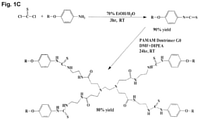
- Fig. 1c demonstrate a specific example, however the chemistry would be applicable to GD2/GD3-aminoaryl compounds disclosed above.
- the central core comprises an ethylene diamine residue on which is attached a multiplicity of terminal (i.e. primary) amino groups as generally described in scheme 2
- the central mutimeric core can be a PAMAM compound, a number of which are commercially available (see Aldrich Catalog at www.sigmaaldrich.com).
- the central mutimeric core has a multiplicity of terminal (i.e. primary) amino groups.
- PAMAM compounds include generation 0.0 PAMAM
- PAMAM compounds include PAMAM on which the terminal ⁇ NH 2 are further (partially or completely) functionalized with residues:
- a partial representation of such higher generation PAMAM is as follows: wherein the remaining "arms" (showing a wavy line) can also optionally have amidoamine residues to provide multimer of up to 8 that can further be expanded.
- immunogenic synthetic carbohydrate analog of G (such as GD2 and GD3) in a tetrameric when the central core is a generation 0.0 as displayed above can be illustrated by the following wherein G is as defined above, or preferably X is O or S, preferably X is S.
- GD2 or GD3 derivatives can be synthesized as described in Gilbert et al., 2002, J Biol Chem, 277: 327 , while modifying the process of Tong et al., 2010, Chem Biol, 17: 183 to use a suitably functionalized ⁇ -D-lactopyranoside bearing an amino group that can be used to covalently bond GD2 or GD3 to the central multimeric core.
- the functionalized ⁇ -D-lactopyranoside can be a C1- ⁇ -D-lactopyranoside amino aryl derivative, or preferably an aminophenyl-p-D-lactopyranoside or more preferably a p-aminophenyl- ⁇ -D-lactopyranoside.
- the functionalized ⁇ -D-lactopyranoside can be further derivatized so that the central mutimeric (or as shown above tetrameric) core can be covalently bound.
- the functionalized ⁇ -D-lactopyranoside can be reacted with a suitable reagent to provide an activated carbonyl residue.
- the C1-amino aryl derivative or preferably an aminophenyl-p-D-lactopyranoside or more preferably a p-aminophenyl- ⁇ -D-lactopyranoside can be reacted with phosgene, diphosgene, triphosgene, thiophosgene, carbonyl dimidazole, disuccinimidyl carbonate, or other suitable reagent to provide the corresponding isocyanato, isothiocyanato, carbonylimidazolyl or succinimidyl carbonyl derivative.
- the central mutimeric core can then be reacted with the functionalized ⁇ -D-lactopyranoside having the activated carbonyl residue described above to provide the desired immunogenic molecule.
- the central mutimeric core (such as PAMAM) can be first reacted with a suitable reagent to provide an activated carbonyl residue as described above. Then the functionalized ⁇ -D-lactopyranoside comprising an amino group can be added to provide the desired immunogenic molecule.
- a compound of the invention required for use in treatment will vary not only with the particular compound selected but also with the route of administration, the nature of the condition for which treatment is required and the age and condition of the patient and will be ultimately at the discretion of the attendant physician.
- the desired dose may conveniently be presented in a single dose or as divided dose administered at appropriate intervals, for example as two, three, four or more doses per day.
- compositions include, without limitation, those suitable for transdermal, or parenteral (including intramuscular, sub-cutaneous and intravenous) administration.
- the methods for preparing a pharmaceutical composition can include the steps of bringing into association the compound as defined herein and pharmaceutically acceptable excipients.
- compositions may take such forms as suspensions, solutions, or emulsions in oily or aqueous vehicles, and may contain formulatory agents such as suspending, stabilizing and/or dispersing agents.
- the active ingredient may be in powder form, obtained by aseptic isolation of sterile solid or by lyophilisation from solution, for constitution with a suitable vehicle, e.g. sterile water or saline, before use.
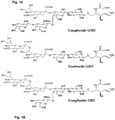
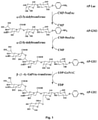
- AP-GD2 An amino phenyl ether-GD2 analog (herein AP-GD2), which has the correct GD2 carbohydrate structure but with an amino phenyl group replacing the ceramide and lipids is disclosed (see Fig. 1B ).
- This analog is water-soluble.
- the bond between the phenyl group and the first sugar is preferably in the ⁇ -configuration, which is the configuration between ceramide and the first sugar in native gangliosides. This bond is critical for displaying a proper and homogeneous structure throughout the whole carbohydrate.
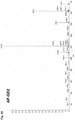
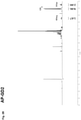
- the expected mass and configuration was verified by mass spectrometry ( Fig. 2A ), and NMR spectroscopy respectively ( Fig. 2B ).
- AP-GD2 was converted to its corresponding isothiocyanatophenyl analog, and this intermediate was coupled to the terminal free amines of a tetravalent PAMAM G0 linker dendritic core ( Fig. 1C ).
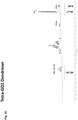
- the formation of the thiourea-bridge between AP-GD2 and the PAMAM G0 linker was verified by a carbon chemical shift at 178ppm that appears in the spectrum of HMBC (NHC(S) NHPh).
- the formation of the tetrameric product was verified by 1D- 1 H-NMR.
- the 1D- 1 H-NMR spectra showed a single signal pattern for all sugar units and indicated a 40:36:8 ratio of the amide NHs, NHC(S) NHPh, H-ortho, H-meta, NHAc/CH3/H ax or H eq , demonstrating that the GD2 dendrimer is indeed tetravalent ( Fig. 2C ).
- the tetra-GD2 antigen was designed to be used as an immunogen in tumor therapeutic studies.
- the rationale for the design of tetra-GD2 as a potential immunogen was based on the following concepts.
- presentation of tetra-GD2 may more closely mimic the oligomeric display of GD2 normally clustered in membrane rafts.
- the sugar AP-GD2 analog can be easily conjugated to PAMAM linker at room temperature under mild conditions.
- Third, chemo-enzymatic synthesis guarantees the appropriate configuration of the glycosidic linkages, thus maintaining the conformation of the whole carbohydrate.
- the antigens would be homogeneous and well-characterized chemically.
- the resulting product would be water soluble and stable. All of these features are desirable for a vaccine and can be translated to AP-GD3 disclosed herewith.
- mice were immunized up to four times with tetra-GD2. Sera were collected four days after each immunization, and samples were tested for the presence of anti-ganglioside antibodies. Immunization with tetra-GD2 generated high titer and selective antisera against tumor-marker GD2 and GD3 gangliosides in 22 out of 25 mice (88%).
- Sera were also tested by ELISA for direct binding to immobilized gangliosides.
- Gangliosides GD2, GD3, or controls were immobilized on plates and the indicated dilutions of test and control pre-immune sera were assayed.
- Antibodies generated through vaccination bound selectively to GD2 (see Fig. 3B ).
- One immunization was sufficient to elicit an increase in circulating anti-GD2 IgG, -2-fold above background, and after a boost there was a -3-fold increase above background ( Fig. 3C ).
- the antibodies also bound to GD3, but did not bind to GM1. Both anti-GD2 IgG and anti-GD2 IgM isotypes were detected.
- the IgG isotypes increased after each boost, suggesting B cell maturation and class switching ( Fig. 3C ).
- Antibodies from mice vaccinated with tetra-GD2 killed EL4-GD2 + cells in culture ( Fig. 3D ).
- EL4-GD2 + cells were killed by immune serum in the absence of complement, an effect that has been reported for some anti-GD2 mAbs ( Yoshida et al., 2001, Cancer Research, 61: 4244 ) (e.g. mAb 3F8 kills cell but mAb ME361 does not).
- killing of EL4-GD2 + cells was confirmed by counting cells stained with the vital dye trypan blue, and by assessing their morphology.
- glycopeptide vaccines could activate the adaptive immune system by binding to histocompatibility class II (MHC II) ( Avci et al., 2011, Nature Medicine, 17: 1602 ).
- MHC II histocompatibility class II
- T cell mediated immunity might also be activated by tetra-GD2. Consequently, primary T cells in a mixed lymphocyte reaction (MLR) measuring 3 H-thymidine incorporation were tested.
- MLR mixed lymphocyte reaction
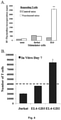
- target cells stimulators of T cell activation mytomicin-treated EL4-GD2 + were used, and Jurkat cells (GD2 - ) were used as negative control ( Fig. 4A ).
- the EL4-GD2 + or Jurkat cells treated with Mytomicin do not incorporate 3 H-thymidine (188 ⁇ 4 cpm and 107 ⁇ 5 cpm respectively), hence they act only as stimulators.
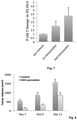
- treatment with ConA stimulated proliferation of T cells from control or vaccinated mice to a similar degree (21,457 ⁇ 504 cpm, and 19,834 ⁇ 309 cpm respectively). Similar data were obtained in related assays counting, by trypan blue exclusion, the number of proliferating T cells in each group ( Fig. 4B ).
- mice In a tumor-preventive paradigm, immunocompetent C57/BI6 mice were immunized intraperitoneally twice at one-week intervals, followed by subcutaneous implantation of syngeneic EL4-GD2 + cells, which are very aggressive and highly metastatic. EL4 cells are syngeneic and grow and metastasize very rapidly in these mice.
- Immunized mice (5 ⁇ n ⁇ 9) had primary tumors of significantly smaller size than control mice at all days measured (11, 14, 16 post tumor implantation) ( Fig. 5A ).
- mice were first implanted with EL4-GD2 + cells, and when tumors were visible/palpable, the mice were immunized two times with tetra-GD2 or control vehicle.
- immunized mice (4 ⁇ n ⁇ 6) had significantly delayed primary tumor growth compared to control mice, at all days measured ( Fig. 5C ). After 18 days all the control mice developed primary tumors averaging -6,000 mm 3 , and extensive lymph node metastasis. In contrast, the immunized mice had primary tumors -2,300 mm 3 .
- mice bearing subcutaneous tumors received, by intraperitoneal injection 4 ⁇ 10 6 T cells purified form tetra-GD2-immunized donor mice.
- the adoptively transferred group had no evidence of metastasis to the lymph nodes or the thymus, organs which are the major sites of metastasis observed for EL4 tumors.
- EL4 tumor metastasis causes enlargement of the tissue, and a corresponding increase in weight that can be quantified.
- T cells activated after vaccination were characterized further as to their CD4 and CD8 phenotype.
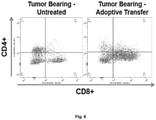
- T cells were isolated from tumor-bearing vaccinated mice or control mice, and the cells were cultured in dishes that had GD2 immobilized on the plastic. T cells from vaccinated mice proliferated robustly in GD2-coated dishes. In contrast, T cells from control mice did not proliferate on GD2-coated dishes. Although all mice are bearing tumors and are exposed to GD2, only the vaccinated mice can respond to this antigen. FACScan assays characterizing the cultures showed that the phenotype of the proliferating cells was predominantly CD8 + . The CD4/CD8 ratio in these cells changed due to the expansion of the CD8 subset, whereas the T cells from control mice retained the normal CD4/CD8 ratio ( Fig. 6 ).
- the presence of tumor-infiltrating lymphocytes was verified by immunostaining cryosections prepared from primary tumors.
- the EL4 tumors are "double negative" T cells, and do not stain with anti-CD4 or anti-CD8 antibodies.
- mice that received adoptive transfer of T cells from immunized mice there was a significantly higher number of infiltrating CD8 + cells in the primary tumors, compared to tumor-bearing mice that did not receive adoptive transfer.
- a novel tetravalent GD2 carbohydrate dendrimer has been developed as an effective carbohydrate immunogen, and as a therapeutic cancer vaccine. Biophysical characterization of the synthetic immunogen showed that it is a homogenous tetramer that maintains the desired ⁇ -linkages. Presentation of oligomeric carbohydrate structures to the immune system may stimulate more genuine and cytotoxic anti-tumor responses by mimicking the rafted GD2 in tumor membranes. In vivo and in vitro biological studies showed that the vaccine induces anti-GD2 cytotoxic antibodies and cytotoxic cellular immunity. Immunity elicited by the vaccine can delay the growth and the metastasis of an established tumor. In vivo studies disclosed herein confirm that the ganglioside vaccine can not only prevent tumor growth, but also suppress established tumor growth.
- GD3 tumor-associated gangliosides
- a tetrameric GD3 carbohydrate, prepared from the amino phenyl ether-GD3 analog is disclosed herein (see Fig. 1B ), similarly to AP-GD2, which conserves the native structural features of naturally occurring GD3, predictably is immunogenic and will elicits cytotoxic anti-gangliosides humoral and cellular responses in vivo.
- a GD3 dendrimer (tetra-GD3) analog was generated and after two rounds of immunization, high titers of anti-GD3 antibodies was detected. As seen in Fig. 7 , the humoral immunity elicited by vaccination with tetra-GD3 was detected.
- the novel GD3 vaccine was evaluated as an anti-cancer agent in vivo and it was determined that immunized mice had primary tumors of significantly smaller size than control mice at all days measured ( Fig. 8 ) and metastasis was virtually absent to the lymph nodes ( Fig. 9 ) and to the lungs ( Fig. 10 ). GD3 vaccine reduces melanoma lung metastasis ( Fig. 10 ). Accordingly, a novel tetravalent GD3 carbohydrate dendrimer has been developed as an effective carbohydrate immunogen, and as a therapeutic cancer vaccine.
- the carbohydrates were synthesized as described ( Gilbert et al., 2002, J Biol Chem, 277: 327 ), by modification of the process for phenylthio-GD2 ( Tong et al., 2010, Cehm Biol, 17: 183 ) in which the thio-phenyl analog originally reported was substituted with an p-aminophenyl- ⁇ -D-lactopyranoside (AP-Lac), from Toronto Research Chemicals), for subsequent conjugation to the dendrimer (see below).
- AP-GD2 was water soluble (>20 mg/ml), and was purified to >99% purity by size-exclusion (Superdex 30 16 mm X 85 cm column, GE Health Care).
- the measured molecular weight of AP-GD2 was 1218 g/mol and corresponded to expected values. Structures were verified by 1D and 2D NMR spectroscopy and mass spectrometry (EI-MS) (see Figs. 2A and B ). The chemoenzymatic synthesis of AP-GD2 had a final yield of -90% pure material.
- the reaction mixture was diluted with 3 ml of water and dialyzed against water (MW cutoff 2 kDa, Spectrum Laboratories Inc.). The resulting solution was freeze-dried to give tetravalent PAMAM based GD2 as white powder in 80% yield (1.34 mg). The tetravalent PAMAM based GD2 was verified by 1D and 2D NMR spectroscopy.
- Mouse lymphoma EL4-GD2 + wild type EL4 cells
- Jurkat leukemia cells were obtained from ATCC.
- EL4-GD3 + cells were developed by negative selection of EL4-GD2 + with anti-GD2 mAbs, followed by limiting dilution sub-cloning.
- EL4-GD3 + cells are stable and have the same in vitro growth properties and kinetics as EL4-GD2 + cells. All cells were grown in RPMI 1640 medium (Wisent INC) supplemented with 5% fetal bovine serum, 2 mM glutamine, 10 mM Hepes and penicillin/streptomycin at 37°C in 5% CO 2 humidified atmosphere. Flow cytometry showed that all cell lines express equal levels of cell surface GM1. Flow cytometry, and thin layer chromatography of ganglioside extracts, confirmed that EL4-GD2 + cells express GD2 but not GD3, that EL4-GD3 + cells express GD3 but not GD2, and that Jurkat cells do not express either GD2 or GD3.
- Tetra-GD2 (50 ⁇ g) in PBS was administrated intraperitoneally to C57/BI6 mice. After 10 days, the mice were re-immunized intraperitoneally (25 ⁇ g) + subcutaneously (25 ⁇ g) in PBS. Four days later, blood samples were collected for analyses.
- FACScan 2 ⁇ 10 5 cells of EL4-GD2 + , EL4-GD3 + , and Jurkat cells were washed with FACS buffer (PBS, 0.5% BSA, 0.05% NaN3), and incubated for 20 minutes on ice with 2 ⁇ l mouse antisera (1:50 dilution) or positive control anti-GD2 mAb (13 nM) or anti-GD3 mAb (13 nM). Cells were washed 2x with ice-cold FACS buffer, and incubated for 20 minutes on ice with FITC-conjugated anti-mouse IgG or FITC-conjugated anti-mouse IgM (Sigma).
- FACS buffer PBS, 0.5% BSA, 0.05% NaN3
- Direct binding ELISA Gangliosides (Advanced ImmunoChemical Inc.) were immobilized onto polystyrene Corning Strip Well 96-well plates (10 ng/well) (Fisher Scientific). The wells were then "blocked" with phosphate buffered saline containing 0.5% bovine serum albumin (PBS-0.5% BSA) for one hour. Wells were incubated for two hours with primary antibodies, including test sera, control pre-bleed mouse sera, mouse IgG (Sigma), or specific anti-ganglioside monoclonal antibodies.
- primary antibodies including test sera, control pre-bleed mouse sera, mouse IgG (Sigma), or specific anti-ganglioside monoclonal antibodies.
- the plates were washed three times with PBS-0.5% BSA, followed by horseradish peroxidase (HRP)-conjugated anti-mouse antibody (Sigma) specific for mouse IgG isotypes, or mouse IgM isotype. After three washes with PBS-0.5% BSA and two with PBS, the colorimetric substrate TMB One Solution (Promega) was added, and the reaction was stopped with 0.5 N H 2 SO 4 . Plates were read at 450 nm (Benchmark Plus, Bio-Rad) ( 31 ).
- Sera isotyping Blood was collected after each round of immunization using a capillary blood collection system (Microvette, Sardstedt) and was centrifuged at 10000 ⁇ g for 5 minutes at room temperature for serum separation. Isotyping of Ig present in serum was then performed using a mouse subisotyping kit (Calbiochem, cat# 386445) following the manufacturer's specifications. Experiments were performed 4 times in triplicate for each serum.
- EL4-GD2 + cells (5,000 /well, in 96-well plates, Corning) were cultured in regular media supplemented with the indicated reagents. The survival/metabolic profile of the cells were quantified after 24h using the tetrazolium salt reagent (MTT, Sigma) and UV absorption. Assays were done 5 times each in quadruplicate. Test reagents include positive control anti-GD2 mAbs (7 nM final concentration), negative control normal mouse IgG (7 nM final concentration). Sera collected from na ⁇ ve mice (negative control), or from test mice vaccinated twice intraperitoneally . In these experiments vaccination was at days 3 and 10 and sera was collected at day 13.
- the times for serum collection followed the timelines of the tumor therapeutic paradigm (see below).
- the sera were semi-purified and -50 ⁇ g/well of serum antibodies were applied. A small fraction of the serum antibodies would be anti-ganglioside antibodies, whereas the mAbs controls contain 100% anti-ganglioside IgG.
- MLR Mixed lymphocyte reaction
- EL4-GD2 + cells and control Jurkat cells were treated with 25 ⁇ g/ml Mitomycin (Sigma) for 1 hr to arrest their proliferation. After the cells were washed three times with media to remove Mitomycin, they were plated in 96-well plates at 2 ⁇ 10 5 cells/well. Single cell suspension of splenocytes were obtained from twice immunized (as above) and from vehicle injected control mice. Cells were separated following the protocol of the EASYSEPTM magnet (Stem Cell Tech). Similar amounts of T cells were obtained from each mouse spleen (>95% purity, data not shown). The T cells were plated at a ratio of 10:1 with Mitomycin-treated EL4 or Jurkat cells.
- T cells alone no stimulating tumor cells
- T cells treated with ConcanavilinA were used.
- 0.1 ⁇ Ci/well 3 H-thymidine Sigma-Aldrich
- DNA-incorporated 3 H-thymidine was counted by liquid scintillation, and data are reported as average cpm ⁇ sd.
- mice were vaccinated intraperitoneally four-times, each one week apart (50 ⁇ g each time). Control mice received only vehicle injections. One week after the fourth vaccination, 5 ⁇ 10 5 EL4-GD2 + were injected subcutaneously. Ten days after tumor challenge, tumors were measured at the indicated times post-tumor implantation.
- mice 5 ⁇ 10 5 EL4-GD2 + cells were injected subcutaneously in C57BL/6 mice, on the left flank. After three days, when the tumor was visible/palpable, mice were randomized and were vaccinated twice intraperitoneally on the right side, with either vehicle control or with tetra-GD2-dendimer (50 ⁇ g in PBS). Tumors were measured at the indicated times post-tumor implantation.
- mice were vaccinated intraperitoneally twice (one week apart) with 50 ⁇ g of tetra-GD2.
- T cells from spleen and lymph nodes were isolated using the EasySep Negative Selection Mouse T Cell Enrichement Kit (Stemcell Technologies).
- Approximately 4 ⁇ 10 6 T cells were injected intraperitoneally to C57BL/6 mice that had been injected subcutaneously with 2.5 ⁇ 10 5 EL4-GD2 + cells 3 days prior to the adoptive transfer. Tumors were measured at the indicated times and mice were euthanized 14 days post-tumor implantation in order to dissect the ipsilateral inguinal and axilary lymph nodes and asses metastasis.
- mice were dissected and examined microscopically for evidence of metastasis to lymph nodes and thymus (organs to which EL4 cells are known to home).
- mice did not exhibit any signs of adverse effects that could be predicted from known side effects. All endpoints measured were negative, including those reported as problematic in clinical trials using ther forms of GD2 or GD3 antigens (hyperalgesia, changes in behavior, mobility, and learning/memory). Hyper-immunized mice did not develop cross-reactive immunity to normal gangliosides, and there were no alterations to hematological profiles, liver or kidney enzyme profiles.
- the GD3 dendrimer (tetra-GD3) analog was generated. After two rounds of immunization, high titers of anti-GD3 antibodies were detected, but not anti-GM1 Abs. Safety evaluation, as above, revealed no problems.
- Fig. 7 Shows the humoral immunity elicited by vaccination with tetra-GD3.
- the novel GD3 vaccine was evaluated as an anti-cancer agent in vivo.
- EL4-GD3+ expressing high levels of GD3 was used.
- mice were immunized twice prior to implantation of a very aggressive syngeneic EL4-GD3+.
- adoptive transfer of T cells from vaccinated donor mice into mice bearing established subcutaneous tumors was performed.
- immunized mice had primary tumors of significantly smaller size than control mice at all days measured ( Fig. 8 ) and metastasis was virtually absent to the lymph nodes ( Fig. 9 ) and to the lungs ( Fig. 10 ).
- Fig. 8 illustrates the results of vaccination with tetra-GD3 protects against GD3+ tumor challenge.
- Mice were vaccinated intraperitoneally with tetra-GD3 (2x, 1 week apart, 10 ug/mouse each time, no adjuvant) before subcutaneous tumor implantation of EL4-GD3+ cells. Average primary tumor volumes ⁇ sd.
- Fig. 9 represents the results of vaccination with tetra-GD3 protects against GD3+ tumor challenge.
- Mice were vaccinated intraperitoneally with tetra-GD3 (2x, 1 week apart, 10 ug/mouse each time, no adjuvant) before subcutaneous tumor implantation of EL4-GD3+ cells.
- Average lymph node volume ⁇ sd (indicative of metastasis, measured by detecting EL4 cells in the lymph node), n 8 each group. Lymph nodes are shown as example.
- Fig. 10 illustrates the observation that the GD3 vaccine reduces melanoma lung metastasis.
- 5x10⁵ B16-GD3 melanoma cells were injected in the tail vein of C57BL/6 mice. After three days, mice were randomized and were vaccinated twice IP. Mice were sacrificed after 14 days. Lungs with dark spots of metastatic nodules were quantified (tumors contain melanin and can be easily seen).
Landscapes
- Health & Medical Sciences (AREA)
- Life Sciences & Earth Sciences (AREA)
- Chemical & Material Sciences (AREA)
- General Health & Medical Sciences (AREA)
- Organic Chemistry (AREA)
- Immunology (AREA)
- Veterinary Medicine (AREA)
- Public Health (AREA)
- Animal Behavior & Ethology (AREA)
- Medicinal Chemistry (AREA)
- Epidemiology (AREA)
- Molecular Biology (AREA)
- Pharmacology & Pharmacy (AREA)
- Biochemistry (AREA)
- Genetics & Genomics (AREA)
- Mycology (AREA)
- Microbiology (AREA)
- Proteomics, Peptides & Aminoacids (AREA)
- Biophysics (AREA)
- Engineering & Computer Science (AREA)
- Biotechnology (AREA)
- Oncology (AREA)
- Cell Biology (AREA)
- Chemical Kinetics & Catalysis (AREA)
- General Chemical & Material Sciences (AREA)
- Nuclear Medicine, Radiotherapy & Molecular Imaging (AREA)
- Bioinformatics & Cheminformatics (AREA)
- Medicines Containing Antibodies Or Antigens For Use As Internal Diagnostic Agents (AREA)
- Saccharide Compounds (AREA)
- Pharmaceuticals Containing Other Organic And Inorganic Compounds (AREA)
Applications Claiming Priority (3)
| Application Number | Priority Date | Filing Date | Title |
|---|---|---|---|
| US201361912684P | 2013-12-06 | 2013-12-06 | |
| EP14868142.2A EP3077405B1 (en) | 2013-12-06 | 2014-12-04 | Anti-ganglioside compound for targeting cancer and generating antibodies |
| PCT/CA2014/051165 WO2015081438A1 (en) | 2013-12-06 | 2014-12-04 | Anti-ganglioside compound for targeting cancer and generating antibodies |
Related Parent Applications (2)
| Application Number | Title | Priority Date | Filing Date |
|---|---|---|---|
| EP14868142.2A Division-Into EP3077405B1 (en) | 2013-12-06 | 2014-12-04 | Anti-ganglioside compound for targeting cancer and generating antibodies |
| EP14868142.2A Division EP3077405B1 (en) | 2013-12-06 | 2014-12-04 | Anti-ganglioside compound for targeting cancer and generating antibodies |
Publications (1)
| Publication Number | Publication Date |
|---|---|
| EP3957327A1 true EP3957327A1 (en) | 2022-02-23 |
Family
ID=53272688
Family Applications (2)
| Application Number | Title | Priority Date | Filing Date |
|---|---|---|---|
| EP21199178.1A Pending EP3957327A1 (en) | 2013-12-06 | 2014-12-04 | Anti-ganglioside compound for targeting cancer and generating antibodies |
| EP14868142.2A Active EP3077405B1 (en) | 2013-12-06 | 2014-12-04 | Anti-ganglioside compound for targeting cancer and generating antibodies |
Family Applications After (1)
| Application Number | Title | Priority Date | Filing Date |
|---|---|---|---|
| EP14868142.2A Active EP3077405B1 (en) | 2013-12-06 | 2014-12-04 | Anti-ganglioside compound for targeting cancer and generating antibodies |
Country Status (7)
| Country | Link |
|---|---|
| US (1) | US10363305B2 (enExample) |
| EP (2) | EP3957327A1 (enExample) |
| JP (1) | JP2016539172A (enExample) |
| CN (1) | CN106414472A (enExample) |
| CA (1) | CA2968995A1 (enExample) |
| ES (1) | ES2904533T3 (enExample) |
| WO (1) | WO2015081438A1 (enExample) |
Families Citing this family (2)
| Publication number | Priority date | Publication date | Assignee | Title |
|---|---|---|---|---|
| US11786586B2 (en) * | 2016-12-23 | 2023-10-17 | Aoa Dx | Carbohydrate structures and uses thereof |
| AU2021357695A1 (en) * | 2020-10-05 | 2023-06-01 | Aoa Dx | Compositions and methods for cancer diagnosis |
Citations (2)
| Publication number | Priority date | Publication date | Assignee | Title |
|---|---|---|---|---|
| WO2003003985A2 (en) * | 2001-07-06 | 2003-01-16 | Sloan-Kettering Institute For Cancer Research | Polyvalent conjugate vaccine for cancer |
| WO2004041310A1 (en) * | 2002-11-08 | 2004-05-21 | Danmarks Fødevareforskning | Preparation of chemically well-defined carbohydrate dendrimer conjugates |
Family Cites Families (6)
| Publication number | Priority date | Publication date | Assignee | Title |
|---|---|---|---|---|
| DE69432513T2 (de) * | 1993-01-22 | 2003-12-24 | Sloan-Kettering Institute For Cancer Research, New York | Gangliosid-klh-konjugatimastoffe mit qs-21 |
| AU2002251678A1 (en) * | 2000-11-29 | 2002-08-19 | Bracco International B.V. | Linkable sialyl lewis x analogs |
| JP2003073397A (ja) | 2001-08-30 | 2003-03-12 | Wakamoto Pharmaceut Co Ltd | 合成ムチン |
| JP4742339B2 (ja) | 2005-06-14 | 2011-08-10 | 独立行政法人産業技術総合研究所 | シアル酸含有3糖化合物、それを用いるサーズウイルスまたはサーズスパイク蛋白質の検出 |
| JP5130598B2 (ja) * | 2005-09-02 | 2013-01-30 | 静岡県公立大学法人 | ウイルスレセプター糖鎖認識特異性の判別方法 |
| JP2008031156A (ja) | 2006-07-07 | 2008-02-14 | National Univ Corp Shizuoka Univ | 抗ウイルス剤 |
-
2014
- 2014-12-04 CN CN201480073838.1A patent/CN106414472A/zh active Pending
- 2014-12-04 JP JP2016536849A patent/JP2016539172A/ja active Pending
- 2014-12-04 US US15/101,428 patent/US10363305B2/en active Active
- 2014-12-04 ES ES14868142T patent/ES2904533T3/es active Active
- 2014-12-04 WO PCT/CA2014/051165 patent/WO2015081438A1/en not_active Ceased
- 2014-12-04 EP EP21199178.1A patent/EP3957327A1/en active Pending
- 2014-12-04 EP EP14868142.2A patent/EP3077405B1/en active Active
- 2014-12-04 CA CA2968995A patent/CA2968995A1/en not_active Abandoned
Patent Citations (2)
| Publication number | Priority date | Publication date | Assignee | Title |
|---|---|---|---|---|
| WO2003003985A2 (en) * | 2001-07-06 | 2003-01-16 | Sloan-Kettering Institute For Cancer Research | Polyvalent conjugate vaccine for cancer |
| WO2004041310A1 (en) * | 2002-11-08 | 2004-05-21 | Danmarks Fødevareforskning | Preparation of chemically well-defined carbohydrate dendrimer conjugates |
Non-Patent Citations (23)
| Title |
|---|
| ASTRONOMOBURTON, NAT REV DRUG DISCOV, vol. 9, 2010, pages 308 |
| AVCI ET AL., NATURE MEDICINE, vol. 17, 2011, pages 1602 |
| BATTULA ET AL., JOURNAL OF CLINICAL INVESTIGATIONS, vol. 122, 2012, pages 2066 |
| BLEEKE ET AL., EUROPEAN JOURNAL OF CANCER, vol. 45, 2009, pages 2915 |
| BOLESTA ET AL., CANCER RESEARCH, vol. 65, 2005, pages 3410 |
| CHAPMAN ET AL., CLINICAL CANCER RESEARCH, vol. 6, 2000, pages 4658 |
| CHEUN ET AL., J CLIN ONCOL, vol. 5, 1987, pages 1430 |
| DANIESHEFSKYALLEN, ANGEW CHEM INT ED, vol. 39, 2000, pages 836 |
| GILBERT ET AL., J BIOL CHEM, vol. 277, 2002, pages 327 |
| GILBERT ET AL., J BIOL CHEM, vol. 277, pages 327 |
| HAKOMORI, CANCER RESEARCH, vol. 56, 1996, pages 5309 |
| HOUGHTON ET AL., PROC NATL ACAD SCI USA, vol. 82, 1985, pages 1242 |
| KIM ET AL., CANCER IMMUNOLOGY, IMMUNOTHERAPY, vol. 60, 2011, pages 621 |
| KIRKWOOD ET AL., JOURNAL OF CLINICAL ONCOLOGY, vol. 19, 2001, pages 2370 |
| NAVID ET AL., CURRENT CANCER DRUG TARGETS, vol. 10, 2010, pages 200 |
| RAGUPATHI ET AL., INTERNATIONAL JOURNAL OF CANCER, vol. 85, 2000, pages 659 |
| THOMPSON JEFFREY P ET AL: "Oligosaccharide-derivatized dendrimers: Defined multivalent inhibitors of the adherence of the cholera toxin B subunit and the heat labile enterotoxin of E. coli to GM1", GLYCOCONJUGATE JOURNAL, vol. 14, no. 7, November 1997 (1997-11-01), pages 837 - 845, XP055127848, ISSN: 0282-0080 * |
| TONG ET AL., CEHM BIOL, vol. 17, 2010, pages 183 |
| TONG ET AL., CHEM BIOL, vol. 17, 2010, pages 183 |
| WONDIMU ET AL., CANCER IMMUNOLOGY, IMMUNOTHERAPY, vol. 57, 2008, pages 1079 |
| YOSHIDA ET AL., CANCER RESEARCH, vol. 61, 2001, pages 4244 |
| YOSHIMI MUROZUKA ET AL: "Lyso-GM3, its dimer, and multimer: their synthesis, and their effect on epidermal growth factor-induced receptor tyrosine kinase", GLYCOCONJUGATE JOURNAL, KLUWER ACADEMIC PUBLISHERS, BO, vol. 24, no. 9, 19 July 2007 (2007-07-19), pages 551 - 563, XP019551594, ISSN: 1573-4986, DOI: 10.1007/S10719-007-9051-2 * |
| ZEYTIN ET AL., CANCER GENE THERAPY, vol. 7, 2000, pages 1426 |
Also Published As
| Publication number | Publication date |
|---|---|
| EP3077405A4 (en) | 2017-08-09 |
| US10363305B2 (en) | 2019-07-30 |
| EP3077405B1 (en) | 2021-11-03 |
| US20160303227A1 (en) | 2016-10-20 |
| ES2904533T3 (es) | 2022-04-05 |
| EP3077405A1 (en) | 2016-10-12 |
| JP2016539172A (ja) | 2016-12-15 |
| CN106414472A (zh) | 2017-02-15 |
| CA2968995A1 (en) | 2015-06-11 |
| WO2015081438A1 (en) | 2015-06-11 |
Similar Documents
| Publication | Publication Date | Title |
|---|---|---|
| AU2015305332B2 (en) | Novel glycan conjugates and use thereof | |
| Livingston et al. | Carbohydrate vaccines that induce antibodies against cancer. 1. Rationale | |
| AU2011265184B2 (en) | Multivalent glycopeptide constructs and uses thereof | |
| FI117668B (fi) | Menetelmä gangliosidi-KLH-konjugaattia ja QS-21-ainetta sisältävän koostumuksen valmistamiseksi | |
| KR101806370B1 (ko) | 보다 높은 탄수화물 항원 밀도 및 신규한 사포닌 애쥬번트를 갖는 백신 | |
| US20150064240A1 (en) | MUC1 Based Glycolipopeptide Vaccine with Adjuvant | |
| Hevey et al. | Recent advances in developing synthetic carbohydrate-based vaccines for cancer immunotherapies | |
| CA1337403C (en) | Methods for the production of antibodies and induction of immune responses to tumor-associated gangliosides by immunization with ganglioside lactones | |
| US20110229510A1 (en) | Glycopeptide constructs and uses thereof | |
| US20030170249A1 (en) | Vaccines directed to cancer-associated carbohydrate antigens | |
| WO2008057235A9 (en) | Enhanced immunogenicity of tumor associated antigens by addition of alphagal epitopes | |
| CA3075027A1 (en) | Reversible linkers and use thereof | |
| US20240042000A1 (en) | Carbohydrate structures and uses thereof | |
| EP3077405B1 (en) | Anti-ganglioside compound for targeting cancer and generating antibodies | |
| HK40064500A (en) | Anti-ganglioside compound for targeting cancer and generating antibodies | |
| US20050169929A1 (en) | Use of a vaccine for active immunization against cancer | |
| Manabe et al. | Conjugation Strategies for Development | |
| Manabe et al. | Conjugation Strategies for Development of Bioactive Middle Molecules | |
| Apostolopoulos et al. | Carbohydrate-Based Targets and Vehicles for Cancer and Infectious Diseases Vaccines | |
| Apostolopoulos | Carbohydrate-Based Targets and Vehicles |
Legal Events
| Date | Code | Title | Description |
|---|---|---|---|
| PUAI | Public reference made under article 153(3) epc to a published international application that has entered the european phase |
Free format text: ORIGINAL CODE: 0009012 |
|
| STAA | Information on the status of an ep patent application or granted ep patent |
Free format text: STATUS: THE APPLICATION HAS BEEN PUBLISHED |
|
| AC | Divisional application: reference to earlier application |
Ref document number: 3077405 Country of ref document: EP Kind code of ref document: P |
|
| AK | Designated contracting states |
Kind code of ref document: A1 Designated state(s): AL AT BE BG CH CY CZ DE DK EE ES FI FR GB GR HR HU IE IS IT LI LT LU LV MC MK MT NL NO PL PT RO RS SE SI SK SM TR |
|
| REG | Reference to a national code |
Ref country code: HK Ref legal event code: DE Ref document number: 40064500 Country of ref document: HK |
|
| STAA | Information on the status of an ep patent application or granted ep patent |
Free format text: STATUS: REQUEST FOR EXAMINATION WAS MADE |
|
| 17P | Request for examination filed |
Effective date: 20220823 |
|
| RBV | Designated contracting states (corrected) |
Designated state(s): AL AT BE BG CH CY CZ DE DK EE ES FI FR GB GR HR HU IE IS IT LI LT LU LV MC MK MT NL NO PL PT RO RS SE SI SK SM TR |
|
| P01 | Opt-out of the competence of the unified patent court (upc) registered |
Effective date: 20230526 |
|
| STAA | Information on the status of an ep patent application or granted ep patent |
Free format text: STATUS: EXAMINATION IS IN PROGRESS |
|
| 17Q | First examination report despatched |
Effective date: 20241120 |
|
| GRAP | Despatch of communication of intention to grant a patent |
Free format text: ORIGINAL CODE: EPIDOSNIGR1 |
|
| STAA | Information on the status of an ep patent application or granted ep patent |
Free format text: STATUS: GRANT OF PATENT IS INTENDED |
|
| INTG | Intention to grant announced |
Effective date: 20260609 |