EP3944751B1 - Steuerungssystem für ein landwirtschaftliches zuggespann aus einem zugfahrzeug und einem mähwerk, mähwerk und zuggespann - Google Patents
Steuerungssystem für ein landwirtschaftliches zuggespann aus einem zugfahrzeug und einem mähwerk, mähwerk und zuggespann Download PDFInfo
- Publication number
- EP3944751B1 EP3944751B1 EP21186612.4A EP21186612A EP3944751B1 EP 3944751 B1 EP3944751 B1 EP 3944751B1 EP 21186612 A EP21186612 A EP 21186612A EP 3944751 B1 EP3944751 B1 EP 3944751B1
- Authority
- EP
- European Patent Office
- Prior art keywords
- mower
- tractor
- inclination
- inclination sensor
- control system
- Prior art date
- Legal status (The legal status is an assumption and is not a legal conclusion. Google has not performed a legal analysis and makes no representation as to the accuracy of the status listed.)
- Active
Links
Images

Classifications
-
- A—HUMAN NECESSITIES
- A01—AGRICULTURE; FORESTRY; ANIMAL HUSBANDRY; HUNTING; TRAPPING; FISHING
- A01D—HARVESTING; MOWING
- A01D34/00—Mowers; Mowing apparatus of harvesters
- A01D34/01—Mowers; Mowing apparatus of harvesters characterised by features relating to the type of cutting apparatus
- A01D34/412—Mowers; Mowing apparatus of harvesters characterised by features relating to the type of cutting apparatus having rotating cutters
- A01D34/63—Mowers; Mowing apparatus of harvesters characterised by features relating to the type of cutting apparatus having rotating cutters having cutters rotating about a vertical axis
- A01D34/64—Mowers; Mowing apparatus of harvesters characterised by features relating to the type of cutting apparatus having rotating cutters having cutters rotating about a vertical axis mounted on a vehicle, e.g. a tractor, or drawn by an animal or a vehicle
- A01D34/66—Mowers; Mowing apparatus of harvesters characterised by features relating to the type of cutting apparatus having rotating cutters having cutters rotating about a vertical axis mounted on a vehicle, e.g. a tractor, or drawn by an animal or a vehicle with two or more cutters
-
- A—HUMAN NECESSITIES
- A01—AGRICULTURE; FORESTRY; ANIMAL HUSBANDRY; HUNTING; TRAPPING; FISHING
- A01B—SOIL WORKING IN AGRICULTURE OR FORESTRY; PARTS, DETAILS, OR ACCESSORIES OF AGRICULTURAL MACHINES OR IMPLEMENTS, IN GENERAL
- A01B63/00—Lifting or adjusting devices or arrangements for agricultural machines or implements
- A01B63/02—Lifting or adjusting devices or arrangements for agricultural machines or implements for implements mounted on tractors
- A01B63/10—Lifting or adjusting devices or arrangements for agricultural machines or implements for implements mounted on tractors operated by hydraulic or pneumatic means
- A01B63/111—Lifting or adjusting devices or arrangements for agricultural machines or implements for implements mounted on tractors operated by hydraulic or pneumatic means regulating working depth of implements
- A01B63/114—Lifting or adjusting devices or arrangements for agricultural machines or implements for implements mounted on tractors operated by hydraulic or pneumatic means regulating working depth of implements to achieve a constant working depth
-
- A—HUMAN NECESSITIES
- A01—AGRICULTURE; FORESTRY; ANIMAL HUSBANDRY; HUNTING; TRAPPING; FISHING
- A01D—HARVESTING; MOWING
- A01D34/00—Mowers; Mowing apparatus of harvesters
- A01D34/01—Mowers; Mowing apparatus of harvesters characterised by features relating to the type of cutting apparatus
- A01D34/412—Mowers; Mowing apparatus of harvesters characterised by features relating to the type of cutting apparatus having rotating cutters
- A01D34/63—Mowers; Mowing apparatus of harvesters characterised by features relating to the type of cutting apparatus having rotating cutters having cutters rotating about a vertical axis
- A01D34/82—Other details
Definitions
- the invention relates to a control system for an agricultural tractor-trailer combination comprising a tractor and a mower.
- the invention also relates to a mower and a tractor-trailer combination.
- the invention also relates to a method for calibrating a control system.
- a device for controlling or regulating the position of an attachment attached to a three-point implement attachment of a tractor wherein an inclination sensor is provided which can be attached to the tractor and by means of which the inclination of the tractor relative to a horizontal plane can be measured, and a further inclination sensor is provided on the attachment by means of which the inclination of the attachment relative to a horizontal plane can be measured, and wherein a control or regulating unit is provided to which both inclination sensors are connected, and the cancellation of the compensation of a change in inclination is regulated by means of a difference between the inclination of the tractor and the inclination of the attachment.
- a mower is attached to an agricultural tractor, in particular a tractor.
- a combination of an agricultural tractor and a mower is also referred to as an agricultural tractor combination.
- a defined cutting height must be set for the mower's mowing elements. Setting such a defined cutting height has so far been complex and prone to errors, since the driver has to get off and measure the cutting height after each adjustment of the upper link length, because this cannot be estimated from the driver's cab of the tractor. In particular, it is then difficult to set an exactly defined cutting height for the mower's mowing elements.
- Mower when the agricultural tractor-trailer combination is operated on an incline, such as an uphill or downhill gradient.
- an incline such as an uphill or downhill gradient.
- the WO 2013/02661 A1 discloses a control system for an agricultural tractor with a trailer attached to the agricultural tractor.
- the trailer is a cultivator.
- a first angle sensor is mounted on the towing vehicle and a second angle sensor on the cultivator. Both angle sensors provide measured values to a control unit of the towing vehicle. Depending on the measured values of these angle sensors, an inclination of the cultivator or the towing vehicle can be determined.
- the present invention is based on the object of creating a novel control system for an agricultural tractor-trailer combination, consisting of a towing vehicle and a mower, a method for calibrating the control system, a mower and a tractor-trailer combination.
- the control system comprises a first inclination sensor that can be mounted on the mower and detects a first inclination angle, a second inclination sensor that can be mounted on the towing vehicle and detects a second inclination angle, and a control device that receives the first inclination angle from the first inclination sensor and the second inclination angle from the second inclination sensor and determines an actual cutting height of the mower depending on an actual angle difference between the first inclination angle and the second inclination angle.
- the invention proposes for the first time that an actual cutting height of the mower, namely of the mowing elements of the mower, is determined depending on the inclination angles that are detected using two inclination sensors, and specifically depending on the actual angle difference of the two detected inclination angles. In this way, the actual cutting height can be detected and This is especially possible when the tractor/trailer combination is operated on an incline or decline.
- control unit is part of the mower.
- control unit determines a control variable by means of which the mower can be moved relative to the towing vehicle in such a way that the actual angle difference is adjusted to a target angle difference and thus the actual cutting height of the mower is adjusted to a target cutting height of the mower. In this way, the actual cutting height can be adjusted to the target cutting height of the mower easily, reliably and automatically.
- the first inclination sensor is part of the mower and is permanently installed on the mower.
- the second inclination sensor is part of the mower and can be detachably mounted on the towing vehicle, whereby the second inclination sensor is connected to the mower via a cable and can be moved relative to the mower for mounting on the towing vehicle.
- both the first inclination sensor and the second inclination sensor are part of the mower.
- the first inclination sensor is permanently installed on the mower
- the second inclination sensor of the mower is connected to the mower via a cable and can be moved relative to the mower while hanging on the cable in order to mount the second inclination sensor on the towing vehicle or to attach it to the towing vehicle in an easily detachable manner.
- the second inclination sensor can be quickly and conveniently mounted or attached to the towing vehicle by the driver. No permanently installed inclination sensors are required on the towing vehicle. The driver does not have to couple any plug connections. Such plug connections can quickly become dirty and are prone to failure.
- the method for calibrating the control system is defined in claim 4.
- the mower is defined in claim 5 and the tractor unit is defined in claim 9 or claim 10.
- the same has a holder for the second inclination sensor, via which the second inclination sensor can be detachably mounted on a guide rail of the trailer coupling of the towing vehicle.
- the holder preferably has magnets and centering discs, whereby the magnets hold the holder on the guide rail, and whereby the centering discs engage in a groove in the guide rail and are adapted to the width of the groove.
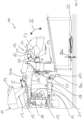
- Fig.1 shows a section of an agricultural tractor-trailer combination 10, which comprises a towing vehicle 11 and a mower 12 attached to the towing vehicle 11.
- a rear wheel 13 a trailer coupling 14 designed as a three-point power lift, a drawbar 15 and a guide rail 16 are shown on the towing vehicle 11.
- the trailer coupling 14 designed as a three-point power lift has an upper link 17 and two lower links 18.
- the three-point power lift is also known as three-point hydraulics.
- the mower 12 has a mower support frame 19, which has a coupling device 20 for attaching the mower 12 to the trailer coupling 14 of the towing vehicle 11.
- a coupling device 20 for attaching the mower 12 to the trailer coupling 14 of the towing vehicle 11.
- the mower 12 With a first section 20a of this coupling device 20, the mower 12 is connected to the lower links 18 of the trailer coupling 14 of the towing vehicle 11.
- the mower 12 With a second section 20b of this coupling device 20, the mower 12 can be coupled to the upper link 17 of the trailer coupling 14 of the towing vehicle 11.
- the upper link 17 is extendable and retractable, in particular telescopic.
- the mower 12 is tilted or inclined about an axis 21 which is formed between the first section 20a of the coupling device 20 and the lower links 18 of the towing device 14.
- the mower 12 is tilted in the direction of the double arrow II of the Fig.1 tilted or inclined.
- the mower 12 is inclined downwards at its rear end. This causes a blade 22a of a mowing element 22 to rotate upwards, increasing the cutting height X.
- the upper link 17 is retracted further, i.e. shortened, the mower is inclined upwards at its rear end, i.e. raised. This causes the blade 22a of the mowing element 22 to rotate downwards, reducing the cutting height X or setting a lower cutting height.
- the mower 12 is in particular a disc mower.
- the control system also has a first inclination sensor 23.
- the first inclination sensor 23 is mounted on the mower 12 and detects a first inclination angle, namely an inclination angle of the mower 12.
- the first inclination sensor 23 is a component of the mower 12 and is permanently installed on the mower 12, in particular on the mower support frame 19.
- the control system also has a second inclination sensor 24.
- the second inclination sensor 24 can be mounted on the towing vehicle 11 and detects a second inclination angle.
- the second inclination sensor 24 is preferably also a component of the mower 12 and can be detachably mounted on the towing vehicle 11.
- the second inclination sensor 24, which is a component of the mower 12 is connected to the mower 12 via a cable 25 and can be moved relative to the mower 12 in order to mount or attach the second inclination sensor 24 to the towing vehicle 11.
- control system In addition to the two inclination sensors 23 and 24, the control system also has a control unit 26 which is arranged on the mower 12.
- the control unit 26 of the mower 12 receives the first inclination angle from the first inclination sensor 23 and the second inclination angle from the second inclination sensor 24.
- An arrow 27 visualizes the first inclination angle detected by the first inclination sensor 23 as an input variable for the control unit 26, and an arrow 28 visualizes the second inclination angle determined by the second inclination sensor 24 as a further input variable for the control unit 26.
- the control unit 26 is connected to the inclination sensors 23, 24 for data purposes.
- the control unit 26 determines an actual angle difference between the first angle of inclination of the first inclination sensor 23 and the second angle of inclination of the second inclination sensor 24 depending on the two angles of inclination of the two inclination sensors 23, 24, wherein the control unit 26 determines an actual cutting height, namely of the mowing elements 22 of the mowing unit 12, depending on this actual angle difference and depending on the geometry of the mower 12.
- the control unit 26 can output the determined actual cutting height as an output variable 29 and transmit it, for example, via conventional data interfaces to a display terminal - for example an ISO bus terminal - in order to display the actual cutting height to a driver of the towing vehicle 11.
- control unit 26 compare the determined actual angle difference with a target angle difference stored in the control unit 26 and thus the actual cutting height of the mower 12 with a target cutting height of the same in order to determine a control variable depending on this, for example for the upper link 17 of the trailer coupling 14 of the towing vehicle 11, with the help of which the upper link 17 can be controlled and the mower 12 can be moved relative to the towing vehicle 11 in such a way that the actual angle difference of the target angle difference and thus the actual cutting height of the mower 12 is automatically adjusted to the target cutting height of the mower 12.
- a control variable for example for the upper link 17 of the trailer coupling 14 of the towing vehicle 11, with the help of which the upper link 17 can be controlled and the mower 12 can be moved relative to the towing vehicle 11 in such a way that the actual angle difference of the target angle difference and thus the actual cutting height of the mower 12 is automatically adjusted to the target cutting height of the mower 12.
- the control unit 26 can be coupled to a corresponding control unit of the towing vehicle 11 or connected for data purposes.
- the control unit 26 of the mower can control the upper link 17 itself directly and a coupling or data connection to a control unit of the towing vehicle 11 is not required.
- Fig.1 and 2 visualize such a control variable as a further output variable 30 of the control unit 26.
- the first inclination sensor 23 is fixedly installed, in particular on the mower support frame 19 of the mower 12, whereas the second inclination sensor 24 is connected to the mower 12 via the cable 25 and can be displaced relative to the mower 12 in order to detachably mount the second inclination sensor 24 on the towing vehicle 11.
- the mower 12 has a holder 31 for the second inclination sensor 24, via which the second inclination sensor 24 can be detachably mounted on the guide rail 16 of the towing vehicle 11.
- the holder 31 for the second sensor 24 has a first section 31a and a second section 31b.
- the first section 31a is used for mounting on the guide rail 16 of the towing vehicle 11
- the second section 31b is used to accommodate the second inclination sensor 24.
- the holder 31 for the second inclination sensor 24 has magnets 32 and centering disks 33. In the embodiment shown, the magnets 32 and centering disks 33 engage the first section 31a of the holder 31.
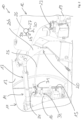
- the magnets 32 and centering discs 33 are designed for mounting in a groove 34 of the guide rail 16 of the towing vehicle 11 (see Fig.2 ), whereby the magnets 32 hold the holder 31 and thus the second inclination sensor 24 on the guide rail 16, and wherein the centering disks 33 are adapted to the width of the groove 34 in order to align the bracket 31 exactly on the guide rail 16 and to prevent it from tilting as a result of a play between the centering disks 33 and the groove 34 of the guide rail 16.
- the second inclination sensor 34 can thus be mounted quickly and reliably on the towing vehicle 11, in a consistently reproducible, identical alignment.
- the two sections or parts 31a and 31b of the bracket 31 for the second inclination sensor 24 can be moved and aligned relative to one another, for which purpose elongated holes 35 are used, which are formed on a tab 36 of the section 31b of the bracket 31. After loosening the fastening screws extending through these elongated holes 35, the sections 31a and 31b of the bracket 31 can be aligned relative to one another. In this way, the bracket 31 can be advantageously adapted to the available installation space on the towing vehicle 11.
- the invention relates to the above-described control system of an agricultural tractor and to the above-described mower.
- the invention relates to a tractor-trailer combination 10 consisting of the towing vehicle 11 and the attached mower 12, wherein the agricultural tractor-trailer combination 10 has the control system described above and the mower 12 is designed as described above.
- the invention further relates to a method for calibrating the control system described above.
- first measured values of the two inclination sensors 23, 24 are determined in order to determine a first angle difference.
- second measured values of the two inclination sensors 23, 24 are determined in order to determine a second angle difference.
- the tractor-trailer combination is in the same place as in the first position, but has only been turned or rotated by 180°.
- the control system can then be calibrated based on these two angle differences or the first and second measured values.
- This calibration means that the tractor-trailer combination does not need to be on a flat surface during calibration. It is also not necessary for the control system components to be precisely aligned with one another during assembly.
Landscapes
- Life Sciences & Earth Sciences (AREA)
- Environmental Sciences (AREA)
- Engineering & Computer Science (AREA)
- Mechanical Engineering (AREA)
- Soil Sciences (AREA)
- Harvester Elements (AREA)
Description
- Die Erfindung betrifft ein Steuerungssystem für ein landwirtschaftliches Zuggespann aus einem Zugfahrzeug und einem Mähwerk. Des Weiteren betrifft die Erfindung ein Mähwerk und ein Zuggespann. Ferner betrifft die Erfindung ein Verfahren zum Kalibrieren eines Steuerungssystems.
- Aus
DE 101 40 383 A1 ist eine Vorrichtung zur Steuerung oder Regelung der Lage eines an einer Dreipunkt-Geräteanbaueinrichtung eines Schleppers angebauten Anbaugerätes bekannt, wobei ein am Schlepper anbaubarer Neigungssensor vorgesehen ist, durch den die Neigung des Schleppers relativ zu einer horizontalen Ebene messbar ist, und am Anbaugerät ein weiterer Neigungssensor vorgesehen ist, durch den die Neigung des Anbaugerätes relativ zu einer horizontalen Ebene messbar ist, und wobei eine Steuerungs- bzw. Regelungseinheit vorgesehen ist, mit welcher beide Neigungssensoren verbunden sind, und die Aufhebung des Ausgleichs einer Neigungsveränderung mittels einer Differenzbildung zwischen der Neigung des Schleppers und der Neigung des Anbaugerätes geregelt wird. - Aus der Praxis ist es hinlänglich bekannt, dass beim Mähen von Erntegut, wie zum Beispiel von Gras, an ein landwirtschaftliches Zugfahrzeug, insbesondere an einen Schlepper, ein Mähwerk angehängt wird. Ein Gespann aus einem landwirtschaftlichen Zugfahrzeug und einem Mähwerk wird auch als landwirtschaftliches Zuggespann bezeichnet. Um das zu mähende Erntegut mit hinreichender Qualität zu mähen, muss für Mähorgane des Mähwerks eine definierte Schnitthöhe eingestellt werden. Die Einstellung einer solchen definierten Schnitthöhe ist bislang aufwendig und fehleranfällig, da der Fahrer nach jeder Verstellung der Oberlenkerlänge absteigen und die Schnitthöhe messen muss, weil diese aus der Fahrerkabine des Zugfahrzeugs nicht einschätzbar ist. Insbesondere bereitet es dann Schwierigkeiten eine exakte definierte Schnitthöhe für die Mähorgane des Mähwerks einzustellen, wenn das landwirtschaftliche Zuggespann in einer Neigung, wie zum Beispiel an einer Steigung oder an einem Gefälle, betrieben wird. Es besteht Bedarf daran, eine Schnitthöhe für Mähorgane eines an ein landwirtschaftliches Zugfahrzeug angehängten Mähwerks insbesondere auch dann einfach und zuverlässig einzustellen, wenn das landwirtschaftliche Zuggespann in einer Neigung betrieben wird.
- Die
WO 2013/02661 A1 WO 2013/026661 A1 ist es bekannt, dass ein erster Winkelsensor am Zugfahrzeug und ein zweiter Winkelsensor am Grubber montiert ist. Beide Winkelsensoren stellen einem Steuergerät des Zugfahrzeugs Messwerte bereit. Abhängig von den Messwerten dieser Winkelsensoren kann eine Neigung des Grubbers oder des Zugfahrzeugs ermittelt werden. - Hiervon ausgehend liegt der vorliegenden Erfindung die Aufgabe zugrunde, ein neuartiges Steuerungssystem für ein landwirtschaftliches Zuggespann, bestehend aus einem Zugfahrzeug und einem Mähwerk, ein Verfahren zum Kalibrieren des Steuerungssystems, ein Mähwerk und ein Zuggespann zu schaffen.
- Diese Aufgabe wird durch ein Steuerungssystem nach Anspruch 1 gelöst.
- Erfindungsgemäß umfasst das Steuerungssystem einen ersten Neigungssensor, der am Mähwerk montierbar ist und einen ersten Neigungswinkel erfasst, einen zweiten Neigungssensor, der am Zugfahrzeug montierbar ist und einen zweiten Neigungswinkel erfasst, und ein Steuergerät, das den ersten Neigungswinkel vom ersten Neigungssensor und den zweiten Neigungswinkel vom zweiten Neigungssensor empfängt und abhängig von einer Ist-Winkeldifferenz zwischen dem ersten Neigungswinkel und dem zweiten Neigungswinkel eine Ist-Schnitthöhe des Mähwerks ermittelt. Mit der Erfindung wird erstmals vorgeschlagen, dass abhängig von den Neigungswinkeln, die mithilfe von zwei Neigungssensoren erfasst werden, eine Ist-Schnitthöhe des Mähwerks, nämlich von Mähorganen des Mähwerks, ermittelt wird, und zwar abhängig von der Ist-Winkeldifferenz der beiden erfassten Neigungswinkel. So kann einfach und zuverlässig die Ist-Schnitthöhe erfasst und angepasst werden. Dies ist insbesondere auch dann möglich, wenn das Zuggespann an einer Steigung oder einem Gefälle betrieben wird.
- Besonders bevorzugt ist das Steuergerät ein Teil des Mähwerks.
- Nach einer vorteilhaften Weiterbildung des Steuerungssystems ermittelt das Steuergerät eine Stellgröße, über welche das Mähwerk relativ zum Zugfahrzeug derart verlagerbar ist, dass die Ist-Winkeldifferenz einer Soll-Winkeldifferenz und damit die Ist-Schnitthöhe des Mähwerks einer Soll-Schnitthöhe des Mähwerks angepasst wird. So kann die Ist-Schnitthöhe einfach und zuverlässig sowie automatisiert an die Soll-Schnitthöhe des Mähwerks angepasst werden.
- Nach einer vorteilhaften Weiterbildung des Steuerungssystems ist der erste Neigungssensor Bestandteil des Mähwerks und am Mähwerk fest verbaut. Der zweite Neigungssensor ist Bestandteil des Mähwerks und am Zugfahrzeug lösbar montierbar, wobei der zweite Neigungssensor über ein Kabel an das Mähwerk angebunden und relativ zum Mähwerk zur Montage am Zugfahrzeug verlagerbar ist.
- Es ist besonders bevorzugt, wenn sowohl der erste Neigungssensor als auch der zweite Neigungssensor Bestandteil des Mähwerks sind. Der erste Neigungssensor ist fest am Mähwerk verbaut, der zweite Neigungssensor des Mähwerks ist über ein Kabel an das Mähwerk angebunden und kann am Kabel hängend relativ zum Mähwerk verlagert werden, um den zweiten Neigungssensor an das Zugfahrzeug zu montieren oder leicht lösbar am Zugfahrzeug anzubringen. Bei einem Anhängevorgang kann der zweite Neigungssensor schnell und komfortabel vom Fahrer am Zugfahrzeug montiert bzw. angebracht werden. Am Zugfahrzeug sind keine fest installierten Neigungssensoren erforderlich. Der Fahrer muss keine Steckverbindungen kuppeln. Derartige Steckverbindungen können schnell verschmutzen und sind störanfällig.
- Das Verfahren zum Kalibrieren des Steuerungssystems ist in Anspruch 4 definiert. Das Mähwerk ist in Anspruch 5 und das Zuggespann ist in Anspruch 9 oder Anspruch 10 definiert.
- Nach einer vorteilhaften Weiterbildung des Mähwerks weist dasselbe eine Halterung für den zweiten Neigungssensor auf, über welchen der zweite Neigungssensor an eine Führungsschiene der Anhängevorrichtung des Zugfahrzeugs lösbar montierbar ist. Vorzugsweise weist die Halterung Magnete und Zentrierungsscheiben auf, wobei die Magnete die Halterung an der Führungsschiene halten, und wobei die Zentrierungsscheiben in eine Nut der Führungsschiene eingreifen und an die Breite der Nut angepasst sind. Über eine solche Haltevorrichtung kann der zweite Neigungssensor, der Bestandteil des Mähwerks ist, schnell und zuverlässig am Zugfahrzeug montiert oder angebracht werden, und zwar in einer stets reproduzierbaren gleichen Ausrichtung.
- Bevorzugte Weiterbildungen der Erfindung ergeben sich aus den Unteransprüchen und der nachfolgenden Beschreibung. Ausführungsbeispiele der Erfindung werden, ohne hierauf beschränkt zu sein, an Hand der Zeichnung näher erläutert. Dabei zeigt:
- Fig. 1
- einen Ausschnitt aus einem landwirtschaftliches Zuggespann aus einem Zugfahrzeug und einem Mähwerk;
- Fig. 2
- ein Detail der
Fig. 1 in perspektivischer Ansicht.; - Fig. 3
- ein Detail der
Fig. 1 ,2 in perspektivischer Ansicht. -
Fig. 1 zeigt einen Ausschnitt aus einem landwirtschaftlichen Zuggespann 10, welches ein Zugfahrzeug 11 und ein an das Zugfahrzeug 11 angehängtes Mähwerk 12 umfasst. Vom Zugfahrzeug 11 sind ein Hinterrad 13, eine als Drei-Punkt-Kraftheber ausgebildete Anhängevorrichtung 14, ein Zugmaul 15 sowie eine Führungsschiene 16 gezeigt. Die als Drei-Punkt-Kraftheber ausgebildete Anhängevorrichtung 14 weist einen Oberlenker 17 sowie zwei Unterlenker 18 auf. Der Drei-Punkt-Kraftheber ist auch unter der Bezeichnung Drei-Punkt-Hydraulik bekannt. - Das Mähwerk 12 verfügt über ein Mähwerktraggestell 19, welches eine Ankoppelvorrichtung 20 zum Anhängen des Mähwerks 12 an die Anhängevorrichtung 14 des Zugfahrzeugs 11 aufweist. Mit einem ersten Abschnitt 20a dieser Ankoppelvorrichtung 20 ist das Mähwerk 12 an die Unterlenker 18 der Anhängevorrichtung 14 des Zugfahrzeugs 11 ankoppelbar. Mit einem zweiten Abschnitt 20b dieser Ankoppelvorrichtung 20 ist das Mähwerk 12 an den Oberlenker 17 der Anhängevorrichtung 14 des Zugfahrzeugs 11 ankoppelbar.
- Wie dem Pfeil I der
Fig. 1 entnommen werden kann, ist der Oberlenker 17 ein- und ausfahrbar, insbesondere teleskopierbar. Bei dem Ein- und Ausfahren des Oberlenkers 17 in Richtung des Pfeils I wird das Mähwerk 12 um eine Achse 21 gekippt oder geneigt, die zwischen dem ersten Abschnitt 20a der Ankoppelvorrichtung 20 und den Unterlenkern 18 der Anhängevorrichtung 14 ausgebildet ist. Hierbei wird das Mähwerk 12 im Sinne des Doppelpfeils II derFig. 1 gekippt oder geneigt. Wird der Oberlenker 17 weiter ausgefahren, so wird das Mähwerk 12 an seinem hinteren Ende nach unten geneigt. Dadurch dreht sich ein Messer 22a eines Mähorgans 22 nach oben, wodurch sich die Schnitthöhe X vergrößert. Wird der Oberlenker 17 weiter eingefahren also verkürzt, so wird das Mähwerk an seinem hinteren Ende nach oben geneigt also angehoben. Dadurch dreht sich das Messer 22a des Mähorgans 22 nach unten, wodurch sich die Schnitthöhe X verringert bzw. sich eine niedrigere Schnitthöhe einstellt. - Das Mähwerk 12 ist insbesondere ein Scheibenmähwerk.
- Um nun die Schnitthöhe X des Mähwerks 12 bzw. der Mähorgane 22 des Mähwerks 12 einfach und zuverlässig auch dann einstellen zu können, wenn das landwirtschaftliche Zuggespann 10 an einer Steigung oder einem Gefälle betrieben wird - also das Zuggespann 10 insbesondere hangaufwärts oder hangabwärts fährt - wird ein Steuerungssystem für das landwirtschaftliche Zuggespann 10 vorgeschlagen, ebenso ein Mähwerk, ein landwirtschaftliches Zuggespann sowie ein Verfahren zum Kalibrieren des Steuerungssystems.
- Das Steuerungssystem verfügt weiterhin über einen ersten Neigungssensor 23.
- Der erste Neigungssensor 23 ist am Mähwerk 12 montiert und erfasst einen ersten Neigungswinkel, nämlich einen Neigungswinkel des Mähwerks 12. Der erste Neigungssensor 23 ist Bestandteil des Mähwerks 12 und am Mähwerk 12 fest verbaut, insbesondere am Mähwerktraggestell 19.
- Das Steuerungssystem verfügt weiterhin über einen zweiten Neigungssensor 24.
- Der zweite Neigungssensor 24 ist am Zugfahrzeug 11 montierbar und erfasst einen zweiten Neigungswinkel. Der zweite Neigungssensor 24 ist vorzugsweise auch Bestandteil des Mähwerks 12 und am Zugfahrzeug 11 lösbar montierbar. Hierzu ist der zweite Neigungssensor 24, der Bestandteil des Mähwerks 12 ist, über ein Kabel 25 an das Mähwerk 12 angebunden und relativ zum Mähwerk 12 verlagerbar, um den zweiten Neigungssensor 24 am Zugfahrzeug 11 zu montieren oder anzubringen.
- Das Steuerungssystem verfügt neben den beiden Neigungssensoren 23 und 24 weiterhin über ein Steuergerät 26, welches am Mähwerk 12 angeordnet ist.
- Das Steuergerät 26 des Mähwerks 12 empfängt den ersten Neigungswinkel vom ersten Neigungssensor 23 und den zweiten Neigungswinkel vom zweiten Neigungssensor 24. Ein Pfeil 27 visualisiert als Eingangsgröße für das Steuergerät 26 den vom ersten Neigungssensor 23 erfassten ersten Neigungswinkel, ein Pfeil 28 visualisiert als weitere Eingangsgröße für das Steuergerät 26 den vom zweiten Neigungssensor 24 ermittelten zweiten Neigungswinkel. Das Steuergerät 26 ist datentechnisch mit den Neigungssensoren 23, 24 verbunden.
- Das Steuergerät 26 ermittelt abhängig von den beiden Neigungswinkeln der beiden Neigungssensoren 23, 24 eine Ist-Winkeldifferenz zwischen dem ersten Neigungswinkel des ersten Neigungssensors 23 und dem zweiten Neigungswinkel des zweiten Neigungssensors 24, wobei das Steuergerät 26 abhängig von dieser Ist-Winkeldifferenz und abhängig von der Geometrie des Mähwerks 12 eine Ist-Schnitthöhe, nämlich der Mähorgane 22 des Mähwerks 12, ermittelt. Das Steuergerät 26 kann die ermittelte Ist-Schnitthöhe als Ausgangsgröße 29 ausgeben und zum Beispiel über konventionelle Datenschnittstellen an ein Anzeige-Terminal - beispielsweise ein ISO-Bus-Terminal - übertragen, um einem Fahrer des Zugfahrzeugs 11 die Ist-Schnitthöhe darauf anzuzeigen.
- Weiterhin ist es möglich, dass das Steuergerät 26 die ermittelte Ist-Winkeldifferenz mit einer im Steuergerät 26 hinterlegten Soll-Winkeldifferenz und damit die Ist-Schnitthöhe des Mähwerks 12 mit einer Soll-Schnitthöhe desselben vergleicht, um abhängig hiervon eine Stellgröße, zum Beispiel für den Oberlenker 17 der Anhängevorrichtung 14 des Zugfahrzeugs 11, zu generieren, mithilfe derer der Oberlenker 17 derart ansteuerbar und das Mähwerk 12 derart relativ zum Zugfahrzeug 11 verlagerbar ist, dass die Ist-Winkeldifferenz der Soll-Winkeldifferenz und damit die Ist-Schnitthöhe des Mähwerks 12 der Soll-Schnitthöhe des Mähwerks 12 automatisch angepasst wird. Für eine automatische Anpassung - d.h. für die Ansteuerung des Oberlenkers 17 durch das Steuergerät 26 des Mähwerks kann das Steuergerät 26 mit einem entsprechenden Steuergerät des Zugfahrzeugs 11 gekoppelt oder datentechnisch verbunden werden. Es ist jedoch auch möglich den Oberlenker 17 an die Ölversorgung des Mähwerks anzuschließen. In diesem Fall kann das Steuergerät 26 des Mähwerks den Oberlenker 17 selbst direkt ansteuern und eine Kopplung bzw. datentechnische Verbindung zu einem Steuergerät des Zugfahrzeugs 11 wird nicht benötigt.
Fig. 1 und2 visualisieren eine derartige Stellgröße als weiterer Ausgangsgröße 30 des Steuergeräts 26. - Wie bereits ausgeführt, ist der erste Neigungssensor 23 fest, insbesondere am Mähwerktraggestell 19 des Mähwerks 12, verbaut, wohingegen der zweite Neigungssensor 24 über das Kabel 25 an das Mähwerk 12 angebunden ist und relativ zum Mähwerk 12 verlagert werden kann, um den zweiten Neigungssensor 24 lösbar am Zugfahrzeug 11 zu montieren.
- Im gezeigten, bevorzugten Ausführungsbeispiel verfügt das Mähwerk 12 über eine Halterung 31 für den zweiten Neigungssensor 24, über welche der zweite Neigungssensor 24 an der Führungsschiene 16 des Zugfahrzeugs 11 lösbar montiert werden kann. Die Halterung 31 für den zweiten Sensor 24 verfügt dabei im gezeigten Ausführungsbeispiel über einen ersten Abschnitt 31a und einen zweiten Abschnitt 31b. Der erste Abschnitt 31a dient im gezeigten Ausführungsbeispiel der Montage an der Führungsschiene 16 des Zugfahrzeugs 11, der zweite Abschnitt 31b dient der Aufnahme des zweiten Neigungssensors 24. Die Halterung 31 für den zweiten Neigungssensor 24 weist Magnete 32 und Zentrierscheiben 33 auf. Die Magnete 32 und Zentrierscheiben 33 greifen dabei im gezeigten Ausführungsbeispiel an dem ersten Abschnitt 31a der Halterung 31 an. Die Magnete 32 und Zentrierscheiben 33 sind zur Montage in eine Nut 34 der Führungsschiene 16 des Zugfahrzeugs 11 (siehe
Fig. 2 ) einführbar, wobei die Magnete 32 die Halterung 31 und damit den zweiten Neigungssensor 24 an der Führungsschiene 16 halten, und wobei die Zentrierungsscheiben 33 an die Breite der Nut 34 angepasst sind, um die Halterung 31 exakt an der Führungsschiene 16 auszurichten und ein Verkippen derselben infolge eines Spiels zwischen den Zentrierungsscheiben 33 und der Nut 34 der Führungsschiene 16 zu vermeiden. So kann der zweite Neigungssensor 34 schnell und zuverlässig am Zugfahrzeug 11 montiert werden, und zwar in einer stets reproduzierbaren, gleichen Ausrichtung. - Wie
Fig. 3 zeigt, können die beiden Abschnitte bzw. Teile 31a und 31b der Halterung 31 für den zweiten Neigungssensor 24 zueinander verlagert und ausgerichtet werden, wozu Langlöcher 35 dienen, die an einer Lasche 36 des Abschnitts 31b der Halterung 31 ausgebildet sind. Nach Lösen der sich durch diese Langlöcher 35 erstreckenden Befestigungsschrauben können die Abschnitte 31a und 31b der Halterung 31 relativ zueinander ausgerichtet werden. Dadurch kann die Halterung 31 vorteilhaft an den verfügbaren Bauraum am Zugfahrzeug 11 angepasst werden. - Statt der Führungsschiene 16 kann selbstverständlich auch ein anderer gleichbleibender Fixpunkt am Zugfahrzeug 11 zur Montage des zweiten Neigungssensors 34 vorgesehen werden.
- Die Erfindung betrifft das oben beschriebene Steuerungssystem eines landwirtschaftlichen Zuggespanns sowie das oben beschriebene Mähwerk.
- Ferner betrifft die Erfindung ein Zuggespann 10 bestehend aus dem Zugfahrzeug 11 und dem angehängten Mähwerk 12, wobei das landwirtschaftliche Zuggespann 10 das oben beschriebene Steuerungssystem aufweist und das Mähwerk 12 wie oben beschrieben ausgebildet ist.
- Ferner betrifft die Erfindung ein Verfahren zum Kalibrieren des oben beschriebenen Steuerungssystems. Hierzu werden in einer ersten Position des Zuggespanns 10 erste Messwerte der beiden Neigungssensoren 23, 24 ermittelt, um eine erste Winkeldifferenz zu bestimmen. Nachfolgend werden in einer gegenüber der ersten Position des Zuggespanns 10 um 180° gedrehten oder gewendeten zweiten Position des Zuggespanns 10 zweite Messwerte der beiden Neigungssensoren 23, 24 ermittelt, um eine zweite Winkeldifferenz zu bestimmen. In der zweiten Position befindet sich das Zuggespann an derselben Stelle wie in der ersten Position, jedoch lediglich um 180° gewendet oder gedreht. Abhängig von diesen beiden Winkeldifferenzen bzw. den ersten und zweiten Messwerten kann dann das Steuerungssystem kalibriert werden. Durch diese Kalibrierung ist es nicht nötig, dass bei der Kalibrierung das Zuggespann auf einem ebenen Untergrund stehen muss. Auch ist es nicht erforderlich, dass Baugruppen des Steuerungssystems bei der Montage exakt zueinander ausgerichtet werden müssen.
-
- 10
- Zuggespann
- 11
- Zugfahrzeug
- 12
- Mähwerk
- 13
- Hinterrad
- 14
- Anhängevorrichtung
- 15
- Zugmaul
- 16
- Führungsschiene
- 17
- Oberlenker
- 18
- Unterlenker
- 19
- Mähwerktraggestell
- 20
- Ankoppelverrichtung
- 20a
- Abschnitt
- 20b
- Abschnitt
- 21
- Drehachse
- 22
- Mähorgan
- 22a
- Messer
- 23
- Neigungssensor
- 24
- Neigungssensor
- 25
- Kabel
- 26
- Steuergerät
- 27
- Eingangsgröße
- 28
- Eingangsgröße
- 29
- Ausgangsgröße
- 30
- Ausgangsgröße
- 31
- Halterung
- 31a
- Abschnitt
- 31b
- Abschnitt
- 32
- Magnet
- 33
- Zentrierungsscheibe
- 34
- Nut
- 35
- Langloch
- 36
- Lasche
Claims (10)
- Steuerungssystem für ein landwirtschaftliches Zuggespann (10) bestehend aus einem Zugfahrzeug (11) und einem Mähwerk (12), welches über eine Ankoppelvorrichtung (20) an Unterlenker (18) und an einen Oberlenker (17) einer als Drei-Punkt-Kraftheber ausgebildeten Anhängevorrichtung (14) des Zugfahrzeugs (11) ankoppelbar istmit einem ersten Neigungssensor (23), der am Mähwerk (12) montierbar ist und einen ersten Neigungswinkel erfasst,mit einem zweiten Neigungssensor (24), der am Zugfahrzeug (11) montierbar ist und einen zweiten Neigungswinkel erfasst,mit einem Steuergerät (26), das datentechnisch mit den Neigungssensoren (23, 24) verbunden ist, den ersten Neigungswinkel vom ersten Neigungssensor (23) und den zweiten Neigungswinkel vom zweiten Neigungssensor (24) empfängt und abhängig von den beiden Neigungswinkeln eine Ist-Winkeldifferenz zwischen dem ersten Neigungswinkel des ersten Neigungssensors (23) und dem zweiten Neigungswinkel des zweiten Neigungssensors (24) ermittelt.dadurch gekennzeichnet, dass das Steuergerät (26) abhängig von der Ist-Winkeldifferenz und abhängig von der Geometrie des Mähwerks (12) eine Ist-Schnitthöhe des Mähwerks (12) ermittelt.
- Steuerungssystem nach Anspruch 1, dadurch gekennzeichnet, dass das Steuergerät (26) eine Stellgröße ermittelt, über welche das Mähwerk (12) derart relativ zum Zugfahrzeug (11) verlagerbar ist, dass die Ist-Winkeldifferenz einer Soll-Winkeldifferenz und damit die Ist-Schnitthöhe des Mähwerks (12) einer Soll-Schnitthöhe des Mähwerks (12) angepasst wird.
- Steuerungssystem nach Anspruch 1 oder 2, dadurch gekennzeichnet, dassder erste Neigungssensor (23) eingerichtet ist, am Mähwerk (12) fest verbaut zu werden,der zweite Neigungssensor (24) am Zugfahrzeug (11) lösbar montierbar ist, wobei der zweite Neigungssensor (24) eingerichtet ist, über ein Kabel (25) an das Mähwerk (12) angebunden zu werden und relativ zum Mähwerk (12) zur Montage am Zugfahrzeug (11) verlagerbar ist.
- Verfahren zum Kalibrieren eines Steuerungssystems nach einem der Ansprüche 1 bis 3, dadurch gekennzeichnet, dassin einer ersten Position des Zuggespanns (10) erste Messwerte der beiden Neigungssensoren (23, 24) ermittelt werden;in einer gegenüber der ersten Position des Zuggespanns (10) um 180° gedrehten oder gewendeten zweiten Position des Zuggespanns (10) zweite Messwerte der beiden Neigungssensoren (23, 24) ermittelt werden;abhängig von den ersten und zweiten Messwerten das Steuerungssystem kalibriert wird.
- Mähwerk (12),mit einem Mähwerktraggestell (19), welches eine Ankoppelvorrichtung (20) zum Anhängen des Mähwerks (12) an eine Anhängevorrichtung (14) eines Zugfahrzeugs (11) aufweist,mit mehreren am Mähwerktraggestell (19) aufgenommenen Mähorganen (22),und mit einem Steuersystem nach einem der Ansprüche 1 bis 3,wobei der erste Neigungssensor (23) fest am Mähwerktraggestell (19) verbaut ist;wobei der zweite Neigungssensor (24) am Zugfahrzeug (11) montierbar ist;wobei der zweite Neigungssensor (24) zur lösbaren Montage am Zugfahrzeug (11) relativ zum Mähwerktraggestell (19) verlagerbar ist.
- Mähwerk nach Anspruch 5, gekennzeichnet durch
eine Halterung (31) für den zweiten Neigungssensor (24), über welche der zweite Neigungssensor (24) an eine Führungsschiene (16) des Zugfahrzeugs (11) lösbar montierbar ist. - Mähwerk nach Anspruch 6, dadurch gekennzeichnet, dassdie Halterung (31) Magnete (32) und Zentrierungsscheiben (33) aufweist,die Magnete (32) eingerichtet sind, die Halterung (31) an der Führungsschiene (16) zu halten,die Zentrierungsscheiben (33) eingerichtet sind, in eine Nut (34) der Führungsschiene (14) einzugreifen und an die Breite der Nut (34) angepasst sind.
- Mähwerk nach Anspruch 7, dadurch gekennzeichnet, dassdie Halterung (31) einen Abschnitt (31b) zur Aufnahme des zweiten Neigungssensor (24) aufweist,die Halterung (31) einen weiteren Abschnitt (31a) zur Aufnahme der Magnete (32) und Zentrierungsscheiben (33) aufweist,die beiden Abschnitte (31a, 31b) relativ zueinander ausrichtbar sind.
- Landwirtschaftliches Zuggespann (10), mit einem insbesondere als Schlepper ausgebildeten landwirtschaftlichen Zugfahrzeug (11) und einem an das Zugfahrzeug (11) angehängten Mähwerk (12), gekennzeichnet durch ein Steuerungssystem nach einem der Ansprüche 1 bis 3.
- Landwirtschaftliches Zuggespann (10), mit einem insbesondere als Schlepper ausgebildeten landwirtschaftlichen Zugfahrzeug (11) und einem an das Zugfahrzeug (11) angehängten Mähwerk (12), insbesondere Zuggespann (10) nach Anspruch 9, dadurch gekennzeichnet, dass das Mähwerk nach einem der Ansprüche 5 bis 8 ausgebildet ist.
Priority Applications (1)
| Application Number | Priority Date | Filing Date | Title |
|---|---|---|---|
| SI202130184T SI3944751T1 (sl) | 2020-07-29 | 2021-07-20 | Krmilni sistem za kmetijsko vlečno garnituro iz vlečnega vozila in kosilnice, kosilnica in vlečna garnitura |
Applications Claiming Priority (1)
| Application Number | Priority Date | Filing Date | Title |
|---|---|---|---|
| DE102020119957.0A DE102020119957A1 (de) | 2020-07-29 | 2020-07-29 | Steuerungssystem für ein landwirtschaftliches Zuggespann aus einem Zugfahrzeug und einem Mähwerk, Mähwerk und Zuggespann |
Publications (2)
| Publication Number | Publication Date |
|---|---|
| EP3944751A1 EP3944751A1 (de) | 2022-02-02 |
| EP3944751B1 true EP3944751B1 (de) | 2024-06-26 |
Family
ID=76999680
Family Applications (1)
| Application Number | Title | Priority Date | Filing Date |
|---|---|---|---|
| EP21186612.4A Active EP3944751B1 (de) | 2020-07-29 | 2021-07-20 | Steuerungssystem für ein landwirtschaftliches zuggespann aus einem zugfahrzeug und einem mähwerk, mähwerk und zuggespann |
Country Status (5)
| Country | Link |
|---|---|
| EP (1) | EP3944751B1 (de) |
| DE (1) | DE102020119957A1 (de) |
| DK (1) | DK3944751T3 (de) |
| PL (1) | PL3944751T3 (de) |
| SI (1) | SI3944751T1 (de) |
Families Citing this family (2)
| Publication number | Priority date | Publication date | Assignee | Title |
|---|---|---|---|---|
| DE102023105019A1 (de) | 2023-03-01 | 2024-09-05 | Claas Saulgau Gmbh | Landwirtschaftliches Fahrzeuggespann zum Mähen von Futtererntegut |
| DE102023104985A1 (de) | 2023-03-01 | 2024-09-05 | Claas Saulgau Gmbh | Landwirtschaftliches Fahrzeuggespann zum Mähen von Futtererntegut |
Family Cites Families (6)
| Publication number | Priority date | Publication date | Assignee | Title |
|---|---|---|---|---|
| DE10140383A1 (de) * | 2001-08-23 | 2003-03-13 | Rau Serta Hydraulik Gmbh | Steuerung oder Regelung der Lage eines an einem Schlepper angebauten Anbaugerätes |
| DE10227484A1 (de) | 2002-06-19 | 2004-02-26 | Claas Selbstfahrende Erntemaschinen Gmbh | Vorrichtung und Verfahren zur Lagesteuerung eines Erntegutaufnahmegerätes landwirtschaftlicher Erntemaschinen |
| EP2726840B1 (de) | 2011-06-29 | 2020-12-23 | Sorin Musat | Matrix zur aufnahme von gewebeproben und dessen verwendung |
| GB201114454D0 (en) | 2011-08-23 | 2011-10-05 | Agco Sa | Agricultural tractor linkage control system |
| DE102016220489A1 (de) * | 2016-10-19 | 2018-04-19 | Robert Bosch Gmbh | Steuervorrichtung für eine Zugmaschine, Zugmaschine mit einer Steuervorrichtung und Verfahren zum Steuern einer Zugmaschine |
| US12029163B2 (en) | 2018-10-31 | 2024-07-09 | Deere & Company | Windrower header sensing and control method |
-
2020
- 2020-07-29 DE DE102020119957.0A patent/DE102020119957A1/de not_active Withdrawn
-
2021
- 2021-07-20 DK DK21186612.4T patent/DK3944751T3/da active
- 2021-07-20 SI SI202130184T patent/SI3944751T1/sl unknown
- 2021-07-20 PL PL21186612.4T patent/PL3944751T3/pl unknown
- 2021-07-20 EP EP21186612.4A patent/EP3944751B1/de active Active
Also Published As
| Publication number | Publication date |
|---|---|
| DE102020119957A1 (de) | 2022-02-03 |
| EP3944751A1 (de) | 2022-02-02 |
| PL3944751T3 (pl) | 2024-11-04 |
| DK3944751T3 (da) | 2024-08-26 |
| SI3944751T1 (sl) | 2024-10-30 |
Similar Documents
| Publication | Publication Date | Title |
|---|---|---|
| EP2283719B1 (de) | Anordnung zur seitlichen verstellbaren Anbringung eines landwirtschaftlichen Arbeitsgeräts an einem Fahrzeug | |
| EP3772265B1 (de) | Hackvorrichtung | |
| WO2016041547A1 (de) | Zugfahrzeug und anhängevorrichtung für ein anbaugerät | |
| EP3335532B1 (de) | Zinkenstriegel | |
| DE19853085A1 (de) | Verfahren zum Justieren einer an einer Feldmaschine befestigten Sensoreinheit und Justiereinrichtung | |
| DE10247273C1 (de) | Vorrichtung zum Regeln der Position eines Anbaugeräts relativ zu einem Trägerfahrzeug | |
| EP3756433B1 (de) | System zur kontrolle eines mit einem fahrzeug verbundenen arbeitsgeräts | |
| EP1205097A1 (de) | Selbstnivellierender Zusammenbau von Gabelkopf und Zugvorrichtung | |
| EP0533041A1 (de) | Führungsvorrichtung für Unterlänker und landwirtschaftliches Fahrzeug | |
| EP3944751A1 (de) | Steuerungssystem für ein landwirtschaftliches zuggespann aus einem zugfahrzeug und einem mähwerk, mähwerk und zuggespann | |
| EP3300560B1 (de) | Vorrichtung und verfahren zur regelung des betriebs eines hydraulisch betätigbaren schleppgeräts an einem fahrzeug | |
| EP3533307B1 (de) | Verfahren zur steuerung eines hydraulischen oberlenkers eines dreipunkt-krafthebers | |
| DE102017214354B3 (de) | Landwirtschaftliches Arbeitsfahrzeug mit Bodeneingriffsmitteln zur Übertragung von Querkräften | |
| EP3721691A1 (de) | Verfahren zur steuerung des betriebs eines anbaugerätes | |
| EP3351074A1 (de) | Anbauvorrichtung eines anbaugeräts, anbaugerät und gespann aus einem anbaugerät und einem fahrzeug | |
| EP4275463B1 (de) | Landwirtschaftliches arbeitsgerät | |
| US5579716A (en) | Device for indicating the position of a tractor with respect to a crop row or planter mark | |
| EP4124220B1 (de) | Verfahren zur unterstützung eines an einem dreipunkt-kraftheber durchzuführenden kuppelvorgangs | |
| DE102018123958A1 (de) | Dreipunktkupplung | |
| EP3747254B1 (de) | Anordnung aus fahrzeug, schneideinrichtung und halterung zur befestigung der schneideinrichtung am fahrzeug sowie verfahren zur verwendung der anordnung | |
| EP3818797B1 (de) | Landwirtschaftliches arbeitsgerät und -gerätekombination | |
| DE1480701C3 (de) | Kupplungsvorrichtung für Anhänger von Kraftfahrzeugen, insbesondere Schleppern | |
| EP0105055A1 (de) | Transportwagen zur Aufnahme einer Erntebergungsvorrichtung | |
| DE3917450A1 (de) | Von einem schlepper ziehbare anordnung von hacken | |
| DE202017106525U1 (de) | Vorrichtung zum überlastungssicheren Anordnen eines Werkzeugs an einem Güllewagen |
Legal Events
| Date | Code | Title | Description |
|---|---|---|---|
| PUAI | Public reference made under article 153(3) epc to a published international application that has entered the european phase |
Free format text: ORIGINAL CODE: 0009012 |
|
| STAA | Information on the status of an ep patent application or granted ep patent |
Free format text: STATUS: THE APPLICATION HAS BEEN PUBLISHED |
|
| AK | Designated contracting states |
Kind code of ref document: A1 Designated state(s): AL AT BE BG CH CY CZ DE DK EE ES FI FR GB GR HR HU IE IS IT LI LT LU LV MC MK MT NL NO PL PT RO RS SE SI SK SM TR |
|
| STAA | Information on the status of an ep patent application or granted ep patent |
Free format text: STATUS: REQUEST FOR EXAMINATION WAS MADE |
|
| 17P | Request for examination filed |
Effective date: 20220802 |
|
| RBV | Designated contracting states (corrected) |
Designated state(s): AL AT BE BG CH CY CZ DE DK EE ES FI FR GB GR HR HU IE IS IT LI LT LU LV MC MK MT NL NO PL PT RO RS SE SI SK SM TR |
|
| P01 | Opt-out of the competence of the unified patent court (upc) registered |
Effective date: 20230712 |
|
| GRAP | Despatch of communication of intention to grant a patent |
Free format text: ORIGINAL CODE: EPIDOSNIGR1 |
|
| STAA | Information on the status of an ep patent application or granted ep patent |
Free format text: STATUS: GRANT OF PATENT IS INTENDED |
|
| INTG | Intention to grant announced |
Effective date: 20240229 |
|
| GRAS | Grant fee paid |
Free format text: ORIGINAL CODE: EPIDOSNIGR3 |
|
| GRAA | (expected) grant |
Free format text: ORIGINAL CODE: 0009210 |
|
| STAA | Information on the status of an ep patent application or granted ep patent |
Free format text: STATUS: THE PATENT HAS BEEN GRANTED |
|
| AK | Designated contracting states |
Kind code of ref document: B1 Designated state(s): AL AT BE BG CH CY CZ DE DK EE ES FI FR GB GR HR HU IE IS IT LI LT LU LV MC MK MT NL NO PL PT RO RS SE SI SK SM TR |
|
| REG | Reference to a national code |
Ref country code: GB Ref legal event code: FG4D Free format text: NOT ENGLISH |
|
| REG | Reference to a national code |
Ref country code: CH Ref legal event code: EP |
|
| REG | Reference to a national code |
Ref country code: DE Ref legal event code: R096 Ref document number: 502021004091 Country of ref document: DE |
|
| REG | Reference to a national code |
Ref country code: DK Ref legal event code: T3 Effective date: 20240819 |
|
| PG25 | Lapsed in a contracting state [announced via postgrant information from national office to epo] |
Ref country code: BG Free format text: LAPSE BECAUSE OF FAILURE TO SUBMIT A TRANSLATION OF THE DESCRIPTION OR TO PAY THE FEE WITHIN THE PRESCRIBED TIME-LIMIT Effective date: 20240626 |
|
| PG25 | Lapsed in a contracting state [announced via postgrant information from national office to epo] |
Ref country code: FI Free format text: LAPSE BECAUSE OF FAILURE TO SUBMIT A TRANSLATION OF THE DESCRIPTION OR TO PAY THE FEE WITHIN THE PRESCRIBED TIME-LIMIT Effective date: 20240626 Ref country code: HR Free format text: LAPSE BECAUSE OF FAILURE TO SUBMIT A TRANSLATION OF THE DESCRIPTION OR TO PAY THE FEE WITHIN THE PRESCRIBED TIME-LIMIT Effective date: 20240626 |
|
| REG | Reference to a national code |
Ref country code: LT Ref legal event code: MG9D |
|
| PG25 | Lapsed in a contracting state [announced via postgrant information from national office to epo] |
Ref country code: GR Free format text: LAPSE BECAUSE OF FAILURE TO SUBMIT A TRANSLATION OF THE DESCRIPTION OR TO PAY THE FEE WITHIN THE PRESCRIBED TIME-LIMIT Effective date: 20240927 |
|
| PG25 | Lapsed in a contracting state [announced via postgrant information from national office to epo] |
Ref country code: LV Free format text: LAPSE BECAUSE OF FAILURE TO SUBMIT A TRANSLATION OF THE DESCRIPTION OR TO PAY THE FEE WITHIN THE PRESCRIBED TIME-LIMIT Effective date: 20240626 |
|
| REG | Reference to a national code |
Ref country code: NL Ref legal event code: MP Effective date: 20240626 |
|
| PG25 | Lapsed in a contracting state [announced via postgrant information from national office to epo] |
Ref country code: NO Free format text: LAPSE BECAUSE OF FAILURE TO SUBMIT A TRANSLATION OF THE DESCRIPTION OR TO PAY THE FEE WITHIN THE PRESCRIBED TIME-LIMIT Effective date: 20240926 Ref country code: LV Free format text: LAPSE BECAUSE OF FAILURE TO SUBMIT A TRANSLATION OF THE DESCRIPTION OR TO PAY THE FEE WITHIN THE PRESCRIBED TIME-LIMIT Effective date: 20240626 Ref country code: HR Free format text: LAPSE BECAUSE OF FAILURE TO SUBMIT A TRANSLATION OF THE DESCRIPTION OR TO PAY THE FEE WITHIN THE PRESCRIBED TIME-LIMIT Effective date: 20240626 Ref country code: GR Free format text: LAPSE BECAUSE OF FAILURE TO SUBMIT A TRANSLATION OF THE DESCRIPTION OR TO PAY THE FEE WITHIN THE PRESCRIBED TIME-LIMIT Effective date: 20240927 Ref country code: FI Free format text: LAPSE BECAUSE OF FAILURE TO SUBMIT A TRANSLATION OF THE DESCRIPTION OR TO PAY THE FEE WITHIN THE PRESCRIBED TIME-LIMIT Effective date: 20240626 Ref country code: BG Free format text: LAPSE BECAUSE OF FAILURE TO SUBMIT A TRANSLATION OF THE DESCRIPTION OR TO PAY THE FEE WITHIN THE PRESCRIBED TIME-LIMIT Effective date: 20240626 Ref country code: RS Free format text: LAPSE BECAUSE OF FAILURE TO SUBMIT A TRANSLATION OF THE DESCRIPTION OR TO PAY THE FEE WITHIN THE PRESCRIBED TIME-LIMIT Effective date: 20240926 |
|
| PG25 | Lapsed in a contracting state [announced via postgrant information from national office to epo] |
Ref country code: NL Free format text: LAPSE BECAUSE OF FAILURE TO SUBMIT A TRANSLATION OF THE DESCRIPTION OR TO PAY THE FEE WITHIN THE PRESCRIBED TIME-LIMIT Effective date: 20240626 |
|
| PG25 | Lapsed in a contracting state [announced via postgrant information from national office to epo] |
Ref country code: NL Free format text: LAPSE BECAUSE OF FAILURE TO SUBMIT A TRANSLATION OF THE DESCRIPTION OR TO PAY THE FEE WITHIN THE PRESCRIBED TIME-LIMIT Effective date: 20240626 |
|
| PG25 | Lapsed in a contracting state [announced via postgrant information from national office to epo] |
Ref country code: PT Free format text: LAPSE BECAUSE OF FAILURE TO SUBMIT A TRANSLATION OF THE DESCRIPTION OR TO PAY THE FEE WITHIN THE PRESCRIBED TIME-LIMIT Effective date: 20241028 |
|
| PG25 | Lapsed in a contracting state [announced via postgrant information from national office to epo] |
Ref country code: PT Free format text: LAPSE BECAUSE OF FAILURE TO SUBMIT A TRANSLATION OF THE DESCRIPTION OR TO PAY THE FEE WITHIN THE PRESCRIBED TIME-LIMIT Effective date: 20241028 |
|
| PG25 | Lapsed in a contracting state [announced via postgrant information from national office to epo] |
Ref country code: EE Free format text: LAPSE BECAUSE OF FAILURE TO SUBMIT A TRANSLATION OF THE DESCRIPTION OR TO PAY THE FEE WITHIN THE PRESCRIBED TIME-LIMIT Effective date: 20240626 |
|
| PG25 | Lapsed in a contracting state [announced via postgrant information from national office to epo] |
Ref country code: IS Free format text: LAPSE BECAUSE OF FAILURE TO SUBMIT A TRANSLATION OF THE DESCRIPTION OR TO PAY THE FEE WITHIN THE PRESCRIBED TIME-LIMIT Effective date: 20241026 |
|
| PG25 | Lapsed in a contracting state [announced via postgrant information from national office to epo] |
Ref country code: CZ Free format text: LAPSE BECAUSE OF FAILURE TO SUBMIT A TRANSLATION OF THE DESCRIPTION OR TO PAY THE FEE WITHIN THE PRESCRIBED TIME-LIMIT Effective date: 20240626 |
|
| PG25 | Lapsed in a contracting state [announced via postgrant information from national office to epo] |
Ref country code: RO Free format text: LAPSE BECAUSE OF FAILURE TO SUBMIT A TRANSLATION OF THE DESCRIPTION OR TO PAY THE FEE WITHIN THE PRESCRIBED TIME-LIMIT Effective date: 20240626 Ref country code: SK Free format text: LAPSE BECAUSE OF FAILURE TO SUBMIT A TRANSLATION OF THE DESCRIPTION OR TO PAY THE FEE WITHIN THE PRESCRIBED TIME-LIMIT Effective date: 20240626 |
|
| PG25 | Lapsed in a contracting state [announced via postgrant information from national office to epo] |
Ref country code: SM Free format text: LAPSE BECAUSE OF FAILURE TO SUBMIT A TRANSLATION OF THE DESCRIPTION OR TO PAY THE FEE WITHIN THE PRESCRIBED TIME-LIMIT Effective date: 20240626 Ref country code: ES Free format text: LAPSE BECAUSE OF FAILURE TO SUBMIT A TRANSLATION OF THE DESCRIPTION OR TO PAY THE FEE WITHIN THE PRESCRIBED TIME-LIMIT Effective date: 20240626 |
|
| PG25 | Lapsed in a contracting state [announced via postgrant information from national office to epo] |
Ref country code: SM Free format text: LAPSE BECAUSE OF FAILURE TO SUBMIT A TRANSLATION OF THE DESCRIPTION OR TO PAY THE FEE WITHIN THE PRESCRIBED TIME-LIMIT Effective date: 20240626 Ref country code: SK Free format text: LAPSE BECAUSE OF FAILURE TO SUBMIT A TRANSLATION OF THE DESCRIPTION OR TO PAY THE FEE WITHIN THE PRESCRIBED TIME-LIMIT Effective date: 20240626 Ref country code: RO Free format text: LAPSE BECAUSE OF FAILURE TO SUBMIT A TRANSLATION OF THE DESCRIPTION OR TO PAY THE FEE WITHIN THE PRESCRIBED TIME-LIMIT Effective date: 20240626 Ref country code: IS Free format text: LAPSE BECAUSE OF FAILURE TO SUBMIT A TRANSLATION OF THE DESCRIPTION OR TO PAY THE FEE WITHIN THE PRESCRIBED TIME-LIMIT Effective date: 20241026 Ref country code: ES Free format text: LAPSE BECAUSE OF FAILURE TO SUBMIT A TRANSLATION OF THE DESCRIPTION OR TO PAY THE FEE WITHIN THE PRESCRIBED TIME-LIMIT Effective date: 20240626 Ref country code: EE Free format text: LAPSE BECAUSE OF FAILURE TO SUBMIT A TRANSLATION OF THE DESCRIPTION OR TO PAY THE FEE WITHIN THE PRESCRIBED TIME-LIMIT Effective date: 20240626 Ref country code: CZ Free format text: LAPSE BECAUSE OF FAILURE TO SUBMIT A TRANSLATION OF THE DESCRIPTION OR TO PAY THE FEE WITHIN THE PRESCRIBED TIME-LIMIT Effective date: 20240626 |
|
| PG25 | Lapsed in a contracting state [announced via postgrant information from national office to epo] |
Ref country code: IT Free format text: LAPSE BECAUSE OF FAILURE TO SUBMIT A TRANSLATION OF THE DESCRIPTION OR TO PAY THE FEE WITHIN THE PRESCRIBED TIME-LIMIT Effective date: 20240626 |
|
| REG | Reference to a national code |
Ref country code: CH Ref legal event code: PL |
|
| PG25 | Lapsed in a contracting state [announced via postgrant information from national office to epo] |
Ref country code: LU Free format text: LAPSE BECAUSE OF NON-PAYMENT OF DUE FEES Effective date: 20240720 |
|
| PG25 | Lapsed in a contracting state [announced via postgrant information from national office to epo] |
Ref country code: MC Free format text: LAPSE BECAUSE OF FAILURE TO SUBMIT A TRANSLATION OF THE DESCRIPTION OR TO PAY THE FEE WITHIN THE PRESCRIBED TIME-LIMIT Effective date: 20240626 |
|
| REG | Reference to a national code |
Ref country code: DE Ref legal event code: R097 Ref document number: 502021004091 Country of ref document: DE |
|
| PG25 | Lapsed in a contracting state [announced via postgrant information from national office to epo] |
Ref country code: MC Free format text: LAPSE BECAUSE OF FAILURE TO SUBMIT A TRANSLATION OF THE DESCRIPTION OR TO PAY THE FEE WITHIN THE PRESCRIBED TIME-LIMIT Effective date: 20240626 Ref country code: LU Free format text: LAPSE BECAUSE OF NON-PAYMENT OF DUE FEES Effective date: 20240720 |
|
| PG25 | Lapsed in a contracting state [announced via postgrant information from national office to epo] |
Ref country code: BE Free format text: LAPSE BECAUSE OF NON-PAYMENT OF DUE FEES Effective date: 20240731 Ref country code: CH Free format text: LAPSE BECAUSE OF NON-PAYMENT OF DUE FEES Effective date: 20240731 |
|
| PLBE | No opposition filed within time limit |
Free format text: ORIGINAL CODE: 0009261 |
|
| STAA | Information on the status of an ep patent application or granted ep patent |
Free format text: STATUS: NO OPPOSITION FILED WITHIN TIME LIMIT |
|
| 26N | No opposition filed |
Effective date: 20250327 |
|
| REG | Reference to a national code |
Ref country code: BE Ref legal event code: MM Effective date: 20240731 |
|
| PGFP | Annual fee paid to national office [announced via postgrant information from national office to epo] |
Ref country code: SI Payment date: 20250710 Year of fee payment: 5 |
|
| PG25 | Lapsed in a contracting state [announced via postgrant information from national office to epo] |
Ref country code: SE Free format text: LAPSE BECAUSE OF FAILURE TO SUBMIT A TRANSLATION OF THE DESCRIPTION OR TO PAY THE FEE WITHIN THE PRESCRIBED TIME-LIMIT Effective date: 20240626 |
|
| PGFP | Annual fee paid to national office [announced via postgrant information from national office to epo] |
Ref country code: DK Payment date: 20250725 Year of fee payment: 5 Ref country code: DE Payment date: 20250722 Year of fee payment: 5 |
|
| PGFP | Annual fee paid to national office [announced via postgrant information from national office to epo] |
Ref country code: PL Payment date: 20250711 Year of fee payment: 5 |
|
| PGFP | Annual fee paid to national office [announced via postgrant information from national office to epo] |
Ref country code: GB Payment date: 20250722 Year of fee payment: 5 |
|
| PGFP | Annual fee paid to national office [announced via postgrant information from national office to epo] |
Ref country code: AT Payment date: 20251020 Year of fee payment: 5 Ref country code: FR Payment date: 20250725 Year of fee payment: 5 |
|
| PGFP | Annual fee paid to national office [announced via postgrant information from national office to epo] |
Ref country code: IE Payment date: 20250723 Year of fee payment: 5 |
|
| PG25 | Lapsed in a contracting state [announced via postgrant information from national office to epo] |
Ref country code: CY Free format text: LAPSE BECAUSE OF FAILURE TO SUBMIT A TRANSLATION OF THE DESCRIPTION OR TO PAY THE FEE WITHIN THE PRESCRIBED TIME-LIMIT; INVALID AB INITIO Effective date: 20210720 |
|
| PG25 | Lapsed in a contracting state [announced via postgrant information from national office to epo] |
Ref country code: HU Free format text: LAPSE BECAUSE OF FAILURE TO SUBMIT A TRANSLATION OF THE DESCRIPTION OR TO PAY THE FEE WITHIN THE PRESCRIBED TIME-LIMIT; INVALID AB INITIO Effective date: 20210720 |
|
| PG25 | Lapsed in a contracting state [announced via postgrant information from national office to epo] |
Ref country code: TR Free format text: LAPSE BECAUSE OF FAILURE TO SUBMIT A TRANSLATION OF THE DESCRIPTION OR TO PAY THE FEE WITHIN THE PRESCRIBED TIME-LIMIT Effective date: 20240626 |
|
| PG25 | Lapsed in a contracting state [announced via postgrant information from national office to epo] |
Ref country code: LT Free format text: LAPSE BECAUSE OF FAILURE TO SUBMIT A TRANSLATION OF THE DESCRIPTION OR TO PAY THE FEE WITHIN THE PRESCRIBED TIME-LIMIT Effective date: 20240626 |