EP3942889B1 - Vorrichtung, system und verfahren zur gemeinsamen nutzung eines mediums eines drahtlosen netzwerks - Google Patents
Vorrichtung, system und verfahren zur gemeinsamen nutzung eines mediums eines drahtlosen netzwerks Download PDFInfo
- Publication number
- EP3942889B1 EP3942889B1 EP19726367.6A EP19726367A EP3942889B1 EP 3942889 B1 EP3942889 B1 EP 3942889B1 EP 19726367 A EP19726367 A EP 19726367A EP 3942889 B1 EP3942889 B1 EP 3942889B1
- Authority
- EP
- European Patent Office
- Prior art keywords
- transmission duration
- medium
- devices
- duration
- direct access
- Prior art date
- Legal status (The legal status is an assumption and is not a legal conclusion. Google has not performed a legal analysis and makes no representation as to the accuracy of the status listed.)
- Active
Links
Images



Classifications
-
- H—ELECTRICITY
- H04—ELECTRIC COMMUNICATION TECHNIQUE
- H04W—WIRELESS COMMUNICATION NETWORKS
- H04W74/00—Wireless channel access
- H04W74/08—Non-scheduled access, e.g. ALOHA
- H04W74/0808—Non-scheduled access, e.g. ALOHA using carrier sensing, e.g. carrier sense multiple access [CSMA]
- H04W74/0816—Non-scheduled access, e.g. ALOHA using carrier sensing, e.g. carrier sense multiple access [CSMA] with collision avoidance
-
- H—ELECTRICITY
- H04—ELECTRIC COMMUNICATION TECHNIQUE
- H04W—WIRELESS COMMUNICATION NETWORKS
- H04W72/00—Local resource management
- H04W72/04—Wireless resource allocation
- H04W72/044—Wireless resource allocation based on the type of the allocated resource
- H04W72/0446—Resources in time domain, e.g. slots or frames
-
- H—ELECTRICITY
- H04—ELECTRIC COMMUNICATION TECHNIQUE
- H04W—WIRELESS COMMUNICATION NETWORKS
- H04W84/00—Network topologies
- H04W84/02—Hierarchically pre-organised networks, e.g. paging networks, cellular networks, WLAN [Wireless Local Area Network] or WLL [Wireless Local Loop]
- H04W84/10—Small scale networks; Flat hierarchical networks
- H04W84/12—WLAN [Wireless Local Area Networks]
Definitions
- the present invention relates to a wireless network access method, in particular, to a spatial reuse method in the wireless network.
- the invention thus aims to allow multiple devices to use the same medium (e.g. in the same time and/or frequency) with the goal of increasing an efficiency of the spatial reuse method.
- IEEE 802.11-based wireless local area network becomes popular at an unprecedented rate.
- the IEEE 802.11 standard defines two access methods, namely Distributed Coordination Function (DCF) and Point Coordination Function (PCF).
- DCF Distributed Coordination Function
- PCF Point Coordination Function
- Most access points (APs) use only the DCF, and the PCF is excluded in IEEE 802.11-2016.
- the DCF uses a carrier-sense multiple access with collision avoidance (CSMA/CA) algorithm, which is a simple access algorithm that was one of the main contributions to the huge success of Wireless Fidelity (Wi-Fi).
- CSMA/CA carrier-sense multiple access with collision avoidance
- 802.11e introduces enhanced distributed channel access (EDCA) that adds a statistical prioritization between devices to a distributed channel access (DCA).
- EDCA enhanced distributed channel access
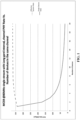
- the CSMA/CA implements time-sharing of the medium (in time and space) i.e., as one device is active and all other are in idle mode. As shown in FIG. 1 , by sharing the medium a total channel performance in a high density (HD) / very high density (VHD) deployment stays about the same, although the number of APs increases. Because the number of APs increases, the performance of each device is reduced accordingly, i.e., to the channel capacity divided by the number of devices connected.
- HD high density
- VHD very high density
- 802.11ax introduces a spatial reuse feature that allows multiple devices to use the same medium (in the same time and frequency). Furthermore, coloring enables devices to differentiate transmissions in their own network from transmissions in neighboring networks.
- Adaptive power and sensitivity thresholds allow dynamically adjusting transmit power and signal detection threshold to increase spatial reuse by reducing the interference between medium sharing devices.
- each AP still needs to perform the EDCA procedure (BO count) with new clear channel assessment (CCA).
- CCA clear channel assessment
- all transmissions need to end at the same time. Consequently, all devices that want to participate in a session, must align their transmit (Tx) time to the Tx time of a first device.
- Document GB 2 556 090 A discloses scheduling time division multiple access communications where: resource requests are received from a plurality of wireless stations, which may form a personal basic service set (PBSS) according to 802. Had, for a scheduler to allocate time intervals between repeated scheduling intervals, an adapter for adjusting the duration of scheduling intervals in response to resource requests, and a transmitter sends scheduling messages to stations indicating the scheduling arrangements.
- PBSS personal basic service set
- the adapted duration depends on the total amount of data pending, increasing due to a higher combined amount needed.
- the scheduler determines priorities for each link between pairs of stations, calculated based on a current and average value for link data rate.
- the duration may be changed to remain between maximum and minimum lengths.
- embodiments of the present invention aim to improve the conventional approaches, in particular, to increase a spatial reuse efficiency.
- An objective is thus to optimize a network performance.
- One aim is to provide an optimal transmission duration for the entire network for reusing a medium of a wireless network.
- a first aspect of the invention provides a device for a wireless network, wherein the device is configured to: share an own potential transmission duration with a plurality of other devices, obtain a potential transmission duration from each of the other devices, and perform an access method to gain direct access to a medium of the wireless network, wherein the device is configured to, if gaining direct access to the medium: determine an shared transmission duration based on all the potential transmission durations, and publish the shared transmission duration.
- potential transmission durations of multiple devices (e.g. APs) in the wireless network can be shared among the devices.
- the shared transmission duration which may be an optimal transmission duration for the entire system. This improves the spatial reuse efficiency in the wireless network, and thus the network performance.
- the access method includes a Carrier-Sense Multiple Access with Collusion Avoidance, CSMA/CA, method.
- all devices in the same wireless network may use CSMA/CA procedures to access the medium.
- the device is further configured to determine the shared transmission duration based on an average duration of all the potential transmission durations.
- the shared transmission duration for example, the optimal transmission duration, may be determined by the device that gains direct access to the medium. The determination may be performed based on the own potential transmission duration of the device and the potential durations of the other (neighbor) devices. In this implementation form, the average duration of all potential transmission durations is calculated as a simple solution.
- the device is configured to determine the shared transmission duration according to the shorter one of the average duration and a determined maximum duration.
- the calculated average duration may be set as the shared transmission duration. If it is not shorter, the determined maximum duration may be set as the shared transmission duration.
- the device is configured to provide medium reuse information to the other devices.
- the device is configured to allow the other devices to reuse the medium during the entire shared transmission duration.
- the other devices are allowed to reuse the medium during the entire shared transmission duration. This increases the chances of the devices, which share their potential transmission durations with each other, to gain access to the medium.
- the device if not gaining direct access to the medium, the device is configured to obtain medium reuse information and the shared transmission duration determined by one of the other devices, which has gained direct access to the medium, and reuse the medium based on the reuse information and the shared transmission duration.
- the device obtains medium reuse information and the shared transmission duration from the other device that gains access to the medium.
- the device is configured to select an own transmission duration based on the own potential transmission duration and the shared transmission duration.
- the device is configured to select the own transmission duration according to the longer one of the own potential transmission duration and the shared transmission duration.
- the own potential transmission duration of the device may be set as the own transmission duration. If it is the other way around, the shared transmission duration may be set as the own transmission duration.
- the device is configured to reduce a transmission power and/or a throughput rate for transmitting data, if the shared transmission duration is longer than the own transmission duration.
- all devices with shorter traffic duration may reduce their transmission power, and a physical level data rate of the transmission.
- the device is configured to transmit data during the own transmission duration, and transmit NULL data during the remaining time of the shared transmission duration, if the shared transmission duration is longer than the own transmission duration.
- a data transmission may occupy only a part of the shared transmission duration.
- the remaining time of the shared transmission duration may be used to transmit NULL data until the end of the transmission.
- a second aspect of the present invention provides a system comprising a plurality of devices for a wireless network, wherein each of the plurality of devices is configured to: share an own potential transmission duration with the other devices, and perform an access method to gain direct access to a medium of the wireless network, in particular perform a CSMA/CA method, wherein the device gaining direct access to the medium is configured to: determine an shared transmission duration based on all the potential transmission durations, and publish the shared transmission duration to the other devices.
- All devices in the system are aware of their neighboring devices. Potential transmission durations of all the devices are shared with each other, in order to more efficiently reuse the medium. Thus, the system performance is improved.
- the devices not gaining direct access to the medium are each configured to: obtain medium reuse information from the device gaining direct access to the medium, and reuse the medium based on the reuse information and the shared transmission duration.
- the device which gains direct access to the medium, shares medium reuse information and the determined shared transmission duration to the other devices.
- the other devices are the devices not gaining direct access to the medium.
- a third aspect of the present invention provides a method performed by a device for a wireless network, wherein the method comprises: sharing an own potential transmission duration with a plurality of other devices, obtaining a potential transmission duration from each of the other devices, performing an access method to gain direct access to a medium of the wireless network, determining, if gaining direct access to the medium, an shared transmission duration based on all the potential transmission durations, and publishing the shared transmission duration.
- the method of the third aspect and its implementation forms provide the same advantages and effects as described above for the wireless transmitting device of the first aspect and its respective implementation forms.
- a fourth aspect of the present invention provides a method performed by a system of a plurality of devices for a wireless network, wherein the method comprises: sharing, by each of the devices, an own potential transmission duration with the other devices, performing, by each of the device, an access method to gain direct access to a medium of the wireless network, and determining, by the device gaining direct access to the medium, an shared transmission duration based on all the potential transmission durations, and publishing the shared transmission duration to the other devices.
- the method of the fourth aspect and its implementation forms provide the same advantages and effects as described above for the wireless receiving device of the second aspect and its respective implementation forms.
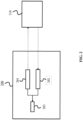
- FIG. 2 shows a device 200 according to an embodiment of the invention.
- the device 200 may comprise processing circuitry (not shown) configured to perform, conduct or initiate the various operations of the device 200 described herein.
- the processing circuitry may comprise hardware and software.
- the hardware may comprise analog circuitry or digital circuitry, or both analog and digital circuitry.
- the digital circuitry may comprise components such as application-specific integrated circuits (ASICs), field-programmable arrays (FPGAs), digital signal processors (DSPs), or multi-purpose processors.
- the processing circuitry comprises one or more processors and a non-transitory memory connected to the one or more processors.
- the non-transitory memory may carry executable program code which, when executed by the one or more processors, causes the device 200 to perform, conduct or initiate the operations or methods described herein.
- the device 200 is configured to share an own potential transmission duration 201 with a plurality of other devices 210 (one of which is illustrated).
- the device 200 is configured to obtain a potential transmission duration 202 from each of the other devices 210.
- the device 200 is further configured to perform an access method to gain direct access to a medium of the wireless network. If gaining direct access to the medium, the device 200 is configured to determine a shared transmission duration 203 based on all the potential transmission durations 201 and 202, and publish the shared transmission duration 203. This is claimed.
- the device 200 may be an AP or access node (AN) in the wireless network.
- a device 210 may be an AP or AN in the same wireless network.
- the device 200 is aware of its neighbor devices, i.e. of the other devices 210, and shares its own potential transmission duration 201 with all other devices 210.
- the other devices 210 are also aware of the device 200, and share their own potential transmission duration 202 with the device 200.
- the device 200 and the other devices 210 are allowed to access the medium of the wireless network.
- the medium used may be the air, through electromagnetic, radio and microwave signals.
- the device 200 may access the medium by using a CSMA/CA procedure.
- the other devices 210 may use CSMA/CA procedures to access the medium as well.
- the CSMA/CA procedures may all be identical.
- the device 200 is configured to determine the shared transmission duration 203 based on an average duration of all the potential transmission durations 202.
- the potential transmission duration 202 of each AP is a potential transmission duration of the next traffic of each AP.
- Each AP may publish the potential transmission duration 202 by using an access controller (AC) of the system as shown in FIG. 3 .
- AC access controller
- each AP may also share the potential transmission duration 202 by a direct communication between neighboring APs.
- each AP may publish its own transmission duration 202 together with any overheads needed to be added to the spatial reuse process.
- the device 200 may calculate the average duration of all the potential transmission durations 202 obtained from each of the other devices 210.
- the shared transmission duration 203 may be determined based on that average duration accordingly.
- the device 200 is configured to determine the shared transmission duration 203 according to the shorter one of the average duration and a determined maximum duration.
- the determined maximum duration is 2 ms.
- the device 200 may be configured to provide medium reuse information to the other devices 210.
- the device 200 may be an initiator AP of the system.
- the device 200 may publish the shared transmission duration 203 and medium reuse information to the entire network system.
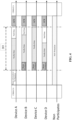
- Each participator AP in the spatial reuse system may align its own transmission duration to the shared transmission duration 203 published by the initiator AP, as shown in FIG. 4 .
- the device 200 may allow the other devices 210 to reuse the medium during the entire shared transmission duration 203.
- the device 200 in case the device 200 does not gain direct access to the medium, the device 200 is configured to obtain medium reuse information and the shared transmission duration 203 determined by one of the other devices 210, which has gained direct access to the medium. Then the device 200 is further configured to reuse the medium based on the reuse information and the shared transmission duration 203.
- the other device 210 may determine the shared transmission duration 203, and publish the medium reuse information and the shared transmission duration 203 accordingly.
- the device 200 may be configured to select the own transmission duration based on the own potential transmission duration 202 and the shared transmission duration 203.
- the device 200 is configured to select the own transmission duration according to the longer one of the own potential transmission duration 202 and the shared transmission duration 203.
- a system comprises a plurality of devices for a wireless network.
- the devices included in the system are the device 200 and the other devices 210 shown in FIG. 2 .
- Each of the plurality of devices 200 and 210 is configured to share an own potential transmission duration 201 with the other devices 200 and 210.
- Each of the plurality of devices 200 and 210 is further configured to perform an access method to gain direct access to a medium of the wireless network, in particular perform a CSMA/CA method.
- the device 200 or 210 is configured to determine an shared transmission duration 203 based on all the potential transmission durations 202, and publish the shared transmission duration 203 to the other devices 200 and/or 210.
- the device 200 or 210 may be configured to obtain medium reuse information from another device 200 or 210 that gains direct access to the medium. And the device 200 or 210 may also configured to reuse the medium based on the reuse information and the shared transmission duration 203.
- FIG. 4 shows a transmission duration usage according to an embodiment of the present invention.
- Device A shown in FIG.4 is the device 200 that gains direct access to the medium of the wireless network. Accordingly, Device B, C and D are other devices 210 in the same wireless network. "Non Participates” are devices that not participate in the medium reuse process (i.e. are not included in the system 300).
- each “traffic data" block refers to an own potential transmission duration 202 of each device. All devices with shorter potential transmission duration 202, namely, Device A, B, C and D that participate in the reuse of the medium, may reduce a transmission power and/or a throughput rate for transmitting data.
- the traffic data may be transmitted through a physic layer.
- the throughput rate may include a modulation coding scheme (MCS) rate, a CC rate, a dual carrier modulation (DCM) rate, or a guard interval (GI) rate.
- MCS modulation coding scheme
- DCM dual carrier modulation
- GI guard interval
- the transmission power and the throughput rate may be reduced in order to reduce interference, and to better utilize the air medium.
- one of the participator devices may have no traffic data, in other words, the own potential transmission duration 202 for next traffic of this device may be zero. Then the device without any traffic may capture the medium (using CSMA/CA) and enable the other devices to send data. This increases a network utilization, specifically by prioritizing the device (e.g. AP) traffic.
- the device e.g. AP
- a Tx device may check if reuse of the medium is possible and needed. If no reuse is needed/possible, the Tx device may use its own transmission duration. If reuse is needed/possible, the Tx device may publish an optimal transmission duration, i.e. the shared transmission duration 203, needed for all potential participators in the reuse. According to the reuse method, the published transmission duration should include all overheads.
- all devices which participate in the medium reuse process, may follow a reuse method guideline (e.g. such as reduce CCA and Tx Power).
- all devices may transmit their own data traffics in parallel.
- the participator Tx devices will never extend traffic over the protected shared transmission duration published 203 by the first Tx device (in case a new traffic arrived that is not calculated yet).
- the participator Tx devices may adjust their transmit time using an aggregation and fragmentation method, in order to reduce a throughput rate and transmit power, or add NULL data to be transmitted.
- each Tx device may update a new transmission duration upon each change in Tx buffers.
- a timer may be applied that prevents new update before this timer expires.
- an optimal transmission duration may optimize a network performance.
- a Gain of 21.5%, i.e. (4.25/3.5) - 100%, can be achieved.
- FIG. 5 shows a method 500 performed by a device 200 for a wireless network, according to an embodiment of the present invention.
- the device 200 is the device 200 of FIG. 2 .
- the method 500 comprises: a step 501 of sharing an own potential transmission duration 201 with a plurality of other devices 210; a step 502 of obtaining a potential transmission duration 202 from each of the other devices 210; a step 503 of performing an access method to gain direct access to a medium of the wireless network; a step 504 of determining, if gaining direct access to the medium, an shared transmission duration 203 based on all the potential transmission durations 202; and a step 505 of publishing the shared transmission duration 203.
- the other devices 210 are the other devices 210 of FIG. 2 .
- FIG. 6 shows a method 600 performed by a system of a plurality of devices 200 and 210 for a wireless network, according to an embodiment of the present invention.
- the device 200 is the device 200 of FIG. 2
- the other devices 210 are the other devices 210 of FIG. 2 .
- the method 600 comprises: a step 601 of sharing, by each of the devices 200 and 210, an own potential transmission duration 201 with the other devices 200 and 210; a step 602 of performing, by each of the devices 200 and 210, an access method to gain direct access to a medium of the wireless network; and a step 603 of determining, by the device 200 or 210 gaining direct access to the medium, an shared transmission duration 203 based on all the potential transmission durations 202, and publishing the shared transmission duration 203 to the other devices 200 and 210.
Landscapes
- Engineering & Computer Science (AREA)
- Computer Networks & Wireless Communication (AREA)
- Signal Processing (AREA)
- Mobile Radio Communication Systems (AREA)
Claims (13)
- Vorrichtung (200) für ein drahtloses Netzwerk, wobei die Vorrichtung (200) eingerichtet ist, um:
eine eigene potenzielle Übertragungsdauer (201) mit mehreren anderen Vorrichtungen (210) gemeinsam zu nutzen, eine potenzielle Übertragungsdauer (202) von jeder der anderen Vorrichtungen (210) zu erhalten und ein Zugriffsverfahren durchzuführen, um direkten Zugriff auf ein Medium des drahtlosen Netzwerks zu erlangen, wobei die Vorrichtung (200), wenn sie direkten Zugriff auf das Medium erlangt, eingerichtet ist, um:eine gemeinsam genutzte Übertragungsdauer (203) auf Grundlage aller potenziellen Übertragungsdauern (201, 202) zu bestimmen unddie gemeinsam genutzte Übertragungsdauer (203) zu publizieren, undwobei die Vorrichtung (200), wenn sie keinen direkten Zugriff auf das Medium erlangt, eingerichtet ist, um:
Medienneuverwendungsinformationen und die gemeinsam genutzte Übertragungsdauer (203), die durch eine der anderen Vorrichtungen (210) bestimmt wurde, die direkten Zugriff auf das Medium erlangt hat, zu erhalten und das Medium auf Grundlage der Neuverwendungsinformationen und der gemeinsam genutzten Übertragungsdauer (203) erneut zu verwenden. - Vorrichtung (200) nach Anspruch 1, wobei:
das Zugriffsverfahren ein, "Carrier-Sense Multiple Access with Collusion Avoidance"-Verfahren, CSMA/CA-Verfahren, umfasst. - Vorrichtung (200) nach Anspruch 1 oder 2, die eingerichtet ist, um:
die gemeinsam genutzte Übertragungsdauer (203) auf Grundlage einer durchschnittlichen Dauer aller potenziellen Übertragungsdauern (201, 202) zu bestimmen. - Vorrichtung (200) nach Anspruch 3, die eingerichtet ist, um:
die gemeinsam genutzte Übertragungsdauer (203) gemäß der kürzeren der durchschnittlichen Dauer und einer bestimmten maximalen Dauer zu bestimmen. - Vorrichtung (200) nach einem der Ansprüche 1 bis 4, die eingerichtet ist, um:
den anderen Vorrichtungen (210) Medienneuverwendungsinformationen bereitzustellen. - Vorrichtung (200) nach einem der Ansprüche 1 bis 5, die eingerichtet ist, um:
wenn die eigene potenzielle Übertragungsdauer (202) null ist, den anderen Vorrichtungen (210) zu ermöglichen, das Medium während der gesamten gemeinsam genutzten Übertragungsdauer (203) erneut zu verwenden. - Vorrichtung (200) nach einem der Ansprüche 1 bis 6, die eingerichtet ist, um:
eine eigene Übertragungsdauer auf Grundlage der eigenen potenziellen Übertragungsdauer (202) und der gemeinsam genutzten Übertragungsdauer (203) auszuwählen. - Vorrichtung (200) nach Anspruch 7, die eingerichtet ist, um:
die eigene Übertragungsdauer gemäß der längeren der eigenen potenziellen Übertragungsdauer (202) und der gemeinsam genutzten Übertragungsdauer (203) auszuwählen. - Vorrichtung (200) nach Anspruch 7 oder 8, die eingerichtet ist, um:
eine Übertragungsleistung und/oder eine Durchsatzrate zum Übertragen von Daten zu reduzieren, wenn die gemeinsam genutzte Übertragungsdauer (203) länger ist als die eigene Übertragungsdauer. - Vorrichtung (200) nach einem der Ansprüche 7 bis 9, die eingerichtet ist, um:Daten während der eigenen Übertragungsdauer zu übertragen undNULL-Daten während der verbleibenden Zeit der gemeinsam genutzten Übertragungsdauer (203) zu übertragen, wenn die gemeinsam genutzte Übertragungsdauer (203) länger ist als die eigene Übertragungsdauer.
- System, das eine Vielzahl von Vorrichtungen (200, 210) für ein drahtloses Netzwerk umfasst, wobei jede der Vielzahl von Vorrichtungen (200, 210) eingerichtet ist, um:eine eigene potenzielle Übertragungsdauer (201) mit den anderen Vorrichtungen (200, 210) gemeinsam zu nutzten undein Zugriffsverfahren durchzuführen, um unter Verwendung eines CSMA/CA-Verfahrens direkten Zugriff auf ein Medium des drahtlosen Netzwerks zu erlangen,wobei die Vorrichtung, die direkten Zugriff auf das Medium erlangt, eingerichtet ist, um:eine gemeinsam genutzte Übertragungsdauer (203) auf Grundlage aller potenziellen Übertragungsdauern (201, 202) zu bestimmen unddie gemeinsam genutzte Übertragungsdauer (203) an die anderen Vorrichtungen (200, 210) zu publizieren, undwobei die Vorrichtungen (200, 210), die keinen direkten Zugriff auf das Medium erlangen, jeweils eingerichtet sind, um:Medienneuverwendungsinformationen von der Vorrichtung (200, 210) zu erhalten, die direkten Zugriff auf das Medium erlangt, unddas Medium auf Grundlage der Neuverwendungsinformationen und der gemeinsam genutzten Übertragungsdauer (203) erneut zu verwenden.
- Verfahren (500), das von einer Vorrichtung (200) für ein drahtloses Netzwerk durchgeführt wird, wobei das Verfahren (500) Folgendes umfasst:gemeinsames Nutzen (501) einer eigenen potenziellen Übertragungsdauer (201) mit einer Vielzahl von anderen Vorrichtungen (210),Erhalten (502) einer potenziellen Übertragungsdauer (202) von jeder der anderen Vorrichtungen (210),Durchführen (503) eines Zugriffsverfahrens, um direkten Zugriff auf ein Medium des drahtlosen Netzwerks zu erlangen,Bestimmen (504), beim Erlangen eines direkten Zugriffs auf das Medium, einer gemeinsam genutzten Übertragungsdauer (203) auf Grundlage aller potenziellen Übertragungsdauern (201, 202) undPublizieren (505) der gemeinsam genutzten Übertragungsdauer (203) undErhalten, beim Nicht-Erlangen eines direkten Zugriffs auf das Medium, von Medienneuverwendungsinformationen und der gemeinsam genutzten Übertragungsdauer (203), die durch eine der anderen Vorrichtungen (210) bestimmt wurde, die direkten Zugriff auf das Medium erlangt hat, underneutes Verwenden des Mediums auf Grundlage der Neuverwendungsinformationen und der gemeinsam genutzten Übertragungsdauer (203).
- Verfahren (600), das von einem System einer Vielzahl von Vorrichtungen (200, 210) für ein drahtloses Netzwerk durchgeführt wird, wobei das Verfahren (600) Folgendes umfasst:gemeinsames Nutzen (601), durch jede der Vorrichtungen (200, 210), einer eigenen potenziellen Übertragungsdauer (201) mit den anderen Vorrichtungen (200, 210),Durchführen (602), durch jede der Vorrichtungen (200, 210), eines Zugriffsverfahrens, um einen direkten Zugriff auf ein Medium des drahtlosen Netzwerks zu erlangen,Bestimmen (603), durch die Vorrichtung (200, 210), die direkten Zugriff auf das Medium erlangt, einer gemeinsam genutzten Übertragungsdauer (203) auf Grundlage aller potenziellen Übertragungsdauern (202) und Publizieren der gemeinsam genutzten Übertragungsdauer (203) an die anderen Vorrichtungen (200, 210) undErhalten, durch die Vorrichtungen (200, 210), die keinen direkten Zugriff auf das Medium erlangen, von Medienneuverwendungsinformationen von der Vorrichtung (200, 210), die direkten Zugriff auf das Medium erlangt, und Neuverwenden des Mediums auf Grundlage der Neuverwendungsinformationen und der gemeinsam genutzten Übertragungsdauer (203).
Priority Applications (1)
| Application Number | Priority Date | Filing Date | Title |
|---|---|---|---|
| EP24199410.2A EP4503844A3 (de) | 2019-05-21 | 2019-05-21 | Vorrichtungen, system und verfahren zur gemeinsamen nutzung eines mediums eines drahtlosen netzwerks |
Applications Claiming Priority (1)
| Application Number | Priority Date | Filing Date | Title |
|---|---|---|---|
| PCT/EP2019/063096 WO2020233794A1 (en) | 2019-05-21 | 2019-05-21 | Devices, system and methods for sharing a medium of a wireless network |
Related Child Applications (1)
| Application Number | Title | Priority Date | Filing Date |
|---|---|---|---|
| EP24199410.2A Division EP4503844A3 (de) | 2019-05-21 | 2019-05-21 | Vorrichtungen, system und verfahren zur gemeinsamen nutzung eines mediums eines drahtlosen netzwerks |
Publications (2)
| Publication Number | Publication Date |
|---|---|
| EP3942889A1 EP3942889A1 (de) | 2022-01-26 |
| EP3942889B1 true EP3942889B1 (de) | 2024-10-09 |
Family
ID=66647398
Family Applications (2)
| Application Number | Title | Priority Date | Filing Date |
|---|---|---|---|
| EP24199410.2A Pending EP4503844A3 (de) | 2019-05-21 | 2019-05-21 | Vorrichtungen, system und verfahren zur gemeinsamen nutzung eines mediums eines drahtlosen netzwerks |
| EP19726367.6A Active EP3942889B1 (de) | 2019-05-21 | 2019-05-21 | Vorrichtung, system und verfahren zur gemeinsamen nutzung eines mediums eines drahtlosen netzwerks |
Family Applications Before (1)
| Application Number | Title | Priority Date | Filing Date |
|---|---|---|---|
| EP24199410.2A Pending EP4503844A3 (de) | 2019-05-21 | 2019-05-21 | Vorrichtungen, system und verfahren zur gemeinsamen nutzung eines mediums eines drahtlosen netzwerks |
Country Status (2)
| Country | Link |
|---|---|
| EP (2) | EP4503844A3 (de) |
| WO (1) | WO2020233794A1 (de) |
Family Cites Families (2)
| Publication number | Priority date | Publication date | Assignee | Title |
|---|---|---|---|---|
| GB2556090B (en) * | 2016-11-18 | 2019-07-17 | Bluwireless Tech Ltd | Apparatus and method for scheduling communications in a wireless communication system |
| CN108811001B (zh) * | 2018-04-28 | 2021-04-13 | 中国科学院上海微系统与信息技术研究所 | 基于csma竞争与tdma预留的离散化信道接入方法 |
-
2019
- 2019-05-21 EP EP24199410.2A patent/EP4503844A3/de active Pending
- 2019-05-21 WO PCT/EP2019/063096 patent/WO2020233794A1/en not_active Ceased
- 2019-05-21 EP EP19726367.6A patent/EP3942889B1/de active Active
Also Published As
| Publication number | Publication date |
|---|---|
| EP4503844A2 (de) | 2025-02-05 |
| EP4503844A3 (de) | 2025-04-16 |
| WO2020233794A1 (en) | 2020-11-26 |
| EP3942889A1 (de) | 2022-01-26 |
Similar Documents
| Publication | Publication Date | Title |
|---|---|---|
| Gong et al. | A directional CSMA/CA protocol for mmWave wireless PANs | |
| Sivaram et al. | Improved enhanced DBTMA with contention-aware admission control to improve the network performance in MANETS. | |
| JP6059351B2 (ja) | 無線ネットワークのアソシエーション | |
| US9277439B2 (en) | Device-to-device contention management scheme for mobile broadband networks | |
| US20040218557A1 (en) | Method for performing packet flooding at wireless ad hoc network | |
| CN114698068A (zh) | 业务传输方法、装置及系统 | |
| EP3264805B1 (de) | Drahtloskommunikationssystem und drahtloskommunikationsverfahren | |
| Dang et al. | An efficient multi-channel MAC protocol for wireless ad hoc networks | |
| EP3295720B1 (de) | Energieeinsparungsauslöser | |
| Kumar et al. | Energy efficient multichannel MAC protocol for high traffic applications in heterogeneous wireless sensor networks | |
| WO2015127777A1 (en) | Access point assisted spatial reuse | |
| Jamal et al. | CR-WSN MAC: An energy efficient and spectrum aware MAC protocol for cognitive radio sensor network | |
| EP3474610A1 (de) | Verfahren und vorrichtung zur interferenzbewussten übertragungsleistungssteuerung für auf ieee 802.11 basierendes drahtlosnetzwerk mit knoten mit einer richtantenne | |
| EP3295721B1 (de) | Energieeinsparungsauslöser | |
| JP6474712B2 (ja) | 無線通信システムおよび無線通信方法 | |
| EP3942889B1 (de) | Vorrichtung, system und verfahren zur gemeinsamen nutzung eines mediums eines drahtlosen netzwerks | |
| US10681707B2 (en) | Wireless communication device and method | |
| JP6247614B2 (ja) | 無線通信システム、無線通信方法及び無線通信装置 | |
| Cho et al. | Air charging protocol with spatial-reuse | |
| Wakuda et al. | A packet scheduling algorithm for max–min fairness in multihop wireless LANs | |
| Caetano et al. | On the Performance of the IEEE 802.11 in a Multi-Channel Environment | |
| Ji et al. | Throughput Enhancement for Wireless Sensor Network Based on Network Allocation Vector Caching Algorithms. | |
| JP7410517B2 (ja) | 無線通信システムおよび無線通信方法 | |
| Lee et al. | Energy efficient distributed reservation multiple access with adaptive switching requests for wireless networks | |
| Tian et al. | Improving protocol capacity by scheduling random access on WLANs |
Legal Events
| Date | Code | Title | Description |
|---|---|---|---|
| STAA | Information on the status of an ep patent application or granted ep patent |
Free format text: STATUS: UNKNOWN |
|
| STAA | Information on the status of an ep patent application or granted ep patent |
Free format text: STATUS: THE INTERNATIONAL PUBLICATION HAS BEEN MADE |
|
| PUAI | Public reference made under article 153(3) epc to a published international application that has entered the european phase |
Free format text: ORIGINAL CODE: 0009012 |
|
| STAA | Information on the status of an ep patent application or granted ep patent |
Free format text: STATUS: REQUEST FOR EXAMINATION WAS MADE |
|
| 17P | Request for examination filed |
Effective date: 20211022 |
|
| AK | Designated contracting states |
Kind code of ref document: A1 Designated state(s): AL AT BE BG CH CY CZ DE DK EE ES FI FR GB GR HR HU IE IS IT LI LT LU LV MC MK MT NL NO PL PT RO RS SE SI SK SM TR |
|
| DAV | Request for validation of the european patent (deleted) | ||
| DAX | Request for extension of the european patent (deleted) | ||
| REG | Reference to a national code |
Ref legal event code: R079 Ipc: H04W0074081600 Ref country code: DE Ref legal event code: R079 Ref document number: 602019060051 Country of ref document: DE Free format text: PREVIOUS MAIN CLASS: H04W0074080000 Ipc: H04W0074081600 |
|
| GRAP | Despatch of communication of intention to grant a patent |
Free format text: ORIGINAL CODE: EPIDOSNIGR1 |
|
| STAA | Information on the status of an ep patent application or granted ep patent |
Free format text: STATUS: GRANT OF PATENT IS INTENDED |
|
| RIC1 | Information provided on ipc code assigned before grant |
Ipc: H04W 84/12 20090101ALN20240429BHEP Ipc: H04W 74/0816 20240101AFI20240429BHEP |
|
| INTG | Intention to grant announced |
Effective date: 20240522 |
|
| GRAS | Grant fee paid |
Free format text: ORIGINAL CODE: EPIDOSNIGR3 |
|
| GRAA | (expected) grant |
Free format text: ORIGINAL CODE: 0009210 |
|
| STAA | Information on the status of an ep patent application or granted ep patent |
Free format text: STATUS: THE PATENT HAS BEEN GRANTED |
|
| AK | Designated contracting states |
Kind code of ref document: B1 Designated state(s): AL AT BE BG CH CY CZ DE DK EE ES FI FR GB GR HR HU IE IS IT LI LT LU LV MC MK MT NL NO PL PT RO RS SE SI SK SM TR |
|
| REG | Reference to a national code |
Ref country code: CH Ref legal event code: EP |
|
| REG | Reference to a national code |
Ref country code: DE Ref legal event code: R096 Ref document number: 602019060051 Country of ref document: DE |
|
| REG | Reference to a national code |
Ref country code: IE Ref legal event code: FG4D |
|
| P01 | Opt-out of the competence of the unified patent court (upc) registered |
Free format text: CASE NUMBER: APP_53624/2024 Effective date: 20240926 |
|
| REG | Reference to a national code |
Ref country code: LT Ref legal event code: MG9D |
|
| REG | Reference to a national code |
Ref country code: NL Ref legal event code: MP Effective date: 20241009 |
|
| REG | Reference to a national code |
Ref country code: AT Ref legal event code: MK05 Ref document number: 1732049 Country of ref document: AT Kind code of ref document: T Effective date: 20241009 |
|
| PG25 | Lapsed in a contracting state [announced via postgrant information from national office to epo] |
Ref country code: NL Free format text: LAPSE BECAUSE OF FAILURE TO SUBMIT A TRANSLATION OF THE DESCRIPTION OR TO PAY THE FEE WITHIN THE PRESCRIBED TIME-LIMIT Effective date: 20241009 |
|
| PG25 | Lapsed in a contracting state [announced via postgrant information from national office to epo] |
Ref country code: NL Free format text: LAPSE BECAUSE OF FAILURE TO SUBMIT A TRANSLATION OF THE DESCRIPTION OR TO PAY THE FEE WITHIN THE PRESCRIBED TIME-LIMIT Effective date: 20241009 |
|
| PG25 | Lapsed in a contracting state [announced via postgrant information from national office to epo] |
Ref country code: IS Free format text: LAPSE BECAUSE OF FAILURE TO SUBMIT A TRANSLATION OF THE DESCRIPTION OR TO PAY THE FEE WITHIN THE PRESCRIBED TIME-LIMIT Effective date: 20250209 Ref country code: PT Free format text: LAPSE BECAUSE OF FAILURE TO SUBMIT A TRANSLATION OF THE DESCRIPTION OR TO PAY THE FEE WITHIN THE PRESCRIBED TIME-LIMIT Effective date: 20250210 Ref country code: HR Free format text: LAPSE BECAUSE OF FAILURE TO SUBMIT A TRANSLATION OF THE DESCRIPTION OR TO PAY THE FEE WITHIN THE PRESCRIBED TIME-LIMIT Effective date: 20241009 |
|
| PG25 | Lapsed in a contracting state [announced via postgrant information from national office to epo] |
Ref country code: FI Free format text: LAPSE BECAUSE OF FAILURE TO SUBMIT A TRANSLATION OF THE DESCRIPTION OR TO PAY THE FEE WITHIN THE PRESCRIBED TIME-LIMIT Effective date: 20241009 |
|
| PG25 | Lapsed in a contracting state [announced via postgrant information from national office to epo] |
Ref country code: BG Free format text: LAPSE BECAUSE OF FAILURE TO SUBMIT A TRANSLATION OF THE DESCRIPTION OR TO PAY THE FEE WITHIN THE PRESCRIBED TIME-LIMIT Effective date: 20241009 |
|
| PG25 | Lapsed in a contracting state [announced via postgrant information from national office to epo] |
Ref country code: ES Free format text: LAPSE BECAUSE OF FAILURE TO SUBMIT A TRANSLATION OF THE DESCRIPTION OR TO PAY THE FEE WITHIN THE PRESCRIBED TIME-LIMIT Effective date: 20241009 |
|
| PG25 | Lapsed in a contracting state [announced via postgrant information from national office to epo] |
Ref country code: NO Free format text: LAPSE BECAUSE OF FAILURE TO SUBMIT A TRANSLATION OF THE DESCRIPTION OR TO PAY THE FEE WITHIN THE PRESCRIBED TIME-LIMIT Effective date: 20250109 |
|
| PG25 | Lapsed in a contracting state [announced via postgrant information from national office to epo] |
Ref country code: LV Free format text: LAPSE BECAUSE OF FAILURE TO SUBMIT A TRANSLATION OF THE DESCRIPTION OR TO PAY THE FEE WITHIN THE PRESCRIBED TIME-LIMIT Effective date: 20241009 Ref country code: GR Free format text: LAPSE BECAUSE OF FAILURE TO SUBMIT A TRANSLATION OF THE DESCRIPTION OR TO PAY THE FEE WITHIN THE PRESCRIBED TIME-LIMIT Effective date: 20250110 Ref country code: AT Free format text: LAPSE BECAUSE OF FAILURE TO SUBMIT A TRANSLATION OF THE DESCRIPTION OR TO PAY THE FEE WITHIN THE PRESCRIBED TIME-LIMIT Effective date: 20241009 |
|
| PG25 | Lapsed in a contracting state [announced via postgrant information from national office to epo] |
Ref country code: PL Free format text: LAPSE BECAUSE OF FAILURE TO SUBMIT A TRANSLATION OF THE DESCRIPTION OR TO PAY THE FEE WITHIN THE PRESCRIBED TIME-LIMIT Effective date: 20241009 |
|
| PG25 | Lapsed in a contracting state [announced via postgrant information from national office to epo] |
Ref country code: RS Free format text: LAPSE BECAUSE OF FAILURE TO SUBMIT A TRANSLATION OF THE DESCRIPTION OR TO PAY THE FEE WITHIN THE PRESCRIBED TIME-LIMIT Effective date: 20250109 |
|
| PG25 | Lapsed in a contracting state [announced via postgrant information from national office to epo] |
Ref country code: SM Free format text: LAPSE BECAUSE OF FAILURE TO SUBMIT A TRANSLATION OF THE DESCRIPTION OR TO PAY THE FEE WITHIN THE PRESCRIBED TIME-LIMIT Effective date: 20241009 |
|
| PGFP | Annual fee paid to national office [announced via postgrant information from national office to epo] |
Ref country code: DE Payment date: 20250402 Year of fee payment: 7 |
|
| PG25 | Lapsed in a contracting state [announced via postgrant information from national office to epo] |
Ref country code: DK Free format text: LAPSE BECAUSE OF FAILURE TO SUBMIT A TRANSLATION OF THE DESCRIPTION OR TO PAY THE FEE WITHIN THE PRESCRIBED TIME-LIMIT Effective date: 20241009 |
|
| REG | Reference to a national code |
Ref country code: DE Ref legal event code: R097 Ref document number: 602019060051 Country of ref document: DE |
|
| PG25 | Lapsed in a contracting state [announced via postgrant information from national office to epo] |
Ref country code: EE Free format text: LAPSE BECAUSE OF FAILURE TO SUBMIT A TRANSLATION OF THE DESCRIPTION OR TO PAY THE FEE WITHIN THE PRESCRIBED TIME-LIMIT Effective date: 20241009 |
|
| PGFP | Annual fee paid to national office [announced via postgrant information from national office to epo] |
Ref country code: FR Payment date: 20250401 Year of fee payment: 7 |
|
| PG25 | Lapsed in a contracting state [announced via postgrant information from national office to epo] |
Ref country code: RO Free format text: LAPSE BECAUSE OF FAILURE TO SUBMIT A TRANSLATION OF THE DESCRIPTION OR TO PAY THE FEE WITHIN THE PRESCRIBED TIME-LIMIT Effective date: 20241009 |
|
| PG25 | Lapsed in a contracting state [announced via postgrant information from national office to epo] |
Ref country code: SK Free format text: LAPSE BECAUSE OF FAILURE TO SUBMIT A TRANSLATION OF THE DESCRIPTION OR TO PAY THE FEE WITHIN THE PRESCRIBED TIME-LIMIT Effective date: 20241009 |
|
| PG25 | Lapsed in a contracting state [announced via postgrant information from national office to epo] |
Ref country code: CZ Free format text: LAPSE BECAUSE OF FAILURE TO SUBMIT A TRANSLATION OF THE DESCRIPTION OR TO PAY THE FEE WITHIN THE PRESCRIBED TIME-LIMIT Effective date: 20241009 |
|
| PG25 | Lapsed in a contracting state [announced via postgrant information from national office to epo] |
Ref country code: IT Free format text: LAPSE BECAUSE OF FAILURE TO SUBMIT A TRANSLATION OF THE DESCRIPTION OR TO PAY THE FEE WITHIN THE PRESCRIBED TIME-LIMIT Effective date: 20241009 |
|
| PLBE | No opposition filed within time limit |
Free format text: ORIGINAL CODE: 0009261 |
|
| STAA | Information on the status of an ep patent application or granted ep patent |
Free format text: STATUS: NO OPPOSITION FILED WITHIN TIME LIMIT |
|
| PG25 | Lapsed in a contracting state [announced via postgrant information from national office to epo] |
Ref country code: SE Free format text: LAPSE BECAUSE OF FAILURE TO SUBMIT A TRANSLATION OF THE DESCRIPTION OR TO PAY THE FEE WITHIN THE PRESCRIBED TIME-LIMIT Effective date: 20241009 |
|
| 26N | No opposition filed |
Effective date: 20250710 |
|
| REG | Reference to a national code |
Ref country code: CH Ref legal event code: H13 Free format text: ST27 STATUS EVENT CODE: U-0-0-H10-H13 (AS PROVIDED BY THE NATIONAL OFFICE) Effective date: 20251223 |
|
| PG25 | Lapsed in a contracting state [announced via postgrant information from national office to epo] |
Ref country code: LU Free format text: LAPSE BECAUSE OF NON-PAYMENT OF DUE FEES Effective date: 20250521 |
|
| PG25 | Lapsed in a contracting state [announced via postgrant information from national office to epo] |
Ref country code: CH Free format text: LAPSE BECAUSE OF NON-PAYMENT OF DUE FEES Effective date: 20250531 |
|
| REG | Reference to a national code |
Ref country code: BE Ref legal event code: MM Effective date: 20250531 |
|
| PG25 | Lapsed in a contracting state [announced via postgrant information from national office to epo] |
Ref country code: MC Free format text: LAPSE BECAUSE OF FAILURE TO SUBMIT A TRANSLATION OF THE DESCRIPTION OR TO PAY THE FEE WITHIN THE PRESCRIBED TIME-LIMIT Effective date: 20241009 |
|
| PGFP | Annual fee paid to national office [announced via postgrant information from national office to epo] |
Ref country code: GB Payment date: 20260325 Year of fee payment: 8 |
|
| PG25 | Lapsed in a contracting state [announced via postgrant information from national office to epo] |
Ref country code: IE Free format text: LAPSE BECAUSE OF NON-PAYMENT OF DUE FEES Effective date: 20250521 |
|
| PG25 | Lapsed in a contracting state [announced via postgrant information from national office to epo] |
Ref country code: BE Free format text: LAPSE BECAUSE OF NON-PAYMENT OF DUE FEES Effective date: 20250531 |