EP3941541B1 - Superporous hydrogels, methods of making the same, and articles incorporating the same - Google Patents
Superporous hydrogels, methods of making the same, and articles incorporating the same Download PDFInfo
- Publication number
- EP3941541B1 EP3941541B1 EP20788692.0A EP20788692A EP3941541B1 EP 3941541 B1 EP3941541 B1 EP 3941541B1 EP 20788692 A EP20788692 A EP 20788692A EP 3941541 B1 EP3941541 B1 EP 3941541B1
- Authority
- EP
- European Patent Office
- Prior art keywords
- polymeric
- superporous hydrogel
- hydrogel
- wound dressing
- superporous
- Prior art date
- Legal status (The legal status is an assumption and is not a legal conclusion. Google has not performed a legal analysis and makes no representation as to the accuracy of the status listed.)
- Active
Links
Images




Classifications
-
- C—CHEMISTRY; METALLURGY
- C08—ORGANIC MACROMOLECULAR COMPOUNDS; THEIR PREPARATION OR CHEMICAL WORKING-UP; COMPOSITIONS BASED THEREON
- C08J—WORKING-UP; GENERAL PROCESSES OF COMPOUNDING; AFTER-TREATMENT NOT COVERED BY SUBCLASSES C08B, C08C, C08F, C08G or C08H
- C08J9/00—Working-up of macromolecular substances to porous or cellular articles or materials; After-treatment thereof
- C08J9/0061—Working-up of macromolecular substances to porous or cellular articles or materials; After-treatment thereof characterized by the use of several polymeric components
-
- A—HUMAN NECESSITIES
- A61—MEDICAL OR VETERINARY SCIENCE; HYGIENE
- A61L—METHODS OR APPARATUS FOR STERILISING MATERIALS OR OBJECTS IN GENERAL; DISINFECTION, STERILISATION OR DEODORISATION OF AIR; CHEMICAL ASPECTS OF BANDAGES, DRESSINGS, ABSORBENT PADS OR SURGICAL ARTICLES; MATERIALS FOR BANDAGES, DRESSINGS, ABSORBENT PADS OR SURGICAL ARTICLES
- A61L26/00—Chemical aspects of, or use of materials for, wound dressings or bandages in liquid, gel or powder form
- A61L26/0061—Use of materials characterised by their function or physical properties
- A61L26/008—Hydrogels or hydrocolloids
-
- A—HUMAN NECESSITIES
- A61—MEDICAL OR VETERINARY SCIENCE; HYGIENE
- A61L—METHODS OR APPARATUS FOR STERILISING MATERIALS OR OBJECTS IN GENERAL; DISINFECTION, STERILISATION OR DEODORISATION OF AIR; CHEMICAL ASPECTS OF BANDAGES, DRESSINGS, ABSORBENT PADS OR SURGICAL ARTICLES; MATERIALS FOR BANDAGES, DRESSINGS, ABSORBENT PADS OR SURGICAL ARTICLES
- A61L26/00—Chemical aspects of, or use of materials for, wound dressings or bandages in liquid, gel or powder form
- A61L26/0009—Chemical aspects of, or use of materials for, wound dressings or bandages in liquid, gel or powder form containing macromolecular materials
- A61L26/0052—Mixtures of macromolecular compounds
-
- A—HUMAN NECESSITIES
- A61—MEDICAL OR VETERINARY SCIENCE; HYGIENE
- A61L—METHODS OR APPARATUS FOR STERILISING MATERIALS OR OBJECTS IN GENERAL; DISINFECTION, STERILISATION OR DEODORISATION OF AIR; CHEMICAL ASPECTS OF BANDAGES, DRESSINGS, ABSORBENT PADS OR SURGICAL ARTICLES; MATERIALS FOR BANDAGES, DRESSINGS, ABSORBENT PADS OR SURGICAL ARTICLES
- A61L26/00—Chemical aspects of, or use of materials for, wound dressings or bandages in liquid, gel or powder form
- A61L26/0061—Use of materials characterised by their function or physical properties
- A61L26/0066—Medicaments; Biocides
-
- C—CHEMISTRY; METALLURGY
- C08—ORGANIC MACROMOLECULAR COMPOUNDS; THEIR PREPARATION OR CHEMICAL WORKING-UP; COMPOSITIONS BASED THEREON
- C08J—WORKING-UP; GENERAL PROCESSES OF COMPOUNDING; AFTER-TREATMENT NOT COVERED BY SUBCLASSES C08B, C08C, C08F, C08G or C08H
- C08J9/00—Working-up of macromolecular substances to porous or cellular articles or materials; After-treatment thereof
- C08J9/04—Working-up of macromolecular substances to porous or cellular articles or materials; After-treatment thereof using blowing gases generated by a previously added blowing agent
- C08J9/06—Working-up of macromolecular substances to porous or cellular articles or materials; After-treatment thereof using blowing gases generated by a previously added blowing agent by a chemical blowing agent
- C08J9/08—Working-up of macromolecular substances to porous or cellular articles or materials; After-treatment thereof using blowing gases generated by a previously added blowing agent by a chemical blowing agent developing carbon dioxide
-
- C—CHEMISTRY; METALLURGY
- C08—ORGANIC MACROMOLECULAR COMPOUNDS; THEIR PREPARATION OR CHEMICAL WORKING-UP; COMPOSITIONS BASED THEREON
- C08L—COMPOSITIONS OF MACROMOLECULAR COMPOUNDS
- C08L29/00—Compositions of homopolymers or copolymers of compounds having one or more unsaturated aliphatic radicals, each having only one carbon-to-carbon double bond, and at least one being terminated by an alcohol, ether, aldehydo, ketonic, acetal or ketal radical; Compositions of hydrolysed polymers of esters of unsaturated alcohols with saturated carboxylic acids; Compositions of derivatives of such polymers
- C08L29/02—Homopolymers or copolymers of unsaturated alcohols
- C08L29/04—Polyvinyl alcohol; Partially hydrolysed homopolymers or copolymers of esters of unsaturated alcohols with saturated carboxylic acids
-
- A—HUMAN NECESSITIES
- A61—MEDICAL OR VETERINARY SCIENCE; HYGIENE
- A61L—METHODS OR APPARATUS FOR STERILISING MATERIALS OR OBJECTS IN GENERAL; DISINFECTION, STERILISATION OR DEODORISATION OF AIR; CHEMICAL ASPECTS OF BANDAGES, DRESSINGS, ABSORBENT PADS OR SURGICAL ARTICLES; MATERIALS FOR BANDAGES, DRESSINGS, ABSORBENT PADS OR SURGICAL ARTICLES
- A61L2300/00—Biologically active materials used in bandages, wound dressings, absorbent pads or medical devices
- A61L2300/20—Biologically active materials used in bandages, wound dressings, absorbent pads or medical devices containing or releasing organic materials
- A61L2300/22—Lipids, fatty acids, e.g. prostaglandins, oils, fats, waxes
- A61L2300/222—Steroids, e.g. corticosteroids
-
- A—HUMAN NECESSITIES
- A61—MEDICAL OR VETERINARY SCIENCE; HYGIENE
- A61L—METHODS OR APPARATUS FOR STERILISING MATERIALS OR OBJECTS IN GENERAL; DISINFECTION, STERILISATION OR DEODORISATION OF AIR; CHEMICAL ASPECTS OF BANDAGES, DRESSINGS, ABSORBENT PADS OR SURGICAL ARTICLES; MATERIALS FOR BANDAGES, DRESSINGS, ABSORBENT PADS OR SURGICAL ARTICLES
- A61L2300/00—Biologically active materials used in bandages, wound dressings, absorbent pads or medical devices
- A61L2300/40—Biologically active materials used in bandages, wound dressings, absorbent pads or medical devices characterised by a specific therapeutic activity or mode of action
- A61L2300/402—Anaestetics, analgesics, e.g. lidocaine
-
- A—HUMAN NECESSITIES
- A61—MEDICAL OR VETERINARY SCIENCE; HYGIENE
- A61L—METHODS OR APPARATUS FOR STERILISING MATERIALS OR OBJECTS IN GENERAL; DISINFECTION, STERILISATION OR DEODORISATION OF AIR; CHEMICAL ASPECTS OF BANDAGES, DRESSINGS, ABSORBENT PADS OR SURGICAL ARTICLES; MATERIALS FOR BANDAGES, DRESSINGS, ABSORBENT PADS OR SURGICAL ARTICLES
- A61L2300/00—Biologically active materials used in bandages, wound dressings, absorbent pads or medical devices
- A61L2300/40—Biologically active materials used in bandages, wound dressings, absorbent pads or medical devices characterised by a specific therapeutic activity or mode of action
- A61L2300/41—Anti-inflammatory agents, e.g. NSAIDs
-
- C—CHEMISTRY; METALLURGY
- C08—ORGANIC MACROMOLECULAR COMPOUNDS; THEIR PREPARATION OR CHEMICAL WORKING-UP; COMPOSITIONS BASED THEREON
- C08J—WORKING-UP; GENERAL PROCESSES OF COMPOUNDING; AFTER-TREATMENT NOT COVERED BY SUBCLASSES C08B, C08C, C08F, C08G or C08H
- C08J2203/00—Foams characterized by the expanding agent
- C08J2203/02—CO2-releasing, e.g. NaHCO3 and citric acid
-
- C—CHEMISTRY; METALLURGY
- C08—ORGANIC MACROMOLECULAR COMPOUNDS; THEIR PREPARATION OR CHEMICAL WORKING-UP; COMPOSITIONS BASED THEREON
- C08J—WORKING-UP; GENERAL PROCESSES OF COMPOUNDING; AFTER-TREATMENT NOT COVERED BY SUBCLASSES C08B, C08C, C08F, C08G or C08H
- C08J2205/00—Foams characterised by their properties
- C08J2205/02—Foams characterised by their properties the finished foam itself being a gel or a gel being temporarily formed when processing the foamable composition
- C08J2205/022—Hydrogel, i.e. a gel containing an aqueous composition
-
- C—CHEMISTRY; METALLURGY
- C08—ORGANIC MACROMOLECULAR COMPOUNDS; THEIR PREPARATION OR CHEMICAL WORKING-UP; COMPOSITIONS BASED THEREON
- C08J—WORKING-UP; GENERAL PROCESSES OF COMPOUNDING; AFTER-TREATMENT NOT COVERED BY SUBCLASSES C08B, C08C, C08F, C08G or C08H
- C08J2207/00—Foams characterised by their intended use
- C08J2207/12—Sanitary use, e.g. diapers, napkins or bandages
-
- C—CHEMISTRY; METALLURGY
- C08—ORGANIC MACROMOLECULAR COMPOUNDS; THEIR PREPARATION OR CHEMICAL WORKING-UP; COMPOSITIONS BASED THEREON
- C08J—WORKING-UP; GENERAL PROCESSES OF COMPOUNDING; AFTER-TREATMENT NOT COVERED BY SUBCLASSES C08B, C08C, C08F, C08G or C08H
- C08J2329/00—Characterised by the use of homopolymers or copolymers of compounds having one or more unsaturated aliphatic radicals, each having only one carbon-to-carbon double bond, and at least one being terminated by an alcohol, ether, aldehydo, ketonic, acetal, or ketal radical; Hydrolysed polymers of esters of unsaturated alcohols with saturated carboxylic acids; Derivatives of such polymer
- C08J2329/02—Homopolymers or copolymers of unsaturated alcohols
- C08J2329/04—Polyvinyl alcohol; Partially hydrolysed homopolymers or copolymers of esters of unsaturated alcohols with saturated carboxylic acids
-
- C—CHEMISTRY; METALLURGY
- C08—ORGANIC MACROMOLECULAR COMPOUNDS; THEIR PREPARATION OR CHEMICAL WORKING-UP; COMPOSITIONS BASED THEREON
- C08J—WORKING-UP; GENERAL PROCESSES OF COMPOUNDING; AFTER-TREATMENT NOT COVERED BY SUBCLASSES C08B, C08C, C08F, C08G or C08H
- C08J2401/00—Characterised by the use of cellulose, modified cellulose or cellulose derivatives
- C08J2401/08—Cellulose derivatives
- C08J2401/26—Cellulose ethers
-
- C—CHEMISTRY; METALLURGY
- C08—ORGANIC MACROMOLECULAR COMPOUNDS; THEIR PREPARATION OR CHEMICAL WORKING-UP; COMPOSITIONS BASED THEREON
- C08J—WORKING-UP; GENERAL PROCESSES OF COMPOUNDING; AFTER-TREATMENT NOT COVERED BY SUBCLASSES C08B, C08C, C08F, C08G or C08H
- C08J2435/00—Characterised by the use of homopolymers or copolymers of compounds having one or more unsaturated aliphatic radicals, each having only one carbon-to-carbon double bond, and at least one being terminated by a carboxyl radical, and containing at least one other carboxyl radical in the molecule, or of salts, anhydrides, esters, amides, imides or nitriles thereof; Derivatives of such polymers
- C08J2435/08—Copolymers with vinyl ethers
-
- C—CHEMISTRY; METALLURGY
- C08—ORGANIC MACROMOLECULAR COMPOUNDS; THEIR PREPARATION OR CHEMICAL WORKING-UP; COMPOSITIONS BASED THEREON
- C08L—COMPOSITIONS OF MACROMOLECULAR COMPOUNDS
- C08L1/00—Compositions of cellulose, modified cellulose or cellulose derivatives
- C08L1/08—Cellulose derivatives
- C08L1/26—Cellulose ethers
- C08L1/28—Alkyl ethers
- C08L1/284—Alkyl ethers with hydroxylated hydrocarbon radicals
-
- C—CHEMISTRY; METALLURGY
- C08—ORGANIC MACROMOLECULAR COMPOUNDS; THEIR PREPARATION OR CHEMICAL WORKING-UP; COMPOSITIONS BASED THEREON
- C08L—COMPOSITIONS OF MACROMOLECULAR COMPOUNDS
- C08L25/00—Compositions of, homopolymers or copolymers of compounds having one or more unsaturated aliphatic radicals, each having only one carbon-to-carbon double bond, and at least one being terminated by an aromatic carbocyclic ring; Compositions of derivatives of such polymers
- C08L25/02—Homopolymers or copolymers of hydrocarbons
- C08L25/04—Homopolymers or copolymers of styrene
- C08L25/08—Copolymers of styrene
-
- C—CHEMISTRY; METALLURGY
- C08—ORGANIC MACROMOLECULAR COMPOUNDS; THEIR PREPARATION OR CHEMICAL WORKING-UP; COMPOSITIONS BASED THEREON
- C08L—COMPOSITIONS OF MACROMOLECULAR COMPOUNDS
- C08L33/00—Compositions of homopolymers or copolymers of compounds having one or more unsaturated aliphatic radicals, each having only one carbon-to-carbon double bond, and only one being terminated by only one carboxyl radical, or of salts, anhydrides, esters, amides, imides or nitriles thereof; Compositions of derivatives of such polymers
- C08L33/04—Homopolymers or copolymers of esters
- C08L33/06—Homopolymers or copolymers of esters of esters containing only carbon, hydrogen and oxygen, which oxygen atoms are present only as part of the carboxyl radical
- C08L33/062—Copolymers with monomers not covered by C08L33/06
- C08L33/064—Copolymers with monomers not covered by C08L33/06 containing anhydride, COOH or COOM groups, with M being metal or onium-cation
Definitions
- the present disclosure relates, generally, to hydrogels, and, more specifically, to superporous hydrogels (SPHs) adapted for use in wound dressings.
- SPHs superporous hydrogels
- Hydrogels may be used for the design of many biomedical products.
- hydrogels may be adapted for use in, or incorporated into, controlled-release drug delivery devices, engineered scaffolds for tissue or organ replacement, wound dressings, contact lenses, and personal hygiene items.
- Superporous hydrogels are chemically crosslinked hydrophilic polymers that may contain a multiplicity of pores with diameters in the micrometer to millimeter range. The pores may be sized to enable the SPHs to absorb tens of times their weight of aqueous fluids in short amounts of time, such as within fractions of a minute, for example. SPH pores are typically interconnected in the hydrogel matrix to allow absorbing fluid to move freely through channels or capillaries formed by the matrix and/or the pores. As a result, the pores of SPHs facilitate, or are otherwise associated with, swelling at considerably faster rates than conventional hydrogels with comparable swelling capacities.
- the present disclosure may comprise one or more of the following features and combinations thereof.
- a wound dressing comprising a polymeric superporous hydrogel comprising a copolymer of poly(alkylvinylether/maleic acid), or a copolymer of poly(styrene/maleic anhydride).
- the polymeric superporous hydrogel includes polyvinyl alcohol (PVA) or hydroxyethylcellulose (HEC).
- PVA polyvinyl alcohol
- HEC hydroxyethylcellulose
- the polymeric superporous hydrogel includes a plurality of pores.
- the copolymer of poly(alkylvinylether/maleic acid) may be poly(methyl vinyl ether- alt -maleic acid) (PMVEMAC).
- the copolymer of poly(styrene/maleic anhydride) may be poly(styrene-co-maleic anhydride) (SMA).
- the polymeric superporous hydrogel may include polyvinyl alcohol (PVA).
- PVA polyvinyl alcohol
- an average pore size of the plurality of pores may range from about 5 ⁇ m to about 1 mm.
- the polymeric superporous hydrogel may exhibit a swelling ratio of between about 4000% and about 8500% after 24 hours.
- the polymeric superporous hydrogel may exhibit a swelling ratio of about 4000% after 24 hours.
- the polymeric superporous hydrogel may exhibit a swelling ratio of about 7000% after 24 hours.
- the polymeric superporous hydrogel may exhibit a swelling ratio of about 8500% after 24 hours.
- the polymeric superporous hydrogel may exhibit intrinsic antimicrobial activity.
- the polymeric superporous hydrogel may exhibit intrinsic antimicrobial activity against Gram-positive bacteria.
- the polymeric superporous hydrogel may exhibit intrinsic antimicrobial activity against Staphylococcus aureus.
- the polymeric superporous hydrogel may exhibit an elastic modulus (Young's modulus) between about 1 ⁇ 10 -5 N/mm 2 and about 4 ⁇ 10 -5 N/mm 2 .
- the polymeric superporous hydrogel may exhibit an elastic modulus (Young's modulus) between about 1 ⁇ 10 -5 N/mm 2 and about 3 ⁇ 10 -5 N/mm 2 .
- the polymeric superporous hydrogel may exhibit an elastic modulus (Young's modulus) between about 2.9 ⁇ 10 -5 N/mm 2 and about 3.7 ⁇ 10 -5 N/mm 2 .
- the polymeric superporous hydrogel may exhibit an elastic modulus (Young's modulus) between about 1.4 ⁇ 10 -5 N/mm 2 and about 3.8 ⁇ 10 -5 N/mm 2 .
- the polymeric superporous hydrogel may exhibit between about 44% and about 100% elongation at break.
- the polymeric superporous hydrogel may exhibit between about 44% and about 72% elongation at break.
- the polymeric superporous hydrogel may exhibit between about 80% and about 96% elongation at break.
- the polymeric superporous hydrogel may exhibit between about 69% and about 96% elongation at break.
- the polymeric superporous hydrogel may exhibit a tensile stress at break between about 0.3 ⁇ 10 -5 N/mm 2 and about 1.3 ⁇ 10 -4 N/mm 2 .
- the polymeric superporous hydrogel may exhibit a tensile stress at break between about 2.1 ⁇ 10 -5 N/mm 2 and about 7.3 ⁇ 10 -5 N/mm 2 .
- the polymeric superporous hydrogel may exhibit a tensile stress at break between about 0.7 ⁇ 10 -4 N/mm 2 and about 1.3 ⁇ 10 -4 N/mm 2 .
- the polymeric superporous hydrogel may exhibit a tensile stress at break between about 0.3 ⁇ 10 -5 N/mm 2 and about 1.9 ⁇ 10 -5 N/mm 2 .
- the polymeric superporous hydrogel may exhibit a maximum strength between about 3 ⁇ 10 -2 N/mm and about 6.3 ⁇ 10 -2 N/mm.
- the polymeric superporous hydrogel may exhibit a maximum strength between about 3 ⁇ 10 -2 N/mm and about 4.4 ⁇ 10 -2 N/mm.
- the polymeric superporous hydrogel may exhibit a maximum strength between about 3.8 ⁇ 10 -2 N/mm and about 5.2 ⁇ 10 -2 N/mm.
- the polymeric superporous hydrogel may exhibit a maximum strength between about 3.1 ⁇ 10 -2 N/mm and about 6.3 ⁇ 10 -2 N/mm.
- the polymeric superporous hydrogel may not contain any trace amount of initiators.
- the polymeric superporous hydrogel may not contain any trace amount of foam stabilizers.
- the polymeric superporous hydrogel may not contain any trace amount of organic solvents.
- a method of making a polymeric superporous hydrogel including (a) a copolymer of poly(alkylvinylether/maleic acid), or a copolymer of poly(styrene/maleic anhydride), (b) polyvinyl alcohol (PVA) or hydroxyethylcellulose (HEC), and (c) a plurality of pores may include (i) mixing an aqueous solution of a copolymer of poly(alkylvinylether/maleic acid), a copolymer of poly(alkylvinylether/maleic anhydride), or a copolymer of poly(styrene/maleic anhydride) with an aqueous solution of polyvinyl alcohol (PVA) or hydroxyethylcellulose (HEC), (ii) adding a blowing agent to form gas bubbles, and (iii) heating the resulting mixture at elevated pressure to form the polymeric super
- the copolymer of poly(alkylvinylether/maleic acid) may be poly(methyl vinyl ether- alt -maleic acid) (PMVEMAC).
- the copolymer of poly(styrene/maleic anhydride) may be poly(styrene-co-maleic anhydride) (SMA).
- the polymeric superporous hydrogel may include polyvinyl alcohol (PVA).
- PVA polyvinyl alcohol
- the blowing agent may be a carbonate.
- the blowing agent may be sodium carbonate, sodium bicarbonate, potassium carbonate, potassium bicarbonate, calcium carbonate, calcium bicarbonate, or lithium carbonate.
- the carbonate may be sodium bicarbonate.
- the blowing agent may be a solid substance.
- the amount of the blowing agent may be between about 0.1% w/v and about 1% w/v.
- the amount of the blowing agent may be about 0.4% w/v.
- the amount of the blowing agent may be about 0.5% w/v.
- the amount of the blowing agent may be about 0.7% w/v.
- heating the resulting mixture at elevated pressure may be conducted for between about 30 min and about 2 hr.
- heating the resulting mixture at elevated pressure may include heating the resulting mixture at between about 110 °C and about 140 °C.
- the elevated pressure may be between about 15 psi and about 40 psi.
- the method of making may not include using additional crosslinkers.
- the method of making may not include using initiators.
- the method of making may not include using foam stabilizers.
- the method of making may not include using organic solvents.
- the method of making may not include any purification steps.
- an average pore size in the polymeric superporous hydrogel may range from about 5 ⁇ m to about 1 mm.
- the polymeric superporous hydrogel may exhibit a swelling ratio between about 4000% and about 8500% after 24 hours.
- the polymeric superporous hydrogel may exhibit a swelling ratio of about 4000% after 24 hours.
- the polymeric superporous hydrogel may exhibit a swelling ratio of about 7000% after 24 hours.
- the polymeric superporous hydrogel may exhibit a swelling ratio of about 8500% after 24 hours.
- the polymeric superporous hydrogel may exhibit intrinsic antimicrobial activity.
- the polymeric superporous hydrogel may exhibit intrinsic antimicrobial activity against Gram-positive bacteria.
- the polymeric superporous hydrogel may exhibit intrinsic antimicrobial activity against Staphylococcus aureus.
- the polymeric superporous hydrogel may exhibit an elastic modulus (Young's modulus) between about 1 ⁇ 10 -5 N/mm 2 and about 4 ⁇ 10 -5 N/mm 2 .
- the polymeric superporous hydrogel may exhibit an elastic modulus (Young's modulus) between about 1 ⁇ 10 -5 N/mm 2 and about 3 ⁇ 10 -5 N/mm 2 .
- the polymeric superporous hydrogel may exhibit an elastic modulus (Young's modulus) between about 2.9 ⁇ 10 -5 N/mm 2 and about 3.7 ⁇ 10 -5 N/mm 2 .
- the polymeric superporous hydrogel may exhibit an elastic modulus (Young's modulus) between about 1.4 ⁇ 10 -5 N/mm 2 and about 3.8 ⁇ 10 -5 N/mm 2 .
- the polymeric superporous hydrogel may exhibit between about 44% and about 100% elongation at break.
- the polymeric superporous hydrogel may exhibit between about 44% and about 72% elongation at break.
- the polymeric superporous hydrogel may exhibit between about 80% and about 96% elongation at break.
- the polymeric superporous hydrogel may exhibit between about 69% and about 96% elongation at break.
- the polymeric superporous hydrogel may exhibit a tensile stress at break between about 0.3 ⁇ 10 -5 N/mm 2 and about 1.3 ⁇ 10 -4 N/mm 2 .
- the polymeric superporous hydrogel may exhibit a tensile stress at break between about 2.1 ⁇ 10 -5 N/mm 2 and about 7.3 ⁇ 10 -5 N/mm 2 .
- the polymeric superporous hydrogel may exhibit a tensile stress at break between about 0.7 ⁇ 10 -4 N/mm 2 and about 1.3 ⁇ 10 -4 N/mm 2 .
- the polymeric superporous hydrogel may exhibit a tensile stress at break between about 0.3 ⁇ 10 -5 N/mm 2 and about 1.9 ⁇ 10 -5 N/mm 2 .
- the polymeric superporous hydrogel may exhibit a maximum strength between about 3 ⁇ 10 -2 N/mm and about 6.3 ⁇ 10 -2 N/mm.
- the polymeric superporous hydrogel may exhibit a maximum strength between about 3 ⁇ 10 -2 N/mm and about 4.4 ⁇ 10 -2 N/mm.
- the polymeric superporous hydrogel may exhibit a maximum strength between about 3.8 ⁇ 10 -2 N/mm and about 5.2 ⁇ 10 -2 N/mm.
- the polymeric superporous hydrogel may exhibit a maximum strength between about 3.1 ⁇ 10 -2 N/mm and about 6.3 ⁇ 10 -2 N/mm.
- a method of making a polymeric superporous hydrogel including (a) a copolymer of poly(alkylvinylether/maleic acid), a copolymer of poly(alkylvinylether/maleic anhydride), or a copolymer of poly(styrene/maleic anhydride), (b) polyvinyl alcohol (PVA) or hydroxyethylcellulose (HEC), and (c) a plurality of pores may include (i) mixing an aqueous solution of a copolymer of poly(alkylvinylether/maleic acid) or a copolymer of poly(alkylvinylether/maleic anhydride) with an aqueous solution of polyvinyl alcohol (PVA), hydroxyethylcellulose (HEC), or poly (acrylic acid) (PAA), (ii) adding a blowing agent as a solid to form gas bubbles, and (ii)
- a wound dressing may incorporate a polymeric superporous hydrogel as disclosed herein.
- the wound dressing may include an active agent.
- the wound dressing may include an active agent selected from anti- inflammatory agents, anesthetics, and combination thereof.
- the active agent may be a topical corticosteroid.
- the active agent may be hydrocortisone, clobetasone butyrate, or betamethasone dipropionate.
- the active agent may be lidocaine or benzocaine.
- a polymeric superporous hydrogel may be obtained by a method disclosed herein.
- a method of treating Gram-positive bacteria at a site may include applying a polymeric superporous hydrogel as disclosed herein to the site.
- the references to the methods of treatment by therapy or surgery or in vivo diagnosis methods in the description are to be interpreted as references to compounds, pharmaceutical compositions and medicaments of the present invention for use in those methods.
- applying the polymeric superporous hydrogel as disclosed herein to the site includes applying a wound dressing incorporating the polymeric superporous hydrogel to the site.
- a method of use of a polymeric superporous hydrogel as an antimicrobial agent is disclosed herein.
- references in the specification to "one embodiment,” “an embodiment,” “an illustrative embodiment,” etc., indicate that the embodiment described may include a particular feature, structure, or characteristic, but every embodiment may or may not necessarily include that particular feature, structure, or characteristic. Moreover, such phrases are not necessarily referring to the same embodiment. Further, when a particular feature, structure, or characteristic is described in connection with an embodiment, it is submitted that it is within the knowledge of one skilled in the art to effect such feature, structure, or characteristic in connection with other embodiments whether or not explicitly described.
- items included in a list in the form of "at least one A, B, and C” can mean (A); (B); (C); (A and B); (A and C); (B and C); or (A, B, and C).
- items listed in the form of "at least one of A, B, or C” can mean (A); (B); (C); (A and B); (A and C); (B and C); or (A, B, and C).
- hydrogel may refer to a hydrophilic gel comprising a gel matrix and water.
- a topical composition may include at least one polyhydric alcohol, at least one viscosity increasing agent, and water.
- the superporous hydrogels of the present disclosure may be embodied as, or otherwise included in, formulations that may be applied or administered in any suitable manner, which may include wound dressings to seal in the formulations deemed appropriate by the human patient or caregiver. Examples of such dressings include, but are not limited to, semipermeable films, foams, hydrocolloids, and calcium alginate swabs.
- Exemplary polyhydric alcohols that may be present in a composition of the present embodiments include, but are not limited to, glycerol, propylene glycol, polyethylene glycol, polypropylene glycol, triethylene glycol, neopentyl glycols, triethanolamine, diethanolamine, ethanolamine, butylene glycol, polyethylene glycol, n-methyl diethanolamine, isopropanolamine, sorbitol, arabitol, erythritol, HSH, isomalt, lactitol maltitol, mannitol, xylitol, threitol, ribitol, galactitol, fucitol, iditol, inositol, volemitol, and any combination thereof.
- a composition of the present disclosure may include glycerol.
- Exemplary viscosity increasing agents that may be present in a composition of the present embodiments include, but are not limited to, a carboxypolymethylene; a polyacrylic polymer such as polyacrylic acid, a polyacrylate polymer, a cross-linked polyacrylate polymer, a cross-linked polyacrylic acid, and mixtures thereof; a cellulose ether such as hydroxyalkyl cellulose polymers such as hydroxypropyl methyl cellulose (HPMC), hydroxypropyl cellulose, hydroxyethyl cellulose, methyl cellulose, carboxymethyl cellulose, and mixtures thereof; a methacrylate; a polyvinylpyrrolidone; cross-linked polyvinyl pyrrolidone; polyvinylpyrrolidone-vinyl acetate copolymer; polyvinyl alcohol; polyethylene oxide; polyethylene glycol; polyvinyl alkyl ether-maleic acid copolymer; a carboxy vinyl polymer; a polysaccharide;
- hydroxypropylated high amylose starch dextrin, levan, elsinan, gluten, and mixtures thereof; bentonite; calcium stearate; ceratonia; colloidal silicon dioxide; dextrin; hypromellose; polycarbophil; kaolin; saponite; sorbitan esters; sucrose; sesame oil; tragacanth; potassium alginate; povidone; sodium starch glycolate; phospholipids; and any combination thereof.
- SPHs are described in U.S. Patent No. 6,271,278 . SPHs are also described by Chen, et al., in J. Biomed. Mater. Res. 44:53-62 (1999 ). SPHs may be synthesized by a gas blowing (or foaming) technique from a number of vinyl monomers, such as acrylamide (AM), 2-acrylamido-2-methylpropane sulfonic acid (AMPS), hydroxyethylmethacrylate (HEMA), or 3-sulfopropyl acrylate potassium salt (SPAK), for example.
- AM acrylamide
- AMPS 2-acrylamido-2-methylpropane sulfonic acid
- HEMA hydroxyethylmethacrylate
- SPAK 3-sulfopropyl acrylate potassium salt
- that technique may involve adding a monomer, a crosslinker (N,N'-methylene-bis-acrylamide), a foam stabilizer (Pluronic F127, Pluronic F105 or Silwet ® ), water, an acid (acrylic acid (AA) or hydrochloric acid (HCL) to adjust the pH to 5-6, for example), an initiator (such as ammonium persulfate (APS), for example), a catalyst (such as tetramethylethylenediamine (TEMED), for example), and a NaHCO 3 suspension (i.e., as a blowing agent) to a test tube, which may be shaken after the addition of each ingredient.
- a monomer e., a crosslinker (N,N'-methylene-bis-acrylamide), a foam stabilizer (Pluronic F127, Pluronic F105 or Silwet ® ), water, an acid (acrylic acid (AA) or hydrochloric acid (HCL) to adjust the pH to 5-6, for example
- the gas bubbles formed after the addition of the NaHCO 3 suspension may be homogeneously distributed in the monomer solution using a spatula, for example.
- the flexible foam may be washed thoroughly with water.
- a water-miscible alcohol such as, for example, ethanol, may be added and subsequently removed to dehydrate the hydrogel.
- drying may be performed in an oven, such as in a vacuum oven at low temperatures, for example.
- SPHs e.g., early SPHs
- SAPs superabsorbent polymers
- both SPHs and SAPs are cross-linked polymeric networks capable of absorbing aqueous fluids up to 1000 times their weight, their internal structures differ from one another (e.g., the pores of SAPs are not interconnected but rather closed or semi-open and the pores of SPHs are interconnected).
- the internal structure differences resulted in, or are otherwise associated with, different swelling kinetics (e.g., size-dependent swelling kinetics for SAPs and size-independent swelling kinetics for SPHs).
- SPH composites were composed of a matrix containing dispersed particles of a "composite agent" (i.e., a cross-linked hydrophilic polymer that can absorb the reaction liquid mixture) with all the compounds needed for SPHs synthesis (such as a monomer, a crosslinker, and an initiator). SPH composites were used for intestinal and peroral drug delivery even though their response to mechanical stress was not optimal. See Omidian H. et al., Advances in Superporous Hydrogels, I Control. Release 2005, 102 (1), 3-12 ).
- SPH hybrids contained a water-soluble or dispersible polymer capable of undergoing physical or chemical cross-linking after the SPH network is formed to provide a fully interpenetrating network (IPN) hydrogel structure.
- IPN interpenetrating network
- a new technique for the production of SPHs is envisioned by the present disclosure.
- the methods and compositions described herein provide a cost-effective, quick, and eco-friendly procedure that involves the use of macromolecules, such as polyvinyl alcohol (PVA) and a copolymer of methyl vinyl ether and maleic anhydride, for example, and water as a solvent.
- macromolecules such as polyvinyl alcohol (PVA) and a copolymer of methyl vinyl ether and maleic anhydride, for example, and water as a solvent.
- PVA polyvinyl alcohol
- the copolymer of methyl vinyl ether and maleic anhydride may be embodied as, or otherwise include, Gantrez ® AN.
- the methods of the present disclosure may be used to produce a superporous material that provides antimicrobial activity in use, and as such, the methods and compositions herein may utilize features, steps, and/or aspects to provide benefits and/or advantages that are not attained by other methods or compositions.
- a simple, fast, and environmentally-friendly method for superporous hydrogel production is presented herein.
- the superporous hydrogel foams successfully produced according to this method offer promising materials for wound management as wound dressings, at least in some embodiments.
- a superporous hydrogel of the present disclosure is prepared from one or more polymers having one or more functional groups which are capable of co-reacting in a condensation reaction.
- the superporous hydrogel is prepared from a single multifunctional polymer including two or more functional groups which are capable of reacting in a condensation reaction.
- the superporous hydrogel is prepared from two or more polymers, and each polymer includes one or more functional groups capable of reacting in a condensation reaction.
- the functional groups include, but are not limited to, alcohols, carboxylic acids, carbonyls, esters, amides, anhydrides, and combinations thereof.
- the superporous hydrogel is prepared from two or more polymers, each polymer includes one or more functional groups capable of reacting in a condensation reaction wherein the polymers are selected from polyvinyl alcohol (PVA) ; polyacrylic acid (PAA) copolymer of poly(alkylvinylether/maleic acid) such as poly(methyl ether- alt -maleic anhydride) (PMVEMA) and poly(methyl vinyl ether- alt -maleic acid) (PMVEMAC) copolymer of poly(styrene/maleic anhydride) such as poty(styrene-co-maleic anhydride) (SMA) 2-hydroxyethyl cellulose (HEC) ; and combination thereof.
- PVA polyvinyl alcohol
- PAA polyacrylic acid copolymer of poly(alkylvinylether/maleic acid) such as poly(methyl ether- alt -maleic anhydride) (PMVEMA) and poly(methyl vinyl ether- alt -maleic acid
- the superporous hydrogel is prepared from PVA and PMVEMAC. In some embodiments still, the superporous hydrogel is prepared from PVA and SMA. In some embodiments yet still, the superporous hydrogel is prepared from HEC and PMVEMA. Further, in some embodiments, the superporous hydrogel is prepared from HEC and PMVEMAC. Finally, in some embodiments, the superporous hydrogel is prepared from HEC and SMA.
- the molar ratio of a first polymer to a second polymer is at least about 1: 1. In some embodiments, the molar ratio may be in a range of about 1:1 to about 2:1, such as, for example, about 1.1:1, about 1.2:1, about 1.3:1, about 1.4:1, about 1.5:1, about 1.6:1, about 1.7:1, about 1.8:1, about 1.9:1, or about 2:1.
- a superporous hydrogel of the present disclosure is prepared from one or more polymers having one or more functional groups which are capable of co-reacting in a condensation reaction and gas bubbles.
- the gas bubbles are formed by a mechanical gas blowing method. Additionally, in some embodiments, the gas bubbles are formed by a chemical gas blowing method by addition of a blowing agent.
- the gas bubbles include air, at least in some embodiments. Further, in some embodiments, the gas bubbles include carbon dioxide.
- a carbonate is used to generate bubbles.
- the carbonate may be added to the copolymers as a solid and not as an aqueous solution, at least in some embodiments. Additionally, in some embodiments, when using a carbonate aqueous solution, the carbon dioxide bubbles generated may be very large and may escape the reaction mixture too quickly before gelation.
- the carbonate is sodium carbonate, sodium bicarbonate, potassium carbonate, potassium bicarbonate, calcium carbonate, calcium bicarbonate, or lithium carbonate. In some embodiments, the carbonate is sodium bicarbonate.
- the amount of blowing agent is between about 0.1% w/v and about 1% w/v.
- the amount of blowing agent may be about 0.1% w/v, about 0.2% w/v, about 0.3% w/v, about 0.4% w/v, about 0.5% w/v, about 0.6% w/v, about 0.7% w/v, about 0.8% w/v, about 0.9% w/v, or about 1% w/v.
- a superporous hydrogel of the present disclosure is prepared from one or more polymers having one or more functional groups which are capable of co-reacting in a condensation reaction, gas bubbles, and water.
- no organic solvents are used to prepare the superporous hydrogel.
- the superporous hydrogel includes a foam stabilizer.
- the foam stabilizer may be selected from albumin, gelatin, Pluronics ® [(polyethylene oxide)-poly(propylene oxide)-poly(ethylene oxide) (PEO-PPO-PEO) tri-block copolymers), Silwet ® (polyalkyleneoxidemodified poly(dimethyl siloxane) surfactants), sodium dodecyl sulfate, Span ® , Triton ® , and Tween ® .
- the foam stabilizer may be Pluronic F127 (PF127). In other embodiments, no foam stabilizer is used.
- the amount of blowing agent controls the pore size and the porosity of the superporous hydrogel.
- the pore size is nonhomogeneous and in one of the following ranges: about 5 ⁇ m to about l mm, about 5 ⁇ m to about 100 ⁇ m, about 10 ⁇ m to about 60 ⁇ m, about 10 ⁇ m to about 200 ⁇ m, about 200 ⁇ m to about 500 ⁇ m, about 400 ⁇ m to about 700 ⁇ m, or about 600 ⁇ m to about 900 ⁇ m.
- the pore size is about 5 ⁇ m, about 10 ⁇ m, about 20 ⁇ m, about 30 ⁇ m, about 40 ⁇ m, about 50 ⁇ m, about 60 ⁇ m, about 70 ⁇ m, about 80 ⁇ m, about 90 ⁇ m, about 100 ⁇ m, about 110 ⁇ m, about 120 ⁇ m, about 130 ⁇ m, about 140 ⁇ m, about 150 ⁇ m, about 160 ⁇ m, about 170 ⁇ m, about 180 ⁇ m, about 190 ⁇ m, about 200 ⁇ m, about 250 ⁇ m, about 300 ⁇ m, about 350 ⁇ m, about 400 ⁇ m, about 450 ⁇ m, about 500 ⁇ m, about 550 ⁇ m, about 600 pm, about 650 ⁇ m, about 700 ⁇ m, about 800 ⁇ m, about 850 ⁇ m, about 900 ⁇ m, about 950 ⁇ m, or about 1 mm.
- the density of the superporous hydrogel is in the range of about 0.05 to about 5 g/cm 3 , or about 0.05 to about 4 g/cm 3 , or about 0.05 to about 3 g/cm 3 , or about 0.05 to about 2 g/cm 3 , or about 0.05 to about 1.5 g/cm 3 , or about 0.05 to about 1 g/cm 3 .
- the absorption capacity of the superporous hydrogel is in the range of about 30% and about 20000%, or about 100% and about 10000%, or about 300% and about 10000%.
- the superporous hydrogels described herein exhibit very high and fast swelling properties.
- the swelling ratio after 24 hours is greater than about 3000%, greater than about 3500%, greater than about 4000%, greater than about 4500%, greater than about 5000%, greater than about 5500%, greater than about 6000%, greater than about 6500%, greater than about 7000%, greater than about 7500%, greater than about 8000%, or greater than about 8500%.
- the swelling ratio after 24 hours is between about 4000% and about 8500%.
- the swelling ratio after 24 hours is about 4000%.
- the swelling ratio after 24 hours is about 7000%.
- the swelling ratio after 24 hours is about 8500%.
- the mechanical properties of the superporous hydrogels of the present disclosure may be advantageous in one or more respects.
- the elastic modulus (also known as the tensile modulus or Young's modulus) is a number that measures the resistance of an object or substance to being deformed elastically (i.e., non-permanently) when a force is applied to it.
- the elastic modulus of an object is defined as the slope of its stress-strain curve in the elastic deformation region. It should be appreciated that a stiffer material will have a higher elastic modulus than a material having less stiffness.
- a polymeric superporous hydrogel exhibits an elastic modulus (Young's modulus) between about 1 ⁇ 10 -5 N/mm 2 and about 4 ⁇ 10 -5 N/mm 2 . Additionally, in some embodiments, the polymeric superporous hydrogel exhibits an elastic modulus (Young's modulus) of at least about 1 ⁇ 10 -5 N/mm 2 , at least about 1.5 ⁇ 10 -5 N/mm 2 , at least about 2 ⁇ 10 -5 N/mm 2 , at least about 2.5 ⁇ 10 -5 N/mm 2 , at least about 3 ⁇ 10 -5 N/mm 2 , at least about 3.5 ⁇ 10 -5 N/mm 2 , or at least about 4 ⁇ 10 -5 N/mm 2 .
- the polymeric superporous hydrogel exhibits an elastic modulus (Young's modulus) between about 1 ⁇ 10 -5 N/mm 2 and about 3 ⁇ 10 -5 N/mm 2 . In some embodiments yet still, the polymeric superporous hydrogel exhibits an elastic modulus (Young's modulus) between about 2.9 ⁇ 10 -5 N/mm 2 and about 3.7 ⁇ 10 -5 N/mm 2 . In some embodiments, the polymeric superporous hydrogel exhibits an elastic modulus (Young's modulus) between about 1.4 ⁇ 10 -5 N/mm 2 and about 3.8 ⁇ 10 -5 N/mm 2 .
- Elongation at break also known as fracture strain, is the ratio between changed length and initial length after breakage of the test specimen.
- the elongation at break expresses the capability of a material to resist changes of shape without crack formation.
- the elongation at break is determined by tensile testing.
- a polymeric superporous hydrogel exhibits between about 44% and about 100% elongation at break. Additionally, in some embodiments, the polymeric superporous hydrogel exhibits at least about 44%, at least about 45%, at least about 50%, at least about 55%, at least about 60%, at least about 65%, at least about 70%, at least about 75%, at least about 80%, at least about 85%, at least about 90%, at least about 95%, or at least about 100% elongation at break. In some embodiments still, the polymeric superporous hydrogel exhibits between about 44% and about 72% elongation at break.
- the polymeric superporous hydrogel exhibits between about 80% and about 96% elongation at break. Finally, in some embodiments, the polymeric superporous hydrogel exhibits between about 69% and about 96% elongation at break.
- the tensile stress at break is the tensile stress at the moment at which a test specimen tears, breaks, or forms a crack. Like elongation at break, the tensile stress at break is determined by tensile testing.
- a polymeric superporous hydrogel exhibits a tensile stress at break between about 0.3 ⁇ 10 -5 N/mm 2 and about 1.3 ⁇ 10 -4 N/mm 2 . Additionally, in some embodiments, the polymeric superporous hydrogel exhibits a tensile stress at break of at least about 0.3 ⁇ 10 -5 N/mm 2 , at least about 0.4 ⁇ 10 -5 N/mm 2 , at least about 0.5 ⁇ 10 -5 N/mm 2 , at least about 0.6 ⁇ 10 -5 N/mm 2 , at least about 0.7 ⁇ 10 -5 N/mm 2 , at least about 0.8 ⁇ 10 -5 N/mm 2 , at least about 0.9 ⁇ 10 -5 N/mm 2 , at least about 1 ⁇ 10 -5 N/mm 2 , at least about 2 ⁇ 10 -5 N/mm 2 , at least about 3 ⁇ 10 -5 N/mm 2 , at least about 4 ⁇ 10 -5 N/mm 2 , at least about 5 ⁇ 10 -5 N/mm 2 ,
- the polymeric superporous hydrogel exhibits a tensile stress at break between about 2.1 ⁇ 10 -5 N/mm 2 and about 7.3 ⁇ 10 -5 N/mm 2 . In some embodiments yet still, the polymeric superporous hydrogel exhibits a tensile stress at break between about 0.7 ⁇ 10 -4 N/mm 2 and about 1.3 ⁇ 10 -4 N/mm 2 . Finally, in some embodiments, the polymeric superporous hydrogel exhibits a tensile stress at break between about 0.3 ⁇ 10 -5 N/mm 2 and about 1.9 ⁇ 10 -5 N/mm 2 .
- a polymeric superporous hydrogel exhibits a maximum strength between about 3 ⁇ 10 -2 N/mm and about 6.3 ⁇ 10 -2 N/mm. Additionally, in some embodiments, the polymeric superporous hydrogel exhibits a maximum strength between about 3 ⁇ 10 -2 N/mm and about 4.4 ⁇ 10 -2 N/mm. In some embodiments still, the polymeric superporous hydrogel exhibits a maximum strength between about 3.8 ⁇ 10 -2 N/mm and about 5.2 ⁇ 10 -2 N/mm. In some embodiments yet still, the polymeric superporous hydrogel exhibits a maximum strength between about 3.1 ⁇ 10 -2 N/mm and about 6.3 ⁇ 10 -2 N/mm.
- a polymeric superporous hydrogel exhibits intrinsic antimicrobial activity. Additionally, in some embodiments, the polymeric superporous hydrogel exhibits intrinsic antimicrobial activity against Gram-positive bacteria such as Staphylococcus aureus, for example. In some embodiments still, the antimicrobial activity of the superporous hydrogel is comparable to the antimicrobial activity of dressings containing antimicrobial agents, such as silver ions and iodine, for example.
- a process for the preparation of a superporous hydrogel according to the present disclosure includes crosslinking one or more polymers having one or more functional groups which are capable of co-reacting in a condensation reaction in the presence of a blowing agent.
- the crosslinking is achieved without the use of any extra crosslinking agent.
- the crosslinking is achieved by mixing the one or more polymers at elevated temperature and elevated pressure.
- the process may be carried out in an autoclave.
- the process may alternatively be carried out in a pressure cooker.
- the cross linking may alternatively be carried out by irradiating the solution with microwave radiation.
- the process for the preparation of the superporous hydrogel is conducted at elevated temperatures. Additionally, in some embodiments, the process for the preparation of the superporous hydrogel is carried out at a temperature sufficient for the polymers to crosslink without being so high that substantial degradation of the polymers takes place. In some embodiments still, the process for the preparation of the superporous hydrogel is conducted at between about 50 °C and about 200 °C, or between about 100 °C and about 150 °C.
- the process for the preparation of the superporous hydrogel is conducted at about 80 °C, about 85 °C, about 90 °C, about 95 °C, about 100 °C, about 105 °C, about 110 °C, about 115 °C, about 120 °C, about 125 °C, about 130 °C, about 135 °C, about 140 °C, about 145 °C, or about 150 °C.
- the process for the preparation of the superporous hydrogel is conducted at elevated pressures. Additionally, in some embodiments, the process for the preparation of the superporous hydrogel is conducted at a pressure between about atmospheric pressure and about 220 psi, such as at about 14 psi, about 15 psi, about 16 psi, about 17 psi, about 18 psi, about 19 psi, about 20 psi, about 30 psi, about 40 psi, about 50 psi, about 60 psi, about 70 psi, about 80 psi, about 90 psi, about 100 psi, about 110 psi, about 120 psi, about 130 psi, about 140 psi, about 150 psi, about 160 psi, about 170 psi, about 180 psi, about 190 psi, about 200 psi, about 210 psi, or about 2
- the process for the preparation of the superporous hydrogel is conducted at a pressure between about atmospheric pressure and about 100 psi. In some embodiments yet still, the process for the preparation of the superporous hydrogel is conducted at a pressure between about atmospheric pressure and about 40 psi. Finally, in some embodiments, the process for the preparation of the superporous hydrogel is conducted at a pressure between about 15 psi and about 40 psi.
- the process for the preparation of the superporous hydrogel is carried out for a sufficient period of time for the polymers to crosslink without being so long that substantial degradation of the polymers takes place. Additionally, in some embodiments, the reaction is carried out from about 10 min to about 120 min, or from about 30 min to about 60 min, such as about 30 min, about 35 min, about 40 min, about 45 min, about 50 min, about 55 min, or about 60 min.
- the superporous hydrogel compositions described herein may suitably be used in a range of skin contact or covering applications, such as applications in which compositions are brought into contact with skin or with an intermediate interface between the compositions and the skin, for example.
- skin contact or covering applications may include, or otherwise be embodied as, a wide range of applications associated with substantially whole/intact dermal tissue and/or compromised, broken, or damaged dermal tissue.
- the superporous hydrogel compositions of the present disclosure may have a broad range of dermatological uses.
- the superporous hydrogel compositions described herein may be used to treat wet eczema, weeping and denuded tissue (e.g., wet leg syndrome or other conditions associated with chronic venous insufficiency), incontinence associated dermatitis (IAD), urinary or fecal incontinence, or conditions associated with fecal, urinary, or venous catheter usage.
- wet leg syndrome or other conditions associated with chronic venous insufficiency e.g., wet leg syndrome or other conditions associated with chronic venous insufficiency
- IAD incontinence associated dermatitis
- urinary or fecal incontinence e.g., urinary or fecal incontinence
- the superporous hydrogel compositions described herein may be adapted to treat complications and/or conditions associated with menstruation.
- the superporous hydrogel compositions described herein may each be unsupported or supported on a part of a larger article (e.g., a backing structure) for a particular use.
- the compositions may suitably be in the form of sheets, coatings, membranes, composites, laminates, or the like.
- Applications contemplated by the present disclosure include, but are not limited to, patches, tapes, bandages, dressings, absorbent pads for absorbing body fluids (e.g., lactation pads for nursing mothers), adhesive flanges and tabs for fecal collection receptacles, ostomy devices, and other incontinence devices.
- a wound or wound site to which the superporous hydrogel may be applied undergoes a multi-phase healing process that, at least in some embodiments, includes four phases: hemostasis, inflammation, proliferation, and maturation.
- Managing exudate during the hemostasis and proliferation phases of wound healing is vital to prevent maceration, recurring infection, and other adverse effects on the patients.
- Wound dressings that exert negative pressure at the site of wound absorb excess excaudate and promote healing. Exerting and maintaining negative pressure of wound dressings is ideal for treating and managing various types of chronic or acute dermal wounds stemmed from infection, ulcers, burns, abrasions, incisions, lacerations, punctures, avulsions, and amputations.
- the superporous hydrogel is included in a wound dressing.
- the wound dressing has a plurality of layers and one of the layers includes the superporous hydrogel.
- the wound dressing also includes an active agent.
- the active agent may be included in the same layer as the superporous hydrogel or may be included in a different layer.
- the active agent is selected from anti-inflammatory agents, anesthetics, and combination thereof.
- the active agent is a topical corticosteroid selected from hydrocortisone, clobetasone butyrate, and betamethasone dipropionate.
- the active agent is lidocaine or benzocaine.
- the active agent is an antimicrobial agent that may be selected from metal ions (such as silver) and halide ions (such as chloride or iodide), though the antimicrobial agent need not require pairing of a metal ion with a halide ion.
- the active agent may also be selected from polyhexamethylene biguanide (PHMB), chlorhexidine, and octalenidine, at least in some embodiments.
- the superporous hydrogel when incorporated into a wound dressing or the like having a plurality of layers, for example, the superporous hydrogel may be capable of movement within the layer(s) in which the hydrogel is incorporated.
- the plurality of layers or sheets may have a number of orientations relative to one another to facilitate such movement and/or to improve wound exudate handling and management.
- one or more layers or sheets of a wound dressing may be oriented substantially perpendicular to a wound site such that movement of the hydrogel within the layer(s) in which the hydrogel is incorporated facilitates wound exudate wicking and/or moisture evaporation.
- the dressing or the like incorporating the superporous hydrogel may be embodied as, or otherwise include, a high Moisture Vapor Transmission Rate (MVTR) dressing. Additionally, in some cases, the dressing or the like incorporating the superporous hydrogel may include, or otherwise be embodied as, a diagnostic device such as a sensor or the like. Furthermore, in some cases, the dressing or the like incorporating the superporous hydrogel may be embodied as, or otherwise included in, a device adapted for negative pressure wound therapy (NPWT) applications, such as Avelle-type applications, for example.
- NGWT negative pressure wound therapy
- the superporous hydrogel of the present disclosure is not limited to applications in which the hydrogel is incorporated into one or more layer(s) of a dressing or the like.
- the superporous hydrogel may be embodied as, or otherwise included in, a three-dimensional foam having a form that may be substantially maintained when incorporated into a device.
- the superporous hydrogel may be provided in another suitable form.
- Example 1 Hydrogel foam synthesis
- aqueous solutions of PVA (16.6% w/v) and PMVEMA (14.8% w/v) were mixed together in 15 mL glass vials using a rotator mixer for 3 hours.
- Formulations with a final molar ratio of 2:1 base moles of PVA per base moles of Gantrez ® AN) were prepared.
- Sodium bicarbonate (NaHCO 3 ) powder was homogeneously spread using a spatula on the surface of glass petri dishes (8 cm diameter). The mixtures were then poured into the petri dishes. Foams with 0.5, 0.7, and 1% w/v NaHCO 3 were produced. The petri dishes were then quickly sealed and autoclaved for 30 minutes at 121°C (CertoClav Multicontrol 12 L).
- the vial labeled (b) corresponds to the hydrogel sample including 5 mg of NaHCO 3 .
- the vial labeled (c) corresponds to the hydrogel sample including 10 mg of NaHCO 3 .
- the vial labeled (d) corresponds to the hydrogel sample including 20 mg of NaHCO 3 .
- the vial labeled (e) corresponds to the hydrogel sample including 30 mg of NaHCO 3 .
- a FEI Quanta FEG 600 Environmental Scanning Electron Microscope was used to analyze the porous internal structure of PVA-Gantrez ® AN hydrogel foams of Example 1.
- Cross-sections of gold sputter coated freeze-dried samples (which are shown in FIG. 1A and 1B ) were used.
- Liquid nitrogen (N 2 ) was used to freeze the samples in order to keep their structure unaltered.
- FIG. 1A corresponds to a SEM image of a cross-section of a freeze-dried gold sputter coated PVA-Gantrez ® AN 0.5%NaHCO 3 hydrogel foam that is magnified 50x
- FIG. 1B corresponds to a SEM image of a cross-section of a freeze-dried gold sputter coated PVA-Gantrez ® AN 0.5%NaHCO 3 hydrogel foam that is magnified 350x.
- the swelling behavior of PVA-Gantrez ® AN superporous hydrogels of Example 1 was assessed in deionized water and in simulated wound fluid (SWF) containing 8.298 g/l (water) of sodium chloride (NaCl) and 0.368 g/l (water) of calcium chloride (CaCh).
- SWF simulated wound fluid
- the initial weight of each sample (Wi) was accurately recorded.
- the samples were kept in excess water for 24 hours to study their fast swelling in that medium, and the duration of the experiment was extended to a longer period (9 days) when conducted in SWF. In both cases, the samples were weighed regularly and excess unbound medium was wiped away using filter paper.
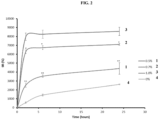
- FIG. 2 illustrates swelling kinetics in deionized water for 0.5% w/v, 0.7% w/v, and 1% w/v NaHCO 3 PVA-Gantrez ® AN foams and control (0%) during the 24 hour period.
- An asterisk (*) indicates significant statistical difference ((p ⁇ 0.05) among samples) at a particular time point.
- the materials exhibit very high and fast swelling in deionized water. That swelling increases accordingly with the amount of NaHCO 3 contained in the formulation, and consequently, also with the CO 2 spontaneously generated in the reaction mixture.
- FIG. 3 illustrates swelling of autoclaved hydrogel foams and control in simulated wound fluid (SWF) over the 9 day period.
- Example 1 The mechanical properties of the autoclaved hydrogel foams of Example 1 were studied using a Texture Analyzer XT Plus (T.A., Stable Micro Systems Ltd, UK). 2 cm length rectangular samples (each having 4 mm width) were cut from initial 8 cm diameter foams. An extension of 100 mm/min to the break was applied to all samples with an initial "grip-to-grip" separation of 30 mm. Strength-strain curves were plotted during the test by T.A. software (T.A. Exponent).
- the resulting materials are less stiff and more flexible when the foaming agent is added and the superporous foam internal structure is then formed.
- the elongation at break which is the deformation or strain that the material undergoes at fracture as indicated above, is significantly improved in the SPHs compared with the control.
- the foam samples exhibit more desirable values of Young's modulus as well.
- the difference in the amount of NaHCO 3 contained in the foams did not correspond to a statistically significant difference in the Young's modulus results of the foams. No statistically significant difference was found for tensile stress at break and maximum strength data collected during the test.
- Example 5 PVA-Gantrez ® AN superporous hydrogels adhesion to skin
- T.A. Texture Analyzer
- the settings used for the analysis were the following: pre-speed test 1.0 mm/s; test-speed 0.5 mm/s; post-test speed 1.0 mm/s; applied force 0.5 N; return distance 10.0 mm; contact time 60.0 s; trigger type auto; trigger force 0.1 N; and return distance of 10.0 mm.
- Adhesive strength, total work of adhesion, and cohesiveness data for the hydrogel foams produced by autoclaving were collected by the T.A. software (T.A. Exponent).
- FIG. 4A illustrates the force required to detach the hydrogel foam samples (i.e., 0.5% w/v, 0.7% w/v, and 1% w/v NaHCO 3 PVA-Gantrez ® AN foams and control (0%)) from the skin.
- FIG. 4B illustrates the total work of adhesion of the samples, which is defined as the area under the force versus distance curve.
- FIG. 4C illustrates the cohesiveness of the samples, which represents the distance traveled by the samples until complete detachment.
- An asterisk (*) indicates a significant statistical difference (p ⁇ 0.05)) at a particular time point.
- FIG. 4B illustrates that the level of adhesion significantly decreases for the PVA-Gantrez ® AN foam samples compared to the control. This may be attributed to the irregular surface presented by the foams, as well as the higher degree of physical and chemical crosslinking achieved in these materials due to a limited availability of groups capable of hydrogen bonding with functional groups present on the skin (according to the adsorption theory of adhesion). No significant statistical difference was found among the foam compositions.
- PVA-Gantrez ® AN superporous hydrogels of example 1 were freeze-dried and compressed in order to obtain disc-shaped tablets (10 mm diameter and 3 mm width) to perform a disc diffusion test in view of the techniques disclosed in the following references: Hallander H. 0., et al., Identification of Cephalosporin-Resistant Staphylococcus Aureus with the Disc Diffusion Method, Antimicrob.
- Staphylococcus aureus NCTC 8532 National Collection of Type Cultures was used to test the antimicrobial activity of the SPHs of Example 1. Staphylococcus aureus was grown overnight at 37 °C (shaking at 200 rpm) in nutrient broth.
- Sterilized nutrient agar prepared as indicated by the manufacturer was used to prepare the plates, which were inoculated with two different concentrations of bacteria: 10 8 CFU/mL and 10 4 CFU/mL. The samples were placed exactly in the center of the agar plates and incubated for 24 hours at 37°C. The clear zone surrounding the tablets, related to bacteria growth inhibition, was measured using a ruler and recorded.
- Bacterial colonization is a recurring reason for delays in the healing process. In some cases, such colonization may intensify into a "critical colonization" condition associated with severe pain, which may be a precursor to infection.
- wound dressings containing antimicrobial agents such as silver ions and iodine, for example, is often preferred over the administration of systemic antibiotics, especially when the patient is affected by circulatory pathologies that may prevent the drug from having the required therapeutic effect and has chronic, infected wounds.
- that use is typically dependent on the type of compromised wound presented and any possible allergies of the patient.
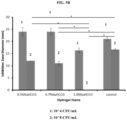
- FIG. 5A illustrates the antimicrobial activity assessment by disk diffusion method of PVA-Gantrez ® AN hydrogel foams (0.7% NaHCO 3 ) (left) and control (Aquacel ® Ag, ConvaTec Ltd, right) against Staphylococcus aureus (10 4 and 10 8 CFU/mL).
- FIG. 5A illustrates the antimicrobial activity assessment by disk diffusion method of PVA-Gantrez ® AN hydrogel foams (0.7% NaHCO 3 ) (left) and control (Aquacel ® Ag, ConvaTec Ltd, right) against Staphylococcus aureus (10 4 and 10 8 CFU/mL).
- FIG. 5B illustrates graphically the growth inhibition area assessment corresponding to the disk diffusion method associated with FIG. 5A Growth inhibition area was measured with a scale bar of 2 cm.
- An asterisk (*) indicates a significant statistical difference (p ⁇ 0.05)) at a particular time point.
Landscapes
- Chemical & Material Sciences (AREA)
- Health & Medical Sciences (AREA)
- Engineering & Computer Science (AREA)
- Materials Engineering (AREA)
- Animal Behavior & Ethology (AREA)
- Life Sciences & Earth Sciences (AREA)
- General Health & Medical Sciences (AREA)
- Public Health (AREA)
- Veterinary Medicine (AREA)
- Epidemiology (AREA)
- Organic Chemistry (AREA)
- Chemical Kinetics & Catalysis (AREA)
- Medicinal Chemistry (AREA)
- Polymers & Plastics (AREA)
- Dispersion Chemistry (AREA)
- General Chemical & Material Sciences (AREA)
- Materials For Medical Uses (AREA)
- Medicinal Preparation (AREA)
- Manufacture Of Porous Articles, And Recovery And Treatment Of Waste Products (AREA)
- Medicines That Contain Protein Lipid Enzymes And Other Medicines (AREA)
- Pharmaceuticals Containing Other Organic And Inorganic Compounds (AREA)
- Compositions Of Macromolecular Compounds (AREA)
Applications Claiming Priority (2)
| Application Number | Priority Date | Filing Date | Title |
|---|---|---|---|
| US201962832777P | 2019-04-11 | 2019-04-11 | |
| PCT/US2020/027965 WO2020210815A1 (en) | 2019-04-11 | 2020-04-13 | Superporous hydrogels, methods of making the same, and articles incorporating the same |
Publications (4)
| Publication Number | Publication Date |
|---|---|
| EP3941541A1 EP3941541A1 (en) | 2022-01-26 |
| EP3941541A4 EP3941541A4 (en) | 2022-05-11 |
| EP3941541C0 EP3941541C0 (en) | 2024-03-20 |
| EP3941541B1 true EP3941541B1 (en) | 2024-03-20 |
Family
ID=72748701
Family Applications (1)
| Application Number | Title | Priority Date | Filing Date |
|---|---|---|---|
| EP20788692.0A Active EP3941541B1 (en) | 2019-04-11 | 2020-04-13 | Superporous hydrogels, methods of making the same, and articles incorporating the same |
Country Status (10)
| Country | Link |
|---|---|
| US (1) | US20200324019A1 (https=) |
| EP (1) | EP3941541B1 (https=) |
| JP (1) | JP2022526185A (https=) |
| CN (1) | CN113905769A (https=) |
| AU (1) | AU2020273195A1 (https=) |
| BR (1) | BR112021020396A2 (https=) |
| CA (1) | CA3136635A1 (https=) |
| CO (1) | CO2021014744A2 (https=) |
| SG (1) | SG11202111268YA (https=) |
| WO (1) | WO2020210815A1 (https=) |
Families Citing this family (5)
| Publication number | Priority date | Publication date | Assignee | Title |
|---|---|---|---|---|
| USD893514S1 (en) | 2018-11-08 | 2020-08-18 | 11 Health And Technologies Limited | Display screen or portion thereof with graphical user interface |
| AU2021361238A1 (en) | 2020-10-15 | 2023-05-25 | Convatec Technologies Inc. | Ostomy systems and methods |
| KR102534658B1 (ko) * | 2021-09-09 | 2023-05-18 | 김나연 | 폼타입 습윤드레싱용 폼재 제조방법 및 이러한 폼재가 사용된 폼타입 습윤드레싱 |
| CN113978051B (zh) * | 2021-10-28 | 2023-08-04 | 深圳市珂莱蒂尔服饰有限公司 | 一种保暖保温纺织面料及其制备方法 |
| CN117586636B (zh) * | 2023-11-21 | 2024-11-05 | 四川大学 | 水凝胶前驱液及其制备方法、水凝胶及其应用 |
Family Cites Families (14)
| Publication number | Priority date | Publication date | Assignee | Title |
|---|---|---|---|---|
| AU3070892A (en) * | 1991-11-12 | 1993-06-15 | Nepera, Inc. | Adhesive hydrogels having extended use lives and process for the preparation of same |
| GB9513742D0 (en) * | 1995-07-06 | 1995-09-06 | Smith & Nephew | Compositions |
| JP3773983B2 (ja) * | 1996-03-29 | 2006-05-10 | 日本原子力研究所 | ハイドロゲル創傷被覆材 |
| US6271278B1 (en) * | 1997-05-13 | 2001-08-07 | Purdue Research Foundation | Hydrogel composites and superporous hydrogel composites having fast swelling, high mechanical strength, and superabsorbent properties |
| GB2377939B (en) * | 2001-07-26 | 2005-04-20 | Johnson & Johnson Medical Ltd | Apertured sheet materials |
| GB2382305B (en) * | 2001-11-23 | 2004-12-15 | Johnson & Johnson Medical Ltd | Absorbent wound dressings containing a hydrogel layer |
| US20030233649A1 (en) * | 2002-06-14 | 2003-12-18 | Scott Reimert | Maintaining software in computers in a network |
| US20050191270A1 (en) * | 2004-02-27 | 2005-09-01 | Hydromer, Inc. | Anti-infectious hydrogel compositions |
| AU2005219043A1 (en) * | 2004-03-02 | 2005-09-15 | Exotech Bio Solutions Ltd. | Biocompatible, biodegradable, water-absorbent hybrid material |
| CN1320931C (zh) * | 2004-05-14 | 2007-06-13 | 中国科学院长春应用化学研究所 | 含药物、壳聚糖的聚乙烯醇水凝胶敷料及其制备方法 |
| GB201000879D0 (en) * | 2010-01-20 | 2010-03-10 | Univ Reading The | Improved hydrogel synthesis |
| US20140235727A1 (en) * | 2013-02-20 | 2014-08-21 | First Water Limited | Antimicrobial hydrogel polymers |
| EP3454839B1 (en) * | 2016-05-12 | 2026-01-28 | Insitu Biologics, Inc. | Hydrogel-based biological delivery vehicle |
| US10881745B2 (en) * | 2017-05-08 | 2021-01-05 | Alivio Therapeutics, Inc. | Formulation of nanostructured gels for increased agent loading and adhesion |
-
2020
- 2020-04-13 CA CA3136635A patent/CA3136635A1/en active Pending
- 2020-04-13 CN CN202080040612.7A patent/CN113905769A/zh active Pending
- 2020-04-13 WO PCT/US2020/027965 patent/WO2020210815A1/en not_active Ceased
- 2020-04-13 BR BR112021020396A patent/BR112021020396A2/pt not_active Application Discontinuation
- 2020-04-13 SG SG11202111268YA patent/SG11202111268YA/en unknown
- 2020-04-13 US US16/847,000 patent/US20200324019A1/en not_active Abandoned
- 2020-04-13 AU AU2020273195A patent/AU2020273195A1/en not_active Abandoned
- 2020-04-13 JP JP2021559925A patent/JP2022526185A/ja active Pending
- 2020-04-13 EP EP20788692.0A patent/EP3941541B1/en active Active
-
2021
- 2021-11-02 CO CONC2021/0014744A patent/CO2021014744A2/es unknown
Non-Patent Citations (1)
| Title |
|---|
| LI YANG ET AL: "Construction of porous sponge-like PVA-CMC-PEG hydrogels with pH-sensitivity via phase separation for wound dressing", INTERNATIONAL JOURNAL OF POLYMERIC MATERIALS AND POLYMERIC BIOMATERIALS, vol. 69, no. 8, 7 March 2019 (2019-03-07), US, pages 505 - 515, XP093036215, ISSN: 0091-4037, DOI: 10.1080/00914037.2019.1581200 * |
Also Published As
| Publication number | Publication date |
|---|---|
| SG11202111268YA (en) | 2021-11-29 |
| BR112021020396A2 (pt) | 2021-12-07 |
| EP3941541A4 (en) | 2022-05-11 |
| EP3941541C0 (en) | 2024-03-20 |
| JP2022526185A (ja) | 2022-05-23 |
| CO2021014744A2 (es) | 2022-02-28 |
| EP3941541A1 (en) | 2022-01-26 |
| US20200324019A1 (en) | 2020-10-15 |
| CA3136635A1 (en) | 2020-10-15 |
| AU2020273195A1 (en) | 2021-11-04 |
| WO2020210815A1 (en) | 2020-10-15 |
| CN113905769A (zh) | 2022-01-07 |
Similar Documents
| Publication | Publication Date | Title |
|---|---|---|
| EP3941541B1 (en) | Superporous hydrogels, methods of making the same, and articles incorporating the same | |
| Pan et al. | Non-stick hemostasis hydrogels as dressings with bacterial barrier activity for cutaneous wound healing | |
| Fan et al. | Preparation and characterization of chitosan/gelatin/PVA hydrogel for wound dressings | |
| EP0507878B1 (en) | Composite of a dispersed gel in an adhesive matrix and method for preparing same | |
| US10195312B2 (en) | Modified starch material of biocompatible hemostasis | |
| CN110152051B (zh) | 一种吸水烧创伤抗菌敷料及其制备方法和用途 | |
| CN109106974B (zh) | 凝胶组织封堵材料及其制备方法和封堵制品 | |
| CN110461376A (zh) | 抗微生物创伤敷料 | |
| CN105228658B (zh) | 一种药用敷料水凝胶复合织物及其制备方法和应用 | |
| Türkoğlu et al. | Development of textile-based sodium alginate and chitosan hydrogel dressings | |
| JP2005046601A (ja) | 生体崩壊性の止血用傷包帯 | |
| Yan et al. | Synthesis and properties of poly (DEX-GMA/AAc) microgel particle as a hemostatic agent | |
| CN110975002A (zh) | 一种用于战创伤的止血材料及其制备方法和应用 | |
| de Lacerda Bukzem et al. | Tuning the properties of carboxymethylchitosan-based porous membranes for potential application as wound dressing | |
| Borhade et al. | Preparation of pirfenidone loaded chitosan-polyvinyl alcohol-graphene oxide-based scaffold: spectroscopical characterizations and antibacterial activity | |
| WO2009043839A1 (en) | Coalescing carboxymethylchitosan-based materials | |
| Yang et al. | Bio-inspired lotus-fiber and mussel-based multifunctional hydrogels for wound healing: super-stretchability, self-healing, adhesion and antibacterial properties | |
| KR100459494B1 (ko) | 상처 치료용 수화겔의 제조방법 | |
| Rajwade et al. | Wound treatment using nanomaterials | |
| KR101651574B1 (ko) | 활성 약물을 함유하는 하이드로콜로이드 | |
| CN119258262A (zh) | 一种聚丙烯酸基粉末伤口敷料的制备方法 | |
| CN121487763A (zh) | 改进的伤口敷料及其制备方法 | |
| Chandel et al. | Hemostatic Sponge Based on Modified Alginate and Water-Soluble Chitosan for Rapid Hemorrhage Control | |
| TR2024019000A2 (tr) | Burun Kanamalarında Kullanılacak Kontollü Salım Özellikli Nazal Tampon ve Üretimi | |
| WO2026073273A1 (en) | Shape-transforming devices and composites for biological site stabilization and therapeutic delivery |
Legal Events
| Date | Code | Title | Description |
|---|---|---|---|
| STAA | Information on the status of an ep patent application or granted ep patent |
Free format text: STATUS: THE INTERNATIONAL PUBLICATION HAS BEEN MADE |
|
| PUAI | Public reference made under article 153(3) epc to a published international application that has entered the european phase |
Free format text: ORIGINAL CODE: 0009012 |
|
| STAA | Information on the status of an ep patent application or granted ep patent |
Free format text: STATUS: REQUEST FOR EXAMINATION WAS MADE |
|
| 17P | Request for examination filed |
Effective date: 20211022 |
|
| AK | Designated contracting states |
Kind code of ref document: A1 Designated state(s): AL AT BE BG CH CY CZ DE DK EE ES FI FR GB GR HR HU IE IS IT LI LT LU LV MC MK MT NL NO PL PT RO RS SE SI SK SM TR |
|
| STAA | Information on the status of an ep patent application or granted ep patent |
Free format text: STATUS: EXAMINATION IS IN PROGRESS |
|
| A4 | Supplementary search report drawn up and despatched |
Effective date: 20220413 |
|
| RIC1 | Information provided on ipc code assigned before grant |
Ipc: A61L 26/00 20060101ALI20220407BHEP Ipc: A61L 15/42 20060101ALI20220407BHEP Ipc: A61K 47/34 20170101ALI20220407BHEP Ipc: A61K 47/32 20060101ALI20220407BHEP Ipc: A61L 15/60 20060101AFI20220407BHEP |
|
| 17Q | First examination report despatched |
Effective date: 20220426 |
|
| DAV | Request for validation of the european patent (deleted) | ||
| DAX | Request for extension of the european patent (deleted) | ||
| GRAP | Despatch of communication of intention to grant a patent |
Free format text: ORIGINAL CODE: EPIDOSNIGR1 |
|
| STAA | Information on the status of an ep patent application or granted ep patent |
Free format text: STATUS: GRANT OF PATENT IS INTENDED |
|
| INTG | Intention to grant announced |
Effective date: 20230512 |
|
| GRAJ | Information related to disapproval of communication of intention to grant by the applicant or resumption of examination proceedings by the epo deleted |
Free format text: ORIGINAL CODE: EPIDOSDIGR1 |
|
| STAA | Information on the status of an ep patent application or granted ep patent |
Free format text: STATUS: EXAMINATION IS IN PROGRESS |
|
| GRAP | Despatch of communication of intention to grant a patent |
Free format text: ORIGINAL CODE: EPIDOSNIGR1 |
|
| STAA | Information on the status of an ep patent application or granted ep patent |
Free format text: STATUS: GRANT OF PATENT IS INTENDED |
|
| INTC | Intention to grant announced (deleted) | ||
| INTG | Intention to grant announced |
Effective date: 20231019 |
|
| GRAS | Grant fee paid |
Free format text: ORIGINAL CODE: EPIDOSNIGR3 |
|
| GRAA | (expected) grant |
Free format text: ORIGINAL CODE: 0009210 |
|
| STAA | Information on the status of an ep patent application or granted ep patent |
Free format text: STATUS: THE PATENT HAS BEEN GRANTED |
|
| AK | Designated contracting states |
Kind code of ref document: B1 Designated state(s): AL AT BE BG CH CY CZ DE DK EE ES FI FR GB GR HR HU IE IS IT LI LT LU LV MC MK MT NL NO PL PT RO RS SE SI SK SM TR |
|
| REG | Reference to a national code |
Ref country code: GB Ref legal event code: FG4D |
|
| REG | Reference to a national code |
Ref country code: CH Ref legal event code: EP |
|
| REG | Reference to a national code |
Ref country code: DE Ref legal event code: R096 Ref document number: 602020027595 Country of ref document: DE |
|
| REG | Reference to a national code |
Ref country code: IE Ref legal event code: FG4D |
|
| U01 | Request for unitary effect filed |
Effective date: 20240419 |
|
| U07 | Unitary effect registered |
Designated state(s): AT BE BG DE DK EE FI FR IT LT LU LV MT NL PT SE SI Effective date: 20240425 |
|
| PG25 | Lapsed in a contracting state [announced via postgrant information from national office to epo] |
Ref country code: GR Free format text: LAPSE BECAUSE OF FAILURE TO SUBMIT A TRANSLATION OF THE DESCRIPTION OR TO PAY THE FEE WITHIN THE PRESCRIBED TIME-LIMIT Effective date: 20240621 |
|
| U20 | Renewal fee for the european patent with unitary effect paid |
Year of fee payment: 5 Effective date: 20240613 |
|
| PG25 | Lapsed in a contracting state [announced via postgrant information from national office to epo] |
Ref country code: HR Free format text: LAPSE BECAUSE OF FAILURE TO SUBMIT A TRANSLATION OF THE DESCRIPTION OR TO PAY THE FEE WITHIN THE PRESCRIBED TIME-LIMIT Effective date: 20240320 Ref country code: RS Free format text: LAPSE BECAUSE OF FAILURE TO SUBMIT A TRANSLATION OF THE DESCRIPTION OR TO PAY THE FEE WITHIN THE PRESCRIBED TIME-LIMIT Effective date: 20240620 |
|
| PG25 | Lapsed in a contracting state [announced via postgrant information from national office to epo] |
Ref country code: RS Free format text: LAPSE BECAUSE OF FAILURE TO SUBMIT A TRANSLATION OF THE DESCRIPTION OR TO PAY THE FEE WITHIN THE PRESCRIBED TIME-LIMIT Effective date: 20240620 Ref country code: NO Free format text: LAPSE BECAUSE OF FAILURE TO SUBMIT A TRANSLATION OF THE DESCRIPTION OR TO PAY THE FEE WITHIN THE PRESCRIBED TIME-LIMIT Effective date: 20240620 Ref country code: HR Free format text: LAPSE BECAUSE OF FAILURE TO SUBMIT A TRANSLATION OF THE DESCRIPTION OR TO PAY THE FEE WITHIN THE PRESCRIBED TIME-LIMIT Effective date: 20240320 Ref country code: GR Free format text: LAPSE BECAUSE OF FAILURE TO SUBMIT A TRANSLATION OF THE DESCRIPTION OR TO PAY THE FEE WITHIN THE PRESCRIBED TIME-LIMIT Effective date: 20240621 |
|
| PG25 | Lapsed in a contracting state [announced via postgrant information from national office to epo] |
Ref country code: IS Free format text: LAPSE BECAUSE OF FAILURE TO SUBMIT A TRANSLATION OF THE DESCRIPTION OR TO PAY THE FEE WITHIN THE PRESCRIBED TIME-LIMIT Effective date: 20240720 |
|
| PG25 | Lapsed in a contracting state [announced via postgrant information from national office to epo] |
Ref country code: SM Free format text: LAPSE BECAUSE OF FAILURE TO SUBMIT A TRANSLATION OF THE DESCRIPTION OR TO PAY THE FEE WITHIN THE PRESCRIBED TIME-LIMIT Effective date: 20240320 |
|
| PG25 | Lapsed in a contracting state [announced via postgrant information from national office to epo] |
Ref country code: ES Free format text: LAPSE BECAUSE OF FAILURE TO SUBMIT A TRANSLATION OF THE DESCRIPTION OR TO PAY THE FEE WITHIN THE PRESCRIBED TIME-LIMIT Effective date: 20240320 |
|
| PG25 | Lapsed in a contracting state [announced via postgrant information from national office to epo] |
Ref country code: CZ Free format text: LAPSE BECAUSE OF FAILURE TO SUBMIT A TRANSLATION OF THE DESCRIPTION OR TO PAY THE FEE WITHIN THE PRESCRIBED TIME-LIMIT Effective date: 20240320 |
|
| PG25 | Lapsed in a contracting state [announced via postgrant information from national office to epo] |
Ref country code: PL Free format text: LAPSE BECAUSE OF FAILURE TO SUBMIT A TRANSLATION OF THE DESCRIPTION OR TO PAY THE FEE WITHIN THE PRESCRIBED TIME-LIMIT Effective date: 20240320 |
|
| PG25 | Lapsed in a contracting state [announced via postgrant information from national office to epo] |
Ref country code: SK Free format text: LAPSE BECAUSE OF FAILURE TO SUBMIT A TRANSLATION OF THE DESCRIPTION OR TO PAY THE FEE WITHIN THE PRESCRIBED TIME-LIMIT Effective date: 20240320 |
|
| PG25 | Lapsed in a contracting state [announced via postgrant information from national office to epo] |
Ref country code: SM Free format text: LAPSE BECAUSE OF FAILURE TO SUBMIT A TRANSLATION OF THE DESCRIPTION OR TO PAY THE FEE WITHIN THE PRESCRIBED TIME-LIMIT Effective date: 20240320 Ref country code: SK Free format text: LAPSE BECAUSE OF FAILURE TO SUBMIT A TRANSLATION OF THE DESCRIPTION OR TO PAY THE FEE WITHIN THE PRESCRIBED TIME-LIMIT Effective date: 20240320 Ref country code: RO Free format text: LAPSE BECAUSE OF FAILURE TO SUBMIT A TRANSLATION OF THE DESCRIPTION OR TO PAY THE FEE WITHIN THE PRESCRIBED TIME-LIMIT Effective date: 20240320 Ref country code: PL Free format text: LAPSE BECAUSE OF FAILURE TO SUBMIT A TRANSLATION OF THE DESCRIPTION OR TO PAY THE FEE WITHIN THE PRESCRIBED TIME-LIMIT Effective date: 20240320 Ref country code: IS Free format text: LAPSE BECAUSE OF FAILURE TO SUBMIT A TRANSLATION OF THE DESCRIPTION OR TO PAY THE FEE WITHIN THE PRESCRIBED TIME-LIMIT Effective date: 20240720 Ref country code: ES Free format text: LAPSE BECAUSE OF FAILURE TO SUBMIT A TRANSLATION OF THE DESCRIPTION OR TO PAY THE FEE WITHIN THE PRESCRIBED TIME-LIMIT Effective date: 20240320 Ref country code: CZ Free format text: LAPSE BECAUSE OF FAILURE TO SUBMIT A TRANSLATION OF THE DESCRIPTION OR TO PAY THE FEE WITHIN THE PRESCRIBED TIME-LIMIT Effective date: 20240320 |
|
| REG | Reference to a national code |
Ref country code: CH Ref legal event code: PL |
|
| REG | Reference to a national code |
Ref country code: DE Ref legal event code: R097 Ref document number: 602020027595 Country of ref document: DE |
|
| PG25 | Lapsed in a contracting state [announced via postgrant information from national office to epo] |
Ref country code: MC Free format text: LAPSE BECAUSE OF FAILURE TO SUBMIT A TRANSLATION OF THE DESCRIPTION OR TO PAY THE FEE WITHIN THE PRESCRIBED TIME-LIMIT Effective date: 20240320 |
|
| PLBE | No opposition filed within time limit |
Free format text: ORIGINAL CODE: 0009261 |
|
| STAA | Information on the status of an ep patent application or granted ep patent |
Free format text: STATUS: NO OPPOSITION FILED WITHIN TIME LIMIT |
|
| PG25 | Lapsed in a contracting state [announced via postgrant information from national office to epo] |
Ref country code: MC Free format text: LAPSE BECAUSE OF FAILURE TO SUBMIT A TRANSLATION OF THE DESCRIPTION OR TO PAY THE FEE WITHIN THE PRESCRIBED TIME-LIMIT Effective date: 20240320 Ref country code: CH Free format text: LAPSE BECAUSE OF NON-PAYMENT OF DUE FEES Effective date: 20240430 |
|
| 26N | No opposition filed |
Effective date: 20241223 |
|
| PG25 | Lapsed in a contracting state [announced via postgrant information from national office to epo] |
Ref country code: IE Free format text: LAPSE BECAUSE OF NON-PAYMENT OF DUE FEES Effective date: 20240413 |
|
| U20 | Renewal fee for the european patent with unitary effect paid |
Year of fee payment: 6 Effective date: 20250319 |
|
| PGFP | Annual fee paid to national office [announced via postgrant information from national office to epo] |
Ref country code: GB Payment date: 20250319 Year of fee payment: 6 |
|
| PG25 | Lapsed in a contracting state [announced via postgrant information from national office to epo] |
Ref country code: CY Free format text: LAPSE BECAUSE OF FAILURE TO SUBMIT A TRANSLATION OF THE DESCRIPTION OR TO PAY THE FEE WITHIN THE PRESCRIBED TIME-LIMIT; INVALID AB INITIO Effective date: 20200413 |
|
| PG25 | Lapsed in a contracting state [announced via postgrant information from national office to epo] |
Ref country code: HU Free format text: LAPSE BECAUSE OF FAILURE TO SUBMIT A TRANSLATION OF THE DESCRIPTION OR TO PAY THE FEE WITHIN THE PRESCRIBED TIME-LIMIT; INVALID AB INITIO Effective date: 20200413 |