EP3936495B1 - Gas generating agent composition, and preparation method therefor and application thereof - Google Patents
Gas generating agent composition, and preparation method therefor and application thereof Download PDFInfo
- Publication number
- EP3936495B1 EP3936495B1 EP21737332.3A EP21737332A EP3936495B1 EP 3936495 B1 EP3936495 B1 EP 3936495B1 EP 21737332 A EP21737332 A EP 21737332A EP 3936495 B1 EP3936495 B1 EP 3936495B1
- Authority
- EP
- European Patent Office
- Prior art keywords
- gas generant
- generant composition
- nitrate
- zirconate
- slag
- Prior art date
- Legal status (The legal status is an assumption and is not a legal conclusion. Google has not performed a legal analysis and makes no representation as to the accuracy of the status listed.)
- Active
Links
Images

Classifications
-
- C—CHEMISTRY; METALLURGY
- C06—EXPLOSIVES; MATCHES
- C06D—MEANS FOR GENERATING SMOKE OR MIST; GAS-ATTACK COMPOSITIONS; GENERATION OF GAS FOR BLASTING OR PROPULSION (CHEMICAL PART)
- C06D5/00—Generation of pressure gas, e.g. for blasting cartridges, starting cartridges, rockets
- C06D5/06—Generation of pressure gas, e.g. for blasting cartridges, starting cartridges, rockets by reaction of two or more solids
-
- B—PERFORMING OPERATIONS; TRANSPORTING
- B60—VEHICLES IN GENERAL
- B60R—VEHICLES, VEHICLE FITTINGS, OR VEHICLE PARTS, NOT OTHERWISE PROVIDED FOR
- B60R21/00—Arrangements or fittings on vehicles for protecting or preventing injuries to occupants or pedestrians in case of accidents or other traffic risks
- B60R21/02—Occupant safety arrangements or fittings, e.g. crash pads
- B60R21/16—Inflatable occupant restraints or confinements designed to inflate upon impact or impending impact, e.g. air bags
- B60R21/26—Inflatable occupant restraints or confinements designed to inflate upon impact or impending impact, e.g. air bags characterised by the inflation fluid source or means to control inflation fluid flow
- B60R21/264—Inflatable occupant restraints or confinements designed to inflate upon impact or impending impact, e.g. air bags characterised by the inflation fluid source or means to control inflation fluid flow using instantaneous generation of gas, e.g. pyrotechnic
- B60R21/2644—Inflatable occupant restraints or confinements designed to inflate upon impact or impending impact, e.g. air bags characterised by the inflation fluid source or means to control inflation fluid flow using instantaneous generation of gas, e.g. pyrotechnic using only solid reacting substances, e.g. pellets, powder
-
- C—CHEMISTRY; METALLURGY
- C06—EXPLOSIVES; MATCHES
- C06B—EXPLOSIVES OR THERMIC COMPOSITIONS; MANUFACTURE THEREOF; USE OF SINGLE SUBSTANCES AS EXPLOSIVES
- C06B29/00—Compositions containing an inorganic oxygen-halogen salt, e.g. chlorate, perchlorate
- C06B29/22—Compositions containing an inorganic oxygen-halogen salt, e.g. chlorate, perchlorate the salt being ammonium perchlorate
-
- C—CHEMISTRY; METALLURGY
- C06—EXPLOSIVES; MATCHES
- C06B—EXPLOSIVES OR THERMIC COMPOSITIONS; MANUFACTURE THEREOF; USE OF SINGLE SUBSTANCES AS EXPLOSIVES
- C06B31/00—Compositions containing an inorganic nitrogen-oxygen salt
Definitions
- the present invention relates to a gas generant composition, a preparation method therefor, and use thereof and pertains to the technical field of gas generators for vehicle airbags.
- a gas generant for a vehicle airbag is loaded into a gas generator as a gas generating agent and is triggered when necessary to generate a lot of gas.
- An airbag consists of a gas generator and an inflatable bag. Generally, when a collision exceeds the preset intensity, the gas generator is activated and triggered to start combusting the internal gas generant to generate a gas to inflate the inflatable bag, so that a cushioning air cushion is formed between the interior trim and a human body to protect the human body from injury.
- the gas generant is mainly formulated as a sodium azide type of gas generant.
- This formulation has many advantages such as allowing stable combustion, a low combustion temperature, easy ignition, low internal pressure, high gas production rate, and less residues.
- it is now rarely used in vehicle airbags due to environmental protection and human health and safety issues.
- guanidine nitrate and basic copper nitrate based gas generants in which guanidine nitrate is used as a main fuel and basic copper nitrate is used as a main oxidizer.
- This type of gas generants generally has a high combustion temperature.
- Molten copper metal is mainly generated from the basic copper nitrate after combustion and usually should be filtered and cooled by a multilayered metal filter so as to be left inside the generator.
- the increase in the weight of the metal filter leads to an increase in the cost and in the weight of the generator.
- even a multilayered filter is used, not all the residues can be filtered, and a few residues may pass through the filter and burn the inflatable bag and may burn a human body in a more severe case.
- the form-retaining agent is generally a high-melting substance, which serves to increase the viscosity of the molten residues and to maintain its own shape as a tablet matrix.
- Strontium titanate is a high-melting metal compound. It has also been used previously in the field of gas generants for airbags.
- Patent CN105801326A is directed to a gas generant formulation mainly containing guanidine nitrate, basic copper nitrate, and a titanate.
- the titanate used as a form-retaining agent in this patent does not have a remarkable form-retaining effect and fails to achieve a good form-retaining effect in combustion and cannot achieve a good form-retaining effect in combustion especially for a gas generant comprising more than 40% of basic copper nitrate and more than 40% of guanidine nitrate.
- this gas generant formulation is less easily ignited.
- Patent CN100376515C discloses a gas generating composition, comprising guanidine nitrate, basic copper nitrate, auxiliary oxidizers (sodium nitrate, copper oxide, and iron oxide), and ignition improvers (aluminum oxide, copper chloride, copper chromate, and potassium chromate).
- ignition improvers allow easier ignition of the gas generating composition with a short ignition delay period.
- aluminum oxide is generally used for agglomeration of residues and has little effect on ignition improvement; copper chloride is a weak oxidizer and has a little effect on ignition improvement; copper chromate and potassium chromate are both strong copper-containing oxidizers, can play a certain role in ignition improvement, but will increase the residue content.
- Copper chromate increases the content of insoluble residues.
- Potassium chromate increases the content of soluble residues, and soluble aerosol particles will be formed by combustion of substances containing alkali metal potassium, which are unfavorable for agglomeration of residues.
- Patent US5827996A discloses a gas generating agent for an air bag, comprising an azole or its metal salt as a fuel, an oxidizing agent, a burning catalyst, a burning control agent, and a slagging agent, wherein an azole and a metal salt are used as the fuel, and the slagging agent is an additive which solidifies the residue of the combustion of the gas generating agent, and thereby facilitates the removal of the residue by the filter in the air bag.
- this patent is applicable to formulations using azoles as fuels. This type of formulations has a much higher combustion temperature than that of the formulations of the type comprising guanidine nitrate and basic copper nitrate and cannot be retained in a good tablet form even if slagging agents are added.
- Patent CN101952227B discloses a method for making a gas generant, by adding guanidine nitrate, basic copper nitrate, an auxiliary oxidizer (e.g., potassium nitrate, strontium nitrate, and sodium nitrate), a burning rate regulator (potassium perchlorate), a slag promoting agent (silicon dioxide, zinc oxide, ammonium oxide, aluminum oxide), and a tableting demolding adjuvant used also as a form-retaining synergistic adjuvant B (graphite, molybdenum disulfide, tungsten disulfide, boron nitride).
- an auxiliary oxidizer e.g., potassium nitrate, strontium nitrate, and sodium nitrate
- a burning rate regulator potassium perchlorate
- a slag promoting agent silicon dioxide, zinc oxide, ammonium oxide, aluminum oxide
- a tableting demolding adjuvant used also
- the granulation method used in this patent is spray granulation, which requires higher energy consumption than wet granulation.
- the slag promoting agent used in this patent is mainly selected from metal oxides, such as silicon dioxide, aluminum oxide, zinc oxide, and cerium oxide. Metal oxides can play a certain role in promoting slag agglomeration as slag promoting agents, but are not remarkably effective in retaining the forms of tablets.
- a prior patent application with patent CN107698415A discloses a gas generant consisting of guanidine nitrate, basic copper nitrate, strontium nitrate, ammonium perchlorate, strontium titanate, and talc.
- Strontium titanate added in this patent application has a slag-forming effect, but does not show a significant slag-forming effect in a BCN/GN-based formulation. In practical use, its slag-forming effect is found to fail to meet the requirements.
- CN101234943A discloses a gas generating agent for an automobile safety airbag comprising 30-50 wt.% of guanidinium nitrate, 5-20 wt.% of basic copper nitrate, 10-25 wt.% of strontium nitrate, 3-10 wt.% of ammonium perchlorate and 2-5 wt.% of kaolin.
- the present invention concerns a gas generant composition according to claim 1, a method for preparing said gas generant composition according to claim 11, the use of said gas generant composition for a vehicle airbag according to claim 14 and a gas generator using said gas generant composition according to claim 15.
- An object of the present disclosure is to overcome the above-mentioned shortcomings of the prior art and provide a gas generant composition, in which zirconate, silicate, or a mixture of zirconate and silicate is used as a slag-forming agent in combination with other components, so that the tablets, after being combusted, can coagulate and agglomerate in a filter and retain their pre-combustion form very well, thereby completely avoiding burning of the inflatable bag due to melting and splashing of the combusted tablets. In this way, slag formation during combustion of the gas generant composition is increased by at least 50%.
- Another object of the present disclosure is to provide a method for improving the slag-forming ability of a gas generant composition.
- the method includes introducing, as slagging agent components, zirconate and silicate which are high-melting substances into a gas generant composition comprising basic copper nitrate, guanidine nitrate, strontium nitrate, and AP.
- a further object of the present disclosure is to provide a method for preparing a gas generant composition and its use.
- a gas generant composition comprises guanidine nitrate, basic copper nitrate, strontium nitrate, and ammonium perchlorate and is characterized by further comprising a slag-forming agent and a lubricant, wherein the slag-forming agent is at least one zirconate, or at least one silicate, or a mixture of at least one zirconate and at least one silicate.
- the zirconate is one or a combination of strontium zirconate, barium zirconate, or calcium zirconate.
- the silicate is one or a combination of zirconium silicate or calcium silicate.
- the slag-forming agent is a mixture of at least one zirconate and at least one silicate, in which the mass ratio of zirconate to silicate is 1:0.5-3, preferably 1:0.8-2.
- the slag-forming agent is a mixture of strontium zirconate, zirconium silicate, and calcium silicate in a mass ratio of 1:0.2-1.5:0.3-1.5, preferably 1:0.3-1:0.5-1.
- the slag-forming agent is a mixture of strontium zirconate and barium zirconate in a mass ratio of 1:0.5-3, preferably 1: 0.8-2.
- the lubricant is one or a combination of talc, graphite, calcium stearate, magnesium stearate, molybdenum disulfide, or boron nitride.
- the ammonium perchlorate has a particle size D90 not greater than 20 ⁇ m; and the slag-forming agent has a particle size D90 not greater than 5 ⁇ m.
- the basic copper nitrate and the lubricant each have a particle size D90 not greater than 5 ⁇ m.
- a sum of water contents in the respective components of the gas generant composition is not more than 1% of the total mass of the respective components.
- the gas generant composition is molded as a circular or elliptical sheet structure, a circular or elliptical columnar structure, a special-shaped sheet or columnar structure, a circular or elliptical monoporous structure, a circular or elliptical porous structure, or a special-shaped monoporous or porous structure.
- the circular sheet structure has a diameter of 3 to 15 mm and a height of 2 to 5 mm;
- the circular columnar structure has a diameter of 3 to 15 mm and a height of 5 to 15 mm;
- the circular monoporous structure has an inner diameter of 0.5 to 2.5 mm, an outer diameter of 3 to 15 mm, and a height of 3 to 15 mm;
- the elliptical monoporous structure has an inner diameter of 0.5 to 2.5 mm, a major diameter of 3 to 20 mm, a minor diameter of 2 to 12 mm, and a height of 3 to 15 mm.
- the gas generant composition is prepared by wet granulation, spray granulation, or dry granulation.
- a specific preparation method for the wet granulation comprises the steps of:
- the first material is obtained by mixing guanidine nitrate, basic copper nitrate, strontium nitrate, ammonium perchlorate, and a slag-forming agent in a mixing device for a mixing duration larger than or equal to 5 min.
- the wet mixing in the step (2) is performed for a duration of 20 min to 60 min; and the wet mixing is performed by a device selected from a kneader or a mixer.
- the gas generant composition is prepared by wet granulation, and the specific preparation method comprises the steps of:
- the first material is obtained by mixing guanidine nitrate, basic copper nitrate, strontium nitrate, ammonium perchlorate, a slag-forming agent, and a lubricant in a mixing device for a mixing duration larger than or equal to 5 min.
- the wet mixing in the step (2) is performed for a duration of 20 min to 60 min; and the wet mixing is performed by a device selected from a kneader or a mixer.
- the gas generant composition described above is used in a gas generator for a vehicle airbag.
- a gas generator uses the gas generant composition described above.
- the present disclosure has the following advantageous effects.
- the present disclosure discloses a gas generant composition, comprising guanidine nitrate, basic copper nitrate, strontium nitrate, ammonium perchlorate, a slag-forming agent, and a lubricant, wherein the slag-forming agent is at least one zirconate, or at least one silicate, or a mixture of at least one zirconate and at least one silicate, and the lubricant is selected from at least one of talc, graphite, calcium stearate, magnesium stearate, molybdenum disulfide, or boron nitride.
- the above-mentioned zirconate is one or a combination of strontium zirconate, barium zirconate, or calcium zirconate.
- the above-mentioned silicate is one or a combination of zirconium silicate or calcium silicate.
- the above-mentioned slag-forming agent is a mixture of at least one zirconate and at least one silicate, in which the mass ratio of zirconate to silicate is 1:0.5-3.
- the slag-forming agent is a mixture of strontium zirconate, zirconium silicate, and calcium silicate in a mass ratio of 1:0.5-3:0.5-3.
- the slag-forming agent is a mixture of strontium zirconate and barium zirconate in a mass ratio of 1:0.5-3.
- ammonium perchlorate has a particle size D90 not greater than 20 ⁇ m.
- the above-mentioned slag-forming agent has a particle size D90 not greater than 5 ⁇ m.
- the above-mentioned basic copper nitrate and the lubricant/release agent each have a particle size D90 not greater than 5 ⁇ m.
- a sum of water contents in the respective components of the gas generant composition described above is not more than 1% of the total mass of the respective components.
- the gas generant composition is molded as a circular or elliptical sheet structure, a circular or elliptical columnar (or cylindrical) structure, a special-shaped sheet or columnar structure, a circular or elliptical monoporous structure, a circular or elliptical porous structure, or a special-shaped monoporous or porous structure.
- the circular sheet structure has a diameter of 3 to 15 mm and a height of 2 to 5 mm;
- the circular columnar structure has a diameter of 3 to 15 mm and a height of 5 to 15 mm;
- the circular monoporous structure has an inner diameter of 0.5 to 2.5 mm, an outer diameter of 3 to 15 mm, and a height of 3 to 15 mm;
- the elliptical monoporous structure has an inner diameter of 0.5 to 2.5 mm, a major diameter of 3 to 20 mm, a minor diameter of 2 to 12 mm, and a height of 3 to 15 mm.
- a method for preparing a gas generant composition according to the present disclosure may be carried out by a method comprising wet granulation, spray granulation, or dry granulation.
- spray granulation or dry granulation may be carried out by using a traditional granulation process method.
- a specific preparation method for wet granulation includes the following steps.
- Another specific preparation method for wet granulation includes the following steps.
- the above-mentioned gas generant composition of the present disclosure is used in a gas generator of a vehicle airbag.
- zirconate, silicate, or a mixture of zirconate and silicate is added for the first time as a slag-forming agent of the gas generant, so that molten copper metal can be coagulated and agglomerated into lumps.
- the slag-forming agent has a melting point about 2,500 K, which is much higher than the melting point of metallic copper. A large number of tests have shown that the slag-forming agent is less combustible and can gather all the solid combustion products and agglomerates together during combustion of the gas generant composition, so that the gas generant retains its original shape after being combusted.
- Zirconate, silicate, or a mixture thereof used in the present disclosure can create a good effect of coagulating a metallic copper melt formed after the decomposition of basic copper nitrate, to further reduce molten copper residues, and can serve to increase the viscosity of the molten residues and to maintain its own shape as a tablet matrix, thereby obtaining significant agglomeration and slagging effects.
- the mixing device used is a three-dimensional multi-directional motion mixer (or an ultra-efficient mixer)
- the kneader used is a horizontal kneader
- the drying device used is a vacuum oven
- the molding device used is a rotary tablet press.
- a gas generant composition comprised components having the following contents, in percent by mass:
- the prepared round tablets were loaded into a test generator and subjected to an ignition and combustion test. After the test, the generator was dissected to observe the form of the combusted tablets.
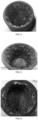
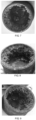
- FIG. 1 was a picture showing the morphology of residues obtained after combustion of the gas generant composition tablets in Comparative Example 1 of the present disclosure.
- Table 1 below showed statistics of the weights of soluble residues and insoluble residues discharged after the combustion of the gas generant composition tablets in Comparative Example 1 of the present disclosure and their low-temperature ignition delay time. It could be seen from FIG. 1 and Table 1 that the tablets were in the form of sheets, were tightly attached to the inner wall of the filter, had poor density, were easily broken when touched by hand, and would tend to fly out of the generator filter and fall into the airbag and might burn through the inflatable bag and cause potential danger to a human body. Their low-temperature ignition time met the requirement of being less than 7 ms. Table 1 No.
- a gas generant composition comprised components having the following contents, in percent by mass:
- the prepared round tablets were loaded into a test generator and subjected to an ignition and combustion test. After the test, the generator was dissected to observe the form of the combusted tablets.
- FIG. 2 was a picture showing the morphology of residues obtained after combustion of the gas generant composition tablets in Example 1 of the present disclosure.
- Table 2 below showed statistics of the weights of soluble residues and insoluble residues discharged after the combustion of the gas generant composition tablets in Example 1 of the present disclosure and their low-temperature ignition delay time. It could be seen from FIG. 2 and Table 2 that after combusted at high temperature, the tablets were in the form of the original tablet, were tightly attached to the inner wall of the filter, and had larger density. The tablets had retained a very good original appearance and had higher strength and higher density to support the maintaining of their original appearance. Their low-temperature ignition time met the requirement of being less than 7 ms. Table 2 No.
- barium zirconate was added as a slag-forming agent
- basic copper nitrate was used as a primary oxidizer
- guanidine nitrate was used as a fuel
- AP and strontium nitrate were used as auxiliary oxidizers
- talc was used as a lubricant and a release agent.
- the tablets retained a very good original appearance after being tested in a generator for an airbag. After a TANKWASH test was conducted, the weight of the water-soluble matter and the weight of the insoluble matter were decreased significantly. Moreover, the composition was combusted at an increased speed and had an ignition delay that met the strict requirements of USCAR.
- a gas generant composition comprised components having the following contents, in percent by mass:
- the prepared round tablets were loaded into a test generator and subjected to an ignition and combustion test. After the test, the generator was dissected to observe the form of the combusted tablets.
- FIG. 3 was a picture showing the morphology of residues obtained after combustion of the gas generant composition tablets in Comparative Example 2 of the present disclosure.
- Table 3 below showed statistics of the weights of soluble residues and insoluble residues discharged after the combustion of the gas generant composition tablets in Comparative Example 2 of the present disclosure and their low-temperature ignition delay time. It could be seen from FIG. 3 and Table 3 that the tablets were in the form of sheets and partially in powder form, were tightly attached to the inner wall of the filter, had poor density, and would tend to fly out of the generator filter and fall into the airbag and might burn through the inflatable bag and cause potential danger to a human body. Their low-temperature ignition time did not meet the requirement of being less than 7 ms. Table 3 No.
- a gas generant composition comprised components having the following contents, in percent by mass:
- the prepared round tablets were loaded into a test generator and subjected to an ignition and combustion test. After the test, the generator was dissected to observe the form of the combusted tablets.
- FIG. 4 was a picture showing the morphology of residues obtained after combustion of the gas generant composition tablets in Example 2 of the present disclosure.
- Table 4 below showed statistics of the weights of soluble residues and insoluble residues discharged after the combustion of the gas generant composition tablets in Example 2 of the present disclosure and their low-temperature ignition delay time. It could be seen from FIG. 4 and Table 4 that after combusted at high temperature, the tablets were in the form of the original tablet and exhibited a significant coagulation effect. The residues were tightly attached to the inner wall of the filter and had larger density. The tablets had retained a very good original appearance and had higher strength and higher density to support the maintaining of their original appearance. Their low-temperature ignition time met the requirement of being less than 7 ms. Table 4 No.
- strontium zirconate was added as a slag-forming agent
- basic copper nitrate was used as a primary oxidizer
- guanidine nitrate was used as a fuel
- AP and strontium nitrate were used as auxiliary oxidizers
- talc was used as a lubricant and a release agent.
- the tablets retained a very good original appearance after being tested in a generator for an airbag. After a TANKWASH test was conducted, the weight of the water-soluble matter and the weight of the insoluble matter were decreased significantly. Moreover, the composition was combusted at an increased speed and had an ignition delay that met the strict requirements of USCAR.
- a gas generant composition comprised components having the following contents, in percent by mass:
- the prepared round tablets were loaded into a test generator and subjected to an ignition and combustion test. After the test, the generator was dissected to observe the form of the combusted tablets.
- FIG. 5 was a picture showing the morphology of residues obtained after combustion of the gas generant composition tablets in Comparative Example 3 of the present disclosure.
- Table 5 below showed statistics of the weights of soluble residues and insoluble residues discharged after the combustion of the gas generant composition tablets in Comparative Example 3 of the present disclosure and their low-temperature ignition delay time. It could be seen from FIG. 5 and Table 5 that the tablets were agglomerated after combustion, and a large amount of metallic copper was separated out and attached to the inner wall of the filter but was not agglomerated into a desired sheet shape. As a result, the residue would tend to fly out of the generator filter and fall into the airbag and might burn through the inflatable bag and cause potential danger to a human body.
- a gas generant composition comprised components having the following contents, in percent by mass:
- the prepared round tablets were loaded into a test generator and subjected to an ignition and combustion test. After the test, the generator was dissected to observe the form of the combusted tablets.
- FIG. 6 was a picture showing the morphology of residues obtained after combustion of the gas generant composition tablets in Example 3 of the present disclosure.
- Table 6 below showed statistics of the weights of soluble residues and insoluble residues discharged after the combustion of the gas generant composition tablets in Example 3 of the present disclosure and their low-temperature ignition delay time. It could be seen from FIG. 6 and Table 6 that after combusted at high temperature, the tablets were in the form of the original tablet and exhibited a significant coagulation effect. The residues were tightly attached to the inner wall of the filter and had larger density. The tablets had retained a very good original appearance and had higher strength and higher density to support the maintaining of their original appearance. Their low-temperature ignition time met the requirement of being less than 7 ms. Table 6 No.
- calcium zirconate was added as a slag-forming agent
- basic copper nitrate was used as a primary oxidizer
- guanidine nitrate was used as a fuel
- AP and strontium nitrate were used as auxiliary oxidizers
- calcium stearate was used as a lubricant and a release agent.
- the tablets retained a very good original appearance after being tested in a generator for an airbag. After a TANKWASH test was conducted, the weight of the water-soluble matter and the weight of the insoluble matter were decreased significantly. Moreover, the composition was combusted at an increased speed and had an ignition delay that met the strict requirements of USCAR.
- a gas generant composition comprised components having the following contents, in percent by mass:
- the prepared round tablets were loaded into a test generator and subjected to an ignition and combustion test. After the test, the generator was dissected to observe the form of the combusted tablets.
- FIG. 7 was a picture showing the morphology of residues obtained after combustion of the gas generant composition tablets in Example 4 of the present disclosure.
- Table 7 below showed statistics of the weights of soluble residues and insoluble residues discharged after the combustion of the gas generant composition tablets in Example 4 of the present disclosure and their low-temperature ignition delay time. It could be seen from FIG. 7 and Table 7 that after combusted at high temperature, the tablets were in the form of the original tablet and exhibited a significant coagulation effect. The residues were tightly attached to the inner wall of the filter and had larger density. The tablets had retained a very good original appearance and had higher strength and higher density to support the maintaining of their original appearance. Their low-temperature ignition time met the requirement of being less than 7 ms. Table 7 No.
- strontium zirconate and barium zirconate were added as a slag-forming agent
- basic copper nitrate was used as a primary oxidizer
- guanidine nitrate was used as a fuel
- AP and strontium nitrate were used as auxiliary oxidizers
- magnesium stearate was used as a lubricant and a release agent.
- the tablets retained a very good original appearance after being tested in a generator for an airbag. After a TANKWASH test was conducted, the weight of the water-soluble matter and the weight of the insoluble matter were decreased significantly. Moreover, the composition was combusted at an increased speed and had an ignition delay that met the strict requirements of USCAR.
- a gas generant composition comprised components having the following contents, in percent by mass:
- the prepared round tablets were loaded into a test generator and subjected to an ignition and combustion test. After the test, the generator was dissected to observe the form of the combusted tablets.
- FIG. 8 was a picture showing the morphology of residues obtained after combustion of the gas generant composition tablets in Example 5 of the present disclosure.
- Table 8 below showed statistics of the weights of soluble residues and insoluble residues discharged after the combustion of the gas generant composition tablets in Example 5 of the present disclosure and their low-temperature ignition delay time. It could be seen from FIG. 8 and Table 8 that after combusted at high temperature, the tablets were in the form of the original tablet and exhibited a significant coagulation effect. The residues were tightly attached to the inner wall of the filter and had larger density. The tablets had retained a very good original appearance and had higher strength and higher density to support the maintaining of their original appearance. Their low-temperature ignition time met the requirement of being less than 7 ms. Table 8 No.
- zirconium silicate was added as a slag-forming agent
- basic copper nitrate was used as a primary oxidizer
- guanidine nitrate was used as a fuel
- AP and strontium nitrate were used as auxiliary oxidizers
- talc was used as a lubricant and a release agent.
- the tablets retained a very good original appearance after being tested in a generator for an airbag. After a TANKWASH test was conducted, the weight of the water-soluble matter and the weight of the insoluble matter were decreased significantly. Moreover, the composition was combusted at an increased speed and had an ignition delay that met the strict requirements of USCAR.
- a gas generant composition comprised components having the following contents, in percent by mass:
- the prepared round tablets were loaded into a test generator and subjected to an ignition and combustion test. After the test, the generator was dissected to observe the form of the combusted tablets.
- FIG. 9 was a picture showing the morphology of residues obtained after combustion of the gas generant composition tablets in Example 6 of the present disclosure.
- Table 9 below showed statistics of the weights of soluble residues and insoluble residues discharged after the combustion of the gas generant composition tablets in Example 6 of the present disclosure and their low-temperature ignition delay time. It could be seen from FIG. 9 and Table 9 that after combusted at high temperature, the tablets were in the form of the original tablet and exhibited a significant coagulation effect. The residues were tightly attached to the inner wall of the filter and had larger density. The tablets had retained a very good original appearance and had higher strength and higher density to support the maintaining of their original appearance. Their low-temperature ignition time met the requirement of being less than 7 ms. Table 9 No.
- strontium zirconate and zirconium silicate were added as a slag-forming agent
- basic copper nitrate was used as a primary oxidizer
- guanidine nitrate was used as a fuel
- AP and strontium nitrate were used as auxiliary oxidizers
- talc was used as a lubricant and a release agent.
- the tablets retained a very good original appearance after being tested in a generator for an airbag. After a TANKWASH test was conducted, the weight of the water-soluble matter and the weight of the insoluble matter were decreased significantly. Moreover, the composition was combusted at an increased speed and had an ignition delay that met the strict requirements of USCAR.
Landscapes
- Chemical & Material Sciences (AREA)
- Organic Chemistry (AREA)
- Engineering & Computer Science (AREA)
- Chemical Kinetics & Catalysis (AREA)
- Combustion & Propulsion (AREA)
- Inorganic Chemistry (AREA)
- Physics & Mathematics (AREA)
- Fluid Mechanics (AREA)
- Mechanical Engineering (AREA)
- Air Bags (AREA)
Description
- This application claims priority to
Chinese Patent Application No. 202010414327.9, filed with the Chinese Patent Office on May 15, 2020 - The present invention relates to a gas generant composition, a preparation method therefor, and use thereof and pertains to the technical field of gas generators for vehicle airbags.
- A gas generant for a vehicle airbag is loaded into a gas generator as a gas generating agent and is triggered when necessary to generate a lot of gas. An airbag consists of a gas generator and an inflatable bag. Generally, when a collision exceeds the preset intensity, the gas generator is activated and triggered to start combusting the internal gas generant to generate a gas to inflate the inflatable bag, so that a cushioning air cushion is formed between the interior trim and a human body to protect the human body from injury.
- At the early stage, the gas generant is mainly formulated as a sodium azide type of gas generant. This formulation has many advantages such as allowing stable combustion, a low combustion temperature, easy ignition, low internal pressure, high gas production rate, and less residues. However, it is now rarely used in vehicle airbags due to environmental protection and human health and safety issues.
- Currently, the prevailing gas generants in the world are guanidine nitrate and basic copper nitrate based gas generants, in which guanidine nitrate is used as a main fuel and basic copper nitrate is used as a main oxidizer. This type of gas generants generally has a high combustion temperature. Molten copper metal is mainly generated from the basic copper nitrate after combustion and usually should be filtered and cooled by a multilayered metal filter so as to be left inside the generator. On the one hand, the increase in the weight of the metal filter leads to an increase in the cost and in the weight of the generator. On the other hand, even if a multilayered filter is used, not all the residues can be filtered, and a few residues may pass through the filter and burn the inflatable bag and may burn a human body in a more severe case.
- Therefore, this problem is generally solved by means of: (1) reducing the amount of basic copper nitrate used, thereby reducing molten copper residues formed after combustion of the gas generant composition; and (2) adding a form-retaining agent to the composition formulation. The form-retaining agent is generally a high-melting substance, which serves to increase the viscosity of the molten residues and to maintain its own shape as a tablet matrix.
- Strontium titanate is a high-melting metal compound. It has also been used previously in the field of gas generants for airbags. For example, Patent
CN105801326A is directed to a gas generant formulation mainly containing guanidine nitrate, basic copper nitrate, and a titanate. However, the titanate used as a form-retaining agent in this patent does not have a remarkable form-retaining effect and fails to achieve a good form-retaining effect in combustion and cannot achieve a good form-retaining effect in combustion especially for a gas generant comprising more than 40% of basic copper nitrate and more than 40% of guanidine nitrate. Moreover, this gas generant formulation is less easily ignited. - For example, Patent
CN100376515C discloses a gas generating composition, comprising guanidine nitrate, basic copper nitrate, auxiliary oxidizers (sodium nitrate, copper oxide, and iron oxide), and ignition improvers (aluminum oxide, copper chloride, copper chromate, and potassium chromate). The use of ignition improvers allows easier ignition of the gas generating composition with a short ignition delay period. However, aluminum oxide is generally used for agglomeration of residues and has little effect on ignition improvement; copper chloride is a weak oxidizer and has a little effect on ignition improvement; copper chromate and potassium chromate are both strong copper-containing oxidizers, can play a certain role in ignition improvement, but will increase the residue content. Copper chromate increases the content of insoluble residues. Potassium chromate increases the content of soluble residues, and soluble aerosol particles will be formed by combustion of substances containing alkali metal potassium, which are unfavorable for agglomeration of residues. - For another example, Patent
US5827996A discloses a gas generating agent for an air bag, comprising an azole or its metal salt as a fuel, an oxidizing agent, a burning catalyst, a burning control agent, and a slagging agent, wherein an azole and a metal salt are used as the fuel, and the slagging agent is an additive which solidifies the residue of the combustion of the gas generating agent, and thereby facilitates the removal of the residue by the filter in the air bag. However, this patent is applicable to formulations using azoles as fuels. This type of formulations has a much higher combustion temperature than that of the formulations of the type comprising guanidine nitrate and basic copper nitrate and cannot be retained in a good tablet form even if slagging agents are added. - In addition, Patent
CN101952227B discloses a method for making a gas generant, by adding guanidine nitrate, basic copper nitrate, an auxiliary oxidizer (e.g., potassium nitrate, strontium nitrate, and sodium nitrate), a burning rate regulator (potassium perchlorate), a slag promoting agent (silicon dioxide, zinc oxide, ammonium oxide, aluminum oxide), and a tableting demolding adjuvant used also as a form-retaining synergistic adjuvant B (graphite, molybdenum disulfide, tungsten disulfide, boron nitride). The granulation method used in this patent is spray granulation, which requires higher energy consumption than wet granulation. Furthermore, the slag promoting agent used in this patent is mainly selected from metal oxides, such as silicon dioxide, aluminum oxide, zinc oxide, and cerium oxide. Metal oxides can play a certain role in promoting slag agglomeration as slag promoting agents, but are not remarkably effective in retaining the forms of tablets. - A prior patent application with patent
CN107698415A discloses a gas generant consisting of guanidine nitrate, basic copper nitrate, strontium nitrate, ammonium perchlorate, strontium titanate, and talc. Strontium titanate added in this patent application has a slag-forming effect, but does not show a significant slag-forming effect in a BCN/GN-based formulation. In practical use, its slag-forming effect is found to fail to meet the requirements. Moreover, a large number of tests have shown that such tablets, after being combusted, have poor density, are easily broken when touched by hand, and will tend to fly out of the generator filter and fall into the airbag and may burn through the inflatable bag and cause potential danger to a human body.CN101234943A discloses a gas generating agent for an automobile safety airbag comprising 30-50 wt.% of guanidinium nitrate, 5-20 wt.% of basic copper nitrate, 10-25 wt.% of strontium nitrate, 3-10 wt.% of ammonium perchlorate and 2-5 wt.% of kaolin. - The present invention concerns a gas generant composition according to claim 1, a method for preparing said gas generant composition according to claim 11, the use of said gas generant composition for a vehicle airbag according to claim 14 and a gas generator using said gas generant composition according to claim 15.
- An object of the present disclosure is to overcome the above-mentioned shortcomings of the prior art and provide a gas generant composition, in which zirconate, silicate, or a mixture of zirconate and silicate is used as a slag-forming agent in combination with other components, so that the tablets, after being combusted, can coagulate and agglomerate in a filter and retain their pre-combustion form very well, thereby completely avoiding burning of the inflatable bag due to melting and splashing of the combusted tablets. In this way, slag formation during combustion of the gas generant composition is increased by at least 50%.
- Another object of the present disclosure is to provide a method for improving the slag-forming ability of a gas generant composition. The method includes introducing, as slagging agent components, zirconate and silicate which are high-melting substances into a gas generant composition comprising basic copper nitrate, guanidine nitrate, strontium nitrate, and AP.
- A further object of the present disclosure is to provide a method for preparing a gas generant composition and its use.
- The above-mentioned objects of the present disclosure are mainly achieved by the following technical solutions.
- A gas generant composition comprises guanidine nitrate, basic copper nitrate, strontium nitrate, and ammonium perchlorate and is characterized by further comprising a slag-forming agent and a lubricant, wherein the slag-forming agent is at least one zirconate, or at least one silicate, or a mixture of at least one zirconate and at least one silicate.
- The contents, in percent by mass, of the respective components are as follows:
guanidine nitrate 40% to 55%; basic copper nitrate 25% to 45%; strontium nitrate 1% to 8%; ammonium perchlorate 1% to 7%; slag-forming agent 1% to 10%; lubricant 0.5% to 5%. - In the gas generant composition described above, the zirconate is one or a combination of strontium zirconate, barium zirconate, or calcium zirconate.
- In the gas generant composition described above, the silicate is one or a combination of zirconium silicate or calcium silicate.
- In the gas generant composition described above, the slag-forming agent is a mixture of at least one zirconate and at least one silicate, in which the mass ratio of zirconate to silicate is 1:0.5-3, preferably 1:0.8-2.
- In the gas generant composition described above, the slag-forming agent is a mixture of strontium zirconate, zirconium silicate, and calcium silicate in a mass ratio of 1:0.2-1.5:0.3-1.5, preferably 1:0.3-1:0.5-1.
- In the gas generant composition described above, the slag-forming agent is a mixture of strontium zirconate and barium zirconate in a mass ratio of 1:0.5-3, preferably 1: 0.8-2.
- In the gas generant composition described above, the lubricant is one or a combination of talc, graphite, calcium stearate, magnesium stearate, molybdenum disulfide, or boron nitride.
- In the gas generant composition described above, the ammonium perchlorate has a particle size D90 not greater than 20 µm; and the slag-forming agent has a particle size D90 not greater than 5 µm.
- In the gas generant composition described above, the basic copper nitrate and the lubricant each have a particle size D90 not greater than 5 µm.
- In the gas generant composition described above, a sum of water contents in the respective components of the gas generant composition is not more than 1% of the total mass of the respective components.
- In the gas generant composition described above, the gas generant composition is molded as a circular or elliptical sheet structure, a circular or elliptical columnar structure, a special-shaped sheet or columnar structure, a circular or elliptical monoporous structure, a circular or elliptical porous structure, or a special-shaped monoporous or porous structure.
- In the gas generant composition described above, the circular sheet structure has a diameter of 3 to 15 mm and a height of 2 to 5 mm; the circular columnar structure has a diameter of 3 to 15 mm and a height of 5 to 15 mm; the circular monoporous structure has an inner diameter of 0.5 to 2.5 mm, an outer diameter of 3 to 15 mm, and a height of 3 to 15 mm; and the elliptical monoporous structure has an inner diameter of 0.5 to 2.5 mm, a major diameter of 3 to 20 mm, a minor diameter of 2 to 12 mm, and a height of 3 to 15 mm.
- In a method for preparing the gas generant composition described above, the gas generant composition is prepared by wet granulation, spray granulation, or dry granulation. A specific preparation method for the wet granulation comprises the steps of:
- (1) mixing guanidine nitrate, basic copper nitrate, strontium nitrate, ammonium perchlorate, and a slag-forming agent to obtain a first material;
- (2) performing wet mixing on the first material by adding water to obtain a second material, where the amount of water added is 5% to 15% of the total mass of the first material;
- (3) making the second material pass through a sieve of 10 to 40 meshes to obtain a third material;
- (4) drying the third material to a water content less than 0.5% of the total mass of the third material, and making the third material pass through the sieve of 10 to 40 meshes again to obtain a fourth material; and
- (5) adding a lubricant to the fourth material and molding the material.
- In the method for preparing the gas generant composition described above, in the step (1), the first material is obtained by mixing guanidine nitrate, basic copper nitrate, strontium nitrate, ammonium perchlorate, and a slag-forming agent in a mixing device for a mixing duration larger than or equal to 5 min.
- In the method for preparing the gas generant composition described above, the wet mixing in the step (2) is performed for a duration of 20 min to 60 min; and the wet mixing is performed by a device selected from a kneader or a mixer.
- In a method for preparing the gas generant composition described above, the gas generant composition is prepared by wet granulation, and the specific preparation method comprises the steps of:
- (1) mixing guanidine nitrate, basic copper nitrate, strontium nitrate, ammonium perchlorate, a slag-forming agent, and a lubricant to obtain a first material;
- (2) performing wet mixing on the first material by adding water to obtain a second material, where the amount of water added is 5% to 15% of the total mass of the first material;
- (3) making the second material pass through a sieve of 10 to 40 meshes to obtain a third material;
- (4) drying the third material to a water content less than 0.5% of the total mass of the third material, and making the third material pass through the sieve of 10 to 40 meshes again to obtain a fourth material; and
- (5) molding the fourth material.
- In the method for preparing the gas generant composition described above, in the step (1), the first material is obtained by mixing guanidine nitrate, basic copper nitrate, strontium nitrate, ammonium perchlorate, a slag-forming agent, and a lubricant in a mixing device for a mixing duration larger than or equal to 5 min.
- In the method for preparing the gas generant composition described above, the wet mixing in the step (2) is performed for a duration of 20 min to 60 min; and the wet mixing is performed by a device selected from a kneader or a mixer.
- In use of the gas generant composition described above, the gas generant composition is used in a gas generator for a vehicle airbag.
- A gas generator uses the gas generant composition described above.
- Compared with the prior art, the present disclosure has the following advantageous effects.
- (1) In the present disclosure, zirconate, silicate, or a mixture of zirconate and silicate is used for the first time as a slag-forming agent of a gas generant and combined with guanidine nitrate, basic copper nitrate, strontium nitrate, ammonium perchlorate, and a release agent, so that the tablets can retain their form before combustion very well after being combusted, thereby completely avoiding burning of the inflatable bag due to melting and splashing of the combusted tablets and significantly reducing molten copper residues formed after the combustion and decomposition of basic copper nitrate. The low-temperature ignition performance of the composition is significantly improved while the combustion speed is increased, and slag formation during the combustion of the gas generant composition is increased by at least 50%.
- (2) In the gas generant formulation based on basic copper nitrate and guanidine nitrate according to the present disclosure, zirconate, silicate, or a mixture of zirconate and silicate is added for the first time as a slag-forming agent of the gas generant, so that molten copper metal can be coagulated and agglomerated into lumps. The slag-forming agent has a melting point about 2,500 K. The slag-forming agent is less combustible and can gather all the solid combustion products and agglomerates together during combustion of the gas generant composition, so that the gas generant retains its original shape after being combusted. A large number of tests have shown that zirconate, silicate, or a mixture thereof used in the present disclosure can create a good effect of coagulating a metallic copper melt formed after the decomposition of basic copper nitrate, to further reduce molten copper residues, and can serve to increase the viscosity of the molten residues and to maintain its own shape as a tablet matrix, thereby obtaining significant agglomeration and slagging effects.
- (3) In the present disclosure, zirconate, silicate, or a mixture of zirconate and silicate is used for the first time as a slag-forming agent of a gas generant, so that slag formation during the combustion of the gas generant composition is increased by at least 50% while ensuring an unaltered rate of combustion of the gas generant. After the generator has undergone a TANKWASH residue test, the total content of insoluble substances and water-soluble substances is far less than 1 g (as required in industry by USCAR) and is about 0.4 g.
- (4) In the present disclosure, a certain amount of ammonium perchlorate and strontium nitrate are used as auxiliary oxidizers in combination with other individual components, and zirconate, silicate, or a mixture of zirconate and silicate is added as a slag-forming agent of the gas generant, so that the composition has an improved low-temperature ignition performance and an increased combustion speed and meets the requirements of USCAR standards.
- (5) In the present disclosure, the process procedures and process conditions of wet granulation are designed optimally, so that the preparation process is simple and easily implementable. Moreover, the release agent in the preparation method according to the present disclosure may be mixed with other components prior to preparation and then wet preparation may be performed, or talc may be added at the end, so that the preparation method is carried out more flexibly.
-
-
FIG. 1 is a picture showing the morphology of residues obtained after combustion of gas generant composition tablets in Comparative Example 1 of the present disclosure; -
FIG. 2 is a picture showing the morphology of residues obtained after combustion of gas generant composition tablets in Example 1 of the present disclosure; -
FIG. 3 is a picture showing the morphology of residues obtained after combustion of gas generant composition tablets in Comparative Example 2 of the present disclosure; -
FIG. 4 is a picture showing the morphology of residues obtained after combustion of gas generant composition tablets in Example 2 of the present disclosure; -
FIG. 5 is a picture showing the morphology of residues obtained after combustion of gas generant composition tablets in Comparative Example 3 of the present disclosure; -
FIG. 6 is a picture showing the morphology of residues obtained after combustion of gas generant composition tablets in Example 3 of the present disclosure; -
FIG. 7 is a picture showing the morphology of residues obtained after combustion of gas generant composition tablets in Example 4 of the present disclosure; -
FIG. 8 is a picture showing the morphology of residues obtained after combustion of gas generant composition tablets in Example 5 of the present disclosure; and -
FIG. 9 is a picture showing the morphology of residues obtained after combustion of gas generant composition tablets in Example 6 of the present disclosure. - The present disclosure will be described in further detail below with reference to the accompanying drawings and specific examples.
- The present disclosure discloses a gas generant composition, comprising guanidine nitrate, basic copper nitrate, strontium nitrate, ammonium perchlorate, a slag-forming agent, and a lubricant, wherein the slag-forming agent is at least one zirconate, or at least one silicate, or a mixture of at least one zirconate and at least one silicate, and the lubricant is selected from at least one of talc, graphite, calcium stearate, magnesium stearate, molybdenum disulfide, or boron nitride.
- The contents, in percent by mass, of the respective components are as follows:
guanidine nitrate 40% to 55%; basic copper nitrate 25% to 45%; strontium nitrate 1% to 8%; ammonium perchlorate 1% to 7%; slag-forming agent 1% to 10%; lubricant 0.5% to 5%. - The above-mentioned zirconate is one or a combination of strontium zirconate, barium zirconate, or calcium zirconate.
- The above-mentioned silicate is one or a combination of zirconium silicate or calcium silicate.
- The above-mentioned slag-forming agent is a mixture of at least one zirconate and at least one silicate, in which the mass ratio of zirconate to silicate is 1:0.5-3.
- In an optional embodiment of the present disclosure, the slag-forming agent is a mixture of strontium zirconate, zirconium silicate, and calcium silicate in a mass ratio of 1:0.5-3:0.5-3.
- In an optional embodiment of the present disclosure, the slag-forming agent is a mixture of strontium zirconate and barium zirconate in a mass ratio of 1:0.5-3.
- The above-mentioned ammonium perchlorate has a particle size D90 not greater than 20 µm.
- The above-mentioned slag-forming agent has a particle size D90 not greater than 5 µm.
- The above-mentioned basic copper nitrate and the lubricant/release agent each have a particle size D90 not greater than 5 µm.
- A sum of water contents in the respective components of the gas generant composition described above is not more than 1% of the total mass of the respective components.
- In an optional embodiment of the present disclosure, the gas generant composition is molded as a circular or elliptical sheet structure, a circular or elliptical columnar (or cylindrical) structure, a special-shaped sheet or columnar structure, a circular or elliptical monoporous structure, a circular or elliptical porous structure, or a special-shaped monoporous or porous structure. Here, the circular sheet structure has a diameter of 3 to 15 mm and a height of 2 to 5 mm; the circular columnar structure has a diameter of 3 to 15 mm and a height of 5 to 15 mm; the circular monoporous structure has an inner diameter of 0.5 to 2.5 mm, an outer diameter of 3 to 15 mm, and a height of 3 to 15 mm; and the elliptical monoporous structure has an inner diameter of 0.5 to 2.5 mm, a major diameter of 3 to 20 mm, a minor diameter of 2 to 12 mm, and a height of 3 to 15 mm.
- A method for preparing a gas generant composition according to the present disclosure may be carried out by a method comprising wet granulation, spray granulation, or dry granulation. Here, spray granulation or dry granulation may be carried out by using a traditional granulation process method.
- Here, a specific preparation method for wet granulation includes the following steps.
- (1) Guanidine nitrate, basic copper nitrate, strontium nitrate, ammonium perchlorate, and a slag-forming agent are mixed to obtain a first material, where they are mixed in a mixing device for a mixing duration larger than or equal to 5 min. The mixing device may be a pneumatic mixer, a V-type mixer, a three-dimensional multi-directional motion mixer, an automatic lifting hopper mixer, a vibration mill, a ribbon mixer, or an acoustic resonance mixer.
- (2) The first material is subjected to wet mixing with addition of water to obtain a second material, where the wet mixing is performed for a duration of 20 min to 60 min, wherein the amount of water added is 5% to 15% of the total mass of the first material, and distilled water is preferably added. The device for wet mixing is a kneader or a mixer and may, for example, be selected from a horizontal kneader, a vertical kneader, a ribbon mixer, or an acoustic resonance mixer.
- (3) The second material is caused to pass through a sieve having 10 to 40 meshes to obtain a third material.
- (4) The third material is dried to a water content less than 0.5% of the total mass of the third material and is caused to pass through the sieve (screen) having 10 to 40 meshes again to obtain a fourth material. The drying device may be an electric heating oven, an oil bath oven, a steam oven, a double-cone oven, a vibrating fluidized bed, or a belt vacuum dryer.
- (5) A lubricant is added to the fourth material and the material is molded. The molding device may be a hydraulic press, a rotary tablet press, or a powder molding machine. It may be molded as a circular or elliptical sheet structure, a circular or elliptical columnar structure, a special-shaped sheet or columnar structure, a circular or elliptical monoporous structure, a circular or elliptical porous structure, or a special-shaped monoporous or porous structure. In an optional embodiment of the present disclosure, the circular sheet structure has a diameter of 3 to 15 mm and a height of 2 to 5 mm; the circular columnar structure has a diameter of 3 to 15 mm and a height of 5 to 15 mm; the circular monoporous structure has an inner diameter of 0.5 to 2.5 mm, an outer diameter of 3 to 15 mm, and a height of 3 to 15 mm; and the elliptical monoporous structure has an inner diameter of 0.5 to 2.5 mm, a major diameter of 3 to 20 mm, a minor diameter of 2 to 12 mm, and a height of 3 to 15 mm.
- Another specific preparation method for wet granulation includes the following steps.
- (1) Guanidine nitrate, basic copper nitrate, strontium nitrate, ammonium perchlorate, a slag-forming agent, and a lubricant are mixed to obtain a first material, where they are mixed in a mixing device for a mixing duration larger than or equal to 5 min. The mixing device may be a V-type mixer, a three-dimensional multi-directional motion mixer, an automatic lifting hopper mixer, a vibration mill, a ribbon mixer, or an acoustic resonance mixer.
- (2) The first material is subjected to wet mixing with addition of water to obtain a second material, where the wet mixing is performed for a duration of 20 min to 60 min, wherein the amount of water added is 5% to 15% of the total mass of the first material, and distilled water is preferably added. The device for wet mixing is a kneader or a mixer and may, for example, be selected from a horizontal kneader, a vertical kneader, a ribbon mixer, or an acoustic resonance mixer.
- (3) The second material is caused to pass through a sieve having 10 to 40 meshes to obtain a third material.
- (4) The third material is dried to a water content less than 0.5% of the total mass of the third material and is caused to pass through the sieve having 10 to 40 meshes again to obtain a fourth material. The drying device may be an electric heating oven, an oil bath oven, a steam oven, a double-cone oven, a vibrating fluidized bed, or a belt vacuum dryer.
- (5) The fourth material is molded. The molding device may be a hydraulic press, a rotary tablet press, or a powder molding machine.
- The above-mentioned gas generant composition of the present disclosure is used in a gas generator of a vehicle airbag.
- In the gas generant formulation based on basic copper nitrate and guanidine nitrate according to the present disclosure, zirconate, silicate, or a mixture of zirconate and silicate is added for the first time as a slag-forming agent of the gas generant, so that molten copper metal can be coagulated and agglomerated into lumps. The slag-forming agent has a melting point about 2,500 K, which is much higher than the melting point of metallic copper. A large number of tests have shown that the slag-forming agent is less combustible and can gather all the solid combustion products and agglomerates together during combustion of the gas generant composition, so that the gas generant retains its original shape after being combusted. Zirconate, silicate, or a mixture thereof used in the present disclosure can create a good effect of coagulating a metallic copper melt formed after the decomposition of basic copper nitrate, to further reduce molten copper residues, and can serve to increase the viscosity of the molten residues and to maintain its own shape as a tablet matrix, thereby obtaining significant agglomeration and slagging effects.
- In the following examples, the mixing device used is a three-dimensional multi-directional motion mixer (or an ultra-efficient mixer), the kneader used is a horizontal kneader, the drying device used is a vacuum oven, and the molding device used is a rotary tablet press.
- A gas generant composition comprised components having the following contents, in percent by mass:
- guanidine nitrate 40%
- basic copper nitrate 40%
- strontium nitrate 12.75%
- ammonium perchlorate 1%
- strontium titanate 5.5%
- talc 0.75%
- These components were weighed and then were pressed into round tablets with a diameter of 5 mm and a thickness of 1.9 mm by wet granulation and by a rotary tablet press. The specific preparation method was carried out as follows. Guanidine nitrate, basic copper nitrate, strontium nitrate, ammonium perchlorate, and strontium titanate were mixed by a mixing device to obtain a first material; 15% of distilled water was added to the first material and the first material was subjected to wet kneading for 60 min to obtain a second material, and the second material was caused to pass through a 40-mesh sieve to obtain a third material; the third material was dried to a water content less than 0.5% of the total mass of the third material and was caused to pass through the 40-mesh sieve again to obtain a fourth material; talc was added to the fourth material, and the material was molded by a rotary tablet press.
- The prepared round tablets were loaded into a test generator and subjected to an ignition and combustion test. After the test, the generator was dissected to observe the form of the combusted tablets.
-
FIG. 1 was a picture showing the morphology of residues obtained after combustion of the gas generant composition tablets in Comparative Example 1 of the present disclosure. Table 1 below showed statistics of the weights of soluble residues and insoluble residues discharged after the combustion of the gas generant composition tablets in Comparative Example 1 of the present disclosure and their low-temperature ignition delay time. It could be seen fromFIG. 1 and Table 1 that the tablets were in the form of sheets, were tightly attached to the inner wall of the filter, had poor density, were easily broken when touched by hand, and would tend to fly out of the generator filter and fall into the airbag and might burn through the inflatable bag and cause potential danger to a human body. Their low-temperature ignition time met the requirement of being less than 7 ms.Table 1 No. PH Value Water-soluble Matter Weight (g) Insoluble Matter Weight (g) Total Weight (g) Ignition Delay Time (ms) 001 5.89 0.602 0.026 0.628 3.9 002 5.52 0.459 0.029 0.488 4.5 003 5.50 0.502 0.015 0.517 4.1 AVE 5.64 0.521 0.023 0.544 4.3 - A gas generant composition comprised components having the following contents, in percent by mass:
- guanidine nitrate 40%
- basic copper nitrate 42.75%
- strontium nitrate 8%
- ammonium perchlorate 3%
- barium zirconate 5.5%
- talc 0.75%
- These components were weighed and then were pressed into round tablets with a diameter of 5 mm and a thickness of 1.9 mm by wet granulation and by a rotary tablet press. The specific preparation method was carried out as follows. Guanidine nitrate, basic copper nitrate, strontium nitrate, ammonium perchlorate, and barium zirconate were mixed by a mixing device to obtain a first material; 15% of distilled water was added to the first material and the first material was subjected to wet kneading for 60 min to obtain a second material, and the second material was caused to pass through a 40-mesh sieve to obtain a third material; the third material was dried to a water content less than 0.5% of the total mass of the third material and was caused to pass through the 40-mesh sieve again to obtain a fourth material; talc was added to the fourth material, and the material was molded by a rotary tablet press.
- The prepared round tablets were loaded into a test generator and subjected to an ignition and combustion test. After the test, the generator was dissected to observe the form of the combusted tablets.
-
FIG. 2 was a picture showing the morphology of residues obtained after combustion of the gas generant composition tablets in Example 1 of the present disclosure. Table 2 below showed statistics of the weights of soluble residues and insoluble residues discharged after the combustion of the gas generant composition tablets in Example 1 of the present disclosure and their low-temperature ignition delay time. It could be seen fromFIG. 2 and Table 2 that after combusted at high temperature, the tablets were in the form of the original tablet, were tightly attached to the inner wall of the filter, and had larger density. The tablets had retained a very good original appearance and had higher strength and higher density to support the maintaining of their original appearance. Their low-temperature ignition time met the requirement of being less than 7 ms.Table 2 No. PH Value Water-soluble Matter Weight (g) Insoluble Matter Weight (g) Total Weight (g) Ignition Delay Time (ms) 1 5.42 0.342 0.019 0.361 3.2 2 5.23 0.323 0.011 0.334 3.1 3 5.64 0.31 0.009 0.319 3.1 AVE 5.43 0.325 0.013 0.338 3.1 - In this example, barium zirconate was added as a slag-forming agent, basic copper nitrate was used as a primary oxidizer, guanidine nitrate was used as a fuel, AP and strontium nitrate were used as auxiliary oxidizers, and talc was used as a lubricant and a release agent. The tablets retained a very good original appearance after being tested in a generator for an airbag. After a TANKWASH test was conducted, the weight of the water-soluble matter and the weight of the insoluble matter were decreased significantly. Moreover, the composition was combusted at an increased speed and had an ignition delay that met the strict requirements of USCAR.
- A gas generant composition comprised components having the following contents, in percent by mass:
- guanidine nitrate 52%
- basic copper nitrate 44%
- strontium titanate 4%
- These components were weighed and then were pressed into round tablets with a diameter of 5 mm and a thickness of 1.9 mm by wet granulation and by a rotary tablet press. The specific preparation method was carried out as follows. Guanidine nitrate, basic copper nitrate, and strontium titanate were mixed by a mixing device to obtain a first material; 10% of distilled water was added to the first material and the first material was subjected to wet kneading for 50 min to obtain a second material, and the second material was caused to pass through a 35-mesh sieve to obtain a third material; the third material was dried to a water content less than 0.5% of the total mass of the third material and was caused to pass through the 35-mesh sieve again to obtain a fourth material; and talc was added to the fourth material, and the material was molded (shaped) by a rotary tablet press.
- The prepared round tablets were loaded into a test generator and subjected to an ignition and combustion test. After the test, the generator was dissected to observe the form of the combusted tablets.
-
FIG. 3 was a picture showing the morphology of residues obtained after combustion of the gas generant composition tablets in Comparative Example 2 of the present disclosure. Table 3 below showed statistics of the weights of soluble residues and insoluble residues discharged after the combustion of the gas generant composition tablets in Comparative Example 2 of the present disclosure and their low-temperature ignition delay time. It could be seen fromFIG. 3 and Table 3 that the tablets were in the form of sheets and partially in powder form, were tightly attached to the inner wall of the filter, had poor density, and would tend to fly out of the generator filter and fall into the airbag and might burn through the inflatable bag and cause potential danger to a human body. Their low-temperature ignition time did not meet the requirement of being less than 7 ms.Table 3 No. PH Value Water-soluble Matter Weight (g) Insoluble Matter Weight (g) Total Weight (g) Ignition Delay Time (ms) 1 5.78 1.012 0.159 1.171 11.2 2 5.71 0.997 0.186 1.183 15.4 3 5.68 1.022 0.199 1.221 16.5 AVE 5.72 1.010 0.181 1.192 14.4 - A gas generant composition comprised components having the following contents, in percent by mass:
- guanidine nitrate 50%
- basic copper nitrate 41.5%
- strontium nitrate 1.5%
- ammonium perchlorate 2%
- strontium zirconate 4%
- talc 1%
- These components were weighed and then were pressed into round tablets with a diameter of 5 mm and a thickness of 1.9 mm by wet granulation and by a rotary tablet press. The specific preparation method was carried out as follows. Guanidine nitrate, basic copper nitrate, strontium nitrate, ammonium perchlorate, strontium zirconate, and talc were mixed by a mixing device to obtain a first material; 10% of distilled water was added to the first material and the first material was subjected to wet kneading for 50 min to obtain a second material, and the second material was caused to pass through a 35-mesh sieve to obtain a third material; the third material was dried to a water content less than 0.5% of the total mass of the third material and was caused to pass through the 35-mesh sieve again to obtain a fourth material; talc was added to the fourth material, and the material was molded by a rotary tablet press.
- The prepared round tablets were loaded into a test generator and subjected to an ignition and combustion test. After the test, the generator was dissected to observe the form of the combusted tablets.
-
FIG. 4 was a picture showing the morphology of residues obtained after combustion of the gas generant composition tablets in Example 2 of the present disclosure. Table 4 below showed statistics of the weights of soluble residues and insoluble residues discharged after the combustion of the gas generant composition tablets in Example 2 of the present disclosure and their low-temperature ignition delay time. It could be seen fromFIG. 4 and Table 4 that after combusted at high temperature, the tablets were in the form of the original tablet and exhibited a significant coagulation effect. The residues were tightly attached to the inner wall of the filter and had larger density. The tablets had retained a very good original appearance and had higher strength and higher density to support the maintaining of their original appearance. Their low-temperature ignition time met the requirement of being less than 7 ms.Table 4 No. PH Value Water-soluble Matter Weight (g) Insoluble Matter Weight (g) Total Weight (g) Ignition Delay Time (ms) 1 5.12 0.321 0.012 0.333 2.8 2 5.34 0.213 0.008 0.221 2.7 3 5.48 0.216 0.018 0.234 2.5 AVE 5.31 0.250 0.013 0.263 2.7 - In this example, strontium zirconate was added as a slag-forming agent, basic copper nitrate was used as a primary oxidizer, guanidine nitrate was used as a fuel, AP and strontium nitrate were used as auxiliary oxidizers, and talc was used as a lubricant and a release agent. The tablets retained a very good original appearance after being tested in a generator for an airbag. After a TANKWASH test was conducted, the weight of the water-soluble matter and the weight of the insoluble matter were decreased significantly. Moreover, the composition was combusted at an increased speed and had an ignition delay that met the strict requirements of USCAR.
- A gas generant composition comprised components having the following contents, in percent by mass:
- guanidine nitrate 45%
- basic copper nitrate 40%
- potassium perchlorate 5%
- copper oxide 4%
- silicon dioxide 5%
- calcium stearate 1%
- These components were weighed and then were pressed into round tablets with a diameter of 5 mm and a thickness of 1.9 mm by wet granulation and by a rotary tablet press. The specific preparation method was carried out as follows. Guanidine nitrate, basic copper nitrate, copper oxide, potassium perchlorate, silicon dioxide, and calcium stearate were mixed by a mixing device to obtain a first material; 10% of distilled water was added to the first material and the first material was subjected to wet kneading for 50 min to obtain a second material, and the second material was caused to pass through a 30-mesh sieve to obtain a third material; the third material was dried to a water content less than 0.5% of the total mass of the third material and was caused to pass through the 30-mesh sieve again to obtain a fourth material; talc was added to the fourth material, and the material was molded by a rotary tablet press.
- The prepared round tablets were loaded into a test generator and subjected to an ignition and combustion test. After the test, the generator was dissected to observe the form of the combusted tablets.
-
FIG. 5 was a picture showing the morphology of residues obtained after combustion of the gas generant composition tablets in Comparative Example 3 of the present disclosure. Table 5 below showed statistics of the weights of soluble residues and insoluble residues discharged after the combustion of the gas generant composition tablets in Comparative Example 3 of the present disclosure and their low-temperature ignition delay time. It could be seen fromFIG. 5 and Table 5 that the tablets were agglomerated after combustion, and a large amount of metallic copper was separated out and attached to the inner wall of the filter but was not agglomerated into a desired sheet shape. As a result, the residue would tend to fly out of the generator filter and fall into the airbag and might burn through the inflatable bag and cause potential danger to a human body. Their low-temperature ignition time met the requirement of being less than 7 ms.Table 5 No. PH Value Water-soluble Matter Weight (g) Insoluble Matter Weight (g) Total Weight (g) Ignition Delay Time (ms) 1 6.02 1.044 0.238 1.282 4.5 2 5.98 1.12 0.356 1.476 2.3 3 6.12 1.009 0.297 1.306 2.8 AVE 6.04 1.058 0.297 1.355 3.2 - A gas generant composition comprised components having the following contents, in percent by mass:
- guanidine nitrate 45%
- basic copper nitrate 40%
- strontium nitrate 4%
- ammonium perchlorate 5%
- calcium zirconate 5%
- calcium stearate 1%
- These components were weighed and then were pressed into round tablets with a diameter of 5 mm and a thickness of 1.9 mm by wet granulation and by a rotary tablet press. The specific preparation method was carried out as follows. Guanidine nitrate, basic copper nitrate, strontium nitrate, ammonium perchlorate, calcium zirconate, and calcium stearate were mixed by a mixing device to obtain a first material; 10% of distilled water was added to the first material and the first material was subjected to wet kneading for 50 min to obtain a second material, and the second material was caused to pass through a 30-mesh sieve to obtain a third material; the third material was dried to a water content less than 0.5% of the total mass of the third material and was caused to pass through the 30-mesh sieve again to obtain a fourth material; talc was added to the fourth material, and the material was molded by a rotary tablet press.
- The prepared round tablets were loaded into a test generator and subjected to an ignition and combustion test. After the test, the generator was dissected to observe the form of the combusted tablets.
-
FIG. 6 was a picture showing the morphology of residues obtained after combustion of the gas generant composition tablets in Example 3 of the present disclosure. Table 6 below showed statistics of the weights of soluble residues and insoluble residues discharged after the combustion of the gas generant composition tablets in Example 3 of the present disclosure and their low-temperature ignition delay time. It could be seen fromFIG. 6 and Table 6 that after combusted at high temperature, the tablets were in the form of the original tablet and exhibited a significant coagulation effect. The residues were tightly attached to the inner wall of the filter and had larger density. The tablets had retained a very good original appearance and had higher strength and higher density to support the maintaining of their original appearance. Their low-temperature ignition time met the requirement of being less than 7 ms.Table 6 No. PH Value Water-soluble Matter Weight (g) Insoluble Matter Weight (g) Total Weight (g) Ignition Delay Time (ms) 1 5.56 0.329 0.009 0.338 2.8 2 5.59 0.312 0.012 0.324 3.0 3 5.68 0.212 0.023 0.235 2.9 AVE 5.61 0.284 0.015 0.299 2.9 - In this example, calcium zirconate was added as a slag-forming agent, basic copper nitrate was used as a primary oxidizer, guanidine nitrate was used as a fuel, AP and strontium nitrate were used as auxiliary oxidizers, and calcium stearate was used as a lubricant and a release agent. The tablets retained a very good original appearance after being tested in a generator for an airbag. After a TANKWASH test was conducted, the weight of the water-soluble matter and the weight of the insoluble matter were decreased significantly. Moreover, the composition was combusted at an increased speed and had an ignition delay that met the strict requirements of USCAR.
- A gas generant composition comprised components having the following contents, in percent by mass:
- guanidine nitrate 51.5%
- basic copper nitrate 35%
- strontium nitrate 6%
- ammonium perchlorate 3%
- strontium zirconate 2%
- barium zirconate 2%
- magnesium stearate 0.5%
- These components were weighed and then were pressed into round tablets with a diameter of 5 mm and a thickness of 1.9 mm by wet granulation and by a rotary tablet press. The specific preparation method was carried out as follows. Guanidine nitrate, basic copper nitrate, strontium nitrate, ammonium perchlorate, strontium zirconate, barium zirconate, and magnesium stearate were mixed by a mixing device to obtain a first material; 10% of distilled water was added to the first material and the first material was subjected to wet kneading for 60 min to obtain a second material, and the second material was caused to pass through a 40-mesh sieve to obtain a third material; the third material was dried to a water content less than 0.5% of the total mass of the third material and was caused to pass through the 40-mesh sieve again to obtain a fourth material; talc was added to the fourth material, and the material was molded by a rotary tablet press.
- The prepared round tablets were loaded into a test generator and subjected to an ignition and combustion test. After the test, the generator was dissected to observe the form of the combusted tablets.
-
FIG. 7 was a picture showing the morphology of residues obtained after combustion of the gas generant composition tablets in Example 4 of the present disclosure. Table 7 below showed statistics of the weights of soluble residues and insoluble residues discharged after the combustion of the gas generant composition tablets in Example 4 of the present disclosure and their low-temperature ignition delay time. It could be seen fromFIG. 7 and Table 7 that after combusted at high temperature, the tablets were in the form of the original tablet and exhibited a significant coagulation effect. The residues were tightly attached to the inner wall of the filter and had larger density. The tablets had retained a very good original appearance and had higher strength and higher density to support the maintaining of their original appearance. Their low-temperature ignition time met the requirement of being less than 7 ms.Table 7 No. PH Value Water-soluble Matter Weight (g) Insoluble Matter Weight (g) Total Weight (g) Ignition Delay Time (ms) 1 6.12 0.422 0.017 0.439 3.2 2 5.81 0.313 0.017 0.33 2.9 3 5.83 0.298 0.029 0.327 2.9 AVE 5.92 0.344 0.021 0.365 3.0 - In this example, strontium zirconate and barium zirconate were added as a slag-forming agent, basic copper nitrate was used as a primary oxidizer, guanidine nitrate was used as a fuel, AP and strontium nitrate were used as auxiliary oxidizers, and magnesium stearate was used as a lubricant and a release agent. The tablets retained a very good original appearance after being tested in a generator for an airbag. After a TANKWASH test was conducted, the weight of the water-soluble matter and the weight of the insoluble matter were decreased significantly. Moreover, the composition was combusted at an increased speed and had an ignition delay that met the strict requirements of USCAR.
- A gas generant composition comprised components having the following contents, in percent by mass:
- guanidine nitrate 55%
- basic copper nitrate 28%
- strontium nitrate 4%
- ammonium perchlorate 7%
- zirconium silicate 4%
- talc 2%
- These components were weighed and then were pressed into round tablets with a diameter of 5 mm and a thickness of 1.9 mm by wet granulation and by a rotary tablet press. The specific preparation method was carried out as follows. Guanidine nitrate, basic copper nitrate, strontium nitrate, ammonium perchlorate, zirconium silicate, and talc were mixed by a mixing device to obtain a first material; 10% of distilled water was added to the first material and the first material was subjected to wet kneading for 55 min to obtain a second material, and the second material was caused to pass through a 35-mesh sieve to obtain a third material; the third material was dried to a water content less than 0.5% of the total mass of the third material and was caused to pass through the 35-mesh sieve again to obtain a fourth material; talc was added to the fourth material, and the material was molded by a rotary tablet press.
- The prepared round tablets were loaded into a test generator and subjected to an ignition and combustion test. After the test, the generator was dissected to observe the form of the combusted tablets.
-
FIG. 8 was a picture showing the morphology of residues obtained after combustion of the gas generant composition tablets in Example 5 of the present disclosure. Table 8 below showed statistics of the weights of soluble residues and insoluble residues discharged after the combustion of the gas generant composition tablets in Example 5 of the present disclosure and their low-temperature ignition delay time. It could be seen fromFIG. 8 and Table 8 that after combusted at high temperature, the tablets were in the form of the original tablet and exhibited a significant coagulation effect. The residues were tightly attached to the inner wall of the filter and had larger density. The tablets had retained a very good original appearance and had higher strength and higher density to support the maintaining of their original appearance. Their low-temperature ignition time met the requirement of being less than 7 ms.Table 8 No. PH Value Water-soluble Matter Weight (g) Insoluble Matter Weight (g) Total Weight (g) Ignition Delay Time (ms) 1 5.91 0.391 0.119 0.51 3.3 2 5.89 0.387 0.092 0.479 3.0 3 5.93 0.299 0.078 0.377 3.0 AVE 5.91 0.359 0.096 0.455 3.1 - In this example, zirconium silicate was added as a slag-forming agent, basic copper nitrate was used as a primary oxidizer, guanidine nitrate was used as a fuel, AP and strontium nitrate were used as auxiliary oxidizers, and talc was used as a lubricant and a release agent. The tablets retained a very good original appearance after being tested in a generator for an airbag. After a TANKWASH test was conducted, the weight of the water-soluble matter and the weight of the insoluble matter were decreased significantly. Moreover, the composition was combusted at an increased speed and had an ignition delay that met the strict requirements of USCAR.
- A gas generant composition comprised components having the following contents, in percent by mass:
- guanidine nitrate 48%
- basic copper nitrate 42%
- strontium nitrate 2.5%
- ammonium perchlorate 3%
- strontium zirconate 1.5%
- zirconium silicate 2.5%
- talc 0.5%
- These components were weighed and then were pressed into round tablets with a diameter of 5 mm and a thickness of 1.9 mm by wet granulation and by a rotary tablet press. The specific preparation method was carried out as follows. Guanidine nitrate, basic copper nitrate, strontium nitrate, ammonium perchlorate, strontium zirconate, zirconium silicate, and talc were mixed by a mixing device to obtain a first material; 10% of distilled water was added to the first material and the first material was subjected to wet kneading for 60 min to obtain a second material, and the second material was caused to pass through a 40-mesh sieve to obtain a third material; the third material was dried to a water content less than 0.5% of the total mass of the third material and was caused to pass through the 40-mesh sieve again to obtain a fourth material; talc was added to the fourth material, and the material was molded by a rotary tablet press.
- The prepared round tablets were loaded into a test generator and subjected to an ignition and combustion test. After the test, the generator was dissected to observe the form of the combusted tablets.
-
FIG. 9 was a picture showing the morphology of residues obtained after combustion of the gas generant composition tablets in Example 6 of the present disclosure. Table 9 below showed statistics of the weights of soluble residues and insoluble residues discharged after the combustion of the gas generant composition tablets in Example 6 of the present disclosure and their low-temperature ignition delay time. It could be seen fromFIG. 9 and Table 9 that after combusted at high temperature, the tablets were in the form of the original tablet and exhibited a significant coagulation effect. The residues were tightly attached to the inner wall of the filter and had larger density. The tablets had retained a very good original appearance and had higher strength and higher density to support the maintaining of their original appearance. Their low-temperature ignition time met the requirement of being less than 7 ms.Table 9 No. PH Value Water-soluble Matter Weight (g) Insoluble Matter Weight (g) Total Weight (g) Ignition Delay Time (ms) 1 5.68 0.299 0.012 0.311 2.9 2 5.49 0.367 0.091 0.458 3.0 3 5.87 0.354 0.059 0.413 2.8 AVE 5.68 0.340 0.054 0.394 2.9 - In this example, strontium zirconate and zirconium silicate were added as a slag-forming agent, basic copper nitrate was used as a primary oxidizer, guanidine nitrate was used as a fuel, AP and strontium nitrate were used as auxiliary oxidizers, and talc was used as a lubricant and a release agent. The tablets retained a very good original appearance after being tested in a generator for an airbag. After a TANKWASH test was conducted, the weight of the water-soluble matter and the weight of the insoluble matter were decreased significantly. Moreover, the composition was combusted at an increased speed and had an ignition delay that met the strict requirements of USCAR.
- In each of the above-mentioned Comparative Examples and Examples of the present disclosure, three parallel tests were conducted and an average value was obtained therefrom.
Claims (15)
- A gas generant composition, comprising guanidine nitrate, basic copper nitrate, strontium nitrate and ammonium perchlorate, characterized by further comprising a slag-forming agent and a lubricant, wherein the slag-forming agent is at least one zirconate, at least one silicate or a mixture of at least one zirconate and at least one silicate,
wherein contents, in percent by mass, of respective components are as follows:guanidine nitrate 40% to 55%; basic copper nitrate 25% to 45%; strontium nitrate 1% to 8%; ammonium perchlorate 1% to 7%; slag-forming agent 1% to 10%; and lubricant 0.5% to 5%. - The gas generant composition according to claim 1, wherein the zirconate is one of strontium zirconate, barium zirconate and calcium zirconate, or a combination therefrom.
- The gas generant composition according to claim 1, wherein the silicate is one of zirconium silicate and calcium silicate, or a combination therefrom.
- The gas generant composition according to any one of claims 1 to 3, wherein the slag-forming agent is the mixture of at least one zirconate and at least one silicate, in which a mass ratio of zirconate to silicate is 1:0.5-3, preferably 1:0.8-2;
preferably, the slag-forming agent is a mixture of strontium zirconate, zirconium silicate and calcium silicate in a mass ratio of 1:0.2-1.5:0.3-1.5, preferably 1:0.3-1:0.5-1. - The gas generant composition according to claim 1 or 2, wherein the slag-forming agent is a mixture of strontium zirconate and barium zirconate in a mass ratio of 1:0.5-3, preferably 1: 0.8-2.
- The gas generant composition according to any one of claims 1 to 3, wherein the lubricant is one of talc, graphite, calcium stearate, magnesium stearate, molybdenum disulfide and boron nitride, or a combination therefrom.
- The gas generant composition according to any one of claims 1 to 3, wherein the ammonium perchlorate has a particle size D90 not greater than 20 µm; and the slag-forming agent has a particle size D90 not greater than 5 µm.
- The gas generant composition according to any one of claims 1 to 3, wherein the basic copper nitrate and the lubricant each have a particle size D90 not greater than 5 µm.
- The gas generant composition according to any one of claims 1 to 3, wherein a sum of water contents in the respective components of the gas generant composition is not more than 1% of a total mass of the respective components.
- The gas generant composition according to any one of claims 1 to 3, wherein the gas generant composition is molded as a circular or elliptical sheet structure, a circular or elliptical columnar structure, a special-shaped sheet or columnar structure, a circular or elliptical monoporous structure, a circular or elliptical porous structure, or a special-shaped monoporous or porous structure;
preferably, the circular sheet structure has a diameter of 3 to 15 mm and a height of 2 to 5 mm; the circular columnar structure has a diameter of 3 to 15 mm and a height of 5 to 15 mm; the circular monoporous structure has an inner diameter of 0.5 to 2.5 mm, an outer diameter of 3 to 15 mm and a height of 3 to 15 mm; and the elliptical monoporous structure has an inner diameter of 0.5 to 2.5 mm, a major diameter of 3 to 20 mm, a minor diameter of 2 to 12 mm and a height of 3 to 15 mm. - A method for preparing the gas generant composition according to any one of claims 1 to 10, characterized in that the gas generant composition is prepared by wet granulation, spray granulation or dry granulation, wherein a preparation method for the wet granulation comprises steps of:(1) mixing guanidine nitrate, basic copper nitrate, strontium nitrate, ammonium perchlorate and the slag-forming agent to obtain a first material;(2) performing wet mixing on the first material by adding water, to obtain a second material, wherein an amount of water added is 5% to 15% of a total mass of the first material;(3) making the second material pass through a sieve of 10 to 40 meshes to obtain a third material;(4) drying the third material to a water content less than 0.5% of a total mass of the third material, and making the third material pass through a sieve of 10 to 40 meshes again to obtain a fourth material; and(5) adding a lubricant to the fourth material and molding the material.
- The method for preparing the gas generant composition according to claim 11, wherein in the step (1), the first material is obtained by mixing guanidine nitrate, basic copper nitrate, strontium nitrate, ammonium perchlorate and the slag-forming agent in a mixing device for a mixing duration larger than or equal to 5 min.
- The method for preparing the gas generant composition according to claim 11, wherein the wet mixing in the step (2) is performed for a duration of 20 min to 60 min; and the wet mixing is performed by a device selected from a kneader and a mixer.
- Use of the gas generant composition according to any one of claims 1 to 10, characterized in that the gas generant composition is used in a gas generator for a vehicle airbag.
- A gas generator, characterized by using the gas generant composition according to any one of claims 1 to 10.
Priority Applications (1)
| Application Number | Priority Date | Filing Date | Title |
|---|---|---|---|
| RS20241098A RS66014B1 (en) | 2020-05-15 | 2021-02-05 | Gas generating agent composition, and preparation method therefor and application thereof |
Applications Claiming Priority (2)
| Application Number | Priority Date | Filing Date | Title |
|---|---|---|---|
| CN202010414327.9A CN111675589B (en) | 2020-05-15 | 2020-05-15 | A kind of gas generating agent composition, preparation method and application thereof |
| PCT/CN2021/075533 WO2021227577A1 (en) | 2020-05-15 | 2021-02-05 | Gas generating agent composition, and preparation method therefor and application thereof |
Publications (4)
| Publication Number | Publication Date |
|---|---|
| EP3936495A1 EP3936495A1 (en) | 2022-01-12 |
| EP3936495A4 EP3936495A4 (en) | 2022-04-13 |
| EP3936495B1 true EP3936495B1 (en) | 2024-09-11 |
| EP3936495C0 EP3936495C0 (en) | 2024-09-11 |
Family
ID=72452456
Family Applications (1)
| Application Number | Title | Priority Date | Filing Date |
|---|---|---|---|
| EP21737332.3A Active EP3936495B1 (en) | 2020-05-15 | 2021-02-05 | Gas generating agent composition, and preparation method therefor and application thereof |
Country Status (6)
| Country | Link |
|---|---|
| US (1) | US12384734B2 (en) |
| EP (1) | EP3936495B1 (en) |
| CN (1) | CN111675589B (en) |
| ES (1) | ES2994504T3 (en) |
| RS (1) | RS66014B1 (en) |
| WO (1) | WO2021227577A1 (en) |
Families Citing this family (6)
| Publication number | Priority date | Publication date | Assignee | Title |
|---|---|---|---|---|
| US20210061729A1 (en) * | 2019-08-29 | 2021-03-04 | Autoliv Asp, Inc. | Alkaline earth metal zirconium oxide additive useful for improving ballistic performance of gas generating compositions |
| CN111675589B (en) | 2020-05-15 | 2021-08-06 | 湖北航鹏化学动力科技有限责任公司 | A kind of gas generating agent composition, preparation method and application thereof |
| CN111548242B (en) * | 2020-05-15 | 2021-09-03 | 湖北航鹏化学动力科技有限责任公司 | Gas generator |
| CN114044729A (en) * | 2021-11-16 | 2022-02-15 | 湖北航鹏化学动力科技有限责任公司 | Gas generating agent composition, gas generating agent, preparation method and application |
| CN115974632A (en) * | 2022-12-27 | 2023-04-18 | 河北东方久乐瑞丰汽车安全部件有限公司 | Gas production medicine for automobile safety airbag gas generator and preparation process thereof |
| CN116514615B (en) * | 2023-04-26 | 2024-09-24 | 湖北航鹏化学动力科技有限责任公司 | Gas generating agent composition, gas generating agent, preparation method and application |
Family Cites Families (41)
| Publication number | Priority date | Publication date | Assignee | Title |
|---|---|---|---|---|
| US2981616A (en) * | 1956-10-01 | 1961-04-25 | North American Aviation Inc | Gas generator grain |
| US3794588A (en) * | 1971-09-23 | 1974-02-26 | Du Pont | Highly-active supported catalysts |
| US4296084A (en) * | 1979-10-29 | 1981-10-20 | Thiokol Corporation | Method of and apparatus for gas generation |
| CZ88796A3 (en) * | 1993-10-06 | 1996-08-14 | Nigu Chemie Gmbh | Fuels for gas producers |
| NO180189C (en) * | 1994-03-30 | 1997-03-05 | Elkem Materials | Process for the preparation of silicon-rich, undissolved residues from leaching of copper-containing residues from organochlorosilane synthesis |
| GB9503066D0 (en) * | 1995-02-16 | 1995-04-05 | Royal Ordnance Plc | Gas generating composition |
| US5514230A (en) * | 1995-04-14 | 1996-05-07 | Automotive Systems Laboratory, Inc. | Nonazide gas generating compositions with a built-in catalyst |
| WO1997012848A1 (en) | 1995-09-29 | 1997-04-10 | Otsuka Kagaku Kabushiki Kaisha | Gas generating agent for air bags |
| CN100441550C (en) * | 1996-07-22 | 2008-12-10 | 大赛璐化学工业株式会社 | Gas Generating Agents for Air Bags |
| US6527886B1 (en) * | 1996-07-22 | 2003-03-04 | Daicel Chemical Industries, Ltd. | Gas generant for air bag |
| US5847311A (en) * | 1996-10-22 | 1998-12-08 | Trw Vehicle Safety Systems Inc. | Hybrid inflator with crystalline and amorphous block copolymer |
| JP2000086376A (en) * | 1998-09-14 | 2000-03-28 | Daicel Chem Ind Ltd | Gas generating composition |
| JP2000103692A (en) * | 1998-09-30 | 2000-04-11 | Daicel Chem Ind Ltd | Molded product of gas generating composition for airbag |
| US20020048542A1 (en) * | 1999-04-02 | 2002-04-25 | Michel Deeba | Catalytic trap and methods of making and using the same |
| US6592691B2 (en) * | 1999-05-06 | 2003-07-15 | Autoliv Asp, Inc. | Gas generant compositions containing copper ethylenediamine dinitrate |
| US6143102A (en) * | 1999-05-06 | 2000-11-07 | Autoliv Asp, Inc. | Burn rate-enhanced basic copper nitrate-containing gas generant compositions and methods |
| JP4641130B2 (en) * | 2000-10-10 | 2011-03-02 | 日本化薬株式会社 | Gas generating composition and gas generator using the same |
| WO2003081683A1 (en) | 2002-03-19 | 2003-10-02 | The Regents Of The University Of California | Semiconductor-nanocrystal/conjugated polymer thin films |
| JP4302442B2 (en) * | 2002-09-12 | 2009-07-29 | ダイセル化学工業株式会社 | Gas generant composition |
| KR100640742B1 (en) * | 2002-11-22 | 2006-11-01 | 니폰 가야꾸 가부시끼가이샤 | Gas generating agent, process for production thereof, and gas generators for air bags |
| US7998292B2 (en) * | 2004-10-22 | 2011-08-16 | Autoliv Asp, Inc. | Burn rate enhancement of basic copper nitrate-containing gas generant compositions |
| US20060191614A1 (en) * | 2005-02-10 | 2006-08-31 | Daicel Chemical Industries, Ltd. | Gas generating composition |
| CN100376515C (en) | 2005-03-28 | 2008-03-26 | 东方久乐汽车安全气囊有限公司 | A kind of gas generating composition and preparation method thereof |
| FR2899227B1 (en) * | 2006-04-04 | 2008-10-24 | Snpe Materiaux Energetiques Sa | LARGE-SIZE MONOLITH PYROTECHNIC OBJECTS, OBTAINING AND USING |
| JP2009137821A (en) * | 2007-12-11 | 2009-06-25 | Daicel Chem Ind Ltd | Gas generant composition |
| CN101234943B (en) * | 2008-03-03 | 2011-06-08 | 烟台安泰德汽车安全系统有限公司 | Gas generating agent for automobile safe gasbag and preparing method thereof |
| US8317040B2 (en) | 2008-04-09 | 2012-11-27 | Terry Lanning | Magnetic divider system |
| US8815029B2 (en) | 2008-04-10 | 2014-08-26 | Autoliv Asp, Inc. | High performance gas generating compositions |
| WO2009126182A1 (en) * | 2008-04-10 | 2009-10-15 | Autoliv Asp, Inc. | Monolithic gas generants containing perchlorate-based oxidizers and methods for manufacture thereof |
| US8808476B2 (en) * | 2008-11-12 | 2014-08-19 | Autoliv Asp, Inc. | Gas generating compositions having glass fibers |
| FR2949778B1 (en) * | 2009-09-10 | 2013-05-10 | Snpe Materiaux Energetiques | PYROTECHNIC COMPOUNDS GENERATORS OF GAS |
| FR2975097B1 (en) | 2011-05-09 | 2015-11-20 | Sme | PYROTECHNIC COMPOUNDS GENERATORS OF GAS |
| CN102423805A (en) * | 2011-11-23 | 2012-04-25 | 西安理工大学 | Preparation method of CuCr alloy powder with low chromium content |
| KR101518316B1 (en) * | 2013-05-21 | 2015-05-11 | 주식회사 한화 | Gas generant formulation with reducing inflator particulate |
| CN104289828B (en) * | 2014-10-08 | 2016-05-04 | 山东大学 | A kind of active twisted wire welding wire that reduces spatter loss coefficient |
| CN107840772B (en) * | 2017-03-02 | 2020-06-30 | 湖北航天化学技术研究所 | High-burning-rate gas generating agent and granulating process thereof |
| CN107501018B (en) * | 2017-08-08 | 2020-04-14 | 成都银河动力有限公司 | Special medicament for breaking and dismantling equipment for chemical energy plate |
| CN107698415A (en) * | 2017-10-24 | 2018-02-16 | 湖北航鹏化学动力科技有限责任公司 | A kind of gas generant composition, preparation method, application and gas generator |
| CN108218648B (en) * | 2017-12-20 | 2019-07-12 | 湖北航鹏化学动力科技有限责任公司 | A kind of gas generator |
| CN111675589B (en) * | 2020-05-15 | 2021-08-06 | 湖北航鹏化学动力科技有限责任公司 | A kind of gas generating agent composition, preparation method and application thereof |
| CN111548242B (en) * | 2020-05-15 | 2021-09-03 | 湖北航鹏化学动力科技有限责任公司 | Gas generator |
-
2020
- 2020-05-15 CN CN202010414327.9A patent/CN111675589B/en active Active
-
2021
- 2021-02-05 WO PCT/CN2021/075533 patent/WO2021227577A1/en not_active Ceased
- 2021-02-05 EP EP21737332.3A patent/EP3936495B1/en active Active
- 2021-02-05 ES ES21737332T patent/ES2994504T3/en active Active
- 2021-02-05 RS RS20241098A patent/RS66014B1/en unknown
- 2021-09-17 US US17/478,013 patent/US12384734B2/en active Active
Also Published As
| Publication number | Publication date |
|---|---|
| US12384734B2 (en) | 2025-08-12 |
| CN111675589B (en) | 2021-08-06 |
| RS66014B1 (en) | 2024-10-31 |
| WO2021227577A1 (en) | 2021-11-18 |
| EP3936495C0 (en) | 2024-09-11 |
| EP3936495A4 (en) | 2022-04-13 |
| EP3936495A1 (en) | 2022-01-12 |
| CN111675589A (en) | 2020-09-18 |
| ES2994504T3 (en) | 2025-01-24 |
| US20220009853A1 (en) | 2022-01-13 |
Similar Documents
| Publication | Publication Date | Title |
|---|---|---|
| EP3936495A1 (en) | Gas generating agent composition, and preparation method therefor and application thereof | |
| CN111548242B (en) | Gas generator | |
| WO2000006424A1 (en) | Treatment of airbag inflation gases | |
| KR100505835B1 (en) | Gas-generating agent composition and gas generator employing the same | |
| CN101312930B (en) | Pyrotechnic composition for rapidly generating gas and method for its preparation | |
| JP6970190B2 (en) | Gas generation compositions and their production and use methods | |
| CN108218648B (en) | A kind of gas generator | |
| JP3848257B2 (en) | Propellant for gas generant | |
| JPH09118582A (en) | Gas generating charge | |
| KR20140135087A (en) | Pyrotechnic gas generator compounds | |
| JPWO2001025169A1 (en) | Gas Generant Composition | |
| CZ20014668A3 (en) | Gas-producing composition | |
| EP0735013A1 (en) | Process for the preparation of gas-generating compositions | |
| DE112005000805T5 (en) | Gas generation system | |
| WO2019080395A1 (en) | Gas generating agent composition, preparation method, application, and gas generator | |
| US20120160379A1 (en) | Gas-generating pyrotechnic products | |
| WO2019153624A1 (en) | Gas generating agent composition for reducing combustion temperature and maintaining morphology, preparation method therefor, application thereof and gas generator | |
| JPH10130086A (en) | Gas generating agent for air bag | |
| KR20040012764A (en) | Gas Generator Composition | |
| WO2023087570A1 (en) | Gas generating agent composition, gas generating agent, preparation method, and use | |
| JP2000169276A (en) | Gas generating agent composition | |
| CN109809954B (en) | Porous gas generating agent molded product and preparation process thereof | |
| JP2012111682A (en) | Gas generating agent molded body | |
| JP4318238B2 (en) | Gas generant composition | |
| JP2015086095A (en) | Gas generating agent composition |
Legal Events
| Date | Code | Title | Description |
|---|---|---|---|
| STAA | Information on the status of an ep patent application or granted ep patent |
Free format text: STATUS: UNKNOWN |
|
| STAA | Information on the status of an ep patent application or granted ep patent |
Free format text: STATUS: THE INTERNATIONAL PUBLICATION HAS BEEN MADE |
|
| PUAI | Public reference made under article 153(3) epc to a published international application that has entered the european phase |
Free format text: ORIGINAL CODE: 0009012 |
|
| STAA | Information on the status of an ep patent application or granted ep patent |
Free format text: STATUS: REQUEST FOR EXAMINATION WAS MADE |
|
| 17P | Request for examination filed |
Effective date: 20210715 |
|
| AK | Designated contracting states |
Kind code of ref document: A1 Designated state(s): AL AT BE BG CH CY CZ DE DK EE ES FI FR GB GR HR HU IE IS IT LI LT LU LV MC MK MT NL NO PL PT RO RS SE SI SK SM TR |
|
| STAA | Information on the status of an ep patent application or granted ep patent |
Free format text: STATUS: EXAMINATION IS IN PROGRESS |
|
| A4 | Supplementary search report drawn up and despatched |
Effective date: 20220311 |
|
| RIC1 | Information provided on ipc code assigned before grant |
Ipc: C06B 29/22 20060101ALI20220305BHEP Ipc: B60R 21/264 20060101ALI20220305BHEP Ipc: C06D 5/06 20060101AFI20220305BHEP |
|
| 17Q | First examination report despatched |
Effective date: 20220323 |
|
| DAV | Request for validation of the european patent (deleted) | ||
| DAX | Request for extension of the european patent (deleted) | ||
| GRAP | Despatch of communication of intention to grant a patent |
Free format text: ORIGINAL CODE: EPIDOSNIGR1 |
|
| STAA | Information on the status of an ep patent application or granted ep patent |
Free format text: STATUS: GRANT OF PATENT IS INTENDED |
|
| RIC1 | Information provided on ipc code assigned before grant |
Ipc: C06B 29/22 20060101ALI20240411BHEP Ipc: B60R 21/264 20060101ALI20240411BHEP Ipc: C06D 5/06 20060101AFI20240411BHEP |
|
| INTG | Intention to grant announced |
Effective date: 20240426 |
|
| GRAS | Grant fee paid |
Free format text: ORIGINAL CODE: EPIDOSNIGR3 |
|
| GRAA | (expected) grant |
Free format text: ORIGINAL CODE: 0009210 |
|
| STAA | Information on the status of an ep patent application or granted ep patent |
Free format text: STATUS: THE PATENT HAS BEEN GRANTED |
|
| AK | Designated contracting states |
Kind code of ref document: B1 Designated state(s): AL AT BE BG CH CY CZ DE DK EE ES FI FR GB GR HR HU IE IS IT LI LT LU LV MC MK MT NL NO PL PT RO RS SE SI SK SM TR |
|
| REG | Reference to a national code |
Ref country code: GB Ref legal event code: FG4D |
|
| REG | Reference to a national code |
Ref country code: CH Ref legal event code: EP |
|
| REG | Reference to a national code |
Ref country code: DE Ref legal event code: R096 Ref document number: 602021018688 Country of ref document: DE |
|
| REG | Reference to a national code |
Ref country code: IE Ref legal event code: FG4D |
|
| U01 | Request for unitary effect filed |
Effective date: 20241009 |
|
| U07 | Unitary effect registered |
Designated state(s): AT BE BG DE DK EE FI FR IT LT LU LV MT NL PT RO SE SI Effective date: 20241029 |
|
| PG25 | Lapsed in a contracting state [announced via postgrant information from national office to epo] |
Ref country code: NO Free format text: LAPSE BECAUSE OF FAILURE TO SUBMIT A TRANSLATION OF THE DESCRIPTION OR TO PAY THE FEE WITHIN THE PRESCRIBED TIME-LIMIT Effective date: 20241211 |
|
| PG25 | Lapsed in a contracting state [announced via postgrant information from national office to epo] |
Ref country code: GR Free format text: LAPSE BECAUSE OF FAILURE TO SUBMIT A TRANSLATION OF THE DESCRIPTION OR TO PAY THE FEE WITHIN THE PRESCRIBED TIME-LIMIT Effective date: 20241212 |
|
| PG25 | Lapsed in a contracting state [announced via postgrant information from national office to epo] |
Ref country code: HR Free format text: LAPSE BECAUSE OF FAILURE TO SUBMIT A TRANSLATION OF THE DESCRIPTION OR TO PAY THE FEE WITHIN THE PRESCRIBED TIME-LIMIT Effective date: 20240911 |
|
| REG | Reference to a national code |
Ref country code: ES Ref legal event code: FG2A Ref document number: 2994504 Country of ref document: ES Kind code of ref document: T3 Effective date: 20250124 |
|
| PG25 | Lapsed in a contracting state [announced via postgrant information from national office to epo] |
Ref country code: NO Free format text: LAPSE BECAUSE OF FAILURE TO SUBMIT A TRANSLATION OF THE DESCRIPTION OR TO PAY THE FEE WITHIN THE PRESCRIBED TIME-LIMIT Effective date: 20241211 Ref country code: HR Free format text: LAPSE BECAUSE OF FAILURE TO SUBMIT A TRANSLATION OF THE DESCRIPTION OR TO PAY THE FEE WITHIN THE PRESCRIBED TIME-LIMIT Effective date: 20240911 Ref country code: GR Free format text: LAPSE BECAUSE OF FAILURE TO SUBMIT A TRANSLATION OF THE DESCRIPTION OR TO PAY THE FEE WITHIN THE PRESCRIBED TIME-LIMIT Effective date: 20241212 |
|
| U20 | Renewal fee for the european patent with unitary effect paid |
Year of fee payment: 5 Effective date: 20250224 |
|
| PG25 | Lapsed in a contracting state [announced via postgrant information from national office to epo] |
Ref country code: IS Free format text: LAPSE BECAUSE OF FAILURE TO SUBMIT A TRANSLATION OF THE DESCRIPTION OR TO PAY THE FEE WITHIN THE PRESCRIBED TIME-LIMIT Effective date: 20250111 |
|
| PG25 | Lapsed in a contracting state [announced via postgrant information from national office to epo] |
Ref country code: SM Free format text: LAPSE BECAUSE OF FAILURE TO SUBMIT A TRANSLATION OF THE DESCRIPTION OR TO PAY THE FEE WITHIN THE PRESCRIBED TIME-LIMIT Effective date: 20240911 |
|
| PGFP | Annual fee paid to national office [announced via postgrant information from national office to epo] |
Ref country code: ES Payment date: 20250318 Year of fee payment: 5 |
|
| PG25 | Lapsed in a contracting state [announced via postgrant information from national office to epo] |
Ref country code: PL Free format text: LAPSE BECAUSE OF FAILURE TO SUBMIT A TRANSLATION OF THE DESCRIPTION OR TO PAY THE FEE WITHIN THE PRESCRIBED TIME-LIMIT Effective date: 20240911 Ref country code: CZ Free format text: LAPSE BECAUSE OF FAILURE TO SUBMIT A TRANSLATION OF THE DESCRIPTION OR TO PAY THE FEE WITHIN THE PRESCRIBED TIME-LIMIT Effective date: 20240911 |
|
| PG25 | Lapsed in a contracting state [announced via postgrant information from national office to epo] |
Ref country code: SK Free format text: LAPSE BECAUSE OF FAILURE TO SUBMIT A TRANSLATION OF THE DESCRIPTION OR TO PAY THE FEE WITHIN THE PRESCRIBED TIME-LIMIT Effective date: 20240911 |
|
| PLBE | No opposition filed within time limit |
Free format text: ORIGINAL CODE: 0009261 |
|
| STAA | Information on the status of an ep patent application or granted ep patent |
Free format text: STATUS: NO OPPOSITION FILED WITHIN TIME LIMIT |
|
| 26N | No opposition filed |
Effective date: 20250612 |
|
| PG25 | Lapsed in a contracting state [announced via postgrant information from national office to epo] |
Ref country code: MC Free format text: LAPSE BECAUSE OF FAILURE TO SUBMIT A TRANSLATION OF THE DESCRIPTION OR TO PAY THE FEE WITHIN THE PRESCRIBED TIME-LIMIT Effective date: 20240911 |
|
| REG | Reference to a national code |
Ref country code: CH Ref legal event code: PL |
|
| PG25 | Lapsed in a contracting state [announced via postgrant information from national office to epo] |
Ref country code: CH Free format text: LAPSE BECAUSE OF NON-PAYMENT OF DUE FEES Effective date: 20250228 |
|
| PG25 | Lapsed in a contracting state [announced via postgrant information from national office to epo] |
Ref country code: IE Free format text: LAPSE BECAUSE OF NON-PAYMENT OF DUE FEES Effective date: 20250205 |
|
| U20 | Renewal fee for the european patent with unitary effect paid |
Year of fee payment: 6 Effective date: 20260225 |
|
| PGFP | Annual fee paid to national office [announced via postgrant information from national office to epo] |
Ref country code: GB Payment date: 20260220 Year of fee payment: 6 |
|
| PGFP | Annual fee paid to national office [announced via postgrant information from national office to epo] |
Ref country code: RS Payment date: 20260123 Year of fee payment: 6 |
|
| PGFP | Annual fee paid to national office [announced via postgrant information from national office to epo] |
Ref country code: MK Payment date: 20260122 Year of fee payment: 6 |