EP3932671B1 - Dual-curing phase separation type continuous 3d printing high-precision photosensitive resin composition - Google Patents
Dual-curing phase separation type continuous 3d printing high-precision photosensitive resin composition Download PDFInfo
- Publication number
- EP3932671B1 EP3932671B1 EP20919361.4A EP20919361A EP3932671B1 EP 3932671 B1 EP3932671 B1 EP 3932671B1 EP 20919361 A EP20919361 A EP 20919361A EP 3932671 B1 EP3932671 B1 EP 3932671B1
- Authority
- EP
- European Patent Office
- Prior art keywords
- photosensitive resin
- resin composition
- printing
- weight
- dual
- Prior art date
- Legal status (The legal status is an assumption and is not a legal conclusion. Google has not performed a legal analysis and makes no representation as to the accuracy of the status listed.)
- Active
Links
Images
Classifications
-
- G—PHYSICS
- G03—PHOTOGRAPHY; CINEMATOGRAPHY; ANALOGOUS TECHNIQUES USING WAVES OTHER THAN OPTICAL WAVES; ELECTROGRAPHY; HOLOGRAPHY
- G03F—PHOTOMECHANICAL PRODUCTION OF TEXTURED OR PATTERNED SURFACES, e.g. FOR PRINTING, FOR PROCESSING OF SEMICONDUCTOR DEVICES; MATERIALS THEREFOR; ORIGINALS THEREFOR; APPARATUS SPECIALLY ADAPTED THEREFOR
- G03F7/00—Photomechanical, e.g. photolithographic, production of textured or patterned surfaces, e.g. printing surfaces; Materials therefor, e.g. comprising photoresists; Apparatus specially adapted therefor
- G03F7/004—Photosensitive materials
- G03F7/027—Non-macromolecular photopolymerisable compounds having carbon-to-carbon double bonds, e.g. ethylenic compounds
- G03F7/032—Non-macromolecular photopolymerisable compounds having carbon-to-carbon double bonds, e.g. ethylenic compounds with binders
- G03F7/035—Non-macromolecular photopolymerisable compounds having carbon-to-carbon double bonds, e.g. ethylenic compounds with binders the binders being polyurethanes
-
- C—CHEMISTRY; METALLURGY
- C08—ORGANIC MACROMOLECULAR COMPOUNDS; THEIR PREPARATION OR CHEMICAL WORKING-UP; COMPOSITIONS BASED THEREON
- C08F—MACROMOLECULAR COMPOUNDS OBTAINED BY REACTIONS ONLY INVOLVING CARBON-TO-CARBON UNSATURATED BONDS
- C08F2/00—Processes of polymerisation
- C08F2/46—Polymerisation initiated by wave energy or particle radiation
- C08F2/48—Polymerisation initiated by wave energy or particle radiation by ultraviolet or visible light
-
- C—CHEMISTRY; METALLURGY
- C08—ORGANIC MACROMOLECULAR COMPOUNDS; THEIR PREPARATION OR CHEMICAL WORKING-UP; COMPOSITIONS BASED THEREON
- C08F—MACROMOLECULAR COMPOUNDS OBTAINED BY REACTIONS ONLY INVOLVING CARBON-TO-CARBON UNSATURATED BONDS
- C08F283/00—Macromolecular compounds obtained by polymerising monomers on to polymers provided for in subclass C08G
- C08F283/006—Macromolecular compounds obtained by polymerising monomers on to polymers provided for in subclass C08G on to polymers provided for in C08G18/00
-
- C—CHEMISTRY; METALLURGY
- C08—ORGANIC MACROMOLECULAR COMPOUNDS; THEIR PREPARATION OR CHEMICAL WORKING-UP; COMPOSITIONS BASED THEREON
- C08G—MACROMOLECULAR COMPOUNDS OBTAINED OTHERWISE THAN BY REACTIONS ONLY INVOLVING UNSATURATED CARBON-TO-CARBON BONDS
- C08G18/00—Polymeric products of isocyanates or isothiocyanates
- C08G18/06—Polymeric products of isocyanates or isothiocyanates with compounds having active hydrogen
- C08G18/08—Processes
- C08G18/10—Prepolymer processes involving reaction of isocyanates or isothiocyanates with compounds having active hydrogen in a first reaction step
-
- C—CHEMISTRY; METALLURGY
- C08—ORGANIC MACROMOLECULAR COMPOUNDS; THEIR PREPARATION OR CHEMICAL WORKING-UP; COMPOSITIONS BASED THEREON
- C08G—MACROMOLECULAR COMPOUNDS OBTAINED OTHERWISE THAN BY REACTIONS ONLY INVOLVING UNSATURATED CARBON-TO-CARBON BONDS
- C08G18/00—Polymeric products of isocyanates or isothiocyanates
- C08G18/06—Polymeric products of isocyanates or isothiocyanates with compounds having active hydrogen
- C08G18/28—Polymeric products of isocyanates or isothiocyanates with compounds having active hydrogen characterised by the compounds used containing active hydrogen
- C08G18/40—High-molecular-weight compounds
- C08G18/48—Polyethers
- C08G18/4825—Polyethers containing two hydroxy groups
-
- C—CHEMISTRY; METALLURGY
- C08—ORGANIC MACROMOLECULAR COMPOUNDS; THEIR PREPARATION OR CHEMICAL WORKING-UP; COMPOSITIONS BASED THEREON
- C08G—MACROMOLECULAR COMPOUNDS OBTAINED OTHERWISE THAN BY REACTIONS ONLY INVOLVING UNSATURATED CARBON-TO-CARBON BONDS
- C08G18/00—Polymeric products of isocyanates or isothiocyanates
- C08G18/06—Polymeric products of isocyanates or isothiocyanates with compounds having active hydrogen
- C08G18/28—Polymeric products of isocyanates or isothiocyanates with compounds having active hydrogen characterised by the compounds used containing active hydrogen
- C08G18/40—High-molecular-weight compounds
- C08G18/48—Polyethers
- C08G18/4833—Polyethers containing oxyethylene units
- C08G18/4837—Polyethers containing oxyethylene units and other oxyalkylene units
-
- C—CHEMISTRY; METALLURGY
- C08—ORGANIC MACROMOLECULAR COMPOUNDS; THEIR PREPARATION OR CHEMICAL WORKING-UP; COMPOSITIONS BASED THEREON
- C08G—MACROMOLECULAR COMPOUNDS OBTAINED OTHERWISE THAN BY REACTIONS ONLY INVOLVING UNSATURATED CARBON-TO-CARBON BONDS
- C08G18/00—Polymeric products of isocyanates or isothiocyanates
- C08G18/06—Polymeric products of isocyanates or isothiocyanates with compounds having active hydrogen
- C08G18/28—Polymeric products of isocyanates or isothiocyanates with compounds having active hydrogen characterised by the compounds used containing active hydrogen
- C08G18/65—Low-molecular-weight compounds having active hydrogen with high-molecular-weight compounds having active hydrogen
- C08G18/66—Compounds of groups C08G18/42, C08G18/48, or C08G18/52
- C08G18/6666—Compounds of group C08G18/48 or C08G18/52
- C08G18/667—Compounds of group C08G18/48 or C08G18/52 with compounds of group C08G18/32 or polyamines of C08G18/38
- C08G18/6674—Compounds of group C08G18/48 or C08G18/52 with compounds of group C08G18/32 or polyamines of C08G18/38 with compounds of group C08G18/3203
-
- C—CHEMISTRY; METALLURGY
- C08—ORGANIC MACROMOLECULAR COMPOUNDS; THEIR PREPARATION OR CHEMICAL WORKING-UP; COMPOSITIONS BASED THEREON
- C08G—MACROMOLECULAR COMPOUNDS OBTAINED OTHERWISE THAN BY REACTIONS ONLY INVOLVING UNSATURATED CARBON-TO-CARBON BONDS
- C08G18/00—Polymeric products of isocyanates or isothiocyanates
- C08G18/06—Polymeric products of isocyanates or isothiocyanates with compounds having active hydrogen
- C08G18/70—Polymeric products of isocyanates or isothiocyanates with compounds having active hydrogen characterised by the isocyanates or isothiocyanates used
- C08G18/72—Polyisocyanates or polyisothiocyanates
- C08G18/74—Polyisocyanates or polyisothiocyanates cyclic
- C08G18/75—Polyisocyanates or polyisothiocyanates cyclic cycloaliphatic
- C08G18/758—Polyisocyanates or polyisothiocyanates cyclic cycloaliphatic containing two or more cycloaliphatic rings
-
- G—PHYSICS
- G03—PHOTOGRAPHY; CINEMATOGRAPHY; ANALOGOUS TECHNIQUES USING WAVES OTHER THAN OPTICAL WAVES; ELECTROGRAPHY; HOLOGRAPHY
- G03F—PHOTOMECHANICAL PRODUCTION OF TEXTURED OR PATTERNED SURFACES, e.g. FOR PRINTING, FOR PROCESSING OF SEMICONDUCTOR DEVICES; MATERIALS THEREFOR; ORIGINALS THEREFOR; APPARATUS SPECIALLY ADAPTED THEREFOR
- G03F7/00—Photomechanical, e.g. photolithographic, production of textured or patterned surfaces, e.g. printing surfaces; Materials therefor, e.g. comprising photoresists; Apparatus specially adapted therefor
- G03F7/004—Photosensitive materials
- G03F7/027—Non-macromolecular photopolymerisable compounds having carbon-to-carbon double bonds, e.g. ethylenic compounds
-
- G—PHYSICS
- G03—PHOTOGRAPHY; CINEMATOGRAPHY; ANALOGOUS TECHNIQUES USING WAVES OTHER THAN OPTICAL WAVES; ELECTROGRAPHY; HOLOGRAPHY
- G03F—PHOTOMECHANICAL PRODUCTION OF TEXTURED OR PATTERNED SURFACES, e.g. FOR PRINTING, FOR PROCESSING OF SEMICONDUCTOR DEVICES; MATERIALS THEREFOR; ORIGINALS THEREFOR; APPARATUS SPECIALLY ADAPTED THEREFOR
- G03F7/00—Photomechanical, e.g. photolithographic, production of textured or patterned surfaces, e.g. printing surfaces; Materials therefor, e.g. comprising photoresists; Apparatus specially adapted therefor
- G03F7/004—Photosensitive materials
- G03F7/027—Non-macromolecular photopolymerisable compounds having carbon-to-carbon double bonds, e.g. ethylenic compounds
- G03F7/028—Non-macromolecular photopolymerisable compounds having carbon-to-carbon double bonds, e.g. ethylenic compounds with photosensitivity-increasing substances, e.g. photoinitiators
- G03F7/031—Organic compounds not covered by group G03F7/029
-
- G—PHYSICS
- G03—PHOTOGRAPHY; CINEMATOGRAPHY; ANALOGOUS TECHNIQUES USING WAVES OTHER THAN OPTICAL WAVES; ELECTROGRAPHY; HOLOGRAPHY
- G03F—PHOTOMECHANICAL PRODUCTION OF TEXTURED OR PATTERNED SURFACES, e.g. FOR PRINTING, FOR PROCESSING OF SEMICONDUCTOR DEVICES; MATERIALS THEREFOR; ORIGINALS THEREFOR; APPARATUS SPECIALLY ADAPTED THEREFOR
- G03F7/00—Photomechanical, e.g. photolithographic, production of textured or patterned surfaces, e.g. printing surfaces; Materials therefor, e.g. comprising photoresists; Apparatus specially adapted therefor
- G03F7/004—Photosensitive materials
- G03F7/038—Macromolecular compounds which are rendered insoluble or differentially wettable
- G03F7/0382—Macromolecular compounds which are rendered insoluble or differentially wettable the macromolecular compound being present in a chemically amplified negative photoresist composition
-
- B—PERFORMING OPERATIONS; TRANSPORTING
- B33—ADDITIVE MANUFACTURING TECHNOLOGY
- B33Y—ADDITIVE MANUFACTURING, i.e. MANUFACTURING OF THREE-DIMENSIONAL [3D] OBJECTS BY ADDITIVE DEPOSITION, ADDITIVE AGGLOMERATION OR ADDITIVE LAYERING, e.g. BY 3D PRINTING, STEREOLITHOGRAPHY OR SELECTIVE LASER SINTERING
- B33Y10/00—Processes of additive manufacturing
-
- B—PERFORMING OPERATIONS; TRANSPORTING
- B33—ADDITIVE MANUFACTURING TECHNOLOGY
- B33Y—ADDITIVE MANUFACTURING, i.e. MANUFACTURING OF THREE-DIMENSIONAL [3D] OBJECTS BY ADDITIVE DEPOSITION, ADDITIVE AGGLOMERATION OR ADDITIVE LAYERING, e.g. BY 3D PRINTING, STEREOLITHOGRAPHY OR SELECTIVE LASER SINTERING
- B33Y70/00—Materials specially adapted for additive manufacturing
Definitions
- the present invention relates to the technical field of 3D printing materials, and in particular to a dual-cure phase-separation type photosensitive resin composition for continuous 3D printing with high precision.
- 3D printing involves a process of generating a three-dimensional object from a digital file.
- 3D printing has a great freedom in creating a shape of an object, and is almost not limited by the complexity of the shape.
- the development trend of 3D printing is toward fast speed, high precision, low cost, and wide application. So far, 3D printing has evolved from model making to batch production and manufacture of final consumer goods.
- a photosensitive resin mainly includes an oligomer, a diluent, and a photoinitiator, and is solidified under the action of ultraviolet light. This principle is widely used in the light-curing 3D printing technology such as stereolithography (SLA) and digital light processing (DLP).
- SLA stereolithography
- DLP digital light processing
- the patent application PCT/US2015/036902 filed by Carbon3D Inc. discloses a continuous liquid interphase printing (CLIP), using oxygen gas as a polymerization inhibitor to form a dead zone where no polymerization occurs, on the basis of DLP printing technology.
- CLIP continuous liquid interphase printing
- the continuous liquid interphase printing has increased the printing speed by 100 times, becoming a revolutionary 3D printing technology and having been widely used in the polymer material processing.
- Carbon 3D Inc. also discloses a multiple solidifiable photosensitive resin material, which is a high performance 3D printing material obtained by curing a blocked polyurethane under the ultraviolet light and then unblocking and rearranging the polyurethane by heating.
- the unblocking temperature of the blocked polyurethane is relatively high, reaching 120°C, which causes a waste of energy and generates a lot of pollutants such as waste gases in the post-processing.
- the continuous 3D printing which is fundamentally different from the traditional light-curing 3D printing technology, abolishes the concept of layers and creates shapes rapidly through continuous irradiation of light.
- SLA and DLP both perform the printing in a layer-by-layer manner with a layer thickness of 20 to 120 ⁇ m.
- the liquid photosensitive resin irradiated by the ultraviolet light is transformed into the solid.
- the penetration depth (Dp) and the critical exposure (Ec) of the photosensitive resin have great impacts on success rate, precision, and surface quality of the 3D printing.
- the penetration depth (Dp) is larger than the thickness of the layer of photosensitive resin, an excess part will be generated due to the overexposure, causing the low precision and the poor surface roughness of the product formed by the light curing. If the penetration depth (Dp) is smaller than the thickness of the layer, one layer cannot be well bonded to another layer, causing the failure of printing.
- the penetration depth (Dp) and the critical exposure (Ec) thereof can be regulated by regulating a ratio of the initiator to the pigment paste, to achieve a relatively good surface quality.
- the ultraviolet light irradiates continuously, and thus it is difficult to precisely regulate the penetration depth (Dp) and the critical exposure (Ec) via the pigment paste and the initiator.
- the patent application publication CN 106796392A filed by Carbon3D Inc. discloses a method for forming a three-dimensional object comprised of polyurethane, polyurea, or copolymer thereof, including steps of: (a) providing a carrier and an optically transparent member having a build surface, the carrier and the build surface defining a build region therebetween; (b) filling the build region with a polymerizable liquid; (c) irradiating the build region with light through the optically transparent member to form a solid blocked polymer scaffold and advancing the carrier away from the build surface to form a three-dimensional intermediate having the same shape as, or a shape to be imparted to, the three-dimensional object, with the intermediate containing the chain extender; and then (d) heating or microwave irradiating the three-dimensional intermediate sufficiently to form from the three-dimensional intermediate the three-dimensional object comprised of polyurethane, polyurea, or copolymer thereof.
- An object of the present invention is to provide a dual-cure phase-separation type photosensitive resin composition for continuous 3D printing with high precision as defined in claim 1. Further aspects and preferred embodiments are defined in the dependent claims. Aspects, embodiments, examples, and implementations of the present disclosure that do not fall within the scope of the appended claims do not form part of the invention and are merely provided for illustrative purposes. In order to achieve the above object, the following technical solution is provided in the present invention.
- a dual-cure phase-separation type photosensitive resin composition for continuous 3D printing with high precision includes an acrylate having a cross-linkable double bond, a polyurethane prepolymer, a chain extender, and a photoinitiator.
- the polyurethane prepolymer is a polyurethane prepolymer having an isocyanate active group (-NCO).
- the polyurethane prepolymer having the isocyanate active group (-NCO) is produced by a reaction between an isocyanate and a polyether polyol with a molecular weight larger than or equal to 4000 under heating and catalytic action.
- the photosensitive resin composition includes 5 to 30 parts by weight of the acrylate having the cross-linkable double bond, 65.2 to 70 parts by weight of the polyurethane prepolymer, 0.5 to 20 parts by weight of the chain extender, and 0.1 to 6 parts by weight of the photoinitiator with respect to 100 parts by weight of the photosensitive resin composition.
- the polyurethane prepolymer having the isocyanate active group (-NCO) is produced by the reaction between the isocyanate and the polyether polyol with a molecular weight of 5500 to 12000 under heating and catalytic action.
- the polyurethane prepolymer having the isocyanate active group (-NCO) is produced by the reaction between the isocyanate and the polyether polyol with a molecular weight of 8000 under heating and catalytic action.
- the polyurethane prepolymer having the isocyanate active group (-NCO) is produced by the reaction between the isocyanate and the polyether polyol with an average functionality of 2 to 3 under heating and catalytic action.
- the photosensitive resin composition satisfies the following condition: phase separation and whitening phenomenon occur in the photosensitive resin composition during the change of the photosensitive resin composition from liquid to solid.
- the acrylate having the cross-linkable double bond is selected from an acrylate monomer having one or more double bonds capable of participating in free radical reaction, an acrylate prepolymer having one or more double bonds capable of participating in free radical reaction, and a combination thereof. More preferably, the acrylate monomer having one or more double bonds capable of participating in free radical reaction is selected from a monofunctional acrylate monomer with a functionality equal to 1, a multi-functional acrylate monomer with a functionality larger than 1, and a combination thereof. Or more preferably, the acrylate prepolymer having one or more double bonds capable of participating in free radical reaction is selected from polyurethane acrylate, epoxy acrylate, polyester acrylate, and combinations thereof.
- an amount of the isocyanate active group (-NCO) in the polyurethane prepolymer is 2 to 20 percent by weight.
- the isocyanate used in the reaction under heating is selected from at least one or a combination of toluene diisocynate (TDI), methylene diphenyl diisocyanate (MDI), hexamethylene diisocyanate (HDI), isophorone diisocyanate (IPDI), dicyclohexylmethane-4,4'-diisocyanate (HMDI), xylylene diisocynate (XDI), tetramethyl-m-xylylene diisocyanate (TMXDI), methylcyclohexane diisocyanate (HTDI), 1,4-phenylene diisocyanate (PPDI), norbornane diisocyanate (NBDI), and 1,4-cyclohexane diisocyan
- the polyether polyol is produced by addition polymerization of an initiator, ethylene oxide (EO), propylene oxide (PO), butylene oxide (BO) in the presence of a catalyst, wherein the initiator is a compound containing an active hydrogen group.
- the catalyst is an organobismuth catalyst, an organotin catalyst, or a combination thereof for the synthesis of polyurethane.
- the polyurethane prepolymer is synthesized by using the following method: (1) dehydrating the polyether polyol by vacuuming, wherein the vacuuming satisfies the condition: the temperature is 100 to 120 °C, and the vacuum degree is -0.08 to -0.1 MPa; (2) adding weighed isocyanate and 0.01 to 0.2 parts by weight of the catalyst, and then reacting at 60 to 90°C for 3 to 5 hours.
- the chain extender is a polyol, a polyamine, or an alkylol amine, with a functionality of 2 to 4.5 and a molecular weight smaller than 500.
- the chain extender is selected from at least one or combinations of ethylene glycol, propylene glycol, 1,4-butanediol, diethylene glycol, glycerol, trimethylolpropane, 1,4-cyclohexanediol, dimethylene benzenediol, hydroquinone di- ⁇ -hydroxyethyl ether, resorcinol hydroxy ether, diethyl toluene diamine, 3,5-dimethyl thio-toluene diamine, ethanol amine, diethanol amine, triethanol amine, triisopropanol amine, and N,N'-bis(2-hydroxypropy) aniline.
- the photoinitiator is selected from at least one or combinations of 2,4,6-trimethylbenzoyl ethylphosphinate, 2,4,6-(trimethylbenzoyl)-diphenyl phosphine oxide (TPO), 2-methyl-1-[4- methylthiophenyl]-2-morpholinyl-1-propanone, 2-isopropylthioxanthone (2, 4 isomer mixture), ethyl 4-dimethylamino benzoate, 1-hydroxy-cyclohexyl-phenyl ketone, 2-hydroxy-2-methyl-1-pheny-1-propanone, benzoin dimethyl ether, o-benzoyl benzomethoxycarbonyl, 4-chlorobenzophenone, and 4-phenylbenzophenone.
- TPO 2,4,6-trimethylbenzoyl ethylphosphinate
- TPO 2,4,6-(trimethylbenzoyl)-diphenyl phosphine oxide
- the photosensitive resin composition includes 10 to 30 parts by weight of the acrylate having the cross-linkable double bond, 65.2 parts by weight of the polyurethane prepolymer, 1 to 10 parts by weight of the chain extender, 0.3 to 5 parts by weight of the photoinitiator, 0.1 to 1 part by weight of a pigment, and 0.1 to 20 parts by weight of an additive with respect to 100 parts by weight of the photosensitive resin composition, wherein the pigment is a pigment paste curable under UV.
- the additive includes an antioxidant, a light stabilizer, and a filler.
- the photosensitive resin composition includes: (i) an acrylate having a cross-linkable double bond; (ii) a polyurethane prepolymer; (iii) a chain extender; and (vi) a photoinitiator.
- weight proportions of respective components are as follows: 5 to 50 parts by weight of the acrylate having the cross-linkable double bond, 5 to 70 parts by weight of the polyurethane prepolymer, 0.5 to 20 parts by weight of the chain extender, and 0.1 to 6 parts by weight of the photoinitiator.
- the acrylate having the cross-linkable double bond takes 10 to 40 parts by weight
- the polyurethane prepolymer takes 20 to 60 parts by weight
- the chain extender takes 1 to 10 parts by weight
- the photoinitiator takes 0.3 to 5 parts by weight.
- the polyurethane prepolymer can be a polyurethane prepolymer having an isocyanate active group (-NCO).
- the polyurethane prepolymer having the isocyanate active group (-NCO) can be produced by a reaction between an isocyanate and a polyether polyol with a molecular weight larger than or equal to 4000 under heating and catalytic action.
- the polyurethane prepolymer having the isocyanate active group (-NCO) is produced by the reaction between the isocyanate and the polyether polyol with a molecular weight of 5500 to 12000 under heating and catalytic action. More preferably, the polyurethane prepolymer having the isocyanate active group (-NCO) is produced by the reaction between the isocyanate and the polyether polyol with a molecular weight of 8000 under heating and catalytic action.
- the polyurethane prepolymer having the isocyanate active group (-NCO) is produced by the reaction between the isocyanate and the polyether polyol with an average functionality of 2 to 3 under heating and catalytic action.
- the photosensitive resin composition satisfies the following condition: obvious phase separation and obvious whitening phenomenon occur in the photosensitive resin composition during the change of the photosensitive resin composition from liquid to solid.
- the suitable acrylate monomers having one or more double bonds capable of participating in free radical reaction are available from various commercial sources, for example, including but not limited to SR295, SR444, DPHA, SR351, SR494, SR454, SR506, CD590, SR420, SR217, SR531, SR285, SR9003, SR306, SR508, SR259, SR268, SR231, SR206, SR595, SR205, SR239, SR214, SR252, SR297F NS, SR348, SR601, SR540, SR541, SR602, SR480, SR834, SR603, SR210, CD406, SR610, SR399, SR502, SR415, SR9020, SR368, SR350, SR9035, SR355, SR339, SR340, CD495B, SR203, SR421, SR423, SR789, SR
- the acrylate prepolymer having one or more double bonds preferably capable of participating in free radical reaction is polyurethane acrylate, epoxy acrylate, polyester acrylate.
- the suitable polyurethane acrylates, epoxy acrylates, and polyester acrylates are available from various commercial sources, for example, including but not limited to CN1964, CN8010, CN110, CN989, CN8887, CN980, CN7001, CN1963, CN9893, CN8888, CN8881, CN2282, CN978, CN2261, CN9001, CN2283, CN2254, CN2204, CN983, CN790, CN8004, CN159, CN153, CN117, CN981, CN2302, CN2303, CN2203, CN996, CN991, CN2262, CN9782, CN115, CN131, CN146, CN959, CN120, CN104, CN964, etc., from Sartomer; for example, including but not limited to Etercure 611A-85, 611B-85, 6112-100, 6121F-80, 6122F-80,
- the amount of the isocyanate active group (-NCO) in the polyurethane prepolymer is preferably 2 to 20 percent by weight with respect to the total weight of the polyurethane prepolymer.
- the isocyanate includes but is not limited to one or more of toluene diisocynate (TDI), methylene diphenyl diisocyanate (MDI), hexamethylene diisocyanate (HDI), isophorone diisocyanate (IPDI), dicyclohexylmethane-4,4'-diisocyanate (HMDI), xylylene diisocynate (XDI), tetramethyl-m-xylylene diisocyanate (TMXDI), methylcyclohexane diisocyanate (HTDI), 1,4-phenylene diisocyanate (PPDI), norbornane diisocyanate (NBDI), and 1,4-cyclohexane diisocyanate (CHDI).
- the polyether polyol is produced by addition polymerization between an initiator (a compound containing an active hydrogen group) and ethylene oxide (EO), propylene oxide (PO), buty
- the polyurethane prepolymer is synthesized by using the following method: (1) dehydrating the polyether polyol by vacuuming at 115°C for 4h with a vacuum degree of -0.08 to -0.1 MPa; (2) adding weighed isocyanate and 0.01 to 0.2 parts by weight of the catalyst, and then reacting at 80°C for 3 to 5 h.
- the polyether polyols are available from various commercial sources, for example, including but not limited to, Pluracol 1010, 1044, 1062, 2010, 628, 410R, 1026, 1070, 1421, 1538, 1603, 2009, 2090, 2097, 220, 380 from BASF; for example, including but not limited to VORANOL TM 2000LM, 1000LM, 2070, 2100, 2140, 220-037N, 232-034N, 3000LM, 3003LM, 3003N, 3010N, 3180, 4000LM, 4240, 4701, 4053, 6150, 8000LM, CP1421, CP6001, CP6055 from Dow Chemistry; and DL-400, DL-700, DL-1000D, DL-2000D, DL-3000D, DL-4000D from Dongda; or can be made by known methods.
- the photosensitive resin composition further includes a pigment and an additive.
- the photosensitive resin composition further includes: (v) 0.1 to 1 parts by weight of the pigment; and (vi) 0.1 to 20 parts by weight of the additive.
- the pigment is a pigment paste curable under UV.
- the pigment includes but is not limited to SYMULER FAST YELLOW 4335, 4400T, 4414S, 4414S, 4418, SYMULER FAST Orange V, SYMULER FAST OrangeK, SYMULER Red 3109, 3013P, 3014G, 3090, 3110, etc.
- the additive includes an antioxidant, a light stabilizer, a filler, etc.
- a dual-cure phase-separation type photosensitive resin composition for continuous 3D printing with high precision is prepared from the following materials: 30% of SR306 (purchased from Sartomer Company), 11.65% of dicyclohexylmethane-4,4'-diisocyanate (HMDI), 53.52% of polyether polyol VORANOL4000LM (purchased from Dow Chemical Company), 0.03% of organotin catalyst T12, 2.8% of chain extender 1, 4-butanediol, and 2% of photoinitiator TPO, wherein all of the percentages are weight percentages.
- the preparation method includes two steps: (1) preparing the prepolymer: 53.52% of polyether polyol VORANOL4000LM is vacuum dried at 120°C for 4h with a vacuum degree of -0.09 MPa, then the temperature is lowered to 80°C, and then 11.65% of dicyclohexylmethane-4,4'-diisocyanate (HMDI) and 0.03% of organotin catalyst T12 are added to carry out a reaction which is terminated after 4h.
- HMDI dicyclohexylmethane-4,4'-diisocyanate
- the prepared photosensitive resin composition is cured and formed into a 0.3mm of membrane under the irradiation of ultraviolet light.
- the irradiation conditions are as follows.
- the wavelength is 385nm of.
- the intensity of the ultraviolet light is 20mw/cm 2 .
- the irradiation time is 10s.
- Then the reaction is continued at 80°C for 12h.
- the transmittance of the membrane formed by the photosensitive resin is measured according to the measurement method of the transmittance and the haze of the transparent plastic recorded in GB/T 2410-2008.
- the Comparative Examples 1-3 and Examples 1-7 adopt the same or similar preparation methods as the Example 1.
- the materials used in the Comparative Examples 1-3 and Examples 1-7 and the measurement results are shown in Table 1. In rows numbered 1-5 in Table 1, the product models of the materials are shown in the upper sub-rows and the weight percentages are shown in the lower sub-rows. Table 1 No. Material Comp. Example 1 Comp. Example 2 Comp.
- Example 3 Example 1 Example 2 Example 3 Example 4 Example 5 Example 6
- Example 7 1 Acrylate having cross-linkable double bond SR306 SR306 SR306 SR306 SR306 SR306 SR306 SR306 SR454 SR531 30% 30% 30% 30% 30% 30% 30% 30% 30% 30% 31.03% 30.83% 26.8% 2
- Polyurethane prepolymers Isocyanate HMDI HMDI HMDI HMDI HMDI HMDI HMDI HMDI HMDI HMDI HMDI HMDI HMDI 19.97% 14.75% 12.73% 11.65% 12.32% 11.56% 9.95% 11.64% 11.56% 11.56%
- Examples 5-7 indicate that as compared to Example 3, when the molecular weight of the polyether polyol is also 6120 and the additive such as the titanium white powder or the light stabilizer is added, the transmittance of the photosensitive resin composition is further decreased, which results a higher precision of the printed product.
- the present invention has the following beneficial effects.
Landscapes
- Chemical & Material Sciences (AREA)
- Physics & Mathematics (AREA)
- Medicinal Chemistry (AREA)
- Health & Medical Sciences (AREA)
- Chemical Kinetics & Catalysis (AREA)
- Polymers & Plastics (AREA)
- Organic Chemistry (AREA)
- Spectroscopy & Molecular Physics (AREA)
- General Physics & Mathematics (AREA)
- Engineering & Computer Science (AREA)
- Manufacturing & Machinery (AREA)
- Materials Engineering (AREA)
- Polyurethanes Or Polyureas (AREA)
- Macromonomer-Based Addition Polymer (AREA)
Description
- The present invention relates to the technical field of 3D printing materials, and in particular to a dual-cure phase-separation type photosensitive resin composition for continuous 3D printing with high precision.
- 3D printing involves a process of generating a three-dimensional object from a digital file. 3D printing has a great freedom in creating a shape of an object, and is almost not limited by the complexity of the shape. The development trend of 3D printing is toward fast speed, high precision, low cost, and wide application. So far, 3D printing has evolved from model making to batch production and manufacture of final consumer goods. A photosensitive resin mainly includes an oligomer, a diluent, and a photoinitiator, and is solidified under the action of ultraviolet light. This principle is widely used in the light-curing 3D printing technology such as stereolithography (SLA) and digital light processing (DLP).
- The patent application
PCT/US2015/036902 filed by Carbon3D Inc. discloses a continuous liquid interphase printing (CLIP), using oxygen gas as a polymerization inhibitor to form a dead zone where no polymerization occurs, on the basis of DLP printing technology. Compared to the traditional 3D printing, the continuous liquid interphase printing has increased the printing speed by 100 times, becoming a revolutionary 3D printing technology and having been widely used in the polymer material processing. Carbon 3D Inc. also discloses a multiple solidifiable photosensitive resin material, which is a high performance 3D printing material obtained by curing a blocked polyurethane under the ultraviolet light and then unblocking and rearranging the polyurethane by heating. However, the unblocking temperature of the blocked polyurethane is relatively high, reaching 120°C, which causes a waste of energy and generates a lot of pollutants such as waste gases in the post-processing. - The continuous 3D printing, which is fundamentally different from the traditional light-curing 3D printing technology, abolishes the concept of layers and creates shapes rapidly through continuous irradiation of light. SLA and DLP both perform the printing in a layer-by-layer manner with a layer thickness of 20 to 120 µm. In the light-curing 3D printing, the liquid photosensitive resin irradiated by the ultraviolet light is transformed into the solid. The penetration depth (Dp) and the critical exposure (Ec) of the photosensitive resin have great impacts on success rate, precision, and surface quality of the 3D printing. If the penetration depth (Dp) is larger than the thickness of the layer of photosensitive resin, an excess part will be generated due to the overexposure, causing the low precision and the poor surface roughness of the product formed by the light curing. If the penetration depth (Dp) is smaller than the thickness of the layer, one layer cannot be well bonded to another layer, causing the failure of printing. At present, for the ordinary DLP and SLA photosensitive resins, the penetration depth (Dp) and the critical exposure (Ec) thereof can be regulated by regulating a ratio of the initiator to the pigment paste, to achieve a relatively good surface quality. However, for the 3D printing with continuous irradiation, the ultraviolet light irradiates continuously, and thus it is difficult to precisely regulate the penetration depth (Dp) and the critical exposure (Ec) via the pigment paste and the initiator.
- In addition, the patent application publication
CN 106796392A filed by Carbon3D Inc. discloses a method for forming a three-dimensional object comprised of polyurethane, polyurea, or copolymer thereof, including steps of: (a) providing a carrier and an optically transparent member having a build surface, the carrier and the build surface defining a build region therebetween; (b) filling the build region with a polymerizable liquid; (c) irradiating the build region with light through the optically transparent member to form a solid blocked polymer scaffold and advancing the carrier away from the build surface to form a three-dimensional intermediate having the same shape as, or a shape to be imparted to, the three-dimensional object, with the intermediate containing the chain extender; and then (d) heating or microwave irradiating the three-dimensional intermediate sufficiently to form from the three-dimensional intermediate the three-dimensional object comprised of polyurethane, polyurea, or copolymer thereof. - The present invention is set out in the appended claims. An object of the present invention is to provide a dual-cure phase-separation type photosensitive resin composition for continuous 3D printing with high precision as defined in claim 1. Further aspects and preferred embodiments are defined in the dependent claims. Aspects, embodiments, examples, and implementations of the present disclosure that do not fall within the scope of the appended claims do not form part of the invention and are merely provided for illustrative purposes. In order to achieve the above object, the following technical solution is provided in the present invention. A dual-cure phase-separation type photosensitive resin composition for continuous 3D printing with high precision includes an acrylate having a cross-linkable double bond, a polyurethane prepolymer, a chain extender, and a photoinitiator. Wherein the polyurethane prepolymer is a polyurethane prepolymer having an isocyanate active group (-NCO). The polyurethane prepolymer having the isocyanate active group (-NCO) is produced by a reaction between an isocyanate and a polyether polyol with a molecular weight larger than or equal to 4000 under heating and catalytic action.
- In one of preferred embodiments, the photosensitive resin composition includes 5 to 30 parts by weight of the acrylate having the cross-linkable double bond, 65.2 to 70 parts by weight of the polyurethane prepolymer, 0.5 to 20 parts by weight of the chain extender, and 0.1 to 6 parts by weight of the photoinitiator with respect to 100 parts by weight of the photosensitive resin composition.
- In one of preferred embodiments, the polyurethane prepolymer having the isocyanate active group (-NCO) is produced by the reaction between the isocyanate and the polyether polyol with a molecular weight of 5500 to 12000 under heating and catalytic action. In this preferred embodiment, more preferably, the polyurethane prepolymer having the isocyanate active group (-NCO) is produced by the reaction between the isocyanate and the polyether polyol with a molecular weight of 8000 under heating and catalytic action.
- In one of preferred embodiments, the polyurethane prepolymer having the isocyanate active group (-NCO) is produced by the reaction between the isocyanate and the polyether polyol with an average functionality of 2 to 3 under heating and catalytic action.
- In one of preferred embodiments, the photosensitive resin composition satisfies the following condition: phase separation and whitening phenomenon occur in the photosensitive resin composition during the change of the photosensitive resin composition from liquid to solid. In a preferred embodiment, the acrylate having the cross-linkable double bond is selected from an acrylate monomer having one or more double bonds capable of participating in free radical reaction, an acrylate prepolymer having one or more double bonds capable of participating in free radical reaction, and a combination thereof. More preferably, the acrylate monomer having one or more double bonds capable of participating in free radical reaction is selected from a monofunctional acrylate monomer with a functionality equal to 1, a multi-functional acrylate monomer with a functionality larger than 1, and a combination thereof. Or more preferably, the acrylate prepolymer having one or more double bonds capable of participating in free radical reaction is selected from polyurethane acrylate, epoxy acrylate, polyester acrylate, and combinations thereof.
- In one of preferred embodiments, an amount of the isocyanate active group (-NCO) in the polyurethane prepolymer is 2 to 20 percent by weight. Or more preferably, the isocyanate used in the reaction under heating is selected from at least one or a combination of toluene diisocynate (TDI), methylene diphenyl diisocyanate (MDI), hexamethylene diisocyanate (HDI), isophorone diisocyanate (IPDI), dicyclohexylmethane-4,4'-diisocyanate (HMDI), xylylene diisocynate (XDI), tetramethyl-m-xylylene diisocyanate (TMXDI), methylcyclohexane diisocyanate (HTDI), 1,4-phenylene diisocyanate (PPDI), norbornane diisocyanate (NBDI), and 1,4-cyclohexane diisocyanate (CHDI). Preferably, the polyether polyol is produced by addition polymerization of an initiator, ethylene oxide (EO), propylene oxide (PO), butylene oxide (BO) in the presence of a catalyst, wherein the initiator is a compound containing an active hydrogen group. The catalyst is an organobismuth catalyst, an organotin catalyst, or a combination thereof for the synthesis of polyurethane.
- In one of preferred embodiments, the polyurethane prepolymer is synthesized by using the following method: (1) dehydrating the polyether polyol by vacuuming, wherein the vacuuming satisfies the condition: the temperature is 100 to 120 °C, and the vacuum degree is -0.08 to -0.1 MPa; (2) adding weighed isocyanate and 0.01 to 0.2 parts by weight of the catalyst, and then reacting at 60 to 90°C for 3 to 5 hours.
- In one of preferred embodiments, the chain extender is a polyol, a polyamine, or an alkylol amine, with a functionality of 2 to 4.5 and a molecular weight smaller than 500.
- In one of preferred embodiments, the chain extender is selected from at least one or combinations of ethylene glycol, propylene glycol, 1,4-butanediol, diethylene glycol, glycerol, trimethylolpropane, 1,4-cyclohexanediol, dimethylene benzenediol, hydroquinone di-β-hydroxyethyl ether, resorcinol hydroxy ether, diethyl toluene diamine, 3,5-dimethyl thio-toluene diamine, ethanol amine, diethanol amine, triethanol amine, triisopropanol amine, and N,N'-bis(2-hydroxypropy) aniline.
- In one of preferred embodiments, the photoinitiator is selected from at least one or combinations of 2,4,6-trimethylbenzoyl ethylphosphinate, 2,4,6-(trimethylbenzoyl)-diphenyl phosphine oxide (TPO), 2-methyl-1-[4- methylthiophenyl]-2-morpholinyl-1-propanone, 2-isopropylthioxanthone (2, 4 isomer mixture), ethyl 4-dimethylamino benzoate, 1-hydroxy-cyclohexyl-phenyl ketone, 2-hydroxy-2-methyl-1-pheny-1-propanone, benzoin dimethyl ether, o-benzoyl benzomethoxycarbonyl, 4-chlorobenzophenone, and 4-phenylbenzophenone.
- In one of preferred embodiments, the photosensitive resin composition includes 10 to 30 parts by weight of the acrylate having the cross-linkable double bond, 65.2 parts by weight of the polyurethane prepolymer, 1 to 10 parts by weight of the chain extender, 0.3 to 5 parts by weight of the photoinitiator, 0.1 to 1 part by weight of a pigment, and 0.1 to 20 parts by weight of an additive with respect to 100 parts by weight of the photosensitive resin composition, wherein the pigment is a pigment paste curable under UV. The additive includes an antioxidant, a light stabilizer, and a filler.
- The advantages of the technical solution of the present invention will be described in detail in the following embodiments in combination with the examples.
-
-
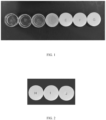
FIGs. 1 to 2 show effect photos of solid objects after the photosensitive resin compositions of Comparative Examples 1 to 3 and Examples 1 to 7 of the present invention are solidified. -
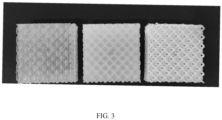
FIG. 3 shows effect photos of samples obtained by 3D printing with the photosensitive resin compositions of Comparative Example 1, Example 1, and Example 4 of the present invention. - The present invention will be further illustrated below by means of the specific embodiments. The following examples are the specific embodiments of the present invention.
- According to an embodiment of a dual-cure phase-separation type photosensitive resin composition for continuous 3D printing with high precision, the photosensitive resin composition includes: (i) an acrylate having a cross-linkable double bond; (ii) a polyurethane prepolymer; (iii) a chain extender; and (vi) a photoinitiator.
- With respect to 100 parts by weight of the photosensitive resin composition, weight proportions of respective components are as follows: 5 to 50 parts by weight of the acrylate having the cross-linkable double bond, 5 to 70 parts by weight of the polyurethane prepolymer, 0.5 to 20 parts by weight of the chain extender, and 0.1 to 6 parts by weight of the photoinitiator. Preferably, the acrylate having the cross-linkable double bond takes 10 to 40 parts by weight, the polyurethane prepolymer takes 20 to 60 parts by weight, the chain extender takes 1 to 10 parts by weight, and the photoinitiator takes 0.3 to 5 parts by weight.
- The polyurethane prepolymer can be a polyurethane prepolymer having an isocyanate active group (-NCO). The polyurethane prepolymer having the isocyanate active group (-NCO) can be produced by a reaction between an isocyanate and a polyether polyol with a molecular weight larger than or equal to 4000 under heating and catalytic action.
- In a preferred embodiment, the polyurethane prepolymer having the isocyanate active group (-NCO) is produced by the reaction between the isocyanate and the polyether polyol with a molecular weight of 5500 to 12000 under heating and catalytic action. More preferably, the polyurethane prepolymer having the isocyanate active group (-NCO) is produced by the reaction between the isocyanate and the polyether polyol with a molecular weight of 8000 under heating and catalytic action.
- In a preferred embodiment, preferably, the polyurethane prepolymer having the isocyanate active group (-NCO) is produced by the reaction between the isocyanate and the polyether polyol with an average functionality of 2 to 3 under heating and catalytic action.
- In a preferred embodiment, the photosensitive resin composition satisfies the following condition: obvious phase separation and obvious whitening phenomenon occur in the photosensitive resin composition during the change of the photosensitive resin composition from liquid to solid.
- The components mentioned above will be described in detail in combination with the embodiments as follows.
- (i) the acrylate having the cross-linkable double bond preferably can be an acrylate monomer having one or more double bonds capable of participating in free radical reaction, an acrylate prepolymer having one or more double bonds capable of participating in free radical reaction, or a mixture thereof. Wherein the acrylate monomer having one or more double bonds capable of participating in free radical reaction preferably can be selected from monofunctional, bifunctional, trifunctional, tetrafunctional, pentafunctional, hexafunctional, and multi-functional acrylate monomers.
- The suitable acrylate monomers having one or more double bonds capable of participating in free radical reaction are available from various commercial sources, for example, including but not limited to SR295, SR444, DPHA, SR351, SR494, SR454, SR506, CD590, SR420, SR217, SR531, SR285, SR9003, SR306, SR508, SR259, SR268, SR231, SR206, SR595, SR205, SR239, SR214, SR252, SR297F NS, SR348, SR601, SR540, SR541, SR602, SR480, SR834, SR603, SR210, CD406, SR610, SR399, SR502, SR415, SR9020, SR368, SR350, SR9035, SR355, SR339, SR340, CD495B, SR203, SR421, SR423, SR789, SR504, SR833, SR349, SR238 from Sartomer; for example, including but not limited to EM210, EM2103, EM2108, EM211, EM212, EM21, EM2191, EM315, EM35, EM70, EM75, EM90, EM2202, EM221, EM2211, EM222, EM2222, EM223, EM2243, EM215, EM218, EM219, EM2241, EM225, EM2251, EM226, EM2261, EM2288, EM229, EM2265, EM227, EM2280, EM320, EM324, EM326, EM3260, EM3261, EM3265, EM328, EM329, EM39, EM2308, EM231, EM235, EM2380, EM2383, EM2384, EM2385, EM2386, EM2381, EM2382, EM2387, EM331, EM3380, EM241, EM2411, EM242, EM2421, EM243, EM265, etc. from Eternal Chemical; or can be made by known methods.
- The acrylate prepolymer having one or more double bonds preferably capable of participating in free radical reaction is polyurethane acrylate, epoxy acrylate, polyester acrylate.
- The suitable polyurethane acrylates, epoxy acrylates, and polyester acrylates are available from various commercial sources, for example, including but not limited to CN1964, CN8010, CN110, CN989, CN8887, CN980, CN7001, CN1963, CN9893, CN8888, CN8881, CN2282, CN978, CN2261, CN9001, CN2283, CN2254, CN2204, CN983, CN790, CN8004, CN159, CN153, CN117, CN981, CN2302, CN2303, CN2203, CN996, CN991, CN2262, CN9782, CN115, CN131, CN146, CN959, CN120, CN104, CN964, etc., from Sartomer; for example, including but not limited to Etercure 611A-85, 611B-85, 6112-100, 6121F-80, 6122F-80, 6130B-80, 6131-1, 6132, 6134B-80, 6136B-90, 6141H-80, 6142H-80, 6143A-80, 6144-100, 6145-100, 6146-100, 6147B-80, 6149-100, 615-100, 6161-100, 620-100, 621A-80, 621F-80, 6214X-60, 6210G, 6211-100, 6213-100, 6215-100, 6219-100, 622-100, 622A-80, 623-100, 624A-75, 6241-100, 6311-100, 6312-100, 6313-100, 6315, 6318, 6320, etc., from Eternal Chemical; or can be made by known methods.
- (ii) The amount of the isocyanate active group (-NCO) in the polyurethane prepolymer is preferably 2 to 20 percent by weight with respect to the total weight of the polyurethane prepolymer.
- The isocyanate includes but is not limited to one or more of toluene diisocynate (TDI), methylene diphenyl diisocyanate (MDI), hexamethylene diisocyanate (HDI), isophorone diisocyanate (IPDI), dicyclohexylmethane-4,4'-diisocyanate (HMDI), xylylene diisocynate (XDI), tetramethyl-m-xylylene diisocyanate (TMXDI), methylcyclohexane diisocyanate (HTDI), 1,4-phenylene diisocyanate (PPDI), norbornane diisocyanate (NBDI), and 1,4-cyclohexane diisocyanate (CHDI). The polyether polyol is produced by addition polymerization between an initiator (a compound containing an active hydrogen group) and ethylene oxide (EO), propylene oxide (PO), butylene oxide (BO), and the like in the presence of a catalyst.
- In a preferred embodiment, the polyurethane prepolymer is synthesized by using the following method: (1) dehydrating the polyether polyol by vacuuming at 115°C for 4h with a vacuum degree of -0.08 to -0.1 MPa; (2) adding weighed isocyanate and 0.01 to 0.2 parts by weight of the catalyst, and then reacting at 80°C for 3 to 5 h.
- The polyether polyols are available from various commercial sources, for example, including but not limited to, Pluracol 1010, 1044, 1062, 2010, 628, 410R, 1026, 1070, 1421, 1538, 1603, 2009, 2090, 2097, 220, 380 from BASF; for example, including but not limited to VORANOL™ 2000LM, 1000LM, 2070, 2100, 2140, 220-037N, 232-034N, 3000LM, 3003LM, 3003N, 3010N, 3180, 4000LM, 4240, 4701, 4053, 6150, 8000LM, CP1421, CP6001, CP6055 from Dow Chemistry; and DL-400, DL-700, DL-1000D, DL-2000D, DL-3000D, DL-4000D from Dongda; or can be made by known methods.
- (iii)Preferably, the chain extender is a polyol, a polyamine, or an alkylol amine, with a functionality of 2 to 4.5 and a molecular weight smaller than 500, for example, ethylene glycol, propylene glycol, 1, 4-butanediol, diethylene glycol, glycerol, trimethylolpropane, 1,4-cyclohexanediol, dimethylene benzenediol, hydroquinone di-β-hydroxyethyl ether, resorcinol hydroxy ether, diethyl toluene diamine, 3,5-dimethyl thio-toluene diamine, ethanol amine, diethanol amine, triethanol amine, triisopropanol amine, N,N'-bis(2-hydroxypropy) aniline, etc. The polyols, polyamines, or alkylol amines are available from various commercial sources, for example, including but not limited to, VORANOL™ CP 300, 450, 220-260, WD 2104 from Dow Chemistry; for example, including but not limited to Pluracol P410R, 1016, 1158, TP440, 1168, 1578, 736, PEP550, SG-360, SG-470, etc., from BASF; or can be made by known methods.
- (iv) The photoinitiator includes but is not limited to 2,4,6-trimethylbenzoyl ethylphosphinate, 2,4,6-(trimethylbenzoyl)-diphenyl phosphine oxide (TPO), 2-methyl-1-[4- methylthiophenyl]-2-morpholinyl-1-propanone, 2-isopropylthioxanthone (2, 4 isomer mixture), ethyl 4-dimethylamino benzoate, 1-hydroxy-cyclohexyl-phenyl ketone, 2-hydroxy-2-methyl-1-pheny-1-propanone, benzoin dimethyl ether, o-benzoyl benzomethoxycarbonyl, 4-chlorobenzophenone, 4-phenylbenzophenone, etc.
- In another preferred embodiment, the photosensitive resin composition further includes a pigment and an additive. With respect to 100 parts by weight of the photosensitive resin composition, the photosensitive resin composition further includes: (v) 0.1 to 1 parts by weight of the pigment; and (vi) 0.1 to 20 parts by weight of the additive. Preferably, the pigment is a pigment paste curable under UV. The pigment includes but is not limited to SYMULER FAST YELLOW 4335, 4400T, 4414S, 4414S, 4418, SYMULER FAST Orange V, SYMULER FAST OrangeK, SYMULER Red 3109, 3013P, 3014G, 3090, 3110, etc. The additive includes an antioxidant, a light stabilizer, a filler, etc.
- The present invention will be described in more detail with reference to the preparation examples as follows. However, the preparation examples are exemplary embodiments and the present invention is not limited thereto.
- Preparation Example 1 A dual-cure phase-separation type photosensitive resin composition for continuous 3D printing with high precision is prepared from the following materials: 30% of SR306 (purchased from Sartomer Company), 11.65% of dicyclohexylmethane-4,4'-diisocyanate (HMDI), 53.52% of polyether polyol VORANOL4000LM (purchased from Dow Chemical Company), 0.03% of organotin catalyst T12, 2.8% of chain extender 1, 4-butanediol, and 2% of photoinitiator TPO, wherein all of the percentages are weight percentages.
- The preparation method includes two steps: (1) preparing the prepolymer: 53.52% of polyether polyol VORANOL4000LM is vacuum dried at 120°C for 4h with a vacuum degree of -0.09 MPa, then the temperature is lowered to 80°C, and then 11.65% of dicyclohexylmethane-4,4'-diisocyanate (HMDI) and 0.03% of organotin catalyst T12 are added to carry out a reaction which is terminated after 4h. A measurement is performed according to the fourth part, "the measurement of the content of the isocyanate radical", of "aromatic isocyanate for producing polyurethane plastic" of GB/T 12009.4-2016 Standard; (2) preparing the dual-cure photosensitive resin: 30% of SR306, 2.8% of chain extender 1, 4-butanediol, and 2% of photoinitiator TPO are added into the prepolymer prepared in the step (1) and stirred for 30 min to 1h until being completely dissolved.
- The prepared photosensitive resin composition is cured and formed into a 0.3mm of membrane under the irradiation of ultraviolet light. The irradiation conditions are as follows. The wavelength is 385nm of. The intensity of the ultraviolet light is 20mw/cm2. The irradiation time is 10s. Then the reaction is continued at 80°C for 12h. The transmittance of the membrane formed by the photosensitive resin is measured according to the measurement method of the transmittance and the haze of the transparent plastic recorded in GB/T 2410-2008.
- The Comparative Examples 1-3 and Examples 1-7 adopt the same or similar preparation methods as the Example 1. The materials used in the Comparative Examples 1-3 and Examples 1-7 and the measurement results are shown in Table 1. In rows numbered 1-5 in Table 1, the product models of the materials are shown in the upper sub-rows and the weight percentages are shown in the lower sub-rows.
Table 1 No. Material Comp. Example 1 Comp. Example 2 Comp. Example 3 Example 1 Example 2 Example 3 Example 4 Example 5 Example 6 Example 7 1 Acrylate having cross-linkable double bond SR306 SR306 SR306 SR306 SR306 SR306 SR306 SR306 SR454 SR531 30% 30% 30% 30% 30% 30% 30% 31.03% 30.83% 26.8% 2 Polyurethane prepolymers Isocyanate HMDI HMDI HMDI HMDI HMDI HMDI HMDI HMDI HMDI HMDI 19.97% 14.75% 12.73% 11.65% 12.32% 11.56% 9.95% 11.64% 11.56% 11.56% Polyether polyol VORANO L 1000LM VORANO L 2000LM VORANO L 3000LM VORANO L 4000LM VORANO L 4701 VORANO L CP6001 VORANO L 8000LM Pluracol 1026 VORANO L CP6001 VORANO L CP6001 45.2% 50.42% 52.44% 53.52% 52.85% 53.61% 55.22% 53.52% 53.61% 53.61% Catalyst T12 DABCO T12 DABCO T12 DABCO T12 DABCO T12 DABCO T12 DABCO T12 DABCO T12 DABCO T12 DABCO T12 DABCO T9 0.03% 0.03% 0.03% 0.03% 0.03% 0.03% 0.03% 0.01% 0.1% 0.03% 3 Chain extender 1, 4-butanediol 1, 4-butanediol 1, 4-butanediol 1, 4-butanediol 1, 4-butanediol 1, 4-butanediol 1, 4-butanediol 1, 4-butanediol 1, 4-butanediol VORANO L CP300 2.8% 2.8% 2.8% 2.8% 2.8% 2.8% 2.8% 2.8% 2.8% 5.9% 4 Photoinitiator TPO 2% TPO 2% TPO 2% TPO 2% TPO 2% TPO 2% TPO 2% TPO 1% TPO 1% TPO 2% 5 Others - - - - - - - - Titanium white powder Light stabilizer 0.1% 0.1% Results 1 Molecular weight of polyether polyol 1000 2000 3000 4000 4957 6120 80000 6120 6120 6120 2 NCO% content in polyurethane prepolymer 3.98% 3.97% 3.99% 4.00% 4.00% 3.96% 3.96% 3.99% 4.00% 3.98% 3 Transmittance of shaped photosensitive resin 90% 88% 86% 78% 62% 51% 45% 52% 47% 48% -
- (1) The results of the Comparative Examples 1-3 and the Examples 1-7 show that with the increase of the molecular weight of the polyether polyol, the phase separation phenomenon gradually occurs in the product formed from the photosensitive resin composition, and the transmittance of the product is gradually decreased. Referring to
FIGs. 1 to 2 , A to C, D to G (from left to right) inFIG. 1 are respectively corresponding to the solidified products of the photosensitive resin compositions of Comparative Examples 1-3 and Examples 1-4. H to J (from left to right) inFIG. 2 are respectively corresponding to the solidified products of the photosensitive resin compositions of Examples 5-7. - (2) The result of Comparative Example 1 indicates that when the molecular weight of the polyether polyol is 1000, the transmittance of the photosensitive resin composition reaches 90%. The left in
FIG. 3 is the grid formed by 3D printing using the photosensitive resin of Comparative Example 1 as the raw material. The grid is seriously hazy, and the shape of the product has very low precision. The result of Example 1 indicates that when the molecular weight of the polyether polyol is 4000, the phase separation occurs in the photosensitive resin composition, the whiting phenomenon is observed in the composition changing from liquid to solid, and the transmittance is lowered to 78%. The middle inFIG. 3 is the grid formed by 3D printing using the photosensitive resin composition of Example 1 as the raw material. The precision is increased as compared to Comparative Example 1. The result of Example 2 indicates that when the molecular weight of the polyether polyol reaches 4957, the phase separation occurs in the photosensitive resin composition, the obvious whiting phenomenon is observed in the composition changing from liquid to solid, and the transmittance is 62%. The result of Example 3 indicates that when the molecular weight of the polyether polyol is 6120, the phase separation is obvious in the photosensitive resin composition, and the transmittance is lowered to 51%. The result of Example 4 indicates that when the molecular weight of the polyether polyol reaches 8000, the transmittance of the photosensitive resin composition is lowered to 45%. The right inFIG. 3 is the grid formed by 3D printing using the photosensitive resin composition of Example 4 as the raw material. The grid shows obvious whiting phenomenon, and the precision of the printed product is very high. - The results of Examples 5-7 indicates that as compared to Example 3, when the molecular weight of the polyether polyol is also 6120 and the additive such as the titanium white powder or the light stabilizer is added, the transmittance of the photosensitive resin composition is further decreased, which results a higher precision of the printed product.
- As compared to the prior art, the present invention has the following beneficial effects.
- (1) It was found in the experiments that the transmittance of the photosensitive resin composition can be decreased and obvious phase separation phenomenon and obvious whiting phenomenon can occur in the solidification process of the photosensitive resin composition if the polyether polyol with the molecular weight larger than or equal to 4000 is used. When the molecular weight of the polyether polyol reaches 8000, the transmittance of the photosensitive resin composition can be decreased to 45%. Thus, mechanical parts and components can be made with higher precision by using the dual-cure phase-separation type photosensitive resin composition.
- (2) As compared to the multi-cure photosensitive resin made by end blocking, the post-processing temperature is decreased from 120°C of the end blocking to lower than 80°C. Thus, the producing process is more environmental friendly, while the cost is significantly decreased.
Claims (15)
- A dual-cure phase-separation type photosensitive resin composition for continuous 3D printing with high precision, characterized in that the photosensitive resin composition comprises: an acrylate having a cross-linkable double bond; a polyurethane prepolymer; a chain extender; and a photoinitiator; wherein the polyurethane prepolymer is a polyurethane prepolymer having an isocyanate active group, and the polyurethane prepolymer having the isocyanate active group is produced by a reaction between an isocyanate and a polyether polyol with a molecular weight larger than or equal to 4000 under heating and catalytic action.
- The dual-cure phase-separation type photosensitive resin composition for continuous 3D printing with high precision of claim 1, characterized in that the photosensitive resin composition comprises 5 to 30 parts by weight of the acrylate having the cross-linkable double bond, 65.2 to 70 parts by weight of the polyurethane prepolymer, 0.5 to 20 parts by weight of the chain extender, and 0.1 to 6 parts by weight of the photoinitiator with respect to 100 parts by weight of the photosensitive resin composition.
- The dual-cure phase-separation type photosensitive resin composition for continuous 3D printing with high precision of claim 1, characterized in that the acrylate having the cross-linkable double bond is selected from the group consisting of an acrylate monomer having one or more double bonds capable of participating in free radical reaction, an acrylate prepolymer having one or more double bonds capable of participating in free radical reaction, and a combination thereof.
- The dual-cure phase-separation type photosensitive resin composition for continuous 3D printing with high precision of claim 3, characterized in that the acrylate monomer having one or more double bonds capable of participating in free radical reaction is selected from the group consisting of a monofunctional acrylate monomer with a functionality equal to 1, a multi-functional acrylate monomer with a functionality larger than 1, and a combination thereof.
- The dual-cure phase-separation type photosensitive resin composition for continuous 3D printing with high precision of claim 3, characterized in that the acrylate prepolymer having one or more double bonds capable of participating in free radical reaction is selected from of the group consisting of polyurethane acrylate, epoxy acrylate, polyester acrylate, and combinations thereof.
- The dual-cure phase-separation type photosensitive resin composition for continuous 3D printing with high precision of claim 1, characterized in that an amount of the isocyanate active group in the polyurethane prepolymer is 2 to 20 percent by weight.
- The dual-cure phase-separation type photosensitive resin composition for continuous 3D printing with high precision of claim 1, characterized in that the isocyanate used in the reaction under heating is selected from of the group consisting of toluene diisocynate, diphenylmethane diisocyanate, hexamethylene diisocyanate, isophorone diisocyanate, dicyclohexylmethane-4,4'-diisocyanate, xylylene diisocynate, tetramethyl-m-xylylene diisocyanate, methylcyclohexane diisocyanate, 1,4-phenylene diisocyanate, norbornane diisocyanate, 1,4-cyclohexane diisocyanate, and combinations thereof.
- The dual-cure phase-separation type photosensitive resin composition for continuous 3D printing with high precision of claim 1, characterized in that the polyether polyol is produced by addition polymerization of an initiator, ethylene oxide, propylene oxide, butylene oxide in the presence of a catalyst, wherein the initiator is a compound containing an active hydrogen group, and the catalyst is an organobismuth catalyst, an organotin catalyst, or a combination thereof for the synthesis of polyurethane.
- The dual-cure phase-separation type photosensitive resin composition for continuous 3D printing with high precision of claim 1, characterized in that the polyurethane prepolymer is synthesized by using the following method: (1) dehydrating the polyether polyol by vacuuming, wherein the vacuuming satisfies the condition: the temperature is 100 to 120 °C and the vacuum degree is -0.08 to -0.1 MPa; (2) adding weighed isocyanate and 0.01 to 0.2 parts by weight of the catalyst, and then reacting at 60 to 90°C for 3 to 5 hours.
- The dual-cure phase-separation type photosensitive resin composition for continuous 3D printing with high precision of claim 1, characterized in that the chain extender is a polyol, a polyamine, or an alkylol amine, with a functionality of 2 to 4.5 and a molecular weight smaller than 500.
- The dual-cure phase-separation type photosensitive resin composition for continuous 3D printing with high precision of claim 1, characterized in that the chain extender is selected from the group consisting of ethylene glycol, propylene glycol, 1,4-butanediol, diethylene glycol, glycerol, trimethylolpropane, 1,4-cyclohexanediol, dimethylene benzenediol, hydroquinone di-β-hydroxyethyl ether, resorcinol hydroxy ether, diethyl toluene diamine, 3,5-dimethyl thio-toluene diamine, ethanol amine, diethanol amine, triethanol amine, triisopropanol amine, N,N'-di(2-hydroxypropy) aniline, and combinations thereof.
- The dual-cure phase-separation type photosensitive resin composition for continuous 3D printing with high precision of claim 1, characterized in that the photoinitiator is selected from of the group consisting of 2,4,6-trimethylbenzoyl ethylphosphinate, 2,4,6-(trimethylbenzoyl)-diphenyl phosphine oxide, 2-methyl-1-[4-methylthiophenyl]-2-morpholinyl-1-propanone, 2-isopropylthioxanthone (2, 4 isomer mixture), ethyl 4-dimethylamino benzoate, 1-hydroxy-cyclohexyl-phenyl ketone, 2-hydroxy-2-methyl-1-pheny-1-propanone, benzoin dimethyl ether, o-benzoyl benzomethoxycarbonyl, 4-chlorobenzophenone, 4-phenylbenzophenone, and combinations thereof.
- The dual-cure phase-separation type photosensitive resin composition for continuous 3D printing with high precision of claim 1, characterized in that the photosensitive resin composition comprises 10 to 30 parts by weight of the acrylate having the cross-linkable double bond, 65.2 parts by weight of the polyurethane prepolymer, 1 to 10 parts by weight of the chain extender, 0.3 to 5 parts by weight of the photoinitiator, 0.1 to 1 part by weight of a pigment, and 0.1 to 20 parts by weight of an additive with respect to 100 parts by weight of the photosensitive resin composition, wherein the pigment is a pigment paste curable under UV, and the additive comprises an antioxidant, a light stabilizer, and a filler.
- The dual-cure phase-separation type photosensitive resin composition for continuous 3D printing with high precision of claim 1, wherein a molecular weight of the polyether polyol is in a range from 5500 to 12000, preferably a molecular weight of the polyether polyol is 8000.
- The dual-cure phase-separation type photosensitive resin composition for continuous 3D printing with high precision of claim 1, wherein an average functionality of the polyether polyol is 2 to 3.
Applications Claiming Priority (2)
| Application Number | Priority Date | Filing Date | Title |
|---|---|---|---|
| CN202010356325.9A CN111349197B (en) | 2020-04-29 | 2020-04-29 | Dual-curing phase-separated continuous 3D printing high-precision photosensitive resin composition |
| PCT/CN2020/126356 WO2021218097A1 (en) | 2020-04-29 | 2020-11-04 | Dual-curing phase separation type continuous 3d printing high-precision photosensitive resin composition |
Publications (3)
| Publication Number | Publication Date |
|---|---|
| EP3932671A1 EP3932671A1 (en) | 2022-01-05 |
| EP3932671A4 EP3932671A4 (en) | 2022-09-07 |
| EP3932671B1 true EP3932671B1 (en) | 2025-03-19 |
Family
ID=71191678
Family Applications (1)
| Application Number | Title | Priority Date | Filing Date |
|---|---|---|---|
| EP20919361.4A Active EP3932671B1 (en) | 2020-04-29 | 2020-11-04 | Dual-curing phase separation type continuous 3d printing high-precision photosensitive resin composition |
Country Status (4)
| Country | Link |
|---|---|
| US (1) | US12013638B2 (en) |
| EP (1) | EP3932671B1 (en) |
| CN (2) | CN111763288B (en) |
| WO (1) | WO2021218097A1 (en) |
Families Citing this family (9)
| Publication number | Priority date | Publication date | Assignee | Title |
|---|---|---|---|---|
| CN111763288B (en) | 2020-04-29 | 2022-08-26 | 苏州博理新材料科技有限公司 | Dual-curing phase-separated continuous 3D printing high-precision photosensitive resin composition |
| CN112220969B (en) * | 2020-12-18 | 2021-03-16 | 北京大学第三医院(北京大学第三临床医学院) | A kind of photocuring 3D printing preparation method of degradable meniscus stent |
| CN114801158B (en) * | 2021-01-21 | 2023-09-22 | 清锋(北京)科技有限公司 | A method for additive manufacturing of colorful three-dimensional objects |
| CN114181356B (en) * | 2021-12-09 | 2023-09-01 | 上海交通大学医学院附属第九人民医院 | Photosensitive resin, application thereof and preparation method of tooth holder |
| CN116199858A (en) * | 2022-12-16 | 2023-06-02 | 上海信斯帝克新材料有限公司 | Enclosed isocyanate oligomer, in-situ photo-thermal dual-curing resin, preparation method and printing method thereof |
| CN116023615A (en) * | 2023-01-05 | 2023-04-28 | 中国科学院兰州化学物理研究所 | A kind of polyurethane prepolymer terminated by acrylate and its preparation method and application |
| CN116373294A (en) * | 2023-02-21 | 2023-07-04 | 深圳陕煤高新技术研究院有限公司 | A kind of 3D printing method of heat precuring two-component 3D printing photosensitive resin composition |
| CN119500106B (en) * | 2023-08-09 | 2025-12-12 | 中国石油化工股份有限公司 | Method for preparing manganese-based catalyst by 3D printing, catalyst prepared by method and application of catalyst |
| CN118375006B (en) * | 2024-06-24 | 2024-08-16 | 山东东宇鸿翔装饰材料有限公司 | Long-acting antibacterial formaldehyde-free impregnated paper and preparation method thereof |
Citations (3)
| Publication number | Priority date | Publication date | Assignee | Title |
|---|---|---|---|---|
| US20160137838A1 (en) | 2014-06-23 | 2016-05-19 | Carbon3D, Inc. | Methods of producing polyurethane three-dimensional objects from materials having multiple mechanisms of hardening |
| US20200109247A1 (en) | 2018-10-08 | 2020-04-09 | Vista Applied Materials, Inc. | Formulation composition for 3d additive manufacturing and processing method of the same |
| CN111349197A (en) | 2020-04-29 | 2020-06-30 | 苏州博理新材料科技有限公司 | Dual-curing phase-separated continuous 3D printing high-precision photosensitive resin composition |
Family Cites Families (11)
| Publication number | Priority date | Publication date | Assignee | Title |
|---|---|---|---|---|
| US9224216B2 (en) | 2013-07-31 | 2015-12-29 | Kabushiki Kaisha Toshiba | High density forward projector for spatial resolution improvement for medical imaging systems including computed tomography |
| US10647873B2 (en) * | 2015-10-30 | 2020-05-12 | Carbon, Inc. | Dual cure article of manufacture with portions of differing solubility |
| US10538031B2 (en) * | 2015-12-22 | 2020-01-21 | Carbon, Inc. | Dual cure additive manufacturing of rigid intermediates that generate semi-rigid, flexible, or elastic final products |
| WO2017112483A2 (en) * | 2015-12-22 | 2017-06-29 | Carbon, Inc. | Accelerants for additive manufacturing with dual cure resins |
| JP7189015B2 (en) * | 2015-12-22 | 2022-12-13 | カーボン,インコーポレイテッド | A Dual Precursor Resin System for Additive Manufacturing Using Dual Cured Resins |
| CN106833358B (en) | 2017-01-21 | 2019-03-29 | 淮海工学院 | The multifunctional polyurethane acrylate composition of dual cure |
| CN106866929A (en) * | 2017-02-24 | 2017-06-20 | 中国林业科学研究院林产化学工业研究所 | A kind of polyfunctionality castor oil-base light-cured resin and its preparation method and application |
| CN108192050A (en) * | 2018-02-01 | 2018-06-22 | 厦门中凯新材石墨烯科技有限公司 | A kind of weatherability graphene 3D printing photo-curing material and preparation method thereof |
| CN108929410A (en) | 2018-08-27 | 2018-12-04 | 宁波市石生科技有限公司 | It is a kind of for the material of photocuring three-dimensional manufacture and with the material application |
| CN109320666B (en) | 2018-09-27 | 2021-05-11 | 中国科学院福建物质结构研究所 | UV-PU dual-curing 3D printing resin and preparation method and application thereof |
| CN111040102A (en) * | 2019-12-02 | 2020-04-21 | 中国科学院福建物质结构研究所 | Photosensitive resin and preparation method and application thereof |
-
2020
- 2020-04-29 CN CN202010673176.9A patent/CN111763288B/en active Active
- 2020-04-29 CN CN202010356325.9A patent/CN111349197B/en active Active
- 2020-11-04 EP EP20919361.4A patent/EP3932671B1/en active Active
- 2020-11-04 WO PCT/CN2020/126356 patent/WO2021218097A1/en not_active Ceased
- 2020-11-04 US US17/433,946 patent/US12013638B2/en active Active
Patent Citations (4)
| Publication number | Priority date | Publication date | Assignee | Title |
|---|---|---|---|---|
| US20160137838A1 (en) | 2014-06-23 | 2016-05-19 | Carbon3D, Inc. | Methods of producing polyurethane three-dimensional objects from materials having multiple mechanisms of hardening |
| US20200109247A1 (en) | 2018-10-08 | 2020-04-09 | Vista Applied Materials, Inc. | Formulation composition for 3d additive manufacturing and processing method of the same |
| CN111349197A (en) | 2020-04-29 | 2020-06-30 | 苏州博理新材料科技有限公司 | Dual-curing phase-separated continuous 3D printing high-precision photosensitive resin composition |
| CN111763288A (en) | 2020-04-29 | 2020-10-13 | 苏州博理新材料科技有限公司 | Dual-curing phase-separated continuous 3D printing high-precision photosensitive resin composition |
Non-Patent Citations (15)
Also Published As
| Publication number | Publication date |
|---|---|
| CN111763288A (en) | 2020-10-13 |
| US20220342305A1 (en) | 2022-10-27 |
| WO2021218097A1 (en) | 2021-11-04 |
| EP3932671A1 (en) | 2022-01-05 |
| US12013638B2 (en) | 2024-06-18 |
| EP3932671A4 (en) | 2022-09-07 |
| CN111349197B (en) | 2020-08-11 |
| CN111763288B (en) | 2022-08-26 |
| CN111349197A (en) | 2020-06-30 |
Similar Documents
| Publication | Publication Date | Title |
|---|---|---|
| US12013638B2 (en) | Dual-cure phase-separation type photosensitive resin composition for continuous 3D printing with high precision | |
| EP3705263B1 (en) | Rubber composition for shaping three-dimensional laminate | |
| EP4013587B1 (en) | 3d printing of a composite material via sequential dual-curing polymerization | |
| DE69318737T2 (en) | Press resins and press molds made therefrom for UV radiation | |
| CN110358020B (en) | Photosensitive resin and 3D printing polyurea method | |
| US10822464B2 (en) | Formulation composition for 3D additive manufacturing and processing method of the same | |
| JP5424644B2 (en) | Pre-preg and in-situ hardened surfaces prepared therefrom | |
| US11390705B2 (en) | Reactive particulate materials useful for additive manufacturing | |
| CN112824434A (en) | Polymer composition for stereolithography | |
| EP3554787B1 (en) | Method for producing a 3d printed foam-filled object | |
| EP4166332A1 (en) | Additives useful in 3d printing technologies | |
| EP3815899B1 (en) | Polymer composition for stereolithography | |
| CN114957563A (en) | Photocuring 3D printing hydrophobic resin and preparation method thereof | |
| TWI804118B (en) | Actinic radiation-curable compositions containing polyamide | |
| CN114292370A (en) | Polymer composition for photomodeling | |
| US11732149B2 (en) | Formulation composition for 3D additive manufacturing and processing method of the same | |
| JP2001288230A (en) | Curable resin composition for producing gel coat sheet | |
| CN116199858A (en) | Enclosed isocyanate oligomer, in-situ photo-thermal dual-curing resin, preparation method and printing method thereof | |
| CN119613670A (en) | High-strength dual-curing resin composition for 3D printing, preparation method and application | |
| DE102017130124A1 (en) | Additive manufacturing process based on polyisocyanates |
Legal Events
| Date | Code | Title | Description |
|---|---|---|---|
| STAA | Information on the status of an ep patent application or granted ep patent |
Free format text: STATUS: UNKNOWN |
|
| STAA | Information on the status of an ep patent application or granted ep patent |
Free format text: STATUS: THE INTERNATIONAL PUBLICATION HAS BEEN MADE |
|
| PUAI | Public reference made under article 153(3) epc to a published international application that has entered the european phase |
Free format text: ORIGINAL CODE: 0009012 |
|
| STAA | Information on the status of an ep patent application or granted ep patent |
Free format text: STATUS: REQUEST FOR EXAMINATION WAS MADE |
|
| 17P | Request for examination filed |
Effective date: 20210823 |
|
| AK | Designated contracting states |
Kind code of ref document: A1 Designated state(s): AL AT BE BG CH CY CZ DE DK EE ES FI FR GB GR HR HU IE IS IT LI LT LU LV MC MK MT NL NO PL PT RO RS SE SI SK SM TR |
|
| A4 | Supplementary search report drawn up and despatched |
Effective date: 20220808 |
|
| RIC1 | Information provided on ipc code assigned before grant |
Ipc: C08G 18/75 20060101ALI20220802BHEP Ipc: C08G 18/66 20060101ALI20220802BHEP Ipc: C08G 18/48 20060101ALI20220802BHEP Ipc: C08G 18/10 20060101ALI20220802BHEP Ipc: C08L 75/08 20060101ALI20220802BHEP Ipc: C08F 2/48 20060101ALI20220802BHEP Ipc: C08F 222/10 20060101ALI20220802BHEP Ipc: C08F 220/18 20060101ALI20220802BHEP Ipc: B33Y 70/00 20200101AFI20220802BHEP |
|
| STAA | Information on the status of an ep patent application or granted ep patent |
Free format text: STATUS: EXAMINATION IS IN PROGRESS |
|
| 17Q | First examination report despatched |
Effective date: 20230324 |
|
| DAV | Request for validation of the european patent (deleted) | ||
| DAX | Request for extension of the european patent (deleted) | ||
| GRAP | Despatch of communication of intention to grant a patent |
Free format text: ORIGINAL CODE: EPIDOSNIGR1 |
|
| STAA | Information on the status of an ep patent application or granted ep patent |
Free format text: STATUS: GRANT OF PATENT IS INTENDED |
|
| INTG | Intention to grant announced |
Effective date: 20241016 |
|
| GRAS | Grant fee paid |
Free format text: ORIGINAL CODE: EPIDOSNIGR3 |
|
| P01 | Opt-out of the competence of the unified patent court (upc) registered |
Free format text: CASE NUMBER: APP_21/2025 Effective date: 20250102 |
|
| GRAA | (expected) grant |
Free format text: ORIGINAL CODE: 0009210 |
|
| STAA | Information on the status of an ep patent application or granted ep patent |
Free format text: STATUS: THE PATENT HAS BEEN GRANTED |
|
| AK | Designated contracting states |
Kind code of ref document: B1 Designated state(s): AL AT BE BG CH CY CZ DE DK EE ES FI FR GB GR HR HU IE IS IT LI LT LU LV MC MK MT NL NO PL PT RO RS SE SI SK SM TR |
|
| REG | Reference to a national code |
Ref country code: GB Ref legal event code: FG4D |
|
| REG | Reference to a national code |
Ref country code: CH Ref legal event code: EP |
|
| REG | Reference to a national code |
Ref country code: IE Ref legal event code: FG4D |
|
| REG | Reference to a national code |
Ref country code: DE Ref legal event code: R096 Ref document number: 602020048143 Country of ref document: DE |
|
| PG25 | Lapsed in a contracting state [announced via postgrant information from national office to epo] |
Ref country code: RS Free format text: LAPSE BECAUSE OF FAILURE TO SUBMIT A TRANSLATION OF THE DESCRIPTION OR TO PAY THE FEE WITHIN THE PRESCRIBED TIME-LIMIT Effective date: 20250619 |
|
| PG25 | Lapsed in a contracting state [announced via postgrant information from national office to epo] |
Ref country code: FI Free format text: LAPSE BECAUSE OF FAILURE TO SUBMIT A TRANSLATION OF THE DESCRIPTION OR TO PAY THE FEE WITHIN THE PRESCRIBED TIME-LIMIT Effective date: 20250319 |
|
| REG | Reference to a national code |
Ref country code: LT Ref legal event code: MG9D |
|
| PG25 | Lapsed in a contracting state [announced via postgrant information from national office to epo] |
Ref country code: NO Free format text: LAPSE BECAUSE OF FAILURE TO SUBMIT A TRANSLATION OF THE DESCRIPTION OR TO PAY THE FEE WITHIN THE PRESCRIBED TIME-LIMIT Effective date: 20250619 |
|
| PG25 | Lapsed in a contracting state [announced via postgrant information from national office to epo] |
Ref country code: HR Free format text: LAPSE BECAUSE OF FAILURE TO SUBMIT A TRANSLATION OF THE DESCRIPTION OR TO PAY THE FEE WITHIN THE PRESCRIBED TIME-LIMIT Effective date: 20250319 |
|
| PG25 | Lapsed in a contracting state [announced via postgrant information from national office to epo] |
Ref country code: LV Free format text: LAPSE BECAUSE OF FAILURE TO SUBMIT A TRANSLATION OF THE DESCRIPTION OR TO PAY THE FEE WITHIN THE PRESCRIBED TIME-LIMIT Effective date: 20250319 |
|
| PG25 | Lapsed in a contracting state [announced via postgrant information from national office to epo] |
Ref country code: GR Free format text: LAPSE BECAUSE OF FAILURE TO SUBMIT A TRANSLATION OF THE DESCRIPTION OR TO PAY THE FEE WITHIN THE PRESCRIBED TIME-LIMIT Effective date: 20250620 Ref country code: BG Free format text: LAPSE BECAUSE OF FAILURE TO SUBMIT A TRANSLATION OF THE DESCRIPTION OR TO PAY THE FEE WITHIN THE PRESCRIBED TIME-LIMIT Effective date: 20250319 |
|
| REG | Reference to a national code |
Ref country code: NL Ref legal event code: MP Effective date: 20250319 |
|
| REG | Reference to a national code |
Ref country code: AT Ref legal event code: MK05 Ref document number: 1776663 Country of ref document: AT Kind code of ref document: T Effective date: 20250319 |
|
| PG25 | Lapsed in a contracting state [announced via postgrant information from national office to epo] |
Ref country code: NL Free format text: LAPSE BECAUSE OF FAILURE TO SUBMIT A TRANSLATION OF THE DESCRIPTION OR TO PAY THE FEE WITHIN THE PRESCRIBED TIME-LIMIT Effective date: 20250319 |
|
| PG25 | Lapsed in a contracting state [announced via postgrant information from national office to epo] |
Ref country code: SE Free format text: LAPSE BECAUSE OF FAILURE TO SUBMIT A TRANSLATION OF THE DESCRIPTION OR TO PAY THE FEE WITHIN THE PRESCRIBED TIME-LIMIT Effective date: 20250319 |
|
| PG25 | Lapsed in a contracting state [announced via postgrant information from national office to epo] |
Ref country code: SM Free format text: LAPSE BECAUSE OF FAILURE TO SUBMIT A TRANSLATION OF THE DESCRIPTION OR TO PAY THE FEE WITHIN THE PRESCRIBED TIME-LIMIT Effective date: 20250319 |
|
| PG25 | Lapsed in a contracting state [announced via postgrant information from national office to epo] |
Ref country code: ES Free format text: LAPSE BECAUSE OF FAILURE TO SUBMIT A TRANSLATION OF THE DESCRIPTION OR TO PAY THE FEE WITHIN THE PRESCRIBED TIME-LIMIT Effective date: 20250319 Ref country code: PT Free format text: LAPSE BECAUSE OF FAILURE TO SUBMIT A TRANSLATION OF THE DESCRIPTION OR TO PAY THE FEE WITHIN THE PRESCRIBED TIME-LIMIT Effective date: 20250721 |
|
| PG25 | Lapsed in a contracting state [announced via postgrant information from national office to epo] |
Ref country code: PL Free format text: LAPSE BECAUSE OF FAILURE TO SUBMIT A TRANSLATION OF THE DESCRIPTION OR TO PAY THE FEE WITHIN THE PRESCRIBED TIME-LIMIT Effective date: 20250319 |
|
| PG25 | Lapsed in a contracting state [announced via postgrant information from national office to epo] |
Ref country code: AT Free format text: LAPSE BECAUSE OF FAILURE TO SUBMIT A TRANSLATION OF THE DESCRIPTION OR TO PAY THE FEE WITHIN THE PRESCRIBED TIME-LIMIT Effective date: 20250319 |
|
| PG25 | Lapsed in a contracting state [announced via postgrant information from national office to epo] |
Ref country code: EE Free format text: LAPSE BECAUSE OF FAILURE TO SUBMIT A TRANSLATION OF THE DESCRIPTION OR TO PAY THE FEE WITHIN THE PRESCRIBED TIME-LIMIT Effective date: 20250319 Ref country code: CZ Free format text: LAPSE BECAUSE OF FAILURE TO SUBMIT A TRANSLATION OF THE DESCRIPTION OR TO PAY THE FEE WITHIN THE PRESCRIBED TIME-LIMIT Effective date: 20250319 |
|
| PG25 | Lapsed in a contracting state [announced via postgrant information from national office to epo] |
Ref country code: RO Free format text: LAPSE BECAUSE OF FAILURE TO SUBMIT A TRANSLATION OF THE DESCRIPTION OR TO PAY THE FEE WITHIN THE PRESCRIBED TIME-LIMIT Effective date: 20250319 |
|
| PG25 | Lapsed in a contracting state [announced via postgrant information from national office to epo] |
Ref country code: SK Free format text: LAPSE BECAUSE OF FAILURE TO SUBMIT A TRANSLATION OF THE DESCRIPTION OR TO PAY THE FEE WITHIN THE PRESCRIBED TIME-LIMIT Effective date: 20250319 |
|
| PG25 | Lapsed in a contracting state [announced via postgrant information from national office to epo] |
Ref country code: IS Free format text: LAPSE BECAUSE OF FAILURE TO SUBMIT A TRANSLATION OF THE DESCRIPTION OR TO PAY THE FEE WITHIN THE PRESCRIBED TIME-LIMIT Effective date: 20250719 |
|
| REG | Reference to a national code |
Ref country code: DE Ref legal event code: R026 Ref document number: 602020048143 Country of ref document: DE |
|
| PLBI | Opposition filed |
Free format text: ORIGINAL CODE: 0009260 |
|
| PGFP | Annual fee paid to national office [announced via postgrant information from national office to epo] |
Ref country code: DE Payment date: 20251118 Year of fee payment: 6 |
|
| PG25 | Lapsed in a contracting state [announced via postgrant information from national office to epo] |
Ref country code: DK Free format text: LAPSE BECAUSE OF FAILURE TO SUBMIT A TRANSLATION OF THE DESCRIPTION OR TO PAY THE FEE WITHIN THE PRESCRIBED TIME-LIMIT Effective date: 20250319 |
|
| PGFP | Annual fee paid to national office [announced via postgrant information from national office to epo] |
Ref country code: IT Payment date: 20251125 Year of fee payment: 6 |
|
| PLAX | Notice of opposition and request to file observation + time limit sent |
Free format text: ORIGINAL CODE: EPIDOSNOBS2 |
|
| PGFP | Annual fee paid to national office [announced via postgrant information from national office to epo] |
Ref country code: FR Payment date: 20251027 Year of fee payment: 6 |
|
| 26 | Opposition filed |
Opponent name: CARBON, INC. Effective date: 20251219 |