EP3931406B1 - Interlocking composite construction blocks - Google Patents
Interlocking composite construction blocks Download PDFInfo
- Publication number
- EP3931406B1 EP3931406B1 EP20763124.3A EP20763124A EP3931406B1 EP 3931406 B1 EP3931406 B1 EP 3931406B1 EP 20763124 A EP20763124 A EP 20763124A EP 3931406 B1 EP3931406 B1 EP 3931406B1
- Authority
- EP
- European Patent Office
- Prior art keywords
- blocks
- segment
- construction blocks
- block
- construction
- Prior art date
- Legal status (The legal status is an assumption and is not a legal conclusion. Google has not performed a legal analysis and makes no representation as to the accuracy of the status listed.)
- Active
Links
Images





Classifications
-
- E—FIXED CONSTRUCTIONS
- E04—BUILDING
- E04B—GENERAL BUILDING CONSTRUCTIONS; WALLS, e.g. PARTITIONS; ROOFS; FLOORS; CEILINGS; INSULATION OR OTHER PROTECTION OF BUILDINGS
- E04B2/00—Walls, e.g. partitions, for buildings; Wall construction with regard to insulation; Connections specially adapted to walls
- E04B2/02—Walls, e.g. partitions, for buildings; Wall construction with regard to insulation; Connections specially adapted to walls built-up from layers of building elements
- E04B2/14—Walls having cavities in, but not between, the elements, i.e. each cavity being enclosed by at least four sides forming part of one single element
- E04B2/16—Walls having cavities in, but not between, the elements, i.e. each cavity being enclosed by at least four sides forming part of one single element using elements having specially-designed means for stabilising the position
- E04B2/18—Walls having cavities in, but not between, the elements, i.e. each cavity being enclosed by at least four sides forming part of one single element using elements having specially-designed means for stabilising the position by interlocking of projections or inserts with indentations, e.g. of tongues, grooves, dovetails
-
- E—FIXED CONSTRUCTIONS
- E04—BUILDING
- E04B—GENERAL BUILDING CONSTRUCTIONS; WALLS, e.g. PARTITIONS; ROOFS; FLOORS; CEILINGS; INSULATION OR OTHER PROTECTION OF BUILDINGS
- E04B2/00—Walls, e.g. partitions, for buildings; Wall construction with regard to insulation; Connections specially adapted to walls
- E04B2/02—Walls, e.g. partitions, for buildings; Wall construction with regard to insulation; Connections specially adapted to walls built-up from layers of building elements
- E04B2/14—Walls having cavities in, but not between, the elements, i.e. each cavity being enclosed by at least four sides forming part of one single element
- E04B2/16—Walls having cavities in, but not between, the elements, i.e. each cavity being enclosed by at least four sides forming part of one single element using elements having specially-designed means for stabilising the position
-
- E—FIXED CONSTRUCTIONS
- E04—BUILDING
- E04B—GENERAL BUILDING CONSTRUCTIONS; WALLS, e.g. PARTITIONS; ROOFS; FLOORS; CEILINGS; INSULATION OR OTHER PROTECTION OF BUILDINGS
- E04B2/00—Walls, e.g. partitions, for buildings; Wall construction with regard to insulation; Connections specially adapted to walls
- E04B2/02—Walls, e.g. partitions, for buildings; Wall construction with regard to insulation; Connections specially adapted to walls built-up from layers of building elements
- E04B2/14—Walls having cavities in, but not between, the elements, i.e. each cavity being enclosed by at least four sides forming part of one single element
- E04B2/24—Walls having cavities in, but not between, the elements, i.e. each cavity being enclosed by at least four sides forming part of one single element the walls being characterised by fillings in some of the cavities forming load-bearing pillars or beams
-
- E—FIXED CONSTRUCTIONS
- E04—BUILDING
- E04C—STRUCTURAL ELEMENTS; BUILDING MATERIALS
- E04C1/00—Building elements of block or other shape for the construction of parts of buildings
- E04C1/39—Building elements of block or other shape for the construction of parts of buildings characterised by special adaptations, e.g. serving for locating conduits, for forming soffits, cornices, or shelves, for fixing wall-plates or door-frames, for claustra
- E04C1/397—Building elements of block or other shape for the construction of parts of buildings characterised by special adaptations, e.g. serving for locating conduits, for forming soffits, cornices, or shelves, for fixing wall-plates or door-frames, for claustra serving for locating conduits
-
- E—FIXED CONSTRUCTIONS
- E04—BUILDING
- E04C—STRUCTURAL ELEMENTS; BUILDING MATERIALS
- E04C1/00—Building elements of block or other shape for the construction of parts of buildings
- E04C1/40—Building elements of block or other shape for the construction of parts of buildings built-up from parts of different materials, e.g. composed of layers of different materials or stones with filling material or with insulating inserts
-
- E—FIXED CONSTRUCTIONS
- E04—BUILDING
- E04B—GENERAL BUILDING CONSTRUCTIONS; WALLS, e.g. PARTITIONS; ROOFS; FLOORS; CEILINGS; INSULATION OR OTHER PROTECTION OF BUILDINGS
- E04B2/00—Walls, e.g. partitions, for buildings; Wall construction with regard to insulation; Connections specially adapted to walls
- E04B2/02—Walls, e.g. partitions, for buildings; Wall construction with regard to insulation; Connections specially adapted to walls built-up from layers of building elements
- E04B2002/0202—Details of connections
- E04B2002/0204—Non-undercut connections, e.g. tongue and groove connections
- E04B2002/023—Non-undercut connections, e.g. tongue and groove connections with rabbets, e.g. stepped
-
- E—FIXED CONSTRUCTIONS
- E04—BUILDING
- E04B—GENERAL BUILDING CONSTRUCTIONS; WALLS, e.g. PARTITIONS; ROOFS; FLOORS; CEILINGS; INSULATION OR OTHER PROTECTION OF BUILDINGS
- E04B2/00—Walls, e.g. partitions, for buildings; Wall construction with regard to insulation; Connections specially adapted to walls
- E04B2/02—Walls, e.g. partitions, for buildings; Wall construction with regard to insulation; Connections specially adapted to walls built-up from layers of building elements
- E04B2002/0202—Details of connections
- E04B2002/0243—Separate connectors or inserts, e.g. pegs, pins or keys
-
- E—FIXED CONSTRUCTIONS
- E04—BUILDING
- E04B—GENERAL BUILDING CONSTRUCTIONS; WALLS, e.g. PARTITIONS; ROOFS; FLOORS; CEILINGS; INSULATION OR OTHER PROTECTION OF BUILDINGS
- E04B2/00—Walls, e.g. partitions, for buildings; Wall construction with regard to insulation; Connections specially adapted to walls
- E04B2/02—Walls, e.g. partitions, for buildings; Wall construction with regard to insulation; Connections specially adapted to walls built-up from layers of building elements
- E04B2002/0256—Special features of building elements
- E04B2002/0289—Building elements with holes filled with insulating material
- E04B2002/0291—Building elements with holes filled with insulating material loose material
Definitions
- the present invention relates in general to composite blocks for use in construction analogous to prefabricated concrete masonry units (CMU's) and in particular to construction blocks that will reduce the labor time and associated with constructing a wall.
- CMU's prefabricated concrete masonry units
- CMU's Concrete Masonry Units
- the blocks are low in cost they are labor-intensive to install and require skilled, expensive installers due to their need for manual alignment and mortar for adhesion and structural integrity.
- the typical concrete used in CMU's is brittle and very heavy. Because of these factors, installation cost can be up to 10 times the purchase cost of blocks for wall construction.
- the mechanical properties of concrete block material (about 14 MPa compression strength and about 300 MPa tensile strength) require reinforcement for most applications, at least in some portions of a wall. Most of a CMU wall is not load bearing except for certain areas reinforced with rebar and filled with concrete as necessary for the application.
- patent US6167669B1 for a Concrete Plastic Unit describes a clear, permanent form, for steel reinforced concrete structures. Sections of the clear form are factory extruded, from a clear polyvinyl chloride material, so as to make the assembly of the forms, the installation of the steel and utilities, and the inspections that are required, easier. The clear forms will protect the steel reinforced concrete structures from the elements that cause these structures to fail.
- the clear form consists of two factory extruded profiles that are totally different in shape. The sections that make up the form, can be modified, cut to any length or angle and assembled on site.
- the assembled clear form is 75 ⁇ 8 inches (19.37 cm) wide and 8 inches (20.32cm) high, and is open on four sides.
- the assembled units are installed horizontally, and can be stacked and connected, on top of one another, to conform to any design, for residential or commercial construction.
- Another patent US6213754B1 is for a cementitious composition for the molding of ultra-lightweight, durable, large structural units comprising Portland cement, coal combustion byproducts, expanded or extruded polystyrene and water, and a modified block machine used in the manufacture of such structural units.
- Patent US4566238A for an energy conserving CMU describes a wall constructed to function as a passive thermal mass for energy storage permits enhanced solar heating and nocturnal cooling of the interior of a building using walls as disclosed.
- Concrete masonry units having inner and outer cells are stacked to form the wall.
- a hardenable material poured into the inner cells of the masonry units moves both vertically and horizontally within the wall to form a rigid wall structure.
- Introducing insulation in fluid form into the outer cells adjacent to those containing the hardenable material disposes the insulation to lie essentially adjacent the thermal mass of the rigid inner wall structure.
- Patent US6050749A is for a Concrete masonry unit for reinforced retaining walls and describes a concrete masonry unit especially suited for use in soil reinforced retaining walls.
- the reinforced retaining wall is comprised of precast, concrete block masonry unit facing elements connected by suitable connectors to reinforcing members which extend from the facing elements into the adjacent reinforced soil to form a mechanically stabilized earthen wall construction.
- the connectors which affix the reinforcing members at their connecting ends to the facing elements comprise concrete poured into a part or all of certain of the void spaces within selective facing blocks, which concrete may or may not be reinforced and which concrete when dry and cured, envelops and secures the connecting ends of the reinforcement members to their corresponding blocks and forms anchors thereat.
- the novel masonry unit disclosed herein effectively provides maximum facing area per unit volume (weight) of block, always exceeding 4.0 m 2 /m 3 , which results in considerable cost savings per unit of retaining wall surface area over conventional wall constructions.
- FIG. 1 Another patent US20170016228A1 for Surface Reinforced Concrete Masonry Units issued to the University of Manitoba is for a wall formed of masonry block units abutted with one another in series within stacked rows.
- Each masonry block unit is a concrete body having two opposing exterior side walls defining respective portions of the assembly masonry wall.
- Vertical reinforcement channels are formed in the exterior side walls of each masonry block unit so as to be open laterally to the exterior.
- the reinforcement channels align with corresponding channels in the masonry block units in adjacent stacked rows to receive elongate reinforcement members, for example rebar, inserted laterally therein from the exterior surface of the assembly masonry wall.
- a bonding material can then be recessed laterally into the reinforcement channels so as to bond the reinforcement members to the masonry assembly.
- One embodiment comprises a first course comprising hollow blocks laid end to end with adjacent ends adhered with mortar, the hollow blocks positioned such that the first course has a hollow core; at least one channel formed in a top surface of the first course, the channel having a length; and provisional reinforcement provided along at least a portion of the length of the channel and held within the channel with a bonding material different from the mortar.
- the provisional reinforcement provides tensile strength to the first course for transportation and handling of the first course from a fabrication location to a build location where the first course is configured to receive permanent structural masonry reinforcement in the hollow core at the build location.
- Patent US3005282A issued in 1958 discloses the original patent for Lego TM toy building blocks.
- the patent describes building blocks, strips, or similar building parts to be assembled without the use of additional elements provided with complementary holes, grooves, or protuberances, e.g. dovetails with primary projections fitting by friction in complementary spaces between secondary projections, e.g. sidewalls.
- WO2010105317A discloses construction blocks according to the preamble of claim 1.
- the specific gravity of most block concrete is about 2.4 while the specific gravity of the thermoplastic composite blocks disclosed in this invention is less than 1.4. Also, while it is difficult to numerically compare due to the typical sample size differences, the impact properties of most thermoplastic natural fiber composites are well known to be significantly higher than that of low cost block concrete. The lower weight and better impact of natural fiber thermoplastic composites as described in the disclosed invention allow the molding of complex geometry with shells as thin as 3mm. A block with similar shell thickness molded out of low cost block concrete would have significant breakage during transportation and installation.
- Lego's and other similar blocks interlock through an interference fit where one or both parts deform during mating. This is possible with parts made of pure thermoplastics which can deform significantly before breaking (usually greater 10%) whereas thermoplastic composites like the design disclosed in this patent will typically break or be damaged at the deformation required for this kind of mating.
- the blocks in the disclosed invention mate with a clearance fit where no deformation is necessary.
- thermoplastics like those used in Lego blocks have linear thermal expansion coefficients much greater than .0009 / °C.
- Using a thermoplastic like this in large assemblies can exhibit significant deformations with normal temperature changes in building applications. These deformations can cause failure over time in the plastic or failure of the sealant or large gaps to appear depending upon if the assembly was made when the blocks were cold or warm. This effect is insignificant with small parts that are small.
- the ideal thermoplastic natural fiber composite disclosed in this invention has a coefficient of thermal expansion less than .0002 / °C and will not exhibit this problem the same extent.
- thermoplastics like those used in Lego TM blocks will have a tendency to creep.
- low-cost thermoplastics like polypropylene and polyethylene the creep can be significant under minimal loads at the temperatures seen in normal building applications.
- the same thermoplastics reinforced with about 50% natural fibers will typically exhibit an order of magnitude less creep.
- Lego TM blocks are open on one side whereas the blocks in the disclosed invention are molded completely hollow.
- Lego TM blocks interlock with an interference fit between the pins and the sidewall whereas the blocks in the disclosed invention interlock with lips and insets around the entire perimeter of each segment.
- the disclosed invention also has identical segments that can work on their own if separated, unlock Lego TM blocks.
- Lego TM blocks do not have reinforcement capabilities provided by the holes in the disclosed invention or the interior accessibility provided by the open geometry of the disclosed invention.
- the primary desirable object of the present invention is to provide a novel and improved form of construction block analogous to Concrete Masonry Units (CMU's).
- CMU's Concrete Masonry Units
- the main objective of the invention is to provide a remedy which poses improvement by having an improved methodology that can be used worldwide for construction of durable and low-cost walls.
- the use of the term “horizontal” is intended to mean the direction along the length of a wall.
- the use of the term “vertical” is intended to mean the direction perpendicular to the base plane of the installation, typically the ground.
- the use of the term “orthogonal” is intended to mean the direction 90 degrees to the horizontal direction of the wall.
- the use of the term “segment” is intended to mean a portion of a block that is equal in dimensions and form as all other segments that are connected laterally in a block.
- the use of the term “shell” is intended to mean the wall thickness of an individual block.
- the use of the term “wall” is intended to mean a barrier or planar separation in addition to the traditional meaning of the term.
- the term “wall thickness” is intended to mean the thickness of an entire block segment.
- CMU is intended to mean the concrete masonry unit used in traditional concrete wall construction.
- the composition percentages referenced in this patent are all weight percent (%).
- Wood fiber is understood to be from trees such as pine, fir, bamboo etc. and not annual growth plants.
- the wood fiber referenced in this patent can be that recovered from pulp mill wastewater and contain adhered contaminants such as Calcium Carbonate.
- An "clearance fit” is intended to mean when there is a gap between pieces or parts pace making an assembly without having to deform either part like that in an interference type of fit such as a snap or press fit.
- the present invention is intended to provide a way of reducing the labor cost associated with building walls similar to what would be constructed using concrete masonry units (CMU's).
- CMU's concrete masonry units
- the design is for a multi-segment construction block that interlocks horizontally, vertically, and orthogonally, does not require mortar and is self-aligning.
- FIG. 1 shows the orientation of a typical CMU with the end of a block ( 101 ) and the exposed face (102) of a block.
- the block in the present invention is segmented with the width or thickness (201) of each segment equal to the length of each block segment (202).
- the length of the block (203) is an even multiple of the segment length.
- Figure 2 shows a block with 3 segments.
- the exposed height of the block and segment (204) is normally the same as the segment length and width but can be any height.
- Each segment has a male lip (205), (301) and a female inset (401) that span the perimeter of each segment and interlock vertically in a clearance fit with the male lips fitting into the female insets of each block. While the lip and inset are shown in Figure 4 to span the entire perimeter of each segment it is not necessary and depends of the structural requirements of the particular application.
- Each segment has holes oriented horizontally (206) in the lip and inset areas so that when the blocks are interlocked the holes align horizontally.
- the holes are intended to accommodate rebar, bolts, rivets or pins to provide additional vertical and horizontal reinforcement as necessary.
- Each hole adjoining two blocks can have a bolt, rivet or other fastening device to firmly join only the two adjoining blocks.
- the holes can also be used as passages for wire, conduit and pipe to supply utilities along a wall.
- the blocks can have vertical passages (207) that can be used for mechanical reinforcement as necessary or as passages for utilities.
- Each segment is hollow and aligns with the segment below it allowing for clear passage from the top of the wall to the bottom.
- This passage can be filled with concrete or rebar or other reinforcing material as needed for the structural requirements of the application or can be filled with loose insulating material such as foam, rice hulls, cellulose, soil, rocks, etc.
- Block shell thicknesses (301) can be varied with the mold depending upon the mechanical requirements of the application and are typically less than 25mm.
- Fig 3 shows the top of an individual segment with channels for (302), (303) for sealant, adhesive, an O-ring or gasket.
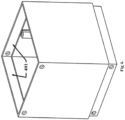
- Figure 4 shows a corresponding female inset (401) on an individual segment.
- Figure 5 shows the interlocking detail of assembled blocks with the male lip (501) and female inset (502) as well as the location of a horizontally located hole (503) for reinforcement or for a passage.
- Figure 6 shows two interlocking blocks with offset segments. While the blocks can be installed without offsetting the segments, an offset will provide additional structural integrity (especially in shear) as well as provide automatic alignment for the wall section.
- Figure 7 shows two interlocking blocks oriented orthogonally to make a corner.
- FIG. 7 shows a wall section utilizing a single segment block (801)
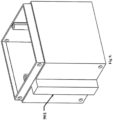
- Figure 9 shows a version of the block with an end face that has a vertical protrusion (901) that can be used to complete walls where a window or door opening is desired.
- the protrusion can be used to aid in the installation of windows or doors by providing a fastening guide.
- special blocks can be made that have protrusions similar to (901) but located on the exposed top or bottom of a block where a window or door will be installed.
- Special blocks with sealed top or bottom surfaces may also be fabricated for starting the bottom of a wall or terminating the top of a wall but with a corresponding interlocking lip or inset to allow connecting with the corresponding blocks above or below.
- Blocks can also have ports for water fixtures or wiring outlets as desired which can be configured from the inside of a block due to the accessibility provided by the hollow nature of each segment.
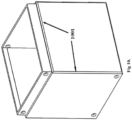
- Figure 10 shows the exposed face of a block with optional chamfers (1001) that may be desired to aid in sealing the wall from water intrusion.
- the blocks need to be made from a low-cost material with strength equal or greater than that of concrete and have a low coefficient of thermal expansion.
- the blocks may be made by compression molding, blow molding, roto-molding or injection molding with some post-molding operation such as hole drilling or eliminating exterior molding draft necessary.
- any moldable material can be used for this invention, probably the best mechanical properties per unit cost would be a natural fiber reinforced thermoplastic composite.
- the ideal material would be molded from a composite of natural or synthetic fibers (jute, wood, flax, kenaf, cotton, hemp, bamboo, cellulose, ramie, banana, etc.) and thermoplastics (polyolefins, nylon, PVC, polyesters, PLA, etc.)
- the ideal natural fiber thermoplastic composite material would have a compression strength greater than 60 MPa and a coefficient of linear thermal expansion (CLTE) less than 0.0002/°C. With a compression strength of >4 times that of the typical concrete block material (about 14 MPa), these natural fiber thermoplastic composite materials will allow the design of a block based on compression strength with 1 ⁇ 4 the shell thickness of a typical concrete block if creep is not an issue.
- the natural fiber composite formulation can include additives such as pigments (iron and other metal oxides, zinc ferrite, carbon black, titanium dioxide, etc.), UV light stabilizers (HALS, titanium dioxide, carbon black, nickel quenchers, benzophenones, benzotriazoles), antioxidants (hindered phenols, phosphites, thioesters, heat stabilizers; (organophosphites, hindered phenols), fungicides (zinc borate, microban.), coupling agents (maleated polyolefins, maleic acid grafted styrene-ethylene-butadiene, silanes) and fire retardants (magnesium hydroxide, alumina trihydrate, borates). If the exposed part of the board is coated or not exposed to light or fire, the UV stabilizers, pigments and fire retardants are not necessary.
- HALS UV light stabilizers
- titanium dioxide titanium dioxide
- carbon black nickel quenchers
- benzophenones benzotriazoles
- antioxidants
- the blocks can be made from recycled plastics including polyolefins, nylon, PVC, polyesters and mixtures thereof.
- a suitable coupling agent or compatibilizer such as a silane or maleic acid grafted polymer or suitable block copolymers containing segments that are compatible with the different polymers in the mix.
- Styrene ethylene butylene styrene triblock copolymer SEBS is one compatabilizer that can improve properties of polymer blends.
- Natural, synthetic or mined particles such as talc, calcium carbonate, clay, mica, carbon and nanoparticles of these minerals, rice hulls, flax shive, wood sawdust, bagasse, core from hemp or kenaf, etc. may also be used instead of fibers. Recycled natural and synthetic fibers recovered from mattresses, furniture or carpets will also work.
- a more typical natural fiber thermoplastic composite with recycled plastic and fillers rather than fibers might have coefficient of linear thermal expansion less than 0.0003/°C and compression strength greater than 40 MPa which would be suitable for many block applications.
- synthetic fibers such as glass, Kevlar and basalt may be cost effective as well as using a thermoset resin with catalyst such as an epoxy or polyester resin.
- High density polyethylene is particularly suitable for cross-linking and can be performed in the mold if the temperature of the composite in the mold is high enough for the cross-linking to initiate.
- BCUP tert butyl cumyl peroxide
- Polypropylene and other thermoplastics have their particular cross-linking agents that may also be suitable for molding thermoplastic natural fiber composite blocks.
- the particular shape or configuration of the platform or the interior configuration may be changed to suit the system or equipment with which it is used.
Landscapes
- Engineering & Computer Science (AREA)
- Architecture (AREA)
- Civil Engineering (AREA)
- Structural Engineering (AREA)
- Physics & Mathematics (AREA)
- Electromagnetism (AREA)
- Retaining Walls (AREA)
- Finishing Walls (AREA)
- Building Environments (AREA)
Description
- The present invention relates in general to composite blocks for use in construction analogous to prefabricated concrete masonry units (CMU's) and in particular to construction blocks that will reduce the labor time and associated with constructing a wall.
- Concrete Masonry Units (CMU's) are a low-cost, durable, product used worldwide for simple wall construction. Even though the blocks are low in cost they are labor-intensive to install and require skilled, expensive installers due to their need for manual alignment and mortar for adhesion and structural integrity. In addition the typical concrete used in CMU's is brittle and very heavy. Because of these factors, installation cost can be up to 10 times the purchase cost of blocks for wall construction. Also, the mechanical properties of concrete block material (about 14 MPa compression strength and about 300 MPa tensile strength) require reinforcement for most applications, at least in some portions of a wall. Most of a CMU wall is not load bearing except for certain areas reinforced with rebar and filled with concrete as necessary for the application.
- There are multiple inventions that have been listed in prior art regarding CMU's. For instance, patent
US6167669B1 for a Concrete Plastic Unit (CPU) describes a clear, permanent form, for steel reinforced concrete structures. Sections of the clear form are factory extruded, from a clear polyvinyl chloride material, so as to make the assembly of the forms, the installation of the steel and utilities, and the inspections that are required, easier. The clear forms will protect the steel reinforced concrete structures from the elements that cause these structures to fail. The clear form consists of two factory extruded profiles that are totally different in shape. The sections that make up the form, can be modified, cut to any length or angle and assembled on site. It takes two sections, of one profile, to form both vertical sides of the form, and two sections, of the other profile, are horizontally inserted, between the vertical side sections, to create an elongated empty container. The assembled clear form is 7⅝ inches (19.37 cm) wide and 8 inches (20.32cm) high, and is open on four sides. The assembled units are installed horizontally, and can be stacked and connected, on top of one another, to conform to any design, for residential or commercial construction. - Another patent
US6213754B1 is for a cementitious composition for the molding of ultra-lightweight, durable, large structural units comprising Portland cement, coal combustion byproducts, expanded or extruded polystyrene and water, and a modified block machine used in the manufacture of such structural units. - Patent
US4566238A for an energy conserving CMU describes a wall constructed to function as a passive thermal mass for energy storage permits enhanced solar heating and nocturnal cooling of the interior of a building using walls as disclosed. Use of an expansive insulating material, foamed in place, seals the wall to make it waterproof. Concrete masonry units having inner and outer cells are stacked to form the wall. A hardenable material poured into the inner cells of the masonry units moves both vertically and horizontally within the wall to form a rigid wall structure. Introducing insulation in fluid form into the outer cells adjacent to those containing the hardenable material disposes the insulation to lie essentially adjacent the thermal mass of the rigid inner wall structure. - Patent
US6050749A is for a Concrete masonry unit for reinforced retaining walls and describes a concrete masonry unit especially suited for use in soil reinforced retaining walls. The reinforced retaining wall is comprised of precast, concrete block masonry unit facing elements connected by suitable connectors to reinforcing members which extend from the facing elements into the adjacent reinforced soil to form a mechanically stabilized earthen wall construction. The connectors which affix the reinforcing members at their connecting ends to the facing elements comprise concrete poured into a part or all of certain of the void spaces within selective facing blocks, which concrete may or may not be reinforced and which concrete when dry and cured, envelops and secures the connecting ends of the reinforcement members to their corresponding blocks and forms anchors thereat. The novel masonry unit disclosed herein effectively provides maximum facing area per unit volume (weight) of block, always exceeding 4.0 m2/m3, which results in considerable cost savings per unit of retaining wall surface area over conventional wall constructions. - Another patent
US20170016228A1 for Surface Reinforced Concrete Masonry Units issued to the University of Manitoba is for a wall formed of masonry block units abutted with one another in series within stacked rows. Each masonry block unit is a concrete body having two opposing exterior side walls defining respective portions of the assembly masonry wall. Vertical reinforcement channels are formed in the exterior side walls of each masonry block unit so as to be open laterally to the exterior. The reinforcement channels align with corresponding channels in the masonry block units in adjacent stacked rows to receive elongate reinforcement members, for example rebar, inserted laterally therein from the exterior surface of the assembly masonry wall. A bonding material can then be recessed laterally into the reinforcement channels so as to bond the reinforcement members to the masonry assembly. - Another patent
US20130205688A1 describes prefabricated compound masonry units in lieu of build site-constructed elements, as well as methods of producing the same. One embodiment comprises a first course comprising hollow blocks laid end to end with adjacent ends adhered with mortar, the hollow blocks positioned such that the first course has a hollow core; at least one channel formed in a top surface of the first course, the channel having a length; and provisional reinforcement provided along at least a portion of the length of the channel and held within the channel with a bonding material different from the mortar. The provisional reinforcement provides tensile strength to the first course for transportation and handling of the first course from a fabrication location to a build location where the first course is configured to receive permanent structural masonry reinforcement in the hollow core at the build location. - Patent
US3005282A issued in 1958 discloses the original patent for Lego™ toy building blocks. The patent describes building blocks, strips, or similar building parts to be assembled without the use of additional elements provided with complementary holes, grooves, or protuberances, e.g. dovetails with primary projections fitting by friction in complementary spaces between secondary projections, e.g. sidewalls. -
WO2010105317A discloses construction blocks according to the preamble of claim 1. - There are multiple additional solutions that have been presented in prior art. Although the cementitious solutions offer improvements over standard CMU's they still suffer from limitations of being heavy, having poor impact properties, require manual alignment, require mortar for structural integrity and in general require skilled labor for alignment and installation.
- The specific gravity of most block concrete is about 2.4 while the specific gravity of the thermoplastic composite blocks disclosed in this invention is less than 1.4. Also, while it is difficult to numerically compare due to the typical sample size differences, the impact properties of most thermoplastic natural fiber composites are well known to be significantly higher than that of low cost block concrete. The lower weight and better impact of natural fiber thermoplastic composites as described in the disclosed invention allow the molding of complex geometry with shells as thin as 3mm. A block with similar shell thickness molded out of low cost block concrete would have significant breakage during transportation and installation.
- A significant part of the structural integrity of standard CMU's and the prior art referenced here is due to the mortar. Unreinforced concrete walls perform poorly during earthquakes due to the low elongation before breaking which is typically significantly less than 0.5% while natural fiber thermoplastic composites show strains of between 2 and 6% before breaking. The disclosed invention does not require mortar for structural integrity due to the interlocking nature of the blocks. In addition to the lack of mortar they will align nearly perfectly due to the precise nature of a molded thermoplastic composite (typically less than +/- 0.5mm) and the disclosed design.
- With respect to plastic building blocks such as Lego™ and other similar solutions disclosed herein and elsewhere, the significant differences are thermal expansion, creep, nature of assembly and geometry. Lego's and other similar blocks interlock through an interference fit where one or both parts deform during mating. This is possible with parts made of pure thermoplastics which can deform significantly before breaking (usually greater 10%) whereas thermoplastic composites like the design disclosed in this patent will typically break or be damaged at the deformation required for this kind of mating. The blocks in the disclosed invention mate with a clearance fit where no deformation is necessary.
- Most thermoplastics like those used in Lego blocks have linear thermal expansion coefficients much greater than .0009 / °C. Using a thermoplastic like this in large assemblies can exhibit significant deformations with normal temperature changes in building applications. These deformations can cause failure over time in the plastic or failure of the sealant or large gaps to appear depending upon if the assembly was made when the blocks were cold or warm. This effect is insignificant with small parts that are small. By contract the ideal thermoplastic natural fiber composite disclosed in this invention has a coefficient of thermal expansion less than .0002 / °C and will not exhibit this problem the same extent.
- In addition to high thermal expansion, pure thermoplastics like those used in Lego™ blocks will have a tendency to creep. Especially with low-cost thermoplastics like polypropylene and polyethylene the creep can be significant under minimal loads at the temperatures seen in normal building applications. The same thermoplastics reinforced with about 50% natural fibers will typically exhibit an order of magnitude less creep.
- Another significant difference between Lego™ blocks and the disclosed invention is the form of the molded blocks. Lego™ blocks are open on one side whereas the blocks in the disclosed invention are molded completely hollow. In addition Lego™ blocks interlock with an interference fit between the pins and the sidewall whereas the blocks in the disclosed invention interlock with lips and insets around the entire perimeter of each segment. The disclosed invention also has identical segments that can work on their own if separated, unlock Lego™ blocks. Also, Lego™ blocks do not have reinforcement capabilities provided by the holes in the disclosed invention or the interior accessibility provided by the open geometry of the disclosed invention.
- The referenced current solutions that exist in the marketplace today, have difficult and time-consuming procedures for constructing walls. They are labor-intensive to install and require skilled, expensive installers due to their need for manual alignment and mortar for adhesion and structural integrity. Or, they are not suitable for the demanding requirements for most exterior wall applications.
- In light of the disadvantages of the prior art, the following summary is provided to facilitate an understanding of some of the innovative features unique to the present invention and is not intended to be a full description.
- The primary desirable object of the present invention is to provide a novel and improved form of construction block analogous to Concrete Masonry Units (CMU's).
- The main objective of the invention is to provide a remedy which poses improvement by having an improved methodology that can be used worldwide for construction of durable and low-cost walls.
- It is further the objective of the invention to provide a methodology which minimizes the labor cost associated with constructing a block wall
- It is also the objective of the invention to provide a design for a multi-segment construction block that interlocks horizontally, vertically and orthogonally, and does not require mortar and is self-aligning.
- It is also the primary objective of the invention to provide a solution that is ecological by using recycled plastic which has low embedded energy and locally produced natural fibers or agricultural waste.
- It is further the objective of the invention to provide a solution which is easy to use and does not require specialized training.
- It is moreover the objective of the invention to provide solution which is cost effective to install and has cost effective over the life of the construction.
- Thus, it is the objective to provide a new and improved solution for effective building blocks in applications where Concrete Masonry Units (CMU's) are typically used. Other aspects, advantages and novel features of the present invention, which is defined by the claims, will become apparent from the detailed description of the invention when considered in conjunction with the accompanying drawings.
-
-
Fig 1 discloses the appearance of a typical CMU. -
Fig 2 discloses a single multi-segment block as per illustrative embodiments of the invention. -
Fig 3 discloses a single block segment with interlocking male lip around the segment perimeter as per illustrative embodiments of the invention. a -
Fig 4 discloses a single block segment with interlocking female inset around the segment perimeter as per illustrative embodiments of the invention. -
Fig 5 discloses details of an interlocking male lip and female inset in an assembled wall segment wall as per illustrative embodiments of the invention. -
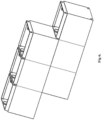
Fig 6 discloses the two offset interlocking 3-segment blocks as per illustrative embodiments of the invention. -
Fig 7 discloses two orthogonally interlocking 3-segment blocks forming a corner as per illustrative embodiments of the invention. -
Fig 8 discloses the two offset interlocking 3-segment blocks with single segment block to terminate a wall as per illustrative embodiments of the invention. -
Fig 9 discloses a single segment block with a protrusion on an end face for locating windows or doors as per illustrative embodiments of the invention. -
Fig 10 discloses the chamfers on the exposed face of a block as per illustrative embodiments of the invention. - The terminology used herein is for the purpose of describing particular embodiments only and is not intended to be limiting the invention. As used herein, the term "and/or" includes any and all combinations of one or more of the associated listed items. As used herein, the singular forms "a," "an," and "the" are intended to include the plural forms as well as the singular forms, unless the context clearly indicates otherwise. It will be further understood that the terms "comprises" and/or "comprising," when used in this specification, specify the presence of stated features, steps, operations, elements, and/or components, but do not preclude the presence or addition of one or more other features, steps, operations, elements, components, and/or groups thereof.
- The use of the term "horizontal" is intended to mean the direction along the length of a wall. The use of the term "vertical" is intended to mean the direction perpendicular to the base plane of the installation, typically the ground. The use of the term "orthogonal" is intended to mean the direction 90 degrees to the horizontal direction of the wall. The use of the term "segment" is intended to mean a portion of a block that is equal in dimensions and form as all other segments that are connected laterally in a block. The use of the term "shell" is intended to mean the wall thickness of an individual block. The use of the term "wall" is intended to mean a barrier or planar separation in addition to the traditional meaning of the term. The term "wall thickness" is intended to mean the thickness of an entire block segment. The use of the term "CMU" is intended to mean the concrete masonry unit used in traditional concrete wall construction. The composition percentages referenced in this patent are all weight percent (%). Wood fiber is understood to be from trees such as pine, fir, bamboo etc. and not annual growth plants. The wood fiber referenced in this patent can be that recovered from pulp mill wastewater and contain adhered contaminants such as Calcium Carbonate. An "clearance fit" is intended to mean when there is a gap between pieces or parts pace making an assembly without having to deform either part like that in an interference type of fit such as a snap or press fit.
- The present invention is intended to provide a way of reducing the labor cost associated with building walls similar to what would be constructed using concrete masonry units (CMU's). The design is for a multi-segment construction block that interlocks horizontally, vertically, and orthogonally, does not require mortar and is self-aligning.
- The dimensions of the block as per its preferred embodiments are proposed to be similar to those of commercially available CMU's (
Fig. 1 ) which are typically used to construct walls approximately 150mm, 200mm or 300mm thick. The dimensions are not restricted to those listed here and can be anything that is manufacturable.Figure 1 shows the orientation of a typical CMU with the end of a block (101) and the exposed face (102) of a block. - The block in the present invention is segmented with the width or thickness (201) of each segment equal to the length of each block segment (202). The length of the block (203) is an even multiple of the segment length.
Figure 2 shows a block with 3 segments. The exposed height of the block and segment (204) is normally the same as the segment length and width but can be any height. - Each segment has a male lip (205), (301) and a female inset (401) that span the perimeter of each segment and interlock vertically in a clearance fit with the male lips fitting into the female insets of each block. While the lip and inset are shown in
Figure 4 to span the entire perimeter of each segment it is not necessary and depends of the structural requirements of the particular application. - Each segment has holes oriented horizontally (206) in the lip and inset areas so that when the blocks are interlocked the holes align horizontally. The holes are intended to accommodate rebar, bolts, rivets or pins to provide additional vertical and horizontal reinforcement as necessary. Each hole adjoining two blocks can have a bolt, rivet or other fastening device to firmly join only the two adjoining blocks. The holes can also be used as passages for wire, conduit and pipe to supply utilities along a wall. Additionally the blocks can have vertical passages (207) that can be used for mechanical reinforcement as necessary or as passages for utilities. Each segment is hollow and aligns with the segment below it allowing for clear passage from the top of the wall to the bottom. This passage can be filled with concrete or rebar or other reinforcing material as needed for the structural requirements of the application or can be filled with loose insulating material such as foam, rice hulls, cellulose, soil, rocks, etc. Block shell thicknesses (301) can be varied with the mold depending upon the mechanical requirements of the application and are typically less than 25mm.
- The blocks do not require mortar or sealant or adhesive for structural integrity but they can be used between blocks during installation for additional structural reinforcement or weatherability as necessary.
Fig 3 shows the top of an individual segment with channels for (302), (303) for sealant, adhesive, an O-ring or gasket.Figure 4 shows a corresponding female inset (401) on an individual segment. -
Figure 5 shows the interlocking detail of assembled blocks with the male lip (501) and female inset (502) as well as the location of a horizontally located hole (503) for reinforcement or for a passage. -
Figure 6 shows two interlocking blocks with offset segments. While the blocks can be installed without offsetting the segments, an offset will provide additional structural integrity (especially in shear) as well as provide automatic alignment for the wall section. -
Figure 7 shows two interlocking blocks oriented orthogonally to make a corner. - Because the blocks have multiple segments, individual segments may be necessary to complete a wall section and make the blocks line up vertically even at the end. Individual blocks may be manufactured for this purpose or multi-segment blocks can be cut between segments to make single segment blocks.
Figure 7 shows a wall section utilizing a single segment block (801) -
Figure 9 shows a version of the block with an end face that has a vertical protrusion (901) that can be used to complete walls where a window or door opening is desired. The protrusion can be used to aid in the installation of windows or doors by providing a fastening guide. Additionally, special blocks can be made that have protrusions similar to (901) but located on the exposed top or bottom of a block where a window or door will be installed. Special blocks with sealed top or bottom surfaces may also be fabricated for starting the bottom of a wall or terminating the top of a wall but with a corresponding interlocking lip or inset to allow connecting with the corresponding blocks above or below. - Blocks can also have ports for water fixtures or wiring outlets as desired which can be configured from the inside of a block due to the accessibility provided by the hollow nature of each segment.
-
Figure 10 shows the exposed face of a block with optional chamfers (1001) that may be desired to aid in sealing the wall from water intrusion. - To compete with CMU's the blocks need to be made from a low-cost material with strength equal or greater than that of concrete and have a low coefficient of thermal expansion. The blocks may be made by compression molding, blow molding, roto-molding or injection molding with some post-molding operation such as hole drilling or eliminating exterior molding draft necessary.
- Although any moldable material can be used for this invention, probably the best mechanical properties per unit cost would be a natural fiber reinforced thermoplastic composite. The ideal material would be molded from a composite of natural or synthetic fibers (jute, wood, flax, kenaf, cotton, hemp, bamboo, cellulose, ramie, banana, etc.) and thermoplastics (polyolefins, nylon, PVC, polyesters, PLA, etc.) The ideal natural fiber thermoplastic composite material would have a compression strength greater than 60 MPa and a coefficient of linear thermal expansion (CLTE) less than 0.0002/°C. With a compression strength of >4 times that of the typical concrete block material (about 14 MPa), these natural fiber thermoplastic composite materials will allow the design of a block based on compression strength with ¼ the shell thickness of a typical concrete block if creep is not an issue.
- The natural fiber composite formulation can include additives such as pigments (iron and other metal oxides, zinc ferrite, carbon black, titanium dioxide, etc.), UV light stabilizers (HALS, titanium dioxide, carbon black, nickel quenchers, benzophenones, benzotriazoles), antioxidants (hindered phenols, phosphites, thioesters, heat stabilizers; (organophosphites, hindered phenols), fungicides (zinc borate, microban.), coupling agents (maleated polyolefins, maleic acid grafted styrene-ethylene-butadiene, silanes) and fire retardants (magnesium hydroxide, alumina trihydrate, borates). If the exposed part of the board is coated or not exposed to light or fire, the UV stabilizers, pigments and fire retardants are not necessary.
- Alternatively, depending upon the demands of the application, the blocks can be made from recycled plastics including polyolefins, nylon, PVC, polyesters and mixtures thereof. With mixtures of different types of plastic a suitable coupling agent or compatibilizer such as a silane or maleic acid grafted polymer or suitable block copolymers containing segments that are compatible with the different polymers in the mix. Styrene ethylene butylene styrene triblock copolymer (SEBS) is one compatabilizer that can improve properties of polymer blends. Natural, synthetic or mined particles such as talc, calcium carbonate, clay, mica, carbon and nanoparticles of these minerals, rice hulls, flax shive, wood sawdust, bagasse, core from hemp or kenaf, etc. may also be used instead of fibers. Recycled natural and synthetic fibers recovered from mattresses, furniture or carpets will also work.
- A more typical natural fiber thermoplastic composite with recycled plastic and fillers rather than fibers might have coefficient of linear thermal expansion less than 0.0003/°C and compression strength greater than 40 MPa which would be suitable for many block applications.
- In some instances, synthetic fibers such as glass, Kevlar and basalt may be cost effective as well as using a thermoset resin with catalyst such as an epoxy or polyester resin.
- If creep is an issue, it may be desirable to cross-link the thermoplastic to prevent movement, especially under sustained loads and high temperatures. High density polyethylene is particularly suitable for cross-linking and can be performed in the mold if the temperature of the composite in the mold is high enough for the cross-linking to initiate. There are many cross-linking agents but for high density polyethylene (HDPE), tert butyl cumyl peroxide (BCUP) is commonly used at a composition of 2% of the weight of the polyethlene. Polypropylene and other thermoplastics have their particular cross-linking agents that may also be suitable for molding thermoplastic natural fiber composite blocks.
- The particular shape or configuration of the platform or the interior configuration may be changed to suit the system or equipment with which it is used.
Claims (12)
- Single segment plastic composite constructions blocks (801) or segmented plastic composite construction blocks (203), wherein segments are connected laterally, wherein each segment length equal to the segment width (201) allowing for assembly of walls with blocks that can interlock horizontally, vertically and orthogonally with lips and insets that have a clearance-fit and are located around the perimeter of each segment (202), wherein the blocks have more than one adjoining equal dimension segments,
wherein each segment has a male lip (205, 301) that extends beyond the exposed face of the block and fits into the female inset (401) on the block segment above or below it, characterized in that each segment has holes (206) in the male lip (205, 301) and female inset (401) that align horizontally allowing the passage of conduit, wiring, pipe, bolts, fasteners, rebar or other reinforcements. - The construction blocks (801, 203) of claim 1 wherein each segment (202) has vertically oriented channels that align with the vertical channels (207) in the interlocking blocks above and below for inserting reinforcement such as rebar.
- The construction blocks (801, 203) of claim 1 wherein the mating faces of the segments and end of the blocks have channels (302, 303) for inserting a sealing O-ring, gasket, sealant or adhesive.
- The construction blocks (801, 203) of claim 1 wherein one end face has a vertically oriented rectangular protrusion (901) for attaching window or door assemblies.
- The construction blocks (801, 203) of claim 1 wherein each segment (202) has the inset (401) and lip (205, 301) shorter than the face of the block.
- The construction blocks (801, 203) of claim 1 wherein the composite material has a coefficient of linear thermal expansion less than 0.0003/°C and compression strength greater than 40 MPa.
- The construction blocks (801, 203) of claim 1 wherein the material used to mold the block is comprised of a thermoplastic composite with between 20 and 70% natural fiber, up to about 5% coupling agent, up to about 10% pigment, up to about 10% fire retardant, up to about 1% antioxidant, up to about 1% UV stabilizer, up to about 1% heat stabilizer, up to about 5% fungicide, and up to about 70% thermoplastic.
- The construction blocks (801, 203) of claim 1 wherein the composite material has a coefficient of linear thermal expansion less than 0.0002/°C and compression strength greater than 60 MPa.
- The construction blocks (801, 203) of claim 1 wherein the thermoplastic used in the composite material contains polyethylene that is cross-linked.
- The construction blocks (801, 203) of claim 1 wherein the natural fiber used in the composite material is comprised of fiber derived from annual growth plants such as hemp.
- The construction blocks (801, 203) of claim 1 wherein the natural fiber used in the composite material is comprised of wood fiber.
- The construction blocks (801, 203) of claim 1 wherein the natural fiber used in the composite material is comprised of rice hulls.
Applications Claiming Priority (2)
| Application Number | Priority Date | Filing Date | Title |
|---|---|---|---|
| US201962919084P | 2019-02-26 | 2019-02-26 | |
| PCT/US2020/019733 WO2020176530A1 (en) | 2019-02-26 | 2020-02-25 | Interlocking composite construction block |
Publications (4)
| Publication Number | Publication Date |
|---|---|
| EP3931406A1 EP3931406A1 (en) | 2022-01-05 |
| EP3931406A4 EP3931406A4 (en) | 2022-11-30 |
| EP3931406B1 true EP3931406B1 (en) | 2025-05-21 |
| EP3931406C0 EP3931406C0 (en) | 2025-05-21 |
Family
ID=72239906
Family Applications (1)
| Application Number | Title | Priority Date | Filing Date |
|---|---|---|---|
| EP20763124.3A Active EP3931406B1 (en) | 2019-02-26 | 2020-02-25 | Interlocking composite construction blocks |
Country Status (5)
| Country | Link |
|---|---|
| US (1) | US12577776B2 (en) |
| EP (1) | EP3931406B1 (en) |
| JP (1) | JP7426733B2 (en) |
| CN (1) | CN216380107U (en) |
| WO (1) | WO2020176530A1 (en) |
Families Citing this family (4)
| Publication number | Priority date | Publication date | Assignee | Title |
|---|---|---|---|---|
| GB2583152B (en) * | 2019-10-04 | 2021-06-09 | Patel Rahul | Stackable block |
| US20240263442A1 (en) * | 2021-06-05 | 2024-08-08 | Formx Inc. | Modular building system |
| US12139907B2 (en) * | 2022-06-30 | 2024-11-12 | Eco Snap Blocks, Inc. | Plastic building blocks |
| US12601171B2 (en) * | 2022-06-30 | 2026-04-14 | ECO Snap Blocks, Inc | Plastic building blocks |
Family Cites Families (194)
| Publication number | Priority date | Publication date | Assignee | Title |
|---|---|---|---|---|
| CH269728A (en) | 1947-01-15 | 1950-07-31 | Oldrich Schueller Josef | Shaped stone with at least two cavities. |
| US2676482A (en) * | 1951-01-02 | 1954-04-27 | Howe E Wilson | Wall of reinforced spaced building blocks |
| FR1121616A (en) * | 1955-02-08 | 1956-08-22 | Thevenot Et Hochet | Construction process for light buildings and prefabricated elements for the construction of these buildings |
| US2805448A (en) * | 1955-06-10 | 1957-09-10 | Rubenstein David | Method of making composite structural members |
| US3005282A (en) | 1958-01-28 | 1961-10-24 | Interlego Ag | Toy building brick |
| FR1272187A (en) * | 1960-08-23 | 1961-09-22 | Polycellular construction process by assembling elements, for walls, partitions or floors | |
| US3237357A (en) * | 1962-01-10 | 1966-03-01 | Carl H Hutchings | Wall and floor construction of prestressed concrete |
| US3313073A (en) * | 1962-09-24 | 1967-04-11 | Foam Products Corp | Joint assemblies for insulation panels |
| DE1478461A1 (en) * | 1964-12-15 | 1969-10-30 | Walter Holzer | Construction kit for model and play purposes |
| US3373668A (en) * | 1965-12-15 | 1968-03-19 | Robert R. Moore | Interlocking structures for edging, paving, or the like |
| GB1185021A (en) * | 1966-03-30 | 1970-03-18 | Geoffrey Benjamin Hern | Building Bricks or Blocks and Structures Utilising the same |
| US3742985A (en) * | 1967-01-31 | 1973-07-03 | Chemstress Ind Inc | Reinforced pipe |
| US3537687A (en) * | 1967-09-25 | 1970-11-03 | Philip Adelman | Garden fence and wall |
| US3879908A (en) * | 1971-11-29 | 1975-04-29 | Victor P Weismann | Modular building panel |
| US3905170A (en) | 1974-02-25 | 1975-09-16 | Erik W Huettemann | Building wall unit |
| US4041670A (en) * | 1974-04-17 | 1977-08-16 | Kaplan Richard D | Building blocks |
| DE2450475A1 (en) | 1974-10-24 | 1976-04-29 | Schmidt Hans Guenther | PANEL ELEMENT, ESPECIALLY CONCRETE SLAB |
| US4132043A (en) | 1977-02-22 | 1979-01-02 | H. B. Fuller Company | Structural units |
| US4434200A (en) * | 1977-03-01 | 1984-02-28 | Burlington Industries, Inc. | Impregnated woven fencing product |
| US4155787A (en) * | 1977-12-05 | 1979-05-22 | Environmental Control Specialists, Incorporated | Method for the application of cellular glass blocks to spherical vessels |
| FR2413508A1 (en) * | 1977-12-29 | 1979-07-27 | Rech Etu Tech | DEVICE FOR ASSEMBLING REINFORCED CONCRETE PROFILES AND FRAMES INCLUDING SUCH DEVICES AND PROFILES |
| US4253509A (en) * | 1979-04-06 | 1981-03-03 | Collet James R | Theft deterrent locking nut |
| US4427818A (en) * | 1981-05-15 | 1984-01-24 | Prusinski Richard C | Thermoplastic polymer concrete structure and method |
| US4441944A (en) | 1981-12-31 | 1984-04-10 | Pmp Corporation | Building board composition and method of making same |
| EP0103192B1 (en) * | 1982-09-09 | 1986-06-11 | VEGLA Vereinigte Glaswerke GmbH | Glass brick, wall of glass building elements and method of laying and erecting the same |
| DE3246621A1 (en) * | 1982-12-16 | 1984-06-20 | Dynamit Nobel Ag, 5210 Troisdorf | COMPONENT COVERINGS OF INORGANIC MOLDS |
| US4566238A (en) | 1983-06-06 | 1986-01-28 | Janopaul Jr Peter | Energy conserving concrete masonry unit, wall construction and method |
| US4565043A (en) * | 1983-09-02 | 1986-01-21 | Mazzarese Joseph A | Building block with reinforcement and/or positioning lugs and recesses |
| US4501830A (en) | 1984-01-05 | 1985-02-26 | Research One Limited Partnership | Rapid set lightweight cement product |
| US4703600A (en) * | 1984-04-30 | 1987-11-03 | Suh Kun Hee | Vertically assembling box type blocks |
| CH667485A5 (en) * | 1985-09-18 | 1988-10-14 | Steiner Silidur Ag | Wall brick with cavity for electric installation - has holes for cables in switch-box aperture to enable flush mounting of electric fittings |
| US4793104A (en) * | 1988-06-15 | 1988-12-27 | Delberg, Inc. | Guide for laying glass blocks |
| US4821483A (en) | 1988-07-05 | 1989-04-18 | Adams Raymond R | Method for manufacturing concrete blocks and constructing fence |
| GB8822566D0 (en) * | 1988-09-26 | 1988-11-02 | Sgb Plc | Improvements in/relating to six-way connector |
| US4903451A (en) * | 1988-10-14 | 1990-02-27 | Gressco, Ltd. | Modular system and fastening devices therefor |
| CH680600A5 (en) * | 1990-02-01 | 1992-09-30 | Bsb Holzkonstruktionen Ag | Wooden building of composite box section parts - has plywood outside walls with flat connectors in central layer |
| US5312858A (en) * | 1991-12-16 | 1994-05-17 | Virgil Folsom | Construction article from waste materials and method of making the same |
| US5389167A (en) | 1992-04-28 | 1995-02-14 | Sperber; Henry | Method for insulating a cavity |
| US5274968A (en) * | 1992-05-15 | 1994-01-04 | Jorge Pardo | Building block for use with flashing and arrangement for weeping condensation |
| US5302634A (en) | 1992-10-15 | 1994-04-12 | Hoppmann Corporation | Cured unsaturated polyester-polyurethane hybrid highly filled resin foams |
| IT1257727B (en) | 1992-11-03 | 1996-02-13 | TILE STRUCTURE, PARTICULARLY FOR BUILDING | |
| KR100240737B1 (en) * | 1992-12-21 | 2000-01-15 | 마에다나오미 | Cement including composite material, cement products, molding material, a concrete member and a method of producing the same |
| JP3016672U (en) | 1995-04-06 | 1995-10-09 | 旭電化工業株式会社 | Concrete secondary product with waterproof layer |
| WO2005088020A1 (en) * | 2004-03-16 | 2005-09-22 | Tech-Wood International Ltd. | Wall element and structure constructed therewith |
| US5755216A (en) * | 1995-06-06 | 1998-05-26 | The University Of Dayton | Building products incorporating phase change materials and method of making same |
| CA2170681A1 (en) * | 1996-02-29 | 1997-08-30 | Vittorio De Zen | Insulated wall and components therefor |
| US5775046A (en) | 1996-05-10 | 1998-07-07 | Massachusetts Institute Of Technology | Modular construction member |
| US6030446A (en) | 1996-05-29 | 2000-02-29 | Peerless Block & Brick Co. | Cementitious compositions and lightweight structural units |
| US5743330A (en) * | 1996-09-09 | 1998-04-28 | Radiant Technology, Inc. | Radiant heat transfer panels |
| US6110575A (en) * | 1996-11-12 | 2000-08-29 | Yoshino Sangyo Co., Ltd. | Gypsum-based composite article and method for producing same |
| US5921046A (en) | 1997-04-04 | 1999-07-13 | Recobond, Inc. | Prefabricated building system for walls, roofs, and floors using a foam core building panel and connectors |
| US6065265A (en) * | 1997-05-01 | 2000-05-23 | Newtec Building Products Inc. | Corner and end block for interlocking building block system |
| DE19723341A1 (en) * | 1997-06-04 | 1998-12-10 | Josef Knocke | Building wall component |
| US6167669B1 (en) | 1997-11-03 | 2001-01-02 | Louis Joseph Lanc | Concrete plastic unit CPU |
| US6355333B1 (en) * | 1997-12-09 | 2002-03-12 | E. I. Du Pont De Nemours And Company | Construction membrane |
| US6050749A (en) * | 1997-12-19 | 2000-04-18 | Khamis; Suheil R. | Concrete masonry unit for reinforced retaining wall |
| US6284089B1 (en) | 1997-12-23 | 2001-09-04 | The Boeing Company | Thermoplastic seam welds |
| US6758636B2 (en) | 1998-03-27 | 2004-07-06 | Anchor Wall Systems, Inc. | Segmental retaining wall system |
| US6266940B1 (en) * | 1998-07-31 | 2001-07-31 | Edgetech I.G., Inc. | Insert for glazing unit |
| US6295778B1 (en) * | 1998-08-18 | 2001-10-02 | Crane Products Ltd. | Modular building structures comprised of extruded components |
| CA2345630A1 (en) * | 1998-09-25 | 2000-04-06 | Armin J. Altemus | Bidirectionally interlocking, hollow brick |
| JP3044028B1 (en) * | 1999-01-07 | 2000-05-22 | 東洋エクステリア株式会社 | Method for producing building material having brick on substrate surface and block with surface brick |
| EP1020846B1 (en) * | 1999-01-14 | 2018-09-19 | Nichias Corporation | Sound absorbing structure |
| US6883281B1 (en) * | 1999-03-02 | 2005-04-26 | Hector E. Chavez-Gandara | Multiuse construction system: multispace 2000 |
| US6976345B2 (en) | 1999-04-05 | 2005-12-20 | Firouzeh Keshmiri | Cementitious based structural lumber product and externally reinforced lightweight retaining wall system |
| ATE368017T1 (en) | 2000-03-14 | 2007-08-15 | James Hardie Int Finance Bv | FIBER CEMENT CONSTRUCTION MATERIALS WITH LOW DENSITY ADDITIVES |
| GB0009521D0 (en) | 2000-04-18 | 2000-06-07 | Abersham Technologies Limited | Improvements to modular buildings and material used in their construction |
| DE10020956B4 (en) * | 2000-04-28 | 2005-05-19 | Fraunhofer-Gesellschaft zur Förderung der angewandten Forschung e.V. | Brick and process for its production |
| US6983571B2 (en) | 2000-09-29 | 2006-01-10 | Teel Plastics, Inc. | Composite roofing panel |
| US20030154662A1 (en) * | 2000-10-30 | 2003-08-21 | Andersen Corporation | Hollow profile decking system comprising plank and anchor using anchor flange construction |
| JP2002143822A (en) | 2000-11-15 | 2002-05-21 | Lignyte Co Ltd | Method for producing flame-retardant carbide, its application and production method |
| US6444162B1 (en) | 2000-11-27 | 2002-09-03 | The United States Of America As Represented By The United States Department Of Energy | Open-cell glass crystalline porous material |
| US6827995B2 (en) * | 2001-01-16 | 2004-12-07 | Extrutech International, Inc. | Composites useful as fence and decking components and methods for producing same |
| EP1386898A4 (en) | 2001-03-30 | 2007-04-04 | Hatsuichi Matsumoto | Artificial ore and coating material or refractory block containing the artificial ore |
| DE10129702A1 (en) | 2001-06-22 | 2003-01-02 | Roehm Gmbh | Extrusion tool for the production of hollow profile sheets made of thermoplastic material with internal coextruded layer |
| US20030096096A1 (en) * | 2001-11-19 | 2003-05-22 | Jo Byeong H. | Plastic rail system reinforced with fiberglass thermoplastic composites |
| US6926077B2 (en) * | 2001-11-27 | 2005-08-09 | Mitsubishi Chemical Functional Products, Inc. | Foldable heat radiating sheet |
| US20030115820A1 (en) * | 2001-12-20 | 2003-06-26 | Mahyar Assadi | Interlocking interference-fit post system for interconnecting thermoplastic platforms |
| US7000729B2 (en) * | 2002-07-08 | 2006-02-21 | Acoustek Nonwovens | Five-layer sound absorbing pad: improved acoustical absorber |
| US6889479B2 (en) * | 2003-04-28 | 2005-05-10 | Douglas G. Thorpe | Building block |
| US7882673B1 (en) | 2003-04-30 | 2011-02-08 | Mitek Holdings, Inc. | Single-ply masonry flashing |
| EP1639040A1 (en) * | 2003-06-13 | 2006-03-29 | Agri-Polymerix, LLC | Biopolymer structures and components |
| CN1975000A (en) * | 2003-10-27 | 2007-06-06 | 邱则有 | Permanent shuttering member |
| US7596916B1 (en) * | 2004-03-25 | 2009-10-06 | Richard Thomas Anderson | Multi beveled interlocking corner notch and associated anti settling system |
| US20070011964A1 (en) * | 2005-07-12 | 2007-01-18 | Earl Smith | Composite wall tie system and method |
| US7841148B2 (en) | 2005-01-27 | 2010-11-30 | United States Gypsum Company | Non-combustible reinforced cementitious lightweight panels and metal frame system for roofing |
| US20060205846A1 (en) * | 2005-02-22 | 2006-09-14 | Teel Plastics, Inc. | Method of providing color variation in an extruded product |
| US8752348B2 (en) * | 2005-02-25 | 2014-06-17 | Syntheon Inc. | Composite pre-formed construction articles |
| FR2885617B1 (en) | 2005-05-12 | 2010-01-08 | Stephan Vogel | AGGLOMERATED WOOD BLOCKS |
| US20100012004A1 (en) | 2005-06-01 | 2010-01-21 | U.S. Wind Farming Inc. | Basalt particle-containing compositions and articles for protective coatings and ballistic shield mats/tiles/protective building components |
| US20070009688A1 (en) | 2005-07-11 | 2007-01-11 | Enamul Haque | Glass/polymer reinforcement backing for siding and compression packaging of siding backed with glass/polymer |
| WO2007033255A2 (en) * | 2005-09-14 | 2007-03-22 | Uponor, Inc. | Radiant heating system and method |
| US20070107364A1 (en) * | 2005-11-10 | 2007-05-17 | Estes Mark D | Modular wall assembly apparatus and method |
| US20070125016A1 (en) * | 2005-11-18 | 2007-06-07 | Shawn Yu | Wall panel with corner-connected open frame |
| DE102006008147A1 (en) | 2006-02-20 | 2007-08-23 | Technamation Technical Europe Gmbh | Manufacturing panel element involves injecting at least one renewable material or mixture of at least one renewable material and binding material, and possibly auxiliary material and additives to form panel element |
| US20090173027A1 (en) * | 2006-05-10 | 2009-07-09 | Kerry Bennett | Concrete masonry hollow block |
| US8091300B2 (en) * | 2006-11-08 | 2012-01-10 | Pyo John M | Modular building blocks system and method of manufacture |
| US7743565B2 (en) * | 2006-11-08 | 2010-06-29 | Pyo John M | Modular building block system and method of manufacture |
| US7765759B2 (en) * | 2006-11-08 | 2010-08-03 | Nova Chemicals Inc. | Insulated concrete form |
| US8042309B2 (en) | 2006-12-29 | 2011-10-25 | Boral Stone Products Llc | Panelized veneer with backer-to-backer locators |
| US20080184642A1 (en) | 2007-02-05 | 2008-08-07 | Laura Sebastian | Latex foam insulation and method of making and using same |
| US9157268B2 (en) * | 2007-02-06 | 2015-10-13 | Masonite Corporation | Composite capped stile, door and method |
| US7694485B1 (en) * | 2007-03-15 | 2010-04-13 | Gregory Siener | Mortarless interlocking building block for a building block system |
| US20090239059A1 (en) | 2007-03-21 | 2009-09-24 | Kipp Michael D | Wallboard Materials Incorporating a Microparticle Matrix |
| US8445101B2 (en) | 2007-03-21 | 2013-05-21 | Ashtech Industries, Llc | Sound attenuation building material and system |
| MX367591B (en) | 2007-03-21 | 2019-08-27 | Ash Tech Ind L L C | Utility materials incorporating a microparticle matrix. |
| US20090239429A1 (en) | 2007-03-21 | 2009-09-24 | Kipp Michael D | Sound Attenuation Building Material And System |
| US8099918B2 (en) * | 2007-04-19 | 2012-01-24 | Marsh Roger F | Special and improved configurations for unitized post tension block systems for masonry structures |
| US20080307735A1 (en) * | 2007-06-15 | 2008-12-18 | Trimmer Douglas E | System for securing concrete form panels |
| US8057594B2 (en) | 2007-06-19 | 2011-11-15 | Georgia Tech Research Corporation | High strength pozzolan foam materials and methods of making the same |
| US8431214B2 (en) * | 2007-07-31 | 2013-04-30 | The Boeing Company | Composite structure having reinforced core and method of making same |
| US8512853B2 (en) * | 2007-07-31 | 2013-08-20 | The Boeing Company | Composite structure having reinforced core |
| JP3138465U (en) | 2007-10-01 | 2008-01-10 | 務 吉山 | Block bricks and block fences using them |
| US20090101306A1 (en) * | 2007-10-22 | 2009-04-23 | Reis Bradley E | Heat Exchanger System |
| US7793471B2 (en) * | 2007-11-30 | 2010-09-14 | David Tilghman Hill | Floating floor assembled from an array of interconnected subunits, each of which includes a stone, ceramic, or porcelain tile bonded to an injection molded polyolefin substrate |
| DE102007061451A1 (en) | 2007-12-20 | 2009-07-02 | Wienerberger Ziegelindustrie Gmbh | Wall-brick e.g. highly heat-insulating, flat-polished brick, for e.g. solar house, has filling chambers separated from each other by longitudinal and transverse bars, where chamber has width with preset cross section |
| US8091314B2 (en) * | 2008-01-21 | 2012-01-10 | Lrm Industries International, Inc. | Load bearing assembly |
| US8782988B2 (en) | 2008-02-06 | 2014-07-22 | Boral Stone Products Llc | Prefabricated wall panel with tongue and groove construction |
| US20090249719A1 (en) | 2008-04-04 | 2009-10-08 | Joshua Michael Broehl | Cheater panel |
| JP5004371B2 (en) | 2008-04-30 | 2012-08-22 | キョーラク株式会社 | Sandwich panel core, sandwich panel core molding method, and sandwich panel and sandwich panel molding method |
| GB2460674A (en) * | 2008-06-04 | 2009-12-09 | Wembley Innovation Ltd | Masonry bracket |
| CN101294439B (en) * | 2008-06-16 | 2011-12-21 | 吴绍元 | Multifunctional energy-saving decorative board |
| ES2354091B1 (en) * | 2008-10-20 | 2012-02-01 | Pablo Daniel Garcia Carrillo | BLOCK FOR THE INTEGRATION OF FACILITIES IN CONSTRUCTION WITH CONCRETE FACTORY. |
| US8443560B2 (en) * | 2008-10-24 | 2013-05-21 | 2158484 Ontario Inc | Concrete form block and form block structure |
| US20100101168A1 (en) * | 2008-10-27 | 2010-04-29 | Mitek Holdings, Inc. | Molded polymeric drip edge |
| WO2010054029A2 (en) | 2008-11-04 | 2010-05-14 | Ashtech Industries, L.L.C. | Utility materials incorporating a microparticle matrix formed with a setting system |
| AU2009101156A4 (en) | 2008-11-14 | 2010-02-04 | Brett Morgan | Modular block |
| WO2010083506A1 (en) | 2009-01-19 | 2010-07-22 | Tapco International Corporation | Molded siding having longitudinally-oriented reinforcement fibers, and system and method for making the same |
| BRMU8901599Y1 (en) * | 2009-02-19 | 2018-07-24 | João Walfredo Thomé Junior | PROVISION INTRODUCED IN KIT OF LIGHT COMPONENTS FOR BUILDING VARIOUS WALLS |
| WO2010115212A1 (en) | 2009-04-03 | 2010-10-07 | James Hardie Technology Limited | Cementitious articles, formulations, methods of making and uses |
| GB0911633D0 (en) * | 2009-07-06 | 2009-08-12 | Banah Uk Ltd | Geopolymeric structural building units and methods of manufacture thereof |
| US8176697B1 (en) * | 2009-09-01 | 2012-05-15 | Bolander Ii Larry J | Building block |
| WO2011082102A1 (en) | 2009-12-31 | 2011-07-07 | Oxane Materials, Inc. | Ceramic particles with controlled pore and/or microsphere placement and/or size and method of making same |
| JP2011157690A (en) | 2010-01-29 | 2011-08-18 | Yukiko Shibuya | Method for manufacturing concrete block |
| HUE028296T2 (en) * | 2010-03-02 | 2016-12-28 | Reculiner Bvba | Method for recycling sheet material coated with a release agent, uses of the thus recycled material, and insulation material |
| FR2961538B1 (en) | 2010-06-18 | 2012-08-17 | Eurl Baumer Damien | METHOD FOR MANUFACTURING AN EDIFICE FROM BOILING BRICKS WITH DRY JOINTS |
| US8707653B2 (en) * | 2010-07-01 | 2014-04-29 | Michael J. Calleja | Modular truss system with six-way connector boxes |
| US9103470B2 (en) | 2010-07-07 | 2015-08-11 | Bj2, Llc | Apparatus and method for making a corrugated product |
| US8545748B2 (en) | 2010-08-25 | 2013-10-01 | King Abdulaziz City For Science And Technology | Building bricks including plastics |
| US10077553B2 (en) * | 2010-10-11 | 2018-09-18 | Michael Neumayr | Modular wall system with integrated channels |
| US20130205688A1 (en) | 2010-10-15 | 2013-08-15 | Constructive, L.L.C. | Prefabricated compound masonry units |
| WO2012100843A1 (en) | 2011-01-28 | 2012-08-02 | Renco Kompozit Teknolojileri Sanayi Ve Ticaret Limited Sirketi | A modular structure and said modular structure's structural members made of composite material |
| US8898989B2 (en) * | 2011-03-14 | 2014-12-02 | Thomas E Phillips | Gusset block construction |
| JP5888865B2 (en) | 2011-03-15 | 2016-03-22 | セーレン株式会社 | Decorative concrete block and method for producing decorative concrete block |
| US8512841B2 (en) * | 2011-03-16 | 2013-08-20 | Pak-Lite, Inc. | Corrugated roof filler |
| US8881476B2 (en) * | 2011-04-25 | 2014-11-11 | BTU Comfort Systems, LLC. | Panels having multiple channel structures |
| US9732524B2 (en) | 2011-04-27 | 2017-08-15 | James Hardie Technology Limited | Aerated fiber cement building products and methods of making the same |
| US20130015389A1 (en) | 2011-07-13 | 2013-01-17 | Torres-Aranda Jr Francisco Jose | Fire resistant foam insulation compositions |
| KR20130009354A (en) * | 2011-07-15 | 2013-01-23 | 박종복 | Block for architecture |
| NL2007231C2 (en) * | 2011-08-05 | 2013-02-06 | Mecal B V | A method of assembling a wall from prefabricated wall parts and a wall assembly. |
| CA2784844A1 (en) * | 2011-08-08 | 2013-02-08 | Casey Moroschan | Mortarless hollow core block wall construction system |
| US9212826B2 (en) * | 2011-09-01 | 2015-12-15 | Steve Eugene Everett | Method and apparatus for climatic conditioning of space within a building structure |
| CA2766628C (en) * | 2012-01-30 | 2017-03-07 | Yvan Bergeron | Load bearing wall system |
| JP5826699B2 (en) | 2012-04-11 | 2015-12-02 | 小島工業株式会社 | Building block, wall structure using the same, and method of forming wall structure |
| WO2013181379A1 (en) | 2012-05-30 | 2013-12-05 | Interfacial Solutions Ip, Llc | Polymeric composites, resulting panels, and method for producing the same |
| US8857125B2 (en) * | 2012-06-27 | 2014-10-14 | Industrial Hardwood Products, Inc. | Wood flooring with sealed joints for truck trailers and containers |
| JP2014015364A (en) | 2012-07-11 | 2014-01-30 | Nippon Electric Glass Co Ltd | Glass block and method for producing the same |
| US20140026505A1 (en) * | 2012-07-30 | 2014-01-30 | Renco World Corporation | Composite step brick |
| US8973337B2 (en) * | 2012-08-20 | 2015-03-10 | William Hires | Modular sheet metal building kit |
| US10352059B2 (en) | 2012-08-24 | 2019-07-16 | The Uab Research Foundation | Modular shelters comprising composite panels |
| US9248492B2 (en) * | 2012-09-12 | 2016-02-02 | Michael G. Sullivan | Thermal transfer panels with channel structures and method of using thermal transfer panels |
| ITTO20121042A1 (en) * | 2012-12-04 | 2014-06-05 | Flavio Lanese | REUSABLE MODULE FOR THE REALIZATION OF AT LEAST A PORTION OF A REMOVABLE WALL OF A CONSTRUCTION |
| US9151051B2 (en) * | 2013-02-04 | 2015-10-06 | Andre Cossette | 65 db sound barrier insulated block |
| US20190316294A1 (en) * | 2013-03-08 | 2019-10-17 | Xyleco, Inc. | Reconfigurable processing enclosures |
| TW201447075A (en) | 2013-03-13 | 2014-12-16 | 索利迪亞科技股份有限公司 | Laying material and block composite material and method for preparing same |
| FR3004177B1 (en) | 2013-04-04 | 2015-11-20 | Saint Gobain Weber | INSULATING MORTAR COMPOSITION |
| US9499981B2 (en) * | 2013-05-03 | 2016-11-22 | Ibacos, Inc. | Water-management system |
| CA2926613A1 (en) * | 2013-12-06 | 2015-06-11 | Adem Aribas | Foldable brick with rope attachments and detachable wall building system |
| WO2015106357A1 (en) | 2014-01-20 | 2015-07-23 | University Of Manitoba | Surface reinforced concrete masonry units |
| WO2015130245A1 (en) | 2014-02-26 | 2015-09-03 | Renco World Corporation | Composite structure members for construction of multi-floor structures |
| JP6322767B2 (en) * | 2014-06-06 | 2018-05-09 | ブラッシュ プレシジョン セラミックス インコーポレーテッド | Modified combustion exhaust gas tunnel and its refractory member |
| US10113305B2 (en) * | 2014-08-01 | 2018-10-30 | Just Biofiber Structural Solutions Corp. | Load bearing interlocking structural blocks and tensioning system |
| US9540808B2 (en) * | 2014-09-09 | 2017-01-10 | Sto Corp. | Casing accessories |
| US10414140B2 (en) | 2015-02-26 | 2019-09-17 | Exxonmobil Chemical Patents Inc. | Roofing compositions comprising propylene-based elastomers |
| US10358819B2 (en) | 2015-07-16 | 2019-07-23 | Yonathan TANAMI | Construction block, a wall structure comprising the same, and a method for manufacture of said construction block and of said wall structure |
| US10458117B2 (en) | 2015-07-30 | 2019-10-29 | The Board Of Trustees Of The University Of Alabama | Microencapsulation of materials using cenospheres |
| US10527293B2 (en) | 2015-08-13 | 2020-01-07 | Warmboard, Inc. | Radiant panel with varied channel geometries for enhanced retention of tubing |
| CU20180045A7 (en) | 2015-11-30 | 2019-05-03 | Knauf Gips Kg | CONSTRUCTION PRODUCTS THAT INCLUDE GRAPHENE OR GRAPHENE OXIDE IN BULK MATERIAL AND METHOD FOR THE PRODUCTION OF SUCH CONSTRUCTION PRODUCTS |
| US10626599B2 (en) | 2016-01-06 | 2020-04-21 | David NEGEV | Interlocking masonry brick |
| CN105756262A (en) | 2016-02-17 | 2016-07-13 | 深圳市新天能科技开发有限公司 | Environment-friendly architectural structure kit |
| US20170268226A1 (en) * | 2016-03-15 | 2017-09-21 | Pompeo Graniglia | Modular interlocking blocks |
| US11225792B2 (en) | 2016-05-05 | 2022-01-18 | Edward Robak | Insulating construction panels, systems and methods |
| IT201600077424A1 (en) | 2016-07-22 | 2018-01-22 | Domenico Asprone | REINFORCED CEMENTITIOUS STRUCTURE AND PROCESS OF IMPLEMENTATION OF THE SAME STRUCTURE THROUGH A 3D PRINTING PROCESS |
| BE1024734B1 (en) * | 2016-11-10 | 2018-06-19 | Ivc Bvba | FLOOR PANEL AND METHOD FOR MANUFACTURING A FLOOR PANEL |
| TR201616805A2 (en) * | 2016-11-21 | 2017-12-21 | Renco World Corp | COMPOSITE SKELETON BRICK CONSTRUCTION |
| US20180347187A1 (en) | 2017-06-06 | 2018-12-06 | Ryan Steed Parks | Interlocking Construction Blocks and Methods for Using Them |
| WO2019068003A1 (en) | 2017-09-29 | 2019-04-04 | Panelshake Corp. | Natural fiber composite construction materials |
| CN111670289A (en) * | 2017-10-04 | 2020-09-15 | 快砖知识产权私人有限公司 | Blocks for automated building construction |
| US20190127976A1 (en) * | 2017-10-26 | 2019-05-02 | William Donnelly | Interlocking Blocks |
| US20200283608A1 (en) * | 2017-11-07 | 2020-09-10 | Umberto Chianese | Thermoplastic material |
| WO2019226607A1 (en) * | 2018-05-22 | 2019-11-28 | Msb Global Llc | Wall assembly, components, and methods for manufacture and installation thereof |
| US10538916B1 (en) * | 2018-06-28 | 2020-01-21 | King Fahd University Of Petroleum And Minerals | Thermal insulating masonry hollow bricks |
| US11149446B2 (en) * | 2018-09-10 | 2021-10-19 | Champion Link International Corporation | Floor panel comprising a ceramic material or a natural stone |
| US20230287679A1 (en) | 2021-08-11 | 2023-09-14 | Colin Felton | Interlocking composite construction block improvements |
-
2020
- 2020-02-25 US US17/430,245 patent/US12577776B2/en active Active
- 2020-02-25 WO PCT/US2020/019733 patent/WO2020176530A1/en not_active Ceased
- 2020-02-25 CN CN202090000365.3U patent/CN216380107U/en active Active
- 2020-02-25 JP JP2021547578A patent/JP7426733B2/en active Active
- 2020-02-25 EP EP20763124.3A patent/EP3931406B1/en active Active
Also Published As
| Publication number | Publication date |
|---|---|
| US20220136238A1 (en) | 2022-05-05 |
| WO2020176530A1 (en) | 2020-09-03 |
| WO2020176530A4 (en) | 2020-11-12 |
| EP3931406A1 (en) | 2022-01-05 |
| EP3931406A4 (en) | 2022-11-30 |
| JP7426733B2 (en) | 2024-02-02 |
| EP3931406C0 (en) | 2025-05-21 |
| CN216380107U (en) | 2022-04-26 |
| JP2022521076A (en) | 2022-04-05 |
| US12577776B2 (en) | 2026-03-17 |
Similar Documents
| Publication | Publication Date | Title |
|---|---|---|
| EP3931406B1 (en) | Interlocking composite construction blocks | |
| US20230287679A1 (en) | Interlocking composite construction block improvements | |
| US7127865B2 (en) | Modular structure for building panels and methods of making and using same | |
| US10301820B2 (en) | Insulated concrete masonry system | |
| US7841147B2 (en) | Mortarless facade system | |
| US20220064941A1 (en) | Interlocking building blocks and mortarless interlocking building system | |
| FI109139B (en) | Thermoplastic based structural components and structures made of them | |
| EP4204638B1 (en) | Building system comprising a mortarless interlocking building block | |
| US12571217B2 (en) | Natural fiber composite construction materials | |
| US12385246B2 (en) | Molded multi-part polymer structural plastic building assembly system for land and water | |
| Akovalı | Polymers in construction | |
| US7601234B2 (en) | Housing created from high strength expanded thermoformable honeycomb structures with cementitious reinforcement | |
| KR102853601B1 (en) | Mobile prefabricated house | |
| CN215978037U (en) | an infill wall | |
| US20250262848A1 (en) | Multi-material sheathing system | |
| CA3150113A1 (en) | Dimensional multi-purpose panels for concrete construction | |
| OA21176A (en) | Interlocking building blocks and mortarless interlocking building system. | |
| KR20040043698A (en) | Multi function panel of prefabricated building |
Legal Events
| Date | Code | Title | Description |
|---|---|---|---|
| STAA | Information on the status of an ep patent application or granted ep patent |
Free format text: STATUS: THE INTERNATIONAL PUBLICATION HAS BEEN MADE |
|
| PUAI | Public reference made under article 153(3) epc to a published international application that has entered the european phase |
Free format text: ORIGINAL CODE: 0009012 |
|
| STAA | Information on the status of an ep patent application or granted ep patent |
Free format text: STATUS: REQUEST FOR EXAMINATION WAS MADE |
|
| 17P | Request for examination filed |
Effective date: 20210919 |
|
| AK | Designated contracting states |
Kind code of ref document: A1 Designated state(s): AL AT BE BG CH CY CZ DE DK EE ES FI FR GB GR HR HU IE IS IT LI LT LU LV MC MK MT NL NO PL PT RO RS SE SI SK SM TR |
|
| DAV | Request for validation of the european patent (deleted) | ||
| DAX | Request for extension of the european patent (deleted) | ||
| A4 | Supplementary search report drawn up and despatched |
Effective date: 20221102 |
|
| RIC1 | Information provided on ipc code assigned before grant |
Ipc: E04B 2/02 20060101ALI20221026BHEP Ipc: E04B 2/24 20060101ALI20221026BHEP Ipc: E04B 2/16 20060101ALI20221026BHEP Ipc: E04C 1/39 20060101ALI20221026BHEP Ipc: E04B 2/18 20060101AFI20221026BHEP |
|
| GRAP | Despatch of communication of intention to grant a patent |
Free format text: ORIGINAL CODE: EPIDOSNIGR1 |
|
| STAA | Information on the status of an ep patent application or granted ep patent |
Free format text: STATUS: GRANT OF PATENT IS INTENDED |
|
| INTG | Intention to grant announced |
Effective date: 20231023 |
|
| GRAJ | Information related to disapproval of communication of intention to grant by the applicant or resumption of examination proceedings by the epo deleted |
Free format text: ORIGINAL CODE: EPIDOSDIGR1 |
|
| STAA | Information on the status of an ep patent application or granted ep patent |
Free format text: STATUS: REQUEST FOR EXAMINATION WAS MADE |
|
| STAA | Information on the status of an ep patent application or granted ep patent |
Free format text: STATUS: EXAMINATION IS IN PROGRESS |
|
| INTC | Intention to grant announced (deleted) | ||
| 17Q | First examination report despatched |
Effective date: 20240313 |
|
| GRAS | Grant fee paid |
Free format text: ORIGINAL CODE: EPIDOSNIGR3 |
|
| STAA | Information on the status of an ep patent application or granted ep patent |
Free format text: STATUS: GRANT OF PATENT IS INTENDED |
|
| GRAP | Despatch of communication of intention to grant a patent |
Free format text: ORIGINAL CODE: EPIDOSNIGR1 |
|
| INTG | Intention to grant announced |
Effective date: 20241004 |
|
| RAP3 | Party data changed (applicant data changed or rights of an application transferred) |
Owner name: FELTON, COLIN |
|
| RIN1 | Information on inventor provided before grant (corrected) |
Inventor name: FELTON, COLIN |
|
| GRAA | (expected) grant |
Free format text: ORIGINAL CODE: 0009210 |
|
| STAA | Information on the status of an ep patent application or granted ep patent |
Free format text: STATUS: THE PATENT HAS BEEN GRANTED |
|
| AK | Designated contracting states |
Kind code of ref document: B1 Designated state(s): AL AT BE BG CH CY CZ DE DK EE ES FI FR GB GR HR HU IE IS IT LI LT LU LV MC MK MT NL NO PL PT RO RS SE SI SK SM TR |
|
| REG | Reference to a national code |
Ref country code: GB Ref legal event code: FG4D |
|
| REG | Reference to a national code |
Ref country code: CH Ref legal event code: EP |
|
| REG | Reference to a national code |
Ref country code: IE Ref legal event code: FG4D |
|
| U01 | Request for unitary effect filed |
Effective date: 20250521 |
|
| U07 | Unitary effect registered |
Designated state(s): AT BE BG DE DK EE FI FR IT LT LU LV MT NL PT RO SE SI Effective date: 20250527 |
|
| PG25 | Lapsed in a contracting state [announced via postgrant information from national office to epo] |
Ref country code: ES Free format text: LAPSE BECAUSE OF FAILURE TO SUBMIT A TRANSLATION OF THE DESCRIPTION OR TO PAY THE FEE WITHIN THE PRESCRIBED TIME-LIMIT Effective date: 20250521 |
|
| PG25 | Lapsed in a contracting state [announced via postgrant information from national office to epo] |
Ref country code: NO Free format text: LAPSE BECAUSE OF FAILURE TO SUBMIT A TRANSLATION OF THE DESCRIPTION OR TO PAY THE FEE WITHIN THE PRESCRIBED TIME-LIMIT Effective date: 20250821 Ref country code: GR Free format text: LAPSE BECAUSE OF FAILURE TO SUBMIT A TRANSLATION OF THE DESCRIPTION OR TO PAY THE FEE WITHIN THE PRESCRIBED TIME-LIMIT Effective date: 20250822 |
|
| PG25 | Lapsed in a contracting state [announced via postgrant information from national office to epo] |
Ref country code: PL Free format text: LAPSE BECAUSE OF FAILURE TO SUBMIT A TRANSLATION OF THE DESCRIPTION OR TO PAY THE FEE WITHIN THE PRESCRIBED TIME-LIMIT Effective date: 20250521 |
|
| PG25 | Lapsed in a contracting state [announced via postgrant information from national office to epo] |
Ref country code: HR Free format text: LAPSE BECAUSE OF FAILURE TO SUBMIT A TRANSLATION OF THE DESCRIPTION OR TO PAY THE FEE WITHIN THE PRESCRIBED TIME-LIMIT Effective date: 20250521 |
|
| PG25 | Lapsed in a contracting state [announced via postgrant information from national office to epo] |
Ref country code: RS Free format text: LAPSE BECAUSE OF FAILURE TO SUBMIT A TRANSLATION OF THE DESCRIPTION OR TO PAY THE FEE WITHIN THE PRESCRIBED TIME-LIMIT Effective date: 20250821 |
|
| PG25 | Lapsed in a contracting state [announced via postgrant information from national office to epo] |
Ref country code: IS Free format text: LAPSE BECAUSE OF FAILURE TO SUBMIT A TRANSLATION OF THE DESCRIPTION OR TO PAY THE FEE WITHIN THE PRESCRIBED TIME-LIMIT Effective date: 20250921 |
|
| PG25 | Lapsed in a contracting state [announced via postgrant information from national office to epo] |
Ref country code: SM Free format text: LAPSE BECAUSE OF FAILURE TO SUBMIT A TRANSLATION OF THE DESCRIPTION OR TO PAY THE FEE WITHIN THE PRESCRIBED TIME-LIMIT Effective date: 20250521 |
|
| PG25 | Lapsed in a contracting state [announced via postgrant information from national office to epo] |
Ref country code: CZ Free format text: LAPSE BECAUSE OF FAILURE TO SUBMIT A TRANSLATION OF THE DESCRIPTION OR TO PAY THE FEE WITHIN THE PRESCRIBED TIME-LIMIT Effective date: 20250521 |
|
| PG25 | Lapsed in a contracting state [announced via postgrant information from national office to epo] |
Ref country code: SK Free format text: LAPSE BECAUSE OF FAILURE TO SUBMIT A TRANSLATION OF THE DESCRIPTION OR TO PAY THE FEE WITHIN THE PRESCRIBED TIME-LIMIT Effective date: 20250521 |
|
| PLBE | No opposition filed within time limit |
Free format text: ORIGINAL CODE: 0009261 |
|
| STAA | Information on the status of an ep patent application or granted ep patent |
Free format text: STATUS: NO OPPOSITION FILED WITHIN TIME LIMIT |
|
| REG | Reference to a national code |
Ref country code: CH Ref legal event code: L10 Free format text: ST27 STATUS EVENT CODE: U-0-0-L10-L00 (AS PROVIDED BY THE NATIONAL OFFICE) Effective date: 20260402 |
|
| PGFP | Annual fee paid to national office [announced via postgrant information from national office to epo] |
Ref country code: GB Payment date: 20260331 Year of fee payment: 7 |
|
| 26N | No opposition filed |
Effective date: 20260224 |