EP3930640B1 - Orthopädische stütze und verfahren zur anpassung einer orthopädischen stütze - Google Patents
Orthopädische stütze und verfahren zur anpassung einer orthopädischen stütze Download PDFInfo
- Publication number
- EP3930640B1 EP3930640B1 EP20714687.9A EP20714687A EP3930640B1 EP 3930640 B1 EP3930640 B1 EP 3930640B1 EP 20714687 A EP20714687 A EP 20714687A EP 3930640 B1 EP3930640 B1 EP 3930640B1
- Authority
- EP
- European Patent Office
- Prior art keywords
- orthopaedic brace
- brace according
- orthopaedic
- patient
- valves
- Prior art date
- Legal status (The legal status is an assumption and is not a legal conclusion. Google has not performed a legal analysis and makes no representation as to the accuracy of the status listed.)
- Active
Links
Images

Classifications
-
- A—HUMAN NECESSITIES
- A61—MEDICAL OR VETERINARY SCIENCE; HYGIENE
- A61F—FILTERS IMPLANTABLE INTO BLOOD VESSELS; PROSTHESES; DEVICES PROVIDING PATENCY TO, OR PREVENTING COLLAPSING OF, TUBULAR STRUCTURES OF THE BODY, e.g. STENTS; ORTHOPAEDIC, NURSING OR CONTRACEPTIVE DEVICES; FOMENTATION; TREATMENT OR PROTECTION OF EYES OR EARS; BANDAGES, DRESSINGS OR ABSORBENT PADS; FIRST-AID KITS
- A61F5/00—Orthopaedic methods or devices for non-surgical treatment of bones or joints; Nursing devices ; Anti-rape devices
- A61F5/01—Orthopaedic devices, e.g. long-term immobilising or pressure directing devices for treating broken or deformed bones such as splints, casts or braces
- A61F5/02—Orthopaedic corsets
- A61F5/022—Orthopaedic corsets consisting of one or more shells
-
- A—HUMAN NECESSITIES
- A61—MEDICAL OR VETERINARY SCIENCE; HYGIENE
- A61F—FILTERS IMPLANTABLE INTO BLOOD VESSELS; PROSTHESES; DEVICES PROVIDING PATENCY TO, OR PREVENTING COLLAPSING OF, TUBULAR STRUCTURES OF THE BODY, e.g. STENTS; ORTHOPAEDIC, NURSING OR CONTRACEPTIVE DEVICES; FOMENTATION; TREATMENT OR PROTECTION OF EYES OR EARS; BANDAGES, DRESSINGS OR ABSORBENT PADS; FIRST-AID KITS
- A61F5/00—Orthopaedic methods or devices for non-surgical treatment of bones or joints; Nursing devices ; Anti-rape devices
- A61F5/01—Orthopaedic devices, e.g. long-term immobilising or pressure directing devices for treating broken or deformed bones such as splints, casts or braces
- A61F5/02—Orthopaedic corsets
- A61F5/028—Braces for providing support to the lower back, e.g. lumbo sacral supports
-
- A—HUMAN NECESSITIES
- A61—MEDICAL OR VETERINARY SCIENCE; HYGIENE
- A61F—FILTERS IMPLANTABLE INTO BLOOD VESSELS; PROSTHESES; DEVICES PROVIDING PATENCY TO, OR PREVENTING COLLAPSING OF, TUBULAR STRUCTURES OF THE BODY, e.g. STENTS; ORTHOPAEDIC, NURSING OR CONTRACEPTIVE DEVICES; FOMENTATION; TREATMENT OR PROTECTION OF EYES OR EARS; BANDAGES, DRESSINGS OR ABSORBENT PADS; FIRST-AID KITS
- A61F5/00—Orthopaedic methods or devices for non-surgical treatment of bones or joints; Nursing devices ; Anti-rape devices
- A61F5/01—Orthopaedic devices, e.g. long-term immobilising or pressure directing devices for treating broken or deformed bones such as splints, casts or braces
- A61F5/30—Pressure pads
-
- C—CHEMISTRY; METALLURGY
- C08—ORGANIC MACROMOLECULAR COMPOUNDS; THEIR PREPARATION OR CHEMICAL WORKING-UP; COMPOSITIONS BASED THEREON
- C08L—COMPOSITIONS OF MACROMOLECULAR COMPOUNDS
- C08L23/00—Compositions of homopolymers or copolymers of unsaturated aliphatic hydrocarbons having only one carbon-to-carbon double bond; Compositions of derivatives of such polymers
- C08L23/02—Compositions of homopolymers or copolymers of unsaturated aliphatic hydrocarbons having only one carbon-to-carbon double bond; Compositions of derivatives of such polymers not modified by chemical after-treatment
- C08L23/04—Homopolymers or copolymers of ethene
-
- C—CHEMISTRY; METALLURGY
- C08—ORGANIC MACROMOLECULAR COMPOUNDS; THEIR PREPARATION OR CHEMICAL WORKING-UP; COMPOSITIONS BASED THEREON
- C08L—COMPOSITIONS OF MACROMOLECULAR COMPOUNDS
- C08L31/00—Compositions of homopolymers or copolymers of compounds having one or more unsaturated aliphatic radicals, each having only one carbon-to-carbon double bond, and at least one being terminated by an acyloxy radical of a saturated carboxylic acid, of carbonic acid or of a haloformic acid; Compositions of derivatives of such polymers
- C08L31/02—Homopolymers or copolymers of esters of monocarboxylic acids
- C08L31/04—Homopolymers or copolymers of vinyl acetate
-
- B—PERFORMING OPERATIONS; TRANSPORTING
- B29—WORKING OF PLASTICS; WORKING OF SUBSTANCES IN A PLASTIC STATE IN GENERAL
- B29C—SHAPING OR JOINING OF PLASTICS; SHAPING OF MATERIAL IN A PLASTIC STATE, NOT OTHERWISE PROVIDED FOR; AFTER-TREATMENT OF THE SHAPED PRODUCTS, e.g. REPAIRING
- B29C51/00—Shaping by thermoforming, i.e. shaping sheets or sheet like preforms after heating, e.g. shaping sheets in matched moulds or by deep-drawing; Apparatus therefor
- B29C51/008—Shaping by thermoforming, i.e. shaping sheets or sheet like preforms after heating, e.g. shaping sheets in matched moulds or by deep-drawing; Apparatus therefor without using a mould, e.g. ballooning
-
- B—PERFORMING OPERATIONS; TRANSPORTING
- B29—WORKING OF PLASTICS; WORKING OF SUBSTANCES IN A PLASTIC STATE IN GENERAL
- B29L—INDEXING SCHEME ASSOCIATED WITH SUBCLASS B29C, RELATING TO PARTICULAR ARTICLES
- B29L2031/00—Other particular articles
- B29L2031/753—Medical equipment; Accessories therefor
-
- C—CHEMISTRY; METALLURGY
- C08—ORGANIC MACROMOLECULAR COMPOUNDS; THEIR PREPARATION OR CHEMICAL WORKING-UP; COMPOSITIONS BASED THEREON
- C08L—COMPOSITIONS OF MACROMOLECULAR COMPOUNDS
- C08L2203/00—Applications
- C08L2203/02—Applications for biomedical use
-
- C—CHEMISTRY; METALLURGY
- C08—ORGANIC MACROMOLECULAR COMPOUNDS; THEIR PREPARATION OR CHEMICAL WORKING-UP; COMPOSITIONS BASED THEREON
- C08L—COMPOSITIONS OF MACROMOLECULAR COMPOUNDS
- C08L2207/00—Properties characterising the ingredient of the composition
- C08L2207/06—Properties of polyethylene
- C08L2207/062—HDPE
Definitions
- This invention relates to an orthopaedic brace and a method for customising an orthopaedic brace.
- orthopaedic braces are shaped to exert forces on the patient's pelvis in order to modify the curvature of the column and the loads weighing on it.
- orthopaedic braces are generally better tolerated, both because the risk of causing sores is lower and because orthopaedic braces have the advantage that they can be put on and taken off relatively easily, for example to enable daily hygiene activities and the changing of underwear.
- Tolerability for patients is a determining factor for the effectiveness of treatments and may limit the spread of certain types of orthopaedic braces especially.
- corsets especially those with greater stiffness, which are more effective even for the most severe diseases, is linked to the fact that production can only be partially industrialised.
- the braces currently available have almost no possibility of adjusting the respective parts, especially with regard to the socalled pelvis in relation to the torso.
- the shape of the pelvis is of particular importance in an orthopaedic brace because it must, on the one hand, contribute to the overall stiffness of the structure and, on the other hand, discharge the forces applied to the torso onto the pelvis, without being irritating or painful or tending to cause contact sores over time.
- the orthopaedic braces Since there is no possibility of adjusting, in particular for the pelvic section, the orthopaedic braces have to be tailor-made for each patient and it is not possible in practice to use industrial techniques that reduce manufacturing costs. Similarly, it is not possible to adapt the shape of the orthopaedic brace when the patient's posture changes as a result of treatment or growth. In practice, it may happen that, due to the patient's changed physical condition, the orthopaedic brace is no longer suitable for properly transferring the forces and, after an initial stage, the treatment loses its optimal effectiveness. This also happens very quickly, particularly at the first application of the brace, since the skeletal structure of the pelvis cannot change, compared to the enormous volumetric variation that can occur at the level of the "waist". It can mean that in the first, delicate stage of treatment, the brace loses effectiveness very quickly.
- pelvis is to be made from a plaster model or a three-dimensional scan of the patient's body.
- the procedure requires very high precision and may easily lead to errors if it is not carried out by staff with suitable and particularly advanced training.
- US 4 202 307 A is considered to represent the closest prior art, it describes an orthopaedic brace comprising two rigid valves coupled to one another and each having a respective pelvic section and a respective supporting shell.
- the pelvic sections are rigidly coupled to the supporting shells of the respective valves.
- Other examples of known orthopaedic braces are described in US 4 559 933 A .
- the purpose of this invention is to provide an orthopaedic brace and method for customising an orthopaedic brace that makes it possible to overcome, or at least to mitigate, the limitations described.
- an orthopaedic brace comprises two rigid valves hinge-coupled to one another and each having a respective pelvic section and a respective supporting shell, wherein the pelvic sections are rigidly coupled to the supporting shells of the respective valves and are at least in part made of a thermoformable polymeric first material having a softening point between 45° C and 80° C.
- thermoformable material makes it possible to make the pelvic sections mouldable at temperatures that the patient can easily tolerate.
- the forming of the pelvic sections can, therefore, be carried out directly on the patient, obtaining maximum adaptability.
- this invention favours the industrialisation of the manufacturing process with a consequent reduction in costs and increased accessibility of the tool.
- the supporting shells less critical, may be mass-produced with a limited number of standard moulds that adapt to the needs of a wide range of patients without the need for strong customisation.
- the pelvic sections which require greater precision, may be thermoformed directly on the patient.
- thermoforming process may be repeated whenever necessary, in particular to adapt the pelvic sections as the patient's shape changes as a result of the treatment, disease and/or growth. In this way, maximum effectiveness can be maintained throughout the whole treatment.
- the first material has a Shore A hardness greater than 80 and a Shore D hardness greater than 30 at temperatures below the softening point.
- thermoformable polymeric material The specified hardness guarantees the thermoformable polymeric material's resistance to deformation at operating temperatures, which only exceptionally approach 40 °C. In use, the thermoformable polymeric material gives the necessary stiffness for the correct transferral of forces between the pelvic sections, the support shells, and the patient's body.
- thermoformable polymeric first material contains ethylene-vinyl acetate copolymer.
- the material defined in this way lends itself particularly well to making customisable pelvic sections because it combines the low softening point and the necessary stiffness below the softening point.
- the supporting shells are made of a second material having a stiffness greater than the stiffness of the first material.
- the second material is selected so that the supporting shells have a stiffness that is equal to or greater than the stiffness of a body that has the same shape and are made from a plate of high-density polyethylene (HDPE) that is 4 mm thick.
- HDPE high-density polyethylene
- the second material has an elastic modulus equal to or greater than 800 MPa and/or a Shore D hardness equal to or greater than 62.
- the second material is a polymeric material having a softening point greater than the softening point of the first material forming the pelvic sections.
- the softening point that is higher than the softening point of the material forming the pelvic sections prevents the torso structure from being compromised by temperature jumps, for example during the thermoforming step of pelvic sections.
- the pelvic sections comprise respective iliac supports, shaped for contact with a patient's iliac crests, and trochanteric regions shaped for contact with the patient's trochanters.
- the pelvic sections are connected to the respective supporting shells along junction arcs contouring the iliac supports.
- the supporting shells comprise respective sacrococcygeal appendixes that extend downward and rearward along the junction arcs in relation to the iliac supports.
- the supporting shells comprise respective iliopubic appendixes that extend downward and frontward along the junction arcs in relation to the iliac supports.
- the sacrococcygeal appendixes and the iliopubic appendixes contribute, individually and in combination, to the stability of the orthopaedic brace and to the effectiveness of the coupling with the patient's pelvis.
- At least the iliac supports and the trochanteric regions are made of the first material.
- the low temperature thermoformable sections made of the first material may be limited to contact with the regions wherein it is most important that the brace be very precisely shaped to the patient.
- the supporting shells of the valves are shaped so as to wrap rearward, on one side, and frontward a respective half-torso.
- orthopaedic brace with high stiffness and shaped to act basically on the entire torso of the patient, is particularly effective especially, but not only, for the treatment of cases of medium and severe vertebral deformities and scoliosis.
- each supporting shell comprises a plurality of sections, made as separate parts and rigidly joined together to form the respective supporting shell.
- each supporting shell comprises adjusting members configured to adjust relative positions of the respective portions.
- the ability to adjust the distance between the portions of each supporting shell increases the freedom to customise the orthopaedic brace after the manufacturing thereof and, thus, favours its industrial production.
- an orthopaedic brace comprising two rigid valves hinge-coupled to one another and each having a respective pelvic section and a respective supporting shell, wherein the pelvic sections are rigidly coupled to the supporting shells of the respective valves and are made of a thermoformable polymeric material having a softening point ranging between 45° C and 80° C, the method comprising:
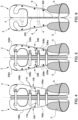
- an orthopaedic brace in accordance with an embodiment of this invention is indicated with the reference number 1 and comprises two rigid valves 2 hinge-coupled by means of a spine bar 3, with a hinge axis parallel to a median sagittal plane PS.
- the term "valve" is derived from the field of zoology, where it indicates each of the two parts forming the shell of some molluscs, and is commonly used in the sector to indicate each of the parts that, in a brace, wrap around and support the patient's torso.
- each valve 2 corresponds to a respective supporting half or main part of the brace 1. It should be understood that the two supporting halves or main parts are not necessarily identical and, on the contrary, may have some structural differences to correct asymmetries typically related to spinal column diseases.
- the hinged coupling enables, on the one hand, the opening of the two valves 2 so that the patient can put on and take off the brace 1, and, on the other hand, the maintenance of the stiffness between the two valves 2 without mutual displacements once the brace 1 is closed.
- the spine bar 3 extends on the median sagittal plane PS and is arranged between the valves 2, which are hinged thereto in the respective dorsal regions.
- the valves 2 are, therefore, opposite each other in relation to the median sagittal plane PS.
- the hinge coupling, as well as using properly socalled hinges, with pins rotating in seats, may be achieved using belt and buckle systems fixed to one of the valves 2 and to the spine bar 3.
- the hinge coupling in one embodiment, may be made directly between the valves 2, without the spine bar 3.
- the orthopaedic brace 1 is also equipped with closure members 4, which enable the valves 2 to be tightened at the front in an adjustable way once the patient has put on the orthopaedic brace 1.
- the closure members 4 may comprise belts and buckles.
- Each valve 2 has a respective pelvic section 5 and a respective supporting shell 6, rigidly coupled to each other. According to the treatment indications, the valves 2 may or may not be symmetrical.
- the pelvic sections 5 are caps each surrounding a respective half pelvis of the patient when the orthopaedic brace 1 is put on.
- the pelvic sections 5 together form a pelvis of the orthopaedic brace 1 and comprise respective iliac supports 8 and trochanteric regions 9.
- the iliac supports 8 are shaped for contact with a patient's iliac crests, so that the forces exerted by the supporting shells 6 of the orthopaedic brace 1 on the patient's torso along its vertical axis are discharged onto the pelvis.
- the pelvic sections 5 are connected to the respective supporting shells 6 along the junction arcs 10 surrounding the iliac supports 8 and extending around the hips.
- the connection may be made, for example, by welding, gluing, riveting or any technique that is suitable for rigid fastening.
- the trochanteric regions 9 are shaped for contact with the patient's trochanters, so as to give stability to the brace 1 when worn.
- the pelvic sections 5 are made of a first material, which is a thermoformable polymeric material with a softening point (Vicat Softening Point) ranging between 45° C and 80° C.
- a softening point Vicat Softening Point
- the thermoformable polymeric first material with which the pelvic sections 5 are made have a Shore A hardness greater than 80 and a Shore D hardness greater than 30.
- the parameters indicated are suitable for giving the pelvis of the orthopaedic brace 1 enough stiffness to transfer the forces necessary to reduce spinal dysmorphism to the patient's torso.
- the first material contains ethylene-vinyl acetate copolymer and may have the following composition by weight:
- the pelvic sections 5 are made entirely of the thermoformable polymeric first material having the characteristics described above.
- the pelvic sections 5 may comprise parts made of the first material, e.g. the iliac supports 8 and/or the trochanteric regions 9, and parts made of more rigid material, such as the material forming the supporting shells 6.
- the supporting shells 6 of the valves 2 are shaped so that they each wrap a respective half (right or left) of the patient's torso at the back, on one side, and at the front, according to individual needs, and extend from the respective pelvic sections 5 as far as necessary along the patient's torso according to medical instructions.
- the supporting shells 6 define axillary supports 11.
- the supporting shells 6 comprise respective sacrococcygeal appendixes 13 and iliopubic appendixes 15, which cooperate with the pelvic sections 5 to give stability and stiffness to the orthopaedic brace 1 when worn.
- the sacrococcygeal appendixes 13 extend downwards and rearward along the junction arcs 10 in relation to the iliac supports 8 to cover the patient's sacral region.
- the iliopubic appendixes 15 extend downward and frontward along the junction arcs 10 in relation to the iliac supports 8.
- each supporting shell 6 comprises a respective front section 6a and a respective back section 6b, made as separate parts and joined together along a coronal plane PC.
- the relative position of the front section 6a and of the back section 6b of each valve 6 in the direction perpendicular to the coronal plane PC may be adjusted by adjusting members 16.
- the adjusting members 16 in one embodiment are adjusting screws, but could, alternatively, comprise tensioners, hooks and racks, belt and buckle systems and any other suitable devices.
- the supporting shells 6 may each be made of a single piece.
- the supporting shells 6 are made of a second material with greater stiffness than the first material forming the pelvic sections 5.
- the second material is selected so that the supporting shells 6 maintain their stiffness basically unchanged even during the thermoforming steps of the pelvic sections 5, as described below.
- the second material may be advantageously selected so that the supporting shells 6 have a stiffness equal to or greater than the stiffness of a body that has the same shape and is made from a plate of high-density polyethylene (HDPE) that is 4 mm thick.
- the second material has an elastic modulus equal to or greater than 800 MPa and/or a Shore D hardness equal to or greater than 62.
- the second material may be a polymeric material with the features indicated and having a softening point greater than the softening point of the first material forming the pelvic sections 5.
- the second material has a softening point equal to or greater than 100° C, preferably equal to or greater than 130° C.
- the supporting shells 6 of the valves 2 are made of high-density polyethylene (HDPE).
- the supporting shells of the valves 2 may be made of a composite material comprising carbon fibres embedded in a matrix.
- the orthopaedic brace 1 may be made with a small number of standard moulds and then customised by thermoforming the pelvis, which requires high precision in order to correctly discharge the forces onto the patient's pelvis.
- the pelvic sections 5 are heated and brought above the softening point of the thermoformable material. Heating may be achieved by using jets of hot air. Alternatively, the pelvic sections may be pre-heated in the oven before the orthopaedic brace 1 is placed on the patient. A temperature of a few degrees above the softening point may be enough for the purpose. In the example described, the pelvic sections 5 can be brought to a temperature ranging between 50°C and 60°C, which enables the pelvic sections 5 to be shaped directly on the patient and are normally well tolerated. A layer of fabric, e.g. cotton, may be placed between the patient and the orthopaedic brace 1 before heating to reduce the risk of discomfort without compromising the precision of the forming operations.
- a layer of fabric e.g. cotton
- the procedure may be carried out when the brace 1 is put on for the first time, until maximum correction is achieved, and may then be repeated whenever it is advisable, for example some time after the start of treatment, when the patient changes his or her posture due to recovery from the dysmorphism.
- the valves 2 comprise respective pelvic sections 5, as already described, and respective supporting shells, here indicated with the number 106.
- Each supporting shell 106 comprises a respective lumbar section 106a and a respective thoracic section 106b, rigidly coupled to each other.
- the connection may be permanent, e.g. by bonding or welding, or temporary, e.g. by screw connections 116, which may also serve as adjustment means to adjust the relative position of the lumbar section 106a and the thoracic section 106b along the patient's vertical axis.
- the pelvic sections 5 are rigidly connected to the lumbar sections 106a of the respective supporting shells 106.
- each supporting shell 206 comprises a respective lumbar section and a respective thoracic section, each of which in turn includes a front section and a back section.
- each supporting shell 206 comprises one front lumbar section 206a, one back lumbar section 206b, one front thoracic section 206c and one back thoracic section 206c, all connected to form a single rigid body.
- valves 2 each comprising a pelvic section 5 and a supporting shell 6, are hinged together at the front by hinges 300 and are closed by closure members 4 arranged at the back in the dorsal region.
- the pelvic sections can be entirely made of the thermoformable polymeric first material, or only in certain regions, in particular the iliac supports and/or the trochanteric regions.
Landscapes
- Health & Medical Sciences (AREA)
- Chemical & Material Sciences (AREA)
- Biomedical Technology (AREA)
- Veterinary Medicine (AREA)
- Orthopedic Medicine & Surgery (AREA)
- Heart & Thoracic Surgery (AREA)
- Vascular Medicine (AREA)
- Life Sciences & Earth Sciences (AREA)
- Animal Behavior & Ethology (AREA)
- General Health & Medical Sciences (AREA)
- Public Health (AREA)
- Engineering & Computer Science (AREA)
- Nursing (AREA)
- Chemical Kinetics & Catalysis (AREA)
- Medicinal Chemistry (AREA)
- Polymers & Plastics (AREA)
- Organic Chemistry (AREA)
- Orthopedics, Nursing, And Contraception (AREA)
- Prostheses (AREA)
Claims (16)
- Orthopädische Stütze, umfassend zwei miteinander gekoppelte starre Klappen (2), jede aufweisend einen respektiven Beckenabschnitt (5) und eine respektive Stützhülle (6), wobei die Beckenabschnitte (5) starr mit den Stützhüllen (6) der respektiven Klappen (2) gekoppelt sind,
dadurch gekennzeichnet, dass
die beiden starren Klappen miteinander scharniergekoppelt sind, und die Beckenabschnitte (5) zumindest zum Teil gefertigt sind aus einem thermoformbaren polymeren ersten Material, aufweisend einen Erweichungspunkt zwischen 45° C und 80° C. - Orthopädische Stütze nach Anspruch 1, wobei das erste Material eine Shore-A-Härte von größer als 80 und eine Shore-D-Härte von größer als 30 bei einer unter dem Erweichungspunkt liegenden Temperatur aufweist.
- Orthopädische Stütze nach Anspruch 1 oder 2, wobei das erste Material Ethylen-Vinylacetat-Copolymer umfasst.
- Orthopädische Stütze nach einem der vorhergehenden Ansprüche, wobei die Stützhüllen (6) aus einem zweiten Material gefertigt sind, aufweisend eine Steifigkeit, welcher größer ist, als die Steifigkeit des ersten Materials.
- Orthopädische Stütze nach Anspruch 4, wobei das zweite Material so ausgewählt ist, dass die Stützhüllen (6) eine Steifigkeit aufweisen, welche gleichgroß oder größer ist, als die Steifigkeit eines Körpers, aufweisend dieselbe Gestalt, und gefertigt aus einer Platte High-Density Polyethylene (HDPE) mit einer Dicke von 4 mm.
- Orthopädische Stütze nach Anspruch 4 oder 5, wobei das zweite Material einen Elastizitätsmodul von gleich oder größer als 800 Mpa und/oder Shore-D-Härte von gleich oder größer als 62 aufweist.
- Orthopädische Stütze nach einem der Ansprüche 4 bis 6, wobei das zweite Material ein polymeres Material ist, aufweisend einen Erweichungspunkt welcher größer ist, als der des die Beckenabschnitte (5) bildenden ersten Materials.
- Orthopädische Stütze nach einem der vorhergehenden Ansprüche, wobei die Beckenabschnitte (5) respektive Beckenstützen (8), geformt für den Kontakt mit dem Beckenkamm eines Patienten, und Trochanter-Bereiche (9), geformt für den Kontakt mit Trochantern des Patienten, umfassen.
- Orthopädische Stütze nach Anspruch 8, wobei die Beckenabschnitte mit den respektiven Stützhüllen (6) entlang von die Beckenstützen (8) konturierenden Verbindungsbögen (10) verbunden sind.
- Orthopädische Stütze nach Anspruch 9, wobei die Stützhüllen (6) respektive Sakrokozygealanhänge (13), welche sich in Bezug auf die Beckenstützen (8) entlang der Verbindungsbögen (10) nach unten und nach hinten erstrecken, und respektive iliopubische Anhänge (15), welche sich in Bezug auf die Beckenstützen (8) entlang der Verbindungsbögen (10) nach unten und nach vorne erstrecken, umfassen.
- Orthopädische Stütze nach einem der Ansprüche 8 bis 10, wobei zumindest die Beckenstützen (8) und die Trochanter-Bereiche (9) aus dem ersten Material gefertigt sind.
- Orthopädische Stütze nach einem der vorhergehenden Ansprüche, wobei die Stützhüllen (6) der Klappen (2) so geformt sind, dass sie auf einer Seite nach hinten und auf der anderen Seite nach vorne jeweils einen halben Torso umschließen.
- Orthopädische Stütze nach einem der vorhergehenden Ansprüche, wobei jede der Stützhüllen (6, 106, 206) eine Vielzahl respektiver Abschnitte (6a, 6b, 106a, 106b, 206a, 206b, 206c, 206d) umfasst, bereitgestellt als separate Teile und fest miteinander verbunden, um die respektiven Stützhülle (6, 106, 206) auszubilden.
- Orthopädische Stütze nach Anspruch 11, wobei jede Stützhülle (6, 106, 206) Einstellmittel (16, 116) umfasst, dazu eingerichtet Relativpositionen der respektiven Abschnitte (6a, 6b, 106a, 106b, 206a, 206b, 206c, 206d) einzustellen.
- Orthopädische Stütze nach einem der vorhergehenden Ansprüche, umfassend eine starre Wirbelsäulenstange (3), welche sich in einer mittleren Sagittalebene (PS) zwischen den Klappen (2) erstreckt und wobei die Klappen (2) in jeweiligen dorsalen Bereichen gelenkig an die Wirbelsäulenstange (3) angeschlossen sind.
- Verfahren zum Anpassen einer orthopädischen Stütze nach Anspruch 1, umfassend:Anlegen der orthopädischen Stütze an einen Patienten,Erwärmen der Beckenabschnitte (5) auf über den Erweichungspunkt des thermoformbaren polymeren Materials; undFormen der Beckenabschnitte (5) auf den Patienten.
Priority Applications (3)
| Application Number | Priority Date | Filing Date | Title |
|---|---|---|---|
| SI202030308T SI3930640T1 (sl) | 2019-03-01 | 2020-02-28 | Ortopedska opornica in način za prilagajanje ortopedske opornice |
| HRP20230911TT HRP20230911T1 (hr) | 2019-03-01 | 2020-02-28 | Ortopedski steznik i način prilagođavanja ortopedskog steznika |
| RS20230854A RS64617B1 (sr) | 2019-03-01 | 2020-02-28 | Ortoza i postupak za prilagođavanјe ortoze |
Applications Claiming Priority (2)
| Application Number | Priority Date | Filing Date | Title |
|---|---|---|---|
| IT102019000003045A IT201900003045A1 (it) | 2019-03-01 | 2019-03-01 | Corsetto ortopedico e metodo per personalizzare un corsetto ortopedico |
| PCT/IB2020/051717 WO2020178688A1 (en) | 2019-03-01 | 2020-02-28 | Orthopaedic brace and method for customizing an orthopaedic brace |
Publications (3)
| Publication Number | Publication Date |
|---|---|
| EP3930640A1 EP3930640A1 (de) | 2022-01-05 |
| EP3930640B1 true EP3930640B1 (de) | 2023-08-09 |
| EP3930640C0 EP3930640C0 (de) | 2023-08-09 |
Family
ID=67002124
Family Applications (1)
| Application Number | Title | Priority Date | Filing Date |
|---|---|---|---|
| EP20714687.9A Active EP3930640B1 (de) | 2019-03-01 | 2020-02-28 | Orthopädische stütze und verfahren zur anpassung einer orthopädischen stütze |
Country Status (14)
| Country | Link |
|---|---|
| US (1) | US20220183870A1 (de) |
| EP (1) | EP3930640B1 (de) |
| CN (1) | CN113727681A (de) |
| AU (1) | AU2020231622B2 (de) |
| DK (1) | DK3930640T3 (de) |
| ES (1) | ES2961733T3 (de) |
| FI (1) | FI3930640T3 (de) |
| HR (1) | HRP20230911T1 (de) |
| IT (1) | IT201900003045A1 (de) |
| PL (1) | PL3930640T3 (de) |
| PT (1) | PT3930640T (de) |
| RS (1) | RS64617B1 (de) |
| SI (1) | SI3930640T1 (de) |
| WO (1) | WO2020178688A1 (de) |
Families Citing this family (1)
| Publication number | Priority date | Publication date | Assignee | Title |
|---|---|---|---|---|
| IT202300006507A1 (it) * | 2023-04-03 | 2024-10-03 | Isico S R L | Corsetto ortopedico con staffa di irrigidimento |
Family Cites Families (29)
| Publication number | Priority date | Publication date | Assignee | Title |
|---|---|---|---|---|
| US3871367A (en) * | 1974-01-22 | 1975-03-18 | Marion E Miller | Pelvic brace |
| US3945376A (en) * | 1974-12-12 | 1976-03-23 | Otto Bock Orthopedic Industry, Inc. | Orthopedic brace (orthesis) |
| US4245627A (en) * | 1976-04-30 | 1981-01-20 | Jean Mignard | Orthopaedic apparatus for spinal treatment |
| US4202327A (en) * | 1978-05-24 | 1980-05-13 | Glancy John J | Dynamic orthotic device |
| FR2529455A1 (fr) * | 1982-07-01 | 1984-01-06 | Arlux Sa | Lombostat a assemblage d'elements semi-rigides et pelote gonflable |
| FR2585238B1 (fr) * | 1985-07-26 | 1990-03-30 | Arche Assoc Gestion Ctre Reada | Corset orthopedique modulaire, tout plastique, thermoformable, transparent aux rayons x |
| US4688558A (en) * | 1986-05-14 | 1987-08-25 | Hooper Jr Clarence R | Orthopedic appliance |
| ITRM910700A1 (it) * | 1991-09-19 | 1993-03-19 | Francesco Galasso | Corsetto a due moduli regolabili per il trattamento ortopedico delle scoliosi e/o cifosi. |
| US5449338A (en) * | 1993-10-07 | 1995-09-12 | Dobi-Symplex | Modular orthopedic brace |
| DK9400025U4 (da) * | 1994-01-17 | 1995-04-28 | Sahva As | Hoftebeskytter |
| US5451200A (en) * | 1994-05-17 | 1995-09-19 | Spinal Technology, Inc. | Body brace |
| US5503621A (en) * | 1994-09-09 | 1996-04-02 | Boston Brace International, Inc. | Body brace |
| US6695801B1 (en) * | 2001-12-14 | 2004-02-24 | Russ Toronto | Form-in-place foam orthopedic splint system |
| DE10304785A1 (de) * | 2003-02-06 | 2004-08-26 | Volker Knoche | Vorrichtungen zur Vermeidung einer Wirbelsäulen-Fehlhaltung |
| IL157782A0 (en) * | 2003-09-05 | 2004-03-28 | Hadasit Med Res Service | Derotational brace for treatment of idiopathic scoliosis |
| ATE342028T1 (de) * | 2004-04-02 | 2006-11-15 | Orfit Ind | Hybride immobilisierungsvorrichtung |
| US7967767B2 (en) * | 2004-10-28 | 2011-06-28 | Ogilvie James W | Method and apparatus for dynamic scoliosis orthosis |
| US20070051060A1 (en) * | 2005-05-21 | 2007-03-08 | Moore P K | Structural elements and method for fabricating structural elements |
| FR2908295B1 (fr) * | 2006-11-10 | 2010-02-26 | Jean Christophe Mignard | Dispositif pour servir de corset soit de maintien, de soutien ou de correction |
| US7988527B2 (en) * | 2007-04-14 | 2011-08-02 | Caroline West Christensen | Belly and bottom adjustable support system |
| US20090275871A1 (en) * | 2008-05-02 | 2009-11-05 | Gerald Liu | Back brace for spinal correction and its manufacturing method |
| US11007070B2 (en) * | 2008-11-09 | 2021-05-18 | 3D Systems, Inc. | Modular custom braces, casts and devices and methods for designing and fabricating |
| JP5539757B2 (ja) * | 2010-03-08 | 2014-07-02 | ユニ・チャーム株式会社 | プロテクタ |
| CN103118641B (zh) * | 2010-06-22 | 2015-11-25 | 3D系统公司 | 具有开窗、有限柔性和模块化构造的定制支架、石膏和装置及其设计和制造方法 |
| FR2968540B1 (fr) * | 2010-12-14 | 2014-05-02 | Mignard | Corset pour le maintien et la correction de la colonne vertebrale |
| WO2015066110A1 (en) * | 2013-10-29 | 2015-05-07 | Wellinks Inc. | Feedback system for brace-based equipment |
| FR3013961B1 (fr) * | 2013-12-02 | 2015-12-04 | Lecante | Corset rigide asymetrique a valves laterales |
| US20170246338A1 (en) * | 2014-02-21 | 2017-08-31 | Torc2 Ltd | Thermoplastic article |
| EP3160732B1 (de) * | 2014-06-24 | 2020-05-13 | Hollister Incorporated | Mehrschichtige folie mit geruchsbarrierelage mit schalldämpfungseigenschaften |
-
2019
- 2019-03-01 IT IT102019000003045A patent/IT201900003045A1/it unknown
-
2020
- 2020-02-28 HR HRP20230911TT patent/HRP20230911T1/hr unknown
- 2020-02-28 FI FIEP20714687.9T patent/FI3930640T3/fi active
- 2020-02-28 PL PL20714687.9T patent/PL3930640T3/pl unknown
- 2020-02-28 DK DK20714687.9T patent/DK3930640T3/da active
- 2020-02-28 EP EP20714687.9A patent/EP3930640B1/de active Active
- 2020-02-28 WO PCT/IB2020/051717 patent/WO2020178688A1/en not_active Ceased
- 2020-02-28 RS RS20230854A patent/RS64617B1/sr unknown
- 2020-02-28 AU AU2020231622A patent/AU2020231622B2/en active Active
- 2020-02-28 ES ES20714687T patent/ES2961733T3/es active Active
- 2020-02-28 CN CN202080018213.0A patent/CN113727681A/zh active Pending
- 2020-02-28 US US17/432,167 patent/US20220183870A1/en not_active Abandoned
- 2020-02-28 SI SI202030308T patent/SI3930640T1/sl unknown
- 2020-02-28 PT PT207146879T patent/PT3930640T/pt unknown
Also Published As
| Publication number | Publication date |
|---|---|
| DK3930640T3 (da) | 2023-11-13 |
| EP3930640C0 (de) | 2023-08-09 |
| ES2961733T3 (es) | 2024-03-13 |
| PL3930640T3 (pl) | 2023-12-04 |
| PT3930640T (pt) | 2023-11-13 |
| FI3930640T3 (fi) | 2023-11-08 |
| BR112021017407A2 (pt) | 2021-12-21 |
| AU2020231622A1 (en) | 2021-09-16 |
| SI3930640T1 (sl) | 2023-12-29 |
| AU2020231622B2 (en) | 2025-01-23 |
| HRP20230911T1 (hr) | 2023-12-08 |
| CN113727681A (zh) | 2021-11-30 |
| RS64617B1 (sr) | 2023-10-31 |
| WO2020178688A1 (en) | 2020-09-10 |
| IT201900003045A1 (it) | 2020-09-01 |
| WO2020178688A8 (en) | 2021-02-25 |
| EP3930640A1 (de) | 2022-01-05 |
| US20220183870A1 (en) | 2022-06-16 |
Similar Documents
| Publication | Publication Date | Title |
|---|---|---|
| US12433780B2 (en) | External spinal brace | |
| US9597219B2 (en) | Thoracic lumbar sacral orthosis | |
| US5072725A (en) | Soft body brace | |
| US20110295170A1 (en) | Orthotic device for the correction of deformities of the vertebral column | |
| US5449338A (en) | Modular orthopedic brace | |
| US6860864B2 (en) | D-DAFO (DeRoss-dynamic ankle foot orthosis) | |
| US4688558A (en) | Orthopedic appliance | |
| EP3930640B1 (de) | Orthopädische stütze und verfahren zur anpassung einer orthopädischen stütze | |
| WO2006076932A1 (en) | Orthosis and method for manufacture thereof | |
| CN214805762U (zh) | 侧方渐进撑开型脊柱侧弯矫形支具 | |
| Weppner et al. | Principles and components of spinal orthoses | |
| CN115515540A (zh) | 可调节的矫形支架 | |
| BR112021017407B1 (pt) | Colete ortopédico e método para personalizar um colete ortopédico | |
| US5411038A (en) | Method of using a cervical orthosis | |
| PL248232B1 (pl) | Gorset do korekcji deformacji kręgosłupa | |
| IT202300006507A1 (it) | Corsetto ortopedico con staffa di irrigidimento | |
| CN121549968A (zh) | 一种脊柱侧弯矫形用具 | |
| CZ12158U1 (cs) | Dynamická korekční trupová ortéza pro sezení | |
| UA71298A (uk) | Корсет |
Legal Events
| Date | Code | Title | Description |
|---|---|---|---|
| REG | Reference to a national code |
Ref country code: HR Ref legal event code: TUEP Ref document number: P20230911T Country of ref document: HR |
|
| STAA | Information on the status of an ep patent application or granted ep patent |
Free format text: STATUS: UNKNOWN |
|
| STAA | Information on the status of an ep patent application or granted ep patent |
Free format text: STATUS: THE INTERNATIONAL PUBLICATION HAS BEEN MADE |
|
| PUAI | Public reference made under article 153(3) epc to a published international application that has entered the european phase |
Free format text: ORIGINAL CODE: 0009012 |
|
| STAA | Information on the status of an ep patent application or granted ep patent |
Free format text: STATUS: REQUEST FOR EXAMINATION WAS MADE |
|
| 17P | Request for examination filed |
Effective date: 20210915 |
|
| AK | Designated contracting states |
Kind code of ref document: A1 Designated state(s): AL AT BE BG CH CY CZ DE DK EE ES FI FR GB GR HR HU IE IS IT LI LT LU LV MC MK MT NL NO PL PT RO RS SE SI SK SM TR |
|
| DAV | Request for validation of the european patent (deleted) | ||
| DAX | Request for extension of the european patent (deleted) | ||
| GRAP | Despatch of communication of intention to grant a patent |
Free format text: ORIGINAL CODE: EPIDOSNIGR1 |
|
| STAA | Information on the status of an ep patent application or granted ep patent |
Free format text: STATUS: GRANT OF PATENT IS INTENDED |
|
| INTG | Intention to grant announced |
Effective date: 20230228 |
|
| GRAS | Grant fee paid |
Free format text: ORIGINAL CODE: EPIDOSNIGR3 |
|
| GRAA | (expected) grant |
Free format text: ORIGINAL CODE: 0009210 |
|
| STAA | Information on the status of an ep patent application or granted ep patent |
Free format text: STATUS: THE PATENT HAS BEEN GRANTED |
|
| AK | Designated contracting states |
Kind code of ref document: B1 Designated state(s): AL AT BE BG CH CY CZ DE DK EE ES FI FR GB GR HR HU IE IS IT LI LT LU LV MC MK MT NL NO PL PT RO RS SE SI SK SM TR |
|
| REG | Reference to a national code |
Ref country code: GB Ref legal event code: FG4D |
|
| REG | Reference to a national code |
Ref country code: CH Ref legal event code: EP |
|
| REG | Reference to a national code |
Ref country code: DE Ref legal event code: R096 Ref document number: 602020015404 Country of ref document: DE |
|
| REG | Reference to a national code |
Ref country code: IE Ref legal event code: FG4D |
|
| REG | Reference to a national code |
Ref country code: FI Ref legal event code: FGE |
|
| REG | Reference to a national code |
Ref country code: PT Ref legal event code: SC4A Ref document number: 3930640 Country of ref document: PT Date of ref document: 20231113 Kind code of ref document: T Free format text: AVAILABILITY OF NATIONAL TRANSLATION Effective date: 20231106 Ref country code: DK Ref legal event code: T3 Effective date: 20231107 |
|
| REG | Reference to a national code |
Ref country code: SE Ref legal event code: TRGR |
|
| REG | Reference to a national code |
Ref country code: NL Ref legal event code: FP |
|
| REG | Reference to a national code |
Ref country code: HR Ref legal event code: T1PR Ref document number: P20230911 Country of ref document: HR |
|
| U01 | Request for unitary effect filed |
Effective date: 20231109 |
|
| U50 | Request for re-establishment of rights filed [unitary effect] |
Free format text: RE-ESTABLISHMENT OF RIGHTS REQUESTED DUE TO A LATE FILING ON THE REQUEST FOR UNITARY EFFECT Effective date: 20231109 |
|
| REG | Reference to a national code |
Ref country code: EE Ref legal event code: FG4A Ref document number: E023705 Country of ref document: EE Effective date: 20231106 |
|
| PG25 | Lapsed in a contracting state [announced via postgrant information from national office to epo] |
Ref country code: GR Free format text: LAPSE BECAUSE OF FAILURE TO SUBMIT A TRANSLATION OF THE DESCRIPTION OR TO PAY THE FEE WITHIN THE PRESCRIBED TIME-LIMIT Effective date: 20231110 |
|
| PG25 | Lapsed in a contracting state [announced via postgrant information from national office to epo] |
Ref country code: IS Free format text: LAPSE BECAUSE OF FAILURE TO SUBMIT A TRANSLATION OF THE DESCRIPTION OR TO PAY THE FEE WITHIN THE PRESCRIBED TIME-LIMIT Effective date: 20231209 |
|
| PG25 | Lapsed in a contracting state [announced via postgrant information from national office to epo] |
Ref country code: NO Free format text: LAPSE BECAUSE OF FAILURE TO SUBMIT A TRANSLATION OF THE DESCRIPTION OR TO PAY THE FEE WITHIN THE PRESCRIBED TIME-LIMIT Effective date: 20231109 Ref country code: IS Free format text: LAPSE BECAUSE OF FAILURE TO SUBMIT A TRANSLATION OF THE DESCRIPTION OR TO PAY THE FEE WITHIN THE PRESCRIBED TIME-LIMIT Effective date: 20231209 Ref country code: GR Free format text: LAPSE BECAUSE OF FAILURE TO SUBMIT A TRANSLATION OF THE DESCRIPTION OR TO PAY THE FEE WITHIN THE PRESCRIBED TIME-LIMIT Effective date: 20231110 |
|
| U07 | Unitary effect registered |
Designated state(s): AT BE BG DE DK EE FI FR IT LT LU LV MT NL PT SE SI Effective date: 20240117 |
|
| U53 | Request for re-establishment of rights accepted [unitary effect] |
Effective date: 20240117 |
|
| REG | Reference to a national code |
Ref country code: HR Ref legal event code: ODRP Ref document number: P20230911 Country of ref document: HR Payment date: 20240209 Year of fee payment: 5 |
|
| REG | Reference to a national code |
Ref country code: ES Ref legal event code: FG2A Ref document number: 2961733 Country of ref document: ES Kind code of ref document: T3 Effective date: 20240313 |
|
| U20 | Renewal fee for the european patent with unitary effect paid |
Year of fee payment: 5 Effective date: 20240220 |
|
| PG25 | Lapsed in a contracting state [announced via postgrant information from national office to epo] |
Ref country code: SM Free format text: LAPSE BECAUSE OF FAILURE TO SUBMIT A TRANSLATION OF THE DESCRIPTION OR TO PAY THE FEE WITHIN THE PRESCRIBED TIME-LIMIT Effective date: 20230809 Ref country code: CZ Free format text: LAPSE BECAUSE OF FAILURE TO SUBMIT A TRANSLATION OF THE DESCRIPTION OR TO PAY THE FEE WITHIN THE PRESCRIBED TIME-LIMIT Effective date: 20230809 Ref country code: SK Free format text: LAPSE BECAUSE OF FAILURE TO SUBMIT A TRANSLATION OF THE DESCRIPTION OR TO PAY THE FEE WITHIN THE PRESCRIBED TIME-LIMIT Effective date: 20230809 |
|
| REG | Reference to a national code |
Ref country code: DE Ref legal event code: R097 Ref document number: 602020015404 Country of ref document: DE |
|
| PLBE | No opposition filed within time limit |
Free format text: ORIGINAL CODE: 0009261 |
|
| STAA | Information on the status of an ep patent application or granted ep patent |
Free format text: STATUS: NO OPPOSITION FILED WITHIN TIME LIMIT |
|
| 26N | No opposition filed |
Effective date: 20240513 |
|
| REG | Reference to a national code |
Ref country code: EE Ref legal event code: MM4A Ref document number: E023705 Country of ref document: EE Effective date: 20240229 |
|
| PG25 | Lapsed in a contracting state [announced via postgrant information from national office to epo] |
Ref country code: MC Free format text: LAPSE BECAUSE OF FAILURE TO SUBMIT A TRANSLATION OF THE DESCRIPTION OR TO PAY THE FEE WITHIN THE PRESCRIBED TIME-LIMIT Effective date: 20230809 |
|
| PG25 | Lapsed in a contracting state [announced via postgrant information from national office to epo] |
Ref country code: IE Free format text: LAPSE BECAUSE OF NON-PAYMENT OF DUE FEES Effective date: 20240228 |
|
| PG25 | Lapsed in a contracting state [announced via postgrant information from national office to epo] |
Ref country code: IE Free format text: LAPSE BECAUSE OF NON-PAYMENT OF DUE FEES Effective date: 20240228 |
|
| REG | Reference to a national code |
Ref country code: HR Ref legal event code: ODRP Ref document number: P20230911 Country of ref document: HR Payment date: 20250211 Year of fee payment: 6 |
|
| U20 | Renewal fee for the european patent with unitary effect paid |
Year of fee payment: 6 Effective date: 20250212 |
|
| PGFP | Annual fee paid to national office [announced via postgrant information from national office to epo] |
Ref country code: HR Payment date: 20250211 Year of fee payment: 6 |
|
| PGFP | Annual fee paid to national office [announced via postgrant information from national office to epo] |
Ref country code: RO Payment date: 20250218 Year of fee payment: 6 |
|
| PGFP | Annual fee paid to national office [announced via postgrant information from national office to epo] |
Ref country code: ES Payment date: 20250314 Year of fee payment: 6 |
|
| PGFP | Annual fee paid to national office [announced via postgrant information from national office to epo] |
Ref country code: CH Payment date: 20250301 Year of fee payment: 6 |
|
| PGFP | Annual fee paid to national office [announced via postgrant information from national office to epo] |
Ref country code: PL Payment date: 20250206 Year of fee payment: 6 |
|
| PGFP | Annual fee paid to national office [announced via postgrant information from national office to epo] |
Ref country code: GB Payment date: 20250218 Year of fee payment: 6 |
|
| PGFP | Annual fee paid to national office [announced via postgrant information from national office to epo] |
Ref country code: RS Payment date: 20250210 Year of fee payment: 6 |
|
| PGFP | Annual fee paid to national office [announced via postgrant information from national office to epo] |
Ref country code: TR Payment date: 20250211 Year of fee payment: 6 |
|
| PG25 | Lapsed in a contracting state [announced via postgrant information from national office to epo] |
Ref country code: CY Free format text: LAPSE BECAUSE OF FAILURE TO SUBMIT A TRANSLATION OF THE DESCRIPTION OR TO PAY THE FEE WITHIN THE PRESCRIBED TIME-LIMIT; INVALID AB INITIO Effective date: 20200228 |
|
| PG25 | Lapsed in a contracting state [announced via postgrant information from national office to epo] |
Ref country code: HU Free format text: LAPSE BECAUSE OF FAILURE TO SUBMIT A TRANSLATION OF THE DESCRIPTION OR TO PAY THE FEE WITHIN THE PRESCRIBED TIME-LIMIT; INVALID AB INITIO Effective date: 20200228 |
|
| REG | Reference to a national code |
Ref country code: CH Ref legal event code: U11 Free format text: ST27 STATUS EVENT CODE: U-0-0-U10-U11 (AS PROVIDED BY THE NATIONAL OFFICE) Effective date: 20260301 |
|
| U20 | Renewal fee for the european patent with unitary effect paid |
Year of fee payment: 7 Effective date: 20260127 |
|
| REG | Reference to a national code |
Ref country code: HR Ref legal event code: ODRP Ref document number: P20230911 Country of ref document: HR Payment date: 20260212 Year of fee payment: 7 |