EP3929940A1 - Devices, systems, and methods for assessing facility compliance with infectious disease guidance - Google Patents
Devices, systems, and methods for assessing facility compliance with infectious disease guidance Download PDFInfo
- Publication number
- EP3929940A1 EP3929940A1 EP21177865.9A EP21177865A EP3929940A1 EP 3929940 A1 EP3929940 A1 EP 3929940A1 EP 21177865 A EP21177865 A EP 21177865A EP 3929940 A1 EP3929940 A1 EP 3929940A1
- Authority
- EP
- European Patent Office
- Prior art keywords
- facility
- compliance
- recommendations
- score
- individual
- Prior art date
- Legal status (The legal status is an assumption and is not a legal conclusion. Google has not performed a legal analysis and makes no representation as to the accuracy of the status listed.)
- Pending
Links
Images



Classifications
-
- F—MECHANICAL ENGINEERING; LIGHTING; HEATING; WEAPONS; BLASTING
- F24—HEATING; RANGES; VENTILATING
- F24F—AIR-CONDITIONING; AIR-HUMIDIFICATION; VENTILATION; USE OF AIR CURRENTS FOR SCREENING
- F24F11/00—Control or safety arrangements
- F24F11/50—Control or safety arrangements characterised by user interfaces or communication
- F24F11/52—Indication arrangements, e.g. displays
-
- G—PHYSICS
- G16—INFORMATION AND COMMUNICATION TECHNOLOGY [ICT] SPECIALLY ADAPTED FOR SPECIFIC APPLICATION FIELDS
- G16H—HEALTHCARE INFORMATICS, i.e. INFORMATION AND COMMUNICATION TECHNOLOGY [ICT] SPECIALLY ADAPTED FOR THE HANDLING OR PROCESSING OF MEDICAL OR HEALTHCARE DATA
- G16H50/00—ICT specially adapted for medical diagnosis, medical simulation or medical data mining; ICT specially adapted for detecting, monitoring or modelling epidemics or pandemics
- G16H50/80—ICT specially adapted for medical diagnosis, medical simulation or medical data mining; ICT specially adapted for detecting, monitoring or modelling epidemics or pandemics for detecting, monitoring or modelling epidemics or pandemics, e.g. flu
-
- G—PHYSICS
- G06—COMPUTING OR CALCULATING; COUNTING
- G06Q—INFORMATION AND COMMUNICATION TECHNOLOGY [ICT] SPECIALLY ADAPTED FOR ADMINISTRATIVE, COMMERCIAL, FINANCIAL, MANAGERIAL OR SUPERVISORY PURPOSES; SYSTEMS OR METHODS SPECIALLY ADAPTED FOR ADMINISTRATIVE, COMMERCIAL, FINANCIAL, MANAGERIAL OR SUPERVISORY PURPOSES, NOT OTHERWISE PROVIDED FOR
- G06Q10/00—Administration; Management
- G06Q10/06—Resources, workflows, human or project management; Enterprise or organisation planning; Enterprise or organisation modelling
- G06Q10/063—Operations research, analysis or management
- G06Q10/0631—Resource planning, allocation, distributing or scheduling for enterprises or organisations
- G06Q10/06311—Scheduling, planning or task assignment for a person or group
-
- G—PHYSICS
- G06—COMPUTING OR CALCULATING; COUNTING
- G06Q—INFORMATION AND COMMUNICATION TECHNOLOGY [ICT] SPECIALLY ADAPTED FOR ADMINISTRATIVE, COMMERCIAL, FINANCIAL, MANAGERIAL OR SUPERVISORY PURPOSES; SYSTEMS OR METHODS SPECIALLY ADAPTED FOR ADMINISTRATIVE, COMMERCIAL, FINANCIAL, MANAGERIAL OR SUPERVISORY PURPOSES, NOT OTHERWISE PROVIDED FOR
- G06Q50/00—Information and communication technology [ICT] specially adapted for implementation of business processes of specific business sectors, e.g. utilities or tourism
- G06Q50/10—Services
- G06Q50/26—Government or public services
- G06Q50/265—Personal security, identity or safety
-
- G—PHYSICS
- G16—INFORMATION AND COMMUNICATION TECHNOLOGY [ICT] SPECIALLY ADAPTED FOR SPECIFIC APPLICATION FIELDS
- G16H—HEALTHCARE INFORMATICS, i.e. INFORMATION AND COMMUNICATION TECHNOLOGY [ICT] SPECIALLY ADAPTED FOR THE HANDLING OR PROCESSING OF MEDICAL OR HEALTHCARE DATA
- G16H20/00—ICT specially adapted for therapies or health-improving plans, e.g. for handling prescriptions, for steering therapy or for monitoring patient compliance
-
- G—PHYSICS
- G16—INFORMATION AND COMMUNICATION TECHNOLOGY [ICT] SPECIALLY ADAPTED FOR SPECIFIC APPLICATION FIELDS
- G16H—HEALTHCARE INFORMATICS, i.e. INFORMATION AND COMMUNICATION TECHNOLOGY [ICT] SPECIALLY ADAPTED FOR THE HANDLING OR PROCESSING OF MEDICAL OR HEALTHCARE DATA
- G16H40/00—ICT specially adapted for the management or administration of healthcare resources or facilities; ICT specially adapted for the management or operation of medical equipment or devices
- G16H40/20—ICT specially adapted for the management or administration of healthcare resources or facilities; ICT specially adapted for the management or operation of medical equipment or devices for the management or administration of healthcare resources or facilities, e.g. managing hospital staff or surgery rooms
-
- G—PHYSICS
- G16—INFORMATION AND COMMUNICATION TECHNOLOGY [ICT] SPECIALLY ADAPTED FOR SPECIFIC APPLICATION FIELDS
- G16H—HEALTHCARE INFORMATICS, i.e. INFORMATION AND COMMUNICATION TECHNOLOGY [ICT] SPECIALLY ADAPTED FOR THE HANDLING OR PROCESSING OF MEDICAL OR HEALTHCARE DATA
- G16H50/00—ICT specially adapted for medical diagnosis, medical simulation or medical data mining; ICT specially adapted for detecting, monitoring or modelling epidemics or pandemics
- G16H50/30—ICT specially adapted for medical diagnosis, medical simulation or medical data mining; ICT specially adapted for detecting, monitoring or modelling epidemics or pandemics for calculating health indices; for individual health risk assessment
-
- F—MECHANICAL ENGINEERING; LIGHTING; HEATING; WEAPONS; BLASTING
- F24—HEATING; RANGES; VENTILATING
- F24F—AIR-CONDITIONING; AIR-HUMIDIFICATION; VENTILATION; USE OF AIR CURRENTS FOR SCREENING
- F24F2110/00—Control inputs relating to air properties
- F24F2110/50—Air quality properties
- F24F2110/65—Concentration of specific substances or contaminants
-
- Y—GENERAL TAGGING OF NEW TECHNOLOGICAL DEVELOPMENTS; GENERAL TAGGING OF CROSS-SECTIONAL TECHNOLOGIES SPANNING OVER SEVERAL SECTIONS OF THE IPC; TECHNICAL SUBJECTS COVERED BY FORMER USPC CROSS-REFERENCE ART COLLECTIONS [XRACs] AND DIGESTS
- Y02—TECHNOLOGIES OR APPLICATIONS FOR MITIGATION OR ADAPTATION AGAINST CLIMATE CHANGE
- Y02B—CLIMATE CHANGE MITIGATION TECHNOLOGIES RELATED TO BUILDINGS, e.g. HOUSING, HOUSE APPLIANCES OR RELATED END-USER APPLICATIONS
- Y02B20/00—Energy efficient lighting technologies, e.g. halogen lamps or gas discharge lamps
- Y02B20/40—Control techniques providing energy savings, e.g. smart controller or presence detection
-
- Y—GENERAL TAGGING OF NEW TECHNOLOGICAL DEVELOPMENTS; GENERAL TAGGING OF CROSS-SECTIONAL TECHNOLOGIES SPANNING OVER SEVERAL SECTIONS OF THE IPC; TECHNICAL SUBJECTS COVERED BY FORMER USPC CROSS-REFERENCE ART COLLECTIONS [XRACs] AND DIGESTS
- Y02—TECHNOLOGIES OR APPLICATIONS FOR MITIGATION OR ADAPTATION AGAINST CLIMATE CHANGE
- Y02B—CLIMATE CHANGE MITIGATION TECHNOLOGIES RELATED TO BUILDINGS, e.g. HOUSING, HOUSE APPLIANCES OR RELATED END-USER APPLICATIONS
- Y02B30/00—Energy efficient heating, ventilation or air conditioning [HVAC]
- Y02B30/70—Efficient control or regulation technologies, e.g. for control of refrigerant flow, motor or heating
-
- Y—GENERAL TAGGING OF NEW TECHNOLOGICAL DEVELOPMENTS; GENERAL TAGGING OF CROSS-SECTIONAL TECHNOLOGIES SPANNING OVER SEVERAL SECTIONS OF THE IPC; TECHNICAL SUBJECTS COVERED BY FORMER USPC CROSS-REFERENCE ART COLLECTIONS [XRACs] AND DIGESTS
- Y02—TECHNOLOGIES OR APPLICATIONS FOR MITIGATION OR ADAPTATION AGAINST CLIMATE CHANGE
- Y02P—CLIMATE CHANGE MITIGATION TECHNOLOGIES IN THE PRODUCTION OR PROCESSING OF GOODS
- Y02P90/00—Enabling technologies with a potential contribution to greenhouse gas [GHG] emissions mitigation
- Y02P90/80—Management or planning
- Y02P90/84—Greenhouse gas [GHG] management systems
Definitions
- the present disclosure relates generally to devices, methods, and systems for monitoring building performance. More particularly, the present disclosure relates to devices, methods, and system for monitoring facility compliance with infectious disease guidance.
- Coronavirus disease 2019 is an infectious disease caused by severe acute respiratory syndrome coronavirus 2 (SARS-CoV-2).
- COVID-19 is one of many infectious diseases transmitted via airborne particles.
- indoor facilities e.g., buildings, department stores, warehouses, plants, factories, refineries, airports, laboratories, school buildings, theaters, etc.
- HVAC heating, ventilation, and air conditioning
- surveillance systems security systems
- energy management systems etc.
- the present disclosure generally relates to monitoring compliance with prescribed guidance, and more particularly, to monitoring compliance of a facility with infectious disease guidance.
- a non-transient computer readable medium storing instructions that when executed by a processor may cause the processor to receive a plurality of sensed conditions in a facility sensed by a plurality of sensing devices, determine a compliance parameter for at least two recommendations of an infectious disease guidance based at least in part on one or more of the plurality of sensed conditions, determine an individual score for each of the determined compliance parameters, and display on a display one or more of the individual scores.
- Each of the individual scores provide a measure of how well the corresponding compliance parameter is considered to satisfy the corresponding recommendation of the infectious disease guidance.
- the controller may be configured to determine a compliance parameter for two or more of the plurality of recommendations of the infectious disease guidance based at least in part on one or more of the plurality of sensed conditions, determine an individual score for each of the determined compliance parameters, assign an individual score of zero to a compliance parameter for one or more of the plurality of recommendations that cannot be determined because the memory does not currently store a condition from which the corresponding compliance parameter can be determined, and display on a display one or more of the individual scores including one or more of individual scores corresponding to the compliance parameters that cannot be determined to encourage an installation of one or more sensing devices that can sense a condition from which the compliance parameters that could not be determined can be determined.
- Each of the individual scores may provide a measure of how well the corresponding compliance parameter is considered to satisfy the corresponding recommendation of the infectious disease guidance.
- the present system and approach may incorporate one or more processors, computers, controllers, user interfaces, wireless and/or wire connections, and/or the like, in an implementation described and/or shown.
- Facilities often include building automation systems (e.g., heating, ventilation, and air conditioning (HVAC) systems, surveillance systems, security systems, energy management systems, etc.).
- HVAC heating, ventilation, and air conditioning
- Various organizations worldwide e.g., government organizations, educational organizations, etc.
- various organizations worldwide have provided guidelines on how occupants of a facility and monitoring occupancy can reduced risk of airborne disease transmission.
- Other guidelines relating to facilities and transmission of infectious disease are contemplated and may be adapted and used, depending on the facility.
- Figure 1 depicts a schematic block diagram of an illustrative system 10 for monitoring compliance of a facility with infectious disease guidance.
- the infectious disease guidance may include one or more recommendations to mitigate airborne disease transmission within a facility.
- Example recommendations may include recommendations related to values, counts, percentages, and/or other measures of one or more of relative humidity in a facility, CO 2 concentration in a facility, air change rates in a facility, occupancy in a facility, particulate matter concentrations in a facility, total volatile organic compound (TVOC) concentrations in a facility, a maximum occupancy level in a facility, maximum occupancy density in a facility, a number of crowd incidents per day in the facility, a percent of health related standard operating procedure actions that have been closed, mask compliance in a facility, elevated body temperature incidents in the facility, number of people potentially exposed to an infected individual in the facility determined via contact tracing, and/or recommendations related to one or more other suitable factors affecting airborne disease transmission within a facility.
- TVOC total volatile organic compound
- the system 10 may include, but is not limited to, one or more computing devices 12 and one or more facilities 14. Although the computing device 12 may be depicted in Figure 1 as being separate from the facility 14, one or more of the computing devices 12 may be part of or within one or more facilities 14. In some case, the system 10 may not include the one or more facilities 14 and instead be in communication with the facilities 14 (e.g., in communication with the facilities and/or components thereof) and/or otherwise receive data related to the facilities 14 from the facilities 14 and/or a third party.
- the one or more facilities 14 may be any suitable type of facility 14.
- Example types of facilities 14 include, but are not limited to, buildings, department stores, warehouses, plants, factories, refineries, airports, laboratories, office buildings, school buildings, theaters, arenas, stadiums, hotels, dorms, lecture halls, restaurants, etc.
- the one or more facilities may include one or more sensing devices 16.
- the one or more sensing devices may be part of a building automation system.
- a building automation system may include one or more of HVAC systems, surveillance systems, security systems, energy management systems, etc.
- the sensing devices 16 may be part of a closed loop control of building automation system components, such that the components of the building automation system may be controlled in response to outputs (e.g., sensed measurements) from the sensing devices 16.
- the computing device 12 may be and/or may be part of, for instance, a smart phone, a tablet, a personal digital assistant (PDA), a personal computer, a beacon, a camera, a display device, a video recorder, a network component, a server, and/or other suitable computing device. In some cases, the computing device 12 may be distributed amount two or more devices. Configurations of the present disclosure are not limited to a particular type of computing device 12. In some cases, the computing device 12 may include memory 18, a controller 20, one or more processors 22, one or more user interfaces 24, one or more displays 26, one or more communication ports 28, and/or one or more other suitable computing components.
- the memory 18 and the controller 20 may communicate with one another such that the controller 20 and/or a processor 22 thereof or separate therefrom may execute instructions (e.g., application program code of a mobile application or software, among other instructions) stored on the memory 18.
- the controller 20 may include at least part of the memory 18 and that part of the memory 18 may include instructions stored thereon for execution by the processor 22.
- the memory 18 may be any type of storage medium that can be accessed by the controller 20 and/or the processor 22 to perform various examples of the present disclosure.
- the memory 18 may be volatile or nonvolatile memory. Additionally or alternatively, the memory 18 may be configured to store data and/or information in one or more databases.
- the memory 18 may also be removable (e.g., portable) memory, or non-removable (e.g., internal) memory.
- the memory 18 may be random access memory (RAM) (e.g., dynamic random access memory (DRAM) and/or phase change random access memory (PCRAM)), read-only memory (ROM) (e.g., electrically erasable programmable read-only memory (EEPROM) and/or compact-disk read-only memory (CD-ROM)), flash memory, a laser disk, a digital versatile disk (DVD) or other optical disk storage, and/or a magnetic medium such as magnetic cassettes, tapes, or disks, among other types of memory.
- RAM random access memory
- DRAM dynamic random access memory
- PCRAM phase change random access memory
- ROM read-only memory
- EEPROM electrically erasable programmable read-only memory
- CD-ROM compact-disk read-only memory
- flash memory e.g., a laser disk, a digital versatile disk (DVD
- the memory 18 is illustrated as being located in the computing device 12, embodiments of the present disclosure are not so limited.
- the memory 18 may also be located internal to another computing resource (e.g., enabling computer readable instructions to be downloaded over the Internet or another wired or wireless connection).
- the controller 20 of the computing device 12 may include one or more processors 22.
- the controller 20 may include a single processor or more than one processor working individually or with one another (e.g., dual-core, etc.).
- the controller 20 may include at least a portion of the memory 18.
- the controller 20 and/or the processor 22 may be configured to execute instructions, including instructions that may be loaded into the memory 18 and/or other suitable memory.
- Example processor components may include, but are not limited to, microprocessors, microcontrollers, multi-core processors, graphical processing units, digital signal processors, application specific integrated circuits (ASICs), field programmable gate arrays (FPGAs), discrete circuitry, and/or other suitable types of data processing devices.
- the user interface 24, when provided, may be any suitable user interface and/or user interface components configured to facilitate a user of the computing device 12 interacting with the computing device 12 via the user interface 24.
- the user interface 24 may be used to provide information to and/or receive information from the user of the computing device 12 or system 10.
- the user interface 24 may receive selections of parameters, receive selections of parameter weights, output a dashboard depicting parameter values, output alarms, output video, etc.
- the user interface 24 may include a keyboard or keyboard functionality, a pointer (e.g., a mouse, touch pad, or touch ball) or pointer functionality, a microphone, a speaker, a light system, a haptic system, a camera, a video camera, and/or other suitable user interface features the user may use to input information into and/or receive information from the computing device 12.
- a pointer e.g., a mouse, touch pad, or touch ball
- pointer functionality e.g., a microphone, a speaker, a light system, a haptic system, a camera, a video camera, and/or other suitable user interface features the user may use to input information into and/or receive information from the computing device 12.
- Configurations of the present disclosure are not limited to a particular type(s) of user interface 24.
- the user interface 24 may include a graphical user interface (GUI) that may have a display 26 (e.g., a screen) that may provide and/or receive information to and/or from the user of the computing device 12.
- GUI graphical user interface
- the display 26 may be, for instance, a touch-screen (e.g., the GUI may include touch-screen capabilities).
- the communications port 28 may be any type of communication port(s) and may facilitate wired and/or wireless communication with one or more networks.
- the communications port 28 may facilitate communication with one or more networks and/or other devices (e.g., facilities, other computing devices, mobile devices, servers, and/or other suitable devices) through any suitable connection including, but not limited to, radio communication, Ethernet, cellular communication, ZigBee, REDLINK TM , Bluetooth, Bluetooth Low Energy (BLE), WiFi, IrDA, dedicated short range communication (DSRC), EnOcean, Near Field Communication (NFC), and/or any other suitable common or proprietary wired or wireless protocol.
- the communications port 28 may at least include a port configured to communicate over one or more network connections with one or more of the sensing devices 16 and/or with other computing devices to receive infectious disease guidance.
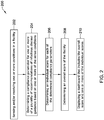
- Figure 2 is a schematic flow diagram of an illustrative method 200 for assessing compliance of one or more facilities (e.g., a single facility and/or a group of facilities where facilities may be grouped to compare one to another) with infectious disease guidance and/or recommendations for reducing airborne disease and/or other infectious disease transmissions in a facility, where the guidance and/or recommendations may include one or more recommendations that can be assessed using measurements from the sensing devices 16.
- the method 200 for assessing compliance with infectious disease guidance and/or recommendations is depicted as including various steps, additional, alternative, intermediary, and/or sub- steps may be utilized.
- the method 200 may include sensing and/or receiving 202 one or more conditions in a facility (e.g., the facility 14 and/or one or more other suitable facilities).
- the one or more conditions may be sensed using sensing devices (e.g., the sensing device 16 and/or other suitable sensing devices) in a facility or in communication with the facility or components thereof.
- measures indicative of conditions in a facility may be provide to a computing from the sensing devices.
- the computing device e.g., the computing device 12 and/or other suitable computing device
- the computing device may be or may include a work station, a mobile device, a remote server, and/or other suitable computing device.
- the measures from the sensing devices may be stored in a database in memory (e.g., the memory 18 and/or other suitable memory) of or in communication with the computing device.
- one or more compliance parameters for one or more of a plurality of recommendations of the infectious disease guidance may be determined 204.
- the plurality of recommendations may be stored in memory (e.g., the memory 18 and/or other suitable local or remote memory) and/or obtained via a communications port (e.g., the communications port 28 and/or other suitable communications port).
- the one or more compliance parameters may be determined 204 based, at least in part, on one or more of the plurality of sensed conditions. Further, compliance parameters may be determined for parameters even if a facility does not current have a sensing device that can sense a condition from which a corresponding compliance parameter can be determined. In such a case, and in one example, these compliance parameters may be given a zero value or other nominal value when a sensing device is not available to sense and/or provide a condition related to the parameter. This may provide a queue to the facility manager that obtaining such a sensing device may help mitigate risk of transmitting infectious diseases in their facility, and in some cases, may quantify how much such additional equipment may help mitigate the risk of transmission of infectious diseases in their facility.
- determining a compliance parameter when a facility includes sensing devices configured to sense humidity levels, CO 2 levels, air exchanges, occupancy, particulate matter, and TVOC, determining a compliance parameter may include determining values of a relative humidity percentage, parts per million of CO 2 , a number of air exchanges per hour, a percent occupancy of a total allowed occupancy, a particulate matter measurement, and a TVOC measurement.
- determining a compliance parameter when a facility includes sensing configured to sense occupancy levels, occupancy locations, crowd incidents, standard operating procedure compliance, mask-wearing compliance, body temperature, contact tracing, determining a compliance parameter may include determining values of a percent occupancy of a total allowed occupancy, occupancy density per square unit, a number of incident per day, a percent of invoked standard operating procedures that were closed in a day, mask-wearing compliance, elevated body temperature compliance, and a number of persons exposed to an infectious disease per day.
- the determined compliance parameters may be the raw value measured by the sensor device and/or calculated or determined from measurements of the sensor device, the compliance parameters may be determined based, at least in part, on other sensed and/or or received conditions and/or other data.
- An individual score may be determined for each of the determined compliance parameters, as shown at 206.
- the compliance parameter e.g. sensed relative humidity
- the compliance parameter may be compared to a set of ranges for relative humidity set forth in the infectious disease guidance and/or recommendations, where each range has a score associated therewith.
- the infectious disease guidance and/or recommendations may indicate that for mitigating risk of airborne infectious disease transmission it is most preferable to have a relative humidity level between 40% and 60% RH, it is next most preferable to have a relative humidity level between 60% and 70% RH, it is next most preferable to have a relative humidity level above 70% RH, it is next most preferable to have a relative humidity level between 30% and 40% RH, and least preferable to have a relative humidity level less than 30% RH.
- the score may be set on a 9 point scale, wherein 9 is the best or highest score. For example, a score of nine (9) is given when the compliance parameter value (e.g.
- a score of seven (7) is given when the compliance parameter value (e.g. sensed relative humidity) is within the next most optimal range of 60% and 70% RH
- a score of five (5) is given when the compliance parameter value (e.g. sensed relative humidity) is within the next most optimal range of above 70%
- a score of three (3) is given when the compliance parameter value (e.g. sensed relative humidity) is within the next most optimal range of 30% and 40% RH
- a score of one (1) is given when the compliance parameter value (e.g. sensed relative humidity) is within the least desirable range of less than 30% RH
- a compliance parameter may not be able to be determined even though the infectious disease guidance and/or recommendations provide a recommendation for the condition or parameter. For example, if the guidance and/or recommendations provide a recommendation for occupancy levels relative to a maximum occupancy (e.g., 50%), but a facility does not have a manner of determining occupancy, it may not be able to determine a compliance parameter value for the condition/parameter. In such instances, an individual score of zero (0) may be assigned to the compliance parameters for which a facility does not have a sensing device that can sense a condition from which the compliance parameter may be determined.
- a maximum occupancy e.g. 50%
- the scores may be weighted to give different weights to different compliance parameters.
- the weights may be applied in any suitable manner. In one example, compliance parameters that are considered to be more important or effective in reducing risk of airborne disease transmissions within the facility may have a greater weight than other compliance parameters that are considered less important or less effective. In another example, all compliance parameters may be weighted equally. In some cases, the weights may be user definable.
- the individual scores for each of the compliance parameters may be scaled to be a percentage (e.g., a value between 0% and 100%), where the percentage may be a value of the compliance parameter relative to a maximum value for the compliance parameter. For example, when the compliance parameter is scored (e.g., on a (9) point scale, as discussed above, or other suitable scale), the individual score for a determined compliance parameter may be the determined compliance parameter score divided by nine (9) (e.g., the maximum value).
- the scaled weighted individual score for a determined compliance parameter may be the weighted determined compliance parameter divide by eighty one (81) (e.g., the maximum weighted value).
- 81) e.g., the maximum weighted value
- Other suitable techniques may be utilized to calculate or otherwise determine the individual score of the determined compliance parameters expressed as a percentage.
- Figures 4 and 6 provide example values associated with determining individual scores for compliance parameters related to infectious disease guidance and/or recommendations.
- the method 200 may further include determining 208 an overall score of the facility (or part of a facility).
- the overall score of the facility may be determined by aggregating the individual scores associated with each of the determined compliance parameters associated with the infectious disease guidance and/or recommendations.
- determining the overall score by aggregating the individual scores for the determined compliance parameters may include, but are not limited to, adding the unweighted individual scores for the determined compliance parameters together, adding the weighted individual scores for the determined compliance parameters together, adding the unweighted individual scores for the determined compliance parameters and dividing by a sum of the maximum unweighted values of individual scores for the determined compliance parameters, adding the weighted individual scores for the determined compliance parameters and dividing by a sum of the maximum weighted values of individual scores for the determined compliance parameters, averaging individual scores for the determined compliance parameters that are represented by averages, and/or aggregating in one or more other suitable manners.
- Figures 4 and 6 depict example values associated with determining the overall score of the facility.
- One or more of the individual scores for the determined compliance parameters associated with infectious disease guidance and/or recommendations and the overall score of the facility may be displayed 210 in a dashboard on a display (e.g., the display 26 and/or other suitable displays).
- Overall scores for a facility may assess, among other compliance, one or more facilities' compliance with operational best practices for controlling airborne disease transmissions, the compliance of occupants of one or more facilities with occupant best practices for controlling airborne disease transmissions, and/or compliance with other suitable infectious disease guidelines and/or recommendations.
- Figures 3 and 5 depict example dashboards displaying one or more overall scores for a facility and one or more individual scores.
- the individual scores and/or the overall scores of the facility may be utilized in a closed-loop control or in a partially closed-loop control of one or more components of building automation systems and/or to adjust operating parameters.
- the system may adjust (e.g., via an automatic/automated control signal and/or a manually initiated control signal) the number of air exchanges per hour in that zone of the facility to reduce the CO 2 to a level that is within guidance.
- the system may adjust (e.g., via an automatic/automated control signal and/or a manually initiated control signal) the relatively humidity level in that zone of the facility to increase the relative humidity to a level that is within guidance.
- Figure 3 depicts an example dashboard 30 displaying compliance of a facility with operational best practices for controlling or mitigating airborne disease transmissions.
- the operational best practices for controlling or mitigating airborne disease transmissions relate to compliance parameters including, but not limited to, relative humidity 32 having an individual health score of 100%, CO 2 34 having an individual health score of 56%, air change 36 having an individual health score of 56%, occupancy 38 having an individual health score of 100%, particulate matter (PM) 40 having an individual health score of 100%, and TVOC 42 having an individual health score of 0%.
- the facility overall health score 50 is depicted in Figure 3 as being 83%. In this case, the facility is not equipped with sensors that are suitable to measure TVOC 42, thus giving the TVOC Health Score a value of zero. This may encourage the facility manager to install one or more sensing devices that can sense TVOC to increase the Health Awareness Score 52 and/or the Health Building Score 50.
- the overall health awareness score 52 is depicted in Figure 3 as being 97%, but the overall health awareness score 52 may be omitted in some cases.
- the overall health awareness score 52 may be indicative of how well outfitted a facility is to comply with infectious disease guidance and/or recommendations and/or how well prepared the facility is to assess its compliance with infectious disease guidance and/or recommendations.
- the individual scores for compliance parameters and/or the one or more facility scores may be displayed on the dashboard 30 in any suitable manner.
- the dashboard 30 may be configured to present a facility's compliance, compliance of occupants of a facility, and/or other suitable compliance with infectious disease guidance and/or recommends in a manner that is easily understandable to a facility manager and that indicates in what areas there may or may not be a need for improvement.
- each individual score and each overall score may be provided with a numerical value 44, a name 46, and a level indicator representative of the numerical value 44 (e.g., a highlight along a circle, as in Figure 3 , a bar between a minimum value and a maximum value, etc.) for individual scores and/or the overall scores.
- the TVOC health score 42 is indicated as zero (0), it may be important for this individual score to be depicted so that a facility manager may easily recognize the facility does not have adequate sensing devices sensing measures from which TVOC values can be determined and/or that the values associated with TVOC are failing to comply with guidelines and/or recommendations.
- the facility manager may also view the health awareness overall score 52 and determine that it may not be worth the expense to monitor TVOC and/or improve operations relative to TVOC guidelines as the health awareness score is high (e.g., 97%) and funds may be better spent improving the CO 2 health score 34 and/or the air change health score 36.
- the dashboard 30 may be configured in additional or alternative manners to facility users viewing, retaining, and acting-on information presented.
- the various individual scores and overall scores may have different size indicators 48 (e.g., different diameter circles, as in Figure 3 with the overall scores having a greater diameter than the individual scores, different width bars, etc.)
- the various individual scores and overall scores may be color-coded
- buttons and/or commands may be presented for taking one or more actions and/or viewing additional data
- an individual score and/or overall score may be selected for additional information (e.g., details related to a selected score including, but not limited to raw data, trend data, and/or other suitable information related to the selected score), etc.
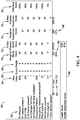
- Figure 4 depicts an illustrative chart 60 with example information and data for the dashboard 30 depicted in Figure 3 .
- example information and data for the dashboard 30 is depicted in a chart format in Figure 4 , other suitable data organization and/or storage techniques may be utilized.
- Column 62 of the chart 60 depicts various compliance parameters used in calculating a facility's overall compliance with infectious disease guidelines and/or recommendations, along with a question as to whether the facility has a sensor or a capability to monitor and/or measure conditions related to the compliance parameters.
- the compliance parameters depicted in the example of Figure 4 include percent relative humidity ("RH Percent”), carbon dioxide in parts per million (“CO2 PPM”), air exchanges per hour (“Air Changes Per Hour”), percent occupancy relative to a maximum occupancy (“Occupancy Percent”), amount of particulate matter (“PM2.5”), and amount of TVOC (“TVOC (mg/m3)”).
- Column 64 depicted in Figure 4 provides raw values for each compliance parameter and may be determined (e.g., in step 204 in the method 200) from sensed and/or received values from the sensing devices 16.
- an unweighted score for each raw value may be provided. As discussed above, the unweighted score for each raw value may be based on the raw value relative to one or values or ranges in the infectious disease guidelines and/or recommendations and is on a nine (9) point scale.
- a weight may be provided for each compliance parameter, as well as for whether a suitable sensing device 16 is present in the facility to measure and/or monitor the compliance parameter, and is on a nine (9) point scale.
- Column 70 may provide a weighted metric score for a compliance parameter (e.g., "RH Percent") that may be obtained by multiplying a value in a row of column 66 with a value in the same row of column 68.
- Column 72 may provide a maximum possible weighted metric score and may be obtained by multiplying the weight in column 68 by a maximum possible unweighted score (e.g., nine (9) on a nine (9) point scale).
- the unweighted score in column 66 and/or the weighted metric score in column 70 may be considered an individual score for a compliance parameter
- column 78 provides an individual score in percentage form that may be determined by dividing the weighted metric score in column 70 by the max possible metric score in column 72.
- Column 74 may provide a weighted individual awareness score based on whether a facility has capabilities for monitoring and/or addressing a compliance parameter that may be obtained by multiplying a value in a row (e.g., "RH Sensor present?") of column 66 with a value in the same row of column 68.
- Column 76 may provide a maximum possible weighted awareness score and may be obtained by multiply the weight in column 68 by a maximum possible unweighted score (e.g., nine (9) on a nine (9) point scale).
- the values in column 70, column 72, column 74, and column 76 may be summed to provide total values for a facility. From the total values for a facility in the row 80, a percent compliance with infectious disease guidelines and/or recommendations 84 and a percent awareness of infectious disease guidelines and/or recommendations 86 may be provided in row 82.
- the percent compliance with infectious disease guidelines and/or recommendations 84 may be determined by dividing the total weighted metric score from column 70, row 80 by the maximum possible metric score from column 72, row 80.
- the awareness score of infectious disease guidelines and/or recommendations 86 may be determined by dividing the total weighted awareness score from column 74, row 80 by the maximum possible awareness score from column 78, row 80.
- the percent compliance with infectious disease guidelines and/or recommendations 84 may be provided as the Facility Health Score and the awareness score of infectious disease guidelines and/or recommendations 86 may be provided as the Facility Health Awareness score.
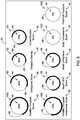
- Figure 5 depicts an example dashboard 30 displaying compliance metrics of occupants in a facility with a set of occupant best practices for mitigating airborne disease transmissions.
- the occupant best practices for mitigating airborne disease transmissions relate to compliance parameters including, but not limited to, occupancy 90 having an individual score of 56%, occupancy density 92 having an individual score of 56%, crowd incident 94 having an individual score of 78%, a health standard operating procedure (SOP) compliance 96 having an individual score of 78%, a mask compliance 98 individual score of 78%, a body temperature incident 100 having an individual score of 0%, and a potential individual exposure 102 having an individual score of 0%.
- SOP health standard operating procedure
- the facility occupant health score 104 is depicted in Figure 5 as being 69%.
- a facility occupant awareness score 106 is depicted in Figure 5 as being 79%, but the facility occupant awareness score 106 may be omitted.
- the facility occupant awareness score 106 may be indicative of how well prepared a facility is to facilitate occupants' compliance with infectious disease guidance and/or recommendations and/or how well prepared the facility is to assess occupants' compliance with infectious disease guidance and/or recommendations.
- each individual score and each overall score may be provided with the numerical value 44, a name 46, and a level indicator 48 (e.g., a highlight along a circle, as in Figure 3 , a bar between a minimum value and a maximum value, etc.) representative of the numerical value 44 for individual scores and/or the overall scores.
- a level indicator 48 e.g., a highlight along a circle, as in Figure 3 , a bar between a minimum value and a maximum value, etc.
- the body temperature individual score 100 and the potential exposure individual score 102 are indicated as being zero (0), it may be important for these individual scores to be depicted so that a facility manager may easily recognize the facility does not have adequate sensing devices for sensing measures from which body temperature values and potential exposure values can be determined and/or that the values associated with monitoring body temperature and potential exposure to an infectious disease are failing to comply with guidelines and/or recommendations.
- the facility manager may also view the health occupant awareness overall score 106 and determine that it may or may not be worth the expense to monitor body temperature and potential exposure and/or improve operations relative to body temperature and potential exposure guidelines as the health awareness score may be relatively high (e.g., 79%) and funds may be better spent improving the occupancy score 90, the occupant density score 92, which are relative low (e.g., both are at 56% in Figure 5 ), and/or other scores.
- the health awareness score may be relatively high (e.g., 79%) and funds may be better spent improving the occupancy score 90, the occupant density score 92, which are relative low (e.g., both are at 56% in Figure 5 ), and/or other scores.
- the dashboard 30 may be configured in additional or alternative manners to facilitate users viewing, retaining, and/or acting-on information presented.
- the various individual scores and overall scores may have different size indicators 48 (e.g., different diameter circles, as in Figure 5 with respect to the overall scores relative to individual scores, different width bars, etc.), the various individual scores and overall scores may be color-coded, buttons and/or commands may be presented for taking one or more actions and/or viewing additional data, an individual score, overall score may be selected for additional information (e.g., details related to a selected score including, but not limited to raw data, trend data, and/or other suitable information related to the selected score), etc.
- additional information e.g., details related to a selected score including, but not limited to raw data, trend data, and/or other suitable information related to the selected score
- Figure 6 depicts an illustrative chart 110 with example information and data for the dashboard depicted in Figure 5 .
- example information and data for the dashboard is depicted in a chart format in Figure 5 , other suitable data organization and/or storage techniques may be utilized.
- Column 112 of the chart 110 may depict various compliance parameters used in calculating an overall compliance of facility occupants with infectious disease guidelines and/or recommendations, along with a question as to whether the facility has a sensor or a capability to monitor and/or measure conditions related to the compliance parameters.
- the compliance parameters depicted in Figure 6 include percent occupancy relative to a maximum occupancy ("Occupancy Level (%)”), occupancy density in people per square foot (“Density (people per sq ft”), identified crowds per day (“Crowd Incidents per day (8 or more people)”), compliance with health related standard operating procedures (“Health Compliance SOP Closed (%)”), percent of occupants wearing a mask (“Mask Compliance”), incidents of identified elevated body temperature (“Elevated Body Temperature Incidents (%)”), and an amount of people potentially exposed to an infectious disease (“People Potentially Exposed (via contact traces)”). Other potential compliance parameters are contemplated.
- Column 114 depicted in Figure 6 may provide raw values for each compliance parameter and may be determined (e.g., in step 204 in the method 200) from sensed and/or received values from the sensing devices 16.
- an unweighted score for each raw value may be provided. As discussed above, the unweighted score for each raw value may be based on the raw value relative to one or values or ranges in the infectious disease guidelines and/or recommendations and, in the example of Figures 5 and 6 , is on a nine (9) point scale, but other scales are contemplated.
- a weight may be provided for each compliance parameter, as well as for whether a suitable sensing device 16 is present the facility to measure and/or monitor the compliance parameter, and, in the example of Figures 5 and 6 , is on a nine (9) point scale, but other scales are contemplated.
- Column 120 provides a weighted metric score for a compliance parameter (e.g., "Occupancy Level (%)") that may be obtained by multiplying a value in a row of column 116 with a value in the same row of column 118.
- Column 122 provides a maximum possible weighted metric score and may be obtained by multiplying the weight in column 118 by a maximum possible unweighted score (e.g., nine (9) on a nine (9) point scale).
- column 128 may provide an individual score in percentage form that may be determined by dividing the weighted metric score in column 120 by the maximum possible weighted metric score in column 122.
- Column 124 may provide a weighted individual awareness score based on whether a facility has capabilities for monitoring and/or addressing a compliance parameter that may be obtained by multiplying a value in a row (e.g., "Occupancy available?") of column 116 with a value in the same row of column 118.
- Column 126 may provide a maximum possible weighted awareness score and may be obtained by multiply the weight in column 118 by a maximum possible unweighted score (e.g., nine (9) on a nine (9) point scale).
- the values in column 120, column 122, column 124, and column 126 may be summed to provide total values for facility occupants. From the total values for facility occupants in the row 130, a percent compliance 134 with infectious disease guidelines and/or recommendations for occupants of a facility and a percent awareness 136 of infectious disease guidelines and/or recommendations for occupants of a facility may be provided in row 132. The percent compliance 134 with infectious disease guidelines and/or recommendations may be determined by dividing the total weighted metric score from column 120, row 130 by the maximum possible metric score from column 122, row 130.
- the awareness score 136 of infectious disease guidelines and/or recommendations may be determined by dividing the total weighted awareness score from column 124, row 130 by the maximum possible awareness score from column 128, row 130. Further, in box 138, the percent compliance 134 with infectious disease guidelines and/or recommendations may be provided as the Health Occupant Score (e.g., 104 in Figure 5 ) and the awareness score 136 of infectious disease guidelines and/or recommendations may be provide as the Health Occupant Awareness Score (e.g., 106 in Figure 5 ).
- a score for a facility and/or a score for a compliance parameter relative to a first guideline and/or recommendation may affect a value of a weight and/or a score of a compliance parameter taken into account in a score for a facility relative to one or more other guidelines and/or recommendations.
- a greater occupancy level e.g., a higher occupancy percent relative to a maximum occupancy
- a humidity level being scored for determining a facility's compliance with infectious disease guidelines and/or recommendations (e.g., as in Figures 3 and 4 ) is within a preferred range.
- Other examples are contemplated.
Landscapes
- Engineering & Computer Science (AREA)
- Health & Medical Sciences (AREA)
- Public Health (AREA)
- Medical Informatics (AREA)
- Business, Economics & Management (AREA)
- General Health & Medical Sciences (AREA)
- Primary Health Care (AREA)
- Epidemiology (AREA)
- Biomedical Technology (AREA)
- Human Resources & Organizations (AREA)
- Databases & Information Systems (AREA)
- Pathology (AREA)
- Data Mining & Analysis (AREA)
- General Business, Economics & Management (AREA)
- Strategic Management (AREA)
- Economics (AREA)
- Tourism & Hospitality (AREA)
- Development Economics (AREA)
- Theoretical Computer Science (AREA)
- Marketing (AREA)
- General Physics & Mathematics (AREA)
- Educational Administration (AREA)
- Entrepreneurship & Innovation (AREA)
- Physics & Mathematics (AREA)
- Quality & Reliability (AREA)
- Operations Research (AREA)
- Game Theory and Decision Science (AREA)
- Computer Security & Cryptography (AREA)
- Human Computer Interaction (AREA)
- Chemical & Material Sciences (AREA)
- Combustion & Propulsion (AREA)
- Mechanical Engineering (AREA)
- General Engineering & Computer Science (AREA)
- Measuring And Recording Apparatus For Diagnosis (AREA)
- Medical Treatment And Welfare Office Work (AREA)
Abstract
Description
- This application claims the benefit of
U.S. Provisional Application No. 63/042,389, filed June 22, 2020 U.S. Utility Application No. 17/314,565, filed May 7, 2021 - The present disclosure relates generally to devices, methods, and systems for monitoring building performance. More particularly, the present disclosure relates to devices, methods, and system for monitoring facility compliance with infectious disease guidance.
- Coronavirus disease 2019 (COVID-19) is an infectious disease caused by severe acute respiratory syndrome coronavirus 2 (SARS-CoV-2). COVID-19 is one of many infectious diseases transmitted via airborne particles. In some cases, it may be difficult to mitigate the spread of infectious diseases, particularly diseases transmitted through airborne particles, at indoor facilities (e.g., buildings, department stores, warehouses, plants, factories, refineries, airports, laboratories, school buildings, theaters, etc.) due to the indoor environment, proximity of occupants, and/or other factors. Often, these indoor facilities have various building automation systems (e.g., heating, ventilation, and air conditioning (HVAC) systems, surveillance systems, security systems, energy management systems, etc.) to control environmental conditions of the indoor facility and/or monitor occupancy.
- The present disclosure generally relates to monitoring compliance with prescribed guidance, and more particularly, to monitoring compliance of a facility with infectious disease guidance.
- In one example, a method for achieving compliance with infectious disease guidance for reducing airborne disease transmission in a facility is provided, where the infectious disease guidance may include a plurality of recommendations that can be assessed by a plurality of sensing devices. The method may include sensing a plurality of conditions in the facility using the plurality of sensing devices, determining a compliance parameter for two or more of the plurality of recommendations of the infectious disease guidance based at least in part on one or more of the plurality of sensed conditions, determining an individual score for each of the determined compliance parameters, determining an overall score of the facility by aggregating the individual scores associated with each of the two or more of the plurality of recommendations, and displaying a dashboard on a display that includes the overall score as well as one or more of the individual scores. Each of the individual scores may provide a measure of how well the corresponding compliance parameter is considered to satisfy the corresponding recommendation of the infectious disease guidance.
- In another example configuration, a non-transient computer readable medium storing instructions that when executed by a processor may cause the processor to receive a plurality of sensed conditions in a facility sensed by a plurality of sensing devices, determine a compliance parameter for at least two recommendations of an infectious disease guidance based at least in part on one or more of the plurality of sensed conditions, determine an individual score for each of the determined compliance parameters, and display on a display one or more of the individual scores. Each of the individual scores provide a measure of how well the corresponding compliance parameter is considered to satisfy the corresponding recommendation of the infectious disease guidance.
- In a further example configuration, a system for accessing compliance with infectious disease guidance for reducing airborne disease transmission in a facility is provided, where the infectious disease guidance may include a plurality of recommendations that can be assessed by one or more sensing devices. The system may include memory for storing a plurality of conditions in the facility sensed by a plurality of sensing devices and a controller operatively coupled to the memory. The controller may be configured to determine a compliance parameter for two or more of the plurality of recommendations of the infectious disease guidance based at least in part on one or more of the plurality of sensed conditions, determine an individual score for each of the determined compliance parameters, assign an individual score of zero to a compliance parameter for one or more of the plurality of recommendations that cannot be determined because the memory does not currently store a condition from which the corresponding compliance parameter can be determined, and display on a display one or more of the individual scores including one or more of individual scores corresponding to the compliance parameters that cannot be determined to encourage an installation of one or more sensing devices that can sense a condition from which the compliance parameters that could not be determined can be determined. Each of the individual scores may provide a measure of how well the corresponding compliance parameter is considered to satisfy the corresponding recommendation of the infectious disease guidance.
-
-
Figure 1 is schematic block diagram of an illustrative system for monitoring compliance of a facility with infectious disease guidance; -
Figure 2 is a flow diagram of an illustrative method of assessing facility compliance with infectious disease guidance; -
Figure 3 is a schematic diagram of an illustrative display indicative of environmental compliance of a facility with infectious disease guidance; -
Figure 4 is a schematic diagram of illustrative parameters and parameter values that may be used to produce the display illustrated inFigure 3 ; -
Figure 5 is a schematic diagram of an illustrative display indicative of occupancy compliance in a facility with infectious disease guidance; and -
Figure 6 is a schematic diagram of illustrative parameters and parameter values that may be used to produce the display illustrated inFigure 5 . - The present system and approach may incorporate one or more processors, computers, controllers, user interfaces, wireless and/or wire connections, and/or the like, in an implementation described and/or shown.
- Facilities often include building automation systems (e.g., heating, ventilation, and air conditioning (HVAC) systems, surveillance systems, security systems, energy management systems, etc.). Various organizations worldwide (e.g., government organizations, educational organizations, etc.) have provided guidelines on how to operate building automation system to reduce risk of airborne disease transmissions within facilities. Similarly, various organizations worldwide have provided guidelines on how occupants of a facility and monitoring occupancy can reduced risk of airborne disease transmission. Other guidelines relating to facilities and transmission of infectious disease are contemplated and may be adapted and used, depending on the facility.
- It is difficult for facility managers to assess performance of their facilities, occupants, etc. against guidance (e.g. guidelines, rules, etc.). In some cases, the guidance may specify desired environmental conditions and desired occupancy/occupant behavior to help reduce or mitigate risk of airborne disease transmission in a facility. Additionally, in view of various guidelines from various organizations, it has been difficult for facility managers to assess whether their facilities have the necessary sensor devices and/or other suitable sensing or monitoring equipment to accurately judge and/or reduce the risk of airborne disease transmission.
- This disclosure provides methods and systems for assessing a facilities compliance with various guidelines related to reducing risk of infectious disease (e.g., COVID-19, Ebola, influenza, airborne diseases, and/or other infectious diseases) transmissions. Sensing devices of existing building automation systems and/or other suitable sensing devices may be utilized. In some cases, methods and systems are provided to help facility managers identify when additional sensors, cameras, and/or other equipment may help in mitigating risk of transmitting infectious diseases in their facility, and in some cases, may quantify how much such additional equipment may help mitigate the risk of transmission of infectious diseases in their facility.
- The techniques and/or systems disclosed herein may provide displays offering facility managers easily understandable performance metrics of a facility and/or facility occupants against a set of infectious disease guidelines. The metrics may incorporate and/or be based on knowledge of a facility location (e.g., geographic location), knowledge of a facility size, knowledge of a facility floorplan, knowledge of sensing devices at a facility, knowledge of common HVAC system capability and parameters, adjustable values or weights that may be tuned based on climate, building characteristics, evolving knowledge (e.g., guidelines, studies, laws, etc.) related to airborne disease transmission, etc.
-
Figure 1 depicts a schematic block diagram of anillustrative system 10 for monitoring compliance of a facility with infectious disease guidance. As discussed above, the infectious disease guidance may include one or more recommendations to mitigate airborne disease transmission within a facility. Example recommendations may include recommendations related to values, counts, percentages, and/or other measures of one or more of relative humidity in a facility, CO2 concentration in a facility, air change rates in a facility, occupancy in a facility, particulate matter concentrations in a facility, total volatile organic compound (TVOC) concentrations in a facility, a maximum occupancy level in a facility, maximum occupancy density in a facility, a number of crowd incidents per day in the facility, a percent of health related standard operating procedure actions that have been closed, mask compliance in a facility, elevated body temperature incidents in the facility, number of people potentially exposed to an infected individual in the facility determined via contact tracing, and/or recommendations related to one or more other suitable factors affecting airborne disease transmission within a facility. - The
system 10 may include, but is not limited to, one ormore computing devices 12 and one ormore facilities 14. Although thecomputing device 12 may be depicted inFigure 1 as being separate from thefacility 14, one or more of thecomputing devices 12 may be part of or within one ormore facilities 14. In some case, thesystem 10 may not include the one ormore facilities 14 and instead be in communication with the facilities 14 (e.g., in communication with the facilities and/or components thereof) and/or otherwise receive data related to thefacilities 14 from thefacilities 14 and/or a third party. - The one or
more facilities 14 may be any suitable type offacility 14. Example types offacilities 14 include, but are not limited to, buildings, department stores, warehouses, plants, factories, refineries, airports, laboratories, office buildings, school buildings, theaters, arenas, stadiums, hotels, dorms, lecture halls, restaurants, etc. - The one or more facilities may include one or more
sensing devices 16. Although not required, the one or more sensing devices may be part of a building automation system. A building automation system may include one or more of HVAC systems, surveillance systems, security systems, energy management systems, etc. In some cases, thesensing devices 16 may be part of a closed loop control of building automation system components, such that the components of the building automation system may be controlled in response to outputs (e.g., sensed measurements) from thesensing devices 16. - The
sensing devices 16 may include any suitable sensing devices configured to sense measures related to one or more parameters that may facilitate assessing compliance with guidance or recommendations for reducing and/or mitigating risk of airborne disease transmissions in thefacilities 14.Example sensing devices 16 may include, but are not limited to, an occupancy sensor, a video camera, a control signal monitor (e.g., to monitor when and/or how devices affecting infectious disease are used, such as UV lights, air exchangers, fans, etc.), an air sensor, a humidity sensor, a temperature sensor, a CO2 sensor, a thermostat, a particulate matter sensor, a TVOC sensor, video cameras, still cameras, identification card readers, thermometers, infrared sensors, pressure sensors (e.g., to monitor and/or effect pressure zones configured to exchange air in a specified zone in a facility), etc. - The
computing device 12 may be any suitable type of computing device. In some cases, thecomputing device 12 may be incorporated into one or more other electronic devices and/or there may be a plurality ofcomputing devices 12. Additionally or alternatively, one or more features of thecomputing device 12 may be incorporated in the electronic devices (e.g., thesensing devices 16, etc.) discussed herein to facilitate operation of the electronic device and/or communication with other electronic devices. - The
computing device 12 may be and/or may be part of, for instance, a smart phone, a tablet, a personal digital assistant (PDA), a personal computer, a beacon, a camera, a display device, a video recorder, a network component, a server, and/or other suitable computing device. In some cases, thecomputing device 12 may be distributed amount two or more devices. Configurations of the present disclosure are not limited to a particular type ofcomputing device 12. In some cases, thecomputing device 12 may includememory 18, acontroller 20, one ormore processors 22, one ormore user interfaces 24, one or more displays 26, one ormore communication ports 28, and/or one or more other suitable computing components. - As shown in
Figure 1 , thememory 18 and thecontroller 20 may communicate with one another such that thecontroller 20 and/or aprocessor 22 thereof or separate therefrom may execute instructions (e.g., application program code of a mobile application or software, among other instructions) stored on thememory 18. Although not depicted inFigure 1 , thecontroller 20 may include at least part of thememory 18 and that part of thememory 18 may include instructions stored thereon for execution by theprocessor 22. - The
memory 18 may be any type of storage medium that can be accessed by thecontroller 20 and/or theprocessor 22 to perform various examples of the present disclosure. Thememory 18 may be volatile or nonvolatile memory. Additionally or alternatively, thememory 18 may be configured to store data and/or information in one or more databases. - The
memory 18 may also be removable (e.g., portable) memory, or non-removable (e.g., internal) memory. For example, thememory 18 may be random access memory (RAM) (e.g., dynamic random access memory (DRAM) and/or phase change random access memory (PCRAM)), read-only memory (ROM) (e.g., electrically erasable programmable read-only memory (EEPROM) and/or compact-disk read-only memory (CD-ROM)), flash memory, a laser disk, a digital versatile disk (DVD) or other optical disk storage, and/or a magnetic medium such as magnetic cassettes, tapes, or disks, among other types of memory. - Further, although the
memory 18 is illustrated as being located in thecomputing device 12, embodiments of the present disclosure are not so limited. For example, thememory 18 may also be located internal to another computing resource (e.g., enabling computer readable instructions to be downloaded over the Internet or another wired or wireless connection). - The
controller 20 of thecomputing device 12 may include one ormore processors 22. For example, thecontroller 20 may include a single processor or more than one processor working individually or with one another (e.g., dual-core, etc.). In some cases, thecontroller 20 may include at least a portion of thememory 18. Thecontroller 20 and/or theprocessor 22 may be configured to execute instructions, including instructions that may be loaded into thememory 18 and/or other suitable memory. Example processor components may include, but are not limited to, microprocessors, microcontrollers, multi-core processors, graphical processing units, digital signal processors, application specific integrated circuits (ASICs), field programmable gate arrays (FPGAs), discrete circuitry, and/or other suitable types of data processing devices. - The
user interface 24, when provided, may be any suitable user interface and/or user interface components configured to facilitate a user of thecomputing device 12 interacting with thecomputing device 12 via theuser interface 24. For example, theuser interface 24 may be used to provide information to and/or receive information from the user of thecomputing device 12 orsystem 10. For instance, theuser interface 24 may receive selections of parameters, receive selections of parameter weights, output a dashboard depicting parameter values, output alarms, output video, etc. Theuser interface 24 may include a keyboard or keyboard functionality, a pointer (e.g., a mouse, touch pad, or touch ball) or pointer functionality, a microphone, a speaker, a light system, a haptic system, a camera, a video camera, and/or other suitable user interface features the user may use to input information into and/or receive information from thecomputing device 12. Configurations of the present disclosure, however, are not limited to a particular type(s) ofuser interface 24. - In some cases, the
user interface 24 may include a graphical user interface (GUI) that may have a display 26 (e.g., a screen) that may provide and/or receive information to and/or from the user of thecomputing device 12. Thedisplay 26 may be, for instance, a touch-screen (e.g., the GUI may include touch-screen capabilities). - The
communications port 28 may be any type of communication port(s) and may facilitate wired and/or wireless communication with one or more networks. In one example, thecommunications port 28 may facilitate communication with one or more networks and/or other devices (e.g., facilities, other computing devices, mobile devices, servers, and/or other suitable devices) through any suitable connection including, but not limited to, radio communication, Ethernet, cellular communication, ZigBee, REDLINK™, Bluetooth, Bluetooth Low Energy (BLE), WiFi, IrDA, dedicated short range communication (DSRC), EnOcean, Near Field Communication (NFC), and/or any other suitable common or proprietary wired or wireless protocol. In one example, thecommunications port 28 may at least include a port configured to communicate over one or more network connections with one or more of thesensing devices 16 and/or with other computing devices to receive infectious disease guidance. -
Figure 2 is a schematic flow diagram of anillustrative method 200 for assessing compliance of one or more facilities (e.g., a single facility and/or a group of facilities where facilities may be grouped to compare one to another) with infectious disease guidance and/or recommendations for reducing airborne disease and/or other infectious disease transmissions in a facility, where the guidance and/or recommendations may include one or more recommendations that can be assessed using measurements from thesensing devices 16. Although themethod 200 for assessing compliance with infectious disease guidance and/or recommendations is depicted as including various steps, additional, alternative, intermediary, and/or sub- steps may be utilized. - The
method 200 may include sensing and/or receiving 202 one or more conditions in a facility (e.g., thefacility 14 and/or one or more other suitable facilities). In some cases, the one or more conditions may be sensed using sensing devices (e.g., thesensing device 16 and/or other suitable sensing devices) in a facility or in communication with the facility or components thereof. In one example, measures indicative of conditions in a facility may be provide to a computing from the sensing devices. The computing device (e.g., thecomputing device 12 and/or other suitable computing device) may be or may include a work station, a mobile device, a remote server, and/or other suitable computing device. In some cases, the measures from the sensing devices may be stored in a database in memory (e.g., thememory 18 and/or other suitable memory) of or in communication with the computing device. - With the one or more conditions in the facility sensed and/or received, one or more compliance parameters for one or more of a plurality of recommendations of the infectious disease guidance may be determined 204. The plurality of recommendations may be stored in memory (e.g., the
memory 18 and/or other suitable local or remote memory) and/or obtained via a communications port (e.g., thecommunications port 28 and/or other suitable communications port). - In some cases, the one or more compliance parameters may be determined 204 based, at least in part, on one or more of the plurality of sensed conditions. Further, compliance parameters may be determined for parameters even if a facility does not current have a sensing device that can sense a condition from which a corresponding compliance parameter can be determined. In such a case, and in one example, these compliance parameters may be given a zero value or other nominal value when a sensing device is not available to sense and/or provide a condition related to the parameter. This may provide a queue to the facility manager that obtaining such a sensing device may help mitigate risk of transmitting infectious diseases in their facility, and in some cases, may quantify how much such additional equipment may help mitigate the risk of transmission of infectious diseases in their facility.
- In one example of determining a compliance parameter, when a facility includes sensing devices configured to sense humidity levels, CO2 levels, air exchanges, occupancy, particulate matter, and TVOC, determining a compliance parameter may include determining values of a relative humidity percentage, parts per million of CO2, a number of air exchanges per hour, a percent occupancy of a total allowed occupancy, a particulate matter measurement, and a TVOC measurement. In another example of determining a compliance parameter, when a facility includes sensing configured to sense occupancy levels, occupancy locations, crowd incidents, standard operating procedure compliance, mask-wearing compliance, body temperature, contact tracing, determining a compliance parameter may include determining values of a percent occupancy of a total allowed occupancy, occupancy density per square unit, a number of incident per day, a percent of invoked standard operating procedures that were closed in a day, mask-wearing compliance, elevated body temperature compliance, and a number of persons exposed to an infectious disease per day. Although the determined compliance parameters may be the raw value measured by the sensor device and/or calculated or determined from measurements of the sensor device, the compliance parameters may be determined based, at least in part, on other sensed and/or or received conditions and/or other data.
- An individual score may be determined for each of the determined compliance parameters, as shown at 206. For example, to determine a score for a relative humidity compliance parameter, the compliance parameter (e.g. sensed relative humidity) may be compared to a set of ranges for relative humidity set forth in the infectious disease guidance and/or recommendations, where each range has a score associated therewith. In the example, the infectious disease guidance and/or recommendations may indicate that for mitigating risk of airborne infectious disease transmission it is most preferable to have a relative humidity level between 40% and 60% RH, it is next most preferable to have a relative humidity level between 60% and 70% RH, it is next most preferable to have a relative humidity level above 70% RH, it is next most preferable to have a relative humidity level between 30% and 40% RH, and least preferable to have a relative humidity level less than 30% RH. In one example, the score may be set on a 9 point scale, wherein 9 is the best or highest score. For example, a score of nine (9) is given when the compliance parameter value (e.g. sensed relative humidity) is within the most-optimal range of 40% and 60% RH, a score of seven (7) is given when the compliance parameter value (e.g. sensed relative humidity) is within the next most optimal range of 60% and 70% RH, a score of five (5) is given when the compliance parameter value (e.g. sensed relative humidity) is within the next most optimal range of above 70%, a score of three (3) is given when the compliance parameter value (e.g. sensed relative humidity) is within the next most optimal range of 30% and 40% RH, and a score of one (1) is given when the compliance parameter value (e.g. sensed relative humidity) is within the least desirable range of less than 30% RH
- In some cases, a compliance parameter may not be able to be determined even though the infectious disease guidance and/or recommendations provide a recommendation for the condition or parameter. For example, if the guidance and/or recommendations provide a recommendation for occupancy levels relative to a maximum occupancy (e.g., 50%), but a facility does not have a manner of determining occupancy, it may not be able to determine a compliance parameter value for the condition/parameter. In such instances, an individual score of zero (0) may be assigned to the compliance parameters for which a facility does not have a sensing device that can sense a condition from which the compliance parameter may be determined.
- Although not required, the scores may be weighted to give different weights to different compliance parameters. The weights may be applied in any suitable manner. In one example, compliance parameters that are considered to be more important or effective in reducing risk of airborne disease transmissions within the facility may have a greater weight than other compliance parameters that are considered less important or less effective. In another example, all compliance parameters may be weighted equally. In some cases, the weights may be user definable.
- An example calculation for determining a weighted individual score for relative humidity having an initial score of five (5) (e.g., at 75% relative humidity) may be done. Relative humidity settings may be viewed as having a great importance for impacting risk of infectious disease transmission within a facility and as a result, may be given a high weight of nine (9) (e.g., on a nine (9) point scale). In the example calculation, the compliance parameter of relative humidity may have a weighted individual score of 45 (e.g. the initial score of 5 times the assigned weight of 9).
- In some cases, the individual scores for each of the compliance parameters may be scaled to be a percentage (e.g., a value between 0% and 100%), where the percentage may be a value of the compliance parameter relative to a maximum value for the compliance parameter. For example, when the compliance parameter is scored (e.g., on a (9) point scale, as discussed above, or other suitable scale), the individual score for a determined compliance parameter may be the determined compliance parameter score divided by nine (9) (e.g., the maximum value). In another example, when the compliance parameter is scored (e.g., on a nine (9) point scale, as discussed above, or other suitable scale) and weighted (e.g., on a nine (9) point scale, as discussed above, or other suitable scale), the scaled weighted individual score for a determined compliance parameter may be the weighted determined compliance parameter divide by eighty one (81) (e.g., the maximum weighted value). Other suitable techniques may be utilized to calculate or otherwise determine the individual score of the determined compliance parameters expressed as a percentage.
Figures 4 and6 provide example values associated with determining individual scores for compliance parameters related to infectious disease guidance and/or recommendations. - The
method 200 may further include determining 208 an overall score of the facility (or part of a facility). In some cases, the overall score of the facility may be determined by aggregating the individual scores associated with each of the determined compliance parameters associated with the infectious disease guidance and/or recommendations. For example, determining the overall score by aggregating the individual scores for the determined compliance parameters may include, but are not limited to, adding the unweighted individual scores for the determined compliance parameters together, adding the weighted individual scores for the determined compliance parameters together, adding the unweighted individual scores for the determined compliance parameters and dividing by a sum of the maximum unweighted values of individual scores for the determined compliance parameters, adding the weighted individual scores for the determined compliance parameters and dividing by a sum of the maximum weighted values of individual scores for the determined compliance parameters, averaging individual scores for the determined compliance parameters that are represented by averages, and/or aggregating in one or more other suitable manners.Figures 4 and6 depict example values associated with determining the overall score of the facility. - One or more of the individual scores for the determined compliance parameters associated with infectious disease guidance and/or recommendations and the overall score of the facility may be displayed 210 in a dashboard on a display (e.g., the
display 26 and/or other suitable displays). Overall scores for a facility may assess, among other compliance, one or more facilities' compliance with operational best practices for controlling airborne disease transmissions, the compliance of occupants of one or more facilities with occupant best practices for controlling airborne disease transmissions, and/or compliance with other suitable infectious disease guidelines and/or recommendations.Figures 3 and5 depict example dashboards displaying one or more overall scores for a facility and one or more individual scores. - In some cases, the individual scores and/or the overall scores of the facility may be utilized in a closed-loop control or in a partially closed-loop control of one or more components of building automation systems and/or to adjust operating parameters. In one example, if a CO2 measurement is higher than recommended guidance in a zone of the facility, the system may adjust (e.g., via an automatic/automated control signal and/or a manually initiated control signal) the number of air exchanges per hour in that zone of the facility to reduce the CO2 to a level that is within guidance. In another example, if a relative humidity level is lower than recommended guidance in a zone of the facility, the system may adjust (e.g., via an automatic/automated control signal and/or a manually initiated control signal) the relatively humidity level in that zone of the facility to increase the relative humidity to a level that is within guidance. These are just a few examples.
-
Figure 3 depicts anexample dashboard 30 displaying compliance of a facility with operational best practices for controlling or mitigating airborne disease transmissions. The operational best practices for controlling or mitigating airborne disease transmissions relate to compliance parameters including, but not limited to,relative humidity 32 having an individual health score of 100%,CO 2 34 having an individual health score of 56%,air change 36 having an individual health score of 56%,occupancy 38 having an individual health score of 100%, particulate matter (PM) 40 having an individual health score of 100%, andTVOC 42 having an individual health score of 0%. The facilityoverall health score 50 is depicted inFigure 3 as being 83%. In this case, the facility is not equipped with sensors that are suitable to measureTVOC 42, thus giving the TVOC Health Score a value of zero. This may encourage the facility manager to install one or more sensing devices that can sense TVOC to increase theHealth Awareness Score 52 and/or theHealth Building Score 50. - The overall
health awareness score 52 is depicted inFigure 3 as being 97%, but the overallhealth awareness score 52 may be omitted in some cases. The overallhealth awareness score 52 may be indicative of how well outfitted a facility is to comply with infectious disease guidance and/or recommendations and/or how well prepared the facility is to assess its compliance with infectious disease guidance and/or recommendations. - The individual scores for compliance parameters and/or the one or more facility scores may be displayed on the
dashboard 30 in any suitable manner. Thedashboard 30 may be configured to present a facility's compliance, compliance of occupants of a facility, and/or other suitable compliance with infectious disease guidance and/or recommends in a manner that is easily understandable to a facility manager and that indicates in what areas there may or may not be a need for improvement. For example, as depicted inFigure 3 , each individual score and each overall score may be provided with anumerical value 44, aname 46, and a level indicator representative of the numerical value 44 (e.g., a highlight along a circle, as inFigure 3 , a bar between a minimum value and a maximum value, etc.) for individual scores and/or the overall scores. In the example ofFigure 3 , although theTVOC health score 42 is indicated as zero (0), it may be important for this individual score to be depicted so that a facility manager may easily recognize the facility does not have adequate sensing devices sensing measures from which TVOC values can be determined and/or that the values associated with TVOC are failing to comply with guidelines and/or recommendations. However, the facility manager may also view the health awarenessoverall score 52 and determine that it may not be worth the expense to monitor TVOC and/or improve operations relative to TVOC guidelines as the health awareness score is high (e.g., 97%) and funds may be better spent improving the CO2 health score 34 and/or the airchange health score 36. - The
dashboard 30 may be configured in additional or alternative manners to facility users viewing, retaining, and acting-on information presented. In some cases, the various individual scores and overall scores may have different size indicators 48 (e.g., different diameter circles, as inFigure 3 with the overall scores having a greater diameter than the individual scores, different width bars, etc.), the various individual scores and overall scores may be color-coded, buttons and/or commands may be presented for taking one or more actions and/or viewing additional data, an individual score and/or overall score may be selected for additional information (e.g., details related to a selected score including, but not limited to raw data, trend data, and/or other suitable information related to the selected score), etc. -
Figure 4 depicts anillustrative chart 60 with example information and data for thedashboard 30 depicted inFigure 3 . Although the example information and data for the dashboard 30is depicted in a chart format inFigure 4 , other suitable data organization and/or storage techniques may be utilized. -
Column 62 of thechart 60 depicts various compliance parameters used in calculating a facility's overall compliance with infectious disease guidelines and/or recommendations, along with a question as to whether the facility has a sensor or a capability to monitor and/or measure conditions related to the compliance parameters. The compliance parameters depicted in the example ofFigure 4 include percent relative humidity ("RH Percent"), carbon dioxide in parts per million ("CO2 PPM"), air exchanges per hour ("Air Changes Per Hour"), percent occupancy relative to a maximum occupancy ("Occupancy Percent"), amount of particulate matter ("PM2.5"), and amount of TVOC ("TVOC (mg/m3)"). -
Column 64 depicted inFigure 4 provides raw values for each compliance parameter and may be determined (e.g., instep 204 in the method 200) from sensed and/or received values from thesensing devices 16. Incolumn 66, an unweighted score for each raw value may be provided. As discussed above, the unweighted score for each raw value may be based on the raw value relative to one or values or ranges in the infectious disease guidelines and/or recommendations and is on a nine (9) point scale. Incolumn 68, a weight may be provided for each compliance parameter, as well as for whether asuitable sensing device 16 is present in the facility to measure and/or monitor the compliance parameter, and is on a nine (9) point scale.Column 70 may provide a weighted metric score for a compliance parameter (e.g., "RH Percent") that may be obtained by multiplying a value in a row ofcolumn 66 with a value in the same row ofcolumn 68.Column 72 may provide a maximum possible weighted metric score and may be obtained by multiplying the weight incolumn 68 by a maximum possible unweighted score (e.g., nine (9) on a nine (9) point scale). Although the unweighted score incolumn 66 and/or the weighted metric score incolumn 70 may be considered an individual score for a compliance parameter,column 78 provides an individual score in percentage form that may be determined by dividing the weighted metric score incolumn 70 by the max possible metric score incolumn 72. -
Column 74 may provide a weighted individual awareness score based on whether a facility has capabilities for monitoring and/or addressing a compliance parameter that may be obtained by multiplying a value in a row (e.g., "RH Sensor present?") ofcolumn 66 with a value in the same row ofcolumn 68.Column 76 may provide a maximum possible weighted awareness score and may be obtained by multiply the weight incolumn 68 by a maximum possible unweighted score (e.g., nine (9) on a nine (9) point scale). - In
row 80, the values incolumn 70,column 72,column 74, andcolumn 76 may be summed to provide total values for a facility. From the total values for a facility in therow 80, a percent compliance with infectious disease guidelines and/orrecommendations 84 and a percent awareness of infectious disease guidelines and/orrecommendations 86 may be provided inrow 82. The percent compliance with infectious disease guidelines and/orrecommendations 84 may be determined by dividing the total weighted metric score fromcolumn 70,row 80 by the maximum possible metric score fromcolumn 72,row 80. The awareness score of infectious disease guidelines and/orrecommendations 86 may be determined by dividing the total weighted awareness score fromcolumn 74,row 80 by the maximum possible awareness score fromcolumn 78,row 80. Further, inbox 88, the percent compliance with infectious disease guidelines and/orrecommendations 84 may be provided as the Facility Health Score and the awareness score of infectious disease guidelines and/orrecommendations 86 may be provided as the Facility Health Awareness score. -
Figure 5 depicts anexample dashboard 30 displaying compliance metrics of occupants in a facility with a set of occupant best practices for mitigating airborne disease transmissions. The occupant best practices for mitigating airborne disease transmissions relate to compliance parameters including, but not limited to,occupancy 90 having an individual score of 56%,occupancy density 92 having an individual score of 56%,crowd incident 94 having an individual score of 78%, a health standard operating procedure (SOP)compliance 96 having an individual score of 78%, amask compliance 98 individual score of 78%, abody temperature incident 100 having an individual score of 0%, and a potentialindividual exposure 102 having an individual score of 0%. The facilityoccupant health score 104 is depicted inFigure 5 as being 69%. - Additionally, a facility
occupant awareness score 106 is depicted inFigure 5 as being 79%, but the facilityoccupant awareness score 106 may be omitted. The facilityoccupant awareness score 106 may be indicative of how well prepared a facility is to facilitate occupants' compliance with infectious disease guidance and/or recommendations and/or how well prepared the facility is to assess occupants' compliance with infectious disease guidance and/or recommendations. - Similar to as discussed above with respect to
Figure 3 , the individual scores for compliance parameters related to guidelines and/or recommendations for facility occupants/occupancy and/or the one or more overall facility occupant scores may be displayed on thedashboard 30 ofFigure 5 in any suitable manner. In one example, as depicted inFigure 5 , each individual score and each overall score may be provided with thenumerical value 44, aname 46, and a level indicator 48 (e.g., a highlight along a circle, as inFigure 3 , a bar between a minimum value and a maximum value, etc.) representative of thenumerical value 44 for individual scores and/or the overall scores. - In the example of
Figure 5 , although the body temperatureindividual score 100 and the potential exposureindividual score 102 are indicated as being zero (0), it may be important for these individual scores to be depicted so that a facility manager may easily recognize the facility does not have adequate sensing devices for sensing measures from which body temperature values and potential exposure values can be determined and/or that the values associated with monitoring body temperature and potential exposure to an infectious disease are failing to comply with guidelines and/or recommendations. However, the facility manager may also view the health occupant awarenessoverall score 106 and determine that it may or may not be worth the expense to monitor body temperature and potential exposure and/or improve operations relative to body temperature and potential exposure guidelines as the health awareness score may be relatively high (e.g., 79%) and funds may be better spent improving theoccupancy score 90, theoccupant density score 92, which are relative low (e.g., both are at 56% inFigure 5 ), and/or other scores. - The
dashboard 30 may be configured in additional or alternative manners to facilitate users viewing, retaining, and/or acting-on information presented. In some cases, the various individual scores and overall scores may have different size indicators 48 (e.g., different diameter circles, as inFigure 5 with respect to the overall scores relative to individual scores, different width bars, etc.), the various individual scores and overall scores may be color-coded, buttons and/or commands may be presented for taking one or more actions and/or viewing additional data, an individual score, overall score may be selected for additional information (e.g., details related to a selected score including, but not limited to raw data, trend data, and/or other suitable information related to the selected score), etc. -
Figure 6 depicts anillustrative chart 110 with example information and data for the dashboard depicted inFigure 5 . Although example information and data for the dashboard is depicted in a chart format inFigure 5 , other suitable data organization and/or storage techniques may be utilized. -
Column 112 of thechart 110 may depict various compliance parameters used in calculating an overall compliance of facility occupants with infectious disease guidelines and/or recommendations, along with a question as to whether the facility has a sensor or a capability to monitor and/or measure conditions related to the compliance parameters. The compliance parameters depicted inFigure 6 include percent occupancy relative to a maximum occupancy ("Occupancy Level (%)"), occupancy density in people per square foot ("Density (people per sq ft"), identified crowds per day ("Crowd Incidents per day (8 or more people)"), compliance with health related standard operating procedures ("Health Compliance SOP Closed (%)"), percent of occupants wearing a mask ("Mask Compliance"), incidents of identified elevated body temperature ("Elevated Body Temperature Incidents (%)"), and an amount of people potentially exposed to an infectious disease ("People Potentially Exposed (via contact traces)"). Other potential compliance parameters are contemplated. - Column 114 depicted in
Figure 6 may provide raw values for each compliance parameter and may be determined (e.g., instep 204 in the method 200) from sensed and/or received values from thesensing devices 16. In column 116, an unweighted score for each raw value may be provided. As discussed above, the unweighted score for each raw value may be based on the raw value relative to one or values or ranges in the infectious disease guidelines and/or recommendations and, in the example ofFigures 5 and6 , is on a nine (9) point scale, but other scales are contemplated. Incolumn 118, a weight may be provided for each compliance parameter, as well as for whether asuitable sensing device 16 is present the facility to measure and/or monitor the compliance parameter, and, in the example ofFigures 5 and6 , is on a nine (9) point scale, but other scales are contemplated.Column 120 provides a weighted metric score for a compliance parameter (e.g., "Occupancy Level (%)") that may be obtained by multiplying a value in a row of column 116 with a value in the same row ofcolumn 118.Column 122 provides a maximum possible weighted metric score and may be obtained by multiplying the weight incolumn 118 by a maximum possible unweighted score (e.g., nine (9) on a nine (9) point scale). Although the unweighted score in column 116 and/or the weighted metric score incolumn 120 may be considered an individual score for a compliance parameter,column 128 may provide an individual score in percentage form that may be determined by dividing the weighted metric score incolumn 120 by the maximum possible weighted metric score incolumn 122. -
Column 124 may provide a weighted individual awareness score based on whether a facility has capabilities for monitoring and/or addressing a compliance parameter that may be obtained by multiplying a value in a row (e.g., "Occupancy available?") of column 116 with a value in the same row ofcolumn 118.Column 126 may provide a maximum possible weighted awareness score and may be obtained by multiply the weight incolumn 118 by a maximum possible unweighted score (e.g., nine (9) on a nine (9) point scale). - In
row 130, the values incolumn 120,column 122,column 124, andcolumn 126 may be summed to provide total values for facility occupants. From the total values for facility occupants in therow 130, apercent compliance 134 with infectious disease guidelines and/or recommendations for occupants of a facility and apercent awareness 136 of infectious disease guidelines and/or recommendations for occupants of a facility may be provided inrow 132. Thepercent compliance 134 with infectious disease guidelines and/or recommendations may be determined by dividing the total weighted metric score fromcolumn 120,row 130 by the maximum possible metric score fromcolumn 122,row 130. Theawareness score 136 of infectious disease guidelines and/or recommendations may be determined by dividing the total weighted awareness score fromcolumn 124,row 130 by the maximum possible awareness score fromcolumn 128,row 130. Further, inbox 138, thepercent compliance 134 with infectious disease guidelines and/or recommendations may be provided as the Health Occupant Score (e.g., 104 inFigure 5 ) and theawareness score 136 of infectious disease guidelines and/or recommendations may be provide as the Health Occupant Awareness Score (e.g., 106 inFigure 5 ). - When various scores for facilities are determined for a plurality of various guidelines and/or recommendations, it is contemplated that a score for a facility and/or a score for a compliance parameter relative to a first guideline and/or recommendation may affect a value of a weight and/or a score of a compliance parameter taken into account in a score for a facility relative to one or more other guidelines and/or recommendations. For example, a greater occupancy level (e.g., a higher occupancy percent relative to a maximum occupancy) may be allowed (e.g., scored higher) when scoring facility occupants relative to infectious disease guidelines and/or recommendations (e.g., as in
Figure 5 and6 ) if a humidity level being scored for determining a facility's compliance with infectious disease guidelines and/or recommendations (e.g., as inFigures 3 and4 ) is within a preferred range. Other examples are contemplated. - Although specific embodiments have been illustrated and described herein, those of ordinary skill in the art will appreciate that any arrangement calculated to achieve the same techniques can be substituted for the specific embodiments shown. This disclosure is intended to cover any and all adaptations or variations of various embodiments of the disclosure.
- It is to be understood that the above description has been made in an illustrative fashion, and not a restrictive one. Combination of the above embodiments, and other embodiments not specifically described herein will be apparent to those of skill in the art upon reviewing the above description.
- The scope of the various embodiments of the disclosure includes any other applications in which the above structures and methods are used. In the foregoing Description, various features are grouped together in example embodiments illustrated in the figures for the purpose of streamlining the disclosure. This method of disclosure is not to be interpreted as reflecting an intention that the embodiments of the disclosure require more features than are expressly recited in each claim.
Claims (15)
- A method for assessing compliance with infectious disease guidance for reducing airborne disease transmission in a facility, the infectious disease guidance including a plurality of recommendations that can be assessed by a plurality of sensing devices, the method comprising:sensing a plurality of conditions in the facility using the plurality of sensing devices;determining a compliance parameter for two or more of the plurality of recommendations of the infectious disease guidance based at least in part on one or more of the plurality of sensed conditions;determining an individual score for each of the determined compliance parameters, wherein each of the individual scores provide a measure of how well the corresponding compliance parameter is considered to satisfy the corresponding recommendation of the infectious disease guidance;determining an overall score of the facility by aggregating the individual scores associated with each of the two or more of the plurality of recommendations; anddisplaying a dashboard on a display that includes the overall score as well as one or more of the individual scores.
- The method of claim 1, wherein aggregating the individual scores associated with each of the two or more of the plurality of recommendations comprises assigning a weight to each of the individual scores and then aggregating the individual scores based at least in part on their assigned weights.
- The method of claim 1, wherein the individual scores are scaled to be between 0% and 100%.
- The method of claim 1, wherein when the facility does not currently have a sensing device that can sense a condition from which a corresponding compliance parameter can be determined for one or more of the plurality of recommendations, the method comprising assigning an individual score of zero to the compliance parameter that cannot be determined.
- The method of claim 4, further comprising displaying on the dashboard the individual scores that correspond to the compliance parameter that cannot be determined to encourage an installation of one or more sensing devices that can sense a condition from which the compliance parameters that could not be determined can be determined.
- The method of claim 5, further comprising:determining a health awareness score that provides a measure of how well the facility is equipped with sensing devices to determine compliance parameters for each of the plurality of recommendations that can be assessed by one or more sensing devices; anddisplaying the health awareness score on the dashboard.
- The method of claim 1, wherein:one of the plurality of recommendations includes a recommendation that the relative humidity inside of the facility be within a recommended relative humidity range;wherein a sensed condition comprises relative humidity in the facility, and wherein the compliance parameter comprises a current sensed relative humidity value; andthe individual score for the current sensed relative humidity value is determined based on how well the current sensed relative humidity value meets the recommended relative humidity range.
- The method of claim 1, wherein the plurality of recommendations include recommendations related to relative humidity in the facility, CO2 concentration in the facility, air change rates in the facility, occupancy in the facility, particular matter concentrations in the facility, and/or Total Volatile Organic Compound (TVOC) concentrations in the facility.
- The method of claim 1, wherein:one of the plurality of recommendations includes a maximum occupancy level in the facility;wherein a sensed condition comprises an occupant detection in the facility, and wherein the compliance parameter comprises a current occupant count in the facility; andthe individual score for the current occupant count in the facility is determined based on comparing the current occupant count with the maximum occupancy level of the recommendation.
- The method of claim 1, wherein the plurality of recommendations include recommendations related to maximum occupancy level in the facility, maximum occupancy density in the facility, number of crowd incidence per day, percent of health related standard operating procedure actions closed, mask compliance in the facility, elevated body temperature incidents, and/or number of people potentially exposed to an infected individual via contact tracing.
- The method of claim 1, wherein the one of the plurality of sensing devices comprises one or more of an air sensor, a control signal monitor, a video camera, and an occupancy sensor.
- A non-transient computer readable medium storing instructions that when executed by a processor cause the processor to:receive a plurality of sensed conditions in a facility sensed by a plurality of sensing devices;determine a compliance parameter for at least two recommendations of an infectious disease guidance based at least in part on one or more of the plurality of sensed conditions;determine an individual score for each of the determined compliance parameters,
wherein each of the individual scores provide a measure of how well the corresponding compliance parameter is considered to satisfy the corresponding recommendation of the infectious disease guidance; anddisplay on a display one or more of the individual scores. - The non-transient computer readable medium of claim 12, wherein the instructions cause the processor to:determine an overall score of the facility by aggregating the individual scores associated with each of the at least two recommendations; anddisplay on the display the overall score.
- The non-transient computer readable medium of claim 13, wherein aggregating the individual scores associated with each of the at least two recommendations comprises assigning a weight to each of the individual scores and then aggregating the individual scores based at least in part on their assigned weights.
- A system for assessing compliance with infectious disease guidance for reducing airborne disease transmission in a facility, the infectious disease guidance including a plurality of recommendations that can be assessed by one or more sensing devices, the system comprising:a memory for storing a plurality of conditions in the facility sensed by a plurality of sensing devices;a controller operatively coupled to the memory, the controller configured to:determine a compliance parameter for two or more of the plurality of recommendations of the infectious disease guidance based at least in part on one or more of the plurality of sensed conditions;determine an individual score for each of the determined compliance parameters, wherein each of the individual scores provide a measure of how well the corresponding compliance parameter is considered to satisfy the corresponding recommendation of the infectious disease guidance;assign an individual score of zero to a compliance parameter for one or more of the plurality of recommendations that cannot be determined because the memory does not currently store a condition from which the corresponding compliance parameter can be determined;display on a display that includes the one or more of the individual scores including one or more of the individual scores corresponding to the compliance parameters that cannot be determined to encourage an installation of one or more sensing devices that can sense a condition from which the compliance parameters that could not be determined can be determined;determine an overall score of the facility by aggregating the individual scores associated with each of the plurality of recommendations; anddisplay on the display the overall score.
Applications Claiming Priority (2)
| Application Number | Priority Date | Filing Date | Title |
|---|---|---|---|
| US202063042389P | 2020-06-22 | 2020-06-22 | |
| US17/314,565 US12131828B2 (en) | 2020-06-22 | 2021-05-07 | Devices, systems, and methods for assessing facility compliance with infectious disease guidance |
Publications (1)
| Publication Number | Publication Date |
|---|---|
| EP3929940A1 true EP3929940A1 (en) | 2021-12-29 |
Family
ID=76283673
Family Applications (1)
| Application Number | Title | Priority Date | Filing Date |
|---|---|---|---|
| EP21177865.9A Pending EP3929940A1 (en) | 2020-06-22 | 2021-06-04 | Devices, systems, and methods for assessing facility compliance with infectious disease guidance |
Country Status (5)
| Country | Link |
|---|---|
| US (1) | US12131828B2 (en) |
| EP (1) | EP3929940A1 (en) |
| CN (1) | CN113903474A (en) |
| AU (1) | AU2021203457B2 (en) |
| CA (1) | CA3120445C (en) |
Families Citing this family (27)
| Publication number | Priority date | Publication date | Assignee | Title |
|---|---|---|---|---|
| US10101730B2 (en) | 2014-05-01 | 2018-10-16 | Johnson Controls Technology Company | Incorporating a load change penalty in central plant optimization |
| US11960261B2 (en) | 2019-07-12 | 2024-04-16 | Johnson Controls Tyco IP Holdings LLP | HVAC system with sustainability and emissions controls |
| US11269306B2 (en) | 2019-07-12 | 2022-03-08 | Johnson Controls Tyco IP Holdings LLP | HVAC system with building infection control |
| US12007732B2 (en) | 2019-07-12 | 2024-06-11 | Johnson Controls Tyco IP Holdings LLP | HVAC system with building infection control |
| US11761660B2 (en) | 2019-01-30 | 2023-09-19 | Johnson Controls Tyco IP Holdings LLP | Building control system with feedback and feedforward total energy flow compensation |
| US12529490B2 (en) | 2019-07-12 | 2026-01-20 | Tyco Fire & Security Gmbh | Infection control tool for HVAC system |
| US11714393B2 (en) | 2019-07-12 | 2023-08-01 | Johnson Controls Tyco IP Holdings LLP | Building control system with load curtailment optimization |
| US12264828B2 (en) | 2019-07-12 | 2025-04-01 | Tyco Fire & Security Gmbh | Air quality control and disinfection system |
| US11274842B2 (en) | 2019-07-12 | 2022-03-15 | Johnson Controls Tyco IP Holdings LLP | Systems and methods for optimizing ventilation, filtration, and conditioning schemes for buildings |
| WO2021055626A1 (en) | 2019-09-18 | 2021-03-25 | Johnson Controls Technology Company | Building systems for improving temperature, pressure and humidity compliance |
| US11852505B2 (en) | 2019-09-18 | 2023-12-26 | Johnson Controls Tyco IP Holdings LLP | Critical environment monitoring system |
| US11783240B2 (en) | 2020-04-02 | 2023-10-10 | Johnson Controls Tyco IP Holdings LLP | Building management system with dynamic workspace assignment |
| US11367534B2 (en) | 2020-04-02 | 2022-06-21 | Johnson Controls Tyco IP Holdings LLP | Systems and methods for contagious disease risk management |
| US20220058556A1 (en) | 2020-08-18 | 2022-02-24 | Johnson Controls Tyco IP Holdings LLP | Building system with building health analysis |
| US12380517B2 (en) * | 2020-08-18 | 2025-08-05 | Tyco Fire & Security Gmbh | Building system with a recommendation interface |
| US12044424B2 (en) | 2020-08-24 | 2024-07-23 | Tyco Fire & Security Gmbh | Variable air volume systems with filtration and air quality control |
| EP4214450B1 (en) | 2020-09-16 | 2025-11-05 | Tyco Fire & Security GmbH | System and method to mitigate infection risk using air purification |
| US11378299B2 (en) * | 2020-11-04 | 2022-07-05 | Mann+Hummel Gmbh | Metadata driven method and system for airborne viral infection risk and air quality analysis from networked air quality sensors |
| US12437627B2 (en) | 2021-01-15 | 2025-10-07 | Tyco Fire & Security Gmbh | Systems and methods for on-site pathogen detection |
| US12361774B2 (en) | 2021-03-25 | 2025-07-15 | Tyco Fire & Security Gmbh | Dynamic capacity monitoring |
| US11585799B2 (en) * | 2021-05-12 | 2023-02-21 | IDES Canada Inc. | System for monitoring the probability of viral disease transmission |
| US11729577B2 (en) | 2021-07-08 | 2023-08-15 | Johnson Controls Tyco IP Holdings LLP | Building management system with geofenced configuration templates |
| US12398908B2 (en) | 2021-08-25 | 2025-08-26 | Tyco Fire & Security Gmbh | Building data platform with air quality analysis based on mobile air quality sensors |
| US12578117B2 (en) | 2021-10-04 | 2026-03-17 | Tyco Fire & Security Gmbh | Building HVAC system with sample collection |
| US12188670B2 (en) | 2021-10-13 | 2025-01-07 | Tyco Fire & Security Gmbh | Building system for building equipment with occupant feedback based verification |
| GB2614903A (en) * | 2022-01-21 | 2023-07-26 | Healthy Space Holdings Ltd | System and method for measuring and managing health risks in an enclosed space |
| US20250029071A1 (en) * | 2023-07-17 | 2025-01-23 | Honeywell International Inc. | Method and system for improving inspection, maintenance and/or operator efficiency of a building management system |
Citations (4)
| Publication number | Priority date | Publication date | Assignee | Title |
|---|---|---|---|---|
| US20170193792A1 (en) * | 2015-12-31 | 2017-07-06 | International Business Machines Corporation | Visitor Flow Management |
| US20190122759A1 (en) * | 2017-10-20 | 2019-04-25 | Sysmex Corporation | In-facility monitoring system, in-facility monitoring apparatus, and computer program |
| US20200090089A1 (en) * | 2018-09-17 | 2020-03-19 | Accenture Global Solutions Limited | Adaptive systems and methods for reducing occurrence of undesirable conditions |
| EP3680914A1 (en) * | 2019-01-11 | 2020-07-15 | Honeywell International Inc. Intellectual Property - Patent Services | Methods and systems for improving infection control in a building |
Family Cites Families (456)
| Publication number | Priority date | Publication date | Assignee | Title |
|---|---|---|---|---|
| US191512A (en) | 1877-06-05 | Improvement in ventilation and disinfection of buildings | ||
| GB1488513A (en) | 1974-04-26 | 1977-10-12 | Howorth Air Eng Ltd | Clean air zone |
| US4375637A (en) | 1981-02-24 | 1983-03-01 | Firecom, Inc. | Integrated alarm, security, building management, and communications system |
| NL8701557A (en) | 1987-07-02 | 1989-02-01 | Skf Ind Trading & Dev | METHOD AND APPARATUS FOR EXAMINING WEAR AND FRICTION PROPERTIES OF TREATMENT MATERIALS WITH SLIDING FRICTION. |
| JPH07118826B2 (en) | 1987-09-23 | 1995-12-18 | 山武ハネウエル株式会社 | Building management system |
| US6005576A (en) | 1989-09-29 | 1999-12-21 | Hitachi, Ltd. | Method for visual programming with aid of animation |
| CA2116168A1 (en) | 1993-03-02 | 1994-09-03 | Gregory Cmar | Process for identifying patterns of electric energy consumption and demand in a facility, predicting and verifying the effects of proposed changes, and implementing such changes in the facility to conserve energy |
| JP3866300B2 (en) | 1993-07-20 | 2007-01-10 | 三菱電機株式会社 | Building management equipment |
| EP0740256A3 (en) | 1994-05-03 | 1996-11-06 | Yamatake-Honeywell Co. Ltd. | Building management set value decision support apparatus, set value learning apparatus, set value determining apparatus, and neural network operation apparatus |
| US5572438A (en) | 1995-01-05 | 1996-11-05 | Teco Energy Management Services | Engery management and building automation system |
| US5729471A (en) | 1995-03-31 | 1998-03-17 | The Regents Of The University Of California | Machine dynamic selection of one video camera/image of a scene from multiple video cameras/images of the scene in accordance with a particular perspective on the scene, an object in the scene, or an event in the scene |
| US20030083957A1 (en) | 1995-06-16 | 2003-05-01 | Shari B. Olefson | Method and apparatus for selection and viewing real estate properties |
| US5727579A (en) | 1996-05-29 | 1998-03-17 | 144 Limited Partnership | Automatic hand washing and drying apparatus including combined blow drying means and towel dispensing means |
| CN1169032C (en) | 1996-11-29 | 2004-09-29 | 松下电工株式会社 | Building automation system |
| US6139177A (en) | 1996-12-03 | 2000-10-31 | Hewlett Packard Company | Device access and control using embedded web access functionality |
| US5777598A (en) | 1996-12-30 | 1998-07-07 | Honeywell Inc. | Computer-generated display permitting alignment of one scale of each of a plurality of graphs |
| US5973662A (en) | 1997-04-07 | 1999-10-26 | Johnson Controls Technology Company | Analog spectrum display for environmental control |
| JPH1124735A (en) | 1997-06-27 | 1999-01-29 | Mitsubishi Electric Corp | Plant operation support system |
| US5990932A (en) | 1997-12-22 | 1999-11-23 | Northern Telecom, Limited | Collaborative shared space |
| CA2236063C (en) | 1998-04-28 | 2005-07-12 | Ibm Canada Limited-Ibm Canada Limitee | Multi-variable graphical interface and method |
| US6229429B1 (en) | 1998-05-15 | 2001-05-08 | Daniel J. Horon | Fire protection and security monitoring system |
| US6065842A (en) | 1998-05-22 | 2000-05-23 | Raytheon Company | Heat maps for controlling deformations in optical components |
| US6122603A (en) | 1998-05-29 | 2000-09-19 | Powerweb, Inc. | Multi-utility energy control system with dashboard |
| US7023440B1 (en) | 1998-09-14 | 2006-04-04 | Fisher Rosemount Systems, Inc. | Methods and apparatus for integrated display of process events and trend data |
| US6353853B1 (en) | 1998-10-26 | 2002-03-05 | Triatek, Inc. | System for management of building automation systems through an HTML client program |
| US6157943A (en) | 1998-11-12 | 2000-12-05 | Johnson Controls Technology Company | Internet access to a facility management system |
| US6442507B1 (en) | 1998-12-29 | 2002-08-27 | Wireless Communications, Inc. | System for creating a computer model and measurement database of a wireless communication network |
| US6598056B1 (en) | 1999-02-12 | 2003-07-22 | Honeywell International Inc. | Remotely accessible building information system |
| US6238337B1 (en) | 1999-07-09 | 2001-05-29 | International Business Machines Corporation | Medical non-intrusive prevention based on network of embedded systems |
| US6473084B1 (en) | 1999-09-08 | 2002-10-29 | C4Cast.Com, Inc. | Prediction input |
| US6375038B1 (en) | 1999-10-28 | 2002-04-23 | Daansen Usa, Inc. | Dispenser having timing means, multisensory output and means of tracking usage number |
| US6727818B1 (en) | 1999-10-29 | 2004-04-27 | Hill-Rom Services, Inc. | Hygiene monitoring system |
| JP3548065B2 (en) | 1999-11-15 | 2004-07-28 | インターナショナル・ビジネス・マシーンズ・コーポレーション | Remote control system, server / client system, product terminal device control server, product terminal device operation method, device information sharing method, and storage medium |
| US7231327B1 (en) | 1999-12-03 | 2007-06-12 | Digital Sandbox | Method and apparatus for risk management |
| US6816878B1 (en) | 2000-02-11 | 2004-11-09 | Steven L. Zimmers | Alert notification system |
| US6421571B1 (en) | 2000-02-29 | 2002-07-16 | Bently Nevada Corporation | Industrial plant asset management system: apparatus and method |
| US6801199B1 (en) | 2000-03-01 | 2004-10-05 | Foliofn, Inc. | Method and apparatus for interacting with investors to create investment portfolios |
| US6917845B2 (en) | 2000-03-10 | 2005-07-12 | Smiths Detection-Pasadena, Inc. | Method for monitoring environmental condition using a mathematical model |
| GB2366640B (en) | 2000-03-30 | 2004-12-29 | Ibm | Distribution of activation information |
| US6580950B1 (en) | 2000-04-28 | 2003-06-17 | Echelon Corporation | Internet based home communications system |
| US6853375B2 (en) | 2000-05-10 | 2005-02-08 | Cognos Incorporated | Method for preemptive screen rendering |
| JP2001356813A (en) | 2000-06-14 | 2001-12-26 | Chiyoda Corp | Plant maintenance support system |
| US6429868B1 (en) | 2000-07-13 | 2002-08-06 | Charles V. Dehner, Jr. | Method and computer program for displaying quantitative data |
| US7062722B1 (en) | 2000-08-22 | 2006-06-13 | Bruce Carlin | Network-linked interactive three-dimensional composition and display of saleable objects in situ in viewer-selected scenes for purposes of promotion and procurement |
| US6911177B2 (en) | 2000-09-19 | 2005-06-28 | Jeffrey L. Deal | Ultraviolet area sterilizer and method of area sterilization using ultraviolet radiation |
| US6720874B2 (en) | 2000-09-29 | 2004-04-13 | Ids Systems, Inc. | Portal intrusion detection apparatus and method |
| US7139685B2 (en) | 2000-11-03 | 2006-11-21 | Siemens Aktiengesellschaft | Video-supported planning of equipment installation and/or room design |
| US20020130868A1 (en) | 2000-11-28 | 2002-09-19 | Aston Guardian Limited | Method and apparatus for providing financial instrument interface |
| US7061393B2 (en) | 2000-12-20 | 2006-06-13 | Inncom International Inc. | System and method for managing services and facilities in a multi-unit building |
| US7302313B2 (en) | 2001-02-07 | 2007-11-27 | Aircuity, Inc. | Air quality monitoring systems and methods |
| US20020111698A1 (en) | 2001-02-09 | 2002-08-15 | Marco Graziano | Web-based system for monitoring and/or controlling home devices |
| US20030014420A1 (en) | 2001-04-20 | 2003-01-16 | Jessee Charles B. | Method and system for data analysis |
| AU2002305324B2 (en) | 2001-05-02 | 2008-04-10 | Bp Corporation North America Inc. | Method and an unleaded low emission gasoline for fuelling an automotive engine with reduced emissions |
| US6791458B2 (en) | 2001-05-22 | 2004-09-14 | Hubbell Incorporated | Dual technology occupancy sensor and method for using the same |
| US6741915B2 (en) | 2001-08-22 | 2004-05-25 | Mmi Controls, Ltd. | Usage monitoring HVAC control system |
| US6993417B2 (en) | 2001-09-10 | 2006-01-31 | Osann Jr Robert | System for energy sensing analysis and feedback |
| US7356548B1 (en) | 2001-12-03 | 2008-04-08 | The Texas A&M University System | System and method for remote monitoring and controlling of facility energy consumption |
| US20030103075A1 (en) | 2001-12-03 | 2003-06-05 | Rosselot Robert Charles | System and method for control of conference facilities and equipment |
| US7096125B2 (en) | 2001-12-17 | 2006-08-22 | Honeywell International Inc. | Architectures of sensor networks for biological and chemical agent detection and identification |
| US6619555B2 (en) | 2002-02-13 | 2003-09-16 | Howard B. Rosen | Thermostat system communicating with a remote correspondent for receiving and displaying diverse information |
| JP2006504156A (en) | 2002-02-15 | 2006-02-02 | トリディウム・インコーポレーテッド | Component model for real-time system control |
| US20030171851A1 (en) | 2002-03-08 | 2003-09-11 | Peter J. Brickfield | Automatic energy management and energy consumption reduction, especially in commercial and multi-building systems |
| AU2003220471A1 (en) | 2002-03-22 | 2003-10-13 | Path-X International, Inc. | Hand-washing monitoring system |
| JP2003333584A (en) | 2002-05-16 | 2003-11-21 | Fujitsu Ltd | Monitoring system |
| US20030233432A1 (en) | 2002-06-18 | 2003-12-18 | John Davis | Web-based interface for building management systems |
| US20040143474A1 (en) | 2002-07-27 | 2004-07-22 | Brad Haeberle | Method and system for obtaining service information about a building site |
| US6907387B1 (en) | 2002-08-05 | 2005-06-14 | Bellsouth Intellectual Property Corporation | Systems and methods for remote monitoring of a facility location |
| US6796896B2 (en) | 2002-09-19 | 2004-09-28 | Peter J. Laiti | Environmental control unit, and air handling systems and methods using same |
| GB0301790D0 (en) | 2003-01-25 | 2003-02-26 | Ubiquitous Systems Ltd | System for detecting intruders in a populated space |
| US7584165B2 (en) | 2003-01-30 | 2009-09-01 | Landmark Graphics Corporation | Support apparatus, method and system for real time operations and maintenance |
| JP2005165676A (en) | 2003-12-02 | 2005-06-23 | Mitsubishi Heavy Ind Ltd | Facility management system and facility management method |
| US20040168115A1 (en) | 2003-02-21 | 2004-08-26 | Bauernschmidt Bill G. | Method and system for visualizing data from multiple, cached data sources with user defined treemap reports |
| US7110843B2 (en) | 2003-02-24 | 2006-09-19 | Smar Research Corporation | Arrangements and methods for monitoring processes and devices using a web service |
| US20040260411A1 (en) | 2003-02-25 | 2004-12-23 | Cannon Joel R. | Consumer energy services web-enabled software and method |
| US7750908B2 (en) | 2003-04-04 | 2010-07-06 | Agilent Technologies, Inc. | Focus plus context viewing and manipulation of large collections of graphs |
| US7596473B2 (en) | 2003-05-20 | 2009-09-29 | Interlego Ag | Method of constructing a virtual construction model |
| US20040233192A1 (en) | 2003-05-22 | 2004-11-25 | Hopper Stephen A. | Focally-controlled imaging system and method |
| US7222800B2 (en) | 2003-08-18 | 2007-05-29 | Honeywell International Inc. | Controller customization management system |
| EP1669912B1 (en) | 2003-08-27 | 2010-10-06 | Zakrytoe Aktionernoe Obschestvo Proizvodstvenno-Vnedrencheskoe Predpriyatie "Amulet" | Method for designing an integrated security system for a facility |
| US8151280B2 (en) | 2003-10-27 | 2012-04-03 | Microsoft Corporation | Simple and dynamic configuration of network devices |
| GB0325504D0 (en) | 2003-10-31 | 2003-12-03 | Leach John | Security engineering: A process for developing accurate and reliable security systems |
| US7167777B2 (en) | 2003-11-04 | 2007-01-23 | Powerweb Technologies | Wireless internet lighting control system |
| US20050119767A1 (en) | 2003-12-01 | 2005-06-02 | Gary Kiwimagi | Configuration application for building automation |
| US20050143863A1 (en) | 2003-12-19 | 2005-06-30 | Margaret Ruane | Building control system field panel having integrated web server |
| US7447333B1 (en) | 2004-01-22 | 2008-11-04 | Siemens Corporate Research, Inc. | Video and audio monitoring for syndromic surveillance for infectious diseases |
| US7557729B2 (en) | 2004-02-05 | 2009-07-07 | Ecologic Analytics, LLC | Method and system for validation, estimation and editing of daily meter read data |
| WO2005079340A2 (en) | 2004-02-13 | 2005-09-01 | Lacasse Photoplastics, Inc. | Intelligent directional fire alarm system |
| JP2005242531A (en) | 2004-02-25 | 2005-09-08 | Hitachi Ltd | Installation work management system using 3D-CAD |
| US7183899B2 (en) | 2004-03-15 | 2007-02-27 | Global Gate Technologies, Inc. | Remotely monitored and controlled building automation system |
| US7383148B2 (en) | 2004-03-25 | 2008-06-03 | Siemens Building Technologies, Inc. | Method and apparatus for graphically displaying a building system |
| US7610910B2 (en) | 2004-03-25 | 2009-11-03 | Siemens Building Technologies, Inc. | Method and apparatus for controlling building component characteristics |
| US7548833B2 (en) | 2004-03-25 | 2009-06-16 | Siemens Building Technologies, Inc. | Method and apparatus for graphical display of a condition in a building system with a mobile display unit |
| US7512450B2 (en) | 2004-03-25 | 2009-03-31 | Siemens Building Technologies, Inc. | Method and apparatus for generating a building system model |
| US20050267900A1 (en) | 2004-03-30 | 2005-12-01 | Osman Ahmed | Method and system for organizing data relating to a home |
| JP2005311563A (en) | 2004-04-20 | 2005-11-04 | Victor Co Of Japan Ltd | Monitoring method |
| US7031880B1 (en) | 2004-05-07 | 2006-04-18 | Johnson Controls Technology Company | Method and apparatus for assessing performance of an environmental control system |
| US7477148B2 (en) | 2004-06-01 | 2009-01-13 | Airborne Health, Inc | Soap dispenser and method for assuring clean hands |
| US8041744B2 (en) | 2004-06-24 | 2011-10-18 | Tekla Corporation | Computer-aided modeling |
| US7490295B2 (en) | 2004-06-25 | 2009-02-10 | Apple Inc. | Layer for accessing user interface elements |
| US8302020B2 (en) | 2004-06-25 | 2012-10-30 | Apple Inc. | Widget authoring and editing environment |
| US7164972B2 (en) | 2004-06-28 | 2007-01-16 | Siemens Building Technologies, Inc. | Method and apparatus for representing a building system |
| KR100786703B1 (en) | 2004-07-24 | 2007-12-21 | 삼성전자주식회사 | Device and method for measuring physical exercise using acceleration sensor |
| US8289390B2 (en) | 2004-07-28 | 2012-10-16 | Sri International | Method and apparatus for total situational awareness and monitoring |
| JP2006054504A (en) | 2004-08-09 | 2006-02-23 | Olympus Corp | Image generating method and apparatus |
| US8102423B2 (en) | 2004-08-10 | 2012-01-24 | Sri International | Method and system for performing adaptive image acquisition |
| US7295116B2 (en) | 2004-09-01 | 2007-11-13 | Microsoft Corporation | Architecture, programming model and API'S |
| US7308323B2 (en) | 2004-09-10 | 2007-12-11 | Siemens Building Technologies, Inc. | Configuration output system |
| US20060058900A1 (en) | 2004-09-10 | 2006-03-16 | Johanson Thomas E | User interface for a building control system configurator |
| US7280030B1 (en) | 2004-09-24 | 2007-10-09 | Sielox, Llc | System and method for adjusting access control based on homeland security levels |
| US8312549B2 (en) | 2004-09-24 | 2012-11-13 | Ygor Goldberg | Practical threat analysis |
| US20060067546A1 (en) | 2004-09-27 | 2006-03-30 | Kimberly-Clark Worldwide, Inc. | Device for encouraging hand wash compliance |
| US20060067545A1 (en) | 2004-09-27 | 2006-03-30 | Kimberly-Clark Worldwide, Inc. | Device for encouraging hand wash compliance |
| US7292908B2 (en) | 2004-10-13 | 2007-11-06 | Robotic Built Structures, Inc. | Systems and methods for manufacturing customized prefabricated buildings including arbitrarily modularizing a building specification without using any pre-defined modules |
| US6990335B1 (en) | 2004-11-18 | 2006-01-24 | Charles G. Shamoon | Ubiquitous connectivity and control system for remote locations |
| US7228234B2 (en) | 2005-01-26 | 2007-06-05 | Siemens Building Technologies, Inc. | Weather data quality control and ranking method |
| US6993403B1 (en) | 2005-03-22 | 2006-01-31 | Praxair Technology, Inc. | Facility monitoring method |
| US20060265664A1 (en) | 2005-05-17 | 2006-11-23 | Hitachi, Ltd. | System, method and computer program product for user interface operations for ad-hoc sensor node tracking |
| US7434742B2 (en) | 2005-06-20 | 2008-10-14 | Emerson Electric Co. | Thermostat capable of displaying received information |
| US8099178B2 (en) | 2005-08-22 | 2012-01-17 | Trane International Inc. | Building automation system facilitating user customization |
| US8024054B2 (en) | 2005-08-22 | 2011-09-20 | Trane International, Inc. | Building automation system facilitating user customization |
| US7917232B2 (en) | 2005-08-22 | 2011-03-29 | Trane International Inc. | Building automation system data management |
| US7904186B2 (en) | 2005-08-22 | 2011-03-08 | Trane International, Inc. | Building automation system facilitating user customization |
| US7720306B2 (en) | 2005-08-29 | 2010-05-18 | Photomed Technologies, Inc. | Systems and methods for displaying changes in biological responses to therapy |
| US7142123B1 (en) | 2005-09-23 | 2006-11-28 | Lawrence Kates | Method and apparatus for detecting moisture in building materials |
| US7734451B2 (en) | 2005-10-18 | 2010-06-08 | Honeywell International Inc. | System, method, and computer program for early event detection |
| US7378969B2 (en) | 2005-10-25 | 2008-05-27 | Sap Ag | Systems and methods for visualizing auto-id data |
| US7743336B2 (en) | 2005-10-27 | 2010-06-22 | Apple Inc. | Widget security |
| US20070114295A1 (en) | 2005-11-22 | 2007-05-24 | Robertshaw Controls Company | Wireless thermostat |
| US7761310B2 (en) | 2005-12-09 | 2010-07-20 | Samarion, Inc. | Methods and systems for monitoring quality and performance at a healthcare facility |
| ES2362738T3 (en) | 2006-02-10 | 2011-07-12 | Kieran Richard Hyland | SYSTEM AND METHOD FOR SUPERVISING COMPLIANCE WITH HYGIENE CONTROL STANDARDS. |
| US7492372B2 (en) | 2006-02-21 | 2009-02-17 | Bio-Rad Laboratories, Inc. | Overlap density (OD) heatmaps and consensus data displays |
| US20070216682A1 (en) | 2006-03-15 | 2007-09-20 | Honeywell International Inc. | Method and apparatus for displaying three dimensions of data in a trend plot |
| US7567844B2 (en) | 2006-03-17 | 2009-07-28 | Honeywell International Inc. | Building management system |
| US20070239484A1 (en) | 2006-03-20 | 2007-10-11 | Arond Betty J | System and method for managing patient bed assignments, bed occupancy, and staffing in a healthcare facility operation |
| US8118240B2 (en) | 2006-04-20 | 2012-02-21 | Masco Corporation Of Indiana | Pull-out wand |
| US7646294B2 (en) | 2006-05-22 | 2010-01-12 | Honeywell International Inc. | Alarm maps to facilitate root cause analysis through spatial and pattern recognition |
| US8334906B2 (en) | 2006-05-24 | 2012-12-18 | Objectvideo, Inc. | Video imagery-based sensor |
| US7698022B2 (en) | 2006-06-23 | 2010-04-13 | Saudi Arabian Oil Company | System, method, and program product for targeting and optimal driving force distribution in energy recovery systems |
| US20080001763A1 (en) | 2006-06-29 | 2008-01-03 | Raja Vishnu R | Hand washing compliance system |
| US8024666B2 (en) | 2006-06-30 | 2011-09-20 | Business Objects Software Ltd. | Apparatus and method for visualizing data |
| US7986323B2 (en) | 2006-07-05 | 2011-07-26 | International Business Machines Corporation | Two dimensional user interface for multidimensional data analysis |
| US7636666B2 (en) | 2006-07-31 | 2009-12-22 | Van Putten Mauritius H P M | Gas-energy observatory |
| US8869027B2 (en) | 2006-08-04 | 2014-10-21 | Apple Inc. | Management and generation of dashboards |
| US20080036593A1 (en) | 2006-08-04 | 2008-02-14 | The Government Of The Us, As Represented By The Secretary Of The Navy | Volume sensor: data fusion-based, multi-sensor system for advanced damage control |
| US8334422B2 (en) | 2006-08-18 | 2012-12-18 | Drexel University | Method and device for air disinfection and sterilization |
| US20080062167A1 (en) | 2006-09-13 | 2008-03-13 | International Design And Construction Online, Inc. | Computer-based system and method for providing situational awareness for a structure using three-dimensional modeling |
| US20080144885A1 (en) | 2006-10-16 | 2008-06-19 | Mark Zucherman | Threat Detection Based on Radiation Contrast |
| US20080103798A1 (en) | 2006-10-25 | 2008-05-01 | Domenikos Steven D | Identity Protection |
| US7682464B2 (en) | 2006-10-31 | 2010-03-23 | Resurgent Health & Medical, Llc | Automated washing system with compliance verification |
| US8271941B2 (en) | 2006-10-31 | 2012-09-18 | International Business Machines Corporation | Method and apparatus for representing and configuring flexible and extensible presentation patterns |
| US20100134296A1 (en) | 2006-11-01 | 2010-06-03 | Hwang Franklin D | Hand hygiene verification/tracking system and method |
| US7551092B1 (en) | 2006-11-15 | 2009-06-23 | Henry Kevin M | Sanitary monitoring system to monitor the hand sanitation of health care workers or other required sanitary activities |
| US20080120396A1 (en) | 2006-11-22 | 2008-05-22 | Nandagopal Mysore Jayaram | Personal contact and marketing system |
| US7496472B2 (en) | 2007-01-25 | 2009-02-24 | Johnson Controls Technology Company | Method and system for assessing performance of control systems |
| US20080222565A1 (en) | 2007-01-29 | 2008-09-11 | Johnson Controls Technology Company | Task focused user interface systems and methods for building automation systems |
| US20080194009A1 (en) | 2007-02-13 | 2008-08-14 | Marentis Rodger T | Novel HVAC pathogen neutralization system |
| US8760519B2 (en) | 2007-02-16 | 2014-06-24 | Panasonic Corporation | Threat-detection in a distributed multi-camera surveillance system |
| US7774227B2 (en) | 2007-02-23 | 2010-08-10 | Saama Technologies, Inc. | Method and system utilizing online analytical processing (OLAP) for making predictions about business locations |
| US7797188B2 (en) | 2007-02-23 | 2010-09-14 | Saama Technologies, Inc. | Method and system for optimizing business location selection |
| US8749343B2 (en) | 2007-03-14 | 2014-06-10 | Seth Cirker | Selectively enabled threat based information system |
| US9135807B2 (en) | 2007-03-14 | 2015-09-15 | Seth Cirker | Mobile wireless device with location-dependent capability |
| US8086047B2 (en) | 2007-03-14 | 2011-12-27 | Xerox Corporation | Method and system for image evaluation data analysis |
| US7379782B1 (en) | 2007-03-26 | 2008-05-27 | Activplant Corporation | System and method of monitoring and quantifying performance of an automated manufacturing facility |
| US20080242945A1 (en) | 2007-03-30 | 2008-10-02 | Stanley Security Solutions, Inc. | Facility management system |
| US7802443B2 (en) | 2007-04-13 | 2010-09-28 | Air Innovations, Inc. | Total room air purification system with air conditioning, filtration and ventilation |
| US20090065596A1 (en) | 2007-05-09 | 2009-03-12 | Johnson Controls Technology Company | Systems and methods for increasing building space comfort using wireless devices |
| US20080280275A1 (en) | 2007-05-11 | 2008-11-13 | Collopy Charles T | Hand washing timer |
| US7755494B2 (en) | 2007-06-08 | 2010-07-13 | University Of Florida Research Foundation, Inc. | Hand washing compliance detection system |
| US8176095B2 (en) | 2007-06-11 | 2012-05-08 | Lucid Design Group, Llc | Collecting, sharing, comparing, and displaying resource usage data |
| GB0711524D0 (en) | 2007-06-15 | 2007-07-25 | Univ Leuven Kath | Online recognition and localisation of sick pig cough sounds |
| US7856370B2 (en) | 2007-06-15 | 2010-12-21 | Saama Technologies, Inc. | Method and system for displaying predictions on a spatial map |
| US20080320552A1 (en) | 2007-06-20 | 2008-12-25 | Tarun Kumar | Architecture and system for enterprise threat management |
| GB2450357B (en) | 2007-06-20 | 2010-10-27 | Royal Bank Scotland Plc | Resource consumption control apparatus and methods |
| US8091794B2 (en) | 2007-06-28 | 2012-01-10 | Honeywell International Inc. | Thermostat with usage history |
| US8954871B2 (en) | 2007-07-18 | 2015-02-10 | Apple Inc. | User-centric widgets and dashboards |
| US7688212B2 (en) | 2007-07-26 | 2010-03-30 | Simplexgrinnell Lp | Method and apparatus for providing occupancy information in a fire alarm system |
| US7702421B2 (en) | 2007-08-27 | 2010-04-20 | Honeywell International Inc. | Remote HVAC control with building floor plan tool |
| DE112008002455T5 (en) | 2007-09-20 | 2010-07-22 | Bradley Fixtures Corp., Menomonee Falls | The lavatory system |
| US8180710B2 (en) | 2007-09-25 | 2012-05-15 | Strichman Adam J | System, method and computer program product for an interactive business services price determination and/or comparison model |
| US20100064001A1 (en) | 2007-10-10 | 2010-03-11 | Power Takeoff, L.P. | Distributed Processing |
| US8966384B2 (en) | 2007-11-12 | 2015-02-24 | Honeywell International Inc. | Apparatus and method for displaying energy-related information |
| EP2060986B1 (en) | 2007-11-13 | 2019-01-02 | Karl Storz SE & Co. KG | System and method for management of processes in a hospital and/or in an operating room |
| US7819136B1 (en) | 2007-12-10 | 2010-10-26 | Eddy Zachary P | Hand washing timer |
| US8359343B2 (en) | 2007-12-12 | 2013-01-22 | Verizon Patent And Licensing Inc. | System and method for identifying threat locations |
| WO2009079648A1 (en) | 2007-12-18 | 2009-06-25 | Seth Cirker | Threat based adaptable network and physical security system |
| US8218871B2 (en) | 2008-03-05 | 2012-07-10 | International Business Machines Corporation | Detecting behavioral deviations by measuring respiratory patterns in cohort groups |
| US8294585B2 (en) | 2008-04-29 | 2012-10-23 | Resurgent Health & Medical, Llc | Complete hand care |
| US8639527B2 (en) | 2008-04-30 | 2014-01-28 | Ecolab Usa Inc. | Validated healthcare cleaning and sanitizing practices |
| US10114875B2 (en) | 2008-06-27 | 2018-10-30 | Microsoft Technology Licensing, Llc | Dashboard controls to manipulate visual data |
| US8957966B2 (en) | 2008-07-08 | 2015-02-17 | Nortech International (Proprietary) Limited | Apparatus and method of classifying movement of objects in a monitoring zone |
| US8095112B2 (en) | 2008-08-21 | 2012-01-10 | Palo Alto Research Center Incorporated | Adjusting security level of mobile device based on presence or absence of other mobile devices nearby |
| KR101662696B1 (en) | 2008-08-22 | 2016-10-05 | 톰슨 라이센싱 | Method and system for content delivery |
| US20100058248A1 (en) | 2008-08-29 | 2010-03-04 | Johnson Controls Technology Company | Graphical user interfaces for building management systems |
| EP2329472A2 (en) | 2008-09-03 | 2011-06-08 | Hyginex Inc. | Methods and systems for monitoring hygiene habits |
| US20100073162A1 (en) | 2008-09-05 | 2010-03-25 | Michael David Johnson | Hand washing reminder device and method |
| US20100070089A1 (en) | 2008-09-15 | 2010-03-18 | Johnson Controls Technology Company | Hvac controller user interfaces |
| US8558660B2 (en) | 2008-11-19 | 2013-10-15 | Proventix Systems, Inc. | Method and apparatus for detecting and identifying device utilization |
| JP5401556B2 (en) | 2008-12-08 | 2014-01-29 | インフォノーツ インク. | System and method for disease mapping and infection control |
| EP2683156A3 (en) | 2008-12-12 | 2015-02-11 | Testo AG | Thermal imaging camera |
| US20100156628A1 (en) | 2008-12-18 | 2010-06-24 | Robert Ainsbury | Automated Adaption Based Upon Prevailing Threat Levels in a Security System |
| US20110273298A1 (en) | 2009-01-08 | 2011-11-10 | Snodgrass David L | Apparatus and Method for Monitoring Hygiene |
| US9986175B2 (en) | 2009-03-02 | 2018-05-29 | Flir Systems, Inc. | Device attachment with infrared imaging sensor |
| EP2408984B1 (en) | 2009-03-19 | 2019-11-27 | Honeywell International Inc. | Systems and methods for managing access control devices |
| EP2427862B1 (en) | 2009-05-08 | 2016-07-27 | Accenture Global Services Limited | Building energy consumption analysis system |
| US8554714B2 (en) | 2009-05-11 | 2013-10-08 | Honeywell International Inc. | High volume alarm management system |
| CN102804084B (en) | 2009-06-02 | 2016-08-24 | 施耐德电气美国股份有限公司 | Methods for Integrating Multiple Administrative Domains |
| US9843743B2 (en) | 2009-06-03 | 2017-12-12 | Flir Systems, Inc. | Infant monitoring systems and methods using thermal imaging |
| US20100318200A1 (en) | 2009-06-12 | 2010-12-16 | Honeywell International Inc. | Method and System for Providing an Integrated Building Summary Dashboard |
| US8731724B2 (en) | 2009-06-22 | 2014-05-20 | Johnson Controls Technology Company | Automated fault detection and diagnostics in a building management system |
| US9606520B2 (en) | 2009-06-22 | 2017-03-28 | Johnson Controls Technology Company | Automated fault detection and diagnostics in a building management system |
| US8600556B2 (en) | 2009-06-22 | 2013-12-03 | Johnson Controls Technology Company | Smart building manager |
| US8320634B2 (en) | 2009-07-11 | 2012-11-27 | Richard Deutsch | System and method for monitoring protective garments |
| KR20110025886A (en) | 2009-08-25 | 2011-03-14 | 엑시움 테크놀러지스, 아이엔씨 | Combined method and system for audio and video surveillance |
| US20110057799A1 (en) | 2009-09-01 | 2011-03-10 | Yordan Gineff Taneff | Hand washing monitoring system |
| US9030325B2 (en) | 2009-09-01 | 2015-05-12 | Yordan Gineff Taneff | Hand washing enforcement system |
| US8584030B2 (en) | 2009-09-29 | 2013-11-12 | Honeywell International Inc. | Systems and methods for displaying HVAC information |
| EP2302470A3 (en) | 2009-09-29 | 2014-06-11 | Honeywell International Inc. | Systems and methods for configuring a building management system |
| WO2011043732A1 (en) | 2009-10-05 | 2011-04-14 | Actatek Pte Ltd | Record storage within a secure access system |
| US20110087988A1 (en) | 2009-10-12 | 2011-04-14 | Johnson Controls Technology Company | Graphical control elements for building management systems |
| WO2011057173A2 (en) | 2009-11-09 | 2011-05-12 | Hdr Architecture, Inc. | Method and system for integration of clinical and facilities management systems |
| WO2011063269A1 (en) | 2009-11-20 | 2011-05-26 | Alert Enterprise, Inc. | Method and apparatus for risk visualization and remediation |
| US10019677B2 (en) | 2009-11-20 | 2018-07-10 | Alert Enterprise, Inc. | Active policy enforcement |
| US10027711B2 (en) | 2009-11-20 | 2018-07-17 | Alert Enterprise, Inc. | Situational intelligence |
| US20110161124A1 (en) | 2009-12-31 | 2011-06-30 | Duane Lappinga | Method and system for enterprise building automation |
| US20110202467A1 (en) | 2010-01-19 | 2011-08-18 | Hilber Del A | Automated load control and dispatch system and method |
| US8577505B2 (en) | 2010-01-27 | 2013-11-05 | Honeywell International Inc. | Energy-related information presentation system |
| US8219660B2 (en) | 2010-02-26 | 2012-07-10 | Trane International Inc. | Simultaneous connectivity and management across multiple building automation system networks |
| CA2795144A1 (en) | 2010-04-01 | 2011-10-06 | Sealed Air Corporation (Us) | Automated monitoring and control of contamination in a production area |
| US9406212B2 (en) | 2010-04-01 | 2016-08-02 | Sealed Air Corporation (Us) | Automated monitoring and control of contamination activity in a production area |
| US20110298301A1 (en) | 2010-04-20 | 2011-12-08 | Equal Networks, Inc. | Apparatus, system, and method having a wi-fi compatible alternating current (ac) power circuit module |
| US20110316703A1 (en) | 2010-04-29 | 2011-12-29 | Andy Butler | System and Method for Ensuring Sanitation Procedures in Restrooms |
| US20160335731A1 (en) | 2010-05-05 | 2016-11-17 | Site 10.01, Inc. | System and method for monitoring and managing information |
| US8473080B2 (en) | 2010-05-10 | 2013-06-25 | Johnson Controls Technology Company | Control of cooling towers for chilled fluid systems |
| GB2480654B (en) | 2010-05-27 | 2012-08-15 | Infrared Integrated Syst Ltd | Monitoring handwashing |
| US8344893B1 (en) | 2010-06-15 | 2013-01-01 | Sheikh Moussa Drammeh | Hygienic assurance system for monitoring the hand washing of an individual |
| US8694163B2 (en) | 2010-06-24 | 2014-04-08 | Noveda Technologies, Inc. | System and method for managing resource sustainability performance |
| US8516016B2 (en) | 2010-07-07 | 2013-08-20 | Johnson Controls Technology Company | Systems and methods for facilitating communication between a plurality of building automation subsystems |
| US8406477B2 (en) | 2010-08-12 | 2013-03-26 | Honeywell International Inc. | System and method for constructing a three dimensional operational graphic from a two dimensional building control subsystem drawing |
| KR101172747B1 (en) | 2010-08-16 | 2012-08-14 | 한국표준과학연구원 | Camera tracking monitoring system and method using thermal image coordinates |
| US20130226320A1 (en) | 2010-09-02 | 2013-08-29 | Pepperdash Technology Corporation | Policy-driven automated facilities management system |
| WO2012040554A2 (en) | 2010-09-23 | 2012-03-29 | Stryker Corporation | Video monitoring system |
| US9240111B2 (en) | 2010-10-06 | 2016-01-19 | Microsoft Technology Licensing, Llc | Inferring building metadata from distributed sensors |
| US8484231B2 (en) | 2010-10-28 | 2013-07-09 | Honeywell International Inc. | System and method for data mapping and information sharing |
| US8375118B2 (en) | 2010-11-18 | 2013-02-12 | Verizon Patent And Licensing Inc. | Smart home device management |
| US10127504B2 (en) | 2010-12-16 | 2018-11-13 | Siemens Industry, Inc. | Method for linking control system inputs and outputs to symbolic controls |
| WO2012092081A1 (en) | 2010-12-30 | 2012-07-05 | 3M Innovative Properties Company | Hygiene compliance systems and methods including optical tags |
| CA2823346A1 (en) | 2010-12-30 | 2012-07-05 | Ambientz | Information processing using a population of data acquisition devices |
| EP3312629A3 (en) | 2011-02-21 | 2018-06-13 | Transrobotics, Inc. | System and method for sensing an object's dimensions |
| US10317858B2 (en) | 2011-04-07 | 2019-06-11 | Infosys Technologies, Ltd. | Architecture and method for centrally controlling a plurality of building automation systems |
| CA2773801C (en) | 2011-04-08 | 2019-08-06 | Gotohti.Com Inc. | Dispenser with sound generators |
| US20120262472A1 (en) | 2011-04-13 | 2012-10-18 | Honeywell International Inc. | Heatmap timeline for visualization of time series data |
| US20120272146A1 (en) | 2011-04-21 | 2012-10-25 | Honeywell International Inc. | Automatic application wizard |
| US20120291068A1 (en) | 2011-05-09 | 2012-11-15 | Verizon Patent And Licensing Inc. | Home device control on television |
| US9292972B2 (en) | 2011-05-17 | 2016-03-22 | Autodesk, Inc. | Occupant centric capture and visualization of building performance data |
| US10146777B2 (en) | 2011-05-25 | 2018-12-04 | Facebook, Inc. | Synchronous display of personal and contact-shared contact information |
| US9342928B2 (en) | 2011-06-29 | 2016-05-17 | Honeywell International Inc. | Systems and methods for presenting building information |
| US9412138B2 (en) | 2011-08-30 | 2016-08-09 | Honeywell International Inc. | Dashboard for monitoring energy consumption and demand |
| US9489646B2 (en) | 2011-09-06 | 2016-11-08 | Honeywell International Inc. | Approach for intelligently parsing non-conformant encoded domain names and generating a conforming domain hierarchy |
| US9170702B2 (en) | 2011-09-30 | 2015-10-27 | Siemens Schweiz Ag | Management system user interface in a building automation system |
| EP2575113A1 (en) | 2011-09-30 | 2013-04-03 | General Electric Company | Method and device for fall detection and a system comprising such device |
| US8843238B2 (en) | 2011-09-30 | 2014-09-23 | Johnson Controls Technology Company | Systems and methods for controlling energy use in a building management system using energy budgets |
| US9536415B2 (en) | 2011-09-30 | 2017-01-03 | Sealed Air Corporation (Us) | Non-contact noise attenuation water flow system and method for detecting washing compliance |
| WO2013056214A1 (en) | 2011-10-13 | 2013-04-18 | Siemens Corporation | Advanced human-machine interface for collaborative building control |
| US9320662B2 (en) | 2011-10-18 | 2016-04-26 | Stryker Corporation | Patient support apparatus with in-room device communication |
| CN104025070A (en) | 2011-10-24 | 2014-09-03 | 施耐德电器工业公司 | System and method for managing industrial processes |
| US8936944B2 (en) | 2011-11-22 | 2015-01-20 | The Boeing Company | Infectious disease detection system |
| US9304500B2 (en) | 2012-01-06 | 2016-04-05 | Cortland Research Llc | System for building management of electricity via network control of point-of-use devices |
| US20130187775A1 (en) | 2012-01-20 | 2013-07-25 | Cleankeys, Inc. | System for monitoring infection control and prevention processes |
| US20130204570A1 (en) | 2012-02-06 | 2013-08-08 | Tzila Mendelson | Cellular telephone and camera thermometers |
| WO2013123672A1 (en) | 2012-02-24 | 2013-08-29 | Honeywell International Inc. | Generating an operational user interface for a building management system |
| US20130229276A1 (en) | 2012-03-02 | 2013-09-05 | Desiree Hunter | Systems and Methods for Providing Hand Washing and Sanitizing Alerts |
| US9513643B2 (en) | 2012-04-23 | 2016-12-06 | Emerson Climate Technologies Retail Solutions, Inc. | Building device cluster data display with thumbnail graphical display interface |
| US20130291947A1 (en) | 2012-05-04 | 2013-11-07 | Ecolab Usa Inc. | Apparatus, method and system for standardizing hand care |
| GB201209846D0 (en) | 2012-06-01 | 2012-07-18 | Bennett Conor | A method and apparatus for protective clothing compliance |
| US10048706B2 (en) | 2012-06-14 | 2018-08-14 | Ecofactor, Inc. | System and method for optimizing use of individual HVAC units in multi-unit chiller-based systems |
| KR101499081B1 (en) | 2012-06-20 | 2015-03-05 | 엘시스템 주식회사 | Thermal imaging camera module and smart phone |
| US9002532B2 (en) | 2012-06-26 | 2015-04-07 | Johnson Controls Technology Company | Systems and methods for controlling a chiller plant for a building |
| WO2014009291A1 (en) | 2012-07-12 | 2014-01-16 | Osram Gmbh | Vision based occupancy detection system and method |
| US20140032157A1 (en) | 2012-07-24 | 2014-01-30 | Lennox Industries, Inc. | Programmed triggering of diagnostics for a space conditioning system |
| US8904497B2 (en) | 2012-08-03 | 2014-12-02 | Honeywell International Inc. | Providing an operational dashboard |
| US20140046722A1 (en) | 2012-08-10 | 2014-02-13 | Sample6 Technologies, Inc. | System for on-site environment monitoring |
| US9411327B2 (en) | 2012-08-27 | 2016-08-09 | Johnson Controls Technology Company | Systems and methods for classifying data in building automation systems |
| ES2781873T3 (en) | 2012-08-28 | 2020-09-08 | Delos Living Llc | Systems and methods to improve the well-being associated with habitable environments |
| US20150213222A1 (en) | 2012-09-13 | 2015-07-30 | Parkland Center For Clinical Innovation | Holistic hospital patient care and management system and method for automated resource management |
| US8947437B2 (en) | 2012-09-15 | 2015-02-03 | Honeywell International Inc. | Interactive navigation environment for building performance visualization |
| US9105071B2 (en) | 2012-09-28 | 2015-08-11 | International Business Machines Corporation | System management of clinical procedures scheduling based on environmental thresholds |
| WO2014048491A1 (en) | 2012-09-28 | 2014-04-03 | Siemens Aktiengesellschaft | Apparatus and methods for providing building automation system data updates to a web client |
| US9672360B2 (en) | 2012-10-02 | 2017-06-06 | Mordecai Barkan | Secure computer architectures, systems, and applications |
| US20150332007A1 (en) | 2012-12-20 | 2015-11-19 | Schneider Electric Buildings, Llc | System and method for managing patient environment |
| US10482753B2 (en) | 2013-01-04 | 2019-11-19 | Minnesota Imaging And Engineering Llc | Infection control monitoring system |
| US20140207291A1 (en) | 2013-01-21 | 2014-07-24 | Lennox Industries Inc. | User interface screens for zoned hvac systems, a controller employing the screens and a method of operating a zoned hvac system |
| US9568204B2 (en) | 2013-01-31 | 2017-02-14 | Johnson Controls Technology Company | Systems and methods for rapid disturbance detection and response |
| CN103970977A (en) | 2013-02-06 | 2014-08-06 | 翦宜军 | Epidemic situation monitoring method |
| US9449219B2 (en) | 2013-02-26 | 2016-09-20 | Elwha Llc | System and method for activity monitoring |
| US9098738B2 (en) | 2013-02-26 | 2015-08-04 | Elwha Llc | System and method for contamination monitoring |
| SE539405C2 (en) | 2013-03-04 | 2017-09-12 | Avidicare Ab | Ventilation system for a clean room and a method for providing ventilation to a clean room |
| US9235657B1 (en) | 2013-03-13 | 2016-01-12 | Johnson Controls Technology Company | System identification and model development |
| CN103110410A (en) | 2013-03-13 | 2013-05-22 | 太原理工大学 | Intelligent thermometer for Android mobile phone |
| US9852481B1 (en) | 2013-03-13 | 2017-12-26 | Johnson Controls Technology Company | Systems and methods for cascaded model predictive control |
| US9436179B1 (en) | 2013-03-13 | 2016-09-06 | Johnson Controls Technology Company | Systems and methods for energy cost optimization in a building system |
| US10087608B2 (en) | 2013-03-14 | 2018-10-02 | Ecolab Usa Inc. | Sink mounted product dispensing hand washing faucet |
| US9282427B2 (en) | 2013-03-15 | 2016-03-08 | Amatis Controls, Llc | Wireless network design, commissioning, and controls for HVAC, water heating, and lighting system optimization |
| US8992830B2 (en) | 2013-03-15 | 2015-03-31 | The Boeing Company | High temperature decontamination of aircraft compartments |
| US10235511B2 (en) * | 2013-04-19 | 2019-03-19 | Pearson Education, Inc. | Authentication integrity protection |
| EP2990734B1 (en) | 2013-04-22 | 2018-12-26 | Mitsubishi Electric Corporation | Air-conditioning control system and method |
| US9373242B1 (en) | 2013-06-17 | 2016-06-21 | Synapse Wireless, Inc. | Systems and methods for sensing occurrences of hand washing events |
| US10438476B2 (en) | 2013-06-26 | 2019-10-08 | Vypin, LLC | Wireless hand hygiene tracking system and related techniques |
| CA2918332C (en) | 2013-07-18 | 2023-08-08 | Parkland Center For Clinical Innovation | Patient care surveillance system and method |
| US9618224B2 (en) | 2013-07-26 | 2017-04-11 | Honeywell International Inc. | Air quality based ventilation control for HVAC systems |
| US20150056909A1 (en) | 2013-08-26 | 2015-02-26 | Anthony Chien | System for Managing a Cleanroom Environment |
| US9558648B2 (en) | 2013-09-09 | 2017-01-31 | Simoniz Usa, Inc. | Apparatus and method for monitoring hygiene |
| US20140307076A1 (en) | 2013-10-03 | 2014-10-16 | Richard Deutsch | Systems and methods for monitoring personal protection equipment and promoting worker safety |
| ES2699902T3 (en) | 2013-12-03 | 2019-02-13 | Avidicare Ab | An air supply system |
| US20150153918A1 (en) | 2013-12-04 | 2015-06-04 | General Electric Company | System and method for dashboard software maintained by an end user |
| US20150161874A1 (en) | 2013-12-11 | 2015-06-11 | Hand-Scan, LLC | Close proximity rfid tag and monitoring system |
| US20150167995A1 (en) | 2013-12-12 | 2015-06-18 | Google Inc. | Safe sandbox mode for a home device |
| US10514817B2 (en) | 2013-12-17 | 2019-12-24 | Honeywell International Inc. | Gadgets for critical environments |
| US9256702B2 (en) | 2013-12-18 | 2016-02-09 | Johnson Controls Technology Company | Systems and methods for determining an appropriate model parameter order |
| US9355069B2 (en) | 2013-12-20 | 2016-05-31 | Johnson Controls Technology Company | Systems and methods for determining the uncertainty in parameters of an energy use model |
| GB2521844A (en) | 2014-01-03 | 2015-07-08 | Fluke Corp | A method and system for monitoring hand washing |
| US10228837B2 (en) | 2014-01-24 | 2019-03-12 | Honeywell International Inc. | Dashboard framework for gadgets |
| US20150212717A1 (en) | 2014-01-30 | 2015-07-30 | Honeywell International Inc. | Dashboard and control point configurators |
| US10332043B2 (en) | 2014-01-30 | 2019-06-25 | Honeywell International Inc. | System and approach for setting forth a physical view and a network view of a job |
| US9526380B2 (en) | 2014-02-06 | 2016-12-27 | Enforc Hygiene, LLC | Hand cleaning station |
| US10402767B2 (en) | 2014-02-13 | 2019-09-03 | Johnson Controls Technology Company | Systems and methods for monetizing and prioritizing building faults |
| US9581985B2 (en) | 2014-02-21 | 2017-02-28 | Johnson Controls Technology Company | Systems and methods for auto-commissioning and self-diagnostics |
| US9316720B2 (en) | 2014-02-28 | 2016-04-19 | Tyco Fire & Security Gmbh | Context specific management in wireless sensor network |
| KR101445367B1 (en) | 2014-04-01 | 2014-10-02 | 주식회사 다이나맥스 | Intelligent cctv system to recognize emergency using unusual sound source detection and emergency recognition method |
| US10101730B2 (en) | 2014-05-01 | 2018-10-16 | Johnson Controls Technology Company | Incorporating a load change penalty in central plant optimization |
| WO2015168768A1 (en) | 2014-05-05 | 2015-11-12 | Sanuvox Technologies Inc. | Room decontamination system, method and controller |
| US10706968B2 (en) * | 2014-06-20 | 2020-07-07 | William E. Hayward | Estimating impact of property on individual health—property match |
| US20160061794A1 (en) | 2014-09-03 | 2016-03-03 | Oberon, Inc. | Environmental Sensor Device with Thresholding |
| US20160061477A1 (en) | 2014-09-03 | 2016-03-03 | Oberon, Inc. | Environmental Sensing System |
| US9311807B2 (en) | 2014-09-03 | 2016-04-12 | Oberon, Inc. | Environmental monitor device |
| US20160061476A1 (en) | 2014-09-03 | 2016-03-03 | Oberon, Inc. | Environmental Sensor Device |
| US20160061795A1 (en) | 2014-09-03 | 2016-03-03 | Oberon, Inc. | Environmental Sensor Device with Calibration |
| US9280884B1 (en) | 2014-09-03 | 2016-03-08 | Oberon, Inc. | Environmental sensor device with alarms |
| US9729945B2 (en) | 2014-09-03 | 2017-08-08 | Oberon, Inc. | Environmental monitor device with database |
| US20160066067A1 (en) | 2014-09-03 | 2016-03-03 | Oberon, Inc. | Patient Satisfaction Sensor Device |
| US9477543B2 (en) | 2014-09-26 | 2016-10-25 | Business Objects Software Ltd. | Installation health dashboard |
| EP3201696B2 (en) | 2014-09-29 | 2026-04-15 | Signify Holding B.V. | Systems and methods for managing environmental conditions |
| US9811989B2 (en) | 2014-09-30 | 2017-11-07 | The Boeing Company | Event detection system |
| WO2016069635A1 (en) | 2014-10-28 | 2016-05-06 | Airadvice For Homes, Inc. | Indoor air quality sense and control system |
| US9875639B2 (en) | 2014-11-12 | 2018-01-23 | Matthew Bone | Hand-washing compliance device with a motion-activated display of motion-controlled messages |
| US20160139067A1 (en) | 2014-11-17 | 2016-05-19 | Emeh, Inc. | Building interior monitoring systems and methods for monitoring cleaning and the like |
| US9370600B1 (en) | 2014-12-22 | 2016-06-21 | Elevated Health System, LLC | Ultraviolet light germicidal sanitizing system ulitilizing various room sanitizing modes |
| US9778639B2 (en) | 2014-12-22 | 2017-10-03 | Johnson Controls Technology Company | Systems and methods for adaptively updating equipment models |
| EP3244933B1 (en) | 2015-01-16 | 2019-08-07 | Scan Unic ApS | Apparatus, method and software product for hand sanitisation by application of ozonated water |
| US9612601B2 (en) | 2015-01-16 | 2017-04-04 | Johnson Controls Technology Company | Systems and methods for adaptive capacity constraint management |
| US10254726B2 (en) | 2015-01-30 | 2019-04-09 | Schneider Electric USA, Inc. | Interior comfort HVAC user-feedback control system and apparatus |
| US9872088B2 (en) | 2015-03-05 | 2018-01-16 | Google Llc | Monitoring and reporting household activities in the smart home according to a household policy |
| WO2016168082A1 (en) | 2015-04-13 | 2016-10-20 | Pi Konrad David | Method and system for hand washing compliance |
| US10741278B2 (en) | 2015-04-20 | 2020-08-11 | Cardeya Corporation | Pathogen detection and display system |
| US9798336B2 (en) | 2015-04-23 | 2017-10-24 | Johnson Controls Technology Company | Building management system with linked thermodynamic models for HVAC equipment |
| US9418535B1 (en) | 2015-04-24 | 2016-08-16 | WashSense Inc. | Hand-wash monitoring and compliance system |
| US9418536B1 (en) | 2015-04-24 | 2016-08-16 | WashSense Inc. | Hand-washing compliance system |
| US9721452B2 (en) | 2015-04-24 | 2017-08-01 | WashSense, Inc. | Hand-wash management and compliance system |
| US9940819B2 (en) | 2015-05-06 | 2018-04-10 | The Uab Research Foundation | Systems and methods for encouraging hand washing compliance |
| US20160367925A1 (en) | 2015-06-16 | 2016-12-22 | Lunatech, Llc | Air Analyzer, Treatment And Peer Networking Apparatus |
| US10366624B2 (en) | 2015-06-23 | 2019-07-30 | Rescon Ltd | Differentially weighted modifiable prescribed history reporting apparatus, systems, and methods for decision support and health |
| CN105116848B (en) | 2015-07-17 | 2018-04-10 | 大连理工大学 | Residential architecture indoor air chemical pollution and Health Category evaluation Internet of things system |
| US10303843B2 (en) | 2015-08-06 | 2019-05-28 | Microsoft Technology Licensing, Llc | Computing system for identifying health risk regions |
| CN107533775B (en) | 2015-09-30 | 2021-05-14 | 富士达株式会社 | Group management systems for safety doors, elevators, and elevator systems |
| US10190789B2 (en) | 2015-09-30 | 2019-01-29 | Johnson Controls Technology Company | Central plant with coordinated HVAC equipment staging across multiple subplants |
| US10186889B2 (en) | 2015-10-08 | 2019-01-22 | Taurus Des, Llc | Electrical energy storage system with variable state-of-charge frequency response optimization |
| KR20170050954A (en) | 2015-11-02 | 2017-05-11 | 엘지전자 주식회사 | Smart device and method for contolling the same |
| US10055114B2 (en) | 2016-01-22 | 2018-08-21 | Johnson Controls Technology Company | Building energy management system with ad hoc dashboard |
| US10649419B2 (en) | 2016-06-14 | 2020-05-12 | Johnson Controls Technology Company | Building management system with virtual points and optimized data integration |
| US10251610B2 (en) | 2016-01-26 | 2019-04-09 | International Business Machines Corporation | Contact tracing analytics |
| WO2017161457A1 (en) | 2016-03-24 | 2017-09-28 | Alert Labs Inc. | System and method for characterizing and passively monitoring a property to identify events affecting occupants of the property |
| US10235865B2 (en) | 2016-04-08 | 2019-03-19 | Hand Scan Llc | System and method for monitoring handwashing compliance |
| US10332382B2 (en) | 2016-04-08 | 2019-06-25 | Hand-Scan, LLC | System and method for monitoring handwashing compliance including soap dispenser with integral hand-washing monitor and smart button system |
| US10417451B2 (en) | 2017-09-27 | 2019-09-17 | Johnson Controls Technology Company | Building system with smart entity personal identifying information (PII) masking |
| US10505756B2 (en) | 2017-02-10 | 2019-12-10 | Johnson Controls Technology Company | Building management system with space graphs |
| US10607147B2 (en) | 2016-06-15 | 2020-03-31 | Arm Limited | Estimating a number of occupants in a region |
| US10520210B2 (en) | 2016-10-31 | 2019-12-31 | Johnson Controls Technology Company | Building automation systems for online, offline, and hybrid licensing of distributed edge devices |
| US11010846B2 (en) | 2017-01-12 | 2021-05-18 | Johnson Controls Technology Company | Building energy storage system with multiple demand charge cost optimization |
| US11061424B2 (en) | 2017-01-12 | 2021-07-13 | Johnson Controls Technology Company | Building energy storage system with peak load contribution and stochastic cost optimization |
| US10282796B2 (en) | 2017-01-12 | 2019-05-07 | Johnson Controls Technology Company | Building energy storage system with multiple demand charge cost optimization |
| US10359748B2 (en) | 2017-02-07 | 2019-07-23 | Johnson Controls Technology Company | Building energy cost optimization system with asset sizing |
| US10324483B2 (en) | 2017-01-12 | 2019-06-18 | Johnson Controls Technology Company | Building energy storage system with peak load contribution cost optimization |
| US10949777B2 (en) | 2017-06-07 | 2021-03-16 | Johnson Controls Technology Company | Building energy optimization system with economic load demand response (ELDR) optimization |
| US10605477B2 (en) | 2017-01-20 | 2020-03-31 | Johnson Controls Technology Company | HVAC system with free cooling optimization based on coolant flowrate |
| US9982903B1 (en) | 2017-01-20 | 2018-05-29 | Johnson Controls Technology Company | HVAC system with predictive free cooling control based on the cost of transitioning into a free cooling state |
| US10102735B2 (en) | 2017-01-31 | 2018-10-16 | Cullen Thomas Easter | Systems and methods for hand sanitization monitoring and compliance |
| US10095756B2 (en) | 2017-02-10 | 2018-10-09 | Johnson Controls Technology Company | Building management system with declarative views of timeseries data |
| US10854194B2 (en) | 2017-02-10 | 2020-12-01 | Johnson Controls Technology Company | Building system with digital twin based data ingestion and processing |
| US11994833B2 (en) | 2017-02-10 | 2024-05-28 | Johnson Controls Technology Company | Building smart entity system with agent based data ingestion and entity creation using time series data |
| US10515098B2 (en) | 2017-02-10 | 2019-12-24 | Johnson Controls Technology Company | Building management smart entity creation and maintenance using time series data |
| US10746428B2 (en) | 2017-03-09 | 2020-08-18 | Johnson Controls Technology Company | Building automation system with a dynamic cloud based control framework |
| US11042924B2 (en) | 2017-03-10 | 2021-06-22 | Johnson Controls Technology Company | Building controller for optimizing equipment upgrades with design of experiments |
| US10706375B2 (en) | 2017-03-29 | 2020-07-07 | Johnson Controls Technology Company | Central plant with asset allocator |
| WO2018183710A1 (en) | 2017-03-31 | 2018-10-04 | Honeywell International Inc. | Providing a comfort dashboard |
| US10417896B2 (en) | 2017-04-12 | 2019-09-17 | Disney Enterprises, Inc. | System and method for monitoring procedure compliance |
| US10832564B2 (en) | 2017-05-01 | 2020-11-10 | Johnson Controls Technology Company | Building security system with event data analysis for generating false alarm rules for false alarm reduction |
| WO2018217251A1 (en) | 2017-05-25 | 2018-11-29 | Johnson Controls Technology Company | Model predictive maintenance system for building equipment |
| US10732584B2 (en) | 2017-06-07 | 2020-08-04 | Johnson Controls Technology Company | Building energy optimization system with automated and dynamic economic load demand response (ELDR) optimization |
| US11022947B2 (en) | 2017-06-07 | 2021-06-01 | Johnson Controls Technology Company | Building energy optimization system with economic load demand response (ELDR) optimization and ELDR user interfaces |
| US10514178B2 (en) | 2017-07-07 | 2019-12-24 | Johnson Controls Technology Company | Central plant control system with computation reduction based on graph theory |
| US10558178B2 (en) | 2017-07-27 | 2020-02-11 | Johnson Controls Technology Company | Central plant control system with linear solver for computation reduction |
| US10648692B2 (en) | 2017-07-27 | 2020-05-12 | Johnson Controls Technology Company | Building management system with multi-dimensional analysis of building energy and equipment performance |
| US10969135B2 (en) | 2017-07-27 | 2021-04-06 | Johnson Controls Technology Company | Central plant control system with computation reduction based on sensitivity analysis |
| US20200200420A1 (en) | 2017-07-27 | 2020-06-25 | Johnson Controls Technology Company | Building management system with central plantroom dashboards |
| US10876754B2 (en) | 2017-07-28 | 2020-12-29 | Johnson Controls Technology Company | Dynamic central plant control based on load prediction |
| US10900686B2 (en) | 2017-07-28 | 2021-01-26 | Johnson Controls Technology Company | Central plant control system with time dependent deferred load |
| US10824125B2 (en) | 2017-07-28 | 2020-11-03 | Johnson Controls Technology Company | Central plant control system based on load prediction through mass storage model |
| WO2019046580A1 (en) | 2017-08-30 | 2019-03-07 | Delos Living Llc | Systems, methods and articles for assessing and/or improving health and well-being |
| US10809705B2 (en) | 2017-09-01 | 2020-10-20 | Johnson Controls Technology Company | Central plant control system with automatic optimization formulation |
| US11314788B2 (en) | 2017-09-27 | 2022-04-26 | Johnson Controls Tyco IP Holdings LLP | Smart entity management for building management systems |
| US11120012B2 (en) | 2017-09-27 | 2021-09-14 | Johnson Controls Tyco IP Holdings LLP | Web services platform with integration and interface of smart entities with enterprise applications |
| US10962945B2 (en) | 2017-09-27 | 2021-03-30 | Johnson Controls Technology Company | Building management system with integration of data into smart entities |
| US20190095821A1 (en) | 2017-09-27 | 2019-03-28 | Johnson Controls Technology Company | Building risk analysis system with expiry time prediction for threats |
| US10600263B2 (en) | 2017-09-27 | 2020-03-24 | Johnson Controls Technology Company | Building management system with identity management and assurance services |
| US20190139395A1 (en) | 2017-10-10 | 2019-05-09 | Nesa Solutions, Inc. | Hygiene monitoring system |
| WO2019083565A1 (en) | 2017-10-23 | 2019-05-02 | Johnson Controls Technology Company | Building management system with automated vibration data analysis |
| US11281169B2 (en) | 2017-11-15 | 2022-03-22 | Johnson Controls Tyco IP Holdings LLP | Building management system with point virtualization for online meters |
| US10809682B2 (en) | 2017-11-15 | 2020-10-20 | Johnson Controls Technology Company | Building management system with optimized processing of building system data |
| US10678227B2 (en) | 2018-03-15 | 2020-06-09 | Johnson Controls Technology Company | Central plant control system with plug and play EMPC |
| US11068821B2 (en) | 2018-03-29 | 2021-07-20 | Johnson Controls Technology Company | Building energy optimization system with capacity market program (CMP) participation |
| US11268996B2 (en) | 2018-03-30 | 2022-03-08 | Johnson Controls Tyco IP Holdings LLP | Building energy management system with virtual audit metrics |
| AU2019245431A1 (en) | 2018-03-31 | 2020-10-22 | Tyco Fire & Security Gmbh | Central plant optimization planning tool with advanced user interface |
| US10948884B2 (en) | 2018-04-25 | 2021-03-16 | Johnson Controls Technology Company | Building control based on uneven load distribution |
| US11002457B2 (en) | 2018-05-07 | 2021-05-11 | Johnson Controls Technology Company | Variable refrigerant flow, room air conditioner, and packaged air conditioner control systems with cost target optimization |
| US11009252B2 (en) | 2018-05-07 | 2021-05-18 | Johnson Controls Technology Company | HVAC control system with cost target optimization |
| US11278637B2 (en) | 2018-07-03 | 2022-03-22 | Siemens Industry, Inc. | Systems and methods for intelligent disinfection of disinfection environments through use of ultra-violet lights |
| CN108961714A (en) | 2018-07-13 | 2018-12-07 | 珠海安维特工程检测有限公司 | A kind of intelligent wireless building monitoring total management system |
| CN110827457B (en) | 2018-07-23 | 2022-12-09 | 宁波欧依安盾安全科技有限公司 | Virtual access control system based on safety competence identification |
| CN110797125A (en) | 2018-08-01 | 2020-02-14 | 深圳云天励飞技术有限公司 | Human health detection system |
| US10796554B2 (en) | 2018-09-04 | 2020-10-06 | Johnson Controls Technology Company | Building incident management system with user interface for creating and editing standard operating procedures |
| CA3054216C (en) | 2018-09-05 | 2023-08-01 | Honeywell International Inc. | Methods and systems for improving infection control in a facility |
| US11451408B2 (en) * | 2018-09-27 | 2022-09-20 | Johnson Controls Tyco IP Holdings LLP | Building management system with timeseries based assurance services |
| US10673380B2 (en) | 2018-09-28 | 2020-06-02 | Johnson Controls Technology Company | Photovoltaic energy system with stationary energy storage control |
| US11960261B2 (en) | 2019-07-12 | 2024-04-16 | Johnson Controls Tyco IP Holdings LLP | HVAC system with sustainability and emissions controls |
| US11269306B2 (en) | 2019-07-12 | 2022-03-08 | Johnson Controls Tyco IP Holdings LLP | HVAC system with building infection control |
| US12007732B2 (en) | 2019-07-12 | 2024-06-11 | Johnson Controls Tyco IP Holdings LLP | HVAC system with building infection control |
| US11016648B2 (en) | 2018-10-30 | 2021-05-25 | Johnson Controls Technology Company | Systems and methods for entity visualization and management with an entity node editor |
| US20200146557A1 (en) | 2018-11-09 | 2020-05-14 | Electrical and Mechanical Services Department, The Government of the Hong Kong Special Administrativ | Smart Body Temperature Screening System at Controlled Area |
| US11217087B2 (en) | 2018-11-14 | 2022-01-04 | Johnson Controls Tyco IP Holdings LLP | Assurance services system and method |
| US11226604B2 (en) | 2018-11-19 | 2022-01-18 | Johnson Controls Tyco IP Holdings LLP | Building system with semantic modeling based configuration and deployment of building applications |
| US11288754B2 (en) | 2018-12-18 | 2022-03-29 | Johnson Controls Tyco IP Holdings LLP | Cost optimization of a central energy facility with block-and-index rate structure |
| US11042139B2 (en) | 2019-01-03 | 2021-06-22 | Johnson Controls Technology Company | Systems and methods for controlling a building management system |
| CN110009245A (en) | 2019-04-12 | 2019-07-12 | 阳江职业技术学院 | Indoor air quality prediction technique, device and electronic equipment neural network based |
| CN110084928A (en) | 2019-04-14 | 2019-08-02 | 重庆爵文科技有限公司 | Body temperature measurable campus door lock |
| US11094530B2 (en) | 2019-05-14 | 2021-08-17 | Applied Materials, Inc. | In-situ curing of color conversion layer |
| US11156996B2 (en) | 2019-05-16 | 2021-10-26 | Johnson Controls Tyco IP Holdings LLP | Building analysis system with machine learning based interpretations |
| US10955800B2 (en) | 2019-05-17 | 2021-03-23 | Johnson Controls Technology Company | Central plant control system, method, and controller with multi-level granular and non-granular asset allocation |
| JP6620287B1 (en) * | 2019-05-22 | 2019-12-18 | 株式会社セオン | Facility evaluation system |
| US11094186B2 (en) | 2019-07-10 | 2021-08-17 | Johnson Controls Tyco IP Holdings LLP | Systems and methods for managing alarm data of multiple locations |
| US11714393B2 (en) | 2019-07-12 | 2023-08-01 | Johnson Controls Tyco IP Holdings LLP | Building control system with load curtailment optimization |
| US12264828B2 (en) | 2019-07-12 | 2025-04-01 | Tyco Fire & Security Gmbh | Air quality control and disinfection system |
| US11274842B2 (en) | 2019-07-12 | 2022-03-15 | Johnson Controls Tyco IP Holdings LLP | Systems and methods for optimizing ventilation, filtration, and conditioning schemes for buildings |
| WO2021011449A1 (en) | 2019-07-12 | 2021-01-21 | Johnson Controls Technology Company | Building management system, controller and method for filtering a fluid |
| US10917740B1 (en) | 2019-07-30 | 2021-02-09 | Johnson Controls Technology Company | Laboratory utilization monitoring and analytics |
| US11243523B2 (en) | 2019-12-23 | 2022-02-08 | Johnson Controls Tyco IP Holdings LLP | Building system with adaptive fault detection |
| EP4085345A1 (en) | 2019-12-31 | 2022-11-09 | Johnson Controls Tyco IP Holdings LLP | Building data platform |
| US20220138492A1 (en) | 2020-10-30 | 2022-05-05 | Johnson Controls Technology Company | Data preprocessing and refinement tool |
-
2021
- 2021-05-07 US US17/314,565 patent/US12131828B2/en active Active
- 2021-05-27 AU AU2021203457A patent/AU2021203457B2/en not_active Ceased
- 2021-06-01 CA CA3120445A patent/CA3120445C/en active Active
- 2021-06-04 EP EP21177865.9A patent/EP3929940A1/en active Pending
- 2021-06-09 CN CN202110644696.1A patent/CN113903474A/en active Pending
Patent Citations (4)
| Publication number | Priority date | Publication date | Assignee | Title |
|---|---|---|---|---|
| US20170193792A1 (en) * | 2015-12-31 | 2017-07-06 | International Business Machines Corporation | Visitor Flow Management |
| US20190122759A1 (en) * | 2017-10-20 | 2019-04-25 | Sysmex Corporation | In-facility monitoring system, in-facility monitoring apparatus, and computer program |
| US20200090089A1 (en) * | 2018-09-17 | 2020-03-19 | Accenture Global Solutions Limited | Adaptive systems and methods for reducing occurrence of undesirable conditions |
| EP3680914A1 (en) * | 2019-01-11 | 2020-07-15 | Honeywell International Inc. Intellectual Property - Patent Services | Methods and systems for improving infection control in a building |
Also Published As
| Publication number | Publication date |
|---|---|
| US12131828B2 (en) | 2024-10-29 |
| US20210398690A1 (en) | 2021-12-23 |
| CN113903474A (en) | 2022-01-07 |
| AU2021203457A1 (en) | 2022-01-20 |
| CA3120445A1 (en) | 2021-12-22 |
| CA3120445C (en) | 2024-05-28 |
| AU2021203457B2 (en) | 2023-05-04 |
Similar Documents
| Publication | Publication Date | Title |
|---|---|---|
| US12131828B2 (en) | Devices, systems, and methods for assessing facility compliance with infectious disease guidance | |
| US12424329B2 (en) | Dashboard for tracking healthy building performance | |
| US11796202B2 (en) | Intelligent ventilation monitoring, controls and optimization | |
| EP3241199B1 (en) | Image based surveillance system | |
| US20240028284A1 (en) | Providing a comfort dashboard | |
| US20180336652A1 (en) | Estimation of damage prevention with building retrofit | |
| US10740684B1 (en) | Method and system to predict the extent of structural damage | |
| US20080148816A1 (en) | Air monitoring system and method | |
| US20230341369A1 (en) | Intelligent building monitoring | |
| JP7739602B2 (en) | Generating Health Assessments Based on VOC Detection | |
| US20170324808A1 (en) | Monitoring a building management system | |
| US20250189157A1 (en) | Collaborative environmental sensor networks for indoor air quality | |
| US20240045390A1 (en) | Healthy building dashboard facilitated by hierarchical model of building control assets | |
| US20240044538A1 (en) | Building air quality assessment | |
| US20250052734A1 (en) | Building system with air quality assessment sensor configuration model | |
| US9756478B2 (en) | Identification of similar users | |
| Ravichandran et al. | A numerical simulation-based method to predict floor wise distribution of cooling loads in Indian residences using Tukey honest significant difference test | |
| EP4050434B1 (en) | Hierarchy model builder for building a hierarchical model of control assets | |
| Arnicans et al. | Towards a system to monitor the virus’s aerosol-type spreading | |
| US9373084B2 (en) | Computer system and information presentation method using computer system | |
| KR20240059872A (en) | Indoor air quality management method based on indoor air quality index | |
| Pinheiro et al. | Quantifying the impact of occupancy sensor errors on energy savings, thermal comfort, and peak demand in residential smart thermostats | |
| KR102586859B1 (en) | System and method to manage power consumption of air conditioners based on air quality measurement for net zero | |
| Rifai et al. | Human Activity Detection Patterns: A Pilot Study for Unobtrusive Discovery of Daily Working Routine | |
| Heinzerling et al. | Indoor environmental quality assessment models: a literature review and a proposed |
Legal Events
| Date | Code | Title | Description |
|---|---|---|---|
| PUAI | Public reference made under article 153(3) epc to a published international application that has entered the european phase |
Free format text: ORIGINAL CODE: 0009012 |
|
| STAA | Information on the status of an ep patent application or granted ep patent |
Free format text: STATUS: REQUEST FOR EXAMINATION WAS MADE |
|
| 17P | Request for examination filed |
Effective date: 20210604 |
|
| AK | Designated contracting states |
Kind code of ref document: A1 Designated state(s): AL AT BE BG CH CY CZ DE DK EE ES FI FR GB GR HR HU IE IS IT LI LT LU LV MC MK MT NL NO PL PT RO RS SE SI SK SM TR |
|
| B565 | Issuance of search results under rule 164(2) epc |
Effective date: 20211117 |
|
| P01 | Opt-out of the competence of the unified patent court (upc) registered |
Effective date: 20230523 |
|
| STAA | Information on the status of an ep patent application or granted ep patent |
Free format text: STATUS: EXAMINATION IS IN PROGRESS |
|
| 17Q | First examination report despatched |
Effective date: 20230808 |