EP3924635B1 - Estimation de la temperature d'un moteur electrique d'actionneur de frein de vehicule et commande du moteur - Google Patents
Estimation de la temperature d'un moteur electrique d'actionneur de frein de vehicule et commande du moteur Download PDFInfo
- Publication number
- EP3924635B1 EP3924635B1 EP20725803.9A EP20725803A EP3924635B1 EP 3924635 B1 EP3924635 B1 EP 3924635B1 EP 20725803 A EP20725803 A EP 20725803A EP 3924635 B1 EP3924635 B1 EP 3924635B1
- Authority
- EP
- European Patent Office
- Prior art keywords
- motor
- brake
- temperature
- function
- estimated
- Prior art date
- Legal status (The legal status is an assumption and is not a legal conclusion. Google has not performed a legal analysis and makes no representation as to the accuracy of the status listed.)
- Active
Links
Images


Classifications
-
- B—PERFORMING OPERATIONS; TRANSPORTING
- B60—VEHICLES IN GENERAL
- B60T—VEHICLE BRAKE CONTROL SYSTEMS OR PARTS THEREOF; BRAKE CONTROL SYSTEMS OR PARTS THEREOF, IN GENERAL; ARRANGEMENT OF BRAKING ELEMENTS ON VEHICLES IN GENERAL; PORTABLE DEVICES FOR PREVENTING UNWANTED MOVEMENT OF VEHICLES; VEHICLE MODIFICATIONS TO FACILITATE COOLING OF BRAKES
- B60T8/00—Arrangements for adjusting wheel-braking force to meet varying vehicular or ground-surface conditions, e.g. limiting or varying distribution of braking force
- B60T8/17—Using electrical or electronic regulation means to control braking
- B60T8/171—Detecting parameters used in the regulation; Measuring values used in the regulation
-
- B—PERFORMING OPERATIONS; TRANSPORTING
- B60—VEHICLES IN GENERAL
- B60T—VEHICLE BRAKE CONTROL SYSTEMS OR PARTS THEREOF; BRAKE CONTROL SYSTEMS OR PARTS THEREOF, IN GENERAL; ARRANGEMENT OF BRAKING ELEMENTS ON VEHICLES IN GENERAL; PORTABLE DEVICES FOR PREVENTING UNWANTED MOVEMENT OF VEHICLES; VEHICLE MODIFICATIONS TO FACILITATE COOLING OF BRAKES
- B60T13/00—Transmitting braking action from initiating means to ultimate brake actuator with power assistance or drive; Brake systems incorporating such transmitting means, e.g. air-pressure brake systems
- B60T13/10—Transmitting braking action from initiating means to ultimate brake actuator with power assistance or drive; Brake systems incorporating such transmitting means, e.g. air-pressure brake systems with fluid assistance, drive, or release
- B60T13/66—Electrical control in fluid-pressure brake systems
- B60T13/662—Electrical control in fluid-pressure brake systems characterised by specified functions of the control system components
-
- B—PERFORMING OPERATIONS; TRANSPORTING
- B60—VEHICLES IN GENERAL
- B60T—VEHICLE BRAKE CONTROL SYSTEMS OR PARTS THEREOF; BRAKE CONTROL SYSTEMS OR PARTS THEREOF, IN GENERAL; ARRANGEMENT OF BRAKING ELEMENTS ON VEHICLES IN GENERAL; PORTABLE DEVICES FOR PREVENTING UNWANTED MOVEMENT OF VEHICLES; VEHICLE MODIFICATIONS TO FACILITATE COOLING OF BRAKES
- B60T13/00—Transmitting braking action from initiating means to ultimate brake actuator with power assistance or drive; Brake systems incorporating such transmitting means, e.g. air-pressure brake systems
- B60T13/74—Transmitting braking action from initiating means to ultimate brake actuator with power assistance or drive; Brake systems incorporating such transmitting means, e.g. air-pressure brake systems with electrical assistance or drive
- B60T13/741—Transmitting braking action from initiating means to ultimate brake actuator with power assistance or drive; Brake systems incorporating such transmitting means, e.g. air-pressure brake systems with electrical assistance or drive acting on an ultimate actuator
-
- B—PERFORMING OPERATIONS; TRANSPORTING
- B60—VEHICLES IN GENERAL
- B60T—VEHICLE BRAKE CONTROL SYSTEMS OR PARTS THEREOF; BRAKE CONTROL SYSTEMS OR PARTS THEREOF, IN GENERAL; ARRANGEMENT OF BRAKING ELEMENTS ON VEHICLES IN GENERAL; PORTABLE DEVICES FOR PREVENTING UNWANTED MOVEMENT OF VEHICLES; VEHICLE MODIFICATIONS TO FACILITATE COOLING OF BRAKES
- B60T13/00—Transmitting braking action from initiating means to ultimate brake actuator with power assistance or drive; Brake systems incorporating such transmitting means, e.g. air-pressure brake systems
- B60T13/74—Transmitting braking action from initiating means to ultimate brake actuator with power assistance or drive; Brake systems incorporating such transmitting means, e.g. air-pressure brake systems with electrical assistance or drive
- B60T13/746—Transmitting braking action from initiating means to ultimate brake actuator with power assistance or drive; Brake systems incorporating such transmitting means, e.g. air-pressure brake systems with electrical assistance or drive and mechanical transmission of the braking action
-
- B—PERFORMING OPERATIONS; TRANSPORTING
- B60—VEHICLES IN GENERAL
- B60T—VEHICLE BRAKE CONTROL SYSTEMS OR PARTS THEREOF; BRAKE CONTROL SYSTEMS OR PARTS THEREOF, IN GENERAL; ARRANGEMENT OF BRAKING ELEMENTS ON VEHICLES IN GENERAL; PORTABLE DEVICES FOR PREVENTING UNWANTED MOVEMENT OF VEHICLES; VEHICLE MODIFICATIONS TO FACILITATE COOLING OF BRAKES
- B60T8/00—Arrangements for adjusting wheel-braking force to meet varying vehicular or ground-surface conditions, e.g. limiting or varying distribution of braking force
- B60T8/17—Using electrical or electronic regulation means to control braking
- B60T8/172—Determining control parameters used in the regulation, e.g. by calculations involving measured or detected parameters
-
- F—MECHANICAL ENGINEERING; LIGHTING; HEATING; WEAPONS; BLASTING
- F16—ENGINEERING ELEMENTS AND UNITS; GENERAL MEASURES FOR PRODUCING AND MAINTAINING EFFECTIVE FUNCTIONING OF MACHINES OR INSTALLATIONS; THERMAL INSULATION IN GENERAL
- F16D—COUPLINGS FOR TRANSMITTING ROTATION; CLUTCHES; BRAKES
- F16D55/00—Brakes with substantially-radial braking surfaces pressed together in axial direction, e.g. disc brakes
- F16D55/02—Brakes with substantially-radial braking surfaces pressed together in axial direction, e.g. disc brakes with axially-movable discs or pads pressed against axially-located rotating members
- F16D55/22—Brakes with substantially-radial braking surfaces pressed together in axial direction, e.g. disc brakes with axially-movable discs or pads pressed against axially-located rotating members by clamping an axially-located rotating disc between movable braking members, e.g. movable brake discs or brake pads
- F16D55/224—Brakes with substantially-radial braking surfaces pressed together in axial direction, e.g. disc brakes with axially-movable discs or pads pressed against axially-located rotating members by clamping an axially-located rotating disc between movable braking members, e.g. movable brake discs or brake pads with a common actuating member for the braking members
- F16D55/225—Brakes with substantially-radial braking surfaces pressed together in axial direction, e.g. disc brakes with axially-movable discs or pads pressed against axially-located rotating members by clamping an axially-located rotating disc between movable braking members, e.g. movable brake discs or brake pads with a common actuating member for the braking members the braking members being brake pads
- F16D55/226—Brakes with substantially-radial braking surfaces pressed together in axial direction, e.g. disc brakes with axially-movable discs or pads pressed against axially-located rotating members by clamping an axially-located rotating disc between movable braking members, e.g. movable brake discs or brake pads with a common actuating member for the braking members the braking members being brake pads in which the common actuating member is moved axially, e.g. floating caliper disc brakes
-
- H—ELECTRICITY
- H02—GENERATION; CONVERSION OR DISTRIBUTION OF ELECTRIC POWER
- H02P—CONTROL OR REGULATION OF ELECTRIC MOTORS, ELECTRIC GENERATORS OR DYNAMO-ELECTRIC CONVERTERS; CONTROLLING TRANSFORMERS, REACTORS OR CHOKE COILS
- H02P23/00—Arrangements or methods for the control of AC motors characterised by a control method other than vector control
- H02P23/14—Estimation or adaptation of motor parameters, e.g. rotor time constant, flux, speed, current or voltage
-
- H—ELECTRICITY
- H02—GENERATION; CONVERSION OR DISTRIBUTION OF ELECTRIC POWER
- H02P—CONTROL OR REGULATION OF ELECTRIC MOTORS, ELECTRIC GENERATORS OR DYNAMO-ELECTRIC CONVERTERS; CONTROLLING TRANSFORMERS, REACTORS OR CHOKE COILS
- H02P29/00—Arrangements for regulating or controlling electric motors, appropriate for both AC and DC motors
- H02P29/60—Controlling or determining the temperature of the motor or of the drive
-
- F—MECHANICAL ENGINEERING; LIGHTING; HEATING; WEAPONS; BLASTING
- F16—ENGINEERING ELEMENTS AND UNITS; GENERAL MEASURES FOR PRODUCING AND MAINTAINING EFFECTIVE FUNCTIONING OF MACHINES OR INSTALLATIONS; THERMAL INSULATION IN GENERAL
- F16D—COUPLINGS FOR TRANSMITTING ROTATION; CLUTCHES; BRAKES
- F16D66/00—Arrangements for monitoring working conditions, e.g. wear, temperature
- F16D2066/001—Temperature
-
- F—MECHANICAL ENGINEERING; LIGHTING; HEATING; WEAPONS; BLASTING
- F16—ENGINEERING ELEMENTS AND UNITS; GENERAL MEASURES FOR PRODUCING AND MAINTAINING EFFECTIVE FUNCTIONING OF MACHINES OR INSTALLATIONS; THERMAL INSULATION IN GENERAL
- F16D—COUPLINGS FOR TRANSMITTING ROTATION; CLUTCHES; BRAKES
- F16D66/00—Arrangements for monitoring working conditions, e.g. wear, temperature
- F16D2066/006—Arrangements for monitoring working conditions, e.g. wear, temperature without direct measurement of the quantity monitored, e.g. wear or temperature calculated form force and duration of braking
-
- F—MECHANICAL ENGINEERING; LIGHTING; HEATING; WEAPONS; BLASTING
- F16—ENGINEERING ELEMENTS AND UNITS; GENERAL MEASURES FOR PRODUCING AND MAINTAINING EFFECTIVE FUNCTIONING OF MACHINES OR INSTALLATIONS; THERMAL INSULATION IN GENERAL
- F16D—COUPLINGS FOR TRANSMITTING ROTATION; CLUTCHES; BRAKES
- F16D2121/00—Type of actuator operation force
- F16D2121/18—Electric or magnetic
- F16D2121/24—Electric or magnetic using motors
Definitions
- the invention relates to vehicle brakes. It relates more specifically to the control of an electromechanical brake actuator, from the temperature of a motor of the actuator.
- Floating caliper brakes include an electromechanical actuator which is connected to the caliper.
- the electromechanical actuator includes an electric motor.
- Some of these brakes are equipped with a temperature sensor.
- the actuator motor is then controlled taking into account the motor temperature.
- the braking force which is exerted by the brake then tends to be more precise.
- the subject of the invention is a method for controlling a vehicle brake, the brake comprising an electromechanical actuator which comprises an electric motor.
- the control method comprises controlling the actuator from the estimated temperature of the motor, the temperature of the motor being estimated from the constant of the motor and the ohmic resistance of the motor.
- the brake control method comprises a step of determining a first corrective coefficient of engine temperature, from a first function which is representative of a ratio of an angular speed of the motor on the motor supply current as a function of the motor supply voltage.
- the brake control method comprises a step of determining a second motor temperature corrective coefficient, from a second function which is representative of a ratio of the ohmic resistance of the motor to the motor constant as a function of motor temperature.
- the influence of the temperature of the electric motor on the braking performance is limited, including in the no brake temperature sensor.
- the electric motor and more generally the actuator are controlled taking into account the estimated temperature of the electric motor.
- the braking force which is exerted by the brake is also estimated more precisely by taking account of the temperature of the electric motor, in particular via the first corrective temperature coefficient and/or the second corrective temperature coefficient.
- the invention may optionally include one or more of the following features, combined or not.
- control method comprises controlling the motor so that the brake exerts a braking force according to a braking setpoint, the braking force exerted by the brake being estimated from the temperature of the motor.
- the braking force exerted by the brake is estimated from the first corrective coefficient and/or the second corrective coefficient.
- the first function and/or the second function are designed to be linear.
- the motor constant and/or the ohmic resistance of the motor are estimated from the motor supply voltage and the motor supply current.
- the invention also relates to a device for controlling a vehicle brake, the brake comprising an electromechanical actuator which comprises an electric motor.
- the control device is configured to control the electromechanical actuator from the temperature of the electric motor of the actuator, the temperature of the motor being estimated from the constant of the motor and the ohmic resistance of the motor.
- control device is configured to determine a first motor temperature corrective coefficient, from a first function which is representative of a ratio of an angular speed of the motor to the supply current of the motor depending on the motor supply voltage.
- control device is configured to determine a second motor temperature corrective coefficient, from a second function which is representative of a ratio of the motor ohmic resistance to the motor constant as a function engine temperature.
- the invention also relates to a motorized vehicle brake, the brake comprising an electromechanical actuator and a control device as defined above.
- the control device is configured to control the brake actuator.
- control device is configured to control the motor so that the brake exerts a braking force according to a braking setpoint, the braking force exerted by the brake being estimated from the temperature of the motor.
- the figure 1 represents a disc brake 1 for a motor vehicle.
- Disc brake 1 comprises a caliper 2, advantageously of the floating type, a yoke (not shown), an electromechanical actuator 3, two pads (not shown) and a disc 12.
- Brake 1 also comprises a piston 11 and a control device 4 of the actuator.
- the brake 1 is in particular a parking brake.
- the brake according to the present invention comprises a hydraulic actuator (typically cylinder/piston) for the service brake and an electromechanical actuator for the parking and/or emergency brake.
- all the brake actuators are electric or electromechanical.
- a single electromechanical actuator provides the parking service and/or emergency braking.
- the piston 11 is housed in the caliper 2. It is movable in translation relative to the caliper 2, to cause the approximation of the pads (not shown) which enclose the disc 12 during braking.
- the electromechanical actuator 3 is connected to the bracket 2.
- the electromechanical actuator 3 comprises an electric motor 31, a transmission device 32 and a box 34 which houses the motor 31 and the transmission device 32.
- the transmission device 32 is connected to the piston 11. It comprises a plurality of motion transmission elements such as toothed wheels.
- the transmission device 32 is configured to move the piston 11, when it is driven by the motor 31.
- the control device 4 comprises at least one control unit.
- the control device 4 controls the operation of the motor 31, for example via a data transmission network, a wireless link or an electric power cable.
- the control device 4 is adapted to the type of motor 31 employed (motor with brush and/or brushless motor or the like). It advantageously comprises switching means comprising for example power transistors or the like advantageously controlled by a digital computer.
- each control unit is located outside the housing 34 of the actuator.
- Each control unit comprises for example a calculation unit.
- the calculation unit is for example constituted by the computer of the vehicle stability device, for example known under the brand "ESP", a central computer dedicated to braking, a digital computer shared with other functions of the vehicle and/or a computer integrated in the brake 1.
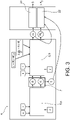
- the control device 4 comprises a device 5 for estimating the resistance of the motor, a device 6 for estimating the constant of the motor, a device 7 for estimating the temperature of the motor, a device 8 for estimating the the angular speed of the engine, a device 9 for estimating the output torque of the engine, a device 20 for estimating the displacement of the piston, and a device 22 for estimating the braking force.
- control device 4 is configured to control the electromechanical actuator 3, from the temperature T of the electric motor of the actuator which is estimated by the device 7 for estimating the temperature.
- the device 7 for estimating the temperature is configured to estimate the temperature T of the motor 31, from the constant K of the motor and the ohmic resistance R of the motor.
- the constant K of the motor tends to decrease when the temperature T of the motor increases.
- the ohmic resistance R of the motor tends to increase when the temperature T of the motor increases.
- the constant K of the motor and the ohmic resistance R are moreover likely to vary with the aging of the electric motor 31.
- the resistance estimation device 5 is configured to estimate the ohmic resistance R of the electric motor, from the voltage d power supply u of the motor and the power supply intensity i of the motor.
- the device 6 for estimating the motor constant is configured to estimate the constant K of the electric motor, from the supply voltage u of the motor and the supply current i of the motor.
- the value of the moment of inertia J of the motor is known when determining the constant K and the ohmic resistance of the motor.
- the constant K of the motor and the ohmic resistance R of the motor are for example estimated in two steps using the estimation method which is disclosed in the patent application US 2016/0103430 by means of the five equations above which are representative of the behavior of the electric motor 31.
- the device 8 for estimating the angular speed estimates the angular speed ⁇ of the motor.
- the engine output torque estimation device 9 estimates the engine output torque M L.
- the equations (2) and (5) above are for example used to estimate the angular speed ⁇ of the motor and the output torque M L of the motor, knowing that the ohmic resistance R, the constant K of the motor, the voltage d power supply u of the motor, and the power supply intensity i of the motor are then known.
- the control device 4 establishes a first corrective coefficient ⁇ 1 for the temperature of the motor and a second corrective coefficient ⁇ 2 for the temperature of the motor.
- the first corrective coefficient ⁇ 1 is established from a first function f 1 .
- the first function f 1 is designed to be substantially linear. It relates the ratio of the angular speed ⁇ of the motor to the intensity i which supplies the motor 31 as a function of the supply voltage u of the motor.
- the first corrective coefficient ⁇ 1 is used subsequently to estimate the braking force Fs which is exerted by the brake 1, taking into account the influence of the temperature of the motor 31 on the braking force Fs.
- the second corrective coefficient ⁇ 2 is established from a second function f 2 .
- the second function f 2 is designed to be substantially linear. It relates the ratio of the ohmic resistance R of the motor to the constant K of the motor as a function of the temperature T of the motor.
- the second corrective coefficient ⁇ 2 is used later to estimate the braking force Fs which is exerted by the brake 1, taking into account the influence of the temperature T of the motor 31 on the braking force Fs.
- the device 20 for estimating the displacement of the piston is configured to estimate the displacement S of the piston from the angular speed ⁇ of the motor.
- the displacement S of the piston depends on the reduction rate of the transmission device 32 and on the reduction rate of the transmission elements which are housed in the caliper 2. Since the displacement S of the piston depends little on the temperature T of the engine, the displacement S of the piston is estimated without a corrective coefficient linked to the temperature of the engine such as the first corrective coefficient ⁇ 1 or the second corrective coefficient ⁇ 2 , in the embodiment represented.
- a piston displacement estimation device 20 is known per se.
- the estimating device 22 for estimating the braking force is configured to estimate the braking force Fs which is exerted by the brake 1 on the corresponding vehicle wheel.
- the braking force Fs corresponds to a clamping force exerted by the pads (not shown) on the disc 12.
- the braking force Fs is estimated from the angular speed ⁇ of the motor, the output torque M L of the motor and the temperature T of the motor.
- the engine temperature T is in particular taken into account via the first corrective coefficient ⁇ 1 and the second corrective coefficient ⁇ 2 , to estimate the braking force Fs.
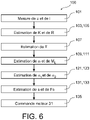
- the method for controlling brake 1 is illustrated with joint reference to figure 3 and 6 .
- the control method 100 is carried out via the control device 4 which has been described above.
- the control method 100 aims to control the operation of the electric motor 31 of the actuator from the estimated temperature T of the motor, in step 135.
- the control method 100 comprises an initial step 101 of determining the supply voltage u of the motor 31, the supply current i of the motor, and the moment of inertia J of the motor.
- the moment of inertia J of the motor is known, for example from the specifications of the electric motor 31.
- the voltage power supply u and power supply intensity i are measured at different times, for example at regular intervals.
- the control method 100 continues with a step 103 of estimating the constant K of the motor from the supply voltage u of the motor and the supply current i of the motor which have been measured.
- the control method 100 includes a step 105 of estimating the ohmic resistance R of the motor from the motor supply voltage u and the motor supply current i.
- the control method 100 then comprises a step 107 of estimating the temperature T of the electric motor, from the ohmic resistance R and the constant K of the motor, via the device 7 for estimating the temperature.
- the step 107 of estimating the temperature T is also referred to as the method of estimating the temperature T of the engine in this document.
- the control method 100 comprises a step 109 of estimating the angular speed ⁇ of the motor, from the supply voltage u of the motor, the supply current i of the motor, the moment of inertia J of the motor, the ohmic resistance R of the motor, and the constant K of the motor.
- the control method 100 comprises a step 111 of estimating the output torque M L of the motor, from the supply voltage u of the motor, the supply current i of the motor, the moment d inertia J of the motor, of the ohmic resistance R of the motor, and of the constant K of the motor.
- the control method 100 comprises a step 131 of estimating the displacement S of the piston, from the angular speed ⁇ of the motor, via the device 20 for estimating the displacement of the piston.
- the control method 100 comprises a step 133 of estimating the braking force Fs, from the angular speed ⁇ of the motor, the output torque M L of the motor and the temperature T of the motor, by through the device 22 for estimating the braking force.
- the control method 100 ends with the step 135 of controlling the operation of the motor 31.
- the control device 4 controls in particular the supply voltage u of the motor and the supply current i of the motor.
- Engine 31 then rotates with an angular speed ⁇ and produces an output torque M L , so that the piston 11 moves by a setpoint value S and the brake 1 exerts a braking force Fs according to a braking setpoint.
- the brake 1 is a drum brake which comprises the electromechanical actuator 3 and the control device 4 of the actuator.
- the brake 1 is a fixed caliper brake instead of being a floating caliper brake.
- the displacement s of the piston 11 can be estimated by the control device 4 from the temperature T of the engine 31.
- the motor constant K, the motor ohmic resistance R, and/or the motor angular speed ⁇ are measured, instead of being estimated from the supply voltage u and the power supply intensity i of the motor.
- the control device 4 can control the operation of the motor 31 by means of other parameters, for example by taking greater account of the wear of the motor 31 or of the transmission device 32 and/or the friction.
- the first function f 1 and the second function f 2 can each be designed in a non-linear way, for example polynomial, to be more precise.
Landscapes
- Engineering & Computer Science (AREA)
- Mechanical Engineering (AREA)
- Transportation (AREA)
- Power Engineering (AREA)
- General Engineering & Computer Science (AREA)
- Braking Systems And Boosters (AREA)
- Regulating Braking Force (AREA)
- Valves And Accessory Devices For Braking Systems (AREA)
- Control Of Electric Motors In General (AREA)
- Braking Arrangements (AREA)
Description
- L'invention se rapporte aux freins pour véhicule. Elle concerne plus précisément la commande d'un actionneur électromécanique de frein, à partir de la température d'un moteur de l'actionneur.
- Des freins à étrier flottant comprennent un actionneur électromécanique qui est raccordé à l'étrier. L'actionneur électromécanique comprend un moteur électrique.
- Certains de ces freins sont équipés d'un capteur de température. Le moteur de l'actionneur est alors commandé en tenant compte de la température du moteur. L'effort de freinage qui est exercé par le frein tend alors à être plus précis.
- Il existe un besoin pour limiter l'influence de la température du moteur sur les performances de freinage, notamment en l'absence de capteur de température du frein.
-
DE 10 2006 052810 ,DE 10 2012 205030 etDE 10 2009 001258 divulguent des procédés de commande d'un frein connus de l'état de la technique. - A cet égard, l'invention a pour objet un procédé de commande d'un frein de véhicule, le frein comprenant un actionneur électromécanique qui comporte un moteur électrique. Le procédé de commande comprend la commande de l'actionneur à partir de la température estimée du moteur, la température du moteur étant estimée à partir de la constante du moteur et de la résistance ohmique du moteur.
- Selon l'invention, le procédé de commande du frein comprend une étape de détermination d'un premier coefficient correctif de température du moteur, à partir d'une première fonction qui est représentative d'un rapport d'une vitesse angulaire du moteur sur l'intensité d'alimentation du moteur en fonction de la tension d'alimentation du moteur.
- En plus ou en variante, le procédé de commande du frein comprend une étape de détermination d'un deuxième coefficient correctif de température du moteur, à partir d'une deuxième fonction qui est représentative d'un rapport de la résistance ohmique du moteur sur la constante du moteur en fonction de la température du moteur.
- Grâce à l'estimation de la température du moteur électrique, au premier coefficient correctif de température et/ou au deuxième coefficient correctif de température, l'influence de la température du moteur électrique sur les performances de freinage est limitée, y compris en l'absence de capteur de température du frein. Le moteur électrique et plus généralement l'actionneur sont commandés en tenant compte de la température estimée du moteur électrique. L'effort de freinage qui est exercé par le frein est aussi estimé plus précisément en tenant compte de la température du moteur électrique, notamment par l'intermédiaire du premier coefficient correctif de température et/ou du deuxième coefficient correctif de température.
- Par conséquent, la masse, la puissance et le coût de l'actionneur électromécanique de frein peuvent être limités. Le freinage tend à être plus efficace en commandant plus précisément l'effort de freinage qui est exercé par le frein.
- L'invention peut comporter de manière facultative une ou plusieurs des caractéristiques suivantes combinées entre elles ou non.
- Selon une particularité de réalisation, le procédé de commande comprend la commande du moteur pour que le frein exerce un effort de freinage selon une consigne de freinage, l'effort de freinage exercé par le frein étant estimé à partir de la température du moteur.
- Selon une particularité de réalisation, l'effort de freinage exercé par le frein est estimé à partir du premier coefficient correctif et/ou du deuxième coefficient correctif.
- Selon une particularité de réalisation, la première fonction et/ou la deuxième fonction sont conçues pour être linéaires.
- Selon une particularité de réalisation, la constante du moteur et/ou la résistance ohmique du moteur sont estimées à partir de la tension d'alimentation du moteur et de l'intensité d'alimentation du moteur.
- L'invention porte également sur un dispositif de commande d'un frein de véhicule, le frein comprenant un actionneur électromécanique qui comporte un moteur électrique. Le dispositif de commande est configuré pour commander l'actionneur électromécanique à partir de la température du moteur électrique de l'actionneur, la température du moteur étant estimée à partir de la constante du moteur et de la résistance ohmique du moteur.
- Selon l'invention, le dispositif de commande est configuré pour déterminer un premier coefficient correctif de température du moteur, à partir d'une première fonction qui est représentative d'un rapport d'une vitesse angulaire du moteur sur l'intensité d'alimentation du moteur en fonction de la tension d'alimentation du moteur.
- En plus ou en variante, le dispositif de commande est configuré pour déterminer un deuxième coefficient correctif de température du moteur, à partir d'une deuxième fonction qui est représentative d'un rapport de la résistance ohmique du moteur sur la constante du moteur en fonction de la température du moteur.
- L'invention porte aussi sur un frein de véhicule motorisé, le frein comprenant un actionneur électromécanique et un dispositif de commande tel que défini ci-dessus. Le dispositif de commande est configuré pour commander l'actionneur du frein.
- Selon une particularité de réalisation, le dispositif de commande est configuré pour commander le moteur pour que le frein exerce un effort de freinage selon une consigne de freinage, l'effort de freinage exercé par le frein étant estimé à partir de la température du moteur.
- La présente invention sera mieux comprise à la lecture de la description d'exemples de réalisation, en référence aux dessins annexés sur lesquels :
- la
figure 1 est une représentation schématique partielle d'un frein de véhicule, selon un premier mode de réalisation de l'invention ; - la
figure 2 est une représentation schématique partielle de l'actionneur et d'un dispositif de commande de l'actionneur, selon le premier mode de réalisation de l'invention ; - la
figure 3 est une représentation schématique partielle du dispositif de commande de l'actionneur, selon le premier mode de réalisation ; - la
figure 4 est une représentation graphique schématique partielle d'un rapport d'une vitesse angulaire du moteur sur une intensité alimentant le moteur, en fonction d'une tension d'alimentation du moteur ; - la
figure 5 est une représentation graphique schématique partielle d'un rapport d'une résistance ohmique du moteur sur une constante du moteur, en fonction d'une température du moteur ; - la
figure 6 illustre le procédé de commande de frein, selon le premier mode de réalisation. - Des parties identiques, similaires ou équivalentes des différentes figures portent les mêmes références numériques de façon à faciliter le passage d'une figure à l'autre.
- La
figure 1 représente un frein à disque 1 pour un véhicule automobile. Le frein à disque 1 comporte un étrier 2 avantageusement de type flottant, une chape (non représentée), un actionneur électromécanique 3, deux patins (non représentés) et un disque 12. Le frein 1 comporte aussi un piston 11 et un dispositif de commande 4 de l'actionneur. Le frein 1 est notamment un frein de stationnement. - Dans une première variante de réalisation, le frein selon la présente invention comporte un actionneur hydraulique (typiquement cylindre/piston) pour le frein de service et un actionneur électromécanique pour le frein de parking et/ou de secours. Dans une deuxième variante de réalisation, tous les actionneurs du frein sont électriques ou électromécaniques. Avantageusement un unique actionneur électromécanique assure le freinage de service de parking et/ou de secours.
- Le piston 11 est logé dans l'étrier 2. Il est mobile en translation relativement à l'étrier 2, pour entrainer le rapprochement des patins (non représentés) qui enserrent le disque 12 lors du freinage.
- L'actionneur électromécanique 3 est raccordé à l'étrier 2. L'actionneur électromécanique 3 comprend un moteur électrique 31, un dispositif de transmission 32 et un boitier 34 qui loge le moteur 31 et le dispositif de transmission 32.
- Le fonctionnement du moteur 31 est décrit par les cinq équations ci-dessous :




- Le dispositif de transmission 32 est raccordé au piston 11. Il comprend une pluralité d'éléments de transmission du mouvement tels que des roues dentées. Le dispositif de transmission 32 est configuré pour déplacer le piston 11, lorsqu'il est entraîné par le moteur 31.
- Le dispositif de commande 4 comprend au moins une unité de commande. Le dispositif de commande 4 commande le fonctionnement du moteur 31, par exemple par l'intermédiaire d'un réseau de transmission de données, d'une liaison sans fil ou d'un câble d'alimentation électrique. Le dispositif de commande 4 est adapté au type de moteur 31 employé (moteur avec balai et/ou moteur sans balai ou analogue). Il comporte avantageusement des moyens de commutation comportant par exemple des transistors de puissance ou analogue avantageusement commandés par un calculateur numérique.
- Dans le mode de réalisation représenté, chaque unité de commande est située à l'extérieur du boitier 34 de l'actionneur. Chaque unité de commande comprend par exemple une unité de calcul. L'unité de calcul est par exemple constituée par le calculateur du dispositif de stabilité du véhicule, par exemple connu sous la marque « ESP », d'un calculateur central dédié au freinage, d'un calculateur numérique partagé avec d'autres fonctions du véhicule et/ou d'un calculateur intégré au frein 1.
- En référence conjointe aux
figures 2 et3 , le dispositif de commande 4 comprend un dispositif 5 d'estimation de la résistance du moteur, un dispositif 6 d'estimation de la constante du moteur, un dispositif 7 d'estimation de la température du moteur, un dispositif 8 d'estimation de la vitesse angulaire du moteur, un dispositif 9 d'estimation du couple de sortie du moteur, un dispositif 20 d'estimation de déplacement du piston, et un dispositif 22 d'estimation de l'effort de freinage. - En référence conjointement aux
figures 2 et3 , le dispositif de commande 4 est configuré pour commander l'actionneur électromécanique 3, à partir de la température T du moteur électrique de l'actionneur qui est estimée par le dispositif 7 d'estimation de la température. - Le dispositif 7 d'estimation de la température est configuré pour estimer la température T du moteur 31, à partir de la constante K du moteur et de la résistance ohmique R du moteur. En particulier, la constance K du moteur tend à diminuer lorsque la température T du moteur augmente. La résistance ohmique R du moteurtend à augmenter lorsque la température T du moteur augmente.
- La constante K du moteur et la résistance ohmique R sont par ailleurs susceptibles de varier avec le vieillissement du moteur électrique 31. Le dispositif 5 d'estimation de résistance est configuré pour estimer la résistance ohmique R du moteur électrique, à partir de la tension d'alimentation u du moteur et de l'intensité d'alimentation i du moteur. Le dispositif 6 d'estimation de la constante du moteur est configuré pour estimer la constante K du moteur électrique, à partir de la tension d'alimentation u du moteur et de l'intensité d'alimentation i du moteur. La valeur du moment d'inertie J du moteur est connue lors de la détermination de la constante K et de la résistance ohmique du moteur.
- La constante K du moteur et la résistance ohmique R du moteur sont par exemple estimées en deux étapes à l'aide de la méthode d'estimation qui est divulguée dans la demande de brevet
US 2016/0103430 au moyen des cinq équations ci-dessus qui sont représentatives du comportement du moteur électrique 31. - En parallèle ou après que la température T du moteur ait été estimée, le dispositif 8 d'estimation de la vitesse angulaire estime la vitesse angulaire ω du moteur. Le dispositif d'estimation 9 du couple de sortie du moteur estime le couple de sortie ML du moteur. Les équations (2) et (5) ci-dessus sont par exemple utilisées pour estimer la vitesse angulaire ω du moteur et le couple de sortie ML du moteur, sachant que la résistance ohmique R, la constante K du moteur, la tension d'alimentation u du moteur, et l'intensité d'alimentation i du moteur sont alors connues.
- Une fois que la vitesse angulaire ω du moteur et le couple de sortie ML du moteur ont été estimés, le dispositif de commande 4 établit un premier coefficient correctif α1 de température du moteur et un deuxième coefficient correctif α2 de température du moteur.
- En référence plus spécifiquement à la
figure 4 , le premier coefficient correctif α1 est établi à partir d'une première fonction f1. La première fonction f1 est conçue pour être sensiblement linéaire. Elle relie le rapport de la vitesse angulaire ω du moteur sur l'intensité i qui alimente le moteur 31 en fonction de la tension d'alimentation u du moteur. Le premier coefficient correctif α1 est utilisé ultérieurement pour estimer l'effort de freinage Fs qui est exercé par le frein 1, en tenant compte de l'influence de la température du moteur 31 sur l'effort de freinage Fs. - En référence plus spécifiquement à la
figure 5 , le deuxième coefficient correctif α2 est établi à partir d'une deuxième fonction f2. La deuxième fonction f2 est conçue pour être sensiblement linéaire. Elle relie le rapport de la résistance ohmique R du moteur sur la constante K du moteur en fonction de la température T du moteur. Le deuxième coefficient correctif α2 est utilisé ultérieurement pour estimer l'effort de freinage Fs qui est exercé par le frein 1, en tenant compte de l'influence de la température T du moteur 31 sur l'effort de freinage Fs. - En référence à nouveau à la
figure 3 , le dispositif 20 d'estimation de déplacement du piston est configuré pour estimer le déplacement S du piston à partir de la vitesse angulaire ω du moteur. Le déplacement S du piston dépend du taux de réduction du dispositif de transmission 32 et du taux de réduction des éléments de transmission qui sont logés dans l'étrier 2. Étant donné que le déplacement S du piston dépend peu de la température T du moteur, le déplacement S du piston est estimé sans coefficient correctif lié à la température du moteur tel que le premier coefficient correctif α1 ou le deuxième coefficient correctif α2, dans le mode de réalisation représenté. Un tel dispositif 20 d'estimation de déplacement du piston est connu en soi. - Le dispositif d'estimation 22 d'estimation de l'effort de freinage est configuré pour estimer l'effort de freinage Fs qui est exercé par le frein 1 sur la roue de véhicule correspondante. Dans le mode de réalisation représenté, l'effort de freinage Fs correspond à un effort de serrage exercé par les patins (non représentés) sur le disque 12. L'effort de freinage Fs est estimé à partir de la vitesse angulaire ω du moteur, du couple de sortie ML du moteur et de la température T du moteur. La température T du moteur est notamment prise en compte par l'intermédiaire du premier coefficient correctif α1 et du deuxième coefficient correctif α2, pour estimer l'effort de freinage Fs.
- Le procédé de commande du frein 1 est illustré en référence conjointe aux
figures 3 et6 . Le procédé de commande 100 s'effectue par l'intermédiaire du dispositif de commande 4 qui a été décrit ci-dessus. Le procédé de commande 100 vise à commander le fonctionnement du moteur électrique 31 de l'actionneur à partir de la température estimée T du moteur, à l'étape 135. - Le procédé de commande 100 comprend une étape initiale 101 de détermination de la tension d'alimentation u du moteur 31, de l'intensité d'alimentation i du moteur, et du moment d'inertie J du moteur. Le moment d'inertie J du moteur est connu, par exemple d'après les spécifications du moteur électrique 31. La tension d'alimentation u et l'intensité d'alimentation i sont mesurées à différents instants, par exemple à intervalles réguliers.
- Le procédé de commande 100 se poursuit par une étape 103 d'estimation de la constante K du moteur à partir de la tension d'alimentation u du moteur et de l'intensité d'alimentation i du moteur qui ont été mesurées. En parallèle, le procédé de commande 100 comprend une étape 105 d'estimation de la résistance ohmique R du moteur à partir de la tension d'alimentation u du moteur et de l'intensité i d'alimentation du moteur.
- Le procédé de commande 100 comprend ensuite une étape 107 d'estimation de la température T du moteur électrique, à partir de la résistance ohmique R et de la constante K du moteur, par l'intermédiaire du dispositif 7 d'estimation de température. L'étape 107 d'estimation de la température T est également appelée procédé d'estimation de la température T du moteur dans le présent document.
- Le procédé de commande 100 comprend une étape 109 d'estimation de la vitesse angulaire ω du moteur, à partir de la tension d'alimentation u du moteur, de l'intensité d'alimentation i du moteur, du moment d'inertie J du moteur, de la résistance ohmique R du moteur, et de la constante K du moteur. En parallèle, le procédé de commande 100 comprend une étape 111 d'estimation du couple de sortie ML du moteur, à partir de la tension d'alimentation u du moteur, de l'intensité d'alimentation i du moteur, du moment d'inertie J du moteur, de la résistance ohmique R du moteur, et de la constante K du moteur.
- Le procédé de commande 100 comprend une étape 131 d'estimation du déplacement S du piston, à partir de la vitesse angulaire ω du moteur, par l'intermédiaire du dispositif 20 d'estimation de déplacement du piston. En parallèle, le procédé de commande 100 comprend une étape 133 d'estimation de l'effort de freinage Fs, à partir de la vitesse angulaire ω du moteur, du couple de sortie ML du moteur et de la température T du moteur, par l'intermédiaire du dispositif 22 d'estimation d'effort de freinage.
- Le procédé de commande 100 se termine par l'étape 135 de commande du fonctionnement du moteur 31. Le dispositif de commande 4 commande notamment la tension d'alimentation u du moteur et l'intensité d'alimentation i du moteur. Le moteur 31 tourne alors avec une vitesse angulaire ω et produit un couple de sortie ML, pour que le piston 11 se déplace d'une valeur S de consigne et que le frein 1 exerce un effort de freinage Fs selon une consigne de freinage.
- Bien entendu, diverses modifications peuvent être apportées par l'homme du métier à l'invention qui vient d'être décrite sans sortir du cadre de l'exposé de l'invention. L'invention est limitée uniquement par la portée des revendications annexées.
- Dans un mode de réalisation non représenté, le frein 1 est un frein à tambour qui comprend l'actionneur électromécanique 3 et le dispositif de commande 4 de l'actionneur.
- Dans un autre mode de réalisation non représenté, le frein 1 est un frein à étrier fixe au lieu d'être un frein à étrier flottant.
- Le déplacement s du piston 11 peut être estimé par le dispositif de commande 4 à partir de la température T du moteur 31.
- En variante ou en plus, la constante K du moteur, la résistance ohmique R du moteur, et/ou la vitesse angulaire ω du moteur sont mesurées, au lieu d'être estimées à partir de la tension d'alimentation u et de l'intensité d'alimentation i du moteur.
- Le dispositif de commande 4 peut commander le fonctionnement du moteur 31 au moyen d'autres paramètres, en prenant par exemple davantage en compte l'usure du moteur 31 ou du dispositif de transmission 32 et/ou les frottements.
- D'autres types de coefficients correctifs que le premier coefficient correctif α1 et le deuxième coefficient correctif α2 peuvent être utilisés.
- La première fonction f1 et la deuxième fonction f2 peuvent être conçues chacune de manière non linéaire, par exemple polynomiales, pour être plus précises.
-
- 1 : frein à disque
- 2 : étrier
- 3 : actionneur électromécanique
- 4 : dispositif de commande
- 5 : dispositif d'estimation de la résistance du moteur
- 6 : dispositif d'estimation de la constante du moteur
- 8 : dispositif d'estimation de la vitesse angulaire du moteur
- 9 : dispositif d'estimation du couple du moteur
- 11 : piston
- 12 : disque
- 20 : dispositif d'estimation de déplacement du piston
- 22 : dispositif d'estimation de l'effort de freinage
- 31 : moteur électrique
- 32 : dispositif de transmission
- 34 : boitier d'actionneur
- T : température du moteur électrique
- K : constante du moteur
- R : résistance du moteur
- L : inductance du moteur
- u : tension d'alimentation du moteur
- i : intensité d'alimentation du moteur
- J : moment d'inertie du moteur
- ω : vitesse angulaire du moteur
- ML: couple de sortie du moteur
- Mc: couple de chargement du moteur
- MF: couple de frottement du moteur
- S : déplacement du piston
- Fs : effort de freinage exercé par le frein
- f1 : première fonction
- α1 : premier coefficient correctif de température du moteur
- f2 : deuxième fonction
- α2 : deuxième coefficient correctif de température du moteur
Claims (11)
- Procédé de commande d'un frein (1) de véhicule, le frein (1) comprenant un actionneur électromécanique (3) qui comporte un moteur électrique (31), le procédé comprenant :la commande de l'actionneur (3) à partir de la température (T) du moteur, la température (T) du moteur étant estimée à partir de la constante du moteur (K) et de la résistance ohmique (R) du moteur,caractérisé en ce que le procédé de commande du frein (1) comprend une étape de détermination (121) d'un premier coefficient correctif (α1) de température (T) du moteur, à partir d'une première fonction (f1) qui est représentative d'un rapport d'une vitesse angulaire (ω) du moteur sur l'intensité d'alimentation (i) du moteur en fonction de la tension d'alimentation (u) du moteur, et/oule procédé de commande du frein (1) comprend une étape de détermination (123) d'un deuxième coefficient correctif (α2) de température (T) du moteur, à partir d'une deuxième fonction (f2) qui est représentative d'un rapport de la résistance ohmique (R) du moteur sur la constante du moteur (K) en fonction de la température (T) du moteur.
- Procédé de commande selon la revendication 1, comprenant la commande du moteur (31) pour que le frein (1) exerce un effort de freinage (Fs) selon une consigne de freinage, dans lequel l'effort de freinage (Fs) exercé par le frein (1) est estimé à partir de la température (T) du moteur.
- Procédé de commande selon la revendication 2, dans lequel l'effort de freinage (Fs) exercé par le frein (1) est estimé à partir du premier coefficient correctif (α1) et/ou du deuxième coefficient correctif (α2).
- Procédé de commande selon l'une quelconque des revendications 1 à 3, dans lequel la première fonction (f1) et/ou la deuxième fonction (f2) sont conçues pour être linéaires.
- Procédé de commande selon l'une quelconque des revendications 1 à 4, dans lequel la constante du moteur (K) et/ou la résistance ohmique (R) du moteur sont estimées à partir de la tension d'alimentation (u) du moteur et de l'intensité d'alimentation (i) du moteur.
- Dispositif de commande (4) d'un frein (1) de véhicule, le frein (1) comprenant un actionneur électromécanique (3) qui comporte un moteur électrique (31),
le dispositif de commande (4) étant configuré pour commander l'actionneur électromécanique (3) à partir de la température (T) du moteur électrique de l'actionneur, la température (T) du moteur étant estimée à partir de la constante du moteur (K) et de la résistance ohmique (R) du moteur,caractérisé en ce que le dispositif de commande (4) est configuré pour déterminer un premier coefficient correctif (α1) de température (T) du moteur, à partir d'une première fonction (f1) qui est représentative d'un rapport d'une vitesse angulaire (ω) du moteur sur l'intensité d'alimentation (i) du moteur en fonction de la tension d'alimentation (u) du moteur, et/oule dispositif de commande (4) est configuré pour déterminer un deuxième coefficient correctif (α2) de température (T) du moteur, à partir d'une deuxième fonction (f2) qui est représentative d'un rapport de la résistance ohmique (R) du moteur sur la constante du moteur (K) en fonction de la température (T) du moteur. - Dispositif de commande (4) selon la revendication 6, dans lequel la première fonction (f1) et/ou la deuxième fonction (f2) sont conçues pour être linéaires.
- Dispositif de commande (4) selon l'une quelconque des revendications précédentes 6 à 7, dans lequel la constante du moteur (K) et/ou la résistance ohmique (R) du moteur sont estimées à partir de la tension d'alimentation (u) du moteur et de l'intensité d'alimentation (i) du moteur.
- Frein (1) pour véhicule motorisé, le frein (1) comprenant un actionneur électromécanique (3) et un dispositif de commande (4) selon l'une quelconque des revendications précédentes 6 à 8, le dispositif de commande (4) étant configuré pour commander l'actionneur (3) du frein (1).
- Frein (1) selon la revendication 9, dans lequel le dispositif de commande (4) est configuré pour commander le moteur (31) pour que le frein (1) exerce un effort de freinage (Fs) selon une consigne de freinage, l'effort de freinage (Fs) exercé par le frein (1) étant estimé à partir de la température (T) du moteur.
- Frein (1) selon l'une quelconque des revendications 9 et 10, dans lequel l'effort de freinage (Fs) exercé par le frein (1) est estimé à partir du premier coefficient correctif (ai) et/ou du deuxième coefficient correctif (α2).
Applications Claiming Priority (2)
| Application Number | Priority Date | Filing Date | Title |
|---|---|---|---|
| FR1902761A FR3094054B1 (fr) | 2019-03-18 | 2019-03-18 | Estimation de la température d’un moteur électrique d’actionneur de frein de véhicule et commande du moteur |
| PCT/FR2020/050411 WO2020188175A2 (fr) | 2019-03-18 | 2020-03-02 | Estimation de la temperature d'un moteur electrique d'actionneur de frein de vehicule et commande du moteur |
Publications (2)
| Publication Number | Publication Date |
|---|---|
| EP3924635A2 EP3924635A2 (fr) | 2021-12-22 |
| EP3924635B1 true EP3924635B1 (fr) | 2023-01-18 |
Family
ID=67441376
Family Applications (1)
| Application Number | Title | Priority Date | Filing Date |
|---|---|---|---|
| EP20725803.9A Active EP3924635B1 (fr) | 2019-03-18 | 2020-03-02 | Estimation de la temperature d'un moteur electrique d'actionneur de frein de vehicule et commande du moteur |
Country Status (6)
| Country | Link |
|---|---|
| US (1) | US11912255B2 (fr) |
| EP (1) | EP3924635B1 (fr) |
| JP (1) | JP2022533302A (fr) |
| CN (1) | CN113573960B (fr) |
| FR (1) | FR3094054B1 (fr) |
| WO (1) | WO2020188175A2 (fr) |
Cited By (1)
| Publication number | Priority date | Publication date | Assignee | Title |
|---|---|---|---|---|
| WO2025238097A1 (fr) * | 2024-05-17 | 2025-11-20 | Hitachi Astemo France | Methode d'estimation de la force de serrage et/ou de la course d'un frein de parking electrique |
Families Citing this family (3)
| Publication number | Priority date | Publication date | Assignee | Title |
|---|---|---|---|---|
| FR3094054B1 (fr) * | 2019-03-18 | 2021-05-21 | Foundation Brakes France | Estimation de la température d’un moteur électrique d’actionneur de frein de véhicule et commande du moteur |
| KR20230032618A (ko) * | 2021-08-31 | 2023-03-07 | 에이치엘만도 주식회사 | 전자식 주차 브레이크 시스템 및 그 제어방법 |
| US20260084676A1 (en) * | 2024-09-20 | 2026-03-26 | Ford Global Technologies, Llc | Methods and apparatus to monitor a condition of a braking system |
Family Cites Families (15)
| Publication number | Priority date | Publication date | Assignee | Title |
|---|---|---|---|---|
| JP2004122838A (ja) * | 2002-08-07 | 2004-04-22 | Asmo Co Ltd | 電動駐車ブレーキ装置及び電動駐車ブレーキ装置の制御方法 |
| DE102006052810B4 (de) * | 2006-11-09 | 2021-09-02 | Robert Bosch Gmbh | Verfahren zur Abschätzung einer Kraftentfaltung eines an eine Versorgungsspannung anschließbaren Aktuators |
| DE102009001258A1 (de) * | 2009-03-02 | 2010-09-09 | Robert Bosch Gmbh | Verfahren zur Überwachung der thermischen Belastung eines Elektromotors |
| JP2012050261A (ja) * | 2010-08-27 | 2012-03-08 | Jtekt Corp | モータ制御装置およびこれを備える電動パワーステアリング装置 |
| DE102012205030A1 (de) * | 2012-03-28 | 2013-10-02 | Robert Bosch Gmbh | Vorrichtung und Verfahren zum Ansteuern einer Feststellbremse eines Kraftfahrzeugs |
| DE102012206223B4 (de) * | 2012-04-16 | 2024-10-02 | Robert Bosch Gmbh | Verfahren zum Einstellen einer Feststellbremse in einem Fahrzeug |
| DE102012025423A1 (de) * | 2012-12-21 | 2014-06-26 | Lucas Automotive Gmbh | Elektrohydraulische Fahrzeug-Bremsanlage und Verfahren zum Betreiben derselben |
| JP2015220803A (ja) * | 2014-05-15 | 2015-12-07 | セイコーエプソン株式会社 | モーター制御装置、記録装置およびモーター制御方法 |
| JP6397694B2 (ja) * | 2014-08-25 | 2018-09-26 | 日立オートモティブシステムズ株式会社 | ブレーキ装置 |
| US11311294B2 (en) * | 2014-09-05 | 2022-04-26 | Cilag Gmbh International | Powered medical device including measurement of closure state of jaws |
| DE102014220793A1 (de) | 2014-10-14 | 2016-04-14 | Robert Bosch Gmbh | Verfahren und Vorrichtung zum Betreiben einer Bremseinrichtung, Bremseinrichtung |
| JP6492829B2 (ja) * | 2015-03-19 | 2019-04-03 | 株式会社アドヴィックス | 電動駐車制動装置 |
| FR3073187B1 (fr) | 2017-11-09 | 2020-01-10 | Foundation Brakes France | Systeme de commande d'un frein de parking electrique par modulation en largeur d'impulsions |
| FR3073188B1 (fr) | 2017-11-09 | 2021-02-12 | Foundation Brakes France | Systeme de securisation du stationnement d'un vehicule automobile |
| FR3094054B1 (fr) * | 2019-03-18 | 2021-05-21 | Foundation Brakes France | Estimation de la température d’un moteur électrique d’actionneur de frein de véhicule et commande du moteur |
-
2019
- 2019-03-18 FR FR1902761A patent/FR3094054B1/fr active Active
-
2020
- 2020-03-02 JP JP2021555868A patent/JP2022533302A/ja active Pending
- 2020-03-02 EP EP20725803.9A patent/EP3924635B1/fr active Active
- 2020-03-02 US US17/438,765 patent/US11912255B2/en active Active
- 2020-03-02 WO PCT/FR2020/050411 patent/WO2020188175A2/fr not_active Ceased
- 2020-03-02 CN CN202080020920.3A patent/CN113573960B/zh active Active
Cited By (2)
| Publication number | Priority date | Publication date | Assignee | Title |
|---|---|---|---|---|
| WO2025238097A1 (fr) * | 2024-05-17 | 2025-11-20 | Hitachi Astemo France | Methode d'estimation de la force de serrage et/ou de la course d'un frein de parking electrique |
| FR3162187A1 (fr) * | 2024-05-17 | 2025-11-21 | Hitachi Astemo France | Methode d’estimation de la force de serrage et/ou de la course d’un frein de parking electrique |
Also Published As
| Publication number | Publication date |
|---|---|
| US11912255B2 (en) | 2024-02-27 |
| JP2022533302A (ja) | 2022-07-22 |
| CN113573960B (zh) | 2024-12-17 |
| CN113573960A (zh) | 2021-10-29 |
| WO2020188175A3 (fr) | 2020-11-12 |
| FR3094054A1 (fr) | 2020-09-25 |
| FR3094054B1 (fr) | 2021-05-21 |
| EP3924635A2 (fr) | 2021-12-22 |
| WO2020188175A2 (fr) | 2020-09-24 |
| US20220153243A1 (en) | 2022-05-19 |
Similar Documents
| Publication | Publication Date | Title |
|---|---|---|
| EP3924635B1 (fr) | Estimation de la temperature d'un moteur electrique d'actionneur de frein de vehicule et commande du moteur | |
| EP3707039B1 (fr) | Systeme de commande d'un frein de parking electrique par modulation en largeur d'impulsions | |
| EP1003656B1 (fr) | Procede et dispositif de commande d'un actionneur electrique d'activation d'un systeme fonctionnel | |
| EP4132823B1 (fr) | Procédé et dispositif de commande d'un frein de véhicule automobile | |
| EP4359271B1 (fr) | Procédé de réglage de la force de serrage exercée par un frein électromécanique | |
| FR3001426A1 (fr) | Frein de stationnement automatique avec un procede de resserrage optimise | |
| FR2523536A1 (fr) | Vehicule automobile comportant au moins un systeme de freinage et un moteur, et des moyens pour commander ce systeme de freinage a l'arret du moteur | |
| FR2764247A1 (fr) | Dispositif pour commander un couple pouvant etre transmis par un embrayage | |
| FR2926771A1 (fr) | Procede et dispositif de freinage mixte electrique hydraulique | |
| FR2843350A1 (fr) | Procede de commande de freinage des roues d'un vehicule automobile, dispositif de commande de repartition d'efforts de freinage et vehicule equipe d'un tel dispositif | |
| EP0128081A1 (fr) | Moteur de frein à réglage automatique | |
| EP3658400B1 (fr) | Procédé de pilotage amélioré pour assistance hydraulique | |
| EP3941790B1 (fr) | Système de commande pour un frein électrique avec assistance hydraulique | |
| EP4135994A1 (fr) | Dispositif et un procédé de freinage d'un véhicule automobile doté d'une machine électrique | |
| WO2025078228A1 (fr) | Procédé de détermination d'une valeur de pression hydraulique à fournir dans un dispositif de freinage | |
| FR2723731A1 (fr) | Dispositif de tension d'une chaine d'entrainement sans fin, notamment pour transporteur. | |
| WO2024241013A1 (fr) | Detection d'usure de patin et/ou de disque par comparaison de positions d'un piston | |
| EP4375151A1 (fr) | Procédé de détermination d'un état d'usure d'une garniture d'une plaquette de frein d'un frein à disque pour véhicule | |
| WO2023118738A1 (fr) | Dispositif d'ajustement d'effort de serrage pour un frein electromecanique | |
| FR2945232A1 (fr) | Procede de compensation de frottements dans un dispositif a retour d'effort equipe d'une transmission a cable | |
| FR2823574A1 (fr) | Actionneur commande electriquement | |
| BE440592A (fr) | ||
| FR2987330A1 (fr) | Procede de surveillance du fonctionnement d'un frein de stationnement |
Legal Events
| Date | Code | Title | Description |
|---|---|---|---|
| STAA | Information on the status of an ep patent application or granted ep patent |
Free format text: STATUS: UNKNOWN |
|
| STAA | Information on the status of an ep patent application or granted ep patent |
Free format text: STATUS: THE INTERNATIONAL PUBLICATION HAS BEEN MADE |
|
| PUAI | Public reference made under article 153(3) epc to a published international application that has entered the european phase |
Free format text: ORIGINAL CODE: 0009012 |
|
| STAA | Information on the status of an ep patent application or granted ep patent |
Free format text: STATUS: REQUEST FOR EXAMINATION WAS MADE |
|
| 17P | Request for examination filed |
Effective date: 20210913 |
|
| AK | Designated contracting states |
Kind code of ref document: A2 Designated state(s): AL AT BE BG CH CY CZ DE DK EE ES FI FR GB GR HR HU IE IS IT LI LT LU LV MC MK MT NL NO PL PT RO RS SE SI SK SM TR |
|
| DAV | Request for validation of the european patent (deleted) | ||
| DAX | Request for extension of the european patent (deleted) | ||
| GRAP | Despatch of communication of intention to grant a patent |
Free format text: ORIGINAL CODE: EPIDOSNIGR1 |
|
| STAA | Information on the status of an ep patent application or granted ep patent |
Free format text: STATUS: GRANT OF PATENT IS INTENDED |
|
| INTG | Intention to grant announced |
Effective date: 20220913 |
|
| GRAS | Grant fee paid |
Free format text: ORIGINAL CODE: EPIDOSNIGR3 |
|
| GRAA | (expected) grant |
Free format text: ORIGINAL CODE: 0009210 |
|
| STAA | Information on the status of an ep patent application or granted ep patent |
Free format text: STATUS: THE PATENT HAS BEEN GRANTED |
|
| AK | Designated contracting states |
Kind code of ref document: B1 Designated state(s): AL AT BE BG CH CY CZ DE DK EE ES FI FR GB GR HR HU IE IS IT LI LT LU LV MC MK MT NL NO PL PT RO RS SE SI SK SM TR |
|
| REG | Reference to a national code |
Ref country code: GB Ref legal event code: FG4D Free format text: NOT ENGLISH |
|
| REG | Reference to a national code |
Ref country code: CH Ref legal event code: EP |
|
| REG | Reference to a national code |
Ref country code: DE Ref legal event code: R096 Ref document number: 602020007710 Country of ref document: DE |
|
| REG | Reference to a national code |
Ref country code: AT Ref legal event code: REF Ref document number: 1544867 Country of ref document: AT Kind code of ref document: T Effective date: 20230215 Ref country code: IE Ref legal event code: FG4D Free format text: LANGUAGE OF EP DOCUMENT: FRENCH |
|
| REG | Reference to a national code |
Ref country code: LT Ref legal event code: MG9D |
|
| REG | Reference to a national code |
Ref country code: NL Ref legal event code: MP Effective date: 20230118 |
|
| REG | Reference to a national code |
Ref country code: AT Ref legal event code: MK05 Ref document number: 1544867 Country of ref document: AT Kind code of ref document: T Effective date: 20230118 |
|
| PG25 | Lapsed in a contracting state [announced via postgrant information from national office to epo] |
Ref country code: NL Free format text: LAPSE BECAUSE OF FAILURE TO SUBMIT A TRANSLATION OF THE DESCRIPTION OR TO PAY THE FEE WITHIN THE PRESCRIBED TIME-LIMIT Effective date: 20230118 |
|
| PG25 | Lapsed in a contracting state [announced via postgrant information from national office to epo] |
Ref country code: RS Free format text: LAPSE BECAUSE OF FAILURE TO SUBMIT A TRANSLATION OF THE DESCRIPTION OR TO PAY THE FEE WITHIN THE PRESCRIBED TIME-LIMIT Effective date: 20230118 Ref country code: PT Free format text: LAPSE BECAUSE OF FAILURE TO SUBMIT A TRANSLATION OF THE DESCRIPTION OR TO PAY THE FEE WITHIN THE PRESCRIBED TIME-LIMIT Effective date: 20230518 Ref country code: NO Free format text: LAPSE BECAUSE OF FAILURE TO SUBMIT A TRANSLATION OF THE DESCRIPTION OR TO PAY THE FEE WITHIN THE PRESCRIBED TIME-LIMIT Effective date: 20230418 Ref country code: LV Free format text: LAPSE BECAUSE OF FAILURE TO SUBMIT A TRANSLATION OF THE DESCRIPTION OR TO PAY THE FEE WITHIN THE PRESCRIBED TIME-LIMIT Effective date: 20230118 Ref country code: LT Free format text: LAPSE BECAUSE OF FAILURE TO SUBMIT A TRANSLATION OF THE DESCRIPTION OR TO PAY THE FEE WITHIN THE PRESCRIBED TIME-LIMIT Effective date: 20230118 Ref country code: HR Free format text: LAPSE BECAUSE OF FAILURE TO SUBMIT A TRANSLATION OF THE DESCRIPTION OR TO PAY THE FEE WITHIN THE PRESCRIBED TIME-LIMIT Effective date: 20230118 Ref country code: ES Free format text: LAPSE BECAUSE OF FAILURE TO SUBMIT A TRANSLATION OF THE DESCRIPTION OR TO PAY THE FEE WITHIN THE PRESCRIBED TIME-LIMIT Effective date: 20230118 Ref country code: AT Free format text: LAPSE BECAUSE OF FAILURE TO SUBMIT A TRANSLATION OF THE DESCRIPTION OR TO PAY THE FEE WITHIN THE PRESCRIBED TIME-LIMIT Effective date: 20230118 |
|
| PG25 | Lapsed in a contracting state [announced via postgrant information from national office to epo] |
Ref country code: SE Free format text: LAPSE BECAUSE OF FAILURE TO SUBMIT A TRANSLATION OF THE DESCRIPTION OR TO PAY THE FEE WITHIN THE PRESCRIBED TIME-LIMIT Effective date: 20230118 Ref country code: PL Free format text: LAPSE BECAUSE OF FAILURE TO SUBMIT A TRANSLATION OF THE DESCRIPTION OR TO PAY THE FEE WITHIN THE PRESCRIBED TIME-LIMIT Effective date: 20230118 Ref country code: IS Free format text: LAPSE BECAUSE OF FAILURE TO SUBMIT A TRANSLATION OF THE DESCRIPTION OR TO PAY THE FEE WITHIN THE PRESCRIBED TIME-LIMIT Effective date: 20230518 Ref country code: GR Free format text: LAPSE BECAUSE OF FAILURE TO SUBMIT A TRANSLATION OF THE DESCRIPTION OR TO PAY THE FEE WITHIN THE PRESCRIBED TIME-LIMIT Effective date: 20230419 Ref country code: FI Free format text: LAPSE BECAUSE OF FAILURE TO SUBMIT A TRANSLATION OF THE DESCRIPTION OR TO PAY THE FEE WITHIN THE PRESCRIBED TIME-LIMIT Effective date: 20230118 |
|
| REG | Reference to a national code |
Ref country code: DE Ref legal event code: R097 Ref document number: 602020007710 Country of ref document: DE |
|
| PG25 | Lapsed in a contracting state [announced via postgrant information from national office to epo] |
Ref country code: SM Free format text: LAPSE BECAUSE OF FAILURE TO SUBMIT A TRANSLATION OF THE DESCRIPTION OR TO PAY THE FEE WITHIN THE PRESCRIBED TIME-LIMIT Effective date: 20230118 Ref country code: RO Free format text: LAPSE BECAUSE OF FAILURE TO SUBMIT A TRANSLATION OF THE DESCRIPTION OR TO PAY THE FEE WITHIN THE PRESCRIBED TIME-LIMIT Effective date: 20230118 Ref country code: MC Free format text: LAPSE BECAUSE OF FAILURE TO SUBMIT A TRANSLATION OF THE DESCRIPTION OR TO PAY THE FEE WITHIN THE PRESCRIBED TIME-LIMIT Effective date: 20230118 Ref country code: EE Free format text: LAPSE BECAUSE OF FAILURE TO SUBMIT A TRANSLATION OF THE DESCRIPTION OR TO PAY THE FEE WITHIN THE PRESCRIBED TIME-LIMIT Effective date: 20230118 Ref country code: DK Free format text: LAPSE BECAUSE OF FAILURE TO SUBMIT A TRANSLATION OF THE DESCRIPTION OR TO PAY THE FEE WITHIN THE PRESCRIBED TIME-LIMIT Effective date: 20230118 Ref country code: CZ Free format text: LAPSE BECAUSE OF FAILURE TO SUBMIT A TRANSLATION OF THE DESCRIPTION OR TO PAY THE FEE WITHIN THE PRESCRIBED TIME-LIMIT Effective date: 20230118 |
|
| REG | Reference to a national code |
Ref country code: CH Ref legal event code: PL |
|
| PLBE | No opposition filed within time limit |
Free format text: ORIGINAL CODE: 0009261 |
|
| STAA | Information on the status of an ep patent application or granted ep patent |
Free format text: STATUS: NO OPPOSITION FILED WITHIN TIME LIMIT |
|
| PG25 | Lapsed in a contracting state [announced via postgrant information from national office to epo] |
Ref country code: SK Free format text: LAPSE BECAUSE OF FAILURE TO SUBMIT A TRANSLATION OF THE DESCRIPTION OR TO PAY THE FEE WITHIN THE PRESCRIBED TIME-LIMIT Effective date: 20230118 |
|
| REG | Reference to a national code |
Ref country code: BE Ref legal event code: MM Effective date: 20230331 |
|
| 26N | No opposition filed |
Effective date: 20231019 |
|
| PG25 | Lapsed in a contracting state [announced via postgrant information from national office to epo] |
Ref country code: LU Free format text: LAPSE BECAUSE OF NON-PAYMENT OF DUE FEES Effective date: 20230302 |
|
| REG | Reference to a national code |
Ref country code: IE Ref legal event code: MM4A |
|
| PG25 | Lapsed in a contracting state [announced via postgrant information from national office to epo] |
Ref country code: SI Free format text: LAPSE BECAUSE OF FAILURE TO SUBMIT A TRANSLATION OF THE DESCRIPTION OR TO PAY THE FEE WITHIN THE PRESCRIBED TIME-LIMIT Effective date: 20230118 Ref country code: LI Free format text: LAPSE BECAUSE OF NON-PAYMENT OF DUE FEES Effective date: 20230331 Ref country code: IE Free format text: LAPSE BECAUSE OF NON-PAYMENT OF DUE FEES Effective date: 20230302 Ref country code: CH Free format text: LAPSE BECAUSE OF NON-PAYMENT OF DUE FEES Effective date: 20230331 |
|
| PG25 | Lapsed in a contracting state [announced via postgrant information from national office to epo] |
Ref country code: BE Free format text: LAPSE BECAUSE OF NON-PAYMENT OF DUE FEES Effective date: 20230331 |
|
| PG25 | Lapsed in a contracting state [announced via postgrant information from national office to epo] |
Ref country code: IT Free format text: LAPSE BECAUSE OF FAILURE TO SUBMIT A TRANSLATION OF THE DESCRIPTION OR TO PAY THE FEE WITHIN THE PRESCRIBED TIME-LIMIT Effective date: 20230118 |
|
| PG25 | Lapsed in a contracting state [announced via postgrant information from national office to epo] |
Ref country code: BG Free format text: LAPSE BECAUSE OF FAILURE TO SUBMIT A TRANSLATION OF THE DESCRIPTION OR TO PAY THE FEE WITHIN THE PRESCRIBED TIME-LIMIT Effective date: 20230118 |
|
| GBPC | Gb: european patent ceased through non-payment of renewal fee |
Effective date: 20240302 |
|
| PG25 | Lapsed in a contracting state [announced via postgrant information from national office to epo] |
Ref country code: BG Free format text: LAPSE BECAUSE OF FAILURE TO SUBMIT A TRANSLATION OF THE DESCRIPTION OR TO PAY THE FEE WITHIN THE PRESCRIBED TIME-LIMIT Effective date: 20230118 |
|
| PG25 | Lapsed in a contracting state [announced via postgrant information from national office to epo] |
Ref country code: GB Free format text: LAPSE BECAUSE OF NON-PAYMENT OF DUE FEES Effective date: 20240302 |
|
| PG25 | Lapsed in a contracting state [announced via postgrant information from national office to epo] |
Ref country code: GB Free format text: LAPSE BECAUSE OF NON-PAYMENT OF DUE FEES Effective date: 20240302 |
|
| PG25 | Lapsed in a contracting state [announced via postgrant information from national office to epo] |
Ref country code: CY Free format text: LAPSE BECAUSE OF FAILURE TO SUBMIT A TRANSLATION OF THE DESCRIPTION OR TO PAY THE FEE WITHIN THE PRESCRIBED TIME-LIMIT; INVALID AB INITIO Effective date: 20200302 |
|
| PG25 | Lapsed in a contracting state [announced via postgrant information from national office to epo] |
Ref country code: HU Free format text: LAPSE BECAUSE OF FAILURE TO SUBMIT A TRANSLATION OF THE DESCRIPTION OR TO PAY THE FEE WITHIN THE PRESCRIBED TIME-LIMIT; INVALID AB INITIO Effective date: 20200302 |
|
| PG25 | Lapsed in a contracting state [announced via postgrant information from national office to epo] |
Ref country code: TR Free format text: LAPSE BECAUSE OF FAILURE TO SUBMIT A TRANSLATION OF THE DESCRIPTION OR TO PAY THE FEE WITHIN THE PRESCRIBED TIME-LIMIT Effective date: 20230118 |
|
| PGFP | Annual fee paid to national office [announced via postgrant information from national office to epo] |
Ref country code: DE Payment date: 20260219 Year of fee payment: 7 |
|
| PGFP | Annual fee paid to national office [announced via postgrant information from national office to epo] |
Ref country code: FR Payment date: 20260219 Year of fee payment: 7 |