EP3924552B1 - A snow tiller for the preparation of ski runs - Google Patents
A snow tiller for the preparation of ski runs Download PDFInfo
- Publication number
- EP3924552B1 EP3924552B1 EP20705119.4A EP20705119A EP3924552B1 EP 3924552 B1 EP3924552 B1 EP 3924552B1 EP 20705119 A EP20705119 A EP 20705119A EP 3924552 B1 EP3924552 B1 EP 3924552B1
- Authority
- EP
- European Patent Office
- Prior art keywords
- snow
- pressure bar
- casing
- tiller
- longitudinal axis
- Prior art date
- Legal status (The legal status is an assumption and is not a legal conclusion. Google has not performed a legal analysis and makes no representation as to the accuracy of the status listed.)
- Active
Links
Images



Classifications
-
- E—FIXED CONSTRUCTIONS
- E01—CONSTRUCTION OF ROADS, RAILWAYS, OR BRIDGES
- E01H—STREET CLEANING; CLEANING OF PERMANENT WAYS; CLEANING BEACHES; DISPERSING OR PREVENTING FOG IN GENERAL CLEANING STREET OR RAILWAY FURNITURE OR TUNNEL WALLS
- E01H4/00—Working on surfaces of snow or ice in order to make them suitable for traffic or sporting purposes, e.g. by compacting snow
- E01H4/02—Working on surfaces of snow or ice in order to make them suitable for traffic or sporting purposes, e.g. by compacting snow for sporting purposes, e.g. preparation of ski trails; Construction of artificial surfacings for snow or ice sports ; Trails specially adapted for on-the-snow vehicles, e.g. devices adapted for ski-trails
Definitions
- the present invention relates to a snow tiller for the preparation of ski runs.
- a snow tiller for the preparation of ski runs comprises a frame; a rotating shaft; a plurality of tools that protrude from the shaft; a casing arranged around the shaft and delimiting a processing chamber in which the snow is processed by the tools; and a finisher that, in this case, comprises a pressure bar and a flexible mat, which is connected to one end of the casing and has the function of compacting the tilled snow.
- the snow tiller is generally dragged over the snow cover by a tracked vehicle in a traveling direction by means of a drawbar.
- the snow tiller rests on the snow cover, in this case, the snow tiller rests on the finisher and, at the front, is supported by the drawbar, which is, in turn, connected to and controlled by the tracked vehicle.
- Document CN 106884401 discloses a snow tiller for keeping the flexible mat permanently in contact with the snow cover.
- Document DE 4101617 discloses a levelling device for snow surfaces, in particular for the preparation and/or maintenance of ski slopes.
- the properties of a ski run's snow cover such as the thickness and mechanical properties of the snow, vary within very wide ranges depending on the weather conditions. Therefore, the optimal preparation of a ski run is conditioned by the properties of the snow cover itself, which can vary considerably both depending on the area of the processed run and over short periods of time.
- the optimal preparation of a ski run involves eliminating irregularities in the snow cover in order to achieve an aesthetically pleasing snow cover.
- This operation is particularly complicated, given the considerable variability of the snow cover properties, e.g. in the case of ski runs that have both areas of frozen snow cover and areas of soft snow cover.
- the purpose of the present invention is to provide a snow tiller that mitigates the drawbacks of the prior art.
- a snow tiller for the preparation of the snow cover of ski runs according to claim 1.
- the snow tiller is configured to be advanced in a traveling direction and comprising:
- the controlled adjustment of the distance between the pressure bar and the casing makes it possible to adjust the configuration of the flexible mat portion between the pressure bar and the casing, which can selectively determine an accumulation of a suitable amount of tilled snow between the pressure bar and the casing to fill in irregularities in the snow cover in order to obtain an aesthetically pleasing snow cover.
- the portion of flexible mat between the pressure bar and the casing can take on a plurality of configurations between an extended configuration, to be used in fresh snow conditions, and an arched configuration, with a concavity facing upwards, to increase the accumulation of snow in the processing chamber and the levelling of irregularities in the snow cover. This second configuration is to be used when there is compact snow.
- the present invention enables an optimal and aesthetically pleasing snow cover to be obtained, in the case of ski runs that have both areas of frozen snow cover and areas of soft snow cover.
- the free oscillation of the pressure bar around an axis parallel to the longitudinal axis is independent with respect to the tiller module and enables the pressure bar and the flexible mat to adapt to the transverse profile of the snow cover, even when the snow cover has close variations in the traveling direction.
- the crossbar and the pressure bar it is possible to enable the crossbar and the pressure bar to freely oscillate around an axis passing through the spherical joint and substantially parallel to the longitudinal axis and the crossbar and pressure bar to oscillate in a controlled manner around an axis passing through the spherical joint and transverse to the longitudinal axis.
- the rear end of the casing, to which the flexible mat is coupled is slightly higher than the pressure bar.
- the adjusting assembly is configured to selectively control the pressure bar's oscillating around an axis transverse to the longitudinal axis in order to adjust the distance between the pressure bar and the casing.
- the adjusting assembly comprises a linear actuator coupled to the frame by means of a first universal joint and coupled to the crossbar by means of a second universal joint.
- the linear actuator is, in this embodiment, configured to control the crossbar's oscillating around an axis passing through the spherical joint transversal to the longitudinal axis in order to adjust the distance between the pressure bar and the casing.
- the first universal joint comprises an articulated head and/or the second universal joint comprises an articulated head.
- the pressure bar is coupled to the crossbar and to the flexible mat so as to allow a substantially translatory movement of the pressure bar along a direction substantially parallel to the longitudinal axis.
- the pressure bar is made up of sections, which are rigid and coupled to each other so as to enable small relative oscillations between the sections with respect to axes substantially parallel to the longitudinal axis, the cross bar being connected to each section by a connecting element shaped like an articulated head.
- the cross bar is coupled to the pressure bar so that the cross bar and the pressure bar are configured to oscillate solidly around an axis passing through the spherical joint and transverse to the longitudinal axis.
- the linear actuator comprises a double-acting hydraulic cylinder controlled by force.
- the number 1 indicates a snow tiller 1, as a whole, for the preparation of the snow cover on ski runs.
- the snow tiller 1 mainly extends symmetrically on opposite sides with respect to a longitudinal axis A1 and is configured to be dragged over the snow cover in a traveling direction D1 by means of a tracked vehicle (not shown in the attached figures).
- the snow tiller 1 is connected by means of a drawbar (not shown in the attached figures) to the tracked vehicle (not shown).
- front will specifically refer to the traveling direction D1 of the snow tiller 1.
- the snow tiller 1 comprises a frame 2; two tiller modules 3 (one of which is not shown) supported by the frame 2 and substantially aligned in a transverse direction with respect to the longitudinal axis A1; a finisher 4 at the rear; and an adjusting assembly 5 for each tiller module 3.
- the frame 2 comprises a front hitch 6 configured to be connected to the drawbar (not shown in the attached figures); a support bar 7; two forks 8, each of which is configured to support a respective tiller module 3 and to enable small oscillations of the tiller module 3 around an axis parallel to the longitudinal axis A1.
- Each tiller module 3 is suspended from the respective fork 8, so that it can oscillate, and is hinged to the adjacent tiller module 3 so that the snow tiller 1 is able to adapt to the ground hollows transverse to the traveling direction D1.
- the frame 2 comprises a support 9 coupled to a respective fork 8 and configured to support the adjusting assembly 5.
- Each tiller module 3 comprises a motorised shaft 10, which rotates around a rotation axis A2 that extends in a direction substantially transversal to the longitudinal axis A1 and is equipped with a plurality of tools 11 configured to penetrate the snow cover; and a casing 12 arranged around the shaft 10 and configured to define a processing chamber 13 in which the snow is processed.
- the casing 12 also has a bearing function to support the shaft 10 and to connect the tiller module 3 to the frame 2.
- the finisher 4 comprises a flexible mat 14 coupled to the casing 12 to define the continuation of the casing 12; and a pressure bar 15 that extends in a direction transverse to the longitudinal axis A1 and is fixed above the flexible mat 14.
- the flexible mat 14 comprises a portion 16 that extends from the casing 12 to the pressure bar 15 and can be configured according to the distance between the pressure bar 15 and the casing 12.
- the pressure bar 15 is made up of sections 17, which are rigid and coupled to each other so as to enable small relative oscillations between adjacent sections 17 around axes substantially parallel to the longitudinal axis A1 and, thus, to adapt the pressure bar 15 and the flexible mat 14 to the irregularities and undulations of the snow cover transversely to the traveling direction D1.
- the sections 17 are made of metallic material, especially aluminium.
- the adjusting assembly 5 comprises a crossbar 18 that extends transversely to the longitudinal axis A1 directly above the pressure bar 15, and is coupled to the pressure bar 15 and to the support 9.
- crossbar 18 is connected to each section 17 of the pressure bar 15 by means of respective connecting elements 19.
- each connecting element 19 comprises an articulated head so as to enable small independent oscillations of each section 17 of the pressure bar 15 around a plurality of axes passing through the respective articulated head.
- the adjusting assembly 5 comprises a universal joint 20 to connect the crossbar 18 to the support 9, and a linear actuator 21, which is coupled to the frame 2 by means of a universal joint 22 and to the crossbar 18 by means of a universal joint 23.
- the linear actuator 21 is a hydraulic cylinder selectively controlled by force and in a position to adjust the distance between the pressure bar 15 and the casing 12.
- the snow tiller 1 comprises two adjusting assemblies 5, in which each linear actuator 21 is coupled to the respective fork 8 and in which each crossbar 18 is coupled to the respective support 9.
- a housing for the universal joint 20, which is a spherical joint, is located in the central portion of the body of the crossbar 18.
- the linear actuator 21 is a double-acting hydraulic cylinder the ends of which are coupled, respectively, to the frame 2 by means of a universal joint 22 and to the crossbar 18 by means of a universal joint 23.
- a central portion of the crossbar 18 comprises a seat for connecting to the linear actuator 21 by means of the universal joint 23, which comprises an articulated head.
- the adjusting assembly 5 enables the selective adjustment of the distance between the pressure bar 15 and the casing 12, by means of adjusting the length of the linear actuator 21.
- the adjustment of the distance between the pressure bar 15 and the casing 12 enables the configuration of the portion 16 of flexible mat 14, between the pressure bar 15 and the casing 12, to be adjusted, thus varying the amount of snow present in the processing chamber 13.
- the crossbar 18 rotates counter-clockwise around an axis passing through the universal joint 20 and parallel to the extension direction of the crossbar 18, causing the pressure rod 15 to approach the casing 12.
- the portion 16 of the flexible mat 14 is compressed and arches, defining a concavity towards the top.
- the length of the linear actuator 21 is manually controlled by the driver of the tracked vehicle by means of a special control interface arranged in the cab (not shown in the attached figures).
- the length of the linear actuator 21 is controlled automatically.
- the length of the linear actuator 21 is controlled according to some parameters detected by special sensors (not shown in the attached figures), preferably according to the properties of the snow cover, the height of the shaft 10 with respect to the snow cover, and the position of the shaft 10 with respect to the casing 12.
- the universal joint 20 which is a spherical joint, enables the crossbar 18 to oscillate, in a controlled manner, around an axis transverse to the longitudinal axis A1 and passing through the universal joint 20 in order to adjust the distance between the pressure bar 15 and the casing 12.
- the crossbar 18 also enables the crossbar 18 to oscillate freely around the universal joint 20 to adapt the pressure bar 15 and the flexible mat 14 to the transverse profile of the ski run, independently of the tiller module 3.
- the flexible mat 14 is able to remain in constant contact with the snow cover, even when the ski run has close variations in the transverse profile in the traveling direction D1.
- the adaptation of the pressure bar 15 to the snow cover conformation is also favoured by the connecting elements 19 comprising the articulated heads that make it possible for each section 17 to make small independent oscillations around a plurality of axes.
- a plane P on which the rotation axis A2 lies and passing through the universal joint 20 identifies a first spatial region above the plane P and a second spatial region below the plane P.
- the linear actuator 21 is arranged in the first spatial region, while the pressure bar 15 and the end of the flexible mat 14, which is connected to the casing 12, are arranged in the second spatial region.
- the amount of snow contained in the processing chamber 13 can be selectively adjusted so as to enable sufficient snow accumulation, when processing a snow cover, in order to level out irregularities in the snow cover or to avoid excessive amounts of tilled snow in the processing chamber 13 when not required.
Landscapes
- Engineering & Computer Science (AREA)
- Architecture (AREA)
- Civil Engineering (AREA)
- Structural Engineering (AREA)
- Soil Working Implements (AREA)
- Cleaning Of Streets, Tracks, Or Beaches (AREA)
- Structures Of Non-Positive Displacement Pumps (AREA)
- Control Of Transmission Device (AREA)
Description
- The present invention relates to a snow tiller for the preparation of ski runs.
- Generally, a snow tiller for the preparation of ski runs comprises a frame; a rotating shaft; a plurality of tools that protrude from the shaft; a casing arranged around the shaft and delimiting a processing chamber in which the snow is processed by the tools; and a finisher that, in this case, comprises a pressure bar and a flexible mat, which is connected to one end of the casing and has the function of compacting the tilled snow.
- The snow tiller is generally dragged over the snow cover by a tracked vehicle in a traveling direction by means of a drawbar.
- The snow tiller, at the rear, rests on the snow cover, in this case, the snow tiller rests on the finisher and, at the front, is supported by the drawbar, which is, in turn, connected to and controlled by the tracked vehicle.
- Document
CN 106884401 discloses a snow tiller for keeping the flexible mat permanently in contact with the snow cover. - Document
DE 4101617 discloses a levelling device for snow surfaces, in particular for the preparation and/or maintenance of ski slopes. - As is well known, the properties of a ski run's snow cover, such as the thickness and mechanical properties of the snow, vary within very wide ranges depending on the weather conditions. Therefore, the optimal preparation of a ski run is conditioned by the properties of the snow cover itself, which can vary considerably both depending on the area of the processed run and over short periods of time.
- In particular, the optimal preparation of a ski run involves eliminating irregularities in the snow cover in order to achieve an aesthetically pleasing snow cover.
- This operation is particularly complicated, given the considerable variability of the snow cover properties, e.g. in the case of ski runs that have both areas of frozen snow cover and areas of soft snow cover.
- The purpose of the present invention is to provide a snow tiller that mitigates the drawbacks of the prior art.
- In accordance with the present invention, a snow tiller is provided for the preparation of the snow cover of ski runs according to
claim 1. The snow tiller is configured to be advanced in a traveling direction and comprising: - a frame extending symmetrically on opposite sides with respect to a longitudinal axis that is parallel to the traveling direction;
- at least one tiller module coupled to the frame and comprising a shaft, which rotates around a rotation axis transversal to the longitudinal axis and is equipped with a plurality of tools configured to penetrate the snow cover; and a casing, which is arranged around the shaft and delimits a processing chamber in which the snow is processed;
- a finisher, which comprises a flexible mat, which is configured to define a support area for the snow tiller on the snow cover and comprises an end coupled to the casing; and a pressure bar that extends transversely to the longitudinal axis, and is fixed to the flexible mat at a distance from the end coupled to the casing; and
- at least one adjusting assembly connected to the pressure bar and to the frame and/or to the casing and configured to enable the pressure bar to freely oscillate around an axis parallel to the longitudinal axis of the snow tiller and to selectively adjust the distance between the pressure bar and the casing such that the portion of flexible mat between the pressure bar and the casing can take on a plurality of configurations between an extended configuration, to be used in fresh snow conditions, and an arched configuration, with a concavity facing upwards, to increase the accumulation of snow in the processing chamber and the levelling of irregularities in the snow cover;
- wherein the at least one adjusting assembly comprises a crossbar, which extends transversely to the longitudinal axis, and is coupled to the pressure bar and, by means of a spherical joint, to the frame;
- wherein a plane on which the axis of rotation lies and passing through the spherical joint identifies a spatial region under the plane; the pressure bar and the end of the flexible mat coupled to the casing being arranged in said spatial region.
- Thanks to the present invention, the controlled adjustment of the distance between the pressure bar and the casing makes it possible to adjust the configuration of the flexible mat portion between the pressure bar and the casing, which can selectively determine an accumulation of a suitable amount of tilled snow between the pressure bar and the casing to fill in irregularities in the snow cover in order to obtain an aesthetically pleasing snow cover. In practice, the portion of flexible mat between the pressure bar and the casing can take on a plurality of configurations between an extended configuration, to be used in fresh snow conditions, and an arched configuration, with a concavity facing upwards, to increase the accumulation of snow in the processing chamber and the levelling of irregularities in the snow cover. This second configuration is to be used when there is compact snow.
- In other words, when the snow cover is icy, a greater accumulation of snow is required to fill any holes or unevenness in the snow cover, while in soft snow conditions, the snow tiller can operate with lower snow accumulations.
- In other words, the present invention enables an optimal and aesthetically pleasing snow cover to be obtained, in the case of ski runs that have both areas of frozen snow cover and areas of soft snow cover.
- In addition, the free oscillation of the pressure bar around an axis parallel to the longitudinal axis is independent with respect to the tiller module and enables the pressure bar and the flexible mat to adapt to the transverse profile of the snow cover, even when the snow cover has close variations in the traveling direction.
- In particular, when the snow tiller processes a snow cover that has variations in slope or irregularities, such as holes or hollows, this free oscillation of the pressure bar makes it possible for the flexible mat to remain in constant contact with the snow cover to obtain an optimal and aesthetically pleasing snow cover.
- Moreover, thanks to the spherical joint, it is possible to enable the crossbar and the pressure bar to freely oscillate around an axis passing through the spherical joint and substantially parallel to the longitudinal axis and the crossbar and pressure bar to oscillate in a controlled manner around an axis passing through the spherical joint and transverse to the longitudinal axis.
- In practice, the rear end of the casing, to which the flexible mat is coupled, is slightly higher than the pressure bar.
- According to a preferred embodiment, the adjusting assembly is configured to selectively control the pressure bar's oscillating around an axis transverse to the longitudinal axis in order to adjust the distance between the pressure bar and the casing.
- In this way, its construction is simple and effective.
- According to a preferred embodiment, the adjusting assembly comprises a linear actuator coupled to the frame by means of a first universal joint and coupled to the crossbar by means of a second universal joint. The linear actuator is, in this embodiment, configured to control the crossbar's oscillating around an axis passing through the spherical joint transversal to the longitudinal axis in order to adjust the distance between the pressure bar and the casing.
- By connecting the linear actuator by means of the second and second universal joint, it is possible to enable the crossbar to freely oscillate around an axis parallel to the longitudinal axis and passing through the spherical joint.
- According to a preferred embodiment, the first universal joint comprises an articulated head and/or the second universal joint comprises an articulated head.
- According to a preferred embodiment, the pressure bar is coupled to the crossbar and to the flexible mat so as to allow a substantially translatory movement of the pressure bar along a direction substantially parallel to the longitudinal axis.
- According to a preferred embodiment, the pressure bar is made up of sections, which are rigid and coupled to each other so as to enable small relative oscillations between the sections with respect to axes substantially parallel to the longitudinal axis, the cross bar being connected to each section by a connecting element shaped like an articulated head.
- In this way, it is possible to follow curved transverse profiles.
- According to a preferred embodiment, the cross bar is coupled to the pressure bar so that the cross bar and the pressure bar are configured to oscillate solidly around an axis passing through the spherical joint and transverse to the longitudinal axis.
- According to a preferred embodiment, the linear actuator comprises a double-acting hydraulic cylinder controlled by force.
- Further features and advantages of the present invention will be apparent from the following description of a non-limiting embodiment thereof, with reference to the attached figures, wherein:
-
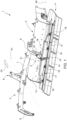
Figure 1 is a perspective view, with parts removed for clarity, of a snow tiller in accordance with the present invention; -
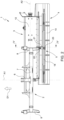
Figure 2 is a view from above, with parts removed for clarity, of the snow tiller inFigure 1 ; -
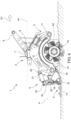
Figures 3 and4 are section views, with parts removed for clarity, of the snow tiller inFigure 1 along the section lines IV-IV, and in respective operating configurations; and -
Figures 5 and6 are rear views, with parts removed for clarity, of the snow tiller inFigure 1 in respective operational configurations. - With reference to
Figures 1 and2 , thenumber 1 indicates asnow tiller 1, as a whole, for the preparation of the snow cover on ski runs. Thesnow tiller 1 mainly extends symmetrically on opposite sides with respect to a longitudinal axis A1 and is configured to be dragged over the snow cover in a traveling direction D1 by means of a tracked vehicle (not shown in the attached figures). Thesnow tiller 1 is connected by means of a drawbar (not shown in the attached figures) to the tracked vehicle (not shown). - Throughout the present description, the terms "front", "rear", "frontal", and "side" will specifically refer to the traveling direction D1 of the
snow tiller 1. - The
snow tiller 1 comprises aframe 2; two tiller modules 3 (one of which is not shown) supported by theframe 2 and substantially aligned in a transverse direction with respect to the longitudinal axis A1; a finisher 4 at the rear; and anadjusting assembly 5 for eachtiller module 3. - The
frame 2 comprises afront hitch 6 configured to be connected to the drawbar (not shown in the attached figures); asupport bar 7; twoforks 8, each of which is configured to support arespective tiller module 3 and to enable small oscillations of thetiller module 3 around an axis parallel to the longitudinal axis A1. - Each
tiller module 3 is suspended from therespective fork 8, so that it can oscillate, and is hinged to theadjacent tiller module 3 so that thesnow tiller 1 is able to adapt to the ground hollows transverse to the traveling direction D1. - With reference to
Figures 3 and4 , theframe 2 comprises asupport 9 coupled to arespective fork 8 and configured to support theadjusting assembly 5. - Each
tiller module 3 comprises amotorised shaft 10, which rotates around a rotation axis A2 that extends in a direction substantially transversal to the longitudinal axis A1 and is equipped with a plurality oftools 11 configured to penetrate the snow cover; and acasing 12 arranged around theshaft 10 and configured to define aprocessing chamber 13 in which the snow is processed. In the embodiment shown, thecasing 12 also has a bearing function to support theshaft 10 and to connect thetiller module 3 to theframe 2. - The finisher 4 comprises a
flexible mat 14 coupled to thecasing 12 to define the continuation of thecasing 12; and apressure bar 15 that extends in a direction transverse to the longitudinal axis A1 and is fixed above theflexible mat 14. - The
flexible mat 14 comprises aportion 16 that extends from thecasing 12 to thepressure bar 15 and can be configured according to the distance between thepressure bar 15 and thecasing 12. - With reference to
Figure 1 , thepressure bar 15 is made up ofsections 17, which are rigid and coupled to each other so as to enable small relative oscillations betweenadjacent sections 17 around axes substantially parallel to the longitudinal axis A1 and, thus, to adapt thepressure bar 15 and theflexible mat 14 to the irregularities and undulations of the snow cover transversely to the traveling direction D1. Preferably, thesections 17 are made of metallic material, especially aluminium. - The
adjusting assembly 5 comprises acrossbar 18 that extends transversely to the longitudinal axis A1 directly above thepressure bar 15, and is coupled to thepressure bar 15 and to thesupport 9. - In particular, the
crossbar 18 is connected to eachsection 17 of thepressure bar 15 by means of respective connectingelements 19. - In a particular, non-limiting embodiment of the present invention, each connecting
element 19 comprises an articulated head so as to enable small independent oscillations of eachsection 17 of thepressure bar 15 around a plurality of axes passing through the respective articulated head. - With reference to
Figures 3 and4 , the adjustingassembly 5 comprises a universal joint 20 to connect thecrossbar 18 to thesupport 9, and alinear actuator 21, which is coupled to theframe 2 by means of auniversal joint 22 and to thecrossbar 18 by means of auniversal joint 23. - The
linear actuator 21 is a hydraulic cylinder selectively controlled by force and in a position to adjust the distance between thepressure bar 15 and thecasing 12. - In a non-limiting example of the present invention, the
snow tiller 1 comprises twoadjusting assemblies 5, in which eachlinear actuator 21 is coupled to therespective fork 8 and in which eachcrossbar 18 is coupled to therespective support 9. - In more detail, a housing for the
universal joint 20, which is a spherical joint, is located in the central portion of the body of thecrossbar 18. - In a non-limiting embodiment of the present invention, the
linear actuator 21 is a double-acting hydraulic cylinder the ends of which are coupled, respectively, to theframe 2 by means of auniversal joint 22 and to thecrossbar 18 by means of auniversal joint 23. - In particular, a central portion of the
crossbar 18 comprises a seat for connecting to thelinear actuator 21 by means of theuniversal joint 23, which comprises an articulated head. - In use, the adjusting
assembly 5 enables the selective adjustment of the distance between thepressure bar 15 and thecasing 12, by means of adjusting the length of thelinear actuator 21. The adjustment of the distance between thepressure bar 15 and thecasing 12 enables the configuration of theportion 16 offlexible mat 14, between thepressure bar 15 and thecasing 12, to be adjusted, thus varying the amount of snow present in theprocessing chamber 13. In particular, with reference toFigure 3 , when thelinear actuator 21 is extended, thecrossbar 18 rotates counter-clockwise around an axis passing through theuniversal joint 20 and parallel to the extension direction of thecrossbar 18, causing thepressure rod 15 to approach thecasing 12. In this configuration, theportion 16 of theflexible mat 14 is compressed and arches, defining a concavity towards the top. - In contrast, with reference to
Figure 4 , when thelinear actuator 21 is retracted, the distance between thepressure bar 15 and thecasing 12 is greater than when thelinear actuator 21 is extended. In this configuration, theportion 16 offlexible mat 14 is stretched out and takes on a substantially flat shape. In this configuration, the accumulation of snow in theprocessing chamber 13 is reduced. The configuration shown inFigure 4 with a substantially reduced snow accumulation is suitable for processing snow covers with fresh or soft snow, while the configuration inFigure 3 accommodates a greater snow accumulation in theprocessing chamber 13 and is suitable for working with icy snow covers. - In a particular embodiment, the length of the
linear actuator 21 is manually controlled by the driver of the tracked vehicle by means of a special control interface arranged in the cab (not shown in the attached figures). - In a particular embodiment, the length of the
linear actuator 21 is controlled automatically. In particular, the length of thelinear actuator 21 is controlled according to some parameters detected by special sensors (not shown in the attached figures), preferably according to the properties of the snow cover, the height of theshaft 10 with respect to the snow cover, and the position of theshaft 10 with respect to thecasing 12. - With reference to
Figures 5 and6 , theuniversal joint 20, which is a spherical joint, enables thecrossbar 18 to oscillate, in a controlled manner, around an axis transverse to the longitudinal axis A1 and passing through the universal joint 20 in order to adjust the distance between thepressure bar 15 and thecasing 12. However, it also enables thecrossbar 18 to oscillate freely around the universal joint 20 to adapt thepressure bar 15 and theflexible mat 14 to the transverse profile of the ski run, independently of thetiller module 3. In this way, theflexible mat 14 is able to remain in constant contact with the snow cover, even when the ski run has close variations in the transverse profile in the traveling direction D1. - The adaptation of the
pressure bar 15 to the snow cover conformation is also favoured by the connectingelements 19 comprising the articulated heads that make it possible for eachsection 17 to make small independent oscillations around a plurality of axes. - In a particular, non-limiting embodiment of the present invention, a plane P on which the rotation axis A2 lies and passing through the
universal joint 20 identifies a first spatial region above the plane P and a second spatial region below the plane P. Thelinear actuator 21 is arranged in the first spatial region, while thepressure bar 15 and the end of theflexible mat 14, which is connected to thecasing 12, are arranged in the second spatial region. - Thanks to the possibility of adjusting the configuration of the
portion 16 of themat 14, the amount of snow contained in theprocessing chamber 13 can be selectively adjusted so as to enable sufficient snow accumulation, when processing a snow cover, in order to level out irregularities in the snow cover or to avoid excessive amounts of tilled snow in theprocessing chamber 13 when not required. - It is apparent that variations can be made to the present invention without departing from the scope of the appended claims.
Claims (8)
- A snow tiller for the preparation of a snow cover of ski runs, the snow tiller (1) being configured to be advanced in a traveling direction (D1) and comprising:- a frame (2) extending symmetrically on opposite sides of a longitudinal axis (A1) parallel to the traveling direction (D1);- at least one tiller module (3) coupled to the frame (2) and comprising a shaft (10), which rotates around a rotation axis (A2) transversal to the longitudinal axis (A1) and is equipped with a plurality of tools (11) configured to penetrate the snow cover; and a casing (12), which is arranged around the shaft (10) and delimits a processing chamber in which the snow is processed;- a finisher (4), which comprises a flexible mat (14), which is configured to define a support area for the snow tiller (1) on the snow cover and comprises an end coupled to the casing (12); and a pressure bar (15) which extends transversely to the longitudinal axis (A1), and is fixed to the flexible mat (14) at a distance from the end coupled to the casing (12); and- at least one adjusting assembly (5) connected to the pressure bar (15) and to the frame (2) and/or casing (12) and configured to allow a free oscillation of the pressure bar (15) around an axis parallel to the longitudinal axis (A1) of the snow tiller (1), and selectively adjust the distance between the pressure bar (15) and the casing (12), such that the portion of flexible mat (14) between the pressure bar (15) and the casing (12) can take on a plurality of configurations between an extended configuration, to be used in fresh snow conditions, and an arched configuration, with a concavity facing upwards, to increase the accumulation of snow in the processing chamber (13) and the levelling of irregularities in the snow cover;wherein the at least one adjusting assembly (5) comprises a crossbar (18), which extends transversely to the longitudinal axis (A1), and is coupled to the pressure bar (15) and, by means of a spherical joint (20), to the frame (2);wherein a plane (P) on which the axis of rotation (A2) lies and passing through the spherical joint (20) identifies a spatial region under the plane (P); the pressure bar (15) and the end of the flexible mat (14) coupled to the casing (12) being arranged in said spatial region.
- The snow tiller as claimed in Claim 1, wherein the adjusting assembly (5) is configured to selectively control the oscillation of the pressure bar (15) around an axis transverse to the longitudinal axis (A1) to adjust the distance between the pressure bar (15) and the casing (12).
- The snow tiller as claimed in Claim 1 or 2, wherein the adjusting assembly (5) comprises a linear actuator (21) coupled to the frame (2) by means of a first universal joint (22) and coupled to the crossbar (18) by means of a second universal joint (23); the linear actuator (21) being configured to control an oscillation of the crossbar (18) around an axis passing through the spherical joint (20) and transversal to the longitudinal axis (A1) to adjust the distance between the pressure bar (15) and the casing (12).
- The snow tiller as claimed in Claim 3, wherein the first universal joint (22) comprises an articulated head and/or the second universal joint (23) comprises an articulated head.
- The snow tiller as claimed in any one of the foregoing Claims, wherein the pressure bar (15) is coupled to the crossbar (18) and to the flexible mat (14) so as to allow a substantially translatory movement of the pressure bar (15) along a direction substantially parallel to the longitudinal axis (A1).
- The snow tiller as claimed in Claim 5, wherein the pressure bar (15) is made up of sections (17), which are rigid and coupled to each other so as to allow relative oscillations between the sections (17) with respect to axes substantially parallel to the longitudinal axis (A1); the cross bar (18) being connected to each section (17) by a connecting element (19) shaped like an articulated head.
- The snow tiller as claimed in any one of the foregoing Claims, wherein the cross bar (18) is coupled to the pressure bar (15) so that the cross bar (18) and the pressure bar (15) are configured to oscillate solidly around an axis passing through the spherical joint (20) and transverse to the longitudinal axis (A1).
- The snow tiller as claimed in any of the claims 3 to 7, in which the linear actuator (21) comprises a double-acting hydraulic cylinder controlled by force.
Applications Claiming Priority (2)
| Application Number | Priority Date | Filing Date | Title |
|---|---|---|---|
| IT102019000002017A IT201900002017A1 (en) | 2019-02-12 | 2019-02-12 | SNOW BLOWER FOR THE PREPARATION OF SKI SLOPES |
| PCT/IB2020/051142 WO2020165799A1 (en) | 2019-02-12 | 2020-02-12 | A snow tiller for the preparation of ski runs |
Publications (3)
| Publication Number | Publication Date |
|---|---|
| EP3924552A1 EP3924552A1 (en) | 2021-12-22 |
| EP3924552B1 true EP3924552B1 (en) | 2025-01-15 |
| EP3924552C0 EP3924552C0 (en) | 2025-01-15 |
Family
ID=66476752
Family Applications (1)
| Application Number | Title | Priority Date | Filing Date |
|---|---|---|---|
| EP20705119.4A Active EP3924552B1 (en) | 2019-02-12 | 2020-02-12 | A snow tiller for the preparation of ski runs |
Country Status (6)
| Country | Link |
|---|---|
| US (1) | US12221755B2 (en) |
| EP (1) | EP3924552B1 (en) |
| CN (1) | CN113728139A (en) |
| CA (1) | CA3129287A1 (en) |
| IT (1) | IT201900002017A1 (en) |
| WO (1) | WO2020165799A1 (en) |
Families Citing this family (4)
| Publication number | Priority date | Publication date | Assignee | Title |
|---|---|---|---|---|
| CN114250737A (en) * | 2020-09-24 | 2022-03-29 | 普瑞诺斯股份公司 | Snow pressing vehicle and method for controlling snow pressing vehicle |
| DE102022200466B4 (en) * | 2022-01-18 | 2024-08-01 | Kässbohrer Geländefahrzeug Aktiengesellschaft | Snow groomer with a driver's cab and with a rear tiller and rear tiller for a snow groomer with a driver's cab |
| DE102022208600A1 (en) * | 2022-08-18 | 2024-02-29 | Kässbohrer Geländefahrzeug Aktiengesellschaft | Rear cutter for a snow groomer and snow groomer |
| CA3289974A1 (en) | 2024-10-30 | 2026-05-13 | Prinoth S.P.A. | Snow tiller |
Citations (1)
| Publication number | Priority date | Publication date | Assignee | Title |
|---|---|---|---|---|
| DE4101617A1 (en) * | 1990-01-22 | 1991-07-25 | Bombardier Inc | PLANING DEVICE FOR SNOW AREAS AND METHOD FOR THE PREPARATION AND / OR MAINTENANCE OF A SNOW AREA |
Family Cites Families (12)
| Publication number | Priority date | Publication date | Assignee | Title |
|---|---|---|---|---|
| DE8536530U1 (en) * | 1985-12-24 | 1986-04-24 | Karl Kässbohrer Fahrzeugwerke GmbH, 7900 Ulm | Snow blower |
| US4788783A (en) * | 1987-03-24 | 1988-12-06 | Bachler Anton R | Ski-track forming apparatus |
| US5067264A (en) * | 1987-04-21 | 1991-11-26 | Logan Manufacturing Company | Flexible rotary snow tiller |
| US4897941A (en) * | 1988-08-21 | 1990-02-06 | Logan Manufacturing Company | Snow grooming comb |
| DE9217472U1 (en) * | 1992-12-21 | 1993-02-25 | Karl Kässbohrer Fahrzeugwerke GmbH, 7900 Ulm | Piste grooming device |
| DE102006057272B4 (en) * | 2006-11-23 | 2011-11-10 | Kässbohrer Geländefahrzeug AG | Piste grooming device for a motor vehicle, in particular a tracked vehicle |
| ITMI20070565A1 (en) * | 2007-03-21 | 2008-09-22 | Prinoth Spa | MILL FOR THE PREPARATION OF THE SNOWY SKI SLOPE |
| ITMI20071783A1 (en) * | 2007-09-14 | 2009-03-15 | Rolic Invest Sarl | ROTATING SNOW MILL FOR THE PREPARATION OF THE SNOWY SKI SLOPE |
| ITUA20162388A1 (en) * | 2016-04-07 | 2017-10-07 | Prinoth Spa | APPARATUS FOR REALIZING A SKI SLOPE TRACK |
| CN106884401B (en) * | 2017-04-07 | 2018-07-03 | 广西玉林悍牛工程机器有限公司 | Press sled snowplow scraper plate compaction apparatus |
| CN207582403U (en) * | 2017-10-24 | 2018-07-06 | 北京宾度明德滑雪设备有限公司 | A kind of trail leveling vehicle |
| IT201800003000A1 (en) * | 2018-02-23 | 2019-08-23 | Prinoth Spa | SNOW BLOWER AND RELEVANT ADJUSTMENT METHOD |
-
2019
- 2019-02-12 IT IT102019000002017A patent/IT201900002017A1/en unknown
-
2020
- 2020-02-12 EP EP20705119.4A patent/EP3924552B1/en active Active
- 2020-02-12 US US17/429,566 patent/US12221755B2/en active Active
- 2020-02-12 CN CN202080013454.6A patent/CN113728139A/en active Pending
- 2020-02-12 CA CA3129287A patent/CA3129287A1/en active Pending
- 2020-02-12 WO PCT/IB2020/051142 patent/WO2020165799A1/en not_active Ceased
Patent Citations (1)
| Publication number | Priority date | Publication date | Assignee | Title |
|---|---|---|---|---|
| DE4101617A1 (en) * | 1990-01-22 | 1991-07-25 | Bombardier Inc | PLANING DEVICE FOR SNOW AREAS AND METHOD FOR THE PREPARATION AND / OR MAINTENANCE OF A SNOW AREA |
Also Published As
| Publication number | Publication date |
|---|---|
| IT201900002017A1 (en) | 2020-08-12 |
| WO2020165799A1 (en) | 2020-08-20 |
| US12221755B2 (en) | 2025-02-11 |
| CA3129287A1 (en) | 2020-08-20 |
| EP3924552A1 (en) | 2021-12-22 |
| CN113728139A (en) | 2021-11-30 |
| EP3924552C0 (en) | 2025-01-15 |
| US20220106750A1 (en) | 2022-04-07 |
Similar Documents
| Publication | Publication Date | Title |
|---|---|---|
| US12221755B2 (en) | Snow tiller for the preparation of ski runs | |
| US4651451A (en) | Lightweight snow compactor for ski runs | |
| CA2008235C (en) | Variable geometry tiller | |
| US20030010010A1 (en) | Cutting mechanism for harvesters | |
| RU2001109114A (en) | Agricultural sweeper | |
| US10299421B2 (en) | Biasing system for harrows | |
| US10119233B2 (en) | Plow assembly with cushioning attachment | |
| US4905466A (en) | Windrow mover | |
| CN110184986B (en) | Snow plough and adjusting method thereof | |
| CA2956162C (en) | Tracked piste grooming vehicle for maintenance and shaping of snowy terrain | |
| KR20110099314A (en) | Devices for controlling the track tension wheels of track vehicles | |
| CA2359861C (en) | Towed implement | |
| US6079193A (en) | Implement suspension with lost motion coupling | |
| US20030154633A1 (en) | Snow groomer with a variable snowchamber tiller assembly | |
| US4487267A (en) | Agricultural apparatus with tool supported thereon and wheel adjustment structure therefor | |
| DK3085836T3 (en) | snowplow | |
| JP5217228B2 (en) | Crawler type agricultural tractor | |
| DK201400551A1 (en) | Vehicle Comprising a Track Device | |
| EP2522779B1 (en) | Improved snowplow for plowing snow | |
| US8042873B2 (en) | Driver's seat of work vehicle | |
| KR20220022988A (en) | Harrow for tractor | |
| FI126587B (en) | Sub-plow for a vehicle | |
| JP3213251B2 (en) | Support structure for pre-cutting device of reaper | |
| WO2001071098A1 (en) | Snow groomer with a variable snowchamber tiller assembly | |
| CA2403753A1 (en) | Snow groomer with a variable snowchamber tiller assembly |
Legal Events
| Date | Code | Title | Description |
|---|---|---|---|
| STAA | Information on the status of an ep patent application or granted ep patent |
Free format text: STATUS: UNKNOWN |
|
| STAA | Information on the status of an ep patent application or granted ep patent |
Free format text: STATUS: THE INTERNATIONAL PUBLICATION HAS BEEN MADE |
|
| PUAI | Public reference made under article 153(3) epc to a published international application that has entered the european phase |
Free format text: ORIGINAL CODE: 0009012 |
|
| STAA | Information on the status of an ep patent application or granted ep patent |
Free format text: STATUS: REQUEST FOR EXAMINATION WAS MADE |
|
| 17P | Request for examination filed |
Effective date: 20210823 |
|
| AK | Designated contracting states |
Kind code of ref document: A1 Designated state(s): AL AT BE BG CH CY CZ DE DK EE ES FI FR GB GR HR HU IE IS IT LI LT LU LV MC MK MT NL NO PL PT RO RS SE SI SK SM TR |
|
| DAV | Request for validation of the european patent (deleted) | ||
| DAX | Request for extension of the european patent (deleted) | ||
| P01 | Opt-out of the competence of the unified patent court (upc) registered |
Effective date: 20230518 |
|
| STAA | Information on the status of an ep patent application or granted ep patent |
Free format text: STATUS: EXAMINATION IS IN PROGRESS |
|
| 17Q | First examination report despatched |
Effective date: 20230908 |
|
| GRAP | Despatch of communication of intention to grant a patent |
Free format text: ORIGINAL CODE: EPIDOSNIGR1 |
|
| STAA | Information on the status of an ep patent application or granted ep patent |
Free format text: STATUS: GRANT OF PATENT IS INTENDED |
|
| INTG | Intention to grant announced |
Effective date: 20240816 |
|
| GRAS | Grant fee paid |
Free format text: ORIGINAL CODE: EPIDOSNIGR3 |
|
| GRAA | (expected) grant |
Free format text: ORIGINAL CODE: 0009210 |
|
| STAA | Information on the status of an ep patent application or granted ep patent |
Free format text: STATUS: THE PATENT HAS BEEN GRANTED |
|
| AK | Designated contracting states |
Kind code of ref document: B1 Designated state(s): AL AT BE BG CH CY CZ DE DK EE ES FI FR GB GR HR HU IE IS IT LI LT LU LV MC MK MT NL NO PL PT RO RS SE SI SK SM TR |
|
| REG | Reference to a national code |
Ref country code: CH Ref legal event code: EP Ref country code: GB Ref legal event code: FG4D |
|
| REG | Reference to a national code |
Ref country code: DE Ref legal event code: R096 Ref document number: 602020044759 Country of ref document: DE |
|
| REG | Reference to a national code |
Ref country code: IE Ref legal event code: FG4D |
|
| U01 | Request for unitary effect filed |
Effective date: 20250115 |
|
| U07 | Unitary effect registered |
Designated state(s): AT BE BG DE DK EE FI FR IT LT LU LV MT NL PT RO SE SI Effective date: 20250121 |
|
| P04 | Withdrawal of opt-out of the competence of the unified patent court (upc) registered |
Free format text: CASE NUMBER: APP_2818/2025 Effective date: 20250117 |
|
| U20 | Renewal fee for the european patent with unitary effect paid |
Year of fee payment: 6 Effective date: 20250212 |
|
| PG25 | Lapsed in a contracting state [announced via postgrant information from national office to epo] |
Ref country code: RS Free format text: LAPSE BECAUSE OF FAILURE TO SUBMIT A TRANSLATION OF THE DESCRIPTION OR TO PAY THE FEE WITHIN THE PRESCRIBED TIME-LIMIT Effective date: 20250415 |
|
| PG25 | Lapsed in a contracting state [announced via postgrant information from national office to epo] |
Ref country code: PL Free format text: LAPSE BECAUSE OF FAILURE TO SUBMIT A TRANSLATION OF THE DESCRIPTION OR TO PAY THE FEE WITHIN THE PRESCRIBED TIME-LIMIT Effective date: 20250115 |
|
| PG25 | Lapsed in a contracting state [announced via postgrant information from national office to epo] |
Ref country code: ES Free format text: LAPSE BECAUSE OF FAILURE TO SUBMIT A TRANSLATION OF THE DESCRIPTION OR TO PAY THE FEE WITHIN THE PRESCRIBED TIME-LIMIT Effective date: 20250115 |
|
| PG25 | Lapsed in a contracting state [announced via postgrant information from national office to epo] |
Ref country code: IS Free format text: LAPSE BECAUSE OF FAILURE TO SUBMIT A TRANSLATION OF THE DESCRIPTION OR TO PAY THE FEE WITHIN THE PRESCRIBED TIME-LIMIT Effective date: 20250515 Ref country code: NO Free format text: LAPSE BECAUSE OF FAILURE TO SUBMIT A TRANSLATION OF THE DESCRIPTION OR TO PAY THE FEE WITHIN THE PRESCRIBED TIME-LIMIT Effective date: 20250415 |
|
| PG25 | Lapsed in a contracting state [announced via postgrant information from national office to epo] |
Ref country code: HR Free format text: LAPSE BECAUSE OF FAILURE TO SUBMIT A TRANSLATION OF THE DESCRIPTION OR TO PAY THE FEE WITHIN THE PRESCRIBED TIME-LIMIT Effective date: 20250115 |
|
| PG25 | Lapsed in a contracting state [announced via postgrant information from national office to epo] |
Ref country code: GR Free format text: LAPSE BECAUSE OF FAILURE TO SUBMIT A TRANSLATION OF THE DESCRIPTION OR TO PAY THE FEE WITHIN THE PRESCRIBED TIME-LIMIT Effective date: 20250416 |
|
| PG25 | Lapsed in a contracting state [announced via postgrant information from national office to epo] |
Ref country code: SM Free format text: LAPSE BECAUSE OF FAILURE TO SUBMIT A TRANSLATION OF THE DESCRIPTION OR TO PAY THE FEE WITHIN THE PRESCRIBED TIME-LIMIT Effective date: 20250115 |
|
| PG25 | Lapsed in a contracting state [announced via postgrant information from national office to epo] |
Ref country code: MC Free format text: LAPSE BECAUSE OF FAILURE TO SUBMIT A TRANSLATION OF THE DESCRIPTION OR TO PAY THE FEE WITHIN THE PRESCRIBED TIME-LIMIT Effective date: 20250115 |
|
| PG25 | Lapsed in a contracting state [announced via postgrant information from national office to epo] |
Ref country code: CZ Free format text: LAPSE BECAUSE OF FAILURE TO SUBMIT A TRANSLATION OF THE DESCRIPTION OR TO PAY THE FEE WITHIN THE PRESCRIBED TIME-LIMIT Effective date: 20250115 |
|
| PG25 | Lapsed in a contracting state [announced via postgrant information from national office to epo] |
Ref country code: SK Free format text: LAPSE BECAUSE OF FAILURE TO SUBMIT A TRANSLATION OF THE DESCRIPTION OR TO PAY THE FEE WITHIN THE PRESCRIBED TIME-LIMIT Effective date: 20250115 |
|
| PLBE | No opposition filed within time limit |
Free format text: ORIGINAL CODE: 0009261 |
|
| STAA | Information on the status of an ep patent application or granted ep patent |
Free format text: STATUS: NO OPPOSITION FILED WITHIN TIME LIMIT |
|
| REG | Reference to a national code |
Ref country code: CH Ref legal event code: L10 Free format text: ST27 STATUS EVENT CODE: U-0-0-L10-L00 (AS PROVIDED BY THE NATIONAL OFFICE) Effective date: 20251126 |
|
| 26N | No opposition filed |
Effective date: 20251016 |
|
| GBPC | Gb: european patent ceased through non-payment of renewal fee |
Effective date: 20250415 |
|
| PG25 | Lapsed in a contracting state [announced via postgrant information from national office to epo] |
Ref country code: GB Free format text: LAPSE BECAUSE OF NON-PAYMENT OF DUE FEES Effective date: 20250415 |
|
| PG25 | Lapsed in a contracting state [announced via postgrant information from national office to epo] |
Ref country code: IE Free format text: LAPSE BECAUSE OF NON-PAYMENT OF DUE FEES Effective date: 20250212 |
|
| U20 | Renewal fee for the european patent with unitary effect paid |
Year of fee payment: 7 Effective date: 20260109 |
|
| REG | Reference to a national code |
Ref country code: CH Ref legal event code: U11 Free format text: ST27 STATUS EVENT CODE: U-0-0-U10-U11 (AS PROVIDED BY THE NATIONAL OFFICE) Effective date: 20260301 |
|
| PGFP | Annual fee paid to national office [announced via postgrant information from national office to epo] |
Ref country code: CH Payment date: 20260301 Year of fee payment: 7 |
|
| PG25 | Lapsed in a contracting state [announced via postgrant information from national office to epo] |
Ref country code: CY Free format text: LAPSE BECAUSE OF FAILURE TO SUBMIT A TRANSLATION OF THE DESCRIPTION OR TO PAY THE FEE WITHIN THE PRESCRIBED TIME-LIMIT Effective date: 20250115 |
|
| PG25 | Lapsed in a contracting state [announced via postgrant information from national office to epo] |
Ref country code: TR Free format text: LAPSE BECAUSE OF FAILURE TO SUBMIT A TRANSLATION OF THE DESCRIPTION OR TO PAY THE FEE WITHIN THE PRESCRIBED TIME-LIMIT Effective date: 20250115 |