EP3920657B1 - Method and apparatus for accessing wifi network - Google Patents
Method and apparatus for accessing wifi network Download PDFInfo
- Publication number
- EP3920657B1 EP3920657B1 EP21168002.0A EP21168002A EP3920657B1 EP 3920657 B1 EP3920657 B1 EP 3920657B1 EP 21168002 A EP21168002 A EP 21168002A EP 3920657 B1 EP3920657 B1 EP 3920657B1
- Authority
- EP
- European Patent Office
- Prior art keywords
- wifi
- wifi network
- access
- network
- terminal
- Prior art date
- Legal status (The legal status is an assumption and is not a legal conclusion. Google has not performed a legal analysis and makes no representation as to the accuracy of the status listed.)
- Active
Links
Images




Classifications
-
- H—ELECTRICITY
- H04—ELECTRIC COMMUNICATION TECHNIQUE
- H04W—WIRELESS COMMUNICATION NETWORKS
- H04W48/00—Access restriction; Network selection; Access point selection
- H04W48/18—Selecting a network or a communication service
-
- H—ELECTRICITY
- H04—ELECTRIC COMMUNICATION TECHNIQUE
- H04L—TRANSMISSION OF DIGITAL INFORMATION, e.g. TELEGRAPHIC COMMUNICATION
- H04L69/00—Network arrangements, protocols or services independent of the application payload and not provided for in the other groups of this subclass
- H04L69/12—Protocol engines
-
- H—ELECTRICITY
- H04—ELECTRIC COMMUNICATION TECHNIQUE
- H04W—WIRELESS COMMUNICATION NETWORKS
- H04W48/00—Access restriction; Network selection; Access point selection
- H04W48/16—Discovering, processing access restriction or access information
-
- H—ELECTRICITY
- H04—ELECTRIC COMMUNICATION TECHNIQUE
- H04W—WIRELESS COMMUNICATION NETWORKS
- H04W76/00—Connection management
- H04W76/10—Connection setup
-
- H—ELECTRICITY
- H04—ELECTRIC COMMUNICATION TECHNIQUE
- H04W—WIRELESS COMMUNICATION NETWORKS
- H04W80/00—Wireless network protocols or protocol adaptations to wireless operation
- H04W80/02—Data link layer protocols
-
- H—ELECTRICITY
- H04—ELECTRIC COMMUNICATION TECHNIQUE
- H04W—WIRELESS COMMUNICATION NETWORKS
- H04W88/00—Devices specially adapted for wireless communication networks, e.g. terminals, base stations or access point devices
- H04W88/02—Terminal devices
- H04W88/06—Terminal devices adapted for operation in multiple networks or having at least two operational modes, e.g. multi-mode terminals
-
- H—ELECTRICITY
- H04—ELECTRIC COMMUNICATION TECHNIQUE
- H04L—TRANSMISSION OF DIGITAL INFORMATION, e.g. TELEGRAPHIC COMMUNICATION
- H04L69/00—Network arrangements, protocols or services independent of the application payload and not provided for in the other groups of this subclass
- H04L69/14—Multichannel or multilink protocols
-
- H—ELECTRICITY
- H04—ELECTRIC COMMUNICATION TECHNIQUE
- H04W—WIRELESS COMMUNICATION NETWORKS
- H04W28/00—Network traffic management; Network resource management
- H04W28/02—Traffic management, e.g. flow control or congestion control
- H04W28/08—Load balancing or load distribution
- H04W28/086—Load balancing or load distribution among access entities
-
- H—ELECTRICITY
- H04—ELECTRIC COMMUNICATION TECHNIQUE
- H04W—WIRELESS COMMUNICATION NETWORKS
- H04W28/00—Network traffic management; Network resource management
- H04W28/02—Traffic management, e.g. flow control or congestion control
- H04W28/08—Load balancing or load distribution
- H04W28/09—Management thereof
- H04W28/0925—Management thereof using policies
-
- H—ELECTRICITY
- H04—ELECTRIC COMMUNICATION TECHNIQUE
- H04W—WIRELESS COMMUNICATION NETWORKS
- H04W84/00—Network topologies
- H04W84/02—Hierarchically pre-organised networks, e.g. paging networks, cellular networks, WLAN [Wireless Local Area Network] or WLL [Wireless Local Loop]
- H04W84/10—Small scale networks; Flat hierarchical networks
- H04W84/12—WLAN [Wireless Local Area Networks]
Definitions
- This application relates to the field of Wireless Fidelity (English: Wireless-Fidelity, WIFI for short) technologies, and in particular, to a method and an apparatus for accessing a WiFi network.
- Wireless Fidelity English: Wireless-Fidelity, WIFI for short
- WiFi allows a terminal to be connected to a wireless local area network (English: WLAN), and generally operates on a radio frequency band of 2.4 GHz or 5 GHz.
- a WiFi technology is also a short-range wireless communications technology, is a network transmission standard, and has already been widely applied to daily life. For example, in areas such as a house, an airport, a coffee shop, and a shopping mall, a user can experience a high-speed network by using a mobile electronic device (that is, a terminal) to access a WiFi access point (English: Access Point, AP for short) or a WiFi hotspot.
- a mobile electronic device that is, a terminal
- AP Access Point
- a terminal may need to access two WiFi APs at the same time, or in other words, a terminal has a WiFi dual connectivity requirement.
- the terminal may be connected to two different WiFi networks by using two independent WiFi connection channels, so that the two WiFi networks operate on a same frequency band or different radio frequency bands.
- one WiFi network connected to the terminal operates on a radio frequency band of 2.4 GHz and the other WiFi network operates on a radio frequency band of 5 GHz.
- the two WiFi networks each operate on a radio frequency band of 5 GHz.
- An existing WiFi dual connectivity technology is implemented mostly based on a terminal hardware design and with a lack of an appropriate software layer design. Therefore, how to design an appropriate software architecture to support WiFi dual connectivity becomes a problem.
- Embodiments of this application provide a terminal for accessing a WiFi network, so as to support the terminal in being connected to two or more WiFi networks at the same time, and therefore, WiFi network is applied in a safer and more fluent manner.
- the terminal can be supported in being connected to two or more WiFi networks at the same time by using a software layer design, so that WiFi network is applied in a safer and more fluent manner.
- an appropriate software architecture is designed, so that WiFi dual connectivity and even multi-connectivity of more than two WiFi connections are supported.
- a terminal is described with two or more operating systems, however the claimed embodiment corresponds to the embodiment of this description with one operating system.
- the terminal has two independent operating systems. It may be considered that two containers can operate in the terminal, and there is a safe distance between the two containers, so as to ensure that tasks and data are mutually isolated during operation of the two containers, and ensure privacy of each operating system.
- a user may use one operating system to execute a business task, and use the other operating system to execute a personal task, so that business information or personal information safety can be ensured when the user performs switch operation between different operating systems.
- the operating systems need to be connected to different WiFi APs.
- the embodiments of this application provide a method and an apparatus for accessing a WiFi network and a terminal.
- the terminal mentioned includes at least two WiFi access circuits and can form at least two containers, and when different containers operate, the terminal uses different WiFi access circuits to access corresponding WiFi networks. In this way, it can be ensured that a WiFi network connection is not disconnected when a terminal switches between different operating systems, so that WiFi network application is safer, a service is more fluent, and user experience is improved.
- the operating system mentioned in the embodiments may be an operating system such as Android (Android), iOS, or Windows.
- the terminal mentioned in the embodiments of this application may be a mobile electronic device such as a mobile phone, a notebook computer, or a tablet computer.
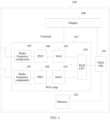
- a terminal 100 in an embodiment of this application includes a main chip 101, a WiFi chip 102, and a memory 103.
- the memory 103 is configured to store a software program.
- An operating system that can be used by the terminal 100 is loaded in the main chip 101.
- the terminal 100 includes at least one body, that is, a main central processing unit (English: Central Processing Unit, CPU for short), that uses the WiFi chip 102, and the main CPU is hereinafter briefly referred to as a processor.
- the at least one processor is coupled to the memory 103, and is configured to read the software program from the memory to run the operating system and application software.
- a WiFi CPU that is, a WIFI processor
- 104 is loaded in the WiFi chip 102.
- the WiFi CPU 104 is a WiFi chip kernel processor, and mainly implements a WiFi-related operation function, for example, is responsible for congestion control, carrier aggregation, frame filtering, key control, frame receiving/transmission management, and the like. It may be understood that the main chip 101 and the WiFi chip 102 may be integrated into one chip.
- N WiFi access circuits are integrated into the WiFi chip 102, and N is a natural number greater than or equal to 2.
- Each of the N WiFi access circuits is used for access to one corresponding WiFi network, and each WiFi access circuit corresponds to one independent Media Access Control (English: Media Access Control, MAC for short) 105 and one independent physical layer (English: physical layer, PHY for short) 106.
- N MACs 105 and N PHYs 106 share one WiFi CPU 104, and can receive/transmit data at the same time, so as to implement a dual-band dual-concurrent (Dual-Band Dual-Concurrent, DBDC) function.
- Functions of the MAC 105 mainly include channel access, group deframing, data receiving/transmission, encryption/decryption, and energy conservation control.
- the MAC 105 may be implemented by using independent hardware such as an independent digital signal processor. Certainly, the MAC 105 may be implemented by using the WiFi CPU 104, that is, functions of the MAC 105 are implemented by using the WiFi CPU 104. FIG. 1 is merely used for reference, and does not impose any limitation.
- the PHY 106 mainly implements a physical layer function such as digital baseband processing.
- the WiFi chip 102 further includes a radio frequency component 107.
- the radio frequency component 107 converts a baseband signal processed by the MAC 105 and the PHY 106 into a radio frequency signal during transmission, and converts a radio frequency signal received from an antenna into a baseband signal during receiving, so that the PHY 106 and the MAC 105 perform further processing.
- the WiFi CPU 104 may be replaced with a DSP (digital signal processor) or an independent FPGA (field programmable gate array) chip.
- DSP digital signal processor
- FPGA field programmable gate array
- the at least one processor in the main chip 101 may run the software program to form M containers.
- Each container corresponds to one operating system, the M containers are capable of operating at the same time, each container corresponds to one WiFi network access service, the terminal 100 uses different operating systems when different containers operate, and tasks and data of different WiFi network access services during operation of different containers are mutually isolated, that is, each container has an independent task and independent data, and different containers are corresponding to tasks that do not interfere with each other and data that does not interfere with each other.
- the terminal 100 switches between the operation of different containers.
- the two operating systems may be of different types such as an Android system and a Windows system, or may be of a same type such as dual Android systems.
- Two operating systems of a same type that implement dual-WiFi concurrence may use different kernels, or may use a same kernel, but in the two systems or two containers, data is isolated and user operations are isolated in a specific manner.
- a dual-container intelligent terminal is relatively widely applied.
- One operating system may be corresponding to business application, and the other operating system may be corresponding to personal application.
- the method provided in this application may be applied to a terminal in which at least two containers operate, and optionally, applied to a dual-container terminal.
- the container is software that keeps together an operating system program or an application program and a running component of the operating system program or the application program.
- the container is configured to pack the operating system program or the application program, a library, and another binary file required for running of the operating system program or the application program, so that an independent operating system environment can be provided for the operating system program or the application program.
- each software container may include at least a part of a corresponding operating system.
- each software container may not include an operating system kernel, and in this case, the container may be faster and more flexible than a virtual machine.
- one container may be corresponding to one operating system, and two operating systems may be mutually isolated, so that operations of the two operating systems do not interfere with each other.
- the container mentioned in each embodiment of this application may include one of at least a part of a corresponding operating system (that may selectively include or not include an operating system kernel), a corresponding application program, a corresponding component, corresponding middleware, or a corresponding database, or a combination thereof.
- the container may be configured to implement at least one of a user interface function of a corresponding WiFi network access service, maintenance of an access point start state, or maintenance of a station peer to peer network start state.
- the WiFi CPU 104 is configured to: when a first container in the M containers operates, access a first WiFi network by using a first WiFi access circuit in the N WiFi access circuits, and when the terminal 100 switches from the operation of the first container to operation of a second container in the M containers, access a second WiFi network by using a second WiFi access circuit in the N WiFi access circuits.
- the at least one processor is further configured to: when the WiFi CPU 104 accesses the second WiFi network by using the second WiFi access circuit, continue running the first container in a background running manner, and the WiFi CPU 104 is further configured to continue using the first WiFi access circuit to access the first WiFi network, so as to ensure that a WiFi network connection is not disconnected during switch operation between a foreground operating system and a background operating system.
- the WiFi CPU 104 accesses the first WiFi network according to a preset mapping relationship between containers and WiFi access circuits by using the first WiFi access circuit corresponding to the first container in the N WiFi access circuits; and accesses the second WiFi network according to the mapping relationship by using the second WiFi access circuit corresponding to the second container in the N WiFi access circuits.
- the WiFi CPU 104 when accessing the first WiFi network by using the first WiFi access circuit corresponding to the first container in the N WiFi access circuits, the WiFi CPU 104 performs at least one of channel resource scheduling, Media Access Control, or encryption/decryption related to accessing the first WiFi network; and when accessing the second WiFi network by using the second WiFi access circuit corresponding to the second container in the N WiFi access circuits, the WiFi CPU 104 performs at least one of channel resource scheduling, Media Access Control, or encryption/decryption related to accessing the second WiFi network.
- switch operation between operating systems or corresponding containers is switch operation of the operating systems or the containers between the foreground and the background.
- An operating system or a container is switched from the background to the foreground, and an operating system or a container that originally operates in the foreground is switched to the background.
- Such switch operation does not cause disconnection of a WiFi connection corresponding to an operating system running in the background, and corresponding WiFi data transmission is not disconnected, so as to implement a WiFi dual connectivity and simultaneous data transmission.
- an operating system or a container When an operating system or a container is in a foreground operating state, data or a process of the operating system or the container may be displayed to a user by using a user interface (English: User Interface, UI for short).
- UI User Interface
- a procedure of a method for accessing a WiFi network is as follows:
- the terminal when switching to the operation of the second container, uses the second WiFi access circuit to access the second WiFi network.
- the first WiFi access circuit and the second WiFi access circuit are mutually independent, and therefore, the terminal can continue using the first WiFi access circuit in the background to access the first WiFi network, and a service is not disconnected.
- the terminal presets a mapping relationship between containers and WiFi access circuits, accesses the first WiFi network according to the preset mapping relationship between containers and WiFi access circuits by using the first WiFi access circuit corresponding to the first container in the N WiFi access circuits, and accesses the second WiFi network by using the second WiFi access circuit corresponding to the second container in the N WiFi access circuits.
- an embodiment of this application further provides an apparatus 300 for accessing a WiFi network.
- the apparatus 300 includes M containers 301 that are capable of operating at the same time and a WiFi module 302.
- Each container 301 corresponds to one WiFi network access service, tasks and data of different WiFi network access services during operation of different containers 301 are mutually isolated, and the M containers 301 include a first container 301-1 and a second container 301-2.
- the WiFi module 302 is configured to: when the first container 301-1 operates, access a first WiFi network by using a first WiFi access circuit; and is further configured to: when the apparatus 300 switches from the operation of the first container 301-1 to the operation of the second container 301-2, access a second WiFi network by using a second WiFi access circuit.
- the first container 301-1 is further configured to: when the WiFi module 302 accesses the second WiFi network by using the second WiFi access circuit, continue operating in a background running manner, and the WiFi module 302 is further configured to continue using the first WiFi access circuit to access the first WiFi network.
- M and N are natural numbers greater than or equal to 2.
- M is equal to N.
- the WiFi module 302 is configured to access the first WiFi network according to a preset mapping relationship between containers and WiFi access circuits by using the first WiFi access circuit corresponding to the first container 301-1.
- the WiFi module 302 is further configured to access the second WiFi network according to the mapping relationship by using the second WiFi access circuit corresponding to the second container 301-2.
- the WiFi module 302 is further configured to: when accessing the first WiFi network by using the first WiFi access circuit corresponding to the first container 301-1, perform at least one of channel resource scheduling, Media Access Control, or encryption/decryption related to accessing the first WiFi network; and when accessing the second WiFi network by using the second WiFi access circuit corresponding to the second container 301-2, perform at least one of channel resource scheduling, Media Access Control, or encryption/decryption related to accessing the second WiFi network.
- each of the M containers 301 is configured to implement at least one of a user interface function of a corresponding WiFi network access service, maintenance of an access point start state, or maintenance of a station peer to peer network start state.
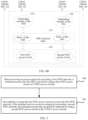
- a terminal 400 may use at least two operating systems.
- OS0 and OS1 an example in which two operating systems: OS0 and OS1 are used is used for description.
- a WiFi setting module 401 For each operating system, the following modules are included: a WiFi setting module 401, an AP state machine 402, a station peer to peer (English: Station Peer to Peer, STA P2P for short) network state machine 403, an interface 404, a network adapter matching module 405, an encryption network access logical entity 406, a WLANO 407, a P2P0 408, a P2P 409, a scheduling module 410, a WiFi protocol stack 411, and a WiFi access circuit 412.
- a WiFi setting module 401 For each operating system, the following modules are included: a WiFi setting module 401, an AP state machine 402, a station peer to peer (English: Station Peer to Peer, STA P2P for short) network state machine 403, an interface 404, a network adapter matching module 405, an encryption network access logical entity 406, a WLANO 407, a P2P0 408, a P2P 409, a scheduling module 410, a WiFi protocol stack 4
- the WiFi setting module 401 is a WiFi utilization interface normally used on an intelligent terminal, that is, a user interface software, and is application software run by a main CPU.
- the AP state machine 402 is used for logical implementation of an AP start state in an installation package of the terminal; is software run by the main CPU or a WiFi CPU; is generally run by the main CPU; and is configured to: receive a report from a bottom layer, obtain an access status such as a connected state or a disconnected state or connection signal strength of a WiFi AP, and deliver the obtained access status of the WiFi AP to the WiFi setting module, so that the WiFi setting module 401 displays the access status of the WiFi AP on a user interface.
- the station peer to peer network state machine 403 is used for logical implementation of a STA P2P connection status in the installation package of the terminal. Similar to the AP state machine, the STA P2P state machine is configured to obtain a status of a P2P point, that is, information about a peer device in WiFi direct transmission, is software run by the main CPU or the WiFi CPU, and is generally run by the main CPU.
- the WiFi setting module 401, the AP state machine 402, and the STA P2P state machine 403 that are corresponding to each operating system are included in one container and are run by the main CPU.
- the AP state machine 402 and the STA P2P state machine 403 learn an operating status of a WiFi part (including a WiFi processor and a WiFi access circuit) by maintaining and managing the access status of the WiFi AP and the connection status of the STA P2P, so that a related status is conveniently delivered to the WiFi setting module 401 at an upper layer, and the WiFi setting module 401 can perform corresponding display.
- the interface 404 is an interface logical protocol stack interface layer, and is only an interface for connecting an upper part and a lower part.
- the network adapter matching module 405 is used for network adapter binding and distribution of called network interfaces, that is, used for implementing a correspondence between a high-layer container and a bottom-layer software module such as the encryption network access logical entity 406, the WLANO 407, the P2P0 408, the P2P 409, the WiFi protocol stack 411, and the WiFi access circuit 412, and is software run by the WiFi CPU.
- the encryption network access logical entity 406 implements a WiFi AP-mode encryption/decryption network access function, and is software run by the WiFi CPU.
- the WLANO 407 is a WLAN communications entity, is software run by the WiFi CPU, and implements a necessary software function required for WLAN communication.
- the P2P0 408 is a P2P communications entity, is software run by the WiFi CPU, and implements a necessary software function required for P2P communication.
- the P2P 409 is a P2P scanning function, is software run by the WiFi CPU, and implements a necessary software function required for P2P scanning.
- the scheduling module 410 is configured to perform scheduling, including channel resource scheduling and the like, between two virtual access points based on one WiFi CPU.
- the WiFi protocol stack 411 includes at least two independent MACs.
- two MACs are used as an example.
- the MAC may be software run by the WiFi CPU, or certainly, may be implemented by using independent MAC hardware instead of WiFi CPU software.
- WiFi module Software run by the WiFi CPU may be collectively referred to as a WiFi module, may selectively include the interface 404, the network adapter matching module 405, the encryption network access logical entity 406, the scheduling module 410, and the WiFi protocol stack 411, and may further include the WLANO 407, the P2P0 408, and the P2P 409.
- At least two WiFi access circuits 412 and the WiFi CPU are all included in a WiFi chip, and the at least two WiFi access circuits 412 may include at least two independent PHY layers and at least two radio frequency components.
- the WiFi access circuit 412 may be implemented by using an integrated circuit, that is, the WiFi CPU and the WiFi access circuits including the independent PHY layers and the radio frequency components may be integrated into the WiFi chip.
- the WiFi access circuits and the WiFi CPU form a complete processor, and the processor is integrated into a semiconductor chip by using an integrated circuit technology.
- the WiFi access circuit 412 may be an independent chip, and is implemented in separation from the WiFi CPU. This is not limited in this embodiment.
- the terminal may switch between the two operating systems, OS0 and OS1.
- Each operating system corresponds to operation in one container.
- FIG. 4A and FIG. 4B there are two symmetrical parts. It may be considered that the terminal may operate a virtual device corresponding to each part, that is, may operate a container corresponding to each part.
- a difference between center frequencies of channels used when two containers operate in the terminal needs to be greater than a threshold, for example, needs to be at least 20 MHz.
- the terminal may use a same channel when two containers operates.
- a WLAN and a P2P of the OS0, a WLAN and a P2P of the OS1, an encryption entity of the OS0, and an encryption entity of the OS1 start by default.
- an AP state machine 402 and a STA P2P state machine 403 of the OS0 register with a network adapter matching module 405, and is associated with the corresponding encryption network access logical entity 406 of the OS0, so that a connection to the corresponding encryption network access logical entity 406 is established (certainly, the encryption network access logical entity 406 of the OS1 may be obtained, so that a connection to the corresponding encryption network access logical entity 406 of the OS1 is established).
- a start process of the OS1 is similar to the foregoing start process of the OS0, and details are not described herein again.
- the network adapter matching module 405 needs to store an index of the encryption network access logical entity 406 and indexes of the AP state machine 402 and the STA P2P state machine 403 of the OS0, store a shared variable or a message queue that is used for state machine communication between the encryption network access logical entity 406 and both the AP state machine 402 and the STA P2P state machine 403 of the OS0, and store a connection relationship between each upper-layer state machine of the network adapter matching module 405 and the lower-layer encryption network access logical entity 406.
- Calling a native interface includes calling an interface from the encryption network access logical entity 406 to each state machine and calling an interface from each state machine to the encryption network access logical entity 406, and the network adapter matching module 405 needs to be adaptive to the native interface by using an incremental message mechanism or another process communication mechanism.
- the terminal and the method and apparatus for accessing a WiFi network provided in FIG. 1 to FIG. 4A and FIG. 4B , it can be ensured that a WiFi network connection is not disconnected when a terminal switches between different operating systems, so that WiFi network application is safer, a service is more fluent, and user experience is improved.
- the embodiments of this application provide another method and apparatus for accessing a WiFi network and another terminal, so that one terminal can be connected to two or more different WiFi APs, a WiFi network is not disconnected during switch operation between two WiFi APs, a service is more fluent, and user experience is improved.
- the at least one processor in the main chip 101 may run the software program to form at least two containers.
- the at least one processor in the main chip 101 may run the software program to form only one container, that is, a single-container mode is supported.
- a single container may also be configured to implement at least one of a user interface function of a corresponding WiFi network access service, maintenance of an access point start state, or maintenance of a station peer to peer network start state.
- a terminal mentioned in a method and an apparatus described in FIG. 5 to FIG. 8A and FIG. 8B in the embodiments of this application is for the single-container mode.
- two WiFi network access identifiers may be conveniently displayed on a user interface or a display, so that a user can conveniently learn connection statuses of two WiFi networks, and user experience is improved.
- a container in the terminal 100 supports both a first WiFi network access service and a second WiFi network access service.
- the WiFi CPU 104 is configured to: when an access request for accessing the first WiFi network is received, access the first WiFi network by using a first WiFi access circuit in N WiFi access circuits; and on condition of using the first WiFi access circuit to access the first WiFi network, if an access request for accessing the second WiFi network is received, access the second WiFi network by using a second WiFi access circuit in the N WiFi access circuits.
- the at least one processor included in the main chip 101 is configured to drive a display interface corresponding to the container to synchronously display a first WiFi network access identifier and a second WiFi network access identifier.
- the first WiFi network access identifier represents that the first WiFi network is accessed
- the second WiFi network access identifier represents that the second WiFi network is accessed.
- N is a natural number greater than or equal to 2.
- the terminal 100 may further include a display 108, and the display interface corresponding to the container is displayed on the display 108.
- the at least one processor in the main chip 101 is further configured to drive the display interface to synchronously display connection signal strength of the first WiFi network and connection signal strength of the second WiFi network.
- the WiFi CPU 104 is further configured to: after accessing the first WiFi network and the second WiFi network, select, according to a detected WiFi network connection manner entered by a user, at least one of the first WiFi network or the second WiFi network to carry a data service.
- the WiFi CPU 104 is further configured to perform at least one of channel resource scheduling, Media Access Control, or encryption/decryption related to accessing the first WiFi network and the second WiFi network.
- a procedure of another method for accessing a WiFi network is as follows:
- N is a natural number greater than or equal to 2.
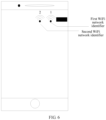
- the terminal After accessing the first WiFi network and the second WiFi network, the terminal synchronously displays a first WiFi network access identifier and a second WiFi network access identifier on a display interface.
- the display interface is shown in FIG. 6 .
- the first WiFi network access identifier represents that the first WiFi network is accessed
- the second WiFi network access identifier represents that the second WiFi network is accessed.
- the terminal may synchronously display connection signal strength of the first WiFi network and connection signal strength of the second WiFi network on the display interface.
- a WiFi network connection manner is pre-configured for the terminal.
- the WiFi network connection manner is used by a user to select a WiFi network to carry a data service.
- the WiFi network connection manner includes: preferably accessing a WiFi AP with a strong signal, or accessing multiple WiFi APs (for example, two WiFi APs) at the same time, or accessing a designated WiFi AP, or the like.
- the terminal selects, according to the detected WiFi network connection manner entered by the user, at least one of the first WiFi network or the second WiFi network to carry the data service.
- the terminal selects, from the first WiFi network and the second WiFi network according to the detected WiFi network connection manner entered by the user, a WiFi network having higher connection signal strength to carry the data service; or selects, according to the detected WiFi network connection manner entered by the user, a WiFi network designated by the user, to carry the data service, or selects, according to the detected WiFi network connection manner entered by the user and according to a load balancing policy, the first WiFi network and the second WiFi network to carry the data service together.
- That the first WiFi network and the second WiFi network are selected according to the load balancing policy to carry the data service together may include but be not limited to the following several cases.
- the terminal uses, according to a traffic balancing policy of the first WiFi network and the second WiFi network, the first WiFi network and the second WiFi network to carry the data service; or the terminal uses, according to a service request quantities balancing policy of the first WiFi network and the second WiFi network, the first WiFi network and the second WiFi network to carry the data service.
- the terminal may further access another network while maintaining the one network access service.
- the two WiFi networks use different WiFi access circuits to operate, and therefore, it can be ensured that the two WiFi networks are online at the same time.
- the foregoing manner may also be referred to as a WiFi dual standby manner.
- an extended case is that more than two WiFi networks are online at the same time. In this way, if the terminal is connected to two WiFi networks at the same time, when a user who holds the terminal moves from one area to another area, it can be ensured that a WiFi network connection is not disconnected, it can be ensured that a service is not disconnected, and user experience can be improved.
- an embodiment of this application further provides an apparatus 700 for accessing a WiFi network.
- the apparatus 700 includes a container 701 supporting both a first WiFi network access service and a second WiFi network access service and a WiFi module 702.
- the container 701 includes a display module 703.
- the WiFi module 702 is configured to: when an access request for accessing a WiFi network is received, access the first WiFi network by using a first WiFi access circuit in N WiFi access circuits, and is further configured to: on condition of using the first WiFi access circuit to access the first WiFi network, if an access request for accessing the second WiFi network is received, access the second WiFi network by using the second WiFi access circuit.
- N is a natural number greater than or equal to 2.
- the display module 703 is configured to: after the WiFi module accesses the first WiFi network and the second WiFi network, synchronously display a first WiFi network access identifier and a second WiFi network access identifier on a display interface corresponding to the container.
- the first WiFi network access identifier represents that the first WiFi network is accessed
- the second WiFi network access identifier represents that the second WiFi network is accessed.
- the display module 703 is further configured to synchronously display connection signal strength of the first WiFi network and connection signal strength of the second WiFi network on the display interface.
- the apparatus 700 or the container 701 further includes a service distribution module 704.
- the service distribution module 704 may be a part of an operating system, that is, the container 701 includes the service distribution module 704, or certainly, may be a part of software run by a WiFi CPU.
- the service distribution module 704 exists in the container 701.
- the service distribution module 704 is configured to: after the WiFi module accesses the first WiFi network and the second WiFi network, select, according to a detected WiFi network connection manner entered by a user, at least one of the first WiFi network or the second WiFi network to carry a data service.
- the service distribution module 704 is configured to: detect the WiFi network connection manner entered by the user, and select, from the first WiFi network and the second WiFi network according to the detected WiFi network connection manner entered by the user, a WiFi network having higher connection signal strength to carry the data service; or
- the service distribution module 704 uses, according to a traffic balancing policy of the first WiFi network and the second WiFi network, the first WiFi network and the second WiFi network to carry the data service, or uses, according to a service request quantities balancing policy of the first WiFi network and the second WiFi network, the first WiFi network and the second WiFi network to carry the data service.
- the WiFi module 702 is further configured to perform at least one of channel resource scheduling, Media Access Control, or encryption/decryption related to accessing the first WiFi network and the second WiFi network.
- the container 701 is configured to implement at least one of a user interface function of a corresponding WiFi network access service, maintenance of an access point start state, or maintenance of a station peer to peer network start state.
- FIG. 8A and FIG. 8B For better understanding of the method and the apparatus shown in FIG. 5 to FIG. 7 in the embodiments of this application, the following further describes an implementation of a terminal by using a more detailed schematic diagram of an internal structure stack of a terminal shown in FIG. 8A and FIG. 8B .
- a terminal 800 includes a WiFi setting module 801, at least two AP state machines 802 (two AP state machines are used as an example in the figure), at least two STA P2P state machines 803 (two STA P2P state machines are used as an example in the figure), a service distribution module 804, an interface 805, at least two encryption network access logical entities 806 (two encryption network access logical entities are used as an example in the figure), at least two WLANOs 807 (two WLANOs are used as an example in the figure), at least two P2P0s 808 (two P2P0s are used as an example in the figure), at least two P2Ps 809 (two P2Ps are used as an example in the figure), at least two scheduling modules 810, a WiFi protocol stack 811 (two WiFi protocol stacks are used as an example in the figure), and a WiFi access circuit 812.
- the WiFi setting module 801, the at least two AP state machines 802, and the at least two STA P2P state machines 803 may be included in one container, and run by a CPU.
- the service distribution module 804 is also included in the container.
- the service distribution module 804 may be run by a WiFi CPU.
- the WiFi CPU is further configured to run and implement the interface 805, the at least two encryption network access logical entities 806, the at least two WLANOs 807, the at least two P2P0s 808, the at least two P2Ps 809, the at least two scheduling modules 810, and the WiFi protocol stack 811.
- the WiFi CPU and the WiFi access circuit 812 are integrated into a WiFi chip, but in other non-claimed embodiments they may be implemented separately.
- a module that has a same module name as that of a module in FIG. 4A and FIG. 4B also has a same function as that of the module in FIG. 4A and FIG. 4B , and details are not described herein again.
- the terminal 800 shown in FIG. 8A and FIG. 8B may operate one operating system, that is, may operate in a single-container mode. Therefore, one WiFi setting module 801 is included in FIG. 8A and FIG. 8B , that is, setting is performed by using a setting interface of one operating system. Likewise, it can be learned from FIG. 8A and FIG. 8B that it may be considered that the terminal 800 has two channels that share one CPU.
- One channel may be corresponding to accessing one WiFi network
- the single container of the terminal 800 may use either of the channels, and when using the two channels at the same time according to an appropriate software design, the terminal 800 can be connected to two WiFi networks at the same time, that is, implement a WiFi dual standby function.
- a terminal with more than two channels can implement a WiFi multi-standby function.
- two channels are used as an example, and are not intended to limit the protection scope.
- the service distribution module 804 is configured to execute a function executed by the service distribution module 705 in FIG. 7 .
- the terminal may use different WiFi access circuits for different services in one operating system by using the added service distribution module, so that a concurrent function that multiple WiFi networks are used for multiple services is implemented, and one terminal can be connected to two or more different WiFi APs at the same time, that is, a WiFi dual standby or multi-standby function is implemented.
- a new interface manner is provided, so that at least two WiFi identifiers can be displayed on a display interface of the terminal, and a display manner of WiFi dual standby display or WiFi multi-standby display is implemented.
- this application may be provided as a method, a system, or a computer program product. Therefore, a part of content in the method designed in this application may be implemented by using software, or in a form of embodiments with a combination of software and hardware. Moreover, this application may use a form of a computer program product that is implemented on one or more computer-usable storage media (including but not limited to a disk memory, a CD-ROM, an optical memory, and the like) that include computer usable program code.
- a software-driven program such as an operating system program, or container software, or necessary software required by a WiFi CPU, that is executed by a main CPU or the WiFi CPU may be stored in the storage media, and executed by a corresponding processor.
- These computer program instructions may be provided for a general-purpose computer, a dedicated computer, an embedded processor, or a processor of any other programmable data processing device to generate a machine, so that the instructions executed by a computer or a processor of any other programmable data processing device generate an apparatus for implementing a specific function in one or more processes in the flowcharts and/or in one or more blocks in the block diagrams.
- These computer program instructions may be stored in a computer readable memory that can instruct the computer or any other programmable data processing device to work in a specific manner, so that the instructions stored in the computer readable memory generate an artifact that includes an instruction apparatus.
- the instruction apparatus implements a specific function in one or more processes in the flowcharts and/or in one or more blocks in the block diagrams.
- These computer program instructions may be loaded onto a computer or another programmable data processing device, so that a series of operations and steps are performed on the computer or the another programmable device, thereby generating computer-implemented processing. Therefore, the instructions executed on the computer or the another programmable device provide steps for implementing a specific function in one or more processes in the flowcharts and/or in one or more blocks in the block diagrams.
- an embodiment of this application provides a method for accessing a WiFi network.
- the method is applied to a terminal, the terminal includes N WiFi access circuits and at least one processor, the at least one processor is configured to run a software program to form M containers, one container may be equivalent to one operating system, switch operation may be performed between different containers, each container corresponds to one WiFi network access service, the M containers are capable of operating at the same time, tasks and data of different WiFi network access services during operation of different containers are mutually isolated, and M and N are natural numbers greater than or equal to 2.
- the method includes: accessing, by the terminal when a first container in the M containers operates, a first WiFi network by using a first WiFi access circuit in the N WiFi access circuits; and accessing, by the terminal, a second WiFi network by using a second WiFi access circuit in the N WiFi access circuits when the terminal switches from operation of the first container to operation of a second container in the M containers, where the first container continues operating in a background running manner, and the terminal continues using the first WiFi access circuit to access the first WiFi network.
- the terminal uses the second WiFi access circuit to access the second WiFi network.
- the first WiFi access circuit and the second WiFi access circuit are mutually independent, and therefore, the terminal can continue using the first WiFi access circuit in the background to access the first WiFi network, and a service is not disconnected, so that WiFi network application is safer, the service is more fluent, and user experience is improved.
- the accessing, by the terminal when a first container operates, a first WiFi network by using a first WiFi access circuit in the N WiFi access circuits includes: accessing, by the terminal, the first WiFi network according to a preset mapping relationship between containers and WiFi access circuits by using the first WiFi access circuit corresponding to the first container in the N WiFi access circuits; and the accessing, by the terminal, a second WiFi network by using a second WiFi access circuit in the N WiFi access circuits when the terminal switches to operation of a second container includes: accessing, by the terminal, the second WiFi network according to the mapping relationship by using the second WiFi access circuit corresponding to the second container in the N WiFi access circuits.
- the terminal further includes a WiFi processor; the accessing, by the terminal, the first WiFi network according to a preset mapping relationship between containers and WiFi access circuits by using the first WiFi access circuit corresponding to the first container in the N WiFi access circuits includes: accessing, by the WiFi processor of the terminal, the first WiFi network according to the preset mapping relationship between containers and WiFi access circuits by using the first WiFi access circuit corresponding to the first container in the N WiFi access circuits; and the accessing, by the terminal, the second WiFi network according to the mapping relationship by using the second WiFi access circuit corresponding to the second container in the N WiFi access circuits includes: accessing, by the WiFi processor of the terminal, the second WiFi network according to the mapping relationship by using the second WiFi access circuit corresponding to the second container in the N WiFi access circuits.
- the WiFi processor uses different WiFi access circuits to access different WiFi networks, so that a WiFi network disconnection due to a hardware design disadvantage during switch operation between a foreground operating system and a background operating system does not happen.
- the method when the first WiFi network is accessed by using the first WiFi access circuit corresponding to the first container in the N WiFi access circuits, the method further includes: performing, by the WiFi processor of the terminal, at least one of channel resource scheduling, Media Access Control, or encryption/decryption related to accessing the first WiFi network; and when the second WiFi network is accessed by using the second WiFi access circuit corresponding to the second container in the N WiFi access circuits, the method further includes: performing, by the WiFi processor of the terminal, at least one of channel resource scheduling, Media Access Control, or encryption/decryption related to accessing the second WiFi network.
- each container is configured to implement at least one of a user interface function of a corresponding WiFi network access service, maintenance of an access point start state, or maintenance of a station peer to peer network start state.
- both M and N are equal to 2.
- an embodiment of this application provides a method for accessing a WiFi network.
- the method is applied to a terminal, the terminal includes N WiFi access circuits and at least one processor, the at least one processor is configured to run a software program to form a container, the container may also be referred to as an operating system, and the container supports both a first WiFi network access service and a second WiFi network access service.
- the method includes: when receiving an access request for accessing the first WiFi network, accessing, by the terminal, the first WiFi network by using a first WiFi access circuit in the N WiFi access circuits; on condition of using the first WiFi access circuit to access the first WiFi network, if the terminal receives an access request for accessing the second WiFi network, accessing, by the terminal, the second WiFi network by using a second WiFi access circuit in the N WiFi access circuits; and synchronously displaying, by the terminal, a first WiFi network access identifier and a second WiFi network access identifier on a display interface corresponding to the container, where the first WiFi network access identifier represents that the first WiFi network is accessed, and the second WiFi network access identifier represents that the second WiFi network is accessed; and N is a natural number greater than or equal to 2.
- one terminal can be connected to two or more different WiFi APs at the same time, that is, a WiFi dual standby or multi-standby function is implemented, so that a WiFi network is not disconnected during switch operation between two WiFi APs, a service is more fluent, and user experience is improved.
- a new interface manner is provided, so that at least two WiFi identifiers can be displayed on the display interface of the terminal, and a display manner of WiFi dual standby display or WiFi multi-standby display is implemented.
- the terminal after the terminal accesses the first WiFi network and the second WiFi network, the terminal synchronously displays connection signal strength of the first WiFi network and connection signal strength of the second WiFi network on the display interface.
- the method further includes: selecting, by the terminal according to a detected WiFi network connection manner entered by a user, at least one of the first WiFi network or the second WiFi network to carry a data service.
- the WiFi network connection manner is used by the user to select a WiFi network to carry the data service.
- the terminal accesses the first WiFi network and the second WiFi network
- the terminal selects, from the first WiFi network and the second WiFi network according to the detected WiFi network connection manner entered by the user, a WiFi network having higher connection signal strength to carry the data service.
- the terminal selects, according to the detected WiFi network connection manner entered by the user, a WiFi network designated by the user, to carry the data service.
- the terminal selects, according to the detected WiFi network connection manner entered by the user and according to a load balancing policy, the first WiFi network and the second WiFi network to carry the data service together.
- a preferred WiFi is selected, a service of the obtained WiFi network is better, multiple WiFi systems are used to implement WiFi multi-system concurrence, and different WiFi systems are used for different services, so that all the different services can obtain more fluent network services.
- that the terminal selects, according to the load balancing policy, the first WiFi network and the second WiFi network to carry the data service together includes: The terminal uses, according to a traffic balancing policy of the first WiFi network and the second WiFi network, the first WiFi network and the second WiFi network to carry the data service. Alternatively, the terminal uses, according to a service request quantities balancing policy of the first WiFi network and the second WiFi network, the first WiFi network and the second WiFi network to carry the data service. In this way, when different WiFi networks carry the data service together, traffic can be balanced.
- the terminal further includes a WiFi processor; and the method further includes: performing, by the WiFi processor of the terminal, at least one of channel resource scheduling, Media Access Control, or encryption/decryption related to accessing the first WiFi network and the second WiFi network.
- the container is configured to implement at least one of a user interface function of a corresponding WiFi network access service, maintenance of an access point start state, or maintenance of a station peer to peer network start state.
- an embodiment of this application provides an apparatus for accessing a WiFi network.
- the apparatus includes M containers that are capable of operating at the same time and a WiFi module, each container corresponds to one WiFi network access service, tasks and data of different WiFi network access services during operation of different containers are mutually isolated, and the M containers include a first container and a second container;
- the WiFi module is configured to: when the first container operates, access a first WiFi network by using a first WiFi access circuit, and is further configured to: when the apparatus switches from operation of the first container to operation of the second container, access a second WiFi network by using the second WiFi access circuit;
- the first container is further configured to: when the WiFi module accesses the second WiFi network by using the second WiFi access circuit, continue operating in a background running manner, and the WiFi module is further configured to continue using the first WiFi access circuit to access the first WiFi network, where M and N are natural numbers greater than or equal to 2.
- the terminal uses the second WiFi access circuit to access the second WiFi network.
- the first WiFi access circuit and the second WiFi access circuit are mutually independent, and therefore, the terminal can continue using the first WiFi access circuit in the background to access the first WiFi network, and a service is not disconnected, so that WiFi network application is safer, the service is more fluent, and user experience is improved.
- the WiFi module is configured to: access the first WiFi network according to a preset mapping relationship between containers and WiFi access circuits by using the first WiFi access circuit corresponding to the first container, and access the second WiFi network according to the mapping relationship by using the second WiFi access circuit corresponding to the second container.
- the WiFi module is further configured to: when accessing the first WiFi network by using the first WiFi access circuit corresponding to the first container, perform at least one of channel resource scheduling, Media Access Control, or encryption/decryption related to accessing the first WiFi network; and when accessing the second WiFi network by using the second WiFi access circuit corresponding to the second container, perform at least one of channel resource scheduling, Media Access Control, or encryption/decryption related to accessing the second WiFi network.
- each container is configured to implement at least one of a user interface function of a corresponding WiFi network access service, maintenance of an access point start state, or maintenance of a station peer to peer network start state.
- both M and N are equal to 2.
- an embodiment of this application provides an apparatus for accessing a WiFi network.
- the apparatus includes a container supporting both a first WiFi network access service and a second WiFi network access service and a WiFi module, and the container includes a display module, the WiFi module is configured to: when an access request for accessing the first WiFi network is received, access the first WiFi network by using a first WiFi access circuit, and is further configured to: on condition of using the first WiFi access circuit to access the first WiFi network, if an access request for accessing the second WiFi network is received, access the second WiFi network by using the second WiFi access circuit; and the display module is configured to: after the WiFi module accesses the first WiFi network and the second WiFi network, synchronously display a first WiFi network access identifier and a second WiFi network access identifier on a display interface corresponding to the container, where the first WiFi network access identifier represents that the first WiFi network is accessed, and the second WiFi network access identifier represents that the second WiFi network is accessed.
- one terminal can be connected to two or more different WiFi APs at the same time, that is, a WiFi dual standby or multi-standby function is implemented, so that a WiFi network is not disconnected during switch operation between two WiFi APs, a service is more fluent, and user experience is improved.
- a new interface display manner is provided, so that at least two WiFi identifiers can be displayed on the display interface of the terminal, and a display manner of WiFi dual standby display or WiFi multi-standby display is implemented.
- the display module is further configured to synchronously display connection signal strength of the first WiFi network and connection signal strength of the second WiFi network on the display interface.
- the apparatus or the container further includes a service distribution module, and the service distribution module is configured to: after the WiFi module accesses the first WiFi network and the second WiFi network, select, according to a detected WiFi network connection manner entered by a user, at least one of the first WiFi network or the second WiFi network to carry a data service.
- the WiFi network connection manner is used by the user to select a WiFi network to carry the data service.
- the terminal accesses the first WiFi network and the second WiFi network
- the terminal selects, from the first WiFi network and the second WiFi network according to the detected WiFi network connection manner entered by the user, a WiFi network having higher connection signal strength to carry the data service.
- the terminal selects, according to the detected WiFi network connection manner entered by the user, a WiFi network designated by the user, to carry the data service
- the terminal selects, according to the detected WiFi network connection manner entered by the user and according to a load balancing policy, the first WiFi network and the second WiFi network to carry the data service together.
- a preferred WiFi is selected, a service of the obtained WiFi network is better, multiple WiFi systems are used to implement WiFi multi-system concurrence, and different WiFi systems are used for different services, so that all the different services can obtain more fluent network services.
- that the terminal selects, according to the load balancing policy, the first WiFi network and the second WiFi network to carry the data service together includes: The terminal uses, according to a traffic balancing policy of the first WiFi network and the second WiFi network, the first WiFi network and the second WiFi network to carry the data service. Alternatively, the terminal uses, according to a service request quantities balancing policy of the first WiFi network and the second WiFi network, the first WiFi network and the second WiFi network to carry the data service. In this way, when different WiFi networks carry the data service together, traffic can be balanced.
- the WiFi module is further configured to perform at least one of channel resource scheduling, Media Access Control, or encryption/decryption related to accessing the first WiFi network and the second WiFi network.
- the container is configured to implement at least one of a user interface function of a corresponding WiFi network access service, maintenance of an access point start state, or maintenance of a station peer to peer network start state.
- an embodiment of this application provides a terminal, including a WiFi processor, N WiFi access circuits, a memory, and at least one processor.
- the memory is configured to store a software program
- the at least one processor is coupled to the memory, and is configured to read the software program from the memory and run the software program to form M containers, where the M containers are capable of operating at the same time, each container corresponds to one WiFi network access service, and tasks and data of different WiFi network access services during operation of different containers are mutually isolated
- the WiFi processor is configured to: when a first container in the M containers operates, access a first WiFi network by using a first WiFi access circuit in the N WiFi access circuits, and is further configured to: when the terminal switches from the operation of the first container to operation of a second container in the M containers, access a second WiFi network by using a second WiFi access circuit in the N WiFi access circuits; and the at least one processor is further configured to: when the WiFi processor accesses the second WiFi network by using the second WiFi access circuit, continue running the first container in a background
- the terminal uses the second WiFi access circuit to access the second WiFi network.
- the first WiFi access circuit and the second WiFi access circuit are mutually independent, and therefore, the terminal can continue using the first WiFi access circuit in the background to access the first WiFi network, and a service is not disconnected, so that WiFi network application is safer, the service is more fluent, and user experience is improved.
- the WiFi processor is configured to: access the first WiFi network according to a preset mapping relationship between containers and WiFi access circuits by using the first WiFi access circuit corresponding to the first container in the N WiFi access circuits; and access the second WiFi network according to the mapping relationship by using the second WiFi access circuit corresponding to the second container in the N WiFi access circuits.
- the WiFi processor is further configured to: when accessing the first WiFi network by using the first WiFi access circuit corresponding to the first container in the N WiFi access circuits, perform at least one of channel resource scheduling, Media Access Control, or encryption/decryption related to accessing the first WiFi network; and when accessing the second WiFi network by using the second WiFi access circuit corresponding to the second container in the N WiFi access circuits, perform at least one of channel resource scheduling, Media Access Control, or encryption/decryption related to accessing the second WiFi network.
- each container is configured to implement at least one of a user interface function of a corresponding WiFi network access service, maintenance of an access point start state, or maintenance of a station peer to peer network start state.
- both M and N are equal to 2.
- an embodiment of this application provides a terminal.
- the terminal includes a WiFi processor, N WiFi access circuits, a memory, and at least one processor.
- the memory is configured to store a software program;
- the at least one processor is coupled to the memory, and is configured to read the software program from the memory and run the software program to form a container, where the container supports both a first WiFi network access service and a second WiFi network access service;
- the WiFi processor is configured to: when an access request for accessing the first WiFi network is received, access the first WiFi network by using a first WiFi access circuit in the N WiFi access circuits, and on condition of using the first WiFi access circuit to access the first WiFi network, if an access request for accessing the second WiFi network is received, access the second WiFi network by using a second WiFi access circuit in the N WiFi access circuits; and the at least one processor is configured to drive a display interface corresponding to the container to synchronously display a first WiFi network access identifier and a second WiFi network access identifier, where the first WiFi network access identifie
- one terminal can be connected to two or more different WiFi APs at the same time, that is, a WiFi dual standby or multi-standby function is implemented, so that a WiFi network is not disconnected during switch operation between two WiFi APs, a service is more fluent, and user experience is improved.
- a new interface manner is provided, so that at least two WiFi identifiers can be displayed on the display interface of the terminal, and a display manner of WiFi dual standby display or WiFi multi-standby display is implemented.
- the terminal further includes a display, and the display interface is displayed on the display.
- the at least one processor is further configured to drive the display interface to synchronously display connection signal strength of the first WiFi network and connection signal strength of the second WiFi network.
- the WiFi processor is further configured to: after accessing the first WiFi network and the second WiFi network, select, according to a detected WiFi network connection manner entered by a user, at least one of the first WiFi network or the second WiFi network to carry a data service.
- the WiFi network connection manner is used by the user to select a WiFi network to carry the data service.
- the terminal accesses the first WiFi network and the second WiFi network
- the terminal selects, from the first WiFi network and the second WiFi network according to the detected WiFi network connection manner entered by the user, a WiFi network having higher connection signal strength to carry the data service.
- the terminal selects, according to the detected WiFi network connection manner entered by the user, a WiFi network designated by the user, to carry the data service
- the terminal selects, according to the detected WiFi network connection manner entered by the user and according to a load balancing policy, the first WiFi network and the second WiFi network to carry the data service together.
- a preferred WiFi is selected, a service of the obtained WiFi network is better, multiple WiFi systems are used to implement WiFi multi-system concurrence, and different WiFi systems are used for different services, so that all the different services can obtain more fluent network services.
- that the terminal selects, according to the load balancing policy, the first WiFi network and the second WiFi network to carry the data service together includes: The terminal uses, according to a traffic balancing policy of the first WiFi network and the second WiFi network, the first WiFi network and the second WiFi network to carry the data service. Alternatively, the terminal uses, according to a service request quantities balancing policy of the first WiFi network and the second WiFi network, the first WiFi network and the second WiFi network to carry the data service. In this way, when different WiFi networks carry the data service together, traffic can be balanced.
- the WiFi processor is further configured to perform at least one of channel resource scheduling, Media Access Control, or encryption/decryption related to accessing the first WiFi network and the second WiFi network.
- the container is further configured to implement at least one of a user interface function of a corresponding WiFi network access service, maintenance of an access point start state, or maintenance of a station peer to peer network start state.
- the terminal can be supported in being connected to two or more WiFi networks at the same time by using a software layer design, so that WiFi network is applied in a safer and more fluent manner.
Landscapes
- Engineering & Computer Science (AREA)
- Computer Networks & Wireless Communication (AREA)
- Signal Processing (AREA)
- Computer Security & Cryptography (AREA)
- Mobile Radio Communication Systems (AREA)
- Telephone Function (AREA)
- Telephonic Communication Services (AREA)
Applications Claiming Priority (3)
| Application Number | Priority Date | Filing Date | Title |
|---|---|---|---|
| CN201610370643.4A CN106102098B (zh) | 2016-05-27 | 2016-05-27 | 一种接入wifi网络的方法及装置 |
| PCT/CN2016/105777 WO2017201983A1 (zh) | 2016-05-27 | 2016-11-14 | 一种接入wifi网络的方法及装置 |
| EP16902967.5A EP3439357B1 (en) | 2016-05-27 | 2016-11-14 | Method and apparatus for accessing wifi network |
Related Parent Applications (2)
| Application Number | Title | Priority Date | Filing Date |
|---|---|---|---|
| EP16902967.5A Division-Into EP3439357B1 (en) | 2016-05-27 | 2016-11-14 | Method and apparatus for accessing wifi network |
| EP16902967.5A Division EP3439357B1 (en) | 2016-05-27 | 2016-11-14 | Method and apparatus for accessing wifi network |
Publications (2)
| Publication Number | Publication Date |
|---|---|
| EP3920657A1 EP3920657A1 (en) | 2021-12-08 |
| EP3920657B1 true EP3920657B1 (en) | 2025-06-18 |
Family
ID=57229500
Family Applications (2)
| Application Number | Title | Priority Date | Filing Date |
|---|---|---|---|
| EP21168002.0A Active EP3920657B1 (en) | 2016-05-27 | 2016-11-14 | Method and apparatus for accessing wifi network |
| EP16902967.5A Active EP3439357B1 (en) | 2016-05-27 | 2016-11-14 | Method and apparatus for accessing wifi network |
Family Applications After (1)
| Application Number | Title | Priority Date | Filing Date |
|---|---|---|---|
| EP16902967.5A Active EP3439357B1 (en) | 2016-05-27 | 2016-11-14 | Method and apparatus for accessing wifi network |
Country Status (6)
| Country | Link |
|---|---|
| US (2) | US10849053B2 (enExample) |
| EP (2) | EP3920657B1 (enExample) |
| JP (1) | JP6766993B2 (enExample) |
| KR (1) | KR102147233B1 (enExample) |
| CN (3) | CN110602806B (enExample) |
| WO (1) | WO2017201983A1 (enExample) |
Families Citing this family (37)
| Publication number | Priority date | Publication date | Assignee | Title |
|---|---|---|---|---|
| CN110602806B (zh) * | 2016-05-27 | 2021-04-09 | 华为技术有限公司 | 一种接入wifi网络的方法及装置 |
| CN108089928B (zh) * | 2016-11-22 | 2022-01-14 | 华为技术有限公司 | 终端控制方法及装置 |
| CA3054218A1 (en) * | 2017-02-21 | 2018-08-30 | Telefonaktiebolaget Lm Ericsson (Publ) | Method and devices for dual connectivity between a dual protocol stack user equipment and two baseband units of a radio access telecommunications network |
| CN107148060A (zh) * | 2017-05-23 | 2017-09-08 | 维沃移动通信有限公司 | 一种网络连接方法及其应用的移动终端 |
| US20190012184A1 (en) * | 2017-07-04 | 2019-01-10 | Cloudendure Ltd. | System and method for deploying cloud based computing environment agnostic applications |
| CN107635234B (zh) * | 2017-09-29 | 2021-07-23 | 努比亚技术有限公司 | Wi-Fi控制方法、移动终端及计算机可读存储介质 |
| CN108390810B (zh) * | 2018-01-05 | 2021-07-30 | 郑州信大捷安信息技术股份有限公司 | 一种基于单Linux内核多Android系统网络虚拟化方法 |
| US11194935B2 (en) * | 2018-03-07 | 2021-12-07 | Iurii V. Iuzifovich | Method of securing devices used in the internet of things |
| CN111919505B (zh) * | 2018-03-26 | 2022-10-18 | 华为技术有限公司 | 数据处理方法以及终端 |
| CN109257783A (zh) * | 2018-11-09 | 2019-01-22 | 浙江国自机器人技术有限公司 | 一种漫游切换方法、装置、系统及可读存储介质 |
| CN109743712A (zh) * | 2018-12-29 | 2019-05-10 | Oppo广东移动通信有限公司 | 数据传输控制方法及相关产品 |
| CN109803325B (zh) * | 2019-02-12 | 2020-12-22 | Oppo广东移动通信有限公司 | 数据分流方法、装置、移动终端及存储介质 |
| CN109673001A (zh) | 2019-02-12 | 2019-04-23 | Oppo广东移动通信有限公司 | 数据传输控制方法及相关产品 |
| CN109803318B (zh) * | 2019-02-12 | 2021-01-22 | Oppo广东移动通信有限公司 | 数据包分流方法、装置、移动终端及存储介质 |
| CN110475315B (zh) * | 2019-08-19 | 2021-05-14 | Oppo广东移动通信有限公司 | 网络连接控制方法及相关产品 |
| CN112449401B (zh) * | 2019-08-31 | 2022-03-08 | Oppo广东移动通信有限公司 | WiFi漫游方法、装置、移动终端及存储介质 |
| CN110536016B (zh) * | 2019-08-31 | 2021-04-20 | Oppo广东移动通信有限公司 | 网络共享方法及相关设备 |
| CN110572829B (zh) * | 2019-09-05 | 2022-08-16 | Oppo(重庆)智能科技有限公司 | 网络连接控制方法及相关产品 |
| CN110569099B (zh) * | 2019-09-17 | 2021-07-06 | Oppo广东移动通信有限公司 | 消息显示方法及相关产品 |
| CN110769524A (zh) | 2019-09-26 | 2020-02-07 | 维沃移动通信有限公司 | 一种多网络接入方法及终端设备 |
| CN110730517B (zh) * | 2019-10-22 | 2021-06-29 | Oppo广东移动通信有限公司 | 网络连接控制方法及相关产品 |
| CN113056037B (zh) * | 2019-12-27 | 2023-04-28 | 华为技术有限公司 | 网络标识的显示方法、设备及系统 |
| CN111148278A (zh) * | 2019-12-30 | 2020-05-12 | Oppo广东移动通信有限公司 | 数据传输方法、装置、存储介质及电子设备 |
| CN111182614B (zh) * | 2020-01-08 | 2021-10-01 | 华为技术有限公司 | 建立网络连接的方法和装置以及电子设备 |
| WO2022046090A1 (en) * | 2020-08-31 | 2022-03-03 | Hewlett-Packard Development Company, L.P. | Computing devices with dual wi-fi transceivers |
| CN114244804B (zh) * | 2020-09-08 | 2023-03-21 | 成都鼎桥通信技术有限公司 | 基于双系统的网络器件启动方法、设备及存储介质 |
| CN114390592B (zh) * | 2020-10-20 | 2025-07-01 | 珠海格力电器股份有限公司 | 双wifi网络中的应用接入方法、装置、设备及介质 |
| CN112333800A (zh) * | 2020-11-13 | 2021-02-05 | Oppo广东移动通信有限公司 | 网络切换方法、装置、存储介质及电子设备 |
| CN112804704B (zh) * | 2020-12-18 | 2022-08-19 | 珠海格力电器股份有限公司 | 一种wifi模块自动测试设备及测试方法 |
| CN112752284B (zh) * | 2020-12-30 | 2022-11-04 | 惠州Tcl移动通信有限公司 | 双wifi下的应用网络优化方法、装置、设备及介质 |
| CN114867035B (zh) * | 2021-02-04 | 2025-01-10 | 华为技术有限公司 | WiFi扫描控制方法和相关装置 |
| CN113784393B (zh) * | 2021-05-14 | 2023-04-07 | 荣耀终端有限公司 | 一种峰值下载方法和装置 |
| CN113490291B (zh) * | 2021-06-16 | 2022-05-17 | 荣耀终端有限公司 | 数据下载方法、装置和终端设备 |
| CN113596919B (zh) * | 2021-06-16 | 2022-12-20 | 荣耀终端有限公司 | 数据下载方法、装置和终端设备 |
| US12245027B2 (en) * | 2021-09-22 | 2025-03-04 | Qualcomm Incorporated | Physical uplink channel handling based on channel security |
| WO2023113370A1 (ko) | 2021-12-14 | 2023-06-22 | 삼성전자 주식회사 | 복수의 외부 장치들과의 무선랜 통신을 위한 전자 장치 및 그의 동작 방법 |
| CN116133161B (zh) * | 2023-04-14 | 2023-08-22 | 荣耀终端有限公司 | 数据传输方法及电子设备 |
Citations (1)
| Publication number | Priority date | Publication date | Assignee | Title |
|---|---|---|---|---|
| US20090077404A1 (en) * | 2007-09-14 | 2009-03-19 | Gainspan, Inc. | Method and system of reducing power consumption of system on chip based on analog-to-digital control circuitry |
Family Cites Families (38)
| Publication number | Priority date | Publication date | Assignee | Title |
|---|---|---|---|---|
| JPH0737383Y2 (ja) * | 1990-03-13 | 1995-08-23 | 株式会社ケンウッド | 複数波同時表示のシグナルメータ |
| KR100547729B1 (ko) * | 1998-07-02 | 2006-04-20 | 삼성전자주식회사 | 휴대 전화 단말 장치의 전계 강도 디스플레이 방법 |
| US7409674B2 (en) * | 2002-12-26 | 2008-08-05 | Research In Motion Limited | System and method of creating and communicating with component based wireless applications |
| US9003048B2 (en) * | 2003-04-01 | 2015-04-07 | Microsoft Technology Licensing, Llc | Network zones |
| US20040196812A1 (en) * | 2003-04-07 | 2004-10-07 | Instant802 Networks Inc. | Multi-band access point with shared processor |
| JP2007116509A (ja) * | 2005-10-21 | 2007-05-10 | Nec Corp | 通信端末、プログラム、通信システム及びセキュリティ情報出力方法 |
| US9549434B2 (en) * | 2006-03-09 | 2017-01-17 | Qualcomm Incorporated | System and method for multi-network coverage |
| US7761119B2 (en) * | 2006-07-05 | 2010-07-20 | Kyocera Corporation | Signal strength annunciators for multi-mode wireless communication devices |
| US8605662B2 (en) * | 2007-07-20 | 2013-12-10 | Cisco Technology, Inc. | Intelligent real access point name (APN) selection using virtual APNS |
| US8744451B2 (en) * | 2007-12-12 | 2014-06-03 | Aruba Networks, Inc. | Delayed ACK in dual-mode call handover |
| US8249649B2 (en) | 2010-07-02 | 2012-08-21 | Google Inc. | Mobile device configured to operate on multiple different networks |
| CN104247468A (zh) | 2011-01-06 | 2014-12-24 | 阿尔戴尔半导体有限公司 | Lte/wi-fi共存 |
| US8761147B2 (en) * | 2011-01-17 | 2014-06-24 | Texas Instruments Incorporated | Selective protection based on sequence numbers in coexisting networks |
| KR20130004964A (ko) * | 2011-07-05 | 2013-01-15 | 주식회사 엘지유플러스 | 무선 인터넷용 듀얼 와이파이 장치 및 그 장치를 이용한 무선 인터넷 시스템 |
| CN202602915U (zh) * | 2012-05-14 | 2012-12-12 | 成都飞鱼星科技开发有限公司 | 一种无线路由器 |
| JP6408753B2 (ja) | 2012-05-17 | 2018-10-17 | キヤノン株式会社 | 通信装置、通信装置の制御方法、プログラム |
| CN202873086U (zh) * | 2012-10-31 | 2013-04-10 | 上海斐讯数据通信技术有限公司 | 无线双频ap |
| CN103001702B (zh) * | 2012-12-31 | 2015-07-29 | 深圳东志科技有限公司 | 一种双WiFi光网络单元 |
| US20150220243A1 (en) * | 2013-05-10 | 2015-08-06 | Jinrong Yang | Spatially-enhanced accessibility aid for a display device |
| US9439099B2 (en) * | 2013-10-14 | 2016-09-06 | Netgear, Inc. | Systems and methods for simultaneously using multiple WLAN modules operating in different wireless bands |
| CN103561172B (zh) * | 2013-10-31 | 2015-03-04 | 福州瑞芯微电子有限公司 | 一种Android系统上支持多WIFI模块的方法及系统 |
| WO2015088222A1 (ko) * | 2013-12-09 | 2015-06-18 | 엘지전자 주식회사 | 와이파이 다이렉트 네트워크를 통한 차량간 이상 신호 교환이 가능한 기기 및 그 제어 방법 |
| JP6100713B2 (ja) * | 2014-02-25 | 2017-03-22 | Necプラットフォームズ株式会社 | 通信装置および通信システム |
| JP6311417B2 (ja) * | 2014-04-08 | 2018-04-18 | 富士通株式会社 | 無線通信装置、無線通信方法および無線通信プログラム |
| CN105592504B (zh) * | 2014-10-23 | 2019-03-08 | 东莞宇龙通信科技有限公司 | 多wifi模块的传输方法、传输装置和终端 |
| US9832808B2 (en) * | 2014-12-02 | 2017-11-28 | Cisco Technology, Inc. | Method to provide dual connectivity using LTE master eNodeB and Wi-Fi based secondary eNodeB |
| US9268561B1 (en) * | 2014-12-10 | 2016-02-23 | Sap Se | Federated services to dynamically switch features in applications |
| CN104516760B (zh) * | 2014-12-12 | 2018-01-09 | 华为技术有限公司 | 一种操作系统热切换的方法、装置及移动终端 |
| CN105046156B (zh) * | 2015-08-26 | 2018-05-08 | 北京元心科技有限公司 | 智能终端及其设备访问权限控制方法 |
| WO2017053989A1 (en) * | 2015-09-25 | 2017-03-30 | Mutualink, Inc. | Enabling emergency access to secure wireless communications networks |
| CN105227782A (zh) * | 2015-10-30 | 2016-01-06 | 维沃移动通信有限公司 | 一种移动终端操作系统的切换方法和移动终端 |
| KR102447179B1 (ko) * | 2015-11-19 | 2022-09-26 | 삼성전자 주식회사 | 무선 통신 방법 및 이를 제공하는 전자 장치 |
| CN205210862U (zh) * | 2015-11-23 | 2016-05-04 | 安徽兰酷电子科技有限公司 | 一种可远程访问的双连接无线存储装置 |
| US10499260B2 (en) * | 2016-01-08 | 2019-12-03 | Microsoft Technology Licensing, Llc | Adaptive profiles with SDR |
| CN105516397B (zh) * | 2016-01-19 | 2019-06-11 | 深圳前海达闼云端智能科技有限公司 | 多操作系统终端接入网络的方法及多操作系统终端 |
| CN110602806B (zh) * | 2016-05-27 | 2021-04-09 | 华为技术有限公司 | 一种接入wifi网络的方法及装置 |
| US10555171B2 (en) * | 2017-03-30 | 2020-02-04 | Intel Corporation | WiFi protected access 2 (WPA2) pass-through virtualization partition |
| US10708968B2 (en) * | 2017-08-25 | 2020-07-07 | Kt Corporation | Method of controlling mobility of UE and apparatus therefor |
-
2016
- 2016-05-27 CN CN201910849768.9A patent/CN110602806B/zh active Active
- 2016-05-27 CN CN201610370643.4A patent/CN106102098B/zh active Active
- 2016-05-27 CN CN201910849778.2A patent/CN110545281B/zh active Active
- 2016-11-14 JP JP2018557032A patent/JP6766993B2/ja active Active
- 2016-11-14 WO PCT/CN2016/105777 patent/WO2017201983A1/zh not_active Ceased
- 2016-11-14 EP EP21168002.0A patent/EP3920657B1/en active Active
- 2016-11-14 KR KR1020187033219A patent/KR102147233B1/ko active Active
- 2016-11-14 EP EP16902967.5A patent/EP3439357B1/en active Active
-
2018
- 2018-11-27 US US16/201,563 patent/US10849053B2/en active Active
-
2020
- 2020-06-16 US US16/903,262 patent/US11330510B2/en active Active
Patent Citations (1)
| Publication number | Priority date | Publication date | Assignee | Title |
|---|---|---|---|---|
| US20090077404A1 (en) * | 2007-09-14 | 2009-03-19 | Gainspan, Inc. | Method and system of reducing power consumption of system on chip based on analog-to-digital control circuitry |
Also Published As
| Publication number | Publication date |
|---|---|
| US10849053B2 (en) | 2020-11-24 |
| US20200314739A1 (en) | 2020-10-01 |
| CN106102098B (zh) | 2019-09-13 |
| CN110602806B (zh) | 2021-04-09 |
| KR20180132892A (ko) | 2018-12-12 |
| US20190098566A1 (en) | 2019-03-28 |
| EP3439357B1 (en) | 2021-09-22 |
| CN110545281B (zh) | 2022-01-18 |
| WO2017201983A1 (zh) | 2017-11-30 |
| KR102147233B1 (ko) | 2020-08-24 |
| JP6766993B2 (ja) | 2020-10-14 |
| CN110602806A (zh) | 2019-12-20 |
| EP3920657A1 (en) | 2021-12-08 |
| CN106102098A (zh) | 2016-11-09 |
| CN110545281A (zh) | 2019-12-06 |
| US11330510B2 (en) | 2022-05-10 |
| EP3439357A1 (en) | 2019-02-06 |
| EP3439357A4 (en) | 2019-05-01 |
| JP2019520726A (ja) | 2019-07-18 |
Similar Documents
| Publication | Publication Date | Title |
|---|---|---|
| US11330510B2 (en) | Method and apparatus for accessing WiFi network to support a terminal connected to two or more WiFi networks at the same time | |
| EP3322217B1 (en) | Wireless hotspot switching method, mobile terminal and storage medium | |
| EP3793266B1 (en) | Data transmission method and apparatus for terminal | |
| US20180278289A1 (en) | Mobile terminal and wireless communication method | |
| EP3979712B1 (en) | Wifi roaming method and device, mobile terminal, and storage medium | |
| EP3462780B1 (en) | Frequency band processing method and device | |
| US12363601B2 (en) | Communication method and apparatus | |
| CN102833742B (zh) | 机器类通信设备组算法的协商方法和设备 | |
| EP4278809A1 (en) | Random access comprising sending or receiving a msg3 messsage | |
| GB2507490A (en) | Handling of device-to-device data units during handover to a cellular bearer | |
| CN102083177A (zh) | 通信实现方法和终端 | |
| US20230362635A1 (en) | Radio Access Network Security | |
| US20210337619A1 (en) | Enhancing Latency and Throughput in LTE and in an Asymmetric EN-DC Configuration | |
| US12114255B2 (en) | Data communication system to serve a user equipment (UE) over a third generation partnership project (3GPP) network core | |
| CN117279120A (zh) | 分离式多链路系统 | |
| US9686325B2 (en) | Client terminal's tethering function is selectively turn on or off based on network connection | |
| JP7664951B2 (ja) | 多重接続を確立するための方法、ネットワーク装置、及びシステム | |
| US20250344267A1 (en) | System and method of automatic switching between wireless peripheral device to information handling system wireless communication protocol links based on presence of rf dongle | |
| CN116134889B (zh) | 一种参数指示方法及通信装置 | |
| WO2025065646A1 (en) | A method of network coordination | |
| US12317368B2 (en) | Emergency call method and apparatus, storage medium, and terminal | |
| WO2025190671A1 (en) | User equipment context identifier for interaction between a radio access network and network functions of a core network | |
| WO2025190672A1 (en) | User equipment context identifier for interaction between a radio access network and network functions of a core network |
Legal Events
| Date | Code | Title | Description |
|---|---|---|---|
| PUAI | Public reference made under article 153(3) epc to a published international application that has entered the european phase |
Free format text: ORIGINAL CODE: 0009012 |
|
| STAA | Information on the status of an ep patent application or granted ep patent |
Free format text: STATUS: REQUEST FOR EXAMINATION WAS MADE |
|
| 17P | Request for examination filed |
Effective date: 20210413 |
|
| AC | Divisional application: reference to earlier application |
Ref document number: 3439357 Country of ref document: EP Kind code of ref document: P |
|
| AK | Designated contracting states |
Kind code of ref document: A1 Designated state(s): AL AT BE BG CH CY CZ DE DK EE ES FI FR GB GR HR HU IE IS IT LI LT LU LV MC MK MT NL NO PL PT RO RS SE SI SK SM TR |
|
| B565 | Issuance of search results under rule 164(2) epc |
Effective date: 20211103 |
|
| STAA | Information on the status of an ep patent application or granted ep patent |
Free format text: STATUS: EXAMINATION IS IN PROGRESS |
|
| 17Q | First examination report despatched |
Effective date: 20221209 |
|
| GRAP | Despatch of communication of intention to grant a patent |
Free format text: ORIGINAL CODE: EPIDOSNIGR1 |
|
| STAA | Information on the status of an ep patent application or granted ep patent |
Free format text: STATUS: GRANT OF PATENT IS INTENDED |
|
| RIC1 | Information provided on ipc code assigned before grant |
Ipc: H04W 88/06 20090101ALN20250114BHEP Ipc: H04W 80/02 20090101AFI20250114BHEP |
|
| INTG | Intention to grant announced |
Effective date: 20250128 |
|
| GRAS | Grant fee paid |
Free format text: ORIGINAL CODE: EPIDOSNIGR3 |
|
| GRAA | (expected) grant |
Free format text: ORIGINAL CODE: 0009210 |
|
| STAA | Information on the status of an ep patent application or granted ep patent |
Free format text: STATUS: THE PATENT HAS BEEN GRANTED |
|
| AC | Divisional application: reference to earlier application |
Ref document number: 3439357 Country of ref document: EP Kind code of ref document: P |
|
| AK | Designated contracting states |
Kind code of ref document: B1 Designated state(s): AL AT BE BG CH CY CZ DE DK EE ES FI FR GB GR HR HU IE IS IT LI LT LU LV MC MK MT NL NO PL PT RO RS SE SI SK SM TR |
|
| REG | Reference to a national code |
Ref country code: GB Ref legal event code: FG4D |
|
| REG | Reference to a national code |
Ref country code: CH Ref legal event code: EP |
|
| REG | Reference to a national code |
Ref country code: DE Ref legal event code: R096 Ref document number: 602016092629 Country of ref document: DE |
|
| REG | Reference to a national code |
Ref country code: CH Ref legal event code: EP |
|
| REG | Reference to a national code |
Ref country code: IE Ref legal event code: FG4D |
|
| PG25 | Lapsed in a contracting state [announced via postgrant information from national office to epo] |
Ref country code: FI Free format text: LAPSE BECAUSE OF FAILURE TO SUBMIT A TRANSLATION OF THE DESCRIPTION OR TO PAY THE FEE WITHIN THE PRESCRIBED TIME-LIMIT Effective date: 20250618 |
|
| REG | Reference to a national code |
Ref country code: LT Ref legal event code: MG9D |
|
| PG25 | Lapsed in a contracting state [announced via postgrant information from national office to epo] |
Ref country code: NO Free format text: LAPSE BECAUSE OF FAILURE TO SUBMIT A TRANSLATION OF THE DESCRIPTION OR TO PAY THE FEE WITHIN THE PRESCRIBED TIME-LIMIT Effective date: 20250918 Ref country code: GR Free format text: LAPSE BECAUSE OF FAILURE TO SUBMIT A TRANSLATION OF THE DESCRIPTION OR TO PAY THE FEE WITHIN THE PRESCRIBED TIME-LIMIT Effective date: 20250919 |
|
| PG25 | Lapsed in a contracting state [announced via postgrant information from national office to epo] |
Ref country code: BG Free format text: LAPSE BECAUSE OF FAILURE TO SUBMIT A TRANSLATION OF THE DESCRIPTION OR TO PAY THE FEE WITHIN THE PRESCRIBED TIME-LIMIT Effective date: 20250618 |
|
| PG25 | Lapsed in a contracting state [announced via postgrant information from national office to epo] |
Ref country code: HR Free format text: LAPSE BECAUSE OF FAILURE TO SUBMIT A TRANSLATION OF THE DESCRIPTION OR TO PAY THE FEE WITHIN THE PRESCRIBED TIME-LIMIT Effective date: 20250618 |
|
| PGFP | Annual fee paid to national office [announced via postgrant information from national office to epo] |
Ref country code: FR Payment date: 20250930 Year of fee payment: 10 |
|
| PG25 | Lapsed in a contracting state [announced via postgrant information from national office to epo] |
Ref country code: RS Free format text: LAPSE BECAUSE OF FAILURE TO SUBMIT A TRANSLATION OF THE DESCRIPTION OR TO PAY THE FEE WITHIN THE PRESCRIBED TIME-LIMIT Effective date: 20250918 |
|
| REG | Reference to a national code |
Ref country code: NL Ref legal event code: MP Effective date: 20250618 |
|
| PG25 | Lapsed in a contracting state [announced via postgrant information from national office to epo] |
Ref country code: LV Free format text: LAPSE BECAUSE OF FAILURE TO SUBMIT A TRANSLATION OF THE DESCRIPTION OR TO PAY THE FEE WITHIN THE PRESCRIBED TIME-LIMIT Effective date: 20250618 |
|
| PG25 | Lapsed in a contracting state [announced via postgrant information from national office to epo] |
Ref country code: NL Free format text: LAPSE BECAUSE OF FAILURE TO SUBMIT A TRANSLATION OF THE DESCRIPTION OR TO PAY THE FEE WITHIN THE PRESCRIBED TIME-LIMIT Effective date: 20250618 |
|
| PG25 | Lapsed in a contracting state [announced via postgrant information from national office to epo] |
Ref country code: PT Free format text: LAPSE BECAUSE OF FAILURE TO SUBMIT A TRANSLATION OF THE DESCRIPTION OR TO PAY THE FEE WITHIN THE PRESCRIBED TIME-LIMIT Effective date: 20251020 |
|
| REG | Reference to a national code |
Ref country code: AT Ref legal event code: MK05 Ref document number: 1805397 Country of ref document: AT Kind code of ref document: T Effective date: 20250618 |
|
| PG25 | Lapsed in a contracting state [announced via postgrant information from national office to epo] |
Ref country code: IS Free format text: LAPSE BECAUSE OF FAILURE TO SUBMIT A TRANSLATION OF THE DESCRIPTION OR TO PAY THE FEE WITHIN THE PRESCRIBED TIME-LIMIT Effective date: 20251018 |
|
| PGFP | Annual fee paid to national office [announced via postgrant information from national office to epo] |
Ref country code: DE Payment date: 20250930 Year of fee payment: 10 |
|
| PGFP | Annual fee paid to national office [announced via postgrant information from national office to epo] |
Ref country code: GB Payment date: 20251001 Year of fee payment: 10 |
|
| PG25 | Lapsed in a contracting state [announced via postgrant information from national office to epo] |
Ref country code: AT Free format text: LAPSE BECAUSE OF FAILURE TO SUBMIT A TRANSLATION OF THE DESCRIPTION OR TO PAY THE FEE WITHIN THE PRESCRIBED TIME-LIMIT Effective date: 20250618 Ref country code: SM Free format text: LAPSE BECAUSE OF FAILURE TO SUBMIT A TRANSLATION OF THE DESCRIPTION OR TO PAY THE FEE WITHIN THE PRESCRIBED TIME-LIMIT Effective date: 20250618 |
|
| PG25 | Lapsed in a contracting state [announced via postgrant information from national office to epo] |
Ref country code: CZ Free format text: LAPSE BECAUSE OF FAILURE TO SUBMIT A TRANSLATION OF THE DESCRIPTION OR TO PAY THE FEE WITHIN THE PRESCRIBED TIME-LIMIT Effective date: 20250618 |
|
| PG25 | Lapsed in a contracting state [announced via postgrant information from national office to epo] |
Ref country code: PL Free format text: LAPSE BECAUSE OF FAILURE TO SUBMIT A TRANSLATION OF THE DESCRIPTION OR TO PAY THE FEE WITHIN THE PRESCRIBED TIME-LIMIT Effective date: 20250618 |
|
| PG25 | Lapsed in a contracting state [announced via postgrant information from national office to epo] |
Ref country code: EE Free format text: LAPSE BECAUSE OF FAILURE TO SUBMIT A TRANSLATION OF THE DESCRIPTION OR TO PAY THE FEE WITHIN THE PRESCRIBED TIME-LIMIT Effective date: 20250618 |
|
| PG25 | Lapsed in a contracting state [announced via postgrant information from national office to epo] |
Ref country code: RO Free format text: LAPSE BECAUSE OF FAILURE TO SUBMIT A TRANSLATION OF THE DESCRIPTION OR TO PAY THE FEE WITHIN THE PRESCRIBED TIME-LIMIT Effective date: 20250618 Ref country code: SK Free format text: LAPSE BECAUSE OF FAILURE TO SUBMIT A TRANSLATION OF THE DESCRIPTION OR TO PAY THE FEE WITHIN THE PRESCRIBED TIME-LIMIT Effective date: 20250618 |
|
| PG25 | Lapsed in a contracting state [announced via postgrant information from national office to epo] |
Ref country code: ES Free format text: LAPSE BECAUSE OF FAILURE TO SUBMIT A TRANSLATION OF THE DESCRIPTION OR TO PAY THE FEE WITHIN THE PRESCRIBED TIME-LIMIT Effective date: 20250618 |
|
| REG | Reference to a national code |
Ref country code: DE Ref legal event code: R097 Ref document number: 602016092629 Country of ref document: DE |
|
| PG25 | Lapsed in a contracting state [announced via postgrant information from national office to epo] |
Ref country code: DK Free format text: LAPSE BECAUSE OF FAILURE TO SUBMIT A TRANSLATION OF THE DESCRIPTION OR TO PAY THE FEE WITHIN THE PRESCRIBED TIME-LIMIT Effective date: 20250618 |
|
| PG25 | Lapsed in a contracting state [announced via postgrant information from national office to epo] |
Ref country code: IT Free format text: LAPSE BECAUSE OF FAILURE TO SUBMIT A TRANSLATION OF THE DESCRIPTION OR TO PAY THE FEE WITHIN THE PRESCRIBED TIME-LIMIT Effective date: 20250618 |
|
| PLBE | No opposition filed within time limit |
Free format text: ORIGINAL CODE: 0009261 |
|
| STAA | Information on the status of an ep patent application or granted ep patent |
Free format text: STATUS: NO OPPOSITION FILED WITHIN TIME LIMIT |
|
| REG | Reference to a national code |
Ref country code: CH Ref legal event code: L10 Free format text: ST27 STATUS EVENT CODE: U-0-0-L10-L00 (AS PROVIDED BY THE NATIONAL OFFICE) Effective date: 20260430 |
|
| 26N | No opposition filed |
Effective date: 20260319 |
|
| REG | Reference to a national code |
Ref country code: CH Ref legal event code: H13 Free format text: ST27 STATUS EVENT CODE: U-0-0-H10-H13 (AS PROVIDED BY THE NATIONAL OFFICE) Effective date: 20260623 |
|
| PG25 | Lapsed in a contracting state [announced via postgrant information from national office to epo] |
Ref country code: LT Free format text: LAPSE BECAUSE OF FAILURE TO SUBMIT A TRANSLATION OF THE DESCRIPTION OR TO PAY THE FEE WITHIN THE PRESCRIBED TIME-LIMIT Effective date: 20250618 |
|
| PG25 | Lapsed in a contracting state [announced via postgrant information from national office to epo] |
Ref country code: MC Free format text: LAPSE BECAUSE OF FAILURE TO SUBMIT A TRANSLATION OF THE DESCRIPTION OR TO PAY THE FEE WITHIN THE PRESCRIBED TIME-LIMIT Effective date: 20250618 |
|
| PG25 | Lapsed in a contracting state [announced via postgrant information from national office to epo] |
Ref country code: CH Free format text: LAPSE BECAUSE OF NON-PAYMENT OF DUE FEES Effective date: 20251130 Ref country code: LU Free format text: LAPSE BECAUSE OF NON-PAYMENT OF DUE FEES Effective date: 20251114 |
|
| PG25 | Lapsed in a contracting state [announced via postgrant information from national office to epo] |
Ref country code: SE Free format text: LAPSE BECAUSE OF FAILURE TO SUBMIT A TRANSLATION OF THE DESCRIPTION OR TO PAY THE FEE WITHIN THE PRESCRIBED TIME-LIMIT Effective date: 20250618 |