EP3920045A2 - Informationssuchverfahren, vorrichtung, speichermedium und programmprodukt - Google Patents
Informationssuchverfahren, vorrichtung, speichermedium und programmprodukt Download PDFInfo
- Publication number
- EP3920045A2 EP3920045A2 EP21201038.3A EP21201038A EP3920045A2 EP 3920045 A2 EP3920045 A2 EP 3920045A2 EP 21201038 A EP21201038 A EP 21201038A EP 3920045 A2 EP3920045 A2 EP 3920045A2
- Authority
- EP
- European Patent Office
- Prior art keywords
- type
- entity
- candidate
- target
- relationship
- Prior art date
- Legal status (The legal status is an assumption and is not a legal conclusion. Google has not performed a legal analysis and makes no representation as to the accuracy of the status listed.)
- Withdrawn
Links
Images

Classifications
-
- G—PHYSICS
- G06—COMPUTING OR CALCULATING; COUNTING
- G06F—ELECTRIC DIGITAL DATA PROCESSING
- G06F16/00—Information retrieval; Database structures therefor; File system structures therefor
- G06F16/20—Information retrieval; Database structures therefor; File system structures therefor of structured data, e.g. relational data
- G06F16/24—Querying
- G06F16/245—Query processing
- G06F16/2458—Special types of queries, e.g. statistical queries, fuzzy queries or distributed queries
- G06F16/2474—Sequence data queries, e.g. querying versioned data
-
- G—PHYSICS
- G06—COMPUTING OR CALCULATING; COUNTING
- G06F—ELECTRIC DIGITAL DATA PROCESSING
- G06F16/00—Information retrieval; Database structures therefor; File system structures therefor
- G06F16/20—Information retrieval; Database structures therefor; File system structures therefor of structured data, e.g. relational data
- G06F16/28—Databases characterised by their database models, e.g. relational or object models
- G06F16/284—Relational databases
- G06F16/288—Entity relationship models
-
- G—PHYSICS
- G06—COMPUTING OR CALCULATING; COUNTING
- G06F—ELECTRIC DIGITAL DATA PROCESSING
- G06F16/00—Information retrieval; Database structures therefor; File system structures therefor
- G06F16/30—Information retrieval; Database structures therefor; File system structures therefor of unstructured textual data
- G06F16/36—Creation of semantic tools, e.g. ontology or thesauri
- G06F16/367—Ontology
-
- G—PHYSICS
- G06—COMPUTING OR CALCULATING; COUNTING
- G06F—ELECTRIC DIGITAL DATA PROCESSING
- G06F16/00—Information retrieval; Database structures therefor; File system structures therefor
- G06F16/30—Information retrieval; Database structures therefor; File system structures therefor of unstructured textual data
- G06F16/38—Retrieval characterised by using metadata, e.g. metadata not derived from the content or metadata generated manually
-
- G—PHYSICS
- G06—COMPUTING OR CALCULATING; COUNTING
- G06F—ELECTRIC DIGITAL DATA PROCESSING
- G06F16/00—Information retrieval; Database structures therefor; File system structures therefor
- G06F16/90—Details of database functions independent of the retrieved data types
- G06F16/95—Retrieval from the web
- G06F16/953—Querying, e.g. by the use of web search engines
- G06F16/9532—Query formulation
-
- G—PHYSICS
- G06—COMPUTING OR CALCULATING; COUNTING
- G06F—ELECTRIC DIGITAL DATA PROCESSING
- G06F16/00—Information retrieval; Database structures therefor; File system structures therefor
- G06F16/90—Details of database functions independent of the retrieved data types
- G06F16/95—Retrieval from the web
- G06F16/953—Querying, e.g. by the use of web search engines
- G06F16/9536—Search customisation based on social or collaborative filtering
-
- G—PHYSICS
- G06—COMPUTING OR CALCULATING; COUNTING
- G06F—ELECTRIC DIGITAL DATA PROCESSING
- G06F16/00—Information retrieval; Database structures therefor; File system structures therefor
- G06F16/90—Details of database functions independent of the retrieved data types
- G06F16/95—Retrieval from the web
- G06F16/953—Querying, e.g. by the use of web search engines
- G06F16/9538—Presentation of query results
-
- G—PHYSICS
- G06—COMPUTING OR CALCULATING; COUNTING
- G06N—COMPUTING ARRANGEMENTS BASED ON SPECIFIC COMPUTATIONAL MODELS
- G06N3/00—Computing arrangements based on biological models
- G06N3/02—Neural networks
- G06N3/08—Learning methods
-
- G—PHYSICS
- G06—COMPUTING OR CALCULATING; COUNTING
- G06Q—INFORMATION AND COMMUNICATION TECHNOLOGY [ICT] SPECIALLY ADAPTED FOR ADMINISTRATIVE, COMMERCIAL, FINANCIAL, MANAGERIAL OR SUPERVISORY PURPOSES; SYSTEMS OR METHODS SPECIALLY ADAPTED FOR ADMINISTRATIVE, COMMERCIAL, FINANCIAL, MANAGERIAL OR SUPERVISORY PURPOSES, NOT OTHERWISE PROVIDED FOR
- G06Q10/00—Administration; Management
- G06Q10/10—Office automation; Time management
- G06Q10/103—Workflow collaboration or project management
-
- G—PHYSICS
- G06—COMPUTING OR CALCULATING; COUNTING
- G06N—COMPUTING ARRANGEMENTS BASED ON SPECIFIC COMPUTATIONAL MODELS
- G06N5/00—Computing arrangements using knowledge-based models
- G06N5/02—Knowledge representation; Symbolic representation
- G06N5/022—Knowledge engineering; Knowledge acquisition
Definitions
- the present disclosure relates to the technical field of computers, and particularly to the field of deep learning.
- the manner to determine a related second-type-entity through a first-type-entity such as the first-type-entity is an event
- the second-type-entity is a person
- the above manner cannot guarantee the searching efficiency and accuracy of searching for a second-type-entity through a first-type-entity.
- the present disclosure provides an information searching method, apparatus, electronic device and storage medium.
- an information researching method including:
- an information searching apparatus including:
- an electronic device including:
- a non-transitory computer-readable storage medium storing computer instructions, wherein the computer instructions are executed by a computer to enable the computer to perform the above method.
- the related second-type-entity corresponding to the target first-type-entity can be determined according to the relational map, the candidate second-type-entity are screened from the related second-type-entity, and finally the target second-type-entity are determined from the candidate second-type-entity to serve as a search result. Therefore, the target second-type-entity can be determined only through the pre-constructed relational map in combination with the related search word, the searching efficiency and the accuracy are improved, and the office efficiency of enterprises can be improved.
- An embodiment of the disclosure provides an information searching method, as shown in FIG.1, including:
- the embodiment is applicable to an electronic device which may be a terminal device with a search function, such as a personal computer, a mobile phone, a tablet computer and the like.
- the relational map describes a knowledge resource and a carrier thereof by using a visualization technology, and mining, analyzing, constructing, drawing and displaying a mutual relation among knowledge and various entities or data objects.
- the relational map may be referred to as another name in an enterprise or institution, such as an enterprise-level intelligent office relational map.
- the relational map includes a first-type-entity and a second-type-entity, wherein the second-type-entity may specifically be a human entity, and the first-type-entity may specifically be an event entity.
- the first-type-entity may be a project, a platform, a departments, etc.
- the second-type-entity i.e., a human entity, may include a person's name, post, job grade, etc.
- first-type-entity and the second-type-entity there is a relationship between the first-type-entity and the second-type-entity, namely, a relationship between a human entity and an event entity.
- the relationship between the second-type-entity and the first-type-entity may be responsible relationship, cooperative relationship, participating relationship, etc., which is not limited herein.
- a first-type-entity may be project A and there are two second-type-entities, which are person 1 and person 2, respectively.
- the relationship between the first-type-entity and the second-type-entity may be responsible relationship and cooperative relationship, respectively.
- the relationship between project A and person 1 is the responsible relationship and the relationship between project A and person 2 is the cooperative relationship in Fig. 2.
- the second-type-entity may also have own attribute information, for example, the attribute information of the person 1 in Fig. 2 may include: name 1, job grade 1 and post 1.
- the first-type-entity may have its own attribute information, such as a name of project A, a department name, etc..
- the search word related to the target first-type-entity may be a search word input based on an operation interface of the electronic device, and the specific input mode is not limited herein.
- the search word associated with the target first-type-entity may be one or more fields associated with the target first-type-entity.
- the search word associated with the target first-type-entity may be a project name of a project, a team name of a product team, or a platform model of a product, not exhaustive here.
- the target first-type-entity is "project A”
- the search may be performed by using the relational map with the relevant information of "project A" as a search word of the first-type-entity, such as the entity name of "project A", and/or the publication time information of project A, etc.
- the target first-type-entity can be determined based on the search word related to the target first-type-entity and the relational map; and K related second-type-entity related to the target first-type-entity is determined based on the target first-type-entity and the relational map.
- the target first-type-entity may be any one of a plurality of first-type-entities in the relational map; and the K related second-type-entity may refer to one or more second-type-entities of a plurality of second-type-entities in the relational map, wherein the number of the one or more second-type-entities is K.
- the K related second-type-entity may further include attribute information of each related second-type-entity.
- the second-type-entity is a person entity
- attribute of the person entity may include name information, department information, job grade, of the person, etc.
- K may be set systematically as desired, may be 100 or 50, and is not intended to be exhaustive.
- the above process of acquiring the K related second-type-entity corresponding to the target first-type-entity from the relational map based on the search word related to the target first-type-entity may also include: acquiring related second-type-entities corresponding to the target first-type-entity from the relational map based on the search word related to the target first-type-entity; performing merging and de-duplication operation on the related second-type-entities to obtain the K related second-type-entity.
- the merging and de-duplication operation may specifically refer to merging the same related second-type-entities, so that K related second-type-entity which are different from each other can be finally obtained.
- the data representing a relation between each of the K related second-type-entity and the target first-type-entity may include: confidence, relationship type, relationship setup time, etc.
- selecting M candidate second-type-entity from the K related second-type-entity based on the data representing the relation between the K related second-type-entity and the target first-type-entity may include screening the K related second-type-entity based on a confidence degree in the data representing the relation to obtain the M candidate second-type-entity, wherein M can be set according to actual situations, as long as it is not greater than K.
- K may be 10 and M may be 5.
- M candidate second-type-entity may be selected based on the relationship type, relationship establishment time, etc. in the data representing relations, e.g., the relationship type of a candidate second-type-entity may be one of predetermined relationship types, and/or the relationship establishment time of a candidate second-type-entity may be within a predetermined time range, etc., which is not exhaustive.
- Selecting N target second-type-entity from the M candidate second-type-entity as a search result may include: selecting N target second-type-entity, in which the confidence degree between the N target second-type-entity and the target first-type-entity is the highest, from the M candidate second-type-entity as the search result; or, randomly selecting N target second-type-entity as the search result.
- N and M may be the same or different. In a case where N and M are the same, it is equivalent to taking all the M candidate second-type-entity as the target second-type-entity. In a case where N is different from M, N needs to be smaller than M, i.e., a part is filtered out from the M candidate second-type-entity, and only N target second-type-entity is reserved.
- N may be set according to the actual situation, and in one example, N may be 10, although it may be larger or smaller in actual processing, which is not limited herein.
- the finally obtained search result may include N target second-type-entity and attribute information of each target second-type-entity in the N target second-type-entity.
- the final search result may include N employees and attribute information of each of the N employees, such as the name, contact information, responsibility or the like.
- the related second-type-entity corresponding to the target first-type-entity can be determined through the relational map, the candidate second-type-entity is screened from the related second-type-entity, and finally the target second-type-entity is determined from the candidate second-type-entity to serve as the search result. Therefore, the target second-type-entity related to the target first-type-entity is determined through the relational map, so that the problems of low efficiency, deviation of results and the like caused by offline inquiry and the like can be avoided.
- the target second-type-entity can be determined only through the pre-constructed relational map in combination with the related search word, the searching efficiency and the accuracy are substantially improved, and the office efficiency of enterprises can be improved.
- selecting M candidate second-type-entity from the K related second-type-entity based on the data representing the relation between the K related second-type-entity and the target first-type-entity includes: acquiring, based on a confidence degree between the K related second-type-entity and the target first-type-entity, a related second-type-entity meeting a confidence condition from the K related second-type-entity, adding the related second-type-entity meeting the confidence condition to a candidate set; and determining the M candidate second-type-entity based on the candidate set.
- the confidence degree between the K related second-type-entity and the target first-type-entity may be the content contained in the data representing the relation between the first-type-entity and the related second-type-entity in the relational map.
- the data representing the relation between the K related second-type-entity and the target first-type-entity in the relational map can be obtained simultaneously as the K related second-type-entity is obtained from the relational map.
- the relational map In constructing the relational map, confidence degrees of data representing relations between respective entities are calculated and added to the relational map. For example, every time a first-type-entity or a second-type-entity is added in the relational map, data representing a relation between the newly added first-type-entity or the newly added second-type-entity and other entities can be generated.
- the data representing a relation between the entities may include data representing a relation between a first-type-entity and another first-type-entity, between a second-type-entity and another second-type-entity, and between a first-type-entity and a second-type-entity.
- the present embodiment mainly relates to the data representing relations between first-type-entities and second-type-entities.
- a confidence degree is included in the data representing a relation between a first-type-entity and a second-type-entity.
- the confidence degree can be used to characterize the level of correlation between two entities statistically.
- the confidence degree between one first-type-entity and a different second-type-entity may be different.
- the confidence degree between the project name and project leader (the second-type-entity 1) is 0.95; the average confidence degree between the project name and the project participants (the second-type-entity 2) is 0.91; the average confidence degree between the project name and the project interface people (the second-type-entity 3) is 0.88; and the average confidence degree between the project name and the project coordinators (the second-type-entity 4) is 0.82.
- the confidence condition may be greater than a preset confidence degree, which may be 0.90.
- the higher the confidence condition is set the fewer the candidate second-type-entities are obtained, so that the search range can be reduced, but the target second-type-entity can be mistakenly excluded.
- the lower the confidence condition is set the more the candidate second-type-entities can be obtained, and thus the obtained search range is larger.
- related second-type-entity meeting the confidence condition can be acquired from the K related second-type-entity based on the confidence degree between the K related second-type-entity and the target first-type-entity, so that candidate second-type-entity can be screened from a large number of related second-type-entities to form a candidate set, and the range of subsequent screening for target second-type-entity can be reduced to improve the processing efficiency.
- the candidate second-type-entities with higher confidence degrees are reserved, the subsequent screening of the target second-type-entity can be more accurate.
- the M candidate second-type-entity is determined based on the candidate set, and the following two processing modes can be used.
- Mode I all relevant second-type-entities contained in the candidate set are served as candidate second-type-entities, namely there are M candidate second-type-entities.
- M candidate second-type-entity is further screened from related second-type-entities contained in the candidate set, which specifically includes:
- the related second-type-entities in the above candidate set are the result of comprehensive calculation based on confidence parameters. But in practical applications, it is often necessary to focus on the conditions of some specific dimensions, such as a relationship type dimension, a time dimension, a platform dimension, etc.
- the data representing a relation between a related second-type-entity and the target first-type-entity may include: confidence degree, relationship type, relationship setup time, etc.
- the candidate set has been determined based on the confidence degree, wherein the related second-type-entities in the candidate set may be further filtered based on the relationship type and/or the relationship setup time in the data representing the relation, one or more related second-type-entities that do not meet at least one of the relationship type condition and the preset time condition are deleted, and the related second-type-entities remaining in the candidate set are used as the M candidate second-type-entity.
- the relationship type condition may include: reserving a second-type-entity that conforms the preset relationship type, and deleting a second-type-entity that does not conform the preset relationship type.
- the preset time condition may include: reserving a second-type-entity in which the relationship setup time between the second-type-entity and the target first-type-entity is within a preset time range; and/or reserving at least one second-type-entity having the closest relationship setup time among second-type-entities having the same relationship type with the target first-type-entity.
- the relevant second-type-entity is person C and the target first-type-entity is project A.
- the relationship type of the person C in the project A led by another department is the cooperator, but the job grade of person C is very high.
- the confidence degree between the person C and the project A is 0.93, which meets the confidence condition that the confidence degree is greater than or equal to 0.90, and thus the person C is included in the candidate set.
- cooperators are only shown in fewer cases, for example, a joint project will retain cooperators based on special reasons only in a few cases, and cooperators in a candidate set may need to be filtered, and a related second-type-entity (person) with a relationship type of cooperator can be set to be deleted in the above-mentioned relationship type condition.
- the relationship type condition may also set to delete a related second-type-entity with the relationship type corresponding to a cooperator or an interface person, which is not intended to be exhaustive.
- data of a candidate set may need to be filtered from the time dimension in view of the presence of handover in some projects.
- the related second-type-entities include a person D and a person E
- the target first-type-entity is a project A.
- the project A the person in charge is changed from person D to person E, and person D is no longer responsible for the project.
- person D and person E are likely to have close confidence degrees, so they are both included in the candidate set.
- a preset time condition is set such that for second-type-entities having the same relationship type with the target first-type-entity, one second-type-entity with the latest relationship setup time is reserved, and other second-type-entities are deleted, and thus a latest related second-type-entity is reserved as a candidate second-type-entity.
- the related second-type-entities in the candidate set can be further filtered according to the relationship type and/or the time dimension to finally obtain M candidate second-type-entity, and thus some related second-type-entities having lower association degrees with the target first-type-entity are filtered out, so that the accuracy of searching for the target second-type-entity is further improved.
- step S103 is performed, and N target second-type-entity is selected from the M candidate second-type-entity as a search result; wherein N is an integer greater than or equal to 1 and less than or equal to M.
- step S103 specifically includes:
- M candidate second-type-entity may be sequenced based on both relationship type and confidence degree. Moreover, it can be systematically set that sequencing is performed based on the relationship types preferentially, and the objects with the same relationship type are sequenced according to the confidence degrees. Alternatively, sequencing is performed based on the confidence degrees preferentially, wherein objects with the same confidence degree are sequenced according to the relationship types.
- the top N candidate second-type-entities can be selected as target second-type-entities, and N target second-type-entities are served as a final search result.
- the value of N may be 10, may be 5, and is not exhaustive.
- the candidate second-type-entities can be arranged in sequence more accurately, and the accuracy and the efficiency of information searching can be further improved.
- sequencing the M candidate second-type-entity based on the relationship type and/or confidence degree between the M candidate second-type-entity and the target first-type-entity includes: sequencing the M candidate second-type-entity based on a priority order of the relationship type to obtain M candidate second-type-entity sequenced based on the relationship type; and in a case that a plurality of M candidate second-type-entities are obtained after being sequenced based on the relationship type and a plurality of candidate second-type-entities corresponding to a same relationship type exist in the plurality of M candidate second-type-entities sequenced based on the relationship type, sequencing the plurality of candidate second-type-entities corresponding to the same relationship type based on the confidence degree.
- the priority order of the relationship types can be set according to actual conditions, such as responsible relationship, participating relationship and interfacing relationship; of course, it may also be responsible relationship, participating relationship, cooperative relationship, etc., which is not exhaustive here.
- the candidate second-type-entities are sequenced based on priorities of relationship types. After sequencing, there may be one or more candidate second-type-entities with the same relationship type.
- the candidate second-type-entity with this relationship type may not be further processed.
- sequencing is further performed in combination with the confidence degrees of the two or more candidate second-type-entities.
- the sequencing result of all candidate second-type-entities can be obtained, and the top N of the candidate second-type-entities are selected as final target second-type-entities, namely, the search result.
- N may be 10, may be 5, and is not exhaustive.
- the priority order of the relationship types is responsible relationship, participating relationship and cooperative relationship.
- there is 1 candidate second-type-entity with the relationship type of responsible relationship there are 7 candidate second-type-entities with the relationship type of participating relationship, and there are 2 candidate second-type-entities with the relationship type of cooperative relationship.
- the one candidate second-type-entity with the relationship type of responsible relationship is ranked as the first and will not be further processed.
- the 7 candidate second-type-entities with the relationship type of participating relationship are sequenced based on the confidence degrees from large to small, to obtain a sequence of the 7 candidate second-type-entities.
- the 2 candidate second-type-entities with the relationship type of cooperative relationship are sequenced based on the confidence degrees from large to small, to obtain a sequence of the 2 candidate second-type-entities.
- the top three candidate second-type-entities are selected from the 10 candidate second-type-entities as target second-type-entities, which may include the candidate second-type-entity with the relationship type of responsible relationship, and top two candidate second-type-entities in confidence degree sequence from the 7 candidate second-type-entities with the relationship type of participating relationship.
- attribute information (or related information) corresponding to each entity is preset in the relational map, attribute information of each target second-type-entity in the N target second-type-entities can be included in the finally obtained search result.
- the second-type-entity may be a human entity in particular, and the first-type-entity may be an event entity in particular.
- the first-type-entity may be a project, a platform, a department, etc.; the second-type-entity, i.e., a human entity, may be a clerk or employee, wherein itself or attribute information thereof may include a person's name, post, job grade, etc.
- the first-type-entity and the second-type-entity have a relationship, namely, there is a relationship between a human entity and an event entity.
- the relationship between the second-type-entity and the first-type-entity may be responsible relationship, cooperative relationship, participating relationship, etc., which is not intended to be exhaustive.
- the technical solution provided by the present embodiment is exemplarily illustrated by taking a target first-type-entity as project A in an enterprise and a second-type-entity as an employee in the enterprise as an example.
- a search word related to the project A is input, such as the name of the project A. Searching is performed to obtain K related employees based on the search word and the relational map, wherein K is assumed to be 20. M candidate employees are selected from the K related employees according to the data representing the relations between the K related employees and the project A (M can be different according to actual conditions and is assumed to be 10).
- the data representing the relations between 10 related employees and the project A may include: employee 1 and employee 2 are person in charge, wherein the employee 1 was the person in charge 1 month ago, the employee 2 is current person in charge; employee 3, employee 4, employee 5, employee 6 and employee 7 are participants of project A; employee 8, employee 9, and employee 10 are cooperators of project A.
- the relationship type condition may be reserving person in charge and participants, and thus employees 8, 9, and 10 can be removed to retain employees 1-7.
- the M candidate employees are sequenced, the top N candidate employees are selected from the M candidate employees as target employees, and the N target employees are taken as the current search result.
- N can be set according to actual situations, such as 3, that is, 3 target employees are finally obtained as the search result.
- the search result may include N target employees and at least one of name, contact information, responsibility and other attribute information of each target employee.
- the candidate second-type-entities can be sequenced preferentially based on the relationship type, and candidate second-type-entities with the same relationship type are sequenced according to the confidence degree, so that the relationship type is used as the most important basis for searching and finding, the problem of sequencing standard in the case of the same relationship type is solved, the situation of random sequencing in the case of the same relationship type is avoided, and the accuracy and reliability of information searching can be improved.
- the method further includes: determining a correctness proportion of the N target second-type-entity contained in the search result, taking the correctness proportion as an evaluation result; and optimizing at least one of the confidence condition, the relationship type condition and the preset time condition based on the evaluation result.
- At least one of the confidence condition, the relationship type condition, and the preset time condition may be evaluated and improved by calculating a correctness proportion of a search result.
- Different correctness proportions of the search results can correspond to different evaluation indexes, and the evaluation indexes may include accuracy rate, availability rate and bad rate.
- the specific corresponding mode can be as follows: the accuracy rate refers to the proportion that corresponding search results under each search are all correct; the availability rate refers to the proportion that more than half of corresponding search results under each search are correct; the bad rate refers to the proportion that not more than half of corresponding search results under each search are correct.
- the manner to determine the evaluation index may be feedback after the user uses the search, and may also be correction performed after other people check the data.
- the specific numerical values of the accuracy rate, the availability rate and the bad rate are the above evaluation results.
- at least one of confidence condition, relationship type condition and preset time condition can be optimized. For example, when the accuracy rate of the acquired data results is high while the bad rate is not 0, the reason may be that the confidence condition is set too high, resulting in the inclusion of abnormal statistical results.
- the abnormal statistical results can be eliminated by reducing the confidence condition, so that the bad rate is reduced to 0, and the accuracy rate is guaranteed to be continuously maintained at a higher level.
- the search effect under the current condition can be evaluated based on search result indexes such as accuracy rate, availability rate, bad rate and the like. Furthermore, the search method can be improved according to the evaluation effect, so that the problem that the search method is continuously and iteratively upgraded is solved.
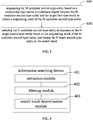
- an information searching apparatus including:
- the filtering module 402 is configured for acquiring, based on a confidence degree between the K related second-type-entity and the target first-type-entity, a related second-type-entity meeting a confidence condition from the K related second-type-entity, adding the related second-type-entity meeting the confidence condition to a candidate set; and determining the M candidate second-type-entity based on the candidate set.
- the filtering module 402 is configured for filtering the related second-type-entity contained in the candidate set based on at least one of a relationship type condition and a preset time condition to obtain a related second-type-entity remaining in the candidate set as the M candidate second-type-entity.
- the search result determination module 403 is configured for sequencing the M candidate second-type-entity based on a relationship type and/or a confidence degree between the M candidate second-type-entity and the target first-type-entity to obtain a sequencing result of the M candidate second-type-entity; and selecting top N candidate second-type-entity in sequence as the N target second-type-entity based on the sequencing result of the M candidate second-type-entity, and taking the N target second-type-entity as the search result.
- the search result determination module 403 is configured for sequencing the M candidate second-type-entity based on a priority order of the relationship type to obtain M candidate second-type-entity sequenced based on the relationship type; and in a case that a plurality of M candidate second-type-entities are obtained after being sequenced based on the relationship type and a plurality of candidate second-type-entities corresponding to a same relationship type exist in the plurality of M candidate second-type-entities sequenced based on the relationship type, sequencing the plurality of candidate second-type-entities corresponding to the same relationship type based on the confidence degree.
- the apparatus includes an extraction module 501, a filtering module 502, a search result determination module 503, and further includes:
- an optimization module 504 configured for determining a correctness proportion of the N target second-type-entity contained in the search result, taking the correctness proportion as an evaluation result; and optimizing at least one of the confidence condition, the relationship type condition and the preset time condition based on the evaluation result.
- the extraction module 501, the filtering module 502, and the search result determination module 503 of Fig. 5 are respectively identical or similar to the extraction module 401, the filtering module 402, and the search result determination module 403 of Fig. 4.
- the present disclosure also provides an electronic device and a readable storage medium.
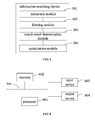
- FIG. 6 a block diagram of an electronic device used to implement the information search method of an embodiment of the present disclosure is illustrated.
- the electronic device is intended to represent various forms of digital computers, such as laptop computers, desktop computers, work tables, personal digital assistants, servers, blade servers, mainframe computers, and other suitable computers.
- the electronic device may also represent various forms of mobile devices, such as personal digital processors, cellular telephones, smart phones, wearable devices, and other similar computing devices.
- the components, connections, relationships, and functions thereof shown herein are by way of example only and are not intended to limit the implementations of the present disclosure described and/or claimed herein.
- the electronic device includes: one or more processors 601, memory 602, and interfaces for connecting components, including high-speed interfaces and low-speed interfaces.
- the various components are interconnected by utilizing different buses and may be mounted on a common mainboard or otherwise as desired.
- the processor may process instructions for execution within the electronic device, including instructions stored in or on a memory to display graphical information of the GUI on an external input/output device (such as a display device coupled to the interface).
- an external input/output device such as a display device coupled to the interface.
- multiple processors and/or multiple buses may be used with multiple memories, if desired.
- multiple electronic devices may be connected, each providing some of the necessary operations (e.g., as an array of servers, a set of blade servers, or a multi-processor system).
- An example of one processor 601 is shown in Fig. 6.
- the memory 602 is a non-transitory computer-readable storage medium provided in the present disclosure.
- the memory stores instructions executable by at least one processor to cause the at least one processor to perform the information searching method provided in the present disclosure.
- the non-transitory computer-readable storage medium of the present disclosure stores computer instructions for causing a computer to perform the information searching method provided herein.
- the memory 602 may be used to store non-transitory software programs, non-transitory computer-executable programs, and modules, such as program instructions/modules corresponding to the information searching method in embodiments of the present disclosure (e.g., extraction module, filtering module, search result determination module and optimization module shown in Fig. 5).
- the processor 601 performs various functional applications of the server and data processing by executing non-transient software programs, instructions, and modules stored in the memory 602, to implement the information searching method in the above-described method embodiment.
- the memory 602 may include a program storage area and a data storage area, wherein the program storage area may store an operating system, an application program required for at least one function.
- the data storage area may store data created according to the use of the electronic device for information search, etc.
- the memory 602 may include high-speed random access memory, and may also include a non-transitory memory, such as at least one disk storage device, flash memory device, or other non-transitory solid state storage device.
- the memory 602 may optionally include a memory remotely located relative to the processor 601, which may be connected via a network to the electronic device for information search. Examples of such networks include, but are not limited to, the Internet, intranets, local area networks, mobile communication networks, and combinations thereof.
- the electronic device for information search may further include: an input device 603 and an output device 604.
- the processor 601, memory 602, input device 603, and output device 604 may be connected by a bus or other means, exemplified by a bus connection in Fig. 6.
- the input device 603 may receive input numeric or character information and generate key signal inputs related to user settings and functional controls of a user's electronic device, for example, a touch screen, a keypad, a mouse, a trackpad, a touchpad, an indicating arm, one or more mouse buttons, a trackball, a joystick and other input devices.
- the output device 604 may include a display device, an auxiliary lighting device (e.g., LEDs), a touch feedback device (e.g., vibration motors), etc.
- the display device may include, but is not limited to, a liquid crystal display (LCD), a light emitting diode (LED) display, and a plasma display. In some embodiments, the display device may be a touch screen.
- Various embodiments of the systems and techniques described herein may be implemented in digital electronic circuitry system, integrated circuit system, ASIC (application-specific integrated circuit), computer hardware, firmware, software, and/or combinations thereof. These various embodiments may include: embodied in one or more computer programs, which can be executed and/or interpreted on a programmable system including at least one programmable processor, the programmable processor can be a dedicated or general-purpose programmable processor and can receive data and instructions from, and can transmit data and instructions to, a memory system, at least one input device, and at least one output device.
- machine-readable medium and “computer-readable medium” refer to any computer program products, devices, and/or apparatus (e.g., a magnetic disk, an optical disk, a memory, a programmable logic device (PLD)) for providing machine instructions and/or data to a programmable processor, including a machine-readable medium that receives machine instructions as machine-readable signals.
- machine-readable signal refers to any signal used to provide machine instructions and/or data to a programmable processor.
- the systems and techniques described herein may be implemented on a computer having: a display device (e.g., a CRT (cathode ray tube) or LCD (liquid crystal displayer) monitor) for displaying information to a user; and a keyboard and a pointing device (e.g., a mouse or a trackball) through which a user can provide input to the computer.
- a display device e.g., a CRT (cathode ray tube) or LCD (liquid crystal displayer) monitor
- a keyboard and a pointing device e.g., a mouse or a trackball
- Other types of devices may also be used to provide interaction with a user.
- the feedback provided to the user may be any form of sensory feedback (e.g., visual feedback, auditory feedback, or touch feedback); and input from the user may be received in any form, including acoustic input, voice input, or touch input.
- the systems and techniques described herein may be implemented in a computing system that includes a background component (e.g., as a data server), or a computing system that includes a middleware component (e.g., an application server), or a computing system that includes a front-end component (e.g., a user computer having a graphical user interface or a web browser through which a user may interact with embodiments of the systems and techniques described herein), or in a computing system that includes any combination of such background components, middleware components, or front-end components.
- the components of the system may be interconnected by digital data communication in any form or medium (e.g., a communication network). Examples of communication networks include: local area networks (LAN), wide area networks (WAN), and the Internet.
- the computer system may include a client and a server.
- the client and the server are typically remote from each other and typically interact through a communication network.
- the relationship between the client and the server is generated by a computer program running on a respective computer and having a client-server relationship.
- the server can be a cloud server, also called a cloud computing server or a cloud host, which is a host product in a cloud computing service system, and solves the defects of high management difficulty and weak business expansibility in the service of the traditional physical host and virtual private server (VPS).
- the server may also be a server of a distributed system, or a server in combination with blockchain.
- the related second-type-entities corresponding to the target first-type-entity can be determined through the relational map, the candidate second-type-entities are screened from the related second-type-entities, and finally the target second-type-entity is determined from the candidate second-type-entities to serve as the search result. Therefore, by determining the target second-type-entity related to the target first-type-entity through the relational map, the problems of low efficiency, deviation of results and the like caused by offline inquiry and the like can be avoided.
- the target second-type-entity can be determined only through the pre-constructed relational map and the related search word, the searching efficiency and the accuracy are substantially improved, and the office efficiency of enterprises can be improved.
Landscapes
- Engineering & Computer Science (AREA)
- Databases & Information Systems (AREA)
- Theoretical Computer Science (AREA)
- Physics & Mathematics (AREA)
- General Physics & Mathematics (AREA)
- Data Mining & Analysis (AREA)
- General Engineering & Computer Science (AREA)
- Business, Economics & Management (AREA)
- Human Resources & Organizations (AREA)
- Strategic Management (AREA)
- Mathematical Physics (AREA)
- Entrepreneurship & Innovation (AREA)
- Computational Linguistics (AREA)
- Life Sciences & Earth Sciences (AREA)
- Software Systems (AREA)
- Economics (AREA)
- General Business, Economics & Management (AREA)
- Marketing (AREA)
- Operations Research (AREA)
- Quality & Reliability (AREA)
- Tourism & Hospitality (AREA)
- Library & Information Science (AREA)
- Animal Behavior & Ethology (AREA)
- Fuzzy Systems (AREA)
- Probability & Statistics with Applications (AREA)
- Health & Medical Sciences (AREA)
- Artificial Intelligence (AREA)
- Biomedical Technology (AREA)
- Biophysics (AREA)
- Evolutionary Computation (AREA)
- General Health & Medical Sciences (AREA)
- Molecular Biology (AREA)
- Computing Systems (AREA)
- Information Retrieval, Db Structures And Fs Structures Therefor (AREA)
Applications Claiming Priority (1)
| Application Number | Priority Date | Filing Date | Title |
|---|---|---|---|
| CN202011191687.3A CN112307356A (zh) | 2020-10-30 | 2020-10-30 | 信息搜索方法、装置、电子设备及存储介质 |
Publications (2)
| Publication Number | Publication Date |
|---|---|
| EP3920045A2 true EP3920045A2 (de) | 2021-12-08 |
| EP3920045A3 EP3920045A3 (de) | 2022-04-06 |
Family
ID=74333023
Family Applications (1)
| Application Number | Title | Priority Date | Filing Date |
|---|---|---|---|
| EP21201038.3A Withdrawn EP3920045A3 (de) | 2020-10-30 | 2021-10-05 | Informationssuchverfahren, vorrichtung, speichermedium und programmprodukt |
Country Status (5)
| Country | Link |
|---|---|
| US (1) | US20220027366A1 (de) |
| EP (1) | EP3920045A3 (de) |
| JP (1) | JP2021180000A (de) |
| KR (1) | KR20210128372A (de) |
| CN (1) | CN112307356A (de) |
Families Citing this family (2)
| Publication number | Priority date | Publication date | Assignee | Title |
|---|---|---|---|---|
| CN114218259B (zh) * | 2022-02-21 | 2022-05-24 | 深圳市云初信息科技有限公司 | 基于大数据SaaS的多维科创信息搜索方法及系统 |
| US20250335408A1 (en) * | 2024-04-29 | 2025-10-30 | Nvidia Corporation | System modification based on correlations between operational domain parameters and performance indicators in autonomous systems and applications |
Family Cites Families (16)
| Publication number | Priority date | Publication date | Assignee | Title |
|---|---|---|---|---|
| US6029195A (en) * | 1994-11-29 | 2000-02-22 | Herz; Frederick S. M. | System for customized electronic identification of desirable objects |
| JPH09237280A (ja) * | 1996-03-01 | 1997-09-09 | Nec Corp | Erモデル指向によるデータベース検索装置 |
| US7111000B2 (en) * | 2003-01-06 | 2006-09-19 | Microsoft Corporation | Retrieval of structured documents |
| JP2012128479A (ja) * | 2010-12-13 | 2012-07-05 | Fuji Xerox Co Ltd | 検索装置及びプログラム |
| US8909637B2 (en) * | 2011-06-03 | 2014-12-09 | Facebook, Inc. | Context-based ranking of search results |
| US9400835B2 (en) * | 2011-07-28 | 2016-07-26 | Nokia Technologies Oy | Weighting metric for visual search of entity-relationship databases |
| JP5939588B2 (ja) * | 2014-05-26 | 2016-06-22 | インターナショナル・ビジネス・マシーンズ・コーポレーションInternational Business Machines Corporation | 関連ノードを探索する方法、並びに、そのコンピュータ、及びコンピュータ・プログラム |
| US20150379445A1 (en) * | 2014-06-30 | 2015-12-31 | Linkedln Corporation | Determining a relationship type between disparate entities |
| CN105068661B (zh) * | 2015-09-07 | 2018-09-07 | 百度在线网络技术(北京)有限公司 | 基于人工智能的人机交互方法和系统 |
| JP6719748B2 (ja) * | 2016-06-21 | 2020-07-08 | 国立研究開発法人物質・材料研究機構 | 探索システム、探索方法および物性データベース管理装置 |
| CN107908738A (zh) * | 2017-11-15 | 2018-04-13 | 昆明能讯科技有限责任公司 | 基于电力专业词库的企业级知识图谱搜索引擎的实现方法 |
| US11170770B2 (en) * | 2018-08-03 | 2021-11-09 | International Business Machines Corporation | Dynamic adjustment of response thresholds in a dialogue system |
| WO2020142172A1 (en) * | 2019-01-03 | 2020-07-09 | Sponsorhouse, Inc. DBA Hookit | Data prioritization through relationship analysis mapping |
| CN109918475B (zh) * | 2019-01-24 | 2021-01-19 | 西安交通大学 | 一种基于医疗知识图谱的可视查询方法及查询系统 |
| CN110597870A (zh) * | 2019-08-05 | 2019-12-20 | 长春市万易科技有限公司 | 一种企业关系挖掘方法 |
| CN111160841A (zh) * | 2019-11-29 | 2020-05-15 | 广东轩辕网络科技股份有限公司 | 一种基于知识图谱的组织架构构建方法及装置 |
-
2020
- 2020-10-30 CN CN202011191687.3A patent/CN112307356A/zh active Pending
-
2021
- 2021-06-15 JP JP2021099672A patent/JP2021180000A/ja active Pending
- 2021-10-05 US US17/450,005 patent/US20220027366A1/en not_active Abandoned
- 2021-10-05 EP EP21201038.3A patent/EP3920045A3/de not_active Withdrawn
- 2021-10-06 KR KR1020210132732A patent/KR20210128372A/ko not_active Ceased
Also Published As
| Publication number | Publication date |
|---|---|
| EP3920045A3 (de) | 2022-04-06 |
| JP2021180000A (ja) | 2021-11-18 |
| CN112307356A (zh) | 2021-02-02 |
| US20220027366A1 (en) | 2022-01-27 |
| KR20210128372A (ko) | 2021-10-26 |
Similar Documents
| Publication | Publication Date | Title |
|---|---|---|
| KR102677035B1 (ko) | 정보를 출력하기 위한 방법, 장치, 기기 및 저장매체 | |
| CN113360499A (zh) | 数据查询方法和装置 | |
| EP3937026A2 (de) | Datenverarbeitungsverfahren und -vorrichtung sowie elektronische vorrichtung und speichermedium | |
| US20140324866A1 (en) | System for decomposing events from managed infrastructures | |
| US20210365229A1 (en) | Screen projection method and apparatus, and storage medium | |
| US12282877B2 (en) | Device-specific productivity enhancements | |
| CN112507249B (zh) | 兴趣点生成的方法、装置、电子设备及存储介质 | |
| EP3828722A2 (de) | Verfahren und vorrichtung zum aufbau eines verschmolzenen beziehungsnetzwerks, elektronische vorrichtung und medium | |
| US20220027366A1 (en) | Information searching method, electronic device and storage medium | |
| US20210192554A1 (en) | Method, apparatus, device and storage medium for judging permanent area change | |
| CN112328658A (zh) | 用户档案数据处理方法、装置、设备及存储介质 | |
| KR20220106719A (ko) | 인스턴트 메시징 대상의 검색 방법, 장치, 전자 기기 및 저장 매체 | |
| CN116108094A (zh) | 一种数据整合方法、装置、电子设备以及存储介质 | |
| CN112561059B (zh) | 用于模型蒸馏的方法和装置 | |
| CN112307357B (zh) | 与陌生人的社交方法和装置 | |
| CN111581049B (zh) | 分布式系统运行状态监测方法、装置、设备及存储介质 | |
| US20170230431A1 (en) | Focus coordination in geographically dispersed systems | |
| CN113691442B (zh) | 好友推荐方法、装置、设备、存储介质及程序产品 | |
| CN115329999B (zh) | 一种运维任务的处理方法、装置、平台及存储介质 | |
| CN112507100B (zh) | 一种问答系统的更新处理方法和装置 | |
| CN111767988B (zh) | 神经网络的融合方法和装置 | |
| CN115034895B (zh) | 一种区块链节点的管理方法、装置及电子设备 | |
| CN112925482B (zh) | 数据处理方法、装置、系统、电子设备和计算机存储介质 | |
| CN115955454B (zh) | 一种信息推送方法、装置、设备及存储介质 | |
| CN112860813B (zh) | 检索信息的方法和装置 |
Legal Events
| Date | Code | Title | Description |
|---|---|---|---|
| PUAI | Public reference made under article 153(3) epc to a published international application that has entered the european phase |
Free format text: ORIGINAL CODE: 0009012 |
|
| STAA | Information on the status of an ep patent application or granted ep patent |
Free format text: STATUS: REQUEST FOR EXAMINATION WAS MADE |
|
| 17P | Request for examination filed |
Effective date: 20211005 |
|
| AK | Designated contracting states |
Kind code of ref document: A2 Designated state(s): AL AT BE BG CH CY CZ DE DK EE ES FI FR GB GR HR HU IE IS IT LI LT LU LV MC MK MT NL NO PL PT RO RS SE SI SK SM TR |
|
| PUAL | Search report despatched |
Free format text: ORIGINAL CODE: 0009013 |
|
| AK | Designated contracting states |
Kind code of ref document: A3 Designated state(s): AL AT BE BG CH CY CZ DE DK EE ES FI FR GB GR HR HU IE IS IT LI LT LU LV MC MK MT NL NO PL PT RO RS SE SI SK SM TR |
|
| RIC1 | Information provided on ipc code assigned before grant |
Ipc: G06F 16/36 20190101ALI20220225BHEP Ipc: G06F 16/38 20190101AFI20220225BHEP |
|
| STAA | Information on the status of an ep patent application or granted ep patent |
Free format text: STATUS: EXAMINATION IS IN PROGRESS |
|
| 17Q | First examination report despatched |
Effective date: 20221215 |
|
| STAA | Information on the status of an ep patent application or granted ep patent |
Free format text: STATUS: THE APPLICATION IS DEEMED TO BE WITHDRAWN |
|
| 18D | Application deemed to be withdrawn |
Effective date: 20230426 |