EP3913727B1 - Battery residual value determination system - Google Patents
Battery residual value determination system Download PDFInfo
- Publication number
- EP3913727B1 EP3913727B1 EP20781296.7A EP20781296A EP3913727B1 EP 3913727 B1 EP3913727 B1 EP 3913727B1 EP 20781296 A EP20781296 A EP 20781296A EP 3913727 B1 EP3913727 B1 EP 3913727B1
- Authority
- EP
- European Patent Office
- Prior art keywords
- battery
- residual value
- time
- information
- unit
- Prior art date
- Legal status (The legal status is an assumption and is not a legal conclusion. Google has not performed a legal analysis and makes no representation as to the accuracy of the status listed.)
- Active
Links
Images


Classifications
-
- B—PERFORMING OPERATIONS; TRANSPORTING
- B60—VEHICLES IN GENERAL
- B60L—PROPULSION OF ELECTRICALLY-PROPELLED VEHICLES; SUPPLYING ELECTRIC POWER FOR AUXILIARY EQUIPMENT OF ELECTRICALLY-PROPELLED VEHICLES; ELECTRODYNAMIC BRAKE SYSTEMS FOR VEHICLES IN GENERAL; MAGNETIC SUSPENSION OR LEVITATION FOR VEHICLES; MONITORING OPERATING VARIABLES OF ELECTRICALLY-PROPELLED VEHICLES; ELECTRIC SAFETY DEVICES FOR ELECTRICALLY-PROPELLED VEHICLES
- B60L58/00—Methods or circuit arrangements for monitoring or controlling batteries or fuel cells, specially adapted for electric vehicles
- B60L58/10—Methods or circuit arrangements for monitoring or controlling batteries or fuel cells, specially adapted for electric vehicles for monitoring or controlling batteries
- B60L58/12—Methods or circuit arrangements for monitoring or controlling batteries or fuel cells, specially adapted for electric vehicles for monitoring or controlling batteries responding to state of charge [SoC]
-
- B—PERFORMING OPERATIONS; TRANSPORTING
- B60—VEHICLES IN GENERAL
- B60L—PROPULSION OF ELECTRICALLY-PROPELLED VEHICLES; SUPPLYING ELECTRIC POWER FOR AUXILIARY EQUIPMENT OF ELECTRICALLY-PROPELLED VEHICLES; ELECTRODYNAMIC BRAKE SYSTEMS FOR VEHICLES IN GENERAL; MAGNETIC SUSPENSION OR LEVITATION FOR VEHICLES; MONITORING OPERATING VARIABLES OF ELECTRICALLY-PROPELLED VEHICLES; ELECTRIC SAFETY DEVICES FOR ELECTRICALLY-PROPELLED VEHICLES
- B60L58/00—Methods or circuit arrangements for monitoring or controlling batteries or fuel cells, specially adapted for electric vehicles
- B60L58/10—Methods or circuit arrangements for monitoring or controlling batteries or fuel cells, specially adapted for electric vehicles for monitoring or controlling batteries
- B60L58/16—Methods or circuit arrangements for monitoring or controlling batteries or fuel cells, specially adapted for electric vehicles for monitoring or controlling batteries responding to battery ageing, e.g. to the number of charging cycles or the state of health [SoH]
-
- G—PHYSICS
- G01—MEASURING; TESTING
- G01R—MEASURING ELECTRIC VARIABLES; MEASURING MAGNETIC VARIABLES
- G01R31/00—Arrangements for testing electric properties; Arrangements for locating electric faults; Arrangements for electrical testing characterised by what is being tested not provided for elsewhere
- G01R31/36—Arrangements for testing, measuring or monitoring the electrical condition of accumulators or electric batteries, e.g. capacity or state of charge [SoC]
- G01R31/367—Software therefor, e.g. for battery testing using modelling or look-up tables
-
- G—PHYSICS
- G01—MEASURING; TESTING
- G01R—MEASURING ELECTRIC VARIABLES; MEASURING MAGNETIC VARIABLES
- G01R31/00—Arrangements for testing electric properties; Arrangements for locating electric faults; Arrangements for electrical testing characterised by what is being tested not provided for elsewhere
- G01R31/36—Arrangements for testing, measuring or monitoring the electrical condition of accumulators or electric batteries, e.g. capacity or state of charge [SoC]
- G01R31/392—Determining battery ageing or deterioration, e.g. state of health
-
- H—ELECTRICITY
- H01—ELECTRIC ELEMENTS
- H01M—PROCESSES OR MEANS, e.g. BATTERIES, FOR THE DIRECT CONVERSION OF CHEMICAL ENERGY INTO ELECTRICAL ENERGY
- H01M10/00—Secondary cells; Manufacture thereof
- H01M10/42—Methods or arrangements for servicing or maintenance of secondary cells or secondary half-cells
-
- H—ELECTRICITY
- H01—ELECTRIC ELEMENTS
- H01M—PROCESSES OR MEANS, e.g. BATTERIES, FOR THE DIRECT CONVERSION OF CHEMICAL ENERGY INTO ELECTRICAL ENERGY
- H01M10/00—Secondary cells; Manufacture thereof
- H01M10/42—Methods or arrangements for servicing or maintenance of secondary cells or secondary half-cells
- H01M10/48—Accumulators combined with arrangements for measuring, testing or indicating the condition of cells, e.g. the level or density of the electrolyte
-
- H—ELECTRICITY
- H01—ELECTRIC ELEMENTS
- H01M—PROCESSES OR MEANS, e.g. BATTERIES, FOR THE DIRECT CONVERSION OF CHEMICAL ENERGY INTO ELECTRICAL ENERGY
- H01M10/00—Secondary cells; Manufacture thereof
- H01M10/42—Methods or arrangements for servicing or maintenance of secondary cells or secondary half-cells
- H01M10/48—Accumulators combined with arrangements for measuring, testing or indicating the condition of cells, e.g. the level or density of the electrolyte
- H01M10/486—Accumulators combined with arrangements for measuring, testing or indicating the condition of cells, e.g. the level or density of the electrolyte for measuring temperature
-
- H—ELECTRICITY
- H02—GENERATION; CONVERSION OR DISTRIBUTION OF ELECTRIC POWER
- H02J—ELECTRIC POWER NETWORKS; CIRCUIT ARRANGEMENTS OR SYSTEMS FOR SUPPLYING OR DISTRIBUTING ELECTRIC POWER; SYSTEMS FOR STORING ELECTRIC ENERGY
- H02J7/00—Circuit arrangements for charging or discharging batteries or for supplying loads from batteries
- H02J7/80—Circuit arrangements for charging or discharging batteries or for supplying loads from batteries including monitoring or indicating arrangements
- H02J7/84—Control of state of health [SOH]
-
- B—PERFORMING OPERATIONS; TRANSPORTING
- B60—VEHICLES IN GENERAL
- B60L—PROPULSION OF ELECTRICALLY-PROPELLED VEHICLES; SUPPLYING ELECTRIC POWER FOR AUXILIARY EQUIPMENT OF ELECTRICALLY-PROPELLED VEHICLES; ELECTRODYNAMIC BRAKE SYSTEMS FOR VEHICLES IN GENERAL; MAGNETIC SUSPENSION OR LEVITATION FOR VEHICLES; MONITORING OPERATING VARIABLES OF ELECTRICALLY-PROPELLED VEHICLES; ELECTRIC SAFETY DEVICES FOR ELECTRICALLY-PROPELLED VEHICLES
- B60L2240/00—Control parameters of input or output; Target parameters
- B60L2240/40—Drive Train control parameters
- B60L2240/54—Drive Train control parameters related to batteries
- B60L2240/545—Temperature
-
- B—PERFORMING OPERATIONS; TRANSPORTING
- B60—VEHICLES IN GENERAL
- B60L—PROPULSION OF ELECTRICALLY-PROPELLED VEHICLES; SUPPLYING ELECTRIC POWER FOR AUXILIARY EQUIPMENT OF ELECTRICALLY-PROPELLED VEHICLES; ELECTRODYNAMIC BRAKE SYSTEMS FOR VEHICLES IN GENERAL; MAGNETIC SUSPENSION OR LEVITATION FOR VEHICLES; MONITORING OPERATING VARIABLES OF ELECTRICALLY-PROPELLED VEHICLES; ELECTRIC SAFETY DEVICES FOR ELECTRICALLY-PROPELLED VEHICLES
- B60L2240/00—Control parameters of input or output; Target parameters
- B60L2240/40—Drive Train control parameters
- B60L2240/54—Drive Train control parameters related to batteries
- B60L2240/547—Voltage
-
- B—PERFORMING OPERATIONS; TRANSPORTING
- B60—VEHICLES IN GENERAL
- B60L—PROPULSION OF ELECTRICALLY-PROPELLED VEHICLES; SUPPLYING ELECTRIC POWER FOR AUXILIARY EQUIPMENT OF ELECTRICALLY-PROPELLED VEHICLES; ELECTRODYNAMIC BRAKE SYSTEMS FOR VEHICLES IN GENERAL; MAGNETIC SUSPENSION OR LEVITATION FOR VEHICLES; MONITORING OPERATING VARIABLES OF ELECTRICALLY-PROPELLED VEHICLES; ELECTRIC SAFETY DEVICES FOR ELECTRICALLY-PROPELLED VEHICLES
- B60L2240/00—Control parameters of input or output; Target parameters
- B60L2240/40—Drive Train control parameters
- B60L2240/54—Drive Train control parameters related to batteries
- B60L2240/549—Current
-
- B—PERFORMING OPERATIONS; TRANSPORTING
- B60—VEHICLES IN GENERAL
- B60L—PROPULSION OF ELECTRICALLY-PROPELLED VEHICLES; SUPPLYING ELECTRIC POWER FOR AUXILIARY EQUIPMENT OF ELECTRICALLY-PROPELLED VEHICLES; ELECTRODYNAMIC BRAKE SYSTEMS FOR VEHICLES IN GENERAL; MAGNETIC SUSPENSION OR LEVITATION FOR VEHICLES; MONITORING OPERATING VARIABLES OF ELECTRICALLY-PROPELLED VEHICLES; ELECTRIC SAFETY DEVICES FOR ELECTRICALLY-PROPELLED VEHICLES
- B60L2240/00—Control parameters of input or output; Target parameters
- B60L2240/80—Time limits
-
- B—PERFORMING OPERATIONS; TRANSPORTING
- B60—VEHICLES IN GENERAL
- B60L—PROPULSION OF ELECTRICALLY-PROPELLED VEHICLES; SUPPLYING ELECTRIC POWER FOR AUXILIARY EQUIPMENT OF ELECTRICALLY-PROPELLED VEHICLES; ELECTRODYNAMIC BRAKE SYSTEMS FOR VEHICLES IN GENERAL; MAGNETIC SUSPENSION OR LEVITATION FOR VEHICLES; MONITORING OPERATING VARIABLES OF ELECTRICALLY-PROPELLED VEHICLES; ELECTRIC SAFETY DEVICES FOR ELECTRICALLY-PROPELLED VEHICLES
- B60L2260/00—Operating Modes
- B60L2260/40—Control modes
- B60L2260/42—Control modes by adaptive correction
-
- B—PERFORMING OPERATIONS; TRANSPORTING
- B60—VEHICLES IN GENERAL
- B60Y—INDEXING SCHEME RELATING TO ASPECTS CROSS-CUTTING VEHICLE TECHNOLOGY
- B60Y2200/00—Type of vehicle
- B60Y2200/90—Vehicles comprising electric prime movers
- B60Y2200/91—Electric vehicles
-
- B—PERFORMING OPERATIONS; TRANSPORTING
- B60—VEHICLES IN GENERAL
- B60Y—INDEXING SCHEME RELATING TO ASPECTS CROSS-CUTTING VEHICLE TECHNOLOGY
- B60Y2200/00—Type of vehicle
- B60Y2200/90—Vehicles comprising electric prime movers
- B60Y2200/92—Hybrid vehicles
-
- Y—GENERAL TAGGING OF NEW TECHNOLOGICAL DEVELOPMENTS; GENERAL TAGGING OF CROSS-SECTIONAL TECHNOLOGIES SPANNING OVER SEVERAL SECTIONS OF THE IPC; TECHNICAL SUBJECTS COVERED BY FORMER USPC CROSS-REFERENCE ART COLLECTIONS [XRACs] AND DIGESTS
- Y02—TECHNOLOGIES OR APPLICATIONS FOR MITIGATION OR ADAPTATION AGAINST CLIMATE CHANGE
- Y02E—REDUCTION OF GREENHOUSE GAS [GHG] EMISSIONS, RELATED TO ENERGY GENERATION, TRANSMISSION OR DISTRIBUTION
- Y02E60/00—Enabling technologies; Technologies with a potential or indirect contribution to GHG emissions mitigation
- Y02E60/10—Energy storage using batteries
-
- Y—GENERAL TAGGING OF NEW TECHNOLOGICAL DEVELOPMENTS; GENERAL TAGGING OF CROSS-SECTIONAL TECHNOLOGIES SPANNING OVER SEVERAL SECTIONS OF THE IPC; TECHNICAL SUBJECTS COVERED BY FORMER USPC CROSS-REFERENCE ART COLLECTIONS [XRACs] AND DIGESTS
- Y02—TECHNOLOGIES OR APPLICATIONS FOR MITIGATION OR ADAPTATION AGAINST CLIMATE CHANGE
- Y02T—CLIMATE CHANGE MITIGATION TECHNOLOGIES RELATED TO TRANSPORTATION
- Y02T10/00—Road transport of goods or passengers
- Y02T10/60—Other road transportation technologies with climate change mitigation effect
- Y02T10/70—Energy storage systems for electromobility, e.g. batteries
-
- Y—GENERAL TAGGING OF NEW TECHNOLOGICAL DEVELOPMENTS; GENERAL TAGGING OF CROSS-SECTIONAL TECHNOLOGIES SPANNING OVER SEVERAL SECTIONS OF THE IPC; TECHNICAL SUBJECTS COVERED BY FORMER USPC CROSS-REFERENCE ART COLLECTIONS [XRACs] AND DIGESTS
- Y02—TECHNOLOGIES OR APPLICATIONS FOR MITIGATION OR ADAPTATION AGAINST CLIMATE CHANGE
- Y02T—CLIMATE CHANGE MITIGATION TECHNOLOGIES RELATED TO TRANSPORTATION
- Y02T90/00—Enabling technologies or technologies with a potential or indirect contribution to GHG emissions mitigation
- Y02T90/10—Technologies relating to charging of electric vehicles
- Y02T90/16—Information or communication technologies improving the operation of electric vehicles
- Y02T90/167—Systems integrating technologies related to power network operation and communication or information technologies for supporting the interoperability of electric or hybrid vehicles, i.e. smartgrids as interface for battery charging of electric vehicles [EV] or hybrid vehicles [HEV]
-
- Y—GENERAL TAGGING OF NEW TECHNOLOGICAL DEVELOPMENTS; GENERAL TAGGING OF CROSS-SECTIONAL TECHNOLOGIES SPANNING OVER SEVERAL SECTIONS OF THE IPC; TECHNICAL SUBJECTS COVERED BY FORMER USPC CROSS-REFERENCE ART COLLECTIONS [XRACs] AND DIGESTS
- Y02—TECHNOLOGIES OR APPLICATIONS FOR MITIGATION OR ADAPTATION AGAINST CLIMATE CHANGE
- Y02W—CLIMATE CHANGE MITIGATION TECHNOLOGIES RELATED TO WASTEWATER TREATMENT OR WASTE MANAGEMENT
- Y02W30/00—Technologies for solid waste management
- Y02W30/50—Reuse, recycling or recovery technologies
- Y02W30/84—Recycling of batteries or fuel cells
Definitions
- the present invention relates to a system that determines the residual value of a battery.
- Patent Literature 1 a system adapted to determine the residual value of an electric vehicle or a hybrid vehicle.
- the residual value of a secondary battery based on battery deterioration parameters can be determined thereby to determine the residual value of an electric vehicle or a hybrid vehicle.
- Patent Literature 1 Japanese Patent Application Laid-Open No. 2006-197765
- the residual value of a drive battery is an important factor in determining the residual value of an electric vehicle or a hybrid vehicle, so that users of a system such as the one in Patent Document 1 have a high need to know the exact residual value of a battery.
- Patent Document 1 Although the system in Patent Document 1 is said to determine the residual value of a secondary battery on the basis of degradation parameters, it is not clear how to determine the residual value of a secondary battery on the basis of these degradation parameters.
- Patent Document 1 cannot meet the needs of users who want to know the exact residual value of a battery in order to determine the residual value of an electric vehicle or a hybrid vehicle.
- an object of the present invention is to provide a battery residual value determination system capable of easily and accurately determining the residual value of a battery.
- the amount of future maintenance cost of a battery is an important factor in determining the residual value of the battery.
- the battery fails after the service life thereof passes the failure is not covered by manufacturer's warranty and the maintenance cost will, therefore, be borne by an owner or the like of the battery. For this reason, the period of time elapsed from the time of manufacture of the battery, for which the residual value is to be determined, and the service life of the battery are important factors for accurately determining the residual value of the battery.
- the information on the voltage, the current, the temperature and the period of time elapsed from the time of manufacture of a battery and the information indicating the service life thereof are received by the battery information reception unit, and the first residual value indicating the current SOH of the battery is determined by the first residual value determination unit on the basis of the information on the voltage, the current, and the temperature of the battery.
- the attenuation function determination unit uses the information on the period of time elapsed from the time of manufacture of a battery and the information indicating the service life of the battery received by the battery information reception unit, and an attenuation function indicating a time-dependent change of the SOH specific to the battery thereby to determine an attenuation coefficient used for correcting the first residual value of the battery.
- the second residual value output unit determines and outputs a second residual value which is obtained by correcting the first residual value by multiplying the first residual value by an attenuation coefficient and which indicates a corrected current SOH of the battery.
- the period of time elapsed from the time of manufacture and the service life of the battery are taken into account, so that the residual value of the battery can be more accurately determined.
- the battery residual value determination system in accordance with the present invention makes it possible to easily and more accurately determine the residual value of a battery.
- the residual value of a battery does not necessarily decrease linearly according to the period of time elapsed from the time of manufacture.
- the residual value slightly decreases immediately after sale, that is, at the time when the battery is out of the new condition thereof, then gradually decreases in a certain initial stage where the battery is still as good as new, and thereafter, rapidly decreases toward the end of the service life when free repair by the manufacturer thereof is no longer available.
- the residual value of the battery continues to rapidly decrease even after the elapse of the service life.
- rare metals and the like contained in the battery can be recycled even if the battery cannot be used as a battery in the end, and therefore, the residual value is not lost. Consequently, the rate of decrease in the residual value of the battery gradually decreases in the final stage of the battery life.
- the attenuation function determination unit determines the attenuation coefficient using a sigmoid function equation (1) as described above, and the second residual value output unit determines, as a second residual value, a value obtained by multiplying a first residual value by the attenuation coefficient.
- the battery residual value determination system of the present embodiment includes a user device 10 and a server 30.
- the user device 10 and the server 30 are connected with each other by a communication network 50 so as to be mutually communicable, thus constituting a computer network system.
- the user device 10 is, for example, a computer that includes a user device control unit 110, a sensor 130, a user device output unit 150, and a user device input unit 170.
- the user device 10 may be a dedicated terminal used to determine the residual value of a battery, or may be a general-purpose device such as a personal computer, a smartphone, or a tablet terminal.
- the user device control unit 110 is composed mainly of an arithmetic processing unit such as a CPU (Central Processing Unit), a memory, and I/O (Input/Output) devices.
- the user device control unit 110 reads and executes predetermined programs thereby to function as a battery information acquisition unit 111 and a display control unit 113.
- the battery information acquisition unit 111 acquires, through a sensor 130, the information on the voltage, the current, the temperature and the period of time elapsed from the time of manufacture of a battery 710 of a device to be determined 70.
- the battery information acquisition unit 111 further acquires the information indicating the service life of the battery.
- the display control unit 113 controls the processing for receiving a processing result of the server 30 and displaying the received processing result on a display 151 constituting the user device output unit 150.
- the sensor 130 is a mechanism connected to the battery 710, for which the residual value is to be determined, through, for example, a cable Cbl, wireless communication or the like to acquire the information on the voltage, the current, the temperature and the period of time elapsed from the time of manufacture of the battery 710 of the device to be determined 70 according to instructions from the battery information acquisition unit 111.
- the sensor 130 may be configured to further acquire the information on the manufacturer's name, the type, the serial number and the like of the battery 710, for which the residual value is to be determined.
- the user device output unit 150 is composed of the display 151 that performs output by displaying, for example, the processing results of the display control unit 113, and a printer 153 that performs output by printing the processing results of the display control unit 113.
- the user device input units 170 are, for example, a switch, a button, a touch panel, a keyboard, and a mouse or a microphone, which accept operation inputs to the user device 10 by a user U.
- the server 30 is, for example, a computer that includes a server control unit 310 and a server storage unit 330.
- the server 30 may be composed of a single computer or may be composed of a plurality of computers.
- the server control unit 310 is composed mainly of an arithmetic processing unit such as a CPU (Central Processing Unit), a memory, and I/O (Input/Output) devices.
- the server control unit 310 reads and executes predetermined programs thereby to function as a battery information reception unit 311, a first residual value determination unit 313, an attenuation function determination unit 315, and a second residual value output unit 317.
- the battery information reception unit 311 receives the information on the voltage, the current, the temperature and the period of time elapsed from the time of manufacture of the battery 710, for which the residual value is to be determined, through the user device 10.
- the battery information reception unit 311 further receives the information indicating the service life of the battery.
- the first residual value determination unit 313 determines the first residual value, which indicates the SOH (State of Health) of the battery 710, on the basis of the information on the voltage, the current, and the temperature of the battery 710 received by the battery information reception unit 311.
- the attenuation function determination unit 315 determines an attenuation function which indicates a time-dependent change of the SOH specific to the battery 710 and which is used to correct the first residual value of the battery 710.
- the second residual value output unit 317 determines and outputs a second residual value obtained by correcting the first residual value according to the period of time elapsed from the time of manufacture of the battery 710 by using the attenuation function.
- the server storage unit 330 is composed of a storage device, such as a ROM (Read Only Memory), a RAM (Random Access Memory), and an HDD (Hard Disk Drive), and stores the information used for the processing by the server control unit 310, processing results, and other necessary information.
- ROM Read Only Memory
- RAM Random Access Memory
- HDD Hard Disk Drive
- the communication network 50 is, for example, a LAN (Local Area Network), WAN (Wide Area Network), or an Internet communication network.
- the user device 10 in response to an operation by the user U, the user device 10 carries out battery information acquisition processing for acquiring the information on the voltage, the current, and the temperature of the battery 710, for which the residual value is to be determined, and the period of time elapsed from the time of manufacture of the battery 710, and for transmitting the acquired information to the server 30 (S110 of FIG. 2 ).
- the server 30 carries out battery information reception processing for receiving the information on the voltage, the current, and the temperature of the battery 710, for which the residual value is to be determined, and the period of time elapsed from the time of manufacture of the battery 710, which has been transmitted from the user device 10 (S210 of FIG. 2 ).
- the server 30 carries out first residual value determination processing for determining the first residual value indicating the SOH of the battery 710 on the basis of the received information on the voltage, the current and the temperature of the battery 710 (S230 of FIG. 2 ), carries out attenuation function determination processing for determining the attenuation function indicating the time-dependent change of the SOH specific to the battery 710 that is used to correct the first residual value of the battery 710 (S250 of FIG. 2 ), and carries out second residual value output processing for determining and outputting a second residual value obtained by correcting the first residual value by using the attenuation function according the information on the period of time elapsed from the time of manufacture of the battery 710 (S270 of FIG. 2 ).
- result transmission processing for transmitting the execution result of the series of processing from S210 to S270 to the user device 10 is carried out (S330 of FIG. 2 ).
- the user device 10 carries out display control processing for receiving the processing result from the server 30 and displaying the processing result on the display 151 constituting the user device output unit 150 (S510 of FIG. 2 ). This finishes the series of processing by the battery residual value determination system.
- the user device 10 In response to an operation by the user U, the user device 10 is started up, connecting the sensor 130 to the battery 710, for which the residual value is to be determined, and the operation for starting the battery information acquisition processing is performed thereby to start the battery information acquisition processing.
- the battery information acquisition unit 111 acquires, through the sensor 130, the information on the voltage, the current, and the temperature of the battery 710, for which the residual value is to be determined, and the period of time elapsed from the time of manufacture of the battery 710, or further acquires the information on the service life of the battery 710, then transmits the acquired information to the server 30, and terminates the processing.
- the battery information reception processing is started when the server 30 receives, from the user device 10, the information on the voltage, the current, and the temperature of the battery 710, for which the residual value is to be determined, and the period of time elapsed from the time of manufacture of the battery 710.
- the battery information reception unit 311 stores, as necessary, the information received from the user device 10 in the server storage unit 330, and terminates the processing.
- the first residual value determination processing is started when the battery information reception processing is terminated in the server 30.
- the first residual value determination unit 313 determines the first residual value indicating the SOH of the battery 710 on the basis of the information on the voltage, the current, and the temperature of the battery received by the battery information reception unit 311, and terminates the processing.
- first residual value determination unit 313 determines the first residual value indicating the SOH of the battery 710 on the basis of information on voltage, current, and temperature.
- the first residual value determination unit 313 is configured to determine the first residual value by calculating the SOH of the battery 710 by using a SOH calculation model or an approximate equation obtained by analyzing, using a regression analysis method or the like, the correlation between the SOH and the values of the voltage, the current and the temperature of a large number of used batteries which were manufactured and sold during the same period of time by the same manufacturer or equivalents thereto.
- the first residual value determination unit 313 may be configured to determine the SOH of the battery 710 by using an AI that has learned the values of the voltage, the current and the temperature and the SOH of a large number of used batteries.
- the attenuation function determination processing is started in the server 30 upon the completion of the first residual value determination processing.
- the attenuation function determination unit 315 determines an attenuation function which indicates the time-dependent change of the SOH specific to the battery 710 and which is used to correct the first residual value of the battery 710. The attenuation function determination unit 315 further determines an attenuation coefficient by using the attenuation function.
- the attenuation function determined by the attenuation function determination unit 315 at this time may be, for example, a linear equation or a multi-order equation that uses information on the period of time elapsed from the time of manufacture of the battery 710 as a variable and the information indicating the service life of the battery as long as the function indicates the time-dependent change of the SOH specific to the battery 710.
- the attenuation function is represented by, for example, a sigmoid function equation given below.
- the attenuation function determination unit 315 determines the attenuation function according to, for example, the aforesaid expression on the basis of the information on the period of time elapsed from the time of manufacture of the battery and the information indicating the service life of the battery received by the battery information reception unit, and then determines the attenuation coefficient by using the determined attenuation function.
- the attenuation function determination unit 315 acquires the constant "a" stored beforehand in, for example, the server storage unit 330 by referring to the server storage unit 330, and determines the attenuation function by using the acquired constant "a", the value indicating the service life of the battery 710 included in the information received by the battery information reception unit 311 from the user device 10, and the value obtained by converting the information indicating the period of time elapsed from the time of manufacture of the battery 710, which is included in the information received by the battery information reception unit 311 from the user device 10, into the number of years.
- the attenuation function determination unit 315 determines the attenuation coefficient "y" by using the aforesaid expression (1), and terminates the processing.
- the period of time elapsed from the time of manufacture and the service life of the battery 710 are taken into account when determining the residual value of the battery 710, thus making it possible to determine the residual value of the battery 710 more accurately.
- the aforesaid expression (1) is used as the attenuation function, so that it is possible to easily approximate the curve of the time-dependent change in the residual value of the battery that is closer to reality.
- the second residual value output processing is started in the server 30 upon completion of the attenuation function determination processing.
- the second residual value output unit 317 determines and outputs, as the second residual value of the battery 710, the value obtained by multiplying the first residual value of the battery 710 determined by the first residual value determination processing by the attenuation coefficient "y" determined by the attenuation function determination processing, and terminates the processing.
- the user U can easily know an exact residual value of the battery 710 that takes the age of the battery 710 into account.
- the second residual value output unit 317 may be configured to also output information giving a graph that indicates the second residual value of the battery 710.
- the result transmission processing is started in the server 30 upon completion of the second residual value output processing.
- a result transmission unit 321 transmits, to the user device 10, the information which is output by the second residual value output processing and which indicates the second residual value of the battery 710, for which the residual value is to be determined, together with, for example, the information which indicates the first residual value of the battery 710, for which the residual value is to be determined, and terminates the processing.
- the second residual value output unit 317 is configured to also output the information including a graph indicating the second residual value of the battery 710, the information including the graph is transmitted together with the aforesaid information to the user device 10.
- the display control processing is started when the user device 10 receives the information indicating the second residual value of the battery 710, for which the residual value is to be determined, from the server 30.
- the display control unit 113 displays, on the display 151 as illustrated in FIG. 3A , the information including the information indicating the second residual value of the battery 710, for which the residual value is to be determined, received from the server 30, and terminates the processing.
- FIG. 3A is a graph Gra1 in which the vertical axis represents the first residual value of the battery 710, for which the residual value is to be determined, in units of percentage, and the horizontal axis represents the period of time elapsed from the time of manufacture of the battery 710 (hereinafter referred to as the elapsed period of time) expressed in units of year.
- the graph Gra1 illustrates a case where the constant "a” in the aforesaid expression (1) is 0.4, the value "b” indicating the service life of the battery 710 is 10 (years), the length of time the battery 710 has been used at the time of processing is 2 (years), and the first residual value of the battery 710 determined by the first residual value determination processing is 0.9500.
- the graph Gra1 includes boundary lines Lin1, Lin2 ... Lin 19 as the indication of the boundaries of residual value ranks, which are divided into ranks of 100% to 95%, below 95% to 90% and so on in 5% increments according to the second residual value of the battery 710.
- the boundary line Lin1 indicates the boundary of what percentage of the first residual value must be greater than or equal to in each elapsed period of time in order for a value resulting from the correction of the first residual value of battery 710 to the second residual value to have a residual value rank of 100% to 95%.
- the first residual value at the boundary of the boundary line Lin1 is 92.46%. This value is obtained by multiplying "95%” by an attenuation coefficient (0.9734) in the case where the elapsed period of time is one year.
- the first residual value at the boundary of the boundary line Lin1 in each case where the elapsed period of time is two years or more is calculated by the server 30, and the boundary line Lin1 connecting the value in each elapsed period of time is included in the graph Gra1.
- the boundary lines Lin2 ...Lin19 which are the results calculated by the same method are included in the graph Gra1 as the indication of the boundaries of the residual value ranks.
- the graph Gra1 includes an indication Val1 denoting the first residual value of the battery 710, for which the residual value is to be determined.
- the indication Val1 indicates that the elapsed period of time is two years, and the first residual value denoted in units of percentage is 95%.
- the graph Gra1 includes indications Grp1, Grp2, and Grp3 that denote the boundaries of three groups obtained by grouping the residual value ranks according to the magnitude of the second residual value, the groups each indicating the type of application for which the battery 710, for which the residual value is to be determined, can be used.
- the indication Grp1 indicates the range included in a first group indicating that a battery can continue to be used for a current application. This range includes the battery 710 with the second residual value of 75% or more.
- the indication Grp2 indicates the range included in a second group indicating that a battery cannot be used for a current application but can be used for other applications. This range includes the battery 710 with the second residual value of below 75% to 30% or more.
- the indication Grp3 indicates the range included in a third group indicating that a battery cannot be used for a current application and for any other applications. This range includes the battery 710 with the second residual value of below 30%.
- the graph Gra1 includes an indication Est indicating the estimated values of the first residual value of the battery 710, for which the residual value is to be determined, at a plurality of points in the future.
- the graph Gra1 may include an indication Val2 indicating the second residual value of the battery 710 at the time of processing, as illustrated in FIG. 3A .
- FIG. 3B illustrates the contents of a graph Gra2 in the case where the attenuation function determination unit 315 is configured to determine the attenuation coefficient by using, as the attenuation function, a linear equation (2) given below in place of the aforesaid expression (1).
- a battery residual value determination system capable of easily and accurately determining the residual value of a battery can be provided.
- the above has described the configuration provided with the user device 10 and the server 30, but the present invention is not limited thereto.
- the user device 10 may be provided with all functions of the aforesaid server 30.
- the server 30 is omitted.
- the above has described the configuration in which the battery information acquisition unit 111 acquires, through the sensor 130, the information on the period of time elapsed from the time of manufacture of the battery 710 of the device to be determined 70; however, the present invention is not limited thereto.
- the battery information acquisition unit 111 acquires, through the sensor 130, information that specifies the time of manufacture of the battery 710, such as the manufacturer's name, the type, and the serial number of the battery 710 and transmits the acquired information to the server 30, and the battery information reception unit 311 of the server 30 refers to a table of correspondence between the information for identifying the time of manufacture of the battery 710 stored in the server storage unit 330 in advance and the information indicating the time of manufacture of the battery 710 thereby to acquire the information on the period of time elapsed from the time of manufacture of the battery 710.
- the display control unit 113 is configured to display the second residual value of the battery at the time of processing in the graphs in units of percentage; however, the present invention is not limited thereto.
- the display control unit 113 may be configured to display, in a graph, a letter (e.g., a rank A in the case of 100% to 95%) or a number (e.g., 4 in the case of below 95% to 90% or more on a five-point scale) or other symbols representing ranks corresponding to the second residual values, in addition to or in place of displaying the second residual values in units of percentage.
- a letter e.g., a rank A in the case of 100% to 95%) or a number (e.g., 4 in the case of below 95% to 90% or more on a five-point scale) or other symbols representing ranks corresponding to the second residual values, in addition to or in place of displaying the second residual values in units of percentage.
Landscapes
- Engineering & Computer Science (AREA)
- Power Engineering (AREA)
- Life Sciences & Earth Sciences (AREA)
- Mechanical Engineering (AREA)
- Transportation (AREA)
- Sustainable Energy (AREA)
- Sustainable Development (AREA)
- Electrochemistry (AREA)
- General Chemical & Material Sciences (AREA)
- Chemical Kinetics & Catalysis (AREA)
- Chemical & Material Sciences (AREA)
- Manufacturing & Machinery (AREA)
- General Physics & Mathematics (AREA)
- Physics & Mathematics (AREA)
- Secondary Cells (AREA)
- Charge And Discharge Circuits For Batteries Or The Like (AREA)
- Tests Of Electric Status Of Batteries (AREA)
- Electric Propulsion And Braking For Vehicles (AREA)
Description
- The present invention relates to a system that determines the residual value of a battery.
- Hitherto, there has been known a system adapted to determine the residual value of an electric vehicle or a hybrid vehicle (refer to Patent Literature 1).
- According to the system in
Patent Document 1, the residual value of a secondary battery based on battery deterioration parameters can be determined thereby to determine the residual value of an electric vehicle or a hybrid vehicle. - Patent Literature 1:
Japanese Patent Application Laid-Open No. 2006-197765 - The residual value of a drive battery is an important factor in determining the residual value of an electric vehicle or a hybrid vehicle, so that users of a system such as the one in
Patent Document 1 have a high need to know the exact residual value of a battery. - However, although the system in
Patent Document 1 is said to determine the residual value of a secondary battery on the basis of degradation parameters, it is not clear how to determine the residual value of a secondary battery on the basis of these degradation parameters. - Consequently, the system in
Patent Document 1 cannot meet the needs of users who want to know the exact residual value of a battery in order to determine the residual value of an electric vehicle or a hybrid vehicle. - In view of the problems of the prior art described above, an object of the present invention is to provide a battery residual value determination system capable of easily and accurately determining the residual value of a battery.
- Even if the SOH (State Of Health) value of the battery, which is determined on the basis of the measured values of the voltage, current, and temperature of the battery for which the residual value is to be determined, is the same, the rate of deterioration of the battery significantly varies depending on the length of time that has elapsed from the time the battery was manufactured to the time of measurement, resulting in a significant difference in the residual value of the battery accordingly. Therefore, in order to accurately determine the residual value of a battery, it is necessary to consider the age of the battery, e.g., the period of time that has elapsed from the time of manufacture thereof.
- Further, the amount of future maintenance cost of a battery is an important factor in determining the residual value of the battery. In addition, if the battery fails after the service life thereof passes, the failure is not covered by manufacturer's warranty and the maintenance cost will, therefore, be borne by an owner or the like of the battery. For this reason, the period of time elapsed from the time of manufacture of the battery, for which the residual value is to be determined, and the service life of the battery are important factors for accurately determining the residual value of the battery.
- A battery residual value determination system and method according to the invention are defined in the appended claims.
- According to the present invention, the information on the voltage, the current, the temperature and the period of time elapsed from the time of manufacture of a battery and the information indicating the service life thereof are received by the battery information reception unit, and the first residual value indicating the current SOH of the battery is determined by the first residual value determination unit on the basis of the information on the voltage, the current, and the temperature of the battery.
- Further, the attenuation function determination unit uses the information on the period of time elapsed from the time of manufacture of a battery and the information indicating the service life of the battery received by the battery information reception unit, and an attenuation function indicating a time-dependent change of the SOH specific to the battery thereby to determine an attenuation coefficient used for correcting the first residual value of the battery.
- Then, the second residual value output unit determines and outputs a second residual value which is obtained by correcting the first residual value by multiplying the first residual value by an attenuation coefficient and which indicates a corrected current SOH of the battery.
- This makes it possible to easily inform a user of an exact residual value of the battery, taking the period of time elapsed from the time of manufacture and the service life of the battery into account.
- Consequently, when determining the residual value of a battery, the period of time elapsed from the time of manufacture and the service life of the battery are taken into account, so that the residual value of the battery can be more accurately determined.
- Thus, the battery residual value determination system in accordance with the present invention makes it possible to easily and more accurately determine the residual value of a battery.
- In the battery residual value determination system in accordance with the present invention, preferably,
- the attenuation function determination unit is configured to determine the attenuation coefficient by using expression (1) given below as the attenuation function:
[Expression 1]
- where "y" denotes the attenuation coefficient of the battery, "a" denotes a constant, "b" denotes a value indicating the service life of the battery, "e" denotes a Napier's constant, and "x" denotes a value indicating the period of time elapsed from the time of manufacture of the battery in terms of the number of years.
- The residual value of a battery does not necessarily decrease linearly according to the period of time elapsed from the time of manufacture. The residual value slightly decreases immediately after sale, that is, at the time when the battery is out of the new condition thereof, then gradually decreases in a certain initial stage where the battery is still as good as new, and thereafter, rapidly decreases toward the end of the service life when free repair by the manufacturer thereof is no longer available.
- Then, the residual value of the battery continues to rapidly decrease even after the elapse of the service life. On the other hand, however, rare metals and the like contained in the battery can be recycled even if the battery cannot be used as a battery in the end, and therefore, the residual value is not lost. Consequently, the rate of decrease in the residual value of the battery gradually decreases in the final stage of the battery life.
- In other words, it is more realistic to expect a battery to change the residual value thereof along a curve to gradually decrease in the initial stage, then rapidly decrease, but continue to maintain a certain level of residual value in the final stage of the life thereof.
- According to the battery residual value determination system of the present invention, the attenuation function determination unit determines the attenuation coefficient using a sigmoid function equation (1) as described above, and the second residual value output unit determines, as a second residual value, a value obtained by multiplying a first residual value by the attenuation coefficient.
- Consequently, the aforesaid equation (1) is used as the attenuation function, thus making it possible to easily approximate the curve of change over time in the residual value of the battery that is closer to reality described above.
- As described above, according to the battery residual value determination system in accordance with the present invention, a more realistic battery residual value can be easily determined.
-
-
FIG. 1 is a block diagram illustrating an overall configuration of a battery residual value determination system; -
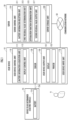
FIG. 2 is a flowchart illustrating the details of processing by the battery residual value determination system; -
FIG. 3A is a diagram illustrating an example of the content of an output of the battery residual value determination system; and -
FIG. 3B is a diagram illustrating another example of the content of an output of the battery residual value determination system. - With reference to the accompanying drawings, a battery residual value determination system of the present embodiment will be described. The same components may be designated by the same reference numerals and the descriptions thereof may be omitted.
- First, referring to
FIG. 1 , the configuration of the battery residual value determination system of the present embodiment will be described. The battery residual value determination system of the present embodiment includes auser device 10 and aserver 30. Theuser device 10 and theserver 30 are connected with each other by acommunication network 50 so as to be mutually communicable, thus constituting a computer network system. - The
user device 10 is, for example, a computer that includes a userdevice control unit 110, asensor 130, a userdevice output unit 150, and a userdevice input unit 170. Theuser device 10 may be a dedicated terminal used to determine the residual value of a battery, or may be a general-purpose device such as a personal computer, a smartphone, or a tablet terminal. - The user
device control unit 110 is composed mainly of an arithmetic processing unit such as a CPU (Central Processing Unit), a memory, and I/O (Input/Output) devices. The userdevice control unit 110 reads and executes predetermined programs thereby to function as a batteryinformation acquisition unit 111 and adisplay control unit 113. - The battery
information acquisition unit 111 acquires, through asensor 130, the information on the voltage, the current, the temperature and the period of time elapsed from the time of manufacture of abattery 710 of a device to be determined 70. The batteryinformation acquisition unit 111 further acquires the information indicating the service life of the battery. - The
display control unit 113 controls the processing for receiving a processing result of theserver 30 and displaying the received processing result on adisplay 151 constituting the userdevice output unit 150. - The
sensor 130 is a mechanism connected to thebattery 710, for which the residual value is to be determined, through, for example, a cable Cbl, wireless communication or the like to acquire the information on the voltage, the current, the temperature and the period of time elapsed from the time of manufacture of thebattery 710 of the device to be determined 70 according to instructions from the batteryinformation acquisition unit 111. Alternatively, thesensor 130 may be configured to further acquire the information on the manufacturer's name, the type, the serial number and the like of thebattery 710, for which the residual value is to be determined. - The user
device output unit 150 is composed of thedisplay 151 that performs output by displaying, for example, the processing results of thedisplay control unit 113, and aprinter 153 that performs output by printing the processing results of thedisplay control unit 113. - The user
device input units 170 are, for example, a switch, a button, a touch panel, a keyboard, and a mouse or a microphone, which accept operation inputs to theuser device 10 by a user U. - The
server 30 is, for example, a computer that includes aserver control unit 310 and aserver storage unit 330. Theserver 30 may be composed of a single computer or may be composed of a plurality of computers. - The
server control unit 310 is composed mainly of an arithmetic processing unit such as a CPU (Central Processing Unit), a memory, and I/O (Input/Output) devices. Theserver control unit 310 reads and executes predetermined programs thereby to function as a batteryinformation reception unit 311, a first residualvalue determination unit 313, an attenuationfunction determination unit 315, and a second residualvalue output unit 317. - The battery
information reception unit 311 receives the information on the voltage, the current, the temperature and the period of time elapsed from the time of manufacture of thebattery 710, for which the residual value is to be determined, through theuser device 10. The batteryinformation reception unit 311 further receives the information indicating the service life of the battery. - The first residual
value determination unit 313 determines the first residual value, which indicates the SOH (State of Health) of thebattery 710, on the basis of the information on the voltage, the current, and the temperature of thebattery 710 received by the batteryinformation reception unit 311. - The attenuation
function determination unit 315 determines an attenuation function which indicates a time-dependent change of the SOH specific to thebattery 710 and which is used to correct the first residual value of thebattery 710. - The second residual
value output unit 317 determines and outputs a second residual value obtained by correcting the first residual value according to the period of time elapsed from the time of manufacture of thebattery 710 by using the attenuation function. - The
server storage unit 330 is composed of a storage device, such as a ROM (Read Only Memory), a RAM (Random Access Memory), and an HDD (Hard Disk Drive), and stores the information used for the processing by theserver control unit 310, processing results, and other necessary information. - The
communication network 50 is, for example, a LAN (Local Area Network), WAN (Wide Area Network), or an Internet communication network. - The device to be determined 70 is any device provided with the
battery 710, for which the residual value is to be determined, and for example, an electric vehicle or a hybrid vehicle. - Referring now to
FIG. 2 , a description will be given of an example of the outline of the processing by the battery residual value determination system. - First, in response to an operation by the user U, the
user device 10 carries out battery information acquisition processing for acquiring the information on the voltage, the current, and the temperature of thebattery 710, for which the residual value is to be determined, and the period of time elapsed from the time of manufacture of thebattery 710, and for transmitting the acquired information to the server 30 (S110 ofFIG. 2 ). - Then, the
server 30 carries out battery information reception processing for receiving the information on the voltage, the current, and the temperature of thebattery 710, for which the residual value is to be determined, and the period of time elapsed from the time of manufacture of thebattery 710, which has been transmitted from the user device 10 (S210 ofFIG. 2 ). - Subsequently, the
server 30 carries out first residual value determination processing for determining the first residual value indicating the SOH of thebattery 710 on the basis of the received information on the voltage, the current and the temperature of the battery 710 (S230 ofFIG. 2 ), carries out attenuation function determination processing for determining the attenuation function indicating the time-dependent change of the SOH specific to thebattery 710 that is used to correct the first residual value of the battery 710 (S250 ofFIG. 2 ), and carries out second residual value output processing for determining and outputting a second residual value obtained by correcting the first residual value by using the attenuation function according the information on the period of time elapsed from the time of manufacture of the battery 710 (S270 ofFIG. 2 ). - Thereafter, result transmission processing for transmitting the execution result of the series of processing from S210 to S270 to the
user device 10 is carried out (S330 ofFIG. 2 ). - Then, the
user device 10 carries out display control processing for receiving the processing result from theserver 30 and displaying the processing result on thedisplay 151 constituting the user device output unit 150 (S510 ofFIG. 2 ). This finishes the series of processing by the battery residual value determination system. - Referring now to
FIG. 3A andFIG. 3B , the details of each processing will be described. - In response to an operation by the user U, the
user device 10 is started up, connecting thesensor 130 to thebattery 710, for which the residual value is to be determined, and the operation for starting the battery information acquisition processing is performed thereby to start the battery information acquisition processing. - When the battery information acquisition processing is started, the battery
information acquisition unit 111 acquires, through thesensor 130, the information on the voltage, the current, and the temperature of thebattery 710, for which the residual value is to be determined, and the period of time elapsed from the time of manufacture of thebattery 710, or further acquires the information on the service life of thebattery 710, then transmits the acquired information to theserver 30, and terminates the processing. - The battery information reception processing is started when the
server 30 receives, from theuser device 10, the information on the voltage, the current, and the temperature of thebattery 710, for which the residual value is to be determined, and the period of time elapsed from the time of manufacture of thebattery 710. When the battery information reception processing is started, the batteryinformation reception unit 311 stores, as necessary, the information received from theuser device 10 in theserver storage unit 330, and terminates the processing. - The first residual value determination processing is started when the battery information reception processing is terminated in the
server 30. - When the first residual value determination processing is started, the first residual
value determination unit 313 determines the first residual value indicating the SOH of thebattery 710 on the basis of the information on the voltage, the current, and the temperature of the battery received by the batteryinformation reception unit 311, and terminates the processing. - Various techniques can be used as a method for the first residual
value determination unit 313 to determine the first residual value indicating the SOH of thebattery 710 on the basis of information on voltage, current, and temperature. - For example, the first residual
value determination unit 313 is configured to determine the first residual value by calculating the SOH of thebattery 710 by using a SOH calculation model or an approximate equation obtained by analyzing, using a regression analysis method or the like, the correlation between the SOH and the values of the voltage, the current and the temperature of a large number of used batteries which were manufactured and sold during the same period of time by the same manufacturer or equivalents thereto. Alternatively, for example, the first residualvalue determination unit 313 may be configured to determine the SOH of thebattery 710 by using an AI that has learned the values of the voltage, the current and the temperature and the SOH of a large number of used batteries. - The attenuation function determination processing is started in the
server 30 upon the completion of the first residual value determination processing. - When the attenuation function determination processing is started, the attenuation
function determination unit 315 determines an attenuation function which indicates the time-dependent change of the SOH specific to thebattery 710 and which is used to correct the first residual value of thebattery 710. The attenuationfunction determination unit 315 further determines an attenuation coefficient by using the attenuation function. - The attenuation function determined by the attenuation
function determination unit 315 at this time may be, for example, a linear equation or a multi-order equation that uses information on the period of time elapsed from the time of manufacture of thebattery 710 as a variable and the information indicating the service life of the battery as long as the function indicates the time-dependent change of the SOH specific to thebattery 710. In the present embodiment, the attenuation function is represented by, for example, a sigmoid function equation given below.
[Expression 1]
battery 710, "a" denotes a constant, "b" denotes a value indicating the service life of thebattery 710, "e" denotes a Napier's constant, and "x" denotes a value indicating the period of time elapsed from the time of manufacture of thebattery 710 in terms of the number of years. - The attenuation
function determination unit 315 determines the attenuation function according to, for example, the aforesaid expression on the basis of the information on the period of time elapsed from the time of manufacture of the battery and the information indicating the service life of the battery received by the battery information reception unit, and then determines the attenuation coefficient by using the determined attenuation function. - More specifically, the attenuation
function determination unit 315 acquires the constant "a" stored beforehand in, for example, theserver storage unit 330 by referring to theserver storage unit 330, and determines the attenuation function by using the acquired constant "a", the value indicating the service life of thebattery 710 included in the information received by the batteryinformation reception unit 311 from theuser device 10, and the value obtained by converting the information indicating the period of time elapsed from the time of manufacture of thebattery 710, which is included in the information received by the batteryinformation reception unit 311 from theuser device 10, into the number of years. - Then, the attenuation
function determination unit 315 determines the attenuation coefficient "y" by using the aforesaid expression (1), and terminates the processing. - Consequently, the period of time elapsed from the time of manufacture and the service life of the
battery 710 are taken into account when determining the residual value of thebattery 710, thus making it possible to determine the residual value of thebattery 710 more accurately. - Further, the aforesaid expression (1) is used as the attenuation function, so that it is possible to easily approximate the curve of the time-dependent change in the residual value of the battery that is closer to reality.
- The second residual value output processing is started in the
server 30 upon completion of the attenuation function determination processing. - When the second residual value output processing is started, the second residual
value output unit 317 determines and outputs, as the second residual value of thebattery 710, the value obtained by multiplying the first residual value of thebattery 710 determined by the first residual value determination processing by the attenuation coefficient "y" determined by the attenuation function determination processing, and terminates the processing. - Consequently, the user U can easily know an exact residual value of the
battery 710 that takes the age of thebattery 710 into account. - Alternatively, the second residual
value output unit 317 may be configured to also output information giving a graph that indicates the second residual value of thebattery 710. - The result transmission processing is started in the
server 30 upon completion of the second residual value output processing. - When the result transmission processing is started, a result transmission unit 321 transmits, to the
user device 10, the information which is output by the second residual value output processing and which indicates the second residual value of thebattery 710, for which the residual value is to be determined, together with, for example, the information which indicates the first residual value of thebattery 710, for which the residual value is to be determined, and terminates the processing. - Alternatively, in the case where the second residual
value output unit 317 is configured to also output the information including a graph indicating the second residual value of thebattery 710, the information including the graph is transmitted together with the aforesaid information to theuser device 10. - The display control processing is started when the
user device 10 receives the information indicating the second residual value of thebattery 710, for which the residual value is to be determined, from theserver 30. - When the display control processing is started, the
display control unit 113 displays, on thedisplay 151 as illustrated inFIG. 3A , the information including the information indicating the second residual value of thebattery 710, for which the residual value is to be determined, received from theserver 30, and terminates the processing. -
FIG. 3A is a graph Gra1 in which the vertical axis represents the first residual value of thebattery 710, for which the residual value is to be determined, in units of percentage, and the horizontal axis represents the period of time elapsed from the time of manufacture of the battery 710 (hereinafter referred to as the elapsed period of time) expressed in units of year. - The graph Gra1 illustrates a case where the constant "a" in the aforesaid expression (1) is 0.4, the value "b" indicating the service life of the
battery 710 is 10 (years), the length of time thebattery 710 has been used at the time of processing is 2 (years), and the first residual value of thebattery 710 determined by the first residual value determination processing is 0.9500. - Further, the graph Gra1 includes boundary lines Lin1, Lin2 ...
Lin 19 as the indication of the boundaries of residual value ranks, which are divided into ranks of 100% to 95%, below 95% to 90% and so on in 5% increments according to the second residual value of thebattery 710. - For example, the boundary line Lin1 indicates the boundary of what percentage of the first residual value must be greater than or equal to in each elapsed period of time in order for a value resulting from the correction of the first residual value of
battery 710 to the second residual value to have a residual value rank of 100% to 95%. - More specifically, if the elapsed period of time is one year, then the first residual value at the boundary of the boundary line Lin1 is 92.46%. This value is obtained by multiplying "95%" by an attenuation coefficient (0.9734) in the case where the elapsed period of time is one year.
- Similarly, the first residual value at the boundary of the boundary line Lin1 in each case where the elapsed period of time is two years or more is calculated by the
server 30, and the boundary line Lin1 connecting the value in each elapsed period of time is included in the graph Gra1. - The boundary lines Lin2 ...Lin19, which are the results calculated by the same method are included in the graph Gra1 as the indication of the boundaries of the residual value ranks.
- Further, the graph Gra1 includes an indication Val1 denoting the first residual value of the
battery 710, for which the residual value is to be determined. In the present embodiment, the indication Val1 indicates that the elapsed period of time is two years, and the first residual value denoted in units of percentage is 95%. - Further, the graph Gra1 includes indications Grp1, Grp2, and Grp3 that denote the boundaries of three groups obtained by grouping the residual value ranks according to the magnitude of the second residual value, the groups each indicating the type of application for which the
battery 710, for which the residual value is to be determined, can be used. - In the present embodiment, the indication Grp1 indicates the range included in a first group indicating that a battery can continue to be used for a current application. This range includes the
battery 710 with the second residual value of 75% or more. - Further, the indication Grp2 indicates the range included in a second group indicating that a battery cannot be used for a current application but can be used for other applications. This range includes the
battery 710 with the second residual value of below 75% to 30% or more. - Further, the indication Grp3 indicates the range included in a third group indicating that a battery cannot be used for a current application and for any other applications. This range includes the
battery 710 with the second residual value of below 30%. - In addition, the graph Gra1 includes an indication Est indicating the estimated values of the first residual value of the
battery 710, for which the residual value is to be determined, at a plurality of points in the future. - Further, the graph Gra1 may include an indication Val2 indicating the second residual value of the
battery 710 at the time of processing, as illustrated inFIG. 3A . - In addition,
FIG. 3B illustrates the contents of a graph Gra2 in the case where the attenuationfunction determination unit 315 is configured to determine the attenuation coefficient by using, as the attenuation function, a linear equation (2) given below in place of the aforesaid expression (1).
FIG. 3B , the calculation is performed by setting "c" to 20 (years) and "d" to 30%. - As described above, according to the present invention, a battery residual value determination system capable of easily and accurately determining the residual value of a battery can be provided.
- For example, the above has described the configuration provided with the
user device 10 and theserver 30, but the present invention is not limited thereto. For example, theuser device 10 may be provided with all functions of theaforesaid server 30. In this case, theserver 30 is omitted. - Alternatively, for example, the above has described the configuration in which the battery
information acquisition unit 111 acquires, through thesensor 130, the information on the period of time elapsed from the time of manufacture of thebattery 710 of the device to be determined 70; however, the present invention is not limited thereto. For example, a configuration may be adopted, in which the batteryinformation acquisition unit 111 acquires, through thesensor 130, information that specifies the time of manufacture of thebattery 710, such as the manufacturer's name, the type, and the serial number of thebattery 710 and transmits the acquired information to theserver 30, and the batteryinformation reception unit 311 of theserver 30 refers to a table of correspondence between the information for identifying the time of manufacture of thebattery 710 stored in theserver storage unit 330 in advance and the information indicating the time of manufacture of thebattery 710 thereby to acquire the information on the period of time elapsed from the time of manufacture of thebattery 710. - Further, the above has described the case where the
display control unit 113 is configured to display the second residual value of the battery at the time of processing in the graphs in units of percentage; however, the present invention is not limited thereto. - For example, the
display control unit 113 may be configured to display, in a graph, a letter (e.g., a rank A in the case of 100% to 95%) or a number (e.g., 4 in the case of below 95% to 90% or more on a five-point scale) or other symbols representing ranks corresponding to the second residual values, in addition to or in place of displaying the second residual values in units of percentage. - 10...user device; 111...battery information acquisition unit; 113...display control unit; 130...sensor; 150...user device output unit; 30... server; 311...battery information reception unit; 313...first residual value determination unit; 315... attenuation function determination unit; 317... second residual value output unit; and 710...battery.
Claims (3)
- A battery residual value determination system comprising:a user device (10) and a server (30) connected with each other by a communication network (50), wherein the user device (10) includes a user device control unit (110), a sensor (130), a user device output unit (150), and a user device input unit (170), and the server (30) includes a server control unit (310) and a server storage unit (330), said server control unit (310) being configured to read and execute predetermined programs to function as a battery information reception unit (311), a first residual value determination unit (313), an attenuation function determination unit (315), and a second residual value output unit (317),wherein said battery information reception unit (311) is configured to receive information on a voltage, a current, a temperature, and a period of time elapsed from a time of manufacture of a battery for which a residual value is to be determined through the user device (10) and is further configured to receive information indicating a service life thereof;said first residual value determination unit (313) is configured to determine a current SOH (State of Health) of the battery based on the information on the voltage, the current, and the temperature of the battery received by the battery information reception unit and to determine the current SOH as a first residual value of the battery;said attenuation function determination unit (315) is configured to determine an attenuation coefficient by using an attenuation function, said function being a function determined by the attenuation function determination unit (315) on the basis of the information on the period of time elapsed from the time of manufacture of the battery and the information indicating the service life of the battery received by the battery information reception unit (311), said attenuation function indicating a time-dependent change of a SOH specific to the battery thereby to determine said attenuation coefficient used for correcting the first residual value of the battery; andsaid second residual value output unit (317) is configured to determine and to output a second residual value which is obtained by correcting the first residual value by multiplying the first residual value by the attenuation coefficient and which indicates a corrected current SOH of the battery.
- The battery residual value determination system according to claim 1,wherein the attenuation function determination unit is configured to determine the attenuation coefficient by using expression (1) given below as the attenuation function:
[Expression 1] where "y" denotes an attenuation coefficient of the battery, "a" denotes a constant, "b" denotes a value indicating the service life of the battery, "e" denotes a Napier's constant, and "x" denotes a value indicating the period of time elapsed from the time of manufacture of the battery in terms of the number of years.
 - A battery residual value determination method carried out by a user device and a server as defined in claim 1, comprising:a battery information reception step of receiving information on a voltage, a current, a temperature, and a period of time elapsed from a time of manufacture of a battery for which a residual value is to be determined and information indicating a service life thereof;a first residual value determination step of determining a current SOH (State of Health) of the battery based on the received information on the voltage, the current, and the temperature of the battery and of determining the current SOH as a first residual value of the battery;an attenuation function determination step of using the received information on the period of time elapsed from the time of manufacture of the battery and the information indicating the service life of the battery to determine an attenuation function which indicates a time-dependent change of the SOH specific to the battery and of using said attenuation function to determine an attenuation coefficient used for correcting the first residual value of the battery; anda second residual value output step of determining and outputting a second residual value which is obtained by multiplying the first residual value by the attenuation coefficient and which indicates a corrected current SOH of the battery.
Priority Applications (1)
| Application Number | Priority Date | Filing Date | Title |
|---|---|---|---|
| HRP20241407TT HRP20241407T1 (en) | 2019-04-02 | 2020-01-29 | BATTERY REMAINING VALUE DETERMINATION SYSTEM |
Applications Claiming Priority (2)
| Application Number | Priority Date | Filing Date | Title |
|---|---|---|---|
| JP2019070854A JP6722954B1 (en) | 2019-04-02 | 2019-04-02 | Battery residual value determination system |
| PCT/JP2020/003273 WO2020202752A1 (en) | 2019-04-02 | 2020-01-29 | Battery residual value determination system |
Publications (3)
| Publication Number | Publication Date |
|---|---|
| EP3913727A1 EP3913727A1 (en) | 2021-11-24 |
| EP3913727A4 EP3913727A4 (en) | 2022-10-05 |
| EP3913727B1 true EP3913727B1 (en) | 2024-08-21 |
Family
ID=71523864
Family Applications (1)
| Application Number | Title | Priority Date | Filing Date |
|---|---|---|---|
| EP20781296.7A Active EP3913727B1 (en) | 2019-04-02 | 2020-01-29 | Battery residual value determination system |
Country Status (10)
| Country | Link |
|---|---|
| US (1) | US11933857B2 (en) |
| EP (1) | EP3913727B1 (en) |
| JP (1) | JP6722954B1 (en) |
| KR (1) | KR102522688B1 (en) |
| CN (1) | CN113646949B (en) |
| CA (1) | CA3133950A1 (en) |
| DK (1) | DK3913727T3 (en) |
| HR (1) | HRP20241407T1 (en) |
| TW (1) | TWI745855B (en) |
| WO (1) | WO2020202752A1 (en) |
Families Citing this family (7)
| Publication number | Priority date | Publication date | Assignee | Title |
|---|---|---|---|---|
| WO2021235522A1 (en) * | 2020-05-22 | 2021-11-25 | 株式会社携帯市場 | Information processing device, information processing method, and program |
| JP7090949B1 (en) * | 2021-05-19 | 2022-06-27 | 東洋システム株式会社 | Battery status determination method and battery status determination device |
| JP7299274B2 (en) * | 2021-07-27 | 2023-06-27 | 本田技研工業株式会社 | Battery model construction method and battery deterioration prediction device |
| CN118401851A (en) * | 2021-12-28 | 2024-07-26 | 株式会社电装 | Battery diagnosis system |
| KR20230137149A (en) * | 2022-03-21 | 2023-10-04 | 주식회사 엘지에너지솔루션 | Apparatus and method for managing battery |
| KR102820528B1 (en) * | 2023-04-11 | 2025-06-16 | 최진석 | Evaluation Method of Residual Value of High Voltage Battery for Electric vehicle |
| KR102687335B1 (en) * | 2023-10-13 | 2024-07-22 | 주식회사 세레스테크놀로지 | Waste battery diagnostic kit |
Family Cites Families (23)
| Publication number | Priority date | Publication date | Assignee | Title |
|---|---|---|---|---|
| US7321220B2 (en) * | 2003-11-20 | 2008-01-22 | Lg Chem, Ltd. | Method for calculating power capability of battery packs using advanced cell model predictive techniques |
| JP4710325B2 (en) * | 2005-01-17 | 2011-06-29 | トヨタ自動車株式会社 | Mobile pricing system and pricing method |
| JP4823974B2 (en) * | 2007-06-19 | 2011-11-24 | 古河電気工業株式会社 | Storage battery remaining capacity detection method and remaining capacity detection apparatus |
| JP5038258B2 (en) * | 2008-08-25 | 2012-10-03 | 日本電信電話株式会社 | Remaining capacity estimation method and remaining capacity estimation apparatus |
| EP2290387B1 (en) * | 2009-08-31 | 2025-04-23 | Kabushiki Kaisha Toshiba | Apparatus and method for establishing battery value index |
| TW201113542A (en) * | 2009-10-06 | 2011-04-16 | shun-chang Zhang | Detection platform for battery performance |
| EP2551687B1 (en) | 2010-03-23 | 2020-07-15 | Furukawa Electric Co., Ltd. | Device for estimating internal state of battery, and method for estimating internal state of battery |
| JP4845066B1 (en) * | 2010-08-18 | 2011-12-28 | 古河電気工業株式会社 | Method and apparatus for detecting state of power storage device |
| KR101837453B1 (en) * | 2010-12-29 | 2018-03-12 | 한국과학기술원 | Computations method and appartus for secondary battery remaining capacity |
| WO2013014930A1 (en) * | 2011-07-28 | 2013-01-31 | 三洋電機株式会社 | Battery system, battery control device, electric vehicle, mobile body, and power source device |
| US9625532B2 (en) | 2011-10-10 | 2017-04-18 | Battelle Energy Alliance, Llc | Method, system, and computer-readable medium for determining performance characteristics of an object undergoing one or more arbitrary aging conditions |
| JP2013169036A (en) * | 2012-02-14 | 2013-08-29 | Hitachi Automotive Systems Ltd | Control device for power storage device, and electric vehicle |
| JP6488538B2 (en) * | 2013-07-23 | 2019-03-27 | 日本電気株式会社 | Deterioration coefficient determination system, deterioration prediction system, deterioration coefficient determination method and program |
| KR101665566B1 (en) * | 2013-12-05 | 2016-10-12 | 주식회사 엘지화학 | Apparatus and method for estimating battery's state of health |
| KR102205293B1 (en) * | 2014-04-18 | 2021-01-20 | 삼성전자주식회사 | A method and device to calibrate error from estimation of batter life |
| JP6520124B2 (en) * | 2015-01-06 | 2019-05-29 | スズキ株式会社 | Deterioration state estimation device for secondary battery |
| JP2016178052A (en) * | 2015-03-23 | 2016-10-06 | 株式会社日立製作所 | Control system of secondary cell |
| EP3306735B1 (en) * | 2015-05-29 | 2019-07-10 | Nissan Motor Co., Ltd. | Device for estimating degree of battery degradation, and estimation method |
| US11022653B2 (en) * | 2015-08-26 | 2021-06-01 | Nissan Motor Co., Ltd. | Deterioration degree estimation device and deterioration degree estimation method |
| CN106597289B (en) * | 2015-10-20 | 2020-09-01 | 郑州宇通客车股份有限公司 | Battery health state measuring and calculating method |
| CN105676134B (en) * | 2016-01-08 | 2018-07-13 | 中国第一汽车股份有限公司 | A kind of SOH evaluation methods of vehicle lithium-ion power battery |
| TWI581542B (en) * | 2016-03-01 | 2017-05-01 | 財團法人工業技術研究院 | Battery management system and battery system using the same |
| KR102225431B1 (en) * | 2016-12-21 | 2021-03-08 | 가부시키가이샤 지에스 유아사 | Power storage device management device, power storage device, photovoltaic power generation system, estimation method of deterioration amount, and computer program |
-
2019
- 2019-04-02 JP JP2019070854A patent/JP6722954B1/en active Active
-
2020
- 2020-01-29 DK DK20781296.7T patent/DK3913727T3/en active
- 2020-01-29 CA CA3133950A patent/CA3133950A1/en active Pending
- 2020-01-29 KR KR1020217029550A patent/KR102522688B1/en active Active
- 2020-01-29 WO PCT/JP2020/003273 patent/WO2020202752A1/en not_active Ceased
- 2020-01-29 HR HRP20241407TT patent/HRP20241407T1/en unknown
- 2020-01-29 US US17/600,675 patent/US11933857B2/en active Active
- 2020-01-29 EP EP20781296.7A patent/EP3913727B1/en active Active
- 2020-01-29 CN CN202080025925.5A patent/CN113646949B/en active Active
- 2020-02-07 TW TW109103791A patent/TWI745855B/en active
Also Published As
| Publication number | Publication date |
|---|---|
| WO2020202752A1 (en) | 2020-10-08 |
| US11933857B2 (en) | 2024-03-19 |
| EP3913727A1 (en) | 2021-11-24 |
| KR20210127735A (en) | 2021-10-22 |
| HRP20241407T1 (en) | 2025-01-03 |
| TWI745855B (en) | 2021-11-11 |
| US20220163597A1 (en) | 2022-05-26 |
| KR102522688B1 (en) | 2023-04-17 |
| TW202040154A (en) | 2020-11-01 |
| CN113646949B (en) | 2024-04-30 |
| JP6722954B1 (en) | 2020-07-15 |
| DK3913727T3 (en) | 2024-09-23 |
| CA3133950A1 (en) | 2020-10-08 |
| CN113646949A (en) | 2021-11-12 |
| JP2020170622A (en) | 2020-10-15 |
| EP3913727A4 (en) | 2022-10-05 |
Similar Documents
| Publication | Publication Date | Title |
|---|---|---|
| EP3913727A1 (en) | Battery residual value determination system | |
| CN100523853C (en) | Methods and apparatus for battery monitoring, characterisation and reserve time estimation | |
| EP4583245A2 (en) | Battery performance evaluation device and battery performance evaluation method | |
| EP3346428A1 (en) | Sensor design support apparatus, sensor design support method and computer program | |
| CN101809456B (en) | Systems and methods for estimating long-term characteristics of batteries | |
| US11630160B2 (en) | Battery residual value display device | |
| CN101803104A (en) | System and method for estimating long term characteristics of a battery | |
| CN117222904A (en) | Battery state estimation device, power system | |
| EP3926727A1 (en) | Battery performance evaluation method and battery performance evaluation device | |
| CN111707955A (en) | Method, apparatus and medium for estimating remaining life of battery | |
| JP2023024065A (en) | Battery performance evaluation device and battery performance evaluation method | |
| US20230003806A1 (en) | Battery impedance estimation method | |
| CN117269807A (en) | An overvoltage early warning method, device and electronic equipment for new energy vehicle batteries | |
| CN111679213A (en) | Battery SOC correction method and device and storage medium | |
| CN114966447B (en) | New energy equipment health condition assessment method, device, medium and prompt terminal | |
| CN118244139B (en) | Consistency detection method, device, electronic equipment and computer readable storage medium | |
| EP3951997A1 (en) | Battery performance evaluation device, electronic apparatus, charger, and battery performance evaluation method | |
| CN118795343A (en) | A method, device, electronic device and medium for predicting remaining battery life | |
| CN114660482B (en) | Method, device and electronic device for determining battery nominal capacity | |
| CN113425280A (en) | Method for identifying abnormal measurement of human body impedance, measuring equipment and storage medium | |
| CN117368782A (en) | Data analysis method, battery SOH estimation method and device | |
| CN116413624A (en) | Method, device, electronic device and storage medium for evaluating battery resistance state | |
| US20230316073A1 (en) | Data processing system, model generation device, data processing method, model generation method, and program | |
| CN120266001A (en) | Information processing system, information processing method and information processing program | |
| CN117716248A (en) | Secondary battery capacity estimation system |
Legal Events
| Date | Code | Title | Description |
|---|---|---|---|
| REG | Reference to a national code |
Ref country code: HR Ref legal event code: TUEP Ref document number: P20241407T Country of ref document: HR |
|
| STAA | Information on the status of an ep patent application or granted ep patent |
Free format text: STATUS: THE INTERNATIONAL PUBLICATION HAS BEEN MADE |
|
| PUAI | Public reference made under article 153(3) epc to a published international application that has entered the european phase |
Free format text: ORIGINAL CODE: 0009012 |
|
| STAA | Information on the status of an ep patent application or granted ep patent |
Free format text: STATUS: REQUEST FOR EXAMINATION WAS MADE |
|
| 17P | Request for examination filed |
Effective date: 20210820 |
|
| AK | Designated contracting states |
Kind code of ref document: A1 Designated state(s): AL AT BE BG CH CY CZ DE DK EE ES FI FR GB GR HR HU IE IS IT LI LT LU LV MC MK MT NL NO PL PT RO RS SE SI SK SM TR |
|
| DAV | Request for validation of the european patent (deleted) | ||
| DAX | Request for extension of the european patent (deleted) | ||
| A4 | Supplementary search report drawn up and despatched |
Effective date: 20220902 |
|
| RIC1 | Information provided on ipc code assigned before grant |
Ipc: H02J 7/00 20060101ALI20220829BHEP Ipc: H01M 10/48 20060101ALI20220829BHEP Ipc: B60L 58/16 20190101ALI20220829BHEP Ipc: G01R 31/392 20190101AFI20220829BHEP |
|
| REG | Reference to a national code |
Ref country code: DE Ref legal event code: R079 Free format text: PREVIOUS MAIN CLASS: H01M0010480000 Ipc: G01R0031392000 Ref country code: DE Ref legal event code: R079 Ref document number: 602020036283 Country of ref document: DE Free format text: PREVIOUS MAIN CLASS: H01M0010480000 Ipc: G01R0031392000 |
|
| GRAP | Despatch of communication of intention to grant a patent |
Free format text: ORIGINAL CODE: EPIDOSNIGR1 |
|
| STAA | Information on the status of an ep patent application or granted ep patent |
Free format text: STATUS: GRANT OF PATENT IS INTENDED |
|
| RIC1 | Information provided on ipc code assigned before grant |
Ipc: H01M 10/48 20060101ALI20240221BHEP Ipc: H01M 10/42 20060101ALI20240221BHEP Ipc: H02J 7/00 20060101ALI20240221BHEP Ipc: B60L 58/16 20190101ALI20240221BHEP Ipc: G01R 31/392 20190101AFI20240221BHEP |
|
| INTG | Intention to grant announced |
Effective date: 20240320 |
|
| GRAS | Grant fee paid |
Free format text: ORIGINAL CODE: EPIDOSNIGR3 |
|
| GRAA | (expected) grant |
Free format text: ORIGINAL CODE: 0009210 |
|
| STAA | Information on the status of an ep patent application or granted ep patent |
Free format text: STATUS: THE PATENT HAS BEEN GRANTED |
|
| AK | Designated contracting states |
Kind code of ref document: B1 Designated state(s): AL AT BE BG CH CY CZ DE DK EE ES FI FR GB GR HR HU IE IS IT LI LT LU LV MC MK MT NL NO PL PT RO RS SE SI SK SM TR |
|
| P01 | Opt-out of the competence of the unified patent court (upc) registered |
Free format text: CASE NUMBER: APP_41384/2024 Effective date: 20240712 |
|
| REG | Reference to a national code |
Ref country code: GB Ref legal event code: FG4D |
|
| REG | Reference to a national code |
Ref country code: CH Ref legal event code: EP |
|
| REG | Reference to a national code |
Ref country code: DE Ref legal event code: R096 Ref document number: 602020036283 Country of ref document: DE |
|
| REG | Reference to a national code |
Ref country code: IE Ref legal event code: FG4D |
|
| REG | Reference to a national code |
Ref country code: DK Ref legal event code: T3 Effective date: 20240919 |
|
| REG | Reference to a national code |
Ref country code: SE Ref legal event code: TRGR |
|
| REG | Reference to a national code |
Ref country code: LT Ref legal event code: MG9D |
|
| REG | Reference to a national code |
Ref country code: HR Ref legal event code: T1PR Ref document number: P20241407 Country of ref document: HR |
|
| REG | Reference to a national code |
Ref country code: NL Ref legal event code: MP Effective date: 20240821 |
|
| PG25 | Lapsed in a contracting state [announced via postgrant information from national office to epo] |
Ref country code: FI Free format text: LAPSE BECAUSE OF FAILURE TO SUBMIT A TRANSLATION OF THE DESCRIPTION OR TO PAY THE FEE WITHIN THE PRESCRIBED TIME-LIMIT Effective date: 20240821 Ref country code: NL Free format text: LAPSE BECAUSE OF FAILURE TO SUBMIT A TRANSLATION OF THE DESCRIPTION OR TO PAY THE FEE WITHIN THE PRESCRIBED TIME-LIMIT Effective date: 20240821 Ref country code: PT Free format text: LAPSE BECAUSE OF FAILURE TO SUBMIT A TRANSLATION OF THE DESCRIPTION OR TO PAY THE FEE WITHIN THE PRESCRIBED TIME-LIMIT Effective date: 20241223 Ref country code: GR Free format text: LAPSE BECAUSE OF FAILURE TO SUBMIT A TRANSLATION OF THE DESCRIPTION OR TO PAY THE FEE WITHIN THE PRESCRIBED TIME-LIMIT Effective date: 20241122 Ref country code: PL Free format text: LAPSE BECAUSE OF FAILURE TO SUBMIT A TRANSLATION OF THE DESCRIPTION OR TO PAY THE FEE WITHIN THE PRESCRIBED TIME-LIMIT Effective date: 20240821 |
|
| PG25 | Lapsed in a contracting state [announced via postgrant information from national office to epo] |
Ref country code: BG Free format text: LAPSE BECAUSE OF FAILURE TO SUBMIT A TRANSLATION OF THE DESCRIPTION OR TO PAY THE FEE WITHIN THE PRESCRIBED TIME-LIMIT Effective date: 20240821 |
|
| PG25 | Lapsed in a contracting state [announced via postgrant information from national office to epo] |
Ref country code: LV Free format text: LAPSE BECAUSE OF FAILURE TO SUBMIT A TRANSLATION OF THE DESCRIPTION OR TO PAY THE FEE WITHIN THE PRESCRIBED TIME-LIMIT Effective date: 20240821 |
|
| PG25 | Lapsed in a contracting state [announced via postgrant information from national office to epo] |
Ref country code: IS Free format text: LAPSE BECAUSE OF FAILURE TO SUBMIT A TRANSLATION OF THE DESCRIPTION OR TO PAY THE FEE WITHIN THE PRESCRIBED TIME-LIMIT Effective date: 20241221 |
|
| PG25 | Lapsed in a contracting state [announced via postgrant information from national office to epo] |
Ref country code: ES Free format text: LAPSE BECAUSE OF FAILURE TO SUBMIT A TRANSLATION OF THE DESCRIPTION OR TO PAY THE FEE WITHIN THE PRESCRIBED TIME-LIMIT Effective date: 20240821 Ref country code: RS Free format text: LAPSE BECAUSE OF FAILURE TO SUBMIT A TRANSLATION OF THE DESCRIPTION OR TO PAY THE FEE WITHIN THE PRESCRIBED TIME-LIMIT Effective date: 20241121 |
|
| PG25 | Lapsed in a contracting state [announced via postgrant information from national office to epo] |
Ref country code: RS Free format text: LAPSE BECAUSE OF FAILURE TO SUBMIT A TRANSLATION OF THE DESCRIPTION OR TO PAY THE FEE WITHIN THE PRESCRIBED TIME-LIMIT Effective date: 20241121 Ref country code: PT Free format text: LAPSE BECAUSE OF FAILURE TO SUBMIT A TRANSLATION OF THE DESCRIPTION OR TO PAY THE FEE WITHIN THE PRESCRIBED TIME-LIMIT Effective date: 20241223 Ref country code: PL Free format text: LAPSE BECAUSE OF FAILURE TO SUBMIT A TRANSLATION OF THE DESCRIPTION OR TO PAY THE FEE WITHIN THE PRESCRIBED TIME-LIMIT Effective date: 20240821 Ref country code: NL Free format text: LAPSE BECAUSE OF FAILURE TO SUBMIT A TRANSLATION OF THE DESCRIPTION OR TO PAY THE FEE WITHIN THE PRESCRIBED TIME-LIMIT Effective date: 20240821 Ref country code: LV Free format text: LAPSE BECAUSE OF FAILURE TO SUBMIT A TRANSLATION OF THE DESCRIPTION OR TO PAY THE FEE WITHIN THE PRESCRIBED TIME-LIMIT Effective date: 20240821 Ref country code: IS Free format text: LAPSE BECAUSE OF FAILURE TO SUBMIT A TRANSLATION OF THE DESCRIPTION OR TO PAY THE FEE WITHIN THE PRESCRIBED TIME-LIMIT Effective date: 20241221 Ref country code: GR Free format text: LAPSE BECAUSE OF FAILURE TO SUBMIT A TRANSLATION OF THE DESCRIPTION OR TO PAY THE FEE WITHIN THE PRESCRIBED TIME-LIMIT Effective date: 20241122 Ref country code: FI Free format text: LAPSE BECAUSE OF FAILURE TO SUBMIT A TRANSLATION OF THE DESCRIPTION OR TO PAY THE FEE WITHIN THE PRESCRIBED TIME-LIMIT Effective date: 20240821 Ref country code: ES Free format text: LAPSE BECAUSE OF FAILURE TO SUBMIT A TRANSLATION OF THE DESCRIPTION OR TO PAY THE FEE WITHIN THE PRESCRIBED TIME-LIMIT Effective date: 20240821 Ref country code: BG Free format text: LAPSE BECAUSE OF FAILURE TO SUBMIT A TRANSLATION OF THE DESCRIPTION OR TO PAY THE FEE WITHIN THE PRESCRIBED TIME-LIMIT Effective date: 20240821 |
|
| REG | Reference to a national code |
Ref country code: HR Ref legal event code: ODRP Ref document number: P20241407 Country of ref document: HR Payment date: 20241218 Year of fee payment: 6 |
|
| PG25 | Lapsed in a contracting state [announced via postgrant information from national office to epo] |
Ref country code: SM Free format text: LAPSE BECAUSE OF FAILURE TO SUBMIT A TRANSLATION OF THE DESCRIPTION OR TO PAY THE FEE WITHIN THE PRESCRIBED TIME-LIMIT Effective date: 20240821 Ref country code: RO Free format text: LAPSE BECAUSE OF FAILURE TO SUBMIT A TRANSLATION OF THE DESCRIPTION OR TO PAY THE FEE WITHIN THE PRESCRIBED TIME-LIMIT Effective date: 20240821 |
|
| PG25 | Lapsed in a contracting state [announced via postgrant information from national office to epo] |
Ref country code: EE Free format text: LAPSE BECAUSE OF FAILURE TO SUBMIT A TRANSLATION OF THE DESCRIPTION OR TO PAY THE FEE WITHIN THE PRESCRIBED TIME-LIMIT Effective date: 20240821 |
|
| PG25 | Lapsed in a contracting state [announced via postgrant information from national office to epo] |
Ref country code: CZ Free format text: LAPSE BECAUSE OF FAILURE TO SUBMIT A TRANSLATION OF THE DESCRIPTION OR TO PAY THE FEE WITHIN THE PRESCRIBED TIME-LIMIT Effective date: 20240821 |
|
| PG25 | Lapsed in a contracting state [announced via postgrant information from national office to epo] |
Ref country code: SK Free format text: LAPSE BECAUSE OF FAILURE TO SUBMIT A TRANSLATION OF THE DESCRIPTION OR TO PAY THE FEE WITHIN THE PRESCRIBED TIME-LIMIT Effective date: 20240821 |
|
| REG | Reference to a national code |
Ref country code: DE Ref legal event code: R097 Ref document number: 602020036283 Country of ref document: DE |
|
| PLBE | No opposition filed within time limit |
Free format text: ORIGINAL CODE: 0009261 |
|
| STAA | Information on the status of an ep patent application or granted ep patent |
Free format text: STATUS: NO OPPOSITION FILED WITHIN TIME LIMIT |
|
| 26N | No opposition filed |
Effective date: 20250522 |
|
| REG | Reference to a national code |
Ref country code: CH Ref legal event code: PL |
|
| PG25 | Lapsed in a contracting state [announced via postgrant information from national office to epo] |
Ref country code: LU Free format text: LAPSE BECAUSE OF NON-PAYMENT OF DUE FEES Effective date: 20250129 Ref country code: MC Free format text: LAPSE BECAUSE OF FAILURE TO SUBMIT A TRANSLATION OF THE DESCRIPTION OR TO PAY THE FEE WITHIN THE PRESCRIBED TIME-LIMIT Effective date: 20240821 |
|
| GBPC | Gb: european patent ceased through non-payment of renewal fee |
Effective date: 20250129 |
|
| PG25 | Lapsed in a contracting state [announced via postgrant information from national office to epo] |
Ref country code: BE Free format text: LAPSE BECAUSE OF NON-PAYMENT OF DUE FEES Effective date: 20250131 Ref country code: GB Free format text: LAPSE BECAUSE OF NON-PAYMENT OF DUE FEES Effective date: 20250129 |
|
| PG25 | Lapsed in a contracting state [announced via postgrant information from national office to epo] |
Ref country code: CH Free format text: LAPSE BECAUSE OF NON-PAYMENT OF DUE FEES Effective date: 20250131 |
|
| REG | Reference to a national code |
Ref country code: BE Ref legal event code: MM Effective date: 20250131 |
|
| PGFP | Annual fee paid to national office [announced via postgrant information from national office to epo] |
Ref country code: HR Payment date: 20251218 Year of fee payment: 7 |
|
| REG | Reference to a national code |
Ref country code: AT Ref legal event code: UEP Ref document number: 1716003 Country of ref document: AT Kind code of ref document: T Effective date: 20240821 |
|
| PG25 | Lapsed in a contracting state [announced via postgrant information from national office to epo] |
Ref country code: IE Free format text: LAPSE BECAUSE OF NON-PAYMENT OF DUE FEES Effective date: 20250129 |
|
| REG | Reference to a national code |
Ref country code: HR Ref legal event code: ODRP Ref document number: P20241407 Country of ref document: HR Payment date: 20251218 Year of fee payment: 7 |
|
| PGFP | Annual fee paid to national office [announced via postgrant information from national office to epo] |
Ref country code: SE Payment date: 20260123 Year of fee payment: 7 |
|
| PGFP | Annual fee paid to national office [announced via postgrant information from national office to epo] |
Ref country code: DE Payment date: 20260113 Year of fee payment: 7 Ref country code: NO Payment date: 20260127 Year of fee payment: 7 Ref country code: DK Payment date: 20260121 Year of fee payment: 7 |
|
| PGFP | Annual fee paid to national office [announced via postgrant information from national office to epo] |
Ref country code: AT Payment date: 20260127 Year of fee payment: 7 |
|
| PGFP | Annual fee paid to national office [announced via postgrant information from national office to epo] |
Ref country code: IT Payment date: 20260128 Year of fee payment: 7 |
|
| PGFP | Annual fee paid to national office [announced via postgrant information from national office to epo] |
Ref country code: FR Payment date: 20260114 Year of fee payment: 7 |