EP3906009B1 - Mousseartige kosmetische zubereitung - Google Patents
Mousseartige kosmetische zubereitung Download PDFInfo
- Publication number
- EP3906009B1 EP3906009B1 EP20706181.3A EP20706181A EP3906009B1 EP 3906009 B1 EP3906009 B1 EP 3906009B1 EP 20706181 A EP20706181 A EP 20706181A EP 3906009 B1 EP3906009 B1 EP 3906009B1
- Authority
- EP
- European Patent Office
- Prior art keywords
- weight
- emulsion
- cosmetic
- proportion
- sodium carboxymethyl
- Prior art date
- Legal status (The legal status is an assumption and is not a legal conclusion. Google has not performed a legal analysis and makes no representation as to the accuracy of the status listed.)
- Active
Links
Images


Classifications
-
- A—HUMAN NECESSITIES
- A61—MEDICAL OR VETERINARY SCIENCE; HYGIENE
- A61K—PREPARATIONS FOR MEDICAL, DENTAL OR TOILETRY PURPOSES
- A61K8/00—Cosmetics or similar toiletry preparations
- A61K8/18—Cosmetics or similar toiletry preparations characterised by the composition
- A61K8/72—Cosmetics or similar toiletry preparations characterised by the composition containing organic macromolecular compounds
- A61K8/73—Polysaccharides
- A61K8/732—Starch; Amylose; Amylopectin; Derivatives thereof
-
- A—HUMAN NECESSITIES
- A61—MEDICAL OR VETERINARY SCIENCE; HYGIENE
- A61K—PREPARATIONS FOR MEDICAL, DENTAL OR TOILETRY PURPOSES
- A61K8/00—Cosmetics or similar toiletry preparations
- A61K8/02—Cosmetics or similar toiletry preparations characterised by special physical form
- A61K8/04—Dispersions; Emulsions
- A61K8/046—Aerosols; Foams
-
- A—HUMAN NECESSITIES
- A61—MEDICAL OR VETERINARY SCIENCE; HYGIENE
- A61K—PREPARATIONS FOR MEDICAL, DENTAL OR TOILETRY PURPOSES
- A61K8/00—Cosmetics or similar toiletry preparations
- A61K8/02—Cosmetics or similar toiletry preparations characterised by special physical form
- A61K8/04—Dispersions; Emulsions
- A61K8/06—Emulsions
- A61K8/062—Oil-in-water emulsions
-
- A—HUMAN NECESSITIES
- A61—MEDICAL OR VETERINARY SCIENCE; HYGIENE
- A61K—PREPARATIONS FOR MEDICAL, DENTAL OR TOILETRY PURPOSES
- A61K8/00—Cosmetics or similar toiletry preparations
- A61K8/18—Cosmetics or similar toiletry preparations characterised by the composition
- A61K8/30—Cosmetics or similar toiletry preparations characterised by the composition containing organic compounds
- A61K8/33—Cosmetics or similar toiletry preparations characterised by the composition containing organic compounds containing oxygen
- A61K8/37—Esters of carboxylic acids
- A61K8/375—Esters of carboxylic acids the alcohol moiety containing more than one hydroxy group
-
- A—HUMAN NECESSITIES
- A61—MEDICAL OR VETERINARY SCIENCE; HYGIENE
- A61Q—SPECIFIC USE OF COSMETICS OR SIMILAR TOILETRY PREPARATIONS
- A61Q19/00—Preparations for care of the skin
-
- A—HUMAN NECESSITIES
- A61—MEDICAL OR VETERINARY SCIENCE; HYGIENE
- A61K—PREPARATIONS FOR MEDICAL, DENTAL OR TOILETRY PURPOSES
- A61K2800/00—Properties of cosmetic compositions or active ingredients thereof or formulation aids used therein and process related aspects
- A61K2800/40—Chemical, physico-chemical or functional or structural properties of particular ingredients
- A61K2800/42—Colour properties
- A61K2800/43—Pigments; Dyes
-
- A—HUMAN NECESSITIES
- A61—MEDICAL OR VETERINARY SCIENCE; HYGIENE
- A61K—PREPARATIONS FOR MEDICAL, DENTAL OR TOILETRY PURPOSES
- A61K2800/00—Properties of cosmetic compositions or active ingredients thereof or formulation aids used therein and process related aspects
- A61K2800/40—Chemical, physico-chemical or functional or structural properties of particular ingredients
- A61K2800/60—Particulates further characterized by their structure or composition
- A61K2800/61—Surface treated
- A61K2800/62—Coated
- A61K2800/621—Coated by inorganic compounds
Definitions
- Cosmetic products generally do not only serve to make people look beautiful and attractive, but their effect also contributes significantly to increasing self-esteem and well-being. Accordingly, a wide variety of cosmetic products are used for the daily cleaning and care of human skin.
- Foams or mousses are structures made of gas- or air-filled, spherical or polyhedral cells that are delimited by liquid, semi-liquid, highly viscous or solid cell webs.
- the cell webs connected via so-called nodes, form a coherent framework.
- the foam lamellae closed-cell foam
- the foam lamellae are stretched between the cell webs. If the foam lamellae are destroyed or flow back into the cell webs at the end of the foam formation, an open-cell foam is obtained.
- Foams are thermodynamically unstable because surface energy can be gained by reducing the surface area. The stability and thus the existence of a foam therefore depends on the extent to which it is possible to prevent its self-destruction.
- Cosmetic foams are generally dispersed systems of liquids and gases, with the liquid being the dispersant and the gas the dispersed substance. Foams made of low-viscosity liquids are temporarily stabilized by surface-active substances (surfactants, foam stabilizers). Due to their large internal surface, such surfactant foams have a strong adsorption capacity, which is exploited, for example, in cleaning and washing processes. Accordingly, cosmetic foams are used in particular in the areas of cleaning, for example as shaving foam, and hair care.
- surfactants foam stabilizers
- foamed cosmetic preparations are known in the art. Gas is usually injected into a suitable Liquids are blown into the foam or the foam is formed by vigorously beating, shaking, spraying or stirring the liquid in the gas atmosphere in question, provided that the liquids contain suitable surfactants or other surface-active substances (so-called foaming agents) which, in addition to surface activity, also have a certain film-forming capacity.
- suitable surfactants or other surface-active substances so-called foaming agents
- Foamed cosmetic preparations have the advantage over cream-like or gel-like liquid cosmetic preparations that they allow a fine distribution of active ingredients on the skin. Consumers also appreciate this form of cosmetic product because the gas or air inclusions make these products feel particularly light and can therefore be distributed effectively.
- cosmetic foams are generally only accessible by the consumer using special surfactants to foam them up or by storing the cosmetic preparation under propellant gas in an aerosol container that dispenses a foamed cosmetic preparation.
- PL 229611 B1 shows a process to create mousse-like structures.
- sodium hydrogen carbonate is reacted with citric acid in the presence of water and thus CO 2 is introduced into the formulation.
- the preparations also contain sodium carboxymethyl starch as a stabilizer.
- CN10792249 A revealed emulsions contain sodium carboxymethyl starch. There is no indication of foam structures.
- WO2017/048557 A1 discloses formulations that can be foamed when dispensed with a pump.
- the product Redken Blonde Glam Dream Whip is known under the Mintel GNPD registration number 932195.
- a preparation is dispensed and foamed using a propellant gas.
- the mousse-like preparations should be particularly stable so that they retain their appearance over longer periods of 30 days or more without phase separation or collapse of the preparation. Furthermore, the mousse-like preparations should have a matte, non-glossy appearance and at the same time have a slightly grainy appearance.
- the preparations according to the present invention have mousse-like or foam structures without having to be foamed with propellants from an aerosol container or by stirring in air.
- the present invention also relates to the use of sodium carboxymethyl starch for forming mousse and/or foam structures in a cosmetic water-containing emulsion, characterized in that the Weight ratio of water to sodium carboxymethyl starch is less than 160:1 and more than 20:1.
- the preparation according to the invention and the mousse or foam structures obtained therefrom differ from foams obtained from a preparation foamed with propellant gas from an aerosol can in that a more uniform, finer-pored bubble size is achieved.
- ratios of components/substances/groups of substances are disclosed, these ratios refer to weight ratios of the mentioned components/substances/groups of substances.
- weight percentage ranges for the components of the cosmetic emulsion are given below, the disclosure of the present application also includes all individual values in steps of 0.1 wt.% within these weight percentage ranges.
- standard conditions means 20°C, 1013 hPa and a relative humidity of 50%.
- skin when used, it preferably refers to human skin.
- the weight ratio of water to sodium carboxymethyl starch is less than 100:1, preferably less than 80:1 and particularly preferably less than 60:1.
- the weight ratio of water to sodium carboxymethyl starch is preferably more than 30:1.
- advantageous weight ratios of water to sodium carboxymethyl starch according to the invention are in the range from 80:1 to 20:1 and particularly preferably from 60:1 to 30:1.
- the foam or mousse properties can also be influenced by selecting certain weight ratios of water to sodium carboxymethyl starch.
- the following aspects were surprisingly found: If the weight ratio of water to sodium carboxymethyl starch is between 80:1 and 10:1, coarse-bubble mousse/foam structures were found. The most even distribution of air bubbles is achieved at a ratio of 60:1 to 30:1.
- a weight ratio of water to sodium carboxymethyl starch of less than 10:1 is chosen, i.e. with an increasing proportion of sodium carboxymethyl starch compared to water, surprisingly fewer visible air bubbles are obtained in the preparation.
- Preparations containing a higher proportion of water compared to the proportion of sodium carboxymethyl starch, or a weight ratio of more than 10:1 of water to carboxymethyl starch show larger, clearly more visible air bubbles. Accordingly, these preparations produce a much more perceptible foam structure.
- the preparation is more like a mousse, as is known from food products, for example.
- the foam and/or mousse structure of the emulsion according to the invention did not collapse even when stored under normal conditions for 30 days.
- emulsions according to the invention with a weight ratio of water to sodium carboxymethyl starch of less than 50:1, i.e. with a decreasing proportion of water in relation to sodium carboxymethyl starch have a particularly matt surface. This can be proven analytically using a UV/VIS spectrometer with an Ulbricht sphere. It was found that after irradiation, surprisingly less directed scattering can be measured than with emulsions with a higher water content in relation to sodium carboxymethyl starch.
- the emulsions with a weight ratio of water to sodium carboxymethyl starch of 70:1 to 20:1, preferably 60:1 to 30:1, are surprisingly particularly easy to spread and can be easily distributed on the skin. These emulsions feel surprisingly particularly light and creamy. If a higher water content is chosen in relation to sodium carboxymethyl starch, the emulsion feels lumpy to gritty on the skin. If a lower weight ratio of water in relation to sodium carboxymethyl starch is chosen, the emulsions were more viscous and not easy to spread on the skin. The light feeling of the mousse-like emulsion was lost.
- the proportion of water in the emulsion according to the invention is 55 to 90 wt.%, preferably 60 to 80 wt.% and particularly preferably 65 to 75 wt.%, based on the total weight of the emulsion.
- the proportion of sodium carboxymethyl starch in the emulsion according to the invention is from 0.5 to 6% by weight, preferably from 1% by weight to 4% by weight and particularly preferably from 1.5 to 3.5% by weight, based on the total weight of the emulsion.
- Sodium carboxymethyl starch with the CAS number 9063-38-1 has the INCI name Sodium carboxy methyl starch. According to the invention, it is preferred if the sodium carboxymethyl starch is based on potato starch. It is particularly preferred that no other starches besides potato starch are used to produce the sodium carboxymethyl starch.
- sodium carboxymethyl starch according to the invention based on potato starch is known under the trade name COVAGEL from LCW.
- Other sodium carboxymethyl starches according to the invention can be obtained under the trade names GLYCOLYS from Roquette and VIVASTAR P3500 and VIVASTAR CS INSTANT Powder from JRS Pharma.
- the emulsion does not contain any acrylate-based polymers.
- Acrylate-based polymers are polymers obtained from homo- or copolymerization with acrylic and/or methacrylic acid. Examples of these include carbomer or acrylate copolymer.
- Acrylate-based polymers are often critically discussed in public with regard to their environmental compatibility. Accordingly, cosmetic products containing acrylate-based polymers no longer appeal to all consumer groups.
- mousse-like structures could be formed by the emulsion according to the invention if the emulsion did not contain any acrylate-based polymers.
- At least one further polymer based on polysaccharides is contained.
- Such preferred polymers include polymers based on celluloses, particularly preferably selected from the group carboxymethyl cellulose, hydroxyethyl cellulose, hydroxypropyl cellulose, ethyl cellulose, methyl cellulose, ethyl hydroxyethyl cellulose and methyl ethyl cellulose.
- polymers are selected from the group of polymers based on starches, particularly preferably selected from the group Hydroxypropyl Starch Phosphate, Sodium Hydroxypropyl Starch Phosphate, Hydroxypropyl Starch Phosphate and Distarch Phosphate.
- Another preferred polymer is xantham gum.
- polystyrene resin styrene resin
- locust bean gum styrene resin
- gellan gum styrene resin
- the total proportion of the further polymers based on polysaccharides is from 0.1 to 8 wt.%, preferably 0.2 to 5 wt.%, based on the total weight of the emulsion.
- xanthan gum, sclerotium gum, locust bean gum and/or gellan gum are contained in the emulsion in a proportion of 0.05 to 0.5% by weight, the information referring to the total weight of the emulsion.
- the emulsion of the present invention is characterized in that it is an oil-in-water emulsion.
- the proportion of the oil phase is from 3 to 20 wt.%, preferably from 5 to 18 wt.%, further preferably from 6 to 15 wt.% and particularly preferably from 7 to 12 wt.%, whereby emulsifiers and surfactants are by definition not included in the oil phase and the information relates to the total weight of the emulsion.
- Emulsifiers are all substances listed under the name “emulsifying agent” in the International Cosmetic Ingredient Dictionary and Handbook, Thirteenth Edition 2010, (ISBN 1-882621-47-6).
- Surfactants are all substances listed under the name “surfactant” in the International Cosmetic Ingredient Dictionary and Handbook, Thirteenth Edition 2010, (ISBN 1-882621-47-6).
- the oil phase, or the emulsion contains caprylic/capric triglycerides. If caprylic/capric triglycerides are contained in the emulsion, the proportion of caprylic/capric triglycerides is advantageously from 6 to 13% by weight and preferably from 7.5 to 11% by weight, based on the total weight of the emulsion.
- the oil phase, or the emulsion contains hydrogenated coconut oil (INCI: hydrogenated coco glycerides). If hydrogenated coconut oil is contained in the emulsion, the proportion of hydrogenated coconut oil is advantageously between 0.4 and 3% by weight based on the total weight of the emulsion.
- hydrogenated coconut oil is contained in the emulsion, the proportion of hydrogenated coconut oil is advantageously between 0.4 and 3% by weight based on the total weight of the emulsion.
- the emulsion of the present invention contains one or more esters of monohydric alcohols and monocarboxylic acids, where the esters have at least 10, preferably at least 15 carbon atoms.
- Esters of monohydric alcohols and monocarboxylic acids that are advantageously to be selected are 2-ethylhexyl isostearate, isotridecyl isononanoate, 2-ethylhexyl cocoate, C 12-15 alkyl benzoate, isopropyl myristate and isopropyl palmitate.
- the emulsion of the present invention contains one or more dialkyl ethers having 12 to 24 carbon atoms, preferably dicaprylyl ether. If the emulsion contains dicaprylyl ether, the proportion of dicaprylyl ether is preferably from 0.5 to 3% by weight, based on the total weight of the emulsion.
- the emulsions according to the invention can advantageously contain vegetable oils, such as preferably sunflower oil (Helianthus Annuus Seed Oil), rapeseed oil (Canola Oil), soybean oil (Glycine Soja Oil), olive oil (Olea Europaea Fruit Oil), almond oil (Prunus amygdalus dulcis Oil), avocado oil (Persea Gratissima Oil), walnut oil (Junglans Regia Seed Oil), peach kernel oil (Prunus Persica Kernel Oil), apricot kernel oil (Prunus Armeniaca Kernel Oil), sesame oil (Sesamum Indicum Seed Oil), camellia oil (Camelia Oleifera/ Camelia Sasanqua), evening primrose oil (Oenothera biennis), macadamia nut oil (Macadamia Intergrifolia Seed Oil), safflower oil (Silybum Marianum Seed Oil), wheat germ oil (Triticum Vulgare Germ Oil), palm kernel oil (Elaeisis
- the emulsion of the present invention contains one or more branched and/or unbranched hydrocarbons, provided that these are not gaseous under normal conditions.
- Hydrocarbons which can advantageously be used are paraffinum liquidum, isododecane, isohexadecane, isoeicosane, squalane and cera microcristallina.
- the emulsion of the present invention contains at least one emulsifier.
- glyceryl stearate preference is given to choosing glyceryl stearate, glyceryl stearate citrate, polyglyceryl-10 stearate and/or fatty acids having 14 to 22 carbons and/or their salts.
- polyglyceryl-10 stearate and/or fatty acids having 14 to 22 carbons and/or their salts led to emulsions which showed no phase separation when stored below 40°C.
- the total proportion of polyglyceryl-10 stearates and fatty acids having 14 to 22 carbons and/or their salts is from 0.1 to 5 wt.%, preferably from 0.5 to 4 wt.% and particularly preferably from 1 to 3 wt.%, based on the total weight of the emulsion.
- the total proportion of emulsifiers is advantageously from 0.1 to 10 wt.%, preferably from 0.5 to 8 wt.% and particularly preferably from 1 to 6 wt.% based on the total weight of the emulsion.
- emulsions advantageously contain the emulsifiers in a total proportion of 0.1 to 5 wt.%, preferably 0.5 to 4 wt.% and particularly preferably 1 to 3 wt.%, based on the total weight of the emulsion.
- the emulsion contains one or more fatty acids having 14 to 22 carbon atoms and/or their salts in a proportion of 0.1 to 5% by weight, preferably 0.5 to 4% by weight and particularly preferably 1 to 3% by weight, based on the total weight of the emulsion.
- the emulsion contains one or more fatty acids having 14 to 22 carbon atoms and/or their salts in a proportion of 0.1 to 5% by weight, preferably 0.5 to 4% by weight and particularly preferably 1 to 3% by weight, based on the total weight of the emulsion.
- at least stearic acid and/or palmitic acid or their salts are present.
- the emulsion contains polyglyceryl-10 stearates in a proportion of 0.1 to 5 wt.%, preferably 0.5 to 4 wt.% and particularly preferably 1 to 3 wt.%, based on the total weight of the emulsion.
- the cosmetic emulsion contains glyceryl stearate. If the emulsion contains glyceryl stearate, it is preferred if the proportion of glyceryl stearate is from 0.1 to 3% by weight, further preferably from 0.3 to 2.5 wt.% and particularly preferably 0.5 to 1.5 wt.% based on the total weight of the emulsion.
- the emulsion according to the invention contains glyceryl stearate citrate in a proportion of 0.5 to 4 wt.%, preferably 1 to 3 wt.% and particularly preferably 1.5 to 2.5 wt.%, based on the total weight of the emulsion.
- the cosmetic emulsion of the invention contains at least one fatty alcohol, in particular stearyl alcohol, cetyl alcohol and/or behenyl alcohol.
- fatty alcohol in particular stearyl alcohol, cetyl alcohol and/or behenyl alcohol.
- Mixtures of stearyl alcohol and cetyl alcohol according to the invention are known under the INCI name ceterayl alcohol.
- the cosmetic emulsion contains at least one fatty alcohol, in particular stearyl alcohol, cetyl alcohol and/or behenyl alcohol, it is preferred if the proportion of fatty alcohols is from 0.5 to 4% by weight based on the total weight of the emulsion.
- stearyl alcohol, cetyl alcohol and/or behenyl alcohol are contained in a proportion of 1 to 4% by weight based on the total weight of the emulsion, and it is also preferred if no other fatty alcohols are contained.
- the addition of the above-mentioned fatty alcohols surprisingly leads to a further reduction in the bubble size and thus to a finer or finer-bubbled mousse/foam structure.
- Particularly advantageous and surprising results have been achieved when behenyl alcohol is included and the proportion of behenyl alcohol is from 1.5 wt.% to 4 wt.%, preferably 2 wt.% to 3.5 wt.%, based on the total weight of the emulsion.
- the cosmetic emulsion contains ethanol, the proportion of ethanol preferably being from 0.5 to 5% by weight, particularly preferably from 1 to 3% by weight, based on the total weight of the emulsion.
- advantageous emulsions are characterized in that they contain butylene glycol, wherein the proportion of butylene glycol is preferably from 1 to 8 wt.% and further preferably from 2 to 5 wt.% and particularly preferably from 2.5 to 4 wt.% based on the total weight of the emulsion.
- the emulsion contains propylene glycol, 2-methylpropane-1,3-diol, 1,2-pentanediol, 1,2-hexanediol, 1,2-octanediol, glyceryl caprylate and/or 1,2-decanediol.
- the emulsion contains phenoxyethanol, methylparaben, ethylparaben, sorbic acid and its alkali salts, dehydroacetic acid, benzethonium chloride and/or ethylhexylglycerin.
- the proportion of phenoxyethanol is from 0.2 to 1.0% by weight, based on the total weight of the emulsion.
- the emulsion contains methylparaben and/or ethylparaben, it is preferred if the total proportion of methylparaben and/or ethylparaben is from 0.01 to 0.5% by weight, based on the total weight of the emulsion.
- the emulsion contains one or more active ingredients selected from the group of the compounds glycyrrhetinic acid, urea, arctiin, folic acid, coenzyme Q10 (ubiquinone), alpha-glucosylrutin, carnitine, carnosine, caffeine, natural and/or synthetic isoflavonoids, glyceryl glucose, creatine, creatinine, taurine, tocopherol, tocopherol acetate vitamin C, vitamin C phosphate, vitamin C palmitate, niacinamide, vitamin A palmitate, retinol, panthenol, licochalcone A, rucinol, N-[(2,4-dihydroxyphenyl)thiazol-2-yl]isobutyramide, honociol and magnolol (also as a component of magnolia extracts), hyaluronic acid and/or silymarin (ubiquinone), alpha-glucosylrutin, carn
- the emulsion does not contain any silicone oils or silicone-containing substances.
- a further embodiment of the invention is advantageously characterized in that the emulsion contains at least one silicone oil.
- the emulsion according to the invention contains glycerin in a proportion of 0.5 to 12% by weight, preferably 2 to 10% by weight, based on the total weight of the emulsion.
- the cosmetic emulsion according to the invention can also contain dyes and/or color pigments, especially if the emulsion is used for decorative cosmetics.
- the dyes and color pigments can be selected from the corresponding positive list of the Cosmetics Directive or the EC list of cosmetic dyes. In most cases, they are identical to the dyes approved for food.
- Advantageous colour pigments are, for example, titanium dioxide, mica, iron oxides (e.g. Fe 2 O 3, Fe 3 O 4, FeO (OH)) and/or tin oxide.
- Advantageous colourants are, for example, carmine, Prussian blue, chromium oxide green, ultramarine blue and/or manganese violet. It is particularly advantageous to select the colourants and/or colour pigments from the following list.
- the colour index numbers are from the Rowe Colour Index, 3rd edition, Society of Dyers and Colourists, Bradford, England, 1971.
- treated in the above table means, in the sense of the present disclosure, that a pigment has been treated with the respective substance so that the substance used is deposited on the surface of the pigment.
- Advantageous emulsions are characterized in that they contain 0.1 to 12% by weight, preferably 3 to 10% by weight and particularly preferably 5 to 9% by weight of inorganic pigments, the information referring to the total weight of the emulsion. It is particularly advantageous if at least one inorganic pigment having a coating is included.
- an advantageous embodiment of the invention is characterized in that the proportion of inorganic pigments is from 5 to 10% by weight based on the total weight of the emulsion, the proportion of coated inorganic pigments being at least 60% by weight, preferably at least 90% by weight based on the total weight of all inorganic pigments contained.
- Particularly preferred are the coated pigments which are coated with silicate, alginate, sodium glycerophosphate or with hydrogenated lecithin.
- the preparations could be produced using the manufacturing processes known to the person skilled in the cosmetics field.
- Examples 1 to 8 were produced by suspending sodium carboxymethyl starch or tapioca starch in butylene glycol.
- Xanthan gum was added to a mixture of caprylic/capric triglyceride, Glyceryl stearate citrate, behenyl alcohol and phenoxyethanol were incorporated. This mixture was added to a mixture of water and glycerin that had also been preheated to 75°C. After cooling to 30°C, the starch-butylene glycol suspension was added and homogenized.
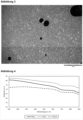
- Microscope images of the emulsions of examples 1, 4 and 8 were taken. These are shown in Figures 1 to 3 shown, always using the same magnification.
- FIG. 1 shows Example 1
- Figure 2 shows Example 4
- Figure 3 shows each 24 hours after production.
- Example 1 Furthermore, it was surprisingly found that the examples according to the invention had a surprisingly matt appearance. This is shown by a comparison of Example 1, Example 4 and Example 8. For this purpose, reflection measurements of the diffuse scattering were determined using a UV/Vis spectrometer with a gloss trap for these example formulations.
Landscapes
- Health & Medical Sciences (AREA)
- Life Sciences & Earth Sciences (AREA)
- Veterinary Medicine (AREA)
- Animal Behavior & Ethology (AREA)
- General Health & Medical Sciences (AREA)
- Public Health (AREA)
- Birds (AREA)
- Epidemiology (AREA)
- Chemical & Material Sciences (AREA)
- Dispersion Chemistry (AREA)
- Dermatology (AREA)
- Oil, Petroleum & Natural Gas (AREA)
- Emergency Medicine (AREA)
- Cosmetics (AREA)
Description
- Kosmetische Produkte dienen im Allgemeinen nicht nur dazu schön und attraktiv auszusehen, sondern sie tragen mit ihrer Wirkung entscheidend zu einem gesteigerten Selbstwertgefühl und zum Wohlbefinden der Menschen bei. Dementsprechend werden die verschiedensten kosmetischen Produkte zur täglichen Reinigung und Pflege der menschlichen Haut eingesetzt.
- Konventionelle kosmetische Produkte liegen oftmals als Feststoff, als Puder, als flüssiges Gel oder in Form einer Creme vor. Neben diesen bekannten Produktformen sind dem Fachmann ebenfalls aufgeschäumte kosmetische Zubereitungen bekannt.
- Schäume bzw. Mousse sind Gebilde aus gas- oder luftgefüllten, kugel- oder polyederförmigen Zellen, welche durch flüssige, halbflüssige, hochviskose oder feste Zellstege begrenzt werden. Die Zellstege, verbunden über sogenannte Knotenpunkte, bilden ein zusammenhängendes Gerüst. Zwischen den Zellstegen spannen sich die Schaumlamellen (geschlossenzelliger Schaum). Werden die Schaumlamellen zerstört oder fließen sie am Ende der Schaumbildung in die Zellstege zurück, erhält man einen offenzelligen Schaum. Schäume sind thermodynamisch instabil, da durch Verkleinerung der Oberfläche Oberflächenenergie gewonnen werden kann. Die Stabilität und damit die Existenz eines Schaums ist somit davon abhängig, wieweit es gelingt, seine Selbstzerstörung zu verhindern.
- Kosmetische Schäume sind in der Regel dispergierte Systeme aus Flüssigkeiten und Gasen, wobei die Flüssigkeit das Dispergiermittel und das Gas die dispergierte Substanz darstellen. Schäume aus niedrigviskosen Flüssigkeiten werden temporär durch oberflächenaktive Substanzen (Tenside, Schaumstabilisatoren) stabilisiert. Solche Tensidschäume haben aufgrund ihrer großen inneren Oberfläche ein starkes Adsorptionsvermögen, welches beispielsweise bei Reinigungs- und Waschvorgängen ausgenutzt wird. Dementsprechend finden kosmetische Schäume insbesondere in den Bereichen der Reinigung, beispielsweise als Rasierschaum, und der Haarpflege Verwendung.
- Im Stand der Technik sind verschiedene Arten der Erzeugung von aufgeschäumten kosmetischen Zubereitungen bekannt. So wird üblicher Weise Gas in eine geeignete Flüssigkeiten eingeblasen, oder man erreicht die Schaumbildung durch heftiges Schlagen, Schütteln, Verspritzen oder Rühren der Flüssigkeit in der betreffenden Gasatmosphäre, vorausgesetzt, dass die Flüssigkeiten geeignete Tenside oder andere grenzflächenaktive Stoffe (sogenannte Schaumbildner) enthalten, die außer Grenzflächenaktivität auch ein gewisses Filmbildungsvermögen besitzen.
- Aufgeschäumte kosmetische Zubereitungen haben gegenüber cremeförmigen oder gelartigen, flüssigen kosmetischen Zubereitungen den Vorteil, dass sie eine feine Verteilung von Wirkstoffen auf der Haut erlauben. Zudem schätzen die Verbraucher diese Form von kosmetischen Produkten, da durch die Gas- bzw. Lufteinschlüsse sich diese Produkte besonders leicht anfühlen und so effektiv verteilen lassen. Allerdings sind kosmetische Schäume in der Regel nur durch Verwendung besonderer Tenside zum Aufschäumen durch den Verbraucher oder durch Lagerung der kosmetischen Zubereitung unter Treibgas in einem Aerosolbehälter, welcher eine aufgeschäumte kosmetische Zubereitung ausgibt, zugänglich.
- Aerosolprodukte zur Bereitstellung von mousseartigen / geschäumten Zubereitungen sind dem Fachmann unter anderem aus
WO2013/080127 A2 bekannt. Jedoch weisen diese Aerosolprodukte eine Vielzahl von Nachteilen auf: - So ist oftmals eine Lagerung unter Treibgas in einer Aerosoldose notwendig, welches einen Verkauf in einem gut handhabbaren Tiegel verhindert. Nur durch Ausgabe aus der Aerosoldose mit Treibgas kann ein Schaum oder Mousse erzeugt werden.
- Der Einsatz von Treibgasen in Aerosolbehältern ist in der Produktion teuer, da eine Aersolbefüllungsanlage für die Treibgase verwendet werden muss, statt einer einfachen Abfüllung in Tiegel.
- Mit Treibgasen aufgeschäumte kosmetische Zubereitungen weisen oftmals eine unzureichende Stabilität auf, so dass sich der Schaum oder das Mousse mit Lagerzeit verändert, bspw. zusammenfällt, so dass ein Aufschäumen in der Produktionsstätte und anschließender Verkauf als aufgeschäumte kosmetische Zubereitung nicht möglich ist.
- Weiterhin werden mousseartige Zubereitungen oftmals unter Schutzgas und nicht unter atmosphärischen Bedingungen hergestellt. Folglich entstehen auch hier erhöhte Produktionskosten.
-
PL 229611 B1 -
CN10792249 A offenbart Emulsionen enthalten Natriumcarboxymethylstärke. Es ergeht kein Hinweis auf Schaumstrukturen. -
WO2017/048557 A1 offenbart Formulierungen, die beim Austragen mit einer Pumpe geschäumt werden können. -
US 2016/0368186 A1 offenbart geschäumte Packmittelt. - Unter der Mintel GNPD Eintragungsnummer 932195 ist das Produkt Redken Blonde Glam Dream Whip bekannt. Hier wird eine Zubereitung mittels eines Treibgases ausgetragen und aufgeschäumt.
- Wünschenswert ist es kosmetische Zubereitungen bereitzustellen, welche derartige Nachteile nicht aufweisen. Insbesondere ist es wünschenswert kosmetische Zubereitungen bereitzustellen, welche mousseartige Strukturen, bzw. Schaumstrukturen ausbilden, ohne dass diese aus einem Aerosol mit Treibgas aufgeschäumt werden müssen. Weiterhin sollten die mousseartigen Zubereitungen besonders stabil sein, so dass diese auch über längere Zeiträume von 30 Tagen und mehr ihr Erscheinungsbild ohne Phasentrennung oder Zusammenfallen der Zubereitung erhalten. Weiterhin sollten die mousseartigen Zubereitungen ein mattes, nicht glänzendes Erscheinungsbild aufweisen und gleichzeitig wenig körnig wirken.
- Überraschend wurde nun gefunden, dass die Zubereitungen gemäß der vorliegenden Erfindung mousseartige, bzw. Schaumstrukturen aufweisen, ohne dass diese mit Treibmitteln aus einem Aerosolbehälter oder durch Einrühren von Luft aufgeschäumt werden müssen.
- Gegenstand der vorliegenden Erfindung ist eine kosmetische Emulsion enthaltend
- a) Natriumcarboxymethylstärke und
- b) Wasser;
- Auch Gegenstand der vorliegenden Erfindung ist die Verwendung von Natriumcarboxymethylstärke zur Ausbildung von Mousse- und/oder Schaumstrukturen in einer kosmetischen wasserhaltigen Emulsion, dadurch gekennzeichnet, dass das Gewichtsverhältnis von Wasser zu Natriumcarboxymethylstärke weniger als 160:1 und mehr als 20:1 beträgt.
- Ohne an die Therorie gebunden zu sein, wird vermutet, dass die Gegenwart von Natriumcarboxymethylstärke in Emulsion dazu führt, dass nach Herstellung der Emulsion, Wasser von der Natriumcarboxymethylstärke gebunden wird. Dieses führt vermutlich zur Ausbildung von luftgefüllten Hohlräumen in der Zubereitung.
- Überraschend war es weiterhin, dass im Gegensatz zu mit Treibgas aufgeschäumten Zubereitungen, die Zubereitungen bei Ausbildung der mit Luft gefüllten Hohlräume nicht ihr Volumen vergrößert. Somit konnte auch ein weiter Produktnachteil überraschend überwunden werden. Denn, wenn eine Zubereitung mit der Zeit ihr Volumen vergrößert, so muss diese in einem voluminöseren Packmittel verpackt werden. Stattdessen, kann für die Zubereitung der vorliegenden Erfindung ein Packmittel verwendet werden, welches dem Volumen der Zubereitung direkt nach Herstellung entspricht. Es muss kein zusätzlicher, unnötiger Platz für das Ausdehnen der Zubereitung berücksichtigt werden.
- Ferner unterscheiden sich die erfindungsgemäßen Zubereitung und die aus diesen erhaltenen Mousse bzw. Schaumstrukturen von Schäumen die aus einer mit Treibgas aus einer Aerosoldose aufgeschäumten Zubereitung erhalten werden darin, dass eine gleichmäßigere, feinporigere Blasengröße erzielt wird.
- Sollten Gewichtsprozentangaben (Gew.-%) ohne Bezugnahme auf eine bestimmte Zusammensetzung oder spezifische Mischung angegeben werden, so beziehen sich diese Angaben immer auf das Gesamtgewicht der kosmetischen Emulsion.
- Sollten Verhältnisse von Komponenten/Substanzen/Stoffgruppen offenbart werden, so beziehen sich diese Verhältnisse auf Gewichtsverhältnisse der genannten Komponenten/Substanzen/Stoffgruppen.
- Werden nachfolgend Gewichtsprozentbereiche für die Bestandteile der kosmetischen Emulsion angegeben, so umfasst die Offenbarung der vorliegenden Anmeldung ebenfalls alle Einzelwerte in Schritten von 0,1 Gew.-% innerhalb dieser Gewichtsprozentbereiche.
- Die Formulierungen "erfindungsgemäß", "erfindungsgemäß vorteilhaft", "vorteilhaft im Sinne der vorliegenden Erfindung" etc. beziehen sich im Rahmen der vorliegenden Offenbarung immer auf die erfindungsgemäße Emulsion sowie auf die erfindungsgemäße Verwendung.
- Sofern nicht anders angegeben wurden alle Versuche unter Normalbedingungen durchgeführt. Der Begriff "Normalbedingungen" bedeutet 20°C, 1013 hPa und eine relative Luftfeuchtigkeit von 50%.
- Wird der Begriff Haut verwendet, so bezieht dieser sich bevorzugt auf die menschliche Haut.
- Es ist erfindungsgemäß von Vorteil, wenn das Gewichtsverhältnis von Wasser zu Natriumcarboxymethylstärke weniger als 100:1, bevorzugt weniger als 80:1 beträgt und insbesondere bevorzugt weniger als 60:1.
- Weiterhin ist es erfindungsgemäß von Vorteil, wenn das Gewichtsverhältnis von Wasser zu Natriumcarboxymethylstärke bevorzugt mehr als 30:1 beträgt.
- Folglich sind erfindungsgemäß vorteilhafte Gewichtsverhältnisse von Wasser zu Natriumcarboxymethylstärke im Bereich von 80:1 bis 20:1 und insbesondere bevorzugt von 60:1 bis 30:1.
- Überraschend wurde gefunden, dass zusätzlich die Schaum bzw. Mousse-Eigenschaften durch Auswahl bestimmten Gewichtsverhältnisse von Wasser zu Natriumcarboxymethylstärke beeinflusst werden können. So wurden die folgend Aspekte überraschend festgestellt:
Beträgt das Gewichtsverhältnis von Wasser zu Natriumcarboxymethylstärke von 80:1 bis 10:1, so wurden grobblasige Mousse-/Schaumstrukturen gefunden. Die gleichmäßigste Verteilung der Luftblasen wird bei einem Verhältnis von 60:1 bis 30:1. - Wird ein Gewichtsverhältnis von Wasser zu Natriumcarboxymethylstärke von weniger als 10:1 gewählt, das heißt mit zunehmen Anteil Natriumcarboxymethylstärke im Vergleich zu Wasser, so werden überraschend weniger sichtbare Luftblasen in der Zubereitung erhalten. Die Zubereitungen enthaltend einen höheren Anteil von Wasser im Vergleich zum Anteil von Natriumcarboxymethylstärke, bzw. ein Gewichtsverhältnis von mehr als 10:1 von Wasser zu Carboxymethylstärke, zeigen größere deutlich sichtbarere Luftblasen. Entsprechend wird bei diesen Zubereitungen eine deutlich wahrnehmbarere Schaumstruktur erhalten. Die Zubereitung entspricht eher einer Mousse, wie sie beispielsweise aus Lebensmittelprodukten bekannt ist.
- Andere Stärken, wie beispielsweise Tapiokastärke, zeigen bei alleinigem Einsatz keine Ausbildung einer Mousse oder Schaumstrukturen.
- Somit war es überraschend möglich Schaum oder Moussestrukturen in einer kosmetischen Emulsion auszubilden, ohne dass aktiv Treibgas in die Emulsion eingeblasen werden muss, oder dass die Emulsion in einem Aerosolbehälter mit Treibgas verpackt wird und aus diesem ausgegeben wird.
- Überraschend fiel die Schaum und/oder Moussestruktur der erfindungsgemäßen Emulsion auch bei Lagerung unter Normalbedingungen über 30 Tage nicht zusammen.
- Weiterhin wurde überraschend gefunden, dass erfindungsgemäße Emulsionen mit einem Gewichtsverhältnis von Wasser zu Natriumcarboxymethylstärke mit weniger als 50:1, das heißt mit abnehmenden Anteil von Wasser im Verhältnis zu Natriumcarboxymethylstärke, eine besonders matte Oberfläche aufweisen. Dieses ist analytisch mit einem UV/VIS Spektrometer mit Ulbricht-Kugel nachweisbar. So wurde gefunden, dass nach Einstrahlung überraschend weniger gerichtete Streuung messbar ist, als bei Emulsionen mit einem höheren Wasseranteil in Referenz zu Natriumcarboxymethylstärke.
- Ferner sind die Emulsionen mit einem Gewichtsanteil von Wasser zu Natriumcarboxymethylstärke von 70:1 bis 20:1, bevorzugt von 60:1 bis 30:1, überraschend besonders leicht streichfähig und lassen sich leicht auf der Haut verteilen. Diese Emulsionen fühlen sich überraschend besonders leicht und cremig an. Wird ein höherer Wassergehalt in Referenz zu Natriumcarboxymethylstärke gewählt, so fühlt sich die Emulsion klumpig bis griesig auf der Haut an. Wird ein niedrigerer Gewichtsanteil von Wasser in Referenz zu Natriumcarboxymethylstärke gewählt, so waren die Emulsionen zähflüssiger und nicht leicht auf der Haut verteilbar. Das leichte Gefühl der mousseartigen Emulsion ging verloren.
- Der Anteil von Wasser in der erfindungsgemäßen Emulsion beträgt 55 bis 90 Gew.-%, bevorzugt von 60 bis 80 Gew.-% und insbesondere bevorzugt von 65 bis 75 Gew.-%, bezogen auf das Gesamtgewicht der Emulsion.
- Der Anteil von Natriumcarboxymethylstärke in der erfindungsgemäßen Emulsion beträgt 0,5 bis 6 Gew.-%, bevorzugt von 1 Gew.-% bis 4 Gew.-% und insbesondere bevorzugt von 1,5 bis 3,5 Gew.-%, bezogen auf das Gesamtgewicht der Emulsion.
- Die nachfolgend beschriebenen Merkmale der erfindungsgemäßen Emulsion beziehen sich auf die erfindungsgemäße Emulsion an sich, sowie jeweils auf die erste und zweite vorteilhafte Ausführungsform der Erfindung.
- Natriumcarboxymethylstärke mit der CAS-Nr. 9063-38-1 trägt die INCI-Bezeichnung Sodium carboxy methyl starch. Es ist erfindungsgemäß bevorzugt, wenn die Natriumcarboxymethylstärke auf Kartoffelstärke basiert. Es ist insbesondere bevorzugt, neben Kartoffelstärke keine weiten Stärken zur Herstellung der Natriumcarboxymethylstärke eingesetzt werden.
- Ein Beispiel für eine erfindungsgemäße Natriumcarboxymethylstärke auf Basis von Kartoffelstärke ist unter der Handelsbezeichnung COVAGEL von der Fa. LCW bekannt. Weitere erfindungsgemäße Natriumcarboxymethylstärken können unter den Handelsnamen GLYCOLYS von der Firma Roquette sowie VIVASTAR P3500 und VIVASTAR CS INSTANT Powder von JRS Pharma bezogen werden.
- Es ist erfindungsgemäß generell von Vorteil, wenn die Emulsion keine Acrylat-basierten Polymere enthält. Acrylat-basierte Polymere sind Polymere, welche aus Homo- oder Copolymerisation mit Acryl- und/oder Methacrylsäure erhalten werden. Beispiele hierfür sind u.a. Carbomer oder Acrylate Copolymer. Acrylat-basierte Polymere werden oftmals kritisch in der Öffentlichkeit hinsichtlich ihrer Umweltverträglichkeit diskutiert. Entsprechend sprechen kosmetische Produkte enthaltend Acrylat-basierte Polymere nicht mehr alle Konsumentengruppen an. Darüber war es überraschend für den Fachmann, dass ich durch die erfindungsgemäße Emulsion mousseartige Strukturen ausbilden lassen, wenn die Emulsion keine Acrylat-basierten Polymere enthält.
- Ferner ist es vorteilhaft, wenn neben Natriumcarboxymethylstärke mindestens ein weiteres Polymer auf Basis von Polysacchariden mit Ausnahme von Polysacchariden, welche mit Acrylsäure oder Methacrylsäure modifiziert wurden, enthalten ist. Derartige bevorzugte Polymere sind unter anderem Polymere auf Basis von Cellulosen, insbesondere bevorzugt gewählt aus der Gruppe Carboxymethylcellulose, Hydroxyethylcellulose, Hydroxypropylcellulose, Ethylcellulose, Methylcellulose, Ethyl Hydroxyethyl Cellulose und Methyl Ethyl Cellulose.
- Weitere bevorzugte Polymere sind gewählt aus der Gruppe der Polymere auf Basis von Stärken, insbesondere bevorzugt gewählt aus der Gruppe Hydroxypropyl Starch Phosphate, Sodium Hydroxypropyl Starch Phosphate, Hydroxypropyl Starch Phosphate und Distarch Phosphate.
- Ein weiteres bevorzugtes Polymer ist Xantham Gum.
- Weitere bevorzugte Polymere sind Sclerotium Gum, Locust Bean Gum und / oder Gellan Gum.
- Es ist ferner bevorzugt, wenn der Gesamtanteil der weiteren Polymer auf Basis von Polysacchariden mit Ausnahme von Polysacchariden, welche mit Acrylsäure oder Methacrylsäure modifiziert wurden, von 0,1 bis 8 Gew.-%, bevorzugt 0,2 bis 5 Gew.-% bezogen auf das Gesamtgewicht der Emulsion beträgt.
- Es ist insbesondere vorteilhaft, wenn Xanthan Gum, Sclerotium Gum, Locust Bean Gum und / oder Gellan Gum in einem Anteil von 0,05 bis 0,5 Gew.-% in der Emulsion enthalten ist, wobei sich die Angabe auf das Gesamtgewicht der Emulsion bezieht.
- Vorteilhaft ist die Emulsion der vorliegenden Erfindung dadurch gekennzeichnet, dass diese eine Öl-in-Wasser Emulsion ist.
- Weiterhin ist es vorteilhaft, wenn der Anteil der Ölphase von 3 bis 20 Gew.-%, bevorzugt von 5 bis 18 Gew.-%, weiterhin bevorzugt von 6 bis 15 Gew.-% und insbesondere bevorzugt von 7 bis 12 Gew.-% beträgt, wobei Emulgatoren und Tenside definitionsgemäß nicht zur Ölphase zählen und sich die Angaben auf das Gesamtgewicht der Emulsion beziehen.
- Unter Emulgatoren werden alle Substanzen verstanden, welche im International Cosmetic Ingredient Dictionary and Handbook, Thirteenth Edition 2010, (ISBN 1-882621-47-6) unter der Bezeichnung "emulsifying agent" geführt werden. Unter Tensiden werden alle Substanzen verstanden, welche im International Cosmetic Ingredient Dictionary and Handbook, Thirteenth Edition 2010, (ISBN 1-882621-47-6) unter der Bezeichnung " surfactant " geführt werden.
- Ferner ist es vorteilhaft, wenn die Ölphase, respektive die Emulsion, Caprylic/Capric Triglyceride enthält. Ist Caprylic/Capric Triglyceride in der Emulsion enthalten, so beträgt der Anteil von Caprylic/Capric Triglyceride vorteilhaft von 6 bis 13 Gew.-% und bevorzugt von 7,5 bis 11 Gew.-%, bezogen auf das Gesamtgewicht der Emulsion.
- Weiterhin ist es vorteilhaft, wenn die Ölphase, respektive die Emulsion, gehärtetes Kokosöl (INCI: hydrogenated coco glycerides) enthält. Ist gehärtetes Kokosöl in der Emulsion enthalten, so beträgt der Anteil von gehärtetes Kokosöl vorteilhaft von 0,4 bis 3 Gew.-% bezogen auf das Gesamtgewicht der Emulsion.
- Weiterhin ist es vorteilhaft im Sinne der vorliegenden Erfindung, wenn die Emulsion der vorliegenden Erfindung ein oder mehrere Ester aus einwertigen Alkoholen und Monocarbonsäuren enthält, wobei die Ester mindestens 10, bevorzugt mindestens 15 Kohlenstoffatome aufweisen. Vorteilhaft zu wählende Ester aus einwertigen Alkoholen und Monocarbonsäuren sind 2-Ethylhexylisostearat, Isotridecylisononanoat, 2-Ethylhexylcocoat, C12-15-Alkylbenzoat, Isopropylmyristat und Isopropylpalmitat.
- Ferner ist es vorteilhaft im Sinne der vorliegenden Erfindung, wenn die Emulsion der vorliegenden Erfindung ein oder mehrere Dialkylether mit 12 bis 24 Kohlenstoffatomen enthält, wobei bevorzugt Dicaprylylether enthalten ist. Enthält die Emulsion Dicaprylylether, so beträgt der Anteil von Dicaprylylether bevorzugt von 0,5 bis 3 Gew.-%, bezogen auf das Gesamtgewicht der Emulsion.
- Weiterhin können die erfindungsgemäßen Emulsionen vorteilhaft pflanzliche Öle, wie bevorzugt Sonnenblumenöl (Helianthus Annuus Seed Oil), Rapsöl (Canola Oil), Sojaöl (Glycine Soja Oil), Olivenöl (Olea Europaea Fruit Oil), Mandelöl (Prunus amygdalus dulcis Oil), Avocadoöl (Persea Gratissima Oil), Walnussöl (Junglans Regia Seed Oil), Pfirsichkernöl (Prunus Persica Kernel Oil), Aprikosenkernöl (Prunus Armeniaca Kernel Oil), Sesamöl (Sesamum Indicum Seed Oil), Camelienöl (Camelia Oleifera/ Camelia Sasanqua), Nachtkerzenöl (Oenothera biennis), Macadamianussöl (Macadamia Intergrifolia Seed Oil), Diestelöl (Silybum Marianum Seed Oil), Weizenkeimöl (Triticum Vulgare Germ Oil), Palmkernöl (Elaeis guineensis Kernel Oil), Palmöl (Elaeis guineensis Oil), Traubenkernöl (Vitis Vinifera Seed Oil), Arganöl (Argania spinosa Seed Oil), Erdnussöl (Arachis hypogaea Oil), Kürbiskernöl (Cucurbita Pepo Seed Oil), Ricinusöl (Ricinus Communis Seed Oil), Reiskeimöl (Oryza Sativa Bran Oil), Vegetable Oil (Olus Oil) und/oder Kokosöl, enthalten.
- Es ist auch vorteilhaft, wenn die Emulsion der vorliegenden Erfindung ein oder mehrere verzweigte und/oder unverzweigte Kohlenwasserstoffe enthält, sofern diese nicht gasförmig unter Normalbedingungen sind. Vorteilhaft zu verwendende Kohlenwasserstoffe sind Paraffinum Liquidum, Isododecan, Isohexadecan, Isoeicosane, Squalan und Cera Microcristallina.
- Vorteilhaft enthält die Emulsion der vorliegenden Erfindung mindestens einen Emulgator.
- Unter den bekannten Emulgatoren sind bevorzugt Glyceryl Stearate, Glyceryl Stearate Citrate, Polyglyceryl-10 Stearate und/oder Fettsäuren aufweisend 14 bis 22 Kohlenstoffe und/oder deren Salze zu wählen. Insbesondere der Einsatz von Polyglyceryl-10 Stearate und/oder Fettsäuren aufweisend 14 bis 22 Kohlenstoffe und/oder deren Salze führte zu Emulsionen, welche bei Lagerung unter 40°C keine Phasenseparation zeigten.
- Weiterhin ist es vorteilhaft im Sinne der Erfindung, wenn der Gesamtanteil von Polyglyceryl-10 Stearate und Fettsäuren aufweisend 14 bis 22 Kohlenstoffe und/oder deren Salze von 0,1 bis 5 Gew.-%, bevorzugt von 0,5 bis 4 Gew.-% und insbesondere bevorzugt von 1 bis 3 Gew.-% bezogen auf das Gesamtgewicht der Emulsion beträgt.
- Somit beträgt der Gesamtanteil der Emulgatoren vorteilhaft von 0,1 bis 10 Gew.-%, bevorzugt von 0,5 bis 8 Gew.-% und insbesondere bevorzugt von 1 bis 6 Gew.-% bezogen auf das Gesamtgewicht der Emulsion.
- Weitere vorteilhafte Emulsionen enthalten die Emulgatoren vorteilhaft in einem Gesamtanteil von 0,1 bis 5 Gew.-%, bevorzugt von 0,5 bis 4 Gew.-% und insbesondere bevorzugt von 1 bis 3 Gew.-% bezogen auf das Gesamtgewicht der Emulsion.
- Es ist in einer Ausführungsform insbesondere vorteilhaft, wenn die Emulsion ein oder mehre Fettsäuren aufweisend 14 bis 22 Kohlenstoffatome und/oder deren Salze in einem Anteil von 0,1 bis 5 Gew.-%, bevorzugt von 0,5 bis 4 Gew.-% und insbesondere bevorzugt von 1 bis 3 Gew.-% bezogen auf das Gesamtgewicht der Emulsion, enthält. Innerhalb dieser Ausführungsform ist es bevorzugt, wenn mindestens Stearinsäure und/oder Palmitinsäure oder deren Salze enthalten sind.
- Es ist in einer weiteren Ausführungsform insbesondere vorteilhaft, wenn die Emulsion Polyglyceryl-10 Stearate in einem Anteil von 0,1 bis 5 Gew.-%, bevorzugt von 0,5 bis 4 Gew.-% und insbesondere bevorzugt von 1 bis 3 Gew.-% bezogen auf das Gesamtgewicht der Emulsion, enthält.
- Es ist ebenfalls vorteilhaft im Sinne der vorliegenden Erfindung, wenn die kosmetische Emulsion Glyceryl Stearate enthält. Enthält die Emulsion Glyceryl Stearate, so ist es bevorzugt, wenn der Anteil von Glyceryl Stearate von 0,1 bis 3 Gew.-%, weiterhin bevorzugt von 0,3 bis 2,5 Gew.-% und insbesondere bevorzugt 0,5 bis 1,5 Gew.-% bezogen auf das Gesamtgewicht der Emulsion beträgt.
- Weiterhin ist es vorteilhaft, wenn die erfindungsgemäße Emulsion Glyceryl Stearate Citrate in einem Anteil von 0,5 bis 4 Gew.-%, bevorzugt 1 bis 3 Gew.-% und insbesondere bevorzugt 1,5 bis 2,5 Gew.-%, bezogen auf das Gesamtgewicht der Emulsion, enthält.
- Weiterhin ist es vorteilhaft, wenn die kosmetische Emulsion der Erfindung mindestens einen Fettalkohol, insbesondere Stearylalkohol, Cetylalkohol und/oder Behenylalkohol, enthält. Erfindungsgemäße Mischungen aus Stearylalkohol und Cetylalkohol sind unter der INCI Bezeichnung Ceteraylalkohol bekannt. Sofern die kosmetische Emulsion mindestens einen Fettalkohol, insbesondere Stearylalkohol, Cetylalkohol und/oder Behenylalkohol, enthält, so ist es bevorzugt wenn der Anteil der Fettalkohole von 0,5 bis 4 Gew.-% bezogen auf das Gesamtgewicht der Emulsion beträgt. Es ist insbesondere vorteilhaft, wenn Stearylalkohol, Cetylalkohol und/oder Behenylalkohol in einem Anteil von 1 bis 4 Gew.-% bezogen auf das Gesamtgewicht der Emulsion enthalten sind, wobei es weiterhin bevorzugt ist, wenn keine weiten Fettalkohole enthalten sind. Der Zusatz der oben genannten Fettalkohole führt überraschend zu einer weiteren Reduktion der Blasengröße und somit zu einer feineren bzw. feinblasigeren Mousse-/ Schaumstruktur. Insbesondere vorteilhafte und überraschende Ergebnisse wurden erzielt, wenn Behenylalkohol enthalten ist und der Anteil von Behenylalkohol von 1,5 Gew.-% bis 4 Gew.-%, bevorzugt 2 Gew.-% bis 3,5 Gew.-%, bezogen auf das Gesamtgewicht der Emulsion, beträgt.
- Es ist ebenfalls vorteilhaft, wenn die kosmetische Emulsion Ethanol enthält, wobei der Anteil von Ethanol bevorzugt von 0,5 bis 5 Gew.-%, insbesondere bevorzugt von 1 bis 3 Gew.-% bezogen auf das Gesamtgewicht der Emulsion beträgt.
- Weiterhin sind vorteilhafte Emulsionen dadurch gekennzeichnet, dass diese Butylene Glycol enthalten, wobei der Anteil von Butylene Glycol bevorzugt von 1 bis 8 Gew.-% und weiterhin bevorzugt von 2 bis 5 Gew.-% und insbesondere bevorzugt von 2,5 bis 4 Gew.-% bezogen auf das Gesamtgewicht der Emulsion beträgt.
- Es ist darüber hinaus erfindungsgemäß von Vorteil, wenn die Emulsion Propylenglycol, 2-Methylpropan-1,3-diol, 1,2-Pentandiol, 1,2-Hexandiol, 1,2-Octandiol Glycerylcaprylate und/oder 1,2-Decandiol enthält.
- Weiterhin ist es ebenfalls vorteilhaft im Sinne der vorliegenden Erfindung, wenn die Emulsion Phenoxyethanol, Methylparaben, Ethylparaben, Sorbinsäure und ihre Alkalisalze, Dehydracetsäure, Benzethoniumchlorid und/oder Ethylhexylglycerin enthält.
- Enthält die Emulsion Phenoxyethanol, so ist es bevorzugt, wenn der Anteil an Phenoxyethanol von 0,2 bis 1,0 Gew.-% beträgt, bezogen auf das Gesamtgewicht der Emulsion.
- Enthält die Emulsion Methylparaben und/oder Ethylparaben, so ist es bevorzugt, wenn der Gesamtanteil an Methylparaben und/oder Ethylparaben von 0,01 bis 0,5 Gew.-% beträgt, bezogen auf das Gesamtgewicht der Emulsion.
- Nicht zuletzt sind erfindungsgemäß vorteilhafte Ausführungsformen dadurch gekennzeichnet, dass die Emulsion einen oder mehrere Wirkstoffe gewählt aus der Gruppe der Verbindungen Glycyrrhetinsäure, Harnstoff, Arctiin, Folsäure, Coenzym Q10 (Ubiquinon), alpha-Glucosylrutin, Carnitin, Carnosin, Coffein, natürliche und/oder synthetische Isoflavonoide, Glycerylglucose, Kreatin, Kreatinin, Taurin, Tocopherol, Tocopherolacetat Vitamin C, Vitamin C phosphate, Vitamin C palmitate, Niacinamide, Vitamin A palmitate, Retinol, Panthenol, Licochalcon A, Rucinol, N-[(2,4-Dihydroxyphenyl)thiazol-2-yl]isobutyramide, Honociol und Magnolol (auch als Bestandteil von Magnolia-Extrakten), Hyaluronsäure und/oder Silymarin (Mariendistelextrakt) enthält.
- In einer Ausführungsform der vorliegenden Erfindung ist es vorteilhaft, wenn die Emulsion keine Silikonöle oder Silikonhaltige Substanzen enthält.
- Eine weitere Ausführungsform der Erfindung ist vorteilhaft dadurch gekennzeichnet, dass die Emulsion mindestens ein Silikonöl enthält.
- Es ist ferner vorteilhaft, wenn die erfindungsgemäße Emulsion Glycerin in einem Anteil von 0,5 bis 12 Gew.-%, bevorzugt von 2 bis 10 Gew.-%, bezogen auf das Gesamtgewicht der Emulsion enthält.
- Die erfindungsgemäßen kosmetische Emulsion kann ferner Farbstoffe und / oder Farbpigmente enthalten, insbesondere wenn sie die Emulsion zur dekorativer Kosmetik genutzt wird. Die Farbstoffe und Farbpigmente können aus der entsprechenden Positivliste der Kosmetikrichtlinie oder der EG-Liste kosmetischer Farbstoffe ausgewählt werden. In den meisten Fällen sind sie mit den für Lebensmittel zugelassenen Farbstoffen identisch. Vorteilhafte Farbpigmente sind beispielsweise Titandioxid, Glimmer, Eisenoxide (z. B. Fe 2 O 3, Fe 3 O 4, FeO (OH)) und / oder Zinnoxid. Vorteilhafte Farbstoffe sind beispielsweise Carmin, Berliner Blau, Chromoxidgrün, Ultramarinblau und / oder Manganviolett. Es ist besonders vorteilhaft, die Farbstoffe und / oder Farbpigmente aus der folgenden Liste auszuwählen. Die Farbindexnummern (CIN) stammen aus dem Rowe Colour Index, 3. Auflage, Society of Dyers and Colourists, Bradford, England, 1971.
Inhaltstoff CIN Farbe Piqment Green 10006 qrün Acid Green 1 10020 qrün 2,4-Dinitrohydroxynaphthalene-7-sulfonic acid 10316 gelb Piqment Yellow 1 11680 gelb Piqment Yellow 3 11710 gelb Piqment Orange 1 11725 orange 2,4-Dihydroxyazobenzene 11920 orange Solvent Red 3 12010 rot 1-(2'-Chloro-4'-nitro-1'-phenylazo)-2-hydroxynaphthalene 12085 rot Piqment Red 3 12120 rot Ceres red; Sudan red; Fat Red G 12150 rot Piqment Red 112 12370 rot Piqment Red 7 12420 rot Piqment Brown 1 12480 braun 4-(2'-Methoxy-5'-sulfodiethylamido-1'-phenylazo)-3-hydroxy-5"-chloro-2",4"-dimethoxy-2-naphthanilide 12490 rot Disperse Yellow 16 12700 gelb 1-(4-Sulfo-1-phenylazo)-4-aminobenzene-5-sulfonic acid 13015 gelb 2,4-Dihydroxyazobenzene-4'-sulfonic acid 14270 orange 2-(2,4-Dimethylphenylazo-5-sulfo)-1-hydroxynaphthalene-4-sulfonic acid 14700 rot 2-(4-Sulfo-1-naphthylazo)-1-naphthol-4-sulfonic acid 14720 rot 2-(6-Sulfo-2,4-xylylazo)-1-naphthol-5-sulfonic acid 14815 rot 1-(4'-Sulfophenylazo)-2-hydroxynaphthalene 15510 orange 1-(2-Sulfo-4-chloro-5-carboxy-1-phenylazo)-2-hydroxynaphthalene 15525 rot 1-(3-Methylphenylazo-4-sulfo)-2-hydroxynaphthalene 15580 rot 1-(4',(8')-Sulfonaphthylazo)-2-hydroxynaphthalene 15620 rot 2-Hydroxy-1,2'-azonaphthalene-1'-sulfonic acid 15630 rot 3-Hydroxy-4-phenylazo-2-naphthylcarboxylic acid 15800 rot 1-(2-Sulfo-4-methyl-1-phenylazo)-2-naphthylcarboxylic acid 15850 rot 1-(2-Sulfo-4-methyl-5-chloro-1-phenylazo)-2-hydroxynaphthalene- 3-carboxylic acid 15865 rot 1-(2-Sulfo-1-naphthylazo)-2-hydroxynaphthalene-3-carboxylic acid 15880 rot 1-(3-Sulfo-1-phenylazo)-2-naphthol-6-sulfonic acid 15980 orange 1-(4-Sulfo-1-phenylazo)-2-naphthol-6-sulfonic acid 15985 gelb Allura Red 16035 rot 1-(4-Sulfo-1-naphthylazo)-2-naphthol-3,6-disulfonic acid 16185 rot Acid Orange 10 16230 orange 1-(4-Sulfo-1-naphthylazo)-2-naphthol-6,8-disulfonic acid 16255 rot 1-(4-Sulfo-1-naphthylazo)-2-naphthol-3,6,8-trisulfonic acid 16290 rot 8-Amino-2-phenylazo-1-naphthol-3,6-disulfonic acid 17200 rot Acid Red 1 18050 rot Acid Red 155 18130 rot Acid Yellow 121 18690 gelb Acid Red 180 18736 rot Acid Yellow 11 18820 gelb Acid Yellow 17 18965 gelb 4-(4-Sulfo-1-phenylazo)-1-(4-sulfophenyl)-5-hydroxy-pyrazolone-3-carboxylic acid 19140 gelb Piqment Yellow 16 20040 gelb 2,6-(4'-Sulfo-2", 4"-dimethyl)bisphenylazo)-1,3-dihydroxybenzene 20170 orange Acid Black 1 20470 schwarz Piqment Yellow 13 21100 gelb Piqment Yellow 83 21108 gelb Solvent Yellow 21230 gelb Acid Red 163 24790 rot Acid Red 73 27290 rot 2-[4'-(4"-Sulfo-1 "-phenylazo)-7'-sulfo-1'-naphthylazo]-1-hydroxy-7-aminonaphthalene-3,6-disulfonic acid 27755 schwarz 4'-[(4"-Sulfo-1"-phenylazo)-7'-sulfo-1'-naphthylazo]-1-hydroxy-8-acetylaminonaphthalene-3,5-disulfonic acid 28440 schwarz Direct Orange 34, 39, 44, 46, 60 40215 orange Food Yellow 40800 orange trans-β-Apo-8'-carotenaldehyde (C30) 40820 orange trans-Apo-8'-carotenic acid (C30)-ethyl ester 40825 orange Canthaxanthin 40850 orange Acid Blue 1 42045 blau 2,4-Disulfo-5-hydroxy-4'-4"-bis(diethylamino)triphenylcarbinol 42051 blau 4-[(4-N-Ethyl-p-sulfobenzylamino)phenyl(4-hydroxy-2-sulfophenyl)(methylene)-1-(N-ethyl-N-p-sulfobenzyl)-2,5-cyclohexadienimine] 42053 grün Acid Blue 7 42080 blau (N-Ethyl-p-sulfobenzylamino)phenyl(2-sulfophenyl)methylene-(N-ethyl-N-p-sulfobenzyl)Δ2,5-cyclohexadienimine 42090 blau Acid Green 9 42100 qrün Diethyldisulfobenzyl-di-4-amino-2-chloro-di-2-methyl-fuchsonimmonium 42170 grün Basic Violet 14 42510 violett Basic Violet 2 42520 violett 2'-Methyl-4'-(N-ethyl-N-m-sulfobenzyl)amino-4"-(N-diethyl)amino-2-methyl-N-ethyl-N-m-sulfobenzylfuchsonimmonium 42735 blau 4'-(N-Dimethyl)amino-4"-(N-phenyl)aminonaphtho-N-dimethyl-fuchsonimmonium 44045 blau 2-Hydroxy-3,6-disulfo-4,4'-bisdimethylaminonaphtho-fuchsonimmonium 44090 grün Acid Red 52 45100 rot 3-(2'-Methylphenylamino)-6-(2'-methyl-4'-sulfophenylamino)-9-(2"-carboxyphenyl)xanthenium salt 45190 violett Acid Red 50 45220 rot Phenyl-2-oxyfluorone-2-carboxylic acid 45350 gelb 4,5-Dibromofluorescein 45370 orange 2,4,5,7-Tetrabromofluorescein 45380 rot Solvent Dye 45396 orange Acid Red 98 45405 rot 3',4',5',6'-Tetrachloro-2,4,5,7-tetrabromofluorescein 45410 rot 4,5-Diiodofluorescein 45425 rot 2,4,5,7-Tetraiodofluorescein 45430 rot Quinophthalone 47000 gelb Quinophthalonedisulfonic acid 47005 gelb Acid Violet 50 50325 violett Acid Black 2 50420 schwarz Piqment Violet 23 51319 violett 1,2-Dioxyanthraquinone, calcium-aluminum complex 58000 rot 3-Oxypyrene-5,8,10-sulfonic acid 59040 grün 1-Hydroxy-4-N-phenylaminoanthraquinone 60724 violett 1-Hydroxy-4-(4'-methylphenylamino)anthraquinone 60725 violett Acid Violet 23 60730 violett 1,4-Di(4'-methylphenylamino)anthraquinone 61565 grün 1,4-Bis(o-sulfo-p-toluidino)anthraquinone 61570 qrün Acid Blue 80 61585 blau Acid Blue 62 62045 blau N,N'-Dihydro-1,2,1',2'-anthraquinone azine 69800 blau Vat Blue 6; Piqment Blue 64 69825 blau Vat Orange 7 71105 orange Indiqo 73000 blau Indiqo-disulfonic acid 73015 blau 4,4'-Dimethyl-6,6'-dichlorothioindigo 73360 rot 5,5'-Dichloro-7,7'-dimethylthioindigo 73385 violett Quinacridone Violet 19 73900 violett Piqment Red 122 73915 rot Piqment Blue 16 74100 blau Phthalocyanine 74160 blau Direct Blue 86 74180 blau Chlorinated phthalocyanine 74260 grün Natural Yellow 6,19; Natural Red 1 75100 gelb Bixin, Norbixin 75120 orange Lycopene 75125 gelb trans-alpha-, beta- and gamma-carotene 75130 orange Keto- and/or hydroxyl derivates of carotene 75135 gelb Guanine or pearlescent aqent 75170 weiß 1,7-Bis(4-hydroxy-3-methoxyphenyl)-1,6-heptadiene-3,5-dione 75300 gelb Complex salt (Na, Al, Ca) of carminic acid 75470 rot Chlorophyll a and b; copper compounds of chlorophylls and chlorophyllins 75810 grün Aluminum 77000 weiß Hydrated alumina 77002 weiß Hydrous aluminum silicates 77004 weiß Ultramarine 77007 blau Piqment Red 101 and 102 77015 rot Barium sulfate 77120 weiß Bismuth oxychloride and its mixtures with mica 77163 weiß Calcium carbonate 77220 weiß Calcium sulfate 77231 weiß Carbon 77266 schwarz Piqment black 9 77267 schwarz Carbo medicinalis veqetabilis 77268:1 schwarz Chromium oxide 77288 qrün Chromium oxide, hydrous 77289 qrün Piqment Blue 28, Piqment Green 14 77346 qrün Piqment Metal 2 77400 braun Gold 77480 braun Iron oxides and hydroxides 77489 orange Iron oxide 77491 rot Hydrated iron oxide 77492 gelb Iron oxide 77499 schwarz Mixtures of iron (II) and iron(III)hexacyanoferrate 77510 blau Piqment White 18 77713 weiß Manqanese animonium diphosphate 77742 violett Manqanese phosphate; Mn3(PO4)2 · 7 H20 77745 rot Silver 77820 weiß Titanium dioxide and its mixtures with mica 77891 weiß Zinc oxide 77947 weiß 6,7-Dimethyl-9-(1'-D-ribityl)isoalloxazine, lactoflavine gelb Suqar colorinq braun Capsanthin, capsorubin orange Betanin rot Benzopyrylium salts, anthocyans rot Aluminum, zinc, maqnesium and calcium stearate weiß Bromothymol blue blau Bromocresol qreen qrün Acid Red 195 rot Silica-treated Red Iron Oxide 77491 rot Silica-treated Black Iron Oxide 77499 schwarz Silica-treated Yellow Iron Oxide C338073 gelb Silica-treated Pigmentary Titanium Dioxide 77891 weiß Alqinate-treated Red Iron Oxide rot Alqinate-treated Black Iron Oxide schwarz Alqinate-treated Yellow Iron Oxide gelb Alqinate-treated Pigmentary Titanium Dioxide weiß Sodium glycerophosphate-treated Iron Oxide 77491 rot Sodium glycerophosphate-treated Iron Oxide 77499 schwarz Sodium glycerophosphate-treated Iron Oxide 77492 gelb Sodium glycerophosphate- treated Pigmentary Titanium Dioxide 77891 weiß Hydrogenated-Lecithin-treated Iron Oxide 77491 rot Hydrogenated-Lecithin-treated Iron Oxide 77499 schwarz Hydrogenated-Lecithin-treated Iron Oxide 77492 gelb Hydrogenated-Lecithin-treated Pigmentary Titanium Dioxide 77891 weiß - Der Ausdruck "treated" in der vorstehenden Tabelle bedeutet im Sinne der vorliegenden Offenbarung, dass ein Pigment mit der jeweiligen Substanz behandelt wurde, so dass an der Oberfläche des Pigments sich die jeweils eingesetzte Substanz ablagert.
- Vorteilhafte Emulsionen sind dadurch gekennzeichnet, dass diese 0,1 bis 12 Gew.-%, bevorzugt 3 bis 10 Gew.-% und insbesondere bevorzugt 5 bis 9 Gew.-% anorganische Pigmente enthalten, wobei sich die Angabe auf das Gesamtgewicht der Emulsion bezieht. Es ist insbesondere vorteilhaft, wenn mindestens ein anorganisches Pigment aufweisend ein Coating enthalten ist.
- Eine vorteilhafte Ausführungsform der Erfindung ist dadurch gekennzeichnet, dass der Anteil der anorganischen Pigmente von 5 bis 10 Gew.-% bezogen auf das Gesamtgewicht der Emulsion beträgt, wobei der Anteil der gecoateten anorganischen Pigmente mindestens 60 Gew.-%, bevorzugt mindestens 90 Gew.-% bezogen auf das Gesamtgewicht aller enthaltenen anorganischen Pigment beträgt. Bevorzugt sind insbesondere die gecoateten Pigmente, die mit Silicat, Alginate, Sodium Glycerophosphate oder mit hydrogeniertem Lecithin beschichtet sind.
- Die nachfolgenden Beispiele sollen die vorliegende Erfindung verdeutlichen, ohne sie einzuschränken. Alle Mengenangaben, Anteile und Prozentanteile sind, soweit nicht anders angegeben, auf das Gewicht und die Gesamtmenge bzw. auf das Gesamtgewicht der Zubereitungen bezogen.
- Zur Verdeutlichung des erfinderischen Effekts, wurden die Emulsionen der Beispiele 1 bis 8. hergestellt.
- Die Zubereitungen konnten nach den dem Fachmann in der Kosmetik bekannten Herstellungsverfahren hergestellt werden. Die Beispiele 1 bis 8 wurden hergestellt, indem Sodium Carboxymethyl Starch oder Tapiokastärke in Butylene Glycol suspendiert wurden. Xanthan Gum wurde in eine auf 75°C temperierte Mischung aus Caprylic/Capric Triglyceride, Glyceryl Stearate Citrate, Behenyl Alcohol und Phenoxyethanol eingearbeitet. Diese hergestellte Mischung wurde zu einer ebenfalls hergestellten Mischung aus Wasser und Glycerin gegeben, welche ebenfalls auf 75°C vortemperiert wurde. Nach Abkühlen auf 30°C wurde die Stärke-Butylene Glycol Suspension zugegeben und homogenisiert.
- Die O/W-Emulsionen der Beispiele Bsp.1, Bsp. 6, Bsp.7 und Bsp.8 stellen nicht erfindungsgemäße Vergleichsbeispiele da, während Bsp.2 bis Bsp.5 erfindungsgemäße Emulsionen sind.
Inhaltstoffe Bsp.1 Bsp.2 Bsp.3 Bsp.4 Aqua ad 100 ad 100 ad 100 ad 100 Glycerin 8 7,96 7,92 7,84 Caprylic/Capric Triglyceride 10 9,95 9,9 9,8 Glyceryl Stearate Citrate 2 1,99 1,98 1,96 Behenyl Alcohol 3 2,985 2,97 2,94 Phenoxyethanol 0,8 0,796 0,792 0,784 Xanthan Gum 0,3 0,2985 0,297 0,294 Sodium Carboxymethyl Starch 0,5 1 2 Tapioca Starch Butylene Glycol 5 4,975 4,95 4,9 Verhältnis Wasser: Natriumcarboxymethylstärke - 141:1 70,19:1 34,74:1 Inhaltstoffe Bsp.5 Bsp.6 Bsp.7 Bsp.8 Aqua ad 100 ad 100 ad 100 ad 100 Glycerin 7,76 7,68 7,6 7,6 Caprylic/Capric Triglyceride 9,7 9,6 9,5 9,5 Glyceryl Stearate Citrate 1,94 1,92 1,9 1,9 Behenyl Alcohol 2,91 2,88 2,85 2,85 Phenoxyethanol 0,776 0,768 0,76 0,76 Xanthan Gum 0,291 0,288 0,285 0,285 Sodium Carboxymethyl Starch 3 4 5 Tapioca Starch 5 Butylene Glycol 4,85 4,8 4,75 4,75 Verhältnis Wasser: Natriumcarboxymethylstärke bzw. Tapioca starch 22,92:1 17,02:1 13,47:1 13,47:1 - Es wurden Mikroskopaufnahmen der Emulsionen der Beispiele Bsp.1, Bsp.4 und Bsp.8 angefertigt. Diese sind in
Abbildung 1 bis 3 dargestellt, wobei immer dieselbe Vergrößerung gewählt wurde. -
Abbildung 1 zeigt Bsp.1,Abbildung 2 zeigt Bsp.4 undAbbildung 3 zeigt Bsp.8 jeweils 24 Stunden nach Herstellung. - Weiterhin wurde überraschend gefunden, dass die erfindungsgemäßen Beispiele ein überraschend mattes Erscheinungsbild aufgewiesen haben. Dieses zeigt ein Vergleich von Bsp. 1, Bsp.4 und Bsp.8. Dazu wurden Reflektionsmessungen der diffusen Streuung mit einem UV/Vis Spektrometer mit einer Glanzfalle für diese Beispielrezepturen ermittelt.
- Das Vergleichsspektrum ist in
Abbildung 4 dargestellt. Es ergibt sich, dass der Anteil der diffusen Streuung des Lichts über das gesamte Spektrum am deutlich größer ist für Bsp.4, als Bsp.1 und Bsp.8. Als Folge hat Bsp.4 ein deutlich matteres Erscheinungsbild als Bsp.1 und Bsp.8. - Nachfolgend sind weitere erfindungsgemäße Beispiel aufgeführt:
Inhaltstoffe Bsp.9 Bsp.10 Bsp.11 Bsp.12 Bsp.13 Bsp.14 Aqua ad 100 ad 100 ad 100 ad 100 ad 100 ad 100 Glycerin 4,8 5,2 3,9 4,7 4,9 4 Caprylic/Capric Triglyceride 7,3 6,5 7 9,3 12 5 Hydrogenated Coco-Glycerides 1 1,2 0,2 1,2 1,1 2 Cetearyl Alcohol 0,85 1 0,58 2 1,55 2 Glyceryl Stearate 1 1 1 1 1 1 Polyglyceryl-10 Stearate 1,8 1,65 1 0,5 1,2 1,2 Fettsäuremischung (1,5 Gew.-% Arachidic Acid; 2,5 Gew.-% Myristic Acid; 0,5 Gew.-% Oleic Acid; 48,5 Gew.-% Palmitic Acid; 47 Gew.-% Stearic Acid) 1 2,1 0,3 0,2 Xanthan Gum 0,3 0,3 0,3 0,3 0,3 0,3 Ethanol 1,92 1,92 1,92 1,92 1,92 2,3 Phenoxyethanol 0,6 0,8 0,5 0,8 0,7 0,8 Butylene Glycol 5 3 2 5 5 5 Parfum 0,3 0,5 0,3 0,3 0,3 0,3 Tapioca Starch 0,1 Sodium Carboxymethyl Starch 1,7 1,55 2 1,45 2,8 2,4 Inhaltstoffe Bsp.15 Bsp.16 Bsp.17 Bsp.18 Bsp.19 Aqua ad 100 ad 100 ad 100 ad 100 ad 100 Glycerin 7,0 5,0 4,0 5,0 8,0 Aqua + Trisodium EDTA 0,03 0,03 0,03 0,03 0,03 Caprylic/Capric Triglyceride 6,0 6,0 6,0 4,0 6,0 Behenyl Alcohol 2,0 2,0 2,0 2,0 2,0 Glyceryl Stearate 1,0 1,0 1,0 1,0 1,0 Fettsäuremischung (1,5 Gew.-% Arachidic Acid; 2,5 Gew.-% Myristic Acid; 0,5 Gew.-% Oleic Acid; 48,5 Gew.-% Palmitic Acid; 47 Gew.-% Stearic Acid) 2,5 2,5 2,5 2,5 2,5 Hydrogenated Coco-Glycerides 1,0 1,0 1,0 1,0 1,0 Dimethicone 3,0 3,0 3,0 2,0 3,0 Butyrospermum Parkii Butter 1,0 1,0 1,0 1,0 1,0 PVP 0,9 0,9 0,9 0,9 0,9 Xanthan Gum 0,2 0,2 0,2 0,2 0,2 Phenoxyethanol 0,5 1,0 0,8 0,8 Ethanol 5,0 4,0 2,0 2,0 2,0 Benzethonium chlorid 0,05 Octandiol 0,2 0,3 Butylene Glycol 4,0 5,0 5,0 5,0 4,0 Parfum 0,3 0,3 0,3 0,3 0,3 Sodium Carboxymethyl Starch 1,5 1,75 1,8 2,5 1,5 Butylmethoxydibenzoylmethan 0,5 Bis-Ethylhexyloxyphenolmethoxyphenyltriazine 0,5 2-Ethylhexyl-2-cyano-3-diphenylacrylat (Octocrylen) 2 Ethylhexylsalicylate 3 CI 77492 + CI 77491 + CI 77499 0,3 CI 77491 + CI 77499 0,1 CI 77491 0,07 CI 77492 0,9 CI 77891 6,63 Silica-treated CI 77491 0,17 Silica-treated CI 77499 0,07 Silica-treated CI 338073 0,1 Silica-treated CI 77891 6,76 Alginate-treated Red Iron Oxide 0,17 Alginate-treated Black Iron Oxide 0,07 Alginate-treated Yellow Iron Oxide 0,1 Alginate-treated Pigmentary Titanium Dioxide 6,76 Hydrogenated-Lecithin-treated CI 77491 0,17 Hydrogenated-Lecithin-treated CI 77499 0,07 Hydrogenated-Lecithin-treated CI 77492 0,1 Hydrogenated-Lecithin-treated CI 77891 6,76
Claims (15)
- Kosmetische Emulsion enthaltenda) Natriumcarboxymethylstärke undb) Wasser;dadurch gekennzeichnet, dass das Gewichtsverhältnis von Wasser zu Natriumcarboxymethylstärke weniger als 160:1 und mehr als 20:1 beträgt.
- Kosmetische Emulsion nach Anspruch 1 dadurch gekennzeichnet, dass das Gewichtsverhältnis von Wasser zu Natriumcarboxymethylstärke weniger als 100:1, bevorzugt weniger als 80:1 beträgt und insbesondere bevorzugt weniger als 60:1.
- Kosmetische Emulsion nach einem der vorhergehenden Ansprüche dadurch gekennzeichnet, dass das Gewichtsverhältnis von Wasser zu Natriumcarboxymethylstärke mehr als 30:1 beträgt.
- Kosmetische Emulsion nach Anspruch 1 dadurch gekennzeichnet, dass das Gewichtsverhältniss von Wasser zu Natriumcarboxymethylstärke im Bereich von 80:1 bis 20:1 und insbesondere bevorzugt von 60:1 bis 30:1 liegt.
- Kosmetische Emulsion nach einem der vorhergehenden Ansprüche dadurch gekennzeichnet, dass der Anteil von Wasser in der Emulsion von 55 bis 90 Gew.-%, bevorzugt von 60 bis 80 Gew.-% und insbesondere bevorzugt von 65 bis 75 Gew.-%, bezogen auf das Gesamtgewicht der Emulsion, beträgt.
- Kosmetische Emulsion nach einem der vorhergehenden Ansprüche dadurch gekennzeichnet, dass keine Acrylat-basierten Polymere enthalten sind.
- Kosmetische Emulsion nach einem der vorhergehenden Ansprüche dadurch gekennzeichnet, dass zusätzlich mindestens ein weiteres Polymer auf Basis von Polysacchariden mit Ausnahme von Polysacchariden, welche mit Acrylsäure oder Methacrylsäure modifiziert wurden, enthalten ist.
- Kosmetische Emulsion nach einem der vorhergehenden Ansprüche dadurch gekennzeichnet, dass Xanthan Gum, Sclerotium Gum; Locust Bean Gum und / oder Gellan Gum in einem Anteil von 0,05 bis 0,5 Gew.-% in der Emulsion enthalten ist, wobei sich die Angabe auf das Gesamtgewicht der Emulsion bezieht.
- Kosmetische Emulsion nach einem der vorhergehenden Ansprüche dadurch gekennzeichnet, dass der Anteil der Ölphase von 3 bis 20 Gew.-%, bevorzugt von 5 bis 18 Gew.-%, weiterhin bevorzugt von 6 bis 15 Gew.-% und insbesondere bevorzugt von 7 bis 12 Gew.-% beträgt, wobei Emulgatoren und Tenside definitionsgemäß nicht zur Ölphase zählen und sich die Angaben auf das Gesamtgewicht der Emulsion beziehen.
- Kosmetische Emulsion nach einem der vorhergehenden Ansprüche dadurch gekennzeichnet, dass als Emulgatoren Glyceryl Stearate, Glyceryl Stearate Citrate, Polyglyceryl-10 Stearate und/oder Fettsäuren aufweisend 14 bis 22 Kohlenstoffe und/oder deren Salze enthalten sind.
- Kosmetische Emulsion nach einem der vorhergehenden Ansprüche dadurch gekennzeichnet, dass der Gesamtanteil von Emulgatoren vorteilhaft von 0,1 bis 10 Gew.-%, bevorzugt von 0,5 bis 8 Gew.-% und insbesondere bevorzugt von 1 bis 6 Gew.-% bezogen auf das Gesamtgewicht der Emulsion beträgt.
- Kosmetische Emulsion nach einem der vorhergehenden Ansprüche dadurch gekennzeichnet, dass Stearylalkohol, Cetylalkohol und/oder Behenylalkohol in einem Anteil von 0,5 bis 4 Gew.-% bezogen auf das Gesamtgewicht der Emulsion enthalten sind.
- Kosmetische Emulsion nach einem der vorhergehenden Ansprüche dadurch gekennzeichnet, dass 0,1 bis 12 Gew.-%, bevorzugt 3 bis 10 Gew.-% und insbesondere bevorzugt 5 bis 9 Gew.-% anorganische Pigmente enthalten sind, wobei sich die Angabe auf das Gesamtgewicht der Emulsion bezieht.
- Kosmetische Emulsion nach Anspruch 14 dadurch gekennzeichnet, dass der Anteil der anorganischen Pigmente von 5 bis 10 Gew.-% bezogen auf das Gesamtgewicht der Emulsion beträgt, wobei der Anteil der gecoateten anorganischen Pigmente mindestens 60 Gew.-%, bevorzugt mindestens 90 Gew.-% bezogen auf das Gesamtgewicht aller enthaltenen anorganischen Pigment beträgt.
- Verwendung von Natriumcarboxymethylstärke zur Ausbildung von Mousse- und/oder Schaumstrukturen in einer kosmetischen wasserhaltigen Emulsion, dadurch gekennzeichnet, dass das Gewichtsverhältnis von Wasser zu Natriumcarboxymethylstärke weniger als 160:1 und mehr als 20:1 beträgt.
Applications Claiming Priority (2)
| Application Number | Priority Date | Filing Date | Title |
|---|---|---|---|
| DE102019203184.6A DE102019203184A1 (de) | 2019-03-08 | 2019-03-08 | Mousseartige kosmetische Zubereitung |
| PCT/EP2020/054035 WO2020182418A1 (de) | 2019-03-08 | 2020-02-17 | Mousseartige kosmetische zubereitung |
Publications (3)
| Publication Number | Publication Date |
|---|---|
| EP3906009A1 EP3906009A1 (de) | 2021-11-10 |
| EP3906009B1 true EP3906009B1 (de) | 2024-12-18 |
| EP3906009C0 EP3906009C0 (de) | 2024-12-18 |
Family
ID=69631561
Family Applications (1)
| Application Number | Title | Priority Date | Filing Date |
|---|---|---|---|
| EP20706181.3A Active EP3906009B1 (de) | 2019-03-08 | 2020-02-17 | Mousseartige kosmetische zubereitung |
Country Status (3)
| Country | Link |
|---|---|
| EP (1) | EP3906009B1 (de) |
| DE (1) | DE102019203184A1 (de) |
| WO (1) | WO2020182418A1 (de) |
Families Citing this family (1)
| Publication number | Priority date | Publication date | Assignee | Title |
|---|---|---|---|---|
| FR3094221B1 (fr) * | 2019-03-29 | 2022-05-13 | Roquette Freres | Utilisation cosmétique non thérapeutique d’amidon carboxalkylé dans une émulsion pour des effets sensoriels coussin et moelleux |
Citations (4)
| Publication number | Priority date | Publication date | Assignee | Title |
|---|---|---|---|---|
| EP1790325A1 (de) | 2005-11-28 | 2007-05-30 | Beiersdorf AG | Kosmetische Hydrodispersionen |
| WO2010090989A2 (en) | 2009-02-06 | 2010-08-12 | The Procter & Gamble Company | Foundation compositions comprising water repelling silicone elastomer powders |
| EP1866362B1 (de) | 2005-04-01 | 2013-12-18 | Schwan-STABILO Cosmetics GmbH & Co. KG | Schaumartige zubereitung und herstellungsverfahren dafür |
| US20160008236A1 (en) | 2013-02-25 | 2016-01-14 | L'oreal | Gel-type cosmetic composition |
Family Cites Families (5)
| Publication number | Priority date | Publication date | Assignee | Title |
|---|---|---|---|---|
| US8454942B1 (en) | 2011-11-29 | 2013-06-04 | L'oreal | Cosmetic oil mousse composition |
| US10400105B2 (en) * | 2015-06-19 | 2019-09-03 | The Research Foundation For The State University Of New York | Extruded starch-lignin foams |
| US20170079892A1 (en) * | 2015-09-18 | 2017-03-23 | Johnson & Johnson Consumer Inc. | Foaming sunscreen composition containing an ultraviolet radiation-absorbing compound and a superhydrophilic amphiphilic copolymer |
| PL229611B1 (pl) * | 2016-04-25 | 2018-08-31 | Univ Technologiczno Humanistyczny Im Kazimierza Pulaskiego W Radomiu | Maseczka kosmetyczna do twarzy w formie musu |
| CN107955749A (zh) * | 2017-12-19 | 2018-04-24 | 宋宏黎 | 一种以可食用性原材料制备护肤润肤洗洁化妆品及餐具洗涤剂的组合物 |
-
2019
- 2019-03-08 DE DE102019203184.6A patent/DE102019203184A1/de not_active Withdrawn
-
2020
- 2020-02-17 EP EP20706181.3A patent/EP3906009B1/de active Active
- 2020-02-17 WO PCT/EP2020/054035 patent/WO2020182418A1/de not_active Ceased
Patent Citations (4)
| Publication number | Priority date | Publication date | Assignee | Title |
|---|---|---|---|---|
| EP1866362B1 (de) | 2005-04-01 | 2013-12-18 | Schwan-STABILO Cosmetics GmbH & Co. KG | Schaumartige zubereitung und herstellungsverfahren dafür |
| EP1790325A1 (de) | 2005-11-28 | 2007-05-30 | Beiersdorf AG | Kosmetische Hydrodispersionen |
| WO2010090989A2 (en) | 2009-02-06 | 2010-08-12 | The Procter & Gamble Company | Foundation compositions comprising water repelling silicone elastomer powders |
| US20160008236A1 (en) | 2013-02-25 | 2016-01-14 | L'oreal | Gel-type cosmetic composition |
Also Published As
| Publication number | Publication date |
|---|---|
| EP3906009A1 (de) | 2021-11-10 |
| DE102019203184A1 (de) | 2020-09-10 |
| EP3906009C0 (de) | 2024-12-18 |
| WO2020182418A1 (de) | 2020-09-17 |
Similar Documents
| Publication | Publication Date | Title |
|---|---|---|
| EP1216686B1 (de) | Gelcrèmes in Form von O/W-Emulsionen mit einem Gehalt an einem oder mehreren Ammoniumacryloyldimethyltaurat/Vinylpyrrolidoncopolymeren | |
| EP1731135B1 (de) | Kosmetische, pharmazeutische und dermatologische Zubereitungen enthaltend Homo- und/oder Copolymerwachse aus den Monomeren Ethylen und/oder Propylen | |
| DE10333710A1 (de) | Kosmetische, dermatologische oder pharmazeutische Zubereitungen auf Basis von Gase enthaltenden Lipid/Wachs-Gemischen | |
| DE102018220913A1 (de) | O/W-Emulsion mit Rhamnolipiden | |
| EP1216695B1 (de) | O/W-Emulsionen mit einem Gehalt an Ammoniumacryloyldimethyltaurat/Vinylpyrrolidoncopolymer | |
| EP0877597A1 (de) | Kosmetisches hautreinigungsmittel auf basis natürlicher wirkstoffe | |
| EP2773311A1 (de) | Kosmetische zubereitung mit pulverisierten hydrophilen stoffen | |
| DE69426863T2 (de) | Verwendung von Öl adsorbierenden natürlichen Polymeren in kosmetischen und pharmazeutischen Anwendungen | |
| EP3188803B1 (de) | Transparentes mehrphasensystem | |
| DE102019203184A1 (de) | Mousseartige kosmetische Zubereitung | |
| EP3423026A1 (de) | Packmittel-kompatibler aerosol-duschschaum | |
| EP3326695B1 (de) | Haar-schaumfestiger mit pflegender wirkung | |
| KR102818244B1 (ko) | 병풀 정량 추출물 가용화 조성물 | |
| EP3370685B1 (de) | Kosmetischer schaum aus einer emulsion enthaltend glycerin und alkohol | |
| EP3661605B1 (de) | Kosmetikum zur gesichtsreinigung | |
| DE202005011885U1 (de) | Geschäumte Zubereitung | |
| DE102019203197A1 (de) | Kosmetische Zubereitung enthaltend ein Stärkederivat | |
| DE102012202337A1 (de) | Stabile Wasser in Öl Emulsionen mit verbesserter Sensorik | |
| DE102005035398B4 (de) | Geschäumte Zubereitung, Verfahren zu ihrer Herstellung, Vorrichtung sowie die Verwendung | |
| EP1566172A1 (de) | Stabile Kosmetika enthaltend vorgelatinisierte quervernetzte Stärkederivate | |
| KR20230059509A (ko) | 직선 분사용 젤 타입의 에어로졸 자외선 차단 화장료 조성물 | |
| EP3827805A1 (de) | Biologisch abbaubare perlen auf cellulosebasis | |
| EP4349317A1 (de) | Stabile dispersionen von titandioxid und/oder zinkoxid | |
| EP4021378B1 (de) | Acrylat- und silikonfreie kosmetische o/w-emulsion | |
| DE102019201364A1 (de) | Kosmetisches Produkt enthaltend Kapseln |
Legal Events
| Date | Code | Title | Description |
|---|---|---|---|
| STAA | Information on the status of an ep patent application or granted ep patent |
Free format text: STATUS: UNKNOWN |
|
| STAA | Information on the status of an ep patent application or granted ep patent |
Free format text: STATUS: THE INTERNATIONAL PUBLICATION HAS BEEN MADE |
|
| PUAI | Public reference made under article 153(3) epc to a published international application that has entered the european phase |
Free format text: ORIGINAL CODE: 0009012 |
|
| STAA | Information on the status of an ep patent application or granted ep patent |
Free format text: STATUS: REQUEST FOR EXAMINATION WAS MADE |
|
| 17P | Request for examination filed |
Effective date: 20210802 |
|
| AK | Designated contracting states |
Kind code of ref document: A1 Designated state(s): AL AT BE BG CH CY CZ DE DK EE ES FI FR GB GR HR HU IE IS IT LI LT LU LV MC MK MT NL NO PL PT RO RS SE SI SK SM TR |
|
| DAV | Request for validation of the european patent (deleted) | ||
| DAX | Request for extension of the european patent (deleted) | ||
| RAP3 | Party data changed (applicant data changed or rights of an application transferred) |
Owner name: BEIERSDORF AG |
|
| RIC1 | Information provided on ipc code assigned before grant |
Ipc: A61Q 19/00 20060101ALI20240426BHEP Ipc: A61K 8/73 20060101ALI20240426BHEP Ipc: A61K 8/37 20060101ALI20240426BHEP Ipc: A61K 8/06 20060101ALI20240426BHEP Ipc: A61K 8/04 20060101AFI20240426BHEP |
|
| GRAP | Despatch of communication of intention to grant a patent |
Free format text: ORIGINAL CODE: EPIDOSNIGR1 |
|
| STAA | Information on the status of an ep patent application or granted ep patent |
Free format text: STATUS: GRANT OF PATENT IS INTENDED |
|
| INTG | Intention to grant announced |
Effective date: 20240802 |
|
| GRAS | Grant fee paid |
Free format text: ORIGINAL CODE: EPIDOSNIGR3 |
|
| GRAA | (expected) grant |
Free format text: ORIGINAL CODE: 0009210 |
|
| STAA | Information on the status of an ep patent application or granted ep patent |
Free format text: STATUS: THE PATENT HAS BEEN GRANTED |
|
| AK | Designated contracting states |
Kind code of ref document: B1 Designated state(s): AL AT BE BG CH CY CZ DE DK EE ES FI FR GB GR HR HU IE IS IT LI LT LU LV MC MK MT NL NO PL PT RO RS SE SI SK SM TR |
|
| REG | Reference to a national code |
Ref country code: CH Ref legal event code: EP |
|
| REG | Reference to a national code |
Ref country code: DE Ref legal event code: R096 Ref document number: 502020009996 Country of ref document: DE |
|
| REG | Reference to a national code |
Ref country code: IE Ref legal event code: FG4D Free format text: LANGUAGE OF EP DOCUMENT: GERMAN |
|
| U01 | Request for unitary effect filed |
Effective date: 20250107 |
|
| U07 | Unitary effect registered |
Designated state(s): AT BE BG DE DK EE FI FR IT LT LU LV MT NL PT RO SE SI Effective date: 20250115 |
|
| PG25 | Lapsed in a contracting state [announced via postgrant information from national office to epo] |
Ref country code: HR Free format text: LAPSE BECAUSE OF FAILURE TO SUBMIT A TRANSLATION OF THE DESCRIPTION OR TO PAY THE FEE WITHIN THE PRESCRIBED TIME-LIMIT Effective date: 20241218 |
|
| PG25 | Lapsed in a contracting state [announced via postgrant information from national office to epo] |
Ref country code: NO Free format text: LAPSE BECAUSE OF FAILURE TO SUBMIT A TRANSLATION OF THE DESCRIPTION OR TO PAY THE FEE WITHIN THE PRESCRIBED TIME-LIMIT Effective date: 20250318 |
|
| PG25 | Lapsed in a contracting state [announced via postgrant information from national office to epo] |
Ref country code: GR Free format text: LAPSE BECAUSE OF FAILURE TO SUBMIT A TRANSLATION OF THE DESCRIPTION OR TO PAY THE FEE WITHIN THE PRESCRIBED TIME-LIMIT Effective date: 20250319 |
|
| PG25 | Lapsed in a contracting state [announced via postgrant information from national office to epo] |
Ref country code: RS Free format text: LAPSE BECAUSE OF FAILURE TO SUBMIT A TRANSLATION OF THE DESCRIPTION OR TO PAY THE FEE WITHIN THE PRESCRIBED TIME-LIMIT Effective date: 20250318 |
|
| U20 | Renewal fee for the european patent with unitary effect paid |
Year of fee payment: 6 Effective date: 20250415 |
|
| PG25 | Lapsed in a contracting state [announced via postgrant information from national office to epo] |
Ref country code: SM Free format text: LAPSE BECAUSE OF FAILURE TO SUBMIT A TRANSLATION OF THE DESCRIPTION OR TO PAY THE FEE WITHIN THE PRESCRIBED TIME-LIMIT Effective date: 20241218 |
|
| PG25 | Lapsed in a contracting state [announced via postgrant information from national office to epo] |
Ref country code: PL Free format text: LAPSE BECAUSE OF FAILURE TO SUBMIT A TRANSLATION OF THE DESCRIPTION OR TO PAY THE FEE WITHIN THE PRESCRIBED TIME-LIMIT Effective date: 20241218 |
|
| PG25 | Lapsed in a contracting state [announced via postgrant information from national office to epo] |
Ref country code: ES Free format text: LAPSE BECAUSE OF FAILURE TO SUBMIT A TRANSLATION OF THE DESCRIPTION OR TO PAY THE FEE WITHIN THE PRESCRIBED TIME-LIMIT Effective date: 20241218 |
|
| PG25 | Lapsed in a contracting state [announced via postgrant information from national office to epo] |
Ref country code: IS Free format text: LAPSE BECAUSE OF FAILURE TO SUBMIT A TRANSLATION OF THE DESCRIPTION OR TO PAY THE FEE WITHIN THE PRESCRIBED TIME-LIMIT Effective date: 20250418 |
|
| PG25 | Lapsed in a contracting state [announced via postgrant information from national office to epo] |
Ref country code: SK Free format text: LAPSE BECAUSE OF FAILURE TO SUBMIT A TRANSLATION OF THE DESCRIPTION OR TO PAY THE FEE WITHIN THE PRESCRIBED TIME-LIMIT Effective date: 20241218 |
|
| PG25 | Lapsed in a contracting state [announced via postgrant information from national office to epo] |
Ref country code: CZ Free format text: LAPSE BECAUSE OF FAILURE TO SUBMIT A TRANSLATION OF THE DESCRIPTION OR TO PAY THE FEE WITHIN THE PRESCRIBED TIME-LIMIT Effective date: 20241218 |
|
| PG25 | Lapsed in a contracting state [announced via postgrant information from national office to epo] |
Ref country code: MC Free format text: LAPSE BECAUSE OF FAILURE TO SUBMIT A TRANSLATION OF THE DESCRIPTION OR TO PAY THE FEE WITHIN THE PRESCRIBED TIME-LIMIT Effective date: 20241218 |
|
| PLBI | Opposition filed |
Free format text: ORIGINAL CODE: 0009260 |
|
| PLAB | Opposition data, opponent's data or that of the opponent's representative modified |
Free format text: ORIGINAL CODE: 0009299OPPO |
|
| REG | Reference to a national code |
Ref country code: CH Ref legal event code: PL |
|
| PLAX | Notice of opposition and request to file observation + time limit sent |
Free format text: ORIGINAL CODE: EPIDOSNOBS2 |
|
| REG | Reference to a national code |
Ref country code: CH Ref legal event code: L10 Free format text: ST27 STATUS EVENT CODE: U-0-0-L10-L00 (AS PROVIDED BY THE NATIONAL OFFICE) Effective date: 20251006 |
|
| PG25 | Lapsed in a contracting state [announced via postgrant information from national office to epo] |
Ref country code: CH Free format text: LAPSE BECAUSE OF NON-PAYMENT OF DUE FEES Effective date: 20250228 |
|
| 26 | Opposition filed |
Opponent name: HENKEL AG & CO. KGAA Effective date: 20250915 Opponent name: ROQUETTE FRERES Effective date: 20250918 |
|
| R26 | Opposition filed (corrected) |
Opponent name: ROQUETTE FRERES Effective date: 20250918 |
|
| PG25 | Lapsed in a contracting state [announced via postgrant information from national office to epo] |
Ref country code: IE Free format text: LAPSE BECAUSE OF NON-PAYMENT OF DUE FEES Effective date: 20250217 |
|
| PLBB | Reply of patent proprietor to notice(s) of opposition received |
Free format text: ORIGINAL CODE: EPIDOSNOBS3 |
|
| PLBP | Opposition withdrawn |
Free format text: ORIGINAL CODE: 0009264 |
|
| REG | Reference to a national code |
Ref country code: CH Ref legal event code: L10 Free format text: ST27 STATUS EVENT CODE: U-0-0-L10-L00 (AS PROVIDED BY THE NATIONAL OFFICE) Effective date: 20260211 |
|
| U20 | Renewal fee for the european patent with unitary effect paid |
Year of fee payment: 7 Effective date: 20260302 |
|
| PGFP | Annual fee paid to national office [announced via postgrant information from national office to epo] |
Ref country code: GB Payment date: 20260220 Year of fee payment: 7 |