EP3905830B1 - Verfahren und vorrichtung zur erfassung von systeminformationen - Google Patents
Verfahren und vorrichtung zur erfassung von systeminformationen Download PDFInfo
- Publication number
- EP3905830B1 EP3905830B1 EP20749259.6A EP20749259A EP3905830B1 EP 3905830 B1 EP3905830 B1 EP 3905830B1 EP 20749259 A EP20749259 A EP 20749259A EP 3905830 B1 EP3905830 B1 EP 3905830B1
- Authority
- EP
- European Patent Office
- Prior art keywords
- cells
- system information
- request
- information corresponding
- terminal
- Prior art date
- Legal status (The legal status is an assumption and is not a legal conclusion. Google has not performed a legal analysis and makes no representation as to the accuracy of the status listed.)
- Active
Links
Images



Classifications
-
- H—ELECTRICITY
- H04—ELECTRIC COMMUNICATION TECHNIQUE
- H04W—WIRELESS COMMUNICATION NETWORKS
- H04W48/00—Access restriction; Network selection; Access point selection
- H04W48/08—Access restriction or access information delivery, e.g. discovery data delivery
- H04W48/14—Access restriction or access information delivery, e.g. discovery data delivery using user query or user detection
-
- H—ELECTRICITY
- H04—ELECTRIC COMMUNICATION TECHNIQUE
- H04W—WIRELESS COMMUNICATION NETWORKS
- H04W48/00—Access restriction; Network selection; Access point selection
- H04W48/16—Discovering, processing access restriction or access information
-
- H—ELECTRICITY
- H04—ELECTRIC COMMUNICATION TECHNIQUE
- H04W—WIRELESS COMMUNICATION NETWORKS
- H04W74/00—Wireless channel access
- H04W74/08—Non-scheduled access, e.g. ALOHA
- H04W74/0833—Random access procedures, e.g. with 4-step access
- H04W74/0841—Random access procedures, e.g. with 4-step access with collision treatment
-
- H—ELECTRICITY
- H04—ELECTRIC COMMUNICATION TECHNIQUE
- H04W—WIRELESS COMMUNICATION NETWORKS
- H04W76/00—Connection management
- H04W76/10—Connection setup
- H04W76/11—Allocation or use of connection identifiers
-
- H—ELECTRICITY
- H04—ELECTRIC COMMUNICATION TECHNIQUE
- H04W—WIRELESS COMMUNICATION NETWORKS
- H04W80/00—Wireless network protocols or protocol adaptations to wireless operation
- H04W80/02—Data link layer protocols
-
- H—ELECTRICITY
- H04—ELECTRIC COMMUNICATION TECHNIQUE
- H04W—WIRELESS COMMUNICATION NETWORKS
- H04W48/00—Access restriction; Network selection; Access point selection
- H04W48/08—Access restriction or access information delivery, e.g. discovery data delivery
- H04W48/12—Access restriction or access information delivery, e.g. discovery data delivery using downlink control channel
-
- H—ELECTRICITY
- H04—ELECTRIC COMMUNICATION TECHNIQUE
- H04W—WIRELESS COMMUNICATION NETWORKS
- H04W74/00—Wireless channel access
- H04W74/08—Non-scheduled access, e.g. ALOHA
- H04W74/0833—Random access procedures, e.g. with 4-step access
-
- H—ELECTRICITY
- H04—ELECTRIC COMMUNICATION TECHNIQUE
- H04W—WIRELESS COMMUNICATION NETWORKS
- H04W88/00—Devices specially adapted for wireless communication networks, e.g. terminals, base stations or access point devices
- H04W88/08—Access point devices
- H04W88/085—Access point devices with remote components
Definitions
- This application relates to the field of communications technologies, and in particular, to a method and an apparatus for obtaining system information.
- System information of two types a master information block (Master Information Block, MIB for short) and a system information block type 1 (SystemInformationBlockType 1, SIB 1 for short) is usually periodically broadcast by a base station, and system information blocks (System Information Block, SIB for short) of other types may be selectively periodically broadcast.
- MIB Master Information Block
- SIB System Information Block
- NR new radio
- abase station may have a separate architecture.
- the base station includes two parts: a centralized unit (central unit, CU for short) and a distributed unit (distributed unit, DU for short).
- CU central unit
- DU distributed unit
- One CU may be connected to a plurality of DUs.
- the terminal For the base station having the separate architecture, if the terminal needs to obtain system information corresponding to cells of the plurality of DUs, the terminal needs to separately send a message 1 (message 1, MSG1 for short) or a radio resource control (radio resource control, RRC for short) system information request (RRCSystemInfoRequest) in a random access procedure to the plurality of DUs, where the RRCSystemInfoRequest is information that may be sent by using a message 3 (message 3, MSG3 for short) in the random access procedure.
- the terminal can request system information corresponding to only one cell at a time.
- each DU reports the system information request of the terminal to the CU through an F1 interface
- the CU sends the system information requested by the terminal to the DU through the F1 interface
- the DU forwards the system information requested by the terminal to the terminal.
- air interface signaling overheads between the terminal and the DU and F1 interface signaling overheads are both relatively large.
- US9204373B2 provides a system and method for acquisition of neighbor cell information.
- US2018103369A1 discloses a method for system information acquisition by a user equipment in a wireless communication network.
- US2018338277A1 provide a method for a distributed unit of a base station to broadcast system information in a wireless communication system, and a device supporting the same.
- Embodiments of this application provide a method and an apparatus for obtaining system information, to reduce signaling overheads.
- a method for obtaining system information is provided in accordance with appended claim 1.
- the terminal can request system information corresponding to only one cell at a time.
- the terminal can obtain system information corresponding to a plurality of cells at a time, thereby reducing air interface signaling overheads.
- the first request includes information used to indicate the N cells and information used to indicate a type of system information corresponding to each of the N cells, or the first request includes information used to indicate the N cells.
- the access network element can determine the system information that corresponds to each cell and that is requested by the terminal.
- the first response includes information used to indicate the M cells and system information corresponding to each of the M cells, or the first response includes information used to indicate the M cells, information used to indicate a type of system information corresponding to each of the M cells, and the system information corresponding to each of the M cells.
- the terminal can determine the requested system information corresponding to each cell.
- the access network element is an access network device, or the access network element is a DU.
- the terminal is in idle mode, and the first request is MAC CE signaling, a message 1 in a random access procedure, or a message 3 in a random access procedure; or the terminal is in connected mode, and the first request is RRC signaling or MAC CE signaling.
- the terminal can request system information corresponding to only one cell at a time.
- the terminal can obtain system information corresponding to a plurality of cells at a time, thereby reducing air interface signaling overheads.
- the first request and the second request include information used to indicate the N cells and information used to indicate a type of system information corresponding to each of the N cells, or the first request and the second request include information used to indicate the N cells.
- the first CU can determine the system information that corresponds to each cell and that is requested by the terminal.
- the first response includes information used to indicate the M cells and system information corresponding to each of the M cells; or information used to indicate the M cells, information used to indicate a type of system information corresponding to each of the M cells, and the system information corresponding to each of the M cells; and the second response includes the information used to indicate the M cells and the system information corresponding to each of the M cells; or the second response includes the information used to indicate the M cells and the information used to indicate the type of the system information corresponding to each of the M cells; or the second response includes the information used to indicate the M cells, the information used to indicate the type of the system information corresponding to each of the M cells, and the system information corresponding to each of the M cells.
- the terminal can determine the requested system information corresponding to each cell.
- the terminal is in idle mode, and the first request is a message 3 in a random access procedure; or the terminal is in connected mode, and the first request is RRC signaling.
- the terminal can request system information corresponding to only one cell at a time.
- the terminal can obtain system information corresponding to a plurality of cells at a time, thereby reducing air interface signaling overheads.
- the second request includes information used to indicate the N cells and information used to indicate a type of system information corresponding to each of the N cells, or the second request includes information used to indicate the N cells.
- the first CU can determine the system information that corresponds to each cell and that is requested by the terminal.
- the second response includes information used to indicate the M cells and system information corresponding to each of the M cells; or the second response includes information used to indicate the M cells and information used to indicate a type of system information corresponding to each of the M cells; or the second response includes information used to indicate the M cells, information used to indicate a type of system information corresponding to each of the M cells, and the system information corresponding to each of the M cells.
- the DU can determine the system information that corresponds to each cell and that is requested by the terminal.
- the method before the first CU sends a second response to the DU based on the second request, the method further includes: The first CU locally obtains, based on the second request, system information corresponding to one or more cells.
- the method before the first CU sends a second response to the DU based on the second request, the method further includes: The first CU sends a third request to one or more DUs based on the second request, where the third request is used to request the system information corresponding to the one or more cells. The first CU receives a third response from the one or more DUs, where the third response includes system information corresponding to one or more cells.
- the method before the first CU sends a second response to the DU based on the second request, the method further includes: The first CU sends a fourth request to the second CU based on the second request, where the fourth request is used to request the system information corresponding to the one or more cells. The first CU receives a fourth response from the second CU, where the fourth response includes system information corresponding to one or more cells.
- an apparatus for obtaining system information is provided in accordance with appended claim 12.
- the first request includes information used to indicate the N cells and information used to indicate a type of system information corresponding to each of the N cells, or the first request includes information used to indicate the N cells.
- the first response includes information used to indicate the M cells and system information corresponding to each of the M cells, or the first response includes information used to indicate the M cells, information used to indicate a type of system information corresponding to each of the M cells, and the system information corresponding to each of the M cells.
- the access network element is an access network device, or the access network element is a DU.
- the apparatus for obtaining system information is in idle mode, and the first request is MAC CE signaling, a message 1 in a random access procedure, or a message 3 in a random access procedure; or the apparatus for obtaining system information is in connected mode, and the first request is RRC signaling or MAC CE signaling.
- an apparatus for obtaining system information is provided in accordance with appended claim 13.
- the first request and the second request include information used to indicate the N cells and information used to indicate a type of system information corresponding to each of the N cells, or the first request and the second request include information used to indicate the N cells.
- the first response includes information used to indicate the M cells and system information corresponding to each of the M cells; or information used to indicate the M cells, information used to indicate a type of system information corresponding to each of the M cells, and the system information corresponding to each of the M cells; and the second response includes the information used to indicate the M cells and the system information corresponding to each of the M cells; or the second response includes the information used to indicate the M cells and the information used to indicate the type of the system information corresponding to each of the M cells; or the second response includes the information used to indicate the M cells, the information used to indicate the type of the system information corresponding to each of the M cells, and the system information corresponding to each of the M cells.
- the terminal is in idle mode, and the first request is a message 3 in a random access procedure; or the terminal is in connected mode, and the first request is RRC signaling.
- an apparatus for obtaining system information is provided in accordance with appended claim 14.
- the second request includes information used to indicate the N cells and information used to indicate a type of system information corresponding to each of the N cells, or the second request includes information used to indicate the N cells.
- the second response includes information used to indicate the M cells and system information corresponding to each of the M cells; or the second response includes information used to indicate the M cells and information used to indicate a type of system information corresponding to each of the M cells; or the second response includes information used to indicate the M cells, information used to indicate a type of system information corresponding to each of the M cells, and the system information corresponding to each of the M cells.
- the processing unit is further configured to locally obtain, based on the second request, system information corresponding to one or more cells.
- the processing unit is further configured to send a third request to one or more DUs based on the second request by using the communications unit, where the third request is used to request the system information corresponding to the one or more cells.
- the processing unit is further configured to receive a third response from the one or more DUs by using the communications unit, where the third response includes system information corresponding to one or more cells.
- the processing unit is further configured to send a fourth request to a second CU based on the second request by using the communications unit, where the fourth request is used to request the system information corresponding to the one or more cells.
- the processing unit is further configured to receive a fourth response from the second CU by using the communications unit, where the fourth response includes system information corresponding to one or more cells.
- a computer-readable storage medium is provided in accordance with appended claim 15.
- words such as “first” and “second” are used in the embodiments of this application to distinguish between same items or similar items whose functions and functions are basically the same.
- words such as “first”, “second”, or the like does not limit a quantity and a performing sequence, and words such as “first”, “second”, or the like are not limited to be necessarily different.
- the technical solutions in the embodiments of this application may be applied to various communications systems, for example, orthogonal frequency division multiple access (orthogonal frequency-division multiple access, OFDMA for short), single carrier frequency division multiple access (single carrier FDMA, SC-FDMA for short), and other systems.
- OFDMA orthogonal frequency division multiple access
- SC-FDMA single carrier frequency division multiple access
- system and “network” can be interchanged with each other.
- a radio technology such as evolved universal terrestrial radio access (evolved universal terrestrial radio access, E-UTRA for short) or ultra mobile broadband (ultra mobile broadband, UMB for short) may be implemented in an OFDMA system.
- E-UTRA is an evolved release of a universal mobile telecommunications system (universal mobile telecommunications system, UMTS for short).
- the 3rd generation partnership project uses a new release of the E-UTRA in long term evolution (long term evolution, LTE for short) and various versions evolved based on LTE.
- a 5th generation (5th-generation, 5G for short) communications system and NR are next-generation communications systems that are under research.
- the communications system may further be used in a future-oriented communications technology, and is applicable to the technical solutions provided in the embodiments of this application.
- Network elements in the embodiments of this application include an access network device and a terminal.
- the terminal may also be referred to as user equipment (user equipment, UE for short), a terminal device, an access terminal, a subscriber unit, a subscriber station, a mobile station, a remote station, a remote terminal, a mobile device, a user terminal, a wireless communications device, a user agent, a user apparatus, or the like.
- user equipment user equipment
- UE user equipment
- the terminal may be a drone, an internet of things (internet of things, IoT for short) device (for example, a sensor, an electricity meter, or a water meter), a vehicle-to-everything (vehicle-to-everything, V2X for short) device, a station (station, ST for short) in a wireless local area network (wireless local area networks, WLAN for short), a cellular phone, a cordless phone, a session initiation protocol (session initiation protocol, SIP for short) phone, a wireless local loop (wireless local loop, WLL for short) station, a personal digital assistant (personal digital assistant, PDA for short) device, a handheld device with a wireless communications function, a computing device, or another processing device connected to a wireless modem, a vehicle-mounted device, or a wearable device (which may also be referred to as a wearable intelligent device).
- IoT internet of things
- V2X vehicle-to-everything
- V2X vehicle-to-
- the terminal may alternatively be a terminal in a next generation communications system, for example, a terminal in a 5G communications system, a terminal in a future evolved public land mobile network (public land mobile network, PLMN for short), or a terminal in an NR communications system.
- a next generation communications system for example, a terminal in a 5G communications system, a terminal in a future evolved public land mobile network (public land mobile network, PLMN for short), or a terminal in an NR communications system.
- PLMN public land mobile network
- the access network device may be macro base stations, micro base stations (which is also referred to as small cells), relay stations, access points (access point, AP for short), and the like in various forms, or may include control nodes in various forms, for example, a network controller.
- the control node may be connected to a plurality of base stations, and configure resources for a plurality of terminals covered by the plurality of base stations.
- a device having a base station function may have different names.
- the device may be referred to as a base transceiver station (base transceiver station, BTS for short) in a global system for mobile communications (global system for mobile communication, GSM for short) or a code division multiple access (code division multiple access, CDMA for short) network, may be referred to as a NodeB (NodeB) in wideband code division multiple access (wideband code division multiple access, WCDMA for short), may be referred to as an evolved NodeB (evolved NodeB, eNB or eNodeB for short) in an LTE system, and may be referred to as a next generation NodeB (next generation node base station, gNB for short) in a 5G communications system or an NR communications system.
- BTS base transceiver station
- GSM global system for mobile communication
- CDMA code division multiple access
- NodeB NodeB
- WCDMA wideband code division multiple access
- eNB evolved NodeB
- next generation NodeB next generation node
- the access network device may be a radio controller in a cloud radio access network (cloud radio access network, CRAN for short) scenario, an access network device in a future evolved PLMN network, a transmission reception point (transmission and reception point, TRP for short), or the like.
- cloud radio access network cloud radio access network, CRAN for short
- PLMN transmission and reception point
- a split architecture is defined for an access network device (for example, a gNB) in NR.
- the access network device is split, based on a protocol stack function, into two parts: a CU and a DU.
- the CU has functions of a service data adaptation protocol (service data adaptation protocol, SDAP for short) layer, a packet data convergence protocol (packet data convergence protocol, PDCP for short) layer, and an RRC layer.
- the DU has functions of a radio link control (radio link control, RLC for short) layer, a media access control (medium access control, MAC for short) layer, and a physical (Physical, PHY for short) layer.
- One access network device may include one CU and a plurality of DUs, and the CU and the DUs are connected by using an F1 interface.
- the CU is connected to another access network device by using an Xn interface.
- the CU is connected to a core network (5G core, 5GC for short) of a 5G communications network by using an NG interface. It is specified in the standard that one CU may be connected to a plurality of DUs, and one DU can be connected to only one CU. In an implementation process, in consideration of system stability, one DU may be connected to a plurality of CUs.
- An access network includes a plurality of access network devices.
- the plurality of access network devices may all use a split architecture, or may all use a centralized architecture (to be specific, may be access network devices that are not split into two parts: a CU and a DU), or may partially use a split architecture and partially use a centralized architecture.
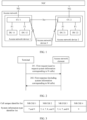
- an access network device 1 and an access network device 2 use a split architecture
- an access network device 3 uses a centralized architecture.
- a DU and an access network device may cover one cell, or may cover a plurality of cells.
- Table 1 shows a correspondence between a DU, an access network device, and a covered cell in the network architecture shown in FIG. 1 .
- Table 1 Access network device 1 Access network device 2 Access network device 3 DU 11 DU 12 DU 21 DU 22 Cell 1 and cell 2 Cell 3 Cell 4 Cell 5 and cell 6 Cell 7, cell 8, and cell 9
- a system architecture and a service scenario that are described in the embodiments of this application are intended to describe the technical solutions in the embodiments of this application more clearly, and do not constitute a limitation to the technical solutions provided in the embodiments of this application.
- a person of ordinary skill in the art may know that with evolution of the network architecture and emergence of new service scenarios, the technical solutions provided in the embodiments of this application are also applicable to similar technical problems.
- the system information is mainly used to notify a terminal of configuration information of a cell, so that the terminal accesses the cell and correctly works in the cell.
- the system information is classified into minimum (Minimum) system information and other (Other) system information.
- the foregoing minimum system information includes two types of information: MIB and SIB1.
- the foregoing other system information includes SIB2 and higher system information.
- MIB, SIB 1, SIB2 to SIB21, and the like are already defined.
- Each piece of system information includes a set of a series of parameters related to a function.
- the MIB includes some parameters that are limited in quantity but are most important and most frequently sent and used, for example, uplink and downlink bandwidths, a physical hybrid automatic repeat request (automatic repeat-request, ARQ for short) indicator channel (physical hybrid-ARQ indicator channel, PHICH for short) parameter, a system frame number (system frame number, SFN for short), and the like, and the MIB also includes a parameter required by the terminal to obtain the SIB 1.
- the SIB 1 in LTE mainly includes information related to cell selection and camping, such as a PLMN, a cell barring state, a cell selection parameter, and a closed subscriber group (closed subscriber group, CSG for short) identifier.
- the SIB1 further includes scheduling information of another SIB, and the terminal obtains the SIB2 and higher system information based on the information in the SIB 1.
- the SIB2 in LTE mainly includes common radio resource configuration information that is of a cell and that is applicable to terminals.
- the SIB9 in LTE includes name information of a home NodeB.
- system information such as MIB, SIB 1, and SIB2 to SIB9 is defined in an existing standard.
- a SIBx in the NR system does not correspond to a SIBx in LTE.
- the SIB 1 in NR corresponds to functions of the SIB 1 and the SIB2 in LTE
- the SIB2 to the SIB9 in NR correspond to functions of the SIB3 to the SIB6, the SIB 10 to the SIB12, and the SIB16 in LTE respectively.
- system information with a same function in LTE and NR may include or may not include a same information element.
- x in SIBx is a SIB type
- SIBx is a SIB of type x
- x in the type x is an identifier (which may also be referred to as an index or a sequence number) of a type.
- SIB5 refers to a SIB of type 5
- type 5 indicates a type whose identifier is 5
- x is an integer.
- a terminal To normally access a cell, after completing frequency scanning and downlink synchronization with the cell, a terminal further needs to continue to read one or more types of system information corresponding to the cell.
- the two types of system information that is, the MIB and the SIB 1
- a terminal in idle (idle) mode can obtain system information periodically broadcast in a timely manner whenever the terminal is powered on.
- the MIB is broadcast on a physical broadcast channel (physical broadcast channel, PBCH for short), and other types of system information (SIB1 and other SIBs that need to be broadcast) are broadcast on a physical downlink shared channel (physical downlink shared channel, PDSCH for short).
- PBCH physical broadcast channel
- SIB1 and other SIBs that need to be broadcast are broadcast on a physical downlink shared channel (physical downlink shared channel, PDSCH for short).
- the MIB includes time-frequency information for sending the SIB 1. After receiving the MIB on the PBCH channel, the terminal receives the SIB 1 on the PDSCH based on the time-frequency information indicated in the MIB.
- the SIB 1 indicates time-frequency information for scheduling SIB2 to SIBx. After reading the SIB 1, the terminal receives another SIB on the PDSCH based on the time-frequency information indicated in the SIB 1.
- NR introduces a new method for obtaining system information by a terminal: on-demand (On-Demand) obtaining.
- the system information may be obtained by using an on-demand request (On-Demand Request). That is, when the terminal finds that some system information is not broadcast and the terminal needs the system information, the terminal may actively send a request to the access network element, and the access network element may further send the system information to the terminal.
- the access network element may further send system information by using RRC signaling.
- the RRC signaling may be RRC reconfiguration (RRCReconfiguration) signaling.
- the terminal sends a preamble (Preamble) in an MSG1, and there is a mapping relationship between the preamble and a type of system information required by the terminal.
- an access network element may parse out, based on the preamble carried in the MSG1 and the mapping relationship, system information required by the terminal, and further sends the system information required by the terminal to the terminal.
- the terminal sends RRCSystemInfoRequest signaling to an access network element to request required system information, where the RRCSystemInfoRequest signaling carries an information element of a type of the system information required by the terminal, and the access network element further sends the system information required by the terminal to the terminal.
- the RRCSystemInfoRequest is information that may be sent by using an MSG3 in a random access procedure.
- a concept of a CSG cell is defined in LTE, and only a terminal with a corresponding permission can access the CSG cell.
- a terminal needs to first determine whether a cell is a CSG cell. This is implemented by receiving a SIB 1 by the terminal.
- the SIB 1 in LTE includes parameters: a CSG indication (CSG indication) identifying whether a corresponding cell is a CSG cell, and a CSG ID (CSG Identity) identifying an ID of a corresponding CSG cell.
- CSG indication identifying whether a corresponding cell is a CSG cell
- CSG ID CSG Identity
- a procedure of displaying the list of home NodeBs by the terminal may be summarized as follows: After determining, by receiving a SIB 1, that a cell is a CSG cell, the terminal receives a SIB9 from a PDSCH channel of the cell based on time-frequency information of the SIB9 indicated in the SIB 1.
- a name of a corresponding home NodeB is read from the SIB9 and is added to the list of available home NodeBs.
- system information including a name of a home NodeB is not always broadcast. Therefore, when a user requires a name of a home NodeB, a SIB including the name of the home NodeB may be obtained in an on-demand manner in NR.
- the user can send an on-demand request to obtain required system information that is not broadcast.
- the terminal needs to know on-demand system information in a plurality of DUs, the terminal needs to separately send an MSG1, an RRCSystemInfoRequest, or another RRC request in a random access procedure to the plurality of DUs, and the terminal can request system information corresponding to only one cell at a time.
- each DU reports a system information request of the terminal to a CU through an F1 interface, the CU sends corresponding system information to the DU through the F1 interface, and the DU forwards the system information to the terminal.
- An embodiment of this application provides a method for obtaining system information.
- the method may be used to obtain system information corresponding to a common cell, or may be used to obtain system information corresponding to a CSG cell/closed access group (closed access group, CAG for short) cell.
- the system information corresponding to the CSG cell may include information such as a CSG indication (which is information used to indicate whether the cell is a CSG cell, and specifically, may also be another name), a CSG ID (which is used to indicate a CSG cell, and specifically, may also be another name), and a name of a home NodeB.
- the system information corresponding to the CAG cell may include information such as a CAG indication (which is information used to indicate whether the cell is a CAG cell, and specifically, may also be another name), a CAG ID (which is used to indicate a CAG cell, and specifically, may also be another name), and a name of a CAG base station.
- a CAG indication which is information used to indicate whether the cell is a CAG cell, and specifically, may also be another name
- a CAG ID which is used to indicate a CAG cell, and specifically, may also be another name
- a common cell is a cell other than a CSG cell and a CAG cell.
- the method for obtaining system information includes the following steps.
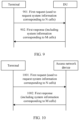
- a terminal sends a first request to an access network element, where the first request is used to request system information corresponding to N cells, and N is an integer greater than 1.
- the access network element is an access network device, or the access network element is a DU.
- the N cells may be cells covered by different access network devices.
- N 3
- the N cells may be the cell 7 and the cell 8 that are covered by the access network device 3 and the cell 1 that is covered by the access network device 1.
- the N cells may be cells covered by a same DU.
- N 2
- the N cells may be the cell 1 and the cell 2 that are covered by the DU 11.
- the N cells may also be cells covered by different DUs, and the different DUs may be connected to a same CU, or may be connected to different CUs.
- the N cells may be the cell 1 and the cell 2 that are covered by the DU 11 and the cell 4 that is covered by the DU 21.
- the N cells may be the cell 1 and the cell 2 that are covered by the DU 11 and the cell 3 that is covered by the DU 12.
- system information corresponding to a cell is system information that is not received but needs to be obtained by the terminal.
- the system information corresponding to the cell is on-demand system information of the cell.
- Types of system information corresponding to different cells in the N cells may be the same or may be different. For example, when the types of system information corresponding to different cells in the N cells are the same, if the N cells are a cell 1 and a cell 2, types of system information corresponding to the cell 1 and the cell 2 may both be a type 5 of a SIB. When the types of system information corresponding to different cells in the N cells are different, if the N cells are a cell 1 and a cell 2, a type of system information corresponding to the cell 1 may be a type 5 of a SIB, and a type of system information corresponding to the cell 2 may be a type 7 of a SIB.
- Quantities of pieces of system information corresponding to different cells in the N cells may be the same or may be different.
- system information corresponding to the cell 1 may be a SIB5
- system information corresponding to the cell 2 may be a SIB9.
- system information corresponding to the cell 1 may be a SIB5 and a SIB7
- system information corresponding to the cell 2 may be a SIB9.
- the terminal receives a first response from the access network element, where the first response includes system information corresponding to M cells, the M cells include at least a part of the N cells, and M is an integer greater than 0.
- the terminal can request system information corresponding to only one cell at a time.
- the terminal can obtain system information corresponding to a plurality of cells at a time, thereby improving signaling exchange efficiency and reducing air interface signaling overheads.
- the first request includes information used to indicate the N cells and information used to indicate a type of system information corresponding to each of the N cells.
- the first request includes information used to indicate the N cells.
- the first request includes information used to indicate a type of system information corresponding to each of the N cells.
- the first request includes indication information and information used to indicate a type of system information, where the indication information is used to indicate whether system information corresponding to a plurality of cells is requested.
- the first request includes the information used to indicate the N cells and the information used to indicate the type of the system information corresponding to each of the N cells
- a type of system information corresponding to each of the N cells may be preset or may be carried in another message to the access network element.
- information used to indicate the N cells may be preset or may be carried in another message to the access network element.
- the access network element may send, based on a product, system information corresponding to one or more cells to the terminal. For example, when the first request includes the indication information and a type of system information (for example, a SIB9 in LTE) that carries information about a home NodeB, the access network element may send system information that carries the information about the home NodeB and that corresponds to all CSG cells to the terminal.
- the indication information may be indicated by using a value of one bit, and different values of the bit indicate different meanings.
- the indication information is used to indicate that the system information corresponding to the plurality of cells is requested; or when a value of the bit is 0, the indication information is used to indicate that system information corresponding to a single cell is requested.
- the indication information may alternatively be indicated by using a plurality of bits. This is not specifically limited in this embodiment of this application.
- information used to indicate a cell is information that uniquely identifies the cell, and may be referred to as a unique identifier of the cell.
- a unique identifier of a cell may be a cell global identifier (cell global identifier, CGI for short) of the cell.
- CGI cell global identifier
- the CGI may be referred to as an NR CGI.
- a unique identifier of the CSG cell may be a CSG ID.
- a unique identifier of the CAG cell may be a CAG ID.
- the information used to indicate a cell is a unique identifier of the cell
- the information used to indicate the N cells may be a cell unique identifier list, and the cell unique identifier list includes unique identifiers of the N cells.
- information used to indicate a type of system information corresponding to a cell may be an identifier of the type of the system information corresponding to the cell.
- Information used to indicate types of the system information corresponding to the N cells may be a system information type identifier list, and the system information type identifier list includes the types of the system information corresponding to the N cells.
- the terminal is in idle mode, and the first request is MAC control element (MAC control element, MAC CE for short) signaling, a message 1 in a random access procedure, or a message 3 in a random access procedure.
- the terminal is in connected mode, and the first request is RRC signaling or MAC CE signaling.
- the message 3 may be an RRCSystemInfoRequest.
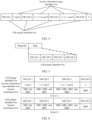
- the cell unique identifier list and the system information type identifier list may be in a format shown in FIG. 3 , or may be in a format shown in FIG. 4 .
- the cell unique identifier list may be in a format shown in FIG. 5 , that is, corresponding data is added after a preamble, where the data is used to carry the cell unique identifier list.
- the preamble may have a mapping relationship with one type of the system information, or may have a mapping relationship with a plurality of types of the system information. It is assumed that unique identifiers of a cell 1, a cell 2, a cell 3, and a cell 4 are respectively an NR CGI 1, an NR CGI 2, an NR CGI 3, and an NR CGI 4 in FIG. 5 .
- the example shown in FIG. 5 may mean that the terminal needs to obtain a SIB5 corresponding to each of the cell 1, the cell 2, the cell 3, and the cell 4.
- the example shown in FIG. 5 may mean that the terminal needs to obtain a SIB5 and a SIB6 corresponding to each of the cell 1, the cell 2, the cell 3, and the cell 4.
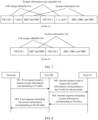
- the first response includes information used to indicate the M cells and system information corresponding to each of the M cells, or the first response includes information used to indicate the M cells, information used to indicate a type of system information corresponding to each of the M cells, and the system information corresponding to each of the M cells.
- the first response includes the information used to indicate the M cells and the system information corresponding to each of the M cells
- the first response includes the information used to indicate the M cells, the information used to indicate the type of the system information corresponding to each of the M cells, and the system information corresponding to each of the M cells
- the information used to indicate a cell is a unique identifier of the cell
- the information used to indicate the M cells may be a cell unique identifier list, and the cell unique identifier list includes unique identifiers of the M cells.
- Information used to indicate types of the system information corresponding to the M cells may be a system information type identifier list, and the system information type identifier list includes the types of the system information corresponding to the M cells.
- the system information corresponding to the M cells may be a system information list, and the system information list includes the system information corresponding to the M cells.
- the cell unique identifier list, the system information type identifier list, and the system information list may be in a format shown in case 1 in FIG. 6 or FIG. 7 .
- the cell unique identifier list and the system information list may be in a format shown in case 2 in FIG. 6 and FIG. 7 .
- the system information type identifier list may be represented by using multi-bit encoding, a character string, or the like.
- Types of system information requested by the terminal may be indicated by using a plurality of bits.
- a part or all of the plurality of bits are used to indicate a type of system information. For example, every three bits in the plurality of bits indicate a type of system information. Assuming that the plurality of bits are 011110, it indicates that the types of the system information requested by the terminal are a type 3 and a type 7.
- one of the plurality of bits is used to indicate whether a type of system information is requested, and when a value of one bit is 1 (or 0), it indicates that a type, of system information, corresponding to the bit is requested. For example, it is assumed that there are a total of 10 types of system information, and one bit is used to indicate whether one of the 10 types of the system information is requested. It is assumed that when a value of a bit is 1, it indicates that a type, of system information, corresponding to the bit is requested. If 10 bits are 1100011000, it indicates that the first, the second, the sixth, and the seventh type of system information in the 10 types of system information are requested.
- the method includes: The terminal obtains the unique identifiers of the N cells and the type of the system information corresponding to each of the N cells, and sends the first request to the access network element based on the unique identifiers of the N cells and the type of the system information corresponding to each of the N cells.
- a terminal in idle mode may obtain a cell identity (Cell ID) of a cell and a PLMN ID based on a SIB 1, and determine a CGI of the cell based on the cell ID and the PLMN ID.
- a terminal in connected mode may obtain a cell ID of a cell and a PLMN ID based on a SIB1 or RRC signaling, to determine a CGI of the cell.
- both the terminal in idle mode and the terminal in connected mode may locally obtain the unique identifier of the cell.
- a manner in which the terminal obtains the unique identifier of the cell is not specifically limited in this embodiment of this application.
- the terminal Before the terminal sends the first request to the access network element, the terminal may generate the cell unique identifier list based on the unique identifiers of the N cells, and generate the system information type identifier list based on the type of the system information corresponding to each of the N cells.
- the foregoing method may further include the following step.
- the terminal sends, to another access network element, a request used to request system information corresponding to N2 cells, where the N2 cells are cells, other than the N1 cells, in the N cells, and both N1 and N2 are integers greater than 0.
- the terminal may determine whether the M cells include the N cells. If the M cells do not include the N cells, step 203 is performed. If the terminal still does not obtain system information corresponding to all of the N cells after step 203, the terminal may further request the system information corresponding to the cells from the another access network element, until the terminal obtains the system information corresponding to all of the N cells.
- the another access network element in step 203 may be an access network device, or may be a DU. This is not specifically limited in this embodiment of this application.
- the access network device and the DU are considered as access network elements of two different types.
- the MAC CE signaling, the message 1, the message 3, the RRC signaling, and the like are considered as different types of signaling of the first request.
- Specific implementation processes of the foregoing method are slightly different when the types of access network elements are different and the types of the signaling of the first request are different.
- Embodiment 1 to Embodiment 3 For explanations of same or related content in Embodiment 1 to Embodiment 3 and the foregoing embodiment, refer to the foregoing descriptions. Details are not described again.
- the DU cannot parse information included in the first request.
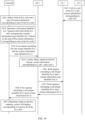
- a method provided in Embodiment 1 includes the following steps.
- a terminal sends a first request to a DU (which is denoted as a first DU), where the first request is used to request system information corresponding to N cells.
- the first DU receives the first request from the terminal.
- the first DU sends a second request to the first CU based on the first request, where the second request is used to request, for the terminal, the system information corresponding to the N cells.
- the first CU receives the second request from the first DU.
- the first CU may be a CU connected to the first DU. Because the first DU cannot parse information included in the first request, the first DU may directly include, in the second request, the information included in the first request, and send the second request to the first CU.
- the first CU sends a second response to the first DU based on the second request, where the second response includes system information corresponding to M cells, and the M cells include at least a part of the N cells.
- the first DU receives the second response from the first CU.
- the second request and the second response may be F1 interface messages.
- the second request may be initial uplink RRC information transmission (Initial UL RRC Message Transfer)
- the second response may be a system information transmission command (System Information Delivery Command).
- the first DU sends a first response to the terminal, where the first response includes the system information corresponding to the M cells.
- the terminal receives the first response from the first DU, to obtain, based on the first response, the system information corresponding to the M cells.
- the first DU may directly include, in the first response, information included in the second response and send the first response to the terminal.
- the first DU may send the first response to the terminal in a broadcast manner.
- the first DU may send the first response to the terminal in a broadcast manner or by using RRC signaling.
- the terminal can request system information corresponding to only one cell at a time.
- the terminal can obtain system information corresponding to a plurality of cells at a time, thereby improving signaling exchange efficiency and reducing air interface signaling overheads.
- the second request includes: information used to indicate the N cells and information used to indicate a type of system information corresponding to each of the N cells; information used to indicate the N cells; information used to indicate a type of system information corresponding to each of the N cells; or indication information and information used to indicate a type of system information, where the indication information is used to indicate whether system information corresponding to a plurality of cells is requested.
- the second response includes: information used to indicate the M cells and system information corresponding to each of the M cells; information used to indicate the M cells and information used to indicate a type of system information corresponding to each of the M cells; or information used to indicate the M cells, information used to indicate a type of system information corresponding to each of the M cells, and the system information corresponding to each of the M cells.
- formats of the information included in the second request and the second response respectively refer to formats of the information included in the first request and the first response.
- the second response includes the information used to indicate the M cells and the information used to indicate the type of the system information corresponding to each of the M cells
- the format of the information included in the second response is similar to the format in FIG. 3 , and details are not described herein again.
- the first DU may locally store system information corresponding to a plurality of cells, but the first DU cannot parse the first request sent by the terminal.
- the first CU only needs to notify, by using the second response, the first DU of the types of the system information corresponding to the M (or N) cells, and the first DU determines, based on the types of the system information corresponding to the M (or N) cells, the system information corresponding to the M (or N) cells, and feeds back the first response to the terminal.
- the method further includes: The first CU locally obtains, based on the second request, system information corresponding to one or more cells.
- the one or more cells belong to the M cells.
- the method further includes the following steps.
- the first CU sends a third request to one or more DUs based on the second request, where the third request is used to request the system information corresponding to the one or more cells.
- the one or more DUs receive the third request from the first CU.
- the one or more DUs send a third response to the first CU based on the third request, where the third response includes the system information corresponding to the one or more cells.
- the first CU receives the third response from the one or more DUs.
- Information included in the third request is similar to the information included in the second request
- information included in the third response is similar to the information included in the second response.
- formats of the information included in the third request and the third response respectively refer to the formats of the information included in the second request and the second response. Details are not described again.
- system information that corresponds to the one or more cells and that is included in the third response may be system information corresponding to a part or all of the one or more cells requested by the third request.
- the system information that corresponds to the one or more cells and that is included in the third response is system information corresponding to a part or all of the M cells.
- the one or more DUs may include the first DU, or may not include the first DU.
- the one or more DUs may be DUs connected to the first CU through an F1 interface.
- the third request and the third response may be F1 interface messages.
- the third request may be an F1 setup request (F1 Setup Request) or a gNB-CU configuration update (gNB-CU Configuration Update)
- the third response may be an F1 setup response (F1 Setup Response) or a gNB-CU configuration update acknowledgement (gNB-CU Configuration Update Acknowledge).
- step (11) and step (12) may be performed after or before the first CU receives the second request from the first DU. This is not limited in this embodiment of this application.
- the method further includes the following steps.
- the first CU sends a fourth request to a second CU based on the second request, where the fourth request is used to request system information corresponding to one or more cells.
- the second CU receives the fourth request from the first CU.
- the second CU sends a fourth response to the first CU based on the fourth request, where the fourth response includes system information corresponding to one or more cells.
- the first CU receives the fourth response from the second CU.
- Information included in the fourth request is similar to the information included in the second request
- information included in the fourth response is similar to the information included in the second response.
- For formats of the information included in the fourth request and the fourth response refer to the formats of the information included in the second request and the second response. Details are not described again.
- system information that corresponds to the one or more cells and that is included in the fourth response may be system information corresponding to a part or all of the one or more cells requested by the fourth request.
- the system information that corresponds to the one or more cells and that is included in the fourth response is system information corresponding to a part or all of the M cells.
- the second CU may be a CU that has an Xn connection to the first CU.
- the fourth request and the fourth response may be Xn messages.
- the fourth request may be an Xn setup request (Xn Setup Request) or a next-generation wireless network node configuration update (NG-RAN node Configuration Update)
- the fourth response may be an Xn setup response (Xn Setup Response) or a next-generation wireless network node configuration update acknowledgment (NG-RAN node Configuration Update Acknowledge).
- step (21) and step (22) may be performed after or before the first CU receives the second request from the first DU. This is not limited in this embodiment of this application.
- step (11) and step (12) may be performed after or before step (21) and step (22). This is not limited in this embodiment of this application.
- the first CU may perform different actions. The following separately describes the actions based on case 1 and case 2.
- Case 1 The first DU requests the system information corresponding to the N cells, and when feeding back system information corresponding to cells to the first DU, the first CU feeds back only the system information that corresponds to the cells and that is requested by the first DU.
- the first CU may send the system information corresponding to the part or all of the N cells to the first DU.
- System information corresponding to any cell of the first CU may be generated by the first CU, or may be obtained by the first CU from another device (for example, a DU or a second CU) and stored in the first CU.
- the first CU may request, from a connected DU or another CU, system information corresponding to N2 cells, and sends, to the first DU, requested system information corresponding to cells and the system information corresponding to the N1 cells of the first CU.
- the N2 cells are cells, other than the N1 cells, in the N cells.
- the requested system information corresponding to the cells and the system information corresponding to the N1 cells of the first CU are the system information corresponding to the M cells, and the system information corresponding to the M cells may be sent to the first DU completely once or partially in a plurality of times.
- the first CU first sends the obtained system information corresponding to the N1 cells to the first DU, and then sends, to the first DU, the system information that corresponds to the cells and that is requested from the connected DU or the another CU.
- the first CU may request, from the connected DU or the another CU, the system information corresponding to the N cells, and send requested system information corresponding to cells to the first DU.
- the requested system information corresponding to the cells is the system information corresponding to the M cells.
- the terminal may continue to request, from the another DU, system information corresponding to a cell, other than the M cells, in the N cells until the system information corresponding to the N cells is obtained.
- Case 2 The first DU requests the system information corresponding to the N cells, and the first CU feeds back not only the system information that corresponds to the cells and that is requested by the first DU, but also system information that corresponds to cells and that is not requested by the first DU.
- system information corresponding to S cells is the system information that corresponds to the cells and that is not requested by the first DU but is sent by the first CU.
- the first CU may send the system information corresponding to the part or all of the N+S cells to the first DU.
- the N+S cells are a sum of the N cells and the S cells.
- the first CU may request, from a connected DU or another CU, system information corresponding to X2 cells, and sends, to the first DU, requested system information corresponding to cells and the system information corresponding to the X1 cells of the first CU.
- the X2 cells are cells, other than the X1 cells, in the N+S cells.
- the requested system information corresponding to the cells and the system information corresponding to the X1 cells of the first CU are the system information corresponding to the M cells, and the system information corresponding to the M cells may be sent to the first DU completely once or partially in a plurality of times.
- the first CU first sends the obtained system information corresponding to the X1 cells to the first DU, and then sends, to the first DU, the system information that corresponds to the cells and that is requested from the connected DU or the another CU.
- the first CU may request, from the connected DU or the another CU, system information corresponding to the N+S cells, and send requested system information corresponding to cells to the first DU.
- the requested system information corresponding to the cells is the system information corresponding to the M cells.
- the terminal may continue to request, from the another DU, system information corresponding to a cell, other than the received cells, in the N cells.
- An access network element is a DU, a terminal is in idle mode, and a first request is MAC CE signaling or a message 1 in a random access procedure.
- An access network element is a DU, a terminal is in connected mode, and a first request is MAC CE signaling.
- the DU can parse information included in the first request.
- a method provided in Embodiment 2 includes the following steps.
- a terminal sends a first request to a DU, where the first request is used to request system information corresponding to N cells.
- the DU receives the first request from the terminal.
- the DU sends a first response to the terminal based on the first request, where the first response includes system information corresponding to M cells, and the M cells include at least a part of the N cells.
- the terminal receives the first response from the DU, to obtain, based on the first response, the system information corresponding to the M cells.
- the DU may send the first response to the terminal in a broadcast manner or by using a MAC CE.
- the DU may send the first response to the terminal in a broadcast manner or by using RRC signaling or MAC CE signaling.
- the terminal can request system information corresponding to only one cell at a time.
- the terminal can obtain system information corresponding to a plurality of cells at a time, thereby improving signaling exchange efficiency and reducing air interface signaling overheads.
- the method may further include: The DU locally obtains, based on the first request, system information corresponding to one or more cells.
- the one or more cells belong to the M cells.
- the method further includes: (11) The DU interacts with a first CU to obtain the system information corresponding to the one or more cells.
- the first CU may be a CU connected to the DU.
- the one or more cells belong to the M cells.
- step (11) may include the following steps.
- the DU sends a sixth request to the first CU based on the first request, where the sixth request is used to request the system information corresponding to the one or more cells.
- the first CU receives the sixth request from the DU.
- the first CU sends a sixth response to the DU based on the sixth request, where the sixth response includes system information corresponding to one or more cells.
- the DU receives the sixth response from the first CU.
- the sixth request and the sixth response may be F1 interface messages.
- the sixth request may be initial uplink RRC information transmission (Initial UL RRC Message Transfer)
- the sixth response may be a system information transmission command (System Information Delivery Command).
- Information included in the sixth request is similar to information included in a second request
- information included in the sixth response is similar to information included in a second response.
- formats of the information included in the sixth request and the sixth response respectively refer to formats of the information included in the second request and the second response. Details are not described again.
- system information that corresponds to the one or more cells and that is included in the sixth response may be system information corresponding to a part or all of the one or more cells requested by the sixth request.
- the system information that corresponds to the one or more cells and that is included in the sixth response is system information corresponding to a part or all of the M cells.
- actions performed by the network elements may be different. The following separately describes the actions based on case 3 and case 4.
- Case 3 The terminal requests system information corresponding to the N cells, and when feeding back system information corresponding to cells to the terminal, the DU feeds back only the system information that corresponds to the cells and that is requested by the terminal.
- the DU may send the system information corresponding to the part or all of the N cells to the terminal.
- System information corresponding to any cell of the DU may be generated by the DU, or may be obtained by the DU from another device (for example, the first CU) and stored in the DU.
- the DU may request, from the first CU, system information corresponding to N2 cells, and send, to the terminal, requested system information corresponding to cells and the system information corresponding to the N1 cells of the DU.
- the N2 cells are cells, other than the N1 cells, in the N cells.
- the requested system information corresponding to the cells and the system information corresponding to the N1 cells of the DU are the system information corresponding to the M cells, and the system information corresponding to the M cells may be sent to the terminal completely once or partially in a plurality of times. For example, the DU first sends the obtained system information corresponding to the N1 cells to the terminal, and then sends, to the terminal, the system information that corresponds to the cells and that is requested from the first CU.
- the DU may request, from the first CU, the system information corresponding to the N cells, and send requested system information corresponding to cells to the terminal.
- the requested system information corresponding to the cells is the system information corresponding to the M cells.
- the terminal may continue to request, from another DU, system information corresponding to a cell, other than the M cells, in the N cells until the system information corresponding to the N cells is obtained.
- Case 4 The terminal requests the system information corresponding to the N cells, and the DU feeds back not only the system information that corresponds to the cells and that is requested by the terminal, but also system information that corresponds to cells and that is not requested by the terminal.
- system information corresponding to S cells is the system information that corresponds to the cells and that is not requested by the terminal but is sent by the DU.
- the DU may send the system information corresponding to the part or all of the N+S cells to the terminal.
- the N+S cells are a sum of the N cells and the S cells.
- the DU may request, from the first CU, system information corresponding to X2 cells, and send, to the terminal, requested system information corresponding to cells and the system information corresponding to the X1 cells of the DU.
- the X2 cells are cells, other than the X1 cells, in the N+S cells.
- the requested system information corresponding to the cells and the system information corresponding to the X1 cells of the DU are the system information corresponding to the M cells, and the system information corresponding to the M cells may be sent to the terminal completely once or partially in a plurality of times. For example, the DU first sends the obtained system information corresponding to the X1 cells to the terminal, and then sends, to the terminal, the system information that corresponds to the cells and that is requested from the first CU.
- the DU may request, from the first CU, system information corresponding to the N+S cells, and send requested system information corresponding to cells to the terminal.
- the requested system information corresponding to the cells is the system information corresponding to the M cells.
- the terminal may continue to request, from the another DU, system information corresponding to a cell, other than the received cells, in the N cells.
- the first CU may feed back system information corresponding to cells to the DU in the manner in case 1 and case 2 in Embodiment 1. Details are not described herein again.
- the terminal after obtaining the system information corresponding to the part of the N cells, the terminal further needs to request, from the another DU, system information corresponding to the other cells in the N cells, so that a delay in obtaining the system information is relatively long.
- the DU may add a CU identifier and/or a DU identifier in broadcast cell information.
- the CU identifier and/or the DU identifier are/is added to a MIB or a SIB 1.
- the terminal determines, based on the CU identifier and/or the DU identifier, whether a plurality of cells are of a same CU or DU, to further synchronously send a request for obtaining system information corresponding to cells to one DU connected to each CU, thereby reducing the delay in obtaining the system information.
- Embodiment 1 and Embodiment 2 an example in which the provided method is applied to an NR communications system or a 5G communications network is used for description.
- the methods provided in Embodiment 1 and Embodiment 2 may also be applied to another network in which a base station is of a split architecture.
- An access network element is an access network device.
- a method provided in Embodiment 3 includes the following steps.
- a terminal sends a first request to an access network device, where the first request is used to request system information corresponding to N cells.
- the access network device receives the first request from the terminal.
- the terminal is in idle mode, and the first request is MAC CE signaling, a message 1 in a random access procedure, or a message 3 in a random access procedure; or the terminal is in connected mode, and the first request is RRC signaling or MAC CE signaling.
- the first request is MAC CE signaling, a message 1 in a random access procedure, or a message 3 in a random access procedure; or the terminal is in connected mode, and the first request is RRC signaling or MAC CE signaling.
- the access network device sends a first response to the terminal based on the first request, where the first response includes system information corresponding to the M cells, and the M cells include at least a part of the N cells.
- the terminal receives the first response from the access network device, to obtain, based on the first response, the system information corresponding to the M cells.
- the access network device may send the first response to the terminal in a broadcast manner or by using MAC CE signaling.
- the access network device may send the first response to the terminal in a broadcast manner or by using RRC signaling or MAC CE signaling.
- the terminal can request system information corresponding to only one cell at a time.
- the terminal can obtain system information corresponding to a plurality of cells at a time, thereby improving signaling exchange efficiency and reducing air interface signaling overheads.
- the method further includes: The access network device locally obtains, based on the first request, system information corresponding to one or more cells.
- the method further includes the following steps.
- the access network device sends a fifth request to another access network device based on the first request, where the fifth request is used to request the system information corresponding to the one or more cells.
- the another access network device receives the fifth request from the access network device.
- the another access network device sends a fifth response to the access network device based on the fifth request, where the fifth response includes the system information corresponding to the one or more cells.
- the access network device receives the fifth response from the another access network device.
- Information included in the fifth request is similar to information included in the foregoing second request
- information included in the fifth response is similar to information included in the foregoing second response.
- formats of the information included in the fifth request and the fifth response refer to formats of the information included in the foregoing second request and the foregoing second response. Details are not described again.
- actions performed by the access network device may be different. The following separately describes the actions based on case 5 and case 6.
- Case 5 The terminal requests the system information corresponding to the N cells, and when feeding back system information corresponding to cells to the terminal, the access network device feeds back only the system information that corresponds to the cells and that is requested by the terminal.
- the access network device may send the system information corresponding to the part or all of the N cells to the terminal.
- System information corresponding to any cell in the access network device may be generated by the access network device, or may be obtained by the access network device from another access network device and stored in the access network device.
- the access network device may request, from another access network device, system information corresponding to N2 cells, and send, to the terminal, requested system information corresponding to cells and the system information corresponding to the N1 cells of the access network device.
- the N2 cells are cells, other than the N1 cells, in the N cells.
- the requested system information corresponding to the cells and the system information corresponding to the N1 cells of the access network device are the system information corresponding to the M cells, and the system information corresponding to the M cells may be sent to the terminal completely once or partially in a plurality of times. For example, the access network device first sends the obtained system information corresponding to the N1 cells to the terminal, and then sends, to the terminal, the system information that corresponds to the cells and that is requested from the another access network device.
- the access network device may request, from the another access network device, the system information corresponding to the N cells, and send the requested system information corresponding to the cells to the terminal.
- the requested system information corresponding to the cells is the system information corresponding to the M cells.
- the terminal may continue to request, from the another access network device, system information corresponding to a cell, other than the M cells, in the N cells until the system information corresponding to the N cells is obtained.
- Case 6 The terminal requests the system information corresponding to the N cells, and the access network device feeds back not only the system information that corresponds to the cells and that is requested by the terminal, but also system information that corresponds to cells and that is not requested by the terminal.
- system information corresponding to S cells is the system information that corresponds to the cells and that is not requested by the terminal but is sent by the access network device.
- the access network device may send the system information corresponding to the part or all of the N+S cells to the terminal.
- the N+S cells are a sum of the N cells and the S cells.
- the access network device may request, from the another access network device, system information corresponding to X2 cells, and send, to the terminal, requested system information corresponding to cells and the system information corresponding to the X1 cells of the access network device.
- the X2 cells are cells, other than the X1 cells, in the N+S cells.
- the requested system information corresponding to the cells and the system information corresponding to the X1 cells of the access network device are the system information corresponding to the M cells, and the system information corresponding to the M cells may be sent to the terminal completely once or partially in a plurality of times. For example, the access network device first sends the obtained system information corresponding to the X1 cells to the terminal, and then sends, to the terminal, the system information that corresponds to the cells and that is requested from the another access network device.
- the access network device may request, from the another access network device, system information corresponding to the N+S cells, and send requested system information corresponding to cells to the terminal.
- the requested system information corresponding to the cells is the system information corresponding to the M cells.
- the terminal may continue to request, from the another access network device, system information corresponding to a cell, other than the received cells, in the N cells.
- Embodiment 1 and Embodiment 2 provide an example description of the implementation procedure of the method provided in the foregoing embodiment.
- a CU 1 is connected to three DUs: a DU 1, a DU 2, and a DU 3.
- a DU 1 DU 2 DU 3 Cell 1 For cells separately covered by the three DUs, refer to Table 2.
- a method provided in Embodiment 1 includes the following steps.
- the terminal obtains CGIs of the five cells and a type of system information corresponding to each of the five cells.
- the five cells are the cell 1 to the cell 5.
- the terminal generates a cell unique identifier list based on the CGIs of the five cells, and generates a system information type identifier list based on a type of system information corresponding to each of the five cells.
- the cell unique identifier list includes the CGIs of the five cells.
- the system information type identifier list includes a type of system information corresponding to each of the five cells.
- the terminal sends the first request to the DU 1 based on the cell unique identifier list and the system information type identifier list.
- the DU 1 receives the first request from the terminal.
- the first request includes the cell unique identifier list and the system information type identifier list.
- the DU cannot parse the information included in the first request.
- the first request may be a message 3 in a random access procedure.
- the first request may be RRC signaling.
- the terminal may send the first request to any one of the DU 1, the DU 2, and the DU 3.
- the terminal sends the first request to the DU 1 is used for description.
- the DU 1 sends a second request to the CU 1 based on the first request.
- the CU 1 receives the second request from the DU 1.
- the DU 1 may directly include, in the second request, the information included in the first request, and send the second request to the CU 1.
- the second request includes a cell unique identifier list and a system information type identifier list.
- the CU 1 sends a second response to the DU 1 based on the second request.
- the DU 1 receives the second response from the CU 1.
- the second response includes a cell unique identifier list and a system information list, and the system information list includes system information corresponding to a part or all of the five cells.
- the DU 1 sends the first response to the terminal based on the second response.
- the terminal receives the first response from the DU 1.
- the first response includes the cell unique identifier list and the system information list, and the system information list includes the system information corresponding to the part or all of the five cells.
- the terminal determines, based on the first response, the system information corresponding to the part or all of the five cells.
- the terminal may determine whether system information corresponding to all of the five cells is obtained. If the system information corresponding to all of the five cells is obtained, the process ends. If the system information corresponding to all of the five cells is not obtained, the terminal may send, to a DU other than the DU 1, a request used to request system information corresponding to another cell (that is, a cell that is not obtained) in the five cells. For example, if the terminal obtains, by using the first request, the system information corresponding to the cell 1 to the cell 3 in the five cells, the terminal may further send, to the DU 2, a request used to request the system information corresponding to the cell 4 and the cell 5, until the system information corresponding to the five cells is obtained.
- a method provided in Embodiment 2 includes the following steps.
- the terminal obtains CGIs of the five cells and a type of system information corresponding to each of the five cells.
- the five cells are the cell 1 to the cell 5.
- the terminal generates a cell unique identifier list 1 based on the CGIs of the five cells, and generates a system information type identifier list 1 based on a type of system information corresponding to each of the five cells.
- the cell unique identifier list 1 includes the CGIs of five cells.
- the system information type identifier list 1 includes the type of the system information corresponding to each of the five cells.
- the terminal sends the first request to the DU 1 based on the cell unique identifier list 1 and the system information type identifier list 1.
- the DU 1 receives the first request from the terminal.
- the first request is used to request the system information corresponding to the cell 1 to the cell 5, and the first request includes the cell unique identifier list 1 and the system information type identifier list 1.
- the DU can parse the information included in the first request.
- the first request is MAC CE signaling or a message 1 in a random access procedure.
- the first request is MAC CE signaling.
- the terminal may send the first request to any one of the DU 1, the DU 2, and the DU 3.
- the terminal sends the first request to the DU 1 is used for description.
- the DU 1 locally obtains, based on the first request, the system information corresponding to the cell 1 and the cell 2.
- the DU 1 sends a sixth request to the CU 1 based on the first request.
- the CU 1 receives the sixth request from the DU 1.
- the sixth request is used to request the system information corresponding to the cell 3 to the cell 5.
- the sixth request includes a cell unique identifier list 2 and a system information type identifier list 2.
- the cell unique identifier list 2 includes identifiers of the cell 3 to the cell 5, and the system information type identifier list 2 includes type identifiers of the system information corresponding to the cell 3 to the cell 5.
- the CU 1 sends a sixth response to the DU 1 based on the sixth request.
- the DU 1 receives the sixth response from the CU 1.
- the sixth response includes a cell unique identifier list 3 and a system information list 3.
- the cell unique identifier list 3 includes identifiers of a part or all of the cell 3 to the cell 5.
- the system information list 3 includes system information corresponding to a part or all of the cell 3 to the cell 5.
- the DU 1 sends a first response to the terminal based on the sixth response and the locally obtained system information corresponding to the cell 1 and the cell 2.
- the terminal receives the first response from the DU 1.
- the first response includes a cell unique identifier list 4 and a system information list 4.
- the cell unique identifier list 4 includes identifiers of the cell 1 and the cell 2, and further includes an identifier of a cell corresponding to system information obtained by the DU 1 from the CU 1.
- the system information list 4 includes the system information corresponding to the cell 1 and the cell 2, and further includes system information that corresponds to a cell and that is obtained by the DU 1 from the CU 1.
- the terminal determines, based on the first response, system information corresponding to a part or all of the five cells.
- the terminal may determine whether system information corresponding to all of the five cells is obtained. If the system information corresponding to all of the five cells is obtained, the process ends. If the system information corresponding to all of the five cells is not obtained, the terminal may send, to a DU other than the DU 1, a request used to request system information corresponding to another cell (that is, a cell that is not obtained) in the five cells. For example, if the terminal obtains, by using the first request, the system information corresponding to the cell 1 to the cell 3 in the five cells, the terminal may further send, to the DU 2, a request used to request the system information corresponding to the cell 4 and the cell 5, until the system information corresponding to the five cells is obtained.
- Embodiment 3 and Embodiment 4 provide an example description of the implementation procedure of the method provided in the foregoing embodiment.
- a CU 1 is connected to a DU 1 and a DU 2
- a CU 2 is connected to a DU 3 and a DU 4.
- Embodiment 3 includes the following step 1501 to step 1508.
- the CU 1 obtains, by using an Xn interface, a CGI of a cell of the CU 2 and system information corresponding to each cell.
- the CU 1 may locally store the obtained CGI of the cell of the CU 2 and the obtained system information corresponding to each cell.
- the CU 2 may also obtain, by using an Xn interface, a CGI of a cell of the CU 1 and system information corresponding to each cell, and locally store the CGI and the system information.
- Step 1502 to step 1508 are respectively the same as step 1201 to step 1207.
- the terminal may send the first request to any DU of the DU 1, the DU 2, the DU 3, and the DU 4.
- an example in which the terminal sends the first request to the DU 1 is used for description.
- the method provided in Embodiment 4 includes step 1601 to step 1609. Step 1601 is the same as step 1501, and step 1602 to step 1609 are respectively the same as step 1301 to step 1308.
- the terminal may send the first request to any DU of the DU 1, the DU 2, the DU 3, and the DU 4.
- an example in which the terminal sends the first request to the DU 1 is used for description.
- the CU 1 and the CU 2 may not obtain, in advance, system information corresponding to cells of each other, but obtain, through interaction, the system information corresponding to the cells when the terminal sends a request. This is not specifically limited in this embodiment of this application.
- the network elements such as the DU, the CU, the access network device and the terminal include corresponding hardware structures and/or software modules for performing the functions.
- the network elements such as the DU, the CU, the access network device and the terminal include corresponding hardware structures and/or software modules for performing the functions.
- a person skilled in the art should be easily aware that, in combination with the examples of units and algorithm steps described in the embodiments disclosed in this specification, this application can be implemented by hardware or a combination of hardware and computer software. Whether a function is performed by hardware or hardware driven by computer software depends on particular applications and design constraints of the technical solutions. A person skilled in the art may use different methods to implement the described functions of each particular application, but it should not be considered that the implementation goes beyond the scope of this application.
- function unit division may be performed on the DU, the CU, the access network device, and the terminal based on the foregoing method examples.
- each function unit may be obtained through division based on a corresponding function, or two or more functions may be integrated into one processing unit.
- the integrated unit may be implemented in a form of hardware, or may be implemented in a form of a software function unit. It should be noted that, in the embodiments of this application, division into units is an example, and is merely logical function division. In actual implementation, another division manner may be used.
- FIG. 17 is a possible schematic structural diagram of an apparatus (denoted as an apparatus 170 for obtaining system information) for obtaining system information in the foregoing embodiments.
- the apparatus 170 for obtaining system information includes a processing unit 1701 and a communications unit 1702, and may further include a storage unit 1703.
- the schematic structural diagram shown in FIG. 17 may be used to represent a structure of the terminal, the DU, the CU, or the access network device in the foregoing embodiments.
- the processing unit 1701 is configured to control and manage an action of the terminal.
- the processing unit 1701 is configured to support the terminal in performing 201 and 202 in FIG. 2 , 801 and 802 in FIG. 8 , 901 and 902 in FIG. 9 , 1001 and 1002 in FIG. 10 , 1201, 1202, 1203, 1206, and 1207 in FIG. 12 , 1301, 1302, 1303, 1307, and 1308 in FIG. 13 , 1502, 1503, 1504, 1507, and 1508 in FIG. 15 , 1602, 1603, 1604, 1608, and 1609 in FIG.
- the processing unit 1701 may communicate with another network entity through the communications unit 1702, for example, communicate with the access network element shown in FIG. 2 .
- the storage unit 1703 is configured to store program code and data that are of the terminal.
- the apparatus 170 for obtaining system information may be a terminal, or may be a chip in a terminal.
- the processing unit 1701 is configured to control and manage an action of the DU.
- the processing unit 1701 is configured to support the DU in performing 201 and 202 in FIG. 2 (in this case, the access network element in FIG. 2 is the DU), 801 to 804 in FIG. 8 (in this case, the DU is the first DU in FIG. 8 ), 901 and 902 in FIG. 9 , 1203 to 1206 in FIG. 12 (in this case, the DU is the DU 1 in FIG. 12 ), 1303 to 1307 in FIG. 13 (in this case, the DU is the DU 1 in FIG.
- the processing unit 1701 may communicate with another network entity through the communications unit 1702, for example, communicate with the terminal shown in FIG. 8 .
- the storage unit 1703 is configured to store program code and data that are of the DU.
- the apparatus 170 for obtaining system information may be a DU, or may be a chip in a DU.
- the processing unit 1701 is configured to control and manage an action of the CU.
- the processing unit 1701 is configured to support the CU in performing 802 and 803 in FIG. 8 (in this case, the CU is the first CU in FIG. 8 ), 1204 and 1205 in FIG. 12 (in this case, the CU is the CU 1 in FIG. 12 ), 1305 and 1306 in FIG. 13 (in this case, the CU is the CU 1 in FIG. 13 ), 1501 in FIG. 15 (in this case, the CU is the CU 1 or the CU 2 in FIG. 15 ), 1505 and 1506 in FIG.
- the processing unit 1701 may communicate with another network entity through the communications unit 1702, for example, communicate with the first DU shown in FIG. 8 .
- the storage unit 1703 is configured to store program code and data that are of the CU.
- the apparatus 170 for obtaining system information may be a CU, or may be a chip in a CU.
- the processing unit 1701 is configured to control and manage an action of the access network device.
- the processing unit 1701 is configured to support the access network device in performing 201 and 202 in FIG. 2 (in this case, the access network element in FIG. 2 is an access network device), 1001 and 1002 in FIG. 10 , and/or an action performed by the access network device in another process described in the embodiments of this application.
- the processing unit 1701 may communicate with another network entity through the communications unit 1702, for example, communicate with the terminal shown in FIG. 10 .
- the storage unit 1703 is configured to store program code and data that are of the access network device.
- the apparatus 170 for obtaining system information may be an access network device, or may be a chip in an access network device.
- the processing unit 1701 may be a processor or a controller
- the communications unit 1702 may be a communications interface, a transceiver, a transceiver, a transceiver circuit, a transceiver apparatus, or the like.
- the communications interface is a collective term, and may include one or more interfaces.
- the storage unit 1703 may be a memory.
- the processing unit 1701 may be a processor or a controller
- the communications unit 1702 may be an input interface and/or an output interface, a pin, a circuit, or the like.
- the storage unit 1703 may be a storage unit (for example, a register or a cache) in the chip, or may be a storage unit (for example, a read-only memory or a random access memory) that is in the terminal, the DU, the CU, or the access network device and that is located outside the chip.
- the communications unit may also be referred to as a transceiver unit.
- An antenna and a control circuit that have receiving and sending functions and that is in the apparatus 170 for obtaining system information may be considered as the communications unit 1702 of the apparatus 170 for obtaining system information, and a processor that has a processing function may be considered as a processing unit 1701 of the apparatus 170 for obtaining system information.
- a component that is configured to implement a receiving function and that is in the communications unit 1702 may be considered as a receiving unit.
- the receiving unit is configured to perform a receiving step in the embodiments of this application.
- the receiving unit may be a receiver, a receiver, a receiver circuit, or the like.
- a component that is configured to implement a sending function and that is in the communications unit 1702 may be considered as a sending unit.
- the sending unit is configured to perform a sending step in the embodiments of this application.
- the sending unit may be a transmitter, a transmitter, a sending circuit, or the like.
- the integrated unit in FIG. 17 When an integrated unit in FIG. 17 is implemented in a form of a software function module and sold or used as an independent product, the integrated unit may be stored in a computer-readable storage medium.
- the computer software product is stored in a storage medium, and includes several instructions for instructing a computer device (which may be a personal computer, a server, a network device, or the like) or a processor (processor) to perform all or some of the steps of the methods in the embodiments of this application.
- the storage medium that stores the computer software product includes any medium that can store program code, for example, a USB flash drive, a removable hard disk, a read-only memory (read-only memory, ROM for short), a random access memory (random access memory, RAM for short), a magnetic disk, or an optical disc.
- program code for example, a USB flash drive, a removable hard disk, a read-only memory (read-only memory, ROM for short), a random access memory (random access memory, RAM for short), a magnetic disk, or an optical disc.
- the unit in FIG. 17 may alternatively be referred to as a module.
- the processing unit may be referred to as a processing module.
- An embodiment of this application further provides a schematic structural diagram of hardware of an apparatus (denoted as an apparatus 180 for obtaining system information) for obtaining system information.
- the apparatus 180 for obtaining system information includes a processor 1801.
- the apparatus further includes a memory 1802 connected to the processor 1801.
- the processor 1801 may be a general-purpose central processing unit (central processing unit, CPU for short), a microprocessor, an application-specific integrated circuit (application-specific integrated circuit, ASIC for short), or one or more integrated circuits configured to control program execution in the solutions in this application.
- the processor 1801 may alternatively include a plurality of CPUs, and the processor 1801 may be a single-core (single-CPU) processor or a multi-core (multi-CPU) processor.
- the processor herein may refer to one or more devices, circuits, and/or processing cores configured to process data (for example, computer program instructions).
- the memory 1802 may be a ROM or another type of static storage device that can store static information and instructions, or a RAM or another type of dynamic storage device that can store information and instructions, or may be an electrically erasable programmable read-only memory (electrically erasable programmable read-only memory, EEPROM for short), a compact disc read-only memory (compact disc read-only memory, CD-ROM for short) or another compact disc storage, an optical disc storage (including a compact disc, a laser disc, an optical disc, a digital versatile disc, a Blu-ray disc, or the like), a magnetic disk storage medium or another magnetic storage device, or any other medium that can be used to carry or store expected program code in a form of an instruction or a data structure and that can be accessed by a computer.
- EEPROM electrically erasable programmable read-only memory
- CD-ROM compact disc read-only memory
- an optical disc storage including a compact disc, a laser disc, an optical disc, a digital versatile disc,
- the memory 1802 may exist independently, or may be integrated into the processor 1801.
- the memory 1802 may include computer program code.
- the processor 1801 is configured to execute the computer program code stored in the memory 1802, to implement the method provided in the embodiments of this application.
- the apparatus 180 for obtaining system information further includes a transceiver 1803.
- the processor 1801, the memory 1802, and the transceiver 1803 are connected through a bus.
- the transceiver 1803 is configured to communicate with another device or a communications network.
- the transceiver 1803 may include a transmitter and a receiver.
- a component configured to implement a receiving function in the transceiver 1803 may be considered as a receiver.
- the receiver is configured to perform a receiving step in the embodiments of this application.
- a component configured to implement a sending function in the transceiver 1803 may be considered as a transmitter.
- the transmitter is configured to perform a sending step in the embodiments of this application.
- the schematic structural diagram shown in FIG. 18 may be used to show a structure of the DU, the CU, the access network device, or the terminal in the foregoing embodiments.
- the processor 1801 is configured to control and manage an action of the terminal.
- the processor 1801 is configured to support the terminal in performing 201 and 202 in FIG. 2 , 801 and 802 in FIG. 8 , 901 and 902 in FIG. 9 , 1001 and 1002 in FIG. 10 , 1201, 1202, 1203, 1206, and 1207 in FIG. 12 , 1301, 1302, 1303, 1307, and 1308 in FIG. 13 , 1502, 1503, 1504, 1507, and 1508 in FIG. 15 , 1602, 1603, 1604, 1608, and 1609 in FIG.
- the processor 1801 may communicate with another network entity through the transceiver 1803, for example, communicate with the access network element shown in FIG. 2 .
- the memory 1802 is configured to store program code and data that are of the terminal.
- the processor 1801 is configured to control and manage an action of the DU.
- the processor 1801 is configured to support the DU in performing 201 and 202 in FIG. 2 (in this case, the access network element in FIG. 2 is the DU), 801 to 804 in FIG. 8 (in this case, the DU is the first DU in FIG. 8 ), 901 and 902 in FIG. 9 , 1203 to 1206 in FIG. 12 (in this case, the DU is the DU 1 in FIG. 12 ), 1303 to 1307 in FIG. 13 (in this case, the DU is the DU 1 in FIG. 13 ), 1504 to 1507 in FIG.
- the processor 1801 may communicate with another network entity through the transceiver 1803, for example, communicate with the terminal shown in FIG. 8 .
- the memory 1802 is configured to store program code and data that are of the DU.
- the processor 1801 is configured to control and manage an action of the CU.
- the processor 1801 is configured to support the CU in performing 802 and 803 in FIG. 8 (in this case, the CU is the first CU in FIG. 8 ), 1204 and 1205 in FIG. 12 (in this case, the CU is the CU 1 in FIG. 12 ), 1305 and 1306 in FIG. 13 (in this case, the CU is the CU 1 in FIG. 13 ), 1501 in FIG. 15 (in this case, the CU is the CU 1 or the CU 2 in FIG. 15 ), 1505 and 1506 in FIG.
- the processor 1801 may communicate with another network entity through the transceiver 1803, for example, communicate with the first DU shown in FIG. 8 .
- the memory 1802 is configured to store program code and data that are of the CU.
- the processor 1801 is configured to control and manage an action of the access network device.
- the processor 1801 is configured to support the access network device in performing 201 and 202 in FIG. 2 (in this case, the access network element in FIG. 2 is an access network device), 1001 and 1002 in FIG. 10 , and/or an action performed by the access network device in another process described in the embodiments of this application.
- the processor 1801 may communicate with another network entity through the transceiver 1803, for example, communicate with the terminal shown in FIG. 10 .
- the memory 1802 is configured to store program code and data that are of the access network device.
- the processor 1801 includes a logic circuit and an input interface and/or an output interface.
- the output interface is configured to perform a sending action in a corresponding method
- the input interface is configured to perform a receiving action in a corresponding method.
- the schematic structural diagram shown in FIG. 19 may be used to show a structure of a DU, a CU, an access network device, or a terminal in the foregoing embodiments.
- the processor 1801 is configured to control and manage an action of the terminal.
- the processor 1801 is configured to support the terminal in performing 201 and 202 in FIG. 2 , 801 and 802 in FIG. 8 , 901 and 902 in FIG. 9 , 1001 and 1002 in FIG. 10 , 1201, 1202, 1203, 1206, and 1207 in FIG. 12 , 1301, 1302, 1303, 1307, and 1308 in FIG. 13 , 1502, 1503, 1504, 1507, and 1508 in FIG. 15 , 1602, 1603, 1604, 1608, and 1609 in FIG.
- the processor 1801 may communicate with another network entity by using the input interface and/or the output interface, for example, communicate with the access network element shown in FIG. 2 .
- the memory 1802 is configured to store program code and data that are of the terminal.
- the processor 1801 is configured to control and manage an action of the DU.
- the processor 1801 is configured to support the DU in performing 201 and 202 in FIG. 2 (in this case, the access network element in FIG. 2 is the DU), 801 to 804 in FIG. 8 (in this case, the DU is the first DU in FIG. 8 ), 901 and 902 in FIG. 9 , 1203 to 1206 in FIG. 12 (in this case, the DU is the DU 1 in FIG. 12 ), 1303 to 1307 in FIG. 13 (in this case, the DU is the DU 1 in FIG. 13 ), 1504 to 1507 in FIG.
- the processor 1801 may communicate with another network entity by using an input interface and/or an output interface, for example, communicate with the terminal shown in FIG. 8 .
- the memory 1802 is configured to store program code and data that are of the DU.
- the processor 1801 is configured to control and manage an action of the CU.
- the processor 1801 is configured to support the CU in performing 802 and 803 in FIG. 8 (in this case, the CU is the first CU in FIG. 8 ), 1204 and 1205 in FIG. 12 (in this case, the CU is the CU 1 in FIG. 12 ), 1305 and 1306 in FIG. 13 (in this case, the CU is the CU 1 in FIG. 13 ), 1501 in FIG. 15 (in this case, the CU is the CU 1 or the CU 2 in FIG. 15 ), 1505 and 1506 in FIG.
- the processor 1801 may communicate with another network entity by using an input interface and/or an output interface, for example, communicate with the first DU shown in FIG. 8 .
- the memory 1802 is configured to store program code and data that are of the CU.
- the processor 1801 is configured to control and manage an action of the access network device.
- the processor 1801 is configured to support the access network device in performing 201 and 202 in FIG. 2 (in this case, the access network element in FIG. 2 is an access network device), 1001 and 1002 in FIG. 10 , and/or an action performed by the access network device in another process described in the embodiments of this application.
- the processor 1801 may communicate with another network entity by using an input interface and/or an output interface, for example, communicate with the terminal shown in FIG. 10 .
- the memory 1802 is configured to store program code and data that are of the access network device.
- an embodiment of this application further provides a schematic structural diagram of hardware of a terminal (denoted as a terminal 200). For details, refer to FIG. 20 .
- FIG. 20 is a schematic structural diagram of hardware of the terminal 200.
- FIG. 20 shows only main components of the terminal.
- a terminal 200 includes a processor, a memory, a control circuit, an antenna, and an input/output apparatus.
- the processor is mainly configured to: process a communications protocol and communications data, control the entire terminal, execute a software program, and process data of the software program.
- the processor is configured to control the terminal to perform 201 and 202 in FIG. 2 , 801 and 802 in FIG. 8 , 901 and 902 in FIG. 9 , 1001 and 1002 in FIG. 10 , 1201, 1202, 1203, 1206, and 1207 in FIG. 12 , 1301, 1302, 1303, 1307, and 1308 in FIG. 13 , 1502, 1503, 1504, 1507, and 1508 in FIG. 15 , 1602, 1603, 1604, 1608, and 1609 in FIG. 16 , and/or an action performed by the terminal in another process described in the embodiments of this application.
- the memory is mainly configured to store the software program and the data.
- the control circuit (which may also be referred to as a radio frequency circuit) is mainly configured to: perform conversion between a baseband signal and a radio frequency signal, and process the radio frequency signal.
- a combination of the control circuit and the antenna may also be referred to as a transceiver that is mainly configured to send/receive a radio frequency signal in an electromagnetic wave form.
- the input/output apparatus such as a touchscreen, a display screen, or a keyboard, is mainly configured to: receive data entered by a user, and output data to the user.
- the processor can read the software program in the memory, interpret and execute instructions of the software program, and process the data of the software program.
- the processor needs to send data through the antenna, after performing baseband processing on to-be-sent data, the processor outputs a baseband signal to the control circuit in the control circuit; and the control circuit performs radio frequency processing on the baseband signal and then sends the radio frequency signal to the outside in a form of an electromagnetic wave through the antenna.
- the control circuit receives a radio frequency signal through the antenna, converts the radio frequency signal into a baseband signal, and outputs the baseband signal to the processor.
- the processor converts the baseband signal into data, and processes the data.
- FIG. 20 shows only one memory and only one processor.
- An actual terminal may include a plurality of processors and a plurality of memories.
- the memory may also be referred to as a storage medium, a storage device, or the like. This is not limited in the embodiments of this application.
- the processor may include a baseband processor and a central processing unit.
- the baseband processor is mainly configured to process the communications protocol and the communications data
- the central processing unit is mainly configured to: control the entire terminal, execute the software program, and process the data of the software program.
- the processor in FIG. 20 is integrated with functions of the baseband processor and the central processing unit.
- the baseband processor and the central processing unit may be independent processors, and are interconnected through a technology such as a bus.
- the terminal may include a plurality of baseband processors to adapt to different network standards, and the terminal may include a plurality of central processing units to enhance a processing capability of the terminal.
- the components in the terminal may be connected by using various buses.
- the baseband processor may also be referred to as a baseband processing circuit or a baseband processing chip.
- the central processing unit may also be referred to as a central processing circuit or a central processing chip.
- a function of processing the communications protocol and the communication data may be built in the processor, or may be stored in the memory in a form of a software program.
- the processor executes the software program to implement a baseband processing function.
- An embodiment of this application further provides a computer-readable storage medium, including instructions.
- the instructions When the instructions are run on a computer, the computer is enabled to perform any one of the foregoing methods.
- An embodiment of this application further provides a computer program product including instructions.
- the computer program product runs on a computer, the computer is enabled to perform any one of the foregoing methods.
- An embodiment of this application further provides a communications system, including the foregoing network device and the foregoing terminal.
- All or some of the foregoing embodiments may be implemented by using software, hardware, firmware, or any combination thereof.
- a software program is used to implement the embodiments, the embodiments may be implemented completely or partially in a form of a computer program product.
- the computer program product includes one or more computer instructions.
- the computer program instructions When the computer program instructions are loaded and executed on a computer, the procedures or the functions according to the embodiments of this application are all or partially generated.
- the computer may be a general-purpose computer, a dedicated computer, a computer network, or another programmable apparatus.
- the computer instructions may be stored in a computer-readable storage medium or may be transmitted from a computer-readable storage medium to another computer-readable storage medium.
- the computer instructions may be transmitted from a website, computer, server, or data center to another website, computer, server, or data center in a wired (for example, a coaxial cable, an optical fiber, or a digital subscriber line (digital subscriber line, DSL for short)) or wireless (for example, infrared, radio, or microwave) manner.
- the computer-readable storage medium may be any usable medium accessible by a computer, or a data storage device, such as a server or a data center, integrating one or more usable media.
- the usable medium may be a magnetic medium (for example, a floppy disk, a hard disk, or a magnetic tape), an optical medium (for example, a DVD), a semiconductor medium (for example, a solid-state drive (solid state disk, SSD for short)), or the like.
- a magnetic medium for example, a floppy disk, a hard disk, or a magnetic tape
- an optical medium for example, a DVD
- a semiconductor medium for example, a solid-state drive (solid state disk, SSD for short)
Landscapes
- Engineering & Computer Science (AREA)
- Computer Networks & Wireless Communication (AREA)
- Signal Processing (AREA)
- Computer Security & Cryptography (AREA)
- Mobile Radio Communication Systems (AREA)
Claims (15)
- Verfahren zum Erlangen von Systeminformationen, umfassend:Senden (201) einer ersten Anforderung an ein Zugangsnetzwerkelement durch ein Endgerät, wobei die erste Anforderung verwendet wird, um Systeminformationen anzufordern, die N Zellen entsprechen, und N eine ganze Zahl größer als 1 ist, wobei die N Zellen durch mindestens eine verteilte Einheit abgedeckt werden, die jeweils mit mindestens einer zentralen Einheit verbunden ist, wobei die Systeminformationen On-Demand-Systeminformationen umfassen, die nicht durch das Endgerät empfangen wurden; undEmpfangen (202) einer ersten Antwort von dem Zugangsnetzwerkelement durch das Endgerät, wobei die erste Antwort die On-Demand-Systeminformationen umfasst, die M Zellen entsprechen, die M Zellen mindestens einen Teil der N Zellen umfassen und M eine ganze Zahl größer als 0 ist.
- Verfahren nach Anspruch 1, wobei die erste Anforderung Informationen, die verwendet werden, um die N Zellen anzugeben, und Informationen, die verwendet werden, um einen Typ von Systeminformationen anzugeben, die jeder der N Zellen entsprechen, umfasst oder die erste Anforderung Informationen umfasst, die verwendet werden, um die N Zellen anzugeben.
- Verfahren nach Anspruch 1 oder 2, wobei die erste Antwort Informationen, die verwendet werden, um die M Zellen anzugeben, und Systeminformationen, die jeder der M Zellen entsprechen, umfasst oder die erste Antwort Informationen, die verwendet werden, um die M Zellen anzugeben, Informationen, die verwendet werden, um einen Typ von Systeminformationen anzugeben, die jeder der M Zellen entsprechen, und die Systeminformationen, die jeder der M Zellen entsprechen, umfasst.
- Verfahren nach einem der Ansprüche 1 bis 3, wobei das Zugangsnetzwerkelement eine Zugangsnetzwerkvorrichtung ist oder das Zugangsnetzwerkelement eine verteilte Einheit DU ist.
- Verfahren nach einem der Ansprüche 1 bis 4, wobei sich das Endgerät im Leerlaufmodus befindet und die erste Anforderung eine Signalisierung eines Steuerelements zur Medienzugriffssteuerung, MAC-CE-Signalisierung, eine Nachricht 1 in einer Direktzugriffsprozedur oder eine Nachricht 3 in einer Direktzugriffsprozedur ist; oder sich das Endgerät im verbundenen Modus befindet und die erste Anforderung eine Signalisierung zur Funkressourcensteuerung, RRC-Signalisierung, oder eine MAC-CE-Signalisierung ist.
- Verfahren zum Erlangen von Systeminformationen, umfassend:Empfangen (801) einer ersten Anforderung von einem Endgerät durch eine verteilte Einheit, DU, wobei die erste Anforderung verwendet wird, um Systeminformationen anzufordern, die N Zellen entsprechen, und N eine ganze Zahl größer als 1 ist, wobei die N Zellen durch mindestens eine DU abgedeckt werden, die jeweils mit mindestens einer zentralen Einheit, CU, verbunden ist, wobei die Systeminformationen On-Demand-Systeminformationen umfassen, die nicht durch das Endgerät empfangen wurden;Senden (802) einer zweiten Anforderung durch die DU an eine erste CU basierend auf der ersten Anforderung, wobei die zweite Anforderung verwendet wird, um für das Endgerät die On-Demand-Systeminformationen anzufordern, die den N Zellen entsprechen;Empfangen (803) einer zweiten Antwort von der ersten CU durch die DU, wobei die zweite Antwort On-Demand-Systeminformationen umfasst, die M Zellen entsprechen, die M Zellen mindestens einen Teil der N Zellen umfassen und M eine ganze Zahl größer als 0 ist; undSenden (804) einer ersten Antwort durch die DU an das Endgerät, wobei die erste Antwort die On-Demand-Systeminformationen umfasst, die den M Zellen entsprechen.
- Verfahren nach Anspruch 6, wobei die erste Anforderung und die zweite Anforderung Informationen, die verwendet werden, um die N Zellen anzugeben, und Informationen, die verwendet werden, um einen Typ von Systeminformationen, die jeder der N Zellen entsprechen, umfassen oder die erste Anforderung und die zweite Anforderung Informationen umfassen, die verwendet werden, um die N Zellen anzugeben.
- Verfahren nach Anspruch 6 oder 7, wobei die erste Antwort Informationen, die verwendet werden, um die M Zellen anzugeben, und Systeminformationen, die jeder der M Zellen entsprechen; oder Informationen, die verwendet werden, um die M Zellen anzugeben, Informationen, die verwendet werden, um einen Typ von Systeminformationen anzugeben, die jeder der M Zellen entsprechen, und die Systeminformationen, die jeder der M Zellen entsprechen, umfasst; und die zweite Antwort die Informationen, die verwendet werden, um die M Zellen anzugeben, und die Systeminformationen, die jeder der M Zellen entsprechen, umfasst; oder die zweite Antwort die Informationen, die verwendet werden, um die M Zellen anzugeben, und die Informationen, die verwendet werden, um den Typ der Systeminformationen anzugeben, die jeder der M Zellen entsprechen, umfasst; oder die zweite Antwort die Informationen, die verwendet werden, um die M Zellen anzugeben, die Informationen, die verwendet werden, um den Typ der Systeminformationen anzugeben, die jeder der M Zellen entsprechen, und die Systeminformationen, die jeder der M Zellen entsprechen, umfasst.
- Verfahren nach einem der Ansprüche 6 bis 8, wobei sich das Endgerät im Leerlauf befindet und die erste Anforderung eine Nachricht 3 in einer Direktzugriffsprozedur ist; oder sich das Endgerät im verbundenen Modus befindet und die erste Anforderung eine Signalisierung zur Funkressourcensteuerung RRC ist.
- Verfahren zum Erlangen von Systeminformationen, umfassend:Empfangen (802) einer zweiten Anforderung von einer verteilten Einheit DU durch eine erste zentrale Einheit CU, wobei die zweite Anforderung verwendet wird, um für ein Endgerät Systeminformationen anzufordern, die N Zellen entsprechen, und N eine ganze Zahl größer als 1 ist, wobei die N Zellen durch mindestens eine DU abgedeckt werden, die jeweils mit mindestens einer CU verbunden ist, wobei die Systeminformationen On-Demand-Systeminformationen sind, die nicht durch das Endgerät empfangen wurden; undSenden (803) einer zweiten Antwort durch die erste CU an die DU basierend auf der zweiten Anforderung, wobei die zweite Antwort On-Demand-Systeminformationen umfasst, die M Zellen entsprechen, die M Zellen mindestens einen Teil der N Zellen umfassen und M eine ganze Zahl größer als 0 ist.
- Verfahren nach Anspruch 10, wobei die erste Anforderung Informationen, die verwendet werden, um die N Zellen anzugeben, und Informationen, die verwendet werden, um einen Typ von Systeminformationen anzugeben, die jeder der N Zellen entsprechen, umfasst oder die zweite Anforderung Informationen umfasst, die verwendet werden, um die N Zellen anzugeben.
- Einrichtung zum Erlangen von Systeminformationen (170), umfassend eine Kommunikationseinheit (1702) und eine Verarbeitungseinheit (1701), wobeidie Verarbeitungseinheit dazu konfiguriert ist, eine erste Anforderung an ein Zugangsnetzwerkelement unter Verwendung der Kommunikationseinheit zu senden, wobei die erste Anforderung verwendet wird, um Systeminformationen anzufordern, die N Zellen entsprechen, und N eine ganze Zahl größer als 1 ist, wobei die N Zellen durch mindestens eine verteilte Einheit abgedeckt werden, die jeweils mit mindestens einer zentralen Einheit verbunden ist, wobei die Systeminformationen On-Demand-Systeminformationen umfassen, die nicht durch das Endgerät empfangen wurden; unddie Verarbeitungseinheit ferner dazu konfiguriert ist, eine erste Antwort von dem Zugangsnetzwerkelement unter Verwendung der Kommunikationseinheit zu empfangen, wobei die erste Antwort die On-Demand-Systeminformationen umfasst, die M Zellen entsprechen, die M Zellen mindestens einen Teil der N Zellen umfassen und M eine ganze Zahl größer als 0 ist.
- Einrichtung zum Erlangen von Systeminformationen (170), umfassend eine Kommunikationseinheit (1702) und eine Verarbeitungseinheit (1701), wobeidie Verarbeitungseinheit dazu konfiguriert ist, eine erste Anforderung von einem Endgerät unter Verwendung der Kommunikationseinheit zu empfangen, wobei die erste Anforderung verwendet wird, um Systeminformationen anzufordern, die N Zellen entsprechen, und N eine ganze Zahl größer als 1 ist, wobei die N Zellen durch mindestens eine verteilte Einheit abgedeckt werden, die jeweils mit mindestens einer zentralen Einheit, CU, verbunden ist, wobei die Systeminformationen On-Demand-Systeminformationen umfassen, die nicht durch das Endgerät empfangen wurden;die Verarbeitungseinheit ferner dazu konfiguriert ist, basierend auf der ersten Anforderung eine zweite Anforderung an eine erste CU unter Verwendung der Kommunikationseinheit zu senden, wobei die zweite Anforderung verwendet wird, um für das Endgerät die On-Demand-Systeminformationen, die den N Zellen entsprechen, anzufordern;die Verarbeitungseinheit ferner dazu konfiguriert ist, eine zweite Antwort von der ersten CU unter Verwendung der Kommunikationseinheit zu empfangen, wobei die zweite Antwort On-Demand-Systeminformationen umfasst, die M Zellen entsprechen, die M Zellen mindestens einen Teil der N Zellen umfassen und M eine ganze Zahl größer als 0 ist; unddie Verarbeitungseinheit ferner dazu konfiguriert ist, eine erste Antwort an das Endgerät unter Verwendung der Kommunikationseinheit zu senden, wobei die erste Antwort die On-Demand-Systeminformationen umfasst, die den M Zellen entsprechen.
- Einrichtung zum Erlangen von Systeminformationen, umfassend eine Kommunikationseinheit und eine Verarbeitungseinheit, wobei die Verarbeitungseinheit dazu konfiguriert ist, eine zweite Anforderung von einer verteilten Einheit DU unter Verwendung der Kommunikationseinheit zu empfangen, die zweite Anforderung verwendet wird, um für ein Endgerät Systeminformationen anzufordern, die N Zellen entsprechen, und N eine ganze Zahl größer als 1 ist, wobei die N Zellen durch mindestens eine DU abgedeckt werden, die jeweils mit mindestens einer zentralen Einheit verbunden ist, wobei die Systeminformationen On-Demand-Systeminformationen sind, die nicht durch das Endgerät empfangen wurden; und
die Verarbeitungseinheit ferner dazu konfiguriert ist, basierend auf der zweiten Anforderung eine zweite Antwort an die DU unter Verwendung der Kommunikationseinheit zu senden, wobei die zweite Antwort On-Demand-Systeminformationen umfasst, die M Zellen entsprechen, die M Zellen mindestens einen Teil der N Zellen umfassen und M eine ganze Zahl größer als 0 ist. - Computerlesbares Speichermedium, umfassend Anweisungen, wobei, wenn die Anweisungen auf einem Computer ausgeführt werden, der Computer in die Lage versetzt wird, das Verfahren nach einem der Ansprüche 1 bis 5 durchzuführen, das Verfahren nach einem der Ansprüche 6 bis 9 durchzuführen oder das Verfahren nach einem der Ansprüche 10 bis 11 durchzuführen.
Applications Claiming Priority (2)
| Application Number | Priority Date | Filing Date | Title |
|---|---|---|---|
| CN201910101509.8A CN111511037B (zh) | 2019-01-31 | 2019-01-31 | 获取系统信息的方法、装置及计算机可读存储介质 |
| PCT/CN2020/072306 WO2020156184A1 (zh) | 2019-01-31 | 2020-01-15 | 获取系统信息的方法及装置 |
Publications (3)
| Publication Number | Publication Date |
|---|---|
| EP3905830A1 EP3905830A1 (de) | 2021-11-03 |
| EP3905830A4 EP3905830A4 (de) | 2022-03-02 |
| EP3905830B1 true EP3905830B1 (de) | 2024-07-31 |
Family
ID=71841613
Family Applications (1)
| Application Number | Title | Priority Date | Filing Date |
|---|---|---|---|
| EP20749259.6A Active EP3905830B1 (de) | 2019-01-31 | 2020-01-15 | Verfahren und vorrichtung zur erfassung von systeminformationen |
Country Status (4)
| Country | Link |
|---|---|
| US (1) | US20210360517A1 (de) |
| EP (1) | EP3905830B1 (de) |
| CN (1) | CN111511037B (de) |
| WO (1) | WO2020156184A1 (de) |
Families Citing this family (6)
| Publication number | Priority date | Publication date | Assignee | Title |
|---|---|---|---|---|
| US11405859B2 (en) * | 2019-11-18 | 2022-08-02 | Qualcomm Incorporated | Enhancement to system information block (SIB) validity check for non-public networks (NPNs) |
| CN113133030B (zh) * | 2021-03-18 | 2023-02-28 | 中科南京移动通信与计算创新研究院 | 5g无线接入网ran场景的管理方法及装置 |
| WO2024011382A1 (en) * | 2022-07-11 | 2024-01-18 | Nokia Shanghai Bell Co., Ltd. | Providing system information |
| WO2025208513A1 (zh) * | 2024-04-03 | 2025-10-09 | 北京小米移动软件有限公司 | 通信方法及装置、存储介质 |
| WO2025169180A1 (en) * | 2024-04-03 | 2025-08-14 | Lenovo (Singapore) Pte. Ltd. | On-demand sib1 transmission request |
| US20260107216A1 (en) * | 2024-10-11 | 2026-04-16 | Qualcomm Incorporated | Handling system information from multiple sources in a communication system |
Family Cites Families (16)
| Publication number | Priority date | Publication date | Assignee | Title |
|---|---|---|---|---|
| US9204373B2 (en) * | 2009-08-28 | 2015-12-01 | Blackberry Limited | Method and system for acquisition of neighbour cell information |
| CN108605268B (zh) * | 2016-02-29 | 2021-05-14 | 三星电子株式会社 | 用于发信号通知系统信息的设备和方法 |
| CN117177257A (zh) * | 2016-07-20 | 2023-12-05 | 艾普拉控股有限公司 | 使用波束成形和选择的无线电设备的移动性 |
| CN107734575B (zh) * | 2016-08-12 | 2019-11-22 | 电信科学技术研究院 | 一种邻区系统信息获取方法、ue和网络侧设备 |
| CN110089166B (zh) * | 2016-10-07 | 2021-01-15 | 周建铭 | 用于系统信息传递的装置及方法 |
| CN108024311B (zh) * | 2016-11-04 | 2021-06-22 | 华为技术有限公司 | 一种系统信息更新方法及装置 |
| EP3518583A4 (de) * | 2016-11-04 | 2019-09-11 | KYOCERA Corporation | Drahtloses endgerät und basisstation |
| EP3409049B1 (de) * | 2017-02-03 | 2020-04-01 | Telefonaktiebolaget LM Ericsson (PUBL) | Systeminformationen auf anfrage |
| US10834759B2 (en) * | 2017-03-20 | 2020-11-10 | Motorola Mobility Llc | Feedback for a system information request |
| CN110463275B (zh) * | 2017-04-13 | 2021-10-08 | Lg 电子株式会社 | 提供系统信息的方法和装置 |
| CN107135502B (zh) * | 2017-05-04 | 2019-08-16 | 电信科学技术研究院 | 一种系统信息的发送方法及装置 |
| CN109246746A (zh) * | 2017-05-05 | 2019-01-18 | 北京三星通信技术研究有限公司 | 前向接口的建立、ue接入和切换方法及装置 |
| CN109152086B (zh) * | 2017-06-16 | 2022-09-09 | 北京三星通信技术研究有限公司 | 支持按需请求的系统消息的方法和设备 |
| CN109151737A (zh) * | 2017-06-16 | 2019-01-04 | 华为技术有限公司 | 一种通信方法及装置 |
| CN113630900B (zh) * | 2017-06-26 | 2023-10-20 | 北京三星通信技术研究有限公司 | 随机接入的方法及用户设备、基站设备 |
| WO2020047808A1 (zh) * | 2018-09-06 | 2020-03-12 | 北京小米移动软件有限公司 | 系统信息发送和接收方法、装置、设备及系统 |
-
2019
- 2019-01-31 CN CN201910101509.8A patent/CN111511037B/zh active Active
-
2020
- 2020-01-15 EP EP20749259.6A patent/EP3905830B1/de active Active
- 2020-01-15 WO PCT/CN2020/072306 patent/WO2020156184A1/zh not_active Ceased
-
2021
- 2021-07-30 US US17/390,141 patent/US20210360517A1/en not_active Abandoned
Also Published As
| Publication number | Publication date |
|---|---|
| WO2020156184A1 (zh) | 2020-08-06 |
| EP3905830A4 (de) | 2022-03-02 |
| CN111511037B (zh) | 2022-07-29 |
| EP3905830A1 (de) | 2021-11-03 |
| CN111511037A (zh) | 2020-08-07 |
| US20210360517A1 (en) | 2021-11-18 |
Similar Documents
| Publication | Publication Date | Title |
|---|---|---|
| EP3905830A1 (de) | Verfahren und vorrichtung zur erfassung von systeminformationen | |
| WO2018228294A1 (zh) | 小区重选方法及相关设备 | |
| CN111726808A (zh) | 通信方法和装置 | |
| CN107409387B (zh) | 一种无线接入方法、ue和基站 | |
| US11974219B2 (en) | Cell access procedure | |
| WO2021168647A1 (zh) | 提供网络切片的方法和通信装置 | |
| US20200260363A1 (en) | Method and apparatus for controlling restricted ue capability, and computer storage medium | |
| JP7844621B2 (ja) | 中継通信方法、通信装置及び通信システム | |
| WO2018196869A1 (zh) | 系统信息的传输方法及终端设备、网络设备 | |
| US20200236682A1 (en) | Core network accessing method, base station, and user equipment | |
| WO2021143404A1 (zh) | 一种ims紧急服务状态指示方法及装置 | |
| CN116671184A (zh) | 一种用于小区选择或重选的方法、终端设备和网络设备 | |
| EP4708970A2 (de) | Kommunikationsverfahren und -vorrichtung | |
| CN116456502A (zh) | 随机接入的方法和通信装置 | |
| WO2025166634A1 (zh) | 信息接收方法和信息发送方法、装置及通信系统 | |
| CN119095185A (zh) | 通信方法和装置 | |
| CN116097739B (zh) | 系统信息的配置方法、获取方法及装置 | |
| JP2021503214A (ja) | 基地局およびユーザ機器 | |
| CN116711375A (zh) | 基于切片的小区重选方法、装置、设备及存储介质 | |
| WO2021035499A1 (zh) | 通信方法、设备和通信系统 | |
| JP2024545794A (ja) | セル再選択方法及び関連する装置 | |
| CN120077709B (zh) | 状态确定、指示方法及装置、通信系统和存储介质 | |
| WO2024245016A1 (zh) | 一种通信方法及装置 | |
| WO2024007878A1 (zh) | 通信方法及装置 | |
| WO2025066922A1 (zh) | 一种通信方法及装置 |
Legal Events
| Date | Code | Title | Description |
|---|---|---|---|
| STAA | Information on the status of an ep patent application or granted ep patent |
Free format text: STATUS: THE INTERNATIONAL PUBLICATION HAS BEEN MADE |
|
| PUAI | Public reference made under article 153(3) epc to a published international application that has entered the european phase |
Free format text: ORIGINAL CODE: 0009012 |
|
| STAA | Information on the status of an ep patent application or granted ep patent |
Free format text: STATUS: REQUEST FOR EXAMINATION WAS MADE |
|
| 17P | Request for examination filed |
Effective date: 20210728 |
|
| AK | Designated contracting states |
Kind code of ref document: A1 Designated state(s): AL AT BE BG CH CY CZ DE DK EE ES FI FR GB GR HR HU IE IS IT LI LT LU LV MC MK MT NL NO PL PT RO RS SE SI SK SM TR |
|
| A4 | Supplementary search report drawn up and despatched |
Effective date: 20220202 |
|
| RIC1 | Information provided on ipc code assigned before grant |
Ipc: H04W 88/08 20090101ALN20220127BHEP Ipc: H04W 74/08 20090101ALN20220127BHEP Ipc: H04W 48/12 20090101ALN20220127BHEP Ipc: H04W 48/14 20090101AFI20220127BHEP |
|
| DAV | Request for validation of the european patent (deleted) | ||
| DAX | Request for extension of the european patent (deleted) | ||
| REG | Reference to a national code |
Ref country code: DE Free format text: PREVIOUS MAIN CLASS: H04W0074080000 Ref country code: DE Ref legal event code: R079 Ref document number: 602020034888 Country of ref document: DE Free format text: PREVIOUS MAIN CLASS: H04W0074080000 Ipc: H04W0048140000 |
|
| GRAP | Despatch of communication of intention to grant a patent |
Free format text: ORIGINAL CODE: EPIDOSNIGR1 |
|
| STAA | Information on the status of an ep patent application or granted ep patent |
Free format text: STATUS: GRANT OF PATENT IS INTENDED |
|
| RIC1 | Information provided on ipc code assigned before grant |
Ipc: H04W 88/08 20090101ALN20240222BHEP Ipc: H04W 74/0833 20240101ALN20240222BHEP Ipc: H04W 48/12 20090101ALN20240222BHEP Ipc: H04W 48/14 20090101AFI20240222BHEP |
|
| RIC1 | Information provided on ipc code assigned before grant |
Ipc: H04W 88/08 20090101ALN20240304BHEP Ipc: H04W 74/0833 20240101ALN20240304BHEP Ipc: H04W 48/12 20090101ALN20240304BHEP Ipc: H04W 48/14 20090101AFI20240304BHEP |
|
| INTG | Intention to grant announced |
Effective date: 20240320 |
|
| GRAS | Grant fee paid |
Free format text: ORIGINAL CODE: EPIDOSNIGR3 |
|
| GRAA | (expected) grant |
Free format text: ORIGINAL CODE: 0009210 |
|
| STAA | Information on the status of an ep patent application or granted ep patent |
Free format text: STATUS: THE PATENT HAS BEEN GRANTED |
|
| AK | Designated contracting states |
Kind code of ref document: B1 Designated state(s): AL AT BE BG CH CY CZ DE DK EE ES FI FR GB GR HR HU IE IS IT LI LT LU LV MC MK MT NL NO PL PT RO RS SE SI SK SM TR |
|
| REG | Reference to a national code |
Ref country code: CH Ref legal event code: EP Ref country code: GB Ref legal event code: FG4D |
|
| REG | Reference to a national code |
Ref country code: DE Ref legal event code: R096 Ref document number: 602020034888 Country of ref document: DE |
|
| REG | Reference to a national code |
Ref country code: IE Ref legal event code: FG4D |
|
| REG | Reference to a national code |
Ref country code: LT Ref legal event code: MG9D |
|
| REG | Reference to a national code |
Ref country code: NL Ref legal event code: MP Effective date: 20240731 |
|
| PG25 | Lapsed in a contracting state [announced via postgrant information from national office to epo] |
Ref country code: PT Free format text: LAPSE BECAUSE OF FAILURE TO SUBMIT A TRANSLATION OF THE DESCRIPTION OR TO PAY THE FEE WITHIN THE PRESCRIBED TIME-LIMIT Effective date: 20241202 |
|
| REG | Reference to a national code |
Ref country code: AT Ref legal event code: MK05 Ref document number: 1709735 Country of ref document: AT Kind code of ref document: T Effective date: 20240731 |
|
| PG25 | Lapsed in a contracting state [announced via postgrant information from national office to epo] |
Ref country code: PT Free format text: LAPSE BECAUSE OF FAILURE TO SUBMIT A TRANSLATION OF THE DESCRIPTION OR TO PAY THE FEE WITHIN THE PRESCRIBED TIME-LIMIT Effective date: 20241202 |
|
| PG25 | Lapsed in a contracting state [announced via postgrant information from national office to epo] |
Ref country code: NO Free format text: LAPSE BECAUSE OF FAILURE TO SUBMIT A TRANSLATION OF THE DESCRIPTION OR TO PAY THE FEE WITHIN THE PRESCRIBED TIME-LIMIT Effective date: 20241031 |
|
| PG25 | Lapsed in a contracting state [announced via postgrant information from national office to epo] |
Ref country code: FI Free format text: LAPSE BECAUSE OF FAILURE TO SUBMIT A TRANSLATION OF THE DESCRIPTION OR TO PAY THE FEE WITHIN THE PRESCRIBED TIME-LIMIT Effective date: 20240731 Ref country code: GR Free format text: LAPSE BECAUSE OF FAILURE TO SUBMIT A TRANSLATION OF THE DESCRIPTION OR TO PAY THE FEE WITHIN THE PRESCRIBED TIME-LIMIT Effective date: 20241101 Ref country code: NL Free format text: LAPSE BECAUSE OF FAILURE TO SUBMIT A TRANSLATION OF THE DESCRIPTION OR TO PAY THE FEE WITHIN THE PRESCRIBED TIME-LIMIT Effective date: 20240731 Ref country code: PL Free format text: LAPSE BECAUSE OF FAILURE TO SUBMIT A TRANSLATION OF THE DESCRIPTION OR TO PAY THE FEE WITHIN THE PRESCRIBED TIME-LIMIT Effective date: 20240731 |
|
| PG25 | Lapsed in a contracting state [announced via postgrant information from national office to epo] |
Ref country code: BG Free format text: LAPSE BECAUSE OF FAILURE TO SUBMIT A TRANSLATION OF THE DESCRIPTION OR TO PAY THE FEE WITHIN THE PRESCRIBED TIME-LIMIT Effective date: 20240731 |
|
| PG25 | Lapsed in a contracting state [announced via postgrant information from national office to epo] |
Ref country code: LV Free format text: LAPSE BECAUSE OF FAILURE TO SUBMIT A TRANSLATION OF THE DESCRIPTION OR TO PAY THE FEE WITHIN THE PRESCRIBED TIME-LIMIT Effective date: 20240731 |
|
| PG25 | Lapsed in a contracting state [announced via postgrant information from national office to epo] |
Ref country code: AT Free format text: LAPSE BECAUSE OF FAILURE TO SUBMIT A TRANSLATION OF THE DESCRIPTION OR TO PAY THE FEE WITHIN THE PRESCRIBED TIME-LIMIT Effective date: 20240731 Ref country code: IS Free format text: LAPSE BECAUSE OF FAILURE TO SUBMIT A TRANSLATION OF THE DESCRIPTION OR TO PAY THE FEE WITHIN THE PRESCRIBED TIME-LIMIT Effective date: 20241130 |
|
| PG25 | Lapsed in a contracting state [announced via postgrant information from national office to epo] |
Ref country code: HR Free format text: LAPSE BECAUSE OF FAILURE TO SUBMIT A TRANSLATION OF THE DESCRIPTION OR TO PAY THE FEE WITHIN THE PRESCRIBED TIME-LIMIT Effective date: 20240731 |
|
| PG25 | Lapsed in a contracting state [announced via postgrant information from national office to epo] |
Ref country code: ES Free format text: LAPSE BECAUSE OF FAILURE TO SUBMIT A TRANSLATION OF THE DESCRIPTION OR TO PAY THE FEE WITHIN THE PRESCRIBED TIME-LIMIT Effective date: 20240731 Ref country code: RS Free format text: LAPSE BECAUSE OF FAILURE TO SUBMIT A TRANSLATION OF THE DESCRIPTION OR TO PAY THE FEE WITHIN THE PRESCRIBED TIME-LIMIT Effective date: 20241031 |
|
| PG25 | Lapsed in a contracting state [announced via postgrant information from national office to epo] |
Ref country code: RS Free format text: LAPSE BECAUSE OF FAILURE TO SUBMIT A TRANSLATION OF THE DESCRIPTION OR TO PAY THE FEE WITHIN THE PRESCRIBED TIME-LIMIT Effective date: 20241031 Ref country code: PL Free format text: LAPSE BECAUSE OF FAILURE TO SUBMIT A TRANSLATION OF THE DESCRIPTION OR TO PAY THE FEE WITHIN THE PRESCRIBED TIME-LIMIT Effective date: 20240731 Ref country code: NO Free format text: LAPSE BECAUSE OF FAILURE TO SUBMIT A TRANSLATION OF THE DESCRIPTION OR TO PAY THE FEE WITHIN THE PRESCRIBED TIME-LIMIT Effective date: 20241031 Ref country code: NL Free format text: LAPSE BECAUSE OF FAILURE TO SUBMIT A TRANSLATION OF THE DESCRIPTION OR TO PAY THE FEE WITHIN THE PRESCRIBED TIME-LIMIT Effective date: 20240731 Ref country code: LV Free format text: LAPSE BECAUSE OF FAILURE TO SUBMIT A TRANSLATION OF THE DESCRIPTION OR TO PAY THE FEE WITHIN THE PRESCRIBED TIME-LIMIT Effective date: 20240731 Ref country code: IS Free format text: LAPSE BECAUSE OF FAILURE TO SUBMIT A TRANSLATION OF THE DESCRIPTION OR TO PAY THE FEE WITHIN THE PRESCRIBED TIME-LIMIT Effective date: 20241130 Ref country code: HR Free format text: LAPSE BECAUSE OF FAILURE TO SUBMIT A TRANSLATION OF THE DESCRIPTION OR TO PAY THE FEE WITHIN THE PRESCRIBED TIME-LIMIT Effective date: 20240731 Ref country code: GR Free format text: LAPSE BECAUSE OF FAILURE TO SUBMIT A TRANSLATION OF THE DESCRIPTION OR TO PAY THE FEE WITHIN THE PRESCRIBED TIME-LIMIT Effective date: 20241101 Ref country code: FI Free format text: LAPSE BECAUSE OF FAILURE TO SUBMIT A TRANSLATION OF THE DESCRIPTION OR TO PAY THE FEE WITHIN THE PRESCRIBED TIME-LIMIT Effective date: 20240731 Ref country code: ES Free format text: LAPSE BECAUSE OF FAILURE TO SUBMIT A TRANSLATION OF THE DESCRIPTION OR TO PAY THE FEE WITHIN THE PRESCRIBED TIME-LIMIT Effective date: 20240731 Ref country code: BG Free format text: LAPSE BECAUSE OF FAILURE TO SUBMIT A TRANSLATION OF THE DESCRIPTION OR TO PAY THE FEE WITHIN THE PRESCRIBED TIME-LIMIT Effective date: 20240731 Ref country code: AT Free format text: LAPSE BECAUSE OF FAILURE TO SUBMIT A TRANSLATION OF THE DESCRIPTION OR TO PAY THE FEE WITHIN THE PRESCRIBED TIME-LIMIT Effective date: 20240731 |
|
| PG25 | Lapsed in a contracting state [announced via postgrant information from national office to epo] |
Ref country code: RO Free format text: LAPSE BECAUSE OF FAILURE TO SUBMIT A TRANSLATION OF THE DESCRIPTION OR TO PAY THE FEE WITHIN THE PRESCRIBED TIME-LIMIT Effective date: 20240731 Ref country code: DK Free format text: LAPSE BECAUSE OF FAILURE TO SUBMIT A TRANSLATION OF THE DESCRIPTION OR TO PAY THE FEE WITHIN THE PRESCRIBED TIME-LIMIT Effective date: 20240731 Ref country code: SM Free format text: LAPSE BECAUSE OF FAILURE TO SUBMIT A TRANSLATION OF THE DESCRIPTION OR TO PAY THE FEE WITHIN THE PRESCRIBED TIME-LIMIT Effective date: 20240731 |
|
| PG25 | Lapsed in a contracting state [announced via postgrant information from national office to epo] |
Ref country code: EE Free format text: LAPSE BECAUSE OF FAILURE TO SUBMIT A TRANSLATION OF THE DESCRIPTION OR TO PAY THE FEE WITHIN THE PRESCRIBED TIME-LIMIT Effective date: 20240731 |
|
| PG25 | Lapsed in a contracting state [announced via postgrant information from national office to epo] |
Ref country code: CZ Free format text: LAPSE BECAUSE OF FAILURE TO SUBMIT A TRANSLATION OF THE DESCRIPTION OR TO PAY THE FEE WITHIN THE PRESCRIBED TIME-LIMIT Effective date: 20240731 |
|
| PG25 | Lapsed in a contracting state [announced via postgrant information from national office to epo] |
Ref country code: IT Free format text: LAPSE BECAUSE OF FAILURE TO SUBMIT A TRANSLATION OF THE DESCRIPTION OR TO PAY THE FEE WITHIN THE PRESCRIBED TIME-LIMIT Effective date: 20240731 Ref country code: SK Free format text: LAPSE BECAUSE OF FAILURE TO SUBMIT A TRANSLATION OF THE DESCRIPTION OR TO PAY THE FEE WITHIN THE PRESCRIBED TIME-LIMIT Effective date: 20240731 |
|
| REG | Reference to a national code |
Ref country code: DE Ref legal event code: R097 Ref document number: 602020034888 Country of ref document: DE |
|
| PLBE | No opposition filed within time limit |
Free format text: ORIGINAL CODE: 0009261 |
|
| STAA | Information on the status of an ep patent application or granted ep patent |
Free format text: STATUS: NO OPPOSITION FILED WITHIN TIME LIMIT |
|
| 26N | No opposition filed |
Effective date: 20250501 |
|
| REG | Reference to a national code |
Ref country code: CH Ref legal event code: PL |
|
| PG25 | Lapsed in a contracting state [announced via postgrant information from national office to epo] |
Ref country code: SE Free format text: LAPSE BECAUSE OF FAILURE TO SUBMIT A TRANSLATION OF THE DESCRIPTION OR TO PAY THE FEE WITHIN THE PRESCRIBED TIME-LIMIT Effective date: 20240731 |
|
| PG25 | Lapsed in a contracting state [announced via postgrant information from national office to epo] |
Ref country code: LU Free format text: LAPSE BECAUSE OF NON-PAYMENT OF DUE FEES Effective date: 20250115 Ref country code: MC Free format text: LAPSE BECAUSE OF FAILURE TO SUBMIT A TRANSLATION OF THE DESCRIPTION OR TO PAY THE FEE WITHIN THE PRESCRIBED TIME-LIMIT Effective date: 20240731 |
|
| PG25 | Lapsed in a contracting state [announced via postgrant information from national office to epo] |
Ref country code: BE Free format text: LAPSE BECAUSE OF NON-PAYMENT OF DUE FEES Effective date: 20250131 |
|
| PG25 | Lapsed in a contracting state [announced via postgrant information from national office to epo] |
Ref country code: FR Free format text: LAPSE BECAUSE OF NON-PAYMENT OF DUE FEES Effective date: 20250131 |
|
| PG25 | Lapsed in a contracting state [announced via postgrant information from national office to epo] |
Ref country code: CH Free format text: LAPSE BECAUSE OF NON-PAYMENT OF DUE FEES Effective date: 20250131 |
|
| REG | Reference to a national code |
Ref country code: BE Ref legal event code: MM Effective date: 20250131 |
|
| PGFP | Annual fee paid to national office [announced via postgrant information from national office to epo] |
Ref country code: GB Payment date: 20251204 Year of fee payment: 7 |
|
| PG25 | Lapsed in a contracting state [announced via postgrant information from national office to epo] |
Ref country code: IE Free format text: LAPSE BECAUSE OF NON-PAYMENT OF DUE FEES Effective date: 20250115 |
|
| PGFP | Annual fee paid to national office [announced via postgrant information from national office to epo] |
Ref country code: DE Payment date: 20251203 Year of fee payment: 7 |