EP3899682B1 - Überwachung von auf neuronalen netzwerken basierten fahrfunktionen - Google Patents
Überwachung von auf neuronalen netzwerken basierten fahrfunktionen Download PDFInfo
- Publication number
- EP3899682B1 EP3899682B1 EP19848771.2A EP19848771A EP3899682B1 EP 3899682 B1 EP3899682 B1 EP 3899682B1 EP 19848771 A EP19848771 A EP 19848771A EP 3899682 B1 EP3899682 B1 EP 3899682B1
- Authority
- EP
- European Patent Office
- Prior art keywords
- control command
- vehicle
- object data
- artificial intelligence
- control
- Prior art date
- Legal status (The legal status is an assumption and is not a legal conclusion. Google has not performed a legal analysis and makes no representation as to the accuracy of the status listed.)
- Active
Links
Images
Classifications
-
- G—PHYSICS
- G05—CONTROLLING; REGULATING
- G05D—SYSTEMS FOR CONTROLLING OR REGULATING NON-ELECTRIC VARIABLES
- G05D1/00—Control of position, course, altitude or attitude of land, water, air or space vehicles, e.g. using automatic pilots
- G05D1/02—Control of position or course in two dimensions
- G05D1/021—Control of position or course in two dimensions specially adapted to land vehicles
- G05D1/0212—Control of position or course in two dimensions specially adapted to land vehicles with means for defining a desired trajectory
- G05D1/0221—Control of position or course in two dimensions specially adapted to land vehicles with means for defining a desired trajectory involving a learning process
-
- B—PERFORMING OPERATIONS; TRANSPORTING
- B60—VEHICLES IN GENERAL
- B60W—CONJOINT CONTROL OF VEHICLE SUB-UNITS OF DIFFERENT TYPE OR DIFFERENT FUNCTION; CONTROL SYSTEMS SPECIALLY ADAPTED FOR HYBRID VEHICLES; ROAD VEHICLE DRIVE CONTROL SYSTEMS FOR PURPOSES NOT RELATED TO THE CONTROL OF A PARTICULAR SUB-UNIT
- B60W60/00—Drive control systems specially adapted for autonomous road vehicles
- B60W60/005—Handover processes
- B60W60/0059—Estimation of the risk associated with autonomous or manual driving, e.g. situation too complex, sensor failure or driver incapacity
-
- B—PERFORMING OPERATIONS; TRANSPORTING
- B60—VEHICLES IN GENERAL
- B60W—CONJOINT CONTROL OF VEHICLE SUB-UNITS OF DIFFERENT TYPE OR DIFFERENT FUNCTION; CONTROL SYSTEMS SPECIALLY ADAPTED FOR HYBRID VEHICLES; ROAD VEHICLE DRIVE CONTROL SYSTEMS FOR PURPOSES NOT RELATED TO THE CONTROL OF A PARTICULAR SUB-UNIT
- B60W30/00—Purposes of road vehicle drive control systems not related to the control of a particular sub-unit, e.g. of systems using conjoint control of vehicle sub-units
- B60W30/08—Active safety systems predicting or avoiding probable or impending collision or attempting to minimise its consequences
- B60W30/09—Taking automatic action to avoid collision, e.g. braking and steering
-
- B—PERFORMING OPERATIONS; TRANSPORTING
- B60—VEHICLES IN GENERAL
- B60W—CONJOINT CONTROL OF VEHICLE SUB-UNITS OF DIFFERENT TYPE OR DIFFERENT FUNCTION; CONTROL SYSTEMS SPECIALLY ADAPTED FOR HYBRID VEHICLES; ROAD VEHICLE DRIVE CONTROL SYSTEMS FOR PURPOSES NOT RELATED TO THE CONTROL OF A PARTICULAR SUB-UNIT
- B60W30/00—Purposes of road vehicle drive control systems not related to the control of a particular sub-unit, e.g. of systems using conjoint control of vehicle sub-units
- B60W30/08—Active safety systems predicting or avoiding probable or impending collision or attempting to minimise its consequences
- B60W30/095—Predicting travel path or likelihood of collision
-
- B—PERFORMING OPERATIONS; TRANSPORTING
- B60—VEHICLES IN GENERAL
- B60W—CONJOINT CONTROL OF VEHICLE SUB-UNITS OF DIFFERENT TYPE OR DIFFERENT FUNCTION; CONTROL SYSTEMS SPECIALLY ADAPTED FOR HYBRID VEHICLES; ROAD VEHICLE DRIVE CONTROL SYSTEMS FOR PURPOSES NOT RELATED TO THE CONTROL OF A PARTICULAR SUB-UNIT
- B60W50/00—Details of control systems for road vehicle drive control not related to the control of a particular sub-unit, e.g. process diagnostic or vehicle driver interfaces
- B60W50/08—Interaction between the driver and the control system
- B60W50/14—Means for informing the driver, warning the driver or prompting a driver intervention
-
- B—PERFORMING OPERATIONS; TRANSPORTING
- B60—VEHICLES IN GENERAL
- B60W—CONJOINT CONTROL OF VEHICLE SUB-UNITS OF DIFFERENT TYPE OR DIFFERENT FUNCTION; CONTROL SYSTEMS SPECIALLY ADAPTED FOR HYBRID VEHICLES; ROAD VEHICLE DRIVE CONTROL SYSTEMS FOR PURPOSES NOT RELATED TO THE CONTROL OF A PARTICULAR SUB-UNIT
- B60W60/00—Drive control systems specially adapted for autonomous road vehicles
- B60W60/005—Handover processes
- B60W60/0053—Handover processes from vehicle to occupant
-
- G—PHYSICS
- G05—CONTROLLING; REGULATING
- G05D—SYSTEMS FOR CONTROLLING OR REGULATING NON-ELECTRIC VARIABLES
- G05D1/00—Control of position, course, altitude or attitude of land, water, air or space vehicles, e.g. using automatic pilots
- G05D1/0055—Control of position, course, altitude or attitude of land, water, air or space vehicles, e.g. using automatic pilots with safety arrangements
- G05D1/0077—Control of position, course, altitude or attitude of land, water, air or space vehicles, e.g. using automatic pilots with safety arrangements using redundant signals or controls
-
- G—PHYSICS
- G06—COMPUTING OR CALCULATING; COUNTING
- G06N—COMPUTING ARRANGEMENTS BASED ON SPECIFIC COMPUTATIONAL MODELS
- G06N3/00—Computing arrangements based on biological models
- G06N3/02—Neural networks
-
- G—PHYSICS
- G06—COMPUTING OR CALCULATING; COUNTING
- G06N—COMPUTING ARRANGEMENTS BASED ON SPECIFIC COMPUTATIONAL MODELS
- G06N5/00—Computing arrangements using knowledge-based models
- G06N5/01—Dynamic search techniques; Heuristics; Dynamic trees; Branch-and-bound
-
- B—PERFORMING OPERATIONS; TRANSPORTING
- B60—VEHICLES IN GENERAL
- B60W—CONJOINT CONTROL OF VEHICLE SUB-UNITS OF DIFFERENT TYPE OR DIFFERENT FUNCTION; CONTROL SYSTEMS SPECIALLY ADAPTED FOR HYBRID VEHICLES; ROAD VEHICLE DRIVE CONTROL SYSTEMS FOR PURPOSES NOT RELATED TO THE CONTROL OF A PARTICULAR SUB-UNIT
- B60W2420/00—Indexing codes relating to the type of sensors based on the principle of their operation
- B60W2420/40—Photo, light or radio wave sensitive means, e.g. infrared sensors
- B60W2420/403—Image sensing, e.g. optical camera
-
- B—PERFORMING OPERATIONS; TRANSPORTING
- B60—VEHICLES IN GENERAL
- B60W—CONJOINT CONTROL OF VEHICLE SUB-UNITS OF DIFFERENT TYPE OR DIFFERENT FUNCTION; CONTROL SYSTEMS SPECIALLY ADAPTED FOR HYBRID VEHICLES; ROAD VEHICLE DRIVE CONTROL SYSTEMS FOR PURPOSES NOT RELATED TO THE CONTROL OF A PARTICULAR SUB-UNIT
- B60W2420/00—Indexing codes relating to the type of sensors based on the principle of their operation
- B60W2420/40—Photo, light or radio wave sensitive means, e.g. infrared sensors
- B60W2420/408—Radar; Laser, e.g. lidar
-
- B—PERFORMING OPERATIONS; TRANSPORTING
- B60—VEHICLES IN GENERAL
- B60W—CONJOINT CONTROL OF VEHICLE SUB-UNITS OF DIFFERENT TYPE OR DIFFERENT FUNCTION; CONTROL SYSTEMS SPECIALLY ADAPTED FOR HYBRID VEHICLES; ROAD VEHICLE DRIVE CONTROL SYSTEMS FOR PURPOSES NOT RELATED TO THE CONTROL OF A PARTICULAR SUB-UNIT
- B60W2420/00—Indexing codes relating to the type of sensors based on the principle of their operation
- B60W2420/54—Audio sensitive means, e.g. ultrasound
-
- B—PERFORMING OPERATIONS; TRANSPORTING
- B60—VEHICLES IN GENERAL
- B60W—CONJOINT CONTROL OF VEHICLE SUB-UNITS OF DIFFERENT TYPE OR DIFFERENT FUNCTION; CONTROL SYSTEMS SPECIALLY ADAPTED FOR HYBRID VEHICLES; ROAD VEHICLE DRIVE CONTROL SYSTEMS FOR PURPOSES NOT RELATED TO THE CONTROL OF A PARTICULAR SUB-UNIT
- B60W2556/00—Input parameters relating to data
- B60W2556/45—External transmission of data to or from the vehicle
-
- B—PERFORMING OPERATIONS; TRANSPORTING
- B60—VEHICLES IN GENERAL
- B60W—CONJOINT CONTROL OF VEHICLE SUB-UNITS OF DIFFERENT TYPE OR DIFFERENT FUNCTION; CONTROL SYSTEMS SPECIALLY ADAPTED FOR HYBRID VEHICLES; ROAD VEHICLE DRIVE CONTROL SYSTEMS FOR PURPOSES NOT RELATED TO THE CONTROL OF A PARTICULAR SUB-UNIT
- B60W2710/00—Output or target parameters relating to a particular sub-units
- B60W2710/18—Braking system
-
- B—PERFORMING OPERATIONS; TRANSPORTING
- B60—VEHICLES IN GENERAL
- B60W—CONJOINT CONTROL OF VEHICLE SUB-UNITS OF DIFFERENT TYPE OR DIFFERENT FUNCTION; CONTROL SYSTEMS SPECIALLY ADAPTED FOR HYBRID VEHICLES; ROAD VEHICLE DRIVE CONTROL SYSTEMS FOR PURPOSES NOT RELATED TO THE CONTROL OF A PARTICULAR SUB-UNIT
- B60W2710/00—Output or target parameters relating to a particular sub-units
- B60W2710/20—Steering systems
Definitions
- the invention relates to a control system for controlling an autonomous or automated vehicle, as well as a method and a computer program.
- the font WO2017155598A2 discloses a security architecture system having a primary entity that generates primary data for performing normal system functionality.
- a secondary unit is also provided, which generates secondary data for executing an alternative system function.
- Decision logic arbitrates between the primary and secondary unit control commands based on a determination of primary and secondary data validities.
- the described embodiments apply equally to the control system for controlling a brake, a steering and/or a drive of an autonomous or automated vehicle, for the method for controlling a brake, a steering and/or a drive of an autonomous or automated vehicle, for the computer program and for the computer-readable medium. Synergetic effects can arise from different combinations of the embodiments, even if they are not described in detail.
- a control system for controlling a brake, a steering system and/or a drive of an autonomous or automated vehicle.
- the control system has a detection device that is designed to detect an object from the surroundings of the vehicle and to provide corresponding object data.
- the control system also has an artificial intelligence module that is designed to generate at least one first control command for the vehicle from the object data, and a fallback device that is designed to generate at least one second control command for the vehicle from the object data using a deterministic calculation rule to create the vehicle.
- control system has a safety device, which is designed to determine calculation values based on the object data and to calculate a criticality value therefrom, and a safety gate, which is designed to accept the first control command of the artificial intelligence module, the receive the second control command of the backup device and the criticality value of the safety device. Furthermore, the safety gate is designed to send a third control command to the vehicle based on the criticality value, the third control command being either the first control command of the artificial intelligence module or the second control command of the backup device or corresponding thereto.
- the object data obtained from sensors for monitoring the surroundings of the vehicle are therefore forwarded to at least three sub-units.
- the first sub-unit is a unit for the automated control of the vehicle. It analyzes the object data and makes its decisions regarding the driving actions to be initiated based on artificial intelligence.
- the second sub-unit is also a unit for the automated control of the vehicle, but the driving actions it initiates are based on a deterministically programmed algorithm, in which it is precisely specified which output values are to be output for which input values.
- the third sub-unit also analyzes the object data, but only with regard to easily obtainable calculation values. A criticality value is calculated from these calculation values, which specifies a measure for an accident probability of the current driving situation.
- the respective output values of the three subunits i.e. in particular the first and second control commands for the brakes, steering and/or drive of the vehicle of the first or second subunit, as well as the criticality value of the third subunit, are transferred to a safety gate.
- the security gate processes the information received and issues a third control command to the vehicle. This third control command can preferably be based on the first control command or on the second control command or correspond to these.
- the safety gate is used to monitor the first control command from the sub-unit based on artificial intelligence and ensures that if the artificial intelligence misjudges the driving situation, control of the vehicle is taken over by a deterministically programmed algorithm. This ensures that in the event of an accident, the course of the accident can be reconstructed. However, in most driving situations where the criticality value is within a normal, medium range, the safety gate will leave the control of the vehicle to the artificial intelligence module.
- An artificial intelligence module can be a unit that calculates one or more outputs from one or more inputs using an internal processing chain with typically a group of free parameters.
- the internal processing chain can be divided into interconnected layers that are sequentially traversed in a process from input to output.
- Many artificial intelligence engines are designed to convert a high dimensionality input into a significantly lower dimensionality output.
- a common task for an artificial intelligence module is to assign images to one or more categories of traffic situations and to interpret them depending on whether and at what position they contain specific objects. These objects can mark the course of the road, other road users or obstacles on the road or traffic signs or traffic lights.
- the output can then, for example, indicate a probability for each of the objects to be determined that the Object is shown in the input image, together with the information about the area in which the vehicle's environment the object is located and the decision as to whether and what reaction the vehicle should then take.
- a module is called “intelligent” because it is capable of being “trained”.
- the module can be trained using sets of training data.
- a set of training data includes training input data and the corresponding training output data.
- the training output data of the training data set is the result expected by the module when given as input the training input data of the same training data set.
- the deviation between this expected result and the result actually produced by the module is recorded and evaluated using a "loss function". This loss function is used as feedback to adjust the parameters of the module's internal processing chain.
- Artificial intelligence modules can be, for example, neural networks, genetic algorithms, support vector machines, k-means, kernel regression or discriminant analysis.
- the artificial intelligence module is designed to generate at least the first control command for the vehicle from the object data using a neural network.
- a neural network is a prime example of an internal processing chain of an artificial intelligence module. It consists of a plurality of layers, each layer comprising one or more neurons. Neurons from adjacent layers are connected such that the outputs of a neuron in a first layer are the inputs of one or more neurons in an adjacent second layer. Each such connection is given a "weight” with which the corresponding input enters an "activation function" which gives the neuron's output as a function of its inputs.
- the activation function is typically a non-linear function of the inputs.
- the activation function may include a "pre-activation function” that is a weighted sum or other linear function of the inputs, and a thresholding function or other non-linear function that calculates the neuron's final output from the value of the pre-activation function generated.
- neural networks can be used to interpret the driving situation based on the received object data and to make a decision regarding the control of the vehicle.
- the decision-making is based on a previous training of the neural network with suitable data, which is intended to simulate a real situation and to prepare the neural network for real decisions to be made in the future.
- the safety gate is designed to forward the second control command of the backup device to the vehicle when the calculated criticality value is above a predefined first threshold value.
- the safety gate recognizes the need for action and can either directly block the first control command from the artificial intelligence and switch to the fallback device with the deterministic algorithm. Or the security gate first checks whether the reaction of the artificial intelligence is appropriate to the situation, possibly also by comparing the first with the second control command. In the event of an appropriate reaction, such as significant braking or suitable steering intervention, the safety gate in this embodiment of the invention can continue to leave the control of the vehicle to the artificial intelligence. However, if the artificial intelligence fails to react appropriately to the critical driving situation, the safety gate will hand over vehicle control to the backup device.
- the safety gate is designed to bring about a maneuver to end automated driving when the calculated criticality value is below a predefined second threshold value.
- the safety gate also recognizes a need for action and can either directly block the first control command from the artificial intelligence and switch to the fallback device with the deterministic algorithm. Or the security gate first checks whether the reaction of the artificial intelligence is appropriate to the situation, possibly also by comparing the first with the second control command. With an appropriate response, such as acceleration or lighter braking, the safety gate can continue to control the vehicle left to artificial intelligence. However, if the artificial intelligence fails to react appropriately to the subcritical driving situation, the safety gate will hand over vehicle control to the backup device. In addition, in this embodiment of the invention, the safety gate can also bring about a maneuver to end the automated driving operation.
- the maneuver for ending automated driving is a takeover request to a driver of the vehicle or a minimum-risk maneuver.
- the control system can request a driver of the vehicle to take over control of the vehicle. For example, if the driver does not respond to the request within a predefined period of time, the control system can cause the vehicle to end automated driving by performing a minimum-risk maneuver in which the vehicle stops at the next safe spot, for example.
- the detection device is designed to detect the object from the area surrounding the vehicle using cameras, radar sensors, lidar sensors and/or ultrasonic sensors.
- a large number of different sensors and cameras can be installed in the vehicle to detect the surroundings of the vehicle and the corresponding driving situation.
- the first control command, the second control command and the third control command are designed to control at least the brake, the steering and/or the drive of the vehicle.
- Brakes, steering and propulsion are mentioned as the most important functions related to the control of a vehicle, especially with regard to control commands to avoid accidents.
- other functions of the vehicle can of course also be controlled by the control commands, such as indicators, horn, or windshield wipers.
- the safety device is designed to use a vehicle's own speed, a speed of an object vehicle, a time until a possible collision, a time until a braking maneuver is necessary or a necessary deceleration as calculation values.
- the safety device uses calculation values that can easily be obtained from the object data to calculate the criticality value. These calculation values do not have to be based, for example, on a comprehensive analysis of the driving situation using imaging methods, but can advantageously be obtained simply from the data from, for example, speed and distance sensors.
- a further aspect of the invention includes a method for controlling a brake, a steering system and/or a drive of an autonomous or automated vehicle, the method having the following steps:
- a first step includes detecting an object from the surroundings of the vehicle and providing corresponding object data.
- a second step includes generating at least one first control command for the vehicle from the object data using an artificial intelligence module.
- a third step includes generating at least one second control command for the vehicle from the object data using a deterministic calculation rule.
- a fourth step includes determining calculation values based on the object data and calculating a criticality value based thereon.
- a fifth step includes receiving the first control command, the second control command and the criticality value and sending a third control command based on the criticality value to the vehicle, the third control command being either the first control command of the artificial intelligence module or the second control command of the deterministic calculation rule is or corresponds to this.
- the autonomous or automated vehicle is therefore controlled according to a method that can be broken down into steps.
- the acquisition of object data from the environment as a first step is followed by steps two, three and four, preferably in simultaneous execution.
- the object data is analyzed and further processed in various ways.
- a first control command is generated using artificial intelligence.
- a second control command is generated using a deterministic calculation rule.
- a criticality value of the driving situation is calculated.
- a third control command is generated.
- the third control command consists of either the first control command or the second control command or corresponds to this.
- the sequence of steps mentioned here can also be different. In particular, it is not to be understood as limiting.
- the second control command determined using the deterministic calculation rule is passed on if the calculated criticality value is above a predefined first threshold value.
- the second control command can either be used directly and passed on in the form of the third control command, for example to bring about an appropriate braking intervention, or to achieve a reconstructable control behavior.
- the first control command is checked for plausibility first, possibly also in a comparison of the first control command with the second control command. In this case, the system only switches to the second control command if the behavior of the first control command is implausible. Given a first control command appropriate to the situation, this is used to control the vehicle in the form of the third control command.
- a further aspect of the invention comprises a computer program which, when executed on a processor, causes a control system according to one of the embodiments described above to carry out a method according to one of the embodiments described above.
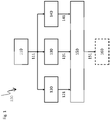
- a detection device 110 is designed to detect objects from the environment of the vehicle 160 and to provide corresponding object data 111.
- This object data 111 is made available to an artificial intelligence module 120 , a backup device 130 and a safety device 140 .
- Artificial intelligence module 120 generates at least one first control command 121 for controlling vehicle 160 from object data 111.
- Fallback device 130 generates at least one second control command 131 for controlling vehicle 160 from object data 111 using a deterministic calculation rule.
- safety device 140 determines it from the object data 111 calculation values and uses them to calculate a criticality value 141.
- first control commands 121, the second control command 131 and the criticality value 141 are sent to the Security gate 150 passed.
- This is designed to generate a third control command 151 based on the criticality value 141, wherein the third control command 151 is either the first control command 121 of the artificial intelligence module 120 or the second control command 131 of the fallback device 130 or corresponds to it or is based on it.
- the monitoring of the first control command 121 of the artificial intelligence module 120 with the possibility of recourse to the second control command 131 of the deterministically programmed backup device 130 serves to ensure an appropriate reaction of the control system 100 of the vehicle 160 to critical driving situations, or in the event of an accident Possibility of reconstructing the course of the accident and clarifying who is at fault.
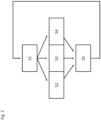
- a first step S1 of detecting an object from the surroundings of the vehicle 160 and providing corresponding object data 111 is followed by steps S2, S3 and S4, preferably in simultaneous execution.
- steps S2, S3 and S4 preferably in simultaneous execution.
- at least one first control command 121 for the vehicle 160 is generated using an artificial intelligence module 120.
- at least one second control command 131 for the vehicle 160 is generated using a deterministic calculation rule.
- calculation values are determined based on the object data 111 and a criticality value 141 based thereon is calculated.
- step S5 which follows the preferably simultaneous execution of steps S2, S3 and S4, the first control command 121, the second Control command 131 and the criticality value 141 and sending a third control command 151 based on the criticality value 141 to the vehicle 160, the third control command 151 being either the first control command 121 of the artificial intelligence module 120 or the second control command 131 of the deterministic calculation rule or corresponding thereto .
Landscapes
- Engineering & Computer Science (AREA)
- Automation & Control Theory (AREA)
- Mechanical Engineering (AREA)
- Transportation (AREA)
- Physics & Mathematics (AREA)
- Theoretical Computer Science (AREA)
- General Physics & Mathematics (AREA)
- Human Computer Interaction (AREA)
- Computing Systems (AREA)
- Data Mining & Analysis (AREA)
- Software Systems (AREA)
- General Engineering & Computer Science (AREA)
- Mathematical Physics (AREA)
- Artificial Intelligence (AREA)
- Computational Linguistics (AREA)
- Evolutionary Computation (AREA)
- Remote Sensing (AREA)
- Radar, Positioning & Navigation (AREA)
- Aviation & Aerospace Engineering (AREA)
- Life Sciences & Earth Sciences (AREA)
- Molecular Biology (AREA)
- General Health & Medical Sciences (AREA)
- Biophysics (AREA)
- Biomedical Technology (AREA)
- Health & Medical Sciences (AREA)
- Traffic Control Systems (AREA)
- Control Of Driving Devices And Active Controlling Of Vehicle (AREA)
Description
- Die Erfindung betrifft ein Steuerungssystem zur Steuerung eines autonomen oder automatisierten Fahrzeugs, sowie ein Verfahren und ein Computerprogramm.
- Bei der Steuerung von autonomen oder automatisierten Fahrzeugen wird die Erkennung einer Fahrsituation zunehmend von einer künstlichen Intelligenz übernommen. Ebenso erfolgt damit die Entscheidung, ob und mit welcher Aktion auf die Fahrsituation reagiert werden soll, auf der Basis von Entscheidungen einer künstlichen Intelligenz. Zu diesem Zweck werden oft neuronale Netzwerke verwendet, die anhand von Daten echter Fahrsituationen mit der zugehörigen zu treffenden Entscheidung trainiert werden. Ein Nachteil der Verwendung künstlicher Intelligenzen im Straßenverkehr ist jedoch die nicht vorhandene oder nur schlechte Möglichkeit, eine getroffene Entscheidung der künstlichen Intelligenz nachzuvollziehen. Diese stellt ein nicht-deterministisches System dar, bei dem nicht mit Sicherheit anhand der Eingangsdaten festgelegt werden kann, welche Entscheidung getroffen wird. Im Fehlerfall, insbesondere wenn das automatisch gesteuerte Fahrzeug in einen Unfall verwickelt wird, ist somit eine Rekonstruktion des Unfallherganges sowie eines möglichen Fehlverhaltens des autonomen oder automatisierten Fahrzeugs nicht möglich. Dies hat rechtliche Konsequenzen, da insbesondere bei schweren Unfällen in Hinsicht auf Haftung und Gewährleistung die Schuldfrage eindeutig geklärt werden muss.
- Im Stand der Technik nennt die Offenlegungsschrift
US 2018275657A1 ein Deep-Learning-basiertes autonomes Fahrzeugsteuerungssystem, welches eine autonome Fahrsteuerung basierend auf Deep-Learning- Verfahren (künstliche Intelligenz) bestimmt. Ein Fehler bei der Bestimmung der Deep-Learning-basierten autonomen Fahrsteuerung wird anhand einer vorbestimmten Expertenregel korrigiert. - Die Schrift
WO2017155598A2 offenbart ein Sicherheitsarchitektursystem mit einer primären Einheit, die primäre Daten zum Ausführen einer normalen Systemfunktionalität erzeugt. Zudem ist eine Sekundäreinheit vorgesehen, die Sekundärdaten zum Ausführen einer alternativen Systemfunktionen erzeugt. Eine Entscheidungslogik entscheidet zwischen den Steuerbefehlen von primärer und sekundärer Einheit basierend auf einer Bestimmung der Gültigkeiten von Primär- und Sekundärdaten. - Es ist daher eine Aufgabe der Erfindung, ein verbessertes Steuerungssystem zur Steuerung eines autonomen oder automatisierten Fahrzeugs anzugeben.
- Die Aufgabe wird durch die Gegenstände der unabhängigen Ansprüche gelöst. Vorteilhafte Ausführungsformen sind Gegenstand der abhängigen Ansprüche, der folgenden Beschreibung, sowie der Figuren.
- Die beschriebenen Ausführungsformen gelten gleichermaßen für das Steuerungssystem zur Steuerung einer Bremse, einer Lenkung und/oder eines Antriebs eines autonomen oder automatisierten Fahrzeugs, für das Verfahren zur Steuerung einer Bremse, einer Lenkung und/oder eines Antriebs eines autonomen oder automatisierten Fahrzeugs, für das Computerprogramm und für das computerlesbare Medium. Synergetische Effekte können aus verschiedenen Kombinationen der Ausführungsformen entstehen, auch wenn sie nicht im Detail beschrieben sind.
- Weiterhin soll darauf hingewiesen werden, dass alle ein Verfahren betreffende Ausführungsformen der vorliegenden Erfindung in der beschriebenen Reihenfolge der Schritte ausgeführt werden können. Trotzdem muss das nicht die einzigmögliche und erforderliche Reihenfolge der Schritte des Verfahrens sein. Die hierin beschriebenen Verfahren können in einer anderen Reihenfolge der offenbarten Schritte ausgeführt werden, ohne von der entsprechenden Ausführungsform des Verfahrens abzuweichen, sofern nicht nachfolgend ausdrücklich das Gegenteil erwähnt wird.
- Gemäß einem ersten Aspekt der Erfindung ist ein Steuerungssystem zur Steuerung einer Bremse, einer Lenkung und/oder eines Antriebs eines autonomen oder automatisierten Fahrzeugs angegeben. Dabei weist das Steuerungssystem eine Erfassungsvorrichtung auf, die dazu ausgeführt ist, ein Objekt aus einer Umgebung des Fahrzeugs zu erfassen und entsprechende Objektdaten bereitzustellen. Weiterhin weist das Steuerungssystem ein künstliches Intelligenz-Modul auf, das dazu ausgeführt ist, aus den Objektdaten zumindest einen ersten Steuerungsbefehl für das Fahrzeug zu erzeugen, sowie eine Rückfallvorrichtung, die dazu ausgeführt ist, aus den Objektdaten mithilfe einer deterministischen Berechnungsvorschrift zumindest einen zweiten Steuerungsbefehl für das Fahrzeug zu erzeugen. Ferner weist das Steuerungssystem eine Sicherheitsvorrichtung auf, die dazu ausgeführt ist, basierend auf den Objektdaten Berechnungswerte zu ermitteln und daraus einen Kritikalitätswert zu berechnen, sowie ein Sicherheitsgate, das dazu ausgeführt ist, den ersten Steuerungsbefehl des künstlichen Intelligenz-Moduls, den zweiten Steuerungsbefehl der Rückfallvorrichtung und den Kritikalitätswert der Sicherheitsvorrichtung zu empfangen. Weiterhin ist das Sicherheitsgate dazu ausgeführt, basierend auf dem Kritikalitätswert, einen dritten Steuerungsbefehl an das Fahrzeug zu versenden, wobei der dritte Steuerungsbefehl entweder der erste Steuerungsbefehl des künstlichen Intelligenz-Moduls oder der zweite Steuerungsbefehl der Rückfallvorrichtung ist beziehungsweise diesem entspricht.
- Es werden also bei einem erfindungsgemäßen Steuerungssystem für ein autonomes oder automatisiertes Fahrzeug die Objektdaten, die von Sensoren zur Überwachung der Umgebung des Fahrzeugs gewonnen werden, an wenigstens drei Untereinheiten weitergegeben. Die erste Untereinheit ist eine Einheit zur automatisierten Steuerung des Fahrzeugs. Sie analysiert die Objektdaten und trifft ihre Entscheidungen bezüglich der zu veranlassenden Fahraktionen basierend auf einer künstlichen Intelligenz. Die zweite Untereinheit ist ebenfalls eine Einheit zur automatisierten Steuerung des Fahrzeugs, allerdings beruhen die von ihr veranlassten Fahraktionen auf einem deterministisch programmierten Algorithmus, bei dem genau vorgegeben ist, bei welchen Eingangswerten welche Ausgangswerte ausgegeben werden sollen. Die dritte Untereinheit analysiert ebenfalls die Objektdaten, allerdings nur in Hinsicht auf einfach zu erlangende Berechnungswerte. Aus diesen Berechnungswerten wird ein Kritikalitätswert berechnet, der ein Maß für eine Unfallwahrscheinlichkeit der aktuellen Fahrsituation angibt. Die jeweiligen Ausgangswerte der drei Untereinheiten, also insbesondere der erste sowie der zweite Steuerungsbefehl für Bremse, Lenkung und/oder Antrieb des Fahrzeuges der ersten beziehungsweise der zweiten Untereinheit, sowie der Kritikalitätswert der dritten Untereinheit, werden an ein Sicherheitsgate übergeben. Das Sicherheitsgate verarbeitet die erhaltenen Informationen und gibt einen dritten Steuerungsbefehl an das Fahrzeug weiter. Dieser dritte Steuerungsbefehl kann vorzugsweise auf dem ersten Steuerungsbefehl oder auf dem zweiten Steuerungsbefehl basieren beziehungsweise diesen entsprechen. Das Sicherheitsgate dient der Überwachung des ersten Steuerungsbefehls der auf einer künstlichen Intelligenz basierenden Untereinheit, und stellt sicher, dass bei einer offensichtlichen Fehleinschätzung der Fahrsituation durch die künstliche Intelligenz die Steuerung des Fahrzeugs von einem deterministisch programmierten Algorithmus übernommen wird. Dadurch wird sichergestellt, dass im Fall eines Unfalls der Unfallhergang rekonstruiert werden kann. In einem Großteil der Fahrsituationen, in denen sich der Kritikalitätswert innerhalb eines normalen, mittleren Bereiches bewegt, wird das Sicherheitsgate jedoch die Steuerung des Fahrzeugs dem künstlichen Intelligenz-Modul überlassen.
- Ein künstliches Intelligenz-Modul kann eine Einheit sein, die aus einer oder mehreren Eingaben mittels einer internen Verarbeitungskette mit typischerweise einer Gruppe freier Parameter eine oder mehrere Ausgaben berechnet. Die interne Verarbeitungskette kann in miteinander verbundene Schichten unterteilt sein, die bei einem Prozess von der Eingabe zur Ausgabe nacheinander durchlaufen werden. Viele künstliche Intelligenz-Module sind darauf ausgelegt, eine Eingabe mit hoher Dimensionalität in eine Ausgabe mit deutlich niedrigerer Dimensionalität umzuwandeln. Eine übliche Aufgabe für ein künstliches Intelligenz-Modul ist es, Bilder einer oder mehreren Kategorien von Verkehrssituationen zuzuordnen und diese zu interpretieren, je nachdem ob und an welcher Position sie bestimmte Objekt enthalten. Diese Objekte können den Straßenverlauf markieren, andere Verkehrsteilnehmer oder Hindernisse auf der Straße oder auch Verkehrszeichen oder Ampeln sein. Die Ausgabe kann dann beispielsweise für jedes der zu bestimmenden Objekte eine Wahrscheinlichkeit angeben, dass das Objekt im Eingangsbild dargestellt ist, zusammen mit der Information darüber, in welchem Bereich des Umfeldes des Fahrzeugs sich das Objekt befindet und der Entscheidung, ob und welche Reaktion des Fahrzeugs daraufhin erfolgen soll. So ein Modul wird als "intelligent" bezeichnet, weil es in der Lage ist "trainiert" zu werden. Das Modul kann trainiert werden, indem Datensätze aus Trainingsdaten verwendet werden. Ein Datensatz aus Trainingsdaten umfasst Trainingseingangsdaten und die entsprechenden Trainingsausgangsdaten. Die Trainingsausgangsdaten des Datensatzes aus Trainingsdaten sind das Ergebnis, welches von dem Modul erwartet wird, wenn ihm die Trainingseingangsdaten desselben Datensatzes aus Trainingsdaten als Eingabe übergeben werden. Die Abweichung zwischen diesem erwarteten Ergebnis und dem von dem Modul tatsächlich erzeugten Ergebnis wird aufgezeichnet und mittels einer "Verlustfunktion" bewertet. Diese Verlustfunktion wird als Rückmeldung verwendet, um die Parameter der internen Verarbeitungskette des Moduls anzupassen. Das Ergebnis dieses Trainings ist, dass mit einem gegebenen relativ kleinen Datensatz aus Trainingsdaten als "Grundwahrheit", das Modul in der Lage ist seine Aufgabe, d.h. die Klassifizierung von Bildern danach welche Objekte sie enthalten, gut für einen um viele Größenordnungen größeren Datensatz aus Eingangsdaten durchzuführen. Künstliche Intelligenz-Module können zum Beispiel neuronale Netze, genetische Algorithmen, Support Vector Machines, k-Means, Kernel-Regression oder Diskriminanzanalyse sein.
- In einer Ausführungsform der Erfindung ist das künstliche Intelligenz-Modul dazu ausgeführt, mithilfe eines neuronalen Netzwerks aus den Objektdaten zumindest den ersten Steuerungsbefehl für das Fahrzeug zu erzeugen.
- Ein neuronales Netz ist ein Musterbeispiel einer internen Verarbeitungskette eines künstlichen Intelligenz-Moduls. Es besteht aus einer Mehrzahl von Schichten, wobei jede Schicht eines oder mehrere Neuronen umfasst. Neuronen von benachbarten Schichten sind derart verbunden, dass die Ausgänge eines Neurons einer ersten Schicht die Eingänge von einem oder mehreren Neuronen in einer benachbarten zweiten Schicht sind. Jeder solchen Verbindung wird eine "Gewichtung" gegeben, mit der der entsprechende Eingang in eine "Aktivierungsfunktion" eingeht, die die Ausgabe des Neurons als Funktion seiner Eingänge angibt. Die Aktivierungsfunktion ist typischerweise eine nichtlineare Funktion der Eingänge. Beispielsweise kann die Aktivierungsfunktion eine "Vor-Aktivierungsfunktion" umfassen, die eine gewichtete Summe oder eine andere lineare Funktion der Eingänge ist, und eine einen Schwellwert bildende Funktion oder eine andere nichtlineare Funktion, die die finale Ausgabe des Neurons aus dem Wert der Vor-Aktivierungsfunktion erzeugt.
- In dieser Ausführungsform der Erfindung können neuronale Netze verwendet werden, um die Fahrsituation basierend auf den empfangenen Objektdaten zu interpretieren und eine Entscheidung bezüglich der Steuerung des Fahrzeuges zu treffen. Dabei beruht die Entscheidungsfindung auf einem vorangegangenen Trainieren des neuronalen Netzes mit passenden Daten, die eine echte Situation simulieren und das neuronale Netz auf zukünftige echte zu treffende Entscheidungen vorbereiten sollen.
- In einer Ausführungsform der Erfindung ist das Sicherheitsgate dazu ausgeführt, bei einem berechneten Kritikalitätswert oberhalb eines vordefinierten ersten Schwellwerts den zweiten Steuerungsbefehl der Rückfallvorrichtung an das Fahrzeug weiterzugeben.
- Liegt der Kritikalitätswert oberhalb eines vordefinierten ersten Schwellwertes, so deutet dies auf eine kritische Fahrsituation mit möglicherweise bevorstehender Kollision hin. Das Sicherheitsgate erkennt in diesem Fall Handlungsbedarf und kann entweder direkt den ersten Steuerungsbefehl der künstlichen Intelligenz blockieren und auf die Rückfallvorrichtung mit dem deterministischen Algorithmus umschalten. Oder das Sicherheitsgate überprüft zuerst, ob die Reaktion der künstlichen Intelligenz der Situation angemessen ist, eventuell auch durch Vergleich des ersten mit dem zweiten Steuerungsbefehl. Bei angemessener Reaktion wie deutlichem Abbremsen oder passendem Lenkeingriff kann das Sicherheitsgate in dieser Ausführungsform der Erfindung die Steuerung des Fahrzeugs weiterhin der künstlichen Intelligenz überlassen. Bei ausbleibender angemessener Reaktion der künstlichen Intelligenz auf die kritische Fahrsituation wird das Sicherheitsgate jedoch die Fahrzeugsteuerung der Rückfallvorrichtung übergeben.
- In einer Ausführungsform der Erfindung ist das Sicherheitsgate dazu ausgeführt, bei einem berechneten Kritikalitätswert unterhalb eines vordefinierten zweiten Schwellwertes ein Manöver zum Beenden eines automatisierten Fahrbetriebs zu bewirken.
- Liegt der Kritikalitätswert unterhalb eines vordefinierten zweiten Schwellwertes, so deutet dies auf eine deutlich unterkritische Fahrsituation hin, wie zum Beispiel eine der Fahrsituation nicht angemessene zu niedrige Geschwindigkeit oder einen zu starken Bremseingriff. Das Sicherheitsgate erkennt in diesem Fall ebenso Handlungsbedarf und kann entweder direkt den ersten Steuerungsbefehl der künstlichen Intelligenz blockieren und auf die Rückfallvorrichtung mit dem deterministischen Algorithmus umschalten. Oder das Sicherheitsgate überprüft zuerst, ob die Reaktion der künstlichen Intelligenz der Situation angemessen ist, eventuell auch durch Vergleich des ersten mit dem zweiten Steuerungsbefehl. Bei einer angemessenen Reaktion wie etwa Beschleunigen oder einem schwächeren Bremseingriff kann das Sicherheitsgate die Steuerung des Fahrzeugs weiterhin der künstlichen Intelligenz überlassen. Bei ausbleibender angemessener Reaktion der künstlichen Intelligenz auf die unterkritische Fahrsituation wird das Sicherheitsgate jedoch die Fahrzeugsteuerung der Rückfallvorrichtung übergeben. Zusätzlich kann das Sicherheitsgate in dieser Ausführungsform der Erfindung auch ein Manöver zum Beenden des automatisierten Fahrbetriebes bewirken.
- In einer Ausführungsform der Erfindung ist das Manöver zum Beenden des automatisierten Fahrbetriebs eine Übernahmeanforderung an einen Fahrer des Fahrzeugs oder ein Minimal-Risiko Manöver.
- Um den automatisierten Fahrbetrieb zu beenden kann das Steuerungssystem an einen Fahrer des Fahrzeuges eine Aufforderung zur Übernahme der Fahrzeugsteuerung stellen. Kommt der Fahrer der Aufforderung beispielsweise nicht innerhalb einer vordefinierten Zeitspanne nach, so kann das Steuerungssystem das Fahrzeug dazu veranlassen, den automatisierten Fahrbetrieb durch ein Minimal-Risiko Manöver zu beenden, bei dem das Fahrzeug zum Beispiel an der nächsten sicheren Stelle anhält.
- In einer Ausführungsform der Erfindung ist die Erfassungsvorrichtung dazu ausgeführt, das Objekt aus der Umgebung des Fahrzeugs mithilfe von Kameras, Radarsensoren, Lidarsensoren und/oder Ultraschallsensoren zu erfassen.
- Zur Erfassung der Umgebung des Fahrzeugs und der entsprechenden Fahrsituation kann eine Vielzahl von verschiedenen Sensoriken und Kameras im Fahrzeug verbaut sein, die die Umgebung in dieser Ausführungsform der Erfindung beispielsweise mittels optischer, akustischer, elektromagnetischer oder weiterer Methoden abtasten beziehungsweise entsprechende Informationen aufnehmen können.
- In einer Ausführungsform der Erfindung sind der erste Steuerungsbefehl, der zweite Steuerungsbefehl und der dritte Steuerungsbefehl dazu ausgeführt, zumindest die Bremse, die Lenkung und/oder den Antrieb des Fahrzeugs zu steuern.
- Bremse, Lenkung und Antrieb sind als die wichtigsten Funktionen bezüglich der Steuerung eines Fahrzeugs genannt, gerade in Bezug auf Steuerungsbefehle zur Unfallvermeidung. Allerdings können natürlich in dieser Ausführungsform der Erfindung beispielsweise auch andere Funktionen des Fahrzeugs durch die Steuerungsbefehle angesteuert werden, wie zum Beispiel Blinker, Hupe, oder Scheibenwischer.
- In einer Ausführungsform der Erfindung ist die Sicherheitsvorrichtung dazu ausgeführt, als Berechnungswerte eine Eigengeschwindigkeit des Fahrzeugs, eine Geschwindigkeit eines Objektfahrzeugs, eine Zeit bis zu einer möglichen Kollision, eine Zeit bis zu einem notwendigen Bremsmanöver oder eine notwendige Verzögerung zu verwenden.
- Die Sicherheitsvorrichtung greift zur Berechnung des Kritikalitätswertes in dieser Ausführungsform der Erfindung auf einfach aus den Objektdaten zu erhaltende Berechnungswerte zurück. Diese Berechnungswerte müssen beispielsweise nicht auf einer umfassenden Analyse der Fahrsituation mittels Bildgebender Verfahren basieren, sondern können vorteilhafterweise einfach aus den Daten von zum Beispiel Geschwindigkeits- und Abstandssensoren gewonnen werden.
- Ein weiterer Aspekt der Erfindung umfasst ein Verfahren zur Steuerung einer Bremse, einer Lenkung und/oder eines Antriebs eines autonomen oder automatisierten Fahrzeugs, wobei das Verfahren folgende Schritte aufweist: Ein erster Schritt umfasst das Erfassen eines Objekts aus einer Umgebung des Fahrzeugs und Bereitstellen von entsprechenden Objektdaten. Ein zweiter Schritt umfasst das Erzeugen zumindest eines ersten Steuerungsbefehls für das Fahrzeug aus den Objektdaten mithilfe eines künstlichen Intelligenz-Moduls. Ein dritter Schritt umfasst das Erzeugen zumindest eines zweiten Steuerungsbefehls für das Fahrzeug aus den Objektdaten mithilfe einer deterministischen Berechnungsvorschrift. Ein vierter Schritt umfasst das Ermitteln von Berechnungswerten basierend auf den Objektdaten und Berechnen eines darauf basierenden Kritikalitätswerts. Und ein fünfter Schritt umfasst das Empfangen des ersten Steuerungsbefehls, des zweiten Steuerungsbefehls und des Kritikalitätswerts und Versenden eines auf dem Kritikalitätswert basierenden dritten Steuerungsbefehls an das Fahrzeug, wobei der dritte Steuerungsbefehl entweder der erste Steuerungsbefehl des künstlichen Intelligenz-Moduls oder der zweite Steuerungsbefehl der deterministischen Berechnungsvorschrift ist beziehungsweise diesem entspricht.
- Die Steuerung des autonomen oder automatisierten Fahrzeugs erfolgt also nach einem Verfahren, das sich in Schritte gliedern lässt. Auf das Erfassen von Objektdaten aus der Umgebung als erster Schritt erfolgen, vorzugsweise in zeitgleicher Ausführung, die Schritte zwei, drei und vier. Hier werden jeweils die Objektdaten analysiert und auf verschiedene Weise weiterverarbeitet. Im zweiten Schritt erfolgt das Erzeugen eines ersten Steuerungsbefehls mittels einer künstlichen Intelligenz. Im dritten Schritt erfolgt das Erzeugen eines zweiten Steuerungsbefehls mithilfe einer deterministischen Berechnungsvorschrift. Und im vierten Schritt wird ein Kritikalitätswert der Fahrsituation berechnet. Im fünften Schritt, der auf die vorzugsweise gleichzeitige Ausführung der Schritte zwei, drei und vier erfolgt, wird ein dritter Steuerungsbefehl erzeugt. In Abhängigkeit des Kritikalitätswertes, und vorteilhafterweise auch in Abhängigkeit von dem ersten Steuerungsbefehl und einer angemessenen Reaktion des ersten Steuerungsbefehls auf die Fahrsituation, besteht der dritte Steuerungsbefehl entweder aus dem ersten Steuerungsbefehl oder dem zweiten Steuerungsbefehl beziehungsweise entspricht diesem. Es ist jedoch zu beachten, dass die hier genannte Abfolge der Schritte auch anders sein kann. Insbesondere ist sie nicht einschränkend zu verstehen.
- In einer Ausführungsform der Erfindung wird bei einem berechneten Kritikalitätswert oberhalb eines vordefinierten ersten Schwellwerts der mithilfe der deterministischen Berechnungsvorschrift ermittelte zweite Steuerungsbefehl weitergegeben.
- Bei einem Überschreiten eines vordefinierten ersten Schwellwerts durch den Kritikalitätswert kann in dieser Ausführungsform der Erfindung entweder direkt der zweite Steuerungsbefehl verwendet und in Form des dritten Steuerungsbefehls weitergegeben werden, um beispielsweise einen angemessenen Bremseingriff zu bewirken, oder um ein rekonstruierbares Steuerungsverhalten zu erlangen. Oder es wird erst, eventuell auch im Vergleich des ersten mit dem zweiten Steuerungsbefehl, der erste Steuerungsbefehl auf Plausibilität überprüft. In diesem Fall wird nur bei einem nicht plausiblen Verhalten des ersten Steuerungsbefehls auf den zweiten Steuerungsbefehl umgeschaltet. Bei einem der Situation angemessenen ersten Steuerungsbefehl wird dieser verwendet, um in Form des dritten Steuerungsbefehls das Fahrzeug zu steuern.
- Ein weiterer Aspekt der Erfindung umfasst ein Computerprogramm, das, wenn es auf einem Prozessor ausgeführt wird, ein Steuerungssystem nach einem voranstehend beschriebenen Ausführungsformen veranlasst ein Verfahren nach einem der voranstehend beschriebenen Ausführungsformen durchzuführen.
- Weitere Ausführungsbeispiele der Erfindung werden im Folgenden unter Bezugnahme auf folgende Zeichnungen erklärt:
-
-
Fig. 1 zeigt einen schematischen Aufbau eines erfindungsgemäßen Steuerungssystems zur Steuerung eines autonomen oder automatisierten Fahrzeugs. -
Fig. 2 zeigt ein Blockdiagramm eines erfindungsgemäßen Verfahrens zur Steuerung eines autonomen oder automatisierten Fahrzeugs. -
Fig. 1 zeigt einen schematischen Aufbau eines erfindungsgemäßen Steuerungssystems 100 zur Steuerung eines autonomen oder automatisierten Fahrzeugs 160. Eine Erfassungsvorrichtung 110 ist ausgeführt, um Objekte aus der Umgebung des Fahrzeugs 160 zu erfassen und entsprechende Objektdaten 111 bereitzustellen. Diese Objektdaten 111 werden einem künstlichen Intelligenz-Modul 120, einer Rückfallvorrichtung 130 und einer Sicherheitsvorrichtung 140 zur Verfügung gestellt. Das künstliche Intelligenz-Modul 120 erzeugt aus den Objektdaten 111 zumindest einen ersten Steuerungsbefehl 121 zur Steuerung des Fahrzeugs 160. Die Rückfallvorrichtung 130 erzeugt aus den Objektdaten 111 mithilfe einer deterministischem Berechnungsvorschrift zumindest einen zweiten Steuerungsbefehl 131 zur Steuerung des Fahrzeugs 160. Und die Sicherheitsvorrichtung 140 ermittelt aus den Objektdaten 111 Berechnungswerte und berechnet daraus einen Kritikalitätswert 141. Dieser erste Steuerungsbefehle 121, der zweite Steuerungsbefehl 131 und der Kritikalitätswert 141 werden an das Sicherheitsgate 150 weitergegeben. Dieses ist ausgeführt, um einen dritten Steuerungsbefehl 151 basierend auf dem Kritikalitätswert 141 zu erzeugen, wobei der dritte Steuerungsbefehl 151 entweder der erste Steuerungsbefehl 121 des künstlichen Intelligenz-Moduls 120 oder der zweite Steuerungsbefehl 131 der Rückfallvorrichtung 130 ist beziehungsweise diesem entspricht oder auf ihm basiert. Dabei dient die Überwachung des ersten Steuerungsbefehls 121 des künstlichen Intelligenz-Moduls 120 mit der Möglichkeit des Rückgriffs auf den zweiten Steuerungsbefehl 131 der deterministisch programmierten Rückfallvorrichtung 130 der Sicherstellung einer angemessenen Reaktion des Steuerungssystems 100 des Fahrzeugs 160 auf kritische Fahrsituationen, beziehungsweise im Fall eines Unfalls der Möglichkeit einer Rekonstruktion des Unfallhergangs sowie einer Klärung der Schuldfrage. -
Fig. 2 zeigt ein Blockdiagramm eines erfindungsgemäßen Verfahrens zur Steuerung eines autonomen oder automatisierten Fahrzeugs 160. Einem ersten Schritt S1 des Erfassens eines Objekts aus einer Umgebung des Fahrzeugs 160 und des Bereitstellens von entsprechenden Objektdaten 111 folgen die Schritte S2, S3 und S4 vorzugsweise in zeitgleicher Ausführung. Im zweiten Schritt S2 erfolgt das Erzeugen zumindest eines ersten Steuerungsbefehls 121 für das Fahrzeug 160 mithilfe eines künstlichen Intelligenz-Moduls 120. Im dritten Schritt S3 erfolgt das Erzeugen zumindest eines zweiten Steuerungsbefehls 131 für das Fahrzeug 160 mithilfe einer deterministischen Berechnungsvorschrift. Im vierten Schritt S4 erfolgt Ermitteln von Berechnungswerten basierend auf den Objektdaten 111 und Berechnen eines darauf basierenden Kritikalitätswerts 141. Im fünften Schritt S5, der auf die vorzugsweise gleichzeitige Ausführung der Schritte S2, S3 und S4 erfolgt, erfolgt das Empfangen des ersten Steuerungsbefehls 121, des zweiten Steuerungsbefehls 131 und des Kritikalitätswerts 141 und Versenden eines auf dem Kritikalitätswert 141 basierenden dritten Steuerungsbefehls 151 an das Fahrzeug 160, wobei der dritte Steuerungsbefehl 151 entweder der erste Steuerungsbefehl 121 des künstlichen Intelligenz-Moduls 120 oder der zweite Steuerungsbefehl 131 der deterministischen Berechnungsvorschrift ist beziehungsweise diesem entspricht. - Ergänzend ist darauf hinzuweisen, dass "umfassend" keine anderen Elemente oder Schritte ausschließt und "eine" oder "ein" keine Vielzahl ausschließt. Ferner sei darauf hingewiesen, dass Merkmale oder Schritte, die mit Verweis auf eines der obigen Ausführungsbeispiele beschrieben worden sind, auch in Kombination mit anderen Merkmalen oder Schritten anderer oben beschriebener Ausführungsbeispiele verwendet werden können. Bezugszeichen in den Ansprüchen sind nicht als Einschränkung anzusehen.
-
- 100
- Steuerungssystem
- 110
- Erfassungsvorrichtung
- 111
- Objektdaten
- 120
- künstliches Intelligenz-Modul
- 121
- erster Steuerungsbefehl
- 130
- Rückfallvorrichtung
- 131
- zweiter Steuerungsbefehl
- 140
- Sicherheitsvorrichtung
- 141
- Kritikalitätswert
- 150
- Sicherheitsgate
- 151
- dritter Steuerungsbefehl
- 160
- Fahrzeug
Claims (11)
- Steuerungssystem (100) zur Steuerung einer Bremse, einer Lenkung und/oder eines Antriebs eines autonomen oder automatisierten Fahrzeugs (160), das Steuerungssystem (100) aufweisend:eine Erfassungsvorrichtung (110), die dazu ausgeführt ist, ein Objekt aus einer Umgebung des Fahrzeugs (160) zu erfassen und entsprechende Objektdaten (111) bereitzustellen;ein künstliches Intelligenz-Modul (120), das dazu ausgeführt ist, aus den Objektdaten (111) zumindest einen ersten Steuerungsbefehl (121) für das Fahrzeug (160) zu erzeugen;eine Rückfallvorrichtung (130), die dazu ausgeführt ist, aus den Objektdaten (111) mithilfe einer deterministischen Berechnungsvorschrift zumindest einen zweiten Steuerungsbefehl (131) für das Fahrzeug (160) zu erzeugen;eine Sicherheitsvorrichtung (140), die dazu ausgeführt ist, basierend auf den Objektdaten (111) Berechnungswerte zu ermitteln und daraus einen Kritikalitätswert (141) zu berechnen; dadurch gekennzeichnet, dassZ die Sicherheitsvorrichtung (140) dazu ausgeführt ist, die Berechnungswerte aus den Objektdaten (111) zu ermitteln, unddas Steuerungssystem (100) zudem ein Sicherheitsgate (150) umfasst, welches dazu ausgeführt ist, den ersten Steuerungsbefehl (121) des künstlichen Intelligenz-Moduls (120), den zweiten Steuerungsbefehl (131) der Rückfallvorrichtung (130) und den Kritikalitätswert (141) der Sicherheitsvorrichtung (140) zu empfangen,wobei das Sicherheitsgate (150) dazu ausgeführt ist, basierend auf dem Kritikalitätswert (141), einen dritten Steuerungsbefehl (151) an das Fahrzeug (160) zu versenden, wobei der dritte Steuerungsbefehl (151) entweder der erste Steuerungsbefehl (121) des künstlichen Intelligenz-Moduls (120) oder der zweite Steuerungsbefehl (131) der Rückfallvorrichtung (130) ist beziehungsweise diesem entspricht.
- Steuerungssystem (100) gemäß Anspruch 1, wobei das künstliche Intelligenz-Modul (120) dazu ausgeführt ist, mithilfe eines neuronalen Netzwerks aus den Objektdaten (111) zumindest den ersten Steuerungsbefehl (121) für das Fahrzeug (160) zu erzeugen.
- Steuerungssystem (100) gemäß einem der Ansprüche 1 oder 2, wobei das Sicherheitsgate (150) dazu ausgeführt ist, bei einem berechneten Kritikalitätswert (141) oberhalb eines vordefinierten ersten Schwellwerts den zweiten Steuerungsbefehl (131) der Rückfallvorrichtung (130) an das Fahrzeug (160) weiterzugeben.
- Steuerungssystem (100) gemäß einem der vorherigen Ansprüche, wobei das Sicherheitsgate (150) dazu ausgeführt ist, bei einem berechneten Kritikalitätswert (141) unterhalb eines vordefinierten zweiten Schwellwertes ein Manöver zum Beenden eines automatisierten Fahrbetriebes zu bewirken.
- Steuerungssystem (100) gemäß Anspruch 4, wobei das Manöver zum Beenden des automatisierten Fahrbetriebs eine Übernahmeanforderung an einen Fahrer des Fahrzeugs (160) oder ein Minimal-Risiko Manöver ist.
- Steuerungssystem (100) gemäß einem der vorherigen Ansprüche, wobei die Erfassungsvorrichtung (110) dazu ausgeführt ist, das Objekt aus der Umgebung des Fahrzeugs (160) mithilfe von Kameras, Radarsensoren, Lidarsensoren und/oder Ultraschallsensoren zu erfassen.
- Steuerungssystem (100) gemäß einem der vorherigen Ansprüche, wobei der erste Steuerungsbefehl (121), der zweite Steuerungsbefehl (131) und der dritte Steuerungsbefehl (151) dazu ausgeführt sind, zumindest die Bremse, die Lenkung und/oder den Antrieb des Fahrzeugs (160) zu steuern.
- Steuerungssystem (100) gemäß einem der vorherigen Ansprüche, wobei die Sicherheitsvorrichtung (140) dazu ausgeführt ist, als Berechnungswerte eine Eigengeschwindigkeit des Fahrzeugs (160), eine Geschwindigkeit eines Objektfahrzeugs, eine Zeit bis zu einer möglichen Kollision, eine Zeit bis zu einem notwendigen Bremsmanöver oder eine notwendige Verzögerung zu verwenden.
- Verfahren zur Steuerung einer Bremse, einer Lenkung und/oder eines Antriebs eines autonomen oder automatisierten Fahrzeugs (160), das Verfahren aufweisend die Schritte:- Erfassen eines Objekts aus einer Umgebung des Fahrzeugs (160) und Bereitstellen von entsprechenden Objektdaten (111) (S1),- Erzeugen zumindest eines ersten Steuerungsbefehls (121) für das Fahrzeug (160) aus den Objektdaten (111) mithilfe eines künstlichen Intelligenz-Moduls (120) (S2),- Erzeugen zumindest eines zweiten Steuerungsbefehls (131) für das Fahrzeug (160) aus den Objektdaten (111) mithilfe einer deterministischen Berechnungsvorschrift (S3),- Ermitteln von Berechnungswerten aus den Objektdaten (111) und Berechnen eines darauf basierenden Kritikalitätswerts (141) (S4), und- Empfangen des ersten Steuerungsbefehls (121), des zweiten Steuerungsbefehls (131) und des Kritikalitätswerts (141) und Versenden eines auf dem Kritikalitätswert (141) basierenden dritten Steuerungsbefehls (151) an das Fahrzeug (160) (S5), wobei der dritte Steuerungsbefehl (151) entweder der erste Steuerungsbefehl (121) des künstlichen Intelligenz-Moduls (120) oder der zweite Steuerungsbefehl (131) der deterministischen Berechnungsvorschrift ist beziehungsweise diesem entspricht.
- Verfahren gemäß Anspruch 9, wobei bei einem berechneten Kritikalitätswert (141) oberhalb eines vordefinierten ersten Schwellwerts der mithilfe der deterministischen Berechnungsvorschrift ermittelte zweite Steuerungsbefehl (131) weitergegeben wird.
- Computerprogramm, das, wenn es auf einem Prozessor ausgeführt wird, ein Steuerungssystem (100) nach einem der Ansprüche 1 bis 8 veranlasst ein Verfahren nach einem der Ansprüche 9 oder 10 durchzuführen.
Applications Claiming Priority (2)
| Application Number | Priority Date | Filing Date | Title |
|---|---|---|---|
| DE102018222720.9A DE102018222720B4 (de) | 2018-12-21 | 2018-12-21 | Überwachung von auf neuronalen Netzwerken basierten Fahrfunktionen |
| PCT/DE2019/200146 WO2020125875A1 (de) | 2018-12-21 | 2019-12-13 | Überwachung von auf neuronalen netzwerken basierten fahrfunktionen |
Publications (3)
| Publication Number | Publication Date |
|---|---|
| EP3899682A1 EP3899682A1 (de) | 2021-10-27 |
| EP3899682B1 true EP3899682B1 (de) | 2023-04-05 |
| EP3899682B8 EP3899682B8 (de) | 2023-05-10 |
Family
ID=69467274
Family Applications (1)
| Application Number | Title | Priority Date | Filing Date |
|---|---|---|---|
| EP19848771.2A Active EP3899682B8 (de) | 2018-12-21 | 2019-12-13 | Überwachung von auf neuronalen netzwerken basierten fahrfunktionen |
Country Status (6)
| Country | Link |
|---|---|
| US (1) | US11753048B2 (de) |
| EP (1) | EP3899682B8 (de) |
| JP (1) | JP7421544B2 (de) |
| CN (1) | CN112585550B (de) |
| DE (1) | DE102018222720B4 (de) |
| WO (1) | WO2020125875A1 (de) |
Families Citing this family (11)
| Publication number | Priority date | Publication date | Assignee | Title |
|---|---|---|---|---|
| EP3959645A1 (de) * | 2019-04-24 | 2022-03-02 | Sony Group Corporation | Sensorvorrichtung und steuerungssystem für kraftfahrzeug |
| US11475774B2 (en) * | 2020-04-03 | 2022-10-18 | Verizon Patent And Licensing Inc. | Systems and methods for machine learning based collision avoidance |
| EP4162336B1 (de) * | 2020-06-09 | 2024-05-15 | Volvo Autonomous Solutions AB | Verfahren und steuereinheit zur handhabung eines sicheren stoppmodus eines fahrzeugs |
| DE102020213857A1 (de) * | 2020-11-04 | 2022-05-05 | Robert Bosch Gesellschaft mit beschränkter Haftung | Verfahren zur Durchführung von Regelvorgängen in einem Fahrzeug |
| DE102021205037A1 (de) | 2021-05-18 | 2022-11-24 | Robert Bosch Gesellschaft mit beschränkter Haftung | Verfahren zum Ermitteln einer Steueraktion für eine Robotervorrichtung |
| DE102021003284A1 (de) * | 2021-06-25 | 2022-12-29 | Mercedes-Benz Group AG | Verfahren zum Betrieb eines Fahrzeuges |
| CN113589937B (zh) * | 2021-08-04 | 2024-04-02 | 浙江大学 | 一种基于孪生网络核回归的侵入式脑机接口解码方法 |
| CN114056351B (zh) * | 2021-11-26 | 2024-02-02 | 文远苏行(江苏)科技有限公司 | 自动驾驶方法及装置 |
| DE102023115462A1 (de) * | 2023-06-14 | 2024-12-19 | Bayerische Motoren Werke Aktiengesellschaft | Verfahren zum Betreiben eines digitalen Assistenten eines Fahrzeugs, computerlesbares Medium, System, und Fahrzeug |
| DE102023117654B4 (de) | 2023-07-04 | 2025-01-23 | K.A. Schmersal Holding Gmbh & Co. Kg | Verfahren zur Überwachung eines Schutzbereichs basierend auf einem Modellobjektdatensatz mit mindestens einem 3D-Modellobjekt |
| KR20260001126A (ko) * | 2024-06-20 | 2026-01-05 | 엘지전자 주식회사 | 인공 지능 장치, 인공 지능 장치의 동작 방법 및 인공 지능 장치의 동작방법을 수행하기 위한 프로그램을 기록한 컴퓨터로 읽을 수 있는 기록매체 |
Family Cites Families (26)
| Publication number | Priority date | Publication date | Assignee | Title |
|---|---|---|---|---|
| US8527445B2 (en) * | 2010-12-02 | 2013-09-03 | Pukoa Scientific, Llc | Apparatus, system, and method for object detection and identification |
| AT514754B1 (de) * | 2013-09-05 | 2018-06-15 | Avl List Gmbh | Verfahren und Vorrichtung zur Optimierung von Fahrassistenzsystemen |
| DE102014220758A1 (de) * | 2014-10-14 | 2016-04-14 | Robert Bosch Gmbh | Autonomes Fahrsystem für ein Fahrzeug bzw. Verfahren zur Durchführung des Betriebs |
| CA2973111C (en) * | 2015-01-05 | 2019-09-10 | Nissan Motor Co., Ltd. | Target vehicle speed generation device and drive control device |
| US9545995B1 (en) * | 2015-07-14 | 2017-01-17 | Qualcomm Incorporated | Control normalization for unmanned autonomous systems |
| JP6803657B2 (ja) | 2015-08-31 | 2020-12-23 | 日立オートモティブシステムズ株式会社 | 車両制御装置および車両制御システム |
| JP2019509541A (ja) | 2016-01-05 | 2019-04-04 | カーネギー−メロン ユニバーシティCarnegie−Mellon University | 自律走行車両のための安全性アーキテクチャ |
| US10372121B2 (en) * | 2016-04-26 | 2019-08-06 | Ford Global Technologies, Llc | Determination of continuous user interaction and intent through measurement of force variability |
| JP6663822B2 (ja) | 2016-08-08 | 2020-03-13 | 日立オートモティブシステムズ株式会社 | 自動運転装置 |
| US10114374B2 (en) | 2016-11-16 | 2018-10-30 | Baidu Usa Llc | Emergency handling system for an autonomous driving vehicle (ADV) |
| EP3324209A1 (de) * | 2016-11-18 | 2018-05-23 | Dibotics | Verfahren und systeme zur fahrzeugumgebungskartenerzeugung und -aktualisierung |
| US10479376B2 (en) * | 2017-03-23 | 2019-11-19 | Uatc, Llc | Dynamic sensor selection for self-driving vehicles |
| KR102406507B1 (ko) * | 2017-03-27 | 2022-06-10 | 현대자동차주식회사 | 딥러닝 기반 자율주행 차량 제어 장치, 그를 포함한 시스템 및 그 방법 |
| US10888051B2 (en) * | 2017-04-11 | 2021-01-12 | Thomas Peter DeFelice | Intelligent systems for weather modification programs |
| WO2018193449A1 (en) * | 2017-04-17 | 2018-10-25 | Mobileye Vision Technologies Ltd. | Secure system that includes driving related systems |
| JP6756661B2 (ja) | 2017-04-28 | 2020-09-16 | 日立オートモティブシステムズ株式会社 | 車両電子制御装置 |
| US10336302B2 (en) * | 2017-06-27 | 2019-07-02 | GM Global Technology Operations LLC | Contact sensor assembly for brake systems in autonomous vehicles |
| DE102017214611B4 (de) | 2017-08-22 | 2023-02-02 | Audi Ag | Verfahren zum Überprüfen eines Reaktionssignals einer Fahrzeugkomponente sowie Überprüfungsvorrichtung und Kraftfahrzeug |
| US10627245B2 (en) * | 2017-10-05 | 2020-04-21 | Ford Global Technologies, Llc | Vehicle service control |
| JP6979648B2 (ja) | 2018-02-02 | 2021-12-15 | Kddi株式会社 | 車載制御装置 |
| US10501014B2 (en) * | 2018-03-02 | 2019-12-10 | Uatc, Llc | Remote assist feedback system for autonomous vehicles |
| US11003537B2 (en) * | 2018-05-29 | 2021-05-11 | Micron Technology, Inc. | Determining validity of data read from memory by a controller |
| US20200033869A1 (en) * | 2018-07-27 | 2020-01-30 | GM Global Technology Operations LLC | Systems, methods and controllers that implement autonomous driver agents and a policy server for serving policies to autonomous driver agents for controlling an autonomous vehicle |
| US11186276B2 (en) * | 2018-07-27 | 2021-11-30 | Baidu Usa Llc | Adjusting speeds along a path for autonomous driving vehicles |
| US11199846B2 (en) * | 2018-11-29 | 2021-12-14 | Baidu Usa Llc | Learning-based dynamic modeling methods for autonomous driving vehicles |
| US11892835B2 (en) * | 2019-07-26 | 2024-02-06 | Zoox, Inc. | System and method for controlling an autonomous vehicle |
-
2018
- 2018-12-21 DE DE102018222720.9A patent/DE102018222720B4/de not_active Expired - Fee Related
-
2019
- 2019-12-13 WO PCT/DE2019/200146 patent/WO2020125875A1/de not_active Ceased
- 2019-12-13 CN CN201980054303.2A patent/CN112585550B/zh active Active
- 2019-12-13 US US17/276,929 patent/US11753048B2/en active Active
- 2019-12-13 EP EP19848771.2A patent/EP3899682B8/de active Active
- 2019-12-13 JP JP2021507478A patent/JP7421544B2/ja active Active
Also Published As
| Publication number | Publication date |
|---|---|
| CN112585550A (zh) | 2021-03-30 |
| US20220032965A1 (en) | 2022-02-03 |
| JP7421544B2 (ja) | 2024-01-24 |
| WO2020125875A1 (de) | 2020-06-25 |
| JP2022510748A (ja) | 2022-01-28 |
| CN112585550B (zh) | 2024-07-09 |
| EP3899682A1 (de) | 2021-10-27 |
| DE102018222720B4 (de) | 2022-01-05 |
| EP3899682B8 (de) | 2023-05-10 |
| US11753048B2 (en) | 2023-09-12 |
| DE102018222720A1 (de) | 2020-06-25 |
Similar Documents
| Publication | Publication Date | Title |
|---|---|---|
| EP3899682B1 (de) | Überwachung von auf neuronalen netzwerken basierten fahrfunktionen | |
| EP3748453B1 (de) | Verfahren und vorrichtung zum automatischen ausführen einer steuerfunktion eines fahrzeugs | |
| DE112019003458T5 (de) | Fahrzeuginternes elektronisches Steuersystem | |
| DE102022205084B3 (de) | Verfahren, Computerprogramm und Vorrichtung zur Umfeldwahrnehmung im Fahrzeug sowie entsprechendes Fahrzeug | |
| DE112013001449T5 (de) | Fahrzeug-Integritäts- und Qualitätskontrollmechanismus in mehreren Ebenen | |
| EP3285163A1 (de) | Fehlertolerantes verfahren und vorrichtung zur steuerung einer autonomen technischen anlage mittels diversitärer trajektorenplanung | |
| DE102019209462A1 (de) | Verfahren zur Bestimmung eines Vertrauens-Wertes eines detektierten Objektes | |
| DE102021202813A1 (de) | Verfahren, Vorrichtung und Computerprogramm für eine Unsicherheitsbewertung einer Bildklassifikation | |
| EP3287902A1 (de) | Fehlertolerantes verfahren und vorrichtung zur steuerung einer autonomen technischen anlage auf der basis eines konsolidierten umweltmodells | |
| WO2019211282A1 (de) | Betriebsverfahren für eine autonom betreibbare vorrichtung und autonom betreibbare vorrichtung | |
| WO2024002777A1 (de) | Verfahren zur handdetektion, computerprogramm, und vorrichtung | |
| EP4214642A1 (de) | Verfahren zur bereitstellung einer maschinell gelernten steuerfunktion zur fahrzeugsteuerung anhand bereitgestellter fahrzeugsensordaten | |
| DE102019209463A1 (de) | Verfahren zur Bestimmung eines Vertrauenswertes eines Objektes einer Klasse | |
| DE102019203205B4 (de) | Verfahren zum Auswerten von Fahrzeugdaten sowie Fahrzeugdatenauswertesystem zum Durchführen eines derartigen Verfahrens | |
| WO2023131603A1 (de) | Verfahren zur optimierung der umfeldwahrnehmung für ein fahrunterstützungssystem mittels zusätzlicher referenzsensorik | |
| DE102018207220A1 (de) | Verfahren, Vorrichtung und Computerprogramm zum Detektieren eines Berechnungsfehlers oder einer Fehlfunktion | |
| EP3935463B1 (de) | Verfahren und vorrichtung zum betreiben eines automatisierten fahrzeugs | |
| DE102018125712A1 (de) | Fahrunterstützungsverfahrens für ein Fahrzeug | |
| DE102020213198A1 (de) | System und Verfahren zum Durchführen eines automatisierten Fahrmanövers mit einem ausgewählten Fahrstil, Fahrzeug, Computerprogrammprodukt und computerlesbares Speichermedium | |
| DE102020101911A1 (de) | Computerimplementiertes Verfahren zum Trainieren eines künstlichen neuronalen Netzwerks, computerimplementiertes Verfahren zur visuellen Objekterkennung, Verfahren zum Steuern eines Kraftfahrzeugs, Computerprogramm sowie computerlesbares Speichermedium | |
| WO2023285179A1 (de) | Verfahren zur unterstützung eines betriebs eines fahrzeuges mit einer sensoreinheit, computerprogrammprodukt sowie system | |
| DE102021213077A1 (de) | Verfahren zur Überwachung einer Signalverarbeitung für ein automatisiertes Fahrsystems und Steuergerät für ein automatisiertes Fahrsystems | |
| DE102020122853A1 (de) | Verfahren und Vorrichtung zur Vorhersage des Abbruchs einer automatisierten Fahrfunktion | |
| DE102020203814A1 (de) | Trainieren eines künstlichen neuronalen Netzwerks | |
| DE102019110040A1 (de) | Steuereinheit und Verfahren zur Erkennung, Klassifizierung und Prädiktion eines Interaktionsbedarfs eines automatisiert fahrenden Fahrzeugs |
Legal Events
| Date | Code | Title | Description |
|---|---|---|---|
| STAA | Information on the status of an ep patent application or granted ep patent |
Free format text: STATUS: UNKNOWN |
|
| STAA | Information on the status of an ep patent application or granted ep patent |
Free format text: STATUS: THE INTERNATIONAL PUBLICATION HAS BEEN MADE |
|
| PUAI | Public reference made under article 153(3) epc to a published international application that has entered the european phase |
Free format text: ORIGINAL CODE: 0009012 |
|
| STAA | Information on the status of an ep patent application or granted ep patent |
Free format text: STATUS: REQUEST FOR EXAMINATION WAS MADE |
|
| 17P | Request for examination filed |
Effective date: 20210721 |
|
| AK | Designated contracting states |
Kind code of ref document: A1 Designated state(s): AL AT BE BG CH CY CZ DK EE ES FI FR GB GR HR HU IE IS IT LI LT LU LV MC MK MT NL NO PL PT RO RS SE SI SK SM TR |
|
| DAV | Request for validation of the european patent (deleted) | ||
| DAX | Request for extension of the european patent (deleted) | ||
| RAP1 | Party data changed (applicant data changed or rights of an application transferred) |
Owner name: CONTINENTAL AUTONOMOUS MOBILITY GERMANY GMBH |
|
| RIC1 | Information provided on ipc code assigned before grant |
Ipc: G05D 1/00 20060101ALI20220824BHEP Ipc: G06N 3/02 20060101ALI20220824BHEP Ipc: B60W 30/16 20200101ALI20220824BHEP Ipc: G05D 1/02 20200101AFI20220824BHEP |
|
| GRAP | Despatch of communication of intention to grant a patent |
Free format text: ORIGINAL CODE: EPIDOSNIGR1 |
|
| STAA | Information on the status of an ep patent application or granted ep patent |
Free format text: STATUS: GRANT OF PATENT IS INTENDED |
|
| INTG | Intention to grant announced |
Effective date: 20221121 |
|
| GRAS | Grant fee paid |
Free format text: ORIGINAL CODE: EPIDOSNIGR3 |
|
| GRAA | (expected) grant |
Free format text: ORIGINAL CODE: 0009210 |
|
| STAA | Information on the status of an ep patent application or granted ep patent |
Free format text: STATUS: THE PATENT HAS BEEN GRANTED |
|
| GRAT | Correction requested after decision to grant or after decision to maintain patent in amended form |
Free format text: ORIGINAL CODE: EPIDOSNCDEC |
|
| AK | Designated contracting states |
Kind code of ref document: B1 Designated state(s): AL AT BE BG CH CY CZ DK EE ES FI FR GB GR HR HU IE IS IT LI LT LU LV MC MK MT NL NO PL PT RO RS SE SI SK SM TR |
|
| REG | Reference to a national code |
Ref country code: GB Ref legal event code: FG4D Free format text: NOT ENGLISH |
|
| REG | Reference to a national code |
Ref country code: CH Ref legal event code: PK Free format text: BERICHTIGUNG B8 Ref country code: CH Ref legal event code: EP |
|
| REG | Reference to a national code |
Ref country code: AT Ref legal event code: REF Ref document number: 1558705 Country of ref document: AT Kind code of ref document: T Effective date: 20230415 |
|
| REG | Reference to a national code |
Ref country code: IE Ref legal event code: FG4D Free format text: LANGUAGE OF EP DOCUMENT: GERMAN |
|
| RBV | Designated contracting states (corrected) |
Designated state(s): AL AT BE BG CH CY CZ DE DK EE ES FI FR GB GR HR HU IE IS IT LI LT LU LV MC MK MT NL NO PL PT RO RS SE SI SK SM TR |
|
| REG | Reference to a national code |
Ref country code: DE Ref legal event code: R096 Ref document number: 502019007655 Country of ref document: DE |
|
| REG | Reference to a national code |
Ref country code: LT Ref legal event code: MG9D |
|
| REG | Reference to a national code |
Ref country code: NL Ref legal event code: MP Effective date: 20230405 |
|
| PG25 | Lapsed in a contracting state [announced via postgrant information from national office to epo] |
Ref country code: NL Free format text: LAPSE BECAUSE OF FAILURE TO SUBMIT A TRANSLATION OF THE DESCRIPTION OR TO PAY THE FEE WITHIN THE PRESCRIBED TIME-LIMIT Effective date: 20230405 |
|
| PG25 | Lapsed in a contracting state [announced via postgrant information from national office to epo] |
Ref country code: SE Free format text: LAPSE BECAUSE OF FAILURE TO SUBMIT A TRANSLATION OF THE DESCRIPTION OR TO PAY THE FEE WITHIN THE PRESCRIBED TIME-LIMIT Effective date: 20230405 Ref country code: PT Free format text: LAPSE BECAUSE OF FAILURE TO SUBMIT A TRANSLATION OF THE DESCRIPTION OR TO PAY THE FEE WITHIN THE PRESCRIBED TIME-LIMIT Effective date: 20230807 Ref country code: NO Free format text: LAPSE BECAUSE OF FAILURE TO SUBMIT A TRANSLATION OF THE DESCRIPTION OR TO PAY THE FEE WITHIN THE PRESCRIBED TIME-LIMIT Effective date: 20230705 Ref country code: ES Free format text: LAPSE BECAUSE OF FAILURE TO SUBMIT A TRANSLATION OF THE DESCRIPTION OR TO PAY THE FEE WITHIN THE PRESCRIBED TIME-LIMIT Effective date: 20230405 |
|
| REG | Reference to a national code |
Ref country code: DE Ref legal event code: R079 Ref document number: 502019007655 Country of ref document: DE Free format text: PREVIOUS MAIN CLASS: G05D0001020000 Ipc: G05D0001430000 |
|
| PG25 | Lapsed in a contracting state [announced via postgrant information from national office to epo] |
Ref country code: RS Free format text: LAPSE BECAUSE OF FAILURE TO SUBMIT A TRANSLATION OF THE DESCRIPTION OR TO PAY THE FEE WITHIN THE PRESCRIBED TIME-LIMIT Effective date: 20230405 Ref country code: PL Free format text: LAPSE BECAUSE OF FAILURE TO SUBMIT A TRANSLATION OF THE DESCRIPTION OR TO PAY THE FEE WITHIN THE PRESCRIBED TIME-LIMIT Effective date: 20230405 Ref country code: LV Free format text: LAPSE BECAUSE OF FAILURE TO SUBMIT A TRANSLATION OF THE DESCRIPTION OR TO PAY THE FEE WITHIN THE PRESCRIBED TIME-LIMIT Effective date: 20230405 Ref country code: LT Free format text: LAPSE BECAUSE OF FAILURE TO SUBMIT A TRANSLATION OF THE DESCRIPTION OR TO PAY THE FEE WITHIN THE PRESCRIBED TIME-LIMIT Effective date: 20230405 Ref country code: IS Free format text: LAPSE BECAUSE OF FAILURE TO SUBMIT A TRANSLATION OF THE DESCRIPTION OR TO PAY THE FEE WITHIN THE PRESCRIBED TIME-LIMIT Effective date: 20230805 Ref country code: HR Free format text: LAPSE BECAUSE OF FAILURE TO SUBMIT A TRANSLATION OF THE DESCRIPTION OR TO PAY THE FEE WITHIN THE PRESCRIBED TIME-LIMIT Effective date: 20230405 Ref country code: GR Free format text: LAPSE BECAUSE OF FAILURE TO SUBMIT A TRANSLATION OF THE DESCRIPTION OR TO PAY THE FEE WITHIN THE PRESCRIBED TIME-LIMIT Effective date: 20230706 Ref country code: AL Free format text: LAPSE BECAUSE OF FAILURE TO SUBMIT A TRANSLATION OF THE DESCRIPTION OR TO PAY THE FEE WITHIN THE PRESCRIBED TIME-LIMIT Effective date: 20230405 |
|
| PG25 | Lapsed in a contracting state [announced via postgrant information from national office to epo] |
Ref country code: FI Free format text: LAPSE BECAUSE OF FAILURE TO SUBMIT A TRANSLATION OF THE DESCRIPTION OR TO PAY THE FEE WITHIN THE PRESCRIBED TIME-LIMIT Effective date: 20230405 |
|
| REG | Reference to a national code |
Ref country code: DE Ref legal event code: R097 Ref document number: 502019007655 Country of ref document: DE |
|
| PG25 | Lapsed in a contracting state [announced via postgrant information from national office to epo] |
Ref country code: SK Free format text: LAPSE BECAUSE OF FAILURE TO SUBMIT A TRANSLATION OF THE DESCRIPTION OR TO PAY THE FEE WITHIN THE PRESCRIBED TIME-LIMIT Effective date: 20230405 |
|
| PG25 | Lapsed in a contracting state [announced via postgrant information from national office to epo] |
Ref country code: SM Free format text: LAPSE BECAUSE OF FAILURE TO SUBMIT A TRANSLATION OF THE DESCRIPTION OR TO PAY THE FEE WITHIN THE PRESCRIBED TIME-LIMIT Effective date: 20230405 Ref country code: SK Free format text: LAPSE BECAUSE OF FAILURE TO SUBMIT A TRANSLATION OF THE DESCRIPTION OR TO PAY THE FEE WITHIN THE PRESCRIBED TIME-LIMIT Effective date: 20230405 Ref country code: RO Free format text: LAPSE BECAUSE OF FAILURE TO SUBMIT A TRANSLATION OF THE DESCRIPTION OR TO PAY THE FEE WITHIN THE PRESCRIBED TIME-LIMIT Effective date: 20230405 Ref country code: EE Free format text: LAPSE BECAUSE OF FAILURE TO SUBMIT A TRANSLATION OF THE DESCRIPTION OR TO PAY THE FEE WITHIN THE PRESCRIBED TIME-LIMIT Effective date: 20230405 Ref country code: DK Free format text: LAPSE BECAUSE OF FAILURE TO SUBMIT A TRANSLATION OF THE DESCRIPTION OR TO PAY THE FEE WITHIN THE PRESCRIBED TIME-LIMIT Effective date: 20230405 Ref country code: CZ Free format text: LAPSE BECAUSE OF FAILURE TO SUBMIT A TRANSLATION OF THE DESCRIPTION OR TO PAY THE FEE WITHIN THE PRESCRIBED TIME-LIMIT Effective date: 20230405 |
|
| PLBE | No opposition filed within time limit |
Free format text: ORIGINAL CODE: 0009261 |
|
| STAA | Information on the status of an ep patent application or granted ep patent |
Free format text: STATUS: NO OPPOSITION FILED WITHIN TIME LIMIT |
|
| 26N | No opposition filed |
Effective date: 20240108 |
|
| PG25 | Lapsed in a contracting state [announced via postgrant information from national office to epo] |
Ref country code: SI Free format text: LAPSE BECAUSE OF FAILURE TO SUBMIT A TRANSLATION OF THE DESCRIPTION OR TO PAY THE FEE WITHIN THE PRESCRIBED TIME-LIMIT Effective date: 20230405 |
|
| PG25 | Lapsed in a contracting state [announced via postgrant information from national office to epo] |
Ref country code: SI Free format text: LAPSE BECAUSE OF FAILURE TO SUBMIT A TRANSLATION OF THE DESCRIPTION OR TO PAY THE FEE WITHIN THE PRESCRIBED TIME-LIMIT Effective date: 20230405 Ref country code: IT Free format text: LAPSE BECAUSE OF FAILURE TO SUBMIT A TRANSLATION OF THE DESCRIPTION OR TO PAY THE FEE WITHIN THE PRESCRIBED TIME-LIMIT Effective date: 20230405 |
|
| REG | Reference to a national code |
Ref country code: CH Ref legal event code: PL |
|
| PG25 | Lapsed in a contracting state [announced via postgrant information from national office to epo] |
Ref country code: LU Free format text: LAPSE BECAUSE OF NON-PAYMENT OF DUE FEES Effective date: 20231213 |
|
| PG25 | Lapsed in a contracting state [announced via postgrant information from national office to epo] |
Ref country code: MC Free format text: LAPSE BECAUSE OF FAILURE TO SUBMIT A TRANSLATION OF THE DESCRIPTION OR TO PAY THE FEE WITHIN THE PRESCRIBED TIME-LIMIT Effective date: 20230405 |
|
| GBPC | Gb: european patent ceased through non-payment of renewal fee |
Effective date: 20231213 |
|
| REG | Reference to a national code |
Ref country code: BE Ref legal event code: MM Effective date: 20231231 |
|
| PG25 | Lapsed in a contracting state [announced via postgrant information from national office to epo] |
Ref country code: MC Free format text: LAPSE BECAUSE OF FAILURE TO SUBMIT A TRANSLATION OF THE DESCRIPTION OR TO PAY THE FEE WITHIN THE PRESCRIBED TIME-LIMIT Effective date: 20230405 Ref country code: LU Free format text: LAPSE BECAUSE OF NON-PAYMENT OF DUE FEES Effective date: 20231213 |
|
| REG | Reference to a national code |
Ref country code: IE Ref legal event code: MM4A |
|
| PG25 | Lapsed in a contracting state [announced via postgrant information from national office to epo] |
Ref country code: IE Free format text: LAPSE BECAUSE OF NON-PAYMENT OF DUE FEES Effective date: 20231213 |
|
| PG25 | Lapsed in a contracting state [announced via postgrant information from national office to epo] |
Ref country code: GB Free format text: LAPSE BECAUSE OF NON-PAYMENT OF DUE FEES Effective date: 20231213 |
|
| PG25 | Lapsed in a contracting state [announced via postgrant information from national office to epo] |
Ref country code: BE Free format text: LAPSE BECAUSE OF NON-PAYMENT OF DUE FEES Effective date: 20231231 |
|
| PG25 | Lapsed in a contracting state [announced via postgrant information from national office to epo] |
Ref country code: CH Free format text: LAPSE BECAUSE OF NON-PAYMENT OF DUE FEES Effective date: 20231231 |
|
| PG25 | Lapsed in a contracting state [announced via postgrant information from national office to epo] |
Ref country code: IE Free format text: LAPSE BECAUSE OF NON-PAYMENT OF DUE FEES Effective date: 20231213 Ref country code: GB Free format text: LAPSE BECAUSE OF NON-PAYMENT OF DUE FEES Effective date: 20231213 Ref country code: CH Free format text: LAPSE BECAUSE OF NON-PAYMENT OF DUE FEES Effective date: 20231231 Ref country code: BE Free format text: LAPSE BECAUSE OF NON-PAYMENT OF DUE FEES Effective date: 20231231 |
|
| PG25 | Lapsed in a contracting state [announced via postgrant information from national office to epo] |
Ref country code: BG Free format text: LAPSE BECAUSE OF FAILURE TO SUBMIT A TRANSLATION OF THE DESCRIPTION OR TO PAY THE FEE WITHIN THE PRESCRIBED TIME-LIMIT Effective date: 20230405 |
|
| PG25 | Lapsed in a contracting state [announced via postgrant information from national office to epo] |
Ref country code: BG Free format text: LAPSE BECAUSE OF FAILURE TO SUBMIT A TRANSLATION OF THE DESCRIPTION OR TO PAY THE FEE WITHIN THE PRESCRIBED TIME-LIMIT Effective date: 20230405 |
|
| REG | Reference to a national code |
Ref country code: DE Ref legal event code: R081 Ref document number: 502019007655 Country of ref document: DE Owner name: AUMOVIO AUTONOMOUS MOBILITY GERMANY GMBH, DE Free format text: FORMER OWNER: CONTINENTAL AUTONOMOUS MOBILITY GERMANY GMBH, 85057 INGOLSTADT, DE |
|
| PG25 | Lapsed in a contracting state [announced via postgrant information from national office to epo] |
Ref country code: CY Free format text: LAPSE BECAUSE OF FAILURE TO SUBMIT A TRANSLATION OF THE DESCRIPTION OR TO PAY THE FEE WITHIN THE PRESCRIBED TIME-LIMIT; INVALID AB INITIO Effective date: 20191213 |
|
| PG25 | Lapsed in a contracting state [announced via postgrant information from national office to epo] |
Ref country code: HU Free format text: LAPSE BECAUSE OF FAILURE TO SUBMIT A TRANSLATION OF THE DESCRIPTION OR TO PAY THE FEE WITHIN THE PRESCRIBED TIME-LIMIT; INVALID AB INITIO Effective date: 20191213 |
|
| PG25 | Lapsed in a contracting state [announced via postgrant information from national office to epo] |
Ref country code: TR Free format text: LAPSE BECAUSE OF FAILURE TO SUBMIT A TRANSLATION OF THE DESCRIPTION OR TO PAY THE FEE WITHIN THE PRESCRIBED TIME-LIMIT Effective date: 20230405 |
|
| PGFP | Annual fee paid to national office [announced via postgrant information from national office to epo] |
Ref country code: FR Payment date: 20251223 Year of fee payment: 7 |
|
| REG | Reference to a national code |
Ref country code: AT Ref legal event code: MM01 Ref document number: 1558705 Country of ref document: AT Kind code of ref document: T Effective date: 20241213 |
|
| PGFP | Annual fee paid to national office [announced via postgrant information from national office to epo] |
Ref country code: DE Payment date: 20251231 Year of fee payment: 7 |
|
| PG25 | Lapsed in a contracting state [announced via postgrant information from national office to epo] |
Ref country code: AT Free format text: LAPSE BECAUSE OF NON-PAYMENT OF DUE FEES Effective date: 20241213 |
|
| PGFP | Annual fee paid to national office [announced via postgrant information from national office to epo] |
Ref country code: AT Payment date: 20260410 Year of fee payment: 5 |