EP3889762B1 - Verfahren zur verwaltung mindestens einer gruppe von tonwiedergabegeräten - Google Patents
Verfahren zur verwaltung mindestens einer gruppe von tonwiedergabegeräten Download PDFInfo
- Publication number
- EP3889762B1 EP3889762B1 EP21157973.5A EP21157973A EP3889762B1 EP 3889762 B1 EP3889762 B1 EP 3889762B1 EP 21157973 A EP21157973 A EP 21157973A EP 3889762 B1 EP3889762 B1 EP 3889762B1
- Authority
- EP
- European Patent Office
- Prior art keywords
- equipment
- audio
- piece
- audio playback
- playback equipment
- Prior art date
- Legal status (The legal status is an assumption and is not a legal conclusion. Google has not performed a legal analysis and makes no representation as to the accuracy of the status listed.)
- Active
Links
Images


Classifications
-
- H—ELECTRICITY
- H04—ELECTRIC COMMUNICATION TECHNIQUE
- H04R—LOUDSPEAKERS, MICROPHONES, GRAMOPHONE PICK-UPS OR LIKE ACOUSTIC ELECTROMECHANICAL TRANSDUCERS; ELECTRIC HEARING AIDS; PUBLIC ADDRESS SYSTEMS
- H04R5/00—Stereophonic arrangements
- H04R5/02—Spatial or constructional arrangements of loudspeakers
-
- H—ELECTRICITY
- H04—ELECTRIC COMMUNICATION TECHNIQUE
- H04R—LOUDSPEAKERS, MICROPHONES, GRAMOPHONE PICK-UPS OR LIKE ACOUSTIC ELECTROMECHANICAL TRANSDUCERS; ELECTRIC HEARING AIDS; PUBLIC ADDRESS SYSTEMS
- H04R27/00—Public address systems
-
- H—ELECTRICITY
- H04—ELECTRIC COMMUNICATION TECHNIQUE
- H04R—LOUDSPEAKERS, MICROPHONES, GRAMOPHONE PICK-UPS OR LIKE ACOUSTIC ELECTROMECHANICAL TRANSDUCERS; ELECTRIC HEARING AIDS; PUBLIC ADDRESS SYSTEMS
- H04R3/00—Circuits for transducers
- H04R3/12—Circuits for transducers for distributing signals to two or more loudspeakers
-
- G—PHYSICS
- G06—COMPUTING OR CALCULATING; COUNTING
- G06F—ELECTRIC DIGITAL DATA PROCESSING
- G06F3/00—Input arrangements for transferring data to be processed into a form capable of being handled by the computer; Output arrangements for transferring data from processing unit to output unit, e.g. interface arrangements
- G06F3/16—Sound input; Sound output
- G06F3/165—Management of the audio stream, e.g. setting of volume, audio stream path
-
- H—ELECTRICITY
- H04—ELECTRIC COMMUNICATION TECHNIQUE
- H04R—LOUDSPEAKERS, MICROPHONES, GRAMOPHONE PICK-UPS OR LIKE ACOUSTIC ELECTROMECHANICAL TRANSDUCERS; ELECTRIC HEARING AIDS; PUBLIC ADDRESS SYSTEMS
- H04R2227/00—Details of public address [PA] systems covered by H04R27/00 but not provided for in any of its subgroups
- H04R2227/005—Audio distribution systems for home, i.e. multi-room use
Definitions
- the invention relates to the field of audio reproduction via one or more audio reproduction equipments.
- audio reproduction equipment can thus be used to simultaneously broadcast the same audio stream and thus improve the user's acoustic experience.
- two audio reproduction equipments can be arranged in different rooms of a dwelling, the broadcasting of the audio stream simultaneously by said equipments allowing the user to circulate between the two rooms without interrupting his listening.
- serial number of each audio reproduction equipment is generally printed on a label under the audio reproduction equipment or on its rear face, which allows the user to read it.
- this label is difficult to access when using audio reproduction equipment, which complicates identification for the user.
- An object of the invention is to propose a method for managing at least one group of audio reproduction equipment which facilitates the identification of the audio reproduction equipment(s) whether during an initial phase of creation of the group but also subsequently during a phase of use of said group.
- the use of the luminous identification interface does not harm the sound reproduction of an audio stream to be broadcast by the audio reproduction equipment.
- a group of audio reproduction equipment can potentially contain only a single audio reproduction equipment according to the configuration requests of a user.
- the audio reproduction equipment is selected by acting directly on said audio reproduction equipment.
- the audio reproduction equipment is selected by acting on a graphical command interface.
- the graphical control interface is separate from the audio reproduction equipment.
- the method includes the step of displaying a symbol which is representative of the light pattern and which is therefore associated with the corresponding audio reproduction equipment.
- the audio reproduction equipment is selected by selecting the symbol through the graphical interface.
- the symbol is identical to the light pattern associated with it.
- the symbol is similar to the light pattern associated with it.
- the action consists in acting on the luminous pattern of the audio reproduction equipment to modify it.
- the action consists in having an audio stream broadcast by the selected audio reproduction equipment.
- the method includes the additional step to save the user's selection.
- the method comprises the additional step of causing the audio reproduction equipment to display a temporary light pattern during the user's selection and before the user validates his selection.
- the invention also relates to audio reproduction equipment comprising a light identification interface making it possible to implement at least the step of displaying the light pattern of the method of claim 1.
- the luminous identification interface includes at least two LEDs.
- the luminous identification interface is arranged on an upper face of the audio reproduction equipment.
- the invention also relates to a computer program comprising instructions for carrying out the method of claim 1.
- the invention also relates to a computer-readable recording medium, on which the computer program as mentioned above is recorded.
- the installation is installed in a user's home and here comprises an audio source such as decoder equipment 12 as well as at least two pieces of equipment audio playback. Furthermore, the installation also comprises a mobile device 11 which can be moved in the dwelling, device 11 provided with a graphic interface for controlling at least the audio reproduction equipment and preferably the entire installation.
- the installation comprises five audio playback equipment 101, 102, 103, 104, 105.
- no audio playback equipment is included here in the decoder equipment 12: they each form a separate entity in communication with the decoder equipment 12.
- the decoder equipment 12 is arranged in the living room and surrounded on one side by a first left equipment 101, and on the other by a second right equipment 102 (left and right being considered here for the user and not for decoder equipment 12).
- the third piece of equipment 103, the fourth piece of equipment 104 and the fifth piece of equipment 105 are arranged in a second room, a third room and a fourth room respectively.
- the decoder equipment 12 is here a decoder box, the audio reproduction equipment is speakers external to said decoder box and connected to said box.
- the device 11 it is here a smart mobile phone (or “smartphone”), the graphical control interface being the touch screen of said smart mobile phone.
- each audio reproduction equipment is provided with a luminous identification interface 1 which is for example arranged on the upper face of the audio reproduction equipment concerned (i.e. the face opposite to that on which the audio reproduction equipment rests on the ground or on a furniture type support).
- Said light identification interface 1 comprises one or more light elements 2 (only part of which is referenced) of the light-emitting diode (LED) type.
- the luminous identification interface 1 comprises several LEDs.
- the luminous identification interface 1 comprises between 8 and 18 LEDs and for example between 10 and 15 LEDs.
- the luminous identification interface 1 comprises 12 LEDs.
- the LEDs jointly draw a figure in the form of a ring which is therefore arranged on the upper face of the audio reproduction equipment concerned.
- Each LED can be configured, independently of the other LEDs of the same luminous identification interface 1, to display only one color or can be configured to be able to display several colors (which is for example possible with a RGB LED; for “Red, Green, Blue”).
- the decoder equipment 12 acquires an input audio stream or streams which may come from one or more broadcasting networks.
- Broadcast networks can be from various sources: satellite, cable, IP, DTT (Digital Terrestrial Television network), internet connection, etc.
- decoder equipment 12 includes a memory area in which one or more audio streams are stored locally.
- Each audio reproduction equipment is connected to an audio output of the decoder equipment 12.
- audio output is meant an output to which the decoder equipment 12 applies at least one audio stream to implement audio reproduction via ( at least) an audio reproduction device, for example following a corresponding order from the device 11. Consequently, each audio reproduction device includes processing means which are specific to it for processing the audio stream transmitted by decoder equipment 12.
- the communication channel between the decoder equipment 12 and each audio reproduction equipment, through which the audio signal circulates is here non-wired.
- the communication channel can be of the wired type (for example Ethernet). Any type of technology can be used to create this channel: optical, radioelectric, etc.
- the channel can thus use different “computer” protocols (for example Bluetooth, UPnP, Airplay, Chromecast, Wifi, etc.).
- each audio reproduction device is connected by a local network to the decoder device 12.
- the local network is for example a wireless network of the Wi-Fi type (ie the decoder device communication channel - audio playback equipment is a Wi-Fi link) .
- the local network comprises a Wi-Fi router
- the decoder equipment 12 is connected to said Wi-Fi router by an Ethernet-type wired connection, and/or is connected to the Wi-Fi router by a wireless connection of the Wi-Fi type, and the Wi-Fi router is connected to each audio reproduction device by a wireless connection of the Wi-Fi type.
- the device 11 can communicate with the decoder equipment 12 and with the audio reproduction equipment via preferably non-wired communications. Any type of technology can be used to carry out these communications: optical, radioelectric, etc. These communications can thus use different “computer” protocols (for example in Bluetooth, UPnP, Airplay, Chromecast, Wifi, etc.).
- the device 11 is also connected via the local network to the decoder equipment 12 and to the various audio reproduction equipment.
- the user may wish to group certain audio reproduction equipment together so that they play the same audio stream.
- the apparatus 11 orders each audio reproduction equipment to display, via its luminous identification interface, a luminous pattern at least characteristic of the group to which said audio reproduction equipment belongs.
- This light pattern is here created by the LEDs of the equipment concerned. The user can thus easily visualize which groups of audio reproduction equipment are and how they are organized in the home.
- the device 11 displays on the graphical control interface, in this case, as many symbols as there are patterns. Each symbol is identical to the associated pattern or is similar to the associated pattern.
- the user can easily select one or more groups of audio reproduction equipment by tapping on the symbol displayed on the graphical control interface corresponding to the pattern, and therefore to the associated group.
- one or more action orders can be generated by the device 11 intended for the decoder equipment 12 and/or one or more audio reproduction equipment, actions in relation with the group(s) of audio reproduction equipment selected.
- the management of audio playback equipment is thus simple and quick for the user.
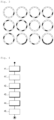
- the patterns can for example be formed from a segment of the ring, from two opposite or adjacent or separate segments from the ring, from a segment out of two on a portion or on the entire circumference of the ring
- the patterns can be generated either by having certain LEDs on and others off or even by having part of the LEDs of a first color and part of the LEDs of a second color.
- the patterns can also be fixed, flashing (for example by flashing of one or more LEDs) or even animated (for example the pattern can be formed of a single LED lit with the LEDs lighting up in turn one by one to create the illusion that the pattern rotates along the circumference of the ring).
- a pattern is therefore defined by its shape and/or its color and/or its blinking and/or its animation.
- the symbols reproduced on the graphical control interface can then exactly reproduce the patterns such as those for example illustrated in picture 3 (possibly with the blinking and/or the corresponding animations) or be similar but not identical to said patterns (for example reproducing the shape and/or the color but not the blinking and/or the animation).
- the symbols reproduced on the graphical control interface can then exactly reproduce the patterns such as those for example illustrated in picture 3 (possibly with the blinking and/or the corresponding animations) or be similar but not identical to said patterns (for example reproducing the shape and/or the color but not the blinking and/or the animation).
- the audio reproduction equipment of the same group is characterized by patterns of the same color (for example the patterns are of a blue color) then the symbol could optionally be a simple blue dot without identically reproducing the pattern(s) generated by the luminous identification interfaces of the group in question.
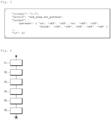
- FIG. 5 thus gives an example of a display order according to the JSON-RPC protocol sent by the device 11 to an audio reproduction device.
- the display order here indicates to each LED of the audio reproduction equipment what its state should be (among one of the following three states: on, off or flashing) which allows the audio reproduction equipment to reproduce a particular pattern ensuring the identification of said equipment and in particular to determine to which group it belongs.
- each audio reproduction device in the same group can display the characteristic pattern of said group with at least one of its LEDs flashing (the LED flashing then varying from one audio reproduction equipment to another within the same group) and/or each audio reproduction equipment of the same group being able to display the characteristic pattern of the said group with at least one of these LEDs of a color other than those of the other LEDs (the color of this isolated LED then varying from one audio reproduction device to another and/or the position of this isolated LED with respect to the rest of the ring then varying d one audio reproduction equipment to another) and/or each audio reproduction equipment of the same group being able to display a different form of pattern but with a characteristic color of said group (the color varying from one group to another and the shape of the pattern varying from one piece of equipment to another) and/or each audio reproduction piece of equipment in the same group being able to display a different pattern shape but with flashing and/or a characteristic animation of said group (the flashing and/or the animation v from one group to another and the shape of the pattern of the
- action orders that can be generated by the device intended for the decoder equipment and/or one or more audio reproduction equipment, actions in relation with the group(s) of audio reproduction equipment selected by the user.
- a general menu presents, for example, a list of different possible actions (creation of a new group of at least two audio reproduction devices, modification of an existing group, assignment/change of a particular role to an audio reproduction device of an existing group, playback of an audio stream by a group equipment, etc).
- a first possible action is the creation of a new group of at least two audio reproduction devices.
- the device 11 determines the audio reproduction equipment present on the local network and builds a corresponding list, which list can optionally already include which groups of audio reproduction equipment are already existing.
- the device 11 can implement various protocols.
- the device 11 can use a protocol of the mDNS type (for "multicast DNS") which provides that each audio reproduction equipment regularly sends "multicast" messages (therefore receivable by all the peripherals connected to the local area network, namely in the present case the device 11, the audio reproduction equipment and the decoder equipment 12) to announce its availability: the device 11 can thus listen to these messages and easily build a list of the audio reproduction equipment present on the local network .
- the device 11 is provided with processing means equipped with “Bonjour” or “Avahi” software which makes it possible to implement such an mDNS protocol.
- the device 11 can implement other protocols to determine which audio reproduction equipment is available, such as for example a UPnP protocol, where the equipment also signals its presence by means of ssdp type messages: alive, possibly in response to a search for equipment initiated by the device 11 itself, such as via an M-SEARCH message.
- UPnP protocol UPnP protocol
- ssdp type messages alive, possibly in response to a search for equipment initiated by the device 11 itself, such as via an M-SEARCH message.
- the device 11 assigns a group for each audio reproduction equipment which does not is not already part of a group, each new group thus comprising only one audio reproduction device. Furthermore, the device 11 assigns a different light pattern to each group (new and already existing) and sends each group the order to display the corresponding light pattern via its graphic identification interface 1.
- the device 11 causes the display on its graphic control interface of the symbols corresponding to the different luminous patterns of the audio reproduction equipment.
- a fourth step 44 when the user validates his selection, the device 11 creates a new group with the audio reproduction equipment whose symbols are selected.
- a fifth step 45 optionally, the device 11 sends to all the audio reproduction equipment of said new group the order to display the same representative pattern of said created group.
- This pattern can be the one already assigned to one of the audio reproduction equipments of said new group during the second step 42 and that the other audio reproduction equipments of the same new group copy or can be a completely different pattern.
- an additional step 41' is inserted between the first step 41 and the second step 42. This additional step 41' consists for the device 11 in removing from the list all the audio reproduction equipment already present in an existing group. The other steps are adapted accordingly.
- a second possible action is the assignment of different roles to at least two audio reproduction devices belonging to the same group. For example, this makes it possible to define a stereo pair of audio reproduction equipment by assigning to a first audio reproduction equipment of a given group the left channel of a stereo audio stream and to a second audio reproduction equipment of the same group the right channel of the same stream. More generally, it is thus possible to assign the various channels of a 3.1 or 5.1 type multi-channel system to various audio reproduction equipment of the same group.
- a first step 51 the device 11 determines the audio reproduction equipment belonging to the same group.
- This first step 51 is identical to what was said for the first step 41 with possibly a variant of deletion of at least the groups comprising only a single isolated audio reproduction device or even deletion of all the groups at the same time.
- a single group comprising at least two audio reproduction devices for example a group recorded as main such as the group of audio reproduction devices present in the living room of the dwelling.
- the device 11 determines for each audio reproduction device of the retained group or groups whether a role has already been assigned to it previously. Otherwise, the device 11 assigns it optionally an arbitrary role.
- a third step 53 the device 11 sends each audio reproduction device of the stored group(s) the order to display a pattern representative of the associated group. If a role has already been assigned to one of the audio reproduction equipments (either previously or arbitrarily in the second step 52) then the device 11 transmits an order to display a variation of said representative pattern of the associated group, variation itself representative of the role of the audio reproduction equipment in said group.
- FIG 7 shows a possible example of variations of the same pattern that can be used to identify a stereo pair of audio reproduction equipment.
- the two audio reproduction devices of the stereo pair light up three LEDs with a T arrangement (i.e. two LEDs facing each other are lit as well as an LED arranged between said two LEDs, the other LEDs being off): this T arrangement is the pattern associated with their group.
- the left audio reproduction equipment 101 which will be associated with the left channel makes the left LED flash and displays the other two LEDs fixed, while the right audio reproduction equipment 102 associated with the right channel flash the right LED and displays the other two LEDs continuously. This flashing is therefore a variation of the pattern associated with the group for which the three LEDs are fixed.
- the right and left audio reproduction devices are a stereo pair in a group to which a third audio reproduction device also belongs as a monophonic device. It is enough to associate the T pattern to the third audio reproduction device in the group (which therefore has no particular role) and the flashing T pattern to the right and left audio reproduction devices.
- the right audio reproduction equipment can light up a right segment in blue, the left audio reproduction equipment a left segment in blue while the third audio reproduction equipment lights up its entire ring in blue.
- the pattern associated with the group is therefore the complete ring in blue and the variations of said pattern the lighting of only part of the ring.
- the device 11 causes the display on its graphic control interface of the symbols associated at least with the audio reproduction equipment of the stored group or groups.
- the device 11 sends to the equipment concerned the order to display the pattern or variation corresponding to his new role. For example, in the event of reversal of the roles of the right and left audio reproduction equipment, the device 11 orders the change of the flashing LED for each of said equipment.
- a sixth step 56 when the user validates the new configuration, the device 11 saves the roles of each audio reproduction device within the group considered.
- the device 11 can wait for the validation of the user's configuration before ordering the change of pattern or pattern variation corresponding to the new role attributed to audio reproduction equipment such as what was proposed for the first action.
- the first four steps 71, 72, 73, 74 are identical to what was said previously for the first four steps 51, 52, 53, 54.
- the user does not directly select one of the symbols by pressing on the touch screen, that is to say by acting on the device 11, but selects the symbols indirectly by acting directly on the audio reproduction equipment(s).
- the user presses one or more buttons of the targeted audio reproduction equipment.
- the fourth symbol display step is not implemented here.
- the audio reproduction equipment concerned transmits a notification to the device 11.
- the device 11 then sends the equipment concerned the order to display the pattern or the variation corresponding to its new role. For example, in the event of reversal of the roles of the right and left audio reproduction equipment, the device 11 orders the change of the flashing LED for each of said equipment.
- a seventh step 77 when the user validates the new configuration, the device 11 saves the roles of each audio reproduction device within the group considered.
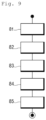
- a third possible action is the reading of an audio stream by several different audio reproduction devices.
- the device 11 determines the groups of audio reproduction equipment available.
- This first step 81 is for example identical to that 41 of the first action.
- the device 11 sends each audio reproduction device the order to display a pattern (or a pattern variation) representative of the associated group.
- a third step 83 the device 11 causes the display on its graphical control interface of the symbols associated with the different groups.
- a fourth step 84 when the user validates his selection, the device 11 saves the user's selection.
- the device 11 thus sends to the decoder equipment 12 an activation order containing the list of the group or groups activated so that the decoder equipment 12 sends the corresponding audio stream to the audio reproduction equipment of said or of said activated groups.
- the decoder equipment is a decoder box
- the decoder equipment may be any equipment capable of carrying out audio decoding, such as an audio/video decoder, a digital video decoder and for example a game console, a computer, a smart -TV, a digital tablet, a mobile phone, a digital television set-top box, a STB set-top box, etc.
- the audio source is decoder equipment
- the audio source may be any other equipment capable of supplying an audio stream to audio reproduction equipment such as a digital Hi-Fi system.
- the audio source and the device are distinct, the source and the device may be part of the same unitary whole.
- the audio source could be an application implemented in a device of smartphone type.
- the audio source and the graphic control interface can be integrated into the same STB decoder, thus the graphic control interface is displayed on the television and controlled by the remote control of the STB decoder.
- the audio source is distinct from all the audio reproduction equipment, the audio source and at least one of the audio reproduction equipment may not be distinct and form part of the same unitary assembly. This will be the case, for example, if the audio reproduction equipment or equipment processes audio streams directly originating from an external network of the Internet type. It will thus be possible to have one or more audio reproduction equipment which will be intelligent audio reproduction equipment (such as connected speakers also called “smartspeakers”) thus being able to operate without decoder equipment because directly integrating the capabilities of access to the audio source, these equipment broadcasting an audio stream directly from an external network such as the Internet, or directly from a local network.
- intelligent audio reproduction equipment such as connected speakers also called “smartspeakers”
- the device is distinct from all the audio reproduction equipment, the device and at least one of the audio reproduction equipment may not be distinct and form part of the same unitary assembly. In the same unitary assembly, it will thus be possible to have at least one device, an audio reproduction equipment and an audio source which will therefore not be distinct.
- the installation may also include several audio sources and/or several devices knowing that the audio sources, the devices, the audio reproduction equipment may be coupled together in one or more unitary assemblies.
- the device may be any other element provided with or linked to a graphical control interface.
- the device may thus be of various types: dedicated device, mobile phone or tablet running a dedicated application, computer running a dedicated application, or third-party device (game console, digital television decoder, smart TV, etc.) having a dedicated or running a dedicated application.
- the invention may dispense with a display on a graphical control interface.
- each audio reproduction device can display a different pattern by default. The user can then press a button on the audio reproduction equipment to select it and modify the pattern displayed. If the user modifies the pattern until he finds a pattern already displayed by another audio reproduction device then the two devices are grouped together. Audio renderers displaying the same pattern in this way will form a group and play the same thing.
- the audio reproduction equipment is an external connected loudspeaker
- the audio reproduction equipments having the same pattern (except for variants) jointly constitute a group.
- the light elements may have other forms of arrangement than those described, such as for example a matrix arrangement, a column arrangement, etc.
- the light elements may be placed elsewhere than on top of the audio reproduction equipment, for example on the front face of the equipment or even under the fabric covering part of the audio reproduction equipment. It will thus be possible to have an arrangement of luminous elements in the form of two columns on the two lateral sides of a front face of the equipment or else even a matrix arrangement possibly placed under the acoustic fabric.
- the various communications mentioned may be wired instead of being non-wired.
- Orders can be transmitted between the device and the audio reproduction equipment either directly or indirectly via the audio source. Orders can also be transmitted between the audio source and the audio reproduction equipment either directly or indirectly via the device.
- the light pattern may remain permanently displayed on the audio reproduction equipment.
- audio reproduction equipment displaying a blue pattern is part of the same group while another audio reproduction equipment displaying an orange pattern is alone in its group, and that yet another audio rendering device displaying a green pattern is also alone in its group.
- the light pattern will no longer be displayed once the user has validated a configuration (immediately or after a given time interval) or will be displayed with a reduced intensity as soon as the user has validated a given configuration (immediately or after a given time interval). Regardless of the user's validations, the pattern can also no longer be displayed or displayed with reduced or unreduced intensity in the event of standby of the audio reproduction equipment concerned.
- the pattern can also no longer be displayed or displayed with reduced or unreduced intensity when playing an audio stream by the audio reproduction equipment concerned.
- a random pattern can be assigned to the available audio reproduction equipment or from a list of pattern - equipment assignment already carried out and stored in memory in the installation (for example at the level of the source and/or of the device and/or of at least one of the audio reproduction equipment), list that can be updated if necessary for new audio reproduction equipment integrated into the facility.
- the audio reproduction equipment already having an assigned pattern will directly display said pattern.
- the symbols displayed on the graphical control interface can be selected either by interacting directly with said interface (by pressing on it or via a control element) or by interacting indirectly with said interface by interaction with the audio reproduction equipment (selection of a button typically on the equipment or equipment concerned) and transmission of a message between said equipment and said graphical control interface.
- the device then sends to the audio reproduction equipment and/or to the corresponding group a command to temporarily modify the pattern displayed by the equipment or equipment concerned. For example, when the user selects a symbol the device sends to the audio reproduction equipment and/or to the group corresponding the order to flash the pattern already displayed by the audio reproduction device(s) and/or when the user removes a symbol from the selection the device sends to the audio reproduction device and/or to the corresponding group the order to stop flashing the pattern; and this as long as the user has not validated his selection.
- the device sends the audio reproduction equipment and/or the corresponding group the order to flash the displayed pattern a limited number of times (for example two or thrice).
- Such an optional step can for example be inserted between the third step and the fourth step of the implementation of the first action, at the level of the fifth step of the implementation of the second action, between the third step and the fourth step of the implementation of the third action ...
- Actions other than those described could be implemented, such as for example the integration of new audio reproduction equipment into an existing group or even a total reconfiguration of the installation. It is also possible for each action to modify the symbol associated with a given group or with a given audio reproduction equipment when the user modifies the role of the said equipment, the organization of a group, creates a new group, etc. in order to coordinate the new pattern (or its variation) associated with said group or with said audio reproduction equipment with its symbol. Such a modification of the symbol can be done for example during the fourth step of the implementation of the first action, during the fourth step of the implementation of the second action, during the third step of the implementation of the third action...
- the first action can be implemented by allowing a display of patterns with variation as for the second action.
Landscapes
- Engineering & Computer Science (AREA)
- Physics & Mathematics (AREA)
- Signal Processing (AREA)
- Acoustics & Sound (AREA)
- Theoretical Computer Science (AREA)
- General Health & Medical Sciences (AREA)
- Health & Medical Sciences (AREA)
- Human Computer Interaction (AREA)
- General Engineering & Computer Science (AREA)
- General Physics & Mathematics (AREA)
- Audiology, Speech & Language Pathology (AREA)
- Multimedia (AREA)
- Otolaryngology (AREA)
- Selective Calling Equipment (AREA)
- User Interface Of Digital Computer (AREA)
- Circuit For Audible Band Transducer (AREA)
- Telephonic Communication Services (AREA)
Claims (19)
- Verfahren zur Verwaltung einer Gruppe von Tonwiedergabegeräten, die mindestens ein Tonwiedergabegerät umfasst, das mit einer leuchtenden Identifikationsschnittstelle versehen und ausgebildet ist, einen Audiostrom abzuspielen, der mindestens einen Audiokanal umfasst, wobei das Verfahren die Schritte umfasst:- Anzeigen eines Lichtmusters (2) mittels der leuchtenden Identifikationsschnittstelle (1) des Tonwiedergabegeräts, wobei das Lichtmuster zumindest charakteristisch für die Gruppe ist, zu der das genannte Gerät gehört,
wobei das Muster:• durch eine Form und/oder ein Blinken und/oder eine Animation definiert ist
und• charakteristisch für eine Rolle des Geräts innerhalb der genannten Gruppe ist,- im Falle des Auswählens mindestens eines der Tonwiedergabegeräte, Ausführen einer Handlung in Bezug auf das dazugehörige Tonwiedergabegerät,wobei das Verfahren darüber hinaus den Schritt des Anzeigens, mit Hilfe der leuchtenden Identifikationsschnittstellen der Tonwiedergabegeräte, die zu einer selben Gruppe gehören, einer anderen Variation desselben Musters umfasst, das mit der genannten Gruppe verbunden ist, wobei die andere Variation des genannten Musters für jedes Tonwiedergabegerät der genannten Gruppe zum Ziel hat, die Rolle des genannten Geräts innerhalb der genannten Gruppe zu kommunizieren, wobei die Rolle des genannten Geräts das Abspielen eines bestimmten Audiokanals des Audiostroms ist. - Verfahren nach Anspruch 1, bei dem man das Tonwiedergerät auswählt, indem man direkt auf das genannte Tonwiedergabegerät einwirkt.
- Verfahren nach einem der Ansprüche 1 bis 2, bei dem man das Tonwiedergabegerät auswählt, indem man auf eine grafische Benutzeroberfläche einwirkt.
- Verfahren nach Anspruch 3, bei dem die grafische Benutzeroberfläche von dem Tonwiedergabegerät getrennt ist.
- Verfahren nach einem der Ansprüche 1 bis 4, umfassend den Schritt des Anzeigens eines Symbols, das repräsentativ für das Lichtmuster ist und das folglich mit dem entsprechenden Tonwiedergabegerät verbunden ist.
- Verfahren nach Anspruch 5, bei dem man das Tonwiedergabegerät auswählt, indem man das Symbol über die grafische Benutzeroberfläche auswählt.
- Verfahren nach einem der Ansprüche 5 oder 6, bei dem das Symbol mit dem Lichtmuster, das damit verbunden ist, identisch ist.
- Verfahren nach einem der Ansprüche 5 bis 7, bei dem das Symbol dem Lichtmuster, das damit verbunden ist, ähnlich ist.
- Verfahren nach einem der Ansprüche 1 bis 8, bei dem die Handlung darin besteht, auf das Lichtmuster des Tonwiedergabegeräts einzuwirken, um es zu ändern.
- Verfahren nach einem der Ansprüche 1 bis 9, bei dem die Handlung darin besteht, das ausgewählte Tonwiedergabegerät zu veranlassen, einen Audiostrom abzuspielen.
- Verfahren nach einem der Ansprüche 1 bis 10, umfassend den zusätzlichen Schritt des Speicherns der Auswahl des Nutzers.
- Verfahren nach einem der Ansprüche 1 bis 11, umfassend den zusätzlichen Schritt des Veranlassens des Tonwiedergabegeräts ein temporäres Lichtmuster (2) während der Auswahl durch den Nutzer und vor der Validierung der Auswahl durch den Nutzer anzuzeigen.
- Tonwiedergabegerät, umfassend eine leuchtende Identifikationsschnittstelle, die ein Durchführen mindestens des Schrittes des Anzeigens des Lichtmusters des Verfahrens nach einem der Ansprüche 1 bis 12 ermöglicht.
- Gerät nach Anspruch 13, bei dem die leuchtende Identifikationsschnittstelle mindestens zwei LEDs umfasst.
- Gerät nach Anspruch 13 oder Anspruch 14, bei dem die leuchtende Identifikationsschnittstelle auf einer oberen Fläche des Tonwiedergabegeräts ausgebildet ist.
- Anlage, umfassend ein Tonwiedergabegerät nach einem der Ansprüche 13 bis 15, wobei die Anlage ferner eine Vorrichtung umfasst, die eine grafische Benutzeroberfläche zur Bedienung mindestens des genannten Tonwiedergabegeräts umfasst.
- Anlage nach Anspruch 16, bei der die Vorrichtung ein tragbares Telefon oder ein Tablet oder ein Computer ist.
- Computerprogramm, umfassend Anweisungen, die ein Ausführen des Verfahrens nach einem der Ansprüche 1 bis 12 ermöglichen.
- Computerlesbarer Aufzeichnungsträger, auf dem das Computerprogramm nach Anspruch 18 gespeichert ist.
Applications Claiming Priority (1)
| Application Number | Priority Date | Filing Date | Title |
|---|---|---|---|
| FR2003261A FR3109045B1 (fr) | 2020-04-01 | 2020-04-01 | Procédé de gestion d’au moins un groupe d’équipement de restitution audio |
Publications (2)
| Publication Number | Publication Date |
|---|---|
| EP3889762A1 EP3889762A1 (de) | 2021-10-06 |
| EP3889762B1 true EP3889762B1 (de) | 2023-03-29 |
Family
ID=70978198
Family Applications (1)
| Application Number | Title | Priority Date | Filing Date |
|---|---|---|---|
| EP21157973.5A Active EP3889762B1 (de) | 2020-04-01 | 2021-02-18 | Verfahren zur verwaltung mindestens einer gruppe von tonwiedergabegeräten |
Country Status (5)
| Country | Link |
|---|---|
| US (1) | US11880632B2 (de) |
| EP (1) | EP3889762B1 (de) |
| CN (1) | CN113497998A (de) |
| BR (1) | BR102021002122A2 (de) |
| FR (1) | FR3109045B1 (de) |
Citations (1)
| Publication number | Priority date | Publication date | Assignee | Title |
|---|---|---|---|---|
| EP3286759A1 (de) * | 2015-04-24 | 2018-02-28 | Sonos Inc. | Volumengrenze |
Family Cites Families (7)
| Publication number | Priority date | Publication date | Assignee | Title |
|---|---|---|---|---|
| JP4449865B2 (ja) * | 2005-09-05 | 2010-04-14 | ヤマハ株式会社 | ディジタル・オーディオ・ミキサ |
| FI20060910A7 (fi) * | 2006-03-28 | 2008-01-10 | Genelec Oy | Tunnistusmenetelmä ja -laitteisto äänentoistojärjestelmässä |
| US8249278B2 (en) * | 2006-07-05 | 2012-08-21 | Yamaha Corporation | Audio signal processing system |
| EP3186974B1 (de) * | 2014-08-29 | 2020-04-15 | Harman International Industries, Inc. | Kabelloses lautsprechersystem |
| US10075908B2 (en) * | 2016-06-13 | 2018-09-11 | Erik Young | Group speakers |
| US10839795B2 (en) * | 2017-02-15 | 2020-11-17 | Amazon Technologies, Inc. | Implicit target selection for multiple audio playback devices in an environment |
| US10979810B2 (en) * | 2019-03-19 | 2021-04-13 | Amazon Technologies, Inc. | Electronic device |
-
2020
- 2020-04-01 FR FR2003261A patent/FR3109045B1/fr not_active Expired - Fee Related
-
2021
- 2021-01-13 US US17/148,035 patent/US11880632B2/en active Active
- 2021-02-04 BR BR102021002122-5A patent/BR102021002122A2/pt not_active Application Discontinuation
- 2021-02-18 EP EP21157973.5A patent/EP3889762B1/de active Active
- 2021-03-30 CN CN202110343419.7A patent/CN113497998A/zh active Pending
Patent Citations (1)
| Publication number | Priority date | Publication date | Assignee | Title |
|---|---|---|---|---|
| EP3286759A1 (de) * | 2015-04-24 | 2018-02-28 | Sonos Inc. | Volumengrenze |
Also Published As
| Publication number | Publication date |
|---|---|
| US11880632B2 (en) | 2024-01-23 |
| US20210311691A1 (en) | 2021-10-07 |
| BR102021002122A2 (pt) | 2021-10-05 |
| FR3109045A1 (fr) | 2021-10-08 |
| FR3109045B1 (fr) | 2022-08-26 |
| CN113497998A (zh) | 2021-10-12 |
| EP3889762A1 (de) | 2021-10-06 |
Similar Documents
| Publication | Publication Date | Title |
|---|---|---|
| TWI604727B (zh) | 遙控器 | |
| FR2902568A1 (fr) | Procede d'affichage d'une image mosaique au sein d'un recepteur pour la selection de programmes audiovisuels, recepteurs et serveurs associes | |
| FR2895869A1 (fr) | Systeme de distribution sans fil d'un signal audio entre une pluralite d'enceintes actices | |
| EP3826316B1 (de) | Decodiergerät, das eine anweisung eines anzuwendenden audioprofils erzeugt | |
| TW201507458A (zh) | 傳送內容至顯示器螢幕的系統及方法 | |
| US9167300B2 (en) | Muting notification system | |
| EP3840388A1 (de) | Dual audio-link decoder ausrüstung | |
| EP3920552B1 (de) | Zentralisierte verarbeitung eines eingangs-audiodatenstroms | |
| EP3889762B1 (de) | Verfahren zur verwaltung mindestens einer gruppe von tonwiedergabegeräten | |
| EP1579691B1 (de) | Verfahren zum hervorbringen einer liste von inhalten in einermit einem nationalen netzwerk verbundenen einrichtung und mit dem verfahrenassoziierte einrichtung | |
| FR2971111A1 (fr) | Procede d'acces a des contenus multimedias au sein d'un foyer | |
| FR2814891A1 (fr) | Procede de reglages de niveau audio provenant de plusieurs canaux et dispositif de reglage | |
| FR2880495A1 (fr) | Procede de selection d'un element dans une liste par deplacement d'une distinction graphique et appareil mettant en oeuvre le procede | |
| AU2015394336A1 (en) | Voice/manual activated and integrated audio/video multi- media, multi-interface system | |
| EP2744129B1 (de) | Verteilungs- und Auswahlsystem von multiplen Audio- und/oder Videoströmen zu aktiven Peripheriegeräten von einem Heimservergerät aus | |
| WO2007064439A1 (en) | Media content menu navigation and customization | |
| FR2872985A1 (fr) | Procede de traitement de flux diffuses a distance et restitues sur un terminal, systeme, dispositif d'enregistrement et programme d'ordinateur susceptibles d'etre utilises pour sa mise en oeuvre | |
| FR3036510A1 (fr) | Procede et dispositif pour selectionner un contenu multimedia secondaire | |
| EP3979661A1 (de) | Verfahren zur klangwiedergabe | |
| JP5403208B2 (ja) | 広告再生システム及び通信端末 | |
| EP4203480A1 (de) | Verfahren zur verwaltung von zeitsprüngen beim abspielen von medieninhalten | |
| Weber-Houde | Found footage horrifique et toucher zombiesque | |
| EP1804500A1 (de) | Selbständiger Mehrzweck-Fernsehgerät | |
| EP2854415B1 (de) | Dynamisches Übertragungsverfahren von Informationsdaten über ein Audio- und/oder Videoprogramm | |
| FR3148128A1 (fr) | Restitution partagée de contenu multimédia et augmentée de façon individuelle |
Legal Events
| Date | Code | Title | Description |
|---|---|---|---|
| STAA | Information on the status of an ep patent application or granted ep patent |
Free format text: STATUS: EXAMINATION IS IN PROGRESS |
|
| PUAI | Public reference made under article 153(3) epc to a published international application that has entered the european phase |
Free format text: ORIGINAL CODE: 0009012 |
|
| 17P | Request for examination filed |
Effective date: 20210218 |
|
| AK | Designated contracting states |
Kind code of ref document: A1 Designated state(s): AL AT BE BG CH CY CZ DE DK EE ES FI FR GB GR HR HU IE IS IT LI LT LU LV MC MK MT NL NO PL PT RO RS SE SI SK SM TR |
|
| GRAP | Despatch of communication of intention to grant a patent |
Free format text: ORIGINAL CODE: EPIDOSNIGR1 |
|
| STAA | Information on the status of an ep patent application or granted ep patent |
Free format text: STATUS: GRANT OF PATENT IS INTENDED |
|
| INTG | Intention to grant announced |
Effective date: 20220603 |
|
| RIN1 | Information on inventor provided before grant (corrected) |
Inventor name: BOUVIGNE, GABRIEL Inventor name: BERGER, JEROME |
|
| GRAJ | Information related to disapproval of communication of intention to grant by the applicant or resumption of examination proceedings by the epo deleted |
Free format text: ORIGINAL CODE: EPIDOSDIGR1 |
|
| STAA | Information on the status of an ep patent application or granted ep patent |
Free format text: STATUS: EXAMINATION IS IN PROGRESS |
|
| INTC | Intention to grant announced (deleted) | ||
| GRAP | Despatch of communication of intention to grant a patent |
Free format text: ORIGINAL CODE: EPIDOSNIGR1 |
|
| STAA | Information on the status of an ep patent application or granted ep patent |
Free format text: STATUS: GRANT OF PATENT IS INTENDED |
|
| INTG | Intention to grant announced |
Effective date: 20221025 |
|
| GRAS | Grant fee paid |
Free format text: ORIGINAL CODE: EPIDOSNIGR3 |
|
| GRAA | (expected) grant |
Free format text: ORIGINAL CODE: 0009210 |
|
| STAA | Information on the status of an ep patent application or granted ep patent |
Free format text: STATUS: THE PATENT HAS BEEN GRANTED |
|
| AK | Designated contracting states |
Kind code of ref document: B1 Designated state(s): AL AT BE BG CH CY CZ DE DK EE ES FI FR GB GR HR HU IE IS IT LI LT LU LV MC MK MT NL NO PL PT RO RS SE SI SK SM TR |
|
| REG | Reference to a national code |
Ref country code: CH Ref legal event code: EP |
|
| REG | Reference to a national code |
Ref country code: DE Ref legal event code: R096 Ref document number: 602021001708 Country of ref document: DE |
|
| REG | Reference to a national code |
Ref country code: AT Ref legal event code: REF Ref document number: 1557156 Country of ref document: AT Kind code of ref document: T Effective date: 20230415 |
|
| REG | Reference to a national code |
Ref country code: IE Ref legal event code: FG4D Free format text: LANGUAGE OF EP DOCUMENT: FRENCH |
|
| REG | Reference to a national code |
Ref country code: LT Ref legal event code: MG9D |
|
| PG25 | Lapsed in a contracting state [announced via postgrant information from national office to epo] |
Ref country code: RS Free format text: LAPSE BECAUSE OF FAILURE TO SUBMIT A TRANSLATION OF THE DESCRIPTION OR TO PAY THE FEE WITHIN THE PRESCRIBED TIME-LIMIT Effective date: 20230329 Ref country code: NO Free format text: LAPSE BECAUSE OF FAILURE TO SUBMIT A TRANSLATION OF THE DESCRIPTION OR TO PAY THE FEE WITHIN THE PRESCRIBED TIME-LIMIT Effective date: 20230629 Ref country code: LV Free format text: LAPSE BECAUSE OF FAILURE TO SUBMIT A TRANSLATION OF THE DESCRIPTION OR TO PAY THE FEE WITHIN THE PRESCRIBED TIME-LIMIT Effective date: 20230329 Ref country code: LT Free format text: LAPSE BECAUSE OF FAILURE TO SUBMIT A TRANSLATION OF THE DESCRIPTION OR TO PAY THE FEE WITHIN THE PRESCRIBED TIME-LIMIT Effective date: 20230329 Ref country code: HR Free format text: LAPSE BECAUSE OF FAILURE TO SUBMIT A TRANSLATION OF THE DESCRIPTION OR TO PAY THE FEE WITHIN THE PRESCRIBED TIME-LIMIT Effective date: 20230329 |
|
| REG | Reference to a national code |
Ref country code: NL Ref legal event code: MP Effective date: 20230329 |
|
| REG | Reference to a national code |
Ref country code: AT Ref legal event code: MK05 Ref document number: 1557156 Country of ref document: AT Kind code of ref document: T Effective date: 20230329 |
|
| PG25 | Lapsed in a contracting state [announced via postgrant information from national office to epo] |
Ref country code: SE Free format text: LAPSE BECAUSE OF FAILURE TO SUBMIT A TRANSLATION OF THE DESCRIPTION OR TO PAY THE FEE WITHIN THE PRESCRIBED TIME-LIMIT Effective date: 20230329 Ref country code: NL Free format text: LAPSE BECAUSE OF FAILURE TO SUBMIT A TRANSLATION OF THE DESCRIPTION OR TO PAY THE FEE WITHIN THE PRESCRIBED TIME-LIMIT Effective date: 20230329 Ref country code: GR Free format text: LAPSE BECAUSE OF FAILURE TO SUBMIT A TRANSLATION OF THE DESCRIPTION OR TO PAY THE FEE WITHIN THE PRESCRIBED TIME-LIMIT Effective date: 20230630 Ref country code: FI Free format text: LAPSE BECAUSE OF FAILURE TO SUBMIT A TRANSLATION OF THE DESCRIPTION OR TO PAY THE FEE WITHIN THE PRESCRIBED TIME-LIMIT Effective date: 20230329 |
|
| PG25 | Lapsed in a contracting state [announced via postgrant information from national office to epo] |
Ref country code: SM Free format text: LAPSE BECAUSE OF FAILURE TO SUBMIT A TRANSLATION OF THE DESCRIPTION OR TO PAY THE FEE WITHIN THE PRESCRIBED TIME-LIMIT Effective date: 20230329 Ref country code: RO Free format text: LAPSE BECAUSE OF FAILURE TO SUBMIT A TRANSLATION OF THE DESCRIPTION OR TO PAY THE FEE WITHIN THE PRESCRIBED TIME-LIMIT Effective date: 20230329 Ref country code: PT Free format text: LAPSE BECAUSE OF FAILURE TO SUBMIT A TRANSLATION OF THE DESCRIPTION OR TO PAY THE FEE WITHIN THE PRESCRIBED TIME-LIMIT Effective date: 20230731 Ref country code: ES Free format text: LAPSE BECAUSE OF FAILURE TO SUBMIT A TRANSLATION OF THE DESCRIPTION OR TO PAY THE FEE WITHIN THE PRESCRIBED TIME-LIMIT Effective date: 20230329 Ref country code: EE Free format text: LAPSE BECAUSE OF FAILURE TO SUBMIT A TRANSLATION OF THE DESCRIPTION OR TO PAY THE FEE WITHIN THE PRESCRIBED TIME-LIMIT Effective date: 20230329 Ref country code: AT Free format text: LAPSE BECAUSE OF FAILURE TO SUBMIT A TRANSLATION OF THE DESCRIPTION OR TO PAY THE FEE WITHIN THE PRESCRIBED TIME-LIMIT Effective date: 20230329 |
|
| PG25 | Lapsed in a contracting state [announced via postgrant information from national office to epo] |
Ref country code: SK Free format text: LAPSE BECAUSE OF FAILURE TO SUBMIT A TRANSLATION OF THE DESCRIPTION OR TO PAY THE FEE WITHIN THE PRESCRIBED TIME-LIMIT Effective date: 20230329 Ref country code: PL Free format text: LAPSE BECAUSE OF FAILURE TO SUBMIT A TRANSLATION OF THE DESCRIPTION OR TO PAY THE FEE WITHIN THE PRESCRIBED TIME-LIMIT Effective date: 20230329 Ref country code: IS Free format text: LAPSE BECAUSE OF FAILURE TO SUBMIT A TRANSLATION OF THE DESCRIPTION OR TO PAY THE FEE WITHIN THE PRESCRIBED TIME-LIMIT Effective date: 20230729 |
|
| RAP4 | Party data changed (patent owner data changed or rights of a patent transferred) |
Owner name: SAGEMCOM BROADBAND SAS |
|
| REG | Reference to a national code |
Ref country code: DE Ref legal event code: R097 Ref document number: 602021001708 Country of ref document: DE |
|
| PG25 | Lapsed in a contracting state [announced via postgrant information from national office to epo] |
Ref country code: DK Free format text: LAPSE BECAUSE OF FAILURE TO SUBMIT A TRANSLATION OF THE DESCRIPTION OR TO PAY THE FEE WITHIN THE PRESCRIBED TIME-LIMIT Effective date: 20230329 Ref country code: CZ Free format text: LAPSE BECAUSE OF FAILURE TO SUBMIT A TRANSLATION OF THE DESCRIPTION OR TO PAY THE FEE WITHIN THE PRESCRIBED TIME-LIMIT Effective date: 20230329 |
|
| PLBE | No opposition filed within time limit |
Free format text: ORIGINAL CODE: 0009261 |
|
| STAA | Information on the status of an ep patent application or granted ep patent |
Free format text: STATUS: NO OPPOSITION FILED WITHIN TIME LIMIT |
|
| 26N | No opposition filed |
Effective date: 20240103 |
|
| PG25 | Lapsed in a contracting state [announced via postgrant information from national office to epo] |
Ref country code: SI Free format text: LAPSE BECAUSE OF FAILURE TO SUBMIT A TRANSLATION OF THE DESCRIPTION OR TO PAY THE FEE WITHIN THE PRESCRIBED TIME-LIMIT Effective date: 20230329 |
|
| PG25 | Lapsed in a contracting state [announced via postgrant information from national office to epo] |
Ref country code: SI Free format text: LAPSE BECAUSE OF FAILURE TO SUBMIT A TRANSLATION OF THE DESCRIPTION OR TO PAY THE FEE WITHIN THE PRESCRIBED TIME-LIMIT Effective date: 20230329 Ref country code: IT Free format text: LAPSE BECAUSE OF FAILURE TO SUBMIT A TRANSLATION OF THE DESCRIPTION OR TO PAY THE FEE WITHIN THE PRESCRIBED TIME-LIMIT Effective date: 20230329 |
|
| PG25 | Lapsed in a contracting state [announced via postgrant information from national office to epo] |
Ref country code: MC Free format text: LAPSE BECAUSE OF FAILURE TO SUBMIT A TRANSLATION OF THE DESCRIPTION OR TO PAY THE FEE WITHIN THE PRESCRIBED TIME-LIMIT Effective date: 20230329 |
|
| REG | Reference to a national code |
Ref country code: CH Ref legal event code: PL |
|
| PG25 | Lapsed in a contracting state [announced via postgrant information from national office to epo] |
Ref country code: LU Free format text: LAPSE BECAUSE OF NON-PAYMENT OF DUE FEES Effective date: 20240218 |
|
| PG25 | Lapsed in a contracting state [announced via postgrant information from national office to epo] |
Ref country code: CH Free format text: LAPSE BECAUSE OF NON-PAYMENT OF DUE FEES Effective date: 20240229 |
|
| PG25 | Lapsed in a contracting state [announced via postgrant information from national office to epo] |
Ref country code: LU Free format text: LAPSE BECAUSE OF NON-PAYMENT OF DUE FEES Effective date: 20240218 Ref country code: CH Free format text: LAPSE BECAUSE OF NON-PAYMENT OF DUE FEES Effective date: 20240229 |
|
| PG25 | Lapsed in a contracting state [announced via postgrant information from national office to epo] |
Ref country code: BG Free format text: LAPSE BECAUSE OF FAILURE TO SUBMIT A TRANSLATION OF THE DESCRIPTION OR TO PAY THE FEE WITHIN THE PRESCRIBED TIME-LIMIT Effective date: 20230329 |
|
| PG25 | Lapsed in a contracting state [announced via postgrant information from national office to epo] |
Ref country code: BG Free format text: LAPSE BECAUSE OF FAILURE TO SUBMIT A TRANSLATION OF THE DESCRIPTION OR TO PAY THE FEE WITHIN THE PRESCRIBED TIME-LIMIT Effective date: 20230329 |
|
| REG | Reference to a national code |
Ref country code: BE Ref legal event code: MM Effective date: 20240229 |
|
| PG25 | Lapsed in a contracting state [announced via postgrant information from national office to epo] |
Ref country code: BE Free format text: LAPSE BECAUSE OF NON-PAYMENT OF DUE FEES Effective date: 20240229 |
|
| PG25 | Lapsed in a contracting state [announced via postgrant information from national office to epo] |
Ref country code: IE Free format text: LAPSE BECAUSE OF NON-PAYMENT OF DUE FEES Effective date: 20240218 |
|
| PG25 | Lapsed in a contracting state [announced via postgrant information from national office to epo] |
Ref country code: IE Free format text: LAPSE BECAUSE OF NON-PAYMENT OF DUE FEES Effective date: 20240218 Ref country code: BE Free format text: LAPSE BECAUSE OF NON-PAYMENT OF DUE FEES Effective date: 20240229 |
|
| PG25 | Lapsed in a contracting state [announced via postgrant information from national office to epo] |
Ref country code: CY Free format text: LAPSE BECAUSE OF FAILURE TO SUBMIT A TRANSLATION OF THE DESCRIPTION OR TO PAY THE FEE WITHIN THE PRESCRIBED TIME-LIMIT; INVALID AB INITIO Effective date: 20210218 |
|
| PG25 | Lapsed in a contracting state [announced via postgrant information from national office to epo] |
Ref country code: HU Free format text: LAPSE BECAUSE OF FAILURE TO SUBMIT A TRANSLATION OF THE DESCRIPTION OR TO PAY THE FEE WITHIN THE PRESCRIBED TIME-LIMIT; INVALID AB INITIO Effective date: 20210218 |
|
| PG25 | Lapsed in a contracting state [announced via postgrant information from national office to epo] |
Ref country code: TR Free format text: LAPSE BECAUSE OF FAILURE TO SUBMIT A TRANSLATION OF THE DESCRIPTION OR TO PAY THE FEE WITHIN THE PRESCRIBED TIME-LIMIT Effective date: 20230329 |
|
| PGFP | Annual fee paid to national office [announced via postgrant information from national office to epo] |
Ref country code: GB Payment date: 20260122 Year of fee payment: 6 |
|
| PGFP | Annual fee paid to national office [announced via postgrant information from national office to epo] |
Ref country code: DE Payment date: 20260121 Year of fee payment: 6 |
|
| PGFP | Annual fee paid to national office [announced via postgrant information from national office to epo] |
Ref country code: FR Payment date: 20260121 Year of fee payment: 6 |