EP3889000B1 - Verfahren zum betreiben einer leuchte und schienenfahrzeug - Google Patents
Verfahren zum betreiben einer leuchte und schienenfahrzeug Download PDFInfo
- Publication number
- EP3889000B1 EP3889000B1 EP21160920.1A EP21160920A EP3889000B1 EP 3889000 B1 EP3889000 B1 EP 3889000B1 EP 21160920 A EP21160920 A EP 21160920A EP 3889000 B1 EP3889000 B1 EP 3889000B1
- Authority
- EP
- European Patent Office
- Prior art keywords
- luminaire
- rail vehicle
- interior space
- ceiling
- window
- Prior art date
- Legal status (The legal status is an assumption and is not a legal conclusion. Google has not performed a legal analysis and makes no representation as to the accuracy of the status listed.)
- Active
Links
Images



Classifications
-
- B—PERFORMING OPERATIONS; TRANSPORTING
- B60—VEHICLES IN GENERAL
- B60Q—ARRANGEMENT OF SIGNALLING OR LIGHTING DEVICES, THE MOUNTING OR SUPPORTING THEREOF OR CIRCUITS THEREFOR, FOR VEHICLES IN GENERAL
- B60Q3/00—Arrangement of lighting devices for vehicle interiors; Lighting devices specially adapted for vehicle interiors
- B60Q3/40—Arrangement of lighting devices for vehicle interiors; Lighting devices specially adapted for vehicle interiors specially adapted for specific vehicle types
- B60Q3/41—Arrangement of lighting devices for vehicle interiors; Lighting devices specially adapted for vehicle interiors specially adapted for specific vehicle types for mass transit vehicles, e.g. buses
- B60Q3/47—Circuits; Control arrangements
-
- B—PERFORMING OPERATIONS; TRANSPORTING
- B61—RAILWAYS
- B61D—BODY DETAILS OR KINDS OF RAILWAY VEHICLES
- B61D29/00—Lighting
Definitions
- a method for operating a lamp and a rail vehicle are specified.
- the invention relates to a method for operating a lamp according to the preamble of claim 1, according to which the lamp is arranged in an interior of the rail vehicle and, during operation, illuminates an area of the interior, the rail vehicle has a window through which people can look in from outside the rail vehicle the interior can be looked into, the interior has a ceiling, a degree of occupancy of the interior with passengers is determined and the lamp is operated as a function of the determined degree of occupancy, the light emitted by the lamp being representative of the degree of occupancy of the interior.
- Such a method for operating a lamp is from DE 10 2009 046628 A1 known, with an LED light bar that can be controlled in its color scheme being used in the ceiling area.
- DE 10 2014 208221 A1 lighting devices are provided in a double-decker car in the stair area, which reflect the degree of occupancy in an interior space that can be reached via the stairs.
- One problem to be solved is to specify a method with which people who are outside a rail vehicle on a platform can easily identify information about the degree of occupancy of an interior, in particular a compartment, in the rail vehicle.
- Another problem to be solved is to specify a rail vehicle with which such a method can be carried out.
- the lamp is located in an interior of a rail vehicle, in particular in a wagon or compartment of the rail vehicle.
- the rail vehicle is in particular a passenger train.
- the light illuminates an area of the interior during operation. That is, the light is aimed at an area in the interior, for example at a ceiling and/or a side wall and/or the floor, and illuminates this area.
- the lighting of this area can be visible to a passenger inside the rail vehicle. That is, the light reflected from the area is visible to, for example, a passenger on a seat in the interior.
- the rail vehicle includes a window.
- the window is arranged in particular on a side wall of the rail vehicle.
- the interior can be seen through the window from outside the rail vehicle.
- the window has, for example, an area of at least 1 m 2 or at least 2 m 2 .
- the window is located in particular at the level of seats in the rail vehicle, so that a passenger in the rail vehicle who is sitting on such a seat can look out of the rail vehicle through the window.
- the lamp is arranged in the interior of the rail vehicle in such a way that the light emitted by the lamp is visible from outside the rail vehicle.
- the ceiling reflects the area of the interior illuminated by the lamp, part of this light, which then exits the rail vehicle through the window.
- a large part of the light originating from the luminaire and passing through the window has previously been reflected from the illuminated area.
- the method includes a step in which a degree of occupancy of the interior with passengers is determined. That is, it is determined how many passengers are in the interior of the rail vehicle.
- the occupancy rate is representative of this number. For example, it is determined how many seats in the interior of the rail vehicle are occupied by passengers.
- the method includes a step in which the lamp is operated as a function of the determined degree of occupancy, the light emitted by the lamp being representative of the degree of occupancy of the interior.
- the light emitted by the lamp signals to a passenger outside and preferably also to a passenger inside the rail vehicle how heavily the interior is already occupied by passengers.
- the rail vehicle includes in particular a control device with signal technology connected to the lamp and controls/operates the lamp depending on the degree of occupancy.
- the lamp is arranged in an interior of the rail vehicle. During operation, the lamp illuminates an area of the interior.
- the rail vehicle includes a window through which the interior can be seen from outside the rail vehicle. Some of the light emitted by the lamp during operation emerges from the rail vehicle through the window and is visible from outside the rail vehicle.
- a degree of occupancy of the interior with passengers is first determined. The lamp is then operated depending on the determined degree of occupancy, the light emitted by the lamp being representative of the degree of occupancy of the interior.
- the present invention is based in particular on the idea of signaling to a passenger for transport in a rail vehicle while the passenger is still on the platform how heavily an interior or compartment or wagon of the rail vehicle is already occupied by passengers.
- this is signaled to the passenger by a light signal, which is emitted by a lamp inside the interior and penetrates through the window to the outside.
- Light signals, especially colours, are intuitively understandable for most people.
- the luminaire is set up to emit light of different colors.
- the lamp includes different LEDs, for example one or more red LEDs, one or more green LEDs and one or more blue LEDs. Different light colors can be generated by individually controlling the LEDs.
- the light is configured to generate red light, yellow and/or orange light, and green light.
- different colors are assigned to different degrees of occupancy of the interior.
- the color green is assigned to a low degree of occupancy
- the color yellow/orange to a medium degree of occupancy
- the color red to a high degree of occupancy.
- a low degree of occupancy is characterized, for example, by the fact that no more than 30% of the seats are occupied by passengers.
- a medium occupancy rate is characterized, for example, by a maximum of 60% and more than 30% of the spaces or seats being occupied.
- a high degree of occupancy is characterized, for example, by the fact that more than 60% of the places or seats are occupied.
- the lamp is operated as a function of the determined degree of occupancy of the interior such that the lamp emits light of the color associated with the degree of occupancy.
- a passenger outside the rail vehicle, for example on a platform, can then see from the color how high the degree of occupancy in the interior is.
- the degree of occupancy of the interior with passengers is determined automatically.
- sensors such as cameras and/or weight sensors in seats are preferably arranged in the interior, with which the degree of occupancy is determined.
- the light emitted by the lamp does not hit the window directly.
- the area of the interior illuminated by the lamp is visible through the window from outside the rail vehicle. That is, all light emanating from the luminaire and passing through the window is indirect light that has been reflected from the interior illuminated area before passing through the window. The light is therefore not aimed directly at the window. This avoids dazzling passengers outside the rail vehicle.
- the light is operated in such a way that a path or a direction to another interior space, for example another wagon, of the rail vehicle is signaled. In particular, this is signaled to a person outside the rail vehicle. In the other interior, the degree of occupancy is lower than in the interior in which the lamp is arranged. For example, the light generates a running light that shows the direction to the next free interior space and is visible from outside the rail vehicle.
- the rail vehicle includes, for example, a system that is connected to the sensors from the various interior spaces or wagons in terms of signals.
- the system is set up, for example, to compare the occupancy rates in the different interior spaces with one another and, for example, to determine a occupancy rate gradient along the rail vehicle.
- the control device then activates the light in order to indicate the route to a less occupied interior space.
- the interior has a ceiling.
- the lamp is aimed at the ceiling in such a way that the light emitted by the lamp is reflected on the ceiling and then emerges from the rail vehicle through the window. In particular, all the light coming from the luminaire and passing through the window has previously been reflected on the ceiling.
- the lamp is aimed at the ceiling in such a way that the ceiling is grazingly illuminated.
- an angle of incidence of the light emitted by the luminaire measured between the main beam direction of the light and a surface normal to the ceiling, is greater than 0°, for example at least 45° or at least 60°.
- Such lighting of the ceiling avoids dazzling the passengers inside the rail vehicle.
- a large area of the ceiling is illuminated, which improves visibility from the outside.
- the ceiling has a concavely curved section onto which the lamp is directed.
- the concave curved section preferably forms the transition to a side wall of the interior.
- the light from the lamp is reflected at the concavely curved section and then exits the rail vehicle through the window, preferably on the opposite side.
- the concavely curved section is visible through the window from outside the rail vehicle.
- the lamp is arranged on a side wall of the rail vehicle.
- the lamp is then inclined upwards onto the ceiling, particularly to the concavely curved portion of the ceiling.
- the lamp can be covered by a panel so that the lamp is not visible from outside the rail vehicle and/or from the interior.
- the lamp is elongate and comprises a multiplicity of LEDs lined up one behind the other along a longitudinal direction.
- the lamp extends over the entire or at least a large part of the length of the interior.
- the lamp extends parallel to an edge between the ceiling and the side wall.
- the longitudinal direction along which the LEDs are lined up runs, for example, parallel to a longitudinal axis of the rail vehicle.
- the length of the lamp over which the LEDs are lined up one behind the other is, for example, at least 1 m or at least 3 m or at least 5 m or at least 10 m.
- the lamp has at least ten or at least 50 LEDs.
- the ceiling comprises a plurality of decorative profiles, which are arranged next to one another along a transverse direction and each extend along a longitudinal direction running perpendicular to the transverse direction.
- the longitudinal direction of the decorative profiles runs in particular parallel to the longitudinal direction of the lamp.
- the decorative profiles include, for example, plastic or metal, such as aluminum or stainless steel, or consist of them. Further LEDs can be arranged between the decorative profiles, which illuminate the interior during operation.
- the rail vehicle includes an interior space, in particular for accommodating passengers. In the interior of the rail vehicle For example, several seats are arranged. Furthermore, the rail vehicle includes a window through which the interior can be seen from outside the rail vehicle. The rail vehicle includes a lamp that illuminates an area of the interior during operation. The light from the lamp exits the rail vehicle through the window. Furthermore, the rail vehicle includes a control device which is connected to the lamp in terms of signals. The lamp and the control device are set up in such a way that a method described here can be carried out with them. In particular, the lamp and the control device are set up in such a way that the lamp can be operated as a function of a determined degree of occupancy, with the light emitted by the lamp being representative of the degree of occupancy.
- the rail vehicle preferably also includes one or more sensors with which the degree of occupancy of the interior can be determined automatically.
- figure 1 shows the interior 10 of a rail vehicle in a cross-sectional view.
- the rail vehicle is especially a passenger train.
- the interior 10 is delimited by two side walls 6, a ceiling 1 and a floor 4.
- each window 2 are introduced.
- lights 3 are arranged on the side walls 6 .
- Seats 11 are also arranged in the interior, on which the passengers can sit.
- a control device 7 is provided, which is connected to the lights 3 in terms of signals and is set up to control the lights 3 .
- the ceiling 1 comprises a plurality of decorative profiles 5, which are arranged parallel to one another in a transverse direction Q and each extend along a longitudinal direction L. In the area of the transitions to the side walls 6, the ceiling 1 comprises concave sections 1a.
- the lamps 3 on the side walls 6 are directed obliquely upwards onto the ceiling 1 and, during operation, grazingly illuminate the concavely curved sections 1a.
- the light emitted by the lights 3 and reflected on the ceiling 1 emerges from the rail vehicle at the opposite window 2 and is visible from outside the rail vehicle. Because the lights 3 are directed towards the ceiling 1, passengers inside the rail vehicle are not dazzled and the light emission effect is not covered or reduced by the passengers themselves.
- the ceiling 1 also includes a further lamp 30 which is directed towards the floor 4 and is used to illuminate the interior 10 .
- figure 2 shows the interior 10 of figure 1 again in a perspective view.
- the decorative profiles 5 of the ceiling 1 each along a longitudinal direction extend L.
- the lights 3 and the other light 30 also extend along the longitudinal direction L and almost over the entire length of the interior 10.
- these lights 3 can also be divided in between, but still be arranged in alignment. The same applies to the other lamp 30.
- the lamps 3 and the further lamp 30 each comprise a plurality of LEDs, which are lined up one behind the other along the longitudinal direction L.
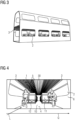
- FIG 4 a position is shown in which some people are in the interior 10 .
- the people are sitting on the seats 11 so that the weight sensors 12 recognize that these seats 11 are occupied. Since only some of the seats 11 are occupied, an average degree of occupancy is assigned to this state.
- the lights 3 are now controlled in such a way that they emit yellow or orange light. This is in turn visible from outside the rail vehicle, so that a passenger on the platform knows that the interior 10 or the seats 11 provided therein are already partially occupied and it is better for him to choose another wagon for boarding. In this way, the passengers can sort themselves out as soon as the train arrives at the platform and make a significant contribution to optimizing passenger flow.
- FIG 5 a position is shown in which the interior 10 of the rail vehicle is full of passengers.
- each seat 11 is occupied by a passenger.
- a high degree of occupancy of the interior 10 is now determined with the aid of the weight sensors 12 or another suitable measuring system.
- the lights 3 are now controlled in such a way that they emit red light.
- all or almost all of the seats 11 are occupied (see also figure 6 ).
- figure 7 shows a flowchart for an embodiment of the method for operating a lamp 3. For example, it is in connection with Figures 1 to 6 described rail vehicle. With the procedure then at least one of the lights 3 operated in the interior 10 of the rail vehicle.
- a degree of occupancy of the interior 10 with passengers is determined.
- the lamp 3 is then operated as a function of the determined degree of occupancy, the light emitted by the lamp 3 being representative of the degree of occupancy of the interior 10. For example, the lamp is operated in such a way that it emits light of different colors for different degrees of occupancy.
- step S3 which can be carried out after or at the same time as step S2, the light is then operated in such a way that a person outside the rail vehicle is signaled the way to another interior of the rail vehicle in which the occupancy rate is lower than in is the interior space in which the lamp 3 is arranged.
- the lamp 3 is operated in such a way that it generates a running light along the longitudinal direction L, which signals a direction parallel or antiparallel to the longitudinal direction L.
- separate measuring systems in individual wagons communicate with one another and determine an occupancy gradient, ie from heavily occupied to little occupied, in order to thereby determine and define the direction of the running light.
Landscapes
- Engineering & Computer Science (AREA)
- Mechanical Engineering (AREA)
- Arrangements Of Lighting Devices For Vehicle Interiors, Mounting And Supporting Thereof, Circuits Therefore (AREA)
- Lighting Device Outwards From Vehicle And Optical Signal (AREA)
Description
- Es werden ein Verfahren zum Betreiben einer Leuchte und ein Schienenfahrzeug angegeben.
- Die Erfindung bezieht sich auf ein Verfahren zum Betreiben einer Leuchte nach dem Oberbegriff von Anspruch 1, wonach die Leuchte in einem Innenraum des Schienenfahrzeuges angeordnet ist und im Betrieb einen Bereich des Innenraums beleuchtet, das Schienenfahrzeug ein Fenster umfasst, über das von außerhalb des Schienenfahrzeuges in den Innenraum hineingesehen werden kann, der Innenraum eine Decke aufweist, ein Belegungsgrad des Innenraums mit Fahrgästen ermittelt wird und die Leuchte in Abhängigkeit von dem ermittelten Belegungsgrad betrieben wird, wobei das von der Leuchte emittierte Licht repräsentativ für den Belegungsgrad des Innenraums ist.
- Ein solches Verfahren zum Betreiben einer Leuchte ist aus der
DE 10 2009 046628 A1 bekannt, wobei im Deckenbereich eine in ihrer Farbgebung ansteuerbare LED-Lichtleiste zum Einsatz kommt. Nach derDE 10 2014 208221 A1 sind in einem Doppelstockwagen im Treppenbereich Beleuchtungseinrichtungen vorgesehen, die einen Besetzungsgrad in einem über die Treppe erreichbaren Innenraum wiedergeben. - Eine zu lösende Aufgabe besteht darin, ein Verfahren anzugeben, mit dem Personen, die sich außerhalb eines Schienenfahrzeuges auf einem Bahnsteig befinden, auf einfache Weise Informationen über den Belegungsgrad eines Innenraums, insbesondere eines Abteils, in dem Schienenfahrzeug erkennen können. Eine weitere zu lösende Aufgabe besteht darin, ein Schienenfahrzeug anzugeben, mit dem ein solches Verfahren durchführbar ist.
- Diese Aufgaben werden unter anderem durch die Gegenstände des Patentanspruchs 1 und des Patentanspruchs 10 gelöst. Vorteilhafte Ausgestaltungen und Weiterbildungen sind Gegenstand der weiteren abhängigen Patentansprüche und gehen weiterhin aus der nachfolgenden Beschreibung und den Zeichnungen hervor. Zunächst wird das Verfahren zum Betreiben einer Leuchte angegeben. Die Leuchte befindet sich in einem Innenraum eines Schienenfahrzeugs, insbesondere in einem Waggon oder Abteil des Schienenfahrzeuges. Bei dem Schienenfahrzeug handelt es sich insbesondere um einen Personenzug.
- Gemäß zumindest einer Ausführungsform beleuchtet die Leuchte im Betrieb einen Bereich des Innenraums. Das heißt, die Leuchte ist auf einen Bereich in dem Innenraum, zum Beispiel auf eine Decke und/oder eine Seitenwand und/oder den Boden, gerichtet und beleuchtet diesen Bereich aus. Die Beleuchtung dieses Bereichs kann für einen Fahrgast innerhalb des Schienenfahrzeuges sichtbar sein. Das heißt, das von dem Bereich reflektierte Licht ist beispielsweise für einen Fahrgast auf einem Sitz in dem Innenraum sichtbar.
- Das Schienenfahrzeug umfasst ein Fenster. Das Fenster ist insbesondere an einer Seitenwand des Schienenfahrzeuges angeordnet. Durch das Fenster kann von außerhalb des Schienenfahrzeuges in den Innenraum hineingesehen werden. Das Fenster weist beispielsweise eine Fläche von zumindest 1 m2 oder zumindest 2 m2 auf. Das Fenster befindet sich insbesondere auf Höhe von Sitzen in dem Schienenfahrzeug, so dass ein Fahrgast in dem Schienenfahrzeug, der auf einem solchen Sitz sitzt, durch das Fenster aus dem Schienenfahrzeug hinausblicken kann.
- Das von der Leuchte im Betrieb emittierte Licht tritt teilweise über das Fenster aus dem Schienenfahrzeug aus und ist von außerhalb des Schienenfahrzeuges sichtbar. Das heißt, die Leuchte ist so in dem Innenraum des Schienenfahrzeuges angeordnet, dass das von der Leuchte emittierte Licht von außerhalb des Schienenfahrzeuges sichtbar ist. Die Decke reflektiert der von der Leuchte beleuchtete Bereich des Innenraums einen Teil dieses Lichtes, welches dann über das Fenster aus dem Schienenfahrzeug austritt. Bevorzugt ist ein Großteil des von der Leuchte stammenden und durch das Fenster hindurchtretenden Lichts zuvor von dem beleuchteten Bereich reflektiert worden.
- Erfindungsgemäss umfasst das Verfahren einen Schritt, in dem ein Belegungsgrad des Innenraums mit Fahrgästen ermittelt wird. Das heißt, es wird ermittelt, wie viele Fahrgäste sich in dem Innenraum des Schienenfahrzeuges befinden. Der Belegungsgrad ist repräsentativ für diese Anzahl. Beispielsweise wird ermittelt, wie viele Sitze in dem Innenraum des Schienenfahrzeuges von Fahrgästen belegt sind.
- Gemäß der Erfindung umfasst das Verfahren einen Schritt, in dem die Leuchte in Abhängigkeit von dem ermittelten Belegungsgrad betrieben wird, wobei das von der Leuchte emittierte Licht repräsentativ für den Belegungsgrad des Innenraums ist. Mit anderen Worten signalisiert das von der Leuchte emittierte Licht einem Fahrgast außerhalb und bevorzugt auch einem Fahrgast im Innenraum des Schienenfahrzeuges, wie stark der Innenraum bereits mit Fahrgästen belegt ist. Zum Betreiben der Leuchte umfasst das Schienenfahrzeug insbesondere eine Steuervorrichtung, die signaltechnisch mit der Leuchte verbunden ist und die Leuchte in Abhängigkeit von dem Belegungsgrad ansteuert/betreibt.
- In mindestens einer Ausführungsform des Verfahrens zum Betreiben einer Leuchte ist die Leuchte in einem Innenraum des Schienenfahrzeuges angeordnet. Die Leuchte beleuchtet im Betrieb einen Bereich des Innenraums. Das Schienenfahrzeug umfasst ein Fenster, über das von außerhalb des Schienenfahrzeuges in den Innenraum hineingesehen werden kann. Das von der Leuchte im Betrieb emittierte Licht tritt teilweise über das Fenster aus dem Schienenfahrzeug aus und ist von außerhalb des Schienenfahrzeuges sichtbar. Bei dem Verfahren wird zunächst ein Belegungsgrad des Innenraums mit Fahrgästen ermittelt. Anschließend wird die Leuchte in Abhängigkeit von dem ermittelten Belegungsgrad betrieben, wobei das von der Leuchte emittierte Licht repräsentativ für den Belegungsgrad des Innenraums ist.
- Der vorliegenden Erfindung liegt insbesondere die Idee zu Grunde, einem Fahrgast für einen Transport in einem Schienenfahrzeug bereits während sich der Fahrgast noch auf dem Bahnsteig befindet, zu signalisieren, wie stark ein Innenraum beziehungsweise Abteil oder Waggon des Schienenfahrzeuges bereits mit Fahrgästen belegt ist. Vorliegend wird dies dem Fahrgast durch ein Lichtsignal, was von einer Leuchte innerhalb des Innenraums emittiert wird und durch das Fenster nach außen dringt, signalisiert. Lichtsignale, insbesondere Farben, sind für die meisten Menschen intuitiv verständlich.
- Gemäß zumindest einer Ausführungsform ist die Leuchte dazu eingerichtet, Licht verschiedener Farben zu emittieren. Beispielsweise umfasst die Leuchte dazu verschiedene LEDs, beispielsweise eine oder mehrere rote LEDs, eine oder mehrere grüne LEDs und eine oder mehrere blaue LEDs. Durch individuelles Ansteuern der LEDs können verschiedene Lichtfarben erzeugt werden. Zum Beispiel ist die Leuchte dazu eingerichtet, rotes Licht, gelbes und/oder oranges Licht und grünes Licht zu erzeugen.
- Gemäß zumindest einer Ausführungsform sind unterschiedlichen Belegungsgraden des Innenraums unterschiedliche Farben zugeordnet. Beispielsweise ist einem niedrigen Belegungsgrad die Farbe Grün zugeordnet, einem mittleren Belegungsgrad die Farbe Gelb/Orange und einem hohen Belegungsgrad die Farbe Rot. Ein niedriger Belegungsgrad ist beispielsweise dadurch gekennzeichnet, dass höchstens 30 % der Plätze oder Sitze von Fahrgästen belegt sind. Ein mittlerer Belegungsgrad ist beispielsweise dadurch gekennzeichnet, dass höchstens 60 % und mehr als 30 % der Plätze oder Sitze belegt sind. Ein hoher Belegungsgrad ist beispielsweise dadurch gekennzeichnet, dass mehr als 60 % der Plätze oder Sitze belegt sind.
- Gemäß zumindest einer Ausführungsform wird die Leuchte in Abhängigkeit von dem ermittelten Belegungsgrad des Innenraums so betrieben, dass die Leuchte Licht der dem Belegungsgrad zugeordneten Farbe emittiert. Für einen Fahrgast außerhalb des Schienenfahrzeuges, beispielsweise auf einem Bahnsteig, ist dann anhand der Farbe erkennbar, wie hoch der Belegungsgrad in dem Innenraum ist.
- Gemäß zumindest einer Ausführungsform wird der Belegungsgrad des Innenraums mit Fahrgästen automatisiert ermittelt. Dazu sind in dem Innenraum bevorzugt Sensoren, wie Kameras und/oder Gewichtssensoren in Sitzen, angeordnet, mit denen der Belegungsgrad ermittelt wird.
- Das von der Leuchte emittierte Licht trifft nicht direkt auf das Fenster. Dafür ist der von der Leuchte beleuchtete Bereich des Innenraums durch das Fenster hindurch von außerhalb des Schienenfahrzeuges sichtbar. Das heißt, das gesamte von der Leuchte stammende und durch das Fenster hindurchtretende Licht ist indirektes Licht, welches vor dem Hindurchtreten durch das Fenster von dem beleuchteten Bereich im Innenraum reflektiert wurde. Die Leuchte ist also nicht direkt auf das Fenster gerichtet. Dadurch wird eine Blendung von Fahrgästen außerhalb des Schienenfahrzeuges vermieden.
- Gemäß zumindest einer Ausführungsform wird die Leuchte so betrieben, dass ein Weg beziehungsweise eine Richtung zu einem anderen Innenraum, zum Beispiel eines anderen Waggons, des Schienenfahrzeuges signalisiert wird. Insbesondere wird dies einer Person außerhalb des Schienenfahrzeuges signalisiert. In dem anderen Innenraum ist der Belegungsgrad geringer als in dem Innenraum, in dem die Leuchte angeordnet ist. Beispielsweise erzeugt die Leuchte ein Lauflicht, welches die Richtung zum nächsten freieren Innenraum anzeigt und von außerhalb des Schienenfahrzeuges sichtbar ist.
- Um dies zu realisieren, umfasst das Schienenfahrzeug beispielsweise ein System, das signaltechnisch mit den Sensoren aus den verschiedenen Innenräumen beziehungsweise Waggons verbunden ist. Das System ist zum Beispiel dazu eingerichtet, die Belegungsgrade in den unterschiedlichen Innenräumen miteinander zu vergleichen und beispielsweise ein Belegungsgradgefälle entlang des Schienenfahrzeuges zu ermitteln. In Abhängigkeit von dem Vergleich oder dem Belegungsgradgefälle steuert dann die Steuervorrichtung die Leuchte an, um den Weg zu einem weniger belegten Innenraum anzuzeigen.
- Der Innenraum weist eine Decke auf. Die Leuchte ist derart auf die Decke gerichtet, dass das von der Leuchte emittierte Licht an der Decke reflektiert wird und daraufhin über das Fenster aus dem Schienenfahrzeug austritt. Insbesondere ist das gesamte von der Leuchte stammende und durch das Fenster hindurchtretende Licht zuvor an der Decke reflektiert worden.
- Die Leuchte ist beispielsweise so auf die Decke gerichtet, dass die Decke streifend beleuchtet wird. Das heißt, ein Einfallswinkel des von der Leuchte emittierten Lichts, gemessen zwischen der Hauptstrahlrichtung des Lichts und einer Flächennormalen auf die Decke, ist größer 0°, beispielsweise zumindest 45° oder zumindest 60°. Durch eine solche Beleuchtung der Decke wird eine Blendung der Fahrgäste innerhalb des Schienenfahrzeuges vermieden. Zudem wird so ein großer Bereich der Decke angestrahlt, was die Sichtbarkeit von außen verbessert.
- Gemäß zumindest einer Ausführungsform weist die Decke einen konkav gekrümmten Abschnitt auf, auf den die Leuchte gerichtet ist. Der konkav gekrümmte Abschnitt bildet bevorzugt den Übergang zu einer Seitenwand des Innenraums. An dem konkav gekrümmten Abschnitt wird das Licht der Leuchte reflektiert und tritt daraufhin über das Fenster, bevorzugt auf der gegenüberliegenden Seite, aus dem Schienenfahrzeug aus. Insbesondere ist der konkav gekrümmte Abschnitt von außerhalb des Schienenfahrzeuges durch das Fenster hindurch sichtbar.
- Gemäß zumindest einer Ausführungsform ist die Leuchte an einer Seitenwand des Schienenfahrzeuges angeordnet. Beispielsweise ist dann die Leuchte schräg nach oben auf die Decke, insbesondere auf den konkav gekrümmten Abschnitt der Decke, gerichtet. Die Leuchte kann von einer Blende überdeckt sein, sodass die Leuchte von außerhalb des Schienenfahrzeuges und/oder vom Innenraum aus nicht sichtbar ist.
- Gemäß zumindest einer Ausführungsform ist die Leuchte länglich ausgebildet und umfasst eine Vielzahl von entlang einer Längsrichtung hintereinander aufgereihten LEDs. Beispielsweise erstreckt sich die Leuchte über die gesamte oder zumindest einen Großteil der Länge des Innenraums. Die Leuchte erstreckt sich beispielsweise parallel zu einer Kante zwischen der Decke und der Seitenwand. Die Längsrichtung, entlang der die LEDs aufgereiht sind, verläuft beispielsweise parallel zu einer Längsachse des Schienenfahrzeuges. Die Länge der Leuchte, über die die LEDs hintereinander aufgereiht sind, beträgt beispielsweise zumindest 1 m oder zumindest 3 m oder zumindest 5 m oder zumindest 10 m. Zum Beispiel weist die Leuchte zumindest zehn oder zumindest 50 LEDs auf.
- Gemäß zumindest einer Ausführungsform umfasst die Decke eine Mehrzahl von Zierprofilen, die entlang einer Querrichtung nebeneinander angeordnet sind und sich jeweils entlang einer senkrecht zur Querrichtung verlaufenden Längsrichtung erstrecken. Die Längsrichtung der Zierprofile verläuft insbesondere parallel zur Längsrichtung der Leuchte. Die Zierprofile umfassen beispielsweise Kunststoff oder Metall, wie Aluminium oder Edelstahl, oder bestehen daraus. Zwischen den Zierprofilen können weitere LEDs angeordnet sein, die im Betrieb den Innenraum beleuchten.
- Als nächstes wird das Schienenfahrzeug angegeben. Das Schienenfahrzeug umfasst einen Innenraum, insbesondere zur Aufnahme von Fahrgästen. In dem Innenraum des Schienenfahrzeuges sind beispielsweise mehrere Sitze angeordnet. Ferner umfasst das Schienenfahrzeug ein Fenster, über das von außerhalb des Schienenfahrzeuges in den Innenraum hineingesehen werden kann. Das Schienenfahrzeug umfasst eine Leuchte, die im Betrieb einen Bereich des Innenraums beleuchtet. Das Licht der Leuchte tritt über das Fenster aus dem Schienenfahrzeug aus. Ferner umfasst das Schienenfahrzeug eine Steuervorrichtung, die signaltechnisch mit der Leuchte verbunden ist. Die Leuchte und die Steuervorrichtung sind so eingerichtet, dass mit ihnen ein hier beschriebenes Verfahren durchführbar ist. Insbesondere sind die Leuchte und die Steuervorrichtung also so eingerichtet, dass die Leuchte in Abhängigkeit von einem ermittelten Belegungsgrad betreibbar ist, wobei das von der Leuchte emittierte Licht repräsentativ für den Belegungsgrad ist.
- Bevorzugt umfasst das Schienenfahrzeug weiter einen oder mehrere Sensoren, mit denen der Belegungsgrad des Innenraums automatisiert ermittelt werden kann.
- Die oben genannten Eigenschaften, Merkmale und Vorteile der Erfindung und die Art und Weise, wie diese erreicht werden, werden durch die folgende Beschreibung der Ausführungsbeispiele der Erfindung in Verbindung mit den entsprechenden Figuren weitergehend erläutert, wobei
Figuren 1 bis 6 verschiedene Ansichten eines Ausführungsbeispiels eines Schienenfahrzeuges zeigen,
Figur 7 ein Ablaufdiagramm eines Ausführungsbeispiels des Verfahrens zeigt. -
Figur 1 zeigt den Innenraum 10 eines Schienenfahrzeuges in Querschnittsansicht. Bei dem Schienenfahrzeug handelt es sich insbesondere um einen Personenzug. Der Innenraum 10 ist durch zwei Seitenwände 6, eine Decke 1 und einen Boden 4 begrenzt. In die Seitenwände 6 sind jeweils Fenster 2 eingebracht. An den Seitenwänden 6 sind Leuchten 3 angeordnet. In dem Innenraum sind außerdem Sitze 11 angeordnet, auf die sich die Fahrgäste setzen können. Außerdem ist eine Steuervorrichtung 7 vorgesehen, die signaltechnisch mit den Leuchten 3 verbunden ist und zur Ansteuerung der Leuchten 3 eingerichtet ist. - Die Decke 1 umfasst eine Mehrzahl von Zierprofilen 5, die in einer Querrichtung Q nebeneinander parallel angeordnet sind und sich jeweils entlang einer Längsrichtung L erstrecken. Die Decke 1 umfasst im Bereich der Übergänge zu den Seitenwänden 6 konkav gekrümmte Abschnitte 1a.
- Die Leuchten 3 an den Seitenwänden 6 sind schräg nach oben auf die Decke 1 gerichtet und beleuchten im Betrieb die konkav gekrümmten Abschnitte 1a streifend. Das von den Leuchten 3 emittierte und an der Decke 1 reflektierte Licht tritt jeweils am gegenüberliegenden Fenster 2 aus dem Schienenfahrzeug aus und ist von außerhalb des Schienenfahrzeuges sichtbar. Dadurch, dass die Leuchten 3 auf die Decke 1 gerichtet sind, werden Fahrgäste innerhalb des Schienenfahrzeuges nicht geblendet und der Lichtaustrittseffekt auch nicht durch die Fahrgäste selbst verdeckt oder reduziert.
- Die Decke 1 umfasst außerdem eine weitere Leuchte 30, die auf den Boden 4 gerichtet ist und zur Beleuchtung des Innenraums 10 dient.
-
Figur 2 zeigt den Innenraum 10 derFigur 1 nochmals in perspektivischer Ansicht. Hier ist zu erkennen, dass sich die Zierprofile 5 der Decke 1 jeweils entlang einer Längsrichtung L erstrecken. Die Leuchten 3 sowie die weitere Leuchte 30 erstrecken sich ebenfalls entlang der Längsrichtung L und nahezu über die gesamte Länge des Innenraums 10. - Diese Leuchten 3 können, der besseren Fertigbarkeit halber, auch zwischendurch geteilt, dabei aber weiterhin fluchtend angeordnet sein. Gleiches gilt für die weitere Leuchte 30.
- Beispielsweise umfassen die Leuchten 3 und die weitere Leuchte 30 dazu jeweils eine Mehrzahl von LEDs, die entlang der Längsrichtung L hintereinander aufgereiht sind.
- Wie in
Figur 2 zu erkennen ist, sind in dem Innenraum 10 keine Fahrgäste. Durch Gewichtssensoren 12 in den Sitzen 11 und/oder über CCTV-Kameras und/oder über Zählsensoren in den Einstiegen und den einzelnen Abteilen und/oder über ein anderes geeignetes System wird erkannt, dass die Sitze 11 nicht besetzt sind und es wird ermittelt, dass der Belegungsgrad des Innenraums 10 mit Fahrgästen gering ist. In Abhängigkeit des ermittelten Belegungsgrads werden die Leuchten 3 nun betrieben beziehungsweise angesteuert. Vorliegend werden die Leuchten 3 bei diesem Belegungsgrad so betrieben, dass sie grünes Licht emittieren. Dieses grüne Licht ist durch die Reflexion an der Decke 1 von außerhalb des Schienenfahrzeuges durch die Fenster 2 hindurch sichtbar. Für einen Fahrgast auf einem Bahnsteig ist nun erkennbar, dass der Innenraum 10 beziehungsweise der zugeordnete Waggon noch freie Sitzplätze hat (siehe dazu auchFigur 3 ). Denkbar ist auch, dass der Belegungsgrad gemessen und ein entsprechendes Lichtsignal vorbereitet wird - in diesem Fall grün - dieses aber erst bei Einfahrt an einen Bahnhof ein- beziehungsweise umgeschaltet wird. Während der Fahrt wird beispielsweise "normales" weißes LED-Licht als indirekte Ambiente-Beleuchtung emittiert. - In der
Figur 4 ist eine Position gezeigt, bei dem sich einige Personen in dem Innenraum 10 befinden. Die Personen sitzen auf den Sitzen 11, so dass von den Gewichtssensoren 12 erkannt wird, dass diese Sitze 11 belegt sind. Da nur ein Teil der Sitze 11 belegt ist, wird diesem Zustand ein mittlerer Belegungsgrad zugeordnet. In Abhängigkeit von diesem ermittelten mittleren Belegungsgrad werden nun die Leuchten 3 so angesteuert, dass sie gelbes oder oranges Licht emittieren. Dieses ist wiederum von außerhalb des Schienenfahrzeuges sichtbar, so dass ein Fahrgast auf dem Bahnsteig weiß, dass der Innenraum 10 beziehungsweise die darin vorgesehenen Sitze 11 bereits teilweise belegt sind und er besser einen anderen Waggon für den Zustieg wählt. Somit können sich die Fahrgäste bereits bei Einfahrt des Zuges am Bahnsteig sortieren und erheblich zu einer Fahrgastflussoptimierung beitragen. - In der
Figur 5 ist eine Position gezeigt, bei dem der Innenraum 10 des Schienenfahrzeuges voll mit Fahrgästen ist. Insbesondere ist jeder Sitz 11 mit einem Fahrgast belegt. Mithilfe der Gewichtssensoren 12 oder einem anderen geeigneten Mess-System wird nun ein hoher Belegungsgrad des Innenraums 10 ermittelt. In Abhängigkeit von diesem ermittelten hohen Belegungsgrad werden nun die Leuchten 3 so angesteuert, dass sie rotes Licht emittieren. Für einen Fahrgast außerhalb des Schienenfahrzeuges ist dadurch erkennbar, dass alle oder nahezu alle Sitze 11 belegt sind (siehe auchFigur 6 ). -
Figur 7 zeigt ein Ablaufdiagramm zu einem Ausführungsbeispiel des Verfahrens zum Betreiben einer Leuchte 3. Beispielsweise handelt es sich dabei um das im Zusammenhang mit denFiguren 1 bis 6 beschriebene Schienenfahrzeug. Mit dem Verfahren wird dann zumindest eine der Leuchten 3 in dem Innenraum 10 des Schienenfahrzeuges betrieben. - In einem Schritt S1 des Verfahrens wird ein Belegungsgrad des Innenraums 10 mit Fahrgästen ermittelt. In einem Schritt S2 wird daraufhin in Abhängigkeit von dem ermittelten Belegungsgrad die Leuchte 3 betrieben, wobei das von der Leuchte 3 emittierte Licht repräsentativ für den Belegungsgrad des Innenraums 10 ist. Beispielsweise wird die Leuchte so betrieben, dass Sie für unterschiedliche Belegungsgrade Licht unterschiedlicher Farben emittiert.
- In einem optionalen Schritt S3, der nach oder gleichzeitig mit dem Schritt S2 durchgeführt werden kann, wird die Leuchte dann noch so betrieben, dass einer Person außerhalb des Schienenfahrzeuges ein Weg zu einem anderen Innenraum des Schienenfahrzeuges signalisiert wird, in dem der Belegungsgrad geringer als in dem Innenraum ist, in dem die Leuchte 3 angeordnet ist. Beispielsweise wird die Leuchte 3 dafür so betrieben, dass sie ein Lauflicht entlang der Längsrichtung L erzeugt, das eine Richtung parallel oder antiparallel zur Längsrichtung L signalisiert. Hierzu ist beispielsweise vorgesehen, dass separate Messsysteme in einzelnen Waggons miteinander kommunizieren und ein Belegungsgefälle ermitteln, also von stark belegt zu wenig belegt, um dadurch die Richtung des Lauflichtes zu ermitteln und festzulegen.
- Obwohl die Erfindung anhand von Ausführungsbeispielen detailliert dargestellt und beschrieben wurde, ist die Erfindung nicht auf die offenbarten Ausführungsbeispiele und die darin erläuterten konkreten Merkmalskombinationen beschränkt. Weitere Variationen der Erfindung können von einem Fachmann erhalten werden, ohne den Schutzumfang der beanspruchten Erfindung zu verlassen.
Claims (10)
- Verfahren zum Betreiben einer Leuchte (3), wobei- die Leuchte (3) in einem Innenraum (10) eines Schienenfahrzeuges angeordnet ist und im Betrieb einen Bereich des Innenraums (10) beleuchtet,- das Schienenfahrzeug ein Fenster (2) umfasst, über das von außerhalb des Schienenfahrzeuges in den Innenraum (10) hineingesehen werden kann,- der Innenraum (10) eine Decke (1) aufweist,- ein Belegungsgrad des Innenraums (10) mit Fahrgästen ermittelt wird und- die Leuchte (3) in Abhängigkeit von dem ermittelten Belegungsgrad betrieben wird, wobei das von der Leuchte (3) emittierte Licht repräsentativ für den Belegungsgrad des Innenraums (10) ist, dadurch gekennzeichnet, dass- das von der Leuchte (3) im Betrieb emittierte Licht teilweise über das Fenster (2) aus dem Schienenfahrzeug austritt und von außerhalb des Schienenfahrzeuges sichtbar ist und- die Leuchte (3) derart auf die Decke (1) gerichtet ist, dass das von der Leuchte (3) emittierte Licht an der Decke (1) reflektiert wird und daraufhin über das Fenster (2) aus dem Schienenfahrzeug austritt.
- Verfahren nach Anspruch 1, wobei- die Leuchte (3) dazu eingerichtet ist, Licht verschiedener Farben zu emittieren,- unterschiedlichen Belegungsgraden des Innenraums (10) unterschiedliche Farben zugeordnet sind,- die Leuchte (3) in Abhängigkeit von dem ermittelten Belegungsgrad des Innenraums (10) so betrieben wird, dass die Leuchte (3) Licht der dem Belegungsgrad zugeordneten Farbe emittiert.
- Verfahren nach Anspruch 1 oder 2,
wobei der Belegungsgrad des Innenraums (10) mit Fahrgästen automatisiert ermittelt wird. - Verfahren nach einem der vorhergehenden Ansprüche, wobei- das von der Leuchte (3) emittierte Licht nicht direkt auf das Fenster (2) trifft,- der von der Leuchte (3) beleuchtete Bereich durch das Fenster (2) hindurch von außerhalb des Schienenfahrzeuges sichtbar ist.
- Verfahren nach einem der vorhergehenden Ansprüche,
wobei die Leuchte (3) so betrieben wird, dass ein Weg zu einem anderen Innenraum des Schienenfahrzeuges signalisiert wird, in dem der Belegungsgrad geringer ist als in dem Innenraum (10), in dem die Leuchte (3) angeordnet ist. - Verfahren nach einem der Ansprüche 1 bis 5,
wobei die Decke (1) einen konkav gekrümmten Abschnitt (1a) aufweist, auf den die Leuchte (3) gerichtet ist. - Verfahren nach einem der vorhergehenden Ansprüche,
wobei die Leuchte (3) an einer Seitenwand (6) des Schienenfahrzeuges angeordnet ist. - Verfahren nach einem der vorhergehenden Ansprüche,
wobei die Leuchte (3) länglich ausgebildet ist und eine Vielzahl von entlang einer Längsrichtung (L) hintereinander aufgereihten LEDs umfasst. - Verfahren nach einem der vorhergehenden Ansprüche,
wobei die Decke (1) eine Mehrzahl von Zierprofilen (5) umfasst, die entlang einer Querrichtung (Q) nebeneinander angeordnet sind und sich jeweils entlang einer senkrecht zur Querrichtung (Q) verlaufenden Längsrichtung (L) erstrecken. - Schienenfahrzeug umfassend- einen Innenraum (10) zur Aufnahme von Fahrgästen, wobei der Innenraum eine Decke aufweist,- ein Fenster (2), über das von außerhalb des Schienenfahrzeuges in den Innenraum (10) hineingesehen werden kann,- eine Leuchte (3), die im Betrieb einen Bereich des Innenraums (10) beleuchtet, wobei die Leuchte (3) derart auf die Decke (1) gerichtet ist, dass das Licht der Leuchte (3) über das Fenster (2) aus dem Schienenfahrzeug austritt,- Mittel zum Erfassen des Belegungsgrads,- eine Steuervorrichtung (7), die signaltechnisch mit der Leuchte (3) verbunden ist, wobei- die Leuchte (3) und die Steuervorrichtung (7) so eingerichtet sind, dass mit ihnen ein Verfahren nach einem der vorhergehenden Ansprüche durchführbar ist.
Priority Applications (2)
| Application Number | Priority Date | Filing Date | Title |
|---|---|---|---|
| RS20230569A RS64373B1 (sr) | 2020-04-01 | 2021-03-05 | Postupak za rad svetiljke i šinsko vozilo |
| HRP20230664TT HRP20230664T1 (hr) | 2020-04-01 | 2021-03-05 | Postupak za upravljanje radom svjetiljke i željezničko vozilo |
Applications Claiming Priority (1)
| Application Number | Priority Date | Filing Date | Title |
|---|---|---|---|
| DE102020204223.3A DE102020204223A1 (de) | 2020-04-01 | 2020-04-01 | Verfahren zum Betreiben einer Leuchte und Schienenfahrzeug |
Publications (2)
| Publication Number | Publication Date |
|---|---|
| EP3889000A1 EP3889000A1 (de) | 2021-10-06 |
| EP3889000B1 true EP3889000B1 (de) | 2023-04-26 |
Family
ID=74859280
Family Applications (1)
| Application Number | Title | Priority Date | Filing Date |
|---|---|---|---|
| EP21160920.1A Active EP3889000B1 (de) | 2020-04-01 | 2021-03-05 | Verfahren zum betreiben einer leuchte und schienenfahrzeug |
Country Status (9)
| Country | Link |
|---|---|
| EP (1) | EP3889000B1 (de) |
| DE (1) | DE102020204223A1 (de) |
| DK (1) | DK3889000T3 (de) |
| ES (1) | ES2950172T3 (de) |
| HR (1) | HRP20230664T1 (de) |
| HU (1) | HUE062225T2 (de) |
| PL (1) | PL3889000T3 (de) |
| PT (1) | PT3889000T (de) |
| RS (1) | RS64373B1 (de) |
Cited By (1)
| Publication number | Priority date | Publication date | Assignee | Title |
|---|---|---|---|---|
| WO2025045690A1 (de) * | 2023-09-01 | 2025-03-06 | Siemens Mobility GmbH | Steuerung einer beleuchtungseinrichtung eines fahrgastraums |
Families Citing this family (1)
| Publication number | Priority date | Publication date | Assignee | Title |
|---|---|---|---|---|
| DE102024108469A1 (de) * | 2024-03-25 | 2025-09-25 | Avl Software And Functions Gmbh | Steuereinheit für ein Notbeleuchtungssystem |
Family Cites Families (7)
| Publication number | Priority date | Publication date | Assignee | Title |
|---|---|---|---|---|
| DE102009046628A1 (de) * | 2009-11-11 | 2011-05-12 | Ifm Electronic Gmbh | Verfahren und System zur Erfassung einer Belegungsdichte in einem Verkehrsmittel |
| EP2738060A1 (de) | 2012-11-29 | 2014-06-04 | Bombardier Transportation GmbH | Passagierleitsystem zum Leiten von Passagieren in einem öffentlichen Verkehrsmittlel |
| DE202014010584U1 (de) * | 2014-04-30 | 2016-01-12 | Siemens Aktiengesellschaft | Schienenfahrzeug mit einer doppelstöckigen Fahrgastraumanordnung und einer Treppe |
| DE102014222204A1 (de) * | 2014-10-30 | 2016-05-04 | Bombardier Transportation Gmbh | Verfahren zur Bereitstellung einer Verkehrsmittelinformation |
| DE102016205100A1 (de) | 2016-03-29 | 2017-11-09 | Siemens Aktiengesellschaft | Beleuchtungsvorrichtung und Verfahren zum Beleuchten einer Fahrgastraumdecke eines Fahrzeugs |
| DE102016123587A1 (de) | 2016-12-06 | 2018-06-07 | Bombardier Transportation Gmbh | Verfahren zum Visualisieren von Informationen für Fahrgäste eines Fahrzeugs |
| DE102018211605A1 (de) | 2018-07-12 | 2020-01-16 | Siemens Aktiengesellschaft | Fahrzeuginnendecke, Beleuchtungssystem mit einer solchen Fahrzeuginnendecke, Fahrzeug zur Personenbeförderung und Verwendung |
-
2020
- 2020-04-01 DE DE102020204223.3A patent/DE102020204223A1/de not_active Ceased
-
2021
- 2021-03-05 EP EP21160920.1A patent/EP3889000B1/de active Active
- 2021-03-05 DK DK21160920.1T patent/DK3889000T3/da active
- 2021-03-05 HU HUE21160920A patent/HUE062225T2/hu unknown
- 2021-03-05 RS RS20230569A patent/RS64373B1/sr unknown
- 2021-03-05 HR HRP20230664TT patent/HRP20230664T1/hr unknown
- 2021-03-05 PL PL21160920.1T patent/PL3889000T3/pl unknown
- 2021-03-05 ES ES21160920T patent/ES2950172T3/es active Active
- 2021-03-05 PT PT211609201T patent/PT3889000T/pt unknown
Cited By (1)
| Publication number | Priority date | Publication date | Assignee | Title |
|---|---|---|---|---|
| WO2025045690A1 (de) * | 2023-09-01 | 2025-03-06 | Siemens Mobility GmbH | Steuerung einer beleuchtungseinrichtung eines fahrgastraums |
Also Published As
| Publication number | Publication date |
|---|---|
| HRP20230664T1 (hr) | 2023-09-29 |
| DE102020204223A1 (de) | 2021-10-07 |
| HUE062225T2 (hu) | 2023-10-28 |
| PL3889000T3 (pl) | 2023-07-24 |
| ES2950172T3 (es) | 2023-10-05 |
| RS64373B1 (sr) | 2023-08-31 |
| DK3889000T3 (da) | 2023-06-12 |
| PT3889000T (pt) | 2023-05-29 |
| EP3889000A1 (de) | 2021-10-06 |
Similar Documents
| Publication | Publication Date | Title |
|---|---|---|
| EP2148129B1 (de) | System zur Beleuchtung eines Tunnels oder einer Unterführung | |
| DE102005039651B4 (de) | Illumination im Bereich von Flugzeugkabinen | |
| DE102018101005A1 (de) | Eissensorbaugruppe für kraftfahrzeuge und betriebsverfahren | |
| EP3889000B1 (de) | Verfahren zum betreiben einer leuchte und schienenfahrzeug | |
| DE19815963A1 (de) | Leuchte, insbesondere Heckleuchte für Kraftfahrzeuge | |
| DE102008018938B4 (de) | Schienenfahrzeugwagen mit Sitzbelegungsanzeige | |
| EP1059230A2 (de) | Funktionseinheit für Passagierkabinen, insbesondere für Flugzeugpassagierkabinen | |
| EP0625457B1 (de) | Einstiegseinrichtung für Doppelstock-Eisenbahnwagen | |
| WO2017001185A1 (de) | Anlage zur optischen überprüfung von oberflächenbereichen von gegenständen | |
| EP2694352B1 (de) | Signalisierungseinrichtung für ein schienenfahrzeug | |
| EP1031462A2 (de) | Leuchtenanordnung für Kraftfahrzeuge | |
| DE69817376T2 (de) | Verbesserte anzeigevorrichtung für kraftfahrzeuge | |
| WO2020011462A1 (de) | Fahrzeuginnendecke, beleuchtungssystem mit einer solchen fahrzeuginnendecke, fahrzeug zur personenbeförderung und verwendung | |
| DE102010033624A1 (de) | Sitzplatzbelegungserkennungssystem für ein Kraftfahrzeug | |
| DE10337615B3 (de) | Leuchtvorrichtung für Fahrzeuge | |
| DE19959609A1 (de) | Außenrückspiegel mit integriertem Fahrtrichtungsanzeiger | |
| DE10128868A1 (de) | Verfahren und Einrichtung zur Steuerung einer Kraftfahrzeuginnenbeleuchtung | |
| DE102021001388A1 (de) | Fahrgastleitsystem und Verfahren zum Leiten von Fahrgästen | |
| DE202014010584U1 (de) | Schienenfahrzeug mit einer doppelstöckigen Fahrgastraumanordnung und einer Treppe | |
| EP1532046A1 (de) | Notbeleuchtung in einem mehrstöckigen flugzeug | |
| DE19900622A1 (de) | Vorrichtung zur indirekten Beleuchtung eines Dachhimmels | |
| EP4323236A1 (de) | Kommunikationslichtvorrichtung für einen fahrzeuginnenraum und kraftfahrzeug mit einer kommunikationslichtvorrichtung | |
| DE112017004870B4 (de) | Türpositionsanzeige einer Fluggastbrücke | |
| DE69806749T2 (de) | Montagevorrichtung für beleuchtung | |
| DE102017202923B4 (de) | Kraftfahrzeug |
Legal Events
| Date | Code | Title | Description |
|---|---|---|---|
| REG | Reference to a national code |
Ref country code: HR Ref legal event code: TUEP Ref document number: P20230664T Country of ref document: HR |
|
| PUAI | Public reference made under article 153(3) epc to a published international application that has entered the european phase |
Free format text: ORIGINAL CODE: 0009012 |
|
| STAA | Information on the status of an ep patent application or granted ep patent |
Free format text: STATUS: THE APPLICATION HAS BEEN PUBLISHED |
|
| AK | Designated contracting states |
Kind code of ref document: A1 Designated state(s): AL AT BE BG CH CY CZ DE DK EE ES FI FR GB GR HR HU IE IS IT LI LT LU LV MC MK MT NL NO PL PT RO RS SE SI SK SM TR |
|
| STAA | Information on the status of an ep patent application or granted ep patent |
Free format text: STATUS: REQUEST FOR EXAMINATION WAS MADE |
|
| 17P | Request for examination filed |
Effective date: 20220318 |
|
| RBV | Designated contracting states (corrected) |
Designated state(s): AL AT BE BG CH CY CZ DE DK EE ES FI FR GB GR HR HU IE IS IT LI LT LU LV MC MK MT NL NO PL PT RO RS SE SI SK SM TR |
|
| REG | Reference to a national code |
Ref country code: DE Free format text: PREVIOUS MAIN CLASS: B61D0029000000 Ref country code: DE Ref legal event code: R079 Ref document number: 502021000598 Country of ref document: DE Free format text: PREVIOUS MAIN CLASS: B61D0029000000 Ipc: B60Q0003470000 |
|
| GRAP | Despatch of communication of intention to grant a patent |
Free format text: ORIGINAL CODE: EPIDOSNIGR1 |
|
| STAA | Information on the status of an ep patent application or granted ep patent |
Free format text: STATUS: GRANT OF PATENT IS INTENDED |
|
| RIC1 | Information provided on ipc code assigned before grant |
Ipc: B61D 29/00 20060101ALI20221018BHEP Ipc: B60Q 3/47 20170101AFI20221018BHEP |
|
| INTG | Intention to grant announced |
Effective date: 20221109 |
|
| GRAS | Grant fee paid |
Free format text: ORIGINAL CODE: EPIDOSNIGR3 |
|
| GRAA | (expected) grant |
Free format text: ORIGINAL CODE: 0009210 |
|
| STAA | Information on the status of an ep patent application or granted ep patent |
Free format text: STATUS: THE PATENT HAS BEEN GRANTED |
|
| AK | Designated contracting states |
Kind code of ref document: B1 Designated state(s): AL AT BE BG CH CY CZ DE DK EE ES FI FR GB GR HR HU IE IS IT LI LT LU LV MC MK MT NL NO PL PT RO RS SE SI SK SM TR |
|
| REG | Reference to a national code |
Ref country code: GB Ref legal event code: FG4D Free format text: NOT ENGLISH |
|
| REG | Reference to a national code |
Ref country code: CH Ref legal event code: EP |
|
| REG | Reference to a national code |
Ref country code: DE Ref legal event code: R096 Ref document number: 502021000598 Country of ref document: DE |
|
| REG | Reference to a national code |
Ref country code: AT Ref legal event code: REF Ref document number: 1562603 Country of ref document: AT Kind code of ref document: T Effective date: 20230515 |
|
| REG | Reference to a national code |
Ref country code: IE Ref legal event code: FG4D Free format text: LANGUAGE OF EP DOCUMENT: GERMAN |
|
| REG | Reference to a national code |
Ref country code: PT Ref legal event code: SC4A Ref document number: 3889000 Country of ref document: PT Date of ref document: 20230529 Kind code of ref document: T Free format text: AVAILABILITY OF NATIONAL TRANSLATION Effective date: 20230523 |
|
| REG | Reference to a national code |
Ref country code: DK Ref legal event code: T3 Effective date: 20230609 |
|
| REG | Reference to a national code |
Ref country code: SE Ref legal event code: TRGR |
|
| REG | Reference to a national code |
Ref country code: NL Ref legal event code: FP |
|
| REG | Reference to a national code |
Ref country code: LT Ref legal event code: MG9D |
|
| REG | Reference to a national code |
Ref country code: NO Ref legal event code: T2 Effective date: 20230426 |
|
| REG | Reference to a national code |
Ref country code: HR Ref legal event code: T1PR Ref document number: P20230664 Country of ref document: HR |
|
| REG | Reference to a national code |
Ref country code: ES Ref legal event code: FG2A Ref document number: 2950172 Country of ref document: ES Kind code of ref document: T3 Effective date: 20231005 |
|
| REG | Reference to a national code |
Ref country code: HU Ref legal event code: AG4A Ref document number: E062225 Country of ref document: HU |
|
| PG25 | Lapsed in a contracting state [announced via postgrant information from national office to epo] |
Ref country code: LV Free format text: LAPSE BECAUSE OF FAILURE TO SUBMIT A TRANSLATION OF THE DESCRIPTION OR TO PAY THE FEE WITHIN THE PRESCRIBED TIME-LIMIT Effective date: 20230426 Ref country code: LT Free format text: LAPSE BECAUSE OF FAILURE TO SUBMIT A TRANSLATION OF THE DESCRIPTION OR TO PAY THE FEE WITHIN THE PRESCRIBED TIME-LIMIT Effective date: 20230426 Ref country code: IS Free format text: LAPSE BECAUSE OF FAILURE TO SUBMIT A TRANSLATION OF THE DESCRIPTION OR TO PAY THE FEE WITHIN THE PRESCRIBED TIME-LIMIT Effective date: 20230826 Ref country code: GR Free format text: LAPSE BECAUSE OF FAILURE TO SUBMIT A TRANSLATION OF THE DESCRIPTION OR TO PAY THE FEE WITHIN THE PRESCRIBED TIME-LIMIT Effective date: 20230727 |
|
| PG25 | Lapsed in a contracting state [announced via postgrant information from national office to epo] |
Ref country code: FI Free format text: LAPSE BECAUSE OF FAILURE TO SUBMIT A TRANSLATION OF THE DESCRIPTION OR TO PAY THE FEE WITHIN THE PRESCRIBED TIME-LIMIT Effective date: 20230426 |
|
| PG25 | Lapsed in a contracting state [announced via postgrant information from national office to epo] |
Ref country code: SK Free format text: LAPSE BECAUSE OF FAILURE TO SUBMIT A TRANSLATION OF THE DESCRIPTION OR TO PAY THE FEE WITHIN THE PRESCRIBED TIME-LIMIT Effective date: 20230426 |
|
| REG | Reference to a national code |
Ref country code: DE Ref legal event code: R097 Ref document number: 502021000598 Country of ref document: DE |
|
| PG25 | Lapsed in a contracting state [announced via postgrant information from national office to epo] |
Ref country code: SM Free format text: LAPSE BECAUSE OF FAILURE TO SUBMIT A TRANSLATION OF THE DESCRIPTION OR TO PAY THE FEE WITHIN THE PRESCRIBED TIME-LIMIT Effective date: 20230426 Ref country code: SK Free format text: LAPSE BECAUSE OF FAILURE TO SUBMIT A TRANSLATION OF THE DESCRIPTION OR TO PAY THE FEE WITHIN THE PRESCRIBED TIME-LIMIT Effective date: 20230426 Ref country code: RO Free format text: LAPSE BECAUSE OF FAILURE TO SUBMIT A TRANSLATION OF THE DESCRIPTION OR TO PAY THE FEE WITHIN THE PRESCRIBED TIME-LIMIT Effective date: 20230426 Ref country code: EE Free format text: LAPSE BECAUSE OF FAILURE TO SUBMIT A TRANSLATION OF THE DESCRIPTION OR TO PAY THE FEE WITHIN THE PRESCRIBED TIME-LIMIT Effective date: 20230426 |
|
| PLBE | No opposition filed within time limit |
Free format text: ORIGINAL CODE: 0009261 |
|
| STAA | Information on the status of an ep patent application or granted ep patent |
Free format text: STATUS: NO OPPOSITION FILED WITHIN TIME LIMIT |
|
| REG | Reference to a national code |
Ref country code: HR Ref legal event code: ODRP Ref document number: P20230664 Country of ref document: HR Payment date: 20240222 Year of fee payment: 4 |
|
| 26N | No opposition filed |
Effective date: 20240129 |
|
| PGFP | Annual fee paid to national office [announced via postgrant information from national office to epo] |
Ref country code: CZ Payment date: 20240228 Year of fee payment: 4 Ref country code: PT Payment date: 20240222 Year of fee payment: 4 |
|
| PG25 | Lapsed in a contracting state [announced via postgrant information from national office to epo] |
Ref country code: SI Free format text: LAPSE BECAUSE OF FAILURE TO SUBMIT A TRANSLATION OF THE DESCRIPTION OR TO PAY THE FEE WITHIN THE PRESCRIBED TIME-LIMIT Effective date: 20230426 |
|
| PG25 | Lapsed in a contracting state [announced via postgrant information from national office to epo] |
Ref country code: SI Free format text: LAPSE BECAUSE OF FAILURE TO SUBMIT A TRANSLATION OF THE DESCRIPTION OR TO PAY THE FEE WITHIN THE PRESCRIBED TIME-LIMIT Effective date: 20230426 |
|
| PGFP | Annual fee paid to national office [announced via postgrant information from national office to epo] |
Ref country code: SE Payment date: 20240311 Year of fee payment: 4 Ref country code: RS Payment date: 20240223 Year of fee payment: 4 Ref country code: NO Payment date: 20240306 Year of fee payment: 4 Ref country code: HR Payment date: 20240222 Year of fee payment: 4 Ref country code: DK Payment date: 20240326 Year of fee payment: 4 Ref country code: BE Payment date: 20240320 Year of fee payment: 4 |
|
| PG25 | Lapsed in a contracting state [announced via postgrant information from national office to epo] |
Ref country code: BG Free format text: LAPSE BECAUSE OF FAILURE TO SUBMIT A TRANSLATION OF THE DESCRIPTION OR TO PAY THE FEE WITHIN THE PRESCRIBED TIME-LIMIT Effective date: 20230426 |
|
| PG25 | Lapsed in a contracting state [announced via postgrant information from national office to epo] |
Ref country code: LU Free format text: LAPSE BECAUSE OF NON-PAYMENT OF DUE FEES Effective date: 20240305 |
|
| PG25 | Lapsed in a contracting state [announced via postgrant information from national office to epo] |
Ref country code: MC Free format text: LAPSE BECAUSE OF FAILURE TO SUBMIT A TRANSLATION OF THE DESCRIPTION OR TO PAY THE FEE WITHIN THE PRESCRIBED TIME-LIMIT Effective date: 20230426 |
|
| PG25 | Lapsed in a contracting state [announced via postgrant information from national office to epo] |
Ref country code: HU Free format text: LAPSE BECAUSE OF NON-PAYMENT OF DUE FEES Effective date: 20240306 |
|
| PG25 | Lapsed in a contracting state [announced via postgrant information from national office to epo] |
Ref country code: MC Free format text: LAPSE BECAUSE OF FAILURE TO SUBMIT A TRANSLATION OF THE DESCRIPTION OR TO PAY THE FEE WITHIN THE PRESCRIBED TIME-LIMIT Effective date: 20230426 Ref country code: LU Free format text: LAPSE BECAUSE OF NON-PAYMENT OF DUE FEES Effective date: 20240305 Ref country code: HU Free format text: LAPSE BECAUSE OF NON-PAYMENT OF DUE FEES Effective date: 20240306 Ref country code: BG Free format text: LAPSE BECAUSE OF FAILURE TO SUBMIT A TRANSLATION OF THE DESCRIPTION OR TO PAY THE FEE WITHIN THE PRESCRIBED TIME-LIMIT Effective date: 20230426 |
|
| PG25 | Lapsed in a contracting state [announced via postgrant information from national office to epo] |
Ref country code: IE Free format text: LAPSE BECAUSE OF NON-PAYMENT OF DUE FEES Effective date: 20240305 |
|
| PG25 | Lapsed in a contracting state [announced via postgrant information from national office to epo] |
Ref country code: IE Free format text: LAPSE BECAUSE OF NON-PAYMENT OF DUE FEES Effective date: 20240305 |
|
| PGFP | Annual fee paid to national office [announced via postgrant information from national office to epo] |
Ref country code: DE Payment date: 20250520 Year of fee payment: 5 |
|
| PGFP | Annual fee paid to national office [announced via postgrant information from national office to epo] |
Ref country code: GB Payment date: 20250403 Year of fee payment: 5 Ref country code: ES Payment date: 20250620 Year of fee payment: 5 |
|
| PGFP | Annual fee paid to national office [announced via postgrant information from national office to epo] |
Ref country code: CH Payment date: 20250611 Year of fee payment: 5 |
|
| PG25 | Lapsed in a contracting state [announced via postgrant information from national office to epo] |
Ref country code: CY Free format text: LAPSE BECAUSE OF FAILURE TO SUBMIT A TRANSLATION OF THE DESCRIPTION OR TO PAY THE FEE WITHIN THE PRESCRIBED TIME-LIMIT; INVALID AB INITIO Effective date: 20210305 |
|
| REG | Reference to a national code |
Ref country code: DE Ref legal event code: R081 Ref document number: 502021000598 Country of ref document: DE Owner name: SIEMENS MOBILITY GMBH, DE Free format text: FORMER OWNER: SIEMENS MOBILITY GMBH, 81739 MUENCHEN, DE |
|
| REG | Reference to a national code |
Ref country code: HR Ref legal event code: PBON Ref document number: P20230664 Country of ref document: HR Effective date: 20250305 |
|
| PG25 | Lapsed in a contracting state [announced via postgrant information from national office to epo] |
Ref country code: PT Free format text: LAPSE BECAUSE OF NON-PAYMENT OF DUE FEES Effective date: 20250905 |
|
| PG25 | Lapsed in a contracting state [announced via postgrant information from national office to epo] |
Ref country code: RS Free format text: LAPSE BECAUSE OF NON-PAYMENT OF DUE FEES Effective date: 20250305 Ref country code: CZ Free format text: LAPSE BECAUSE OF NON-PAYMENT OF DUE FEES Effective date: 20250305 |
|
| REG | Reference to a national code |
Ref country code: DK Ref legal event code: EBP Effective date: 20250331 |
|
| REG | Reference to a national code |
Ref country code: SE Ref legal event code: EUG |
|
| PG25 | Lapsed in a contracting state [announced via postgrant information from national office to epo] |
Ref country code: TR Free format text: LAPSE BECAUSE OF FAILURE TO SUBMIT A TRANSLATION OF THE DESCRIPTION OR TO PAY THE FEE WITHIN THE PRESCRIBED TIME-LIMIT Effective date: 20230426 |
|
| REG | Reference to a national code |
Ref country code: BE Ref legal event code: MM Effective date: 20250331 |
|
| PG25 | Lapsed in a contracting state [announced via postgrant information from national office to epo] |
Ref country code: NO Free format text: LAPSE BECAUSE OF NON-PAYMENT OF DUE FEES Effective date: 20250331 |
|
| PG25 | Lapsed in a contracting state [announced via postgrant information from national office to epo] |
Ref country code: HR Free format text: LAPSE BECAUSE OF NON-PAYMENT OF DUE FEES Effective date: 20250305 |
|
| PG25 | Lapsed in a contracting state [announced via postgrant information from national office to epo] |
Ref country code: BE Free format text: LAPSE BECAUSE OF NON-PAYMENT OF DUE FEES Effective date: 20250331 |
|
| PG25 | Lapsed in a contracting state [announced via postgrant information from national office to epo] |
Ref country code: SE Free format text: LAPSE BECAUSE OF NON-PAYMENT OF DUE FEES Effective date: 20250306 |
|
| PG25 | Lapsed in a contracting state [announced via postgrant information from national office to epo] |
Ref country code: DK Free format text: LAPSE BECAUSE OF NON-PAYMENT OF DUE FEES Effective date: 20250331 |
|
| PGFP | Annual fee paid to national office [announced via postgrant information from national office to epo] |
Ref country code: AT Payment date: 20260206 Year of fee payment: 6 |
|
| PGFP | Annual fee paid to national office [announced via postgrant information from national office to epo] |
Ref country code: IT Payment date: 20260324 Year of fee payment: 6 |
|
| PGFP | Annual fee paid to national office [announced via postgrant information from national office to epo] |
Ref country code: NL Payment date: 20260309 Year of fee payment: 6 |
|
| PGFP | Annual fee paid to national office [announced via postgrant information from national office to epo] |
Ref country code: FR Payment date: 20260316 Year of fee payment: 6 |
|
| PGFP | Annual fee paid to national office [announced via postgrant information from national office to epo] |
Ref country code: PL Payment date: 20260219 Year of fee payment: 6 |