EP3886643B1 - Konfigurationsverfahren eines armbands einer armbanduhr - Google Patents
Konfigurationsverfahren eines armbands einer armbanduhr Download PDFInfo
- Publication number
- EP3886643B1 EP3886643B1 EP19806259.8A EP19806259A EP3886643B1 EP 3886643 B1 EP3886643 B1 EP 3886643B1 EP 19806259 A EP19806259 A EP 19806259A EP 3886643 B1 EP3886643 B1 EP 3886643B1
- Authority
- EP
- European Patent Office
- Prior art keywords
- wriststrap
- wearer
- bracelet
- configuration
- configuring
- Prior art date
- Legal status (The legal status is an assumption and is not a legal conclusion. Google has not performed a legal analysis and makes no representation as to the accuracy of the status listed.)
- Active
Links
Images



Classifications
-
- A—HUMAN NECESSITIES
- A44—HABERDASHERY; JEWELLERY
- A44C—PERSONAL ADORNMENTS, e.g. JEWELLERY; COINS
- A44C5/00—Bracelets; Wrist-watch straps; Fastenings for bracelets or wrist-watch straps
- A44C5/02—Link constructions
- A44C5/04—Link constructions extensible
- A44C5/08—Link constructions extensible having separate links
-
- A—HUMAN NECESSITIES
- A41—WEARING APPAREL
- A41H—APPLIANCES OR METHODS FOR MAKING CLOTHES, e.g. FOR DRESS-MAKING OR FOR TAILORING, NOT OTHERWISE PROVIDED FOR
- A41H1/00—Measuring aids or methods
- A41H1/02—Devices for taking measurements on the human body
-
- A—HUMAN NECESSITIES
- A44—HABERDASHERY; JEWELLERY
- A44C—PERSONAL ADORNMENTS, e.g. JEWELLERY; COINS
- A44C5/00—Bracelets; Wrist-watch straps; Fastenings for bracelets or wrist-watch straps
- A44C5/02—Link constructions
-
- A—HUMAN NECESSITIES
- A44—HABERDASHERY; JEWELLERY
- A44C—PERSONAL ADORNMENTS, e.g. JEWELLERY; COINS
- A44C5/00—Bracelets; Wrist-watch straps; Fastenings for bracelets or wrist-watch straps
- A44C5/18—Fasteners for straps, chains or the like
- A44C5/22—Fasteners for straps, chains or the like for closed straps
- A44C5/24—Fasteners for straps, chains or the like for closed straps with folding devices
- A44C5/246—Fasteners for straps, chains or the like for closed straps with folding devices having size adjusting means
-
- G—PHYSICS
- G04—HOROLOGY
- G04B—MECHANICALLY-DRIVEN CLOCKS OR WATCHES; MECHANICAL PARTS OF CLOCKS OR WATCHES IN GENERAL; TIME PIECES USING THE POSITION OF THE SUN, MOON OR STARS
- G04B37/00—Cases
- G04B37/14—Suspending devices, supports or stands for time-pieces insofar as they form part of the case
- G04B37/1486—Arrangements for fixing to a bracelet
-
- G—PHYSICS
- G06—COMPUTING OR CALCULATING; COUNTING
- G06T—IMAGE DATA PROCESSING OR GENERATION, IN GENERAL
- G06T7/00—Image analysis
- G06T7/60—Analysis of geometric attributes
- G06T7/62—Analysis of geometric attributes of area, perimeter, diameter or volume
-
- G—PHYSICS
- G06—COMPUTING OR CALCULATING; COUNTING
- G06V—IMAGE OR VIDEO RECOGNITION OR UNDERSTANDING
- G06V40/00—Recognition of biometric, human-related or animal-related patterns in image or video data
- G06V40/10—Human or animal bodies, e.g. vehicle occupants or pedestrians; Body parts, e.g. hands
- G06V40/107—Static hand or arm
-
- G—PHYSICS
- G06—COMPUTING OR CALCULATING; COUNTING
- G06T—IMAGE DATA PROCESSING OR GENERATION, IN GENERAL
- G06T2207/00—Indexing scheme for image analysis or image enhancement
- G06T2207/30—Subject of image; Context of image processing
- G06T2207/30196—Human being; Person
Definitions
- the present invention relates to a method for determining at least one morphological data of a bracelet wearer and a method for configuring a wristwatch bracelet, in particular its length. It also relates to a system for configuring a bracelet implementing part of said method.
- the clasp is generally equipped with a first adjustment of its positioning relative to the bracelet, called conventional adjustment.
- existing deployant clasps are equipped with a solution allowing the creation of a second adjustment of the length of the bracelet, also called comfort adjustment, complementary to the first conventional adjustment.
- the document EP0819391 describes, for example, such a solution, which is based on an adjustment link arranged within the deployant clasp which pivots and can occupy two stable positions inducing two different lengths of the bracelet. The short position is maintained by a notch of an end link of the bracelet which hooks and locks elastically against the adjustment link in its short position.
- Such a solution therefore requires the articulation of several links and the attachment of a link to guarantee the stability of the short position.
- a deployant clasp is provided for hanging the two strands of a watch strap around the wrist of its wearer, and may comprise several articulated blades, which may occupy a first closing position, in which a hooking function is necessary to stabilize this closed position, and a second open position, in which it is possible to put on or remove the watch strap from the wrist.
- the advantage of such a clasp is that it prevents the wristwatch from falling when it is removed, since the bracelet strands remain continuously connected.
- the overall dimension of the bracelet when the deployant clasp is deployed, in the open position is adapted to the passage of the hand. It is therefore useful in this case to also take into account the circumference of the hand or the “hand passage”, and not only the wrist, as will be detailed later.
- the general objective of the invention is to offer a solution for configuring a wristwatch bracelet, in particular for determining the length of a wristwatch bracelet, which improves existing solutions.
- the invention seeks a solution for adjusting the length of a wristwatch bracelet, adapted to the morphology of its wearer as well as optionally to their preferences.
- the invention seeks a reliable and user-friendly solution for configuring a bracelet.
- the first acquisition step may include the acquisition of a dimension, in particular a circumference and/or a height and/or a width, of a portion of the wearer's wrist which is capable of accommodating the wristwatch and/or of a dimension, in particular a circumference and/or a height and/or a width, of a portion of the wearer's hand.
- the first acquisition step may comprise a first operation of acquiring at least one morphological characteristic of the wearer of the wrist, and a second operation of determining the at least one morphological data from the at least one morphological characteristic acquired during of the first operation.
- the first operation of acquiring at least one morphological characteristic may comprise the acquisition of at least one morphological characteristic from an acquisition system provided with at least one sensor, such as a camera, a laser or a objective, configured to scan, photograph, or film at least a portion of the wearer's wrist and/or hand.
- at least one sensor such as a camera, a laser or a objective, configured to scan, photograph, or film at least a portion of the wearer's wrist and/or hand.
- the at least one morphological characteristic may comprise one or more digital models of a portion of the wearer's wrist and/or hand or data on the positioning of several points of a portion of the wearer's wrist and/or hand .
- the second operation of determining the at least one morphological piece of data may include the calculation of a dimension from one or more digital models of at least a portion of the wearer's wrist or the position of several points acquired by the first operation, and possibly a calculation by extrapolation for possible portions not acquired during the first operation.
- the method of configuring a wristwatch bracelet may include a step of acquiring at least one piece of data about the wearer's preference, including data on the way in which the wearer wants the bracelet to fit around his or her wrist, and/or data on the wearer's living conditions, such as in particular the climatic conditions of the wearer's place of life and/or at least one possible activity practiced by the wearer, and/or data on the preference of the type of bracelet, and the second step of preparing the wearer's bracelet can take into account at least one preference data of the wearer.
- the method of configuring a wristwatch bracelet may comprise an intermediate step of determining at least one optimal configuration of the bracelet adapted to the wearer, from at least one morphological data, automatically by a computer program of a configuration system, the second step of preparing the wearer's bracelet being carried out according to an optimal configuration determined in the intermediate determination step.
- the method of configuring a bracelet may comprise an intermediate step of determining at least one optimal configuration of the bracelet adapted to the wearer, from at least one morphological data, which includes identification in a database of a system for configuring bracelet configuration data most suited to the at least one morphological data.
- the intermediate step of determining the at least one optimal configuration of the bracelet may include at least the determination of the adjustment of the length of the bracelet.
- the invention also relates to a bracelet watch strap configuration system, characterized in that it comprises at least one system for acquiring equipment of at least one morphological data of the wearer shaped to receive and possibly emit waves so as to acquire at least one morphological characteristic of the wearer of the bracelet.
- the equipment acquisition system comprises at least one sensor, such as a camera, a laser or a lens, configured to scan, photograph, or film at least a portion of the wearer's wrist and/or hand and includes a calculator configured to calculate at least one morphological data from at least one morphological characteristic acquired by the acquisition system to implement the bracelet configuration method as described previously.
- a sensor such as a camera, a laser or a lens
- the equipment acquisition system includes at least one sensor, such as a camera, a laser or a lens, configured to scan, photograph, or film at least a portion of the wearer's wrist and/or hand and includes a calculator configured to calculate at least one morphological data from at least one morphological characteristic acquired by the acquisition system to implement the bracelet configuration method as described previously.
- the equipment acquisition system may include a man-machine interface configured to receive the entry of at least one piece of preference data from the wearer of the bracelet.
- the invention also relates to equipment, characterized in that it is a mobile phone of the smartphone type or a tablet or glasses comprising a bracelet configuration system as described above.
- the invention also relates to a method of manufacturing a wristwatch, characterized in that it comprises a step of selecting a wristwatch and/or a watch case and a step of configuring a bracelet advantageously on the watch case according to a configuration established by a bracelet configuration method as described above.
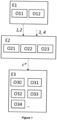
- the invention is based on a method of configuring a bracelet, one embodiment of which comprises the steps and operations represented schematically by the figure 1 .
- the method comprises a first step of acquisition E1 of at least one morphological data of the wearer of said wristwatch.
- the method comprises in particular a first step E1 of at least partially automatic acquisition of at least one morphological data of the wearer of said wristwatch.
- This morphological data includes a first dimension 1 of the wrist, and can in particular correspond to the wrist circumference of the wearer intended to accommodate the wristwatch.
- wrist circumference we mean the circumference of a wrist portion p1 which is capable of accommodating the wristwatch, as represented by the figure 2 .
- This first dimension may alternatively or in addition relate to the height and/or width of said wrist portion p1.
- at least one second morphological data of the wearer can be acquired.
- a second datum may in particular correspond to a second dimension 2 corresponding to the wearer's hand passage, useful in the case of a bracelet with a folding clasp.
- hand passage we mean the area of greatest circumference at the level of a hand portion p2, represented by the figure 2 , which allows the hand to pass through the bracelet in the open deployed position of the deployant clasp.
- This second dimension 2 can therefore include the circumference and/or the height and/or the width of said hand portion p2.
- the first acquisition step E1 of at least one morphological data uses a digital acquisition system 11 of equipment 110 of a bracelet configuration system, which makes it possible to automatically acquire at least a morphological characteristic, in a first operation O11 of the first acquisition step E1.
- morphological characteristic we mean a piece of data or a set of digital data making it possible to obtain, after possible processing, at least one morphological piece of data.
- the acquisition system 11 comprises for example a camera, making it possible to obtain a video or one or more images of the morphology of the wearer, at the level of his wrist, and possibly at the level of his hand according to the advantageous embodiment described.
- the acquisition system 11 can be in the form of an imaging system provided with at least one sensor, for example a lens, which is designed to scan, photograph, or film at least one portion of the wearer's wrist p1 so as to acquire and/or reconstruct at least one image of said portion p1.
- the imaging system according to the advantageous embodiment can also be configured to scan, photograph, or film at least one portion of the wearer's hand p2, so as to acquire and/or reconstruct at least one image of said portion p2 .
- the acquisition system 11 is a system designed to receive and possibly emit waves so as to acquire at least one characteristic of a portion of the wearer's wrist p1, and preferably of a portion of his hand p2.
- the latter can, for example, comprise a device provided with at least one laser, which makes it possible to acquire a set of points forming the contour or a portion of the contour of said portion p1 of the wearer's wrist and preferably of said portion of his hand p2.
- the first operation O11 first allows the acquisition system 11 to determine the portion(s) p1, p2 to be considered.
- a first variant consists of transmitting an indication of at least one portion of wrist p1 and/or hand p2 to be considered by a man-machine interface representing a digital model of the end of the wearer's arm obtained during this first acquisition stage.
- an operator positions a pointer on the wearer's wrist and/or hand beforehand or during digital acquisition to indicate the at least one portion to be considered.
- the acquisition system thus obtains a digital model of the end of the wearer's arm on which the portion(s) to be considered are identified and known.
- the acquisition system carries out an automatic determination by a calculator of the at least one portion of the wrist p1 and/or the hand p2 to be considered on a digital model obtained, for example from the measurement d at least one distance from a point identified on said digital model, such as the end of the hand, such as for example the end of the middle finger, or a wrist joint.
- the method implements a second operation 012 of the acquisition step E1, in which it determines the at least one morphological data from said or said morphological characteristics obtained during the first operation O11.
- this second operation 012 makes it possible to precisely determine the circumference and/or a height and/or a width of a portion of the wrist p1 and the circumference and/or a height and/or a width of a portion of hand p2.
- the characteristic(s) resulting from the first operation O11 are processed, preferably by software means of the acquisition system or any other calculator of the configuration system, for example in a central unit, to deduce the dimensions 1 , 2 forming the morphological data sought. To simplify the description, these dimensions 1, 2 will be assimilated to the morphological data 1, 2 subsequently.
- the morphological characteristics can be an image, in two dimensions or in three dimensions, of the portion of the wearer's wrist p1 and of the portion of his hand p2. More generally, these morphological characteristics form a digital model of a portion of the wearer's wrist or hand or digital data on the positioning, advantageously three-dimensional, of several points of a portion of the wrist or a portion of the hand . From these characteristics, the software is capable of calculating the morphological data sought. This calculation uses, for example, image processing: if the characteristics include enough images to visualize the entire contour to be measured to obtain a circumference, the calculation consists of adding the length of the different parts of this contour obtained separately to reconstruct the morphological data sought.
- the missing portion is calculated by extrapolation. For this, geometric calculations are implemented. Alternatively, the image(s) are sufficient to obtain a height and/or a width of the wrist portion p1 and/or the hand portion p2. In addition, these results can also use parameters obtained by learning. The same principle is applied if the characteristics are points of the contour to be measured. At the end of the second operation 012, the configuration process was thus able to develop automatically reliably, automatically and quickly, the morphological data necessary for the correct configuration of the bracelet.
- morphological data mentioned in this embodiment are cited as advantageous examples. It is possible to imagine another embodiment using only one of these data, or at least one other morphological data, combined or not with one or more morphological data of the embodiment described.
- other data preferably useful for configuring the bracelet can be transmitted to the bracelet configuration system.
- These data may in particular include the wearer's preferences, in particular relating to wearing the bracelet.
- These preference data of the wearer of the watch include for example first preference data 3 relating to the type(s) of bracelet(s) desired, for example a metal bracelet or a flexible bracelet, a bracelet with or without a clasp deployant, in particular within the limits offered by the catalog of wristwatches offered by the manufacturer.
- preference data can also include one or more second preference data 4 concerning the way in which the wearer wishes the bracelet to fit around his wrist, namely defining the more or less substantial clearance which remains between the wrist and the bracelet, and possibly carrying on the wearer's living conditions, such as in particular the climatic conditions of the wearer's place of life and/or the practice of at least one possible activity by the wearer, such as any sports practiced by the wearer, which are likely to vary dimension 1 of the wrist.
- a second preferably datum 4 may include a dimension 1', derived from dimension 1 relating to the wrist, which makes it possible to adapt said dimension 1 linked to the wrist portion p1 to a situation particular different from that of operation O11, for example after any activity such as playing a sport.
- This dimension 1' can, for example, be obtained by means of a predictive analysis on the basis of morphological data 1, 2 and possibly second data preferably 4.
- this derived dimension 1' can be obtained by a reading in a pre-established database, in particular on the basis of a survey carried out by the manufacturer elsewhere.
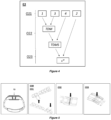
- the bracelet configuration method according to the embodiment of the invention then advantageously implements, but optionally, an intermediate step of determining E2 of at least one optimal configuration of the bracelet adapted to the wearer, of which one embodiment will be described, with reference to the Figure 4 .
- This step is advantageously implemented in whole or in part automatically, as will be described below. Alternatively, this step could be manual.
- the morphological data(s) 1, 2 from the first step E1 are transmitted to a calculation unit of the configuration system of bracelet, to be processed by a computer program of a calculator designed to provide an optimal configuration c * of bracelet.
- the seller could simply consult the optimal configuration on a predefined chart.
- the wearer's preference data 3, 4 are also transmitted to the calculation unit of the bracelet configuration system for their consideration.
- the second operation 022 of the intermediate determination step E2 comprises the determination of a watch turn (TDM), corresponding to an overall shape of a bracelet in the closed position and fixed to the watch case, and which is arranged around of a particular shape F representing a portion of wrist p1 of the wearer, as represented by the Figure 3 .
- the watch circumference (TDM) corresponds or corresponds as much as possible to the circumference of the portion p1 of the wrist and/or the height and/or the width of the portion p1 of the wrist of the wearer.
- the particular shape F is advantageously shaped to best correspond to the wrist portion p1 which is capable of accommodating the wristwatch 13, and which is known by the morphological data(s) 1.
- the particular shape F can, for example , be elliptical; the coefficients defining the ellipse are adapted to best correspond to the height and/or width of the wrist if these data are part of the known morphological data.
- another ovoid shape could be chosen, for example closer to a rectangle.
- the watch size obtained by the preceding considerations can optionally be adapted by a weighting coefficient to allow the wristwatch to adjust to the portion p1 of the wrist with optimal clearance for the comfort of the wearer.
- This weighting coefficient thus corresponds to the game considered optimal. It may be a predefined constant, or may be adjusted taking into account the specific shape of the wearer's wrist portion p1. For example, if there is a greater difference between the particular shape F and the shape of the wrist portion p1, the weighting coefficient can be increased.
- the watch size previously obtained from morphological data alone is again adapted to take into account the wearer's preference data.
- the watch turn obtained previously can thus give rise to the determination of a desired watch turn (TDMS).
- the preference data may include information on a desire to wear the wristwatch in a fitted or loose manner. Depending on this wearing information, the watch circumference is modified by the application of a second weighting coefficient, making it possible to increase or reduce the play around the wrist.
- preference data may relate to the place of life or the activity of the wearer, which is taken into account by the application of another weighting coefficient or by a configuration parameter of the bracelet which provides a possibility of setting adapted to the practice of a certain activity. In the latter case, the wristwatch can be adapted by adjusting a first optimal configuration of the bracelet to a second different configuration, optimal for a specific activity.
- a third operation 023 of the intermediate determination step E2 the actual configuration of the bracelet is finally determined, depending on the watch circumference (TDM) or the desired watch circumference (TDMS) previously established.
- This operation 023 searches for one or more configurations of a bracelet which corresponds or which best satisfies the size of the watch considered.
- this operation 023 comprises an iteration in a bracelet database, in particular in a bracelet configuration data database, comprising data on all or a large part of the existing configurations of a bracelet of a watch bracelet determined according to the first data preferably 3, making it possible to detect an optimal configuration c* of said bracelet most suited to the watch size considered.
- This optimal configuration is in particular chosen from the configurations which make it possible to best center or balance the case and/or the watch clasp on the portion of the wearer's wrist p1.
- the program also checks that in the case of the presence of a deployant clasp, the selected bracelet configuration is compatible with the hand portion p2 in the open position of the deployant clasp. The process thus automatically defines the optimal compromise between fitting the wrist of a wearer of a wristwatch adequately and comfortably and providing a sufficiently large opening for the wearer's hand to pass through, whatever regardless of the dimensions of the wearer's hand and wrist.
- this operation 023 can be repeated according to the first data preferably 3, and in particular the different types of bracelets desired if there are several.
- the program can test the different possibilities offered by each of the bracelets, to establish an optimal configuration for each of the bracelets.
- the program can optionally provide an indication as to an optimal configuration most in line with the morphological data(s) 1, 2 and possibly the preferably data(s) 3, 4 among different optimal configurations of different bracelets.
- the program retains an optimal configuration of a bracelet to offer optimal comfort to the wearer.
- the program can also select the bracelet(s) whose configuration is most suitable to offer optimal comfort to the wearer.
- the calculation unit of the bracelet configuration system comprises a bracelet database which includes a correspondence between morphological data, and possibly preference data, and a configuration of a type of bracelet.
- the second operation 022 can directly read from the database the bracelet configuration(s) adapted for each type of bracelet.
- the computer program selects, for a given model of watch case chosen by the wearer, the optimal configuration(s) c* of watch strap(s) most in line with the morphology of the wearer and possibly the preferences of the wearer.
- the intermediate determination step E2 could determine several optimal configurations, either for different types of bracelet which would present an equivalent optimal configuration, or for the same bracelet but according to different particular situations of use.
- the method of configuring a bracelet comprises a second step E3 of preparing the wearer's bracelet, according to an optimal configuration determined in the previous step.
- the watchmaker or any individual qualified to proceed with the second stage of preparation E3, carries out the final assembly and/or final adjustment of each strand of bracelet, based on the precise information determined and transmitted at the end of the stage. former. Due to this last step, the bracelet configuration method according to the invention can also be considered as being the last step of a bracelet manufacturing process, or of a method of mounting or adjusting a bracelet.
- the bracelet configuration system has a man-machine interface, as represented by the Figure 5 , by which it transmits one or more images to assist in the final configuration of the bracelet.
- the chosen bracelet can be transported and stored in a predefined configuration, in which case this second step E3 consists of modifying the bracelet from the predefined configuration to an optimal configuration established in the intermediate determination step E2.
- a watchmaker or any individual qualified to carry out the second step, can, according to a first operation 030, select at least one strand 6 of bracelet from n strands of different lengths. It can also act on at least one device 5 for lengthening the bracelet. It may, for example, be means 51 allowing the assembly or disassembly of a link or an extension link of a bracelet strand, or of means 52, 53 making it possible to configure a link or a link of a strand in a given configuration, or the position of a strand next to a clasp or a watch case, so as to best adjust the length of said strand and more generally that of the bracelet.
- the watchmaker can, according to a second operation 031 represented by the Figure 6 , add or remove links or links 61 on a first strand 6 of bracelet and/or on a second strand 6' of bracelet, for example by means of means allowing easy disassembly/reassembly such as screws 7, in particular elastic screws .
- this second operation 031 is implemented exclusively by the watchmaker.
- the watchmaker can position the end of a bracelet strand 6 in a predefined position facing a cover 8 of deploying clasp 80 by means of a device 53 allowing, for example, to hold a link 62 by by means of a notching system 81.
- a notching system can, for example, comprise a cover 8 provided with indexing teeth 82 designed to cooperate with a finger 63 of the strand 6.
- Such a device can also be handled by the watchmaker as well as by the wearer of the wristwatch.
- a mesh or a link can be indexed relative to the clasp cover by means of a bar positionable in several predefined positions of the cover (device not shown).
- the watchmaker can configure a mesh or an extension link according to a first or a second configuration so as to lengthen or shorten a first and/or a second bracelet strand.
- an adjustment link 64 is provided with two articulation axes A1, A2 connected respectively to the cover 8 of the deployant clasp 80 and to an end link 65 of a bracelet strand 6.
- the adjustment link 64 can pivot relative to its first axis A1, connected to the cover 8 of the deployant clasp 80, to pass its second axis A2, connected to the end link 65, on either side of the first axis A1 to define two specific bracelet lengths.
- the end link 65 connected to the adjustment link 64, has a notch 66 which allows, in the position of the adjustment link 64 corresponding to the short configuration of the bracelet, to be blocked elastically against the link adjustment 64.
- the figure 8 illustrates the device in the short configuration of the bracelet, while the Figure 9 illustrates the device being actuated.
- a fifth operation 034 of selecting a deploying clasp 80 from n clasps of different sizes can also take place.
- a deployant clasp provided with blades 71, 72 as illustrated by the Figure 10
- different sizes of blades can be provided so as to best adapt to the morphology of the watch wearer.
- Such a deployant clasp may have two blades. Alternatively, it may include more than two blades, for example three blades, with the aim of obtaining maximized deployment to allow the installation of the wristwatch or the removal of the wristwatch regardless of the size of the watch. hand of the wearer, in particular of the portion of the hand p2 of the wearer.
- such a clasp may comprise at least one blade of which at least one part is capable of presenting two predefined configurations when handling said clasp, so as to facilitate the passage of the wearer's hand, in particular the portion of the hand. p2 of the carrier.
- Such an operation may possibly prefigure one or other of operations 031, 032, 033.
- the watchmaker to move from a predefined configuration of a watch bracelet to an optimal configuration c* of the bracelet, can for example carry out all or part of the operations 030, 031, 032, 033, 034 described above .
- the process is not limited to one type of metal link bracelet.
- the strands of which are, for example, at least partially made of leather, elastomer, or textile
- the first operation 030 of selecting at least one strand among n strands of different lengths can advantageously be implemented before any other operation. All or part of operations 031, 032, 033, 034 can also be performed, but not necessarily.
- one end of a flexible strand can be positioned in a predefined position opposite a clasp, in particular a deployant clasp cover.
- These flexible strands can be reduced to one unit. Alternatively, they can be connected to a deployment clasp via one or more metal links.
- the clasp of a “soft bracelet” may possibly include blades and/or a cover.
- the invention also relates to a bracelet configuration system which implements the configuration method described above.
- This system of bracelet configuration comprises at least one acquisition system 11 of at least one morphological data and possibly a calculator of a calculation unit which implements the intermediate determination step E2 as described above, to determine the optimal configuration of the bracelet as a function of the at least one morphological data acquired by the acquisition system 11.
- the acquisition system 11 is configured to receive and possibly emit waves so as to acquire at least one morphological characteristic of the wearer of the bracelet.
- the acquisition system 11 further comprises at least one sensor, such as a camera, a laser or a lens, configured to scan, photograph, or film at least a portion of the wearer's wrist and/or hand.
- it may be an infrared camera capable of capturing and/or mapping points on the wearer's forearm by projection, thus making it possible to form a model of the wearer's forearm.
- the acquisition system 11 may further comprise a calculator configured to calculate at least one morphological data from at least one morphological characteristic acquired by the acquisition system, according to the method described above.
- the acquisition system and the central unit are positioned nearby, or within the same equipment. They can share a single, common calculator.
- the configuration system, or at least the acquisition system forms equipment 110 which is advantageously presented in the form of compact equipment that is easily transportable and/or can be easily installed in points of sale.
- this equipment 110 is in the form of a mobile phone or a “smartphone”, a tablet, or a pair of glasses that can be handled by the watchmaker or retailer and thus accompany the wearer. of the wristwatch within a particularly fun and time-saving purchasing experience.
- this is equipment belonging to the wearer, allowing him to purchase remotely, outside a point of sale, for example at his home.
- the central unit which advantageously implements the intermediate determination step E2 is advantageously integrated into the same first equipment 110 used during the first step E1.
- it may be a separate entity, such as a computer for example.
- the acquisition system is linked to this computer by a communication device for the transmission, preferably automatic, of the data acquired and/or processed locally in the acquisition system.
- the first equipment 110 used during the first step E1 may in particular be equipment belonging to the wearer, such as a tablet or a “smartphone”.
- the central unit which implements the second stage E2 can be present locally at a point of sale, or can be a remote unit, located at the manufacturer for example, connected by communication devices to at least one acquisition system.
- the bracelet configuration system includes one or more electronic memories, in particular to host the databases mentioned in the description of the method.
- This or these electronic memories are therefore connected to the central unit by one or more communication devices.
- Such a memory can be integrated into compact equipment forming the configuration system, or alternatively be remote and connected to the central unit or to the acquisition system by a communication device.
- the method according to the invention has been described in a scenario for configuring a bracelet in a sale of a particular model of wristwatch.
- this method can be implemented to inform a wearer of a wristwatch of an optimal configuration c* of his bracelet, even after the purchase or independently of the purchase of said wristwatch.
- the intermediate determination step corresponds to the intermediate determination step described above, implemented automatically.
- an electronic memory may include digital data corresponding to configuration rules associated with each bracelet strand and/or each subcomponent of a bracelet, such as a link, a link and a clasp. Then, an algorithm allows, by iteration, to form all possible combinations of configurations for a given bracelet, from memorized rules, until it converges towards an optimal configuration. Alternatively, this approach makes it possible to automatically form the aforementioned bracelet database, in which the possible configurations are stored.
- the intermediate determination step can take into account an optimal configuration of one (or more) wristwatches already worn by the wearer.
- this known optimal configuration can be entered by the wearer, the retailer, or the watchmaker, via a human machine interface of the bracelet configuration system.
- This information can possibly be used to obtain the circumference of the watch. take into account in step 022 explained previously.
- This information can thus serve as sources of acquisition of morphological data of the wearer or equivalent, in accordance with an embodiment described previously with reference to the first acquisition step E1.
- the intermediate step of determining the at least one optimal configuration of the bracelet may include at least the determination of the adjustment of the length of the bracelet.
- the intermediate step of determining at least one optimal configuration of the bracelet may comprise a step of displaying on a screen of a configuration system of a determined optimal configuration.
- the intermediate step of determining at least one optimal configuration of the bracelet can implement a calculation of play around the wearer's wrist as a function of at least one preference datum and/or implement a calculation of variation of morphological data of the wearer over time from at least one preference data.
- the first step of acquiring at least one morphological data may comprise the acquisition of a dimension, in particular a circumference and/or a height and/or a width, of a portion of the wearer's wrist which is capable of accommodate the wristwatch and/or a dimension, in particular a circumference and/or a height and/or a width, of a portion of the wearer's hand.
- the first acquisition step may comprise a first operation of acquiring at least one morphological characteristic of the wearer's wrist, and a second operation of determining the at least one morphological data from the at least one morphological characteristic acquired during of the first operation.
- the first operation of acquiring at least one morphological characteristic may include an acquisition step from an acquisition system equipped with at least one sensor, such as a camera, a laser or a lens, configured to scan , photograph, or film at least a portion of the wearer's wrist and/or hand.
- at least one sensor such as a camera, a laser or a lens
- the first acquisition step may include an entry of the at least one morphological data by a human machine interface or the transmission of the at least one morphological data or a data derived such as a turn of the wrist from an electronic memory , including a database.
- the second step of preparing the bracelet may include modifying the bracelet, in particular from a standard configuration, to achieve an optimal configuration c* of the bracelet as determined by the intermediate determination step.
- the invention also relates to a bracelet configuration system, characterized in that it comprises at least one system for acquiring at least one morphological data and a calculator which implements at least the step intermediate for determining at least one optimal configuration c* of the bracelet described above, to determine an optimal configuration of the bracelet as a function of the at least one morphological data acquired by the acquisition system 11.
- the invention also relates to a method of manufacturing a wristwatch, characterized in that it comprises a step of selecting a wristwatch or a watch case and a step of configuring a strap on the watch case according to a configuration established by a method of configuring a bracelet as described previously.
- the invention also relates to a computer program comprising instructions which, when the program is executed, lead it to implement at least the intermediate step of determining at least one optimal configuration c * of the bracelet described previously, to determine an optimal configuration of the bracelet as a function of the at least one morphological data acquired by the acquisition system 11.
Landscapes
- Engineering & Computer Science (AREA)
- Physics & Mathematics (AREA)
- General Physics & Mathematics (AREA)
- Theoretical Computer Science (AREA)
- Life Sciences & Earth Sciences (AREA)
- Biophysics (AREA)
- Textile Engineering (AREA)
- Computer Vision & Pattern Recognition (AREA)
- Geometry (AREA)
- Human Computer Interaction (AREA)
- Multimedia (AREA)
- Electric Clocks (AREA)
- User Interface Of Digital Computer (AREA)
- Length Measuring Devices By Optical Means (AREA)
- Measurement Of The Respiration, Hearing Ability, Form, And Blood Characteristics Of Living Organisms (AREA)
- Management, Administration, Business Operations System, And Electronic Commerce (AREA)
- Eyeglasses (AREA)
Claims (15)
- Verfahren zur Konfiguration eines Armbanduhr-Armbands für einen gegebenen Träger, dadurch gekennzeichnet, dass es die folgenden Schritte enthält:- einen ersten Schritt (E1) der Erfassung mindestens eines morphologischen Datenwerts (1; 2) des Trägers des Armbands;- einen Zwischenschritt (E2) der automatischen Bestimmung mindestens einer an den Träger angepassten optimalen Konfiguration (c*) des Armbands, der mindestens die Bestimmung der Einstellung der Länge des Armbands ausgehend von dem mindestens einen morphologischen Datenwert (1; 2) enthält, wobei dieser Zwischenschritt (E2) der Bestimmung der mindestens einen optimalen Konfiguration des Armbands die Bestimmung von Konfigurationsdaten durch alle oder einen Teil der folgenden Schritte enthält:- Bestimmung des Typs des Armbands; und/oder- Bestimmung des Teilbands oder der Teilbänder und/oder der Schließe; und/oder- Bestimmung der Anzahl von Maschen oder Gliedern, insbesondere der Anzahl von Verlängerungsmaschen oder - gliedern, für mindestens ein Armband-Teilband; und/oder- Bestimmung der Konfiguration oder der Konfigurationen mindestens einer Masche oder mindestens eines Glieds für mindestens ein Armband-Teilband; und/oder- Bestimmung der Positionierung eines Endglieds eines Armband-Teilbands bezüglich einer Schließe des Armbands und/oder bezüglich eines Uhrengehäuses; und/oder- Bestimmung der Konfiguration oder der Konfigurationen der Schließe des Armbands; und/oder- Bestimmung der Längeneinstellung(en) innerhalb der Schließe des Armbands;- einen zweiten Schritt (E3) der Vorbereitung des Armbands des Trägers gemäß einer im vorhergehenden Schritt bestimmten optimalen Konfiguration.
- Konfigurationsverfahren eines Armbanduhr-Armbands nach dem vorhergehenden Anspruch, dadurch gekennzeichnet, dass der Zwischenschritt (E2) der Bestimmung (E2) mindestens einer an den Träger angepassten optimalen Konfiguration des Armbands ausgehend von dem mindestens einen morphologischen Datenwert (1; 2) von einem EDV-Programm eines Konfigurationssystems automatisch durchgeführt wird.
- Konfigurationsverfahren eines Armbands nach einem der vorhergehenden Ansprüche, dadurch gekennzeichnet, dass der Zwischenschritt (E2) der Bestimmung mindestens einer an den Träger angepassten optimalen Konfiguration des Armbands ausgehend von dem mindestens einen morphologischen Datenwert (1; 2) die Identifizierung von Armband-Konfigurationsdaten in einer Datenbank eines Konfigurationssystems enthält, die am besten an den mindestens einen morphologischen Datenwert (1; 2) angepasst sind.
- Konfigurationsverfahren eines Armbands nach Anspruch 2, dadurch gekennzeichnet, dass es durch einen Algorithmus einer Softwareeinrichtung eine Iteration durchführt, um alle Kombinationen von möglichen Konfigurationen für ein gegebenes Armband zu bilden, ausgehend von in einem elektronischen Speicher gespeicherten Regeln, wobei diese Konfigurationsregeln jedem Armband-Teilband und/oder jeder Teilkomponente eines Armbands, wie einer Masche, einem Glied und einer Schließe, zugeordnet sind, bis sie auf eine optimale Konfiguration des Armbands hinauslaufen.
- Konfigurationsverfahren eines Armbands nach Anspruch 2, dadurch gekennzeichnet, dass es eine optimale Konfiguration des Armbands ausgehend von einer Konfiguration einer von dem Träger bereits getragenen Armbanduhr durchführt, bekannt entweder durch eine Eingabe mittels einer Mensch-Maschine-Schnittstelle des Armbänder-Konfigurationssystems, oder durch eine automatische Abfrage eines elektronischen Speichers, auf dem diese Information gespeichert ist.
- Konfigurationsverfahren eines Armbands nach einem der vorhergehenden Ansprüche, dadurch gekennzeichnet, dass es einen Schritt der Anzeige einer bestimmten optimalen Konfiguration auf einem Bildschirm eines Konfigurationssystems enthält.
- Konfigurationsverfahren eines Armbanduhr-Armbands nach einem der vorhergehenden Ansprüche, dadurch gekennzeichnet, dass der erste Erfassungsschritt (E1) die Erfassung einer Abmessung (1), insbesondere eines Umfangs und/oder einer Höhe und/oder einer Breite eines Handgelenkabschnitts (p1) des Trägers, der die Armbanduhr (13) möglicherweise erhält, und/oder einer Abmessung (2), insbesondere eines Umfangs und/oder einer Höhe und/oder einer Breite eines Abschnitts der Hand (p2) des Trägers enthält.
- Konfigurationsverfahren eines Armbanduhr-Armbands nach dem vorhergehenden Anspruch, dadurch gekennzeichnet, dass der erste Erfassungsschritt (E1) die Erfassung einer Abmessung eines Handgelenkabschnitts (p1) des Trägers, der die Armbanduhr (13) möglicherweise erhält, und/oder eines Abschnitts der Hand (p2) des Trägers durch die Anwendung eines der folgenden Teilschritte enthält:- Anzeige durch eine Mensch-Maschine-Schnittstelle, die ein durch den ersten Erfassungsschritt (E1) erhaltenes digitales Modell darstellt, mindestens eines zu berücksichtigenden Abschnitts eines Handgelenks und/oder einer Hand; oder- Positionierung eines Zeigers auf dem Handgelenk und/oder auf der Hand des Trägers im ersten Erfassungsschritt (E1), um den mindestens einen zu berücksichtigenden Abschnitt anzuzeigen; oder- automatische Bestimmung durch einen Rechner des mindestens einen zu berücksichtigenden Abschnitts des Handgelenks und/oder der Hand auf einem durch den ersten Erfassungsschritt (E1) erhaltenen digitalen Modell ausgehend von der Messung mindestens eines Abstands ausgehend von einem auf dem digitalen Modell identifizierten Punkt als dem Ende der Hand oder einem Gelenk des Handgelenks.
- Konfigurationsverfahren eines Armbanduhr-Armbands nach einem der vorhergehenden Ansprüche, dadurch gekennzeichnet, dass der erste Erfassungsschritt (E1) eine erste Operation (O11) der Erfassung mindestens eines morphologischen Merkmals des Trägers des Handgelenks und eine zweite Operation (012) der Bestimmung des mindestens einen morphologischen Datenwerts ausgehend von dem mindestens einen bei der ersten Operation (O11) erfassten morphologischen Merkmal enthält.
- Konfigurationsverfahren eines Armbanduhr-Armbands nach dem vorhergehenden Anspruch, dadurch gekennzeichnet, dass die erste Operation (O11) der Erfassung mindestens eines morphologischen Merkmals die Erfassung mindestens eines morphologischen Merkmals ausgehend von einem Erfassungssystem (11) enthält, das mit mindestens einem Sensor, wie einer Kamera, einem Laser oder einem Objektiv, ausgestattet ist, der konfiguriert ist, mindestens einen Abschnitt des Handgelenks und/oder der Hand des Trägers zu scannen, zu fotografieren oder zu filmen.
- Konfigurationsverfahren eines Armbanduhr-Armbands nach einem der vorhergehenden Ansprüche, dadurch gekennzeichnet, dass es einen Schritt der Erfassung mindestens eines Vorzugsdatenwerts (3; 4) des Trägers enthält, darunter ein Datenwert über die Art und Weise, wie der Träger wünscht, dass das Armband sein Handgelenk umschließt, und/oder ein Datenwert über die Lebensbedingungen des Trägers, wie insbesondere die Klimabedingungen des Lebensraums des Trägers und/oder mindestens eine mögliche vom Träger ausgeübte Aktivität, und/oder ein Datenwert über die Bevorzugung des Armbandtyps, und dass der zweite Schritt (E3) der Vorbereitung des Armbands des Trägers den mindestens einen Vorzugsdatenwert des Trägers berücksichtigt.
- Konfigurationssystem eines Armbanduhr-Armbands, dadurch gekennzeichnet, dass es mindestens ein Erfassungssystem (11) mindestens eines morphologischen Datenwerts des Trägers enthält, das gestaltet ist, um Wellen zu empfangen und ggf. zu senden, um mindestens ein morphologisches Merkmal des Trägers des Armbands zu erfassen, wobei das Erfassungssystem (11) mindestens einen Sensor, wie eine Kamera, einen Laser oder ein Objektiv, enthält, der konfiguriert ist, mindestens einen Abschnitt des Handgelenks und/oder der Hand des Trägers zu scannen, zu fotografieren oder zu filmen, und dass es einen Rechner enthält, der konfiguriert ist, mindestens einen morphologischen Datenwert ausgehend von mindestens einem vom Erfassungssystem (11) erfassten morphologischen Merkmal zu berechnen, wobei das Konfigurationssystem konfiguriert ist, das Armband-Konfigurationsverfahren nach einem der vorhergehenden Ansprüche durchzuführen.
- Konfigurationssystem eines Armbanduhr-Armbands nach dem vorhergehenden Anspruch, dadurch gekennzeichnet, dass das Erfassungssystem (11) eine Mensch-Maschine-Schnittstelle enthält, die konfiguriert ist, die Eingabe mindestens eines Vorzugsdatenwerts des Trägers des Armbands und/oder die Eingabe mindestens eines morphologischen Datenwerts des Trägers des Armbands zu empfangen.
- Konfigurationssystem eines Armbanduhr-Armbands nach einem der Ansprüche 12 oder 13, dadurch gekennzeichnet, dass es ein tragbares oder nicht tragbares System ist, und/oder dass es in ein Mobiltelefon vom Typ Smartphone oder in ein Tablet oder in eine Brille oder in eine Ausrüstung integriert ist, die einen ersten Abschnitt (111) von im Wesentlichen kreisförmiger oder elliptischer Form enthält, der mehrere Sender/Empfänger enthält, um einen Abschnitt des Handgelenks (p1) und/oder einen Handabschnitt (p2) zu umhüllen, um automatisch mindestens ein morphologisches Merkmal mindestens eines dieser zwei Abschnitte zu erfassen.
- Herstellungsverfahren einer Armbanduhr, dadurch gekennzeichnet, dass es einen Schritt der Auswahl einer Armbanduhr und/oder eines Uhrengehäuses und einen Schritt der Konfiguration eines Armbands auf dem Uhrengehäuse gemäß einer durch ein Konfigurationsverfahren eines Armbands nach einem der Ansprüche 1 bis 11 erstellten Konfiguration enthält.
Applications Claiming Priority (2)
| Application Number | Priority Date | Filing Date | Title |
|---|---|---|---|
| EP18208366 | 2018-11-26 | ||
| PCT/EP2019/082454 WO2020109246A1 (fr) | 2018-11-26 | 2019-11-25 | Procédé de configuration d'un bracelet de montre bracelet |
Publications (2)
| Publication Number | Publication Date |
|---|---|
| EP3886643A1 EP3886643A1 (de) | 2021-10-06 |
| EP3886643B1 true EP3886643B1 (de) | 2024-06-26 |
Family
ID=64477048
Family Applications (2)
| Application Number | Title | Priority Date | Filing Date |
|---|---|---|---|
| EP19806259.8A Active EP3886643B1 (de) | 2018-11-26 | 2019-11-25 | Konfigurationsverfahren eines armbands einer armbanduhr |
| EP19805721.8A Active EP3886642B1 (de) | 2018-11-26 | 2019-11-25 | Verfahren und system zur bestimmung mindestens eines morphologischen datums eines trägers eines armbanduhrenarmbands, verfahren zur konfiguration eines armbands unter verwendung dieses bestimmungsverfahrens und verfahren zur herstellung einer armbanduhr gemäss dem konfigurationsverfahren |
Family Applications After (1)
| Application Number | Title | Priority Date | Filing Date |
|---|---|---|---|
| EP19805721.8A Active EP3886642B1 (de) | 2018-11-26 | 2019-11-25 | Verfahren und system zur bestimmung mindestens eines morphologischen datums eines trägers eines armbanduhrenarmbands, verfahren zur konfiguration eines armbands unter verwendung dieses bestimmungsverfahrens und verfahren zur herstellung einer armbanduhr gemäss dem konfigurationsverfahren |
Country Status (9)
| Country | Link |
|---|---|
| US (2) | US11793280B2 (de) |
| EP (2) | EP3886643B1 (de) |
| JP (3) | JP7714461B2 (de) |
| KR (4) | KR102931854B1 (de) |
| CN (2) | CN113163911A (de) |
| CA (2) | CA3120650A1 (de) |
| ES (2) | ES3053076T3 (de) |
| SG (2) | SG11202105463VA (de) |
| WO (2) | WO2020109245A1 (de) |
Families Citing this family (1)
| Publication number | Priority date | Publication date | Assignee | Title |
|---|---|---|---|---|
| US12223669B2 (en) * | 2021-02-18 | 2025-02-11 | Apple Inc. | Touchless wrist measurement |
Citations (2)
| Publication number | Priority date | Publication date | Assignee | Title |
|---|---|---|---|---|
| EP3017715A1 (de) * | 2014-11-07 | 2016-05-11 | LG Electronics Inc. | Tragbares mobiles endgerät vom uhrentyp |
| EP3449755A1 (de) * | 2017-09-01 | 2019-03-06 | Richemont International S.A. | Armband mit gelenkgliedern |
Family Cites Families (23)
| Publication number | Priority date | Publication date | Assignee | Title |
|---|---|---|---|---|
| CH690116A5 (fr) | 1996-07-17 | 2000-05-15 | Rolex Montres | Dispositif de réglage de la longueur d'un bracelet muni d'un fermoir à lames déployantes. |
| JP3940826B2 (ja) * | 1996-08-29 | 2007-07-04 | 浜松ホトニクス株式会社 | 三次元形状計測装置 |
| US6888640B2 (en) * | 2000-02-04 | 2005-05-03 | Mario J. Spina | Body spatial dimension mapper |
| JP2002109306A (ja) | 2000-09-28 | 2002-04-12 | Citizen Watch Co Ltd | 商品デザイン作成システム |
| KR101217207B1 (ko) * | 2009-11-20 | 2013-01-02 | 디엔엠에프티 (주) | 손 자동계측 방법 |
| TWI510203B (zh) | 2013-11-20 | 2015-12-01 | Wistron Corp | 帶體結構 |
| WO2015103620A1 (en) * | 2014-01-06 | 2015-07-09 | Andrea Aliverti | Systems and methods to automatically determine garment fit |
| US20150302597A1 (en) * | 2014-04-18 | 2015-10-22 | Avyn, Inc. | Systems and methods for preparing custom clothing patterns |
| CN103994730B (zh) * | 2014-05-12 | 2017-01-04 | 南京星顿医疗科技有限公司 | 柱状体外周形状测量装置与方法 |
| US20160063320A1 (en) * | 2014-08-29 | 2016-03-03 | Susan Liu | Virtual body scanner application for use with portable device |
| CN104434112A (zh) * | 2014-11-20 | 2015-03-25 | 东北大学 | 人体颈围腰围臀围测量仪及其测量方法 |
| EP3058840B1 (de) * | 2015-02-20 | 2018-04-18 | Swatch Ag | Erweiterbares uhrenarmband |
| US10076252B2 (en) | 2015-04-02 | 2018-09-18 | Microsoft Technology Licensing, Llc | Sizable wrist-worn pressure sensing device |
| CN104820498B (zh) | 2015-05-14 | 2018-05-08 | 周谆 | 手部虚拟饰品试戴的人机交互方法和系统 |
| CN106073903A (zh) | 2016-06-03 | 2016-11-09 | 上海德稻集群文化创意产业(集团)有限公司 | 制备骨骼辅助支架的三维扫描相机阵列及扫描方法 |
| CN106373085A (zh) * | 2016-09-20 | 2017-02-01 | 福州大学 | 一种基于增强现实的智能终端3d手表试戴方法及系统 |
| CN106502419A (zh) * | 2016-11-11 | 2017-03-15 | 广州市万表科技股份有限公司 | 虚拟手表试戴方法及装置 |
| WO2018102625A1 (en) * | 2016-11-30 | 2018-06-07 | Fited, Inc. | 3d modeling systems and methods |
| CN206556559U (zh) * | 2016-12-30 | 2017-10-13 | 刘立帅 | 虹膜光圈式便捷直径量器 |
| JP2018163031A (ja) * | 2017-03-24 | 2018-10-18 | Npo法人Muskan | 体型情報解析システム |
| CN107015659A (zh) * | 2017-05-03 | 2017-08-04 | 湖南拓视觉信息技术有限公司 | 一种手表虚拟试戴方法和系统 |
| CN107705348B (zh) * | 2017-09-21 | 2020-12-25 | 天时汇(北京)电子商务有限公司 | 一种腕表虚拟试戴系统 |
| US10692237B2 (en) * | 2018-07-09 | 2020-06-23 | Mehul Sompura | Ring size measurement system and method for digitally measuring ring size |
-
2019
- 2019-11-25 EP EP19806259.8A patent/EP3886643B1/de active Active
- 2019-11-25 EP EP19805721.8A patent/EP3886642B1/de active Active
- 2019-11-25 ES ES19805721T patent/ES3053076T3/es active Active
- 2019-11-25 US US17/295,165 patent/US11793280B2/en active Active
- 2019-11-25 WO PCT/EP2019/082453 patent/WO2020109245A1/fr not_active Ceased
- 2019-11-25 WO PCT/EP2019/082454 patent/WO2020109246A1/fr not_active Ceased
- 2019-11-25 KR KR1020217015993A patent/KR102931854B1/ko active Active
- 2019-11-25 JP JP2021529369A patent/JP7714461B2/ja active Active
- 2019-11-25 JP JP2021529367A patent/JP7621946B2/ja active Active
- 2019-11-25 CA CA3120650A patent/CA3120650A1/fr active Pending
- 2019-11-25 ES ES19806259T patent/ES2984698T3/es active Active
- 2019-11-25 KR KR1020267005060A patent/KR20260036016A/ko active Pending
- 2019-11-25 KR KR1020267005067A patent/KR20260036017A/ko active Pending
- 2019-11-25 CN CN201980077717.7A patent/CN113163911A/zh active Pending
- 2019-11-25 KR KR1020217015992A patent/KR102930246B1/ko active Active
- 2019-11-25 CN CN201980077728.5A patent/CN113163912A/zh active Pending
- 2019-11-25 SG SG11202105463VA patent/SG11202105463VA/en unknown
- 2019-11-25 SG SG11202105461RA patent/SG11202105461RA/en unknown
- 2019-11-25 US US17/295,172 patent/US12357060B2/en active Active
- 2019-11-25 CA CA3120648A patent/CA3120648A1/fr active Pending
-
2025
- 2025-01-15 JP JP2025005327A patent/JP2025063191A/ja active Pending
Patent Citations (3)
| Publication number | Priority date | Publication date | Assignee | Title |
|---|---|---|---|---|
| EP3017715A1 (de) * | 2014-11-07 | 2016-05-11 | LG Electronics Inc. | Tragbares mobiles endgerät vom uhrentyp |
| EP3449755A1 (de) * | 2017-09-01 | 2019-03-06 | Richemont International S.A. | Armband mit gelenkgliedern |
| CH714109A1 (fr) * | 2017-09-01 | 2019-03-15 | Richemont Int Sa | Bracelet articulé. |
Also Published As
| Publication number | Publication date |
|---|---|
| US11793280B2 (en) | 2023-10-24 |
| EP3886642A1 (de) | 2021-10-06 |
| CA3120648A1 (fr) | 2020-06-04 |
| WO2020109246A1 (fr) | 2020-06-04 |
| EP3886642B1 (de) | 2025-10-29 |
| WO2020109245A1 (fr) | 2020-06-04 |
| CN113163911A (zh) | 2021-07-23 |
| ES3053076T3 (en) | 2026-01-19 |
| JP7621946B2 (ja) | 2025-01-27 |
| EP3886643A1 (de) | 2021-10-06 |
| KR102930246B1 (ko) | 2026-02-25 |
| KR20210094545A (ko) | 2021-07-29 |
| ES2984698T3 (es) | 2024-10-30 |
| CN113163912A (zh) | 2021-07-23 |
| KR102931854B1 (ko) | 2026-02-25 |
| JP2022509969A (ja) | 2022-01-25 |
| JP2025063191A (ja) | 2025-04-15 |
| KR20210094544A (ko) | 2021-07-29 |
| SG11202105461RA (en) | 2021-06-29 |
| KR20260036017A (ko) | 2026-03-13 |
| JP7714461B2 (ja) | 2025-07-29 |
| US12357060B2 (en) | 2025-07-15 |
| JP2022509968A (ja) | 2022-01-25 |
| KR20260036016A (ko) | 2026-03-13 |
| CA3120650A1 (fr) | 2020-06-04 |
| SG11202105463VA (en) | 2021-07-29 |
| US20220007798A1 (en) | 2022-01-13 |
| US20220007797A1 (en) | 2022-01-13 |
Similar Documents
| Publication | Publication Date | Title |
|---|---|---|
| EP2582283B1 (de) | Verfahren zur beurteilung einer referenzhaltung | |
| CA2781016C (fr) | Gabarit permettant les mesures necessaires au montage des verres et a l'ajustage des montures de lunettes de vue | |
| EP3886643B1 (de) | Konfigurationsverfahren eines armbands einer armbanduhr | |
| FR3024246A1 (fr) | Procede d'elaboration d'une consigne de detourage d'une lentille optique | |
| WO2017089950A1 (fr) | Boucle déployante | |
| HK40061586A (en) | Method and system for determining at least one morphological data of a wearer of a wristwatch strap, method for configuring a strap implementing said determination method, and method for manufacturing a wristwatch according to the configuration method | |
| HK40061586B (en) | Method and system for determining at least one morphological data of a wearer of a wristwatch strap, method for configuring a strap implementing said determination method, and method for manufacturing a wristwatch according to the configuration method | |
| EP3281097A1 (de) | Interaktive elektronische projektionsvorrichtung | |
| EP3172011B1 (de) | Maschine zur erfassung von bildern optischer linsen und verfahren zum besäumen von optischen linsen | |
| HK40061973A (en) | Method for configuring a wrist watch strap | |
| HK40061973B (en) | Method for configuring a wrist watch strap | |
| EP4022400B1 (de) | Verfahren und system zur unterstützung der einstellung einer mechanischen uhr | |
| WO2022128648A1 (fr) | Procédé et système de diagnostic de l'inadaptation d'une pièce à une caractéristique morphologique d'un utilisateur de cette pièce | |
| FR3081336A1 (fr) | Aide a l'utilisation d'appareils de pratique sportive |
Legal Events
| Date | Code | Title | Description |
|---|---|---|---|
| STAA | Information on the status of an ep patent application or granted ep patent |
Free format text: STATUS: UNKNOWN |
|
| STAA | Information on the status of an ep patent application or granted ep patent |
Free format text: STATUS: THE INTERNATIONAL PUBLICATION HAS BEEN MADE |
|
| PUAI | Public reference made under article 153(3) epc to a published international application that has entered the european phase |
Free format text: ORIGINAL CODE: 0009012 |
|
| STAA | Information on the status of an ep patent application or granted ep patent |
Free format text: STATUS: REQUEST FOR EXAMINATION WAS MADE |
|
| 17P | Request for examination filed |
Effective date: 20210531 |
|
| AK | Designated contracting states |
Kind code of ref document: A1 Designated state(s): AL AT BE BG CH CY CZ DE DK EE ES FI FR GB GR HR HU IE IS IT LI LT LU LV MC MK MT NL NO PL PT RO RS SE SI SK SM TR |
|
| DAV | Request for validation of the european patent (deleted) | ||
| DAX | Request for extension of the european patent (deleted) | ||
| REG | Reference to a national code |
Ref country code: HK Ref legal event code: DE Ref document number: 40061973 Country of ref document: HK |
|
| P01 | Opt-out of the competence of the unified patent court (upc) registered |
Effective date: 20230530 |
|
| GRAP | Despatch of communication of intention to grant a patent |
Free format text: ORIGINAL CODE: EPIDOSNIGR1 |
|
| STAA | Information on the status of an ep patent application or granted ep patent |
Free format text: STATUS: GRANT OF PATENT IS INTENDED |
|
| INTG | Intention to grant announced |
Effective date: 20240122 |
|
| GRAS | Grant fee paid |
Free format text: ORIGINAL CODE: EPIDOSNIGR3 |
|
| GRAA | (expected) grant |
Free format text: ORIGINAL CODE: 0009210 |
|
| STAA | Information on the status of an ep patent application or granted ep patent |
Free format text: STATUS: THE PATENT HAS BEEN GRANTED |
|
| AK | Designated contracting states |
Kind code of ref document: B1 Designated state(s): AL AT BE BG CH CY CZ DE DK EE ES FI FR GB GR HR HU IE IS IT LI LT LU LV MC MK MT NL NO PL PT RO RS SE SI SK SM TR |
|
| REG | Reference to a national code |
Ref country code: GB Ref legal event code: FG4D Free format text: NOT ENGLISH |
|
| REG | Reference to a national code |
Ref country code: CH Ref legal event code: EP |
|
| REG | Reference to a national code |
Ref country code: DE Ref legal event code: R096 Ref document number: 602019054303 Country of ref document: DE |
|
| PG25 | Lapsed in a contracting state [announced via postgrant information from national office to epo] |
Ref country code: BG Free format text: LAPSE BECAUSE OF FAILURE TO SUBMIT A TRANSLATION OF THE DESCRIPTION OR TO PAY THE FEE WITHIN THE PRESCRIBED TIME-LIMIT Effective date: 20240626 |
|
| PG25 | Lapsed in a contracting state [announced via postgrant information from national office to epo] |
Ref country code: FI Free format text: LAPSE BECAUSE OF FAILURE TO SUBMIT A TRANSLATION OF THE DESCRIPTION OR TO PAY THE FEE WITHIN THE PRESCRIBED TIME-LIMIT Effective date: 20240626 Ref country code: HR Free format text: LAPSE BECAUSE OF FAILURE TO SUBMIT A TRANSLATION OF THE DESCRIPTION OR TO PAY THE FEE WITHIN THE PRESCRIBED TIME-LIMIT Effective date: 20240626 |
|
| REG | Reference to a national code |
Ref country code: LT Ref legal event code: MG9D |
|
| PG25 | Lapsed in a contracting state [announced via postgrant information from national office to epo] |
Ref country code: GR Free format text: LAPSE BECAUSE OF FAILURE TO SUBMIT A TRANSLATION OF THE DESCRIPTION OR TO PAY THE FEE WITHIN THE PRESCRIBED TIME-LIMIT Effective date: 20240927 |
|
| PG25 | Lapsed in a contracting state [announced via postgrant information from national office to epo] |
Ref country code: LV Free format text: LAPSE BECAUSE OF FAILURE TO SUBMIT A TRANSLATION OF THE DESCRIPTION OR TO PAY THE FEE WITHIN THE PRESCRIBED TIME-LIMIT Effective date: 20240626 |
|
| REG | Reference to a national code |
Ref country code: NL Ref legal event code: MP Effective date: 20240626 Ref country code: ES Ref legal event code: FG2A Ref document number: 2984698 Country of ref document: ES Kind code of ref document: T3 Effective date: 20241030 |
|
| PG25 | Lapsed in a contracting state [announced via postgrant information from national office to epo] |
Ref country code: NO Free format text: LAPSE BECAUSE OF FAILURE TO SUBMIT A TRANSLATION OF THE DESCRIPTION OR TO PAY THE FEE WITHIN THE PRESCRIBED TIME-LIMIT Effective date: 20240926 Ref country code: LV Free format text: LAPSE BECAUSE OF FAILURE TO SUBMIT A TRANSLATION OF THE DESCRIPTION OR TO PAY THE FEE WITHIN THE PRESCRIBED TIME-LIMIT Effective date: 20240626 Ref country code: HR Free format text: LAPSE BECAUSE OF FAILURE TO SUBMIT A TRANSLATION OF THE DESCRIPTION OR TO PAY THE FEE WITHIN THE PRESCRIBED TIME-LIMIT Effective date: 20240626 Ref country code: GR Free format text: LAPSE BECAUSE OF FAILURE TO SUBMIT A TRANSLATION OF THE DESCRIPTION OR TO PAY THE FEE WITHIN THE PRESCRIBED TIME-LIMIT Effective date: 20240927 Ref country code: FI Free format text: LAPSE BECAUSE OF FAILURE TO SUBMIT A TRANSLATION OF THE DESCRIPTION OR TO PAY THE FEE WITHIN THE PRESCRIBED TIME-LIMIT Effective date: 20240626 Ref country code: BG Free format text: LAPSE BECAUSE OF FAILURE TO SUBMIT A TRANSLATION OF THE DESCRIPTION OR TO PAY THE FEE WITHIN THE PRESCRIBED TIME-LIMIT Effective date: 20240626 Ref country code: RS Free format text: LAPSE BECAUSE OF FAILURE TO SUBMIT A TRANSLATION OF THE DESCRIPTION OR TO PAY THE FEE WITHIN THE PRESCRIBED TIME-LIMIT Effective date: 20240926 |
|
| PG25 | Lapsed in a contracting state [announced via postgrant information from national office to epo] |
Ref country code: NL Free format text: LAPSE BECAUSE OF FAILURE TO SUBMIT A TRANSLATION OF THE DESCRIPTION OR TO PAY THE FEE WITHIN THE PRESCRIBED TIME-LIMIT Effective date: 20240626 |
|
| REG | Reference to a national code |
Ref country code: AT Ref legal event code: MK05 Ref document number: 1696923 Country of ref document: AT Kind code of ref document: T Effective date: 20240626 |
|
| PG25 | Lapsed in a contracting state [announced via postgrant information from national office to epo] |
Ref country code: NL Free format text: LAPSE BECAUSE OF FAILURE TO SUBMIT A TRANSLATION OF THE DESCRIPTION OR TO PAY THE FEE WITHIN THE PRESCRIBED TIME-LIMIT Effective date: 20240626 |
|
| PG25 | Lapsed in a contracting state [announced via postgrant information from national office to epo] |
Ref country code: PT Free format text: LAPSE BECAUSE OF FAILURE TO SUBMIT A TRANSLATION OF THE DESCRIPTION OR TO PAY THE FEE WITHIN THE PRESCRIBED TIME-LIMIT Effective date: 20241028 |
|
| PG25 | Lapsed in a contracting state [announced via postgrant information from national office to epo] |
Ref country code: PT Free format text: LAPSE BECAUSE OF FAILURE TO SUBMIT A TRANSLATION OF THE DESCRIPTION OR TO PAY THE FEE WITHIN THE PRESCRIBED TIME-LIMIT Effective date: 20241028 |
|
| PG25 | Lapsed in a contracting state [announced via postgrant information from national office to epo] |
Ref country code: PL Free format text: LAPSE BECAUSE OF FAILURE TO SUBMIT A TRANSLATION OF THE DESCRIPTION OR TO PAY THE FEE WITHIN THE PRESCRIBED TIME-LIMIT Effective date: 20240626 |
|
| PG25 | Lapsed in a contracting state [announced via postgrant information from national office to epo] |
Ref country code: EE Free format text: LAPSE BECAUSE OF FAILURE TO SUBMIT A TRANSLATION OF THE DESCRIPTION OR TO PAY THE FEE WITHIN THE PRESCRIBED TIME-LIMIT Effective date: 20240626 |
|
| PG25 | Lapsed in a contracting state [announced via postgrant information from national office to epo] |
Ref country code: AT Free format text: LAPSE BECAUSE OF FAILURE TO SUBMIT A TRANSLATION OF THE DESCRIPTION OR TO PAY THE FEE WITHIN THE PRESCRIBED TIME-LIMIT Effective date: 20240626 Ref country code: IS Free format text: LAPSE BECAUSE OF FAILURE TO SUBMIT A TRANSLATION OF THE DESCRIPTION OR TO PAY THE FEE WITHIN THE PRESCRIBED TIME-LIMIT Effective date: 20241026 |
|
| PG25 | Lapsed in a contracting state [announced via postgrant information from national office to epo] |
Ref country code: CZ Free format text: LAPSE BECAUSE OF FAILURE TO SUBMIT A TRANSLATION OF THE DESCRIPTION OR TO PAY THE FEE WITHIN THE PRESCRIBED TIME-LIMIT Effective date: 20240626 |
|
| PG25 | Lapsed in a contracting state [announced via postgrant information from national office to epo] |
Ref country code: RO Free format text: LAPSE BECAUSE OF FAILURE TO SUBMIT A TRANSLATION OF THE DESCRIPTION OR TO PAY THE FEE WITHIN THE PRESCRIBED TIME-LIMIT Effective date: 20240626 Ref country code: SK Free format text: LAPSE BECAUSE OF FAILURE TO SUBMIT A TRANSLATION OF THE DESCRIPTION OR TO PAY THE FEE WITHIN THE PRESCRIBED TIME-LIMIT Effective date: 20240626 |
|
| PG25 | Lapsed in a contracting state [announced via postgrant information from national office to epo] |
Ref country code: SM Free format text: LAPSE BECAUSE OF FAILURE TO SUBMIT A TRANSLATION OF THE DESCRIPTION OR TO PAY THE FEE WITHIN THE PRESCRIBED TIME-LIMIT Effective date: 20240626 |
|
| PG25 | Lapsed in a contracting state [announced via postgrant information from national office to epo] |
Ref country code: SM Free format text: LAPSE BECAUSE OF FAILURE TO SUBMIT A TRANSLATION OF THE DESCRIPTION OR TO PAY THE FEE WITHIN THE PRESCRIBED TIME-LIMIT Effective date: 20240626 Ref country code: SK Free format text: LAPSE BECAUSE OF FAILURE TO SUBMIT A TRANSLATION OF THE DESCRIPTION OR TO PAY THE FEE WITHIN THE PRESCRIBED TIME-LIMIT Effective date: 20240626 Ref country code: RO Free format text: LAPSE BECAUSE OF FAILURE TO SUBMIT A TRANSLATION OF THE DESCRIPTION OR TO PAY THE FEE WITHIN THE PRESCRIBED TIME-LIMIT Effective date: 20240626 Ref country code: PL Free format text: LAPSE BECAUSE OF FAILURE TO SUBMIT A TRANSLATION OF THE DESCRIPTION OR TO PAY THE FEE WITHIN THE PRESCRIBED TIME-LIMIT Effective date: 20240626 Ref country code: IS Free format text: LAPSE BECAUSE OF FAILURE TO SUBMIT A TRANSLATION OF THE DESCRIPTION OR TO PAY THE FEE WITHIN THE PRESCRIBED TIME-LIMIT Effective date: 20241026 Ref country code: EE Free format text: LAPSE BECAUSE OF FAILURE TO SUBMIT A TRANSLATION OF THE DESCRIPTION OR TO PAY THE FEE WITHIN THE PRESCRIBED TIME-LIMIT Effective date: 20240626 Ref country code: CZ Free format text: LAPSE BECAUSE OF FAILURE TO SUBMIT A TRANSLATION OF THE DESCRIPTION OR TO PAY THE FEE WITHIN THE PRESCRIBED TIME-LIMIT Effective date: 20240626 Ref country code: AT Free format text: LAPSE BECAUSE OF FAILURE TO SUBMIT A TRANSLATION OF THE DESCRIPTION OR TO PAY THE FEE WITHIN THE PRESCRIBED TIME-LIMIT Effective date: 20240626 |
|
| REG | Reference to a national code |
Ref country code: DE Ref legal event code: R097 Ref document number: 602019054303 Country of ref document: DE |
|
| PG25 | Lapsed in a contracting state [announced via postgrant information from national office to epo] |
Ref country code: DK Free format text: LAPSE BECAUSE OF FAILURE TO SUBMIT A TRANSLATION OF THE DESCRIPTION OR TO PAY THE FEE WITHIN THE PRESCRIBED TIME-LIMIT Effective date: 20240626 |
|
| PLBE | No opposition filed within time limit |
Free format text: ORIGINAL CODE: 0009261 |
|
| STAA | Information on the status of an ep patent application or granted ep patent |
Free format text: STATUS: NO OPPOSITION FILED WITHIN TIME LIMIT |
|
| 26N | No opposition filed |
Effective date: 20250327 |
|
| PG25 | Lapsed in a contracting state [announced via postgrant information from national office to epo] |
Ref country code: MC Free format text: LAPSE BECAUSE OF FAILURE TO SUBMIT A TRANSLATION OF THE DESCRIPTION OR TO PAY THE FEE WITHIN THE PRESCRIBED TIME-LIMIT Effective date: 20240626 |
|
| PG25 | Lapsed in a contracting state [announced via postgrant information from national office to epo] |
Ref country code: LU Free format text: LAPSE BECAUSE OF NON-PAYMENT OF DUE FEES Effective date: 20241125 |
|
| REG | Reference to a national code |
Ref country code: BE Ref legal event code: MM Effective date: 20241130 |
|
| PG25 | Lapsed in a contracting state [announced via postgrant information from national office to epo] |
Ref country code: SE Free format text: LAPSE BECAUSE OF FAILURE TO SUBMIT A TRANSLATION OF THE DESCRIPTION OR TO PAY THE FEE WITHIN THE PRESCRIBED TIME-LIMIT Effective date: 20240626 |
|
| PG25 | Lapsed in a contracting state [announced via postgrant information from national office to epo] |
Ref country code: BE Free format text: LAPSE BECAUSE OF NON-PAYMENT OF DUE FEES Effective date: 20241130 |
|
| PG25 | Lapsed in a contracting state [announced via postgrant information from national office to epo] |
Ref country code: IE Free format text: LAPSE BECAUSE OF NON-PAYMENT OF DUE FEES Effective date: 20241125 |
|
| REG | Reference to a national code |
Ref country code: CH Ref legal event code: U11 Free format text: ST27 STATUS EVENT CODE: U-0-0-U10-U11 (AS PROVIDED BY THE NATIONAL OFFICE) Effective date: 20251201 |
|
| PGFP | Annual fee paid to national office [announced via postgrant information from national office to epo] |
Ref country code: DE Payment date: 20251117 Year of fee payment: 7 |
|
| PGFP | Annual fee paid to national office [announced via postgrant information from national office to epo] |
Ref country code: GB Payment date: 20251126 Year of fee payment: 7 |
|
| PGFP | Annual fee paid to national office [announced via postgrant information from national office to epo] |
Ref country code: IT Payment date: 20251107 Year of fee payment: 7 |
|
| PGFP | Annual fee paid to national office [announced via postgrant information from national office to epo] |
Ref country code: FR Payment date: 20251127 Year of fee payment: 7 |
|
| PGFP | Annual fee paid to national office [announced via postgrant information from national office to epo] |
Ref country code: CH Payment date: 20251201 Year of fee payment: 7 |
|
| PGFP | Annual fee paid to national office [announced via postgrant information from national office to epo] |
Ref country code: ES Payment date: 20251210 Year of fee payment: 7 |
|
| PG25 | Lapsed in a contracting state [announced via postgrant information from national office to epo] |
Ref country code: HU Free format text: LAPSE BECAUSE OF FAILURE TO SUBMIT A TRANSLATION OF THE DESCRIPTION OR TO PAY THE FEE WITHIN THE PRESCRIBED TIME-LIMIT; INVALID AB INITIO Effective date: 20191125 |