EP3885705B1 - Systeme und zugehörige verfahren zur erzeugung von navigationskarten und navigierbaren routen in einer offenen umgebung - Google Patents
Systeme und zugehörige verfahren zur erzeugung von navigationskarten und navigierbaren routen in einer offenen umgebung Download PDFInfo
- Publication number
- EP3885705B1 EP3885705B1 EP21175074.0A EP21175074A EP3885705B1 EP 3885705 B1 EP3885705 B1 EP 3885705B1 EP 21175074 A EP21175074 A EP 21175074A EP 3885705 B1 EP3885705 B1 EP 3885705B1
- Authority
- EP
- European Patent Office
- Prior art keywords
- navigation
- prss
- route
- distance
- nodes
- Prior art date
- Legal status (The legal status is an assumption and is not a legal conclusion. Google has not performed a legal analysis and makes no representation as to the accuracy of the status listed.)
- Active
Links
Images







Classifications
-
- G—PHYSICS
- G01—MEASURING; TESTING
- G01C—MEASURING DISTANCES, LEVELS OR BEARINGS; SURVEYING; NAVIGATION; GYROSCOPIC INSTRUMENTS; PHOTOGRAMMETRY OR VIDEOGRAMMETRY
- G01C21/00—Navigation; Navigational instruments not provided for in groups G01C1/00 - G01C19/00
- G01C21/20—Instruments for performing navigational calculations
- G01C21/203—Instruments for performing navigational calculations specially adapted for water-borne vessels
-
- G—PHYSICS
- G01—MEASURING; TESTING
- G01C—MEASURING DISTANCES, LEVELS OR BEARINGS; SURVEYING; NAVIGATION; GYROSCOPIC INSTRUMENTS; PHOTOGRAMMETRY OR VIDEOGRAMMETRY
- G01C21/00—Navigation; Navigational instruments not provided for in groups G01C1/00 - G01C19/00
- G01C21/20—Instruments for performing navigational calculations
-
- G—PHYSICS
- G01—MEASURING; TESTING
- G01C—MEASURING DISTANCES, LEVELS OR BEARINGS; SURVEYING; NAVIGATION; GYROSCOPIC INSTRUMENTS; PHOTOGRAMMETRY OR VIDEOGRAMMETRY
- G01C21/00—Navigation; Navigational instruments not provided for in groups G01C1/00 - G01C19/00
- G01C21/38—Electronic maps specially adapted for navigation; Updating thereof
- G01C21/3863—Structures of map data
- G01C21/3867—Geometry of map features, e.g. shape points, polygons or for simplified maps
-
- G—PHYSICS
- G01—MEASURING; TESTING
- G01C—MEASURING DISTANCES, LEVELS OR BEARINGS; SURVEYING; NAVIGATION; GYROSCOPIC INSTRUMENTS; PHOTOGRAMMETRY OR VIDEOGRAMMETRY
- G01C21/00—Navigation; Navigational instruments not provided for in groups G01C1/00 - G01C19/00
- G01C21/38—Electronic maps specially adapted for navigation; Updating thereof
- G01C21/3863—Structures of map data
- G01C21/387—Organisation of map data, e.g. version management or database structures
- G01C21/3881—Tile-based structures
-
- G—PHYSICS
- G08—SIGNALLING
- G08G—TRAFFIC CONTROL SYSTEMS
- G08G5/00—Traffic control systems for aircraft
- G08G5/20—Arrangements for acquiring, generating, sharing or displaying traffic information
- G08G5/21—Arrangements for acquiring, generating, sharing or displaying traffic information located onboard the aircraft
-
- G—PHYSICS
- G08—SIGNALLING
- G08G—TRAFFIC CONTROL SYSTEMS
- G08G5/00—Traffic control systems for aircraft
- G08G5/30—Flight plan management
- G08G5/32—Flight plan management for flight plan preparation
-
- G—PHYSICS
- G08—SIGNALLING
- G08G—TRAFFIC CONTROL SYSTEMS
- G08G5/00—Traffic control systems for aircraft
- G08G5/50—Navigation or guidance aids
- G08G5/55—Navigation or guidance aids for a single aircraft
-
- B—PERFORMING OPERATIONS; TRANSPORTING
- B63—SHIPS OR OTHER WATERBORNE VESSELS; RELATED EQUIPMENT
- B63B—SHIPS OR OTHER WATERBORNE VESSELS; EQUIPMENT FOR SHIPPING
- B63B49/00—Arrangements of nautical instruments or navigational aids
-
- G—PHYSICS
- G08—SIGNALLING
- G08G—TRAFFIC CONTROL SYSTEMS
- G08G5/00—Traffic control systems for aircraft
- G08G5/50—Navigation or guidance aids
- G08G5/59—Navigation or guidance aids in accordance with predefined flight zones, e.g. to avoid prohibited zones
Definitions
- Embodiments of the present invention relate generally to navigation systems and, more particularly, to navigation systems, assemblies, and associated methods for generating navigation charts and navigable routes in an open environment.
- Navigation systems that operate in an open environment, such as marine navigation systems, may provide a display of a navigation chart or map.
- routes may be manually entered into the navigation system by a user, such as for display in association with the chart.
- the route may be followed by manual maneuvering of the vehicle or by an autopilot system controlling the vehicle (e.g., marine vehicle, airplane, automobile, drone, vessel, etc.) along the route.
- the navigation systems may also provide a location of the vehicle.
- Some navigation systems may include an automated route generation capability.
- generation of a route may be extremely complicated.
- KR 101 799 216 B1 relates to a marine navigation device and a routing method capable of searching for and providing a navigation route to a destination in consideration of marine status information and maritime facilities information.
- an open environment does not include defined travel paths or intersections and a vehicle may be able to travel anywhere with the exception of barrier locations, such as land, shipping lanes, shallow depths, or the like. In such an example, it may require significant time or computational power to generate the route, and/or may be prohibitive to calculate.
- some open environment automated routing systems may split an open environment into a plurality of grid areas. The automated routing system may then generate a route across each grid area, avoiding any barriers within each grid area to get from a start location to an end location.
- generating a route in an open environment navigation system can take a significant amount of time, such as five or more minutes, and can consume a significant amount of computing power.
- a grid area approach can take a significant amount of time, such as five or more minutes, and can consume a significant amount of computing power.
- more consumers use automatic routing navigation systems, there is an increase in the computational power required to generate the additional routes. Additionally, consumers may become frustrated waiting for routes to be generated after several minutes.
- FIG. 1 illustrates an example marine navigation chart 10 according to some example embodiments of the present invention.
- a marine electronics device 405 such as described below in reference to FIG. 5 , may display the chart 10 for location and/or navigation purposes (e.g., maneuvering a vehicle or watercraft, such as a boat or ship).
- the marine electronics device 405 may alternatively or additionally, display a chart segment.
- the chart segment may include a portion of the navigation chart 10.
- the chart segment may be rendered or displayed in a larger scale than the navigation chart 10 and may also include additional details.
- the navigation chart 10 may have a scale of 1 NM/cm and display a depth line of 25 ft.
- the chart segment may have a scale of 0.3 NM/cm and include depth contour lines with a 1 ft. depth change, 5 ft. depth change, or the like.
- additional navigation data may be generated and stored as a portion of the navigation chart 10 to enable route generation in an open environment.
- the navigation chart 10 may include one or more barriers 100 to travel, for example in the marine environment, barriers may include land, shallow depths, submerged objects, or the like.
- barriers may include land, shallow depths, submerged objects, or the like.
- some embodiments of the present invention contemplate use in non-marine based environments, such as air, land, and space (as well as underwater).
- other example barriers are contemplated, such as towers, mountains, rivers, planets, asteroids, etc.
- a computing device such as a navigation server 403, discussed below in reference to FIG. 4 , may identify one or more barriers 100 in the navigation chart 10.
- the navigation server 403 may then identify a barrier edge 102 of one or more of the barriers 100 identified in the navigation chart 10.
- the navigation server 403 may identify a barrier edge 102 by identifying a shore line of a land barrier, a depth contour line associated with a minimum depth, or a perimeter of a submerged object.
- the navigation server 403 may generate a plurality of barrier nodes 104 a predetermined safety distance from the barrier edge 102.
- the predetermined safety distance may be manually set by a user or automatically determined, such as based on the size or draft of a watercraft.
- the predetermined safety distance may be 5 ft., 10 ft., 50 ft., or any other suitable distance.
- the navigation server 403 may then generate one or more barrier segments 106 disposed between the barrier nodes.
- the barrier segments 106 may include straight line segments between two adjacent barrier nodes, such as within a line of sight.
- the navigation server 403 may generate a plurality of first navigation nodes 108 at a predetermined distance from the one or more barriers 100.
- the barrier 100 may be defined by the barrier edge 102, or in an example in which one or more barrier segments 106 were generated, the barrier segments 106.
- the first predetermined distance may be manually set by a user or automatically determined, such as based on the size or draft of a watercraft.
- the first predetermined distance may be 5 ft., 10 ft., 50 ft., or any other suitable distance.
- the navigation server 403 may then generate one or more first potential route segments (PRSs) 110 that may be straight line paths between two first navigation nodes 108.
- the first PRSs 110 may connect any two first navigation nodes 108 that have a clear line of sight, e.g. are not obstructed by a barrier segment 106 or the barrier edge 102.
- the first PRSs 110 may have a maximum connection limit, such as three navigation nodes, four navigation nodes, seven navigation nodes, or any other suitable number of nodes. The maximum connection limit may provide a significant number of first PRSs between first navigation nodes without causing excessive computation during navigation chart generation or route generation.
- the navigation server 403 may generate a plurality of second navigation nodes 114.
- the second navigation nodes 114 may be disposed within a first threshold distance range including a minimum distance from the barrier 100 (or barrier segments 106) that is greater than the first predetermined distance.
- the second plurality of navigation nodes may be disposed in a range of 100 ft. to 400 ft. from a barrier 100.
- the second navigational nodes 114 are disposed further away from the barriers 100 than the first navigation nodes 108.
- the second navigation nodes 114 may be disposed at intervals within the first threshold distance range, such as at increments of 100 ft. (as depicted in FIG. 1 ).
- a plurality of second PRSs 116 may be disposed between two second navigation nodes 114 within a predetermined distance of each other, such as 100 ft., 200 ft., or other suitable distance. Additionally or alternatively, each second PRS 116 may have a maximum connection limit, such that second PRSs may extend from the same second navigation node to other navigation nodes that are within the maximum connection limit (e.g., the second PRS may extend to a second navigation node that is not the closest second navigation node). In addition to interconnecting second navigation nodes 114, the second PRSs 116 may be disposed between first navigation nodes 108 and second navigation nodes 114 where the first navigation nodes 108 fall within the predetermined distance and/or the maximum connection limit.
- the navigation server 403 may then generate a plurality of third navigation nodes 120.
- the third navigation nodes 120 may be disposed within a second threshold distance range including a minimum distance from the barrier 100 (or barrier segment) that is greater than the first threshold distance range.
- the third plurality of nodes may be disposed in a range of 400 ft. to 2000 ft. from a barrier 100.
- the third navigation nodes 120 are disposed further away from the barriers 100 than the second navigation nodes 114.
- the third navigation nodes 120 may be disposed at intervals within the range, such as increments of 250 ft.
- a plurality of third PRSs 122 may extend between two third navigation nodes 120 within a second predetermined distance of each other, such as 250 ft., 500 ft., or other suitable distance. Additionally or alternatively, each third navigation node 120 may have a maximum connection limit, such that third PRSs are disposed between the closest third navigational nodes 120 (and potentially others). In addition to interconnecting third navigation nodes 120, the third PRSs 122 may be disposed between second navigation nodes 114 and third navigation nodes 120 where the second navigation nodes 114 fall within the second predetermined distance and/or the maximum connection limit.
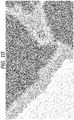
- An example navigation chart 1000 is depicted in FIG. 10 including multiple tiers of navigation nodes and associated PRSs. As the distances from barriers increases, the density of the navigation nodes decreases. This enables the areas of the navigation chart further away from a barrier to be calculated quickly, while still enabling more detailed route calculation nearer to barriers where more navigation nodes are disposed. Notably, as shown in FIG. 10 , while positioning of the navigation nodes is grid based in FIG. 1 , some embodiments of the present invention contemplate different patterned placement of the navigation nodes (e.g., spider web form).
- the navigation server 403 may associate parameter data with one or more navigation nodes 108, 114, 120 and or PRSs 110,116, 122.
- Parameter data may include, for example, distance from a barrier 100, depth, distance from traffic lanes (such as shipping lanes), weather data, commonly used paths, or the like.
- weather data or other continuously changing data may be dynamically updated when the navigation chart is retrieved from the navigation database 408 or during other times, such as during updating.
- the commonly used paths may be machine learned, such as based on previously generated routes and/or user modifications to previously generated routes.
- the commonly used paths may be provided in the chart during creation or through other sources, such as social media.
- the navigation chart 10, including the additional navigation data discussed above, may be stored in a navigation database 408 and/or a memory 420 of a marine electronics device 405 and/or a navigation server 403, as discussed in FIGs. 4 and 5 .
- the navigation device 405 and/or the navigation server 403 may access the navigation database 408 and/or memory 420 to retrieve the navigation chart 10 or portion of a navigation chart to generate a route between a start location and an end location, as discussed below.
- the route may, in some embodiments, be generated locally at the marine electronics device 405, such as in an offline mode, or other independent operation.
- the steps of transmitting data between the navigation server 403 and the marine electronics device 405, as discussed below may be omitted during local generation of a route.
- a local navigation chart and/or chart segment may be displayed on a touch screen of a user interface associated with marine electronics device 405.
- the touch screen may sense a user input defining a start location 208 and/or an end location 210 (shown for example in FIGs. 2A-2E ) in reference to the local navigation or chart segment.
- the marine electronics device 405 may sense a touch input defining an end location 210 and use a current position for the start location 208.
- the current position may be determined using a position sensor, such as a global position sensor, and correlating position data from the position sensor to a location on the local navigation chart.
- the start location and end location may be transmitted to the navigation server 403 (or other computing device acting as a navigation server such as described herein (e.g., a navigation device)).
- the navigation system may access the navigation database 408 and retrieve a navigation chart 20, or a portion of a navigation chart 20, that includes both the start location 208 and the end location 210.
- the marine electronics device 405 may access the memory 420 and retrieve a navigation chart 20, or a portion of a navigation chart 20, that includes both the start location 208 and the end location 210.
- the navigation chart 20 retrieved from the navigation database 408 may be substantially similar to the navigation chart 10 discussed above in reference to FIG.
- the navigation system may determine or plot the start location 208 and end location 210 on the navigation chart 20.
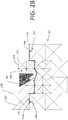
- the navigation system may generate a first route segment 212A between the start location and a PRS of the plurality of first PRSs 202, second plurality of PRSs 214, and third plurality of PRSs 218, such as the closest available PRS.
- the closest available PRS is a third PRS 220.
- the navigation system may also generate a second route segment 212B between the end location and a PRS of the plurality of first PRSs 202, second plurality of PRSs 214, and third plurality of PRSs 218, such as the closest available PRS.
- the closest available PRS is also a third PRS 218.
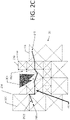
- the navigation system may be configured to generate the first route segment 212A and/or second route segment 212B between the respective start location 208 or end location 210 and the closest available navigation node 201, 214, 218 that lies in the direction of the opposite of the start location 208 or end location 210, as depicted in FIG. 2C .
- the navigation system may then determine an initial route 222, e.g. a node route, between start location 208 and the end location along the PRSs 202, 214, 218.
- the initial route 222 may include the first route segment 212A and the second route segment 212B.
- the initial route 222 may be the shortest distance between the first route segment 212A and the second route segment 212B along the PRSs 202, 214, 218.
- the navigation system may generate a navigable route by optimizing, e.g. smoothing, the initial route 222 (or a portion thereof) between the start location 208 and the end location 210. Since the second navigation nodes 201, 214, 218 are disposed at least a predetermined distance from one or more barriers 200, the route segments of the initial route 222 may be modified up to the predetermined distance associated with the navigation nodes or the segment without changing the safety of the route (e.g., the safety of the depth is already considered in the positioning of pre-generated second navigation nodes).
- FIGs. 3A-3C illustrate example route optimization according to an example embodiment.
- the navigation system has determined an initial route 322 between a start location 308 and an end location 310 including a first segment 312A and an end segment 312B.
- the initial route 322 includes a plurality of over shoots or zig-zags.
- the navigation system may determine one or more optimized route segments 340 between a first node and a last node. For the purposes of optimization of the route, the navigation system may consider the start location 308 and end location 310 navigation nodes. The first node may be disposed on a first segment of the initial route 322 and the last node may be disposed on a second segment of the initial route 322 that is different from the first segment. In FIG. 3C , the navigation system has determined one straight line optimized route segment 340 between the start location 308 and the end location 310.
- optimized route segment 340 may diverge from the initial route 322 by greater than the predetermined distance from a barrier associated with the navigation node 201, 214, 218, the navigation system may determine a plurality of optimized route segments that are within the predetermined distance from the barrier associated with the initial route 322.
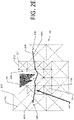
- FIGs. 2D-E illustrate another example route optimization process.
- the navigation system has generated a navigable route 242 by determining a first optimized route segment 240A and replacing two portions of the initial route 222 in the second plurality of navigation nodes 214. Additionally, the navigation system has determined two second optimized route segments 240B and replaced portions of the initial route 222 in the plurality of third navigation nodes 218. In some example embodiments, determining an optimized route segment 240 may be performed across different groups or tiers of navigation nodes, for example across the second plurality of navigation nodes 214 and the third plurality of navigation nodes 218. As depicted in FIG.
- the navigation system has generated a navigable route 242 by determining two third optimized route segments 240C that cross both the second plurality of navigation nodes 214 and third plurality of navigation nodes 218.
- the optimized route segment 240 crosses navigation node groups, e.g. pluralities of navigation nodes 201, 214, 218 that have different minimum distance of their associated threshold distances or ranges from the barrier 200
- the difference between the optimized route segment 240 and the initial route 222 may be limited by the minimum distance from the barrier 200 for each navigation node group 201, 214, 218 that the optimized route segment 240 passes through, as discussed above with regard to FIG. 3C .
- additional parameters may be used to determine which navigation nodes 201, 214, 218 and/or PRSs 202, 216, 220 are selected for generating the initial route or optimizing the initial route to generate navigable route. For example, a user may identify one or more parameters to remain close to, such as a depth band, distance from shore, commonly used paths, or the like. Additionally or alternatively, the user may identify one or more parameters to avoid, such as weather, shallow or deep depths, shipping lanes, commonly used paths, or the like. The navigation system may apply a weight to the navigation nodes, 201, 214, and 218 and/or PRSs 202, 216, 220 based on one or more parameters.
- the navigation server 403 may apply a higher weight to navigation nodes 201, 214, and 218 and/or PRSs 202, 216, 220 that meet, or are closer to, the desired parameter and apply a lower weight to navigation nodes that do not comply with, or are further from, the desired parameter.
- the navigation system may then generate the initial route or optimize the initial route based on a path along the PRSs 202, 216, and 220 that utilizes navigation nodes 201, 214, 218 and/or PRSs 202, 216, 220 that have the highest compliance weights.
- the navigation chart 20 may be a three dimensional chart and the initial route 222 and navigable route 242 may be generated in three dimensions.
- the three dimensional navigation chart may include a nautical chart for submerged water operations, an aeronautical or aerospace chart for fight operations, or the like.
- each of the navigation nodes may include a three dimensional coordinate value.
- the navigation system may transmit the navigable route 242 to the marine electronics device 405 (or provide it depending on where the processing is being done).
- the marine electronics device 405 may receive the navigable route 242 and cause the navigable route, or a portion thereof, to be displayed on a user interface.
- the navigable route 242 may be followed by manual maneuvering of the vehicle by the user. Additionally or alternatively, the navigable route 242 may be used as an input to an autopilot system 450 (e.g., shown in FIG. 5 ).
- the autopilot 450 may be configured to operate a maneuvering system 455 ( FIG. 5 ) automatically, e.g. without user interaction, causing a vehicle, such as a watercraft to travel along the navigable route 242.
- the autopilot 450 may generate instructions based on a current vehicle position, the navigable route 242, or the like to operate the maneuvering system 455.
- the navigation chart with tiered navigation nodes and PRSs enables a route across an open environment to be generated quickly.
- a navigation server or marine electronics device utilizing the described navigation chart and route generation process, may be able to calculate a navigable route 100-200 times faster than standard navigation solutions. Since each tier of navigation node groups is associated with a minimum predetermined distance from a barrier, the route can be optimized or smoothed to remove overshoots and zig-zags while still rendering a safe and efficient route in a significantly shorter period than traditional methods, all while using significantly less computing power.
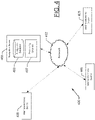
- FIG. 4 illustrates a block diagram of a navigation data system 400.
- the navigation data system 400 may include one or more navigation devices, such as marine electronics devices 405, a navigation server device 403, and a network 402.
- multiple marine electronic devices 405 may utilize a navigation server device 403 for generating charts and routes in an efficient manner, such as described herein.
- the marine electronic devices 405 may, in some embodiments, be configured to perform various embodiments described herein without communicating to the remote server (e.g., the chart generation, route generation, and/or route optimization may be performed on the marine electronics device).
- Example marine electronics devices 405 are described in further detail in FIG. 5 below.
- the marine electronics device 405 may communicate the sonar data, location data, and/or condition parameter data via wired or wireless communication to a different marine electronics device 405 and/or a navigation server 403 either directly or via the network 402.
- An example network 402 is described in further detail in FIG. 5 below.
- the navigation server 403 may include processing circuitry 407, such as a processor and memory (which may be similar to processing circuitry 407' described herein with respect to example marine electronic devices 405).
- the processing circuitry 407 may be in communication with one or more navigation databases 408.
- the navigation database 408 may include one or more non-transitory storage media configured to store one or more navigation charts 100.
- the processing circuitry 407 of the navigation server 403 (or marine electronics device 405) may be configured to retrieve a navigation chart and generate a navigable route 242 based on a start location 208 and end location 210 received from one or more of the marine electronics devices 405, as discussed above.
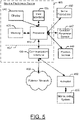
- FIG. 5 shows a block diagram of an example navigation system 400 capable for use with several embodiments of the present invention.
- the navigation system 400 may include a number of different modules or components, each of which may comprise any device or means embodied in either hardware, software, or a combination of hardware and software configured to perform one or more corresponding functions.
- the navigation system 400 may include an autopilot 450, a maneuvering system 455, and a marine electronics device 405.
- an autopilot 450 a maneuvering system 455, and a marine electronics device 405.
- embodiments of the present invention are not meant to be limited to the marine context as other environments and corresponding components for use therein are also contemplated.
- the navigation system 400 may also include one or more communications modules configured to communicate with one another in any of a number of different manners including, for example, via a network.
- the communications module may include any of a number of different communication backbones or frameworks including, for example, Ethernet, the NMEA 2000 framework, GPS, cellular, WiFi, or other suitable networks.
- the network may also support other data sources, including GPS, autopilot, engine data, compass, radar, etc. Numerous other peripheral devices such as one or more wired or wireless multi-function displays (e.g. a marine electronics device 405) may be included in the navigation system 400.
- the marine electronics device 405 may include a processor 410, a memory 420, a user interface 435, a display 440, one or more sensors (e.g. position sensor 445, orientation sensor (not shown), etc.), and a communication interface 430.
- the processor 410 and memory 420 may form processing circuitry 407'.
- the processor 410 may be any means configured to execute various programmed operations or instructions stored in a memory device such as a device or circuitry operating in accordance with software or otherwise embodied in hardware or a combination of hardware and software (e.g. a processor operating under software control or the processor embodied as an application specific integrated circuit (ASIC) or field programmable gate array (FPGA) specifically configured to perform the operations described herein, or a combination thereof) thereby configuring the device or circuitry to perform the corresponding functions of the processor 410 as described herein.
- the processor 410 may be configured to analyze electrical signals communicated thereto to provide route data for navigation of a vehicle, such as a watercraft.
- the processor 410 may be configured to receive route data and user input associated with the route data to generate or modify a route for display to a user (e.g. on display 440/user interface 435). Additionally or alternatively, the processor 410 may be configured to generate and send route data including instructions to the autopilot 450 to operate the maneuvering system 455 to cause the vehicle to travel along the route.
- the processor 410 may be further configured to implement signal processing or enhancement features to improve the display characteristics or data or images, collect or process additional data, such as time, temperature, GPS information, waypoint designations, or others, or may filter extraneous data to better analyze the collected data. It may further implement notices and alarms, such as those determined or adjusted by a user, to reflect depth, presence of fish, proximity of other vehicles, e.g. watercraft, etc.
- the memory 420 may be configured to store instructions, computer program code, marine data, such as sonar data, chart data, location/position data, and other data associated with the navigation system in a non-transitory computer readable medium for use, such as by the processor.
- the communication interface 430 may be configured to enable connection to external systems (e.g. an external network 402). In this manner, the marine electronics device 405 may retrieve stored data from a remote, external server via the external network 402 in addition to or as an alternative to the onboard memory 420.
- external systems e.g. an external network 402
- the marine electronics device 405 may retrieve stored data from a remote, external server via the external network 402 in addition to or as an alternative to the onboard memory 420.
- the position sensor 445 may be configured to determine the current position and/or location of the marine electronics device 405.
- the position sensor 445 may comprise a GPS, bottom contour, inertial navigation system, such as micro-electromechanical sensor (MEMS), a ring laser gyroscope, or the like, or other location detection system.
- MEMS micro-electromechanical sensor
- a ring laser gyroscope or the like, or other location detection system.
- the display 440 may be configured to display images and may include or otherwise be in communication with a user interface 435 configured to receive an input from a user.
- the display 440 may be, for example, a conventional LCD (liquid crystal display), a touch screen display, mobile device, or any other suitable display known in the art upon which images may be displayed.
- the display 440 may present one or more sets of marine data (or images generated from the one or more sets of data).
- marine data includes chart data, radar data, weather data, location data, position data, orientation data, sonar data, or any other type of information relevant to the watercraft.
- the display 440 may be configured to present such marine data simultaneously as one or more layers or in split-screen mode.
- a user may select any of the possible combinations of the marine data for display.
- various sets of data may be superimposed or overlaid onto one another.
- a route may be applied to (or overlaid onto) a chart (e.g. a map or navigation chart).
- depth information, weather information, radar information, sonar information, or any other navigation system inputs may be applied to one another.
- the user interface 435 may include, for example, a keyboard, keypad, function keys, mouse, scrolling device, input/output ports, touch screen, or any other mechanism by which a user may interface with the system.
- the display 440 of FIG. 5 is shown as being directly connected to the processor 410 and within the marine electronics device 405, the display 440 could alternatively be remote from the processor 410 and/or marine electronics device 405. Likewise, in some embodiments, the position sensor 445 and/or user interface 135 could be remote from the marine electronics device 405. Similarly, the autopilot 450 is depicted remote from the marine electronics device 405, but may be directly connected to the processor 410 within the marine electronics device.
- the autopilot 450 may include processing circuitry, such as a processor and a memory, configured to operate the maneuvering system 455.
- the autopilot 450 may be configured to operate the maneuvering system automatically, e.g. without user interaction, causing a vehicle, such as a watercraft to travel along the navigable route 242.
- the autopilot 450 may generate instructions based on a vehicle position, the navigable route 242, or the like to operate the maneuvering system 455.
- the maneuvering system 455 may include one or more propulsion motors, or engines, including but not limited to, outboard motors, inboard motors, trolling motors, main engines, emergency propulsion motors, or the like. Additionally, the maneuvering system 455 may include one or more control surfaces, such as rudders, planes, or the like configured to steer the vehicle.
- Embodiments of the present invention provide methods, apparatus and computer program products for generating a route for navigation of a vehicle across an open environment. Various examples of the operations performed in accordance with embodiments of the present invention will now be provided with reference to FIGs. 6-9 .
- FIGs. 6-8 illustrate flowcharts according to an example method for generating a route for navigation of a vehicle according to an example embodiment.
- FIG. 9 illustrates a flow chart according to an example method of generating a navigation chart according to an example embodiment.
- the operations illustrated in and described with respect to FIGs. 6-9 may, for example, be performed by, with the assistance of, and/or under the control of the navigation server 403 and/or marine electronics devices 405 including processing circuitry 407, 407', navigation database 408, the processor 410, memory 420, communication interface 430, user interface 435, position sensor 445, display 440, autopilot 450 and/or maneuvering system 455.
- the method of generating a route depicted in FIGs. 6-8 may include receiving an indication of a start location and an end location from a user interface of the navigation device at operation 502, transmitting the start location and the end location to the navigation server at operation 504, and receiving the start location and the end location from the navigation device at operation 506.
- the method may also include receiving at least a portion of a navigation chart from a navigation database at operation 508, determining an initial route between the start location and the end location along the first plurality of PRSs and the second plurality of PRSs at operation 516, and generating a navigable route between the start location and the end location by optimizing the initial route between the start location and the end location at operation 518.
- the method may additionally include causing the navigable route to be transmitted to the navigation device at operation 520, receive, from the navigation server, route data comprising the navigable route from the start location to the end location at operation 522, and causing the navigable route to be displayed on the user interface at operation 524.
- the method of generating the route may include additional, optional operations, and/or the operations described above may be modified or augmented.
- modifications, optional operations, and augmentations are described below, as indicated by dashed lines, such as generating a first route segment between the start location and a first PRS or second PRS at operation 510, generating a second route segment between the end location and a first PRS or second PRS at operation 512, and weighting the first navigation nodes and second navigation nodes based on one or more user parameters at operation 514.
- FIG. 8 illustrates a flowchart according to an example method for generating a navigable route between the start location and the end location by optimizing the initial route between the start location and the end location under operation 518.
- the method may include determining at least one optimized route segment between a first node and a last node along the first plurality of PRSs and the second plurality of PRSs at operation 522 and replacing a portion of the initial route with the optimized route segment at operation 524.
- the method of generating a navigation chart depicted in FIG 9 may include retrieving a navigation chart from a navigation database at operation 602, determining one or more barriers in the navigation chart at operation 604, generating a plurality of first navigation nodes at a predetermined distance from the one or more barriers at operation 606, and generating a plurality of second navigation nodes disposed within a first threshold range at operation 608.
- the method may also include generating a first plurality of potential route segments (PRSs) disposed between two first navigation nodes or between a first navigation node and a second navigation node that are within a first proximity distance at operation 612 and generating a second plurality of PRSs disposed between two second navigation nodes that are within a second proximity distance at operation 614.
- PRSs potential route segments
- the method of generating a navigation chart may include additional, optional operations, and/or the operations described above may be modified or augmented. Some examples of modifications, optional operations, and augmentations are described below, as indicated by dashed lines, such as, associating parameter data with one or more first navigation nodes or second navigation nodes at operation 610.
- the method may also include generating a plurality of third navigation nodes disposed within a second threshold range at operation 616 and generating a third plurality of PRSs disposed between two third navigation nodes or between a second navigation node and a third navigation node that are within a third proximity distance at operation 618.
- the method may also include a plurality of barrier nodes at operation 620 and associating parameter data with one or more first PRSs, second PRSs, or third PRSs at operation 622.
- FIGs. 6-9 illustrate flowcharts of a system, method, and computer program product according to an example embodiment. It will be understood that each block of the flowcharts, and combinations of blocks in the flowcharts, may be implemented by various means, such as hardware and/or a computer program product comprising one or more computer-readable mediums having computer readable program instructions stored thereon. For example, one or more of the procedures described herein may be embodied by computer program instructions of a computer program product. In this regard, the computer program product(s) which embody the procedures described herein may be stored by, for example, the memory 408, 420 and executed by, for example, the processing circuitry 407, 407'.
- any such computer program product may be loaded onto a computer or other programmable apparatus (for example, a navigation server 403 and/or a marine electronics device 405) to produce a machine, such that the computer program product including the instructions which execute on the computer or other programmable apparatus creates means for implementing the functions specified in the flowchart block(s).
- a computer or other programmable apparatus for example, a navigation server 403 and/or a marine electronics device 405
- the computer program product may comprise one or more non-transitory computer-readable mediums on which the computer program instructions may be stored such that the one or more computer-readable memories can direct a computer or other programmable device (for example, a navigation server 403 and/or a marine electronics device 405) to cause a series of operations to be performed on the computer or other programmable apparatus to produce a computer-implemented process such that the instructions which execute on the computer or other programmable apparatus implement the functions specified in the flowchart block(s).
- a computer or other programmable device for example, a navigation server 403 and/or a marine electronics device 405
Landscapes
- Engineering & Computer Science (AREA)
- Radar, Positioning & Navigation (AREA)
- Remote Sensing (AREA)
- Physics & Mathematics (AREA)
- General Physics & Mathematics (AREA)
- Automation & Control Theory (AREA)
- Aviation & Aerospace Engineering (AREA)
- Databases & Information Systems (AREA)
- Geometry (AREA)
- Navigation (AREA)
Claims (15)
- Verfahren zur Erzeugung einer Route in einer offenen Umgebung, wobei das Verfahren Folgendes umfasst:Empfangen (502) einer Anzeige einer Startposition (208) basierend auf einer ersten Benutzereingabe, die auf eine Benutzerschnittstelle (435) einer Navigationsvorrichtung (405) angewendet wird;Empfangen (502) einer Anzeige einer Endposition (210) basierend auf einer zweiten Benutzereingabe, die auf die Benutzerschnittstelle der Navigationsvorrichtung angewendet wird;Bestimmen (508) einer Navigationstabelle (10), die sowohl die Startposition als auch die Endposition beinhaltet, wobei die Navigationstabelle Folgendes umfasst:eine erste Barriere (100);eine Vielzahl von ersten Navigationsknoten (108), die in einem ersten vorbestimmten Abstand von der ersten Barriere angeordnet sind;eine Vielzahl von zweiten Navigationsknoten (114), die innerhalb eines ersten Schwellenwertabstandsbereichs angeordnet sind, wobei der erste Schwellenwertabstandsbereich einen Mindestabstand von der ersten Barriere beinhaltet, der größer als der erste vorbestimmte Abstand ist;eine erste Vielzahl von potenziellen Routensegmenten, PRSs (110), die sich zwischen zwei ersten Navigationsknoten oder zwischen einem ersten Navigationsknoten und einem zweiten Navigationsknoten erstrecken, wobei sich jedes der ersten Vielzahl von PRSs in einem ersten Abstand erstreckt; undeine zweite Vielzahl von PRSs (116), die sich zwischen zwei zweiten Navigationsknoten erstrecken, wobei sich jedes der zweiten Vielzahl von PRSs in einem zweiten Abstand erstreckt, wobei der zweite Abstand größer als der erste Abstand ist; undErzeugen (518) einer navigierbaren Route (242) zwischen der Startposition und der Endposition, wobei die navigierbare Route mindestens eines der ersten Vielzahl von PRSs oder mindestens eines der zweiten Vielzahl von PRSs beinhaltet.
- Verfahren nach Anspruch 1, wobei ein Erzeugen (518) der navigierbaren Route (242) das Austauschen (524) eines Abschnitts der ursprünglichen Route entsprechend mindestens einem Abschnitt eines der ersten Vielzahl von PRSs (110) oder eines der zweiten Vielzahl von PRSs (116) durch einen anderen Routenabschnitt umfasst.
- Verfahren nach Anspruch 1, wobei ein Erzeugen (518) der navigierbaren Route (242) das Bestimmen (510) eines ersten Routensegments (212A) von der Startposition (208) zu einem benachbarten von entweder der ersten Vielzahl von PRSs (202) oder der zweiten Vielzahl von PRSs (214) umfasst.
- Verfahren nach Anspruch 1, wobei ein Erzeugen (518) der navigierbaren Route (242) das Bestimmen (510) eines ersten Routensegments (212A) von der Startposition (208) zu einem nächsten verfügbaren von entweder der ersten Vielzahl von PRSs (202) oder der zweiten Vielzahl von PRSs (214) umfasst.
- Verfahren nach Anspruch 1, ferner umfassend:Gewichten (514) der Vielzahl von ersten Navigationsknoten (108), der Vielzahl von zweiten Navigationsknoten (114), der ersten Vielzahl von PRSs (110) oder der zweiten Vielzahl von PRSs (116) basierend auf einem oder mehreren Parametern; undErzeugen (518) der navigierbaren Route (242) basierend auf dem einen oder mehreren Parametern derart, dass die navigierbare Route erste Navigationsknoten, zweite Navigationsknoten oder PRSs mit Parametern beinhaltet, die einer gewünschten Entsprechungsgewichtung genügen.
- Verfahren nach Anspruch 5, wobei die Parameter auf mindestens einem von Tiefe, Abstand von einer Barriere, Abstand von einem Wetterparameter, Verwendungshäufigkeit des Knotens oder PRS oder Abstand von einer Fahrspur basiert sind.
- Verfahren nach einem der vorhergehenden Ansprüche, wobei die Navigationstabelle ferner Folgendes umfasst:eine Vielzahl von dritten Navigationsknoten (120), die innerhalb eines zweiten Schwellenwertabstandsbereichs angeordnet sind, wobei der zweite Schwellenwertabstandsbereich einen Mindestabstand von der ersten Barriere (100) beinhaltet, der größer als der Höchstabstand von der ersten Barriere des ersten Schwellenwertabstandsbereichs ist; undeine dritte Vielzahl von PRSs (122), die sich zwischen zwei dritten Navigationsknoten oder zwischen einem zweiten Navigationsknoten und einem dritten Navigationsknoten erstrecken,wobei ein Erzeugen (518) der navigierbaren Route (242) das Bestimmen mindestens eines der ersten Vielzahl von PRSs (110), mindestens eines der zweiten Vielzahl von PRSs (116) oder mindestens eines der dritten Vielzahl von PRSs beinhaltet.
- Verfahren nach einem der vorhergehenden Ansprüche, wobei ein Erzeugen (518) der navigierbaren Route (242) das Begradigen eines Abschnitts der navigierbaren Route umfasst, die sich über zwei oder mehr aufeinanderfolgende PRSs von entweder der ersten Vielzahl von PRSs (110) oder der zweiten Vielzahl von PRSs (116) erstreckt.
- Verfahren nach einem der vorhergehenden Ansprüche, wobei die Navigationstabelle (20) eine dreidimensionale Navigationstabelle umfasst und die navigierbare Route (242) in drei Dimensionen erzeugt wird.
- Verfahren nach einem der vorhergehenden Ansprüche, wobei die Navigationstabelle (20) eine Seekarte oder eine Luft- und Raumfahrtkarte ist.
- Verfahren nach einem der vorhergehenden Ansprüche, wobei die erste Vielzahl von PRSs (110) Routensegmente mit einer freien Sicht zwischen aufeinanderfolgenden der Vielzahl von ersten Navigationsknoten umfasst.
- Verfahren nach einem der vorhergehenden Ansprüche, wobei mindestens einer der Vielzahl von ersten Navigationsknoten (108) oder der Vielzahl von zweiten Navigationsknoten (114) einem oder mehreren Parametern zugeordnet ist, wobei die Parameter mindestens einer von Tiefe, Abstand von einer Barriere, Abstand von einem Wetterparameter oder Abstand von einer Fahrspur sind.
- Navigationssystem (400), umfassend:eine Navigationsvorrichtung (405), umfassend:
eine Benutzerschnittstelle (435);einen Vorrichtungsprozessor (410) und einen Vorrichtungsspeicher (420), der einen Computerprogrammcode beinhaltet, der dazu konfiguriert ist, herbeizuführen, dass die Navigationsvorrichtung mit dem Vorrichtungsprozessor Folgendes durchführt:Empfangen einer Anzeige einer Startposition (208) basierend auf einer ersten Benutzereingabe, die auf die Benutzerschnittstelle der Navigationsvorrichtung angewendet wird;Empfangen einer Anzeige einer Endposition (210) basierend auf einer zweiten Benutzereingabe, die auf die Benutzerschnittstelle der Navigationsvorrichtung angewendet wird;Bestimmen einer Navigationstabelle (10), die sowohl die Startposition als auch die Endposition beinhaltet, wobei die Navigationstabelle Folgendes umfasst:eine erste Barriere (100);eine Vielzahl von ersten Navigationsknoten (108), die in einem ersten vorbestimmten Abstand von der ersten Barriere angeordnet sind;eine Vielzahl von zweiten Navigationsknoten (114), die innerhalb eines ersten Schwellenwertabstandsbereichs angeordnet sind, wobei der erste Schwellenwertabstandsbereich einen Mindestabstand von der ersten Barriere beinhaltet, der größer als der erste vorbestimmte Abstand ist;eine erste Vielzahl von potenziellen Routensegmenten, PRSs (110), die sich zwischen zwei ersten Navigationsknoten oder zwischen einem ersten Navigationsknoten und einem zweiten Navigationsknoten erstrecken, wobei sich jedes der ersten Vielzahl von PRSs in einem ersten Abstand erstreckt; undeine zweite Vielzahl von PRSs (116), die sich zwischen zwei Navigationsknoten erstrecken, wobei sich jedes der zweiten Vielzahl von PRSs in einem zweiten Abstand erstreckt, wobei der zweite Abstand größer als der erste Abstand ist;Erzeugen einer navigierbarer Route (242) zwischen der Startposition und der Endposition, wobei die navigierbare Route mindestens eines der ersten Vielzahl von PRSs oder mindestens eines der zweiten Vielzahl von PRSs beinhaltet; undHerbeiführen, dass die erzeugte navigierbare Route auf der Benutzerschnittstelle angezeigt wird. - Navigationssystem nach Anspruch 13, wobei ein Erzeugen der navigierbaren Route (242) das Austauschen eines Abschnitts einer ursprünglichen Route entsprechend mindestens einem Abschnitt eines der ersten Vielzahl von PRSs (110) oder eines der zweiten Vielzahl von PRSs (116) mit einem anderen Routenabschnitt umfasst.
- Navigationssystem nach Anspruch 13, wobei ein Erzeugen der navigierbaren Route (242) das Bestimmen eines ersten Routensegments (212A) von der Startposition (208) zu einem benachbarten von entweder der ersten Vielzahl von PRSs (202) oder der zweiten Vielzahl von PRSs (214) umfasst.
Applications Claiming Priority (2)
| Application Number | Priority Date | Filing Date | Title |
|---|---|---|---|
| US16/175,247 US20200132467A1 (en) | 2018-10-30 | 2018-10-30 | Systems and associated methods for generating navigation charts and navigable routes in an open environment |
| EP19205571.3A EP3647727B1 (de) | 2018-10-30 | 2019-10-28 | Systeme und zugehörige verfahren zur erzeugung von navigationskarten und navigierbaren routen in einer offenen umgebung |
Related Parent Applications (2)
| Application Number | Title | Priority Date | Filing Date |
|---|---|---|---|
| EP19205571.3A Division-Into EP3647727B1 (de) | 2018-10-30 | 2019-10-28 | Systeme und zugehörige verfahren zur erzeugung von navigationskarten und navigierbaren routen in einer offenen umgebung |
| EP19205571.3A Division EP3647727B1 (de) | 2018-10-30 | 2019-10-28 | Systeme und zugehörige verfahren zur erzeugung von navigationskarten und navigierbaren routen in einer offenen umgebung |
Publications (3)
| Publication Number | Publication Date |
|---|---|
| EP3885705A1 EP3885705A1 (de) | 2021-09-29 |
| EP3885705B1 true EP3885705B1 (de) | 2022-09-07 |
| EP3885705B8 EP3885705B8 (de) | 2022-12-07 |
Family
ID=68382263
Family Applications (2)
| Application Number | Title | Priority Date | Filing Date |
|---|---|---|---|
| EP21175074.0A Active EP3885705B8 (de) | 2018-10-30 | 2019-10-28 | Systeme und zugehörige verfahren zur erzeugung von navigationskarten und navigierbaren routen in einer offenen umgebung |
| EP19205571.3A Active EP3647727B1 (de) | 2018-10-30 | 2019-10-28 | Systeme und zugehörige verfahren zur erzeugung von navigationskarten und navigierbaren routen in einer offenen umgebung |
Family Applications After (1)
| Application Number | Title | Priority Date | Filing Date |
|---|---|---|---|
| EP19205571.3A Active EP3647727B1 (de) | 2018-10-30 | 2019-10-28 | Systeme und zugehörige verfahren zur erzeugung von navigationskarten und navigierbaren routen in einer offenen umgebung |
Country Status (4)
| Country | Link |
|---|---|
| US (1) | US20200132467A1 (de) |
| EP (2) | EP3885705B8 (de) |
| AU (2) | AU2019253884B2 (de) |
| CA (1) | CA3060540C (de) |
Families Citing this family (9)
| Publication number | Priority date | Publication date | Assignee | Title |
|---|---|---|---|---|
| US11852487B2 (en) * | 2020-02-05 | 2023-12-26 | Nothern Flow Inc. | Methods and systems to enable travel on a waterway |
| JP7417500B2 (ja) * | 2020-09-14 | 2024-01-18 | 株式会社東芝 | 情報処理装置、情報処理方法、コンピュータプログラム及び走行管理システム |
| CN113218413B (zh) * | 2021-05-12 | 2023-06-20 | 中国联合网络通信集团有限公司 | 行驶车辆定位方法及系统 |
| CN113534818B (zh) * | 2021-08-24 | 2023-09-26 | 珠海格力电器股份有限公司 | 路径导航规划方法、装置、存储介质及电子设备 |
| US12358599B2 (en) * | 2022-07-13 | 2025-07-15 | Navico, Inc. | Navigation of a boundary area using drift |
| US12503207B1 (en) | 2023-09-15 | 2025-12-23 | Brunswick Corporation | Marine propulsion control system and method with proximity-based velocity limiting |
| US12545376B1 (en) | 2023-11-21 | 2026-02-10 | Brunswick Corporation | Marine navigation systems, methods, and user interfaces |
| US12466523B1 (en) | 2023-11-27 | 2025-11-11 | Brunswick Corporation | Marine navigation systems, methods, and user interfaces |
| US20260070635A1 (en) * | 2024-09-12 | 2026-03-12 | Johnson Outdoors Inc. | System and method for dynamic navigation routing for inshore and nearshore coastal areas |
Family Cites Families (7)
| Publication number | Priority date | Publication date | Assignee | Title |
|---|---|---|---|---|
| US6317690B1 (en) * | 1999-06-28 | 2001-11-13 | Min-Chung Gia | Path planning, terrain avoidance and situation awareness system for general aviation |
| EP1065470A1 (de) * | 1999-06-30 | 2001-01-03 | Gia Min-Chung | Wegplanungs-, Grundkollisionsvermeidungs-, und Situationsdarstellungssystem für allgemeine Luftfahrt |
| FR2894367B1 (fr) * | 2005-12-07 | 2008-02-29 | Thales Sa | Procede de determination du profil horizontal d'un plan de vol respectant un profil de vol vertical impose |
| US9405445B2 (en) * | 2012-12-21 | 2016-08-02 | Navionics Spa | Apparatus and methods for routing |
| KR101799216B1 (ko) * | 2016-12-19 | 2017-11-17 | (주)코마린 | 해양 내비게이션 장치 및 항로 제공 방법 |
| EP3339806B1 (de) * | 2016-12-22 | 2019-05-22 | Gestalt Systems GmbH | Navigation für fahrzeuge basierend auf der paralleln datenverarbeitung zur bestimmung kollisionsfreier wege |
| JP7084806B2 (ja) * | 2018-07-10 | 2022-06-15 | 古野電気株式会社 | 航法装置及びルート作成方法 |
-
2018
- 2018-10-30 US US16/175,247 patent/US20200132467A1/en not_active Abandoned
-
2019
- 2019-10-25 AU AU2019253884A patent/AU2019253884B2/en active Active
- 2019-10-28 EP EP21175074.0A patent/EP3885705B8/de active Active
- 2019-10-28 EP EP19205571.3A patent/EP3647727B1/de active Active
- 2019-10-29 CA CA3060540A patent/CA3060540C/en active Active
-
2021
- 2021-07-16 AU AU2021205099A patent/AU2021205099B2/en active Active
Also Published As
| Publication number | Publication date |
|---|---|
| EP3647727B1 (de) | 2021-07-07 |
| CA3060540A1 (en) | 2020-04-30 |
| CA3060540C (en) | 2022-03-01 |
| AU2019253884B2 (en) | 2021-05-20 |
| EP3885705B8 (de) | 2022-12-07 |
| AU2021205099A1 (en) | 2021-09-09 |
| EP3885705A1 (de) | 2021-09-29 |
| US20200132467A1 (en) | 2020-04-30 |
| AU2021205099B2 (en) | 2023-01-19 |
| EP3647727A1 (de) | 2020-05-06 |
| AU2019253884A1 (en) | 2020-05-14 |
Similar Documents
| Publication | Publication Date | Title |
|---|---|---|
| EP3885705B1 (de) | Systeme und zugehörige verfahren zur erzeugung von navigationskarten und navigierbaren routen in einer offenen umgebung | |
| Song et al. | Smoothed A* algorithm for practical unmanned surface vehicle path planning | |
| US10460484B2 (en) | Systems and associated methods for route generation and modification | |
| US20220326018A1 (en) | Navigational danger identification and feedback systems and methods | |
| KR101799216B1 (ko) | 해양 내비게이션 장치 및 항로 제공 방법 | |
| KR101894674B1 (ko) | 해양 내비게이션 장치 및 항로 제공 방법 | |
| JP7526579B2 (ja) | 物体回避方法、物体回避システム、およびコンピュータプログラム製品 | |
| KR20200027871A (ko) | 장애물 지도를 이용한 경로 생성 방법 | |
| KR101719142B1 (ko) | 해양 내비게이션 장치 및 항로 제공 방법 | |
| EP3594621A1 (de) | Navigationsvorrichtung und verfahren zum erstellen einer route | |
| CA3051692C (en) | Marine electronic device for generating a route based on water depth | |
| JP2021018484A (ja) | 周辺状態表現方法、避航動作学習プログラム、避航動作学習システム、及び船舶 | |
| CN112747760B (zh) | 一种狭水道水面无人平台自主航行航路规划方法及装置 | |
| CN104267723A (zh) | 远洋船舶导航自动航行系统及导航方法 | |
| EP4235101B1 (de) | Variable reichweitenschätzung für ein wasserfahrzeug | |
| Allotta et al. | Typhoon at CommsNet13: Experimental experience on AUV navigation and localization | |
| EP4067822A1 (de) | Automatische navigation einer meeresumgebung | |
| CN115544295B (zh) | 一种支持船舶安全/自主航行的船载智能海图系统 | |
| US12358599B2 (en) | Navigation of a boundary area using drift | |
| US20240004062A1 (en) | Geographically augmented sonar | |
| Daniel et al. | An In-Depth analysis of collision avoidance path planning algorithms in autonomous vehicles | |
| US20250191256A1 (en) | User drawn zone for marine electronic devices | |
| US12228931B2 (en) | Systems and methods for managing positions of watercrafts | |
| WO2026088467A1 (ja) | 情報処理装置、情報処理方法、及びプログラム | |
| CN121349063A (zh) | 伴随式引航艇航行的控制方法、装置、电子设备及介质 |
Legal Events
| Date | Code | Title | Description |
|---|---|---|---|
| PUAI | Public reference made under article 153(3) epc to a published international application that has entered the european phase |
Free format text: ORIGINAL CODE: 0009012 |
|
| STAA | Information on the status of an ep patent application or granted ep patent |
Free format text: STATUS: THE APPLICATION HAS BEEN PUBLISHED |
|
| AC | Divisional application: reference to earlier application |
Ref document number: 3647727 Country of ref document: EP Kind code of ref document: P |
|
| AK | Designated contracting states |
Kind code of ref document: A1 Designated state(s): AL AT BE BG CH CY CZ DE DK EE ES FI FR GB GR HR HU IE IS IT LI LT LU LV MC MK MT NL NO PL PT RO RS SE SI SK SM TR |
|
| STAA | Information on the status of an ep patent application or granted ep patent |
Free format text: STATUS: REQUEST FOR EXAMINATION WAS MADE |
|
| 17P | Request for examination filed |
Effective date: 20220211 |
|
| RBV | Designated contracting states (corrected) |
Designated state(s): AL AT BE BG CH CY CZ DE DK EE ES FI FR GB GR HR HU IE IS IT LI LT LU LV MC MK MT NL NO PL PT RO RS SE SI SK SM TR |
|
| GRAP | Despatch of communication of intention to grant a patent |
Free format text: ORIGINAL CODE: EPIDOSNIGR1 |
|
| STAA | Information on the status of an ep patent application or granted ep patent |
Free format text: STATUS: GRANT OF PATENT IS INTENDED |
|
| INTG | Intention to grant announced |
Effective date: 20220328 |
|
| GRAS | Grant fee paid |
Free format text: ORIGINAL CODE: EPIDOSNIGR3 |
|
| GRAA | (expected) grant |
Free format text: ORIGINAL CODE: 0009210 |
|
| STAA | Information on the status of an ep patent application or granted ep patent |
Free format text: STATUS: THE PATENT HAS BEEN GRANTED |
|
| AC | Divisional application: reference to earlier application |
Ref document number: 3647727 Country of ref document: EP Kind code of ref document: P |
|
| AK | Designated contracting states |
Kind code of ref document: B1 Designated state(s): AL AT BE BG CH CY CZ DE DK EE ES FI FR GB GR HR HU IE IS IT LI LT LU LV MC MK MT NL NO PL PT RO RS SE SI SK SM TR |
|
| REG | Reference to a national code |
Ref country code: GB Ref legal event code: FG4D |
|
| REG | Reference to a national code |
Ref country code: CH Ref legal event code: EP Ref country code: AT Ref legal event code: REF Ref document number: 1517404 Country of ref document: AT Kind code of ref document: T Effective date: 20220915 |
|
| RAP4 | Party data changed (patent owner data changed or rights of a patent transferred) |
Owner name: NAVICO HOLDING AS |
|
| REG | Reference to a national code |
Ref country code: DE Ref legal event code: R096 Ref document number: 602019019458 Country of ref document: DE |
|
| REG | Reference to a national code |
Ref country code: IE Ref legal event code: FG4D |
|
| REG | Reference to a national code |
Ref country code: NO Ref legal event code: T2 Effective date: 20220907 |
|
| REG | Reference to a national code |
Ref country code: CH Ref legal event code: PK Free format text: BERICHTIGUNG B8 |
|
| REG | Reference to a national code |
Ref country code: LT Ref legal event code: MG9D |
|
| REG | Reference to a national code |
Ref country code: NL Ref legal event code: MP Effective date: 20220907 |
|
| PG25 | Lapsed in a contracting state [announced via postgrant information from national office to epo] |
Ref country code: SE Free format text: LAPSE BECAUSE OF FAILURE TO SUBMIT A TRANSLATION OF THE DESCRIPTION OR TO PAY THE FEE WITHIN THE PRESCRIBED TIME-LIMIT Effective date: 20220907 Ref country code: RS Free format text: LAPSE BECAUSE OF FAILURE TO SUBMIT A TRANSLATION OF THE DESCRIPTION OR TO PAY THE FEE WITHIN THE PRESCRIBED TIME-LIMIT Effective date: 20220907 Ref country code: LV Free format text: LAPSE BECAUSE OF FAILURE TO SUBMIT A TRANSLATION OF THE DESCRIPTION OR TO PAY THE FEE WITHIN THE PRESCRIBED TIME-LIMIT Effective date: 20220907 Ref country code: LT Free format text: LAPSE BECAUSE OF FAILURE TO SUBMIT A TRANSLATION OF THE DESCRIPTION OR TO PAY THE FEE WITHIN THE PRESCRIBED TIME-LIMIT Effective date: 20220907 Ref country code: FI Free format text: LAPSE BECAUSE OF FAILURE TO SUBMIT A TRANSLATION OF THE DESCRIPTION OR TO PAY THE FEE WITHIN THE PRESCRIBED TIME-LIMIT Effective date: 20220907 |
|
| REG | Reference to a national code |
Ref country code: AT Ref legal event code: MK05 Ref document number: 1517404 Country of ref document: AT Kind code of ref document: T Effective date: 20220907 |
|
| PG25 | Lapsed in a contracting state [announced via postgrant information from national office to epo] |
Ref country code: HR Free format text: LAPSE BECAUSE OF FAILURE TO SUBMIT A TRANSLATION OF THE DESCRIPTION OR TO PAY THE FEE WITHIN THE PRESCRIBED TIME-LIMIT Effective date: 20220907 Ref country code: GR Free format text: LAPSE BECAUSE OF FAILURE TO SUBMIT A TRANSLATION OF THE DESCRIPTION OR TO PAY THE FEE WITHIN THE PRESCRIBED TIME-LIMIT Effective date: 20221208 |
|
| PG25 | Lapsed in a contracting state [announced via postgrant information from national office to epo] |
Ref country code: SM Free format text: LAPSE BECAUSE OF FAILURE TO SUBMIT A TRANSLATION OF THE DESCRIPTION OR TO PAY THE FEE WITHIN THE PRESCRIBED TIME-LIMIT Effective date: 20220907 Ref country code: RO Free format text: LAPSE BECAUSE OF FAILURE TO SUBMIT A TRANSLATION OF THE DESCRIPTION OR TO PAY THE FEE WITHIN THE PRESCRIBED TIME-LIMIT Effective date: 20220907 Ref country code: PT Free format text: LAPSE BECAUSE OF FAILURE TO SUBMIT A TRANSLATION OF THE DESCRIPTION OR TO PAY THE FEE WITHIN THE PRESCRIBED TIME-LIMIT Effective date: 20230109 Ref country code: ES Free format text: LAPSE BECAUSE OF FAILURE TO SUBMIT A TRANSLATION OF THE DESCRIPTION OR TO PAY THE FEE WITHIN THE PRESCRIBED TIME-LIMIT Effective date: 20220907 Ref country code: CZ Free format text: LAPSE BECAUSE OF FAILURE TO SUBMIT A TRANSLATION OF THE DESCRIPTION OR TO PAY THE FEE WITHIN THE PRESCRIBED TIME-LIMIT Effective date: 20220907 Ref country code: AT Free format text: LAPSE BECAUSE OF FAILURE TO SUBMIT A TRANSLATION OF THE DESCRIPTION OR TO PAY THE FEE WITHIN THE PRESCRIBED TIME-LIMIT Effective date: 20220907 |
|
| PG25 | Lapsed in a contracting state [announced via postgrant information from national office to epo] |
Ref country code: SK Free format text: LAPSE BECAUSE OF FAILURE TO SUBMIT A TRANSLATION OF THE DESCRIPTION OR TO PAY THE FEE WITHIN THE PRESCRIBED TIME-LIMIT Effective date: 20220907 Ref country code: PL Free format text: LAPSE BECAUSE OF FAILURE TO SUBMIT A TRANSLATION OF THE DESCRIPTION OR TO PAY THE FEE WITHIN THE PRESCRIBED TIME-LIMIT Effective date: 20220907 Ref country code: IS Free format text: LAPSE BECAUSE OF FAILURE TO SUBMIT A TRANSLATION OF THE DESCRIPTION OR TO PAY THE FEE WITHIN THE PRESCRIBED TIME-LIMIT Effective date: 20230107 Ref country code: EE Free format text: LAPSE BECAUSE OF FAILURE TO SUBMIT A TRANSLATION OF THE DESCRIPTION OR TO PAY THE FEE WITHIN THE PRESCRIBED TIME-LIMIT Effective date: 20220907 |
|
| REG | Reference to a national code |
Ref country code: CH Ref legal event code: PL |
|
| REG | Reference to a national code |
Ref country code: DE Ref legal event code: R097 Ref document number: 602019019458 Country of ref document: DE |
|
| REG | Reference to a national code |
Ref country code: BE Ref legal event code: MM Effective date: 20221031 |
|
| P01 | Opt-out of the competence of the unified patent court (upc) registered |
Effective date: 20230524 |
|
| PG25 | Lapsed in a contracting state [announced via postgrant information from national office to epo] |
Ref country code: NL Free format text: LAPSE BECAUSE OF FAILURE TO SUBMIT A TRANSLATION OF THE DESCRIPTION OR TO PAY THE FEE WITHIN THE PRESCRIBED TIME-LIMIT Effective date: 20220907 Ref country code: MC Free format text: LAPSE BECAUSE OF FAILURE TO SUBMIT A TRANSLATION OF THE DESCRIPTION OR TO PAY THE FEE WITHIN THE PRESCRIBED TIME-LIMIT Effective date: 20220907 Ref country code: LU Free format text: LAPSE BECAUSE OF NON-PAYMENT OF DUE FEES Effective date: 20221028 Ref country code: AL Free format text: LAPSE BECAUSE OF FAILURE TO SUBMIT A TRANSLATION OF THE DESCRIPTION OR TO PAY THE FEE WITHIN THE PRESCRIBED TIME-LIMIT Effective date: 20220907 |
|
| PLBE | No opposition filed within time limit |
Free format text: ORIGINAL CODE: 0009261 |
|
| STAA | Information on the status of an ep patent application or granted ep patent |
Free format text: STATUS: NO OPPOSITION FILED WITHIN TIME LIMIT |
|
| PG25 | Lapsed in a contracting state [announced via postgrant information from national office to epo] |
Ref country code: LI Free format text: LAPSE BECAUSE OF NON-PAYMENT OF DUE FEES Effective date: 20221031 Ref country code: DK Free format text: LAPSE BECAUSE OF FAILURE TO SUBMIT A TRANSLATION OF THE DESCRIPTION OR TO PAY THE FEE WITHIN THE PRESCRIBED TIME-LIMIT Effective date: 20220907 Ref country code: CH Free format text: LAPSE BECAUSE OF NON-PAYMENT OF DUE FEES Effective date: 20221031 |
|
| 26N | No opposition filed |
Effective date: 20230608 |
|
| PG25 | Lapsed in a contracting state [announced via postgrant information from national office to epo] |
Ref country code: SI Free format text: LAPSE BECAUSE OF FAILURE TO SUBMIT A TRANSLATION OF THE DESCRIPTION OR TO PAY THE FEE WITHIN THE PRESCRIBED TIME-LIMIT Effective date: 20220907 |
|
| PG25 | Lapsed in a contracting state [announced via postgrant information from national office to epo] |
Ref country code: BE Free format text: LAPSE BECAUSE OF NON-PAYMENT OF DUE FEES Effective date: 20221031 |
|
| PG25 | Lapsed in a contracting state [announced via postgrant information from national office to epo] |
Ref country code: IE Free format text: LAPSE BECAUSE OF NON-PAYMENT OF DUE FEES Effective date: 20221028 |
|
| PG25 | Lapsed in a contracting state [announced via postgrant information from national office to epo] |
Ref country code: CY Free format text: LAPSE BECAUSE OF FAILURE TO SUBMIT A TRANSLATION OF THE DESCRIPTION OR TO PAY THE FEE WITHIN THE PRESCRIBED TIME-LIMIT Effective date: 20220907 |
|
| PG25 | Lapsed in a contracting state [announced via postgrant information from national office to epo] |
Ref country code: MK Free format text: LAPSE BECAUSE OF FAILURE TO SUBMIT A TRANSLATION OF THE DESCRIPTION OR TO PAY THE FEE WITHIN THE PRESCRIBED TIME-LIMIT Effective date: 20220907 Ref country code: HU Free format text: LAPSE BECAUSE OF FAILURE TO SUBMIT A TRANSLATION OF THE DESCRIPTION OR TO PAY THE FEE WITHIN THE PRESCRIBED TIME-LIMIT; INVALID AB INITIO Effective date: 20191028 |
|
| PG25 | Lapsed in a contracting state [announced via postgrant information from national office to epo] |
Ref country code: TR Free format text: LAPSE BECAUSE OF FAILURE TO SUBMIT A TRANSLATION OF THE DESCRIPTION OR TO PAY THE FEE WITHIN THE PRESCRIBED TIME-LIMIT Effective date: 20220907 |
|
| PG25 | Lapsed in a contracting state [announced via postgrant information from national office to epo] |
Ref country code: BG Free format text: LAPSE BECAUSE OF FAILURE TO SUBMIT A TRANSLATION OF THE DESCRIPTION OR TO PAY THE FEE WITHIN THE PRESCRIBED TIME-LIMIT Effective date: 20220907 |
|
| PG25 | Lapsed in a contracting state [announced via postgrant information from national office to epo] |
Ref country code: MT Free format text: LAPSE BECAUSE OF FAILURE TO SUBMIT A TRANSLATION OF THE DESCRIPTION OR TO PAY THE FEE WITHIN THE PRESCRIBED TIME-LIMIT Effective date: 20220907 |
|
| PGFP | Annual fee paid to national office [announced via postgrant information from national office to epo] |
Ref country code: NO Payment date: 20250919 Year of fee payment: 7 |
|
| PGFP | Annual fee paid to national office [announced via postgrant information from national office to epo] |
Ref country code: DE Payment date: 20250919 Year of fee payment: 7 |
|
| PGFP | Annual fee paid to national office [announced via postgrant information from national office to epo] |
Ref country code: GB Payment date: 20251024 Year of fee payment: 7 |
|
| PGFP | Annual fee paid to national office [announced via postgrant information from national office to epo] |
Ref country code: IT Payment date: 20250919 Year of fee payment: 7 |
|
| PGFP | Annual fee paid to national office [announced via postgrant information from national office to epo] |
Ref country code: FR Payment date: 20251022 Year of fee payment: 7 |