EP3884630B1 - Verfahren und anordnung zur bestimmung der anzeige der maximalen datagrammgrösse, die ohne fragmentierung in einem ip-netzwerk unterstützt wird - Google Patents
Verfahren und anordnung zur bestimmung der anzeige der maximalen datagrammgrösse, die ohne fragmentierung in einem ip-netzwerk unterstützt wird Download PDFInfo
- Publication number
- EP3884630B1 EP3884630B1 EP18815047.8A EP18815047A EP3884630B1 EP 3884630 B1 EP3884630 B1 EP 3884630B1 EP 18815047 A EP18815047 A EP 18815047A EP 3884630 B1 EP3884630 B1 EP 3884630B1
- Authority
- EP
- European Patent Office
- Prior art keywords
- node
- network
- messages
- response
- request
- Prior art date
- Legal status (The legal status is an assumption and is not a legal conclusion. Google has not performed a legal analysis and makes no representation as to the accuracy of the status listed.)
- Active
Links
Images




Classifications
-
- H—ELECTRICITY
- H04—ELECTRIC COMMUNICATION TECHNIQUE
- H04L—TRANSMISSION OF DIGITAL INFORMATION, e.g. TELEGRAPHIC COMMUNICATION
- H04L69/00—Network arrangements, protocols or services independent of the application payload and not provided for in the other groups of this subclass
- H04L69/24—Negotiation of communication capabilities
-
- H—ELECTRICITY
- H04—ELECTRIC COMMUNICATION TECHNIQUE
- H04W—WIRELESS COMMUNICATION NETWORKS
- H04W28/00—Network traffic management; Network resource management
- H04W28/02—Traffic management, e.g. flow control or congestion control
- H04W28/06—Optimizing the usage of the radio link, e.g. header compression, information sizing, discarding information
-
- H—ELECTRICITY
- H04—ELECTRIC COMMUNICATION TECHNIQUE
- H04L—TRANSMISSION OF DIGITAL INFORMATION, e.g. TELEGRAPHIC COMMUNICATION
- H04L41/00—Arrangements for maintenance, administration or management of data switching networks, e.g. of packet switching networks
- H04L41/04—Network management architectures or arrangements
- H04L41/046—Network management architectures or arrangements comprising network management agents or mobile agents therefor
-
- H—ELECTRICITY
- H04—ELECTRIC COMMUNICATION TECHNIQUE
- H04L—TRANSMISSION OF DIGITAL INFORMATION, e.g. TELEGRAPHIC COMMUNICATION
- H04L47/00—Traffic control in data switching networks
- H04L47/10—Flow control; Congestion control
- H04L47/24—Traffic characterised by specific attributes, e.g. priority or QoS
- H04L47/2475—Traffic characterised by specific attributes, e.g. priority or QoS for supporting traffic characterised by the type of applications
-
- H—ELECTRICITY
- H04—ELECTRIC COMMUNICATION TECHNIQUE
- H04L—TRANSMISSION OF DIGITAL INFORMATION, e.g. TELEGRAPHIC COMMUNICATION
- H04L47/00—Traffic control in data switching networks
- H04L47/10—Flow control; Congestion control
- H04L47/36—Flow control; Congestion control by determining packet size, e.g. maximum transfer unit [MTU]
-
- H—ELECTRICITY
- H04—ELECTRIC COMMUNICATION TECHNIQUE
- H04L—TRANSMISSION OF DIGITAL INFORMATION, e.g. TELEGRAPHIC COMMUNICATION
- H04L47/00—Traffic control in data switching networks
- H04L47/10—Flow control; Congestion control
- H04L47/36—Flow control; Congestion control by determining packet size, e.g. maximum transfer unit [MTU]
- H04L47/365—Dynamic adaptation of the packet size
-
- H—ELECTRICITY
- H04—ELECTRIC COMMUNICATION TECHNIQUE
- H04L—TRANSMISSION OF DIGITAL INFORMATION, e.g. TELEGRAPHIC COMMUNICATION
- H04L47/00—Traffic control in data switching networks
- H04L47/10—Flow control; Congestion control
- H04L47/19—Flow control; Congestion control at layers above the network layer
Definitions
- Embodiments herein concern a method and arrangements relating to determination of maximum datagram size supported without fragmentation in communication between two nodes of an IP network.
- Wireless communication devices such as wireless communication devices, that simply may be named wireless devices, may also be known as e.g. user equipments (UEs), mobile terminals, wireless terminals and/or mobile stations.
- a wireless device is enabled to communicate wirelessly in a wireless communication network, wireless communication system, or radio communication system, e.g. a telecommunication network, sometimes also referred to as a cellular radio system, cellular network or cellular communication system.
- the communication may be performed e.g. between two wireless devices, between a wireless device and a regular telephone and/or between a wireless device and a server via a Radio Access Network (RAN) and possibly one or more core networks, comprised within the cellular communication network.
- RAN Radio Access Network
- the wireless device may further be referred to as a mobile telephone, cellular telephone, laptop, Personal Digital Assistant (PDA), tablet computer, just to mention some further examples.
- Wireless devices may be so called Machine to Machine (M2M) devices or Machine Type of Communication (MTC) devices, i.e. devices that are not associated with a conventional user.
- M2M Machine to Machine
- MTC Machine Type of Communication
- the wireless device may be, for example, portable, pocket-storable, hand-held, computer-comprised, or vehicle-mounted mobile device, enabled to communicate voice and/or data, via the RAN, with another entity, such as another wireless device or a server.
- the wireless communication network may cover a geographical area which is divided into cell areas, wherein each cell area is served by at least one base station, or Base Station (BS), e.g. a Radio Base Station (RBS), which sometimes may be referred to as e.g. "eNB”, “eNodeB”, “NodeB”, “B node”, or BTS (Base Transceiver Station), depending on the technology and terminology used.
- BS Base Station
- RBS Radio Base Station
- eNB Radio Base Station
- eNodeB eNodeB
- NodeB Node
- BTS Base Transceiver Station
- the base stations may be of different classes such as e.g. macro eNodeB, home eNodeB or pico base station, based on transmission power and thereby also cell size.
- a cell is typically identified by one or more cell identities.
- the base station at a base station site may provide radio coverage for one or more cells.
- a cell is thus typically associated with a geographical area where radio coverage for that cell is provided by the base station at the base station site. Cells may overlap so that several cells cover the same geographical area.
- the base station providing or serving a cell is typically meant that the base station provides radio coverage such that one or more wireless devices located in the geographical area where the radio coverage is provided may be served by the base station in said cell.
- a wireless device is said to be served in or by a cell this implies that the wireless device is served by the base station providing radio coverage for the cell.
- One base station may serve one or several cells. Further, each base station may support one or several communication technologies. The base stations communicate over the air interface operating on radio frequencies with the wireless device within range of the base stations.
- GSM Global System for Mobile Communication
- 2nd generation or 2G 2nd generation
- UMTS is a third generation mobile communication system, which may be referred to as 3rd generation or 3G, and which evolved from the GSM, and provides improved mobile communication services based on Wideband Code Division Multiple Access (WCDMA) access technology.
- UMTS Terrestrial Radio Access Network (UTRAN) is essentially a radio access network using wideband code division multiple access for wireless devices.
- High Speed Packet Access (HSPA) is an amalgamation of two mobile telephony protocols, High Speed Downlink Packet Access (HSDPA) and High Speed Uplink Packet Access (HSUPA), defined by 3GPP, that extends and improves the performance of existing 3rd generation mobile telecommunication networks utilizing the WCDMA.
- HSPA High Speed Packet Access
- HSDPA High Speed Downlink Packet Access
- HSUPA High Speed Uplink Packet Access
- Such networks may be named WCDMA/HSPA.
- the expression downlink (DL) may be used for the transmission path from the base station to the wireless device.
- the expression uplink (UL) may be used for the transmission path in the opposite direction i.e. from the wireless device to the base station.
- LTE Long Term Evolution
- base stations which may be referred to as eNodeBs or eNBs
- eNodeBs may be directly connected to other base stations and may be directly connected to one or more core networks.
- LTE may be referred to as 4th generation or 4G.
- the 3GPP has undertaken to evolve further the UTRAN and GSM based radio access network technologies, for example into evolved UTRAN (E-UTRAN) used in LTE.
- E-UTRAN evolved UTRAN
- NX NeXt generation
- NR New Radio
- 5G fifth generation
- the Ethernet Maximum Transmission Unit is the largest number of bytes, individual datagrams can have on a particular data communication link. MTU relates to the maximum frame size that can be transported on the data link layer, e.g. Ethernet frame.
- MTU relates to the maximum frame size that can be transported on the data link layer, e.g. Ethernet frame.
- IP Security IP Security
- PMTUD Path MTU Discovery
- PMTUD relies on Internet Protocol (IP) version 4 (IPv4) and Internet Control Message Protocol (ICMP). Also, if there is a firewall in the middle of the communication path it may block ICMP error messages, this prevents PMTUD from operating properly.
- IPv6 routers do not support fragmentation and PMTUD works by initially assuming the path MTU is the same as the MTU on the link layer interface where the traffic originates. Then, similar to IPv4, any device along the path whose MTU is smaller than the packet will drop the packet and send back a so called ICMPv6 Packet Too Big (Type 2) message containing its MTU, allowing the source host to reduce its Path MTU appropriately. The process is repeated until the MTU is small enough to traverse the entire path without fragmentation.
- IPv6 Internet Protocol
- PLPMTUD Packetization Layer PMTUD
- SCTP Stream Control Transmission Protocol
- UDP User Datagram Protocol
- UDP based protocol such as S1-U, X2-U, N2-U and generally speaking all User Plane protocols
- S1-U, X2-U, N2-U and generally speaking all User Plane protocols are not providing any feedback mechanism that can be used for PLPMTUD.
- Such protocols conventionally have to rely on the ICMP based PMTUD, and hence also have problems related to that.
- it can be considered to be a need for a new solution able to provide accurate measurement of maximum payload for User Plane traffic in wireless communication networks and in 4G and 5G RANs in particular.
- an object is to provide one or more improvements in relation to the prior art and relating to determination of maximum datagram size supported without fragmentation in an IP based network, for example corresponding to determining MTU. It is particularly desirable to provide improvements compatible with UDP based protocols, such as S1-U, X2-U, N2-U, used in wireless communication networks, e.g. as in 4G and 5G RANs.
- UDP based protocols such as S1-U, X2-U, N2-U, used in wireless communication networks, e.g. as in 4G and 5G RANs.
- Embodiments as described above offer a solution to the problem discussed in the Background, viz. that UDP as such is not providing any feedback mechanism that allows for PLPMTUD.
- Embodiments as described above offer another way based on feedback to determine an indication of maximum datagram size supported without fragmentation for application layer data communication over UDP. Further, the e.g. less reliable and robust ICMP based PMTUD can be avoided and hence reliability and robustness can be increased thanks to embodiments herein.
- embodiments as described above can and are advantageously implemented using an existing application layer protocol supported by relevant nodes, e.g. the Simple Network Management Protocol (SMTP).
- SMTP Simple Network Management Protocol
- the possibility to implement using e.g. SNMP has particular advantages and implementation may be accomplished by comparatively simple modification, e.g. by configuration in SW of an existing node supporting SNMP to enable it to act as the first node above.
- embodiments herein provide one or more improvements in relation to the prior art and relating to determination of maximum datagram size supported without fragmentation in an IP based network, for example corresponding to determining MTU.
- Embodiments herein, as explained above, are further compatible with UDP based protocols, such as S1-U, X2-U, N2-U, used in wireless communication networks, such as in 4G and 5G RANs.
- FIG. 1 is a block diagram schematically depicting an example of an IP network 100 that is relevant for embodiments herein and in which embodiments herein may be implemented.
- IP network refers to a data communication network based on, such as implemented to support, the Internet Protocol, e.g. version 4 or version 6, i.e. IPv4 or IPv6.
- the figure shows a first node 110 and a second node 110 of the IP network 100, which may be referred to as network nodes.
- the nodes 110, 111 are communicatively connected in the IP network 100, typically via one or more further nodes 101 of the IP network 100, e.g. involving one or more routers and/or other nodes and/or equipment involved in the communication of IP traffic in the IP network 100.
- the first and second nodes 110, 111 may be identified by IP addresses, respectively, in the IP network 100.
- FIG. 2 is a schematic block diagram schematically depicting an example of a wireless communication network 200 that is relevant for some embodiments herein and in which some embodiments herein may be implemented.
- the wireless communication network 100 may comprise a Radio Access Network (RAN) 201 part and a core network (CN) 202 part.
- the wireless communication network 200 is typically a telecommunication network or system, such as a cellular communication network that supports at least one Radio Access Technology (RAT), e.g. LTE, or 4G, New Radio (NR) that also may be referred to as 5G.
- RAT Radio Access Technology
- LTE Long Term Evolution
- NR New Radio
- the wireless communication network 200 comprises network nodes that are communicatively interconnected.
- the network nodes may be logical and/or physical and are located in one or more physical devices.
- the wireless communication network 200 typically the RAN 201, may comprise a first radio network node 110 , and a second radio network node 111 , i.e. network nodes being or comprising a radio transmitting network nodes, such as base stations, and/or that are being or comprising controlling nodes that control one or more radio transmitting network nodes.
- Said radio network nodes may e.g. be communicatively connected, such as configured to communicate, over, or via, a so called X2-U communication interface or communication link.
- the wireless communication network 100 may comprise one or more core network nodes, e.g. a core network node 212 , such as a Serving GateWay (S-GW), that may be communicatively connected, such as configured to communicate, over, or via, a so called S1-U communication interface or communication link, with radio network nodes of the RAN 201, e.g. with the first radio network node 210.
- a core network node 212 such as a Serving GateWay (S-GW)
- S-GW Serving GateWay
- S1-U, X2-U are IP/UDP based and are examples of user plane protocols used in e.g. LTE and NR wireless communication networks. These user plane protocols can be considered to correspond to application layer protocols in terms of a IP network in general.
- the wireless communication network 200 can be considered to comprise one or more IP networks.
- the first and second radio network nodes 110, 111 may be communicatively interconnected, e.g. via X2-U, in an IP network part of the RAN 201 and in this situation the first network node 210 can be considered to correspond to the first node 110 of Figure 1 and the second network node 211 can be considered to correspond to the second node 111 of Figure 1 .
- the first network node 210 may be communicatively connected, e.g. via S1-U, to the core network node 212. This connection is in an IP network of the wireless communication network 200 that connects the RAN 201 and CN 202. In this situation the first network node 210 can be considered to correspond to the first node 110 of Figure 1 and the core network node 212 can be considered to correspond to the second node 111 of Figure 1 , or vice versa.
- the wireless communication network 100 is typically configured to serve and/or control and/or manage one or more wireless communication devices, such as a communication device 220 , in radio coverage areas, i.e. an area where radio coverage is provided for communication with one or more communication devices.
- the communication device 220 may alternatively be named a wireless device and it may correspond to a User Equipment (UE).
- UE User Equipment
- Each radio coverage may be provided by and/or associated with a particular Radio Access Technology (RAT).
- RAT Radio Access Technology
- the radio coverage may be radio coverage of a radio beam, that simply may be named a beam.
- a beam is a more dynamic and relatively narrow and directional radio coverage compared to a conventional cell, and may be accomplished by so called beamforming.
- a beam is typically for serving one or a few communication devices at the same time, and may be specifically set up for serving this one or few communication devices.
- the beam may be changed dynamically by beamforming to provide desirable coverage for the one or more communication devices being served by the beam.
- the wireless communication network may further be communicatively connected to, e.g. via the core network node 212, and thereby e.g. provide access for said communication device 220, to an external IP network 300 , e.g. the Internet.
- the external IP network comprise and are connected to further network nodes, e.g. an external network node 310 .
- External here refers to external vs. the wireless communication network 200.
- the external network node 310 may e.g. correspond to a server providing service(s) to one or more other internet connected devices, e.g. the communication device 220 that may be provided with access to the external IP network 300, such as the Internet, via the wireless communication network 200, e.g.
- the communication device 220 may thus be communicatively connected, e.g. by means of UDP/IP and an application layer protocol, via the wireless communication network 200 and the external IP network 300, with the external network node 310.
- the external network node may e.g. be a server providing a video streaming service accessed via an application, or app, executing on the communication device.
- the communication device 220 via wireless communication network 200 and e.g. the CN 202 and core network node 212, such as a S-GW, be considered nodes of the external IP network 300.
- a similar situation could arise with another or the same communication device that is connected to the Internet via a Local Area Network (LAN), e.g. a WiFi network at home, instead of to the wireless communication network 200, e.g. LTE, as discussed above.
- LAN Local Area Network
- the communication device 220 may be considered to correspond to the first network node 110 of Figure 1 and the external network node 310 may be considered to correspond to the second network node 111 of Figure 1 .
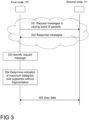
- Figure 3 depicts a combined signaling diagram and flowchart, which will be used to discuss embodiments herein.
- the actions below are for determining an indication of a maximum datagram size supported without fragmentation in communication between two nodes of an IP network.
- the IP network may be part of or involve a wireless communication network, e.g. a telecommunication network.
- the indication of the maximum datagram may correspond to an Ethernet MTU.
- the nodes are mainly exemplified by the first node 110 and the second node 111, and the IP network by the IP network 100.
- the first network node may be the first radio network node 210, the second network node may be the second radio network node 211, or vice versa, and the IP network be an IP network part of the RAN 201; in some embodiments the first network node may be the first radio network node 210, the second network node may be the core network node 212, or vice versa, and the IP network be an IP network part of the wireless communication network 200 that connects the RAN 101 and the CN 102; in some embodiments the first network node may be the external network node 310, the second network node may be the communication device 220, and the IP network may correspond to the external IP network 300.
- the first node 110 sends, to the second node 111, request messages in varying sized IP packets with datagrams using an application layer protocol over UDP.
- the IP packets thus contain UDP datagrams, respectively.
- the varying sized IP packets may be accomplished by e.g. varying sized UDP datagrams and/or by using varying sized padding in the IP packets, as explained below, or similar, that enables to vary the size in a controlled manner.
- Each request message may thus be contained in a UDP datagram that in turn is contained in an IP packet.
- IP packets and/or datagrams are not allowed to be fragmented by the IP network 100, or at least that the IP network does not forward and/or discard IP packets, even if fragmentation would be required.
- Such behavior can be accomplished by configuring the IP packets and/or datagrams and/or the IP network.
- the IP packets and/or datagrams may e.g. be configured not to be fragmented by the IP network by setting a "don't fragment" flag in the IP headers of the IP packets, or by other means if such available to accomplish such effect in the IP network 100.
- the varying sized IP packets and/or datagrams typically in a predefined or predetermined manner, provide knowledge, at least at the first node 110, of the size of the IP packet(s) and/or datagram(s) that resulted in a response message, which size can be considered to indicate and/or correspond to the maximum datagram supported.
- the varying sized IP packets may preferably but not necessarily be accomplished in a predefined or predetermined manner.
- the IP packets may e.g. be consecutively larger or smaller in size, e.g. increased or decreased by a fix size for each sent request message. A detailed example how this can be accomplished is described separately below.
- the first node 110 receives, from the second node 111, in response to the sent request messages in Action 301, respectively, one or more response messages.
- the first node thus sends a response messages to the second node in response to each received request message.
- Each response message indicates that a datagram of a request message that the response message is in response to, was received by the second node 111.
- the response messages may be predefined and be determined, e.g. selected, by the request messages and/or the application layer protocol being used.
- the size of a response message may e.g. be influenced and/or controlled by the request message that the response message is in response to.
- the response messages should preferably be sufficiently small, i.e. in size, to avoid fragmentation, that is, so that any IP packets carrying a response message, or datagram of the response message, is not, or do not risk to be fragmented in the IP network 100 before it is received by the first node 110.
- This may mean, at least in some embodiments with IPv4, that the response messages should be at most 576 bytes.
- Response messages that avoid fragmentation are preferred and increase robustness since there may be circumstances where it is difficult to fully influence or control how nodes corresponding to the second node 111 will behave. If these e.g..would be configured to avoid fragmentation, response messages that would cause fragmentation would never reach the first node.
- the first node 110 identifies a request message of said varying sized IP packets for which there is a change in receipt of response message compared to another request message of said varying sized IP packets.
- the change may relate to a switch from presence to absence of response messages, or vice versa, at a certain change in size of the IP packets carrying these response messages. Or, in other words, that two consecutive in size IP packets with request messages, e.g. consecutively sent request messages in IP packets of different sizes, result in one received, i.e. presence of one, response message and one non-received, i.e. absence of one, response message.
- the absent response message should be one that would be expected to be received if the corresponding request message had been received by the second node.
- a first example of the change may e.g. be that a response message is received for a request message in a first sized IP packet and it is then not received a response message for a request message in a second, larger, sized IP packet.
- There may e.g. be a sequence of increasingly sized IP packets with request messages and at some IP packet of a certain size there is no longer received any response message, i.e. the change occur.
- a second example of the change is that there is no response message received for a request message in a third sized IP message and then it is received a response message for a request message in a fourth, smaller, sized IP packet.
- a response message is not received in case the response message, that the response message should be in response to, never reached the second node 111. This happens if the IP packets with the request message is of a size where fragmentation would happen, but since fragmentation has been set not to be allowed, a request message of such IP packet will never result in a response message. There may be sent a number of request messages of IP packets of a size that do not result in receipt of a response message, i.e. repeated sending, to reduce the risk that absence of a response message is due to other reasons. An example of this is discussed separately below.
- the first node 110 determines, based on the identification of Action 303, an indication of a maximum datagram size supported for application layer data communication over UDP between the first node 110 and the second node 111.
- this provide information, in combination with Action 303, at least at the first node 110, that can identify size of the last datagram that resulted in a response message. This size can thus be considered to indicate and/or correspond to the maximum datagram supported.
- the indication is a measure that is further determined based on a size of a last, or closest in size, IP packet of said varying sized, e.g. consecutively larger, IP packets that carried a request message resulting in a response message.
- the indication is a measure that is further determined based on the size of an IP packet of said varying sizes that carried a request message resulting in a response message, and which IP packet is closest in size to the IP packet of said identified request message in Action 303.
- the IP packet closest in size will be smaller than the IP packet of said identified request message.
- the IP packet closest in size is the IP packet of said identified request message, i.e. the IP packet itself.
- the datagrams sent using the application layer protocol over UDP will be experience the same, network behaviour as data traffic over UDP.
- said determined indication or measure of the maximum datagram size will be indicative of the maximum datagram size supported without fragmentation for application layer data communication over UDP between the first node and the second node.
- a service provider providing e.g. a video and/or audio streaming service, may use a measure of the of the maximum datagram size supported without fragmentation between two nodes, corresponding to the first node 110 and the second node 111, which measure, e.g. MTU size, is based on Actions 301-304, to configure or set-up the first node 110 and/or the second node 111 for communication of user data according to the provided service.
- the service provider may use the determined measure, e.g. MTU size, in the first node 110 and/or in the second node 111, for or in the communication of user data, such as streaming video and/or audio data, to and/or from the other of said nodes.
- the user data corresponding to application layer data and the communication taking part over UDP.
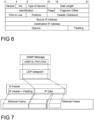
- embodiments as described above are advantageously implemented using SNMP. It may thereby suffice to configure an existing node corresponding to the first node 110 so that it performs as described above, e.g. operating as an SNMP Manager that performs as above, and that thereby will make another existing node, corresponding to the second node, e.g. operating as an SNMP Agent, to respond as the second node 111 above.
- the possibility to implement using SNMP has particular advantages and implementation may be accomplished by comparatively simple modification, e.g. by configuration in SW of an existing node supporting SNMP to enable it to act as the first node above.
- embodiments herein provide one or more improvements in relation to the prior art and relating to determination of maximum datagram size supported without fragmentation in an IP based network, for example corresponding to determining MTU.
- Embodiments herein, as explained above, are further compatible with UDP based protocols, such as S1-U, X2-U, N2-U, used in wireless communication networks, such as in 4G and 5G RANs.
Landscapes
- Engineering & Computer Science (AREA)
- Computer Networks & Wireless Communication (AREA)
- Signal Processing (AREA)
- Computer Security & Cryptography (AREA)
- Data Exchanges In Wide-Area Networks (AREA)
- Mobile Radio Communication Systems (AREA)
Claims (14)
- Verfahren, das von einem ersten Knoten (110; 210; 212; 310) eines Internet-Protokoll-, IP-Netzwerks (100; 201; 201-202; 300) ausgeführt wird, zum Bestimmen einer Angabe einer maximalen Datagrammgröße, die bei der Kommunikation zwischen dem ersten Knoten (110; 210; 212; 310) und einem zweiten Knoten (111; 211; 210; 220) des IP-Netzwerks (100; 201; 201-202; 300) ohne Fragmentierung unterstützt wird, wobei das Verfahren umfasst:- Senden (301; 901) an den zweiten Knoten (111; 211; 210; 220) von Anforderungsnachrichten in IP-Paketen unterschiedlicher Größe unter Verwendung eines Anwendungsschichtprotokolls über das User Datagram Protocol (UDP), und wobei IP-Pakete konfiguriert sind, um von dem IP-Netzwerk (100; 201; 201-202; 300) nicht fragmentiert zu werden, wobei die IP-Pakete unterschiedlicher Größe nacheinander in der Größe größer oder kleiner sind, was durch Größenbestimmung von Argumenten für die von den IP-Paketen übertragenen Anforderungsnachrichten bewirkt wird,- Empfangen (302; 902) von dem zweiten Knoten (111; 211; 210; 220) als Reaktion auf die gesendeten Anforderungsnachrichten jeweils einer oder mehrerer Antwortnachrichten, wobei jede Antwortnachricht angibt, dass ein Datagramm einer Anforderungsnachricht, auf die die Antwortnachricht eine Reaktion ist, von dem zweiten Knoten (111; 211; 210; 220) empfangen worden ist,- Identifizieren (303; 903) einer Anforderungsnachricht der IP-Pakete unterschiedlicher Größe, bei der es im Vergleich zu einer anderen Anforderungsnachricht der IP-Pakete unterschiedlicher Größe eine Änderung beim Empfang der Antwortnachricht gibt, und- Bestimmen (304; 904) basierend auf der Identifikation einer Angabe einer maximalen Datagrammgröße, die für die Datenkommunikation der Anwendungsschicht über UDP zwischen dem ersten Knoten (110; 210; 212; 310) und dem zweiten Knoten (111; 211; 210; 220) ohne Fragmentierung unterstützt wird.
- Verfahren nach Anspruch 1, wobei das Anwendungsschichtprotokoll Simple Network Management Protocol (SNMP) oder Hypertext Transfer Protocol (HTTP) oder ein beliebiges anderes geeignetes vorhandenes Anwendungsschichtprotokoll am ersten Knoten (110, 210, 212, 310) ist, um etwas von dem zweiten Knoten (111, 211, 210, 220) durch Verwenden einer geeigneten Anforderungsnachricht dieses Protokolls anzufordern, die eine vorbestimmte Antwortnachricht durch Anfordern von etwas generiert, das, wenn die Anforderung empfangen wird, eine vorbestimmte Antwort auslöst.
- Verfahren nach einem der Ansprüche 1-2, wobei das Anwendungsschichtprotokoll über UDP Simple Network Management Protocol, SNMP ist, der erste Knoten (110; 210; 212; 310) beim Senden der Anforderungsnachrichten als SNMP-Manager arbeitet, und der zweite Knoten (111; 211; 210; 220) beim Senden der Antwortnachrichten als SNMP-Agent arbeitet.
- Verfahren nach Anspruch 3, wobei die Anforderungsnachrichten SNMP-GetRequest-Nachrichten sind, und die Antwortnachrichten SNMP-GetResponse-Nachrichten sind.
- Verfahren nach einem der Ansprüche 1-2, wobei das Anwendungsschichtprotokoll über UDP das HyperText Transfer Protocol (HTTP) ist.
- Verfahren nach einem der Ansprüche 1-5, wobei die Antwortnachrichten ausreichend klein sind, um Fragmentierung zu vermeiden.
- Computerprogramm (1003), umfassend Anweisungen, die, wenn von einem Verarbeitungsschaltkreis (1004) ausgeführt, den ersten Knoten (110) veranlassen, das Verfahren nach einem der Ansprüche 1-6 durchzuführen.
- Träger, der das Computerprogramm (1003) nach Anspruch 7 umfasst, wobei der Träger eines von einem elektronischen Signal, optischen Signal, Funksignal oder computerlesbaren Speichermedium (1101) ist.
- Erster Knoten (110; 210; 212; 310; 1000) zum Bestimmen einer Angabe einer maximalen Datagrammgröße, die ohne Fragmentierung bei der Kommunikation zwischen dem ersten Knoten (110; 210; 212; 310; 1000) und einem zweiten Knoten (111; 211; 210; 220) in einem Internet-Protokoll-, IP-Netzwerk (100; 201; 201-202; 300) unterstützt wird, wobei der erste Knoten (110; 210; 212; 310; 1000) konfiguriert ist, um:an den zweiten Knoten (111; 211; 210; 220) Anforderungsnachrichten in IP-Paketen unterschiedlicher Größe unter Verwendung eines Anwendungsschichtprotokolls über das User Datagram Protocol (UDP) zu senden (301; 901), und wobei IP-Pakete konfiguriert sind, um von dem IP-Netzwerk (100; 201; 201-202; 300) nicht fragmentiert zu werden, wobei die IP-Pakete unterschiedlicher Größe nacheinander in der Größe größer oder kleiner sind, was durch Größenbestimmung von Argumenten für die von den IP-Paketen übertragenen Anforderungsnachrichten bewirkt wird,von dem zweiten Knoten (111; 211; 210; 220) als Reaktion auf die gesendeten Anforderungsnachrichten jeweils eine oder mehrere Antwortnachrichten zu empfangen (302; 902), wobei jede Antwortnachricht angibt, dass ein Datagramm einer Anforderungsnachricht, auf die die Antwortnachricht eine Reaktion ist, von dem zweiten Knoten (111; 211; 210; 220) empfangen worden ist,eine Anforderungsnachricht der IP-Pakete unterschiedlicher Größe, bei der es im Vergleich zu einer anderen Anforderungsnachricht der IP-Pakete unterschiedlicher Größe eine Änderung beim Empfang der Antwortnachricht gibt, zu identifizieren (303; 903), undbasierend auf der Identifikation einer Angabe einer maximalen Datagrammgröße, die für die Datenkommunikation der Anwendungsschicht über UDP zwischen dem ersten Knoten (110; 210; 212; 310) und dem zweiten Knoten (111; 211; 210; 220) ohne Fragmentierung unterstützt wird, zu bestimmen (304; 904).
- Erster Knoten (110; 210; 212; 310; 1000) nach Anspruch 9, wobei das Anwendungsschichtprotokoll Simple Network Management Protocol (SNMP) oder Hypertext Transfer Protocol (HTTP) oder ein beliebiges anderes geeignetes vorhandenes Anwendungsschichtprotokoll am ersten Knoten (110, 210, 212, 310) ist, um etwas von dem zweiten Knoten (111, 211, 210, 220) durch Verwenden einer geeigneten Anforderungsnachricht dieses Protokolls anzufordern, die eine vorbestimmte Antwortnachricht durch Anfordern von etwas generiert, das, wenn die Anforderung empfangen wird, eine vorbestimmte Antwort auslöst.
- Erster Knoten (110; 210; 212; 310; 1000) nach einem der Ansprüche 9-10, wobei das Anwendungsschichtprotokoll über UDP Simple Network Management Protocol, SNMP ist, der erste Knoten (110; 210; 212; 310; 1000) beim Senden der Anforderungsnachrichten konfiguriert ist, um als SNMP-Manager zu arbeiten, und der zweite Knoten (111; 211; 210; 220) beim Senden der Antwortnachrichten als SNMP-Agent arbeitet.
- Erster Knoten (110; 210; 212; 310; 1000) nach Anspruch 11, wobei die Anforderungsnachrichten SNMP-GetRequest-Nachrichten sind, und die Antwortnachrichten SNMP-GetResponse-Nachrichten sind.
- Erster Knoten (110; 210; 212; 310; 1000) nach einem der Ansprüche 9-10, wobei das Anwendungsschichtprotokoll über UDP das HyperText Transfer Protocol (HTTP) ist.
- Erster Knoten (110; 210; 212; 310; 1000) nach einem der Ansprüche 9-13, wobei die Antwortnachrichten ausreichend klein sind, um Fragmentierung zu vermeiden.
Applications Claiming Priority (1)
| Application Number | Priority Date | Filing Date | Title |
|---|---|---|---|
| PCT/SE2018/051201 WO2020106194A1 (en) | 2018-11-20 | 2018-11-20 | Method and arrangement for determining indication of maximum datagram size supported without fragmentation in an ip network |
Publications (2)
| Publication Number | Publication Date |
|---|---|
| EP3884630A1 EP3884630A1 (de) | 2021-09-29 |
| EP3884630B1 true EP3884630B1 (de) | 2025-04-02 |
Family
ID=64607280
Family Applications (1)
| Application Number | Title | Priority Date | Filing Date |
|---|---|---|---|
| EP18815047.8A Active EP3884630B1 (de) | 2018-11-20 | 2018-11-20 | Verfahren und anordnung zur bestimmung der anzeige der maximalen datagrammgrösse, die ohne fragmentierung in einem ip-netzwerk unterstützt wird |
Country Status (3)
| Country | Link |
|---|---|
| US (1) | US11956669B2 (de) |
| EP (1) | EP3884630B1 (de) |
| WO (1) | WO2020106194A1 (de) |
Families Citing this family (1)
| Publication number | Priority date | Publication date | Assignee | Title |
|---|---|---|---|---|
| WO2021256971A1 (en) * | 2020-06-17 | 2021-12-23 | Telefonaktiebolaget Lm Ericsson (Publ) | Methods and systems for charging for device identification, addition and/or change |
Family Cites Families (14)
| Publication number | Priority date | Publication date | Assignee | Title |
|---|---|---|---|---|
| US5959974A (en) * | 1996-12-02 | 1999-09-28 | International Business Machines Corporation | System and method for discovering path MTU of internet paths |
| JP3557998B2 (ja) * | 2000-04-28 | 2004-08-25 | 日本電気株式会社 | フラグメンテーション処理デバイスおよびこれを用いたフラグメンテーション処理装置 |
| US7093008B2 (en) * | 2000-11-30 | 2006-08-15 | Intel Corporation | Communication techniques for simple network management protocol |
| US7080138B1 (en) * | 2001-04-11 | 2006-07-18 | Cisco Technology, Inc. | Methods and apparatus for content server selection |
| US7302491B2 (en) * | 2003-07-31 | 2007-11-27 | International Business Machines Corporation | System and method of reducing data corruption due to recycled IP identification numbers |
| US20050105508A1 (en) * | 2003-11-14 | 2005-05-19 | Innomedia Pte Ltd. | System for management of Internet telephony equipment deployed behind firewalls |
| WO2006117613A1 (en) * | 2005-04-29 | 2006-11-09 | Nokia, Corporation | Method, apparatus and computer program to dynamically adjust segmentation at a protocol layer, such as at the medium access control (mac) layer |
| KR20070094320A (ko) * | 2006-03-17 | 2007-09-20 | 엘지전자 주식회사 | 방송 수신 장치, 어플리케이션 송수신 방법, 수신 상태정보 전송 방법 및 수신 상태 정보의 데이터 구조 |
| BRPI0807398A2 (pt) * | 2007-03-22 | 2014-05-27 | Ericsson Telefon Ab L M | Método para configurar a unidade de transmissão máxima de enlace em um equipamento de usuário, equipamento de usuário, e, nó em uma rede de rádio de evolução de arquitetura de sistema/evolução de longa duração. |
| US8352600B2 (en) * | 2009-04-21 | 2013-01-08 | Alcatel Lucent | System and method for determining a maximum packet data unit (PDU) payload transmission size for communicating in a managed computer network system |
| US8098688B1 (en) * | 2009-05-01 | 2012-01-17 | Tellabs, San Jose, Inc. | Methods and apparatus for optimizing network management traffic using dynamic SNMP packet resizing |
| JP2015533045A (ja) * | 2012-09-26 | 2015-11-16 | 日本電気株式会社 | 通信システム、通信方法、情報処理装置、通信制御方法及びプログラム |
| US20150038134A1 (en) * | 2013-08-05 | 2015-02-05 | Acer Incorporated | Method of optimizing data transmission in a wireless network system and related wireless network system |
| US20210226838A1 (en) * | 2018-06-08 | 2021-07-22 | Telefonaktiebolaget Lm Ericsson (Publ) | Method and network nodes for managing actions occurring in a network slice of a communication network |
-
2018
- 2018-11-20 US US17/293,130 patent/US11956669B2/en active Active
- 2018-11-20 EP EP18815047.8A patent/EP3884630B1/de active Active
- 2018-11-20 WO PCT/SE2018/051201 patent/WO2020106194A1/en not_active Ceased
Also Published As
| Publication number | Publication date |
|---|---|
| US20220353735A1 (en) | 2022-11-03 |
| US11956669B2 (en) | 2024-04-09 |
| EP3884630A1 (de) | 2021-09-29 |
| WO2020106194A1 (en) | 2020-05-28 |
Similar Documents
| Publication | Publication Date | Title |
|---|---|---|
| EP2910050B1 (de) | Verwaltungsvorrichtung und verfahren zur unterstützung von wlan-offload | |
| US11323948B2 (en) | Device management for NB-IoT devices | |
| US20090253426A1 (en) | System and method for communication of multi-mode base stations | |
| US20200322032A1 (en) | Beam training method and related device | |
| EP4498727A1 (de) | Kommunikationsverfahren und kommunikationsvorrichtung | |
| US10511640B2 (en) | Providing cellular-specific transport layer service by way of cell-site proxying in a network environment | |
| US20160255677A1 (en) | Methods and arrangements for managing a communication interface between the base stations | |
| EP3070891B1 (de) | Datenpaketverarbeitungsverfahren und -vorrichtung | |
| US20230208735A1 (en) | Methods and arrangements for supporting estimation of latency over a communication path in a communication network | |
| US12075496B2 (en) | Method and apparatus for network function managing NIDD session | |
| JP5291245B2 (ja) | Hrdpシステムにおける非3gpp2システム情報の送信、応答方法及び装置 | |
| CN116192412B (zh) | 报文防重放的方法和装置 | |
| US11956669B2 (en) | Methods and arrangements for determining indication of maximum datagram size supported without fragmentation in an IP network | |
| US12587307B2 (en) | Methods and arrangements for determining parameters of bursts for data flow transmission in a wireless communication network based on channel quality | |
| US12381799B2 (en) | Methods and arrangements for supporting estimation of latency over a communication path in a communication network | |
| US20240214843A1 (en) | Systems and methods for network management | |
| CN116055231B (zh) | 一种传输数据的方法和通信装置 | |
| CN117136526A (zh) | 用于处置通信系统中的安全性的第一节点、第二节点、通信系统以及由此执行的方法 | |
| US12149501B2 (en) | Method and entity for transmitting a plurality of MAC addresses | |
| US12052749B2 (en) | Methods and arrangements for managing round trip time associated with provision of a data flow via a multi-access communication network | |
| HK40023692A (en) | Method for realizing network capability opening, and related device | |
| EP4627831A1 (de) | Verfahren mit einem protokollstapel zum klären von daten in einem puffer |
Legal Events
| Date | Code | Title | Description |
|---|---|---|---|
| STAA | Information on the status of an ep patent application or granted ep patent |
Free format text: STATUS: UNKNOWN |
|
| STAA | Information on the status of an ep patent application or granted ep patent |
Free format text: STATUS: THE INTERNATIONAL PUBLICATION HAS BEEN MADE |
|
| PUAI | Public reference made under article 153(3) epc to a published international application that has entered the european phase |
Free format text: ORIGINAL CODE: 0009012 |
|
| STAA | Information on the status of an ep patent application or granted ep patent |
Free format text: STATUS: REQUEST FOR EXAMINATION WAS MADE |
|
| 17P | Request for examination filed |
Effective date: 20210414 |
|
| AK | Designated contracting states |
Kind code of ref document: A1 Designated state(s): AL AT BE BG CH CY CZ DE DK EE ES FI FR GB GR HR HU IE IS IT LI LT LU LV MC MK MT NL NO PL PT RO RS SE SI SK SM TR |
|
| DAV | Request for validation of the european patent (deleted) | ||
| DAX | Request for extension of the european patent (deleted) | ||
| STAA | Information on the status of an ep patent application or granted ep patent |
Free format text: STATUS: EXAMINATION IS IN PROGRESS |
|
| 17Q | First examination report despatched |
Effective date: 20230105 |
|
| REG | Reference to a national code |
Ref country code: DE Ref legal event code: R079 Free format text: PREVIOUS MAIN CLASS: H04L0012805000 Ipc: H04L0069240000 Ref document number: 602018080757 Country of ref document: DE |
|
| RIC1 | Information provided on ipc code assigned before grant |
Ipc: H04L 47/19 20220101ALI20241218BHEP Ipc: H04L 47/36 20220101ALI20241218BHEP Ipc: H04L 69/24 20220101AFI20241218BHEP |
|
| GRAP | Despatch of communication of intention to grant a patent |
Free format text: ORIGINAL CODE: EPIDOSNIGR1 |
|
| STAA | Information on the status of an ep patent application or granted ep patent |
Free format text: STATUS: GRANT OF PATENT IS INTENDED |
|
| GRAS | Grant fee paid |
Free format text: ORIGINAL CODE: EPIDOSNIGR3 |
|
| GRAA | (expected) grant |
Free format text: ORIGINAL CODE: 0009210 |
|
| STAA | Information on the status of an ep patent application or granted ep patent |
Free format text: STATUS: THE PATENT HAS BEEN GRANTED |
|
| INTG | Intention to grant announced |
Effective date: 20250130 |
|
| AK | Designated contracting states |
Kind code of ref document: B1 Designated state(s): AL AT BE BG CH CY CZ DE DK EE ES FI FR GB GR HR HU IE IS IT LI LT LU LV MC MK MT NL NO PL PT RO RS SE SI SK SM TR |
|
| REG | Reference to a national code |
Ref country code: GB Ref legal event code: FG4D |
|
| REG | Reference to a national code |
Ref country code: CH Ref legal event code: EP |
|
| REG | Reference to a national code |
Ref country code: IE Ref legal event code: FG4D |
|
| REG | Reference to a national code |
Ref country code: DE Ref legal event code: R096 Ref document number: 602018080757 Country of ref document: DE |
|
| REG | Reference to a national code |
Ref country code: NL Ref legal event code: MP Effective date: 20250402 |
|
| PG25 | Lapsed in a contracting state [announced via postgrant information from national office to epo] |
Ref country code: NL Free format text: LAPSE BECAUSE OF FAILURE TO SUBMIT A TRANSLATION OF THE DESCRIPTION OR TO PAY THE FEE WITHIN THE PRESCRIBED TIME-LIMIT Effective date: 20250402 |
|
| REG | Reference to a national code |
Ref country code: AT Ref legal event code: MK05 Ref document number: 1782417 Country of ref document: AT Kind code of ref document: T Effective date: 20250402 |
|
| PG25 | Lapsed in a contracting state [announced via postgrant information from national office to epo] |
Ref country code: FI Free format text: LAPSE BECAUSE OF FAILURE TO SUBMIT A TRANSLATION OF THE DESCRIPTION OR TO PAY THE FEE WITHIN THE PRESCRIBED TIME-LIMIT Effective date: 20250402 Ref country code: ES Free format text: LAPSE BECAUSE OF FAILURE TO SUBMIT A TRANSLATION OF THE DESCRIPTION OR TO PAY THE FEE WITHIN THE PRESCRIBED TIME-LIMIT Effective date: 20250402 Ref country code: PT Free format text: LAPSE BECAUSE OF FAILURE TO SUBMIT A TRANSLATION OF THE DESCRIPTION OR TO PAY THE FEE WITHIN THE PRESCRIBED TIME-LIMIT Effective date: 20250804 |
|
| REG | Reference to a national code |
Ref country code: LT Ref legal event code: MG9D |
|
| PG25 | Lapsed in a contracting state [announced via postgrant information from national office to epo] |
Ref country code: GR Free format text: LAPSE BECAUSE OF FAILURE TO SUBMIT A TRANSLATION OF THE DESCRIPTION OR TO PAY THE FEE WITHIN THE PRESCRIBED TIME-LIMIT Effective date: 20250703 Ref country code: NO Free format text: LAPSE BECAUSE OF FAILURE TO SUBMIT A TRANSLATION OF THE DESCRIPTION OR TO PAY THE FEE WITHIN THE PRESCRIBED TIME-LIMIT Effective date: 20250702 |
|
| PG25 | Lapsed in a contracting state [announced via postgrant information from national office to epo] |
Ref country code: PL Free format text: LAPSE BECAUSE OF FAILURE TO SUBMIT A TRANSLATION OF THE DESCRIPTION OR TO PAY THE FEE WITHIN THE PRESCRIBED TIME-LIMIT Effective date: 20250402 |
|
| PG25 | Lapsed in a contracting state [announced via postgrant information from national office to epo] |
Ref country code: BG Free format text: LAPSE BECAUSE OF FAILURE TO SUBMIT A TRANSLATION OF THE DESCRIPTION OR TO PAY THE FEE WITHIN THE PRESCRIBED TIME-LIMIT Effective date: 20250402 |
|
| PG25 | Lapsed in a contracting state [announced via postgrant information from national office to epo] |
Ref country code: HR Free format text: LAPSE BECAUSE OF FAILURE TO SUBMIT A TRANSLATION OF THE DESCRIPTION OR TO PAY THE FEE WITHIN THE PRESCRIBED TIME-LIMIT Effective date: 20250402 |
|
| PG25 | Lapsed in a contracting state [announced via postgrant information from national office to epo] |
Ref country code: AT Free format text: LAPSE BECAUSE OF FAILURE TO SUBMIT A TRANSLATION OF THE DESCRIPTION OR TO PAY THE FEE WITHIN THE PRESCRIBED TIME-LIMIT Effective date: 20250402 |
|
| PG25 | Lapsed in a contracting state [announced via postgrant information from national office to epo] |
Ref country code: RS Free format text: LAPSE BECAUSE OF FAILURE TO SUBMIT A TRANSLATION OF THE DESCRIPTION OR TO PAY THE FEE WITHIN THE PRESCRIBED TIME-LIMIT Effective date: 20250702 |
|
| PG25 | Lapsed in a contracting state [announced via postgrant information from national office to epo] |
Ref country code: IS Free format text: LAPSE BECAUSE OF FAILURE TO SUBMIT A TRANSLATION OF THE DESCRIPTION OR TO PAY THE FEE WITHIN THE PRESCRIBED TIME-LIMIT Effective date: 20250802 |
|
| PG25 | Lapsed in a contracting state [announced via postgrant information from national office to epo] |
Ref country code: LV Free format text: LAPSE BECAUSE OF FAILURE TO SUBMIT A TRANSLATION OF THE DESCRIPTION OR TO PAY THE FEE WITHIN THE PRESCRIBED TIME-LIMIT Effective date: 20250402 |
|
| REG | Reference to a national code |
Ref country code: DE Ref legal event code: R097 Ref document number: 602018080757 Country of ref document: DE |
|
| PGFP | Annual fee paid to national office [announced via postgrant information from national office to epo] |
Ref country code: DE Payment date: 20251128 Year of fee payment: 8 |
|
| PGFP | Annual fee paid to national office [announced via postgrant information from national office to epo] |
Ref country code: GB Payment date: 20251127 Year of fee payment: 8 |
|
| PG25 | Lapsed in a contracting state [announced via postgrant information from national office to epo] |
Ref country code: DK Free format text: LAPSE BECAUSE OF FAILURE TO SUBMIT A TRANSLATION OF THE DESCRIPTION OR TO PAY THE FEE WITHIN THE PRESCRIBED TIME-LIMIT Effective date: 20250402 Ref country code: SM Free format text: LAPSE BECAUSE OF FAILURE TO SUBMIT A TRANSLATION OF THE DESCRIPTION OR TO PAY THE FEE WITHIN THE PRESCRIBED TIME-LIMIT Effective date: 20250402 |
|
| PG25 | Lapsed in a contracting state [announced via postgrant information from national office to epo] |
Ref country code: CZ Free format text: LAPSE BECAUSE OF FAILURE TO SUBMIT A TRANSLATION OF THE DESCRIPTION OR TO PAY THE FEE WITHIN THE PRESCRIBED TIME-LIMIT Effective date: 20250402 |
|
| PG25 | Lapsed in a contracting state [announced via postgrant information from national office to epo] |
Ref country code: EE Free format text: LAPSE BECAUSE OF FAILURE TO SUBMIT A TRANSLATION OF THE DESCRIPTION OR TO PAY THE FEE WITHIN THE PRESCRIBED TIME-LIMIT Effective date: 20250402 |
|
| PG25 | Lapsed in a contracting state [announced via postgrant information from national office to epo] |
Ref country code: RO Free format text: LAPSE BECAUSE OF FAILURE TO SUBMIT A TRANSLATION OF THE DESCRIPTION OR TO PAY THE FEE WITHIN THE PRESCRIBED TIME-LIMIT Effective date: 20250402 Ref country code: SK Free format text: LAPSE BECAUSE OF FAILURE TO SUBMIT A TRANSLATION OF THE DESCRIPTION OR TO PAY THE FEE WITHIN THE PRESCRIBED TIME-LIMIT Effective date: 20250402 |
|
| PG25 | Lapsed in a contracting state [announced via postgrant information from national office to epo] |
Ref country code: IT Free format text: LAPSE BECAUSE OF FAILURE TO SUBMIT A TRANSLATION OF THE DESCRIPTION OR TO PAY THE FEE WITHIN THE PRESCRIBED TIME-LIMIT Effective date: 20250402 |
|
| PLBE | No opposition filed within time limit |
Free format text: ORIGINAL CODE: 0009261 |
|
| STAA | Information on the status of an ep patent application or granted ep patent |
Free format text: STATUS: NO OPPOSITION FILED WITHIN TIME LIMIT |
|
| REG | Reference to a national code |
Ref country code: CH Ref legal event code: L10 Free format text: ST27 STATUS EVENT CODE: U-0-0-L10-L00 (AS PROVIDED BY THE NATIONAL OFFICE) Effective date: 20260211 |
|
| 26N | No opposition filed |
Effective date: 20260105 |