EP3879472B1 - Cip-vergleich und -simulation - Google Patents
Cip-vergleich und -simulation Download PDFInfo
- Publication number
- EP3879472B1 EP3879472B1 EP21169910.3A EP21169910A EP3879472B1 EP 3879472 B1 EP3879472 B1 EP 3879472B1 EP 21169910 A EP21169910 A EP 21169910A EP 3879472 B1 EP3879472 B1 EP 3879472B1
- Authority
- EP
- European Patent Office
- Prior art keywords
- cip
- wash
- data
- simulated
- phase
- Prior art date
- Legal status (The legal status is an assumption and is not a legal conclusion. Google has not performed a legal analysis and makes no representation as to the accuracy of the status listed.)
- Active
Links
Images



Classifications
-
- B—PERFORMING OPERATIONS; TRANSPORTING
- B08—CLEANING
- B08B—CLEANING IN GENERAL; PREVENTION OF FOULING IN GENERAL
- B08B9/00—Cleaning hollow articles by methods or apparatus specially adapted thereto
- B08B9/02—Cleaning pipes or tubes or systems of pipes or tubes
- B08B9/027—Cleaning the internal surfaces; Removal of blockages
- B08B9/032—Cleaning the internal surfaces; Removal of blockages by the mechanical action of a moving fluid, e.g. by flushing
- B08B9/0321—Cleaning the internal surfaces; Removal of blockages by the mechanical action of a moving fluid, e.g. by flushing using pressurised, pulsating or purging fluid
- B08B9/0325—Control mechanisms therefor
-
- A—HUMAN NECESSITIES
- A01—AGRICULTURE; FORESTRY; ANIMAL HUSBANDRY; HUNTING; TRAPPING; FISHING
- A01J—MANUFACTURE OF DAIRY PRODUCTS
- A01J7/00—Accessories for milking machines or devices
- A01J7/02—Accessories for milking machines or devices for cleaning or sanitising milking machines or devices
- A01J7/022—Clean-in-Place Systems, i.e. CIP, for cleaning the complete milking installation in place
-
- B—PERFORMING OPERATIONS; TRANSPORTING
- B08—CLEANING
- B08B—CLEANING IN GENERAL; PREVENTION OF FOULING IN GENERAL
- B08B13/00—Accessories or details of general applicability for machines or apparatus for cleaning
-
- B—PERFORMING OPERATIONS; TRANSPORTING
- B08—CLEANING
- B08B—CLEANING IN GENERAL; PREVENTION OF FOULING IN GENERAL
- B08B9/00—Cleaning hollow articles by methods or apparatus specially adapted thereto
- B08B9/02—Cleaning pipes or tubes or systems of pipes or tubes
- B08B9/027—Cleaning the internal surfaces; Removal of blockages
-
- B—PERFORMING OPERATIONS; TRANSPORTING
- B08—CLEANING
- B08B—CLEANING IN GENERAL; PREVENTION OF FOULING IN GENERAL
- B08B9/00—Cleaning hollow articles by methods or apparatus specially adapted thereto
- B08B9/08—Cleaning containers, e.g. tanks
-
- G—PHYSICS
- G05—CONTROLLING; REGULATING
- G05B—CONTROL OR REGULATING SYSTEMS IN GENERAL; FUNCTIONAL ELEMENTS OF SUCH SYSTEMS; MONITORING OR TESTING ARRANGEMENTS FOR SUCH SYSTEMS OR ELEMENTS
- G05B19/00—Program-control systems
- G05B19/02—Program-control systems electric
- G05B19/418—Total factory control, i.e. centrally controlling a plurality of machines, e.g. direct or distributed numerical control [DNC], flexible manufacturing systems [FMS], integrated manufacturing systems [IMS] or computer integrated manufacturing [CIM]
- G05B19/41835—Total factory control, i.e. centrally controlling a plurality of machines, e.g. direct or distributed numerical control [DNC], flexible manufacturing systems [FMS], integrated manufacturing systems [IMS] or computer integrated manufacturing [CIM] characterised by program execution
-
- G—PHYSICS
- G05—CONTROLLING; REGULATING
- G05B—CONTROL OR REGULATING SYSTEMS IN GENERAL; FUNCTIONAL ELEMENTS OF SUCH SYSTEMS; MONITORING OR TESTING ARRANGEMENTS FOR SUCH SYSTEMS OR ELEMENTS
- G05B23/00—Testing or monitoring of control systems or parts thereof
- G05B23/02—Electric testing or monitoring
- G05B23/0205—Electric testing or monitoring by means of a monitoring system capable of detecting and responding to faults
- G05B23/0259—Electric testing or monitoring by means of a monitoring system capable of detecting and responding to faults characterized by the response to fault detection
- G05B23/0267—Fault communication, e.g. human machine interface [HMI]
- G05B23/0272—Presentation of monitored results, e.g. selection of status reports to be displayed; Filtering information to the user
-
- G—PHYSICS
- G06—COMPUTING OR CALCULATING; COUNTING
- G06Q—INFORMATION AND COMMUNICATION TECHNOLOGY [ICT] SPECIALLY ADAPTED FOR ADMINISTRATIVE, COMMERCIAL, FINANCIAL, MANAGERIAL OR SUPERVISORY PURPOSES; SYSTEMS OR METHODS SPECIALLY ADAPTED FOR ADMINISTRATIVE, COMMERCIAL, FINANCIAL, MANAGERIAL OR SUPERVISORY PURPOSES, NOT OTHERWISE PROVIDED FOR
- G06Q10/00—Administration; Management
- G06Q10/06—Resources, workflows, human or project management; Enterprise or organisation planning; Enterprise or organisation modelling
- G06Q10/063—Operations research, analysis or management
- G06Q10/0639—Performance analysis of employees; Performance analysis of enterprise or organisation operations
- G06Q10/06393—Score-carding, benchmarking or key performance indicator [KPI] analysis
-
- G—PHYSICS
- G06—COMPUTING OR CALCULATING; COUNTING
- G06Q—INFORMATION AND COMMUNICATION TECHNOLOGY [ICT] SPECIALLY ADAPTED FOR ADMINISTRATIVE, COMMERCIAL, FINANCIAL, MANAGERIAL OR SUPERVISORY PURPOSES; SYSTEMS OR METHODS SPECIALLY ADAPTED FOR ADMINISTRATIVE, COMMERCIAL, FINANCIAL, MANAGERIAL OR SUPERVISORY PURPOSES, NOT OTHERWISE PROVIDED FOR
- G06Q30/00—Commerce
- G06Q30/04—Billing or invoicing
-
- G—PHYSICS
- G05—CONTROLLING; REGULATING
- G05B—CONTROL OR REGULATING SYSTEMS IN GENERAL; FUNCTIONAL ELEMENTS OF SUCH SYSTEMS; MONITORING OR TESTING ARRANGEMENTS FOR SUCH SYSTEMS OR ELEMENTS
- G05B2219/00—Program-control systems
- G05B2219/30—Nc systems
- G05B2219/31—From computer integrated manufacturing till monitoring
- G05B2219/31265—Control process by combining history and real time data
-
- G—PHYSICS
- G05—CONTROLLING; REGULATING
- G05B—CONTROL OR REGULATING SYSTEMS IN GENERAL; FUNCTIONAL ELEMENTS OF SUCH SYSTEMS; MONITORING OR TESTING ARRANGEMENTS FOR SUCH SYSTEMS OR ELEMENTS
- G05B2219/00—Program-control systems
- G05B2219/30—Nc systems
- G05B2219/31—From computer integrated manufacturing till monitoring
- G05B2219/31318—Data analysis, using different formats like table, chart
-
- G—PHYSICS
- G05—CONTROLLING; REGULATING
- G05B—CONTROL OR REGULATING SYSTEMS IN GENERAL; FUNCTIONAL ELEMENTS OF SUCH SYSTEMS; MONITORING OR TESTING ARRANGEMENTS FOR SUCH SYSTEMS OR ELEMENTS
- G05B2219/00—Program-control systems
- G05B2219/30—Nc systems
- G05B2219/32—Operator till task planning
- G05B2219/32128—Gui graphical user interface
-
- G—PHYSICS
- G05—CONTROLLING; REGULATING
- G05B—CONTROL OR REGULATING SYSTEMS IN GENERAL; FUNCTIONAL ELEMENTS OF SUCH SYSTEMS; MONITORING OR TESTING ARRANGEMENTS FOR SUCH SYSTEMS OR ELEMENTS
- G05B2219/00—Program-control systems
- G05B2219/30—Nc systems
- G05B2219/32—Operator till task planning
- G05B2219/32343—Derive control behaviour, decisions from simulation, behaviour modelling
Definitions
- This disclosure relates generally to clean-in-place systems and processes, and data pertaining to clean-in-place systems and processes.
- Food processing equipment such as that found in dairies, tanks, pumps, valves and fluid piping, typically includes tanks, pumps, valves, and fluid piping. This food processing equipment often needs to be cleaned between each lot of product processed through the equipment. However, the tanks, pumps, valves, and piping can be difficult to clean because the various components may be difficult to access and disassemble for cleaning. Because of these cleaning difficulties, many food processing plants now use clean-in-place systems in which the tanks, pumps, valves, and piping of the food processing equipment remain physically assembled, and various cleaning, disinfecting, and rinsing solutions are circulated by the clean-in-place system through the food processing equipment to affect the cleaning process.
- An example clean-in-place cleaning cycle normally begins with a pre-rinse cycle wherein water is pumped through the food processing equipment for the purpose of removing loose soil in the system.
- an alkaline wash would then be recirculated through the food processing equipment. This alkaline wash would chemically react with the soils of the food processing equipment to further remove soil.
- a third step would again rinse the food processing equipment with water, prior to a fourth step wherein an acid rinse would be circulated through the batch processing system. The acid rinse would neutralize and remove residual alkaline cleaner and remove any mineral deposits left by the water.
- a post-rinse cycle would be performed, typically using water and/or a sanitizing rinse.
- Clean-in-place processes can vary widely in complexity. Some clean-in-place processes include various pieces of equipment, sometimes called clean-in-place objects, operating in conjunction and/or in succession. Data regarding clean-in-place processes and object operation is often stored as an unorganized mass of data, and is often incomprehensible to those without extensive experience in the clean-in-place industry. As a result, a typical user of a system on which clean-in-place processes are performed is unable to analyze clean-in-place process data to notice areas of potential improvement or non-ideal operation in the clean-in-place process. Generally, the user does not have more than a very basic understanding of how operation of a system changes from process to process or how actions taken by the user can affect the system operation.
- This disclosure in general relates to systems and methods of cataloging, arranging, and viewing clean-in-place (CIP) data. Moreover, this disclosure provides for use of such data to simulate changes in a wash recipe in a CIP system.
- wash and/or phase summary data can appear in a simulate wash and/or phase summary and permit a user to adjust one or more parameters in one or more phases of the wash summary.
- a user can cause the system to recalculate aspects of the wash from the wash summary utilizing the adjusted parameters, and in some instances the user's remaining unadjusted parameters.
- the simulation can be performed utilizing the CIP system user's own data (e.g., from past CIP washes), tailoring the simulation to the particular CIP system and allowing the user to determine a best practice with regard to their own system.
- One embodiment includes a method for simulating an operational effect of one or more changes in a CIP process, where the CIP process includes at least two CIP phases.
- the method includes, using one or more programmable processors, accessing a first set of CIP data from a CIP database where the first set of CIP data is associated with the CIP process and includes an amount of each of a plurality of consumables consumed during the CIP process.
- the method further includes, using one or more programmable processors, associating a price with each consumable consumed in the CIP process, calculating (i) the total cost of each consumable used in the CIP process and (ii) the total cost of the CIP process where each is based on the amount and price of the consumables consumed, and displaying at least a portion of the first set of CIP data on a display.
- the displayed CIP data includes at least one of (iii) the amount or (iv) the total cost of each consumable used in the CIP process.
- the method includes providing, using the one or more programmable processors, a graphical user interface configured to receive inputs from a user, receiving, using the graphical user interface, at least one proposed adjustment to one CIP phase of the CIP process, generating, using the one or more programmable processors, a simulated CIP process based on the first set of CIP data and the at least one proposed adjustment, generating, using the one or more programmable processors, simulated CIP data based on the simulated CIP process, and displaying, using one or more programmable processors, the simulated CIP data on the display.
- the simulated CIP data includes at least one of (v) the amount or (vi) the total cost of each consumable used to generate the simulated CIP data. A total cost of the simulated CIP process is calculated, where the total cost of the simulated CIP process incorporates the proposed adjustment.
- a further embodiment includes a method for simulating chemistry replacement in a CIP process.
- the method includes receiving a first set of CIP data associated with the CIP process having first and second CIP phases and using a plurality of consumables where one of the plurality of consumables includes a first chemistry.
- the first chemistry is used in the first CIP phase and the first set of CIP data comprises an amount of each of the plurality of consumables used during the CIP process.
- the method further includes associating a price with each of the plurality of consumables used during the CIP process, calculating a total cost of the CIP process, displaying the received first set of CIP data on a display such that the displayed first set of CIP data includes at least one of (i) the amount and (ii) the cost of each of the plurality of consumables used in the CIP process, and receiving, via an interface, at least one hypothetical adjustment to the first chemistry used in the first CIP phase.
- the method includes simulating an execution of the CIP process utilizing the first set of CIP data and the hypothetical adjustment to the first chemistry creating simulated CIP data associated with a simulated CIP process, and displaying the simulated CIP data on the display such that the displayed simulated CIP data includes at least one of (i) the amount and (ii) the cost of each of the plurality of consumables used in the simulated CIP process.
- a total cost of the simulated CIP process incorporating the hypothetical adjustment to the first chemistry is calculated.
- a CIP phase might include a rinse phase, during which water is passed through the CIP object in order to rinse the object.
- Other exemplary CIP phases can include a pre-rinse, a post-rinse, alkaline wash, acid sanitize, rinse recovery, chemical recovery, or sterilization.
- a CIP wash can include one or more CIP phases.
- CIP washes, and likewise CIP phases can consume one or more consumables during the execution of a wash or phase.
- auxiliary CIP equipment such as pumps, valves, etc. can consume electrical energy during operation.
- various phases can require the addition of water and/or one or more chemicals such as an alkaline or an acid (generally "chemistry").
- chemistry an acid
- water and/or chemistry is heated to a desired temperature, using thermal energy.
- exemplary consumables consumed during a CIP phase or a CIP wash can include electrical energy, thermal energy, water, chemistry, and time.
- a series of pumps, valves, and other equipment can be used to perform various phases of the wash.
- Such equipment can be controlled, for example, by a controller configured to carry out CIP phases and washes.
- a controller can include memory for storing CIP wash and phase recipes indicating which valves to open and/or which pumps to activate at which times during a CIP wash.
- the controller can be programmed by a user to update or save new wash recipes.
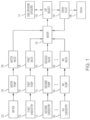
- FIG. 1 is an exemplary schematic diagram of a CIP system. As shown, a number of chemistries (first chemistry 102 - Nth chemistry 122) are in communication with a CIP object 142. For simplicity, the fluid flow of first chemistry 1 02 will be explained in detail, however it will be clear that similar operation can be employed among each of the other chemistries.
- the first chemistry 102 is pumped by a first pump 104 toward a mixer 140.
- the term mixer is used to describe the area where the chemical detergents are combined with the water source to create the cleaning solution. It can consist of either a hydraulically suited mixing line segment, a circulation tank, or simply the suction side of a delivery pump.in the CIP circuit.
- a first valve 106 in the flow path of the first chemistry 102 can act to prevent the first chemistry 102 from reaching the mixer 140.
- flow control can be performed by either the first valve 106, the first pump 104, or a combination thereof.
- the first valve 106 is positioned ahead of the first pump 104 in the flow path of the first chemistry 102, while in other embodiments, the first valve 106 is positioned after the first pump 104.
- the mixer 140 is configured to receive the first chemistry 102, as well as any other of the second chemistry 112 through Nth chemistry 122.
- the mixer 140 can also be configured to receive water 132 via a water line comprising a water pump 134 and a water valve 136 which can be arranged in a similar configuration as the chemistry input lines.
- the mixer 140 can be any system component receiving chemistries and/or water intended to be directed toward the CIP object 142.
- the mixer 140 can actively mix fluids therein, while in other embodiments, fluids merely are dispensed into the mixer 140 simultaneously.
- various chemistries and water are substantially mixed within the CIP object 142 during the CIP process and need not be mixed by the mixer 140.
- the mixer 140 receives any combination of water 132 and any of the first 102 through Nth 122 chemistries prior to the combination of any such fluids being directed toward the CIP object 142.
- the timing and dosing of water 132 or any of first 102 through Nth 122 chemistries can be controlled by a controller (not shown) in communication with any corresponding pumps and/or valves.
- a controller (not shown) in communication with any corresponding pumps and/or valves.
- various CIP washes and phases can be characterized by recipes stored in and/or carried out by the controller.
- the controller may cause the first valve 106 to open and the first pump 104 to dose first chemistry 102 to the mixer 140 and CIP object 142.
- the controller can be configured to dose a predetermined volume of the first chemistry 102, to dose the first chemistry 102 for a predetermined amount of time, or to dose the predetermined chemistry 102 until a predetermined event occurs.
- the controller may stop the dosing of the first chemistry 102 by closing the first valve 106 and/or stopping the first pump 104.
- the controller can begin a second phase, for example, by dosing the second 112 and Nth 122 chemistries toward the mixer 140 via the second pump 114 and valve 116 and the Nth pump 124 and valve 126, respectively.
- the second 112 and Nth 122 chemistries can combine in the mixer 140 before being directed to the CIP object 142.
- the controller can operate to dose any combination of chemistries toward the mixer 140 and CIP object 142.
- Such chemistries can be diluted as desired by further dosing water 132 via the water pump 134 and water valve 136.
- various phases may be preceded or followed by a rinse phase, in which water 132 is provided to the CIP object 142 to rinse away residual chemistries or other residue from the CIP object operation.
- CIP systems can include one or more sensors 110 for detecting various operating conditions of the CIP system or a CIP process solution flowing therethrough.
- the one or more sensors 110 are shown as being in communication with the CIP object 142.
- the one or more sensors can be dispersed throughout the system, such as in the mixer 140, proximate the input or output of the CIP object 142, or any other appropriate position in the system.
- one or more sensors 110 can be positioned in any of the water 132 or first 102 through Nth 122 chemistry lines to monitor properties of each individual line.
- Various sensors can include, for example, temperature sensors, conductivity sensors, optical sensors, flow meters, electricity consumption meters and the like.
- the one or more sensors 110 can be in communication with the controller for communicating readings thereto.
- data can be generated regarding the process.
- data collected by the one or more sensors 110 of FIG. 1 throughout the duration of the process can be saved to memory by the controller.
- Exemplary types of data that can be stored include duration of various phases, the electrical or thermal energy consumed during various phases by various pieces of equipment, the temperature of CIP process fluid, an amount of water or chemistry used during a phase or a wash, or the like.
- the controller can be configured to combine CIP data acquired during a CIP wash to better provide context to a system operator.
- the controller can combine data such as valve positions, temperature, flow duration, etc. to determine when during a CIP wash various CIP phases begin and end.
- the controller can collect and store data from CIP processes in a wash summary. Data can be grouped together by phase, by consumable, or by other logical parameters in order to provide specific phase, consumable, or other information regarding an entire wash.
- the wash summary can be saved as a whole to memory.
- Wash summaries can be cataloged and saved in a wash library, providing an easy way to find and analyze past wash summaries, or to view information regarding various wash summaries side-by-side
- Wash summaries and the wash library can be sortable by various properties measured during washes by CIP equipment.
- wash summaries and the wash library can include exception data, indicating the one or more parameters during one or more phases of one or more washes met a condition defined by the user. Such a parameter meeting such a defined condition triggers an exception so that the user can immediately be aware that such a condition was met.
- Wash summaries, exceptions, and a wash library are detailed in the provisional patent application entitled "CIP WASH SUMMARY AND LIBRARY, attorney docket number 29805.157.3" filed concurrently herewith
- a user can select particular time ranges of wash occurrences to flag as a baseline or a benchmark within the CIP monitoring system.
- a baseline and a benchmark can be used differently by the user.
- a baseline can be set over a period of time (e.g., 1 week, 4 weeks, etc.) shortly after the installation of the CIP monitoring platform which can be used to indicate current consumption amounts, thus establishing a baseline for future operation of the system.
- Benchmark washes may be saved because of some noteworthy occurrence after the installation process.
- baselines and benchmarks For example, seasonal variation in ambient or incoming water temperature, changes in production throughput over an annual cycle, alterations in product quality, plant expansions, or modifications to cleaning procedures to reduce consumption would be typical reasons to set aside a grouping of wash occurrences over a period of time as a benchmark.
- the setting of baselines and benchmarks is done in a similar fashion, and a difference is that the baseline time period is meant to be the initial or original benchmark at any given facility; thus, it will be appreciated that the terms can be functionally used interchangeably, as each can be saved and otherwise utilized by a user similarly.
- Baseline and benchmark consumption periods can be stored in or otherwise linked to from a database of exclusively baseline and benchmark periods.
- a user can navigate to the database of baseline and benchmark washes to more quickly locate consumption details for the selected time frame. For example, a user may wish to flag the first week in a new system so that the user can easily recall the wash data from the first wash to compare to subsequent washes in the future. Similarly, a user may wish to flag the first week or four week period in a system immediately after a system has undergone changes or other maintenance so that the user can more easily observe system change over time.
- a user may choose to establish a baseline or a benchmark time frame immediately before a system change so that the user can easily review wash data from prior to the change and compare with washes after the change has been implemented.
- a user can save data, such as a number of triggered exceptions or a particularly cost-effective period.
- a user can select a time period to be saved as a baseline or benchmark wash for a variety of reasons. Once a wash has been saved as a baseline or benchmark, a user can navigate the database of baselines and benchmarks and quickly and easily recall data from such washes.
- a user can compare washes within the wash library to one another.
- a user can select two or more washes from a wash library to be compared. Selected washes can be presented side-by-side for user comparison.
- the presented CIP data representative of each wash can include, for example, the duration of the wash, the amount of any of a number of consumables consumed, the cost of consuming the consumables, or any other data stored in the wash library.
- a comparison between two or more washes includes presenting the difference between like parameters between those washes. For example, a wash comparison between a first wash and a second wash can include the total amount of water used in the first wash, the total amount of water used in the second wash, and the difference in the amount of water used between the first and second washes.
- a user can adjust how the wash comparison between two or more washes is presented.
- the user can sort or filter the compared washes by any number of desired parameters. For example, a user can sort a number of washes selected for comparison by the total amount of water used in each wash. In doing so, the user can easily observe which of the selected washes consumes the most water during the course of the wash. In general, the user can sort washes by any available comparable parameter.
- the user is able to set aside specific washes for each object and recipe combination within the plant as a gold-standard or "perfect" wash. These washes are stored separately to allow for quick comparison to other washes on the same object or to other washes on any other object in the plant, whether they be similar, such as two similarly sized and used tanks in the facility, or dissimilar objects. There are no pre-requisites for the flagging of a wash as a perfect wash, so the user may define any wash that is interesting for any number of reasons.
- a user can recall a benchmark wash as described earlier for comparison with one or more additional washes. For instance, a user can save the last wash prior to implementing a change in the CIP system as a perfect wash. Once the changes to the CIP system have been implemented, a wash can be performed and quickly and easily compared to the designated perfect wash. Accordingly, the system user can easily observe the changes in wash summary data that are a result of the changes implemented into the CIP system. Subsequently, the user can save the wash summary of the new system as a baseline wash and easily compare future washes to this instance to observe system behavior over time.
- FIG. 5 is an exemplary interface 500 showing how the system receives an indication via a graphical user interface (GUI) at region 510, that the current wash should be designated as a "perfect wash.”
- GUI graphical user interface
- FIG. 6 is an exemplary interface 600 showing how the system provides a library of washes specifically designated as "perfect washes.” The library is structured similar to other system libraries.
- FIG. 7 is an exemplary interface 700 showing how the system receives a selection of the perfect wash to which the system should compare to a desired wash (e.g., a current or most recent wash).
- FIGS. 8A and 8B are upper 800 and lower 850 portions, respectively, of an exemplary interface showing how the system displays a comparison of an actual wash to the selected perfect wash.
- a user can further use data in the wash library to simulate changes in a wash recipe in a CIP system. For example, a user can select with a wash summary comprising the user's own system data regarding a previous wash for adjusting. In some examples a user can select to enter a simulation from viewing an existing wash summary in the wash library. In other examples, a user can enter a simulation mode of operation and then select a wash summary from the wash library.
- the wash summary can include phase data and consumable data related to various CIP phases within the wash and consumables consumed within each phase and the wash in its entirety.
- wash and/or phase summary data can appear in a simulate phase summary or a simulate wash summary in which a user can choose to edit or adjust one or more parameters in one or more phases of the wash summary.
- the user selects a phase of the wash from the simulate wash summary to adjust one or more parameters of the selected phase.
- the user can eliminate a phase from, or add an entirely new phase to the simulated wash (e.g., a new phase using a new chemistry).
- a user can cause the system to recalculate aspects of the wash from the wash summary utilizing the adjusted parameters.
- the system utilizes the adjusted parameters in conjunction with the user's remaining unadjusted parameters to determine the simulated wash cost.
- the simulation can be performed utilizing the CIP system user's own data, tailoring the simulation to the particular CIP system.
- the simulated wash summary can be saved in a simulated wash library for future access by the user.
- the simulated wash summary can be presented alongside the original wash summary for cornparison analogous to the comparisons of washes from within the wash library described above.
- two simulated wash summaries can be presented alongside one another for comparison.
- a user can view parameters of an existing wash summary and change one or more parameters in the wash to observe a predicted effect on the system operation.
- the user can change any appropriate parameters, such as the type and/or amount of chemistry dosed, the desired temperature of chemistry, water, or a combination thereof in the system, the duration of a particular phase, etc.
- the system can then, based on the user's past data, simulate the effect of the adjusted parameters.
- the results can be displayed as a simulated wash summary together with the original wash summary, and the two can be compared.
- Running simulations based on the user's past data allows the user to determine a best practice with regard to their own system.
- the simulation tool can be used to simulate the effect of a chemistry replacement in at least one CIP phase in a wash.
- the replacement of one chemistry with another can affect wash parameters of the system in a predictable way.
- a user can adjust the one or more additional parameters affected by the chemistry change, For example, the user can adjust the cost and/or amount of the chemistry dosed during the at least one phase.
- any other system changes e.g., different temperature, different amount of water
- Running the simulation with these updated parameters can provide a detailed analysis to the user regarding the effect of the simulated change in chemistry without requiring the user to physically test the chemistry within the system.
- the simulation calculating, data lookup and saving, and receiving inputs from a user interface can be performed by one or more processors incorporated into the system.
- the one or more processors can be in communication with system memory for recalling wash summary data, cataloging wash summary data into a wash library, and indexing and recalling benchmark and baseline washes.
- the processor is configured to connect to a network, such as the internet, for determining the cost of consumables from a database, or otherwise receiving data from or communicating data to a remote location.
- the database can be remote from the controller of the CIP system and include present/real-time cost information for one or more consumables utilized in a CIP process.
- the CIP system via the controller for example, can be in communication with the remote database via a network, such as the internet, to receive the present/real-time cost information for one or more consumables.
- FIGS. 3-4 illustrate exemplary CIP simulation processes.
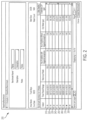
- FIG. 3 is an exemplary simulation interface 300 which can be presented to a user.
- the interface 300 includes one or more phases 310, 320 for selection by a user, along with data associated with each phase 310, 320 taken from the wash summary.
- the presented data can be existing data from a previous wash retrieved from a wash library.
- the user can select a simulation function from a list of options.
- the user can select from any or all of copying a particular phase for reinserting into a simulate wash, editing a phase, or deleting a phase from a simulated wash.
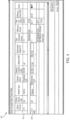
- FIG. 4 is an exemplary interface 400 for allowing a user to modify chemical parameters of a phase.
- the interface 400 includes original data from the original phase summary across one row 410, and one or more editable text boxes by which the user can enter an adjusted parameter across a second row 420.
- the user can easily observe differences between a proposed simulated phase and the original phase data.
- the user can choose to recalculate parameters of the phase dependent on the adjusted variables, such as the total cost of the phase.
- the system can display the calculated simulated parameters and/or display the net difference between the original and the simulated parameters. For example, in the illustrated example of FIG. 4 , the Total Actual Cost of a phase is presented, the Total Simulated Cost of the simulated phase is presented, and the Net Difference Cost is presented. This allows a user to easily observe the predicted effect of the adjusted parameters on the phase cost.
- a user can select another consumable and perform a similar simulation function.
- a user can modify parameters related to any number of consumables, and observe effects on the phase and/or wash.
- a user can view effects from any one of, or any combination of a series of simulation adjustments.
- a user can save a simulated wash in a simulation library for future reference.
Landscapes
- Engineering & Computer Science (AREA)
- Business, Economics & Management (AREA)
- Human Resources & Organizations (AREA)
- Development Economics (AREA)
- Physics & Mathematics (AREA)
- General Physics & Mathematics (AREA)
- Mechanical Engineering (AREA)
- Economics (AREA)
- Strategic Management (AREA)
- Theoretical Computer Science (AREA)
- General Business, Economics & Management (AREA)
- Marketing (AREA)
- Educational Administration (AREA)
- Entrepreneurship & Innovation (AREA)
- Quality & Reliability (AREA)
- Life Sciences & Earth Sciences (AREA)
- Automation & Control Theory (AREA)
- General Engineering & Computer Science (AREA)
- Manufacturing & Machinery (AREA)
- Operations Research (AREA)
- Finance (AREA)
- Tourism & Hospitality (AREA)
- Game Theory and Decision Science (AREA)
- Accounting & Taxation (AREA)
- Animal Husbandry (AREA)
- Environmental Sciences (AREA)
- Human Computer Interaction (AREA)
- Management, Administration, Business Operations System, And Electronic Commerce (AREA)
- User Interface Of Digital Computer (AREA)
- Testing And Monitoring For Control Systems (AREA)
Claims (6)
- Verfahren zum Vergleichen von Clean-in-Place-Prozessen (CIP-Prozessen), umfassend:Erkennen, unter Verwendung eines Sensors, einer oder mehrerer Betriebsbedingung(en) eines CIP-Systems während eines ersten CIP-Waschprozesses;Kommunizieren, unter Verwendung einer CIP-Steuerung, die mindestens einen programmierbaren Prozessor einschließt, mit dem Sensor, um die eine oder die mehreren Betriebsbedingung(en) als einen ersten Satz von CIP-Prozess-Daten, die dem ersten CIP-Waschprozess entsprechen, zu empfangen;Zugreifen, aus einer CIP-Datenbank unter Verwendung der CIP-Steuerung, auf [[a]] den ersten Satz von CIP-Prozess-Daten, die [[a]] dem ersten CIP-Waschprozess entsprechen, wobei der erste Satz von CIP-Prozess-Daten mindestens zwei CIP-Phasen und eine Menge jedes einer Vielzahl von Verbrauchsmaterialien, die während des ersten CIP-Waschprozesses verbraucht werden, umfasst;Zuordnen, unter Verwendung der CIP-Steuerung, eines Preises zu jedem im ersten CIP-Waschprozess verbrauchten Verbrauchsmaterial;Berechnen, unter Verwendung der CIP-Steuerung, (i) der Gesamtkosten jedes im ersten CIP-Waschprozess verwendeten Verbrauchsmaterials;Zugreifen, unter Verwendung der CIP-Steuerung, auf eine Bibliothek mit CIP-Prozess-Daten, die eine Vielzahl von CIP-Prozessen, die vor dem ersten CIP-Waschvorgang durchgeführt wurden, umfasst;Bereitstellen, unter Verwendung der CIP-Steuerung, einer grafischen Benutzeroberfläche über eine Anzeigevorrichtung, wobei die grafische Benutzeroberfläche zum Empfangen von Eingaben von einem Benutzer konfiguriert ist;Anzeigen, über die Anzeigevorrichtung, von mindestens einem Abschnitt des ersten Satzes von CIP-Daten auf der Anzeigevorrichtung, wobei die angezeigten CIP-Daten mindestens eines von (iii) der Menge oder (iv) den Gesamtkosten jedes im CIP-Prozess verwendeten Verbrauchsmaterials einschließen;Empfangen, unter Verwendung einer Eingabevorrichtung, die zum Empfangen von Eingaben von einem Benutzer konfiguriert ist, einer Auswahl eines zweiten CIP-Waschprozesses, der mindestens zwei CIP-Phasen umfasst, wobei der zweite CIP-Waschprozess aus der Vielzahl von CIP-Prozessen in der Bibliothek von CIP-Prozessen ausgewählt wird;Abrufen, unter Verwendung der CIP-Steuerung, eines zweiten Satzes von CIP-Prozess-Daten aus der Bibliothek von CIP-Prozess-Daten, wobei der zweite Satz von CIP-Prozess-Daten dem zweiten CIP-Waschprozess entspricht; undAnzeigen, unter Verwendung der grafischen Benutzeroberfläche auf der Anzeigevorrichtung, von mindestens Abschnitten des ersten Satzes von CIP-Prozess-Daten und des zweiten Satzes von CIP-Prozess-Daten,sodass mindestens ein Abschnitt des ersten Satzes von CIP-Prozess-Daten und ein Abschnitt des zweiten Satzes von CIP-Prozess-Daten gleichzeitig zur direkten Ansicht und zum Vergleich dargestellt werden;Empfangen, unter Verwendung der Eingabevorrichtung, von Daten, die einer vorgeschlagenen Anpassung einer CIP-Phase des CIP-Prozesses entsprechen;Generieren, unter Verwendung der CIP-Steuerung, eines simulierten CIP-Waschprozesses basierend auf dem ersten Satz von CIP-Daten und der vorgeschlagenen Anpassung sowie simulierter CIP-Daten basierend auf dem simulierten CIP-Waschprozess;Berechnen, unter Verwendung der CIP-Steuerung, von Gesamtkosten des simulierten CIP-Waschprozesses, wobei die Gesamtkosten des simulierten CIP-Waschprozesses die vorgeschlagene Anpassung beinhalten;Anzeigen, unter Verwendung der CIP-Steuerung, der simulierten CIP-Daten auf der Anzeigevorrichtung, wobei die simulierten CIP-Daten mindestens eines von (v) der Menge jedes Verbrauchsmaterials, das zum Generieren der simulierten CIP-Daten verwendet wurde, (vi) den Gesamtkosten jedes Verbrauchsmaterials, das zum Generieren der simulierten CIP-Daten verwendet wurde, und (vii) den Gesamtkosten des simulierten CIP-Waschprozesses einschließen; undSteuern, unter Verwendung der CIP-Steuerung in Kommunikation mit dem Sensor, der Fluidkommunikation zwischen einer ersten Chemikalie und einem CIP-Objekt des CIP-Systems, wobei die Steuerung die vorgeschlagene Anpassung beinhaltet, wobeider erste CIP-Waschprozess und der zweite CIP-Waschprozess mindestens eine gemeinsame CIP-Phase teilen, die mindestens eines von einer Spülphase, einer alkalischen Wäsche, einer Säuredesinfektion, einer Spülrückgewinnung, einer Chemikalienrückgewinnung und einer Sterilisation umfasst, sodass die dargestellten Abschnitte des ersten und des zweiten Satzes von CIP-Daten CIP-Prozess-Daten bezüglich der mindestens einen gemeinsamen CIP-Phase umfassen;wobei der erste und der zweite Satz von CIP-Prozess-Daten (i) die Menge oder die Kosten von mindestens einem Verbrauchsmaterial, das in der mindestens einen gemeinsamen CIP-Phase verbraucht wird, und (ii) die Gesamtkosten der mindestens einen gemeinsamen CIP-Phase umfassen;wobei das Anzeigen des ersten Satzes von CIP-Prozess-Daten und des zweiten Satzes von CIP-Prozess-Daten ferner das Anzeigen einer Differenz der Gesamtkosten der mindestens einen gemeinsamen CIP-Phase zwischen dem ersten und dem zweiten CIP-Waschprozess umfasst;wobei die CIP-Datenbank von der CIP-Steuerung entfernt ist und über ein Netzwerk mit der CIP-Steuerung kommuniziert undwobei die CIP-Datenbank einen jeweiligen Preis, der jedem im CIP-Prozess verbrauchten Verbrauchsmaterial zugeordnet ist, einschließt.
- Clean-in-Place-System (CIP-System), umfassend:ein CIP-Objekt, einschließlich eines Eingangs;eine erste Chemikalie in Fluidkommunikation mit dem Eingang des CIP-Objekts;einen Sensor, der zum Erkennen einer oder mehrerer Betriebsbedingung(en) des CIP-Systems konfiguriert ist; undeine CIP-Steuerung, die mit dem Sensor kommuniziert, wobei die CIP-Steuerung einen oder mehrere programmierbare(n) Prozessor(en) und einen nichtflüchtigen computerlesbaren Speicherungsartikel einschließt, auf dem computerausführbare Anweisungen gespeichert sind, welche die CIP-Steuerung veranlassen zum:Sammeln und Speichern, in einer CIP-Datenbank, eines ersten Satzes von CIP-Prozess-Daten, die dem ersten CIP-Waschprozess entsprechen, wobei der erste Satz von CIP-Prozess-Daten eine oder mehrere Betriebsbedingung(en) des CIP-Systems, die vom Sensor erkannt werden, einschließt, wobei der erste Satz von CIP-Prozess-Daten mindestens zwei CIP-Phasen und eine Menge jedes einer Vielzahl von Verbrauchsmaterialien, die während des ersten CIP-Waschprozesses verbraucht werden, umfasst;Zugreifen, aus der CIP-Datenbank, auf den ersten Satz von CIP-Prozess-Daten;Zuordnen eines Preises zu jedem im CIP-Prozess verbrauchten Verbrauchsmaterial;Berechnen (i) der Gesamtkosten jedes im ersten CIP-Waschprozess verwendeten Verbrauchsmaterials und (ii) der Gesamtkosten des ersten CIP-Waschprozesses, jeweils basierend auf der Menge und dem Preis der verbrauchten Verbrauchsmaterialien;Zugreifen auf eine Bibliothek mit CIP-Prozess-Daten, die eine Vielzahl von CIP-Prozessen, die vor dem ersten CIP-Waschprozess durchgeführt wurden, umfasst;Bereitstellen einer grafischen Benutzeroberfläche über eine Anzeigevorrichtung, wobei die grafische Benutzeroberfläche zum Empfangen von Eingaben konfiguriert ist;Anzeigen, über die Anzeigevorrichtung, von mindestens einem Abschnitt des ersten Satzes von CIP-Daten auf einer Anzeige, wobei die angezeigten CIP-Daten mindestens eines von (iii) der Menge oder (iv) den Gesamtkosten jedes im ersten CIP-Waschprozess verwendeten Verbrauchsmaterials einschließen;Empfangen, unter Verwendung einer Eingabevorrichtung, die zum Empfangen von Eingaben von einem Benutzer konfiguriert ist, einer Auswahl eines zweiten CIP-Waschprozesses, der mindestens zwei CIP-Phasen umfasst, wobei der zweite CIP-Waschprozess aus der Vielzahl von CIP-Prozessen in der Bibliothek von CIP-Prozessen ausgewählt wird;Abrufen eines zweiten Satzes von CIP-Prozess-Daten aus der Bibliothek von CIP-Prozess-Daten, wobei der zweite Satz von CIP-Prozess-Daten dem zweiten CIP-Waschprozess entspricht;Anzeigen, unter Verwendung der grafischen Benutzeroberfläche auf der Anzeigevorrichtung, von mindestens Abschnitten sowohl des ersten Satzes von CIP-Prozess-Daten als auch des zweiten Satzes von CIP-Prozess-Daten, sodass mindestens ein Abschnitt des ersten Satzes von CIP-Prozess-Daten und ein Abschnitt des zweiten Satzes von CIP-Prozess-Daten gleichzeitig zur direkten Ansicht und zum Vergleich dargestellt werden;Empfangen, unter Verwendung der Eingabevorrichtung, von Daten, die einer vorgeschlagenen Anpassung einer CIP-Phase des CIP-Prozesses entsprechen;Generieren:eines simulierten CIP-Waschprozesses basierend auf dem ersten Satz von CIP-Daten und der vorgeschlagenen Anpassung undsimulierter CIP-Daten basierend auf dem simulierten CIP-Waschprozess;Berechnen von Gesamtkosten des simulierten CIP-Waschprozesses, wobei die Gesamtkosten des simulierten CIP-Waschprozesses die vorgeschlagene Anpassung beinhalten;Anzeigen der simulierten CIP-Daten auf der Anzeigevorrichtung, wobei die simulierten CIP-Daten mindestens eines von (v) der Menge jedes Verbrauchsmaterials, das zum Generieren der simulierten CIP-Daten verwendet wurde, (vi) den Gesamtkosten jedes Verbrauchsmaterials, das zum Generieren der simulierten CIP-Daten verwendet wurde, und (vii) den Gesamtkosten des simulierten CIP-Waschprozesses einschließen; undSteuern des CIP-Systems durch Einbeziehen der vorgeschlagenen Anpassung unter Verwendung einer Fluidkommunikation zwischen einer ersten Chemikalie und einem CIP-Objekt der CIP-Systeme, wobei der erste CIP-Waschprozess und der zweite CIP-Waschprozess mindestens eine gemeinsame CIP-Phase teilen, die mindestens eines von einer Spülphase, einer alkalischen Wäsche, einer Säuredesinfektion, einer Spülrückgewinnung, einer Chemikalienrückgewinnung und einer Sterilisation umfasst, sodass die dargestellten Abschnitte des ersten und des zweiten Satzes von CIP-Daten CIP-Prozess-Daten bezüglich der mindestens einen gemeinsamen CIP-Phase umfassen;wobei der erste und der zweite Satz von CIP-Prozess-Daten (i) die Menge oder die Kosten von mindestens einem Verbrauchsmaterial, das in der mindestens einen gemeinsamen CIP-Phase verbraucht wird, und (ii) die Gesamtkosten der mindestens einen gemeinsamen CIP-Phase umfassen;wobei das Anzeigen des ersten Satzes von CIP-Prozess-Daten und des zweiten Satzes von CIP-Prozess-Daten ferner das Anzeigen einer Differenz der Gesamtkosten der mindestens einen gemeinsamen CIP-Phase zwischen dem ersten und dem zweiten CIP-Waschprozess umfasst;wobei die CIP-Datenbank von der CIP-Steuerung entfernt ist und über ein Netzwerk mit der CIP-Steuerung kommuniziert undwobei die CIP-Datenbank einen jeweiligen Preis, der jedem im CIP-Prozess verbrauchten Verbrauchsmaterial zugeordnet ist, einschließt.
- System nach Anspruch 2, wobei das mindestens eine Verbrauchsmaterial, das in der mindestens einen gemeinsamen CIP-Phase verbraucht wird, aus der Gruppe bestehend aus elektrischer Energie, thermischer Energie, Wasser, Chemikalien und Zeit ausgewählt wird.
- System nach Anspruch 2, ferner umfassend:
eine zweite Chemikalie in Fluidkommunikation mit dem Eingang des CIP-Objekts, wobei sich die zweite Chemikalie von der ersten Chemikalie unterscheidet und wobei die Steuerung konfiguriert ist, um die Fluidkommunikation zwischen der zweiten Chemikalie und dem Eingang des CIP-Objekts zu steuern. - System nach Anspruch 4, wobei eine erste Phase des ersten CIP-Waschprozesses eine Fluidkommunikation zwischen der ersten Chemikalie und dem Eingang des CIP-Objekts einschließt und wobei eine zweite Phase des ersten CIP-Waschprozesses eine Fluidkommunikation zwischen der zweiten Chemikalie und dem Eingang des CIP-Objekts einschließt.
- System nach Anspruch 4, wobei eine erste Phase des ersten CIP-Waschprozesses eine Fluidkommunikation zwischen der ersten Chemikalie und dem Eingang des CIP-Objekts sowie eine Fluidkommunikation zwischen der zweiten Chemikalie und dem Eingang des CIP-Objekts umfasst.
Applications Claiming Priority (3)
| Application Number | Priority Date | Filing Date | Title |
|---|---|---|---|
| US201462038019P | 2014-08-15 | 2014-08-15 | |
| PCT/US2015/043632 WO2016025246A1 (en) | 2014-08-15 | 2015-08-04 | Cip wash comparison and simulation |
| EP15832365.9A EP3180767A4 (de) | 2014-08-15 | 2015-08-04 | Cip-vergleich und -simulation |
Related Parent Applications (1)
| Application Number | Title | Priority Date | Filing Date |
|---|---|---|---|
| EP15832365.9A Division EP3180767A4 (de) | 2014-08-15 | 2015-08-04 | Cip-vergleich und -simulation |
Publications (3)
| Publication Number | Publication Date |
|---|---|
| EP3879472A1 EP3879472A1 (de) | 2021-09-15 |
| EP3879472C0 EP3879472C0 (de) | 2025-05-07 |
| EP3879472B1 true EP3879472B1 (de) | 2025-05-07 |
Family
ID=55301463
Family Applications (2)
| Application Number | Title | Priority Date | Filing Date |
|---|---|---|---|
| EP21169910.3A Active EP3879472B1 (de) | 2014-08-15 | 2015-08-04 | Cip-vergleich und -simulation |
| EP15832365.9A Ceased EP3180767A4 (de) | 2014-08-15 | 2015-08-04 | Cip-vergleich und -simulation |
Family Applications After (1)
| Application Number | Title | Priority Date | Filing Date |
|---|---|---|---|
| EP15832365.9A Ceased EP3180767A4 (de) | 2014-08-15 | 2015-08-04 | Cip-vergleich und -simulation |
Country Status (9)
| Country | Link |
|---|---|
| US (1) | US10315235B2 (de) |
| EP (2) | EP3879472B1 (de) |
| CN (1) | CN106575426B (de) |
| BR (1) | BR112017001662A2 (de) |
| CA (1) | CA2954540C (de) |
| ES (1) | ES3032400T3 (de) |
| MX (1) | MX367709B (de) |
| PL (1) | PL3879472T3 (de) |
| WO (1) | WO2016025246A1 (de) |
Families Citing this family (11)
| Publication number | Priority date | Publication date | Assignee | Title |
|---|---|---|---|---|
| MX379209B (es) | 2014-08-15 | 2025-03-11 | Ecolab Usa Inc | Sumario y biblioteca de lavado de limpieza en sitio. |
| WO2019037842A1 (de) * | 2017-08-23 | 2019-02-28 | Siemens Aktiengesellschaft | System und verfahren zum erstellen und durchführen eines anlagenreinigungsprozesses für verfahrenstechnische anlagen |
| EP3790818A1 (de) | 2018-05-11 | 2021-03-17 | Ecolab USA, Inc. | Hygienesystem für einen tragbaren verpackten lebensmittelbehälter |
| KR102654724B1 (ko) | 2018-05-11 | 2024-04-03 | 에코랍 유에스에이 인코퍼레이티드 | 휴대용 포장 식품 용기를 위한 위생 시스템 |
| US11707771B2 (en) | 2019-04-05 | 2023-07-25 | Baxter Healthcare Sa | Cleaning process for a powder transfer system |
| WO2021034244A1 (en) * | 2019-08-19 | 2021-02-25 | Delaval Holding Ab | Arrangement and method for dosing cleaning agent |
| WO2023066669A1 (en) * | 2021-10-20 | 2023-04-27 | Sidel Participations | Automated monitoring apparatus and method for monitoring cleaning procedures in a filling machine |
| DE102021128705A1 (de) * | 2021-11-04 | 2023-05-04 | Krones Aktiengesellschaft | CIP-Behandlung einer Vorrichtung zum Befüllen von Behältern mit einem Füllprodukt |
| WO2023211959A1 (en) * | 2022-04-25 | 2023-11-02 | John Bean Technologies Corporation | System and method for optimizing a cleaning session of a food processing system |
| FR3135548A1 (fr) * | 2022-05-10 | 2023-11-17 | Thrasos | Procédé d’optimisation du nettoyage d’un circuit fluidique au sein d’une installation industrielle |
| US20240149310A1 (en) * | 2022-11-07 | 2024-05-09 | Hantover, Inc. | System and method for cleaning meat processing equipment and machinery |
Family Cites Families (51)
| Publication number | Priority date | Publication date | Assignee | Title |
|---|---|---|---|---|
| US2897829A (en) | 1954-05-28 | 1959-08-04 | Holm Tractor & Equipment Compa | Means for cleaning in-place pipe lines |
| US4061504A (en) * | 1976-05-21 | 1977-12-06 | Cornell Research Foundation, Inc. | Apparatus for cleaning automatic milking machines |
| US4258070A (en) * | 1977-06-27 | 1981-03-24 | Standard Oil Company (Indiana) | Method for inhibiting microbial growth in food processes |
| US4230592A (en) * | 1979-05-31 | 1980-10-28 | Chemed Corporation | Controlled foam detergent additive |
| GB8428564D0 (en) | 1984-11-12 | 1984-12-19 | Diversey Corp | Cleaning/disinfecting process and composition |
| US5282889A (en) | 1986-04-21 | 1994-02-01 | Dober Chemical Corporation | Method for cleaning a piece of equipment |
| US4836420A (en) | 1987-01-09 | 1989-06-06 | Ecolab Inc. | Cleaning in place valve actuator |
| US5064561A (en) | 1990-05-09 | 1991-11-12 | Diversey Corporation | Two-part clean-in-place system |
| GB9203020D0 (en) | 1992-02-13 | 1992-03-25 | Anderson Mitchell R | An apparatus for the automated storage,re-heating and reuse of detergent solution for the washing of milk pipeline systems on dairy farms |
| US5348058A (en) | 1992-11-06 | 1994-09-20 | National Instrument Company, Inc. | Clean-in-place filling machine |
| US5417153A (en) * | 1993-08-09 | 1995-05-23 | International Flavors & Fragrances Inc. | Fluidizing spray chilling system for producing encapsulated materials |
| US5427126A (en) | 1993-10-14 | 1995-06-27 | Tri-Clover, Inc. | Satellite eductor clean-in-place system |
| DE9319866U1 (de) | 1993-12-23 | 1995-02-09 | Krones Ag Hermann Kronseder Maschinenfabrik, 93073 Neutraubling | Gefäßfüllmaschine |
| DE19524211A1 (de) | 1995-07-03 | 1997-01-09 | Henkel Ecolab Gmbh & Co Ohg | Anlagen-Reinigungsverfahren mit integrierter Vorspülung |
| US6071356A (en) | 1995-07-12 | 2000-06-06 | Novo Nordisk Als | Cleaning-in-place with a solution containing a protease and a lipase |
| US7043414B2 (en) * | 1997-06-20 | 2006-05-09 | Brown Peter G | System and method for simulating, modeling and scheduling of solution preparation in batch process manufacturing facilities |
| US6006171A (en) | 1997-07-28 | 1999-12-21 | Vines; Caroline J. | Dynamic maintenance management system |
| US6089242A (en) | 1998-02-10 | 2000-07-18 | Babson Bros. Co. | Dairy harvesting facility wash system |
| US6161558A (en) | 1998-11-25 | 2000-12-19 | Electrol Specialties Company | Portable clean-in-place system for batch processing equipment |
| US6136362A (en) | 1998-12-10 | 2000-10-24 | Alfa Laval Flow Inc. | High temperature/short time pasteurization system and method of cleaning |
| US7249356B1 (en) * | 1999-04-29 | 2007-07-24 | Fisher-Rosemount Systems, Inc. | Methods and structure for batch processing event history processing and viewing |
| US6287515B1 (en) | 1999-05-04 | 2001-09-11 | Mesa Technologies, Inc. | Cleaning and sanitizing assembly for clean in place food and beverage automatic dispensing machines and method for use thereof |
| US6423675B1 (en) | 1999-11-23 | 2002-07-23 | Diversey Lever, Inc. | Cleaning-in-place composition and method for using the same |
| US6391122B1 (en) | 1999-11-23 | 2002-05-21 | Diversey Lever, Inc. | Segmented process for cleaning-in-place |
| US7529688B2 (en) * | 2001-03-27 | 2009-05-05 | I2 Technologies Us, Inc. | Baseline cost savings analysis |
| US6767408B2 (en) * | 2002-12-18 | 2004-07-27 | Hydrite Chemical Co. | Monitoring device and method for operating clean-in-place system |
| US7634384B2 (en) * | 2003-03-18 | 2009-12-15 | Fisher-Rosemount Systems, Inc. | Asset optimization reporting in a process plant |
| JP4873384B2 (ja) * | 2004-09-16 | 2012-02-08 | オリンパス株式会社 | 医療行為管理方法ならびにそれを利用した管理サーバおよび医療行為管理システム |
| US20090043625A1 (en) | 2007-08-08 | 2009-02-12 | Hsiao Tung Yao | Process Management System and Method |
| CA2701213C (en) * | 2007-11-05 | 2013-12-31 | Ecolab Inc. | Solid block acid containing cleaning composition for clean-in-place milking machine cleaning system |
| DK2220107T3 (en) * | 2007-11-12 | 2017-02-13 | Chreto Aps | Double affinity polypeptide for purification |
| US20100093078A1 (en) * | 2008-10-14 | 2010-04-15 | Cleveland State University | Separating device, an algae culture photobioreactor, and methods of using them |
| AU2010101488B4 (en) * | 2009-06-11 | 2013-05-02 | Evoqua Water Technologies Llc | Methods for cleaning a porous polymeric membrane and a kit for cleaning a porous polymeric membrane |
| US20110197920A1 (en) * | 2010-02-16 | 2011-08-18 | Andy Kenowski | Monitoring and Recording Device for Clean-In-Place System |
| US20140090606A1 (en) * | 2010-07-15 | 2014-04-03 | Agventures, Llc | Use and generation of ozone as a disinfectant of dairy animal tissues, dairy equipment, and infrastructure |
| US20120070553A1 (en) * | 2010-09-20 | 2012-03-22 | Conagra Foods Lamb Weston, Inc. | Conveyor-based frying apparatus and methods of use |
| CN202083088U (zh) * | 2011-01-20 | 2011-12-21 | 上海三强工程技术有限公司 | 一种cip清洗设备上的体外循环加热装置 |
| AU2012216531B1 (en) * | 2011-08-31 | 2013-03-21 | Accenture Global Services Limited | Data quality analysis and management system |
| CA2789868A1 (en) * | 2011-09-15 | 2013-03-15 | David A. Swan | System and method for facilitating resource conservation |
| US8807599B2 (en) * | 2012-10-01 | 2014-08-19 | William Lamont Brown | Semi-tractor trailer for distribution of natural gas and system and method for use of same |
| CA2894881A1 (en) * | 2012-12-13 | 2014-06-19 | Johnson Industries International, Inc. | Methods and apparatuses for making pasta filata |
| WO2014098058A1 (ja) * | 2012-12-21 | 2014-06-26 | 大日本印刷株式会社 | 飲料の充填方法 |
| US9234162B2 (en) * | 2013-01-25 | 2016-01-12 | Lmc Enterprises | Cleaning composition and methods of use thereof |
| CN105163836B (zh) * | 2013-03-18 | 2017-06-16 | 爱科利态株式会社 | 中央挡板和包含其的压力式中空纤维膜组件及其清洁方法 |
| US9417078B1 (en) * | 2015-05-15 | 2016-08-16 | Seibert Williams Glass, LLC | Portable device and method for querying a vehicle network |
| US20150135016A1 (en) * | 2013-11-11 | 2015-05-14 | William T. Glaser | Modular Overload Relay Assembly With A Modular Communication And Human Interface Module |
| US10258017B2 (en) * | 2014-04-21 | 2019-04-16 | Tetra Laval Holdings & Finance S.A. | Continuous cooker stretcher and methods of use thereof |
| BR112017002862B1 (pt) * | 2014-08-12 | 2022-08-16 | Water Planet, Inc | Métodos para filtragem de fluido, sistema, aparelho e meio de armazenamento não transitório legível por computador |
| MX379209B (es) | 2014-08-15 | 2025-03-11 | Ecolab Usa Inc | Sumario y biblioteca de lavado de limpieza en sitio. |
| US10005579B2 (en) * | 2014-12-24 | 2018-06-26 | Laurent Robert BRONNER | System and method for aseptic and sterile packaging of low acid liquids |
| US9963662B2 (en) * | 2015-04-27 | 2018-05-08 | Seacole-CRC, LLC | Cleaning composition and method for processing equipment |
-
2015
- 2015-08-04 EP EP21169910.3A patent/EP3879472B1/de active Active
- 2015-08-04 WO PCT/US2015/043632 patent/WO2016025246A1/en not_active Ceased
- 2015-08-04 CA CA2954540A patent/CA2954540C/en active Active
- 2015-08-04 MX MX2017000968A patent/MX367709B/es active IP Right Grant
- 2015-08-04 CN CN201580043717.7A patent/CN106575426B/zh active Active
- 2015-08-04 EP EP15832365.9A patent/EP3180767A4/de not_active Ceased
- 2015-08-04 US US14/818,015 patent/US10315235B2/en active Active
- 2015-08-04 BR BR112017001662-1A patent/BR112017001662A2/pt not_active Application Discontinuation
- 2015-08-04 PL PL21169910.3T patent/PL3879472T3/pl unknown
- 2015-08-04 ES ES21169910T patent/ES3032400T3/es active Active
Also Published As
| Publication number | Publication date |
|---|---|
| CA2954540C (en) | 2023-08-22 |
| US20160045943A1 (en) | 2016-02-18 |
| EP3180767A4 (de) | 2018-04-04 |
| ES3032400T3 (en) | 2025-07-18 |
| WO2016025246A1 (en) | 2016-02-18 |
| CN106575426A (zh) | 2017-04-19 |
| US10315235B2 (en) | 2019-06-11 |
| CA2954540A1 (en) | 2016-02-18 |
| BR112017001662A2 (pt) | 2018-05-29 |
| MX2017000968A (es) | 2017-05-08 |
| MX367709B (es) | 2019-09-03 |
| EP3879472C0 (de) | 2025-05-07 |
| PL3879472T3 (pl) | 2025-06-23 |
| EP3879472A1 (de) | 2021-09-15 |
| EP3180767A1 (de) | 2017-06-21 |
| CN106575426B (zh) | 2020-06-09 |
Similar Documents
| Publication | Publication Date | Title |
|---|---|---|
| EP3879472B1 (de) | Cip-vergleich und -simulation | |
| US12086739B2 (en) | CIP wash summary and library | |
| CN108111360B (zh) | 用于商用洗碗机的自动诊断和数据监控系统 | |
| US10042334B2 (en) | Microbial monitoring and prediction | |
| US11109736B2 (en) | Method and cleaning device for cleaning items to be cleaned | |
| US20180330338A1 (en) | Predictive maintenance | |
| US20170164811A1 (en) | Warewash machine with descaling/deliming system and method | |
| US12427549B2 (en) | System and method for optimizing a cleaning session of a food processing system | |
| US20200229482A1 (en) | Variable intensity controller for a short-term intense process | |
| CN105320234B (zh) | Cip清洗工作站及其清洗设备的方法 | |
| RU2637552C2 (ru) | Система обработки жидкости со вспомогательными подсистемами для уменьшения потерь продукта и расхода воды | |
| KR101884733B1 (ko) | 세척수 관리 시스템 및 세척수 관리 방법 | |
| CN119831295B (zh) | 一种就地清洗站的清洗管理方法、装置、设备及存储介质 | |
| WO2023066669A1 (en) | Automated monitoring apparatus and method for monitoring cleaning procedures in a filling machine |
Legal Events
| Date | Code | Title | Description |
|---|---|---|---|
| PUAI | Public reference made under article 153(3) epc to a published international application that has entered the european phase |
Free format text: ORIGINAL CODE: 0009012 |
|
| STAA | Information on the status of an ep patent application or granted ep patent |
Free format text: STATUS: THE APPLICATION HAS BEEN PUBLISHED |
|
| AC | Divisional application: reference to earlier application |
Ref document number: 3180767 Country of ref document: EP Kind code of ref document: P |
|
| AK | Designated contracting states |
Kind code of ref document: A1 Designated state(s): AL AT BE BG CH CY CZ DE DK EE ES FI FR GB GR HR HU IE IS IT LI LT LU LV MC MK MT NL NO PL PT RO RS SE SI SK SM TR |
|
| STAA | Information on the status of an ep patent application or granted ep patent |
Free format text: STATUS: REQUEST FOR EXAMINATION WAS MADE |
|
| 17P | Request for examination filed |
Effective date: 20220303 |
|
| RBV | Designated contracting states (corrected) |
Designated state(s): AL AT BE BG CH CY CZ DE DK EE ES FI FR GB GR HR HU IE IS IT LI LT LU LV MC MK MT NL NO PL PT RO RS SE SI SK SM TR |
|
| GRAP | Despatch of communication of intention to grant a patent |
Free format text: ORIGINAL CODE: EPIDOSNIGR1 |
|
| STAA | Information on the status of an ep patent application or granted ep patent |
Free format text: STATUS: GRANT OF PATENT IS INTENDED |
|
| INTG | Intention to grant announced |
Effective date: 20241219 |
|
| GRAS | Grant fee paid |
Free format text: ORIGINAL CODE: EPIDOSNIGR3 |
|
| GRAA | (expected) grant |
Free format text: ORIGINAL CODE: 0009210 |
|
| STAA | Information on the status of an ep patent application or granted ep patent |
Free format text: STATUS: THE PATENT HAS BEEN GRANTED |
|
| AC | Divisional application: reference to earlier application |
Ref document number: 3180767 Country of ref document: EP Kind code of ref document: P |
|
| AK | Designated contracting states |
Kind code of ref document: B1 Designated state(s): AL AT BE BG CH CY CZ DE DK EE ES FI FR GB GR HR HU IE IS IT LI LT LU LV MC MK MT NL NO PL PT RO RS SE SI SK SM TR |
|
| REG | Reference to a national code |
Ref country code: GB Ref legal event code: FG4D |
|
| REG | Reference to a national code |
Ref country code: CH Ref legal event code: EP |
|
| REG | Reference to a national code |
Ref country code: DE Ref legal event code: R096 Ref document number: 602015091626 Country of ref document: DE |
|
| REG | Reference to a national code |
Ref country code: IE Ref legal event code: FG4D |
|
| U01 | Request for unitary effect filed |
Effective date: 20250528 |
|
| U07 | Unitary effect registered |
Designated state(s): AT BE BG DE DK EE FI FR IT LT LU LV MT NL PT RO SE SI Effective date: 20250611 |
|
| REG | Reference to a national code |
Ref country code: ES Ref legal event code: FG2A Ref document number: 3032400 Country of ref document: ES Kind code of ref document: T3 Effective date: 20250718 |
|
| U20 | Renewal fee for the european patent with unitary effect paid |
Year of fee payment: 11 Effective date: 20250807 |
|
| PGFP | Annual fee paid to national office [announced via postgrant information from national office to epo] |
Ref country code: ES Payment date: 20250905 Year of fee payment: 11 |
|
| PG25 | Lapsed in a contracting state [announced via postgrant information from national office to epo] |
Ref country code: GR Free format text: LAPSE BECAUSE OF FAILURE TO SUBMIT A TRANSLATION OF THE DESCRIPTION OR TO PAY THE FEE WITHIN THE PRESCRIBED TIME-LIMIT Effective date: 20250808 Ref country code: NO Free format text: LAPSE BECAUSE OF FAILURE TO SUBMIT A TRANSLATION OF THE DESCRIPTION OR TO PAY THE FEE WITHIN THE PRESCRIBED TIME-LIMIT Effective date: 20250807 |
|
| PGFP | Annual fee paid to national office [announced via postgrant information from national office to epo] |
Ref country code: PL Payment date: 20250725 Year of fee payment: 11 |
|
| PGFP | Annual fee paid to national office [announced via postgrant information from national office to epo] |
Ref country code: GB Payment date: 20250724 Year of fee payment: 11 |
|
| PG25 | Lapsed in a contracting state [announced via postgrant information from national office to epo] |
Ref country code: HR Free format text: LAPSE BECAUSE OF FAILURE TO SUBMIT A TRANSLATION OF THE DESCRIPTION OR TO PAY THE FEE WITHIN THE PRESCRIBED TIME-LIMIT Effective date: 20250507 |
|
| PG25 | Lapsed in a contracting state [announced via postgrant information from national office to epo] |
Ref country code: RS Free format text: LAPSE BECAUSE OF FAILURE TO SUBMIT A TRANSLATION OF THE DESCRIPTION OR TO PAY THE FEE WITHIN THE PRESCRIBED TIME-LIMIT Effective date: 20250807 |
|
| PG25 | Lapsed in a contracting state [announced via postgrant information from national office to epo] |
Ref country code: IS Free format text: LAPSE BECAUSE OF FAILURE TO SUBMIT A TRANSLATION OF THE DESCRIPTION OR TO PAY THE FEE WITHIN THE PRESCRIBED TIME-LIMIT Effective date: 20250907 |
|
| PG25 | Lapsed in a contracting state [announced via postgrant information from national office to epo] |
Ref country code: SM Free format text: LAPSE BECAUSE OF FAILURE TO SUBMIT A TRANSLATION OF THE DESCRIPTION OR TO PAY THE FEE WITHIN THE PRESCRIBED TIME-LIMIT Effective date: 20250507 |
|
| PG25 | Lapsed in a contracting state [announced via postgrant information from national office to epo] |
Ref country code: CZ Free format text: LAPSE BECAUSE OF FAILURE TO SUBMIT A TRANSLATION OF THE DESCRIPTION OR TO PAY THE FEE WITHIN THE PRESCRIBED TIME-LIMIT Effective date: 20250507 |
|
| PG25 | Lapsed in a contracting state [announced via postgrant information from national office to epo] |
Ref country code: SK Free format text: LAPSE BECAUSE OF FAILURE TO SUBMIT A TRANSLATION OF THE DESCRIPTION OR TO PAY THE FEE WITHIN THE PRESCRIBED TIME-LIMIT Effective date: 20250507 |
|
| PLBE | No opposition filed within time limit |
Free format text: ORIGINAL CODE: 0009261 |
|
| STAA | Information on the status of an ep patent application or granted ep patent |
Free format text: STATUS: NO OPPOSITION FILED WITHIN TIME LIMIT |
|
| REG | Reference to a national code |
Ref country code: CH Ref legal event code: L10 Free format text: ST27 STATUS EVENT CODE: U-0-0-L10-L00 (AS PROVIDED BY THE NATIONAL OFFICE) Effective date: 20260318 |
|
| REG | Reference to a national code |
Ref country code: CH Ref legal event code: H13 Free format text: ST27 STATUS EVENT CODE: U-0-0-H10-H13 (AS PROVIDED BY THE NATIONAL OFFICE) Effective date: 20260324 |
|
| PG25 | Lapsed in a contracting state [announced via postgrant information from national office to epo] |
Ref country code: MC Free format text: LAPSE BECAUSE OF FAILURE TO SUBMIT A TRANSLATION OF THE DESCRIPTION OR TO PAY THE FEE WITHIN THE PRESCRIBED TIME-LIMIT Effective date: 20250507 |
|
| 26N | No opposition filed |
Effective date: 20260210 |
|
| PG25 | Lapsed in a contracting state [announced via postgrant information from national office to epo] |
Ref country code: CH Free format text: LAPSE BECAUSE OF NON-PAYMENT OF DUE FEES Effective date: 20250831 |