EP3873553B1 - System und verfahren zur steuerung eines herzunterstützungssystems - Google Patents
System und verfahren zur steuerung eines herzunterstützungssystems Download PDFInfo
- Publication number
- EP3873553B1 EP3873553B1 EP19798238.2A EP19798238A EP3873553B1 EP 3873553 B1 EP3873553 B1 EP 3873553B1 EP 19798238 A EP19798238 A EP 19798238A EP 3873553 B1 EP3873553 B1 EP 3873553B1
- Authority
- EP
- European Patent Office
- Prior art keywords
- control device
- extracorporeal
- support system
- control
- cardiac
- Prior art date
- Legal status (The legal status is an assumption and is not a legal conclusion. Google has not performed a legal analysis and makes no representation as to the accuracy of the status listed.)
- Active
Links
Images

Classifications
-
- A—HUMAN NECESSITIES
- A61—MEDICAL OR VETERINARY SCIENCE; HYGIENE
- A61M—DEVICES FOR INTRODUCING MEDIA INTO, OR ONTO, THE BODY; DEVICES FOR TRANSDUCING BODY MEDIA OR FOR TAKING MEDIA FROM THE BODY; DEVICES FOR PRODUCING OR ENDING SLEEP OR STUPOR
- A61M60/00—Blood pumps; Devices for mechanical circulatory actuation; Balloon pumps for circulatory assistance
- A61M60/50—Details relating to control
- A61M60/585—User interfaces
-
- H—ELECTRICITY
- H02—GENERATION; CONVERSION OR DISTRIBUTION OF ELECTRIC POWER
- H02J—ELECTRIC POWER NETWORKS; CIRCUIT ARRANGEMENTS OR SYSTEMS FOR SUPPLYING OR DISTRIBUTING ELECTRIC POWER; SYSTEMS FOR STORING ELECTRIC ENERGY
- H02J50/00—Circuit arrangements or systems for wireless supply or distribution of electric power
- H02J50/10—Circuit arrangements or systems for wireless supply or distribution of electric power using inductive coupling
-
- A—HUMAN NECESSITIES
- A61—MEDICAL OR VETERINARY SCIENCE; HYGIENE
- A61M—DEVICES FOR INTRODUCING MEDIA INTO, OR ONTO, THE BODY; DEVICES FOR TRANSDUCING BODY MEDIA OR FOR TAKING MEDIA FROM THE BODY; DEVICES FOR PRODUCING OR ENDING SLEEP OR STUPOR
- A61M60/00—Blood pumps; Devices for mechanical circulatory actuation; Balloon pumps for circulatory assistance
- A61M60/10—Location thereof with respect to the patient's body
- A61M60/122—Implantable pumps or pumping devices, i.e. the blood being pumped inside the patient's body
- A61M60/165—Implantable pumps or pumping devices, i.e. the blood being pumped inside the patient's body implantable in, on, or around the heart
- A61M60/178—Implantable pumps or pumping devices, i.e. the blood being pumped inside the patient's body implantable in, on, or around the heart drawing blood from a ventricle and returning the blood to the arterial system via a cannula external to the ventricle, e.g. left or right ventricular assist devices
-
- A—HUMAN NECESSITIES
- A61—MEDICAL OR VETERINARY SCIENCE; HYGIENE
- A61M—DEVICES FOR INTRODUCING MEDIA INTO, OR ONTO, THE BODY; DEVICES FOR TRANSDUCING BODY MEDIA OR FOR TAKING MEDIA FROM THE BODY; DEVICES FOR PRODUCING OR ENDING SLEEP OR STUPOR
- A61M60/00—Blood pumps; Devices for mechanical circulatory actuation; Balloon pumps for circulatory assistance
- A61M60/20—Type thereof
- A61M60/205—Non-positive displacement blood pumps
- A61M60/216—Non-positive displacement blood pumps including a rotating member acting on the blood, e.g. impeller
-
- A—HUMAN NECESSITIES
- A61—MEDICAL OR VETERINARY SCIENCE; HYGIENE
- A61M—DEVICES FOR INTRODUCING MEDIA INTO, OR ONTO, THE BODY; DEVICES FOR TRANSDUCING BODY MEDIA OR FOR TAKING MEDIA FROM THE BODY; DEVICES FOR PRODUCING OR ENDING SLEEP OR STUPOR
- A61M60/00—Blood pumps; Devices for mechanical circulatory actuation; Balloon pumps for circulatory assistance
- A61M60/50—Details relating to control
- A61M60/508—Electronic control means, e.g. for feedback regulation
-
- A—HUMAN NECESSITIES
- A61—MEDICAL OR VETERINARY SCIENCE; HYGIENE
- A61M—DEVICES FOR INTRODUCING MEDIA INTO, OR ONTO, THE BODY; DEVICES FOR TRANSDUCING BODY MEDIA OR FOR TAKING MEDIA FROM THE BODY; DEVICES FOR PRODUCING OR ENDING SLEEP OR STUPOR
- A61M60/00—Blood pumps; Devices for mechanical circulatory actuation; Balloon pumps for circulatory assistance
- A61M60/50—Details relating to control
- A61M60/592—Communication of patient or blood pump data to distant operators for treatment purposes
-
- A—HUMAN NECESSITIES
- A61—MEDICAL OR VETERINARY SCIENCE; HYGIENE
- A61M—DEVICES FOR INTRODUCING MEDIA INTO, OR ONTO, THE BODY; DEVICES FOR TRANSDUCING BODY MEDIA OR FOR TAKING MEDIA FROM THE BODY; DEVICES FOR PRODUCING OR ENDING SLEEP OR STUPOR
- A61M60/00—Blood pumps; Devices for mechanical circulatory actuation; Balloon pumps for circulatory assistance
- A61M60/80—Constructional details other than related to driving
- A61M60/855—Constructional details other than related to driving of implantable pumps or pumping devices
- A61M60/871—Energy supply devices; Converters therefor
- A61M60/873—Energy supply devices; Converters therefor specially adapted for wireless or transcutaneous energy transfer [TET], e.g. inductive charging
-
- A—HUMAN NECESSITIES
- A61—MEDICAL OR VETERINARY SCIENCE; HYGIENE
- A61M—DEVICES FOR INTRODUCING MEDIA INTO, OR ONTO, THE BODY; DEVICES FOR TRANSDUCING BODY MEDIA OR FOR TAKING MEDIA FROM THE BODY; DEVICES FOR PRODUCING OR ENDING SLEEP OR STUPOR
- A61M60/00—Blood pumps; Devices for mechanical circulatory actuation; Balloon pumps for circulatory assistance
- A61M60/80—Constructional details other than related to driving
- A61M60/855—Constructional details other than related to driving of implantable pumps or pumping devices
- A61M60/871—Energy supply devices; Converters therefor
- A61M60/88—Percutaneous cables
-
- G—PHYSICS
- G06—COMPUTING OR CALCULATING; COUNTING
- G06F—ELECTRIC DIGITAL DATA PROCESSING
- G06F3/00—Input arrangements for transferring data to be processed into a form capable of being handled by the computer; Output arrangements for transferring data from processing unit to output unit, e.g. interface arrangements
- G06F3/01—Input arrangements or combined input and output arrangements for interaction between user and computer
- G06F3/03—Arrangements for converting the position or the displacement of a member into a coded form
- G06F3/033—Pointing devices displaced or positioned by the user, e.g. mice, trackballs, pens or joysticks; Accessories therefor
- G06F3/038—Control and interface arrangements therefor, e.g. drivers or device-embedded control circuitry
-
- H—ELECTRICITY
- H02—GENERATION; CONVERSION OR DISTRIBUTION OF ELECTRIC POWER
- H02J—ELECTRIC POWER NETWORKS; CIRCUIT ARRANGEMENTS OR SYSTEMS FOR SUPPLYING OR DISTRIBUTING ELECTRIC POWER; SYSTEMS FOR STORING ELECTRIC ENERGY
- H02J50/00—Circuit arrangements or systems for wireless supply or distribution of electric power
- H02J50/80—Circuit arrangements or systems for wireless supply or distribution of electric power involving the exchange of data, concerning supply or distribution of electric power, between transmitting devices and receiving devices
-
- H—ELECTRICITY
- H02—GENERATION; CONVERSION OR DISTRIBUTION OF ELECTRIC POWER
- H02J—ELECTRIC POWER NETWORKS; CIRCUIT ARRANGEMENTS OR SYSTEMS FOR SUPPLYING OR DISTRIBUTING ELECTRIC POWER; SYSTEMS FOR STORING ELECTRIC ENERGY
- H02J7/00—Circuit arrangements for charging or discharging batteries or for supplying loads from batteries
- H02J7/40—Circuit arrangements for charging or discharging batteries or for supplying loads from batteries characterised by the exchange of charge or discharge related data
- H02J7/42—Circuit arrangements for charging or discharging batteries or for supplying loads from batteries characterised by the exchange of charge or discharge related data with electronic devices having internal batteries, e.g. mobile phones
-
- H—ELECTRICITY
- H04—ELECTRIC COMMUNICATION TECHNIQUE
- H04W—WIRELESS COMMUNICATION NETWORKS
- H04W4/00—Services specially adapted for wireless communication networks; Facilities therefor
-
- A—HUMAN NECESSITIES
- A61—MEDICAL OR VETERINARY SCIENCE; HYGIENE
- A61M—DEVICES FOR INTRODUCING MEDIA INTO, OR ONTO, THE BODY; DEVICES FOR TRANSDUCING BODY MEDIA OR FOR TAKING MEDIA FROM THE BODY; DEVICES FOR PRODUCING OR ENDING SLEEP OR STUPOR
- A61M2205/00—General characteristics of the apparatus
- A61M2205/17—General characteristics of the apparatus with redundant control systems
-
- A—HUMAN NECESSITIES
- A61—MEDICAL OR VETERINARY SCIENCE; HYGIENE
- A61M—DEVICES FOR INTRODUCING MEDIA INTO, OR ONTO, THE BODY; DEVICES FOR TRANSDUCING BODY MEDIA OR FOR TAKING MEDIA FROM THE BODY; DEVICES FOR PRODUCING OR ENDING SLEEP OR STUPOR
- A61M2205/00—General characteristics of the apparatus
- A61M2205/18—General characteristics of the apparatus with alarm
-
- A—HUMAN NECESSITIES
- A61—MEDICAL OR VETERINARY SCIENCE; HYGIENE
- A61M—DEVICES FOR INTRODUCING MEDIA INTO, OR ONTO, THE BODY; DEVICES FOR TRANSDUCING BODY MEDIA OR FOR TAKING MEDIA FROM THE BODY; DEVICES FOR PRODUCING OR ENDING SLEEP OR STUPOR
- A61M2205/00—General characteristics of the apparatus
- A61M2205/50—General characteristics of the apparatus with microprocessors or computers
- A61M2205/502—User interfaces, e.g. screens or keyboards
- A61M2205/505—Touch-screens; Virtual keyboard or keypads; Virtual buttons; Soft keys; Mouse touches
-
- G—PHYSICS
- G06—COMPUTING OR CALCULATING; COUNTING
- G06F—ELECTRIC DIGITAL DATA PROCESSING
- G06F2203/00—Indexing scheme relating to G06F3/00 - G06F3/048
- G06F2203/038—Indexing scheme relating to G06F3/038
- G06F2203/0382—Plural input, i.e. interface arrangements in which a plurality of input device of the same type are in communication with a PC
-
- G—PHYSICS
- G08—SIGNALLING
- G08B—SIGNALLING SYSTEMS, e.g. PERSONAL CALLING SYSTEMS; ORDER TELEGRAPHS; ALARM SYSTEMS
- G08B21/00—Alarms responsive to a single specified undesired or abnormal condition and not otherwise provided for
- G08B21/02—Alarms for ensuring the safety of persons
- G08B21/0202—Child monitoring systems using a transmitter-receiver system carried by the parent and the child
- G08B21/0241—Data exchange details, e.g. data protocol
- G08B21/0247—System arrangements wherein the alarm criteria uses signal strength
-
- H—ELECTRICITY
- H02—GENERATION; CONVERSION OR DISTRIBUTION OF ELECTRIC POWER
- H02J—ELECTRIC POWER NETWORKS; CIRCUIT ARRANGEMENTS OR SYSTEMS FOR SUPPLYING OR DISTRIBUTING ELECTRIC POWER; SYSTEMS FOR STORING ELECTRIC ENERGY
- H02J2105/00—Networks for supplying or distributing electric power characterised by their spatial reach or by the load
- H02J2105/40—Networks for supplying or distributing electric power characterised by their spatial reach or by the load characterised by the loads connecting to the networks or being supplied by the networks
- H02J2105/46—Medical devices, medical implants or life supporting devices
-
- H—ELECTRICITY
- H04—ELECTRIC COMMUNICATION TECHNIQUE
- H04W—WIRELESS COMMUNICATION NETWORKS
- H04W4/00—Services specially adapted for wireless communication networks; Facilities therefor
- H04W4/80—Services using short range communication, e.g. near-field communication [NFC], radio-frequency identification [RFID] or low energy communication
Definitions
- the invention relates to a system for controlling a cardiac assist system with a control device, and to a cardiac assist system.
- a pump is usually implanted on or in the heart to support cardiac function, which is controlled by a control unit.
- a so-called extracorporeal control unit can be provided, which is located outside the patient's body to enable external control.
- US 2005/0107658 A1 A cardiac support system which comprises both an implanted control unit and an extracorporeal control unit.
- the extracorporeal control unit is wirelessly connected to the implanted control unit and is used primarily for bidirectional data exchange.
- a heart support system with a first blood pump control as the first extracorporeal control device and a second redundant blood pump control as the second extracorporeal control device is known, wherein the first control device is connected to the heart support system by a cable for communication and energy transmission.
- the heart support system is supplied with energy via an external energy source or batteries.
- the invention is based on the object of further improving the known systems and in particular to provide a simple and fast information acquisition as well as a coordinated control make handling easier, increase user-friendliness and ensure reliable and safe operation.
- the invention relates to a system for controlling a cardiac assist system, comprising a first extracorporeal control device and a second extracorporeal control device wirelessly connected to the first control device and/or to the cardiac assist system, wherein the first control device is connected or connectable to a first coil for communication and/or energy transmission with the cardiac assist system, and wherein the system comprises a first energy store for energy transmission via the first coil to the cardiac assist system.
- a cardiac support system is understood to mean in particular a system for supporting the functionality of a human or animal's heart, also referred to as an artificial heart, "ventricular assist device” (abbreviated to "VAD”) or ventricular support system.
- VAD ventricular assist device
- extracorporeal control device generally refers to a control device for a cardiac support system which is not intended for implantation in a human or animal's body, but is intended and designed for use outside the body.
- the extracorporeal control device comprises a display, for example a screen, and/or an input device, in particular keys or buttons or a touch-sensitive surface.
- a wireless connection between two devices or between a system and a device is understood to mean in particular that the two devices or the system and the device are designed to communicate via a wireless bidirectional data connection, in particular via a radio connection.
- a design or a device of one of the control devices can be understood here and below to mean that the control device has the necessary hardware components, in particular a processor and communication interfaces, and is programmed accordingly, in particular the processor.
- the control unit may be a commercially available control unit for a cardiac support system, which is set up according to the invention, in particular programmed.
- a cable is to be understood in particular as a cable referred to as a "driveline", which is designed to connect the heart support system to the control unit.
- the system according to the invention has the advantage that the second extracorporeal control device provides an additional possibility for the user, in particular the patient or doctor, to retrieve and record information about the cardiac support system and to control the cardiac support system, in particular a motor or a pump of the cardiac support system.
- the second extracorporeal control device which is not physically connected, advantageously enables simple and rapid recording of information and coordinated control. Since the second control device does not have to be physically connected to any other device, it can also advantageously be handled and stowed more discreetly.
- the second extracorporeal control device can be designed to be attached to a belt or other item of clothing of the patient via a holder for quick access.
- the flexible handling via the second control device also advantageously allows the first extracorporeal control device to be worn as close or directly as possible to the body and thus shorten the distance to the implanted cardiac support system for the most reliable interaction possible. This advantageously increases safety and reliability and thus the patient's sense of security, while also improving comfort and user-friendliness overall.
- a control device that is not physically connected is easier to carry in public and handle, making the use of a cardiac support system less noticeable to third parties.
- the second extracorporeal control device is configured as a redundant unit to the first extracorporeal control device.
- the second extracorporeal control device is configured to take over the function of the first extracorporeal control device in the event of a failure or malfunction of the first extracorporeal control device.
- the first control unit and the second control unit are of identical construction.
- the first control unit and the second control unit have the same hardware components and/or have the same structural design.
- the two control units also have the same external shape and the same external dimensions. This has the advantage that the first control unit can be easily replaced by the second control unit if necessary, for example in the event of a malfunction as described above or failure of the first control unit.
- the first control device is set up as a server and the second control device as a client.
- the two extracorporeal control devices form a network in which the first extracorporeal control device takes on the role of the server and the second extracorporeal control device takes on the role of the client. This allows the client-server model that has proven itself in networks to be used to advantage.
- the first control device and the second control device are configured to cause the second control device or the first control device to accept the same input when an input is made to the first control device or to the second control device. If the input changes settings in the first or second control device, the same changes to the settings are advantageously made in the second or first control device.
- the two control devices are thus advantageously in an identical or synchronous state.
- the first energy storage device is preferably connected to the first control device, in particular detachably.
- the system can preferably have a second energy storage device, which is preferably connected to the second control device, in particular detachably. This has the advantage that the energy supply of the system as a whole is even better secured.
- the first control unit and/or the second control unit are set up to emit an alarm signal when a minimum distance between the two control units is exceeded.
- the control units can, for example, be set up to estimate the current distance based on the quality of the wireless radio connections between the two control units and to compare it with the minimum distance.
- a strength or intensity of the signals received via the wireless connection can, for example, be used as a measure of the quality. If, for example, the quality, in particular the signal strength or signal intensity, is less than a predetermined minimum value, the alarm signal is triggered.
- the alarm signal can, for example, be emitted acoustically as a tone or sequence of tones or visually via light elements of the control unit or a display of the control units. This has the advantage that the user or patient is reminded to carry both control units with them.
- the invention also relates to a cardiac support system comprising a system according to the invention.
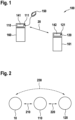
- FIG. 1 shows an embodiment of the system 100 according to the invention.
- the system 100 comprises a first extracorporeal control device 110 and a second extracorporeal control device 120.
- Both control devices have an interface 111, 121 for wireless communication with one another, for example a Bluetooth® interface 111, 121.
- the wireless communication takes place via radio communication in accordance with the MedRadio or MICS specification (short for Medical Device Radiocommunications Service).
- the two control devices 110, 120 can have an integrated energy source, for example a battery or an accumulator. This enables energy self-sufficiency of the control devices.
- the first control device 110 is connected to a coil 150 for inductive energy transmission to a cardiac support system.
- the first control device 110 comprises, in addition to the possible integrated energy source, a further energy source 160 for supplying energy to the cardiac support system, for example a battery or an accumulator.
- the further energy source 160 is preferably detachably connected to the first control unit 110, for example via a locking or click mechanism.
- the second control unit 120 is not physically bound to any device, the second control unit 120 is characterized by a high level of user-friendliness.
- the two control units 110, 120 preferably have a display 141, 142, preferably a touch-sensitive display 141, 142, which is also suitable for entering commands into the control units 110, 120.
- the two control devices 110, 120 are of identical design and preferably have the same structural configuration, so that the second control device 120 can take over the function of the first control device if required and is thus provided as a redundant unit for the first extracorporeal control device.
- the second control device 120 can also comprise a further energy source 161 to secure the energy supply of the heart support system.
- the communication paths 210, 220, 230 between a cardiac support system 10, the first extracorporeal control device 110 and the second extracorporeal control device 120 are shown schematically.
- the first control device 110 is set up to communicate with the cardiac support system 10, either wirelessly, for example via Bluetooth® , or via a driveline.
- information about states such as pump data is exchanged between the first control device 110 and the cardiac support system 10.
- the first control device 110 and the second control device 120 are set up to communicate with each other wirelessly. In particular, they are set up to mutually transmit and adapt changes in the settings and/or other status information such as the charge states of the energy storage devices 160, 161.
- the first control device 110 is set up as a server and the second control device 120 as a client in a network configuration.
- the heart support system 10 can be controlled by the second extracorporeal control device 120 via the first extracorporeal control device 110.
- the heart support system 10 and the second control device 120 can also be set up for wireless communication 230 with one another, which enables direct control of the heart support system 10 by the second control device 120 is possible.
- This also has the advantage that information about the heart support system 10 can be obtained directly from both control devices 110, 120, and both control devices 110, 120 can directly control the heart support system 10.
- the user or patient can only operate the heart support system 10 directly via the second control device 120.
- FIG. 3 shows a block diagram of an embodiment of the method 500 according to the invention, which can be carried out, for example, with an embodiment of the system 100 according to the invention as described above.
- the heart support system can be controlled via a first extracorporeal control device.
- the heart support system can be controlled as described above via a second extracorporeal control device that is wirelessly coupled to the first control device or directly via a second extracorporeal control device that is wirelessly coupled to the heart support system. If the second control device is wirelessly connected to the first control device, the heart support system can be controlled by the second extracorporeal control device mediated by the first extracorporeal control device.
Landscapes
- Health & Medical Sciences (AREA)
- Engineering & Computer Science (AREA)
- Heart & Thoracic Surgery (AREA)
- Cardiology (AREA)
- Life Sciences & Earth Sciences (AREA)
- Public Health (AREA)
- Mechanical Engineering (AREA)
- Anesthesiology (AREA)
- Biomedical Technology (AREA)
- Hematology (AREA)
- Veterinary Medicine (AREA)
- Animal Behavior & Ethology (AREA)
- General Health & Medical Sciences (AREA)
- Computer Networks & Wireless Communication (AREA)
- Power Engineering (AREA)
- Human Computer Interaction (AREA)
- General Engineering & Computer Science (AREA)
- Theoretical Computer Science (AREA)
- Signal Processing (AREA)
- Physics & Mathematics (AREA)
- General Physics & Mathematics (AREA)
- External Artificial Organs (AREA)
Description
- Die Erfindung betrifft ein System zur Steuerung eines Herzunterstützungssystems mit einem Steuergerät, und ein Herzunterstützungssystem..
- Bei modernen Herzunterstützungssystemen, auch VAD für "ventricular assist device" oder ventrikuläres Unterstützungssystem genannt, wird üblicherweise eine Pumpe zur Unterstützung der Herzfunktion an oder in das Herz implantiert, welche über ein Steuergerät geregelt wird. Dabei kann neben oder statt einem ebenfalls implantierten Steuergerät ein sogenanntes extrakorporales Steuergerät vorgesehen sein, welches sich außerhalb des Körpers des Patienten befindet, um eine externe Steuerung zu ermöglichen.
- Beispielsweise ist aus
US 2005/0107658 A1 ein Herzunterstützungssystem bekannt, welches sowohl ein implantiertes Steuergerät als auch ein extrakorporales Steuergerät umfasst. Das extrakorporale Steuergerät ist dabei drahtlos mit dem implantierten Steuergerät verbunden und dient vor allem zum bidirektionalen Datenaustausch. - Aus der
US2016/0095968 A1 ist ein Herzunterstützungssystem mit einer ersten Blutpumpensteuerung als erstes extrakorporales Steuergerät und einer zweiten redundanten Blutpumpensteuerung als zweites extrakorporales Steuergerät bekannt, wobei das erste Steuergerät mit einem Kabel zur Kommunikation und Energieübertragung mit der Herzunterstützungssystem verbunden ist. Das Herzunterstützungssystem wird über eine externe Energiequelle bzw. Batterien mit Energie versorgt. - Ausgehend hiervon liegt der Erfindung die Aufgabe zugrunde, die bekannten Systeme weiter zu verbessern und insbesondere eine einfache und schnelle Informationserfassung sowie eine darauf abgestimmte Ansteuerung zu ermöglichen, die Handhabung zu erleichtern, die Nutzerfreundlichkeit zu erhöhen und einen zuverlässigen und sicheren Betrieb zu gewährleisten.
- Vor diesem Hintergrund betrifft die Erfindung ein System zur Steuerung eines Herzunterstützungssystems, umfassend ein erstes extrakorporales Steuergerät und ein mit dem ersten Steuergerät und/oder mit dem Herzunterstützungssystem drahtlos verbundenes zweites extrakorporales Steuergerät, wobei das erste Steuergerät mit einer ersten Spule zur Kommunikation und/oder Energieübertragung mit dem Herzunterstützungssystem verbunden oder verbindbar ist, und wobei das System einen ersten Energiespeicher für eine Energieübertragung über die erste Spule an das Herzunterstützungssystem umfasst.
- Unter einem Herzunterstützungssystem ist insbesondere ein System zur Unterstützung der Funktionalität eines Herzens eines Menschen oder Tieres zu verstehen, auch als Kunstherz, "ventricular assist device" (kurz "VAD") oder ventrikuläres Unterstützungssystem bezeichnet. Mit dem Ausdruck "extrakorporales Steuergerät" ist allgemein ein Steuergerät für ein Herzunterstützungssystem gemeint, welches nicht für eine Implantation in einen Körper eines Menschen oder Tieres vorgesehen, sondern für einen Einsatz außerhalb des Körpers vorgesehen und ausgebildet ist. Insbesondere umfasst das extrakorporale Steuergerät dazu eine Anzeige, beispielsweise ein Display, und/oder eine Eingabevorrichtung, insbesondere Tasten oder Knöpfe oder eine berührungssensitive Oberfläche. Unter einer drahtlosen Verbindung zwischen zwei Geräten oder zwischen einem System und einem Gerät ist insbesondere zu verstehen, dass die beiden Geräte beziehungsweise das System und das Gerät ausgebildet sind, über eine drahtlose bidirektionale Datenverbindung zu kommunizieren, insbesondere über eine Funkverbindung. Unter einer Ausbildung oder einer Einrichtung eines der Steuergeräte kann hier und im Folgenden verstanden werden, dass das Steuergerät entsprechend erforderliche Hardware-Komponenten aufweist, insbesondere einen Prozessor und Kommunikationsschnittstellen, und entsprechend programmiert ist, insbesondere der Prozessor. Beispielsweise kann es sich bei dem Steuergerät um ein handelsübliches Steuergerät für ein Herzunterstützungssystem handeln, welches erfindungsgemäß eingerichtet, insbesondere programmiert wird. Unter einem Kabel ist vor dem Hintergrund der Erfindung insbesondere ein als "Driveline" bezeichnetes Kabel zu verstehen, welches für eine Verbindung des Herzunterstützungssystems mit dem Steuergerät ausgebildet ist.
- Das erfindungsgemäße System hat den Vorteil, dass das zweite extrakorporale Steuergerät eine zusätzliche Möglichkeit für den Benutzer bereitstellt, insbesondere den Patienten oder Arzt, Informationen über das Herzunterstützungssystem abzurufen und zu erfassen sowie das Herzunterstützungssystem anzusteuern, insbesondere einen Motor oder eine Pumpe des Herzunterstützungssystems. Insbesondere wenn das erste extrakorporale Steuergerät über das Kabel, also die oben genannte Driveline, mit dem Herzunterstützungssystem verbunden ist, ermöglicht das nicht körperlich verbundene zweite extrakorporale Steuergerät vorteilhafterweise eine einfache und schnelle Erfassung von Informationen und eine darauf abgestimmte Ansteuerung. Da das zweite Steuergerät physisch mit keiner anderen Vorrichtung verbunden sein muss, kann es vorteilhafterweise auch diskreter gehandhabt und verstaut werden. Ferner kann das zweite extrakorporale Steuergerät ausgebildet sein, für einen schnellen Zugriff über eine Halterung an einem Gürtel oder anderem Kleidungsstück des Patienten angebracht zu werden. Die flexible Handhabbarkeit über das zweite Steuergerät erlaubt vorteilhafterweise auch, das erste extrakorporale Steuergerät möglichst nahe oder unmittelbar am Körper zu tragen und somit den Abstand zum implantierten Herzunterstützungssystem für eine möglichst zuverlässige Interaktion zu verkürzen. Somit werden vorteilhafterweise einerseits die Sicherheit und Zuverlässigkeit und somit auch das Sicherheitsgefühl des Patienten erhöht, andererseits der Komfort und die Nutzerfreundlichkeit insgesamt verbessert. Darüber hinaus ist ein nicht physisch verbundenes Steuergerät unauffälliger in der Öffentlichkeit in Benutzungsreichweite mitzuführen und unauffälliger zu handhaben, so dass vorteilhafterweise dadurch die Verwendung eines Herzunterstützungssystems gegenüber Dritten weniger auffällig ist.
- Vorzugsweise ist das zweite extrakorporale Steuergerät als redundante Einheit zum ersten extrakorporalen Steuergerät eingerichtet. Mit anderen Worten ist das zweite extrakorporale Steuergerät eingerichtet, bei einem Ausfall oder einer Fehlfunktion des ersten extrakorporalen Steuergeräts die Funktion des ersten extrakorporalen Steuergeräts zu übernehmen.
- Gemäß einer besonders vorteilhaften Weiterbildung der Erfindung sind das erste Steuergerät und das zweite Steuergerät baugleich ausgeführt. Dies bedeutet insbesondere, dass das erste Steuergerät und das zweite Steuergerät die gleichen Hardware-Komponenten aufweisen und/oder einen gleichen strukturellen Aufbau aufweisen. Vorzugsweise weisen die beiden Steuergeräte auch die gleiche äußere Form und gleiche äußere Abmessungen aus. Dies hat den Vorteil, dass das erste Steuergerät bei Bedarf auf einfache Weise durch das zweite Steuergerät ersetzt werden kann, beispielsweise bei einer oben beschriebenen Fehlfunktion oder einem Ausfall des ersten Steuergeräts.
- In einer besonders vorteilhaften Weiterbildung der Erfindung ist das erste Steuergerät als Server und das zweite Steuergerät als Client eingerichtet. Mit anderen Worten bilden die beiden extrakorporalen Steuergeräte ein Netzwerk, in welchem das erste extrakorporale Steuergerät die Rolle des Servers und das zweite extrakorporale Steuergerät die Rolle des Clients einnimmt. Damit kann vorteilhafterweise das für Netzwerke bewährte Client-Server-Modell eingesetzt werden.
- Bevorzugt sind das erste Steuergerät und das zweite Steuergerät eingerichtet, bei einer Eingabe in das erste Steuergerät oder in das zweite Steuergerät das zweite Steuergerät beziehungsweise das erste Steuergerät zu veranlassen, dieselben Eingabe anzunehmen. Wenn die Eingabe Einstellungen in dem ersten beziehungsweise zweiten Steuergerät ändert, so werden dadurch vorteilhafterweise die gleichen Änderungen der Einstellungen in dem zweiten beziehungsweise ersten Steuergerät vorgenommen. Somit sind die beiden Steuergeräte vorteilhafterweise in einem gleichen oder synchronen Zustand.
- In einer bevorzugten Weiterbildung der Erfindung ist der erste Energiespeicher vorzugsweise mit dem ersten Steuergerät insbesondere lösbar verbunden ist. Dadurch kann vorteilhafterweise über das erste extrakorporale Steuergerät eine Energieversorgung zum implantierten Herzunterstützungssystem geregelt werden. Vorzugsweise kann das System einen zweiten Energiespeicher aufweisen, welcher bevorzugt mit dem zweiten Steuergerät insbesondere lösbar verbunden ist. Dies hat den Vorteil, dass die Energieversorgung des Systems insgesamt noch besser abgesichert wird.
- In einer weiteren vorteilhaften Ausgestaltung der Erfindung sind das erste Steuergerät und/oder das zweite Steuergerät eingerichtet, ein Alarmsignal auszugeben, wenn ein Mindestabstand zwischen den beiden Steuergeräten überschritten wird. Dabei können die Steuergeräte beispielsweise eingerichtet sein, den aktuellen Abstand über die Qualität der drahtlosen Funkverbindungen zwischen den beiden Steuergeräten abzuschätzen und mit dem Mindestabstand zu vergleichen. Als Maß für die Qualität kann beispielsweise eine Stärke oder Intensität der über die drahtlose Verbindung empfangenen Signale herangezogen werden. Wenn beispielsweise die Qualität, insbesondere die Signalstärke oder Signalintensität, weniger als ein vorgegebene Mindestwert beträgt, wird das Alarmsignal ausgelöst. Das Alarmsignal kann beispielsweise akustisch als Ton oder Tonfolge oder optisch über Leuchtelemente des Steuergeräts oder ein Display der Steuergeräte ausgegeben werden. Dies hat den Vorteil, dass der Benutzer oder Patient daran erinnert wird, beide Steuergeräte mit sich zu führen.
- Gegenstand der Erfindung ist auch ein Herzunterstützungssystem umfassend ein erfindungsgemäßes System.
- Zu den Vorteilen des erfindungsgemäßen Herzunterstützungssystems wird auf die oben ausgeführten korrespondierenden Vorteile des erfindungsgemäßen Systems verwiesen.
- Ausführungsbeispiele der Erfindung sind in den Zeichnungen schematisch dargestellt und in der nachfolgenden Beschreibung näher erläutert. Für die in den verschiedenen Figuren dargestellten und ähnlich wirkenden Elemente werden gleiche Bezugszeichen verwendet, wobei auf eine wiederholte Beschreibung der Elemente verzichtet wird.
- Es zeigen
- Figuren 1 und 2
- ein Ausführungsbeispiel des erfindungsgemäßen Systems und
- Figur 3
- ein Flussdiagramm eines Ausführungsbeispiels des erfindungsgemäßen Verfahrens.
-
Figur 1 zeigt ein Ausführungsbeispiel des erfindungsgemäßen Systems 100. Das System 100 umfasst ein erstes extrakorporales Steuergerät 110 und ein zweites extrakorporales Steuergerät 120. Beide Steuergeräte weisen eine Schnittstelle 111, 121 für eine drahtlose Kommunikation 20 miteinander auf, beispielsweise eine Bluetooth®-Schnittstelle 111, 121. Beispielsweise erfolgt die drahtlose Kommunikation über eine Funkkommunikation gemäß der MedRadio- oder MICS-Spezifikation (kurz für Medical Device Radiocommunications Service). Ferner können die beiden Steuergeräte 110, 120 eine integrierte Energiequelle aufweisen, beispielsweise eine Batterie oder einen Ackumulator. Dies ermöglicht eine Energieautarkie der Steuergeräte. Das erste Steuergerät 110 ist mit einer Spule 150 zur induktiven Energieübertragung an ein Herzunterstützungssystem verbunden. Ferner umfasst das erste Steuergerät 110 neben der möglichen integrierten Energiequelle eine weitere Energiequelle 160 für die Energieversorgung des Herzunterstützungssystems, beispielsweise eine Batterie oder einen Akkumulator. Die weitere Energiequelle 160 ist vorzugsweise lösbar mit dem ersten Steuergerät 110 verbunden, beispielsweise über einen Rast- oder Klickmechanismus. Da das zweite Steuergerät 120 an keine Vorrichtung physisch gebunden ist, zeichnet sich das zweite Steuergerät 120 durch eine hohe Benutzerfreundlichkeit aus. Für eine Anzeige von Information weisen die beiden Steuergeräte 110, 120 vorzugsweise ein Display 141, 142 auf, bevorzugt ein berührungssensitives Display 141, 142, welches sich auch zur Eingabe von Befehl in die Steuergeräte 110, 120 eignet. - In diesem Ausführungsbeispiel sind die beiden Steuergeräte 110, 120 baugleich ausgeführt und weisen bevorzugt einen gleichen strukturellen Aufbau auf, so dass das zweite Steuergerät 120 bei Bedarf die Funktion des ersten Steuergeräts übernehmen kann und somit als redundante Einheit zum ersten extrakorporalen Steuergerät vorgesehen ist. Insbesondere zu diesem Zweck kann auch das zweite Steuergerät 120 eine weitere Energiequelle 161 zur Absicherung der Energieversorgung des Herzunterstützungssystems umfassen.
- In
Figur 2 sind die Kommunikationswege 210, 220, 230 zwischen einem Herzunterstützungssystem 10, dem ersten extrakorporalen Steuergerät 110 und dem zweiten extrakorporalen Steuergerät 120 schematisch dargestellt. Das erste Steuergerät 110 ist eingerichtet, mit dem Herzunterstützungssystem 10 zu kommunizieren, entweder drahtlos, beispielsweise über Bluetooth®, oder über eine Driveline. Beispielsweise werden zwischen dem ersten Steuergerät 110 und dem Herzunterstützungssystem 10 Informationen über Zustände wie beispielsweise Pumpendaten ausgetauscht. Ferner sind das erste Steuergerät 110 und das zweite Steuergerät 120 eingerichtet, drahtlos miteinander zu kommunizieren. Insbesondere sind sie eingerichtet, sich gegenseitig Änderungen in den Einstellungen und/oder weitere Statusinformation wie beispielsweise die Ladezustände der Energiespeicher 160, 161 zu übermitteln und anzupassen. Vorzugsweise ist das erste Steuergerät 110 dabei als Server und das zweite Steuergerät 120 als Client in einer Netzwerkkonfiguration eingerichtet. Somit kann das Herzunterstützungssystem 10 durch das zweite extrakorporale Steuergerät 120 vermittelt über das erste extrakorporale Steuergerät 110 angesteuert werden. In einer vorzugsweisen Ausgestaltung können ferner das Herzunterstützungssystem 10 und das zweite Steuergerät 120 für eine drahtlose Kommunikation 230 miteinander eingerichtet sein, was eine direkte Steuerung des Herzunterstützungssystems 10 durch das zweite Steuergerät 120 ermöglicht. Dies hat ferner den Vorteil, dass sowohl Informationen über das Herzunterstützungssystem 10 von beiden Steuergeräten 110, 120 direkt erhalten werden können, als auch beide Steuergeräte 110, 120 direkt das Herzunterstützungssystem 10 ansteuern können. Insbesondere kann der Benutzer oder Patient das Herzunterstützungssystem 10 nur über das zweite Steuergerät 120 direkt bedienen. -
Figur 3 zeigt ein Blockdiagramm zu einem Ausführungsbeispiel des erfindungsgemäßen Verfahrens 500, welches beispielsweise mit einem Ausführungsbeispiel des erfindungsgemäßen Systems 100 wie oben beschrieben ausgeführt werden kann. Gemäß dem Ausführungsbeispiel 500 kann das Herzunterstützungssystems über ein erstes extrakorporales Steuergerät gesteuert werden. Ferner kann das Herzunterstützungssystems wie oben beschrieben über ein drahtlos mit dem ersten Steuergerät gekoppelten oder direkt über ein drahtlos mit dem Herzunterstützungssystem gekoppelten zweites extrakorporales Steuergerät gesteuert werden. Wenn das zweite Steuergerät drahtlos mit dem ersten Steuergerät verbunden ist, kann das Herzunterstützungssystem durch das zweite extrakorporale Steuergerät vermittelt durch das erste extrakorporale Steuergerät gesteuert werden.
Claims (10)
- System (100) zur Steuerung eines Herzunterstützungssystems (10), umfassend ein erstes extrakorporales Steuergerät (110) und ein mit dem ersten Steuergerät (110) und/oder mit dem Herzunterstützungssystem (10) drahtlos verbundenes zweites extrakorporales Steuergerät (120), dadurch gekennzeichnet, dass das erste Steuergerät (110) mit einer ersten Spule (150) zur Kommunikation und/oder Energieübertragung mit dem Herzunterstützungssystem (10) verbunden oder verbindbar ist, wobei das System (100) einen ersten Energiespeicher (160) für eine Energieübertragung über die erste Spule (150) an das Herzunterstützungssystems (10) umfasst..
- System (100) nach Anspruch 1, wobei das zweite extrakorporale Steuergerät (120) als redundante Einheit zum ersten extrakorporalen Steuergerät (110) eingerichtet ist.
- System (100) nach einem der vorhergehenden Ansprüche, wobei das erste Steuergerät (110) als Server und das zweite Steuergerät (120) als Client eingerichtet ist.
- System (100) nach einem der vorhergehenden Ansprüche, wobei das erste Steuergerät (110) und das zweite Steuergerät (120) baugleich ausgeführt sind.
- System (100) nach einem der vorhergehenden Ansprüche, wobei der erste Energiespeicher (160) vorzugsweise mit dem ersten Steuergerät (110) insbesondere lösbar verbunden ist.
- System (100) nach einem der vorhergehenden Ansprüche, wobei das System (100) einen zweiten Energiespeicher (161) aufweist, welcher vorzugsweise mit dem zweiten Steuergerät (120) insbesondere lösbar verbunden ist.
- System (100) nach einem der vorhergehenden Ansprüche, wobei das erste Steuergerät (110) und das zweite Steuergerät (120) eingerichtet sind, bei einer Eingabe in das erste Steuergerät (110) oder in das zweite Steuergerät (120), wobei die Eingabe Einstellungen in dem ersten beziehungsweise zweiten Steuergerät (120) ändert, das zweite Steuergerät (120) beziehungsweise das erste Steuergerät (110) zu veranlassen, dieselben Änderungen der Einstellungen vorzunehmen.
- System (100) nach einem der vorhergehenden Ansprüche, wobei das erste und/oder das zweite Steuergerät (110, 120) ein Display (141, 142) aufweisen, insbesondere ein berührungssensitives Display (141, 142) zur Eingabe von Befehlen.
- System (100) nach einem der vorhergehenden Ansprüche, wobei das erste Steuergerät (110) und/oder das zweite Steuergerät (120) eingerichtet sind, ein Alarmsignal auszugeben, wenn ein Mindestabstand zwischen den beiden Steuergeräten (110, 120) überschritten wird.
- Herzunterstützungssystem (10) umfassend ein System (100) nach einem der vorhergehenden Ansprüche.
Applications Claiming Priority (2)
| Application Number | Priority Date | Filing Date | Title |
|---|---|---|---|
| DE102018218770.3A DE102018218770A1 (de) | 2018-11-02 | 2018-11-02 | System und Verfahren zur Steuerung eines Herzunterstützungssystems |
| PCT/EP2019/079905 WO2020089429A1 (de) | 2018-11-02 | 2019-10-31 | System und verfahren zur steuerung eines herzunterstützungssystems |
Publications (2)
| Publication Number | Publication Date |
|---|---|
| EP3873553A1 EP3873553A1 (de) | 2021-09-08 |
| EP3873553B1 true EP3873553B1 (de) | 2024-09-04 |
Family
ID=68468700
Family Applications (1)
| Application Number | Title | Priority Date | Filing Date |
|---|---|---|---|
| EP19798238.2A Active EP3873553B1 (de) | 2018-11-02 | 2019-10-31 | System und verfahren zur steuerung eines herzunterstützungssystems |
Country Status (4)
| Country | Link |
|---|---|
| US (1) | US20210393944A1 (de) |
| EP (1) | EP3873553B1 (de) |
| DE (1) | DE102018218770A1 (de) |
| WO (1) | WO2020089429A1 (de) |
Families Citing this family (27)
| Publication number | Priority date | Publication date | Assignee | Title |
|---|---|---|---|---|
| DE102016209871A1 (de) | 2016-06-06 | 2017-12-07 | Robert Bosch Gmbh | Stanzvorrichtung und Verfahren zum Stanzen eines Lumens und Implantieren einer Implantateinrichtung |
| DE102018201030B4 (de) | 2018-01-24 | 2025-10-16 | Kardion Gmbh | Magnetkuppelelement mit magnetischer Lagerungsfunktion |
| DE102018206754A1 (de) | 2018-05-02 | 2019-11-07 | Kardion Gmbh | Verfahren und Vorrichtung zur Bestimmung der Temperatur an einer Oberfläche sowie Verwendung des Verfahrens |
| DE102018206727A1 (de) | 2018-05-02 | 2019-11-07 | Kardion Gmbh | Energieübertragungssystem und Empfangseinheit zur drahtlosen transkutanen Energieübertragung |
| DE102018206725A1 (de) | 2018-05-02 | 2019-11-07 | Kardion Gmbh | Empfangseinheit, Sendeeinheit, Energieübertragungssystem und Verfahren zur drahtlosen Energieübertragung |
| DE102018206750A1 (de) | 2018-05-02 | 2019-11-07 | Kardion Gmbh | Vorrichtung zur induktiven Energieübertragung in einen menschlichen Körper und deren Verwendung |
| DE102018206724A1 (de) | 2018-05-02 | 2019-11-07 | Kardion Gmbh | Energieübertragungssystem und Verfahren zur drahtlosen Energieübertragung |
| DE102018206731A1 (de) | 2018-05-02 | 2019-11-07 | Kardion Gmbh | Vorrichtung zur induktiven Energieübertragung in einen menschlichen Körper und Verwendung der Vorrichtung |
| DE102018208538A1 (de) | 2018-05-30 | 2019-12-05 | Kardion Gmbh | Intravasale Blutpumpe und Verfahren zur Herstellung von elektrischen Leiterbahnen |
| DE102018208555A1 (de) | 2018-05-30 | 2019-12-05 | Kardion Gmbh | Vorrichtung zum Verankern eines Herzunterstützungssystems in einem Blutgefäß, Verfahren zum Betreiben und Herstellverfahren zum Herstellen einer Vorrichtung und Herzunterstützungssystem |
| DE102018208936A1 (de) | 2018-06-06 | 2019-12-12 | Kardion Gmbh | Bestimmvorrichtung und Verfahren zum Bestimmen einer Viskosität eines Fluids |
| DE102018208931A1 (de) | 2018-06-06 | 2019-12-12 | Kardion Gmbh | Vorrichtung zum Bestimmen eines Herzzeitvolumens für ein Herzunterstützungssystem, Herzunterstützungssystem und Verfahren zum Bestimmen eines Herzzeitvolumens |
| DE102018208862A1 (de) | 2018-06-06 | 2019-12-12 | Kardion Gmbh | Implantierbares, vaskuläres Unterstützungssystem |
| DE102018208870A1 (de) | 2018-06-06 | 2019-12-12 | Kardion Gmbh | Verfahren zur Bestimmung eines Fluid-Volumenstroms durch ein implantiertes, vaskuläres Unterstützungssystem |
| DE102018208913A1 (de) | 2018-06-06 | 2019-12-12 | Kardion Gmbh | Verfahren zum Betreiben eines implantierten, ventrikulären Unterstützungssystems |
| DE102018208879A1 (de) | 2018-06-06 | 2020-01-30 | Kardion Gmbh | Verfahren zur Bestimmung eines Fluid-Gesamtvolumenstroms im Bereich eines implantierten, vaskuläres Unterstützungssystems |
| DE102018208945A1 (de) | 2018-06-06 | 2019-12-12 | Kardion Gmbh | Analysevorrichtung und Verfahren zum Analysieren einer Viskosität eines Fluids |
| DE102018208933A1 (de) | 2018-06-06 | 2019-12-12 | Kardion Gmbh | Verfahren zur Bestimmung einer Strömungsgeschwindigkeit eines durch ein implantiertes, vaskuläres Unterstützungssystem strömenden Fluids |
| DE102018208929A1 (de) | 2018-06-06 | 2019-12-12 | Kardion Gmbh | Verfahren zur Bestimmung einer Strömungsgeschwindigkeit eines durch ein implantiertes, vaskuläres Unterstützungssystem strömenden Fluids |
| DE102018208899A1 (de) | 2018-06-06 | 2019-12-12 | Kardion Gmbh | Verfahren zum Ermitteln der Schallgeschwindigkeit in einem Fluid im Bereich eines implantierten, vaskulären Unterstützungssystems |
| DE102018208892A1 (de) | 2018-06-06 | 2019-12-12 | Kardion Gmbh | Sensorkopfvorrichtung für ein minimalinvasives Herzunterstützungssystem und Verfahren zum Herstellen einer Sensorkopfvorrichtung für ein Herzunterstützungssystem |
| DE102018210076A1 (de) | 2018-06-21 | 2019-12-24 | Kardion Gmbh | Verfahren und Vorrichtung zum Erkennen eines Verschleißzustands eines Herzunterstützungssystems, Verfahren und Vorrichtung zum Betreiben eines Herzunterstützungssystems und Herzunterstützungssystem |
| DE102018213350A1 (de) | 2018-08-08 | 2020-02-13 | Kardion Gmbh | Vorrichtung und Verfahren zur Überwachung eines Gesundheitszustands des Patienten |
| US11699551B2 (en) | 2020-11-05 | 2023-07-11 | Kardion Gmbh | Device for inductive energy transmission in a human body and use of the device |
| US12589237B2 (en) | 2020-11-20 | 2026-03-31 | Kardion Gmbh | Mechanical circulatory support system with guidewire aid |
| EP4247476A1 (de) | 2020-11-20 | 2023-09-27 | Kardion GmbH | Spülfreies mechanisches kreislaufunterstützungssystem mit magnetantrieb |
| WO2024243154A1 (en) | 2023-05-25 | 2024-11-28 | Kardion Gmbh | Heart pump tips and delivery system couplings for mechanical circulatory support systems |
Citations (1)
| Publication number | Priority date | Publication date | Assignee | Title |
|---|---|---|---|---|
| US20160095968A1 (en) * | 2014-10-01 | 2016-04-07 | Heartware, Inc. | Back Up Controller System With Updating |
Family Cites Families (12)
| Publication number | Priority date | Publication date | Assignee | Title |
|---|---|---|---|---|
| WO2005051838A2 (en) | 2003-11-19 | 2005-06-09 | Transoma Medical, Inc. | Feedback control of ventricular assist devices |
| AT503628B1 (de) * | 2006-04-25 | 2008-06-15 | Vc Trust Holding Gmbh | Verfahren zur überwachung der maximalentfernung zweier objekte |
| US8628460B2 (en) * | 2009-09-21 | 2014-01-14 | Heartware, Inc. | Hard-wired implanted controller system |
| WO2012012552A1 (en) * | 2010-07-22 | 2012-01-26 | Thoratec Corporation | Controlling implanted blood pumps |
| US8764621B2 (en) * | 2011-07-11 | 2014-07-01 | Vascor, Inc. | Transcutaneous power transmission and communication for implanted heart assist and other devices |
| US9919088B2 (en) * | 2013-03-14 | 2018-03-20 | Yale University | Implantable heart pump controller |
| US10149933B2 (en) * | 2014-07-25 | 2018-12-11 | Minnetronix, Inc. | Coil parameters and control |
| WO2017085668A1 (en) * | 2015-11-17 | 2017-05-26 | Yeatts Dale J | Wireless diagnostic system for indirect flow measurement in artificial heart pumps |
| WO2017087717A1 (en) * | 2015-11-20 | 2017-05-26 | Tc1 Llc | Blood pump controllers having daisy-chained batteries |
| WO2017087380A1 (en) * | 2015-11-20 | 2017-05-26 | Tc1 Llc | System architecture that allows patient replacement of vad controller/interface module without disconnection of old module |
| US10194477B2 (en) * | 2016-05-24 | 2019-01-29 | Lg Electronics Inc. | Method and apparatus for controlling a device using bluetooth technology |
| US10404093B2 (en) * | 2017-04-26 | 2019-09-03 | Biosense Webster (Israel) Ltd. | Using location transmission signals for charging a wireless medical tool of an electromagnetic navigation system |
-
2018
- 2018-11-02 DE DE102018218770.3A patent/DE102018218770A1/de active Pending
-
2019
- 2019-10-31 US US17/290,083 patent/US20210393944A1/en active Pending
- 2019-10-31 WO PCT/EP2019/079905 patent/WO2020089429A1/de not_active Ceased
- 2019-10-31 EP EP19798238.2A patent/EP3873553B1/de active Active
Patent Citations (1)
| Publication number | Priority date | Publication date | Assignee | Title |
|---|---|---|---|---|
| US20160095968A1 (en) * | 2014-10-01 | 2016-04-07 | Heartware, Inc. | Back Up Controller System With Updating |
Also Published As
| Publication number | Publication date |
|---|---|
| WO2020089429A1 (de) | 2020-05-07 |
| EP3873553A1 (de) | 2021-09-08 |
| US20210393944A1 (en) | 2021-12-23 |
| DE102018218770A1 (de) | 2020-05-07 |
Similar Documents
| Publication | Publication Date | Title |
|---|---|---|
| EP3873553A1 (de) | System und verfahren zur steuerung eines herzunterstützungssystems | |
| DE10117241B4 (de) | Vorrichtung zur Ermöglichung einer unmittelbaren Abfrage von Informationen und einer Identifikation von einer implantierbaren medizinischen Vorrichtung mit einer verbrauchten Energiequelle | |
| DE10353943B4 (de) | Anordnung zur drahtlosen Energieübertragung an eine implantierte Einrichtung | |
| DE69828479T2 (de) | Verfahren und vorrichtung zur logischen adressierung in einem modularen patientenversorgungssystem | |
| DE60212040T2 (de) | Telemetriesystem im Frequenzsprungbetrieb für eine implantierbare medizinische Vorrichtung | |
| EP1954350B1 (de) | Automatische externe defibrillatorvorrichtung | |
| DE69417609T2 (de) | Räumlich getrennte Kontrollvorrichtung für einen implantierbaren Stimulator für das Gewebewachstum | |
| DE69329692T2 (de) | Herzrhythmus Steuereinrichtung mit automatischer Optimalisierung von Reizungsparametern | |
| EP3335741A1 (de) | Steuervorrichtung für eine implantierbare herzpumpe mit zwei implantierbaren steuereinheiten und mit einem mit diesen verbundenen implantierbaren schalter | |
| EP1785119A1 (de) | Einrichtung zum Verstellen eines Operationstisches | |
| DE19927853A1 (de) | In ein medizinisches Managementsystem integrierte Programmiervorrichtung zur Kommunikation mit einer implantierbaren medizinischen Vorrichtung | |
| EP3069741A1 (de) | Herzpumpeneinrichtung und Verfahren zu ihrem Betrieb | |
| DE10053116A1 (de) | Apparat und Verfahren zur automatischen Softwareaktualisierung aus der Ferne von medizinischen Vorrichtungssystemen | |
| DE102015108861A1 (de) | Verfahren und Vorrichtung zur Neurostimulation | |
| EP3106203A1 (de) | Implantierbares medizinisches gerät und verfahren zum paaren eines implantierbaren medizinischen gerätes und eines externen gerätes | |
| DE112021004597T5 (de) | Verfahren zum Pumpstart in einem vollständig implantierten LVAD-System bei möglichem Vorhandensein mehrerer Stromquellen | |
| DE102016206398A1 (de) | Betrieb einer Magnetresonanzvorrichtung unter Berücksichtigung von Implantat-Trägern | |
| DE112021001582T5 (de) | Verfahren zum minimieren von fehlausrichtungsbenachrichtigungen für ein transkutanes energieübertragungssystem | |
| DE102004027159A1 (de) | Hochverfügbare drahtlose Bedieneinrichtung für medizintechnische Geräte | |
| EP1633152B1 (de) | Verfahren zum Betrieb eines Kommunikationsmoduls | |
| DE102011085975A1 (de) | Verfahren zum Sichern implantierter medizinischer Geräte in einem elektromagnetische Strahlung abgebenden Diagnosegerät | |
| DE112021003905T5 (de) | Thermische stimulation und nachfolgende kühlung für eine vollständig implantierbare lvad-steuerung | |
| DE202021100444U1 (de) | 5G-Implantat | |
| EP2168631B1 (de) | Elektrisches Therapiesystem und Therapiegerät | |
| DE202021100624U1 (de) | 5G-Implantat |
Legal Events
| Date | Code | Title | Description |
|---|---|---|---|
| STAA | Information on the status of an ep patent application or granted ep patent |
Free format text: STATUS: UNKNOWN |
|
| STAA | Information on the status of an ep patent application or granted ep patent |
Free format text: STATUS: THE INTERNATIONAL PUBLICATION HAS BEEN MADE |
|
| PUAI | Public reference made under article 153(3) epc to a published international application that has entered the european phase |
Free format text: ORIGINAL CODE: 0009012 |
|
| STAA | Information on the status of an ep patent application or granted ep patent |
Free format text: STATUS: REQUEST FOR EXAMINATION WAS MADE |
|
| 17P | Request for examination filed |
Effective date: 20210525 |
|
| AK | Designated contracting states |
Kind code of ref document: A1 Designated state(s): AL AT BE BG CH CY CZ DE DK EE ES FI FR GB GR HR HU IE IS IT LI LT LU LV MC MK MT NL NO PL PT RO RS SE SI SK SM TR |
|
| DAV | Request for validation of the european patent (deleted) | ||
| DAX | Request for extension of the european patent (deleted) | ||
| REG | Reference to a national code |
Ref country code: DE Free format text: PREVIOUS MAIN CLASS: A61M0001100000 Ref legal event code: R079 Ref document number: 502019012067 Country of ref document: DE Ipc: A61M0060873000 |
|
| RIC1 | Information provided on ipc code assigned before grant |
Ipc: H04W 4/80 20180101ALI20240523BHEP Ipc: H02J 50/10 20160101ALI20240523BHEP Ipc: A61M 60/592 20210101ALI20240523BHEP Ipc: A61M 60/508 20210101ALI20240523BHEP Ipc: A61M 60/216 20210101ALI20240523BHEP Ipc: A61M 60/178 20210101ALI20240523BHEP Ipc: A61M 60/873 20210101AFI20240523BHEP |
|
| GRAP | Despatch of communication of intention to grant a patent |
Free format text: ORIGINAL CODE: EPIDOSNIGR1 |
|
| STAA | Information on the status of an ep patent application or granted ep patent |
Free format text: STATUS: GRANT OF PATENT IS INTENDED |
|
| INTG | Intention to grant announced |
Effective date: 20240628 |
|
| GRAS | Grant fee paid |
Free format text: ORIGINAL CODE: EPIDOSNIGR3 |
|
| GRAA | (expected) grant |
Free format text: ORIGINAL CODE: 0009210 |
|
| STAA | Information on the status of an ep patent application or granted ep patent |
Free format text: STATUS: THE PATENT HAS BEEN GRANTED |
|
| AK | Designated contracting states |
Kind code of ref document: B1 Designated state(s): AL AT BE BG CH CY CZ DE DK EE ES FI FR GB GR HR HU IE IS IT LI LT LU LV MC MK MT NL NO PL PT RO RS SE SI SK SM TR |
|
| REG | Reference to a national code |
Ref country code: GB Ref legal event code: FG4D Free format text: NOT ENGLISH |
|
| REG | Reference to a national code |
Ref country code: CH Ref legal event code: EP |
|
| REG | Reference to a national code |
Ref country code: IE Ref legal event code: FG4D Free format text: LANGUAGE OF EP DOCUMENT: GERMAN |
|
| REG | Reference to a national code |
Ref country code: DE Ref legal event code: R096 Ref document number: 502019012067 Country of ref document: DE |
|
| REG | Reference to a national code |
Ref country code: LT Ref legal event code: MG9D |
|
| REG | Reference to a national code |
Ref country code: NL Ref legal event code: MP Effective date: 20240904 |
|
| PG25 | Lapsed in a contracting state [announced via postgrant information from national office to epo] |
Ref country code: NO Free format text: LAPSE BECAUSE OF FAILURE TO SUBMIT A TRANSLATION OF THE DESCRIPTION OR TO PAY THE FEE WITHIN THE PRESCRIBED TIME-LIMIT Effective date: 20241204 |
|
| PG25 | Lapsed in a contracting state [announced via postgrant information from national office to epo] |
Ref country code: FI Free format text: LAPSE BECAUSE OF FAILURE TO SUBMIT A TRANSLATION OF THE DESCRIPTION OR TO PAY THE FEE WITHIN THE PRESCRIBED TIME-LIMIT Effective date: 20240904 Ref country code: GR Free format text: LAPSE BECAUSE OF FAILURE TO SUBMIT A TRANSLATION OF THE DESCRIPTION OR TO PAY THE FEE WITHIN THE PRESCRIBED TIME-LIMIT Effective date: 20241205 Ref country code: PL Free format text: LAPSE BECAUSE OF FAILURE TO SUBMIT A TRANSLATION OF THE DESCRIPTION OR TO PAY THE FEE WITHIN THE PRESCRIBED TIME-LIMIT Effective date: 20240904 |
|
| PG25 | Lapsed in a contracting state [announced via postgrant information from national office to epo] |
Ref country code: BG Free format text: LAPSE BECAUSE OF FAILURE TO SUBMIT A TRANSLATION OF THE DESCRIPTION OR TO PAY THE FEE WITHIN THE PRESCRIBED TIME-LIMIT Effective date: 20240904 |
|
| PG25 | Lapsed in a contracting state [announced via postgrant information from national office to epo] |
Ref country code: LV Free format text: LAPSE BECAUSE OF FAILURE TO SUBMIT A TRANSLATION OF THE DESCRIPTION OR TO PAY THE FEE WITHIN THE PRESCRIBED TIME-LIMIT Effective date: 20240904 |
|
| PG25 | Lapsed in a contracting state [announced via postgrant information from national office to epo] |
Ref country code: HR Free format text: LAPSE BECAUSE OF FAILURE TO SUBMIT A TRANSLATION OF THE DESCRIPTION OR TO PAY THE FEE WITHIN THE PRESCRIBED TIME-LIMIT Effective date: 20240904 |
|
| PG25 | Lapsed in a contracting state [announced via postgrant information from national office to epo] |
Ref country code: ES Free format text: LAPSE BECAUSE OF FAILURE TO SUBMIT A TRANSLATION OF THE DESCRIPTION OR TO PAY THE FEE WITHIN THE PRESCRIBED TIME-LIMIT Effective date: 20240904 Ref country code: RS Free format text: LAPSE BECAUSE OF FAILURE TO SUBMIT A TRANSLATION OF THE DESCRIPTION OR TO PAY THE FEE WITHIN THE PRESCRIBED TIME-LIMIT Effective date: 20241204 |
|
| PG25 | Lapsed in a contracting state [announced via postgrant information from national office to epo] |
Ref country code: RS Free format text: LAPSE BECAUSE OF FAILURE TO SUBMIT A TRANSLATION OF THE DESCRIPTION OR TO PAY THE FEE WITHIN THE PRESCRIBED TIME-LIMIT Effective date: 20241204 Ref country code: PL Free format text: LAPSE BECAUSE OF FAILURE TO SUBMIT A TRANSLATION OF THE DESCRIPTION OR TO PAY THE FEE WITHIN THE PRESCRIBED TIME-LIMIT Effective date: 20240904 Ref country code: NO Free format text: LAPSE BECAUSE OF FAILURE TO SUBMIT A TRANSLATION OF THE DESCRIPTION OR TO PAY THE FEE WITHIN THE PRESCRIBED TIME-LIMIT Effective date: 20241204 Ref country code: LV Free format text: LAPSE BECAUSE OF FAILURE TO SUBMIT A TRANSLATION OF THE DESCRIPTION OR TO PAY THE FEE WITHIN THE PRESCRIBED TIME-LIMIT Effective date: 20240904 Ref country code: HR Free format text: LAPSE BECAUSE OF FAILURE TO SUBMIT A TRANSLATION OF THE DESCRIPTION OR TO PAY THE FEE WITHIN THE PRESCRIBED TIME-LIMIT Effective date: 20240904 Ref country code: GR Free format text: LAPSE BECAUSE OF FAILURE TO SUBMIT A TRANSLATION OF THE DESCRIPTION OR TO PAY THE FEE WITHIN THE PRESCRIBED TIME-LIMIT Effective date: 20241205 Ref country code: FI Free format text: LAPSE BECAUSE OF FAILURE TO SUBMIT A TRANSLATION OF THE DESCRIPTION OR TO PAY THE FEE WITHIN THE PRESCRIBED TIME-LIMIT Effective date: 20240904 Ref country code: ES Free format text: LAPSE BECAUSE OF FAILURE TO SUBMIT A TRANSLATION OF THE DESCRIPTION OR TO PAY THE FEE WITHIN THE PRESCRIBED TIME-LIMIT Effective date: 20240904 Ref country code: BG Free format text: LAPSE BECAUSE OF FAILURE TO SUBMIT A TRANSLATION OF THE DESCRIPTION OR TO PAY THE FEE WITHIN THE PRESCRIBED TIME-LIMIT Effective date: 20240904 |
|
| PG25 | Lapsed in a contracting state [announced via postgrant information from national office to epo] |
Ref country code: NL Free format text: LAPSE BECAUSE OF FAILURE TO SUBMIT A TRANSLATION OF THE DESCRIPTION OR TO PAY THE FEE WITHIN THE PRESCRIBED TIME-LIMIT Effective date: 20240904 |
|
| PG25 | Lapsed in a contracting state [announced via postgrant information from national office to epo] |
Ref country code: PT Free format text: LAPSE BECAUSE OF FAILURE TO SUBMIT A TRANSLATION OF THE DESCRIPTION OR TO PAY THE FEE WITHIN THE PRESCRIBED TIME-LIMIT Effective date: 20250106 Ref country code: IS Free format text: LAPSE BECAUSE OF FAILURE TO SUBMIT A TRANSLATION OF THE DESCRIPTION OR TO PAY THE FEE WITHIN THE PRESCRIBED TIME-LIMIT Effective date: 20250104 |
|
| PG25 | Lapsed in a contracting state [announced via postgrant information from national office to epo] |
Ref country code: RO Free format text: LAPSE BECAUSE OF FAILURE TO SUBMIT A TRANSLATION OF THE DESCRIPTION OR TO PAY THE FEE WITHIN THE PRESCRIBED TIME-LIMIT Effective date: 20240904 Ref country code: SM Free format text: LAPSE BECAUSE OF FAILURE TO SUBMIT A TRANSLATION OF THE DESCRIPTION OR TO PAY THE FEE WITHIN THE PRESCRIBED TIME-LIMIT Effective date: 20240904 |
|
| PG25 | Lapsed in a contracting state [announced via postgrant information from national office to epo] |
Ref country code: EE Free format text: LAPSE BECAUSE OF FAILURE TO SUBMIT A TRANSLATION OF THE DESCRIPTION OR TO PAY THE FEE WITHIN THE PRESCRIBED TIME-LIMIT Effective date: 20240904 |
|
| PG25 | Lapsed in a contracting state [announced via postgrant information from national office to epo] |
Ref country code: CZ Free format text: LAPSE BECAUSE OF FAILURE TO SUBMIT A TRANSLATION OF THE DESCRIPTION OR TO PAY THE FEE WITHIN THE PRESCRIBED TIME-LIMIT Effective date: 20240904 |
|
| PG25 | Lapsed in a contracting state [announced via postgrant information from national office to epo] |
Ref country code: SK Free format text: LAPSE BECAUSE OF FAILURE TO SUBMIT A TRANSLATION OF THE DESCRIPTION OR TO PAY THE FEE WITHIN THE PRESCRIBED TIME-LIMIT Effective date: 20240904 Ref country code: IT Free format text: LAPSE BECAUSE OF FAILURE TO SUBMIT A TRANSLATION OF THE DESCRIPTION OR TO PAY THE FEE WITHIN THE PRESCRIBED TIME-LIMIT Effective date: 20240904 |
|
| REG | Reference to a national code |
Ref country code: CH Ref legal event code: PL |
|
| REG | Reference to a national code |
Ref country code: DE Ref legal event code: R097 Ref document number: 502019012067 Country of ref document: DE |
|
| PG25 | Lapsed in a contracting state [announced via postgrant information from national office to epo] |
Ref country code: MC Free format text: LAPSE BECAUSE OF FAILURE TO SUBMIT A TRANSLATION OF THE DESCRIPTION OR TO PAY THE FEE WITHIN THE PRESCRIBED TIME-LIMIT Effective date: 20240904 |
|
| PG25 | Lapsed in a contracting state [announced via postgrant information from national office to epo] |
Ref country code: DK Free format text: LAPSE BECAUSE OF FAILURE TO SUBMIT A TRANSLATION OF THE DESCRIPTION OR TO PAY THE FEE WITHIN THE PRESCRIBED TIME-LIMIT Effective date: 20240904 |
|
| PLBE | No opposition filed within time limit |
Free format text: ORIGINAL CODE: 0009261 |
|
| STAA | Information on the status of an ep patent application or granted ep patent |
Free format text: STATUS: NO OPPOSITION FILED WITHIN TIME LIMIT |
|
| PG25 | Lapsed in a contracting state [announced via postgrant information from national office to epo] |
Ref country code: LU Free format text: LAPSE BECAUSE OF NON-PAYMENT OF DUE FEES Effective date: 20241031 Ref country code: BE Free format text: LAPSE BECAUSE OF NON-PAYMENT OF DUE FEES Effective date: 20241031 |
|
| PG25 | Lapsed in a contracting state [announced via postgrant information from national office to epo] |
Ref country code: CH Free format text: LAPSE BECAUSE OF NON-PAYMENT OF DUE FEES Effective date: 20241031 |
|
| REG | Reference to a national code |
Ref country code: BE Ref legal event code: MM Effective date: 20241031 |
|
| 26N | No opposition filed |
Effective date: 20250605 |
|
| PG25 | Lapsed in a contracting state [announced via postgrant information from national office to epo] |
Ref country code: SE Free format text: LAPSE BECAUSE OF FAILURE TO SUBMIT A TRANSLATION OF THE DESCRIPTION OR TO PAY THE FEE WITHIN THE PRESCRIBED TIME-LIMIT Effective date: 20240904 |
|
| PG25 | Lapsed in a contracting state [announced via postgrant information from national office to epo] |
Ref country code: IE Free format text: LAPSE BECAUSE OF NON-PAYMENT OF DUE FEES Effective date: 20241031 |
|
| REG | Reference to a national code |
Ref country code: AT Ref legal event code: MM01 Ref document number: 1719727 Country of ref document: AT Kind code of ref document: T Effective date: 20241031 |
|
| PGFP | Annual fee paid to national office [announced via postgrant information from national office to epo] |
Ref country code: DE Payment date: 20251021 Year of fee payment: 7 |
|
| PGFP | Annual fee paid to national office [announced via postgrant information from national office to epo] |
Ref country code: GB Payment date: 20251022 Year of fee payment: 7 |
|
| PG25 | Lapsed in a contracting state [announced via postgrant information from national office to epo] |
Ref country code: AT Free format text: LAPSE BECAUSE OF NON-PAYMENT OF DUE FEES Effective date: 20241031 |
|
| PGFP | Annual fee paid to national office [announced via postgrant information from national office to epo] |
Ref country code: FR Payment date: 20251030 Year of fee payment: 7 |
|
| PG25 | Lapsed in a contracting state [announced via postgrant information from national office to epo] |
Ref country code: HU Free format text: LAPSE BECAUSE OF FAILURE TO SUBMIT A TRANSLATION OF THE DESCRIPTION OR TO PAY THE FEE WITHIN THE PRESCRIBED TIME-LIMIT; INVALID AB INITIO Effective date: 20191031 |
|
| PG25 | Lapsed in a contracting state [announced via postgrant information from national office to epo] |
Ref country code: CY Free format text: LAPSE BECAUSE OF FAILURE TO SUBMIT A TRANSLATION OF THE DESCRIPTION OR TO PAY THE FEE WITHIN THE PRESCRIBED TIME-LIMIT; INVALID AB INITIO Effective date: 20191031 |