EP3871972B1 - Propellerausgleich mittels flugdaten - Google Patents
Propellerausgleich mittels flugdaten Download PDFInfo
- Publication number
- EP3871972B1 EP3871972B1 EP21159725.7A EP21159725A EP3871972B1 EP 3871972 B1 EP3871972 B1 EP 3871972B1 EP 21159725 A EP21159725 A EP 21159725A EP 3871972 B1 EP3871972 B1 EP 3871972B1
- Authority
- EP
- European Patent Office
- Prior art keywords
- propeller
- data
- aircraft
- acceleration
- vibration data
- Prior art date
- Legal status (The legal status is an assumption and is not a legal conclusion. Google has not performed a legal analysis and makes no representation as to the accuracy of the status listed.)
- Active
Links
Images




Classifications
-
- B—PERFORMING OPERATIONS; TRANSPORTING
- B64—AIRCRAFT; AVIATION; COSMONAUTICS
- B64C—AEROPLANES; HELICOPTERS
- B64C11/00—Propellers, e.g. of ducted type; Features common to propellers and rotors for rotorcraft
- B64C11/008—Propellers, e.g. of ducted type; Features common to propellers and rotors for rotorcraft characterised by vibration absorbing or balancing means
-
- B—PERFORMING OPERATIONS; TRANSPORTING
- B64—AIRCRAFT; AVIATION; COSMONAUTICS
- B64D—EQUIPMENT FOR FITTING IN OR TO AIRCRAFT; FLIGHT SUITS; PARACHUTES; ARRANGEMENT OR MOUNTING OF POWER PLANTS OR PROPULSION TRANSMISSIONS IN AIRCRAFT
- B64D45/00—Aircraft indicators or protectors not otherwise provided for
Definitions
- the disclosure relates generally to a system and method for propeller balancing on propeller-powered aircraft.
- Propeller powered aircraft small and large, require propeller balancing at some point in time. Some require balancing more often than others.
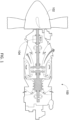
- FIG. 1 illustrates an example engine 100 comprising a propeller 102.
- the propeller 102 converts rotary motion from the shaft 104 to provide propulsive force to an aircraft.
- the engine 100 of FIG. 1 is a turboprop but it could also be any other type of engine comprising a propeller 102, such as a piston engine, a turboshaft engine, and the like.
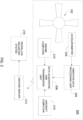
- FIG. 2 illustrates an example aircraft 200, which may be any type of propeller-driven aircraft 200.
- At least one accelerometer 204 is provided per engine 100 of the aircraft 200, for collecting measurement data from the propeller 102.
- the measurement data corresponds to the acceleration of the front of the engine 100 in a direction normal to the shaft 104 of the propeller 102.
- the propeller 102 is out of balance, as the center of mass rotates around the axis of rotation, the resulting centripetal force tries to pull the propeller 102 towards the center of mass.
- This rotating imbalance force acts on the mass of the engine 100 and propeller 102 and accelerates it. This acceleration is measured by the accelerometer 204.
- the accelerometer 204 may be mounted directly on the engine 100, proximate to the propeller 102, in order to measure the acceleration of the propeller 102.
- the installation may be permanent or temporary.
- a permanent mount may be performed during manufacture of the engine 100.
- the accelerometer 204 may be connected to an existing aircraft harness (not shown).
- One or more additional cables, adapters, connectors, and/or harnesses may be added in order to connect the accelerometer 204 to the existing aircraft harness.
- a temporary mount may be performed after manufacture of the engine 100 and/or after aircraft assembly, such as during aircraft maintenance.
- the measurement data collected by the accelerometer 204 may be transmitted to a vibration data processing unit 206, via the existing aircraft harness and/or additional cables, adapters, connectors, and/or harnesses. Alternatively, transmission of the data collected by the accelerometer 204 is performed wirelessly. Therefore, the accelerometer 204 may be configured for providing the measurement data to the vibration data processing unit 206 via any suitable wired or wireless communication path, including RS-232, USB, USB 2.0, USB 3.0, USB-C, SATA, e-SATA, Thunderbolt TM , Ethernet, Wi-Fi, Zigbee TM , Bluetooth TM , and the like.
- the vibration data processing unit 206 is configured to determine, from the measurement data, vibration data for the engine 100 and/or the propeller 102.
- the vibration data comprises propeller speed as well as phase angle and magnitude of engine vibration.
- Speed may be denoted as a Rotation Per Minute (RPM) of the propeller 102.
- the accelerometer 204 may act as a tachometer to measure the propeller 102 RPM.
- Magnitude may be denoted as a peak velocity in units of Inches Per Section (IPS).
- the phase angle is found by detecting when one particular propeller blade passes the accelerometer 204, and corresponds to the relationship between the waveform of the vibration magnitude signal to the angular position of the propeller 102.
- the vibration data processing unit 206 may be configured to digitize the measurement data if received in analog form, and determine the vibration data from the digitized data.
- the vibration data determined by the vibration data processing unit 206 is transmitted to a data acquisition and transmission unit 208.
- the data acquisition and transmission unit 208 may take various forms, such as a Flight-data Acquisition, Storage, and Transmission (FAST TM ) box, as manufactured by Pratt & Whitney Canada, or any other computer-controlled unit that receives data from various aircraft systems and sensors, and transmits the received data off-aircraft to a ground server 214.
- the data acquisition and transmission unit 208 may comprise one or more antenna, a processor, and a memory.
- the one or more antenna enable establishment of a wireless connection with the ground server 214.
- the processor may be coupled to a data bus of the aircraft 200 for receiving the vibration data and any other data from the aircraft systems and sensors.
- the vibration data is transmitted from the vibration data processing unit 206 to the data acquisition and transmission unit 208 using the Aeronautical Radio Inc. (ARINC) 429 data transfer standard for aircraft avionics.
- ARINC Aeronautical Radio Inc.
- Other data standards may also be used, such as ARINC 615, ARINC 629, and MIL-STD-1553.
- the data acquisition and transmission unit 208 is also configured to convert received data into digital form. As illustrated, unit 208 also receives data from an engine computer 212 and/or an aircraft computer 210. This data will be collectively referred to as aircraft data, and denote engine and/or aircraft performance parameters.
- the aircraft computer 210 may be an aircraft management controller (AMC), a flight management system (FMS), an aircraft digital computer system, or any other device used for computing inside an aircraft 200.
- the engine computer 212 may be any type of computing unit of an engine 100, such as an engine control unit (ECU), an engine electronic controller (EEC), an engine electronic control system, and a Full Authority Digital Engine Controller (FADEC).
- ECU engine control unit
- EEC engine electronic controller
- FADEC Full Authority Digital Engine Controller
- Data transmitted from the engine computer 212 and/or the aircraft computer 210 to the data acquisition and transmission unit 208 may be provided over a dedicated communication bus or any other existing communication system of the aircraft 200.
- Example data provided by the aircraft computer 210 comprises airspeed, altitude, stability, and position of the aircraft 200 at any point in time during a flight.
- Example data provided by the engine computer 212 comprises torque, speed, rating, torque stability, propeller speed stability, and compressor speed stability of the engine 100 at any point in time during engine operation.
- the vibration data processing unit 206 is integrated with the data acquisition and transmission unit 208.
- the accelerometer 204 may thus be connected directly to the data acquisition and transmission unit 208 for providing measurement data thereto, and the data acquisition and transmission unit 208 may be configured to determine the vibration data from the measurement data.
- the data acquisition and transmission unit 208 is configured to transmit both the vibration data and the aircraft data to the ground server 214 via a wireless communication link.
- the aircraft data and the vibration data are provided to a propeller balancing system 216 for further processing.
- the propeller balancing system 216 may be provided directly on the ground server 214 or separately therefrom.
- the propeller balancing system 216 may be implemented in hardware, using analog and/or digital circuit components.
- the propeller balancing system 216 may be provided as an application-specific integrated circuit (ASIC) or a field programmable gate array (FPGA).
- the propeller balancing system 216 is provided as a non-transitory computer readable medium having stored thereon program code executable by a processor for carrying out the instructions of the program code.
- the propeller balancing system 216 is implemented using a combination of hardware and software components, as one or more applications 306 1...N stored in a memory 302 and running on a processor 304, as illustrated in FIG. 3 .
- the applications 306 1...N are illustrated as separate entities but may be combined or separated in a variety of ways.
- the memory 302 accessible by the processor 304 may receive and store the vibration data and the aircraft data.
- the memory 302 may be a main memory, such as a high speed Random Access Memory (RAM), or an auxiliary storage unit, such as a hard disk, a floppy disk, or a magnetic tape drive.
- RAM Random Access Memory
- the memory 302 may be any other type of memory, such as a Read-Only Memory (ROM), or optical storage media such as a videodisc and a compact disc.
- the processor 304 may access the memory 302 to retrieve the data.
- the processor 304 may be any device that can perform operations on data. Examples are a central processing unit (CPU), a front-end processor, a microprocessor, and a network processor.
- the applications 306 1...N are coupled to the processor 304 and configured to perform a method 400 for propeller balancing, which will be described with reference to FIG. 4 .
- the propeller vibration data and the aircraft data are received by the propeller balancing system 216.
- the data may be received sequentially or concurrently. When received sequentially, the order of reception is irrelevant.
- the propeller balancing system 216 determines from the aircraft data a time period during which the aircraft operated in a stable cruise condition.
- Stable cruise condition corresponds to an operating condition of the aircraft during which certain flight criteria are attained.
- the flight criteria may correspond to engine parameters and/or aircraft parameters.
- Example aircraft parameters are minimum altitude, stability duration, minimum calibrated airspeed, altitude stability, and calibrated airspeed stability.
- Example engine parameters are propeller rotational speed, engine torque, engine rating, engine torque stability, engine propeller speed (Np) stability, and engine compressor speed (Nh) stability.
- stable cruise condition is operator-specific, that is to say that the flight criteria which determine whether an aircraft is operating in stable cruise condition are set by the aircraft operator.
- the operator may select which flight criteria are to be considered, and/or may set values for the flight criteria considered.
- TABLE 1 is an example of a set of flight criteria with operator-specific parameters for a flight operator X.
- flight operator X has selected eleven (11) flight criteria used to determine stable cruise condition of an aircraft during a flight, and has set a value for each one of the eleven (11) flight criteria. These values may be set for aircraft A or fleet A comprising multiple aircraft A, which is for example an ATR 42 aircraft. Operator X may select different values for aircraft B or fleet B comprising multiple aircraft B, which is for example an ATR 72 aircraft. Operator X may also select more or less flight criteria, with the same or different values, for aircraft C or fleet C comprising multiple aircraft C, which is for example a Q400 aircraft. Therefore, operator X may operate fleets of aircraft with aircraft A, B, and C, and each aircraft may have its own set of flight criteria and associated values for establishing stable cruise condition.
- Operator X may also set the parameters for stable cruise condition as a function of the specific mission of each aircraft.
- a "mission” should be understood as a flight to perform a specific task.
- the mission may be defined by various parameters, such as duration, destination, cargo, and any flying parameters to be used during the mission, such as propeller speed or maximum altitude.
- operator X may have aircraft A and B fly at a propeller speed of 1050 RPM wile aircraft C flies at a propeller speed of 975 RPM.
- the value associated for the flight criteria "propeller speed" may therefore differ between aircraft A and B and aircraft C.
- operator X may define a unique set of flight criteria and associated values for each flight of an aircraft as a function of the specific flight parameters of a given flight, such as propeller speeds, cruising altitudes, etc. Therefore, aircraft specific and/or mission specific flight criteria and/or associated values may be used to determine stable cruise condition for any given flight. More or less than the specific flight criteria of Table 1 may be used.
- FIG. 5 illustrates an example timeline 502 showing the different operating conditions throughout a flight for an aircraft 200.
- stable cruise condition occurs after takeoff and ascent and before descent and landing.
- this may cause it to exit stable cruise condition.
- a vibration level of the propeller 102 is assessed using vibration data captured while the aircraft 200 operates in stable cruise condition.
- an example timeline 504 illustrates the capture of data points 506 corresponding to the measurement data collected by the accelerometer 204 throughout the flight.
- the data points 506 may be captured at any predefined interval, such as 10 seconds, 15 seconds, 30 seconds, 1 minute, and the like.
- a vibration level of the propeller 102 is calculated using the propeller 102 rotational speed, the vibration phase, and the vibration magnitude of the aircraft 200.
- the vibration level is expressed in units of Inches Per Second (IPS).
- the threshold for balancing the propeller may be set to any one of the vibration levels, such as 3, 4, or 5.
- the threshold may be determined by an operator of the aircraft 200, or it may be set according to regional and/or other types of aircraft regulations.
- the threshold may be set as a function of the mission of the aircraft. For example, a cargo plane carrying only goods may have a lower threshold than an aircraft carrying passengers.
- the threshold may be set as a function of various aircraft parameters, such as size of the aircraft, type of engine, etc. More or less threshold levels than those illustrated in TABLE 1 may be used.
- signaling a balancing need comprises sending a signal to an external system, so as to trigger an alert and/or alarm message.
- signaling a balancing need comprises sending an electronic message to an operator of the aircraft or to a maintenance service. Other forms of signaling a balancing need may also be used.
- the method 400 also comprises a step of determining a balancing solution, as per step 407.
- Determining a balancing solution may comprise identifying a value and a location for at least one weight (or mass) to be added to the propeller 102.
- Other balancing solutions may include removing mass, radial drilling, milling, providing balancing rings, providing sliding blocks, and/or providing radial set screws.
- step 408 of signaling a balancing need may also comprise providing the balance solution.
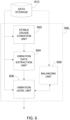
- the application 306 1 illustratively comprises a stable cruise condition unit 602, a vibration data extraction unit 604, and a vibration level unit 606.
- a balancing unit 608 may also be provided.
- the stable cruise condition unit 602 may retrieve the aircraft data from a data storage 610, or it may receive it directly from the ground server 214 or the data acquisition and transmission unit 208.
- the data storage 610 may correspond to the memory 302 or it may be another storage device, local to the propeller balancing system 216 or remote therefrom.
- the stable cruise condition unit 602 is configured to perform step 404 of method 400, namely determine the stable cruise condition time period for the flight.
- the flight criteria and associated values for determining stable cruise condition may be retrieved from the data storage 610, memory 302, or any other storage device.
- the vibration data extraction unit may retrieve the vibration data from the data storage 610, or it may receive it directly from the ground server 214 or the data acquisition and transmission unit 208.
- this information is provided to the vibration data extraction unit 604 for selection of data points collected during the same time period.
- the selected data points may be stored in the data storage 610 for retrieval by the vibration level unit 606, or they may be provided directly to the vibration level unit 606 by the vibration data extraction unit 604.
- the vibration level unit 606 is configured for assessing the vibration level of the propeller 102, as per step 406 of the method 400, and signaling a balancing need when the vibration level reaches a threshold, as per step 408.
- the vibration level unit 606 may also be configured to trigger the balancing unit 608 to compute a balancing solution.
- the balancing unit 608 may retrieve vibration data, aircraft data, and/or any other parameters needed for computing the balancing solution from the data storage 610.
- the balancing solution may be stored in the data storage 610 and retrieved by the vibration level unit 606 for transmitting to an operator and/or maintenance service, or it may be provided to the vibration level unit 606 directly. Operator and/or aircraft and/or mission specific parameters may also be retrieved from the data storage 610 by the balancing unit 608 and used to compute a unique balancing solution.
- the vibration level unit 606 and/or the balancing unit 608 is configured to perform trending of vibration data received over multiple flights for a given aircraft. Vibration levels may be compared over time from the multiple flights in order to monitor a progression of the vibration levels. Significant and/or sudden changes in vibration level may be noted by the propeller balancing system 216 and signaled to an operator and/or maintenance service of the aircraft by the vibration level unit 606. Other trends may also be observed from the vibration data and/or aircraft data.
- the vibration data processing unit 206 is composed of a filter 264, and optionally includes a signal pre-processor 262 and/or a signal post-processor 266.
- the accelerometer 204 can be any suitable type of accelerometer, which can be coupled to any suitable part of the engine 100, or to any suitable part of the aircraft 200. In the embodiment of FIG. 7 , it is considered that the accelerometer 204 is a singular accelerometer coupled to the engine 100 or the aircraft 200.
- the embodiment illustrated in FIG. 7 may be part of a propeller balancing or vibration monitoring system which is provided as a lower-cost solution, and thus includes only a single accelerometer 204.
- the accelerometer 204 is configured for producing acceleration data indicative of accelerations which occur within the aircraft 200 and/or within the engine 100, for instance in the form of an acceleration data signal.
- the acceleration data signal is, for example, an analog signal which encodes information relating to the accelerations measured by the accelerometer in the form of pulses of different frequency. Other embodiments are also considered.
- the acceleration data produced by the accelerometer can concurrently provide information regarding the accelerations and/or vibrations experienced by various components within the aircraft 200 and/or the engine 100.
- the acceleration data can be indicative of the vibrations experienced by the propeller 102, the propeller 104, and/or other elements of the engine 100 and/or the aircraft 200.
- the vibration data processing unit 206 illustrated in FIG. 7 is configured for isolating propeller-specific vibration data, as detailed hereinbelow.
- the accelerometer 204 provides acceleration data to the vibration data processing unit 206.
- the vibration data processing unit 206 includes the signal pre-processor 262
- the acceleration data can be provided as part of a signal to the signal pre-processor 262.
- the signal pre-processor 262 can include one or more amplifiers, one or more noise filters, or the like, and can transform or otherwise perform signal processing on the acceleration data in any suitable fashion.
- the signal pre-processor 262 can then provide the acceleration data to the filter 264.
- the acceleration data can be provided from the accelerometer 204 to the filter 264.
- the filter 264 is configured for filtering the acceleration data obtained from the signal pre-processor 262, or from the accelerometer 204, to obtain propeller-specific vibration data.
- the filter 264 defines a range of acceptable frequencies, also known as a passband, which are associated with a frequency of rotation of the propeller 102. By applying the filter 264 to the acceleration data, portions of the acceleration data not relevant to propeller vibration can be discarded, and the output of the filter 264 is a modified signal which is indicative of the vibrations experienced by the propeller 102.
- the propeller 102 is known to rotate at a particular frequency.
- the vibration data processing unit 206 is preprogrammed with a predetermined frequency of rotation, or range of frequencies of rotation, for the propeller 102.
- the vibration data processing unit 206 can obtain data substantially in real-time, for instance from a sensor, which indicates the frequency of rotation of the propeller 102.
- the vibration data processing unit 206 can then alter the operation of the filter 246 to shift the range of acceptable frequencies in order to filter the acceleration data to obtain the propeller-specific vibration data.
- the filter 246 is a band-pass filter, which defines a passband having a central frequency which is based on the frequency of rotation of the propeller.
- Other approaches for filtering the acceleration data signal provided by the accelerometer 204 to obtain propeller-specific vibration data is also considered.
- the filter 264 provides the propeller-specific vibration data, in the form of a signal, to the signal post-processor 266, which can perform various post-processing operations on the propeller-specific vibration data.
- the signal post-processor 266 performs an analog-to-digital conversion, converting the analog signal output by the filter 264 to a digital signal, which is then transmitted to the DAT unit 208.
- the analog-to-digital conversion can be performed by a remote-sensing node or other similar device, which can then be output by any suitable interface, for instance an ARINC 429 interface.
- the signal post-processor 266 performs a different type of conversion, for instance a conversion between a root-mean-squared signal to a DC (direct current) signal. Other types of signal conversions, for instance to facilitate the interpretation of the propeller-specific vibration data by the DAT unit 208, are considered.
- the signal post-processor 266 can perform noise reduction, amplification, or other types of signal processing, as appropriate.
- the propeller-specific vibration data is then provided to the DAT unit 208, whether from the filter 264 or from signal post-processor 266.
- the DAT unit 208 can then use the propeller-specific vibration data to perform trend analysis of vibration data received over multiple flights for a given aircraft.
- the propeller-specific vibration data obtained during a particular flight mission can be compared with trend data associated with the propeller 102, for instance to assess whether the propeller-specific vibration data indicates a change in the behavior of the propeller 102 vis-à-vis the trend data.
- the trend data is preprogrammed into the DAT unit 208.
- the trend data is based on previously-acquired propeller-specific vibration data, for instance from one or more previous flight missions for the aircraft 200.
- the previously-acquired propeller-specific vibration data can be used, for instance, to augment preprogrammed trend data, or to build the trend data.
- the trend analysis for the propeller-specific vibration data performed by the DAT unit 208 can include comparing the propeller-specific vibration data for a given flight mission against the trend data to determine whether the propeller-specific vibration data substantially aligns with the trend data, or whether the propeller-specific vibration data indicates a departure from the trend data.
- the trend data can be associated with a predetermined range or other threshold, and when the propeller-specific vibration data is within the predetermined range, the DAT unit 208 can determine that the vibrations experienced by the propeller 102 are acceptable.
- the DAT unit 208 can determine that the propeller 102 is operating with unacceptable levels of vibration, and can issue an alert, for instance to the ground server 214, to indicate a balancing need for the propeller 102.
- the alert can indicate that a particular maintenance operation should be performed, for instance a propeller balancing operation, and/or provide relevant information for a maintenance crew assigned to the aircraft 200 and/or the engine 100.
- the alert indicates a remaining flight time for the aircraft 200 (and, optionally, for the engine 100) before a maintenance operation is required.
- the DAT unit 208 can also identify instances where the propeller-specific vibration data quickly departs from the trend data as an indication of a mechanical failure or other event requiring a maintenance operation, and provide an indication thereof via the alert.
- the trend analysis can also include comparing the propeller-specific vibration data against one or more predetermined threshold values for vibrations experienced by the propeller 102.
- the DAT unit 208 can be preprogrammed with an expected vibration level for the propeller, for instance 3,3 mm/s or 0.13 inches/second (in/sec), or with an expected range of vibration levels for the propeller, for instance 3,3-5,8 mm/s or 0.13-0.23 in/sec.
- the DAT unit 208 determines, based on the propeller-specific vibration data, that the vibrations experienced by the propeller 102 are beyond the expected vibration level or range, the DAT unit 208 can issue an alert for maintenance and/or propeller balancing.
- the DAT unit 208 is configured for updating the trend data based on the propeller-specific vibration data obtained during flight missions.
- the propeller-specific vibration data can be recorded or otherwise stored in a memory store, for instance within the DAT unit 208, and can then be used to update the trend data.
- the trend data can be updated substantially in real-time, or periodically, for instance following review of the propeller-specific vibration data by a maintenance crew assigned to the aircraft 200 and/or the engine 100, or by an operator of the aircraft 200 and/or the engine 100.
- the acceleration data obtained by the accelerometer 204 is subdivided into a plurality of acceleration data sets associated with different flight stages with the flight mission. For instance, different levels of vibration are experienced by the propeller 102 during takeoff, ascent, cruise, descent, and landing, and the vibration processing unit 206 and/or the DAT unit 208 can be configured to subdivide the acceleration data and the propeller-specific vibration data into sets of data for different flight stages. Similarly, different sets of trend data can be maintained by the DAT unit 208 for different flight stages, and comparisons to the trend data sets can be performed on a per-flight-stage basis. Other variations are also considered. For instance, portions of the acceleration data can be discarded: acceleration data collected during ground operation of the aircraft 200 can be less indicative of the actual vibrations experienced by the propeller 102, and the DAT 208 can discard the associated propeller-specific vibration data.
- acceleration data is obtained from an acceleration sensor, for instance the accelerometer 204.
- the accelerometer 204 can be coupled to the aircraft 200, for instance to the engine 100, or to another element of the aircraft 200.
- the acceleration data obtained from the accelerometer 204 can be in the form of an analog electrical signal, for instance, which encodes acceleration data therein.
- the acceleration data is filtered to obtain propeller-specific vibration data, for instance using the filter 264.
- the propeller-specific vibration data can be obtained by filtering the acceleration data through the filter 264, which has a passband associated with a frequency of rotation of the propeller 102.
- portions of the propeller-specific vibration data which are associated with a period of ground operation for the aircraft 200 are discarded.
- information from other systems, including the aircraft computer 210 and/or the engine computer 212 can provide information to indicate periods of ground operation for the aircraft 200.
- the propeller-specific vibration data is compared to trend data associated with the propeller 102.
- an evaluation is performed to assess whether the propeller-specific acceleration data differs from the trend data beyond a predetermined threshold.
- the method 800 proceeds to step 812.
- the method 800 optionally proceeds to step 814, or returns to some previous step, for instance, step 802.
- an alert indicative of a balancing need for the propeller 102 is issued.
- the alert is issued by the DAT unit 208 to the ground server 214, or to an operator or maintenance crew for the aircraft 200.
- the alert is indicative of a maintenance operation to be performed, for instance for the propeller 102.
- the alert is indicative of a remaining flight time for the aircraft 200 (and, optionally, for the engine 100) before a maintenance operation is to be performed.
- the propeller-specific vibration data is stored in a memory store and used to update the trend data.
- Step 814 is optionally performed after step 812, or when the propeller-specific acceleration data does not differ from the trend data beyond the predetermined threshold, as assessed at step 810.
- the updating of the trend data can include determining a new average, rolling average, or other trend information for the level of vibration experienced by the propeller 102. Other approaches are also considered. For example, a trend line slope for the level of vibration experienced by the propeller 102 can be updated based on the propeller-specific vibration data.
- systems, methods and computer readable mediums disclosed and shown herein may comprise a specific number of elements/components, the systems, methods and computer readable mediums may be modified to include additional or fewer of such elements/components.
Landscapes
- Engineering & Computer Science (AREA)
- Aviation & Aerospace Engineering (AREA)
- Measurement Of Mechanical Vibrations Or Ultrasonic Waves (AREA)
- Testing Of Devices, Machine Parts, Or Other Structures Thereof (AREA)
Claims (15)
- Verfahren zum Propellerausgleichen eines Luftfahrzeugs, das einen Propeller (102) umfasst, wobei das Verfahren umfasst:Erlangen von Beschleunigungsdaten von einem an das Luftfahrzeug gekoppelten Beschleunigungssensor (204);Filtern der Beschleunigungsdaten unter Verwendung eines Filters (264), um propellerspezifische Schwingungsdaten zu erlangen, wobei das Filter (264) einen Bereich akzeptabler Frequenzen definiert, der mit einer Rotationsfrequenz des Propellers (102) verknüpft ist;Vergleichen der propellerspezifischen Schwingungsdaten mit Trenddaten, die mit dem Propeller (102) verknüpft sind; undwenn die propellerspezifischen Schwingungsdaten von den Trenddaten über einen vorgegebenen Schwellenwert hinaus abweichen, Ausgeben einer Warnung, die angibt, dass der Propeller (102) ausgeglichen werden muss,dadurch gekennzeichnet, dass:
das Ausgeben einer Warnung Angeben einer verbleibenden Flugzeit für das Luftfahrzeug umfasst, bis ein Wartungsvorgang erforderlich ist. - Verfahren nach Anspruch 1, wobei das Filter (264) ein Bandpassfilter ist und wobei der Bereich akzeptabler Frequenzen ein Durchlassband mit einer Mittenfrequenz definiert, die auf der Rotationsfrequenz des Propellers (102) basiert.
- Verfahren nach Anspruch 2, wobei das Verfahren ferner Bestimmen der Mittenfrequenz durch Messen der Rotationsfrequenz des Propellers unter Verwendung eines mit dem Propeller (102) verknüpften Geschwindigkeitssensors umfasst.
- Verfahren nach einem der vorhergehenden Ansprüche, wobei das Erlangen der Beschleunigungsdaten vom Beschleunigungssensor (204) Erlangen der Beschleunigungsdaten von einem Beschleunigungsmesser umfasst, der an einen Motor (100) gekoppelt ist, der mit dem Propeller (102) verknüpft ist.
- Verfahren nach einem vorhergehenden Anspruch, ferner umfassend:Speichern der propellerspezifischen Schwingungsdaten in einem Speicher; undAktualisieren der Trenddaten basierend auf den propellerspezifischen Schwingungsdaten.
- Verfahren nach Anspruch 5, wobei das Aktualisieren der Trenddaten Aktualisieren eines gleitenden Durchschnittswerts eines mit dem Propeller (102) verknüpften Schwingungspegels umfasst.
- Verfahren nach einem der vorhergehenden Ansprüche, ferner umfassend Verwerfen von Teilen der propellerspezifischen Schwingungsdate, die mit einer Bodenbetriebsperiode des Luftfahrzeugs verknüpft sind.
- Verfahren nach einem der vorhergehenden Ansprüche, wobei das Erlangen von Beschleunigungsdaten Erlangen von Beschleunigungsdatensätzen für eine Vielzahl von Flugphasen während einer Flugmission umfasst, wobei das Filtern der Beschleunigungsdaten zum Erlangen der propellerspezifischen Schwingungsdaten Filtern der Beschleunigungsdatensätze zum Erlangen von Schwingungsdatensätzen umfasst, und wobei das Vergleichen der propellerspezifischen Schwingungsdaten mit den Trenddaten Vergleichen der Schwingungsdatensätze mit Trenddatensätzen der Trenddaten umfasst, die mit der Vielzahl von Flugphasen verknüpft sind.
- System zum Propellerausgleichen eines Luftfahrzeugs, das einen Propeller (102) umfasst, wobei das System umfasst:einen Beschleunigungssensor (204), der zur Kopplung an das Luftfahrzeug konfiguriert ist;eine Verarbeitungseinheit;ein Filter (264); undeinen für die Verarbeitungseinheit zugänglichen Speicher (302);ein nichtflüchtiges computerlesbares Medium mit darauf gespeicherten Programmanweisungen, die durch die Verarbeitungseinheit ausführbar sind zum:Erlangen von Beschleunigungsdaten von dem Beschleunigungssensor (204) ;Filtern der Beschleunigungsdaten unter Verwendung des Filters (264), um propellerspezifische Schwingungsdaten zu erlangen, wobei der Filter (264) einen Bereich akzeptabler Frequenzen definiert, der mit einer Rotationsfrequenz des Propellers (102) verknüpft ist;Vergleichen der in dem Speicher gespeicherten propellerspezifischen Schwingungsdaten mit Trenddaten, die mit dem Propeller verknüpft sind; undwenn die propellerspezifischen Schwingungsdaten von den Trenddaten über einen vorgegebenen Schwellenwert hinaus abweichen, Ausgeben einer Warnung, die angibt, dass der Propeller (102) ausgeglichen werden muss,dadurch gekennzeichnet, dass:
das Ausgeben einer Warnung Angeben einer verbleibenden Flugzeit für das Luftfahrzeug umfasst, bis ein Wartungsvorgang erforderlich ist. - System nach Anspruch 9, wobei das Filter (264) ein Bandpassfilter ist und wobei der Bereich akzeptabler Frequenzen ein Durchlassband mit einer Mittenfrequenz definiert, die auf der Rotationsfrequenz des Propellers (102) basiert.
- System nach Anspruch 10, wobei die Anweisungen ferner ausführbar sind zum Bestimmen der Mittenfrequenz durch Messen der Rotationsfrequenz des Propellers (102) unter Verwendung eines mit dem Propeller (102) verknüpften Geschwindigkeitssensors.
- System nach einem der Ansprüche 9 bis 11, wobei das Erlangen der Beschleunigungsdaten vom Beschleunigungssensor (204) Erlangen der Beschleunigungsdaten von einem Beschleunigungsmesser umfasst, der an einen Motor (100) gekoppelt ist, der mit dem Propeller (102) verknüpft ist.
- System nach einem der Ansprüche 9 bis 12, wobei die Anweisungen ferner ausführbar sind zum:Speichern der propellerspezifischen Schwingungsdaten in dem Speicher (302); undAktualisieren der Trenddaten basierend auf den propellerspezifischen Schwingungsdaten.
- System nach Anspruch 13, wobei das Aktualisieren der Trenddaten Aktualisieren eines gleitenden Durchschnittswerts eines mit dem Propeller (102) verknüpften Schwingungspegels umfasst.
- System nach einem der Ansprüche 9 bis 14, wobei die Anweisungen ferner ausführbar sind, um Teile der propellerspezifischen Schwingungsdaten zu verwerfen, die mit einer Bodenbetriebsperiode des Luftfahrzeugs verknüpft sind.
Applications Claiming Priority (1)
| Application Number | Priority Date | Filing Date | Title |
|---|---|---|---|
| US16/804,715 US10981675B2 (en) | 2016-03-23 | 2020-02-28 | Propeller balancing using inflight data |
Publications (2)
| Publication Number | Publication Date |
|---|---|
| EP3871972A1 EP3871972A1 (de) | 2021-09-01 |
| EP3871972B1 true EP3871972B1 (de) | 2024-09-11 |
Family
ID=74844694
Family Applications (1)
| Application Number | Title | Priority Date | Filing Date |
|---|---|---|---|
| EP21159725.7A Active EP3871972B1 (de) | 2020-02-28 | 2021-02-26 | Propellerausgleich mittels flugdaten |
Country Status (3)
| Country | Link |
|---|---|
| EP (1) | EP3871972B1 (de) |
| CA (1) | CA3109968A1 (de) |
| PL (1) | PL3871972T3 (de) |
Citations (7)
| Publication number | Priority date | Publication date | Assignee | Title |
|---|---|---|---|---|
| US4112774A (en) | 1977-01-07 | 1978-09-12 | Chadwick-Helmuth Company, Inc. | Aircraft rotor out-of-track correction method and apparatus |
| US6505143B1 (en) | 2000-01-20 | 2003-01-07 | General Electric Company | Machine protection system for rotating equipment and method |
| US20090301055A1 (en) | 2008-06-04 | 2009-12-10 | United Technologies Corp. | Gas Turbine Engine Systems and Methods Involving Vibration Monitoring |
| FR2977341A1 (fr) | 2011-06-30 | 2013-01-04 | Eurocopter France | Procede de surveillance d'un aeronef par acquisitions vibratoires |
| US20150234396A1 (en) | 2012-09-25 | 2015-08-20 | Lord Corporation | Devices, systems, and methods for balancing closely coupled rotating machinery |
| FR3035982A1 (fr) | 2015-05-05 | 2016-11-11 | Snecma | Procede de surveillance d'un moteur d'aeronef en fonctionnement pendant un vol |
| EP3222516A1 (de) | 2016-03-23 | 2017-09-27 | Pratt & Whitney Canada Corp. | Propellerausgleich mittels flugdaten |
Family Cites Families (1)
| Publication number | Priority date | Publication date | Assignee | Title |
|---|---|---|---|---|
| EP2074025B1 (de) * | 2006-10-11 | 2012-08-29 | Lord Corporation | Flugzeug mit transientenunterscheidendem propellerausgleichssystem |
-
2021
- 2021-02-24 CA CA3109968A patent/CA3109968A1/en active Pending
- 2021-02-26 PL PL21159725.7T patent/PL3871972T3/pl unknown
- 2021-02-26 EP EP21159725.7A patent/EP3871972B1/de active Active
Patent Citations (7)
| Publication number | Priority date | Publication date | Assignee | Title |
|---|---|---|---|---|
| US4112774A (en) | 1977-01-07 | 1978-09-12 | Chadwick-Helmuth Company, Inc. | Aircraft rotor out-of-track correction method and apparatus |
| US6505143B1 (en) | 2000-01-20 | 2003-01-07 | General Electric Company | Machine protection system for rotating equipment and method |
| US20090301055A1 (en) | 2008-06-04 | 2009-12-10 | United Technologies Corp. | Gas Turbine Engine Systems and Methods Involving Vibration Monitoring |
| FR2977341A1 (fr) | 2011-06-30 | 2013-01-04 | Eurocopter France | Procede de surveillance d'un aeronef par acquisitions vibratoires |
| US20150234396A1 (en) | 2012-09-25 | 2015-08-20 | Lord Corporation | Devices, systems, and methods for balancing closely coupled rotating machinery |
| FR3035982A1 (fr) | 2015-05-05 | 2016-11-11 | Snecma | Procede de surveillance d'un moteur d'aeronef en fonctionnement pendant un vol |
| EP3222516A1 (de) | 2016-03-23 | 2017-09-27 | Pratt & Whitney Canada Corp. | Propellerausgleich mittels flugdaten |
Non-Patent Citations (1)
| Title |
|---|
| ANONYMOUS: "Propeller (aeronautics)", WIKIPEDIA (ACCESSED VIA THE WAYBACK MACHINE), 11 December 2019 (2019-12-11), XP093286786, Retrieved from the Internet <URL: https://web.archive.org/web/20191211233733/https://en.wikipedia.org/wiki/Propeller_(aeronautics) > |
Also Published As
| Publication number | Publication date |
|---|---|
| EP3871972A1 (de) | 2021-09-01 |
| CA3109968A1 (en) | 2021-08-28 |
| PL3871972T3 (pl) | 2025-02-03 |
Similar Documents
| Publication | Publication Date | Title |
|---|---|---|
| EP3222516B1 (de) | Propellerausgleich mittels flugdaten | |
| US10981675B2 (en) | Propeller balancing using inflight data | |
| EP2812661B1 (de) | System zur überwachung einer strukturellen integrität und nutzung mit anpassbarer frequenz | |
| EP3126243B1 (de) | System und verfahren für verbesserte antriebssystemdiagnose | |
| EP3284671B1 (de) | Diagnoseverfahren, -system und -vorrichtung für ein drehflügelflugzeugantriebssystem | |
| KR102013733B1 (ko) | 엔진 윤활유 모니터링 시스템 및 방법 | |
| EP1888407A1 (de) | System und verfahren zum ermitteln von hartlandungsereignissen aus trägheits- und flugzeugbezugsrahmendaten | |
| EP3422189B1 (de) | Ereignisbasierte datenerfassung für intelligente sensoren auf einem master-slave-bus | |
| WO2017123290A1 (en) | Adaptive algorithm-based engine health prediction | |
| US7839304B2 (en) | Method and system for alerting aircrew to unsafe vibration levels | |
| EP3984881B1 (de) | System und verfahren zur datenaufzeichnung und -übertragung für propellerausgleich | |
| EP3984880B1 (de) | System und verfahren für propellerausgleich | |
| RU2708905C2 (ru) | Способ мониторинга двигателя летательного аппарата во время работы в полете | |
| EP3871972B1 (de) | Propellerausgleich mittels flugdaten | |
| US11021263B2 (en) | Automated aircraft landing performance analysis | |
| US20180174383A1 (en) | Method of analyzing variations of at least one indicator of the behavior of a mechanism fitted to an aircraft | |
| DE60213738T2 (de) | Ueberwachung von Kollektivkopflagern | |
| Banerjee et al. | Vibration anomaly indicator in UAVs in presence of wind | |
| EP2612816B1 (de) | Systeme und Verfahren zur Ausgabe einer Hartlandungswarnung und Bereitstellung von Wartungshinweisen für Hartlandungsvorfälle | |
| Banerjee et al. | Vibration Anomaly Detection by Clustering in Unmanned Aerial Vehicles. | |
| Trammel et al. | UK Ministry of Defence generic health and usage monitoring system (GenHUMS) | |
| US20250362320A1 (en) | PROGNOSTIC HEALTH MONITOR FOR AIRCRAFT-BASED DIGITAL ANGLE OF ATTACK (AoA) SENSORS | |
| US20250361024A1 (en) | PROGNOSTIC HEALTH MONITOR FOR AIRCRAFT-BASED ANALOG ANGLE OF ATTACK (AoA) SENSORS | |
| Bechhoefer | Architecture for a low cost, light weight HUMS for commercial helicopters | |
| Munden | New systems for helicopter and aircraft vibration monitoring |
Legal Events
| Date | Code | Title | Description |
|---|---|---|---|
| PUAI | Public reference made under article 153(3) epc to a published international application that has entered the european phase |
Free format text: ORIGINAL CODE: 0009012 |
|
| STAA | Information on the status of an ep patent application or granted ep patent |
Free format text: STATUS: THE APPLICATION HAS BEEN PUBLISHED |
|
| AK | Designated contracting states |
Kind code of ref document: A1 Designated state(s): AL AT BE BG CH CY CZ DE DK EE ES FI FR GB GR HR HU IE IS IT LI LT LU LV MC MK MT NL NO PL PT RO RS SE SI SK SM TR |
|
| STAA | Information on the status of an ep patent application or granted ep patent |
Free format text: STATUS: REQUEST FOR EXAMINATION WAS MADE |
|
| 17P | Request for examination filed |
Effective date: 20220301 |
|
| RBV | Designated contracting states (corrected) |
Designated state(s): AL AT BE BG CH CY CZ DE DK EE ES FI FR GB GR HR HU IE IS IT LI LT LU LV MC MK MT NL NO PL PT RO RS SE SI SK SM TR |
|
| STAA | Information on the status of an ep patent application or granted ep patent |
Free format text: STATUS: EXAMINATION IS IN PROGRESS |
|
| 17Q | First examination report despatched |
Effective date: 20230120 |
|
| GRAP | Despatch of communication of intention to grant a patent |
Free format text: ORIGINAL CODE: EPIDOSNIGR1 |
|
| STAA | Information on the status of an ep patent application or granted ep patent |
Free format text: STATUS: GRANT OF PATENT IS INTENDED |
|
| INTG | Intention to grant announced |
Effective date: 20240405 |
|
| GRAS | Grant fee paid |
Free format text: ORIGINAL CODE: EPIDOSNIGR3 |
|
| GRAA | (expected) grant |
Free format text: ORIGINAL CODE: 0009210 |
|
| STAA | Information on the status of an ep patent application or granted ep patent |
Free format text: STATUS: THE PATENT HAS BEEN GRANTED |
|
| AK | Designated contracting states |
Kind code of ref document: B1 Designated state(s): AL AT BE BG CH CY CZ DE DK EE ES FI FR GB GR HR HU IE IS IT LI LT LU LV MC MK MT NL NO PL PT RO RS SE SI SK SM TR |
|
| REG | Reference to a national code |
Ref country code: GB Ref legal event code: FG4D |
|
| REG | Reference to a national code |
Ref country code: CH Ref legal event code: EP |
|
| REG | Reference to a national code |
Ref country code: DE Ref legal event code: R096 Ref document number: 602021018514 Country of ref document: DE |
|
| REG | Reference to a national code |
Ref country code: IE Ref legal event code: FG4D |
|
| REG | Reference to a national code |
Ref country code: LT Ref legal event code: MG9D |
|
| PG25 | Lapsed in a contracting state [announced via postgrant information from national office to epo] |
Ref country code: NO Free format text: LAPSE BECAUSE OF FAILURE TO SUBMIT A TRANSLATION OF THE DESCRIPTION OR TO PAY THE FEE WITHIN THE PRESCRIBED TIME-LIMIT Effective date: 20241211 |
|
| REG | Reference to a national code |
Ref country code: NL Ref legal event code: MP Effective date: 20240911 |
|
| PG25 | Lapsed in a contracting state [announced via postgrant information from national office to epo] |
Ref country code: GR Free format text: LAPSE BECAUSE OF FAILURE TO SUBMIT A TRANSLATION OF THE DESCRIPTION OR TO PAY THE FEE WITHIN THE PRESCRIBED TIME-LIMIT Effective date: 20241212 Ref country code: FI Free format text: LAPSE BECAUSE OF FAILURE TO SUBMIT A TRANSLATION OF THE DESCRIPTION OR TO PAY THE FEE WITHIN THE PRESCRIBED TIME-LIMIT Effective date: 20240911 |
|
| PG25 | Lapsed in a contracting state [announced via postgrant information from national office to epo] |
Ref country code: BG Free format text: LAPSE BECAUSE OF FAILURE TO SUBMIT A TRANSLATION OF THE DESCRIPTION OR TO PAY THE FEE WITHIN THE PRESCRIBED TIME-LIMIT Effective date: 20240911 |
|
| PG25 | Lapsed in a contracting state [announced via postgrant information from national office to epo] |
Ref country code: LV Free format text: LAPSE BECAUSE OF FAILURE TO SUBMIT A TRANSLATION OF THE DESCRIPTION OR TO PAY THE FEE WITHIN THE PRESCRIBED TIME-LIMIT Effective date: 20240911 |
|
| PG25 | Lapsed in a contracting state [announced via postgrant information from national office to epo] |
Ref country code: HR Free format text: LAPSE BECAUSE OF FAILURE TO SUBMIT A TRANSLATION OF THE DESCRIPTION OR TO PAY THE FEE WITHIN THE PRESCRIBED TIME-LIMIT Effective date: 20240911 |
|
| PG25 | Lapsed in a contracting state [announced via postgrant information from national office to epo] |
Ref country code: RS Free format text: LAPSE BECAUSE OF FAILURE TO SUBMIT A TRANSLATION OF THE DESCRIPTION OR TO PAY THE FEE WITHIN THE PRESCRIBED TIME-LIMIT Effective date: 20241211 Ref country code: ES Free format text: LAPSE BECAUSE OF FAILURE TO SUBMIT A TRANSLATION OF THE DESCRIPTION OR TO PAY THE FEE WITHIN THE PRESCRIBED TIME-LIMIT Effective date: 20240911 |
|
| PG25 | Lapsed in a contracting state [announced via postgrant information from national office to epo] |
Ref country code: RS Free format text: LAPSE BECAUSE OF FAILURE TO SUBMIT A TRANSLATION OF THE DESCRIPTION OR TO PAY THE FEE WITHIN THE PRESCRIBED TIME-LIMIT Effective date: 20241211 Ref country code: NO Free format text: LAPSE BECAUSE OF FAILURE TO SUBMIT A TRANSLATION OF THE DESCRIPTION OR TO PAY THE FEE WITHIN THE PRESCRIBED TIME-LIMIT Effective date: 20241211 Ref country code: LV Free format text: LAPSE BECAUSE OF FAILURE TO SUBMIT A TRANSLATION OF THE DESCRIPTION OR TO PAY THE FEE WITHIN THE PRESCRIBED TIME-LIMIT Effective date: 20240911 Ref country code: HR Free format text: LAPSE BECAUSE OF FAILURE TO SUBMIT A TRANSLATION OF THE DESCRIPTION OR TO PAY THE FEE WITHIN THE PRESCRIBED TIME-LIMIT Effective date: 20240911 Ref country code: GR Free format text: LAPSE BECAUSE OF FAILURE TO SUBMIT A TRANSLATION OF THE DESCRIPTION OR TO PAY THE FEE WITHIN THE PRESCRIBED TIME-LIMIT Effective date: 20241212 Ref country code: FI Free format text: LAPSE BECAUSE OF FAILURE TO SUBMIT A TRANSLATION OF THE DESCRIPTION OR TO PAY THE FEE WITHIN THE PRESCRIBED TIME-LIMIT Effective date: 20240911 Ref country code: ES Free format text: LAPSE BECAUSE OF FAILURE TO SUBMIT A TRANSLATION OF THE DESCRIPTION OR TO PAY THE FEE WITHIN THE PRESCRIBED TIME-LIMIT Effective date: 20240911 Ref country code: BG Free format text: LAPSE BECAUSE OF FAILURE TO SUBMIT A TRANSLATION OF THE DESCRIPTION OR TO PAY THE FEE WITHIN THE PRESCRIBED TIME-LIMIT Effective date: 20240911 |
|
| REG | Reference to a national code |
Ref country code: AT Ref legal event code: MK05 Ref document number: 1722480 Country of ref document: AT Kind code of ref document: T Effective date: 20240911 |
|
| PG25 | Lapsed in a contracting state [announced via postgrant information from national office to epo] |
Ref country code: NL Free format text: LAPSE BECAUSE OF FAILURE TO SUBMIT A TRANSLATION OF THE DESCRIPTION OR TO PAY THE FEE WITHIN THE PRESCRIBED TIME-LIMIT Effective date: 20240911 |
|
| PG25 | Lapsed in a contracting state [announced via postgrant information from national office to epo] |
Ref country code: IS Free format text: LAPSE BECAUSE OF FAILURE TO SUBMIT A TRANSLATION OF THE DESCRIPTION OR TO PAY THE FEE WITHIN THE PRESCRIBED TIME-LIMIT Effective date: 20250111 Ref country code: PT Free format text: LAPSE BECAUSE OF FAILURE TO SUBMIT A TRANSLATION OF THE DESCRIPTION OR TO PAY THE FEE WITHIN THE PRESCRIBED TIME-LIMIT Effective date: 20250113 |
|
| PGFP | Annual fee paid to national office [announced via postgrant information from national office to epo] |
Ref country code: DE Payment date: 20250122 Year of fee payment: 5 |
|
| PG25 | Lapsed in a contracting state [announced via postgrant information from national office to epo] |
Ref country code: SM Free format text: LAPSE BECAUSE OF FAILURE TO SUBMIT A TRANSLATION OF THE DESCRIPTION OR TO PAY THE FEE WITHIN THE PRESCRIBED TIME-LIMIT Effective date: 20240911 Ref country code: RO Free format text: LAPSE BECAUSE OF FAILURE TO SUBMIT A TRANSLATION OF THE DESCRIPTION OR TO PAY THE FEE WITHIN THE PRESCRIBED TIME-LIMIT Effective date: 20240911 |
|
| PG25 | Lapsed in a contracting state [announced via postgrant information from national office to epo] |
Ref country code: EE Free format text: LAPSE BECAUSE OF FAILURE TO SUBMIT A TRANSLATION OF THE DESCRIPTION OR TO PAY THE FEE WITHIN THE PRESCRIBED TIME-LIMIT Effective date: 20240911 Ref country code: AT Free format text: LAPSE BECAUSE OF FAILURE TO SUBMIT A TRANSLATION OF THE DESCRIPTION OR TO PAY THE FEE WITHIN THE PRESCRIBED TIME-LIMIT Effective date: 20240911 |
|
| PGFP | Annual fee paid to national office [announced via postgrant information from national office to epo] |
Ref country code: CZ Payment date: 20250128 Year of fee payment: 5 Ref country code: PL Payment date: 20250123 Year of fee payment: 5 Ref country code: FR Payment date: 20250121 Year of fee payment: 5 |
|
| PG25 | Lapsed in a contracting state [announced via postgrant information from national office to epo] |
Ref country code: IT Free format text: LAPSE BECAUSE OF FAILURE TO SUBMIT A TRANSLATION OF THE DESCRIPTION OR TO PAY THE FEE WITHIN THE PRESCRIBED TIME-LIMIT Effective date: 20240911 Ref country code: SK Free format text: LAPSE BECAUSE OF FAILURE TO SUBMIT A TRANSLATION OF THE DESCRIPTION OR TO PAY THE FEE WITHIN THE PRESCRIBED TIME-LIMIT Effective date: 20240911 |
|
| PGFP | Annual fee paid to national office [announced via postgrant information from national office to epo] |
Ref country code: GB Payment date: 20250123 Year of fee payment: 5 |
|
| REG | Reference to a national code |
Ref country code: DE Ref legal event code: R026 Ref document number: 602021018514 Country of ref document: DE |
|
| PLBI | Opposition filed |
Free format text: ORIGINAL CODE: 0009260 |
|
| PLAX | Notice of opposition and request to file observation + time limit sent |
Free format text: ORIGINAL CODE: EPIDOSNOBS2 |
|
| PG25 | Lapsed in a contracting state [announced via postgrant information from national office to epo] |
Ref country code: DK Free format text: LAPSE BECAUSE OF FAILURE TO SUBMIT A TRANSLATION OF THE DESCRIPTION OR TO PAY THE FEE WITHIN THE PRESCRIBED TIME-LIMIT Effective date: 20240911 |
|
| 26 | Opposition filed |
Opponent name: SAFRAN AIRCRAFT ENGINES Effective date: 20250609 |
|
| PG25 | Lapsed in a contracting state [announced via postgrant information from national office to epo] |
Ref country code: SE Free format text: LAPSE BECAUSE OF FAILURE TO SUBMIT A TRANSLATION OF THE DESCRIPTION OR TO PAY THE FEE WITHIN THE PRESCRIBED TIME-LIMIT Effective date: 20240911 |
|
| PG25 | Lapsed in a contracting state [announced via postgrant information from national office to epo] |
Ref country code: MC Free format text: LAPSE BECAUSE OF FAILURE TO SUBMIT A TRANSLATION OF THE DESCRIPTION OR TO PAY THE FEE WITHIN THE PRESCRIBED TIME-LIMIT Effective date: 20240911 |
|
| REG | Reference to a national code |
Ref country code: CH Ref legal event code: PL |
|
| PG25 | Lapsed in a contracting state [announced via postgrant information from national office to epo] |
Ref country code: LU Free format text: LAPSE BECAUSE OF NON-PAYMENT OF DUE FEES Effective date: 20250226 |
|
| PG25 | Lapsed in a contracting state [announced via postgrant information from national office to epo] |
Ref country code: CH Free format text: LAPSE BECAUSE OF NON-PAYMENT OF DUE FEES Effective date: 20250228 |
|
| PLBB | Reply of patent proprietor to notice(s) of opposition received |
Free format text: ORIGINAL CODE: EPIDOSNOBS3 |
|
| REG | Reference to a national code |
Ref country code: BE Ref legal event code: MM Effective date: 20250228 |