EP3869495B1 - Verbesserte synchronisierung einer vorab aufgezeichneten musikbegleitung an die abspielende musik eines benutzers - Google Patents
Verbesserte synchronisierung einer vorab aufgezeichneten musikbegleitung an die abspielende musik eines benutzers Download PDFInfo
- Publication number
- EP3869495B1 EP3869495B1 EP20305168.5A EP20305168A EP3869495B1 EP 3869495 B1 EP3869495 B1 EP 3869495B1 EP 20305168 A EP20305168 A EP 20305168A EP 3869495 B1 EP3869495 B1 EP 3869495B1
- Authority
- EP
- European Patent Office
- Prior art keywords
- music
- diff
- accompaniment
- tempo
- time
- Prior art date
- Legal status (The legal status is an assumption and is not a legal conclusion. Google has not performed a legal analysis and makes no representation as to the accuracy of the status listed.)
- Active
Links
Images


Classifications
-
- G—PHYSICS
- G10—MUSICAL INSTRUMENTS; ACOUSTICS
- G10H—ELECTROPHONIC MUSICAL INSTRUMENTS; INSTRUMENTS IN WHICH THE TONES ARE GENERATED BY ELECTROMECHANICAL MEANS OR ELECTRONIC GENERATORS, OR IN WHICH THE TONES ARE SYNTHESISED FROM A DATA STORE
- G10H1/00—Details of electrophonic musical instruments
- G10H1/36—Accompaniment arrangements
- G10H1/40—Rhythm
-
- G—PHYSICS
- G10—MUSICAL INSTRUMENTS; ACOUSTICS
- G10H—ELECTROPHONIC MUSICAL INSTRUMENTS; INSTRUMENTS IN WHICH THE TONES ARE GENERATED BY ELECTROMECHANICAL MEANS OR ELECTRONIC GENERATORS, OR IN WHICH THE TONES ARE SYNTHESISED FROM A DATA STORE
- G10H1/00—Details of electrophonic musical instruments
- G10H1/36—Accompaniment arrangements
- G10H1/361—Recording/reproducing of accompaniment for use with an external source, e.g. karaoke systems
-
- G—PHYSICS
- G10—MUSICAL INSTRUMENTS; ACOUSTICS
- G10H—ELECTROPHONIC MUSICAL INSTRUMENTS; INSTRUMENTS IN WHICH THE TONES ARE GENERATED BY ELECTROMECHANICAL MEANS OR ELECTRONIC GENERATORS, OR IN WHICH THE TONES ARE SYNTHESISED FROM A DATA STORE
- G10H2210/00—Aspects or methods of musical processing having intrinsic musical character, i.e. involving musical theory or musical parameters or relying on musical knowledge, as applied in electrophonic musical tools or instruments
- G10H2210/005—Musical accompaniment, i.e. complete instrumental rhythm synthesis added to a performed melody, e.g. as output by drum machines
-
- G—PHYSICS
- G10—MUSICAL INSTRUMENTS; ACOUSTICS
- G10H—ELECTROPHONIC MUSICAL INSTRUMENTS; INSTRUMENTS IN WHICH THE TONES ARE GENERATED BY ELECTROMECHANICAL MEANS OR ELECTRONIC GENERATORS, OR IN WHICH THE TONES ARE SYNTHESISED FROM A DATA STORE
- G10H2210/00—Aspects or methods of musical processing having intrinsic musical character, i.e. involving musical theory or musical parameters or relying on musical knowledge, as applied in electrophonic musical tools or instruments
- G10H2210/031—Musical analysis, i.e. isolation, extraction or identification of musical elements or musical parameters from a raw acoustic signal or from an encoded audio signal
- G10H2210/076—Musical analysis, i.e. isolation, extraction or identification of musical elements or musical parameters from a raw acoustic signal or from an encoded audio signal for extraction of timing, tempo; Beat detection
-
- G—PHYSICS
- G10—MUSICAL INSTRUMENTS; ACOUSTICS
- G10H—ELECTROPHONIC MUSICAL INSTRUMENTS; INSTRUMENTS IN WHICH THE TONES ARE GENERATED BY ELECTROMECHANICAL MEANS OR ELECTRONIC GENERATORS, OR IN WHICH THE TONES ARE SYNTHESISED FROM A DATA STORE
- G10H2210/00—Aspects or methods of musical processing having intrinsic musical character, i.e. involving musical theory or musical parameters or relying on musical knowledge, as applied in electrophonic musical tools or instruments
- G10H2210/031—Musical analysis, i.e. isolation, extraction or identification of musical elements or musical parameters from a raw acoustic signal or from an encoded audio signal
- G10H2210/091—Musical analysis, i.e. isolation, extraction or identification of musical elements or musical parameters from a raw acoustic signal or from an encoded audio signal for performance evaluation, i.e. judging, grading or scoring the musical qualities or faithfulness of a performance, e.g. with respect to pitch, tempo or other timings of a reference performance
-
- G—PHYSICS
- G10—MUSICAL INSTRUMENTS; ACOUSTICS
- G10H—ELECTROPHONIC MUSICAL INSTRUMENTS; INSTRUMENTS IN WHICH THE TONES ARE GENERATED BY ELECTROMECHANICAL MEANS OR ELECTRONIC GENERATORS, OR IN WHICH THE TONES ARE SYNTHESISED FROM A DATA STORE
- G10H2210/00—Aspects or methods of musical processing having intrinsic musical character, i.e. involving musical theory or musical parameters or relying on musical knowledge, as applied in electrophonic musical tools or instruments
- G10H2210/375—Tempo or beat alterations; Music timing control
- G10H2210/391—Automatic tempo adjustment, correction or control
-
- G—PHYSICS
- G10—MUSICAL INSTRUMENTS; ACOUSTICS
- G10H—ELECTROPHONIC MUSICAL INSTRUMENTS; INSTRUMENTS IN WHICH THE TONES ARE GENERATED BY ELECTROMECHANICAL MEANS OR ELECTRONIC GENERATORS, OR IN WHICH THE TONES ARE SYNTHESISED FROM A DATA STORE
- G10H2240/00—Data organisation or data communication aspects, specifically adapted for electrophonic musical tools or instruments
- G10H2240/325—Synchronizing two or more audio tracks or files according to musical features or musical timings
Definitions
- the present disclosure is related to data processing providing a real-time musical synchrony between a human musician and pre-recorded music data providing accompaniments of the human musician.
- the goal is to grasp the musical intention of the performer and map them to that of the pre-recorded accompaniment to achieve an acceptable musical behavior.
- EP 0477869 A2 discloses a tempo controller for automatic music playback, that allows gradually synchronising an automatic performance with an operator tap effected by a player.
- the present disclosure aims to improve the situation.
- x is a temporal variable
- $tempo is the determined tempo in user's music playing
- w is a duration of compensation of said lag diff.
- a notion of "Time-Map” can therefore be used to model musical intentions incoming from a human musician compared to pre-recorded accompaniments.
- a time-map is a function that maps physical time t to musical time p (in beats).
- a time map position p is an integral of the beat multiplied by this tempo from time 0 to t.
- the estimated tempo in the current playing of the accompaniment needs to be adapted in near future defined by the compensation duration w, and the use of the synchronization function F ensures that convergence is reached to the current user's tempo after that compensation duration.
- said music accompaniment data defines a music score and wherein variable x is a temporal value corresponding to a duration of a variable number of beats of said music score.
- said compensation duration w has a duration of at least one beat on a music score defined by said music accompaniment data.
- said compensation duration w is chosen.
- Preferably it can be set to one beat duration, but possibly more, according to a user's choice that can be entered for example through an input of said processing unit.
- the processing unit further estimates a future position of the musician playing on said music score at a future synchronization time t sync , and determines a tempo (reference e2 of figure 3 presented below) of the music accompaniment to apply to the output acoustic signal until said future synchronization time t sync .
- the determination of said musical events in said input acoustic signal comprises:
- the assignment of musical event can be done onto the music score and for example on the solo part and thus determined by this, and not the "accompaniment” itself.
- These can be in symbolic music notation format such as MIDI typically. Therefore, the wording "stored data of an accompaniment music score” is to be interpreted broadly and may encompass the situation when such data comprise further a music score of a solo track which is not the accompaniment itself.
- An association of the music score events is more generally performed in the pre-recorded accompaniment (time-map).
- the present disclosure aims also at a device for synchronizing a pre-recorded music accompaniment to a music playing of a user, comprising a processing unit to perform the method presented above.
- It aims also at a computer-readable medium comprising instructions which, when executed by a processing unit, cause the computer to carry out the method.
- the present disclosure proposes to solve the problem of synchronizing a pre-recorded accompaniment to a musician in real-time.
- a device DIS (as shown in the example of figure 1 which is described hereafter) is used.
- the device DIS comprises in an embodiment, at least:
- the memory MEM can store, inter alia, instructions data of a computer program according to the present disclosure.
- music accompaniment data are stored in the processing unit (for example in the memory MEM). Music accompaniment data are therefore read by the processor PROC so as to drive the output interface OUT to feed at least one loudspeaker SPK (a baffle or an earphone) with an output acoustic signal based on the pre-recorded music accompaniment data.
- SPK a baffle or an earphone
- the device DIS further comprises a Machine Listening Module MLM which can include an independent hardware (as shown with dashed lines in figure 1 ), or alternatively can be made of a hardware shared with the processing unit PU (i.e. a same processor and possibly a same memory unit).
- MLM Machine Listening Module
- a user US can hear the accompaniment music played by the loudspeaker SPK and can play with a music instrument on the accompaniment music, emitting thus a sound captured by a microphone MIC connected to the input interface INP.
- the microphone MIC can be incorporated in the user's instrument (such as in an electric guitar) or separated (for voice or acoustic instruments recording).
- the captured sound data are then processed by the machine listening module MLM and more generally by the processing unit PU.
- the captured sound data are processed so as to identify a delay or an advance of the music played by the user, compared to the accompaniment music, and to adapt then the speed of playing of the accompaniment music to the user's playing.
- the tempo of the accompaniment music can be adapted accordingly.
- the time difference which is detected by the module MLM, between the accompaniment music and the music played by the user, is called hereafter "lag" at current time t and noted diff.
- musician events can be detected in real-time by the machine listening module MLM which outputs then t-uplets of musical events and tempo data pertaining to real-time detection of such events from a music score.
- This embodiment can be similar for example to the one disclosed in Cont (2010).
- the module MLM is thus exchangeable and can be thus any module that provides "events" and, optionally hereafter the tempo, in real-time, on a given music score, by listening to a musician playing.
- the machine listening module MLM operates preferably "in real-time”, ideally with a lag of less than 15 milliseconds, which corresponds to a perceptual threshold (ability to react to an event) in most of the current usual listening algorithms.
- the processing unit PU performs a dynamic synchronization.
- it (PU) takes as input its own previous predictions at a previous time t- ⁇ , and incoming event and tempo from machine listening.
- the resulting output is an accompaniment time-map that contains predictions at time t .
- the synchronization is dynamic and adaptive thanks to prediction outputs at time t, based on a dynamically computed lag-dependent window (hereafter noted w).
- a dynamic synchronization strategy is introduced and its value is guaranteed mathematically to converge at a later time t sync.
- the synchronization anticipation horizon t sync itself is dependent on the computed lag time at time t with regards to previous instance and feedback from the environment.
- the results of the adaptive synchronization strategy are to be consistent (same setup leads to same synchronization prediction).
- the adaptive synchronization strategy should also adapt to an interactive context.
- the device DIS takes as live input musician's event and tempo, and outputs predictions for a pre-recorded accompaniment, having both pre-recorded accompaniment and music score at its disposal prior to launch.
- the role of the device DIS is to employ musician's Time-Map (as a result of live input) and construct a corresponding Synchronization Time-Map dynamically.
- the parameter w is interpreted here as a stiffness parameter.
- w can correspond to a fixed number of beats of the score (for example one beat, corresponding to a quarter note of a 4/4 measure).
- the prediction window length w is determined dynamically (as detailed below with reference to figure 3 ) as a function of current lag diff at time t and assures convergence until a later synchronization time t_sync.
- a synchronization function F is introduced, whose role is to help construct the synchronization time-map and to compensate the lag diff in an ideal setup where the tempo is supposed to be, in a short time-frame, a constant value.
- F is a quadratic function that joins Time-Map points (0, 1) to (w, w ⁇ $tempo) and checks that its derivative is equal to parameter $tempo.
- diff The lag at time t between the musician's real-time musical position on the music score and that of the accompaniment track on the same score (both in beats) is denoted as diff. Therefore, parameter diff reflects exactly the difference between the position on the music score in beats of the detected musician's event in real-time and the position on the music score (in beats) of the accompaniment music that is to be synchronized.
- This mathematical construction ensures continuity of tempo until a synchronization time t_sync.
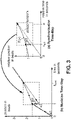
- Figure 3 shows the adaptive dynamic synchronization for updating accompaniment Time-Map, at time t, where an event is detected and the initial lag of the accompaniment is diff beats ahead ( figure 3a ).
- the accompaniment map from t is defined as a translated portion of function F.
- the synchronization Time-Map, constructed by F(x) is depicted in Figure 3(a) and its translation to the Musician Time-Map on Figure 3(b) . Position and tempo converge at time t sync assuming musician tempo remains constant in that interval.
- This Time-Map is constantly re-evaluated at each interaction of the system with a human musician. The continuity of tempo until time t sync can be noticed.
- step S1 starts with receiving the input signal related to the musician playing.
- step S2 acoustic features are extracted from the input signal so as to identify musical events in the musician playing which are related to events in the music score defined in the pre-recorded music accompaniment data.
- step S3 a timing of a latest detected event is compared to the timing of a corresponding one in the score and the time lag diff corresponding to the timing difference is determined.
- step S7 the tempo of the output signal which is played on the basis of the pre-recorded accompaniment data can be corrected (from slope e1 to slope e2 of figure 3b ) so as to adjust smoothly the position on the music score of the output signal to the position of the input signal at a future next synchronization time t sync as shown on figure 3b .
- step S8 the process can be implemented again by extracting new features from the input signal.
- high-level musical knowledge can be integrated into the synchronization mechanism in form of Time-Maps.
- predictions are extended to non-linear curves on Time-Maps.
- This extension allows formalisms for integrating musical expressivity such as accelerendi and fermata (i.e. with an adaptive tempo) and other common expressive musical specifications of performer's timing.
- This addition also enables the possibilities of automatic learning of such parameters from existing data.
- Additional latencies are usually imposed by hardware implementations and networks communications. Compensating this latency in an interactive setup can not be reduced to a simple translation of the reading head (as seen in over-the-air audio/video streaming synchronization).
- the value of such latency can vary from 100 milliseconds to 1 second, which is far beyond acceptable psychoacoustic limits of human ear.
- the synchronization strategy takes this value optionally as input, and anticipates all output predictions based on the interactive context.
- As a result and for relatively small values of latency in mid-range of 300ms corresponding to most Bluetooth and AirMedia streaming formats), it is not necessary for the user to adjust the lag prior to performance.
- the general approach expressed here in "musical time” as opposed to "physical time”, allows automatic adjustment of such parameter.
- the wordings related to "playing the accompaniment” on a “loudspeaker” and the notion of "pre-recorded music accompaniment” are to be interpreted broadly.
- the method applies to any “continuous” media, including for example audio and video.
- video+audio content can be synchronized as well using the same method as presented above.
- the aforesaid "loudspeakers” can be replaced by an Audio-Video projection and video frames can thus be interpolated as presented above simply based on the position output of prediction for synchronization.
Landscapes
- Physics & Mathematics (AREA)
- Engineering & Computer Science (AREA)
- Acoustics & Sound (AREA)
- Multimedia (AREA)
- Electrophonic Musical Instruments (AREA)
- Auxiliary Devices For Music (AREA)
Claims (12)
- Verfahren zum Synchronisieren einer vorab aufgezeichneten Musikbegleitung mit einem Musikspiel eines Benutzers, wobei das Musikspiel des Benutzers von mindestens einem Mikrofon erfasst wird, das ein akustisches Eingabesignal bereitstellt, das eine Verarbeitungseinheit speist,wobei die Verarbeitungseinheit einen Speicher zum Speichern von Daten der vorab aufgezeichneten Musikbegleitung aufweist und ein auf den vorab aufgezeichneten Musikbegleitungsdaten basierendes akustisches Ausgabesignal bereitstellt, um mindestens einen Lautsprecher zu speisen, der die Musikbegleitung für den Benutzer spielt,wobei die Verarbeitungseinheit:- das akustische Eingabesignal analysiert, um musikalische Ereignisse in dem akustischen Eingabesignal zu detektieren, um so ein Tempo des Musikspiels des Benutzers zu bestimmen,- die detektierten musikalischen Ereignisse mit den vorab aufgezeichneten Musikbegleitungsdaten vergleicht, um zumindest eine Zeitdifferenz diff zwischen einem Zeitpunkt der detektierten musikalischen Ereignisse und einem Zeitpunkt von musikalischen Ereignissen der gespielten Musikbegleitung zu bestimmen, wobei die Zeitdifferenz diff zu kompensieren ist, unddadurch gekennzeichnet, dass sie (die Verarbeitungseinheit)- einen Zeitpunkt des akustischen Ausgabesignals anpasst auf Basis:∗ der Zeitdifferenz diff und∗ einer Synchronisationsfunktion F, die gegeben ist durch:
 wobei x eine Zeitvariable ist, $tempo das bestimmte Tempo im Musikspiel des Benutzers ist und w eine Kompensationsdauer der Zeitdifferenz diff ist.
 - Verfahren nach Anspruch 1, wobei die Musikbegleitungsdaten eine Partitur definieren, und wobei die Variable x ein Zeitwert ist, der einer Dauer einer variablen Anzahl von Taktschlägen der Partitur entspricht.
- Verfahren nach einem der Ansprüche 1 und 2, wobei w eine Dauer von mindestens einem Taktschlag auf einer durch die Musikbegleitungsdaten definierten Partitur hat.
- Verfahren nach einem der Ansprüche 1, 2 und 3, wobei die Dauer w gewählt wird.
- Verfahren nach einem der vorstehenden Ansprüche, wobei, wenn die Begleitungsdaten eine Partitur definieren, eine Position pos des auf der Partitur spielenden Musikers durch eine lineare Beziehung, die als pos(x)=$tempo∗ x definiert ist, vorhergesagt wird, wobei x eine auf der Partitur gezählte Anzahl von Musiktaktschlägen ist, und falls eine Zeitdifferenz diff detektiert wird, die Synchronisationsfunktion F(x) verwendet wird, um so eine der Zeitdifferenzzeit diff entsprechende Anzahl von Taktschlägen xdiff zu definieren, so dass: F(xdiff)-pos(xdiff)=diff.
- Verfahren nach Anspruch 5, wobei eine Vorhersage bis zu einem nächsten Taktschlag xdiff +w auf Basis der Synchronisationsfunktion F(x) bestimmt wird durch Anwenden einer Transformationsfunktion A(t), die gegeben ist durch:

- Verfahren nach einem der vorstehenden Ansprüche, wobei, wenn die Begleitungsdaten eine Partitur definieren, die Verarbeitungseinheit desweiteren eine zukünftige Position, an welcher der auf der Partitur spielende Musiker an einem zukünftigen Synchronisationszeitpunkt tsync ist, schätzt und ein Tempo (e2) der Musikbegleitung bestimmt, um es bis zu dem zukünftigen Synchronisationszeitpunkt tsync auf das akustische Ausgabesignal anzuwenden.
- Verfahren nach Anspruch 7 in Kombination mit Anspruch 6, wobei das auf das akustische Ausgabesignal anzuwendende Tempo der Musikbegleitung, genannt ctempo, als die Ableitung von A(t) am aktuellen Zeitpunkt to bestimmt wird, so dass:

- Verfahren nach einem der vorstehenden Ansprüche, wobei die Bestimmung der musikalischen Ereignisse in dem akustischen Eingabesignal aufweist:- Extrahieren von akustischen Merkmalen aus dem akustischen Eingabesignal,- Verwenden der gespeicherten Daten der vorab aufgezeichneten Musikbegleitung, um musikalische Ereignisse zumindest in der Begleitung zu bestimmen, und- Zuordnen von musikalischen Ereignissen zu den akustischen Merkmalen des Eingabesignals auf Basis der aus den gespeicherten Daten bestimmten musikalischen Ereignisse.
- Vorrichtung zum Synchronisieren einer vorab aufgezeichneten Musikbegleitung mit einem Musikspiel eines Benutzers, aufweisend eine Verarbeitungseinheit, die angepasst ist, um das Verfahren nach einem der vorstehenden Ansprüche, durchzuführen.
- Computerprogrammprodukt aufweisend Befehle, die bei einer Ausführung des Programms durch eine Verarbeitungseinheit die Verarbeitungseinheit veranlassen, das Verfahren nach einem der Ansprüche 1 bis 9 durchzuführen.
- Computerlesbares Medium aufweisend Befehle, die, wenn sie von einer Verarbeitungseinheit ausgeführt werden, den Computer veranlassen, das Verfahren nach einem der Ansprüche 1 bis 9 durchzuführen.
Priority Applications (5)
| Application Number | Priority Date | Filing Date | Title |
|---|---|---|---|
| EP20305168.5A EP3869495B1 (de) | 2020-02-20 | 2020-02-20 | Verbesserte synchronisierung einer vorab aufgezeichneten musikbegleitung an die abspielende musik eines benutzers |
| US17/799,213 US20230082086A1 (en) | 2020-02-20 | 2021-02-01 | Improved synchronization of a pre-recorded music accompaniment on a user's music playing |
| CN202180014594.XA CN115335896B (zh) | 2020-02-20 | 2021-02-01 | 用户音乐演奏时预录制音乐伴奏的经改进同步 |
| JP2022550690A JP7366282B2 (ja) | 2020-02-20 | 2021-02-01 | ユーザの楽曲演奏時のあらかじめ記録された楽曲伴奏の改善された同期 |
| PCT/EP2021/052250 WO2021165023A1 (en) | 2020-02-20 | 2021-02-01 | Improved synchronization of a pre-recorded music accompaniment on a user's music playing |
Applications Claiming Priority (1)
| Application Number | Priority Date | Filing Date | Title |
|---|---|---|---|
| EP20305168.5A EP3869495B1 (de) | 2020-02-20 | 2020-02-20 | Verbesserte synchronisierung einer vorab aufgezeichneten musikbegleitung an die abspielende musik eines benutzers |
Publications (2)
| Publication Number | Publication Date |
|---|---|
| EP3869495A1 EP3869495A1 (de) | 2021-08-25 |
| EP3869495B1 true EP3869495B1 (de) | 2022-09-14 |
Family
ID=69770796
Family Applications (1)
| Application Number | Title | Priority Date | Filing Date |
|---|---|---|---|
| EP20305168.5A Active EP3869495B1 (de) | 2020-02-20 | 2020-02-20 | Verbesserte synchronisierung einer vorab aufgezeichneten musikbegleitung an die abspielende musik eines benutzers |
Country Status (5)
| Country | Link |
|---|---|
| US (1) | US20230082086A1 (de) |
| EP (1) | EP3869495B1 (de) |
| JP (1) | JP7366282B2 (de) |
| CN (1) | CN115335896B (de) |
| WO (1) | WO2021165023A1 (de) |
Families Citing this family (5)
| Publication number | Priority date | Publication date | Assignee | Title |
|---|---|---|---|---|
| CN116347152A (zh) * | 2021-12-24 | 2023-06-27 | 脸萌有限公司 | 基于音乐点的视频生成方法、装置、设备及存储介质 |
| JPWO2023170757A1 (de) * | 2022-03-07 | 2023-09-14 | ||
| EP4270374B1 (de) * | 2022-04-28 | 2026-01-21 | Yousician Oy | Verfahren für tempoadaptive begleitspur |
| IT202200010865A1 (it) * | 2022-05-25 | 2023-11-25 | Associazione Accademia Di Musica Onlus | Sistema di riproduzione adattativa di una base orchestrale. |
| US12444393B1 (en) | 2025-04-17 | 2025-10-14 | Eidol Corporation | Systems, devices, and methods for dynamic synchronization of a prerecorded vocal backing track to a live vocal performance |
Family Cites Families (19)
| Publication number | Priority date | Publication date | Assignee | Title |
|---|---|---|---|---|
| EP0477869B1 (de) * | 1990-09-25 | 1998-06-03 | Yamaha Corporation | Taktsteuerung zum automatischen Spielen von Musik |
| JP2653232B2 (ja) * | 1990-09-25 | 1997-09-17 | ヤマハ株式会社 | テンポコントローラ |
| US5521323A (en) * | 1993-05-21 | 1996-05-28 | Coda Music Technologies, Inc. | Real-time performance score matching |
| US5521324A (en) * | 1994-07-20 | 1996-05-28 | Carnegie Mellon University | Automated musical accompaniment with multiple input sensors |
| US6166314A (en) * | 1997-06-19 | 2000-12-26 | Time Warp Technologies, Ltd. | Method and apparatus for real-time correlation of a performance to a musical score |
| US5913259A (en) * | 1997-09-23 | 1999-06-15 | Carnegie Mellon University | System and method for stochastic score following |
| US6975995B2 (en) * | 1999-12-20 | 2005-12-13 | Hanseulsoft Co., Ltd. | Network based music playing/song accompanying service system and method |
| JP2001312276A (ja) * | 2000-05-02 | 2001-11-09 | Roland Corp | オーディオ波形データの時間軸圧縮伸長再生装置 |
| WO2004027577A2 (en) * | 2002-09-19 | 2004-04-01 | Brian Reynolds | Systems and methods for creation and playback performance |
| JP2007241181A (ja) * | 2006-03-13 | 2007-09-20 | Univ Of Tokyo | 自動伴奏システム及び楽譜追跡システム |
| JP4458096B2 (ja) * | 2007-02-09 | 2010-04-28 | ヤマハ株式会社 | データ再生装置、データ再生方法およびプログラム |
| EP2043088A1 (de) * | 2007-09-28 | 2009-04-01 | Yamaha Corporation | Musikaufführungsystem für Musiksitzung und einzelne Musikinstrumente |
| US8847056B2 (en) * | 2012-10-19 | 2014-09-30 | Sing Trix Llc | Vocal processing with accompaniment music input |
| JP6467887B2 (ja) * | 2014-11-21 | 2019-02-13 | ヤマハ株式会社 | 情報提供装置および情報提供方法 |
| US20170124898A1 (en) * | 2015-11-04 | 2017-05-04 | Optek Music Systems, Inc. | Music Synchronization System And Associated Methods |
| WO2018016581A1 (ja) * | 2016-07-22 | 2018-01-25 | ヤマハ株式会社 | 楽曲データ処理方法およびプログラム |
| GB2557970B (en) * | 2016-12-20 | 2020-12-09 | Mashtraxx Ltd | Content tracking system and method |
| JP7106091B2 (ja) * | 2018-02-19 | 2022-07-26 | 国立大学法人福井大学 | 演奏支援システムおよび制御方法 |
| US11017751B2 (en) * | 2019-10-15 | 2021-05-25 | Avid Technology, Inc. | Synchronizing playback of a digital musical score with an audio recording |
-
2020
- 2020-02-20 EP EP20305168.5A patent/EP3869495B1/de active Active
-
2021
- 2021-02-01 US US17/799,213 patent/US20230082086A1/en active Pending
- 2021-02-01 JP JP2022550690A patent/JP7366282B2/ja active Active
- 2021-02-01 CN CN202180014594.XA patent/CN115335896B/zh active Active
- 2021-02-01 WO PCT/EP2021/052250 patent/WO2021165023A1/en not_active Ceased
Also Published As
| Publication number | Publication date |
|---|---|
| WO2021165023A1 (en) | 2021-08-26 |
| JP7366282B2 (ja) | 2023-10-20 |
| CN115335896A (zh) | 2022-11-11 |
| CN115335896B (zh) | 2024-12-06 |
| US20230082086A1 (en) | 2023-03-16 |
| EP3869495A1 (de) | 2021-08-25 |
| JP2023515122A (ja) | 2023-04-12 |
Similar Documents
| Publication | Publication Date | Title |
|---|---|---|
| EP3869495B1 (de) | Verbesserte synchronisierung einer vorab aufgezeichneten musikbegleitung an die abspielende musik eines benutzers | |
| US7825321B2 (en) | Methods and apparatus for use in sound modification comparing time alignment data from sampled audio signals | |
| US9626946B2 (en) | Vocal processing with accompaniment music input | |
| US9847078B2 (en) | Music performance system and method thereof | |
| Rottondi et al. | An overview on networked music performance technologies | |
| AU2020433340B2 (en) | Method, device and software for applying an audio effect to an audio signal separated from a mixed audio signal | |
| US8723011B2 (en) | Musical sound generation instrument and computer readable medium | |
| US20170337913A1 (en) | Apparatus and method for generating visual content from an audio signal | |
| EP1849154B1 (de) | Verfahren und vorrichtungen zur verwendung bei der tonmodifikation | |
| JPH1185154A (ja) | インタラクティブ音楽伴奏用の方法及び装置 | |
| KR101944365B1 (ko) | 콘텐츠 싱크 생성 방법, 그 장치 및 이를 위한 인터페이스 모듈 | |
| Sako et al. | Ryry: A real-time score-following automatic accompaniment playback system capable of real performances with errors, repeats and jumps | |
| CN101111884B (zh) | 用于声学特征的同步修改的方法和装置 | |
| Lee et al. | Toward a framework for interactive systems to conduct digital audio and video streams | |
| Alexandraki et al. | Anticipatory networked communications for live musical interactions of acoustic instruments | |
| Alexandrak et al. | Using computer accompaniment to assist networked music performance | |
| JP2011035584A (ja) | 音響装置、位相補正方法、位相補正プログラム及び記録媒体 | |
| JP2004205624A (ja) | 音声処理システム | |
| JP2008244888A (ja) | 通信装置、通信方法およびプログラム | |
| JP5262908B2 (ja) | 歌詞表示装置,プログラム | |
| JP3867579B2 (ja) | マルチメディアシステム及び再生装置 | |
| JP6464853B2 (ja) | オーディオ再生装置及びオーディオ再生プログラム | |
| JP2005025234A (ja) | 音声変換装置 |
Legal Events
| Date | Code | Title | Description |
|---|---|---|---|
| PUAI | Public reference made under article 153(3) epc to a published international application that has entered the european phase |
Free format text: ORIGINAL CODE: 0009012 |
|
| STAA | Information on the status of an ep patent application or granted ep patent |
Free format text: STATUS: THE APPLICATION HAS BEEN PUBLISHED |
|
| AK | Designated contracting states |
Kind code of ref document: A1 Designated state(s): AL AT BE BG CH CY CZ DE DK EE ES FI FR GB GR HR HU IE IS IT LI LT LU LV MC MK MT NL NO PL PT RO RS SE SI SK SM TR |
|
| STAA | Information on the status of an ep patent application or granted ep patent |
Free format text: STATUS: REQUEST FOR EXAMINATION WAS MADE |
|
| 17P | Request for examination filed |
Effective date: 20220222 |
|
| RBV | Designated contracting states (corrected) |
Designated state(s): AL AT BE BG CH CY CZ DE DK EE ES FI FR GB GR HR HU IE IS IT LI LT LU LV MC MK MT NL NO PL PT RO RS SE SI SK SM TR |
|
| GRAP | Despatch of communication of intention to grant a patent |
Free format text: ORIGINAL CODE: EPIDOSNIGR1 |
|
| STAA | Information on the status of an ep patent application or granted ep patent |
Free format text: STATUS: GRANT OF PATENT IS INTENDED |
|
| INTG | Intention to grant announced |
Effective date: 20220414 |
|
| GRAS | Grant fee paid |
Free format text: ORIGINAL CODE: EPIDOSNIGR3 |
|
| GRAA | (expected) grant |
Free format text: ORIGINAL CODE: 0009210 |
|
| STAA | Information on the status of an ep patent application or granted ep patent |
Free format text: STATUS: THE PATENT HAS BEEN GRANTED |
|
| AK | Designated contracting states |
Kind code of ref document: B1 Designated state(s): AL AT BE BG CH CY CZ DE DK EE ES FI FR GB GR HR HU IE IS IT LI LT LU LV MC MK MT NL NO PL PT RO RS SE SI SK SM TR |
|
| REG | Reference to a national code |
Ref country code: GB Ref legal event code: FG4D |
|
| REG | Reference to a national code |
Ref country code: CH Ref legal event code: EP |
|
| REG | Reference to a national code |
Ref country code: DE Ref legal event code: R096 Ref document number: 602020005136 Country of ref document: DE |
|
| REG | Reference to a national code |
Ref country code: IE Ref legal event code: FG4D |
|
| REG | Reference to a national code |
Ref country code: AT Ref legal event code: REF Ref document number: 1519209 Country of ref document: AT Kind code of ref document: T Effective date: 20221015 |
|
| REG | Reference to a national code |
Ref country code: LT Ref legal event code: MG9D |
|
| REG | Reference to a national code |
Ref country code: NL Ref legal event code: MP Effective date: 20220914 |
|
| PG25 | Lapsed in a contracting state [announced via postgrant information from national office to epo] |
Ref country code: SE Free format text: LAPSE BECAUSE OF FAILURE TO SUBMIT A TRANSLATION OF THE DESCRIPTION OR TO PAY THE FEE WITHIN THE PRESCRIBED TIME-LIMIT Effective date: 20220914 Ref country code: RS Free format text: LAPSE BECAUSE OF FAILURE TO SUBMIT A TRANSLATION OF THE DESCRIPTION OR TO PAY THE FEE WITHIN THE PRESCRIBED TIME-LIMIT Effective date: 20220914 Ref country code: NO Free format text: LAPSE BECAUSE OF FAILURE TO SUBMIT A TRANSLATION OF THE DESCRIPTION OR TO PAY THE FEE WITHIN THE PRESCRIBED TIME-LIMIT Effective date: 20221214 Ref country code: LV Free format text: LAPSE BECAUSE OF FAILURE TO SUBMIT A TRANSLATION OF THE DESCRIPTION OR TO PAY THE FEE WITHIN THE PRESCRIBED TIME-LIMIT Effective date: 20220914 Ref country code: LT Free format text: LAPSE BECAUSE OF FAILURE TO SUBMIT A TRANSLATION OF THE DESCRIPTION OR TO PAY THE FEE WITHIN THE PRESCRIBED TIME-LIMIT Effective date: 20220914 Ref country code: FI Free format text: LAPSE BECAUSE OF FAILURE TO SUBMIT A TRANSLATION OF THE DESCRIPTION OR TO PAY THE FEE WITHIN THE PRESCRIBED TIME-LIMIT Effective date: 20220914 |
|
| REG | Reference to a national code |
Ref country code: AT Ref legal event code: MK05 Ref document number: 1519209 Country of ref document: AT Kind code of ref document: T Effective date: 20220914 |
|
| PG25 | Lapsed in a contracting state [announced via postgrant information from national office to epo] |
Ref country code: HR Free format text: LAPSE BECAUSE OF FAILURE TO SUBMIT A TRANSLATION OF THE DESCRIPTION OR TO PAY THE FEE WITHIN THE PRESCRIBED TIME-LIMIT Effective date: 20220914 Ref country code: GR Free format text: LAPSE BECAUSE OF FAILURE TO SUBMIT A TRANSLATION OF THE DESCRIPTION OR TO PAY THE FEE WITHIN THE PRESCRIBED TIME-LIMIT Effective date: 20221215 |
|
| PG25 | Lapsed in a contracting state [announced via postgrant information from national office to epo] |
Ref country code: SM Free format text: LAPSE BECAUSE OF FAILURE TO SUBMIT A TRANSLATION OF THE DESCRIPTION OR TO PAY THE FEE WITHIN THE PRESCRIBED TIME-LIMIT Effective date: 20220914 Ref country code: RO Free format text: LAPSE BECAUSE OF FAILURE TO SUBMIT A TRANSLATION OF THE DESCRIPTION OR TO PAY THE FEE WITHIN THE PRESCRIBED TIME-LIMIT Effective date: 20220914 Ref country code: PT Free format text: LAPSE BECAUSE OF FAILURE TO SUBMIT A TRANSLATION OF THE DESCRIPTION OR TO PAY THE FEE WITHIN THE PRESCRIBED TIME-LIMIT Effective date: 20230116 Ref country code: ES Free format text: LAPSE BECAUSE OF FAILURE TO SUBMIT A TRANSLATION OF THE DESCRIPTION OR TO PAY THE FEE WITHIN THE PRESCRIBED TIME-LIMIT Effective date: 20220914 Ref country code: CZ Free format text: LAPSE BECAUSE OF FAILURE TO SUBMIT A TRANSLATION OF THE DESCRIPTION OR TO PAY THE FEE WITHIN THE PRESCRIBED TIME-LIMIT Effective date: 20220914 Ref country code: AT Free format text: LAPSE BECAUSE OF FAILURE TO SUBMIT A TRANSLATION OF THE DESCRIPTION OR TO PAY THE FEE WITHIN THE PRESCRIBED TIME-LIMIT Effective date: 20220914 |
|
| PG25 | Lapsed in a contracting state [announced via postgrant information from national office to epo] |
Ref country code: SK Free format text: LAPSE BECAUSE OF FAILURE TO SUBMIT A TRANSLATION OF THE DESCRIPTION OR TO PAY THE FEE WITHIN THE PRESCRIBED TIME-LIMIT Effective date: 20220914 Ref country code: PL Free format text: LAPSE BECAUSE OF FAILURE TO SUBMIT A TRANSLATION OF THE DESCRIPTION OR TO PAY THE FEE WITHIN THE PRESCRIBED TIME-LIMIT Effective date: 20220914 Ref country code: IS Free format text: LAPSE BECAUSE OF FAILURE TO SUBMIT A TRANSLATION OF THE DESCRIPTION OR TO PAY THE FEE WITHIN THE PRESCRIBED TIME-LIMIT Effective date: 20230114 Ref country code: EE Free format text: LAPSE BECAUSE OF FAILURE TO SUBMIT A TRANSLATION OF THE DESCRIPTION OR TO PAY THE FEE WITHIN THE PRESCRIBED TIME-LIMIT Effective date: 20220914 |
|
| REG | Reference to a national code |
Ref country code: DE Ref legal event code: R097 Ref document number: 602020005136 Country of ref document: DE |
|
| PG25 | Lapsed in a contracting state [announced via postgrant information from national office to epo] |
Ref country code: NL Free format text: LAPSE BECAUSE OF FAILURE TO SUBMIT A TRANSLATION OF THE DESCRIPTION OR TO PAY THE FEE WITHIN THE PRESCRIBED TIME-LIMIT Effective date: 20220914 Ref country code: AL Free format text: LAPSE BECAUSE OF FAILURE TO SUBMIT A TRANSLATION OF THE DESCRIPTION OR TO PAY THE FEE WITHIN THE PRESCRIBED TIME-LIMIT Effective date: 20220914 |
|
| PLBE | No opposition filed within time limit |
Free format text: ORIGINAL CODE: 0009261 |
|
| STAA | Information on the status of an ep patent application or granted ep patent |
Free format text: STATUS: NO OPPOSITION FILED WITHIN TIME LIMIT |
|
| PG25 | Lapsed in a contracting state [announced via postgrant information from national office to epo] |
Ref country code: DK Free format text: LAPSE BECAUSE OF FAILURE TO SUBMIT A TRANSLATION OF THE DESCRIPTION OR TO PAY THE FEE WITHIN THE PRESCRIBED TIME-LIMIT Effective date: 20220914 |
|
| 26N | No opposition filed |
Effective date: 20230615 |
|
| PG25 | Lapsed in a contracting state [announced via postgrant information from national office to epo] |
Ref country code: SI Free format text: LAPSE BECAUSE OF FAILURE TO SUBMIT A TRANSLATION OF THE DESCRIPTION OR TO PAY THE FEE WITHIN THE PRESCRIBED TIME-LIMIT Effective date: 20220914 |
|
| PG25 | Lapsed in a contracting state [announced via postgrant information from national office to epo] |
Ref country code: MC Free format text: LAPSE BECAUSE OF FAILURE TO SUBMIT A TRANSLATION OF THE DESCRIPTION OR TO PAY THE FEE WITHIN THE PRESCRIBED TIME-LIMIT Effective date: 20220914 |
|
| REG | Reference to a national code |
Ref country code: CH Ref legal event code: PL |
|
| REG | Reference to a national code |
Ref country code: BE Ref legal event code: MM Effective date: 20230228 |
|
| PG25 | Lapsed in a contracting state [announced via postgrant information from national office to epo] |
Ref country code: LU Free format text: LAPSE BECAUSE OF NON-PAYMENT OF DUE FEES Effective date: 20230220 Ref country code: LI Free format text: LAPSE BECAUSE OF NON-PAYMENT OF DUE FEES Effective date: 20230228 Ref country code: CH Free format text: LAPSE BECAUSE OF NON-PAYMENT OF DUE FEES Effective date: 20230228 |
|
| REG | Reference to a national code |
Ref country code: IE Ref legal event code: MM4A |
|
| PG25 | Lapsed in a contracting state [announced via postgrant information from national office to epo] |
Ref country code: IE Free format text: LAPSE BECAUSE OF NON-PAYMENT OF DUE FEES Effective date: 20230220 |
|
| PG25 | Lapsed in a contracting state [announced via postgrant information from national office to epo] |
Ref country code: BE Free format text: LAPSE BECAUSE OF NON-PAYMENT OF DUE FEES Effective date: 20230228 |
|
| PG25 | Lapsed in a contracting state [announced via postgrant information from national office to epo] |
Ref country code: BG Free format text: LAPSE BECAUSE OF FAILURE TO SUBMIT A TRANSLATION OF THE DESCRIPTION OR TO PAY THE FEE WITHIN THE PRESCRIBED TIME-LIMIT Effective date: 20220914 |
|
| PG25 | Lapsed in a contracting state [announced via postgrant information from national office to epo] |
Ref country code: BG Free format text: LAPSE BECAUSE OF FAILURE TO SUBMIT A TRANSLATION OF THE DESCRIPTION OR TO PAY THE FEE WITHIN THE PRESCRIBED TIME-LIMIT Effective date: 20220914 |
|
| REG | Reference to a national code |
Ref country code: DE Ref legal event code: R082 Ref document number: 602020005136 Country of ref document: DE Representative=s name: PLASSERAUD IP GMBH, DE |
|
| PG25 | Lapsed in a contracting state [announced via postgrant information from national office to epo] |
Ref country code: CY Free format text: LAPSE BECAUSE OF FAILURE TO SUBMIT A TRANSLATION OF THE DESCRIPTION OR TO PAY THE FEE WITHIN THE PRESCRIBED TIME-LIMIT; INVALID AB INITIO Effective date: 20200220 |
|
| PG25 | Lapsed in a contracting state [announced via postgrant information from national office to epo] |
Ref country code: HU Free format text: LAPSE BECAUSE OF FAILURE TO SUBMIT A TRANSLATION OF THE DESCRIPTION OR TO PAY THE FEE WITHIN THE PRESCRIBED TIME-LIMIT; INVALID AB INITIO Effective date: 20200220 |
|
| PG25 | Lapsed in a contracting state [announced via postgrant information from national office to epo] |
Ref country code: TR Free format text: LAPSE BECAUSE OF FAILURE TO SUBMIT A TRANSLATION OF THE DESCRIPTION OR TO PAY THE FEE WITHIN THE PRESCRIBED TIME-LIMIT Effective date: 20220914 |
|
| PGFP | Annual fee paid to national office [announced via postgrant information from national office to epo] |
Ref country code: FR Payment date: 20251216 Year of fee payment: 7 |
|
| PGFP | Annual fee paid to national office [announced via postgrant information from national office to epo] |
Ref country code: GB Payment date: 20260219 Year of fee payment: 7 |
|
| PGFP | Annual fee paid to national office [announced via postgrant information from national office to epo] |
Ref country code: DE Payment date: 20260206 Year of fee payment: 7 |
|
| PGFP | Annual fee paid to national office [announced via postgrant information from national office to epo] |
Ref country code: IT Payment date: 20260209 Year of fee payment: 7 |