EP3869366A1 - Verfahren und vorrichtung zur passwortaktualisierung eines elektronischen geräts, gerät und speichermedium - Google Patents
Verfahren und vorrichtung zur passwortaktualisierung eines elektronischen geräts, gerät und speichermedium Download PDFInfo
- Publication number
- EP3869366A1 EP3869366A1 EP21181679.8A EP21181679A EP3869366A1 EP 3869366 A1 EP3869366 A1 EP 3869366A1 EP 21181679 A EP21181679 A EP 21181679A EP 3869366 A1 EP3869366 A1 EP 3869366A1
- Authority
- EP
- European Patent Office
- Prior art keywords
- password
- electronic device
- identification
- login
- updating
- Prior art date
- Legal status (The legal status is an assumption and is not a legal conclusion. Google has not performed a legal analysis and makes no representation as to the accuracy of the status listed.)
- Granted
Links
Images





Classifications
-
- G—PHYSICS
- G06—COMPUTING OR CALCULATING; COUNTING
- G06F—ELECTRIC DIGITAL DATA PROCESSING
- G06F21/00—Security arrangements for protecting computers, components thereof, programs or data against unauthorised activity
- G06F21/30—Authentication, i.e. establishing the identity or authorisation of security principals
- G06F21/45—Structures or tools for the administration of authentication
- G06F21/46—Structures or tools for the administration of authentication by designing passwords or checking the strength of passwords
-
- G—PHYSICS
- G06—COMPUTING OR CALCULATING; COUNTING
- G06F—ELECTRIC DIGITAL DATA PROCESSING
- G06F16/00—Information retrieval; Database structures therefor; File system structures therefor
- G06F16/20—Information retrieval; Database structures therefor; File system structures therefor of structured data, e.g. relational data
- G06F16/23—Updating
- G06F16/2379—Updates performed during online database operations; commit processing
-
- G—PHYSICS
- G06—COMPUTING OR CALCULATING; COUNTING
- G06F—ELECTRIC DIGITAL DATA PROCESSING
- G06F21/00—Security arrangements for protecting computers, components thereof, programs or data against unauthorised activity
- G06F21/30—Authentication, i.e. establishing the identity or authorisation of security principals
- G06F21/31—User authentication
-
- G—PHYSICS
- G06—COMPUTING OR CALCULATING; COUNTING
- G06F—ELECTRIC DIGITAL DATA PROCESSING
- G06F21/00—Security arrangements for protecting computers, components thereof, programs or data against unauthorised activity
- G06F21/30—Authentication, i.e. establishing the identity or authorisation of security principals
- G06F21/31—User authentication
- G06F21/41—User authentication where a single sign-on provides access to a plurality of computers
-
- G—PHYSICS
- G06—COMPUTING OR CALCULATING; COUNTING
- G06F—ELECTRIC DIGITAL DATA PROCESSING
- G06F21/00—Security arrangements for protecting computers, components thereof, programs or data against unauthorised activity
- G06F21/30—Authentication, i.e. establishing the identity or authorisation of security principals
- G06F21/44—Program or device authentication
-
- G—PHYSICS
- G06—COMPUTING OR CALCULATING; COUNTING
- G06F—ELECTRIC DIGITAL DATA PROCESSING
- G06F21/00—Security arrangements for protecting computers, components thereof, programs or data against unauthorised activity
- G06F21/60—Protecting data
- G06F21/602—Providing cryptographic facilities or services
-
- H—ELECTRICITY
- H04—ELECTRIC COMMUNICATION TECHNIQUE
- H04L—TRANSMISSION OF DIGITAL INFORMATION, e.g. TELEGRAPHIC COMMUNICATION
- H04L63/00—Network architectures or network communication protocols for network security
- H04L63/08—Network architectures or network communication protocols for network security for authentication of entities
- H04L63/083—Network architectures or network communication protocols for network security for authentication of entities using passwords
- H04L63/0846—Network architectures or network communication protocols for network security for authentication of entities using passwords using time-dependent-passwords, e.g. periodically changing passwords
-
- H—ELECTRICITY
- H04—ELECTRIC COMMUNICATION TECHNIQUE
- H04L—TRANSMISSION OF DIGITAL INFORMATION, e.g. TELEGRAPHIC COMMUNICATION
- H04L9/00—Cryptographic mechanisms or cryptographic arrangements for secret or secure communications; Network security protocols
- H04L9/08—Key distribution or management, e.g. generation, sharing or updating, of cryptographic keys or passwords
- H04L9/0816—Key establishment, i.e. cryptographic processes or cryptographic protocols whereby a shared secret becomes available to two or more parties, for subsequent use
- H04L9/0819—Key transport or distribution, i.e. key establishment techniques where one party creates or otherwise obtains a secret value, and securely transfers it to the other(s)
- H04L9/0825—Key transport or distribution, i.e. key establishment techniques where one party creates or otherwise obtains a secret value, and securely transfers it to the other(s) using asymmetric-key encryption or public key infrastructure [PKI], e.g. key signature or public key certificates
-
- H—ELECTRICITY
- H04—ELECTRIC COMMUNICATION TECHNIQUE
- H04L—TRANSMISSION OF DIGITAL INFORMATION, e.g. TELEGRAPHIC COMMUNICATION
- H04L9/00—Cryptographic mechanisms or cryptographic arrangements for secret or secure communications; Network security protocols
- H04L9/08—Key distribution or management, e.g. generation, sharing or updating, of cryptographic keys or passwords
- H04L9/0861—Generation of secret information including derivation or calculation of cryptographic keys or passwords
- H04L9/0863—Generation of secret information including derivation or calculation of cryptographic keys or passwords involving passwords or one-time passwords
-
- H—ELECTRICITY
- H04—ELECTRIC COMMUNICATION TECHNIQUE
- H04L—TRANSMISSION OF DIGITAL INFORMATION, e.g. TELEGRAPHIC COMMUNICATION
- H04L9/00—Cryptographic mechanisms or cryptographic arrangements for secret or secure communications; Network security protocols
- H04L9/08—Key distribution or management, e.g. generation, sharing or updating, of cryptographic keys or passwords
- H04L9/0891—Revocation or update of secret information, e.g. encryption key update or rekeying
-
- H—ELECTRICITY
- H04—ELECTRIC COMMUNICATION TECHNIQUE
- H04L—TRANSMISSION OF DIGITAL INFORMATION, e.g. TELEGRAPHIC COMMUNICATION
- H04L9/00—Cryptographic mechanisms or cryptographic arrangements for secret or secure communications; Network security protocols
- H04L9/32—Cryptographic mechanisms or cryptographic arrangements for secret or secure communications; Network security protocols including means for verifying the identity or authority of a user of the system or for message authentication, e.g. authorization, entity authentication, data integrity or data verification, non-repudiation, key authentication or verification of credentials
- H04L9/3226—Cryptographic mechanisms or cryptographic arrangements for secret or secure communications; Network security protocols including means for verifying the identity or authority of a user of the system or for message authentication, e.g. authorization, entity authentication, data integrity or data verification, non-repudiation, key authentication or verification of credentials using a predetermined code, e.g. password, passphrase or PIN
-
- G—PHYSICS
- G06—COMPUTING OR CALCULATING; COUNTING
- G06F—ELECTRIC DIGITAL DATA PROCESSING
- G06F2221/00—Indexing scheme relating to security arrangements for protecting computers, components thereof, programs or data against unauthorised activity
- G06F2221/21—Indexing scheme relating to G06F21/00 and subgroups addressing additional information or applications relating to security arrangements for protecting computers, components thereof, programs or data against unauthorised activity
- G06F2221/2131—Lost password, e.g. recovery of lost or forgotten passwords
-
- H—ELECTRICITY
- H04—ELECTRIC COMMUNICATION TECHNIQUE
- H04L—TRANSMISSION OF DIGITAL INFORMATION, e.g. TELEGRAPHIC COMMUNICATION
- H04L2209/00—Additional information or applications relating to cryptographic mechanisms or cryptographic arrangements for secret or secure communication H04L9/00
- H04L2209/84—Vehicles
Definitions
- the present application relates to intelligent transportation, vehicle-road collaboration, and device security technologies in the field of data processing, in particular to a method and apparatus for updating a password of an electronic device, a device, and a storage medium.
- OBU on board unit
- RSU road side unit
- AI artificial intelligence
- electronic devices provide login services so that maintenance personnel can log on to the electronic devices to set up and maintain the electronic devices.
- the login service corresponds to a password, which is used to authenticate the user's access authority to the electronic device.
- the electronic device is configured with an initial password when leaving factory, and the initial password is usually a well-known password or a password that can be deduced and guessed.
- the present application provides a method and apparatus for updating a password of an electronic device, a device, and a storage medium.
- a method for updating a password of an electronic device including:
- a method for updating a password of an electronic device including:
- an apparatus for updating a password of an electronic device including:
- an apparatus for updating a password of an electronic device including:
- an electronic device including:
- a non-transitory computer-readable storage medium that stores computer instructions is provided, where the computer instructions are configured to enable the computer to perform any one of method described in the first aspect, or perform any one of the method described in the second aspect.
- the on board device includes an on board unit (OBU).
- OBU is used to realize vehicle to X (V2X) communication.
- the roadside device includes a roadside sensing device and a roadside computing device.
- the roadside sensing device (such as a roadside camera) is connected to the roadside computing device (such as a roadside computing unit (RSCU)), and the roadside computing device is connected to a server device, the server device can communicate with an autonomous driving vehicle or an assisted driving vehicle in various ways.
- the roadside sensing device itself includes a computing function, and the roadside sensing device is directly connected to the server device.
- the above connection can be wired or wireless;
- the server device in the present application is, for example, a cloud control platform, a vehicle-road collaborative management platform, a central subsystem, an edge computing platform, a cloud computing platform, etc.
- the on vehicle devices and roadside devices deployed in the intelligent transportation scenarios are collectively referred to as electronic devices.
- the electronic devices include but are not limited to OBU, RSU, Mobile Edge Computing (MEC) device, network cameras, AI cameras, etc.
- the above-mentioned electronic devices usually provide a login service, so that the maintenance personnel can log on to the electronic devices to set up and maintain the electronic devices.
- the login service corresponds to a password, when a user logs in to an electronic device, the password needs to be entered to authenticate the user's access authority to the electronic device.
- the electronic device is configured with an initial password when it leaves the factory, and the initial password is usually a well-known password or a password that can be deduced and guessed. For example, the initial password of some devices is "admin", the initial password of some devices is the last 6 digits of the serial number of the device, etc.
- the present application provides a method for updating a password of an electronic device to improve the security of the electronic device.
- the system architecture of the present application will be described below with reference to FIG. 1 .
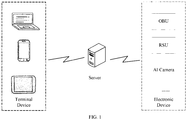
- FIG. 1 is a system architecture schematic diagram applicable to an embodiment of the present application.
- the system architecture includes a server, electronic devices, and terminal devices.
- the electronic device and the server are communicatively connected.
- the terminal device and the server are communicatively connected.
- the electronic device can be an on board device or a roadside device.
- the electronic device includes but is not limited to OBU, RSU, MEC, network camera, AI camera, etc.
- the server can be a cloud control platform, a vehicle-road collaborative management platform, a central subsystem, an edge computing platform, a cloud computing platform, etc.
- the server can provide password storage services, so the server can be called a password management platform.
- the server may use distributed storage technology, or technology combined with blockchain. Hence, the server can also use other storage technologies.
- the terminal device can be an electronic device with information processing capabilities such as a smart phone, a tablet computer or a desktop computer.
- the terminal device can access the server through a web page or a client, and obtain information from the server.
- the electronic device randomly generates the first password in response to detecting the trigger condition of the password update, and updates the login password of the electronic device to the first password. Then, the electronic device sends a password updating message to the server, so that the server can store the updated login password of the electronic device.
- the maintenance personnel need to log in to the electronic device, they can access the server through the terminal device and obtain the current login password of the electronic device from the server. Furthermore, the maintenance personnel can use the obtained current login password to log in to the electronic device, and perform operations such as setting or maintenance of the electronic device.
- the login password of the electronic device is no longer a static password, but will be dynamically updated with the trigger condition of the password update, so that the login password of the electronic device is only valid in a short time. Even if the maintenance personnel accidentally disclose the login password, it will only cause the electronic device to have a security risk in a short time. When the electronic device updates the login password next time, there is no security risk, which effectively reduces the hidden dangers of electronic device.
- the login passwords updated by the electronic devices are randomly generated each time, the login passwords of different electronic devices are different, and there is no regularity among the login passwords of different electronic devices. In this way, even if the maintenance personnel know the login password of one of the electronic devices, they cannot use the login password for other electronic devices, and cannot deduct the login passwords of other electronic devices based on the login password, which effectively controls the maintenance personnel's access to other electronic devices.
- the maintenance personnel must query the current login password of the electronic device through the server before accessing the electronic device each time. Therefore, the server can determine which electronic devices the maintenance personnel have accessed during what time duration according to the query behavior of the maintenance personnel, so as to monitor the access behavior of the maintenance personnel.
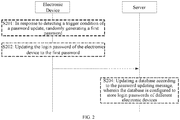
- FIG. 2 is a schematic diagram of a method for updating a password of an electronic device provided by the present application. As shown in FIG. 2 , the method of the embodiment includes:
- the randomly generated first password satisfies a preset condition.
- the preset condition may include one or more of the following: (1) including a preset number of characters; (2) including uppercase and lowercase letters, numbers, and special characters.
- the trigger condition of the password update is used to indicate the circumstances under which the login password of the electronic device needs to be updated.
- the trigger condition for the password update may be the default configuration of the electronic device, or it may be specified by the server and sent to the electronic device, or it may be specified by the user and written into the electronic device.
- the login passwords of the electronic devices updated every time are generated randomly, which ensures that the login passwords of different electronic devices are different, and there are no rules among the login passwords of different electronic devices. In this way, even if the maintenance personnel know the login password of one of the electronic devices, they cannot use the login password for other electronic devices, and cannot deduct the login passwords of other electronic devices based on the login password, which effectively controls the maintenance personnel's access to other electronic devices.
- some electronic devices may provide multiple login services, and each login service has a corresponding login password.
- the multiple login services include but are not limited to: login services based on Secure Shell (SSH), login services based on Telnet, and login services based on File Transfer Protocol (FTP), login service based on Secret File Transfer Protocol (SFTP), login service based on World Wide Web (WWW), etc.
- the first password corresponding to each login service can be randomly generated.
- the login password of the first login service of the electronic device is changed to the first password corresponding to the first login service.
- the login password corresponding to each login service is dynamically updated randomly. In this way, the login passwords corresponding to multiple login services of the electronic device are different, and the security of the electronic device is further ensured.
- updating the login password of the electronic device to the first password may include: updating the current login password to the first password by invoking a password updating interface or command provided by the electronic device.
- the passwd command can be invoked to update the login password.
- the interface or command provided by the WEB service can be invoked to update the login password.
- the password update of the electronic device is realized by invoking the password updating interface or command provided by the electronic device, which is flexible and convenient, and can be applied to various types of electronic devices without deep customization of the electronic device system, suitable for all kinds of login services with good universality.
- S203 The electronic device sends a password updating message to the server.
- the server receives a password updating message from the electronic device.
- the password updating message is used to indicate the identification of the electronic device and the first password.
- the identification of the electronic device can be the name of the electronic device, or can be the address location description information of the electronic device, of course, it can also be other information of the electronic device, as long as the electronic device can be uniquely identified.
- the embodiment does not limit the content and form of the password updating message, as long as the password updating message can indicate the identification of the electronic device and the first password.
- the password updating message is used to indicate the identification of the electronic device and the first password corresponding to each login service.
- an example is provided for a login service provided by the electronic device.
- the password updating message may include the identification of the electronic device and the first password.
- the server can directly obtain the identification of the electronic device and the first password from the password updating message.
- S204 The server updates the database according to the password updating message, where the database is configured to store login passwords of different electronic devices.
- the server after obtaining the identification and the first password of the electronic device according to the password updating message, stores the identification and the first password of the electronic device in the database. Alternatively, updating the password corresponding to the identification stored in the database to the first password.
- the maintenance personnel when the maintenance personnel need to log in to the electronic device, they can access the server through the terminal device and obtain the current login password of the electronic device from the server. Furthermore, the maintenance personnel can use the obtained current login password to log in to the electronic device, and perform setting or maintenance operations on the electronic device.
- the method for updating a password of an electronic device includes: the electronic device randomly generates a first password in response to detecting a trigger condition of a password update, and updates the login password of the electronic device to the first password; and the electronic device sends a password updating message to a server, where the password updating message is used to indicate an identification of the electronic device and the first password.
- the server updates the database used to store the login passwords of different electronic devices according to the password updating message.
- the current login password of the electronic device is only valid for a short time, which reduces the security risks caused by the leakage of the login password; in addition, because the login password of the electronic device updated every time are generated randomly, which ensures that the login passwords of different electronic devices are different and irregular, so that the login password of one electronic device cannot be applied to other electronic devices, and cannot be used to deduct and guess the login passwords of the other electronic devices.
- the safety of electronic device is further improved, thereby improving traffic safety.
- FIG. 3 is a schematic diagram of another method for updating a password of an electronic device provided by the present application.
- the embodiment performs encrypted transmission and storage of the first password to further improve the security of the electronic device.
- the method of the embodiment includes:
- S303 The electronic device encrypts the first password by using a public key to obtain a ciphertext corresponding to the first password.
- the electronic device sends a password updating message to the server, where the password updating message includes the identification of the electronic device and the ciphertext corresponding to the first password.
- a public key may be deployed in the electronic device in advance, and the public key is used to encrypt the first password to obtain the ciphertext.
- a private key corresponding to the public key is deployed on the server side, and the server uses the private key to decrypt the ciphertext to obtain the first password.
- the electronic device obtains the key identification; the electronic device encrypts the first password with the public key corresponding to the key identification to obtain the ciphertext corresponding to the first password.
- the key identification can also be called "public-private key pair identification", that is, each key identification corresponds to a public key and a private key.
- a key identification may be assigned to an electronic device according to the type of the electronic device, and the key identifications assigned by different types of electronic devices may be different.
- the key identification assigned by the AI camera is X1
- the key identification assigned by the OBU is X2
- the key identification assigned by the RSU is X3, and so on.
- the key identification can be assigned to the electronic device according to the region to which it belongs, and the key identification assigned by the electronic device in different regions can be different.
- the key identification assigned by each electronic device in area 1 is X1
- the key identification assigned by each electronic device in area 2 is X2
- the key identification assigned by each electronic device in area 3 is X3, and so on.
- the electronic device may randomly select a key identification from the multiple key identifications.
- the electronic device may also select different key identifications for different login services.
- the key identification when the electronic device encrypts the first password with the public key corresponding to the key identification, and when the electronic device sends a password updating message to the server, the key identification may be carried in the password updating message.
- the server after receiving the password updating message from the electronic device, the server can select a private key corresponding to the key identification to decrypt the ciphertext according to the key identification.
- the server stores the identification of the electronic device and the first password in the database; or, stores the identification of the electronic device and the ciphertext corresponding to the first password in the database.
- the first password can be stored in the database, and the ciphertext corresponding to the first password can also be stored. It can be understood that storing the ciphertext of the first password in the database can make the security of the first password higher, because even if the data in the database is stolen, due to the ciphertext is stored in the database, the thief still cannot obtain the first password.
- the server may also store the identification of the electronic device, the ciphertext corresponding to the first password, and the key identification in the database. In this way, when the user needs to query the login password of the electronic device, the ciphertext and the key identification corresponding to the electronic device can be queried from the database, and the ciphertext can be decrypted by using the private key corresponding to the key identification to obtain the first password.
- different types of electronic devices can be deployed with different key identifications, or electronic devices in different regions can be deployed with different key identifications, or different login services can use different key identification, so as to achieve key isolation, reduce the scope of the key influence domain, and further increase the security of the electronic device.
- FIG. 2 and FIG. 3 describe the process of the electronic device dynamically updating the login password and the server storing the login password.
- the following describes the process of the user querying the login password of the electronic device through the terminal device with reference to the embodiment shown in FIG. 4 .
- FIG. 4 is a schematic diagram of a process for obtaining a login password of an electronic device provided by the present application.
- the method of the embodiment includes: S401: The terminal device sends a password query instruction to the server, where the password query instruction includes an identification of a target electronic device.
- the terminal device of the embodiment may be a terminal device of maintenance personnel.
- the client terminal of the password management platform may be deployed in the terminal device, or the terminal device may access the password management platform through a browser.
- the target electronic device is the electronic device for which the operator needs to query the login password.
- the terminal device sends a password query instruction to the server when detecting a query operation input by the user on the target electronic device.
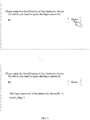
- FIG. 5 is a schematic diagram of a display interface of a terminal device provided by the present application.
- the display interface may be the display interface of the terminal device of the maintenance personnel.
- the maintenance personnel can input the identification of the target electronic device.
- the terminal device detects that the maintenance personnel clicks the query button, it sends a password query instruction to the server, and the password query instruction carries the identification of the electronic device input by the maintenance personnel.
- the server obtains a login password of the target electronic device from the database according to the identification of the target electronic device.
- the server After receiving the password query instruction from the terminal device, the server obtains the login password of the target electronic device by querying the database according to the identification of the target electronic device.
- the ciphertext of the login password of multiple electronic devices is stored in the database. After obtaining the corresponding ciphertext by querying according to the identification of the target electronic device, the server uses the private key to decrypt the ciphertext to obtain the login password.
- the ciphertext of the login passwords of multiple electronic devices and the corresponding key identifications are stored in the database. After obtaining the corresponding ciphertext by querying according to the identification of the target electronic device, the server uses the private key corresponding to the key identification to decrypt the ciphertext to obtain the current login password.
- S403 The server sends the login password of the target electronic device to the terminal device.
- S404 The terminal device displays the login password of the target electronic device.
- the terminal device After receiving the login password of the target electronic device from the server, the terminal device displays the login password in the display interface. In this way, after the maintenance personnel know the login password, the login password can be used to log in to the electronic device to perform related operations.
- the password query instruction also includes the user's (i.e., maintenance personnel) identification.
- the server can also determine, according to the identification of the user, that the user has the authority to query the login password of the target electronic device.
- the user can only query the login password of the electronic device within the scope of his authority, thereby ensuring the security of the electronic device.
- the server after the server receives the password query instruction from the terminal device, it further includes: generating a password query record, and writing the password query record into a log file.
- the password query record is used to record the user's behavior of querying the login password of the electronic device.
- the password query record may include the identification of the user and the identification of the electronic device that the user queries.
- the password query record may also include: authentication result.
- the authentication result refers to the result of judging whether the user has the query authority for the login password of the electronic device.
- FIG. 6 is a schematic diagram of a display interface of another terminal device provided by the present application.
- the interface may be the display interface of the administrator's terminal device.
- the administrator can query the historical query behavior of a certain maintainer through the display interface.
- the interface displays: the maintenance personnel identified as A1 has queried the login passwords of 7 electronic devices.
- the identifications of the seven electronic devices are B1, B2, B3, B4, B5, B6, and B7.
- the maintenance person has the inquiry authority of the electronic devices B1, B2, B3, B4, and B5, but does not have the query authority of the electronic devices B6, B7.
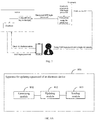
- FIG. 7 is a schematic diagram of a password updating process of an electronic device provided by the present application.
- the AI camera provides SSH login service.
- the AI camera randomly generates an SSH login password every time it is powered on or during every preset time period, and sets the newly generated SSH login password as the current login password.
- the AI camera uses the public key to encrypt the newly generated SSH login password to obtain the ciphertext, and sends the identification of the AI camera and the encrypted SSH login password to the server.
- the server uses the private key to decrypt the ciphertext, and if the decryption is successful, the AI camera ID and ciphertext are stored in the database.
- the user When the user needs to access the AI camera, the user sends the ID of the AI camera to the server through the terminal device.
- the server obtains the ciphertext corresponding to the AI camera from the database according to the identification, decrypts the ciphertext with the private key to obtain the SSH login password, and sends the SSH login password to the terminal device.
- the terminal device displays the SSH login password, so that the user knows the SSH login password of the AI camera. Furthermore, the user can use the SSH login password to access the AI camera to perform related operations on the AI camera.
- the process in which the server uses the private key to decrypt the ciphertext in any of the foregoing embodiments may be implemented by a Key Management System (KMS).
- KMS Key Management System
- the server invokes the decryption interface provided by KMS to decrypt the ciphertext.
- the server does not directly obtain the private key, the private key is always stored in the KMS, the private key is only involved in calculations within the KMS and is never exposed to the outside. That is, the server can only use the private key for decryption, but cannot directly obtain the private key. Even if a hacker invades the server, the hacker cannot obtain the private key due to the protection of KMS, which ensures the security of the login password.
- the generating module 801 is configured to randomly generate a first password in response to detecting a trigger condition of a password update; the updating module 802 is configured to update the login password of the electronic device to the first password; the sending module 803 is configured to send a password updating message, where the password updating message is used to indicate an identification of the electronic device and the first password.
- the generating module 801 is specifically configured to: randomly generate the first password after detecting that the electronic device is powered on, or detecting that use duration of a current login password of the electronic device reaches preset duration.
- the electronic device provides multiple login services; the generating module 801 is specifically configured to randomly generate the first password corresponding to each of the login services; the updating module 802 is specifically configured to: for any first login service among the multiple login services, update a login password of the first login service of the electronic device to be a first password corresponding to the first login service.
- the encrypting module 804 is specifically configured to:
- FIG. 8A and FIG. 8B can be used to execute the method executed by the electronic device in any of the foregoing method embodiments.
- the implementation principles and technical effects are similar, and will not be repeated here.
- FIG. 9A is a schematic structural diagram of yet another apparatus for updating a password of an electronic device provided by the present application.
- the device in the embodiment may be in the form of software and/or hardware.
- the device of the embodiment can be installed in a server.
- the apparatus 900 for updating a password of an electronic device provided in the embodiment includes a receiving module 901 and a processing module 902.
- the receiving module 901 is configured to receive a password updating message, the password updating message is configured to indicate an identification of the electronic device and a first password, and the first password is randomly generated by the electronic device in response to detecting a trigger condition of a password update; the processing module 902 is configured to update a database according to the password updating message, where the database is configured to store login passwords of different electronic devices.
- the password updating message includes the identification of the electronic device and a ciphertext corresponding to the first password; where the processing module 902 is specifically configured to:
- FIG. 9B is a schematic structural diagram of further another apparatus for updating a password of an electronic device provided by the present application. As shown in FIG. 9B , based on the embodiment shown in FIG. 9A , the apparatus of the embodiment may further include: a sending module 903.
- the receiving module 901 is further configured to receive a password query instruction, where the password query instruction includes the identification of the target electronic device; the processing module 902 is further configured to obtain the login password of the target electronic device from the database according to the identification of the target electronic device; the sending module 903 is configured to send the login password of the target electronic device.
- the password query instruction further includes an identification of a user; the processing module 902 is further configured to: before obtaining the login password of the target electronic device from the database according to the identification of the target electronic device, determine, according to the identification of the user, that the user has authority to query the login password of the target electronic device.
- processing module 902 is further configured to:
- the present application also provides an electronic device, including: at least one processor; and a memory communicatively connected with the at least one processor; where the memory stores an instruction executable by the at least one processor, and the instruction is executed by the at least one processor, so that the at least one processor can execute the method executed by the server in the foregoing method embodiment.
- an electronic device including: at least one processor; and a memory communicatively connected with the at least one processor; where the memory stores an instruction executable by the at least one processor, and the instruction is executed by the at least one processor, so that the at least one processor can execute the method executed by the server in the foregoing method embodiment.
- the present application also provides a non-transitory computer-readable storage medium storing computer instructions, where the computer instructions are used to enable the computer to execute the method executed by the electronic device in the foregoing method embodiment, or the method executed by the server in the foregoing method embodiment.
- the computer instructions are used to enable the computer to execute the method executed by the electronic device in the foregoing method embodiment, or the method executed by the server in the foregoing method embodiment.
- the implementation principle and technical effect are similar, and will not be repeated here.
- the present application also provides a computer program product, including a computer program, which when executed by a processor, executes the method executed by the electronic device in the foregoing method embodiment, or executes the method executed by the server in the foregoing method embodiment.
- a computer program product including a computer program, which when executed by a processor, executes the method executed by the electronic device in the foregoing method embodiment, or executes the method executed by the server in the foregoing method embodiment.
- FIG. 10 shows a schematic block diagram of an exemplary electronic device 1000 that can be used to implement embodiments of the present application.
- Electronic devices are intended to represent various forms of digital computers, such as laptop computers, desktop computers, workstations, personal digital assistants, servers, blade servers, mainframe computers, and other suitable computers.
- Electronic devices can also represent various forms of mobile devices, such as personal digital assistants, cellular phones, smart phones, wearable devices, and other similar computing devices.
- the components shown herein, their connections and relationships, and their functions are merely examples, and are not intended to limit the implementation of the present application described and/or required herein.
- the electronic device 1000 includes a computing unit 1001, which can be based on a computer program stored in a read-only memory (ROM) 1002 or loaded from a storage unit 1008 into a random access memory (RAM) 1003, to perform various appropriate actions and processing.
- ROM read-only memory
- RAM random access memory
- various programs and data required for the operation of the device can also be stored.
- the calculation unit 1001, the ROM 1002, and the RAM 1003 are connected to each other through a bus 1004.
- An input/output (I/O) interface 1005 is also connected to the bus 1004.
- a number of components in the device are connected to the I/O interface 1005, including: an input unit 1006, such as a keyboard, a mouse, etc.; an output unit 1007, such as various types of displays, speakers, etc.; a storage unit 1008, such as a disk, optical disc, etc.; and communication unit 1009, such as network card, modem, wireless communication transceiver, etc.
- the communication unit 1009 allows the device to exchange information/data with other devices through a computer network such as the Internet and/or various telecommunication networks.
- the computing unit 1001 may be various general-purpose and/or special-purpose processing components with processing and computing capabilities. Some examples of computing unit 1001 include, but are not limited to, central processing unit (CPU), graphics processing unit (GPU), various dedicated artificial intelligence (AI) computing chips, various computing units that run machine learning model algorithms, digital signal processing (DSP), and any appropriate processor, controller, microcontroller, etc.
- the calculation unit 1001 executes the various methods and processes described above, such as the method for updating a password of an electronic device.
- the method for updating a password of an electronic device can be implemented as a computer software program, which is tangibly contained in a machine-readable medium, such as the storage unit 1008.
- part of or all of the computer program may be loaded and/or installed on the device via the ROM 1002 and/or the communication unit 1009.
- the computer program When the computer program is loaded into the RAM 1003 and executed by the computing unit 1001, one or more steps of the method for updating a password of an electronic device described above can be executed.
- the computing unit 1001 may be configured to execute the method for updating a password of an electronic device in any other suitable manner (for example, by means of firmware).
- These various embodiments may include: implemented in one or more computer programs, the one or more computer programs may be executed and/or interpreted on a programmable system including at least one programmable processor, the programmable processor can be a dedicated or general-purpose programmable processor that can receive data and instructions from storage system, at least one input device, and at least one output device, and transmit the data and instructions to the storage system, the at least one input device, and the at least one output device.
- the program code used to implement the method of the present application can be programmed in any combination of one or more programming languages. These program codes can be provided to the processors or controllers of general-purpose computers, special-purpose computers, or other programmable data processing devices, so that when the program codes are executed by the processor or controller, the functions/operations specified in the flowchart and/or block diagrams are implemented.
- the program code can be executed entirely on the machine, partly executed on the machine, partly executed on the machine and partly executed on the remote machine as an independent software package, or entirely executed on the remote machine or server.
- a machine-readable medium may be a tangible medium, which may contain or store a program for use by the instruction execution system, apparatus, or device or in combination with the instruction execution system, apparatus, or device.
- the machine-readable medium may be a machine-readable signal medium or a machine-readable storage medium.
- the machine-readable medium may include, but is not limited to, an electronic, magnetic, optical, electromagnetic, infrared, or semiconductor system, apparatus, or device, or any suitable combination above.
- machine-readable storage media may include electrical connections based on one or more wires, portable computer disks, hard disks, random access memory (RAM), read-only memory (ROM), erasable programmable read-only memory (EPROM or flash memory), optical fiber, portable compact disk read-only memory (CD-ROM), optical storage device, magnetic storage device, or any suitable combination above.
- RAM random access memory
- ROM read-only memory
- EPROM or flash memory erasable programmable read-only memory
- CD-ROM compact disk read-only memory
- magnetic storage device or any suitable combination above.
- the systems and technologies described herein can be implemented in a computing system that includes back-end components (for example, as a data server), or a computing system that includes middleware components (for example, an application server), or a computing system that includes front-end components (for example, a user computer with a graphical user interface or a web browser, through which the user can interact with the implementation of the system and technology described herein), or include such background components, intermediate components, or front-end components of any combination in a computing system.
- the components of the system can be connected to each other through any form or medium of digital data communication (for example, a communication network). Examples of communication networks include: local area network (LAN), wide area network (WAN), and the Internet.
- the computer system may include a client and a server.
- the client and server are generally far away from each other and usually interact through a communication network.
- the relationship between the client and the server is generated by computer programs running on the corresponding computers and having a client-server relationship with each other.
- the server can be a cloud server, also known as a cloud computing server or a cloud host, it is a host product in the cloud computing service system to solve the shortcoming of difficult management and weak business scalability in the traditional physical host and VPS service ("Virtual Private Server", or "VPS" for short).
- the server can also be a server of a distributed system, or a server combined with a blockchain.
- the present application also provides a transportation device, which includes the electronic device provided in FIG. 10 .
- the transportation device includes a processor and a memory.
- the memory are used to store programs; the memory may include volatile memory, such as random access memory, static random access memory, double data rate synchronous dynamic random access memory, etc.; memory can also include non-volatile memory, such as flash memory.
- the memory is used to store computer programs (such as application programs and functional modules that implement the foregoing methods), computer instructions, etc., and the above computer programs, computer instructions, etc. may be partitioned and stored in one or more memories. And the above-mentioned computer programs, computer instructions, data, etc. can be invoked by the processor.
- the above-mentioned computer programs, computer instructions, etc. may be partitioned and stored in one or more memories. And the above-mentioned computer program, computer data, etc. can be invoked by the processor.
- a processor is configured to execute a computer program stored in a memory to implement each step in the method involved in the foregoing embodiment.
- the processor and memory can be independent structures, or they can be integrated structures.
- the processor and the memory are independent structures, the memory and the processor may be coupled and connected through a bus.
- the transportation device of the embodiment can execute the technical solutions in the foregoing methods, the specific implementation process and technical principles are the same, and will not be repeated herein.
Landscapes
- Engineering & Computer Science (AREA)
- Computer Security & Cryptography (AREA)
- Theoretical Computer Science (AREA)
- Computer Hardware Design (AREA)
- General Engineering & Computer Science (AREA)
- Physics & Mathematics (AREA)
- General Physics & Mathematics (AREA)
- Computer Networks & Wireless Communication (AREA)
- Signal Processing (AREA)
- Software Systems (AREA)
- Databases & Information Systems (AREA)
- Health & Medical Sciences (AREA)
- Bioethics (AREA)
- General Health & Medical Sciences (AREA)
- Data Mining & Analysis (AREA)
- Computing Systems (AREA)
- Storage Device Security (AREA)
Applications Claiming Priority (1)
| Application Number | Priority Date | Filing Date | Title |
|---|---|---|---|
| CN202011496887.XA CN112560015A (zh) | 2020-12-17 | 2020-12-17 | 电子设备的密码更新方法、装置、设备以及存储介质 |
Publications (2)
| Publication Number | Publication Date |
|---|---|
| EP3869366A1 true EP3869366A1 (de) | 2021-08-25 |
| EP3869366B1 EP3869366B1 (de) | 2023-02-08 |
Family
ID=75063108
Family Applications (1)
| Application Number | Title | Priority Date | Filing Date |
|---|---|---|---|
| EP21181679.8A Active EP3869366B1 (de) | 2020-12-17 | 2021-06-25 | Verfahren und vorrichtung zur passwortaktualisierung eines elektronischen geräts, gerät und speichermedium |
Country Status (5)
| Country | Link |
|---|---|
| US (1) | US11880450B2 (de) |
| EP (1) | EP3869366B1 (de) |
| JP (1) | JP2021166401A (de) |
| KR (1) | KR102581873B1 (de) |
| CN (1) | CN112560015A (de) |
Families Citing this family (20)
| Publication number | Priority date | Publication date | Assignee | Title |
|---|---|---|---|---|
| CN113792286A (zh) * | 2021-09-07 | 2021-12-14 | 未鲲(上海)科技服务有限公司 | 一种密码更新方法、装置、设备及存储介质 |
| CN114329436B (zh) * | 2021-12-28 | 2025-06-06 | 深圳昂楷科技有限公司 | 一种基于数据库驱动的应用数据安全增强方法、装置及电子设备 |
| CN114120497A (zh) * | 2021-12-28 | 2022-03-01 | 深圳市欧瑞博科技股份有限公司 | 智能门锁的通信方法、装置、智能门锁及存储介质 |
| CN114640668A (zh) * | 2022-03-14 | 2022-06-17 | 携程旅游网络技术(上海)有限公司 | 桌面用户端密码查询方法、系统、电子设备及存储介质 |
| CN114741714B (zh) * | 2022-04-19 | 2026-03-24 | 中国工商银行股份有限公司 | 应用系统的版本的部署方法、系统、存储介质及电子设备 |
| CN114866335A (zh) * | 2022-06-09 | 2022-08-05 | 三星电子(中国)研发中心 | 密码同步方法以及用于密码同步的电子设备和服务器 |
| CN115277180B (zh) * | 2022-07-26 | 2023-04-28 | 电子科技大学 | 一种区块链日志异常检测与溯源系统 |
| CN116961890A (zh) * | 2022-08-04 | 2023-10-27 | 北京车和家信息技术有限公司 | 一种密钥调取方法、装置、电子设备及存储介质 |
| CN115203676B (zh) * | 2022-09-06 | 2023-01-03 | 北京圣博润高新技术股份有限公司 | 一种数据库连接方法、装置、代理服务器和介质 |
| CN115529175B (zh) * | 2022-09-16 | 2025-05-13 | 曲誉环境综合治理有限公司 | 工业设备认证登录方法及装置 |
| CN115603952A (zh) * | 2022-09-21 | 2023-01-13 | 太原鼎向科技有限公司(Cn) | 调度数据网差异性运维密码分发管理系统 |
| CN116017444A (zh) * | 2022-11-30 | 2023-04-25 | 天翼物联科技有限公司 | 基于量子密钥的物联网设备登录方法、设备及介质 |
| US12381868B2 (en) * | 2023-01-11 | 2025-08-05 | Bank Of America Corporation | Portal control of web site credentials using asymmetric public/private key encryption without user selection or user password management |
| CN116182431B (zh) * | 2023-02-03 | 2026-01-02 | 广东纽恩泰新能源科技股份有限公司 | 一种热泵机组的加密方法、装置、热泵机组及存储介质 |
| CN116546476A (zh) * | 2023-06-07 | 2023-08-04 | 广州鲁邦通智能科技有限公司 | 密集型设备通过蓝牙广播多链路传递信息的方法、密码修改方法 |
| CN117478326B (zh) * | 2023-12-28 | 2024-04-09 | 深圳万物安全科技有限公司 | 密钥托管方法、装置、终端设备以及存储介质 |
| CN118133269B (zh) * | 2024-03-22 | 2025-07-22 | 北京优特捷信息技术有限公司 | 一种业务系统加密方法、装置、电子设备及存储介质 |
| CN117932650B (zh) * | 2024-03-25 | 2024-08-20 | 华东交通大学 | 基于数据分析的软件开发管理平台 |
| CN118611875B (zh) * | 2024-08-06 | 2024-11-22 | 明阳时创(北京)科技有限公司 | 一种设备自动化运维密码管理方法、系统、介质及设备 |
| CN119628912B (zh) * | 2024-12-02 | 2026-04-03 | 零束科技有限公司 | 加解密方法、可读存储介质、程序产品及电子设备 |
Citations (3)
| Publication number | Priority date | Publication date | Assignee | Title |
|---|---|---|---|---|
| EP1472583A2 (de) * | 2001-10-16 | 2004-11-03 | Activcard Ireland Limited | Verfahren zur unterstützung von einmaliger anmeldung |
| US20120254622A1 (en) * | 2011-03-31 | 2012-10-04 | Echostar Technologies L.L.C. | Secure Access to Electronic Devices |
| CN109150907A (zh) * | 2018-09-30 | 2019-01-04 | 百度在线网络技术(北京)有限公司 | 车载工控机登录方法、装置、系统、计算机设备及介质 |
Family Cites Families (20)
| Publication number | Priority date | Publication date | Assignee | Title |
|---|---|---|---|---|
| JP3955827B2 (ja) | 2003-02-27 | 2007-08-08 | イニシア株式会社 | Id、パスワード等の自動入力プログラム及び記録媒体 |
| JP4395651B2 (ja) * | 2003-09-30 | 2010-01-13 | キヤノンマーケティングジャパン株式会社 | 認証サーバおよび認証システムおよび認証方法およびプログラムおよび記録媒体 |
| JP2008233970A (ja) | 2007-03-16 | 2008-10-02 | Pioneer Electronic Corp | 情報通信システムおよび情報通信方法 |
| JP4844980B2 (ja) * | 2007-11-08 | 2011-12-28 | Necフィールディング株式会社 | 情報管理システム、携帯端末、サーバ装置、情報処理方法およびプログラム |
| US20090260074A1 (en) * | 2008-04-10 | 2009-10-15 | Qlayer Nv | System and method for application level access to virtual server environments |
| US9305160B2 (en) * | 2014-04-04 | 2016-04-05 | PassedWord LLC | Method and system for automatic updating of randomly generated user passwords |
| US10212136B1 (en) | 2014-07-07 | 2019-02-19 | Microstrategy Incorporated | Workstation log-in |
| JP5834118B2 (ja) | 2014-08-07 | 2015-12-16 | 株式会社東芝 | 情報操作装置、情報出力装置および情報操作プログラム |
| CN104202306B (zh) * | 2014-08-15 | 2015-10-14 | 小米科技有限责任公司 | 访问认证方法、装置及系统 |
| US9824208B2 (en) * | 2015-07-06 | 2017-11-21 | Unisys Corporation | Cloud-based active password manager |
| US10078748B2 (en) | 2015-11-13 | 2018-09-18 | Microsoft Technology Licensing, Llc | Unlock and recovery for encrypted devices |
| CN107113177B (zh) * | 2015-12-10 | 2019-06-21 | 深圳市大疆创新科技有限公司 | 数据连接、传送、接收、交互的方法及系统,及存储器、飞行器 |
| CN107959567B (zh) * | 2016-10-14 | 2021-07-27 | 阿里巴巴集团控股有限公司 | 数据存储方法、数据获取方法、装置及系统 |
| CN109983462B (zh) * | 2016-11-30 | 2023-05-23 | 三菱电机株式会社 | 信息处理装置及信息处理方法 |
| CN109472130A (zh) * | 2018-11-13 | 2019-03-15 | 试金石信用服务有限公司 | Linux密码管理方法、中控机、可读存储介质 |
| CN110826052A (zh) * | 2019-10-18 | 2020-02-21 | 上海易点时空网络有限公司 | 保护服务器密码安全的方法和装置 |
| CN110943976B (zh) | 2019-11-08 | 2022-01-18 | 中国电子科技网络信息安全有限公司 | 一种基于口令的用户签名私钥管理方法 |
| CN110891062B (zh) * | 2019-11-27 | 2022-01-11 | 中铁程科技有限责任公司 | 密码更改方法、服务器及存储介质 |
| CN111126533B (zh) | 2020-01-08 | 2023-06-23 | 牛津(海南)区块链研究院有限公司 | 基于动态口令的身份认证方法、装置和动态令牌 |
| JP2020089788A (ja) | 2020-03-12 | 2020-06-11 | 株式会社三共 | 遊技用システム |
-
2020
- 2020-12-17 CN CN202011496887.XA patent/CN112560015A/zh not_active Withdrawn
-
2021
- 2021-06-25 EP EP21181679.8A patent/EP3869366B1/de active Active
- 2021-07-01 KR KR1020210086403A patent/KR102581873B1/ko not_active Ceased
- 2021-07-02 JP JP2021110576A patent/JP2021166401A/ja active Pending
- 2021-07-22 US US17/383,193 patent/US11880450B2/en active Active
Patent Citations (3)
| Publication number | Priority date | Publication date | Assignee | Title |
|---|---|---|---|---|
| EP1472583A2 (de) * | 2001-10-16 | 2004-11-03 | Activcard Ireland Limited | Verfahren zur unterstützung von einmaliger anmeldung |
| US20120254622A1 (en) * | 2011-03-31 | 2012-10-04 | Echostar Technologies L.L.C. | Secure Access to Electronic Devices |
| CN109150907A (zh) * | 2018-09-30 | 2019-01-04 | 百度在线网络技术(北京)有限公司 | 车载工控机登录方法、装置、系统、计算机设备及介质 |
Also Published As
| Publication number | Publication date |
|---|---|
| EP3869366B1 (de) | 2023-02-08 |
| KR102581873B1 (ko) | 2023-09-25 |
| US20210349989A1 (en) | 2021-11-11 |
| JP2021166401A (ja) | 2021-10-14 |
| US11880450B2 (en) | 2024-01-23 |
| KR20210102120A (ko) | 2021-08-19 |
| CN112560015A (zh) | 2021-03-26 |
Similar Documents
| Publication | Publication Date | Title |
|---|---|---|
| EP3869366B1 (de) | Verfahren und vorrichtung zur passwortaktualisierung eines elektronischen geräts, gerät und speichermedium | |
| US12548007B2 (en) | Terminal for conducting electronic transactions | |
| US11218325B2 (en) | Asset management method and apparatus, and electronic device | |
| US11303449B2 (en) | User device validation at an application server | |
| KR101718277B1 (ko) | 감시형 온라인 아이텐티티 | |
| CN111737366B (zh) | 区块链的隐私数据处理方法、装置、设备以及存储介质 | |
| JP6215934B2 (ja) | ログイン検証の方法、クライアント、サーバ、およびシステム | |
| US11943256B2 (en) | Link detection method and apparatus, electronic device, and storage medium | |
| US9374360B2 (en) | System and method for single-sign-on in virtual desktop infrastructure environment | |
| EP3977703A1 (de) | Schutz von online-anwendungen und webseiten unter verwendung einer blockchain | |
| US10841096B2 (en) | Encrypted self-identification using a proxy server | |
| WO2025232156A1 (zh) | 一种车地通信方法、装置、设备及存储介质 | |
| CN119783159B (zh) | 由客户端程序执行的数据访问方法、装置、设备及介质 | |
| JP2014197839A (ja) | 通信システム、クライアント端末、サーバ、データ通信方法及びデータ通信プログラム | |
| CN120342793B (zh) | 一种基于动态密码的登录核验方法和系统 | |
| CN116015961A (zh) | 下挂终端设备的控制处理方法、安全cpe、系统及介质 | |
| CN115150176A (zh) | 防重放攻击方法、装置、电子设备及存储介质 | |
| CN119814286A (zh) | 证书管理系统、方法、设备及存储介质 | |
| HK40041995A (en) | Information verification method, related apparatus, device and storage medium | |
| HK40041995B (en) | Information verification method, related apparatus, device and storage medium |
Legal Events
| Date | Code | Title | Description |
|---|---|---|---|
| PUAI | Public reference made under article 153(3) epc to a published international application that has entered the european phase |
Free format text: ORIGINAL CODE: 0009012 |
|
| STAA | Information on the status of an ep patent application or granted ep patent |
Free format text: STATUS: REQUEST FOR EXAMINATION WAS MADE |
|
| 17P | Request for examination filed |
Effective date: 20210625 |
|
| AK | Designated contracting states |
Kind code of ref document: A1 Designated state(s): AL AT BE BG CH CY CZ DE DK EE ES FI FR GB GR HR HU IE IS IT LI LT LU LV MC MK MT NL NO PL PT RO RS SE SI SK SM TR |
|
| STAA | Information on the status of an ep patent application or granted ep patent |
Free format text: STATUS: EXAMINATION IS IN PROGRESS |
|
| 17Q | First examination report despatched |
Effective date: 20220407 |
|
| GRAP | Despatch of communication of intention to grant a patent |
Free format text: ORIGINAL CODE: EPIDOSNIGR1 |
|
| RIC1 | Information provided on ipc code assigned before grant |
Ipc: H04L 9/32 20060101ALI20220919BHEP Ipc: H04L 9/08 20060101ALI20220919BHEP Ipc: G06F 21/41 20130101ALI20220919BHEP Ipc: H04L 9/40 20220101ALI20220919BHEP Ipc: G06F 21/46 20130101AFI20220919BHEP |
|
| STAA | Information on the status of an ep patent application or granted ep patent |
Free format text: STATUS: GRANT OF PATENT IS INTENDED |
|
| INTG | Intention to grant announced |
Effective date: 20221027 |
|
| GRAS | Grant fee paid |
Free format text: ORIGINAL CODE: EPIDOSNIGR3 |
|
| GRAA | (expected) grant |
Free format text: ORIGINAL CODE: 0009210 |
|
| STAA | Information on the status of an ep patent application or granted ep patent |
Free format text: STATUS: THE PATENT HAS BEEN GRANTED |
|
| AK | Designated contracting states |
Kind code of ref document: B1 Designated state(s): AL AT BE BG CH CY CZ DE DK EE ES FI FR GB GR HR HU IE IS IT LI LT LU LV MC MK MT NL NO PL PT RO RS SE SI SK SM TR |
|
| REG | Reference to a national code |
Ref country code: GB Ref legal event code: FG4D |
|
| REG | Reference to a national code |
Ref country code: CH Ref legal event code: EP Ref country code: AT Ref legal event code: REF Ref document number: 1547619 Country of ref document: AT Kind code of ref document: T Effective date: 20230215 |
|
| REG | Reference to a national code |
Ref country code: IE Ref legal event code: FG4D |
|
| REG | Reference to a national code |
Ref country code: DE Ref legal event code: R096 Ref document number: 602021001355 Country of ref document: DE |
|
| REG | Reference to a national code |
Ref country code: LT Ref legal event code: MG9D |
|
| REG | Reference to a national code |
Ref country code: NL Ref legal event code: MP Effective date: 20230208 |
|
| P01 | Opt-out of the competence of the unified patent court (upc) registered |
Effective date: 20230530 |
|
| REG | Reference to a national code |
Ref country code: AT Ref legal event code: MK05 Ref document number: 1547619 Country of ref document: AT Kind code of ref document: T Effective date: 20230208 |
|
| PG25 | Lapsed in a contracting state [announced via postgrant information from national office to epo] |
Ref country code: RS Free format text: LAPSE BECAUSE OF FAILURE TO SUBMIT A TRANSLATION OF THE DESCRIPTION OR TO PAY THE FEE WITHIN THE PRESCRIBED TIME-LIMIT Effective date: 20230208 Ref country code: PT Free format text: LAPSE BECAUSE OF FAILURE TO SUBMIT A TRANSLATION OF THE DESCRIPTION OR TO PAY THE FEE WITHIN THE PRESCRIBED TIME-LIMIT Effective date: 20230609 Ref country code: NO Free format text: LAPSE BECAUSE OF FAILURE TO SUBMIT A TRANSLATION OF THE DESCRIPTION OR TO PAY THE FEE WITHIN THE PRESCRIBED TIME-LIMIT Effective date: 20230508 Ref country code: NL Free format text: LAPSE BECAUSE OF FAILURE TO SUBMIT A TRANSLATION OF THE DESCRIPTION OR TO PAY THE FEE WITHIN THE PRESCRIBED TIME-LIMIT Effective date: 20230208 Ref country code: LV Free format text: LAPSE BECAUSE OF FAILURE TO SUBMIT A TRANSLATION OF THE DESCRIPTION OR TO PAY THE FEE WITHIN THE PRESCRIBED TIME-LIMIT Effective date: 20230208 Ref country code: LT Free format text: LAPSE BECAUSE OF FAILURE TO SUBMIT A TRANSLATION OF THE DESCRIPTION OR TO PAY THE FEE WITHIN THE PRESCRIBED TIME-LIMIT Effective date: 20230208 Ref country code: HR Free format text: LAPSE BECAUSE OF FAILURE TO SUBMIT A TRANSLATION OF THE DESCRIPTION OR TO PAY THE FEE WITHIN THE PRESCRIBED TIME-LIMIT Effective date: 20230208 Ref country code: ES Free format text: LAPSE BECAUSE OF FAILURE TO SUBMIT A TRANSLATION OF THE DESCRIPTION OR TO PAY THE FEE WITHIN THE PRESCRIBED TIME-LIMIT Effective date: 20230208 Ref country code: AT Free format text: LAPSE BECAUSE OF FAILURE TO SUBMIT A TRANSLATION OF THE DESCRIPTION OR TO PAY THE FEE WITHIN THE PRESCRIBED TIME-LIMIT Effective date: 20230208 |
|
| PG25 | Lapsed in a contracting state [announced via postgrant information from national office to epo] |
Ref country code: SE Free format text: LAPSE BECAUSE OF FAILURE TO SUBMIT A TRANSLATION OF THE DESCRIPTION OR TO PAY THE FEE WITHIN THE PRESCRIBED TIME-LIMIT Effective date: 20230208 Ref country code: PL Free format text: LAPSE BECAUSE OF FAILURE TO SUBMIT A TRANSLATION OF THE DESCRIPTION OR TO PAY THE FEE WITHIN THE PRESCRIBED TIME-LIMIT Effective date: 20230208 Ref country code: IS Free format text: LAPSE BECAUSE OF FAILURE TO SUBMIT A TRANSLATION OF THE DESCRIPTION OR TO PAY THE FEE WITHIN THE PRESCRIBED TIME-LIMIT Effective date: 20230608 Ref country code: GR Free format text: LAPSE BECAUSE OF FAILURE TO SUBMIT A TRANSLATION OF THE DESCRIPTION OR TO PAY THE FEE WITHIN THE PRESCRIBED TIME-LIMIT Effective date: 20230509 Ref country code: FI Free format text: LAPSE BECAUSE OF FAILURE TO SUBMIT A TRANSLATION OF THE DESCRIPTION OR TO PAY THE FEE WITHIN THE PRESCRIBED TIME-LIMIT Effective date: 20230208 |
|
| PG25 | Lapsed in a contracting state [announced via postgrant information from national office to epo] |
Ref country code: SM Free format text: LAPSE BECAUSE OF FAILURE TO SUBMIT A TRANSLATION OF THE DESCRIPTION OR TO PAY THE FEE WITHIN THE PRESCRIBED TIME-LIMIT Effective date: 20230208 Ref country code: RO Free format text: LAPSE BECAUSE OF FAILURE TO SUBMIT A TRANSLATION OF THE DESCRIPTION OR TO PAY THE FEE WITHIN THE PRESCRIBED TIME-LIMIT Effective date: 20230208 Ref country code: EE Free format text: LAPSE BECAUSE OF FAILURE TO SUBMIT A TRANSLATION OF THE DESCRIPTION OR TO PAY THE FEE WITHIN THE PRESCRIBED TIME-LIMIT Effective date: 20230208 Ref country code: DK Free format text: LAPSE BECAUSE OF FAILURE TO SUBMIT A TRANSLATION OF THE DESCRIPTION OR TO PAY THE FEE WITHIN THE PRESCRIBED TIME-LIMIT Effective date: 20230208 Ref country code: CZ Free format text: LAPSE BECAUSE OF FAILURE TO SUBMIT A TRANSLATION OF THE DESCRIPTION OR TO PAY THE FEE WITHIN THE PRESCRIBED TIME-LIMIT Effective date: 20230208 |
|
| REG | Reference to a national code |
Ref country code: DE Ref legal event code: R097 Ref document number: 602021001355 Country of ref document: DE |
|
| PG25 | Lapsed in a contracting state [announced via postgrant information from national office to epo] |
Ref country code: SK Free format text: LAPSE BECAUSE OF FAILURE TO SUBMIT A TRANSLATION OF THE DESCRIPTION OR TO PAY THE FEE WITHIN THE PRESCRIBED TIME-LIMIT Effective date: 20230208 |
|
| PLBE | No opposition filed within time limit |
Free format text: ORIGINAL CODE: 0009261 |
|
| STAA | Information on the status of an ep patent application or granted ep patent |
Free format text: STATUS: NO OPPOSITION FILED WITHIN TIME LIMIT |
|
| 26N | No opposition filed |
Effective date: 20231109 |
|
| PG25 | Lapsed in a contracting state [announced via postgrant information from national office to epo] |
Ref country code: MC Free format text: LAPSE BECAUSE OF FAILURE TO SUBMIT A TRANSLATION OF THE DESCRIPTION OR TO PAY THE FEE WITHIN THE PRESCRIBED TIME-LIMIT Effective date: 20230208 |
|
| PG25 | Lapsed in a contracting state [announced via postgrant information from national office to epo] |
Ref country code: SI Free format text: LAPSE BECAUSE OF FAILURE TO SUBMIT A TRANSLATION OF THE DESCRIPTION OR TO PAY THE FEE WITHIN THE PRESCRIBED TIME-LIMIT Effective date: 20230208 Ref country code: MC Free format text: LAPSE BECAUSE OF FAILURE TO SUBMIT A TRANSLATION OF THE DESCRIPTION OR TO PAY THE FEE WITHIN THE PRESCRIBED TIME-LIMIT Effective date: 20230208 |
|
| REG | Reference to a national code |
Ref country code: BE Ref legal event code: MM Effective date: 20230630 |
|
| PG25 | Lapsed in a contracting state [announced via postgrant information from national office to epo] |
Ref country code: LU Free format text: LAPSE BECAUSE OF NON-PAYMENT OF DUE FEES Effective date: 20230625 |
|
| REG | Reference to a national code |
Ref country code: IE Ref legal event code: MM4A |
|
| PG25 | Lapsed in a contracting state [announced via postgrant information from national office to epo] |
Ref country code: LU Free format text: LAPSE BECAUSE OF NON-PAYMENT OF DUE FEES Effective date: 20230625 |
|
| PG25 | Lapsed in a contracting state [announced via postgrant information from national office to epo] |
Ref country code: IE Free format text: LAPSE BECAUSE OF NON-PAYMENT OF DUE FEES Effective date: 20230625 |
|
| PG25 | Lapsed in a contracting state [announced via postgrant information from national office to epo] |
Ref country code: IE Free format text: LAPSE BECAUSE OF NON-PAYMENT OF DUE FEES Effective date: 20230625 |
|
| PG25 | Lapsed in a contracting state [announced via postgrant information from national office to epo] |
Ref country code: IT Free format text: LAPSE BECAUSE OF FAILURE TO SUBMIT A TRANSLATION OF THE DESCRIPTION OR TO PAY THE FEE WITHIN THE PRESCRIBED TIME-LIMIT Effective date: 20230208 Ref country code: BE Free format text: LAPSE BECAUSE OF NON-PAYMENT OF DUE FEES Effective date: 20230630 |
|
| PG25 | Lapsed in a contracting state [announced via postgrant information from national office to epo] |
Ref country code: BG Free format text: LAPSE BECAUSE OF FAILURE TO SUBMIT A TRANSLATION OF THE DESCRIPTION OR TO PAY THE FEE WITHIN THE PRESCRIBED TIME-LIMIT Effective date: 20230208 |
|
| PG25 | Lapsed in a contracting state [announced via postgrant information from national office to epo] |
Ref country code: BG Free format text: LAPSE BECAUSE OF FAILURE TO SUBMIT A TRANSLATION OF THE DESCRIPTION OR TO PAY THE FEE WITHIN THE PRESCRIBED TIME-LIMIT Effective date: 20230208 |
|
| REG | Reference to a national code |
Ref country code: CH Ref legal event code: PL |
|
| PG25 | Lapsed in a contracting state [announced via postgrant information from national office to epo] |
Ref country code: CH Free format text: LAPSE BECAUSE OF NON-PAYMENT OF DUE FEES Effective date: 20240630 |
|
| PGFP | Annual fee paid to national office [announced via postgrant information from national office to epo] |
Ref country code: DE Payment date: 20250618 Year of fee payment: 5 |
|
| PGFP | Annual fee paid to national office [announced via postgrant information from national office to epo] |
Ref country code: FR Payment date: 20250515 Year of fee payment: 5 |
|
| PG25 | Lapsed in a contracting state [announced via postgrant information from national office to epo] |
Ref country code: CY Free format text: LAPSE BECAUSE OF FAILURE TO SUBMIT A TRANSLATION OF THE DESCRIPTION OR TO PAY THE FEE WITHIN THE PRESCRIBED TIME-LIMIT; INVALID AB INITIO Effective date: 20210625 |
|
| PG25 | Lapsed in a contracting state [announced via postgrant information from national office to epo] |
Ref country code: TR Free format text: LAPSE BECAUSE OF FAILURE TO SUBMIT A TRANSLATION OF THE DESCRIPTION OR TO PAY THE FEE WITHIN THE PRESCRIBED TIME-LIMIT Effective date: 20230208 |
|
| GBPC | Gb: european patent ceased through non-payment of renewal fee |
Effective date: 20250625 |
|
| PG25 | Lapsed in a contracting state [announced via postgrant information from national office to epo] |
Ref country code: HU Free format text: LAPSE BECAUSE OF FAILURE TO SUBMIT A TRANSLATION OF THE DESCRIPTION OR TO PAY THE FEE WITHIN THE PRESCRIBED TIME-LIMIT; INVALID AB INITIO Effective date: 20210625 |
|
| PG25 | Lapsed in a contracting state [announced via postgrant information from national office to epo] |
Ref country code: GB Free format text: LAPSE BECAUSE OF NON-PAYMENT OF DUE FEES Effective date: 20250625 |