EP3868044B1 - Vorrichtungen und verfahren zur unterstützung von harq für ieee 802.11 - Google Patents
Vorrichtungen und verfahren zur unterstützung von harq für ieee 802.11 Download PDFInfo
- Publication number
- EP3868044B1 EP3868044B1 EP18808296.0A EP18808296A EP3868044B1 EP 3868044 B1 EP3868044 B1 EP 3868044B1 EP 18808296 A EP18808296 A EP 18808296A EP 3868044 B1 EP3868044 B1 EP 3868044B1
- Authority
- EP
- European Patent Office
- Prior art keywords
- interleaving sequence
- data unit
- interleaving
- sequence
- receiving device
- Prior art date
- Legal status (The legal status is an assumption and is not a legal conclusion. Google has not performed a legal analysis and makes no representation as to the accuracy of the status listed.)
- Active
Links
Images


Classifications
-
- H—ELECTRICITY
- H04—ELECTRIC COMMUNICATION TECHNIQUE
- H04L—TRANSMISSION OF DIGITAL INFORMATION, e.g. TELEGRAPHIC COMMUNICATION
- H04L1/00—Arrangements for detecting or preventing errors in the information received
- H04L1/004—Arrangements for detecting or preventing errors in the information received by using forward error control
- H04L1/0056—Systems characterized by the type of code used
- H04L1/0071—Use of interleaving
-
- H—ELECTRICITY
- H04—ELECTRIC COMMUNICATION TECHNIQUE
- H04L—TRANSMISSION OF DIGITAL INFORMATION, e.g. TELEGRAPHIC COMMUNICATION
- H04L1/00—Arrangements for detecting or preventing errors in the information received
- H04L1/004—Arrangements for detecting or preventing errors in the information received by using forward error control
- H04L1/0056—Systems characterized by the type of code used
- H04L1/0057—Block codes
-
- H—ELECTRICITY
- H04—ELECTRIC COMMUNICATION TECHNIQUE
- H04L—TRANSMISSION OF DIGITAL INFORMATION, e.g. TELEGRAPHIC COMMUNICATION
- H04L1/00—Arrangements for detecting or preventing errors in the information received
- H04L1/004—Arrangements for detecting or preventing errors in the information received by using forward error control
- H04L1/0056—Systems characterized by the type of code used
- H04L1/0059—Convolutional codes
Definitions
- the present application relates to Hybrid Automatic Repeat Request (HARQ) in wireless communication technologies, particularly HARQ for IEEE 802.11, i.e. HARQ for Wi-Fi.
- HARQ Hybrid Automatic Repeat Request
- the application proposes a transmitting device and a receiving device, respectively, both configured to support such HARQ in Wi-Fi, and further proposes corresponding HARQ methods that are compatible with IEEE 802.11.
- the bits/QAMs (QAMs being symbols of Quadrature Amplitude Modification (QAM)) to be transmitted undergo some form of interleaving in frequency.
- the interleaving sequence depends, typically, on the transmission parameters such as the bandwidth, modulation, coding rate, etc. Furthermore, this interleaving sequence does not change with time, which means that consecutive retransmissions using the same transmission parameters (e.g. same bandwidth, same modulation and coding rate) will undergo the same, identical interleaving.
- HARQ is a feature widely used in various wireless technologies such as UMTS and LTE (where it is mandatory). Unlike ARQ, where packets decoded incorrectly are discarded at the receiver and are then retransmitted (by the transmitter), with HARQ - soft combining (or combining of equalized tones) is enabled. This means that the log-likelihood ratios (LLRs) respective to incorrectly decoded packets are stored in memory and combined with retransmissions of the same information bits, thus increasing the probability for correct packet detection (after retransmission). Due to the improved performance (after HARQ combining), practical wireless systems employing HARQ can also use a lower fade margin in the rate selection algorithm - this means that the rate selection mechanism can effectively uses a higher Modulation and Coding Scheme (MCS).
- MCS Modulation and Coding Scheme
- HARQ is now being considered for the next generation 802.11 standard, called Extreme High Throughput (EHT).
- EHT Extreme High Throughput
- failed packets are not discarded, but rather the LLRs (or equalizer outputs) are stored in memory to be combined with future retransmissions, hence improving the probability for correct detection.
- HARQ improves the performance by combining several retransmissions, which experience a potentially different channel and noise/interference.
- the thermal noise which changes between retransmissions, can be averaged and hence reduced - improving the Signal to Noise Ratio (SNR) at the receiver.
- SNR Signal to Noise Ratio
- changes in the channel between transmission and retransmission stemming from the channel varying over time, and/or an introduction of frequency diversity between retransmissions, can yield further gain.
- 802.11 uses an interleaver to spread the bits/QAMs in frequency such that they experience frequency diversity, and a fade in frequency affects bits which are not consecutive.
- EP 1 496 633 A1 discloses in a multicarrier communication, when an error occurs in received data, a subcarrier that transmits data is changed to perform retransmission, thereby increasing the chance that reduces the correlation between the branches to increase the diversity gains and improve a throughput.
- EP 1 858 187 A1 discloses a MIMO transmitting apparatus in which interleaving in codewords transmitted at the same time from a plurality of transmitting antennas is carried out by using an interleave pattern different for each retransmission.
- US 2009/276671 A1 discloses methods and apparatuses for rearranging data bits for transmission in a hybrid automatic repeat request scheme.
- EP 3 200 369 A1 discloses a controller 130 of the transmitting station 100 controls an interleave pattern depending on the number of retransmissions.
- embodiments of the present application aim to introduce HARQ to the next generation of 802.11.
- an objective is to employ the full benefit of HARQ in Wi-Fi.
- the embodiments of the application aim to enable HARQ retransmissions to experience some sort of frequency diversity.
- a first aspect of the application provides a transmitting device for supporting HARQ, according to appended claim 1.
- a data unit may be a sequence of bits/QAMs.
- the device of the first aspect enables bits/QAMs within multiple (identical or nearly identical) retransmission to experience a different channel, hence improving the performance after HARQ combining at the receiver side.
- the interleaving sequence is changed between (re)transmissions. This means that if a transmission fails, the retransmitted bits/QAMs will be transmitted using a different interleaving sequence, i.e. on different channels, so that they will experience frequency diversity and hence performance is improved.
- the transmitting device of the first aspect achieves better performance with the introduction of HARQ into 802.11 than conventional transmitting devices.
- a second aspect of the application provides a receiving device for supporting HARQ, according to appended claim 7.
- a third aspect of the application provides a method for supporting HARQ, according to appended claim 11.
- a fourth aspect of the application provides a method for supporting HARQ, according to appended claim 12.
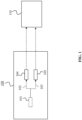
- FIG. 1 shows a transmitting device 100 according to an embodiment of the application.
- the transmitting device 100 is configured to support HARQ, particularly HARQ for IEEE 802.11 / Wi-Fi. That means, the device 100 may be an 802.11-standard transmitting device supporting HARQ.
- the transmitting device 100 may be a transmitter or may be included in a transmitter.
- the transmitting device 100 is configured to select a first interleaving sequence 102.
- the interleaving sequence depends, typically, on the transmission parameters such as the bandwidth, modulation, coding rate, etc. Further, the transmitting device 100 is configured to interleave a data unit 101 using the first interleaving sequence 102 to obtain a first interleaved data unit 104 to be transmitted to a receiving device 110.
- the data unit 101 may be a sequence of bits or of QAMs.
- the transmitting device 100 is configured to select a second interleaving sequence 103, and interleave the data unit 101 using the second interleaving sequence 103 to obtain a second interleaved data unit 105 to be transmitted to the receiving device 110.
- the transmitting device 100 may transmit the first interleaved data unit 104 to the receiving device 110.
- the transmitting device 100 may transmit, if necessary, the second interleaved data unit 105 to the receiving device.
- the transmitting may, however, also be performed by another device.
- interleaving sequences 102, 103 are used, i.e. the interleaving sequence changes with (e.g. consecutive) retransmissions.
- the interleaving sequence does not change with time, which means that (consecutive) retransmissions using the same transmission parameters (e.g. same bandwidth, same modulation and coding rate) will undergo the same, identical interleaving.
- the transmitting device 100 is configured to change the interleaving sequence for (re)transmissions, particularly consecutive (re)transmissions, in order to achieve an HARQ with an improved performance for Wi-Fi.
- the transmitting device 100 may be configured to select the first interleaving sequence 102 based on one or more transmission parameters, particularly based on a transmission signal bandwidth.
- the second interleaving sequence 103 for (e.g. consecutive) retransmissions, or even for each further retransmission, may be selected differently, i.e. not using a same interleaving sequence for at least one retransmission.
- the transmitting device 100 may be further configured to select the second interleaving sequence 103 based on the first interleaving sequence 102, e.g. to derive the second interleaving sequence 103 from the first interleaving sequence 102 according to some rule.
- the second interleaving sequence 103 may be the first interleaving sequence 102 cyclically shifted in the frequency domain.
- the first interleaving sequence 102 may thereby initially be selected using a way currently defined in the 802.11 standard, e.g. either for BCC, or LDPC, or Turbo encoding.
- the first interleaving sequence 102 may be cyclically shifted in frequency, in order to form the second interleaving sequence 103 based on the first interleaving sequence 102.
- one example is to cyclically shift the first interleaving sequence by half the signal bandwidth. For example, if the signal is transmitted on 100 subcarriers, the shift would be by 50 subcarriers (e.g.
- the first interleaving sequence may be represented by P 1 P 2 ...P 50 P 51 P 52 ...P 100
- the second interleaving sequence may be represented by P 51 P 52 ...P 100 P 1 P 2 ...P 50
- P N indicates mapping to the nth subcarrier
- the interleaving sequence may also be shifted differently. For example, if the signal is transmitted on 100 subcarriers, the shift may be by 17 subcarriers (e.g. the first interleaving sequence may be represented by P 1 P 2 ... P 83 P 84 P 85 ... P 100 , the second interleaving sequence may be represented by P 18 P 19 ...P 100 P 1 P 2 ...P 17 ).
- the first interleaving sequence may be cyclically shifted by another number of subcarriers, and may be set according to actual requirements. This solution is simple to implement.
- the first interleaving sequence 102 may be stored in the memory of the transmitting device.
- the transmitting device can read the information regarding the first interleaving sequence 102 from the memory and may apply the shifting to obtain the second interleaving sequence 103.
- the second interleaving sequence 103 is the first interleaving sequence 102 flipped in the frequency domain.
- the first interleaving sequence is e.g. represented by P 1 P 2 ...P 100
- the second interleaving sequence will be represented by P 100 P 99 ...P 1 .
- This solution is also simple to implement, and the existing interleaving sequence can again be read from the memory and is mapped upwards instead of downwards in frequency.
- an interleaver may not be used at all.
- the transmitting device 100 after the transmitting device 100 interleaves the data unit 101 using the first interleaving sequence 102, and transmits the first interleaved data unit 104 to the receiving device 110, if the transmission fails, the transmitting device 100 transmits the data unit 101 directly to the receiving device 110 in a retransmission (without performing interleaving).
- This can effectively also be achieved by selecting a specific second interleaving sequence 103, which, when the transmitting device 100 interleaves the data unit 101 using this second interleaving sequence 103, yields a second interleaved data unit 105 that is identical to the original data unit 101.
- This may be similar to what is implemented in the HE-SIG-A field (802.1 1ax) in Extended Range mode, where half of the data field is interleaved and the other half is not.
- the transmitting device 100 may also change multiple times between interleaving sequences, thereby applying a combination of one of the above-described schemes to derive a second interleaving sequence 103 from a first interleaving sequence 102, or apply different or same schemes after another.
- the transmitting device 100 may be further configured to indicate to the receiving device 110 the first and/or second interleaving sequence 102 and/or 103. In order to correctly perform de-interleaving and decode the transmitted data, the receiver needs to know what interleaving sequence is used at the transmitter side. If different interleaving sequences are used by the transmitting device 100, the transmitting device 100 may indicate to the receiving device 110 information regarding the interleaving sequences used in each transmission.
- the change in interleaving sequences between retransmissions may be pre-defined and not signaled within each retransmission.
- the interleaving sequences (or change in the interleaving sequence) may be signaled within one of the SIG fields in a transmission.
- the transmitting device 100 may be further configured to indicate to the receiving device 110 the second interleaving sequence 103 using a SIG field.
- STAs Stations supporting a dynamic interleaver will be required to advertise supported interleaver configurations as part of capabilities negotiation.
- the transmitting device 100 may be configured to perform the interleaving of the data unit on coded bits following a BCC encoding; and/or perform the interleaving of the data unit on modulated QAMs following a LDPC; and/or perform the interleaving of the data unit within a Turbo encoder.
- Turbo encoding can be introduced in addition to BCC and LDPC encoding. With Turbo encoding, two convolutional encoders may be used in parallel, with a different interleaving sequence used for each of the convolutional encoders.
- the transmitting device 100 may select different interleaving sequences for each retransmission. In particular if a retransmission also fails or cannot be decoded at the receiving device 110, another retransmission will be required.
- the transmitting device 100 may be configured to select a third interleaving sequence and interleave the data unit 101 using the third interleaving sequence to obtain a third interleaved data unit to be transmitted to the receiving device 110.
- N different interleaving sequences may be selected by the transmitting device 100. For instance, a first transmission may base on a first interleaving sequence, a second transmission may base on a second interleaving sequence, a third transmission may base on a third interleaving sequence, a fourth transmission may base on a fourth interleaving sequence, etc.
- the first, second, third and fourth interleaving sequences are in this case all different to each other.
- the second interleaving sequence may be the first interleaving cyclically shifted by e.g.
- the third interleaving sequence may be the first interleaving sequence flipped in frequency; and the fourth transmission may not use an interleaver, i.e. the interleaved data unit using the fourth interleaving sequence is identical to the original data unit. Details are not described here again, and reference is made to above.
- the third interleaving sequence may be identical to the first interleaving sequence, and the fourth interleaving sequence may be identical to the second interleaving sequence.
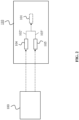
- FIG. 2 shows a receiving device 110 according to an embodiment of the application.
- the receiving device 110 is configured to support HARQ, particularly HARQ for IEEE 802.11 / Wi-Fi. That means, the device 110 may be an 802.11-standard receiving device supporting HARQ.
- the receiving device 110 of FIG. 2 is particularly the receiving device 110 of FIG. 1 .
- the transmitting device 100 shown in FIG. 2 may be the one shown in FIG. 1 .
- the receiving device 110 may be a receiver or may be included in a receiver.
- the receiving device 110 may be configured to operate inversely to the transmitting device 100 of FIG. 1 .
- the receiving device 110 is configured to receive a first interleaved data unit 104, and select a first de-interleaving sequence 102' according to a first interleaving sequence 102. Further, the receiving device 110 is configured to de-interleave the first interleaved data unit 104 using the first de-interleaving sequence 102' to obtain the data unit 101. If a retransmission of the data unit is required, the receiving device 110 is configured to receive a second interleaved data unit 105, and select a second de-interleaving sequence 103' according to a second interleaving sequence 103. Further, the receiving device 110 is configured to de-interleave the second interleaved data unit 105 using the second de-interleaving sequence 103' to obtain the retransmission of the data unit 101.
- the receiver should know what interleaving sequence is used at the transmitter side, in order to correctly perform de-interleaving and decode the transmitted data.
- the receiving device 110 may be further configured to obtain an indication of the first and/or second interleaving sequence from e.g. the transmitting device 100. Based on the information regarding the first and/or second interleaving sequence obtained e.g. from the transmitting device 100, the receiving device 110 can select the corresponding first and/or second de-interleaving sequence to perform the de-interleaving.
- the receiving device 110 may be further configured to extract an indication of the second interleaving sequence 103 from a SIG field.
- the receiving device 110 may be further configured to soft-combine the retransmission of the data unit and the previously transmitted data unit.
- the decoding performance is increased.
- the thermal noise which changes between retransmissions, can be further averaged and hence reduced - which further and significantly improving the Signal to Noise Ratio (SNR) at the receiver.
- SNR Signal to Noise Ratio
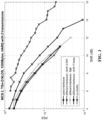
- Fig. 3 shows a comparison of results of SNR using different interleaving solutions. It is assumed that the channel is constant across two transmissions (transmission and a retransmission). Solutions proposed with embodiments of the present application are compared with the existing solutions (i.e. same interleaver across all retransmissions).
- a first solution uses a second interleaving sequence, which is the first interleaving sequence cyclically shifted at half the bandwidth in retransmission.
- a second solution uses a second interleaving sequence which is the first interleaving sequence cyclically shifted by 17 tones in retransmission.
- a third solution uses a second interleaving sequence which is the first interleaving sequence flipped in frequency.
- Fig. 3 shows a comparison of results of SNR using different interleaving solutions. It is assumed that the channel is constant across two transmissions (transmission and a retransmission). Solutions proposed with embodiments of the present application are compared with the existing solutions (i.e. same interlea
- the first solution yields the best performance ( ⁇ 1.5dB over the same interleaver), followed closely by the second solution and then by the third solution.
- the idea of using different interleaving sequences across retransmissions enables bits/QAMs within multiple (identical or nearly identical) retransmission to experience a different channel, hence further improving the performance after HARQ combining at the receiver side.
- FIG. 4 shows a method 400 according to an embodiment of the application, particularly for supporting HARQ.
- the method 400 comprises: a step 401 of selecting a first interleaving sequence 102; a step 402 of interleaving a data unit 101 using the first interleaving sequence 102 to obtain a first interleaved data unit 104 to be transmitted; a step 403 of selecting a second interleaving sequence 103 if a retransmission of the data unit is required; and a step 504 of interleaving a data unit 101 using the second interleaving sequence 103 to obtain a second interleaved data unit 105 to be transmitted.
- the method 400 may be performed by a transmitting device 100, and the first interleaved data unit 104 and/or second interleaved data unit 105 may be transmitted to a receiving device 110.
- FIG. 5 shows a method 500 according to an embodiment of the application, particularly for supporting HARQ.
- the method 500 comprises: a step 501 of receiving a first interleaved data unit 104; a step 502 of selecting a first de-interleaving sequence 102' according to a first interleaving sequence 102; a step 503 of de-interleaving the first interleaved data unit 104 using the first de-interleaving sequence 102' to obtain the data unit 101; a step 504 of receiving a second interleaved data unit 105 if a retransmission of the data unit is required; a step 505 of selecting a second de-interleaving sequence 103' according to a second interleaving sequence 103; and a step 506 of de-interleaving the second interleaved data unit 105 using the second de-interleaving sequence 103' to obtain the retransmission of the data unit 101.
- the method 500 may be performed by a
- embodiments of the present application achieve multiple benefits.
- a sequence of bits/QAMs within multiple (identical or nearly identical) retransmissions experiences a different channel, hence improving the performance after HARQ combining at the receiver side.
- the simulation results indicate that HARQ with dynamic interleavers (dynamic, i.e. changing, interleaving sequence) achieve better performance and significantly lower SNR than without HARQ or using the same interleaver (static interleaving sequence).
Landscapes
- Engineering & Computer Science (AREA)
- Computer Networks & Wireless Communication (AREA)
- Signal Processing (AREA)
- Detection And Prevention Of Errors In Transmission (AREA)
Claims (12)
- Sendevorrichtung (100) zur Unterstützung von HARQ, Hybrid Automatic Repeat Request, wobei die Sendevorrichtung ausgelegt ist zum:Auswählen einer ersten Verschachtelungssequenz (102);Verschachteln einer Dateneinheit (101) unter Verwendung der ersten Verschachtelungssequenz (102) zum Erhalten einer ersten verschachtelten Dateneinheit (104), die an eine Empfangsvorrichtung (110) gesendet werden soll; und wenn eine erneute Übertragung der Dateneinheit erforderlich ist:Auswählen einer zweiten Verschachtelungssequenz (103), wobei die zweite Verschachtelungssequenz (103) die erste Verschachtelungssequenz (102) ist, umgeklappt in der Frequenzdomäne, undVerschachteln der Dateneinheit (101) unter Verwendung der zweiten Verschachtelungssequenz (103) zum Erhalten einer zweiten verschachtelten Dateneinheit (105), die an die Empfangsvorrichtung (110) gesendet werden soll.
- Sendevorrichtung (100) nach Anspruch 1, ausgelegt zum:
Auswählen der ersten Verschachtelungssequenz (102) basierend auf einem oder mehreren Übertragungsparametern, insbesondere basierend auf einer Übertragungssignalbandbreite. - Sendevorrichtung (100) nach einem der Ansprüche 1 bis 2, ausgelegt zum:
Anzeigen, gegenüber der Empfangsvorrichtung (110), der ersten und/oder zweiten Verschachtelungssequenz (102 und/oder 103). - Sendevorrichtung (100) nach Anspruch 3, ausgelegt zum:
Anzeigen, gegenüber der Empfangsvorrichtung (110), der zweiten Verschachtelungssequenz (103) unter Verwendung eines SIG-Feldes. - Sendevorrichtung (100) nach einem der Ansprüche 1 bis 4, wobei:
die erste Verschachtelungssequenz (102) vordefiniert ist. - Sendevorrichtung (100) nach einem der Ansprüche 1 bis 5, ausgelegt zum:Durchführen des Verschachtelns der Dateneinheit auf codierten Bits im Anschluss an eine binäre Faltungscode- bzw. BCC-Codierung; oderDurchführen des Verschachtelns der Dateneinheit auf modulierten Quadraturamplitudenmodifikationssymbolen, QAMs, im Anschluss an eine Low-Density-Parity-Check- bzw. LDPC-Codierung; oderDurchführen des Verschachtelns der Dateneinheit innerhalb eines Turbocodierers.
- Empfangsvorrichtung (110) zur Unterstützung von HARQ, Hybrid Automatic Repeat Request, wobei die Empfangsvorrichtung ausgelegt ist zum:Empfangen einer ersten verschachtelten Dateneinheit (104);Auswählen einer ersten Entschachtelungssequenz (102') entsprechend einer ersten Verschachtelungssequenz (102); undEntschachteln der ersten verschachtelten Dateneinheit (103) unter Verwendung der ersten Entschachtelungssequenz (102') zum Erhalten der Dateneinheit (101); undwenn eine erneute Übertragung der Dateneinheit erforderlich ist:Empfangen einer zweiten verschachtelten Dateneinheit (105);Auswählen einer zweiten Entschachtelungssequenz (103') entsprechend einer zweiten Verschachtelungssequenz (103), wobei die zweite Verschachtelungssequenz (103) die erste Verschachtelungssequenz (102) ist, umgeklappt in der Frequenzdomäne, und Entschachteln der zweiten verschachtelten Dateneinheit (105) unter Verwendung der zweiten Entschachtelungssequenz (103') zum Erhalten der erneuten Übertragung der Dateneinheit (101).
- Empfangsvorrichtung (110) nach Anspruch 7, ausgelegt zum:
Erhalten einer Anzeige der ersten und/oder zweiten Verschachtelungssequenz von der Sendevorrichtung (100). - Empfangsvorrichtung (110) nach Anspruch 8, ausgelegt zum:
Extrahieren einer Anzeige der zweiten Verschachtelungssequenz (103) aus einem SIG-Feld. - Empfangsvorrichtung (110) nach Ansprüchen 7 bis 9, ausgelegt zum:
weichen Kombinieren der erneuten Übertragung der Dateneinheit und der vorher gesendeten Dateneinheit. - Verfahren zur Unterstützung von HARQ, Hybrid Automatic Repeat Request, wobei das Verfahren Folgendes umfasst:Auswählen (401) einer ersten Verschachtelungssequenz;Verschachteln (402) einer Dateneinheit unter Verwendung der ersten Verschachtelungssequenz zum Erhalten einer ersten verschachtelten Dateneinheit, die gesendet werden soll; undwenn eine erneute Übertragung der Dateneinheit erforderlich ist:Auswählen (403) einer zweiten Verschachtelungssequenz, wobei die zweite Verschachtelungssequenz (103) die erste Verschachtelungssequenz (102) ist, umgeklappt in der Frequenzdomäne, undVerschachteln (404) der Dateneinheit unter Verwendung der zweiten Verschachtelungssequenz zum Erhalten einer zweiten verschachtelten Dateneinheit, die gesendet werden soll.
- Verfahren zur Unterstützung von HARQ, Hybrid Automatic Repeat Request, wobei das Verfahren Folgendes umfasst:Empfangen (501) einer ersten verschachtelten Dateneinheit;Auswählen (502) einer ersten Entschachtelungssequenz entsprechend einer ersten Verschachtelungssequenz, undEntschachteln (503) der ersten verschachtelten Dateneinheit unter Verwendung der ersten Entschachtelungssequenz zum Erhalten der Dateneinheit; undwenn eine erneute Übertragung der Dateneinheit erforderlich ist:Empfangen (504) einer zweiten verschachtelten Dateneinheit;Auswählen (505) einer zweiten Entschachtelungssequenz entsprechend einer zweiten Verschachtelungssequenz, wobei die zweite Verschachtelungssequenz (103) die erste Verschachtelungssequenz (102) ist, umgeklappt in der Frequenzdomäne, undEntschachteln (506) der zweiten verschachtelten Dateneinheit unter Verwendung der zweiten Entschachtelungssequenz zum Erhalten der erneuten Übertragung der Dateneinheit.
Applications Claiming Priority (1)
| Application Number | Priority Date | Filing Date | Title |
|---|---|---|---|
| PCT/EP2018/082208 WO2020104029A1 (en) | 2018-11-22 | 2018-11-22 | Devices and methods for supporting harq for ieee 802.11 |
Publications (2)
| Publication Number | Publication Date |
|---|---|
| EP3868044A1 EP3868044A1 (de) | 2021-08-25 |
| EP3868044B1 true EP3868044B1 (de) | 2023-09-20 |
Family
ID=64477138
Family Applications (1)
| Application Number | Title | Priority Date | Filing Date |
|---|---|---|---|
| EP18808296.0A Active EP3868044B1 (de) | 2018-11-22 | 2018-11-22 | Vorrichtungen und verfahren zur unterstützung von harq für ieee 802.11 |
Country Status (3)
| Country | Link |
|---|---|
| EP (1) | EP3868044B1 (de) |
| CN (1) | CN113039731A (de) |
| WO (1) | WO2020104029A1 (de) |
Family Cites Families (8)
| Publication number | Priority date | Publication date | Assignee | Title |
|---|---|---|---|---|
| CN1545775B (zh) * | 2002-04-12 | 2010-05-05 | 松下电器产业株式会社 | 多载波通信装置和多载波通信方法 |
| CN101151835A (zh) * | 2005-03-29 | 2008-03-26 | 松下电器产业株式会社 | 多进多出发送装置、多进多出接收装置以及重发方法 |
| CN101267211A (zh) * | 2007-03-14 | 2008-09-17 | 华为技术有限公司 | 数据的交织方法和装置 |
| US8677204B2 (en) * | 2008-05-05 | 2014-03-18 | Industrial Technology Research Institute | Methods and apparatus for transmitting/receiving data in a communication system |
| CN101594212B (zh) * | 2008-05-30 | 2012-11-07 | 上海贝尔阿尔卡特股份有限公司 | 通信系统中采用交织规则重排的数据重传方法及其装置 |
| US20130336271A1 (en) * | 2011-01-28 | 2013-12-19 | Nokia Siemens Networks Oy | Apparatus and Method for Communication |
| WO2015035558A1 (zh) * | 2013-09-10 | 2015-03-19 | 华为技术有限公司 | 一种混合自动重传请求方法、装置及系统 |
| CN106716892A (zh) * | 2014-09-25 | 2017-05-24 | 索尼公司 | 无线通信装置、无线通信方法和程序 |
-
2018
- 2018-11-22 EP EP18808296.0A patent/EP3868044B1/de active Active
- 2018-11-22 WO PCT/EP2018/082208 patent/WO2020104029A1/en not_active Ceased
- 2018-11-22 CN CN201880099208.XA patent/CN113039731A/zh active Pending
Also Published As
| Publication number | Publication date |
|---|---|
| EP3868044A1 (de) | 2021-08-25 |
| CN113039731A (zh) | 2021-06-25 |
| WO2020104029A1 (en) | 2020-05-28 |
Similar Documents
| Publication | Publication Date | Title |
|---|---|---|
| US7523382B2 (en) | Apparatus and method for generating and decoding forward error correction codes having variable rate in a high-rate wireless data communication system | |
| JP4384668B2 (ja) | Mimo−ofdmシステムにおける自動再送要求制御システム及び再送信方法 | |
| JP5144686B2 (ja) | 性能の向上と多重コードブロックを持つ送信の速い複号を可能にする方法及び装置 | |
| US8196020B2 (en) | Method of matching codeword size and transmitter therefor in mobile communications system | |
| KR100818243B1 (ko) | 자동 재송 요구방식을 이용하는 멀티캐리어 통신 시스템을위한 통신 방법 | |
| CN1545775B (zh) | 多载波通信装置和多载波通信方法 | |
| KR100450968B1 (ko) | 부호분할다중접속 이동통신시스템에서 데이터 송/수신장치 및 방법 | |
| US8225165B2 (en) | Methods and devices for encoding data in communication systems | |
| US8369427B2 (en) | Method and apparatus for symbol transmission in an OFDM mobile communication system | |
| US11777528B2 (en) | System and method for processing control information | |
| US8225186B2 (en) | Ecoding and decoding methods and apparatus for use in a wireless communication system | |
| KR20020096197A (ko) | 부호분할다중접속 이동통신시스템에서 데이터 송신 및수신장치 및 방법 | |
| US20200195376A1 (en) | Hybrid Automatic Repeat Request (HARQ) Retransmission Schemes for a Wireless Local Area Network (WLAN) | |
| KR101448634B1 (ko) | 복호화 실패 또는 신뢰도에 따라 패킷을 재전송하는 방법 | |
| US20120063429A1 (en) | METHODS AND APPARATUS OF FREQUENCY INTERLEAVING FOR 80 MHz TRANSMISSIONS | |
| CN101582757A (zh) | 错误控制方法和装置、以及适应性调制方法和装置 | |
| US20060250944A1 (en) | Apparatus and method for transmitting bit-interleaved coded modulation signals in an orthogonal frequency division multiplexing system | |
| JP2007135021A (ja) | マルチキャリア通信における符号化信号配置方法及び通信装置 | |
| KR20070045343A (ko) | 송신 장치, 수신 장치, 통신 시스템 및 통신 방법 | |
| CN101572685A (zh) | 用于正交频分复用系统的发射装置 | |
| US7643444B2 (en) | Method and system for parsing bits in an interleaver for adaptive modulations in a multiple input multiple output (MIMO) wireless local area network (WLAN) system | |
| KR101346423B1 (ko) | 다중 안테나 시스템에서 데이터 전송 방법 | |
| EP3657717A1 (de) | Hybride arq mit variabler modulation und codierung | |
| JP2011004184A (ja) | 無線通信システム、送信装置および受信装置 | |
| EP3868044A1 (de) | Vorrichtungen und verfahren zur unterstützung von harq für ieee 802.11 |
Legal Events
| Date | Code | Title | Description |
|---|---|---|---|
| STAA | Information on the status of an ep patent application or granted ep patent |
Free format text: STATUS: UNKNOWN |
|
| STAA | Information on the status of an ep patent application or granted ep patent |
Free format text: STATUS: THE INTERNATIONAL PUBLICATION HAS BEEN MADE |
|
| PUAI | Public reference made under article 153(3) epc to a published international application that has entered the european phase |
Free format text: ORIGINAL CODE: 0009012 |
|
| STAA | Information on the status of an ep patent application or granted ep patent |
Free format text: STATUS: REQUEST FOR EXAMINATION WAS MADE |
|
| 17P | Request for examination filed |
Effective date: 20210520 |
|
| AK | Designated contracting states |
Kind code of ref document: A1 Designated state(s): AL AT BE BG CH CY CZ DE DK EE ES FI FR GB GR HR HU IE IS IT LI LT LU LV MC MK MT NL NO PL PT RO RS SE SI SK SM TR |
|
| DAV | Request for validation of the european patent (deleted) | ||
| DAX | Request for extension of the european patent (deleted) | ||
| GRAP | Despatch of communication of intention to grant a patent |
Free format text: ORIGINAL CODE: EPIDOSNIGR1 |
|
| STAA | Information on the status of an ep patent application or granted ep patent |
Free format text: STATUS: GRANT OF PATENT IS INTENDED |
|
| INTG | Intention to grant announced |
Effective date: 20230405 |
|
| GRAS | Grant fee paid |
Free format text: ORIGINAL CODE: EPIDOSNIGR3 |
|
| GRAA | (expected) grant |
Free format text: ORIGINAL CODE: 0009210 |
|
| STAA | Information on the status of an ep patent application or granted ep patent |
Free format text: STATUS: THE PATENT HAS BEEN GRANTED |
|
| AK | Designated contracting states |
Kind code of ref document: B1 Designated state(s): AL AT BE BG CH CY CZ DE DK EE ES FI FR GB GR HR HU IE IS IT LI LT LU LV MC MK MT NL NO PL PT RO RS SE SI SK SM TR |
|
| REG | Reference to a national code |
Ref country code: GB Ref legal event code: FG4D |
|
| REG | Reference to a national code |
Ref country code: CH Ref legal event code: EP |
|
| REG | Reference to a national code |
Ref country code: DE Ref legal event code: R096 Ref document number: 602018057979 Country of ref document: DE |
|
| REG | Reference to a national code |
Ref country code: IE Ref legal event code: FG4D |
|
| REG | Reference to a national code |
Ref country code: LT Ref legal event code: MG9D |
|
| PG25 | Lapsed in a contracting state [announced via postgrant information from national office to epo] |
Ref country code: GR Free format text: LAPSE BECAUSE OF FAILURE TO SUBMIT A TRANSLATION OF THE DESCRIPTION OR TO PAY THE FEE WITHIN THE PRESCRIBED TIME-LIMIT Effective date: 20231221 |
|
| REG | Reference to a national code |
Ref country code: NL Ref legal event code: MP Effective date: 20230920 |
|
| PG25 | Lapsed in a contracting state [announced via postgrant information from national office to epo] |
Ref country code: SE Free format text: LAPSE BECAUSE OF FAILURE TO SUBMIT A TRANSLATION OF THE DESCRIPTION OR TO PAY THE FEE WITHIN THE PRESCRIBED TIME-LIMIT Effective date: 20230920 Ref country code: RS Free format text: LAPSE BECAUSE OF FAILURE TO SUBMIT A TRANSLATION OF THE DESCRIPTION OR TO PAY THE FEE WITHIN THE PRESCRIBED TIME-LIMIT Effective date: 20230920 Ref country code: NO Free format text: LAPSE BECAUSE OF FAILURE TO SUBMIT A TRANSLATION OF THE DESCRIPTION OR TO PAY THE FEE WITHIN THE PRESCRIBED TIME-LIMIT Effective date: 20231220 Ref country code: LV Free format text: LAPSE BECAUSE OF FAILURE TO SUBMIT A TRANSLATION OF THE DESCRIPTION OR TO PAY THE FEE WITHIN THE PRESCRIBED TIME-LIMIT Effective date: 20230920 Ref country code: LT Free format text: LAPSE BECAUSE OF FAILURE TO SUBMIT A TRANSLATION OF THE DESCRIPTION OR TO PAY THE FEE WITHIN THE PRESCRIBED TIME-LIMIT Effective date: 20230920 Ref country code: HR Free format text: LAPSE BECAUSE OF FAILURE TO SUBMIT A TRANSLATION OF THE DESCRIPTION OR TO PAY THE FEE WITHIN THE PRESCRIBED TIME-LIMIT Effective date: 20230920 Ref country code: GR Free format text: LAPSE BECAUSE OF FAILURE TO SUBMIT A TRANSLATION OF THE DESCRIPTION OR TO PAY THE FEE WITHIN THE PRESCRIBED TIME-LIMIT Effective date: 20231221 Ref country code: FI Free format text: LAPSE BECAUSE OF FAILURE TO SUBMIT A TRANSLATION OF THE DESCRIPTION OR TO PAY THE FEE WITHIN THE PRESCRIBED TIME-LIMIT Effective date: 20230920 |
|
| REG | Reference to a national code |
Ref country code: AT Ref legal event code: MK05 Ref document number: 1614226 Country of ref document: AT Kind code of ref document: T Effective date: 20230920 |
|
| PG25 | Lapsed in a contracting state [announced via postgrant information from national office to epo] |
Ref country code: NL Free format text: LAPSE BECAUSE OF FAILURE TO SUBMIT A TRANSLATION OF THE DESCRIPTION OR TO PAY THE FEE WITHIN THE PRESCRIBED TIME-LIMIT Effective date: 20230920 |
|
| PG25 | Lapsed in a contracting state [announced via postgrant information from national office to epo] |
Ref country code: IS Free format text: LAPSE BECAUSE OF FAILURE TO SUBMIT A TRANSLATION OF THE DESCRIPTION OR TO PAY THE FEE WITHIN THE PRESCRIBED TIME-LIMIT Effective date: 20240120 |
|
| PG25 | Lapsed in a contracting state [announced via postgrant information from national office to epo] |
Ref country code: AT Free format text: LAPSE BECAUSE OF FAILURE TO SUBMIT A TRANSLATION OF THE DESCRIPTION OR TO PAY THE FEE WITHIN THE PRESCRIBED TIME-LIMIT Effective date: 20230920 |
|
| PG25 | Lapsed in a contracting state [announced via postgrant information from national office to epo] |
Ref country code: ES Free format text: LAPSE BECAUSE OF FAILURE TO SUBMIT A TRANSLATION OF THE DESCRIPTION OR TO PAY THE FEE WITHIN THE PRESCRIBED TIME-LIMIT Effective date: 20230920 |
|
| PG25 | Lapsed in a contracting state [announced via postgrant information from national office to epo] |
Ref country code: SM Free format text: LAPSE BECAUSE OF FAILURE TO SUBMIT A TRANSLATION OF THE DESCRIPTION OR TO PAY THE FEE WITHIN THE PRESCRIBED TIME-LIMIT Effective date: 20230920 Ref country code: RO Free format text: LAPSE BECAUSE OF FAILURE TO SUBMIT A TRANSLATION OF THE DESCRIPTION OR TO PAY THE FEE WITHIN THE PRESCRIBED TIME-LIMIT Effective date: 20230920 Ref country code: IS Free format text: LAPSE BECAUSE OF FAILURE TO SUBMIT A TRANSLATION OF THE DESCRIPTION OR TO PAY THE FEE WITHIN THE PRESCRIBED TIME-LIMIT Effective date: 20240120 Ref country code: ES Free format text: LAPSE BECAUSE OF FAILURE TO SUBMIT A TRANSLATION OF THE DESCRIPTION OR TO PAY THE FEE WITHIN THE PRESCRIBED TIME-LIMIT Effective date: 20230920 Ref country code: EE Free format text: LAPSE BECAUSE OF FAILURE TO SUBMIT A TRANSLATION OF THE DESCRIPTION OR TO PAY THE FEE WITHIN THE PRESCRIBED TIME-LIMIT Effective date: 20230920 Ref country code: CZ Free format text: LAPSE BECAUSE OF FAILURE TO SUBMIT A TRANSLATION OF THE DESCRIPTION OR TO PAY THE FEE WITHIN THE PRESCRIBED TIME-LIMIT Effective date: 20230920 Ref country code: AT Free format text: LAPSE BECAUSE OF FAILURE TO SUBMIT A TRANSLATION OF THE DESCRIPTION OR TO PAY THE FEE WITHIN THE PRESCRIBED TIME-LIMIT Effective date: 20230920 Ref country code: SK Free format text: LAPSE BECAUSE OF FAILURE TO SUBMIT A TRANSLATION OF THE DESCRIPTION OR TO PAY THE FEE WITHIN THE PRESCRIBED TIME-LIMIT Effective date: 20230920 Ref country code: PT Free format text: LAPSE BECAUSE OF FAILURE TO SUBMIT A TRANSLATION OF THE DESCRIPTION OR TO PAY THE FEE WITHIN THE PRESCRIBED TIME-LIMIT Effective date: 20240122 |
|
| PG25 | Lapsed in a contracting state [announced via postgrant information from national office to epo] |
Ref country code: PL Free format text: LAPSE BECAUSE OF FAILURE TO SUBMIT A TRANSLATION OF THE DESCRIPTION OR TO PAY THE FEE WITHIN THE PRESCRIBED TIME-LIMIT Effective date: 20230920 |
|
| REG | Reference to a national code |
Ref country code: DE Ref legal event code: R119 Ref document number: 602018057979 Country of ref document: DE |
|
| REG | Reference to a national code |
Ref country code: CH Ref legal event code: PL |
|
| PG25 | Lapsed in a contracting state [announced via postgrant information from national office to epo] |
Ref country code: MC Free format text: LAPSE BECAUSE OF FAILURE TO SUBMIT A TRANSLATION OF THE DESCRIPTION OR TO PAY THE FEE WITHIN THE PRESCRIBED TIME-LIMIT Effective date: 20230920 |
|
| PG25 | Lapsed in a contracting state [announced via postgrant information from national office to epo] |
Ref country code: DK Free format text: LAPSE BECAUSE OF FAILURE TO SUBMIT A TRANSLATION OF THE DESCRIPTION OR TO PAY THE FEE WITHIN THE PRESCRIBED TIME-LIMIT Effective date: 20230920 |
|
| PG25 | Lapsed in a contracting state [announced via postgrant information from national office to epo] |
Ref country code: LU Free format text: LAPSE BECAUSE OF NON-PAYMENT OF DUE FEES Effective date: 20231122 |
|
| PG25 | Lapsed in a contracting state [announced via postgrant information from national office to epo] |
Ref country code: CH Free format text: LAPSE BECAUSE OF NON-PAYMENT OF DUE FEES Effective date: 20231130 |
|
| PLBE | No opposition filed within time limit |
Free format text: ORIGINAL CODE: 0009261 |
|
| STAA | Information on the status of an ep patent application or granted ep patent |
Free format text: STATUS: NO OPPOSITION FILED WITHIN TIME LIMIT |
|
| PG25 | Lapsed in a contracting state [announced via postgrant information from national office to epo] |
Ref country code: MC Free format text: LAPSE BECAUSE OF FAILURE TO SUBMIT A TRANSLATION OF THE DESCRIPTION OR TO PAY THE FEE WITHIN THE PRESCRIBED TIME-LIMIT Effective date: 20230920 Ref country code: LU Free format text: LAPSE BECAUSE OF NON-PAYMENT OF DUE FEES Effective date: 20231122 Ref country code: DK Free format text: LAPSE BECAUSE OF FAILURE TO SUBMIT A TRANSLATION OF THE DESCRIPTION OR TO PAY THE FEE WITHIN THE PRESCRIBED TIME-LIMIT Effective date: 20230920 Ref country code: CH Free format text: LAPSE BECAUSE OF NON-PAYMENT OF DUE FEES Effective date: 20231130 |
|
| REG | Reference to a national code |
Ref country code: BE Ref legal event code: MM Effective date: 20231130 |
|
| 26N | No opposition filed |
Effective date: 20240621 |
|
| GBPC | Gb: european patent ceased through non-payment of renewal fee |
Effective date: 20231220 |
|
| REG | Reference to a national code |
Ref country code: IE Ref legal event code: MM4A |
|
| PG25 | Lapsed in a contracting state [announced via postgrant information from national office to epo] |
Ref country code: IE Free format text: LAPSE BECAUSE OF NON-PAYMENT OF DUE FEES Effective date: 20231122 Ref country code: DE Free format text: LAPSE BECAUSE OF NON-PAYMENT OF DUE FEES Effective date: 20240601 |
|
| PG25 | Lapsed in a contracting state [announced via postgrant information from national office to epo] |
Ref country code: GB Free format text: LAPSE BECAUSE OF NON-PAYMENT OF DUE FEES Effective date: 20231220 |
|
| PG25 | Lapsed in a contracting state [announced via postgrant information from national office to epo] |
Ref country code: BE Free format text: LAPSE BECAUSE OF NON-PAYMENT OF DUE FEES Effective date: 20231130 |
|
| PG25 | Lapsed in a contracting state [announced via postgrant information from national office to epo] |
Ref country code: FR Free format text: LAPSE BECAUSE OF NON-PAYMENT OF DUE FEES Effective date: 20231130 |
|
| PG25 | Lapsed in a contracting state [announced via postgrant information from national office to epo] |
Ref country code: SI Free format text: LAPSE BECAUSE OF FAILURE TO SUBMIT A TRANSLATION OF THE DESCRIPTION OR TO PAY THE FEE WITHIN THE PRESCRIBED TIME-LIMIT Effective date: 20230920 |
|
| PG25 | Lapsed in a contracting state [announced via postgrant information from national office to epo] |
Ref country code: SI Free format text: LAPSE BECAUSE OF FAILURE TO SUBMIT A TRANSLATION OF THE DESCRIPTION OR TO PAY THE FEE WITHIN THE PRESCRIBED TIME-LIMIT Effective date: 20230920 Ref country code: IE Free format text: LAPSE BECAUSE OF NON-PAYMENT OF DUE FEES Effective date: 20231122 Ref country code: GB Free format text: LAPSE BECAUSE OF NON-PAYMENT OF DUE FEES Effective date: 20231220 Ref country code: FR Free format text: LAPSE BECAUSE OF NON-PAYMENT OF DUE FEES Effective date: 20231130 Ref country code: DE Free format text: LAPSE BECAUSE OF NON-PAYMENT OF DUE FEES Effective date: 20240601 Ref country code: BE Free format text: LAPSE BECAUSE OF NON-PAYMENT OF DUE FEES Effective date: 20231130 |
|
| PG25 | Lapsed in a contracting state [announced via postgrant information from national office to epo] |
Ref country code: BG Free format text: LAPSE BECAUSE OF FAILURE TO SUBMIT A TRANSLATION OF THE DESCRIPTION OR TO PAY THE FEE WITHIN THE PRESCRIBED TIME-LIMIT Effective date: 20230920 |
|
| PG25 | Lapsed in a contracting state [announced via postgrant information from national office to epo] |
Ref country code: BG Free format text: LAPSE BECAUSE OF FAILURE TO SUBMIT A TRANSLATION OF THE DESCRIPTION OR TO PAY THE FEE WITHIN THE PRESCRIBED TIME-LIMIT Effective date: 20230920 |
|
| PG25 | Lapsed in a contracting state [announced via postgrant information from national office to epo] |
Ref country code: CY Free format text: LAPSE BECAUSE OF FAILURE TO SUBMIT A TRANSLATION OF THE DESCRIPTION OR TO PAY THE FEE WITHIN THE PRESCRIBED TIME-LIMIT; INVALID AB INITIO Effective date: 20181122 |
|
| PG25 | Lapsed in a contracting state [announced via postgrant information from national office to epo] |
Ref country code: HU Free format text: LAPSE BECAUSE OF FAILURE TO SUBMIT A TRANSLATION OF THE DESCRIPTION OR TO PAY THE FEE WITHIN THE PRESCRIBED TIME-LIMIT; INVALID AB INITIO Effective date: 20181122 |
|
| PG25 | Lapsed in a contracting state [announced via postgrant information from national office to epo] |
Ref country code: TR Free format text: LAPSE BECAUSE OF FAILURE TO SUBMIT A TRANSLATION OF THE DESCRIPTION OR TO PAY THE FEE WITHIN THE PRESCRIBED TIME-LIMIT Effective date: 20230920 |
|
| PGFP | Annual fee paid to national office [announced via postgrant information from national office to epo] |
Ref country code: IT Payment date: 20251022 Year of fee payment: 8 |