EP3855432B1 - Klassifizierungssystem und verfahren zur klassifizierung eines externen aufpralls auf ein fenster oder auf eine zugangsöffnung einer geschlossenen struktur - Google Patents
Klassifizierungssystem und verfahren zur klassifizierung eines externen aufpralls auf ein fenster oder auf eine zugangsöffnung einer geschlossenen struktur Download PDFInfo
- Publication number
- EP3855432B1 EP3855432B1 EP20153226.4A EP20153226A EP3855432B1 EP 3855432 B1 EP3855432 B1 EP 3855432B1 EP 20153226 A EP20153226 A EP 20153226A EP 3855432 B1 EP3855432 B1 EP 3855432B1
- Authority
- EP
- European Patent Office
- Prior art keywords
- processor
- pressure
- audio
- feature vector
- feature
- Prior art date
- Legal status (The legal status is an assumption and is not a legal conclusion. Google has not performed a legal analysis and makes no representation as to the accuracy of the status listed.)
- Active
Links
Images





Classifications
-
- G—PHYSICS
- G10—MUSICAL INSTRUMENTS; ACOUSTICS
- G10L—SPEECH ANALYSIS TECHNIQUES OR SPEECH SYNTHESIS; SPEECH RECOGNITION; SPEECH OR VOICE PROCESSING TECHNIQUES; SPEECH OR AUDIO CODING OR DECODING
- G10L25/00—Speech or voice analysis techniques not restricted to a single one of groups G10L15/00 - G10L21/00
- G10L25/48—Speech or voice analysis techniques not restricted to a single one of groups G10L15/00 - G10L21/00 specially adapted for particular use
- G10L25/51—Speech or voice analysis techniques not restricted to a single one of groups G10L15/00 - G10L21/00 specially adapted for particular use for comparison or discrimination
-
- G—PHYSICS
- G01—MEASURING; TESTING
- G01D—MEASURING NOT SPECIALLY ADAPTED FOR A SPECIFIC VARIABLE; ARRANGEMENTS FOR MEASURING TWO OR MORE VARIABLES NOT COVERED IN A SINGLE OTHER SUBCLASS; TARIFF METERING APPARATUS; MEASURING OR TESTING NOT OTHERWISE PROVIDED FOR
- G01D21/00—Measuring or testing not otherwise provided for
- G01D21/02—Measuring two or more variables by means not covered by a single other subclass
-
- G—PHYSICS
- G01—MEASURING; TESTING
- G01L—MEASURING FORCE, STRESS, TORQUE, WORK, MECHANICAL POWER, MECHANICAL EFFICIENCY, OR FLUID PRESSURE
- G01L19/00—Details of, or accessories for, apparatus for measuring steady or quasi-steady pressure of a fluent medium insofar as such details or accessories are not special to particular types of pressure gauges
-
- G—PHYSICS
- G01—MEASURING; TESTING
- G01L—MEASURING FORCE, STRESS, TORQUE, WORK, MECHANICAL POWER, MECHANICAL EFFICIENCY, OR FLUID PRESSURE
- G01L19/00—Details of, or accessories for, apparatus for measuring steady or quasi-steady pressure of a fluent medium insofar as such details or accessories are not special to particular types of pressure gauges
- G01L19/08—Means for indicating or recording, e.g. for remote indication
-
- G—PHYSICS
- G06—COMPUTING OR CALCULATING; COUNTING
- G06F—ELECTRIC DIGITAL DATA PROCESSING
- G06F18/00—Pattern recognition
- G06F18/20—Analysing
- G06F18/24—Classification techniques
- G06F18/241—Classification techniques relating to the classification model, e.g. parametric or non-parametric approaches
-
- G—PHYSICS
- G06—COMPUTING OR CALCULATING; COUNTING
- G06F—ELECTRIC DIGITAL DATA PROCESSING
- G06F18/00—Pattern recognition
- G06F18/20—Analysing
- G06F18/24—Classification techniques
- G06F18/241—Classification techniques relating to the classification model, e.g. parametric or non-parametric approaches
- G06F18/2415—Classification techniques relating to the classification model, e.g. parametric or non-parametric approaches based on parametric or probabilistic models, e.g. based on likelihood ratio or false acceptance rate versus a false rejection rate
-
- G—PHYSICS
- G06—COMPUTING OR CALCULATING; COUNTING
- G06F—ELECTRIC DIGITAL DATA PROCESSING
- G06F18/00—Pattern recognition
- G06F18/20—Analysing
- G06F18/25—Fusion techniques
- G06F18/253—Fusion techniques of extracted features
-
- G—PHYSICS
- G06—COMPUTING OR CALCULATING; COUNTING
- G06F—ELECTRIC DIGITAL DATA PROCESSING
- G06F18/00—Pattern recognition
- G06F18/20—Analysing
- G06F18/25—Fusion techniques
- G06F18/254—Fusion techniques of classification results, e.g. of results related to same input data
- G06F18/256—Fusion techniques of classification results, e.g. of results related to same input data of results relating to different input data, e.g. multimodal recognition
-
- G—PHYSICS
- G06—COMPUTING OR CALCULATING; COUNTING
- G06N—COMPUTING ARRANGEMENTS BASED ON SPECIFIC COMPUTATIONAL MODELS
- G06N3/00—Computing arrangements based on biological models
- G06N3/02—Neural networks
- G06N3/04—Architecture, e.g. interconnection topology
- G06N3/045—Combinations of networks
-
- G—PHYSICS
- G06—COMPUTING OR CALCULATING; COUNTING
- G06N—COMPUTING ARRANGEMENTS BASED ON SPECIFIC COMPUTATIONAL MODELS
- G06N3/00—Computing arrangements based on biological models
- G06N3/02—Neural networks
- G06N3/04—Architecture, e.g. interconnection topology
- G06N3/0464—Convolutional networks [CNN, ConvNet]
-
- G—PHYSICS
- G06—COMPUTING OR CALCULATING; COUNTING
- G06N—COMPUTING ARRANGEMENTS BASED ON SPECIFIC COMPUTATIONAL MODELS
- G06N3/00—Computing arrangements based on biological models
- G06N3/02—Neural networks
- G06N3/04—Architecture, e.g. interconnection topology
- G06N3/047—Probabilistic or stochastic networks
-
- G—PHYSICS
- G06—COMPUTING OR CALCULATING; COUNTING
- G06N—COMPUTING ARRANGEMENTS BASED ON SPECIFIC COMPUTATIONAL MODELS
- G06N3/00—Computing arrangements based on biological models
- G06N3/02—Neural networks
- G06N3/08—Learning methods
-
- G—PHYSICS
- G06—COMPUTING OR CALCULATING; COUNTING
- G06N—COMPUTING ARRANGEMENTS BASED ON SPECIFIC COMPUTATIONAL MODELS
- G06N3/00—Computing arrangements based on biological models
- G06N3/02—Neural networks
- G06N3/08—Learning methods
- G06N3/09—Supervised learning
-
- G—PHYSICS
- G06—COMPUTING OR CALCULATING; COUNTING
- G06V—IMAGE OR VIDEO RECOGNITION OR UNDERSTANDING
- G06V10/00—Arrangements for image or video recognition or understanding
- G06V10/40—Extraction of image or video features
- G06V10/46—Descriptors for shape, contour or point-related descriptors, e.g. scale invariant feature transform [SIFT] or bags of words [BoW]; Salient regional features
- G06V10/469—Contour-based spatial representations, e.g. vector-coding
-
- G—PHYSICS
- G08—SIGNALLING
- G08B—SIGNALLING SYSTEMS, e.g. PERSONAL CALLING SYSTEMS; ORDER TELEGRAPHS; ALARM SYSTEMS
- G08B13/00—Burglar, theft or intruder alarms
-
- G—PHYSICS
- G10—MUSICAL INSTRUMENTS; ACOUSTICS
- G10L—SPEECH ANALYSIS TECHNIQUES OR SPEECH SYNTHESIS; SPEECH RECOGNITION; SPEECH OR VOICE PROCESSING TECHNIQUES; SPEECH OR AUDIO CODING OR DECODING
- G10L25/00—Speech or voice analysis techniques not restricted to a single one of groups G10L15/00 - G10L21/00
- G10L25/03—Speech or voice analysis techniques not restricted to a single one of groups G10L15/00 - G10L21/00 characterised by the type of extracted parameters
-
- G—PHYSICS
- G06—COMPUTING OR CALCULATING; COUNTING
- G06F—ELECTRIC DIGITAL DATA PROCESSING
- G06F2218/00—Aspects of pattern recognition specially adapted for signal processing
- G06F2218/08—Feature extraction
- G06F2218/10—Feature extraction by analysing the shape of a waveform, e.g. extracting parameters relating to peaks
-
- G—PHYSICS
- G06—COMPUTING OR CALCULATING; COUNTING
- G06N—COMPUTING ARRANGEMENTS BASED ON SPECIFIC COMPUTATIONAL MODELS
- G06N3/00—Computing arrangements based on biological models
- G06N3/02—Neural networks
- G06N3/04—Architecture, e.g. interconnection topology
- G06N3/048—Activation functions
-
- G—PHYSICS
- G06—COMPUTING OR CALCULATING; COUNTING
- G06N—COMPUTING ARRANGEMENTS BASED ON SPECIFIC COMPUTATIONAL MODELS
- G06N3/00—Computing arrangements based on biological models
- G06N3/02—Neural networks
- G06N3/08—Learning methods
- G06N3/084—Backpropagation, e.g. using gradient descent
-
- G—PHYSICS
- G10—MUSICAL INSTRUMENTS; ACOUSTICS
- G10L—SPEECH ANALYSIS TECHNIQUES OR SPEECH SYNTHESIS; SPEECH RECOGNITION; SPEECH OR VOICE PROCESSING TECHNIQUES; SPEECH OR AUDIO CODING OR DECODING
- G10L25/00—Speech or voice analysis techniques not restricted to a single one of groups G10L15/00 - G10L21/00
- G10L25/27—Speech or voice analysis techniques not restricted to a single one of groups G10L15/00 - G10L21/00 characterised by the analysis technique
- G10L25/30—Speech or voice analysis techniques not restricted to a single one of groups G10L15/00 - G10L21/00 characterised by the analysis technique using neural networks
Definitions
- Embodiments relate to a classification system for classifying an external impact on a window or on an access opening of an enclosed structure. Further embodiments relate to a method for classifying an external impact on a window or on an access opening of an enclosed structure. More particular, the disclosure deals with the classification of an external impact on a window or on an access opening of an enclosed structure using an audio signal from a microphone and a pressure signal from a barometric pressure sensor.
- the signal measured at a barometric pressure sensor or at a microphone sensor can be seen as a simpler (less installation effort) and cheaper alternative to the approaches mentioned above which however makes use of advance machine learning techniques and neural network architectures to boost performance over more conventional methods.
- a more complex approach consists of applying a Hidden Markov Model to the collected pressure sensor signals. This method requires the identification of the different states and transition probabilities from one state to the other which turns out to be quite challenging if different type of opening events needs to be classified (window open/tilted, door open, etc.) and the use of a simpler probabilistic model becomes thus more attractive.
- US 2019/265121 A1 discloses collecting air pressure signals from a pressure sensor and sound signals from a sound sensor, at a building opening.
- the pressure peaks occurring in the air pressure signals are sensed.
- the sound pulses occurring in the sound signals are sensed.
- the joint occurrence of a pressure peak in the air pressure signals and a sound pulse in the sound signals, which is indicative of an opening/ closing event of the building opening, is detected.
- TWI645376 B discloses a security system of an indoor space. It includes a pressure sensing module that transmits a barometric pressure to a processing module. It also includes a sound module that transmits values of sound of the indoor space and frequency to the processing module. The processing module compares the received barometric pressure and sound and frequency values with preset thresholds to determine the closed state of the doors and windows.
- the classification system comprises:
- the classification system according to the disclosure is based on a multiple-stream method, which combines data from sensors of different nature in a common network architecture to enhance each stream with the knowledge from the other stream at an early stage of the processing flow.
- classifying an external impact on a window or on an access opening of an enclosed structure refers to a detection of a nature of an externally induced event having an influence on the window or on the access opening of the enclosed structure.
- the classes may comprise:
- the enclosed structure may be for example a building, a portion of a building, e.g. a room, a vehicle or a part of a vehicle, such as a passenger compartment.
- the access opening may be a door, a luggage compartment lid or the like.
- processor refers to an electronic device configured for specific task.
- a processor may comprise hardware or a combination of hardware and software. Different processors may share hardware components and/or software components.
- the audio signal feature processor is configured for transforming the audio signal into audio feature vectors, wherein the audio feature vector comprises values of features which are characteristic for the audio signal.
- Some of the features may correspond to the absolute value of the mean deviation of the respective audio signal, to the phase of the mean deviation of the respective audio signal, to the absolute value of the standard deviation of the respective audio signal or to the phase of the standard deviation of the respective audio signal. Also considered may be the maximum, the minimum, dynamic moments, the dynamic moments of the first derivative or meta features, like kurtosis, skewness or quantile, of the audio signal.
- the pressure signal feature processor is configured for transforming the pressure signal into pressure feature vectors, wherein the pressure feature vector comprises values of features which are characteristic for the pressure signal.
- Some of the features may correspond to the absolute value of the mean deviation of the respective pressure signal, to the phase of the mean deviation of the respective pressure signal, to the absolute value of the standard deviation of the respective pressure signal or to the phase of the standard deviation of the respective pressure signal. Also considered may be the maximum, the minimum, the dynamic moments, the dynamic moments of the first derivative or meta features, like kurtosis, skewness or quantile, of the pressure signal.
- the feature combining processor combines the audio feature vector and the pressure feature vector in order to produce an audio feature and pressure feature vector, which 41w is fed to the classification processor.
- the audio feature and pressure feature vector is fed to an input layer of the first machine learning algorithm and the classification output is based on an output of the first machine learning algorithm.
- machine learning algorithm refers to all statistical models that computer systems use to perform a specific task without using explicit instructions, relying on patterns and inference instead.
- the structure of the machine learning algorithm usually is predefined. However, the parameters of the machine learning algorithm usually are learned during a preoperational learning phase and/or during the operational phase.
- the core of the disclosure is a mechanism for the classification of signals from multiple sources based on fusing the different streams at an early stage of the processing flow. Specifically, the signals are measured at a microphone and at a pressure sensor with the final goal of recognizing an impact on a window or on an access opening of an enclosed structure.
- the proposed classification system comprises:
- the combination of the features of the audio signal and the features of pressure signal before the features are fed to the first machine learning algorithm provide a higher classification accuracy compared to solutions in which the features of the audio signal and the features of the pressure signal are classified independently from each other.
- the audio signal pre-processor comprises an audio signal normalization processor configured for normalizing the audio signal
- the pressure signal pre-processor comprises a pressure signal normalization processor configured for normalizing the pressure signal.
- the audio signal pre-processor comprises an audio signal filter configured for filtering the audio signal
- the pressure signal pre-processor comprises a pressure signal filter configured for filtering the pressure signal.
- Each of the filters may, for example, be implemented as a high pass filter or a noise filter. Such features further improve the classification accuracy.
- the audio signal pre-processor comprises an audio signal outlier removing processor configured for removing outliers from the audio signal
- the pressure signal pre-processor comprises a pressure signal outlier removing processor configured for removing outliers from the pressure signal.
- the audio signal pre-processor comprises an audio signal converter processor configured for providing the pre-processed audio signal as two-dimensional pre-processed audio signal time-frequency maps
- the pressure signal pre-processor comprises a pressure signal converter processor configured for providing the pre-processed pressure signal as two-dimensional pre-processed pressure signal time-frequency maps.
- Each of the signal converter processors may be implemented as a mel-spectrogram algorithm.
- the audio signal feature processor is configured for calculating at least a first portion of the audio feature vector by using one or more first explicit formulas
- the pressure signal feature processor is configured for calculating at least a first portion of the pressure feature vector by using one or more second explicit formulas.
- at least a first portion of each of the feature vectors is calculated by predefined formulas which limits the computational effort compare to embodiments which are solely using adaptive algorithms for calculating each of the feature vectors.
- the first machine learning algorithm is implemented as a first artificial neural network
- the classification processor comprises a softmax processor, which is arranged at an output side of the first artificial neural network, and which outputs the classification output.
- an artificial neural network is more suitable for the classification processor than other machine learning algorithms such as decision trees or the like.
- the softmax processor is capable of executing a softmax function.
- the softmax function is used as the final layer of the neural network-based classification processor.
- the combination of an artificial neural network and the softmax processor limits the computational effort and provides a high accuracy.
- the first artificial neural network comprises at least one first convolution processor.
- a convolution processor is a processor which acts as a convolutional neural network.
- convolutional neural network indicates that the network employs a mathematical operation called convolution.
- Convolution is a specialized kind of linear operation.
- Convolutional networks are simply neural networks that use convolution in place of general matrix multiplication in at least one of their layers.
- the first artificial neural network comprises at least one first convolution batch normalization processor.
- a convolution batch normalization processor is a processor capable of executing a batch normalization algorithm.
- Batch normalization is a technique for training very deep neural networks that standardizes the inputs to a layer for each mini-batch. This has the effect of stabilizing the learning process and dramatically reducing the number of training epochs required to train deep networks.
- the first convolution processor and the first convolution batch normalization processor may be arranged parallelly, wherein the outputs of the processors are summed up in order to provide the output of the first artificial neural network.
- the first artificial neural network comprises at least one first rectified linear unit processor.
- the rectifier is an activation function defined as the positive part of its argument. It has been demonstrated to enable better training of deeper networks, compared to the other activation functions.
- the classification processor comprises at least one first pooling layer processor, which is arranged at the output side of the first artificial neural network.
- a pooling layer processor layer shapes its inputs to a 1D array, which is suitable for a subsequent softmax layer.
- the classification processor comprises at least one second rectified linear unit processor, which is arranged at the output side of the first artificial neural network.
- the configuration of the second rectified linear unit processor is similar to the configuration of the first rectified linear unit processor.
- the audio signal feature processor is configured for executing a second machine learning algorithm, wherein at least a second portion of the audio feature vector is provided at an output layer of the second machine learning algorithm, and/or the pressure signal feature processor is configured for executing a third machine learning algorithm, wherein at least a second portion of the pressure feature vector is provided at an output layer of the third machine learning algorithm.
- the calculation of each of the feature vectors is not solely rely on predefined algorithms, instead the calculation relies at least partially on machine learning algorithms. By these features the calculation of the feature vectors may be adapted to the specific environment of the classification system so that the classification accuracy may be improved.
- the second machine learning algorithm is implemented as a second artificial neural network
- the third machine learning algorithm is implemented as a third artificial neural network.
- the second artificial network and/or the third artificial network may be implemented similarly to the first artificial network.
- the second artificial neural network comprises at least one second convolution processor
- the third artificial neural network comprises at least one third convolution processor.
- the second convolution processor and/or the third convolution processor may be implemented similarly to the first convolution processor.
- the second artificial neural network comprises at least one second convolution batch normalization processor
- the third artificial neural network comprises at least one third convolution batch normalization processor.
- the second convolution batch normalization processor and/or the third convolution batch normalization processor may be implemented similarly to the first convolution batch normalization processor.
- the audio signal feature processor comprises at least one second pooling layer processor at an output side of the second artificial neural network, and/or the pressure signal feature processor comprises at least one third pooling layer processor at an output side of the third artificial neural network.
- the second pooling layer processor and/or the third pooling layer processor may be implemented similarly to the first pooling layer processor.
- the audio signal feature processor comprises at least one third rectified linear unit processor at an output side of the second artificial neural network
- the pressure signal feature processor comprises at least one fourth rectified linear unit processor at an output side of the third artificial neural network.
- the third rectified linear unit processor and/or the fourth rectified linear unit processor may be implemented similarly to the first rectified linear unit processor.
- the audio signal feature processor comprises at least one fourth convolution processor at an output side of the second artificial neural network, and/or the pressure signal feature processor comprises at least one fifth convolution processor at an output side of the third artificial neural network.
- the fourth convolution processor and/or the fifth convolution processor may be implemented similarly to the first convolution processor.
- the feature combining processor is configured for producing the audio feature and pressure feature vector by producing a concatenation or a sum or an elementwise multiplication of the audio feature vector and the pressure feature vector.
- F a being the audio feature vector
- F p being the pressure feature vector out of the two sensor streams - learned or explicitly extracted- and assuming they have been reduced to compatible sizes in the pre-processing and feature extraction steps, we could have various combinations. Possible options for producing the audio feature and pressure feature vector are:
- the feature combining processor is configured for producing the audio feature and pressure feature vector by producing a weighted concatenation or a weighted sum or a weighted elementwise multiplication of the audio feature vector and the pressure feature vector, wherein, by a weight computation processor, a weight for the audio feature vector and a weight for the pressure feature vector is determined depending on the audio feature vector and/or the pressure feature vector.
- F a being the audio feature vector
- F p being the pressure feature vector of the two sensor streams - learned or explicitly extracted- and assuming they have been reduced to compatible sizes in the pre-processing and feature extraction steps
- the weights allow taking into account that, under certain circumstances, the features of the audio signal may be more distinctive (chararcteristic) than the features of the pressure signal or vice versa.
- the classification accuracy may be improved by allocating a higher weight to the features of the audio signal than to the features of the pressure signal in case that the features of the audio signal are more characteristic than the features of the pressure signal and by allocating a higher weight to the features of the pressure signal than to the features of the audio signal in case that the features of the audio signal are less characteristic than the features of the pressure signal.
- the weights are, at least partially, determined by the use of a predefined algorithm, which limits the computational effort.
- the feature combining processor is configured for producing the audio feature and pressure feature vector by producing a weighted concatenation or a weighted sum or a weighted elementwise multiplication of the audio feature vector and the pressure feature vector, wherein, by a weight computation processor, a weight for the audio feature vector and a weight for the pressure feature vector is determined depending on a hidden state of the first artificial neural network.
- the weights are, at least partially, determined by the use of learned data from the first artificial network, which further improves the classification accuracy.
- the feature combining processor is configured for adding a first offset vector to the audio feature vector and/or a second offset vector to the pressure feature vector before producing the audio feature and pressure feature vector, wherein the first offset vector and/or the second offset vector are determined depending on the audio feature vector and/or the pressure feature vector.
- the offsets are, at least partially, determined by the use of a predefined algorithm, which limits the computational effort. Such features improve the classification accuracy.
- the feature combining processor is configured for adding a first offset vector to the audio feature vector and/or a second offset vector to the pressure feature vector before producing the audio feature and pressure feature vector, wherein the first offset vector and/or the second offset vector are determined depending on a hidden state of the first artificial neural network.
- the offsets are, at least partially, determined by the use of learned data from the first artificial network, which further improves the classification accuracy. Such features improve the classification accuracy.
- the method comprises the steps of:
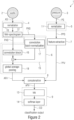
- Figure 1 shows a schematic view of a first embodiment of a classification system 1 for classifying an external impact on a window or on an access opening of an enclosed structure according to the disclosure.
- the classification system comprises:
- the audio signal pre-processor 4 comprises an audio signal filter configured for filtering the audio signal AS
- the pressure signal pre-processor 5 comprises a pressure signal filter configured for filtering the pressure signal PS.
- the audio signal pre-processor 4 comprises an audio signal outlier removing processor configured for removing outliers from the audio signal AS
- the pressure signal pre-processor 5 comprises a pressure signal outlier removing processor configured for removing outliers from the pressure signal PS.
- the audio signal feature processor 6 is configured for calculating at least a first portion of the audio feature vector AFV by using one or more first explicit formulas
- the pressure signal feature processor 7 is configured for calculating at least a first portion of the pressure feature vector PFV by using one or more second explicit formulas.
- the feature combining processor 8 is configured for producing the audio feature and pressure feature vector APV by producing a concatenation or a sum or an elementwise multiplication of the audio feature vector AFV and the pressure feature vector PFV.
- the disclosure refers to a method for classifying an external impact on a window or on an access opening of an enclosed structure.
- the method comprises the steps of:
- the disclosure refers to a computer program for implementing, when running on a computer, a method as discussed herein.
- This disclosure deals with the intelligent combinations - sensor fusion - pressure signals PS of a barometric pressure sensor 3 and audio signals AS of a microphone 2 for the identification of specific types of events such as a window or house door being opened or closed or the break of a window glass.
- identification of such events can be used for instance to detect that a burglar is entering a home or house. Similar events are also relevant for other enclosed environment like cars.
- the pressure signal PS measured at a barometric pressure sensor 3 has a characteristic pattern depending on whether a window or a door in the home, where the barometric pressure sensor 3 is placed, is being opened, tilted, broken or similar.
- the pattern of the pressure signal PS remains distinctive not only in the affected room but also in the whole home as long as doors inside the home are not tightly closed.
- audio signals AS also exhibit a very distinctive behavior when events like slamming, crashing or hitting a window happens near the microphone 2. Nevertheless, the specific patterns recorded at the microphone 2 and at the barometric pressure sensor 3 have different characteristics that - depending on the event - can be more or less pronounced.
- the audio signal AS and the pressure signal PS are first separately pre-processed by the audio signal pre-processor and the 4 pressure signal pre-processor 5.
- the pre-processed audio signal PAS is fed to the audio signal feature processor 6 and the pre-processed pressure signal PPS is fed to the feature pressure signal feature processor 7.
- the signals PAS and PPS are still kept separate to enable a more appropriate and signal specific learning of the discriminative properties of the multiple stream data.
- the extracted audio feature vector AFV and the extracted pressure feature vector PFV could be the explicit calculation of a certain metric (such as a derivative, a phase, a mean value, etc.) or could be implicitly learned through a separate neural network.
- the extracted audio feature vector AFV and the extracted pressure feature vector PFV are fused or combined together in order to calculate an audio feature and pressure feature vector APV.
- This operation can have different implementations, ranging from a simple feature concatenation to a more complex weighted combination with weights (and offsets) being learned with a separate attention mechanism and thus a separate back-propagation process.
- the choice between the different combination methods will depend on the specific structure the subsequent structure, on its convergence properties and on the nature of the data (and extracted features).
- the computed audio feature and pressure feature vector APV is sent to the classification processor 9, which can be implemented as general machine learning classification algorithm or more conveniently as a neural network followed by a softmax layer.
- the specific network could be a fully combined network or an additional convolutional block depending on what features have been extracted and how they have been combined in the previous steps.
- Figure 2 shows a schematic view of a second embodiment of a classification system 1 for classifying an external impact on a window or on an access opening of an enclosed structure according to the disclosure.
- the audio signal pre-processor 4 comprises an audio signal normalization processor 10 configured for normalizing the audio signal AS, and/or the pressure signal pre-processor 5 comprises a pressure signal normalization processor 11 configured for normalizing the pressure signal PS.
- the audio signal pre-processor 4 comprises an audio signal converter processor 12 configured for providing the pre-processed audio signal PAS as two-dimensional pre-processed audio signal time-frequency maps.
- the first machine learning algorithm is implemented as a first artificial neural network 13, wherein the classification processor 9 comprises a softmax processor 14, which is arranged at an output side of the first artificial neural network 13, and which outputs the classification output CO.
- the audio signal feature processor 6 is configured for executing a second machine learning algorithm, wherein at least a second portion of the audio feature vector AFV is provided at an output layer of the second machine learning algorithm.
- the second machine learning algorithm is implemented as a second artificial neural network 15.
- the second artificial neural network 15 comprises at least one second convolution processor 16.
- the second artificial neural network 15 comprises at least one second convolution batch normalization processor 17.
- the audio signal feature processor 6 comprises at least one second pooling layer processor 18 at an output side of the second artificial neural network 15.
- the first pre-processing step may consist for both the audio signal AS and the pressure signal PS in data normalization.
- the mel scaled spectrogram may be calculated for the audio signal AS.
- the audio spectrogram may comprise 40 mel coefficients with a windows size of 40ms and an overlap of 20ms. Clearly, other combinations of window size, overlap and number of mels are possible.
- minimum and mean value may be extracted as metrics, as well as the dynamic moments and the dynamic moments of the first derivative.
- Other metrics or meta features like kurtosis, skewness, quantile shall also be considered.
- the pre-processed audio signal PAS in the form of an audio time-frequency representation with the second neural network 15.
- This consists of the combination of a convolution processor 16 and a convolution batch normalization processor 17.
- the convolution batch normalization processor 16 indicates a shortcut, where the same pre-processed audio signal PAS going into the convolution processor 15 is used as an input for the convolution batch normalization processor 17. This shall improve the convergence of the second artificial network15.
- a second pooling layer processor 18 shapes the output of the second neural network 15 to a 1D array.
- the calculated pressure features and the trained audio features are then concatenated and fed to a feedforward neural network 13 followed by a softmax processor 14 that eventually delivers the classification probabilities.
- Figure 3 shows a schematic view of a third embodiment of a classification system 1 for classifying an external impact on a window or on an access opening of an enclosed structure according to the disclosure.
- the audio signal feature processor 6 comprises at least one third rectified linear unit processor 19 at an output side of the second artificial neural network 15.
- the audio signal feature processor 6 comprises at least one fourth convolution processor 20 at an output side of the second artificial neural network 15.
- FIG. 3 the combination of the convolution processor 16 and the convolution batch normalization processor 16 is followed by a third rectified linear unit processor 19 and a fourth convolution processor 20.
- a second pooling layer processor 18 shapes the output of the second convolution processor 16 to a 1D array.
- Figure 4 shows a schematic view of a fourth embodiment of a classification system 1 for classifying an external impact on a window or on an access opening of an enclosed structure according to the disclosure.
- the pressure signal feature processor 6 is configured for executing a third machine learning algorithm, wherein at least a second portion of the pressure feature vector PFV is provided at an output layer of the third machine learning algorithm.
- the third machine learning algorithm is implemented as a third artificial neural network 21.
- the third artificial neural network 21 comprises at least one third convolution processor.
- the pressure signal feature processor 7 comprises at least one third pooling layer processor at an output side of the third artificial neural network 21.
- the pressure signal feature processor 7 comprises at least one fourth rectified linear unit processor at an output side of the third artificial neural network 21.
- the pressure signal feature processor 7 comprises at least one fifth convolution processor at an output side of the third artificial neural network.
- the pressure signal feature processor 7 comprises at least one fifth convolution processor at an output side of the third artificial neural network.
- the first artificial neural network 13 comprises at least one first convolution processor 22.
- the first artificial neural network 13 comprises at least one first convolution batch normalization processor 23.
- the first artificial neural network 13 comprises at least one first rectified linear unit processor 24.
- the classification processor 9 comprises at least one first pooling layer processor 25, which is arranged at the output side of the first artificial neural network 13.
- the classification processor 9 comprises at least one second rectified linear unit processor 26, which is arranged at the output side of the first artificial neural network 13.
- the pressure signal PS is normalized in order to create the preprocessed pressure signal PPS.
- the pressure feature vector PVF is learned from the preprocessed pressure signal PPS by a third artificial neural network 21.
- the audio signal AS the same approach as in the previous embodiment is implemented.
- the outputs of the audio signal feature processor 6 and the pressure signal feature processor 7 are added and then fed to the first neural network 13, which consists of a second rectified linear unit processor 26, a first convolution processor 22 and a first convolution batch normalization processor 23.
- the sum of the output of the first convolution processor 22 and the first convolution batch normalization processor 23 are input to a second rectified linear unit processor 26 followed by the first pooling layer processor 25 and by the softmax processor 14 for generating the classification output CO.
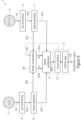
- Figure 5 shows a schematic view of a fifth embodiment of a classification system 1 for classifying an external impact on a window or on an access opening of an enclosed structure to the disclosure.
- the pressure signal pre-processor 5 comprises a pressure signal converter processor 27 configured for providing the pre-processed pressure signal PPS as two-dimensional pre-processed pressure signal time-frequency maps.
- FIG. 5 A further possible embodiment is depicted in Figure 5 .
- the pressure signal PS and the audio signal AS are normalized and spectrograms are calculated.
- the spectrogram from the pressure signal PS is calculated with FFTs, which are concatenated over a shifted window.
- no convolution batch normalization processor is used in the audio signal feature processor 6, only after the feature combining processor 8.
- a second pooling layer processor 18 is needed after the fourth convolution processor 20 to be able to combine the audio feature vector AFV with the learned pressure feature vector PFV from the pressure signal feature processor 7.
- the same network architecture as in Figure 4 is adopted for the classification processor 9 to obtain the classification output CO.
- Figure 6 shows a schematic view of a sixth embodiment of a classification system 1 for classifying an external impact on a window or on an access opening of an enclosed structure to the disclosure.
- the feature combining processor 8 is configured for producing the audio feature and pressure feature vector APV by producing a weighted concatenation or a weighted sum or a weighted elementwise multiplication of the audio feature vector AFV and the pressure feature vector PVF, wherein, by a weight computation processor 28, a weight AFW for the audio feature vector AFV and a weight PFW for the pressure feature vector PFV is determined depending on the audio feature vector AFV and/or the pressure feature vector PFV.
- the feature combining processor 8 is configured for producing the audio feature and pressure feature vector APV by producing a weighted concatenation or a weighted sum or a weighted elementwise multiplication of the audio feature vector AFV and the pressure feature vector PFV, wherein, by a weight computation processor 28, a weight AFW for the audio feature vector AFW and a weight PFW for the pressure feature vector PFV is determined depending on a hidden state HS of the first artificial neural network 13.
- the feature combining processor 8 is configured for adding a first offset vector to the audio feature vector AFV and/or a second offset vector to the pressure feature vector PFV before producing the audio feature and pressure feature vector APV, wherein the first offset vector and/or the second offset vector are determined depending on the audio feature vector AFV and/or the pressure feature vector PFV.
- the feature combining processor 8 is configured for adding a first offset vector to the audio feature vector AFV and/or a second offset vector to the pressure feature vector PFV before producing the audio feature and pressure feature vector APV, wherein the first offset vector and/or the second offset vector are determined depending on a hidden state HS of the first artificial neural network 13.
- weights and offsets can be learned by a standard back-propagation algorithm and gradient descent implemented as a multilayer perceptron network or by making use of more complex attention mechanism which takes the features (and hidden state of the following classification network if available) as inputs as illustrated in Figure 6 .
- H in equation (1) and (3) is optional and will be part of the optimization when a previous hidden state is available. This happens for example when a recurrent neural network is deployed in place of a convolutional one as the first neural network 13.
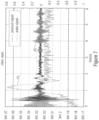
- Figure 7 shows a typical pressure signal PS over time and a typical audio signal AS over time, when a glass window is being opened.
- Figure 8 shows a typical pressure signal PS over time and a typical audio signal AS over time, when a glass window is being closed.
- Figure 9 shows a typical pressure signal PS over time and a typical audio signal AS over time, when a glass window is being hit.
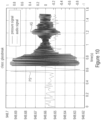
- Figure 10 shows a typical pressure signal PS over time and a typical audio signal AS over time, when a glass window is being broken.
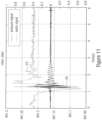
- Figure 11 shows a typical pressure signal PS over time and a typical audio signal AS over time, when a glass window is being slammed.
- Figures 7 to 11 are showing some typical signals measured at the pressure sensor and microphone when different types of events occur. It can be seen that the signals below have a very distinctive pattern depending on whether the glass window is being opened, closed, hit, slammed or broken. Also, it can be observed that the audio signals AS and the pressure signals PS are quite different in their properties with the audio signal AS having very specific patterns for slamming, hitting and glass breaking and the pressure signal PS having more distinctive behavior when trying to separate the open/close event. Similar considerations can be done by observing the frequency spectra of the different classes.
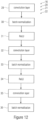
- FIG 12 shows a possible implementation for the convolution processors 16, 20, 21 and 22 described herein.
- Each of the convolution processors 16, 20, 21 and 22 explained in this disclosure may comprise (in this order) the following subunits: a first convolution layer 29 comprising eight two-dimensional Kernels, a first batch normalization layer 30, a first rectified linear layer 31, a second convolution layer 32 comprising five two-dimensional Kernels, a second batch normalization layer 33, a second rectified linear layer 34, a third convolution layer 35 comprising three two-dimensional Kernels, and a third batch normalization layer 36.
- Table 1 Overview algorithm comparison Algorithm Details Detection Accuracy Pressure Only Only the pressure stream as input to a classification feedforward neural network 89% Audio Only Only the audio stream as input for a classification with a CNN 57% Pressure + Audio logical AND Using the pressure only and the audio only algorithms separately and combine the classification results with a logical AND 93% Pressure + Audio smart Fusion Using the described embodiment from Figure 4 98%
- aspects have been described in the context of an apparatus, it is clear that these aspects also represent a description of the corresponding method, where a block or device corresponds to a method step or a feature of a method step. Analogously, aspects described in the context of a method step also represent a description of a corresponding block or item or feature of a corresponding apparatus.
Landscapes
- Engineering & Computer Science (AREA)
- Physics & Mathematics (AREA)
- Theoretical Computer Science (AREA)
- Data Mining & Analysis (AREA)
- General Physics & Mathematics (AREA)
- Artificial Intelligence (AREA)
- Evolutionary Computation (AREA)
- General Engineering & Computer Science (AREA)
- Life Sciences & Earth Sciences (AREA)
- Health & Medical Sciences (AREA)
- Computational Linguistics (AREA)
- Software Systems (AREA)
- Mathematical Physics (AREA)
- Computing Systems (AREA)
- Biophysics (AREA)
- General Health & Medical Sciences (AREA)
- Biomedical Technology (AREA)
- Molecular Biology (AREA)
- Computer Vision & Pattern Recognition (AREA)
- Evolutionary Biology (AREA)
- Bioinformatics & Computational Biology (AREA)
- Bioinformatics & Cheminformatics (AREA)
- Multimedia (AREA)
- Signal Processing (AREA)
- Audiology, Speech & Language Pathology (AREA)
- Human Computer Interaction (AREA)
- Acoustics & Sound (AREA)
- Probability & Statistics with Applications (AREA)
- Circuit For Audible Band Transducer (AREA)
- Medical Informatics (AREA)
Claims (25)
- Klassifizierungssystem zum Klassifizieren eines äußeren Stoßes auf ein Fenster oder auf eine Zugangsöffnung einer umschlossenen Struktur, wobei das Klassifizierungssystem folgende Merkmale aufweist:ein Mikrofon (2), das zum Erzeugen eines Audiosignals (AS) konfiguriert ist, das einem Klang innerhalb der umschlossenen Struktur entspricht;einen Barometerdrucksensor (3), der zum Erzeugen eines Drucksignals (PS) konfiguriert ist, das einem Luftdruck innerhalb der umschlossenen Struktur entspricht;einen Audiosignalvorprozessor (4), der zum Ableiten eines vorverarbeiteten Audiosignals (PAS) aus dem Audiosignal (AS) konfiguriert ist;einen Drucksignalvorprozessor (5), der zum Ableiten eines vorverarbeiteten Drucksignals (PPS) aus dem Drucksignal (PS) konfiguriert ist;einen Audiosignalmerkmalsprozessor (6), der zum Extrahieren von Audiomerkmalen aus dem vorverarbeiteten Audiosignal (PAS) konfiguriert ist, um einen Audiomerkmalsvektor (AFV) zu erzeugen, wobei die Audiomerkmale für das Audiosignal (AS) charakteristisch sind und der Audiomerkmalsvektor (AFV) Werte der Audiomerkmale aufweist;einen Drucksignalmerkmalsprozessor (7), der zum Extrahieren von Druckmerkmalen aus dem vorverarbeiteten Drucksignal (PPS) konfiguriert ist, um einen Druckmerkmalsvektor (PFV) zu erzeugen, wobei die Druckmerkmale für das Drucksignal charakteristisch sind und der Druckmerkmalsvektor (PFV) Werte der Druckmerkmale aufweist;einen Merkmalskombinationsprozessor (8), der zum Kombinieren des Audiomerkmalsvektors (AFV) und des Druckmerkmalsvektors (PVF) konfiguriert ist, um einen Audiomerkmals- und Druckmerkmalsvektor (APV) zu erzeugen; undeinen Klassifizierungsprozessor (9), der zum Klassifizieren des äußeren Stoßes auf das Fenster oder die Zugangsöffnung durch Klassifizieren des Audiomerkmals- und Druckmerkmalsvektors (APV) konfiguriert ist, um eine Klassifizierungsausgabe (CO) zu erzeugen;wobei der Klassifizierungsprozessor (9) zum Ausführen eines ersten Maschinenlernalgorithmus konfiguriert ist, wobei der Audiomerkmals- und Druckmerkmalsvektor (APV) einer Eingabeschicht des ersten Maschinenlernalgorithmus zugeführt wird, und wobei die Klassifizierungsausgabe (CO) auf einer Ausgabe des ersten Maschinenlernalgorithmus basiert.
- Klassifizierungssystem gemäß dem vorhergehenden Anspruch, wobei der Audiosignalvorprozessor (4) einen Audiosignalnormalisierungsprozessor (10) aufweist, der zum Normalisieren des Audiosignals (AS) konfiguriert ist, und/oder wobei der Drucksignalvorprozessor (5) einen Drucksignalnormalisierungsprozessor (11) aufweist, der zum Normalisieren des Drucksignals (PS) konfiguriert ist.
- Klassifizierungssystem gemäß einem der vorhergehenden Ansprüche, wobei der Audiosignalvorprozessor (4) ein Audiosignalfilter aufweist, das zum Filtern des Audiosignals (AS) konfiguriert ist, und/oder wobei der Drucksignalvorprozessor (5) ein Drucksignalfilter aufweist, das zum Filtern des Drucksignals (PS) konfiguriert ist.
- Klassifizierungssystem gemäß einem der vorhergehenden Ansprüche, wobei der Audiosignalvorprozessor (4) einen Audiosignalausreißerentfernungsprozessor aufweist, der zum Entfernen von Ausreißern aus dem Audiosignal (AS) konfiguriert ist, und/oder wobei der Drucksignalvorprozessor (5) einen Drucksignalausreißerentfernungsprozessor aufweist, der zum Entfernen von Ausreißern aus dem Drucksignal (PS) konfiguriert ist.
- Klassifizierungssystem gemäß einem der vorhergehenden Ansprüche, wobei der Audiosignalvorprozessor (4) einen Audiosignalwandlerprozessor (12) aufweist, der zum Bereitstellen des vorverarbeiteten Audiosignals (PAS) als zweidimensionale vorverarbeitete Audiosignal-Zeit-Frequenz-Abbildungen konfiguriert ist, und/oder wobei der Drucksignalvorprozessor (5) einen Drucksignalwandlerprozessor (27) aufweist, der zum Bereitstellen des vorverarbeiteten Drucksignals (PPS) als zweidimensionale vorverarbeitete Drucksignal-Zeit-Frequenz-Abbildungen konfiguriert ist.
- Klassifizierungssystem gemäß einem der vorhergehenden Ansprüche, wobei der Audiosignalmerkmalsprozessor (6) zum Berechnen zumindest eines ersten Abschnitts des Audiomerkmalsvektors (AFV) unter Verwendung einer oder mehrerer erster expliziter Formeln konfiguriert ist, und/oder wobei der Drucksignalmerkmalsprozessor (7) zum Berechnen zumindest eines ersten Abschnitts des Druckmerkmalsvektors (PFV) unter Verwendung einer oder mehrerer zweiter expliziter Formeln konfiguriert ist.
- Klassifizierungssystem gemäß einem der vorhergehenden Ansprüche, wobei der erste Maschinenlernalgorithmus als ein erstes künstliches neuronales Netz (13) implementiert ist, wobei der Klassifizierungsprozessor (9) einen Softmax-Prozessor (14) aufweist, der an einer Ausgabeseite des ersten künstlichen neuronalen Netzes (13) angeordnet ist, und der die Klassifizierungsausgabe (CO) ausgibt.
- Klassifizierungssystem gemäß dem vorhergehenden Anspruch, wobei das erste künstliche neuronale Netz (13) zumindest einen ersten Faltungsprozessor (22) aufweist.
- Klassifizierungssystem gemäß Anspruch 7 oder 8, wobei das erste künstliche neuronale Netz (13) zumindest einen ersten Faltungsstapelnormalisierungsprozessor (23) aufweist.
- Klassifizierungssystem gemäß einem der Ansprüche 7 bis 9, wobei das erste künstliche neuronale Netz (13) zumindest einen ersten rektifizierten Lineareinheitsprozessor (24) aufweist.
- Klassifizierungssystem gemäß einem der Ansprüche 7 bis 10, wobei der Klassifizierungsprozessor (9) zumindest einen ersten Bündelungsschichtprozessor (25) aufweist, der an der Ausgabeseite des ersten künstlichen neuronalen Netzes (13) angeordnet ist.
- Klassifizierungssystem gemäß einem der Ansprüche 7 bis 11, wobei der Klassifizierungsprozessor (9) zumindest einen zweiten rektifizierten Lineareinheitsprozessor (26) aufweist, der an der Ausgabeseite des ersten künstlichen neuronalen Netzes (13) angeordnet ist.
- Klassifizierungssystem gemäß einem der vorhergehenden Ansprüche, wobei der Audiosignalmerkmalsprozessor (4) zum Ausführen eines zweiten Maschinenlernalgorithmus konfiguriert ist, wobei zumindest ein zweiter Abschnitt des Audiomerkmalsvektors (AFV) an einer Ausgabeschicht des zweiten Maschinenlernalgorithmus bereitgestellt ist, und/oder wobei der Drucksignalmerkmalsprozessor (6) zum Ausführen eines dritten Maschinenlernalgorithmus konfiguriert ist, wobei zumindest ein zweiter Abschnitt des Druckmerkmalsvektors (PFV) an einer Ausgabeschicht des dritten Maschinenlernalgorithmus bereitgestellt ist.
- Klassifizierungssystem gemäß dem vorhergehenden Anspruch, wobei der zweite Maschinenlernalgorithmus als ein zweites künstliches neuronales Netz (15) implementiert ist, und/oder wobei der dritte Maschinenlernalgorithmus als ein drittes künstliches neuronales Netz (21) implementiert ist.
- Klassifizierungssystem gemäß dem vorhergehenden Anspruch, wobei das zweite künstliche neuronale Netz (15) zumindest einen zweiten Faltungsprozessor (16) aufweist, und/oder das dritte künstliche neuronale Netz (21) zumindest einen dritten Faltungsprozessor aufweist.
- Klassifizierungssystem gemäß Anspruch 14 oder 15, wobei das zweite künstliche neuronale Netz (15) zumindest einen zweiten Faltungsstapelnormalisierungsprozessor (17) aufweist, und/oder wobei das dritte künstliche neuronale Netz (21) zumindest einen dritten Faltungsstapelnormalisierungsprozessor aufweist.
- Klassifizierungssystem gemäß einem der Ansprüche 14 bis 16, wobei der Audiosignalmerkmalsprozessor (6) zumindest einen zweiten Bündelungsschichtprozessor (18) an einer Ausgabeseite des zweiten künstlichen neuronalen Netzes (15) aufweist, und/oder wobei der Drucksignalmerkmalsprozessor (7) zumindest einen dritten Bündelungsschichtprozessor an einer Ausgabeseite des dritten künstlichen neuronalen Netzes (21) aufweist.
- Klassifizierungssystem gemäß einem der Ansprüche 14 bis 16, wobei der Audiosignalmerkmalsprozessor (6) zumindest einen dritten rektifizierten Lineareinheitsprozessor (19) an einer Ausgabeseite des zweiten künstlichen neuronalen Netzes (15) aufweist, und/oder wobei der Drucksignalmerkmalsprozessor (7) zumindest einen vierten rektifizierten Lineareinheitsprozessor an einer Ausgabeseite des dritten künstlichen neuronalen Netzes (21) aufweist.
- Klassifizierungssystem gemäß einem der Ansprüche 14 bis 16, wobei der Audiosignalmerkmalsprozessor (6) zumindest einen vierten Faltungsprozessor (20) an einer Ausgabeseite des zweiten künstlichen neuronalen Netzes (15) aufweist, und/oder wobei der Drucksignalmerkmalsprozessor (7) zumindest einen fünften Faltungsprozessor an einer Ausgabeseite des dritten künstlichen neuronalen Netzes (21) aufweist.
- Klassifizierungssystem gemäß einem der vorhergehenden Ansprüche, wobei der Merkmalskombinationsprozessor (8) zum Erzeugen des Audiomerkmals- und Druckmerkmalsvektors (APV) durch Erzeugen einer Verkettung oder einer Summe oder einer elementweisen Multiplikation des Audiomerkmalsvektors (AFV) und des Druckmerkmalsvektors (PFV) konfiguriert ist.
- Klassifizierungssystem gemäß einem der vorhergehenden Ansprüche, wobei der Merkmalskombinationsprozessor (8) zum Erzeugen des Audiomerkmals- und Druckmerkmalsvektors (APV) durch Erzeugen einer gewichteten Verkettung oder einer gewichteten Summe oder einer gewichteten elementweisen Multiplikation des Audiomerkmalsvektors (AFV) und des Druckmerkmalsvektors (PVF) konfiguriert ist, wobei durch einen Gewichtungsberechnungsprozessor (28) eine Gewichtung (AFW) für den Audiomerkmalsvektor (AFV) und eine Gewichtung (PFW) für den Druckmerkmalsvektor (PFV) in Abhängigkeit von dem Audiomerkmalsvektor (AFV) und/oder dem Druckmerkmalsvektor (PFV) bestimmt wird.
- Klassifizierungssystem gemäß einem der Ansprüche 7 bis 20, wobei der Merkmalskombinationsprozessor (8) zum Erzeugen des Audiomerkmals- und Druckmerkmalsvektors (APV) durch Erzeugen einer gewichteten Verkettung oder einer gewichteten Summe oder einer gewichteten elementweisen Multiplikation des Audiomerkmalsvektors (AFV) und des Druckmerkmalsvektors (PFV) konfiguriert ist, wobei durch einen Gewichtungsberechnungsprozessor (28) eine Gewichtung (AFW) für den Audiomerkmalsvektor (AFW) und eine Gewichtung (PFW) für den Druckmerkmalsvektor (PFV) in Abhängigkeit von einem verborgenen Zustand (HS) des ersten künstlichen neuronalen Netzes (13) bestimmt werden.
- Klassifizierungssystem gemäß einem der vorhergehenden Ansprüche, wobei der Merkmalskombinationsprozessor (8) zum Hinzufügen eines ersten Versatzvektors zu dem Audiomerkmalsvektor (AFV) und/oder eines zweiten Versatzvektors zu dem Druckmerkmalsvektor (PFV) vor dem Erzeugen des Audiomerkmals- und Druckmerkmalsvektors (APV) konfiguriert ist, wobei der erste Versatzvektor und/oder der zweite Versatzvektor in Abhängigkeit von dem Audiomerkmalsvektor (AFV) und/oder dem Druckmerkmalsvektor (PFV) bestimmt werden.
- Klassifizierungssystem gemäß einem der Ansprüche 7 bis 21, wobei der Merkmalskombinationsprozessor (8) zum Hinzufügen eines ersten Versatzvektors zu dem Audiomerkmalsvektor (AFV) und/oder eines zweiten Versatzvektors zu dem Druckmerkmalsvektor (PFV) vor dem Erzeugen des Audiomerkmals- und Druckmerkmalsvektors (APV) konfiguriert ist, wobei der erste Versatzvektor und/oder der zweite Versatzvektor in Abhängigkeit von einem verborgenen Zustand (HS) des ersten künstlichen neuronalen Netzes (13) bestimmt werden.
- Verfahren zum Klassifizieren eines äußeren Stoßes auf ein Fenster oder auf eine Zugangsöffnung einer umschlossenen Struktur, wobei das Verfahren folgende Schritte aufweist:Erzeugen eines Audiosignals (AS), das einem Klang innerhalb der umschlossenen Struktur entspricht, unter Verwendung eines Mikrofons (2);Erzeugen eines Drucksignals (PS), das einem Luftdruck innerhalb der umschlossenen Struktur entspricht, unter Verwendung eines Barometerdrucksensors (3);Ableiten eines vorverarbeiteten Audiosignals (PAS) aus dem Audiosignal (AS) unter Verwendung eines Audiosignalvorprozessors (4);Ableiten eines vorverarbeiteten Drucksignals (PPS) aus dem Drucksignal (PS) unter Verwendung eines Drucksignalvorprozessors (5);Extrahieren von Audiomerkmalen aus dem vorverarbeiteten Audiosignal (PAS) unter Verwendung eines Audiosignalmerkmalsprozessors (6), um einen Audiomerkmalsvektor (AFV) zu erzeugen, wobei die Audiomerkmale für das Audiosignal (AS) charakteristisch sind und der Audiomerkmalsvektor (AFV) Werte der Audiomerkmale aufweist;Extrahieren von Druckmerkmalen aus dem vorverarbeiteten Drucksignal (PPS) unter Verwendung eines Drucksignalmerkmalsprozessors (7), um einen Druckmerkmalsvektor (PFV) zu erzeugen, wobei die Druckmerkmale für das Drucksignal charakteristisch sind und der Druckmerkmalsvektor (PFV) Werte der Druckmerkmale aufweist;Kombinieren des Audiomerkmalsvektors (AFV) und des Druckmerkmalsvektors (PFV) unter Verwendung eines Merkmalskombinationsprozessors (8), um einen Audiomerkmals- und Druckmerkmalsvektor (APV) zu erzeugen; undKlassifizieren des äußeren Stoßes auf das Fenster oder die Zugangsöffnung durch Klassifizieren des Audiomerkmals- und Druckmerkmalsvektors (APV) unter Verwendung eines Klassifizierungsprozessors (9), um eine Klassifizierungsausgabe (CO) zu erzeugen;wobei der Klassifizierungsprozessor (9) einen ersten Maschinenlernalgorithmus ausführt, wobei der Audiomerkmals- und Druckmerkmalsvektor (APV) einer Eingabeschicht des ersten Maschinenlernalgorithmus zugeführt wird, und wobei die Klassifizierungsausgabe (CO) auf einer Ausgabe des ersten Maschinenlernalgorithmus basiert.
Priority Applications (4)
| Application Number | Priority Date | Filing Date | Title |
|---|---|---|---|
| EP20153226.4A EP3855432B1 (de) | 2020-01-22 | 2020-01-22 | Klassifizierungssystem und verfahren zur klassifizierung eines externen aufpralls auf ein fenster oder auf eine zugangsöffnung einer geschlossenen struktur |
| US17/112,230 US12236973B2 (en) | 2020-01-22 | 2020-12-04 | Classification system and method for classifying an external impact on a window or on an access opening of an enclosed structure |
| KR1020210007448A KR20210095570A (ko) | 2020-01-22 | 2021-01-19 | 밀폐 구조의 창문 또는 출입구에 대한 외부 영향을 분류하기 위한 분류 시스템 및 방법 |
| CN202110074583.2A CN113160851B (zh) | 2020-01-22 | 2021-01-20 | 分类封闭结构的窗口或入口的外部冲击的分类系统和方法 |
Applications Claiming Priority (1)
| Application Number | Priority Date | Filing Date | Title |
|---|---|---|---|
| EP20153226.4A EP3855432B1 (de) | 2020-01-22 | 2020-01-22 | Klassifizierungssystem und verfahren zur klassifizierung eines externen aufpralls auf ein fenster oder auf eine zugangsöffnung einer geschlossenen struktur |
Publications (2)
| Publication Number | Publication Date |
|---|---|
| EP3855432A1 EP3855432A1 (de) | 2021-07-28 |
| EP3855432B1 true EP3855432B1 (de) | 2024-11-27 |
Family
ID=69187726
Family Applications (1)
| Application Number | Title | Priority Date | Filing Date |
|---|---|---|---|
| EP20153226.4A Active EP3855432B1 (de) | 2020-01-22 | 2020-01-22 | Klassifizierungssystem und verfahren zur klassifizierung eines externen aufpralls auf ein fenster oder auf eine zugangsöffnung einer geschlossenen struktur |
Country Status (4)
| Country | Link |
|---|---|
| US (1) | US12236973B2 (de) |
| EP (1) | EP3855432B1 (de) |
| KR (1) | KR20210095570A (de) |
| CN (1) | CN113160851B (de) |
Families Citing this family (1)
| Publication number | Priority date | Publication date | Assignee | Title |
|---|---|---|---|---|
| US12142093B2 (en) * | 2021-06-14 | 2024-11-12 | Robert Bosch Gmbh | Automated windshield damage detection and mitigation for autonomous vehicles |
Family Cites Families (37)
| Publication number | Priority date | Publication date | Assignee | Title |
|---|---|---|---|---|
| EP1523717A1 (de) * | 2002-07-19 | 2005-04-20 | BRITISH TELECOMMUNICATIONS public limited company | Verfahren und vorrichtung zur klassifikation des semantischen inhalts von audio-/video-daten |
| JP2006258463A (ja) * | 2005-03-15 | 2006-09-28 | Yokogawa Denshikiki Co Ltd | 外力検出装置及びこれを用いた防犯システム |
| US8428949B2 (en) * | 2008-06-30 | 2013-04-23 | Waves Audio Ltd. | Apparatus and method for classification and segmentation of audio content, based on the audio signal |
| JP2010182287A (ja) * | 2008-07-17 | 2010-08-19 | Steven C Kays | 適応型インテリジェント・デザイン |
| CN202209524U (zh) * | 2011-01-25 | 2012-05-02 | 黄腾飞 | 一种基于压力温度分析的机场坪航空燃油管网泄漏检测系统 |
| US20170262478A1 (en) * | 2014-09-09 | 2017-09-14 | Thomson Licensing | Method and apparatus for image retrieval with feature learning |
| US9824684B2 (en) * | 2014-11-13 | 2017-11-21 | Microsoft Technology Licensing, Llc | Prediction-based sequence recognition |
| WO2016109838A1 (en) * | 2014-12-31 | 2016-07-07 | Google Inc. | Automated handling of a package delivery at a smart-home |
| KR20160095901A (ko) * | 2015-02-04 | 2016-08-12 | 주식회사남선알미늄 | 홈네트워크 시스템과 연동하는 안전창호를 이용한 방범시스템 |
| US11940550B2 (en) * | 2015-07-17 | 2024-03-26 | Origin Wireless, Inc. | Method, apparatus, and system for wireless monitoring to ensure security |
| US20210136681A1 (en) * | 2015-07-17 | 2021-05-06 | Chao-Lun Mai | Method, apparatus, and system for wireless monitoring with flexible power supply |
| US9940825B2 (en) | 2016-02-12 | 2018-04-10 | Robert Bosch Gmbh | Barometric pressure to reduce security false alarms |
| JP6742620B2 (ja) * | 2016-10-14 | 2020-08-26 | 公立大学法人大阪 | 嚥下診断装置およびプログラム |
| CN106437713A (zh) * | 2016-10-21 | 2017-02-22 | 山东科技大学 | 一种综放工作面自动化放煤装置及放煤过程识别方法 |
| CN107123220A (zh) * | 2017-06-06 | 2017-09-01 | 甲丙益(深圳)网络科技有限公司 | 用于室内空间的安全监控的装置和方法 |
| TWI645376B (zh) * | 2017-06-09 | 2018-12-21 | 葉振凱 | 複合式感測元件安防系統 |
| CN109102812B (zh) * | 2017-06-21 | 2021-08-31 | 北京搜狗科技发展有限公司 | 一种声纹识别方法、系统及电子设备 |
| US20190057715A1 (en) * | 2017-08-15 | 2019-02-21 | Pointr Data Inc. | Deep neural network of multiple audio streams for location determination and environment monitoring |
| IT201800003003A1 (it) * | 2018-02-23 | 2019-08-23 | St Microelectronics Srl | Procedimento di rilevazione, circuito, dispositivo e prodotto informatico corrispondenti |
| KR102018346B1 (ko) * | 2018-05-11 | 2019-10-14 | 국방과학연구소 | 음향 신호를 분류하는 방법 및 시스템 |
| US11715284B2 (en) * | 2018-05-18 | 2023-08-01 | Nec Corporation | Anomaly detection apparatus, anomaly detection method, and program |
| EP3573031B1 (de) | 2018-05-24 | 2022-05-11 | Infineon Technologies AG | System und verfahren zur überwachung |
| EP4404111A3 (de) * | 2018-07-30 | 2024-10-23 | Memorial Sloan Kettering Cancer Center | Multimodale, multiauflösende neuronale tiefenlernnetze zur segmentierung, ergebnisvorhersage und überwachung der longitudinalen reaktion auf immuntherapie und strahlentherapie |
| CN109166593B (zh) * | 2018-08-17 | 2021-03-16 | 腾讯音乐娱乐科技(深圳)有限公司 | 音频数据处理方法、装置及存储介质 |
| WO2020047264A1 (en) * | 2018-08-31 | 2020-03-05 | The Trustees Of Dartmouth College | A device embedded in, or attached to, a pillow configured for in-bed monitoring of respiration |
| US20200152330A1 (en) * | 2018-11-13 | 2020-05-14 | CurieAI, Inc. | Scalable Personalized Treatment Recommendation |
| CN109815903B (zh) * | 2019-01-24 | 2020-10-02 | 同济大学 | 一种基于自适应融合网络的视频情感分类方法 |
| EP3690751A1 (de) * | 2019-01-31 | 2020-08-05 | Siemens Aktiengesellschaft | Verfahren zum herstellen eines extraktors für tiefe latente merkmale für industriesensordaten |
| US10977445B2 (en) * | 2019-02-01 | 2021-04-13 | International Business Machines Corporation | Weighting features for an intent classification system |
| US11062183B2 (en) * | 2019-05-21 | 2021-07-13 | Wipro Limited | System and method for automated 3D training content generation |
| CN110236550B (zh) * | 2019-05-30 | 2020-07-10 | 清华大学 | 一种基于多模态深度学习的人体步态预测装置 |
| WO2020255137A1 (en) * | 2019-06-19 | 2020-12-24 | Yissum Research Development Company Of The Hebrew University Of Jerusalem Ltd. | Machine learning-based anomaly detection |
| US11257493B2 (en) * | 2019-07-11 | 2022-02-22 | Soundhound, Inc. | Vision-assisted speech processing |
| CN110334243A (zh) * | 2019-07-11 | 2019-10-15 | 哈尔滨工业大学 | 基于多层时序池化的音频表示学习方法 |
| CN110600054B (zh) * | 2019-09-06 | 2021-09-21 | 南京工程学院 | 基于网络模型融合的声场景分类方法 |
| US11852505B2 (en) * | 2019-09-18 | 2023-12-26 | Johnson Controls Tyco IP Holdings LLP | Critical environment monitoring system |
| CN112286901B (zh) * | 2019-11-19 | 2024-07-05 | 中建材信息技术股份有限公司 | 一种数据库融合关联系统 |
-
2020
- 2020-01-22 EP EP20153226.4A patent/EP3855432B1/de active Active
- 2020-12-04 US US17/112,230 patent/US12236973B2/en active Active
-
2021
- 2021-01-19 KR KR1020210007448A patent/KR20210095570A/ko active Pending
- 2021-01-20 CN CN202110074583.2A patent/CN113160851B/zh active Active
Also Published As
| Publication number | Publication date |
|---|---|
| US20210224618A1 (en) | 2021-07-22 |
| KR20210095570A (ko) | 2021-08-02 |
| CN113160851B (zh) | 2025-12-02 |
| CN113160851A (zh) | 2021-07-23 |
| US12236973B2 (en) | 2025-02-25 |
| EP3855432A1 (de) | 2021-07-28 |
Similar Documents
| Publication | Publication Date | Title |
|---|---|---|
| McCoy et al. | Ensemble deep learning for sustainable multimodal UAV classification | |
| US11810435B2 (en) | System and method for audio event detection in surveillance systems | |
| EP2250632A1 (de) | Videosensor und alarmsystem sowie verfahren mit objekt- und ereignisklassifizierung | |
| Tay et al. | A robust abnormal behavior detection method using convolutional neural network | |
| CN115132221B (zh) | 一种人声分离的方法、电子设备和可读存储介质 | |
| US11776532B2 (en) | Audio processing apparatus and method for audio scene classification | |
| EP3729428B1 (de) | Systeme und verfahren zur belegungsbestimmung | |
| Doshi et al. | A modular and unified framework for detecting and localizing video anomalies | |
| CN107137090B (zh) | 一种跌倒识别方法及装置、用户设备 | |
| CN116865631B (zh) | 自动窗帘的静音管状电机及其控制方法 | |
| US20100217435A1 (en) | Audio signal processing system and autonomous robot having such system | |
| Pan et al. | Cognitive acoustic analytics service for Internet of Things | |
| EP3855432B1 (de) | Klassifizierungssystem und verfahren zur klassifizierung eines externen aufpralls auf ein fenster oder auf eine zugangsöffnung einer geschlossenen struktur | |
| EP4418167A1 (de) | Verfahren und systeme zur verarbeitung künstlicher neuronaler netze | |
| CN119068871A (zh) | 基于图像与声音识别的校园安全防范系统 | |
| Chowdhury et al. | Anomaly detection in unsupervised surveillance setting using ensemble of multimodal data with adversarial defense | |
| CN113447287A (zh) | 异常检测装置和方法 | |
| KR102813043B1 (ko) | 기압 센서 데이터에 기초한 이벤트 분류 장치 및 방법 | |
| US8396825B2 (en) | Method and system to recognize temporal events using enhanced temporal decision trees | |
| US20230317102A1 (en) | Sound Event Detection | |
| Droghini et al. | An end-to-end unsupervised approach employing convolutional neural network autoencoders for human fall detection | |
| CN120164302A (zh) | 基于混合方式的室内老人跌倒检测系统的方法 | |
| He et al. | Deep learning approach for audio signal classification and its application in fiber optic sensor security system | |
| CN116701954A (zh) | 一种基于imu数据的基础设施状态识别方法 | |
| Doshi | Video anomaly detection: practical challenges for learning algorithms |
Legal Events
| Date | Code | Title | Description |
|---|---|---|---|
| PUAI | Public reference made under article 153(3) epc to a published international application that has entered the european phase |
Free format text: ORIGINAL CODE: 0009012 |
|
| STAA | Information on the status of an ep patent application or granted ep patent |
Free format text: STATUS: THE APPLICATION HAS BEEN PUBLISHED |
|
| AK | Designated contracting states |
Kind code of ref document: A1 Designated state(s): AL AT BE BG CH CY CZ DE DK EE ES FI FR GB GR HR HU IE IS IT LI LT LU LV MC MK MT NL NO PL PT RO RS SE SI SK SM TR |
|
| STAA | Information on the status of an ep patent application or granted ep patent |
Free format text: STATUS: REQUEST FOR EXAMINATION WAS MADE |
|
| 17P | Request for examination filed |
Effective date: 20220111 |
|
| RBV | Designated contracting states (corrected) |
Designated state(s): AL AT BE BG CH CY CZ DE DK EE ES FI FR GB GR HR HU IE IS IT LI LT LU LV MC MK MT NL NO PL PT RO RS SE SI SK SM TR |
|
| STAA | Information on the status of an ep patent application or granted ep patent |
Free format text: STATUS: EXAMINATION IS IN PROGRESS |
|
| 17Q | First examination report despatched |
Effective date: 20230214 |
|
| GRAP | Despatch of communication of intention to grant a patent |
Free format text: ORIGINAL CODE: EPIDOSNIGR1 |
|
| STAA | Information on the status of an ep patent application or granted ep patent |
Free format text: STATUS: GRANT OF PATENT IS INTENDED |
|
| RIC1 | Information provided on ipc code assigned before grant |
Ipc: G06N 3/084 20230101ALN20240530BHEP Ipc: G06N 3/048 20230101ALN20240530BHEP Ipc: G10L 25/30 20130101ALN20240530BHEP Ipc: G06N 3/045 20230101ALI20240530BHEP Ipc: G06F 18/25 20230101ALI20240530BHEP Ipc: G10L 25/51 20130101AFI20240530BHEP |
|
| INTG | Intention to grant announced |
Effective date: 20240618 |
|
| P01 | Opt-out of the competence of the unified patent court (upc) registered |
Free format text: CASE NUMBER: APP_43360/2024 Effective date: 20240724 |
|
| GRAS | Grant fee paid |
Free format text: ORIGINAL CODE: EPIDOSNIGR3 |
|
| GRAA | (expected) grant |
Free format text: ORIGINAL CODE: 0009210 |
|
| STAA | Information on the status of an ep patent application or granted ep patent |
Free format text: STATUS: THE PATENT HAS BEEN GRANTED |
|
| AK | Designated contracting states |
Kind code of ref document: B1 Designated state(s): AL AT BE BG CH CY CZ DE DK EE ES FI FR GB GR HR HU IE IS IT LI LT LU LV MC MK MT NL NO PL PT RO RS SE SI SK SM TR |
|
| REG | Reference to a national code |
Ref country code: GB Ref legal event code: FG4D |
|
| REG | Reference to a national code |
Ref country code: CH Ref legal event code: EP |
|
| REG | Reference to a national code |
Ref country code: IE Ref legal event code: FG4D |
|
| REG | Reference to a national code |
Ref country code: DE Ref legal event code: R096 Ref document number: 602020041907 Country of ref document: DE |
|
| REG | Reference to a national code |
Ref country code: LT Ref legal event code: MG9D |
|
| REG | Reference to a national code |
Ref country code: NL Ref legal event code: MP Effective date: 20241127 |
|
| PG25 | Lapsed in a contracting state [announced via postgrant information from national office to epo] |
Ref country code: PT Free format text: LAPSE BECAUSE OF FAILURE TO SUBMIT A TRANSLATION OF THE DESCRIPTION OR TO PAY THE FEE WITHIN THE PRESCRIBED TIME-LIMIT Effective date: 20250327 Ref country code: HR Free format text: LAPSE BECAUSE OF FAILURE TO SUBMIT A TRANSLATION OF THE DESCRIPTION OR TO PAY THE FEE WITHIN THE PRESCRIBED TIME-LIMIT Effective date: 20241127 Ref country code: IS Free format text: LAPSE BECAUSE OF FAILURE TO SUBMIT A TRANSLATION OF THE DESCRIPTION OR TO PAY THE FEE WITHIN THE PRESCRIBED TIME-LIMIT Effective date: 20250327 |
|
| PG25 | Lapsed in a contracting state [announced via postgrant information from national office to epo] |
Ref country code: FI Free format text: LAPSE BECAUSE OF FAILURE TO SUBMIT A TRANSLATION OF THE DESCRIPTION OR TO PAY THE FEE WITHIN THE PRESCRIBED TIME-LIMIT Effective date: 20241127 Ref country code: NL Free format text: LAPSE BECAUSE OF FAILURE TO SUBMIT A TRANSLATION OF THE DESCRIPTION OR TO PAY THE FEE WITHIN THE PRESCRIBED TIME-LIMIT Effective date: 20241127 |
|
| REG | Reference to a national code |
Ref country code: AT Ref legal event code: MK05 Ref document number: 1746531 Country of ref document: AT Kind code of ref document: T Effective date: 20241127 |
|
| PG25 | Lapsed in a contracting state [announced via postgrant information from national office to epo] |
Ref country code: BG Free format text: LAPSE BECAUSE OF FAILURE TO SUBMIT A TRANSLATION OF THE DESCRIPTION OR TO PAY THE FEE WITHIN THE PRESCRIBED TIME-LIMIT Effective date: 20241127 |
|
| PG25 | Lapsed in a contracting state [announced via postgrant information from national office to epo] |
Ref country code: ES Free format text: LAPSE BECAUSE OF FAILURE TO SUBMIT A TRANSLATION OF THE DESCRIPTION OR TO PAY THE FEE WITHIN THE PRESCRIBED TIME-LIMIT Effective date: 20241127 |
|
| PG25 | Lapsed in a contracting state [announced via postgrant information from national office to epo] |
Ref country code: NO Free format text: LAPSE BECAUSE OF FAILURE TO SUBMIT A TRANSLATION OF THE DESCRIPTION OR TO PAY THE FEE WITHIN THE PRESCRIBED TIME-LIMIT Effective date: 20250227 |
|
| PG25 | Lapsed in a contracting state [announced via postgrant information from national office to epo] |
Ref country code: GR Free format text: LAPSE BECAUSE OF FAILURE TO SUBMIT A TRANSLATION OF THE DESCRIPTION OR TO PAY THE FEE WITHIN THE PRESCRIBED TIME-LIMIT Effective date: 20250228 Ref country code: LV Free format text: LAPSE BECAUSE OF FAILURE TO SUBMIT A TRANSLATION OF THE DESCRIPTION OR TO PAY THE FEE WITHIN THE PRESCRIBED TIME-LIMIT Effective date: 20241127 Ref country code: AT Free format text: LAPSE BECAUSE OF FAILURE TO SUBMIT A TRANSLATION OF THE DESCRIPTION OR TO PAY THE FEE WITHIN THE PRESCRIBED TIME-LIMIT Effective date: 20241127 |
|
| PG25 | Lapsed in a contracting state [announced via postgrant information from national office to epo] |
Ref country code: PL Free format text: LAPSE BECAUSE OF FAILURE TO SUBMIT A TRANSLATION OF THE DESCRIPTION OR TO PAY THE FEE WITHIN THE PRESCRIBED TIME-LIMIT Effective date: 20241127 |
|
| PG25 | Lapsed in a contracting state [announced via postgrant information from national office to epo] |
Ref country code: RS Free format text: LAPSE BECAUSE OF FAILURE TO SUBMIT A TRANSLATION OF THE DESCRIPTION OR TO PAY THE FEE WITHIN THE PRESCRIBED TIME-LIMIT Effective date: 20250227 |
|
| PG25 | Lapsed in a contracting state [announced via postgrant information from national office to epo] |
Ref country code: SM Free format text: LAPSE BECAUSE OF FAILURE TO SUBMIT A TRANSLATION OF THE DESCRIPTION OR TO PAY THE FEE WITHIN THE PRESCRIBED TIME-LIMIT Effective date: 20241127 |
|
| PG25 | Lapsed in a contracting state [announced via postgrant information from national office to epo] |
Ref country code: DK Free format text: LAPSE BECAUSE OF FAILURE TO SUBMIT A TRANSLATION OF THE DESCRIPTION OR TO PAY THE FEE WITHIN THE PRESCRIBED TIME-LIMIT Effective date: 20241127 |
|
| PG25 | Lapsed in a contracting state [announced via postgrant information from national office to epo] |
Ref country code: EE Free format text: LAPSE BECAUSE OF FAILURE TO SUBMIT A TRANSLATION OF THE DESCRIPTION OR TO PAY THE FEE WITHIN THE PRESCRIBED TIME-LIMIT Effective date: 20241127 |
|
| PG25 | Lapsed in a contracting state [announced via postgrant information from national office to epo] |
Ref country code: RO Free format text: LAPSE BECAUSE OF FAILURE TO SUBMIT A TRANSLATION OF THE DESCRIPTION OR TO PAY THE FEE WITHIN THE PRESCRIBED TIME-LIMIT Effective date: 20241127 |
|
| PG25 | Lapsed in a contracting state [announced via postgrant information from national office to epo] |
Ref country code: SK Free format text: LAPSE BECAUSE OF FAILURE TO SUBMIT A TRANSLATION OF THE DESCRIPTION OR TO PAY THE FEE WITHIN THE PRESCRIBED TIME-LIMIT Effective date: 20241127 |
|
| PG25 | Lapsed in a contracting state [announced via postgrant information from national office to epo] |
Ref country code: CZ Free format text: LAPSE BECAUSE OF FAILURE TO SUBMIT A TRANSLATION OF THE DESCRIPTION OR TO PAY THE FEE WITHIN THE PRESCRIBED TIME-LIMIT Effective date: 20241127 |
|
| PG25 | Lapsed in a contracting state [announced via postgrant information from national office to epo] |
Ref country code: IT Free format text: LAPSE BECAUSE OF FAILURE TO SUBMIT A TRANSLATION OF THE DESCRIPTION OR TO PAY THE FEE WITHIN THE PRESCRIBED TIME-LIMIT Effective date: 20241127 |
|
| REG | Reference to a national code |
Ref country code: DE Ref legal event code: R097 Ref document number: 602020041907 Country of ref document: DE |
|
| REG | Reference to a national code |
Ref country code: CH Ref legal event code: PL |
|
| PG25 | Lapsed in a contracting state [announced via postgrant information from national office to epo] |
Ref country code: SE Free format text: LAPSE BECAUSE OF FAILURE TO SUBMIT A TRANSLATION OF THE DESCRIPTION OR TO PAY THE FEE WITHIN THE PRESCRIBED TIME-LIMIT Effective date: 20241127 |
|
| PG25 | Lapsed in a contracting state [announced via postgrant information from national office to epo] |
Ref country code: MC Free format text: LAPSE BECAUSE OF FAILURE TO SUBMIT A TRANSLATION OF THE DESCRIPTION OR TO PAY THE FEE WITHIN THE PRESCRIBED TIME-LIMIT Effective date: 20241127 Ref country code: LU Free format text: LAPSE BECAUSE OF NON-PAYMENT OF DUE FEES Effective date: 20250122 |
|
| PLBE | No opposition filed within time limit |
Free format text: ORIGINAL CODE: 0009261 |
|
| STAA | Information on the status of an ep patent application or granted ep patent |
Free format text: STATUS: NO OPPOSITION FILED WITHIN TIME LIMIT |
|
| PG25 | Lapsed in a contracting state [announced via postgrant information from national office to epo] |
Ref country code: BE Free format text: LAPSE BECAUSE OF NON-PAYMENT OF DUE FEES Effective date: 20250131 |
|
| PG25 | Lapsed in a contracting state [announced via postgrant information from national office to epo] |
Ref country code: FR Free format text: LAPSE BECAUSE OF NON-PAYMENT OF DUE FEES Effective date: 20250127 |
|
| PG25 | Lapsed in a contracting state [announced via postgrant information from national office to epo] |
Ref country code: CH Free format text: LAPSE BECAUSE OF NON-PAYMENT OF DUE FEES Effective date: 20250131 |
|
| REG | Reference to a national code |
Ref country code: BE Ref legal event code: MM Effective date: 20250131 |
|
| 26N | No opposition filed |
Effective date: 20250828 |
|
| PG25 | Lapsed in a contracting state [announced via postgrant information from national office to epo] |
Ref country code: IE Free format text: LAPSE BECAUSE OF NON-PAYMENT OF DUE FEES Effective date: 20250122 |
|
| PGFP | Annual fee paid to national office [announced via postgrant information from national office to epo] |
Ref country code: GB Payment date: 20260123 Year of fee payment: 7 |
|
| PGFP | Annual fee paid to national office [announced via postgrant information from national office to epo] |
Ref country code: DE Payment date: 20260323 Year of fee payment: 7 |