EP3729428B1 - Systeme und verfahren zur belegungsbestimmung - Google Patents
Systeme und verfahren zur belegungsbestimmung Download PDFInfo
- Publication number
- EP3729428B1 EP3729428B1 EP18826260.4A EP18826260A EP3729428B1 EP 3729428 B1 EP3729428 B1 EP 3729428B1 EP 18826260 A EP18826260 A EP 18826260A EP 3729428 B1 EP3729428 B1 EP 3729428B1
- Authority
- EP
- European Patent Office
- Prior art keywords
- entropy
- feature
- mfcc
- functionals
- audio
- Prior art date
- Legal status (The legal status is an assumption and is not a legal conclusion. Google has not performed a legal analysis and makes no representation as to the accuracy of the status listed.)
- Active
Links
Images








Classifications
-
- G—PHYSICS
- G10—MUSICAL INSTRUMENTS; ACOUSTICS
- G10L—SPEECH ANALYSIS TECHNIQUES OR SPEECH SYNTHESIS; SPEECH RECOGNITION; SPEECH OR VOICE PROCESSING TECHNIQUES; SPEECH OR AUDIO CODING OR DECODING
- G10L15/00—Speech recognition
- G10L15/02—Feature extraction for speech recognition; Selection of recognition unit
-
- G—PHYSICS
- G08—SIGNALLING
- G08B—SIGNALLING SYSTEMS, e.g. PERSONAL CALLING SYSTEMS; ORDER TELEGRAPHS; ALARM SYSTEMS
- G08B13/00—Burglar, theft or intruder alarms
- G08B13/16—Actuation by interference with mechanical vibrations in air or other fluid
- G08B13/1654—Actuation by interference with mechanical vibrations in air or other fluid using passive vibration detection systems
- G08B13/1672—Actuation by interference with mechanical vibrations in air or other fluid using passive vibration detection systems using sonic detecting means, e.g. a microphone operating in the audio frequency range
-
- G—PHYSICS
- G10—MUSICAL INSTRUMENTS; ACOUSTICS
- G10L—SPEECH ANALYSIS TECHNIQUES OR SPEECH SYNTHESIS; SPEECH RECOGNITION; SPEECH OR VOICE PROCESSING TECHNIQUES; SPEECH OR AUDIO CODING OR DECODING
- G10L15/00—Speech recognition
- G10L15/20—Speech recognition techniques specially adapted for robustness in adverse environments, e.g. in noise, of stress induced speech
-
- G—PHYSICS
- G10—MUSICAL INSTRUMENTS; ACOUSTICS
- G10L—SPEECH ANALYSIS TECHNIQUES OR SPEECH SYNTHESIS; SPEECH RECOGNITION; SPEECH OR VOICE PROCESSING TECHNIQUES; SPEECH OR AUDIO CODING OR DECODING
- G10L25/00—Speech or voice analysis techniques not restricted to a single one of groups G10L15/00 - G10L21/00
- G10L25/48—Speech or voice analysis techniques not restricted to a single one of groups G10L15/00 - G10L21/00 specially adapted for particular use
- G10L25/51—Speech or voice analysis techniques not restricted to a single one of groups G10L15/00 - G10L21/00 specially adapted for particular use for comparison or discrimination
Definitions
- This disclosure relates generally to occupancy detection, and more particular to determining occupancy via an audio signal.
- Occupancy detection including presence detection and detection of the number of people occupying a space (also referred to herein as “head counting”), is an important function in smart homes and buildings.
- occupancy detection enables efficiency improvements in smart heating, ventilation and air conditioning (HVAC) systems, improved smart evacuation in emergency situations, discovering intruders or abnormal patterns of occupants' behaviors for security systems, and other improvements.
- HVAC heating, ventilation and air conditioning
- Some conventional occupancy detection systems rely on heat or infrared sensors to detect the occupancy of a space.
- these sensors are limited to their particular field of view, and may require a number of sensors for large or complex areas.
- heat or infrared sensors can generate false positives due to heat sources, for example appliances, or areas subject to sunlight.
- Some other conventional systems use radar and sonar sensors, chemosensors, or video cameras.
- these systems have limited detection distance, may have difficulty in detecting a static person, and/or may require significant computational complexity.
- video sensors there may be privacy concerns for occupancy detection using video signals in a dwelling or other private locations.
- Another form of occupancy detection uses audio sensors to determine whether a space is occupied.
- using audio systems to determine occupancy within a space is difficult in some environments, conditions, and when there is background noise present in the space. For example, presence detection in an open office environment or in the presence of TV, radio, or other background audio noise is more difficult than in a quiet single room environment.
- conventional audio-based occupancy detection systems require multiple sensors to accurately determine presence or head count, which increases energy consumption, upfront cost, and computational complexity for operating the system.
- WO 2017/149324 A1 provides a sensing system for use with at least one sensor having at least two defined states.
- Non patent literature “ EchoSafe: Sonar-based Verifiable Interaction with Intelligent Digital Agents” published on November 5, 2017 , provides voice controlled interactive smart speakers with verifying the presence of a user.
- a method of detecting occupancy in an area comprises obtaining, with a processor, an audio sample from an audio sensor and determining, with the processor, feature functional values of a set of selected feature functionals of statistical operations from the audio sample, as defined in independent claim 1.
- the determining of the feature functional values comprises extracting audio low-level descriptive (LLD) features from the audio sample using a frame-level sliding window with no overlap, partitioning the extracted audio LLD features into segment features determined by aggregating feature frames in segments with a fixed length in time and a shift of one frame, wherein the segments overlap one another such that each segment is calculated shifted by one frame, and determining the feature functional values of the determined segment features.
- LLD low-level descriptive
- the method further includes selecting audio LLD features that contain information most relevant of occupancy of the area from the determined feature functional values based on a correlation or independence of the selected feature functionals of the statistical operations.
- the method further includes determining, with the processor, occupancy in the area using a classifier based on the determined feature functional values of a set of selected audio LLD features.
- the classifier is a decision tree classifier.
- the decision tree classifier has maximum depth of between 2 and 15. In another embodiment, the decision tree classifier has a maximum depth of five.
- the set of feature functionals includes between 5 and 25 feature functionals. In another embodiment, the set of feature functionals includes between 10 and 20 feature functionals. In one particular embodiment, the set of feature functionals includes 11 feature functionals.
- the audio LLD features include one or more of envelope dynamic range, zero crossing rate, energy, brightness, spectral variance, spectral roll off, spectral flux, at least one MFCC coefficient, a delta of at least one MFCC coefficient, and a delta-delta of at least one MFCC coefficient.
- the set of feature functionals includes at least one of the group consisting of: mean, median, standard deviation, absolute integral, minimum, maximum, dynamic range, dominant-frequency, and entropy, determined for each of the audio LLD features.
- the set of feature functionals includes at least two selected from the group consisting of: maximum MFCC-1; mean energy; dynamic range of envelope dynamic range; mean of brightness; dynamic range of brightness; median of brightness; entropy of MFCC-4 delta; standard deviation of spectral flux; entropy of MFCC-19; standard deviation of envelope dynamic range; entropy of envelope dynamic range; absolute integral of MFCC-5 delta; entropy of zero crossing rate; absolute integral of brightness; entropy of spectral roll off; entropy of brightness; entropy of spectral flux; entropy of spectral variance; entropy of MFCC-7; entropy of MFCC-2 delta; entropy of MFCC-1 delta-delta; entropy of MFCC-5; entropy of energy; entropy of MFCC-3; and entropy of MFCC-20 delta.
- the set of feature functionals includes at least two selected from the group consisting of: maximum MFCC-1; mean energy; dynamic range of envelope dynamic range; mean of brightness; dynamic range of brightness; median of brightness; entropy of MFCC-4 delta; standard deviation of spectral flux; entropy of MFCC-19; standard deviation of envelope dynamic range; entropy of envelope dynamic range.
- the set of selected feature functionals and the classifier are learned in a machine-learning training process.
- a system for determining occupancy in an area comprises at least one audio sensor configured to record an audio sample in the area and a processor, as defined in independent claim 14.
- the processor is configured to execute programmed instructions stored in a memory to obtain the audio sample from the audio sensor, determine feature functional values of a set of selected feature functionals of statistical operations from the audio sample, select audio LLD features that contain information most relevant of occupancy of the area from the determined feature functional values based on a correlation or independence of the selected feature functionals of the statistical operations, and determine occupancy in the are using a classifier based on the determined feature functional values of a set of selected audio LLD features.
- the determining of the feature functional values comprises extracting audio low-level descriptive (LLD) features from the audio sample using a frame-level sliding window with no overlap, partitioning the extracted audio LLD features segment features determined by aggregating feature frames in segments with a fixed length in time and a shift of one frame, wherein the segments overlap one another such that each segment is calculated shifted by one frame, and determining the feature functional values of the determined segment features.
- LLD low-level descriptive
- the classifier is a decision tree classifier.
- the decision tree classifier has maximum depth of between 2 and 15.
- the set of feature functionals includes between 10 and 20 feature functionals.
- the audio LLD features include one or more of envelope dynamic range, zero crossing rate, energy, brightness, spectral variance, spectral roll off, spectral flux, at least one MFCC coefficient, a delta of at least one MFCC coefficient, and a delta-delta of at least one MFCC coefficient; and the set of feature functionals include at least one of the group consisting of: mean, median, standard deviation, absolute integral, minimum, maximum, dynamic range, dominant-frequency, and entropy, determined for each of the audio LLD features.
- the set of feature functionals includes at least two selected from the group consisting of: maximum of MFCC-1; mean of energy; dynamic range of envelope dynamic range; mean of brightness; dynamic range of brightness; median of brightness; entropy of MFCC-4 delta; standard deviation of spectral flux; entropy of MFCC-19; standard deviation of envelope dynamic range; entropy of envelope dynamic range; absolute integral of MFCC-5 delta; entropy of zero crossing rate; absolute integral of brightness; entropy of spectral roll off; entropy of brightness; entropy of spectral flux; entropy of spectral variance; entropy of MFCC-7; entropy of MFCC-2 delta; entropy of MFCC-1 delta-delta; entropy of MFCC-5; entropy of energy; entropy of MFCC-3; and entropy of MFCC-20 delta.
- Presence detection refers to detecting whether any individuals are present in an area
- head counting refers to detecting the quantity of individuals in an area.
- detect occupancy and “occupancy detection” can refer to either presence detection or head counting.
- FIG. 1 schematically illustrates an exemplary embodiment of an occupancy detection system 100 that detects occupancy, for example detecting the presence of at least one individual and/or detecting the quantity of people, in an area 104.
- the area 104 may be a single room, a plurality of rooms, a desired portion of a single room or plurality of rooms, an outdoor area, any other area in which it is desired to detect occupancy, or any combination of the above.
- the occupancy detection system 100 is configured to monitor characteristics of one or more audio signals obtained from the area 104 and to determine whether the area 104 is occupied, or how many people occupy the area 104.
- the system 100 may utilize a machine learning model to classify feature functionals of the detected audio to determine occupancy of the area 104.
- the occupancy detection system 100 includes a sensor package 110 that includes a processor 120 operably connected to a memory 122, and a single audio sensor 124, which can, for example, be a microphone or other suitable audio receiving device.
- the audio sensor 124 may be a MEMS audio sensor formed as an application-specific integrated circuit (ASIC).
- ASIC application-specific integrated circuit
- the audio sensor 124 is configured to sense sound pressure waves and convert the sound pressure waves into a digital or analog electronic signal.
- the electronic signal is transmitted from the audio sensor 124 to the processor 120 via wired or wireless communication.
- the system 100 may also include a display 128 operably connected to the processor 120 and configured to inform a user as to whether the area 104 is occupied and/or how many people occupy the area 104.
- the sensor package 110 may be part of another electronic device.
- the sensor package 110 may be integrated in a computer, a smart home hub, an alarm controller, a portable electronic device such as a cellular telephone, a tablet, a smart watch, or the like.
- the processor 120 and memory 122 may be the processor and memory used in the electronic device for general functioning of the electronic device, while the audio sensor 124 may be the microphone integrated in the electronic device.
- the sensor package 110 may be a dedicated sensor package.
- the processor 120, memory 122, audio sensor 124, and/or the display 128 may be separate, while the other components may be integrated in an electronic device.
- the processor 120 is configured to process the audio signals and to use a classifier model on the detected audio signals to determine the occupancy in a room.
- a "processor” includes any hardware system, hardware mechanism or hardware component that processes data, signals or other information.
- the processor 120 may include a system with a central processing unit, multiple processing units, dedicated circuitry for achieving functionality, or other systems.
- the memory 122 is configured to store program instructions that, when executed by the processor 120, enable the sensor package 110 to perform various operations described below, including determining the occupancy in the area 104.
- the memory 122 may be of any type of device capable of storing information accessible by the processor 120, such as write-capable memories, read-only memories, or other computer-readable mediums.
- the memory 122 is configured to store program instructions corresponding to at least one machine learning model, in particular to an occupancy classification model and classification parameters thereof.
- the processor 120 is configured to utilize the occupancy classification model to extract features from the audio signal or signals and to classify whether the area is occupied and/or how many individuals occupy the area.
- the term "machine learning model” refers to a system or set of program instructions and/or data configured to implement an algorithm or mathematical model that predicts and provides a desired output based on a given input. It will be appreciated that parameters of a machine learning model are not explicitly programmed or the machine learning model is not necessarily designed to follow particular rules in order to provide the desired output for a given input.
- the machine learning model is provided with a corpus of training data from which the processor identifies or "learns" patterns and statistical relationships or structures in the data, which are generalized to make predictions with respect to new data inputs.
- the classification parameters include a plurality of values for parameters of the occupancy classification model which were learned during a training process.
- FIG. 1 While the embodiment of FIG. 1 includes only one sensor package 110 having only one audio sensor 124, the reader should appreciate that in other embodiments, as illustrated in FIG. 2 , the system 100 may include two, three, or any suitable number of sensor packages 110 or audio sensors 124 as desired for a particular application.
- FIG. 2 illustrates an occupancy detection system 100A that includes a plurality of sensor packages 110, two of which are shown in FIG. 2 .
- the occupancy detection system 100A may include any desired number of sensor packages 110A.
- Each sensor package 110A may be configured similar to the sensor package 110 illustrated in FIG. 1 , such that each sensor package 110A may include a processor and an audio sensor.
- the sensor package 110A may also include a wireless data transceiver (not shown), and/or a battery (not shown) so as to enable the sensor packages 110A to be easily positioned at desired locations within the area 104.
- the sensor packages 110A may include only an audio sensor, only an audio sensor and a transceiver, only an audio sensor and a battery, or only an audio sensor, a transceiver, and a battery.
- the occupancy detection system 100A also includes a system controller 140, which communicates with the sensor packages 110A to obtain digital or analog signals from the sensor packages 110A corresponding to the audio signals received by the respective audio sensors.
- the system controller 140 is then configured to determine the occupancy of the area 104, as discussed in detail below.
- the system controller may be located in the area 104, or, as illustrated in FIG. 2 , may be located outside the area.
- the system controller 140 may be connected to or integrated in, for example, a security system controller, a building emergency control unit, an HVAC controller, a computer, a portable electronic device, or another desired controller.
- the sensor packages 110A may be connected to one another for data transmission via a wired or wireless connection and configured such that the controller of one of the sensor packages 110A performs the determination of the occupancy.
- a system controller 140 may be omitted from the sensor system 100A.
- the system controller 140 includes a processor 144 operably connected to a memory 148, a transceiver 152, and, in some embodiments, a display 156.
- the transceiver 152 includes for example, one or more of a Wi-Fi ® transceiver, a ZigBee ® transceiver, a Z-Wave ® transceiver, a Bluetooth ® transceiver, a wireless telephony transceiver, and RF transceiver, or another transceiver suitable to send and receive communication signals to and from the sensor packages 110A.
- processor includes any hardware system, hardware mechanism or hardware component that processes data, signals or other information.
- the processor 144 may include a system with a central processing unit, multiple processing units, dedicated circuitry for achieving functionality, or other systems.
- the memory 148 may be of any type of device capable of storing information accessible by the processor 144, such as write-capable memories, read-only memories, a memory card, ROM, RAM, hard drives, discs, flash memory, or other computer-readable medium.
- the memory 148 is configured to store program instructions that, when executed by the processor 144, enable the controller 140 to perform various operations described elsewhere herein, communicating with the sensor package 110A to receive the audio signal and classify the occupancy of the area using a machine learning model.
- the memory 148 is configured to store program instructions corresponding to at least one machine learning model, in particular to an occupancy classification model and classification parameters thereof.
- the processor 144 is configured to utilize the occupancy classification model to extract features from the audio signal or signals and to classify whether the area is occupied and/or how many people occupy the area.
- FIG. 3 illustrates a machine learning process 200 for training a machine-learning occupancy detection system such as the occupancy detection systems 100, 100A of FIGS. 1 and 2 to detect the occupancy of an area.
- statements that a method is performing some task or function refers to a controller or general purpose processor executing programmed instructions stored in non-transitory computer readable storage media operatively connected to the controller or processor to manipulate data or to operate one or more components in the occupancy detection systems 100, 100A to perform the task or function.
- the processor 120 of the sensor package 110 or 110A or the processor 144 of the system controller 140 described above may be such a controller or processor.
- controller or processor may be implemented with more than one processor and associated circuitry and components, each of which is configured to form one or more tasks or functions described herein. It will be appreciated that some or all of the operations the method can also be performed by a remote server or cloud processing infrastructure. Additionally, the steps of the methods may be performed in any feasible chronological order, regardless of the order shown in the figures or the order in which the steps are described.
- the process 200 begins by obtaining an audio sample (block 204).
- the audio sample is sensed by a single audio sensor, for example the audio sensor or microphone 124.
- the audio sample is sensed by a plurality of audio sensors 124 that are adjacent to one another or spread out over the area in which the occupancy detection determination is performed.
- the processor communicates with the one or more audio sensors to receive a time series of acoustic values corresponding to the detected audio in the area.
- the processor obtains the sensed audio sample from the audio sensor(s) via direct connection or via communication over a wired or wireless network.
- the LLD features extracted from the audio sample can be grouped into three main categories: time domain features, frequency domain features, and cepstral domain features.
- the time domain features can include, for example, the envelope dynamic range (i.e. the range of the temporal envelope of the signal) and zero crossing rate (i.e. the number of time-domain zero crossings of the signal within a processing frame, which is indicative of the frequency of signal amplitude sign change), both measured in a single dimension.
- the frequency domain features can include, for example, energy of the signal (i.e. the summation of the square power of the signal), brightness (i.e.
- the measure of high-frequency content in the signal measured using the spectral centroid, or the weighted mean of the frequencies, of the signal
- spectral variance i.e. the statistical variance of the frequency spectrum
- spectral roll-off the frequency under which a specified N percentile of the total energy of the power spectral distribution is contained; useful for distinguishing voiced speech from unvoiced noise
- spectral flux of the audio signal represented by, for example, a two-norm of the frame-to-frame spectral amplitude difference vector, which defines the amount of frame-to-frame fluctuation in time
- MFCC's are calculated using between 20 and 40 mel-frequency filter banks.
- only coefficients of the lower 12-13 mel-frequency filter banks are kept, while the coefficients of the higher filter banks may be discarded to arrive at the MFCC's for each frame.
- the coefficients of the lower 20 mel-frequency filter banks are retained, with the remaining filter banks discarded.
- LLD Low level descriptive
- features and functionals Features Dimension Functional Envelope dynamic range 1 Zero crossing rate 1 Mean Energy 1 Median Brightness 1 Std Spectral variance 1 Abs Integral Spectral roll off 1 Min Spectral flux 1 Max MFCC 20 Dynamic range MFCC-d 20 Dominant-frequency MFCC-dd 20 Entropy
- the process 200 continues by partitioning the features into segments with a fixed length in time and a shift of one frame (block 212).
- the feature frames are aggregated over the segment length to determine the segmented features.
- the segments may have length of, for example, between 1 second and 600 seconds. In one embodiment, the segments have length of between 3 seconds and 60 seconds.
- the features are partitioned into 30 second segments. In other embodiments, the features are partitioned into different segment lengths depending on the feature functionals applied to the particular features.
- the processor analyzes different segment lengths for the features to investigate the optimum time window for the particular occupancy detection task. The optimum time window may be based on the features in the audio signal and/or the features of the area in which the occupancy detection is performed.
- the segments overlap one another such that each segment is calculated shifted by one feature frame.
- the process 200 proceeds with the processor applying functionals to the determined LLD features and the respective delta and acceleration coefficients of the LLDS for each segment (block 216).
- the functionals applied are statistical operations including, for example, one or more of determining the mean, median, standard deviation, absolute integral, minimum, maximum, dynamic range, dominant-frequency, or entropy (determined, for example, using the Shannon entropy equation) of the determined and segmented LLDs.
- the processor may be configured to determine every functional of every LLD feature as the determined feature functionals. Alternatively, the processor may be configured to determine a limited number of feature functionals to reduce computational resources necessary for the determination of the feature functionals.
- the process 200 continues with the processor selecting feature functionals that contain information most relevant of occupancy of an area from the determined feature functionals (block 220).
- the controller analyzes the contribution of different audio feature types determined from the LLDs for the classification accuracy. Since there may be a large number of possible audio features in the audio sample, the selecting of the features includes performing transformations of the features or selecting only a subset of the features to analyze. Reducing the number of features for classification improves the speed and reduces the complexity of the computation.
- the feature selection methods pool together the most relevant and uncorrelated features and define the effect of each feature in presence detection and head counting tasks.
- Feature selection as an automatic method to select the most relevant features to the modeling problem has many benefits, such as improving the performance, providing a faster and simpler model that requires reduced computational resources, and allowing better understanding of the data and its underlying process.
- Different feature selection methods put more emphasis on one aspect than others.
- the feature selection may include univariate chi-squared ( ⁇ 2 or Chi2) statistical analysis and/or least absolute shrinkage and selection operator (LASSO) statistical, in particular LASSO using the l1 penalty. Both of these feature selection methods provide simple, quick, and effective feature selection.
- the correlation or independence of the various different feature functionals are determined using chi-squared and/or LASSO analysis.
- the processor determines the correlation between different feature functionals and the correlation between the features and known results (i.e. known presence or head count in the area). Feature functionals that exhibit low correlation with the known results are removed (i.e. not selected) because these feature functionals do not contain sufficient information relevant to the presence or head count determination. Conversely, features that are strongly correlated with the known results are retained. Additionally, features that are strongly correlated with one another may be discarded such that only one of the strongly correlated features remains. This enables the presence detection or head counting process to be performed with fewer feature calculations, and therefore less computational resources are necessary for the process.
- the number of feature functionals selected may vary in different embodiments based on whether the system is configured for presence detection or for head counting.
- accurate head counting may require more features than presence detection, since head counting requires determining not only if people are present, but the quantity of people present in the area.
- the process concludes by classifying the selected features (block 224).
- the controller 120, 140 generates a decision tree classifier, which advantageously has a fast inference time, is simple to interpret, and is computationally efficient.
- a decision tree is a type of supervised machine learning in which the controller continuously splits the data along decision nodes until arriving at a leaf, or final outcome.
- other classifiers such as support vector machine, deep neural networks, etc. may be used in place of the decision tree classifier.
- the decision tree may be determined using a recursive binary splitting procedure, for example using greedy splitting and/or Gini impurity decision criterion.
- the decision tree may be configured for a number of parameters.
- the decision tree classifier may be configured with a prespecified depth, minimum size for split, minimum leaf size, etc.
- an ensemble decision tree which combine a plurality of independently generated decision trees (i.e. multiple "estimators") using the audio data to generalize the classifier, which can in some embodiments improve the robustness of the process 200.
- the decision tree may be generated with, for example, between 1 and 5 estimators, a maximum depth of between 2 and 15, a minimum size for split of between 2 and 15, and a minimum leaf size of between 1 and 15.
- the decision tree is generated using one estimator, maximum depth of 5, minimum size for split of 5, minimum leaf size of 1, and Gini impurity decision criterion.
- any desired values may be used for the number of estimators, maximum depth, minimum size for split, and minimum leaf size.
- the training process is performed on an external device, such as a server (not shown), and the resulting classification parameters are provided to the occupancy detection system 100, 100A for storage in the memory 122, 148 and subsequent usage.
- the system may be easily adapted to a variety of different uses with reduced outlay and installation cost.
- the training process is performed as a system calibration when the occupancy detection system 100, 100A is installed and the training data is then stored in the memory 122, 148 for subsequent use.
- the occupancy detection system machine learning algorithm is therefore tailored to the specific area in which the system is installed. In such embodiments, a high degree of accuracy is obtainable since the classification parameters are based on the specific characteristics of the area in which the system is installed.
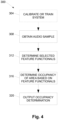
- FIG. 4 illustrates a flow chart of a process 300 for determining occupancy in an area.
- the process 300 refers to a processor, for example the processor 120 or 144 executing programmed instructions stored in a memory, for example memory 122 or 148, to perform the functions described below to detect the occupancy of an area.
- statements that a method is performing some task or function refers to a controller or general purpose processor executing programmed instructions stored in non-transitory computer readable storage media operatively connected to the controller or processor to manipulate data or to operate one or more components in the occupancy detection systems 100, 100A to perform the task or function.
- the processor 120 of the sensor package 110 or 110A or the processor 144 of the system controller 140 described above may be such a controller or processor.
- the controller or processor may be implemented with more than one processor and associated circuitry and components, each of which is configured to form one or more tasks or functions described herein. It will be appreciated that some or all of the operations the method can also be performed by a remote server or cloud processing infrastructure. Additionally, the steps of the methods may be performed in any feasible chronological order, regardless of the order shown in the figures or the order in which the steps are described.
- the process 300 may be performed by a computer, a smart home hub, an HVAC controller, an alarm controller, a portable electronic device such as a cellular telephone, a tablet, or a smart watch, or the like.
- the process 300 begins by calibrating or training the system (block 304).
- the training may, for example, be performed using the process 200 of FIG. 3 .
- the selected features, functionals, and/or classifier, for example the decision tree, from the calibration or training of the system are stored in the memory, e.g. memory 122 or 148, associated with the processor.
- the system may be pre-programmed with the selected features, functionals, and/or classification algorithm such that some or all of the calibration or training of the machine-learning occupancy detection system is not necessary. In one embodiment, between 5 and 25 feature functionals are selected. In another embodiment, between 10 and 20 feature functionals are selected. In one particular embodiment, 11 feature functionals are selected.
- the process then proceeds with the processor obtaining an audio sample (block 308) using an audio sensor, for example a microphone.
- the audio sample is sensed by a single audio sensor, for example the audio sensor or microphone 124.
- the audio sample is sensed by a computer, a smart home hub, an alarm controller, a portable electronic device such as a cellular telephone, a tablet, or a smart watch, or the like.
- the audio sample is sensed by a plurality of audio sensors that are adjacent to one another or spread out over the area in which the occupancy detection determination is performed.
- the processor communicates with the one or more audio sensors to receive a time series of acoustic values corresponding to the detected audio in the area.
- the processor obtains the sensed audio sample from the audio sensor(s) via direct connection or via communication over a wired or wireless network.
- the processor 120 or 144 extracts the audio LLD features, segments the extracted features, and determines the feature functionals in a similar manner as described above in the process 200 of FIG. 4 .
- the frame lengths from which the LLD features are extracted may be from approximately 5 ms to approximately 50 ms. In some embodiments, the length of the frames is dependent on the features detected in the audio signal. In another embodiment, the LLD feature frame lengths are between approximately 10 and approximately 30 ms. In one particular embodiment, the LLD feature frame lengths are approximately 25 ms.
- the segments may have length of, for example, between 1 second and 600 seconds. In one embodiment, the segments have length of between 3 seconds and 60 seconds. In one particular embodiment, the features are partitioned into 30 second segments. In other embodiments, the features are partitioned into different segment lengths depending on the feature functionals applied to the particular features. Furthermore, in some embodiments, the processor analyzes different segment lengths for the features to investigate the optimum time window for the particular occupancy detection task. The optimum time window may be based on the features in the audio signal and/or the features of the area in which the occupancy detection is performed. The segments overlap one another such that each segment is calculated shifted by one feature frame.
- the process 300 for determining occupancy is limited in the number of feature functionals determined.
- any desired number of feature functionals may be used depending on the desired accuracy and computational resources available.
- the selected features may vary based on the data received from executing the machine learning models. As discussed above with regard to the training and calibration process 200, and as will be explained with reference to experimental results below, the selected feature functionals may be those feature functionals that provide the greatest amount of information related to the presence and/or head count in the area.
- Table 2 lists 25 feature functionals determined to include information relevant to head counting from an experimental training process discussed in detail below. In one embodiment, all 25 feature functionals from the table are selected. In another embodiment, between 10 and 20 of the feature functionals from Table 2 are selected. In another embodiment, 11 of the feature functionals from Table 2 are selected. In some embodiments, the number of selected feature functionals selected may be selected from Table 2 in descending order (i.e. an embodiment with 11 selected feature functionals may use feature functionals 1-11 in Table 2).
- Table 2 25 Feature Functionals Determined by Experiment to be Relevant to Head Counting Feature Functional 1 MFCC-1 Maximum 2 Energy Mean 3 Envelope Dynamic Range Dynamic Range 4 Brightness Mean 5 Brightness Dynamic Range 6 Brightness Median 7 MFCC-4 delta Entropy 8 Spectral Flux Standard Deviation 9 MFCC-19 Entropy 10 Envelope Dynamic Range Standard Deviation 11 Envelope Dynamic Range Entropy 12 MFCC-5 delta Absolute Integral 13 Zero Crossing Rate Entropy 14 Brightness Absolute Integral 15 Spectral Roll off Entropy 16 Brightness Entropy 17 Spectral Flux Entropy 18 Spectral Variance Entropy 19 MFCC-7 Entropy 20 MFCC-2 delta Entropy 21 MFCC-1 delta-delta Entropy 22 MFCC-5 Entropy 23 Energy Entropy 24 MFCC-3 Entropy 25 MFCC-20 delta Entropy
- the process 300 continues with the processor 120 or 144 determining the occupancy of the area based on the feature functionals using a classifier (block 316).
- the classifier may be developed using a machine learning model such as the machine-learning training process of FIG. 3 .
- the determination of the occupancy may be performed using a decision tree.
- the decision tree used may have, for example, a depth of between 2 and 15. In one particular embodiment, the decision tree used has maximum depth of 5. The reader should appreciate, however, that in other embodiments any desired values may be used for the maximum depth and other parameters of the decision tree.
- the decision tree classifier determines, based on the input audio data as segmented and analyzed via feature functionals, what the occupancy of the area is likely to be.
- the decision tree output may be, in one embodiment, probability of a certain number of people present in the area, or probability that any individuals are present in the area. In another embodiment, the decision tree output may be a value of the determined number of individuals present in the area, or presence or lack of presence in the area.
- the method 300 continues by generating an output based on the determination of occupancy (block 320).
- the output may, in one embodiment, be a perceptible output depending on the occupancy determination made using the classifier depicted on the display 128 or 156.
- the perceptible output may include an indication of whether presence is detected in the area or whether no presence is detected in the area based on the determination made using the classifier.
- the perceptible output may be an indication on the display of the quantity of people in the area based on the determination made using the classifier.
- the perceptible output may be an audible indicator, such as an alert or alarm, or light indicator.
- the output is an electronic signal transmitted to another electronic device or stored in a memory or the memory 122, 148.
- the output may be an electronic signal output to a computer, a smart home hub, an HVAC controller, an alarm controller, a portable electronic device such as a cellular telephone, a tablet, or a smart watch, or the like.
- the received output may cause the electronic device to execute programmed instructions to, for example, activate an alarm, operate HVAC systems, activate or deactivate lights, or perform other automated functions.
- the disclosed systems 100, 100A and processes 200, 300 provide a number of improvements to computer and occupancy detection technology by affording an efficient and cost-effective way to increase occupancy detection performance over conventional systems.
- the system 100 and processes 200, 300 enable detection of occupancy and head counting in realistic scenarios using only audio signals collected from the environment. Audio processing is generally less computationally intensive than other occupancy detection technologies, for instance video processing, and therefore the disclosed audio based occupancy detections system requires less computational resources as compared to conventional occupancy detection systems.
- the use of audio signals enables the system 100 to be easily accessible in a variety of different environments and scenarios.
- using audio signals improves the accuracy of the occupancy detection in different applications as compared to conventional systems.
- Using only audio signals is more desired in some applications because the audio detection is considered to be less intrusive to privacy as compared to other conventional occupancy detection systems and methods such as, for example, video occupancy detection.
- the disclosed system and process provides excellent coverage of a room as compared to conventional occupancy detection systems that have a limited field of view (e.g. infrared or video based systems) or are constrained based on the position of the sensor.
- the occupancy detection used in the disclosed system and process enables determination of a limited number of features and feature functionals that are likely to provide information on whether an area is occupied and/or how many people occupy the area. As a result, the required computational resources, and therefore the energy costs of the system are reduced.
- the occupancy detection process can therefore be performed on devices with reduced computational power as compared to conventional methods. For instance, the occupancy detection process may be performed on a portable electronic device, such as a cellular telephone, tablet, or smart watch.
- the audio samples utilized in the first experiment were drawn from a multisensory occupancy detection corpus that includes recordings collected in a single office environment (representative of a commercial scenario), while the audio samples from the second experiment were drawn from a simulated living room environment (representative of a residential scenario).
- the audio data was recorded in 44.1 kHz using a MEMS acoustic sensor manufactured by Robert Bosch GmbH with the model number AKU151. It is noted that the sensor used is specifically designed for use in space-constrained consumer electronic devices, for example portable electronic devices. The number of people present at a given time in the experimental environments was available throughout the entire corpus based on video recordings to verify the accuracy of the occupancy detection.
- the single office data was acquired in a small, enclosed room including one fully equipped office work place.
- the recordings were carried out over seven days during daytime on workdays.
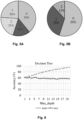
- the recorded audio data mostly includes the regular office work of a single person, including phone conversations and longer meetings with a second colleague. Additionally, in order to increase the data variety and balance the presence ratio, data was recorded on a day off and over one night. Approximately 75 hours of audio data were collected form the single office scenario. The percent of sampled time of each head count in the single office scenario is illustrated in FIG. 5A .
- the living room data was acquired in a larger lab room that was furnished as a simple living room setting. Data was recorded over six sessions, each session following a predefined protocol with activities in varying order. The following activities were carried out: watching TV, reading newspaper, talking, and playing a card game. The number of people present in the room as well as an approximate length of each activity was defined in the protocol. Approximately 22 hours of audio data were collected from the living room scenario. The percent of sampled time of each head count in the simulated living room is illustrated in FIG. 5B .
- FIG. 6 illustrates a plot of the decision tree performance with respect to maximum depth with one estimator, minimum size for split of 5, minimum leaf size of 1, and Gini impurity decision criterion.
- using a deeper tree may result in an over-fitted model and, further, the deeper tree increases the computational complexity of the model.
- FIG. 7 illustrates the boosted decision tree classification performance with respect to the number of estimators, with the other parameters of the model kept the same. Based on this figure, in the experimental embodiment, performance gain by using the ensemble method is minimal. At the end, a simple decision tree with maximum depth of five and only one estimator is chosen as the baseline system for the experimental embodiments due to the performance and computational cost trade-off. Because the experiments depicted in FIGS. 6 and 7 required lengthy computations, the same experiments were not repeated for the single office environment on the full feature set, and instead the same decision tree parameters were used for both the living room and single office environments.
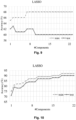
- FIG. 8 shows the system accuracy with respect to number of features chosen via the Chi2 method. As seen in the FIG. 8 , out of hundreds of feature functionals, choosing only two feature functionals that have the highest Chi2 value between the feature variables and known results improves the performance up to 7% absolute value and greatly increases the speed of the classifier.
- FIG. 9 depicts the classifier accuracy with respect to features as selected using the LASSO method in living room scenario.
- the results of the LASSO selected feature functionals are generally in agreement with the results from Chi2 feature selection. Given the similar accuracy trend between Chi2 and LASSO methods in the living room scenario, the experiments were continued using LASSO feature functional selection for the single office environment. As illustrated in FIG. 10 , selecting a relatively low number of feature functionals provides a reasonable classification performance in the single office scenario as well.
- the results from LASSO and Chi2 feature functional selection methods are in agreement with the decision tree classification results in FIGS. 6 and 7 , in which an only one- or two- layer decision tree can yield accurate classification results.
- Table 3 Selected Feature Functionals for Two Experimental Embodiments LASSO-Single Office LASSO-Living Room 1.
- Mean-Energy 1.
- Max-mfcc1 2.
- Mean-Brightness 2.
- Dynamic Range-Envelope 3.
- Median-Brightness Dynamic Range 4.
- Std-SpectralFlux 3.
- Dynamic Range-Brightness 5.
- Std-Envelope Dynamic Range 4.
- Entropy-d4 6. AbsIntegral-d5 5.
- Entropy-mfccl9 Abs Integral-Brightness 6.
- Entropy-Envelope Dynamic Range 8.
- Entropy-Brightness 9.
- Entropy-Spectral Variance 7.
- Entropy-Zero Crossing Rate 10.Entropy-d2 8.
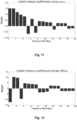
- Table 3 summarizes the top eighteen most relevant feature functionals determined for both the living room and single office environments.
- FIGS. 11 and 12 depict the LASSO coefficients for each of the feature functionals in the order of Table 3 for the living room and single office scenarios, respectively.
- the most important feature chosen in both experimental environments was an energy term (it is noted that the first MFCC coefficient is a representation of the audio signal energy representation as well). This result is expected heuristically.
- two different functionals, namely maximum and mean were selected as the functional with the highest LASSO coefficient for the living room and single office scenarios, respectively.
- the time and frequency audio features are considered more relevant in the experimental head counting scenarios as compared to the cepstral (MFCC) features.
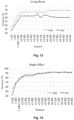
- FIGS. 13 and 14 head count performance vs. attributes was then studied, as illustrated in FIGS. 13 and 14 for the living room and single office environments, respectively.
- the x-axis represent the attributes exploited in each experiment.
- #-LR and #-SO respectively, represent the feature number selected in the living room (LR) and single office (SO) scenarios from Table 3.
- the + sign at the beginning of the x-axis label shows the attribute accumulation from the previous step.
- the first point in the plot (1-LR) represents the accuracy when using the first best feature in living room scenario (Max-mfcc 1)
- 1-LR+1-SO shows the performance when using first feature of both environments (Max-mfcc1 and Mean-Energy)
- +2-LR represents the accuracy when using 3 dimensional features 1-LR, 1-SO and 2-LR, and so on.
- 11 dimensional features (6-LR point on the x-axis) was chosen as the final set, with 63% and 91% head count accuracy for living room and single office environments, respectively.
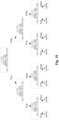
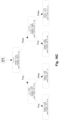
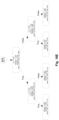
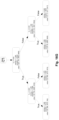
- FIGS. 15 and 16A-16H illustrate a decision tree algorithm determined from the data of the experimental living room scenario.
- the subscript for the X splitting variable is the feature functional number from Table 2 above minus one (i.e. X 0 refers to feature 1 - Maximum of MFCC1; X 1 refers to feature 2 - mean of energy; etc.).
- the "value" array has four values, corresponding to actual (known) head counts of [0, 1, 2, 3] in the experimental living room scenario.
- FIGS. 15 and 16 is an experimental example only.
- the nodes, leaves, and splits used in other embodiments may vary depending on a number of factors, including the size of the area, usage of the area, selected feature functionals, desired processing power used, desired accuracy, desired use of the head counting data, etc.
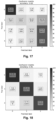
- confusion matrices of head count task for the two environments were calculated using the 11-dimensional final feature set.
- presence detection has a high performance rate using only a single audio signal, with 95% accuracy for living room scenario and 96% accuracy for the single office scenario.
- an audio sensor can be used confidently as the first step of presence detection.
- additional sensors for example additional audio sensors, may be used in the calculation once presence is detected to increase the head count accuracy without overly increasing the computational requirements. This way, use of both computational and energy resources can be optimized without sacrificing detection accuracy.
- the overall head count accuracy using only a subset of features provided accurate classification performance, with 63% and 91% classification accuracy for living room and single office environments, respectively. Based on the confusion matrices, performance in single office environment is accurate for 0, 1 and 2 head counts.
- the disclosed occupancy detection system used with the experimental parameters, provides accurate occupancy detection results with reduced cost and computational resource requirements as compared to conventional systems.
Landscapes
- Engineering & Computer Science (AREA)
- Multimedia (AREA)
- Physics & Mathematics (AREA)
- Health & Medical Sciences (AREA)
- Audiology, Speech & Language Pathology (AREA)
- Human Computer Interaction (AREA)
- Acoustics & Sound (AREA)
- Computational Linguistics (AREA)
- Signal Processing (AREA)
- Computer Vision & Pattern Recognition (AREA)
- General Physics & Mathematics (AREA)
- Measurement Of Velocity Or Position Using Acoustic Or Ultrasonic Waves (AREA)
- Telephonic Communication Services (AREA)
Claims (18)
- Verfahren zum Detektieren einer Belegung in einem Bereich, umfassend:Erhalten (204), mit einem Prozessor (120), eines Audiosamples von einem Audiosensor (124);Bestimmen, mit dem Prozessor (120), von Merkmalsfunktionswerten eines Satzes ausgewählter Merkmalsfunktionen von statistischen Operationen aus dem Audiosample, wobei das Bestimmen der Merkmalsfunktionswerte Folgendes umfasst:Extrahieren (208) von Audio-Low-Level-Descriptive- bzw. -LLD-Merkmalen aus dem Audiosample unter Verwendung eines Gleitfensters auf Frameebene ohne Überlappung;Partitionieren (212) der extrahierten Audio-LLD-Merkmale in Segmentmerkmale, die durch Merkmalsframes bestimmt werden, die über Segmente mit einer festen Zeitlänge und einer Verschiebung von einem Frames aggregiert werden, wobei die Segmente einander derart überlappen, dass jedes Segment um einen Frame verschoben berechnet wird; undBestimmen (216) der Merkmalsfunktionswerte der bestimmten Segmentmerkmale;Auswählen (220) von Audio-LLD-Merkmalen, die relevanteste Informationen einer Belegung des Bereichs enthalten, aus den bestimmten Merkmalsfunktionswerten basierend auf einer Korrelation oder Unabhängigkeit der ausgewählten Merkmalsfunktionen der statistischen Operationen; undBestimmen, mit dem Prozessor (120), einer Belegung in dem Bereich unter Verwendung eines Klassifikators basierend auf den bestimmten Merkmalsfunktionswerten eines Satzes ausgewählter Audio-LLD-Merkmale.
- Verfahren nach Anspruch 1, wobei der Klassifikator ein Entscheidungsbaum-Klassifikator ist.
- Verfahren nach Anspruch 2, wobei der Entscheidungsbaum-Klassifikator eine maximale Tiefe zwischen 2 und 15 aufweist.
- Verfahren nach Anspruch 2, wobei der Entscheidungsbaum-Klassifikator eine maximale Tiefe von fünf aufweist.
- Verfahren nach Anspruch 2, wobei der Satz von Merkmalsfunktionen zwischen 5 und 25 Merkmalsfunktionen beinhaltet.
- Verfahren nach Anspruch 2, wobei der Satz von Merkmalsfunktionen zwischen 10 und 20 Merkmalsfunktionen beinhaltet.
- Verfahren nach Anspruch 2, wobei der Satz von Merkmalsfunktionen 11 Merkmalsfunktionen beinhaltet.
- Verfahren nach Anspruch 2, wobei die Audio-LLD-Merkmale eines oder mehrere von Hüllkurven-Dynamikumfang, Nulldurchgangsrate, Energie, Helligkeit, spektraler Varianz, spektralem Roll-Off, spektralem Fluss, mindestens einem MFCC-Koeffizienten, einem Delta von mindestens einem MFCC-Koeffizienten und einem Delta-Delta von mindestens einem MFCC-Koeffizienten beinhalten.
- Verfahren nach Anspruch 8, wobei der Satz von Merkmalsfunktionen mindestens eines beinhaltet aus der Gruppe bestehend aus: Mittelwert, Median, Standardabweichung, absolutem Integral, Minimum, Maximum, Dynamikumfang, dominante Frequenz und Entropie, bestimmt für jedes Audio-LLD-Merkmal.
- Verfahren nach Anspruch 2, wobei der Satz von Merkmalsfunktionen mindestens zwei aus der Gruppe bestehend aus Folgendem ausgewählte beinhaltet: Maximum von MFCC-1; Mittelwert der Energie; Dynamikumfang des Hüllkurven-Dynamikumfangs; Mittelwert der Helligkeit; Dynamikumfang der Helligkeit; Median der Helligkeit; Entropie von MFCC-4-Delta; Standardabweichung des spektralen Flusses; Entropie von MFCC-19; Standardabweichung des Hüllkurven-Dynamikumfangs; Entropie des Hüllkurven-Dynamikumfangs; absolutes Integral von MFCC-5-Delta; Entropie der Nulldurchgangsrate; absolutes Integral der Helligkeit; Entropie des spektralen Roll-Off; Entropie der Helligkeit; Entropie des spektralen Flusses; Entropie der spektralen Varianz; Entropie von MFCC-7; Entropie von MFCC-2-Delta; Entropie von MFCC-1-Delta-Delta; Entropie von MFCC-5; Entropie der Energie; Entropie von MFCC-3; und Entropie von MFCC-20-Delta.
- Verfahren nach Anspruch 2, wobei der Satz von Merkmalsfunktionen mindestens zwei aus der Gruppe bestehend aus Folgendem ausgewählte beinhaltet: Maximum MFCC-1; mittlere Energie; Dynamikumfang des Hüllkurven-Dynamikumfangs; Mittelwert der Helligkeit; Dynamikumfang der Helligkeit; Median der Helligkeit; Entropie von MFCC-4-Delta; Standardabweichung des spektralen Flusses; Entropie von MFCC-19; Standardabweichung des Hüllkurven-Dynamikumfangs; Entropie des Hüllkurven-Dynamikumfangs.
- Verfahren nach Anspruch 1, wobei der Satz ausgewählter Merkmalsfunktionen und der Klassifikator in einem Trainingsprozess des maschinellen Lernens erlernt werden.
- System zum Bestimmen einer Belegung in einem Bereich, umfassend:mindestens ein Audiosensor (124), ausgelegt zum Aufzeichnen eines Audiosamples in dem Bereich;einen Prozessor (120), ausgelegt zum Ausführen von in einem Speicher gespeicherten programmierten Anweisungen zum:Erhalten (204) des Audiosamples von dem Audio-Sensor (124);Bestimmen von Merkmalsfunktionswerten eines Satzes ausgewählter Merkmalsfunktionen von statistischen Operationen aus dem Audiosample, wobei das Bestimmen der Merkmalsfunktionswerte Folgendes umfasst:Extrahieren (208) von Audio-Low-Level-Descriptive- bzw. -LLD-Merkmalen aus dem Audio-Sample unter Verwendung eines Gleitfensters auf Frameebene ohne Überlappung;Partitionieren (212) der extrahierten Audio-LLD-Merkmale in segmentierte Merkmale, die durch Merkmalsframes bestimmt werden, die über Segmente mit einer festen Zeitlänge und einer Verschiebung von einem Frames aggregiert werden, wobei die Segmente einander derart überlappen, dass jedes Segment um einen Frame verschoben berechnet wird; undBestimmen (216) der Merkmalsfunktionswerte der bestimmten Segmentmerkmale; undAuswählen (220) von Audio-LLD-Merkmalen, die relevanteste Informationen einer Belegung des Bereichs enthalten, aus den bestimmten Merkmalsfunktionswerten basierend auf einer Korrelation oder Unabhängigkeit der ausgewählten Merkmalsfunktionen der statistischen Operationen; undBestimmen einer Belegung in dem Bereich unter Verwendung eines Klassifikators basierend auf den bestimmten Merkmalsfunktionswerten eines Satzes ausgewählter Audio-LLD-Merkmale.
- System nach Anspruch 13, wobei der Klassifikator ein Entscheidungsbaum-Klassifikator ist.
- System nach Anspruch 14, wobei der Entscheidungsbaum-Klassifikator eine maximale Tiefe zwischen 2 und 15 aufweist.
- System nach Anspruch 14, wobei der Satz von Merkmalsfunktionen zwischen 10 und 20 Merkmalsfunktionen beinhaltet.
- System nach Anspruch 14, wobei:die Audio-LLD-Merkmale eines oder mehrere von Hüllkurven-Dynamikumfang, Nulldurchgangsrate, Energie, Helligkeit, spektraler Varianz, spektralem Roll-Off, spektralem Fluss, mindestens einem MFCC-Koeffizienten, einem Delta von mindestens einem MFCC-Koeffizienten und einem Delta-Delta von mindestens einem MFCC-Koeffizienten; undder Satz von Merkmalsfunktionen mindestens eines beinhaltet aus der Gruppe bestehend aus: Mittelwert, Median, Standardabweichung, absolutem Integral, Minimum, Maximum, Dynamikumfang, dominante Frequenz und Entropie, bestimmt für jedes Merkmal.
- System nach Anspruch 14, wobei der Satz von Merkmalsfunktionen mindestens zwei aus der Gruppe bestehend aus Folgendem ausgewählte beinhaltet: Maximum von MFCC-1; Mittelwert der Energie; Dynamikumfang des Hüllkurven-Dynamikumfangs; Mittelwert der Helligkeit; Dynamikumfang der Helligkeit; Median der Helligkeit; Entropie von MFCC-4-Delta; Standardabweichung des spektralen Flusses; Entropie von MFCC-19; Standardabweichung des Hüllkurven-Dynamikumfangs; Entropie des Hüllkurven-Dynamikumfangs; absolutes Integral von MFCC-5-Delta; Entropie der Nulldurchgangsrate; absolutes Integral der Helligkeit; Entropie des spektralen Roll-Off; Entropie der Helligkeit; Entropie des spektralen Flusses; Entropie der spektralen Varianz; Entropie von MFCC-7; Entropie von MFCC-2-Delta; Entropie von MFCC-1-Delta-Delta; Entropie von MFCC-5; Entropie der Energie; Entropie von MFCC-3; und Entropie von MFCC-20-Delta.
Applications Claiming Priority (2)
| Application Number | Priority Date | Filing Date | Title |
|---|---|---|---|
| US201762609488P | 2017-12-22 | 2017-12-22 | |
| PCT/EP2018/084962 WO2019121397A1 (en) | 2017-12-22 | 2018-12-14 | System and method for determining occupancy |
Publications (2)
| Publication Number | Publication Date |
|---|---|
| EP3729428A1 EP3729428A1 (de) | 2020-10-28 |
| EP3729428B1 true EP3729428B1 (de) | 2024-10-02 |
Family
ID=64899290
Family Applications (1)
| Application Number | Title | Priority Date | Filing Date |
|---|---|---|---|
| EP18826260.4A Active EP3729428B1 (de) | 2017-12-22 | 2018-12-14 | Systeme und verfahren zur belegungsbestimmung |
Country Status (4)
| Country | Link |
|---|---|
| US (1) | US11631394B2 (de) |
| EP (1) | EP3729428B1 (de) |
| CN (1) | CN111465983B (de) |
| WO (1) | WO2019121397A1 (de) |
Families Citing this family (6)
| Publication number | Priority date | Publication date | Assignee | Title |
|---|---|---|---|---|
| US11240609B2 (en) * | 2018-06-22 | 2022-02-01 | Semiconductor Components Industries, Llc | Music classifier and related methods |
| WO2021078565A1 (en) * | 2019-10-24 | 2021-04-29 | Signify Holding B.V. | System and method for space monitoring |
| AU2021277202A1 (en) * | 2020-05-16 | 2022-12-22 | Insurance Services Office, Inc. | Machine learning systems and methods for multiscale alzheimer's dementia recognition through spontaneous speech |
| US11353230B1 (en) * | 2020-12-31 | 2022-06-07 | Lennox Industries Inc. | Occupancy tracking using wireless signal distortion |
| CN117314890B (zh) * | 2023-11-07 | 2024-04-23 | 东莞市富明钮扣有限公司 | 打扣加工的安全控制方法、装置、设备及存储介质 |
| CN117331047A (zh) * | 2023-12-01 | 2024-01-02 | 德心智能科技(常州)有限公司 | 基于毫米波雷达的人体行为数据分析方法及系统 |
Family Cites Families (14)
| Publication number | Priority date | Publication date | Assignee | Title |
|---|---|---|---|---|
| US7715591B2 (en) * | 2002-04-24 | 2010-05-11 | Hrl Laboratories, Llc | High-performance sensor fusion architecture |
| CN1920947B (zh) * | 2006-09-15 | 2011-05-11 | 清华大学 | 用于低比特率音频编码的语音/音乐检测器 |
| US7974476B2 (en) * | 2007-05-30 | 2011-07-05 | Microsoft Corporation | Flexible MQDF classifier model compression |
| US7983916B2 (en) * | 2007-07-03 | 2011-07-19 | General Motors Llc | Sampling rate independent speech recognition |
| US20120197643A1 (en) * | 2011-01-27 | 2012-08-02 | General Motors Llc | Mapping obstruent speech energy to lower frequencies |
| US9111547B2 (en) * | 2012-08-22 | 2015-08-18 | Kodak Alaris Inc. | Audio signal semantic concept classification method |
| US9373087B2 (en) * | 2012-10-25 | 2016-06-21 | Microsoft Technology Licensing, Llc | Decision tree training in machine learning |
| KR20150098635A (ko) | 2013-02-04 | 2015-08-28 | 샵킥, 인크. | 블루투스 및 하이브리드―모드 송신기들을 이용한 존재 검출 |
| US10281282B2 (en) * | 2014-02-17 | 2019-05-07 | Oxford University Innovation Limited | Determining the position of a mobile device in a geographical area |
| US10068587B2 (en) * | 2014-06-30 | 2018-09-04 | Rajeev Conrad Nongpiur | Learning algorithm to detect human presence in indoor environments from acoustic signals |
| US11580501B2 (en) * | 2014-12-09 | 2023-02-14 | Samsung Electronics Co., Ltd. | Automatic detection and analytics using sensors |
| EP3286757B1 (de) | 2015-04-24 | 2019-10-23 | Cyber Resonance Corporation | Verfahren und systeme zur durchführung einer signalanalyse zur identifizierung von inhaltstypen |
| US9805739B2 (en) * | 2015-05-15 | 2017-10-31 | Google Inc. | Sound event detection |
| GB201603818D0 (en) | 2016-03-04 | 2016-04-20 | Univ Heriot Watt | Occupancy sensing |
-
2018
- 2018-12-14 WO PCT/EP2018/084962 patent/WO2019121397A1/en not_active Ceased
- 2018-12-14 EP EP18826260.4A patent/EP3729428B1/de active Active
- 2018-12-14 US US16/756,923 patent/US11631394B2/en active Active
- 2018-12-14 CN CN201880082233.7A patent/CN111465983B/zh active Active
Non-Patent Citations (1)
| Title |
|---|
| AMR ALANWAR ET AL: "EchoSafe", THE INTERNET OF SAFE THINGS, ACM, 2 PENN PLAZA, SUITE 701NEW YORKNY10121-0701USA, 5 November 2017 (2017-11-05), pages 38 - 43, XP058380921, ISBN: 978-1-4503-5545-2, DOI: 10.1145/3137003.3137014 * |
Also Published As
| Publication number | Publication date |
|---|---|
| WO2019121397A1 (en) | 2019-06-27 |
| US20210201889A1 (en) | 2021-07-01 |
| US11631394B2 (en) | 2023-04-18 |
| CN111465983A (zh) | 2020-07-28 |
| CN111465983B (zh) | 2024-03-29 |
| EP3729428A1 (de) | 2020-10-28 |
Similar Documents
| Publication | Publication Date | Title |
|---|---|---|
| EP3729428B1 (de) | Systeme und verfahren zur belegungsbestimmung | |
| Goetze et al. | Acoustic monitoring and localization for social care | |
| CN106251874B (zh) | 一种语音门禁和安静环境监控方法及系统 | |
| US11271629B1 (en) | Human activity and transition detection | |
| CN110268470A (zh) | 音频设备滤波器修改 | |
| EP3223253A1 (de) | Mehrstufiger verfolger für akustische aktivität basierend auf akustischer erkennung | |
| Nordqvist et al. | An efficient robust sound classification algorithm for hearing aids | |
| US12334067B2 (en) | Voice trigger based on acoustic space | |
| Droghini et al. | A combined one‐class SVM and template‐matching approach for user‐aided human fall detection by means of floor acoustic features | |
| JP2020524300A (ja) | 音声データに基づいてイベント指定を取得する方法およびデバイス | |
| US20100217435A1 (en) | Audio signal processing system and autonomous robot having such system | |
| Schroeder et al. | Detection and classification of acoustic events for in-home care | |
| Shabbir et al. | Enhancing smart home environments: a novel pattern recognition approach to ambient acoustic event detection and localization | |
| US8335332B2 (en) | Fully learning classification system and method for hearing aids | |
| Valero et al. | Classification of audio scenes using narrow-band autocorrelation features | |
| US12236973B2 (en) | Classification system and method for classifying an external impact on a window or on an access opening of an enclosed structure | |
| Estrebou et al. | Voice recognition based on probabilistic SOM | |
| CN119274568B (zh) | 一种声学早教机的控制方法和系统 | |
| Tripathi et al. | Acoustic event classification using ensemble of one-class classifiers for monitoring application | |
| US11380349B2 (en) | Security system | |
| US20250225999A1 (en) | Systems and methods for fusing sensor data for deriving spatial analytics | |
| Ng | Sound event recognition in home environments | |
| CN120708662A (zh) | 一种多模态数据融合分析与判断的酒店急救方法及系统 | |
| CN120202683A (zh) | 基于音频设备的环境感测 | |
| CN117221787A (zh) | 声源朝向检测方法及装置 |
Legal Events
| Date | Code | Title | Description |
|---|---|---|---|
| STAA | Information on the status of an ep patent application or granted ep patent |
Free format text: STATUS: UNKNOWN |
|
| STAA | Information on the status of an ep patent application or granted ep patent |
Free format text: STATUS: THE INTERNATIONAL PUBLICATION HAS BEEN MADE |
|
| PUAI | Public reference made under article 153(3) epc to a published international application that has entered the european phase |
Free format text: ORIGINAL CODE: 0009012 |
|
| STAA | Information on the status of an ep patent application or granted ep patent |
Free format text: STATUS: REQUEST FOR EXAMINATION WAS MADE |
|
| 17P | Request for examination filed |
Effective date: 20200722 |
|
| AK | Designated contracting states |
Kind code of ref document: A1 Designated state(s): AL AT BE BG CH CY CZ DE DK EE ES FI FR GB GR HR HU IE IS IT LI LT LU LV MC MK MT NL NO PL PT RO RS SE SI SK SM TR |
|
| AX | Request for extension of the european patent |
Extension state: BA ME |
|
| DAV | Request for validation of the european patent (deleted) | ||
| DAX | Request for extension of the european patent (deleted) | ||
| STAA | Information on the status of an ep patent application or granted ep patent |
Free format text: STATUS: EXAMINATION IS IN PROGRESS |
|
| 17Q | First examination report despatched |
Effective date: 20221109 |
|
| GRAP | Despatch of communication of intention to grant a patent |
Free format text: ORIGINAL CODE: EPIDOSNIGR1 |
|
| STAA | Information on the status of an ep patent application or granted ep patent |
Free format text: STATUS: GRANT OF PATENT IS INTENDED |
|
| RIC1 | Information provided on ipc code assigned before grant |
Ipc: G08B 13/16 20060101ALI20240510BHEP Ipc: G10L 25/51 20130101AFI20240510BHEP |
|
| INTG | Intention to grant announced |
Effective date: 20240531 |
|
| GRAS | Grant fee paid |
Free format text: ORIGINAL CODE: EPIDOSNIGR3 |
|
| GRAA | (expected) grant |
Free format text: ORIGINAL CODE: 0009210 |
|
| STAA | Information on the status of an ep patent application or granted ep patent |
Free format text: STATUS: THE PATENT HAS BEEN GRANTED |
|
| AK | Designated contracting states |
Kind code of ref document: B1 Designated state(s): AL AT BE BG CH CY CZ DE DK EE ES FI FR GB GR HR HU IE IS IT LI LT LU LV MC MK MT NL NO PL PT RO RS SE SI SK SM TR |
|
| REG | Reference to a national code |
Ref country code: GB Ref legal event code: FG4D |
|
| REG | Reference to a national code |
Ref country code: CH Ref legal event code: EP |
|
| REG | Reference to a national code |
Ref country code: IE Ref legal event code: FG4D |
|
| REG | Reference to a national code |
Ref country code: DE Ref legal event code: R096 Ref document number: 602018075004 Country of ref document: DE |
|
| REG | Reference to a national code |
Ref country code: LT Ref legal event code: MG9D |
|
| REG | Reference to a national code |
Ref country code: NL Ref legal event code: MP Effective date: 20241002 |
|
| REG | Reference to a national code |
Ref country code: AT Ref legal event code: MK05 Ref document number: 1729071 Country of ref document: AT Kind code of ref document: T Effective date: 20241002 |
|
| PG25 | Lapsed in a contracting state [announced via postgrant information from national office to epo] |
Ref country code: NL Free format text: LAPSE BECAUSE OF FAILURE TO SUBMIT A TRANSLATION OF THE DESCRIPTION OR TO PAY THE FEE WITHIN THE PRESCRIBED TIME-LIMIT Effective date: 20241002 |
|
| PG25 | Lapsed in a contracting state [announced via postgrant information from national office to epo] |
Ref country code: NL Free format text: LAPSE BECAUSE OF FAILURE TO SUBMIT A TRANSLATION OF THE DESCRIPTION OR TO PAY THE FEE WITHIN THE PRESCRIBED TIME-LIMIT Effective date: 20241002 |
|
| PG25 | Lapsed in a contracting state [announced via postgrant information from national office to epo] |
Ref country code: PT Free format text: LAPSE BECAUSE OF FAILURE TO SUBMIT A TRANSLATION OF THE DESCRIPTION OR TO PAY THE FEE WITHIN THE PRESCRIBED TIME-LIMIT Effective date: 20250203 Ref country code: IS Free format text: LAPSE BECAUSE OF FAILURE TO SUBMIT A TRANSLATION OF THE DESCRIPTION OR TO PAY THE FEE WITHIN THE PRESCRIBED TIME-LIMIT Effective date: 20250202 Ref country code: HR Free format text: LAPSE BECAUSE OF FAILURE TO SUBMIT A TRANSLATION OF THE DESCRIPTION OR TO PAY THE FEE WITHIN THE PRESCRIBED TIME-LIMIT Effective date: 20241002 |
|
| PG25 | Lapsed in a contracting state [announced via postgrant information from national office to epo] |
Ref country code: FI Free format text: LAPSE BECAUSE OF FAILURE TO SUBMIT A TRANSLATION OF THE DESCRIPTION OR TO PAY THE FEE WITHIN THE PRESCRIBED TIME-LIMIT Effective date: 20241002 |
|
| PG25 | Lapsed in a contracting state [announced via postgrant information from national office to epo] |
Ref country code: BG Free format text: LAPSE BECAUSE OF FAILURE TO SUBMIT A TRANSLATION OF THE DESCRIPTION OR TO PAY THE FEE WITHIN THE PRESCRIBED TIME-LIMIT Effective date: 20241002 |
|
| PG25 | Lapsed in a contracting state [announced via postgrant information from national office to epo] |
Ref country code: ES Free format text: LAPSE BECAUSE OF FAILURE TO SUBMIT A TRANSLATION OF THE DESCRIPTION OR TO PAY THE FEE WITHIN THE PRESCRIBED TIME-LIMIT Effective date: 20241002 |
|
| PG25 | Lapsed in a contracting state [announced via postgrant information from national office to epo] |
Ref country code: NO Free format text: LAPSE BECAUSE OF FAILURE TO SUBMIT A TRANSLATION OF THE DESCRIPTION OR TO PAY THE FEE WITHIN THE PRESCRIBED TIME-LIMIT Effective date: 20250102 |
|
| PG25 | Lapsed in a contracting state [announced via postgrant information from national office to epo] |
Ref country code: LV Free format text: LAPSE BECAUSE OF FAILURE TO SUBMIT A TRANSLATION OF THE DESCRIPTION OR TO PAY THE FEE WITHIN THE PRESCRIBED TIME-LIMIT Effective date: 20241002 Ref country code: AT Free format text: LAPSE BECAUSE OF FAILURE TO SUBMIT A TRANSLATION OF THE DESCRIPTION OR TO PAY THE FEE WITHIN THE PRESCRIBED TIME-LIMIT Effective date: 20241002 Ref country code: GR Free format text: LAPSE BECAUSE OF FAILURE TO SUBMIT A TRANSLATION OF THE DESCRIPTION OR TO PAY THE FEE WITHIN THE PRESCRIBED TIME-LIMIT Effective date: 20250103 |
|
| PG25 | Lapsed in a contracting state [announced via postgrant information from national office to epo] |
Ref country code: CZ Free format text: LAPSE BECAUSE OF FAILURE TO SUBMIT A TRANSLATION OF THE DESCRIPTION OR TO PAY THE FEE WITHIN THE PRESCRIBED TIME-LIMIT Effective date: 20241002 Ref country code: PL Free format text: LAPSE BECAUSE OF FAILURE TO SUBMIT A TRANSLATION OF THE DESCRIPTION OR TO PAY THE FEE WITHIN THE PRESCRIBED TIME-LIMIT Effective date: 20241002 |
|
| PG25 | Lapsed in a contracting state [announced via postgrant information from national office to epo] |
Ref country code: RS Free format text: LAPSE BECAUSE OF FAILURE TO SUBMIT A TRANSLATION OF THE DESCRIPTION OR TO PAY THE FEE WITHIN THE PRESCRIBED TIME-LIMIT Effective date: 20250102 |
|
| PG25 | Lapsed in a contracting state [announced via postgrant information from national office to epo] |
Ref country code: SM Free format text: LAPSE BECAUSE OF FAILURE TO SUBMIT A TRANSLATION OF THE DESCRIPTION OR TO PAY THE FEE WITHIN THE PRESCRIBED TIME-LIMIT Effective date: 20241002 |
|
| REG | Reference to a national code |
Ref country code: DE Ref legal event code: R097 Ref document number: 602018075004 Country of ref document: DE |
|
| PG25 | Lapsed in a contracting state [announced via postgrant information from national office to epo] |
Ref country code: MC Free format text: LAPSE BECAUSE OF FAILURE TO SUBMIT A TRANSLATION OF THE DESCRIPTION OR TO PAY THE FEE WITHIN THE PRESCRIBED TIME-LIMIT Effective date: 20241002 |
|
| PG25 | Lapsed in a contracting state [announced via postgrant information from national office to epo] |
Ref country code: DK Free format text: LAPSE BECAUSE OF FAILURE TO SUBMIT A TRANSLATION OF THE DESCRIPTION OR TO PAY THE FEE WITHIN THE PRESCRIBED TIME-LIMIT Effective date: 20241002 |
|
| PG25 | Lapsed in a contracting state [announced via postgrant information from national office to epo] |
Ref country code: EE Free format text: LAPSE BECAUSE OF FAILURE TO SUBMIT A TRANSLATION OF THE DESCRIPTION OR TO PAY THE FEE WITHIN THE PRESCRIBED TIME-LIMIT Effective date: 20241002 |
|
| PG25 | Lapsed in a contracting state [announced via postgrant information from national office to epo] |
Ref country code: RO Free format text: LAPSE BECAUSE OF FAILURE TO SUBMIT A TRANSLATION OF THE DESCRIPTION OR TO PAY THE FEE WITHIN THE PRESCRIBED TIME-LIMIT Effective date: 20241002 |
|
| PG25 | Lapsed in a contracting state [announced via postgrant information from national office to epo] |
Ref country code: SK Free format text: LAPSE BECAUSE OF FAILURE TO SUBMIT A TRANSLATION OF THE DESCRIPTION OR TO PAY THE FEE WITHIN THE PRESCRIBED TIME-LIMIT Effective date: 20241002 |
|
| PG25 | Lapsed in a contracting state [announced via postgrant information from national office to epo] |
Ref country code: IT Free format text: LAPSE BECAUSE OF FAILURE TO SUBMIT A TRANSLATION OF THE DESCRIPTION OR TO PAY THE FEE WITHIN THE PRESCRIBED TIME-LIMIT Effective date: 20241002 |
|
| REG | Reference to a national code |
Ref country code: CH Ref legal event code: PL |
|
| PLBE | No opposition filed within time limit |
Free format text: ORIGINAL CODE: 0009261 |
|
| STAA | Information on the status of an ep patent application or granted ep patent |
Free format text: STATUS: NO OPPOSITION FILED WITHIN TIME LIMIT |
|
| PG25 | Lapsed in a contracting state [announced via postgrant information from national office to epo] |
Ref country code: LU Free format text: LAPSE BECAUSE OF NON-PAYMENT OF DUE FEES Effective date: 20241214 |
|
| PG25 | Lapsed in a contracting state [announced via postgrant information from national office to epo] |
Ref country code: SE Free format text: LAPSE BECAUSE OF FAILURE TO SUBMIT A TRANSLATION OF THE DESCRIPTION OR TO PAY THE FEE WITHIN THE PRESCRIBED TIME-LIMIT Effective date: 20241002 |
|
| 26N | No opposition filed |
Effective date: 20250703 |
|
| GBPC | Gb: european patent ceased through non-payment of renewal fee |
Effective date: 20250102 |
|
| REG | Reference to a national code |
Ref country code: BE Ref legal event code: MM Effective date: 20241231 |
|
| PG25 | Lapsed in a contracting state [announced via postgrant information from national office to epo] |
Ref country code: GB Free format text: LAPSE BECAUSE OF NON-PAYMENT OF DUE FEES Effective date: 20250102 Ref country code: BE Free format text: LAPSE BECAUSE OF NON-PAYMENT OF DUE FEES Effective date: 20241231 |
|
| PG25 | Lapsed in a contracting state [announced via postgrant information from national office to epo] |
Ref country code: FR Free format text: LAPSE BECAUSE OF NON-PAYMENT OF DUE FEES Effective date: 20241231 |
|
| PG25 | Lapsed in a contracting state [announced via postgrant information from national office to epo] |
Ref country code: CH Free format text: LAPSE BECAUSE OF NON-PAYMENT OF DUE FEES Effective date: 20241231 |
|
| PG25 | Lapsed in a contracting state [announced via postgrant information from national office to epo] |
Ref country code: IE Free format text: LAPSE BECAUSE OF NON-PAYMENT OF DUE FEES Effective date: 20241214 |
|
| PGFP | Annual fee paid to national office [announced via postgrant information from national office to epo] |
Ref country code: DE Payment date: 20260223 Year of fee payment: 8 |