EP3853217B1 - Crystalline form of 6-(1-acryloylpiperidin-4-yl)-2-(4-phenoxyphenyl) nicotinamide - Google Patents
Crystalline form of 6-(1-acryloylpiperidin-4-yl)-2-(4-phenoxyphenyl) nicotinamide Download PDFInfo
- Publication number
- EP3853217B1 EP3853217B1 EP19862150.0A EP19862150A EP3853217B1 EP 3853217 B1 EP3853217 B1 EP 3853217B1 EP 19862150 A EP19862150 A EP 19862150A EP 3853217 B1 EP3853217 B1 EP 3853217B1
- Authority
- EP
- European Patent Office
- Prior art keywords
- type
- xrpd
- shows
- purity
- week
- Prior art date
- Legal status (The legal status is an assumption and is not a legal conclusion. Google has not performed a legal analysis and makes no representation as to the accuracy of the status listed.)
- Active
Links
Images


Classifications
-
- C—CHEMISTRY; METALLURGY
- C07—ORGANIC CHEMISTRY
- C07D—HETEROCYCLIC COMPOUNDS
- C07D401/00—Heterocyclic compounds containing two or more hetero rings, having nitrogen atoms as the only ring hetero atoms, at least one ring being a six-membered ring with only one nitrogen atom
- C07D401/02—Heterocyclic compounds containing two or more hetero rings, having nitrogen atoms as the only ring hetero atoms, at least one ring being a six-membered ring with only one nitrogen atom containing two hetero rings
- C07D401/04—Heterocyclic compounds containing two or more hetero rings, having nitrogen atoms as the only ring hetero atoms, at least one ring being a six-membered ring with only one nitrogen atom containing two hetero rings directly linked by a ring-member-to-ring-member bond
-
- A—HUMAN NECESSITIES
- A61—MEDICAL OR VETERINARY SCIENCE; HYGIENE
- A61K—PREPARATIONS FOR MEDICAL, DENTAL OR TOILETRY PURPOSES
- A61K31/00—Medicinal preparations containing organic active ingredients
- A61K31/33—Heterocyclic compounds
- A61K31/395—Heterocyclic compounds having nitrogen as a ring hetero atom, e.g. guanethidine or rifamycins
- A61K31/435—Heterocyclic compounds having nitrogen as a ring hetero atom, e.g. guanethidine or rifamycins having six-membered rings with one nitrogen as the only ring hetero atom
- A61K31/44—Non condensed pyridines; Hydrogenated derivatives thereof
- A61K31/445—Non condensed piperidines, e.g. piperocaine
- A61K31/4523—Non condensed piperidines, e.g. piperocaine containing further heterocyclic ring systems
- A61K31/4545—Non condensed piperidines, e.g. piperocaine containing further heterocyclic ring systems containing a six-membered ring with nitrogen as a ring hetero atom, e.g. pipamperone, anabasine
-
- A—HUMAN NECESSITIES
- A61—MEDICAL OR VETERINARY SCIENCE; HYGIENE
- A61P—SPECIFIC THERAPEUTIC ACTIVITY OF CHEMICAL COMPOUNDS OR MEDICINAL PREPARATIONS
- A61P29/00—Non-central analgesic, antipyretic or antiinflammatory agents, e.g. antirheumatic agents; Non-steroidal antiinflammatory drugs [NSAID]
-
- A—HUMAN NECESSITIES
- A61—MEDICAL OR VETERINARY SCIENCE; HYGIENE
- A61P—SPECIFIC THERAPEUTIC ACTIVITY OF CHEMICAL COMPOUNDS OR MEDICINAL PREPARATIONS
- A61P35/00—Antineoplastic agents
-
- A—HUMAN NECESSITIES
- A61—MEDICAL OR VETERINARY SCIENCE; HYGIENE
- A61P—SPECIFIC THERAPEUTIC ACTIVITY OF CHEMICAL COMPOUNDS OR MEDICINAL PREPARATIONS
- A61P37/00—Drugs for immunological or allergic disorders
- A61P37/02—Immunomodulators
-
- C—CHEMISTRY; METALLURGY
- C07—ORGANIC CHEMISTRY
- C07B—GENERAL METHODS OF ORGANIC CHEMISTRY; APPARATUS THEREFOR
- C07B2200/00—Indexing scheme relating to specific properties of organic compounds
- C07B2200/13—Crystalline forms, e.g. polymorphs
Definitions
- the present invention relates to different crystalline forms of 6-(1-acryloylpiperidin-4-yl)-2-(4-phenoxyphenyl)nicotinamide.
- Compound I is a substituted nicotinamide inhibitor of Bruton's Tyrosine Kinase (BTK).
- BTK Bruton's Tyrosine Kinase
- WO 2015/048662 A2 describes substituted nicotinimide inhibitors of BTK and their preparation and use in the treatment of cancer, inflammation and autoimmune disease.
- the present disclosure relates to specific crystalline forms of 6-(1-acryloylpiperidin-4-yl)-2-(4-phenoxyphenyl)nicotinamide (Compound I).
- the crystalline forms of Compound I have at least one advantage in stability, solubility and hygroscopicity, and they are suitable for pharmaceutical research and manufacturing.
- the crystalline forms A, B, C, D and E are not encompassed by the wording of the claims but their description is necessary to understand and prepare crystalline form F of the present invention.
- Type A crystalline form which is not encompassed by the wording of the claims, is prepared from a starting material Compound I, as described in WO2015/048662 .
- Type A crystalline form can be prepared by dissolving the starting material Compound I in dichloromethane; then precipitating with ethyl acetate.
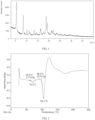
- the XRPD of Type A is shown in FIG. 1 , which shows the most intense peaks at 2theta values of 5.4° ⁇ 0.2°, 8.4° ⁇ 0.2°, 18.7° ⁇ 0.2°.
- the XRPD of Type A further shows one or more characteristic peaks at 2theta values of 19.1° ⁇ 0.2°, 16.1° ⁇ 0.2°, 21.9° ⁇ 0.2°, 10.1° ⁇ 0.2°.
- the XRPD of Type A further shows one or more characteristic peaks at 2theta values of 13.2° ⁇ 0.2°, 11.1° ⁇ 0.2°, 14.3° ⁇ 0.2°.
- Table 1 The XRPD data of Type A is shown in Table 1.
- Table 1. 2theta d spacing Intensity (%) 5.39 16.41 100.00 8.41 10.51 77.19 10.11 8.75 19.53 11.06 8.00 15.79 13.23 6.69 17.33 13.64 6.49 4.27 14.29 6.20 9.80 16.08 5.51 27.72 16.35 5.42 21.31 17.71 5.01 13.12 18.69 4.75 64.74 19.14 4.64 43.60 21.02 4.23 16.01 21.85 4.07 22.24 23.25 3.83 8.69 23.61 3.77 7.55 25.25 3.53 5.99 26.82 3.32 4.31 29.59 3.02 3.00
- Type A is an isomorphic form, i.e. having cavities/voids in the crystal structure to allow participation of various guest molecules with appropriate size. Isomorphic forms have similar lattice structures and substantially the same XRPD pattern.
- Type A may be an anhydrate, a solvate, or a hydrate. They have substantially the same XRPD patterns
- the hydrated Type A shows two endothermic peaks when heated to around 63 °C (onset temperature) and 99 °C (onset temperature); the peak temperatures are 70.3 and 105.7 °C, respectively.
- the DSC curve is depicted in FIG. 2 .
- the anhydrous Type A shows one endothermic peak when heated to around 97 °C (onset temperature) with the peak temperature at 105.7 °C.
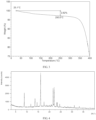
- the hydrated Type A shows 2.8% weight loss when heated to 250 °C, and the TGA curve is depicted in FIG. 3 .
- the anhydrous Type A shows 2.2% weight loss when heated to 200 °C in the TGA curve.
- Type A shows a solubility of 0.013 mg/mL after equilibrium in water at room temperature for 24 hours.
- Type B crystalline form which is not encompassed by the wording of the claims, can be prepared from Type A by different crystallization methods, e.g., anti-solvent addition and slow cooling and slurry.
- the XRPD of Type B is shown in FIG. 4 , which shows the most intense peaks at 2theta values of 16.1° ⁇ 0.2°, 22.1° ⁇ 0.2°, 21.6° ⁇ 0.2°.
- the XRPD of Type B further shows one or more characteristic peaks at 2theta values of 8.8° ⁇ 0.2°, 13.6° ⁇ 0.2°, 23.2° ⁇ 0.2°.
- the XRPD of Type B further shows one or more characteristic peaks at 2theta values of 17.6° ⁇ 0.2°, 14.5° ⁇ 0.2°, 24.5° ⁇ 0.2°.
- Table 2 2theta d spacing Intensity (%) 8.83 10.01 45.83 13.57 6.53 36.35 14.51 6.10 20.80 15.03 5.89 10.88 16.06 5.52 100.00 17.69 5.01 6.28 20.99 4.23 20.08 21.58 4.12 47.22 22.06 4.03 72.29 23.17 3.84 26.40 23.51 3.78 8.45 24.50 3.63 9.17 26.75 3.33 5.00 28.16 3.17 8.63 31.00 2.88 8.41 33.20 2.70 8.08
- Type B is an anhydrate.
- Type B shows an endothermic peak when heated to around 164 °C (onset temperature), and the DSC curve is depicted in FIG. 5 .
- Type B shows 3.0% weight loss when heated to 150 °C, and the TGA curve is depicted in FIG. 6 .
- Type B shows a solubility of 0.006 mg/mL after equilibrium in water at room temperature for 24 hours.
- Type C crystalline form which is not encompassed by the wording of the claims, can be prepared from Type A by different crystallization methods such as slow evaporation, slow cooling, slurry, and liquid vapor diffusion in different solvent systems.
- the XRPD of Type C is shown in FIG. 7 , which shows the most intense peaks at 2theta values of 8.4° ⁇ 0.2°, 5.4° ⁇ 0.2°, 16.3° ⁇ 0.2°.
- the XRPD of Type C further shows one or more characteristic peaks at 2theta values of 16.1° ⁇ 0.2°, 18.7° ⁇ 0.2°, 21.8° ⁇ 0.2°.
- the XRPD of Type C further shows one or more characteristic peaks at 2theta values of 21.3° ⁇ 0.2°, 17.6° ⁇ 0.2°, 14.3° ⁇ 0.2°.
- Type C is an isomorphic form, i.e. having cavities/voids in the crystal structure to allow participation of various guest molecules with appropriate size.
- Type C shows an endothermic peak when heated to around 116 °C (onset temperature).
- Type C shows a step weight loss of 8.3% between 70 °C and 150 °C.
- the DSC and TGA curves are depicted in FIG. 8 .
- Type C and A possess similar XRPD patterns except the discrepancies at 15-20° region. Type C and A are potentially in the same crystal family, i.e. with similar lattice structure.
- Type D crystalline form which is not encompassed by the wording of the claims, can be prepared from Type A by slow evaporation from methanol at room temperature.
- the XRPD of Type D is shown in FIG. 9 , which shows the most intense peaks at 2theta values of 5.2° ⁇ 0.2°, 15.0° ⁇ 0.2°, 18.9° ⁇ 0.2°.
- the XRPD of Type D further shows one or more characteristic peaks at 2theta values of 19.0° ⁇ 0.2°, 20.4° ⁇ 0.2°, 12.6° ⁇ 0.2°.
- the XRPD of Type D further shows one or more characteristic peaks at 2theta values of 20.9° ⁇ 0.2°, 15.7° ⁇ 0.2°, 12.2° ⁇ 0.2°.
- Table 4 2theta d spacing Intensity (%) 2.96 29.80 52.55 5.25 16.84 100.00 6.78 13.04 11.85 10.52 8.41 19.75 11.67 7.58 9.85 12.19 7.26 14.47 12.61 7.02 24.19 15.02 5.90 94.65 15.81 5.61 31.14 18.18 4.88 30.09 18.89 4.70 42.66 20.27 4.38 22.09 20.90 4.25 18.75 25.16 3.54 7.42 30.31 2.95 6.91
- Type D is a hydrate.
- Type D shows two endothermic peaks when heated to around 75 °C (onset temperature) and 109 °C (onset temperature), and the DSC curve is depicted in FIG. 10 .
- Type D shows 7.1% weight loss when heated to 100 °C, and the TGA curve is depicted in FIG. 11 .
- Type D shows a solubility of 0.018 mg/mL after equilibrium in water at room temperature for 24 hours.
- Type E which is not encompassed by the wording of the claims, can be prepared by purging Type D under N 2 or heating Type D to over 100 °C.
- the XRPD of Type E is shown in FIG. 12 , which shows characteristic peaks at 2theta values of 21.4° ⁇ 0.2°, 20.7° ⁇ 0.2°, 19.7° ⁇ 0.2°.
- the XRPD of Type E further shows one or more characteristic peaks at 2theta values of 17.7° ⁇ 0.2°, 15.0° ⁇ 0.2°, 16.3° ⁇ 0.2°.
- the XRPD of Type E further shows one or more characteristic peaks at 2theta values of 3.5° ⁇ 0.2°, 10.1° ⁇ 0.2°, 14.1° ⁇ 0.2°.
- Table 5 2theta d spacing Intensity (%) 3.51 25.18 54.63 5.06 17.45 37.86 7.00 12.63 15.73 7.47 11.83 14.79 10.15 8.72 40.13 10.68 8.29 22.10 12.44 7.12 24.11 14.10 6.28 39.63 15.03 5.89 89.81 16.13 5.50 58.50 16.27 5.45 64.29 17.69 5.01 91.92 18.41 4.82 45.67 19.69 4.51 93.87 20.66 4.30 96.16 21.42 4.15 100.00 22.18 4.00 61.56 23.67 3.76 36.26 24.89 3.58 30.86 25.65 3.47 19.45 27.50 3.24 13.61 30.19 2.96 19.71 32.86 2.73 5.63
- Type E is an anhydrate.
- Type F can be prepared from Type A, B, or D, via slurry in a solvent or a solvent mixture (e.g., methanol, ethanol, acetonitrile, methanol/water, or ethanol/water).
- a solvent or a solvent mixture e.g., methanol, ethanol, acetonitrile, methanol/water, or ethanol/water.
- the XRPD of Type F of present invention is shown in FIG. 13 , which shows the most intense peaks at 2theta values of 18.7° ⁇ 0.2°, 12.4° ⁇ 0.2°, 22.8° ⁇ 0.2°.
- the XRPD of Type F further shows one or more characteristic peaks at 2theta values of 17.9° ⁇ 0.2°, 20.1° ⁇ 0.2°, 11.8° ⁇ 0.2°.
- the XRPD of Type F further shows one or more characteristic peaks at 2theta values of 23.8° ⁇ 0.2°, 14.2° ⁇ 0.2°, 6.2° ⁇ 0.2°.
- Type F is an anhydrate.
- Type F of the present invention shows an endothermic peak when heated to around 161 °C (onset temperature), and the DSC curve is depicted in FIG. 14 .
- Type F of the present invention shows 1.5% weight loss when heated to 200 °C, and the TGA curve is depicted in FIG 15 .
- Type F of the present invention shows a solubility of 0.004 mg/mL after equilibrium in water at room temperature for 24 hours.
- the present invention is also directed to a pharmaceutical composition
- a pharmaceutical composition comprising a therapeutically effective amount of Type F, and a pharmaceutically acceptable carrier.
- Type F is useful as an active pharmaceutical ingredient (API) in a pharmaceutical composition.
- Pharmaceutically acceptable carriers which are inactive ingredients, can be selected by those skilled in the art using conventional criteria.
- Pharmaceutically acceptable carriers include, but are not limited to, non-aqueous based solutions, suspensions, emulsions, microemulsions, micellar solutions, gels, and ointments.
- the pharmaceutically acceptable carriers may also contain ingredients that include, but are not limited to, saline and aqueous electrolyte solutions; ionic and nonionic osmotic agents such as sodium chloride, potassium chloride, glycerol, and dextrose; pH adjusters and buffers such as salts of hydroxide, phosphate, citrate, acetate, borate, and trolamine; antioxidants such as salts, acids and/or bases of bisulfite, sulfite, metabisulfite, thiosulfite, ascorbic acid, acetyl cysteine, cystein, glutathione, butylated hydroxyanisole, butylated hydroxytoluene, tocopherols, and ascorbyl palmitate; surfactants such as lecithin, phospholipids, including but not limited to phosphatidylcholine, phosphatidylethanolamine and phosphatidyl inositiol; poloxamers
- Such pharmaceutically acceptable carriers may be preserved against bacterial contamination using well-known preservatives, these include, but are not limited to, benzalkonium chloride, ethylene diamine tetra-acetic acid and its salts, benzethonium chloride, chlorhexidine, chlorobutanol, methylparaben, thimerosal, and phenylethyl alcohol, or may be formulated as a non-preserved formulation for either single or multiple use.
- preservatives include, but are not limited to, benzalkonium chloride, ethylene diamine tetra-acetic acid and its salts, benzethonium chloride, chlorhexidine, chlorobutanol, methylparaben, thimerosal, and phenylethyl alcohol, or may be formulated as a non-preserved formulation for either single or multiple use.
- a tablet formulation or a capsule formulation of Type F form of Compound I may contain other excipients that have no bioactivity and no reaction with the active compound.
- Excipients of a tablet may include fillers, binders, lubricants and glidants, disintegrators, wetting agents, and release rate modifiers. Binders promote the adhesion of particles of the formulation and are important for a tablet formulation. Examples of binders include, but not limited to, carboxymethylcellulose, cellulose, ethylcellulose, hydroxypropylmethylcellulose, methylcellulose, karaya gum, starch, starch, and tragacanth gum, poly(acrylic acid), and polyvinylpyrrolidone.
- a patch formulation of Type F form of Compound I may comprise some inactive ingredients such as 1,3-butylene glycol, dihydroxyaluminum aminoacetate, disodium edetate, D-sorbitol, gelatin, kaolin, methylparaben, polysorbate 80, povidone, propylene glycol, propylparaben, sodium carboxymethylcellulose, sodium polyacrylate, tartaric acid, titanium dioxide, and purified water.
- a patch formulation may also contain skin permeability enhancer such as lactate esters (e.g., lauryl lactate) or diethylene glycol monoethylether.
- Type A, Type B, Type D, and Type F show at least one advantage in stability, solubility and hygroscopicity, and they are suitable for pharmaceutical research and manufacturing.
- Type F is stable after storage at 80 °C (closed) for 1 day and 25 °C/60%RH, 40 °C/75%RH (open) for 1 week.
- Type F shows a water uptake of 1.2% at 80%RH and is slightly hygroscopic, and Type F shows no form change after DVS test.
- Type A, B and D converted into anhydrate Type F after slurry in various solvent systems.
- Type A and F showed relatively good physical and chemical stability under 25 °C/60%RH and 40 °C/75%RH conditions for one week except that Type D converted to the mixture of Type B and D under 80 °C for 1 day.
- the equilibrium solubility of Type A, B, D and F in H 2 O is 0.013, 0.006, 0.018 and 0.004 mg/mL.
- DVS confirmed that Type B and F are slightly hygroscopic, Type A is hygroscopic and Type D is a relative stable hydrate. Crystallinity of Type A was decreased after stored at 92.5%RH for about 17 days.
- Type F is the thermodynamically more stable form than Type A/B/D between RT to 50/70 °C.
- the starting material Compound I was prepared according to the procedures described in Example 3 of WO2015/048662 .
- the starting material Compound I was dissolved in dichloromethane; ethyl acetate was then added dropwise with stirring until solid was precipitated out. The solid was isolated by filtration and washed with ethyl acetate.
- the XRPD data of Type A comprise diffraction peaks listed in Table 1.
- the XRPD pattern is displayed in FIG. 1 .
- the DSC curve is displayed in FIG. 2 .
- the TGA curve is displayed in FIG. 3 .
- Type B can be prepared by the following different methods.
- the XRPD data of different preparations are all similar (containing the same major diffraction peaks).
- Type A 15.1 mg was dissolved in 0.4 mL of N-methyl pyrrolidone and 4 mL of H 2 O was then added dropwise with stirring to give a suspension.
- Type B was obtained by centrifugation, followed by drying.
- the XRPD data of Type B prepared by this method comprise diffraction peaks as shown in Table 2.
- the XRDP pattern is displayed in FIG. 4 .
- the DSC curve is displayed in FIG. 5 .
- the TGA curve is displayed in FIG. 6 .
- Type A 15.1 mg was dissolved in 1.4 mL of acetonitrile and 8 mL of H 2 O was then added dropwise with stirring to give a suspension.
- Type B was obtained by centrifugation, followed by drying.
- Type A 25.2 mg was added into 2.0 mL of acetonitrile/F 2 O (1:1, v/v) and the resulting mixture was stirred at 50 °C for 2 hours. After filtration, the filtrate was slowly cooled down to 5 °C at 0.1 °C/min to give a suspension. Type B was obtained by centrifugation, following by drying.
- Type A 15.0 mg was added into 0.5 mL of acetonitrile and the resulting mixture was stirred at room temperature for 72 hours.
- Type B was obtained by centrifugation, following by drying.
- Type A 15.0 mg was added into 0.5 mL of acetonitrile/H 2 O (1:1, v/v) and the resulting mixture was stirred at room temperature for 72 hours.
- Type B was obtained by centrifugation, followed by drying.
- Type A 15.6 mg was added into 0.5 mL of N,N-dimethylformamide, then the mixture was stirred at room temperature for 72 hours.
- Type B was obtained by centrifugation and drying.
- Type A 79.7 mg was added into 3.5 mL of ethanol and then filtered. To the filtrate was added 1 mg of Type B seeds, followed by addition of 14 mL of H 2 O dropwise at room temperature to give a suspension. Type B was obtained by centrifugation, followed by drying.
- Type A 14.9 mg was added into 0.3 mL of methyl isobutyl ketone and the resulting mixture was stirred at 50 °C for 72 hours.
- Type C was obtained by centrifugation, following by drying.
- Type A 14.4 mg was dissolved in 0.6 mL of methanol, the solution was filtered and evaporated at room temperature to obtain Type D.
- the XRPD data of Type D prepared in this example comprise diffraction peaks listed in Table 4.
- the XRPD pattern is displayed in FIG. 9 .
- Type E was only observed in-situ after either purging hydrate Type D sample under N 2 at 30 °C for 30 minutes or heating to 105 °C.
- the XRPD pattern of Type E is displayed in FIG. 12 .
- Type F can be prepared by the following different methods.
- the XRPD data of different preparations are all similar (containing the same major diffraction peaks).
- Type A 100.1 mg was added into 2.5 mL of acetonitrile, and the resulting mixture was stirred at room temperature for 20 days.
- Type F was obtained after centrifugation and drying.
- Type A 100 mg was added into 15 mL of water. After addition of 1 mg of Type F seeds, the mixture was stirred at 50 °C for 2 hours. Type F was obtained after vacuum filtration and drying.
- Type A 20.9 mg was added into 2 mL of n-propanol. After stirring at 50 °C for 1 hour, the mixture was filtered and to the filtrate was added 1 mg of Type F seeds, followed by 12 mL of H 2 O dropwise at 50 °C with stirring. Type F was obtained by centrifugation and drying.
- the XRPD data of Type F prepared by this method comprise diffraction peaks listed in Table 6. The XRPD pattern is displayed in FIG. 13 .
- Type B sample was added into each 1.5-mL glass vial and stored at 80 °C (closed) for 1 day, 25 °C/60%RH and 40 °C/75%RH (open) for 1 week, then tested by XRPD and HPLC purity. The assessment results are shown in Table 8.
- Type B sample in the present disclosure was assessed by hygroscopicity using a dynamic vapor sorption (DVS) instrument, and tested by XRPD before and after DVS test.
- the results show that Type B had a water uptake of 0.5% under 80%RH, indicating that Type B is slightly hygroscopic.
- the XRPD patterns of Type B did not change before and after DVS test.
- hygroscopicity refers to Chinese Pharmacopeia 2010 (testing condition: 25 °C ⁇ 1 °C, 80% relative humidity):
- Type D sample was added into each 1.5-mL glass vial and stored at 25 °C/60%RH and 40 °C/75%RH (open) for 1 week, then tested by XRPD and HPLC purity. The assessment results are shown in Table 9.
- Type F sample was added into each 1.5-mL glass vial and stored at 80 °C (closed) for 1 day, 25 °C/60%RH and 40 °C/75%RH (open) for 1 week, then tested by XRPD and HPLC purity. The assessment results are shown in Table 10.
- Type F sample was assessed by hygroscopicity using a dynamic vapor sorption instrument, and tested by XRPD before and after DVS test. The results show that Type F had a water uptake of 1.2% under 80%RH, indicating that Type F is slightly hygroscopic. Type F did not change after DVS test.
- Type A, B, D, and F samples each was added into a 1.5-mL glass vial, and 1.0 mL of water was then added. The mixture was rolled at 25 rpm at room temperature for 24 hours. The suspension was centrifuged and filtered to isolate the supernatant for HPLC concentration and purity testing and the residual solids were characterized by XRPD. Table 11 shows the summary of solubility assessment of Types A, B, D, and F. Table 11. Solid Form Solubility (mg/mL) pH Form Change Type A 0.013 7.4 Yes, to Type B Type B 0.006 7.7 No Type D 0.018 8.0 No Type F 0.004 6.9 No
- Table 12 shows a summary of the characterization of Type A-F crystalline forms.
- Table 12 Crystal Form Wt. Loss in TGA (%) Endotherm in DSC (°C, onset) Form Identity Type A 1.8 62.7*, 96.6 Anhydrate Type B 1.9 161.6 Anhydrate Type C 11.0 127.1 Solvate Type D 3.7 52.3, 115.6* Hydrate Type E NA NA Anhydrate Type F 1.5 161.2 Anhydrate *: peak temperature. NA: not available.
- Type A-F crystal forms were investigated via heating and slurry competition experiments.
- Type A and Type C possess similarity in XRPD patterns and Type C is identified as an isomorphic solvate, which indicate that Type A and Type C may belong to the same crystal family.
- Solvate Type C could convert to anhydrate Type B after slurry in H 2 O at 50 °C for about 21 days.
- Type A and B converted to Type F after slurry in ACN, EtOH, MeOH/H 2 O (1:1, v/v) and H 2 O from RT to 50/70 °C. Interconversion relationship is shown in FIG. 16 .
- Overall Type F is the more stable anhydrous form among Type A/B/D/F identified between RT and 50/70 °C.
Landscapes
- Chemical & Material Sciences (AREA)
- Organic Chemistry (AREA)
- Health & Medical Sciences (AREA)
- General Health & Medical Sciences (AREA)
- Veterinary Medicine (AREA)
- Medicinal Chemistry (AREA)
- Public Health (AREA)
- Pharmacology & Pharmacy (AREA)
- Life Sciences & Earth Sciences (AREA)
- Animal Behavior & Ethology (AREA)
- Chemical Kinetics & Catalysis (AREA)
- Nuclear Medicine, Radiotherapy & Molecular Imaging (AREA)
- General Chemical & Material Sciences (AREA)
- Immunology (AREA)
- Epidemiology (AREA)
- Pain & Pain Management (AREA)
- Rheumatology (AREA)
- Engineering & Computer Science (AREA)
- Bioinformatics & Cheminformatics (AREA)
- Pharmaceuticals Containing Other Organic And Inorganic Compounds (AREA)
- Plural Heterocyclic Compounds (AREA)
Applications Claiming Priority (2)
| Application Number | Priority Date | Filing Date | Title |
|---|---|---|---|
| US201862732994P | 2018-09-18 | 2018-09-18 | |
| PCT/CN2019/106433 WO2020057549A1 (en) | 2018-09-18 | 2019-09-18 | Crystalline forms of 6- (1-acryloylpiperidin-4-yl) -2- (4-phenoxyphenyl) nicotinamide |
Publications (3)
| Publication Number | Publication Date |
|---|---|
| EP3853217A1 EP3853217A1 (en) | 2021-07-28 |
| EP3853217A4 EP3853217A4 (en) | 2022-05-04 |
| EP3853217B1 true EP3853217B1 (en) | 2023-06-07 |
Family
ID=69888278
Family Applications (1)
| Application Number | Title | Priority Date | Filing Date |
|---|---|---|---|
| EP19862150.0A Active EP3853217B1 (en) | 2018-09-18 | 2019-09-18 | Crystalline form of 6-(1-acryloylpiperidin-4-yl)-2-(4-phenoxyphenyl) nicotinamide |
Country Status (11)
| Country | Link |
|---|---|
| US (1) | US11945792B2 (https=) |
| EP (1) | EP3853217B1 (https=) |
| JP (1) | JP2022501351A (https=) |
| KR (1) | KR20210060501A (https=) |
| CN (2) | CN112654607B (https=) |
| AU (1) | AU2019341284B2 (https=) |
| CA (1) | CA3111114A1 (https=) |
| ES (1) | ES2951420T3 (https=) |
| MX (1) | MX2021003064A (https=) |
| SG (1) | SG11202102116XA (https=) |
| WO (1) | WO2020057549A1 (https=) |
Families Citing this family (1)
| Publication number | Priority date | Publication date | Assignee | Title |
|---|---|---|---|---|
| CN115894440B (zh) * | 2022-10-27 | 2024-10-22 | 都创(重庆)医药科技有限公司 | 奥布替尼化合物的晶型及其制备方法 |
Family Cites Families (4)
| Publication number | Priority date | Publication date | Assignee | Title |
|---|---|---|---|---|
| WO2015028662A1 (en) | 2013-08-30 | 2015-03-05 | Consejo Superior De Investigaciones Cientificas (Csic) | Compositions and methods for characterization and amelioration of rheumatoid arthritis |
| KR102272792B1 (ko) * | 2013-09-30 | 2021-07-05 | 광저우 이노케어 파마 테크 씨오., 엘티디. | Btk의 치환된 니코틴이미드 저해제 및 그의 제조 방법 및 암, 염증 및 자가면역 질환에의 용도 |
| SG11201704808VA (en) * | 2014-12-18 | 2017-07-28 | Principia Biopharma Inc | Treatment of pemphigus |
| US20180193274A1 (en) * | 2014-12-24 | 2018-07-12 | Principia Biopharma Inc. | Compositions for ileo-jejunal drug delivery |
-
2019
- 2019-09-18 AU AU2019341284A patent/AU2019341284B2/en active Active
- 2019-09-18 KR KR1020217009903A patent/KR20210060501A/ko not_active Ceased
- 2019-09-18 ES ES19862150T patent/ES2951420T3/es active Active
- 2019-09-18 CN CN201980058360.8A patent/CN112654607B/zh active Active
- 2019-09-18 JP JP2021515106A patent/JP2022501351A/ja active Pending
- 2019-09-18 WO PCT/CN2019/106433 patent/WO2020057549A1/en not_active Ceased
- 2019-09-18 SG SG11202102116XA patent/SG11202102116XA/en unknown
- 2019-09-18 MX MX2021003064A patent/MX2021003064A/es unknown
- 2019-09-18 EP EP19862150.0A patent/EP3853217B1/en active Active
- 2019-09-18 CN CN202211635896.1A patent/CN116496247A/zh active Pending
- 2019-09-18 CA CA3111114A patent/CA3111114A1/en active Pending
-
2021
- 2021-03-03 US US17/191,310 patent/US11945792B2/en active Active
Also Published As
| Publication number | Publication date |
|---|---|
| JP2022501351A (ja) | 2022-01-06 |
| CN116496247A (zh) | 2023-07-28 |
| AU2019341284A1 (en) | 2021-04-15 |
| CN112654607B (zh) | 2023-01-13 |
| CA3111114A1 (en) | 2020-03-26 |
| EP3853217A1 (en) | 2021-07-28 |
| WO2020057549A1 (en) | 2020-03-26 |
| US11945792B2 (en) | 2024-04-02 |
| CN112654607A (zh) | 2021-04-13 |
| AU2019341284B2 (en) | 2024-09-05 |
| KR20210060501A (ko) | 2021-05-26 |
| SG11202102116XA (en) | 2021-04-29 |
| ES2951420T3 (es) | 2023-10-20 |
| US20210188801A1 (en) | 2021-06-24 |
| MX2021003064A (es) | 2021-05-27 |
| EP3853217A4 (en) | 2022-05-04 |
Similar Documents
| Publication | Publication Date | Title |
|---|---|---|
| EP2651918B1 (en) | Crystalline forms of 5-chloro-n2-(2-isopropoxy-5-methyl-4-piperidin-4-yl-phenyl)-n4[2-(propane-2-sulfonyl)-phenyl]-pyrimidine-2,4-diamine | |
| EP2509963B1 (en) | Crystalline forms of 3-(2,6-dichloro-3,5-dimethoxy-phenyl)-1-{6-[4-(4-ethyl-piperazin-1-yl)-phenylamino]-pyrimidin-4-yl}-1-methyl-urea and salts thereof. | |
| US10150770B2 (en) | Crystal form of bisulfate of JAK inhibitor and preparation method therefor | |
| CN1894251B (zh) | (6r)-l-赤型-四氢生物蝶呤二盐酸盐的晶型 | |
| US11866420B2 (en) | Hydrochloride salt forms of a sulfonamide structured kinase inhibitor | |
| JP6887980B2 (ja) | 薬学的に活性な化合物の固体形態 | |
| JP2015516947A (ja) | 高純度のシクロペプチド系物質の結晶およびその製造方法と使用 | |
| EP3853217B1 (en) | Crystalline form of 6-(1-acryloylpiperidin-4-yl)-2-(4-phenoxyphenyl) nicotinamide | |
| HK40048993A (en) | Crystalline forms of 6-(1-acryloylpiperidin-4-yl)-2-(4-phenoxyphenyl) nicotinamide | |
| US8598201B2 (en) | Polymorphs of 6-(piperidin-4-yloxy)-2H-isoquinolin-1-one hydrochloride | |
| HK40048993B (en) | Crystalline forms of 6-(1-acryloylpiperidin-4-yl)-2-(4-phenoxyphenyl) nicotinamide | |
| US20250066319A1 (en) | NOVEL ACID ADDITION SALT AND CRYSTALLINE FORM OF (2R, 3S)-2-(3-(4,5-DICHLORO-1H-BENZO[d]IMIDAZOL-1-YL)PROPYL)PIPERIDIN-3-OL | |
| HK40096475A (zh) | 6-(1-丙烯醯基哌啶-4-基)-2-(4-苯氧基苯基)尼克醯胺的晶型 | |
| KR20180124400A (ko) | 사쿠비트릴 결합체, 이의 제조방법 및 이를 포함하는 약학 조성물 | |
| HK40050950B (zh) | 磺酰胺结构的激酶抑制剂的新盐酸盐形式 | |
| WO2020043144A1 (zh) | 一种铂类化合物磷酸盐及其制备方法 | |
| HK1186726B (en) | Crystalline forms of 5-chloro-n2-(2-isopropoxy-5-methyl-4-piperidin-4-yl-phenyl)-n4[2-(propane-2-sulfonyl)-phenyl]-pyrimidine-2,4-diamine | |
| HK1186726A (en) | Crystalline forms of 5-chloro-n2-(2-isopropoxy-5-methyl-4-piperidin-4-yl-phenyl)-n4[2-(propane-2-sulfonyl)-phenyl]-pyrimidine-2,4-diamine |
Legal Events
| Date | Code | Title | Description |
|---|---|---|---|
| STAA | Information on the status of an ep patent application or granted ep patent |
Free format text: STATUS: THE INTERNATIONAL PUBLICATION HAS BEEN MADE |
|
| PUAI | Public reference made under article 153(3) epc to a published international application that has entered the european phase |
Free format text: ORIGINAL CODE: 0009012 |
|
| STAA | Information on the status of an ep patent application or granted ep patent |
Free format text: STATUS: REQUEST FOR EXAMINATION WAS MADE |
|
| 17P | Request for examination filed |
Effective date: 20210324 |
|
| AK | Designated contracting states |
Kind code of ref document: A1 Designated state(s): AL AT BE BG CH CY CZ DE DK EE ES FI FR GB GR HR HU IE IS IT LI LT LU LV MC MK MT NL NO PL PT RO RS SE SI SK SM TR |
|
| DAV | Request for validation of the european patent (deleted) | ||
| DAX | Request for extension of the european patent (deleted) | ||
| A4 | Supplementary search report drawn up and despatched |
Effective date: 20220404 |
|
| RIC1 | Information provided on ipc code assigned before grant |
Ipc: A61K 31/4545 20060101ALI20220329BHEP Ipc: C07D 401/04 20060101AFI20220329BHEP |
|
| STAA | Information on the status of an ep patent application or granted ep patent |
Free format text: STATUS: EXAMINATION IS IN PROGRESS |
|
| 17Q | First examination report despatched |
Effective date: 20230215 |
|
| GRAP | Despatch of communication of intention to grant a patent |
Free format text: ORIGINAL CODE: EPIDOSNIGR1 |
|
| STAA | Information on the status of an ep patent application or granted ep patent |
Free format text: STATUS: GRANT OF PATENT IS INTENDED |
|
| GRAS | Grant fee paid |
Free format text: ORIGINAL CODE: EPIDOSNIGR3 |
|
| INTG | Intention to grant announced |
Effective date: 20230331 |
|
| GRAA | (expected) grant |
Free format text: ORIGINAL CODE: 0009210 |
|
| STAA | Information on the status of an ep patent application or granted ep patent |
Free format text: STATUS: THE PATENT HAS BEEN GRANTED |
|
| AK | Designated contracting states |
Kind code of ref document: B1 Designated state(s): AL AT BE BG CH CY CZ DE DK EE ES FI FR GB GR HR HU IE IS IT LI LT LU LV MC MK MT NL NO PL PT RO RS SE SI SK SM TR |
|
| REG | Reference to a national code |
Ref country code: GB Ref legal event code: FG4D |
|
| REG | Reference to a national code |
Ref country code: CH Ref legal event code: EP Ref country code: AT Ref legal event code: REF Ref document number: 1574722 Country of ref document: AT Kind code of ref document: T Effective date: 20230615 |
|
| REG | Reference to a national code |
Ref country code: DE Ref legal event code: R096 Ref document number: 602019030759 Country of ref document: DE |
|
| P01 | Opt-out of the competence of the unified patent court (upc) registered |
Effective date: 20230530 |
|
| REG | Reference to a national code |
Ref country code: NL Ref legal event code: FP |
|
| REG | Reference to a national code |
Ref country code: LT Ref legal event code: MG9D |
|
| REG | Reference to a national code |
Ref country code: ES Ref legal event code: FG2A Ref document number: 2951420 Country of ref document: ES Kind code of ref document: T3 Effective date: 20231020 |
|
| PG25 | Lapsed in a contracting state [announced via postgrant information from national office to epo] |
Ref country code: SE Free format text: LAPSE BECAUSE OF FAILURE TO SUBMIT A TRANSLATION OF THE DESCRIPTION OR TO PAY THE FEE WITHIN THE PRESCRIBED TIME-LIMIT Effective date: 20230607 Ref country code: NO Free format text: LAPSE BECAUSE OF FAILURE TO SUBMIT A TRANSLATION OF THE DESCRIPTION OR TO PAY THE FEE WITHIN THE PRESCRIBED TIME-LIMIT Effective date: 20230907 |
|
| REG | Reference to a national code |
Ref country code: AT Ref legal event code: MK05 Ref document number: 1574722 Country of ref document: AT Kind code of ref document: T Effective date: 20230607 |
|
| PG25 | Lapsed in a contracting state [announced via postgrant information from national office to epo] |
Ref country code: RS Free format text: LAPSE BECAUSE OF FAILURE TO SUBMIT A TRANSLATION OF THE DESCRIPTION OR TO PAY THE FEE WITHIN THE PRESCRIBED TIME-LIMIT Effective date: 20230607 Ref country code: LV Free format text: LAPSE BECAUSE OF FAILURE TO SUBMIT A TRANSLATION OF THE DESCRIPTION OR TO PAY THE FEE WITHIN THE PRESCRIBED TIME-LIMIT Effective date: 20230607 Ref country code: LT Free format text: LAPSE BECAUSE OF FAILURE TO SUBMIT A TRANSLATION OF THE DESCRIPTION OR TO PAY THE FEE WITHIN THE PRESCRIBED TIME-LIMIT Effective date: 20230607 Ref country code: HR Free format text: LAPSE BECAUSE OF FAILURE TO SUBMIT A TRANSLATION OF THE DESCRIPTION OR TO PAY THE FEE WITHIN THE PRESCRIBED TIME-LIMIT Effective date: 20230607 Ref country code: GR Free format text: LAPSE BECAUSE OF FAILURE TO SUBMIT A TRANSLATION OF THE DESCRIPTION OR TO PAY THE FEE WITHIN THE PRESCRIBED TIME-LIMIT Effective date: 20230908 |
|
| PG25 | Lapsed in a contracting state [announced via postgrant information from national office to epo] |
Ref country code: FI Free format text: LAPSE BECAUSE OF FAILURE TO SUBMIT A TRANSLATION OF THE DESCRIPTION OR TO PAY THE FEE WITHIN THE PRESCRIBED TIME-LIMIT Effective date: 20230607 |
|
| PG25 | Lapsed in a contracting state [announced via postgrant information from national office to epo] |
Ref country code: SK Free format text: LAPSE BECAUSE OF FAILURE TO SUBMIT A TRANSLATION OF THE DESCRIPTION OR TO PAY THE FEE WITHIN THE PRESCRIBED TIME-LIMIT Effective date: 20230607 |
|
| PG25 | Lapsed in a contracting state [announced via postgrant information from national office to epo] |
Ref country code: IS Free format text: LAPSE BECAUSE OF FAILURE TO SUBMIT A TRANSLATION OF THE DESCRIPTION OR TO PAY THE FEE WITHIN THE PRESCRIBED TIME-LIMIT Effective date: 20231007 |
|
| PG25 | Lapsed in a contracting state [announced via postgrant information from national office to epo] |
Ref country code: SM Free format text: LAPSE BECAUSE OF FAILURE TO SUBMIT A TRANSLATION OF THE DESCRIPTION OR TO PAY THE FEE WITHIN THE PRESCRIBED TIME-LIMIT Effective date: 20230607 Ref country code: SK Free format text: LAPSE BECAUSE OF FAILURE TO SUBMIT A TRANSLATION OF THE DESCRIPTION OR TO PAY THE FEE WITHIN THE PRESCRIBED TIME-LIMIT Effective date: 20230607 Ref country code: RO Free format text: LAPSE BECAUSE OF FAILURE TO SUBMIT A TRANSLATION OF THE DESCRIPTION OR TO PAY THE FEE WITHIN THE PRESCRIBED TIME-LIMIT Effective date: 20230607 Ref country code: PT Free format text: LAPSE BECAUSE OF FAILURE TO SUBMIT A TRANSLATION OF THE DESCRIPTION OR TO PAY THE FEE WITHIN THE PRESCRIBED TIME-LIMIT Effective date: 20231009 Ref country code: IS Free format text: LAPSE BECAUSE OF FAILURE TO SUBMIT A TRANSLATION OF THE DESCRIPTION OR TO PAY THE FEE WITHIN THE PRESCRIBED TIME-LIMIT Effective date: 20231007 Ref country code: EE Free format text: LAPSE BECAUSE OF FAILURE TO SUBMIT A TRANSLATION OF THE DESCRIPTION OR TO PAY THE FEE WITHIN THE PRESCRIBED TIME-LIMIT Effective date: 20230607 Ref country code: CZ Free format text: LAPSE BECAUSE OF FAILURE TO SUBMIT A TRANSLATION OF THE DESCRIPTION OR TO PAY THE FEE WITHIN THE PRESCRIBED TIME-LIMIT Effective date: 20230607 Ref country code: AT Free format text: LAPSE BECAUSE OF FAILURE TO SUBMIT A TRANSLATION OF THE DESCRIPTION OR TO PAY THE FEE WITHIN THE PRESCRIBED TIME-LIMIT Effective date: 20230607 |
|
| PG25 | Lapsed in a contracting state [announced via postgrant information from national office to epo] |
Ref country code: PL Free format text: LAPSE BECAUSE OF FAILURE TO SUBMIT A TRANSLATION OF THE DESCRIPTION OR TO PAY THE FEE WITHIN THE PRESCRIBED TIME-LIMIT Effective date: 20230607 |
|
| REG | Reference to a national code |
Ref country code: DE Ref legal event code: R097 Ref document number: 602019030759 Country of ref document: DE |
|
| PLBE | No opposition filed within time limit |
Free format text: ORIGINAL CODE: 0009261 |
|
| STAA | Information on the status of an ep patent application or granted ep patent |
Free format text: STATUS: NO OPPOSITION FILED WITHIN TIME LIMIT |
|
| PG25 | Lapsed in a contracting state [announced via postgrant information from national office to epo] |
Ref country code: DK Free format text: LAPSE BECAUSE OF FAILURE TO SUBMIT A TRANSLATION OF THE DESCRIPTION OR TO PAY THE FEE WITHIN THE PRESCRIBED TIME-LIMIT Effective date: 20230607 |
|
| PG25 | Lapsed in a contracting state [announced via postgrant information from national office to epo] |
Ref country code: SI Free format text: LAPSE BECAUSE OF FAILURE TO SUBMIT A TRANSLATION OF THE DESCRIPTION OR TO PAY THE FEE WITHIN THE PRESCRIBED TIME-LIMIT Effective date: 20230607 |
|
| 26N | No opposition filed |
Effective date: 20240308 |
|
| PG25 | Lapsed in a contracting state [announced via postgrant information from national office to epo] |
Ref country code: LU Free format text: LAPSE BECAUSE OF NON-PAYMENT OF DUE FEES Effective date: 20230918 |
|
| REG | Reference to a national code |
Ref country code: BE Ref legal event code: MM Effective date: 20230930 |
|
| PG25 | Lapsed in a contracting state [announced via postgrant information from national office to epo] |
Ref country code: SI Free format text: LAPSE BECAUSE OF FAILURE TO SUBMIT A TRANSLATION OF THE DESCRIPTION OR TO PAY THE FEE WITHIN THE PRESCRIBED TIME-LIMIT Effective date: 20230607 Ref country code: LU Free format text: LAPSE BECAUSE OF NON-PAYMENT OF DUE FEES Effective date: 20230918 Ref country code: MC Free format text: LAPSE BECAUSE OF FAILURE TO SUBMIT A TRANSLATION OF THE DESCRIPTION OR TO PAY THE FEE WITHIN THE PRESCRIBED TIME-LIMIT Effective date: 20230607 |
|
| REG | Reference to a national code |
Ref country code: IE Ref legal event code: MM4A |
|
| PG25 | Lapsed in a contracting state [announced via postgrant information from national office to epo] |
Ref country code: IE Free format text: LAPSE BECAUSE OF NON-PAYMENT OF DUE FEES Effective date: 20230918 |
|
| PG25 | Lapsed in a contracting state [announced via postgrant information from national office to epo] |
Ref country code: IE Free format text: LAPSE BECAUSE OF NON-PAYMENT OF DUE FEES Effective date: 20230918 |
|
| PG25 | Lapsed in a contracting state [announced via postgrant information from national office to epo] |
Ref country code: BE Free format text: LAPSE BECAUSE OF NON-PAYMENT OF DUE FEES Effective date: 20230930 |
|
| PG25 | Lapsed in a contracting state [announced via postgrant information from national office to epo] |
Ref country code: BG Free format text: LAPSE BECAUSE OF FAILURE TO SUBMIT A TRANSLATION OF THE DESCRIPTION OR TO PAY THE FEE WITHIN THE PRESCRIBED TIME-LIMIT Effective date: 20230607 |
|
| PG25 | Lapsed in a contracting state [announced via postgrant information from national office to epo] |
Ref country code: BG Free format text: LAPSE BECAUSE OF FAILURE TO SUBMIT A TRANSLATION OF THE DESCRIPTION OR TO PAY THE FEE WITHIN THE PRESCRIBED TIME-LIMIT Effective date: 20230607 |
|
| PG25 | Lapsed in a contracting state [announced via postgrant information from national office to epo] |
Ref country code: CY Free format text: LAPSE BECAUSE OF FAILURE TO SUBMIT A TRANSLATION OF THE DESCRIPTION OR TO PAY THE FEE WITHIN THE PRESCRIBED TIME-LIMIT; INVALID AB INITIO Effective date: 20190918 |
|
| PG25 | Lapsed in a contracting state [announced via postgrant information from national office to epo] |
Ref country code: HU Free format text: LAPSE BECAUSE OF FAILURE TO SUBMIT A TRANSLATION OF THE DESCRIPTION OR TO PAY THE FEE WITHIN THE PRESCRIBED TIME-LIMIT; INVALID AB INITIO Effective date: 20190918 |
|
| REG | Reference to a national code |
Ref country code: CH Ref legal event code: U11 Free format text: ST27 STATUS EVENT CODE: U-0-0-U10-U11 (AS PROVIDED BY THE NATIONAL OFFICE) Effective date: 20251001 |
|
| PGFP | Annual fee paid to national office [announced via postgrant information from national office to epo] |
Ref country code: DE Payment date: 20250916 Year of fee payment: 7 |
|
| PGFP | Annual fee paid to national office [announced via postgrant information from national office to epo] |
Ref country code: NL Payment date: 20250909 Year of fee payment: 7 Ref country code: IT Payment date: 20250909 Year of fee payment: 7 |
|
| PGFP | Annual fee paid to national office [announced via postgrant information from national office to epo] |
Ref country code: GB Payment date: 20250919 Year of fee payment: 7 |
|
| PGFP | Annual fee paid to national office [announced via postgrant information from national office to epo] |
Ref country code: FR Payment date: 20250929 Year of fee payment: 7 |
|
| PG25 | Lapsed in a contracting state [announced via postgrant information from national office to epo] |
Ref country code: TR Free format text: LAPSE BECAUSE OF FAILURE TO SUBMIT A TRANSLATION OF THE DESCRIPTION OR TO PAY THE FEE WITHIN THE PRESCRIBED TIME-LIMIT Effective date: 20230607 |
|
| PGFP | Annual fee paid to national office [announced via postgrant information from national office to epo] |
Ref country code: CH Payment date: 20251001 Year of fee payment: 7 |
|
| PGFP | Annual fee paid to national office [announced via postgrant information from national office to epo] |
Ref country code: ES Payment date: 20251015 Year of fee payment: 7 |